How to keep your smart home running even if the internet goes down
Smart home products most often harness Wi-Fi to function. But what can you do if you lose internet frequently?
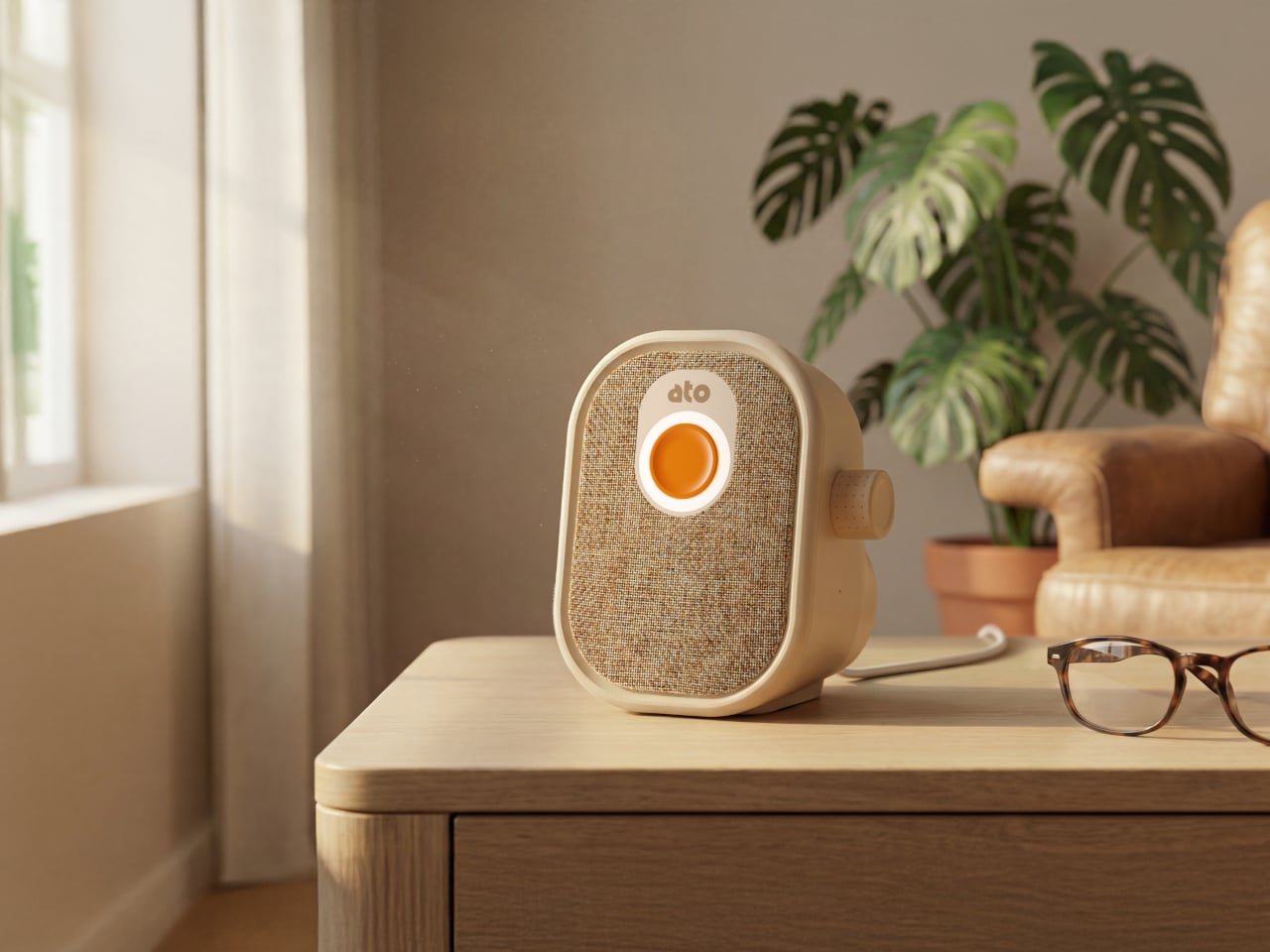
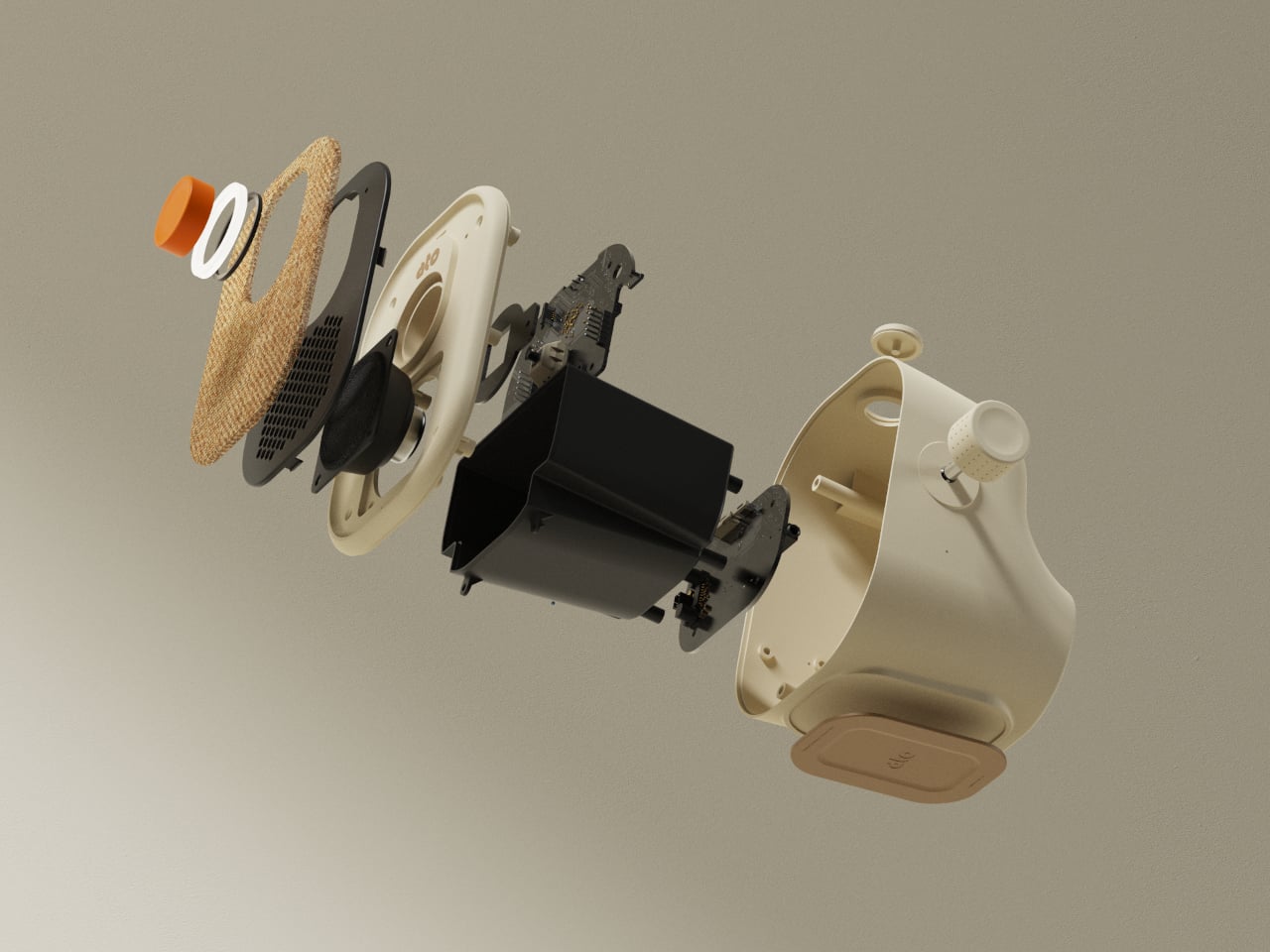
Keeping in touch shouldn’t require learning another app, but small icons and unfamiliar menus can turn a simple family message into an unwanted chore. Ato approaches that problem with a screen-free AI voice assistant for older adults, packaged more like a tabletop radio than a computer. Designed by Boostep for Ato, the new version has progressed through physical prototypes, with customer deliveries scheduled for the future.
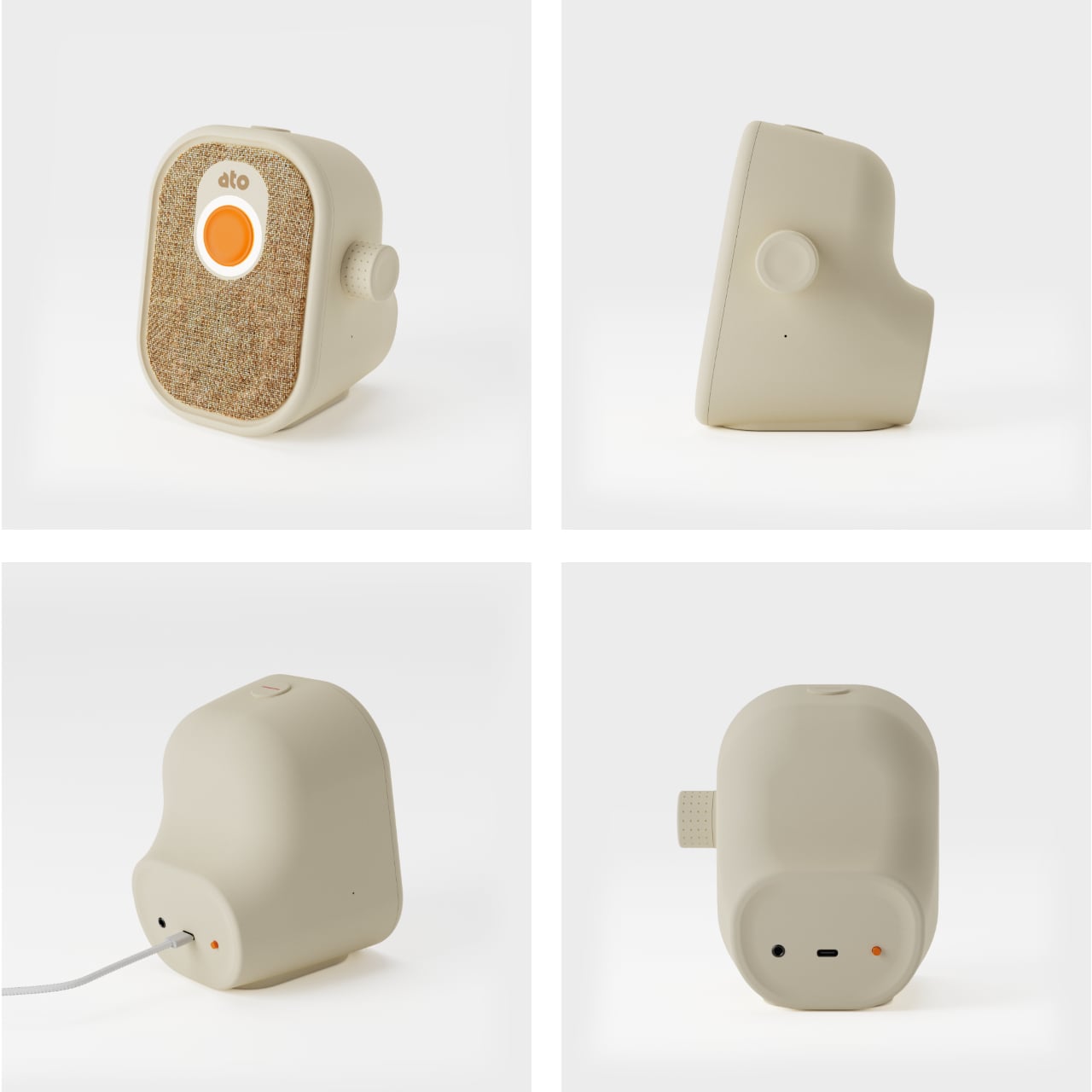
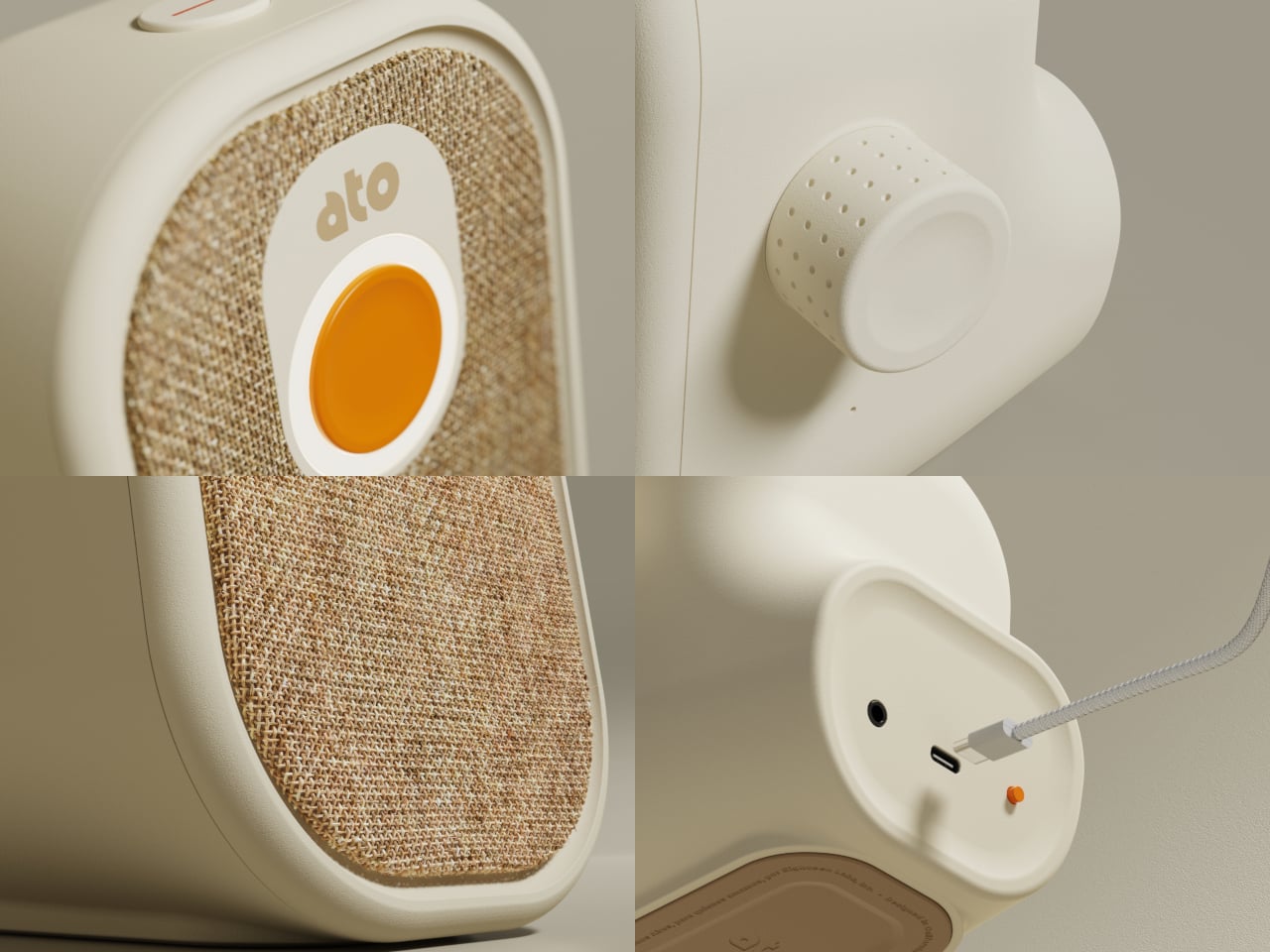
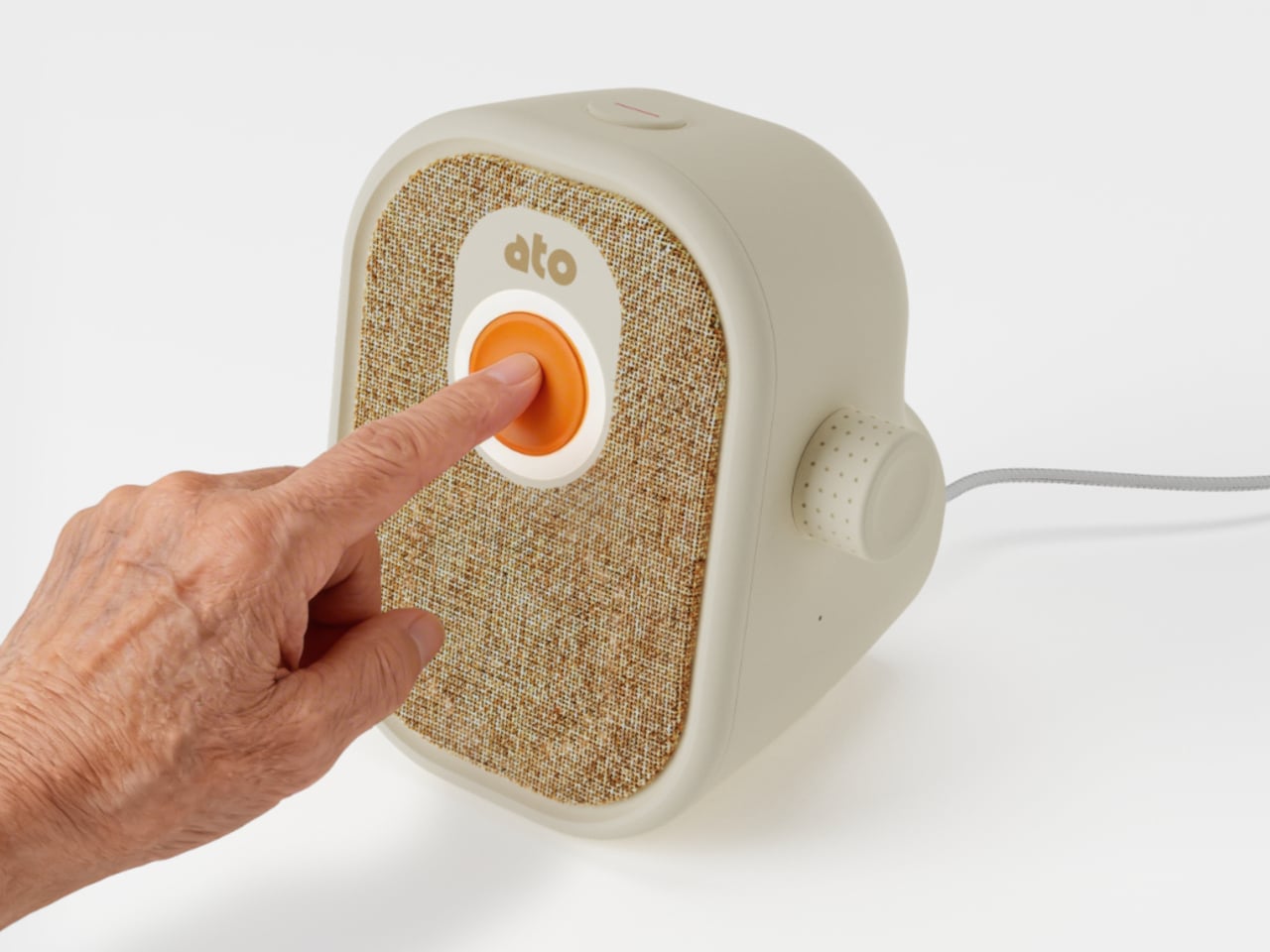
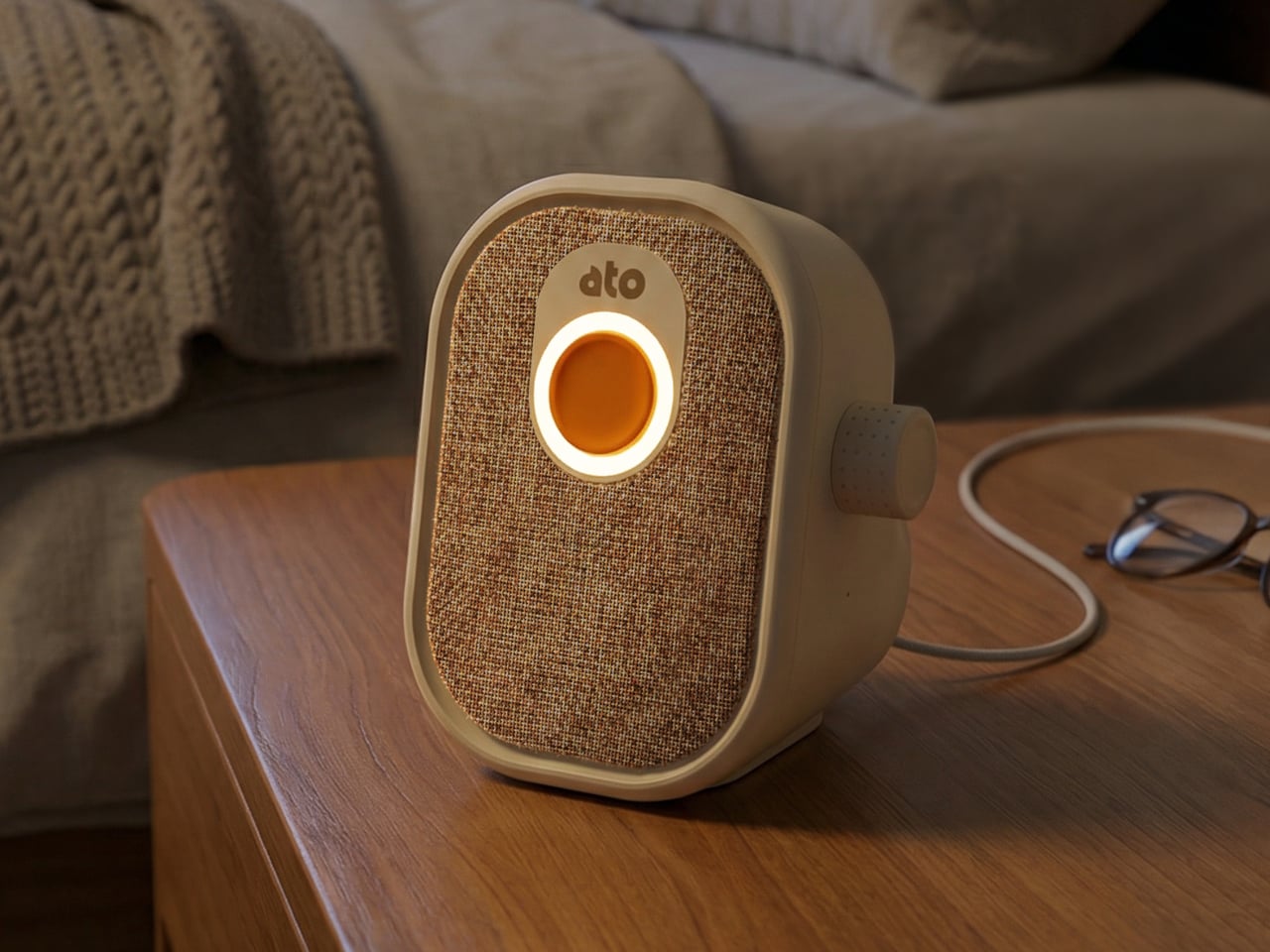
The rounded cream housing and woven front borrow their character from familiar domestic electronics. There’s no glossy display competing with the room, just a textured face and a bright orange button. The resemblance is intentional, drawing on radios, record players, and televisions. It gives the assistant something recognizable to wear without pretending that everyone over a certain age wants the same thing.
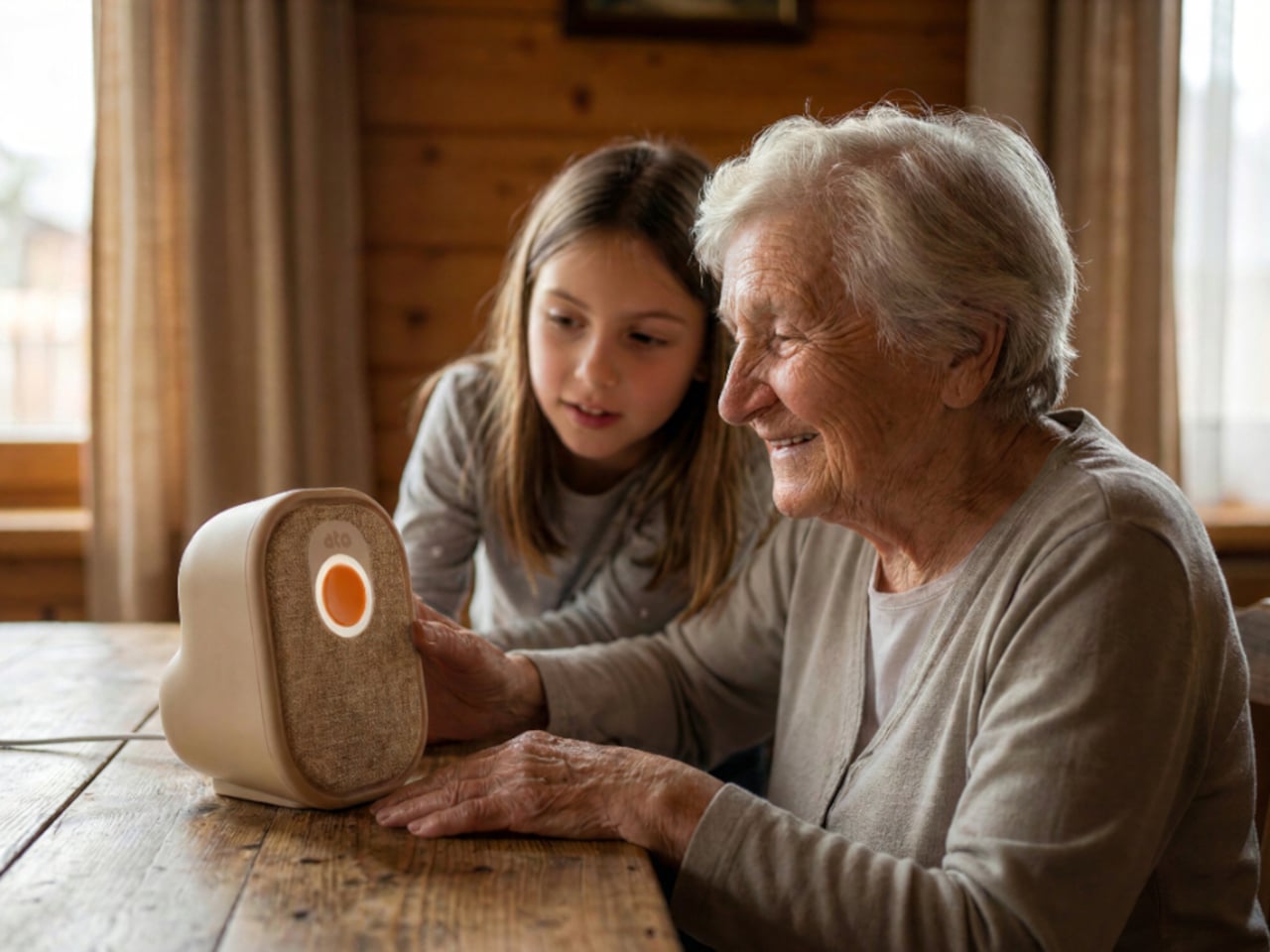
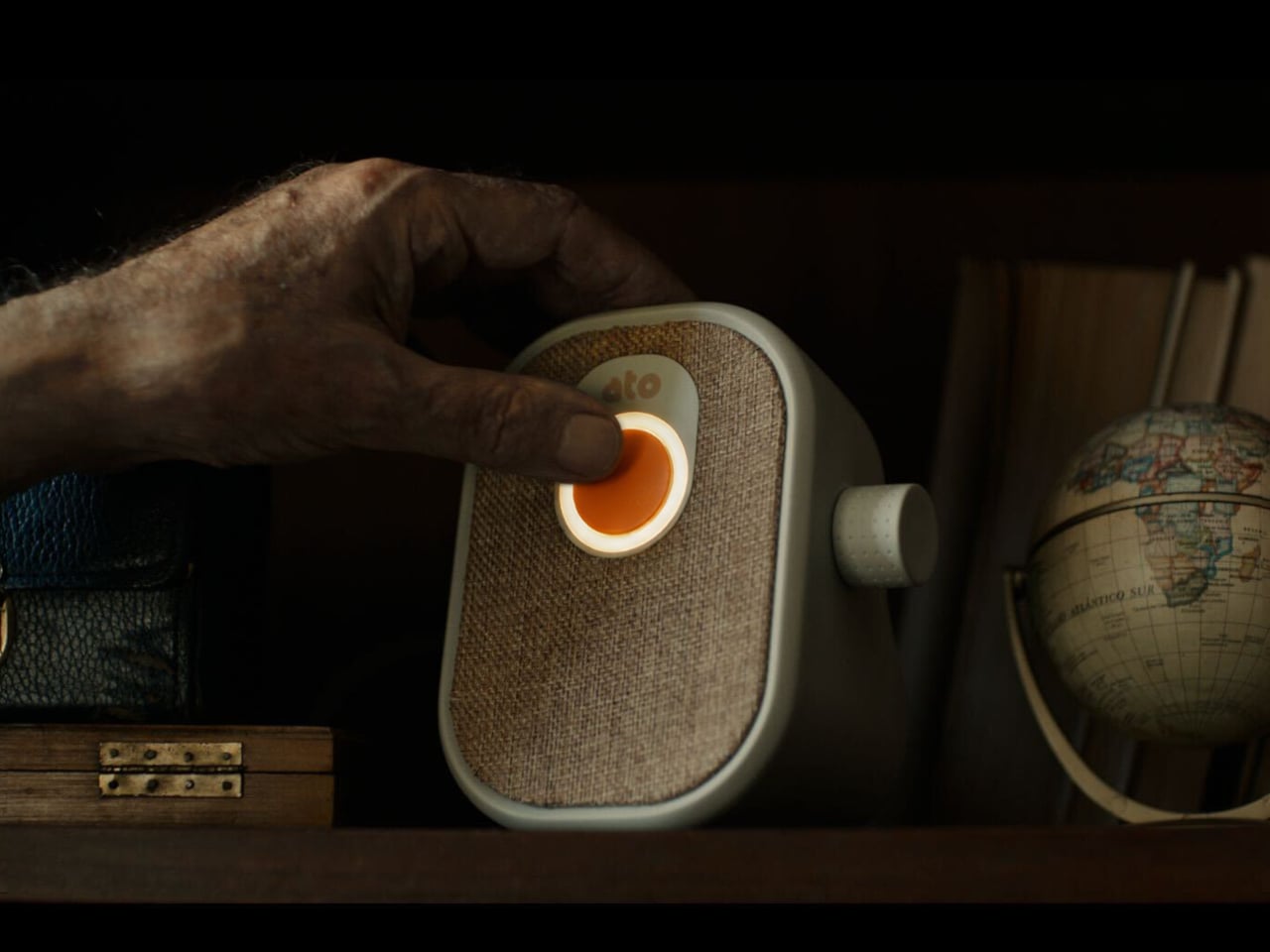
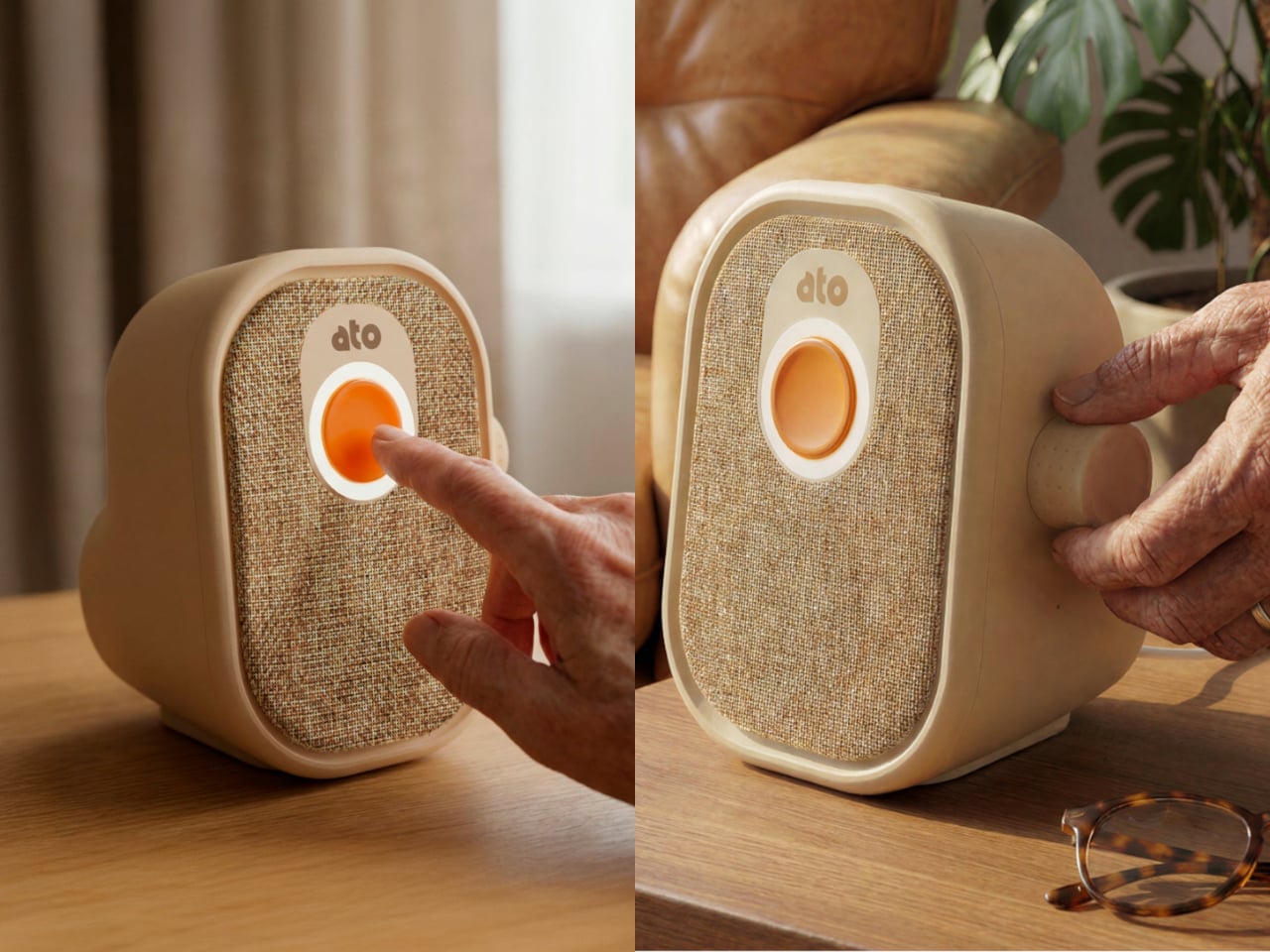
That orange button gives the voice-first interface a physical starting point. Press it and begin talking, rather than remembering which icon opens a conversation. A large volume knob projects from the side, with small dimples around its edge. Turning something you can locate by touch seems a sensible alternative to searching for tiny volume symbols on a smooth and otherwise featureless surface.
The family side of the arrangement still uses a smartphone app. Relatives can set reminders and send messages, while the person at home interacts through speech. An appointment reminder or a note about Sunday lunch could arrive without making the recipient navigate the same interface. The complexity hasn’t disappeared altogether; it’s been placed where family members can manage it more conveniently.
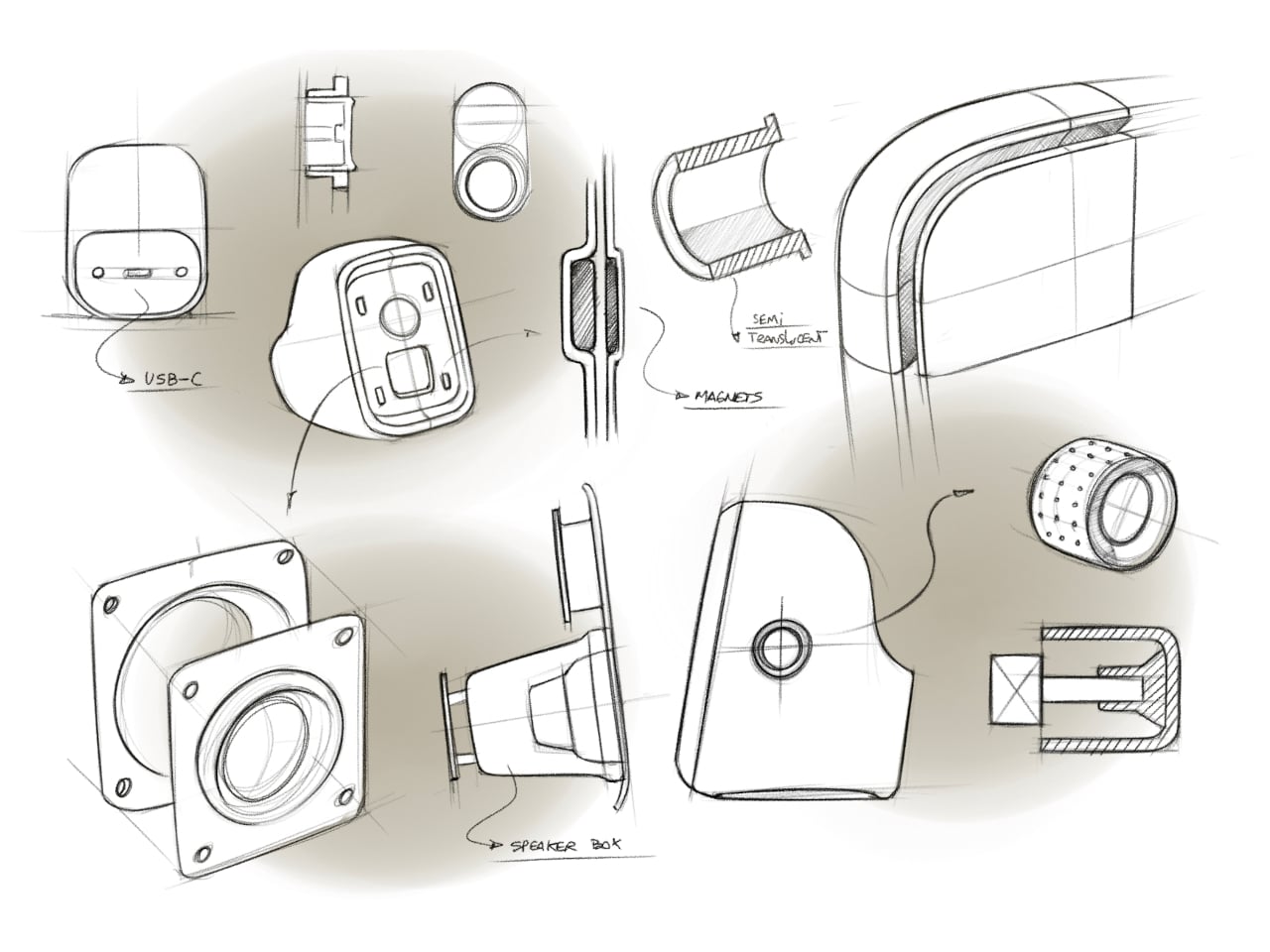
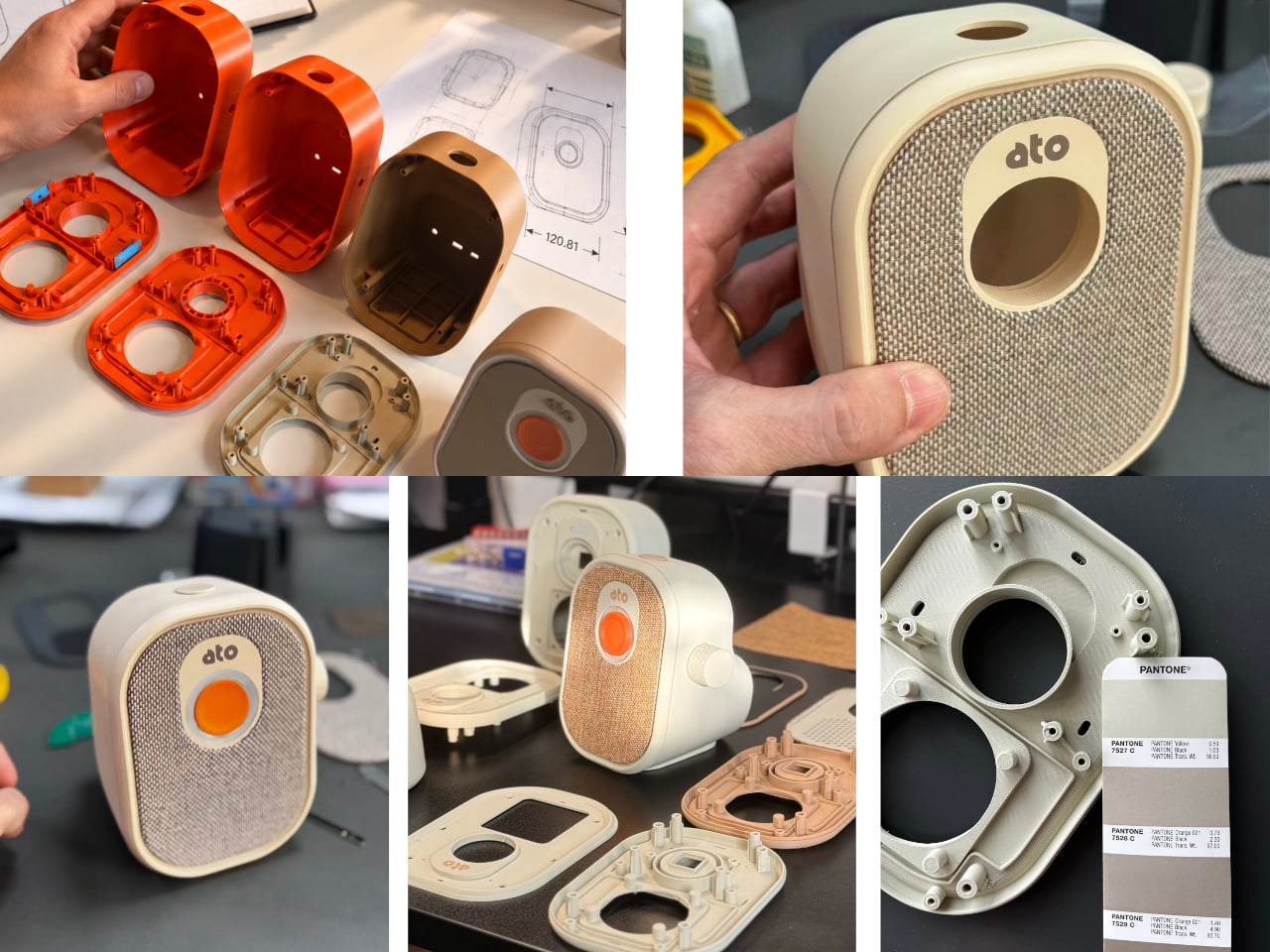
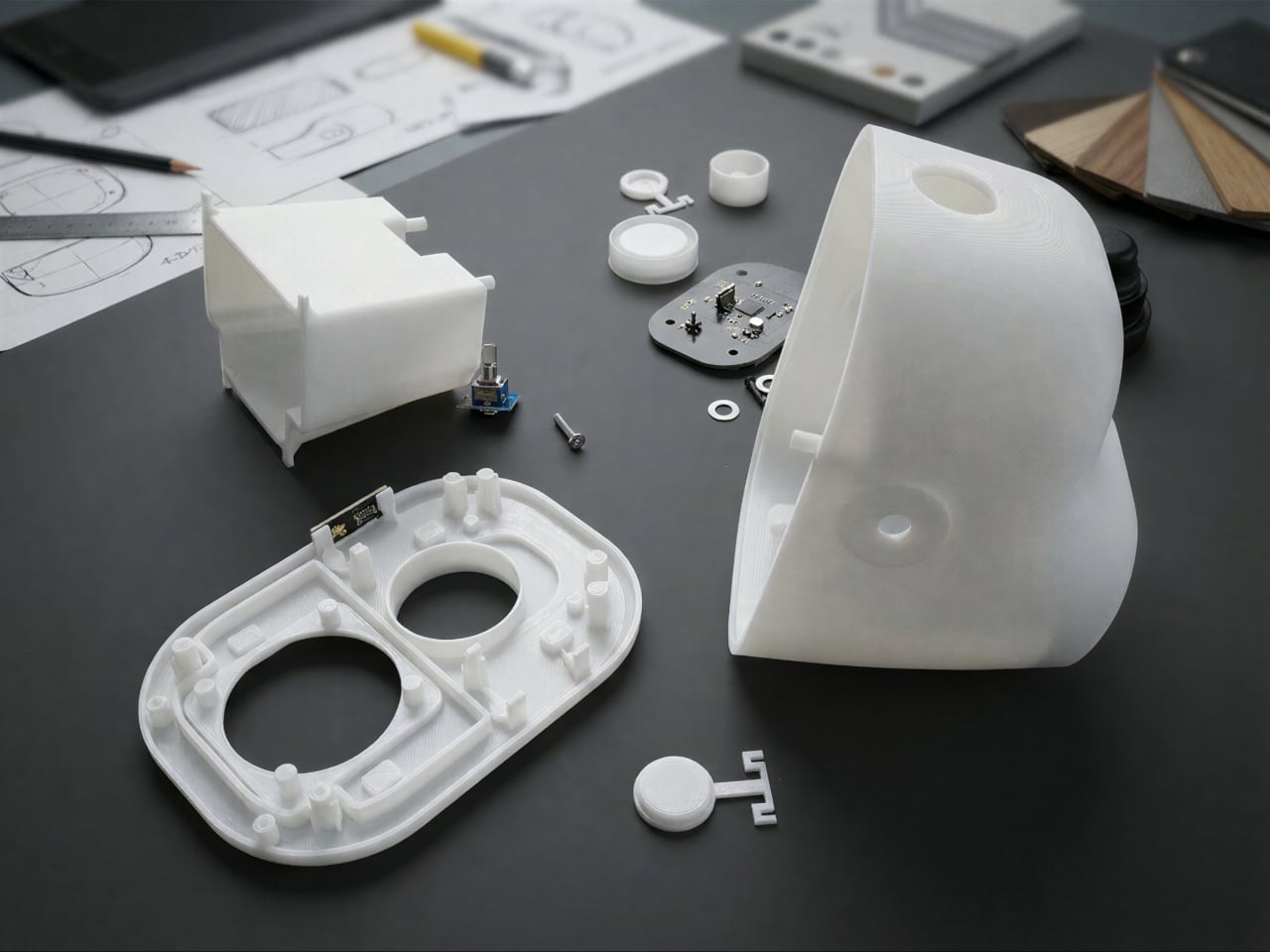
Of course, Ato isn’t intended to wait silently for instructions all day. The company describes proactive check-ins and conversation, alongside radio and spoken information. That gives the device reasons to stay near a favorite chair instead of becoming something used only for reminders. Companionship is the intention, though, not evidence that an AI conversation can replace time spent with other people.
At approximately 5.5 inches tall, the enclosure is small enough to sit beside a chair rather than dominate a shelf. USB-C supplies power, and there’s no battery inside, so its place on a shelf still needs an outlet nearby. Wi-Fi is required too. You can move it between rooms, but power and network access determine where it can actually keep you company.
A familiar exterior doesn’t settle questions about listening and privacy, however. Ato says it doesn’t retain audio recordings or let relatives read conversation transcripts, although it stores selected personal facts for future conversations. That matters when conversation is the product’s main purpose. The company also states that Ato isn’t a medical device and cannot contact emergency services, so it isn’t a substitute for dedicated emergency equipment.
The device is listed at $179 plus shipping, with deliveries scheduled for February 2027. Basic messaging, reminders, and radio remain free, while unlimited conversations require an optional membership listed at $249 annually. The upfront price therefore isn’t the whole decision. Someone expecting long daily chats would need to budget for the service, not just find a place for the speaker.
The post Ato’s Radio-Inspired AI Assistant Trades Touchscreens for a Button and Knob first appeared on Yanko Design.
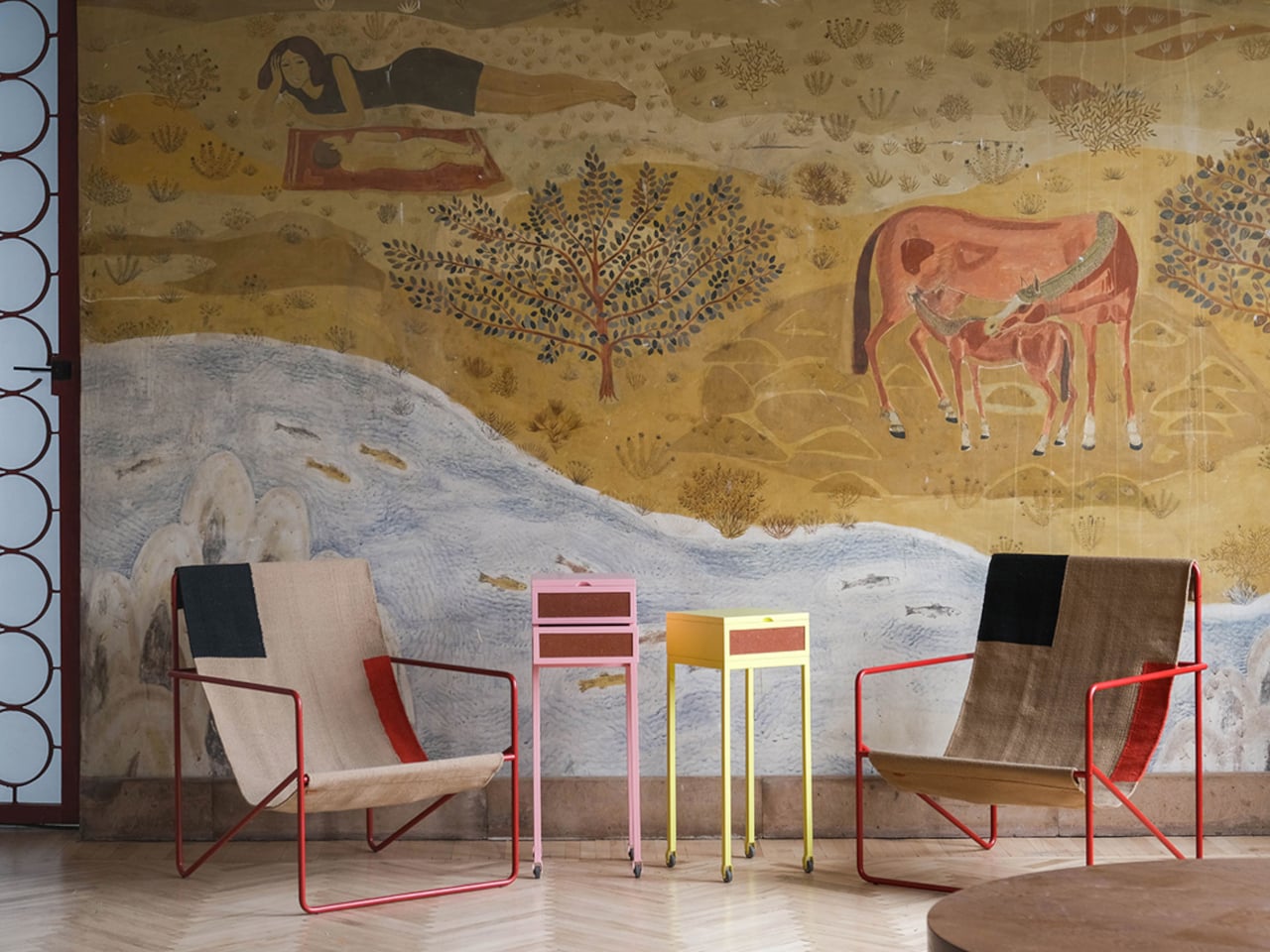
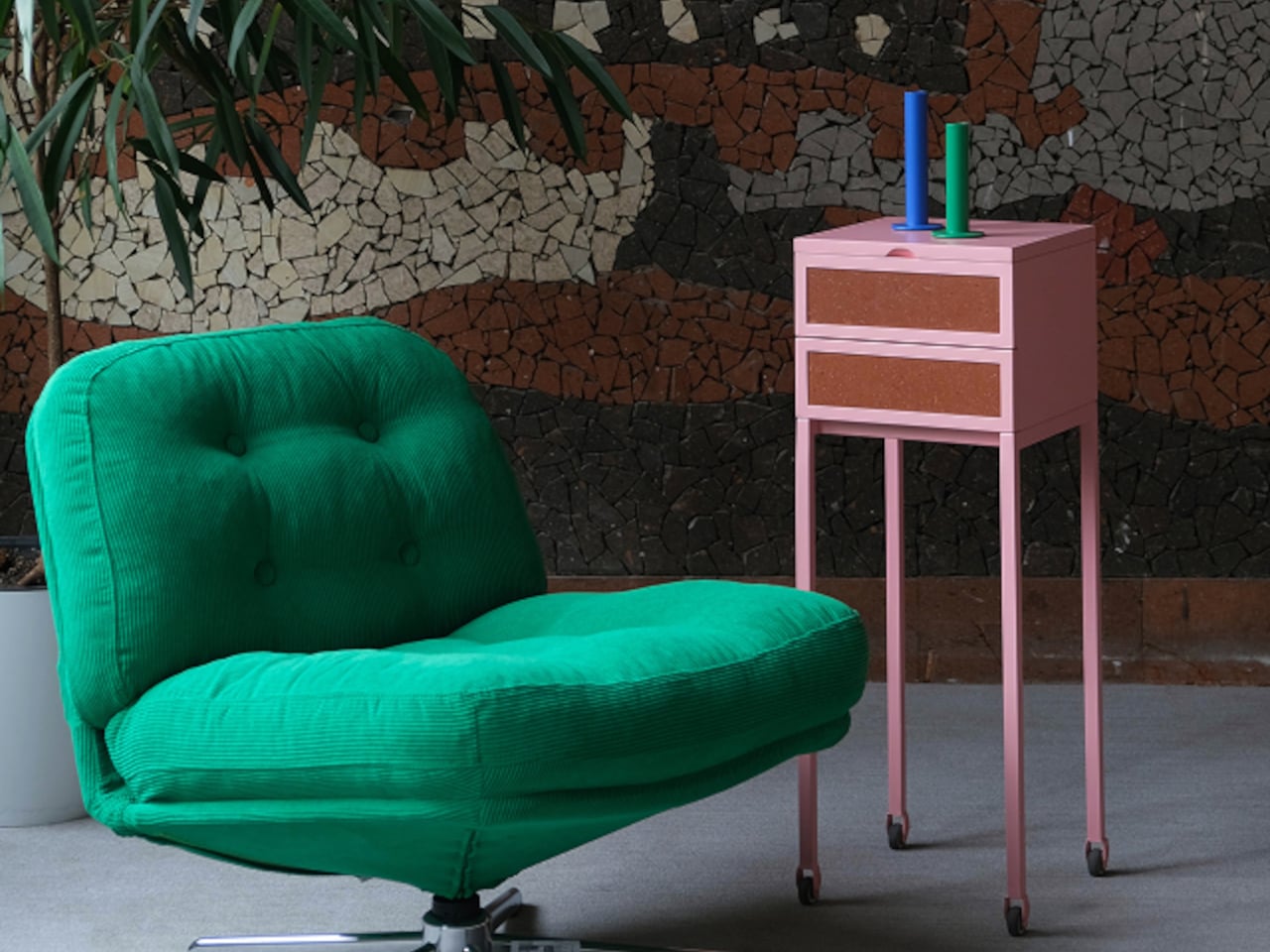
Pencils have a way of spreading far beyond the desk, especially when you move between a sketchbook on the sofa and a project at the dining table. STUDIO SHOO’s TUFF Pencil Cabinet gives those wandering supplies a home that can follow you. Produced with manufacturer CANATE, the wheeled cabinet combines compact storage with colors and textures inspired by Armenia’s volcanic architecture.
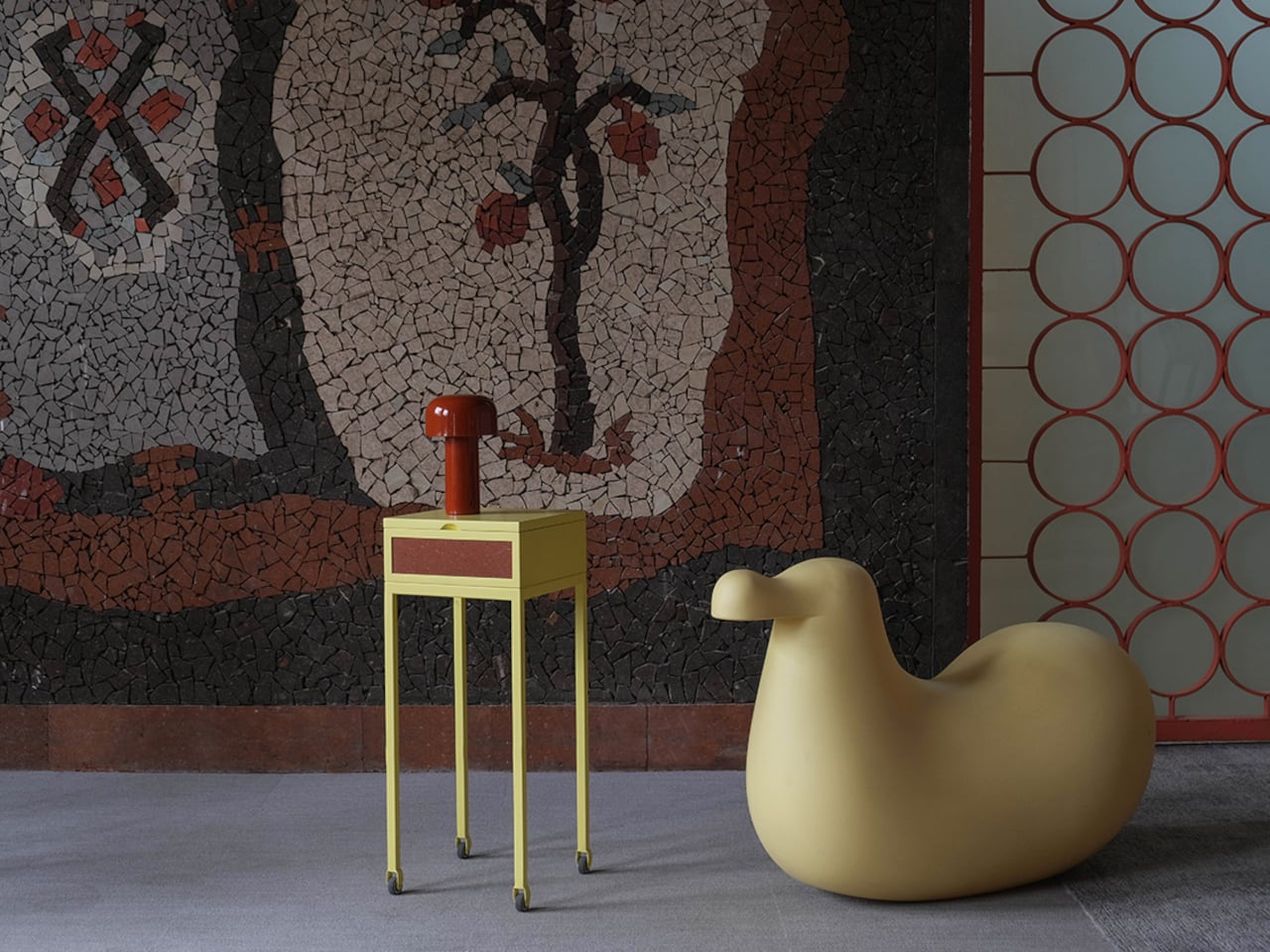
The reference is tuff, the porous volcanic stone behind much of Yerevan’s pink-hued architecture. The studio also draws on the chalk drawings and inscriptions that appear on those walls, connecting the material to everyday creativity rather than treating it as a decorative finish. Reddish, speckled panels interrupt the cabinet’s smooth painted surfaces, bringing a little of that architectural character down to furniture scale.
Designer: Shushana Khachatrian
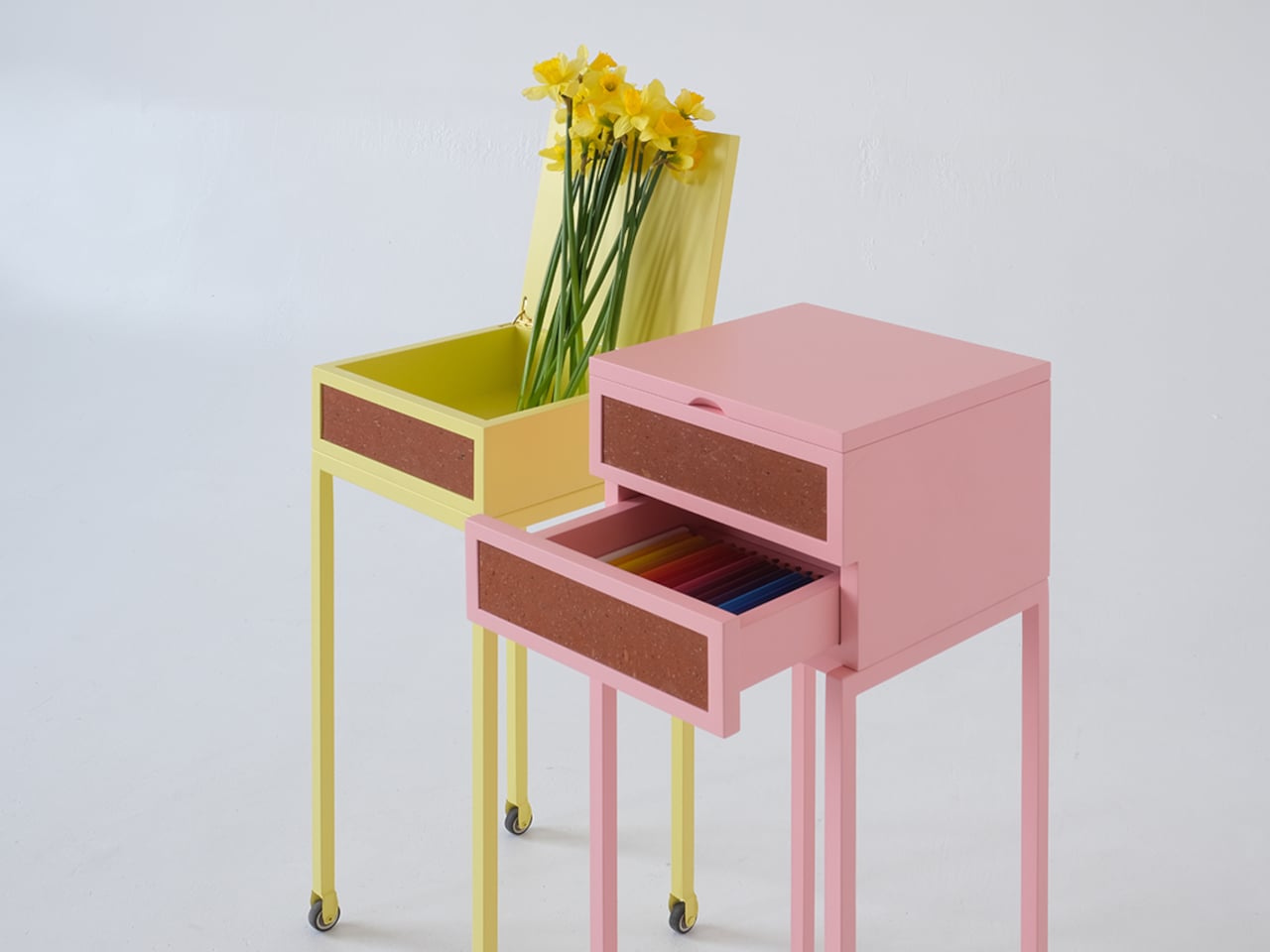
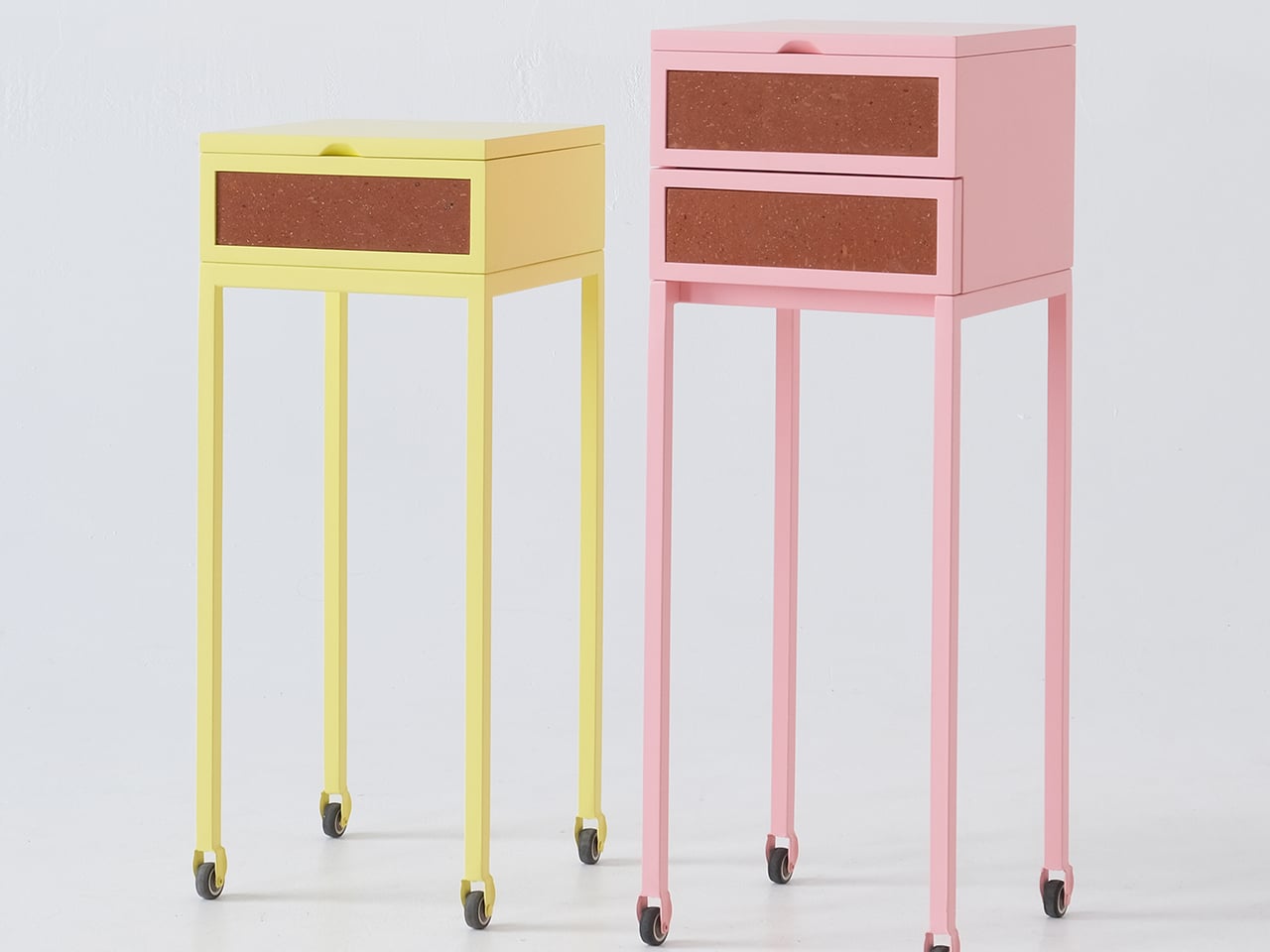
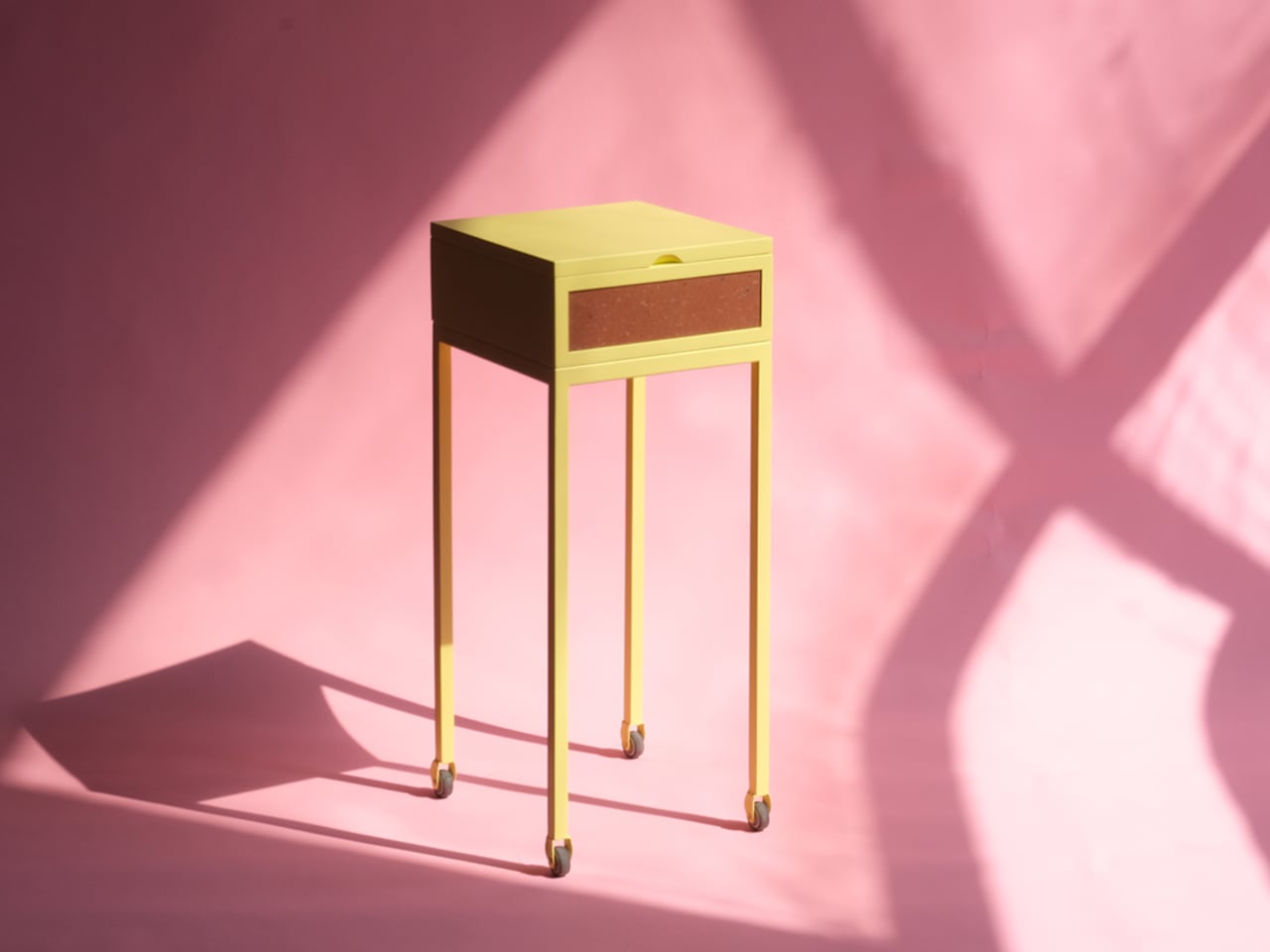
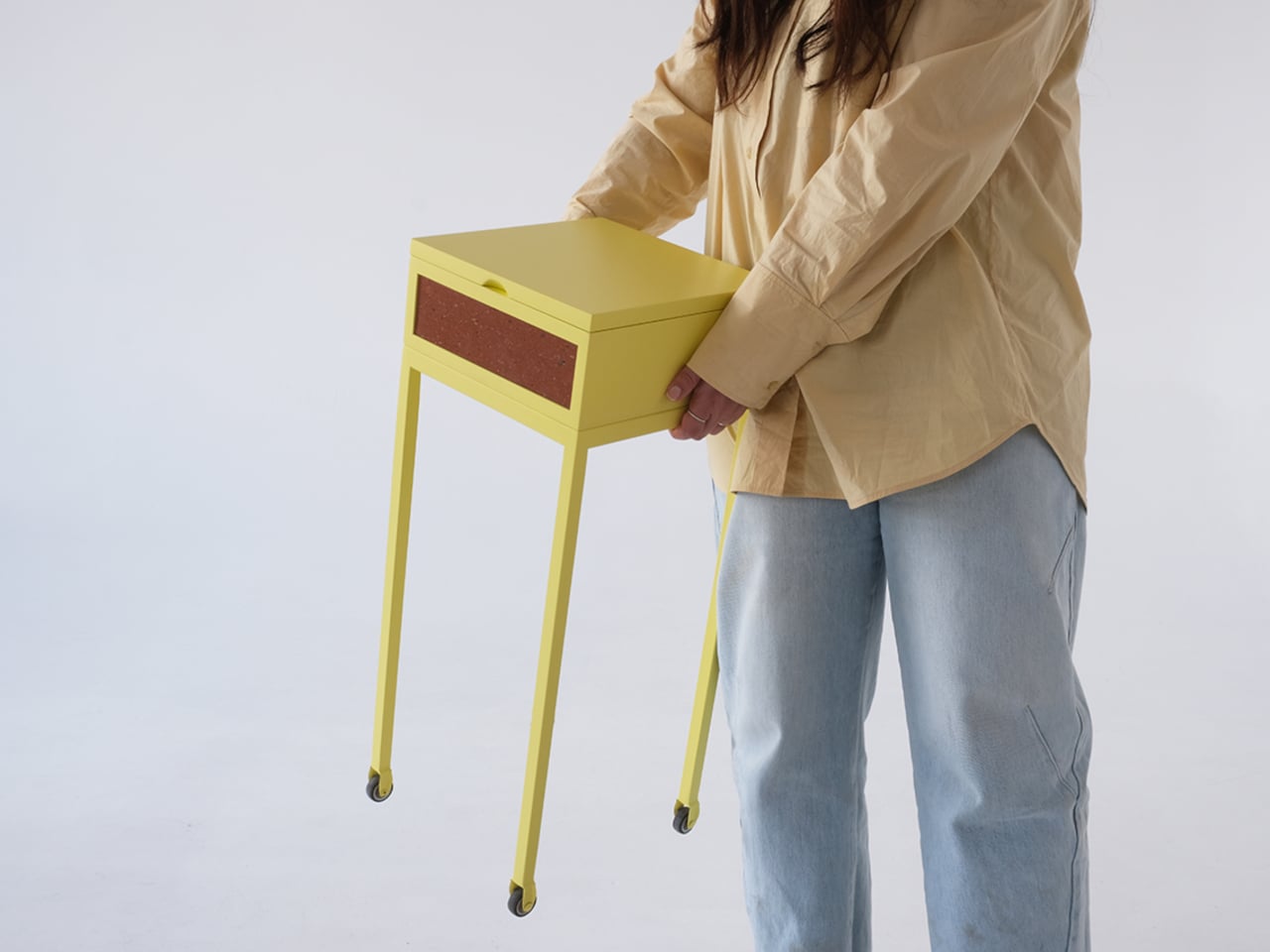
That doesn’t mean living with a miniature building beside your chair. A small rectangular box sits on four long, slender legs, leaving most of the space underneath open. Tiny casters continue the lines down to the floor without giving it the appearance of an office trolley. The pink and yellow finishes make the cabinet something you’d leave visible, rather than tuck beneath a desk.
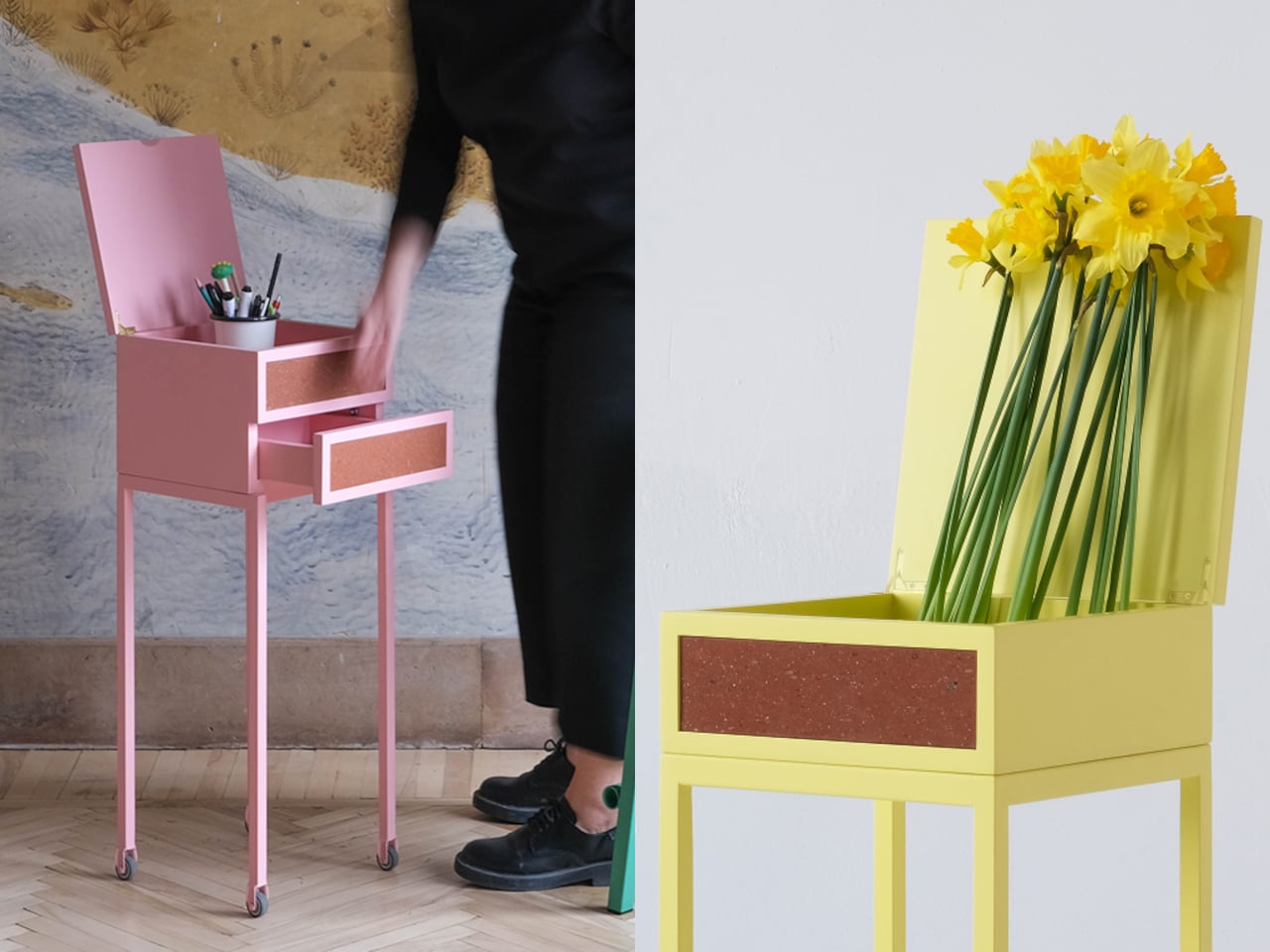
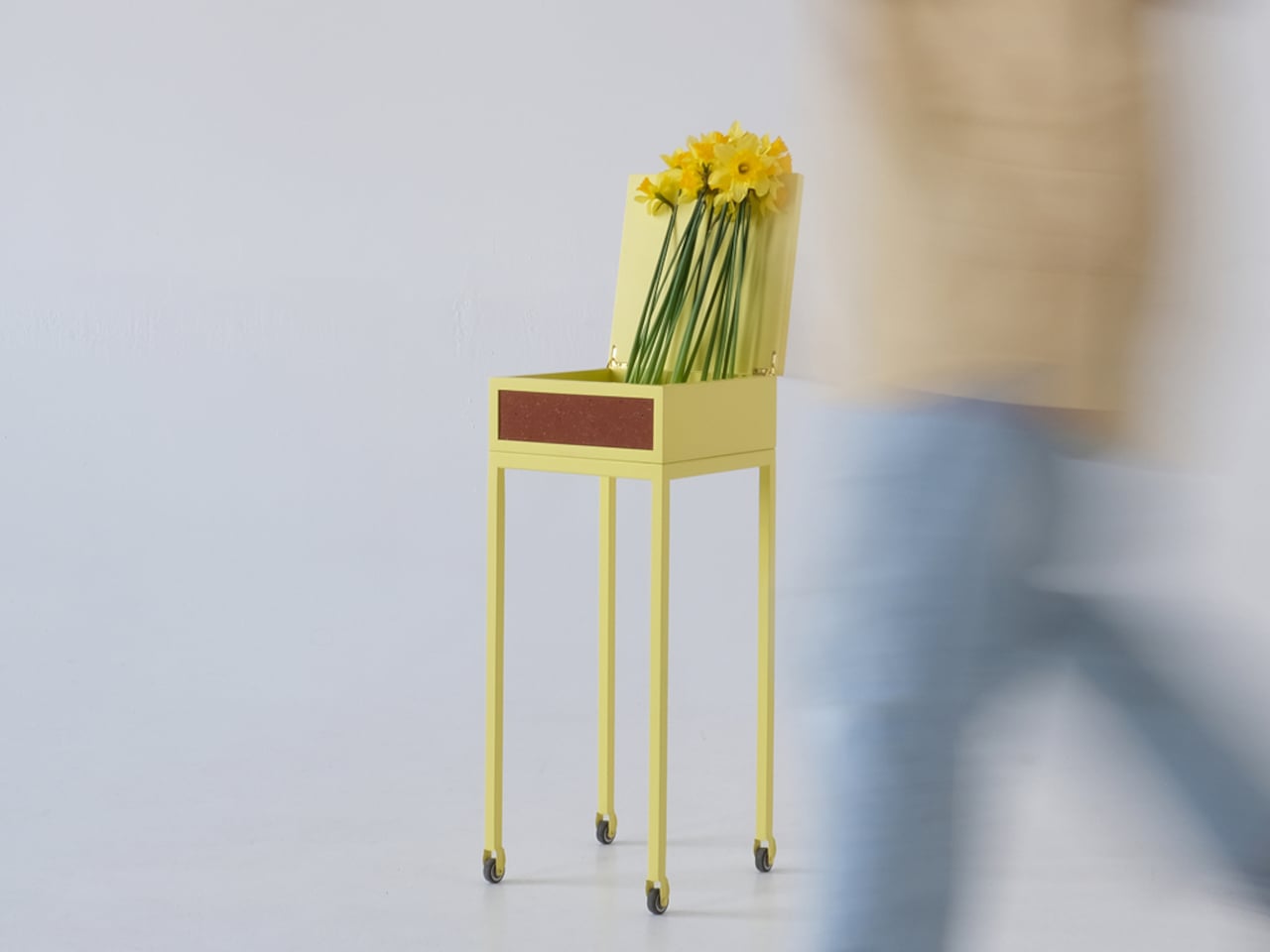
The yellow version keeps things simple, with one compartment reached by lifting the lid. A small semicircular notch gives your fingers somewhere to start, avoiding a handle that sticks out from the box. Open it, and the supplies are accessible from above. Close it and the flat top can hold something else, although you’ll need to clear it before reaching inside again.
Of course, choosing pink changes more than the color. That version adds a pull-out drawer beneath the top-opening compartment, giving pencils and crayons a separate place to lie flat. You can reach that lower storage without disturbing whatever is sitting on the lid. It’s a useful distinction if the cabinet spends part of its time beside a chair holding a cup of coffee.
The wheels matter because the storage moves with the activity, instead of making every drawing session happen in the same place. Roll it from a worktable to a reading corner and the collection comes along together. That doesn’t make it a replacement for a large studio cabinet. Its appeal is keeping a smaller selection nearby, not accommodating every supply you’ve ever bought.
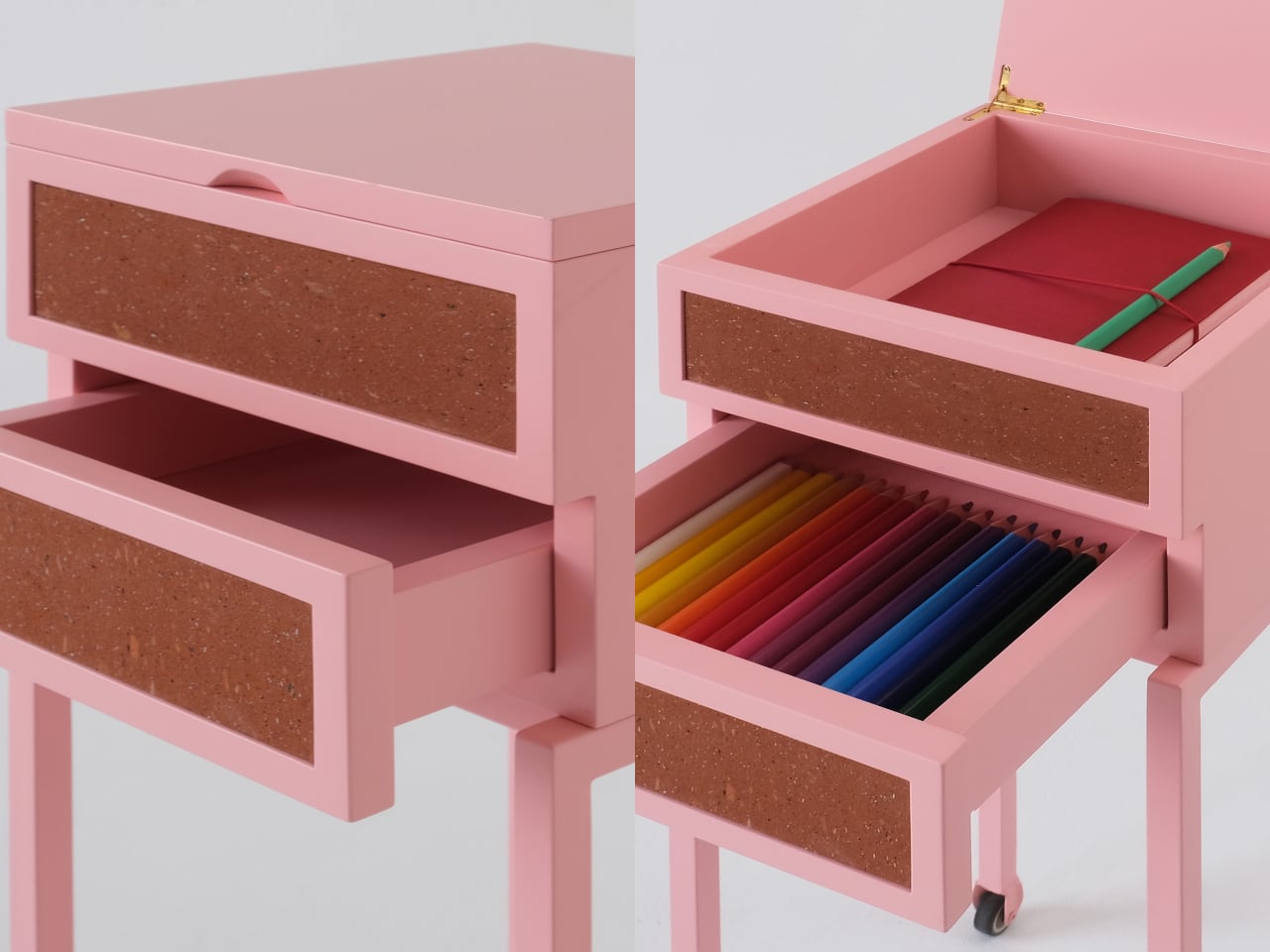
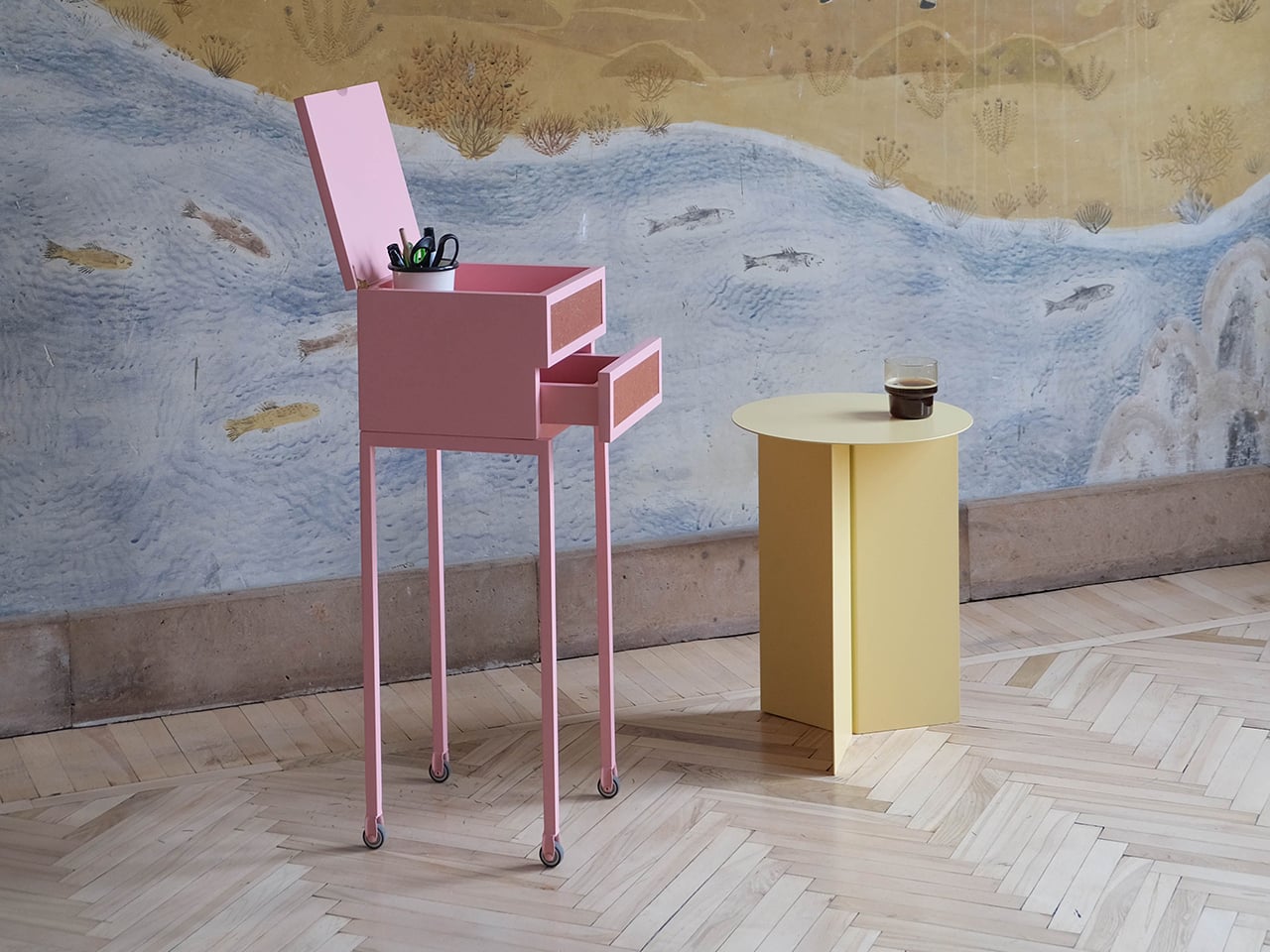
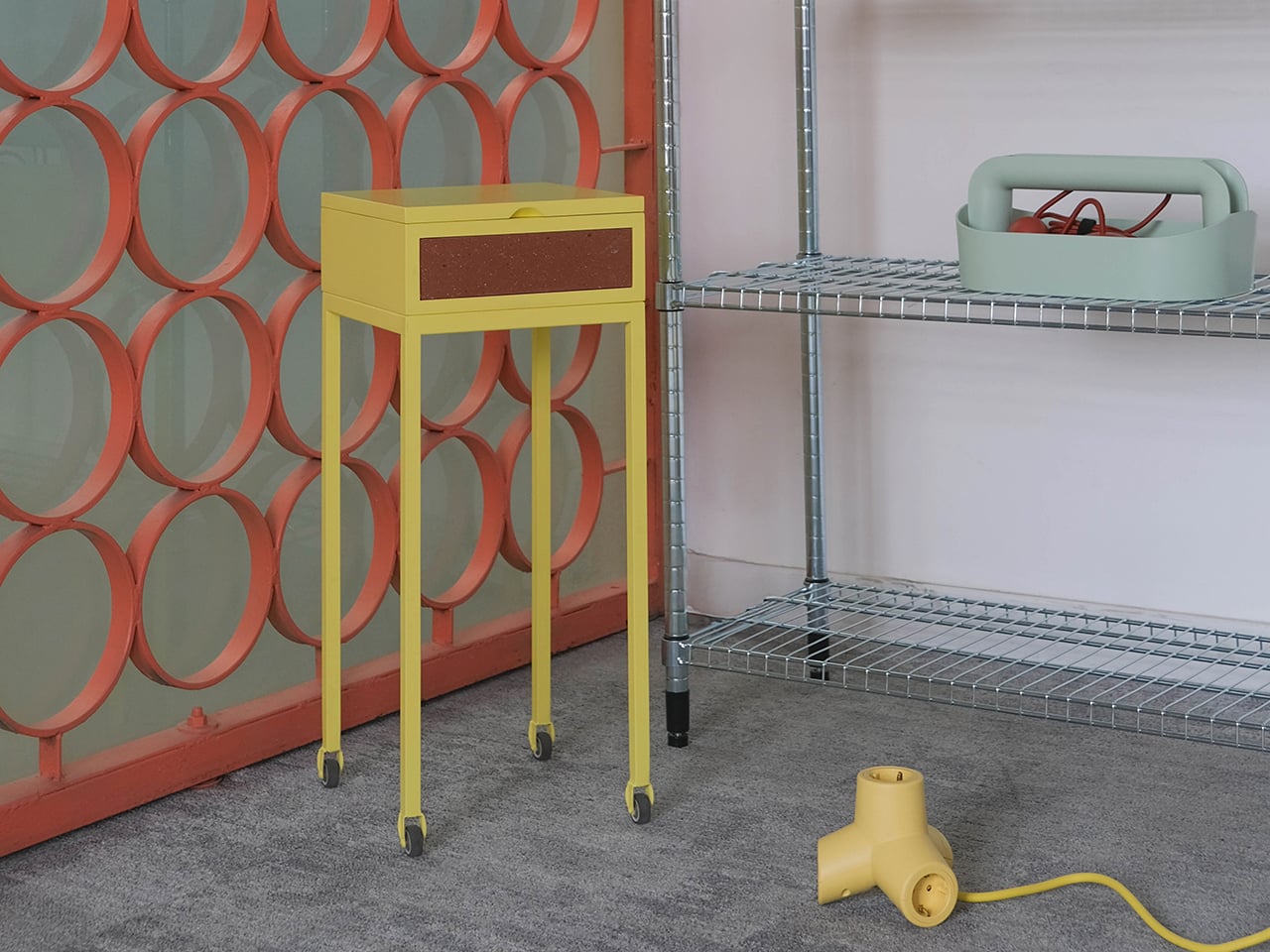
The construction combines MDF and metal, with reclaimed board reported in the project’s early coverage. That’s a more specific claim than calling the whole cabinet sustainable, especially without published information about material proportions or eventual disassembly. The visible contrast is easier to appreciate: smooth painted edges frame the rough-looking inserts, giving a straightforward storage box a little more character without complicating how it opens.
TUFF was exhibited during Milan Design Week in 2025, although current pricing and ordering details aren’t established. Its closed top gives it a second role between drawing sessions, but moving a drinks table requires a little more care than moving pencils. Roll it into place before pouring the coffee, unless your next artwork happens to need a rather convincing brown stain.
The post TUFF Pencil Cabinet Brings Volcanic-Rock Inspiration to Storage on Wheels first appeared on Yanko Design.

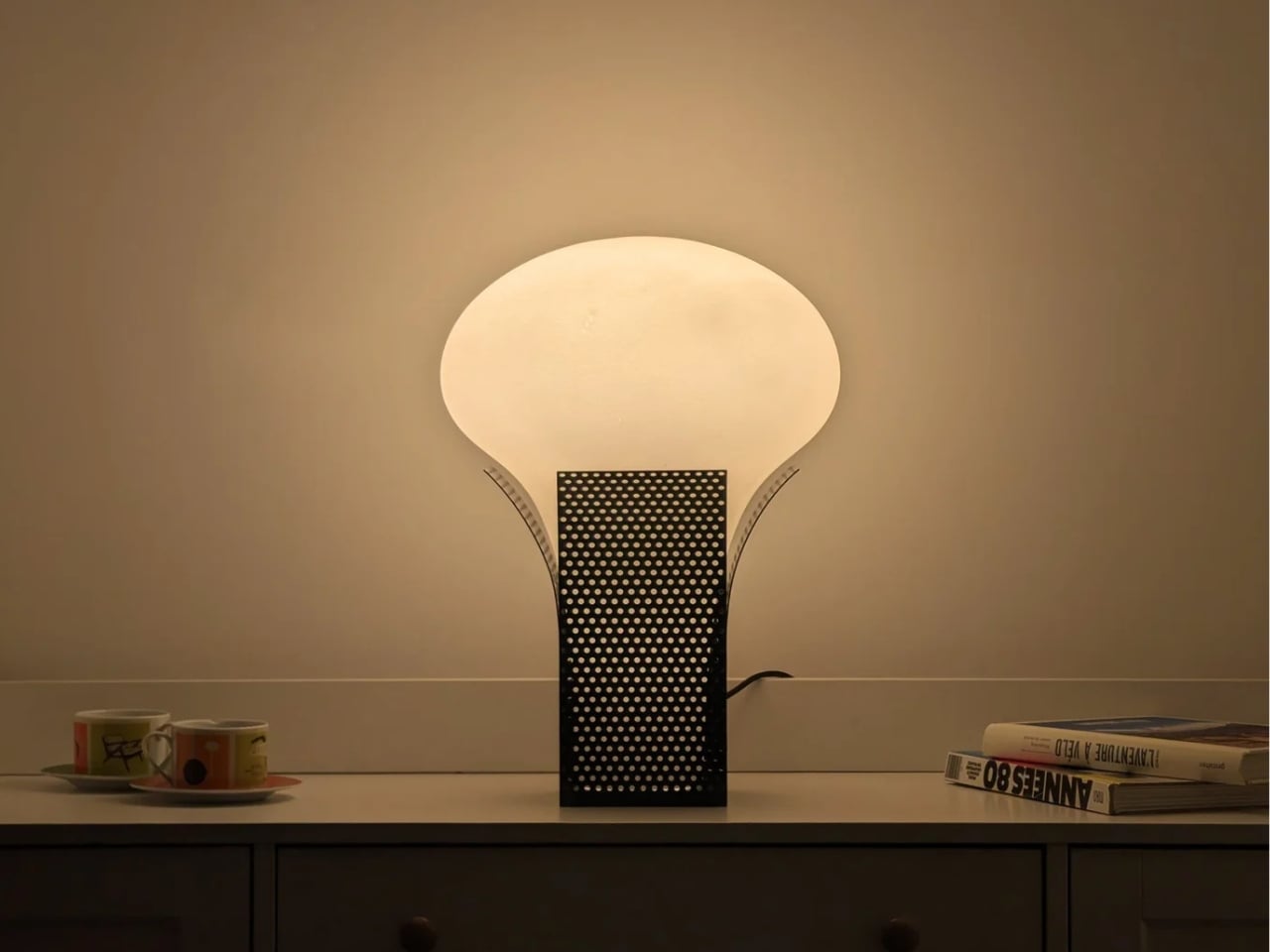
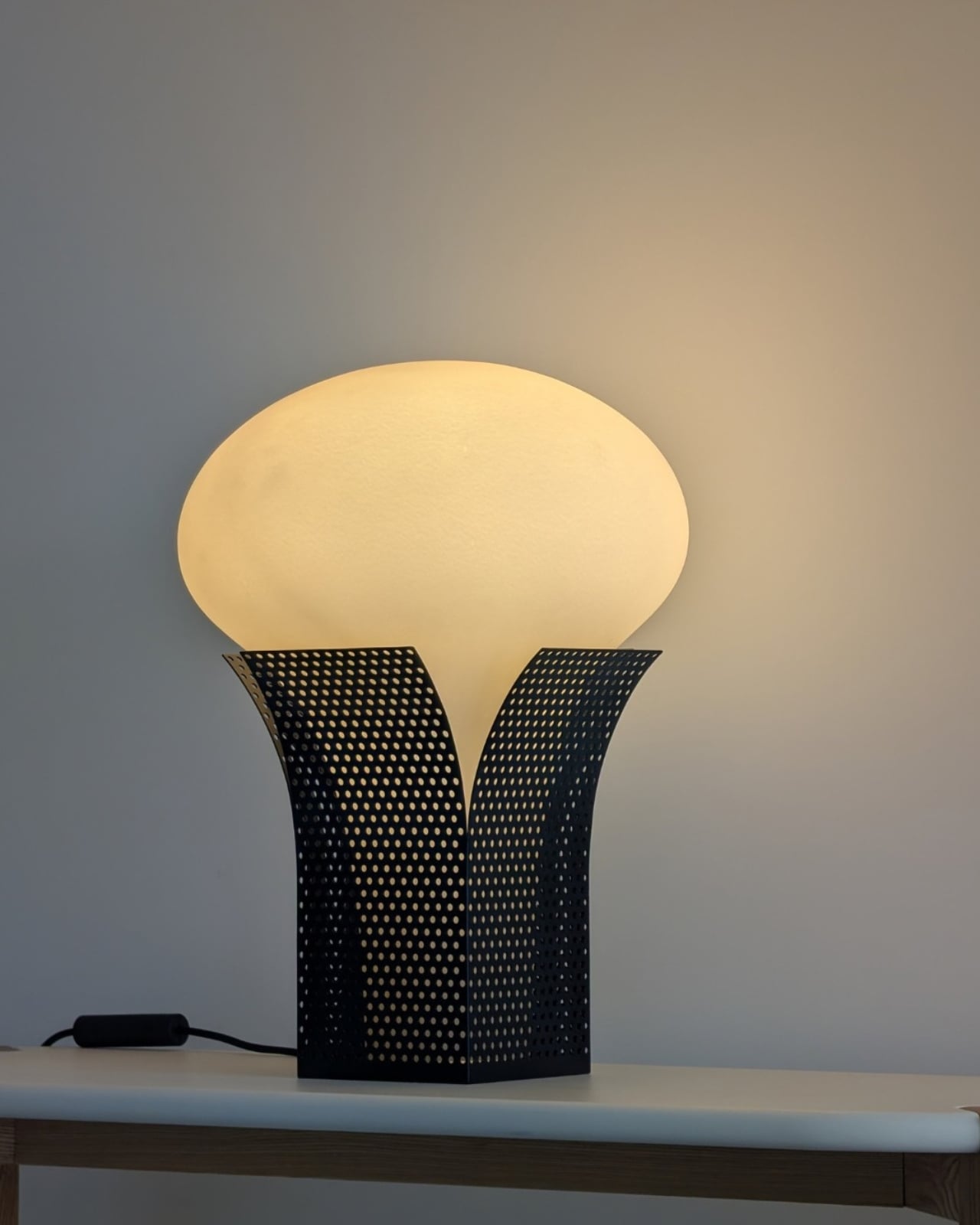
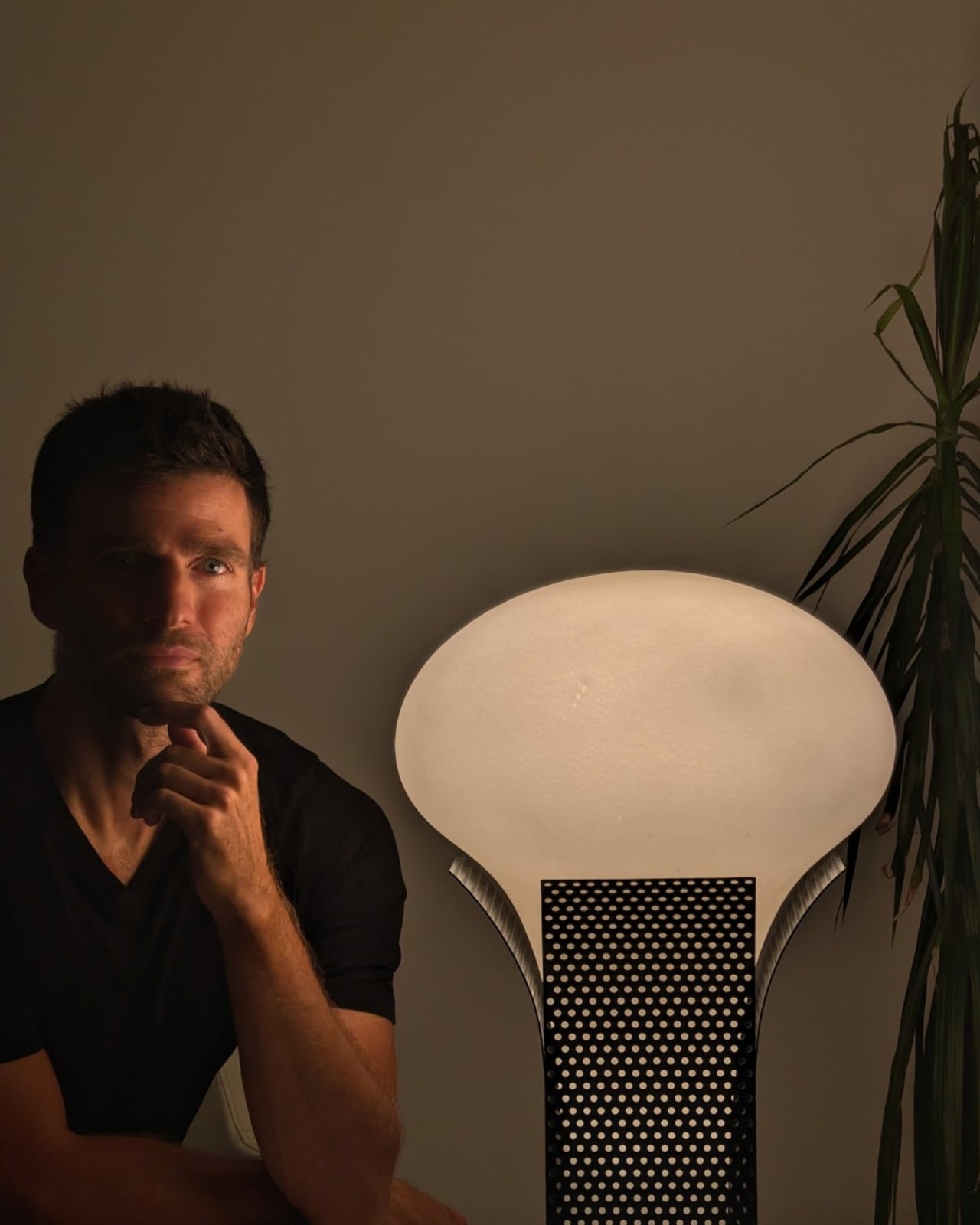
A glowing dome appears to have pushed its way out of a black steel box, bending the sides outward as it escapes. Pandora, a table lamp by François Kessler, makes that little visual drama its entire personality. It also offers an appealing answer to a familiar decorating problem: wanting softer evening lighting and an interesting object without adding a separate sculpture to an already crowded console.
Listed for sale through design marketplace Perlo, Pandora brings its sculptural ambitions to an everyday household object. I like that its appeal doesn’t depend on knowing anything about design. You can read the gesture immediately. The pale upper volume looks almost inflated, while the dark casing seems unable to contain it. A lamp sitting perfectly still manages to suggest that something is happening.
Designer: François Kessler
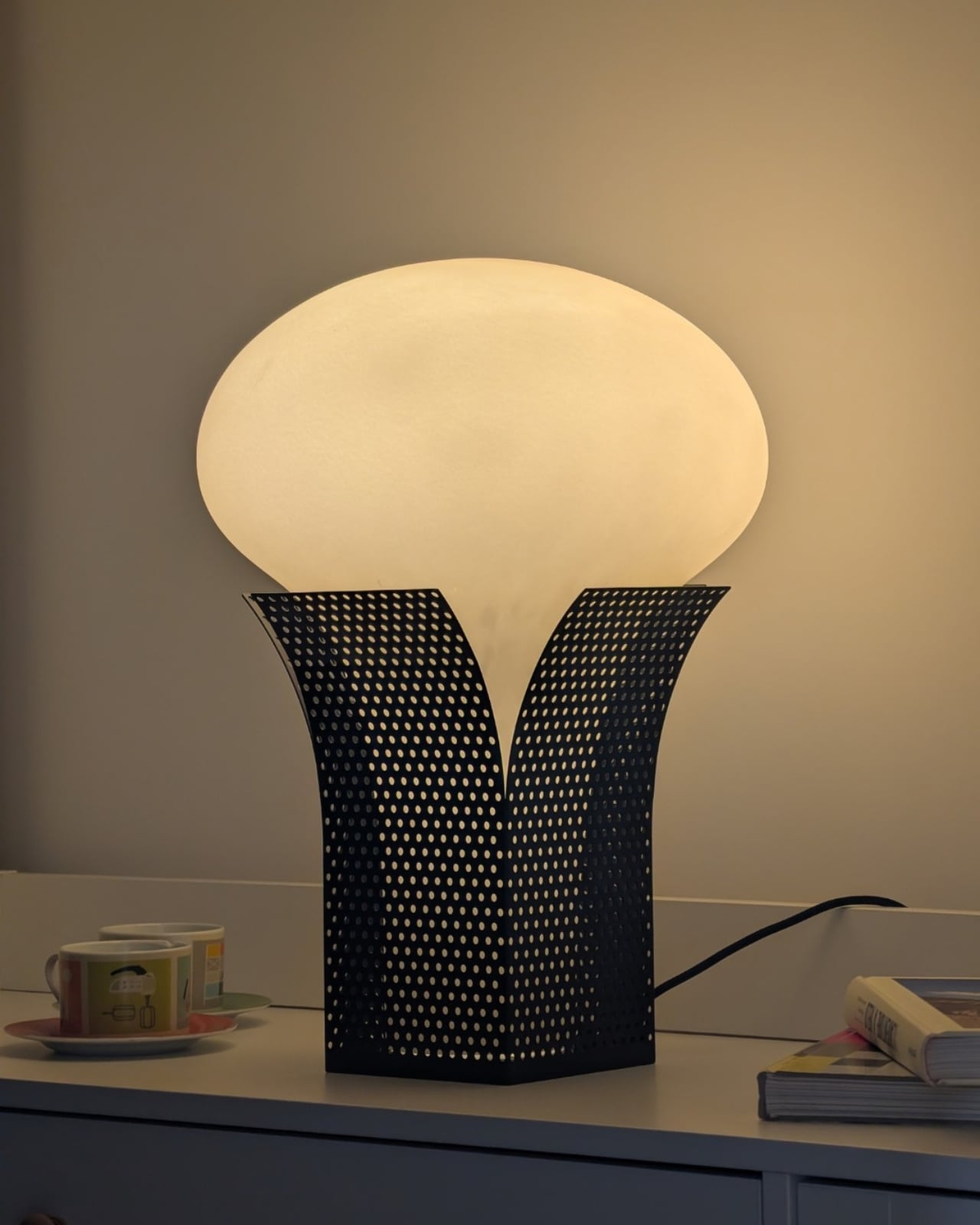
The silhouette has the broad cap and narrower lower section of a mushroom lamp, but the proportions feel a little unruly. In the supplied photographs, the dome spreads generously beyond its base. Below it, the steel rises in straight-sided panels before curving outward near the top. Those flared edges make the junction between the two materials the most interesting part of the object. Your eye follows the apparent pressure from inside.
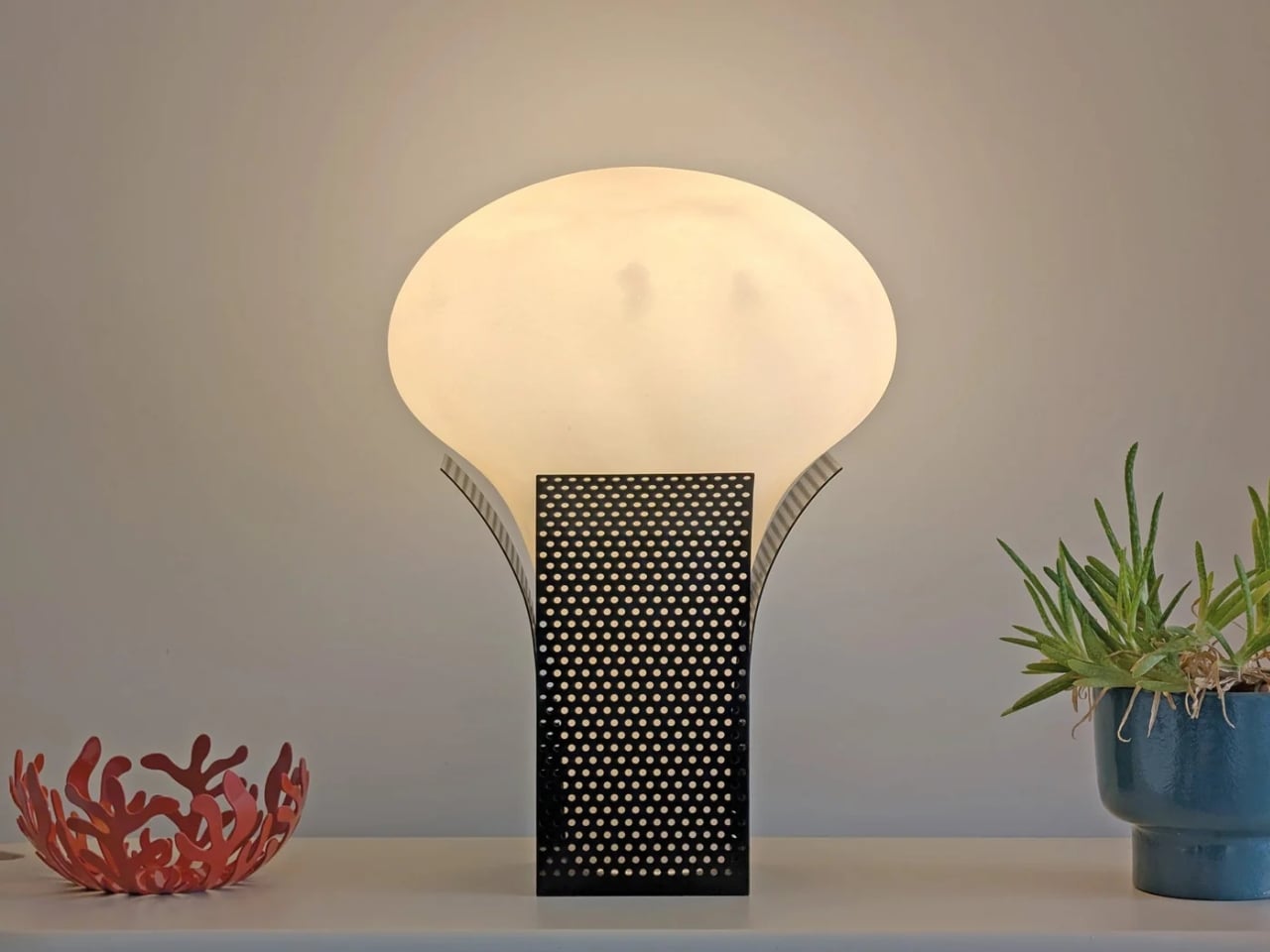
Viewed from a corner, two panels form a deep V-shaped opening beneath the dome. From a more frontal angle, a rectangular perforated face dominates, with curved metal edges visible on either side. That change matters for a table lamp. It suggests Pandora could reward placement where you see it from several directions, rather than being treated as a decorative face that always needs to point toward the couch.
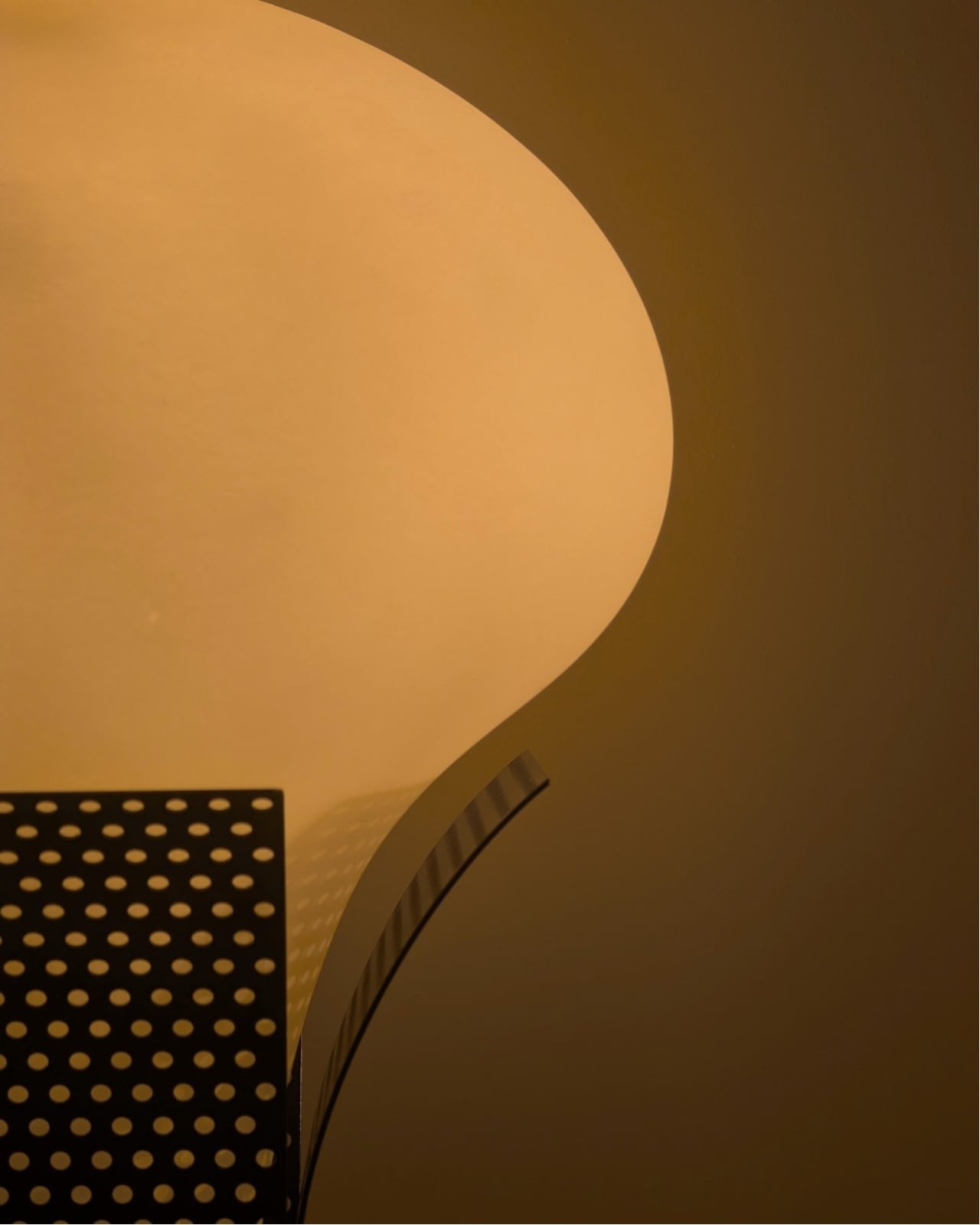
The crystal is also less predictable than the word might suggest. Forget a cut-glass sparkle. Here, the illuminated surface looks cloudy and gently mottled, closer to a glowing stone or an oversized puffball. Perlo describes a thin powder layer that filters the light. The photographs show subtle variations across the dome, which give the broad surface some texture instead of making it look like a uniformly lit plastic shell.
Then there are the holes. Rows of small circular perforations cover the base, allowing glimpses of the illuminated volume below the exposed dome. That detail earns its place. A solid black enclosure would make the lamp look more top-heavy, at least visually. The pinpoints of light break up that darkness and help the upper and lower portions feel connected. The glow appears to continue inside the box.
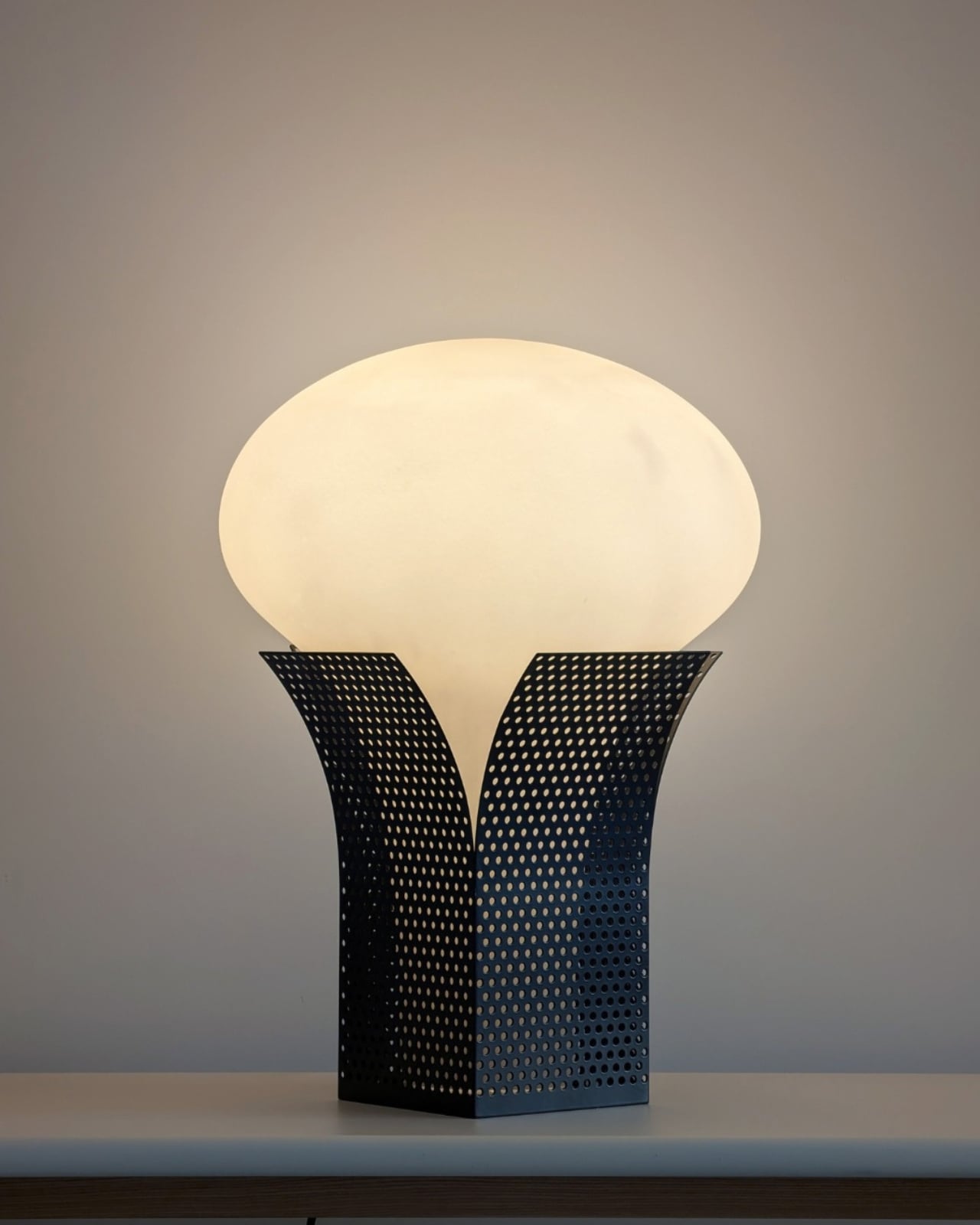
My favorite decision is how little the steel has been disguised. Its regular perforations retain an industrial character, even beside that rounded, luminous form. The combination reminds me slightly of a science-fiction prop that has wandered onto a sideboard, though it’s restrained enough to live beside coffee cups and paperbacks. I’d give it a fairly plain backdrop. The outline already supplies plenty to look at.
There are reassuringly ordinary details behind the unusual shape, too. Perlo lists a cord-mounted switch and dimmer, along with an included warm-white bulb that can be replaced. A dimmer makes sense for an object intended to draw attention through its glow. The replaceable bulb is the more consequential detail for me: an expressive lamp should remain useful after its original light source stops working.
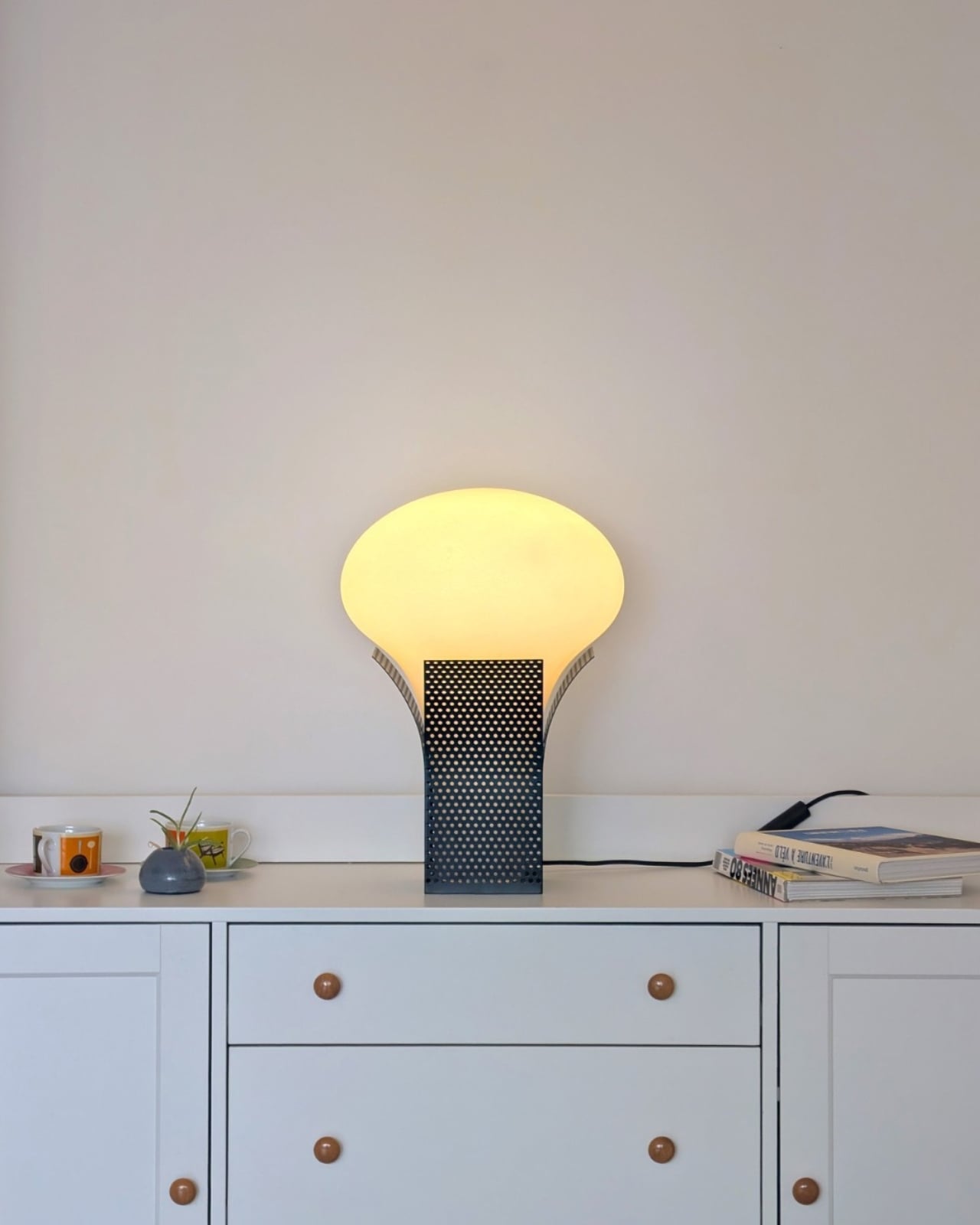
The price places it firmly in considered-purchase territory. Perlo lists Pandora at €1,300 and describes French manufacture, with made-to-order production estimated at six weeks. That makes the choice as much about wanting this particular object as needing another light. The photographs don’t establish reading performance, either. I’d approach it as an atmospheric piece for a console or side table, rather than assume it could replace a dedicated task lamp.
Pandora’s strongest quality is that you can understand its idea without an explanation, then find more to enjoy up close. The flared metal gives the dome an apparent force; the perforations let you peek at what the casing conceals. I’m drawn to that combination of clarity and curiosity. It gives a familiar household object enough character to hold its own on a shelf, without requiring everything around it to become equally theatrical.
The post Pandora Lamp Reveals a Hidden Glow Through Perforated Steel first appeared on Yanko Design.