Vivo V40 Review: Keeping Things Simple and Sweet

PROS:


  • Stylish and slim design

  • Large 5,500mAh battery

  • Impressive triple 50MP camera system

  • IP68 dust and water resistance rating

CONS:


  • Same specs as the Vivo V30 from early 2024

  • No dedicated telephoto camera

RATINGS:

AESTHETICS
ERGONOMICS
PERFORMANCE
SUSTAINABILITY / REPAIRABILITY
VALUE FOR MONEY

EDITOR'S QUOTE:

The Vivo V40 puts a new chic style on a proven no-nonsense phone that delivers a solid experience at an accessible price point.

The smartphone market is a very congested and crowded place, not just with multiple competing brands but with each brand putting out multiple models per generation on multiple tiers. You’d think these companies want to just put their best foot forward, but instead, they try to target different audiences and budgets. Of course, there will have to be certain compromises for devices that aim for a lower market tier, but the question is just how much can you sacrifice before all you’re left with is an unusable, unappealing slab of metal, glass, and plastic. That’s the question that the Vivo V40 has to face in light of its well-received Pro sibling, and we give it a good try to see just how well it can perform under certain constraints.

Designer: Vivo

Aesthetics

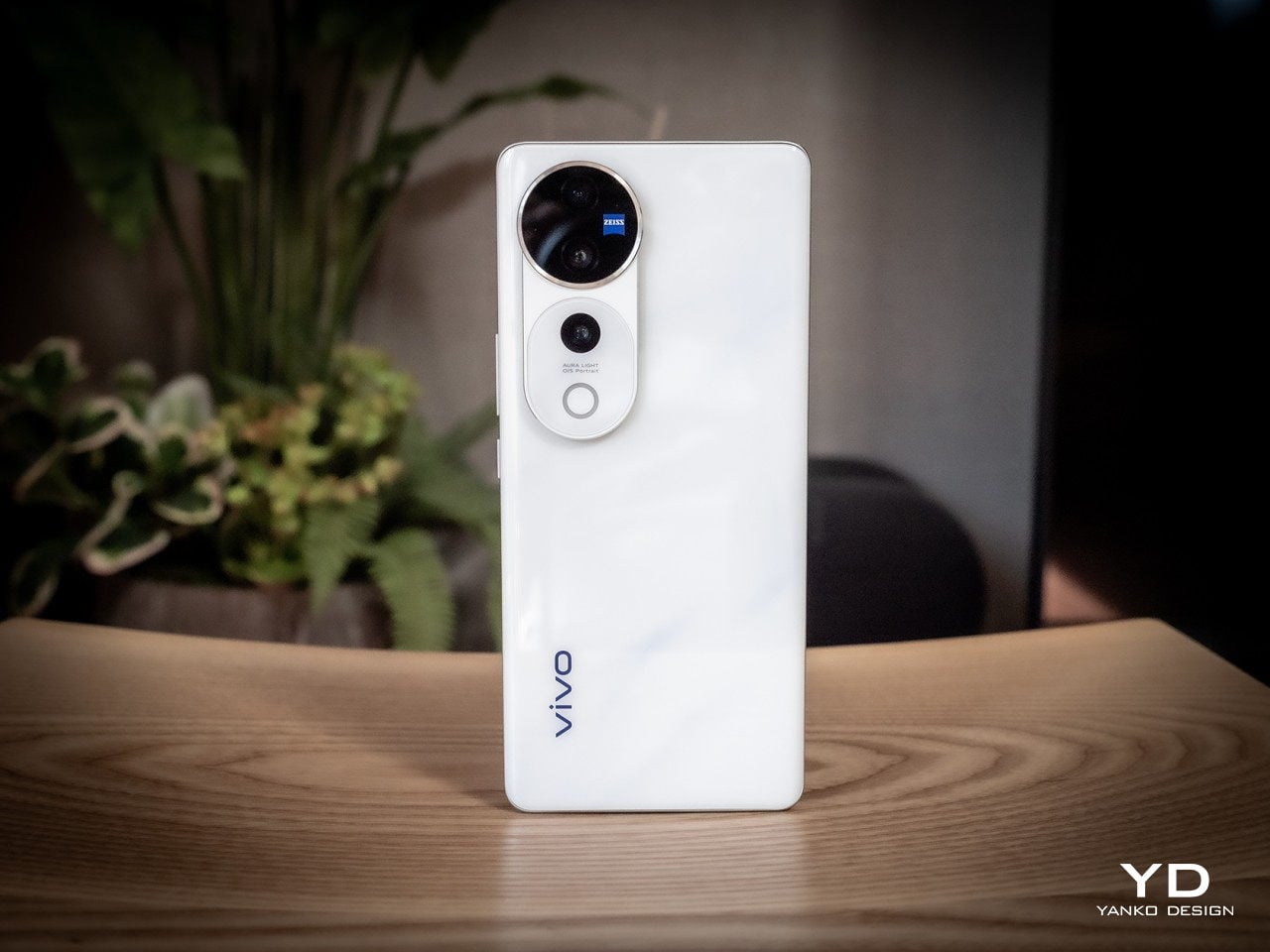
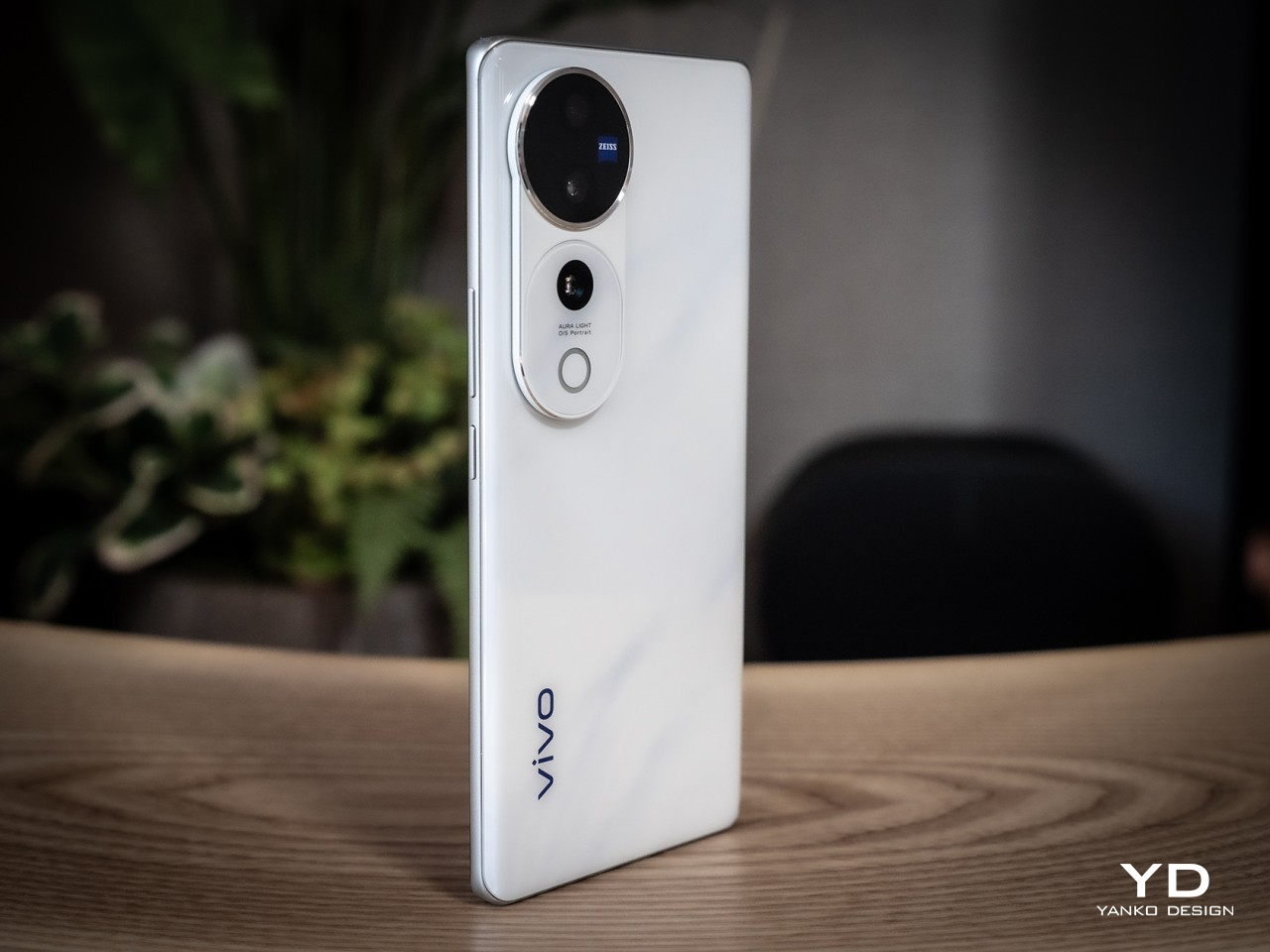
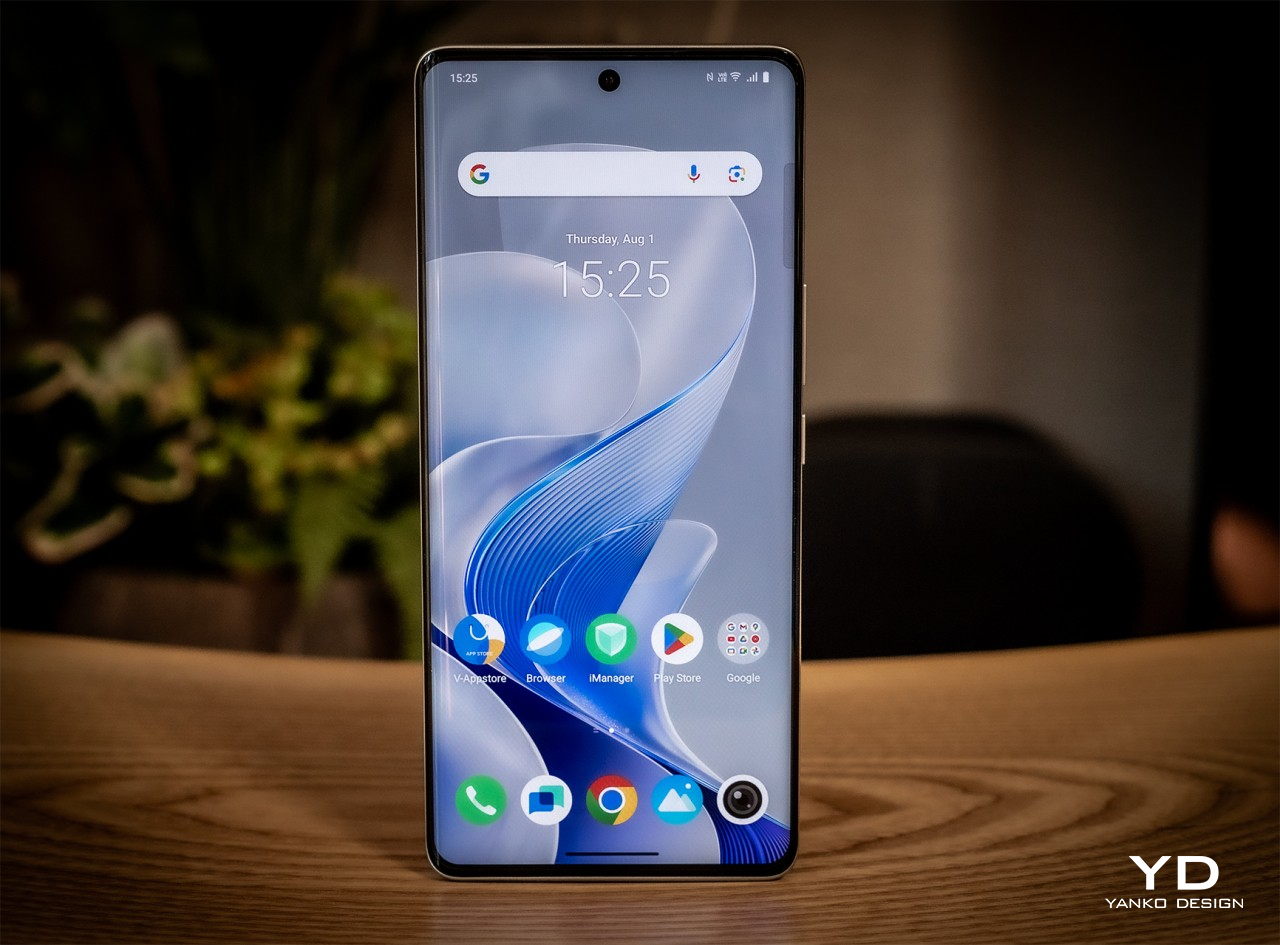
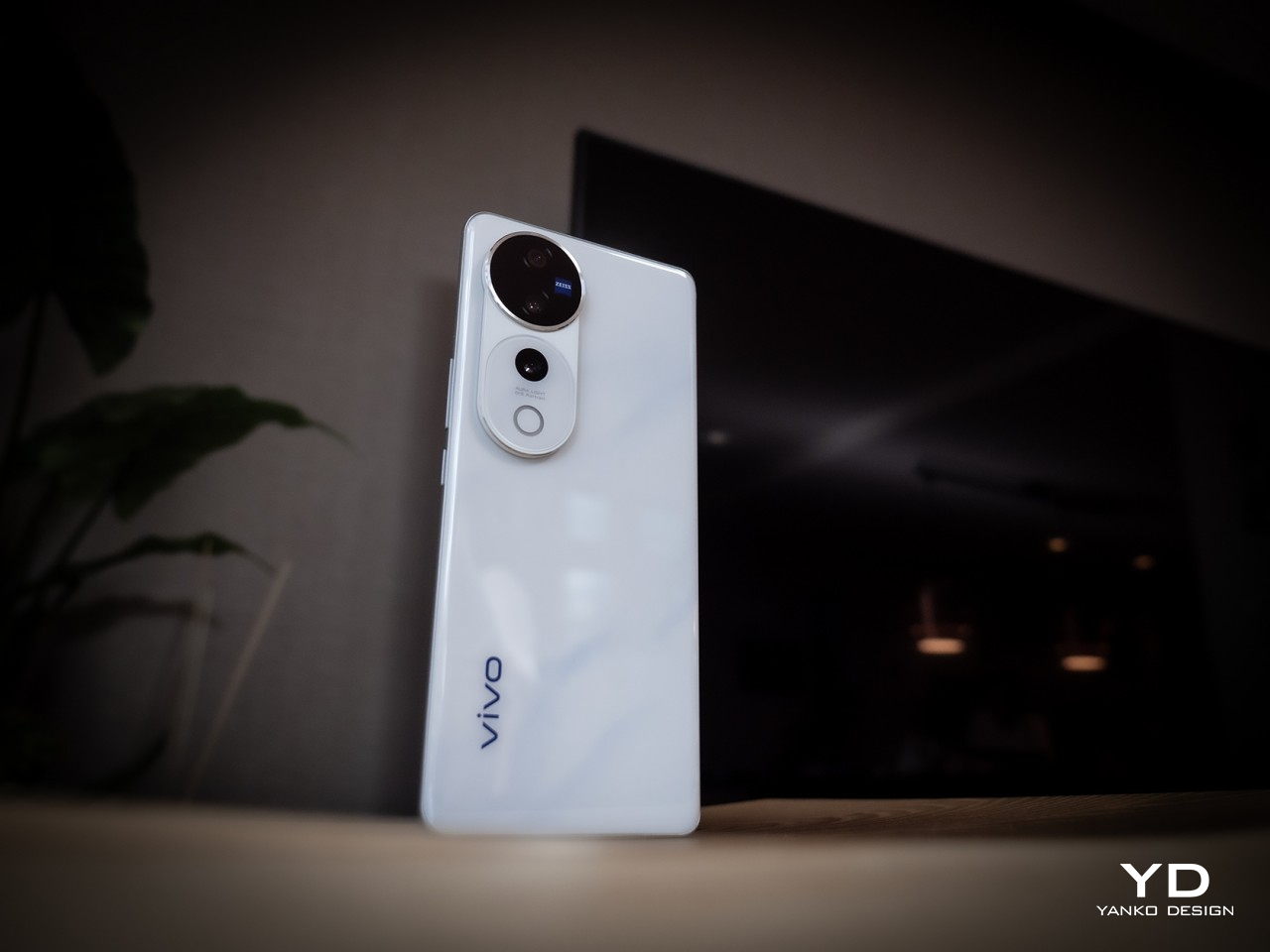
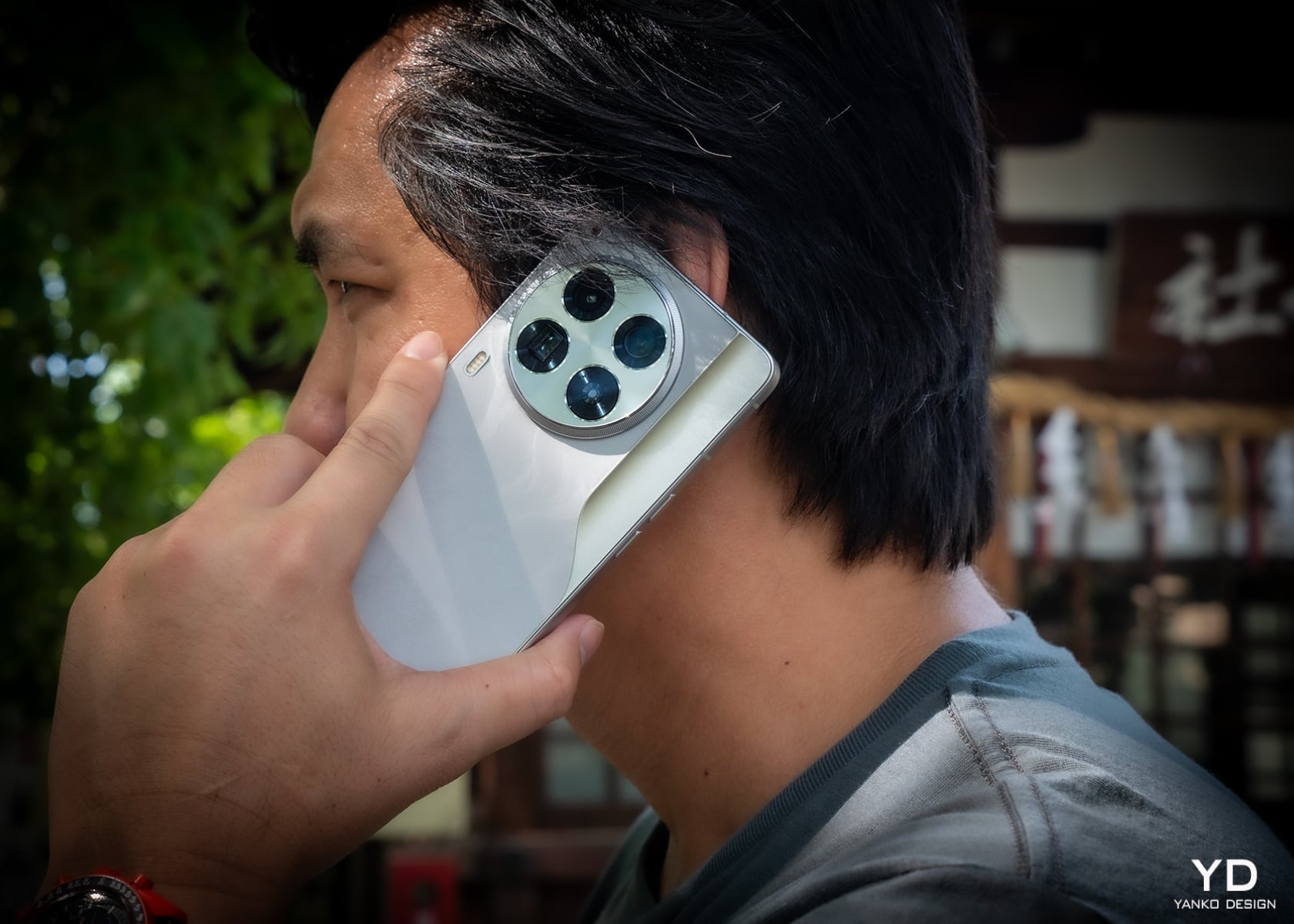
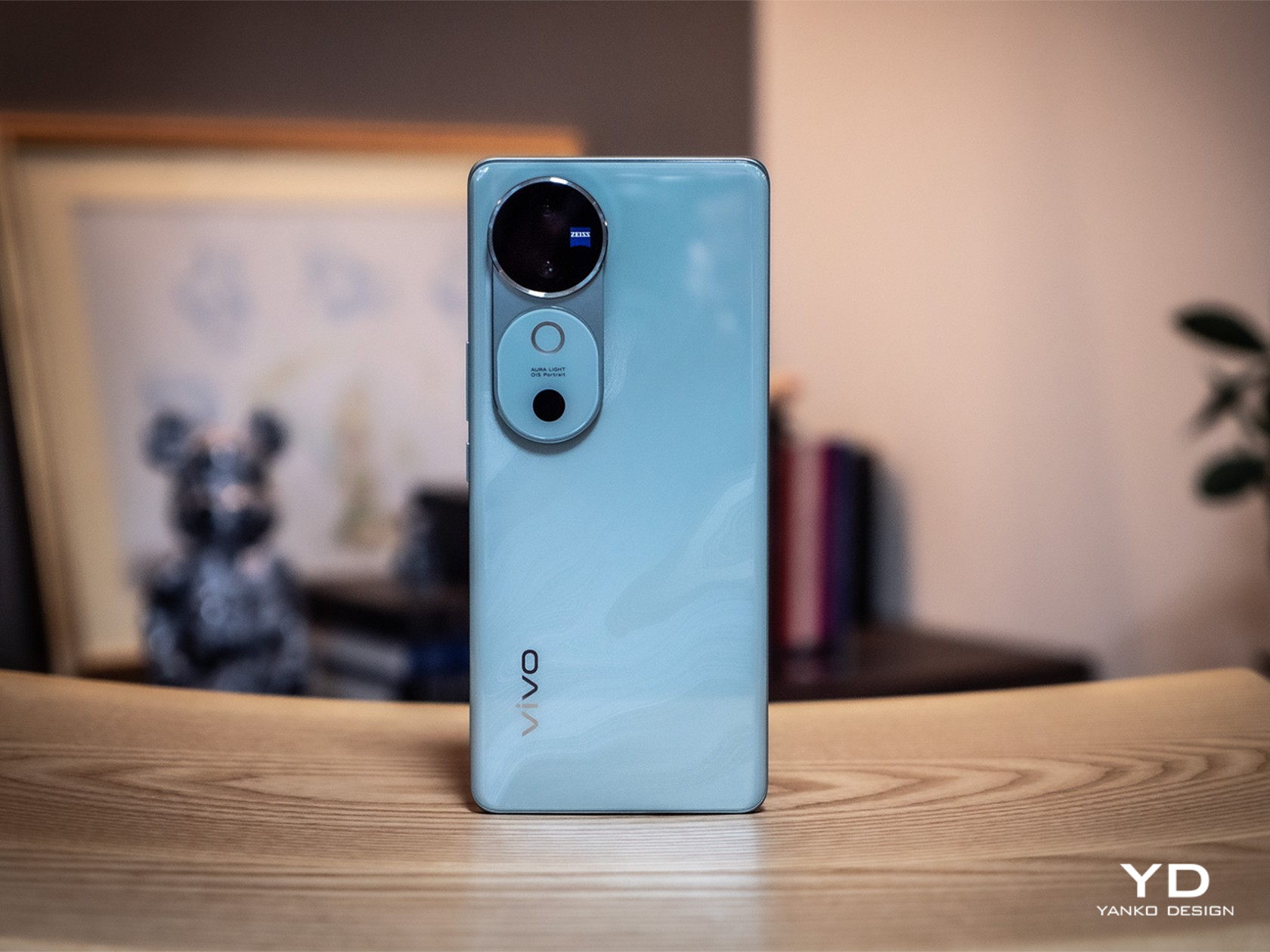
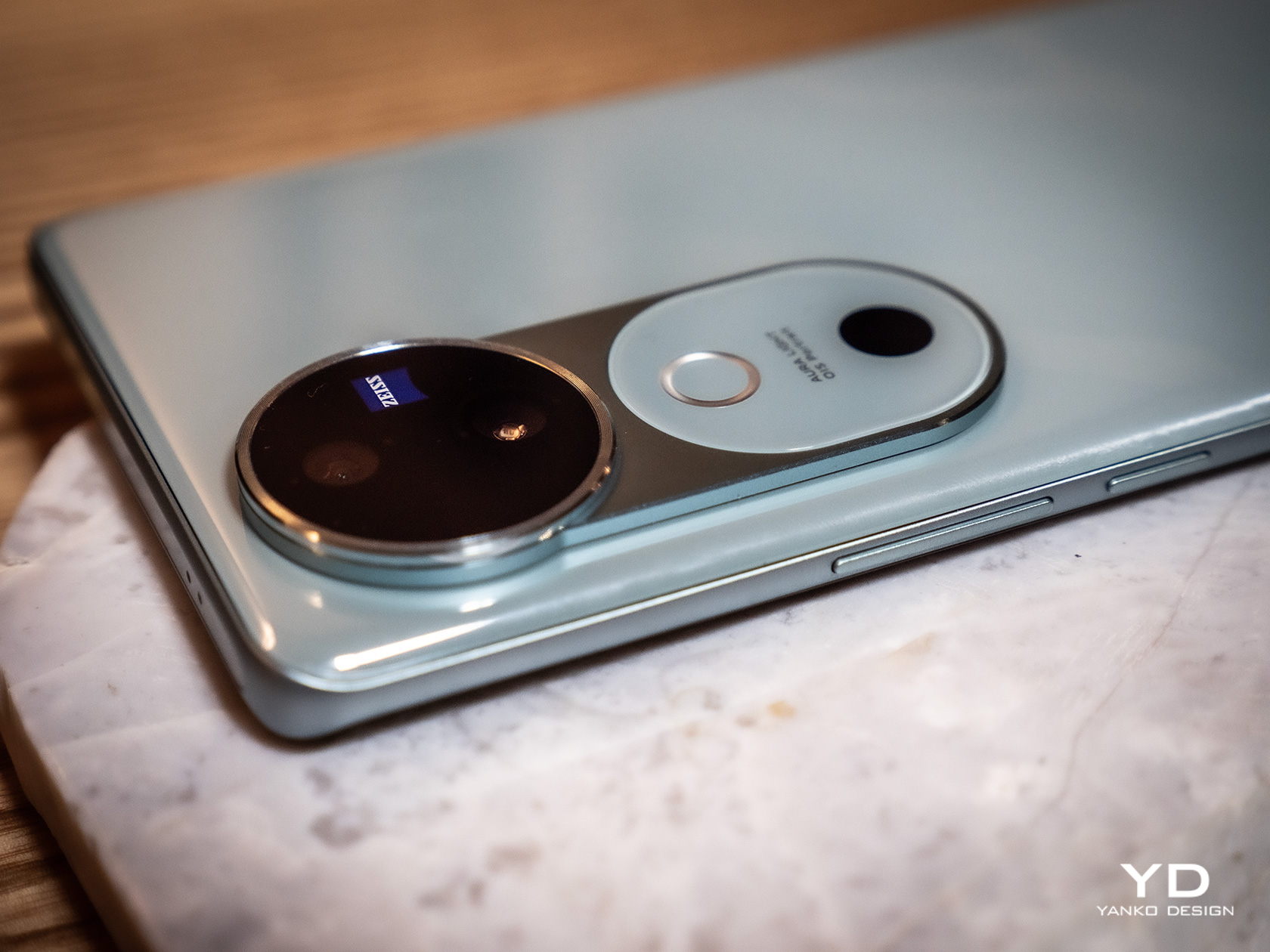
With so many smartphones now sporting more powerful and bigger cameras, it’s no surprise how many are scrambling to fit them in an elegant design and how some are failing to succeed. Given the two 50MP cameras on its back, it’s actually quite a pleasant surprise that Vivo managed to hit the nail on the head with its V40 series. There’s still a noticeable and technically thick bump on the rear, but it is presented in such an elegant way that you probably wouldn’t mind at all.
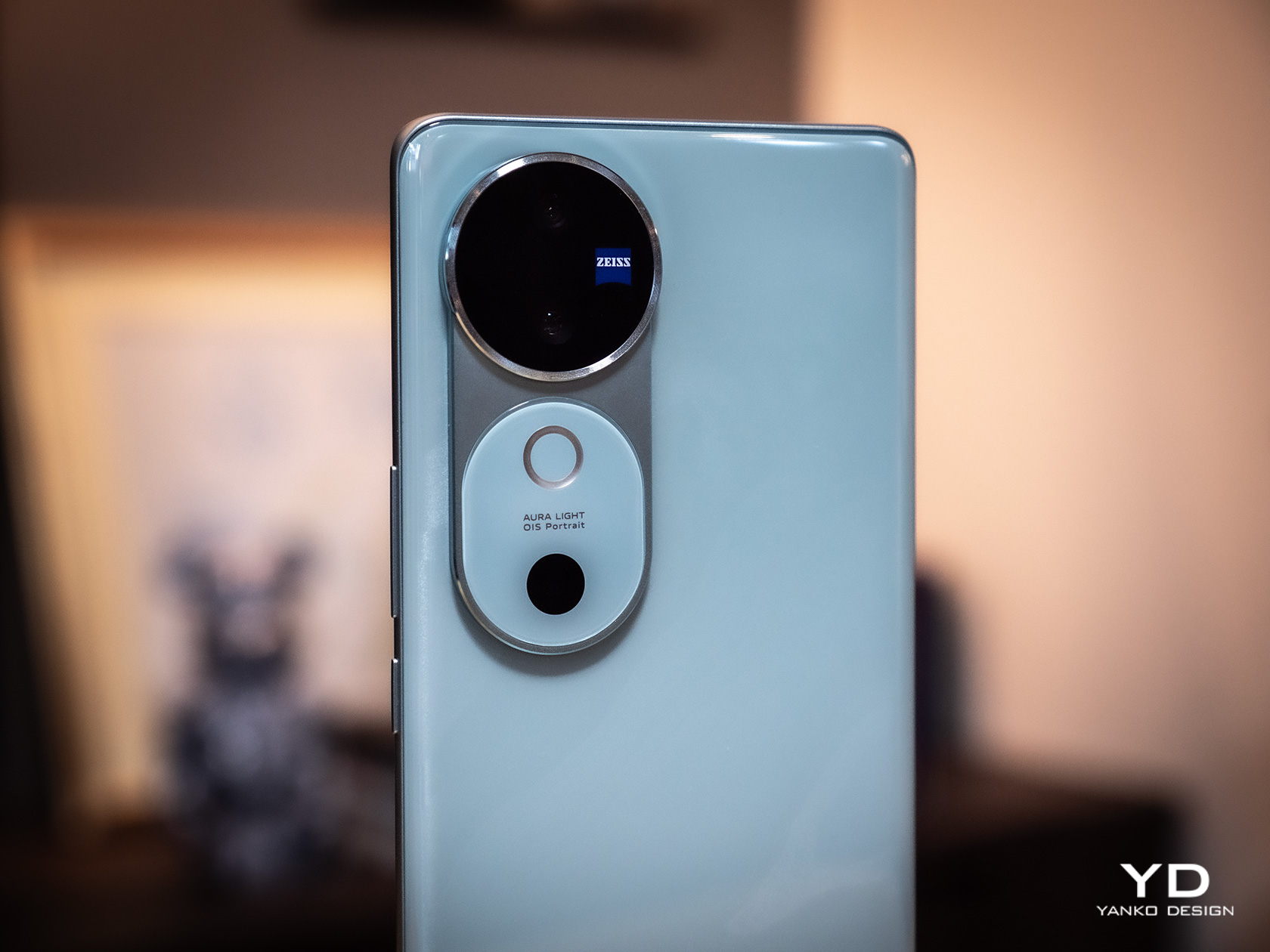
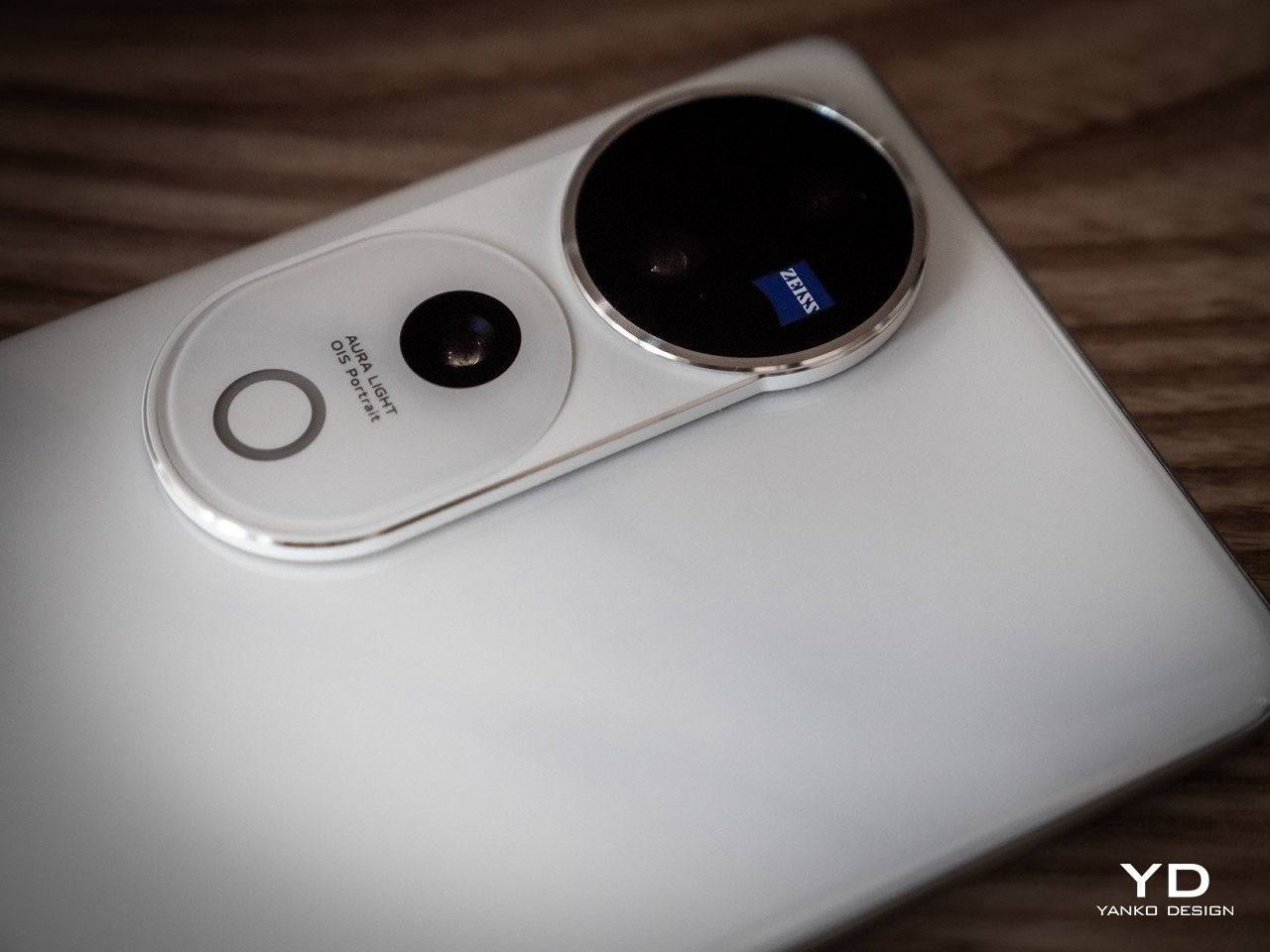
The key to this design is what Vivo dubbed the Gemini Ring, inspired by the constellation of the same name. It pairs two smaller circles in a bigger circle, playing on the “twin” theme. Technically speaking, the lower “ring” with the Aura Light is a bit taller and connects to the ring that houses the actual cameras, resulting in a shape that resembles a sleek keyhole. It’s an interesting visual element that grabs your attention but doesn’t scream at you.

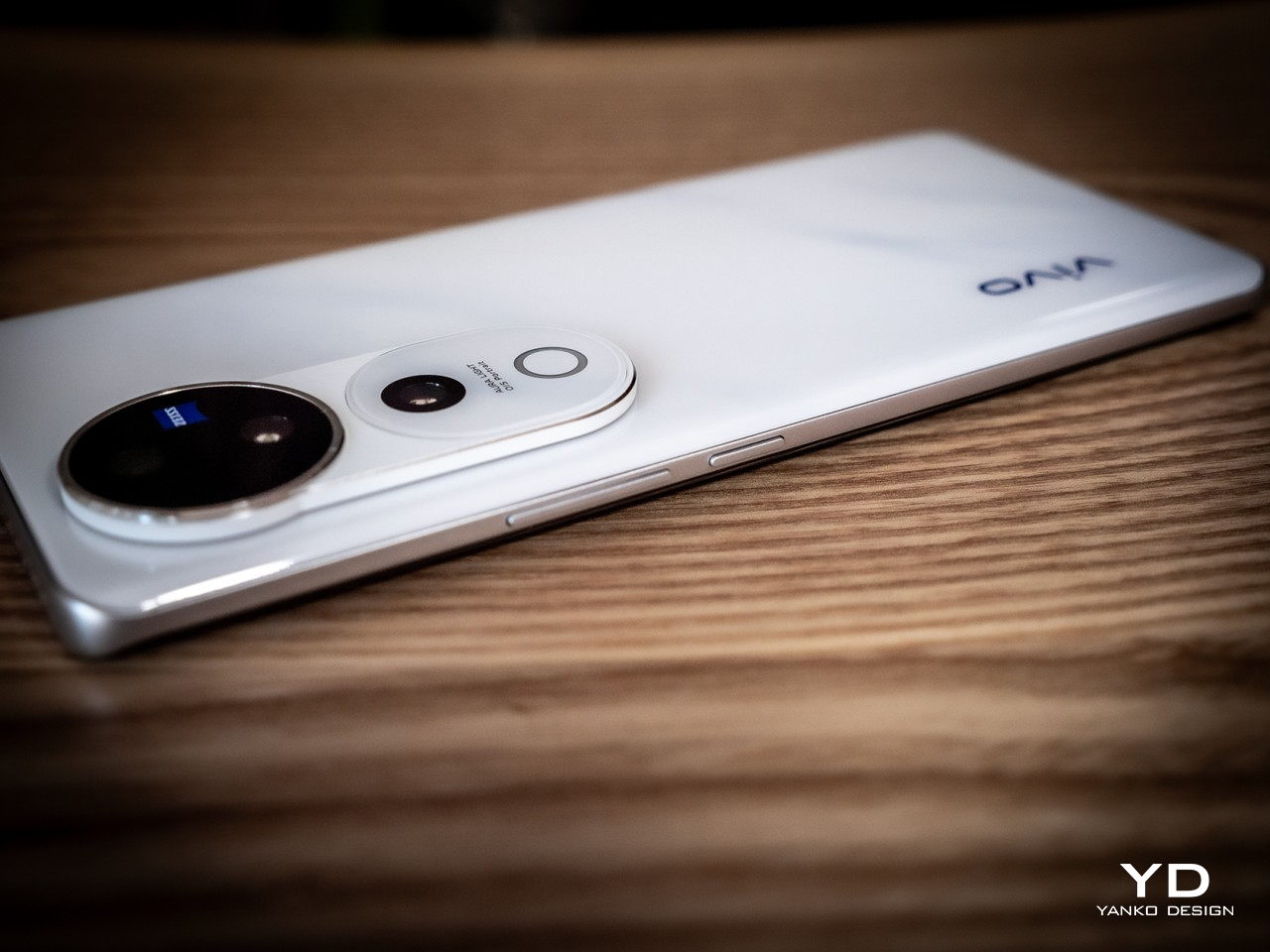
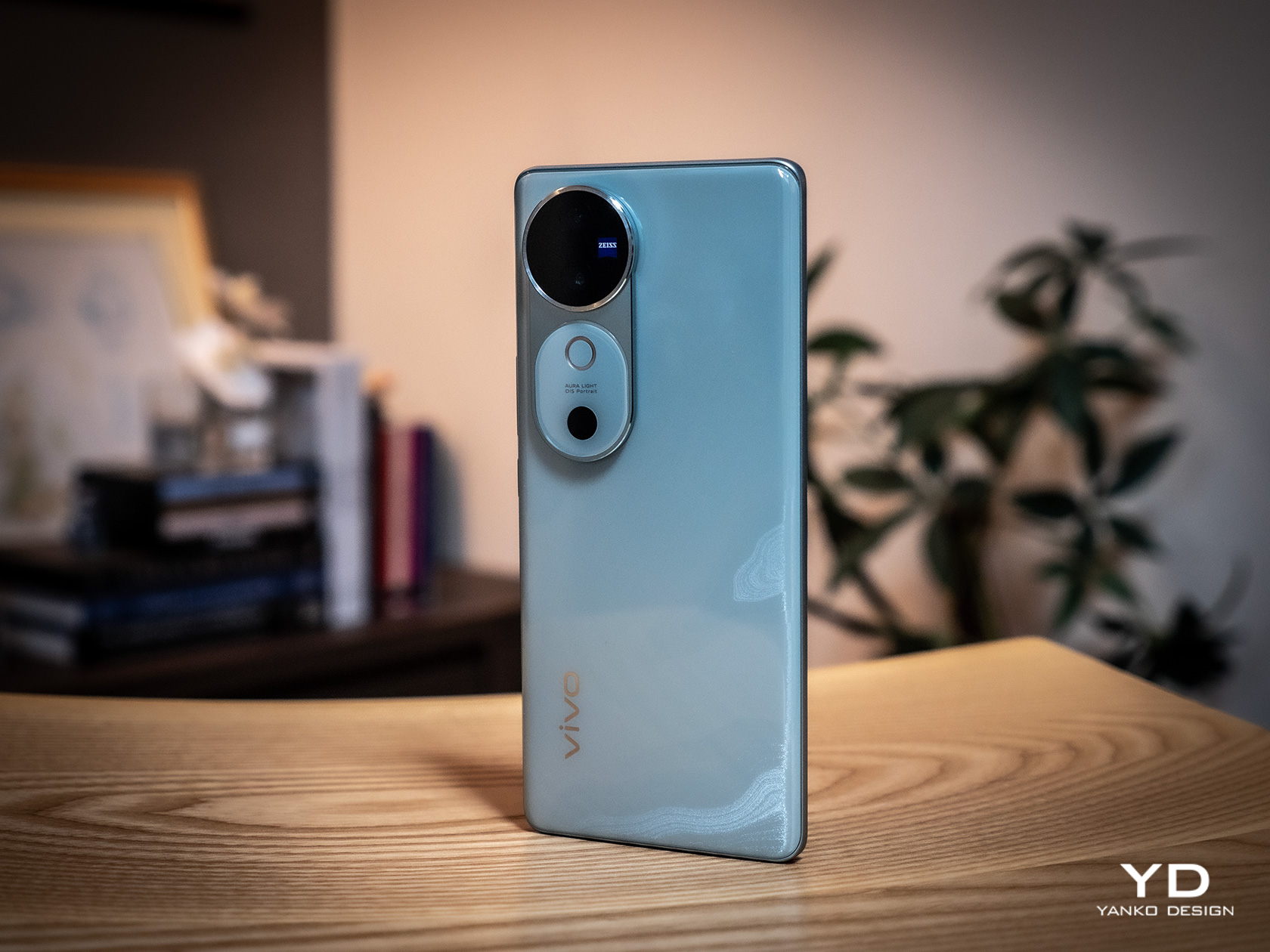
The rest of the Vivo V40’s back is just as elegant as that camera design, with a variety of colors that add an artistic character to the phone. Our review unit, for example, is the Moonlight White which has a few patches of blue that resemble the surface of the moon at night. The back has a very glossy finish which, as you might have guessed, is a fingerprint magnet, though the color of the design at least makes those smudges harder to see.
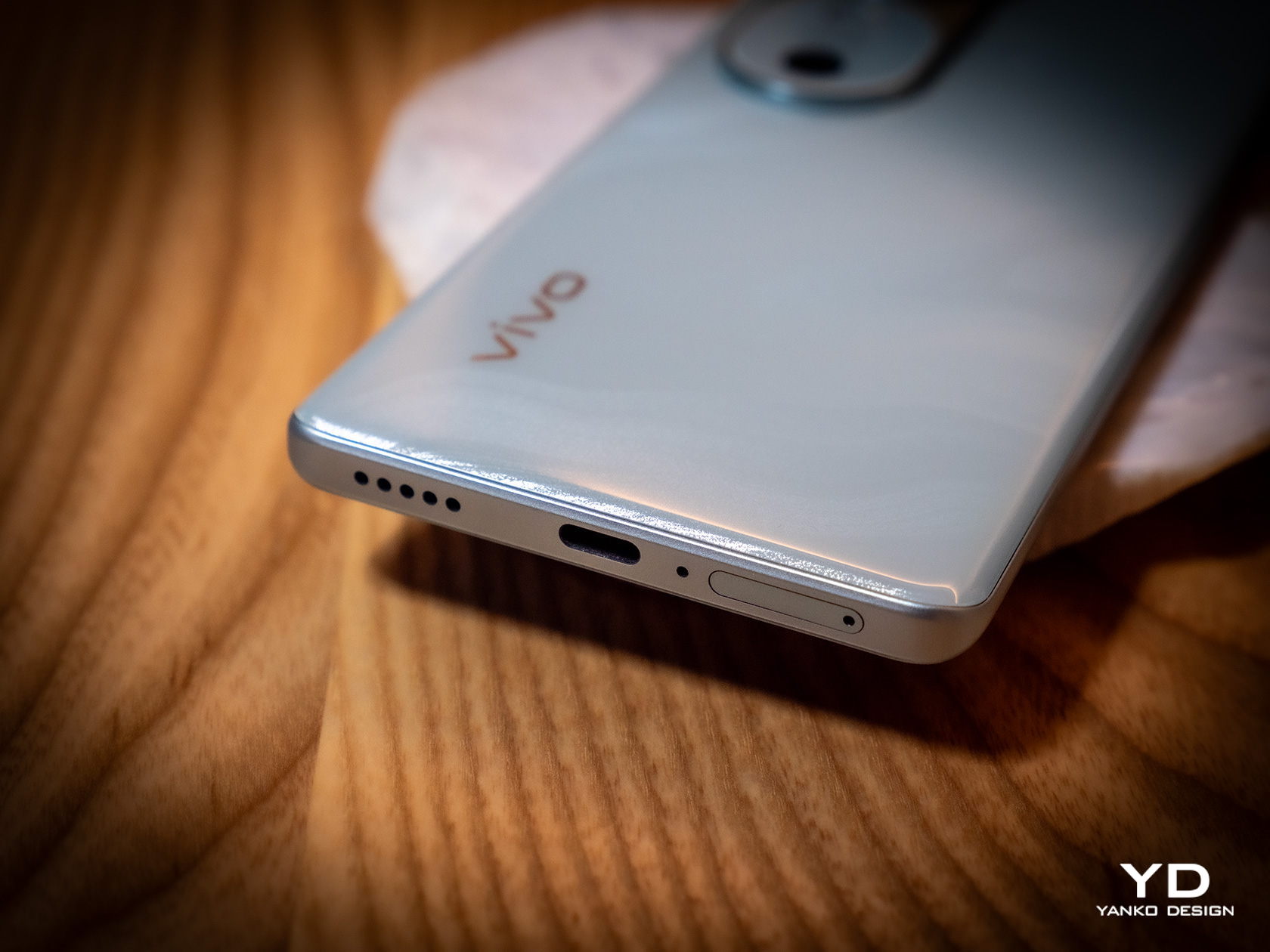
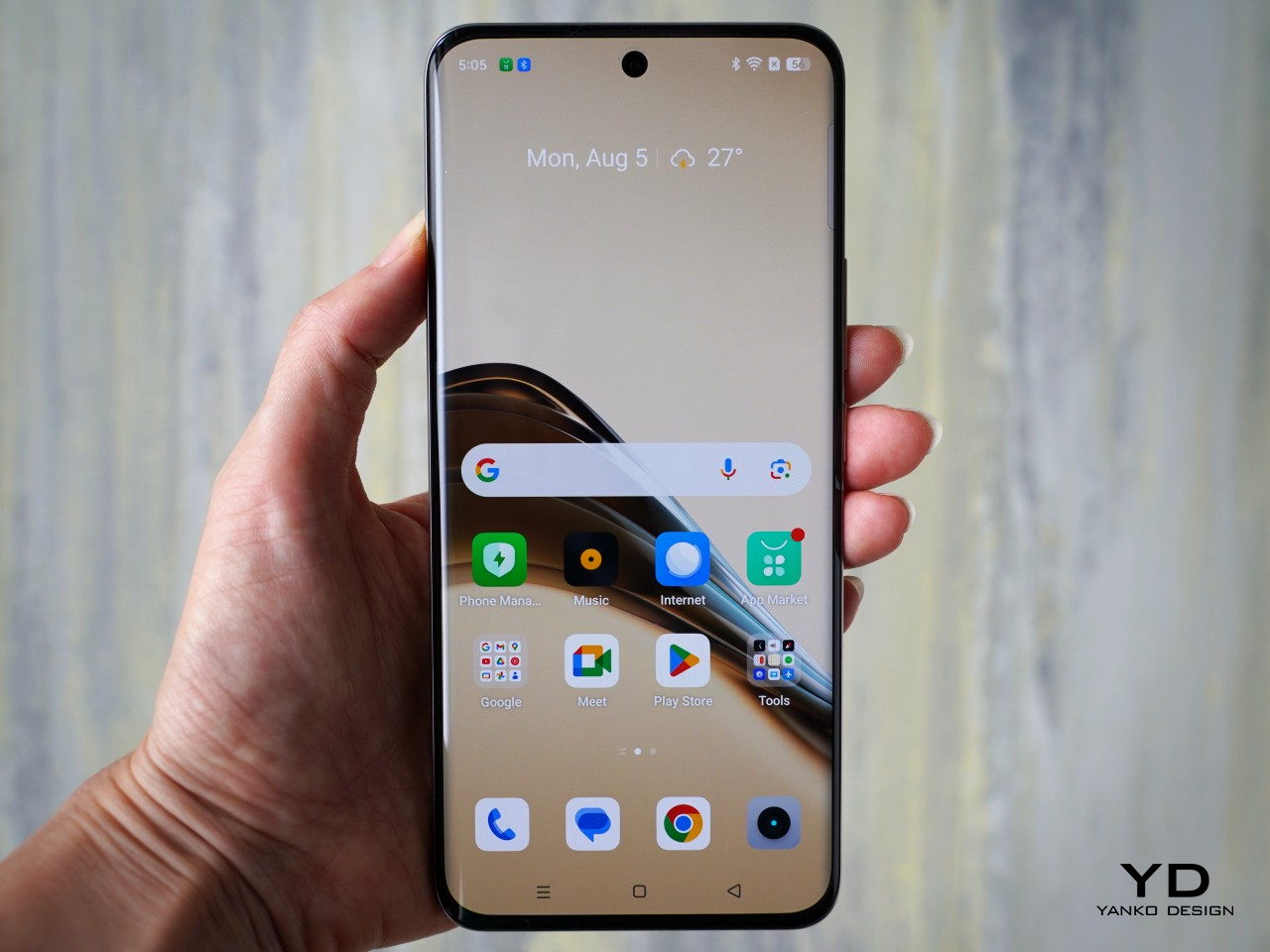
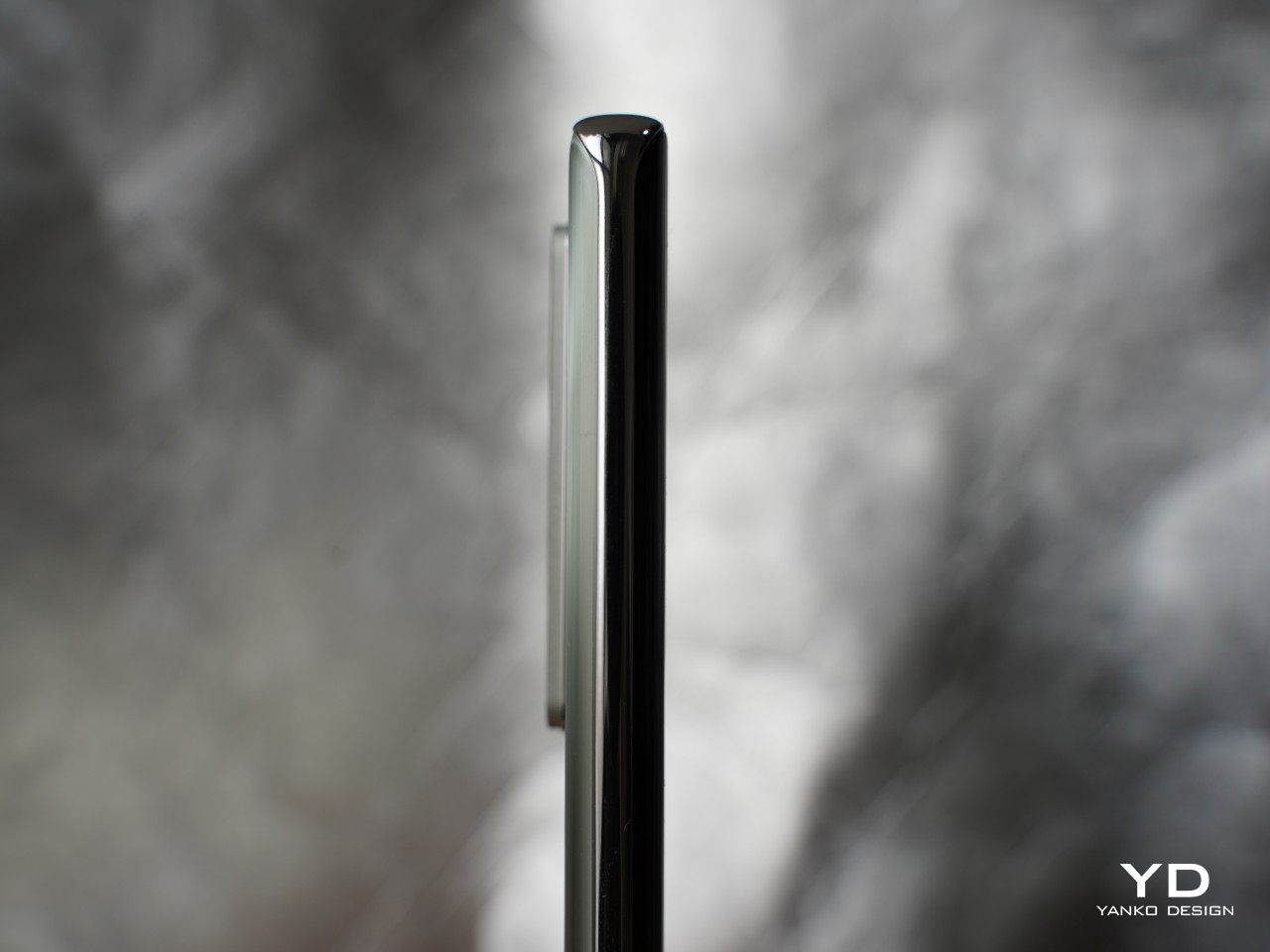
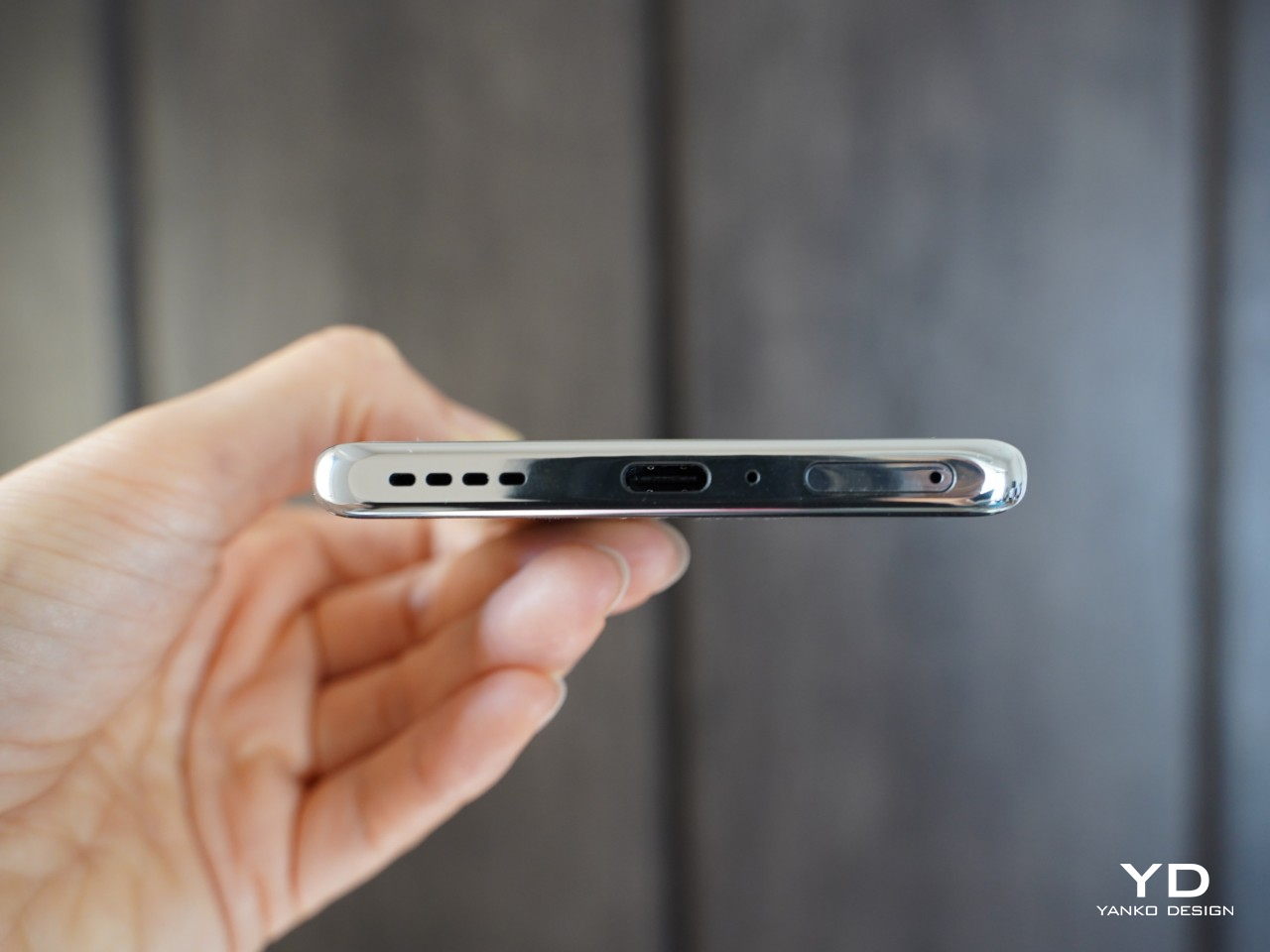
The Vivo V40’s large screen curves to the side, giving it the illusion of a thin profile. We seem to live in an age of flat screens and flat edges, so this “classic” design might offer some relief to fans. It does come with some usability consequences, though, depending on how you hold it, and not everyone finds this aesthetic that appealing these days.

Ergonomics

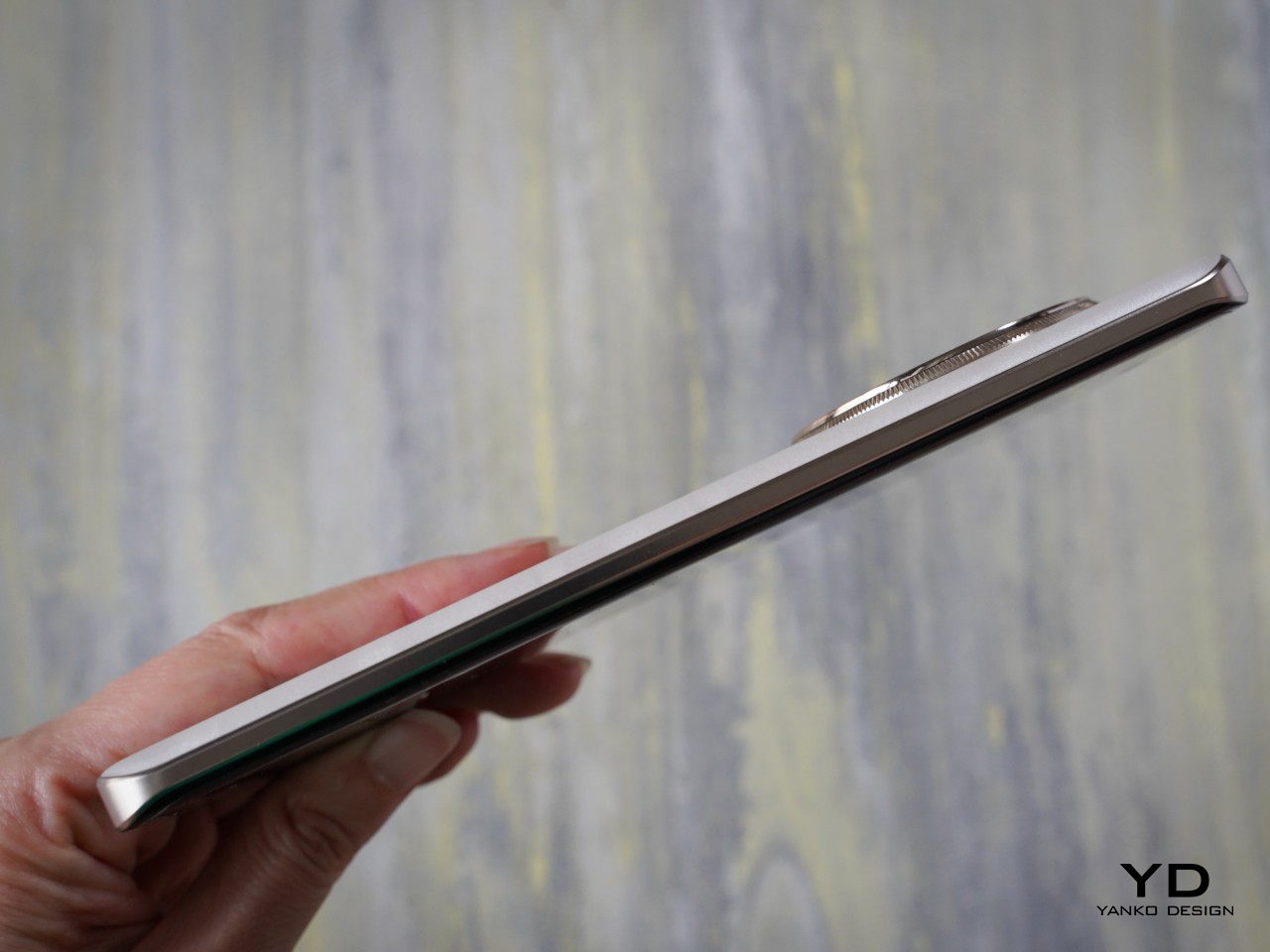
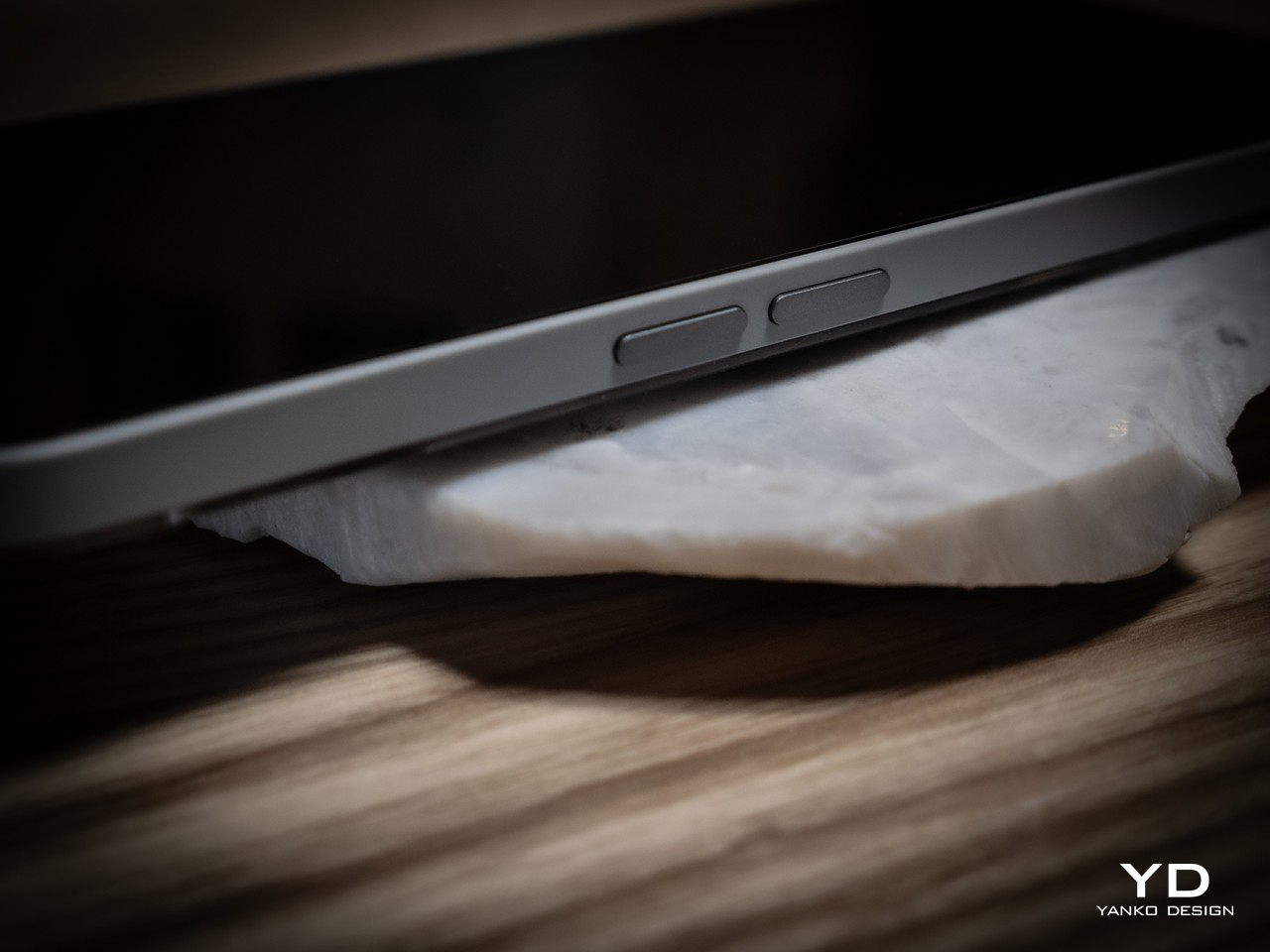
At only 7.58mm thick and weighing only 190g (0.42 lbs), the Vivo V40 is incredibly thin and light, especially when you consider the extra-large battery it packs inside. It won’t strain your hand when holding the phone for a long time, but due to its size, you’re more likely to hold it with two hands unless you’re just idly scrolling away.
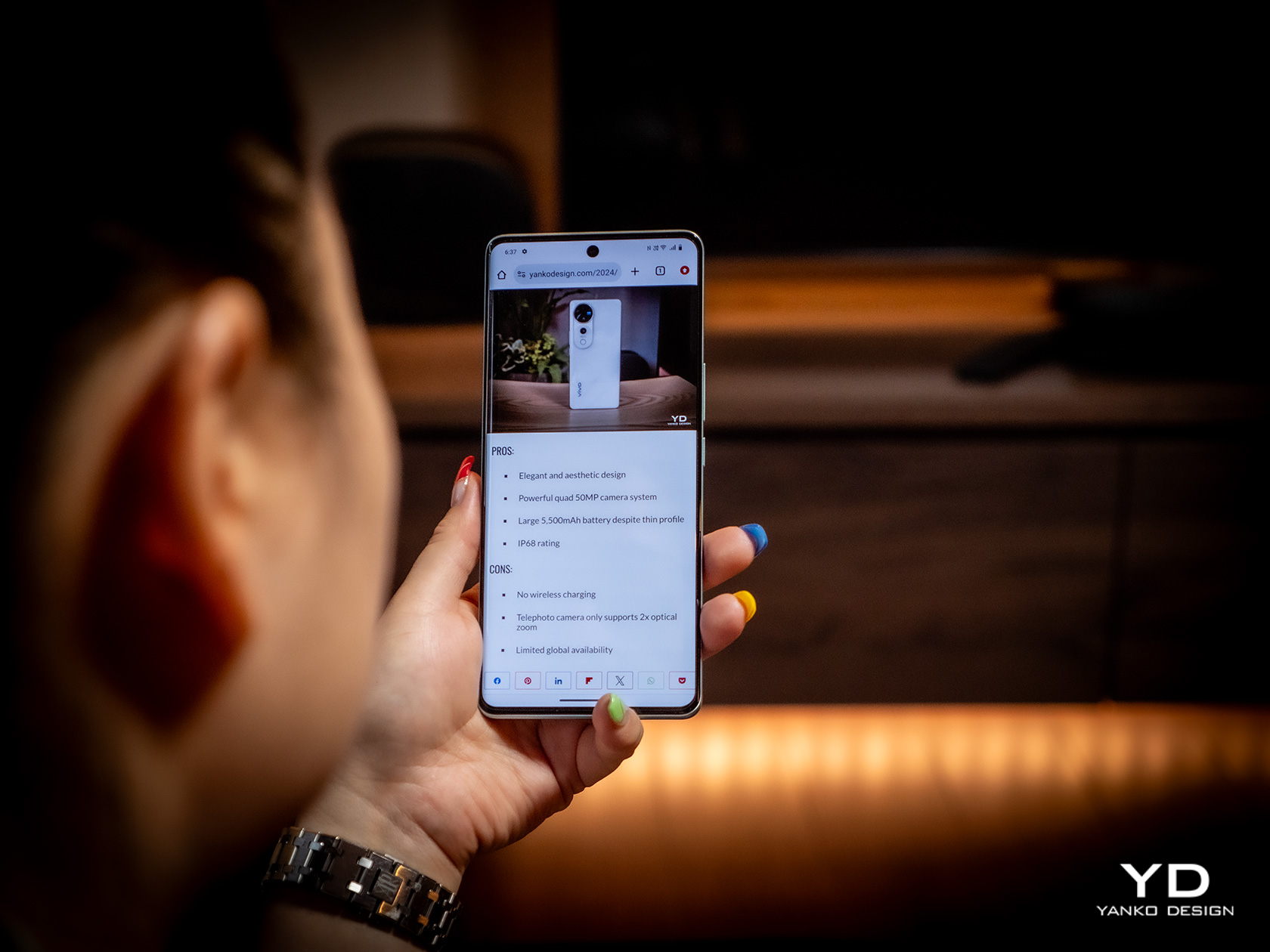
The curved edges of the screen are probably a bit more divisive. More than just a cosmetic design, it means that there will be parts of the screen at the edges that are not always visible, depending on the viewing angle, or might be accidentally triggered by parts of your palm or fingers. It doesn’t happen all the time, otherwise, this kind of design wouldn’t have lasted a year, but it might be something to consider when you notice “ghost” touches from time to time.

Performance

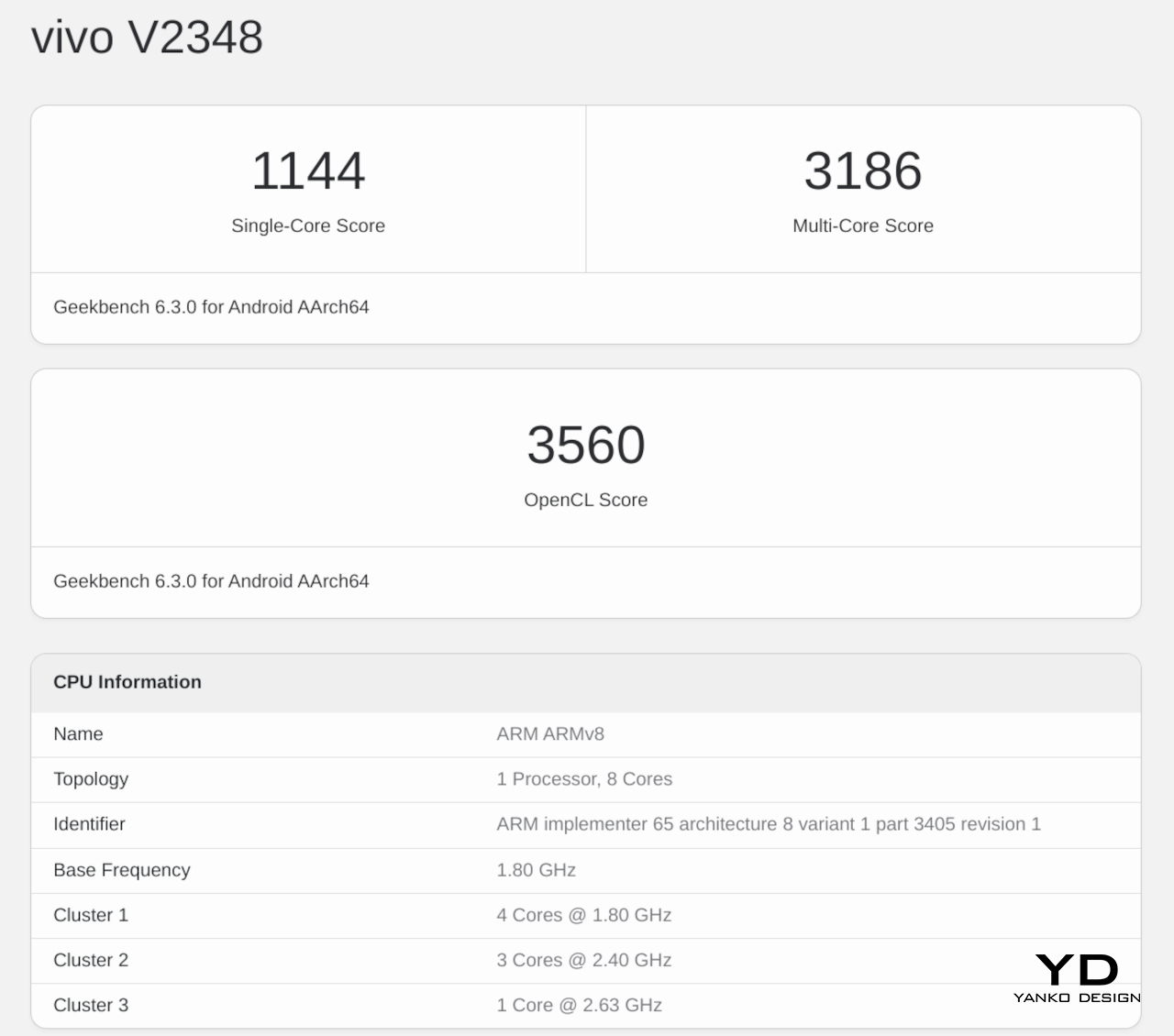
Underneath the sleek exterior of the Vivo V40 lies a rather sneaky secret. In many aspects, this is pretty much the Vivo V30 from early 2024, just with a few minor upgrades. It has the same Snapdragon 7 Gen 3 processor and the same basic memory and storage configuration. There are other similarities as well that we’ll get to later, but the bottom line is that, in terms of performance, you aren’t going to see a distinct generational upgrade.
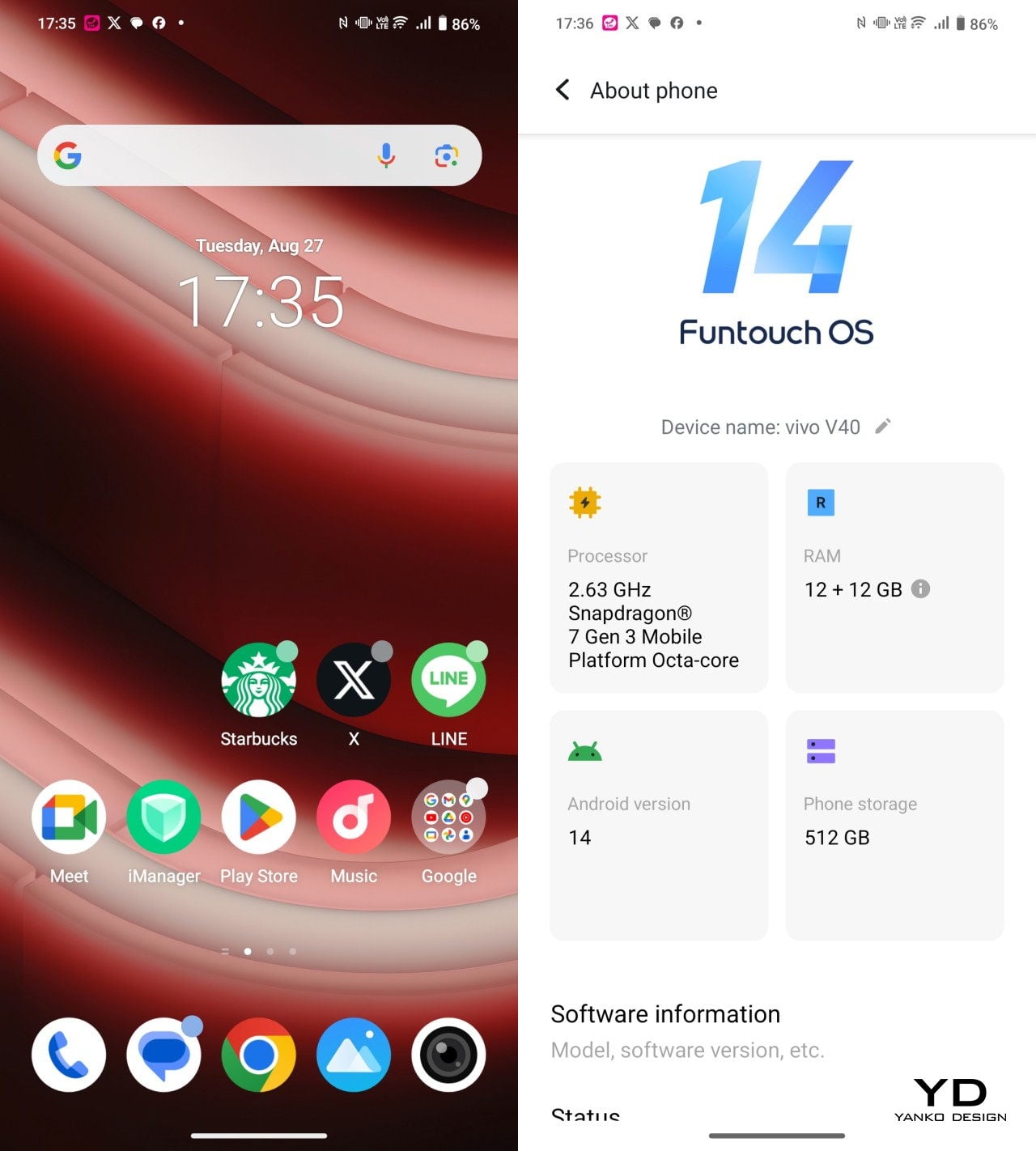
That means that what was true for the Vivo V30 is true for the Vivo V40, which thankfully means you do get a solid mid-range performer. With enough RAM allocation, which is 12GB plus another 12GB taken from the 512GB storage of our review unit, you have plenty of silicon muscle to get apps moving smoothly and fluidly. You’ll have to turn down the settings for games, but you’ll still be able to enjoy the latest action-packed titles. That said, there is a Snapdragon 7+ Gen 3 at this point, so it’s rather disappointing that Vivo didn’t push for that extra punch.
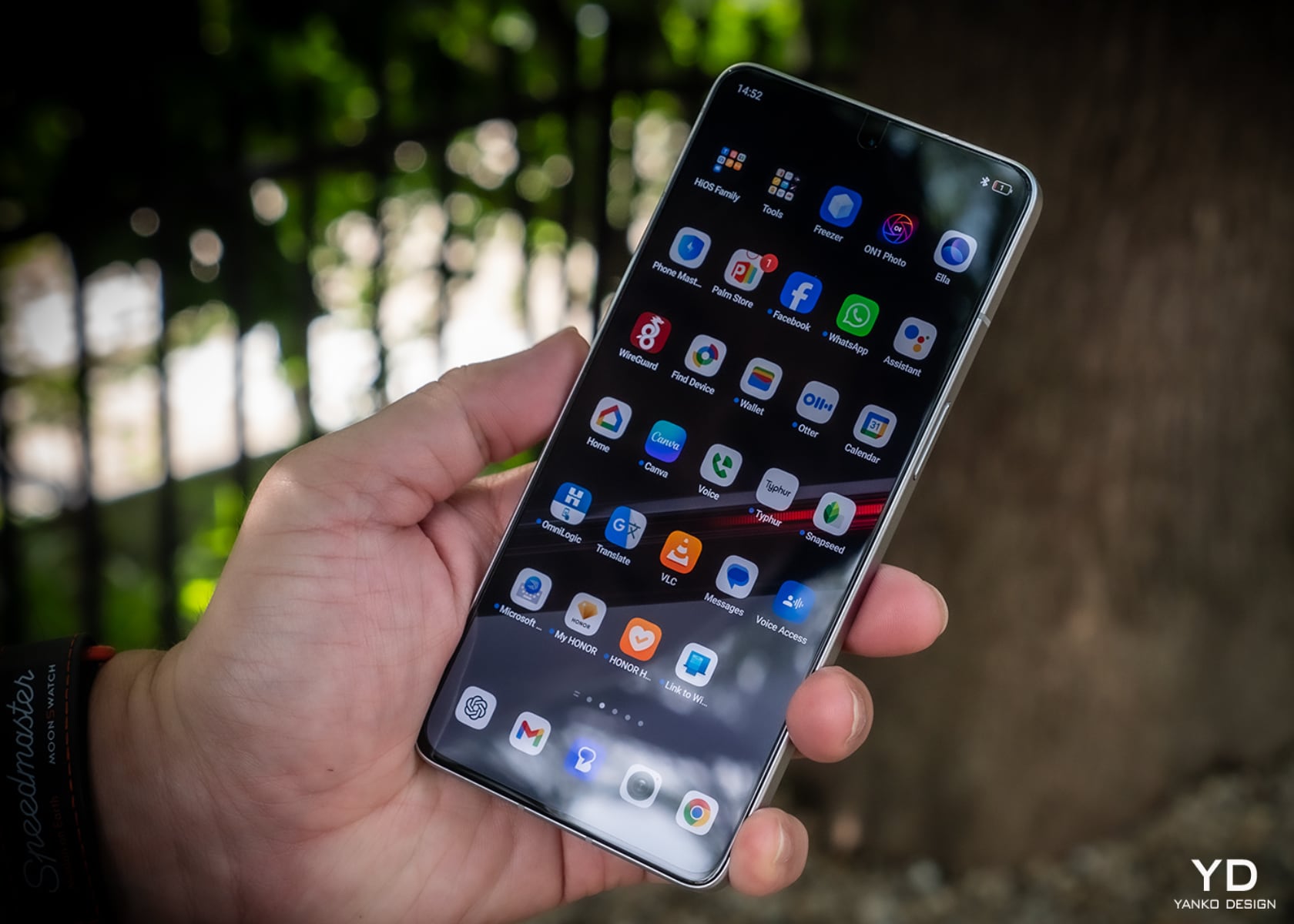
The screen is almost the same, a 6.78-inch 2800×1260 120Hz AMOLED display that’s quite vibrant and crisp. This year’s model, however, upgrades the brightness by a considerable margin, which makes the phone even more usable outdoors. It supports HDR10+ but oddly leaves out Dolby Vision, something that might be of concern to video aficionados.
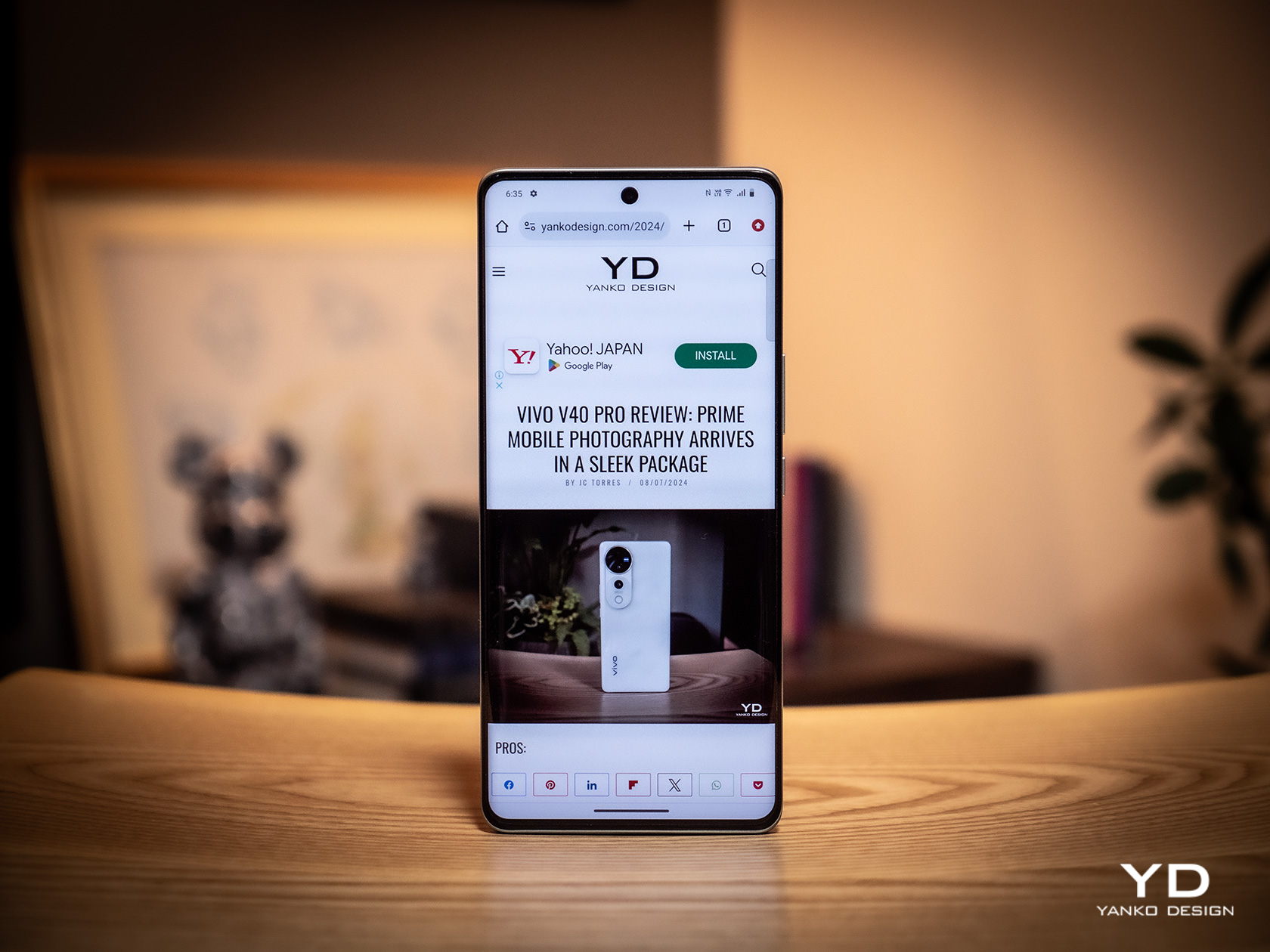
The biggest difference between the two generations is the 5,500mAh battery inside the Vivo V40, a whopping 500mAh increase from its predecessor. It does make the phone heavier and thicker than the V30, but not by much. The battery life gains pretty much make up for that anyway, with an uptime of almost 20 hours, depending on usage. It charges fast, too, at 80W, though not exactly record-breaking. The plot twist here is that Vivo doesn’t include a charger in the box, so you’ll have to find an 80W charger or higher on your own.


The cameras are where it’s all at, of course, and here the Vivo V40 doesn’t disappoint except in one aspect. Again, it’s the same combination of a 50MP f/1.9 main camera with OIS and a 50MP f/2.0 119-degree ultra-wide shooter. The front also gets a 50MP front-facing camera capable of shooting in 4K 30fps, which should probably make you a star in video meetings.

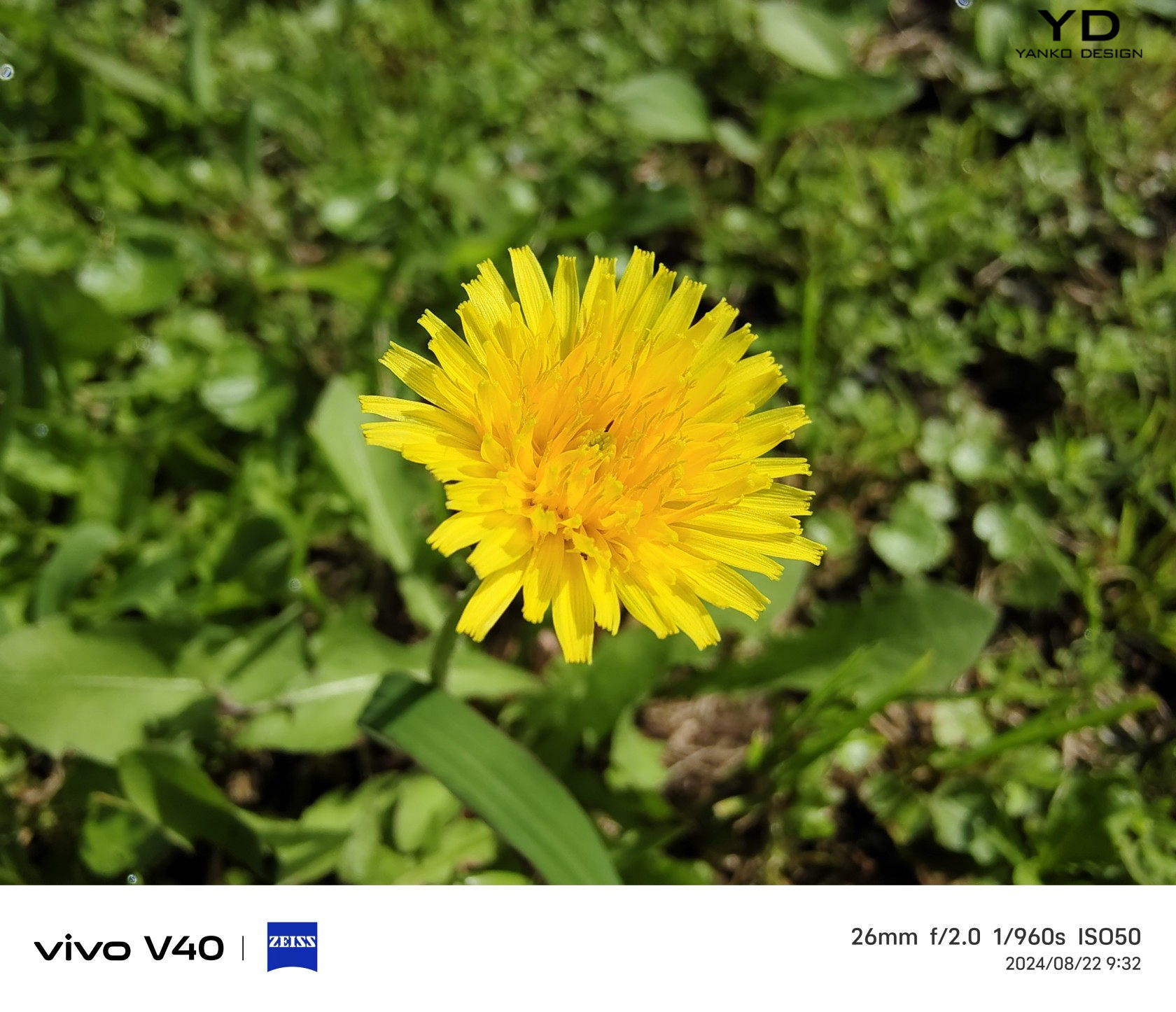
In practice, these ZEISS-tuned cameras deliver as promised, producing detailed and clear shots with natural colors and good exposure. That’s true both in broad daylight as well as low-light or nighttime shots, though the latter sometimes tend to get a little bit overexposed to the point of looking unnatural. Bokeh is pleasant and the separation of foreground and background is quite accurate. The Studio-quality Aura Light ring offers more flexibility with light temperature and intensity, creating more natural-looking lighting when needed. This stellar performance stops when you try to zoom in, though, even at just 2x. At that point, quality starts to degrade, which is to be expected from a camera system without a dedicated telephoto lens.

Sustainability

Vivo has been making big steps in improving its commitment to a greener future, and every little bit counts toward that goal. It might not be using recycled metals and plastics yet, but it might be slowly but surely getting on with the times. The Vivo V40, for example, doesn’t ship with a charger, helping decrease the potential e-waste from owning multiple chargers that do the same thing. Yes, you might have to buy a compatible charger if you still don’t have one, but that’s an investment that you will be able to use for other devices as well.

Perhaps the bigger step forward is taking this mid-range V series phone’s durability to the next level. From a measly IP54, the Vivo V40 now boasts an IP68 rating, putting it on the same level as more expensive flagship smartphones. What this means is that your phone won’t die on you so easily, prolonging its longevity and delaying its inevitable fate in the trash heap or recycling plant.
Value

To be painfully blunt, the Vivo V40 doesn’t exactly have a standout feature. Yes, the 50MP ZEISS cameras perform well, but other mid-range phones can match its output and even have a telephoto shooter in the gang. Its hardware isn’t exactly fresh or notable, but it does get the job done. The slim and sleek design is definitely eye-catching, but they always say that beauty is in the eye of the beholder.

Instead, it’s actually the sum of its parts that give the Vivo V40 its value. It’s a solid performer with dependable cameras wrapped in a premium-looking design, delivering long battery life and durability on par with high-end rivals. And when you slap on the $430 price tag, you basically get a mobile partner that you can rely on, as long as you don’t make too many demands.

Verdict

It is getting harder to stand out in a very crowded smartphone market, and some vendors have started making gimmicks, adopting exaggerated designs, or adding over-the-top features just to differentiate themselves. Sometimes it works, but most of the time you end up with an outlandish design that costs more than it’s worth. In contrast, the Vivo V40 opts for a simple yet solid design, delivering a well-rounded experience with a camera system that you can be proud of and a large battery that won’t let you down.
The post Vivo V40 Review: Keeping Things Simple and Sweet first appeared on Yanko Design.
Google Pixel 9 Pro and Pixel 9 Pro XL Released with AI-Driven Features and Superior Display Unveiled

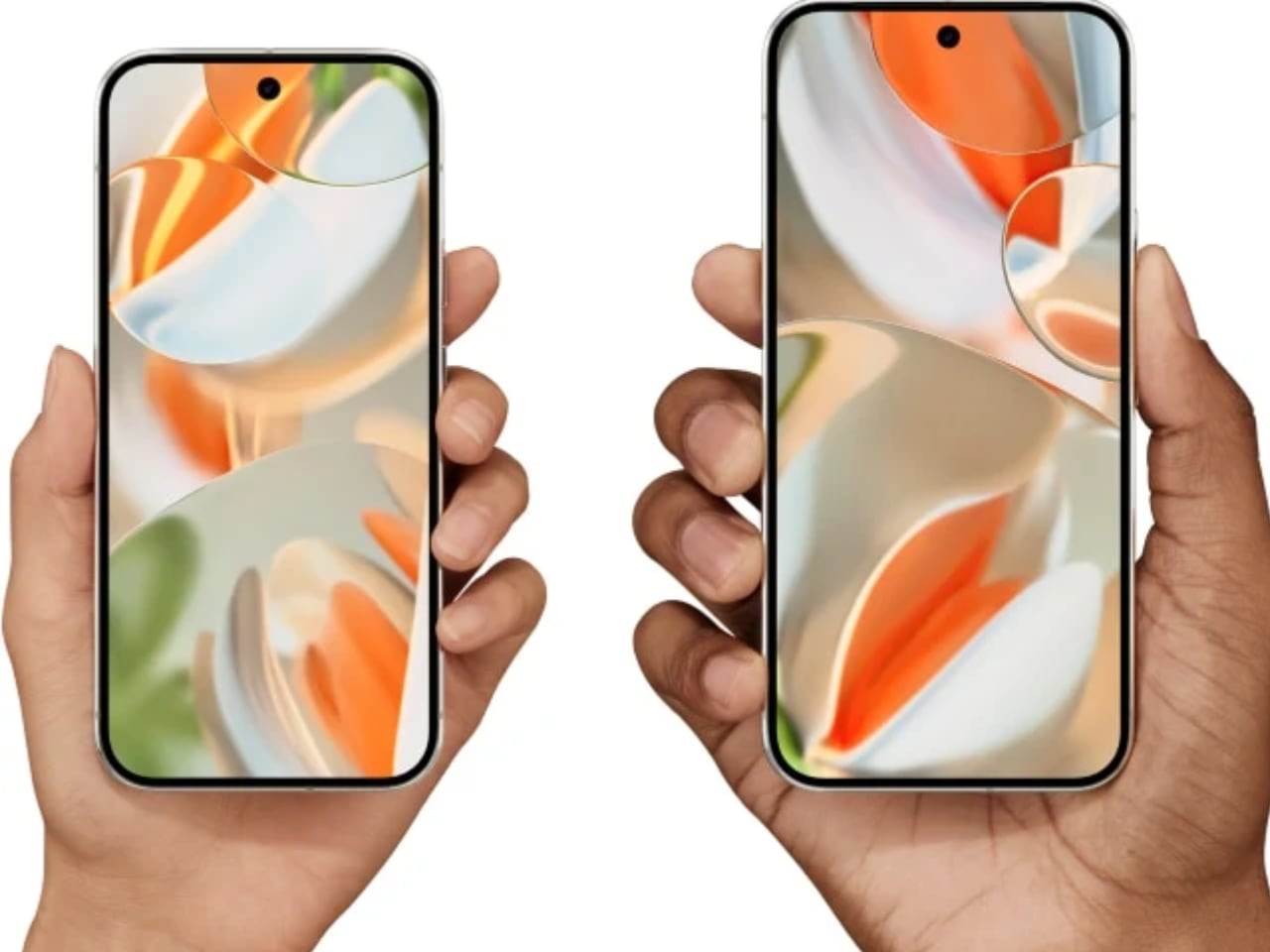
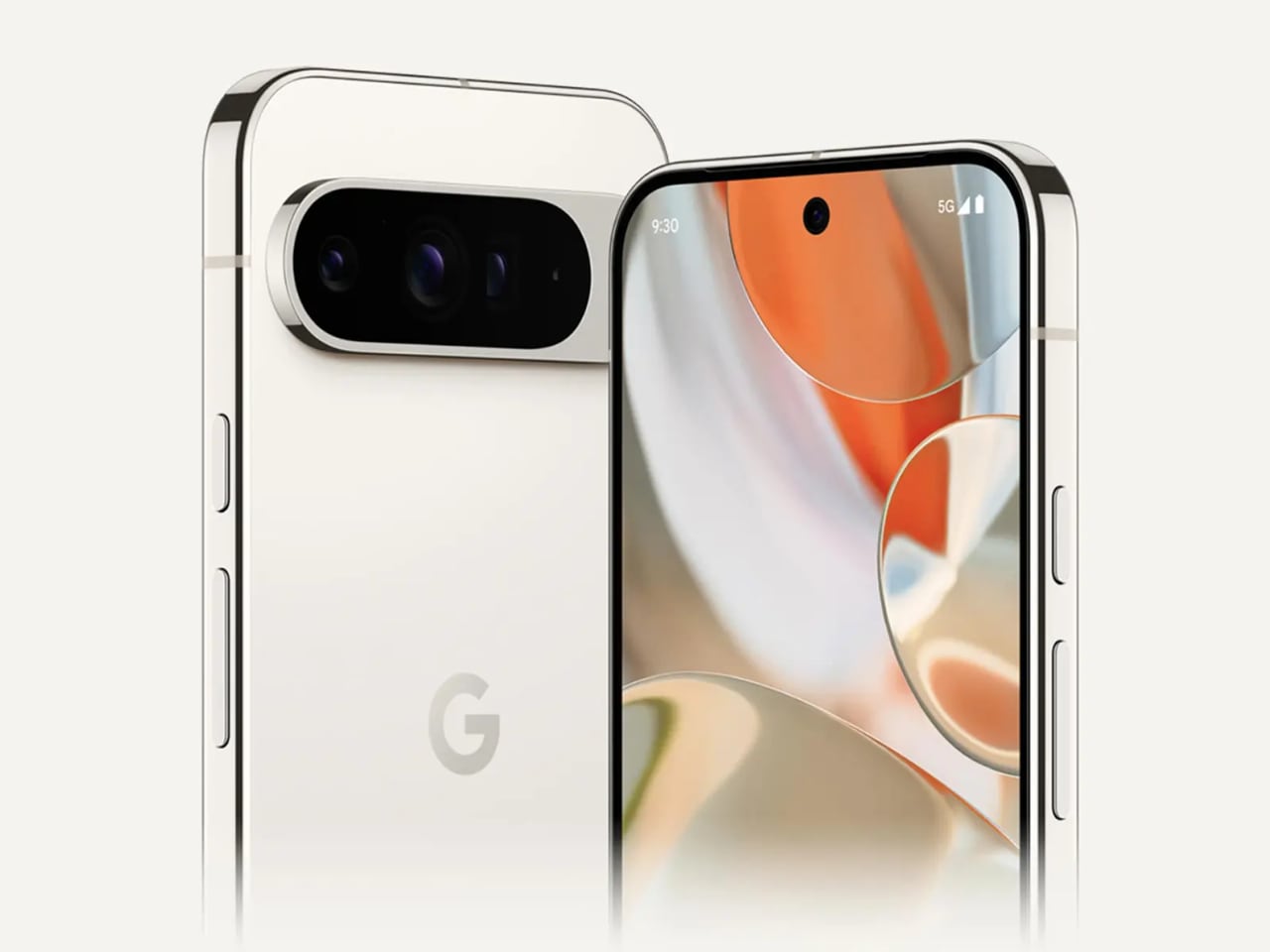
Google has unveiled the Pixel 9 Pro and Pixel 9 Pro XL, highlighting advanced AI capabilities, cutting-edge camera systems, and vibrant displays. Powered by the Tensor G4 chip, these devices offer improved performance and functionality. Built with durability and sustainability in mind, they feature recycled materials and plastic-free packaging.

Designer: Google

The Pixel 9 series is powered by the new Tensor G4 chip, which brings advanced AI capabilities to the forefront. With Gemini Nano’s Multimodality, the phones can effortlessly understand text, images, and audio, providing a more seamless AI experience. One of the standout features is Gemini Live, which lets you have natural, flowing conversations with your phone or Pixel Buds, perfect for planning events or brainstorming ideas. Plus, handy tools like Pixel Screenshots help you keep track of important information, and the improved Pixel Weather app delivers accurate, AI-powered weather updates to help you plan your day.

Design and Display

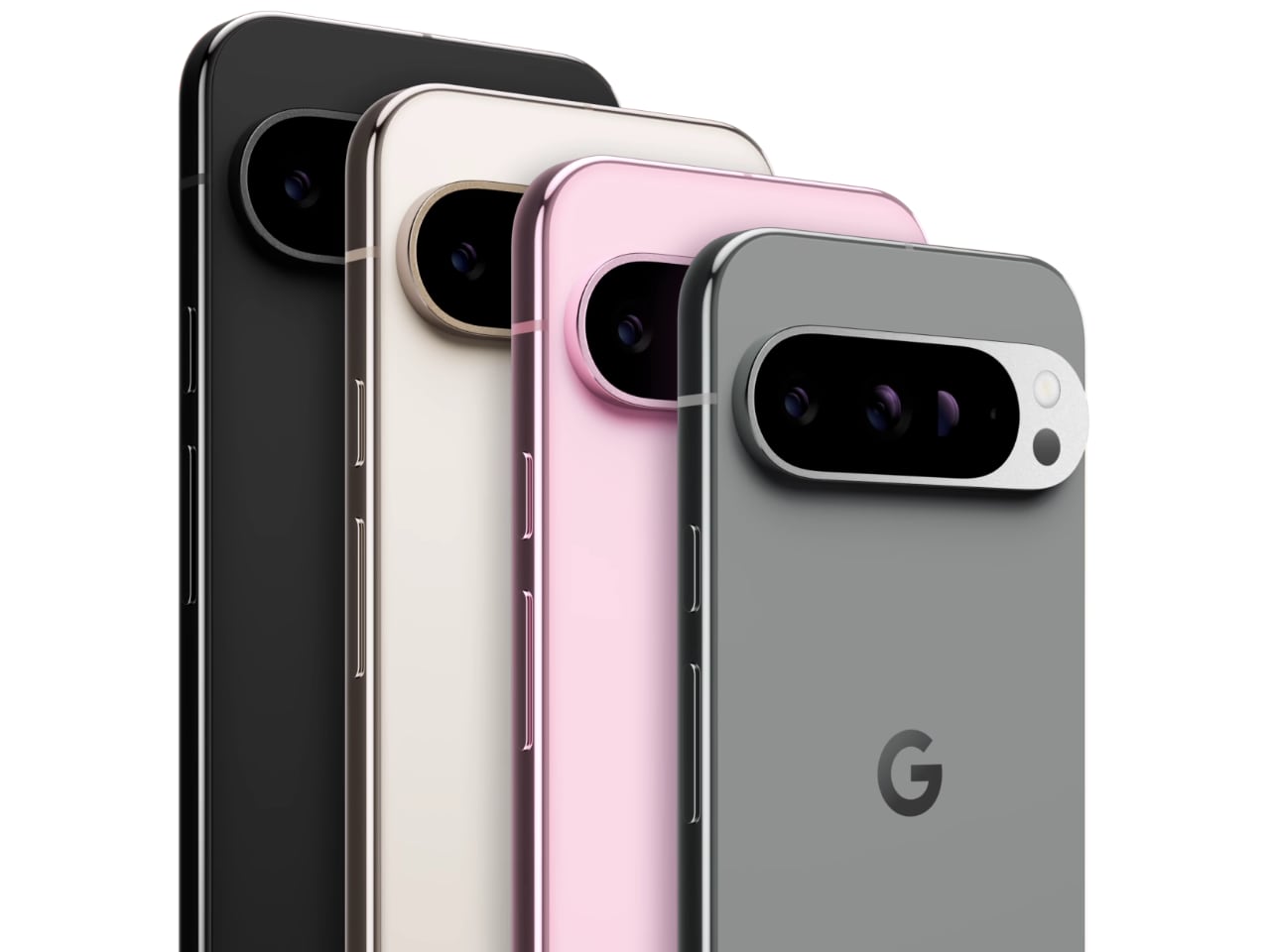
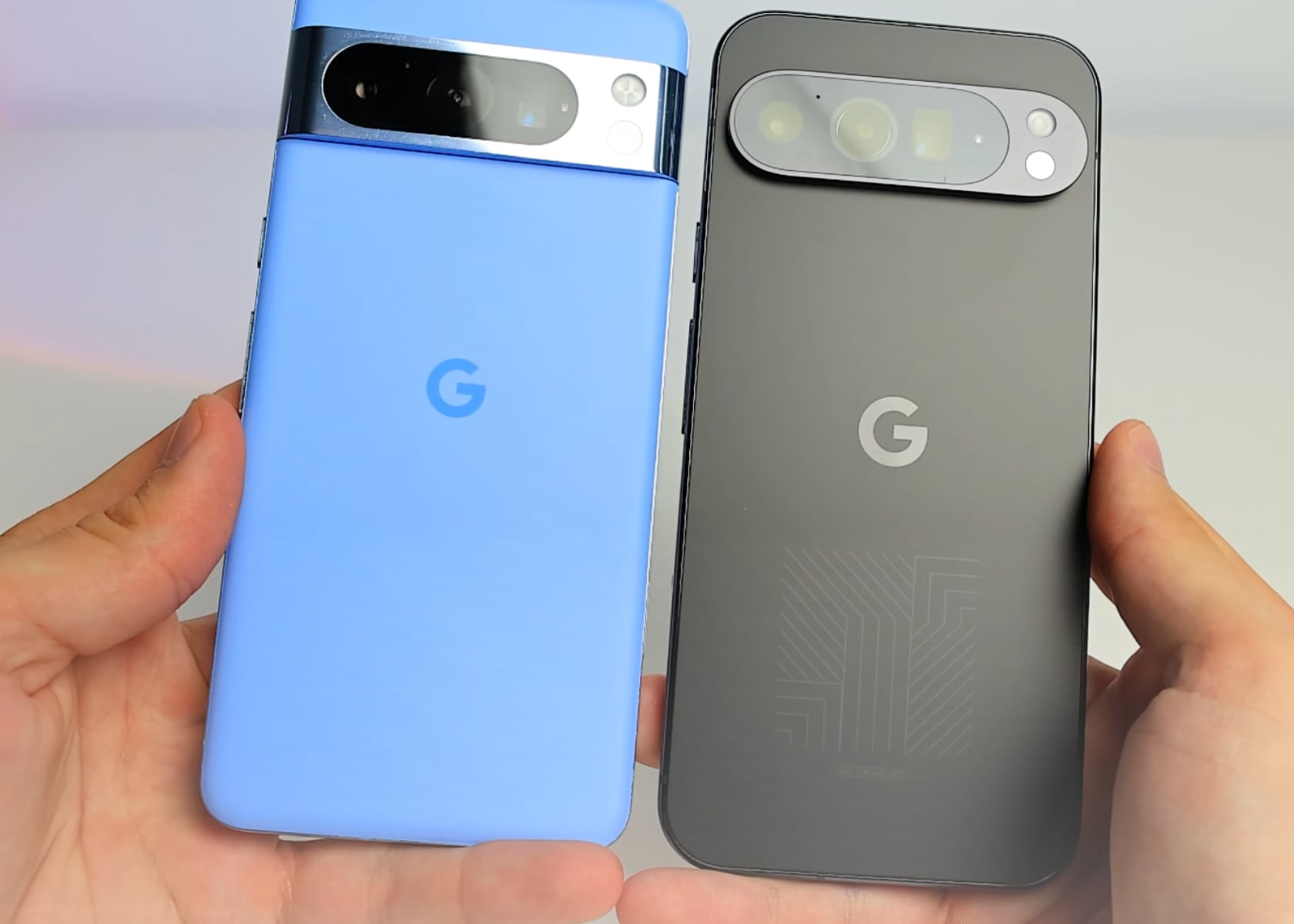
The Pixel 9 Pro and Pixel 9 Pro XL feature a sleek, sculpted design with the iconic camera bar taking center stage. Both phones are crafted with a silky matte glass back and polished metal sides, offering a premium feel. The Pixel 9 Pro, with its 6.3-inch Super Actua display, measures 6 inches in height (152.4 mm), 2.8 inches in width (71.12 mm), and 0.3 inches in thickness (7.62 mm), and weighs 7 ounces (198.4 grams). It’s compact yet powerful. Meanwhile, the Pixel 9 Pro XL offers a larger 6.8-inch Super Actua display, measuring 6.4 inches in height (162.56 mm), 3 inches in width (76.2 mm), and 0.3 inches in thickness (7.62 mm), with a weight of 7.8 ounces (221.1 grams), providing a bigger screen for those who prefer more display real estate.

The displays are some of the brightest and most vivid in their class. The Pixel 9 Pro boasts a 6.3-inch LTPO OLED display with a resolution of 1280 x 2856 pixels and 495 PPI, capable of reaching up to 2000 nits in HDR and 3000 nits peak brightness. The Pixel 9 Pro XL features a 6.8-inch LTPO OLED display with a resolution of 1344 x 2992 pixels and 486 PPI, offering the same brightness capabilities. Both displays support a smooth refresh rate of 1-120Hz and feature Corning Gorilla Glass Victus 2 for enhanced durability.

Performance and Battery

The Google Tensor G4 chip powers both models, which were developed in collaboration with Google DeepMind. This processor is optimized for running advanced AI models, enabling faster app launches, seamless browsing, and enhanced AI-driven features. The Pixel 9 Pro and Pixel 9 Pro XL come with 16 GB of RAM and storage options ranging from 128 GB to 1 TB, ensuring ample space for all your needs.

Battery life is robust. The Pixel 9 Pro houses a typical 4700 mAh battery, providing over 24 hours of usage and up to 100 hours with Extreme Battery Saver mode. The Pixel 9 Pro XL, with its larger 5060 mAh battery, offers similar endurance. Both models support fast charging, achieving up to 55% and 70% charge, respectively, in about 30 minutes using the Google 45W USB-C charger, sold separately. Wireless charging and Battery Share features add further convenience.

Camera Capabilities

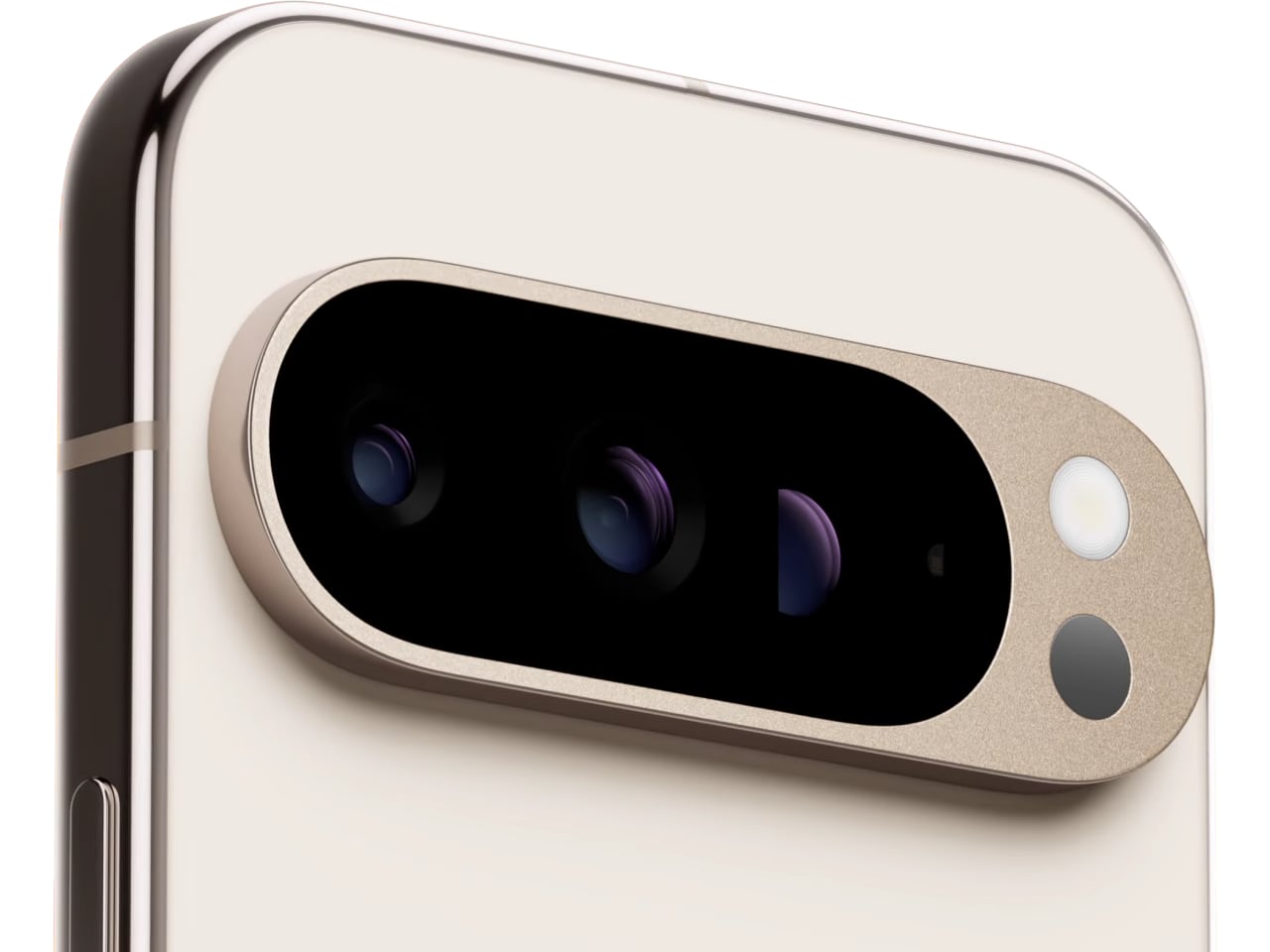
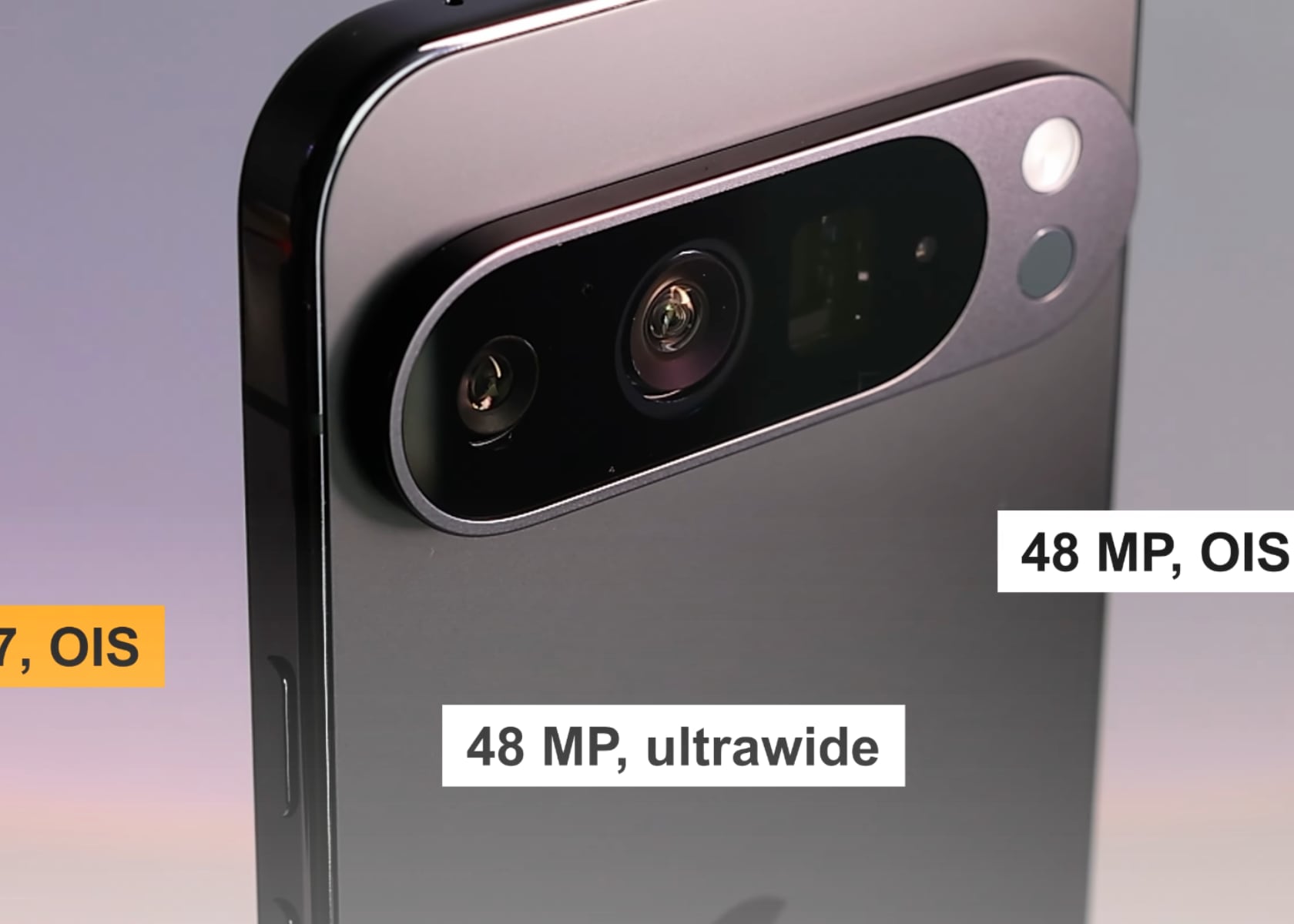
The Pixel 9 Pro and Pixel 9 Pro XL share a pro triple rear camera system that sets a new standard for smartphone photography. The setup includes a 50 MP wide camera with an ƒ/1.68 aperture, a 48 MP ultrawide camera with Macro Focus, and a 48 MP telephoto lens offering 5x optical zoom and up to 30x Super Res Zoom. These cameras are equipped with advanced features like optical and electronic image stabilization, a multi-zone LDAF sensor, and a spectral and flicker sensor to ensure crisp and clear images in any condition.

Cameras: 50 MP wide with ƒ/1.68 aperture, a 48 MP ultrawide with Macro Focus, and a 48 MP telephoto lens with 5x optical zoom and up to 30x Super Res Zoom

The front camera is a 42 MP Dual PD selfie camera with an ƒ/2.2 aperture and a 103-degree ultrawide field of view, designed for sharper and brighter selfies, even in low light.

Video capabilities are equally impressive, with the rear camera capable of 8K video recording at 30 FPS, powered by Video Boost, and 4K video recording at up to 60 FPS. The front camera supports 4K video at 30/60 FPS. Features like Night Sight Video, Super Res Zoom Video, and various stabilization options ensure high-quality video capture.

Pixel Studio is a unique feature that allows users to create images from scratch on their phone, powered by a diffusion model and the Imagen 3 text-to-image model. The camera system includes advanced features like Add Me, which ensures no one is left out of group photos, and Magic Editor’s Reimagine and Auto Frame tools for enhanced editing capabilities.

Comparison with Pixel 8 Pro and Pixel 8 Pro XL

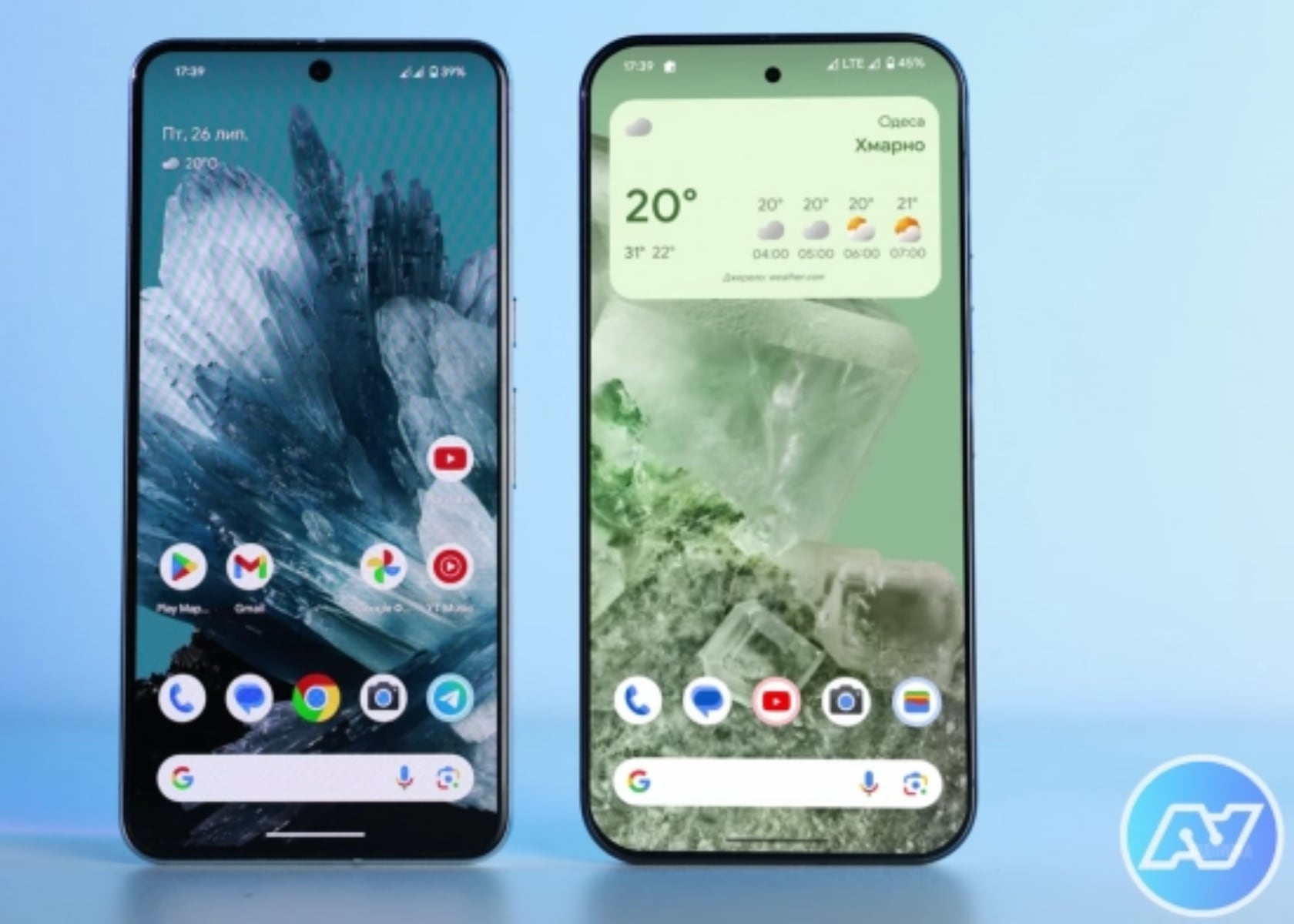
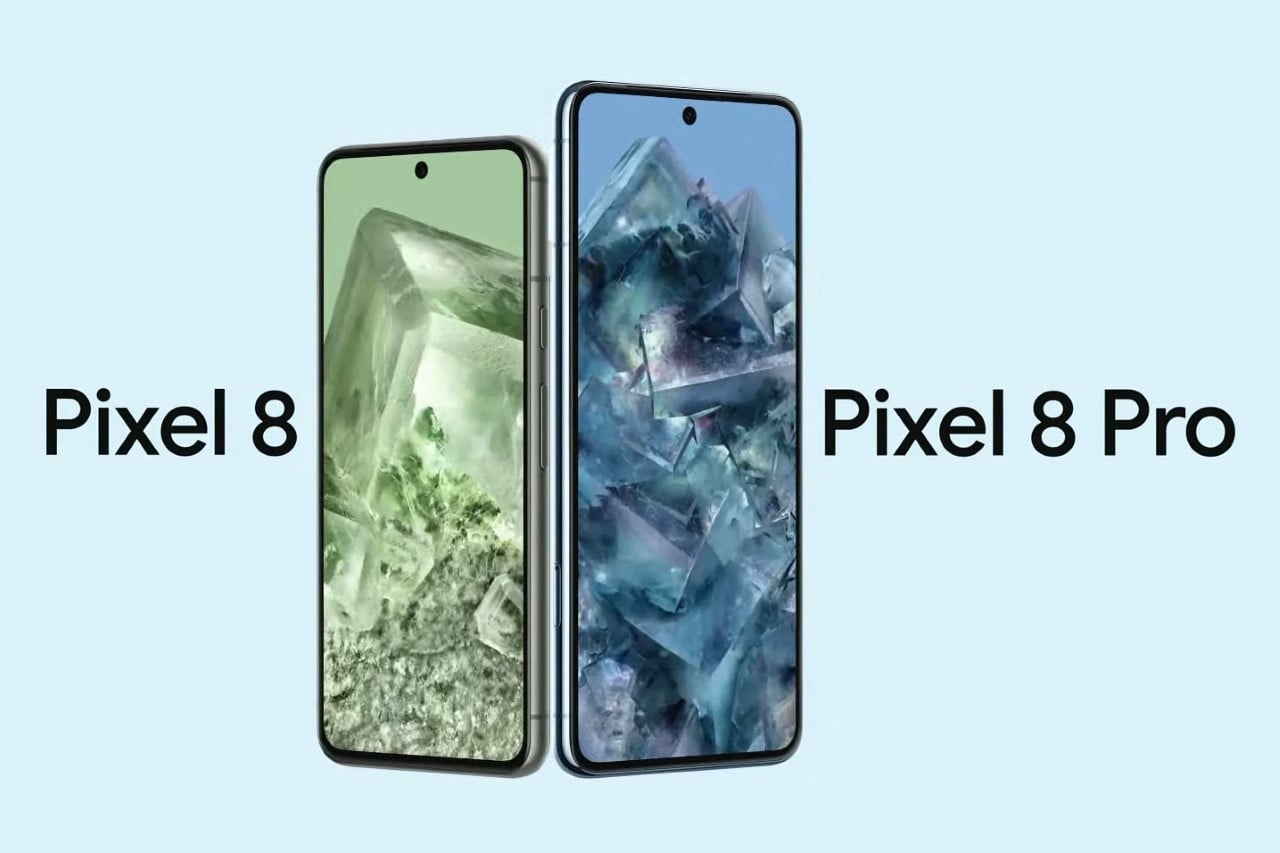
The improvements are clear when comparing the Pixel 9 Pro and Pixel 9 Pro XL to the Pixel 8 Pro and Pixel 8 Pro XL. The Pixel 9 series offers a brighter and more vibrant display, enhanced by Super Actua technology, with significant camera resolution and feature upgrades. The new Tensor G4 chip provides faster and more efficient processing compared to the previous generation Tensor G3 chip.

In terms of design, the Pixel 9 series adopts a more refined and durable build, featuring Gorilla Glass Victus 2 and increased use of recycled materials. The battery life has also seen improvements, offering longer usage times with faster charging capabilities.

Overall, the Pixel 9 Pro and Pixel 9 Pro XL present a significant step forward, offering users a powerful, feature-rich smartphone experience. These enhancements make the new Pixel 9 series a compelling choice for those seeking cutting-edge technology with a focus on sustainability and performance. With prices starting at $999 for the Pixel 9 Pro and $1,099 for the Pixel 9 Pro XL, both models provide a range of options to suit different preferences and needs.

The post Google Pixel 9 Pro and Pixel 9 Pro XL Released with AI-Driven Features and Superior Display Unveiled first appeared on Yanko Design.

nubia Z60 Ultra Leading Version Review: A True Camera in Your Pocket

PROS:


  • Distinctive, quirky design

  • True fullscreen design with invisible under-display camera

  • Unbeatable price tag for performance and battery size

  • Outstanding camera output

CONS:


  • Creamy selfies

  • Bulky and hefty chassis

  • No wireless charging

RATINGS:

AESTHETICS
ERGONOMICS
PERFORMANCE
SUSTAINABILITY / REPAIRABILITY
VALUE FOR MONEY

EDITOR'S QUOTE:

The nubia Z60 Ultra Leading Version will delight smartphone shutterbugs with a powerful smartphone with a design that clearly marks its photography lineage.

It’s pretty obvious by now, but it probably still bears noting. Cameras have become one of the most important factors people consider when buying a smartphone. Even those who primarily use a phone for social media want great cameras that can show off their attempts at becoming Insta-famous. But more seasoned photographers look for things that go beyond things like AI retouching or dramatic filters, details that are often lost on most users. Back in late 2023, nubia launched the Z60 Ultra to scratch a very specific mobile photography itch, and less than a year later, it is launching a slightly beefed-up variant with an odd name, the nubia Z60 Ultra Leading Version. Can this model, based on a late 2023 smartphone, keep up with the latest roster of flagships, or has it fallen by the wayside? We put this quirky-looking phone through the wringer to bring you that answer.

Designer: nubia

Aesthetics

We’ve seen plenty of phone designs over the years, and some have left us scratching our heads. Some have, in an effort to look distinctive and unique, adopted designs that leave a lasting impression in a rather unfavorable way. Fortunately, the nubia Z60 Ultra Leading Version isn’t of that variety, and while it might look odd when viewed from its back, it has enough playfulness, charm, and balance that actually makes the composition look interesting.

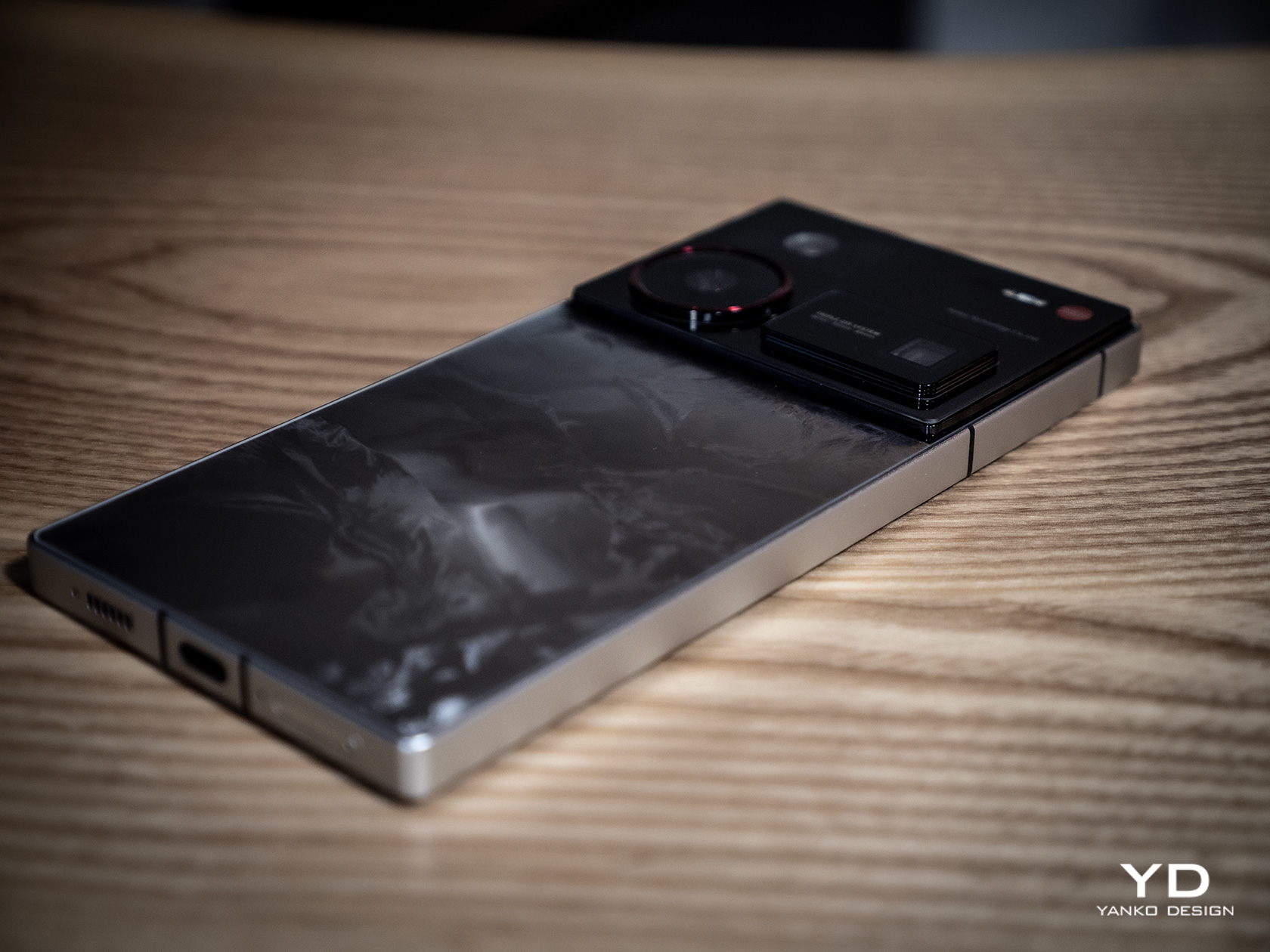
The phone is a very blocky device that is almost like a throwback to the early days of the Sony Xperia. Flat edges and sharp corners are making a comeback anyway, so the nubia Z60 Ultra isn’t exactly an outlier. It is, however, chunkier and boxier than today’s phones, which does have usability consequences that we’ll get to in a bit. It gives the phone a handsome and sharp appearance, but it’s also an acquired taste.

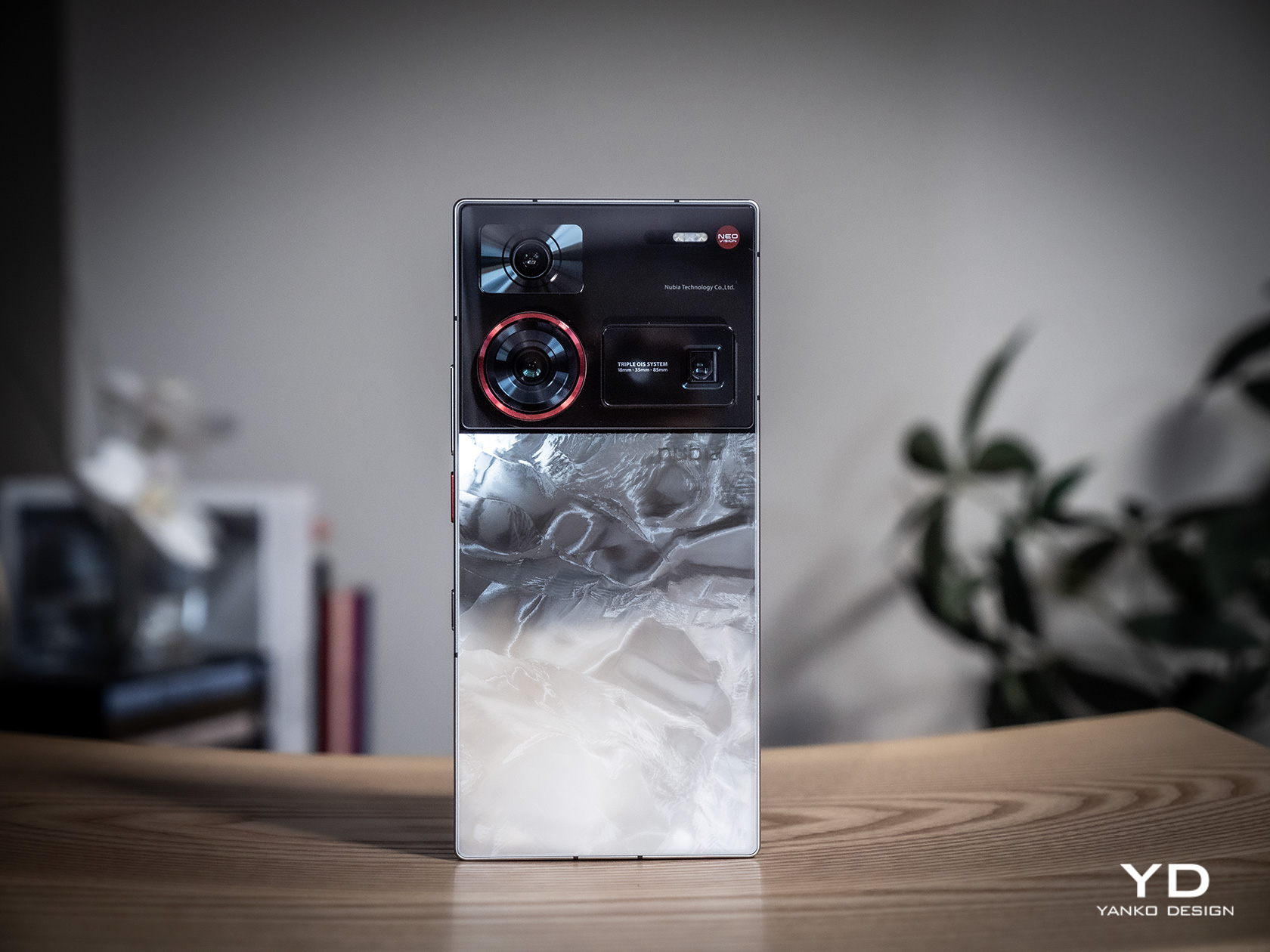
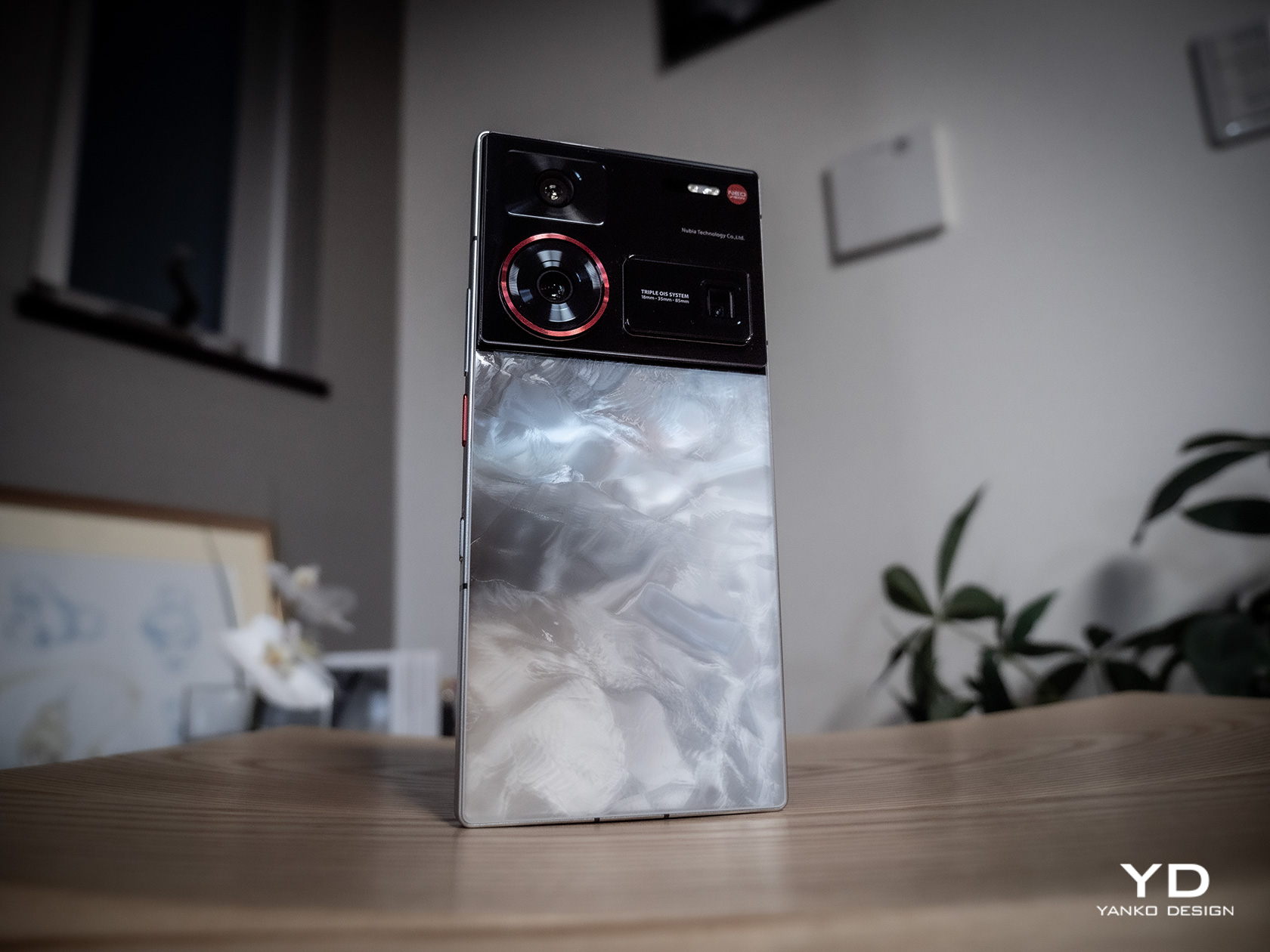
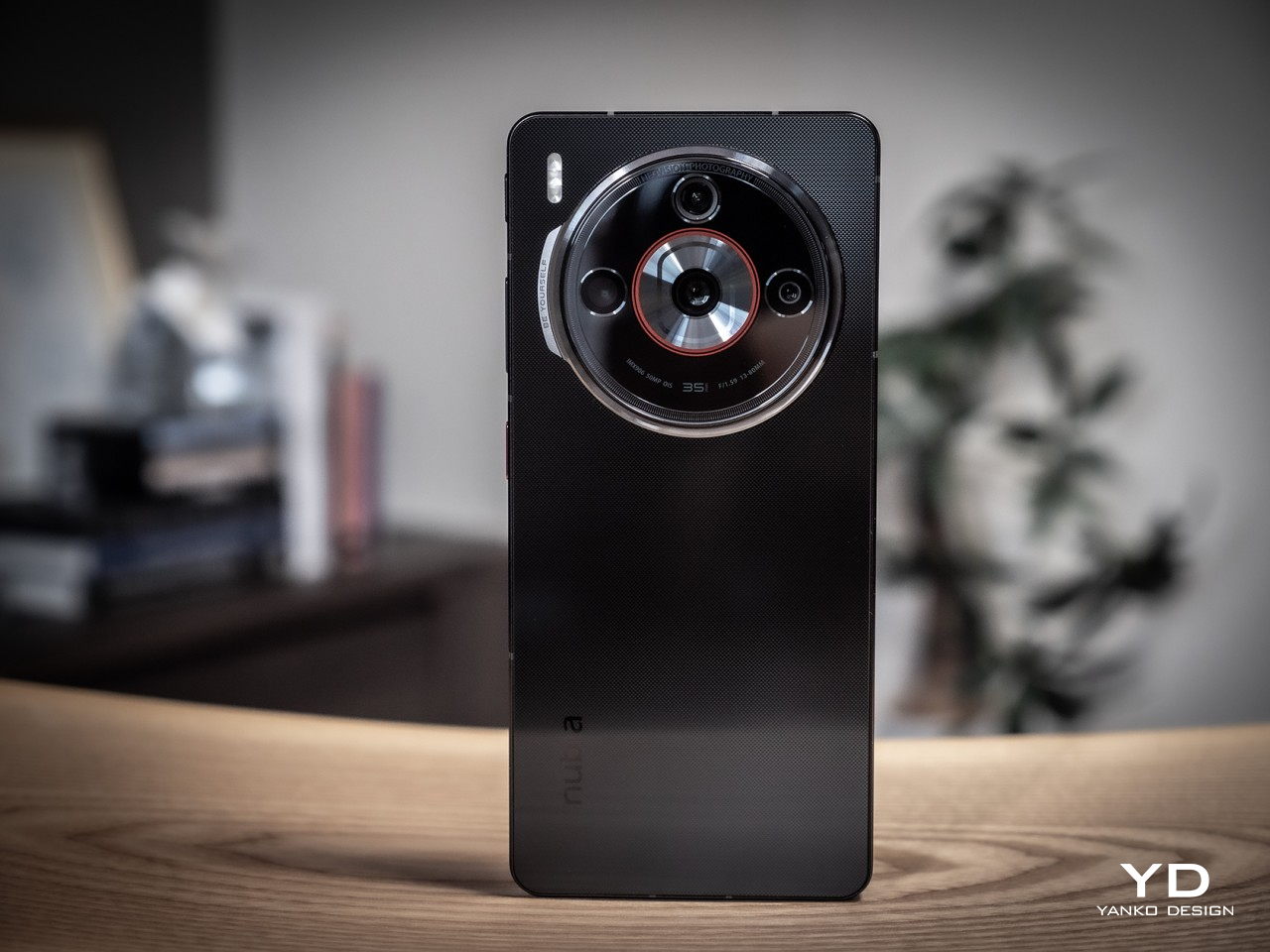
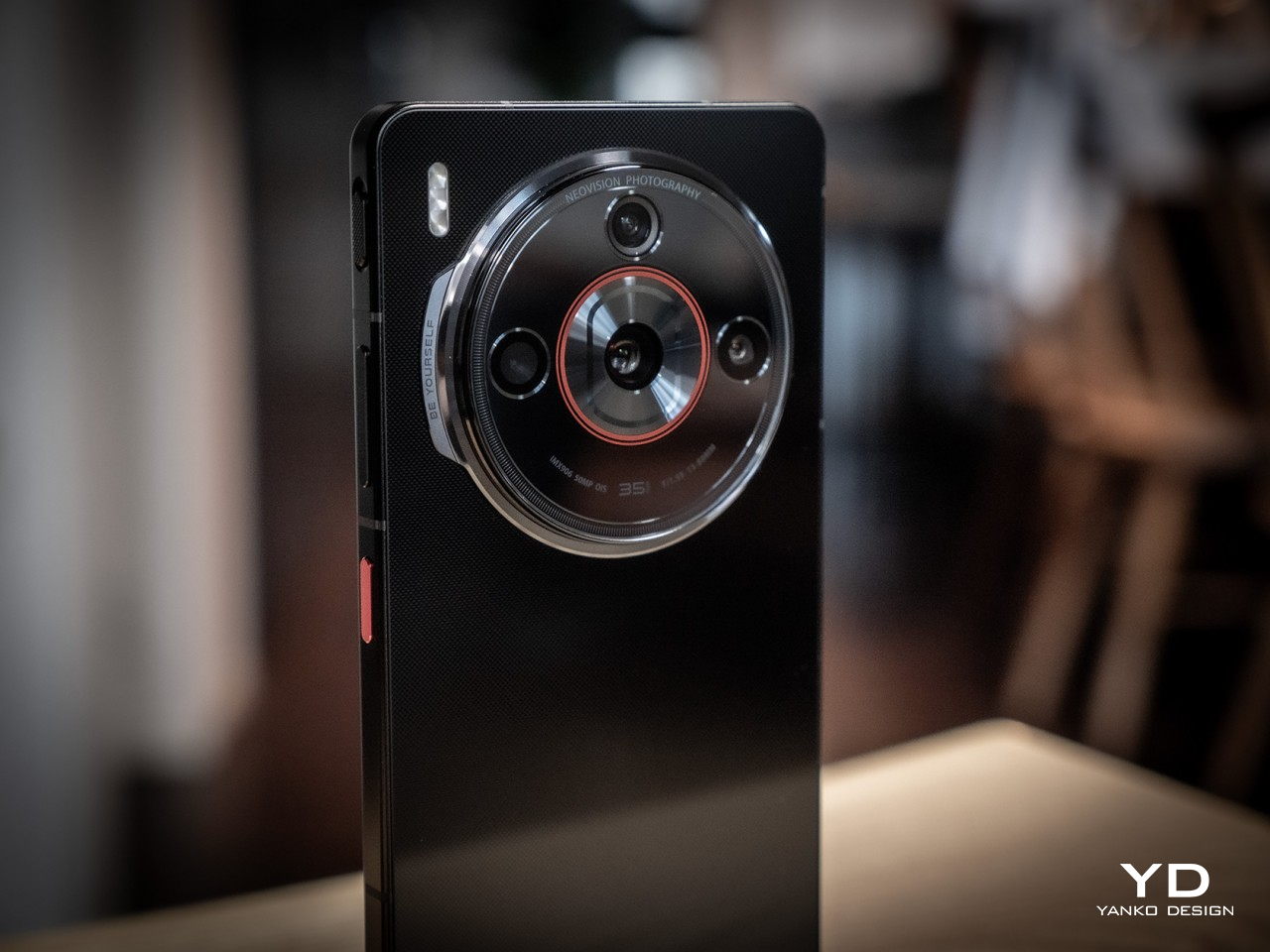
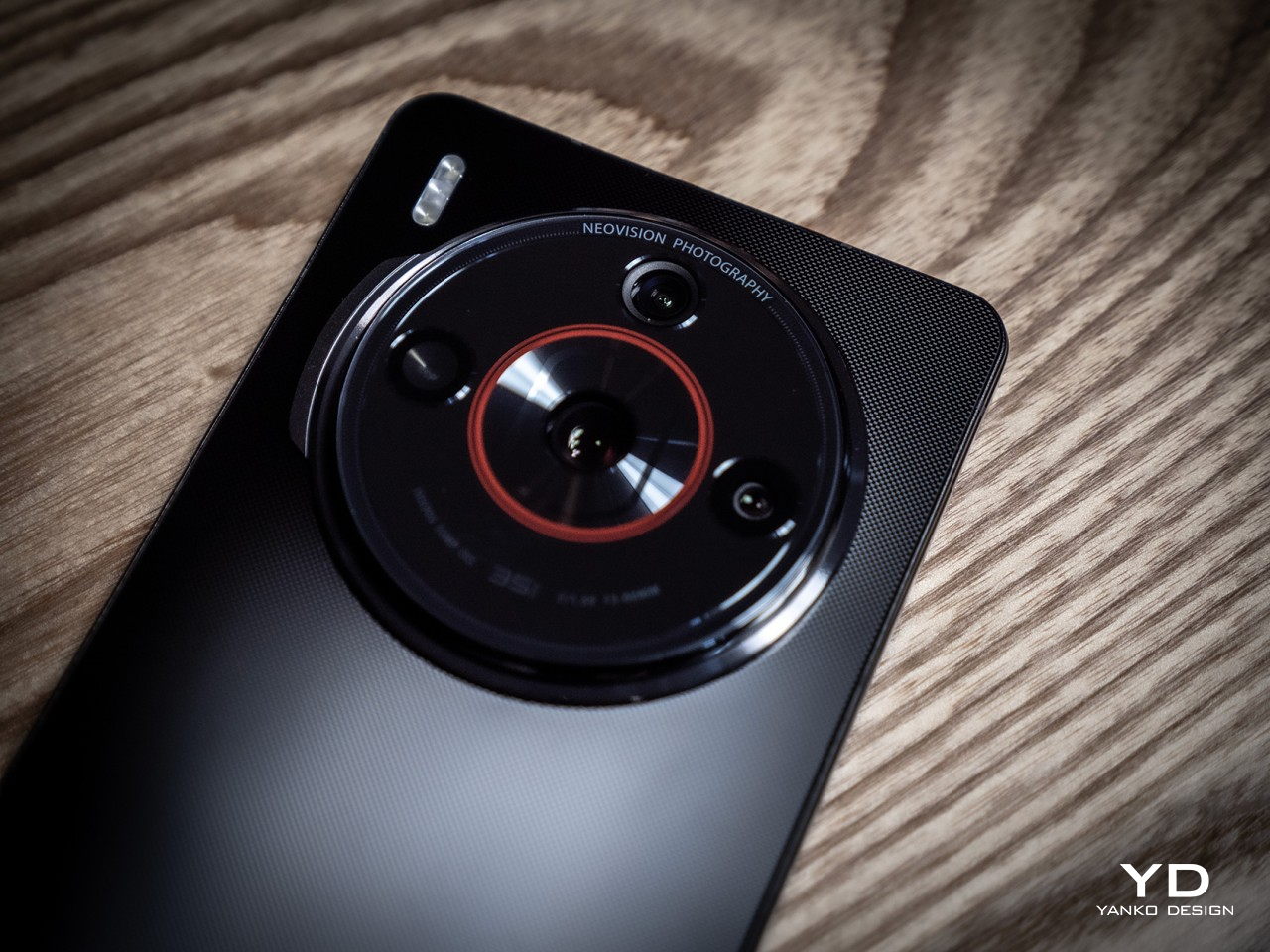
The most notable aspect of its design, however, is the three cameras on its back. Where most manufacturers do their best to lump the cameras together, nubia actually gives each of them their own distinct design. The result? It’s almost as if each of the three cameras represents a different professional camera design, from DSLRs to point-and-shoot cameras. It’s like the whole ensemble, which takes up a good third of the phone’s back, is a wall that pays homage to the camera industry’s greatest designs, perhaps also symbolizing its aspiration to be part of that set.

The Leading Version comes in only two color options, each with its own distinct design. The Black model looks like it has a ribbed surface, but it’s purely an optical illusion. The back is still glass, just like on our Silver review unit which gives the impression of liquid silver rippling and swirling underneath. It effectively hides fingerprint smudges, though the smooth surface of the glass means very few leave their mark anyway.

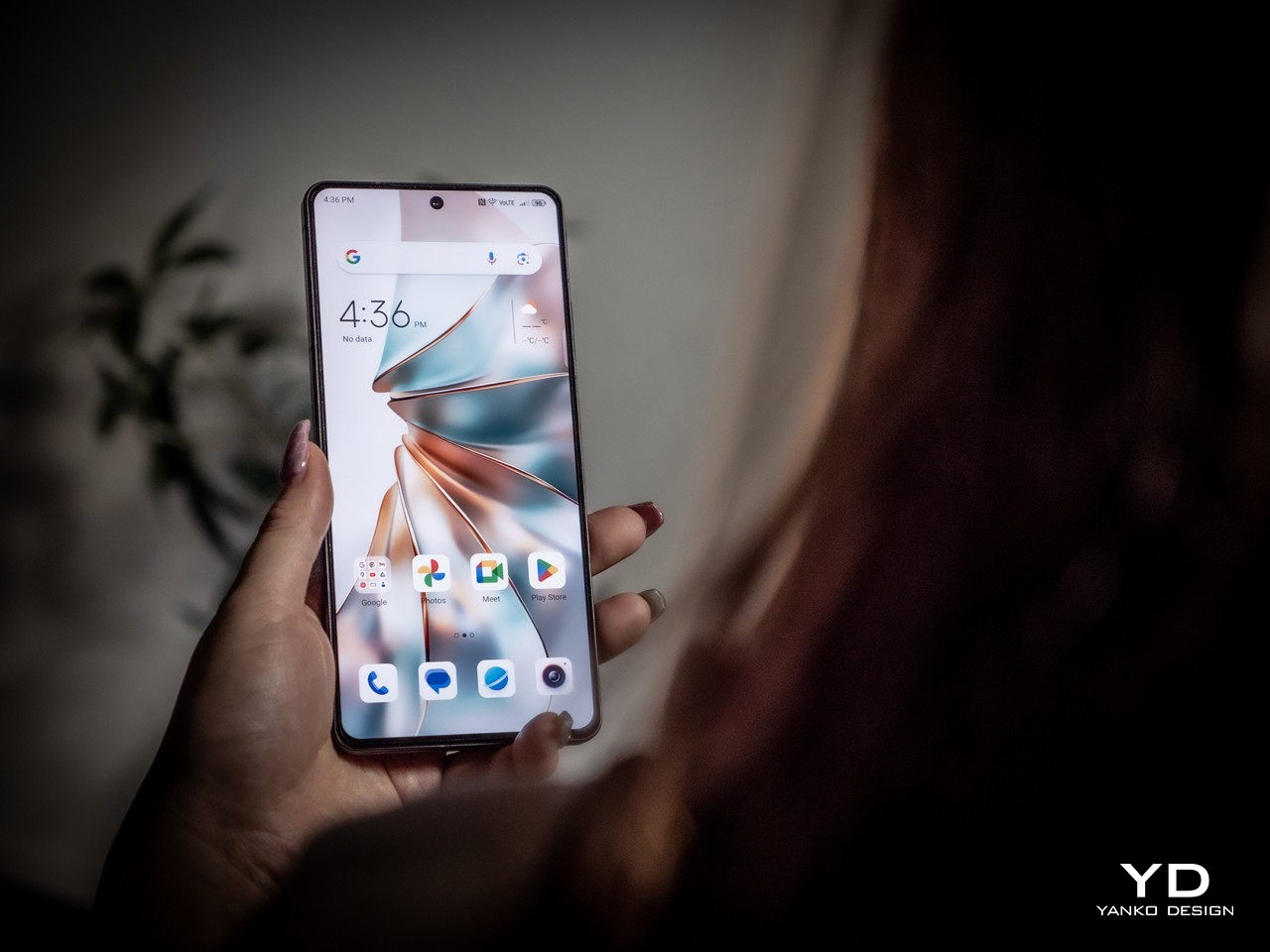
We usually leave notes about the display in the hardware section of our reviews, but this screen is different. With an under-display camera, it delivers a true edge-to-edge full-screen visual that blows the mind. The bezels are thin enough to be negligible and the area that hides the camera on its forehead is nowhere to be seen. Because of its very boxy and flat design, the nubia Z60 Ultra Leading Edition almost looks like a miniature flat-screen TV, and it definitely looks great at showing videos, pictures, and games.

Ergonomics

The nubia Z60 Ultra Leading Edition is a chunky box of metal and glass, and there’s no getting around that fact. It does pack quite a lot of hardware, including one of the largest battery capacities for a smartphone, but that doesn’t come without its costs. At 8.8mm thick and weighing 246g, it is definitely one of the heftiest and bulkiest handsets in recent years. To some extent, that might not be that big of an issue for its intended audience of mobile photographers who won’t be holding the phone up in the same position for long periods of time, at least not without a tripod or a gimbal.

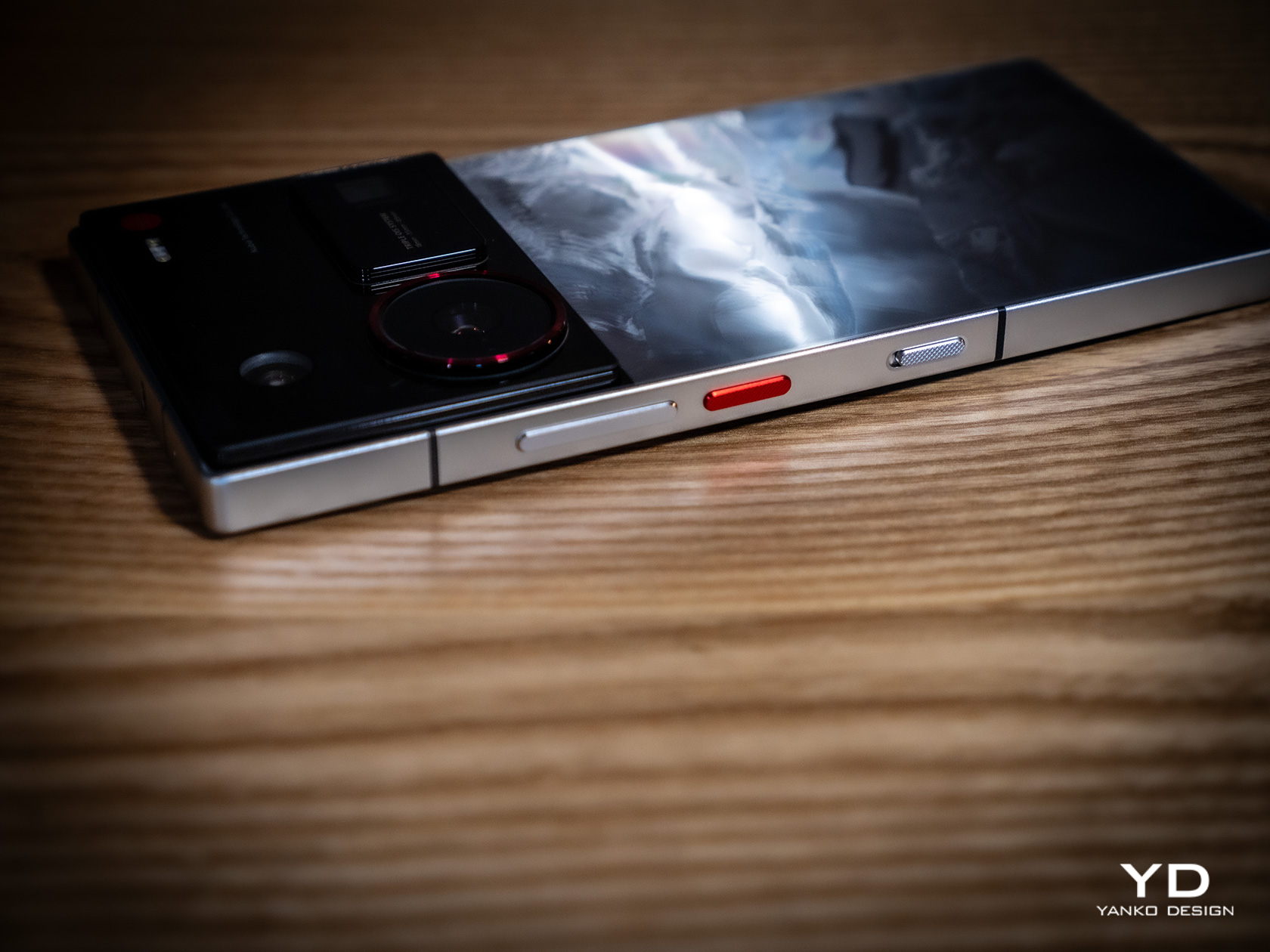
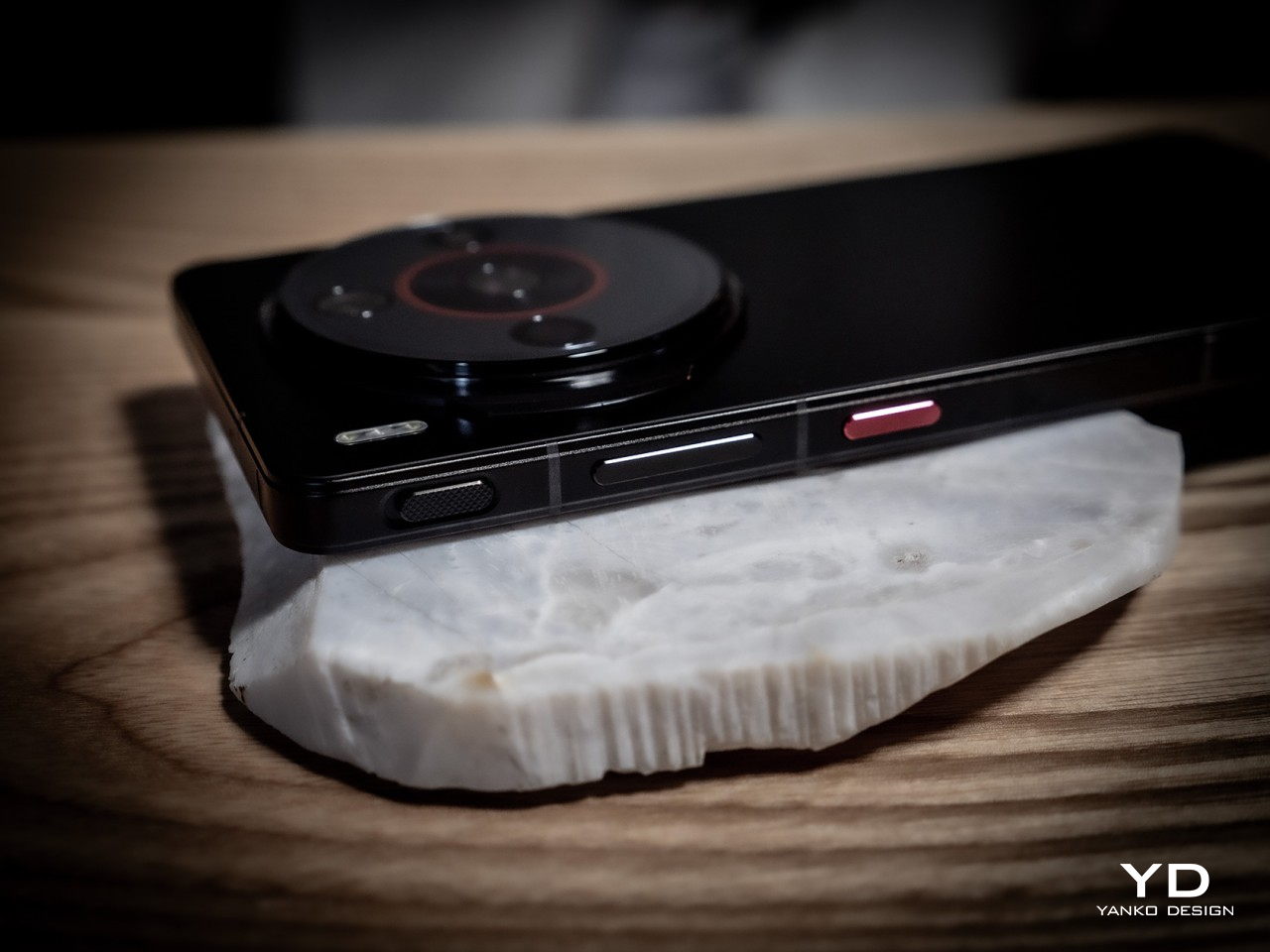
It does have a few things that help improve its usability, though. The fingerprint scanner underneath the screen is placed a little bit higher where your thumb would naturally rest so you avoid having to readjust your grip and precariously hold it near the bottom edge. The power button and the action toggle also have textured surfaces that make them easier to feel and use without having to look at their location. All in all, the Z60 Ultra Leading Version isn’t the most comfortable thing to hold for a long time, but it’s not without its merits as well.

Performance

The phone’s odd name actually comes from the only real difference it has from the original nubia Z60 Ultra. That’s the Qualcomm Snapdragon 8 Gen 3 Leading Version, an overclocked variant of the flagship chip that everyone else is using. In a way, this is nubia’s response to Samsung’s own “for Galaxy” variant, which makes the same proposition. In other words, it takes an already powerful chipset and dials it up to 11, giving most tasks a boost, especially gaming.

It’s no wonder then that the nubia Z60 Ultra Leading Version would have some impressive numbers in benchmark tests, sometimes even scoring the highest. It can handle any task you through at it with aplomb, making short work of mobile games. That also means it won’t even break a sweat when handling image and video processing in real-time. However, your hands might sweat a bit as the phone did get a little too warm with graphics-intensive tasks like gaming.

One of the biggest reasons for the Z60 Ultra’s heft is also one of its biggest strengths, its 6,000 mAh battery. That is definitely one of the largest we’ve seen of late, discounting the 7-inch “phablets” of old. The long battery life will be critical for photographers who don’t want to miss a moment just because their battery died. The 80W charging speed also means you’ll only be away from the action for as long as 40 or so minutes, presuming you didn’t bring a power bank with you. Unfortunately, the phone doesn’t have wireless charging capabilities, which should already be a staple for an “ultra” phone like this.

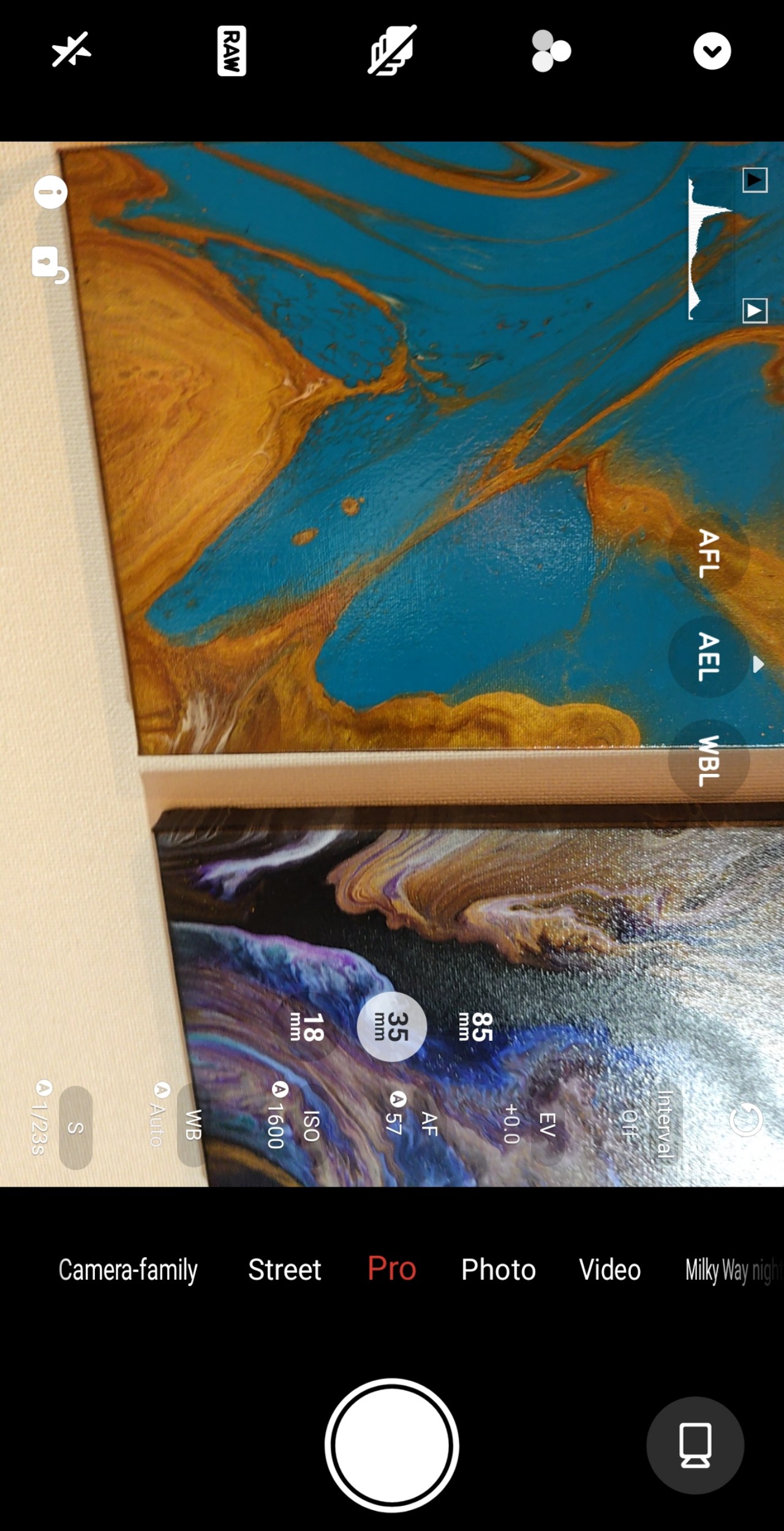
Despite its Leading Version chip, the real centerpiece of the Z60 Ultra is its camera system, led by a 50MP Sony IMX906 1/1.56-inch sensor with OIS. That might not actually be that uncommon, but its most distinctive feature is the 35mm equivalent focal length. It’s a rare trait in smartphone cameras but is one of the most favored in traditional photography. In a way, nubia is positioning the phone as a camera lover’s choice, allowing budding photographers to level up their craft to more professional standards.

It doesn’t stop there either, because nubia pulls off something that still very few manufacturers dare to do: high-quality cameras all around. The ultra-wide shooter with an 18mm focal length carries a large 50MP 1/1.55-inch sensor with OIS, while the 80mm periscope telephoto gets an equally impressive 64MP sensor with 3.3x zoom, also with OIS. Yes, all three have optical image stabilization, and all three are capable of 4K video recording, though only the main camera can do 8K.

Suffice it to say, the images and videos that these cameras deliver are clear, sharp, vibrant, and detailed, no matter the lighting situation. There are a few hiccups here and there, but the overall performance is quite impressive. Unfortunately, the same can’t be said of the 12MP front-facing under-display camera, which unsurprisingly comes out with pasty and washed-out images. Despite the advancements nubia achieved in making the camera invisible, it still needs work on matching the quality of regular “notch” cameras.

Sustainability

When talking about smartphone makers that have strong or concrete sustainability endeavors, nubia is often left unmentioned. It’s not an old player in this market, nor is it a small one, so it’s rather disappointing not to see more action coming from it on this front. Even the use of sustainable materials for the back cover isn’t one of its strong points, but we’re hoping the brand takes a turn for the better in the years ahead.

The nubia Z60 Ultra Leading Version is at least IP68-rated, which speaks well for its survivability and longevity. The same can’t be said for nubia’s guaranteed software support, though, which is just three years. That’s just one year over the old two-year standard, one that is becoming a liability to the brand rather than an asset.

Value

If it wasn’t clear yet, the nubia Z60 Ultra Leading Version is a premium flagship with a processor that runs circles around its rivals and a camera system designed to appeal to photographers at heart. And yet for all that it offers, it only asks for $649 for 8GB of RAM and 256GB of storage. Yes, that’s $50 more than the starting price for the non-Leading Z60 Ultra, and some might question if the souped-up Snapdragon 8 Gen 3 is actually worth that much. In the grand scheme of things, however, it’s still a very accessible price tag, especially when it offers just as much or even more than $1,000 devices.

Unfortunately, it won’t be easy to get your hands on one, because nubia’s global distribution channels aren’t that many. And even if you manage to import one, you still have to worry about carrier network support. There’s also that nagging question about the $50 increase for a Leading Version chip, which, truth be told, isn’t exactly a mind-blowing difference overall. That said, if you’re a mobile photographer that has access to nubia’s products and have the extra $50 to spare, you should definitely have this in your crosshair.

Verdict

It’s extremely tricky to balance power and design in smartphones because of the limited space you’re allowed. You can’t have a super-slim device and expect to have a large battery and powerful cameras at the same time. nubia’s solution is bold and creative: why bother with those limitations at all? Yes, the nubia Z60 Ultra Leading Edition is thick and heavy, but it still manages to balance performance and a distinctive design. It’s a smartphone that is unabashedly walking in the footsteps of traditional cameras, and it definitely has the chops to prove it.

The post nubia Z60 Ultra Leading Version Review: A True Camera in Your Pocket first appeared on Yanko Design.
Vivo V40 Pro Review: Prime Mobile Photography Arrives in a Sleek Package

PROS:


  • Elegant and aesthetic design

  • Powerful quad 50MP camera system

  • Large 5,500mAh battery despite thin profile

  • IP68 rating

CONS:


  • No wireless charging

  • Telephoto camera only supports 2x optical zoom

  • Limited global availability

RATINGS:

AESTHETICS
ERGONOMICS
PERFORMANCE
SUSTAINABILITY / REPAIRABILITY
VALUE FOR MONEY

EDITOR'S QUOTE:

The Vivo V40 Pro builds on the brand's outstanding photography performance to deliver an even more powerful experience in a stylish design.

Cameras have become one of if not the most important aspects of a smartphone these days. Of course, the display is functionally the most critical component, but other than being large and crisp, people tend to gravitate to the best smartphone camera their money can buy. Unfortunately, the best ones are often reserved for the most expensive handsets as well, leaving the majority of consumers, especially the younger generation, dreaming of better days. Vivo’s V series of smartphones has always aimed to make smartphone photography more accessible, and last year’s Vivo V30 Pro definitely put more expensive devices on notice. Can the Vivo V40 Pro top that or has the brand already reached its peak? We take Vivo’s latest and greatest V series phone for a spin to find out.

Designer: Vivo

Aesthetics

Right off the bat, we can already say that Vivo has outdone itself with the design of the Vivo V40 Pro. Last year’s flagship was already a looker, but it suddenly feels a bit lacking compared to its younger sibling. You still have a sleek appearance, smooth curves, and a thin profile, but the real winner here is the camera design. That Vivo was able to fit three 50MP cameras in such a compact space is already a marvel, but the way it managed to make the design look appealing is a rare feat these days.

Vivo calls it a “Gemini Ring Design,” which is a fancy term for what looks like a curvy keyhole. Two of the three cameras are enclosed in a circle that sits on top of a pill-shaped elevation. Inside that is another oblong enclosure housing the third camera and the Aura Ring flash. There is a subtle beauty to the play of balance and asymmetry in this design, and it definitely gives the Vivo V40 Pro a unique visual character.

The company didn’t pull punches in the different colors and materials available for both the Vivo V40 and the V40 Pro, and all of them are beautiful in their own way. The Sunglow Peach colorway with its warm hues and dynamic magnetic ink is quite an eye-catcher, and our review unit’s Moonlight White with its pale blue streaks has a soothing and calming effect. Other than the camera bump and the small vivo branding at the bottom, there are no distractions on the back of the phone, allowing you to appreciate the beauty of these designs.

At only 7.58mm, the Vivo V40 Pro is already thin, and the curved edges of both the screen and the back panel make it look even thinner. This could be a divisive decision in 2024, though, with many seeing curved edges as a thing of the past. It definitely still has appeal and it perfectly matches the smoothness of the rest of the phone.

Ergonomics

The Vivo V40 Pro is not a small phone by any means so that thin profile helps offset the size of the device. It’s incredibly light as well at only 192g, especially considering what it packs inside, like a very generous battery. All in all, it’s difficult to hold it up for long periods of time, though the glass material on its back could prove to be slippery for some hands.

The debate around flat versus curved edges continues here as well. With part of the screen curving off to the sides, there’s always the possibility of accidental touches in those areas. There isn’t much surface area or sharp corners for your hand to grip either, and you might find yourself straining a bit just to hold the phone tight. It’s partly personal preference and partly the shape of your hand, but thankfully Vivo ships a protective case with the phone just in case.

Performance

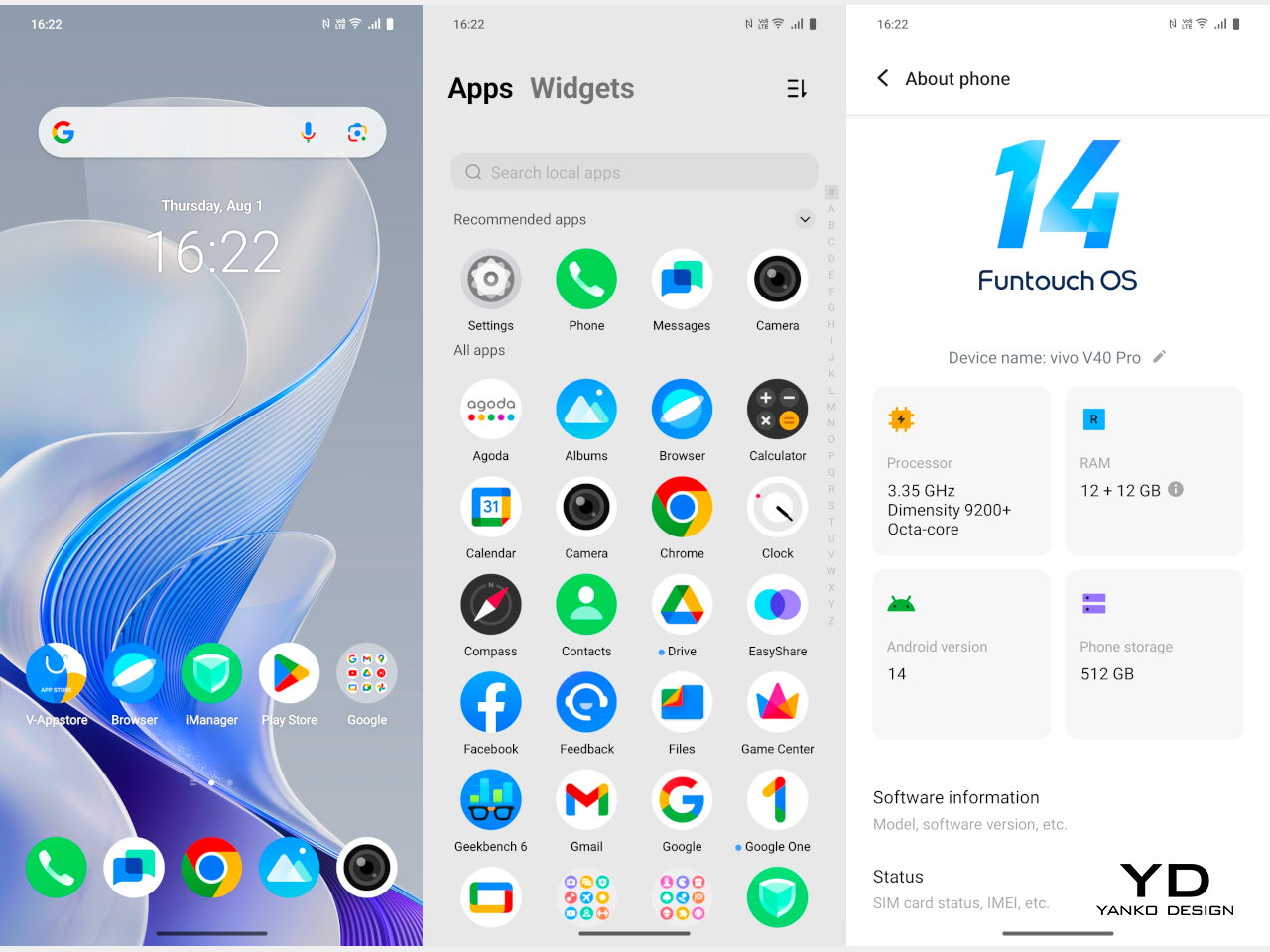
It might not be part of Vivo’s top-tier X series, but the Vivo V40 Pro definitely packs quite a punch, starting with the MediaTek Dimensity 9200+, the chipmaker’s flagship silicon. It’s paired with up to 12GB of RAM, as was the case in our review unit, which can be boosted with another 12GB. That said, it takes some of that from the 512GB internal storage, which isn’t expandable like many phones these days. All in all, the Vivo V40 Pro performs like a champ for any use case, whether it’s social media, watching videos, or playing games. The latter is helped by an Ultra-Large VC Cooling System that keeps the phone running at a stable pace without throttling.

More impressive, however, is the 5,500mAh battery the phone crams inside its thin and light body. It’s definitely one of the largest capacities available in a phone that’s barely 7.6mm thick, allowing it to easily support all your shutterbug adventures. With an 80W charging speed, you can quickly top up to full in around 30 minutes, at least with the right charging brick. Unfortunately, Vivo hasn’t yet decided to put wireless charging on its V series phones, but maybe that will change next year.

The real stars of the show, however, are the cameras, all of them with 50MP sensors. Yes, that includes the selfie camera with a Samsung ISOCELL JN1 sensor and a wide 92-degree field of view for those “wefies” or “groufies.” If that sounds familiar, then you might have heard of the Vivo V30 Pro last year. In fact, in almost all but one case, it’s nearly the exact same set of 50MP cameras, like the 50MP Sony IMX816 telephoto shooter and the 50MP Samsung JN1 119-degree ultra-wide camera.

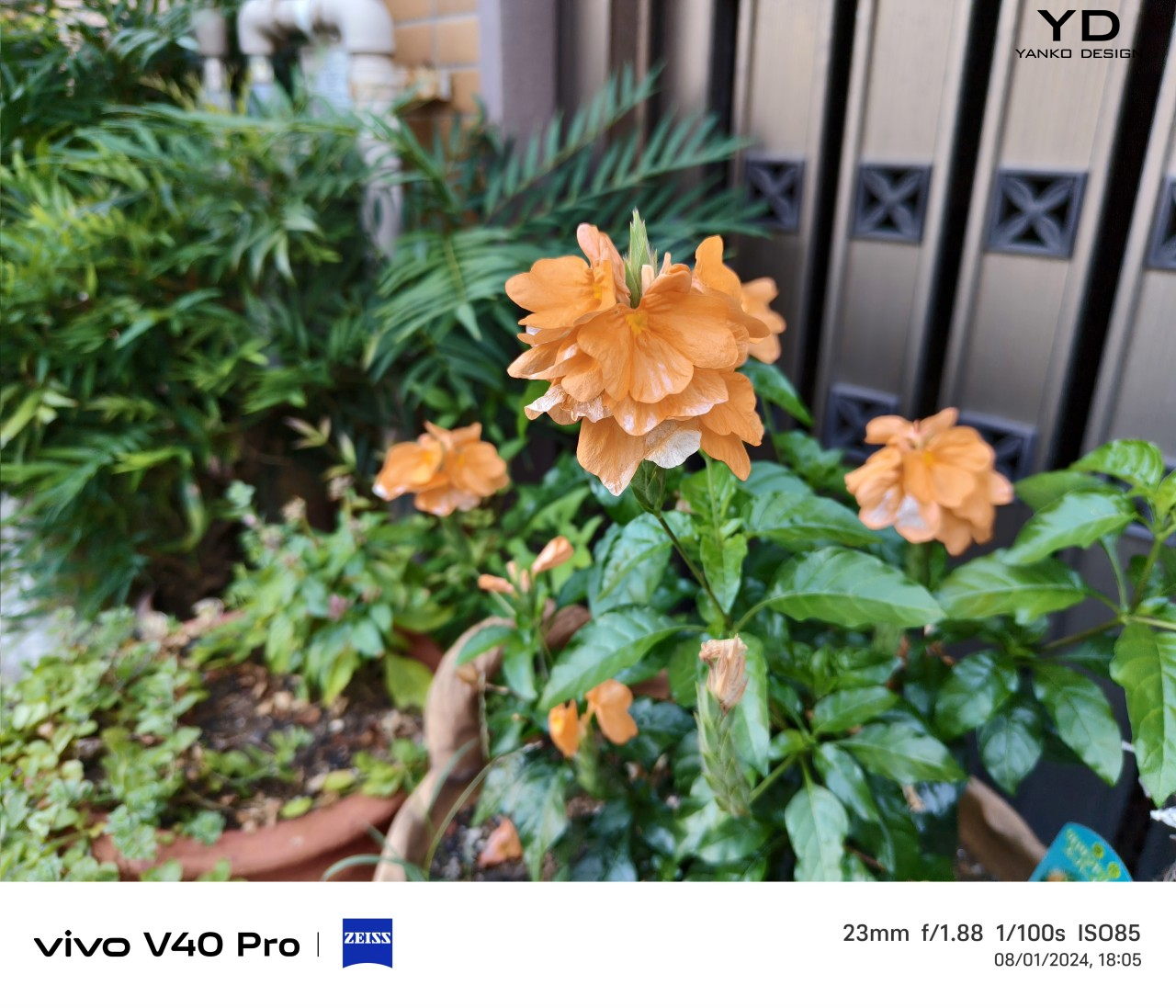
What’s different this year is the new 50MP Sony IMX921 with a larger 1/1.56-inch sensor. That means it is able to take in more light information even in darker environments, improving its overall quality. In fact, the entire ensemble is actually commendable in their output, delivering super images bolstered by AI and computational photography. Of course, these cameras have optics tuned by ZEISS, so there’s little surprise there. And one can’t forget Vivo’s signature Aura Light that takes the regular flash and turns it into a mini ring light for softer and more natural lighting. Its most recent incarnation includes Electronic Control Technology that lets you adjust the brightness of the light depending on the distance of the subject.

In essence, the Vivo V40 Pro builds on the success of its predecessor and adds some extra value with upgraded specs and improved software. Unfortunately, it also carries over the flaws, most notably the short optical zoom range of the telephoto camera. It only goes as far as 2x zoom, but Vivo is heavily advertising what it calls “50x ZEISS Ultra HD Zoom,” which is a mouthful that really means software-assisted digital zoom.

Sustainability

Just like the Vivo V30 Pro last year, the brand is sadly silent on any of its efforts in using even a fraction of sustainable materials for this year’s V series flagship. It also hasn’t stopped shipping chargers in its boxes, which is unsurprising since it wants to make sure that its phones use the right 80W charger for the fastest speed they can support. We’re still holding out hope that Vivo will take the lead in this area soon.

That said, it does have some good news when it comes to keeping the Vivo V40 Pro away from the trash for as long as possible. It’s the first in the V series to reach an IP68 rating, ensuring that it’s protected from dust and water which can mean the end for many smartphones. It also advertises a “50-Month Smooth Experience” guarantee that basically says the phone can run for over four years without losing its fluidity and performance. Unfortunately, it doesn’t translate to having four years of updates, and Vivo has made no promises on that matter.

Value

It’s perfectly clear from our time with the Vivo V40 Pro that it delivers everything it promises on paper. The Quad 50MP Camera System it carries over from last year continues the tradition of excellent mobile photography, but this time with a larger 5,500mAh battery that better supports all those photo and video content creation. Even better, the phone comes in a sleek, slim, and light design that makes you feel like you’re holding an art object rather than a cold piece of technology.

In other words, the Vivo V40 Pro would have been perfect if not for the fact that some people might not even be able to get their hands on it. The $560 price tag it carries (converted from Indian figures) isn’t that heavy, but global availability is still undisclosed at the moment. Hopefully, it will fare better than the Vivo V30 Pro which didn’t get a wider distribution that would have spread the word of its amazing camera chops.

Verdict

Smartphones are getting more powerful and so are their cameras. But with this increase in technical performance, designers are often forced to make many compromises to fit all of them inside a product that should still fit our pockets. In that regard, the Vivo V40 Pro is quite a feat, cramming not only four 50MP cameras but a large 5,500mAh battery inside a body that’s as thin and as light as it can be. It’s a beautiful phone with impressive performance and an accessible price point, and it deserves to be made available to more markets this time.

The post Vivo V40 Pro Review: Prime Mobile Photography Arrives in a Sleek Package first appeared on Yanko Design.
Realme 13 Pro+ Review: AI-Powered Photography Masterpiece or Miss?

PROS:


  • Strong main and telephoto performance

  • Plenty of AI features

  • Big battery

  • Elegant design

CONS:


  • Same processor its predecessor

  • No wireless charging

RATINGS:

AESTHETICS
ERGONOMICS
PERFORMANCE
SUSTAINABILITY / REPAIRABILITY
VALUE FOR MONEY

EDITOR'S QUOTE:

Realme's approach with the Realme 13 Pro+ underscores its commitment to staying at the forefront of innovation in the mobile industry.

In 2024, AI has become an indispensable component of modern smartphones. From revolutionizing photography and enhancing device efficiency to providing intelligent personal assistance, AI-powered features are no longer luxuries but necessities. Realme has positioned the Realme 13 Pro+ as an ‘Ultra Clear Camera with AI,’ featuring a dual 50MP Sony AI camera system and the company’s proprietary HYPERIMAGE+ AI photography architecture. This combination aims to deliver advanced image processing capabilities and exceptional photo quality.

Realme recently hosted a press event in Bangkok to showcase the capabilities of the HYPERIMAGE+ system. Attendees had the opportunity to experience the camera’s features firsthand, exploring its potential in various scenarios. Now, we have thoroughly tested the Realme 13 Pro+ to provide you with an in-depth review of its performance and capabilities.

Designer: Realme

Aesthetics

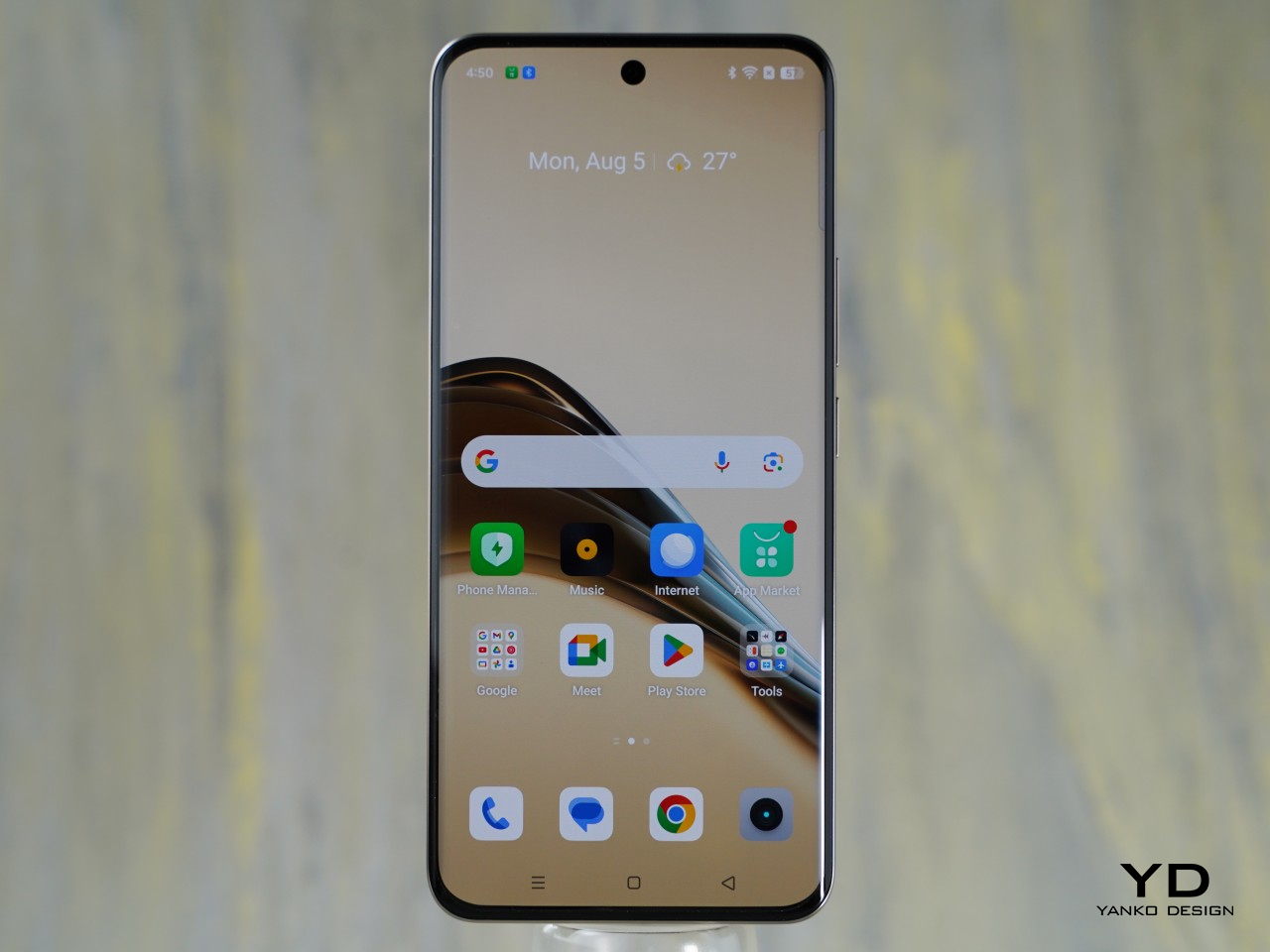
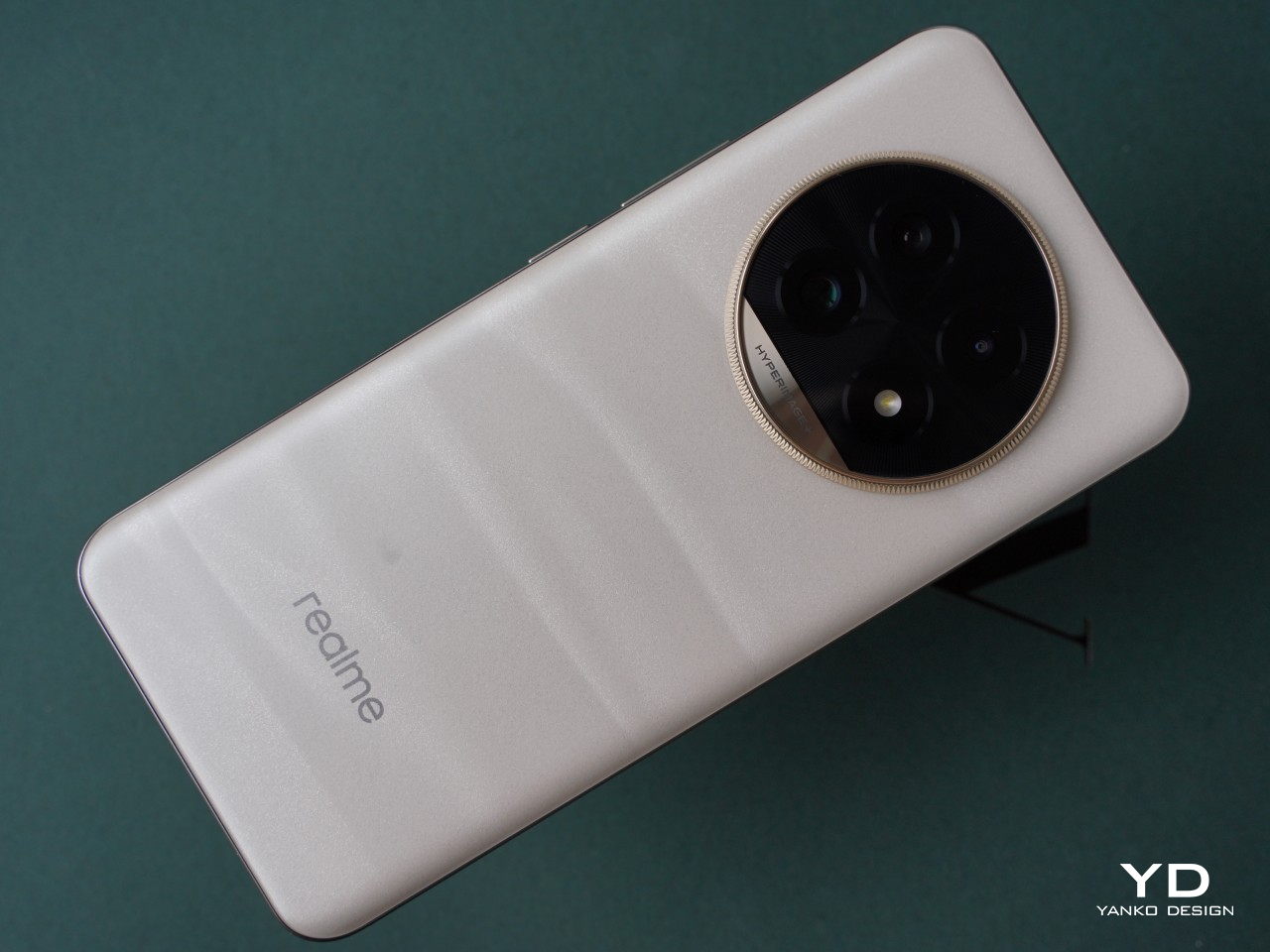
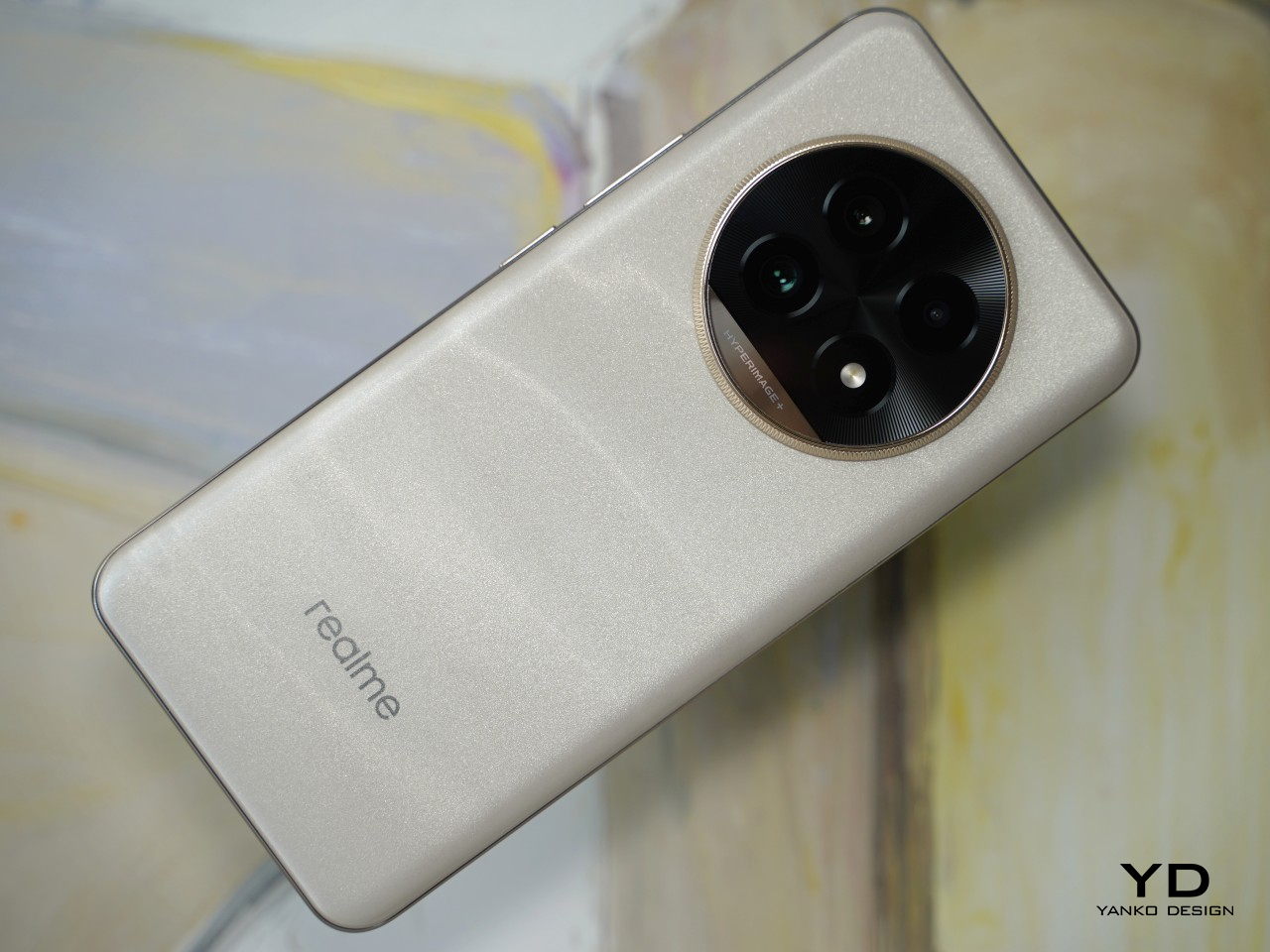
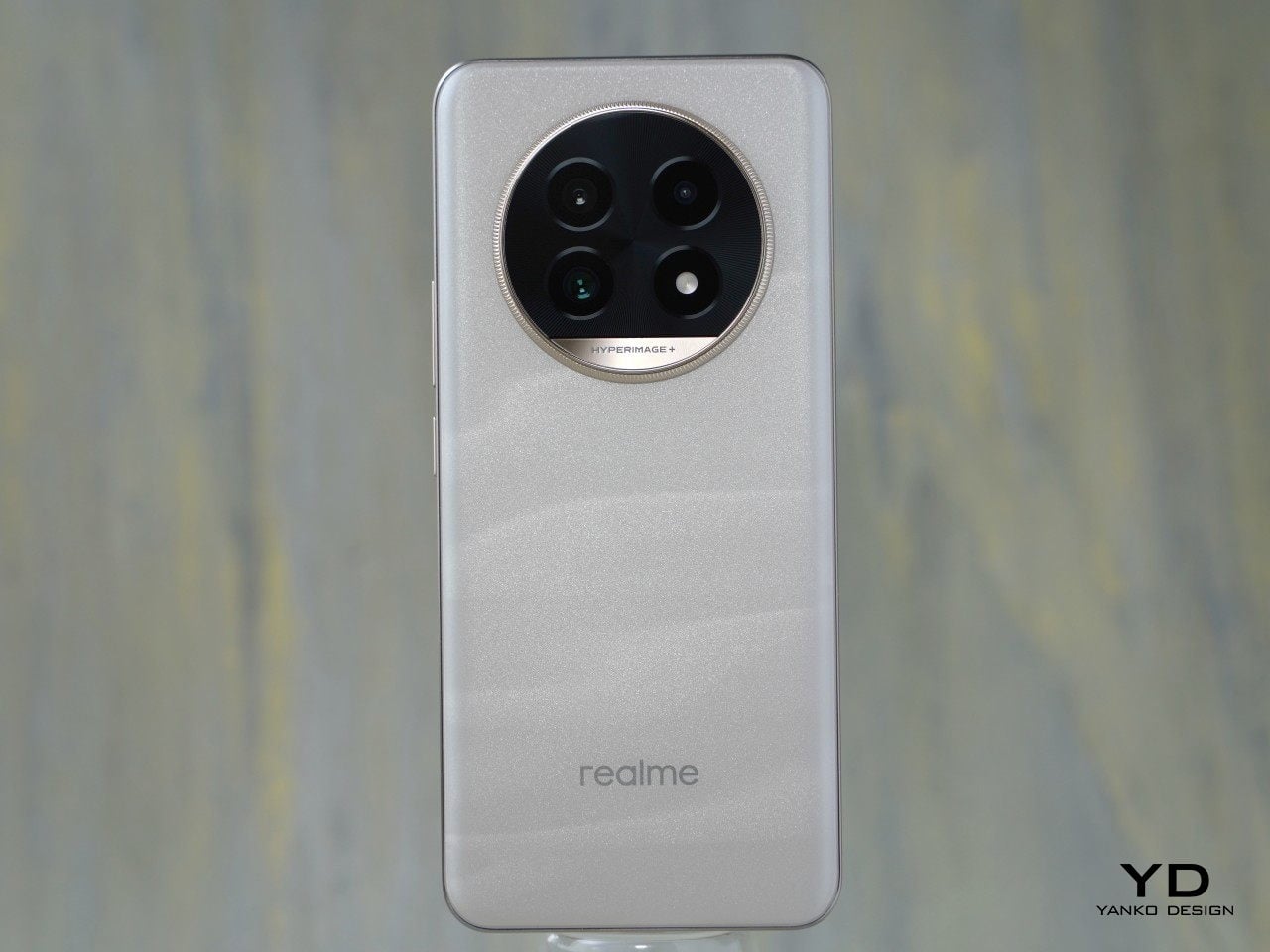
Building upon the design language of the Realme 12 series, the Realme 13 Pro+ smartphone embodies an aesthetic journey inspired by Claude Monet’s renowned painting, Grainstack (Sunset). Gone is the shiny gold vertical line that flowed across the center, replaced by a refined circular camera module with a luxury watch-inspired ring on the back panel.

The Realme 13 Pro+ comes in two colorways: Monet Gold and Emerald Green. The review unit we received is the Monet Gold, featuring a frosted glass material that showcases Monet’s brush-inspired pattern on the back panel. The Emerald Green variant, on the other hand, features vegan leather. Whether opting for the shimmering effects of Monet Gold or the luxurious feel of Emerald Green, the Realme 13 Pro+ offers a choice that reflects individual style while honoring Monet’s influence on contemporary design.

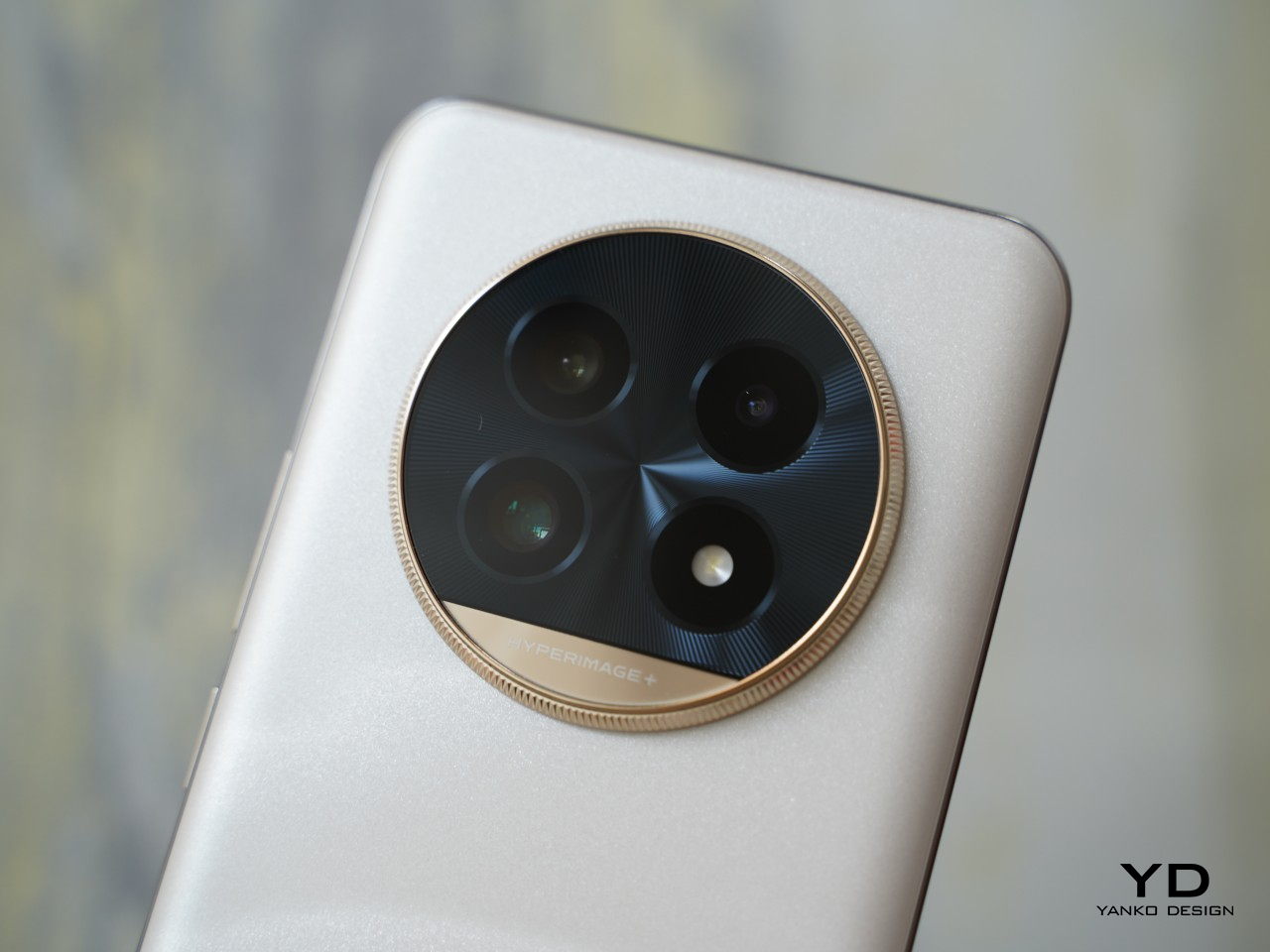
The circular camera module with the gold ring around the edge houses a triple-camera setup and an LED flash. Realme has improved upon the 12 series design by eliminating the fake camera placements and replacing them with the LED flash, resulting in a neater and more practical camera module. The module now features “HYPERIMAGE+” inscribed near the bottom against the gold background, while the Realme branding is subtly placed toward the bottom of the device. Overall, the phone presents a clean and sleek aesthetic, with the camera module serving as the focal point.

Ergonomics

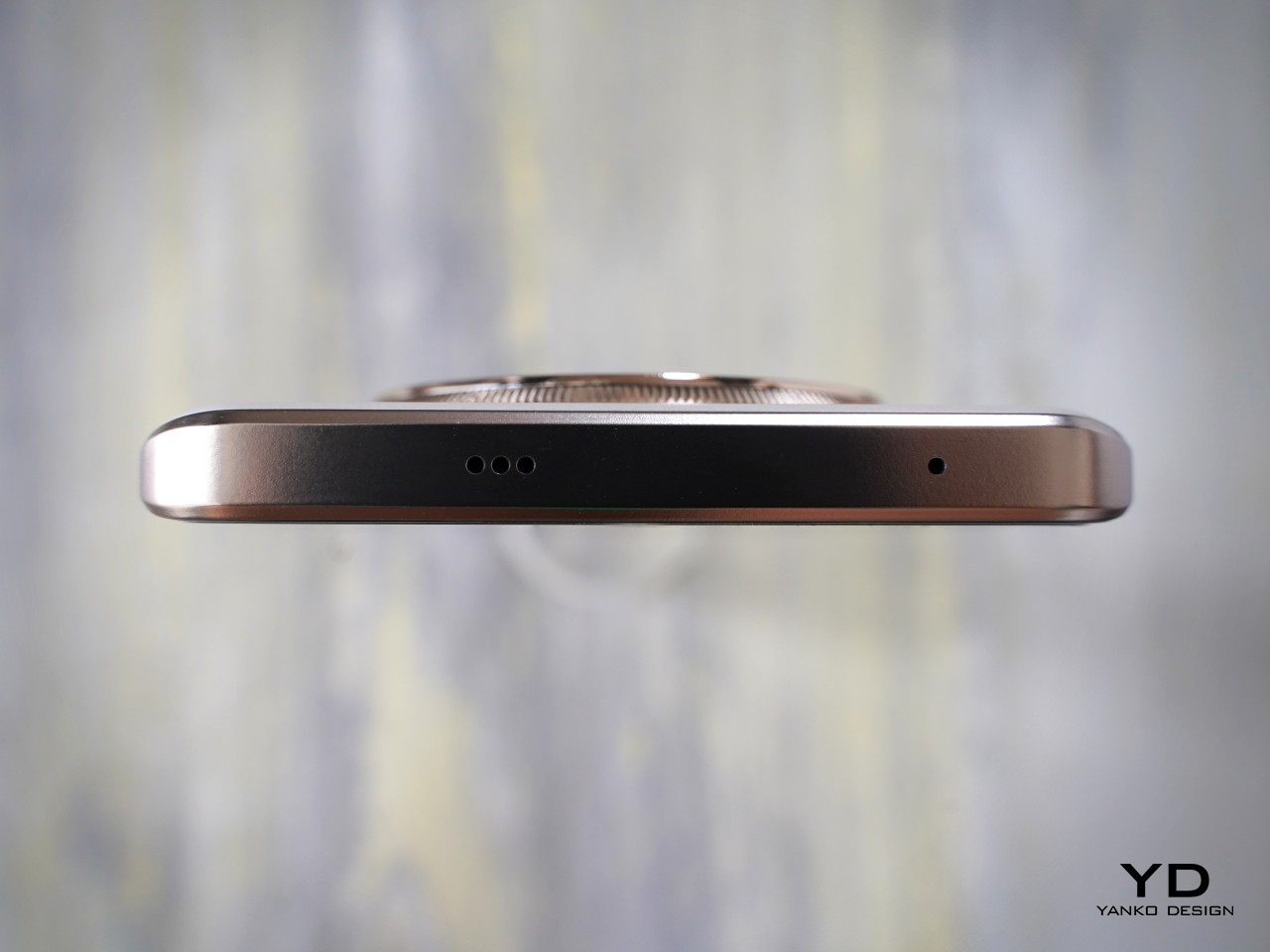
The Monet Gold variant measures 161.34mm x 73.91mm x 8.23mm and weighs 190g, while the Emerald Green variant is slightly thicker at 8.41mm but weighs marginally less at 185.5g. It balances well in hand, and the curved and rounded edges ensure a comfortable grip. The Monet Gold features a frosted glass finish that provides a velvety texture, ensuring a secure and comfortable grip without feeling slippery. The Emerald Green variant, with its vegan leather back panel, should offer a similarly high level of grip, if not more tactile and reassuring.

Performance

As a camera-focused device, the Realme 13 Pro+ boasts two world-first Sony sensors, showcasing Realme’s strengthened partnership with Sony. The first is a 50MP main sensor with the Sony LYT-701, featuring a 1/1.56” sensor, f/1.88 aperture, and optical image stabilization (OIS). The second is a 50MP telephoto sensor with the Sony LYT-600, featuring a 1/1.96” sensor and f/2.65 aperture. Completing the triple-camera setup is an 8MP ultrawide lens with an f/2.2 aperture. On the front, the 32MP selfie camera with an f/2.45 aperture is centered at the top of the display.

The Realme 13 Pro+ is equipped with Realme’s Hyperimage+ camera system, which enhances photos using both on-device AI algorithms and cloud-based AI image editing. The Realme AI HyperRAW Algorithm boosts image clarity and dynamic range, while features like the AI Portrait Algorithm improve subject isolation, bokeh effects, and skin tone. Additionally, the Group Photo Enhance feature sharpens each person’s face, regardless of their position in the group photo.

In optimal lighting, the main camera captures sharp, vibrant photos with rich detail. In low-light conditions, it maintains good performance and handles exposure well. The 3x zoom photos taken with the telephoto camera are excellent in most scenarios, offering strong dynamic range and detail in both daylight and nighttime. The telephoto lens supports up to 120x zoom, though image quality begins to deteriorate beyond 6x zoom, especially in low-light conditions. The ultrawide camera delivers satisfactory results but isn’t particularly remarkable, and the same applies to the front-facing camera.

ultrawide

1x

2x

3x

10x

20x

120x

The AI Ultra Clarity feature, even though it’s still in beta, performs well by naturally unblurring blurred images and salvaging otherwise unusable photos. However, it cannot handle motion blur. The phone also boasts the AI Smart Removal feature, which was first introduced in the GT6 series.

Oplus_131072

For video recording, the device can capture up to 4K footage at 30 fps or 1080p at 60 fps with the main and telephoto cameras. The ultrawide camera is capped at 1080p resolution at 30 fps. The front-facing camera can record video in 4K at 30 fps but does not support 60 fps. The footage from both the main and telephoto cameras is great, though there is no stabilization available in 4K.

Portrait 1x

Portrait 3x

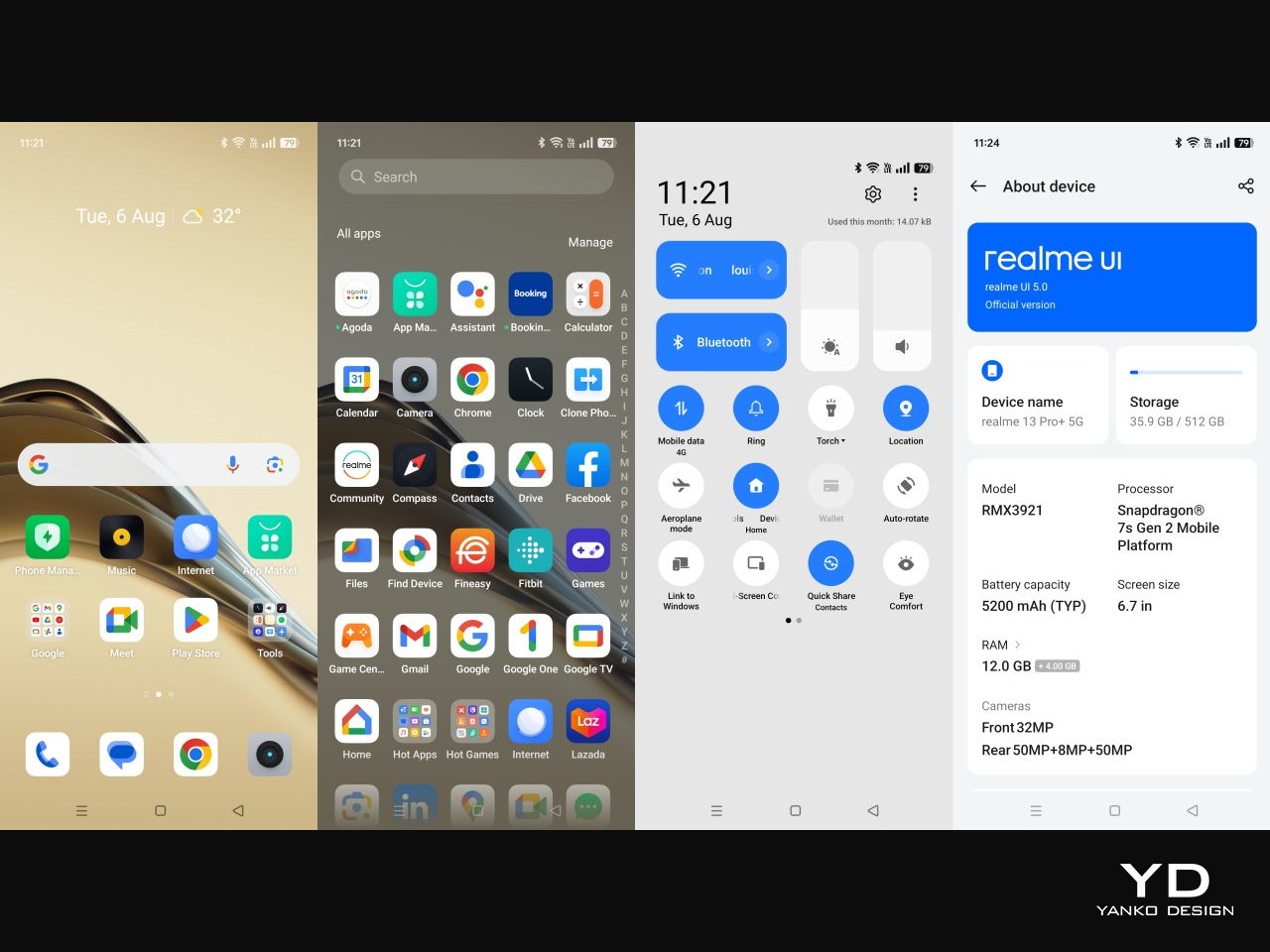
The phone is equipped with the Snapdragon 7s Gen 2, the same as its predecessor, coupled with 12 GB of RAM (expandable by 4 GB) and 512 GB of storage. It handles everyday tasks with many apps open in the background without issue. However, you may need to settle for medium settings in graphic-intensive games. For mobile gamers, the Realme 13 Pro might be a better choice for its 3D VC Cooling system that keeps the phone running at peak performance without getting too hot.

The phone features a 6.7-inch AMOLED FHD+ display with a resolution of 1,080 x 2,412 pixels and a 120Hz refresh rate. The screen boasts an impressive peak brightness of 2,000 nits, ensuring excellent visibility even in direct sunlight. It also features 2,160Hz PWM dimming and an AI Eye Protection function, designed to reduce eye strain and enhance visual comfort during prolonged use.

Powering the device is a robust 5,200 mAh battery, which comfortably lasts through a full day of typical usage. For charging, the Realme 13 Pro+ supports 80W SUPERVOOC technology, allowing for rapid recharge times and minimal downtime. Realme claims that the battery maintains over 80% of its original health even after 1,600 charging cycles, highlighting its durability and longevity.

Sustainability

While Realme has not specified the use of recycled materials in the construction of the Realme 13 Pro+, the device is designed with sustainability and durability in mind. Its display is protected by Corning Gorilla Glass 7i, which is known for its robust protection against scratches and drops. Additionally, the Emerald Green variant holds a Swiss SGS 5-Star certification for drop resistance, boasting 160% improved drop resistance and 100% scratch resistance. This design allows you to handle the phone with confidence, even if you’re prone to occasional drops or mishaps.

The phone is also rated IP65, providing effective protection against dust and water ingress, which further extends its longevity and usability in various conditions. Furthermore, Realme’s battery technology contributes to the device’s sustainability by ensuring that the battery maintains over 80% of its original health after 1,600 charging cycles. This longevity not only enhances the device’s overall lifespan but also supports environmental efforts by reducing the frequency of battery replacements and electronic waste.

Value

The Realme 13 Pro+ is now available in India, starting at ₹32,999 (approximately $400 USD) for the base model. Realme has also announced that the phone will soon be launched in other global markets. With its compelling blend of features and impressive main and telephoto camera capabilities, the Realme 13 Pro+ offers notable value for money.

In the competitive mid-to-high range segment where the Realme 13 Pro+ operates, several strong contenders are vying for attention. For instance, the OnePlus Nord 4, which we reviewed last month, stands out with its excellent battery life and sleek metal unibody design. The Nothing Phone (2a) distinguishes itself with a unique aesthetic and robust performance. Additionally, the Infinix NOTE 40 Pro+ presents a cost advantage at roughly $50 USD less, offering magnetic wireless charging and including a magnetic wireless charger in the box. Each of these alternatives has its strengths, making the choice between them a matter of personal preference and priorities.

Verdict

The integration of AI into smartphones reflects a broader trend toward leveraging advanced technologies to redefine user experiences. Realme’s approach with the Realme 13 Pro+ underscores its commitment to staying at the forefront of innovation in the mobile industry, particularly in enhancing photography capabilities through AI-driven solutions. With its strong value proposition, the Realme 13 Pro+ offers a compelling option for those seeking a balance of technology, design, and practicality in their smartphone.

The post Realme 13 Pro+ Review: AI-Powered Photography Masterpiece or Miss? first appeared on Yanko Design.
nubia Z60S Pro Smartphone Review: AI to Empower Your Creativity

PROS:


  • Eye-catching "Cosmic Ring" Camera design

  • Dedicated camera slider

  • Decent flagship performance

CONS:


  • Thick, heavy, and slippery

  • Last year's Snapdragon flagship

RATINGS:

AESTHETICS
ERGONOMICS
PERFORMANCE
SUSTAINABILITY / REPAIRABILITY
VALUE FOR MONEY

EDITOR'S QUOTE:

The nubia Z60S Pro delivers AI-powered photography in an accessible package with a distinctive design

AI is undoubtedly the buzzword that’s taking by storm any industry related to computers. It’s not just the generative AI that’s making up essays and artwork, much to creators’ chagrin, or the prying eyes that watch over your social interactions online. AI has actually been in our phones a bit longer than those, using imaging magic to enhance photos and videos in ways that were unknown to us until recently. Now, almost every new phone has some AI feature in its bullet points, and nubia is not one to be left behind. With the nubia Z60S Pro, it is entering into this new arena, so we take the brand’s newest flagship for a spin to see if it is able to stand out from the growing throng of AI-enhanced smartphones.

Designer: nubia

Aesthetics

Smartphone cameras are getting more powerful and larger as the years go by, and these are putting the skills of designers to the test. It’s no longer a question of how to cram those sensors and lenses but how to make them look less conspicuous and less atrocious. It’s no surprise that not all manufacturers get it right, so it’s quite a relief to see nubia pull it off somehow.

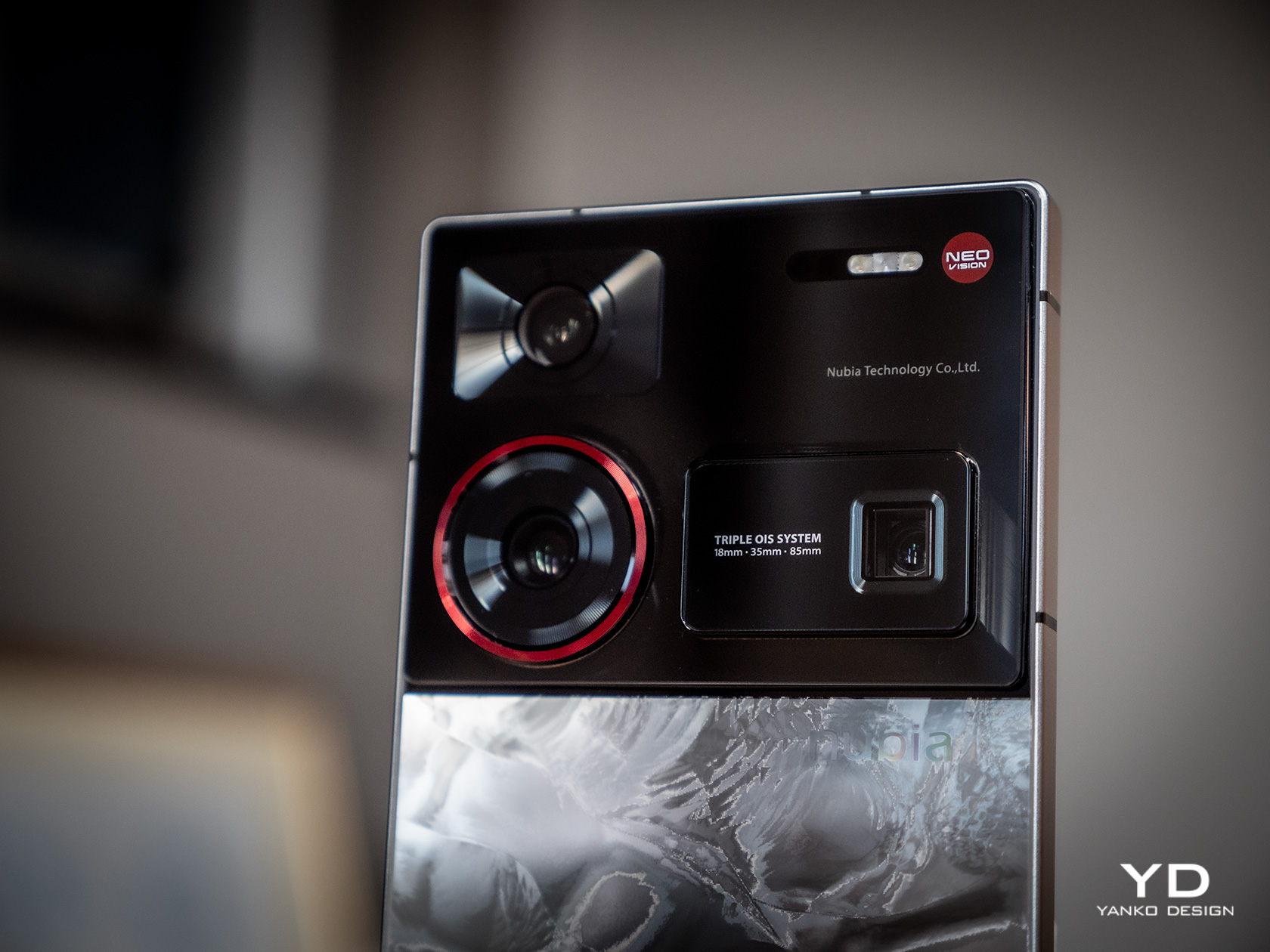
nubia calls it a “Cosmic Ring Design” and it takes inspiration from our solar system. Three small circles surround a larger one in a symmetrical pattern, calling to mind how the planets revolve around the sun. A “coronet” extrudes from the left side with the words “Be yourself” engraved on it, sending the brand’s exhortation to everyone to take a closer look. It’s a well-balanced and pleasing composition, unlike the sometimes messy and skewed designs of other phones. The red ring around the central lens is a nice touch, giving the phone a more camera-like appearance, especially on our black review unit.

There are three color options for the nubia Z60S Pro, with both Black and Aqua sporting a single solid swatch of color. White has a bit more flair, with cloudy formations of gray that give it some visual texture. Of course, all three have a glass panel covering their rears, so it’s really only an illusion. All sides of the phone are devoid of curves, except for the four corners, of course. This aligns with the design trends these days, like it or not, so it carries a modern touch in its simplicity.

The Z60S Pro carries a moderately minimalist design, with only that large circle as the center of distraction. We’ve definitely seen worse, but we’ve also seen more interesting designs, so it doesn’t stand out that much unless you really take a closer look and take a moment to appreciate the design.

Ergonomics

The nubia Z60S Pro is quite a large phone, not unusual for a flagship these days, and that doesn’t come without consequences. Although it’s the de facto standard, of course, the design previously derided as “phablets” are not the easiest to hold securely and use with one hand, which is especially true with a thick and substantial device like this. Granted, it’s not alone in that category, with the likes of the Samsung Galaxy S24 Ultra leading the way. That doesn’t mean, however, that it is ideal or one that phone designers should aspire to.

It’s especially problematic if the back of the phone is prone to slipping from your grasp due to its extra smooth texture. It’s rather curious that even after years, phone makers still haven’t perfected the design of anti-slip glass. Some do have a matte texture, but those still fail to stick to your palm. The one thing going in the Z60S Pro’s favor are, ironically, those flat edges and sharp corners that help your skin get a better grip. You can also put the included frosted protective case on the phone, but that also mars its pristine beauty.

Performance

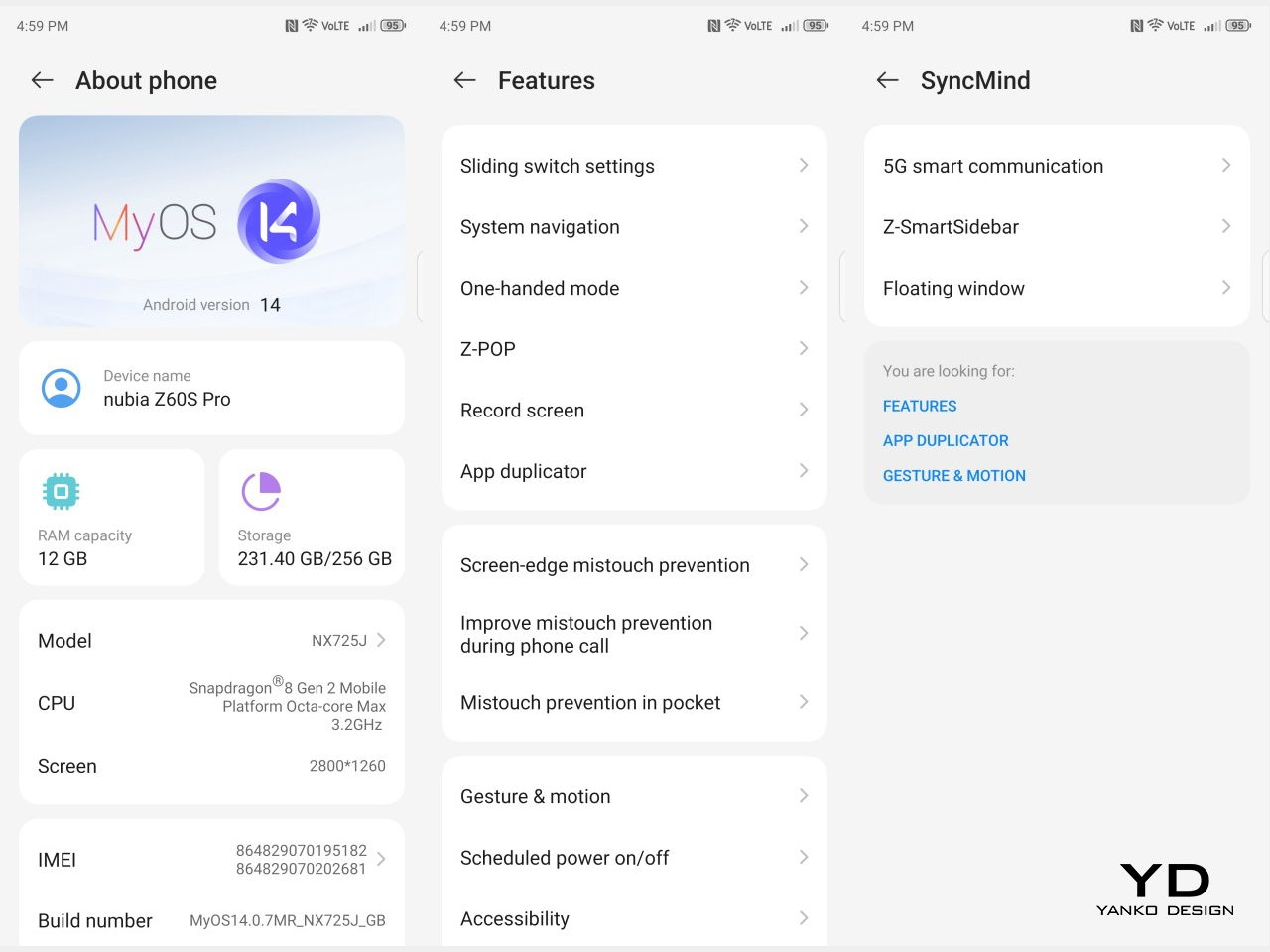
As a premium flagship, you’d expect the nubia Z60S Pro to have the latest specs to boost its performance, and that is true for the most part. The 6.7-inch “1.5K” screen definitely meets expectations with a vibrant, color-rich, and fast display that is great for videos and games. There’s also 12GB of RAM and 256GB of storage, which could be higher depending on your configuration. The one odd duck is the processor, which is last year’s Qualcomm Snapdragon 8 Gen 2. In practice, there isn’t such a wide gap between the current Snapdragon flagship, but when you’re trying to advertise on-device AI functionality, you’ll want to squeeze every drop of performance from the silicon.

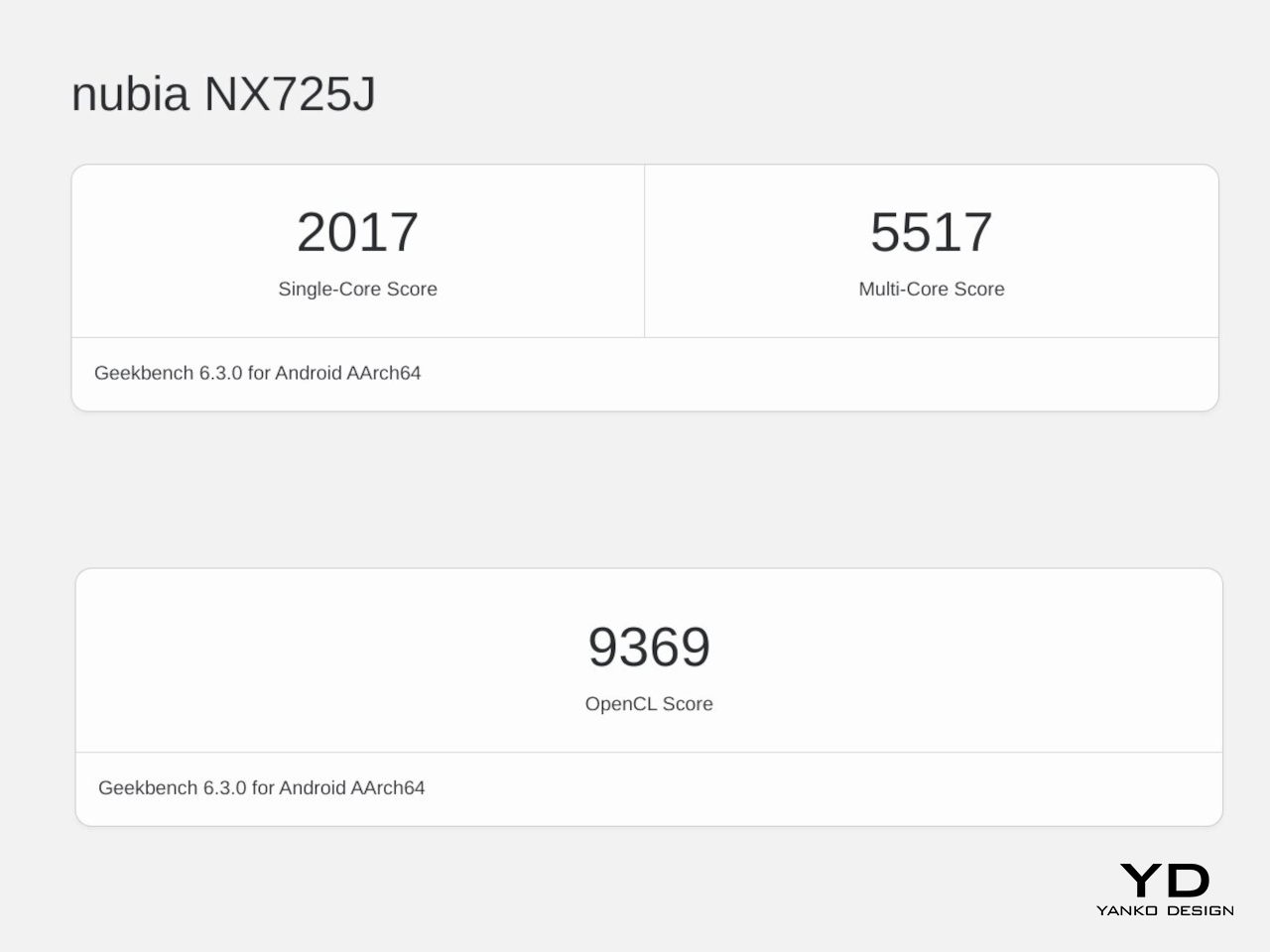
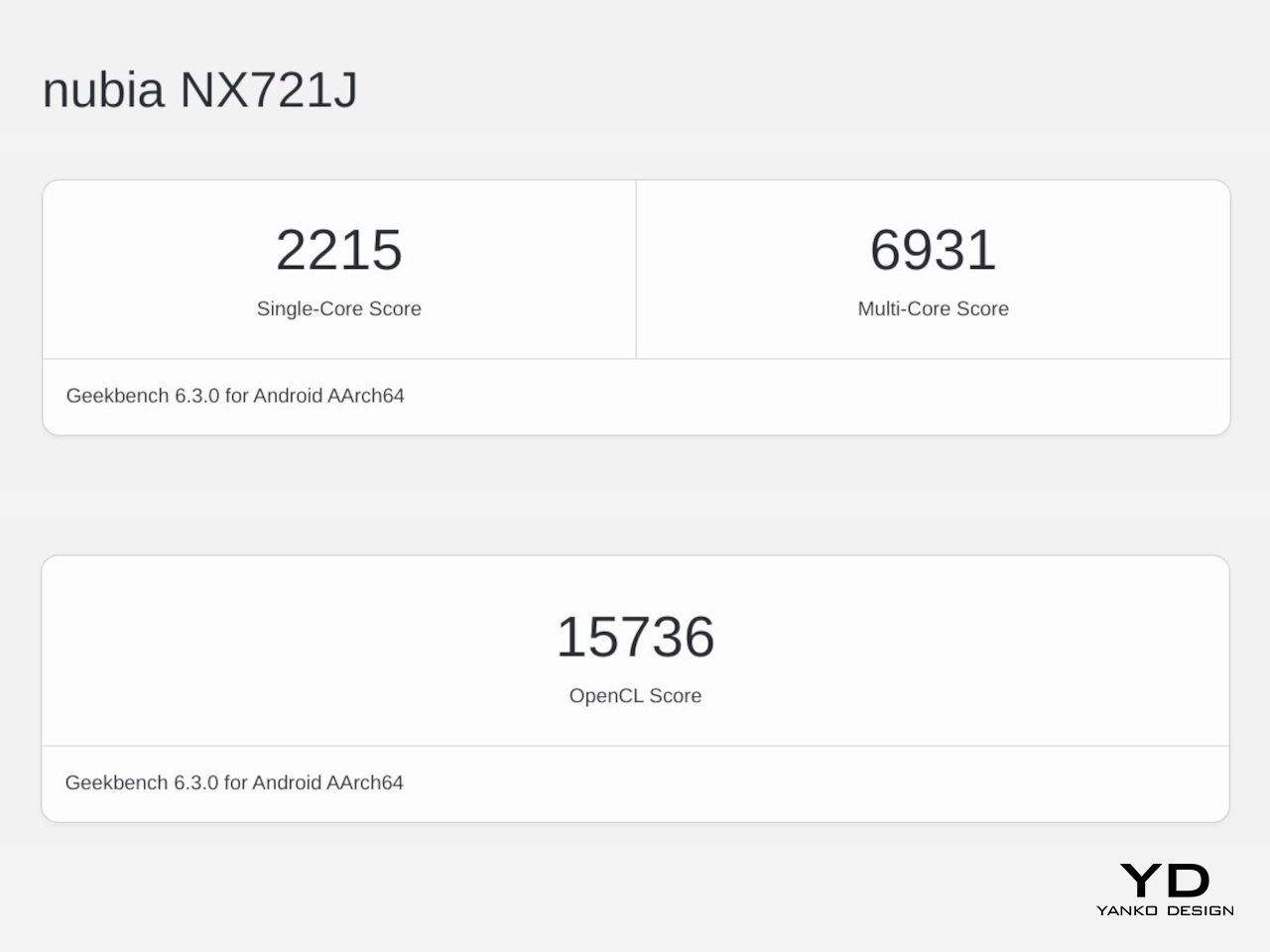
Fortunately, there isn’t a bottleneck in performance, both from synthetic benchmarks and real-world use. This is critical considering how much nubia is banking on AI to sell the Z60S Pro. From system-level optimization to photography image processing, the phone is able to keep up with the demands of features as well as users. The large 5,100mAh battery, one of the reasons for the phone’s heft, also delivers a commendable all-day performance. 80W for charging is a bit disappointing when we’re always hearing about 100W or higher rates, but it’s not slow either. Just make sure to use the included power brick to maximize the charging time.

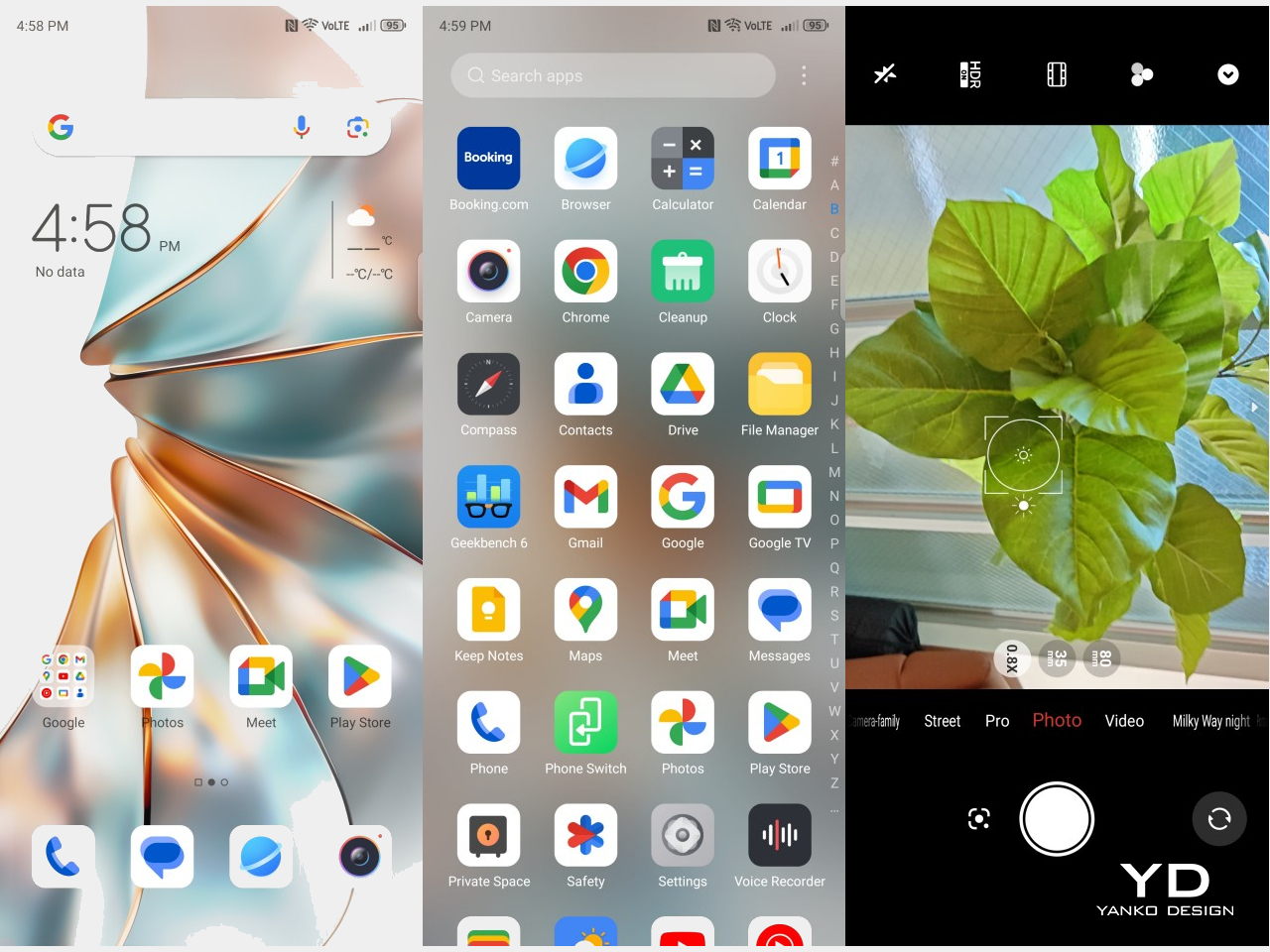
The real focus of the phone’s AI chops is, of course, the camera system. It even has a slider button that, by default, is used to launch the camera app. The trio of cameras is led by a 50MP 1/1.56-inch Sony IMX906 sensor that aims for more natural-looking photos with its 35mm equivalent lens, a popular format for cameras because of how it more closely matches our eyesight. It is joined by another 50MP camera, this time with a 13mm focal length and 125-degree field of view for ultra-wide shots. There’s a dedicated telephoto camera but it only has a measly 8MP sensor. It’s not a bad set unless you love doing macro and zoom shots.

The natural output of the cameras is pretty decent, but AI really takes it up a notch, especially for difficult scenes like zooming into the shot and nighttime photography. It’s actually quite impressive how much the Z60S Pro can accomplish with hardware that’s not exactly at the top of benchmarks, and you’d be hard-pressed to find the noise in those images unless you really examine them closely. As a phone designed to bring AI-powered photography to the masses who might not have advanced photography know-how, the nubia Z60S Pro definitely makes the cut. It empowers many to pull off breathtaking shots, artistic photography, and unforgettable moments just with a single tap of the camera button.

Sustainability

nubia is no newcomer to the smartphone arena and has its roots deep in this market. That’s why it’s a bit disappointing that it hasn’t yet left strong marks when it comes to ensuring the longevity of its products and of the planet at large. The Z60S Pro is your typical assortment of glass, metal, and plastic, and, at least officially, the company has made no statement on the use of recycled materials either in the phone itself or its packaging.

And then there’s the matter of repairability and software updates, especially with the latter issue. The nubia Z60S Pro comes at a rather odd time when there will be new hardware coming out, and the company isn’t exactly well-known for pushing timely and frequent updates. It will definitely help improve its reputation if nubia becomes a bit more explicit in its upgrade strategy, allowing it to lead its peers by example instead of playing catch-up with trends.

Value

On its own, the nubia Z60S Pro is a pretty competitive modern smartphone. With the exception of the CPU, it has the current technologies the market has to offer and is able to keep up well with benchmarks, actual real-world performance, and camera output. And with a starting price of $569, it’s not a bad deal for its price, especially when you consider how those other AI-toting flagships are nearly double the price.

But even with its rather distinctive camera design, the Z60S Pro sadly fails to stand out from the crowd as well. There are simply too many choices in that price range and just as many that offer nearly the same features for a lower price tag. What makes the situation a bit worse is that those competitors come from nubia’s other Z60 models as well. What the nubia has going for it will mostly be the brand loyalty, but those fans might also just grab the company’s more powerful and more exciting designs instead.

Verdict

We might be reaching that point in time again when the smartphone market is just over-saturated with choices. AI is becoming the differentiating factor, but almost all have similar features by now. Things get a bit more complicated when brands try to throw everything they can at a wall to see which ones stick, ending up with consumer confusion and missed opportunities. The nubia Z60S Pro could very well be one of these casualties. Offering decent performance and AI-enhanced photography at an affordable price, the smartphone gives everyone the opportunity to become a content creator, but it is sadly easily overshadowed not only by rival brands but even by its own siblings.

The post nubia Z60S Pro Smartphone Review: AI to Empower Your Creativity first appeared on Yanko Design.
Google Pixel 9 Pro XL Leaked Hands-on: A First Look at Its Stunning New Design and Features

The Google Pixel 9 Pro XL is generating buzz even before its official release. Thanks to a lucky break, a YouTuber on Andro-News.com managed to get their hands on one early. While we might wonder how they pulled it off, the real excitement comes from seeing the device in action. My initial impression? The design is quite impressive.

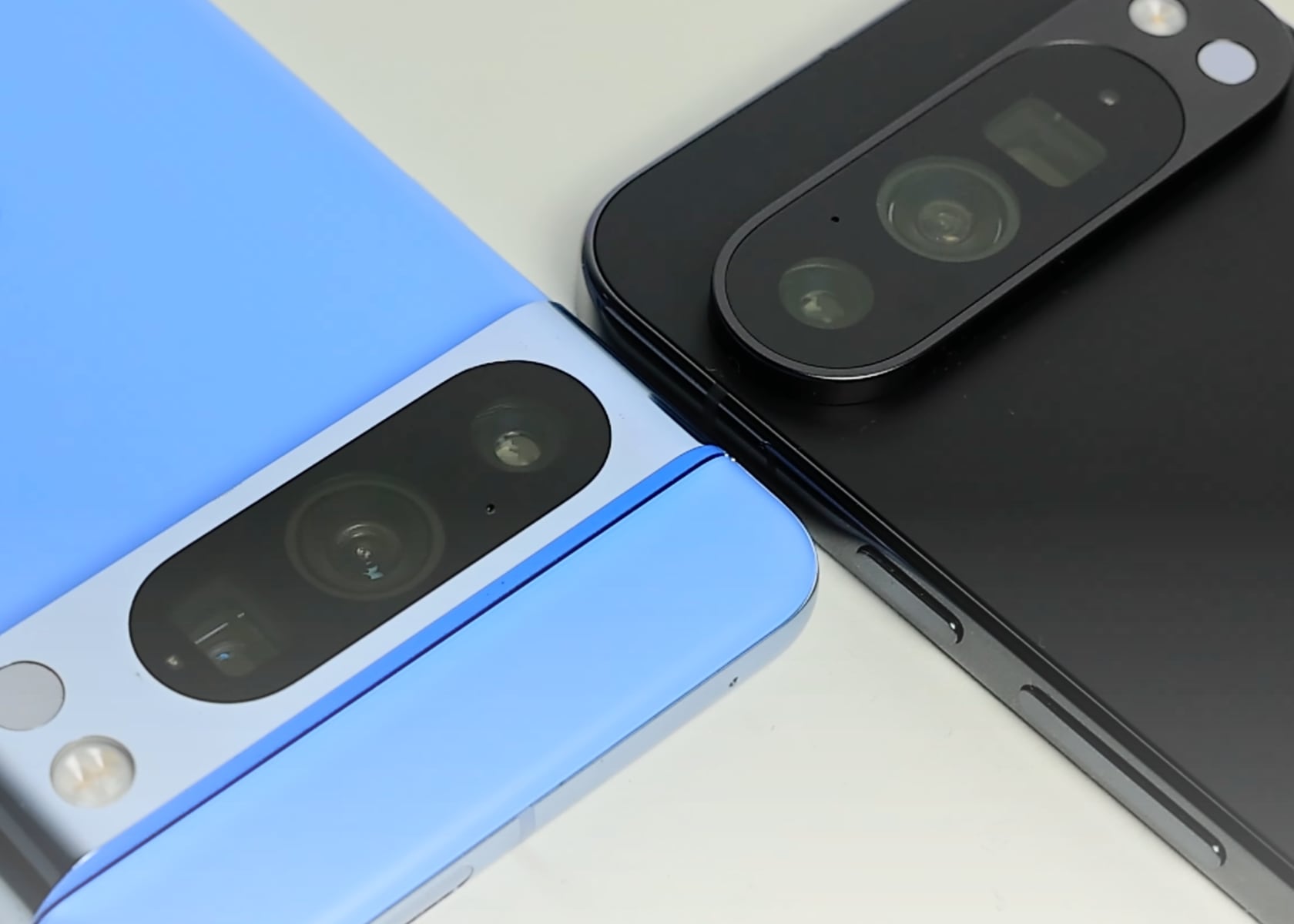
Designer: Google

The Pixel 9 Pro XL marks a significant shift for Google in aesthetics. The flat edges, reminiscent of the iPhone, give it a sleek, modern look that sets it apart from previous models with rounded edges. This change makes the phone look more streamlined and sophisticated. The polished metal frame feels premium, although it might be prone to scratches like the iPhone 13 Pro Max. The back of the phone is made of Gorilla Glass Victus 2 with a matte finish, combining durability with a refined appearance. The phone is also IP68 certified, protecting against dust and water.

Another highlight is the 6.8-inch LTPO display on the Pixel 9 Pro XL. With a resolution of 1344×2992 pixels and a 120 Hz refresh rate, the screen offers vibrant colors and excellent contrast, perfect for watching videos and browsing photos. The flat screen, a departure from the 2.5D curved edges of earlier models, enhances the device’s sleek and modern look. HDR10+ support ensures that the visual experience is top-notch.

One of the Pixel 9 Pro XL’s most talked-about features is its camera system. The camera bump houses three lenses: a 50 MP wide-angle, a 48 MP ultra-wide with autofocus, and a 48 MP periscope telephoto with 5x optical zoom and optical image stabilization. Additional elements like a temperature sensor, flash, extra microphone, and a white balance sensor enhance its photographic capabilities. The front camera has been significantly upgraded to a 42 MP sensor, promising sharper selfies and video calls.

Under the hood, the Pixel 9 Pro XL runs on Google’s Tensor G4 chip, offering a 15% performance boost over the previous generation and emphasizing energy efficiency. While it might not compete directly with the latest Snapdragon chips in sheer power, the Tensor G4 ensures smooth performance for everyday tasks. The battery is confirmed to be 5,050 mAh, improving efficiency for more prolonged use between charges.

The Pixel 9 Pro XL ships with Android 15 and will receive updates for seven years, ensuring long-term support and security. AI features like the Pixel Screenshot function use artificial intelligence to provide contextual information based on user screenshots. Additionally, the device includes a one-year subscription to Gemini Advanced, offering advanced language models, cloud storage, and document analysis tools.

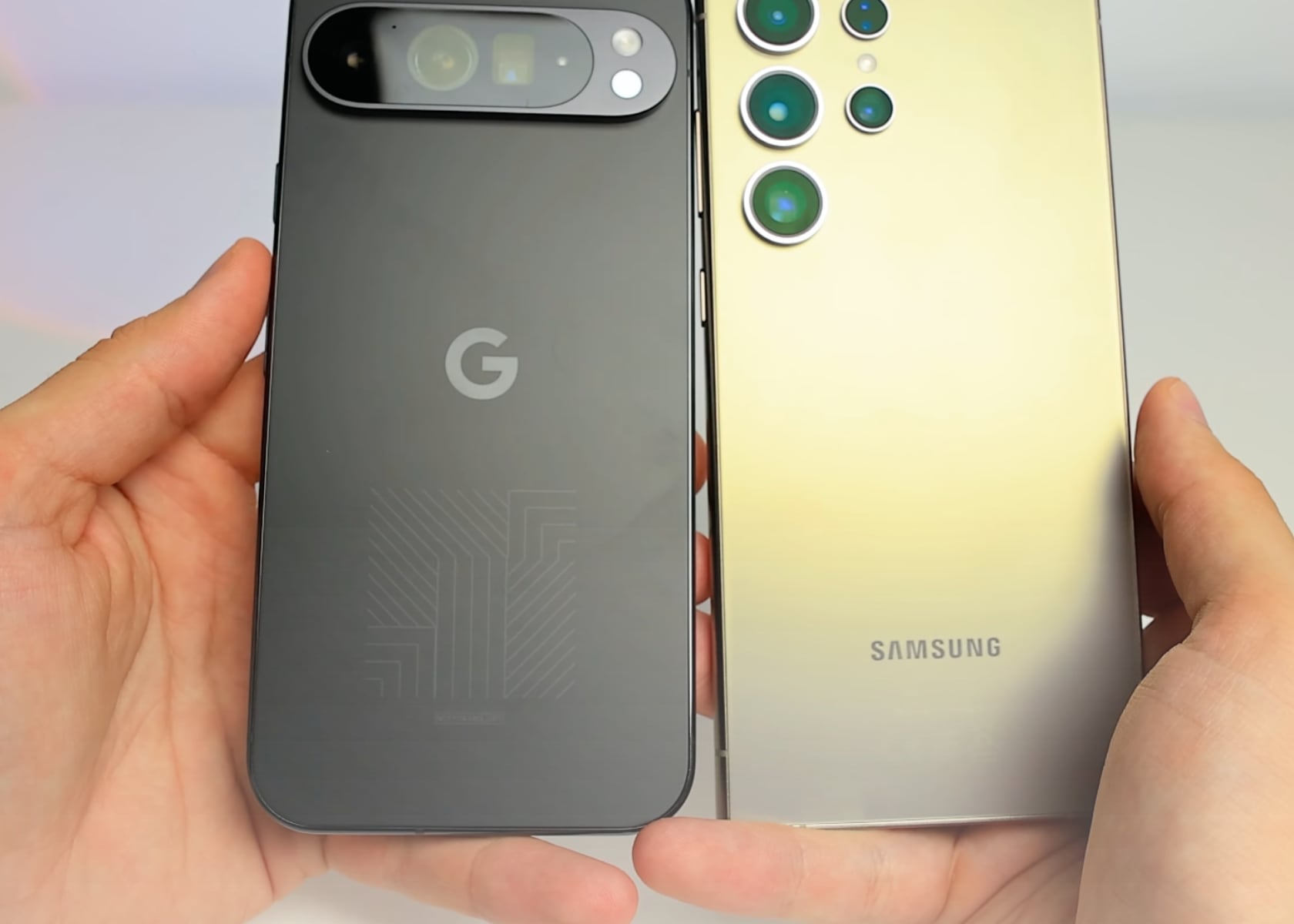
The Pixel 9 Pro XL holds up well compared to the iPhone 15 Pro Max and Galaxy S24 Ultra. It offers a comfortable grip with dimensions similar to the iPhone 15 Pro Max but is slightly taller. The flat edges might appeal to users who prefer a less sharp-edged device compared to the Galaxy S24 Ultra. The new color options — black, gray, pink, and porcelain — offer more personalized choices.

Overall, the Google Pixel 9 Pro XL impresses with its sleek design, solid performance, and innovative AI features. While it might not lead in raw processing power, its focus on energy efficiency, excellent cameras, and long-term software support make it a compelling choice in the flagship smartphone market. The various memory options and colors offer a premium experience that caters to a wide range of users.

The post Google Pixel 9 Pro XL Leaked Hands-on: A First Look at Its Stunning New Design and Features first appeared on Yanko Design.
Nothing Phone (2a) Plus Review: It Keeps Getting Better

PROS:


  • Elegant transparent design and Glyph Interface

  • Improved performance across the board

  • 50MP selfie camera

  • Sustainabile design

CONS:


  • No telephoto camera

  • No wireless charging

  • Spotty operator compatibility in the US

RATINGS:

AESTHETICS
ERGONOMICS
PERFORMANCE
SUSTAINABILITY / REPAIRABILITY
VALUE FOR MONEY

EDITOR'S QUOTE:

The Nothing Phone (2a) Plus delivers on its promise of an optimal and accessible daily driver that builds on the essentials and gets it almost perfect.

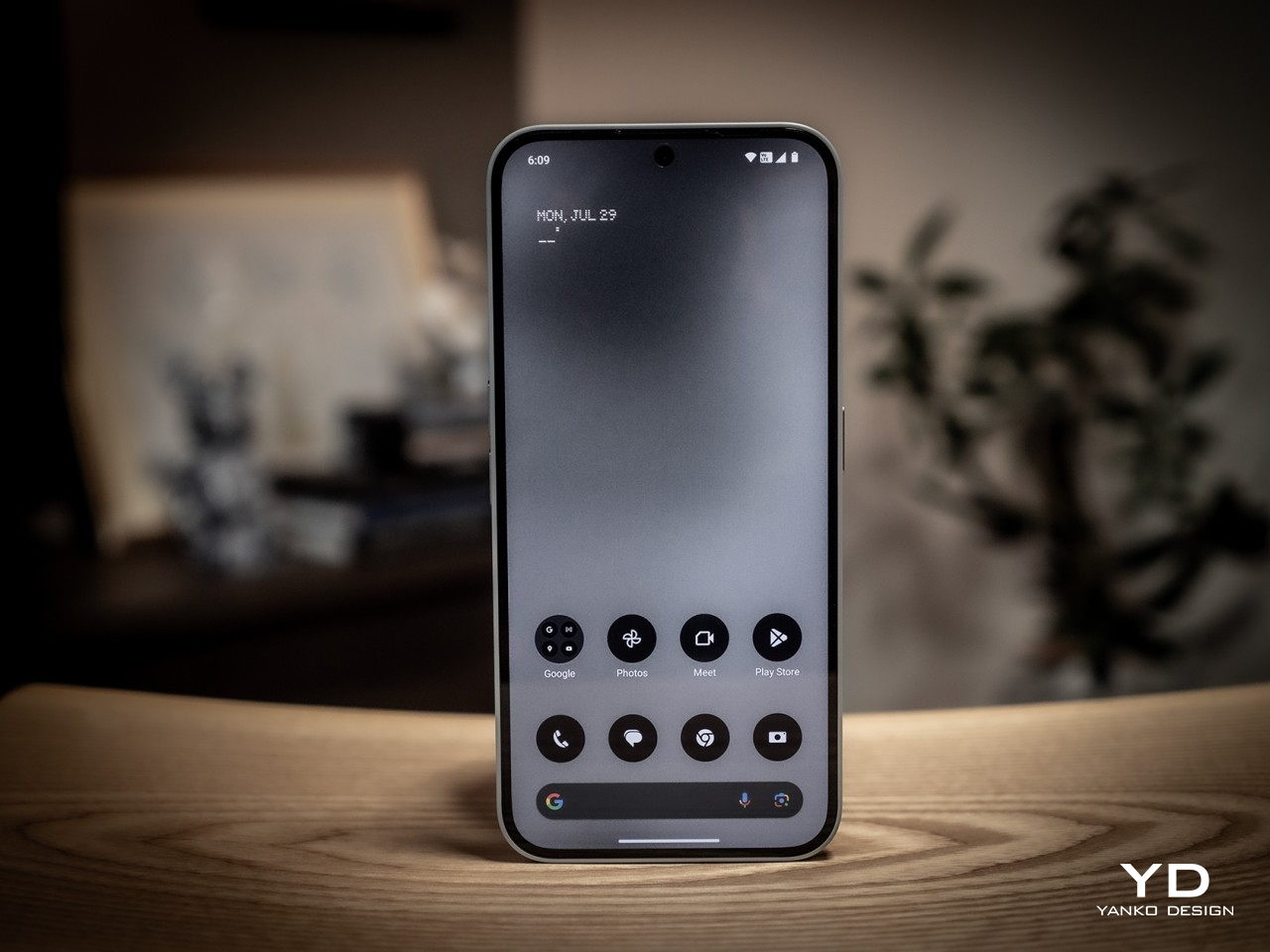
It hasn’t been that long since we reviewed Nothing’s latest masterpiece, the Phone (2a) which was designed to offer an “optimal” daily smartphone. It was another way of describing what most would bill as a mid-tier device, though it was definitely one that lived up to its hype in both design and performance. It was far from perfect, of course, but it wasn’t bad either. And yet here we are now with a “Plus” version out of nowhere, not a larger version but one that promises a more premium experience, at least compared to the Phone (2a). Color us intrigued, despite the obvious monochrome motif, so we gave the Nothing Phone (2a) Plus a few spins to see if it really has something to be proud of.

Designer: Nothing

Aesthetics

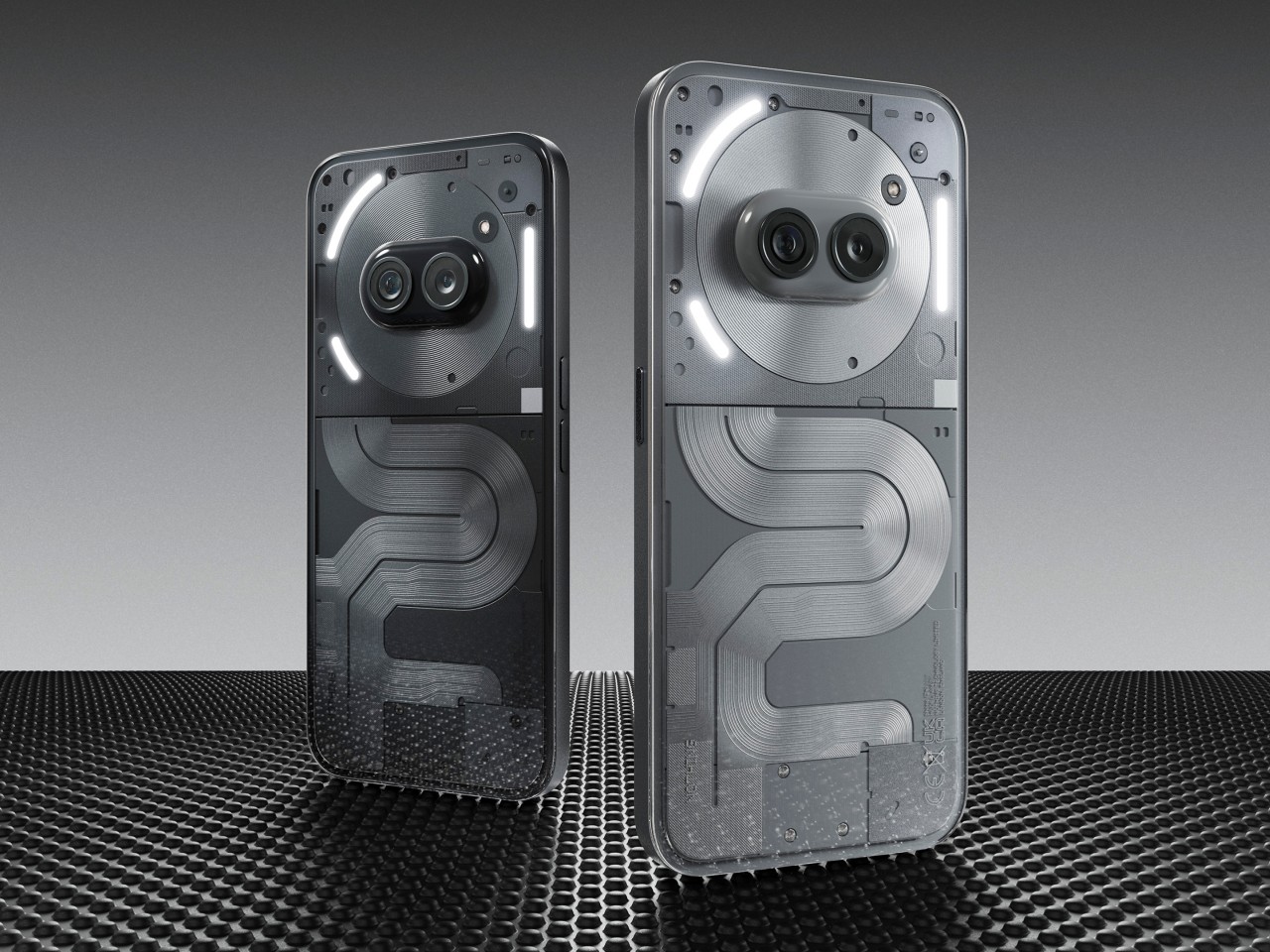
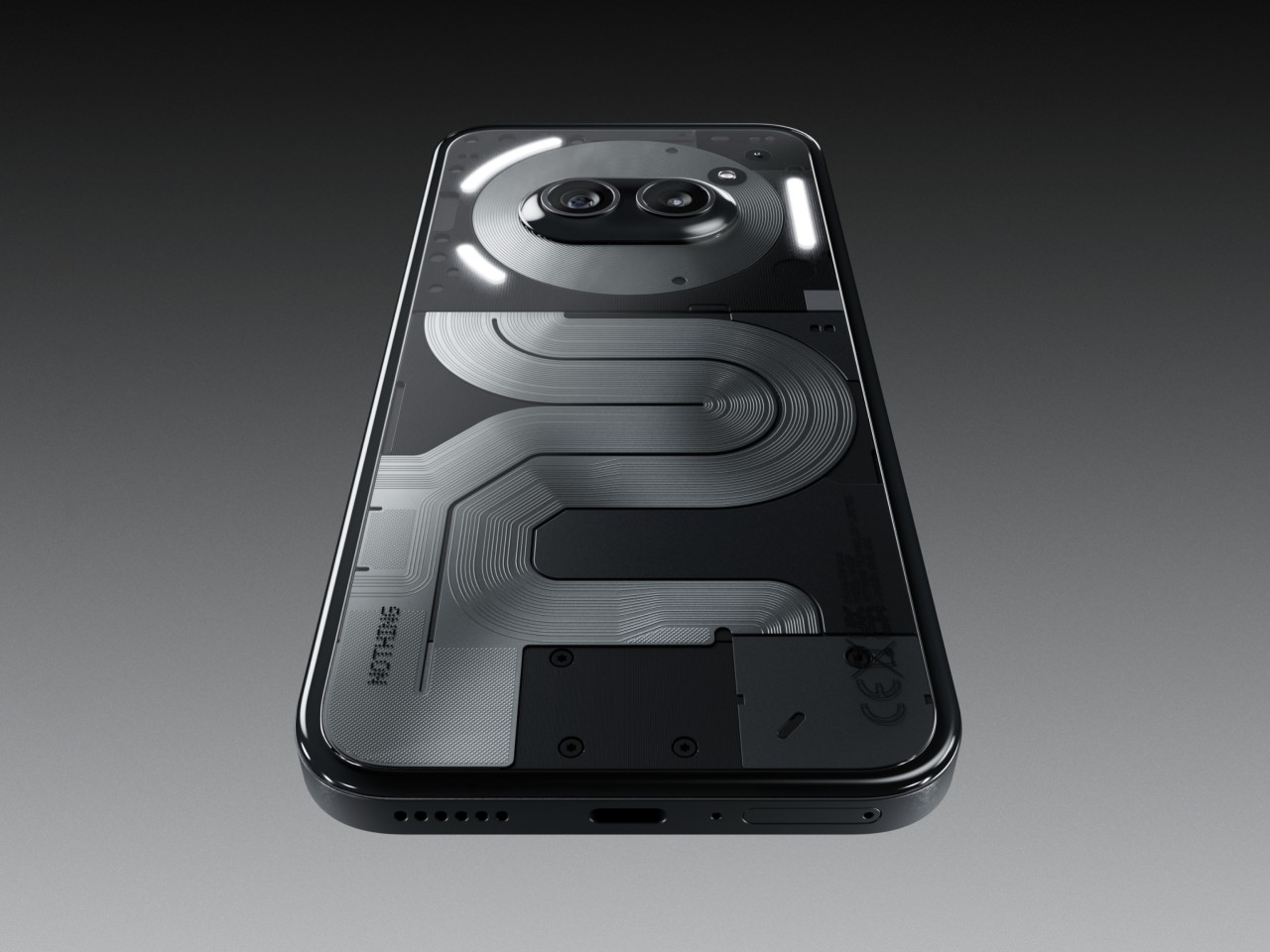
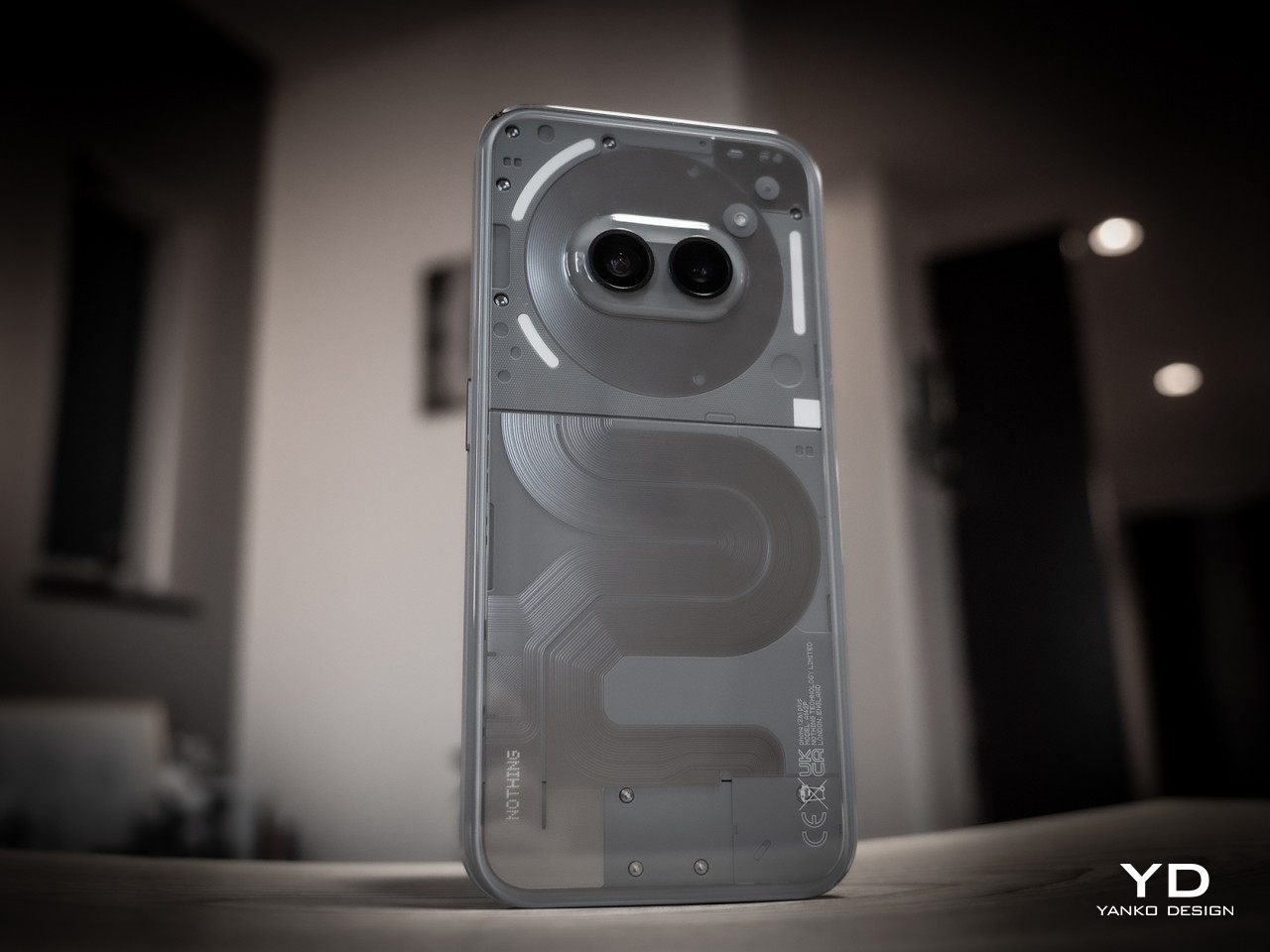
By now, Nothing’s design identity has been well established. It may not be the geeky full transparency many have hoped for, but it definitely managed to strike a beautiful balance between technology and art in its phones. To some extent, that design is even more refined in the Phone (2a) series, with its own unique patterns of opaque lanes snaking down the phone’s back, not unlike roads on a map. It feels like it has a story to tell, not just a composition of shapes, lights, and shadows.

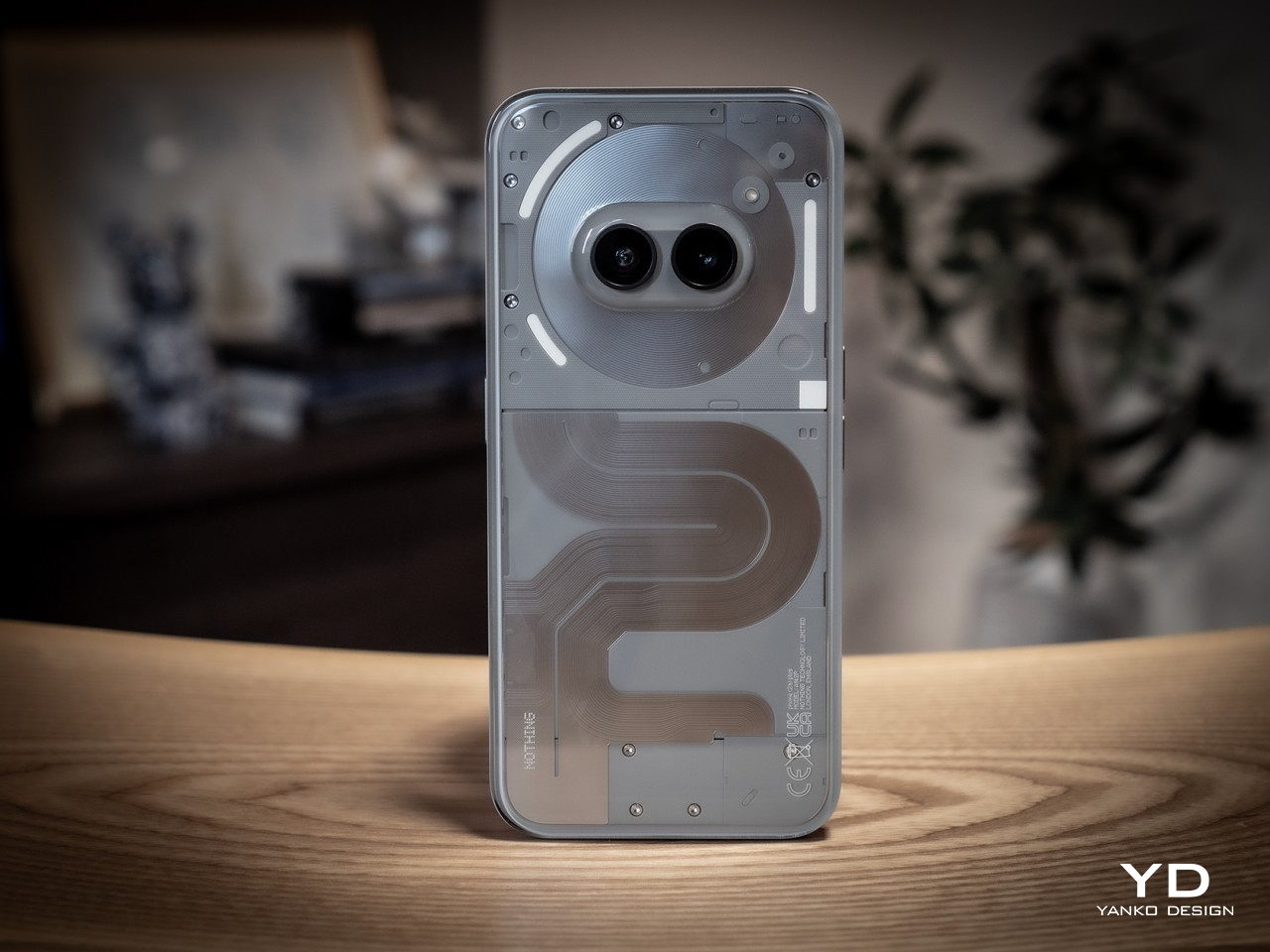
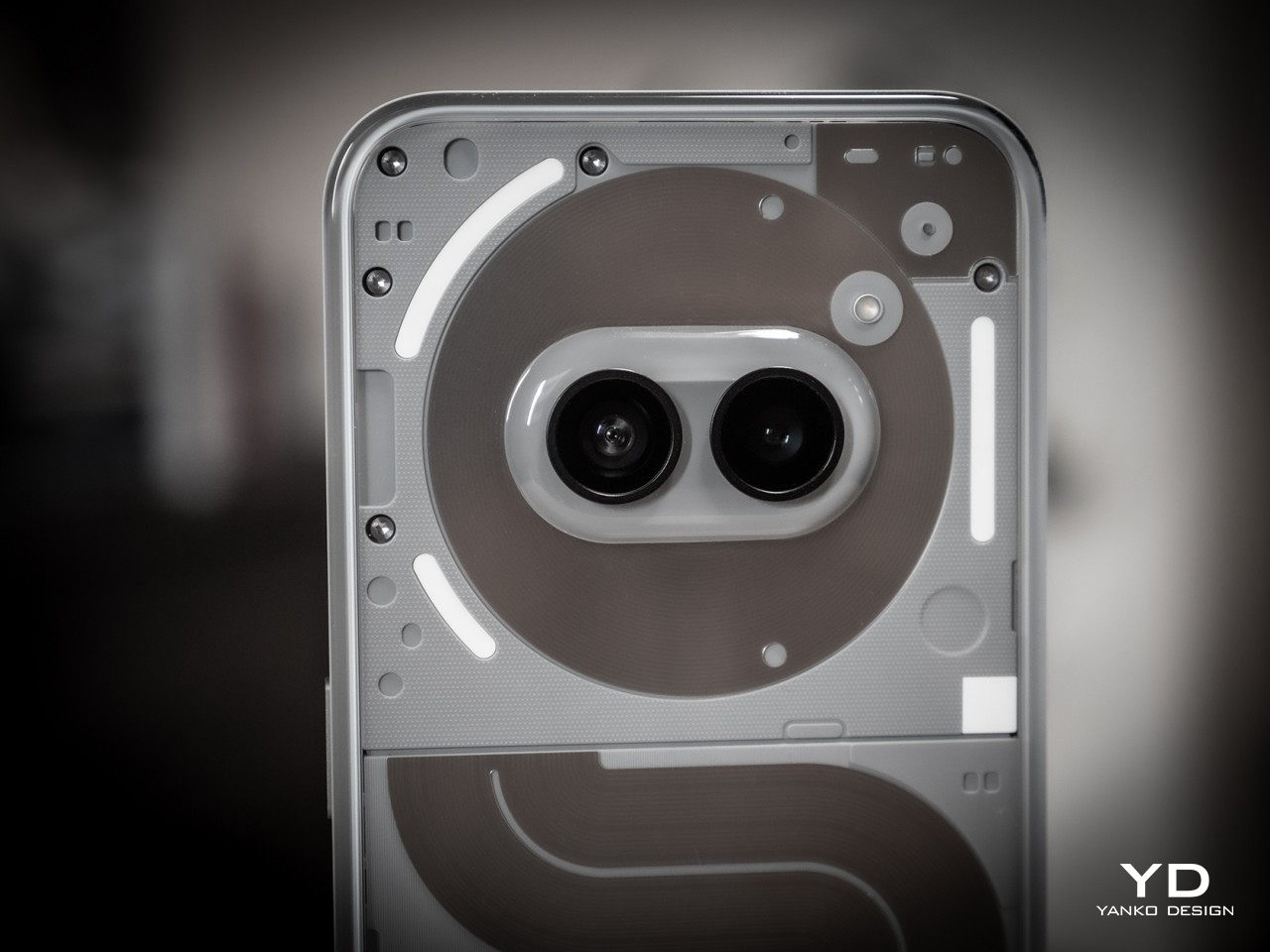
Nothing also embraced that cute little oddity we noticed on the Phone (2a): a face on the back of your phone. The placement of the two cameras in the middle of the NFC coil is no accident, and the company says it gives an anthropomorphic character, almost literally. It’s like having a pair of eyes on a cartoony circular face looking at you, or at least at the person in front of you. It is not by coincidence, either, that the Phone (2a) Plus’s silicon brain actually sits beneath this face as well.

There’s also the Glyph Interface, of course, at least the toned-down version. It might not have the same head-turning effect as the TRON-like Phone (2), but it’s more practical, more efficient, and also longer-lasting. It remains useful and visible even after the novelty has worn off.

Of course, these are design elements that the Phone (2a) also has, but what sets the “Plus” model apart is its more elegant finish. The Phone (2a) Plus has a metallic edge that’s not simply machined and then polished but is actually a product of multiple intricate processes, which is to say it’s quite a laborious and somewhat costly design. It’s well worth it, however, if only for the fact that it gives the Nothing Phone (2a) Plus a more stylish and premium look that raises its profile to the same level as more expensive handsets.

Ergonomics

The Nothing Phone (2a) Plus has a few upgrades inside that we’ll get to in a moment, but despite the internal and material changes, it remains just as lightweight as the Phone (2a), exactly 190g light, in fact. This makes the phone incredibly easy to hold without feeling flimsy or cheap. That’s very important given how large the phone actually is.

The design of the edges also helps improve that grip. Nothing adheres to that modern flat design school that gives phones more angled edges that lodge themselves into your hand without biting into your skin. It is yet another balancing act that Nothing gets right, allowing users to hold such a big phone with confidence.

Performance

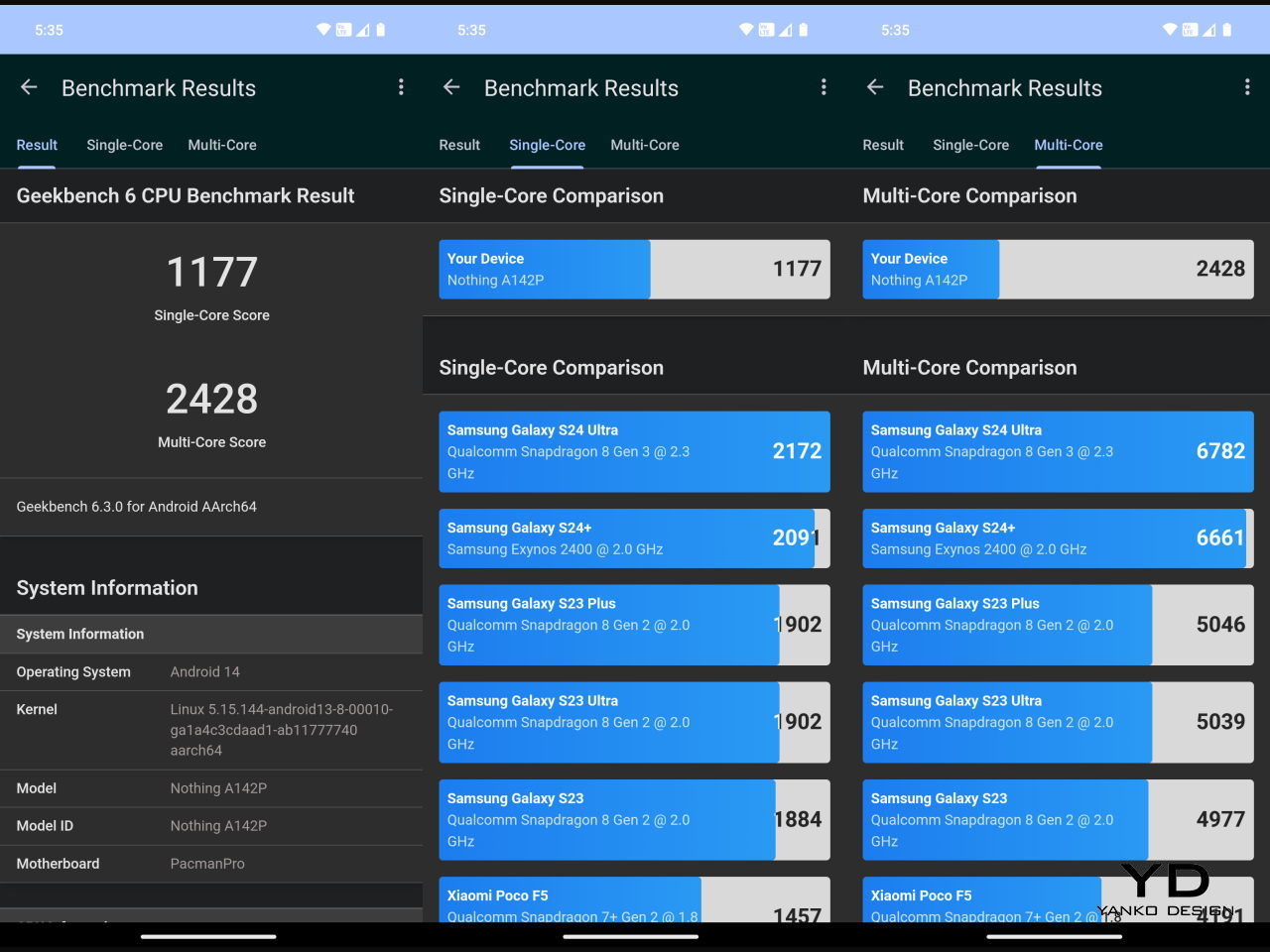
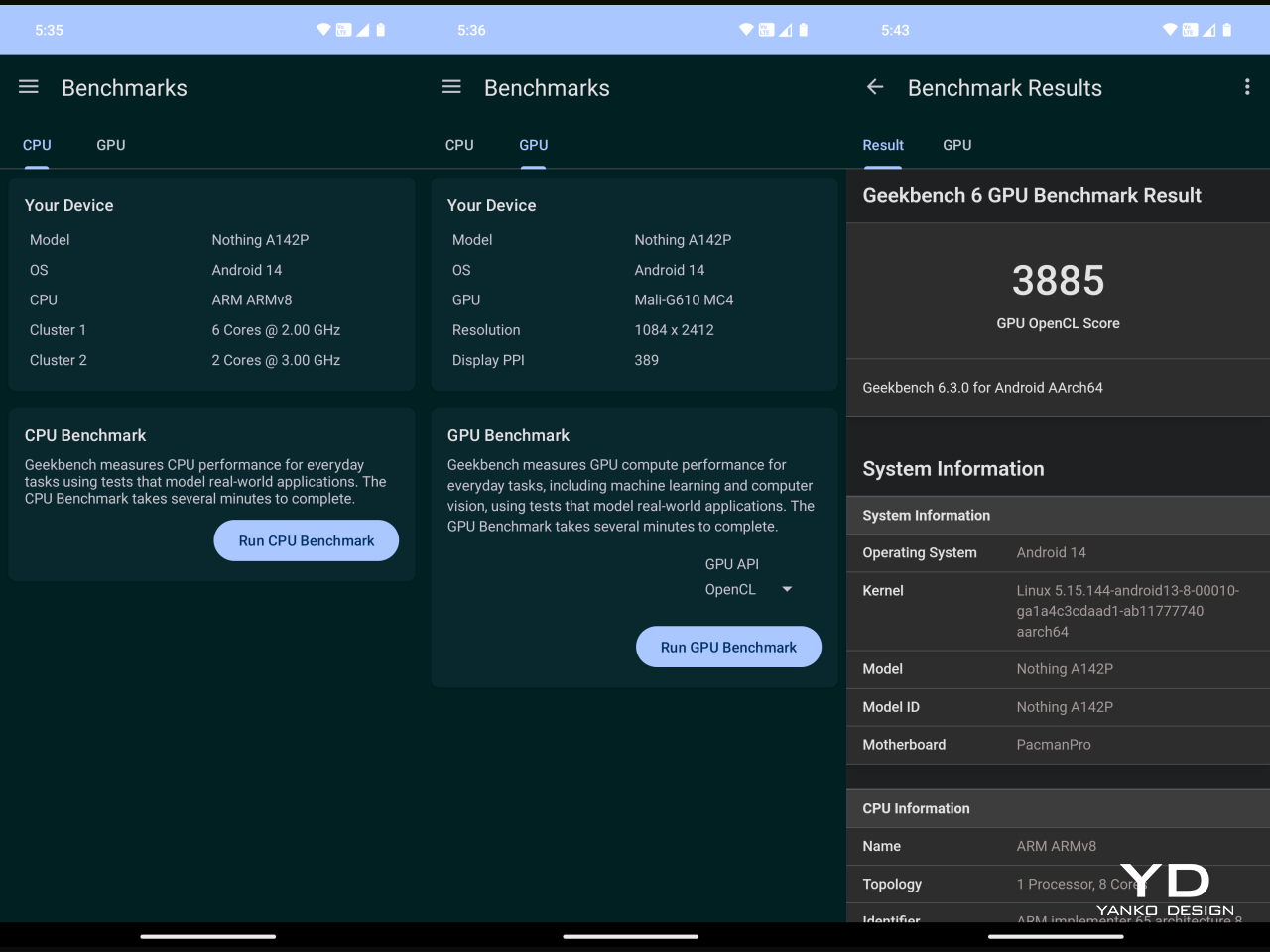
The biggest divide that separates the Phone (2a) and Phone (2a) Plus can be found inside, starting with the new MediaTek Dimensity 7350 Pro 5G that Nothing says was developed exclusively for the brand. It’s definitely a step up from the stock Dimensity 7200 of the Phone (2a), especially by the fact that it can run at 3.0GHz max. It also has a stronger GPU with the Mali-G610 MC4 clocked 30% faster at 1.3GHz. What all these mean in practice is that the phone is even better equipped to handle mobile games, let alone the everyday tasks you throw at it. You’ll still have to dial down the settings, of course, but not to the point that games lose their visual flavor and appeal.

The large 6.7-inch FHD+ AMOLED screen definitely contributes to an enjoyable multimedia experience, especially with its 120Hz refresh rate. The display is vibrant and bright, but not so bright that it will strain your eyes. For that, it supports 2160Hz PWM (Pulse-Width Modulation) dimming, supporting longer screen time use, though it’s still advisable to take regular breaks, regardless.

The other big upgrade that the Phone (2a) Plus boasts of is the triple 50MP camera system. No, there are still only two cameras on the back, and both definitely produce impressive output. The newcomer is the 50MP front-facing camera, up from the already good 32MP shooter from the Phone (2a). This is a Samsung JN1 with an F2.2 aperture lens and a wide 81.2-degree field of view. Suffice it to say, whether you’re taking selfies or food pics, you’ll be treated to clear, crisp, and detailed photos, even at night.

Despite the slightly more powerful hardware, the Nothing Phone (2a) Plus retains the same 5,000 mAh battery. It’s still a large and generous serving by today’s standards, so you shouldn’t be worrying about going empty in the middle of the day. For the Plus model, Nothing upped the charging speed a bit to 50W from 45W. It’s not exactly the fastest on the block, but bigger brands have done worse. Sadly, there’s still no wireless charging here, which is disappointing but not unexpected. In the grand scheme of things, that is probably the least of people’s needs for a phone on this tier.

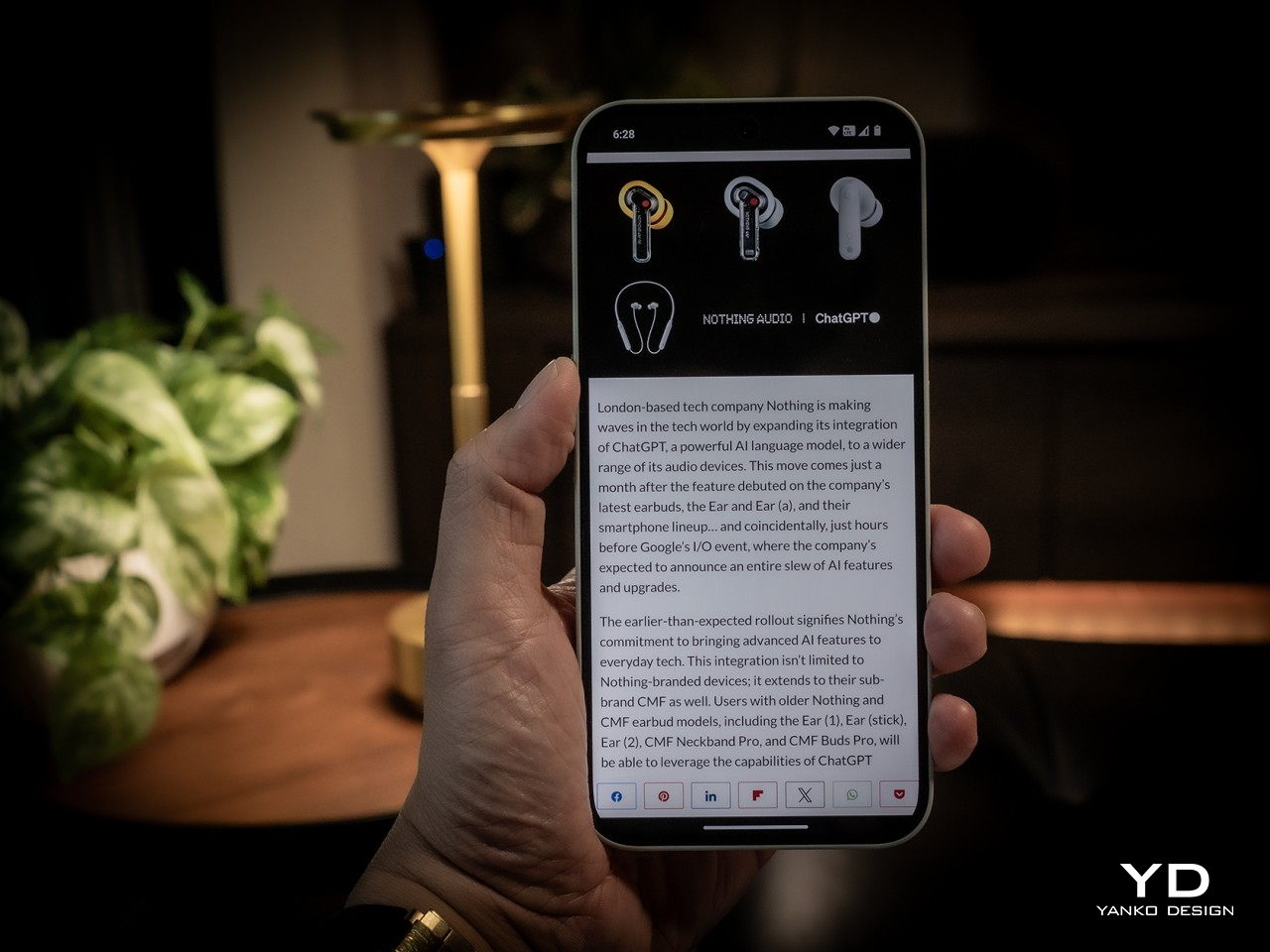
Part of the Nothing Phone’s appeal is its take on the Android experience, and the Phone (2a) Plus definitely has that down to a “T,” including the new AI buzzword. Nothing OS has been famed for its minimalist aesthetic, especially when it comes to home screen widgets. Version 2.6 adds new widgets to that set, and productivity buffs will love the new Date widget for important reminders. There’s also ChatGPT integration for getting the answers you need quickly, though it might be a controversial feature considering some privacy concerns.

Sustainability

Nothing has always positioned itself as a design-conscious company, and designers these days are also conscious of the impact that their designs have on the environment. This is especially true in the smartphone industry where material waste from production and electronic waste from discarded products continue to rise each year as more and more devices are made. That’s why it’s quite encouraging to see Nothing’s efforts in this area, from using 100% recycled aluminum for the midframe to sustainably sourcing over 50% of the Phone (2a) Plus’ plastic parts. It even reuses plastic waste from the production of the Ear (2) buds for this phone.

The Phone (2a) Plus also scores a few points for longevity, particularly with its IP54 dust and water resistance rating. We wish it had a longer software support period, which currently stands at 3 years for Android updates and 4 years for security patches. That can change somewhere down the road, and we hope it does. Where it doesn’t do well is repairability, which isn’t all that surprising considering its uncommon design. Nothing is still young, though, and with the CMF sub-brand, we could see some improvement in that regard as well.

Value

If the Phone (2a) already provided great value for its price, the Phone (2a) Plus takes that a step further. Better performance, a better selfie camera, a slightly faster charging battery, and a great distinctive design all make this handset a great sell. At only $399 for 12GB of RAM and 256GB of storage, it even practically makes the $349 Phone (2a) almost ignorable, strange as that may sound. It is definitely worth considering for your everyday driver, presuming you can get your hands on one.

That is the bit that slightly takes away some of the Phone (2a) Plus’ appeal. You can always import the phone if no local store or carrier offers it, but you will have to do your own research to make sure you can actually use it in your locale. In the US, for example, it doesn’t support AT&T’s 5G network at all and only some of T-Mobile’s 5G bands. Verizon has “limited support,” which means you can use it at your own risk. It’s hardly Nothing’s fault, but it does show some of the disadvantages of being a small fish in such a large pond.

Verdict

The arrival of the Phone (2a) Plus was quite a surprise. Definitely a pleasant one, but a surprise nonetheless. It’s not like the Phone (2a) wasn’t a good phone, but now there might be even fewer reasons for people to want one other than availability and that $50 difference. That’s because the Phone (2a) Plus practically addresses some of the imperfections of its older sibling without taking away any of its charm. It definitely lives up to its promise of a powerful everyday driver, whether you’re scrolling through social media, responding to emails, or even passing the time with games.

The post Nothing Phone (2a) Plus Review: It Keeps Getting Better first appeared on Yanko Design.
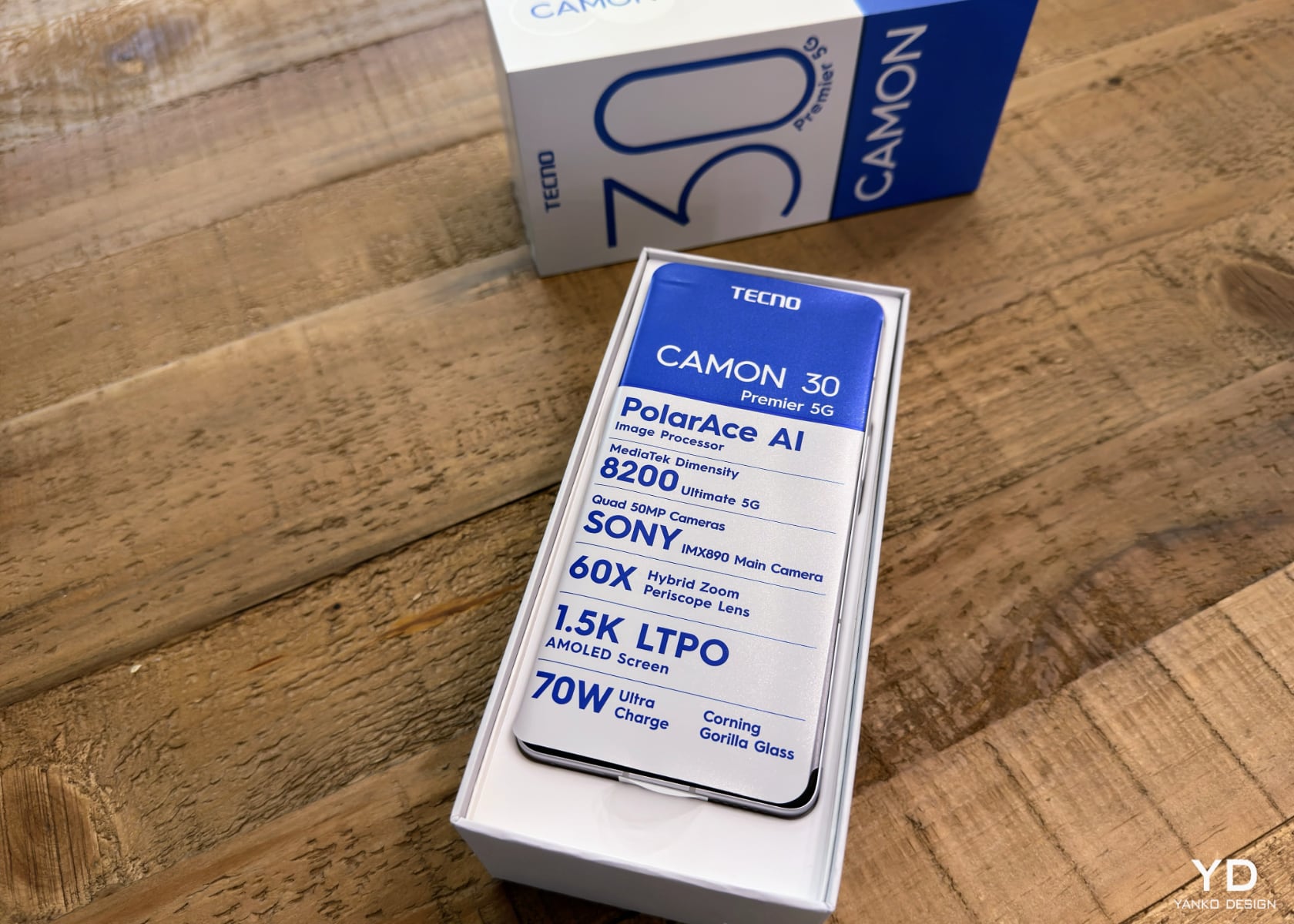
Tecno Camon 30 Premier 5G Review: Flagship Specs for Budget Conscious Consumers

PROS:


  • Impressive Camera Setup: Triple 50MP camera system for high-quality photos in various lighting.

  • Elegant Design: The sleek design with a vegan leather back and aluminum frame gives the phone a premium feel.

  • Ample Storage and Memory: With 12GB of RAM and 512GB of storage, the device ensures smooth multitasking and plenty of space for apps and media.

  • Fast Charging: The 70W fast charging capability quickly powers up the 5000mAh battery, providing convenience for users on the go.

CONS:


  • Limited Availability: The device is not widely available in Western markets, making it difficult for some consumers to purchase.

  • Average Software Experience: While HiOS 14 is functional, it can feel cluttered with bloatware and lacks the polish of more refined interfaces.

  • Brightness Issues: The display's maximum brightness is lower than some competitors, which can impact visibility in bright outdoor conditions.

RATINGS:

AESTHETICS
ERGONOMICS
PERFORMANCE
SUSTAINABILITY / REPAIRABILITY
VALUE FOR MONEY

EDITOR'S QUOTE:

The Tecno Camon 30 Premier 5G sets a new standard in the budget smartphone market with its flagship-level camera performance and sleek design at an unbeatable price.

The Tecno Camon 30 Premier steps into the mid-range market with a clear focus on camera capabilities. It offers high-tier features at a price that won’t break the bank. For photography enthusiasts on a budget, this phone promises a lot. But how does it hold up in everyday use? After putting it through its paces, it’s clear that the Camon 30 Premier has plenty to offer.

Designer: TECNO

Aesthetics / Design

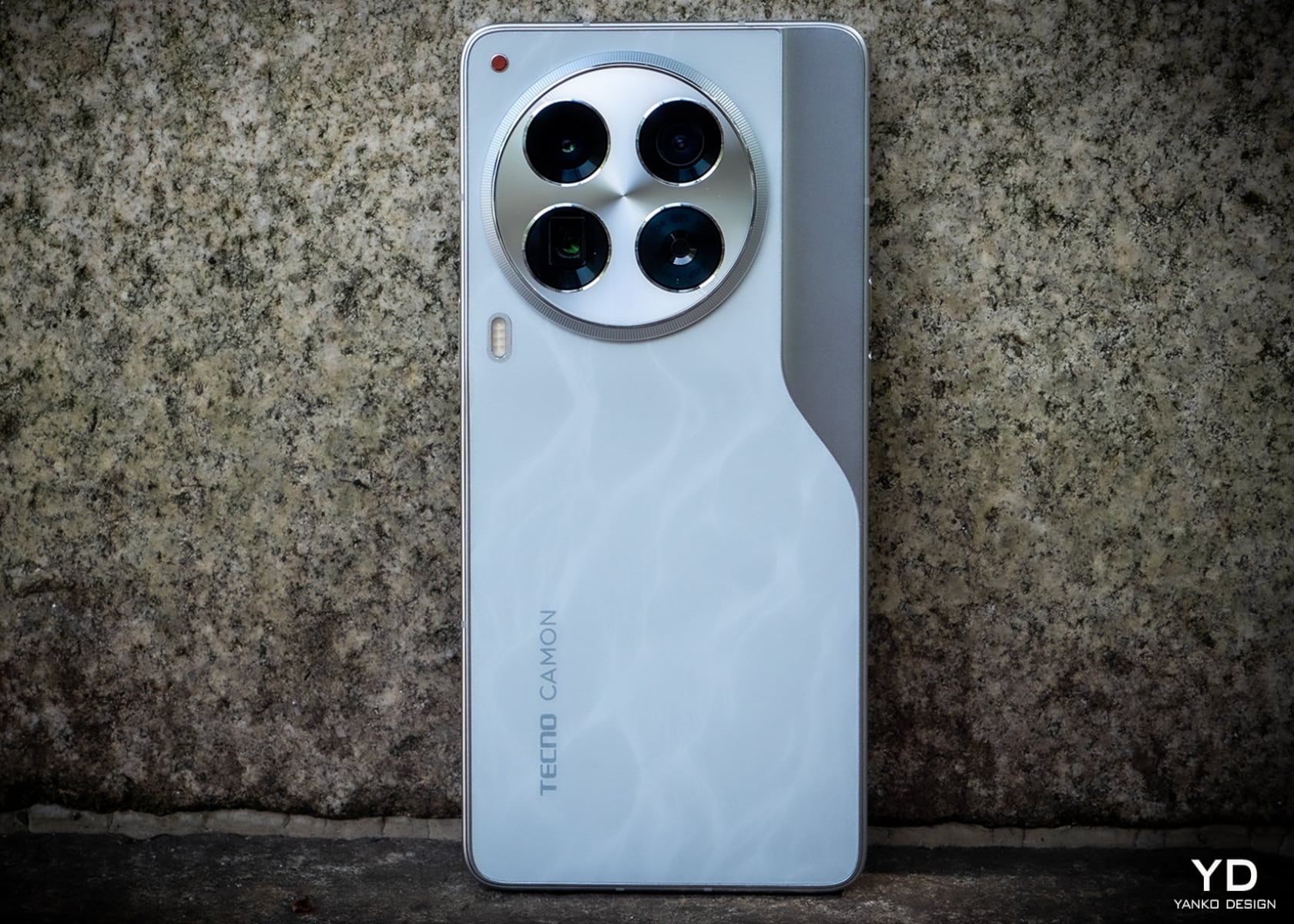
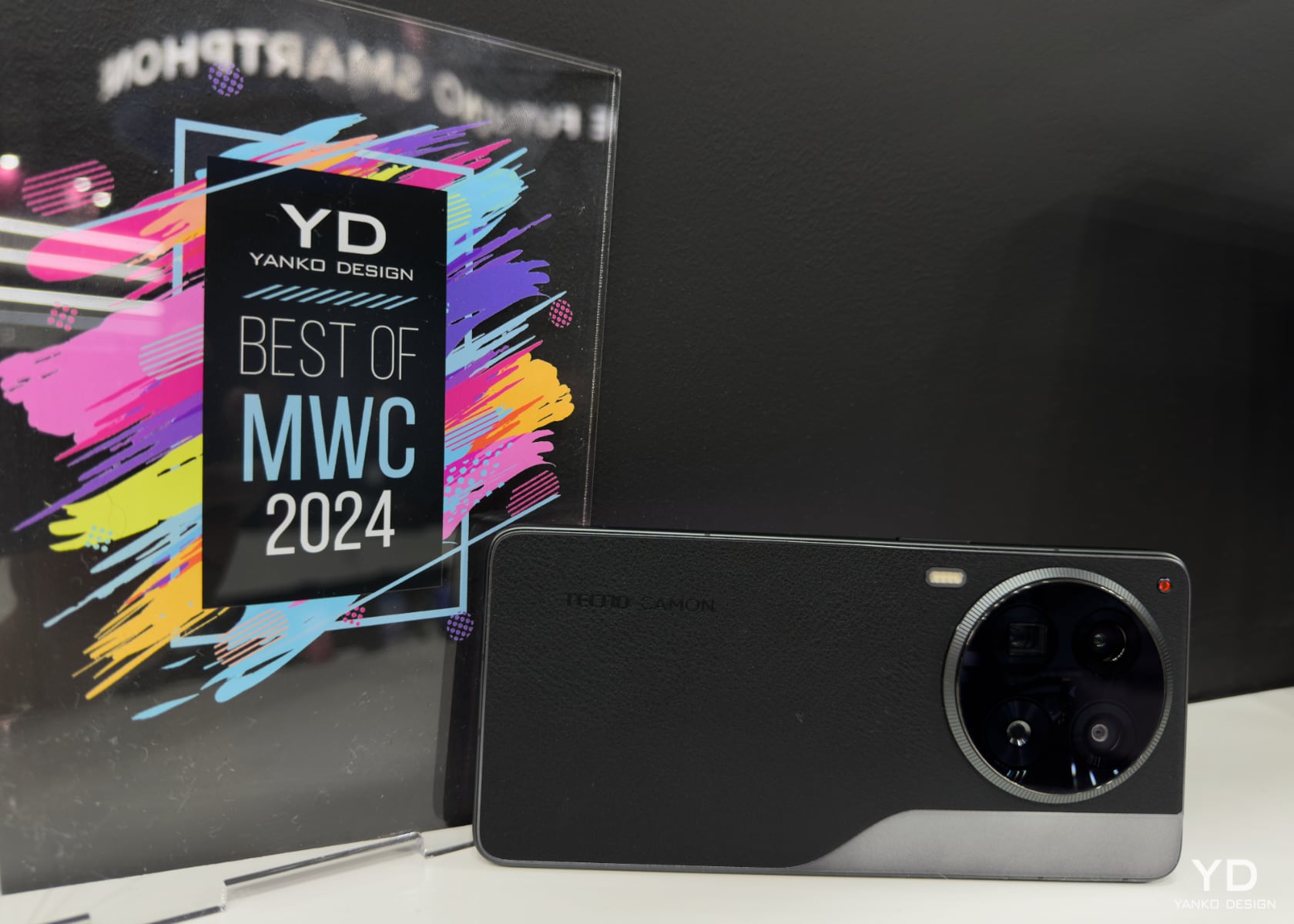
First impressions matter, and the Tecno Camon 30 Premier doesn’t disappoint. It sports a sleek design with a Gorilla Glass 5 front, an aluminum frame, and a stylish vegan leather back. You can choose between Alps Snowy Silver and Hawaii Lava Black, both of which look premium and feel great in hand. The IP54 rating means it can handle dust and splashes, though you’ll want to keep it away from water.

The 6.77-inch LTPO OLED panel, with its slim bezels, gives the phone a modern look. It supports HDR and a 120Hz refresh rate, making everything from scrolling to streaming smooth and vibrant. The flat-edged frame and gently curved edges ensure it’s comfortable to hold despite its weight. The buttons are conveniently placed, though the power button might be a stretch for smaller hands. The under-display fingerprint reader is quick and responsive, albeit a bit low on the screen.

Ergonomics

Holding the Tecno Camon 30 Premier feels like holding a piece of art. The aluminum frame, combined with the vegan leather back, offers a touch of sophistication that’s uncommon at this price point. The leather finish adds a premium feel and provides a good grip, making it less likely to slip out of your hand. The phone’s weight is balanced well, so it doesn’t feel cumbersome during extended use.

The placement of the buttons is intuitive. While the power button on the right is easy to reach, the volume buttons on the left might require some adjustment if you’re used to having them on the same side. The large, responsive buttons are easy to press, which is a nice touch. Although positioned a bit low, the fingerprint sensor is snappy and unlocks the phone quickly.

Performance

Under the hood, the Tecno Camon 30 Premier 5G packs a punch with the Mediatek Dimensity 8200 Ultimate chipset. Paired with 12GB of RAM and 512GB of storage, it handles multitasking effortlessly. Whether you’re streaming videos, playing games, or juggling multiple apps, the phone keeps up without a hitch.

The 6.77-inch LTPO OLED display supports a 120Hz refresh rate, delivering vibrant colors and deep contrasts. While the screen is bright and clear, it could benefit from more peak brightness for those sunny days outside.

Software Experience

Running on HiOS 14, based on Android 14, the Camon 30 Premier offers a user-friendly experience. HiOS 14 introduces cool features like Dynamic Port 2.0, Tecno’s version of Apple’s Dynamic Island. This handy feature provides contextual info and easy interaction with system apps. Tecno has promised two major software updates and three years of security patches, which is great for staying current and secure.

Benchmark Performance

The Dimensity 8200 Ultimate chipset is built on a 4nm process, ensuring a good balance of power and efficiency. The CPU’s configuration allows it to handle demanding tasks with ease. The Mali-G610 MC6 GPU ensures smooth graphics performance, enabling it to run games and apps without lag.

The Camon 30 Premier performs admirably in benchmarks, holding its own against other mid-range contenders. It scores well in Geekbench and AnTuTu tests, proving it can handle various tasks smoothly. The phone maintains solid performance even under extended use, thanks to efficient thermal management.

Camera Performance

The Tecno Camon 30 Premier’s camera is its crowning jewel, making it a compelling choice for anyone keen on photography.

Daylight Photography

The primary 50MP Sony IMX 890 sensor shines in good lighting, capturing vivid colors and sharp details. The dynamic range is impressive, and the highlights and shadows are handled well. Occasionally, foliage might look smudged, but overall, the quality is top-notch. With its 3x optical zoom, the telephoto lens matches the primary sensor’s quality, though it adds more saturation to the colors. Indoors, it performs slightly softer but still delivers solid results.

Low-light Photography

Low-light performance is equally impressive. The automatic Night mode balances exposure and reduces noise, producing clear, vibrant images. The primary camera produces natural-looking night shots with excellent detail. The telephoto and ultrawide lenses also benefit from Night mode, maintaining good detail and color accuracy even in dim settings.

Selfies and Portraits

The 50MP front camera with autofocus is a game-changer. It captures detailed and well-exposed selfies, making you look your best. Portrait mode is particularly effective, providing a nice bokeh effect while keeping the subject sharp. The telephoto lens adds depth to portrait shots, capturing natural skin tones and beautiful depth of field.

Video Recording

Video recording on the Camon 30 Premier is robust, supporting 4K resolution at 30/60fps across all lenses. The primary camera produces sharp, detailed footage with vibrant colors. While the Ultimate video enhancement mode adds sharpness and brightness, the standard mode delivers more natural results. The telephoto and ultrawide lenses maintain high-quality video, preserving detail and dynamic range. The standard mode outperforms the enhanced mode in low light, offering accurate colors and less noise.

Overall, the Tecno Camon 30 Premier’s camera system is versatile and reliable, making it a fantastic choice for those who love to capture moments.

Sustainability

Tecno is making strides in sustainability with the Camon 30 Premier. The vegan leather back looks and feels good and aligns with eco-friendly practices. Tecno’s commitment to providing software updates and security patches extends the device’s lifespan, reducing electronic waste. This approach promotes sustainability by ensuring the phone remains functional and secure for years.

Verdict

The Tecno Camon 30 Premier 5G is a standout choice for budget-conscious consumers who prioritize camera performance. Its robust design, vibrant display, and versatile camera system make it a great option in the mid-range market. Thanks to the Dimensity 8200 Ultimate chipset, the performance is smooth, and HiOS 14’s user-friendly features enhance the software experience.

While the display could be brighter and the IP54 rating is basic, these are minor trade-offs for an otherwise excellent package. For those looking to capture stunning photos and videos without spending a fortune, the Tecno Camon 30 Premier 5G is a smart buy.

The post Tecno Camon 30 Premier 5G Review: Flagship Specs for Budget Conscious Consumers first appeared on Yanko Design.
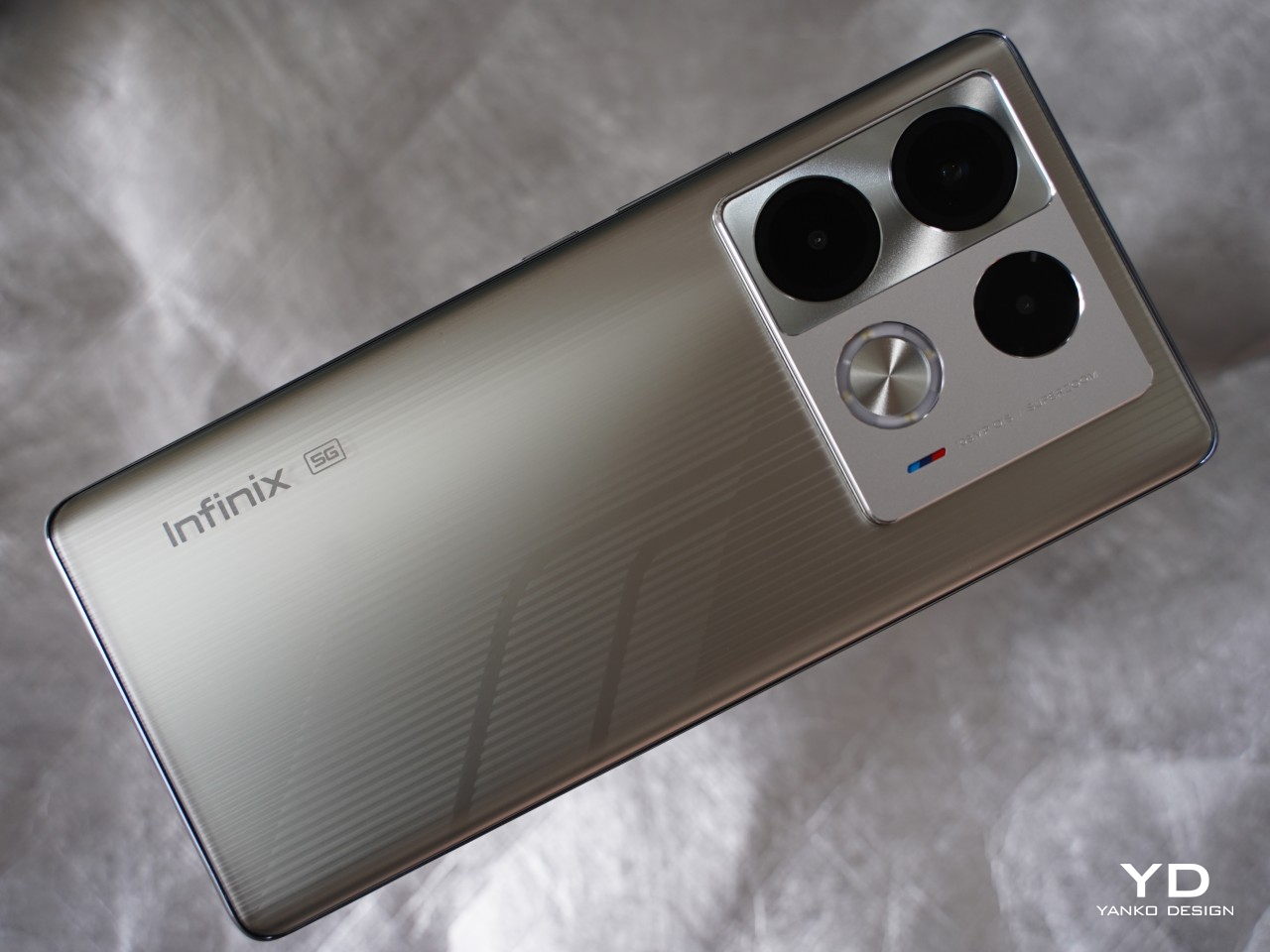
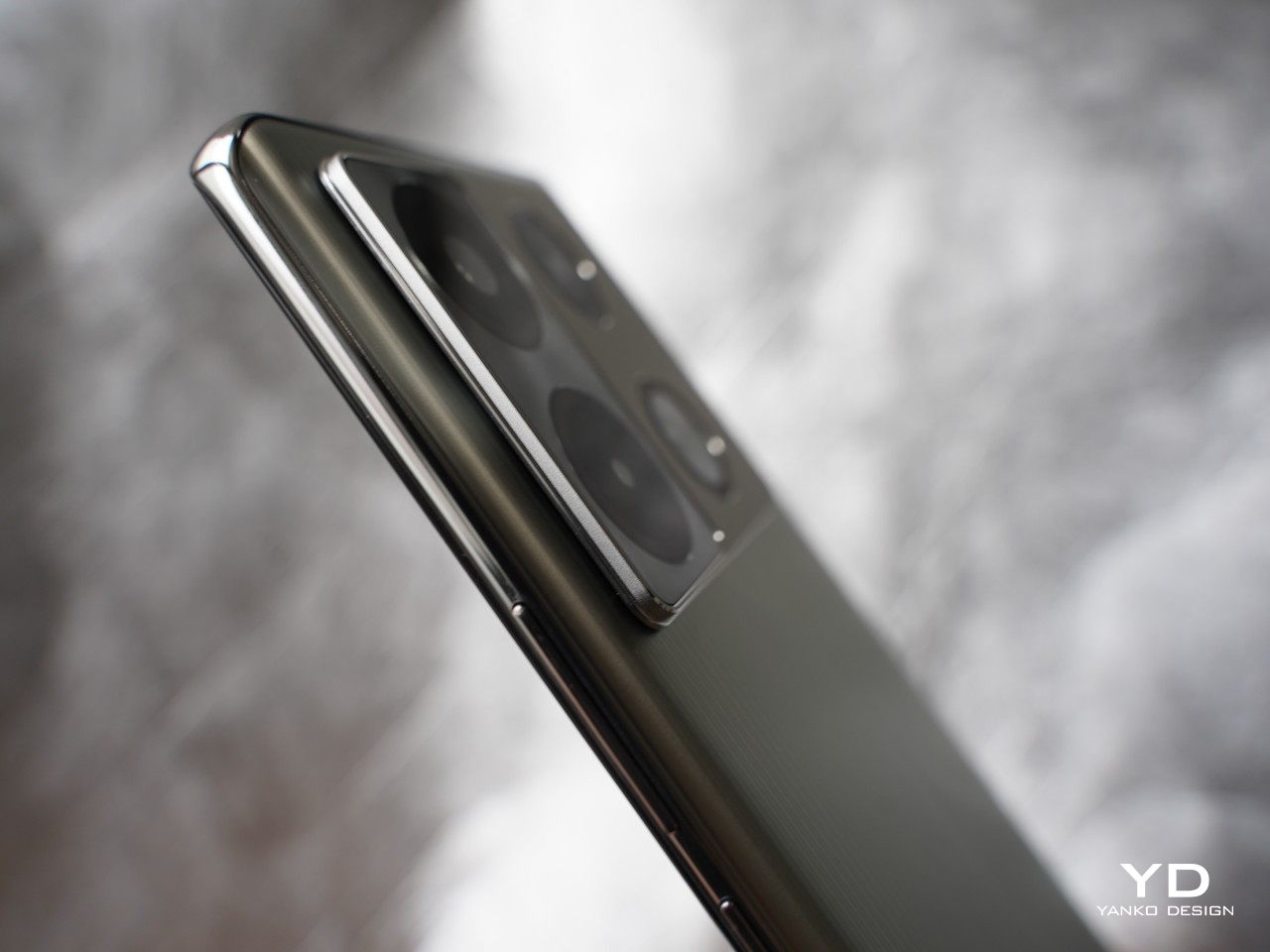
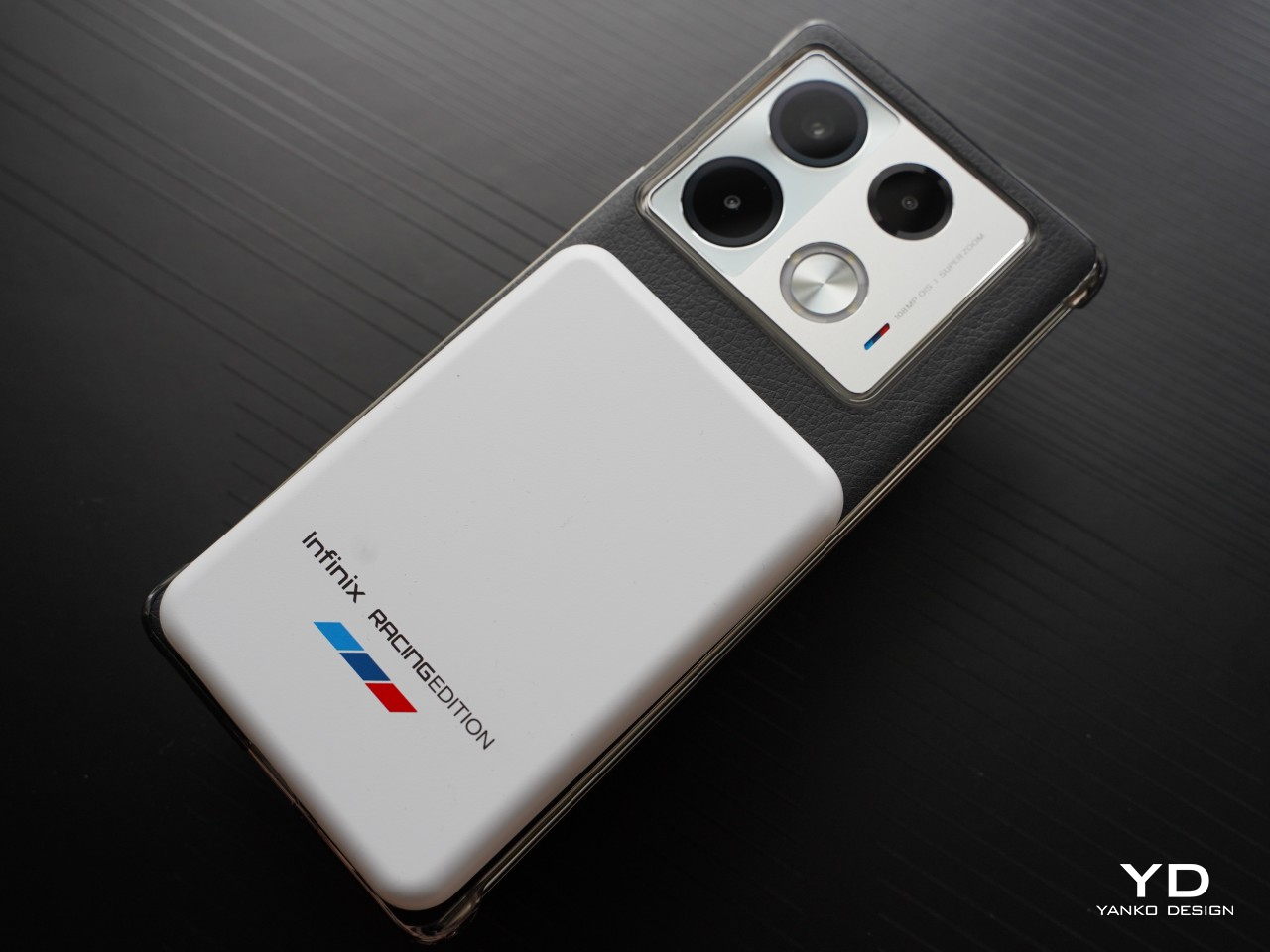
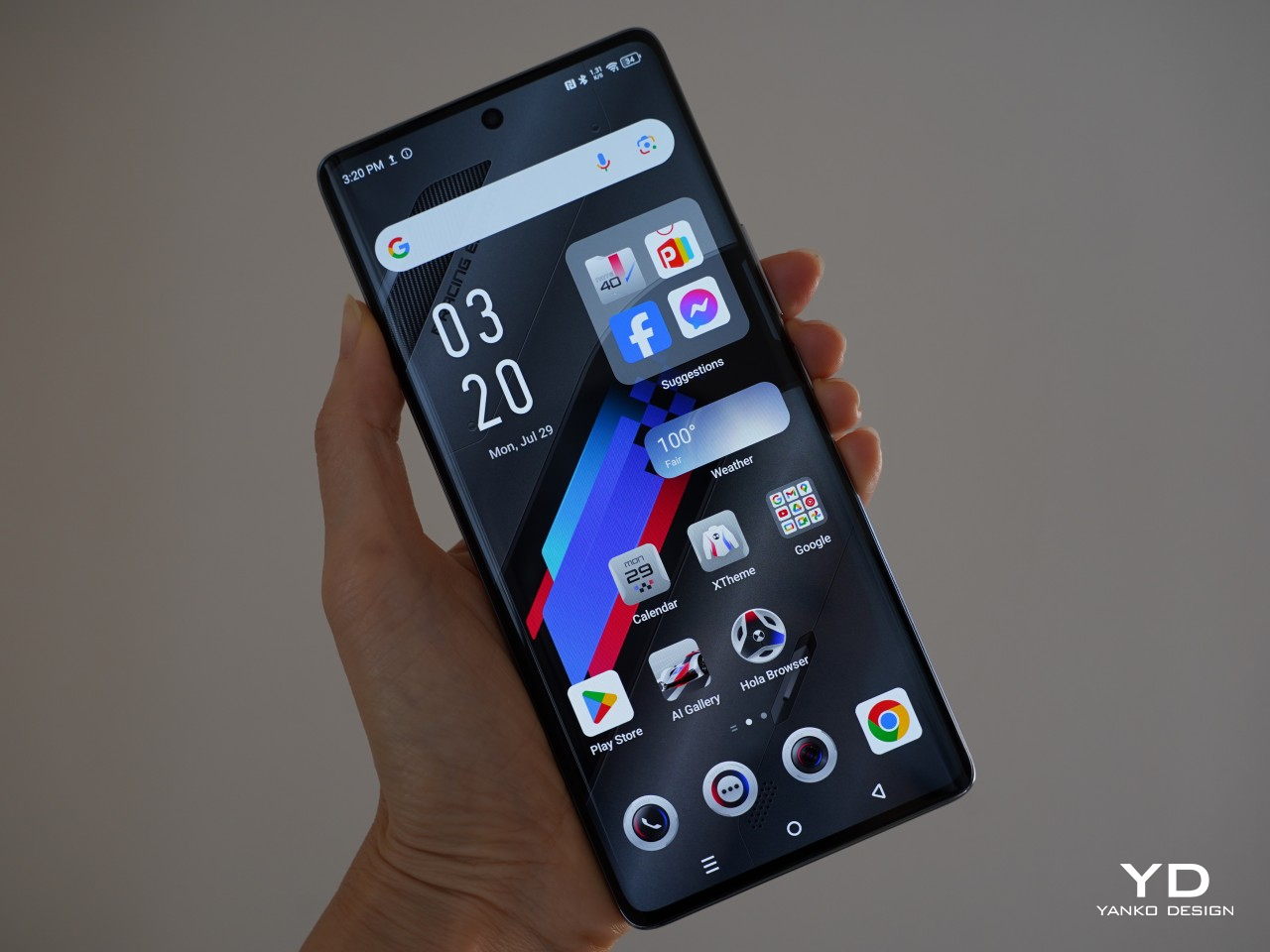
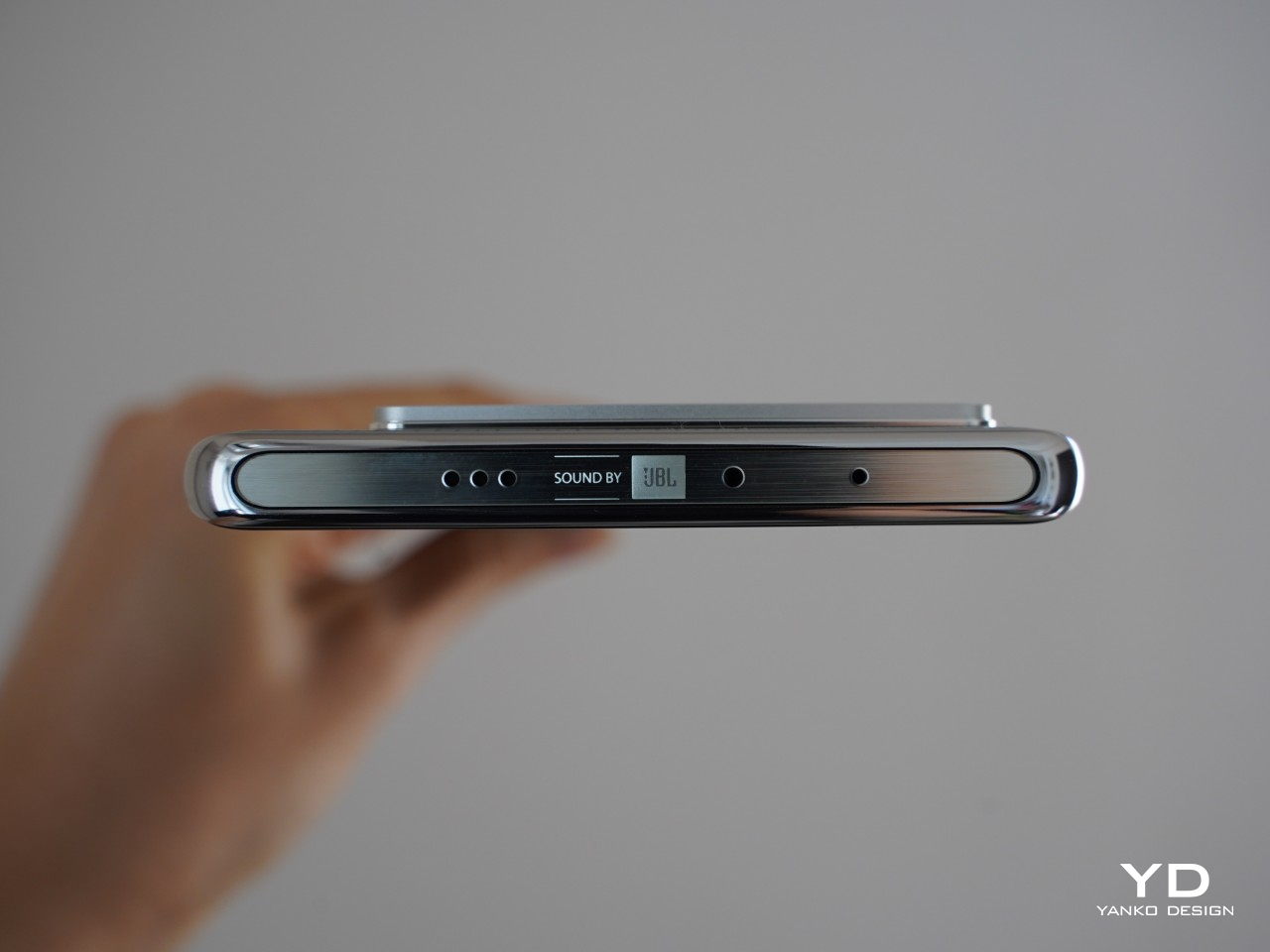
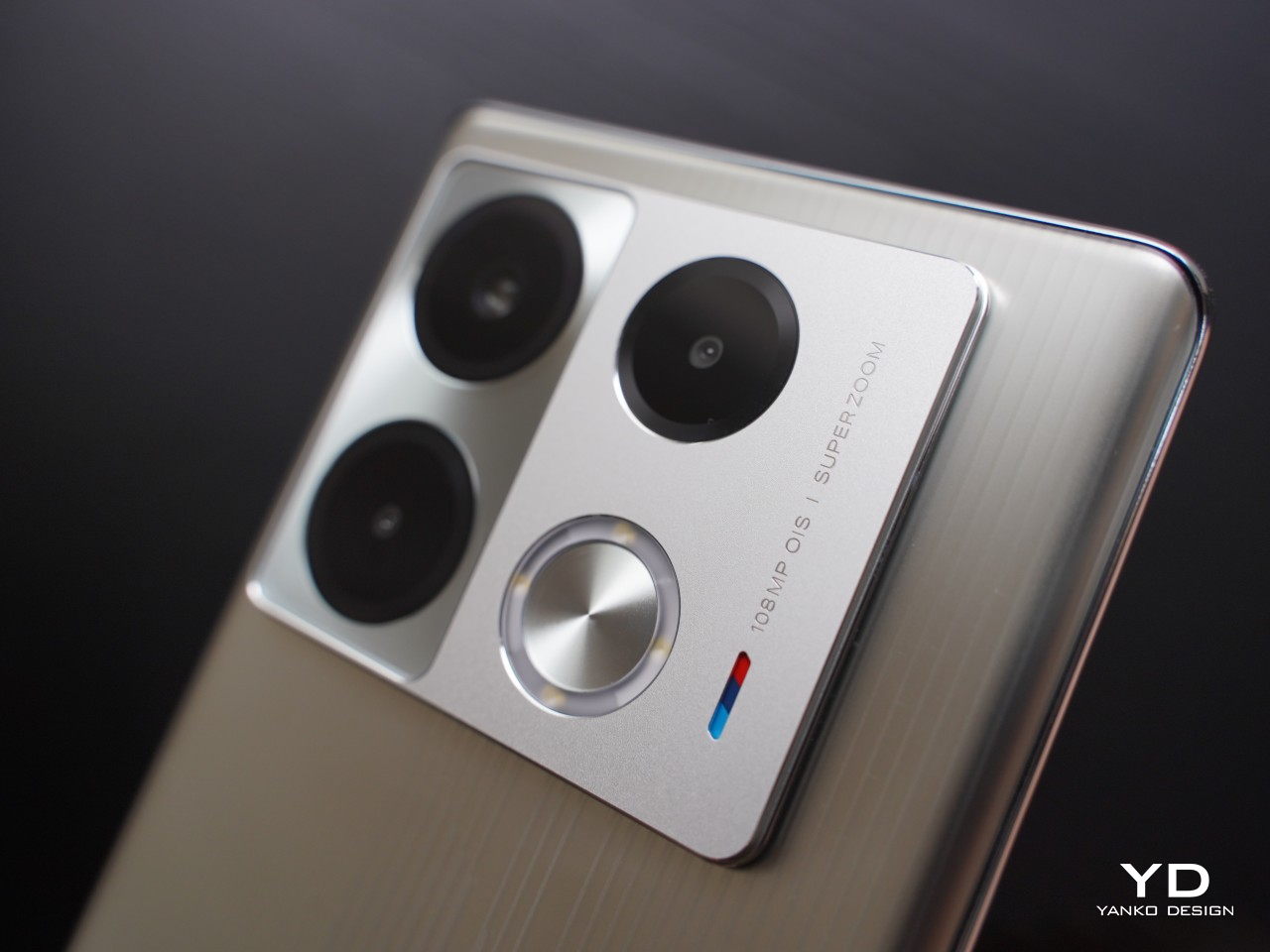
Infinix NOTE 40 Pro+ Racing Edition Review: A high-speed performance for motorsports fans

PROS:


  • Sleek profile and stylish design

  • Good battery life and fast charging

  • Included wireless charger

CONS:


  • Underwhelming Camera capability

  • No ultrawide camera

RATINGS:

AESTHETICS
ERGONOMICS
PERFORMANCE
SUSTAINABILITY / REPAIRABILITY
VALUE FOR MONEY

EDITOR'S QUOTE:

Infinix and BMW Deisgnworks have successfully captured the essence of speed and performance with this model, making it an attractive choice for those seeking a reliable, stylish smartphone that embodies the thrill of racing and the promise of speed.

On March 18th of this year, Infinix unveiled its NOTE 40 series at the iconic Sepang International Circuit in Malaysia. The choice of venue was no coincidence; the world-renowned Formula 1 racetrack served as the perfect backdrop to showcase the NOTE 40’s speed and performance. Among the NOTE 40 Series announced at the event was the Racing Edition in collaboration with BMW Deisgnworks. Now, the Infinix NOTE 40 Series Racing Edition has become available globally.

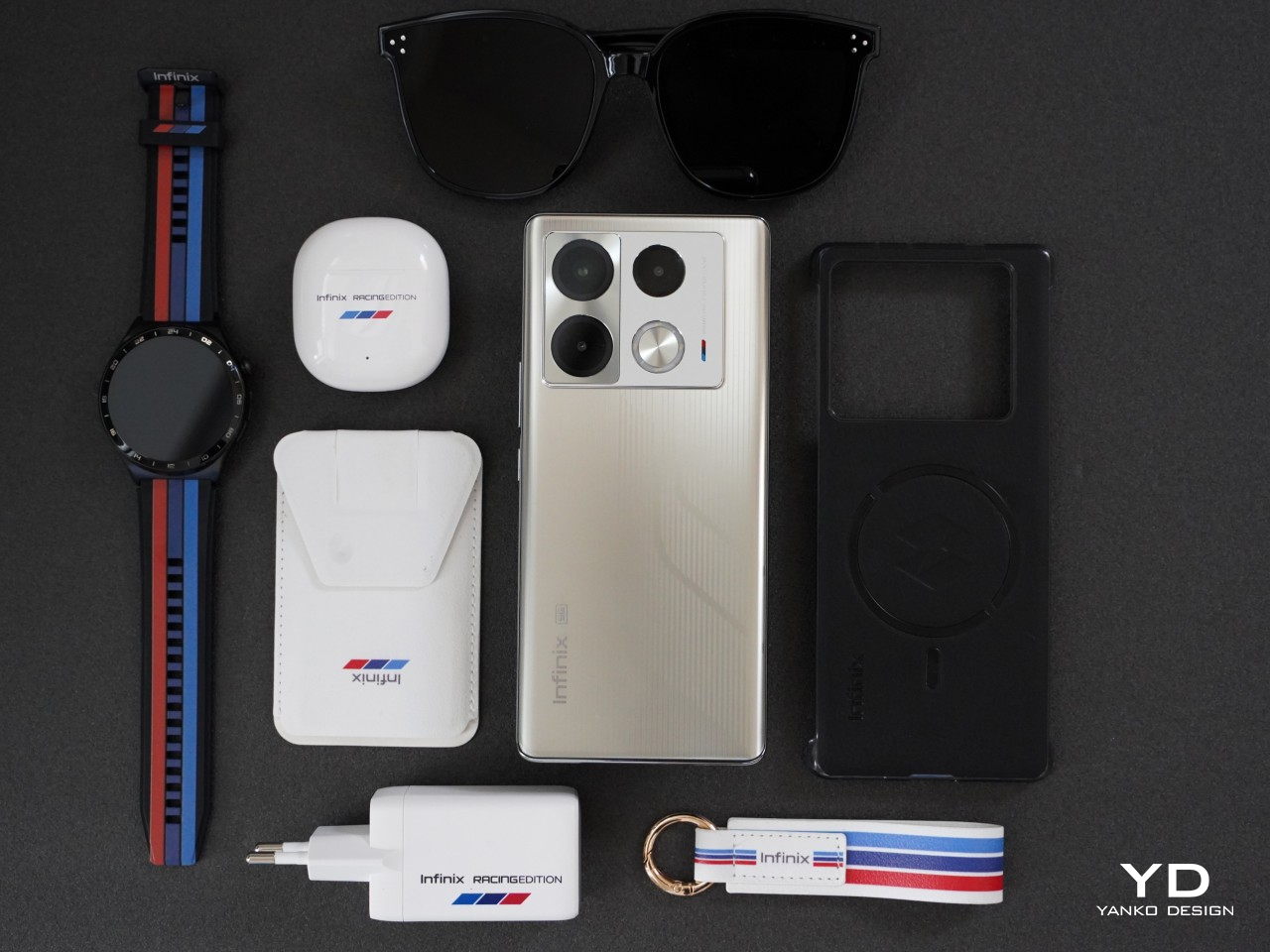
While smartphone collaborations with car brands aren’t uncommon, the opportunity to review the Racing Edition as a motorsports enthusiast was irresistible. The Note 40 Pro+ 5G Racing Edition Gift Box I received included a plethora of speed-inspired gadgets and goodies beside the phone, including the XWATCH 3 WE, XBUDS 3 WE, a 68W GaN fast charger, a USB-C to USB-C braided cable, MagPower wireless power bank, MagWallet, sunglasses, and a keychain. While these accessories undoubtedly contribute to the overall package, this review will focus exclusively on the smartphone itself.
Designer: Infinix

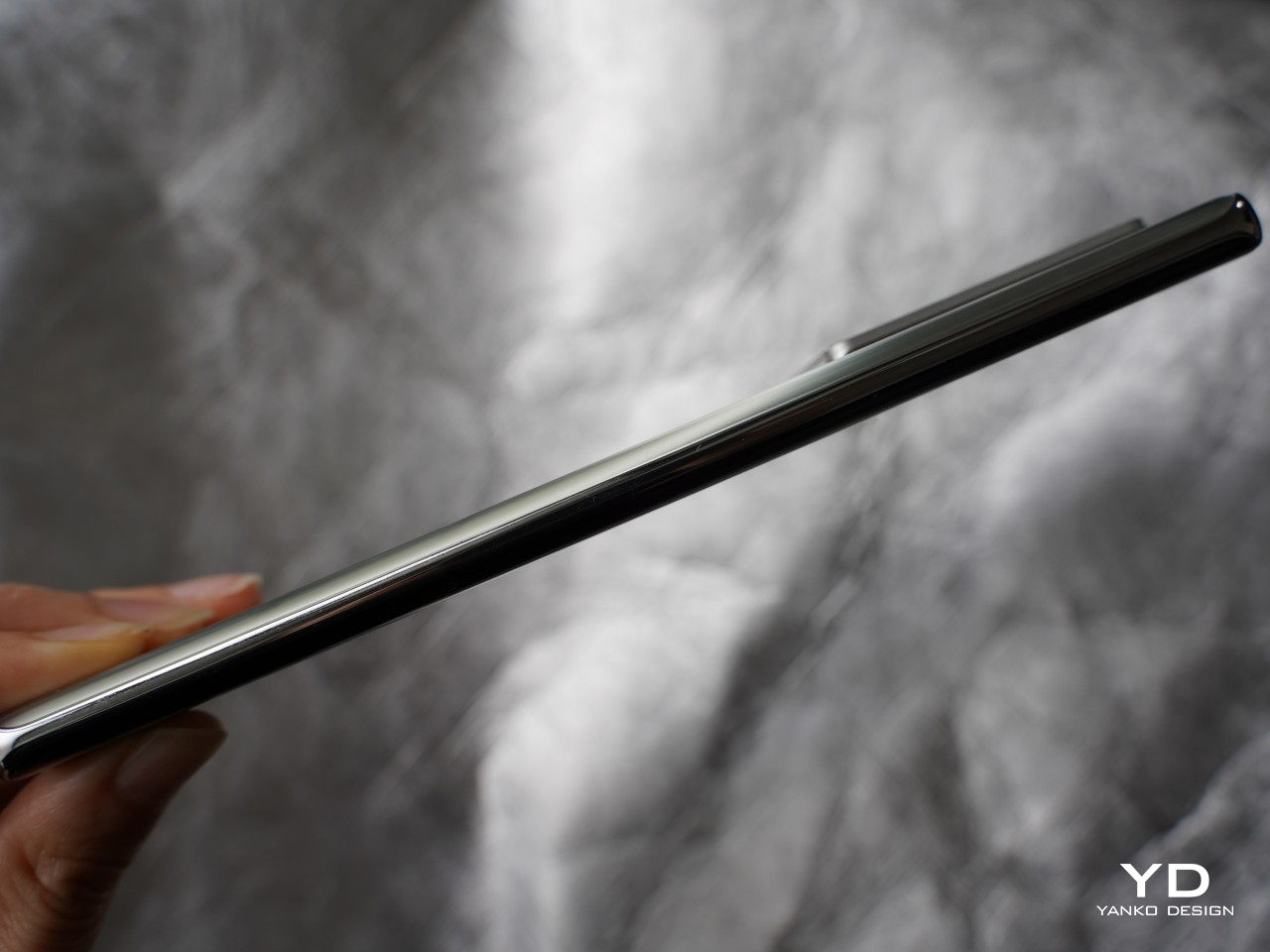
Aesthetics

The Infinix NOTE 40 Pro+ 5G Racing Edition comes in Racing Gray while the regular model offers a choice of Vintage Green with a vegan leather finish or Obsidian Black with matte texture. The Racing Edition showcases what Infinix calls “Wings of Speed”, featuring dynamic vertical ridges on its back panel that evoke a sense of motion. The sleek ridges are crafted through a UV transfer printing process. Composed of composite materials, the ridged texture not only enhances tactile satisfaction but also captivates with shifting lights and shadows as the phone moves.
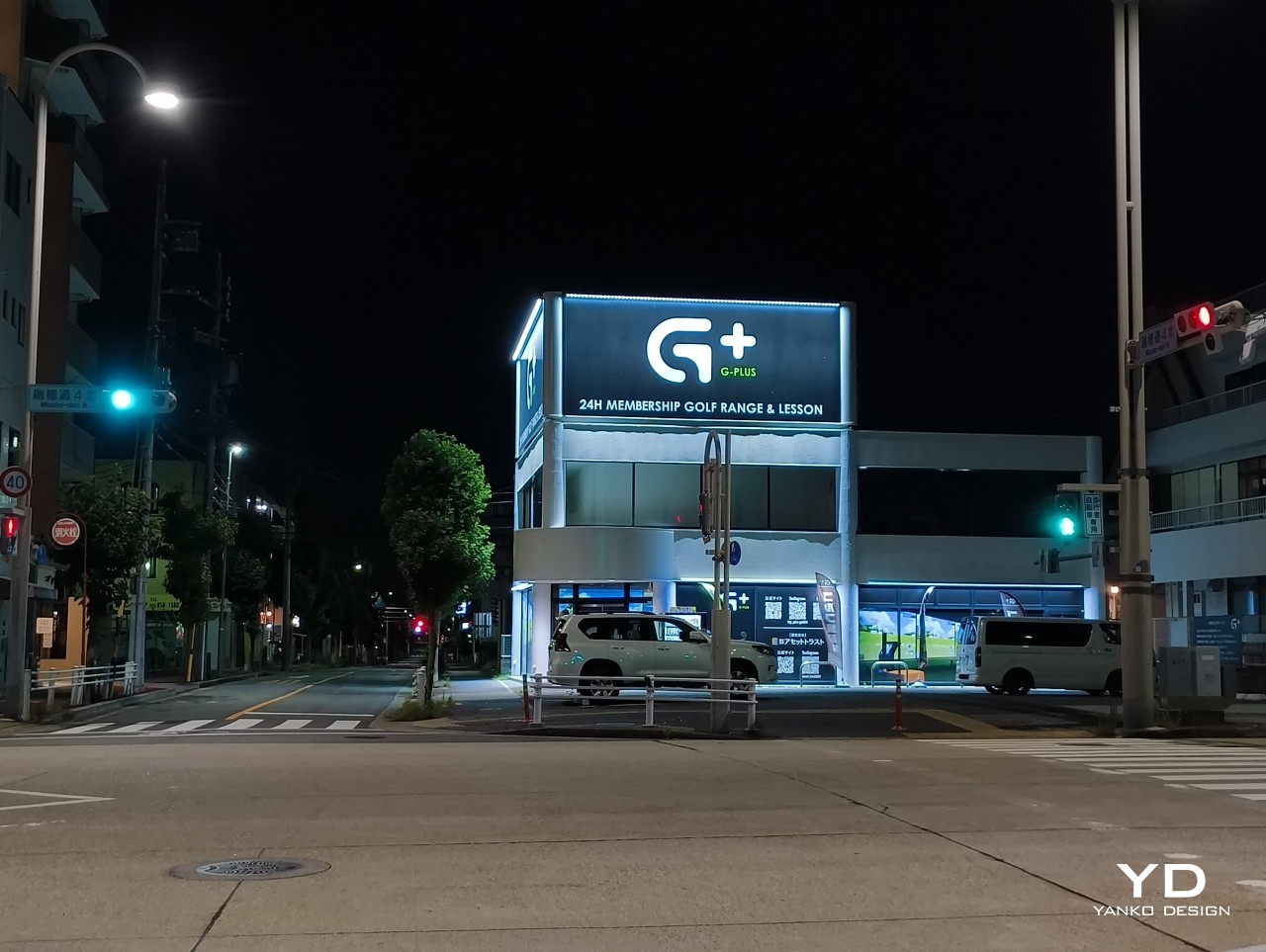
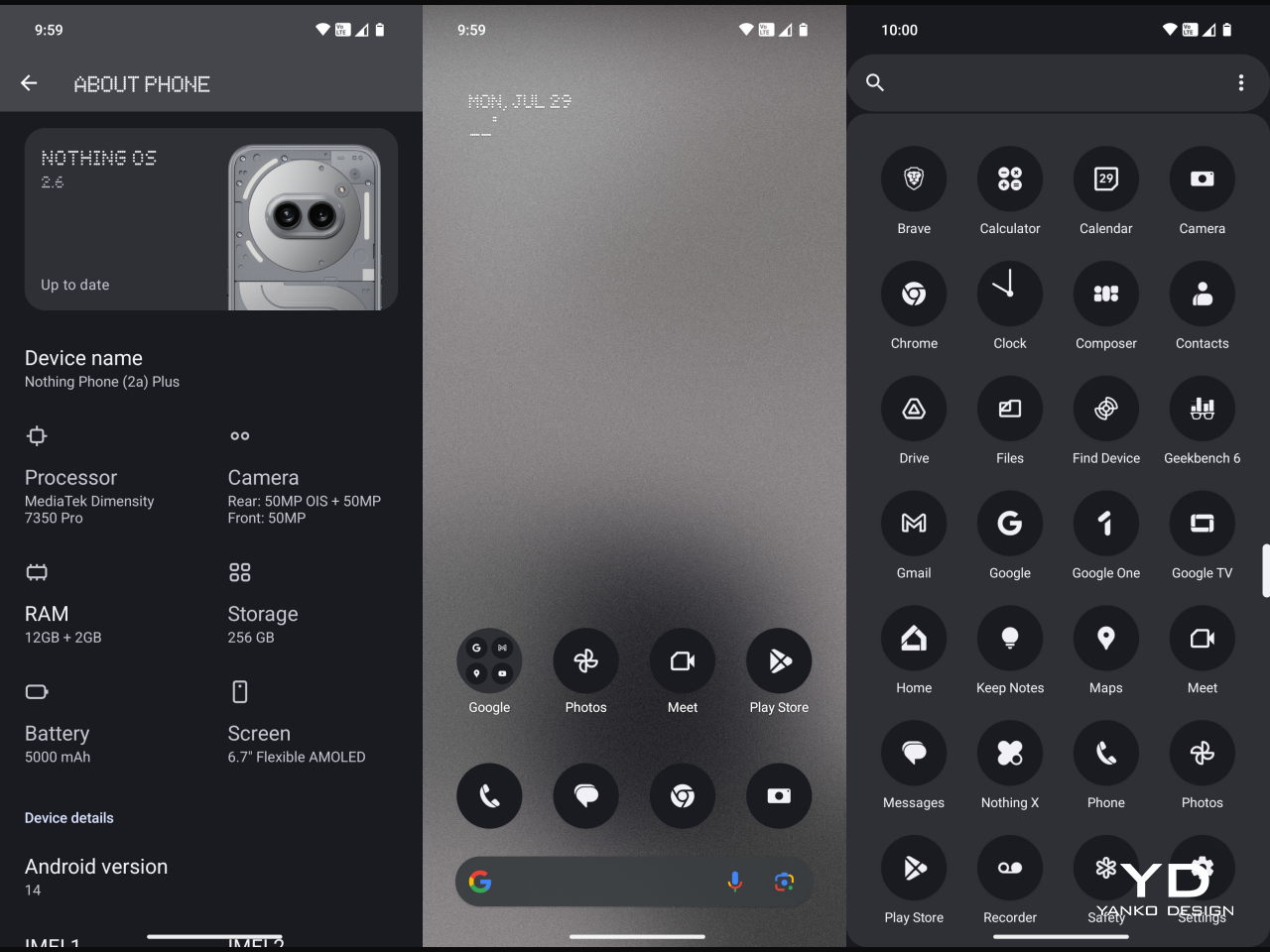
The phone sports a rectangular-shaped camera module on its back panel, housing a triple camera setup, an Active Halo, and BMW’s iconic tri-color emblem, as you’d expect. The Active Halo offers customizable AI lighting for notifications, gaming, charging, and more, and can also function as a fill light for enhanced photography and videography. The camera module’s minimal protrusion contributes to the phone’s sleek profile, complemented by the Infinix logo and 5G insignia in grey which are positioned vertically at the lower left of the back panel, ensuring a minimalist and polished appearance.

Ergonomics

Merely 8.1mm thin, the phone is sleek and fits comfortably in your hand. Weighing 190g and measuring 6.47 x 2.93 x 0.32 inches, it’s effortlessly portable. The slim profile, coupled with curved edges and a textured back panel, provides excellent grip without digging into your hands, ensuring it won’t slip out of your hands. While a textured finish enhances grip, it is not free from fingerprints and smudges, although a lot less noticeable compared to glossy non-textured surfaces.

To utilize the phone’s wireless magnetic charging feature, you’ll need to attach the included magnetic case. While the case itself is a simple black design, it thankfully maintains the same leather-like texture found on the back panel of the Vintage Green model, preserving the phone’s overall grip and feel.

As for the placements of buttons and ports, the power button and the volume locker are located on the right side of the phone, and nothing on the left. The top of the device houses the speaker grill, microphone, and IR blaster while the bottom houses the dual nano-SIM card tray, microphone, UBC-C port, and speaker grill.

Performance

Aside from its distinctive Race Edition back panel design and customized UI, the rest of the device is the same as its regular NOTE 40 Pro+ 5G counterpart. Emphasizing speed and performance, it runs on the MediaTek Dimensity 7020 5G chipset paired with a generous 12GB of RAM (expandable virtually to 18GB) and 256GB of UFS 2.2 storage. This hardware combination ensures smooth multitasking and efficient app handling, making it suitable for both casual use and more demanding tasks.

Running on Infinix’s XOS 14 based on Android 14, the device delivers a smooth user experience. The phone comes with a special Racing Edition wallpaper and UI. While the exclusive wallpaper is a nice touch, users hoping for multiple options might be disappointed. Fortunately, the device offers a vast library of wallpapers both on-device and online. Additionally, Infinix’s AI Wallpaper Generator lets you create custom wallpapers, with up to six daily creations. Moreover, Infinix introduced AI Wallpaper Generator, allowing users to create up to six custom wallpapers daily, enhancing personalization options for users who enjoy changing their phone’s look frequently. As for support, Infinix offers two major Android updates and three years of security patches.

One of the standout features of the phone is the robust battery and versatile charging options. Sporting a 4,600mAh battery, the device supports rapid 100W wired charging and convenient 20W wireless charging. Infinix goes the extra mile by including a 100W charger, a MagCase, and a MagPad wireless magnetic charger in the box. Additionally, Infinix offers a sleek Qi wireless power bank with a 3020mAh capacity. And, if you want to charge your other device, Note 40 Pro+ 5G is capable of reverse charging, although the included MagCase is needed to utilize this feature.

Equipped with Infinix’s first self-developed Cheetah X1 chip and features All-Round FastCharge 2.0, the device optimizes battery health and charging efficiency. There are three different charging modes that cater to your needs. Smart Charge offers optimal charging speed, while Hyper Charge delivers an impressive 50% charge in just 8 minutes. For those concerned about overheating, Low-Temp Charge gently charges the device to maintain a comfortable temperature. Additionally, AI Charging Protection safeguards battery longevity by learning charging patterns and preventing overcharging. In real-world testing, the battery easily lasted a full day of intense use on a single charge, and charging speeds were remarkably close to the advertised speeds.

The Note 40 Pro+ 5G boasts a 6.78-inch curved AMOLED display with a resolution of 1080p, a refresh rate of 120Hz, and a peak brightness of 1,300 nits. The display is safeguarded by Corning Gorilla Glass, although the specific generation is unspecified. While there is no LTPO technology implemented, which is understandable given the phone’s budget-friendly price point, there is an auto-switch option that automatically adjusts the refresh rate to 60Hz or 120Hz based on content and battery life, balancing performance and power efficiency. The dual speakers branded with JBL professional tuning certification deliver good sound, enhancing the multimedia experience with clear audio output and immersive viewing.

While the Note 40 Pro+ 5G’s performance and battery life are commendable, its camera capabilities are less impressive. The Infinix NOTE 40 Pro+ 5G boasts a triple camera system consisting of a 108MP main camera with f/1.75 aperture and OIS, a 2MP macro with F/2.4 aperture, and a 2MP depth sensor. The 108MP main sensor captures decent shots in well-lit conditions, but color accuracy can be over-saturated. The macro photos are grainy and non-usable, although I’m certain not many people care about this. The 32MP front-facing camera provides passable selfies under optimal lighting conditions but struggles in low-light environments, resulting in softer details and increased noise.

1x

2x

1x

3x

Sustainability

Infinix has positioned itself as a youth-centric brand with a strong commitment to sustainability and social responsibility. The company’s partnership with UNESCO to promote STEM education globally is a testament to this commitment.

While features like the Note 40 Pro+ 5G’s IP53 rating, Corning Gorilla Glass protection, and battery optimization contribute to device longevity and reduce environmental impact, they represent only part of the sustainability equation. A comprehensive approach encompassing material selection, repairability, and end-of-life management is essential for creating truly eco-friendly smartphones. Given Infinix’s established dedication to social responsibility, we hope that the brand will continue to innovate in these areas.

Value

Priced competitively at $329, the Infinix NOTE 40 Pro+ 5G Racing Edition offers excellent value with its combination of design, display quality, and robust performance. Despite some camera performance limitations, it remains a solid choice for budget-conscious consumers looking for a stylish and capable smartphone that delivers on speed and endurance. The inclusion of essential charging accessories, such as the 100W charger, MagCase, and MagPad, further enhances its appeal, making it a standout choice in the budget smartphone market.

Verdict

The Infinix Note 40 Pro+ 5G Racing Edition is a stylish and capable mid-range smartphone with strong points in design, display, and battery life. The incorporation of racing-inspired aesthetics, such as the dynamic ridged back panel and the exclusive Racing Edition UI, adds a unique flair that resonates with enthusiasts of speed and performance. While the camera could benefit from improvements, the device’s overall package is solid. Infinix and BMW Deisgnworks have successfully captured the essence of speed and performance with this model, making it an attractive choice for those seeking a reliable, stylish smartphone that embodies the thrill of racing and the promise of speed.

The post Infinix NOTE 40 Pro+ Racing Edition Review: A high-speed performance for motorsports fans first appeared on Yanko Design.