TECNO’s 6mm Phone Has 6,000mAh Inside and a Van Gogh Finish Outside

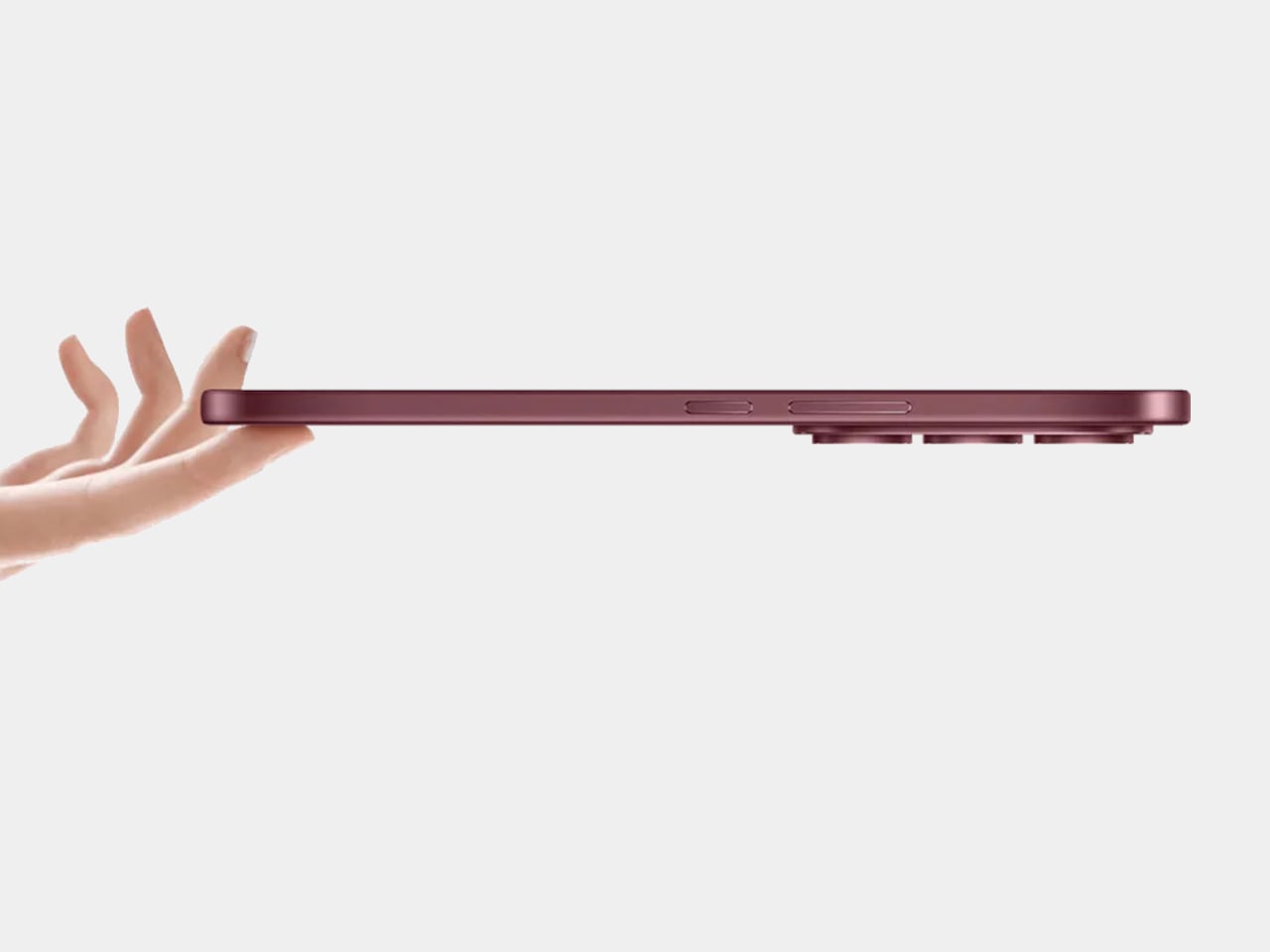
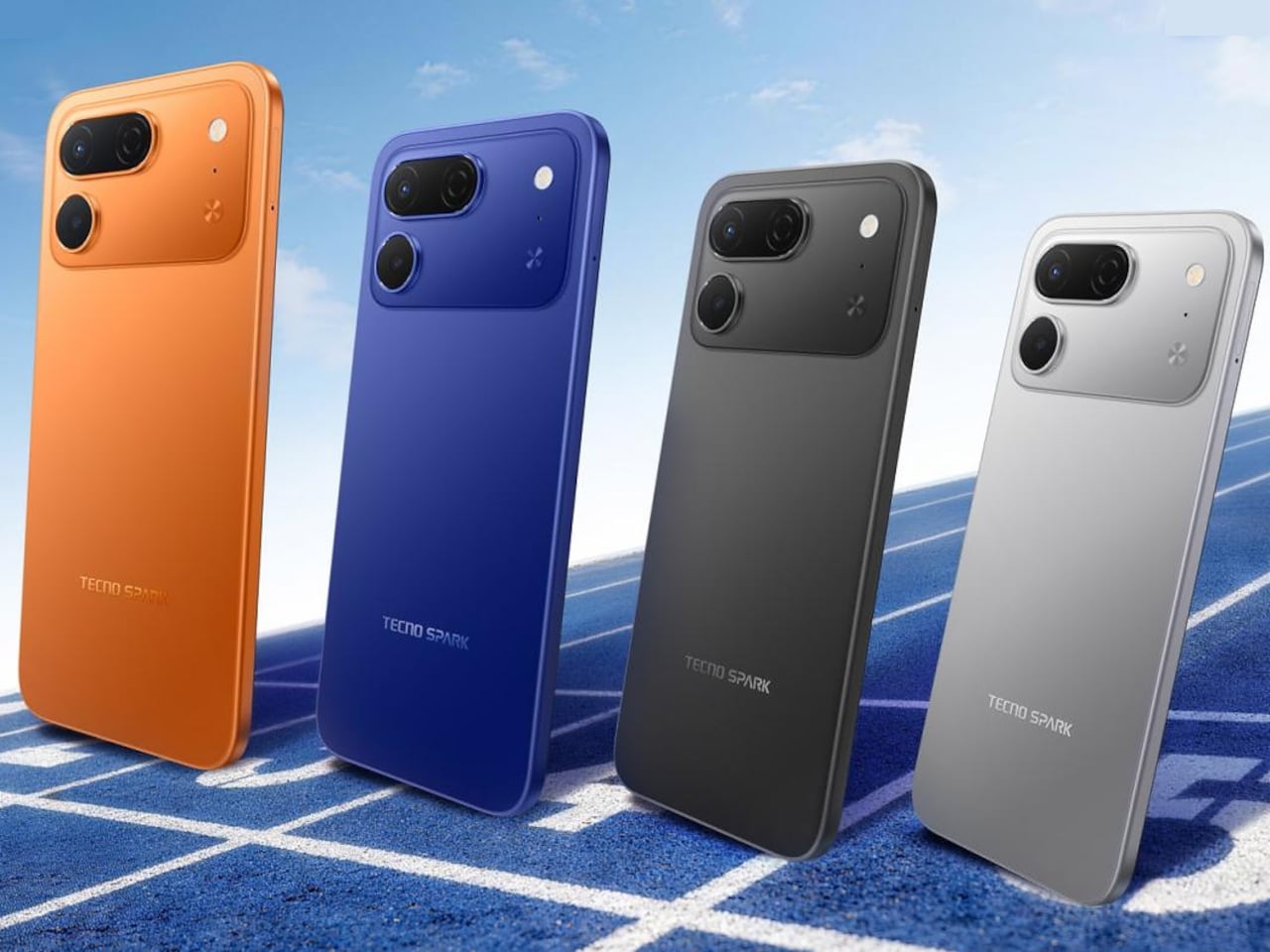
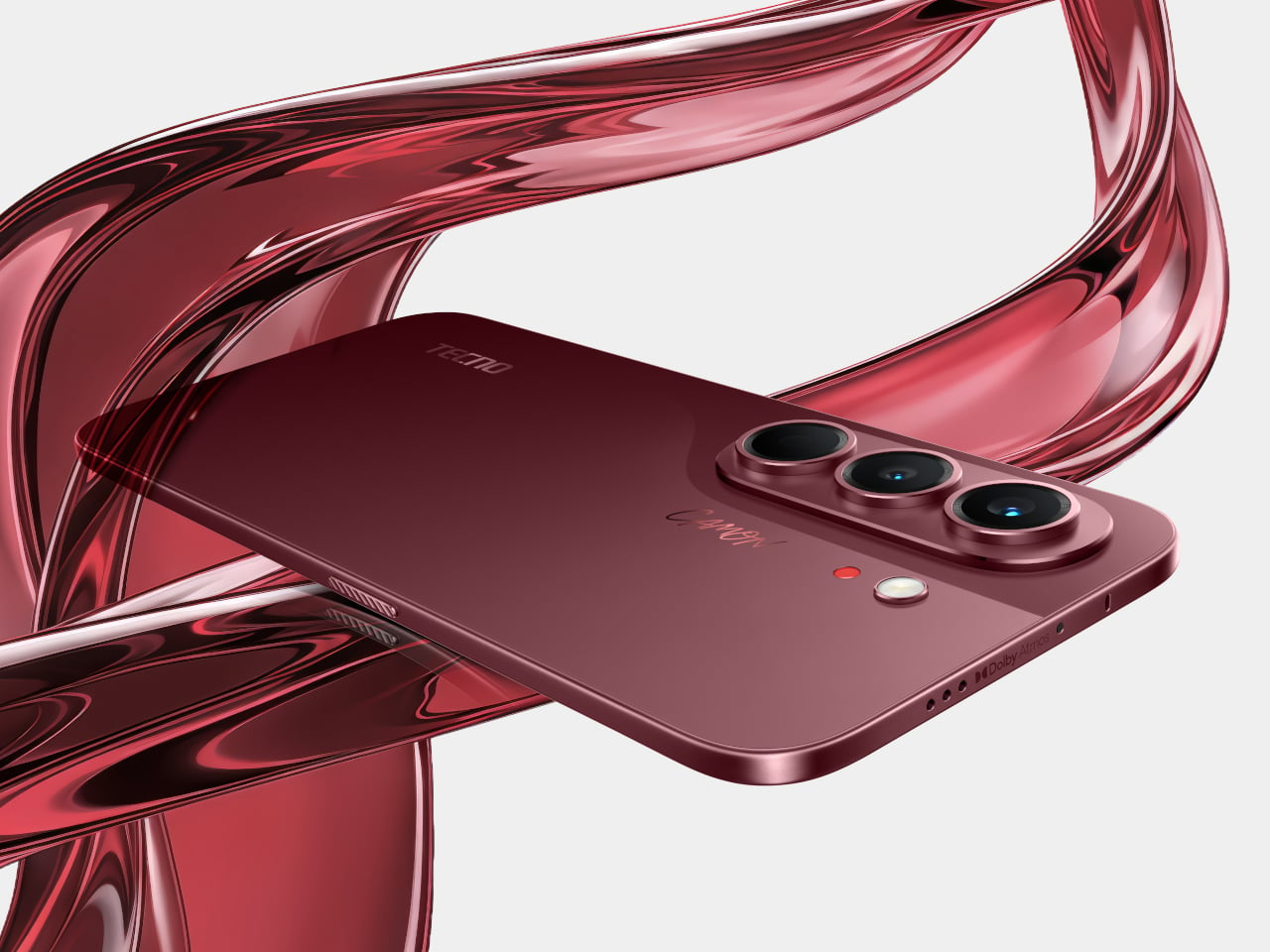
Most slim phones treat thinness as the entire pitch, shaving millimeters off a slab until battery life and durability quietly take the hit. TECNO’s CAMON Slim 5G, unveiled at IFA 2026, refuses that trade-off outright. At 6.39mm thin, it still packs a 6,000mAh battery and passes military-grade drop testing, treating slimness as one part of a larger design statement rather than the whole point.

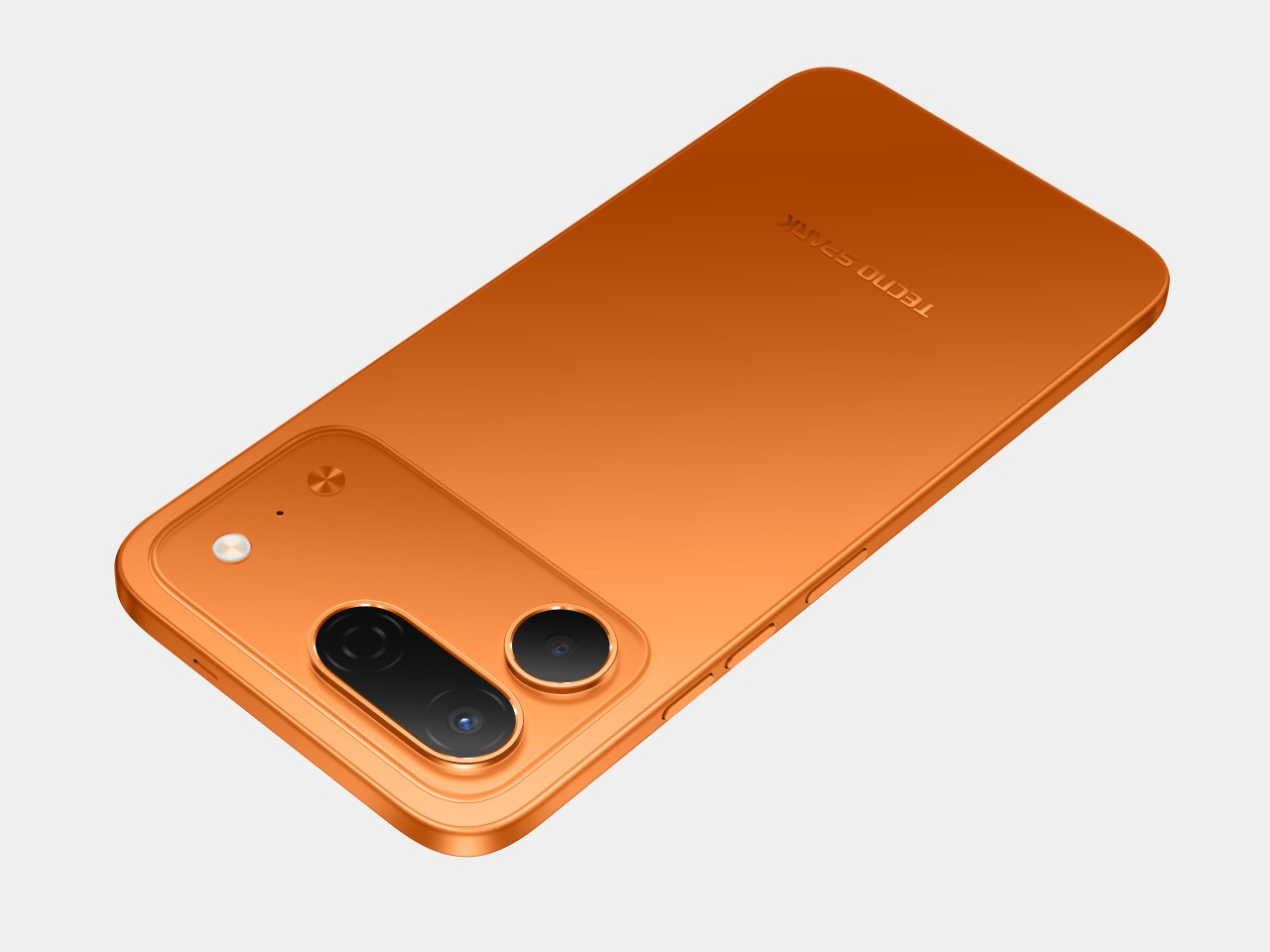
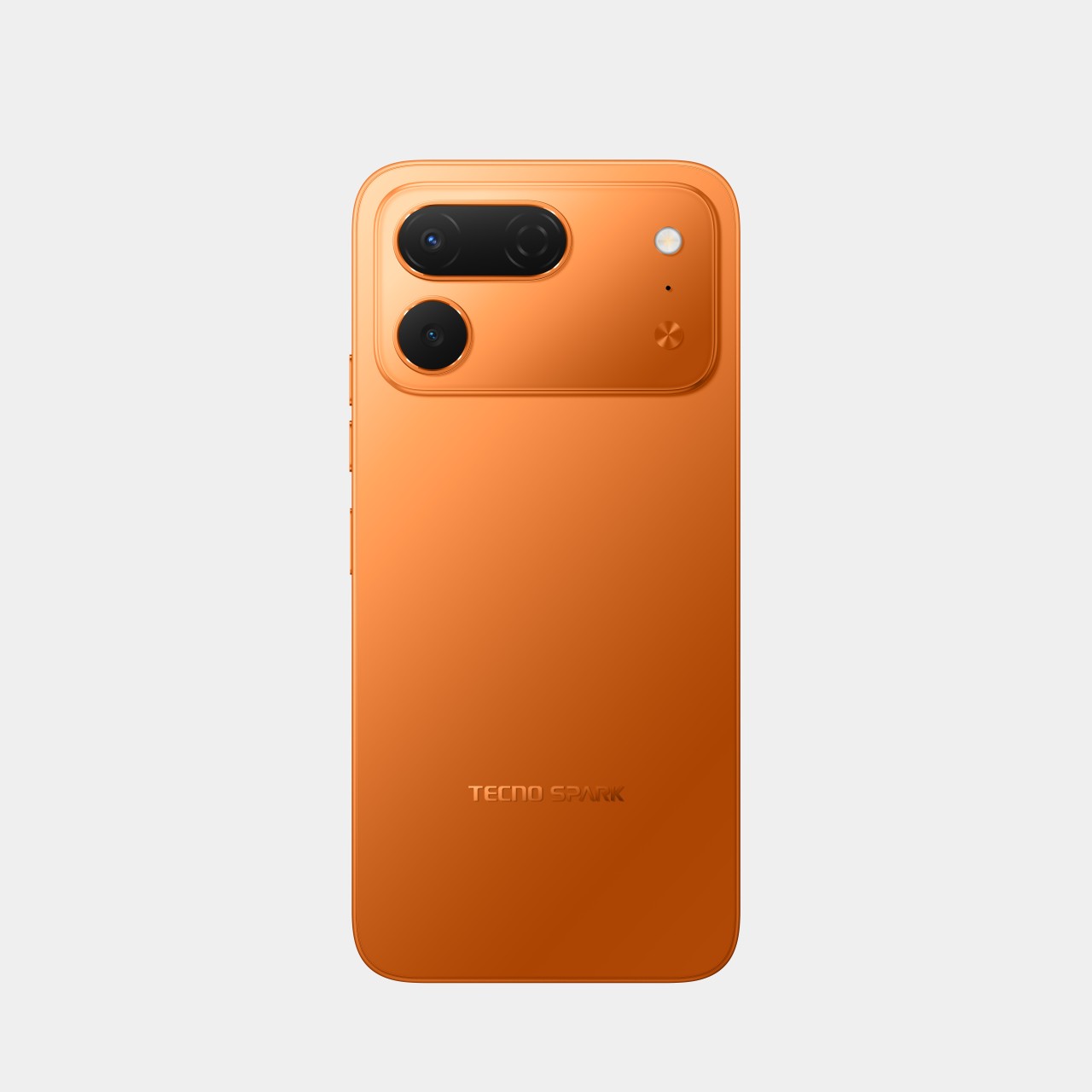
That statement starts with a body borrowed from unlikely references. TECNO built the CAMON Slim 5G around a swan-neck curve, pulling its lines from ballet dancers and automotive silhouettes rather than the usual flat rectangle. The result reads less like a spec sheet decision and more like an object shaped by motion, something that happens to also fit comfortably into one hand during a commute.

Designer: TECNO

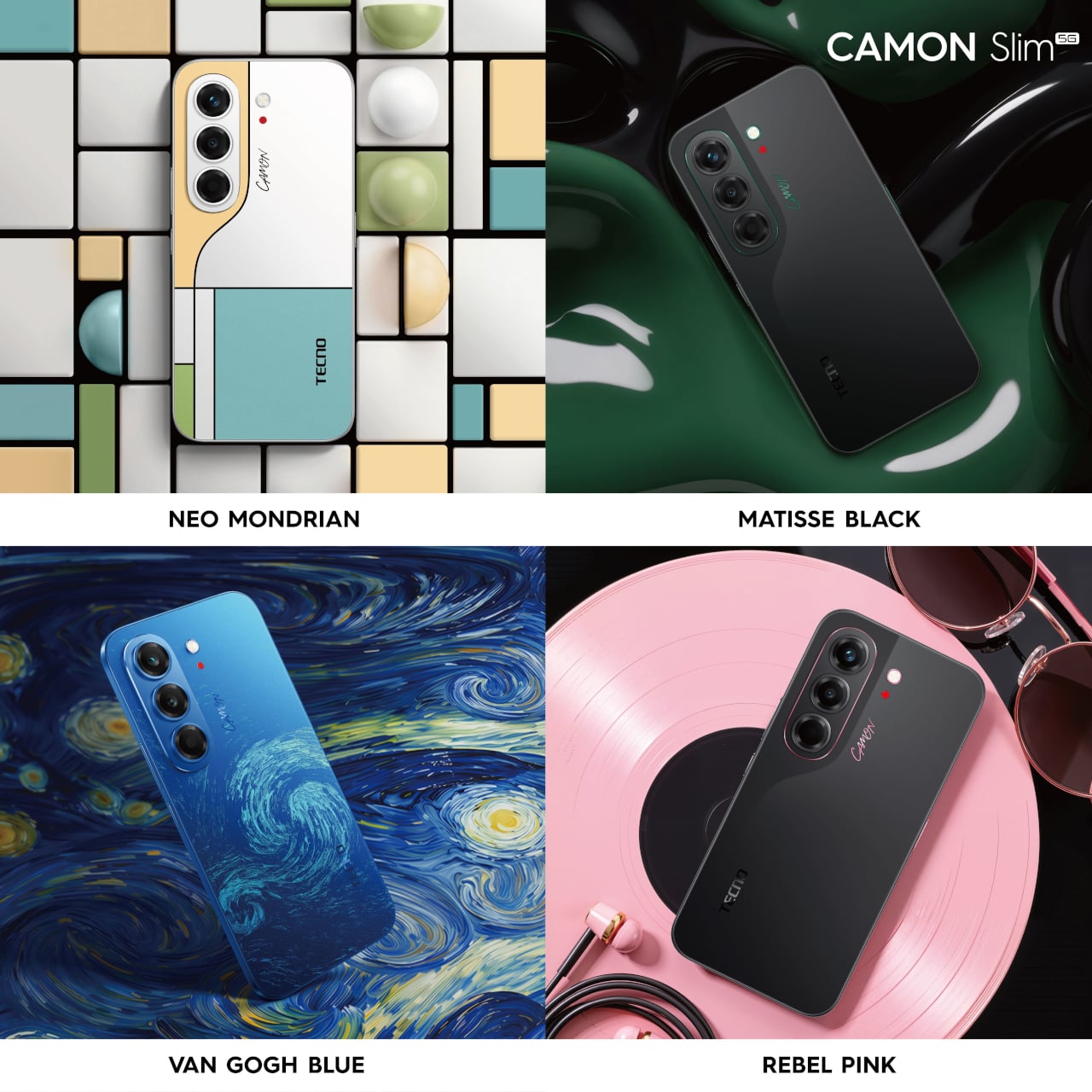
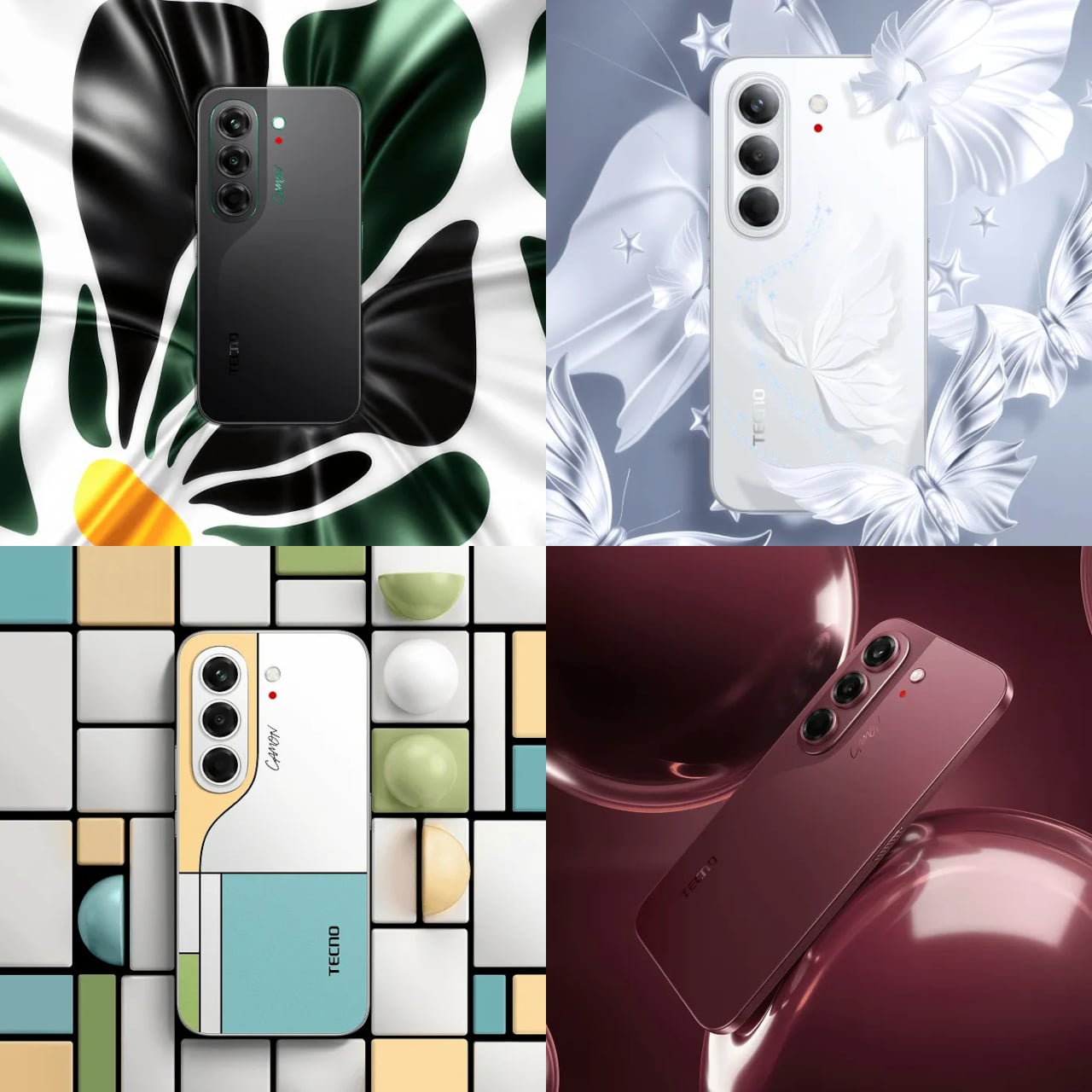
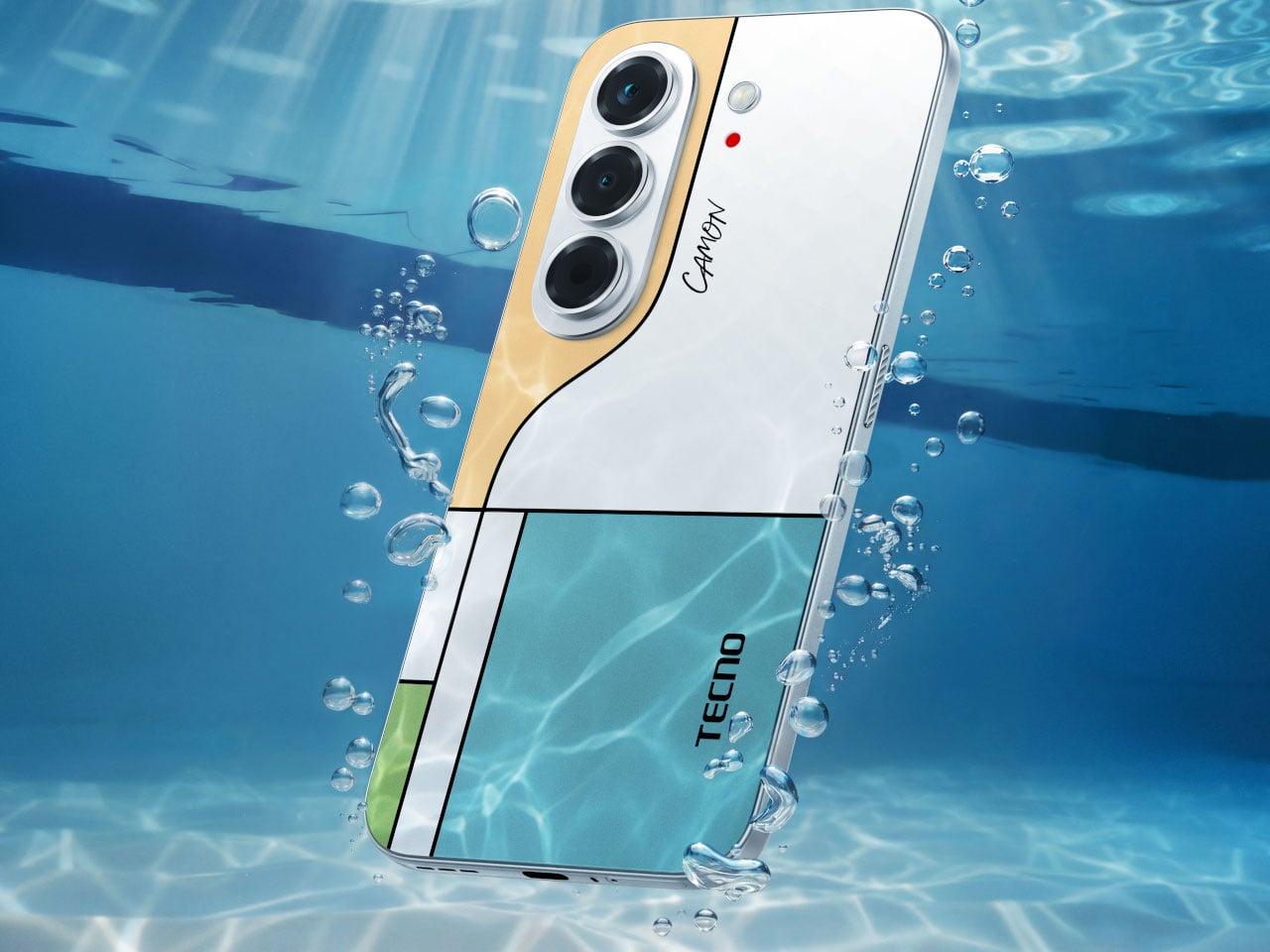
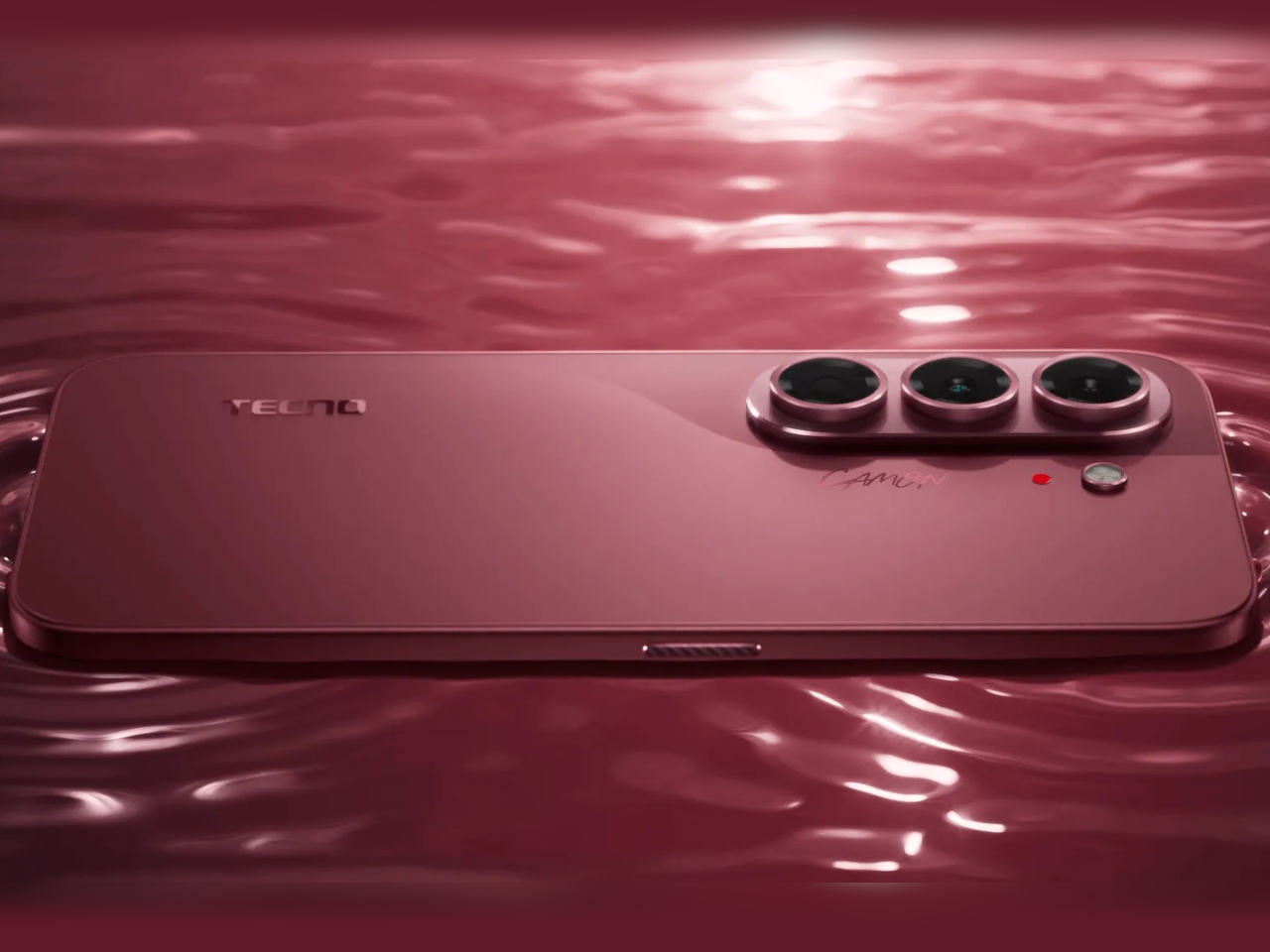
Color does the rest of the storytelling. Burgundy Red pairs fiberglass with a velvet matte finish for a warm, wine-toned grip, while Neo Mondrian hides its personality entirely, appearing plain white until ultraviolet light coaxes out a Piet Mondrian grid across the back. Matisse Black punches a fluorescent green accent through a black fiberglass shell, and Van Gogh Blue uses a gradient coating that makes Starry Night’s swirl look like it is actually rotating.

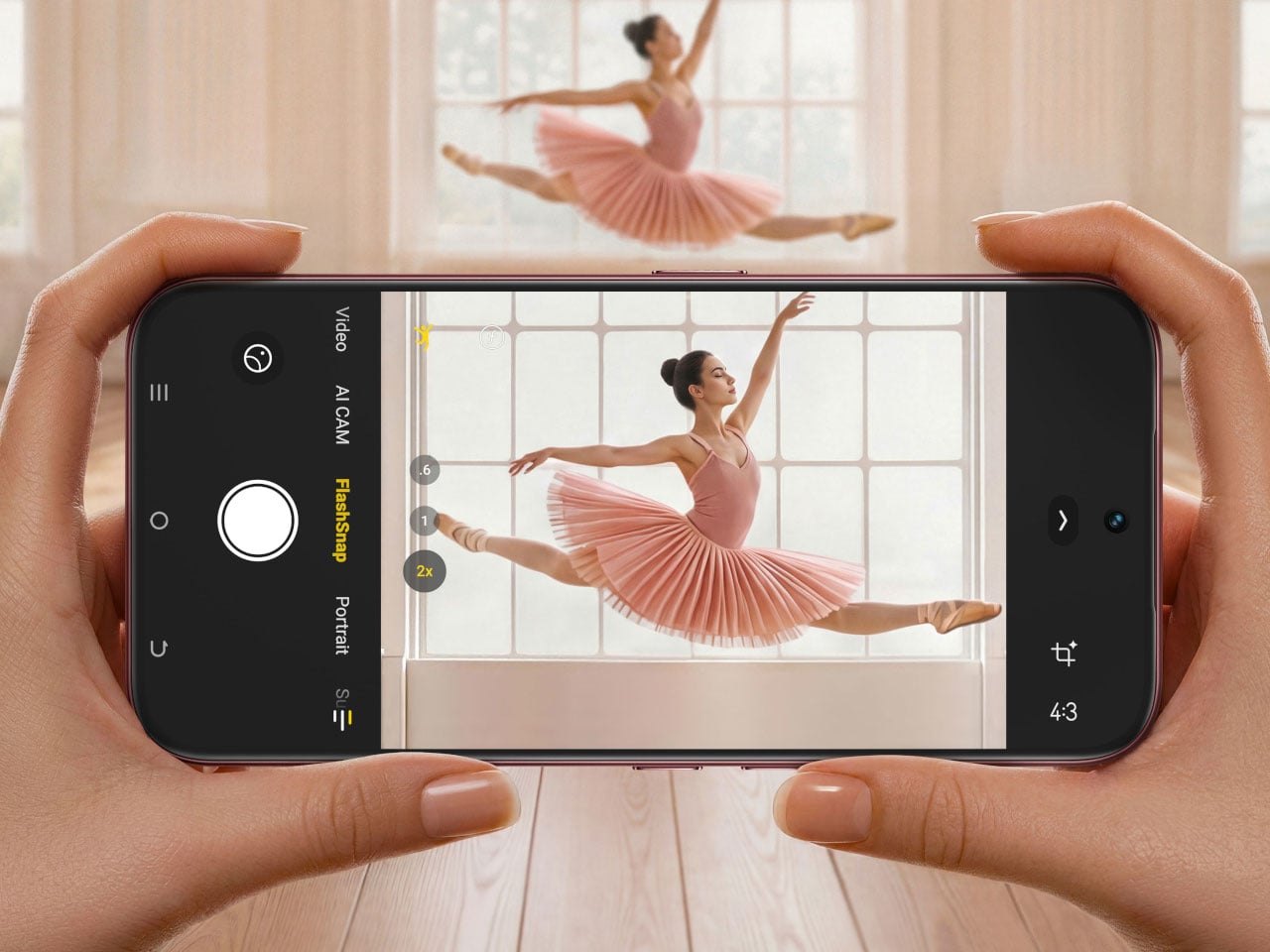
Photography gets the same attention to intent rather than raw numbers. A 50MP Sony LYTIA 700C sensor anchors the main camera, but the standout is Super-Zoom FlashSnap, which watches for a moment rather than waiting for someone to press the shutter. A dance leap, a soccer strike, or a dog mid-jump gets frozen automatically, with shutter speeds fast enough to catch motion that would blur on slower hardware.

TECNO also ships a small magnetic companion called the Mag Badge, snapping onto the back with its own battery and a 1.73-inch AMOLED display. It works as a photo badge, a remote shutter from up to 10 meters away, and a selfie preview screen, turning group photos or tripod shots into something that does not require sprinting back to check the frame.

Software leans practical rather than flashy. AI Snap Poster lets small merchants turn a quick product photo into a styled listing image, dropping items into a home or beach setting without a photo studio. AI LightMaster 2.0 cleans up shadows and glare after the fact, while AI Recording Notes turns lecture audio into structured notes synced to whiteboard photos, useful well beyond a classroom.

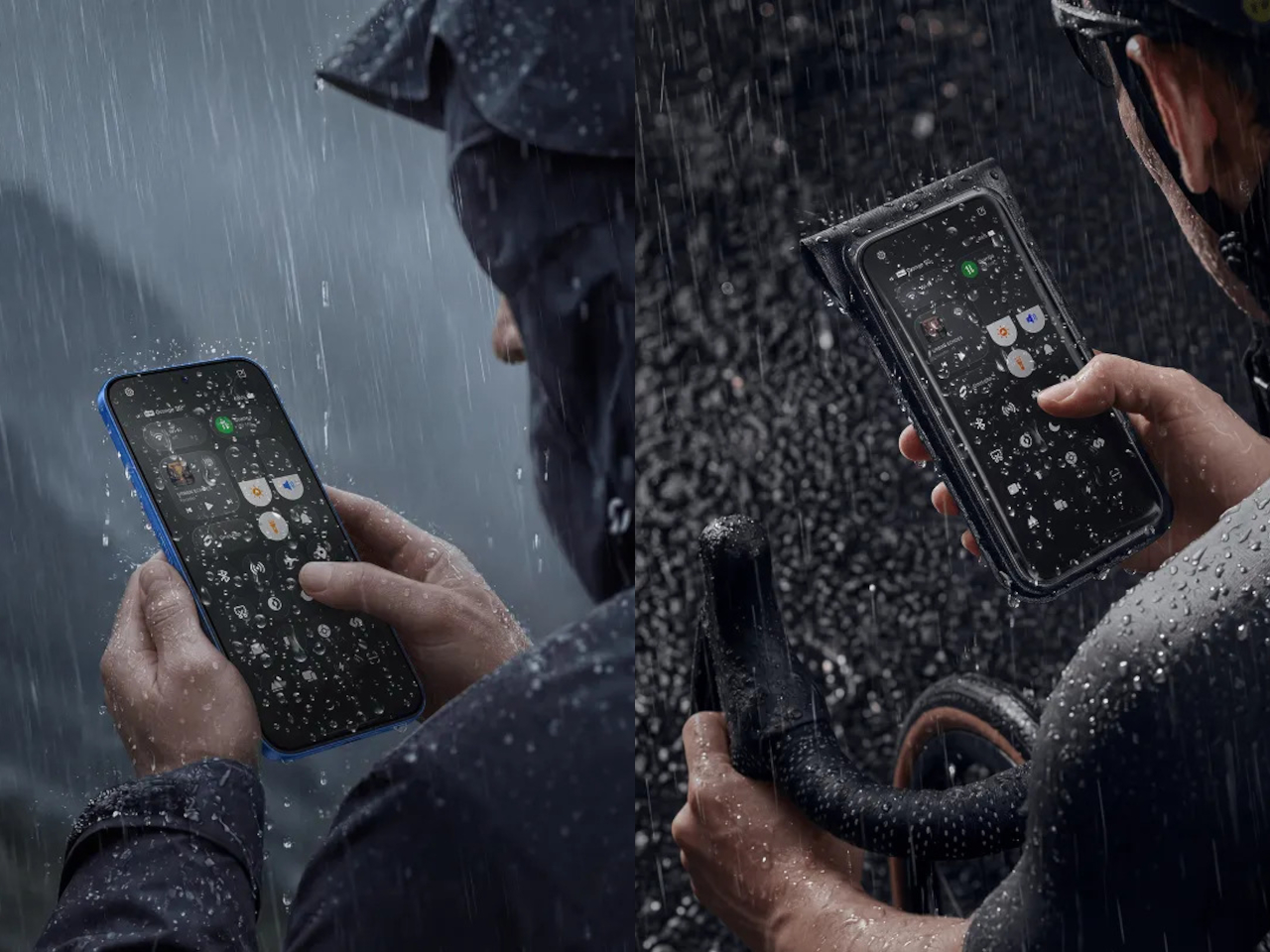
Underneath the art direction sits an IP69K-rated shell built to survive kitchen splashes, gym sweat, and actual rain, backed by touch recognition tuned for wet or oily fingers. A MediaTek Dimensity 7300e chip handles daily performance, paired with 5 years of security updates, a commitment that outlasts what most phones in this segment promise. Pricing and availability will roll out market by market in the coming months.

The post TECNO’s 6mm Phone Has 6,000mAh Inside and a Van Gogh Finish Outside first appeared on Yanko Design.

TECNO and Tonino Lamborghini Prove You Can’t Fake a Real Collab

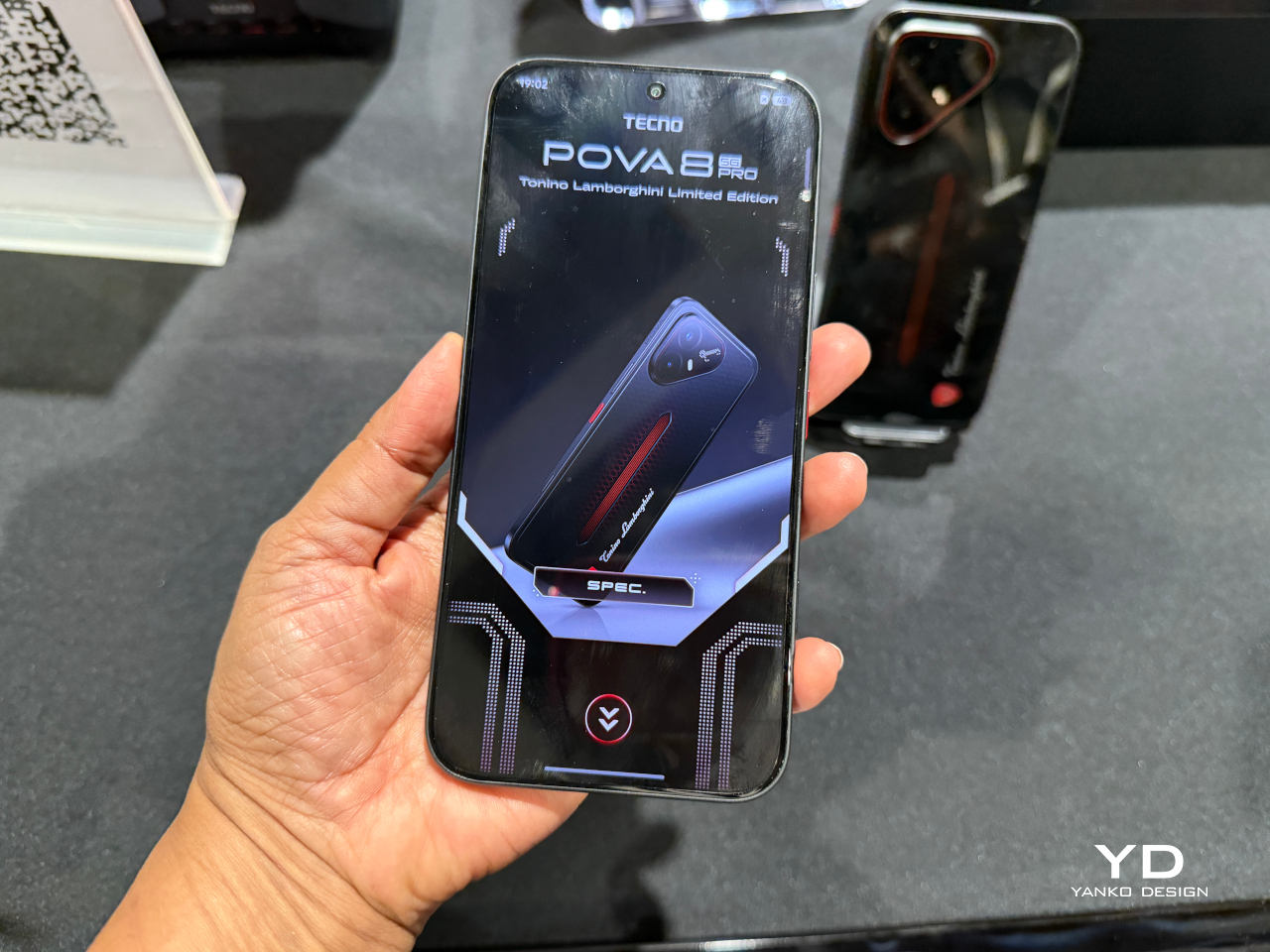
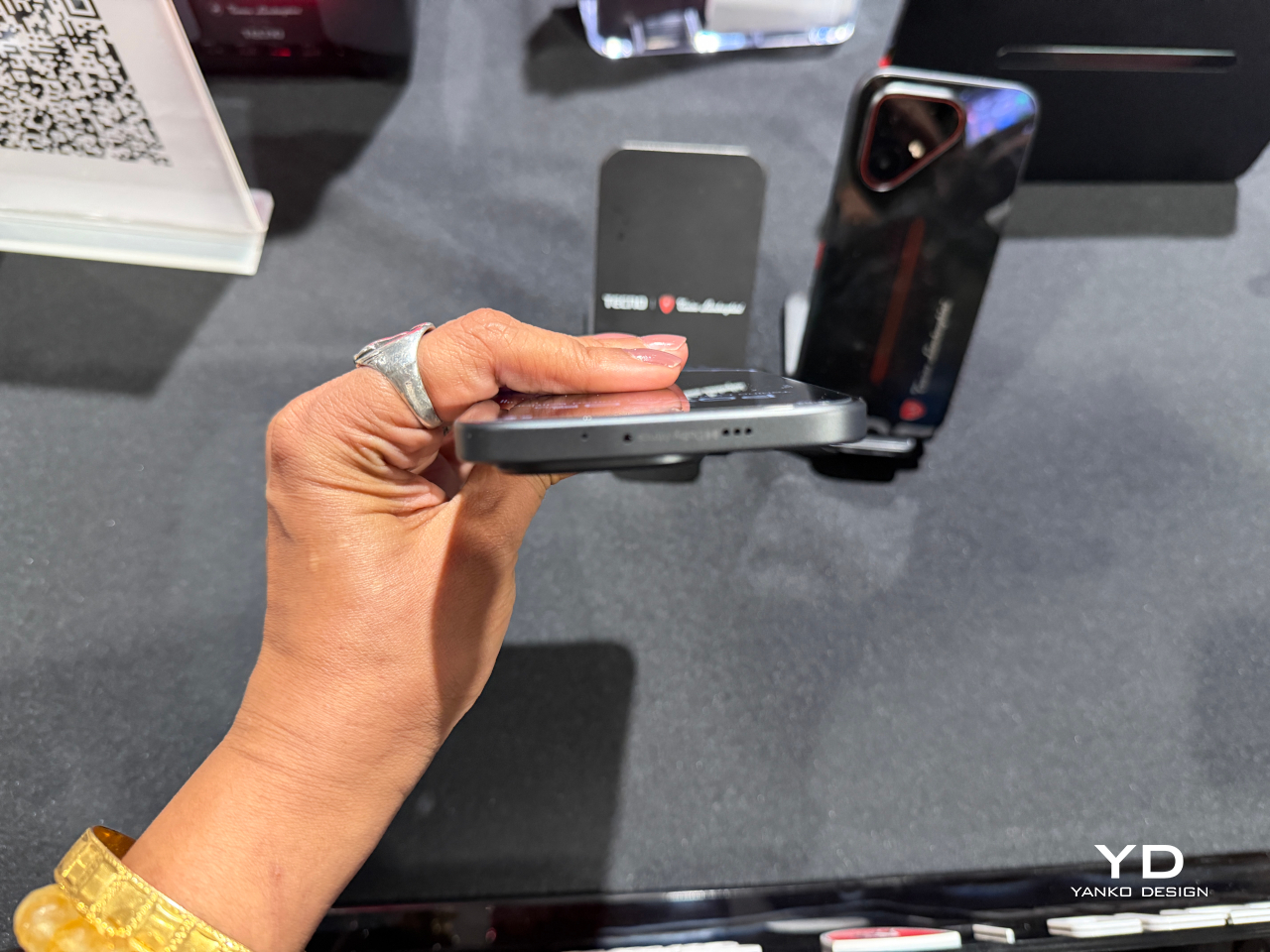
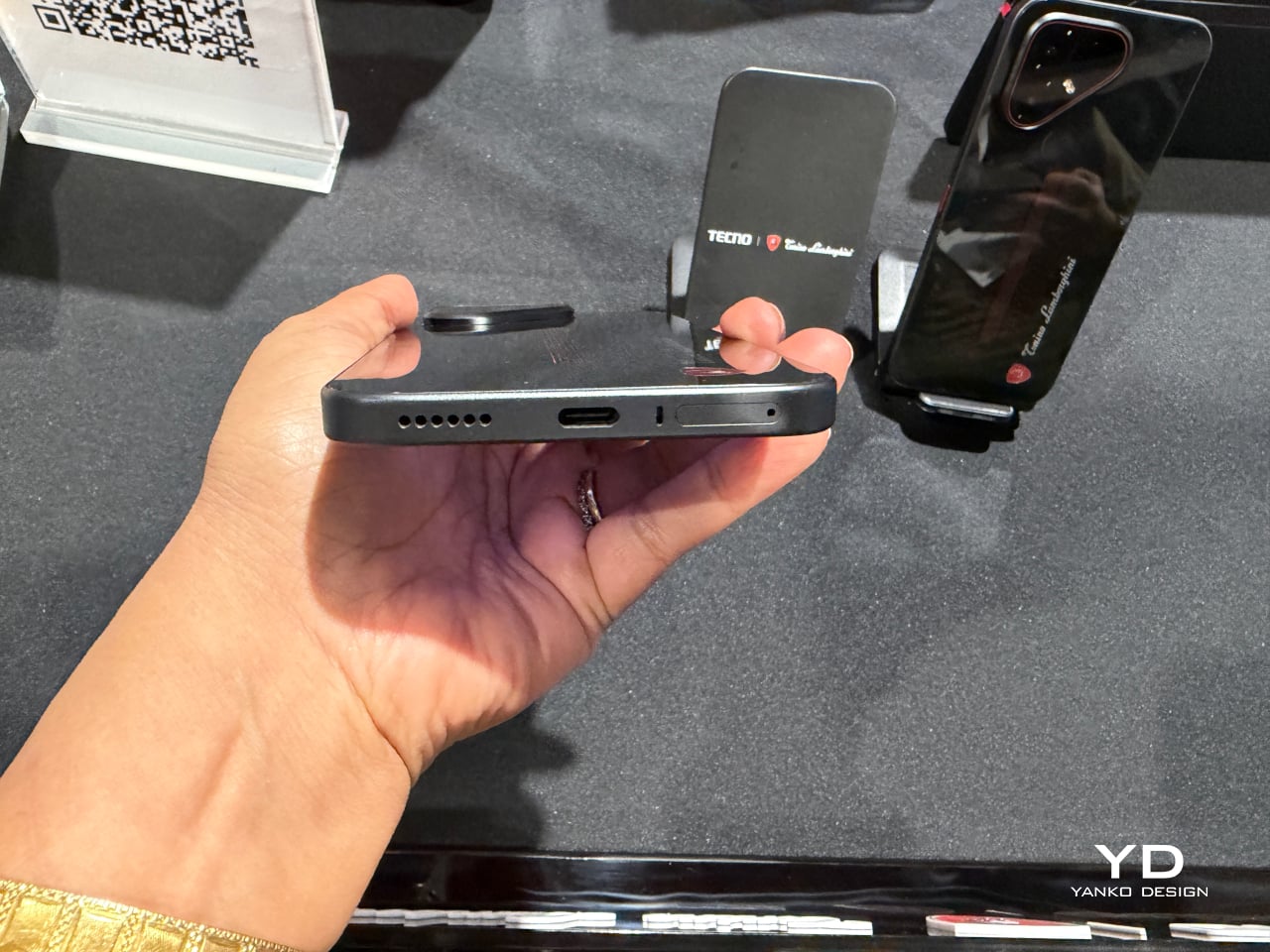
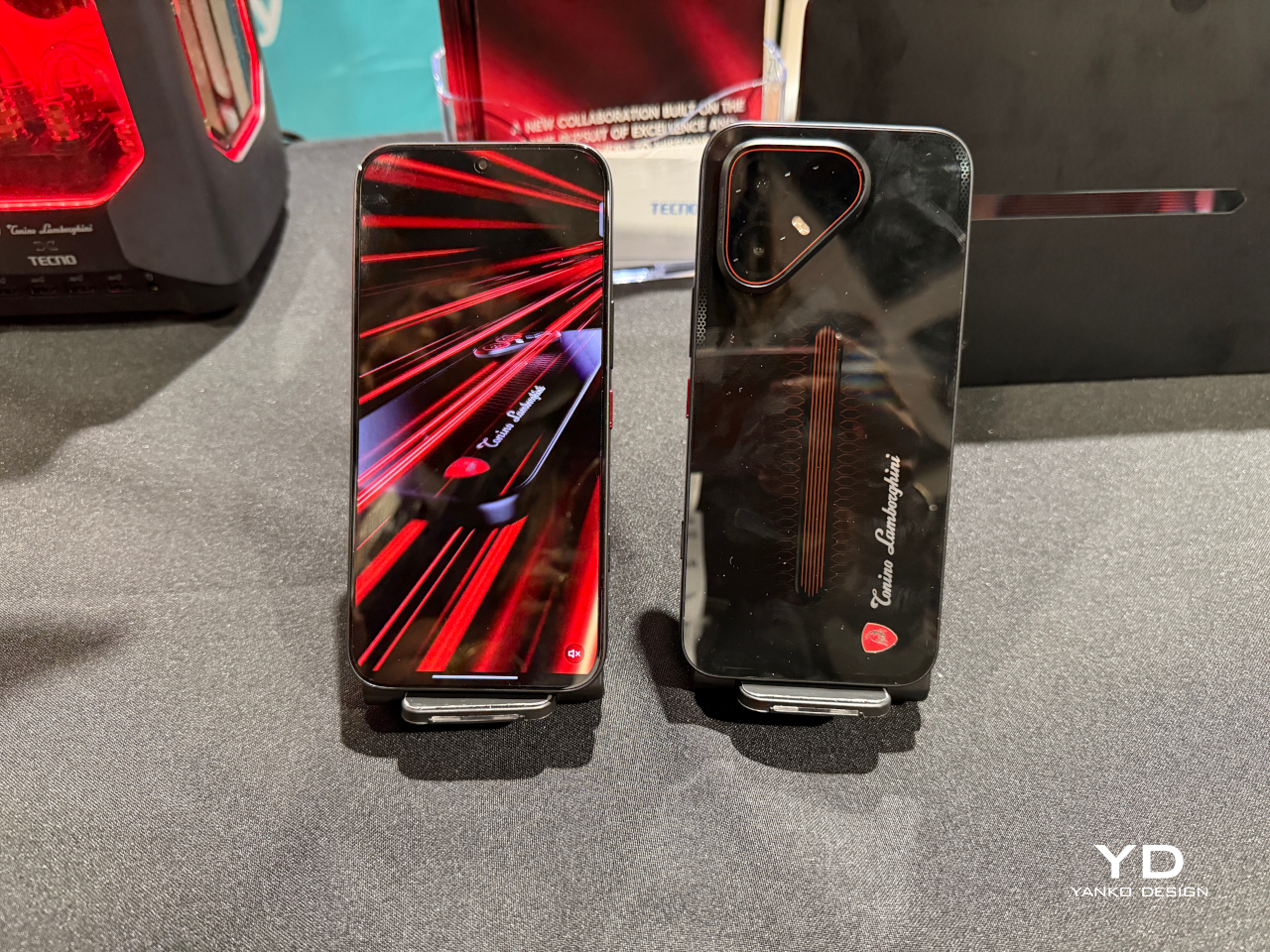
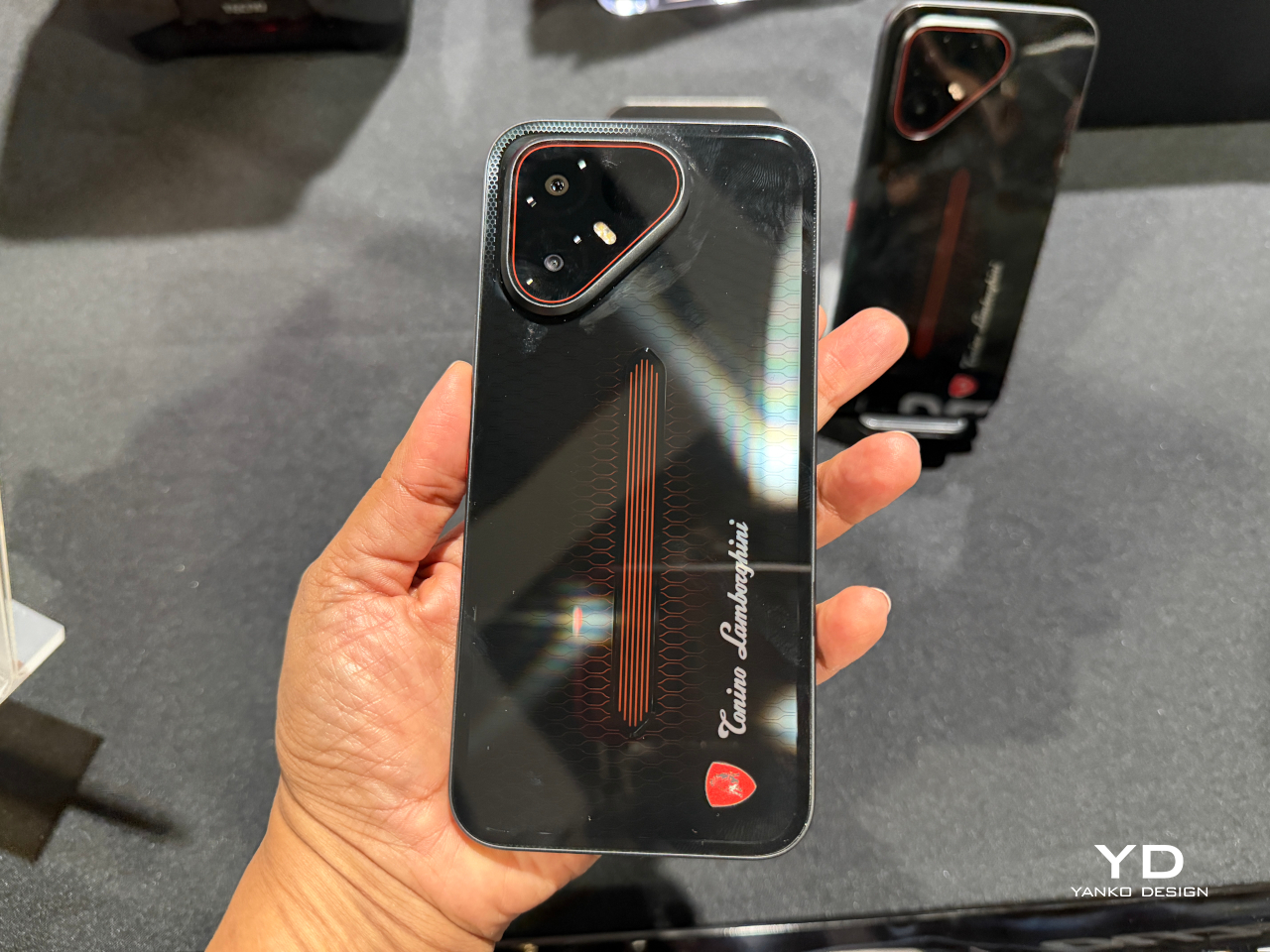
Slapping a famous badge on a phone’s back panel is the easy version of a brand partnership. TECNO and Tonino Lamborghini clearly wanted the harder version instead. The POVA 8 Pro 5G Tonino Lamborghini Limited Edition builds its entire identity around a black-and-red palette and a hexagon pattern lifted straight from Lamborghini’s mechanical heritage, then carries that language past the glass and into the software running underneath.

The rear panel does the heaviest visual lifting. A dual-layer stacking process gives it a reflective quality built from countless internal mirror structures that refract and redirect light, so red accents seem to surface and sink back into shadow as the phone tilts in your hand. A physical height difference between the two layers adds genuine spatial depth, echoing the layered geometry found in actual mechanical engineering rather than faking it with a printed graphic.

Designer: TECNO x Tonino Lamborghini

That commitment doesn’t stop at the hardware. A bespoke interface theme reworks dozens of icons in matching black-and-red tones with glass-like material effects, while a custom boot animation and ringtone carry the same mechanical energy into everyday use. Opening the phone in the morning feels less like waking up a generic Android device and more like starting an engine built around a specific mood.

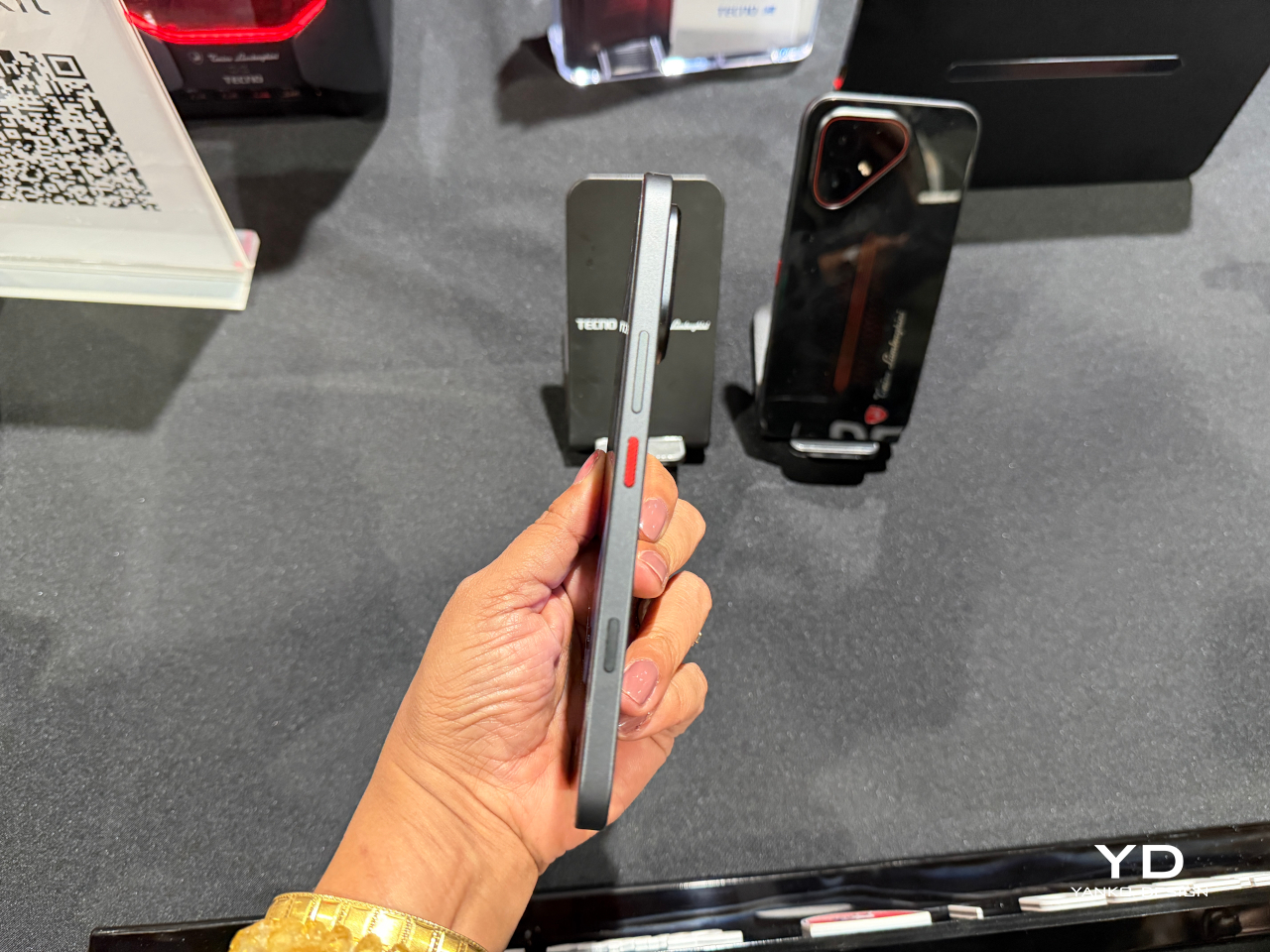
Underneath the styling sits a dual-chipset setup pairing a MediaTek Dimensity 7400 Ultimate platform with a TECNO-built P1 Graphic Chip, backed by a vapor chamber cooling system spanning over 22,000mm² of dissipation area. That combination pushes supported titles as high as 144FPS, turning a commute or a lunch break into legitimate gaming time instead of a compromise. A dedicated one-tap button on the side keeps favorite apps and gaming shortcuts one press away.

Photography leans on a Sony-engineered LYTIA 700C sensor with a larger light-sensitive area, giving low-light shots and handheld video noticeably steadier results thanks to built-in optical stabilization. A 50MP high-pixel mode and 2x lossless zoom cover the detail-obsessed shots, while an 8MP ultra-wide lens handles group photos and landscapes without anyone needing to step backward to fit everyone in frame.

The 6.78-inch AMOLED display pushes brightness to 4,500 nits and refreshes at 144Hz, numbers that matter most outdoors under direct sun or during fast-paced gaming sessions where lag ruins the moment. A touch layer rated for wet and oily fingers keeps the screen responsive through rain, sweat, or sunscreen-covered hands, useful for anyone who refuses to put their phone down just because the weather did.

Durability rounds out the package rather than acting as an afterthought. Corning Gorilla Glass 7i, IP69-rated water and dust resistance, and SGS 5-Star Drop certification mean the phone can survive a dropped call turning into a literal drop without ending the relationship. A 6,500mAh battery retains over 80% of its health after 2,000 charge cycles, translating to roughly six years of daily use before a real decline sets in.

TECNO and Tonino Lamborghini spent more effort here proving that a licensing deal can produce something with actual mechanical thinking behind it, rather than a badge glued onto commodity hardware. The result reads less like a co-branded accessory and more like a phone that happens to share a bloodline with the cars.

The post TECNO and Tonino Lamborghini Prove You Can’t Fake a Real Collab first appeared on Yanko Design.

Get a Laptop or Get a Tablet, TECNO MEGABOOK T15 360 Pro Is Already Both

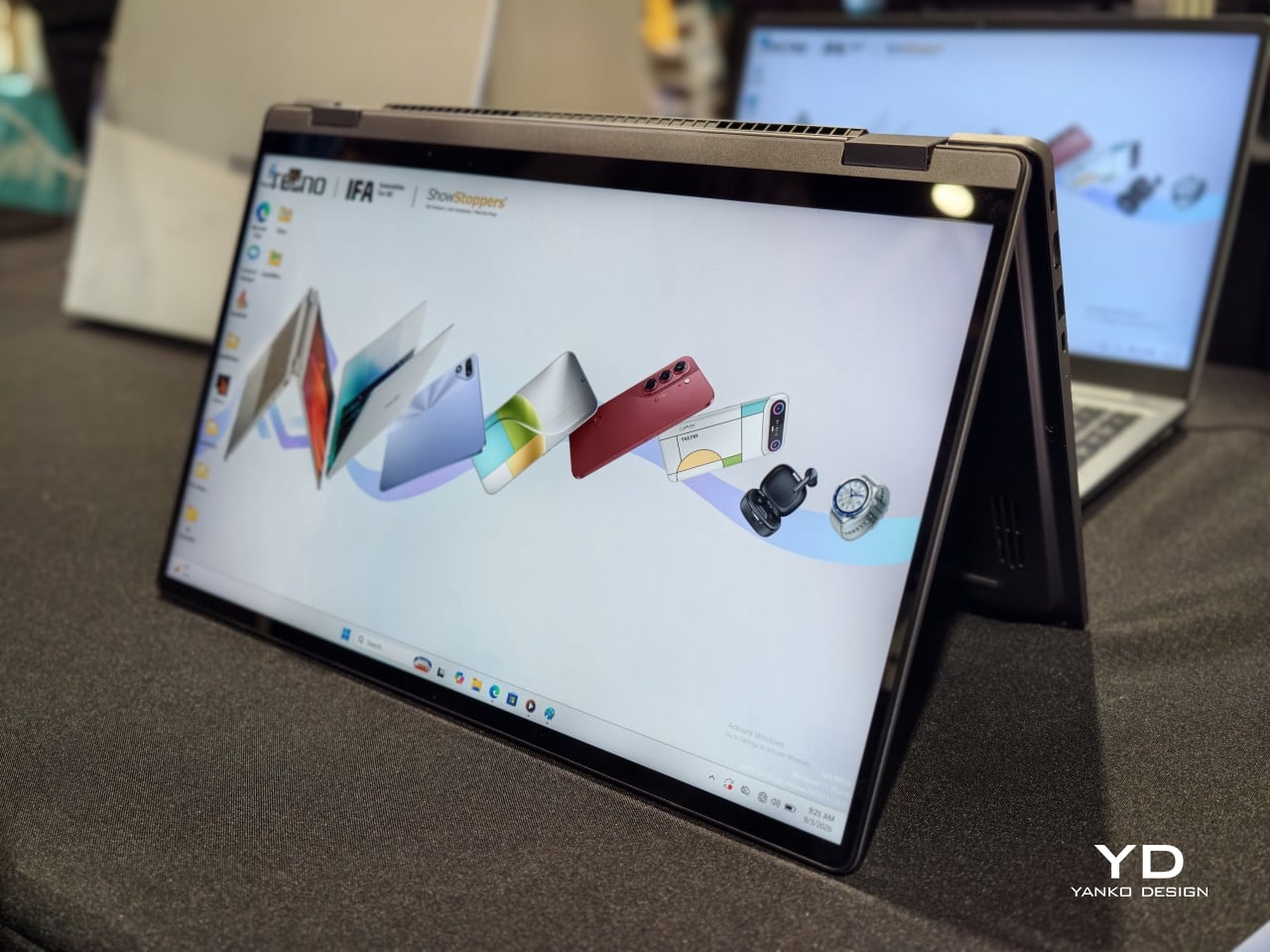
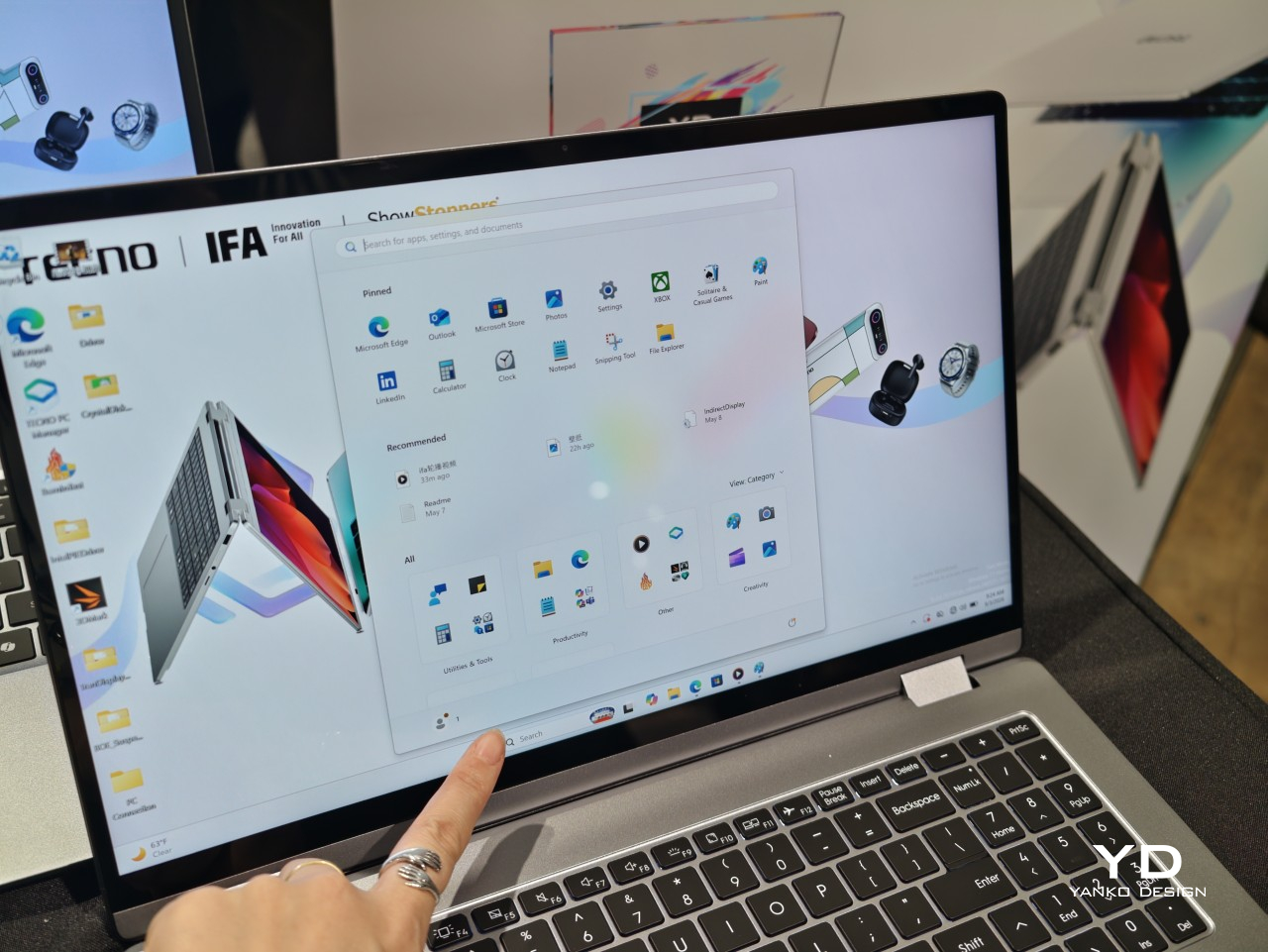
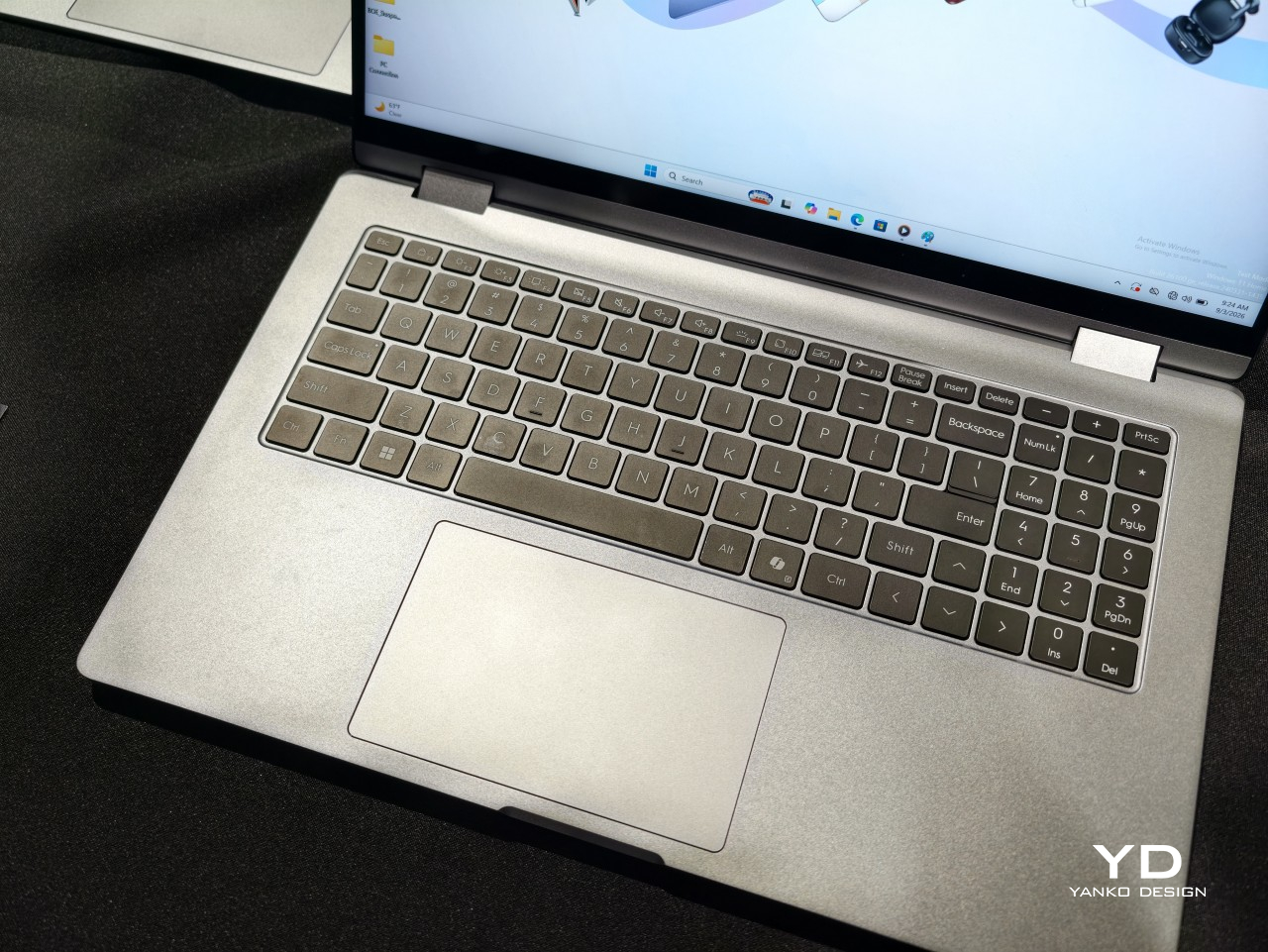
A laptop that only knows one shape stops being useful the moment the day changes its mind. TECNO built the MEGABOOK T15 360 Pro around that exact problem, wrapping a full 360-degree hinge inside an all-metal body machined with precision CNC tooling. The screen folds all the way back, turning one device into four distinct working postures without asking anyone to carry a second gadget.

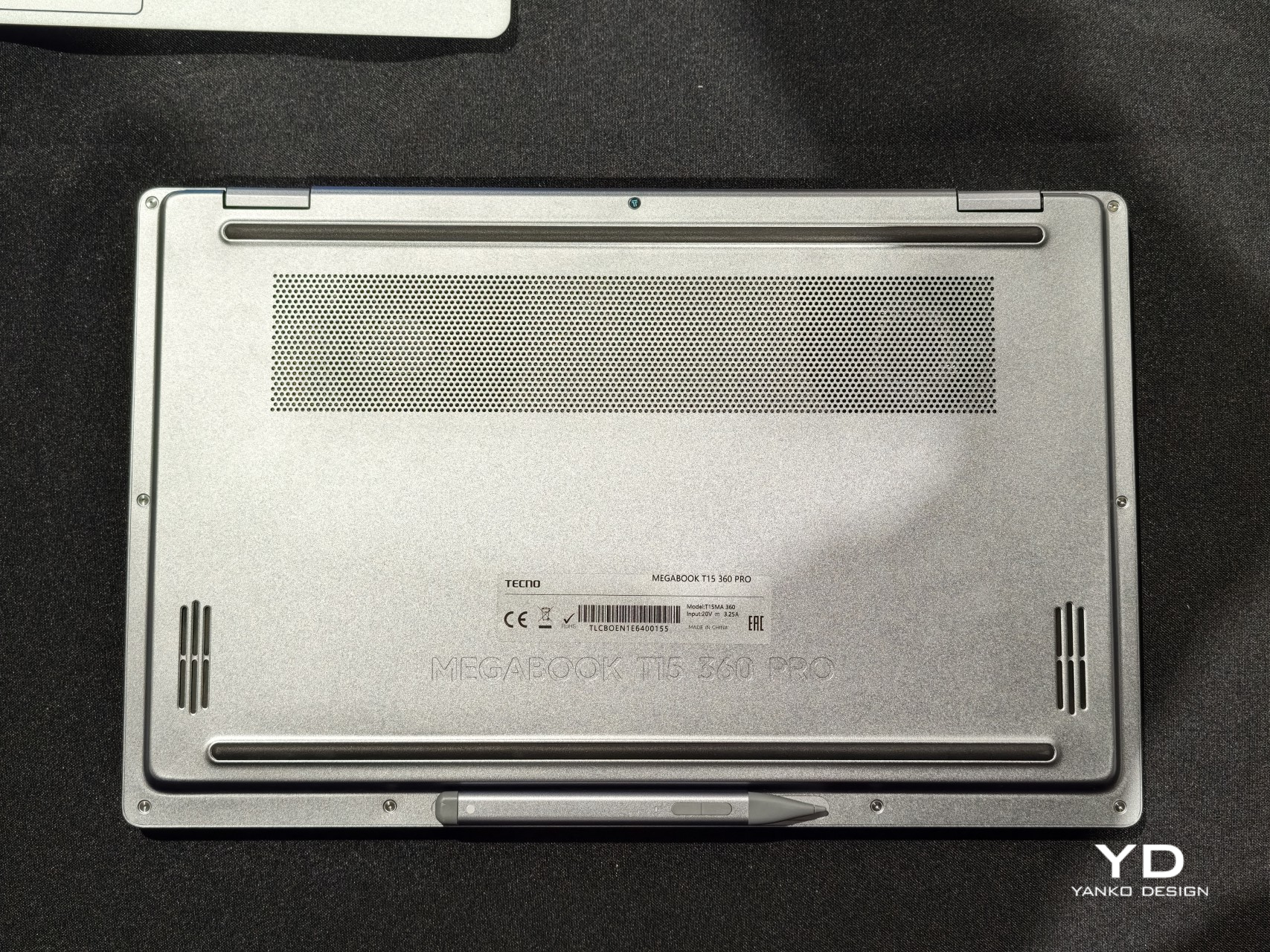
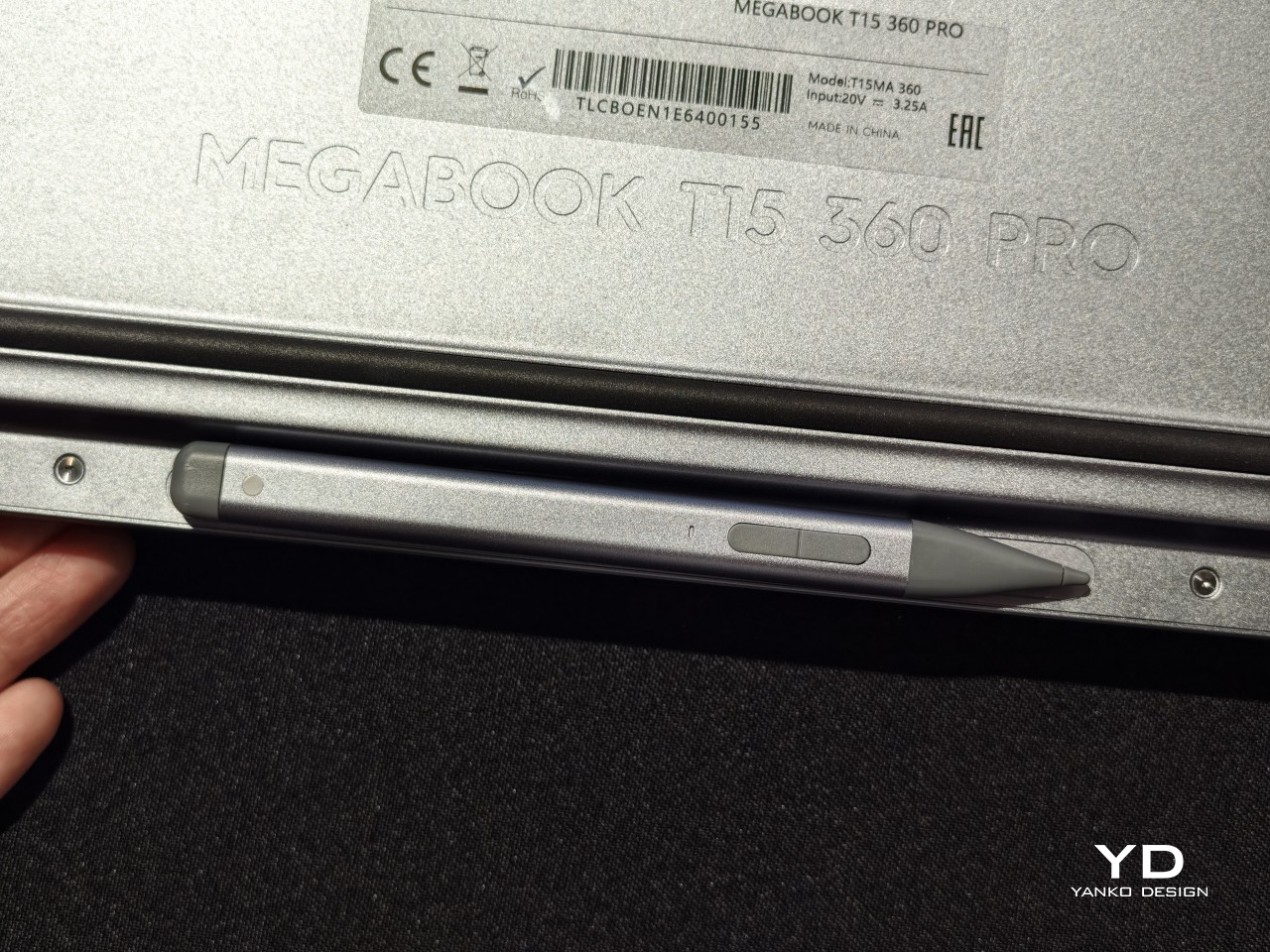
Flip it flat into Laptop mode, and it behaves like any focused productivity machine, keyboard ready and screen upright for spreadsheets or long email threads. Push the display back further and Tablet mode takes over, letting fingers or an optional MPP 2.0 active pen sketch, annotate, and jot notes directly onto the 15.6-inch touchscreen. The same hardware just keeps reshaping itself around whatever task shows up next.

Designer: TECNO

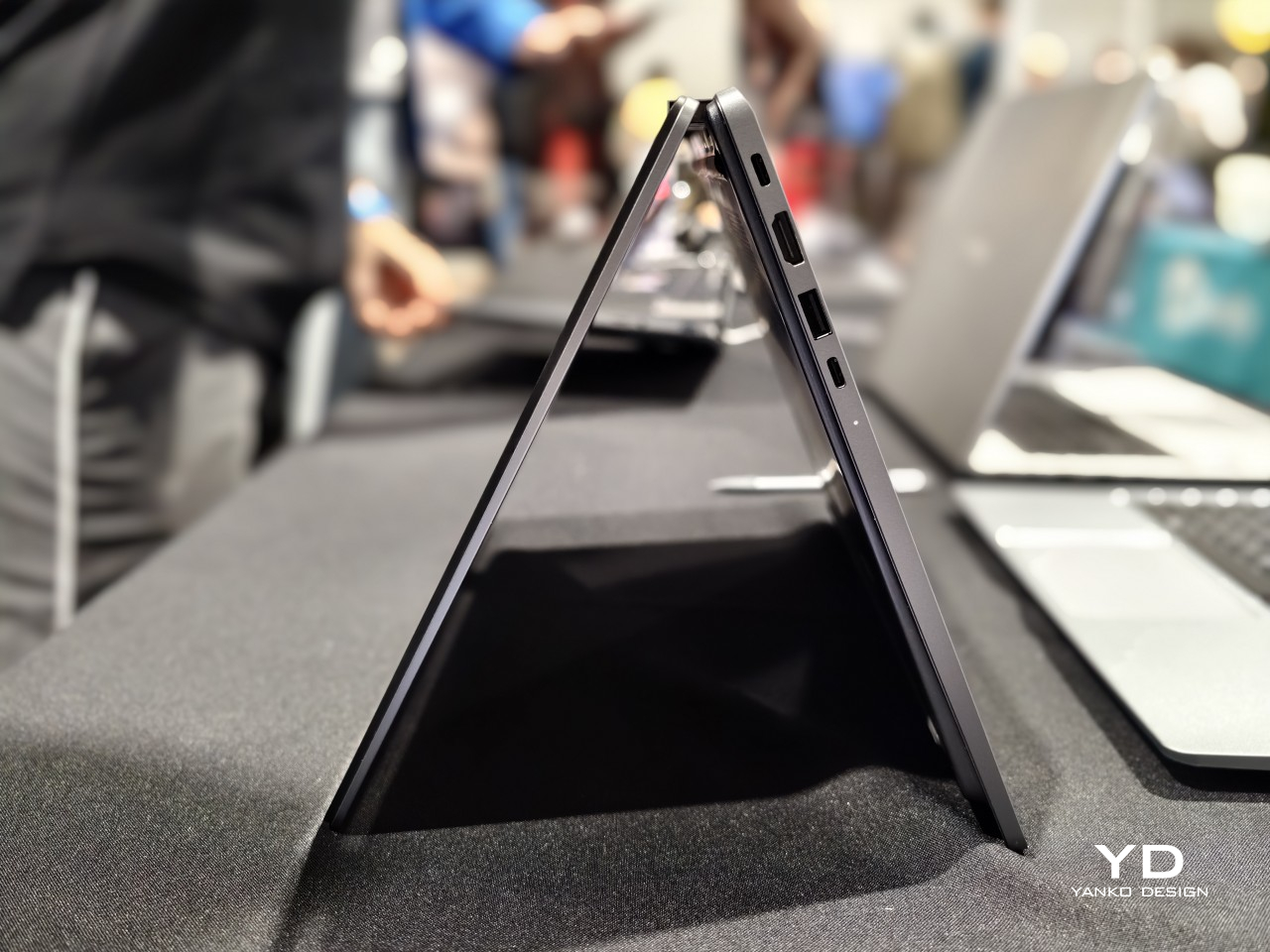
Fold it into a triangle and Tent mode appears, propping the screen up on a cramped tray table or a corner of a crowded desk where a full laptop footprint would not fit. Stand it up the other way and Stand mode turns the same hinge into a presentation tool, angling the display toward a room full of people instead of a single set of eyes typing at a keyboard.

None of those positions would matter much without a screen worth looking at, and TECNO gave the Pro model a 2.5K panel running at 120Hz across 2560 by 1440 pixels, covering 100% of the sRGB color space at 350 nits brightness. Colors hold up during video edits, photo review sits closer to accurate, and scrolling through documents in Tablet mode feels noticeably smoother than on a standard 60Hz screen.

Under the hood, configurations climb as high as an Intel Core Ultra 9 185H processor paired with LPDDR5X memory running at up to 7,467MHz, enough headroom for video exports or a dozen open browser tabs without slowdown. A PCIe M.2 2280 SSD handles storage, and select configurations add a second M.2 slot, giving anyone running out of space room to expand rather than shop for an external drive.

Powering all of that is a 70Wh battery paired with a compact 65W PD GaN charger, a combination built to survive a full workday of meetings, note-taking, and streaming without hunting for an outlet. The included charger sheds the bulk of older power bricks, and the 1.8-meter cable gives enough slack to keep the laptop charging from across a conference table instead of right next to the wall.

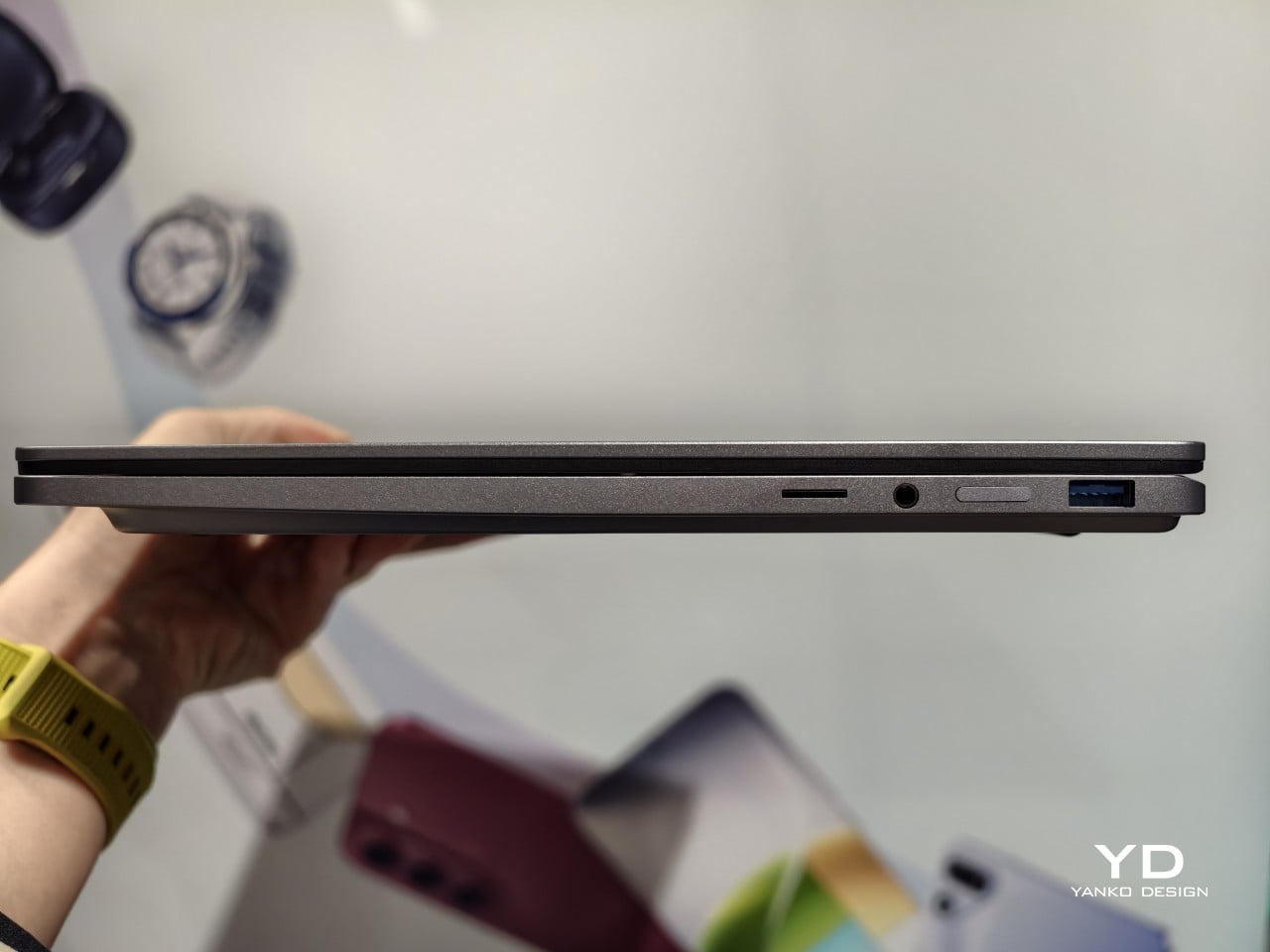
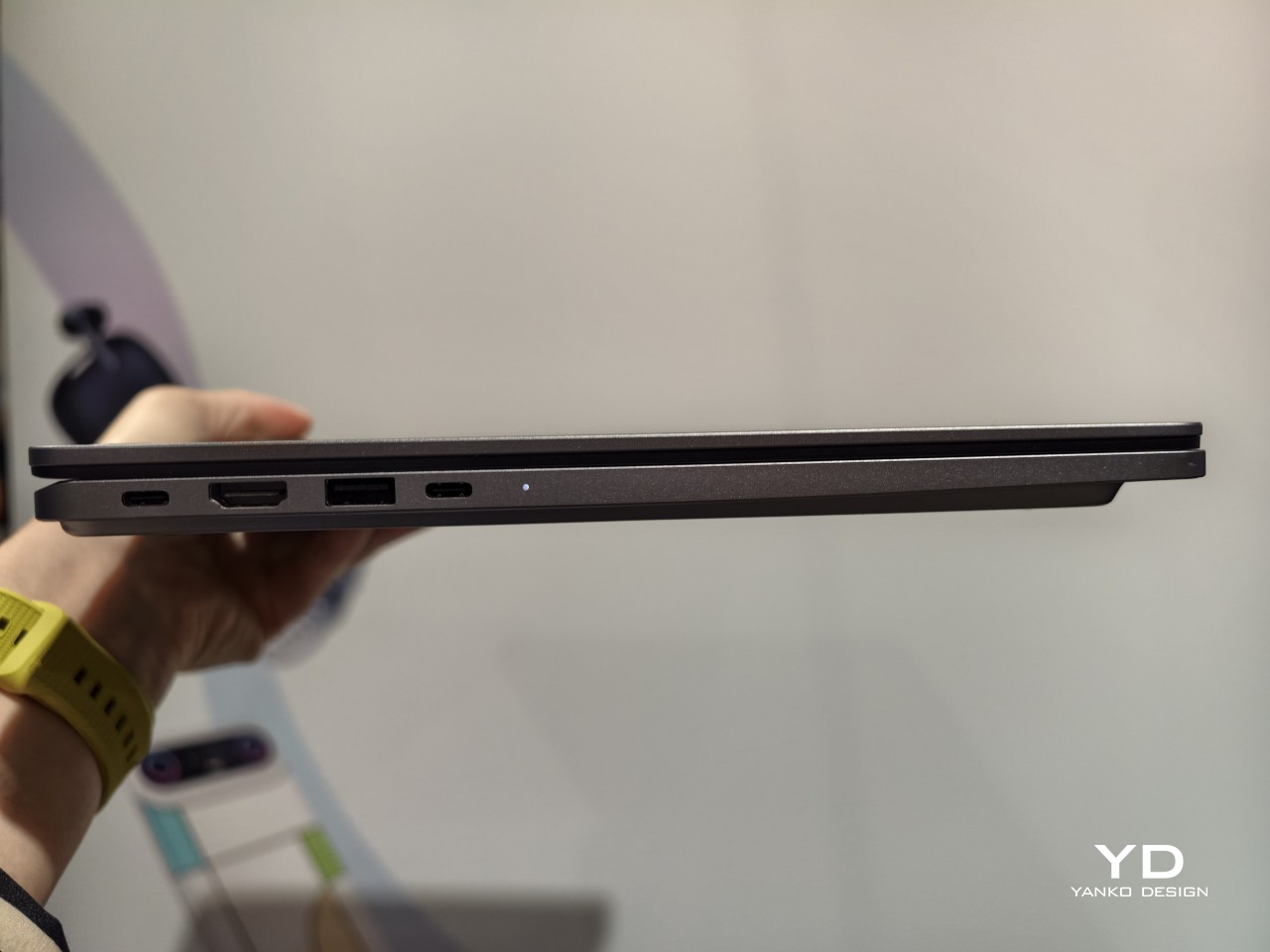
Connectivity keeps pace with the rest of the machine. Wi-Fi 6E and Bluetooth 5.4 handle wireless duties, while seven physical ports, including two Type-C connections rated for 10Gbps data and display output, cover everything from external monitors to storage drives. TECNO OneLeap ties the laptop into phones, tablets, and other PCs, letting files and clipboard content move between devices without emailing anything to yourself first.

Smaller touches round out daily use. A backlit keyboard with its own numeric keypad handles spreadsheet-heavy work, and a fingerprint reader built into the power button skips the password screen entirely with one press. Dual speakers tuned for DTS:X Ultra and a pair of digital microphones back up video calls and casual media playback, so switching between a meeting and a lunchtime show does not require headphones.

TECNO prices the MEGABOOK T15 360 Pro at €1,099 (around $1,280), with European availability starting in the fourth quarter of 2026. That price sits closer to a well-specced conventional laptop than a premium convertible, positioning the T15 360 Pro as the rare 2-in-1 that does not ask for a luxury markup just because the hinge bends further than everyone else’s.

The post Get a Laptop or Get a Tablet, TECNO MEGABOOK T15 360 Pro Is Already Both first appeared on Yanko Design.

Tecno Camon 50 Ultra 5G Review: A $420 AI Phone With Built-in Gemini, ChatGPT, DeepSeek, and Grok

PROS:


  • EllaClaw is one of the most impressive phone AI experiences available right now

  • Multi-model AI support, including Gemini, ChatGPT, Grok, DeepSeek, Meta AI, and Ella

  • Strong 2-day battery life from the 6500mAh cell

  • Competitive value in the mid-range segment

CONS:


  • Single speaker setup sounds tinny and lacks bass

  • Curved waterfall display is prone to accidental palm touches

  • No wireless charging or Qi2 (MagSafe)

RATINGS:

AESTHETICS
ERGONOMICS
PERFORMANCE
SUSTAINABILITY / REPAIRABILITY
VALUE FOR MONEY

EDITOR'S QUOTE:

The Camon 50 Ultra 5G feels like Tecno looked at the current AI phone race, skipped the walled garden nonsense, and built the first assistant experience that actually shows you why you’d want to use it in the first place.

Apple has Apple Intelligence. Google Pixel has Gemini. Samsung has Galaxy AI. Tecno has everything else. Packed into its EllaClaw agent is the ability to use Gemini, ChatGPT, Grok, and DeepSeek, because a walled garden never benefited anyone. Tecno’s Camon 50 Ultra 5G is a great phone, but what makes it worth doing a double take for is EllaClaw, an agentic AI built into the phone that offers a phone AI experience I have yet to see on any smartphone so far. EllaClaw is currently an invite-only closed Beta feature limited to just this phone, but seeing it in action gave me everything I needed to understand where other phones are going wrong with their on-board AI, and where they can learn from Tecno.

The wild part is how approachable it all feels. EllaClaw does not sit around waiting for you to guess the perfect command like some moody genie. It actively shows you what it can do, which makes the whole experience feel far less intimidating than Gemini or Apple Intelligence currently do. Within minutes, I was jumping between message summaries, creative tools, settings help, and different AI models without feeling like I needed a tutorial or a prayer.

Aesthetics
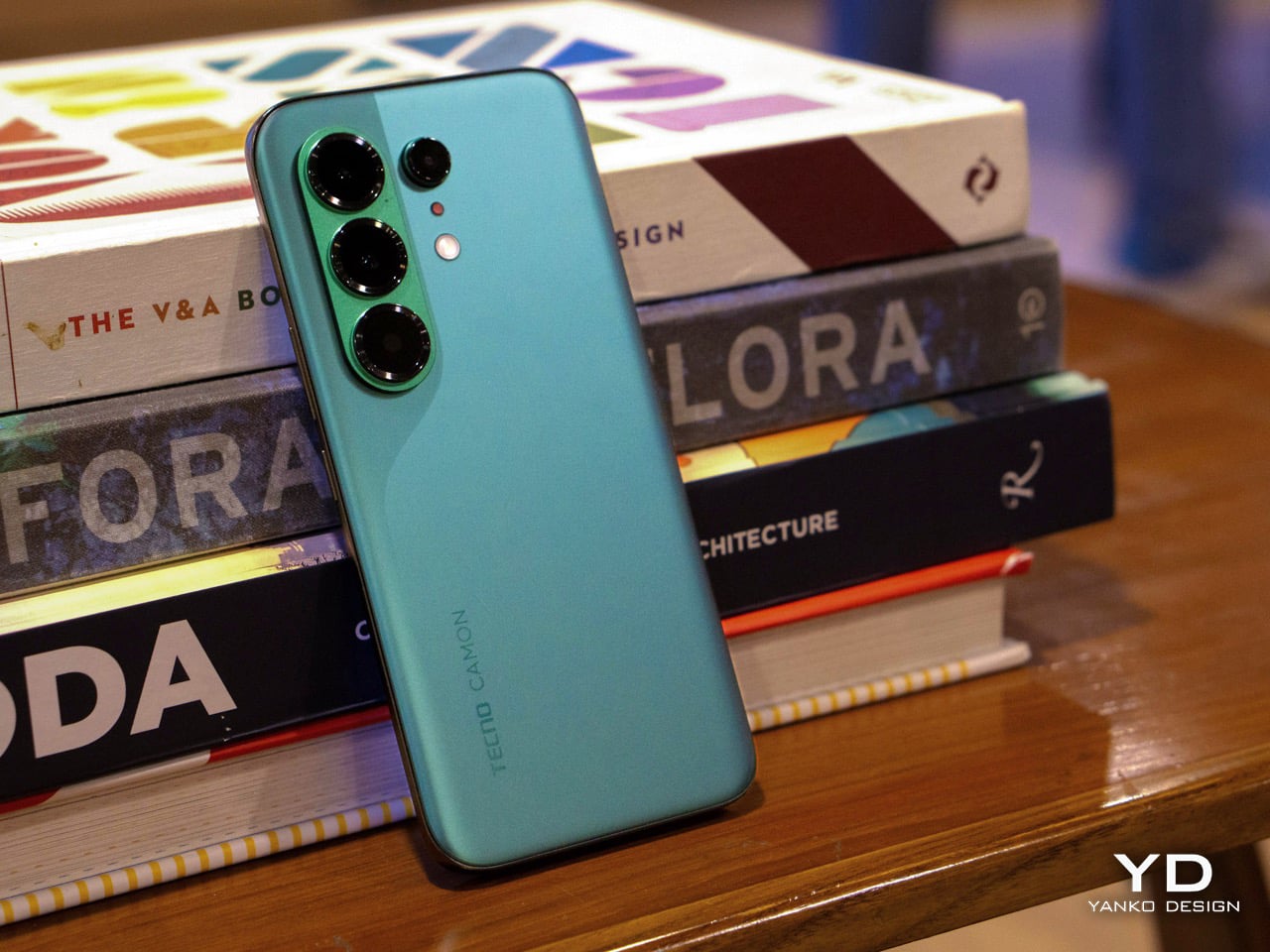
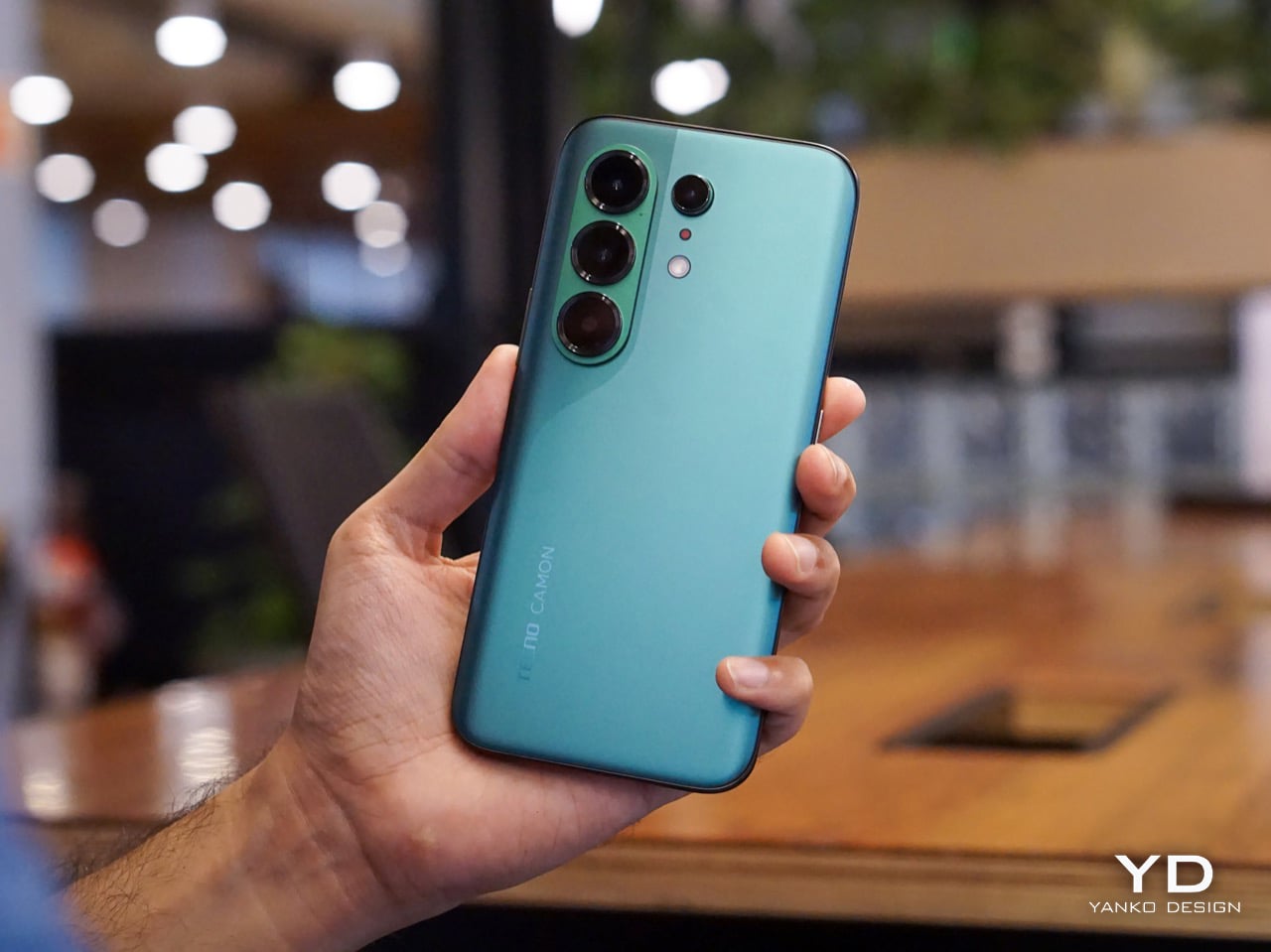
The moment I unboxed the Camon 50 Ultra 5G, I was hit with a serious case of déjà vu. The green variant has a gorgeous satin finish that gives it a silky, metallic glow under the light, and it immediately sent me down a memory lane trip to my old OnePlus 8 Pro which I faithfully used from 2020 to 2024. The color, the texture, even the way the camera module is arranged, it all felt so familiar and, frankly, so premium. Tecno absolutely nailed the flagship-esque feel here. The back is smooth to the touch, resists fingerprints reasonably well, and has a subtle elegance that a lot of phones in this bracket just do not bother with.
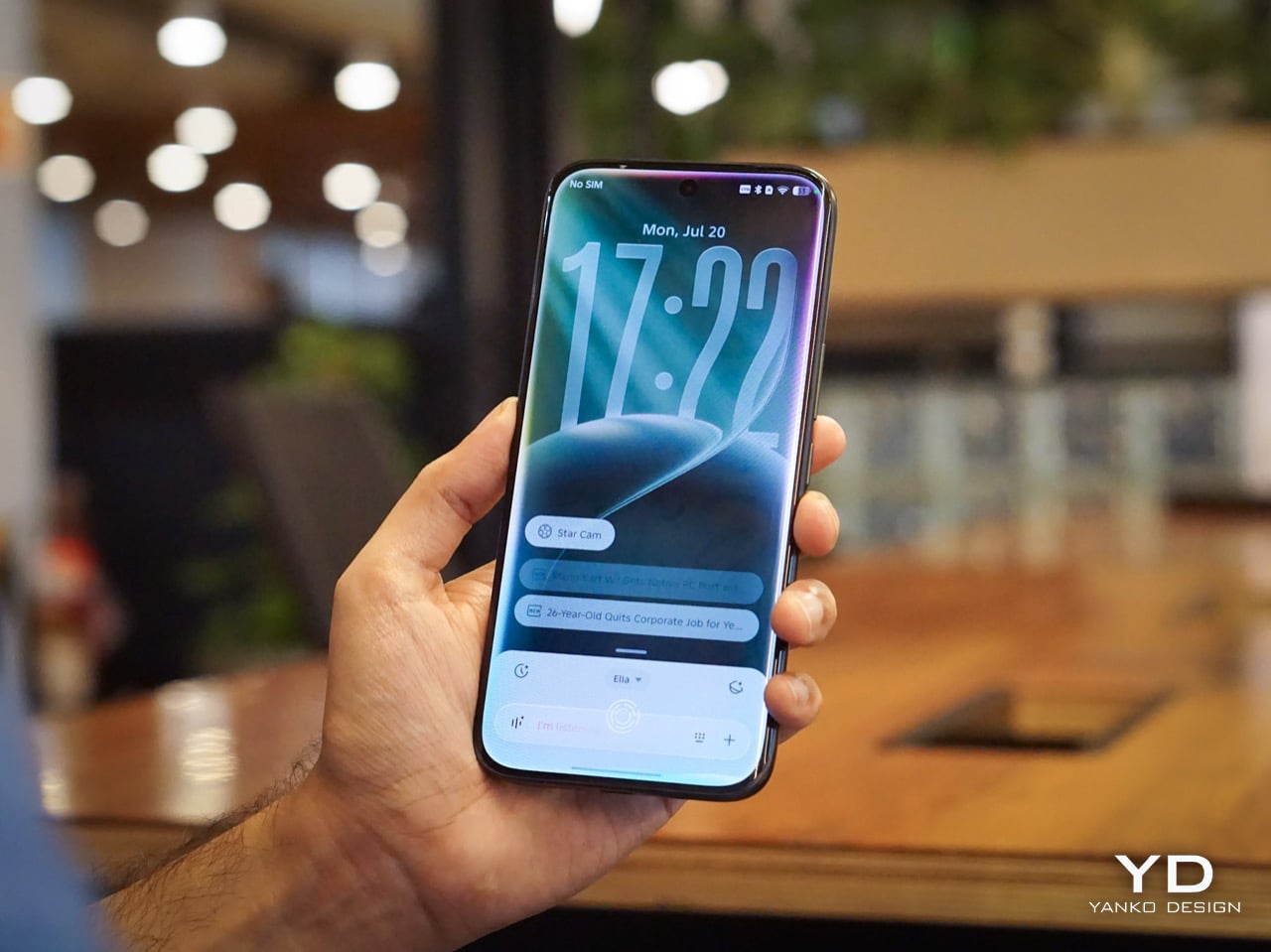
The front is where the design language gets a little more complicated, at least for me. Tecno went with a waterfall display, which means the screen curves dramatically around the sides. It looks stunning when the phone is off or when you are watching a video, creating an immersive, almost bezel-free experience. But I have always had a love-hate relationship with these displays. They are beautiful, no doubt, but they can be a magnet for accidental palm touches. While the software does its best to ignore them, I still found myself occasionally tapping something I did not mean to. It is a classic case of striking aesthetics meeting the messy reality of how we hold our phones. I do have to say that Tecno’s Liquid Glass homage does look much better on a waterfall display than on a bezel-ridden iPhone.

Ergonomics
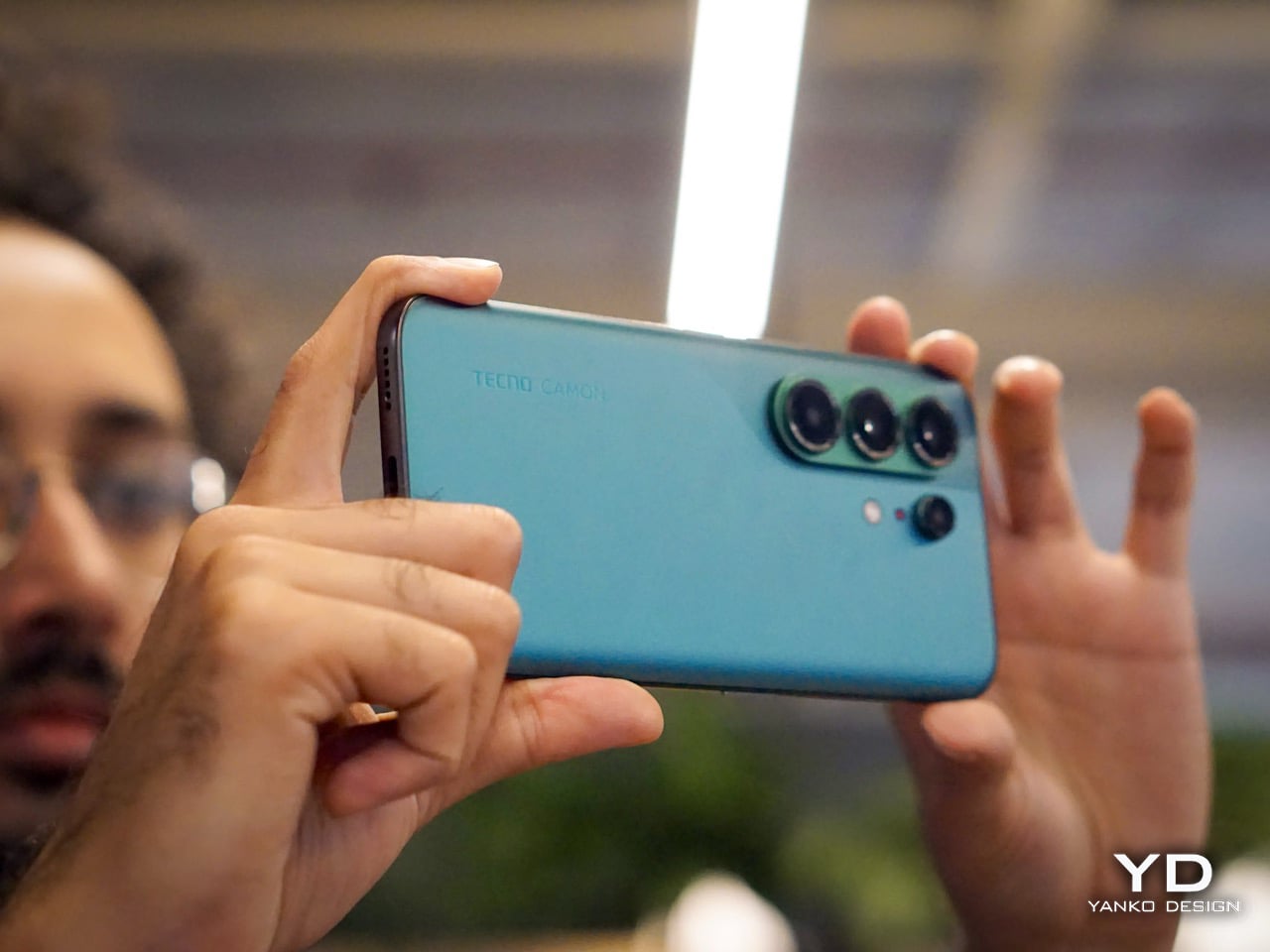
That waterfall display has a big effect on how the phone feels in your hand. The curved edges melt away into the frame, making the Camon 50 Ultra 5G incredibly comfortable to hold. There are no sharp, flat corners digging into your palm, which is great for long sessions of scrolling or gaming. The trade-off, of course, is that the phone can feel a little slippery if you are not paying attention. It has that smooth, polished-stone feel that is lovely to touch but always feels one careless gesture away from a gravity experiment. It is a phone that practically begs to be put in a case, even if it feels like a shame to cover up the design.

The button layout is personally feels a little little bit tricky. On the left, you have a dedicated AI key that summons EllaClaw, a shortcut I ended up using constantly. You can remap it, but having a one-press gateway to the AI is a smart touch. The right side, however, is where my muscle memory started to complain. There is a power button and a fairly short, single-piece volume rocker. Because the rocker is slightly compact, I often found myself fumbling, unsure if my thumb was on volume up, down, or about to lock the screen. It is a small pain, but a tiny indent in the middle of the volume button would have made all the difference. The buttons themselves are slightly sharp and textured, a necessary choice for a phone with curved edges, but it does not quite solve the problem of telling them apart by feel alone.

Performance
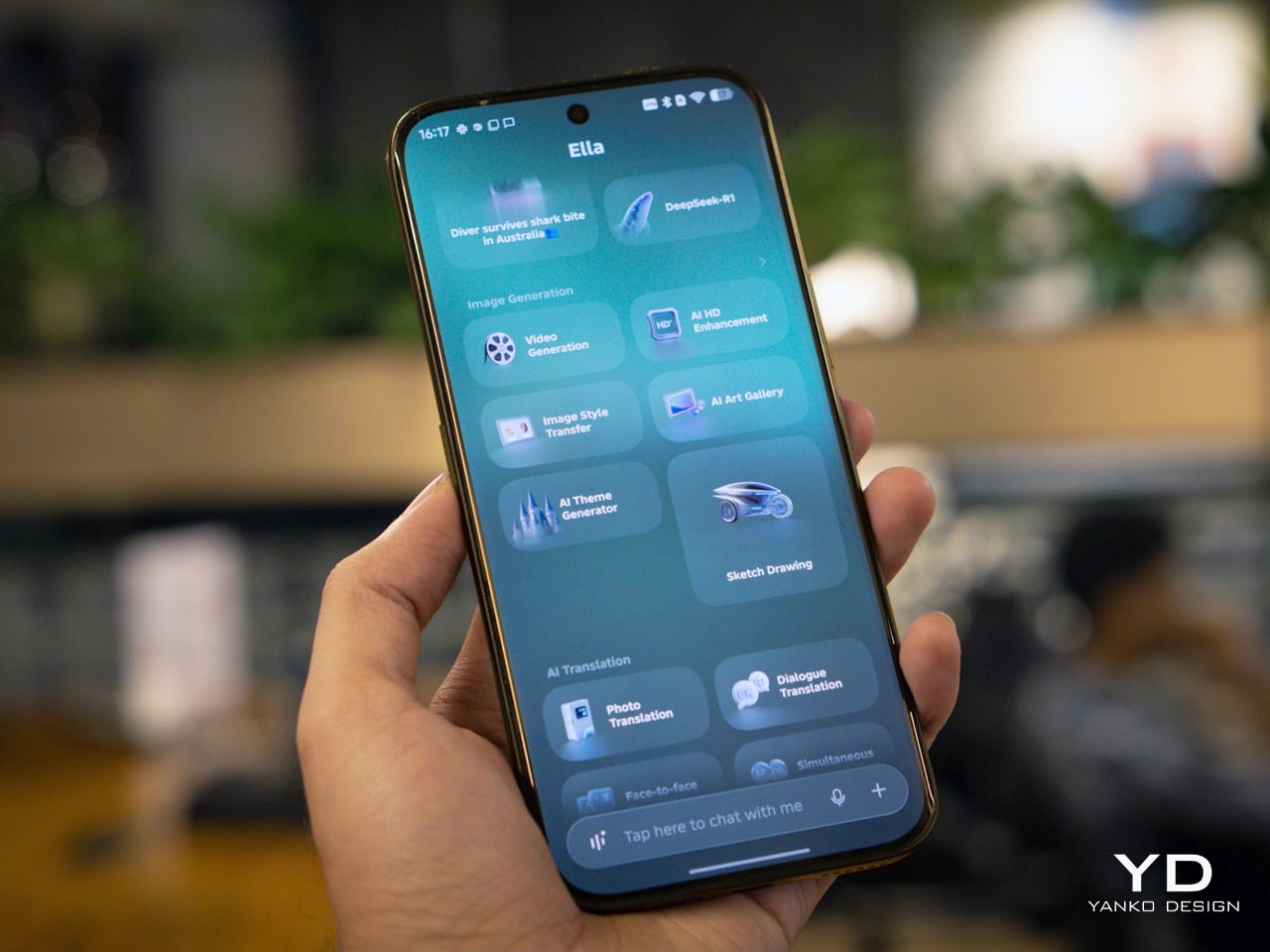
EllaClaw is where the Camon 50 Ultra 5G earns its stripes. The dashboard (which you access by swiping towards the left – where you’d see Google Discover on most Android phones) keeps surfacing prompts, shortcuts, and suggestions, making the AI feel alive and accessible rather than buried under three layers of settings. Most phone AI treats users like they should already know what they want. EllaClaw meets you halfway, and that changes everything about how you interact with the phone.

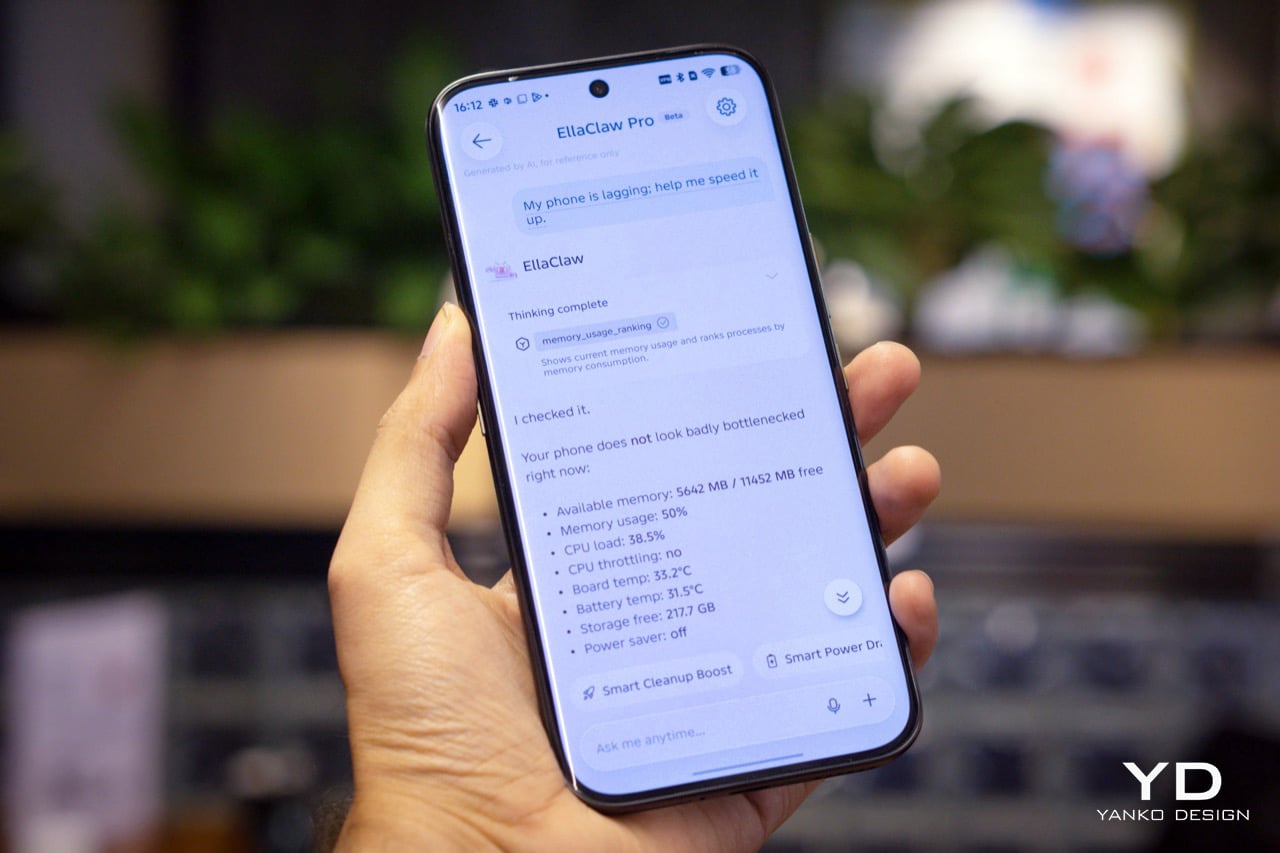
The deeper layer, EllaClaw Pro, is genuinely impressive. It reaches into the phone’s apps and system functions in a way that feels ahead of where the conversation currently is. I asked it to summarize my text messages without opening the messages app, and it did exactly that, handling the whole thing on its own. That kind of agentic behavior is the next logical step for phone assistants, and right now, Tecno seems to be ahead of the pack. Nothing reassured me that the AI wasn’t reading my messages to enhance its database though, so the privacy conscious might have a thing or two to worry about.
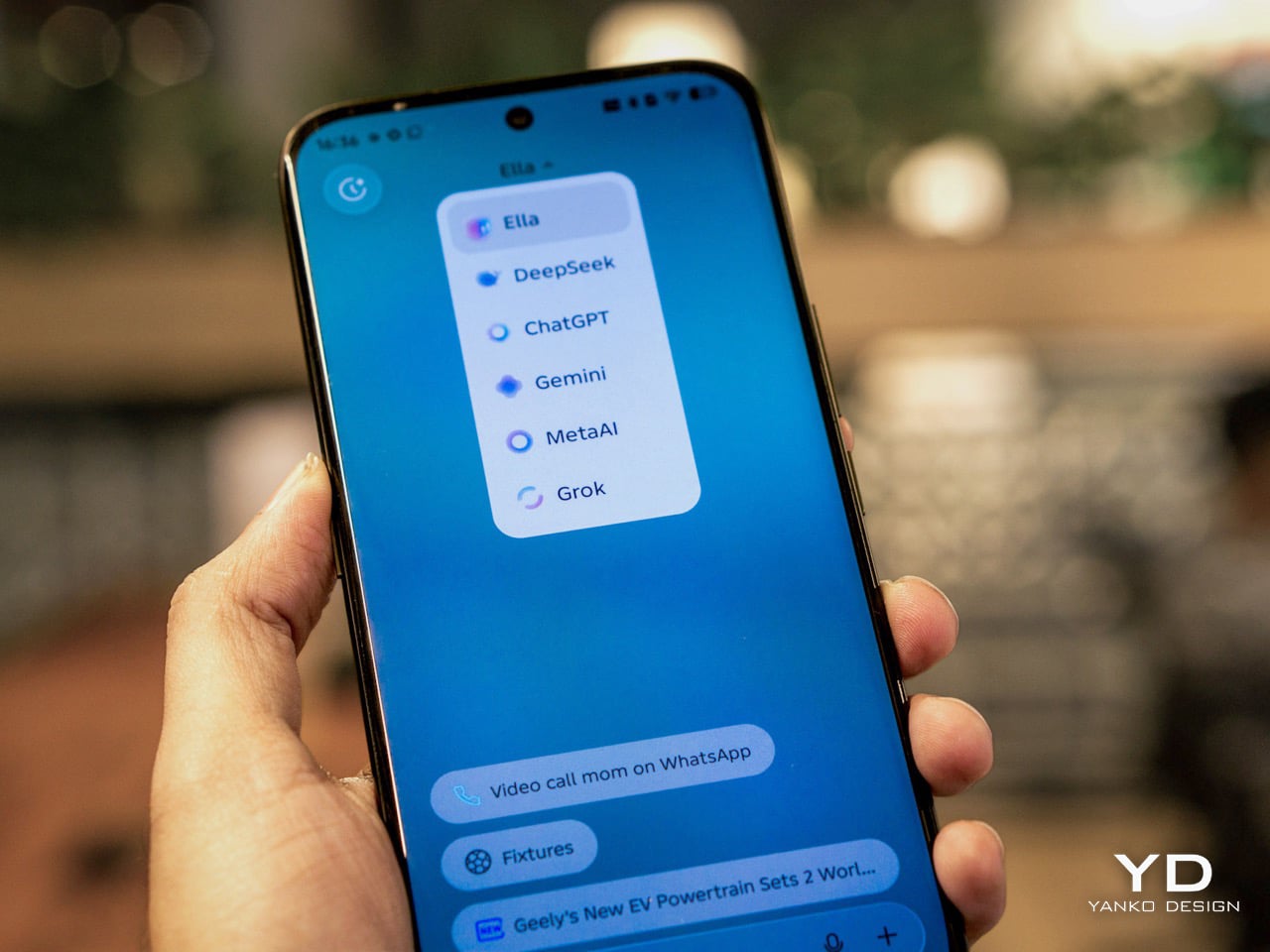
Tecno’s decision to build EllaClaw as a multi-model hub is one of the smartest software calls I have seen this year. My unit offered access to DeepSeek, Gemini, ChatGPT, Grok, and Meta AI alongside Ella’s own model, all in one dashboard. Claude is conspicuously missing, but everything else is here and free to use (at least during the Beta period). Daily limits are applied on AI use which reset every 24 hours, and you can buy extra credits in case you overshoot. In all my hours of testing, I never needed to purchase extra credits, which means image generation, video generation, and sketch-to-photo tools were all available at no additional cost.

EllaClaw is still being refined, though. The dashboard lagged occasionally, and the AI sometimes took longer to load than felt comfortable. Restarting the app always sorted it out, but it is a reminder that this experience has not fully grown into its ambition yet. Users in certain regions may also need a VPN to get the full experience running, which is worth knowing upfront.
The camera system is built around a 50MP Sony LYT-700C main sensor with OIS, paired with a 50MP telephoto lens offering 3x optical zoom (70mm equivalent) and an 8MP ultrawide. That telephoto is a proper standout for a phone at this price point, and the software leans into it with confidence. You get 60x hybrid zoom, which is mostly digital exaggeration past the 3x mark, but the results between 3x and 10x are still usable in decent light. The main camera performs well across a range of scenarios, especially in good light, and night mode is aggressive without getting too soupy. The front camera is a 50MP sensor with autofocus, which makes a noticeable difference in selfie sharpness compared to the fixed-focus cameras on cheaper phones.

Tecno stuffs the camera app with modes including dual-cam, underwater mode, document scanning, super night mode, and super macro. FlashSnap is the standout, though. It watches your scene and captures the most dramatic moment automatically, so if someone is mid-jump or mid-throw, the phone clicks at exactly the right time without you having to think about it. It made me look like a considerably better photographer than I actually am. Video recording tops out at 4K at 30fps, which is fine but not particularly exciting.
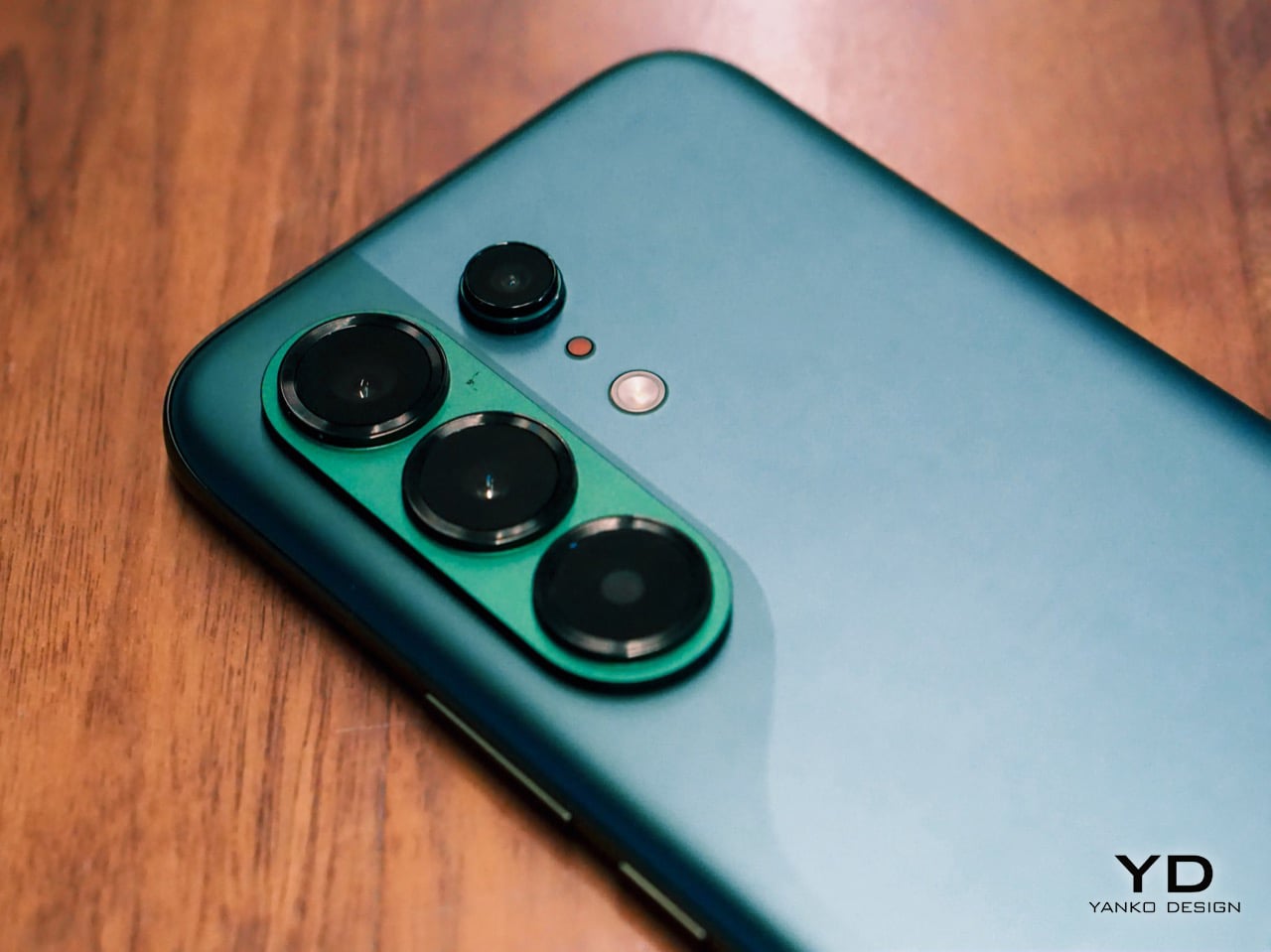
Battery life is one of the phone’s most quietly satisfying qualities. The 6500mAh cell pushed comfortably through two full days of use without needing a charge, which is more than my current flagship iPhone manages. At some point I just stopped thinking about charging altogether, which is the best thing a battery can do. The phone supports 45W wired charging, which is fast enough to feel civilized without being record-breaking.

The display is a 6.78-inch AMOLED panel with a 1.5K resolution (1208 x 2644 pixels, 429 ppi) and a 144Hz refresh rate with LTPO support for adaptive refresh. It is vibrant, sharp, and performs well in low light. The 144Hz refresh makes scrolling and gaming feel smooth, and the high PWM dimming (2160Hz) helps reduce flicker for those sensitive to it. The curved waterfall edges are a design choice I have already aired my reservations about, and this section will not relitigate that argument. It looks great. It catches accidental touches. Moving on.

Speakers are a weak spot, and a noticeable one. There is a single grille at the bottom right, so stereo is off the table, and the audio leans tinny with very little bass to speak of. For a phone this polished everywhere else, it feels like a department that got the budget cut.

Gaming held up well for everything I tried. Tecno’s dedicated gaming software manages frame rates and battery draw sensibly, and the Dimensity 7400 handled casual to moderate sessions without complaint. The 144Hz display helps make fast-paced games feel responsive, and the phone stayed well within comfortable temperature ranges throughout. Nothing I played caused any real issues, thermal throttling never became a concern, and the large battery meant I could game for extended sessions without nervously watching the percentage drop.

Sustainability
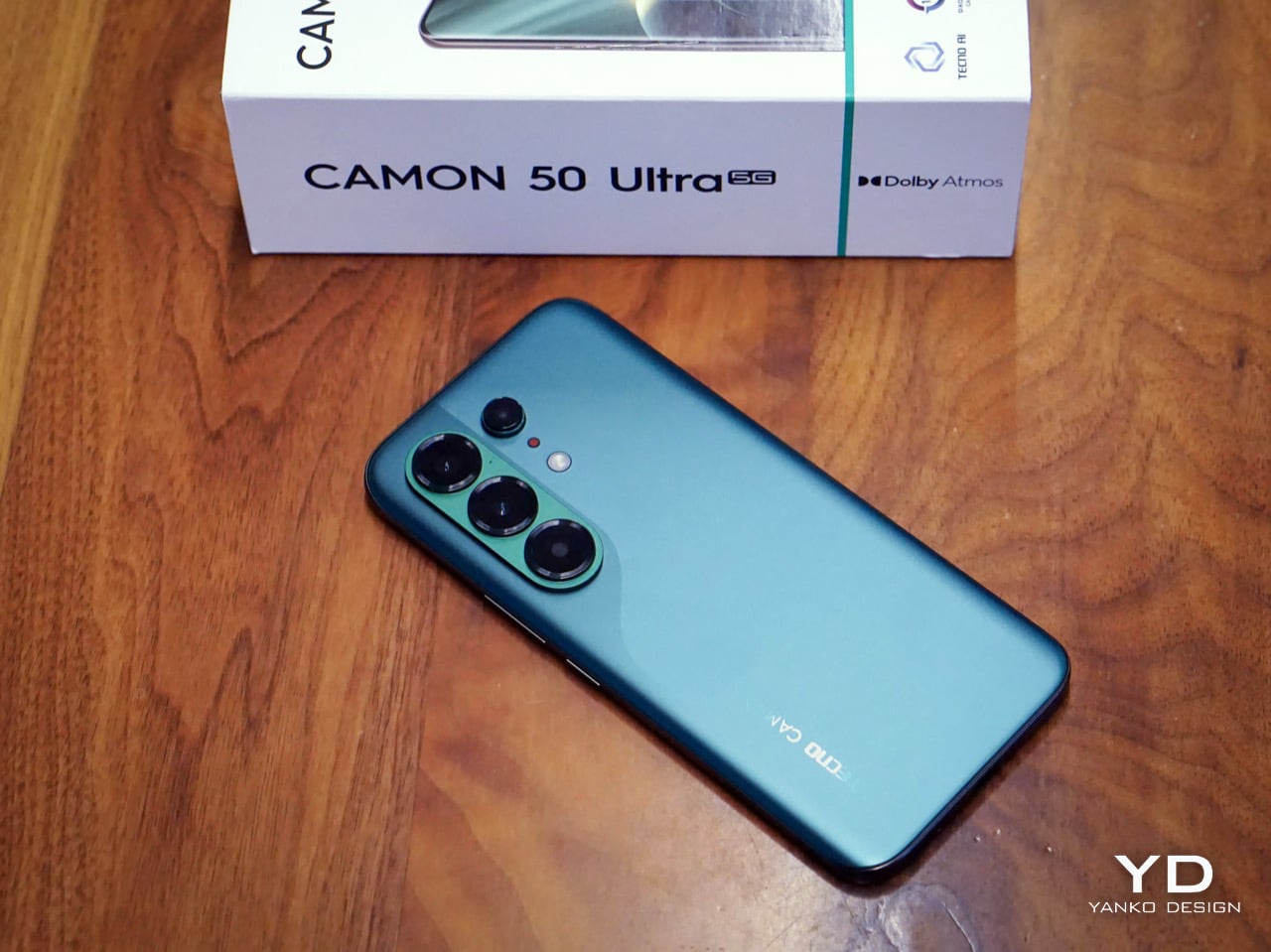
Tecno is promising 3 years of Android OS upgrades and 5 years of security patches for the Camon 50 Ultra 5G, which puts it roughly in line with brands like Motorola and slightly ahead of OnePlus, though still behind Nothing’s 6-year security support.That is a meaningful commitment for a phone at this price, especially if you are someone who plans to use the device well beyond the usual two-year upgrade cycle.

Tecno also claims the battery is built for durability, marketing it as a “5-Year Durability Battery” with TÜV certification and a 72-month lag-free guarantee. Whether that holds true in practice is something only time will tell, but the fact that the company is willing to stake that claim suggests they are at least thinking about longevity beyond the usual marketing fluff. The 6500mAh capacity itself helps, because the less frequently you need to charge, the slower the battery degrades. If you are getting two full days of use out of a charge right now, that headroom means the phone should still feel usable years down the line when the cell inevitably loses some of its capacity.

Value
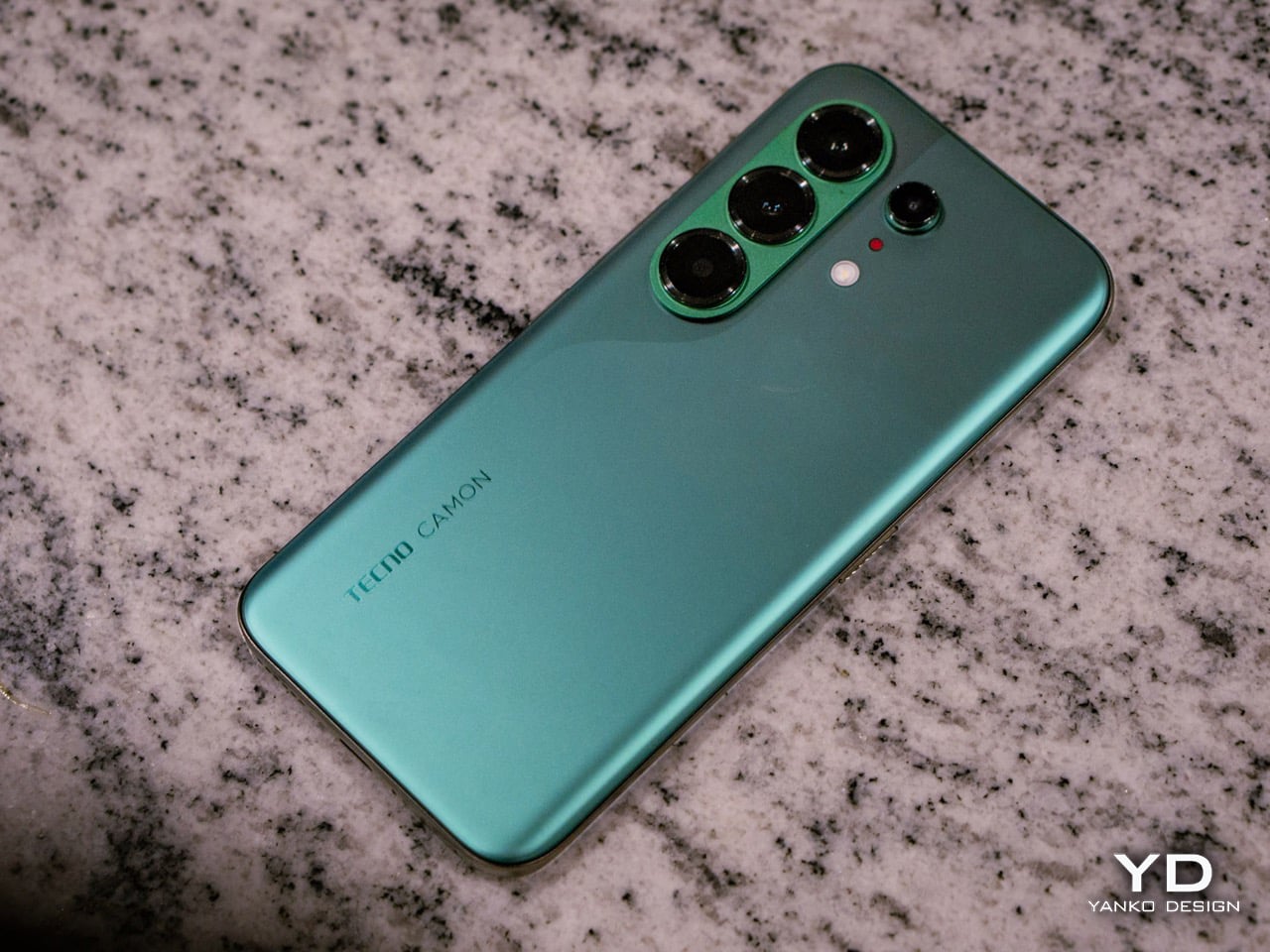
The Tecno Camon 50 Ultra 5G is priced at $420 for the 8GB + 256GB variant (that’s based on its ₹40,000 Indian price, since the phone hasn’t officially launched in the US). For a phone with a 50MP telephoto, a 144Hz AMOLED display, and a 6500mAh battery, that positioning feels competitive in the under-40K segment, especially when you factor in the AI ambitions.

What feels less competitive is the setup experience. When I powered on the phone and began the initial configuration, India was not listed in the countries menu. Hilariously enough, Palestine was available as an option. The world’s most populated country, nowhere on the list. I eventually had to select a different region just to proceed, which immediately felt awkward for a phone launching in India. Later, I also needed a VPN to access EllaClaw, which could have been a software issue tied to my initial region selection, or it could point to broader availability constraints. Obviously this won’t be the case for everyone since mine was a review unit with the EllaClaw beta program probably tied to a certain region. Either way, it is a frustrating first impression for a feature that is supposed to be the phone’s main selling point.

As for EllaClaw Pro and its credits system, Tecno does offer a credit-based structure for premium AI features like image generation and video creation. In my testing, I never hit a paywall or needed to purchase add-on credits, which suggests the included allocation is generous enough for typical use, at least initially. How sustainable that remains over time, or whether Tecno tightens the limits later, is harder to predict. For now, though, the experience feels surprisingly open, which is a rare thing in the AI phone space.

Verdict
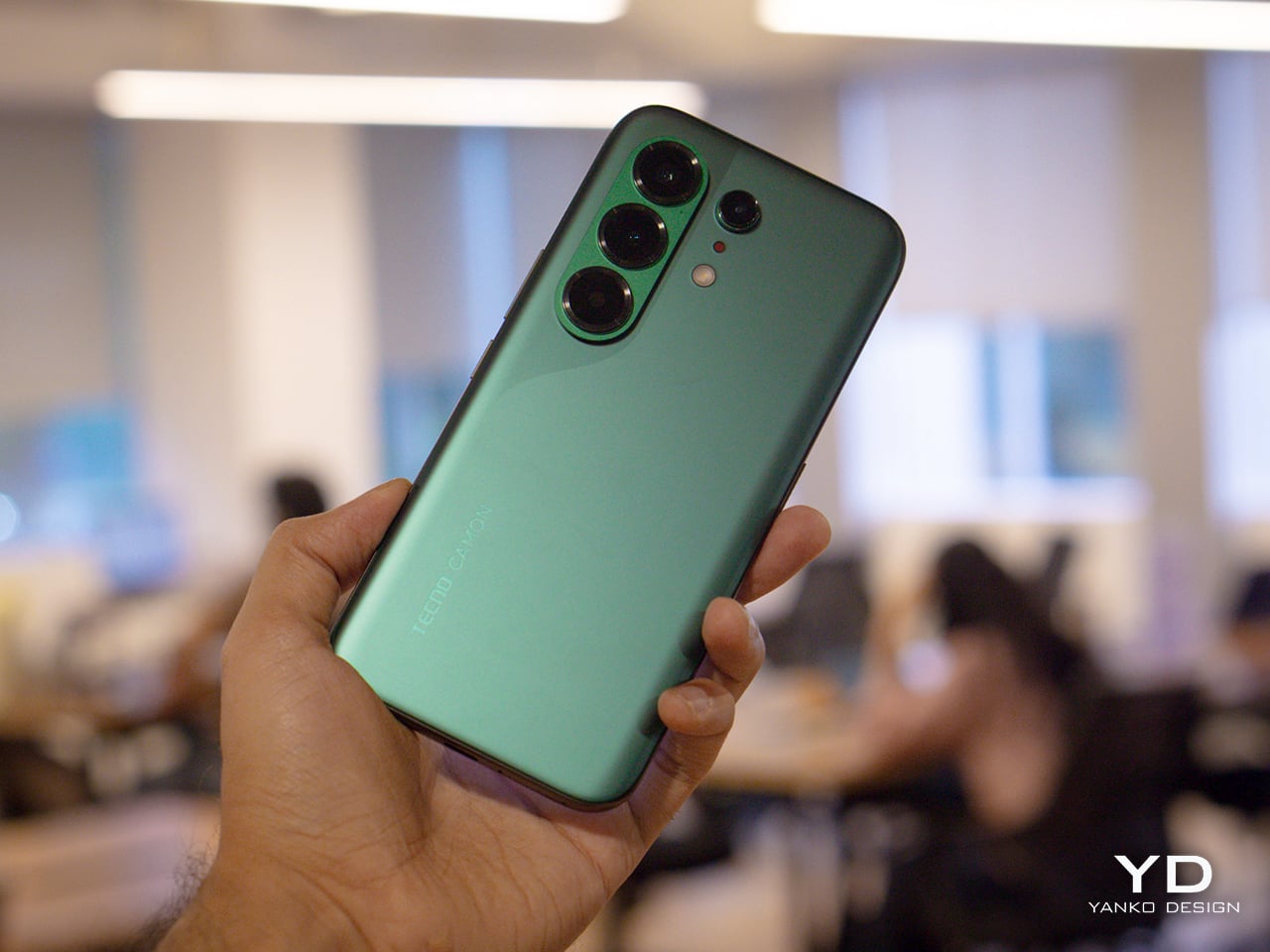
The Tecno Camon 50 Ultra 5G delivers a lot of value for $420. The camera is genuinely impressive, with super night mode shots and 60x zoom that feel bonkers for this price range, and the battery life makes it easy to forget about charging anxiety for days at a time. But I am not recommending this phone for its camera, or its battery, or even its design, as much as I enjoyed all of those things. I am recommending it for EllaClaw, because it is the closest I have come to using a phone AI that feels like it was built for actual humans.

EllaClaw is everything Gemini and Apple Intelligence hope to achieve, and a bit more. I did not think I would see a phone that lets me choose the LLM for its AI assistant, swapping between models depending on what I need. I definitely did not expect an AI assistant dashboard to genuinely give me so much insight and value into how I can use the AI, rather than just sitting through a keynote, nodding along to feature lists, and then forgetting half of them the moment I leave the room. Tecno has cracked something here that bigger brands are still struggling with, which is making AI feel approachable, integrated, and genuinely useful instead of intimidating or buried.

The phone has a few tiny flaws that feel manageable if you’re more driven by the AI chops. The speakers are tinny, the curved display catches palm touches, EllaClaw occasionally lags, and the setup process was a bit of a hassle given I needed a VPN to get EllaClaw to work (but that’s just my China-bound review unit). But if you are looking for a phone that shows you what AI on mobile should feel like when it grows up, the Camon 50 Ultra 5G is worth your attention. It is not perfect, but it is ambitious in all the right ways. Google, Apple, and Samsung could surely take notes.

The post Tecno Camon 50 Ultra 5G Review: A $420 AI Phone With Built-in Gemini, ChatGPT, DeepSeek, and Grok first appeared on Yanko Design.
TECNO Just Built a Budget Phone With a Battery That Lasts 6 Years

Budget smartphones have gotten remarkably capable in recent years, but one persistent problem hasn’t gone away. They still feel disposable. Batteries degrade within a year or two, frames collect scratches quickly, and performance starts slipping right around the time the device is paid off. Most people accept this as part of the deal and cycle through handsets every couple of years without giving it much thought.

The TECNO SPARK 50 Pro tries to change that calculation. Rather than chasing raw benchmarks or stacking camera hardware, it focuses on something more practical: building a phone that holds up, physically and internally, over a long stretch of use. At just 7.8mm thin, it doesn’t look like a rugged device, but the specs and certifications beneath that slim exterior tell a different story.

Designer: TECNO

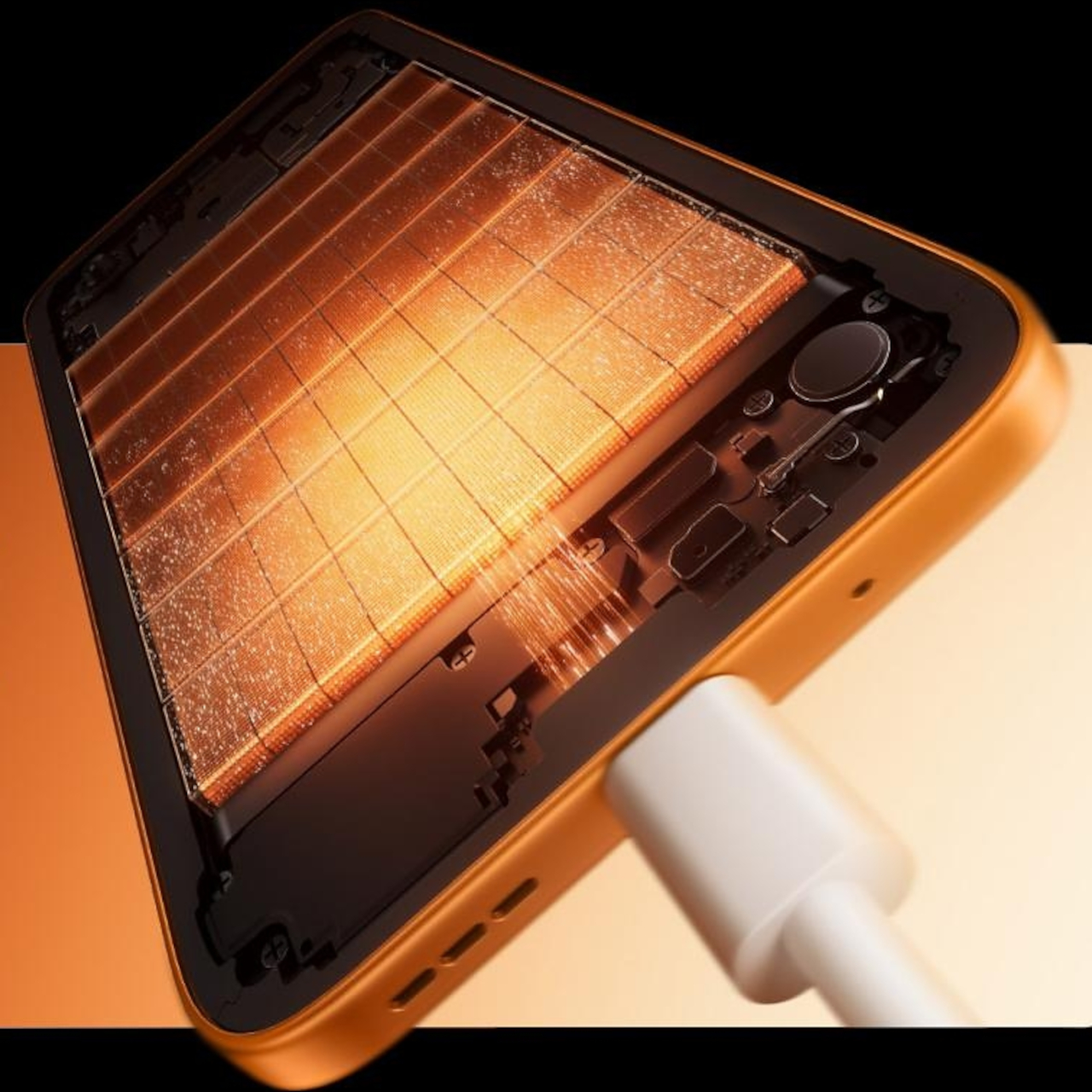
Battery longevity is one area where the SPARK 50 Pro makes a clear statement. It’s offered in two variants, a 5,600mAh dual-cell model and a 6,000mAh single-cell version, both certified to sustain more than 1,900 charge cycles while retaining over 80% of their original capacity. That’s roughly six years of daily charging without significant degradation, which is a genuinely unusual promise for a phone at this price point.

Keeping a large battery from being a chore to top up is 60W Super Charge support, which gets the device to 63% in 30 minutes and fully charged in 55. Three adaptive charging modes let users balance speed and heat, and bypass charging routes power directly to the motherboard during heavy use, keeping the battery from straining when the phone is plugged in while gaming or streaming.

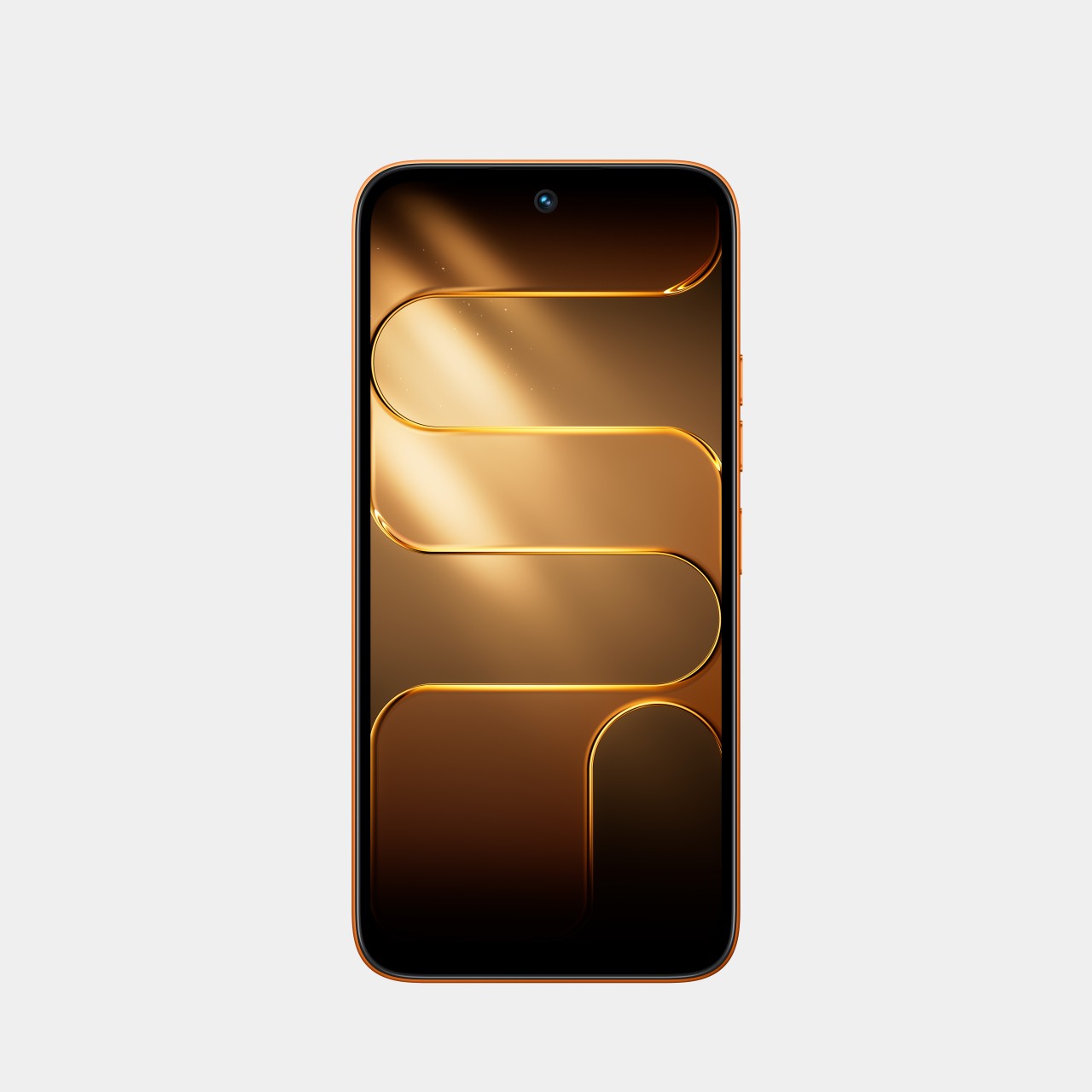
Performance comes from a MediaTek Helio G100 Ultimate processor scoring around 550,000 on AnTuTu, with Memory Fusion 4.0 pushing virtual RAM up to 24GB. The 6.78-inch IPS LCD runs at up to 120Hz, keeping scrolling and gameplay feeling fluid, while dual stereo speakers with DTS Sound lend more audio depth to videos and music than you’d typically get in this price bracket.

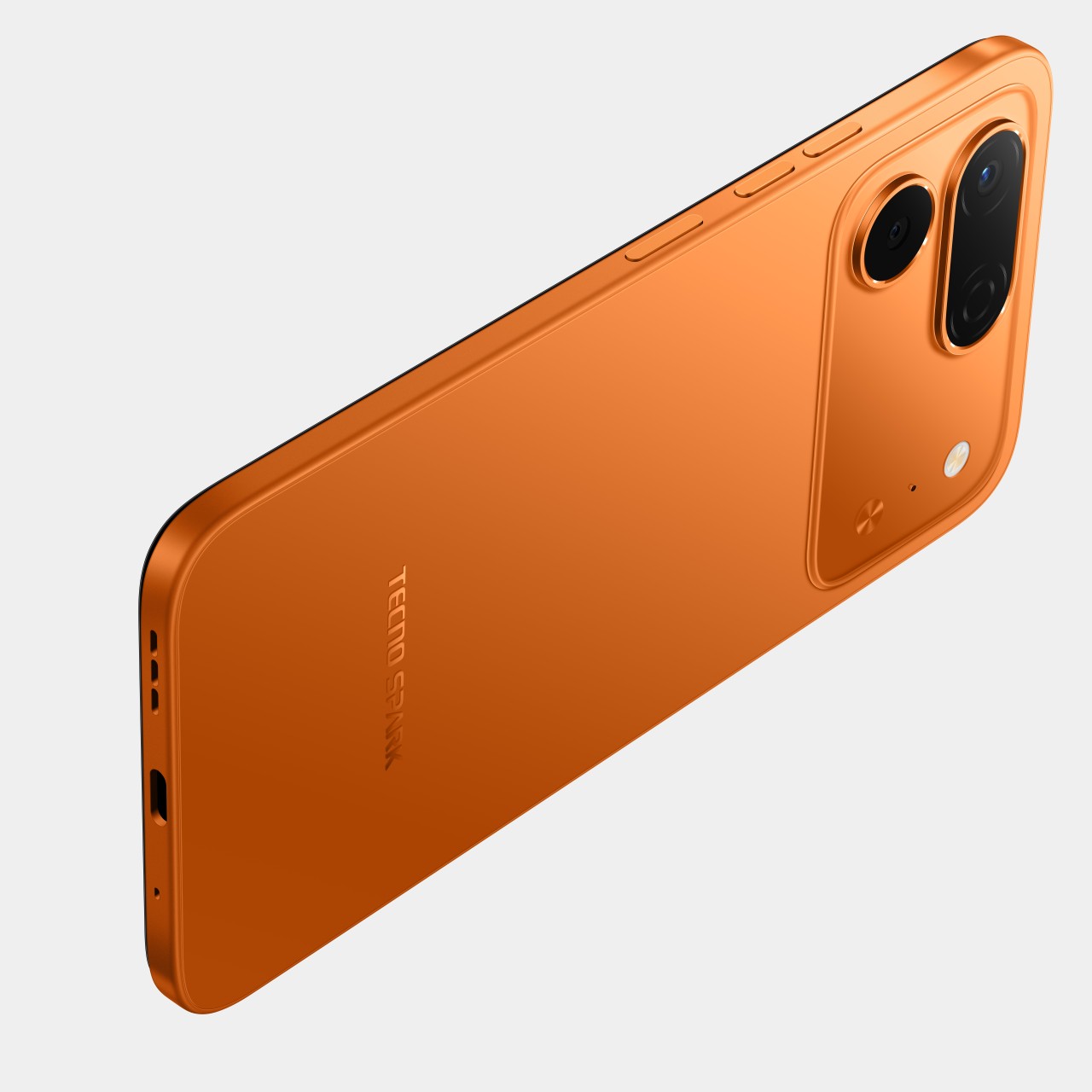
Photography centers on a Sony LYTIA 600 sensor with 50MP resolution, a 1/1.953-inch size, and an f/1.8 aperture, giving it a light-gathering advantage over the smaller sensors common in its class. FlashSnap technology pushes shutter speeds up to 1/10,000 of a second for catching fast-moving moments cleanly. AI Eraser 2.0 and AI Extender round out the imaging toolkit with cleanup and reframing options.

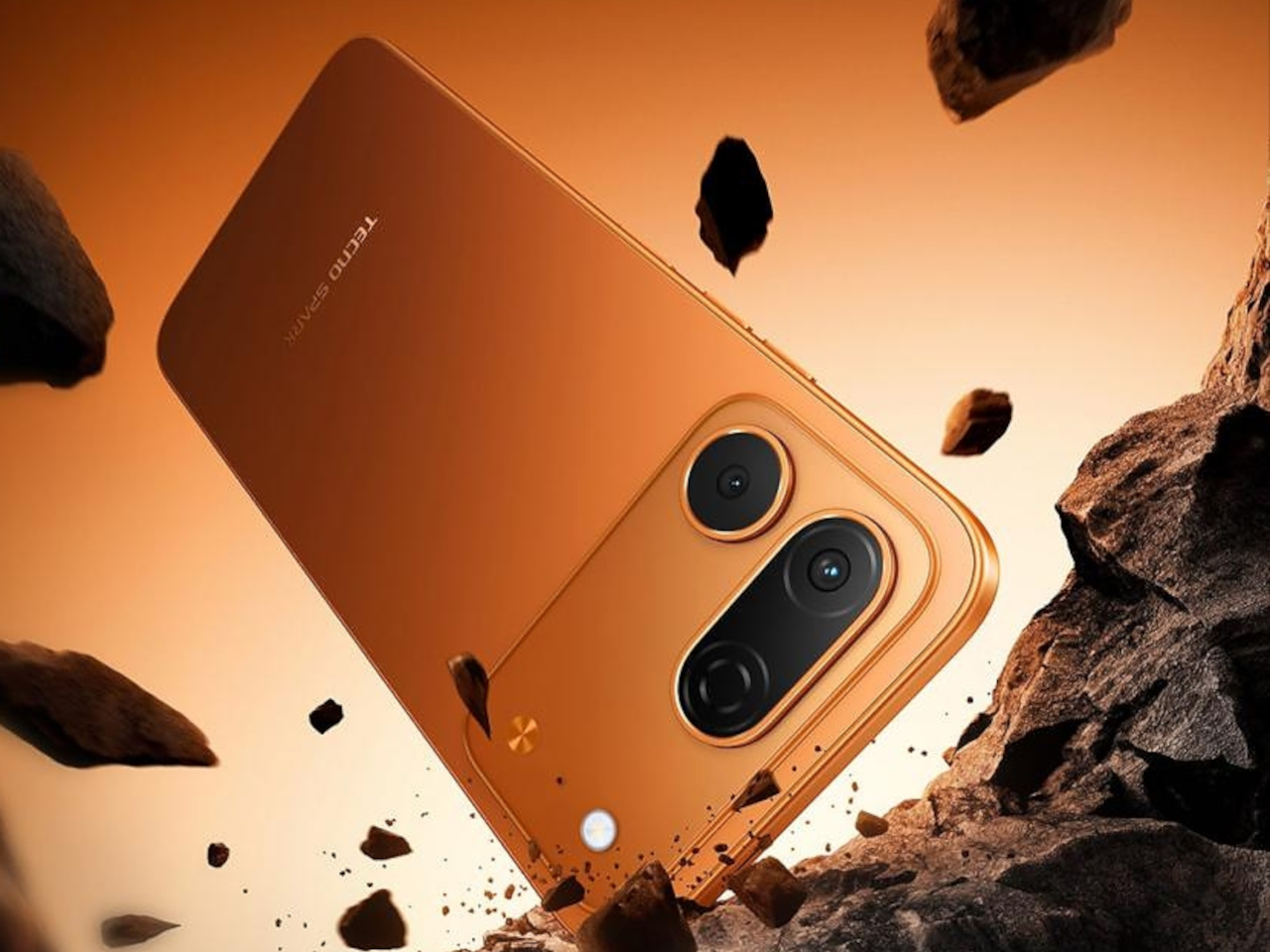
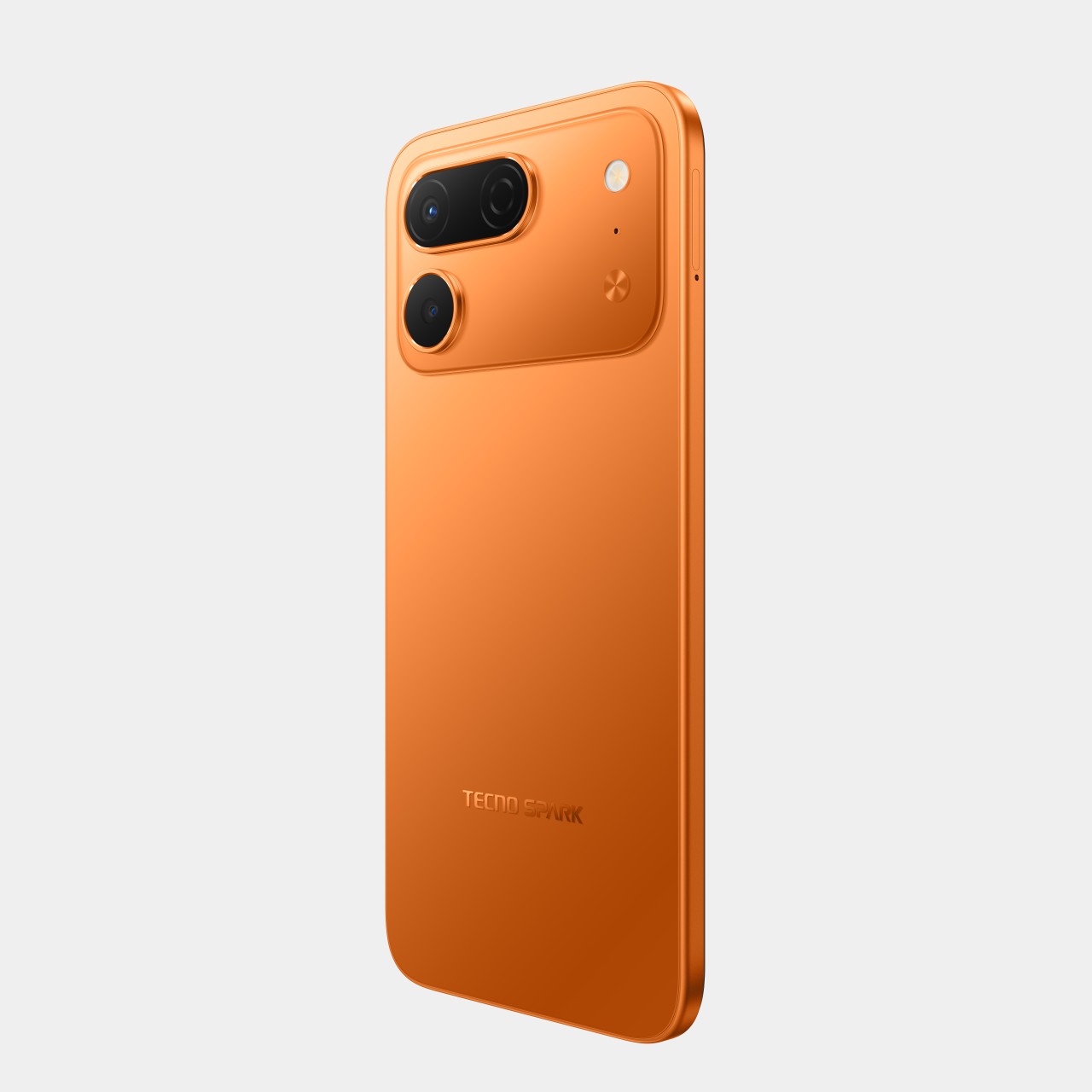
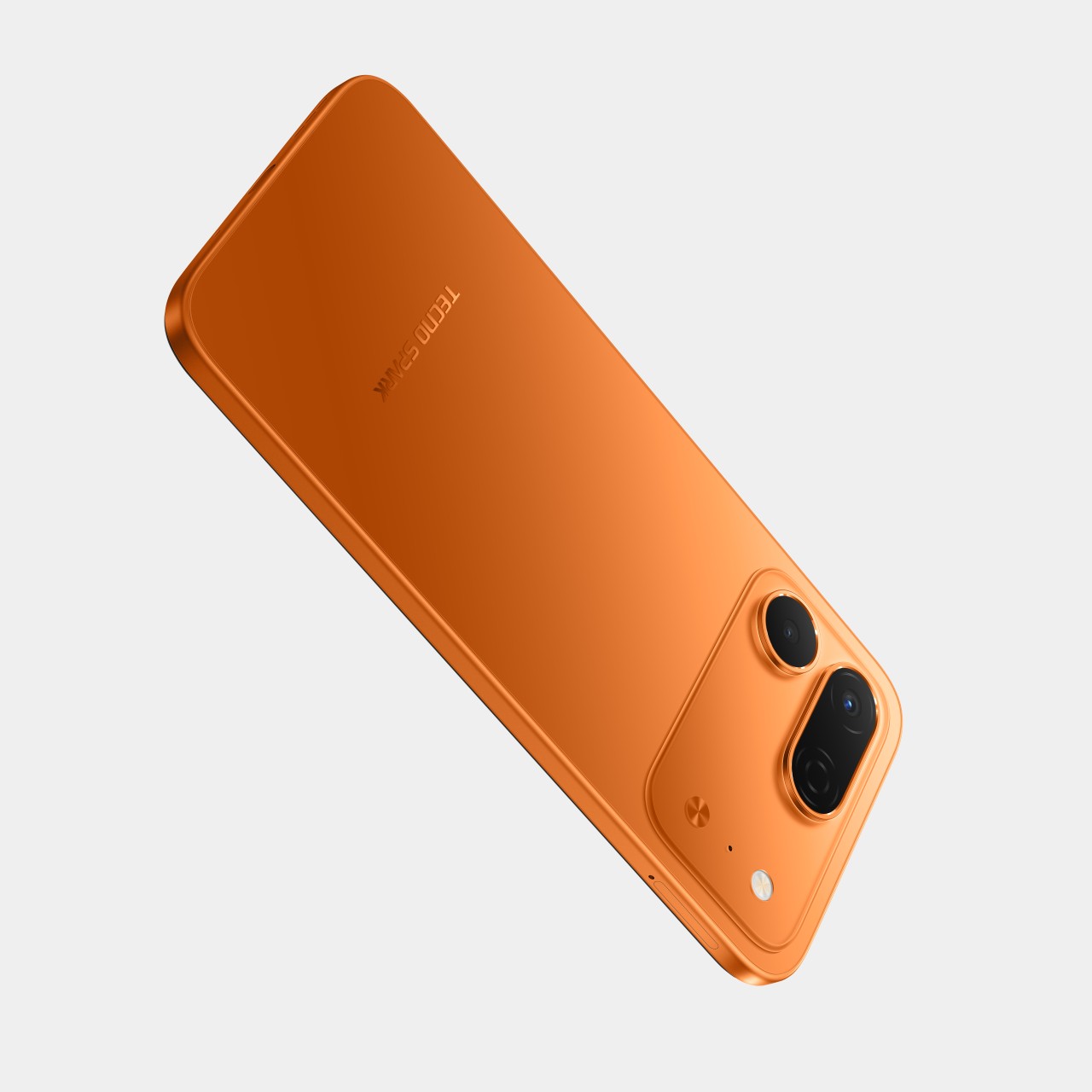
Physical protection is where the SPARK 50 Pro really sets itself apart from comparably priced options. IP68 and IP69 ratings cover it against dust, rain, spills, and high-pressure water jets, while SGS Five-Star Premium Drop Resistance certification means it’s been tested against multi-angle impacts and 41 independent drop scenarios. It comes in five finishes: Ink Black, Titanium Grey, Midnight Blue, Dynamic Orange, and Cloud White.

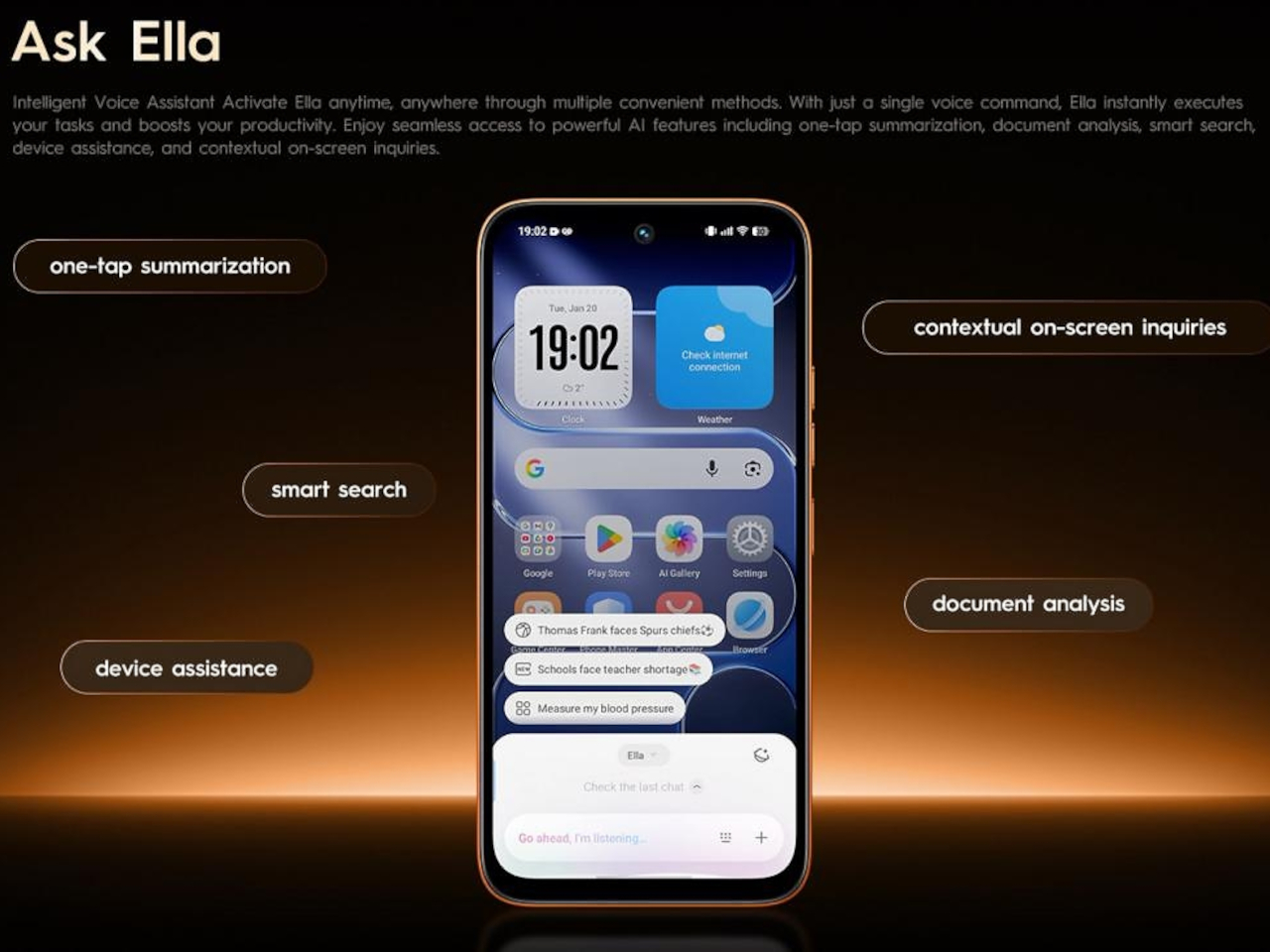
Running on HiOS 16 based on Android 16, the SPARK 50 Pro also brings the Ella AI Agent for daily assistance and an AI Health Assistant for health monitoring. FreeLink 2.0 enables off-grid messaging in supported situations, and AI Noise Cancellation cleans up calls in loud environments. It’s a package aimed at people who’d rather not think about buying a new phone anytime soon.

The post TECNO Just Built a Budget Phone With a Battery That Lasts 6 Years first appeared on Yanko Design.

The 8,000 mAh Mid-Range Phone With a Live LED Light Show on Its Back

Budget and mid-range smartphones have gotten remarkably good at matching flagship features on paper, but battery life has remained one of the few areas where even expensive phones routinely disappoint. Most flagships are built thin at the cost of capacity, and charging cycles have become part of the daily routine rather than a secondary concern. For a growing number of users, particularly those who game, stream, and stay connected throughout the day, that calculus doesn’t quite add up.

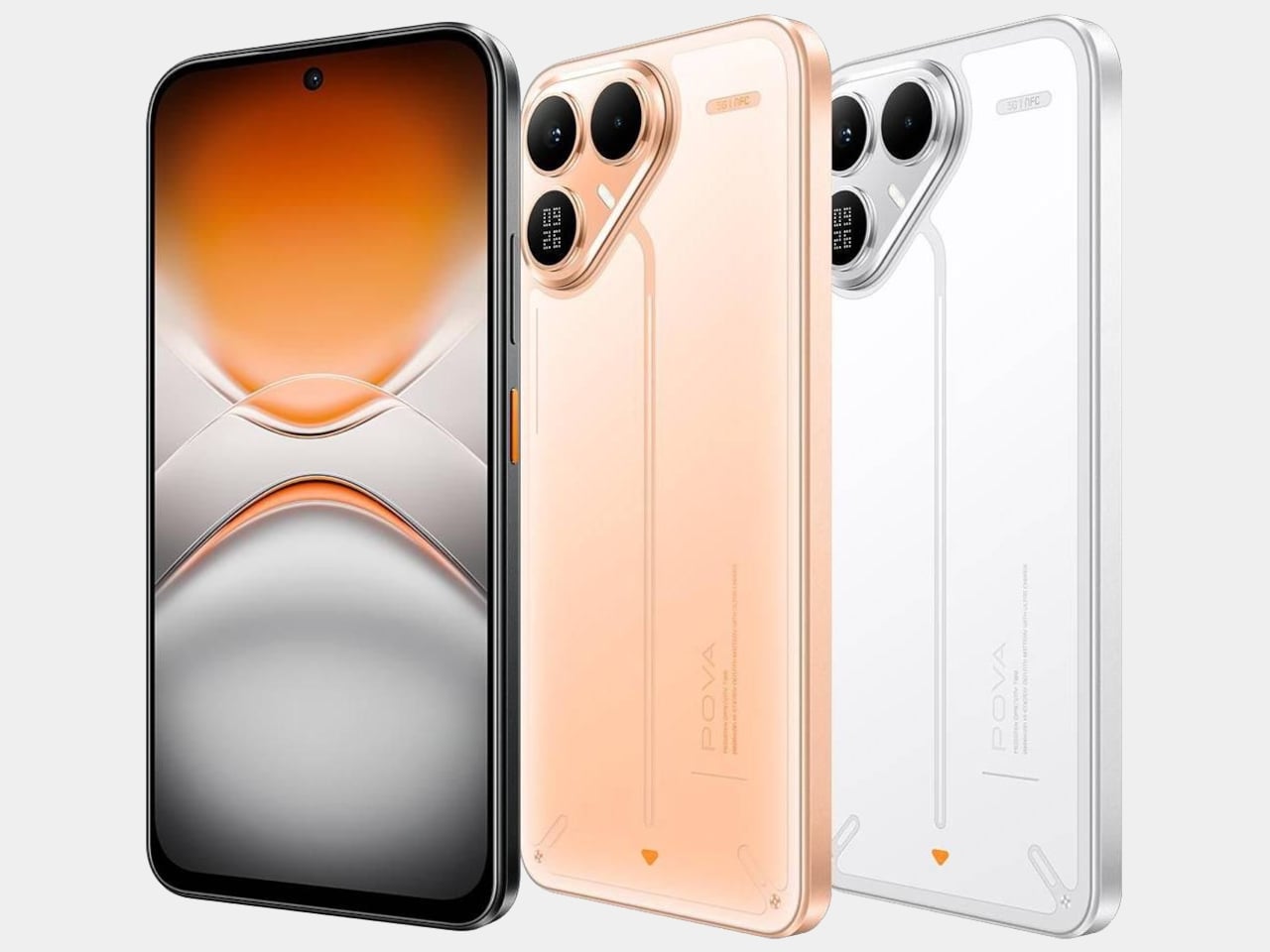
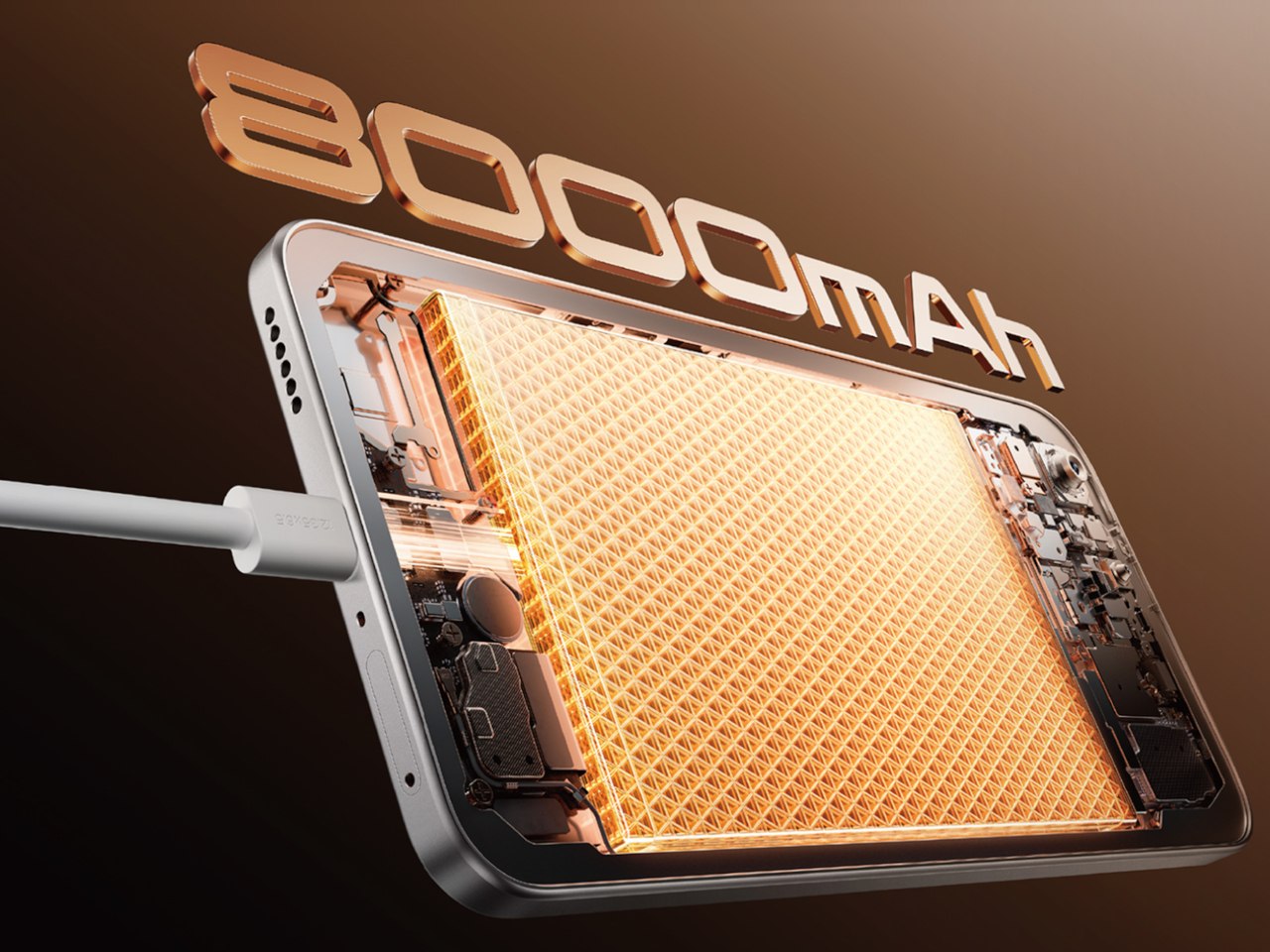
The TECNO POVA 8 5G makes battery endurance its most unambiguous selling point. Its 8,000 mAh cell carries TÜV SÜD certification for two days of continuous use, and the numbers behind that claim are specific enough to take seriously: more than 60 hours of calls, more than 85 hours of music playback, or roughly 14 hours of Mobile Legends: Bang Bang on a single charge. That’s a full day of aggressive use and still having most of the battery left to show for it.

Designer: TECNO

The battery also holds up over time. It maintains over 80% of its original capacity after 2,000 complete charge cycles, which works out to roughly six years of battery life. When it does need a top-up, the 45W fast charging gets it to 50% in 35 minutes, and a 10 W reverse charging option means it can share that power with earbuds or other devices in a pinch.

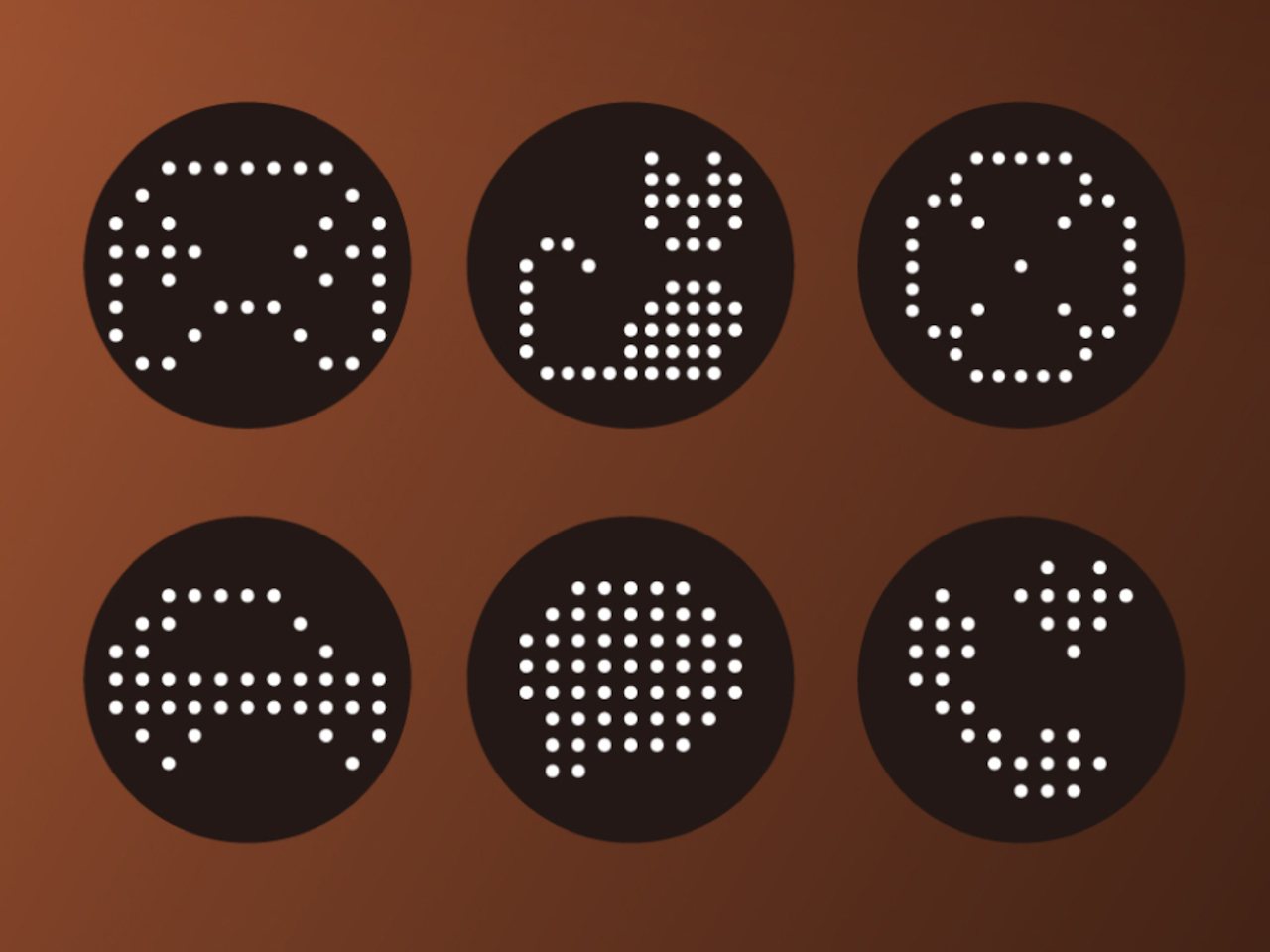
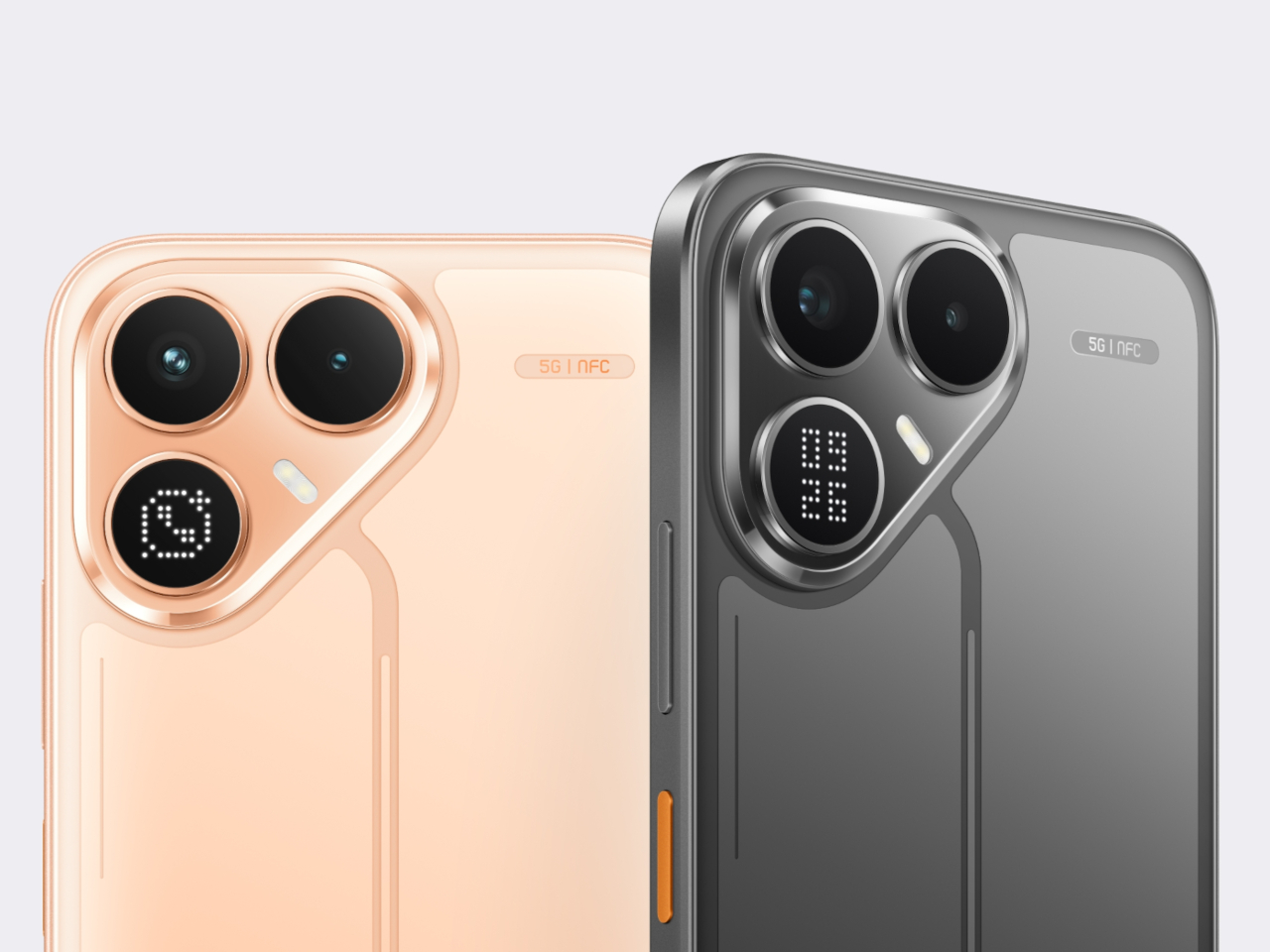
The POVA 8 5G’s most unexpected feature, though, is what’s happening on the back. The Alive Matrix Display transforms the smartphone’s rear panel into a fully customizable canvas of light. When an event is triggered, the display lights up with corresponding animations, allowing users to know what is happening without flipping the phone over. It covers 49 predefined scenarios spanning calls, notifications, music, gaming, and charging, and users can add their own lighting sequences on top of those. It’s a design detail that reads as gimmicky in description but lands differently when the phone is actually face-down on a table.

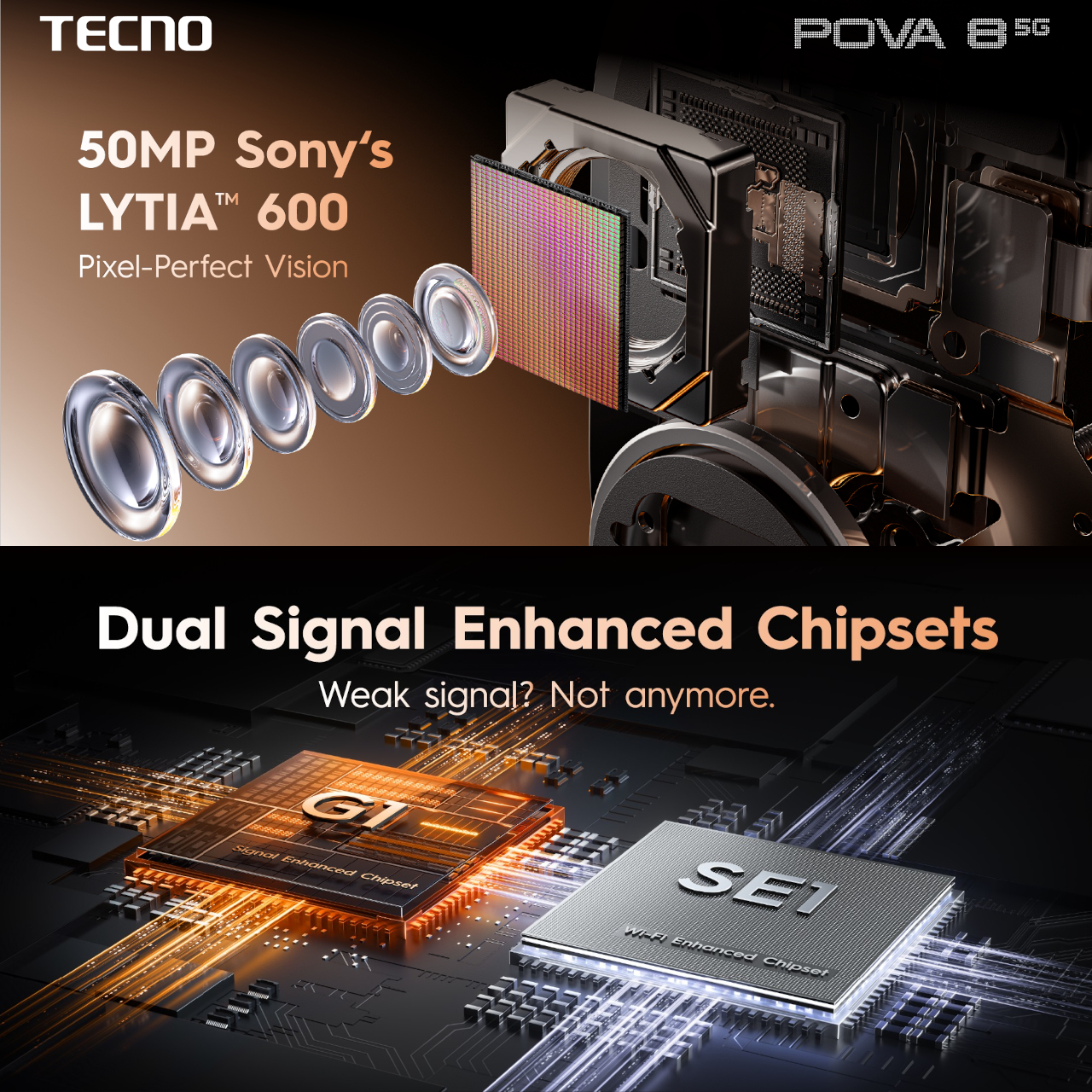
Performance comes from a triple-chipset setup. The MediaTek Dimensity 7100 handles core processing at a stable 90 FPS in games like Mobile Legends: Bang Bang, while TECNO’s own G1 Signal Enhancement Chip and SE1 Wi-Fi Enhancement Chip add 100% stronger cellular reception in difficult environments and a 60% boost in 2.4 GHz Wi-Fi strength, respectively. The 144Hz IPS display carries TÜV Rheinland low blue light certification, which matters for a phone clearly designed for extended screen time.

The main camera uses a 50 MP Sony LYTIA 600 sensor co-engineered with Sony, with enhanced light intake for more vivid images and 2x lossless zoom, sitting alongside a 13 MP front camera. On the software side, the AI features are practical: AI YouTube Summary converts copied video links into structured notes with timeline markers and key points, while All-Scenario Noise Cancellation identifies the intended speaker’s voiceprint and filters out background voices automatically.

The POVA 8 5G launches in India at INR 29,999 with a global rollout to follow. It comes in 16-Bit White, Terminal Green, and Plasma Orange for India, with Arc White, Graphite Black, Helios Orange, and Echo Green planned globally. The device will receive two major Android OS upgrades and three years of security patches, and comes with three years of free 256 GB cloud storage. For something sitting in the mid-range bracket, that’s a fairly long runway for a phone that already has more battery than most phones twice its price.

The post The 8,000 mAh Mid-Range Phone With a Live LED Light Show on Its Back first appeared on Yanko Design.
Your $1,200 Phone Looks Boring Next to These 5 Concepts

Look at the phones announced this year, like those revealed at MWC 2026 last week, and you will notice something. They are all faster, thinner, and shinier than last year’s models, and yet none of them feel particularly surprising. Cameras gained another sensor. Bezels shrank another millimeter. Battery life improved by an amount that is technically measurable but practically indistinguishable from the model before. The industry has gotten so good at making phones incrementally better that it has almost forgotten to ask whether they could be genuinely different.

That is where concept phones come in. Not all of them are practical, and not all of them will ship. But the five designs here do something that the latest Galaxy or iPhone cannot: they make you pause and reconsider what a phone actually is, and what it could be if the people designing it were not also worrying about carrier approvals, supply chains, and quarterly earnings. Some are functional prototypes shown on actual show floors. Others exist purely as design arguments. All of them are worth thinking about.

TECNO Magnetic Modular System

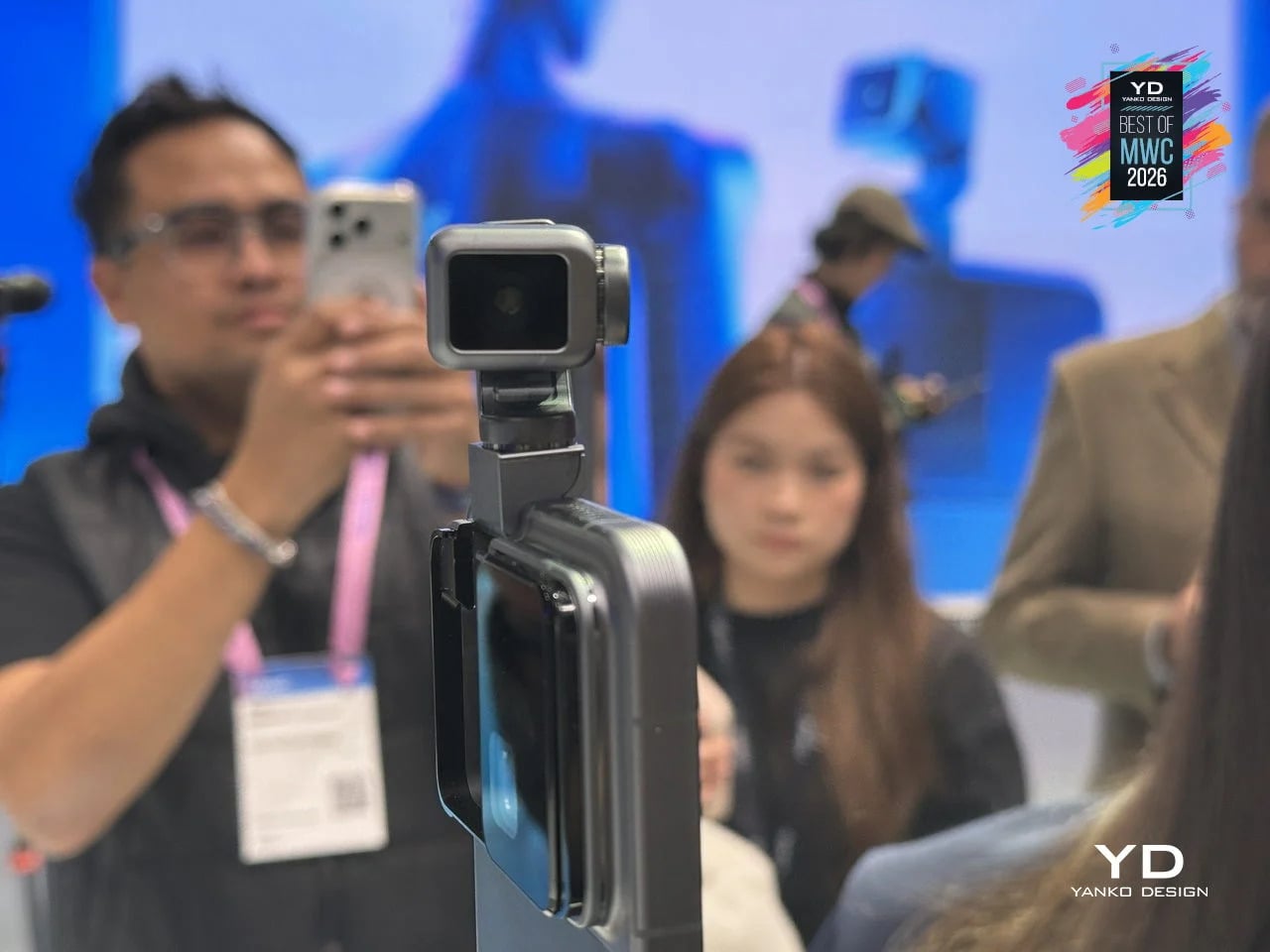
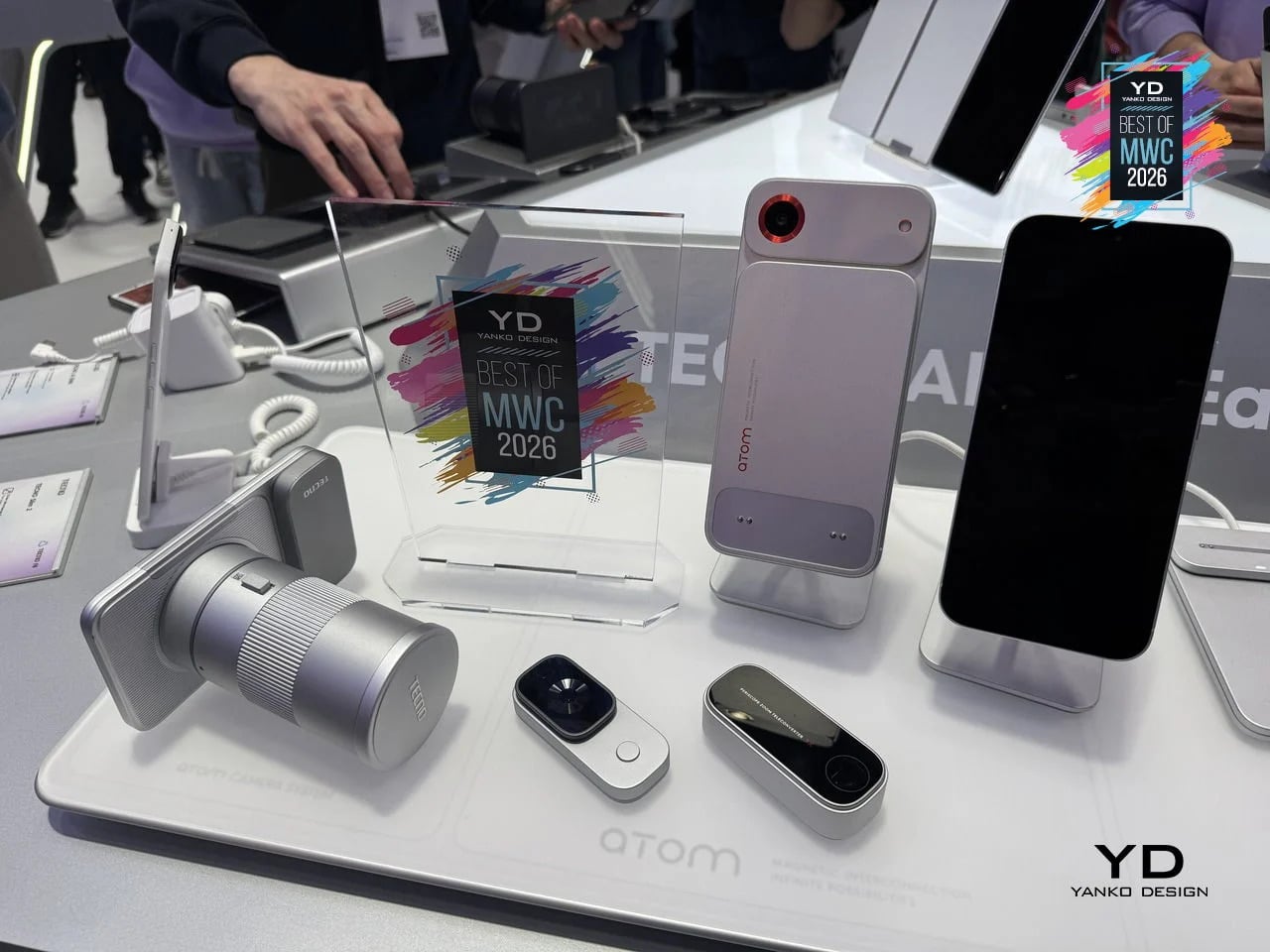
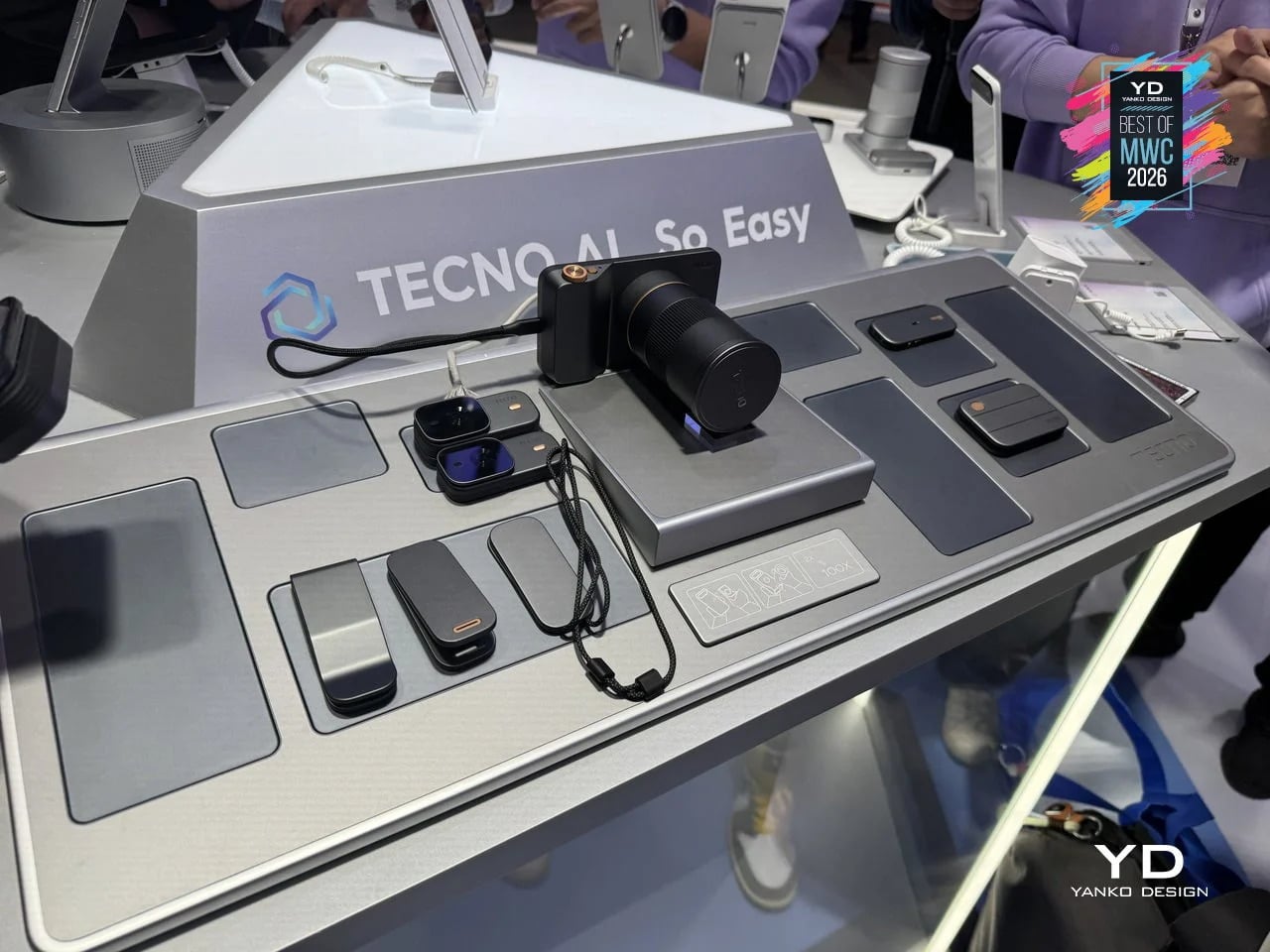
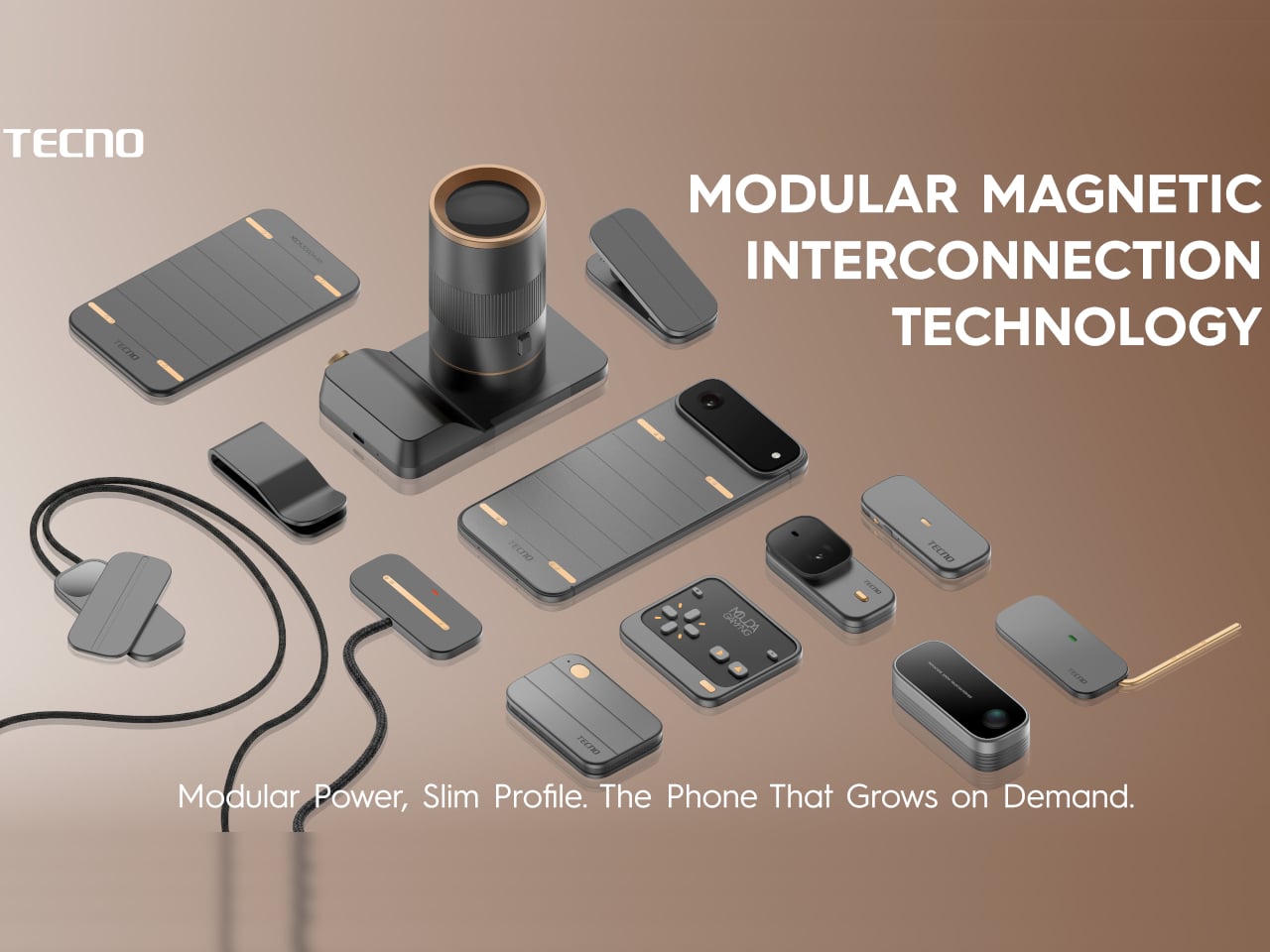
Phones have been getting thinner for years, which sounds like progress until you think about what got traded away in the process. Removable batteries went first, then expandable storage, then headphone jacks. Every feature that required physical complexity was quietly dropped in the name of a slimmer profile. TECNO’s Magnetic Modular System, shown at MWC 2026, challenges that logic directly. Rather than cramming every possible capability into a single fixed body, it keeps the phone lean by design and lets you snap on what you need, when you actually need it.

Designer: TECNO

The system works through a magnetic interconnection technology that attaches hardware modules directly to the phone. Telephoto lenses, action cameras, additional battery packs, and over a dozen other components can be added or removed in seconds. The core argument is straightforward: a phone that tries to do everything is permanently weighed down by everything it carries. A phone that adapts to the moment is only as heavy as today demands. Whether TECNO can pull off what Google’s Project Ara could not is another matter, but the design thinking here is at least pointed at the right problem.

What we liked

  • The base phone stays slim and fully usable on its own, so you’re not carrying the bulk of a photography rig on days when all you really need is a phone.
  • The modular suite covers a wide enough range of options to be genuinely practical, from camera upgrades to battery expansion, rather than limiting you to a couple of cosmetic add-ons.

What we disliked

  • Using the system to its full potential requires thinking ahead. If you leave the telephoto module at home, the hiking trail is not going to wait for you to go back and get it.
  • The smaller modules seem like prime candidates for disappearing to the bottom of a bag, while the larger ones can add considerable bulk when stacked, which rather defeats the point of keeping the base phone slim.

HONOR Alpha Robot Phone

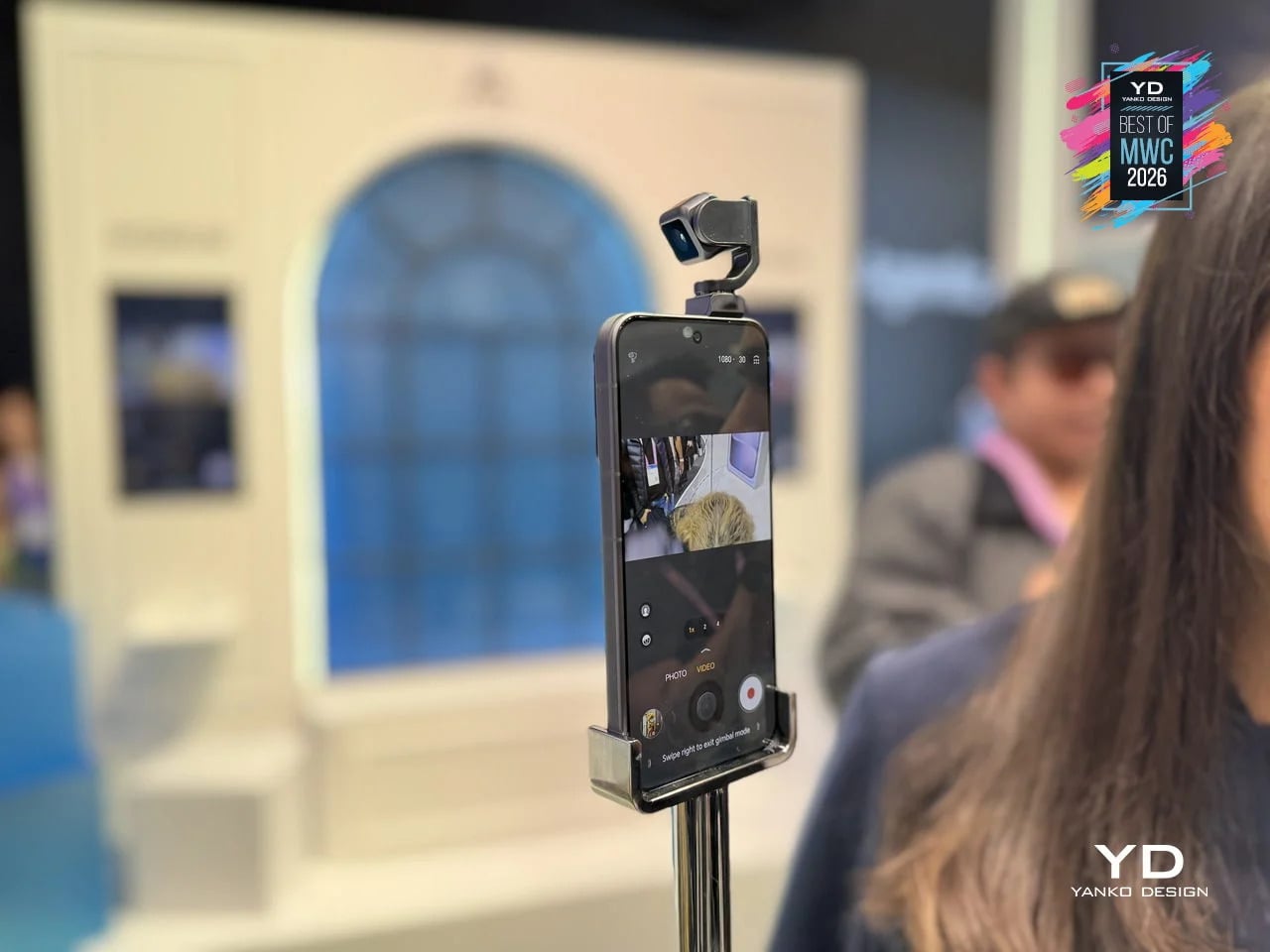
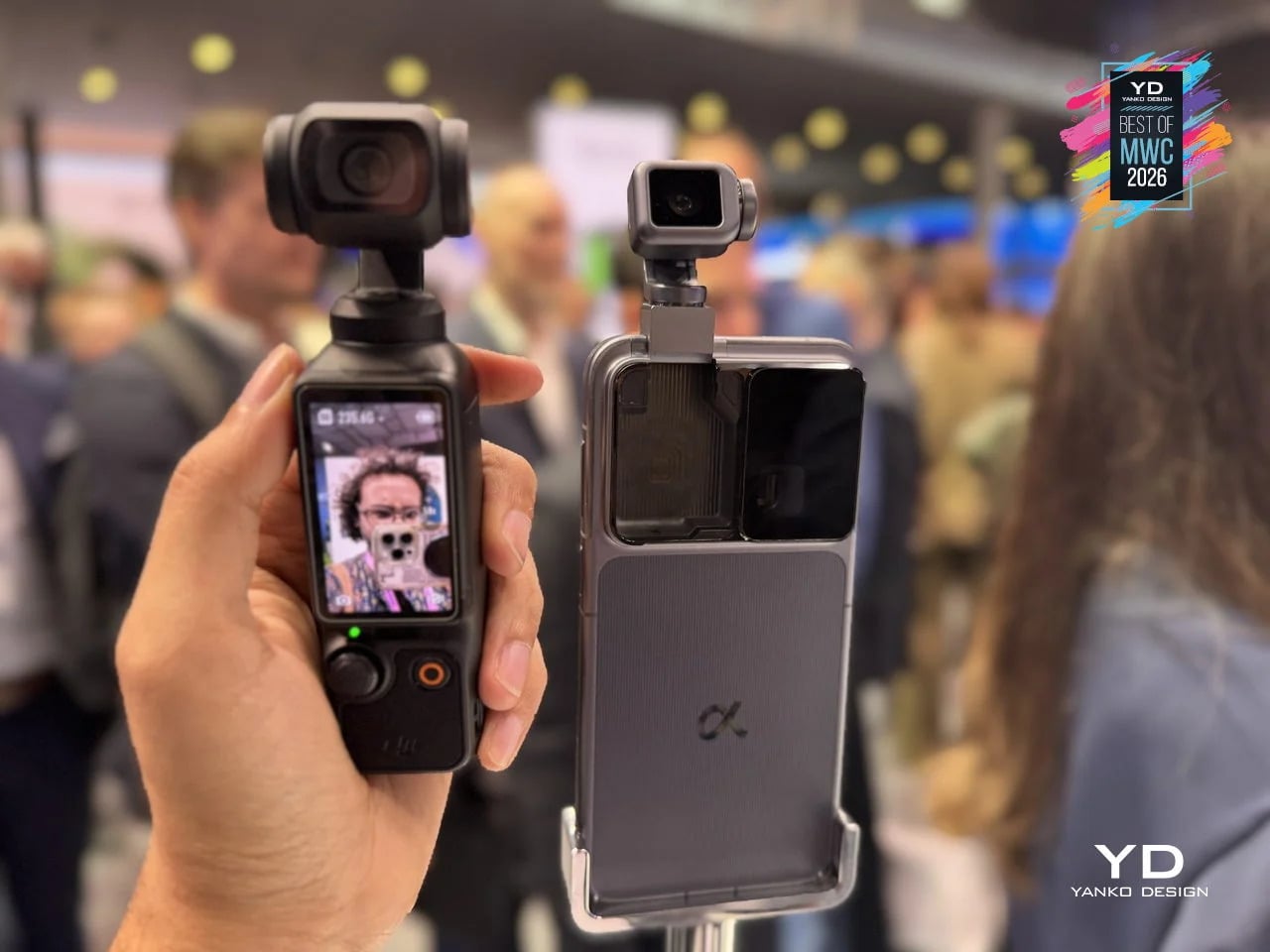
Most phones sit on a desk and wait. The HONOR Alpha does not. Demonstrated as a functional prototype at MWC 2026, this is a phone with a 4DoF gimbal system inside the camera bump, built around what HONOR describes as the industry’s smallest micro motor. Three-axis mechanical stabilization runs alongside an AI tracking engine, and a double-tap locks onto any subject, following it through movement, obstructions, and sudden changes in direction. The person who used to carry a separate DJI Osmo just to get steady footage now has a reasonable question to ask.

Designer: HONOR

The gimbal also does something harder to categorize. HONOR designed it to express what they call embodied AI interaction, meaning the phone physically responds to its environment. It nods during video calls. It reframes itself to keep you centered without being asked. It moves when music plays through its speakers. Phones have had personalities before, mostly through notification lights and ringtones. The Alpha just happens to have something closer to a neck.

What we liked

  • Giving AI a physical presence, rather than just a voice or a chat window, makes the technology feel more tangible and less like a background service you forgot was running.
  • The built-in gimbal meaningfully expands what the main camera can do without requiring any extra gear, turning a stationary device into something closer to an autonomous one-person film crew.

What we disliked

  • Motorized components inside a device that gets dropped, sat on, and shoved into pockets will eventually wear down. A gimbal mechanism that fails out of warranty is a discouraging prospect.
  • The behavioral features, nodding, swaying, tracking your face, are the kind of thing that feels charming in a demo and potentially exhausting at 7 AM when all you want to do is check your messages.

iFROG RS1

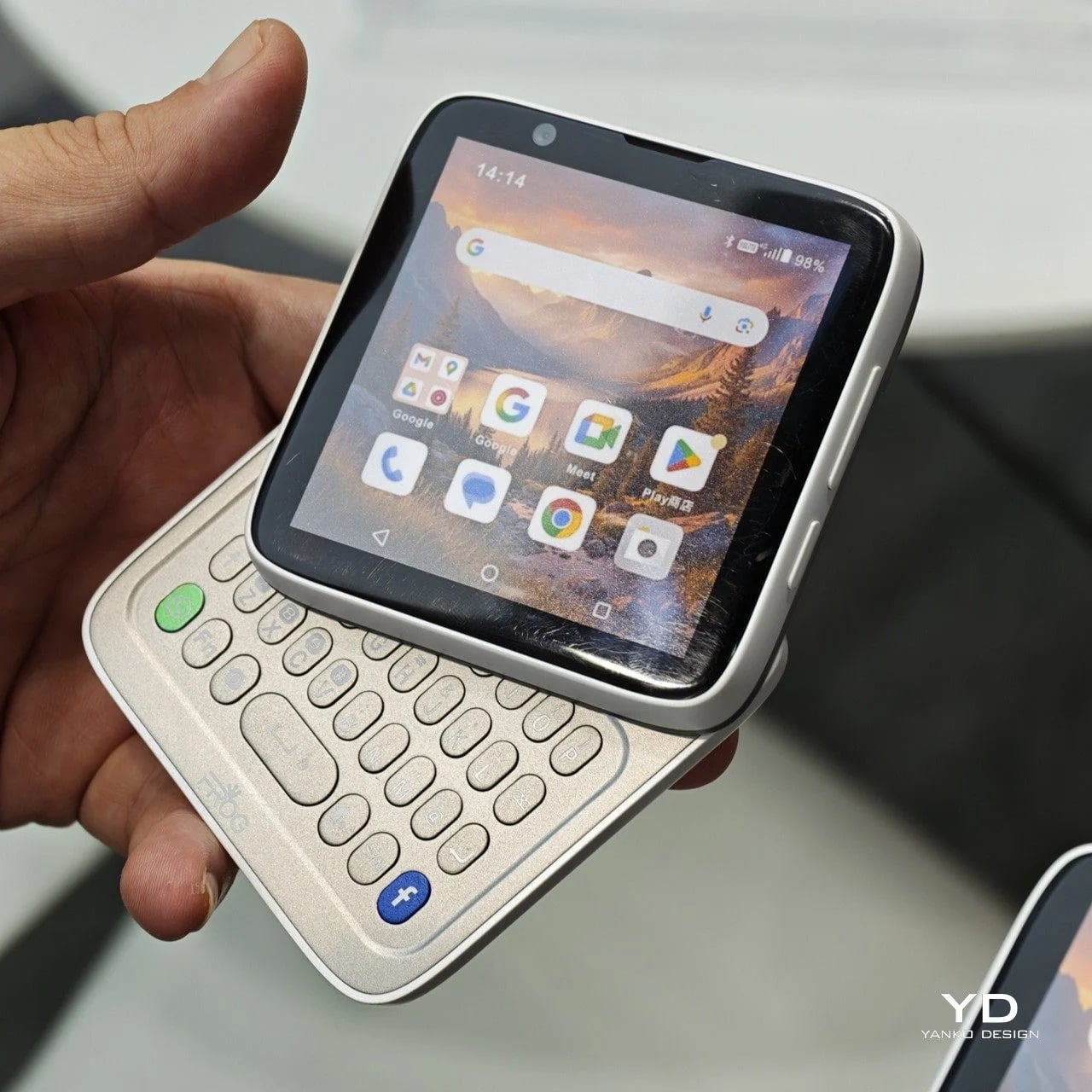
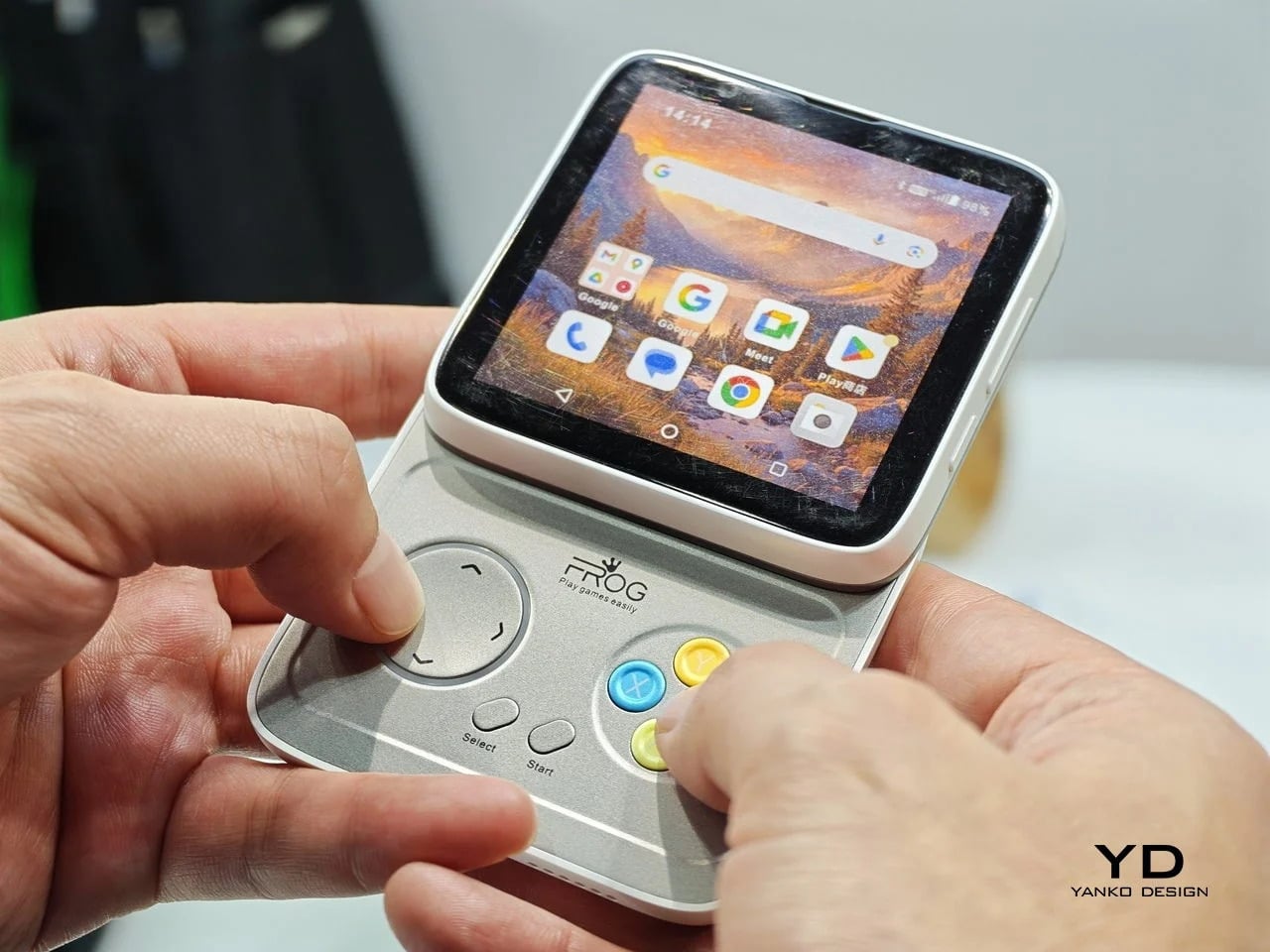
Every phone released this year is a tall rectangle, some taller than others. The iFROG RS1, shown at MWC 2026, is a square, which already makes it unusual before you get to the part where it twists open. Built around a 3.4-inch square display, the RS1 has a rotating lower section that reveals one of two things depending on the variant you’re looking at: a full QWERTY keyboard with raised, tactile keycaps, or a gamepad with a D-pad, a four-button cluster, and Select and Start. No price and no release date were announced at MWC, because the hardware itself is the pitch.

Designer: iFROG

The keyboard variant has a clear and underserved audience. The people who have quietly resented touchscreen typing for fifteen years are not a small group, and the Unihertz Titan has been proving that niche quietly for a while. The gamepad version is a stranger and arguably more interesting proposition. Running Android with physical controls in a square body draws instant comparisons to the Motorola Flipout, a 2010 Android phone that did something structurally similar and was adored by a small crowd before being largely ignored by everyone else.

What we liked

  • The rotating mechanism keeps the phone genuinely compact in normal use, so the keyboard or game controls are there when you want them and completely invisible when you don’t.
  • Adding physical input without making the phone permanently thicker or wider is a trade-off very few devices have come close to solving, and the RS1 at least makes a credible attempt.

What we disliked

  • Modern software is built almost entirely around tall, vertical screens, so the square format creates real friction with apps, video, and content that all assume a rectangular display.
  • Choosing between the keyboard and gamepad variants at the point of purchase is a long-term commitment. If your priorities shift, or you simply want both, you are looking at two separate phones.

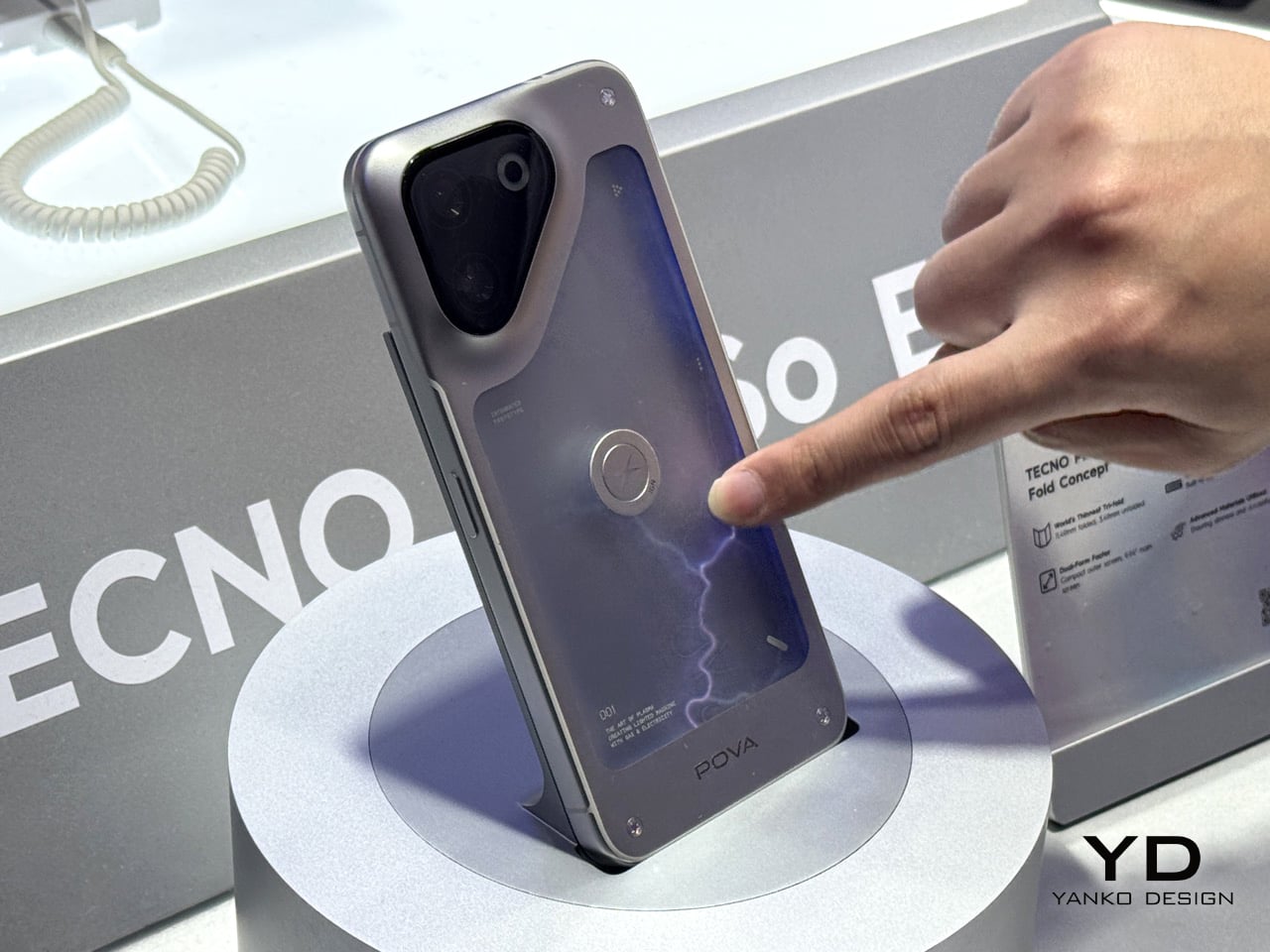
TECNO POVA Neon

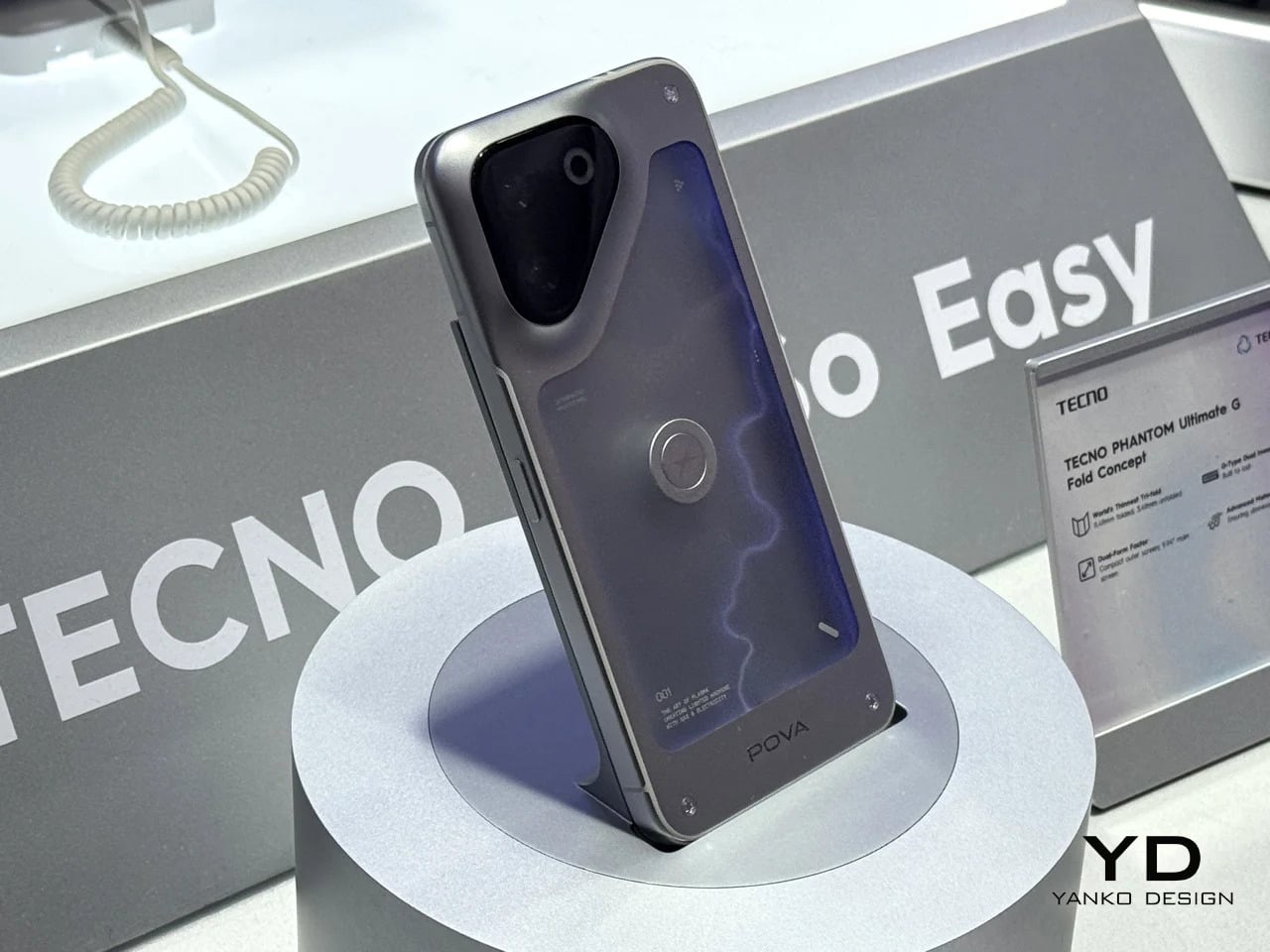
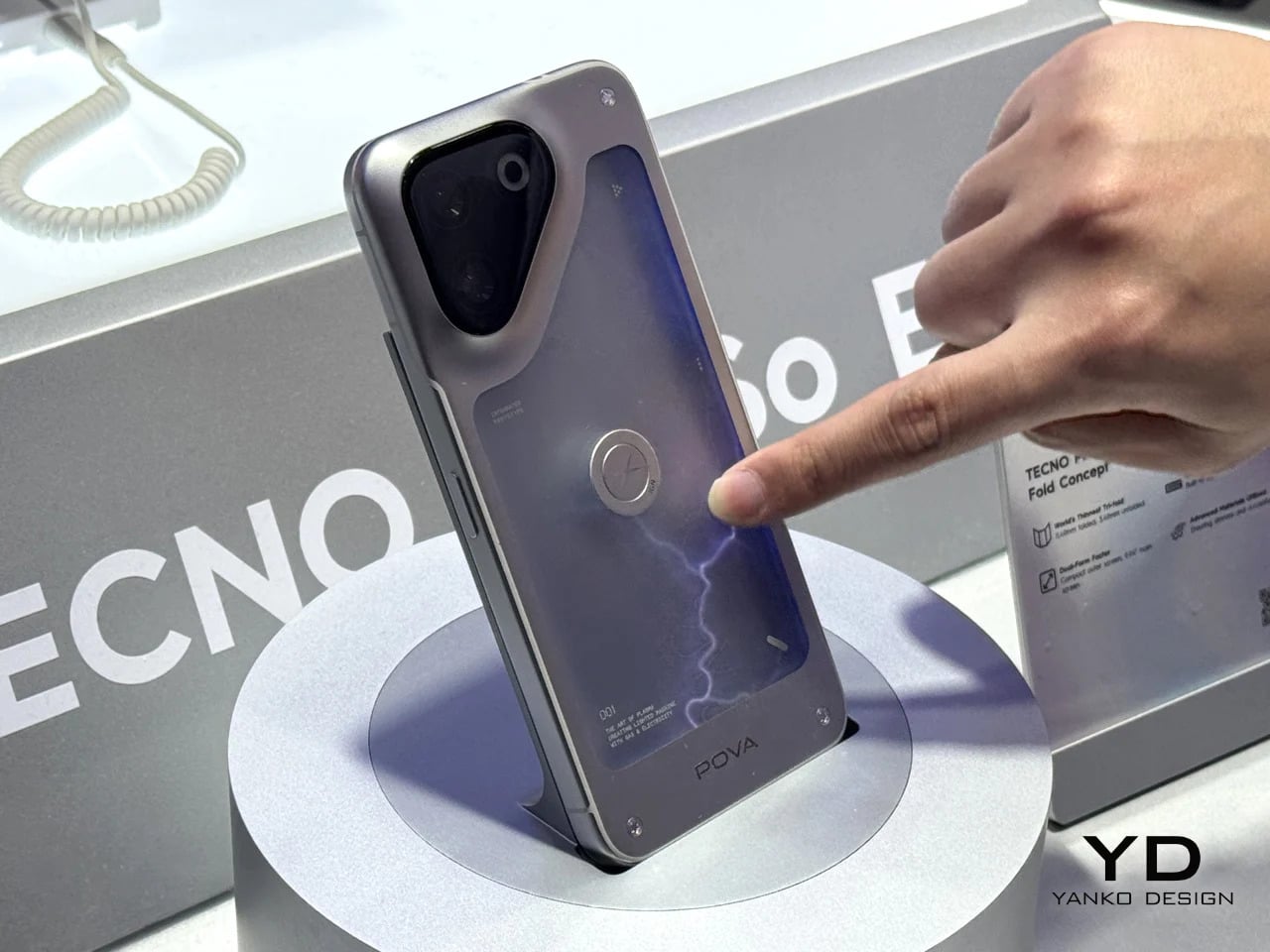
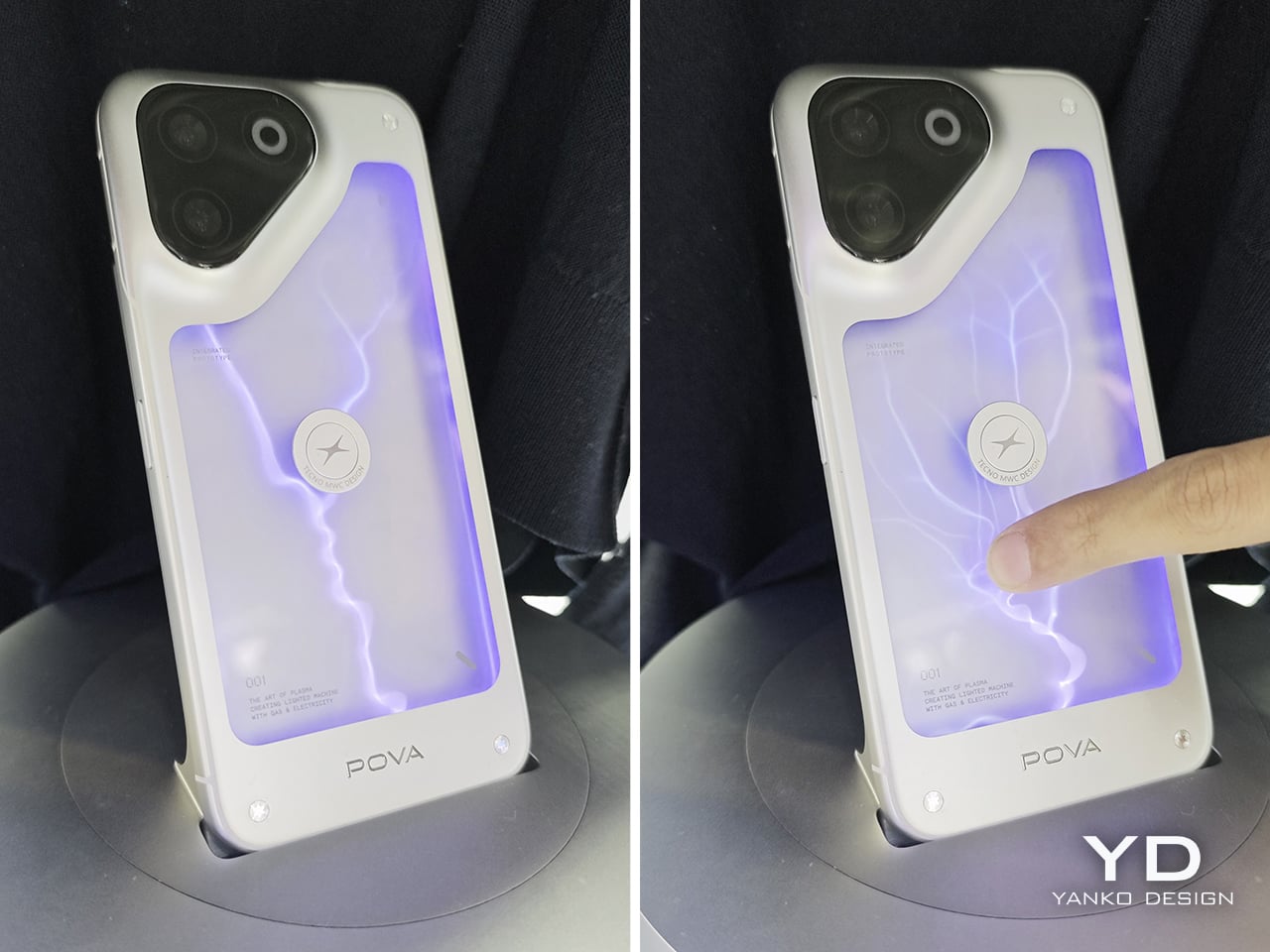
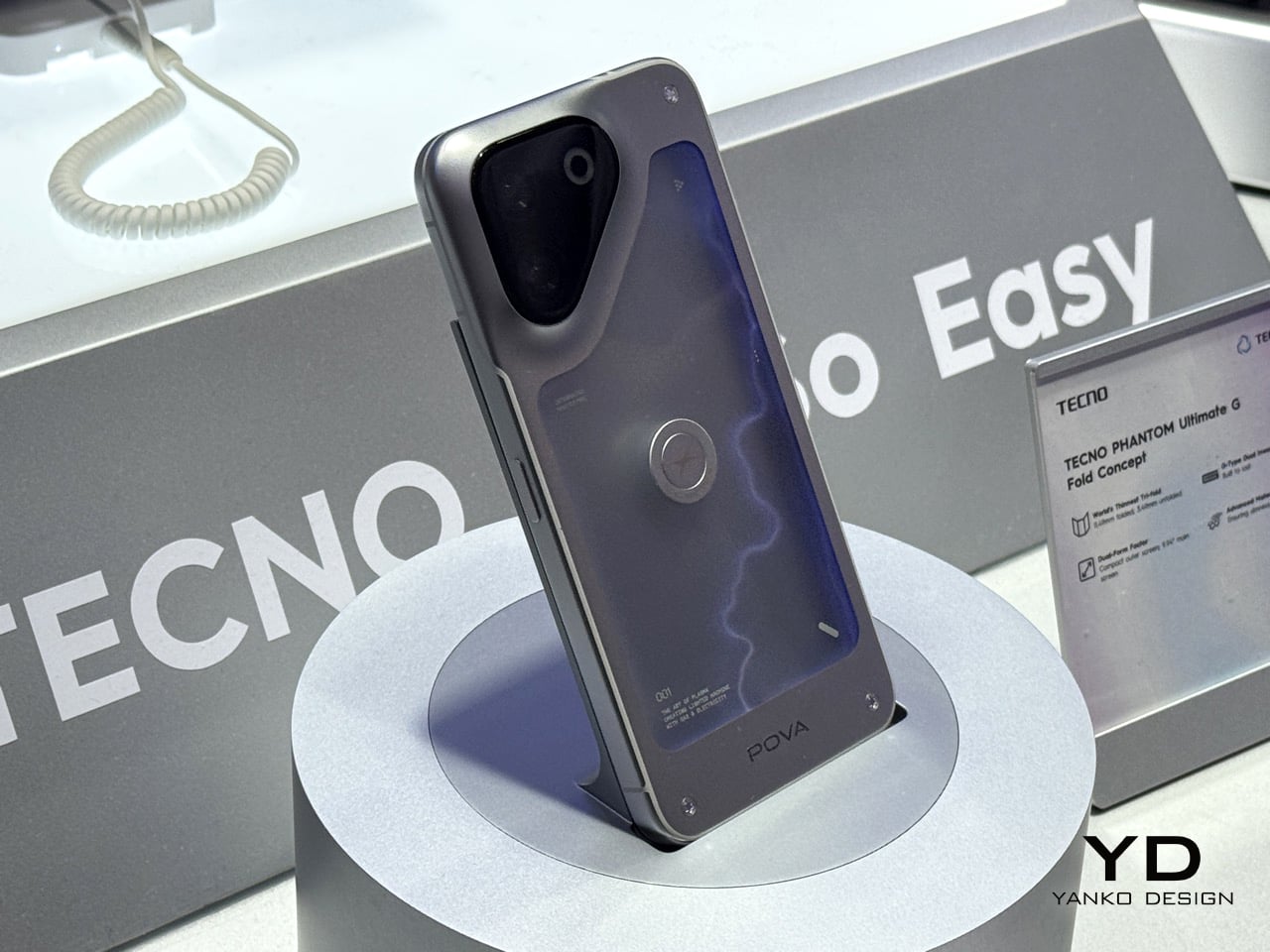
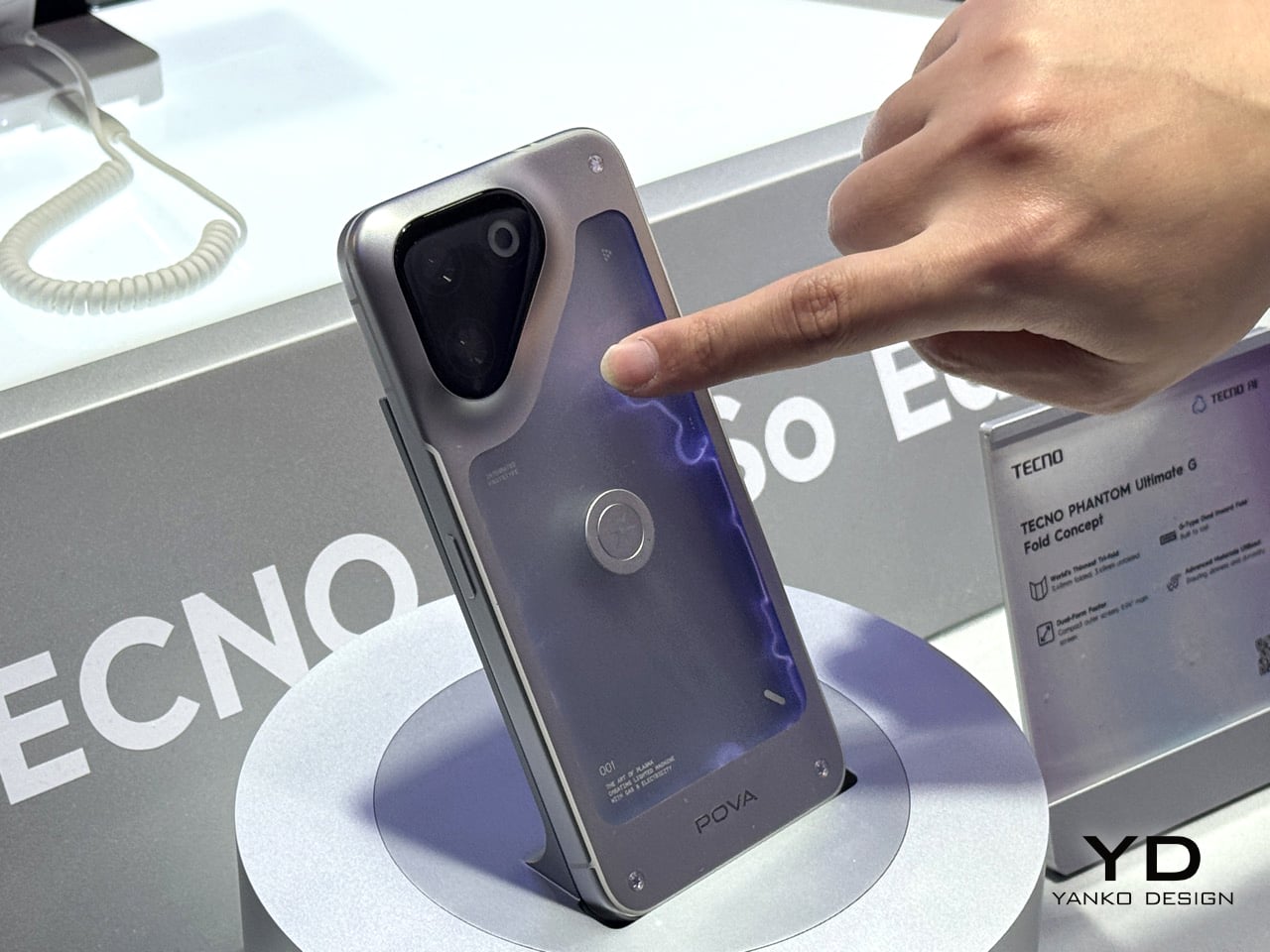
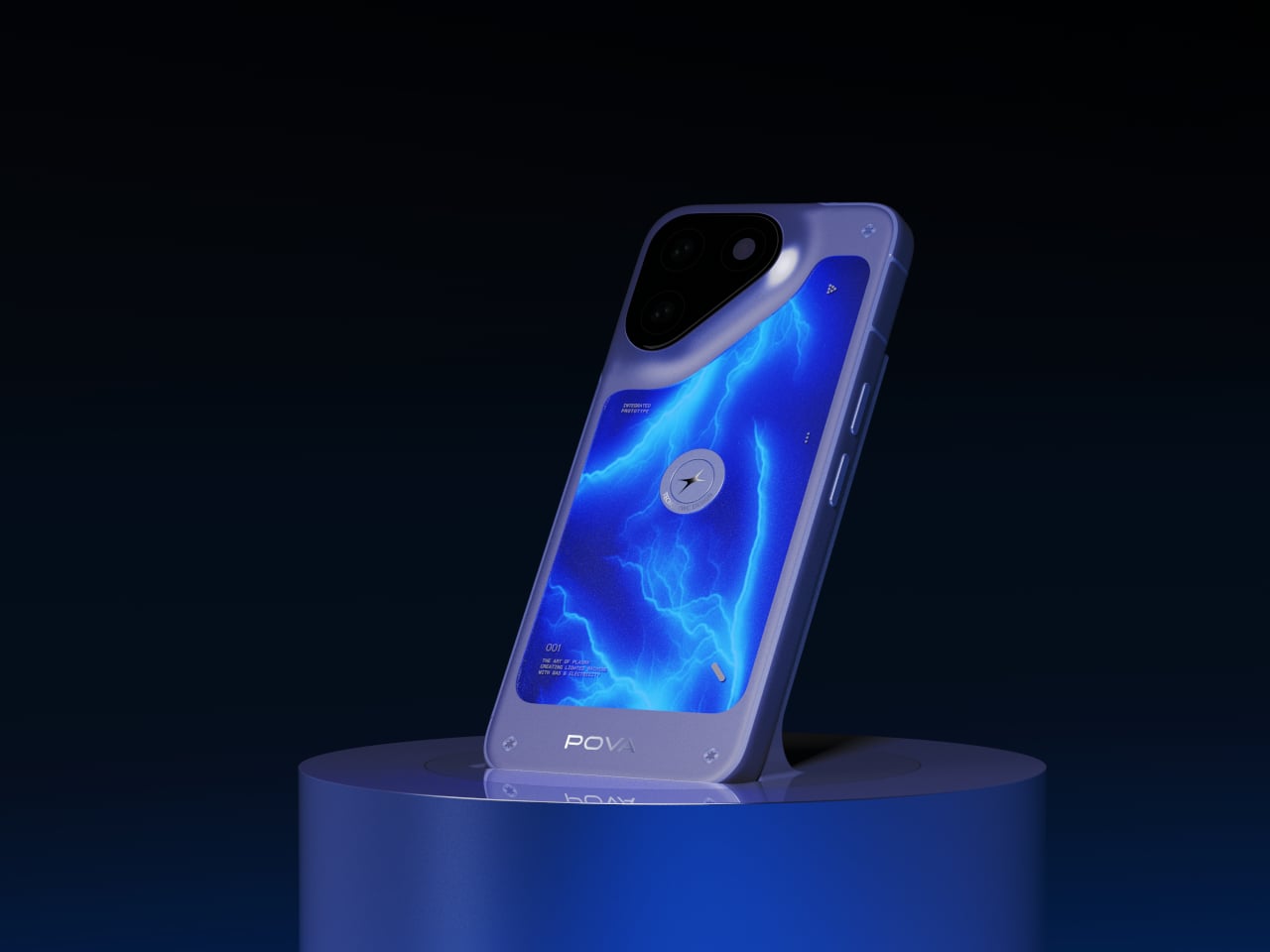
Some phones try to solve a problem, but the POVA Neon honestly isn’t that kind of phone. TECNO’s other MWC 2026 concept uses ionized inert gas lighting, the same technology that gives neon signs their glow, to create a branching luminescent effect on the back panel that sits somewhere between a lightning bolt and a circuit trace. TECNO is not claiming this makes the phone faster or the camera better. The claim is simpler and more honest: a phone’s back doesn’t have to be an inert sheet of glass waiting to collect fingerprints.

Designer: TECNO

As design statements go, that one is actually worth taking seriously. Most phone backs are the most visible surface on a device that billions of people carry every day, and they’re almost universally empty. The POVA Neon asks what happens when that surface does something. The answer here is that it glows, which is not practical and doesn’t need to be. Concept work isn’t obligated to be practical. It’s obligated to make you look at a familiar object differently, and a phone that pulses with light like a neon sign in a diner window at least does that.

What we liked

  • Treating the back panel as a dynamic surface rather than a passive sheet of glass is a genuinely fresh direction, and using ionized gas to do it is unlike anything else currently on the market.
  • As a concept, it opens up real questions about how materials and lighting could make phone design more expressive without requiring any changes to the screen whatsoever.

What we disliked

  • Ionized gas channels in a device that flexes under grip pressure, absorbs impacts, and hits the floor on a semi-regular basis seem like they would not survive the lifespan of the phone itself.
  • A protective case, which most people use, would cover the entire back panel and make the concept completely invisible. It is a design that fundamentally cannot coexist with the most basic act of protecting your phone.

Pixel Dynamics iPhone Fold Concept

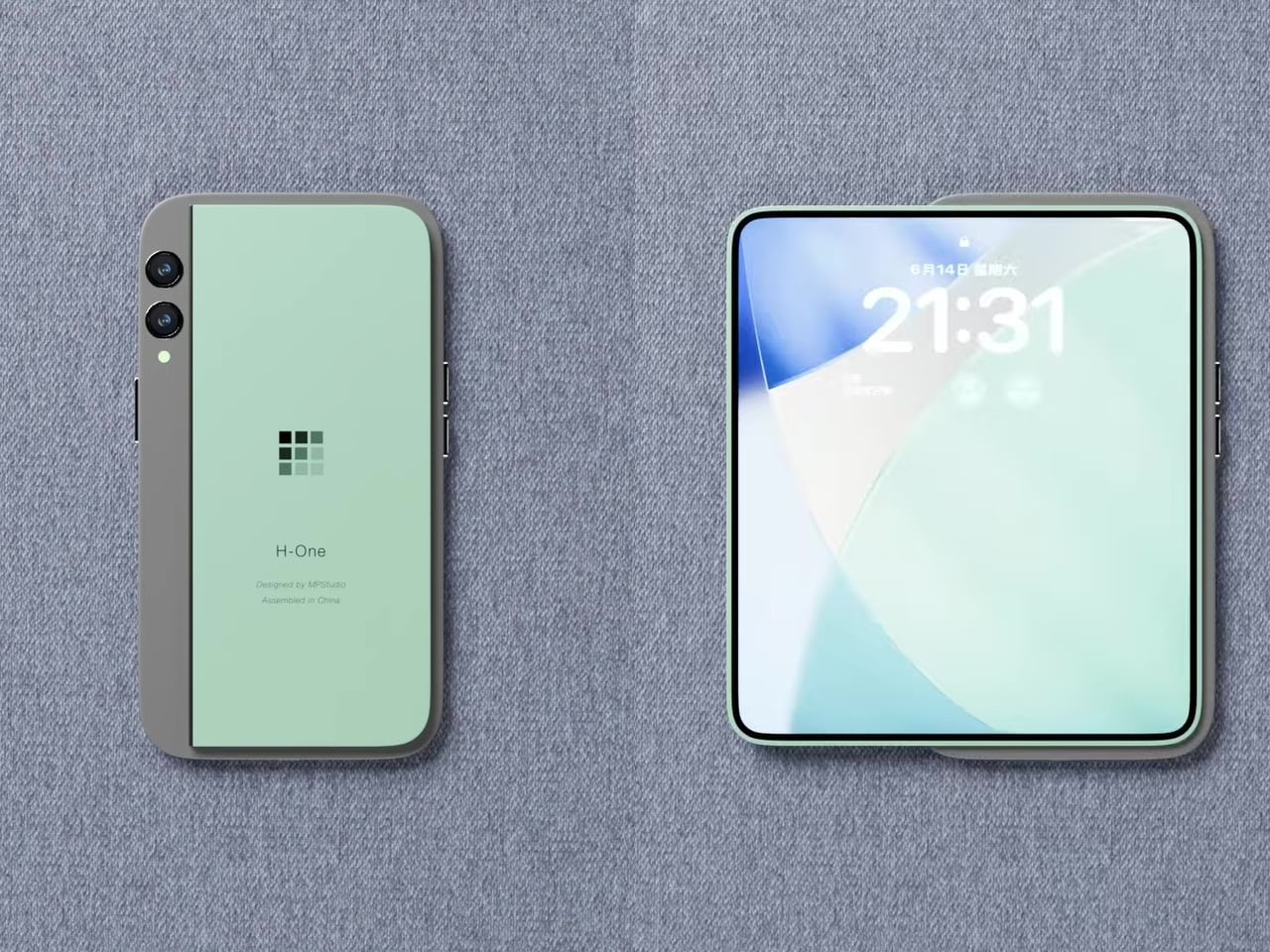
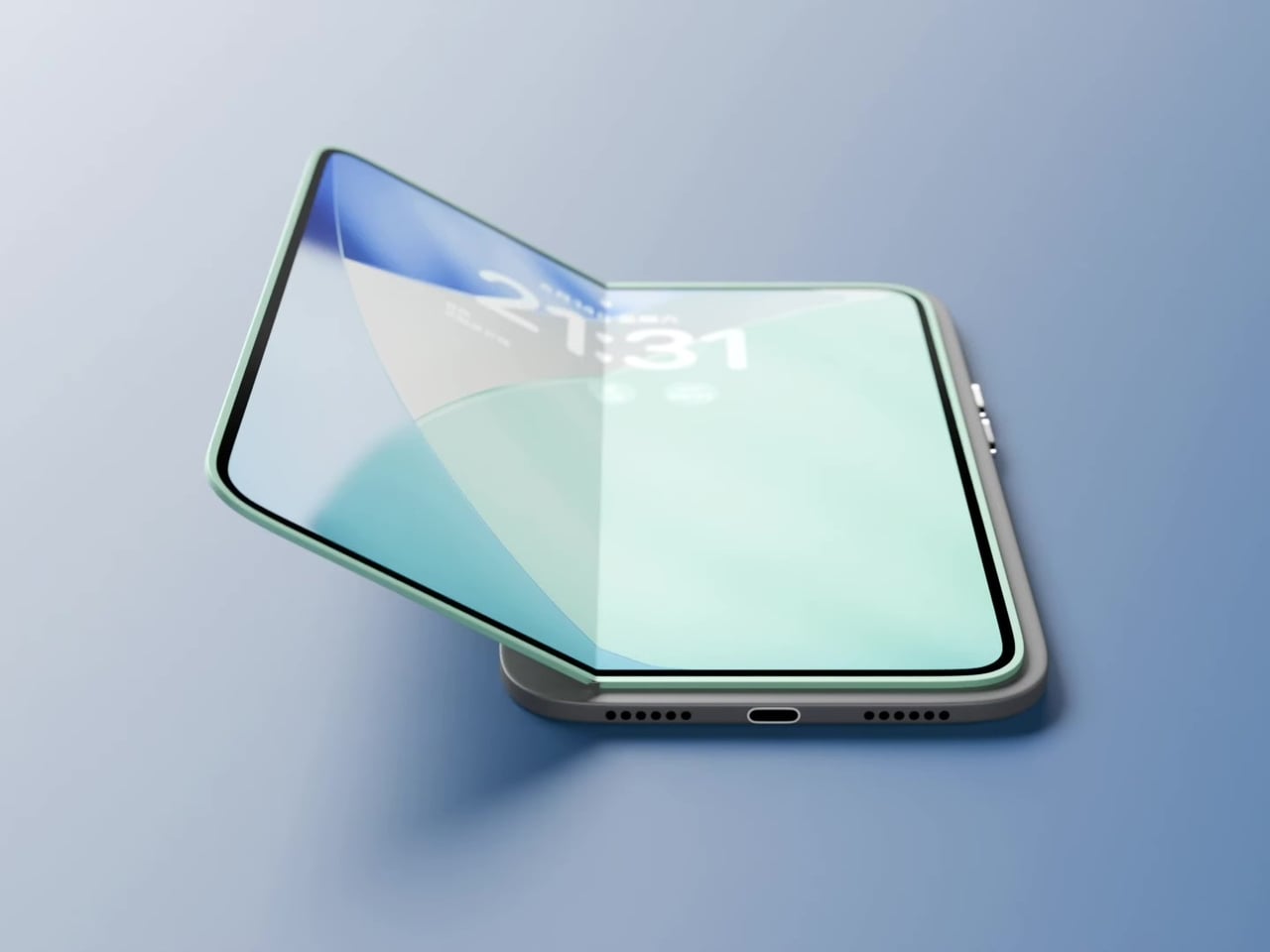
Foldable phones keep running into the same set of problems. The phone has to fold, which means the screen has to fold, which means the screen eventually creases at the hinge line, the hinge develops resistance over time, and the finished device ends up thicker than either of the two things it’s trying to be. Pixel Dynamic’s iPhone Fold concept approaches the whole premise from a different direction. Keep the iPhone exactly as it is. Add a separate foldable screen to the back.

The main iPhone body stays rigid and conventional. A thin, flexible secondary display sits raised on a platform above the rear panel, and when needed, it unfolds outward to create a larger, roughly square tablet surface. The phone itself does not flex, leaving the primary display completely untouched. In daily use, it feels and functions like a normal iPhone, because it essentially is one. That said, the raised platform adds thickness, wireless charging is probably absent, and using the camera while the secondary screen is unfolded becomes nearly impossible since it sits directly over the lenses. Apple almost certainly will never endorse the design, but as a thought experiment about whether a foldable screen and a foldable phone actually need to be the same thing, it’s one of the more original answers anyone has put forward.

What we liked

  • Treating the foldable display as a separate, discrete component rather than the phone’s primary structural element is unconventional thinking, and it raises genuinely interesting questions about repairability and modular design.
  • The concept challenges the assumption that a foldable phone has to mean a folding device, which is exactly the kind of first-principles questioning that occasionally turns into something the industry actually builds five years later.

What we disliked

  • Getting a raised foldable display to sit flush, function reliably through daily use, and survive the realities of a pocket likely puts this well outside what current manufacturing can deliver.
  • Apple’s tendency to design through subtraction rather than addition makes this particular execution, with its visible raised platform and external folding mechanism, almost impossible to imagine coming from Cupertino in any recognizable form.

The post Your $1,200 Phone Looks Boring Next to These 5 Concepts first appeared on Yanko Design.
Glyph Lights? Tecno Put Actual Plasma Lightning Inside One Of Its Phones At MWC 2026

While Nothing flits with Glyph Matrixes and Bars, Tecno decided to infuse the soul of Thor into its latest phone concept. Dubbed the Pova Neon, this phone was possibly the most unique thing we’ve seen in the phone market in a while. Built inside the back of a phone is an inert gas chamber that emits beams of plasma thanks to high voltages that’s passed through the gas. Touch the glass panel separating you from the plasma, and the lightning gathers around your fingertips, quite like it would around a tesla coil, if you ever saw or owned one as a kid.

The detail (and the execution) is impressive, but it begs the question – who needs this?! Why does this exist? And what exactly is its purpose? Why must I have lightning trapped inside the back of my smartphone? Doesn’t it already do enough?? Or maybe the plasma lights are a great distraction from your doomscrolling habit. I’d probably pick staring at random beams of light than scroll through the news…

Designer: Tecno

The Pova Neon is just a concept. Tecno doesn’t plan on building this at all, not just because it’s complicated – it’s also fragile, fairly dangerous, and really doesn’t do much to make the phone better. Adding inert gases at the back removes the ability to add a wireless charging coil there, which means no MagSafe either. You put a case on the phone and you lose all novelty immediately. And drop the phone and you genuinely risk a fairly serious fire hazard.

But for what it’s worth, the phone is a bundle of fun. In the bright lights of MWC, the plasma wasn’t fairly visible. But the minute we put a coat around the phone to block light out, the lightning looked genuinely amazing. The random patterns, the interaction with your fingertip, it’s all entirely cosmetic, but it’s also somewhat cosmic! Good job flexing your tech chops, Tecno. I mean, besides the fact that they actually built a modular smartphone ecosystem which managed to win YD’s Best of MWC Award!

The post Glyph Lights? Tecno Put Actual Plasma Lightning Inside One Of Its Phones At MWC 2026 first appeared on Yanko Design.
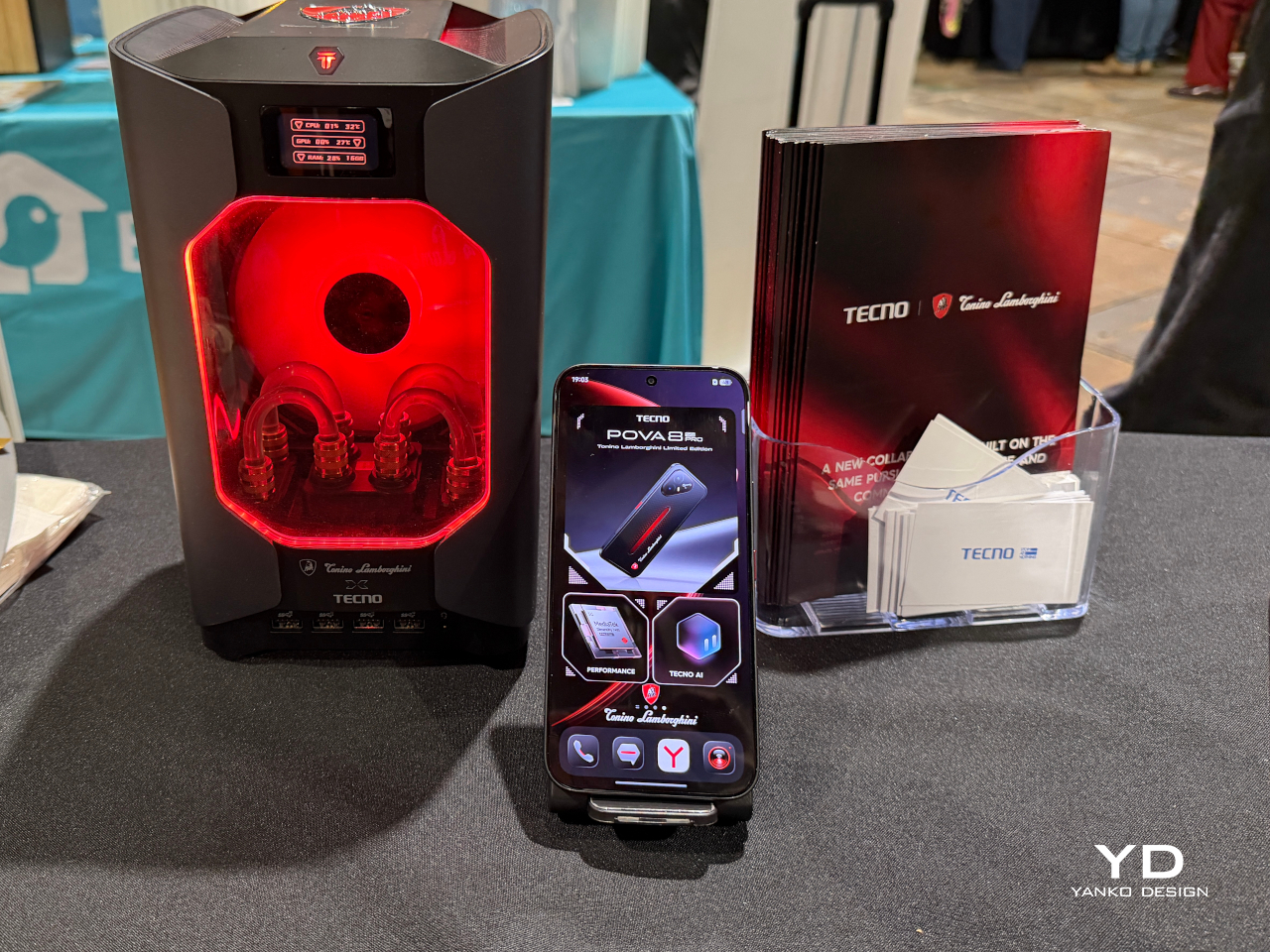
TECNO and Tonino Lamborghini Built the Smallest Water-Cooled Gaming PC

Tech collaborations with fashion and luxury brands usually follow a familiar, slightly tired script. A logo goes on the back of an otherwise unchanged device, a press release says something about “shared values,” and that’s more or less it. So when TECNO announced its partnership with Tonino Lamborghini at MWC 2026 in Barcelona, it was fair to be skeptical about what “Italian design meets cutting-edge technology” would actually look like in practice.

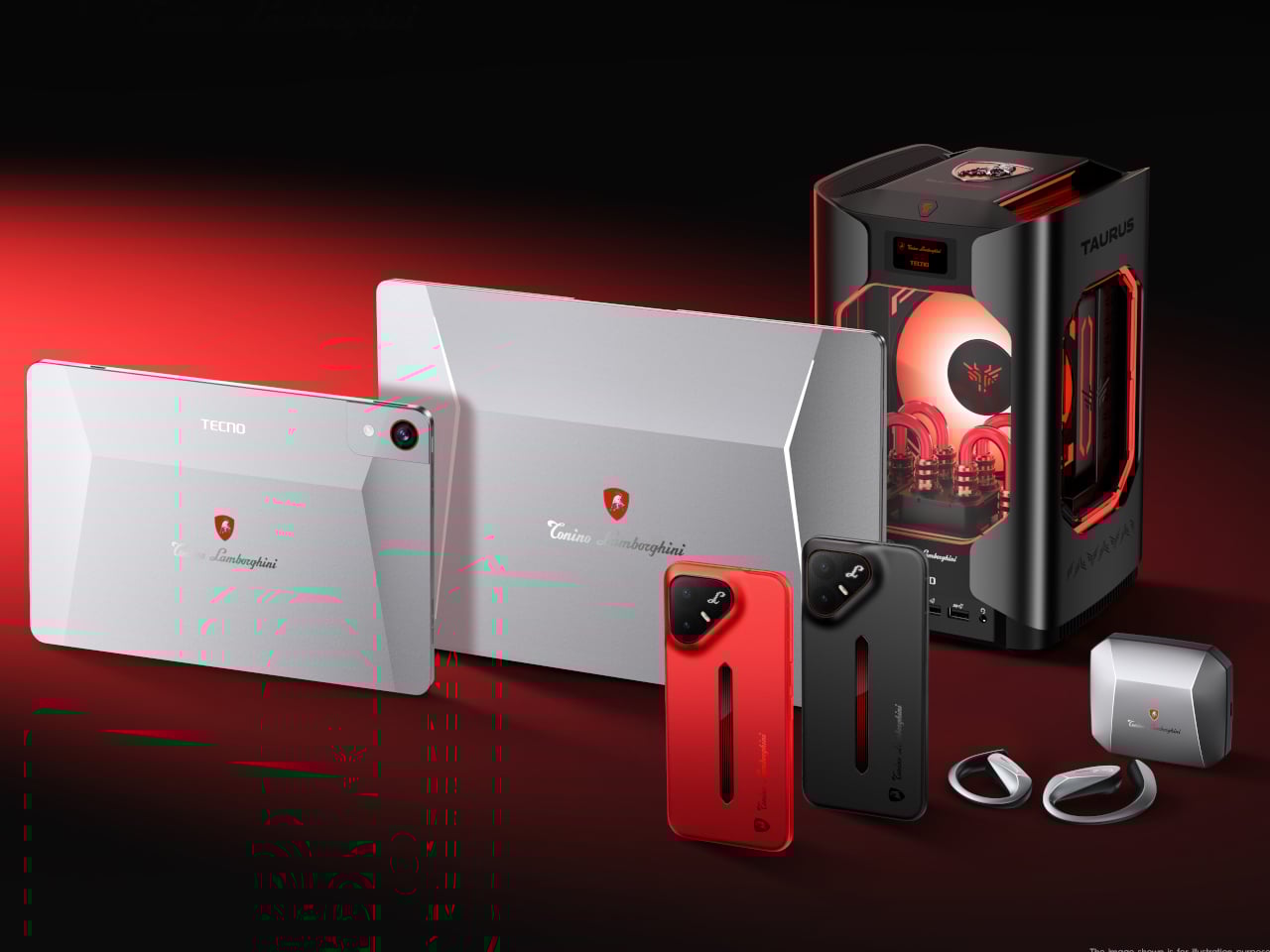
It turns out the answer involves water-cooling tubes, a 241-pixel LED matrix on the back of a phone, and a mini gaming PC that looks like it belongs on the set of a science fiction film. The collaboration goes beyond a branding exercise. It’s a full product line with a consistent visual language running across all of it.

Designer: TECNO x Tonino Lamborghini

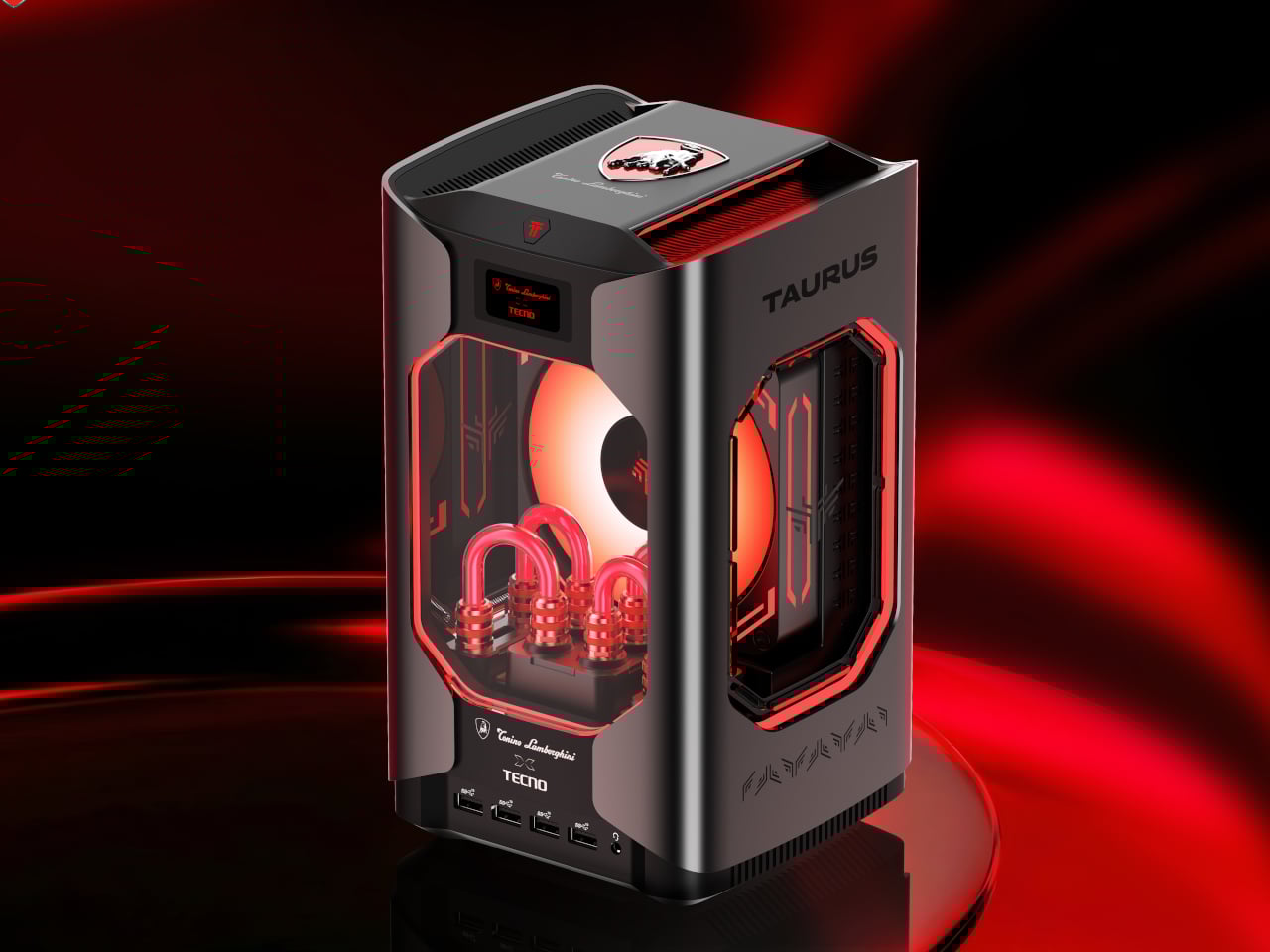
The centerpiece is the Tonino Lamborghini TECNO TAURUS, officially the MEGA Mini G1 Pro, the follow-up to the MEGA Mini G1, which TECNO claimed as the world’s first and smallest water-cooled gaming PC. The TAURUS keeps that cooling system, building around a roughly 10,000 mm² pure copper cold plate and a triple-fan setup inside a gunmetal all-metal chassis.

Through the transparent side panel, you can see the red water-cooling tubes looping around the internals, glowing under orange-tinted fans. Rather than hiding the engineering, it’s deliberately flaunting it. A small status screen on the front body lets you monitor CPU and GPU performance in real time, without opening a separate dashboard on another screen.

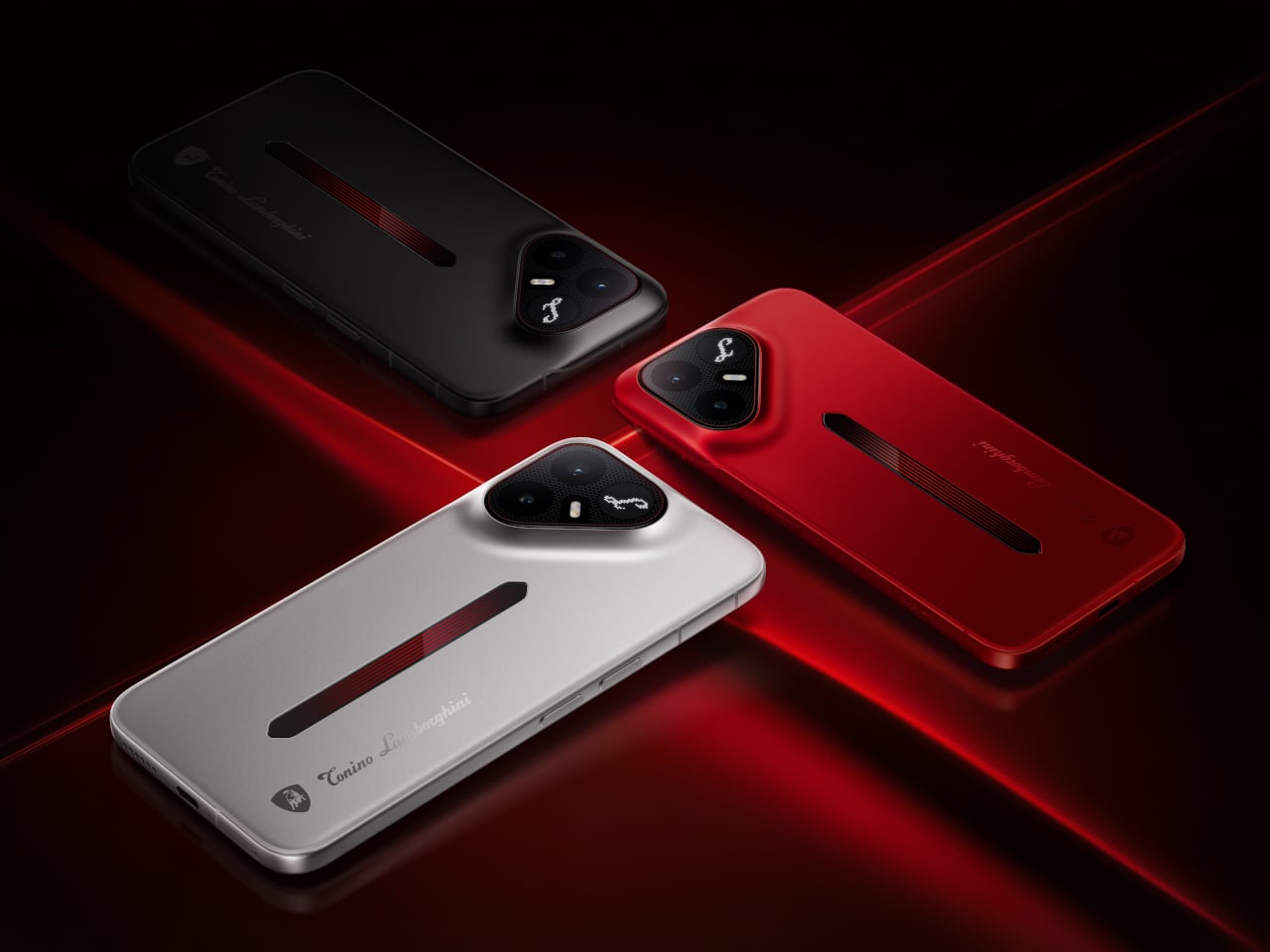
The second launched product is the TECNO POVA Metal Tonino Lamborghini Limited Edition, which TECNO is calling the world’s first full-metal unibody 5G phone. The camera module takes a triangular form, housing the Lamborghini “L” badge at its center, sitting flush against an uninterrupted metal back with bezels down to 0.99 mm.

A vertical slot running down the body doubles as a pulse light strip. The rear also features a 241-pixel independent LED dot matrix that can display call alerts, notifications, and custom animations. It sounds like a gimmick, but it’s one of the few times a phone’s notification system has been treated as a surface design decision. The phone runs on a Snapdragon processor and comes in silver, matte black, and red colorways.

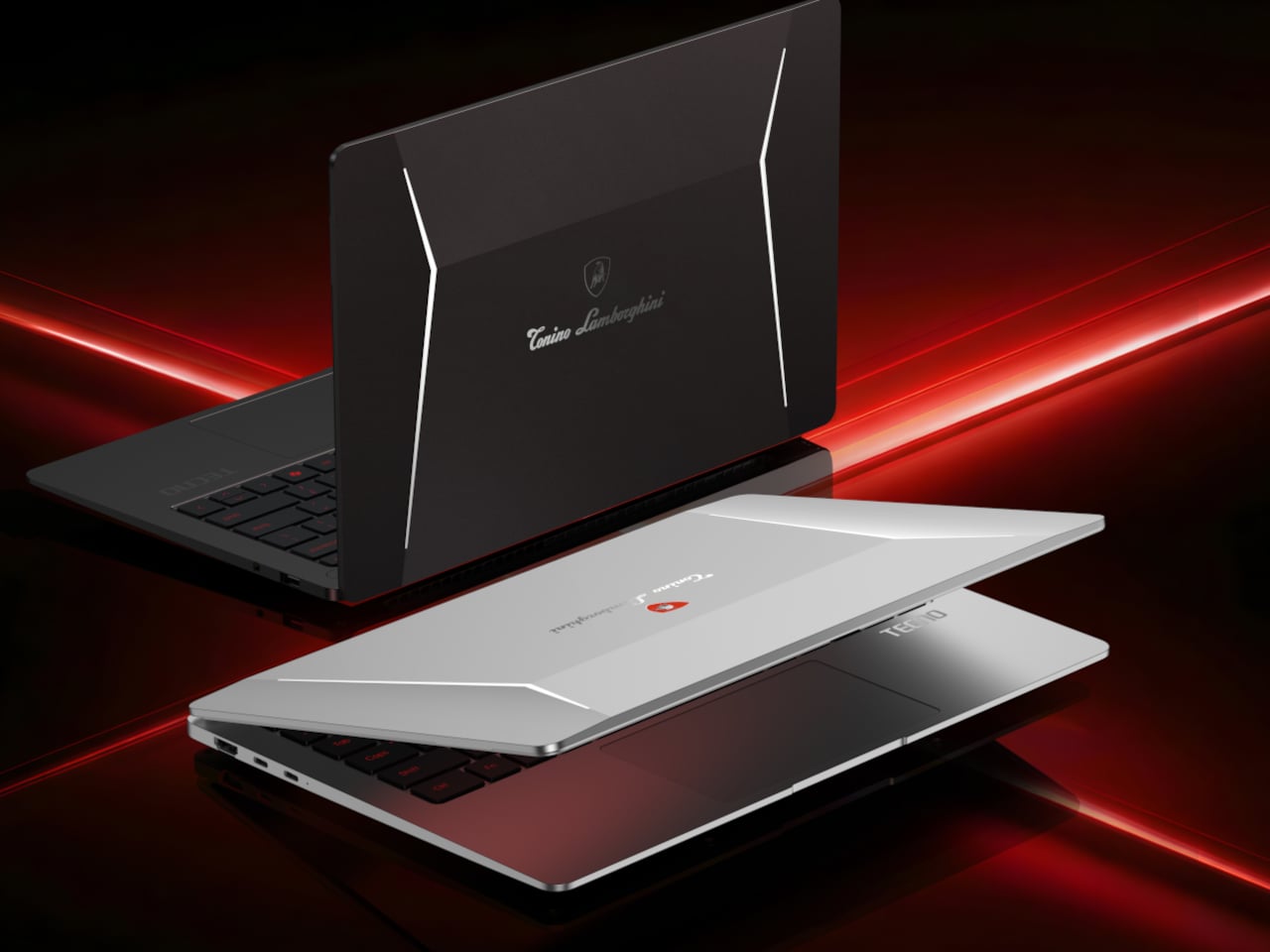
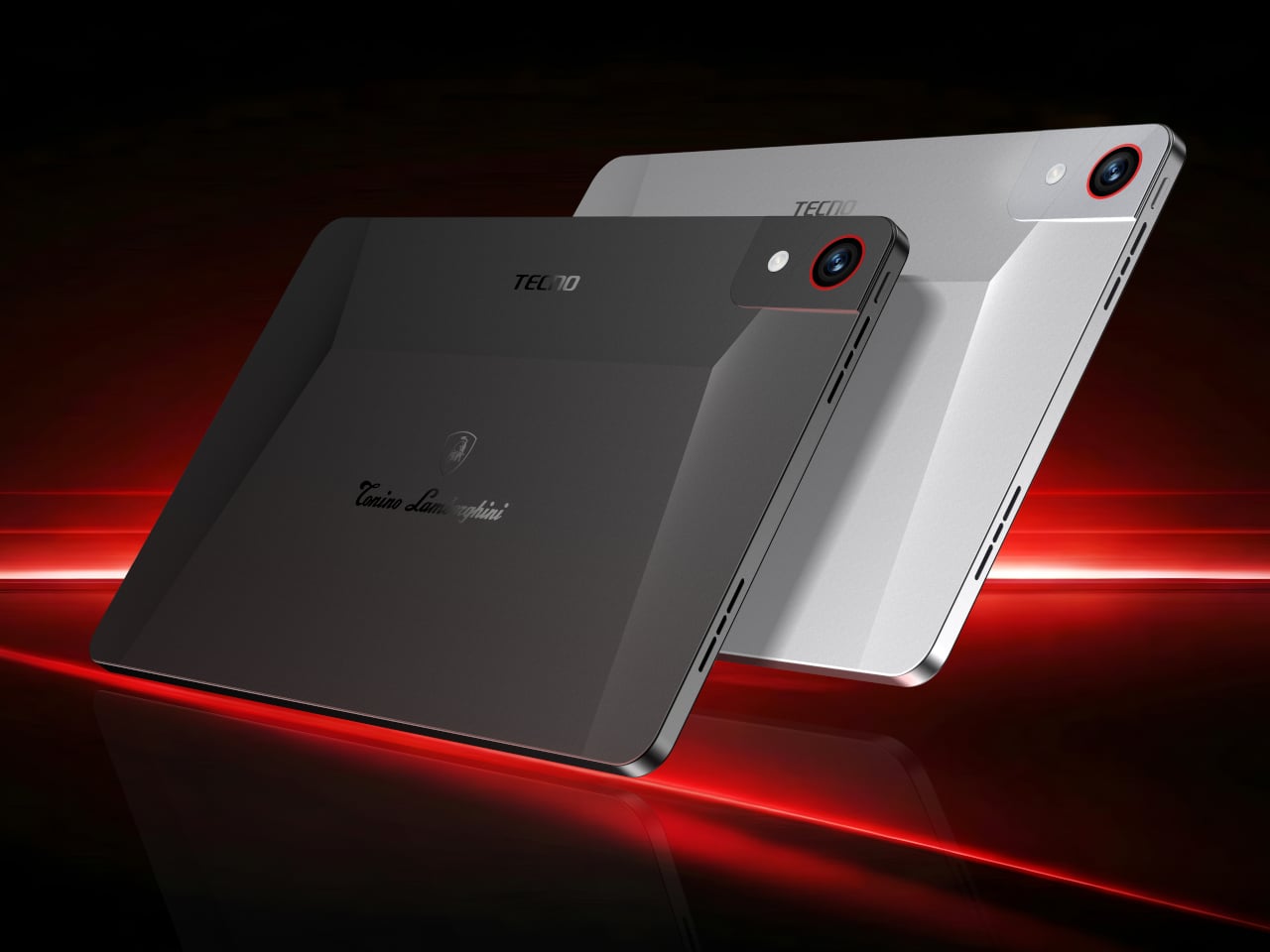
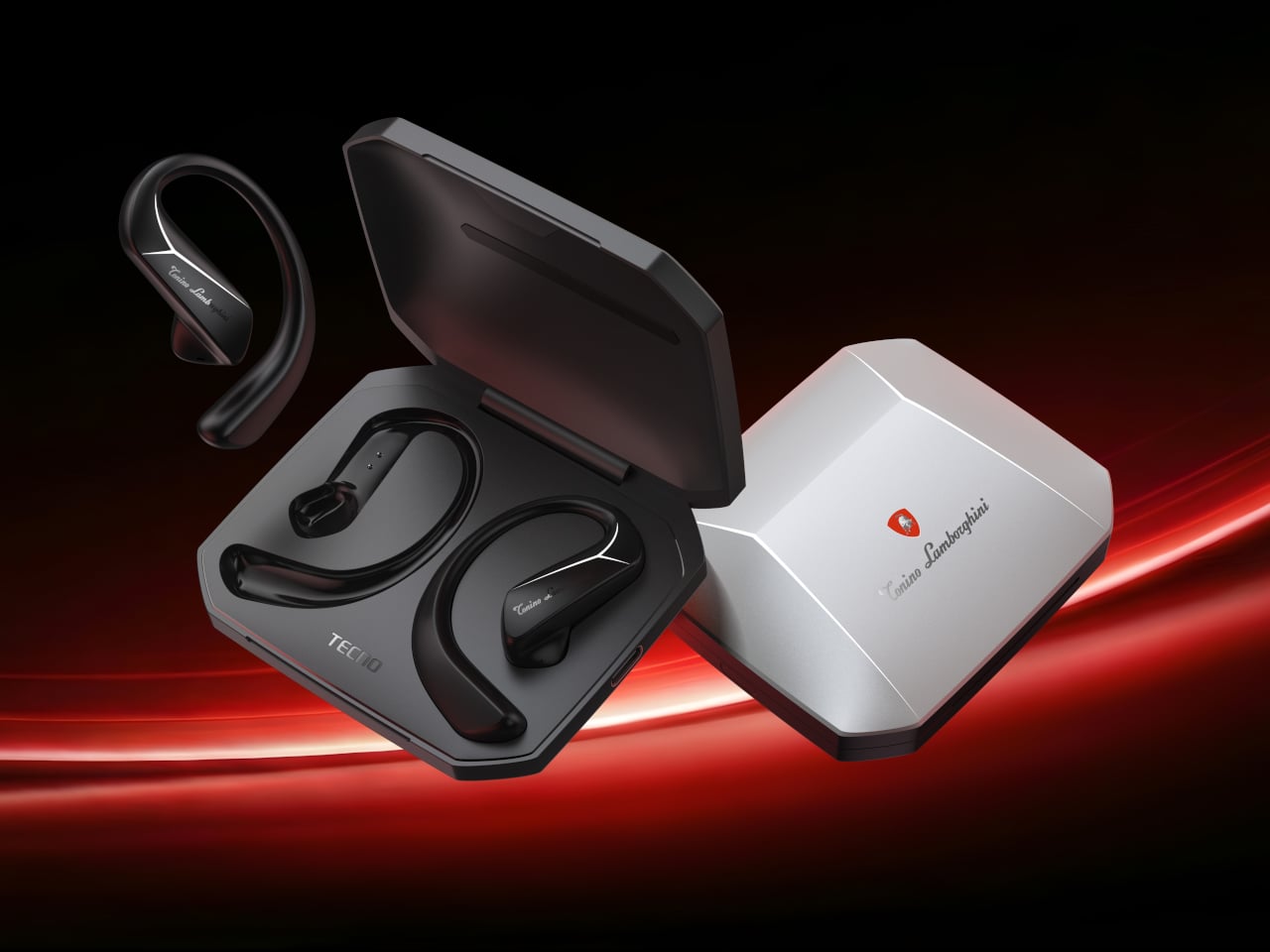
Beyond these two, TECNO showed a concept AIoT ecosystem extending the design language to laptops, tablets, and open-ear earphones, all carrying the same red-and-gunmetal palette and the Tonino Lamborghini shield badge. The laptops feature a sharp V-shaped crease across the lid, the tablets get red-ringed cameras, and the earphone case is angular enough to feel at home next to the rest of the lineup.

The real question this collaboration leaves open is whether the Tonino Lamborghini aesthetic, bold as it is, adds genuine character to these devices or just visual noise. Luxury branding on tech hardware has a long and uneven track record, and most of it ages poorly once the novelty fades. TECNO is betting the design has enough substance to outlast the MWC spotlight.

The post TECNO and Tonino Lamborghini Built the Smallest Water-Cooled Gaming PC first appeared on Yanko Design.
From Magnetic Modules to Neon Lights: TECNO’s Wild Phone Concepts

For years, smartphone makers have been quietly taking things away. The removable battery went first, then the headphone jack, then anything else that made a phone feel repairable or adaptable. TECNO showed up at MWC 2026 with a different idea, bringing a collection of concepts that go in the opposite direction, adding to the phone rather than stripping it down. Some of these ideas are genuinely practical. Others are just fun to think about.
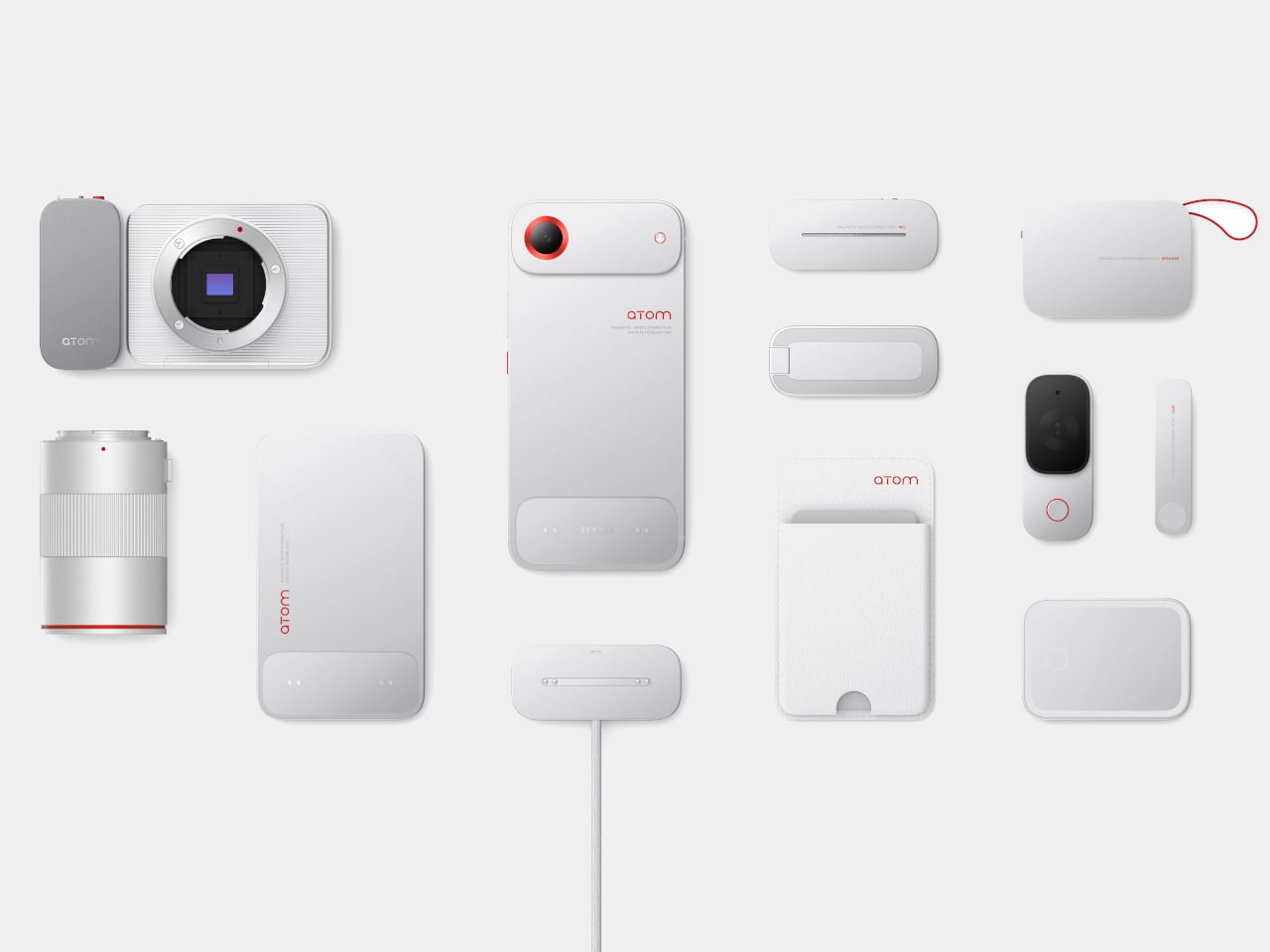
The most developed concept is the Modular Magnetic Interconnection Technology, which lets you snap hardware modules onto the phone magnetically. Telephoto lenses, action cameras, extra battery packs, and over a dozen other components can attach and detach as needed. TECNO presented two design versions: ATOM, with a clean white-and-red palette built around the idea of efficient, intentional use, and MODA, which takes the same modular logic but wraps it in a bolder, more aggressive look. The phone stays slim by default, and you only add bulk when the situation actually calls for it.

Designer: TECNO

MODA

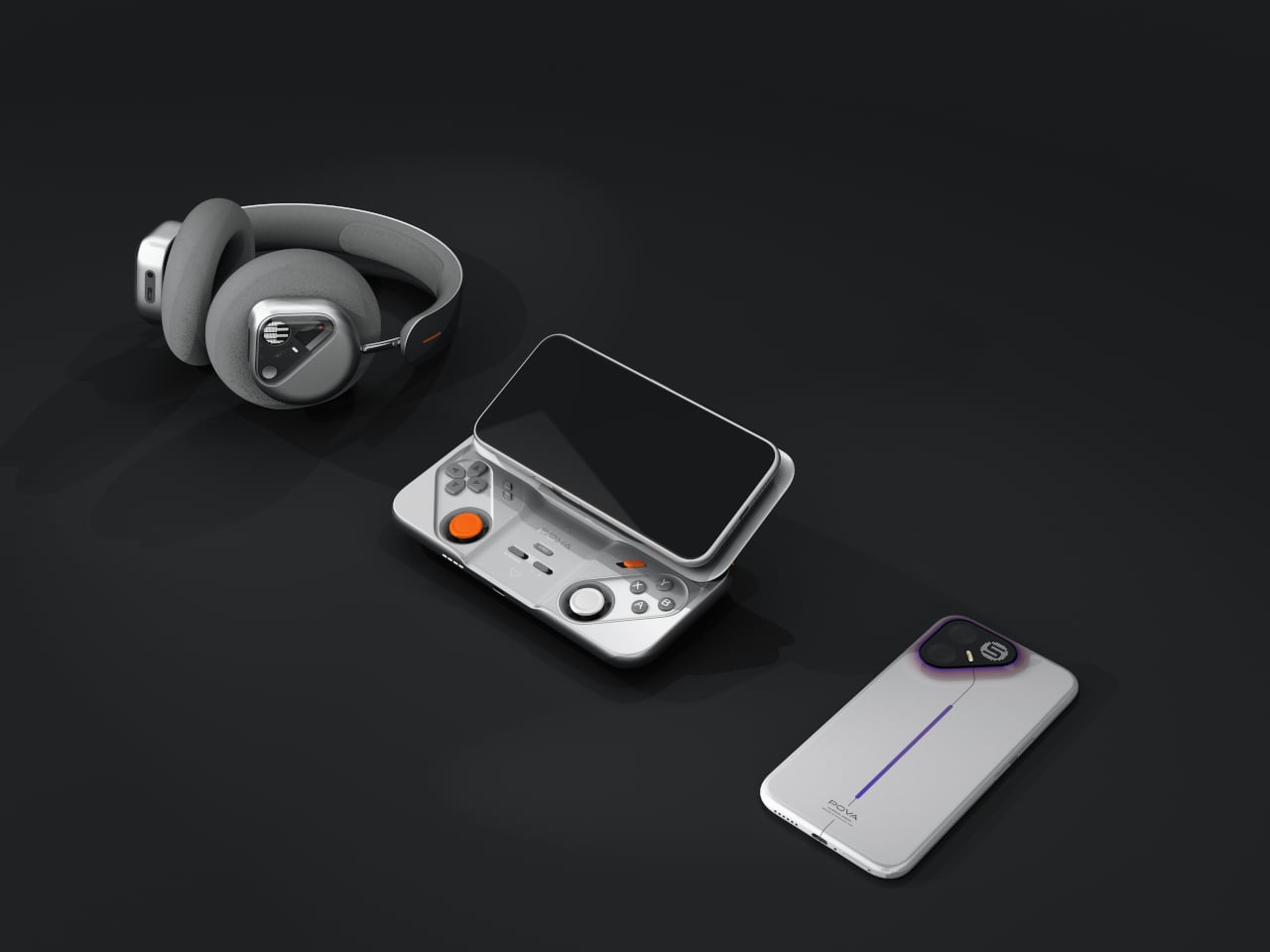
The POVA Ecosystem takes a more focused angle, targeting mobile gamers specifically. POVA Metal is the world’s first full-metal unibody 5G phone, and it pairs with a POVA Controller Slide that supports a 0 to 25-degree adjustable viewing angle and is optimized for both FPS and MOBA games. The controller also supports wireless charging, which is a small but welcome detail. A POVA Earphone with dot-matrix lighting rounds out the set, giving the whole ecosystem a consistent visual identity.

POVA Ecosystem

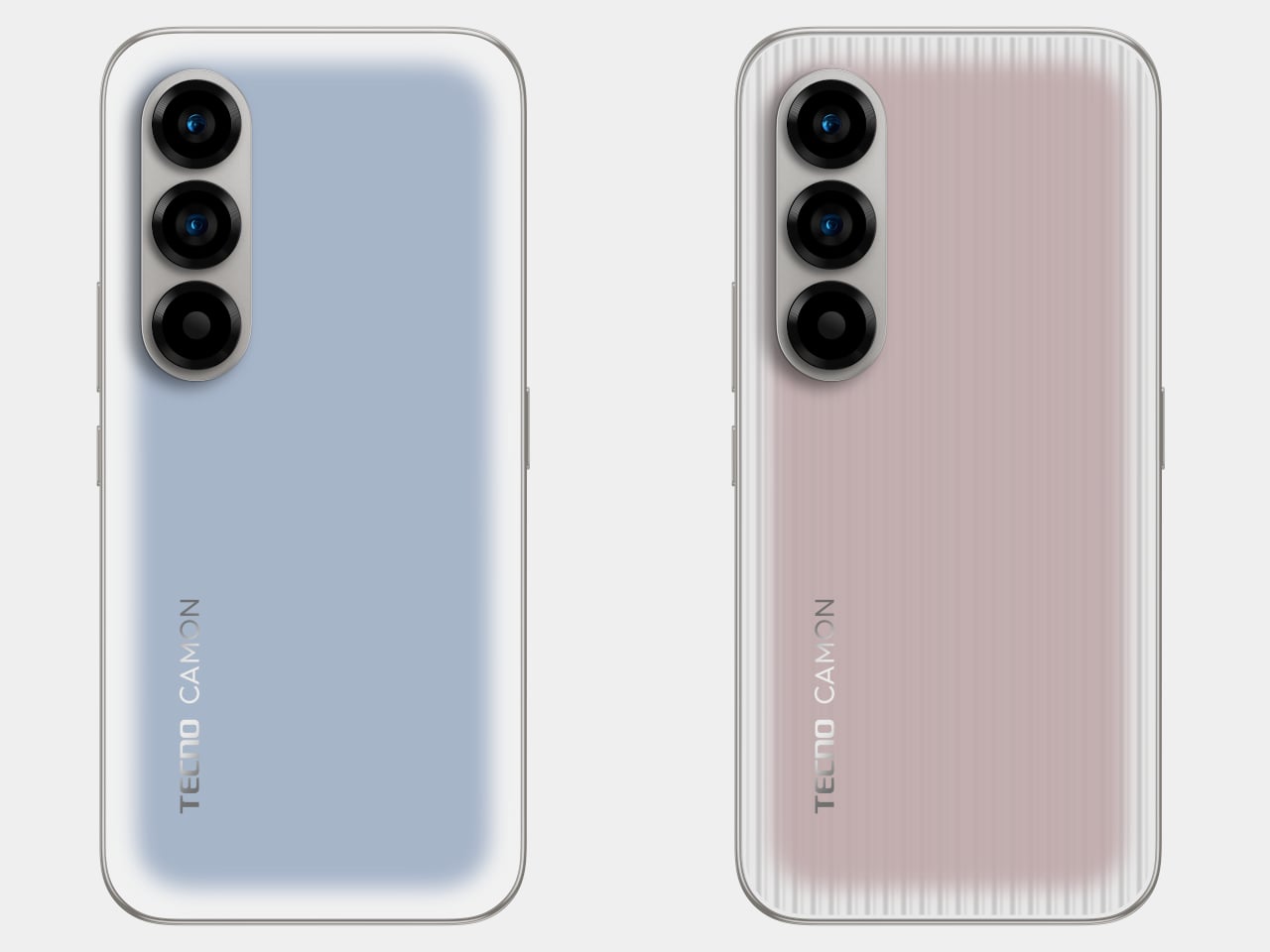
AI EINK is one of the quieter ideas in the lineup. The back panel reads colors from the camera and shifts its appearance to match, with further adjustments available through an app. How often someone would actually use this outside a case is a fair question, but the idea of a phone that responds to its surroundings rather than just sitting there is at least an interesting one to sit with.

AI EINK

POVA Neon is the concept that most clearly exists as a statement rather than a solution. It uses ionized inert gas lighting, the same technology behind neon signs, to create a glowing effect on the back panel. The renders show branching blue light that looks like something between a lightning bolt and a screensaver. It’s hard to argue that it solves a problem anyone has, but not everything at a concept showcase needs to. Sometimes a phone that looks like it’s charging from a thunderstorm is just fun to put on a table.

POVA Neon

These are all still concepts, which means most of them won’t ship in this form, if they ship at all. The modular system is the one worth watching most closely, since the core tension it tries to address, keeping phones lightweight while making AI and computing demands heavier, isn’t going away. We can only hope that TECNO will fare better than others who also tried to make the modular phone dream a reality.

The post From Magnetic Modules to Neon Lights: TECNO’s Wild Phone Concepts first appeared on Yanko Design.