Beat-based dungeon crawlers, card-battling soccer sims and other new indie games worth checking out

Welcome to our latest roundup of what's going on in the indie game space. As ever, we've got some new games for you to dive into this weekend, and a glimpse at some upcoming titles. But, first, a look at indie studio Albatross Interactive's take on a multiplayer mode from a much-loved blockbuster. 

Terminal War is a 4v4 third-person shooter and it seems like the small team of developers is trying to keep things grounded. Ammo and supplies are scarce, and there's an emphasis on melee combat with the promise of "brutal executions." The action is set in the late '90s, a few years after a global war, with three factions battling for control and survival in a collapsed version of the United States.

Albatross Interactive isn't shy about the inspiration behind Terminal War. “They canceled The Last of Us Factions 2," the team wrote on X. "So we're building it [sic] our version." 

In September 2019, nine months before the game’s eventual release, Naughty Dog confirmed The Last of Us Part 2 wouldn’t have a multiplayer mode. At the time, it told players "you will eventually experience the fruits of our team's online ambition."

That still hasn’t exactly come to pass. The studio formally announced The Last of Us Online in June 2022 and canceled it 18 months later. As such, the Factions mode in 2014's The Last of Us Remastered for PS4 remains the franchise's only remaining multiplayer mode.

Albatross Interactive, which says it's building Terminal War from scratch, plans to reveal more gameplay soon. The game is slated to hit Steam in early access as soon as this summer

The team expects Terminal War to remain in early access for around 12-18 months, though it noted that "we're a small studio and we'd rather take the time to get it right than rush to a finish line. The timeline will ultimately be shaped by community feedback, the scope of content we deliver, and the standard of quality we hold ourselves to." The studio plans to bring the game to consoles as well.

I’m into the current iteration of Acclaim as an indie publisher (albeit one with a plan to revive its own historic franchises). Its latest title, GridBeat from Ridiculous Games, is a rhythm-based dungeon crawler in which you're trying to escape from a corporate network after pinching a trove of valuable data. Malware and security protocols are on your tail. Navigating the mazes, interacting with objects and boss battles are all synced to a beat.

GridBeat is available on Steam and Nintendo Switch. It typically costs $20, but there's a 10 percent discount on Switch until April 2. It's 15 percent off on Steam until April 9.

Given how much time I spent playing Football Manager 26 last year, Nutmeg is right up my alley. Getting veteran commentator Jim Rosenthal to pitch the soccer management sim in the launch trailer certainly doesn't hurt.

This is a card-battler take on soccer management and it’s set in the '80s and '90s. You can start out in the lower divisions and can work your way up to the top of the English soccer system. You'll hire and fire staff, and select your team and formation before taking on an opponent. Completing challenges and doing well in training will earn you more card packs. 

The trailer reminds me of collecting Panini stickers as a kid as well as the smell of my friends’ Subbuteo figures. I would have said my favorite thing about this is that everything takes place at an era-appropriate desk with a TV that shows results and standings in the style of Teletext and an old computer that has some retro mini-games you can play. However, Sumo Sheffield and Publisher Secret Mode are donating a small portion of every sale of Nutmeg to charity, which is a nice gesture.

Nutmeg is out now on Steam. It'll usually cost you $25, but there's a whopping 40 percent discount until April 2.

Devil Jam is a metal-themed spin on the roguelite formula that Vampire Survivors popularized with a dash of Hades-esque characterization mixed in. It's been out on Steam since November and it hit consoles this week. It costs $8 on PS5 and Switch, and $7.59 on Xbox Series X/S.

You'll wield a cursed guitar as you battle demonic enemies and bosses. As ever with this type of game, it's all about finding fun, powerful builds by synergizing abilities. You can put those together in a 12-slot gear system. I dig the art style and animation in this game from Rogueside too. I especially love that one character dashes by powersliding on their knees.

A couple of months after its debut on Steam, Space Warlord Baby Trading Simulator landed on Xbox Series X/S for $20 this week. The latest game from prolific studio Strange Scaffold is a stock market simulator in which you speculate on the "simulated lives of babies" and how successful (or not) said alien sprogs will be in the future. It takes aim at real-life prediction markets where people can gamble on everything from the Time Person of the Year to nuclear tests. 

Here's another game you can actually check out this weekend, as a playtest is taking place on Steam until March 31. Salvation Denied is a co-op construction sim/tower defense game from Firevolt and publisher Digital Vortex Entertainment.

You can get together with up to three friends to build experimental structures at the behest of a foreman who looks like he's stepped right out of Team Fortress 2. You'll have tools like a gravity gun, foam gun and jetpacks on hand to help you form these structures, along with heavy machinery that can move or recycle sections of the build. Coordinating with proximity voice chat could be critical as you and your buds deal with natural disasters like acid rain and meteor showers.

I'm almost always going to be on board with a game that's all about chaos, so I'm interested in checking out Salvation Denied. It's set to hit Steam this fall before landing on PS5 and Xbox Series X/S in 2027.

Someone has stolen the sun. Reclaiming it is your goal in Light Dude, which is from solo developer Ramy of Dergham Games. It's an action game in which the lights go out when you move, so you'll need to figure out your approach to each level and how to avoid hazards before moving forward. There's a first-person mode here too.

Light Dude is slated to hit Steam sometime this spring. A demo is available now.

Solo developer Mateo Covic (aka ZoroArts) is looking to follow up on the success of Paddle Paddle Paddle with another friendslop game. Covic said it took just four weeks to create Cool Story Bro. Up to four players each have five minutes to write a short story that includes four words. These are picked at random or taken from a pool of player suggestions.

Special items appear throughout each round, such as a revolver, which can take another player out of the game for 10 seconds, and one that swaps everyone's stories. If you're the first player to type an item's name, you can use it.

After everyone has finished writing their story, players take turns to read theirs out for the rest of the group. The others vote on whether they liked the tale. If you really hate someone else's short story, you can blow them up with a rocket launcher. If only I had that option at some of the poetry readings I’ve been to.

This seems fun and silly, and the kind of thing that could easily blow up on Twitch (there's an integration that allows viewers to suggest words). Cool Story Bro is slated to hit Steam sometime in April.

Fittingly enough, it's been a long time since Third Shift announced its debut project, Forever Ago. Six years, in fact. The game re-emerged this week during the Xbox Partner Preview showcase. Publisher Annapurna Interactive is bringing it to Xbox Series X/S, PS5, Nintendo Switch 2, Xbox on PC, Steam and Epic Games Store this fall. It'll be available on Xbox Game Pass (and Xbox Cloud) on day one.

This is a road trip adventure in which you take on the role of Alfred. Following a personal tragedy, he ventures north in his minivan to seek redemption. With an instant camera in hand, Alfred will meet new people and explore forests, deserts and mountains. It's another narrative-heavy game from Annapurna, which appears to be leaning heavily into nostalgia this year given that Mixtape is only a few weeks away.

This article originally appeared on Engadget at https://www.engadget.com/gaming/beat-based-dungeon-crawlers-card-battling-soccer-sims-and-other-new-indie-games-worth-checking-out-110000472.html?src=rss

Apple’s $1,999 Gamble: Is the iPhone Fold Worth Twice the Price of a Pro?

Apple’s $1,999 Gamble: Is the iPhone Fold Worth Twice the Price of a Pro? iPhone Fold

Apple is reportedly preparing to unveil its first foldable smartphone, the iPhone Fold, a move that could significantly influence the foldable phone industry. By addressing persistent challenges such as screen creases and durability, Apple aims to establish a new benchmark in this competitive market. Through the use of advanced materials and innovative engineering, the iPhone […]

The post Apple’s $1,999 Gamble: Is the iPhone Fold Worth Twice the Price of a Pro? appeared first on Geeky Gadgets.

Posted in Uncategorized

Valve’s $800 Steam Machine Could Now Cost Over $1,200

Valve’s $800 Steam Machine Could Now Cost Over $1,200 A cost breakdown list for a Steam Machine build, showing DDR5 and SSD lines pushing totals upward.

The Valve Steam Machine, once a promising mid-range gaming PC option, is now facing significant pricing challenges due to the rising demand for AI technologies. As highlighted by Sam.Alexander.Reviews, the increasing competition for critical components like DDR5 RAM and GPUs has led to substantial cost hikes, pushing the Steam Machine’s price well beyond its original […]

The post Valve’s $800 Steam Machine Could Now Cost Over $1,200 appeared first on Geeky Gadgets.

Posted in Uncategorized

Samsung Galaxy Z Fold 8 Wide Leaks: The "Overdue” Upgrade is Finally Happening

Samsung Galaxy Z Fold 8 Wide Leaks: The Graphic shows Snapdragon 8 Elite Gen 5 listed as the expected processor inside Samsung’s next foldables.

Samsung is poised to make a significant impact on the foldable smartphone market with the anticipated Galaxy Z Fold 8 and its wider variant. Departing from the conventional tall and narrow design, the Galaxy Z Fold 8 Wide introduces a shorter, broader form factor. This innovative approach aims to enhance usability and media consumption, addressing […]

The post Samsung Galaxy Z Fold 8 Wide Leaks: The “Overdue” Upgrade is Finally Happening appeared first on Geeky Gadgets.

Posted in Uncategorized

Why OpenAI is Losing $200 Million a Month and What it Means for ChatGPT

Why OpenAI is Losing $200 Million a Month and What it Means for ChatGPT Line graph of average daily ChatGPT time falling from 27 minutes to 21 minutes over recent months.

OpenAI, once celebrated as a trailblazer in artificial intelligence with the unprecedented success of ChatGPT, now finds itself at a crossroads. Economy Media explores how the company’s rapid rise has exposed critical vulnerabilities, from escalating financial losses, estimated at $200 million per month, to a noticeable slowdown in innovation. For instance, recent updates to its […]

The post Why OpenAI is Losing $200 Million a Month and What it Means for ChatGPT appeared first on Geeky Gadgets.

Posted in Uncategorized

macOS 26.4 Adds iPhone’s Best Battery Feature to the MacBook

macOS 26.4 Adds iPhone’s Best Battery Feature to the MacBook macOS 26.4

Apple has officially launched macOS 26.4, a comprehensive update designed to enhance your Mac’s functionality, improve performance, and refine the overall user experience. This release introduces a variety of updates across key areas, including Safari, Reminders, Apple Music, battery management, Spotlight search, iClou,d and app compatibility. Each feature has been carefully crafted to address user […]

The post macOS 26.4 Adds iPhone’s Best Battery Feature to the MacBook appeared first on Geeky Gadgets.

Posted in Uncategorized

This All-In-One Ryzen MiniPC Packs 12 Ports, 4.5-Inch Display, and 15W Wireless Charging

Your desk has too much stuff on it. A mini PC sits next to a USB hub, which sits next to a wireless charging pad, which sits next to a dock that barely has enough ports anyway. You bought each piece to solve a specific problem, and together they created a new one: a workspace that looks like a Best Buy exploded across your desktop. Cable management becomes a part-time job. Every device needs its own power brick, its own real estate, its own moment of your attention when something inevitably stops working.

ViewDock Gen2 collapses that entire ecosystem into a single 175mm aluminum block. The Hong Kong-based team designed a vertical mini PC that integrates a 4.5-inch adjustable display, 15W Qi wireless charging, and a full 12-port I/O layout into a form factor that weighs 2.3 pounds and takes up less desk space than a coffee mug. Inside, AMD Ryzen processors from the 6000, 7000, and 8000 series (including options like the 6900HX, 7735H, 7640H, 7840H, 7940H, and 8845H) handle everything from productivity to light gaming, with boost speeds reaching up to 4.9GHz. ViewDock hasn’t published which specific processor ships with each configuration, and performance gaps exist between these chips, so you’ll want to confirm your exact SKU before backing. Dual M.2 slots support up to 4TB of combined storage, and units start at a discounted $639 during the Kickstarter campaign.

Designer: ViewDock

Click Here to Buy Now: $639 $1079 (41% off) Hurry! Only 185 units left.

The hinged 4.5-inch display on top of the chassis deserves its own paragraph because it represents a genuine design fork in how you interact with a desktop computer. Most secondary displays are external accessories you buy separately, mount awkwardly, and power independently. ViewDock built one directly into the machine and made it adjustable through 90 degrees, so you can angle it toward your eyeline or fold it flat when you don’t need it. The panel outputs at 480 x 854 pixels, which sounds low until you remember this is a dashboard, not a workstation monitor. You’re using it for system stats, chat windows, calendars, or media previews while your main displays handle the heavy lifting. The screen powers on and off automatically with the system, syncs without configuration, and eliminates yet another cable from your setup. It’s a small decision that compounds across daily use.

The aluminum alloy chassis does more than look good, though it does look good. Most mini PCs default to plastic because it’s cheap and easy to mold, and most mini PCs run hot because plastic doesn’t dissipate heat well and manufacturers cheap out on cooling. ViewDock went the opposite direction. The precision-machined aluminum body acts as a passive heatsink, pulling warmth away from internal components and spreading it across a larger surface area. Inside, a 4000 RPM fan with a vapor chamber design moves air through optimized vents on all sides, keeping the CPU between 30 and 45 degrees Celsius even under sustained workloads. That thermal engineering is the reason the G2 can pack this much performance into a 51mm-tall enclosure without throttling or sounding like a jet engine. You don’t see it, but you benefit from it every time the system stays quiet during a render or stays stable during an overnight compile.

The I/O layout splits across front and rear panels, and ViewDock clearly thought about which ports you reach for often versus which ones you set and forget. The front gives you two USB-A 3.0 ports, one USB-C, a 3.5mm audio jack, and a power button. The rear houses the 40Gbps USB4 Type-C port, HDMI 2.1, DisplayPort 1.4, two more USB-A ports, dual 2.5G Ethernet jacks, and the DC power input. All video outputs support 4K at 120Hz, and you can drive three external monitors simultaneously while using the built-in display as a fourth screen. That’s a legitimate triple-monitor workstation powered by something you can fit in a backpack. The wireless charging pad on top supports the universal Qi standard at 15W, so any compatible phone or earbuds drops onto the surface and charges without fumbling for a cable.

ViewDock also built the G2 to be user-upgradeable, which is increasingly rare in this product category. The chassis opens to reveal two DDR5 SODIMM slots that accept up to 64GB of RAM at 4800MHz or 5600MHz, and two M.2 2280 slots that support SATA3, PCIe 3.0/4.0, and NVMe protocols. Each SSD slot can take a 2TB drive, giving you 4TB of total storage if you max it out. That kind of expandability extends the useful life of the machine well beyond its initial configuration, which matters when you’re spending $600 to $1,200 on a desktop system. WiFi 6 and Bluetooth 5.2 come standard, and the unit ships with a Windows 10/11 trial pre-installed, though it’s fully Linux-compatible if you’d rather run Ubuntu.

The G2 launched on Kickstarter in March 2026 with four main configurations. The Creative Edition starts at $639 with base specs, while the 16GB RAM with 512GB storage model sits at $889. Step up to 16GB with 1TB storage for $999, or go all the way to 32GB with 1TB for $1,229. Those prices represent 40 to 50 percent discounts off projected retail, which is typical for crowdfunding campaigns. ViewDock plans to ship all units in August 2026, with expected delivery in September. Shipping costs vary by region, starting at $20 for Asia and scaling up to $50 for three-unit orders to the US or Canada. The team successfully delivered their first-generation ViewDock docking station to backers last year, which gives this campaign more credibility than most hardware Kickstarters manage on day one.

Click Here to Buy Now: $639 $1079 (41% off) Hurry! Only 185 units left.

The post This All-In-One Ryzen MiniPC Packs 12 Ports, 4.5-Inch Display, and 15W Wireless Charging first appeared on Yanko Design.
A Cactus Humidifier That’s Also a Design Object

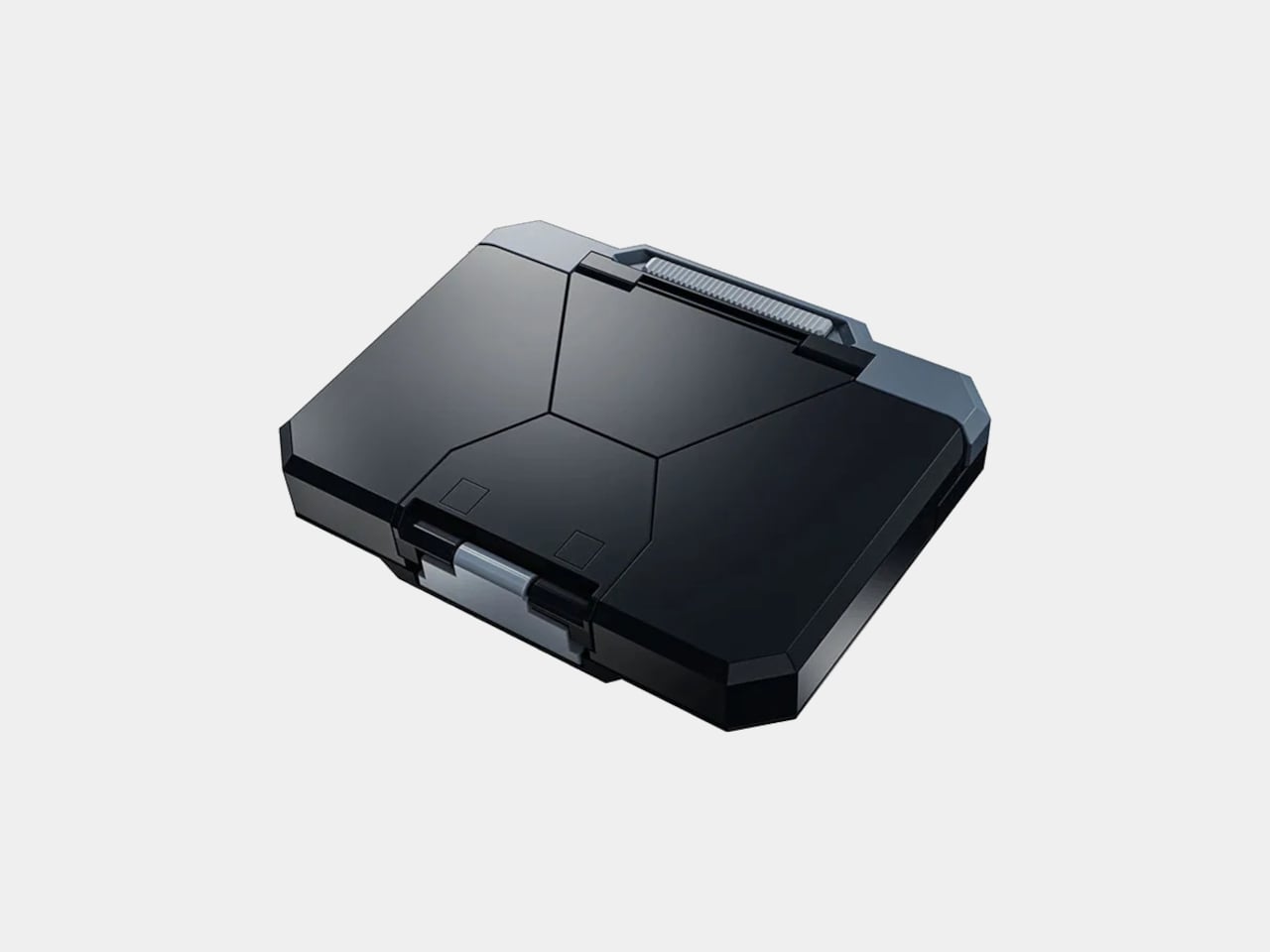
A cactus is probably the last plant you’d associate with moisture. It’s the plant we give to people who forget to water things, the desk companion for the chronically overcommitted. It survives precisely because it hoards water while everything around it is parched. So when designer Ho Joong Lee decided to build a humidifier concept shaped like one, that irony wasn’t incidental. It was the entire premise.

Cabu is a cactus-shaped humidifier concept, but calling it just a humidifier is the kind of reductive description that does it no favors. It’s more accurate to call it a character. A small, solid, ribbed little being that sits quietly on your desk or windowsill, releasing moisture into dry indoor air without demanding too much attention from the room. It occupies space the way a good piece of ceramic does: you notice it, it makes you feel something, and then it just gets on with its job. That quiet self-sufficiency is very cactus-like, actually.

Designer: Ho joong Lee

The design reads immediately as playful, but it holds up to closer inspection. The torso comes in two colors: a deep forest green and a vibrant cobalt blue. Both are rich, saturated tones that don’t feel trend-chasing. They feel considered. The rounded, ridged texture of the body mimics the natural ribbing of a real cactus without tipping into novelty gift shop territory, which is a harder balance to strike than it sounds. Too literal and it becomes a costume. Too abstract and the metaphor dissolves. Lee found the middle ground cleanly.

The flower perched at the crown is where Cabu gets genuinely fun. That small spherical object isn’t just a decorative flourish. It’s the water inlet. You lift it off, pour water in, and set it back. The refilling gesture maps directly onto the idea of watering a plant, which means the most utilitarian part of using a humidifier becomes a small, satisfying ritual. The flower comes in three colors (yellow, orange, and pink) and snaps into place via a magnetic structure that holds without fuss. You can swap colors based on your mood, the season, or how your space is dressed that day. It’s a tiny customization feature, but it adds personality in a way that matters.

On the practical side, the concept specifies USB-C charging and a water level indicator on the back. Neither is revolutionary, but both are handled thoughtfully. The USB-C detail is a small but real quality-of-life decision that shows Lee was thinking about how people actually use things, not just how the object photographs. The water indicator keeps things straightforward: a visible window on the back tells you what you need to know without extra steps. No blinking LEDs, no accompanying app, no setup ritual. You just look.

The color pairings across the concept also deserve a mention. The cobalt blue body paired with a yellow flower carries an almost graphic, retro-poster energy. The deep green with orange reads more earthy and organic, like something you’d find in the corner of a well-curated studio. The point is that neither combination feels accidental. Both read as deliberate aesthetic decisions rather than colorway options to fill out a spec sheet. That level of care signals a designer thinking about how an object coexists with a real space over time.

What Cabu ultimately argues is that home objects don’t have to choose between being useful and being beautiful, and more importantly, they don’t have to be emotionally inert. The cactus carries real symbolic weight. It is resilience distilled into a shape. Using that symbol to combat the dryness of modern indoor spaces is the kind of concept that could easily tip into being overwrought. Here, it doesn’t. The execution is restrained enough that the idea communicates without needing to be explained.

That’s usually the mark of design thinking that’s actually working. The concept doesn’t need a label explaining its meaning. It just holds its own. Whether Cabu ever makes it to production, the conversation it starts about how everyday appliances can carry emotional weight is already worth having.

The post A Cactus Humidifier That’s Also a Design Object first appeared on Yanko Design.
Irontown Modular Built a Tiny Cabin With Vaulted Ceilings & Warm Wood Walls for Under $50K

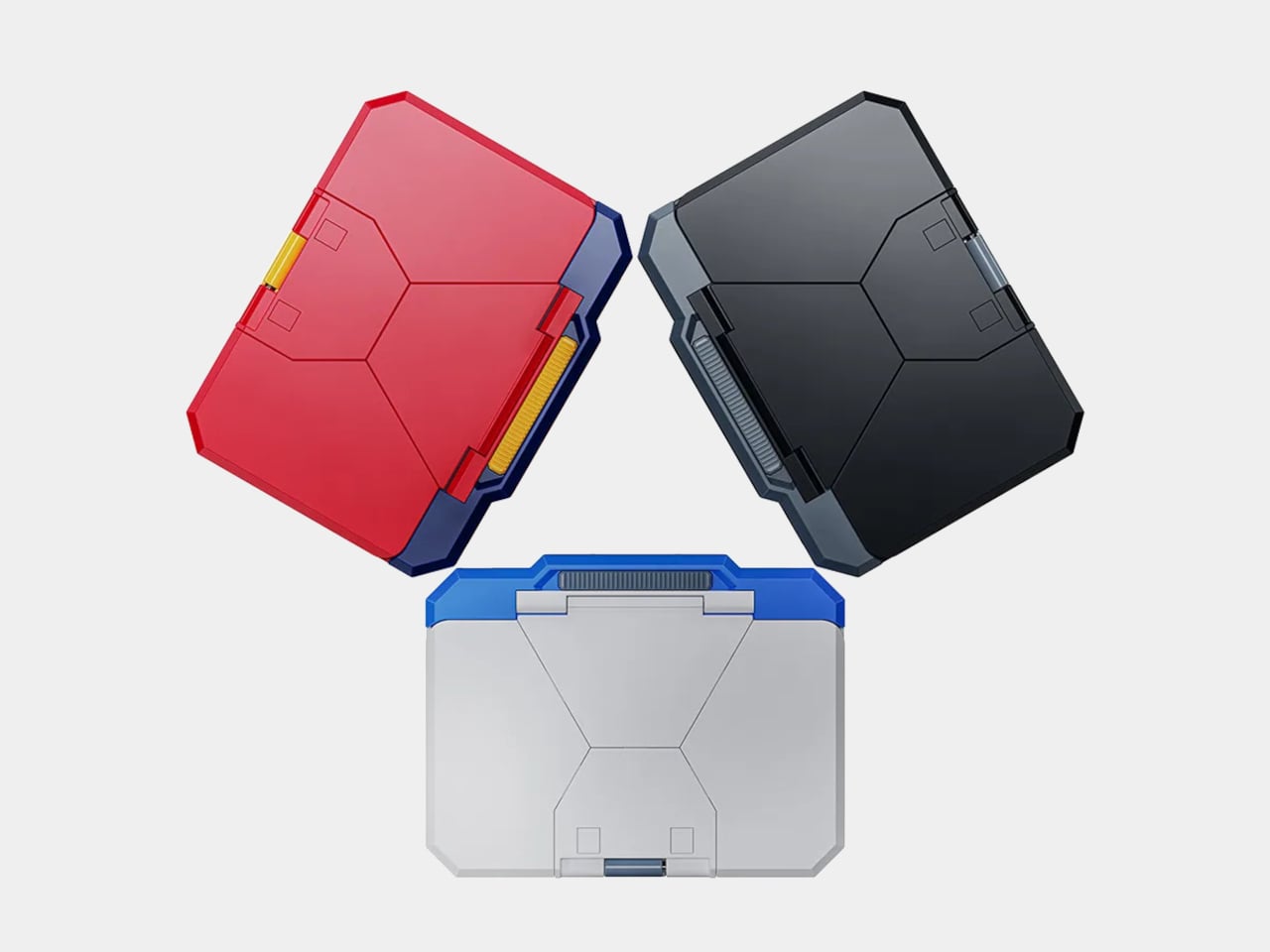
Two hundred square feet sounds like a limitation until you actually see what Irontown Modular did with it. The Sledhaus 200, the latest park model from the Utah-based builder, arrives as a compact, considered cabin that strips the idea of home back to what actually matters.

At just 10 feet wide and 20 feet long, the Sledhaus 200 packs a lofted bedroom, an optional bathroom, a galley kitchen, a living and lounge area, and a front covered porch into its 200 square feet of living space. On paper, that sounds like a tight squeeze. In practice, the design tells a different story. Big windows flood the interior with natural light, warm wood tones wrap the walls with a sense of groundedness, and a vaulted ceiling does the heavy lifting, making the space breathe in a way you wouldn’t expect from something this small.

Designer: Irontown Modular

Irontown Modular describes the Sledhaus 200 as built for “simplicity, style, and serious charm,” and that language isn’t just marketing. The cabin sits within the brand’s Sledhaus line, a series of recreational property-focused designs built for people who want a real retreat, not a compromise. It can be placed directly on a trailer chassis for mobile flexibility or installed as an ADU (accessory dwelling unit) on a fixed foundation, making it one of the more versatile entries in Irontown’s growing catalog.

The use cases are where the Sledhaus 200 gets genuinely interesting. Irontown positions it as the ideal backyard guest suite, a weekend mountain getaway, or even a full-time tiny home for those willing to go all-in on a downsized life. It can be dropped on gravel or fully hooked up to water, electricity, and sewage, giving owners real flexibility in how they choose to use it. For property owners in the American West, particularly, where land is abundant but building costs are not, this is a sensible and stylish answer to a growing need.

Pricing starts at $49,600, making the Sledhaus 200 one of the more accessible entries in the modular park home space. A ready-to-ship model is also currently available at $117,000, which does not include transport or taxes. Irontown ships across Arizona, California, Colorado, Idaho, Montana, Nevada, Oregon, Utah, and Wyoming. In a market crowded with tiny homes that try too hard, the Sledhaus 200 earns its place by doing the opposite, trusting the architecture, keeping the details honest, and letting the space speak for itself.

The post Irontown Modular Built a Tiny Cabin With Vaulted Ceilings & Warm Wood Walls for Under $50K first appeared on Yanko Design.