Take-Two laid off the head its AI division and an undisclosed number of staff

Take-Two, the owner of Grand Theft Auto developer Rockstar Games, has seemingly laid off the head of its AI division, Luke Dicken, and several staff members working under him. "​​It’s truly disappointing that I have to share with you that my time with T2 — and that of my team — has come to an end," Dicken shared in a LinkedIn post spotted by Game Developer

When asked to confirm the layoffs in its AI division, Take-Two declined to comment.

Dicken writes that his team was "developing cutting edge technology to support game development" and his post specifically notes that he's trying to find roles for staff with experience in things like "procedural content for games" and "machine learning." It's unclear how many people other than Dicken have been impacted by these layoffs, but the timing does seem a bit unusual for Take-Two.

Like some other large game publishers, Take-Two has "actively embraced" generative AI tools to "drive efficiencies" and "reduce costs." Take-Two CEO Strauss Zelnick has even framed AI as having a positive effect on employment, noting that generative AI "will not reduce employment, it will increase employment," because "technology always increases productivity, which in turn increases GDP, which in turn increases employment."

It's too early to characterize these layoffs as some sort of tide turning against AI — like other big game companies, Take-Two also just does a lot of layoffs — but it's interesting they're happening now, while the company is speeding towards the release of Grand Theft Auto VI. The sequel is expected to be a big hit, one that should give Take-Two plenty of financial wiggle-room to experiment with new technology.

This article originally appeared on Engadget at https://www.engadget.com/gaming/take-two-laid-off-the-head-its-ai-division-and-an-undisclosed-number-of-staff-182824338.html?src=rss

Apple iPhone 18 Pro Max Leak: Smaller Dynamic Island And More

Apple iPhone 18 Pro Max Leak: Smaller Dynamic Island And More iPhone 18 Pro Max

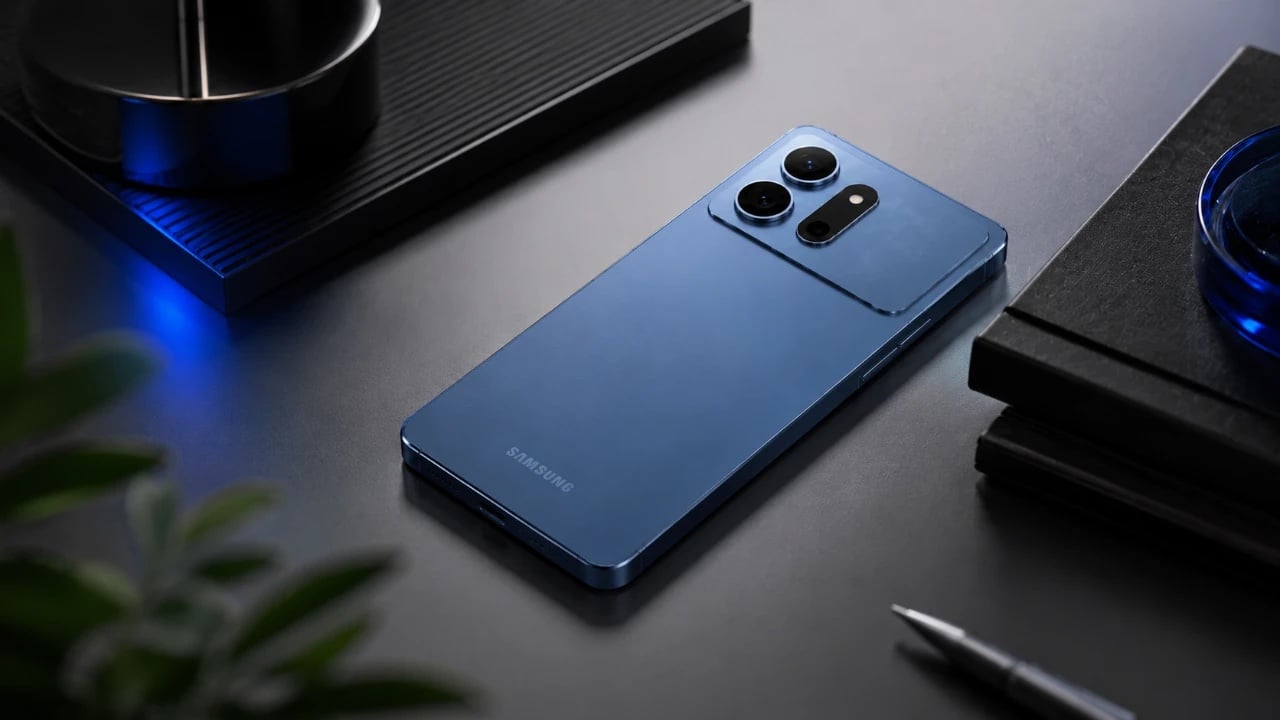
The iPhone 18 Pro Max is shaping up to be a pivotal release in Apple’s storied history of smartphone innovation. Leaks and rumors surrounding the 2027 flagship suggest a focus on refined design elements and advanced hardware miniaturization, signaling Apple’s intent to deliver a more seamless and immersive user experience. These updates are expected to […]

The post Apple iPhone 18 Pro Max Leak: Smaller Dynamic Island And More appeared first on Geeky Gadgets.

Posted in Uncategorized

Much like the game’s zombies, State of Decay 3 is somehow still alive

Amid Microsoft's hacking and slashing of its Xbox division, you wouldn't be crazy for thinking State of Decay 3 was dead. After all, the title was announced nearly six years ago, and, well, we haven't heard much since. But the survival game is still in the pipeline, and developer Undead Labs will hold a series of playtests beginning in May.

In the announcement, franchise co-creator Brant Fitzgerald emphasized the role of community input in the game's continued development. "We've read your feedback on Discord, we've watched your gameplay clips and livestreams on YouTube," he said. "It became clear that community is survival — and that we need your help."

The Alpha playtests will include four-player co-op, new base building and resource strategies and plenty of combat. "If scavenging supplies in the middle of a zombie outbreak sounds fun to you, then grab your ruck, pack some mags and head over to our website to find more information and register for a chance to be included in the Alpha," Fitzgerald said.

Assuming it eventually launches, State of Decay 3 will be available for Xbox and PC. You can sign up for the playtest on the game's website. Undead Labs warned that not everyone will be selected for the first round, but they'll keep your names on the list for future opportunities later this year.

This article originally appeared on Engadget at https://www.engadget.com/gaming/xbox/much-like-the-games-zombies-state-of-decay-3-is-somehow-still-alive-170709155.html?src=rss

Find Social Media Accounts by Photo: Using Face2social for Digital Verification

Find Social Media Accounts by Photo: Using Face2social for Digital Verification

Modern tools allow you to find social media accounts by photo by combining facial recognition with identity verification, significantly reducing search time Trying to find the identity of a possible lover or looking into the past of a potential employee is both easier and harder today. Sure, there are plenty of tools to help, but […]

The post Find Social Media Accounts by Photo: Using Face2social for Digital Verification appeared first on Geeky Gadgets.

Posted in Uncategorized

Instagram Hack: How to See What Someone Likes on Instagram with Snoopreport

Instagram Hack: How to See What Someone Likes on Instagram with Snoopreport Instagram

Instagram does not provide access to another user’s likes. An Instagram activity tracker aggregates publicly available engagement data into structured reports. Imagine for a moment you’re in a long-term relationship. Everything seems great. You spend a lot of time with your partner and head to work feeling supported. What happens when you start to notice […]

The post Instagram Hack: How to See What Someone Likes on Instagram with Snoopreport appeared first on Geeky Gadgets.

Posted in Uncategorized

Xiaomi Pad 8 Review: The $310 Tablet That Feels More Expensive

PROS:


  • Bright and smooth 11.2-inch display

  • Solid accessory ecosystem

  • Long battery life

CONS:


  • No microSD card slot

  • No official IP rating

RATINGS:

AESTHETICS
ERGONOMICS
PERFORMANCE
SUSTAINABILITY / REPAIRABILITY
VALUE FOR MONEY

EDITOR'S QUOTE:

Xiaomi Pad 8 gives you a premium tablet experience without the premium price tag. If entertainment and everyday use are your priorities, this is one of the smartest buys in the mid-range.

Xiaomi Pad 8 is built for casual buyers who want a fast, good-looking tablet without paying flagship prices. It keeps the familiar Pad design, but pairs it with a sharp 11.2-inch 3.2K class 144 Hz display, strong quad speakers, and a noticeably more powerful Snapdragon 8s Gen 4 chipset. The result is a device that feels premium for streaming, browsing, and gaming, even if it is not trying to reinvent what a Xiaomi tablet looks like.

What matters is how complete the package feels in daily use. HyperOS 3 keeps the interface smooth and adds useful multitasking tools like split screen and desktop mode for light productivity. Xiaomi also supports the tablet with practical accessories, including two keyboard options, a cover that doubles as a stand, and the Focus Pen Pro for notes and sketches. If you want one tablet that can handle entertainment and occasional work, Pad 8 is designed to fit that role.

Designer: Xiaomi

Aesthetics

From the outside, the Xiaomi Pad 8 looks almost identical to its predecessor, the Xiaomi Pad 7. The design follows a flat edge language with soft rounded corners that soften the overall silhouette and keep it friendly in the hand. The rear panel is simple and uncluttered, with a single camera island and a centered Xiaomi logo that does not shout for attention. This minimal approach gives the Pad 8 a calm and almost understated personality that feels more premium than its price suggests.

The camera module itself is neatly integrated into the back design. It sits in a small rectangular island that reads more like a design accent than a visual interruption. Edges transition smoothly between the back and the frame, so the tablet looks like a single continuous piece rather than a stack of separate parts. Xiaomi offers the Pad 8 in three colors, Pine Green, Blue, and Gray, and all of these variants are tuned to look subtle and refined rather than loud. All of these add up to a device that feels stylish enough for a café table or a meeting room, without ever looking like a toy or a purely budget gadget.

Ergonomics

While the design focuses on clean lines and visual calm, the build of the Xiaomi Pad 8 focuses on comfort and practicality. Pad 8 measures 241.2 x 173.4 x 5.8 mm and weighs either 485g or 494g, depending on the variant, which makes it slightly slimmer and lighter than Xiaomi Pad 7. The difference on paper may look small, yet in the hand it translates into a tablet that feels more refined and easier to hold for long stretches. For casual users who spend evenings streaming or reading, this gentle reduction in bulk becomes a quiet but meaningful upgrade.

The metal frame feels sturdy in the hand and gives the tablet a reassuring sense of solidity. Button placement feels thoughtful as well, with the power and volume keys sitting where your fingers naturally land when you hold the tablet. You do not have to stretch awkwardly to adjust volume during a show, which keeps the experience relaxed and natural. The stereo speakers are positioned so that your hands are less likely to block them when you grip the device in landscape, which helps maintain clear sound without forcing you to change how you hold the tablet.

Performance

The display remains largely unchanged from Pad 7. You get an 11.2-inch IPS panel with a sharp 3.2K class resolution and a very fast 144 Hz refresh rate. Brightness peaks around 800 nits, which is strong for an LCD in this range and helps keep the screen readable near windows or outdoors on bright days. It supports DCI P3, HDR10, HDR10+, HDR Vivid, and Dolby Vision, so movies and shows benefit from richer colors and better contrast when the content is mastered for it.

Like most tablets with a glossy front glass, the Pad 8 screen is fairly reflective, so you will notice glare near bright windows or under strong indoor lighting. It is not worse than what you will see on most competing tablets. Xiaomi will also offer a Pad 8 Matte Glass version globally, and that option should be the better pick if reflections annoy you.

Audio quality keeps pace with the visuals. The Pad 8 uses a four-speaker setup that creates a satisfying level of volume and a well-balanced soundstage. Voices stay clear in dialogue-heavy scenes, while music and effects have enough presence to make games and films feel more immersive. This means you can comfortably watch or play without always reaching for headphones.

The biggest upgrade comes from the chipset. Xiaomi Pad 8 runs on the Snapdragon 8s Gen 4 processor, and the GPU delivers plenty of power for modern titles and smooth animations across the interface. Even when you play graphically demanding games for long sessions, the device does not stutter, and it keeps its temperature under control, so performance remains stable, and the tablet stays comfortable to hold.

That performance is backed by a straightforward set of memory and storage options. You can choose between 8 GB and 128 GB, 8 GB and 256 GB, or 12 GB and 256 GB. The 8 GB model uses LPDDR5X memory, while the 12 GB model steps up to LPDDR5T, and storage is either 128 GB UFS 3.1 or 256 GB UFS 4.1, depending on the version you choose. There is no microSD card slot, so it is worth picking the capacity you will be happy with long term. The USB-C port also supports display output, so you can connect Pad 8 to an external monitor when you need a bigger screen for work or entertainment.

Xiaomi Pad 8 runs HyperOS 3 based on Android 16, and it feels quick and modern. The interface is clean, and it makes the large screen feel purposeful rather than like a stretched phone layout. It stays out of your way and keeps everyday tasks feeling smooth.

It supports split-screen multitasking, including a vertical split view that makes better use of the display. Xiaomi also keeps its desktop mode here, letting you open up to four floating, flexible windows at once for light productivity. This is handy when you want to browse, chat, and reference a document without constantly switching apps.

If you already own a Xiaomi phone, the ecosystem integration works very well. You can transfer calls and files between your phone and tablet seamlessly, and you can even mirror your phone screen directly on the Pad 8. For users who live in the Xiaomi ecosystem, this kind of connected experience makes the tablet feel like a natural extension of your phone rather than a separate device.

Cameras are not a headline feature on most tablets, and Xiaomi Pad 8 follows that familiar pattern. You get a 13 MP rear camera and an 8 MP front camera, which is enough for scanning documents, grabbing reference photos, and handling video calls without fuss. Image quality is best in good light, but for casual use, it is perfectly serviceable and convenient.

Battery size sees a modest upgrade, now with a 9200 mAh cell instead of the 8850 mAh unit in Pad 7, and it matches the capacity of the more expensive Pad 8 Pro. In real use, that means a full day of mixed activity is easy to achieve, even if you spend several hours streaming video and browsing. Light users who mostly read, check email, and watch a bit of content in the evening can often stretch the tablet across multiple days between charges.

Charging speed is unchanged from Pad 7 at 45W, so you still get reasonably quick top-ups when you plug in. Pad 8 now also supports 25W reverse charging, which lets you use the tablet as a power source for other devices when needed. This is especially handy for phones, earbuds, or accessories that are running low, and it adds a practical bonus to that large battery that casual users will appreciate on trips or long days out.

Xiaomi offers a solid accessory lineup for Pad 8, including the Xiaomi Pad 8 and Pad 8 Pro Focus Keyboard, the standard Keyboard, the Cover, and the Xiaomi Focus Pen Pro. Both keyboards are comfortable to type on, and the cover doubles as a stand for easy viewing. If you are coming from Pad 7, most of these accessories will feel familiar, since the Focus Keyboard, Keyboard, and Cover are largely unchanged from the previous generation.

The most interesting addition is the Xiaomi Focus Pen Pro. It goes button-free for a cleaner, simpler feel, and it adds pressure sensitivity with haptic feedback for more natural writing and sketching. Even if you are not an artist, pressure sensitivity makes note-taking feel smoother and more expressive than a basic stylus. You can squeeze to open a choice of three apps. In the drawing app, you can slide your finger through the Pen to change the brush size. It will take some time to get used to, and the sensitivity and responsiveness can be improved.

Sustainability

Xiaomi makes a solid commitment to longevity with Pad 8. The tablet is promised 4 years of OS updates and 6 years of security patches, which helps it stay secure and usable for much longer than many budget and mid-range Android tablets. For casual buyers, that means you can treat it as a long-term device rather than something you will quickly need to replace.

On the hardware side, the build feels solid and reassuring in the hand, but there is no official IP rating for dust or water resistance, so you still need to be careful around spills and rough environments. A decent case and perhaps a screen protector are sensible additions if you plan to carry it everywhere. In short, the software support looks built to last, the chassis feels robust, and the overall physical durability will still depend on how well you protect it.

Value

Xiaomi Pad 8 offers strong everyday value for casual buyers, with a sharp 11.2-inch 3.2K class 144 Hz display, quad speakers, Snapdragon 8s Gen 4 performance, and a large 9200 mAh battery. In China, pricing starts at CNY 2,199 for the 8 GB and 128 GB models, commonly quoted as about $310, with higher tiers at CNY 2,499, about $350, and CNY 2,799, about $390. US and EU pricing will differ, but the message is clear. Xiaomi is aiming for premium specs without a premium price.

The compromises are straightforward. There is no microSD card slot on the Pad 8, so you need to choose your storage tier carefully from the start. There is also no fingerprint sensor on Pad 8, so you need the Pad 8 Pro if you want that convenience. The standard screen is also reflective unless you opt for the Matte Glass version. If those points do not bother you, Pad 8 lands in a very appealing sweet spot for streaming, browsing, and gaming.

Verdict

Xiaomi Pad 8 is an easy tablet to like because it focuses on the basics and executes them well. The display is sharp and fluid, the speakers are loud and balanced, and performance stays stable even during longer gaming sessions. It also feels solid in the hand, and the slimmer, lighter body makes it comfortable for long reading or streaming sessions.

The downsides are straightforward, with no fingerprint sensor, no microSD card slot, and a glossy screen that can show reflections unless you choose the Matte Glass version. On the plus side, Xiaomi’s accessory lineup gives you room to grow, whether you want a keyboard setup for light work or a pressure-sensitive pen for note-taking. The overall package lands as a strong value, especially if your tablet time revolves around entertainment with occasional productivity.

The post Xiaomi Pad 8 Review: The $310 Tablet That Feels More Expensive first appeared on Yanko Design.
Trump labor board tells Amazon to negotiate with Staten Island warehouse union

The Trump administration's labor board has ordered Amazon to recognize and bargain with the International Brotherhood of Teamsters union, which represents workers at a warehouse in Staten Island. This is just the latest chapter in a multiyear standoff between Staten Island warehouse workers and Amazon, according to a report by The Washington Post.

The union has been trying to bring Amazon to the bargaining table for years to negotiate pay, benefits and workplace safety. The labor board's proclamation doesn't mean that the battle is over. It's highly likely this will be settled in court.

An Amazon spokesperson maintains that the vote to create the union was "wrong on the facts of the law" and that representatives from the National Labor Relations Board "improperly influenced the election." The company recently stated it is "confident an unbiased court will overturn the original certification."

Despite the eventual outcome, Teamsters President Sean O’Brien is lauding the Staten Island workers for becoming "the first group ever to force the company to recognize their union." Workers at the facility voted to unionize in 2022 and this was the first union victory for Amazon employees in the US.

It was considered a milestone victory for US workers across the board, given that Amazon is the country's second-largest employer. That was four years ago and led to a contracted legal battle, as Amazon has refused to recognize the union. Since that original vote, the labor board has repeatedly found that Amazon violated workers’ union rights at the Staten Island warehouse. For instance, the company didn't pay employees when they were forced to stop working due to a warehouse fire at the tail-end of 2022 and suspended 50 employees for staging a walkout due to unsafe work conditions.

There were also several harrowing incidents leading up to the union vote. It's been reported that the company illegally fired multiple Staten Island warehouse workers during the Covid pandemic. The NY Attorney General also found safety conditions at the warehouse to be "inadequate." A recent study echoes that sentiment, calling out the Staten Island warehouse for dangerous working conditions. The report says that there are 7.2 serious injuries for every 100 workers.

Other US-based Amazon warehouses have yet to follow suit and unionize like Staten Island, but the same isn't true in Canada. Workers at a warehouse in Quebec voted to form a union back in 2024.

This article originally appeared on Engadget at https://www.engadget.com/big-tech/trump-labor-board-tells-amazon-to-negotiate-with-staten-island-warehouse-union-161149065.html?src=rss

The Super Mario Galaxy Movie is a black hole of entertainment

I realized something was genuinely wrong with The Super Mario Galaxy Movie about 30 minutes in: I hadn't laughed even once. My audience of around 15 people, including a few families, was dead silent as well. The guy sitting behind me, a Nintendo fan decked out in Mario gear, was so bored he fell asleep. Sure, this is made for kids, but as a Nintendo devotee myself, and someone who has to watch a ton of children's films on repeat, even the Despicable Me films are more entertaining. 

To be fair, there's the pretense of a plot: Koopa Jr. and Peach are on parallel tracks to reconnect with a sense of family, in their own ways. But the movie leaps from scene to scene joylessly, with no sense of storytelling or characterization, glued together by the "oh I remember that guy"-ness of empty corporate nostalgia. It's even less of a movie than the previous Pratt-led popcorn flick. 

The Super Mario Galaxy Movie
Luigi, Yoshi, Mario and Toad in The Super Mario Galaxy Movie
Nintendo and Illumination

Take the discovery of Yoshi, which takes place early in the film. Mario and Luigi just find him in a cave and he immediately becomes part of the crew, no questions asked. There's a brief creative sequence where Yoshi wreaks havoc in the real world, but it's far too short. Yoshi's got plot duties to fulfill, after all! He’s the perfect sidekick, with no desires of his own and the bare minimum of characterization (thanks to Donald Glover’s voice, oddly enough. Dude's got range!)

I argued that the first Mario film felt a bit too safe, but at least it had a few moments to shine: Like an early side-scrolling sequence, and Jack Black's endearingly musical take on Koopa. The only truly inventive sequence in this movie involves Star Fox's Fox McCloud, voiced with just the right dose of attitude by current Hollywood "it guy" Glen Powell. He briefly recounts his story in anime form, and yes, he does a barrel roll or two. 

The Super Mario Galaxy Movie
Bowser Jr. and Bowser in The Super Mario Galaxy Movie.
Nintendo and Illumination

Now it doesn't make much sense why Fox is actually in the film, but a few half-hearted fight sequences throughout makes it seem like Nintendo is setting up an eventual Avengers-style Smash Bros. movie. What better way to cram in even more characters and references! Isn't that what franchise filmmaking is all about? 

I'd like to think Nintendo and its collaborators can do better. This is a company known for the thoughtfulness of its game designs, for delivering quirky and inventive player experiences and for not always following the competition. None of that applies to The Super Mario Galaxy Movie. There’s little in the way of creativity. It barely respects the audience’s time. And it is, in every sense, just following the More, Louder, Busier playbook for unfocused franchise sequels. 

The Super Mario Galaxy Movie is so soulless, it makes me worried about the upcoming Legend of Zelda film (which at least has a far more respectable creative team). Sure, it’s  hard to expect genuine cinema from a Mario film. But we live in an era of great kids movies – Pixar’s Hoppers was an absolute hoot wrapped in an environmentalist message; The Lego Movie (and its sequel and side stories) manage to deliver both laughs and heart. Kids deserve better than an empty sequel moneygrab.

This article originally appeared on Engadget at https://www.engadget.com/entertainment/tv-movies/the-super-mario-galaxy-movie-is-a-black-hole-of-entertainment-154406362.html?src=rss

One is Tall, One is Wide: Everything New with the Galaxy Z Fold 8 and Fold 8 Wide

One is Tall, One is Wide: Everything New with the Galaxy Z Fold 8 and Fold 8 Wide Galaxy Z Fold 8 and Fold 8 Wide

Samsung’s Galaxy Z Fold 8 and Galaxy Z Fold Wide 8 highlight two distinct approaches to foldable smartphone design. While both models share the innovative foldable form factor, they differ significantly in areas such as battery capacity, dimensions, screen sizes, and camera technology. Understanding these differences can help you choose the device that best aligns […]

The post One is Tall, One is Wide: Everything New with the Galaxy Z Fold 8 and Fold 8 Wide appeared first on Geeky Gadgets.

Posted in Uncategorized

The Tray That Knows You Eat in Bed

Most of us don’t eat at the dining table anymore. Not really. The pandemic accelerated something that was already quietly happening: meals migrating from the kitchen to the living room, the bedroom, the desk, the floor. We eat while watching something, while scrolling something, while half-working and half-resting. The dining table still exists, sure, but as a concept, it has become more aspirational than actual.

And yet, the tools we use to manage the air around our food haven’t moved with us. Range hoods are bolted to the ceiling above a stove. Portable air purifiers sit in corners, doing their best from across the room. Even the newer tabletop options ask you to position them just right, or carry them separately, adding friction to something that should feel effortless. For a culture that has fully embraced eating anywhere, the air solutions available to us are still very much designed for eating in one place.

Designer: Junho Han

Junho Han’s Notrace:Null addresses this with a level of clarity that makes you wonder why no one thought of it sooner. The concept is simple: instead of building a separate device that you need to carry alongside your food, the air purification system is built directly into the tray. You pick up your food, and the solution comes with it. No extra steps, no reconfiguration, no reminder to bring the device. The tray is the device.

Visually, Notrace:Null makes almost no noise about what it does. The design is quiet and off-white, with a flat surface that opens to reveal an internal filter system underneath. A small button sits flush against the side, the only visible sign that this tray does anything beyond hold a bowl of ramen. The fine venting grid along the underside is equally understated. That restraint feels deliberate, and it is the right call. The best-designed things tend to look like they were always supposed to exist, and Notrace:Null has that quality.

What strikes me about this concept is that it doesn’t try to change behavior. It slots into the routine that already exists. You grab the tray, put your food on it, carry it to wherever you’ve decided to eat tonight, and that’s it. The air filtration happens as a byproduct of your usual movement. Han describes this as “the most natural solution,” and the framing holds up. Good design doesn’t demand that users adapt to it. It adapts to users instead.

The project also makes a quiet cultural observation worth sitting with. The rise of single-person households, convenience foods, and personalized streaming content has fundamentally changed where and how people eat. We don’t just eat in the kitchen anymore. We eat throughout the entire home, and that shift has real consequences for air quality. Food odors that once stayed contained now travel freely. Bedrooms carry the memory of last night’s dinner. Living rooms hold the ghost of lunch. Notrace:Null is designed around this reality rather than around the home we’re told we should have.

It’s still a concept, and that’s worth noting. As a Behance project, Notrace:Null exists in that productive space between idea and product, where the thinking is fully formed but the execution remains hypothetical. The concept feels mature enough to be producible, though. The form factor is practical, the use case is real, and the need is clearly there. If it ever makes it to market, it would fill a gap in the air quality space that nobody has managed to articulate this well before.

Design concepts like this remind me why speculative design matters. Not everything needs to ship immediately to be valuable. Sometimes a well-considered idea just needs to exist, to put the question on the table and make it harder to ignore. Notrace:Null asks a simple question: if how we eat has changed, shouldn’t the tools that support it change too? The answer is obvious. The solution, it turns out, was hiding in a tray.

The post The Tray That Knows You Eat in Bed first appeared on Yanko Design.