Wireless earbuds concept suggests a novel and weird way to clean it

Wireless earbuds, particularly the so-called True Wireless Stereo or TWS earbuds, have now become a common sight, in no small part thanks to Apple retiring the headphone jack and pushing the AirPods as a solution. These accessories come in different shapes and sizes, but the one common design they share is that the buds are enclosed in a container that acts as their charger as well. As any user of these tiny buds has experienced by now, both the buds and their are often exposed to dirt and grime that could become a health issue over time. Cleaning the earbuds themselves might be trivial, but when that dirt gets deep inside the case, the task becomes significantly more difficult. This concept tries to solve that problem by practically overhauling the charging case design, and it takes inspiration from the weirdest source to implement the strangest cleaning method.

Designer: Seungjae Lee

For TWS earbuds that store the buds’ stems vertically like with the Apple AirPods, the charging cases have a small and deep tunnel where dirt and bacteria can get in and fester. It’s not impossible to clean but it does take some effort, requiring you to really stop and use some tools to wipe the dirt deep inside. If only you could blow the dust and dirt away quickly when you need to, just like with many other objects you might have with you.

The Double Barrel Bluetooth Earbuds concept offers that convenience by turning the charging case into two hollow tubes with openings on both ends. The inspiration for this design was, apparently, a double-barrel shotgun, which is probably the last thing you’d expect to associate with non-violent wireless earbuds. As a visual embellishment, inserting and removing the earbuds would light up LEDs inside the barrel, as if you were shooting bullets.

For this to work, however, the buds themselves have to be straight, which would have been awkward to wear inside our ears. The concept proposes to make the tips foldable so they would take the form of typical earbuds that you can comfortably wear in your ears. And because of the double-ended opening, you can actually put in or remove the buds in either direction.

While the concept design is definitely interesting, it is based on the rather shaky premise that cleaning the earbuds case by blowing into them is actually a smart idea. Our breaths aren’t exactly clean and, more importantly, they also carry with them small saliva particles that could damage the charging contacts inside. And by keeping both ends open, the case would actually invite even more dirt and particles inside, making regular cleaning even more of a chore.

The post Wireless earbuds concept suggests a novel and weird way to clean it first appeared on Yanko Design.

Apple HomePod with a Screen is coming to revive a forgotten smart home category

Although they look and seem like they’re made just for playing music, smart speakers are, of course, a lot more capable than simple wireless speakers. In fact, they were born to showcase the power of AI-powered smart assistants like Amazon Alexa, Google Assistant, and Apple Siri, which is also why the speaker quality of the first generation of speakers left much to be desired. While controlling your devices and appliances using your voice felt almost magical, it also became quite tiring quickly, especially when you could do things faster using an app on your phone. That’s the reason why smart speakers with displays, a.k.a. smart displays, were born, and that design might finally be coming to Apple’s ecosystem, potentially bringing life back to stagnant waters.

Designer: Apple (via MacWorld)

It’s been a while since we’ve seen a new smart display coming from the major brands. The latest Amazon Echo Show last year is actually just an upgraded Echo Show 5. Google launched the 2nd-generation Nest Hub in 2021, though some might argue that the Google Pixel Tablet and its speaker dock actually fall under this category. After all, most of these smart displays do look like smart speakers with a tablet stuck on top of them.

Amazon Echo Show 10

Amazon Echo Show 10

That design might be coming to Apple’s smart home device category, thanks to clues found in the latest beta testing of tvOS 17.4. There is no direct evidence, of course, just a new device codenamed “Z314” that just happens to share some internal hardware with the iPad mini 6. The HomePod was actually discovered to already be running tvOS, which would have been weird if it didn’t eventually get some visual capabilities. Again, much of these are based on speculation, but the hints seem to be building up and pointing toward a spring 2024 reveal.

Google Nest Hub 2

Google Nest Hub 2

A HomePod with a touch screen, even just a 7-inch one as indicated by rumors, will offer a significant upgrade to people’s user experience. Although the HomePod already offers physical controls for quickly controlling music, anything else has to be done either through Siri or through a connected iPhone or iPad. The latter scenario, however, can cause additional battery drain to mobile devices, so a dedicated display will go a long way in making it more convenient to access Apple Home settings, media controls, and more. Of course, sticking a tablet on top of a HomePod isn’t the only possible design option available, as our very own Sarang Sheth explored in a piece that envisioned an aesthetic that matched Apple’s style more closely.

That said, it also isn’t certain how far Apple will go in what features it will provide on that screen. The likes of the Amazon Echo Show and Google Nest Hub offer video capabilities, though that has also been a thorny subject as far as YouTube is concerned. Apple is traditionally even more conservative in what it allows on its devices, so we can probably expect functionality limited to smart home control, FaceTime, and, of course, its own library of tunes and videos.

Google Pixel Tablet

Google Pixel Tablet

Google Pixel Tablet

Google Pixel Tablet

The post Apple HomePod with a Screen is coming to revive a forgotten smart home category first appeared on Yanko Design.

Casetify’s new AirPods Case isn’t pocket-friendly… but it’s definitely a collector’s item

“Let me wear my AirPods…”
*proceeds to pull an Iron Man helmet out of their backpack*

I’ll be honest – is Casetify’s latest AirPods case practical? Hell no. Is it cool? Oh absolutely. Partnering with Marvel, the company debuted a few Iron Man-themed accessories, although none as on-the-nose as their AirPods case. Designed to look exactly like an Iron Man helmet that opens up to reveal your TWS earbuds, this little number comes with a stand you can place it on a carabiner clip in case you want to strap it to your backpack… and the best part, light-up eyes that should surely grab the attention of fellow enthusiasts.

Designer: Casetify

Designed for the AirPods Pro and Pro 2, the case is roughly fist-sized, and comes with a painted plastic finish (although a chrome-plating would really seal the deal). The Iron Man head opens just the way the helmet does in the movies, although that doesn’t open the lid of the AirPods Pro case… you still need to flip the helmet open, and then flip open the AirPods case lid to get to your TWS earbuds. A bit of a hassle, sure, but heck… does it look cool.

The Tony Stark-esque holder doesn’t charge your AirPods Pro, however. It’s merely just an outer cover for storing your AirPods in, eschewing that boring white plastic exterior for something more edgy and cool. The best part, however, is the fact that the eyes actually light up. Relying on a single CR2032 coin battery, the eyes on the helmet glow in the signature blue when you shut the helmet, shining for 2 minutes before they dim out automatically.

Priced at $122, the Iron Man AirPods Pro case isn’t specifically pocket-friendly (both physically and fiscally), but it’s definitely worth adding to your collection if you consider yourself a comic-book aficionado or just a fan of the franchise. At least it’s big enough that you won’t be able to accidentally lose it, right??

The post Casetify’s new AirPods Case isn’t pocket-friendly… but it’s definitely a collector’s item first appeared on Yanko Design.

The “Willy Wonka” of musical instruments created this oddly appealing portable MIDI guitar

Nobody has destroyed, rebuilt, and reimagined the notion of synthesizers as much as Love Hultén. The maverick synth-maker is credited with designing some of the most incredible-looking electronic music machines out there (we’ve covered a fair few), from synths and loopers to modular electro units and even some record players and arcade games on the side. The Sweden-based music aficionado and synth-builder kicked off 2024 with a new project in collaboration with ‘catbeats’. Although this particular device doesn’t have a name yet, Hultén mentioned that it’s a unique-looking MIDI guitar that has a NESpoly synth on the inside, and a detachable fretboard that makes the entire apparatus easy to travel with.

Designer: Love Hultén

The unconventional design of the MIDI instrument is just about as much of a hat top to a guitar as possible. It does have a fretboard that triggers notes, and a dedicated strumming section for chords and such, but you’ve also got a variety of knobs and buttons that loop, modulate, play/pause, and increase/decrease the gain of what you’re playing.

The entire design can be disassembled for travel, and features a few quirky details made specifically for the user. Given catbeats’ obsession with felines, the guitar has a cat avatar in the bottom corner underneath a removable clear dome. Reminiscent of those cat backpacks that have the pet behind a clear plastic structure, the dome can be removed to access the tiny avatar underneath, and the avatar is made to be replaceable too, allowing you to swap out cats based on mood. Hultén also details that the guitar’s strap is made from ‘extraterrestrial skin’, although that’s just fancy wording given that the strap’s crafted from a clear flexible plastic sheet (or maybe aliens have better skincare than I do)…

MIDI guitars are unusual to come by, although if I did expect them, it would probably be from Hultén. The Gothenburg-based artist has worked on some rather unique and inspiring electronic products, from a circular Game Boy to a synth made from plastic dentures. Sure, this guitar doesn’t feature too high on Hultén’s weirdness scale, but it’s a remarkable representation of how his brain works.

Close-up view of the avatar area and the removable plastic dome.

The post The “Willy Wonka” of musical instruments created this oddly appealing portable MIDI guitar first appeared on Yanko Design.

Razor-thin turntable brings an uber-futuristic touch to your retro vinyl collection

Sleekness was never really a consideration back in the 50s and 60s when vinyl discs were still popular… which is why turntables and vinyl players never really explored thin-ness as a design aesthetic. The most any company ever did was integrate minimalism into their design language (a la Braun), but products weren’t generally designed to be razor thin. Which is why the BÖNWERK Turntable feels so visually exciting – it brings a novel design direction to an otherwise aged product category. Trends (whether fashion or tech) are always cyclical, and vinyls have been gaining popularity over the last few years… but traditional vinyl players don’t live up to the design sensibilities of today. The BÖNWERK Turntable is a gorgeous concept that boasts the same wedge-shaped design detail popularized by the MacBook Air. The rotating disc sits on a razor-thin platform, which gradually becomes thicker near the turntable’s control panel, creating an overall aesthetic that’s practically invisible, but emotionally impactful.

Designers: Mateo Rombolá & Tobias Quirici

“The primary goal of this project was to create a cutting-edge and sophisticated turntable tailored specifically for expert users in the audiophile world,” said designer-duo Mateo Rombolá and Tobias Quirici. “Our focus centered on prioritizing user semantics and experience, elevating these aspects above mere functional distinctions.”

Functionally, the BÖNWERK Turntable isn’t too different from the ones you’d otherwise find on the market. It has the tonearm with a cartridge and needle on one end, and a counterweight on the other. The tonearm sits at the center, with the rotating disc platform on one side, and a control panel on the other with a strobe light, RPM controller, volume knob, highs and lows control, and a start/stop button.

Flip the BÖNWERK Turntable over and you see its actual mass, which hides underneath a super-sleek exterior. Almost mirroring the design of the MacBook Air (or even older iPhones, which used to hide the camera bump in the side-view photos), the mass hides itself well thanks to a slick outer profile that your eyes see (instead of the volume underneath). This makes the BÖNWERK Turntable look MUCH thinner than it already is, which adds to its appeal. The appeal also extends to the minimal visual language used in the rest of the turntable’s design, from the use of plain black and metallic hues, sharp geometric shapes, knurled metal knobs, and the palpable absence of any text, giving the turntable its signature clean look.

The post Razor-thin turntable brings an uber-futuristic touch to your retro vinyl collection first appeared on Yanko Design.

The Nothing X AIAIAI Headphones combine transparency and modularity into one incredible design

Although unofficial, the Nothing x AIAIAI’s headphones show how two company’s visions can align for one brief and beautiful moment to create a design that’s gorgeous to look at, and great to use. The Nothing X AIAIAI Headphones are a masterclass in iconic design, mirroring the uniqueness of individual details seen in the AirPods Max… except, this time, with the transparent flair of the London-based tech startup.

Designer: Ma Yc

Ma Yc’s headphone concept borrows the best that Nothing and AIAIAI’s design languages have to offer. For AIAIAI, there’s the classic TMA-2 Wireless design, comprising modular parts that can easily be replaced and swapped out on the fly. For Nothing, however, there’s the absolutely drop-dead beautiful transparent housing that you can see on the cans, on the ear stem, and even on the ear cushions. Ma Yc’s choice of transparent cushioning on the headrest instantly sets this headphone apart as memorable… quite like the AirPods Max’s tensile fabric headrest.

The headphones come in two color variants – a black and a white, quite like the rest of Nothing’s lineup. The design is almost exactly a tribute to the TMA-2 wireless headphones from AIAIAI, featuring slide-out cans, removable ear-cups, and detachable aux cables that connect the headphone’s elements together. Modularity has never really been Nothing’s mission statement, but to be honest, the aesthetic and modular design of AIAIAI’s headphones translate rather well onto the Nothing brand, making this a collaboration for the books. Let’s hope Carl Pei’s reading this…

The post The Nothing X AIAIAI Headphones combine transparency and modularity into one incredible design first appeared on Yanko Design.

Sunflower-inspired speaker concept lets sound follow you wherever you go

Smart speakers are becoming a common sight in homes these days, even those that have yet to wander into the smart home category. They come in all shapes and sizes, but most of the designs have one thing in common. Given the design of drivers, they can only project sound in one direction, usually forward. You can have a 360-degree speaker, but that requires having more complicated hardware or a cylindrical design that has to be placed somewhere in the middle of the room to make sure the sound reaches you where you are. This concept design, however, offers a simpler but more interesting solution, taking a cue from one of Mother Nature’s more curious creations. This circular speaker turns to make sure that sound is sent in your direction, following you all the time just like a sunflower follows the sun.

Designer: Joon-Yeol Bae

In general, sound travels in the direction an emitter, such as a speaker, is facing. It can bounce off objects or spread a bit in a cone, but on its own, it will never change its forward direction. Omni-directional speakers solve this by having drivers that face multiple directions to cover all possible directions. While effective and a common practice these days, it also means multiplying the number of components used, raising the build cost. In some cases, it also requires that the speaker be placed in an open and unobstructed area of the room, which limits your interior design options.

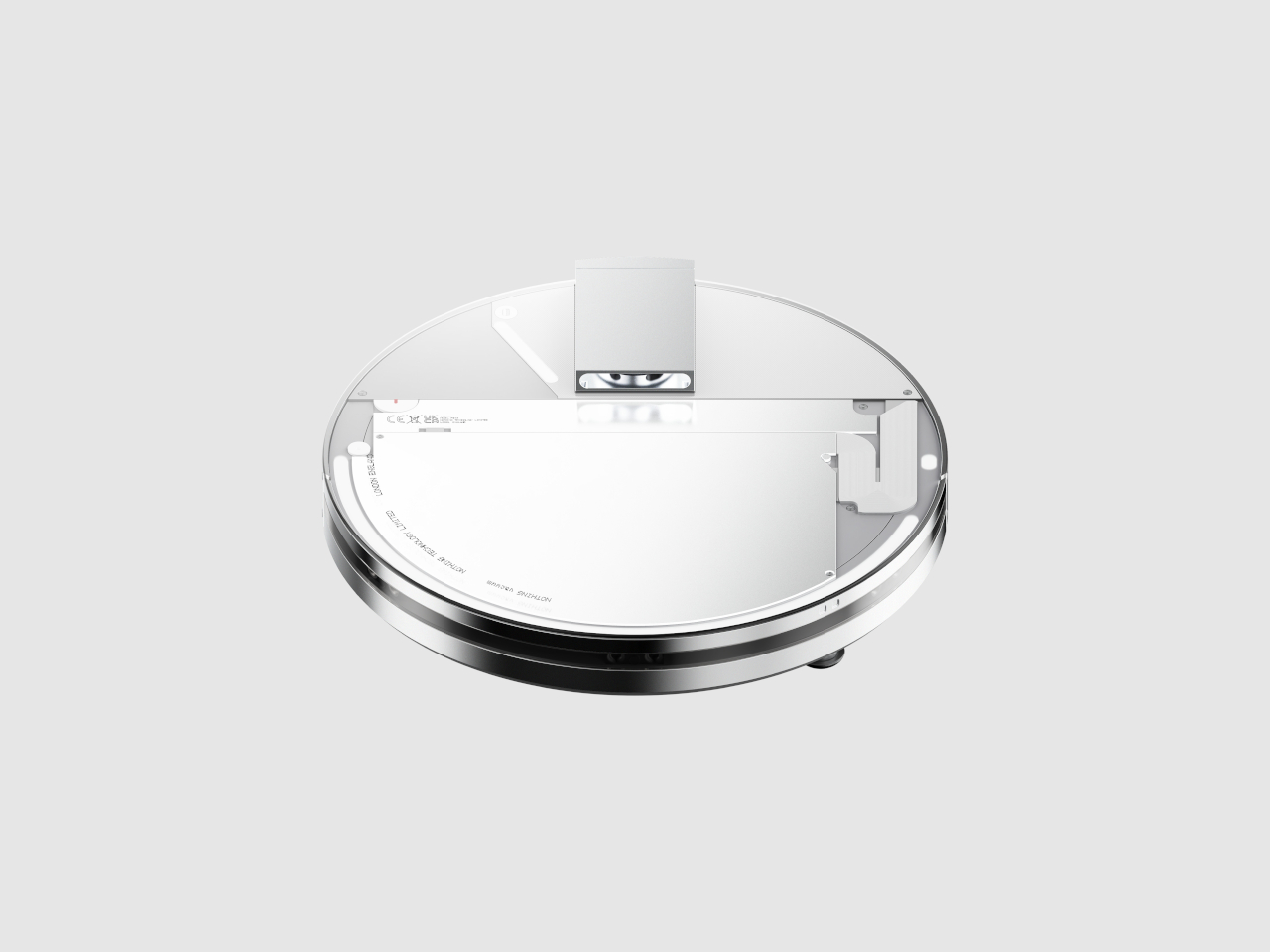
Solros, named after “sunflower” in Swedish, is a concept that takes an unconventional approach. Employing the same technologies used by self-driving cars and robot vacuums, it can tell where you are and rotate its disc-shaped head to always face in your direction. It can even detect how near or far you are from the speaker and adjust its volume to compensate for the distance. This has the effect of making the sound feel like it’s always following you, wherever you go inside a space.

The speaker is also designed to blend into the background if you need it or become the center of attraction if you want it. Its minimalist design, which can be made available in beige, black, red, and green colors, makes it a perfect fit for almost any interior. Its graceful movements also minimize distractions while, at the same time, becoming a point of curiosity for visitors. Needless to say, it’s going to be a conversation starter, especially when the music starts to play.

As interesting as this design might be, it does raise the question of how effective it will be when there is more than one person in the room. LIDAR alone won’t be able to give priority to certain individuals, say the homeowner, and the speaker might end up getting confused and frozen in place instead of making sure its sound is sent in the right direction. Solros definitely makes the composition of a speaker a bit simpler, but the logic necessary to avoid a deadlock makes it a bit more complicated than a more straightforward 360-degree speaker.

The post Sunflower-inspired speaker concept lets sound follow you wherever you go first appeared on Yanko Design.

This Flat-panel 350W Guitar Amp is actually thinner than most guitars…

It’s thinner than a Harry Potter or Game of Thrones novel… if we’re still using those benchmarks to compare things these days.

At NAMM 2024, Eminent Technology recently debuted the Model Twenty Two, a groundbreaking flat-panel active guitar speaker, marking a significant advancement from its predecessor, the Model Twenty. This new model is distinguished by its compact size, measuring 16 x 22 inches, boasting a thickness of just under 5 inches, and a lightweight design at just 16.5 pounds, making it highly portable for musicians on the go. It’s not just its slim profile that’s impressive; the Model Twenty Two boasts a powerful 350-watt built-in amplifier, capable of catering to a variety of audio sources like guitars, vocals, and keyboards.

Designer: Eminent Technology

This innovative speaker combines the functionalities of an amplifier and speaker in one sleek package. It is equipped with a full-range, flat response (FRFR) speaker capability, allowing it to handle different guitar amp modeling units and even serve as a small PA system with an output of up to 120 decibels. For added versatility, it includes a high-headroom clean preamp and a cab voice, suitable for both acoustic and electric guitars, as well as for use with external amp models. You can even run vocals, keyboards, or a CD player through it, effectively treating it like a super-sleek PA system that outputs up to an impressive 120 decibels.

Despite its high-end features, the Model Twenty Two is more affordable than its predecessor, priced at $1,699. That may be a lot, but think of how easy it is to carry around!

The post This Flat-panel 350W Guitar Amp is actually thinner than most guitars… first appeared on Yanko Design.

World’s First Earphones with 5 Audio Drivers basically puts a 5-Speaker Home Theater in your ear

Designed in tandem with Cowboy Bebop’s 25th anniversary, these Anime-themed earphones hold the distinction of packing the most number of audio drivers in a singular tiny wearable design. Dubbed the “Tribrid 5-Driver System”, the TE-ZX1 from AVIOT uses multiple drivers to cover a variety of frequencies, much like a home theater uses a series of speakers to create an immersive soundscape across low, mid, and high-range audio frequencies. The result, according to AVIOT, is staggeringly great sound that feels nothing like the cheap $99 TWS earbuds you find all over online retail platforms. For a price of $218, the TE-ZX1 offers the option of putting the world’s smallest home theater in your ear… along with hybrid noise canceling to sweeten the deal!

Designer: AVIOT

Click Here to Buy Now: $217 $334 (35% off). Hurry, offer ends soon!

An earphone’s biggest advantage and disadvantage is usually its size. Designed to be small enough to fit in your ear cavity, these audio devices are conveniently compact, but that also limits their capabilities because of how small the drivers inside them are. To account for this, earphones rely on digital signal processing or DSP to help improve sound quality, soundstage, stereo imaging, etc. The distinct advantage the TE-ZX1 has is the fact that it uses multiple drivers to make up for its small size. Equipped with a staggering 5 drivers per ear, the earphones cover a wider range of frequencies, and reproduce them much more accurately, relying less and less on DSP and more on accurately reflecting the audio signal exactly how it is.

Enjoy Wireless High-Resolution Audio with LDAC

The TE-ZX1’s Tribrid 5-Driver System features a combination of a planar magnetic driver and a dynamic driver, along with three balanced armature drivers to produce a wide spectrum of sounds with crystal clarity. “These three types of drivers, each with distinct characteristics, complement each other to perfection. We have uncompromisingly refined the characteristics of each driver, creating an overwhelming amount of information. The result is a dynamic and transient-rich sound across the entire frequency range,” mention the folks at AVIOT. The earphones also come with LDAC tech, supporting all relevant codecs to ensure that high-quality sound is transmitted perfectly over Bluetooth, and hybrid noise canceling to ensure that external sounds don’t muddy the quality of what the TE-ZX1 has to offer. High-quality microphones also help ensure crystal-clear calling, allowing the earphones to serve as more than just audio-listening devices.

All this impressive tech sits encased within an incredibly edgy outer design, courtesy of the tag-team duo of mechanical designer Kimitoshi Yamane and graphic designer Toshiaki Uesugi. Commemorating the 25th anniversary of the iconic anime TV series Cowboy Bebop, the earphones and their case draws inspiration from the high-speed combat ship ‘Swordfish II’ featured in the series. The eye-catching aesthetic balances ergonomics rather wonderfully too, with an outer shell that relies on additive manufacturing – the same cutting-edge manufacturing method used by premium in-ear monitors worn by professionals and experts. Additive manufacturing helps build out complex shapes that other molding/machining methods can’t achieve, resulting in a form that’s highly precise with an intricate acoustic design (that fits those 5 drivers on the inside). A metal nozzle helps effectively channel audio from the Tribrid driver system directly into your ear, and each TE-ZX1 comes with as many as 8 different silicone tips to choose from, for a snug fit regardless of ear type.

The earphones and their charging case come with a gorgeous metallic red colorway, complete with black accents that definitely should grab a few eyeballs. The earphones are rated IPx4 waterproof, making them suited for wearing while exercising or even in mild rain, and come with a battery backup of 8 hours, extendable by an additional 20 hours when used alongside the charging case. Approximately 10 minutes of charging gives you a full hour’s worth of listening, so you’re never left hanging for too long while your fancy 5-driver earphones are charging! The TE-ZX1 starts at a rather affordable $218, putting them square in the mid-range for the TWS category… even though the sound they promise rivals gear that’s 3x the price!

Click Here to Buy Now: $217 $334 (35% off). Hurry, offer ends soon!

The post World’s First Earphones with 5 Audio Drivers basically puts a 5-Speaker Home Theater in your ear first appeared on Yanko Design.

World’s First Earphones with 5 Audio Drivers basically puts a 5-Speaker Home Theater in your ear

Designed in tandem with Cowboy Bebop’s 25th anniversary, these Anime-themed earphones hold the distinction of packing the most number of audio drivers in a singular tiny wearable design. Dubbed the “Tribrid 5-Driver System”, the TE-ZX1 from AVIOT uses multiple drivers to cover a variety of frequencies, much like a home theater uses a series of speakers to create an immersive soundscape across low, mid, and high-range audio frequencies. The result, according to AVIOT, is staggeringly great sound that feels nothing like the cheap $99 TWS earbuds you find all over online retail platforms. For a price of $218, the TE-ZX1 offers the option of putting the world’s smallest home theater in your ear… along with hybrid noise canceling to sweeten the deal!
Designer: AVIOT

Click Here to Buy Now: $217 $334 (35% off). Hurry, offer ends soon!

An earphone’s biggest advantage and disadvantage is usually its size. Designed to be small enough to fit in your ear cavity, these audio devices are conveniently compact, but that also limits their capabilities because of how small the drivers inside them are. To account for this, earphones rely on digital signal processing or DSP to help improve sound quality, soundstage, stereo imaging, etc. The distinct advantage the TE-ZX1 has is the fact that it uses multiple drivers to make up for its small size. Equipped with a staggering 5 drivers per ear, the earphones cover a wider range of frequencies, and reproduce them much more accurately, relying less and less on DSP and more on accurately reflecting the audio signal exactly how it is.

Enjoy Wireless High-Resolution Audio with LDAC

The TE-ZX1’s Tribrid 5-Driver System features a combination of a planar magnetic driver and a dynamic driver, along with three balanced armature drivers to produce a wide spectrum of sounds with crystal clarity. “These three types of drivers, each with distinct characteristics, complement each other to perfection. We have uncompromisingly refined the characteristics of each driver, creating an overwhelming amount of information. The result is a dynamic and transient-rich sound across the entire frequency range,” mention the folks at AVIOT. The earphones also come with LDAC tech, supporting all relevant codecs to ensure that high-quality sound is transmitted perfectly over Bluetooth, and hybrid noise canceling to ensure that external sounds don’t muddy the quality of what the TE-ZX1 has to offer. High-quality microphones also help ensure crystal-clear calling, allowing the earphones to serve as more than just audio-listening devices.


All this impressive tech sits encased within an incredibly edgy outer design, courtesy of the tag-team duo of mechanical designer Kimitoshi Yamane and graphic designer Toshiaki Uesugi. Commemorating the 25th anniversary of the iconic anime TV series Cowboy Bebop, the earphones and their case draws inspiration from the high-speed combat ship ‘Swordfish II’ featured in the series. The eye-catching aesthetic balances ergonomics rather wonderfully too, with an outer shell that relies on additive manufacturing – the same cutting-edge manufacturing method used by premium in-ear monitors worn by professionals and experts. Additive manufacturing helps build out complex shapes that other molding/machining methods can’t achieve, resulting in a form that’s highly precise with an intricate acoustic design (that fits those 5 drivers on the inside). A metal nozzle helps effectively channel audio from the Tribrid driver system directly into your ear, and each TE-ZX1 comes with as many as 8 different silicone tips to choose from, for a snug fit regardless of ear type.

The earphones and their charging case come with a gorgeous metallic red colorway, complete with black accents that definitely should grab a few eyeballs. The earphones are rated IPx4 waterproof, making them suited for wearing while exercising or even in mild rain, and come with a battery backup of 8 hours, extendable by an additional 20 hours when used alongside the charging case. Approximately 10 minutes of charging gives you a full hour’s worth of listening, so you’re never left hanging for too long while your fancy 5-driver earphones are charging! The TE-ZX1 starts at a rather affordable $218, putting them square in the mid-range for the TWS category… even though the sound they promise rivals gear that’s 3x the price!

Click Here to Buy Now: $217 $334 (35% off). Hurry, offer ends soon!

The post World’s First Earphones with 5 Audio Drivers basically puts a 5-Speaker Home Theater in your ear first appeared on Yanko Design.