Bugatti Type Sigma Concept Ditches the Chiron’s Maximalist Design for Pure Sculptural Form

Bugatti built the Type 57SC Atlantic in the 1930s using a technique called riveted construction, where aluminum panels were joined with raised seams that became the car’s defining visual feature. That central spine running from nose to tail was both structural necessity and sculptural flourish, a detail so elegant it’s been referenced in automotive design for nearly a century.

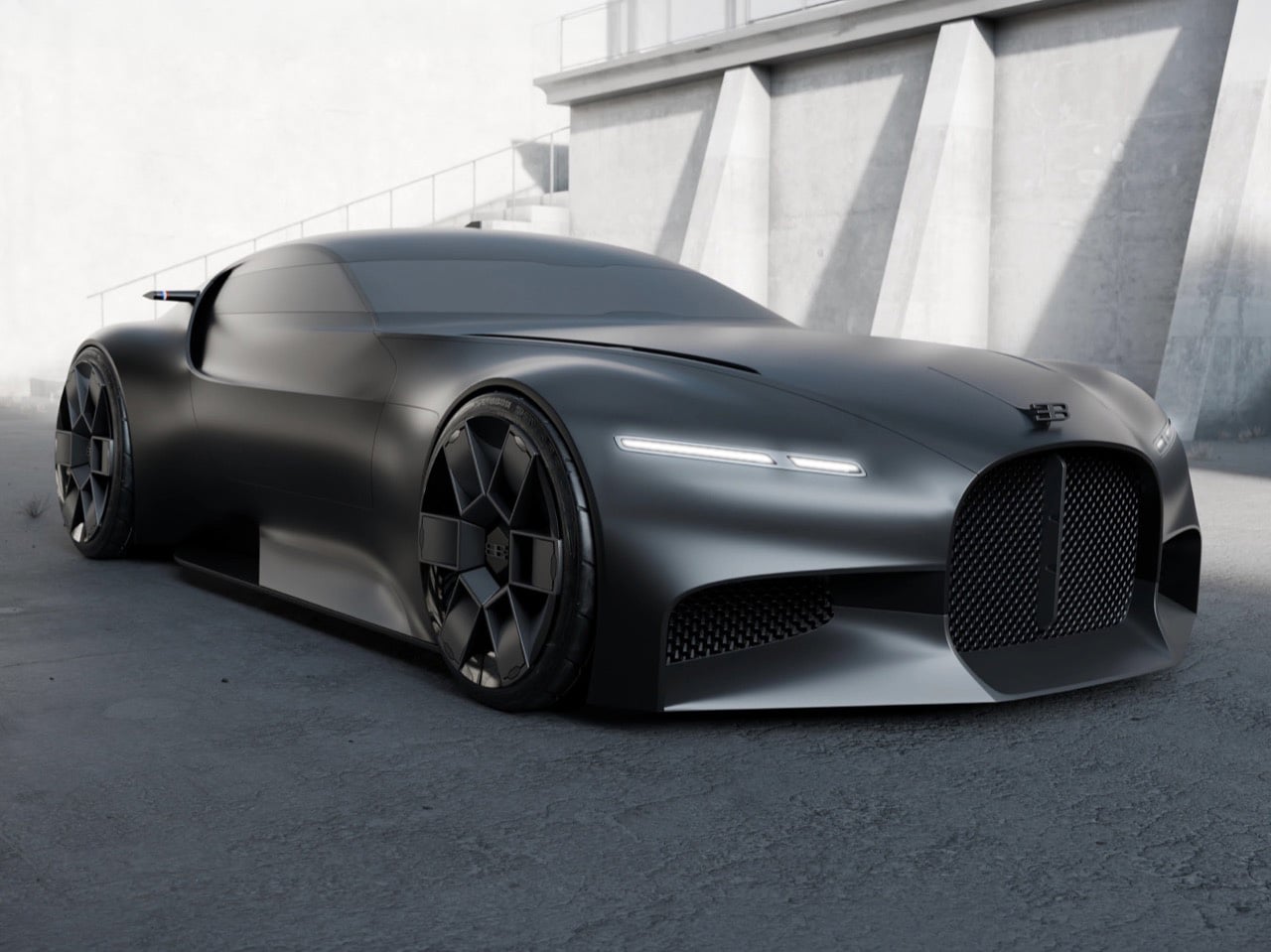
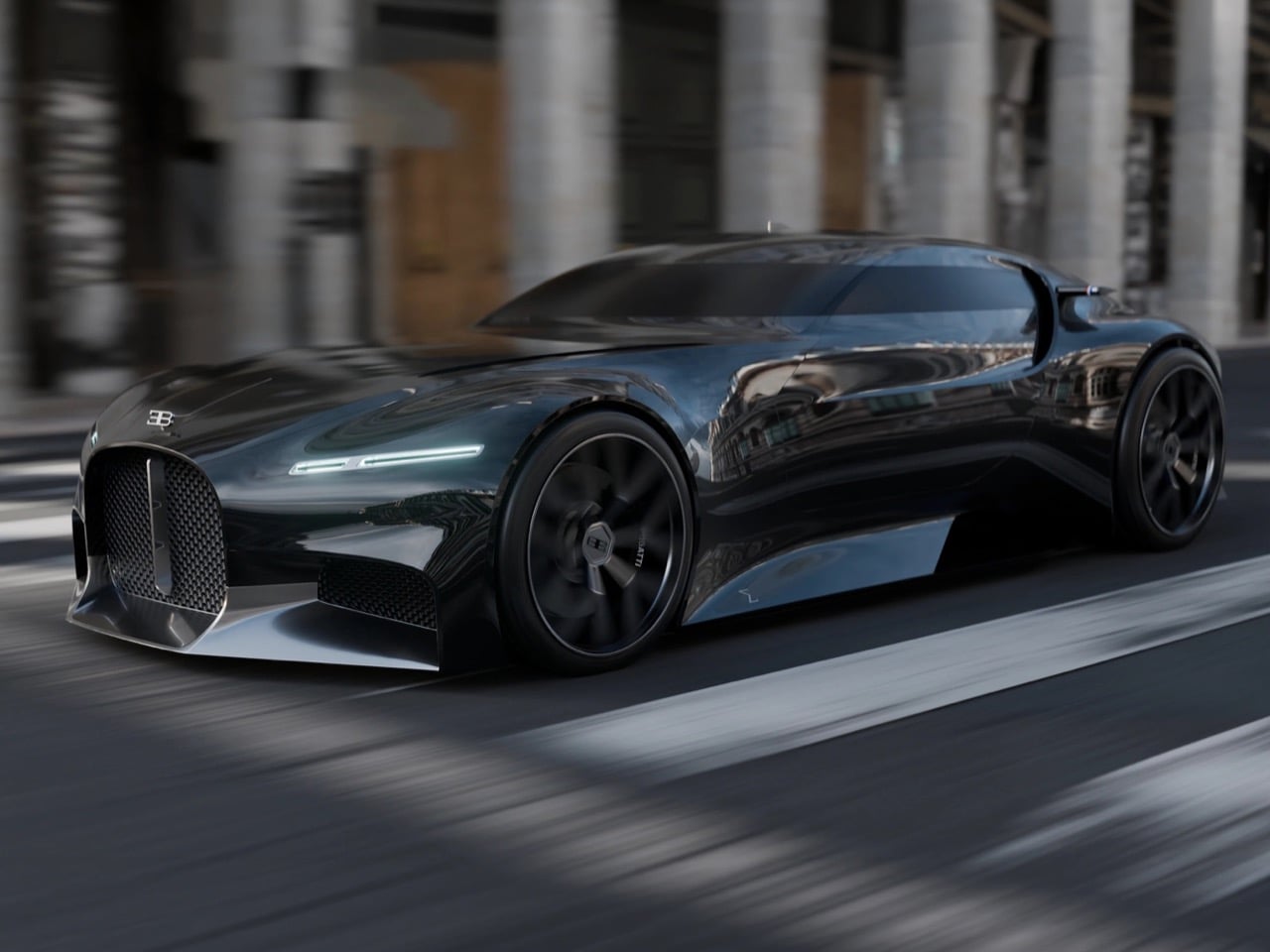
Edouard Suzeau’s Type Sigma concept channels that same philosophy but inverts the execution. Where the Atlantic celebrated its construction method, the Type Sigma hides every seam, every panel gap, every hint of how it might actually be built. The body looks like a single piece of fabric pulled taut over a frame, finished in matte gray that emphasizes form over finish. The surface is so clean, so deliberately unadorned, that it forces you to focus on proportion and gesture rather than details and embellishments.

Designer: Edouard Suzeau
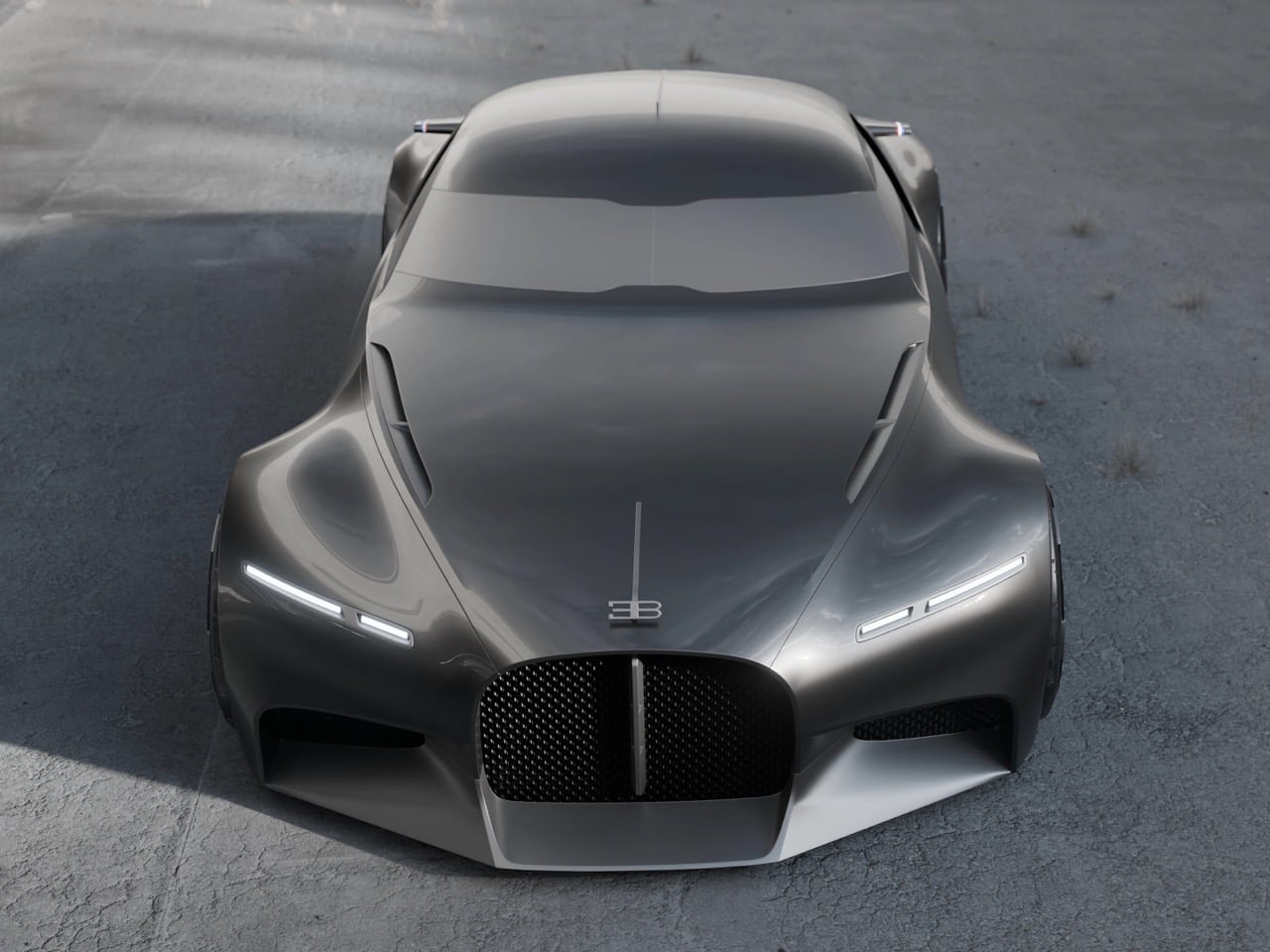
The design carries Bugatti’s genetic code but translates it through a contemporary filter. The horseshoe grille sits vertically integrated into the nose, maintaining brand identity without dominating the composition. The C-shaped rear pillar flows from cabin to tail as a surface rather than a graphic, tracing lineage back to the Atlantic while pushing the language forward. The long hood and fastback roofline recall the grand tourers Ettore Bugatti built for covering continents, cars that prioritized elegance and comfort alongside speed. Suzeau’s concept explores what Bugatti’s design language looks like when stripped of the Chiron’s dual-tone drama and the Tourbillon’s hyper-complex surfacing. The Type Sigma proves that sometimes the most challenging design exercise is knowing what to leave out, and the result is a car that feels both historically grounded and refreshingly modern.
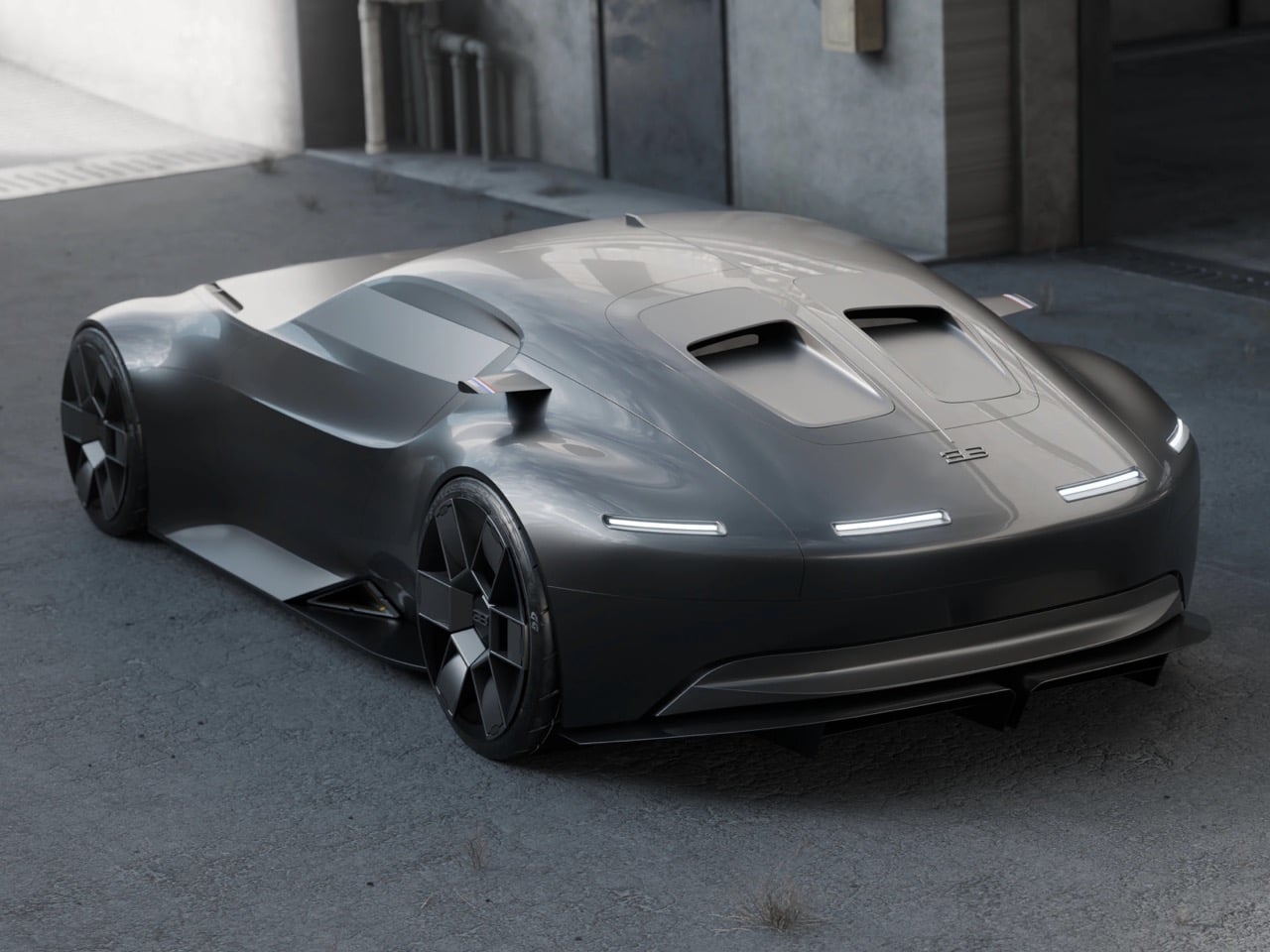
The matte metallic finish is pretty new to Bugatti, which has relied on glossy finishes like blue and black in the past. Where gloss black or bare carbon fiber would create hard reflections that break up the surface into geometric shards, this matte gray lets light pool and stretch like mercury on glass. Reflections become soft gradients that emphasize the underlying form, making the car read as a single sculptural mass rather than an assembly of panels. The choice to avoid dual-tone treatment is equally deliberate. Recent Bugattis have relied on contrasting materials to create visual drama, splitting the body into upper and lower sections or using exposed carbon to telegraph performance intent. The Type Sigma abandons that strategy entirely, trusting that the purity of the form will carry enough visual weight on its own.
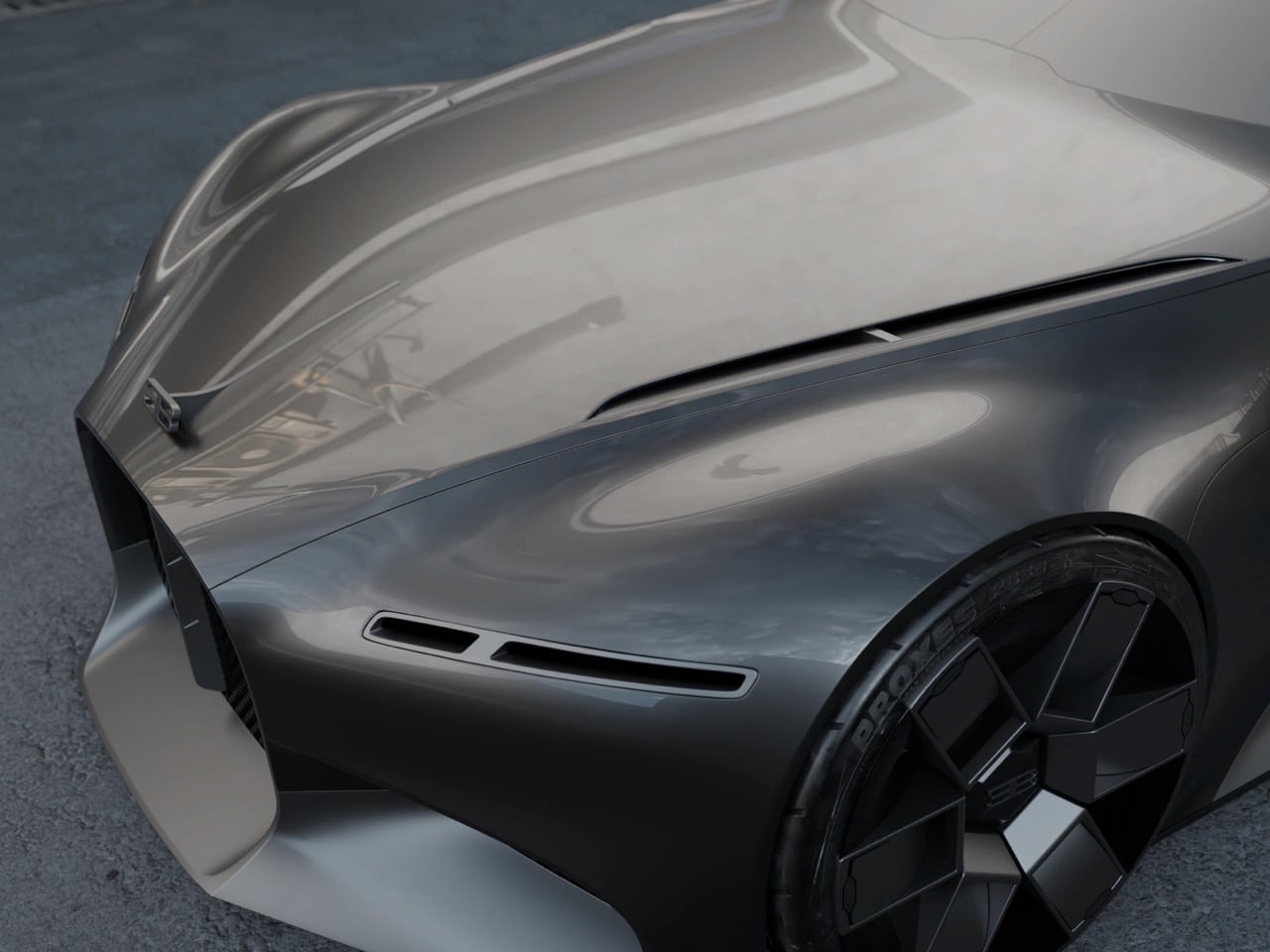
The proportions position this firmly in grand tourer territory rather than mid-engine hypercar land. The hood stretches forward in the classic front-engine GT tradition, creating that long, muscular stance that defined Bugatti’s pre-war icons. The cabin sits far back on the wheelbase, with a greenhouse that tapers gently rearward into the fastback deck. The roofline has an almost shooting-brake quality to it, extending further back than a traditional coupe but stopping short of full estate proportions. This creates a unique silhouette that feels both familiar and fresh within Bugatti’s portfolio.
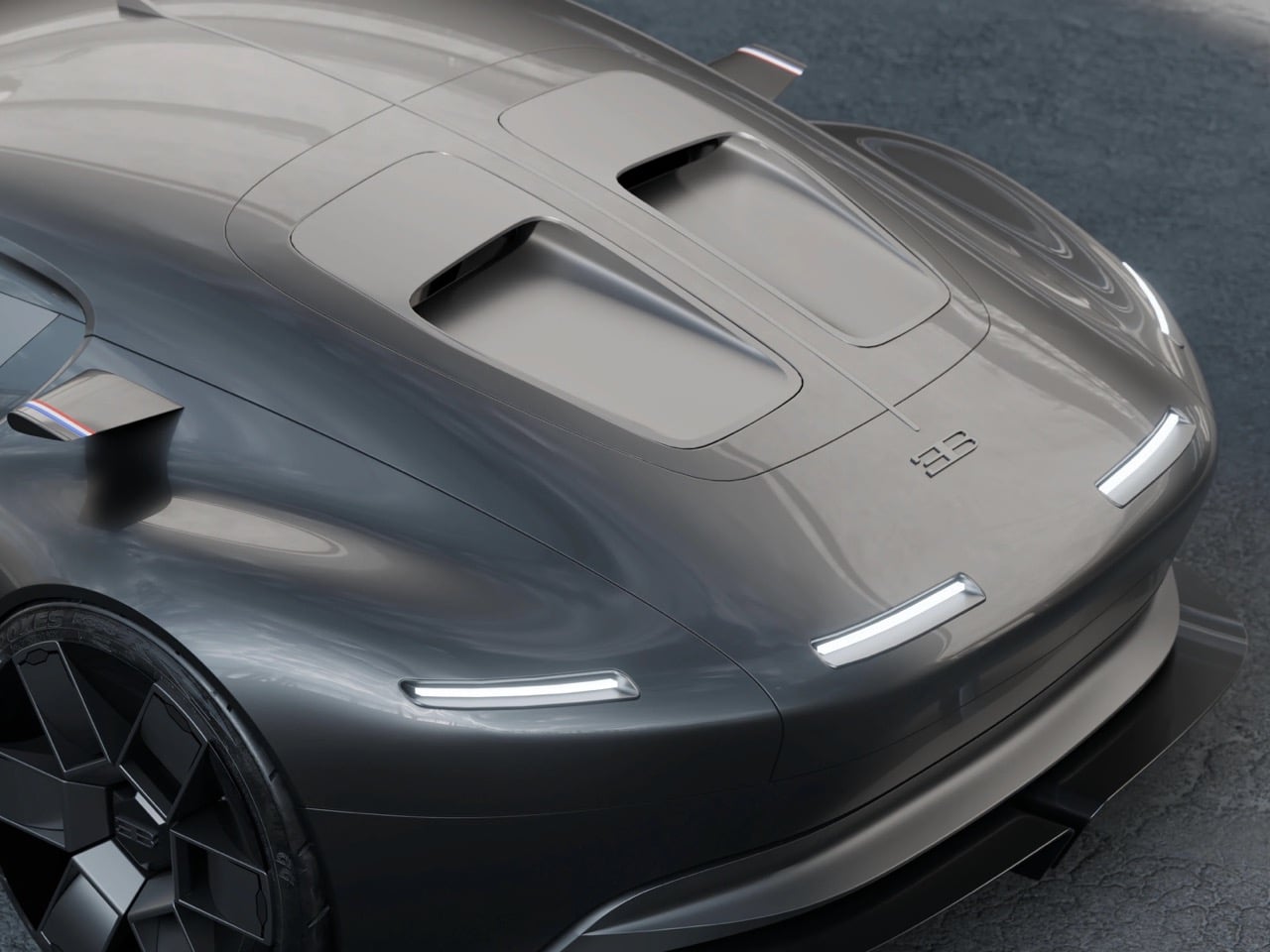
The wheels appear to be modern interpretations of classic Bugatti spoke patterns, possibly referencing the Type 35’s iconic wheels but rendered with contemporary multi-spoke turbine detailing. The fender arches are muscular but smooth, defined by surface curvature rather than hard character lines. Side vents behind the front wheels are so subtly integrated they’re almost invisible in this matte finish, revealed only by shadow and surface transition rather than chrome trim or aggressive surfacing. The horizontal DRL bars sit flush with the front fascia, clean and minimal, avoiding the overwrought lighting signatures that plague most modern concept cars.
A full-width lighting signature spans the tail, likely incorporating Bugatti script or the EB logo as part of the illuminated graphic. Below, the diffuser is aggressive but integrated, its fins and channels carved into the lower body rather than appearing as tacked-on aerodynamic furniture. The way the C-shaped pillar terminates at the rear deck is particularly elegant, flowing seamlessly into the tail rather than stopping abruptly or requiring a visual full stop. Horizontal slats in the rear glass echo the Chiron’s central spine but abstracted into functional venting, maintaining visual continuity with the current lineup while pushing the aesthetic somewhere quieter.
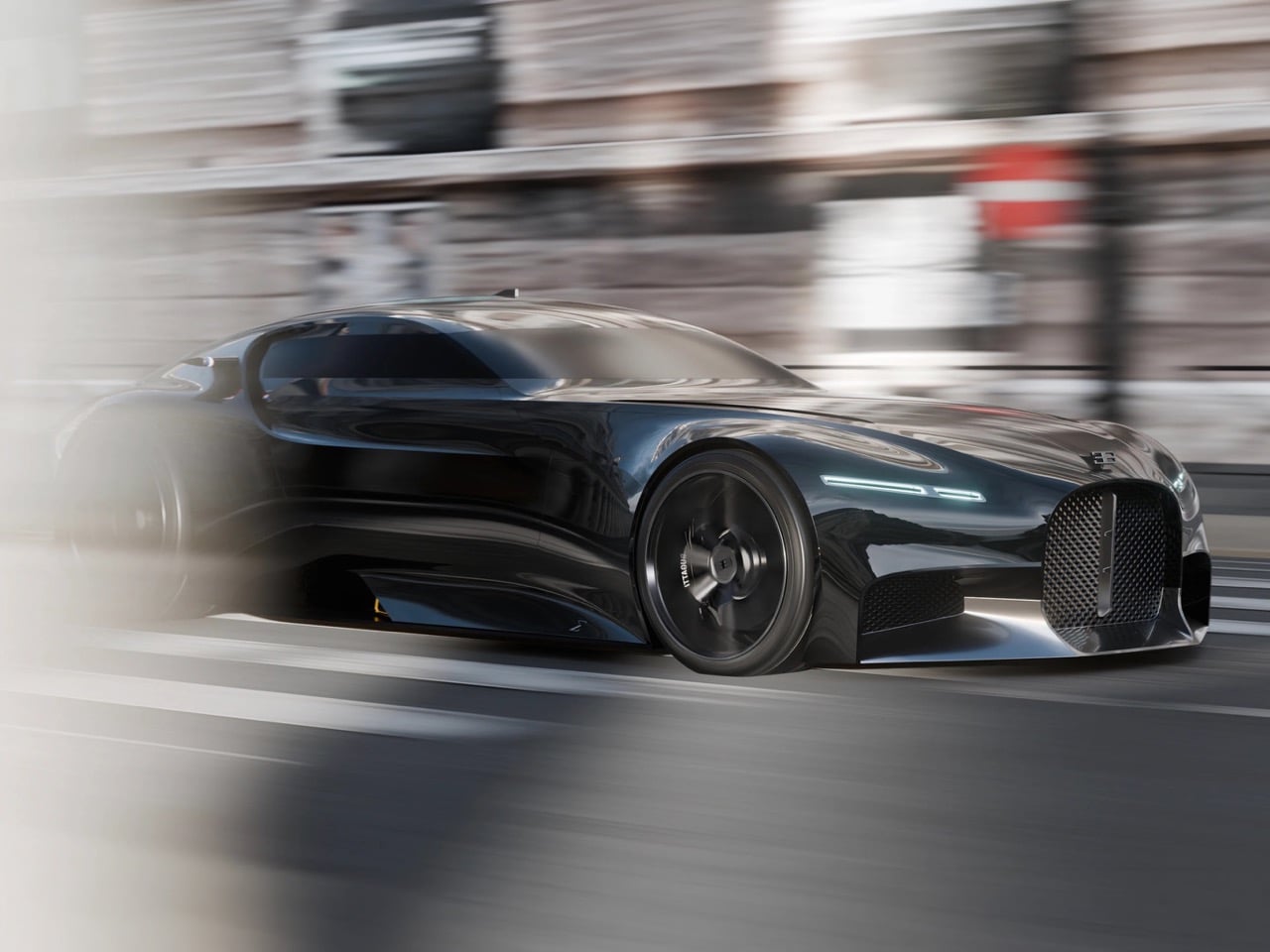
Production viability was clearly never the point here. Suzeau’s renders show a car with shut lines that would be impossible to engineer, glass areas that would never pass certification, and aerodynamic surfaces that exist purely to please the eye rather than cheat the wind. The Type Sigma lives in the same realm as the Atlantic did when it debuted in 1936, a piece of rolling sculpture built to prove that a car could be art. Only four Atlantics were ever made, and they remain among the most valuable automobiles ever auctioned. The Type Sigma will never be built at all, but it accomplishes something harder than production feasibility. It makes you reconsider what a modern Bugatti could look like if the brand decided to prioritize elegance over aggression, sculpture over decoration, whisper over shout.

The post Bugatti Type Sigma Concept Ditches the Chiron’s Maximalist Design for Pure Sculptural Form first appeared on Yanko Design.

The Volvo Cosmic Surfer Has Gravity-Adaptive Wheels Designed For Smooth Driving On The Moon

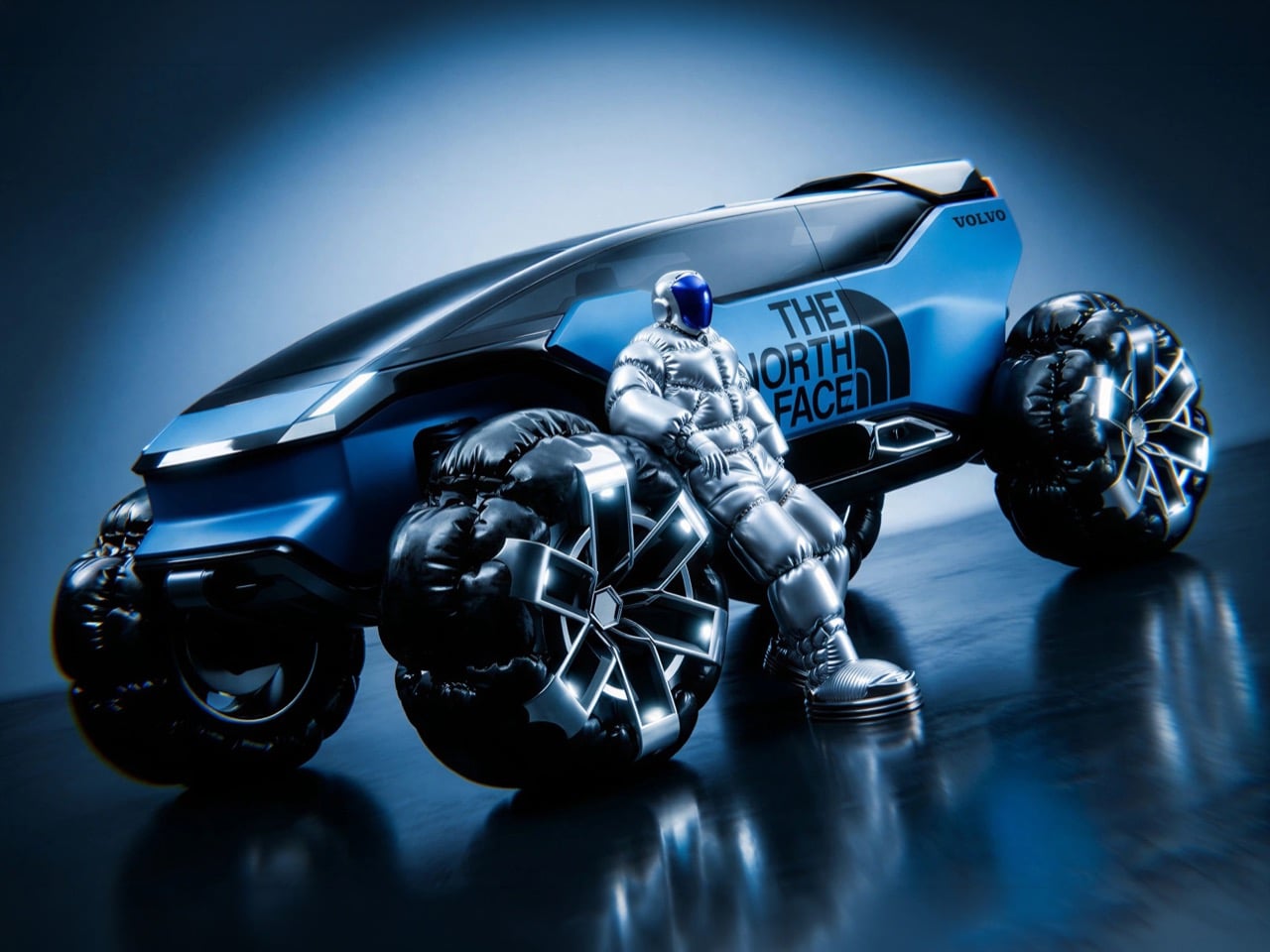
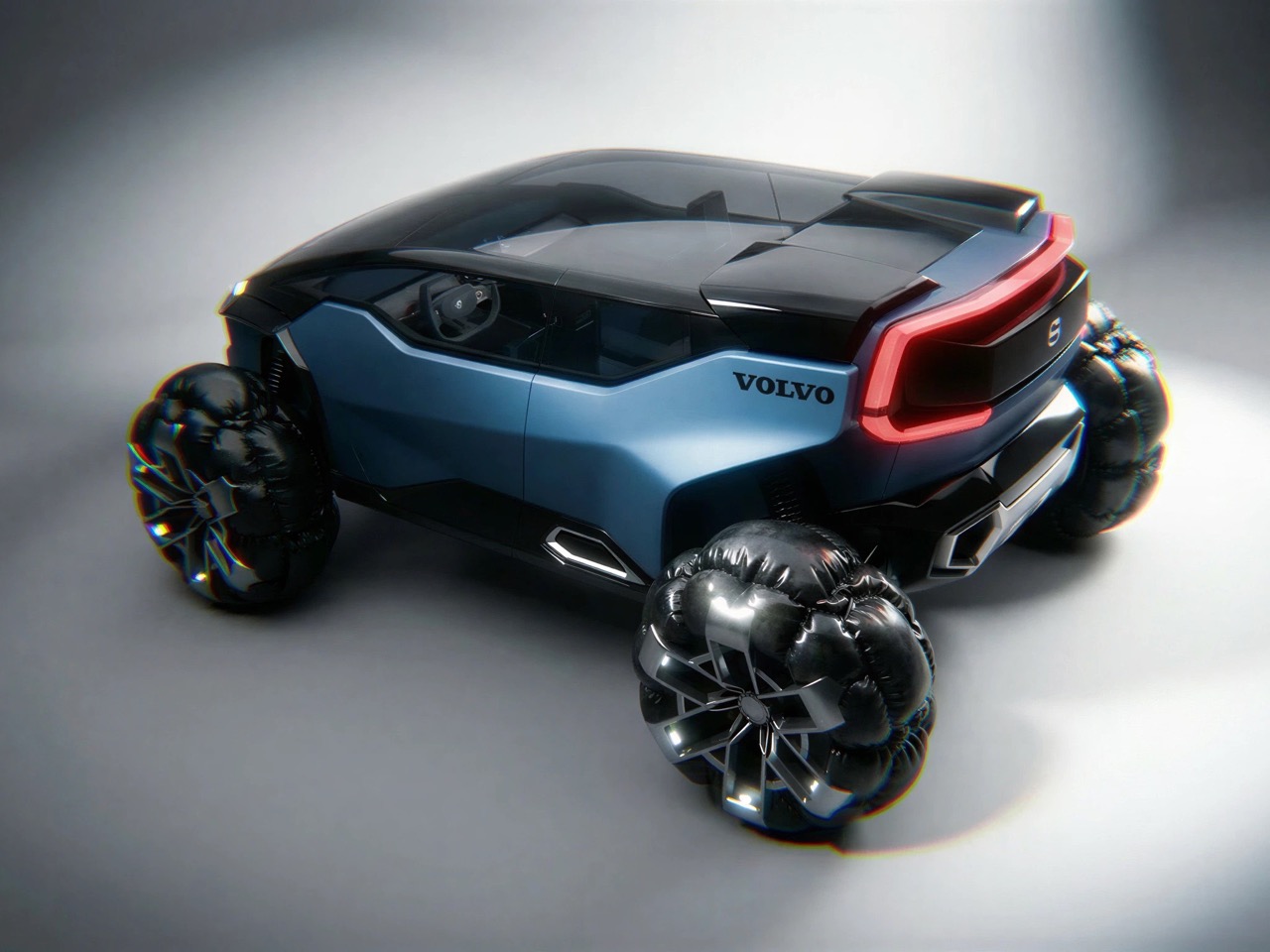
Volvo has spent the better part of a century building its reputation on one foundational promise: keep the people inside the car alive, no matter what the road throws at them. That philosophy produced crumple zones, three-point seatbelts, and side-impact protection systems that the rest of the industry eventually copied wholesale. The logical endpoint of that thinking, taken to its most extreme conclusion, produces a vehicle engineered for terrain that would destroy any conventional automobile outright. Designer Sampad Chaulia arrived at exactly that conclusion with the Volvo Cosmic Surfer, a concept submitted for the Volvo Design Competition 2026 that imagines the Swedish brand’s DNA transplanted onto a lunar-grade off-road platform co-badged with The North Face.

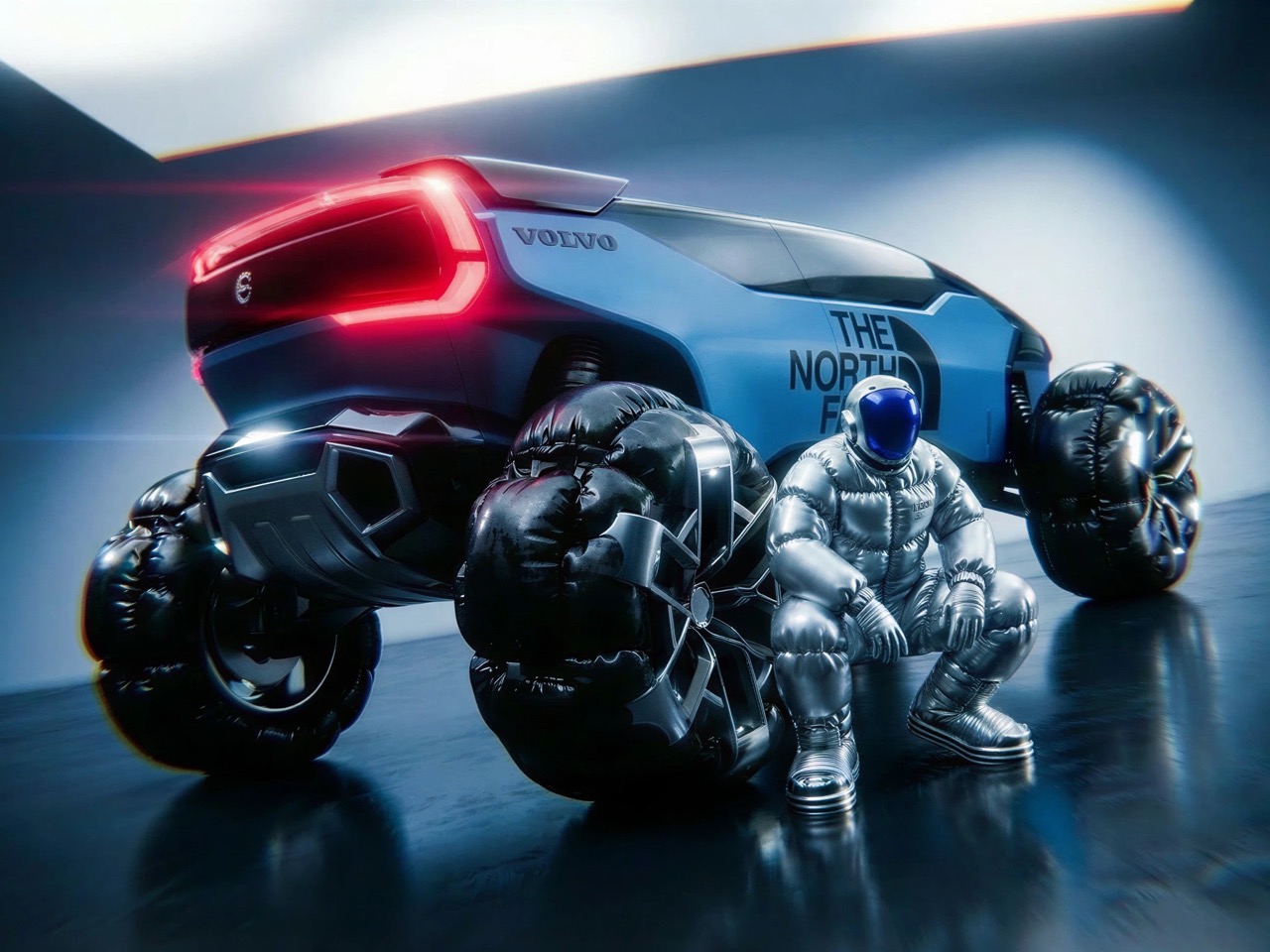
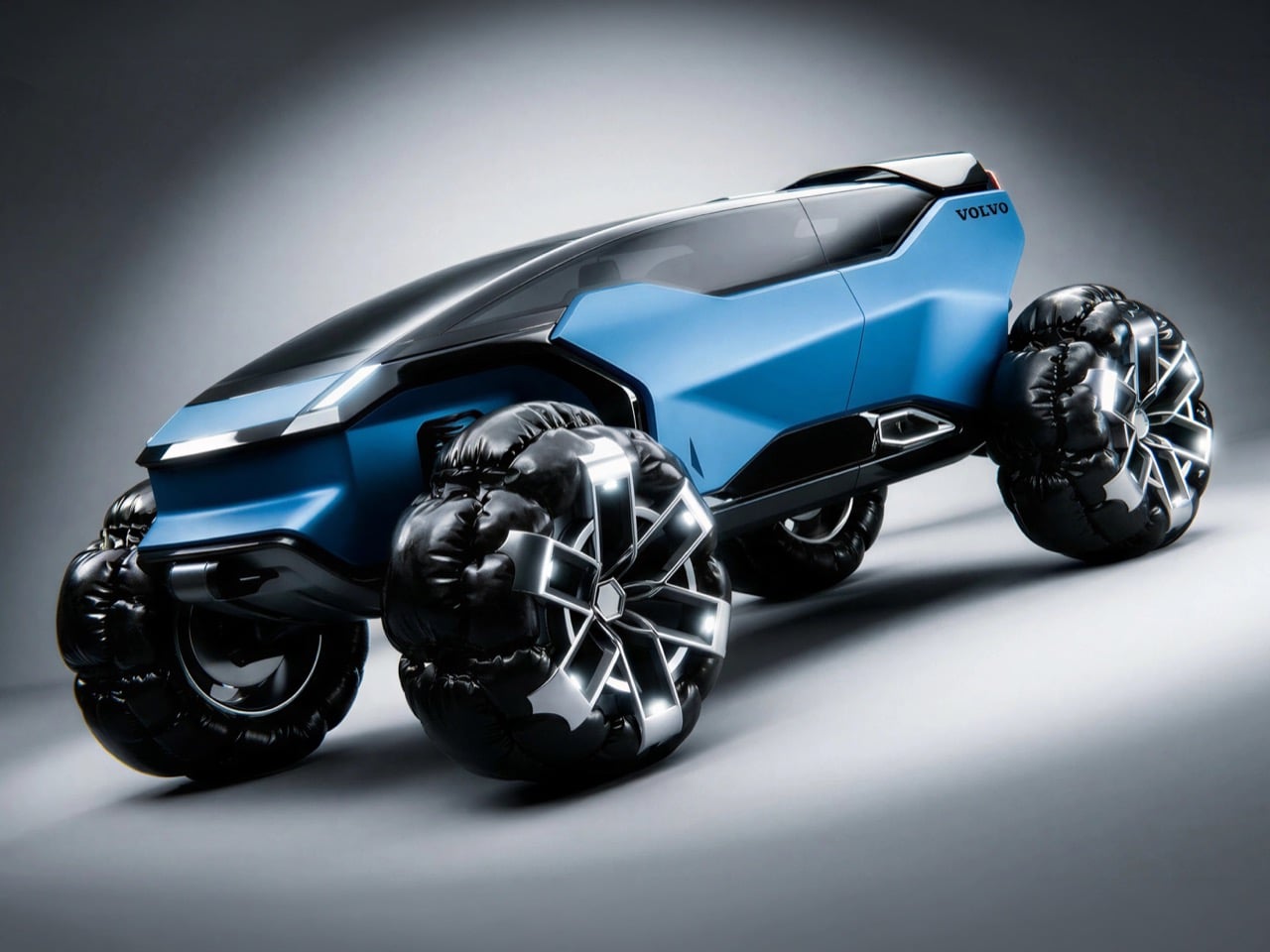
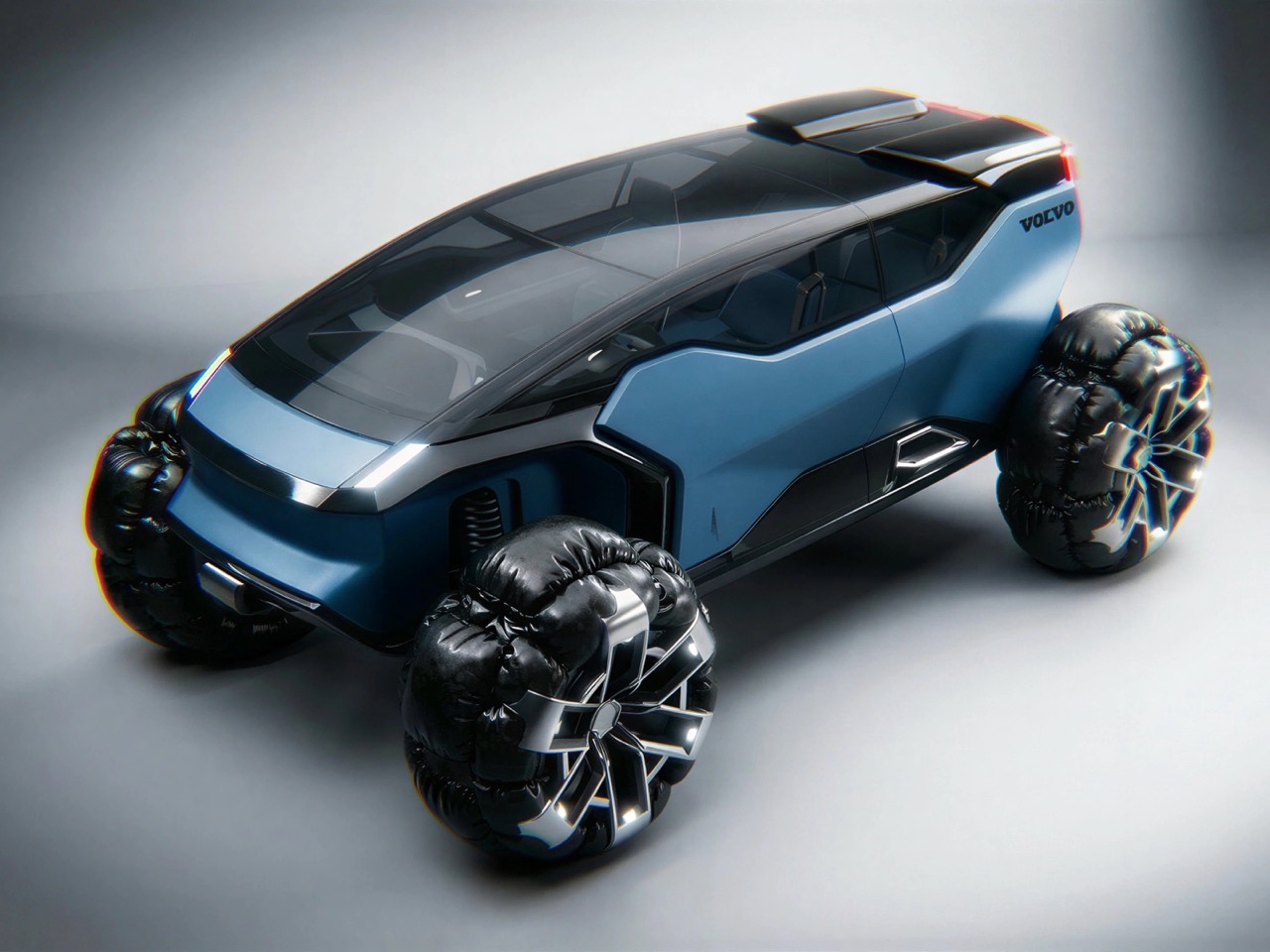
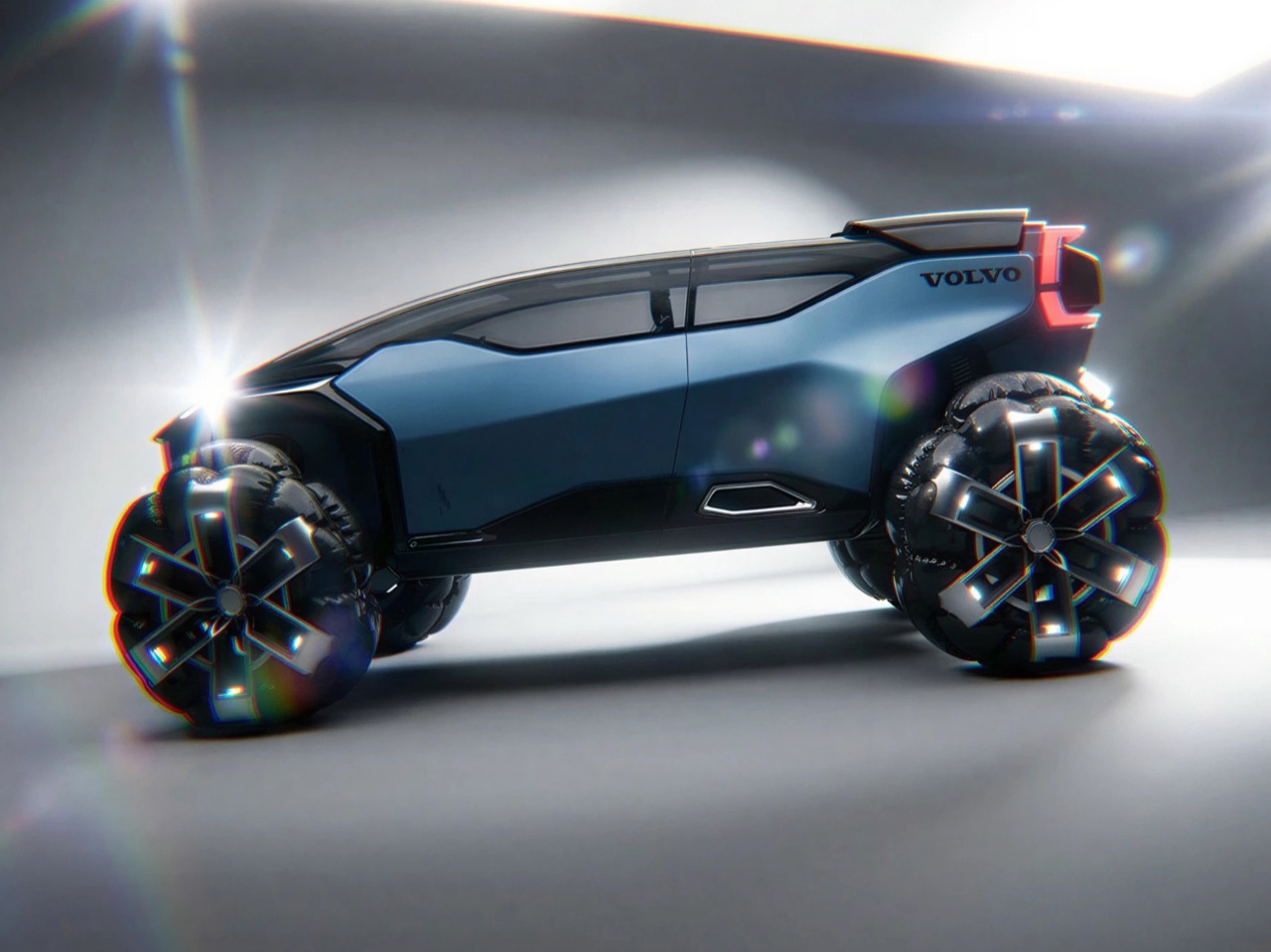
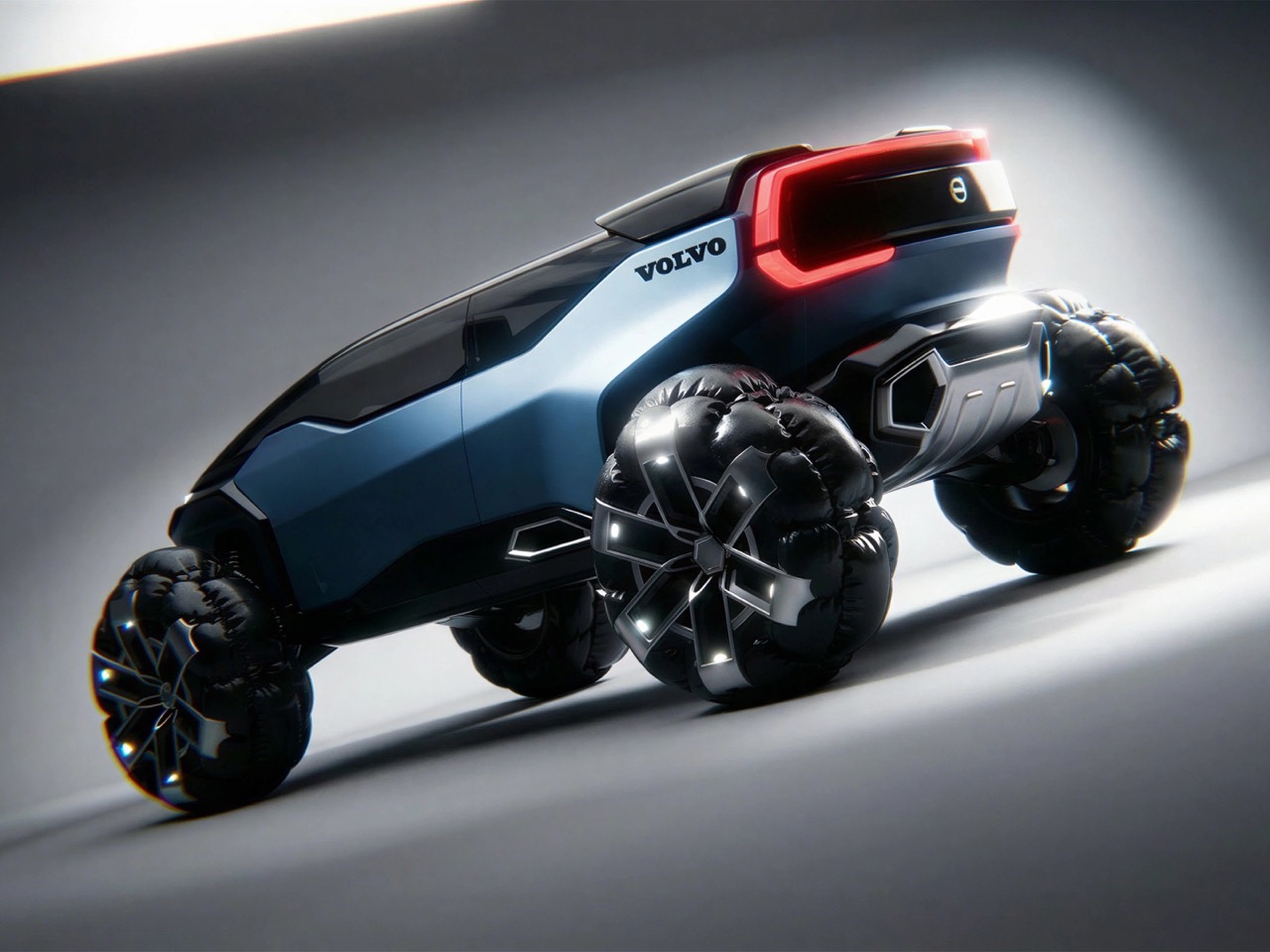
The Cosmic Surfer’s central design provocation is its wheel system, a gravity-adaptive, inflatable assembly that swells and compresses in response to surface conditions, conforming around boulders and craters the way a hand closes around a stone. The body sits low and wide over those massive multi-lobe wheels, draped in Volvo’s signature steel blue with The North Face branding stenciled across the flanks in expedition-ready block lettering. Chaulia frames the vehicle’s intended era as 2040, an interplanetary expedition machine for galactic explorers, built from Scandinavian minimalist principles and wrapped in the visual language of gorpcore punk. The result lands somewhere between a NASA lunar rover and a concept car that wandered off the Geneva Motor Show floor and kept going until it hit the Moon.

Designer: Sampad Chaulia

The wheel remains perhaps the most interesting element on the vehicle, evoking the same jaw-drop that I had when I first saw NASA’s chainmail wheel back in 2017. Chaulia modeled and rendered it entirely in Blender 3D, and the result looks less like a tire and more like a living organism that happens to roll. Each assembly pairs a geometric star-shaped alloy core, all sharp angles and polished facets, with a ring of inflatable outer lobes that bulge around the rim like an over-pressured deep-sea creature. The engineering logic is genuinely elegant: rather than relying solely on suspension travel to absorb terrain irregularities, the inflatable lobes compress and deform on contact with rocks and surface obstacles, conforming to the ground rather than demanding the ground conform to them. At low gravity, where surface textures are extreme and suspension dynamics behave very differently than on Earth, that compliance-first approach to traction makes far more sense than anything pneumatic rubber could offer.

The body language above those wheels is angular and deliberate, a form study in what Chaulia calls “Scandinavian soul” filtered through techwear aesthetics. The flanks are wide and planted, with faceted surfacing that catches studio light in sharp, graphic planes rather than soft automotive highlights. A dark greenhouse tapers rearward and sits flush with the bodywork, keeping the silhouette monolithic and uninterrupted from nose to tail. At the rear, a broad red light bar stretches the full width of the vehicle, reading less like a regulatory tail lamp and more like a distress beacon, which, given the concept’s intended operating environment, seems entirely appropriate. The Volvo wordmark sits cleanly on the upper body, and The North Face logo claims the flanks, a co-branding pairing that frames the vehicle as high-performance technical apparel on wheels.

The gorpcore punk framing Chaulia wraps around the Cosmic Surfer is more than an aesthetic mood board. It locates the vehicle within a specific cultural conversation about what extreme outdoor equipment looks like when the outdoors in question has no atmosphere, no roads, and gravity running at roughly one sixth of what your suspension was tuned for. The North Face partnership makes genuine design sense here because both brands share the same foundational brief: build something that keeps the person inside it functioning when the environment outside it is actively trying to kill them. That shared DNA produces a concept where the co-branding reads as a logical merger of two survival philosophies rather than a marketing exercise.

Volvo’s production lineup in 2026 is focused squarely on Scandinavian refinement and urban electric mobility, the EX30, EX40, and EX90 forming a coherent family of composed, safety-first EVs for city intersections and motorway cruising. The Cosmic Surfer asks what happens when that same foundational commitment to occupant protection gets aimed not at pedestrian detection systems and crumple zones but at the lunar highlands, where the obstacles are the size of houses and the nearest service center is 238,000 miles away. Chaulia produced this entire concept in a single day, which makes its conceptual coherence remarkable. The central idea, a vehicle whose wheel technology borrows the compliance logic of outdoor gear rather than automotive convention, arrived fully formed and persuasive on the first pass, which is more than most studio teams manage in a month.

The post The Volvo Cosmic Surfer Has Gravity-Adaptive Wheels Designed For Smooth Driving On The Moon first appeared on Yanko Design.
Škoda’s smart bicycle bell cuts through ANC headphones to alert zoned out pedestrians

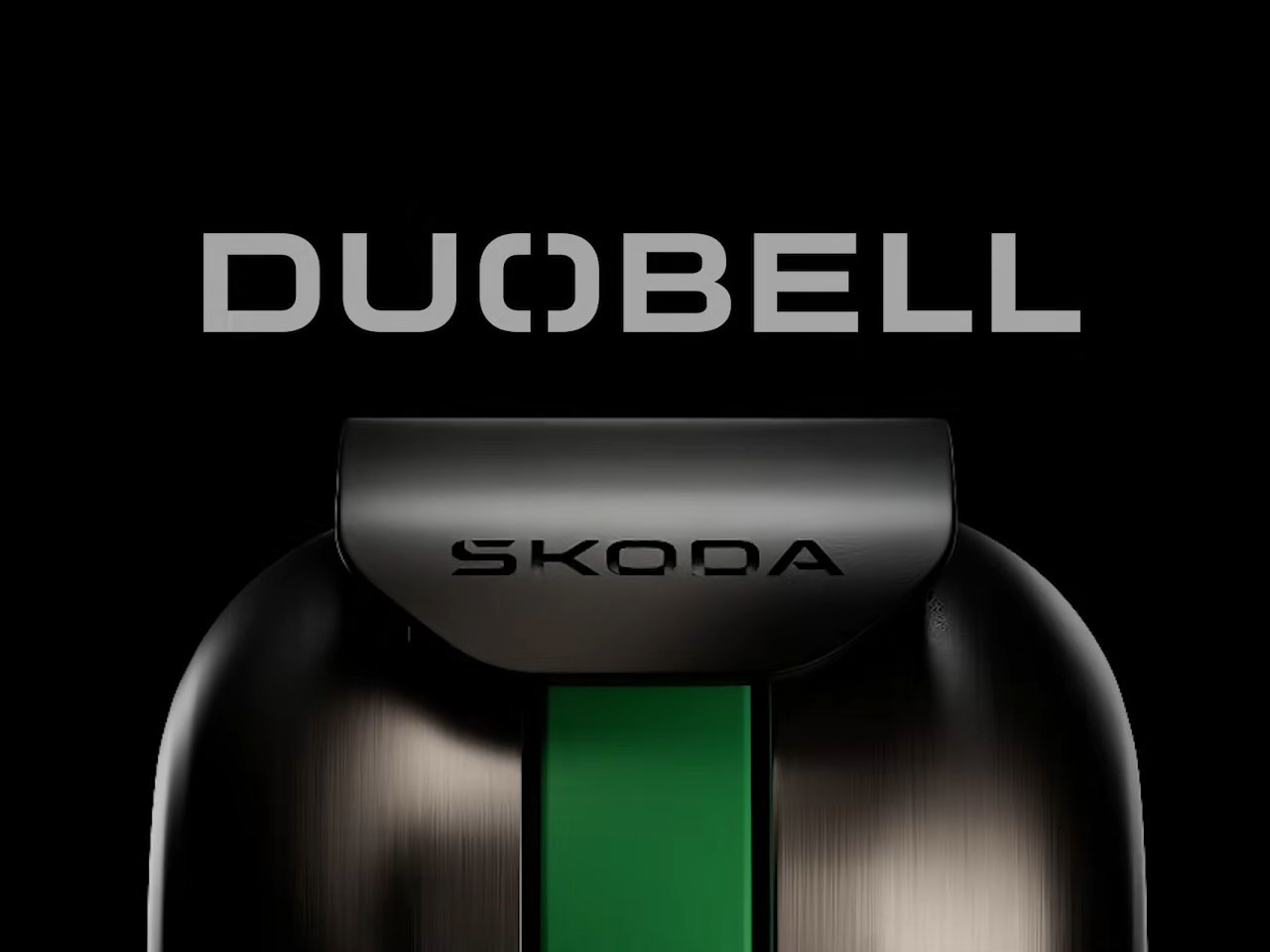
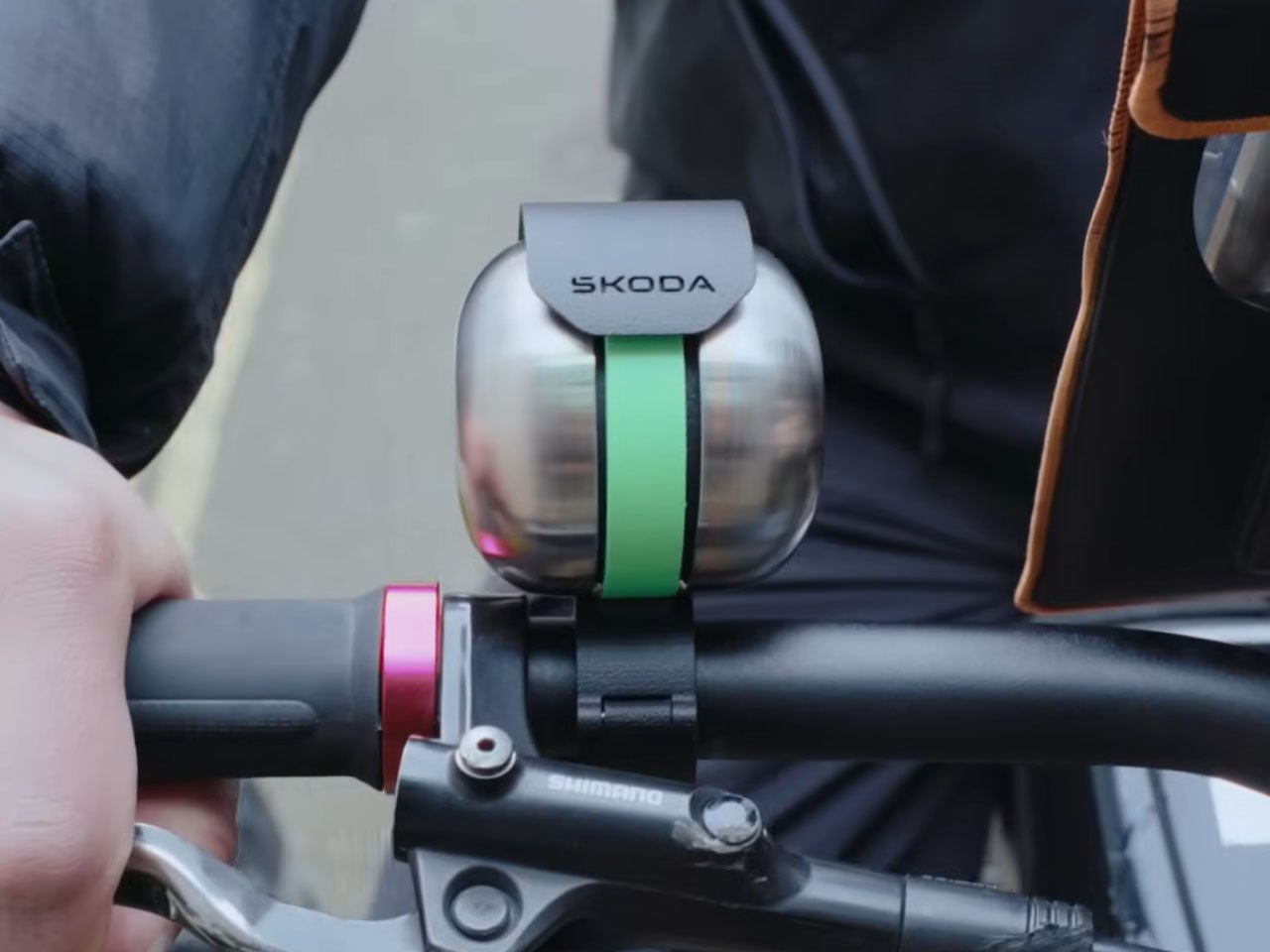
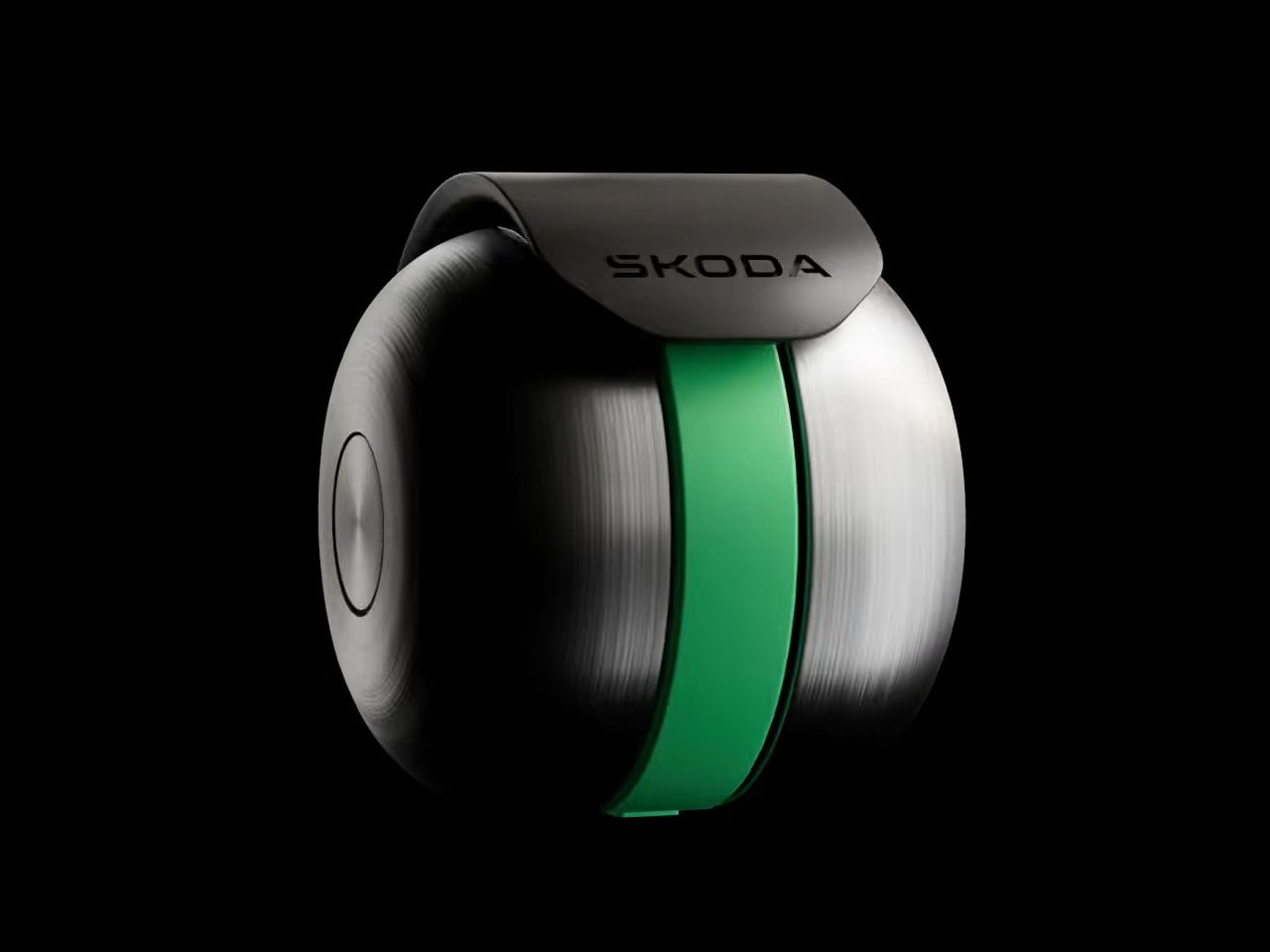
Times have changed so much, we’ve got people walking on the streets with their ANC turned on to zone out, but are unaware of the risks motorists can pose. With active noise-cancelling headphones becoming increasingly common, the sounds of the city (from traffic to bicycle bells) can easily disappear behind layers of digital silence. Recognizing this growing safety challenge, Škoda Auto has introduced the DuoBell, a cleverly engineered bicycle bell designed to cut through active noise cancellation and alert distracted pedestrians before a potential collision occurs.

The concept addresses a modern urban problem: many people walk while listening to music through headphones equipped with active noise cancellation (ANC), which filters out environmental noise. While effective for immersive listening, ANC can also suppress critical warning sounds such as approaching bicycles. To tackle this issue, Škoda collaborated with researchers and audiologists from the University of Salford to study how conventional bicycle bells interact with ANC algorithms and why they often fail to be heard. Their research revealed that typical bells operate within frequency ranges that noise-cancelling systems can easily identify and suppress, essentially muting them for headphone users.

Designer: Škoda

The DuoBell was designed as an analog solution to this digital limitation. Instead of relying on louder volume alone, the bell targets a specific frequency band that ANC systems struggle to eliminate. Through acoustic testing, researchers identified a “safety gap” between 750 and 780 Hz, a range where noise-cancelling algorithms are less effective. The bell is tuned precisely within this band, significantly increasing the chances that pedestrians wearing ANC headphones will hear it.

But frequency tuning is only part of the innovation. True to its name, the DuoBell incorporates a dual-resonator design that generates two distinct tones. This layered sound profile confuses noise-cancelling algorithms that typically rely on predictable, steady noise patterns to cancel audio signals. The bell also uses a specially engineered hammer mechanism that produces rapid and irregular strikes, making the sound harder for digital filters to track and suppress.

Testing suggests the design could make a meaningful difference in real-world cycling safety. According to measurements conducted during trials, pedestrians wearing ANC headphones gained up to 22 meters of additional reaction distance when the DuoBell was used compared to a conventional bell. That extra margin can provide critical seconds for both cyclists and pedestrians to react, reducing the likelihood of accidents in busy urban areas.

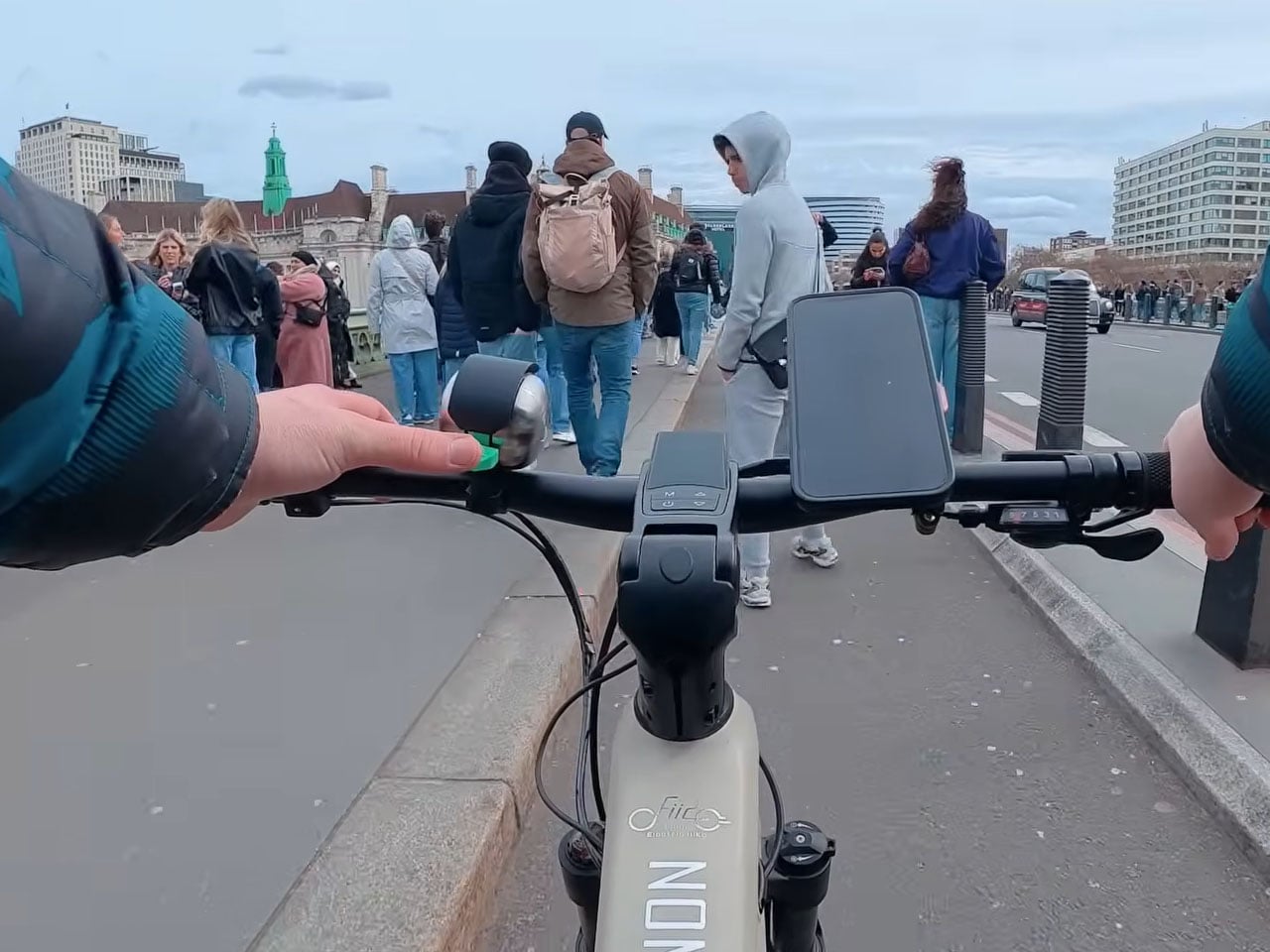
The bell has already been evaluated outside the lab as well. Field trials were carried out on the streets of London in February, where couriers riding for the delivery platform Deliveroo tested the device during everyday routes. Many riders reportedly found the bell effective enough that they expressed interest in continuing to use it after the trials concluded, highlighting its practical benefits in dense city environments.

Interestingly, the DuoBell achieves all of this without any electronics, batteries, or smart connectivity. It remains a fully mechanical bicycle bell – simple, durable, and easy to install – while using acoustic science to solve a modern technological problem. Škoda also plans to share its research findings publicly, hoping the insights can contribute to broader discussions about pedestrian safety in cities where personal audio devices are now part of everyday life.

The post Škoda’s smart bicycle bell cuts through ANC headphones to alert zoned out pedestrians first appeared on Yanko Design.
Renault Le Mans Hypercar Concept Swaps Entire Drivers Like F1 Changes Tires

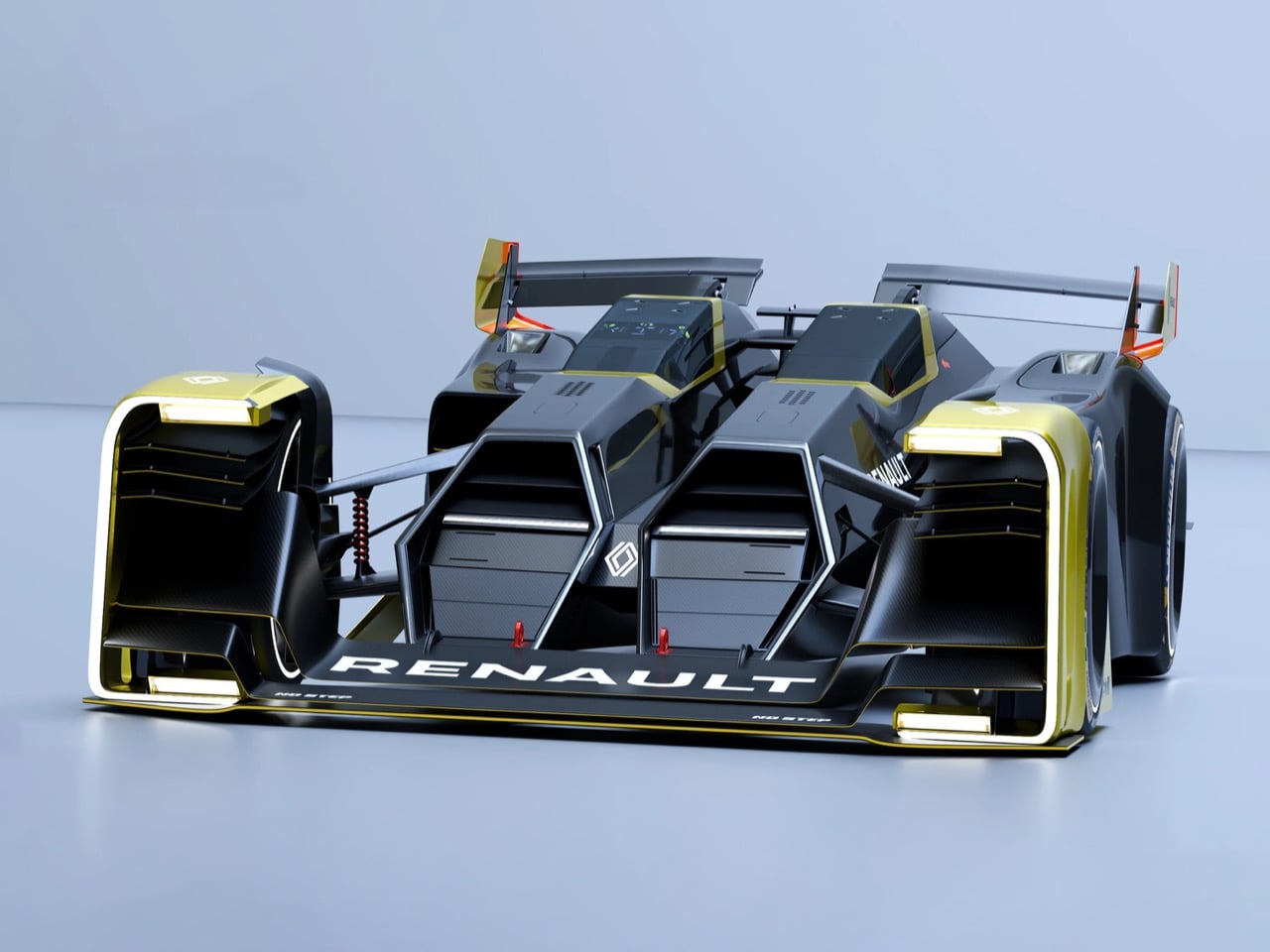
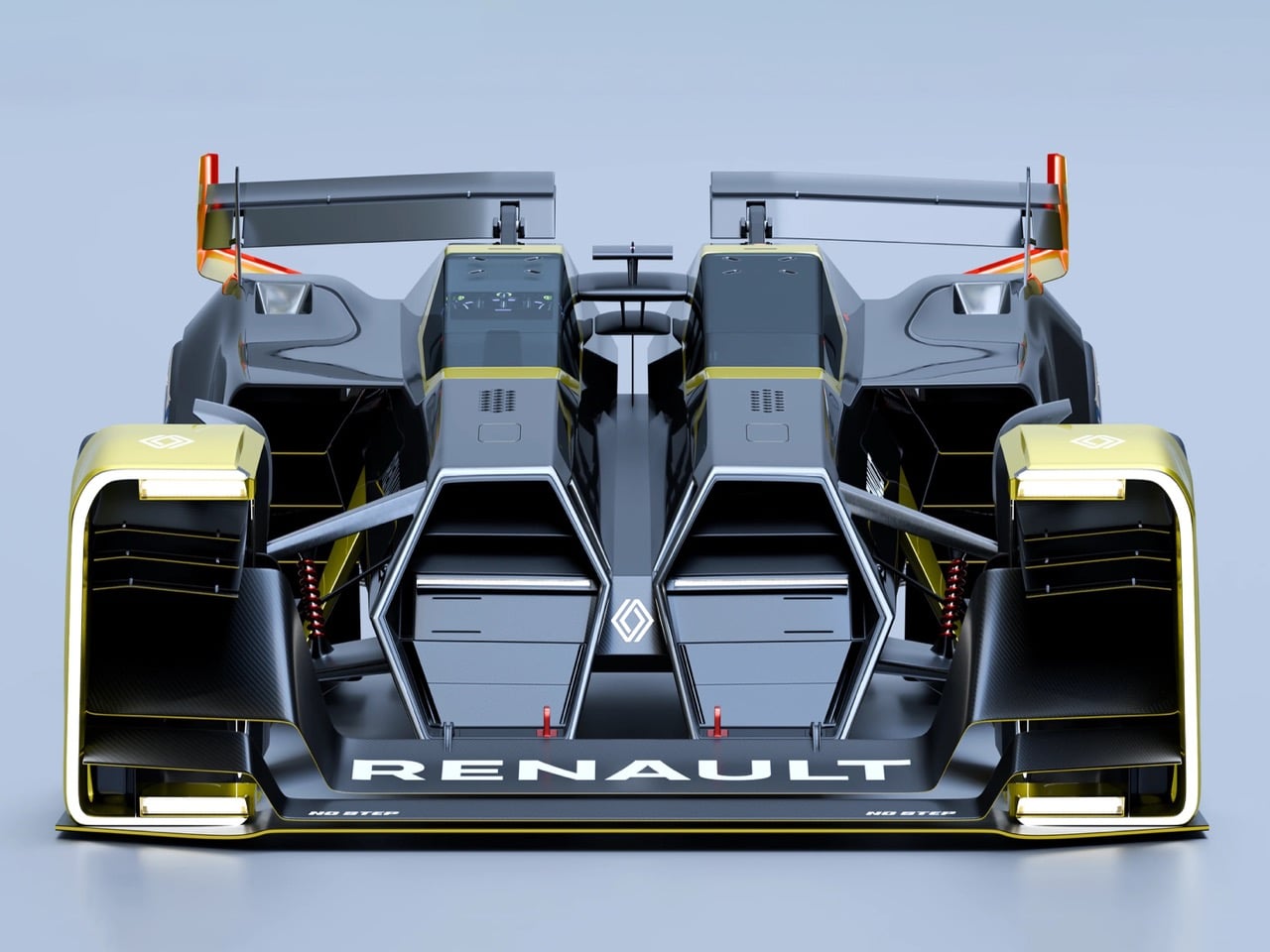
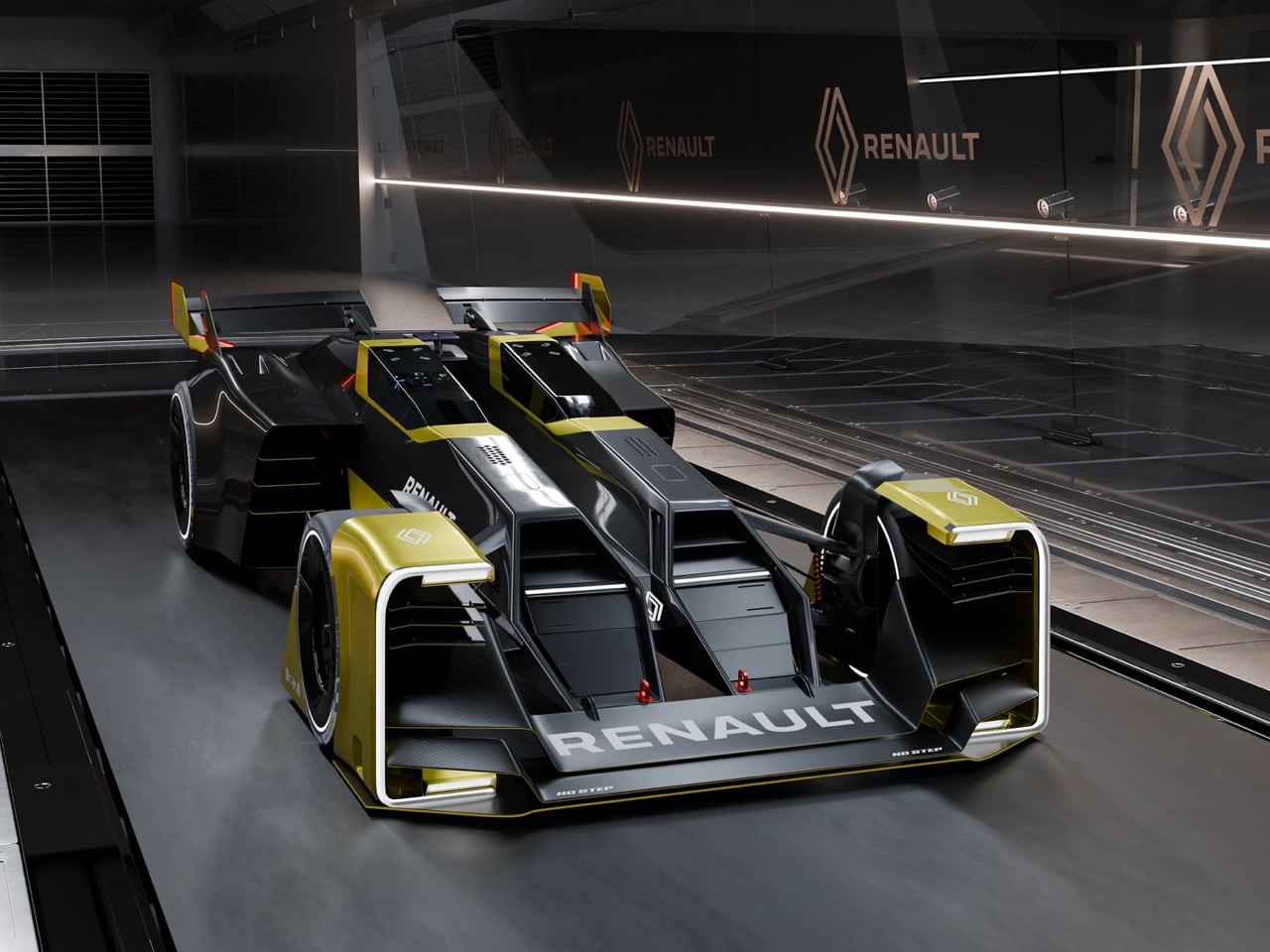
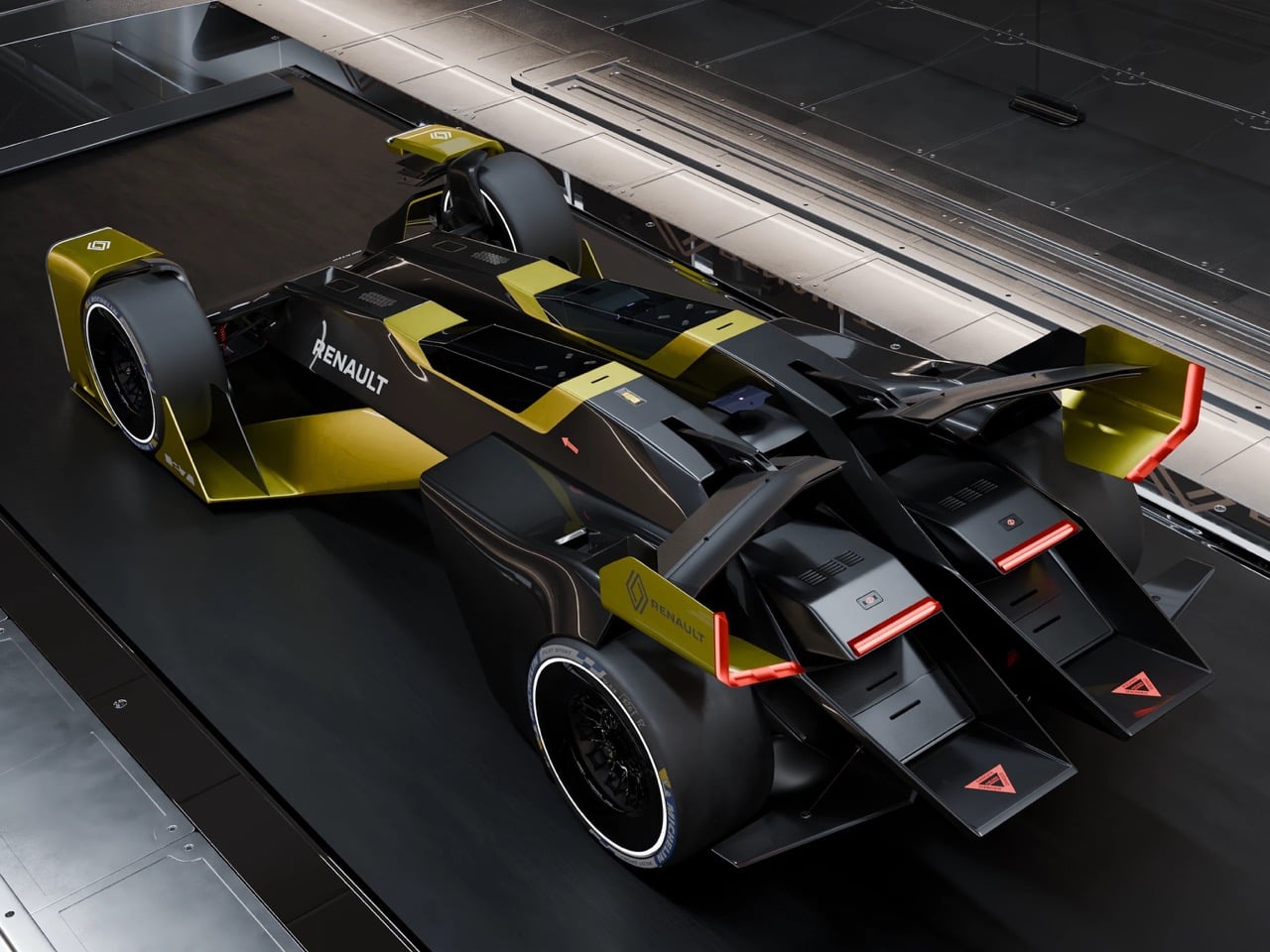
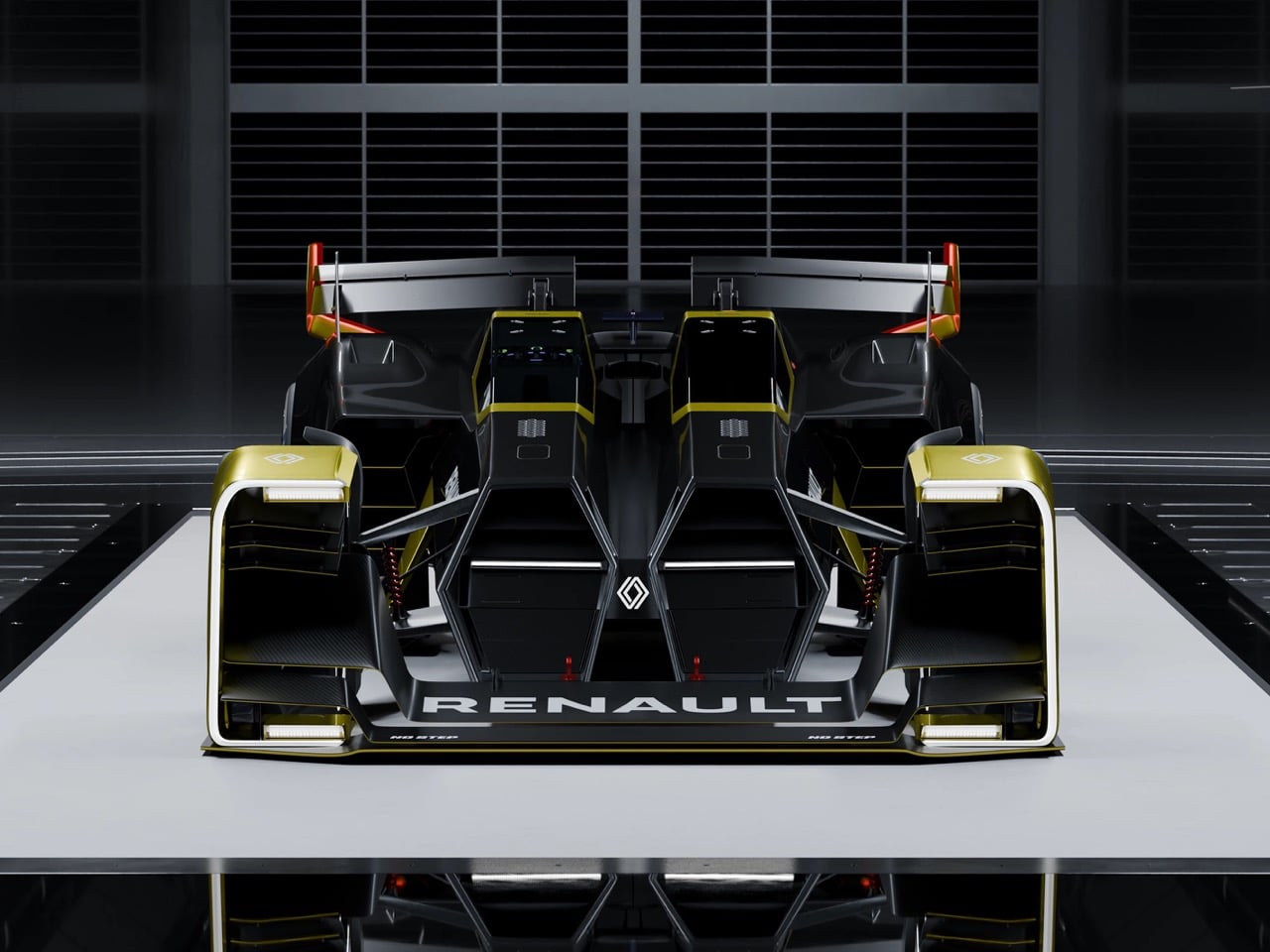
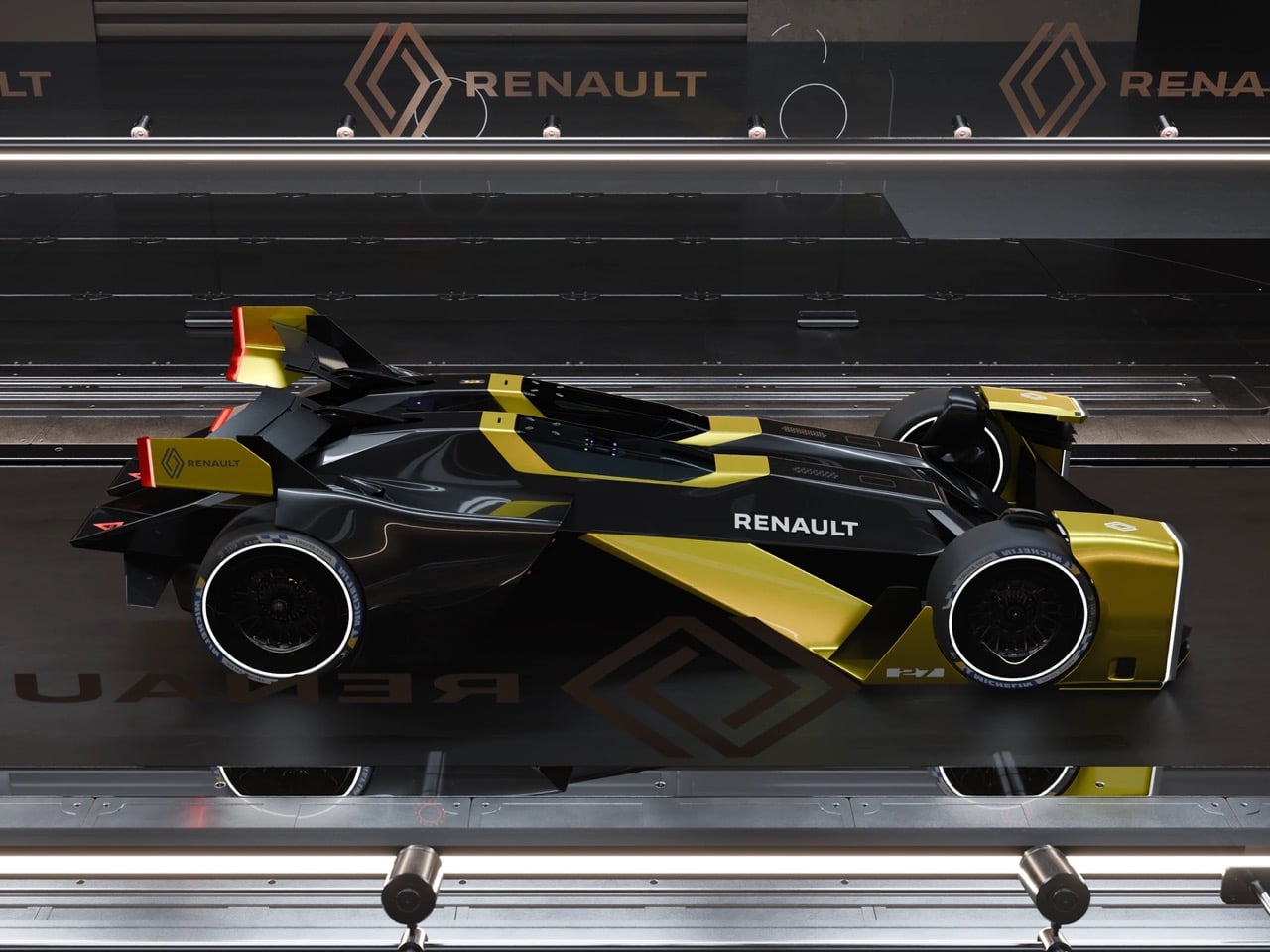
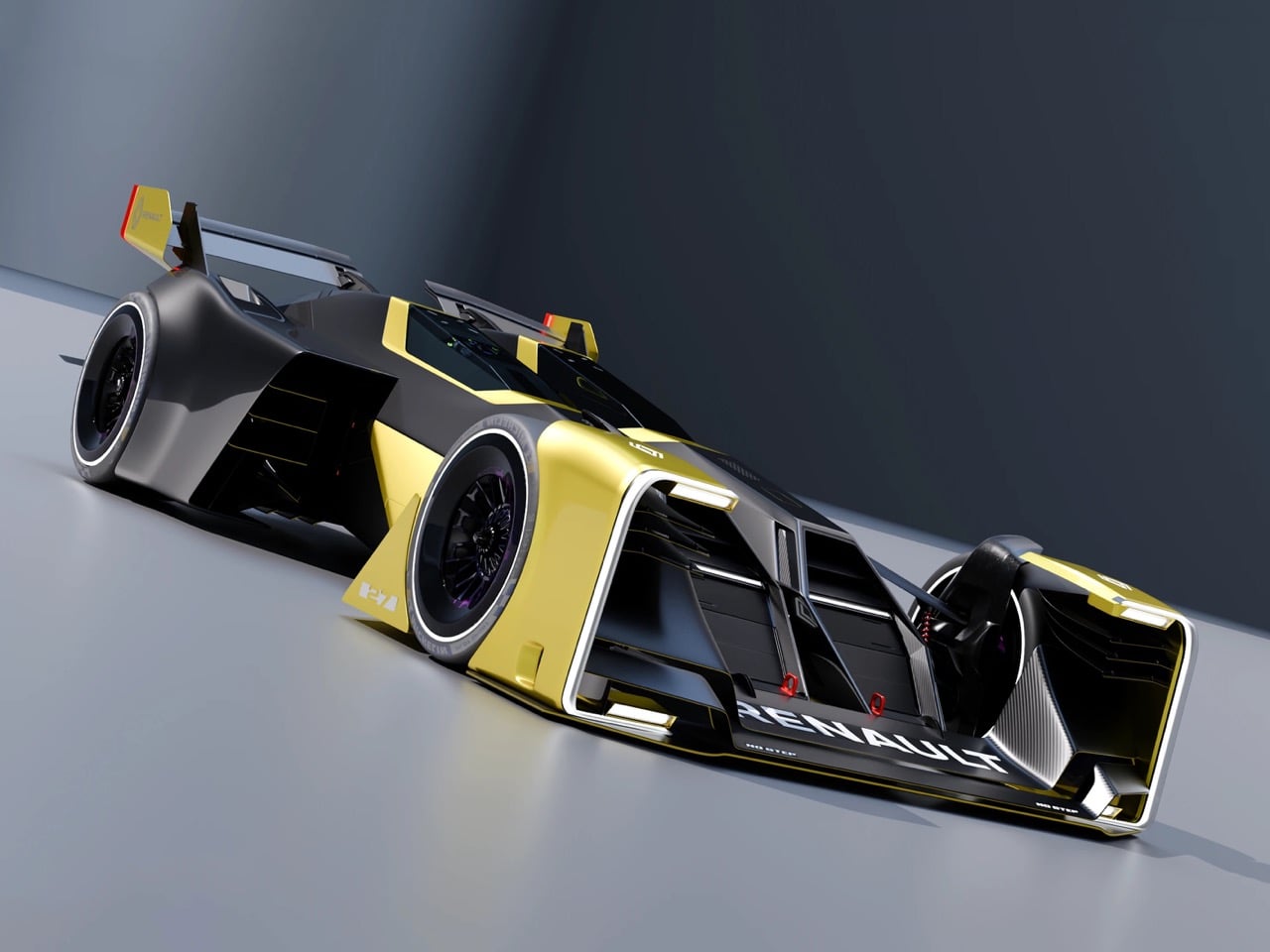
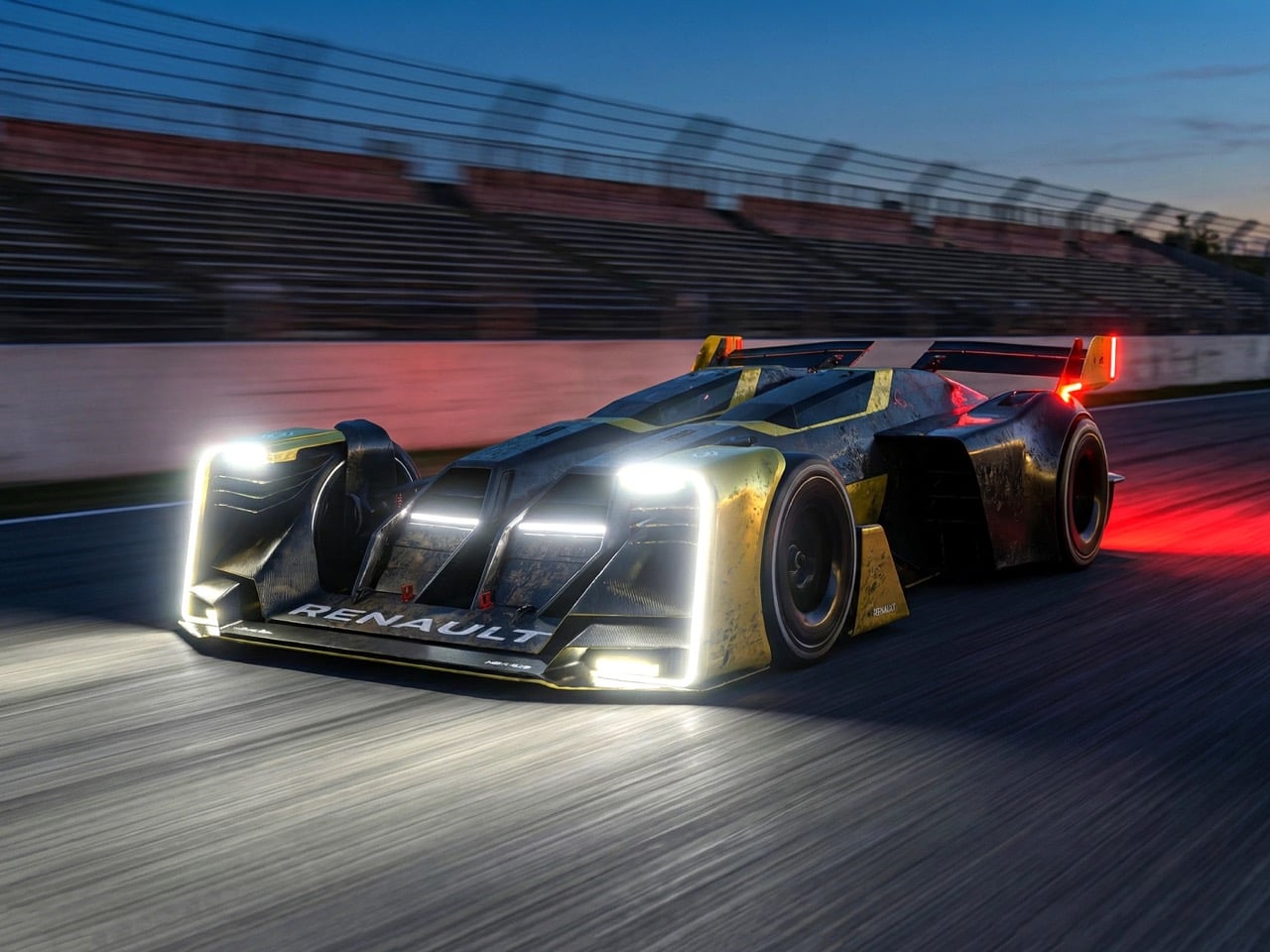
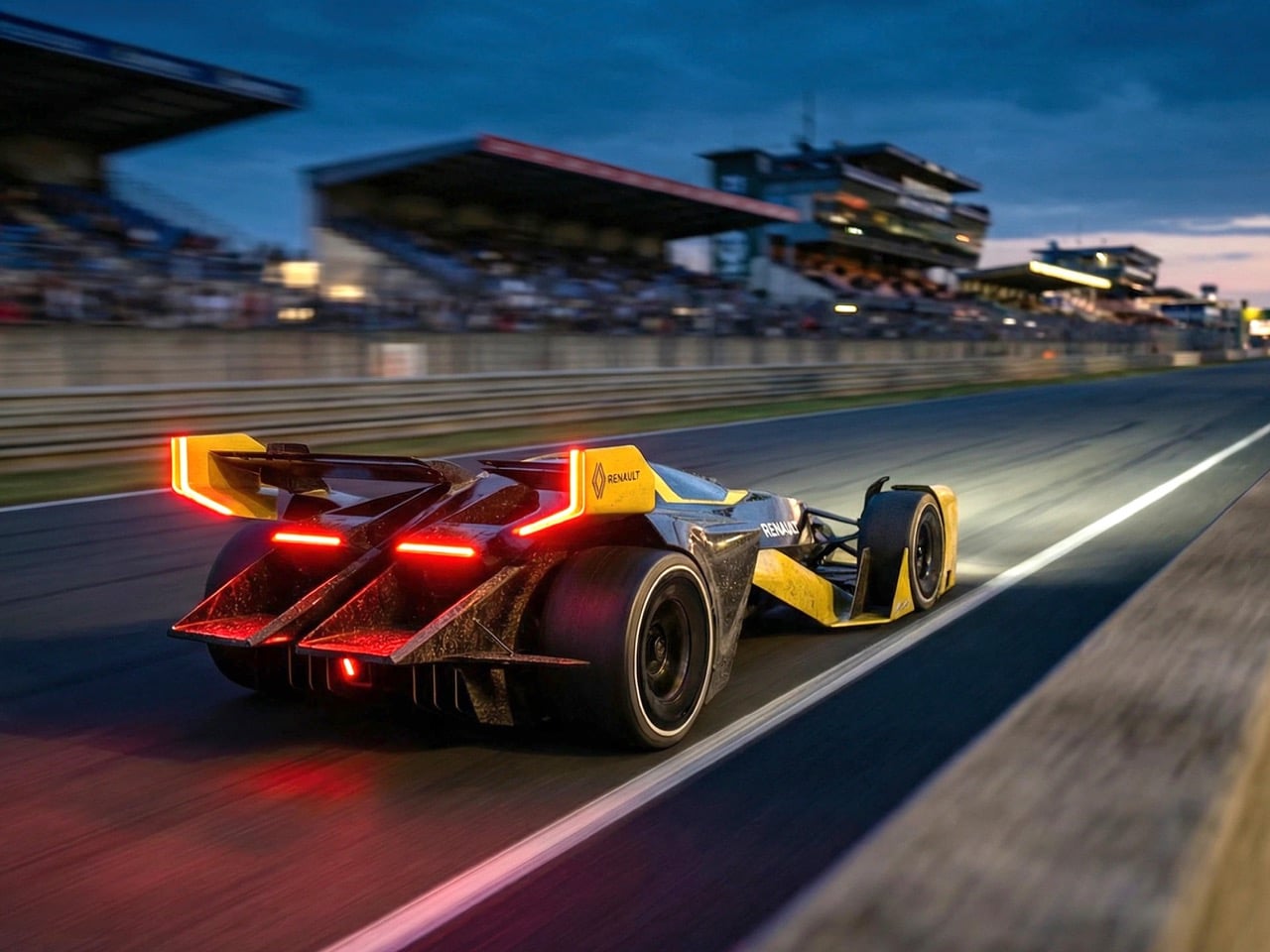
Endurance racing has a violent pit stop problem. Drivers trapped in burning cockpits because harnesses wouldn’t release fast enough. Fuel fires erupting while crews wrestle with high-pressure refueling systems under time pressure. Wheel guns misfiring at exactly the wrong moment. These failures have defined the dark side of Le Mans history since the 1950s, and Taejung Kim’s Renault Double Barrel concept exists to make sure they never happen again. The concept draws its name and its core philosophy from a shotgun’s double barrel mechanism, reimagining the 2040 Le Mans hypercar as something you hot-swap instead of service. The left fuselage contains a complete hydrogen powertrain module. The right fuselage houses the entire driver cockpit as a self-contained pod. When the car screams into the pit lane, the team doesn’t unbuckle a driver or pump fuel into a tank. They eject both entire modules and slot in fresh replacements, sending the car back onto the Circuit de la Sarthe in the time it currently takes just to click a seatbelt harness. The approach transforms pit lane strategy from a dangerous ballet of human coordination into something mechanical, predictable, and inherently safer.

The concept’s inspiration reaches back to the 1955 Nardi Giannini ND750 Bisiluro, an Italian streamliner that split its driver and engine into two separate fuselages connected by a central spine. That car was designed for outright speed on the straights at Monza, accepting terrible handling characteristics in exchange for slicing through the air like a bullet. Kim’s reinterpretation borrows the twin-fuselage architecture but uses it to solve a completely different problem: eliminating the human chaos of endurance racing pit stops. The Nardi needed two separate bodies because mid-century aerodynamics couldn’t integrate a driver and engine into one low-drag form. The Double Barrel uses two bodies because modular replacement demands independent pods, and because splitting mass across two fuselages creates a radically different center of gravity that could fundamentally change how a prototype handles through high-speed sections like the Porsche Curves.

Designer: Taejung Kim

The hydrogen powertrain module on the left carries the entire propulsion system as a single replaceable cartridge. Fuel cell stack, electric motors, power electronics, thermal management, and structural mounting all integrate into one unit that slides into the left fuselage and locks into place through what Kim describes as a shotgun-inspired breach loading mechanism. The driver pod on the right contains the cockpit, safety cell, steering column, pedal box, and all driver interfaces as a second self-contained module. Both pods connect through a central carbon monocoque spine that handles the structural loads and aero surfaces. The concept sketches show mechanical locking points at the front and rear of each fuselage, suggesting the modules slide in from behind and engage positive locks that can be released pneumatically or mechanically under pit lane conditions. The swap mechanism prioritizes speed over tool-free operation, accepting that pit crews will have specialized equipment if it means dropping swap times below ten seconds.

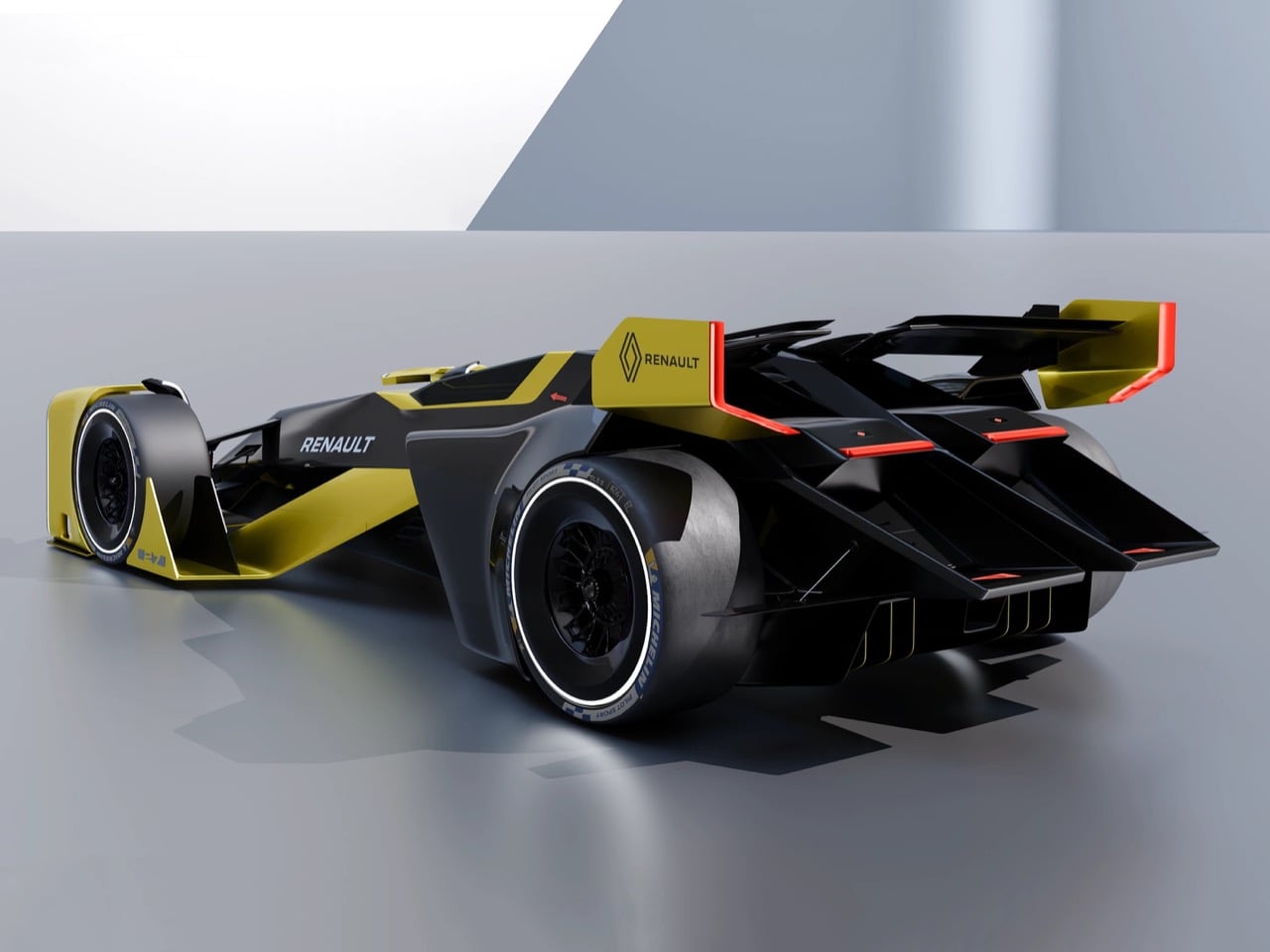
The front fascia is dominated by twin hexagonal air intakes that feed cooling to each fuselage independently. A narrow LED light bar spans the width of the nose, broken into segmented panels that give the car an almost insectoid quality when illuminated. The central spine between the two fuselages rises slightly to create a spine-like ridge that channels airflow over the top of the car, and the bodywork around each pod is heavily sculpted with sharp creases and dramatic undercuts. The rear features a massive integrated wing that spans the full width of both fuselages, with vertical endplates in the same acid yellow as the front dive planes. The diffuser treatment extends deep underneath the rear bodywork, and the taillights are thin horizontal bars integrated into each pod’s trailing edge, outlined in vivid orange-red that pops against the black carbon.

The hot-swap pit stop strategy Kim proposes would require significant changes to current Le Mans regulations, which don’t allow for driver changes mid-stint under normal racing conditions and mandate specific refueling procedures. The FIA and ACO (Automobile Club de l’Ouest) would need to develop entirely new technical regulations governing module interfaces, safety interlocks, and swap procedures. The concept assumes these rules evolve in response to hydrogen adoption and the push toward zero-emission endurance racing. Hydrogen refueling presents unique challenges, current systems require careful pressure management and grounding to prevent static discharge ignition, and a modular cartridge swap eliminates those risks entirely by treating the entire fuel cell stack as a consumable that gets swapped rather than refilled. The driver pod swap solves the harness release problem that has caused fatalities when drivers couldn’t exit burning cars fast enough, and it also allows teams to rotate drivers without the psychological pressure of quick unbuckling under race conditions.

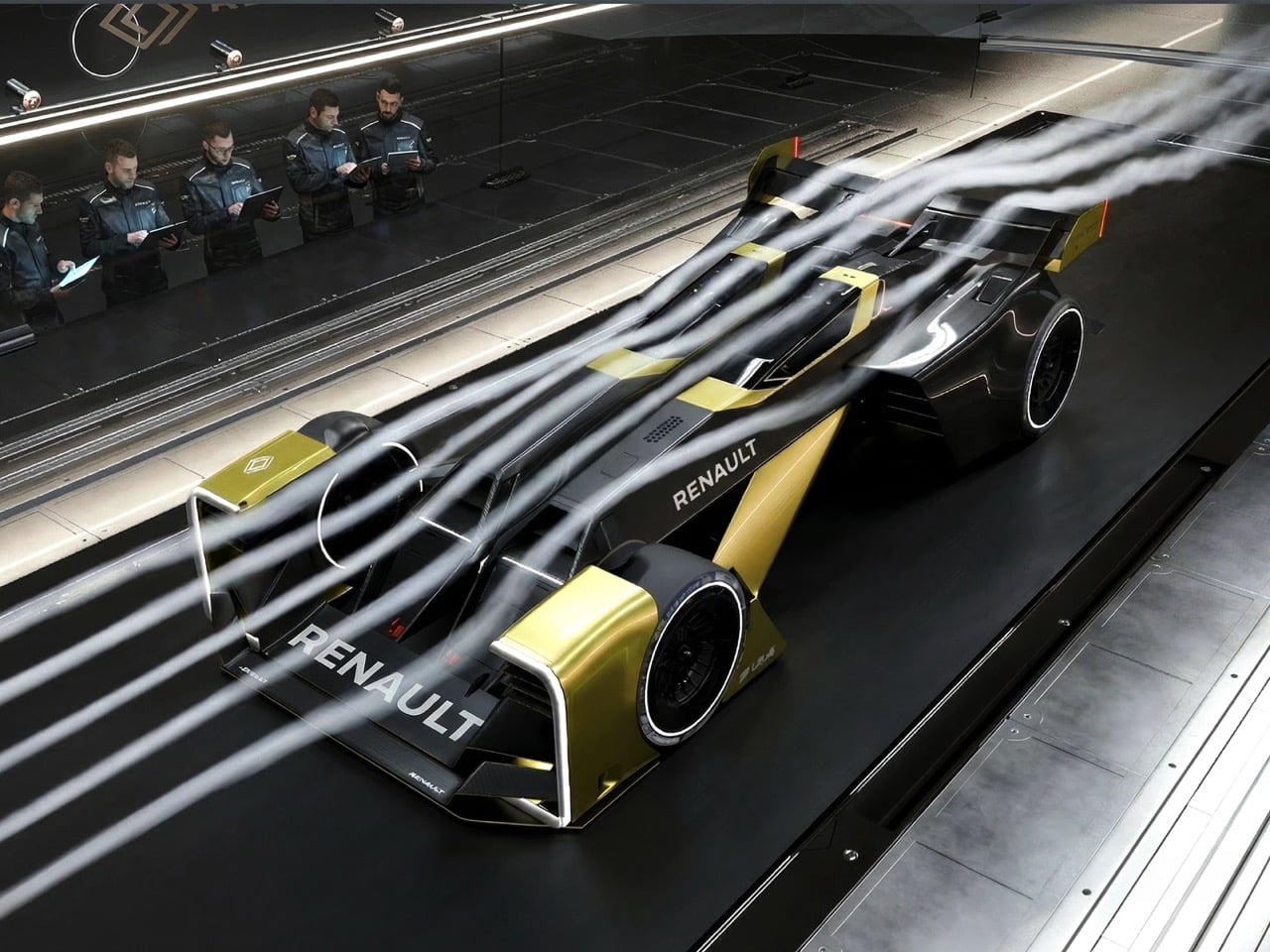
The twin-fuselage layout creates interesting aerodynamic opportunities and problems. Splitting the car’s mass into two distinct bodies allows each fuselage to generate its own downforce independently, potentially creating a system where the left and right sides can be tuned asymmetrically for different corner characteristics. The gap between the fuselages becomes a massive air channel that could feed cooling, create a venturi effect for underbody downforce, or house active aero elements. The downside is drag. Two separate bodies create more frontal area and more turbulent wake than a single unified form, and at Le Mans, where cars spend significant time at full throttle down the Mulsanne Straight, drag is everything. Kim’s concept accepts this compromise, betting that the pit stop time advantage and the safety benefits outweigh the aerodynamic penalty.

The project was developed as a personal exploration in 2026 with mentorship from Dre Ahn of Dvision Studio, rendered in Blender using Cycles for the photoreal lighting, and presented through a comprehensive design development breakdown that shows Kim’s process from initial research through final execution. The concept doesn’t pretend to be production-ready. It’s a provocation, a design exercise that takes a genuine problem in endurance racing and solves it through radical rethinking of what a race car can be. Whether the FIA ever allows modular pod swaps is almost beside the point. The Double Barrel concept demonstrates that the pit stop, which has remained fundamentally unchanged since the 1950s despite massive advances in safety technology, could be completely reimagined if someone is willing to throw out the assumption that a race car has to be a single unified object.

The post Renault Le Mans Hypercar Concept Swaps Entire Drivers Like F1 Changes Tires first appeared on Yanko Design.
Thule builds a new easy-setup Widesky hardshell rooftop tent for more than just sleeping

My love for the outdoors rekindles with the fading spring chill, and I hear voices from the woods calling me to come explore. Of course, backpacking is the most viable option, but when I’m planning with my partner, I prefer the rooftop tent. There are two conveniences of the modern hardshell rooftop tents: they’re light on the vehicle – can even transform for ground camping – and are easy to set up and sleep in at the end of the day.

Over the years, these camping solutions have come a long way. We have seen hardshell rooftop tents with their own power stations and those massive enough to sleep an entire family of four. With few options to make a mark, Thule has introduced the Widesky, its first, and probably also the first-ever rooftop tent with a sofa. How’s that for standing out?

Designer: Thule

Thule Widesky is a premium hardshell rooftop tent that’s easy to set up in seconds. It arrives in a lightweight aluminum hardshell body with telescopic poles that lift the tent from its closed position to a full-size wedge-shaped tent upon undoing the four latches used to secure it closed. It’s not the construction but the fancy interior that really sets the Widesky apart.

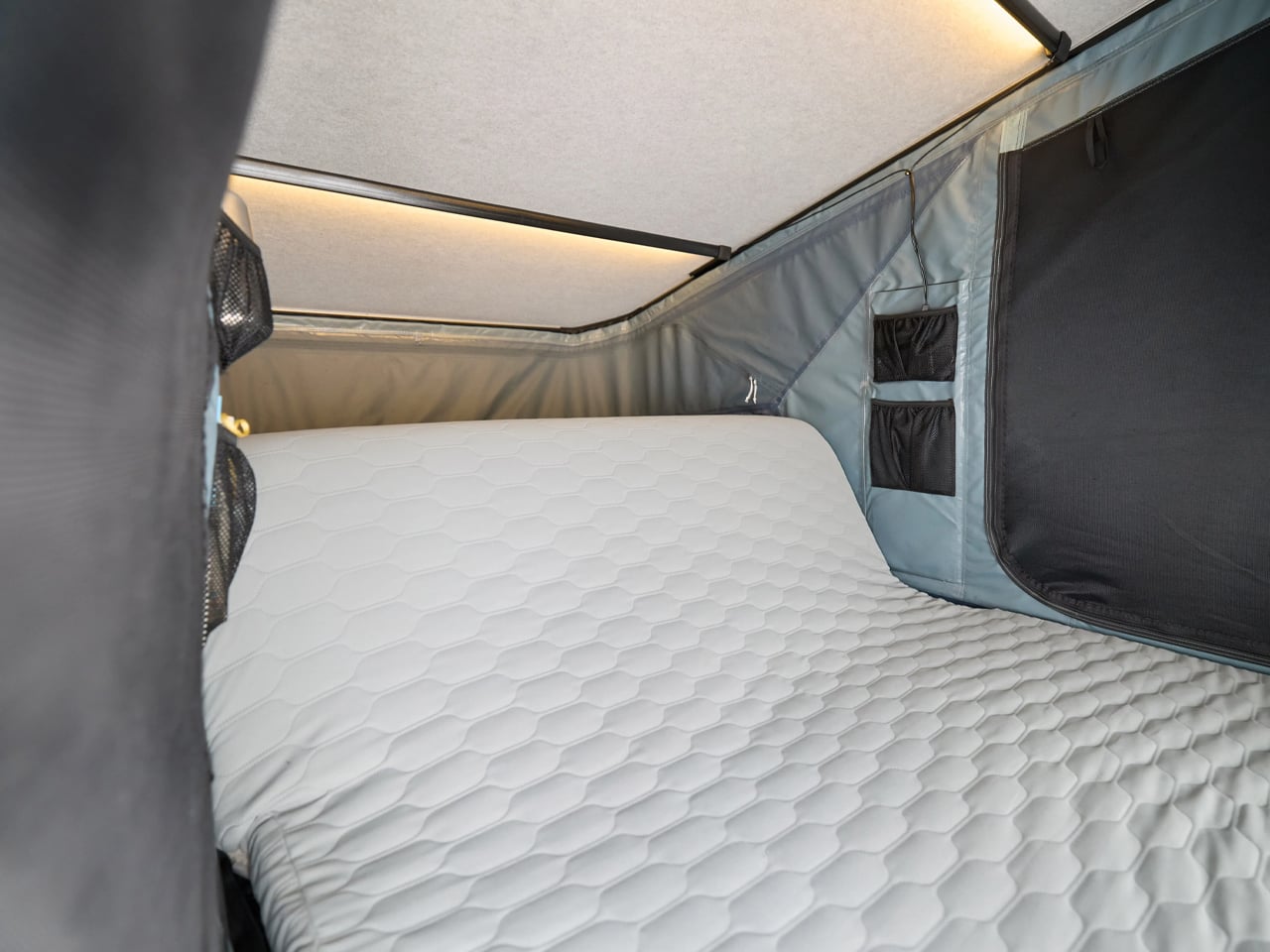
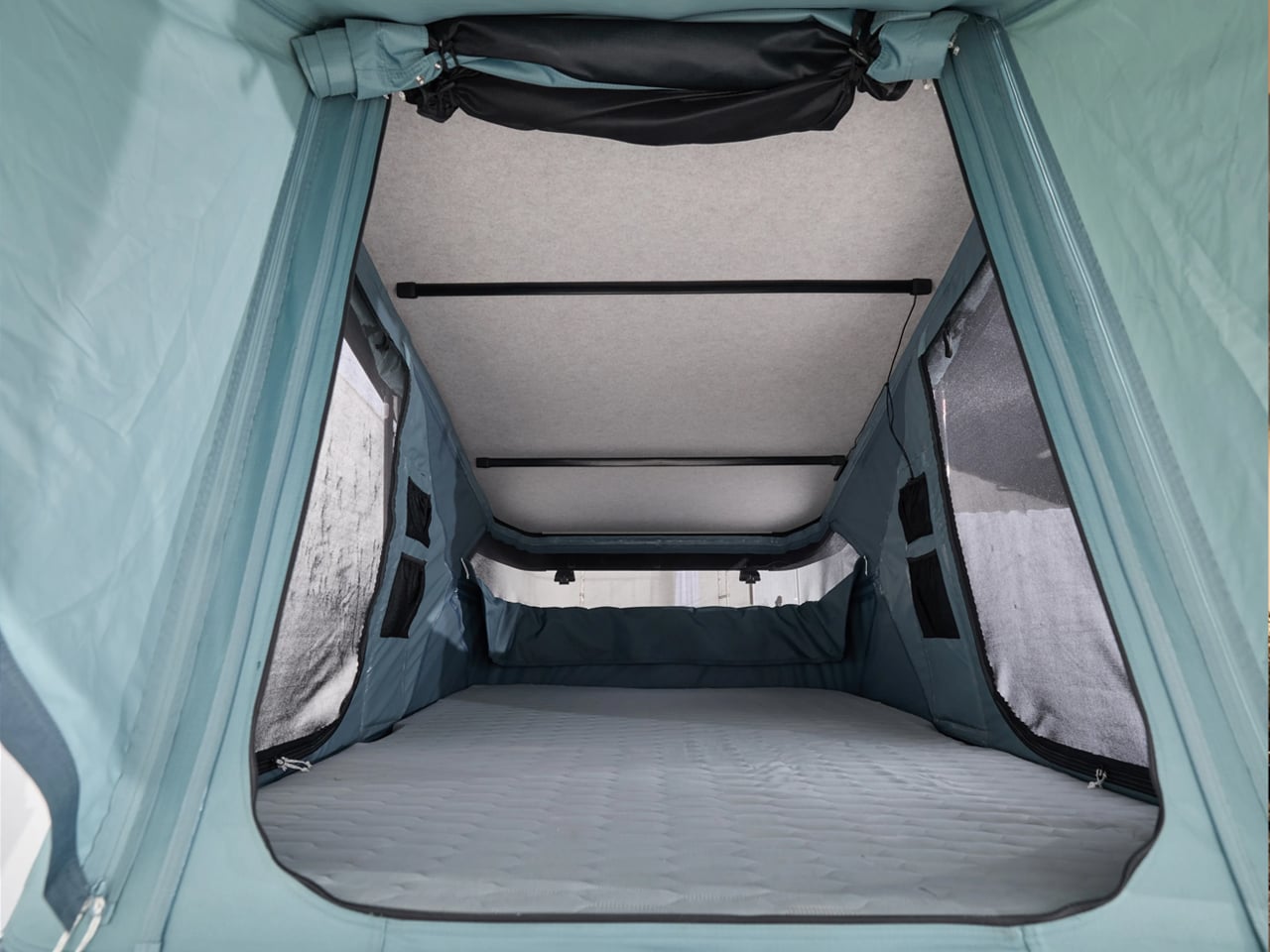
Unlike many rooftop tents, the primary focus of the Thule Widesky is not sleeping. The two-person tent wants travelers to have a comfortable living space inside. By placing a quilted foam mattress inside that converts into a sofa-like setting with a supportive backrest, Thule has transformed the space from the usual sleeper into a living quarter you’d love to retire into when it’s raining outside, or you want to just relax midway. And sitting back, I’m wondering, if it were this simple, why didn’t anyone think of it earlier?

“Widesky is designed to feel just as inviting during the day as it does at night,” Thule confirms. It weighs only 68 kg on the vehicle’s roof and lifts up to 124 cm at the front for a relaxing space inside. When you’re ready to hit the road, the same tent packs back into a hardshell box measuring just 20 cm high. According to the company, it is compatible with most roof rack systems, and courtesy of its durable recycled fabric walls and an all-weather shell, the tent is suitable for more adventures than those tailored for summer days.

“It’s (Widesky) designed for people who… want a rooftop tent that invites them to sit back, relax, and enjoy the view,” Kajsa Levinsson of Thule informs.

The tent comes with a ladder – mountable on any side of the tent – to climb in. Once comfortably seated/sleeping inside, you can enjoy the vista with the same vividness as you would being outside. To that accord, the Widesky is outfitted with large panoramic doors and mesh panels offering expansive outside views, light, and ventilation. The interior is fashioned with dimmable LED lights to make the space feel warm and welcoming even after sunset. All this goodness is expected to arrive anytime this month, but it will set you back $4,000.   

The post Thule builds a new easy-setup Widesky hardshell rooftop tent for more than just sleeping first appeared on Yanko Design.
These Old Bike Frames Upcycled Into Armchairs Are The Coolest Thing You’ll See Today

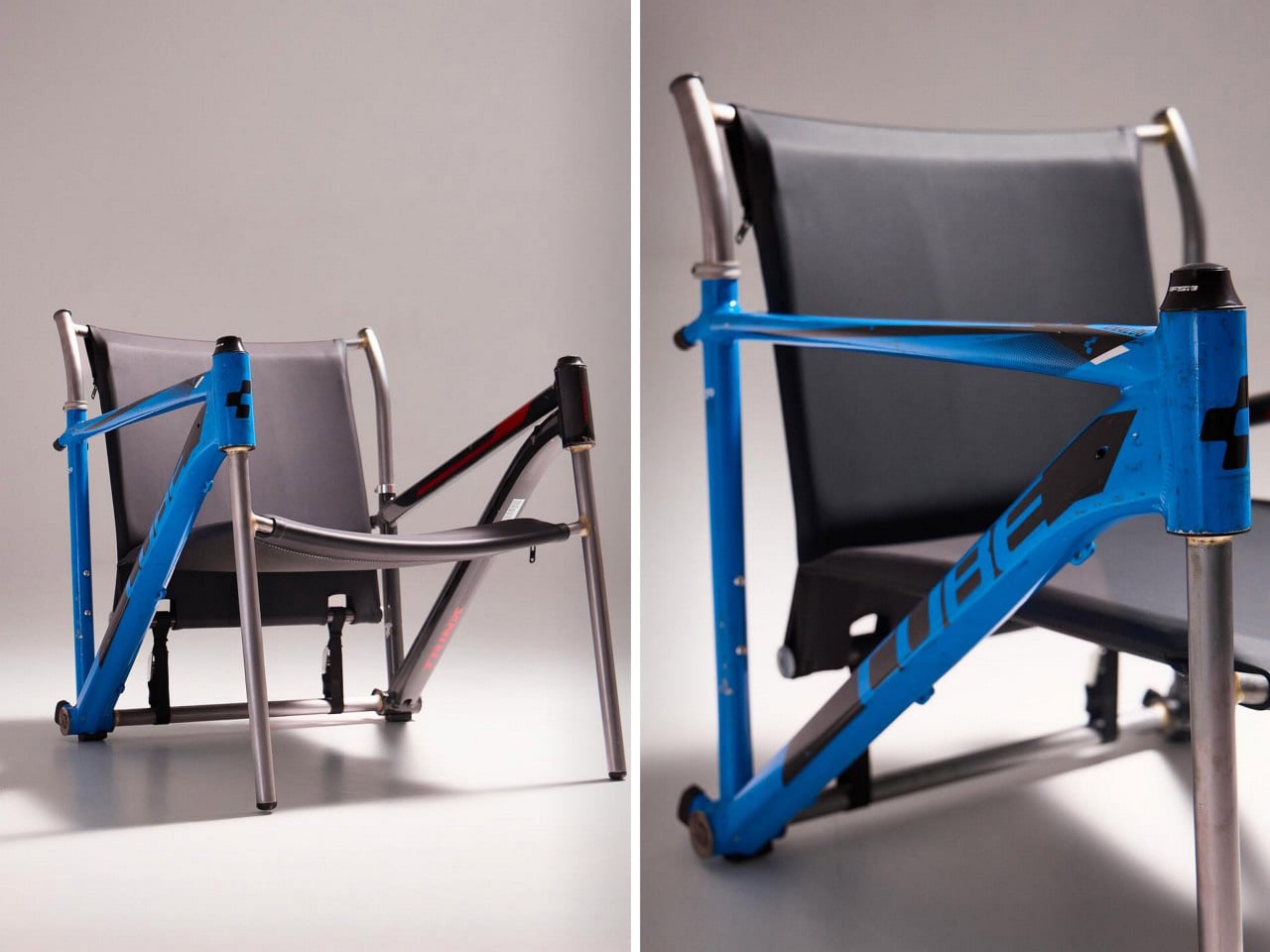
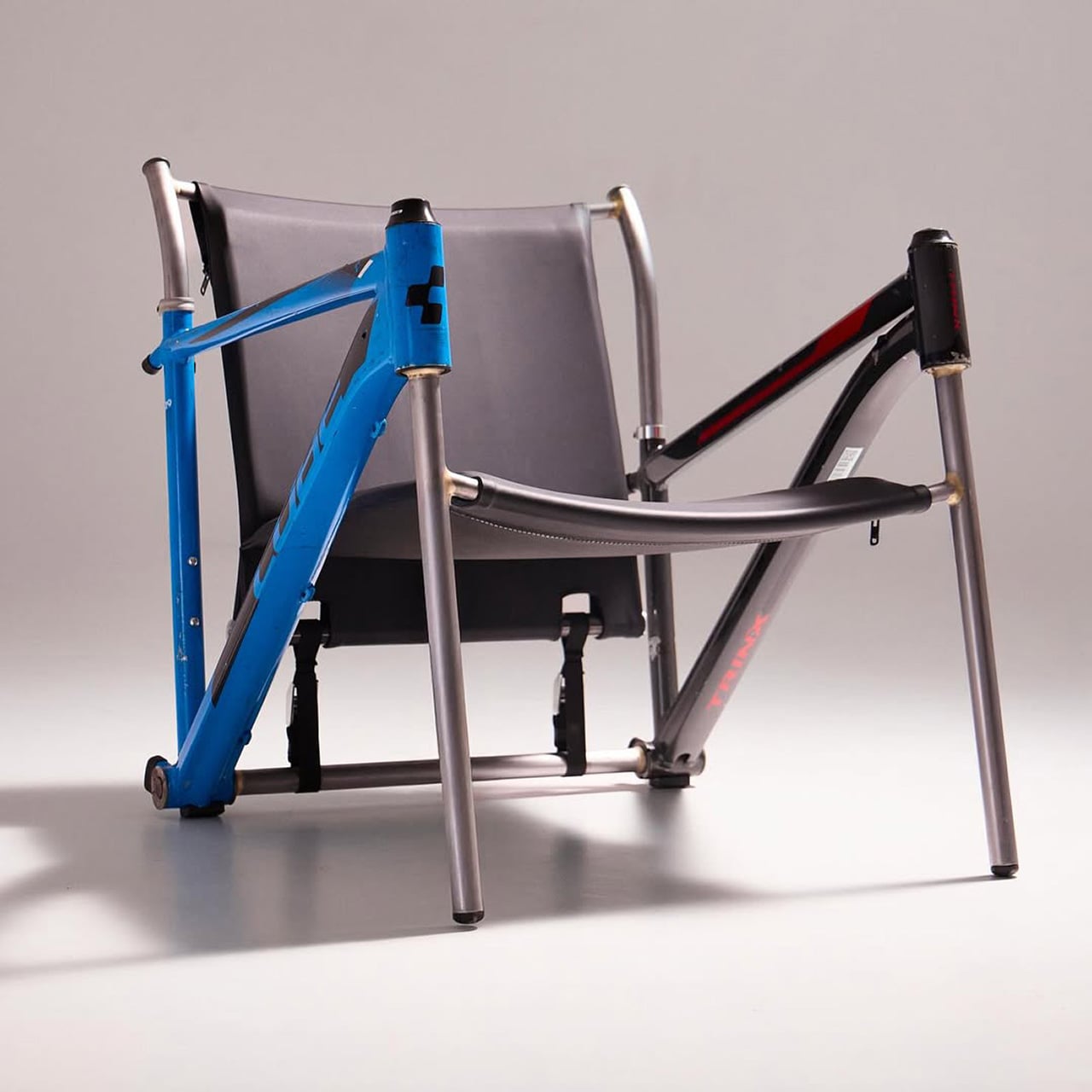
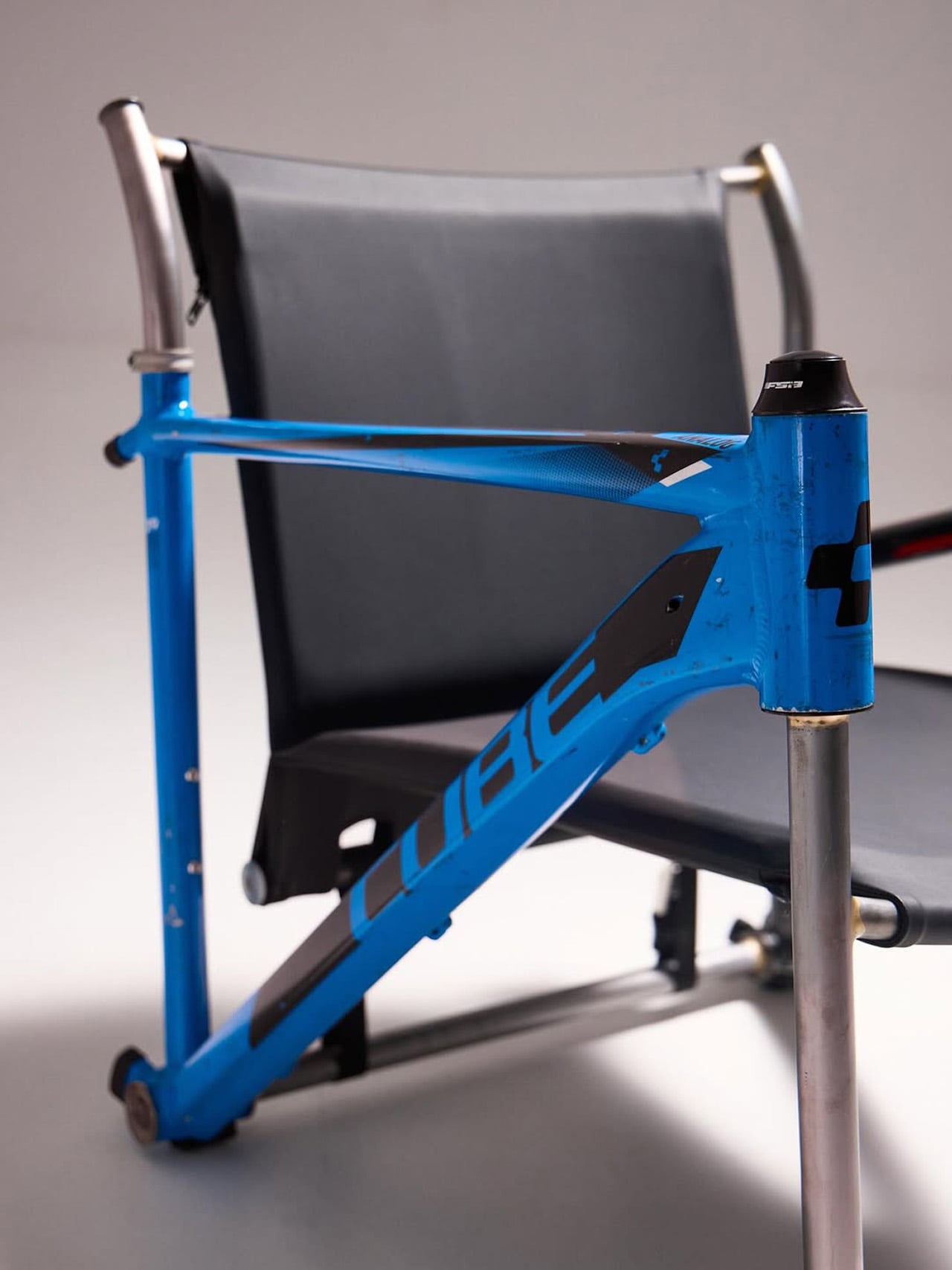
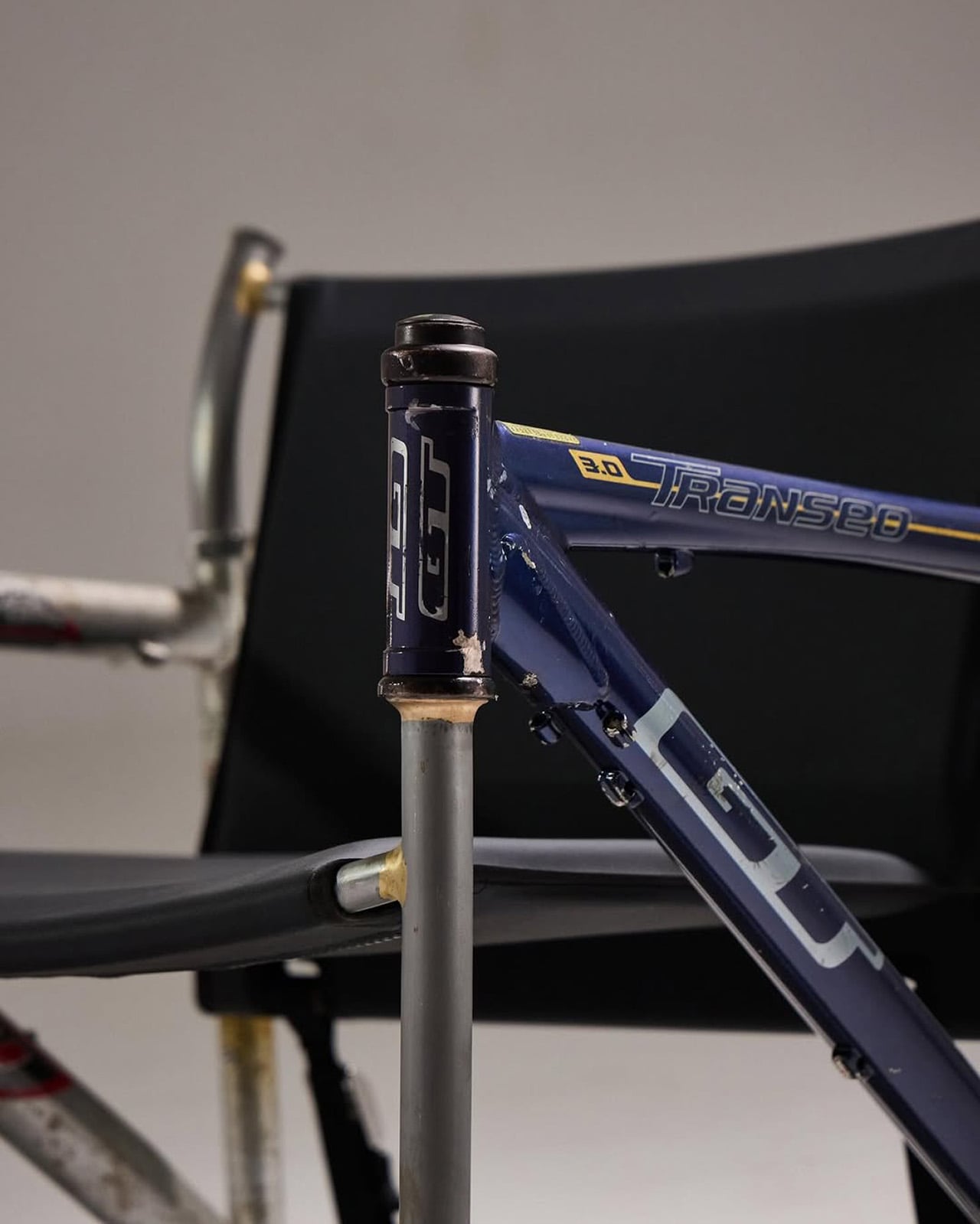
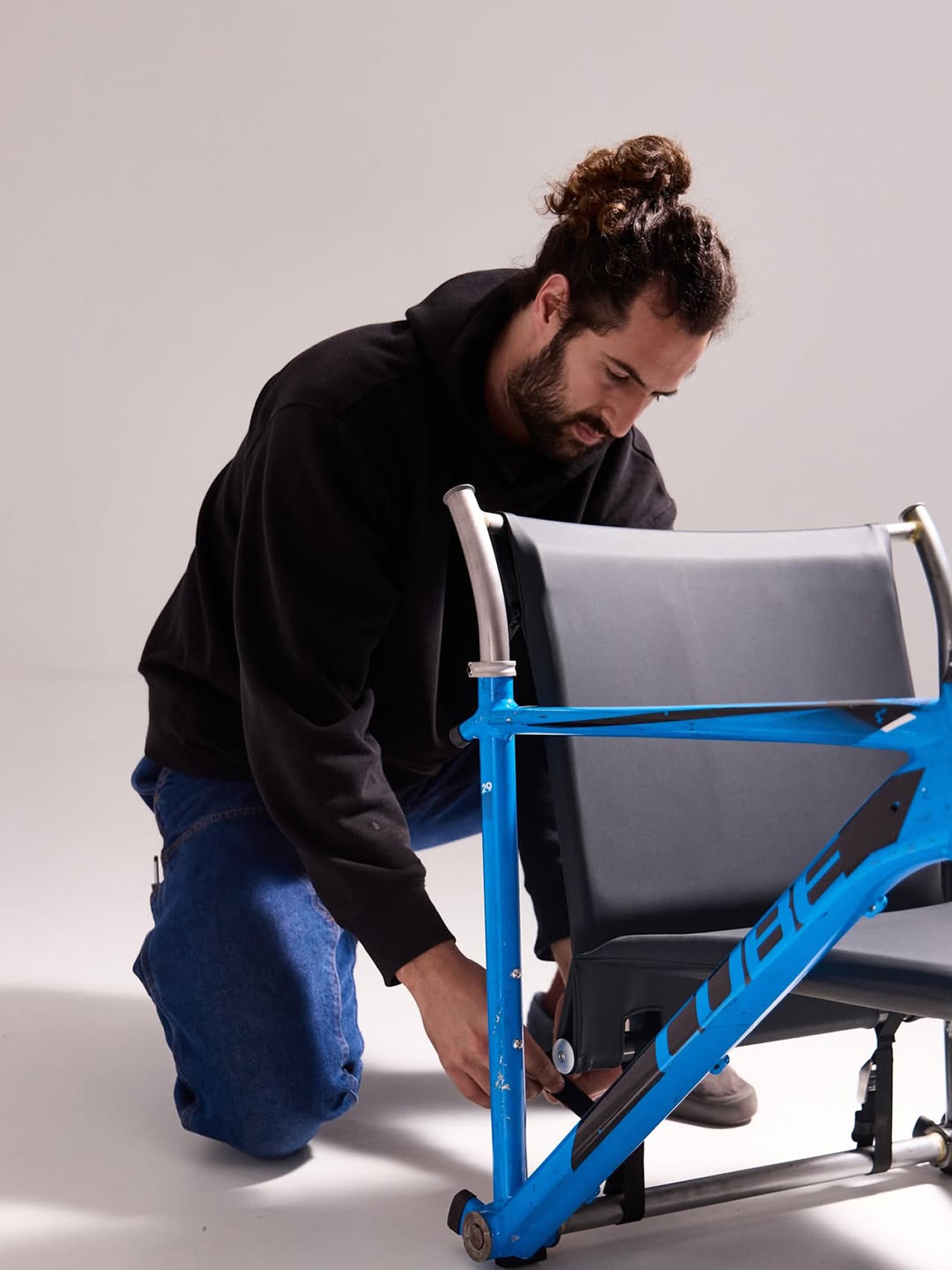
Most upcycling projects ask you to forget what something used to be. Omri Piko Kahan’s bike frame chairs ask the opposite. The geometry is still unmistakably a bicycle frame, the head tube, the top tube, the triangulated rear triangle, all of it present and accounted for, just oriented sideways and asked to hold a person instead of propel one. Kahan, an industrial designer based in Israel, builds lounge chairs from pairs of retired frames, and the whole point is that the donor material remains fully readable, repurposed without being disguised.

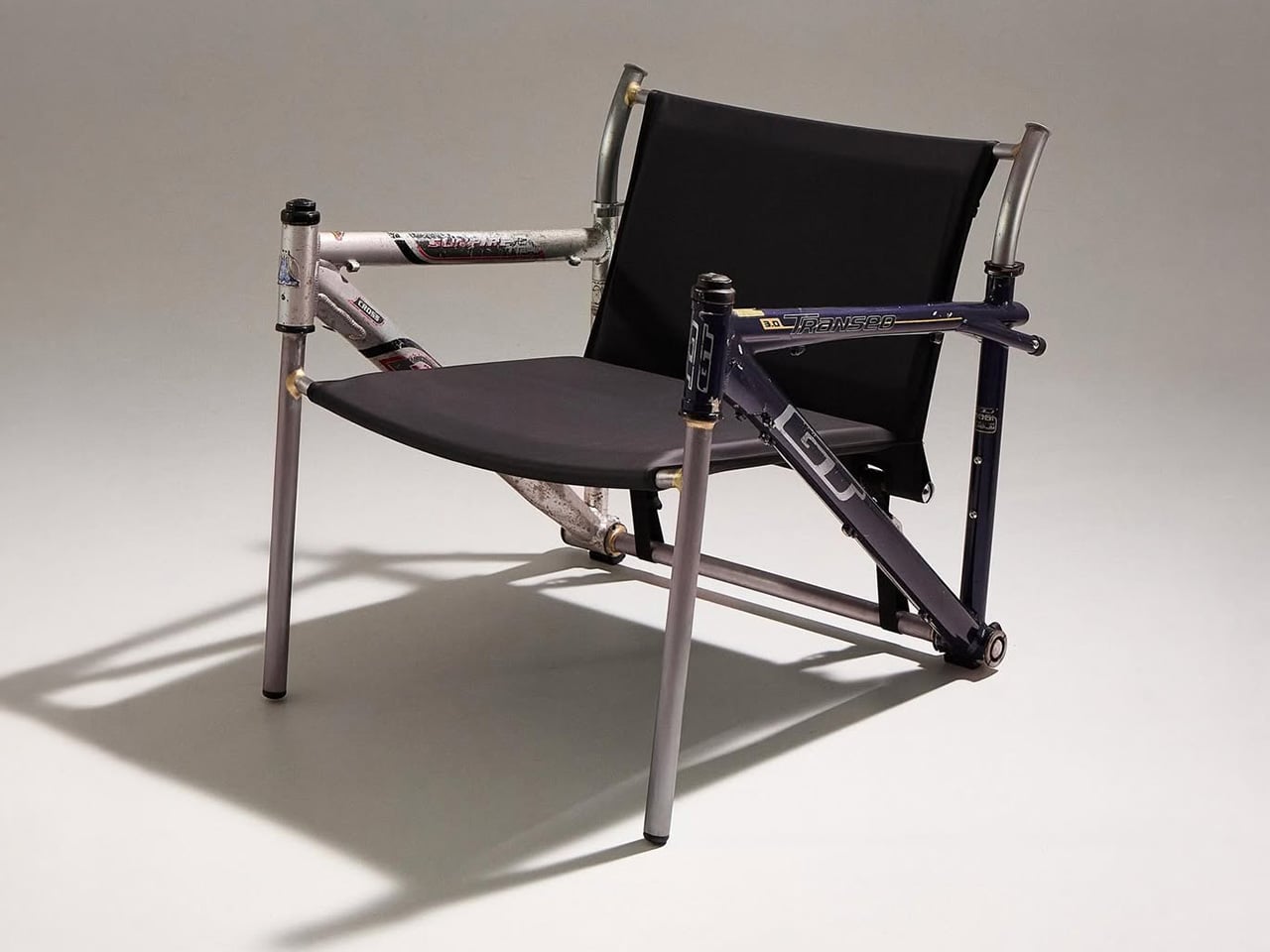
Structurally, the approach is clean and considered. Each frame pair is positioned symmetrically, fork and chainstay ends touching the floor as legs, the top tube running horizontally as an armrest. A slung seat and backrest in leather or canvas complete the form. The result has the relaxed posture of a Barcelona chair and the material honesty of something that was clearly built, not styled.

Designer: Omri Piko Kahan

Bicycle frames are absurdly overbuilt for what Kahan is asking them to do. A modern aluminum road frame is engineered to survive repeated impact loads from a rider pushing 300 watts through rough tarmac, and it does that while weighing somewhere between 1,000 and 1,400 grams. The structural surplus in that kind of engineering is enormous, which is why two of them positioned as a chair frame and asked to support a seated adult is, from a load-bearing standpoint, almost comically within spec. The geometry does the rest. Bicycle frames already resolve forces through triangulated sections, and a lounge chair asks for exactly that kind of lateral and compressive stability.

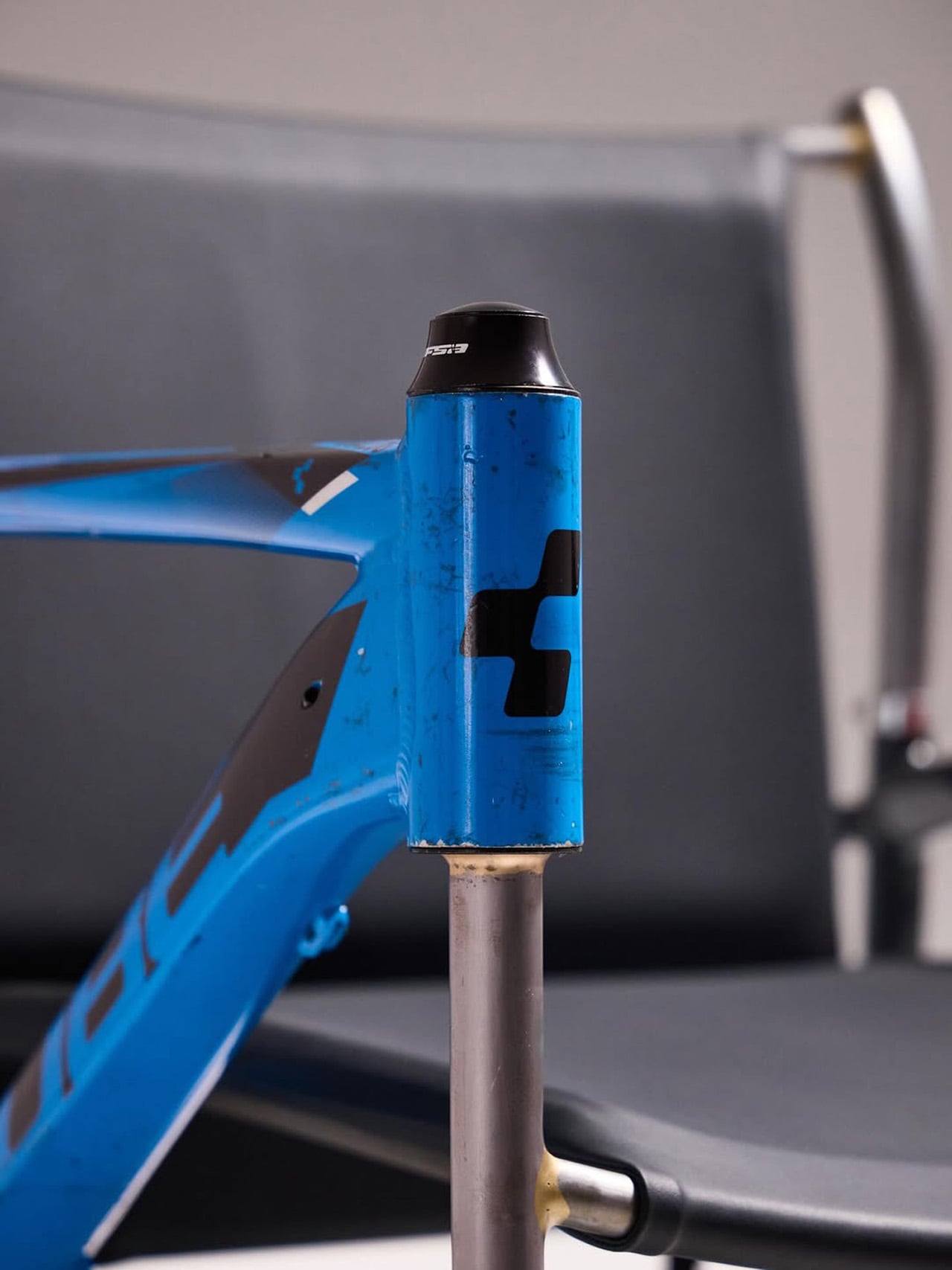
What Kahan has figured out is the orientation problem. Flip a frame on its side and the existing tube angles don’t automatically produce a useful chair geometry. The fork legs and chainstay ends need to hit the floor at the right height relative to each other, the top tube needs to land at armrest height, and the whole thing needs to produce a seat rake that doesn’t pitch you forward or swallow you whole. The matched top tube angles across both frames in the Cube and Trek build suggest this took real iteration, because they align with a precision that reads as deliberate rather than lucky. Filed fillets at the junctions and a custom setback upper support holding the sling confirm someone was paying close attention to finish quality.

The two builds photographed so far, one pairing a blue Cube road frame with a Trek, another combining a GT Transeo 3.0 with what appears to be a Supreme-branded MTB frame, show how much the donor bikes drive the final character of each piece. The GT build in particular has a longer wheelbase geometry that gives the chair a wider, more reclined stance than the Cube version. Kahan is taking custom orders, with pricing worked out per commission, which makes sense given that no two donor frame combinations will produce the same structural or ergonomic outcome.

The post These Old Bike Frames Upcycled Into Armchairs Are The Coolest Thing You’ll See Today first appeared on Yanko Design.
Semicircular Wings give this Hybrid eVTOL an 800 Mile Range with 30% Less Power Consumption

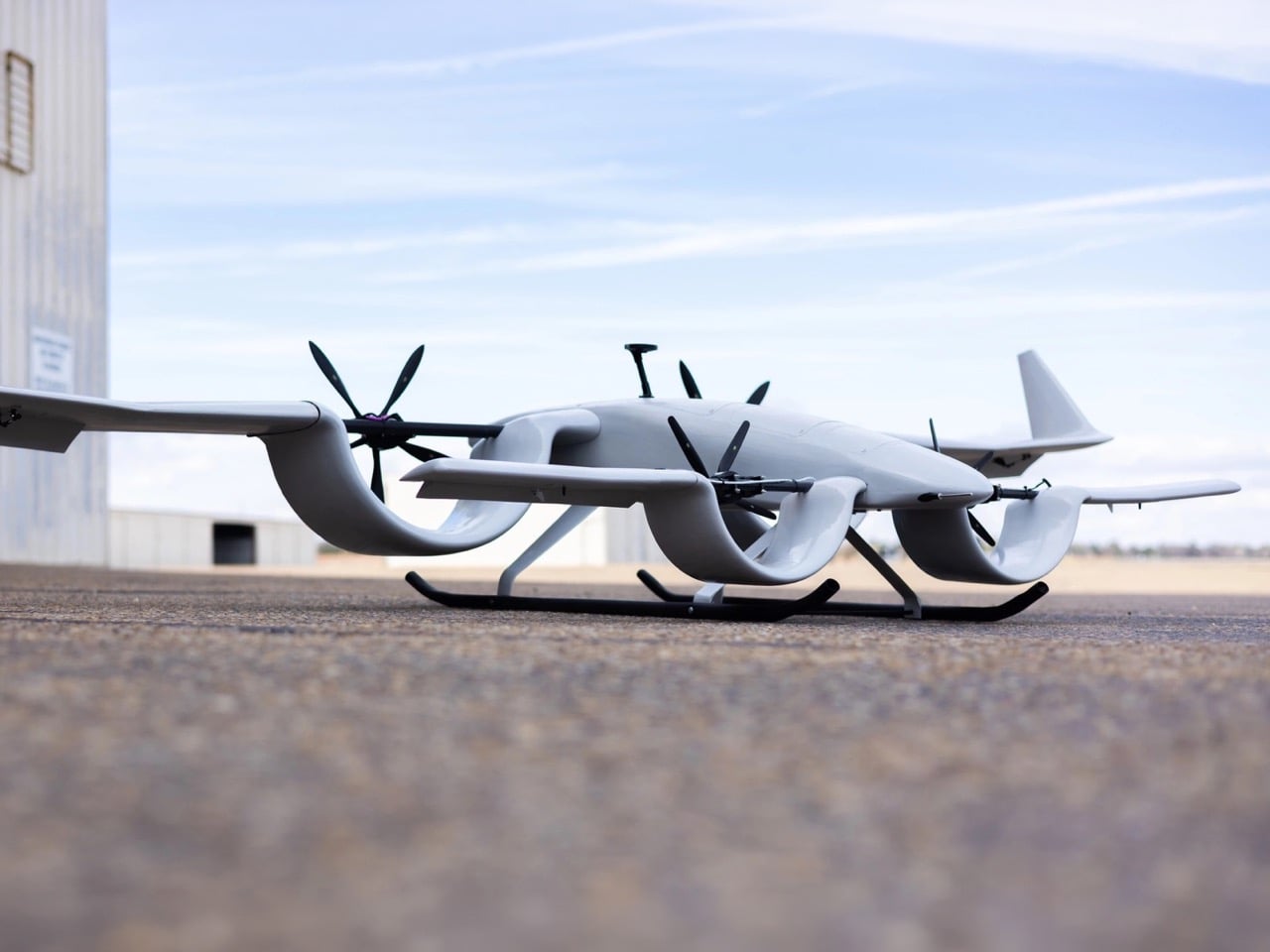
Could the most efficient VTOL design of the 21st century have been sitting in a patent office since 1928? Willard Ray Custer thought so, and spent decades trying to prove it. His channel wing concept, which set propellers into semicircular cutouts in each wing to blast high-velocity air across the lifting surface at low forward speeds, worked well enough that his team demonstrated near-vertical liftoff decades before the term eVTOL existed. Aviation’s mainstream never adopted it, partly because the aircraft of that period were too heavy and partly because the jet age arrived and swept most unconventional configurations off the table. The concept sat in aerospace history books, occasionally surfacing in academic papers and NASA wind tunnel tests, never finding its way into a production aircraft.

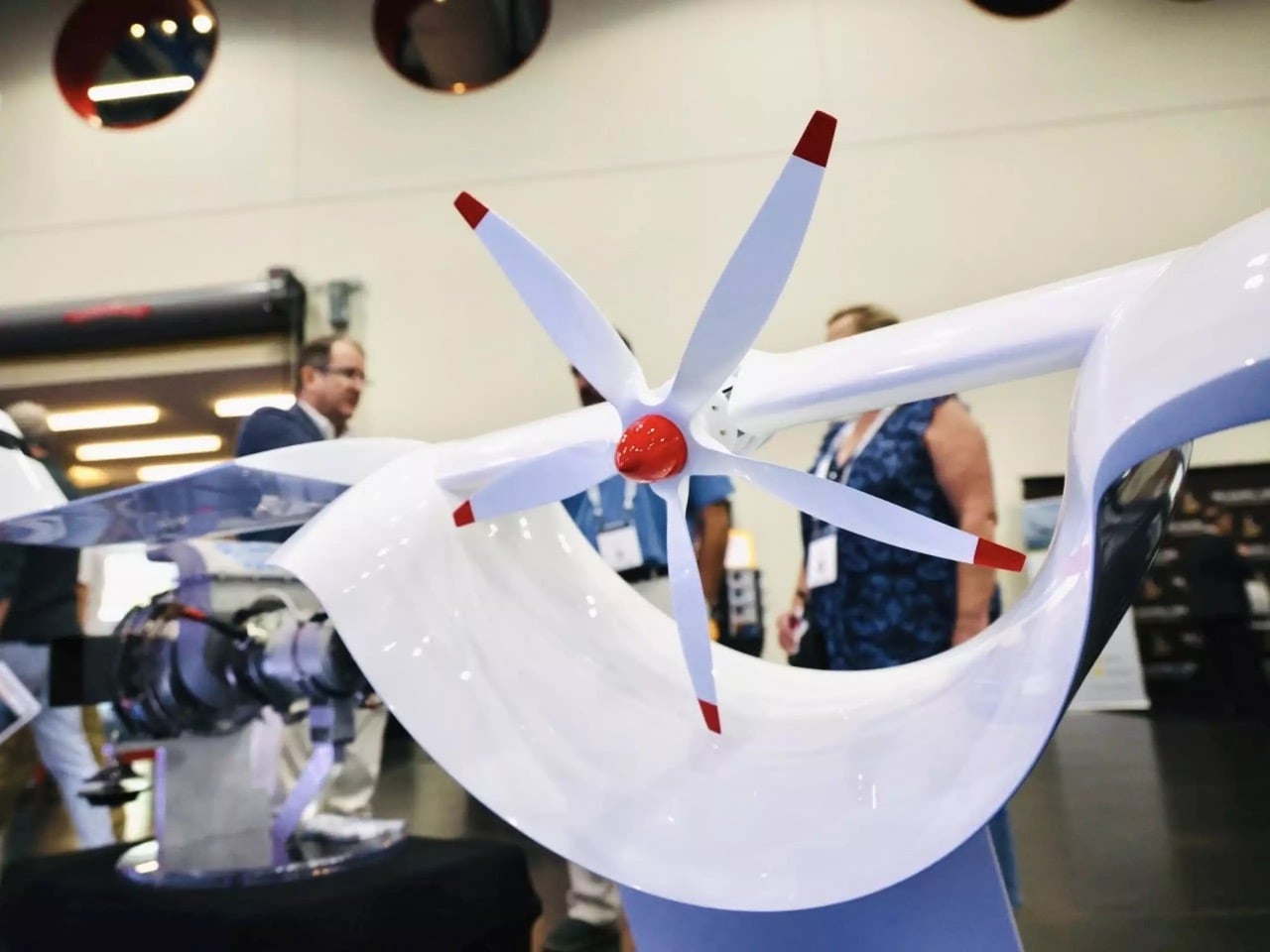
HopFlyt is the company making the argument that the wait is finally over. Founded in 2016 by Rob Winston, a former NASA engineer and Marine Corps test pilot, the Maryland-based startup has built the Cyclone, a hybrid VTOL drone that pairs Custer’s channel wing geometry with pivoting mounts, modern composites, and a hybrid electric-fuel drivetrain. The channels orient rearward for vertical takeoff, pivot beneath the wing for forward cruise, and can even act as aerodynamic brakes on descent. HopFlyt claims the configuration cuts climb power consumption by a third compared to conventional VTOLs, holds fuel burn to under three gallons per hour, and enables cargo runs of 250 lbs across 800-plus miles of range. A 2027 commercial launch is the target, aimed squarely at naval resupply, offshore energy logistics, and medical delivery markets.

Designer: HopFlyt

The engineering logic behind the channel wing is cleaner than it might first appear. A conventional fixed wing generates lift by moving through air fast enough for pressure differentials to do their work, which means you need significant forward velocity before the wing becomes useful. Custer’s insight was to bring the air to the wing instead, using a propeller seated inside a curved half-channel to accelerate flow across the lifting surface regardless of forward speed. HopFlyt’s pivoting channel takes this further, allowing the geometry to optimize for hover and cruise independently rather than compromising between them. Chief Engineer Neil Winston, whose background spans NAVAIR flight test, puts it plainly: the ideas were always there, but the digital control systems, electric motors, and lightweight materials needed to execute them simply did not exist until now.

The hybrid drivetrain is what gives the Cyclone its range credentials and separates it from the crowded field of pure-electric eVTOLs currently chasing urban air taxi certifications. Battery power handles the vertical takeoff and hover phases, where the channel wing’s efficiency advantage is most pronounced, while a turbogenerator takes over for forward cruise, extending endurance far beyond what any battery pack realistically supports today. HopFlyt puts the operational cost savings at 90 percent compared to helicopters performing equivalent missions, a figure that, if it holds up under real-world conditions, makes the Cyclone genuinely disruptive in sectors where helicopter logistics are currently the only viable option. Offshore energy platforms and naval resupply operations run on helicopter economics right now, and those economics are punishing.

HopFlyt has reached this point on a fraction of the capital that comparable advanced air mobility startups have burned through, operating out of a private hangar in Maryland with a team whose combined aerospace experience runs to over a century. The company is currently in a Series A raise to fund hybrid-electric prototype development and initiate flight demonstrations ahead of that 2027 target. Whether the Cyclone becomes the aircraft that finally vindicates Willard Ray Custer’s century-old intuition depends on what those demonstrations produce. The aerodynamics have always been sound. Now the rest of the technology has caught up.

The post Semicircular Wings give this Hybrid eVTOL an 800 Mile Range with 30% Less Power Consumption first appeared on Yanko Design.
100-Meter A100 concept yacht redefines luxury sailing with massive interior volume

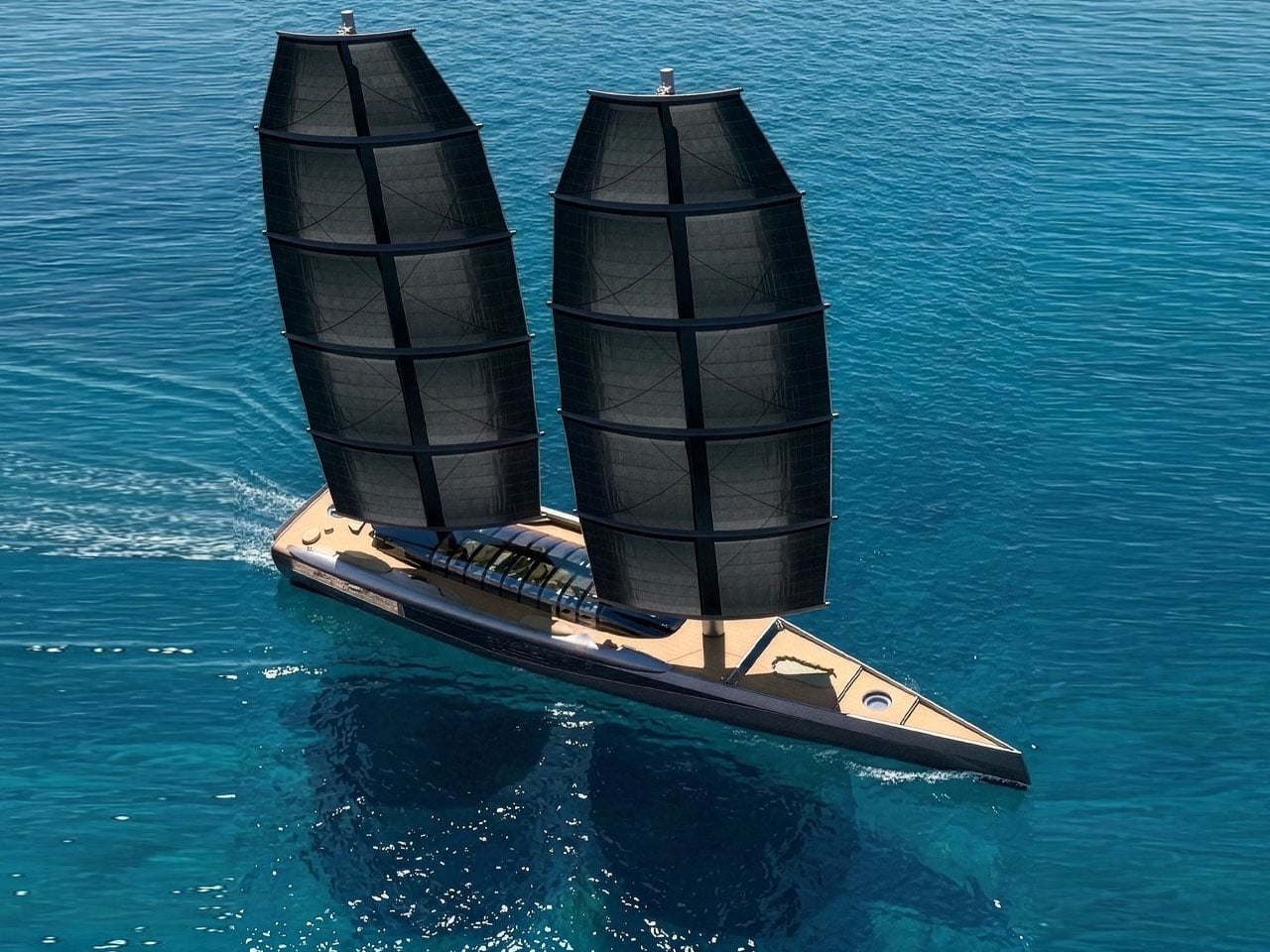
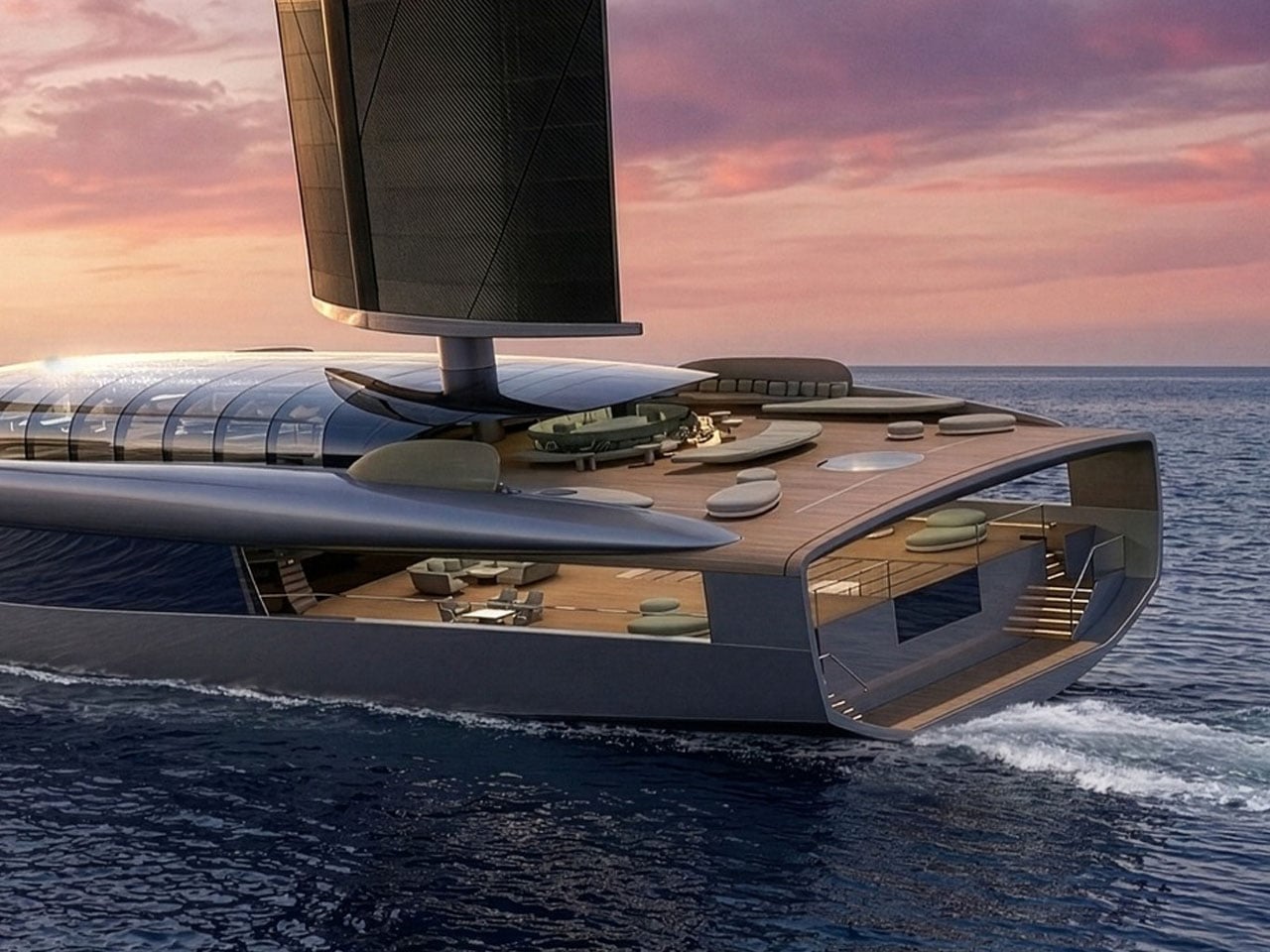
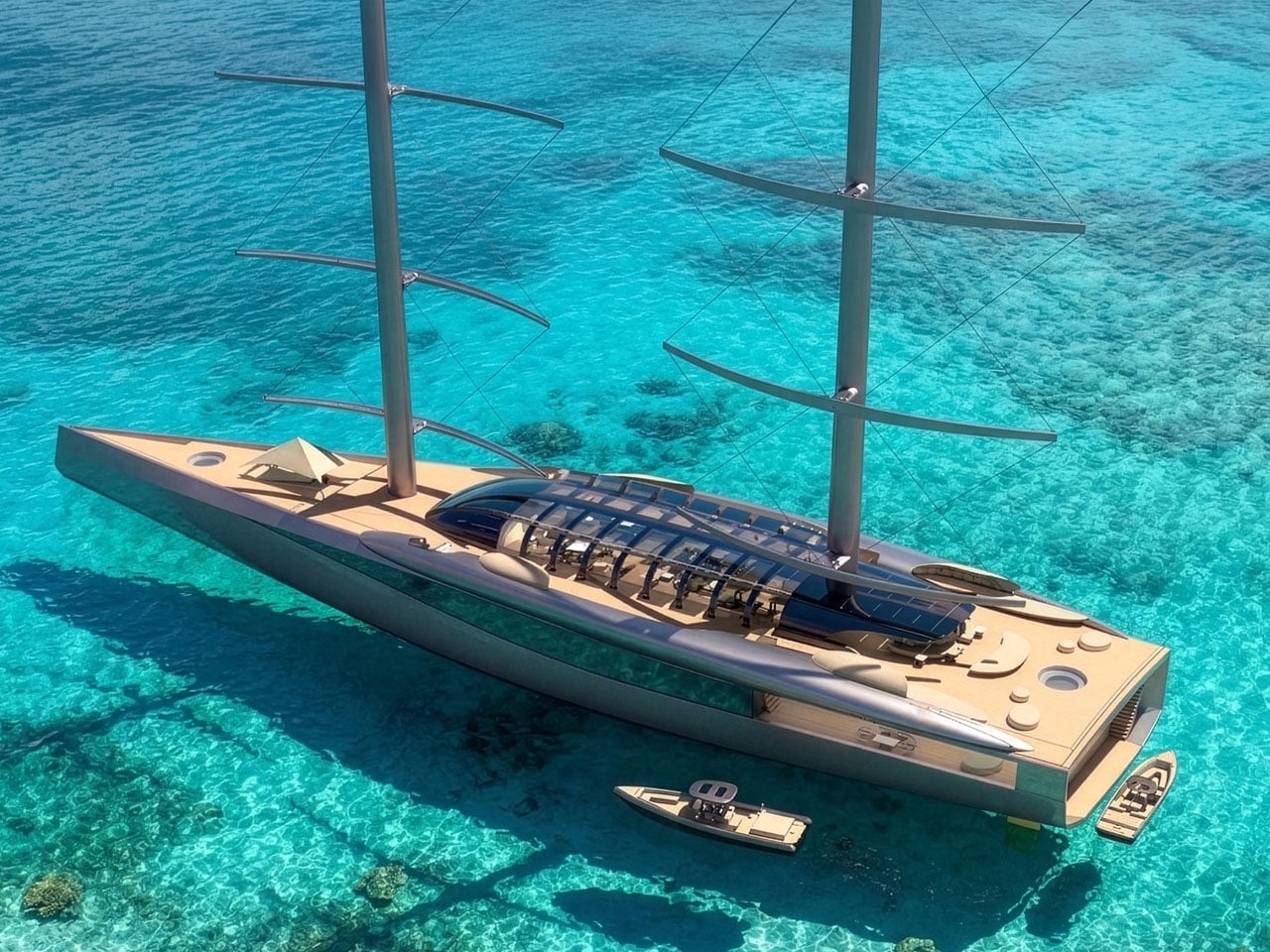
Modern sailing superyachts often struggle to balance two competing priorities: the elegance and efficiency of wind-powered travel and the expansive living spaces typically associated with large motor yachts. The A100 sailing yacht concept approaches this challenge with a bold rethink of traditional yacht architecture. Developed through a collaboration between Van Geest Design and Rob Doyle Design, the 100-meter vessel proposes a layout that delivers the interior volume of a motor yacht while maintaining the identity and performance of a sailing superyacht.

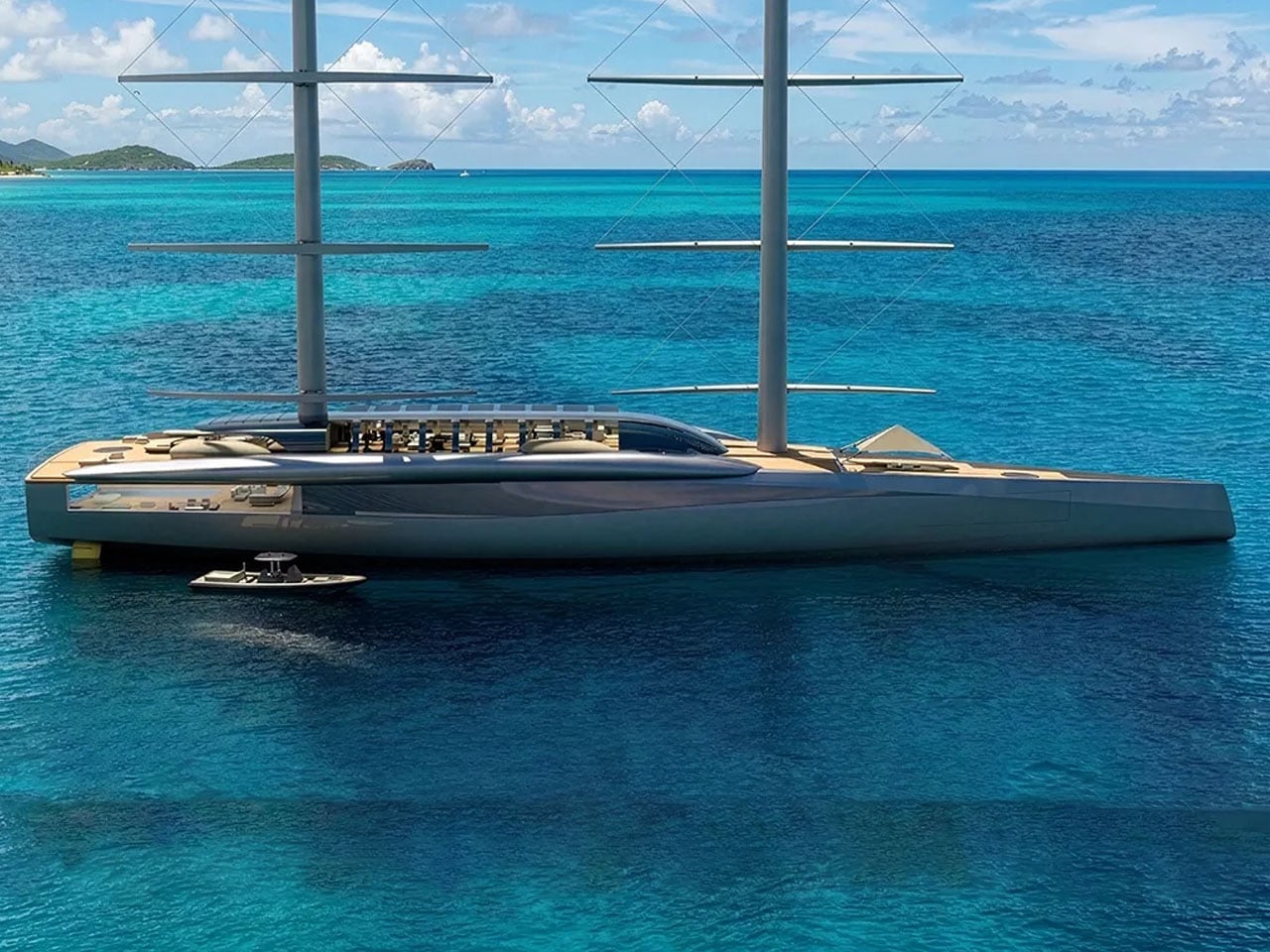
At the core of the concept is a design strategy that maximizes usable space. Traditional sailing yachts require wide side decks for crew movement and sail handling, which limits interior width. The A100 concept reduces the width of these side decks, allowing the main deck to stretch nearly the full beam of the yacht. This architectural shift creates significantly larger interior spaces than typically found on sailing yachts of comparable size.

Designer: Van Geest Design and Rob Doyle Design

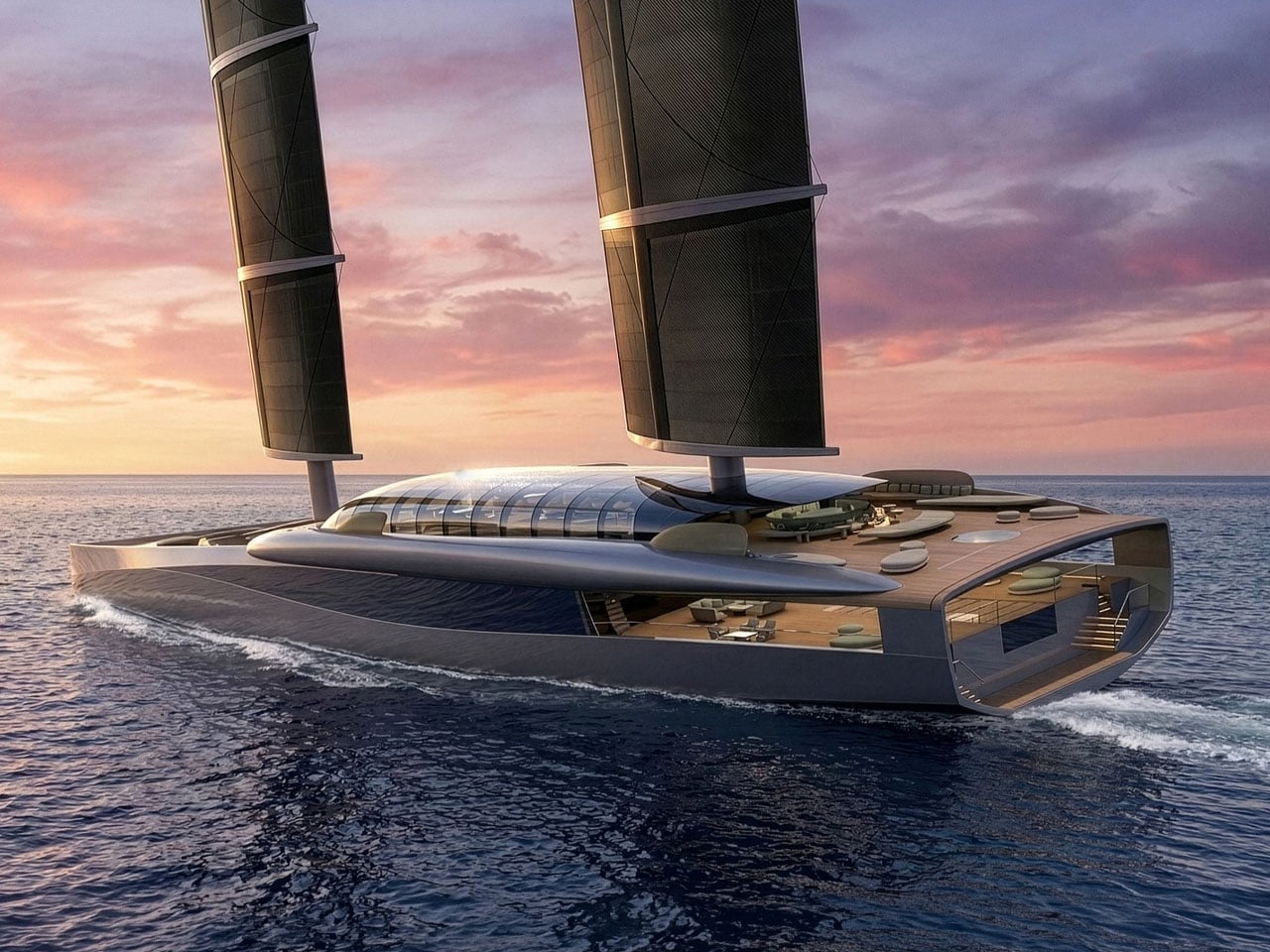
The main deck is designed as the primary social and living area. Here, the owner’s suite occupies a substantial portion of the deck, offering a level of space rarely seen on sailing yachts. Adjacent to the suite is a central lounge and formal dining area intended for gatherings and entertaining. An additional space can function as a library or a private cinema, adding flexibility to the interior layout. Large sections of glass surround these living areas, filling the interior with natural light and offering uninterrupted views of the ocean.

Below deck, the yacht accommodates guest cabins along with a variety of leisure-focused facilities. This level also houses a dedicated diving room and storage for water toys such as jet skis and e-foils, allowing guests to transition between onboard relaxation and water activities easily. The layout is designed to maintain a strong visual connection with the surrounding seascape while ensuring privacy and comfort for those on board.

Outdoor areas play an equally important role in this larger-than-life superyacht design. The upper deck includes the navigation and steering stations, along with flexible lounge spaces for relaxation or wellness activities. At the stern, a large beach club spans the full width of the yacht, creating a welcoming space for guests to gather close to the water. Toward the bow, storage areas accommodate tenders and recreational equipment without disrupting the clean lines of the deck.

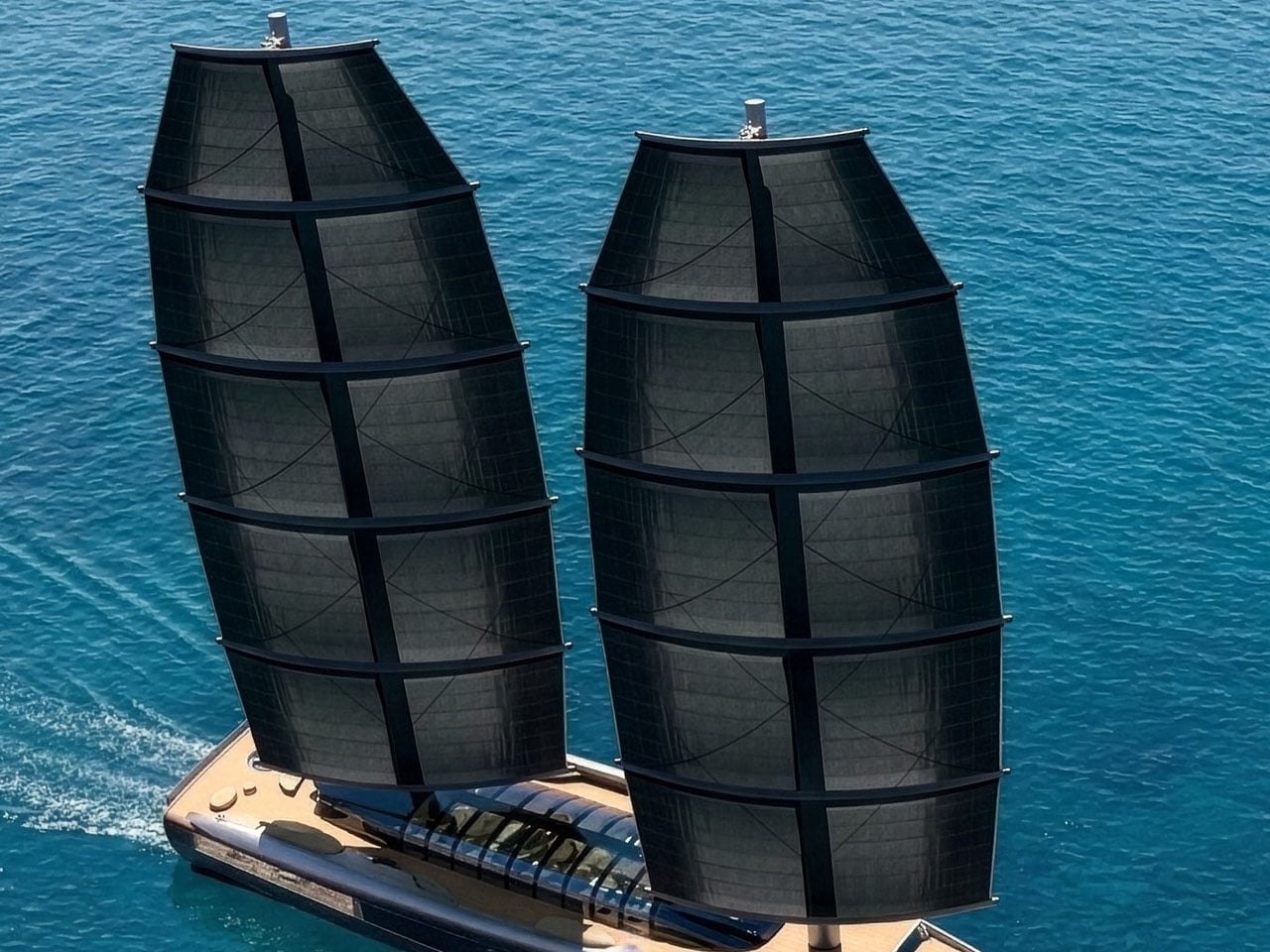
The sailing system is based on two free-standing DynaRig masts, a modern configuration used on some of the world’s largest sailing yachts. The system employs curved yards that support multiple sails, all of which can be deployed and adjusted electronically at the push of a button. The rotating masts simplify sail handling while maintaining efficient propulsion for a vessel of this scale.

Beyond its layout and sailing system, the A100 concept also reflects growing interest in more sustainable superyacht designs. By relying heavily on wind propulsion supported by advanced onboard energy systems, the concept explores ways to reduce reliance on conventional engine power. If brought to life, the A100 would stand among the largest sailing yachts ever built!

The post 100-Meter A100 concept yacht redefines luxury sailing with massive interior volume first appeared on Yanko Design.
Ari 458 Pro is Germany’s smallest electric camper and we love its approach

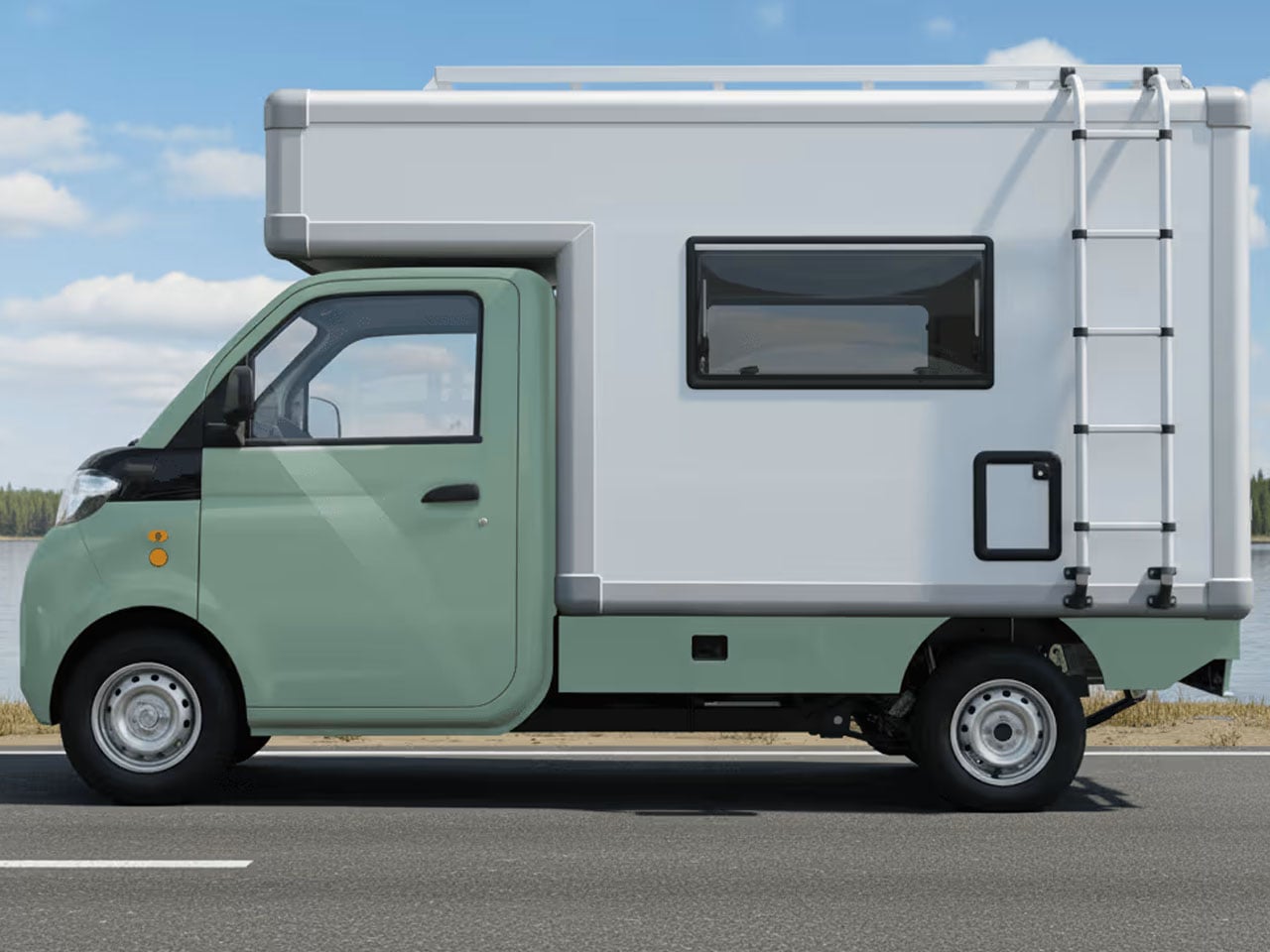
It’s rare to come across a capable mobile living unit built onto the back of a Midsize Light Commercial Vehicle (LCV). The versatile delivery truck platform has the power and capacity to carry a living unit, but it’s not a preferred conversion choice for obvious reasons: It wouldn’t go beyond the convenient city and semi-urban paths.

If you’re someone who is content with camping in designated sites and parks at accessible distances over a weekend; the Ari 458 Pro electric camper van is tailored for your ‘compact, efficient and consistently sustainable’ lifestyle. For those who prefer the rugged wilderness, look over for other options.

Designer: Ari Motors

Created in Germany by Ari Motors, the Ari 458 Pro doesn’t have the rugged appearance: It’s not meant to be a mean adventure rig. The docile appearance may not be German, but the quality of what you get onboard the motorhome – space-saving design with maximum flexibility for living and traveling – is definitely German, if you know what I mean.

Designed to be Germany’s smallest electric camper van out there, Ari 458 Pro is created keeping in mind adventurers and family campers interested in short vacations. The mini-camper with 30 square feet of living space has a top speed of 70 km/h (44 mph) and about 230 kilometers (143 miles) range. It draws power from a solitary 23.5kWh electric motor, which produces up to 20 horsepower.  A choice of 15kWh battery is also available. It will perhaps reduce the range from 143 to roughly 112 miles.

It comes based on a resilient chassis with an integrated power supply, solar and water systems, while the interior is left out as a blank canvas for the individual to customize to their different requirement. Users can choose to customize the 12.5 feet long, 4.9 feet wide, and 6 feet high (headroom) camper interior from a minimalist solution for sleeping to a fully-equipped home with kitchenette, storage, couch, bed and other necessities.

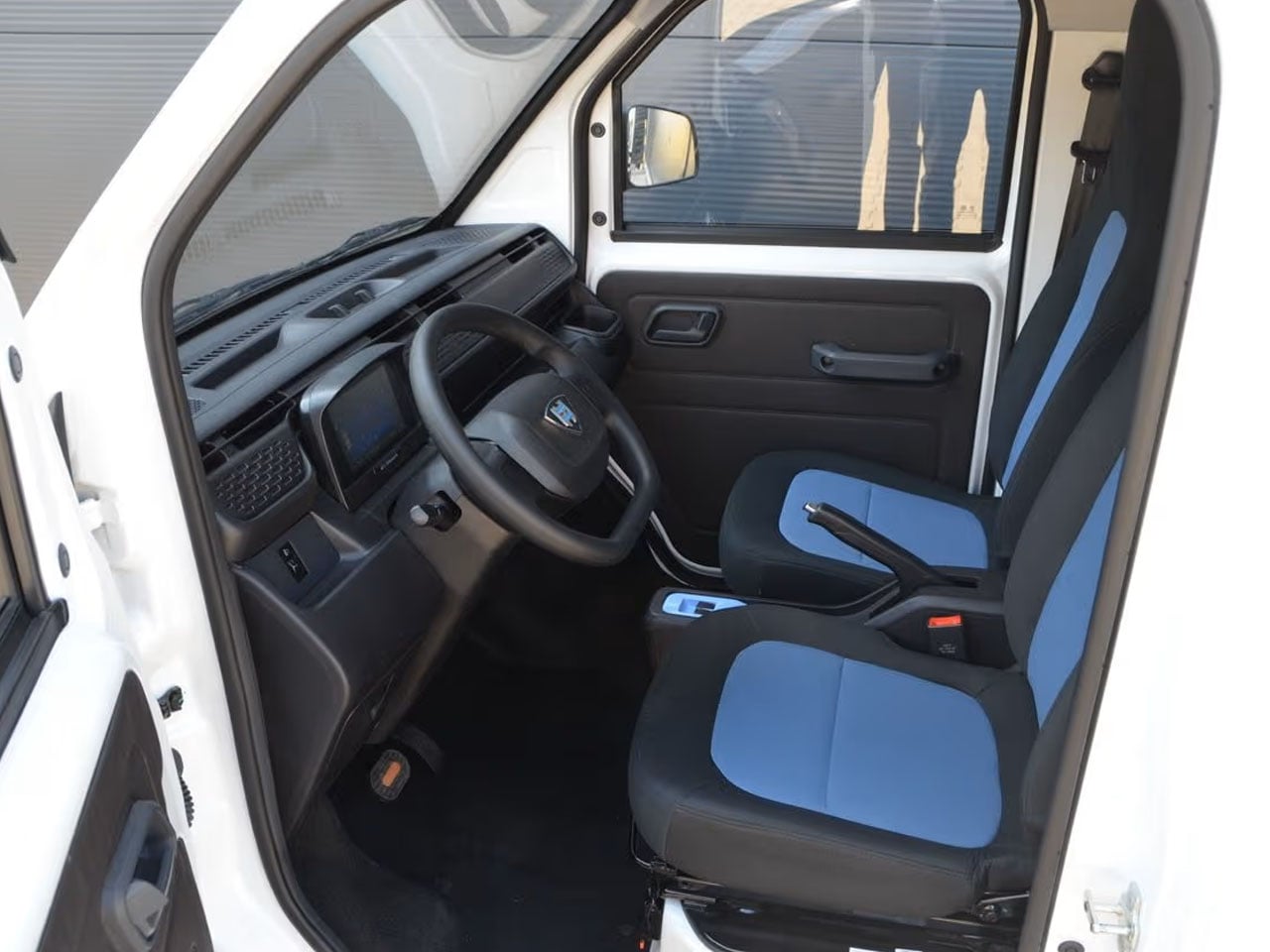
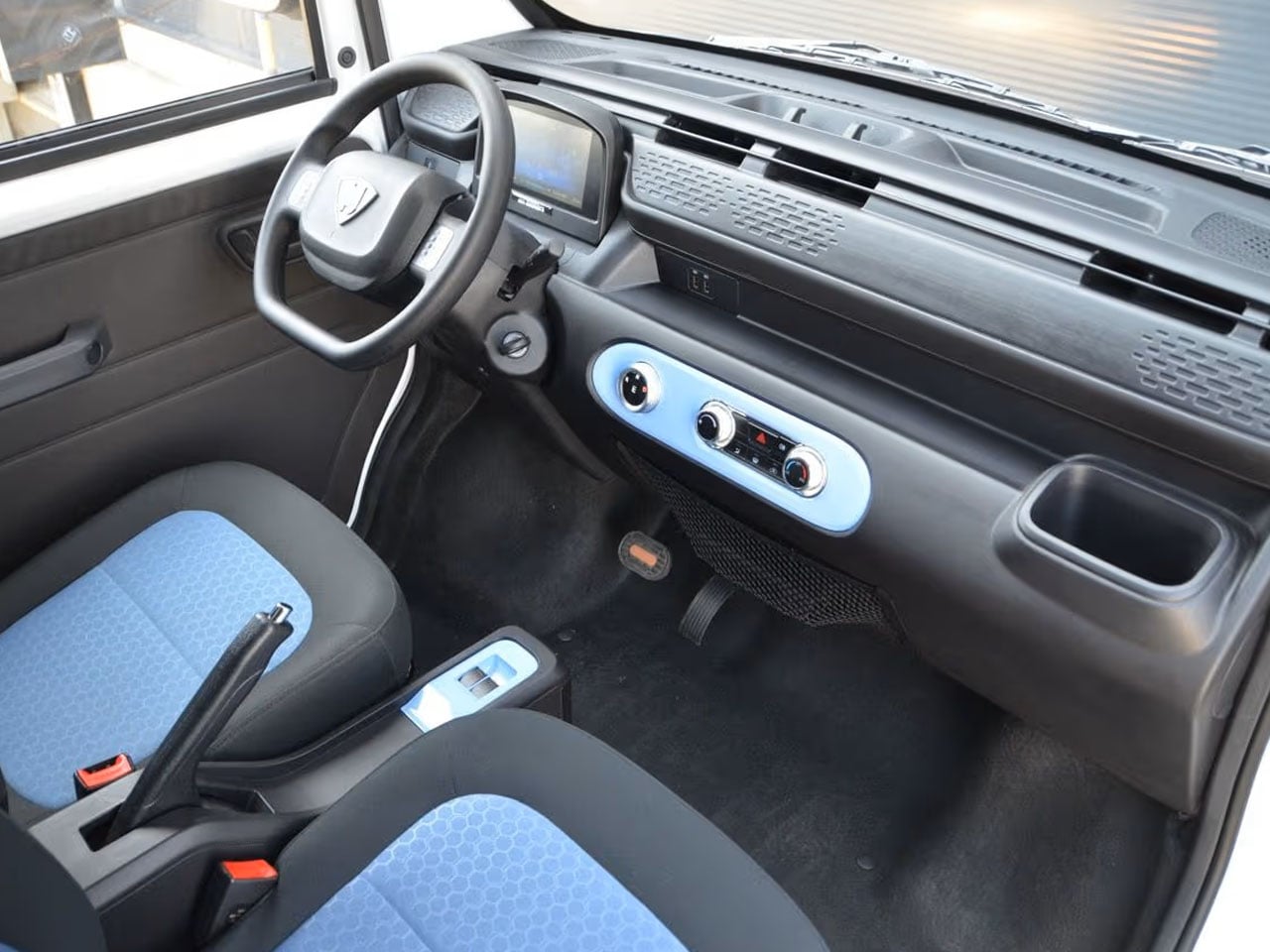
Created small and compact, the Ari 458 Pro camper van can park conveniently in any parking space, and as the company says, ‘fit narrow roads where larger motorhomes cannot go.’ Its cockpit is interestingly furnished with two seats, a digital display, and a reversing camera to ensure safety. The camper van is currently available in Germany and is priced at €30,381 ($35,100). We do not have a word on the Air 458 Pro’s international availability, but for the interested, the Ari 458 Pro is available in the country in over 30 different variants: food truck, box van, flatbed, tipper, or even a compact garbage truck. These configurations start at €15,790 ($18,200).


The post Ari 458 Pro is Germany’s smallest electric camper and we love its approach first appeared on Yanko Design.

This Hydrogen Business Jet Emits Nothing But Water and Could Change Private Aviation Forever

French aerospace startup Beyond Aero has just completed the Preliminary Design Review (PDR) of its hydrogen-electric business jet, the BYA-I One, a significant step that moves the aircraft firmly into detailed design and verification and one step closer to its target commercial entry in 2030. Founded in Toulouse in December 2020, Beyond Aero first unveiled the BYA-I concept at the Paris Air Show in June 2023. Since then, the aircraft has evolved considerably, and the PDR marks the most mature version yet.

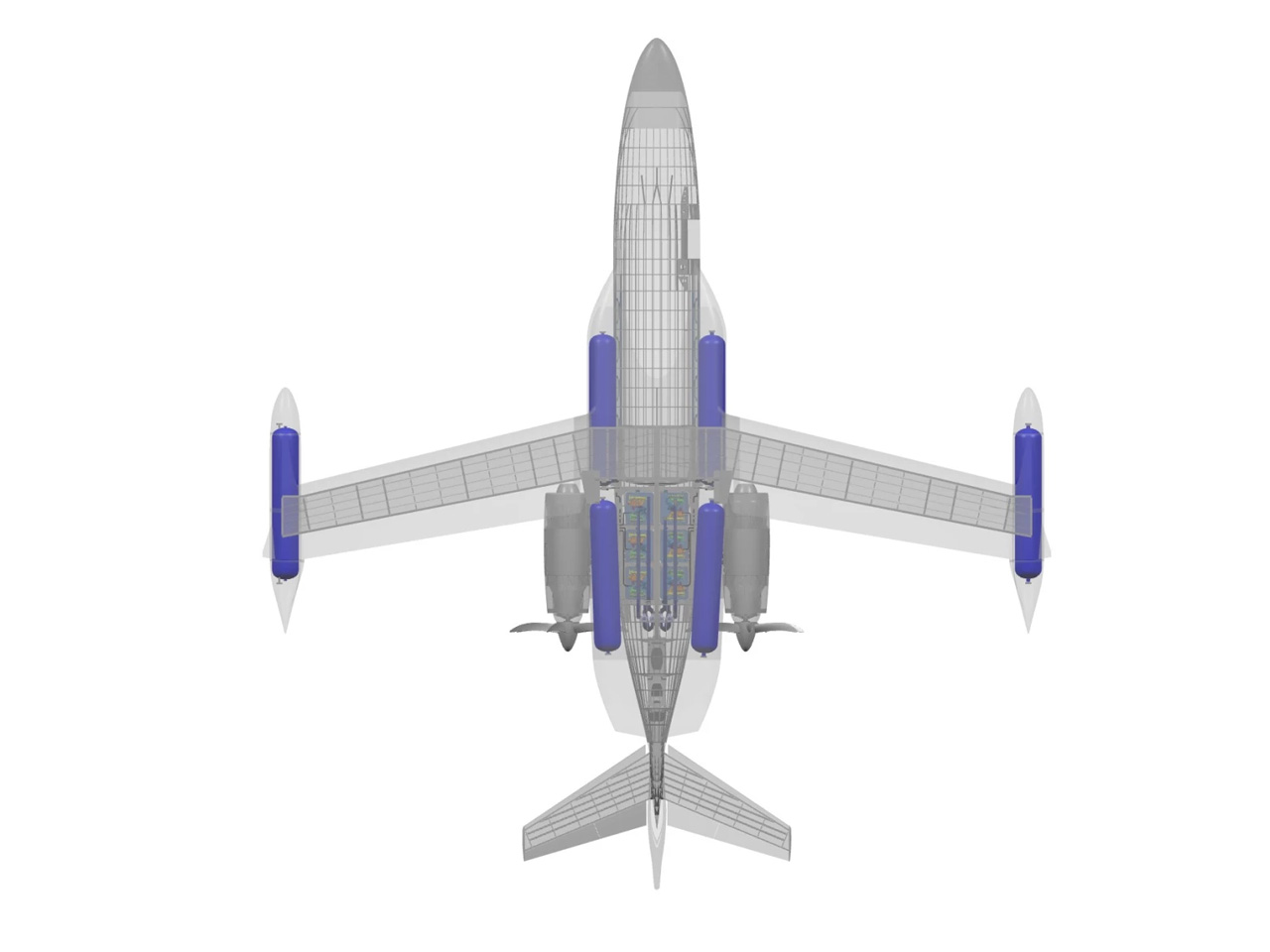
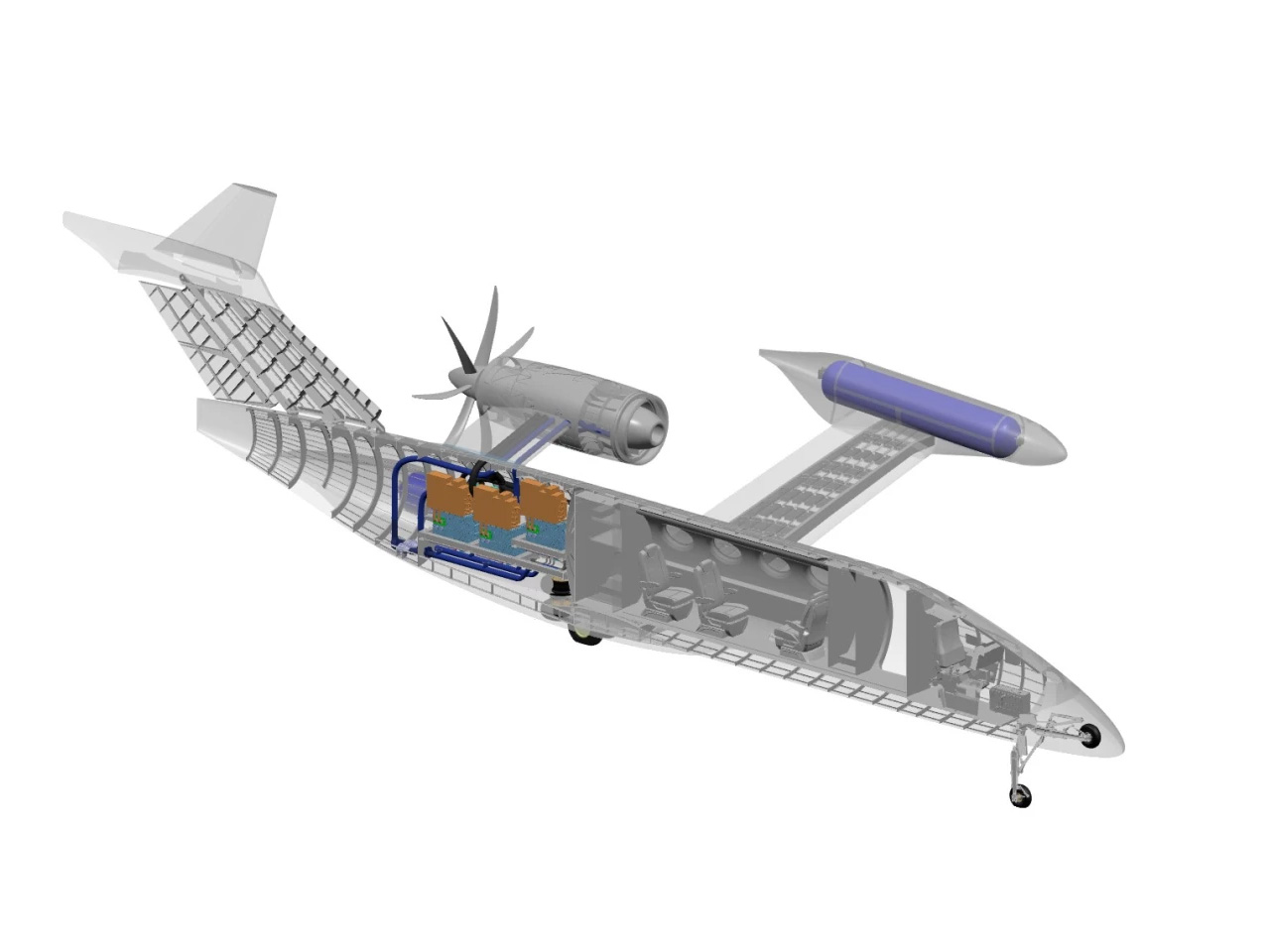
The review confirmed the full integration of hydrogen storage, electric propulsion, thermal management, fuel cell systems, and safety architecture into what the company describes as a certifiable design. The propulsion setup is the heart of the story. The BYA-I One uses a twin pusher-configured propfan system, a shift from the earlier ducted-fan arrangement, powered by six 400kW hydrogen fuel cells delivering a combined 2.4MW of power, with a total propeller shaft output of 950kW.
Designer: Beyond Aero

Gaseous hydrogen is stored at 700 bar in externally mounted tanks above the wing structure, with a refueling time of just 30 minutes. The aircraft emits only water vapor in flight, making it one of the cleanest propulsion concepts in business aviation today. A custom-designed Full Authority Digital Engine Control (FADEC) system ensures precise performance across all flight phases and will be certified under a TC Engine framework.

On performance, the numbers are compelling. The BYA-I One is designed to carry up to eight passengers over a range of 800 nautical miles at 300 knots, covering more than 80% of current European business aviation routes. It has a maximum speed of 414 mph, a ceiling of 26,000 feet, and a takeoff ground roll of just 725 meters, short enough to serve constrained airports like London City, and can operate from grass, snow, and unpaved surfaces.

Inside, the cabin stretches 1.84 meters wide and 1.7 meters tall, wider than most light jets, with a six-seat club configuration. Elliptical windows are 27% larger than those found in conventional business jets, flooding the interior with natural light. With 90% fewer moving parts and no high-temperature turbine, maintenance costs are projected to drop by up to 60%, and overall operational costs could fall by 40–60% compared to conventional jets.


Market appetite is already strong, with Beyond Aero securing $914 million in Letters of Intent across 108 aircraft, and a waiting list for booking deposits is now open. The certification path runs through EASA, where Beyond Aero is actively collaborating to develop special conditions for hydrogen-electric aircraft, essentially helping write the rulebook for an entirely new category of flight. If the 2030 timeline holds, the BYA-I One won’t just be another business jet. It’ll be the first of its kind.

The post This Hydrogen Business Jet Emits Nothing But Water and Could Change Private Aviation Forever first appeared on Yanko Design.