Last month, Instagram began rolling out a new set of controls that allowed users to personalize the topics recommended to them by the Reels algorithm. Now, Meta is making that feature available to all English users of the app globally, along with the ability to highlight their top topics for the coming year.
The feature begins with a selection of topics Meta's AI thinks you're interested in based on your recent activity, and has controls to remove them or add new categories. There's also a separate field for identifying what you want to see less of, and a new "build your 2026 algorithm" that allows you to highlight three topics in particular.
Meta's algorithm tagged a skiing clip as "snowboarding."
Screenshot via Instagram
I don't yet have the 2026-specific control yet, but I was able to tweak some of my preferred topics and was surprised at how quickly the algorithm seemed to adjust. I added "snowboarding" as a topic and then later, when I clicked over to Reels, the first clip I saw was tagged "snowboarding." Unfortunately, the video wasn't actually about snowboarding — it featured a clip of a freestyle skiing event — so Meta's systems might still need a little work at classifying the actual content. But given how sensitive the Reels algorithm can be, it's nice to have a way of opting out of interests even if you briefly went down a rabbit hole.
The feature won't, however, let you ask to see fewer ads. I tried to add "ads" to my "what you want to see less of" list and received an error. "No results found. Try another topic or interest." I was able to successfully add "sponsored content" and "AI" to my "see less" list, though I'm pretty sure the latter will affect videos about AI rather than those made with the help of it.
This article originally appeared on Engadget at https://www.engadget.com/social-media/instagram-wants-you-to-personalize-your-reels-algorithm-for-2026-215252736.html?src=rss
The second season of Battlefield 6 is being pushed back based on “community feedback.” On Tuesday, EA and Battlefield Studios said Season 2 will now arrive on February 17.
Season 2 of Battlefield 6 had previously been scheduled for January 20, so we're looking at a delay of almost a month. As a consolation, the team is extending Season 1 through the start of the next season.
"During our ongoing development, we've continued to review community feedback and, in order to keep our promise, determined that our best path forward is to extend Season 1 and give ourselves extra time to further polish and refine Season 2," EA wrote in a blog post.
The game came out of the gates hot following its October launch, selling over seven million copies over its first three days. But recent Steam reviews provide a glimpse into the "community feedback" that sparked the delay. "The Battle Pass is extremely predatory and very FOMO, while the season itself doesn't give a lot to offer," one review with over 450 “helpful” votes said. They called out the title for having "so much FOMO stuff that it becomes more stressful than fun."
The Season 1 extension will include some bonus content. The Frostfire Bonus Path will give “players the chance to unlock new free and premium customization rewards, including a Weapon Package and a Soldier Skin, as well as XP Boosts, by advancing through the tiers of the Frostfire Bonus Path." The extension update arrives on January 20.
This article originally appeared on Engadget at https://www.engadget.com/gaming/ea-delays-battlefield-6-season-2-to-february-17-180306743.html?src=rss
The second season of Battlefield 6 is being pushed back based on “community feedback.” On Tuesday, EA and Battlefield Studios said Season 2 will now arrive on February 17.
Season 2 of Battlefield 6 had previously been scheduled for January 20, so we're looking at a delay of almost a month. As a consolation, the team is extending Season 1 through the start of the next season.
"During our ongoing development, we've continued to review community feedback and, in order to keep our promise, determined that our best path forward is to extend Season 1 and give ourselves extra time to further polish and refine Season 2," EA wrote in a blog post.
The game came out of the gates hot following its October launch, selling over seven million copies over its first three days. But recent Steam reviews provide a glimpse into the "community feedback" that sparked the delay. "The Battle Pass is extremely predatory and very FOMO, while the season itself doesn't give a lot to offer," one review with over 450 “helpful” votes said. They called out the title for having "so much FOMO stuff that it becomes more stressful than fun."
The Season 1 extension will include some bonus content. The Frostfire Bonus Path will give “players the chance to unlock new free and premium customization rewards, including a Weapon Package and a Soldier Skin, as well as XP Boosts, by advancing through the tiers of the Frostfire Bonus Path." The extension update arrives on January 20.
This article originally appeared on Engadget at https://www.engadget.com/gaming/ea-delays-battlefield-6-season-2-to-february-17-180306743.html?src=rss
The peak time for deals on streaming services — the holiday shopping season — has come and gone, but Disney is back with a fresh offer for the new year. New and eligible returning subscribers can get one month of the ad-supported Disney+ Hulu bundle for just $10. That's $3 off the usual monthly rate for the bundle, and more than 58 percent off if you consider the prices for each service individually (Disney+ at $12 per month and, separately, Hulu also at $12 per month).
We'd be remiss if we didn't mention that this isn't quite as good as the Black Friday deal we saw last year, which offered the same bundle for $5 per month for one year. However, if you missed that offer or just want to try out Disney+ and Hulu for a brief period of time, this is a good way to do so.
Disney+ and Hulu make one of the most balanced streaming pairs available, blending family-friendly favorites with acclaimed originals and network TV staples. Disney+ brings a vast library of animated classics, blockbuster franchises and exclusive content from Marvel, Pixar, Star Wars and National Geographic. It’s the place to stream nearly every Star Wars film and series, plus the full Marvel Cinematic Universe lineup and Disney’s most recent theatrical releases.
Hulu balances things out with a more adult-oriented lineup of current TV shows, next-day network episodes and a growing roster of award-winning originals. The platform hosts series like The Bear,The Handmaid’s Tale and Only Murders in the Building, alongside comedies, thrillers and documentaries that regularly feature in awards conversations. It’s also the home for next-day streaming of ABC and FX shows, making it especially useful if you’ve already cut the cable cord but still want to keep up with primetime TV.
The Duo Basic bundle ties these two services together under a single subscription, offering a simple way to expand your library without juggling multiple accounts. This tier includes ads on both platforms, but the trade-off is significant savings compared with paying for each service separately. For many households, that’s an acceptable compromise when it means access to such a wide range of content.
This article originally appeared on Engadget at https://www.engadget.com/deals/disney-and-hulu-deal-get-the-bundle-for-10-for-one-month-192814789.html?src=rss
The 2026 Golden Globes took place on Sunday and it was another big night for streamers. Netflix took home seven awards, Apple and HBO Max each won three and Hulu got one.
Netflix's hit show Adolescence received four awards alone, including best limited or anthology series. It also won for best actor (Stephen Graham), supporting actor (Owen Cooper) and supporting actress (Erin Doherty) in a miniseries or television film.
KPop Demon Hunters — the sensation which became Netflix's most-watched title — won for best animated feature and best original song. "I just want to say this award goes to people who have had doors closed on them, and I can confidently say rejection is redirection. So never give up. It is never too late to shine like you were born to be," singer-songwriter EJAE said in her acceptance speech for the song, Golden.
Netflix also won for best performance in stand-up comedy on television for Ricky Gervais: Mortality.
Apple TV took home two awards for The Studio: best television series musical or comedy and best performance by a male actor in a television series for Seth Rogen. The streamer also won for best performance by a lead actress in a television series drama thanks to Rhea Seehorn in Pluribus.
The Pitt gave HBO Max two of its three awards, with trophies for best television series drama and best performance by a lead actor in a television series drama to Noah Wyle. Jean Smart rounded out the streamer's awards with best performance by a lead actress in a television series musical or comedy for Hacks.
Hulu's award came through best performance by a lead actress in a limited or anthology series for Michelle Williams in Dying For Sex.
This year also brought a first to the Golden Globes: the best podcast category. Amy Poehler won for Good Hang with Amy Poehler, a podcast that has featured interviews with everyone from Tina Fey to Quinta Brunson since debuting in March last year. Fellow nominees included Alex Cooper's Call Her Daddy and Armchair Expert with Dax Shepard.
This article originally appeared on Engadget at https://www.engadget.com/entertainment/streaming/netflix-won-seven-awards-at-the-golden-globes-with-adolescence-and-kpop-demon-hunters-140006510.html?src=rss
To comply with Australia's under-16 social media ban, Meta said on Medium that it has shut down nearly 550,00 accounts. That number includes 330,000 Instagram, 173,000 Facebook and 40,000 Threads accounts deemed to belong to children. "Ongoing compliance with the law will be a multi-layered process that we will continue to refine, though our concerns about determining age online without an industry standard remain," the company wrote.
Australia's minimum age social media ban, the first of its kind in the world for a democracy, went into effect on December 10. The ten platforms affected, including Facebook, Instagram, TikTok, Snapchat, X, Reddit and Twitch, must bar underage users or face a fine of up to $AUD 49.5 million ($33 million). Platforms are using a variety of means to determine age, including age inference based on activity and selfies.
Some of those platforms aren't taking the ban lying down. Reddit, which launched a lawsuit against the Australian government, argued that it shouldn't have been included in the ban since it isn't a social media site, while adding that it comes with some "serious privacy and political expression issues" for users.
Meta also expressed its opposition to the ban, citing a number of factors. It says taking social media out of the hands of teens can isolate them from getting support from online communities, and that the ban is only driving them to "less regulated parts of the internet." It also sites inconsistent age verification methods and a lack of interest in compliance from teens and parents.
However, the fact that Meta has removed almost 550,000 accounts just a month after the ban took affect shows that it is also affecting the company's bottom line. And Meta doesn't have a sterling record when it comes to teen safety, having previously downplayed the frequency of harm to children.
This article originally appeared on Engadget at https://www.engadget.com/social-media/meta-closes-550000-accounts-to-comply-with-australias-kids-social-media-ban-130041356.html?src=rss
Another first-party Xbox game is making the leap to PlayStation 5. This time around, Obsidian’s Avowed — one of our favorite games of last year — is crossing the great divide. The fantasy action RPG will hit Sony’s console on February 17, one day shy of the game’s first anniversary.
As it happens, an anniversary update is set to go live on all platforms at the same time. This includes a new game+ mode (allowing those who have beaten the RPG to replay it with all their gear and upgrades from their previous run), a photo mode, a new weapon type and more.
Avowed is set in the same universe as Obsidian’s Pillars of Eternity games. It tasks you with investigating a fungal plague that has infested the world. “The writing is stellar throughout, though the sidequests that reveal your companions’ backstories are particularly poignant," Engadget senior reporter Jessica Conditt wrote. "Avowed is gorgeous, its combat systems are fully customizable, its characters are intriguing and its encumbrance limit is generous. There’s a real sense of magic about the entire game — and no, that’s not just the mind-altering mushrooms talking."
Microsoft has brought a string of first-party Xbox games to PS5 over the last couple of years, freeing them from console exclusivity. Forza Horizon 5, Indiana Jones and the Great Circle, Senua's Saga: Hellblade II and Sea of Thieves are among the games that have crossed over to PlayStation. Later this year, you’ll even be able to play a Halo game on PS5, something that was utterly unthinkable not too long ago.
This article originally appeared on Engadget at https://www.engadget.com/gaming/playstation/xbox-is-bringing-avowed-to-ps5-120000035.html?src=rss
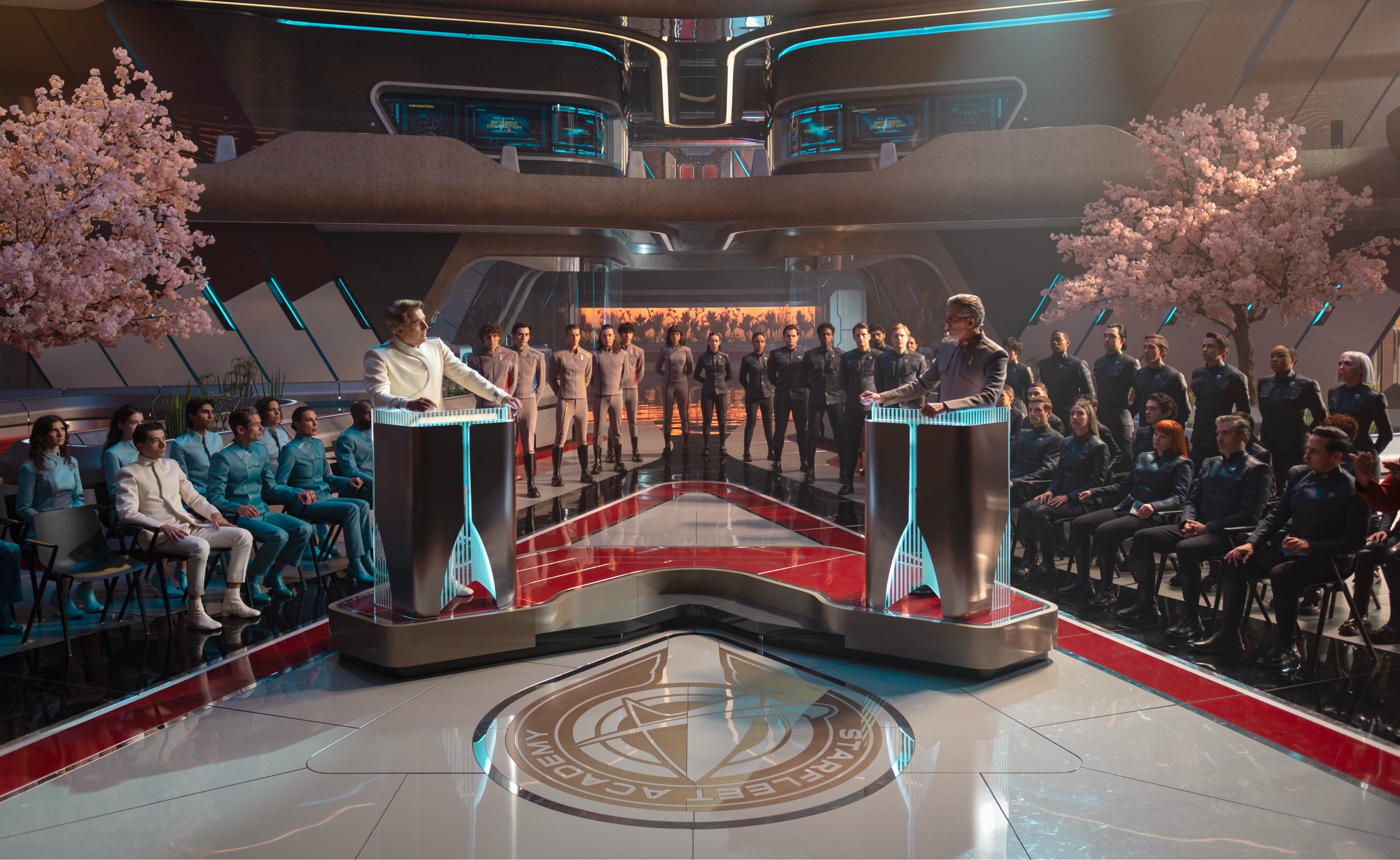
Star Trek is in a weird place right now. Less than three years ago we were living in a golden age with five shows on the air, all with different styles and intended audiences. But the universe rapidly contracted, with Picard ending while four other shows were cut short. Strange New Worlds still has another two seasons left, sure, but even that final season got truncated. As it stands, there’s only one project with a firm future right now, and that’s a brand-new show, Starfleet Academy, premiering January 15 on Paramount+.
How this show is received could very well determine the future of Star Trek. That’s a lot to put on it, but there’s something very appropriate given the subject matter. Starfleet Academy takes place in the 32nd century, 900 years after the adventures of James T. Kirk and company, and it takes place at the titular academy, meaning its principal cast is a collection of teens representing the next generation of Starfleet officers. That focus on a younger cadre has led to fans online derisively calling the series “CW Trek” without seeing a single episode.
As Starfleet Academy is technically a Discovery spinoff, it picks up some of that series’ traits. The sleek, shiny sets are back, as well as a few plot threads originally set up in Discovery. The most notable is the collapse of the United Federation of Planets and the rebuilding of both the Federation and Starfleet. In fact, the series picks up on that as early as its second episode, with the Academy hosting a delegation from a once stalwart Federation planet that’s now gone isolationist.
Scenes from Star Trek: Starfleet Academy
John Medland/Paramount+
While many complaints about the series have focused on how what fans wanted was an academy show set during the 24th century (the time of The Next Generation, Deep Space Nine, et al.), this particular episode plot works precisely because of the distant future in which it is set. In a fully-functioning galactic democracy like the United Federation of Planets, there’s no logical reason for the average 18-year-old college freshman to be involved in interplanetary diplomacy. But in the 32nd century, the Federation is a lot scrappier and the individuals involved might be asked to wear many hats. It’s a lot like an early-stage tech startup.
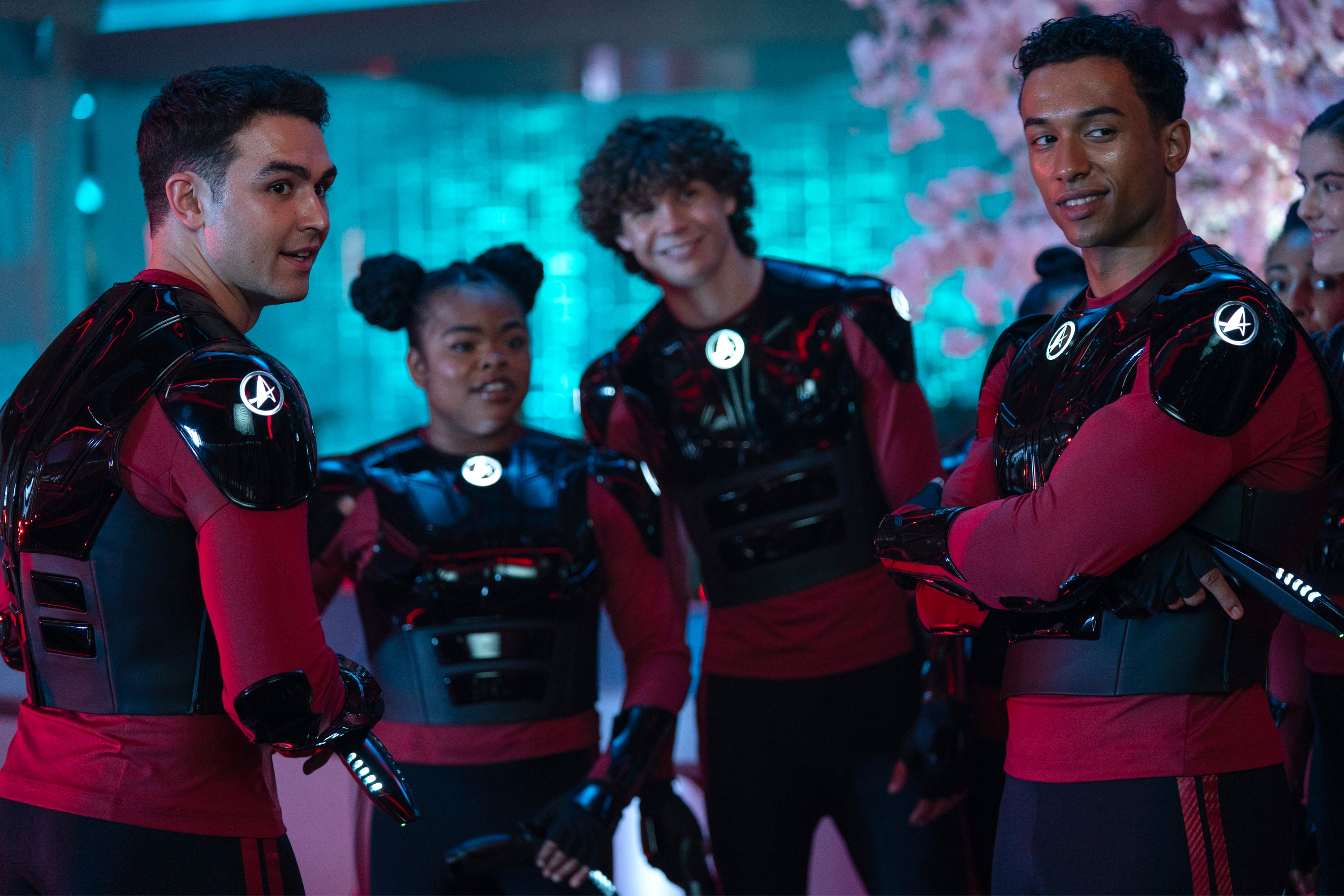
The setting also lets the show be a little more creative with its cast: where TNG featured the first Klingon in Starfleet (Worf), 900 years of progress have created a Starfleet where no one bats an eye when a Klingon cadet like Jay-Den Kraag (played by Karim Diané) shows up to study science. There’s also a holographic cadet, Sam, who is the first of her kind to attend the academy (and she’s super excited to do so). A few new species are present as well: Darem Reymi (George Hawkins) is a Khionian and Genesis Lythe (Bella Shepard) is a Dar-Sha, both aliens making their debut in the Star Trek universe.
The cast of Star Trek: Starfleet Academy
John Medland/Paramount+
However, the show does still lean on some Trek stalwarts, and it’s these characters that have gotten the most chatter from fans. Mary Weisman as Sylvia Tilly was originally slated for the cast, and there was even a backdoor pilot-esque episode of Discovery to tie her in to the new show, but she’s no longer a regular and is nowhere to be seen in the first two episodes. Instead, we have Jett Reno (played by the wonderful Tig Notaro) as supporting cast, and Admiral Vance (Oded Fehr) appearing in a few episodes. And old school fans have been abuzz by the inclusion of The Doctor, who first appeared on Voyager (and later Prodigy). As a hologram, he’s practically immortal so his presence doesn’t need any convoluted explanation, and after 800 years he’s still the same gregarious blowhard (and it’s delightful).
They’re joined by new characters like Lara Thok, a part Klingon, part Jem’Hadar security officer and a Lanthanite chancellor, Nahla Ake, played by Academy Award Winner Holly Hunter. And Hunter isn’t even the only Oscar winner on the cast, with a major villain, Nus Braka, being portrayed by Paul Giamatti.
It’s a stellar cast, and the show’s sets certainly rise up to meet the challenge. Like in the shows of old, a good portion of Starfleet Academy is clearly shot on location, though not in the familiar water reclamation plant that was used back during the TNG and DS9 era. This time it’s all being shot in Ontario, with the outdoor scenes in particular being filmed in Waterloo. Regardless of where it’s shot, it looks enough like sunny California to work.
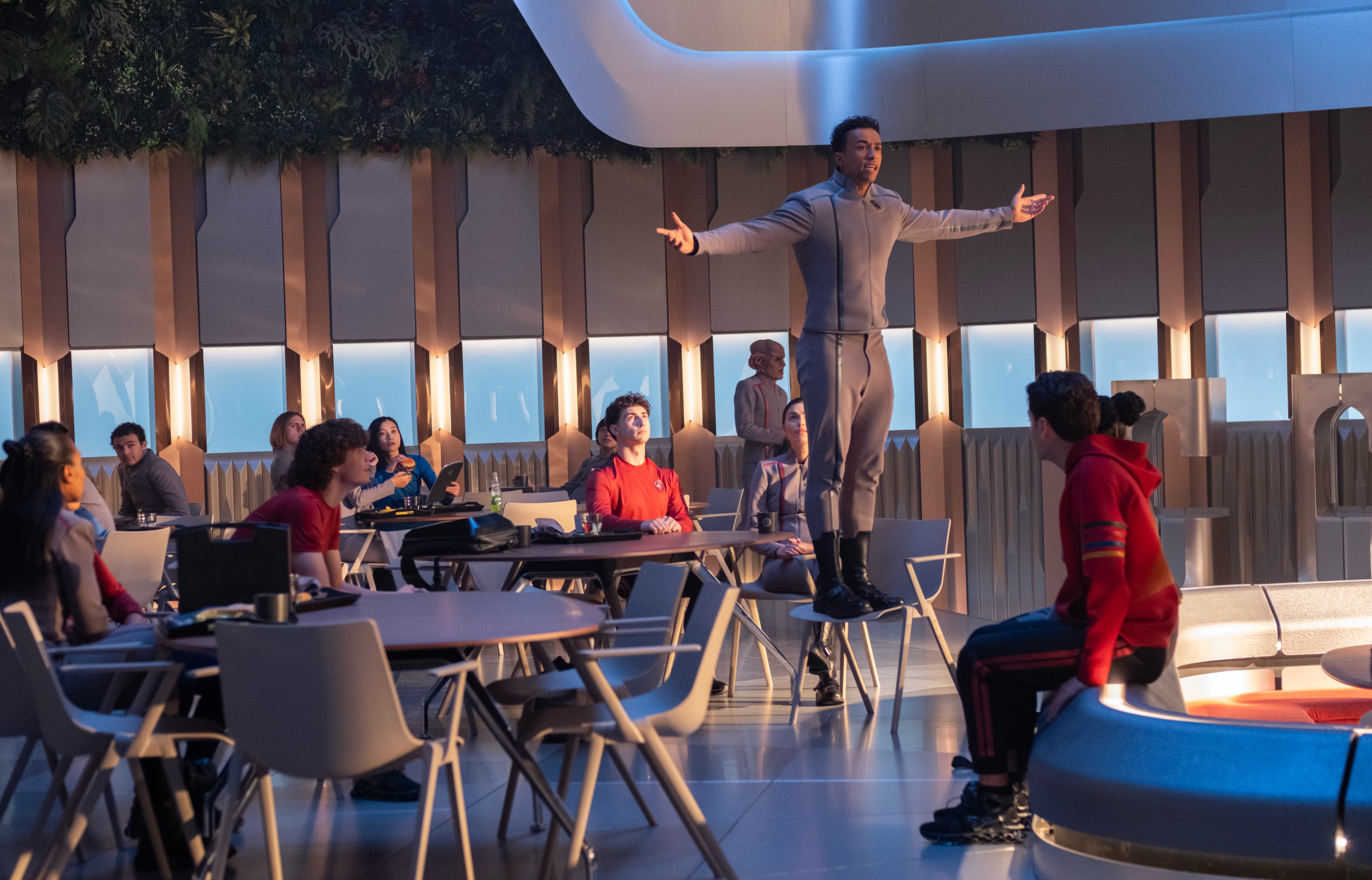
Scenes from Star Trek: Starfleet Academy
John Medland/Paramount+
The indoor scenes, shot at Toronto’s Pinewood Studios, have a pleasant convention center quality to them, with lots of wide hallways and large windows in contrast to Discovery’s cramped ship corridors. The hallways are full of students and teachers going to and fro, including some from species that would normally be off-limits to a show with a limited budget. But here robots and strange aliens roam freely in the background. The CGI can’t have been cheap.
And that’s ultimately my biggest question about Starfleet Academy. Exactly how much is this costing Paramount? So much of it is being shot on real sets instead of green screens, established actors like Hunter and Giamatti couldn’t have been cheap, and plentiful CG points to a robust special effects budget. Though Paramount doesn’t release official numbers, estimates have put an average episode of Strange New Worlds at $10 million, so it figures that Starfleet Academy is probably more than that, with some online estimates as high as $20 million per episode.
With 10 episodes scheduled, that’s on par with a major motion picture budget but without the promise of blockbuster box office returns. No wonder Paramount has been doing so much cost-cutting, which includes axing every other Star Trek show.
That said, Starfleet Academy is carrying a lot on its shoulders. Just as the success or failure of its class of Starfleet cadets will determine the future of Starfleet and the Federation, the success of the show may even affect whether this era of Star Trek continues. As a Star Trek fan, this can be nerve-wracking; no one wants the franchise to go dormant again. But Starfleet Academy has so far shown itself to be up to the challenge.
This article originally appeared on Engadget at https://www.engadget.com/entertainment/star-trek-starfleet-academy-deftly-balances-teen-drama-with-intergalactic-intrigue-170253808.html?src=rss
Xbox will kick off the fourth installment of its Developer Direct event on January 22 at 1PM ET. As usual, we'll get a glimpse at what the upcoming year has in store along with news, new gameplay footage and more directly from the teams behind this year's slate of games.
In a blog post announcing the event, Xbox Wire Editor-in-Chief Jon Skrebels said Xbox's 25-year anniversary will be marked by the return of some beloved franchises. Gamers will also get their first extended look at Fable, a reboot of the iconic series. The event will also be unveiling gameplay footage for Forza Horizon 6, the upcoming open-world racing game set in Japan. UK studio Playground Games is behind both titles.
The showcase will also include new details and gameplay from Beast of Reincarnation, the "one-person, one-dog" role-playing game. The game is being developed by Game Freak, the studio best known for its series of Pokémon games, and follows protagonist Emma and her canine companion in post-apocalyptic Japan.
This article originally appeared on Engadget at https://www.engadget.com/gaming/xbox/the-next-xbox-developer-direct-showcase-is-on-january-22-154444166.html?src=rss
Spotify is rolling out more social features to keep people on the platform. It's adding a new tool to its messaging platform that lets users see what their friends and family members are listening to in real time.
Once activated, a user's listening activity will be displayed at the top of the chat. The other person in the chat can tap the bar to play a particular track, save it or react with an emoji. People can also, of course, comment directly to either praise or rag on the song selection.
There's another little addition to Spotify's messaging system. Users will now be able to invite chat participants to start a Jam, which is the app's collaborative listening feature. Premium users will find a "Jam" button in the top right corner, which sends an invite. This lets two people add tracks to a shared queue and listen together. Free users can join one of these sessions, but cannot initiate.
It's worth noting that the messaging platform is currently just a one-on-one affair. There's no option for a group chat, so users won't be able to spy on multiple people simultaneously. These tools are rolling out gradually for iOS and Android right now, but won't be broadly available for a few weeks.
This article originally appeared on Engadget at https://www.engadget.com/entertainment/music/spotify-now-lets-you-share-what-youre-listening-to-in-real-time-via-chat-173749120.html?src=rss