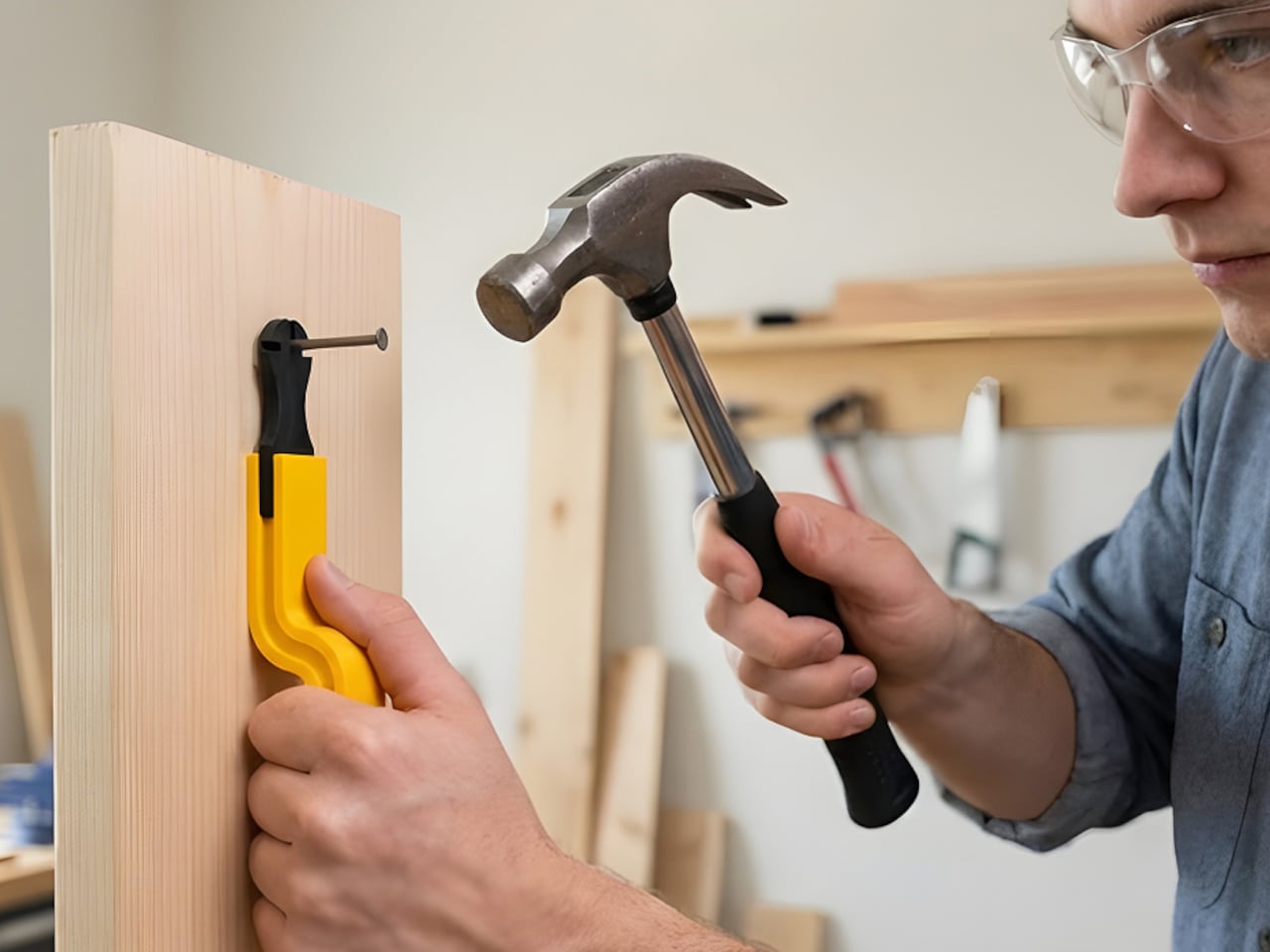
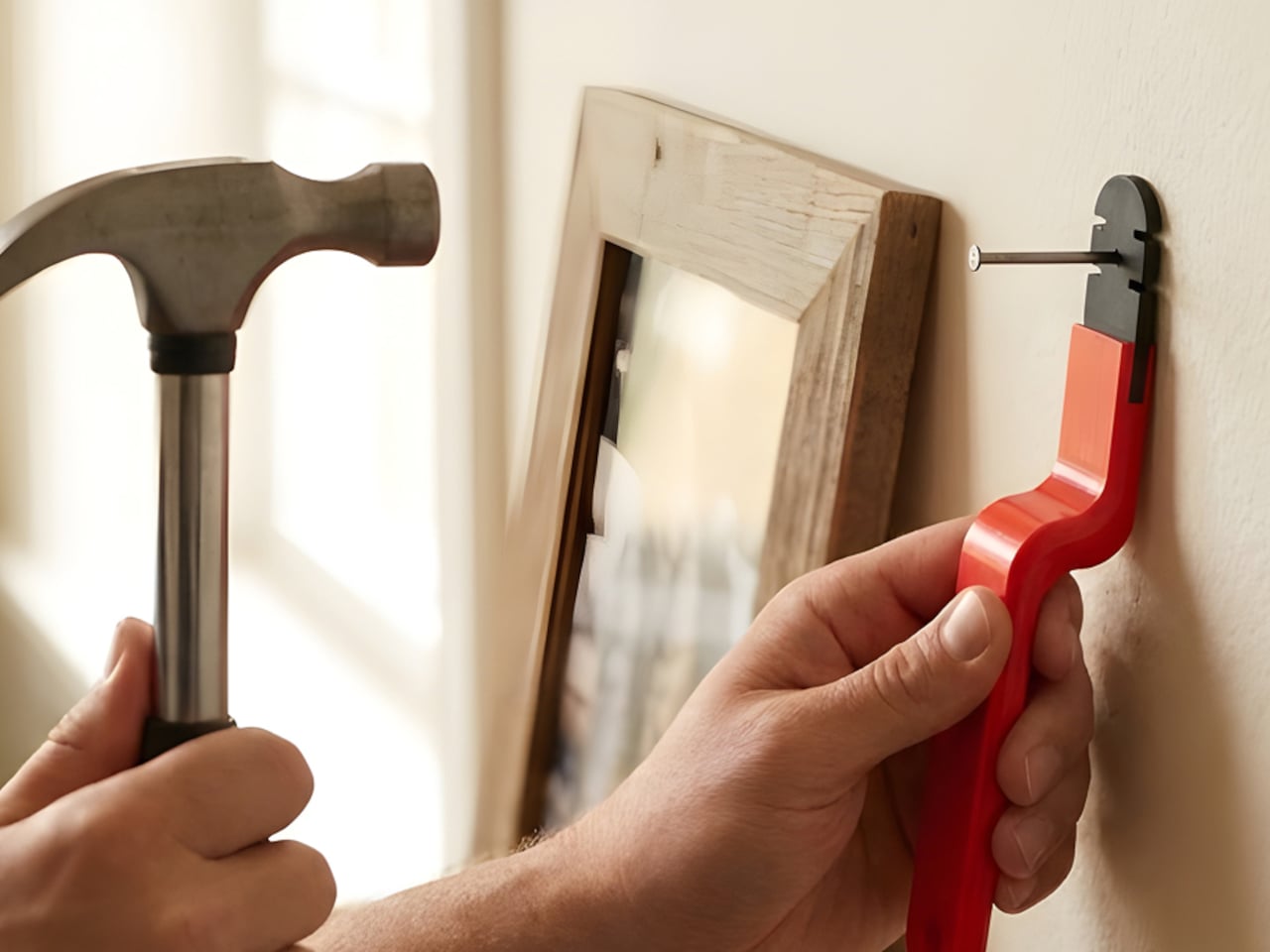
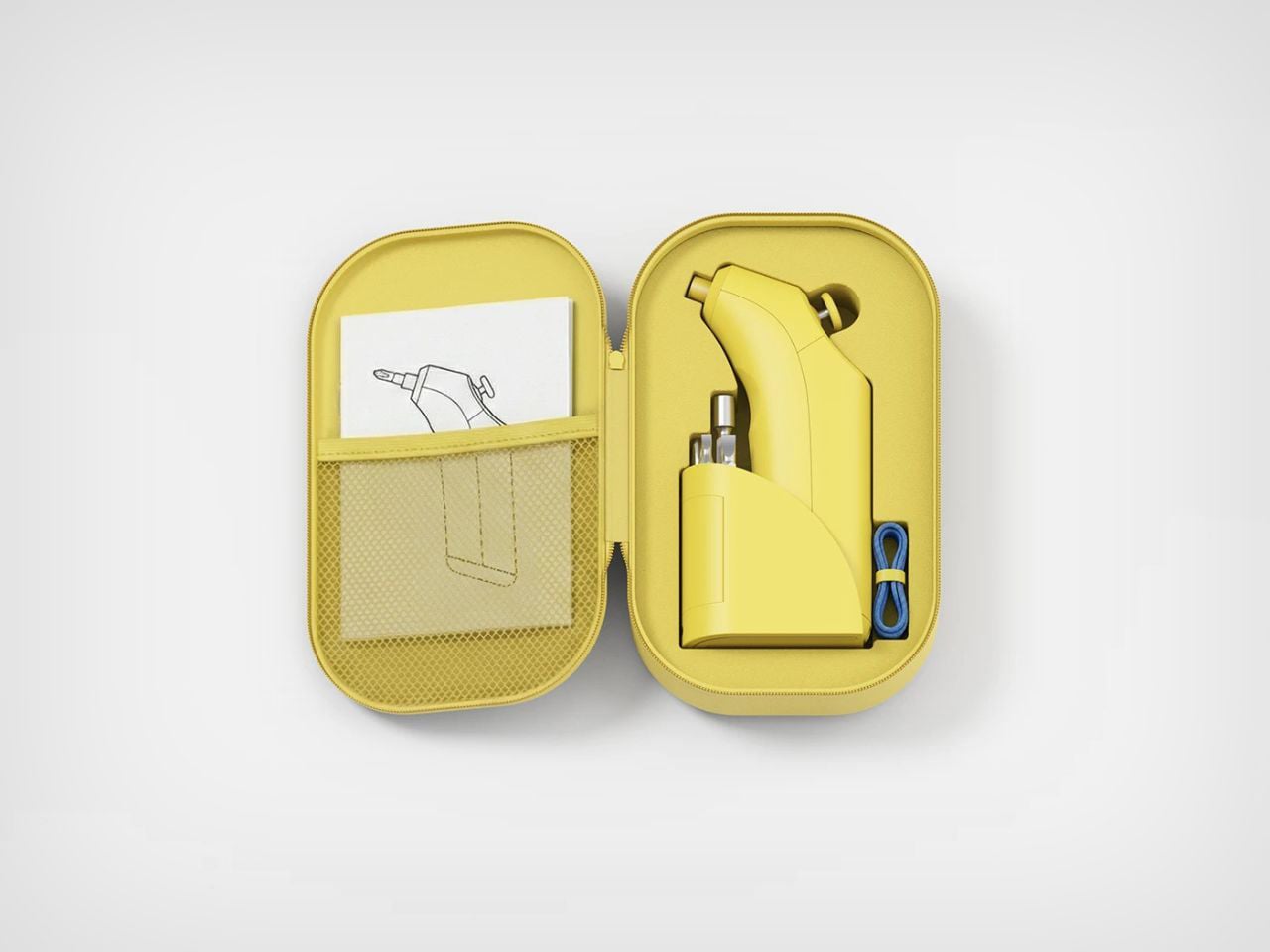
Hammering a nail is one of those tasks that sounds simple until you miss. The strike lands on a knuckle instead of the nail head, and a two-minute hanging job becomes a few minutes of genuine regret. It happens to beginners more than seasoned carpenters, but experience only reduces the odds rather than removing them entirely. That gap between “simple enough” and “actually safe” is what the Nailmate concept is set out to bridge.
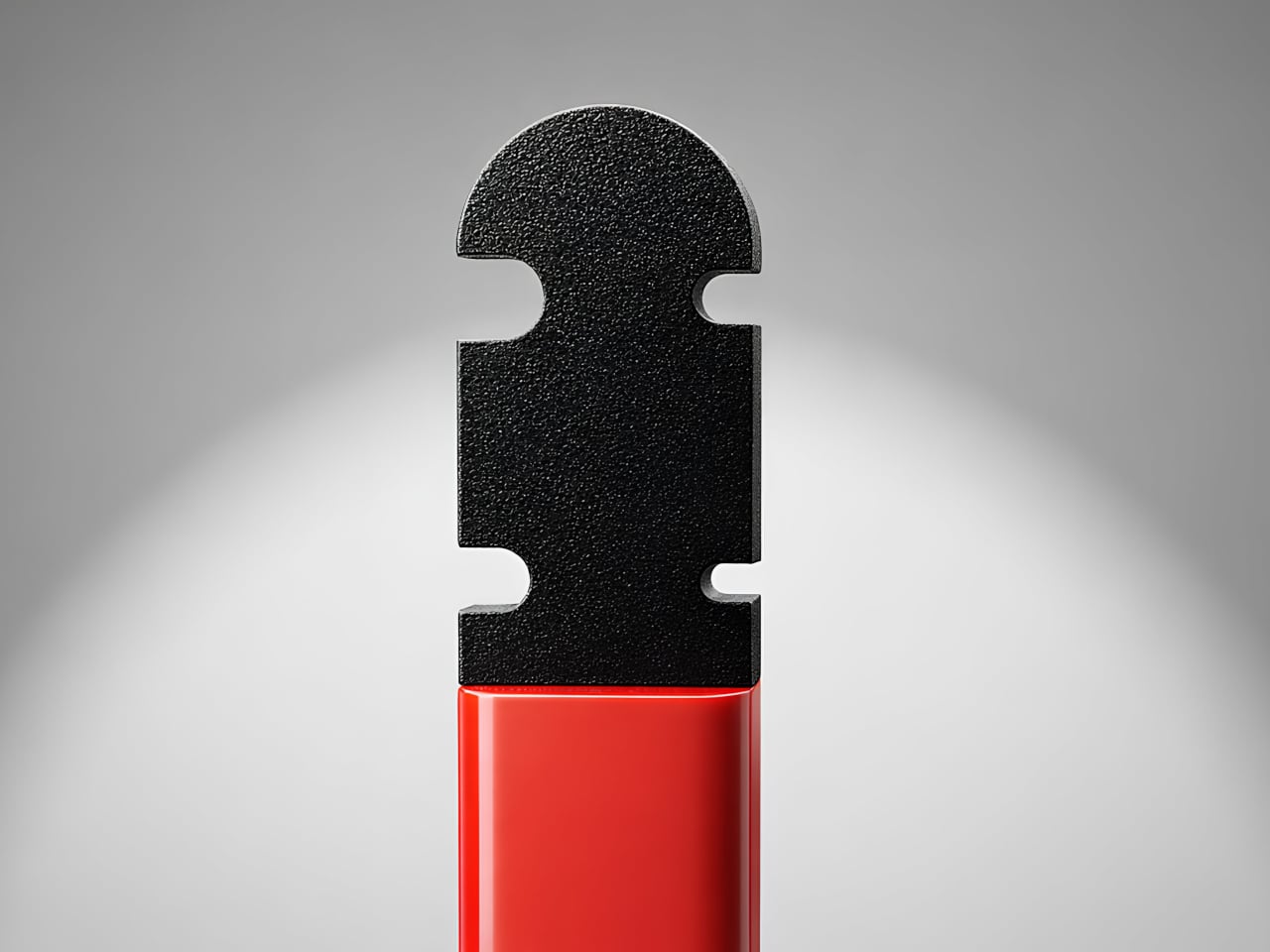
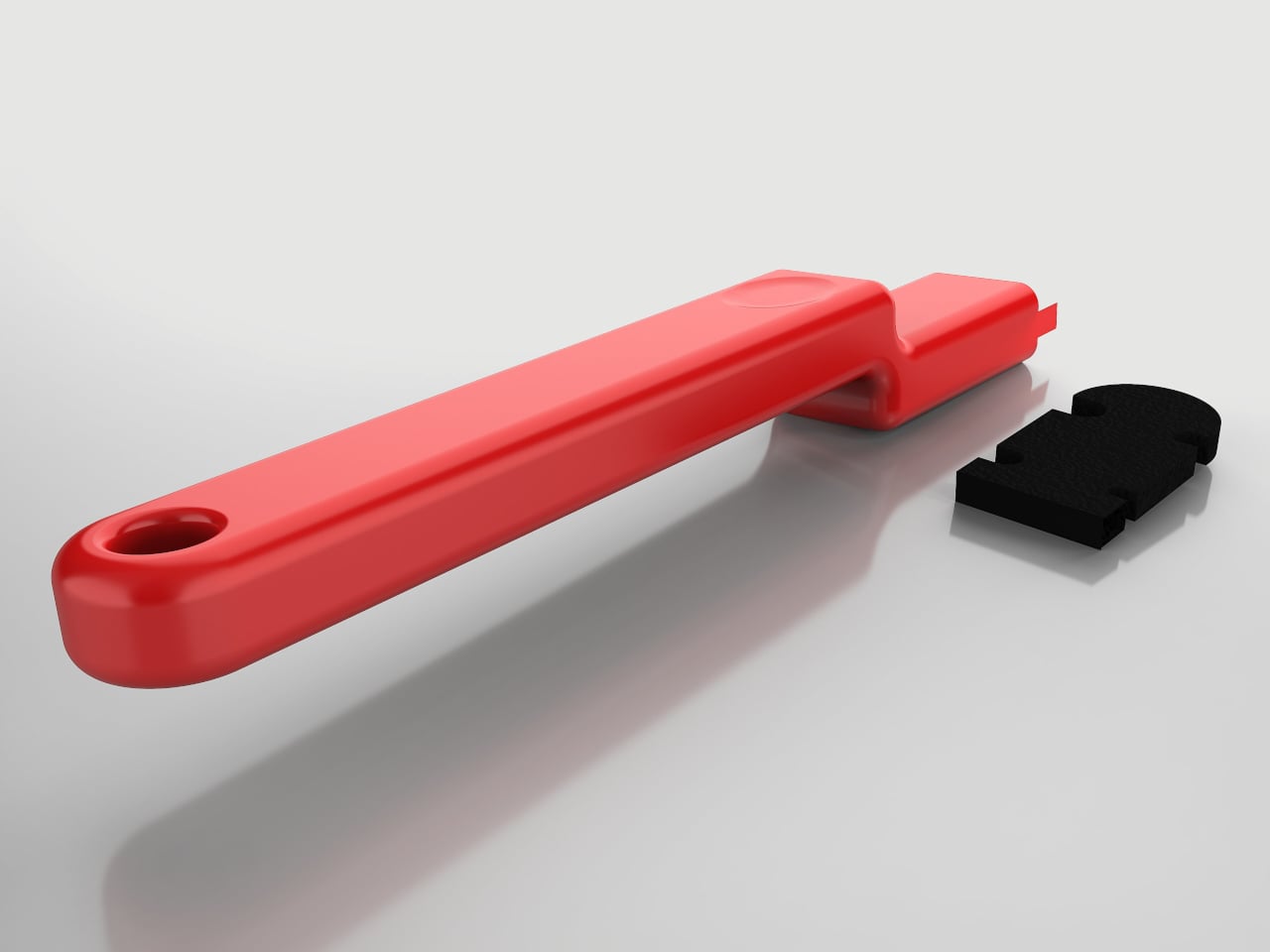
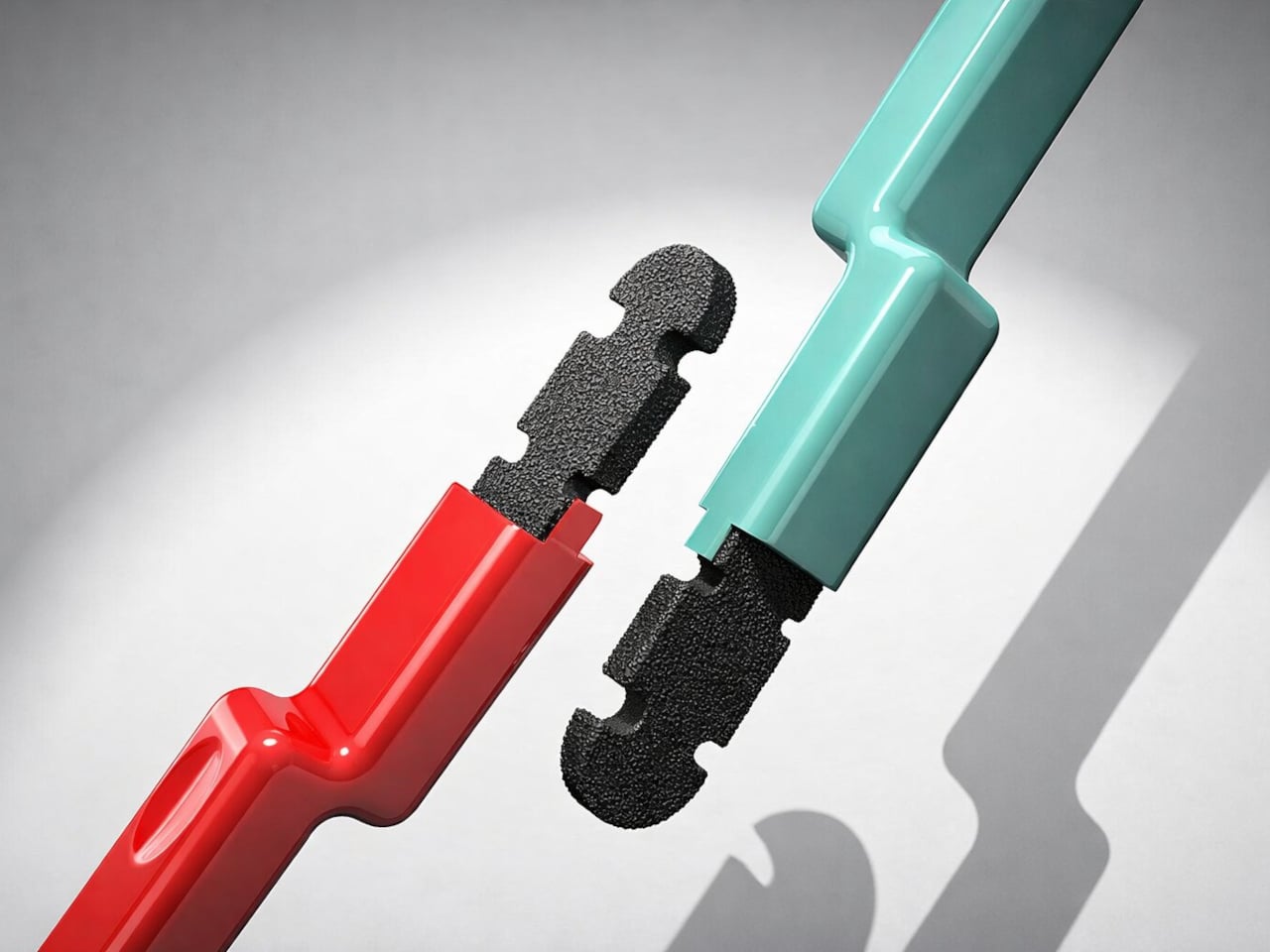
The premise is quite simple, really. Nailmate is a hand-held positioning tool made from ABS plastic with a TPU rubber gripping head. It holds a nail upright while keeping the user’s fingers well below the impact zone, with no springs, clamps, or adjustable parts to configure before the first swing. The elongated form puts meaningful distance between the hand and where the hammer lands.
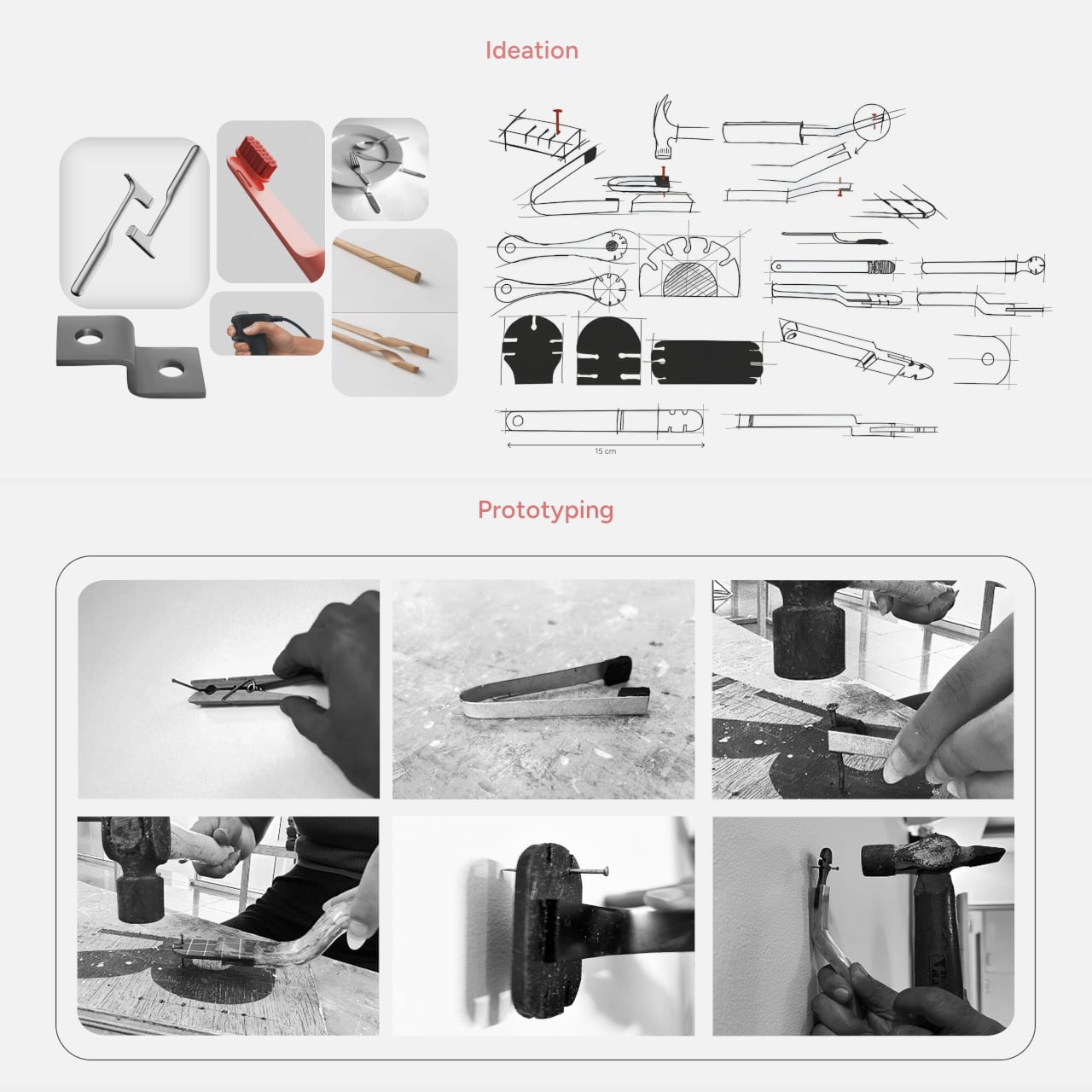
Existing nail-holding solutions have real shortcomings worth naming. Small plastic holders keep fingers close enough to still be at risk. Plier-style holders work but are bulky enough that most people leave them in a drawer. Magnetic holders struggle with heavier nails and offer no guarantee against slipping. Nailmate addresses all three failure modes by doing less mechanically and more through considered geometry.
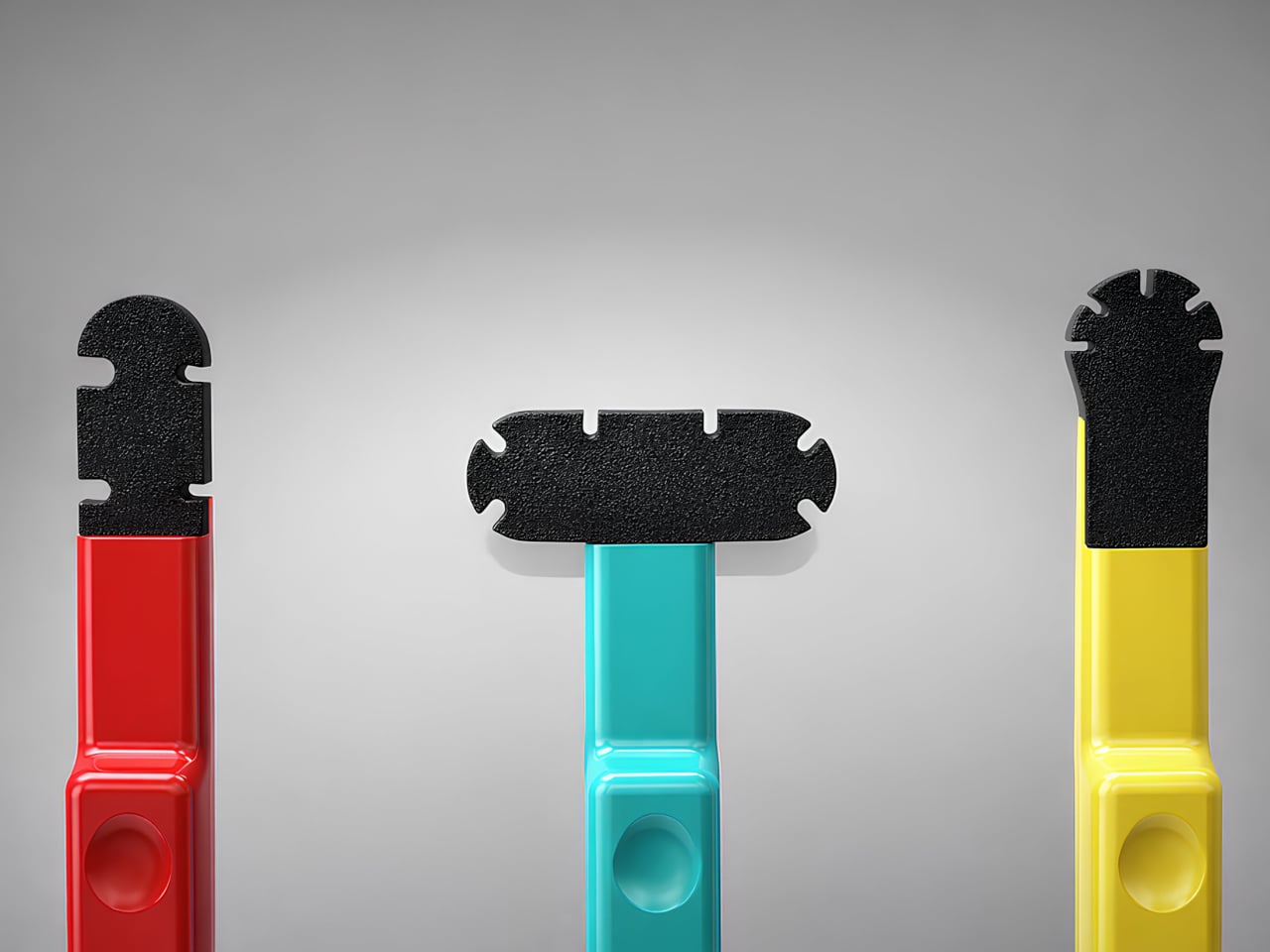
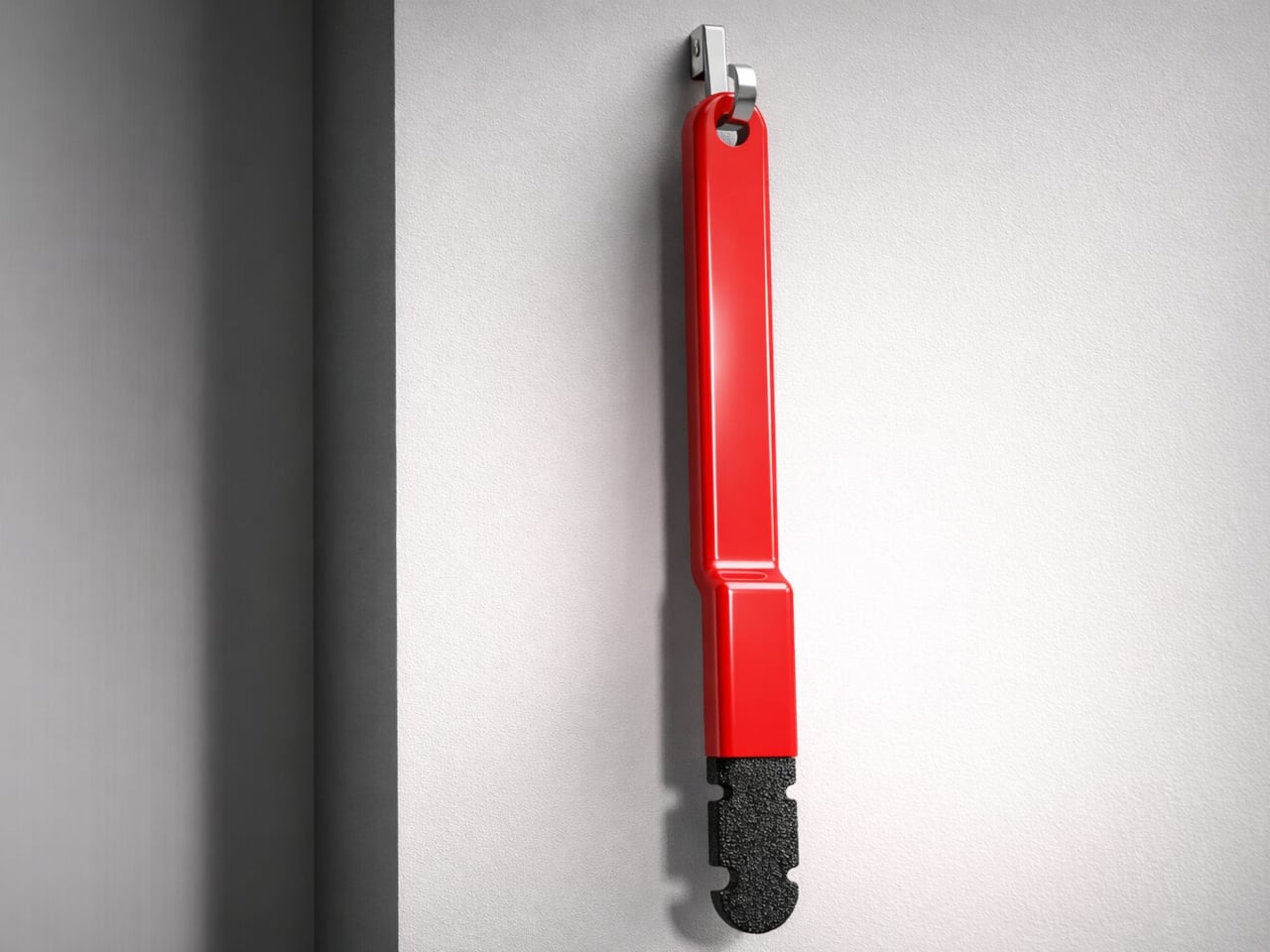
The tool comes in three variants, each color-coded for different working conditions. The red Stable version is built for flat, open surfaces like wooden boards or wall panels, where the hammer has a full vertical swing. The teal Expanded version has a wider horizontal head that supports a nail from multiple contact points, for situations where a perfectly vertical swing is not possible. The yellow Precise version handles curved, rounded, or edge-based surfaces where standard positioning gets awkward.
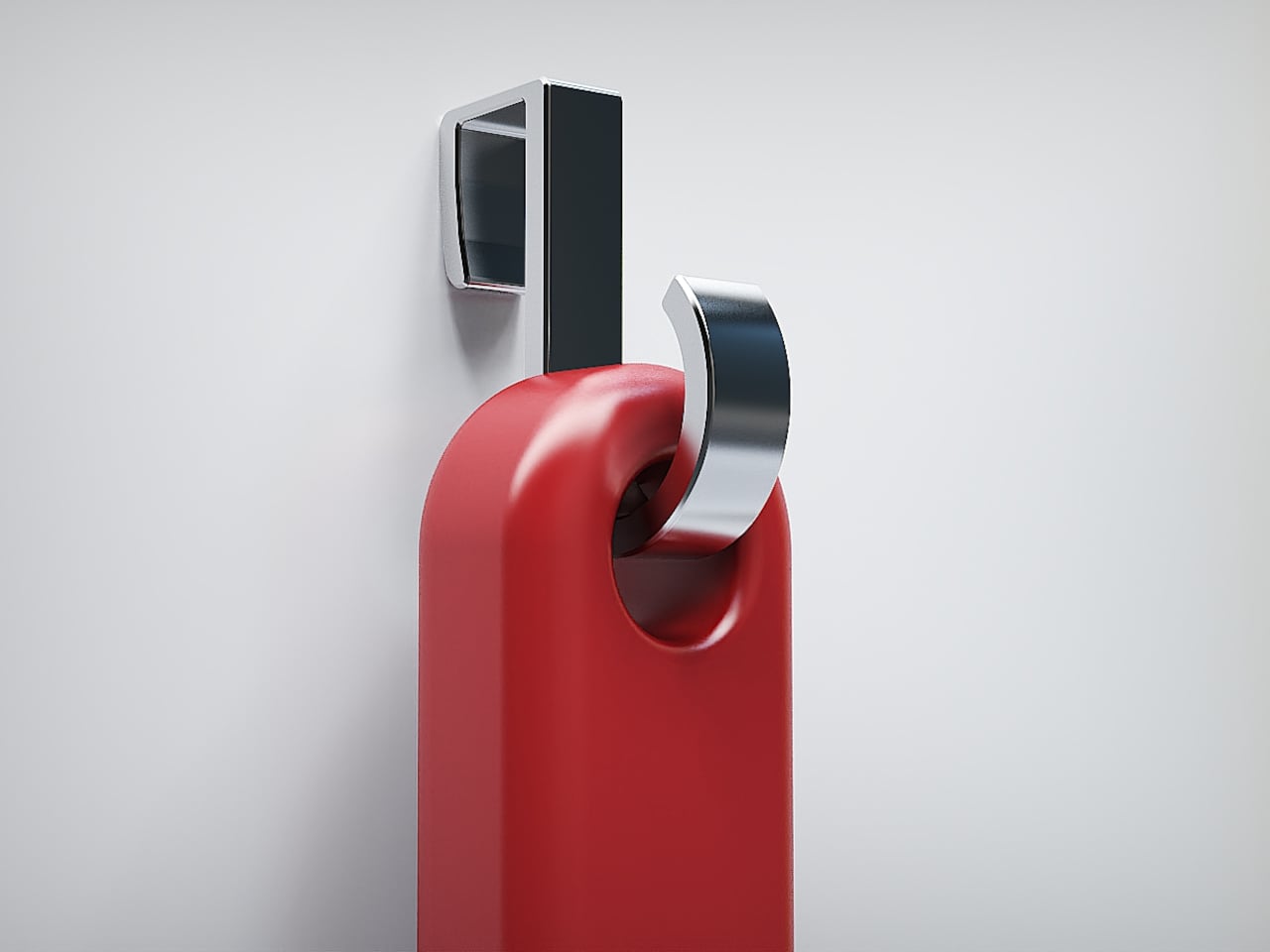
The color distinction is practical rather than decorative. On a cluttered workbench, making each variant visually distinct reduces the small but real friction of grabbing the wrong tool. The TPU head grips the nail shaft without scratching it, and the angled body sits naturally in the hand while maintaining a clear line of sight to the nail tip. A hanging hole at the base keeps it on a hook near the toolbox rather than lost in a drawer.
Where the design raises questions is around the TPU head’s durability after repeated use. It sits close enough to the nail that a slightly off-center hammer strike would occasionally land on it, and how the material holds up over months of regular work is something only extended testing would confirm.
Model-making has a rhythm, and it is surprisingly easy to break out of the zone. You pull out the tape measure, get your reading, set it down, hunt for the caliper, check a dimension, reach for the cutter, and by the time you’ve touched four separate objects, you’ve lost track of where you were in the build. It’s a minor friction, but it compounds quickly across a studio session into something genuinely disruptive.
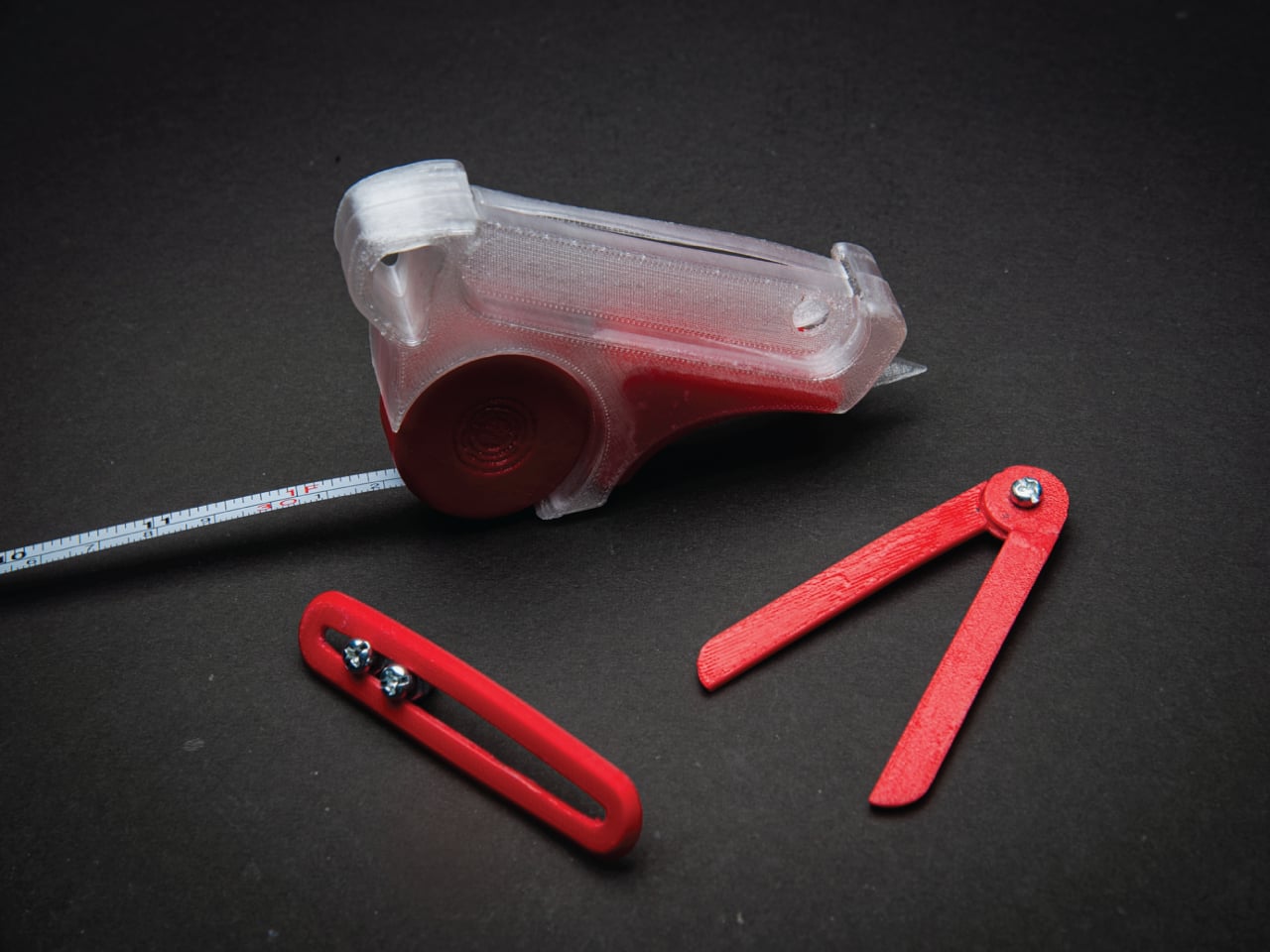
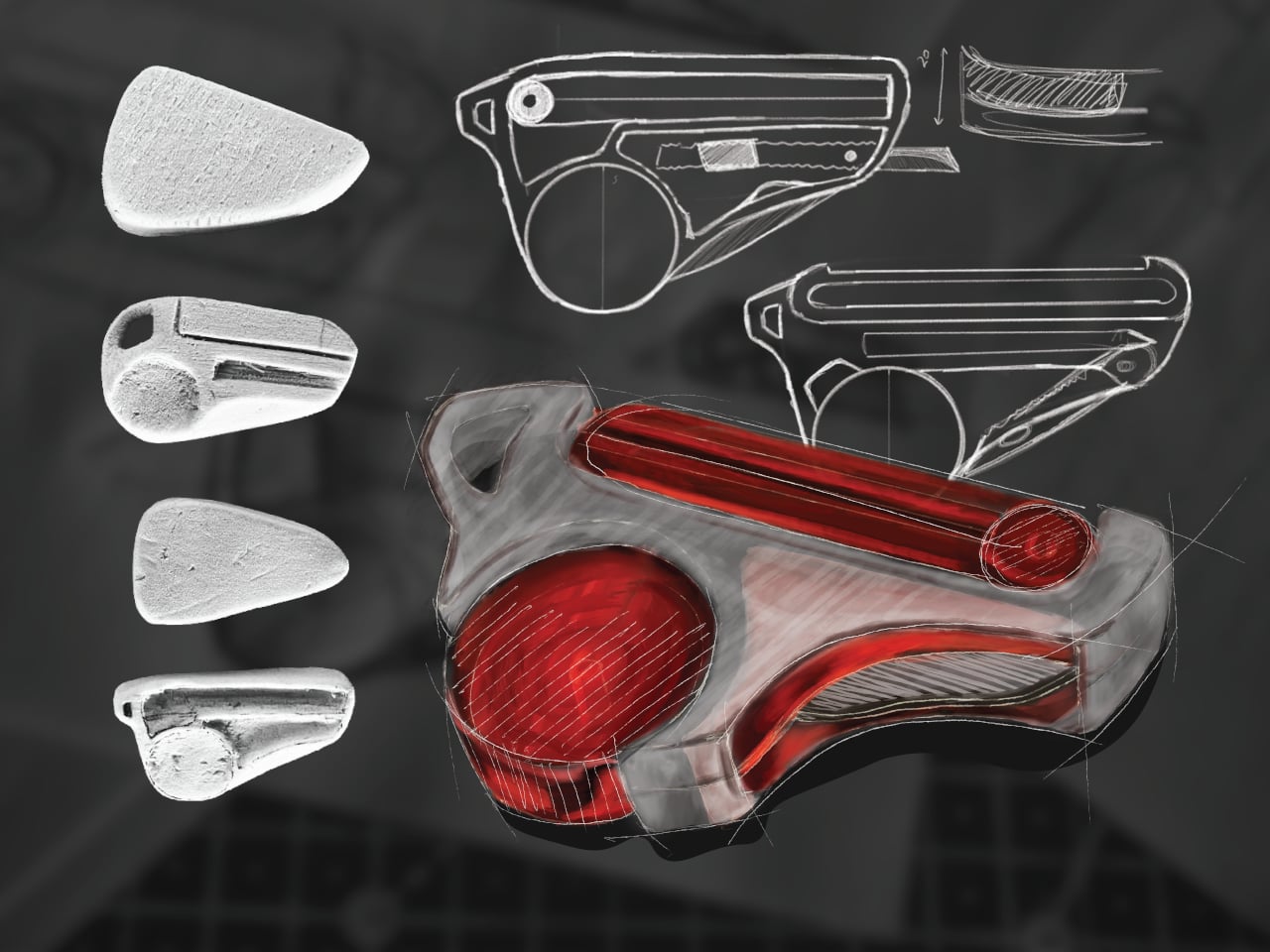
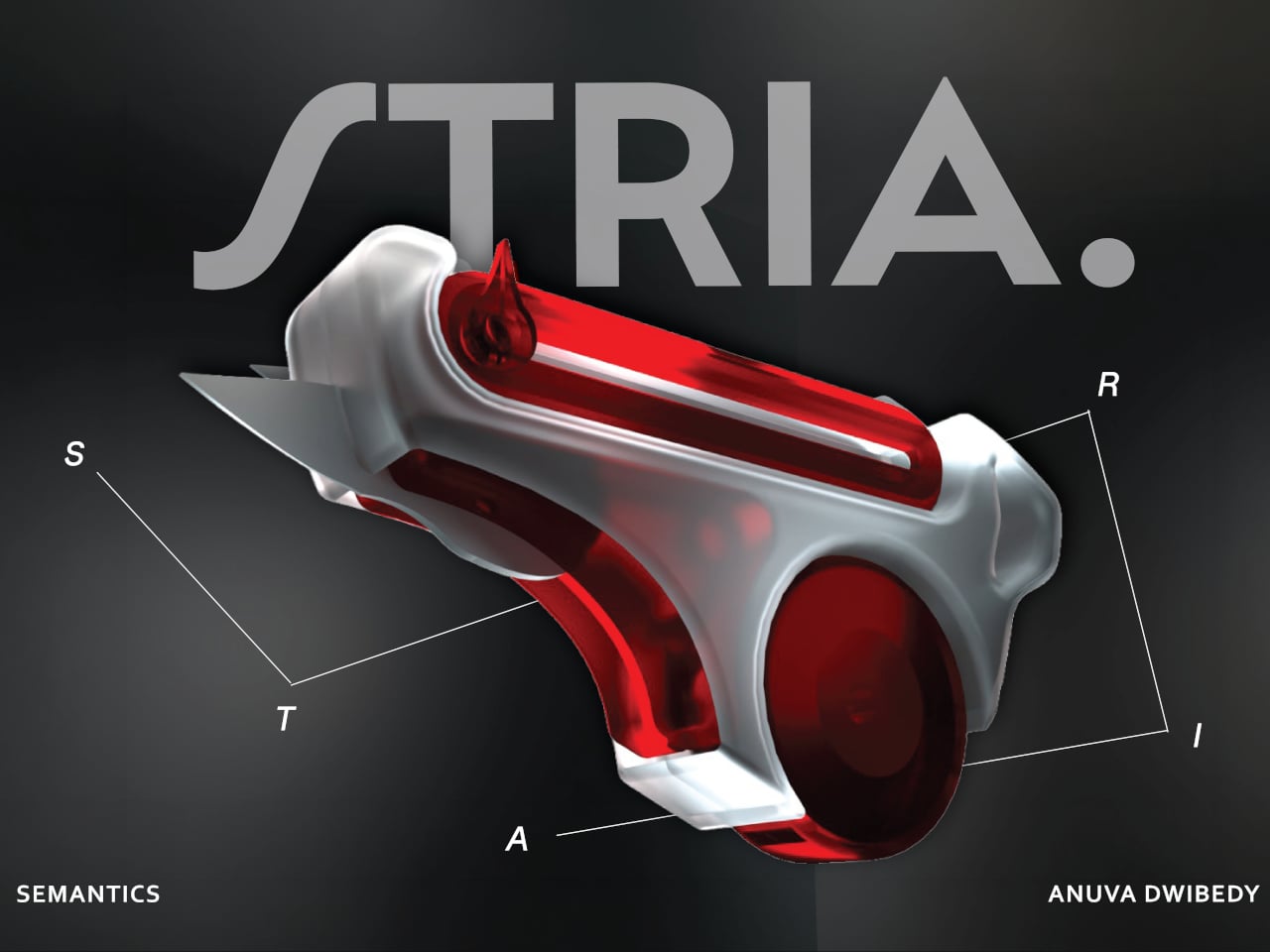
That friction is the exact problem STRIA was designed to address. The concept starts from a straightforward observation: the actions that make up physical prototyping, measuring, checking dimensions, and cutting materials, are tightly connected in practice but spread across a handful of unrelated objects. It combines four of the most essential tools that designers and architects reach for, creating a Swiss Army knife for any kind of physical creative work.
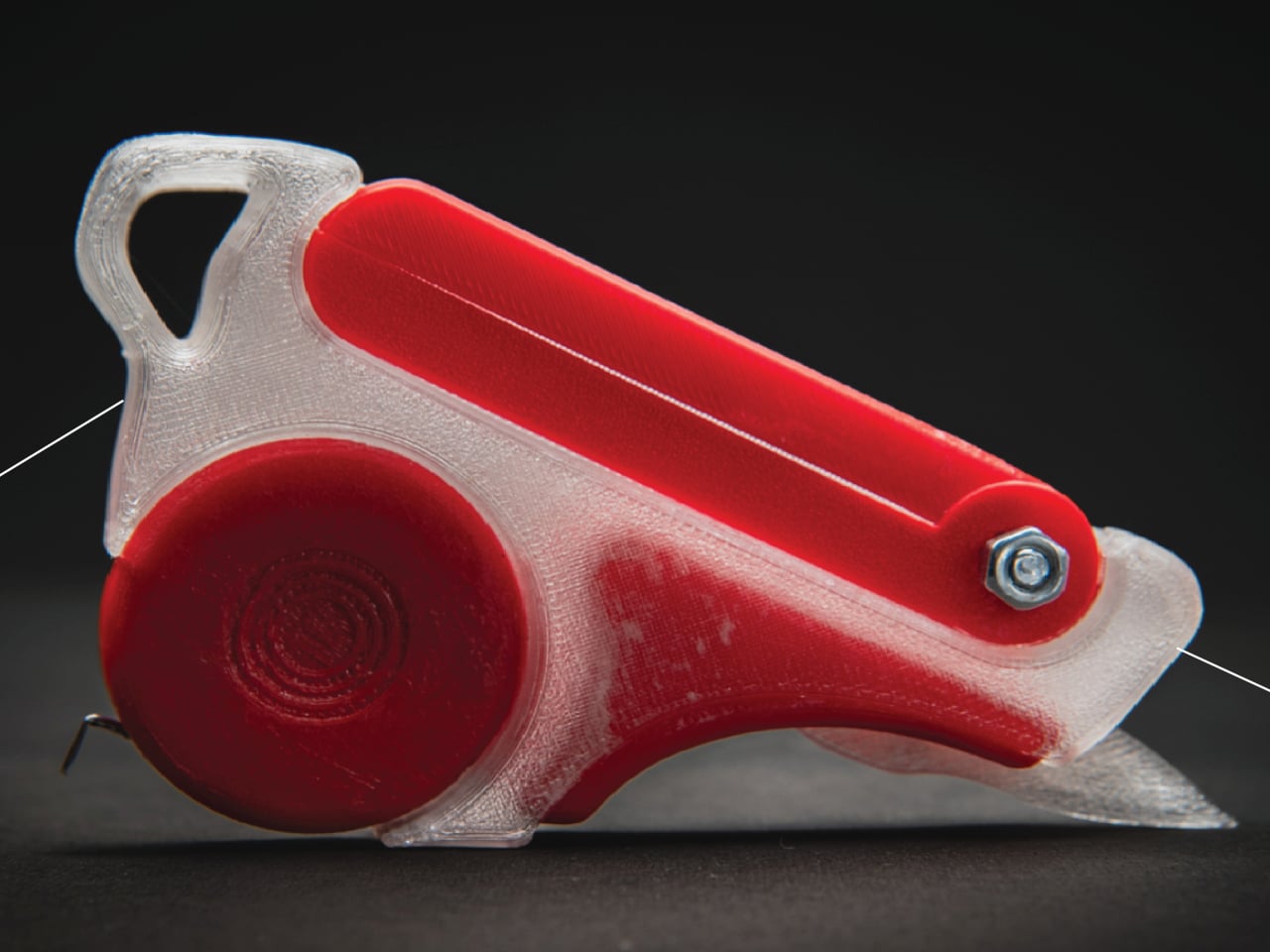
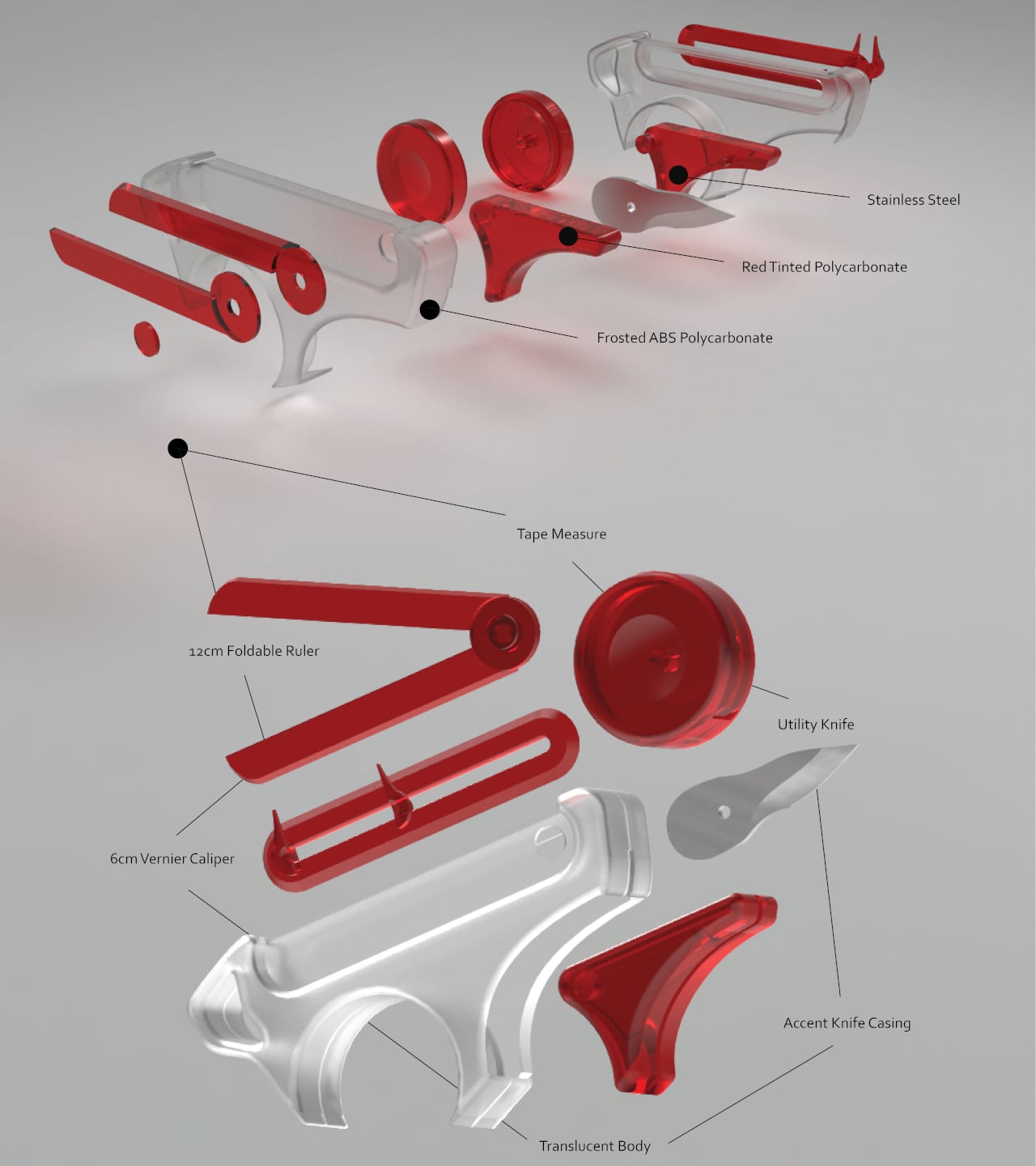
Those four are a tape measure, a 12 cm foldable ruler, a 6 cm vernier caliper, and a utility knife, all integrated into a single handheld device. The body is frosted ABS polycarbonate, with red-tinted polycarbonate accents and stainless steel for the blade and hardware. The translucent construction lets you see the internal components at a glance, which feels appropriate for a tool aimed at designers who spend a lot of time thinking about how things fit together.
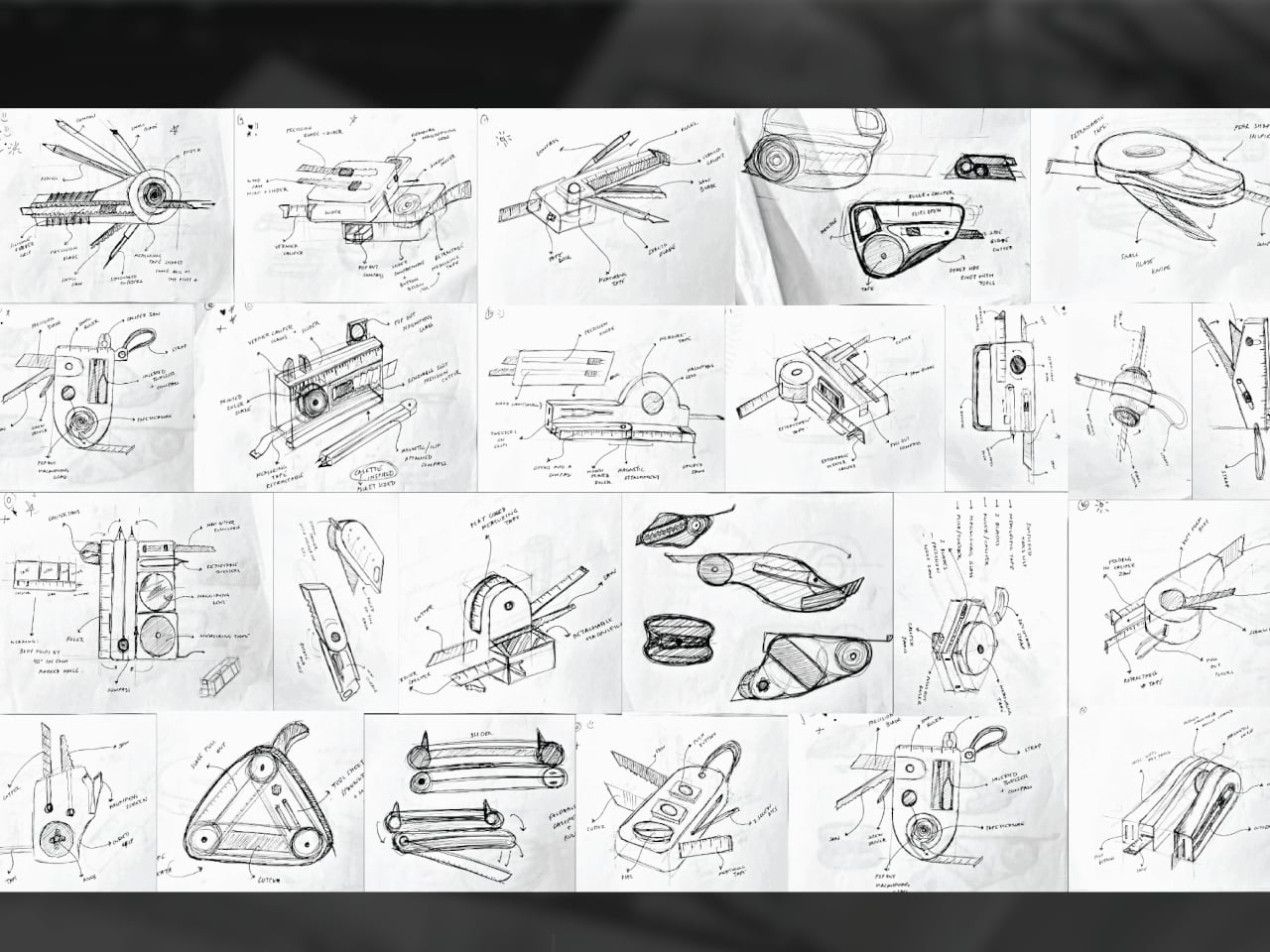
The form went through extensive iteration, with dozens of sketched directions and physical grip studies preceding the final shape. That process matters because fitting four tools into something pocket-sized is a mechanical problem as much as a visual one. Each function needs a deployment mechanism that doesn’t compromise the others, and the grip has to stay comfortable when you’re switching between them repeatedly during a long session.
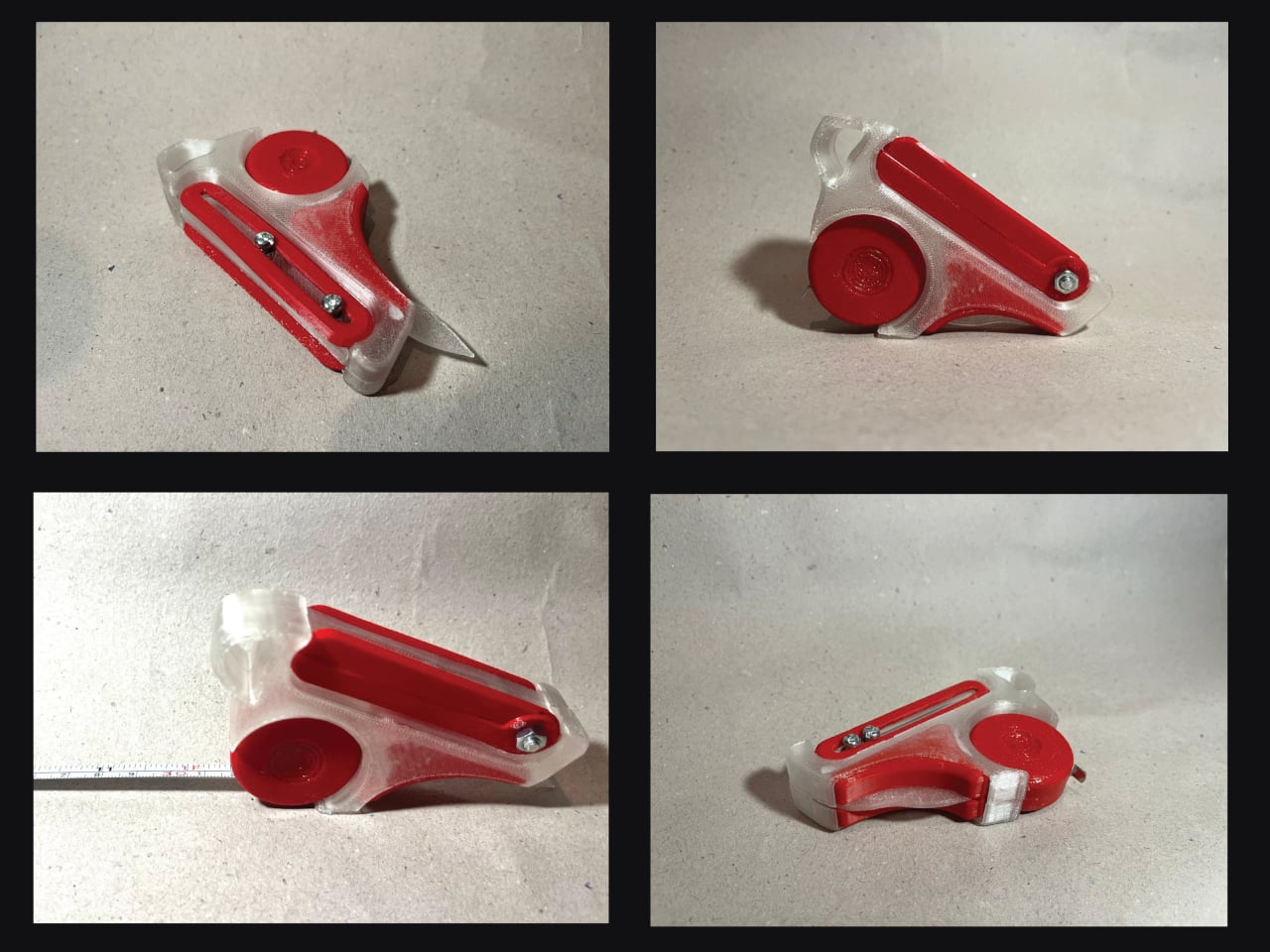
What STRIA gets right in concept is treating workflow continuity as a design constraint rather than an afterthought. Its five stated goals, compact, precise, durable, ergonomic, and integrated, read less like marketing language and more like a checklist for something that needs to survive a studio environment. A 3D printed prototype has already been produced, so the integration challenges aren’t purely theoretical at this stage.
Whether every mechanism holds up to the repetitive, sometimes rough handling that model-making actually demands is what a finished version would need to prove. And there’s a subtler question underneath that: consolidating tools changes how you reach for them, and it’s worth asking whether that’s always an improvement or occasionally a trade-off.
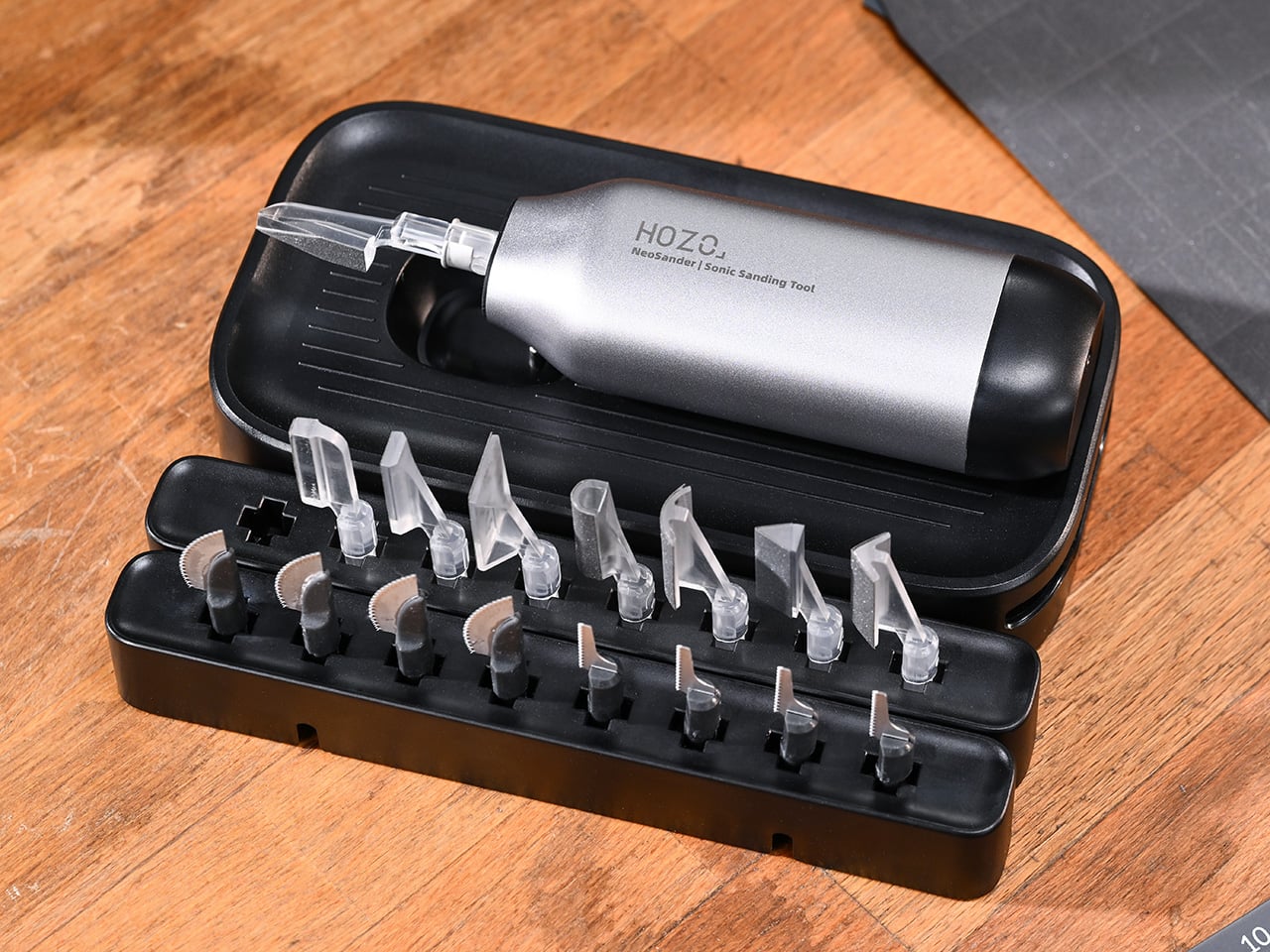
Scroll through any Gunpla forum, 3D printing subreddit, or miniature painting Discord, and you’ll find the same complaint surfacing like clockwork: detail sanding is the worst part of the hobby. Rotary tools spin too aggressively and melt plastic. Orbital sanders are physically too large to reach the spots that matter. And hand sanding with tiny strips of sandpaper taped to popsicle sticks or wrapped around toothpicks? It works, technically, in the same way that crossing an ocean in a rowboat technically works. Makers have been hacking together solutions for this problem forever, modifying dental picks, repurposing nail files, spending hours on finishing work that should take minutes. The tooling industry, meanwhile, has mostly responded by miniaturizing existing designs and hoping for the best. Smaller orbital. Smaller rotary. Same fundamental problems, just in a tinier package.
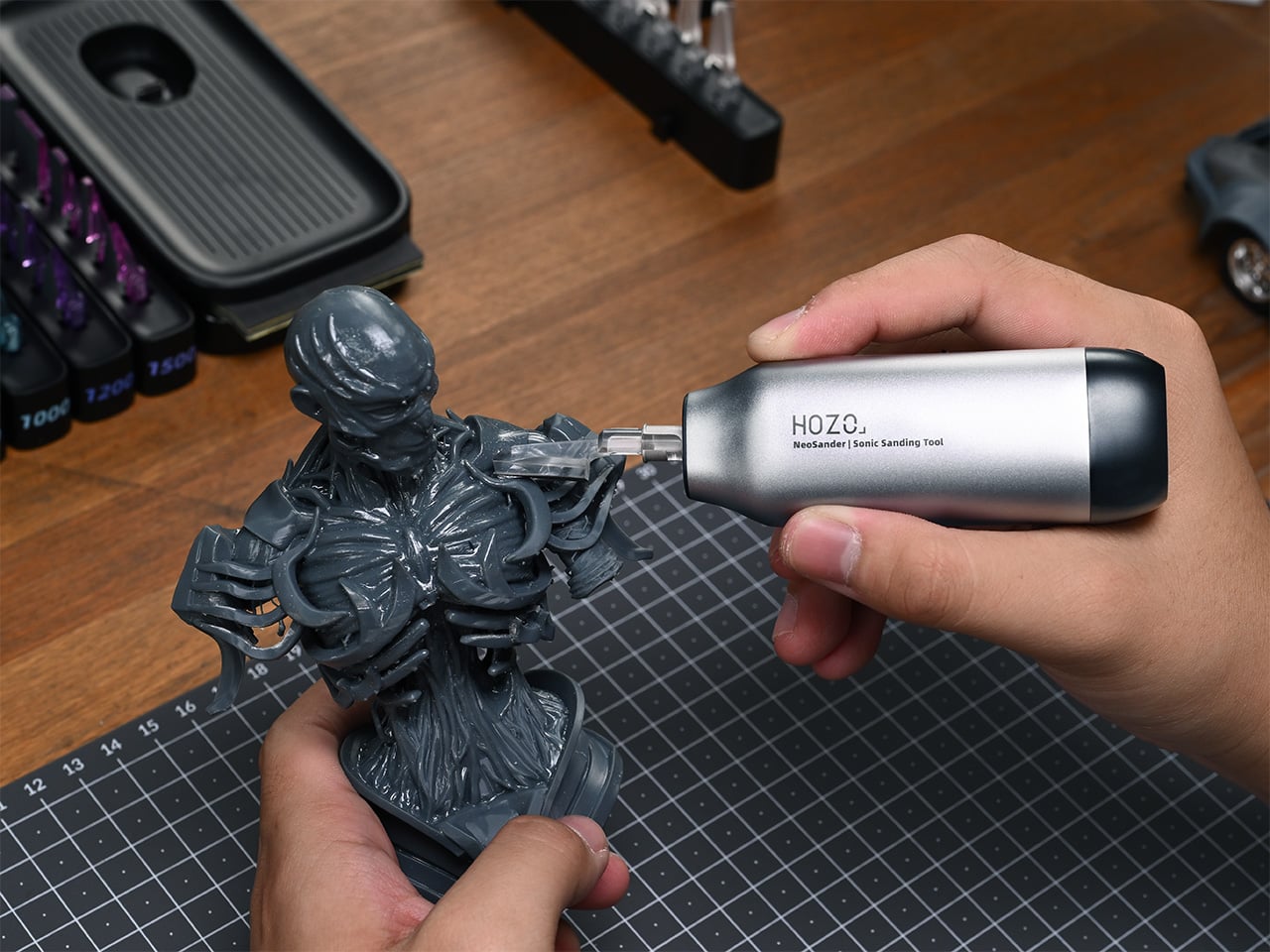
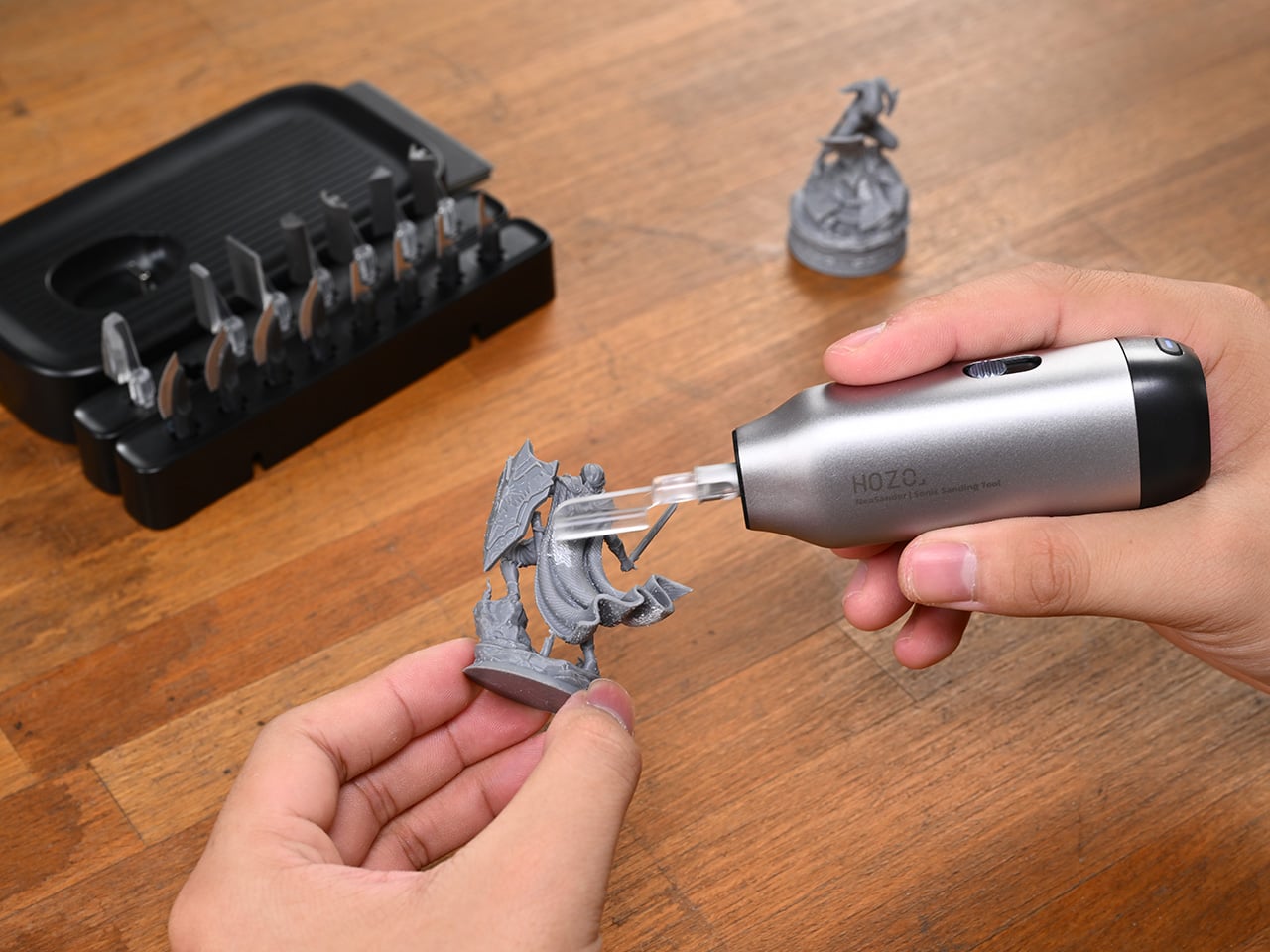
HOZO’s NeoSander takes a different route entirely. Rather than shrinking down a tool that was never meant for fine detail work, HOZO went back to the core question of what precision sanding actually requires and built around the answer. The result is a palm-sized, cordless reciprocating sander powered by a patented linear motor that delivers 13,000 strokes per minute of direct, gear-free motion, paired with a system of 8 swappable head shapes and 8 sandpaper grits that covers everything from rough shaping to mirror-smooth finishing. It’s the kind of purpose-built approach that makes you wonder why it took this long for someone to try it.
HOZO moves away from the traditional drivetrain; NeoSander’s vertically mounted reciprocating linear motor sends power straight to the tip with zero intermediary conversion from rotational to linear energy. That directness pays off in concentricity under 0.05mm, which in plain terms means the sanding head tracks true instead of wobbling like a bobblehead at speed. Competing sanders sit at 0.30mm or worse, and that difference is the gap between sanding where you intend and accidentally eating into a surface you just spent two hours painting.
The NeoSander holds a constant 13,000 SPM and lets you dial the stroke length between 0.6mm and 1.8mm, rather than using variable RPM that changes the tool’s rhythm and makes behavior harder to predict. Shorter strokes for delicate edges on resin prints, longer strokes when you’re leveling a seam line on a 1/100 scale kit. That translates to a linear speed range of 260 to 780 mm/s, giving you meaningful control over aggressiveness without the tool ever feeling inconsistent under your fingers. A counterweight inside the body moves opposite to the sanding head too, canceling out 85% of handle vibration, which matters enormously during the kind of 30-minute sanding sessions that detail work demands.
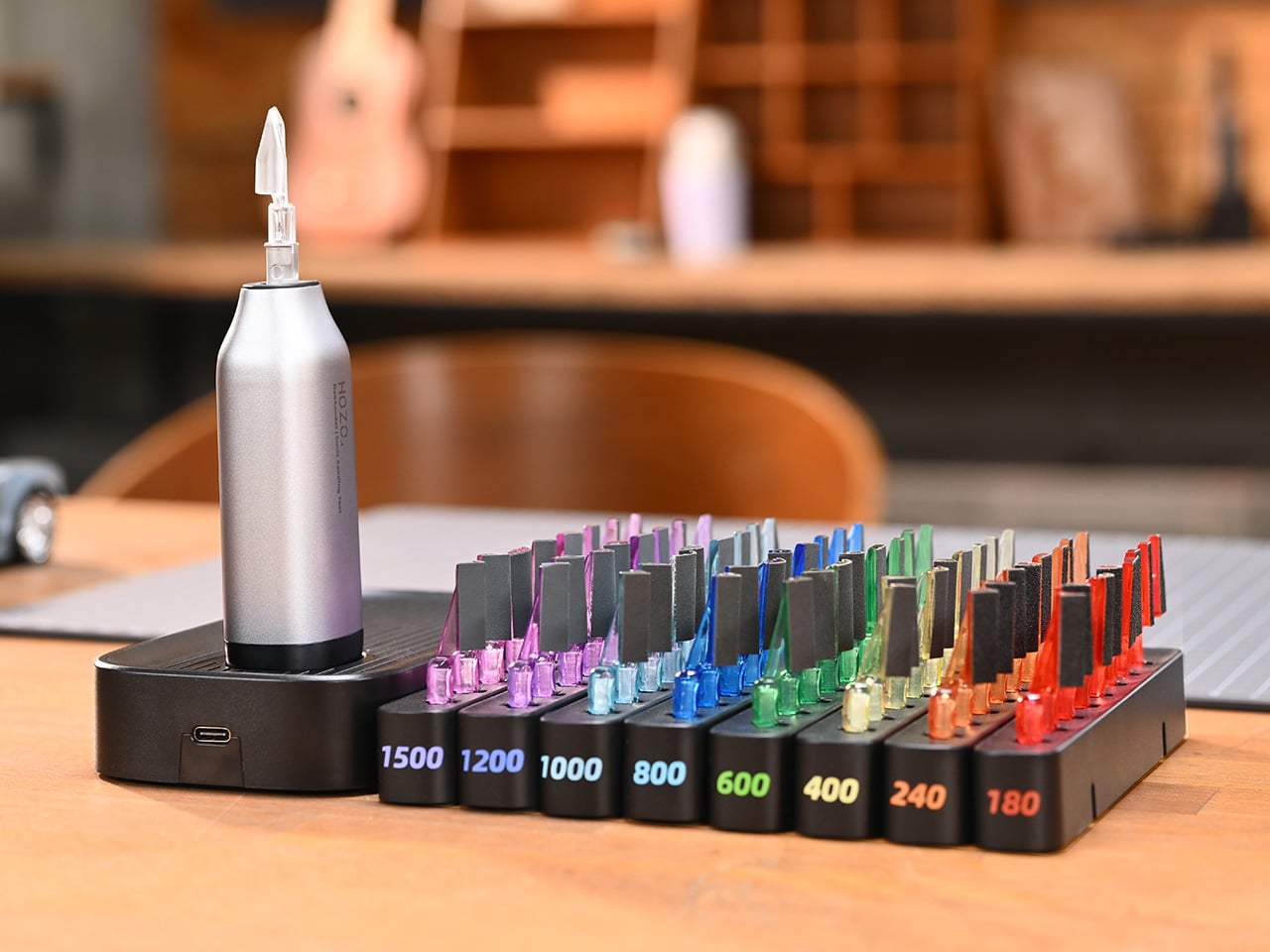
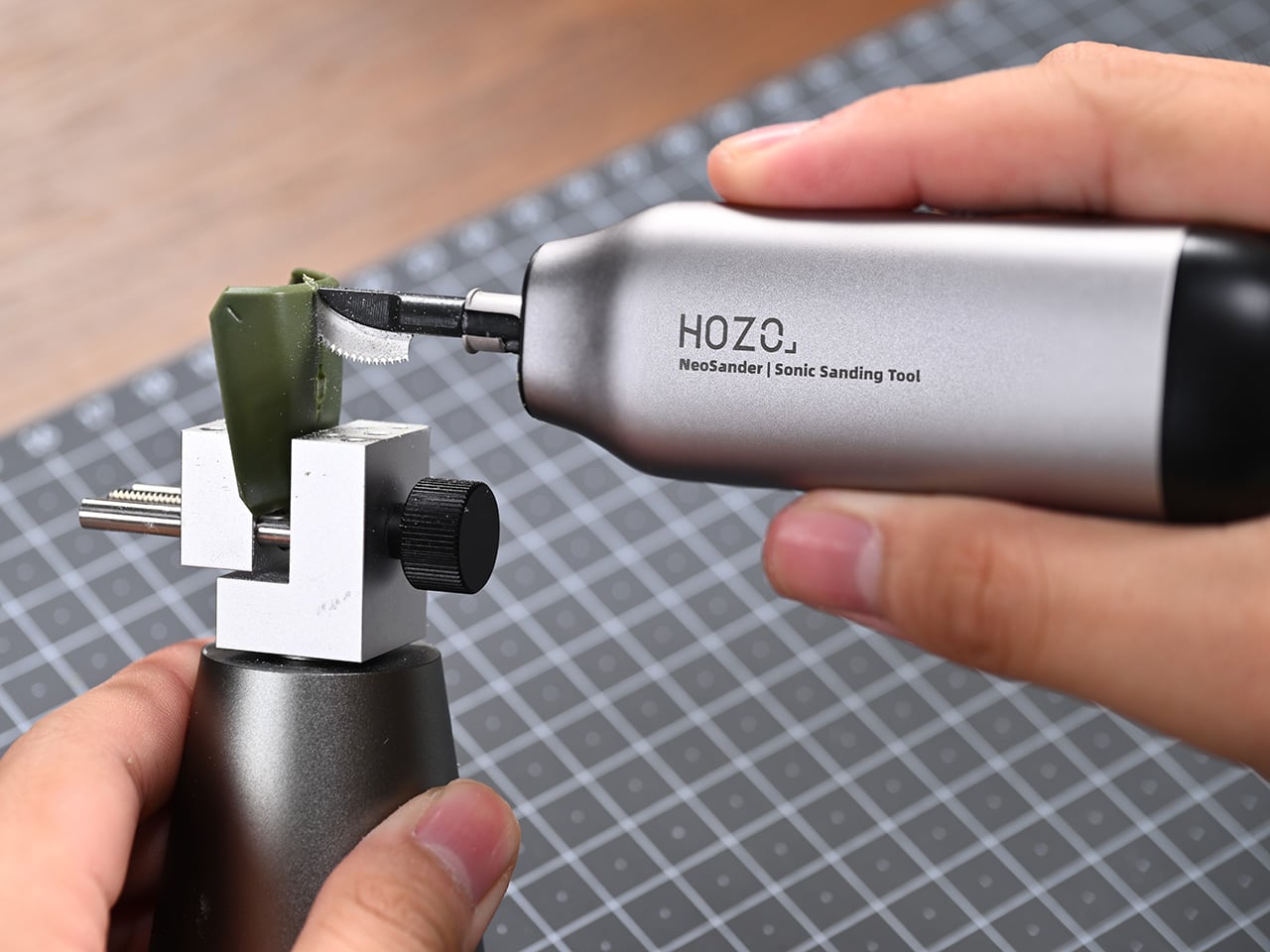
Eight sanding head shapes cover pointed tips for crevices, slim and wide flats for panel lines and broad surfaces, half-cylinders and arcs for curved geometry, and acute and right-angle heads for corners and recesses. Pair those with eight grits from coarse 180 all the way to 1500 for polishing, and you have up to 74 possible combinations when you factor in the optional foam-backed sandpapers that conform to irregular surfaces. A color-coded rack keeps everything sorted by grit so you’re not playing guessing games mid-session. HOZO also threw in two saw blades, a curved blade for rough cuts and a jigsaw blade for through-cuts, because the same reciprocating motion that sands also drives a 0.2mm micro-tooth saw with a patented anti-binding pattern.
The whole thing weighs 89 grams (3.13 oz) without a head attached, measures 104 x 53 x 28mm, and runs on a 3.7V 1,100 mAh battery that delivers 45 minutes of heavy use or up to 240 minutes of lighter work. The aluminum alloy and magnesium shell carries an IP54 splash rating, so wet sanding is on the table. Dock charging takes 30 minutes to full, and USB-C keeps things universal. HOZO has shipped eight successful products through Kickstarter before this, including the NeoBlade ultrasonic cutter, and they’ve built out companion tools like the NeoBlock for flat-surface sanding that pair with the NeoSander for a complete finishing workflow.
The NeoSander Pro starts at $69 (against a $99 MSRP) and includes the sander, a basic sanding head set, sandpaper kit, and a carrying case. The Premium Combo, priced at $129, comes with multicolor-coded heads, a saw collection, and a charging dock. For the deep-end makers, the $499 Maker Pro All-In Combo bundles the NeoSander, NeoBlock, and NeoBlade with their full accessory suites at 39% off retail. The campaign runs on Kickstarter with an estimated shipping date of May 2026.
Japanese kitchenware operates on a different frequency than most Western cooking tools. Where mass-market brands chase multifunctionality and feature bloat, Japanese design strips everything back to the single gesture that matters: the cut, the strain, the flip, the pour. The result is objects that feel less like gadgets and more like quiet collaborators in your cooking process, each one shaped by decades of manufacturing precision in regions like Tsubame and Niigata, where metalworkers have been refining their craft since the Edo period.
We have curated seven of the most thoughtfully designed Japanese kitchen tools that deserve a permanent place in your cooking routine. These are not flashy unitaskers destined for a drawer. They are carefully considered pieces of functional design that treat the act of cooking with the same seriousness as the meal itself, and each one brings something to your kitchen that no Western equivalent has managed to replicate with the same level of care.
1. Iron Frying Plate
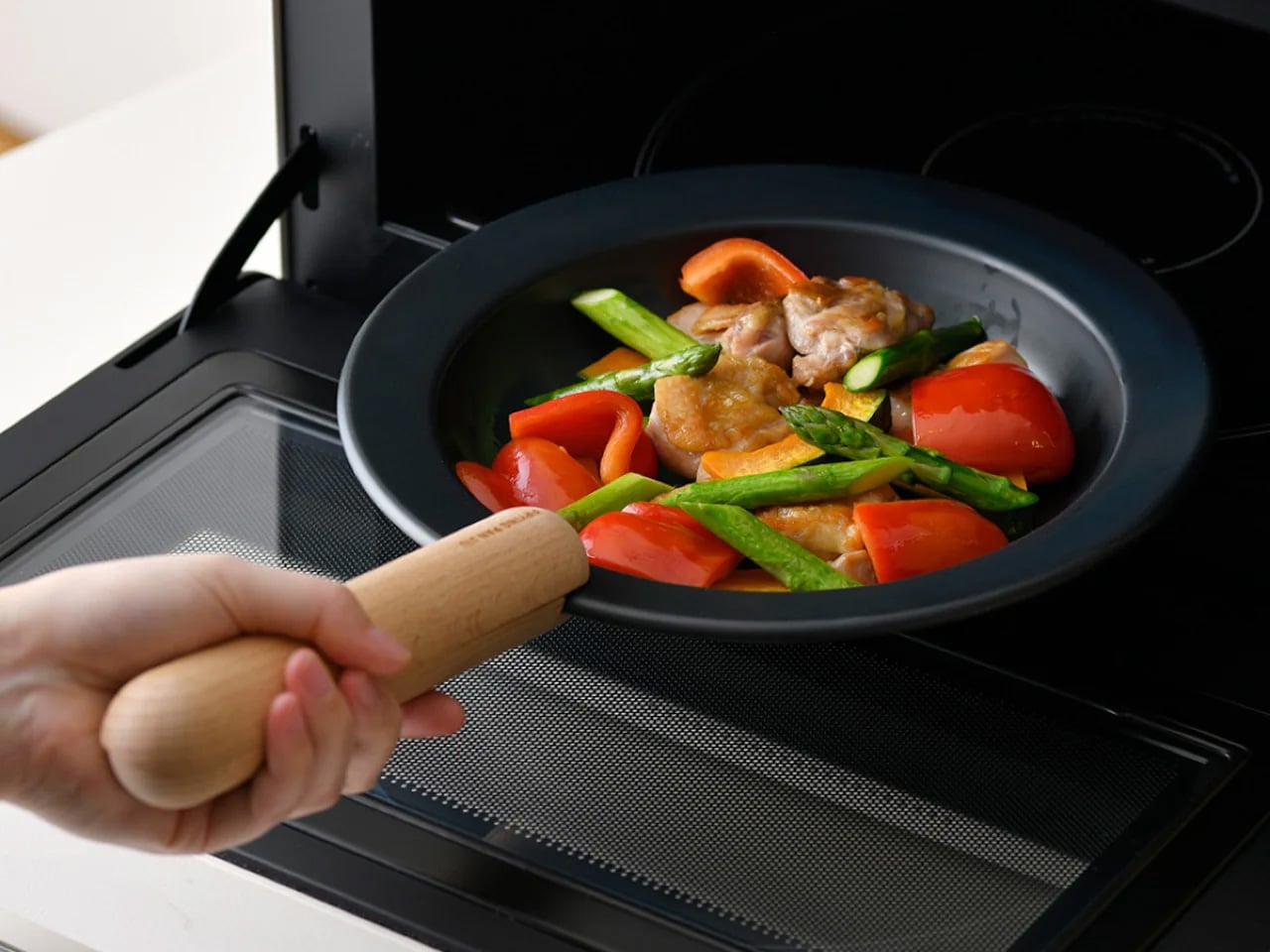
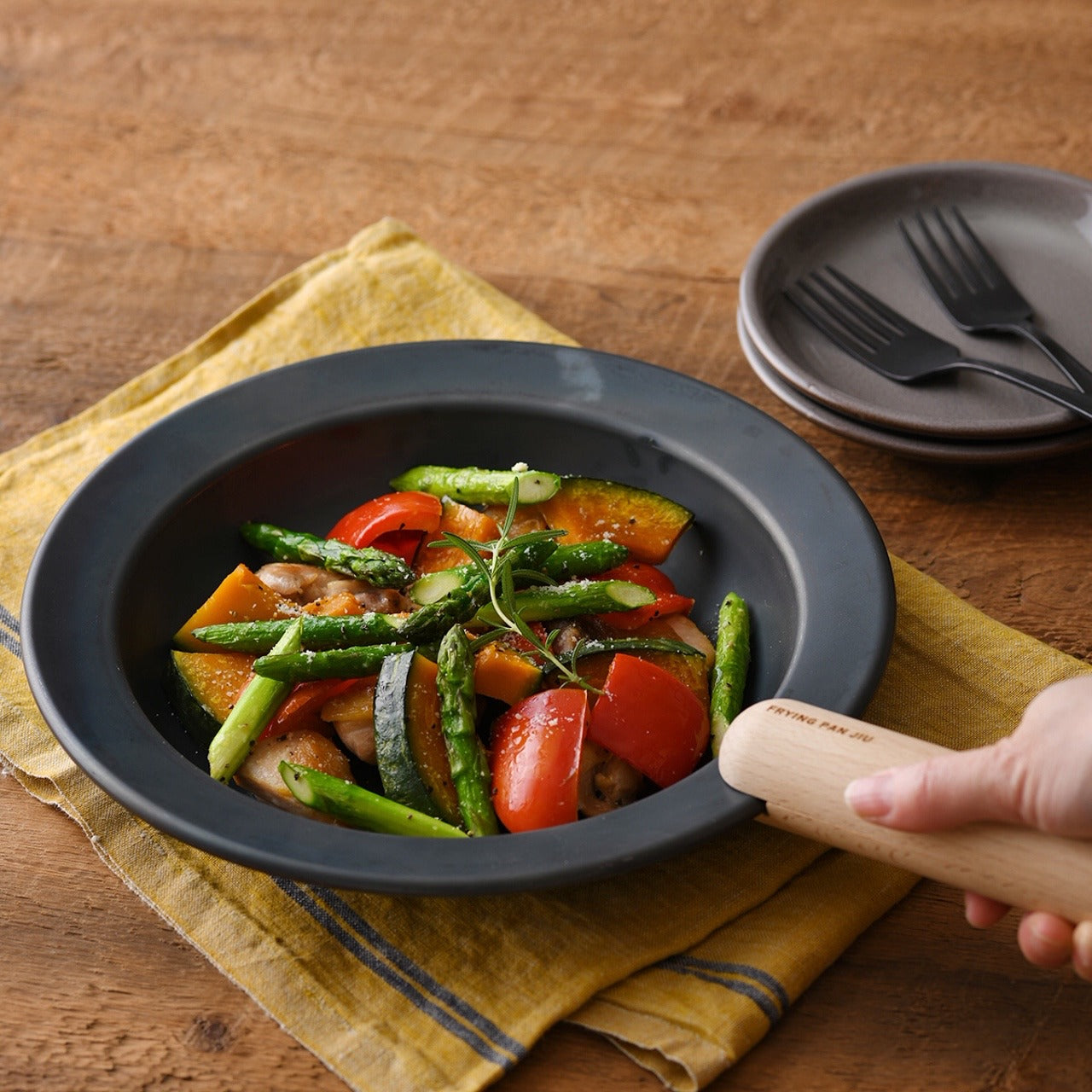
This piece of cookware collapses the distance between the stove and the table in a way that feels both radical and sensible. Made from 1.6mm-thick mill scale steel, the plate arrives rust-resistant, stick-resistant, and ready for immediate use without the lengthy seasoning ritual most iron cookware demands. The wooden handle attaches and detaches with one hand, transforming the object from cooking tool to serving vessel in a single motion. Mill scale steel is an unusual choice for consumer cookware because most manufacturers sand it off during production, but leaving it intact creates a natural non-stick surface that improves with use.
The heat distribution across that thin steel body brings out caramelization and texture in ways that thicker cast iron struggles to match, and the visual warmth of iron against a wooden table turns an ordinary weeknight dinner into something more composed. For a kitchen where counter space is limited, and dishes pile up fast, eliminating one entire step of the cooking-to-eating chain is not a gimmick. It is a rethinking of how we interact with food once it leaves the heat, and the pan-to-plate logic makes cleanup faster than any two-vessel alternative.
The one-hand detachable wooden handle makes the transition from stove to table seamless and eliminates the need for separate serving dishes.
Mill scale steel requires no initial seasoning, so it is usable straight out of the box, unlike most raw iron cookware on the market.
What we dislike
The thin 1.6mm steel will not retain heat as long as heavier cast iron, which means food cools faster once removed from the burner.
Eating directly from a frying surface takes some adjustment, and the flat profile does not contain sauces or runny dishes well.
2. Akebono Square Sandwich Cutter & Sealer
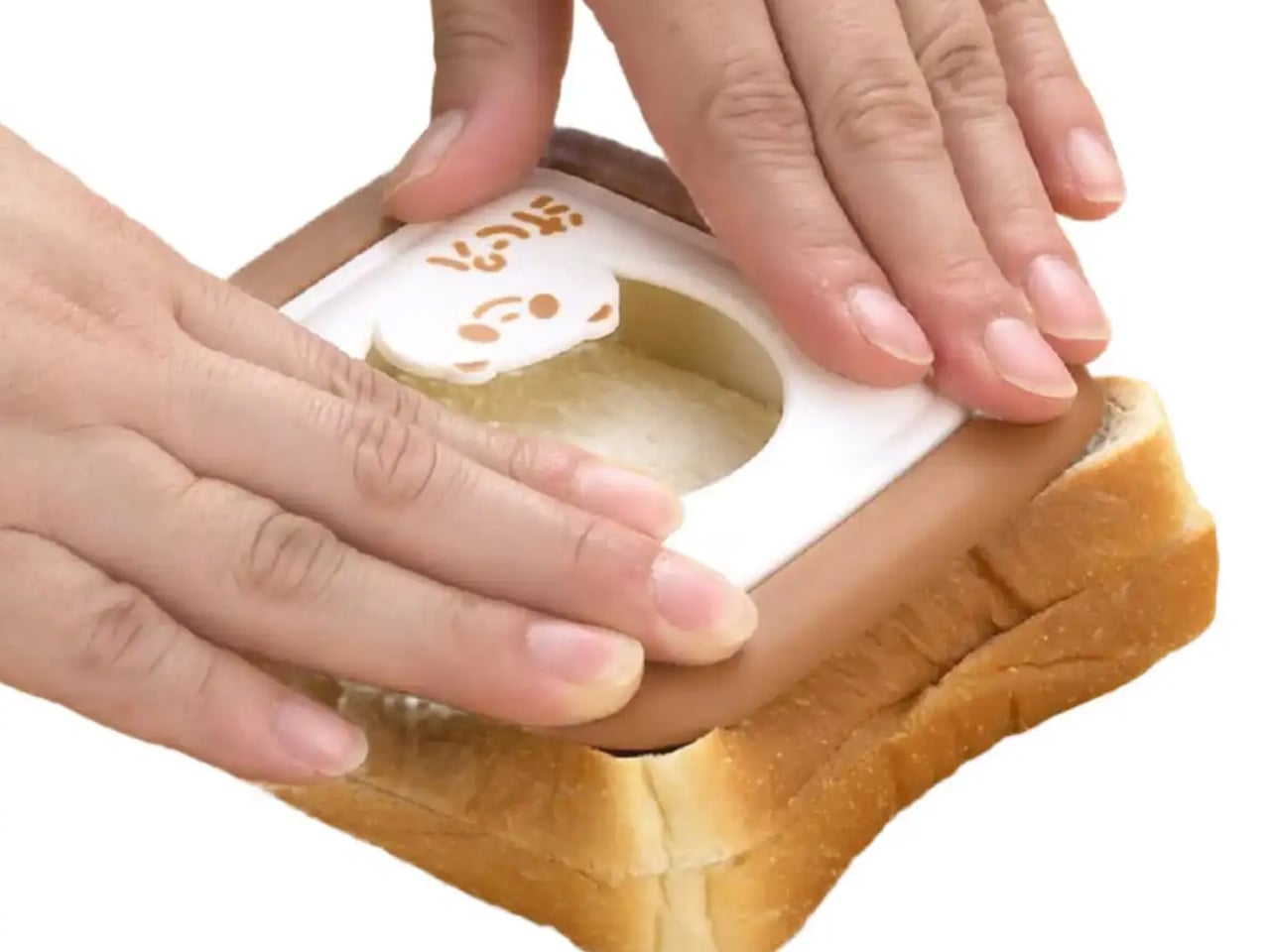
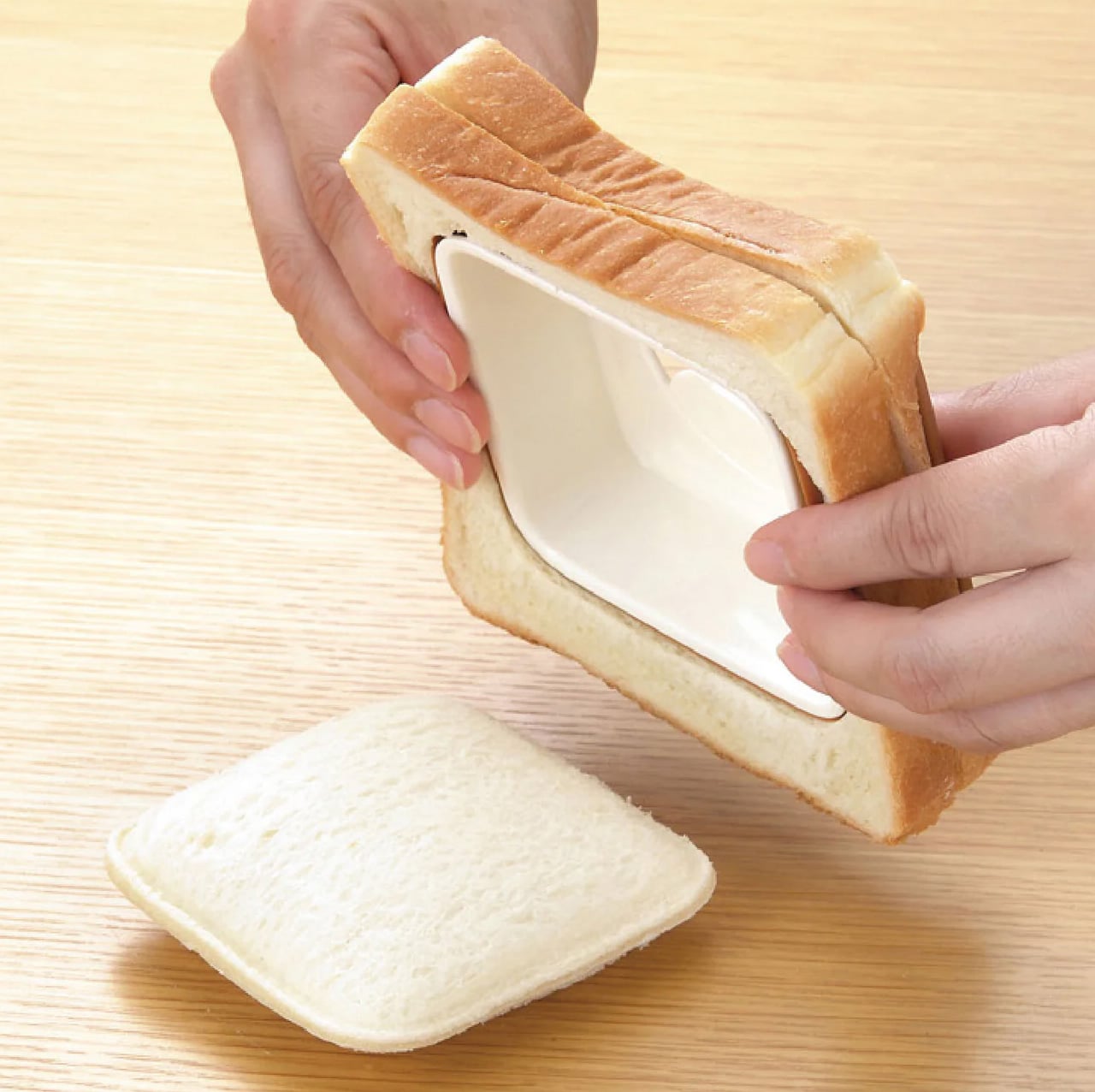
Sandwich-making in most kitchens involves a knife, a cutting board, and the quiet disappointment of fillings oozing out the sides. The Akebono cutter and sealer replaces that entire sequence with a single press that cuts and crimps simultaneously, producing sealed pockets that hold their shape through a commute, a school day, or a few hours in a lunchbox. Made in Japan with durable, food-safe materials, the tool is dishwasher-safe and simple enough for children to operate without supervision.
What makes it more than a novelty is how it changes the approach to sandwich construction entirely. Instead of spreading fillings thin to prevent spillage, the sealed edges allow for generous, layered interiors: curries, egg salad, fruit, and cream combinations that would be impossible with open-edge bread. Japanese convenience stores have perfected the sealed sandwich format for decades, and this tool brings that same logic to a home kitchen for a fraction of the cost, turning a five-minute task into a two-minute one.
What we like
The simultaneous cut-and-seal action locks fillings inside, making it ideal for runny or layered ingredients that would fall apart in a regular sandwich.
Dishwasher-safe construction and a straightforward press mechanism mean there is almost no learning curve and minimal cleanup.
What we dislike
The square format limits bread choices, as it works best with standard sliced bread and does not accommodate artisan loaves or thicker cuts.
Sealed sandwiches can trap steam when made with warm fillings, resulting in soggy bread if not cooled before sealing.
3. Three Snow Stainless Steel Round Mesh Oil Skimmer
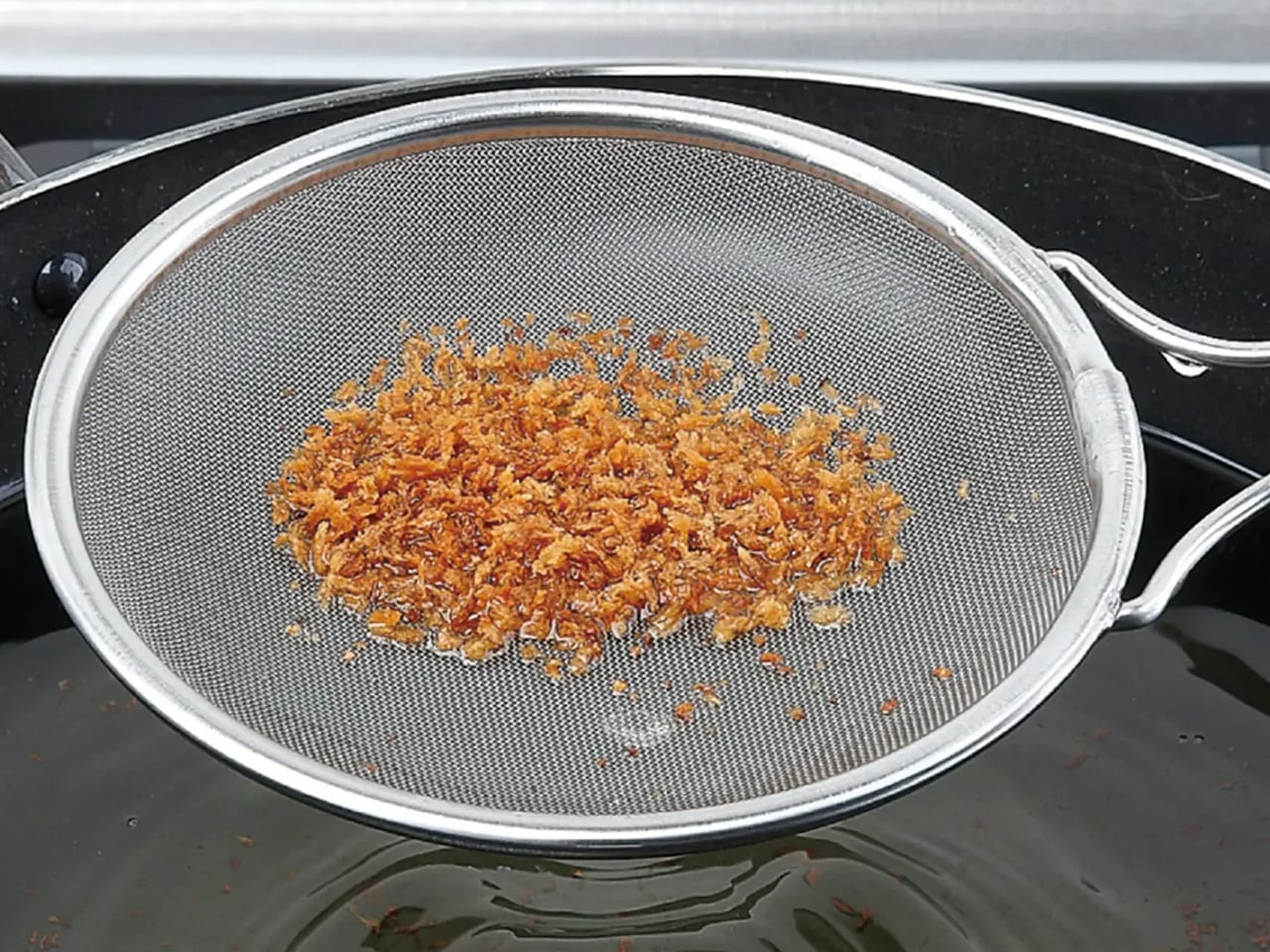
Most oil skimmers sold outside Japan are clunky perforated ladles that catch large debris and let everything else through. The Three Snow skimmer operates on a different principle. Manufactured in Tsubame, Niigata, this tool uses 18-8 stainless steel mesh available in fine (40 mesh, 0.4mm) and coarse (16 mesh, 1.2mm) options, giving it the ability to filter particles most skimmers ignore completely. The fine mesh variant catches even the smallest frying residue, which means cleaner oil that lasts longer between changes.
Beyond deep-frying, the tool doubles as a scum remover for stocks and soups and works as a miso strainer, making it one of the more versatile single-form tools in a Japanese kitchen. Available in 12cm, 15cm, and 18cm diameters, the sizing accommodates everything from a small saucepan to a full-sized fryer. At roughly 90 to 140 grams, depending on size, the weight is negligible during long frying sessions. Tsubame stainless steel has earned its reputation: the corrosion resistance and structural integrity of these skimmers outlast most competitors by years.
What we like
The fine 40-mesh option catches debris as small as 0.4mm, which keeps frying oil cleaner far longer than standard perforated skimmers allow.
Multi-use functionality as a miso strainer, scum skimmer, and oil filter means it earns its space in a drawer more than most single-purpose tools.
What we dislike
Fine mesh requires more careful cleaning than a simple perforated ladle, as particles can embed in the weave and are difficult to dislodge without a brush.
The shallow depth (25mm to 35mm, depending on size) limits the volume of debris it can collect in a single pass during heavy frying sessions.
4. Playful Palm Grater
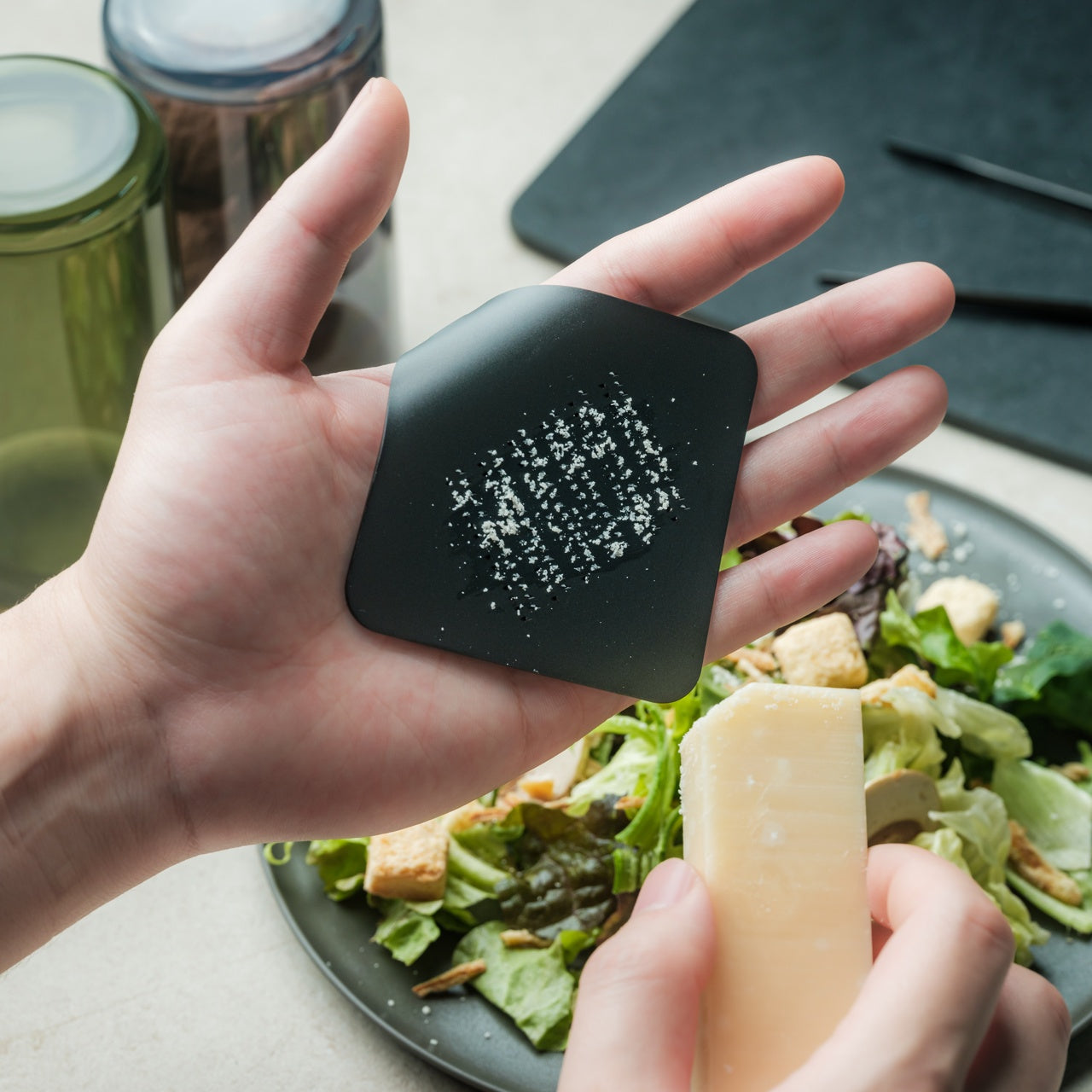
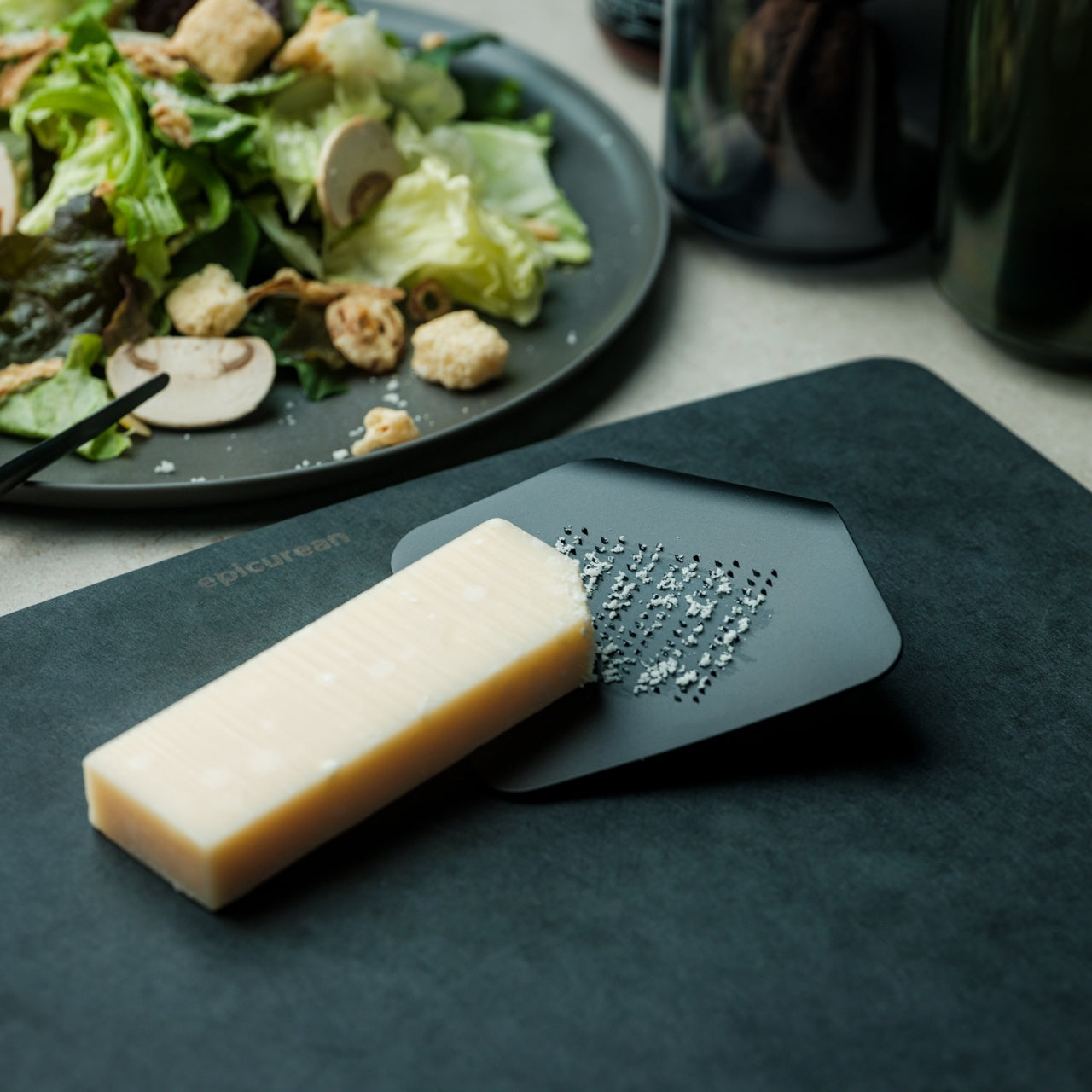
Conventional box graters are bulky, awkward to store, and dangerous to clean. The Playful Palm grater is none of those things. Cut from a single aluminum alloy plate and curled into a form that sits naturally in the palm, this tool reimagines what a grater can physically be. The curve creates a natural channel that directs grated cheese, ginger, garlic, or zest toward the dish below, and the ergonomic fit means the grating hand stays protected behind the plate rather than hovering over exposed blades.
Available in multiple colors, the grater looks more like a piece of desktop sculpture than a kitchen tool, which is part of the design intent. Japanese kitchen philosophy often resists the idea that tools should be hidden in drawers between uses, and a grater this visually appealing can sit on a counter without disrupting the space. The compact size makes it ideal for tableside use: grating Parmesan directly over pasta, adding fresh wasabi at the last second, finishing a salad with lemon zest. The palm grater treats garnishing not as an afterthought but as a distinct step worth its own dedicated instrument.
The single-plate aluminum construction eliminates crevices and joints, making it far easier to clean than traditional multi-sided graters.
The palm-fit ergonomic design keeps fingers behind the grating surface, reducing the risk of nicked knuckles that plague box grater users.
What we dislike
The compact grating surface is not suited for large-volume tasks like shredding an entire block of cheese for a casserole.
Aluminum alloy, while lightweight, is softer than stainless steel and will dull faster with frequent use on hard ingredients like nutmeg or frozen ginger.
5. Conte Drip-Free Oil Pot with Fine Mesh Filter
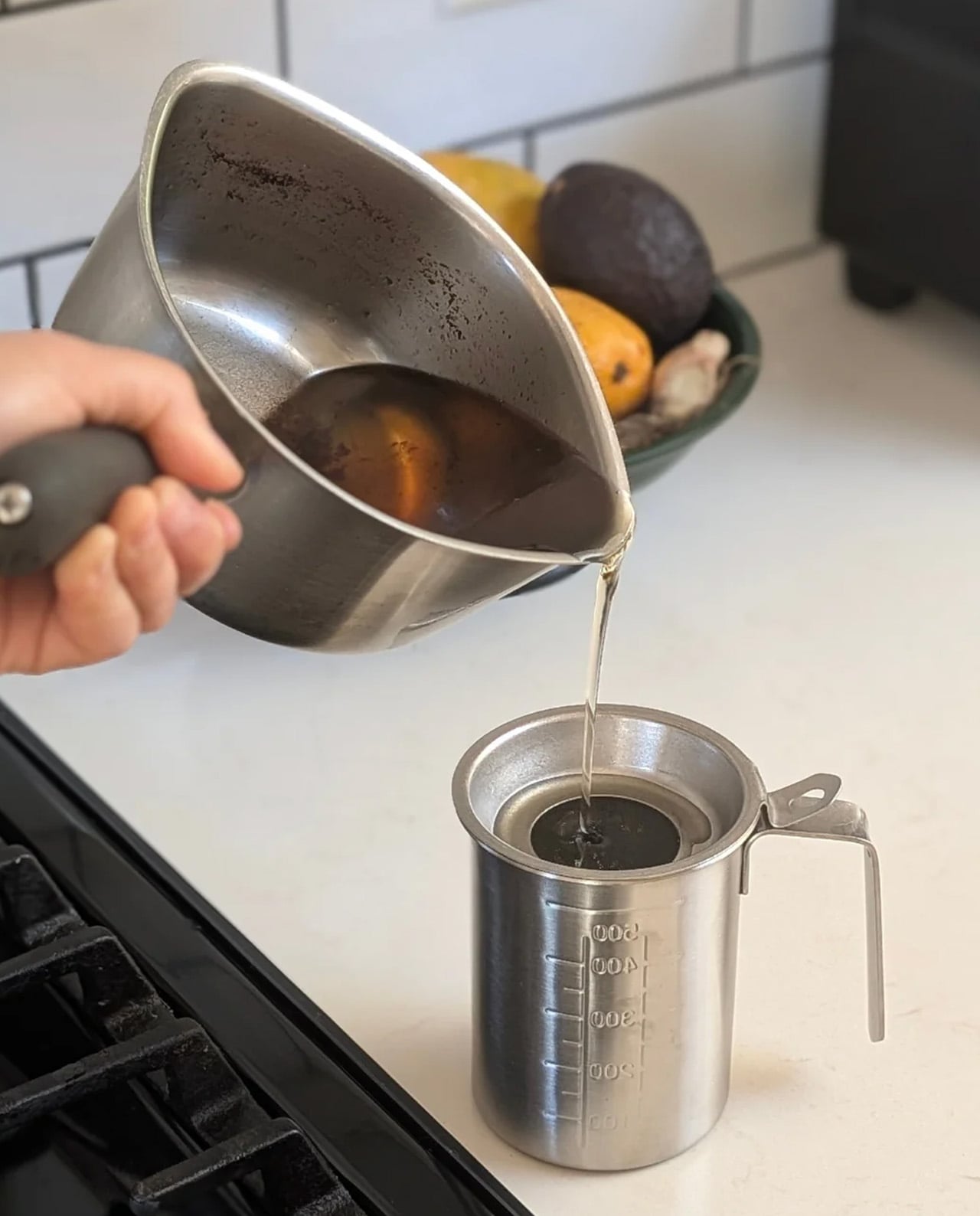
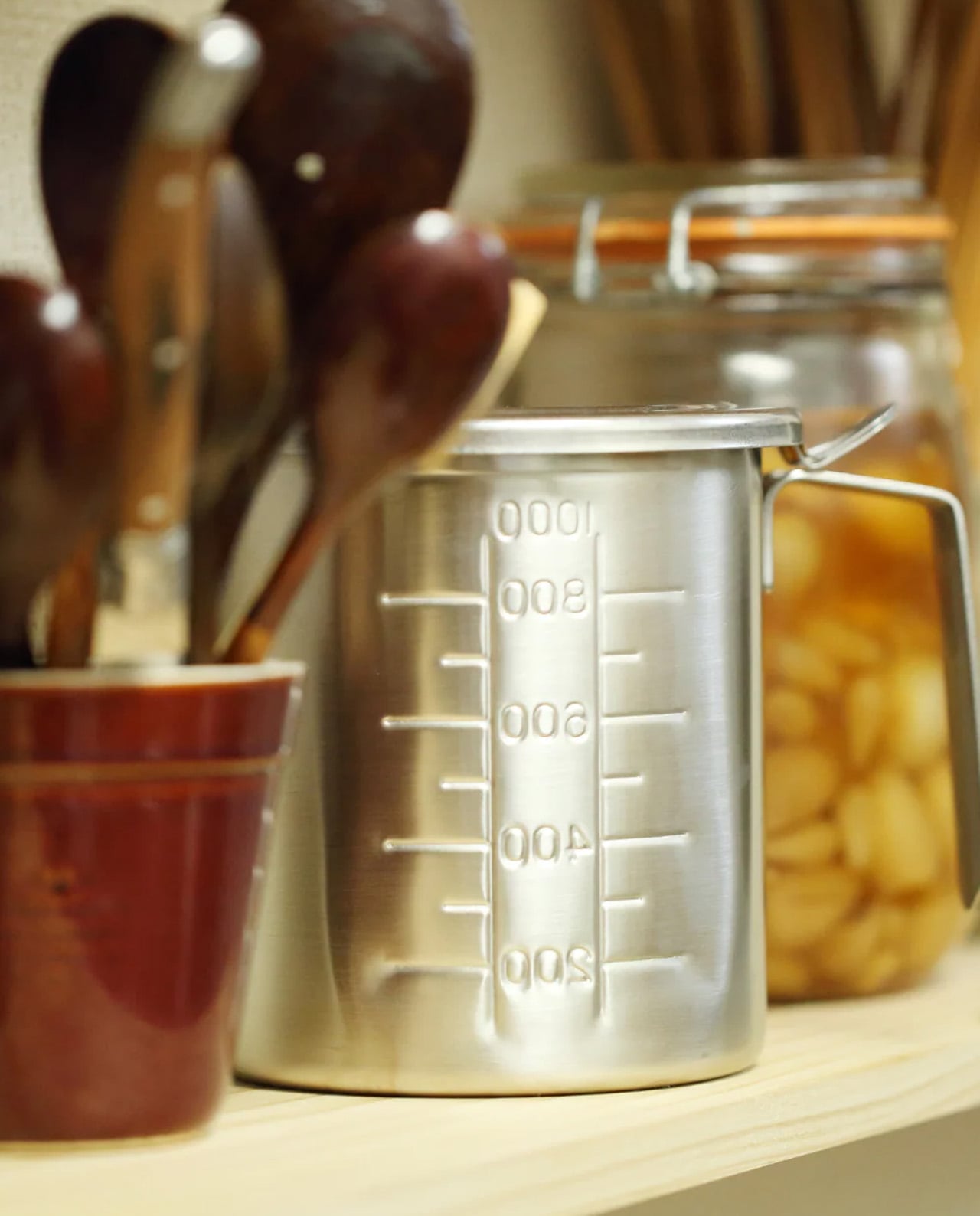
Reusing frying oil is standard practice in Japanese home cooking, and the Conte oil pot is the tool that makes it effortless. A fine black stainless steel mesh catches food particles left behind from tempura, tonkatsu, or karaage, and the non-reflective black finish serves a practical purpose: it allows a clear view of the oil level from above, something shiny stainless steel interiors make nearly impossible. The precisely curved rim eliminates drips during pouring, a detail that sounds minor until considering how many oil pots leave trails across the stovetop.
Angled knobs on the lid and strainer allow one-handed operation, so pouring oil back into a pan while holding an ingredient in the other hand becomes routine rather than a balancing act. Available in small (300ml) and large (700ml) sizes, the pot scales to different cooking habits. The small version is suited for seasoning cast iron or saving oil after pan-frying dumplings, while the large handles full frying sessions comfortably. Both sizes sit compactly beside a stove without crowding the workspace, making oil reuse clean, dignified, and free of the greasy mess that discourages most home cooks from attempting it.
What we like
The drip-free rim design eliminates oil trails on the stovetop, solving a problem that nearly every other oil storage container ignores.
The black stainless steel mesh filter makes oil clarity visible from above, so determining when to discard rather than reuse becomes a visual check instead of a guessing game.
What we dislike
The small 300ml version fills up rapidly and is too limited for anyone who deep-fries regularly or cooks for more than two people.
Stainless steel retains oil odors over time, and thorough degreasing between uses requires more effort than a quick soap-and-water rinse.
6. Oku Knife
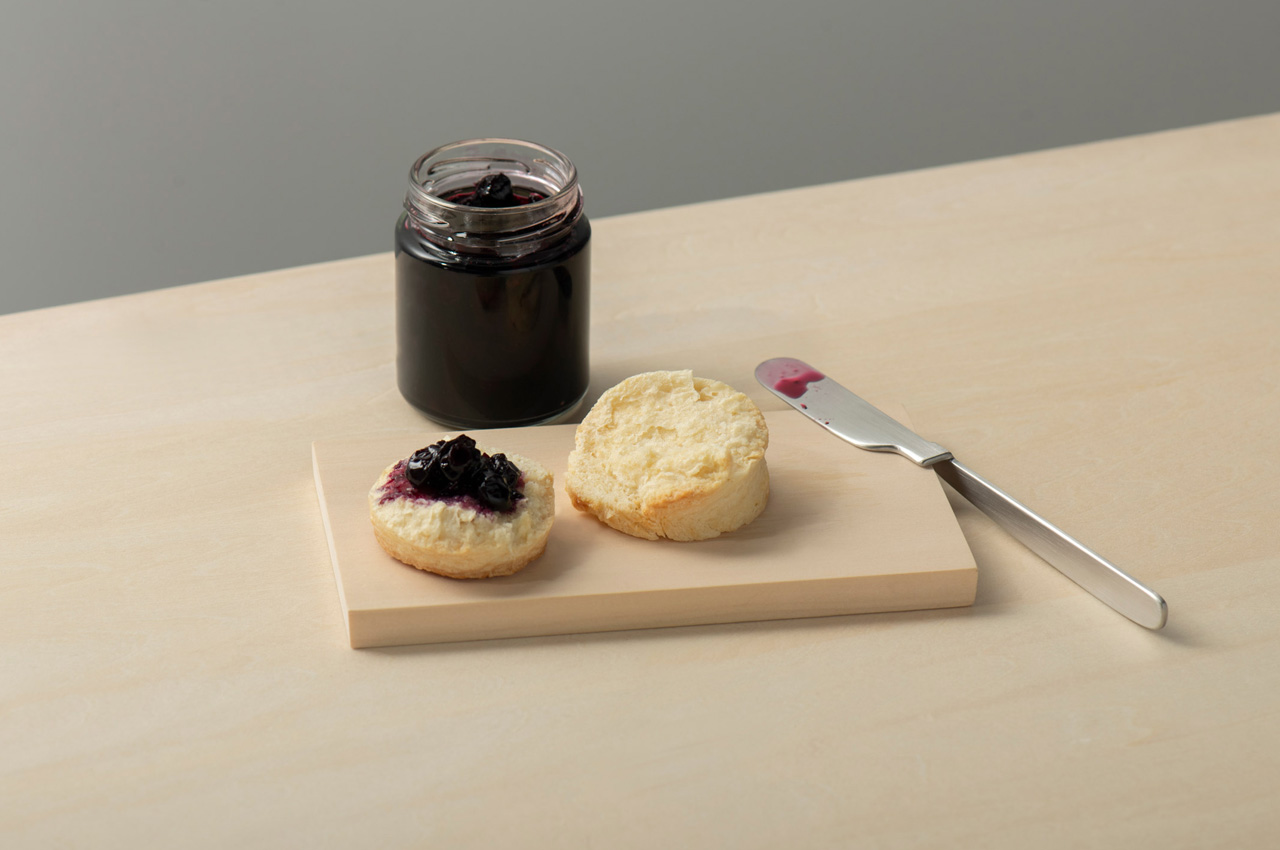
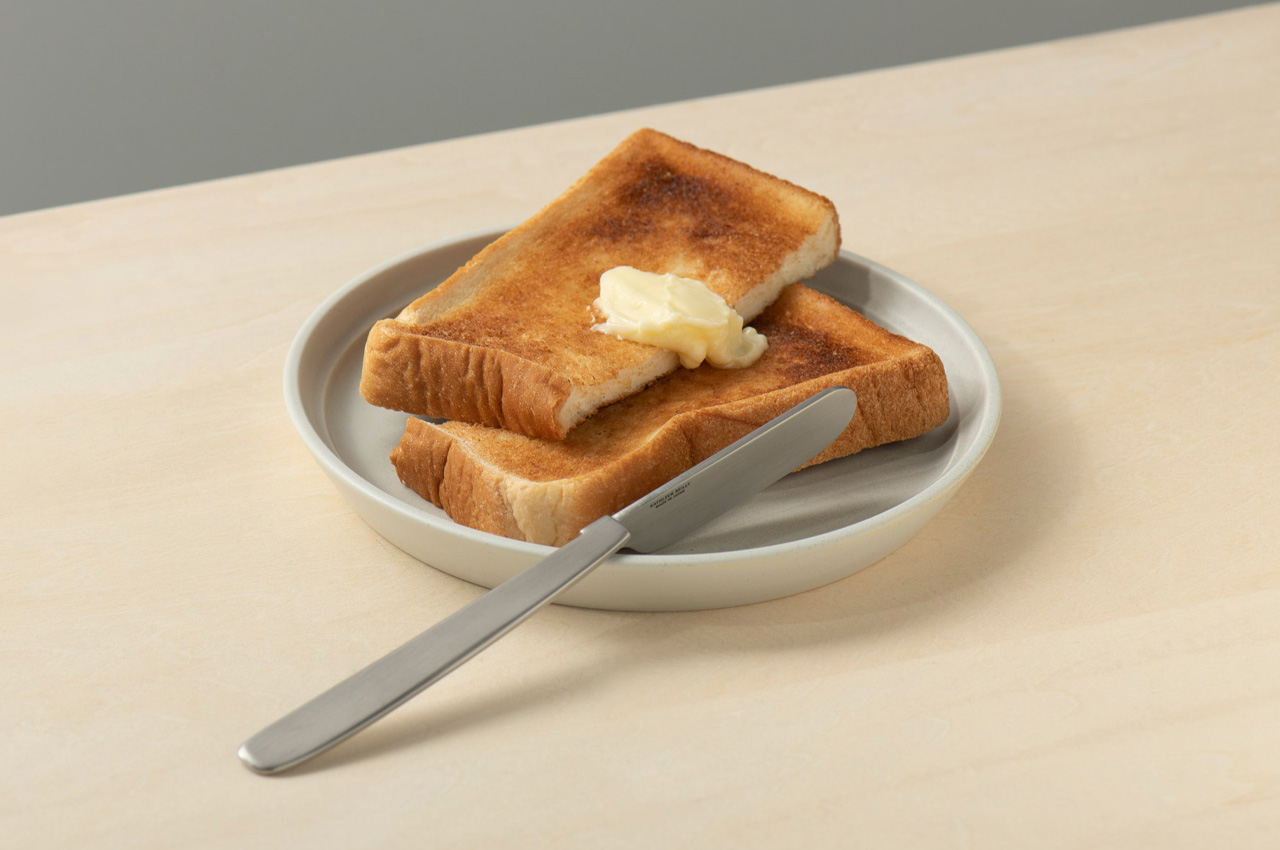
Scottish artist and metalworker Kathleen Reilly designed the Oku knife as a direct response to a problem most Western cutlery ignores: where does the knife go between bites? Informed by the Japanese tradition of chopstick rests (hashioki), which lift eating utensils off the table surface to prevent contamination, the Oku features a handle folded 90 degrees from the blade. This fold allows the knife to rest with its handle on the table while the blade sits perpendicularly in the air, touching nothing.
The result is a tool that solves a cleanliness issue most diners have accepted as unsolvable: the dirty knife laid flat against a tablecloth or balanced on the edge of a plate. Hooking the blade along the edge of a cutting board or plate creates what Reilly describes as an intimacy between the two objects, and the angular geometry locks the knife in position rather than allowing it to slide. For a kitchen where multiple cutting tasks happen in sequence, the Oku provides a resting solution that no flat-handled knife can match. It is a rare case of form and function arriving at the same conclusion through a single geometric decision.
What we like
The 90-degree fold solves the dirty-knife-on-table problem that flat cutlery has ignored for centuries, keeping the blade cleanly suspended between uses.
The hookable design creates stability on plate rims and cutting board edges, eliminating the wobble and sliding common with standard knives at rest.
What we dislike
The unconventional handle angle requires a different grip than traditional knives, which may feel awkward during extended cutting or food prep sessions.
As a handcrafted piece by an independent metalworker, availability and pricing are limited compared to mass-produced alternatives.
7. Obsidian Black Salad & Serve Tongs
Salad tongs tend to be one of two things: flimsy spring-loaded mechanisms that lose grip on the third toss, or heavy stainless steel clamps better suited to a barbecue than a dinner table. The Obsidian Black tongs occupy neither category. Made from SUS821L1 stainless steel (a variant twice as strong as the standard SUS304 used in most kitchen tools), they achieve a thinner, lighter profile without sacrificing structural integrity. One head is shaped as a spoon, the other as a spork, and this asymmetry is the design’s smartest move.
That mismatched pairing allows the tongs to clamp down on leafy greens with the same confidence as slippery pasta or bite-sized grain bowls, because each head approaches the food from a different angle. At 20cm in length, the reach is sufficient for deep salad bowls without compromising control. The black finish creates visual contrast against greens, fruits, and light-colored dishes, which makes plating feel more considered, and the high corrosion resistance of SUS821L1 steel means the finish holds up through years of use. For a kitchen that treats presentation as part of the cooking process, these tongs turn the final step of assembling a dish into something deliberate.
SUS821L1 stainless steel is twice as strong as the standard SUS304, allowing a thinner profile that feels lighter in the hand without bending or flexing under load.
The asymmetric spoon-and-spork head design grips a wider range of textures and food types than matching heads would, from arugula to penne.
What we dislike
The 20cm length may feel short for tossing salads in oversized serving bowls or deep mixing containers.
The dark finish, while visually striking, can show water spots and fingerprints more readily than brushed or polished stainless steel.
Where This Leaves Your Kitchen
Japanese kitchen tools share an unspoken philosophy that the best gadgets do not announce themselves. They integrate. They become invisible extensions of the hand, the stove, the table, dissolving the seams between preparation, cooking, and eating until the whole sequence feels like a single continuous act. The seven tools on this list operate exactly within that logic, each one addressing a friction point that most cooks have simply accepted as normal.
Investing in these pieces is not about filling a kitchen with more objects. It is about replacing thoughtless tools with considered ones, swapping volume for precision, and treating the daily act of making food with the same intentionality that Japanese design applies to everything it touches. A kitchen built around tools like these does not feel cluttered. It feels ready.
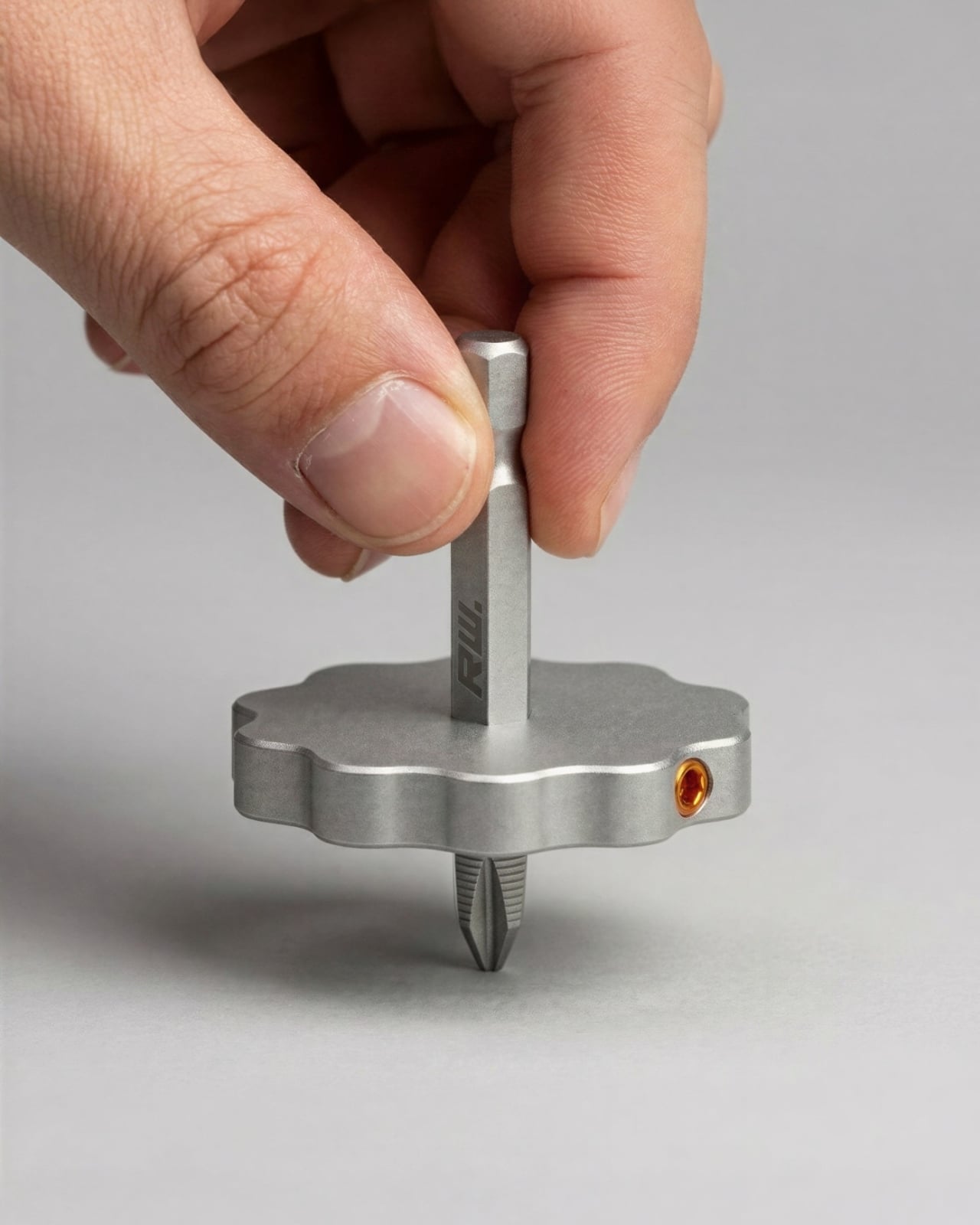
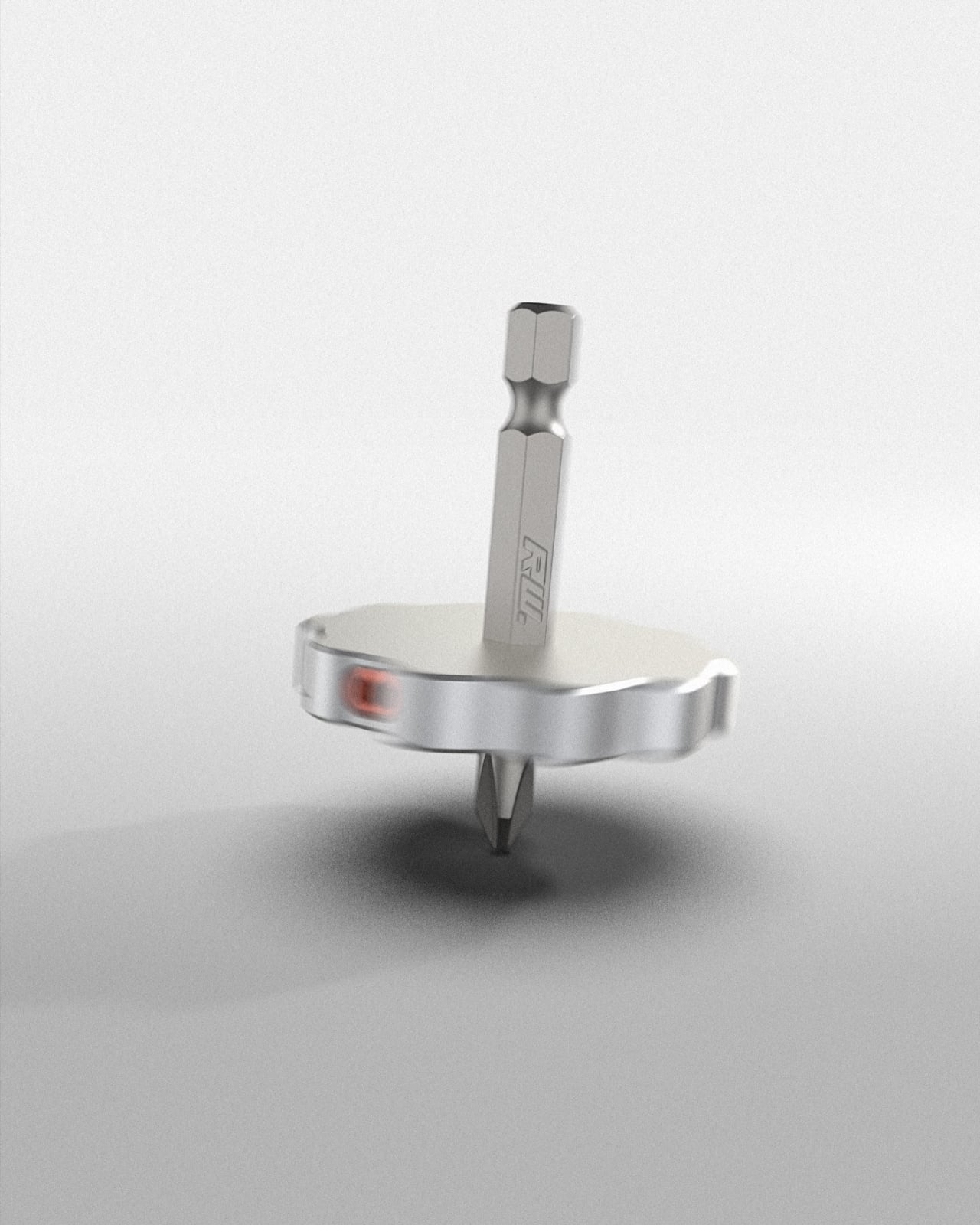
There’s something deeply satisfying about an object that refuses to take itself too seriously. The Drillbit Gyro, a concept design by Berlin-based designer Julius Works, is exactly that kind of object. It’s a spinning top. It’s a screwdriver. It’s the kind of thing you pick up off your desk when you’re on a phone call, and five minutes later you’ve forgotten what the conversation was about because you’re watching a Phillips bit twirl on your kitchen counter.
Let me back up. The EDC (everyday carry) space has a particular aesthetic, and if you’ve spent any time browsing it, you know exactly what I mean. Everything is titanium. Everything is milled from a single billet. Everything looks like it was designed for a spec ops mission in a mountain range you’ve never heard of. And look, there’s nothing wrong with that. Some of those tools are beautifully made and genuinely useful. But the culture around EDC gear has calcified into something predictable. Rugged. Tactical. Masculine in a very specific, unimaginative way.
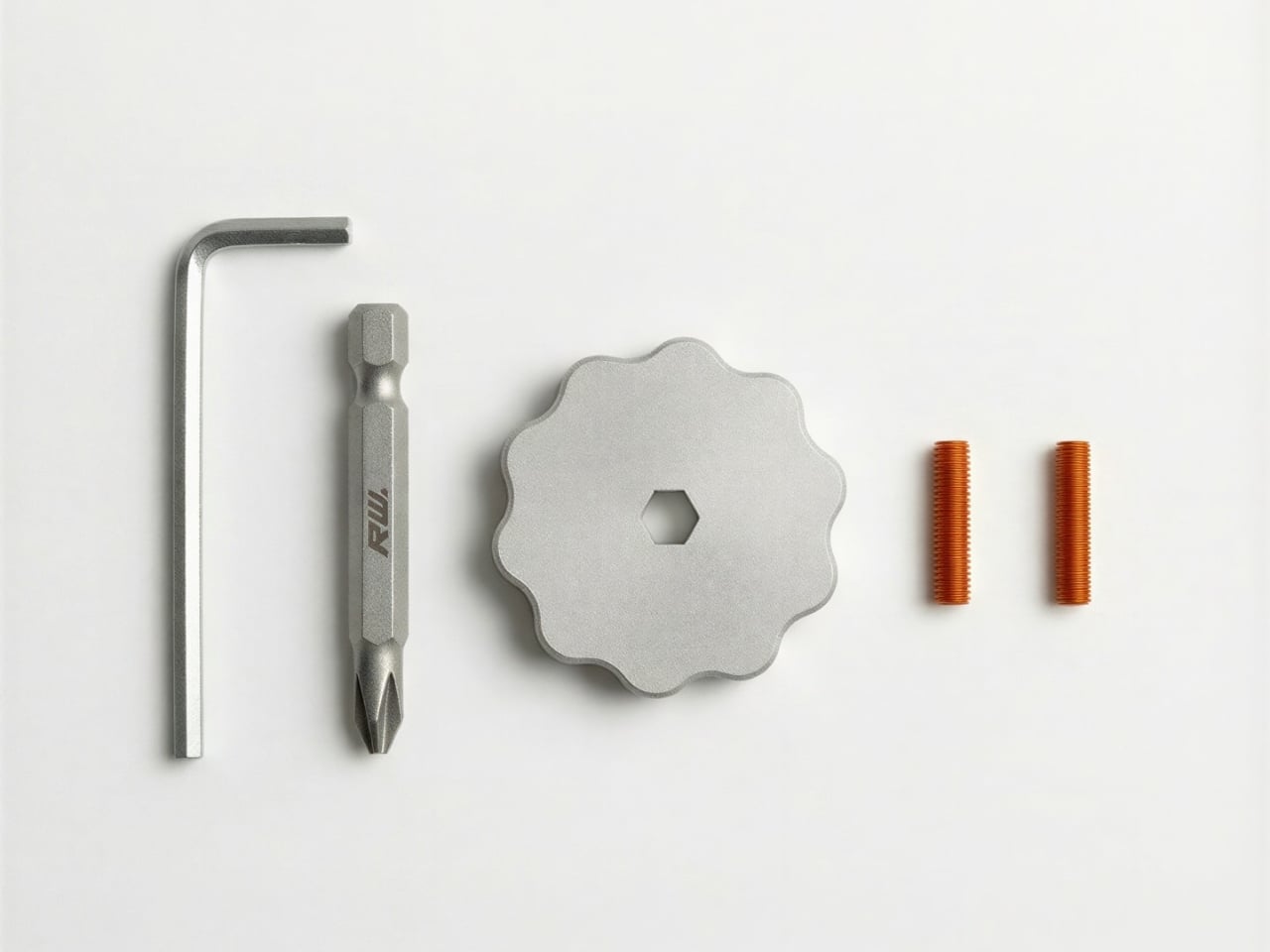
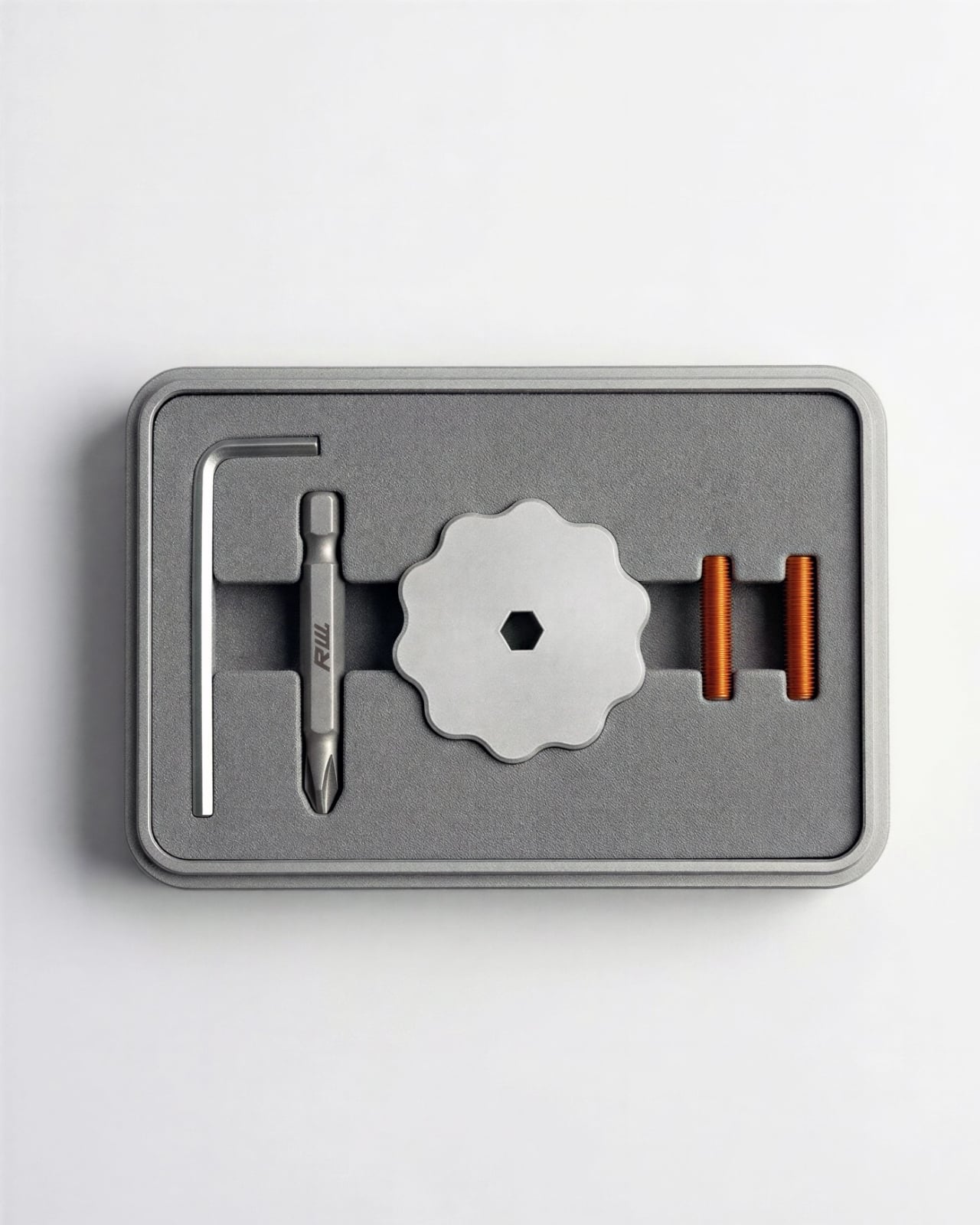
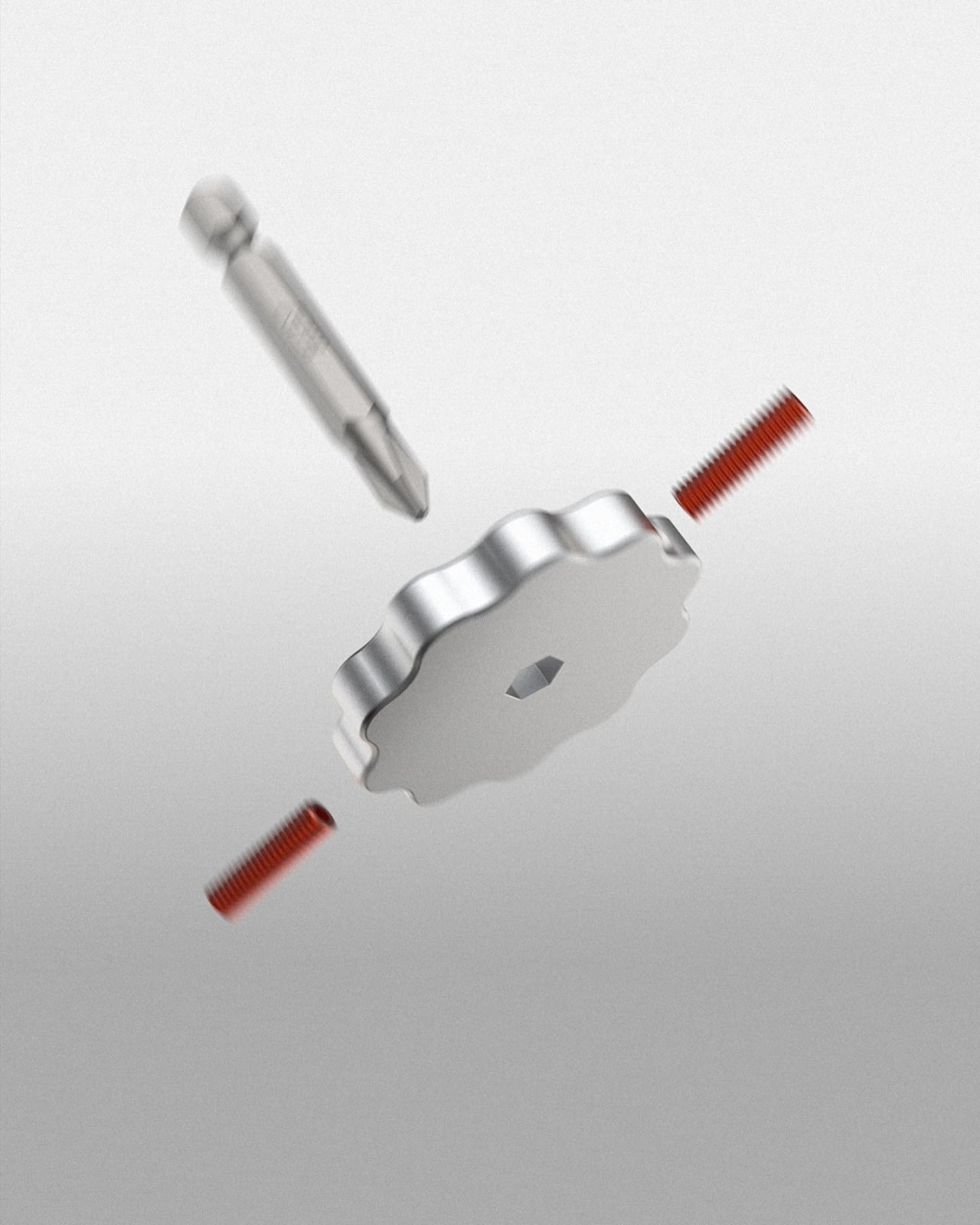
The Drillbit Gyro walks into that room and does something different. It takes a standard 1/4-inch hex bit, a flower-shaped body machined from what appears to be stainless steel, and two small orange threaded grub screws that lock the bit in place. An Allen key is included to tighten everything down. That’s it. The bit slides through the center of the body, with the Phillips head poking out the bottom and the hex shank rising up top, and what you get is a perfectly weighted little top that also happens to be a functional screwdriver. You grip the hex shank between your fingers, give it a spin, and it goes.
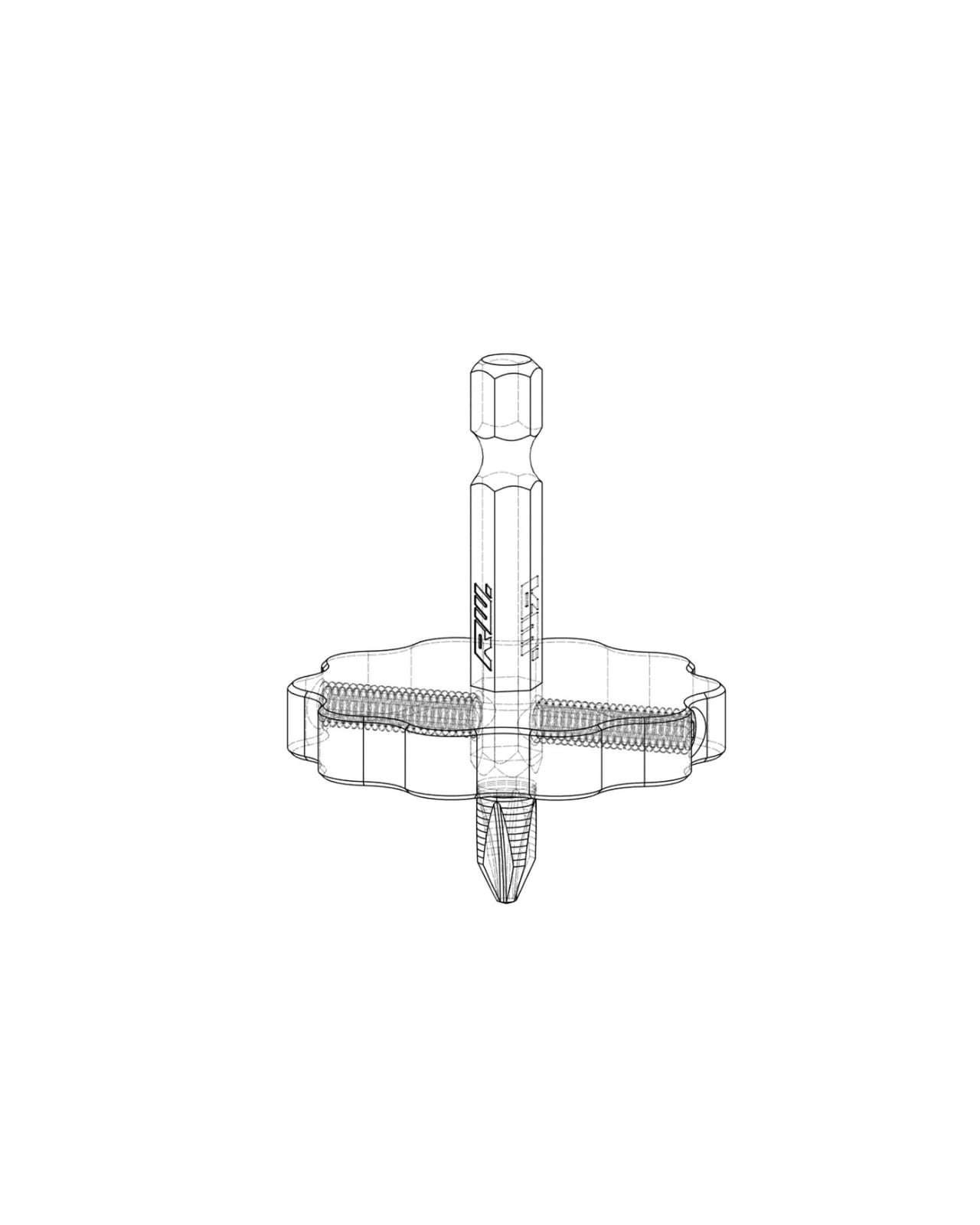
The wireframe drawing included in the concept images reveals how clean the internal assembly is. The two grub screws thread in from opposite sides of the body, clamping against the bit shaft to hold it securely. It’s a simple, elegant solution. Swap in a flathead, a Torx, whatever you need. The modularity is baked right in.
But here’s what I think makes this concept worth paying attention to: it doesn’t apologize for being playful. So much of product design right now, especially in the tool and gadget space, is obsessed with justifying its existence through sheer utility. Every feature needs a purpose. Every gram needs to be accounted for. The Drillbit Gyro says, sure, I can tighten a loose screw on your cabinet hinge, but also, wouldn’t you rather watch me spin for a minute first?
That playfulness is a design statement. The scalloped edges of the body aren’t just decorative. They give you grip when you’re actually using the thing as a driver, and they create a beautiful profile when the top is in motion. The orange grub screws add a pop of color that feels intentional and confident against the brushed silver body. Even the packaging, shown in a foam-lined tray with each component nestled in its own cutout, suggests that this is something you’re meant to enjoy unwrapping. It’s gift-worthy. It’s the kind of thing you’d keep on your desk not because you need a screwdriver within arm’s reach, but because it looks good sitting there.
Julius Works, who operates out of Berlin and specializes in 3D and product design, clearly understands that objects carry emotional weight beyond their function. The Drillbit Gyro is a concept for now, but it feels ready for production. The component count is low, the machining is straightforward, and the market for clever desktop objects that blur the line between tool and toy is only growing.
Will it replace a proper multi-bit driver in your toolkit? No. Is it going to be the thing you reach for when you’re assembling a bookshelf? Probably not. But that’s not the point. The point is that not every tool needs to look like it was forged in a bunker. Sometimes the best everyday carry is the thing that makes you smile when you pick it up. The Drillbit Gyro gets that, and the EDC world could use a lot more of it.
Frequent flyers develop rituals. Not superstitions, but systems, small corrections built over dozens of boarding passes and red-eye recoveries that separate a tolerable trip from a miserable one. The gear that survives this process tends to be invisible in the best sense: compact enough to vanish into a carry-on, functional enough to earn its pocket space, and designed with the kind of restraint that does not scream “gadget” at TSA.
We have spent a good chunk of this year tracking products that solve the specific, unglamorous problems of constant air travel. Not the flashy stuff that lives in a CES sizzle reel, but the tools that answer real questions: how do I sleep upright, stay caffeinated in a hotel with terrible coffee, or keep my workout intact when the gym is a repurposed storage closet? These eight picks are the ones that survived the edit, each one earning its spot through a combination of smart engineering and a refusal to waste space.
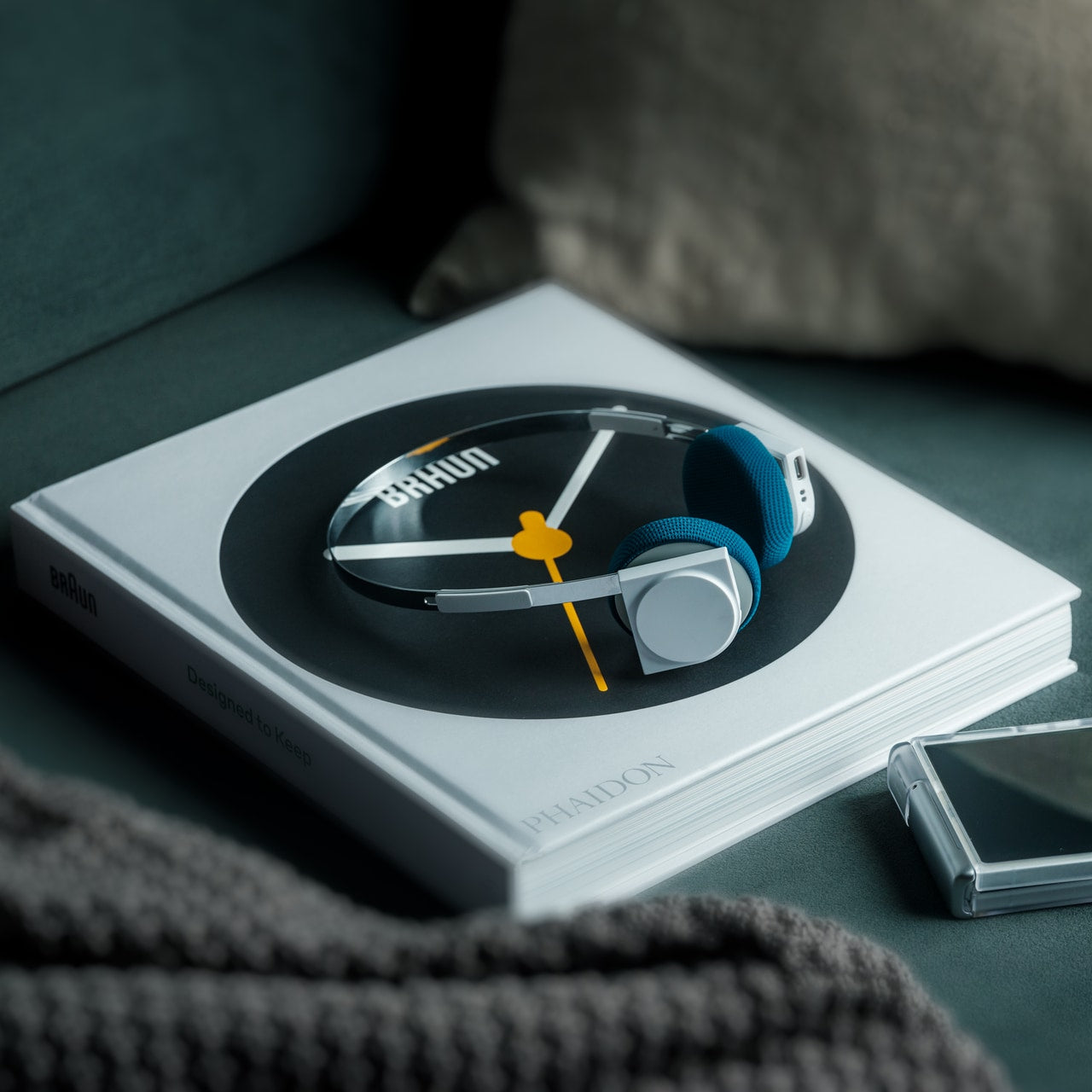
1. StillFrame Headphones – A slow, deliberate approach to travel audio.
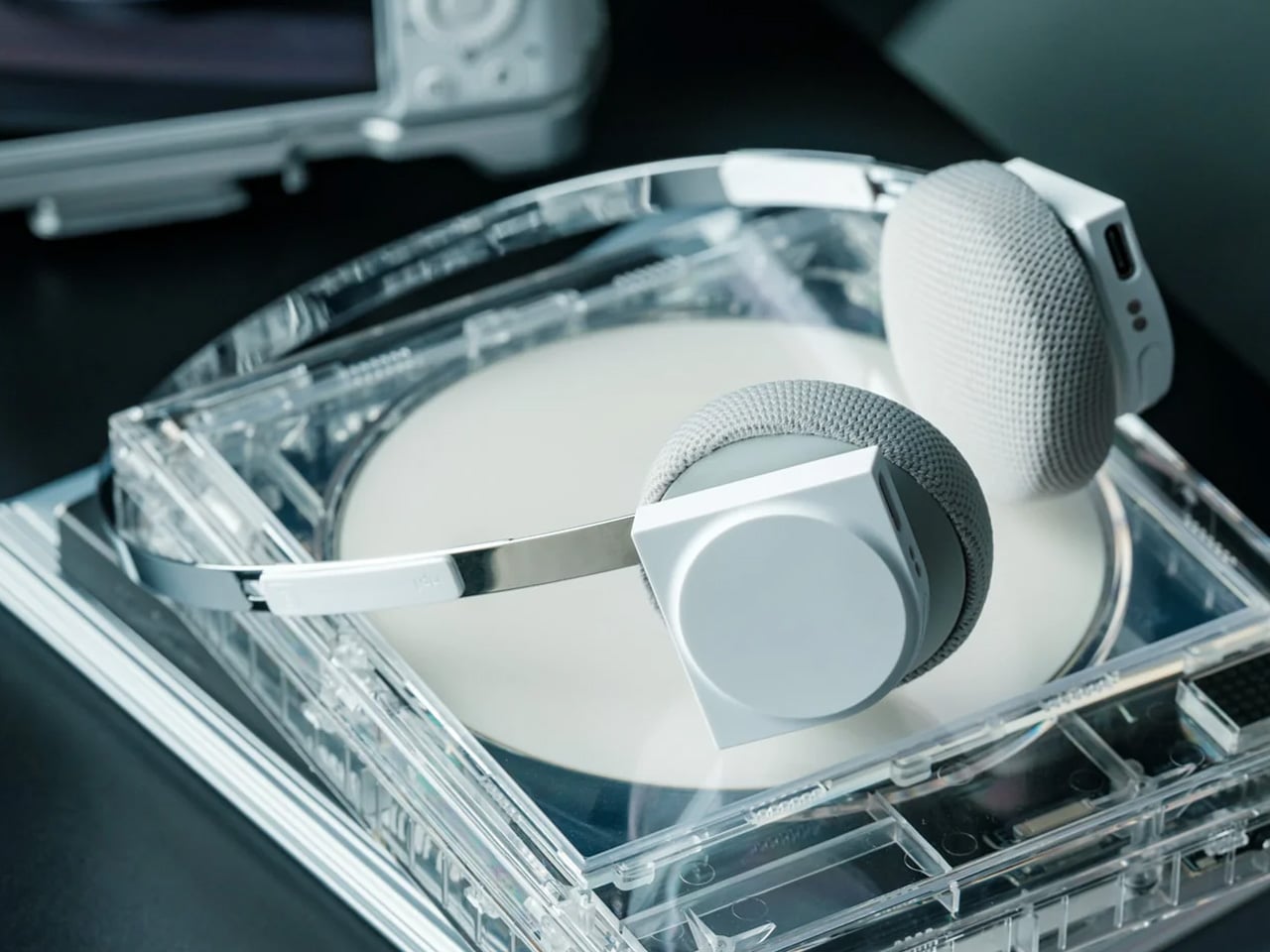
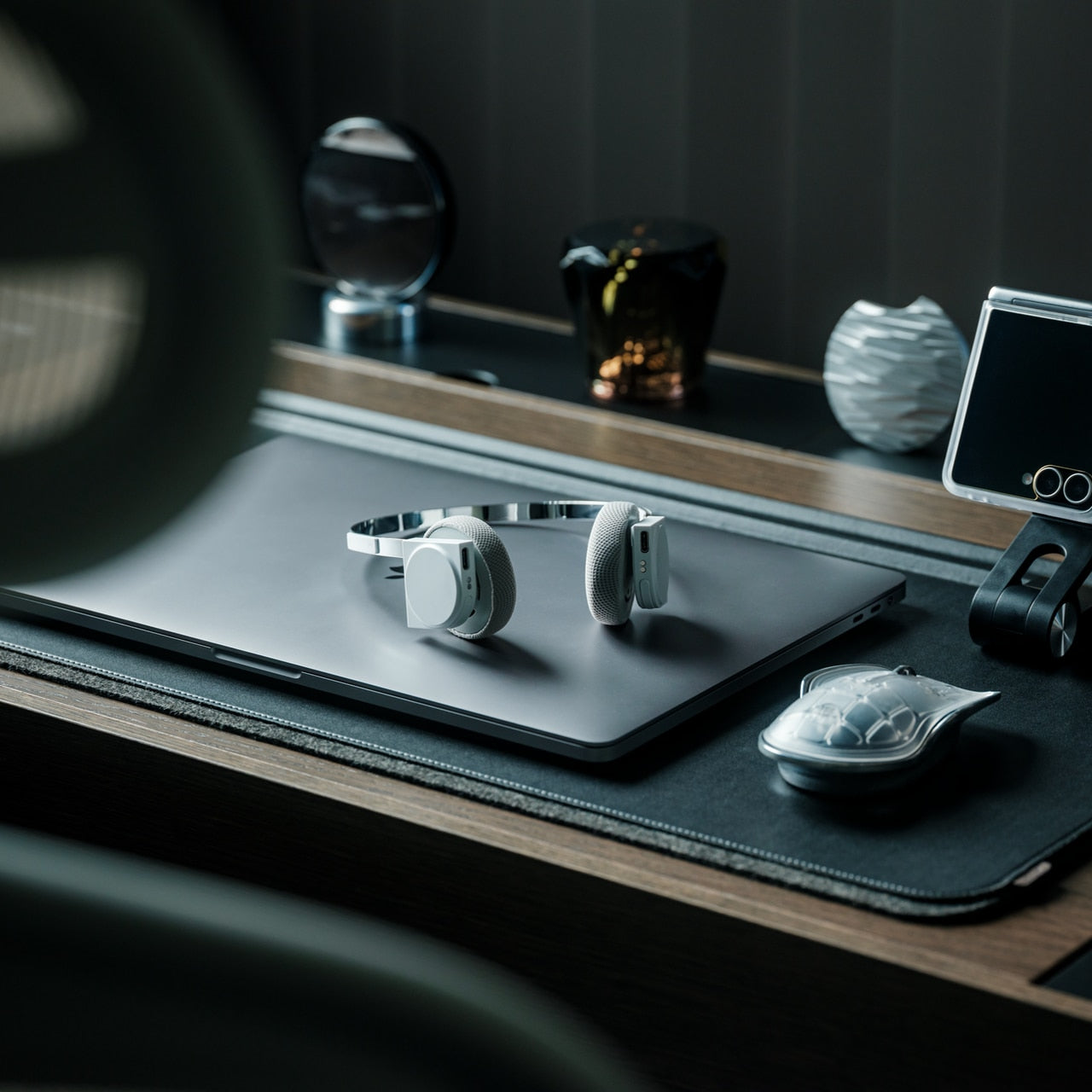
StillFrame wireless headphones took the predictable race toward bass-heavy, noise-blasting cans and went the opposite direction. The form echoes the quiet geometry of ’80s and ’90s CDs, a deliberate reference that signals intent before a single track plays. These headphones are built around the idea that listening on a plane doesn’t have to mean sealing yourself inside a foam-padded vault.
The 40mm drivers produce a wide, open soundstage that treats quiet tracks like small environments rather than compressed streams of data. Noise cancelling kicks in when isolation is needed, and transparency mode pulls the world back in with a tap. For men who fly weekly and spend hours with headphones on, the fit matters more than the spec sheet. StillFrame sits between the suffocation of over-ears and the intrusion of in-ears, offering something lighter and more sustainable for long-haul wear. That middle ground is where most travel headphones fall short, and where these headphones excel.
The open soundstage brings texture to quieter music that gets lost in most closed-back travel headphones.
Switching between noise-cancelling and transparency mode is seamless enough to use mid-conversation with the cabin crew.
What we dislike
The on-ear form factor will not block as much ambient noise as a full over-ear design, which limits effectiveness on louder aircraft.
Battery life details remain sparse, and wireless headphones live or die by how well they survive a transatlantic route.
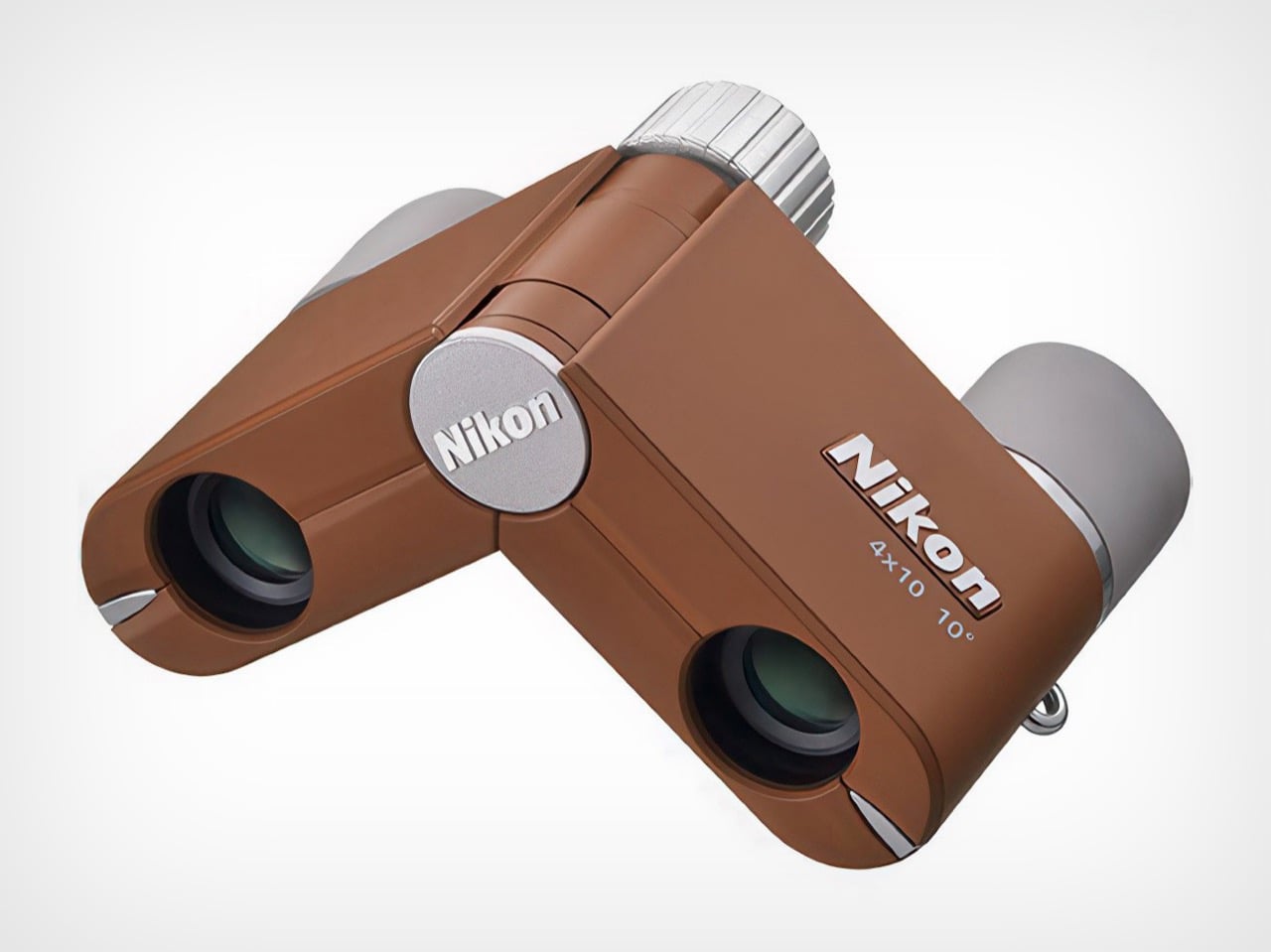
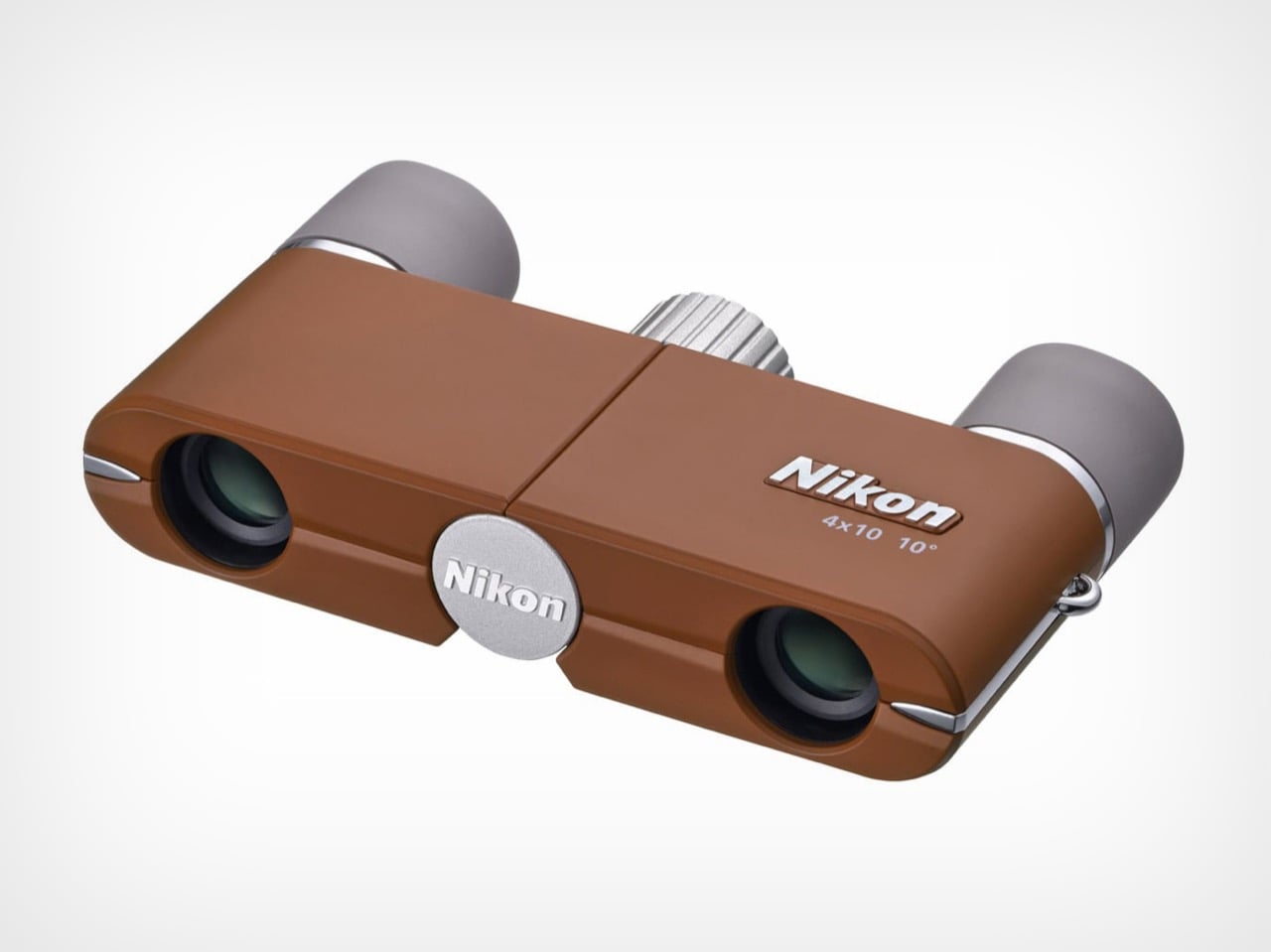
2. Nikon 4x10D CF Pocket Binoculars – Optical clarity that fits a jacket pocket.
Binoculars feel like relics from a leather-cased era. Nikon’s 4x10D CF pocket binoculars challenge that perception by shrinking the form factor down to something that slips into a blazer without creating a bulge or demanding its own case. These are not competing with a smartphone’s digital zoom. They exist in a different category, prioritizing the experience of true optical viewing over pixel counts and algorithmic processing.
The design decision that makes these work for frequent flyers is the discretion. Traditional binoculars announce themselves. These almost disappear. The optical quality stays sharp for the size, delivering a viewing experience that feels immediate and free of the digital artifacts that plague phone-based zoom. Reading a departure board from across a terminal, catching architectural details in a layover city, or scanning a landscape from an airport lounge window: the use cases are oddly specific and consistently useful for anyone whose life involves constant movement through unfamiliar places.
What we like
The form factor is compact enough to carry daily without dedicating bag space or adding noticeable weight.
Optical viewing quality avoids the processing lag and color distortion of smartphone zoom.
What we dislike
4x magnification is modest, which limits usefulness for anything beyond mid-range observation.
The compact size means a smaller objective lens, so performance drops in low-light conditions where larger binoculars thrive.
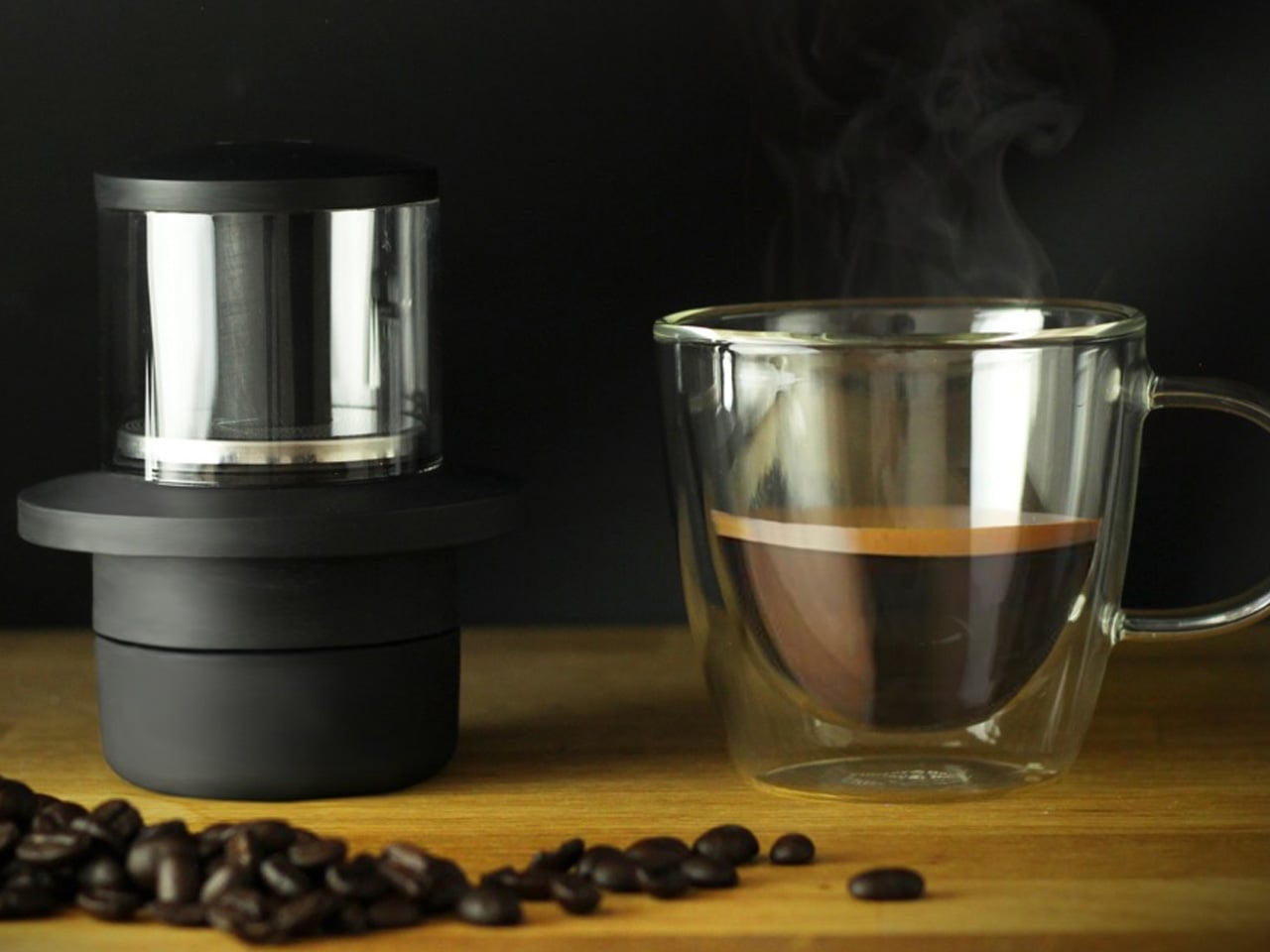
3. COFFEEJACK – Nine bars of pressure, zero dependence on hotel equipment.
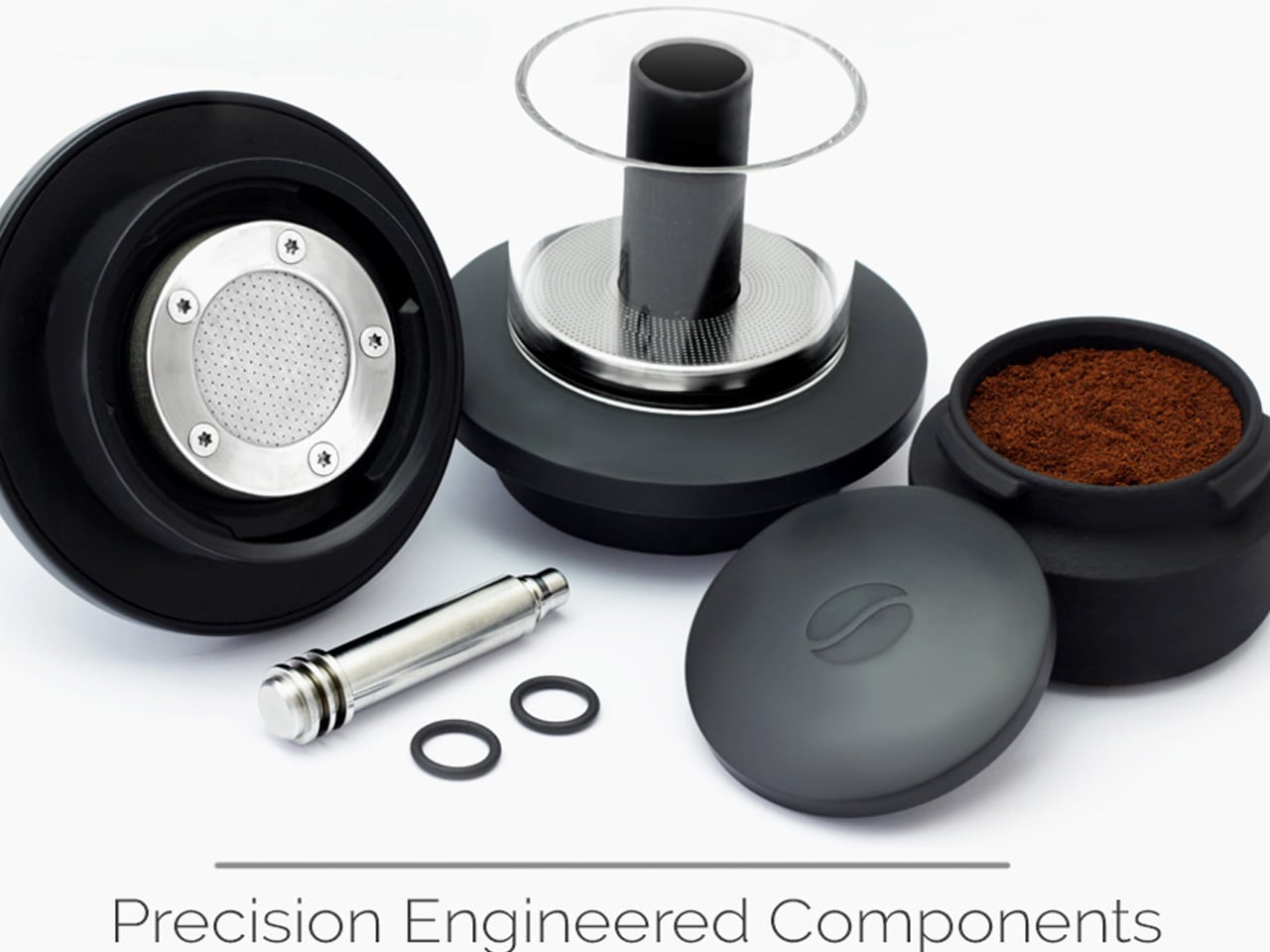
Hotel coffee is a problem that frequent travelers have accepted for too long. COFFEEJACK, built by Hribarcain, was designed to make that acceptance unnecessary. This pocket-sized espresso maker generates 9 to 10 bars of pressure through a manual hydraulic pump, matching the extraction output of professional café equipment. The lower chamber holds ground coffee, a built-in tamper levels and packs the grounds automatically, and hot water goes into the upper chamber. Work the pump, and a crema-topped espresso appears in the field.
The engineering gap between this and other portable coffee options is worth understanding. A French press operates under 1 bar of pressure. An Aeropress or Moka pot peaks at roughly 3 to 4 bars. COFFEEJACK reaches 9 to 10 consistently, manually, without a power source. That difference is what separates hotel-lobby drip from the real thing. The entire device is made from 100% recycled plastic, making it a more considered alternative to the pod-based systems that generate single-use waste with every cup. For men who treat their morning coffee as non-negotiable (and after a 6 AM landing, it absolutely is), this earns permanent carry-on status.
What we like
9 to 10 bars of manual pressure match professional espresso machines without electricity, pods, or proprietary cartridges.
The built-in tamper eliminates the need to carry a separate tool, keeping the kit self-contained.
What we dislike
Hot water is still a requirement, which means sourcing it from a kettle, hotel tap, or thermos before brewing.
The manual pump action requires a bit of effort and technique that takes a few attempts to master.
4. BlackoutBeam Tactical Flashlight – 2300 lumens in a body that fits a Dopp kit.
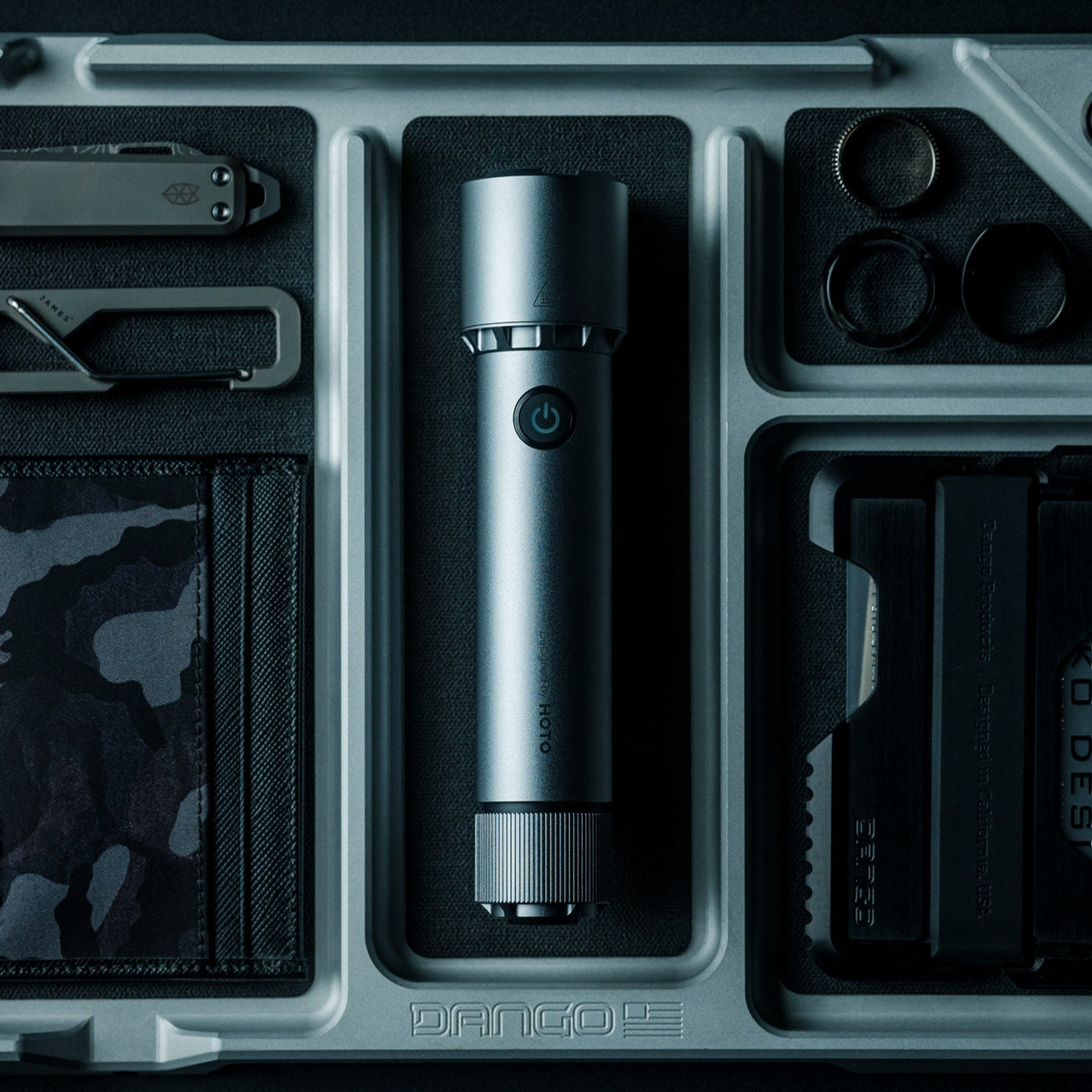
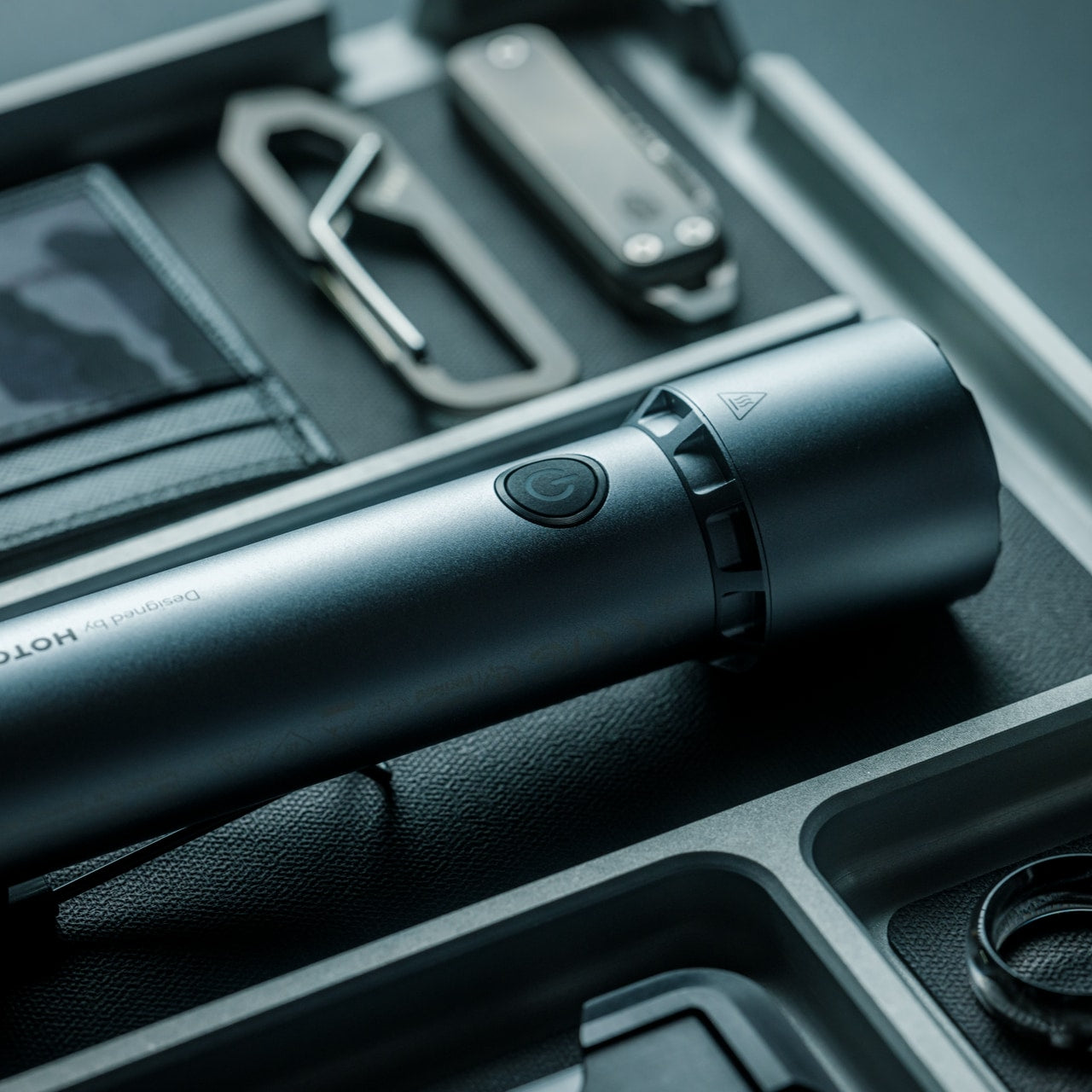
Most flashlights either look like they belong in a military surplus store or feel like cheap giveaways from a trade show. BlackoutBeam sits between those extremes with 2300 lumens of output, a 300-meter throw, and an industrial design that does not embarrass itself sitting next to a passport wallet. The 0.2-second response time means light arrives the moment the button is pressed, with no warm-up delay.
The travel case for a flashlight this capable is more practical than dramatic. Navigating poorly lit hotel parking garages, finding a rental car in an unlit airport lot, walking unfamiliar streets after dark. These are not survival scenarios; they are Tuesday nights on a business trip. The aluminum body carries an IP68 rating for water and dust resistance, so rain and rough handling are non-issues. What makes this particular light worth its bag space is the combination of output and size. At 2300 lumens with a 300-meter range, it outperforms most flashlights twice its size while slipping into a side pocket without protest.
2300-lumen output with a 300-meter throw handles everything from close-range tasks to illuminating distant areas.
IP68-rated aluminum construction handles rain, drops, and the general abuse of constant travel without degradation.
What we dislike
A light this powerful will drain batteries faster than lower-output alternatives, meaning recharging becomes another travel task.
The tactical aesthetic, while restrained, could attract unwanted attention at security checkpoints in certain countries.
5. Comes AI travel companion – An AI assistant that sees what is around the corner.
Solo travel has a specific kind of friction that apps alone cannot solve. Comes is a small AI-powered companion device equipped with a high-performance camera that observes surroundings and offers assistance in real time. The design has a modular, detachable structure that adapts to different travel situations, functioning as a navigation aid, translator, and contextual guide depending on the moment.
The scenario it solves best is the one frequent travelers know well: arriving in a new city, stepping off a train or out of an airport, and facing that brief window of disorientation before the phone GPS loads and the bearings click into place. Comes fills that gap by walking through navigation in a way that feels supportive rather than screen-dependent. Voice interaction keeps hands free, and the camera-based awareness means it can interpret signs, menus, and spatial context without requiring manual input. For men who move through multiple cities in a single week, the device acts as a persistent local guide that does not need Wi-Fi to be useful in the moment it matters most.
What we like
The modular design adapts to different carry and mounting configurations depending on the travel context.
Camera-based awareness interprets real-world visual information without requiring the user to stop and type.
What we dislike
AI-powered devices in this category still depend heavily on software updates and server-side processing, which introduces latency in areas with weak connectivity.
Battery management across the camera, AI processing, and wireless communication will be a limiting factor on long travel days.
6. Pocket Monkii 2 – A full bodyweight training system that packs smaller than a book.
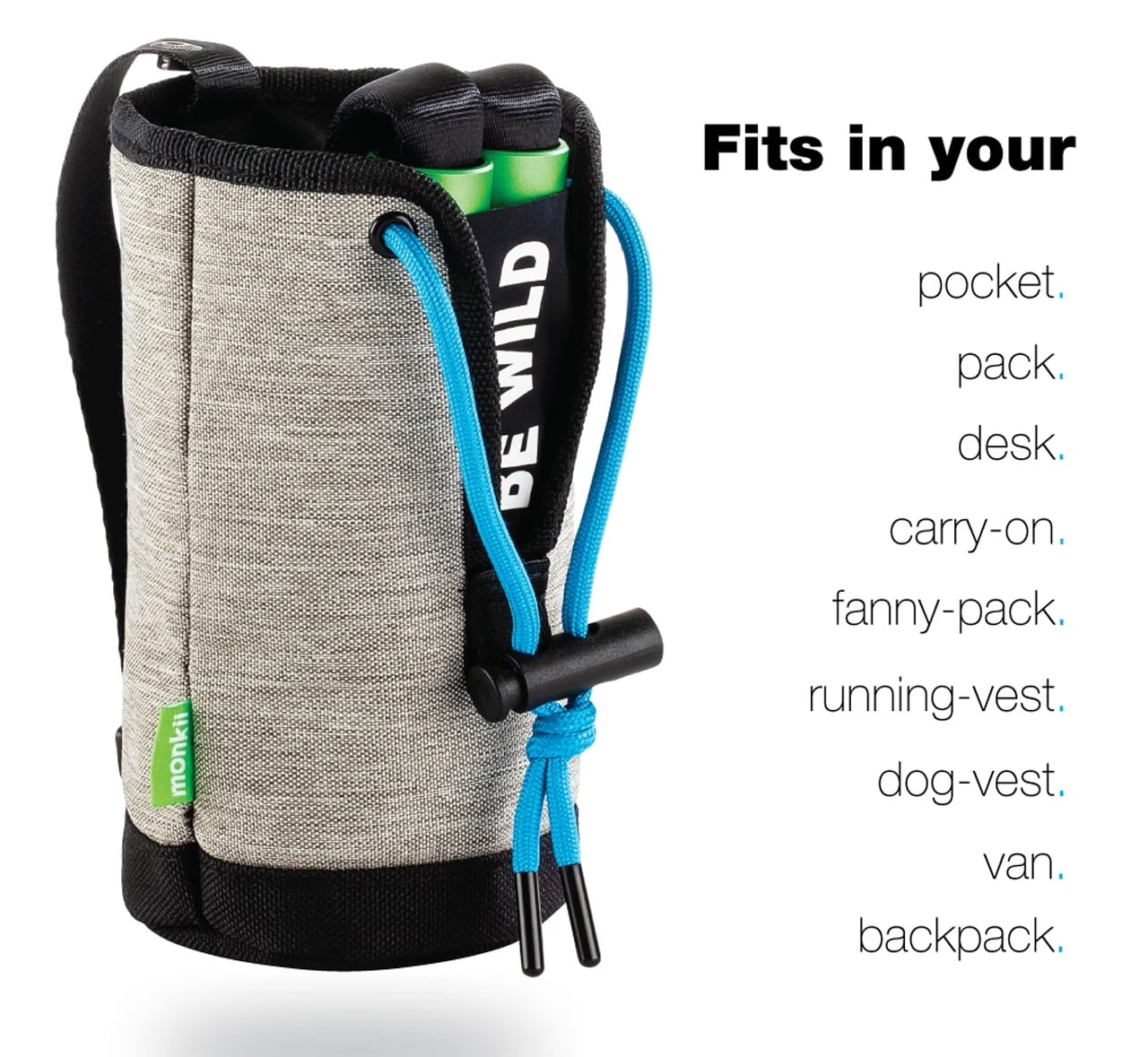
Gym access on the road is either a depressing hotel treadmill or a day pass at a facility that requires a 20-minute detour. Pocket Monkii 2 is a compact training system that packs cables, handles, a ladder, and an isometric tool into a kit small enough to throw into a carry-on without sacrificing space for anything else. The all-new package includes unlimited access to the Monkii app, which provides workout instructionals and progress tracking.
What makes this different from a resistance band tossed into a suitcase is the system design. The cables are built for durability across hundreds of sessions, and the combination of tools allows for a full bodyweight program rather than a handful of isolated exercises. The 21-Day Habit guide included with purchase pushes past the typical “use it twice and forget it” pattern that plagues most portable fitness equipment. For frequent flyers who refuse to lose their training momentum to a travel schedule, this is the closest thing to a portable gym that does not feel like a compromise or require anchoring to a hotel door frame that was never designed to hold body weight.
What we like
The compact kit fits inside a carry-on and provides enough variety for a complete bodyweight training session.
App integration with workout instructionals and progress tracking adds structure that standalone resistance bands lack.
What we dislike
Cable-based systems require an anchor point, and not every hotel room has a suitable door or fixture for secure attachment.
The learning curve for isometric and suspension-style exercises is steeper than traditional resistance training.
7. Auger PrecisionLever Nail Clipper – A century of Japanese blade-making in an 86mm package.
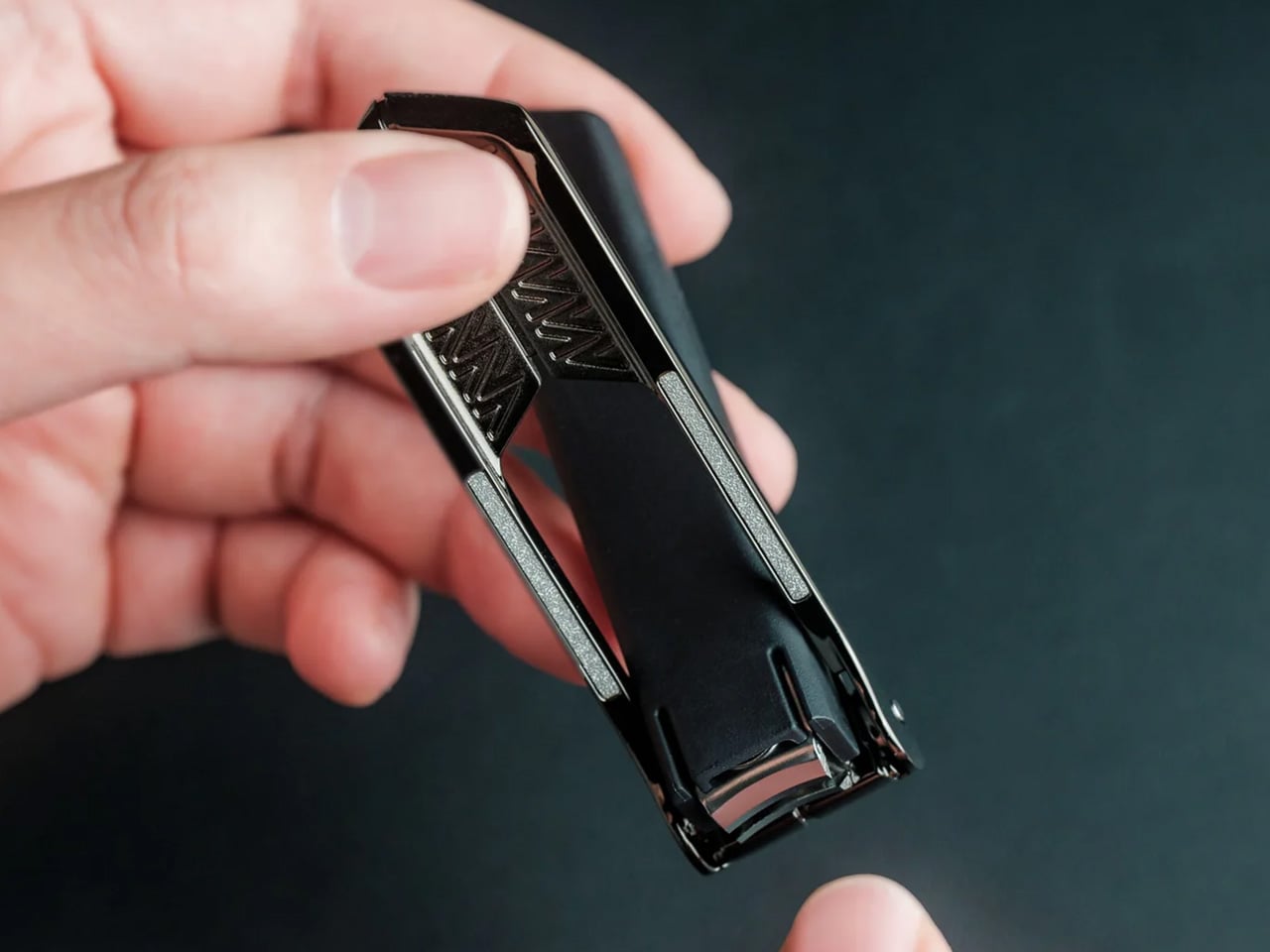
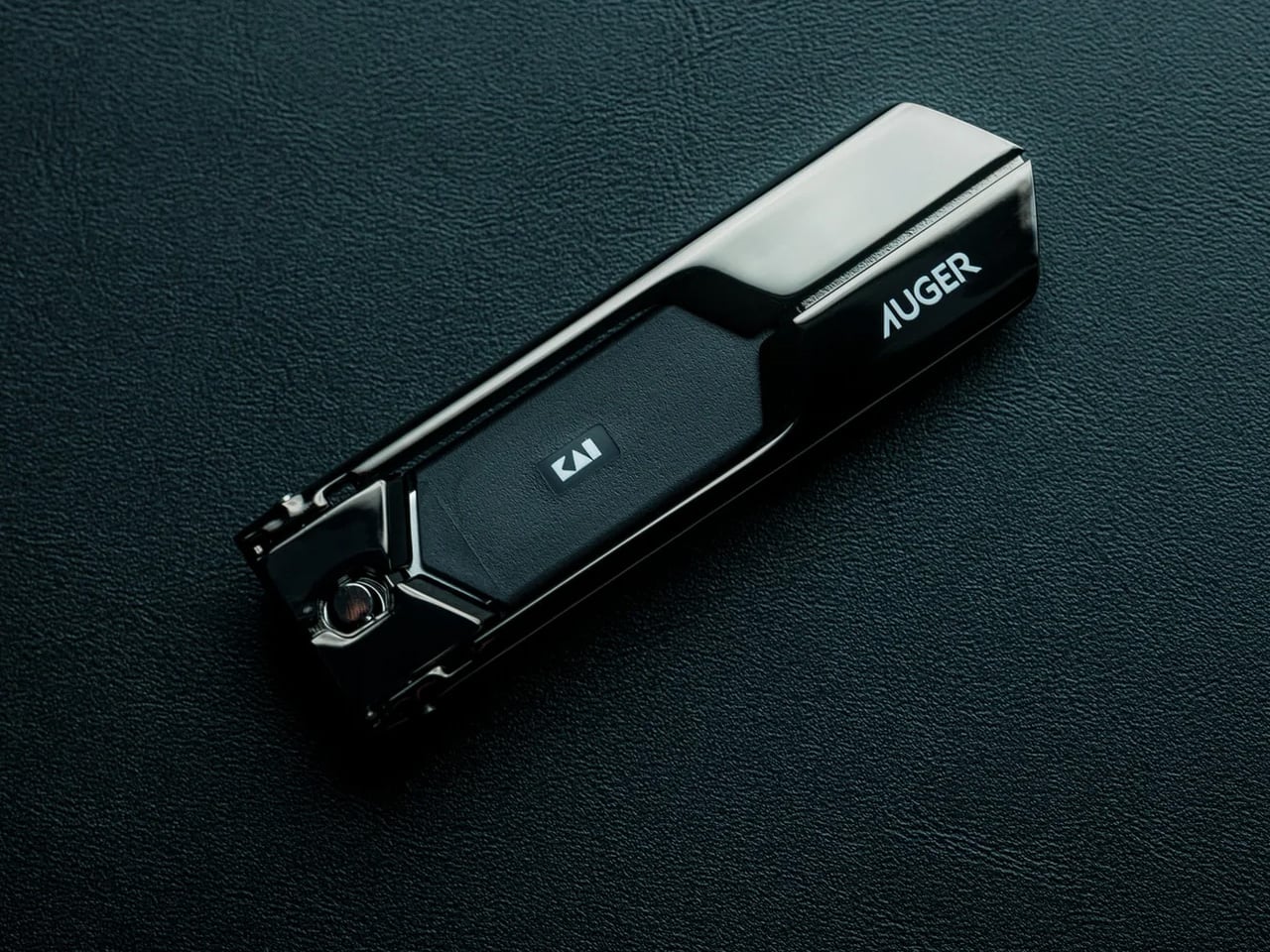
Grooming on the road tends to fall apart at the small details. Nail clippers are the item most likely to be forgotten, borrowed from a front desk, or purchased in desperation from an airport convenience store where the options are universally terrible. Kai Corporation, Japan’s blade authority since 1908, built the Auger PrecisionLever to make that entire cycle unnecessary.
The patented revolver-style lever shifts the pivot point closer to the blade, optimizing pressure with every press. That mechanical advantage means cleaner cuts on thicker nails with less effort and more control. The blades are crafted from stainless cutlery steel, cutting cleanly without tearing or splitting. At 67 grams with an 86mm footprint, the clipper has a weighted feel that is stable in hand while still slipping into a Dopp kit without claiming space. For a tool that gets used a few times a week and lives in the bottom of a toiletry bag, the difference between a precision instrument and a generic clipper is felt every single time. This one makes the case that even the smallest object in a travel kit deserves actual engineering.
The patented lever mechanism delivers more cutting force with less manual effort, especially on thicker nails.
Stainless cutlery steel blades cut cleanly without the tearing or crushing common in cheaper clippers.
What we dislike
Premium nail clippers occupy a price point that most people will not consider until they have suffered through enough bad ones.
The 67-gram weight, while satisfying in hand, adds up when every gram in a dopp kit is contested.
8. Loop – A neck pillow that abandoned the U-shape entirely.
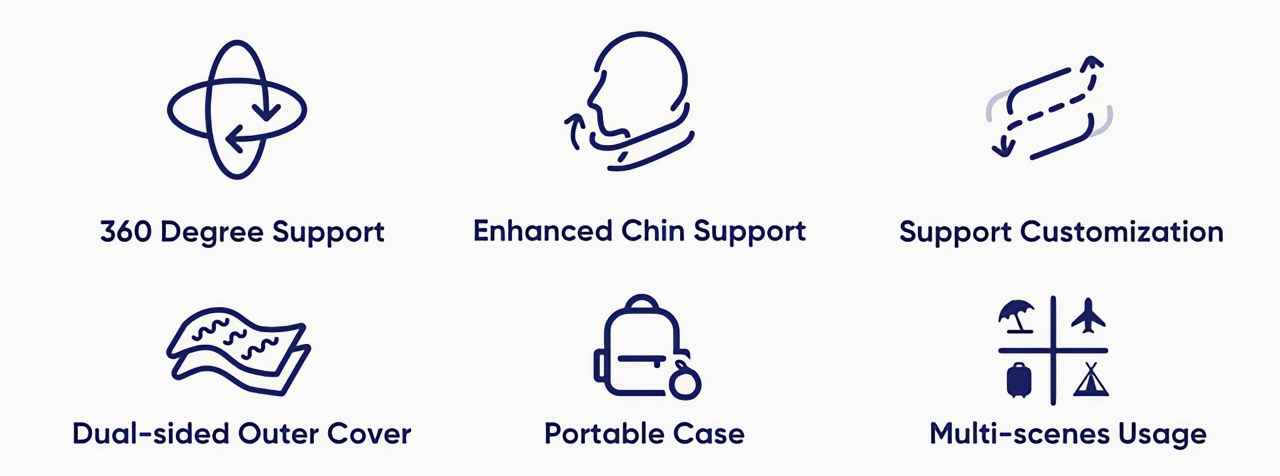
The U-shaped travel pillow has been the default for decades, and it has been mediocre for every single one of those decades. The Loop Pillow rejected the template. Its infinitely adjustable loop design wraps around the neck tightly or loosely, providing lift near the shoulder to support the head at whatever angle sleep actually arrives. If the U-shape is a one-size-fits-all solution, the Loop is a continuous adjustment that conforms to the person rather than the other way around.
The construction uses thermo-sensitive memory foam that molds to neck contours over time, paired with a moisture-wicking, breathable outer cover that keeps skin dry during sleep. Two cover colors correspond to a warm side and a cool side, allowing the sleeper to choose based on cabin temperature. The pillow works whether the head rests forward, to the side, or against the back of the seat, which alone puts it ahead of every rigid U-pillow on the market. For men who fly red-eyes regularly and have accepted that airplane sleep will always be imperfect, the Loop does not promise perfection. It promises adaptability, and on a cramped overnight flight, that distinction makes all the difference.
What we like
The infinitely adjustable loop design works with multiple sleeping positions instead of forcing a single neck angle.
Thermo-sensitive memory foam and a dual-temperature cover adapt to both the body and the cabin environment.
What we dislike
The loop form factor looks unconventional and takes a few uses to figure out the wrapping technique that works best.
Memory foam retains heat over long periods, and the breathable cover can only offset so much warmth during a 10-hour flight.
Where The Suitcase Closes
These eight products share a common thread. None of them demands attention, and none of them wastes space. They are corrections to the small, recurring failures of constant travel: bad coffee, bad sleep, bad lighting, lost training days, and the slow erosion of routine that comes with living out of a carry-on. The best travel gear is the kind that disappears into the rhythm of a trip rather than creating new problems to manage.
What ties this list together is not a category or a price point but a design philosophy. Each product earned its spot by answering a specific question that frequent flyers have asked, tested, and refined through repetition. The carry-on has limited real estate. These eight justify every square inch they claim.
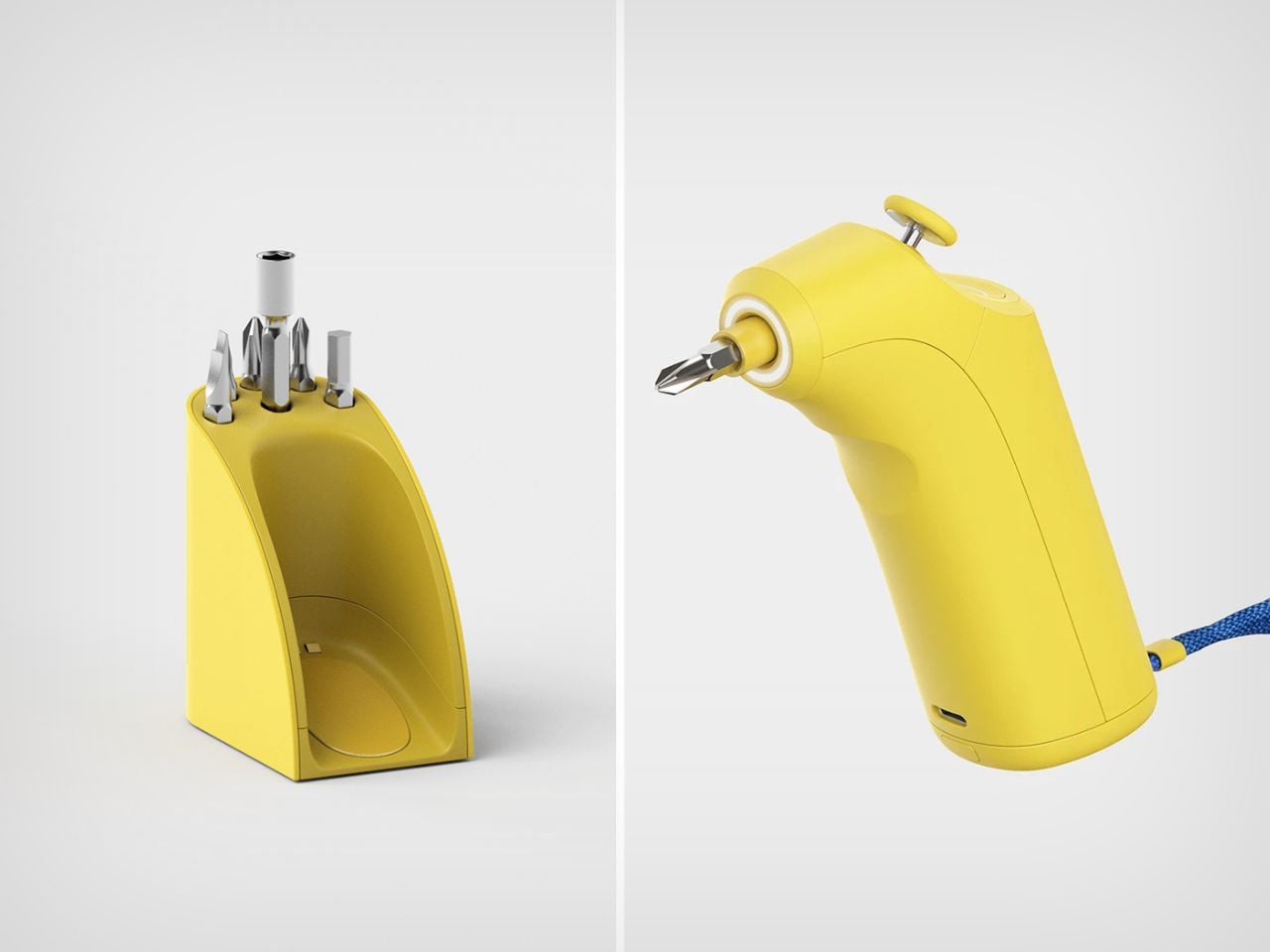
Repair and assembly are usually framed as chores, tasks to be completed as quickly as possible, so we can move on to something more enjoyable. The bi:ts tool challenges this perception by transforming the act of tightening a screw into something closer to play. Instead of feeling like labor, the experience becomes tactile, intuitive, and surprisingly satisfying.
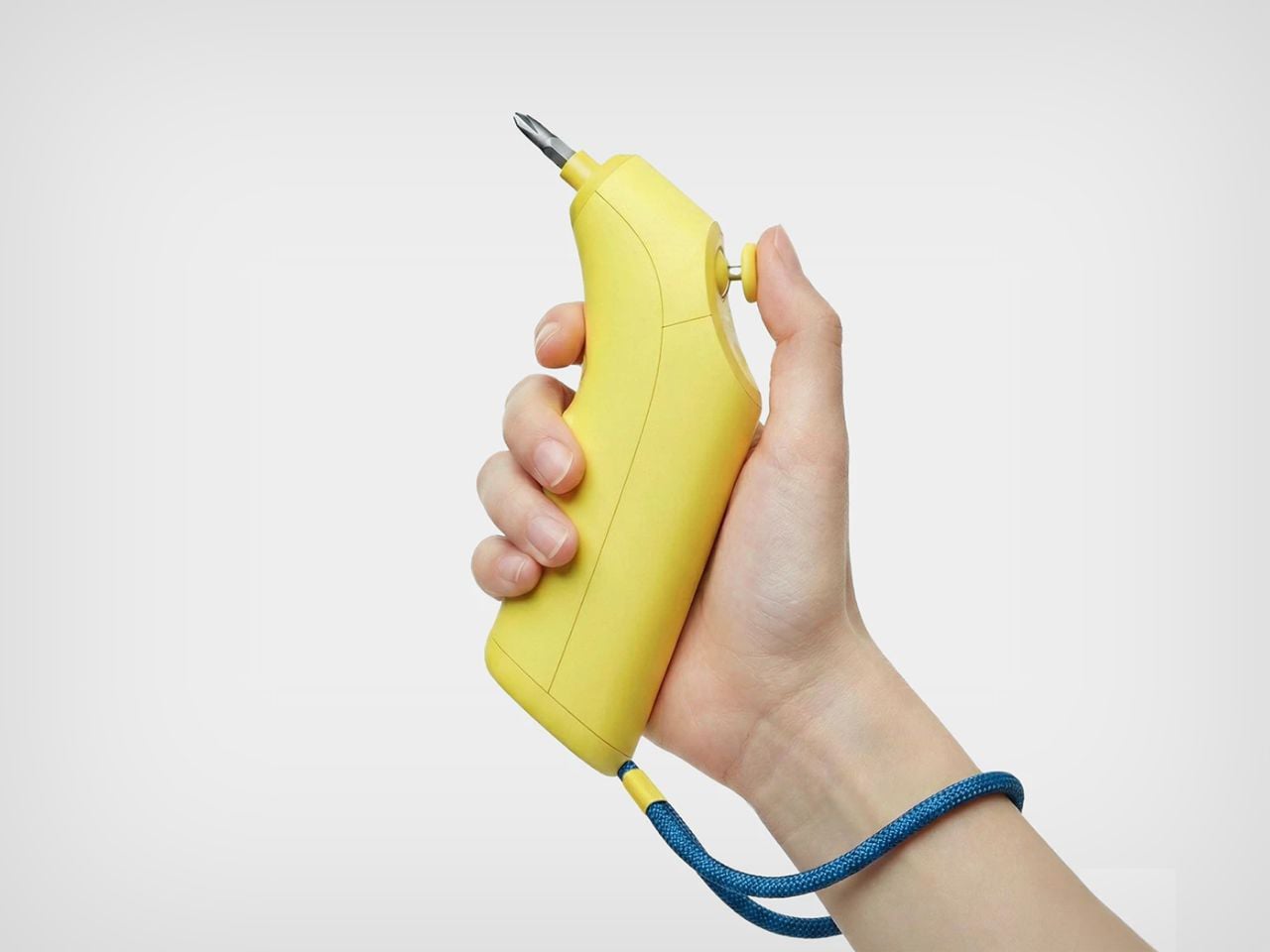
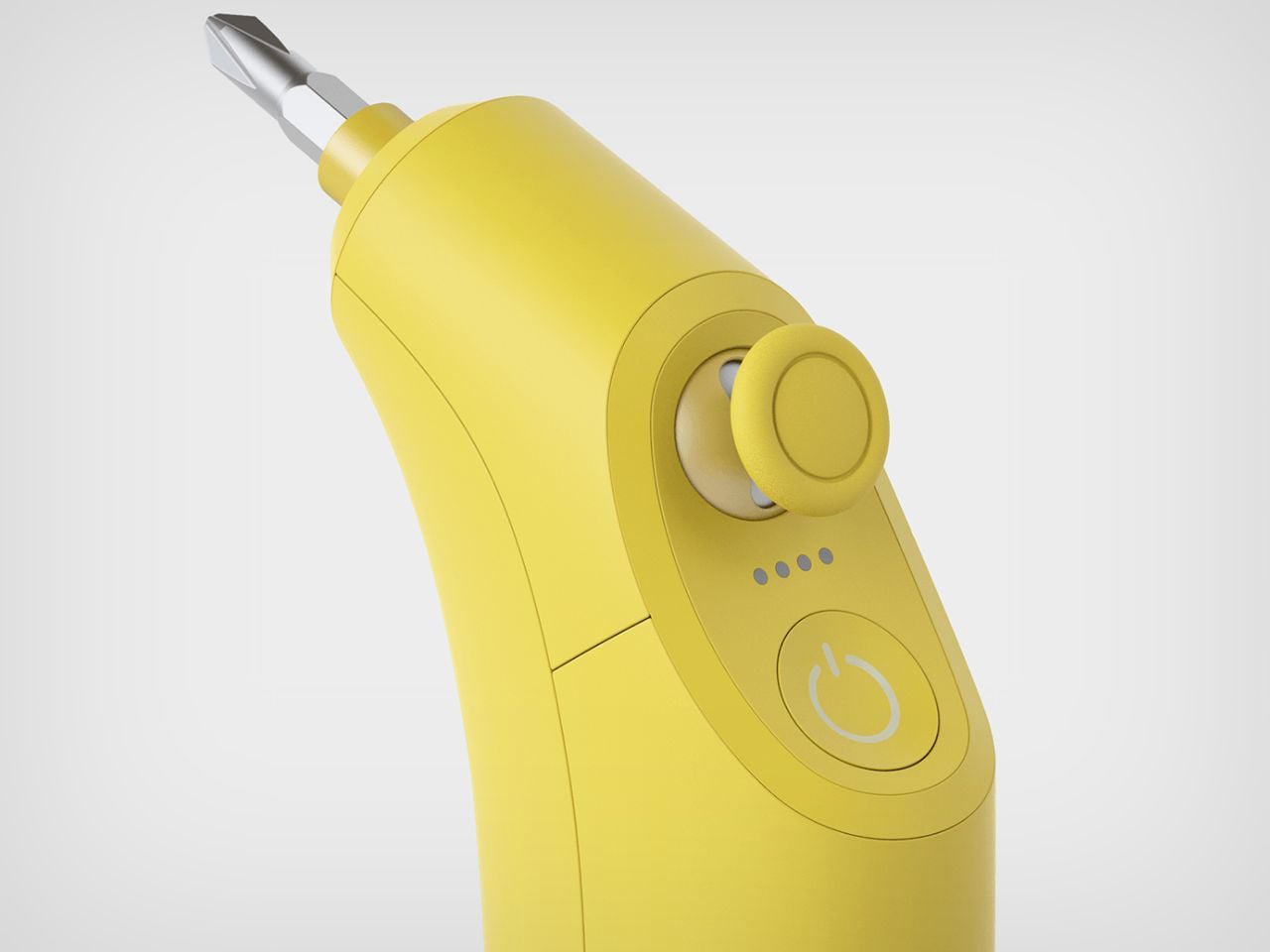
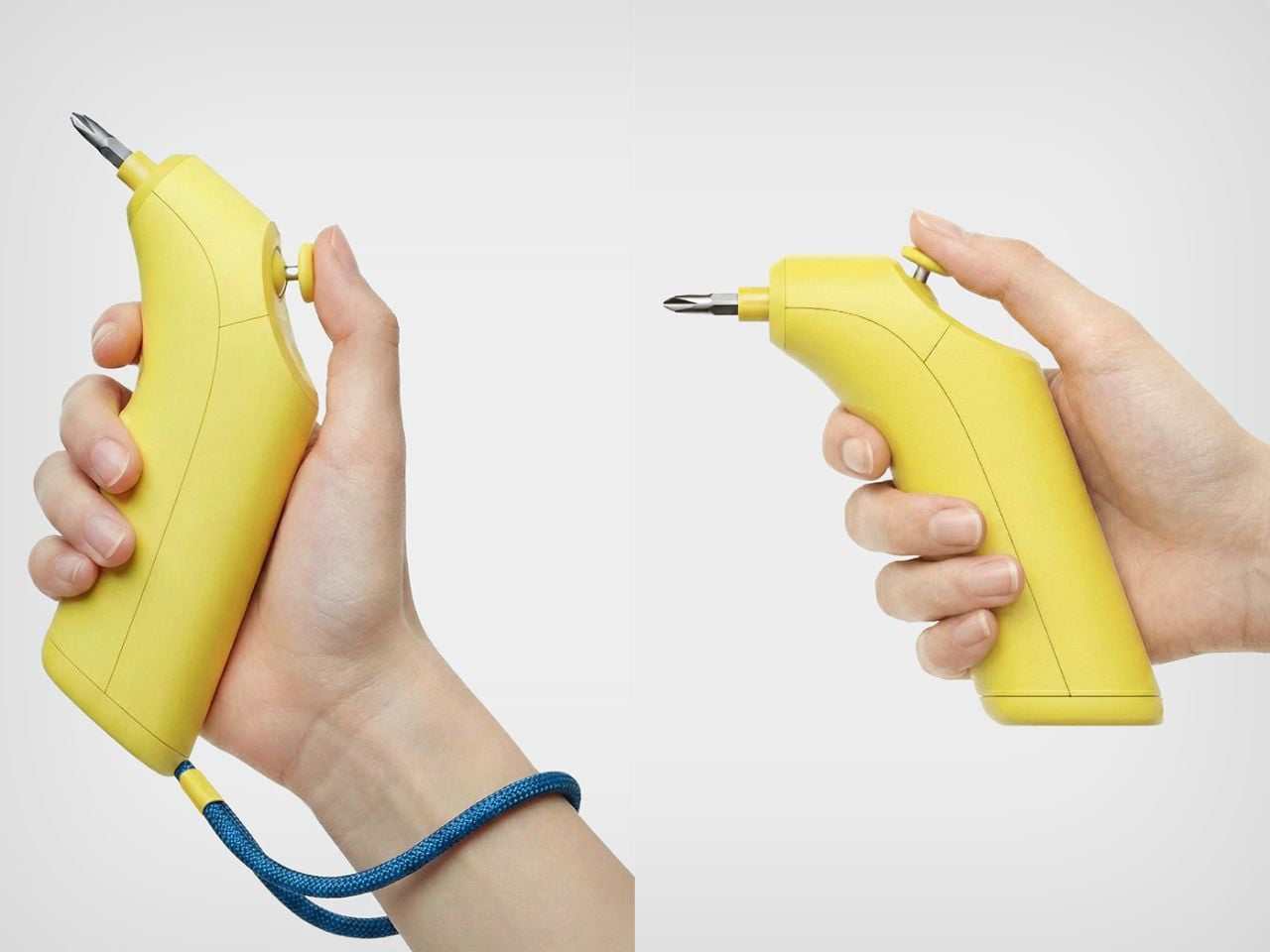
At the heart of the product is a joystick-inspired interface, borrowed from the language of game controllers. Rather than twisting your wrist repeatedly or navigating complicated buttons, you control the rotation using just your thumb. Push the joystick forward to rotate right and tighten, pull it back to rotate left and loosen. The mapping is so natural that it removes the hesitation many novices feel when they pick up a tool. There is no overthinking, no remembering instructions, just instinctive movement.
Somewhere between the words “bit” and “beat,” the product invites you to find your own working rhythm. The motion feels less like a mechanical task and more like interacting with a game, where each rotation becomes a small, satisfying action. For someone new to DIY, even figuring out which direction to turn a screw can feel like a mission. The intuitive joystick mapping eliminates that friction, allowing the user to focus on the activity itself rather than the instructions.
This approach also reduces the learning curve often associated with automatic drilling machines. Power tools can be intimidating, especially for first-time users, but bi:ts lowers that barrier. Its lightweight build and ergonomic grip make it comfortable to hold, while the rounded edges soften the traditional perception of tools as harsh, industrial objects. Instead, the device feels friendly and approachable, more like a gadget than a piece of heavy hardware.
The design language reinforces this sense of playfulness. Bright, cheerful colors add a pop of personality, whether the tool is in use or simply hanging in the corner of a room. It is the kind of object that does not need to be hidden away in a toolbox. In fact, its aesthetic presence encourages visibility, almost like a design accessory rather than a purely functional item.
Practical details are thoughtfully integrated into the form. A loop at the top allows you to slip your hand through it, preventing accidental drops and keeping the tool within easy reach when you need both hands for something else. When you are done, the same loop makes it easy to hang the device for storage.
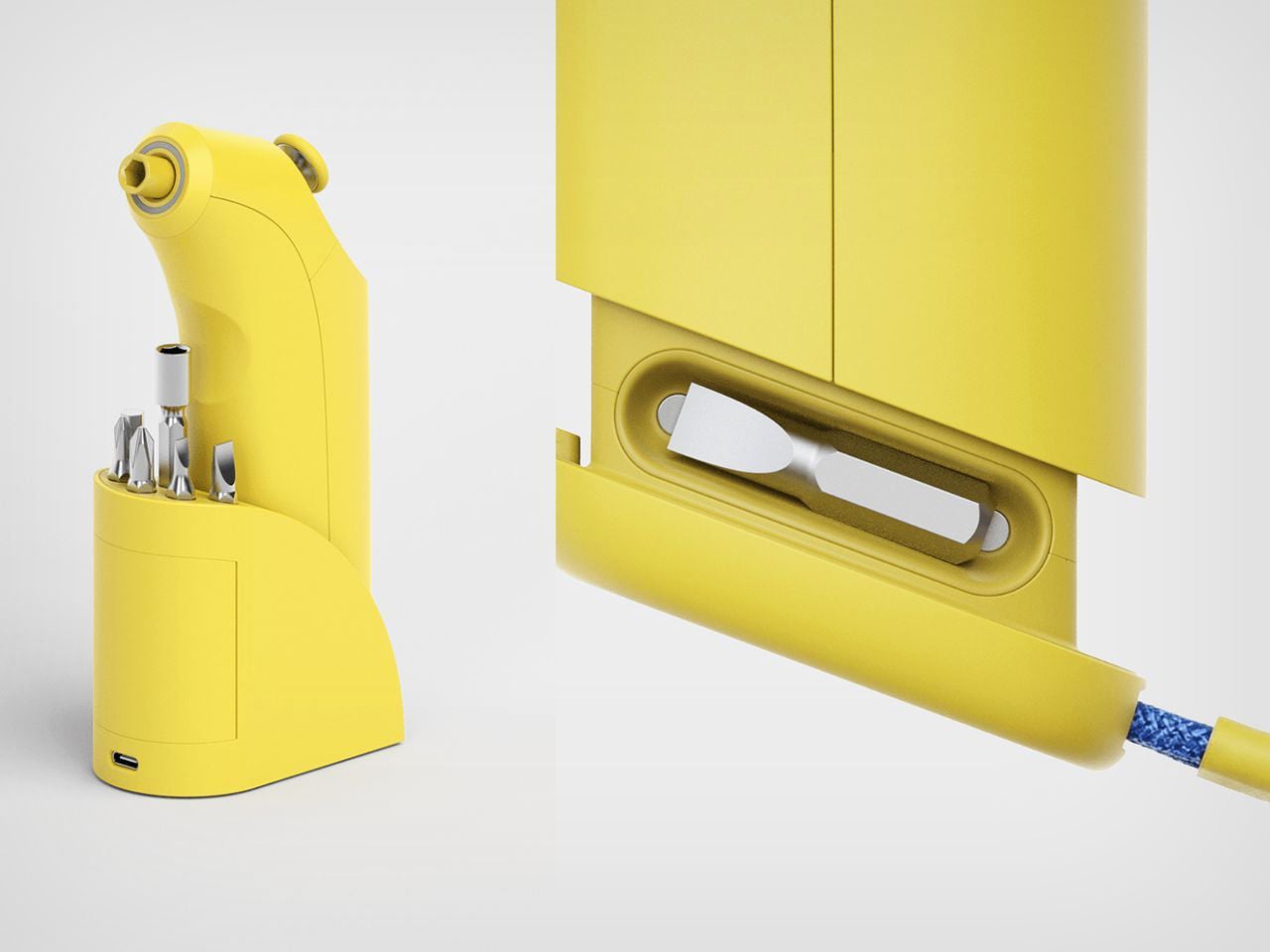
At the bottom, a smartly integrated niche stores different drill heads. This eliminates the need to search for separate parts or risk losing them. Everything fits neatly into the base, keeping the system sleek, compact, and ready for the next task.
bi:ts ultimately reframes what a tool can be. Instead of something intimidating or tedious, it becomes something engaging, almost playful. It suggests a future where DIY assembly, even something as routine as putting together IKEA furniture, can feel less like a chore and more like a small, satisfying game.
Before glowing screens and silicon chips, engineers used slide rules to design skyscrapers and send people to the Moon. Calculation meant moving a physical object, not tapping an app, and there was a certain clarity in that, a feeling that your hands and brain were in the same loop. Some of that intelligence at the fingertips is worth bringing back in a world that defaults to calculators for everything, even quick conversions.
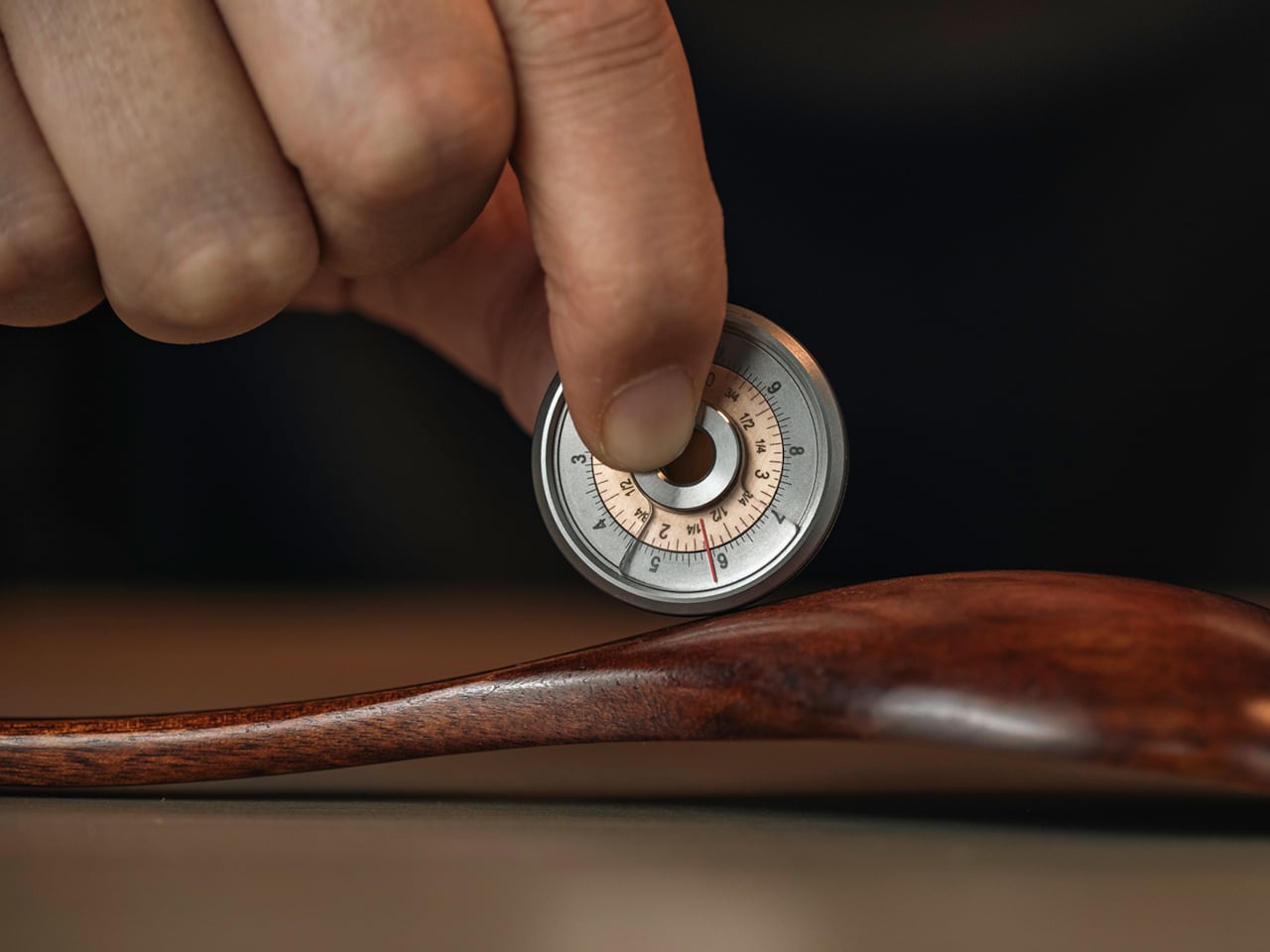
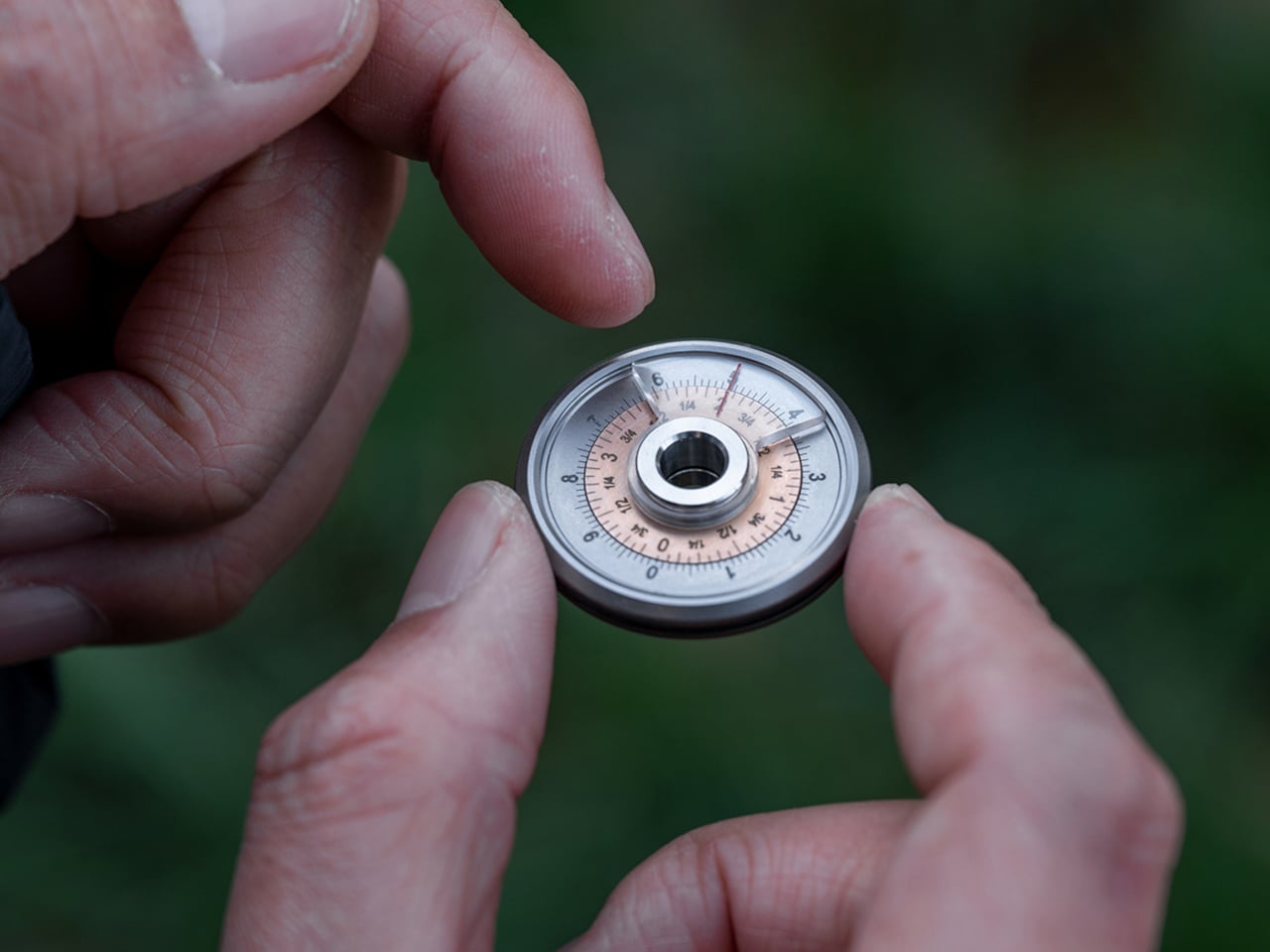
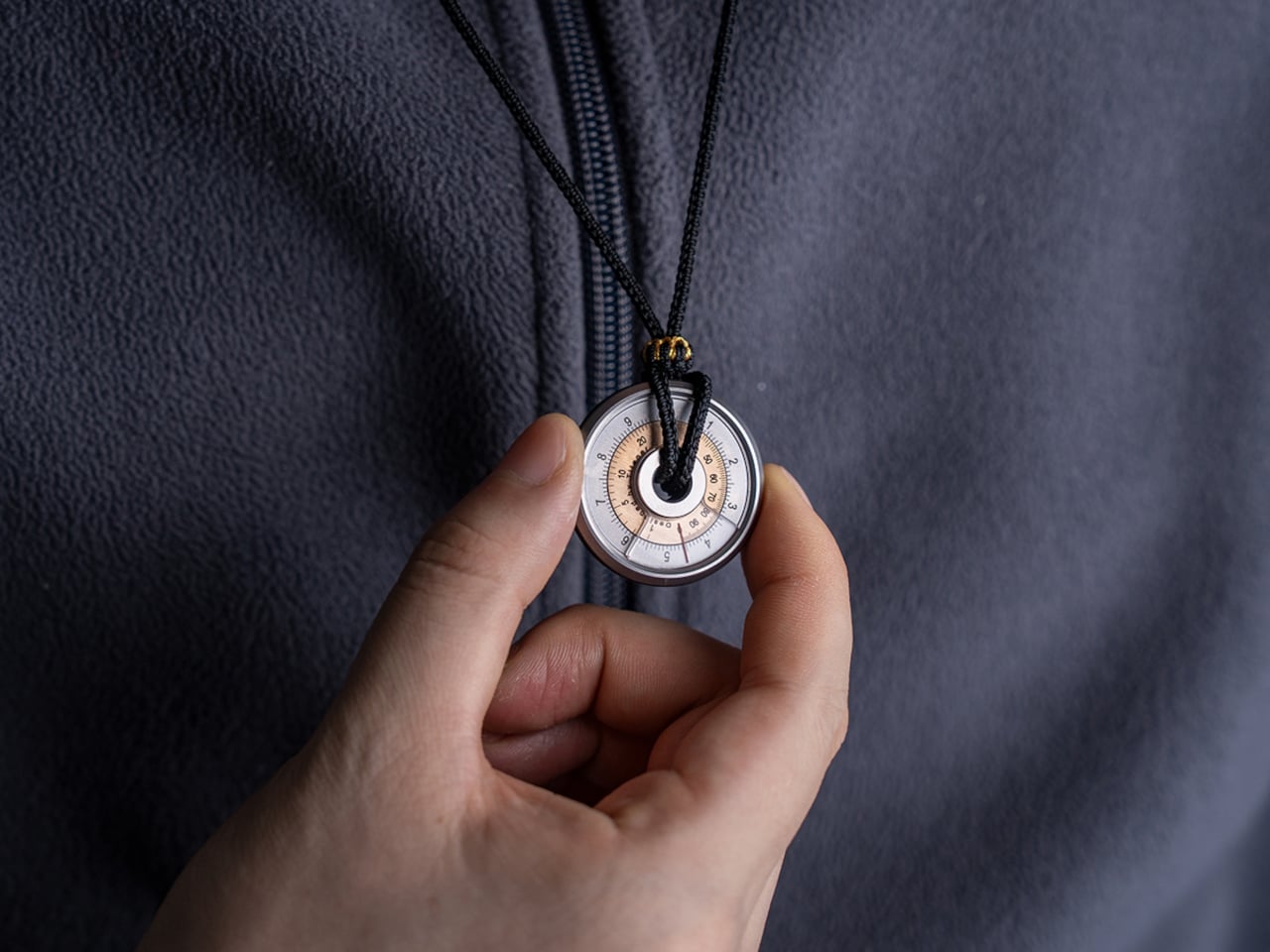
Titaner’s Tisolver is a 3-in-1 titanium calculating ring ruler that sits at the intersection of tool, instrument, and jewelry. It measures curves and straight lines, converts between metric and imperial, and calculates square area, all in a GR5 titanium body you can wear or clip to your gear. The company calls it a bridge between the physical and mathematical worlds, a way to put slide-rule logic back into something you can roll across a table.
Tisolver uses a high-strength magnetic lock to give a clear tactile and audible click every time the ring completes a full 10cm rotation. The equation is simple: the number of clicks times ten plus the current reading in the HUD window equals the total length. You can roll it along a cable, a curved edge, or a piece of leather, count clicks, glance once, and know the measurement without juggling a straight ruler and a flexible tape.
Side A has a 10cm metric scale and a 4-inch imperial scale laser-etched on the same ring. You snap Tisolver to zero with the magnetic feedback, align the HUD window’s red line with the metric value you care about, and the imperial equivalent sits under the same line. For longer numbers, you borrow a classic slide-rule trick, shifting the decimal, aligning at 4.2 instead of 42, reading the imperial, then shifting back, all without opening a phone.
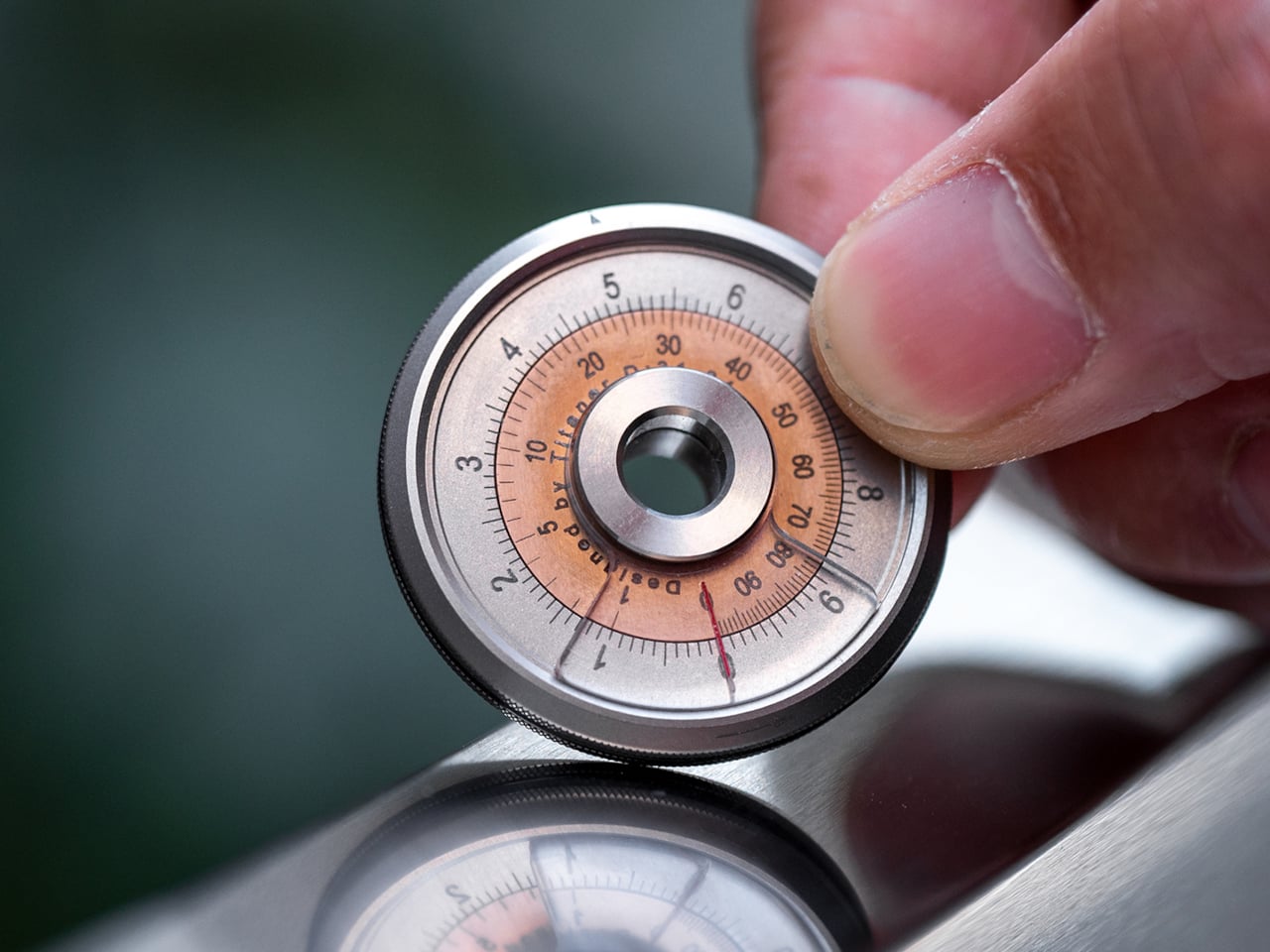
Side B keeps a 10cm outer scale but replaces the inner ring with a square-area scale. When you roll and then align the red line with a side length, say 5cm, the inner scale shows 25, the area of a square with that side. Designers, leather crafters, and DIY people can measure one edge of a panel and instantly see coverage instead of doing mental multiplication. Flip the ring, and the same alignment also shows the imperial length.
The dual-locking traction system uses a soft rubber O-ring on the outside and hidden reverse anti-slip teeth on the inside that bite into the rubber, so the ring grips greasy workbenches or wet glass without slipping. The quarter-arc PMMA HUD window with a red reference line acts like a tiny scope, improving readability and protecting the finely etched scales. GR5 titanium, with a fine blasted matte finish, keeps the body light, corrosion-resistant, and warm in the hand.
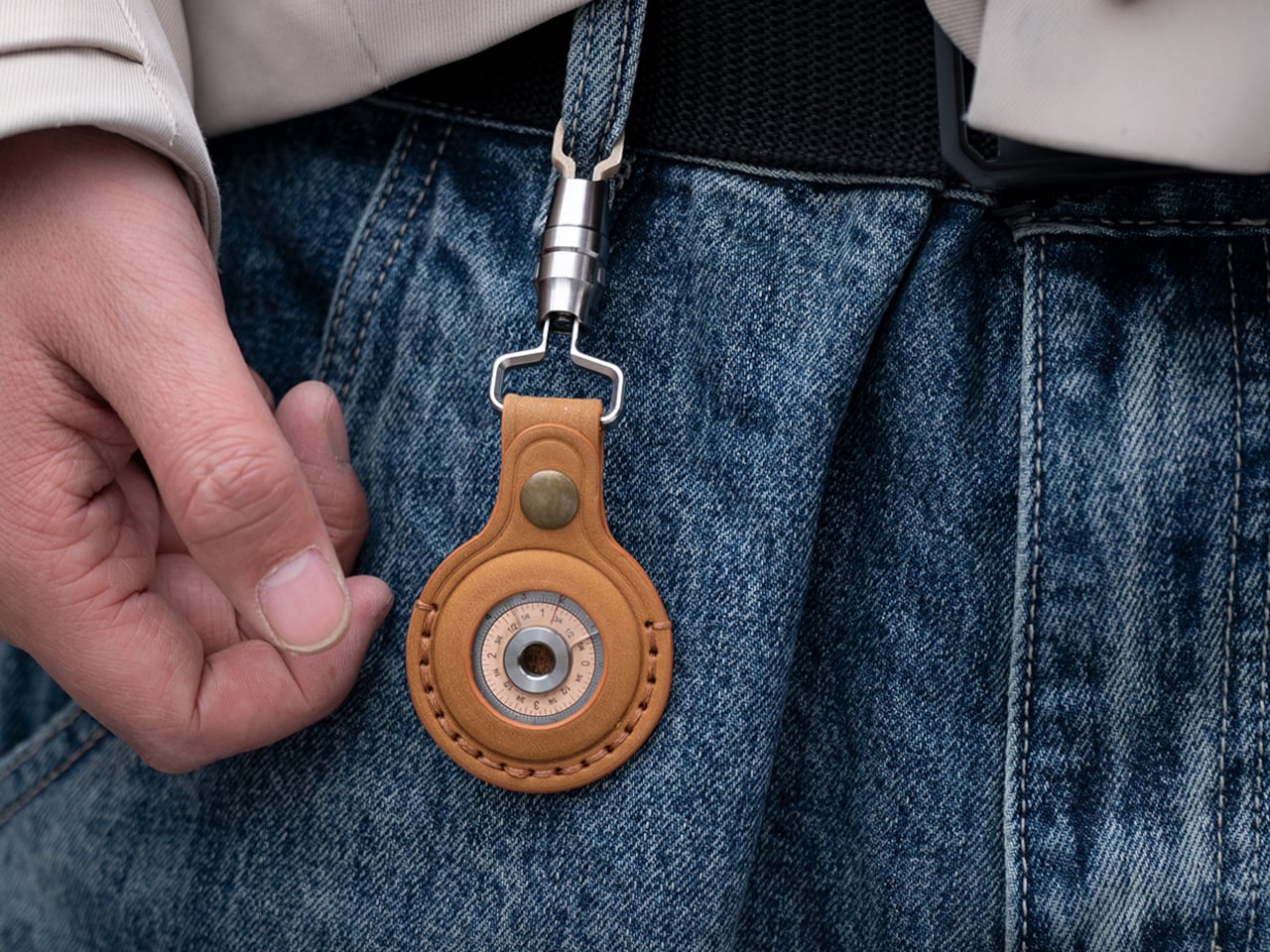
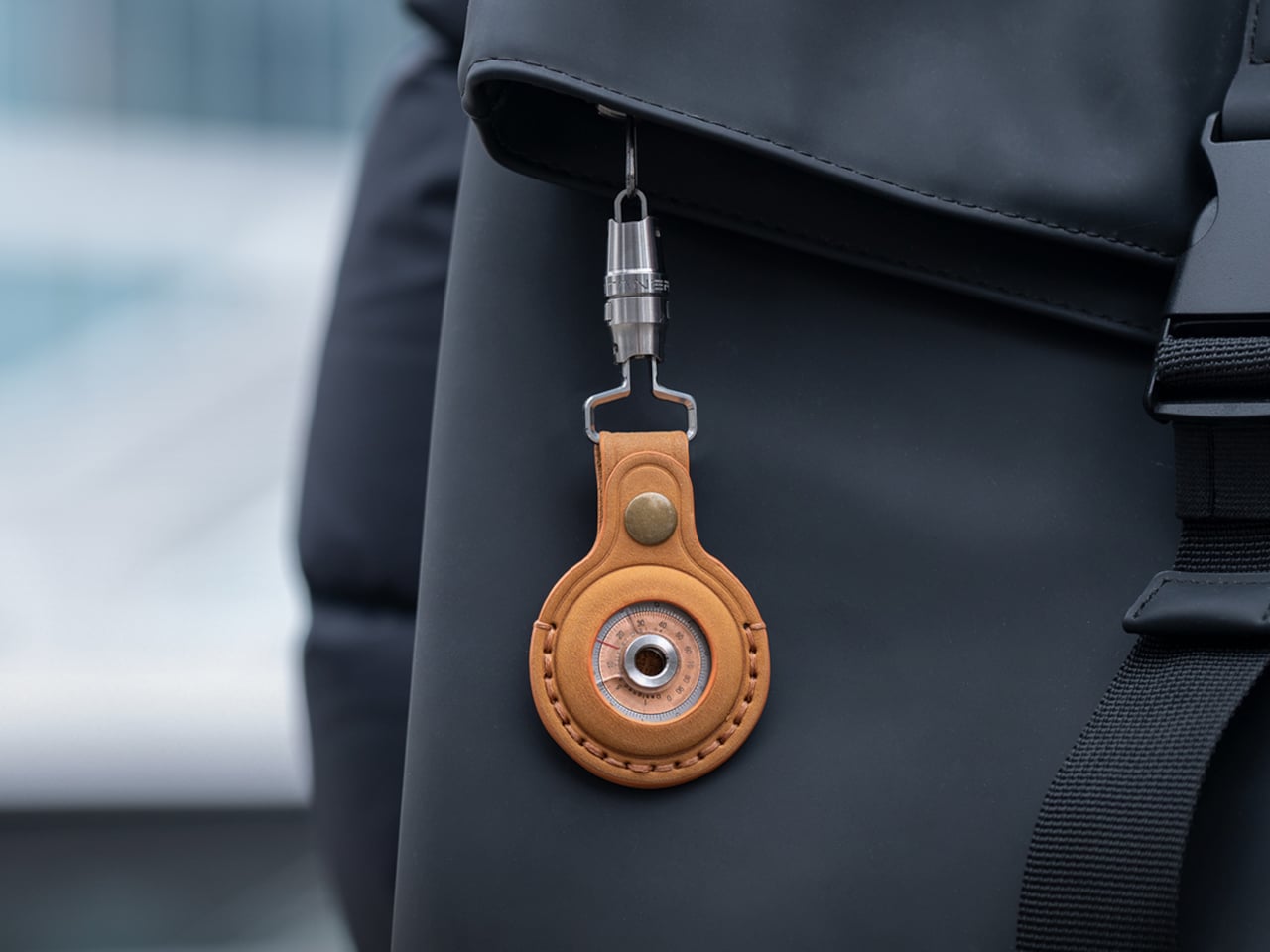
The Titaner Tisolver lives on a lanyard around your neck, on a keychain, or clipped to a backpack, ready whenever a measurement or conversion pops up. When you are stuck on a problem or waiting for a render, the magnetic click becomes a small mechanical meditation, a way to keep your hands busy while your brain turns things over. The ring rolls, clicks, and resets, and that rhythm helps ease tension without needing a screen or app to distract you.
A titanium ring that measures, converts, and calculates without a single pixel in sight feels like a satisfying little rebellion against the reflex of reaching for a phone every time you need a number. For people who like tools that think with them, not just for them, the Titaner Tisolver quietly earns its place on your chest or in your pocket, turning quick math and measurement into something you can touch, hear, and rely on.
Sharpening often feels like a mini exam you did not study for. Freehand on a stone, trying to hold a perfect angle while your wrists and elbows quietly betray you. Narrow rollers wobble, short blades tip, and edges never quite feel right. The hard part is not abrasion but keeping geometry consistent over dozens of passes, which is why chisels and planes end up less sharp than you want and why knives get retired prematurely.
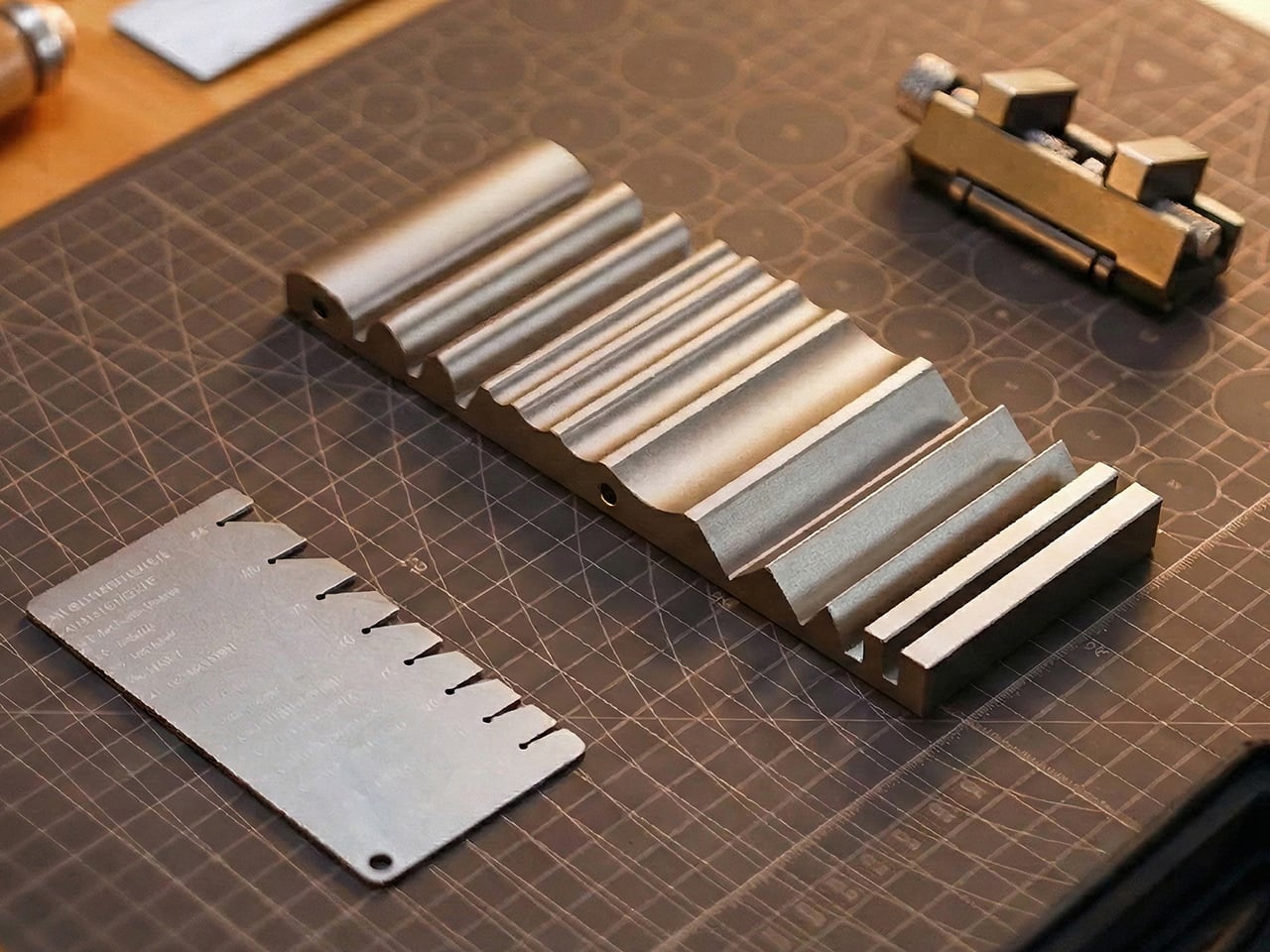
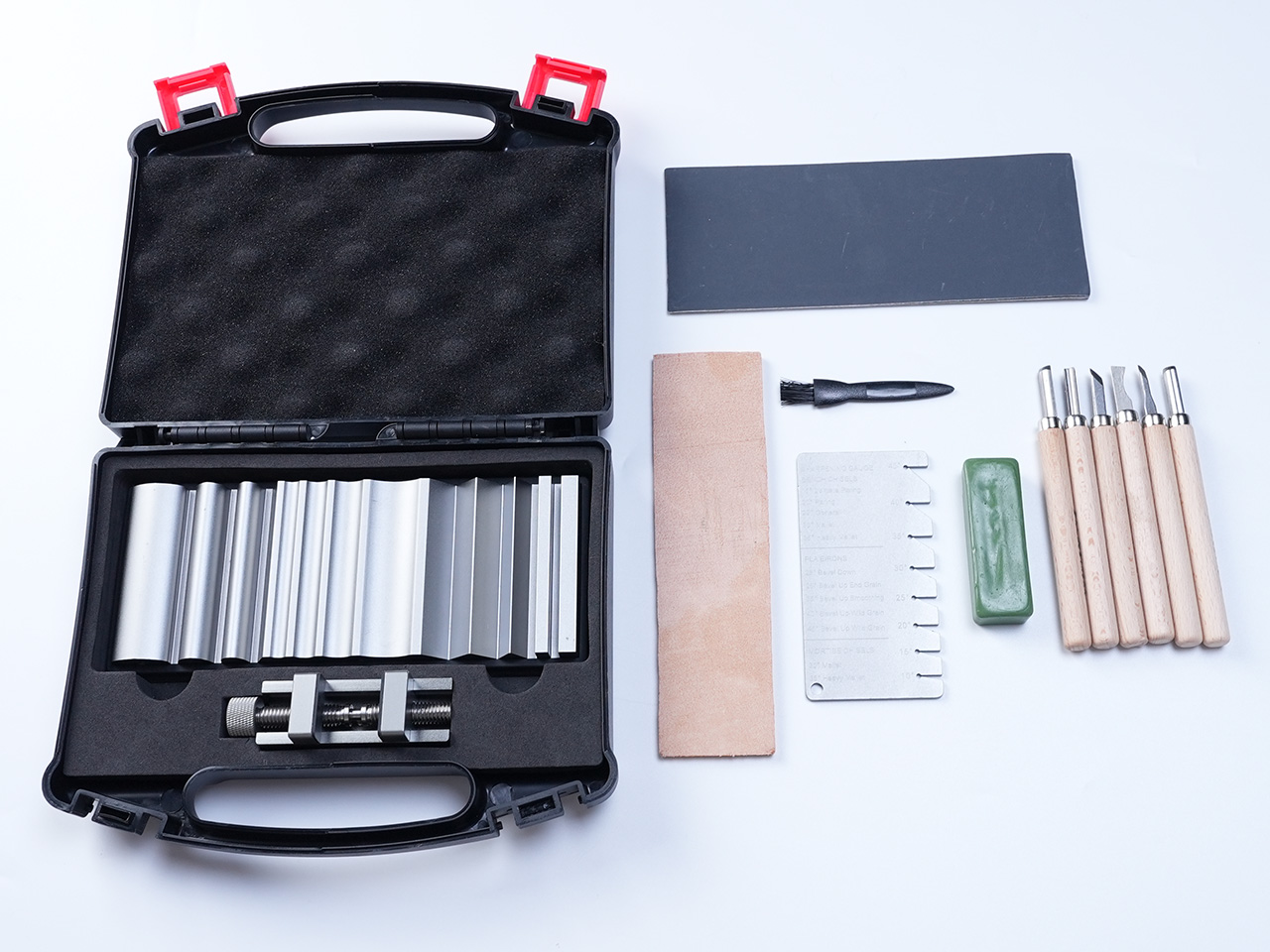
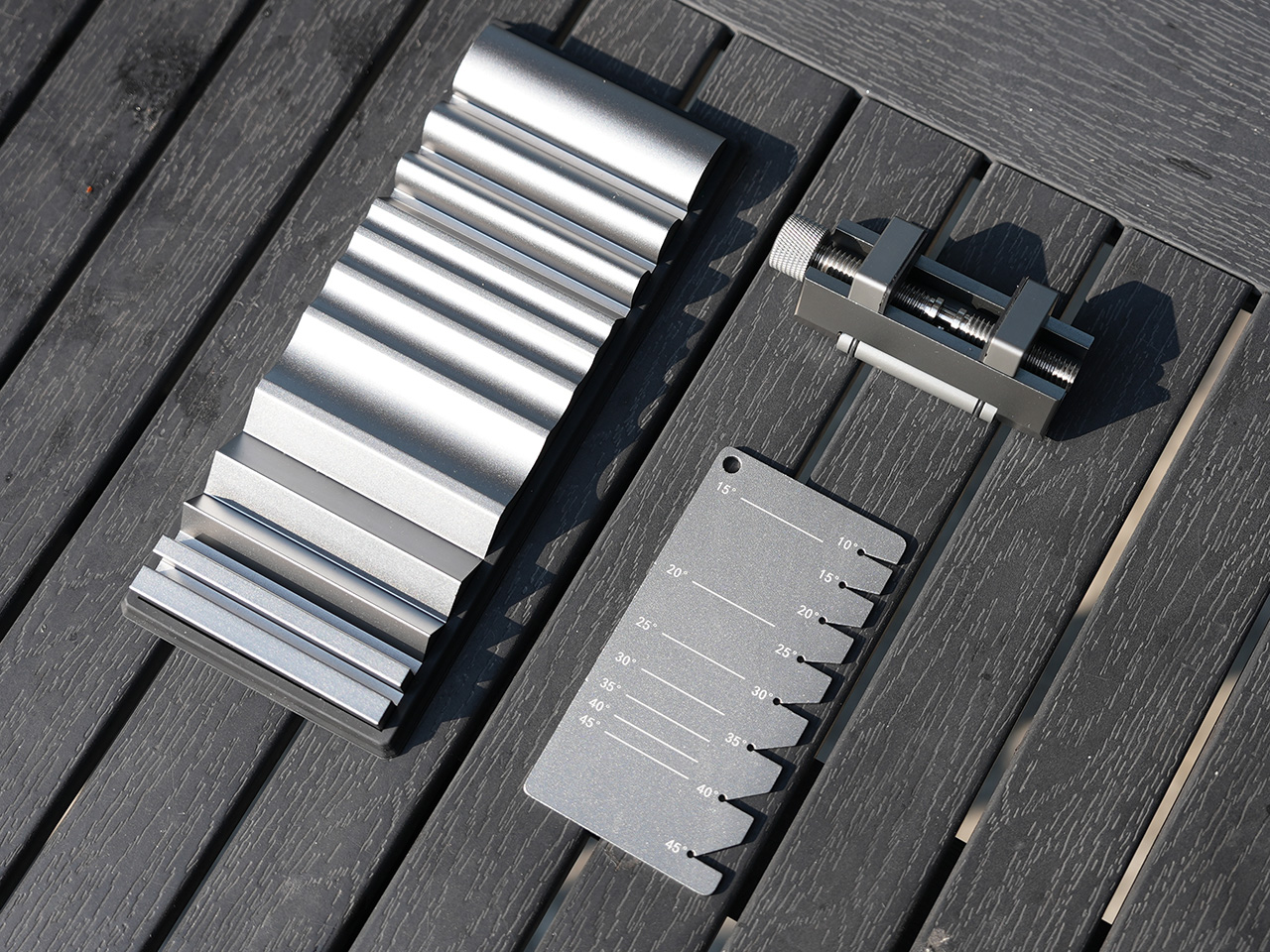
EdgeForm is a portable precision honing guide that tries to solve the problem at its core by mechanically locking your sharpening angle and stabilizing your stroke. Instead of a one-size-fits-all gadget, it is a modular system built around an all-metal sharpening plate, a wide roller, an angle-measuring plate, and a clamp that holds blades firmly. The goal is to turn sharpening into a repeatable workflow rather than a hand-eye performance that depends on feel and experience.
The main plate has a grooved face for sandpaper strips and a large flat back for full sheets, letting you choose grits for everything from coarse shaping to fine polishing. You cut sandpaper to size, stick it down flat, and get a fresh, predictable surface every time. That means you are not locked into proprietary stones, and you can move through grits quickly without changing machines, just swapping paper and continuing the same motion.
The woodworking workflow uses a precision angle-measuring plate with engraved markings to help you find the right bevel angle for chisels and plane irons. You align the blade with the desired line, attach the clamp, and tighten it to lock the angle. Once clamped, the wide roller rides on the sandpapered plate, keeping the edge at that exact angle as you push and pull, so every pass reinforces the same geometry instead of drifting over time.
EdgeForm includes specialized sharpening boards for small carving tools, allowing both sides of a tiny blade to be sharpened simultaneously while maintaining consistent angles. For other cutting tools, including kitchen knives, you choose the right grit, apply sandpaper to the plate, and sharpen with controlled strokes. A leather strop finishes the process, removing burrs and refining the edge so it feels smooth rather than scratchy in wood, leather, or food.
The extra-wide roller gives a larger contact surface with the stone or plate, preventing side-to-side tipping and unwanted angle drift, especially on short planer blades and narrow chisels where traditional guides often fail. The body is machined from aluminum alloy, with wear- and corrosion-resistant materials and a rigid clamping mechanism that resists slipping and rotation. No electronics, no planned obsolescence, just a mechanical tool built to hold tolerances over years.
EdgeForm is compact and portable, with all components fitting into a small case. It works well on a full shop bench or a kitchen counter in a small apartment. Woodworkers, DIY makers, furniture builders, and hand-tool enthusiasts can use the same system for chisels, planes, carving gouges, and knives, without needing separate jigs or setups for each category, which makes it a realistic daily-carry sharpening kit rather than something that only comes out for special projects.
Instead of dreading a freehand session or accepting edges that never feel quite right, you clamp, set the angle with the measuring plate, roll, and know that the edge you get today will match the one you liked last month. EdgeForm treats sharpening as a workflow problem solved with mechanical precision, not just grit. By making the angles lockable and the process repeatable, it gives you one less thing to worry about and one more reason to keep your edges where they belong.
Valentine’s Day at a fancy restaurant sounds romantic until you’re wedged between strangers, overpaying for mediocre pasta, and rushing through dessert because another reservation is waiting. This year, skip the crowded dining room and create something unforgettable under the stars. Glamping turns Valentine’s Day into an intimate adventure, where candlelight becomes a campfire glow, and the soundtrack isn’t clinking silverware, but birdsong and the crackling of wood.
The right gear transforms outdoor romance from roughing it to luxuriating in it. Think warm firelight dancing across your setup, cold drinks elevated to craft cocktail status, and music drifting through the trees without a single Bluetooth speaker ad interrupting the mood. These seven tools prove that Valentine’s Day belongs outside, where the ambiance is real, the memories last longer, and nobody’s rushing you to leave.
1. Lumitwin DL700 Flashlight
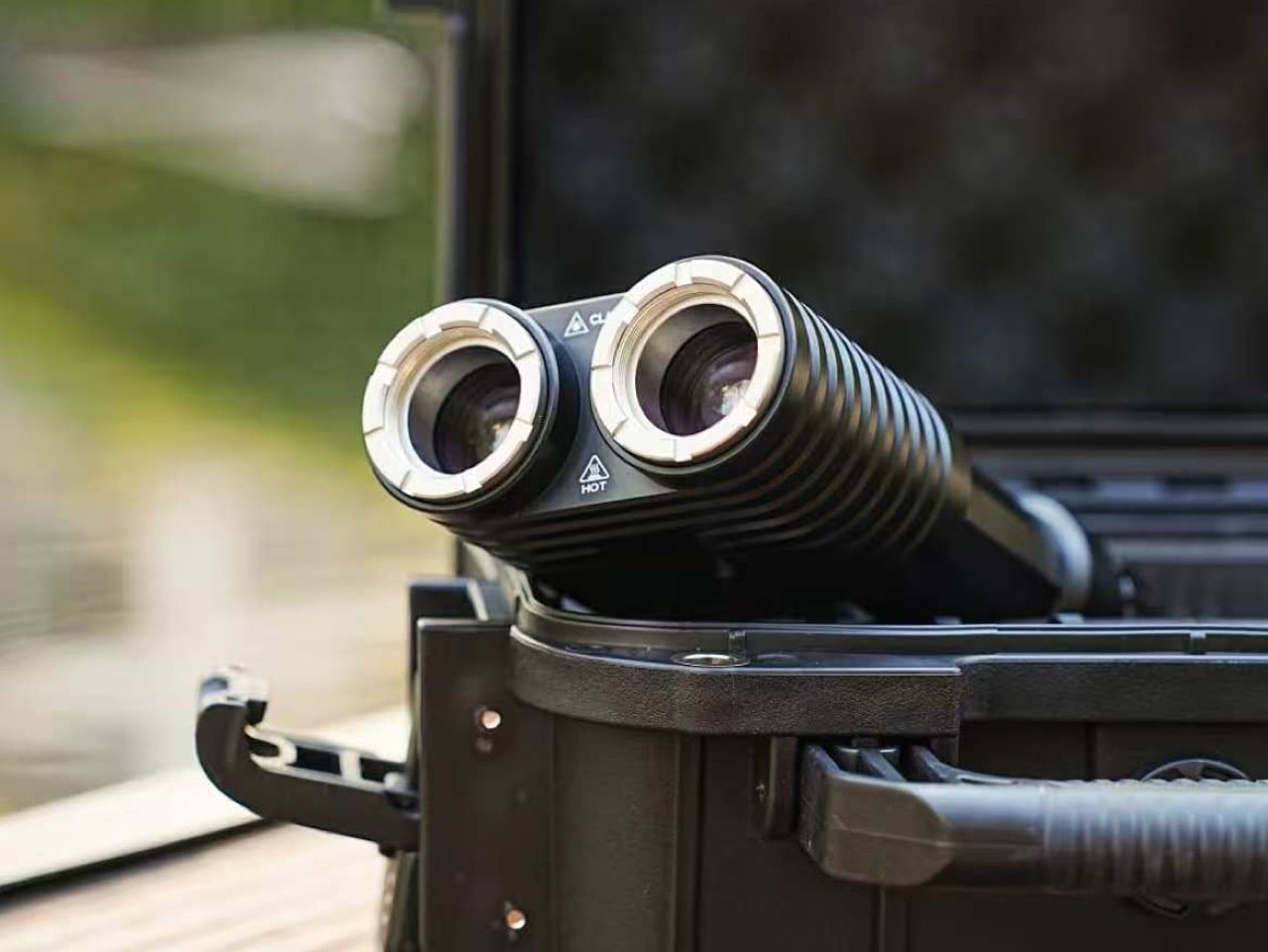
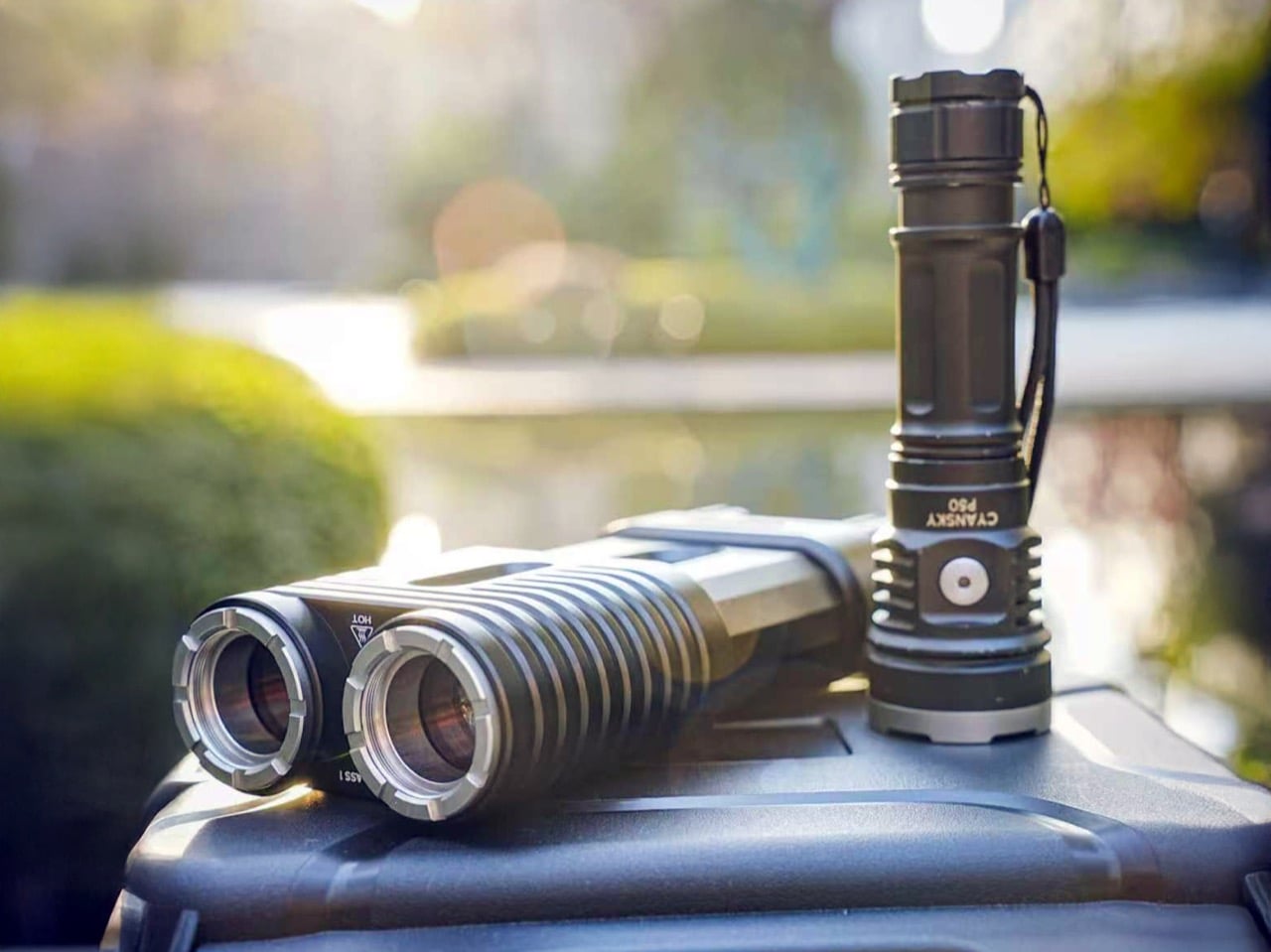
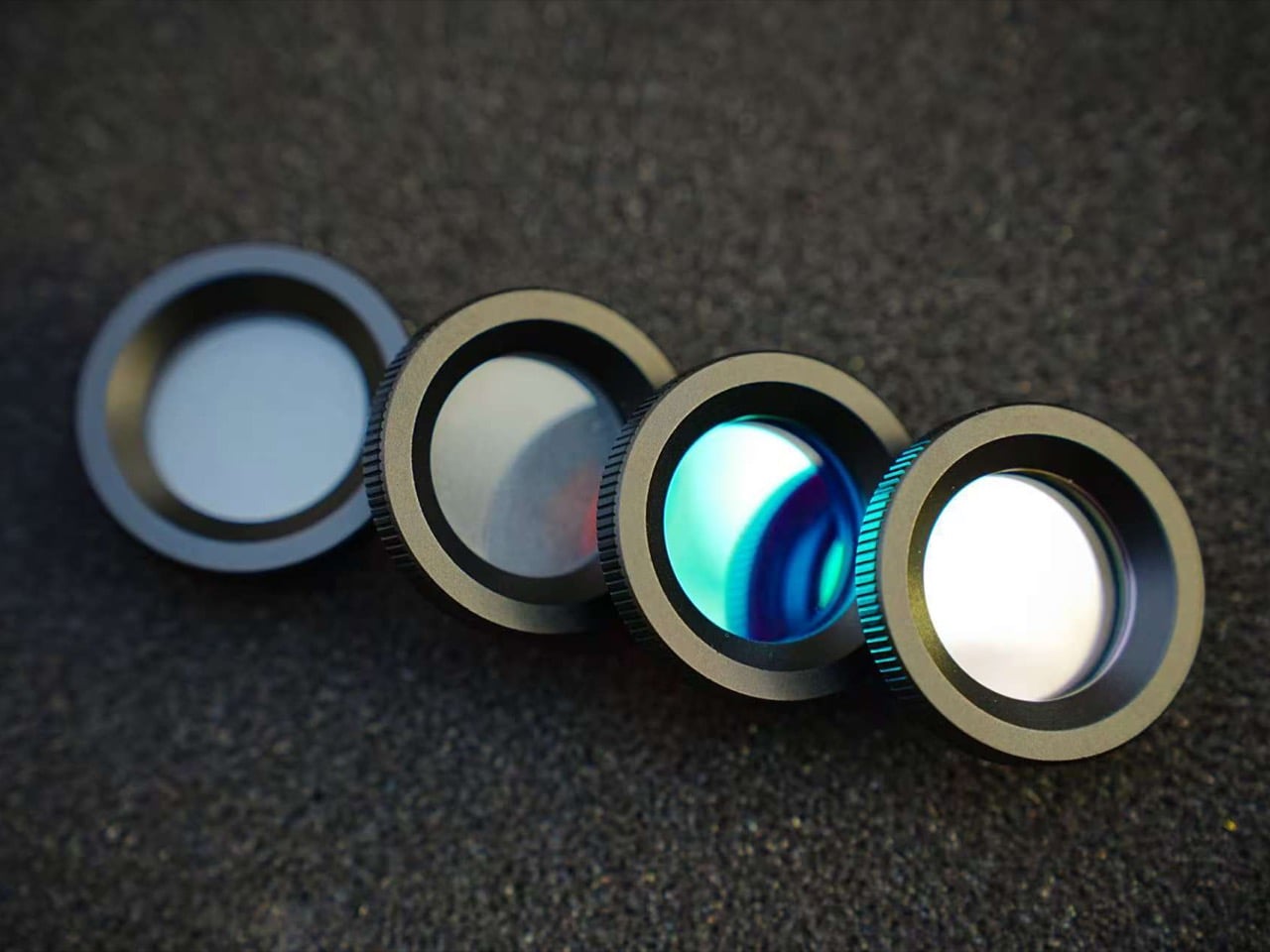
Glamping after sunset needs more than your phone’s dying flashlight. The Lumitwin DL700 throws a beam 2 kilometers into the distance, turning pitch-black wilderness into your private illuminated world. Built with dual, independently controlled barrels and laser-excited phosphor modules, this aerospace-grade aluminum flashlight weighs just over a kilogram but delivers impressive power. Swappable color filters let you switch between moods: red for preserving night vision during stargazing, green for scanning distant treelines, or flood mode for lighting your entire campsite when dinner prep gets serious.
Valentine’s Day glamping means navigating trails after dark, setting up surprise elements away from your main site, or simply ensuring your partner feels safe exploring after sunset. The DL700’s 2,000-meter throw distance and IP68 waterproofing handle torrential rain and rough handling without flinching. Machined from a single aluminum block and rated for one-meter drops, it’s the kind of tool that makes outdoor romance possible rather than stressful. When you’re creating an experience that rivals any restaurant, reliable illumination stops being optional and starts being essential.
What We Like
Throws light 1.24 miles with laser-excited phosphor technology that outperforms standard LEDs
Dual barrels operate independently for customized lighting scenarios throughout your evening
Swappable color filters adapt to stargazing, trail navigation, or ambient campsite lighting
IP68 waterproofing and aerospace aluminum construction survive anything February weather throws at you
What We Dislike
The 1,032-gram weight feels substantial compared to ultralight EDC flashlights
Premium price point reflects advanced technology that casual glampers might not fully utilize
2. TriBeam Camp Light
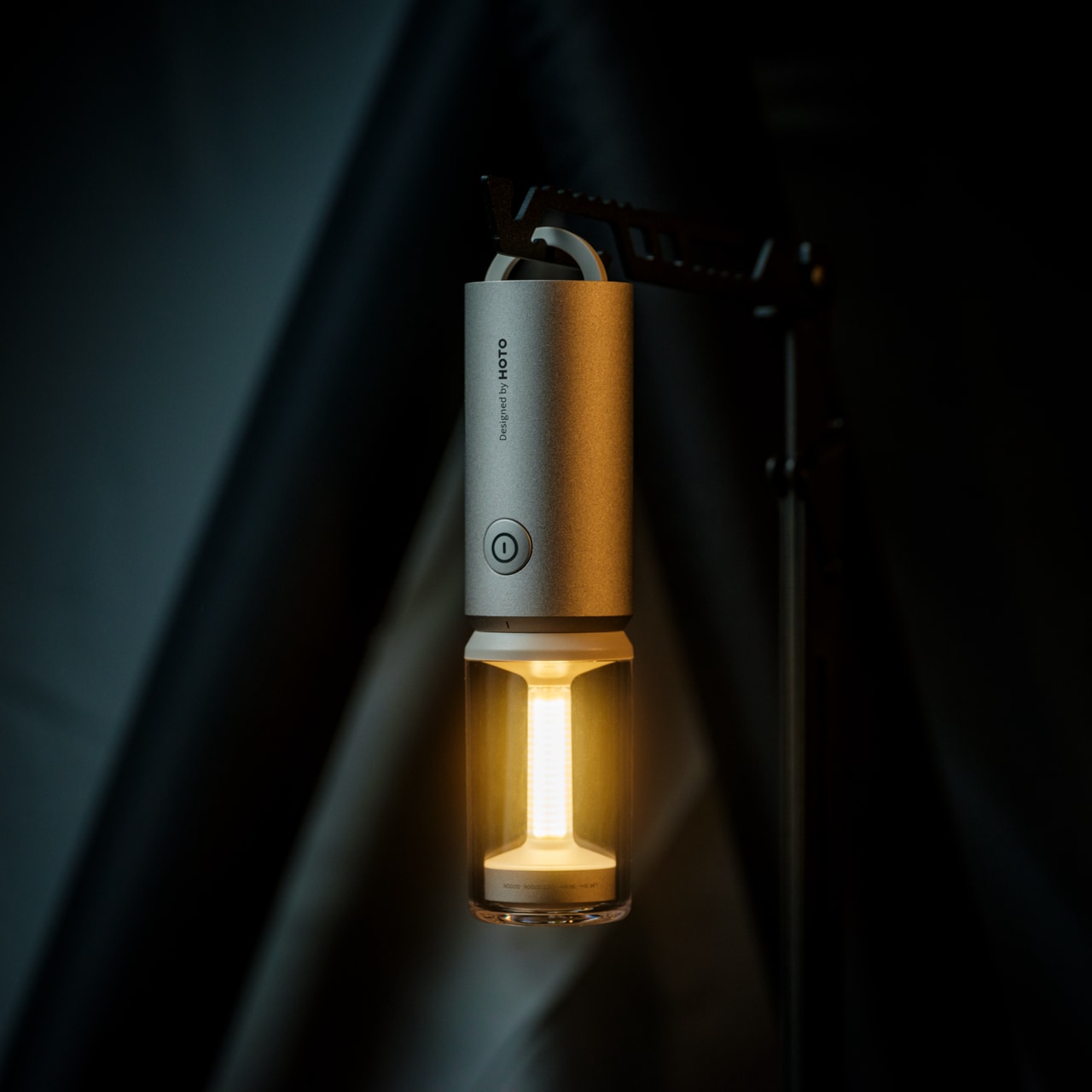
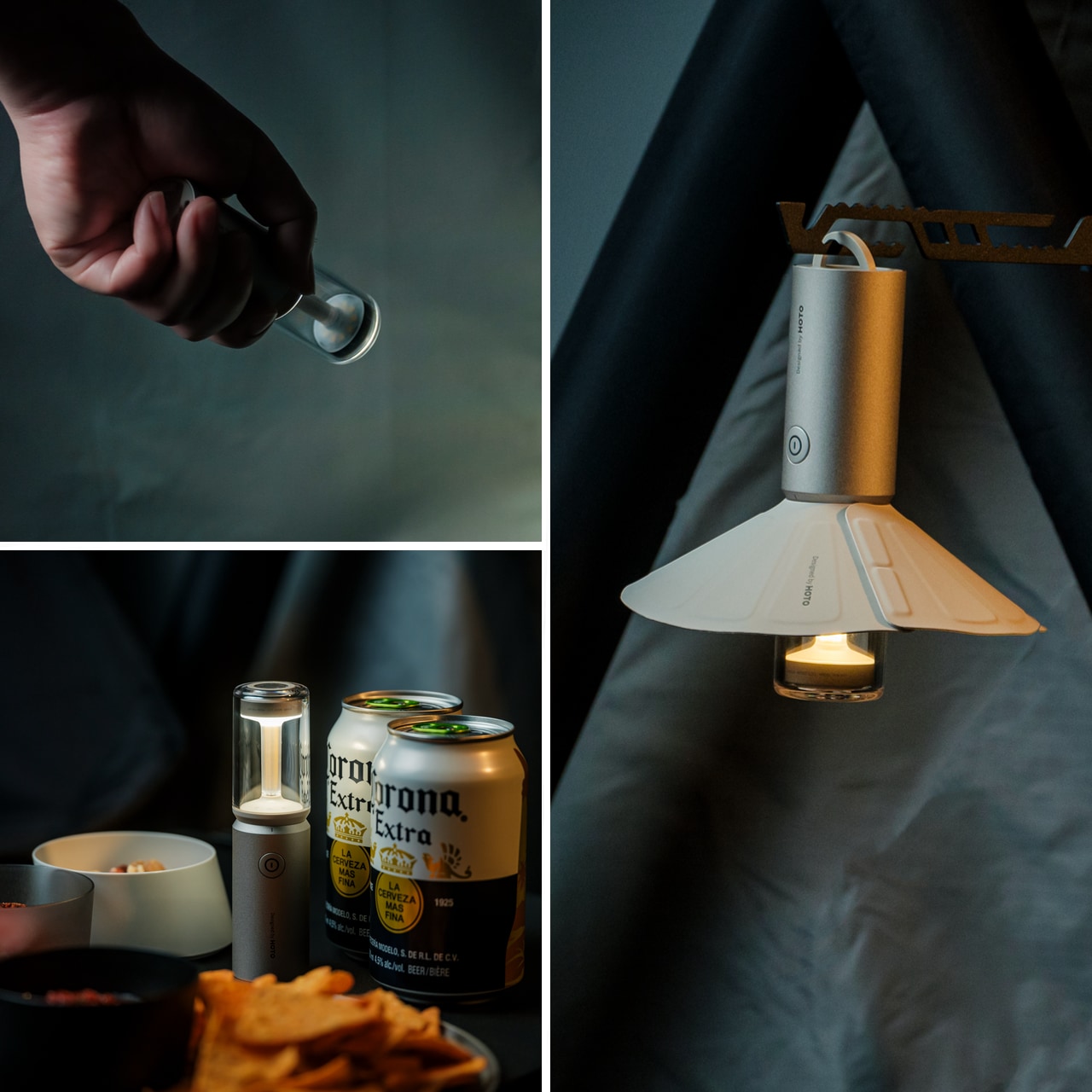
Restaurants dim the lights to create ambiance. Glamping lets you design your own. The TriBeam Camplight delivers three distinct lighting modes in one award-winning package: soft ambient glow for intimate conversation, focused flashlight for midnight trail walks, and diffused camping mode for illuminating your entire setup. At 12.8cm tall and just 135 grams, it disappears into any backpack but commands attention when you need it. Brightness adjusts from a gentle 5 lumens to a powerful 180 lumens, running up to 50 hours on a single charge.
Valentine’s Day lighting needs to be intentional. The TriBeam switches modes with a single intuitive button, letting you move from dinner prep brightness to post-meal intimacy without fumbling through menus or apps. Whether you’re packing for backcountry solitude or setting up near your vehicle, this compact companion adapts to every phase of your evening. Restaurants charge premium prices for calculated lighting design. The TriBeam hands you that control, letting you choreograph your night exactly how you want it. Romantic outdoor dinners succeed or fail on details like this.
Three lighting modes cover every glamping scenario from meal prep to stargazing
Adjustable brightness from 5 to 180 lumens lets you set the perfect mood
Runs up to 50 hours on a single charge, eliminating battery anxiety mid-date
Compact 135-gram weight makes it effortless to pack and position anywhere around your campsite
What We Dislike
Single-button control requires cycling through modes to reach your desired setting
Limited maximum brightness compared to dedicated high-lumen camping lanterns
3. RetroWave 7-in-1 Radio
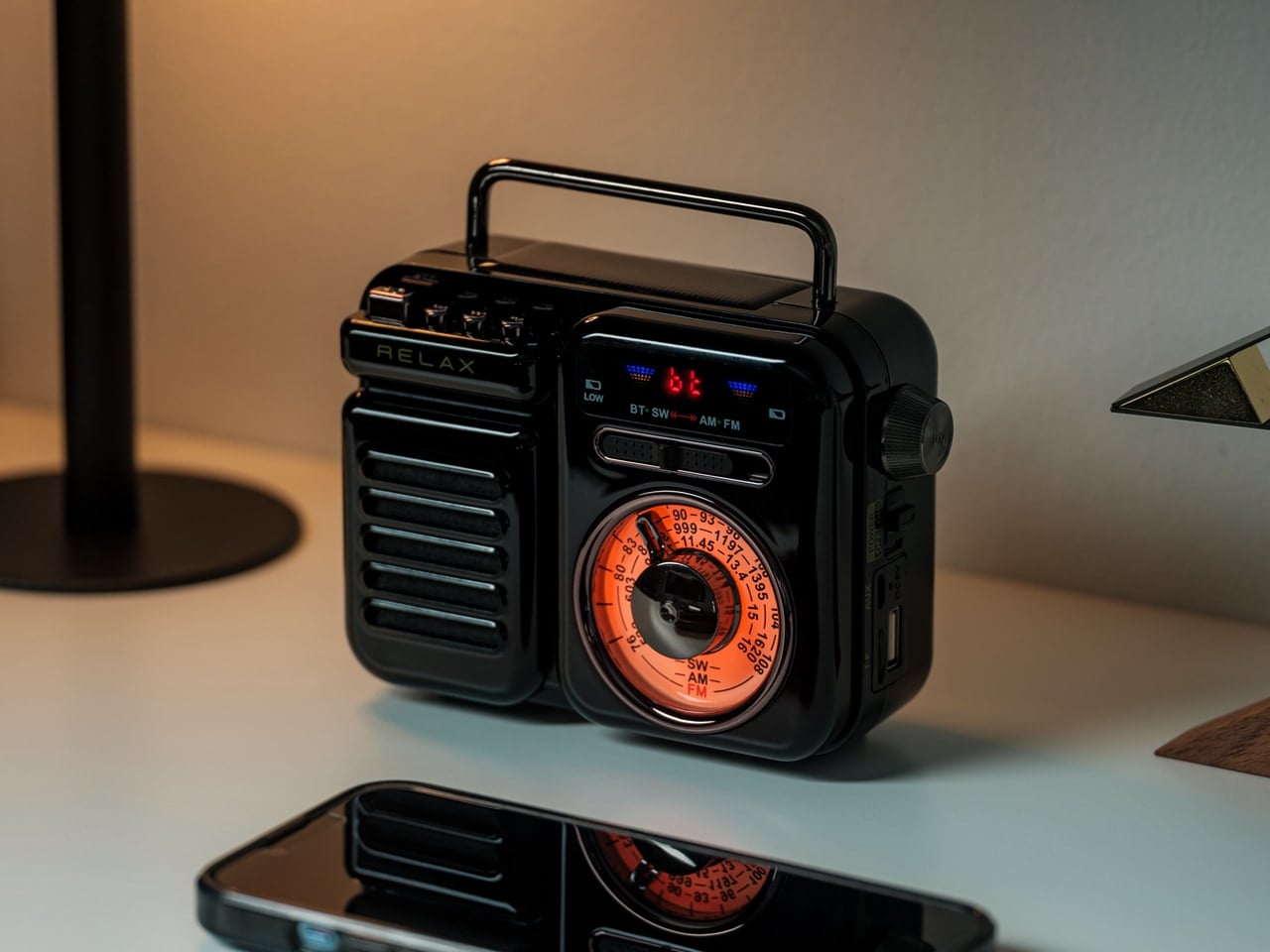
Restaurants curate playlists through ceiling speakers you can’t control. The RetroWave 7-in-1 Radio hands you the aux cord to your own romantic evening. Behind its Japanese-inspired design and tactile tuning dial sits Bluetooth streaming, MP3 playback from USB or microSD cards, and AM/FM/SW radio reception. Stream your shared playlist or tune into a jazz station broadcasting from miles away. When you’re miles from civilization, the built-in flashlight, SOS alarm, hand-crank charging, solar panel, and power bank functionality prove this isn’t just about music.
Valentine’s glamping succeeds when technology serves the experience rather than dominating it. The RetroWave delivers your soundtrack without glowing screens or notification interruptions, letting you stay present while Miles Davis or your favorite indie band fills the space between conversations. Battery anxiety disappears thanks to solar charging and hand-crank backup, meaning your music never dies mid-evening. Restaurants trap you in their aesthetic choices. This radio becomes part of yours, combining nostalgic analog charm with modern streaming convenience. The experience feels intentional, personal, and completely unlike fighting for attention in a crowded dining room.
Seven functions in one sleek device eliminate multiple gadgets cluttering your glamping setup
Bluetooth and MP3 playback provide offline music options when cell service disappears
Emergency power bank, flashlight, and SOS alarm add safety without compromising romance
Hand-crank and solar charging mean your soundtrack never runs out mid-date
What We Dislike
Retro tuning dial requires patience compared to instant digital station selection
Speaker quality prioritizes portability over audiophile-grade sound reproduction
4. DraftPro Top Can Opener
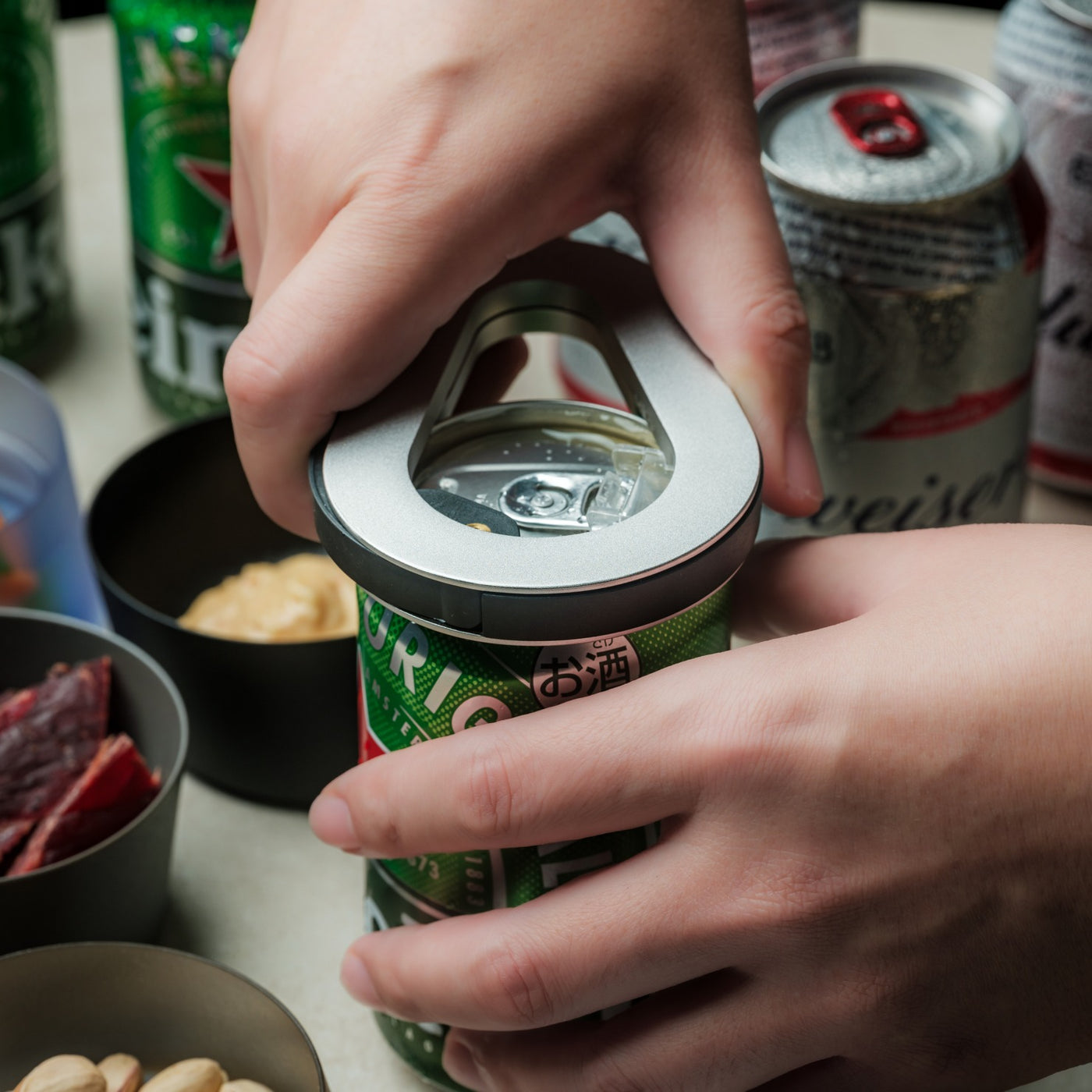
Fancy restaurants pour drinks into proper glassware. Glamping doesn’t require sacrificing that elevated experience. The DraftPro Top Can Opener removes the entire lid from beer, sparkling water, or cocktail cans, creating a smooth-edged, wide-mouth opening. Designed by award-winning Japanese designer Shu Kanno, it transforms canned drinks into draft-style sipping experiences where aroma and flavor hit properly. Add ice cubes directly into the can for instant chilling on warm February afternoons. Mix cocktails right in the container without shakers, jiggers, or cleanup.
Valentine’s Day glamping means creating restaurant-quality moments with campsite simplicity. The DraftPro elevates your celebratory toast from cracking aluminum tabs to something that feels intentional and refined. Compatible with domestic and international cans, it works with whatever craft beer, hard seltzer, or premixed cocktail you packed for the occasion. Restaurants charge premium prices for drinks you could make better outdoors. This compact tool proves sophistication doesn’t require white tablecloths. The first sip from a fully-opened can, ice clinking against smooth edges, feels worlds away from fighting for a server’s attention in a packed dining room.
Fully removes can tops for glass-like drinking experiences that enhance aroma and taste
Universal fit works with domestic and international cans without compatibility issues
Allows adding ice directly into cans for instant chilling on warm days
Creates cocktails directly in the can, eliminating shakers and minimizing cleanup
What We Dislike
The small form factor can be easy to misplace in a busy campsite
Requires careful handling to avoid sharp edges during the cutting process
5. Airflow 8-Panel Fire Pit
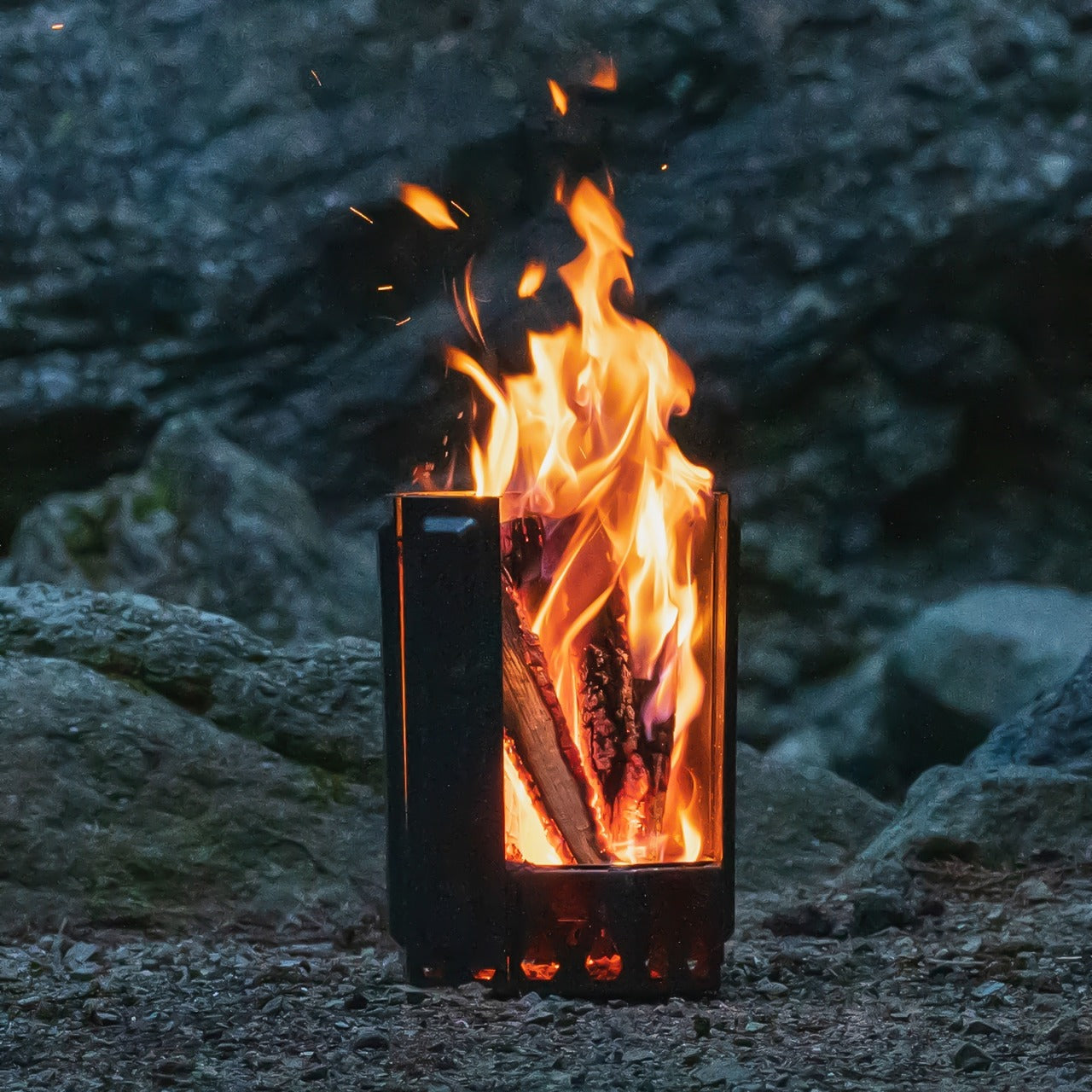
Every romantic outdoor dinner needs a centerpiece, and the Airflow 8-Panel Fire Pit delivers mesmerizing flames without the usual smoke and hassle. Sanyo Works engineered a unique removable eight-panel system that lets you adjust fire intensity effortlessly. Strategic airflow holes at the bottom channel fresh oxygen directly to the base for primary combustion. Heated air ascends through double-walled cavities and exits from top holes, creating secondary combustion that minimizes smoke. The result is a warm, enchanting fire that doesn’t require constant tending or leave you smelling like a campfire afterward.
Restaurants offer candlelight at best. Glamping gives you real fire, primal and hypnotic, without the frustration of traditional fire pits. The adjustable eight-panel design means you control the intensity throughout your evening: roaring flames during meal prep, moderate heat for post-dinner conversation, gentle embers while stargazing. Easy cleanup and optimized airflow keep the focus on your partner rather than managing logs and smoke direction. Valentine’s Day outdoors succeeds when the environment enhances intimacy rather than creating obstacles. This fire pit becomes the focal point of your setup, providing warmth, light, and ambiance that no restaurant fireplace can match.
Removable eight-panel system adjusts fire intensity throughout your evening
Secondary combustion design minimizes smoke for comfortable extended sitting
Strategic airflow optimization burns wood efficiently with less tending required
Easy disassembly and cleanup let you focus on romance rather than maintenance
What We Dislike
Metal construction requires careful handling when hot, especially in romantic low-light conditions
Requires dry firewood for optimal secondary combustion performance
6. Battery-Free Amplifying iSpeakers
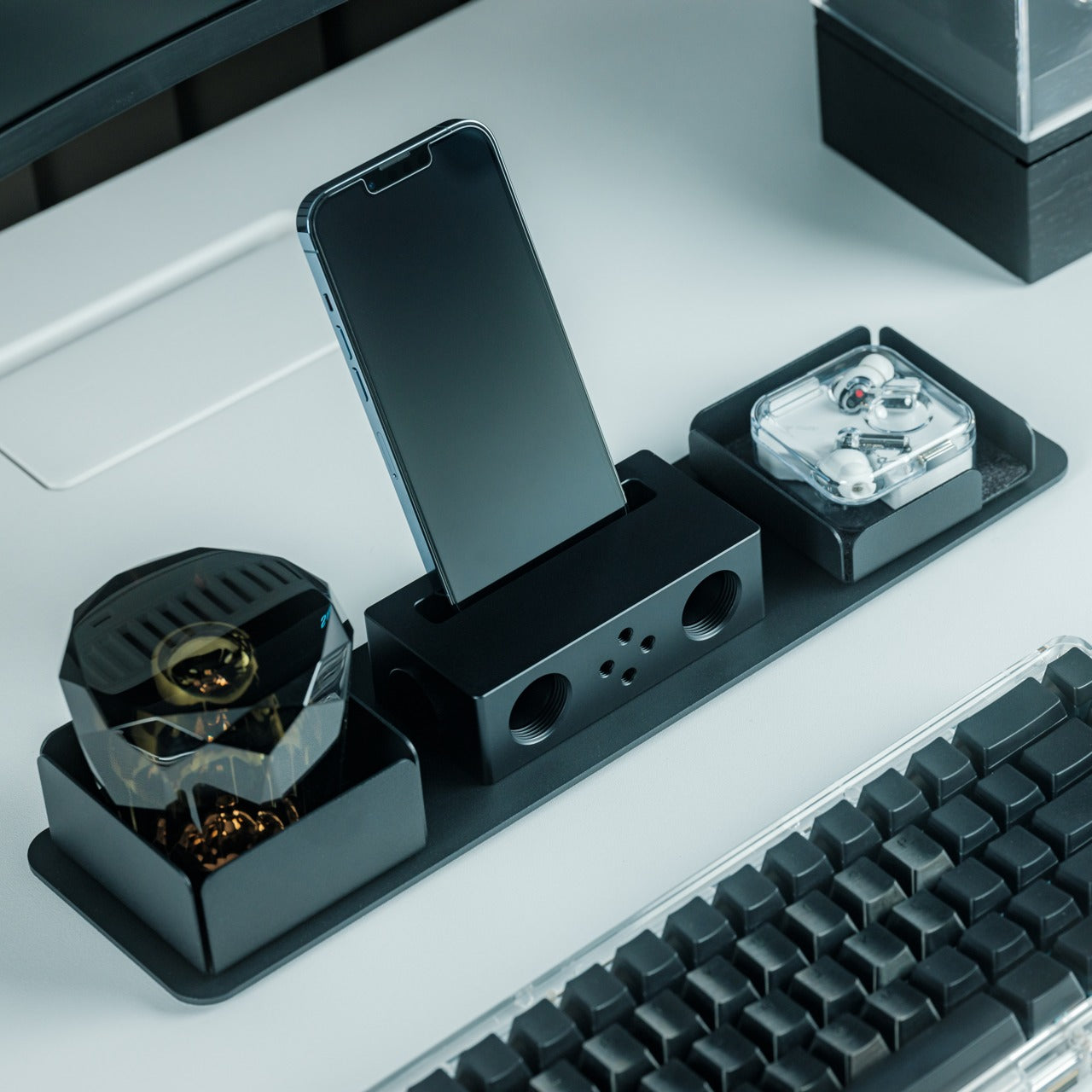
Restaurants control the volume, the playlist, and the vibe. The battery-free amplifying iSpeakers hand that controls back to you without adding another electronic device to charge or maintain. Slide your smartphone into this Duralumin metal speaker and watch physics take over. Amplified sound waves spread music across your campsite through vibration-resistant aerospace-grade metal engineered using the golden ratio. No batteries, no electricity, no Bluetooth pairing. Just elegant acoustic amplification that enhances your phone’s audio while adding sculptural beauty to your glamping setup.
Valentine’s Day glamping thrives on intentional simplicity. These speakers provide your soundtrack without glowing lights, dying batteries, or connectivity issues interrupting the mood. The Duralumin construction resists vibrations that muddy sound quality, delivering clearer audio than you’d expect from passive amplification. Compatible with optional +Bloom and +Jet mods for directing sound exactly where you want it, they blend into your aesthetic rather than screaming “gadget.” Restaurants trap you in sonic environments designed for turning tables quickly. These speakers let you curate a soundscape that supports conversation, enhances intimacy, and never needs to be recharged halfway through your evening.
Zero power requirements eliminate battery anxiety and charging cables from your packing list
Duralumin aerospace metal construction delivers vibration-resistant acoustic clarity
Golden ratio engineering optimizes sound amplification through pure physics
Doubles as sculptural decor that enhances your campsite’s aesthetic
What We Dislike
Volume is limited by passive amplification rather than powered speaker systems
Requires smartphone placement in a fixed position, reducing device accessibility during use
7. All-in-One Grill
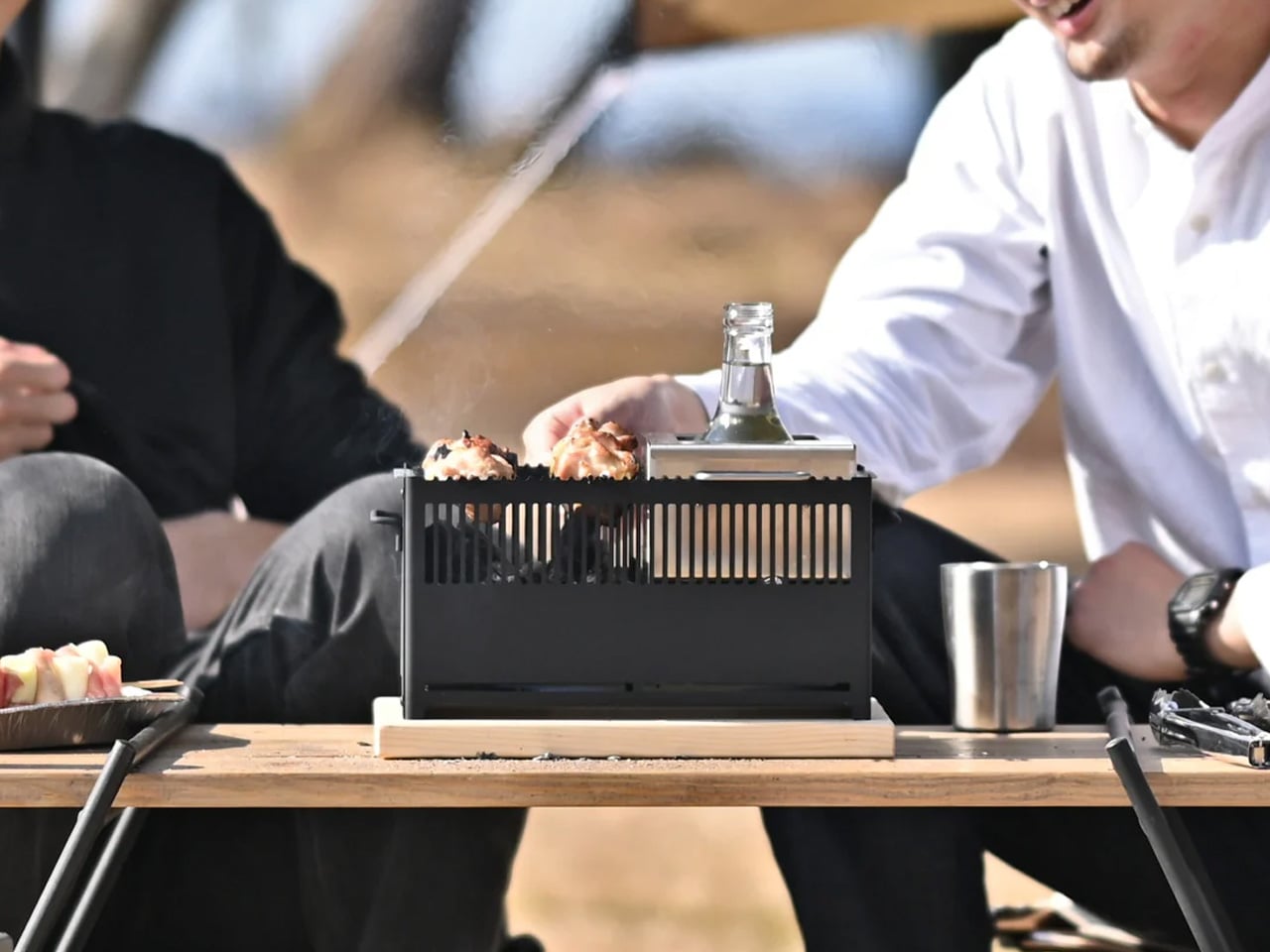
Restaurant kitchens handle everything from grilling to steaming behind closed doors. The All-in-One Grill brings that versatility to your glamping setup in one modular package. Barbecue, fry, grill, steam, smoke, or simmer a hearty stew using interchangeable parts designed for different cooking styles. A dedicated module warms bottles upright, perfect for heating mulled wine or keeping champagne at temperature throughout your meal. Compact tabletop size works on any stable surface, and disassembly takes minutes for easier cleaning. This is outdoor cooking without compromise, stress, or limited menu options.
Valentine’s Day deserves a proper meal, not dehydrated camping rations rehydrated with creek water. The All-in-One Grill lets you cook a masterchef-worthy dinner outdoors: seared steaks, grilled vegetables, smoked salmon, steamed shellfish, whatever matches your partner’s preferences. Modular versatility means you’re not locked into basic campfire cooking methods. Restaurants charge premium prices for Valentine’s dinners that rarely justify the cost. This grill proves you can create something better outdoors, cooked to your specifications, and enjoyed at your pace. Cleanup is straightforward rather than something you dread, letting you return to conversation and connection. The evening becomes about shared experience rather than outsourced service.
Modular design supports barbecuing, frying, grilling, steaming, smoking, and simmering in one tool
Dedicated bottle-warming module keeps drinks at the perfect temperature throughout dinner
Compact tabletop size works anywhere without requiring ground-level cooking arrangements
Easy disassembly streamlines cleanup, so you spend less time on dishes
What We Dislike
Multiple components require organization and packing space in your vehicle or gear
Learning curve for optimal use of different modules and cooking techniques
Why Glamping Wins Valentine’s Day
Restaurants promise romance but deliver crowds, rushed service, and overpriced meals that rarely justify the hype. Glamping flips that script entirely. You’re the chef, sommelier, and ambiance designer, creating an experience tailored exactly to your relationship rather than a restaurant’s bottom line. The effort shows thoughtfulness in ways that restaurant reservations never could. Your partner remembers the evening you cooked together under the stars, not the meal you ate in silence while waiting for the check.
These seven tools prove outdoor romance doesn’t mean roughing it. Proper lighting, curated music, elevated drinks, mesmerizing fire, quality cooking, and thoughtful details transform a campsite into something more intimate than any dining room. Valentine’s Day belongs outside, where your only deadline is sunrise, and your only neighbors are trees. Restaurants will still be there next month. This February, choose something better.