This seahorse-inspired game controller concept is made for smaller hands

Game controllers have not changed much in shape since the mid-1990s. They’re still two-handed symmetrical slabs built around adult grip dimensions, loaded with enough buttons to pilot a small aircraft. For a 10-year-old just getting into gaming, picking one up for the first time is a bit like being handed a TV remote and told to perform surgery, no sweat.

The concept is called LEVION, and it proposes a split controller: two separate units, one per hand, each sized for a pre-teen’s palm. It was designed as a rethink of the thumb stick from scratch, and the result looks like nothing in the current gaming peripheral market, which is mostly the point. And its inspiration comes from the most unlikely source you can imagine.

Designer: Vedika Bapat

The form comes from a seahorse, specifically its upright posture, curved spine, and ridged body. Those horizontal ridges, translated into a soft frill around the base of each unit, are the structural logic of the grip. A seahorse’s bony plates give it stability without bulk, and LEVION’s ridges do the same thing for a small hand holding a rounded object across an hour of gameplay. It’s biomimicry that connects cause to effect rather than borrowing a shape for decoration.

Each unit carries a joystick, three face buttons, and a shoulder button, arranged on a circular head that sits atop a curved hourglass body. The silhouette is wider at the head and base, pinched at the waist, giving the thumb a natural landing zone and keeping the unit from rotating mid-game. The sketch process started with a seahorse drawing annotated “grip inspiration” before moving through VR console proportions to arrive at this form, so the shape isn’t just decorative shorthand.

The colorways lean into the pre-teen audience: pink, mint green, sky blue, and lavender, all in a soft matte finish that reads more like a toy than a peripheral. That positioning is deliberate. Standard controllers signal seriousness and capability. LEVION signals approachability, which matters when the target user is still sorting out that the left stick moves the character and the right one moves the camera.

The honest question is one of input coverage. A standard PlayStation controller has two joysticks, a D-pad, four face buttons, four shoulder buttons, and several system controls. LEVION offers a joystick, three face buttons, and one shoulder button per hand. For casual and younger audiences, that might be exactly right. For anything more demanding, the math gets uncomfortable, and the concept doesn’t address how that gap closes when the pre-teen turns 13.

That’s worth taking seriously, but it doesn’t diminish what LEVION gets right in the space it occupies. The design’s own research board lists the Nintendo Switch Joy-Cons as a reference point, and the parallel is fair: the Joy-Con also split a standard controller into two smaller units and found an audience that didn’t know it needed that format. LEVION asks the same question one step earlier in the age range, in a form that a kid might actually want to reach for.

The post This seahorse-inspired game controller concept is made for smaller hands first appeared on Yanko Design.

Fortnite’s original Save the World mode will be free to play starting on April 16

Fortnite's original Save the World game mode will be free to play beginning on April 16. This is not the battle royale mode that went on to take over the world, but rather a PvE co-op campaign that focuses on crafting and survival. It currently costs $9 but that ends soon.

As a matter of fact, Epic Games will stop selling the paid version of the content tonight, March 11, at 8PM ET. If you have $9 burning a hole in your pocket to spend on something that'll be free next month, go for it. Current players will still be able to access the content, so there are no worries there.

Once the free version goes live, pre-existing players will get a bunch of perks as a thank you of sorts. This includes vouchers for V-bucks, gold bars and end-game resources that are used to boost player and item levels.

Save the World will still be a great way to gather V-bucks, for those worried the freemium shift will change things. Epic says players will earn this currency "through Daily Quests, Mission Alerts, Storm Shield Defense Missions and existing Challenges."

Pre-registration for the free mode is already live and there's a welcome bit of news here. For the first time, Save the World will be available on Switch 2. It'll remain unavailable on the original Switch and smartphones. The mode is also playable on PC, PlayStation and Xbox.

Epic promises those who pre-register will get perks when the free version launches, but says the specifics will vary depending on how many people sigh up by April 16. Save the World originally came out in 2017 and was a modest success that was immediately dwarfed by the PUBG-inspired battle royale mode.

This article originally appeared on Engadget at https://www.engadget.com/gaming/fortnites-original-save-the-world-mode-will-be-free-to-play-starting-on-april-16-160757693.html?src=rss

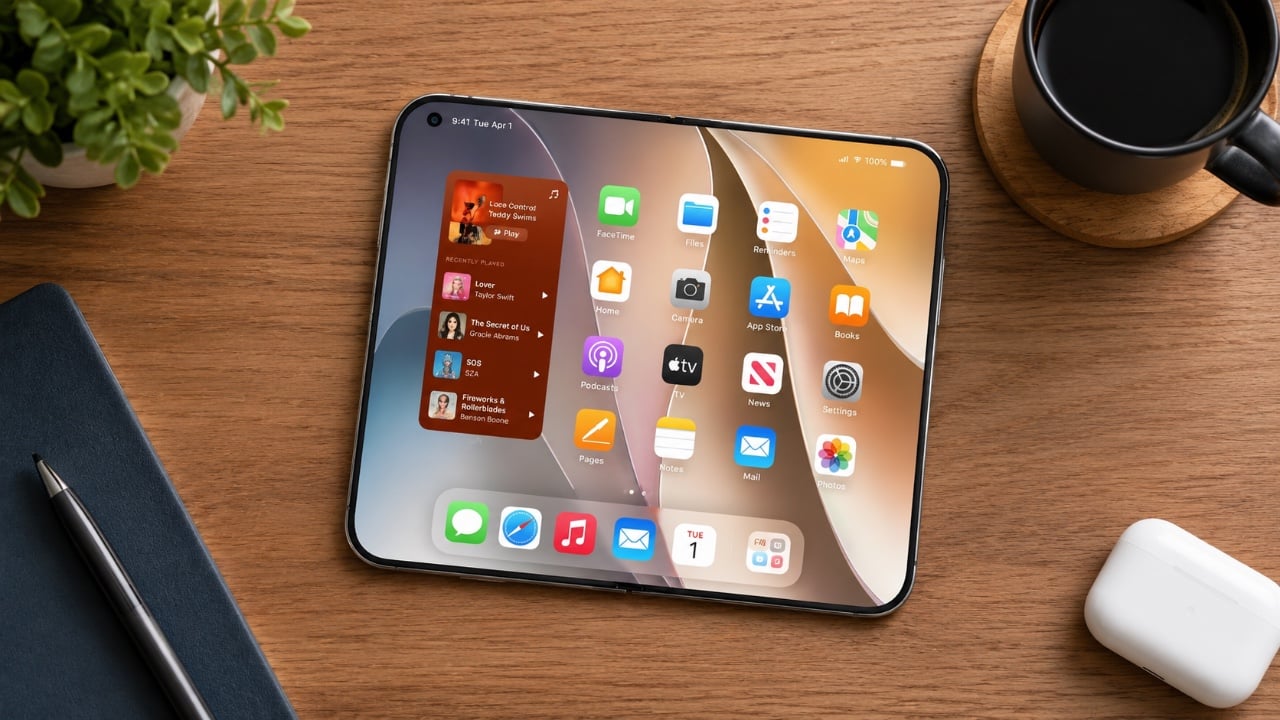
Pixel 11 Pro Fold Leaks: Google’s New 10.1mm Design Beats the Z Fold 7 in Thickness

Pixel 11 Pro Fold Leaks: Google’s New 10.1mm Design Beats the Z Fold 7 in Thickness Pixel 11 Pro Fold Leaks

The Google Pixel 11 Pro Fold is set to debut in August 2026, presenting a thinner and lighter design compared to its predecessor, the Pixel 10 Pro Fold. These updates aim to enhance portability and usability, but the device’s incremental changes raise questions about its ability to distinguish itself in the increasingly competitive foldable smartphone […]

The post Pixel 11 Pro Fold Leaks: Google’s New 10.1mm Design Beats the Z Fold 7 in Thickness appeared first on Geeky Gadgets.

Posted in Uncategorized

DOOGEE Fire 7 Ultra rugged smartphone doubles as a push-to-talk radio for instant team communication

Rugged smartphones have long been DOOGEE’s playground, as the brand frequently experiments with bold ideas that blur the line between utility gadget and everyday smartphone. Past releases have showcased this experimental streak successfully. The DOOGEE S200 embraced a mech-inspired aesthetic with a design that looked more like a piece of futuristic equipment than a typical handset, while the DOOGEE S98 leaned into spy-gadget territory with a secondary rear display and an unmistakably tactical vibe. Even more unusual was the DOOGEE S119, a device that literally mounted a smartwatch-like display on its back.

The newly introduced DOOGEE Fire 7 Ultra continues that spirit of experimentation but shifts the focus toward communication rather than design theatrics. Instead of simply building a phone that survives harsh environments, DOOGEE is positioning the Fire 7 Ultra as a hybrid device that combines smartphone functionality with the instant communication capabilities of a professional two-way radio system.

Designer: DOOGEE

At the heart of the Fire 7 Ultra is its Push-to-Talk Over Cellular (PoC) system, a feature designed to transform the phone into a real-time communication hub for teams. Using cellular or Wi-Fi connectivity, the device allows users to initiate instant voice communication with a single press of a dedicated PTT button on the side. This setup enables one-to-one or group communication similar to traditional walkie-talkies but without the range limitations typically associated with radio hardware. As long as there is network connectivity, the communication range is essentially unlimited, making it suitable for field teams, logistics crews, event staff, and emergency responders.

The device also incorporates a short-range Bluetooth intercom mode for situations where cellular coverage is unavailable. This feature allows nearby users to communicate directly with each other without relying on network infrastructure, which can be particularly useful in environments such as tunnels, forests, or construction zones. Supporting these communication features is a powerful 125-decibel speaker powered by a 34mm, 3.5W driver, ensuring that voice transmissions remain clear even in noisy outdoor environments.

Durability remains a USP of the Fire 7 Ultra’s design philosophy. The phone carries IP68 and IP69K water and dust resistance ratings and meets MIL-STD-810H durability standards, allowing it to withstand water immersion, dust exposure, and accidental drops from around 1.5 meters. The rugged construction is paired with a large 6.6-inch IPS display featuring a 90Hz refresh rate and HD+ resolution, protected with reinforced glass designed to handle demanding outdoor conditions. Powering the device is MediaTek’s Dimensity 6300 chipset, a 6nm processor that supports 5G connectivity while delivering efficient performance for everyday tasks and communication-heavy workloads. The phone ships with 8GB of RAM, which can be virtually expanded up to 32GB, alongside 256GB of internal storage and a microSD slot for further expansion.

A massive 13,000mAh battery keeps the device operational for extended field use, reducing the need for frequent charging during long shifts or outdoor expeditions. The phone supports 33W fast charging and even includes reverse charging capabilities, allowing it to power smaller devices such as earbuds or smartwatches when needed. The camera setup is straightforward but capable, featuring a 64-megapixel main camera paired with a 2-megapixel macro lens and a 16-megapixel front-facing camera. Running on Android 15, the phone also supports features such as NFC for contactless payments, side-mounted fingerprint recognition, facial unlock, and a triple card slot that accommodates two SIM cards and a microSD card simultaneously.

The DOOGEE Fire 7 Ultra phone is currently available at official stores and select online retailers, with pricing around $360 for the 8GB RAM and 256GB storage variant.

The post DOOGEE Fire 7 Ultra rugged smartphone doubles as a push-to-talk radio for instant team communication first appeared on Yanko Design.
Rabbit’s Cyberdeck is a modern take on a netbook

When you think of an AI-forward PC, you might think of something like NVIDIA's $3,999 DGX Spark — a computer with enough computing power to run complex large language models locally. That's not what Rabbit is trying to build with Project Cyberdeck. Instead, the company's goal is to produce a device tailored for vibe coding, and Engadget was given an exclusive first look at the upcoming PC. 

Rabbit began working on Project Cyberdeck after the company's CEO, Jesse Lyu, saw how much his software engineers were using Claude Code. Lyu thought a small form factor PC, like the netbooks that were popular in the late aughts, with a command line interface would be ideal for on-the-go vibe coding, but when he went online to look for something that fit the bill, he was disappointed.

"They all come with shitty rubber dome keyboards," Lyu says of low-cost PCs like the latest Chromebooks, which use flexible silicone sheets under their keys to save on space and cost. "They're not something you would enjoy typing on for an extended period of time." So Rabbit decided to build its own device. For inspiration, Lyu and company looked to an unlikely source: the Sony Vaio P

The Cyberdeck takes inspiration from the Sony Vaio P.
Sony

Sony's netbook was only briefly available from the start of 2009 to about the end of 2010. At the time, the 8-inch Vaio P was the world's lightest netbook, weighing just 1.4 pounds, but it had a host of issues. It was also expensive, costing considerably more than other Intel Atom notebooks of the time. In 2009, the most affordable Vaio P would set you back $900 (about $1,365 adjusted for inflation). With Project Cyberdeck, Rabbit is aiming for a device that costs about $500, and hopefully avoids a similar fate.

I saw a few early renders of Project Cyberdeck, which Rabbit isn't ready to share publicly yet. Imagine a cross between the Rabbit R1, Vaio P and the original Nintendo DS. It looks cute. All the renders had four USB-C ports to allow users to connect the device to external monitors and peripherals, though the actual IO specs are as-yet undecided. 

The company is in the process of sourcing components and working towards a final design, so details can — and will — change. I saw some of the parts Lyu has been testing in his office, but no final prototype as such. 

For one, Rabbit still needs to decide on a chipset. The company is aiming for a performance benchmark relative to the Raspberry Pi 5, which has a Broadcom BCM2712 quad-core Arm Cortex A76 processor clocked at 2.4GHz. With 16GB of RAM, the Raspberry Pi 5 can run two external monitors, a capability Rabbit hopes to match with the Cyberdeck. The idea here is to make a device that's powerful enough it won't feel slow when it's communicating with Anthropic and OpenAI's servers, but affordable enough to make it a no-brainer purchase for developers. 

The company confirmed Project Cyberdeck will run Linux. Rabbit will allow users to modify the operating system and install any third-party tools they want. Additionally, all the software features the company has developed for RabbitOS will be available through command-line prompts. 

Two parts of the device Lyu hopes are major differentiating factors are the keyboard and screen. Lyu appears set on shipping a computer with a 40 percent keyboard that has low-profile mechanical switches and a fully hot swappable PCB, so users can tweak the typing feel to their liking. Lyu also had a sample 7-inch OLED screen on his desk when I spoke to him. That specific panel offers touch input, a 165Hz refresh rate and 815 nits of brightness. While it might not be the one Rabbit settles on, OLED is the goal, because of what it would mean for battery life. 

For the uninitiated, OLED panels produce black values by turning off individual diodes, and since each diode is self-emitting, there's no need for a power-hungry backlight. Like every smartphone manufacturer, Rabbit is taking advantage of this by planning to offer a dark mode interface from day one. 

One aspect of the Cyberdeck's design Lyu can't definitively speak to is how much RAM it will feature. The entire industry is dealing with datacenter demand for high-bandwidth memory that has sent the price of computers, smartphones and other electronics soaring. Lyu believes Rabbit won't be forced to delay the Cyberdeck out of 2026, but he also didn't rule out the possibility either. If things change for the better, he's confident Rabbit would be able to take advantage, since it took the company about 93 days to ship the first R1 device after it began working on the design.      

Separately, I wonder if people will want to carry around a second device solely for their coding needs? You don't need a dedicated machine to access Claude Code or OpenAI Cursor. Even companies like Apple have begun integrating vibe coding services into their development environments. Rabbit could be on track for a repeat of the R1, but with so many details of the Cyberdeck left undecided, for now, it's too early to know for sure. The company will get to make its case when it shares more details in the coming weeks and months.  


This article originally appeared on Engadget at https://www.engadget.com/ai/rabbits-cyberdeck-is-a-modern-take-on-a-netbook-151907273.html?src=rss

Flywheel and Sodium-Ion Battery Hybrids Target Short Power Spikes on Renewables

Flywheel and Sodium-Ion Battery Hybrids Target Short Power Spikes on Renewables Quint flywheel cabinet beside ship-to-shore cranes, showing burst power support during lift cycles at a busy port.

The transition to renewable energy has introduced a critical challenge: maintaining grid stability in the absence of traditional inertia provided by fossil fuel-based power plants. Without the rotational motion of turbines that historically buffered grids against sudden fluctuations, renewable energy systems face heightened risks of blackouts and voltage instability. Flywheel energy storage systems offer a […]

The post Flywheel and Sodium-Ion Battery Hybrids Target Short Power Spikes on Renewables appeared first on Geeky Gadgets.

Posted in Uncategorized

The Crease is Finally Gone: Samsung’s New ‘Dual-Layer’ Glass Tech for the Galaxy Z Fold 8

The Crease is Finally Gone: Samsung’s New ‘Dual-Layer’ Glass Tech for the Galaxy Z Fold 8 Timeline graphic summarizes Samsung’s 2026 foldable lineup, including Fold 8, Flip 8, and a third device.

Samsung is poised to make a significant impact on the foldable phone market with the Galaxy Z Fold 8, addressing one of the most persistent challenges in foldable displays: the visible crease. By using innovative technologies like perforated OLED support panels, Samsung aims to enhance both the durability and user experience of its devices. These […]

The post The Crease is Finally Gone: Samsung’s New ‘Dual-Layer’ Glass Tech for the Galaxy Z Fold 8 appeared first on Geeky Gadgets.

Posted in Uncategorized

Larry ‘Major Nelson’ Hryb joins Commodore to help build its community

Phil Spencer leaving his long-held role at Xbox might have made all the headlines last month, but a few years ago the big story was company veteran Larry "Major Nelson" Hryb’s departure from Microsoft. Hryb recently seemingly hinted at a return to the company at which he spent more than two decades, but he’s now landed at Commodore instead.

The ex-Xbox icon joins the recently revived 80s computer brand as a Community Development Advisor, where his job will be to "help support and expand the global community," Commodore said in a press release. Hryb, who was the public face of Xbox during the brand’s heyday, is now tasked with helping to modernize Commodore by introducing it to "a new generation of creators, developers, and enthusiasts."

"I've always believed the best thing a company can do is partner with its community – and with a passionate fan base carrying the torch for 31 years, Commodore’s situation is truly unique when it comes to community engagement," said Hryb. "The community didn't wait around – instead they built something remarkable. Players, hardware hobbyists, developers, content creators, and publishers are all a part of the Commodore community, and now we get to build what’s next together."

Hryb’s most recent role was at game engine maker Unity, where he served as Director of Community and Advocacy for less than two years before being laid off in January. As for Commodore, the company might be entering a new era, but its comeback product launch is a firmly nostalgic play, with the recently released Commodore 64 Ultimate being an authentic recreation of its most famous 8-bit computer.

This article originally appeared on Engadget at https://www.engadget.com/gaming/larry-major-nelson-hryb-joins-commodore-to-help-build-its-community-145908119.html?src=rss

Figma Handoffs Fade as AI Generates Flows and Code

Figma Handoffs Fade as AI Generates Flows and Code Diagram showing an AI agent workflow where prototypes replace mockups and guide engineering work end to end.

The evolution of artificial intelligence has significantly altered established practices in application design, challenging the efficiency of traditional workflows. According to AI Labs, methods that rely on static mockups, linear handoffs and fixed API specifications often fall short in meeting the demands of AI-driven systems. For example, actor-based requirements, which focus on user goals and […]

The post Figma Handoffs Fade as AI Generates Flows and Code appeared first on Geeky Gadgets.

Posted in Uncategorized

The 3p-Per-Mile Tax: How Much Your EV Will Cost to Drive from 2028

The 3p-Per-Mile Tax: How Much Your EV Will Cost to Drive from 2028 EVED Pay-Per-Mile Explained

The UK government plans to introduce the Electric Vehicle Excise Duty (EVED) in April 2028, a pay-per-mile taxation system specifically designed for electric vehicles (EVs). This initiative aims to address the growing shortfall in fuel duty revenue as more drivers transition from internal combustion engine (ICE) vehicles to EVs. While the system is intended to […]

The post The 3p-Per-Mile Tax: How Much Your EV Will Cost to Drive from 2028 appeared first on Geeky Gadgets.

Posted in Uncategorized