OpenAI’s new safety team is led by board members, including CEO Sam Altman

OpenAI has created a new Safety and Security Committee less than two weeks after the company dissolved the team tasked with protecting humanity from AI’s existential threats. This latest iteration of the group responsible for OpenAI’s safety guardrails will include two board members and CEO Sam Altman, raising questions about whether the move is little more than self-policing theatre amid a breakneck race for profit and dominance alongside partner Microsoft.

The Safety and Security Committee, formed by OpenAI’s board, will be led by board members Bret Taylor (Chair), Nicole Seligman, Adam D’Angelo and Sam Altman (CEO). The new team follows co-founder Ilya Sutskever’s and Jan Leike’s high-profile resignations, which raised more than a few eyebrows. Their former “Superalignment Team” was only created last July.

Following his resignation, Leike wrote in an X (Twitter) thread on May 17 that, although he believed in the company’s core mission, he left because the two sides (product and safety) “reached a breaking point.” Leike added that he was “concerned we aren’t on a trajectory” to adequately address safety-related issues as AI grows more intelligent. He posted that the Superalignment team had recently been “sailing against the wind” within the company and that “safety culture and processes have taken a backseat to shiny products.”

A cynical take would be that a company focused primarily on “shiny products” — while trying to fend off the PR blow of high-profile safety departures — might create a new safety team led by the same people speeding toward those shiny products.

Headshot of former OpenAI head of alignment Jan Leike. He smiles against a grayish-brown background.
Former OpenAI head of alignment Jan Leike
Jan Leike / X

The safety departures earlier this month weren’t the only concerning news from the company recently. It also launched (and quickly pulled) a new voice model that sounded remarkably like two-time Oscar Nominee Scarlett Johansson. The Jojo Rabbit actor then revealed that OpenAI Sam Altman had pursued her consent to use her voice to train an AI model but that she had refused.

In a statement to Engadget, Johansson’s team said she was shocked that OpenAI would cast a voice talent that “sounded so eerily similar” to her after pursuing her authorization. The statement added that Johansson’s “closest friends and news outlets could not tell the difference.”

OpenAI also backtracked on nondisparagement agreements it had required from departing executives, changing its tune to say it wouldn’t enforce them. Before that, the company forced exiting employees to choose between being able to speak against the company and keeping the vested equity they earned. 

The Safety and Security Committee plans to “evaluate and further develop” the company’s processes and safeguards over the next 90 days. After that, the group will share its recommendations with the entire board. After the whole leadership team reviews its conclusions, it will “publicly share an update on adopted recommendations in a manner that is consistent with safety and security.”

In its blog post announcing the new Safety and Security Committee, OpenAI confirmed that the company is currently training its next model, which will succeed GPT-4. “While we are proud to build and release models that are industry-leading on both capabilities and safety, we welcome a robust debate at this important moment,” the company wrote.

This article originally appeared on Engadget at https://www.engadget.com/openais-new-safety-team-is-led-by-board-members-including-ceo-sam-altman-164927745.html?src=rss



OpenAI’s new safety team is led by board members, including CEO Sam Altman

OpenAI has created a new Safety and Security Committee less than two weeks after the company dissolved the team tasked with protecting humanity from AI’s existential threats. This latest iteration of the group responsible for OpenAI’s safety guardrails will include two board members and CEO Sam Altman, raising questions about whether the move is little more than self-policing theatre amid a breakneck race for profit and dominance alongside partner Microsoft.

The Safety and Security Committee, formed by OpenAI’s board, will be led by board members Bret Taylor (Chair), Nicole Seligman, Adam D’Angelo and Sam Altman (CEO). The new team follows co-founder Ilya Sutskever’s and Jan Leike’s high-profile resignations, which raised more than a few eyebrows. Their former “Superalignment Team” was only created last July.

Following his resignation, Leike wrote in an X (Twitter) thread on May 17 that, although he believed in the company’s core mission, he left because the two sides (product and safety) “reached a breaking point.” Leike added that he was “concerned we aren’t on a trajectory” to adequately address safety-related issues as AI grows more intelligent. He posted that the Superalignment team had recently been “sailing against the wind” within the company and that “safety culture and processes have taken a backseat to shiny products.”

A cynical take would be that a company focused primarily on “shiny products” — while trying to fend off the PR blow of high-profile safety departures — might create a new safety team led by the same people speeding toward those shiny products.

Headshot of former OpenAI head of alignment Jan Leike. He smiles against a grayish-brown background.
Former OpenAI head of alignment Jan Leike
Jan Leike / X

The safety departures earlier this month weren’t the only concerning news from the company recently. It also launched (and quickly pulled) a new voice model that sounded remarkably like two-time Oscar Nominee Scarlett Johansson. The Jojo Rabbit actor then revealed that OpenAI Sam Altman had pursued her consent to use her voice to train an AI model but that she had refused.

In a statement to Engadget, Johansson’s team said she was shocked that OpenAI would cast a voice talent that “sounded so eerily similar” to her after pursuing her authorization. The statement added that Johansson’s “closest friends and news outlets could not tell the difference.”

OpenAI also backtracked on nondisparagement agreements it had required from departing executives, changing its tune to say it wouldn’t enforce them. Before that, the company forced exiting employees to choose between being able to speak against the company and keeping the vested equity they earned. 

The Safety and Security Committee plans to “evaluate and further develop” the company’s processes and safeguards over the next 90 days. After that, the group will share its recommendations with the entire board. After the whole leadership team reviews its conclusions, it will “publicly share an update on adopted recommendations in a manner that is consistent with safety and security.”

In its blog post announcing the new Safety and Security Committee, OpenAI confirmed that the company is currently training its next model, which will succeed GPT-4. “While we are proud to build and release models that are industry-leading on both capabilities and safety, we welcome a robust debate at this important moment,” the company wrote.

This article originally appeared on Engadget at https://www.engadget.com/openais-new-safety-team-is-led-by-board-members-including-ceo-sam-altman-164927745.html?src=rss

Apple’s new M2 iPad Air tablets drop to record-low prices

Apple's latest iPad Air models have only been out for a couple of weeks, but you can already score decent deals on the new tablets. Most variants are on sale at Amazon at the minute, including the base 11-inch model with 128GB of storage. Thanks to a $30 discount, you can snap one up for $569. It's early days for the new iPad Air, but that still marks a record-low price.

While the iPad Pro might be significantly more powerful and have a nicer display, we reckon the latest Air is the best iPad for most people. We feel it strikes the right balance of price, features and performance for the majority of folks.

Sure, it's more expensive than the base iPad, the most wallet-friendly model with a sticker price of $349. But opting for an Air will help futureproof you, as older devices don't support many of the latest apps and features.

The 11-inch model is certainly easier to hold, but there's also a 13-inch iPad Air for the first time. That is Apple's most affordable large-screen iPad, and the base model is also on sale, having dropped by $45 to $754.

We gave the 13-inch model a score of 91 in our review. It's brighter (and obviously larger) than the 11-inch Air with a 600-nit screen versus a 500-nit one, but otherwise the two models are effectively identical.

Doubling the base storage, shifting the front-facing camera to the landscape edge and including support for the new Apple Pencil Pro are all plus points. Switching to the M2 chipset means that the latest iPad Air offers modest performance gains over the M1 tablet, but if you've been clinging onto an older iPad you should notice that this one is much faster than what you're used to.

Follow @EngadgetDeals on Twitter and subscribe to the Engadget Deals newsletter for the latest tech deals and buying advice.

This article originally appeared on Engadget at https://www.engadget.com/apples-new-m2-ipad-air-tablets-drop-to-record-low-prices-161743014.html?src=rss

T-Mobile to acquire majority of US Cellular, further consolidating carrier market

T-Mobile will acquire the majority of US Cellular in a deal worth approximately $4.4 billion. This means that T-Mobile will own all of US Cellular’s stores, some of its spectrum assets and some of its customers. The deal includes a combination of cash and up to $2 billion of assumed debt, according to a press release by US Cellular. The companies expect to finalize the purchase by mid-2025, though the deal must attain regulatory approval.

All told, T-Mobile will walk away with around 30 percent of US Cellular’s wireless spectrum, which it hopes to use to improve coverage in rural areas and offer better connectivity to current US Cellular customers throughout the country. Current customers will be able to keep their plans or switch to a similar T-Mobile contract.

US Cellular will retain 70 percent of its wireless spectrum and towers. Additionally, it will lease space on around 2,100 additional towers to T-Mobile. "The decisions we announced today are in the best interests of our customers and our shareholders. T-Mobile is the right partner for our wireless operations," said Laurent Therivel, CEO of US Cellular.

This is just the latest consolidation move by T-Mobile. The company recently acquired the Ryan Reynolds-backed Mint Mobile, via the purchase of parent company Ka'ena Corporation for around $1.35 billion. T-Mobile also merged with Sprint back in 2020. It’s basically Pac-Man, but instead of dots it hoovers up smaller cellular carriers.

The Wall Street Journal recently reported that T-Mobile had teamed up with frenemy Verizon to “carve up” US Cellular’s wireless spectrum, but it looks like that deal has either fallen through or will be significantly delayed.

This article originally appeared on Engadget at https://www.engadget.com/t-mobile-to-acquire-majority-of-us-cellular-further-consolidating-carrier-market-152212548.html?src=rss

This Modular Seating Solution Is Made From Recycled Cork Salvaged From Wine Stoppers

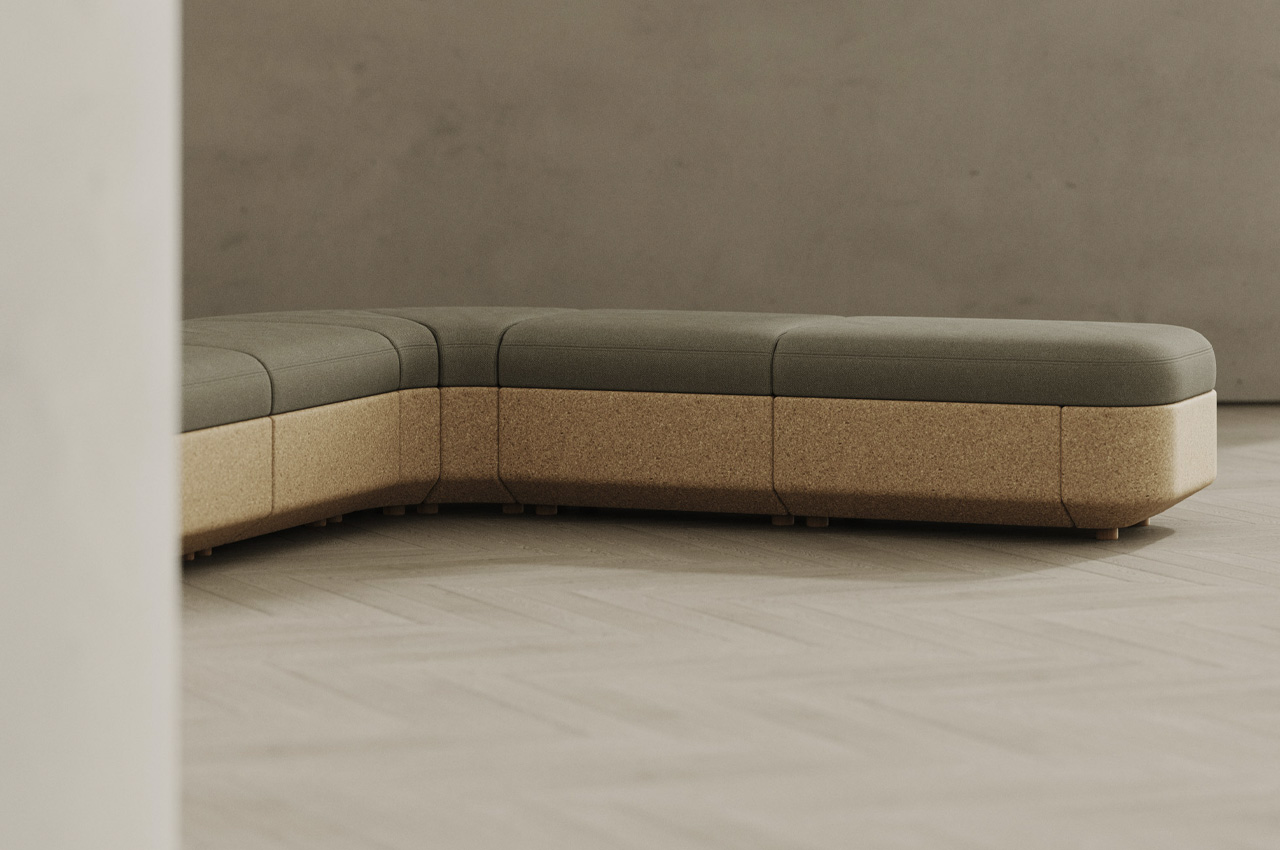
Designed by Paul Crofts, this modular seating system is called Tejo. Crofts designed the Tejo seating collection for the furniture brand Isomi. It is intended to be a “reconfigurable, recyclable, and renewable” modular seating collection that serves as a bench, a single sofa, or even a double back-to-back sofa.

Designer: Paul Crofts for Isomi

The Tejo seat includes curving components that have been filled with natural latex instead of foam. The furniture design is upholstered with natural wool, hemp, or flax instead of synthetic fabrics. It is equipped with a base made from recycled cork which has been salvaged from the production process of wine stoppers. This unique base was created instead of a traditional plywood frame.

“Grown in responsibly managed forests in the Portuguese region of Alentejo – which gives the sofa its name – cork is ideal for use in seating as it is not only soft, tactile, and visually beautiful, but it also regenerates naturally,” said Isomi.

The cork utilized for the Tejo seating solution is sustainably grown, and also a sustainable material option in itself. It ventures into the utilization of cork as a material of choice, while creating a furniture design that has a complementing and soft aesthetic value to it. The Tejo modular furniture design is available in a wide range of colors, and it has been created to work well in different commercial spaces – ranging from retail settings to workplaces and even restaurants.

The Tejo seat can be integrated with different additional elements such as screen dividers, table units, planets, power outlets, and charging ports to create a personalized and customized furniture design. You can add the components that work well for you and your lifestyle, in turn creating a seating system that meets your multiple needs – whether they’re home-oriented or for work. The elegant and refined aesthetics of the seating design allow it to artfully merge with most spaces, giving it a much-appreciated versatility.

The post This Modular Seating Solution Is Made From Recycled Cork Salvaged From Wine Stoppers first appeared on Yanko Design.

Call of Duty: Black Ops 6 is coming to Xbox Game Pass on its release day

Just before Microsoft closed its acquisition of Activision Blizzard, it said that it would take some time to bring the publisher's titles to Game Pass. We've only seen one such addition so far in the form of Diablo IV, but the company has announced another, somewhat notable one. Call of Duty: Black Ops 6 will be available on Game Pass on its release day later this year.

Microsoft is banking on the debut of a new Call of Duty title on its subscription service leading to a significant bump in the number of Game Pass members. It's a bit of a gamble, as for nearly every year in recent memory, the latest Call of Duty release has been the best-selling game. Microsoft is likely to see lower direct sales of Black Ops 6 on Xbox and PC, though it will still generate revenue from Game Pass and the PlayStation version (and perhaps even a Nintendo Switch release), as well as through microtransactions.

Meanwhile, Microsoft released a live-action trailer for Black Ops 6. It features depictions of Bill Clinton, Margaret Thatcher, George H. W. Bush and Saddam Hussein, lending credence to rumors that the next Call of Duty game will be set during the Gulf War. We'll find out much more about Call of Duty: Black Ops 6 during a showcase that take place immediately after a broader Xbox event on June 9.

This article originally appeared on Engadget at https://www.engadget.com/call-of-duty-black-ops-6-is-coming-to-xbox-game-pass-on-its-release-day-142823681.html?src=rss