OpenAI will train its AI models on the Financial Times’ journalism

The Financial Times has become the latest news organization to strike a deal with OpenAI. In a joint announcement on Monday, the Financial Times and OpenAI said that maker of ChatGPT will use the Financial Times’ journalism to train its AI models and collaborate on developing new AI products and features for the publication’s readers. ChatGPT will also attribute and and link back to the Financial Times when it includes information from the publication in its responses

“It is right, of course, that AI platforms pay publishers for the use of their material,” said Financial Times CEO John Ridding in a statement and added that the Times is “committed to human journalism.” Neither company disclosed the financial terms of the agreement. Earlier this year, The Information reported that OpenAI offers publishers between $1 million and $5 million a year to license their content to train its AI models.

Generative AI is only as good as the training data used to train the models that power it. So far, AI companies have scraped everything they can from the public internet often without the consent of creators, and are constantly on the hunt for new data sources to keep the outputs generated by these models current. Training AI models on news is one way to achieve that, but some publishers are wary of giving up their content to AI companies for free. The New York Times and the BBC, for instance, have OpenAI from scraping their websites.

As a result, OpenAI has been striking financial deals with leading publishers to keep its models trained. Last year, the company partnered with German publisher Axel Springer to train its models on new from Politico and Business Insider in the US and Bild and Die Welt in Germany. The company also has deals with the Associated Press, France’s Le Monde, and Spain’s Prisa Media.

Subscribing to the Financial Times costs at least $39 a month for. But, as some pointed out, its partnership with OpenAI effectively means a dismantling of its own paywall for general readers through generative AI.

This article originally appeared on Engadget at https://www.engadget.com/openai-will-train-its-ai-models-on-the-financial-times-journalism-173249177.html?src=rss



Durat’s Sustainable Surfaces Merge Aesthetics with Environmental Ethics

Since its establishment in 1990, Durat, a Finnish leader in sustainable design materials, has been at the forefront of both ecological innovation and aesthetic functionality. With a steadfast commitment to transforming industrial waste into high-quality, recyclable solid surfaces, Durat redefines the traditional use of recycled materials. At the core of its philosophy, deeply rooted in the principles of the circular economy, these values are evident in its product offerings and holistic approach to design and production. During Milano Design Week 2024, Durat showcased the “PORTA DEI COLORI” installation, a vivid illustration of their philosophy. This installation, brought to life by Linda Bergroth, symbolizes the marriage of sustainable practices with imaginative design. It demonstrates that recycled materials can be used beyond just practical applications, achieving significant artistic value.

Designer: Linda Bergroth + Durat

Unlike traditional countertop materials such as granite, quartz, or laminate, Durat’s sustainable solid surfaces present several environmental and functional advantages. Traditional materials like granite and quartz involve energy-intensive mining processes and often require long-distance transportation, which significantly impacts the environment. Additionally, laminate countertops may release volatile organic compounds (VOCs) due to the chemicals involved in their production. In contrast, Durat’s materials are crafted from recycled post-industrial plastics, significantly reducing the ecological footprint by minimizing waste and avoiding the depletion of natural resources. These surfaces are eco-friendly and fully recyclable at their life’s end, promoting a sustainable lifecycle.

Durat’s materials have the potential to outperform traditional options in terms of durability and ease of maintenance. While granite is robust, it can crack under severe impact and requires periodic sealing to prevent staining. Quartz, though less prone to staining, can suffer damage from excessive heat. Laminate, although versatile, is vulnerable to scratches, chips, and heat damage. In stark contrast, Durat surfaces are engineered for resilience and longevity, capable of withstanding wear, impact, and high temperatures without compromising their structural integrity or appearance. Their non-porous nature ensures they’re hygienic, easy to clean, and resistant to bacterial growth, making them ideal for both bustling commercial environments and busy home kitchens.

While traditional materials are often constrained by the availability of natural patterns and colors, Durat offers a refreshing alternative with its diverse range of over 300 colors, complemented by distinctive grit effects that create dynamic and continuously evolving patterns. This vast palette provides remarkable creative freedom, enabling designers and architects to precisely tailor their projects, pushing the boundaries of design aesthetics from the minimalistic to the avant-garde. These materials are lighter and more adaptable than their stone counterparts, simplifying the installation process and making repairs and refinishing easier. They also appeal to a wide array of consumers and professionals. Eco-conscious consumers and businesses appreciate Durat’s commitment to environmental stewardship, aligning perfectly with their sustainability practices. The durability and hygienic properties of Durat surfaces make them ideal for high-traffic areas like schools, hospitals, and retail spaces, where facility managers need long-lasting, easy-to-maintain solutions. Additionally, the ease of installation and maintenance makes Durat a favored choice among DIY enthusiasts, enhancing its popularity for home improvement projects and allowing for reduced installation costs while maintaining the material’s pristine condition over time.

This dedication ensures Durat’s solid surfaces meet today’s design professionals’ aesthetic and functional needs while also contributing positively to environmental conservation, positioning Durat as a leader in the future of sustainable modern design.

The post Durat’s Sustainable Surfaces Merge Aesthetics with Environmental Ethics first appeared on Yanko Design.

Getir is getting out of everywhere but Turkey

Getir is hightailing it out of everywhere but Turkey. On Monday, the “instant delivery” startup said it would exit the US, UK, Germany and the Netherlands to serve its Turkish home market exclusively. TechCrunch notes the closures are likely to wipe out 6,000 jobs at the company.

Getir's business model, distinct from traditional shopping services like Instacart (which has problems of its own), involves establishing micro-fulfillment centers in urban areas that carry groceries and household essentials. This often lets them fulfill orders within minutes — hence the “instant delivery” moniker. Once valued at $12 billion, the startup experienced a surge in growth during the pandemic as investors bet on COVID-era consumer shopping habits enduring after lockdowns. So much for that.

“This decision will allow Getir to focus its financial resources on Turkey,” the company told TechCrunch in a statement. The startup said the markets it’s exiting made up about seven percent of its revenues.

Even as it slashes jobs and hits the undo button on its global expansion, Getir has secured funding to focus on Turkey. Mubadala (Abu Dhabi’s state-owned investment firm) and G Squared are reportedly among those financing the Turkish-only pivot.

Getir says its US subsidiary, FreshDirect, which it bought late last year, will continue to operate. But the company suggested to Reuters it was open to offers for its existing assets in the markets it’s leaving.

The startup was founded in 2015 and exploded in popularity in Turkey. From 2017 to 2023, it raised over $2.3 billion from investors as it sought global corporate conquest, scooping up smaller competitors along the way. TechCrunch says that, in early 2023, Getir had 32,000 employees.

This article originally appeared on Engadget at https://www.engadget.com/getir-is-getting-out-of-everywhere-but-turkey-164225714.html?src=rss

Getir is getting out of everywhere but Turkey

Getir is hightailing it out of everywhere but Turkey. On Monday, the “instant delivery” startup said it would exit the US, UK, Germany and the Netherlands to serve its Turkish home market exclusively. TechCrunch notes the closures are likely to wipe out 6,000 jobs at the company.

Getir's business model, distinct from traditional shopping services like Instacart (which has problems of its own), involves establishing micro-fulfillment centers in urban areas that carry groceries and household essentials. This often lets them fulfill orders within minutes — hence the “instant delivery” moniker. Once valued at $12 billion, the startup experienced a surge in growth during the pandemic as investors bet on COVID-era consumer shopping habits enduring after lockdowns. So much for that.

“This decision will allow Getir to focus its financial resources on Turkey,” the company told TechCrunch in a statement. The startup said the markets it’s exiting made up about seven percent of its revenues.

Even as it slashes jobs and hits the undo button on its global expansion, Getir has secured funding to focus on Turkey. Mubadala (Abu Dhabi’s state-owned investment firm) and G Squared are reportedly among those financing the Turkish-only pivot.

Getir says its US subsidiary, FreshDirect, which it bought late last year, will continue to operate. But the company suggested to Reuters it was open to offers for its existing assets in the markets it’s leaving.

The startup was founded in 2015 and exploded in popularity in Turkey. From 2017 to 2023, it raised over $2.3 billion from investors as it sought global corporate conquest, scooping up smaller competitors along the way. TechCrunch says that, in early 2023, Getir had 32,000 employees.

This article originally appeared on Engadget at https://www.engadget.com/getir-is-getting-out-of-everywhere-but-turkey-164225714.html?src=rss

OpenAI hit with another privacy complaint over ChatGPT’s love of making stuff up

OpenAI has been hit with a privacy complaint in Austria by an advocacy group called NOYB, which stands for None Of Your Business. The complaint alleges that the company’s ChatGPT bot repeatedly provided incorrect information about a real individual (who for privacy reasons is not named in the complaint), as reported by Reuters. This may breach EU privacy rules.

The chatbot allegedly spat out incorrect birthdate information for the individual, instead of just saying it didn’t know the answer to the query. Like politicians, AI chatbots like to confidently make stuff up and hope we don’t notice. This phenomenon is called a hallucination. However, it’s one thing when these bots make up ingredients for a recipe and another thing entirely when they invent stuff about real people.

The complaint also indicates that OpenAI refused to help delete the false information, responding that it was technically impossible to make that kind of change. The company did offer to filter or block the data on certain prompts. OpenAI’s privacy policy says that if users notice the AI chatbot has generated “factually inaccurate information” about them that they can submit a “correction request”, but the company says that it “may not be able to correct the inaccuracy in every instance”, as reported by TechCrunch.

This is bigger than just one complaint, as the chatbot’s tendency toward making stuff up could run afoul of the region’s General Data Protection Regulation (GDPR), which governs how personal data can be used and processed. EU residents have rights regarding personal information, including a right to have false data corrected. Failure to comply with these regulations can accrue serious financial penalties, up to four percent of global annual turnover in some cases. Regulators can also order changes to how information is processed.

“It’s clear that companies are currently unable to make chatbots like ChatGPT comply with EU law, when processing data about individuals,” Maartje de Graaf, NOYB data protection lawyer, said in a statement. “If a system cannot produce accurate and transparent results, it cannot be used to generate data about individuals. The technology has to follow the legal requirements, not the other way around.”

The complaint also brought up concerns regarding transparency on the part of OpenAI, suggesting that the company doesn’t offer information regarding where the data it generates on individuals comes from or if this data is stored indefinitely. This is of particular importance when considering data pertaining to private individuals.

Again, this is a complaint by an advocacy group and EU regulators have yet to comment one way or the other. However, OpenAI has acknowledged in the past that ChatGPT “sometimes writes plausible-sounding but incorrect or nonsensical answers.” NOYB has approached the Austrian Data Protection Authority and asked the organization to investigate the issue.

The company is facing a similar complaint in Poland, in which the local data protection authority began investigating ChatGPT after a researcher was unable to get OpenAI’s help with correcting false personal information. That complaint accuses OpenAI of several breaches of the EU’s GDPR, with regard to transparency, data access rights and privacy.

There’s also Italy. The Italian data protection authority conducted an investigation into ChatGPT and OpenAI which concluded by saying it believes the company has violated the GDPR in various ways. This includes ChatGPT’s tendency to make up fake stuff about people. The chatbot was actually banned in Italy before OpenAI made certain changes to the software, like new warnings for users and the option to opt-out of having chats be used to train the algorithms. Despite no longer being banned, the Italian investigation into ChatGPT continues.

OpenAI hasn’t responded to this latest complaint, but did respond to the regulatory salvo issued by Italy’s DPA. “We want our AI to learn about the world, not about private individuals,” the company wrote. “We actively work to reduce personal data in training our systems like ChatGPT, which also rejects requests for private or sensitive information about people.”

This article originally appeared on Engadget at https://www.engadget.com/openai-hit-with-another-privacy-complaint-over-chatgpts-love-of-making-stuff-up-162250335.html?src=rss

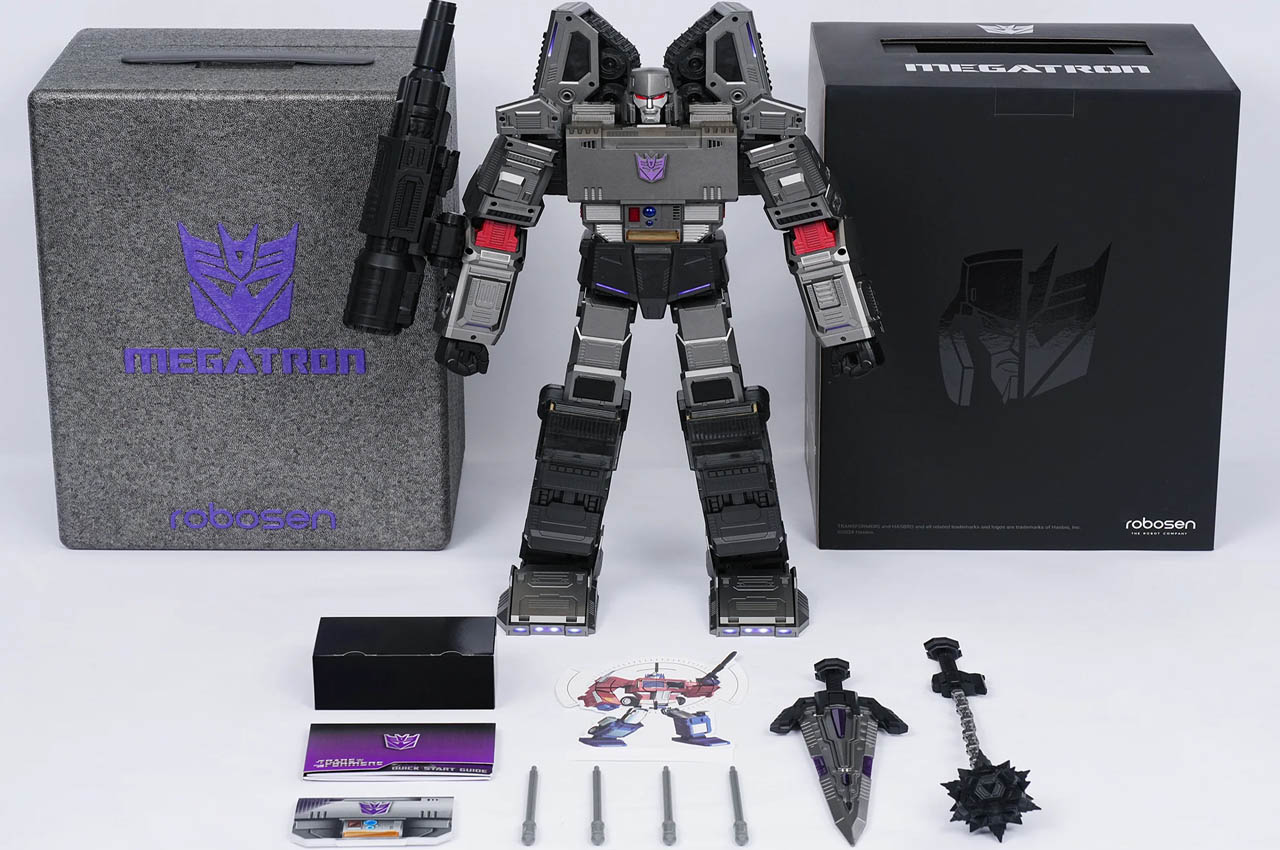
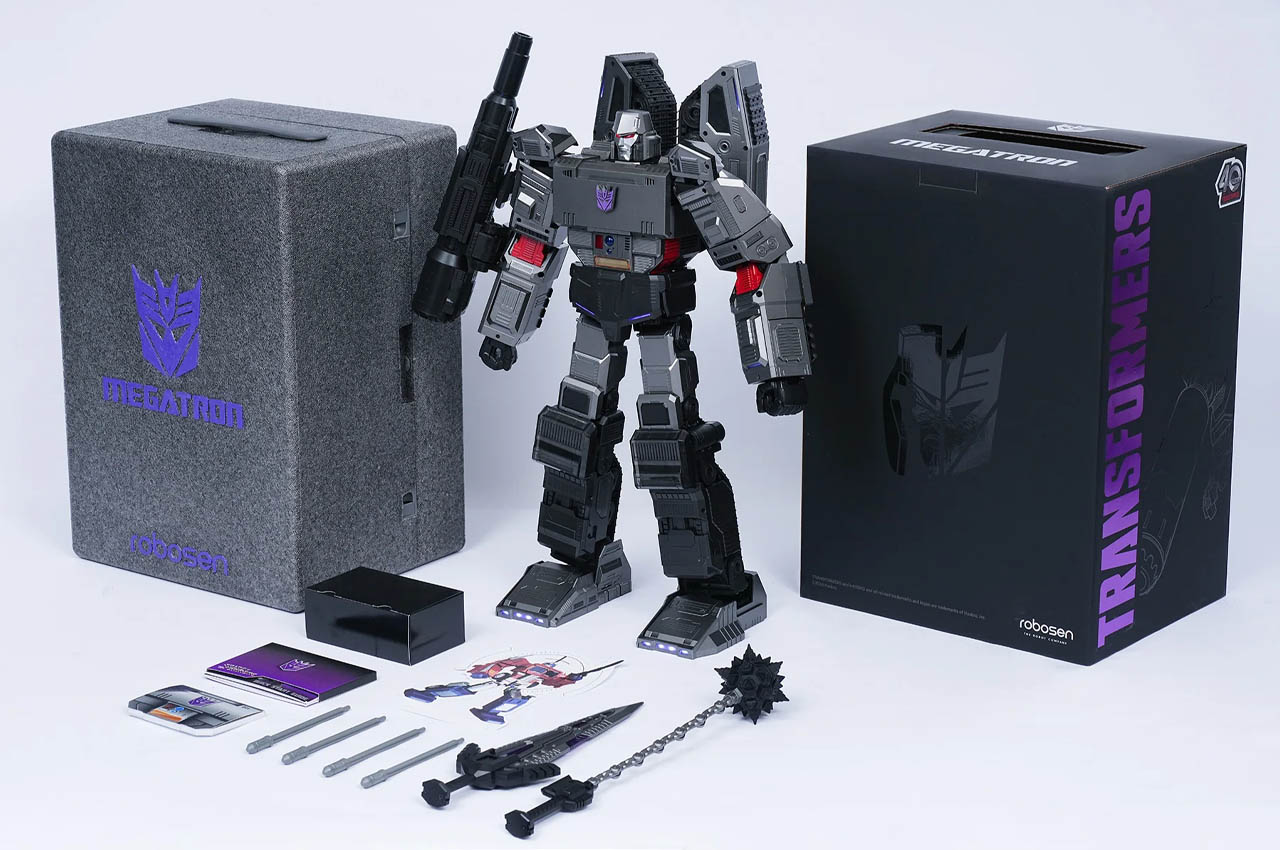
Smart Megatron transforms into a tank, responds to voice commands and shoots projectiles

While all Transformers fans are tripping over Optimum Prime, it’s time to give the leader of the Decepticons his due chance. Yes, this self-transforming Megatron will win you over to join the bad side of the Transformers universe, the toy is that good. Created by Robosen Robotics in collaboration with Hasbro, the high-tech interactive collectible will force the inner child out of even the most serious middle-aged men.

Everything about this autobot is impressive, right from its design to the cool moves it is capable of. The Megatron is released as a limited edition collectible to celebrate the 40th anniversary of Transformers. Be informed that this thing comes at a steep price tag of $800 during the initial pre-order phase, and after that period the price is expected to shoot higher at around $1,200.

Designer: Robosen Robotics and Hasbro

With a simple voice command, the 21-inch Megatron transforms from a walking bipedal robot to a rolling tank. The way it changes personality in an instant is the most satisfying thing to watch. The voice commands further extend into triggering actions like firing plastic darts from the cannon or doing other cool tricks. It can also play out famous scenes from the franchise in the voice of actor Frank Welker with visual actions. Voice commands can be used to wake up the robot or even play Happy Birthday tunes. The servo motors and microchips let the user control it remotely from a smartphone with the companion app.

Get too close to the Autobot and it reacts to your touch, thanks to the touch sensors placed on the body. Don’t be surprised if it shouts out loud “You Fool” when touched on the front plate and picked up off the surface. In the tank mode, it can fire plastic cannons on voice commands and do a lot of other cool stuff you’ll love. The robot has a lot of servos and they are well concealed behind the clever spring-loaded flaps. Attention to detail is apparent here with small details like the automatically rotating logo when it converts from a tank to a standing robot.

The post Smart Megatron transforms into a tank, responds to voice commands and shoots projectiles first appeared on Yanko Design.

The Apple Watch Series 9 is back on sale for $299

If you've been planning on buying an Apple Watch Series 9, today looks like a decent time to take the plunge. The smartwatch is currently on sale for $299 at multiple retailers, including Amazon, Best Buy, Target and Walmart. That's not quite the lowest price we've seen — a couple colorways briefly fell to $269 earlier this month, for instance — but steeper discounts have generally been uncommon. This deal takes about $30 off the watch's typical street price on Amazon, and it's $100 less than buying from Apple directly. As of this writing, the offer applies to the 41mm non-cellular version of the watch in Midnight, Red, Silver or Starlight. It covers models with a rubber, S/M- or M/L-sized Sport Band or a nylon Sport Loop.

We gave the Apple Watch Series 9 a score of 92 in our review last September, and it's currently the top pick in our guide to the best smartwatches. It runs fast, it's water-resistant and it can still handle many tasks that'd normally require an iPhone, from checking iMessages to calling on Siri to using Apple Pay. Most of the essential health and fitness tracking features are still here as well, as are safety-related tools like fall detection and an emergency SOS function. Compared to the lower-cost Apple Watch SE, it has a slightly larger display that can stay always-on, which makes it less cumbersome for checking the time at a glance. 

New to this model is a handy Double Tap feature, which lets you respond to notifications without having to physically touch the device, and the ability to complete many Siri requests on-device, without having to always be online. It also has double the internal storage (64GB) as the Series 8, and its display's peak brightness rating (2,000 nits) is twice as high. 

That said, the usual caveats with any Apple Watch still apply. The whole thing will only work with iPhones. The battery will last most of a typical day but not much longer. There are better options for sleep tracking. Due to an ongoing patent dispute, Apple has also had to disable the watch's blood oxygen monitoring feature. In general, there's no huge need to make the switch if you own an Apple Watch today and are still happy with it. But if you're looking to upgrade today, this should be a nice value.

Follow @EngadgetDeals on Twitter and subscribe to the Engadget Deals newsletter for the latest tech deals and buying advice.

This article originally appeared on Engadget at https://www.engadget.com/the-apple-watch-series-9-is-back-on-sale-for-299-150928694.html?src=rss