Fly Me To The Moon trailer plays right into Apollo 11 conspiracy theorists’ hands

Fly Me To The Moon is an upcoming comedy-drama from Columbia Pictures and Apple that goes behind the scenes of NASA trying to improve its image while preparing for the Apollo 11 mission to the Moon. A trailer makes it seem like a lighthearted, fun time at the movies, though conspiracy theorists may have a field day with one of the key plot points.

Scarlett Johansson plays Kelly Jones, a PR expert who NASA brings in to improve public perception ahead of the launch. Along with butting heads with launch director Cole Davis (Channing Tatum) and turning the crew into global celebrities, Kelly is handed a particularly difficult task: to secretly create a fake version of the Moon landing, just in case the mission goes sideways. 

The rest of the cast, which includes Woody Harrelson, looks solid too. For one thing, the delightful Jim Rash (Community) plays the very much not Stanley Kubrick director of the phony Moon landing. The movie's director is Greg Berlanti, who was behind Love, Simon and a string of DC Comics TV shows.

Fly Me To The Moon will arrive in theaters on July 14, almost 55 years to the day after Apollo 11 launched.

This article originally appeared on Engadget at https://www.engadget.com/fly-me-to-the-moon-trailer-plays-right-into-apollo-11-conspiracy-theorists-hands-174547851.html?src=rss

This modular LP player with detachable controller is modernized digital player for your vinyl collection

Consuming music in digital format is as easy as compressing thousands of MP3 files into your phone storage and playing it with just a few taps on the screen. This is not the case with long play discs that ensure the unmatched sensory experience of sliding a record from the sleeve – featuring an artful cover design, – placing it on the turntable, adjusting the needle on the groove, and then enjoying the clean, clear music watching the disc rotate in visual ecstasy.

With vinyl disc players, you are treated to analog music where sound revibrates unlike any other medium. This fascination in the otherwise digitalized world has triggered a resurgence of record players in the last decades. Now, with the booming sales of vinyl, designers are willing to take the dive, presenting digital ways to playback LP’s and make them time-relevant without compromising the rich sound quality.

Designer: found/Founded

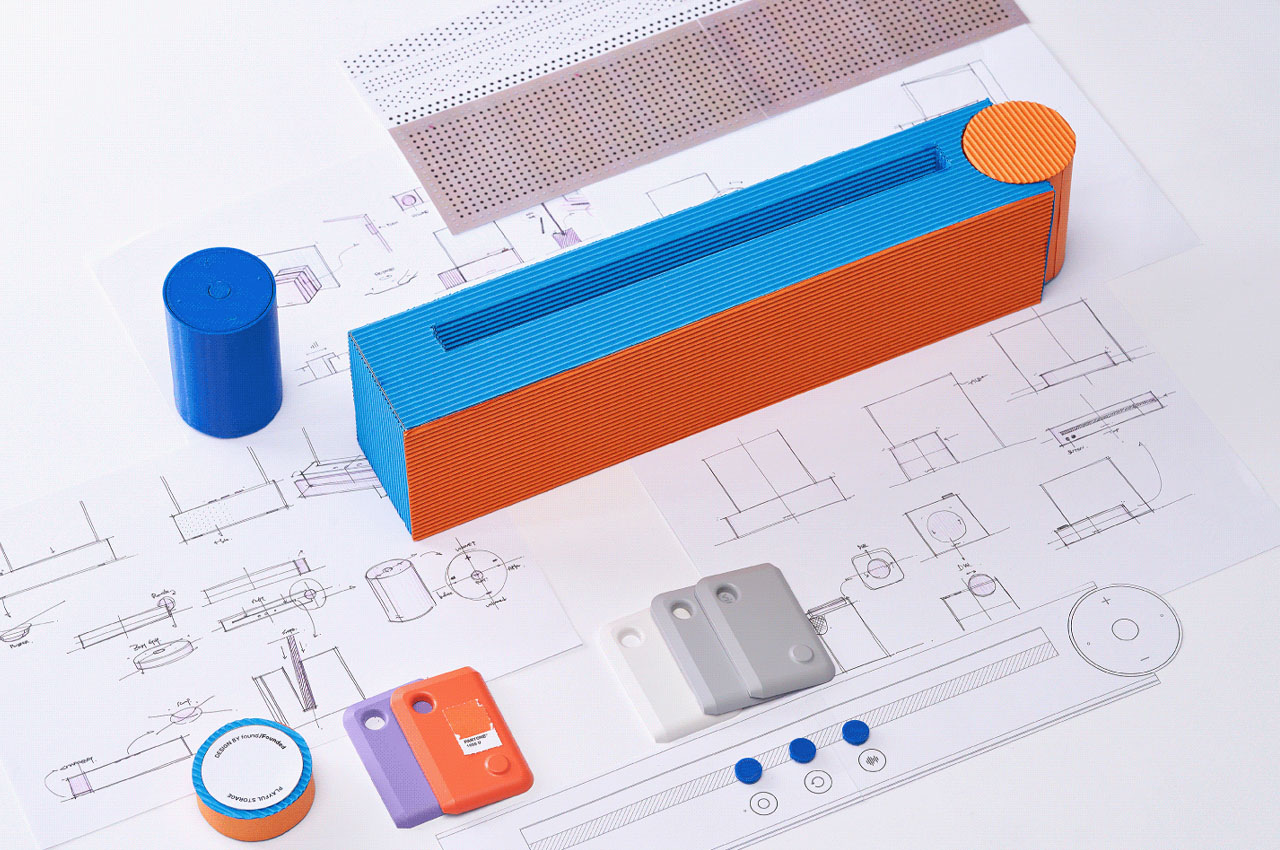
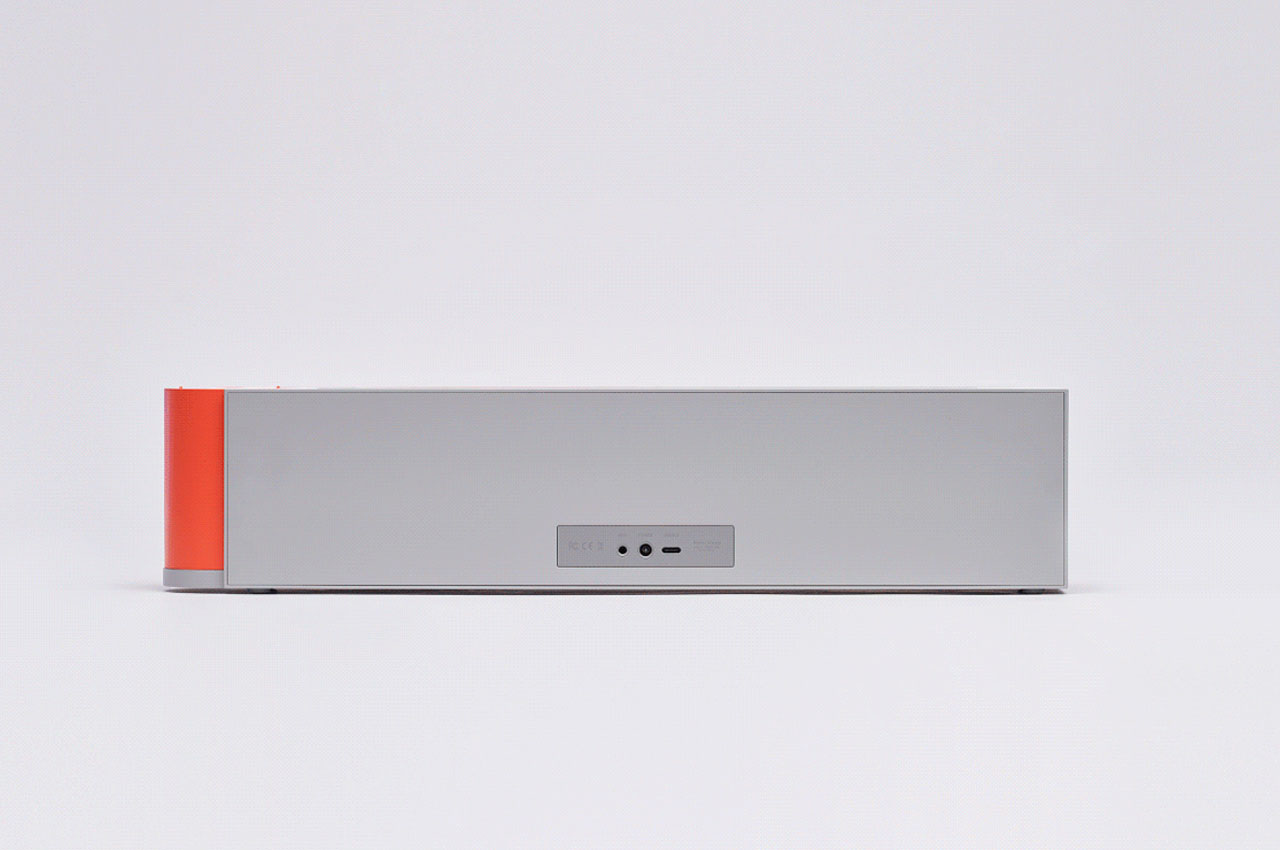
Case in point the Vibrary Digital LP Player that is more than its vibrant orange color and pleasant design. It is a modernized high-quality player for your vinyl collection that features a modular design you can customize with colors and materials of choice to match the artist’s official color and more. Of course, it’s not the most fascinating collector’s item still, but if you’re someone who is generally on the move and wants to carry their love for LPs along, the Vibrary Digital is a remarkable option.

While turntables offer a warm vinyl sound; this new design offers a tangible click-through operation for ease of use, and promises to match the sound experience through its long speaker body that houses the record.  The new Vibrary Digital concept digital album player, as it is referred to, is designed to enjoy your favorite records whenever and wherever you want.

It is envisioned with a detachable – cylindrical – wireless controller stationed next to the speaker (also with onboard controls), which would allow you to play music from the slotted record from a distance. Digitalizing the idea of a record player is not limited to size and altered vertical design, it is presented with state-of-the-art listening modes including spatial sound mode and a voice-specific mode that would allow you to customize sound according to the artist’s content.

The post This modular LP player with detachable controller is modernized digital player for your vinyl collection first appeared on Yanko Design.

TSMC snags $6.6 billion in CHIPS Act funding to open three factories in Arizona

President Biden’s CHIPS Act money continues to get doled out to semiconductor manufacturers. The White House just announced that the Taiwan Semiconductor Manufacturing Company (TSMC) is receiving $6.6 billion in grants to build three fabrication plants, otherwise called fabs, in the region of Phoenix, Arizona. This is in addition to around $5 billion in government loans.

As part of this deal, TSMC agreed to expand its planned investment in Arizona by $25 billion, to $65 billion. The company already announced two of the three factories it is building in the state, with a third promised by 2030. The White House says this represents the largest foreign direct investment in Arizona’s history, with expectations to bring 6,000 high-wage tech jobs and 20,000 construction jobs to the state.

One nifty aspect of these factories is that they’ll allow TSMC to complete every aspect of the chip-making process on US soil, including advanced packaging. I’m not talking about slapping a box and warranty information around the chip. In this context, packaging refers to arranging the various components to build the final product, in addition to adding power, inputs and outputs. As things currently stand, even components that are made in America are sent back to Taiwan for packaging and then mailed across the world yet again for the final sale. These Arizona factories will, eventually, put a stop to all of that jet-setting.

Once all three factories are humming along, they will reportedly manufacture tens of millions of chips to power products like smartphones, autonomous vehicles and, of course, AI datacenter servers. Future iPhones and Macs will use 4nm and 3nm chips made at the Phoenix plants, thanks to a partnership with Apple. TSMC has already reported some delays with the first two factories, but the current plan is for the first fab to be fully operational by next year, with the second to follow in 2028 and the third by 2030.

The White House says this investment, along with other CHIPS Act grants and loans, will turn the US into a global chip-making powerhouse. The federal government suggests that the US will manufacture 20 percent of the world’s leading-edge chips by 2030.

“America invented these chips, but over time, we went from producing nearly 40 percent of the world’s capacity to close to 10 percent, and none of the most advanced chips, exposing us to significant economic and national security vulnerabilities”, said President Biden.

One of the main goals of the CHIPS Act is to lure global chipmakers to build on US soil, and it looks like it’s working. Last week, Samsung announced it would be doubling its investment in Texas to $44 billion, with plans for an ambitious expansion. The multinational semiconductor company GlobalFoundries received a grant of $1.5 billion to help pay for a new fabrication facility in New York that will handle the manufacture of chips for the automotive, aerospace, defense and AI industries. Intel recently received the largest CHIPS grant to date, snatching up to $8.5 billion to continue various US-based operations.

This article originally appeared on Engadget at https://www.engadget.com/tsmc-snags-66-billion-in-chips-act-funding-to-open-three-factories-in-arizona-165945639.html?src=rss


TSMC snags $6.6 billion in CHIPS Act funding to open three factories in Arizona

President Biden’s CHIPS Act money continues to get doled out to semiconductor manufacturers. The White House just announced that the Taiwan Semiconductor Manufacturing Company (TSMC) is receiving $6.6 billion in grants to build three fabrication plants, otherwise called fabs, in the region of Phoenix, Arizona. This is in addition to around $5 billion in government loans.

As part of this deal, TSMC agreed to expand its planned investment in Arizona by $25 billion, to $65 billion. The company already announced two of the three factories it is building in the state, with a third promised by 2030. The White House says this represents the largest foreign direct investment in Arizona’s history, with expectations to bring 6,000 high-wage tech jobs and 20,000 construction jobs to the state.

One nifty aspect of these factories is that they’ll allow TSMC to complete every aspect of the chip-making process on US soil, including advanced packaging. I’m not talking about slapping a box and warranty information around the chip. In this context, packaging refers to arranging the various components to build the final product, in addition to adding power, inputs and outputs. As things currently stand, even components that are made in America are sent back to Taiwan for packaging and then mailed across the world yet again for the final sale. These Arizona factories will, eventually, put a stop to all of that jet-setting.

Once all three factories are humming along, they will reportedly manufacture tens of millions of chips to power products like smartphones, autonomous vehicles and, of course, AI datacenter servers. Future iPhones and Macs will use 4nm and 3nm chips made at the Phoenix plants, thanks to a partnership with Apple. TSMC has already reported some delays with the first two factories, but the current plan is for the first fab to be fully operational by next year, with the second to follow in 2028 and the third by 2030.

The White House says this investment, along with other CHIPS Act grants and loans, will turn the US into a global chip-making powerhouse. The federal government suggests that the US will manufacture 20 percent of the world’s leading-edge chips by 2030.

“America invented these chips, but over time, we went from producing nearly 40 percent of the world’s capacity to close to 10 percent, and none of the most advanced chips, exposing us to significant economic and national security vulnerabilities”, said President Biden.

One of the main goals of the CHIPS Act is to lure global chipmakers to build on US soil, and it looks like it’s working. Last week, Samsung announced it would be doubling its investment in Texas to $44 billion, with plans for an ambitious expansion. The multinational semiconductor company GlobalFoundries received a grant of $1.5 billion to help pay for a new fabrication facility in New York that will handle the manufacture of chips for the automotive, aerospace, defense and AI industries. Intel recently received the largest CHIPS grant to date, snatching up to $8.5 billion to continue various US-based operations.

This article originally appeared on Engadget at https://www.engadget.com/tsmc-snags-66-billion-in-chips-act-funding-to-open-three-factories-in-arizona-165945639.html?src=rss

Drones that charge on power lines may not be the best idea

Battery life has long been a key limiting factor in drone use. Although there are commercial models that can stay aloft for 45 minutes or longer on a single charge, being able to keep drones in the air for longer would be helpful for many purposes. Researchers at the University of Southern Denmark have been working on that issue for several years by developing drones that can recharge directly from power lines.

This time around, the scientists attached a gripper system to a Tarot 650 Sport drone, which they customized with a electric quadcopter propulsion system, an autopilot module and other components. When the drone's systems detect that the battery is running low, the device employs its camera and millimeter-wave radar system to pinpoint the closest power line, as New Atlas notes.

The drone then flies up to the power line from underneath, using a pair of inward-sloping arms to guide the cable into the gripper. An inductive charger pulls current from the power line. When the battery is full, the gripper opens and the drone continues on its way.

At the outset, the idea is for drones that inspect power lines to use this charging system. The researchers first showed off a self-charging drone that tops up its battery from power lines in 2022. This time around, they improved the gripper system and demonstrated a real-world use case for the tech.

In a paper they're presenting at next month's IEEE International Conference on Robotics and Automation, the team described the project as "to the best of our knowledge, a first-in-the-world system with the ability to sustain operation throughout many inspection/charging cycles powered by energy harvesting from power lines in a real outdoor environment." In arguably the most successful test, the drone stayed aloft for over two hours through five cycles of power line inspection and charging.

Drones have been used for years to monitor and inspect power lines. They're particularly useful in remote areas, such as mountain tops, where examining power lines manually is a tough ask. Still, it's hard not to feel a little uneasy about drones clamping onto power lines. If anything goes wrong and a drone somehow ends up damaging a power line, an entire region could lose electricity. Charging pads for drone exist and may be a safer option, but they'd require extra space for infrastructure.

This article originally appeared on Engadget at https://www.engadget.com/drones-that-charge-on-power-lines-may-not-be-the-best-idea-163942109.html?src=rss

Google’s long-awaited Find My Device network launches today

Google has finally launched its long-awaited Find My Device network after teasing it at last year’s I/O event. The technology leverages a crowdsourced network of over a billion Android devices to help people locate lost gadgets, with a basic functionality in line with similar offerings from Apple and Tile. It’s rolling out today to Android users in the US and Canada, with a global release coming soon.

Once installed, people can use the app to locate compatible Android phones and tablets. The tool will cause them to ring at your command and their location will pop up on a map. This map data works even if the items are offline. Pixel 8 and Pixel 8 Pro smartphones will appear on the map if they’re powered off or if the battery is completely dead. That sounds pretty handy.

The technology isn’t yet available for everyday items, but that’s coming soon. Bluetooth tracker tags from Chipolo and Pebblebee will get integrated into the Find My Device app in May. This will let users locate just about anything, including car keys, purses, wallets and, hopefully, wandering felines. The upcoming tags are being built specifically for the network.

An image of three new Pebblebee trackers.
Google

The Pebblebee offerings include tags, clips and slim cards for wallets. They hit store shelves in late May or early June. Chipolo is making versions of its One Point and Card Point trackers for Android devices, which will arrive in May. Google says more trackers are coming later this year, including products made by Motorola and eufy.

Google’s Find My Device service also integrates with Nest smart home gadgets. If you lose something in the home, the Find My Device app will show you the location of the item in relation to pre-existing Nest devices. This should help provide an “easy reference point” to snatch them back up.

Finally, there’s a nifty feature that lets you share the location of an item with other people, so friends and family can keep an eye on precious belongings. Google says it’ll let folks “easily divide and conquer if something goes missing.” 

The new Find My Device tracking technology works on devices running Android 9 and above. That OS came out in 2018, so it means a whole lot of people will have access to this service. As for compatible products beyond Android devices and Bluetooth tags, the company says future software updates will allow integration with a full range of headphones from JBL and Sony.

Of course, there are the usual privacy concerns with this kind of thing. Google says that users can opt out of the service via a web portal if they feel uncomfortable, according to a story by The Verge. Reports indicate that the technology has been ready for a while, but Google delayed it until Apple implemented tracking protections into iOS to address stalking concerns. To that end, both companies announced a partnership last year to develop industry standards to fight the misuse of tracking devices. Apple applied updated protections against stalking in iOS 17.5, which is still in beta. 

This article originally appeared on Engadget at https://www.engadget.com/googles-long-awaited-find-my-device-network-launches-today-160014930.html?src=rss

Cubicle-like urban car concept envisions commuting havens of the future

Everyone travels, whether alone or with others, for work, school, or even leisure. Not everyone, however, enjoys traveling in the same way, especially those who prefer some quiet, solitary time during commutes. Unfortunately, most of the self-driving vehicle concepts seem to focus on turning cars into social spaces, practically removing boundaries between passengers. That’s probably fine for families and friends on their way to a vacation destination, but some people going to and from the office might prefer a bit of quiet downtime on the road. In contrast, this forward-looking design offers an alternative experience, one that envelopes the passenger in their own private space, and it seems to take inspiration from one of the most isolating designs man has ever made: the office cubicle.

Designer: Chloe Gao

The idea of self-driving cars is for people to spare themselves the drudgery and exhaustion of driving so that they can spend more time on more important things. For some people, that might be making connections with other people in the vehicle, but others might prefer some “me time” instead. It’s for these people, especially the “Gen Z” group who value independence and personal immersion, that this urban commuting concept was designed.

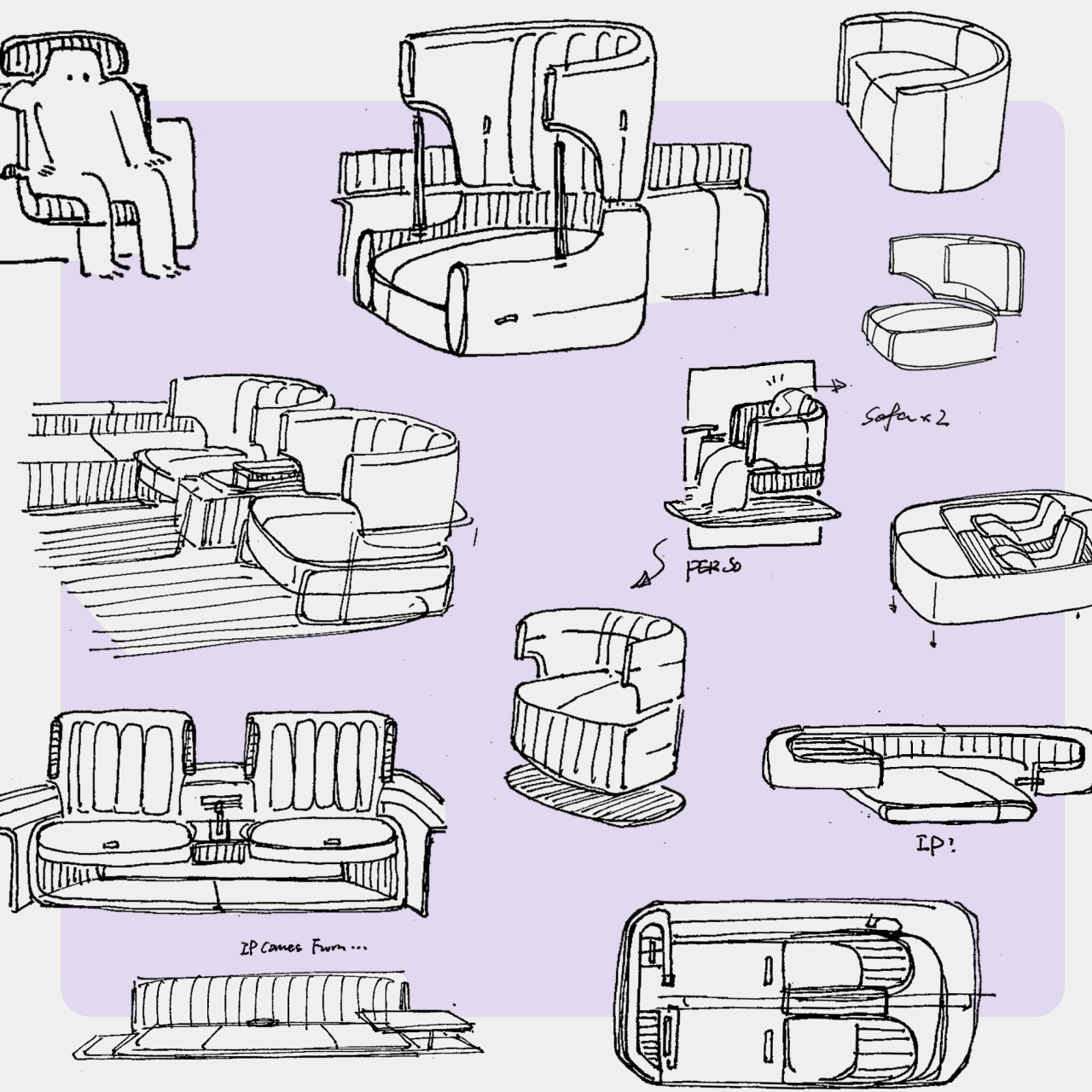
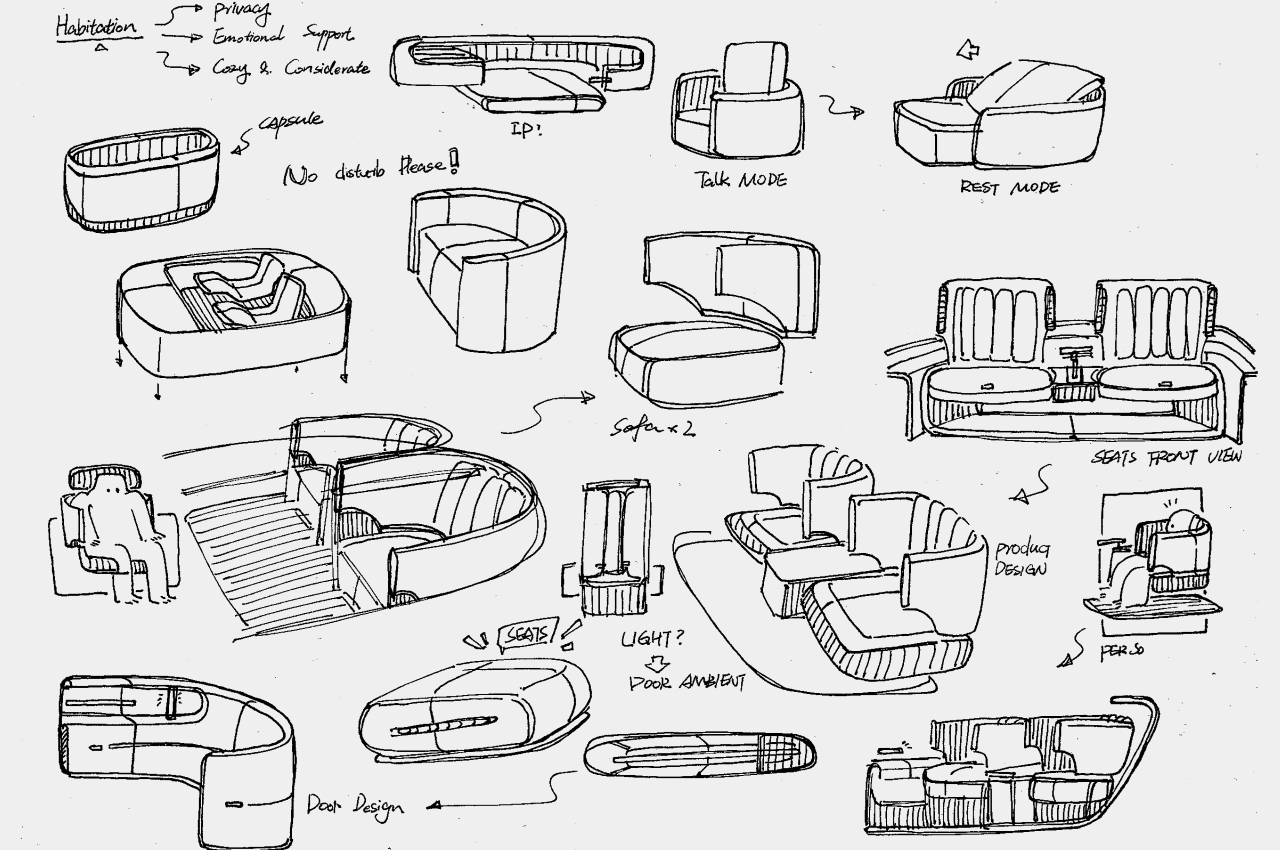
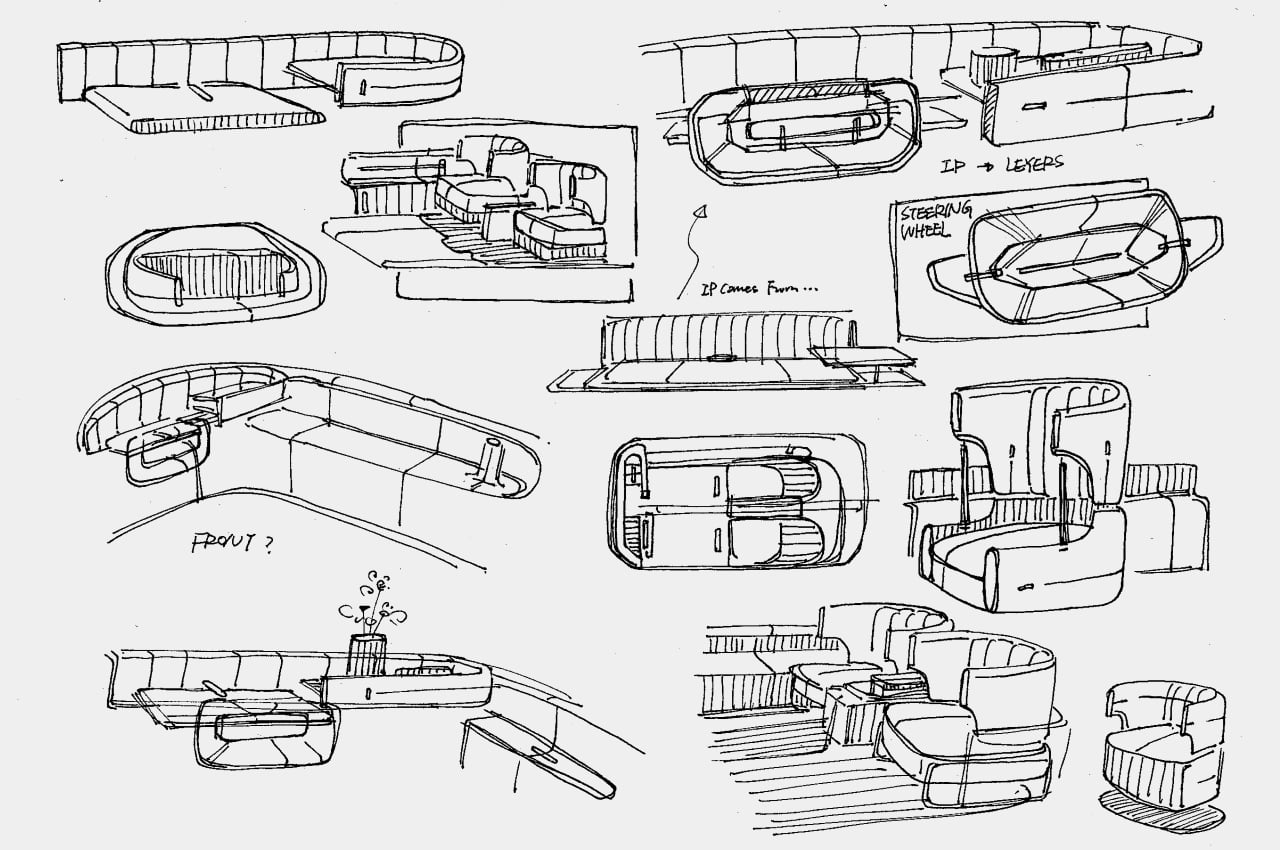
As its name suggests, the H-BOX concept turns the car into a box-like machine, and the two-seater model the chairs set to the back of the cabin. Unlike most self-driving automobile concepts, however, this seems to still pay heed to the need for manual control from time to time, so the “driver’s seat” can slide forward to take hold of the futuristic steering well if needed. That further widens the separation between the two seats, which might be a preferred configuration for two people who really want to be immersed in their own little corners.

What makes the H-BOX distinctive, however, are the seats themselves. Where most designs would feature reclining seats that seem to offer the ultimate comfort, these surround the passenger from almost all sides except the front. In other words, it boxes them in, shielding them from the other person in the vehicle while still giving them a clear view of their surroundings. Admittedly, it doesn’t look like the most comfortable design, though it wouldn’t be impossible to have the seat move forward and the backrest lean backward for that same reclining effect.

Then again, the purpose of this self-driving vehicle is to quickly get commuters to their destinations with minimum fuss and perhaps minimum interactions. At the same time, however, the interior of the vehicle still offers a convenient and advanced experience complete with a display that wraps around the interior of the cabin. It does seem to cater to a very niche audience, a generation that might no longer even be around by the time self-driving cars fully take root, but it could offer a more solitary experience for people who prefer to travel in peace and quiet.

The post Cubicle-like urban car concept envisions commuting havens of the future first appeared on Yanko Design.