The Beast is John Dodd’s 27-Liter V12 creation that turned aviation power into road-going legend

When I first came across the story of the car known simply as The Beast, crafted by British engineer John Dodd, I was reminded of those wild, boundary-pushing machines you’d expect in vintage concept renderings. Except this one was real. Dodd, a gearbox specialist, wasn’t dreaming of design for design’s sake; he was building a functioning road-legal car that defied logic and convention. Built in 1972, The Beast is a one-off shooting-brake style creation, nearly 19 feet long (about 5.8 m), powered by a 27-liter (1,650 cu-in) Rolls‑Royce Merlin V12 aero engine, the same type that powered the Supermarine Spitfire and Lancaster bomber in WWII.

Dodd’s journey began when engineer Paul Jameson created a chassis to house a Rolls-Royce Meteor tank engine in the late 1960s. When that project stalled, Dodd took over, rebuilt it after a fire destroyed the first version, and stepped up the ante by installing the Merlin V12. To handle the immense torque from the engine, Dodd engineered a bespoke transmission, adapting a heavy-duty automatic gearbox. The bodywork, by Fiber Glass Repairs of Bromley, blends the length of a dragster nose with the profile of a grand touring estate. Inside, Dodd did not neglect refinement: leather upholstery, walnut veneer, and an interior that belies the car’s wild intent.

Designer: John Dodd

Performance figures are largely anecdotal (since formal dyno tests are lacking), but contemporaneous reports estimate output between 750-850 horsepower, with claims of over 183 mph achieved on the German Autobahn. What truly matters is the ambition: a road-going car using an aeroplane engine, built by a private engineer in Britain. Although it may not meet modern supercar standards, for its era, it smashed boundaries. The car incorporated independent suspension and disc brakes all around, making it more usable than you’d expect for such a dramatic build.

Legal drama is part of the story too. The original Beast carried a Rolls-Royce grille and the Spirit of Ecstasy mascot. The marque sued Dodd in the 1980s for trademark infringement and won, forcing him to replace the grille with one bearing his initials. Later, the car accompanied Dodd to Spain, where locals became accustomed to the thunderous note of the engine echoing around Malaga.

In recent times, the car has been refreshed. The original bright yellow paint is now hidden under a reversible two-tone metallic grey wrap (so the yellow could be restored in the future) and the interior retrimmed to a high standard. The Beast was consigned to auction by Historics Auctioneers with an estimate of £75,000–£100,000 (roughly USD $98,000–$131,000) in late 2025.

What stands out most is how The Beast blends ludicrous scale and genuine engineering into a drivable road car. It’s not just a showpiece; it was built to move, to roar, to defy expectation. For someone fascinated by the intersection of bespoke craftsmanship and automotive maverick thinking, this car is a landmark. If you’re someone considering bidding or simply telling the story, here is a piece of motoring folklore that truly warrants attention.

The post The Beast is John Dodd’s 27-Liter V12 creation that turned aviation power into road-going legend first appeared on Yanko Design.
Peugeot Polygon Concept shatters the rules of modern supermini design

Peugeot’s design portfolio has always balanced compact efficiency with expressive character, but the new Polygon Concept takes that philosophy in a more experimental direction. This compact EV previews the next-generation 208 and signals the French brand’s vision for a future where architecture, materials, and controls are rethought.

Built on a sub-4-meter footprint, the Polygon modernizes the supermini silhouette with bold geometry and a signature lighting design. The familiar three-claw Peugeot motif is reinterpreted as horizontally arranged micro-LED stripes at both the front and rear, giving the car a sharply modern look. Its body features two large butterfly doors, replacing the conventional four-door layout, which is an expressive choice more suited for concept presentation rather than mass production.

Designer: Peugeot

The most radical change is on the inside, where the traditional round steering wheel is replaced by what Peugeot calls the “Hypersquare.” Rather than a solid circular rim, this control interface consists of four pods (one at each corner) that house touch-sensitive controls for media, driving modes, and more. Because the system is steer-by-wire, there is no physical linkage between the control and the front wheels. The steering ratio automatically adjusts for different speeds, becoming more direct at low speeds and more stable at high speeds. This setup also filters out any abrupt road vibrations for a smoother riding experience.

Peugeot replaces its conventional instrument cluster with a micro-LED screen placed behind the steering assembly, projecting information directly onto the windshield in a large, immersive format. According to the company, this design creates a cleaner, more open interior while keeping the driver’s attention focused where it matters.  Sustainability is central to the Polygon. The cabin uses a “forged textile” made from recycled seat upholstery sourced from end-of-life Peugeot vehicles. Seat shells are 3D-printed from recycled R-PET plastic, while their foam cores come as a single molded piece, reducing complexity. Interior paint also incorporates recycled rubber derived from used tires.

Peugeot designed the Polygon with modular, easily replaceable parts. Elements such as the Hypersquare control, seat foam, dashboard surfaces, and wheel covers can all be swapped out, allowing for personalization and potentially longer ownership. The car uses fewer overall components than a typical production vehicle, which simplifies manufacturing and supports a more circular lifecycle. Another tech highlight: the Polygon’s Goodyear tires feature “SightLine” technology, which monitors pressure, temperature, and road conditions and sends that data to the i-Cockpit system in real time.

While Peugeot has not confirmed detailed powertrain specifications, the Polygon is widely understood to preview a forthcoming fully electric version of the 208. The concept aligns with Peugeot’s plan to bring its Hypersquare steering system to production models around 2027. The Polygon Concept is a bold exploration of future small-car design with a combination of steer-by-wire controls, immersive display technology, and sustainable materials. Peugeot proposes a supermini that is not just efficient, but smarter, more modular, and far more expressive than what exists today.

The post Peugeot Polygon Concept shatters the rules of modern supermini design first appeared on Yanko Design.

Audi Concept C Hands-On: When Athletic Minimalism Becomes Tangible Reality

At Audi’s Formula 1 event in Munich, I finally got hands-on time with the Concept C that sat on display. Between interviews, roundtable and briefings on F1 operations and facility tours, I had uninterrupted access to experience every surface, control, and detail I’d only theorized about in my September analysis of the Concept C’s athletic minimalism philosophy. This wasn’t a drive review. This was the kind of access that lets you understand whether a design philosophy actually translates from renderings and press materials into physical reality.

Designer: Audi

What I found validated nearly everything I wrote three months ago while also revealing gaps that photographs and specifications simply cannot capture. Some design elements photograph better than they feel. Others hide their sophistication until your hands confirm what your eyes suspected. The Concept C falls decisively into the latter category.

The Vertical Frame Confronts You Differently in Person

Photographs suggested authority. Physical presence delivers something closer to architectural permanence. The vertical frame that defines the Concept C’s face doesn’t just command attention when you approach. It fundamentally alters your spatial relationship with the car.

Most sports cars crouch. The Concept C stands. This creates an unexpected psychological effect. You don’t feel like you’re approaching a predatory machine that wants to intimidate you. You feel like you’re approaching a piece of industrial sculpture that happens to be engineered for motion. The distinction matters more than I anticipated when writing about this design from press images.

The vertical orientation creates visual weight without aggression, exactly as Audi’s design team intended. But the physical execution elevates this from interesting design choice to genuinely novel automotive presence.

That Cylindrical Center Console Element Exceeds Expectations

I wrote in September that this single component made me “giddy as a designer” based on photographs. Seeing it in person, feeling the machined surfaces, rotating it through its detent positions: I underestimated its impact.

This isn’t automotive jewelry. This is mechanical watchmaking philosophy applied to interior controls. The tolerances are absurd. When you rotate the cylinder, each detent click communicates precision through sound, resistance, and tactile feedback simultaneously. The aluminum surface treatment creates visual depth through subtle anodizing variations that photographs flatten into uniform gray.

Under Munich’s overcast afternoon light, the cylinder surface revealed micro-textures that shift as your viewing angle changes. This component alone justifies the athletic minimalism philosophy because it demonstrates how eliminating visual complexity forces every remaining element to achieve perfection.

I spent probably three minutes just rotating this control and feeling the mechanical quality. Each click produces the same resistance. Each detent holds position with identical firmness. This is the kind of obsessive engineering refinement that luxury brands promise but rarely deliver. The Concept C delivers it in a component most drivers will interact with dozens of times per drive.

That consistency between philosophy and execution separates serious design work from concept car theatrics.

The Steering Wheel Fulfills Its Round Promise

My September analysis praised the steering wheel’s return to pure circular form after years of flat-bottom, button-laden steering wheels became industry standard. Holding it confirms the decision’s wisdom.

Your hands find natural positions immediately. The rim diameter feels slightly larger than typical sports car wheels, which initially seems counterintuitive until you realize the extra circumference distributes grip pressure more evenly during spirited driving. The machined aluminum spokes telegraph structural purpose without decorative pretense.

When you grip the wheel and apply rotational force (not enough to actually turn the stationary wheels, just enough to test structural rigidity): zero flex. Zero creaking. Zero anything except the sensation of holding something engineered to communicate road surface information without filtration or interpretation.

Modern steering wheels often feel like they’re designed to protect you from feedback. This wheel feels designed to deliver it. The absence of buttons, paddles, and switches reinforces the minimalist commitment. In an era when steering wheels increasingly resemble game controllers, this wheel returns to its core purpose: connecting human inputs to mechanical outputs with maximum fidelity and zero distraction.

Every other function lives in its proper place, leaving the steering wheel to focus on steering.

The Retractable Hardtop Mechanism Reveals Sophisticated Engineering

I watched the roof cycle through its transformation sequence twice. The two-element system maintains the monolithic silhouette exactly as promised in official descriptions. What those descriptions don’t communicate: the mechanical choreography’s absolute precision.

The roof elements move in coordinated sequence with zero hesitation, zero adjustment, zero apparent searching for alignment points. Most retractable hardtops reveal their compromise through visible gaps, adjustment pauses, or mechanical complexity that dominates the aesthetic when deployed. The Concept C’s system disappears completely when lowered.


The rear deck maintains clean surfacing without visible storage bulges or panel interruptions. When raised, the roofline integrates so seamlessly that you’d never suspect it retracts. This achievement separates competent engineering from obsessive refinement.

What Static Observation Cannot Reveal (And What It Can)

Twenty minutes of hands-on time creates different understanding than twenty minutes of driving would provide. I cannot tell you how the Concept C handles mountain roads or how the electric powertrain delivers power through corner exits. Those experiences require the motion I didn’t get.

But I can tell you that athletic minimalism creates manufacturing challenges that traditional design approaches avoid. The center console cylinder alone probably costs more to manufacture than entire interior control assemblies in volume-market vehicles. The steering wheel’s machined aluminum components require precision manufacturing that doesn’t scale easily. The hardtop mechanism’s sophisticated engineering demands expensive components and careful assembly.

Athletic minimalism creates cost pressures that traditional design approaches avoid by hiding cheaper materials behind visual complexity.

I left my Munich appointment with the Concept C convinced of two things: First, this design philosophy works in physical reality as effectively as it promised on paper. Second, production versions will necessarily compromise somewhere between current concept execution and market realities.

The question that matters: which compromises will Audi accept, and will the production car maintain enough of this concept’s essence to justify the bold philosophical claims.

What Hands-On Time Confirms

Three months ago I analyzed the Concept C from photographs, specifications, and official descriptions. I concluded that athletic minimalism represented genuine design evolution rather than momentary styling exercise. Forty minutes of physical interaction with surfaces, mechanisms, and materials confirms that assessment while deepening appreciation for execution quality.

The Concept C demonstrates that radical simplicity creates more challenges than traditional complexity because every remaining element must achieve excellence. Audi met those challenges in this concept. Whether production versions maintain this standard determines if athletic minimalism becomes genuine brand direction or remains concept car philosophy that reality couldn’t sustain.

But today, standing in Munich with the vertical frame commanding presence in front of me and that perfect cylindrical control under my fingertips, I experienced design philosophy transformed into tangible reality. The question isn’t whether this approach works. The question is whether the automotive industry possesses sufficient courage to follow where Audi leads.

The post Audi Concept C Hands-On: When Athletic Minimalism Becomes Tangible Reality first appeared on Yanko Design.

Audi R26 Concept: Radical Minimalism Rewrites F1 Design

Photo: Audi

How Audi’s Formula 1 entry rewrites the visual rules of motorsport

On November 12, 2025, Audi unveiled the R26 Concept at its Brand Experience Center in Munich. I was there, and the first thing that strikes you when you see the car in person is how clean it looks compared to every other F1 car. Where competitors plaster every surface with sponsor logos and complex graphics, Audi went the opposite direction: radical minimalism driven by four design principles that treat the race car as architecture.

The R26 sat under bright reveal lighting at the Brand Experience Center, and the titanium finish showed its full reflective quality – a light, warm silver with subtle gold undertones. Move around the car, and you see how metallic finishes shift depending on viewing angle and light direction. That dynamic quality is something photos struggle to capture.

This isn’t a livery. It’s a visual system.

First Impressions: Seeing the R26 in Person

The R26 Concept sits on a raised platform at the Brand Experience Center, and from the moment you walk in, you understand what Audi means by “clarity.” The car reads as a single sculptural object. Your eye doesn’t jump between different graphic elements or sponsor logos fighting for attention. Instead, you follow the car’s form.

The red rings dominate immediately. Against the titanium and carbon, the red pops in a way that silver rings never could. Standing about 10 feet from the car, the rings are the first thing you see. Move closer, and the geometric cuts become visible. Move to the side, and you see how those cuts follow the sidepod’s compound curve.

The carbon fiber is particularly striking in person. It’s not painted black. It’s actual woven carbon, clear-coated to bring out the texture. Under the reveal lighting, you can see the individual weave pattern. It creates this organic texture against the precision geometry of the titanium panels. The contrast between smooth metal and textured carbon adds depth that flat paint never could.

The proportions feel different from current F1 cars. The R26 looks smaller, more compact, almost delicate. The narrow track width and reduced wheelbase make it look more like a classic Grand Prix car than a modern F1 machine. The minimalist graphics amplify this effect. Without visual clutter, the car’s actual shape becomes the dominant element.

Walking around the car, the geometric cuts reveal their logic. Each cut aligns with a structural element or airflow path. On the front wing, the titanium and carbon transition follows the wing’s compound curve. On the sidepods, the geometric division marks the break between the upper and lower airflow paths. These aren’t arbitrary design choices. They’re the car’s engineering made visible.

The Four Principles: Clear, Technical, Intelligent, Emotional

Audi’s design team built the R26 around four foundational principles: Clear, Technical, Intelligent, and Emotional. Each principle shapes specific design decisions.

Clear means eliminating visual noise. The R26 uses minimalist graphic surfaces with precise geometric cuts that follow the car’s structural lines rather than fight them. Where most F1 liveries wrap graphics over complex 3D surfaces, Audi’s design integrates with those surfaces. The result: a car that reads as a single visual object rather than a collection of stickers.

Technical drives the material expression. Exposed carbon fiber, metallic titanium, functional air intakes: every surface communicates its engineering purpose. The design doesn’t hide the technology; it celebrates it through selective color application and geometric clarity.

Intelligent governs the systematic application of design elements. The geometric cuts aren’t random. They map to structural stress points, airflow paths, and regulatory panel divisions. Audi’s designers worked directly with the engineering team to map every cut to the car’s invisible architecture: stress points where forces concentrate, airflow boundaries where high and low-pressure zones meet, load paths where structural members transfer energy. The visual geometry reflects forces you can’t see but that define how the car works. Function dictates form, but beauty emerges from the constraint.

Emotional brings the selective use of Audi red. While the base palette stays monochromatic (titanium and carbon black), red appears at key moments to create visual punctuation. The red rings replace Audi’s traditional silver exclusively for F1, marking a historic brand departure.

Color as Communication: The Three-Color System

Audi developed an entirely new color palette for F1, and each color has specific purpose:

Titanium: The Foundation

Titanium is Audi’s new performance color, first introduced on September’s Concept C. It’s a warm metallic that reads differently depending on light conditions. In bright sun, it appears almost white with a subtle gold undertone. In shadow or under track lighting, it shifts to a deeper, cooler gray with bronze highlights.

Photo: Audi

The Concept C introduced titanium as part of Audi’s production car transformation. The R26 adapts that same color for a radically different purpose. Where Concept C uses titanium to signal elegance and precision in a road car, the R26 deploys it for instant recognition and competitive differentiation in racing. Same color, different mission. The R26 doesn’t copy Concept C. It translates Concept C’s design language into motorsport clarity.

The warmth differentiates it from traditional racing silvers. Where chrome and aluminum feel cold and industrial, titanium conveys technical sophistication with organic warmth. It’s the color of aerospace-grade materials, of precision engineering, of expensive watches.

Titanium also solves a practical problem: visibility. On modern F1 broadcasts with complex camera angles and varying light conditions, many cars become visually similar. Titanium’s warmth and unique reflective properties create immediate visual differentiation.

Carbon Black: The Contrast

Carbon black isn’t paint. It’s exposed carbon fiber, finished to showcase the material’s woven structure. The decision to leave carbon exposed rather than painted communicates technical transparency.

Carbon black creates depth through texture. Where titanium reflects light, carbon absorbs it. The contrast between the two materials creates visual drama without graphics. The eye follows the transition between reflective and absorptive surfaces, mapping the car’s complex 3D geometry.

The exposed carbon also references Audi’s motorsport heritage. The Auto Union Silver Arrows pioneered lightweight construction in the 1930s. The R18 e-tron quattro showcased carbon monocoque technology at Le Mans. Exposed carbon fiber connects past to present through material honesty.

Audi Red: The Punctuation

Audi red exists nowhere else in the brand’s history. Created specifically for F1, it’s a pure, saturated red without orange or blue undertones. Think Rosso Corsa (Ferrari’s racing red) but slightly cooler in temperature.

Red appears selectively. It doesn’t flood the car. Instead, it marks specific moments: the halo structure, certain wing elements, brake cooling ducts. Each red application draws the eye to a functional element. Red becomes a visual guide to the car’s critical systems.

The red rings replace Audi’s silver rings exclusively for F1. Four red rings against titanium and carbon create instant recognition. From any angle, any distance, you know it’s Audi. The red rings also solve the challenge of brand visibility on a minimalist design. Without busy graphics, the rings need to work harder. Red makes them unmissable.

Geometric Language: Precision Cuts and Surface Integration

The R26’s most striking design element is its geometric surface treatment. Rather than applying graphics to the car’s complex 3D forms, Audi’s designers created precise cuts that follow the car’s structural geometry.

Think of it as subtractive design. Instead of adding visual elements, they’re revealing underlying structure through selective color application. A titanium surface might have a carbon black geometric cut that follows the bodywork’s compound curve. The cut isn’t arbitrary. It maps to an internal structural member, an airflow path, or a regulatory panel division.

This approach requires understanding the car’s architecture at a deep level. The design team worked directly with engineers to map stress points, airflow boundaries, and load paths. The visual geometry reflects the invisible forces acting on the car.

The geometric cuts also solve a challenge unique to F1: active aerodynamics. The 2026 regulations allow adjustable front and rear wings. The R26’s design maintains visual consistency whether wings are deployed or stowed. The geometric language works in multiple configurations because it follows the car’s core structure rather than any single aerodynamic state.

Proportion and Geometry: Working with the 2026 Regulations

The 2026 regulations give Audi’s designers opportunities unavailable with current F1 cars. The new cars are smaller (3.40m wheelbase vs. 3.60m), narrower (190cm vs. 200cm), and lighter (768kg vs. 798kg).

The 2026 regulations also mandate a fundamental powertrain shift: 50% electric power. The MGU-K (electric motor-generator unit) delivers 350kW, roughly matching the combustion engine’s output. This massive increase in electrical power (tripled from current regulations) changes the car’s architecture. The battery, inverter, and MGU-K create new packaging challenges and cooling requirements that directly influence the car’s geometry and surface design.

These reductions change the car’s proportions dramatically. Current F1 cars look big and planted, almost heavy. The 2026 cars will look nimble, almost delicate by comparison. The reduced wheelbase creates a more aggressive front-to-rear ratio. The narrower track width emphasizes vertical elements like the halo and rear wing.

Audi’s design amplifies these proportional shifts. The minimalist graphics make the car look even smaller because there’s no visual clutter to fill space. The geometric cuts emphasize the car’s length and narrowness. The selective red draws the eye vertically, accentuating height.

The overall impression is of lightness and precision: a car pared to its essential elements.

Material Expression: Texture and Finish

Beyond color, the R26 communicates through texture and finish. Audi specifies different surface treatments for different materials:

Titanium surfaces: Semi-gloss finish that balances reflection with depth. Too glossy and the car becomes a mirror, washing out detail. Too matte and the color loses its metallic character. The semi-gloss finish maintains the warm metallic read while preserving surface detail.

Carbon fiber surfaces: Clear-coated to reveal the woven structure but finished smooth for aerodynamic efficiency. The weave pattern creates visual texture without adding surface roughness. Under bright light, the carbon weave becomes visible, adding organic pattern to the geometric precision.

Red also needs high gloss for color saturation. Matte red looks dull and heavy.

These finish differences create a hierarchy of visual attention. Your eye goes to high-gloss red first, then semi-gloss titanium, then matte carbon. The finish strategy guides how you read the car’s form.

Typography and Graphics: When Less Is More

The R26 Concept preview shows minimal typography and graphics. The Audi wordmark appears clean and geometric, likely in a custom typeface that references the geometric cut language. Numbers use a technical, precision-cut style similar to engineering drawings.

Sponsor logos will be present on the final race car but in reduced size and selective placement. Audi’s partnership strategy emphasizes quality over quantity, which extends to livery design. Fewer, larger sponsor placements rather than dozens of small logos fighting for attention.

The lack of visual clutter makes individual elements more impactful. When everything screams, nothing stands out. The R26’s restraint makes each element meaningful.

Beyond the Car: A Complete Visual System

Audi’s design extends beyond the R26 to every touchpoint:

Team clothing (designed with adidas) uses the same geometric cuts, the same three-color palette, the same material contrasts. Driver suits feature titanium and carbon panels with red accents. Engineer shirts use geometric patterns derived from the car’s surface cuts.

Motorhome design applies architectural clarity. Clean white surfaces, geometric titanium accents, selective red details. The hospitality space feels like a contemporary art gallery, not a racing paddock.

Pit garage aesthetics showcase technical precision. Carbon fiber workstations, titanium tool holders, red accent lighting. Every element reinforces the four design principles.

Fan engagement zones reflect the design language through environmental graphics, wayfinding, and spatial organization. The geometric cuts become architectural elements. The three-color palette defines zones and circulation paths.

Digital fan zones and merchandise: The design system extends to Audi’s F1 app, website, and official merchandise. The same geometric patterns, the same three-color palette, the same material language. A fan buying an official team shirt gets the same design experience as someone walking through the paddock.

This comprehensive visual system creates a unified brand experience. Every interaction with Audi F1 reinforces the same design principles, the same aesthetic values, the same material language.

Designing for a New Audience

Audi’s design choices target F1’s demographic shift. The sport has gained 120 million female fans in five years. 44% of on-site visitors are now under 35. This younger, more diverse audience values aesthetics, sustainability, and brand authenticity differently than traditional F1 fans.

The R26’s minimalism appeals to design-conscious audiences who appreciate restraint over excess. The sustainable fuel mandate (part of the 2026 regulations) and 50% electric power align with younger fans’ environmental concerns. The red rings and titanium palette create a visual identity that works across digital platforms where younger audiences engage with F1 content.

Formula 1’s growth among younger demographics isn’t accidental. It’s driven by new media formats, design-forward teams, and visual storytelling that emphasizes aesthetics alongside performance. The R26 positions Audi at the center of this shift.

Design Heritage: From Silver to Red

Audi’s motorsport design history provides context for the R26:

The Auto Union Silver Arrows (1934-1939) pioneered the mid-engine layout, creating an entirely new racing silhouette. They emphasized technical innovation through streamlined bodywork that showcased mechanical complexity.

The Audi quattro (1981-1984) made four-wheel drive visible through aggressive fender flares and functional air intakes. The design communicated the revolutionary drivetrain through proportional shifts.

The Audi R8 LMP (2000-2002) introduced TFSI technology with clean, efficient aerodynamics. The design emphasized airflow management through sculpted surfaces and functional openings.

The R18 e-tron quattro (2012-2014) showcased hybrid technology through distinctive LED lighting and exposed mechanical elements. The design made electrical systems visible for the first time.

The RS Q e-tron (2024) brought electric drive to Dakar with brutal, geometric bodywork that emphasized structure over surface. The design celebrated the mechanical complexity of the electric drivetrain.

The R26 continues this heritage of technical transparency and innovative thinking, but adds a new layer: systematic minimalism. Previous Audi race cars showcased technology through addition: more details, more elements, more visual complexity. The R26 showcases technology through subtraction, revealing essential form through reductive design.

Comparison: How the R26 Differs from Current F1 Design

Current F1 liveries follow predictable patterns:

Busy graphics: Most cars use complex swooshes, gradients, patterns, and layered sponsor logos. Visual complexity becomes visual noise.

Arbitrary color placement: Colors often appear without structural logic, applied to maximize sponsor visibility rather than enhance form.

Surface-level design: Graphics sit on top of the car’s form rather than integrate with it. The 3D complexity of an F1 car gets flattened by 2D graphics.

Brand consistency over innovation: Most teams maintain similar liveries year after year, changing colors but maintaining the same basic approach.

The R26 rejects all these conventions:

Minimalist graphics: Visual restraint creates clarity and impact.

Structural color logic: Color placement maps to the car’s engineering, not sponsor requirements.

Integrated design: Graphics follow and reveal the car’s 3D form rather than covering it.

Visual innovation: The R26 establishes a new aesthetic language for Audi’s F1 era.

The closest comparison might be McLaren’s occasional minimalist liveries or the simple elegance of classic Grand Prix cars from the 1960s. But the R26’s geometric precision and material-driven approach creates something new.

Why Minimalism Works: Function, Not Just Form

The R26’s minimalism isn’t purely aesthetic. It solves practical problems:

Sponsor visibility: Fewer, larger sponsor placements get more attention than dozens of small logos competing for space. The minimalist surfaces make each sponsor location more valuable and more visible on television broadcasts.

Instant identification: Racing fans need to identify cars during chaotic race starts, high-speed overtakes, and wet conditions where spray obscures details. The R26’s distinctive proportions, unique color palette, and bold red rings create instant recognition from any angle, any distance, any lighting condition.

Television clarity: Modern F1 broadcasts use complex camera angles, onboard shots, and aerial views where busy liveries become visual noise. The R26’s geometric clarity reads clearly in every camera position.

Adaptability: The minimalist approach allows the design to work across different configurations (active aero positions) and different lighting conditions (day races, night races, variable weather) without losing visual coherence.

Minimalism becomes a competitive advantage because it makes the brand more visible, not less.

The November R26 Concept preview shows design direction, not final specification. Between now and the January 2026 car reveal, Audi’s design and engineering teams are working through an iterative refinement process:

Color specification: Testing titanium samples under different light sources (daylight, track lighting, television lighting) to finalize the exact metallic formula. Calibrating the red hue for maximum saturation and visibility. Optimizing the carbon fiber clear-coat finish for texture visibility while maintaining aerodynamic smoothness.

Geometric precision: Using CAD models and full-scale mockups to refine the exact placement of every geometric cut. Each cut must align with structural boundaries, airflow paths, or regulatory panel divisions. The design team validates that cuts maintain visual coherence in all wing configurations (active aero deployed and stowed).

Typography: Finalizing the custom typeface design that references the geometric cut language. Testing number legibility at racing speeds and various camera angles. Ensuring consistency across physical car graphics and digital brand materials.

Sponsor integration: Working with partners bp, Revolut, and adidas to position their logos within the minimalist design without disrupting visual flow. Fewer, larger placements that respect the geometric language and three-color palette.

Material transitions: Engineering the physical junctions where titanium panels meet carbon fiber surfaces. Ensuring smooth transitions that don’t create aerodynamic disturbances. Detailing how red elements integrate structurally with the base colors (painted panels vs. vinyl applications).

This refinement process involves constant collaboration between designers in Munich, engineers in Neuburg and Hinwil, and aerodynamicists validating every change in CFD simulations and wind tunnel testing.

The January reveal will show these refinements applied to a competition-ready car. Testing in Barcelona (January 26-30) and Bahrain (February 11-13, 18-20) will reveal how the design works in real racing conditions under television cameras and against competitor liveries. The March 8 Melbourne debut will show the R26 under lights, in competition, against nine other designs.

Strategic Investment: Qatar Backs the Vision

The R26’s bold design vision is backed by equally bold strategic moves. In November 2024, Audi announced that Qatar’s sovereign wealth fund, the Qatar Investment Authority (QIA), acquired a significant minority stake in Sauber Holding AG. This partnership provides financial strength and long-term commitment to the F1 project.

The QIA investment signals confidence in Audi’s approach: minimalist design, technical innovation, and audience transformation. Qatar’s backing allows Audi to execute its vision without compromise, funding the three-location operation, the extensive testing program, and the comprehensive visual system rollout.

Design as Competitive Advantage

“We want to have the most striking car on the grid,” says Massimo Frascella, and the R26’s design might deliver exactly that.

In modern F1, with cars so aerodynamically similar, visual differentiation matters. Fans need to identify cars instantly during chaotic race starts, high-speed overtakes, wet conditions. Television directors need cars that read clearly on screen. Sponsors want immediate brand visibility.

The R26’s minimalism creates instant recognition. The unique proportions, the distinctive color palette, the red rings: you can identify an Audi from any angle, any distance, any lighting condition.

The design also communicates brand values: precision, technical sophistication, innovative thinking. Where other teams shout, Audi whispers. The confidence to do less when everyone else does more.

And that confidence comes from century of motorsport success: 13 Le Mans victories, multiple DTM championships, Dakar Rally wins. Audi earned the right to take design risks.

115 days until the R26 races in Melbourne. 115 days until we see if minimalism can win in motorsport’s most complex, most visible, most competitive arena.

The post Audi R26 Concept: Radical Minimalism Rewrites F1 Design first appeared on Yanko Design.
The Radical Simplicity of Massimo Frascella: Inside the Mind of Audi’s New Design Chief

Massimo Frascella sits down across from me with the measured calm of someone who has learned to find clarity in chaos. It’s the eve of one of the most significant moments in Audi’s modern history. Tonight, the brand will reveal its Formula 1 entry to the world. Tomorrow, the automotive press will dissect every surface, every line, every strategic implication. But right now, in this moment, Frascella is fully present.

“We have so much going on and it’s a very exciting time,” he says when I ask if he’s still taking it all in. The understatement is characteristically Italian. There’s so much happening simultaneously at Audi under his creative direction that parsing it into a single narrative almost feels reductive. But when I push him on what the single point of focus is right now, his answer is immediate.

“Well, now the focus is on today. This is a major…” He pauses, catching himself mid-thought, recalibrating. “Tonight, right?”

I confirm: tonight. Hours from now, Audi will step onto one of the world’s biggest motorsport stages.

“Are you excited?”

“Absolutely, incredibly excited. This is a huge opportunity for us.”

The Third Act

I want to understand what this opportunity means to him, not just as Audi’s Chief Creative Officer, but as Massimo Frascella the designer, the artist, the person who chose this path.

“Well, for me personally, it’s part of the journey that I’m having at a personal level within the broader business,” he explains. “It’s like a third act after what we’ve been presenting in Milan and in Munich. So this is sort of a next act that expands. It broadens the whole business towards Formula 1, which is a huge, huge universe.”

Photo: Audi

Tonight’s Formula 1 reveal isn’t just another product launch. It’s the third movement in a symphony that began when Frascella took the helm at Audi. Milan, then Munich, now this. Each building on the last, each expanding the narrative of what Audi can be under his creative direction.

The Designer Who Never Drew Cars

Our readers at Yanko Design are generally interested in designers, I tell him. We started off as a platform fostering new designers, helping them find their voice and audience. So I’m curious: if he could go back in time as himself, what were some of the things that sparked his interest to become who he is today?

His answer surprises me.

“This might come as a surprise. I’ve never really been into cars. I don’t consider myself a typical car guy.”

Wait. The head of design at Audi, one of the world’s most prestigious automotive brands, isn’t a car guy?

“But I’ve always been fascinated and always had interest in design in general, art. I used to do painting when I was a kid. Not drawing cars, by the way, which is probably what you will hear from most car designers. I used to do little sketches as a kid.”

But not Frascella. “Not for me. And it just happened very late in my youth, when I was like 17, 18, which is quite late. My dad had to buy a new car, which ended up being a quite, I don’t know if I can say, uninspiring car.”

“Uninspiring or inspiring?” I ask, trying to clarify.

“Uninspiring in the end, but you know, still a good job” – meaning well-made, just not exciting. “But I remember going around dealers with him and looking at brochures and looking at cars and that’s when I started to…”

He trails off, but I can see the memory forming, that moment when something clicked.

The Day That Changed Everything

There’s a question I need to ask, because I can sense where this is going. “Was there a period when you were interested in the TT?”

“There was a period, of course, and that was like literally it was a crossing between when I finished my transportation design studies and when I started my first job in Carrozzeria Bertone and that was a moment that really formed me because the TT when it came was so different and it really opened my mind, like, you know, okay.”

He’s building momentum now, getting to the core of something important.

“Car design, you know, you can be different. You know, there’s a different mindset of approaching design, where it’s a lot more disciplined in a way, but also very expressive. And TT had all of those elements together and really changed the way I saw car design as I was, you know, entering that world as a professional.”

“As I said, it was probably my first year,” he adds.

I press him further. Can he remember what was the one thing that was compelling about the TT that he can speak of? Fast forward to today, what was that singular element?

“What was compelling about that car, it was the… I like to describe it still today, an incredibly rational design. I always say the TT cannot be designed in any other way. You know, if you look at the car…”

“I like that,” I interject, because this is exactly the kind of design philosophy that resonates.

“You can look at the car and say, would I do this different? And in your mind you go through like, yeah, maybe this. And then you always end up, no. What’s on the car is right. So I always, I was really taken by this approach that the car had and that sort of perfection and rigor in the design, which is very rational. But as a result, it was incredibly compelling to me. I was really attracted by that and I was wondering how can something so rational…”

He doesn’t finish the thought, but he doesn’t need to. How can something so rational be so emotional? That’s the paradox, the tension, the magic.

Objects of Desire

“If you had to design a non-automotive object today, what would that be?”

He considers the question. “Inspiring or that I would love to design or work on. What would you prefer?”

“What would you prefer?” I replied.

“I would love to, and this is a goal of mine at one point in my life, to design… I’m a big fan of watches. That’s one thing that I’d love to design.”

Watches. Of course. The same precision engineering, the same marriage of form and function, the same obsession with every millimeter.

“We can dig into that, but that’s another time for another interview,” I suggest.

I shift to another question. “So what’s inspiring you right now?”

“Oh yes, I’m sorry. What’s inspiring me is… Clearly everything, every sort of design has a level of purity in the form and the execution, but if you were to ask me what is the… let’s say object or physical representation of these values that I’m talking about. I said this to the team when I first started, it’s the pyramids.”

“The pyramids,” I repeat.

“Because the pyramids, for me, they have an absolute perfect geometric form. They have an incredible character, they have an incredible presence. And they really stood the test of time, didn’t they? So there is a quality to those buildings that really covers everything that I think in design you should have.”

The Question of Perfection

Now I want to get into the Concept C, to draw that line back to the TT. “Getting into the Concept C, getting back to the TT, would you consider the Concept C as there’s no other way to design it? I sat in it today and it’s pretty darn perfect.”

Photo: Audi

He’s thoughtful in his response. “You can always, when it’s easier, when you are… if you are evaluating or observing something that is not coming from you or you haven’t worked on, when you sort of evaluate things that you worked on. As a designer, you always find things that you would like to change. Not necessarily is the right thing to do, but you always question yourself. Just like if you ask that question to the people who worked on the TT, they would probably say, yeah, maybe we’ll change this and this.”

“And I’m saying, I wouldn’t change anything.”

The humility is striking. He can see perfection in the TT because he didn’t create it. But his own work?

“So on the Concept C, I have to say, things that I would change. Having said that, you know, there are moments that you think that you would do this slightly different, but it’s a thought that comes and goes. I think the more we’ve experienced the car, you know, out of the design studio as a static object, the more that we’ve seen it coming to life in different settings and moving. The more and more you feel like you cannot reach perfection, but there’s really not much that will change.”

I bring up Plato, because this conversation demands it. “To me that’s profound because I love studying philosophy and just reflecting on what Plato always says, there’s a perfect object in his world. Perfect chair, perfect table.”

Radical Next

This brings me to the big question. “Taking that to the next question, which is your Radical Next for Audi. Can you share any of that aspect with us, with our readers in terms of what we can expect? Because what I understand is anything that comes out from Audi should be very close to production or is ready for production. As a concept, when you see a concept it should be close to that.”

“It is, it is. That’s something that we’ve decided to do. You know, the Concept C is a great example of that. So it’s not only the first manifestation of the Radical Next, it is a design with a full principle, but it is also a very close preview of a vehicle that will come in the future.”

He continues: “What you can expect, to go back to your question, you can expect the translation of those values that you’re seeing on the Concept C and they are part of the Radical Next philosophy in every vehicle coming in the future, which it doesn’t mean that is literally the same design elements, but it’s the same approach.”

“You will have to deliver a different character, but they all have to follow the same guidelines, the same principles.”

Four Principles, No Exceptions

He’s mentioned principles twice now. Guidelines. The framework that will govern every Audi design decision going forward. But he hasn’t defined them yet. This feels important. If “Radical Next” is the philosophy reshaping Audi’s entire design language, I need to understand the mechanics. What are the actual pillars?

I ask him directly.

“Clarity and technicality, intelligence and emotion,” he says without hesitation.

“Are there any priorities within those four principles? Like if you had to subtract one based on time, quality, design, whatever, are they all equal?”

His answer is immediate and definitive. “They have to be there.”

“They have to be there, and then you can possibly dial some of them more than others, but they all have to be present, they all have to be there. So when we talk about clarity and technicality, intelligence and emotion, there is not a priority. You can possibly think of this as a journey through the values, where it starts with clarity and it ends with emotion. So there is logic in the flow of these four principles, but they all have to be there.”

“When we talk about clarity and technicality, intelligence and emotion, there is not a priority. You can possibly think of this as a journey through the values, where it starts with clarity and it ends with emotion. But they all have to be there.”

“Take the Formula 1 car, for example. The emotional side is dialed up because that’s the most visceral aspect of motorsport. But you’ll still see all four principles present: the clarity, the technicality, the intelligence, and the emotion. They’re in everything we do.”

He pauses, then adds something crucial: “And this doesn’t apply only to products. It goes beyond that.”

The Red Thread

I need to understand something practical. “What would be the one element that crosses between the Concept C and what we’re seeing tonight from your perspective.”

“That is exactly what I just said, the four principles.”

Photo: Audi

But I need to get more specific. “Physically, like if I had to physically explain it to our readers.”

“Well, one car is clearly a very different object.”

“Right. But if readers saw the Concept C and the Formula 1 side by side, what visual DNA would connect them?”

Photo: Audi

“Yeah, the red thread there is what makes them part of the same approach and the same philosophy is clearly the influence on the form of Formula 1 is very limited, if none. It’s very tight in spec, in the design. So the way we link to Audi philosophy is with this level of geometry, geometric approach and very clear, very clear definition of the character of the vehicle.”

“And then having the subtleties of the textures and the technicality in the finish, the exposed materials like the carbon fiber, and then of course, you know, the red that is taking a much higher degree of strength and power to elevate the emotional aspect.”

“So, again, all the four principles that are applied in their own way to the Formula One.”

The Tactile Future

Moving to the technical side, I want to explore the interior experience. “Going back to Audi’s vision developing, this is for our technical readers. The interiors are increasingly becoming more digital, and as I sat in the Concept C today, keeping everything minimal, but still very intuitive. Would you say what I experienced with the steering wheel will translate to a production model?”

I elaborate: “On the Concept C, all the dials, the buttons, it’s got a lot of characteristics of watches. It reminds me so much of the tactile experience.”

“Yeah, the answer is absolutely yes. The answer is absolutely yes, because that’s part of, it’s a big part of our approach to delivering the right experience once you sit in the car, once you drive the car, once you experience the environment and the interface with the car. So what we showed with the Concept C is clearly a preview of what we are aiming to deliver on the production.”

“And I would say this is not just for the Concept C, but applies to all Audis going forward.”

Technology in Service of Experience

“Audi has always been at the forefront of automotive technology, from the Virtual Cockpit onward. As you shape the future, what comes first: technology or design? Or do they inform each other equally?”

“They both work together, and this gives me also the opportunity to talk about giving form to a function as well. So there is an aesthetic side of design, but it’s also a more functional side to design, so it’s much broader than that. Technology is massively important for Audi, but it’s also important to use technology in the right way because the risk is that you want to display technology just for the sake of it, just to show that you are technological in a way. And I think that provides no benefit. The idea is to use technology to enhance the experience, or develop technology with a specific goal in mind: to deliver a proper Audi experience for the customer.”

Sustainability Without the Sermon

“How about sustainability, what does that mean to you? Everyone is talking about sustainability, but to you, what exactly does that mean as it pertains to Audi?”

“Sustainability still is a word that is mentioned a lot.”

“It was mentioned a lot maybe in last few years, today you almost don’t even have to talk about sustainability.”

“So you’re saying it’s sort of part of the DNA.”

“It has to be embedded in everything you do, you know. Sustainability goes from, you know, the use of materials, the method of making, the circularity of… It’s much broader, but I feel like when you hear talking specifically about sustainability, it’s a bit of a forced concept, because today you just cannot operate without having sustainability at the heart of what you do.”

Material Innovation

“How about material choices? What are your favorite material choices? I know it’s a broad question, but personally…”

“It’s a question that I really like because I am a huge supporter of innovative materials and bringing a perception of sustainable material or alternative materials like interior furniture, for instance, is something that will happen also in automotive. I think the Concept C is again a great example of that, how we have managed to deliver a very fresh, modern and very premium execution of what is a two-seater sports car without using traditional material.”

The Concept C proves you can deliver luxury without leather, premium without the old signifiers of expensive. It’s luxury redefined through intelligence and innovation.

Rapid Fire

“We have a few minutes left. I have some rapid-fire questions for you. Just off the top of your mind. Sketchbook or iPad?”

“Both, but a sketchbook for me mostly.”

“Pen or pencil?”

“Pen.”

“Really? No room for mistakes?”

“No.”

“What size pen do you use?”

“Just a Bic.”

“Really?”

“Sometimes I try fancy pens, but I go back to the old ones.”

The man leading design for one of the world’s most prestigious automotive brands sketches his ideas with a disposable pen. It’s perfect. It’s exactly right.

“I think I know the answer to this, but I’m just going to ask it for the record. Minimalism or maximalism?”

“Minimalism, but you’ve got to be careful. Minimalism doesn’t appear to be stripped down. That’s important. It’s reductive but not necessarily minimal because minimal can be associated with basic.”

“Excellent.”

Inspiration and the Grid

I ask about his favorite city for creative inspiration. He’s traveled the world throughout his career, from Italy to England, California to Munich. What place fuels his creativity most?

“Does it have to be a city?” he asks.

“It can be anywhere. Any places that inspire you.”

“Right, so I would say city-wise, I find New York very inspirational.”

“Is it because of all the lights and all the movement?” I ask, trying to understand what draws him there.

“I find a mix of heritage and modern. I find it’s easy. It has a lot, but it’s very simple to navigate and move around as well. There’s a logic to New York.”

“Yeah, yeah, yeah. I get it. You’re on an island. There’s nowhere to go. There’s a grid.”

“There’s a grid.”

The grid. Of course. For a designer who values clarity and rational design, Manhattan’s relentless geometry must feel like vindication in urban form. You can find any address just by understanding the system. Twenty-sixth street crosses every avenue. The logic is inescapable.

But then he pivots to something deeper.

“But inspirational, I mean, for me, inspirational, and this is an answer that I give all the time, inspiration is never voluntary, it’s never deliberate. It’s absorbing what you see, particularly when you’re traveling, but every day, and then inevitably, you know, you bring it back out in what you do without even knowing it.”
“Inspiration is never voluntary, it’s never deliberate. It’s absorbing what you see, particularly when you’re traveling, but every day, and then inevitably you bring it back out in what you do without even knowing it.”
“It’s not like, oh, I’ve seen this. Let me try and do something inspired by that. No, for me it doesn’t work that way.”

“But sometimes, you know, often what you do is connected to something that you’ve experienced. So that’s the inspiration, but it’s never an immediate connection.”

The Door Opens

“So the last question I have is collaboration. If you were to, say, wake up one day, now that you have direct connection to the CEO, you could say, hey, let’s do a brand collaboration with X, Y, and Z. I think this is going to be great. What would that brand be? It can be a watch brand too, wink-wink.”

He smiles. “I’m not going to say a brand, but I would say all the progressive brands that you see out there that like to take risks.”

“That’s an awesome answer, because that just opens the door to so many different things.”

And that’s exactly right. Frascella isn’t naming names because he’s not limiting possibilities. Progressive brands. Brands that push boundaries. Brands that understand that the future isn’t about doing things the way they’ve always been done.

What This Means

There’s something quietly radical about Massimo Frascella’s approach to leading one of the world’s most iconic automotive brands. He didn’t arrive at Audi with a portfolio of concept cars or a reputation for dramatic reinvention. Instead, he came with something more fundamental: a belief that rationality and emotion aren’t opposing forces but essential partners in great design.

That belief was forged in 1998, during his first year at Carrozzeria Bertone, when he encountered the original Audi TT. The car proved that disciplined, rational design could create profound emotional impact. Now, as Chief Creative Officer reporting directly to the CEO, Frascella is scaling that lesson across an entire premium brand at the most disruptive moment in automotive history.

What makes his “Radical Next” philosophy compelling isn’t just the four principles themselves (clarity, technicality, intelligence, emotion), but the insistence that all four must always be present. You can’t subtract one to save time or simplify production. You can dial them up or down depending on context, but absence isn’t an option. It’s a discipline that extends beyond product design into every touchpoint: showrooms, marketing, customer service, brand experience. This isn’t cosmetic. It’s structural.

The proof is in the commitment. Under Frascella’s leadership, Audi only unveils concept cars that preview actual production models. The Concept C, revealed in late 2025 and arriving in showrooms in 2027, represents this new contract between brand and customer: what you see is what you’ll get. No fantasy. No bait and switch. Just honest design intent made real.

Even the Formula 1 reveal tonight follows this logic. The F1 car can’t share surface language with the Concept C (regulations prevent that), but it shares the geometric rigor, the technical precision, the material honesty. Same principles, different canvas. It’s how you build a coherent design language across radically different applications.

Perhaps most telling is how Frascella talks about inspiration. Not as something you hunt for on mood boards or Pinterest, but as osmosis. The pyramids he studied. The TT that changed his trajectory. The Manhattan grid. They’re absorbed unconsciously and emerge transformed in his work. It’s the creative process stripped of mystique and ego, revealed as patient observation and disciplined synthesis.

This is why he sketches with a Bic pen instead of expensive tools. Why he defines luxury through innovative materials rather than traditional signifiers like leather. Why he insists technology must serve experience rather than showcase itself. These aren’t affectations. They’re evidence of a design philosophy built on substance over spectacle, function over flourish, clarity over complication.

And when asked about future brand collaborations, he doesn’t limit possibilities by naming names. He simply says “all the progressive brands that like to take risks.” It’s the perfect answer, because it’s not about him or Audi making choices for others. It’s about opening doors and seeing who walks through.

In an industry obsessed with disruption for its own sake, Frascella is proving that the most radical act might be returning to fundamentals. The TT showed that rational design could be deeply emotional. Under his leadership, Audi is proving it can be done again, at scale, across an entire premium brand. That’s not just good design. That’s cultural leadership.

The post The Radical Simplicity of Massimo Frascella: Inside the Mind of Audi’s New Design Chief first appeared on Yanko Design.

Italjet Roadster 400 is a fighter-jet-inspired scooter all set to redefine urban mobility

When a manufacturer known for daring scooters introduces a new model, you know it’s going to catch your eye. That’s exactly the case with the Italjet Roadster 400, a fresh unveiling from the Bologna-based brand that blends bold styling and serious components. The Roadster 400 is more than a typical urban runabout; it’s a scooter with ambition and personality.

Italjet has framed this model as “more than just a scooter,” as they call it “Art in Motion.” Designed with inspiration from classic silhouettes of the past and fighter jets alike, the Roadster 400 makes a striking statement at first glance. The sweeping lines and sculpted side pods serve as functional cooling ducts that channel air to twin radiators. All these details reinforce the premium feel of the two-wheeler that looks a cross between The Jetsons and the Cyberpunk world.

Designer: Italjet

Underneath its dramatic bodywork lies a trellis frame and a host of high-spec mechanicals. Italjet’s new Dynamic Linkage Articulated Steering (DLAS) replaces the single-arm front end used on the previous Dragster model, and brings more structural precision and visual identity to the front end. The suspension and braking package is equally noteworthy: Öhlins shock absorbers, twin Akrapovič mufflers emerging from the rear, and chunky brake discs behind billet aluminium spoked wheels.

Performance credentials are solid as well. The Roadster 400 features a 394 cc liquid-cooled single-cylinder engine that produces 41.5 horsepower and 30 lb-ft of torque, positioning it squarely in the “maxi-scooter” category rather than entry-level commuter territory. That said, Italjet has yet to reveal the full specs, such as final weight, belt vs chain drive, or the exact dimensions of the two-wheeler.

From a styling perspective, the Roadster 400 exudes an Italian flair, with matte black and bronze paint finishes, multi-textured seat upholstery, red accents, and CNC-machined lever guards featuring integrated LED turn signals, all of which speak to the attention to detail. The side pods (resembling turbine intakes) highlight the aviation inspiration and offer real function, not just flair.

From a utilitarian perspective, the Roadster 400 sits at an interesting intersection. It offers the convenience and lighter licensing benefit of a scooter, yet brings near-motorcycle performance and visual swagger. For buyers who care as much about style and mechanics as they do about practicality, it looks compelling. That said, as with any high-spec model, the trade-offs may lie in maintenance costs, parts availability (especially outside Europe), and service network. The full urban practicality, such as storage and comfort for two, has yet to be detailed by the company.

On the commercial side, Italjet plans to launch the Roadster 400 globally in September 2026 with a price estimate of €7,500 (approximately US$8,650) for markets that pay VAT. The positioning suggests Italjet sees this as a premium offering rather than a budget city scooter. The ride stands out because it doesn’t settle for being anonymous. It channels heritage design, aviation cues, and top-tier components into a scooter form that demands attention. For those seeking something beyond the ordinary commuter ride, this model is worth tracking closely.

The post Italjet Roadster 400 is a fighter-jet-inspired scooter all set to redefine urban mobility first appeared on Yanko Design.
Pininfarina’s Foldable Trailer Homes combine Electric Mobility and Off-Grid Luxury Living

Pininfarina’s design legacy spans eight decades of automotive excellence, but the firm has increasingly turned its attention to spaces people inhabit rather than just vehicles they drive. The AI Transformer Home series marks the studio’s most ambitious exploration of that territory yet: modular, expandable dwellings that treat mobility as a core feature instead of an afterthought. Working with AC Future, Pininfarina applied its signature approach to proportion, surface treatment, and user experience, creating homes that look equally compelling whether compressed for travel or expanded for living.

The three models share a flexible platform but serve distinct use cases. The AI-THu functions as a 400-square-foot smart ADU, ideal for backyard installations or temporary deployments. The AI-THt eliminates the driving cabin entirely, relying on patented expansion technology to maximize interior volume when towed to a destination. The AI-THd combines both worlds, offering self-contained mobility with EV or diesel power and three-sided expansion that converts a compact motorhome into a surprisingly spacious residence. All three earned the 2025 Red Dot Design Concept Award, validating their blend of engineering innovation and aesthetic refinement.

Designer: Pininfarina for AC Future

That drivable AI-THd is the one that really grabs your attention, because it’s a direct shot across the bow of the entire luxury RV market. The specs are wild. It expands on three sides to create a 400-square-foot living space from a vehicle that starts at 26 feet long. AC Future is quoting a starting price of $328,000, which puts it in direct competition with high-end Class A motorhomes and premium Airstream trailers. The key difference is that a traditional RV’s slide-outs give you a few extra feet of width, while this thing nearly doubles its physical footprint. Its cockpit even converts into a separate room, a clever use of space that most motorhomes completely waste once parked.

This whole concept hinges on the expansion mechanism, which is far more sophisticated than a simple slide-out. The AI-THt trailer, without a cab to worry about, is the purest expression of this technology. It’s a 24-foot towable box that unfolds into a legitimate small apartment. You are seeing a level of mechanical articulation that feels more like something from a sci-fi movie than a product you can actually reserve. The engineering challenge is immense: you have to manage plumbing, electrical, and structural integrity across moving walls and floors. AC Future’s patented system seems to have solved this, creating a rigid and fully insulated living space that deploys in minutes.

Beyond the mechanical wizardry, the off-grid capability is what pushes this into a new category. The homes are equipped with solar awnings that deploy during expansion and an atmospheric water generation system that literally pulls drinking water from the air. An onboard AI manages these resources, learning your habits to predict power and water needs, so you aren’t constantly checking gauges. This is true self-sufficiency, allowing for extended periods off-grid without sacrificing the comforts of a modern home, like a full-size kitchen and dual-zone climate control. It’s a closed-loop living system on wheels.

So who is actually buying this? The price tag puts it out of reach for the average van-lifer, and its high-tech complexity might intimidate the traditional RV crowd. AC Future is likely targeting a niche market of affluent digital nomads, tech entrepreneurs, and design aficionados who want a mobile base of operations that reflects their aesthetic and technological values. This is less a vehicle for visiting national parks and more a statement piece for living and working wherever you want. It’s a halo product, designed to showcase what’s possible when you fuse automotive design with smart architecture, pushing the entire industry to think beyond the beige fiberglass box.

The post Pininfarina’s Foldable Trailer Homes combine Electric Mobility and Off-Grid Luxury Living first appeared on Yanko Design.

5 Best Automotive Designs Of November 2025

November 2025 has emerged as a defining moment for automotive design innovation. Designers are showcasing bold concepts that push boundaries in sustainability, functionality, and aesthetic evolution. From hydrogen-powered overlanders to ultra-futuristic electric motorcycles, this month’s standout designs represent a fascinating glimpse into the industry’s evolving vision. The convergence of environmental consciousness and cutting-edge technology has produced remarkable vehicles.

These designs aren’t just transportation solutions—they’re statements about our collective automotive future. The industry’s pivot toward environmental responsibility while maintaining performance excellence demonstrates sophisticated engineering approaches. Each concept addresses specific user needs through thoughtful design language and innovative technology integration. This represents automotive design at its most forward-thinking and purposeful state.

1. Kia PV5 WKNDR Concept

The PV5 WKNDR Concept embodies Kia’s understanding that modern transportation transcends simple point-to-point mobility. This Red Dot ‘Best of the Best’ award winner represents a strategic pivot toward vehicles that serve as lifestyle enablers rather than mere conveyances. The design philosophy centers on the reality that contemporary users demand spaces that seamlessly transition between work, travel, and recreation without compromising efficiency or comfort.

Kia’s design team has crafted something that speaks directly to urban professionals seeking weekend escapes and digital nomads requiring mobile workspaces. The concept’s modular interior architecture allows for complete spatial reconfiguration, transforming from a mobile office with panoramic views to a comfortable living space with integrated cooking facilities. The exterior design language deliberately avoids the clichéd rugged aesthetic common to adventure vehicles, instead presenting a clean, futuristic form that feels equally at home in urban environments and remote wilderness settings.

What we like

  • Revolutionary hydro turbine wheels and solar panel integration provide off-grid energy independence.
  • External “gear head” storage system maximizes interior space while protecting equipment.

What we dislike

  • Concept-level features may not survive the transition to production vehicle.
  • Elevated stance and boxy proportions could impact aerodynamic efficiency at highway speeds.

2. Toyota Tacoma H2-Overlander Concept

The Tacoma H2-Overlander tackles one of overlanding’s biggest contradictions: chasing pristine wilderness experiences while driving vehicles that pollute those same places. Toyota’s concept completely rethinks the relationship between adventure vehicles and environmental stewardship through its hydrogen fuel cell powertrain that only produces water as exhaust. This isn’t just an improvement; it’s a total shift toward responsible exploration.

The environmental benefits don’t come at the cost of capability either. The H2-Overlander delivers 547 horsepower through its hybrid fuel cell and battery setup, proving clean doesn’t mean weak. Toyota has integrated practical overlanding features with hydrogen fuel cell requirements, creating something that actually makes sense for sustainable adventure travel. Debuting this at SEMA 2025 shows Toyota is serious about moving hydrogen technology beyond lab experiments into real adventure scenarios.

What we like

  • Zero-emission operation with water as the only exhaust byproduct enables guilt-free wilderness exploration.
  • Substantial 547-horsepower output proves environmental responsibility doesn’t require performance sacrifices.

What we dislike

  • Hydrogen fueling infrastructure remains extremely limited, especially in remote areas.
  • Fuel cell technology adds complexity and potential maintenance challenges compared to conventional powertrains.

3. Audi Le Mans-Inspired Electric Concept

This unnamed Audi concept by designer Naretto is pure geometric aggression turned into automotive form. The design pulls heavily from Audi’s Le Mans heritage, especially the R18 e-tron, while pushing aerodynamic functionality to extremes you rarely see in road concepts. Every surface does something, from the massive front splitter that channels air under the car to the multi-layered rear wing and huge rear diffuser working together to create serious downforce.

The cab-forward proportions and impossibly wide stance connect it visually to modern prototype racers, while those enclosed wheels with turbine-like fins show serious attention to airflow management and brake cooling. The design’s relentless focus on aerodynamic efficiency over traditional beauty creates something genuinely striking. This is automotive design at its most uncompromising, where function drives every line and surface with zero concessions to conventional car aesthetics.

What we like

  • Comprehensive aerodynamic package delivers genuine functional benefits rather than superficial styling elements.
  • Geometric design language creates a distinctive visual identity that separates it from current market offerings.

What we dislike

  • Extreme aerodynamic elements are likely impractical for road use and parking situations.
  • An uncompromising design approach may limit broad market appeal beyond enthusiast audiences.

4. Honda EV Outlier Concept

Honda’s EV Outlier Concept completely rethinks motorcycle architecture using electric propulsion as the catalyst. Mounting electric motors directly in both wheels eliminates traditional chain or belt drives, creating incredible packaging freedom and perfect weight distribution. This isn’t just slapping batteries on an existing motorcycle design; it’s reimagining what motorcycles can become when freed from internal combustion limitations.

The design philosophy of “Gliding, Ecstasy and Low” shows up in the dramatically lowered riding position and forward foot pegs, creating a stance that’s both relaxed and futuristic. The continuous LED light band and integrated tail section create a cohesive look that feels distinctly different from conventional motorcycles while keeping essential two-wheeled character. Honda’s approach suggests electric motorcycles shouldn’t just copy traditional forms but should explore completely new possibilities for rider experience and vehicle dynamics.

What we like

  • Hub-mounted motors eliminate drivetrain complexity while enabling optimal weight distribution and packaging flexibility.
  • Distinctive riding position and futuristic aesthetic differentiate it from conventional motorcycle designs.

What we dislike

  • Hub-mounted motors may increase unsprung weight, potentially affecting handling and ride quality.
  • A dramatically altered riding position may not appeal to traditional motorcycle enthusiasts.

5. Toyota Kayoibako-K Concept

The Kayoibako-K shows Toyota’s vision for ultra-compact urban mobility that doesn’t sacrifice versatility for size. Named after Japanese shipping containers, this micro-transporter embodies modular thinking where one platform handles multiple jobs through swappable interior configurations. The concept tackles urban density challenges by providing maximum utility in minimal space, working equally well for family transport, mobile commerce, or recreational camping.

Toyota’s semi-autonomous features, while not fully self-driving, hint at mobility scenarios where vehicles can navigate to you or return to parking spots on their own. The compact dimensions work perfectly for congested cities, while the modular interior system keeps it practical for diverse uses. This is a thoughtful design that prioritizes real-world utility over flashy features, addressing genuine urban mobility challenges through smart space use and functional flexibility.

What we like

  • The modular interior system provides exceptional versatility within extremely compact exterior dimensions.
  • Semi-autonomous capabilities enable convenient summoning and parking functions for urban users.

What we dislike

  • An extremely compact size may limit passenger comfort and cargo capacity for larger families.
  • Autonomous features require infrastructure development and regulatory approval before practical implementation.

What November’s Designs Really Mean

These five concepts show manufacturers and designers finally cracking the code on balancing environmental responsibility with genuine performance and innovation. Each one tackles specific real-world problems through smart engineering and thoughtful design choices. The mix of sustainable tech with practical functionality suggests the auto industry has moved beyond surface-level electrification into meaningful design evolution.

Hydrogen power, electric propulsion, autonomous tech, and modular design thinking are coming together in ways that actually make sense. These concepts prove you can care about the environment and still build something exciting and capable. November 2025 might be remembered as when automotive design stopped talking about the future and started building it, keeping the emotional connection that makes great vehicles special.

The post 5 Best Automotive Designs Of November 2025 first appeared on Yanko Design.

Hongqi HS6 PHEV: Where Art Meets Engineering in China’s Record-Breaking Luxury SUV

FAW’s Hongqi brand just proved that plug-in hybrid SUVs can go the distance. The Hongqi HS6 PHEV set a Guinness World Record by traveling 2,327.343 kilometers on a single full charge and fuel tank without refueling, departing from Shangri-La on October 30 and arriving in Guangzhou on November 3. The achievement surpassed previous record holders including Chery’s Fulwin T10, establishing new benchmarks for plug-in hybrid range capability. But beyond the impressive range figures, this 5-seater SUV makes its strongest statement through two areas where Chinese automakers are increasingly competing with global luxury brands: exterior design presence and interior craftsmanship.

Designer: Hongqi

A Grille Designed by Rolls-Royce Royalty

The Hongqi HS6 PHEV’s front fascia bears the unmistakable signature of Giles Taylor, the former Rolls-Royce chief designer who now leads Hongqi’s design direction. The closed grille reinterprets traditional Chinese design language through the lens of British ultraluxury aesthetics, featuring a waterfall design with 12 vertical chrome strips that create a sculptured, three-dimensional effect rather than the flat appearance common in many electric and hybrid vehicles. Each strip catches light differently as you move around the vehicle, creating visual depth that changes with viewing angle and ambient lighting conditions.

The vertical chrome elements flow from top to bottom in a cascading pattern, clearly echoing the iconic Rolls-Royce grille treatment, with Hongqi’s signature red brand logo anchoring the composition. This approach solves a design challenge facing many plug-in hybrid and electric vehicles: how to maintain brand identity and visual presence when traditional grilles are no longer needed for cooling. Rather than simply blanking off the grille area or adding fake vents, Taylor and the Hongqi design team have created a distinctive design element that serves as both brand signature and sculptural statement.

The HS6 PHEV measures 4,995mm in length, 1,960mm in width, and 1,760mm in height, with a 2,920mm wheelbase. These dimensions place it firmly in the mid-size luxury SUV segment, competing with vehicles like the BMW X5, Mercedes-Benz GLE, Toyota Highlander Hybrid, and Lexus RX Hybrid in terms of physical presence and market positioning.

Interior: Where Functionality Meets Premium Comfort

Step inside the HS6 PHEV and you encounter a layered dashboard design that prioritizes both technology integration and visual sophistication. The design team created distinct horizontal layers that separate different functional zones while maintaining cohesive aesthetics. An integrated dual-screen setup spans the upper dashboard section, consisting of a central control screen and a dedicated co-pilot entertainment screen. This is complemented by a digital instrument cluster behind the three-spoke multi-function steering wheel.

Physical buttons have been nearly eliminated in favor of digital controls, a hallmark of modern Chinese luxury design that maximizes clean surfaces and reduces visual clutter. The transmission selector is mounted on the steering column, freeing up valuable center console real estate for practical features like 50W wireless charging for mobile phones, dual cupholders, and access to an onboard refrigerator. A 12-speaker audio system is distributed throughout the cabin for balanced sound delivery across all seating positions.

The Zero-Gravity Front Passenger Experience

The standout interior feature is the zero-gravity co-pilot seat, which goes beyond the typical power adjustment and heating functions found in this segment. While all seats in the HS6 PHEV support electric adjustment, ventilation, and heating functions, the front passenger seat adds an integrated legrest and a 10-point massage system. This level of front passenger pampering is more commonly found in luxury sedans than SUVs, positioning the HS6 PHEV as a vehicle designed for both drivers and passengers who value comfort on longer journeys.

The rear seats also feature electric adjustment, ventilation, and heating capabilities, ensuring premium comfort extends throughout the cabin. The standard trunk offers 503 liters of capacity, with an additional 49 liters of hidden storage space. Folding the rear seats expands total cargo volume to 1,977 liters.

Performance and Range: The Record-Breaking Formula

Power comes from a 1.5-liter turbocharged engine producing 110 kW (148 hp) and 225 Nm of peak torque, with a thermal efficiency of 45.21%. Consumers can choose between two-wheel and four-wheel drive configurations, both with a top speed of 205 km/h. Combined system power outputs are 168 kW (225 hp) for the two-wheel drive version and 369 kW (495 hp) for the four-wheel drive variant.

Battery options include 23.9 kWh and 39.5 kWh lithium iron phosphate packs, offering CLTC pure electric ranges of 152 km, 250 km, and 235 km depending on configuration. The hybrid design combines electric efficiency for daily commuting with fuel flexibility for longer journeys, particularly valuable in markets like China where charging infrastructure varies significantly by region. Comprehensive ranges reach 1,580 km, 1,650 km, and 1,460 km according to Chinese news outlet Sohu. Curb weight varies from 2,040 kg to 2,285 kg depending on battery and drivetrain configuration.

Global Ambitions

Pre-sale is scheduled to begin November 15 in China, but Hongqi’s ambitions extend well beyond the domestic market. The brand is planning international expansion into Europe and the Middle East, positioning the HS6 PHEV as evidence that Chinese automakers can compete in premium segments where design execution, luxury features, and engineering credibility matter as much as specifications.

The HS6 PHEV represents Hongqi’s strategy of combining record-breaking engineering capability with design leadership from one of the luxury automotive world’s most respected figures. Giles Taylor’s influence is evident throughout the vehicle, from the Rolls-Royce-inspired grille to the sophisticated interior execution. The sculptured grille and premium interior features position the vehicle as a credible alternative to established luxury SUVs, with the added benefit of plug-in hybrid efficiency and impressive total range.

For buyers seeking a luxury SUV that doesn’t compromise on either electric driving capability or long-distance flexibility, the HS6 PHEV’s Guinness World Record provides tangible proof of its engineering credentials, while the design details demonstrate that Chinese automakers are increasingly competitive in the premium segments where aesthetic execution matters as much as performance numbers.

The post Hongqi HS6 PHEV: Where Art Meets Engineering in China’s Record-Breaking Luxury SUV first appeared on Yanko Design.
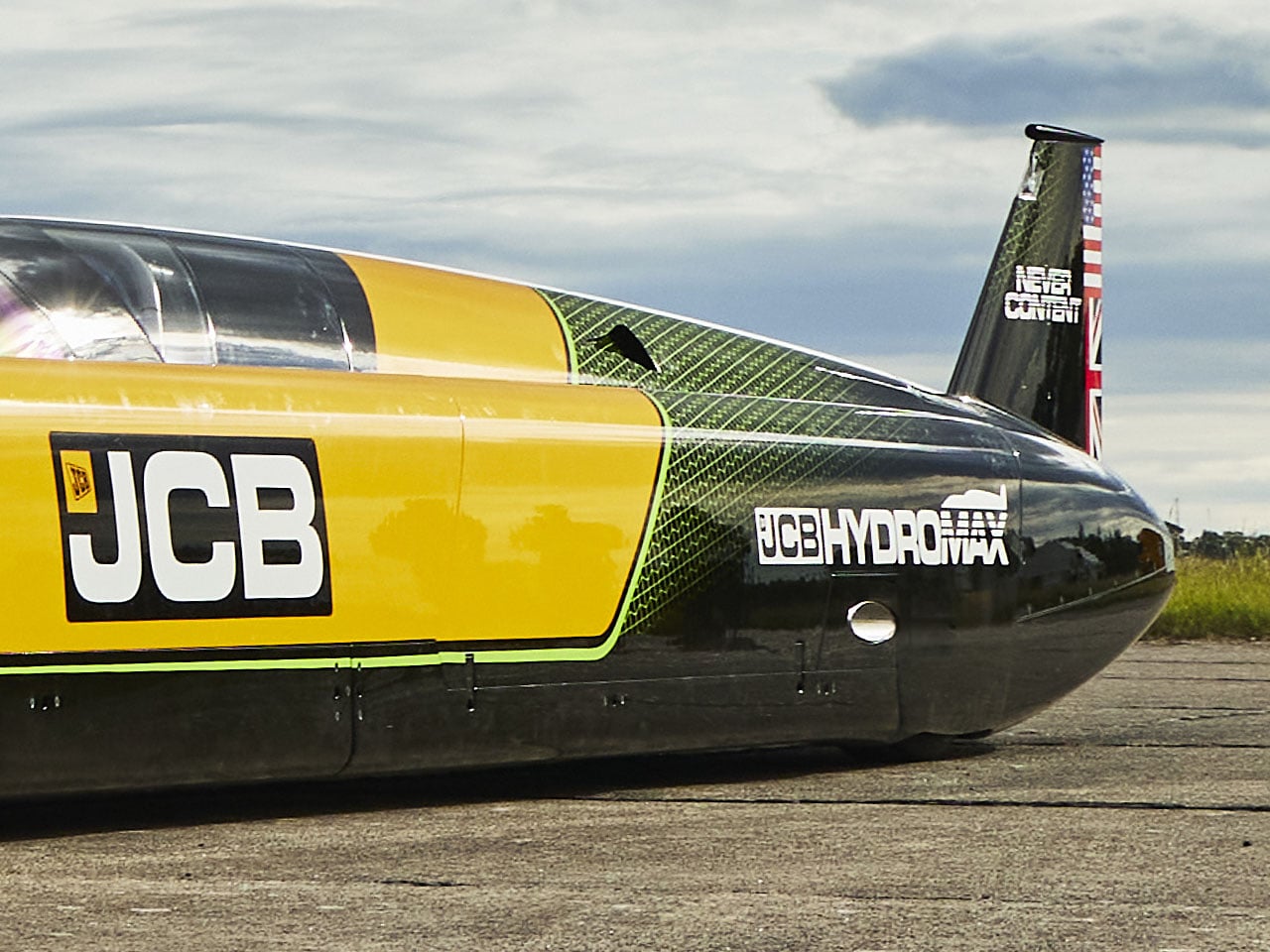
Limited Edition iXOOST Esavox Speaker features a real Lamborghini exhaust to power your sound

If you’ve ever admired the sculpted lines of a Lamborghini supercar and thought, “I wish I could bring that into my living room”, then the new collaboration from iXOOST offers exactly that in audio form. Known for their bold pieces that bridge high-end hi-fi and automotive design, iXOOST ESAVOX Bluetooth speaker system, crafted from real Lamborghini exhaust components and carbon-fibre supercar materials, is designed to blur the line between listening room and showroom.

The ESAVOX isn’t just a styled speaker; it is built around the actual exhaust cover of a Lamborghini Aventador, nestled in a monocoque chassis made from autoclave-cured 3K twill carbon fiber, with hexagonal motifs and sharp edges that echo Lamborghini’s design language.

Designer: iXOOST

Inside this sculptural cabinet lies serious audio hardware: two 1-inch tweeters, two 6.5-inch mid-bass drivers, and a 10-inch down-firing subwoofer, powered by a total output of 640 W amplification. The frequency response extends down to 20 Hz, delivering bass you feel as much as hear. Weighing in at approximately 117 lb and measuring 49 inches x 20 inches x 26 inches, the ESAVOX is clearly not for casual portability but for a dedicated listening space or display garage.
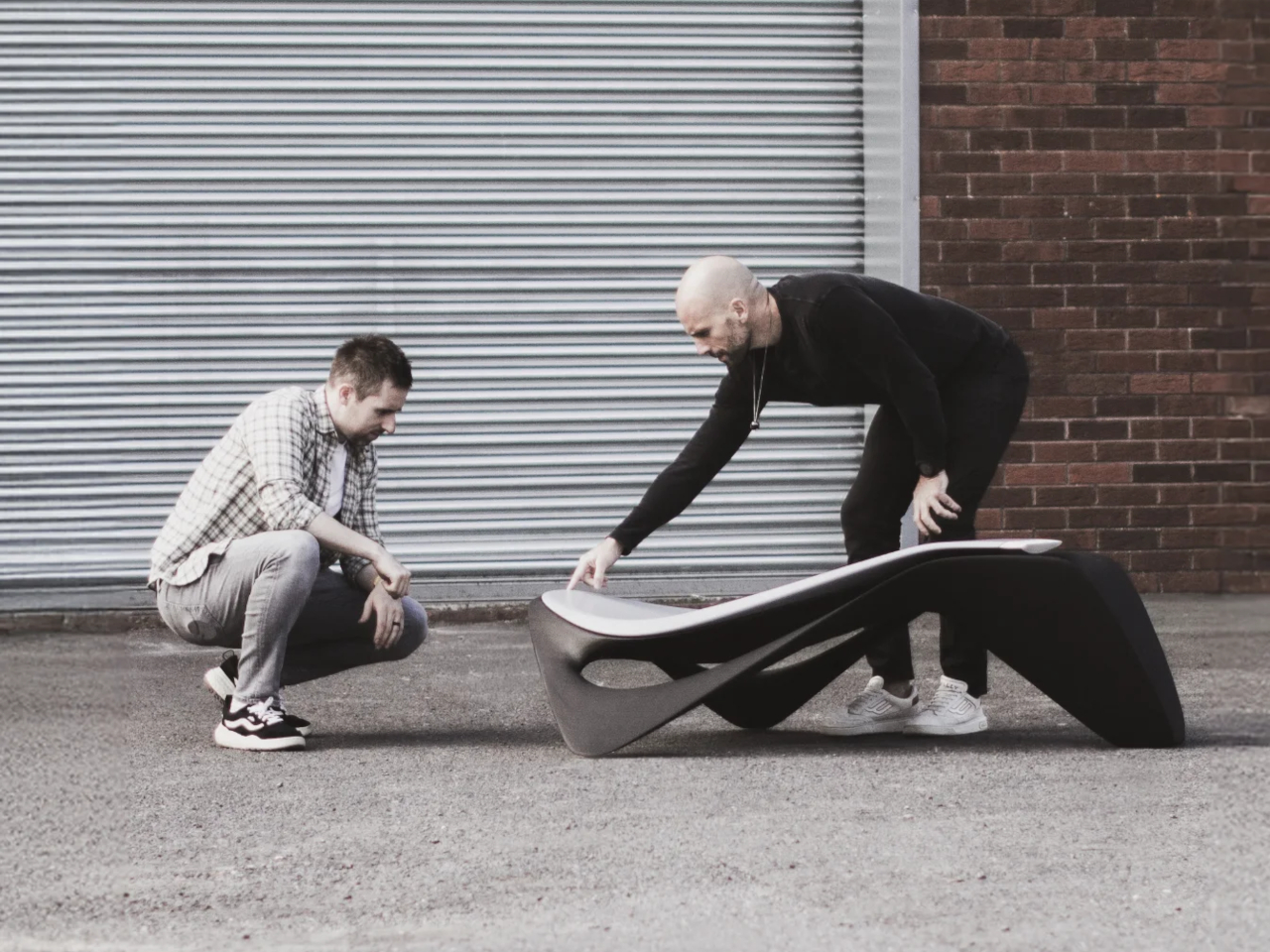
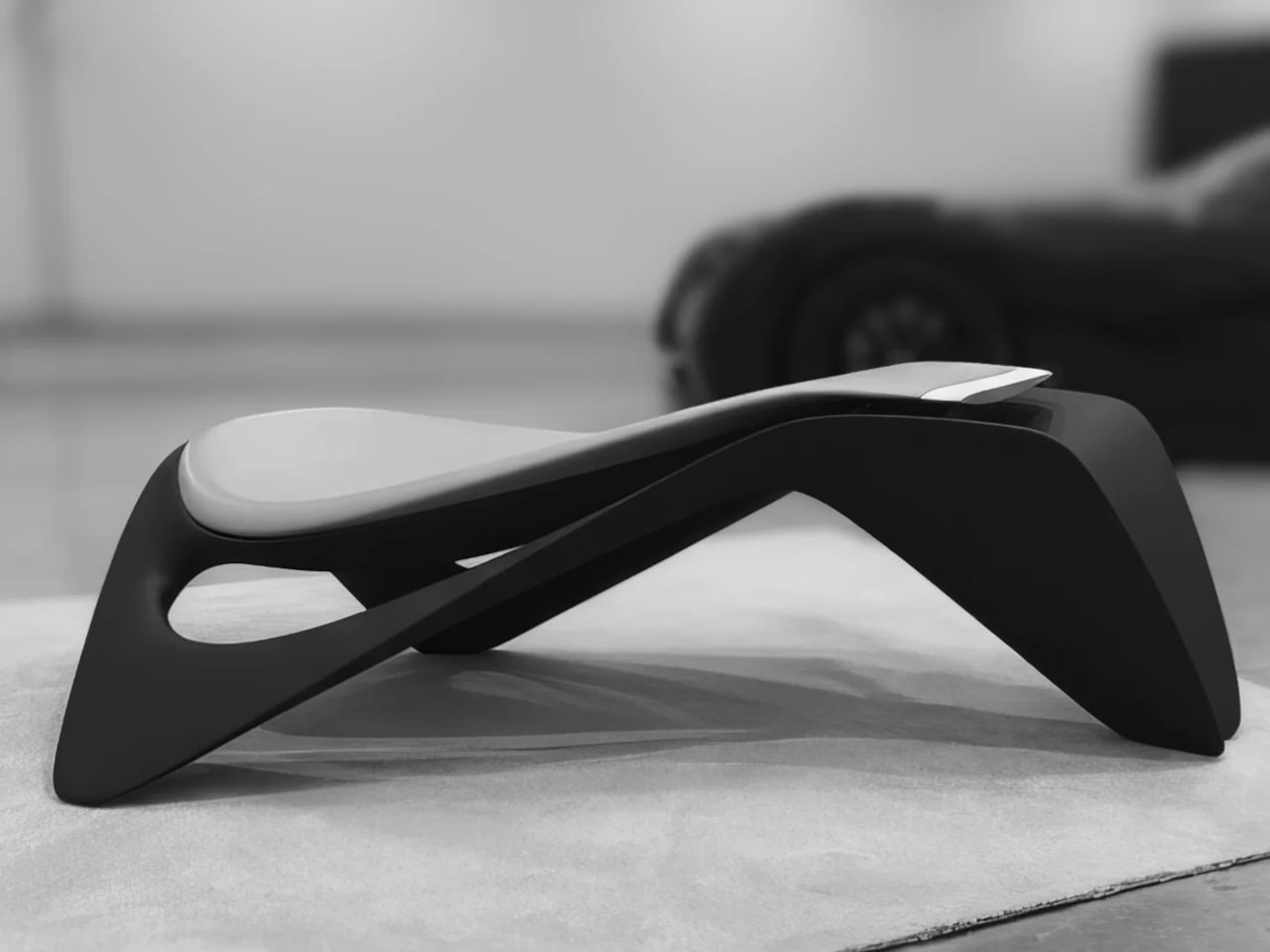

Its styling comes in the iconic Lamborghini palette: Green Gea, Grey Keres Matte, Orange Anthaeus, Red Epona, Blue Uranus and White Siderale. The speaker is produced in a strictly limited run of just 63 units worldwide, which makes it highly desirable.  On the connectivity front, you get Bluetooth 5.0 and traditional RCA inputs, allowing both wireless streaming and classic wired sources. The power supply supports 110–240 V, making it globally deployable.

So what makes this more than just a flashy statement piece? For one, the use of genuine Lamborghini parts and automotive-grade materials lends it a storytelling edge: a carbon fibre monocoque, passive vibration damping (akin to a race-car chassis), and an aesthetic lifted directly from the supercar world. On the other hand, from an audio-engineering perspective, the configuration of large mid/bass drivers plus a substantial subwoofer and dedicated amplification points to real performance ambitions rather than just looks.

That said, its size, weight, price, and niche appeal mean the ESAVOX is designed for a particular buyer: a Lamborghini owner or ultra-luxury audio aficionado who wants a unique ‘hero piece’ for home audio, not someone seeking a practical bookshelf speaker. The iXOOST ESAVOX for Automobili Lamborghini fuses automotive heritage, high-end craftsmanship, and serious audio hardware into a distinctive luxury item. If you have the space, budget and passion for both supercars and high-end sound, this is a conversation piece that delivers both visually and sonically. As ever, buyers should consider installation logistics, room-tuning, and source equipment to make the most of its capabilities.

Automobili Lamborghini ESAVOX is going to be up for grabs in the U.K. via Harrods of London, and also on display at the renowned Knightsbridge store in the pristine Green Gea color. The speaker is priced at £34,999 (approximately $46,000) for which you can buy a Ford Mustang, if you want to go for the real thing.

The post Limited Edition iXOOST Esavox Speaker features a real Lamborghini exhaust to power your sound first appeared on Yanko Design.