Sennheiser has unveiled its RS 275 TV Headphones, which are bundled with a BTA1 digital receiver. These headphones use Auracast technology to provide low-latency audio at a range of up to 50 meters, and can connect to other devices enabled with Auracast or Bluetooth Classic. For those unfamiliar, Auracast is broadcast Bluetooth audio; we have an explainer about it after CES 2024 put this audio tech onto the big stage. The digital receiver introduces an Auracast signal in a physical space for any other compatible devices, which might include hearing aids or loudspeakers as well as other headphone sets.
The company promises 50 hours of listening with the RS 275 TV Headphones on a single charge, and the set can be powered up from the receiver's USB-C port. Sennheiser designed the headset for long-term comfort; the ear cushions and battery can be replaced by the device's owner. The headphones can be further personalized with the Sennheiser Smart Control Plus App. In addition to finding lost headphones, the app provides controls such as transparency mode, left-right balance, hearing profiles and device-type audio modes.
The RS 275 TV Headphone bundle will retail for $300, while a standalone BTA1 receiver will cost $130. Pre-orders will open on February 3 and the audio gear is expected to start shipping on February 17.
This article originally appeared on Engadget at https://www.engadget.com/audio/headphones/sennheiser-introduces-new-tv-headphones-bundle-with-auracast-233735294.html?src=rss
JBL is trying its hand at something new, with a pair of AI-powered practice amps. The BandBox Solo and BandBox Trio include an onboard Stem AI that purportedly lets you separate or remove vocals and instruments from any music streamed over Bluetooth. So, say you're a young guitarist learning “Stairway to Heaven” (as one does). At least in theory, you could use the speaker to remove Jimmy Page's part and hone your chops with the rest of the band.
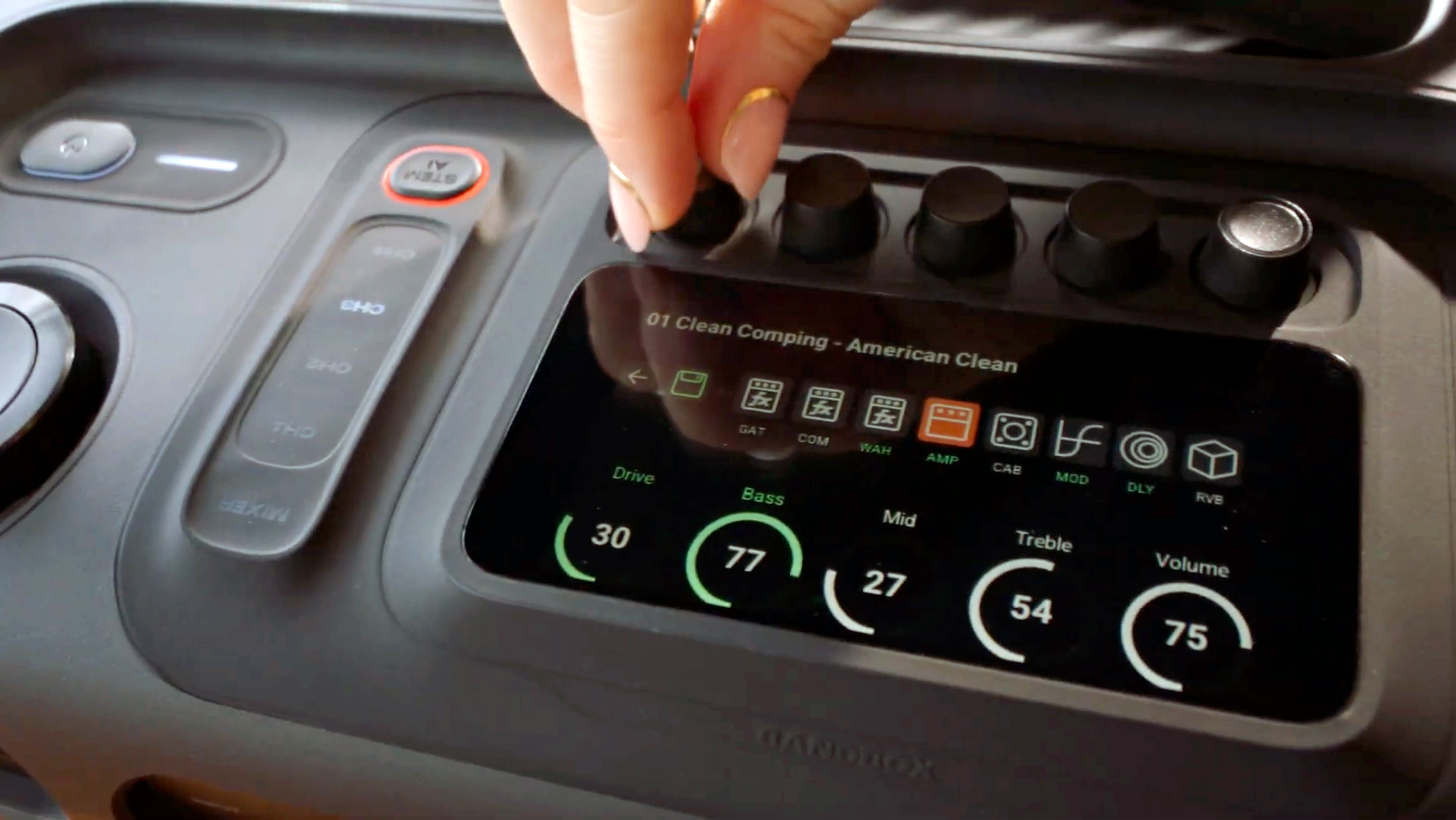
The $250 BandBox Solo, designed for individual musicians, has a single guitar / mic input. And the $600 BandBox Trio, better for bands, supports up to four instrument inputs. The latter also has a few extra perks not found in the Solo: onboard controls (to reduce reliance on the app) and an LCD.
The more expensive BandBox Trio has an LCD and more onboard controls.
JBL
The JBL One app lets you add filters to match a variety of modern and vintage amp models. You'll also find effects like phaser, chorus, and reverb, as well as a pitch shifter and tuner. A built-in looper will allow for layering, but JBL says that feature will arrive via a software update in October.
JBL says the BandBox Solo supports up to six hours of battery life. The BandBox Trio is said to last up to 10 hours. But the latter has a replaceable battery, so you could buy a spare (for an as-yet-unknown price) and double that time.
The $250 BandBox Solo and $600 BandBox Trio are available to pre-order from JBL's website starting today. Shipments and third-party retail availability are scheduled for March 1.
This article originally appeared on Engadget at https://www.engadget.com/audio/speakers/jbl-made-a-pair-of-ai-powered-practice-amps-221000631.html?src=rss
Telly appeared on the home theater scene in 2023 with an unusual proposition. Its business model revolves around giving customers free dual-screen televisions where the lower screen shows non-stop advertisements. At the time, the start-up’s execs projected that Telly would ship its first 500,000 screens that summer. However, Janko Roettgers of Lowpass reported that Telly only had 35,000 sets in people's homes at the end of the third quarter of 2025. The figure appears to come from a quarterly investor update, but Telly didn't provide Roettgers with any comment on the report.
Personally, I don't think I'd want a free TV that perpetually pelts me with ads, but it seems Telly did in fact have some interest in its approach; the company reportedly had 250,000 pre-orders in June 2023. However, it ran into issues with getting those televisions to customers in one piece. The quarterly report allegedly said that 10 percent of Telly's shipments through FedEx arrived broken. A thread on the company's Reddit page from a year ago backs that up, chronicling delayed shipments and broken replacements. So in short, things aren’t going so great for the company right now.
This article originally appeared on Engadget at https://www.engadget.com/home/home-theater/telly-has-only-delivered-35000-of-its-free-televisions-with-always-on-ads-215033698.html?src=rss
It was only 16 months ago that Substack expanded into live video. Since then, it's become a widely adopted medium on the platform, including by its ever-growing list of cable news expats. Now, the company has decided it's ready for a bigger screen. Starting today, you can install a new Substack TV app on Apple TV and Google TV devices.
Substack describes the app's initial launch as focusing on "reliable, high-quality viewing" for the platform's long-form videos. It centers around video posts and livestreams from the creators and publications you follow. There's also a "For You" section that combines those videos with algorithmic recommendations. And you can browse dedicated pages for each channel.
Viewing access aligns with your subscription level. So, if a channel restricts videos to paying subscribers on Substack’s mobile app and website, the same paywall applies here. However, the company says it's working on adding previews of paid content for free subscribers. It also plans to add audio posts, search, improved discovery and separate sections for different shows within a single publication.
At least one of those legacy media expats who moved to Substack is optimistic about the feature. "This is a game-changing moment for the rise of independent media," former CNN anchor Jim Acosta wrote in the announcement post. "Substack has proven that legacy media consumers are not only searching for fresh alternatives; they are finding them."
Based on the comments in Substack’s announcement, some of the platform’s die-hards are less enthusiastic than Acosta. “File this under – thing we didn’t ask for,” Ashli Pollard wrote. “This is not YouTube,” a commenter named Dustin added. “Elevate the written word.” I personally don’t see any harm in another way to watch the videos Substack already hosts. (Its newsletters aren’t going anywhere.) But given how Big Tech companies tend to pivot further toward the most en vogue (and profitable) medium of the day, I can see why purists feel the need to dig in their heels.
Regardless, you can find the Substack TV app by searching for its name in the tvOS App Store or the Apps section on Google and Android TV devices. You can sign in by scanning a QR code with your phone.
This article originally appeared on Engadget at https://www.engadget.com/entertainment/streaming/substack-now-has-a-tv-app-195408592.html?src=rss
Forza Horizon 6 is taking the racing series to Japan for the first time, and now we know exactly when you’ll be able to hit the virtual streets of Tokyo. The game will arrive on Xbox Series X/S, PC and Xbox Cloud on May 19, with an early access period commencing on May 15. That lines up with earlier reports about the release date(s) after an in-game ad supposedly appeared in Forza Horizon 5. The upcoming title will hit PS5 later this year.
The standard edition of Forza Horizon 6 is expected to cost $70, though it will be on Xbox Game Pass Ultimate and PC Game Pass. To jump in a few days early, you’ll need the premium edition (a deluxe edition will be available too).
Playground Games and co-developer Turn 10 Studios offered a first look at gameplay during Thursday’s Xbox Developer Direct showcase. You’ll start out by working through Horizon qualifiers in order to join the Horizon Festival racing circuit, then you’ll unlock faster cars and other goodies as you rise up through the ranks. In a few feature called Horizon Rush, you’ll take on obstacle courses.
Playground says this is the largest Forza Horizon game to date. This version of Tokyo, for instance, is said to be five times larger than any urban area the studio has built before and it has multiple districts. There are lots of rural areas in the game as well, and the environments are affected by seasonal changes. As has been the case in previous games, you’ll be able to explore the world as you wish, either solo or with your friends.
There will be more than 550 cars available at the jump, and you’ll be able to apply liveries to their windows. Each player house has a customizable garage. You can build up a part of the world called The Estate as you see fit and your friends can visit to see what you’ve made (building will be available in multiplayer for the first time in the series too). There are also new open-world car meets where you can show off your whips, buy copies of other players’ rides and download more songs.
Playground is including all of the accessibility features from previous games. It’s adding new ones as well, such as a customizable high-contrast mode and an autodrive option.
This article originally appeared on Engadget at https://www.engadget.com/gaming/xbox/forza-horizon-6-will-hit-xbox-series-xs-and-pc-on-may-19-183242726.html?src=rss
So it's come to this: Apple is reportedly working on a wearable AI pin. According to The Information, it is going to be a small device with "multiple cameras, a speaker, microphones and wireless charging." It sounds like the perfect gadget to pair with the long-awaited AI-powered Siri update, which will also reportedly work as a chatbot. But while many Apple rumors conjure up an air of excitement, the notion of an Apple AI pin sounds downright baffling. Worse, it just seems desperate.
Apple, the company known for taking its time to jump into new categories with more thoughtful solutions than its competitors, is reportedly chasing the specter of OpenAI's unreleased AI pin. Never mind that OpenAI has never actually produced any hardware, and that it arguably stumbled into its position as a leading AI player. And never mind that Humane's AI pin was a notorious failure that barely worked, and seemed pointless from the start.
If Apple's AI pin serves as a conduit to Siri, is it really that much more convenient than using an iPhone, AirPods or even an Apple Watch to do the same? The company has reportedly nixed plans to put cameras in the Apple Watch, and Bloomberg suggests it’s opting instead to focus on delivering its own smart glasses this year. But it’s not hard to imagine that faster hardware could let the Apple Watch handle more Siri and AI-related tasks on its own. It’s already a fairly self-sufficient device, allowing you to ask basic Siri queries, run apps and listen to music without an iPhone — the cellular models are even more capable since they can take calls and send messages.
At best, an Apple AI pin could just be a simple way for someone to access Siri if they don’t want to wear an Apple Watch, plug in AirPods or have their iPhone within shouting distance. But at least those devices do other things beyond talking to Siri. The same is true for Meta’s Ray-Bans and future smart glasses. Even without accessing AI, they’ll still let you listen to music, take calls and, well, be glasses for those who need prescription frames.
Given the vocal pushback against Meta's Ray-Ban smart glasses, which are also being banned on cruises, clubs and other venues, I'm also not convinced many people would be eager to prominently display a surveillance device throughout the day. Wired’s Julian Chokkattu was questioned about wearing a camera while he was testing the Humane AI Pin, and I’ve also had to explain to curious people why I was wearing Xreal’s smart glasses, which feature a prominent camera accessory.
Sure, we're already living in a panopticon of smartphone cameras, but it's also obvious when someone is using their phone to capture photos and video. An AI pin just dangling off of your clothes is a constant threat, an unblinking eye. Even if Apple implements some sort of capture notification, someone will always try to circumvent it.
While The Information notes Apple's AI pin may never actually see the light of day, I wouldn't be surprised if it does. This is the company that partnered with OpenAI just to make Siri appear slightly smarter with the debut of Apple Intelligence. And instead of building its own home-brewed AI models, it's banking on Google's Gemini to power Siri's big AI upgrade, as well as its future foundation models. When it comes to AI, Apple will do almost anything to avoid being seen as a straggler (and to avoid even more stock declines).
It’s genuinely strange that Apple, the company that let Samsung and Google get a multi-year head start on foldable smartphones and hasn't yet jumped into the world of smart rings, could fast-track an AI pin for 2027. It’s yet another example of how the AI hype cycle has warped priorities throughout the tech industry. But at least Apple’s fortunes don’t depend on standalone AI hardware as much as OpenAI.
This article originally appeared on Engadget at https://www.engadget.com/ai/an-ai-pin-is-beneath-apple-182744647.html?src=rss
Korg just officially unveiled the Phase8 synthesizer, after years of tinkering by a team led by legendary engineer Tatsuya Takahashi. This is a highly experimental synthesizer, but it's not a concept unit. It'll be available for purchase in April.
The Phase8 uses a new form of "acoustic synthesis" that combines acoustic sound generation with electronic control. Takahashi says the synthesizer is "beyond analog vs. digital" and "beyond electronics" altogether. It features chromatically tuned steel resonators, which creates an acoustic sound similar to that of a kalimba. These signals can be manipulated via onboard effects and sequenced like a traditional synthesizer. Here's a video of the synth in action.
Players can mess with the resonators just like they would a guitar string or a piano key. Korg recommends that users physically touch, pluck, strum and tap the resonators to create new textures and tones. The company even suggests that people actually put objects on top of each resonator for additional experimentation. There's a slider that boots or dampens the acoustic response.
As for the electronics, the Phase8 boasts dedicated envelopes and velocity control for each resonator and there's a polymetric step sequencer. The sequences can be stored and recalled via eight memory slots. All controls can be automated across a sequence. There are a handful of modulation effects, including tremolo and pitch-shift.
It features modern connectivity options, including MIDI in/out via 3.5mm, USB MIDI, a standard ¼-inch audio out and a headphone jack, among other options. Preorders are open right now, but hold on to your jaw. This thing costs $1,150.
This article originally appeared on Engadget at https://www.engadget.com/audio/korgs-new-experimental-synthesizer-combines-acoustic-sounds-with-electronic-control-180809332.html?src=rss
It only seems right that cloud gaming should welcome virtual pilots, and that’s definitely now the case if GeForce Now is your streaming platform of choice. One of the most frequently requested features from its community according to NVIDIA, flight control support has now been added to its GeForce Now offering, meaning you can live your Top Gun fantasies without worrying about your rig buckling under the pressure.
The first compatible peripheral is the Thrustmaster T.Flight HOTAS One — which incidentally NVIDIA is giving away to five winners of a competition it’s currently running, along with a month of GeForce Now Ultimate — with more to be supported over time. A dedicated row in the GeForce Now app will highlight games that you can play with flight controls, one of which will be Team Jade’s Delta Force, which arrives on the service soon.
Last year NVIDIA started using RTX 5080 GPUs to power its $20-per-month GeForce Now Ultimate servers, allowing for 5K streaming up to 120fps. Engadget’s Devindra Hardawar called the update a "cloud gaming revelation" and was blown away by how sharp and smooth the experience was.
This article originally appeared on Engadget at https://www.engadget.com/gaming/pc/geforce-now-adds-support-for-flight-controllers-171047006.html?src=rss
At CES earlier this month, AMD announced the Ryzen 7 9850X3D, a more wallet-friendly take on its $700 9950X3D. The company promised the new chip would be out sometime in the first three months of the year, and it's going to arrive a bit sooner than you might have expected. It can be all yours on January 29 for $499.
AMD says the 9850X3D builds on the 9800X3D with an 400MHz upgrade to the boost clock. It can reach boost speeds of 5.6GHz. The Ryzen 7 9850X3D is an 8-core CPU with 16 threads and 104MB of combined L2 and L3 cache. AMD is employing its 3D V-cache tech so it can vertically stack more cache memory onto the chip.
The 9850X3D also has a 120W TDP. AMD claims the CPU is able to deliver an average 27 percent faster gaming performance than the Intel Core Ultra 9 285k. We'll be able to assess that for ourselves very soon given that the 9850X3D will hit shelves in just a few days.
This article originally appeared on Engadget at https://www.engadget.com/computing/amds-ryzen-7-9850x3d-cpu-will-arrive-on-january-29-and-cost-499-165000446.html?src=rss
With video features like RAW now the norm on midrange mirrorless cameras, Canon decided not to mess around with its latest model, the 33-megapixel EOS R6 III. It’s a veritable cinematic beast, allowing up to 7K RAW video capture internally with fast and reliable autofocus and rock solid stabilization.
At the same time, it's a solid photo camera with high burst speeds and warm, accurate image quality. The R6 III has stiff competition with Sony’s 33MP A7 V, though, as the latter delivers higher dynamic range. The price could also be an issue for buyers, as the R6 III costs $300 more than its predecessor. Whether it’s worth that extra money depends on what you’re planning to do with it.
Handling and design
Canon EOS R6 III
Steve Dent for Engadget
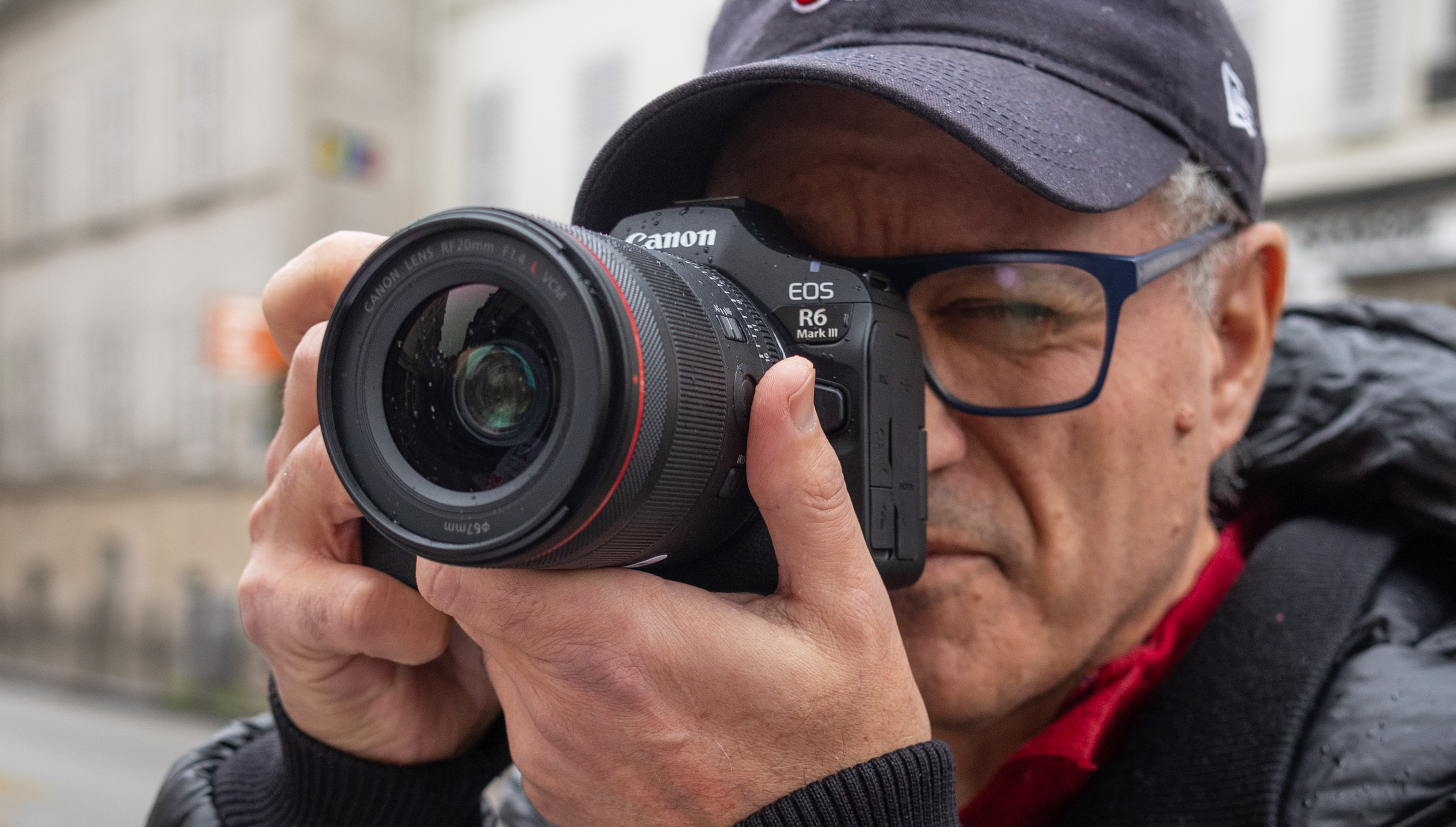
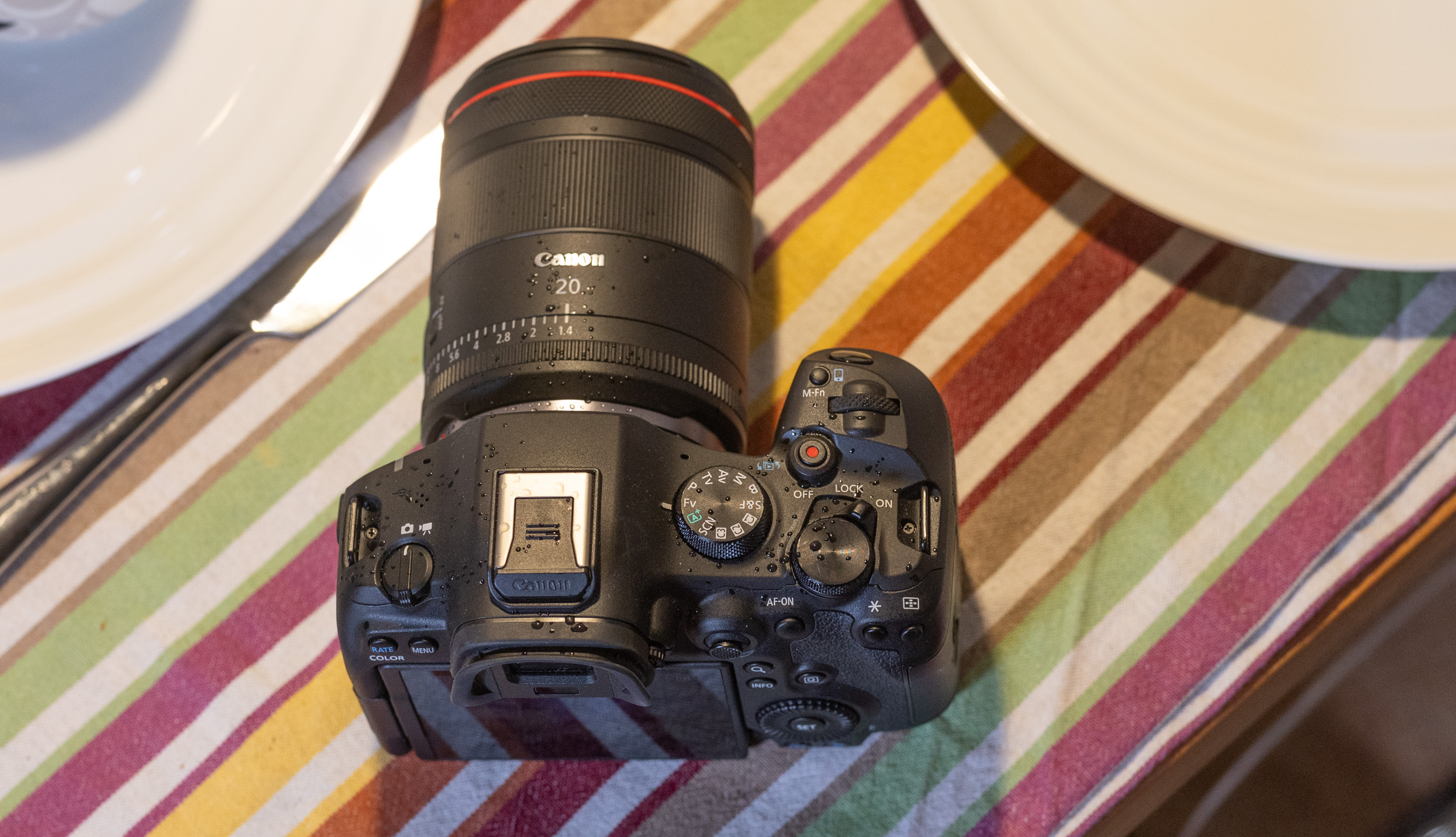
The EOS R6 III is quintessentially Canon in terms of design. It strongly resembles the R6 II and EOS R5 II, with the same button and dial layout at the rear. In terms of functionality, this is a good thing as everything falls perfectly to hand, letting you control it by feel once you’re used to it. However, the R6 III’s design is a bit bland, so if you’re looking for a stylish camera a la Fujifilm, this is not the one.
Holding the R6 III is also a pleasure thanks to the grippy, soft rubber exterior, though at 1.5 pounds it’s a bit heavier than the A7 V. It’s comfortable to hold and use all day, unlike Sony’s A7 V which felt uncomfortable after prolonged usage because of the harder material and sharp crease around the fingertip area.
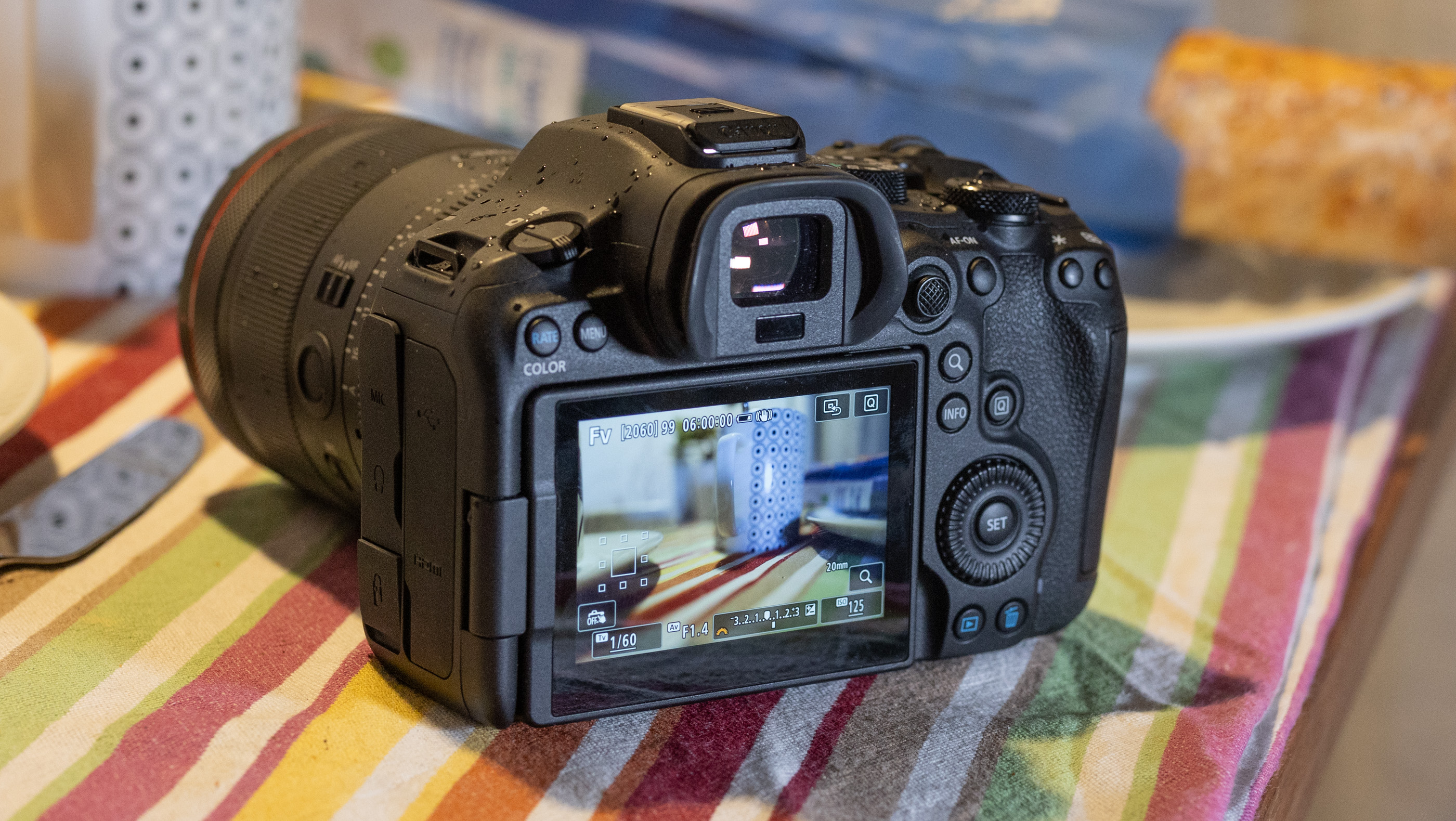
The R6 III’s 3.69-million dot, 120 fps electronic viewfinder (EVF) worked fine for me to check color and focus, but falls short of the one on the much cheaper Nikon Z6 III. The flip-out 3-inch 1.65-million-dot rear touch display is on par for this category and does the job well. For storage, the R6 III supports CFexpress Type B cards for capturing RAW video, along with SD UHS II for MP4 video and photos.
Other key features include headphone and microphone ports, a full-sized HDMI input (instead of microHDMI as before, thankfully) and a USB-C port for charging and transfers. Battery life is decent for this category with a maximum 510 shots per charge or 620 shots if you engage the power saving mode or about 90 minutes of continuous 4K capture. However, you can roughly double those figures with Canon's optional $150 BG-R20 battery grip.
Performance
Canon's EOS R6 III offers fast burst speeds and skin-tone friendly colors
Steve Dent for Engadget
The R6 III offers a boost in shooting speeds over its predecessor thanks to an all-new 33MP sensor. It has a faster readout speed than the R6 II as well, allowing for faster bursts and lower rolling shutter skew. In comparison, Sony’s A7 V also has a 33MP sensor but it’s partially stacked, so it delivers less distortion when shooting fast-moving subjects.
With that new sensor and a 34 percent faster Digic X processor, the R6 III can shoot bursts at up to 40 fps in electronic and 12 fps in mechanical shutter modes (with continuous AF and AE enabled). That’s second only to the Panasonic S1 II (70 fps) in this price range. You can fill the buffer in about 3.7 seconds at that speed (150 RAW frames), which is a decent amount for a midrange camera.
You usually want to avoid the electronic shutter with fast-moving action due to rolling shutter distortion, but the R6 III’s faster sensor can handle objects that are moving reasonably quickly. I also caught a few photos of babies, bikes and dogs I might have otherwise missed by using the new pre-capture mode that records up to 15 photos before fully declencing the shutter.
The new sensor and processor also make the R6 III’s autofocus system faster and more accurate than before. When shooting bursts for fast moving action like dogs running or biking, less than five percent of my shots were out of focus. And the EOS R6 III can now track animals, birds and vehicles, on top of the faces, eyes and bodies of people.
This camera also has a couple of new autofocus tricks, including one called Register People Priority. That lets you save up to 10 individuals on camera that it can identify and automatically switch to. I found it handy in a large gathering, helping me focus on my niece enjoying her second Christmas. However, the R6 III lacks a few autofocus features found on the R5 II like “action priority” for sports, eye control AF and AI upscaling.
In-body stabilization is also excellent, keeping the sensor rock-steady for handheld shooting with 8.5 stops of shake reduction. With that enabled, I was able to nicely blur action on the streets while keeping the background sharply in focus at shutter speeds down to a full second.
Image quality
With a 33MP sensor instead of a 24MP sensor, the R6 III offers quite a bit more sharpness and a touch more dynamic range than its predecessor. When shooting RAW, I was able to coax a lot of detail out of high contrast shots on sunny days with dark shadows. However, Sony’s A7 V soundly beats the R6 III in terms of dynamic range, thanks to its innovative new sensor.
The R6 III’s high ISO performance isn’t too bad for a higher-resolution camera either, with noise staying under control up to ISO 12,800. As is typical with Canon models, skin tones are warmer and more flattering than on Sony and Nikon cameras, due to the slightly more yellow-biased pink tones. Those pleasing colors were consistent, even at high ISOs, when I shot kids and adults at a couple of indoor gatherings. If you don’t want the hassle of RAW, JPEG rendering is excellent straight out of the camera, with well balanced sharpening and noise reduction.
Note that switching to electronic shutter mode drops the sensor to a 12-bit readout, which helps burst speeds but hurts image quality. This is a pretty big downside compared to the A7 V, which maintains 14-bit quality even when shooting at the camera’s maximum rate at 30 fps. So while on paper the R6 III wins the speed race, the 10 extra fps won’t be worth the drop in quality for many photographers.
Video
Canon’s EOS R6 III
Steve Dent for Engadget
Canon has improved video on the R6 III in every way, putting it nearly on par with the more expensive R5 II. Though it can’t shoot 8K, it can handle 7K RAW video at up to 60 fps (on CFexpress only) and 4K at 120p, with less rolling shutter than the R6 II. It also supports 3:2 “open gate” video that uses the full sensor area so you can output high-res vertical video and other formats.
The R6 III supports 4K 10-bit MP4 shooting at high data rates too if you’d rather save storage space or shoot on SD cards. You also get CLog 2 on top of CLog 3 capability for improved dynamic range. Oddly though, Canon made it a bit of a pain to switch to log modes compared to past models, forcing you to slog through a bunch of menus to do so.
Video autofocus is excellent across all resolutions, with rapid subject acquisition and reliable tracking. Face and eye detection work very well, and I only occasionally noticed slight autofocus lag with fast-moving subjects, particularly when they were moving toward the camera.
As for stabilization, I could smoothly shoot handheld with no crop, provided I didn’t move the camera too aggressively. Digital stabilization allowed even more movement and the enhanced setting let me shoot smoothly while walking (7K doesn’t work in the digital stabilization modes, though). Panasonic’s S5 II is still the best in this regard with slightly smoother stabilization, but the R6 III isn’t far behind.
Video on the EOS R6 III is extremely sharp in RAW and the HQ modes, particularly with supersampled 4K HQ. Other 4K modes are subsampled, but nearly as sharp. Rolling shutter is better managed than before, but you’ll still want to avoid things like whip pans, sudden jolts or rapid subjects like propellers or golf swings.
In a variety of shooting scenarios in bright and dark conditions, Canon’s excellent color science delivered warm skin tones and accurate colors. Shooting RAW video allowed me to widely adjust shots in post, while the CLog 2 mode drastically improved dynamic range while I was shooting in contrasty conditions. For instance, I shot the famous Paris department store windows and was able to extract detail from the very bright and dark parts of the video.
Overheating has been an issue in the past on Canon’s R6 models, but the R6 III never shut down for me, even during a few tests of over 15 minutes. Overall, it reliably delivered outstanding video quality and I actually preferred it to the R5 II due to the smaller RAW file sizes.
Wrap-up
Canon EOS R6 III mirrorless camera
Steve Dent for Engadget
Canon’s EOS R6 III is now the best midrange camera for creators thanks to the RAW video, rapid and accurate autofocus and excellent handling. At the same time, it’s a solid camera for photography with high burst speeds, extra resolution and, again, reliable AF. If it’s mainly photography you’re interested in, though, Sony’s $2,900 A7 V is a better choice. It matches the R6 III’s resolution, price and autofocus but offers superior dynamic range and lower rolling shutter distortion.
Other video-centric options may be more attractive for other reasons — including budget. Nikon’s 24MP Z6 III offers similar capabilities, has a partially stacked sensor and retails for $2,400, but can often be found on sale for less. Panasonic’s S1 II is also a good pick due to its RAW video and creator-centric features, though it costs more at $3,200.
Which one to buy, then, depends on your budget, usage (video or photography) and whether you already have lenses in one system or another. With that said, if it’s a Canon camera you’re after and you lean toward content creation, the EOS R6 III is your best choice.
This article originally appeared on Engadget at https://www.engadget.com/cameras/canon-eos-r6-iii-review-a-video-powerhouse-thats-also-great-for-photography-153000494.html?src=rss