MSI Prestige 14 Flip AI+ review: An ultraportable for Arc Raiders, thanks to Intel’s Panther Lake

MSI Prestige 14 Flip AI+ is a surprisingly powerful ultraportable held back by a clunky trackpad. It's a shame, really, because it's very well-designed and thanks to Intel’s Panther Lake CPU, it can even run games like Arc Raiders without breaking a sweat. It also has more ports than most thin and light machines, its OLED screen is great for productivity work and at three pounds it's easy to carry around all day. But curse its mechanical trackpad — why does it even exist when Apple, Microsoft and others have been able to implement excellent haptic touchpads for years? Come on now.

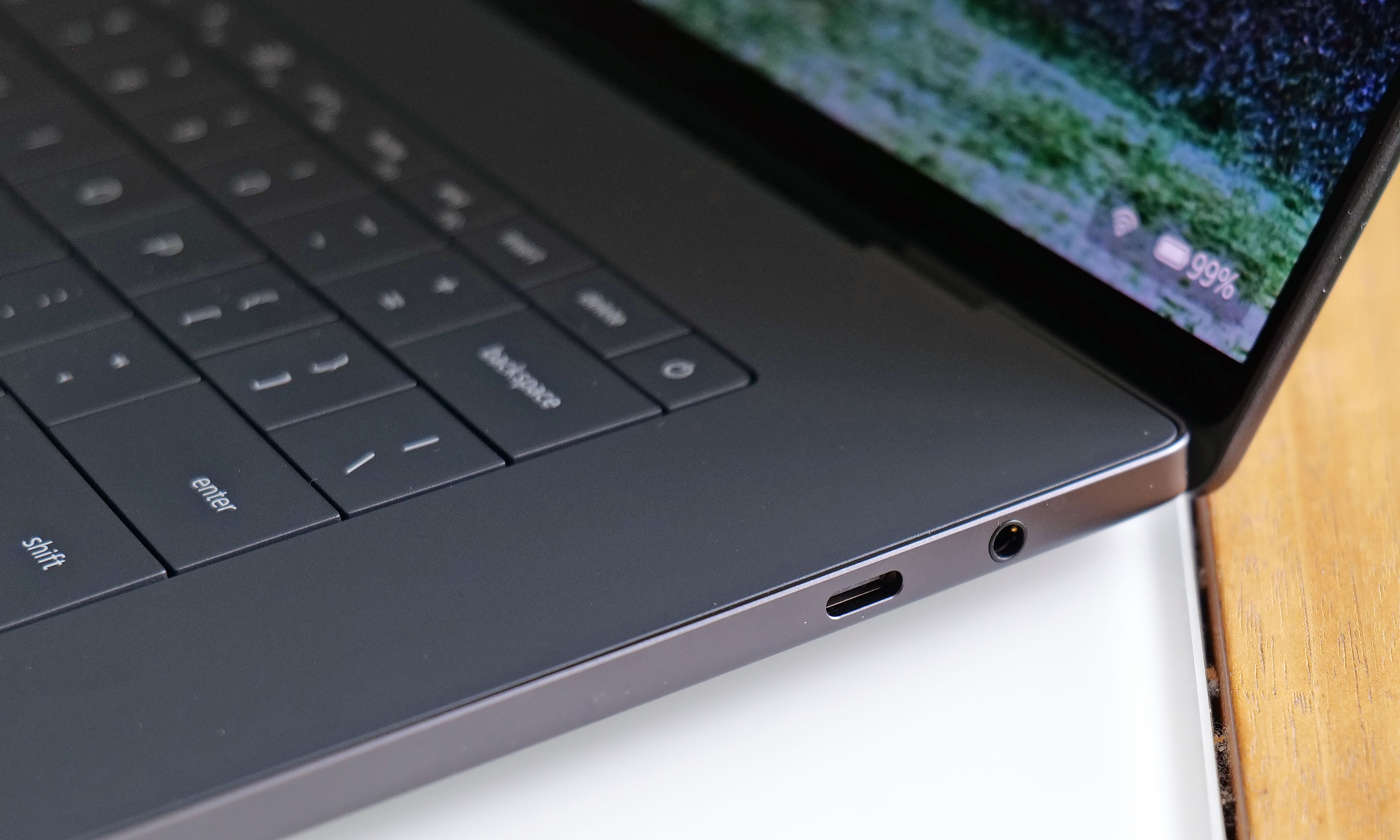
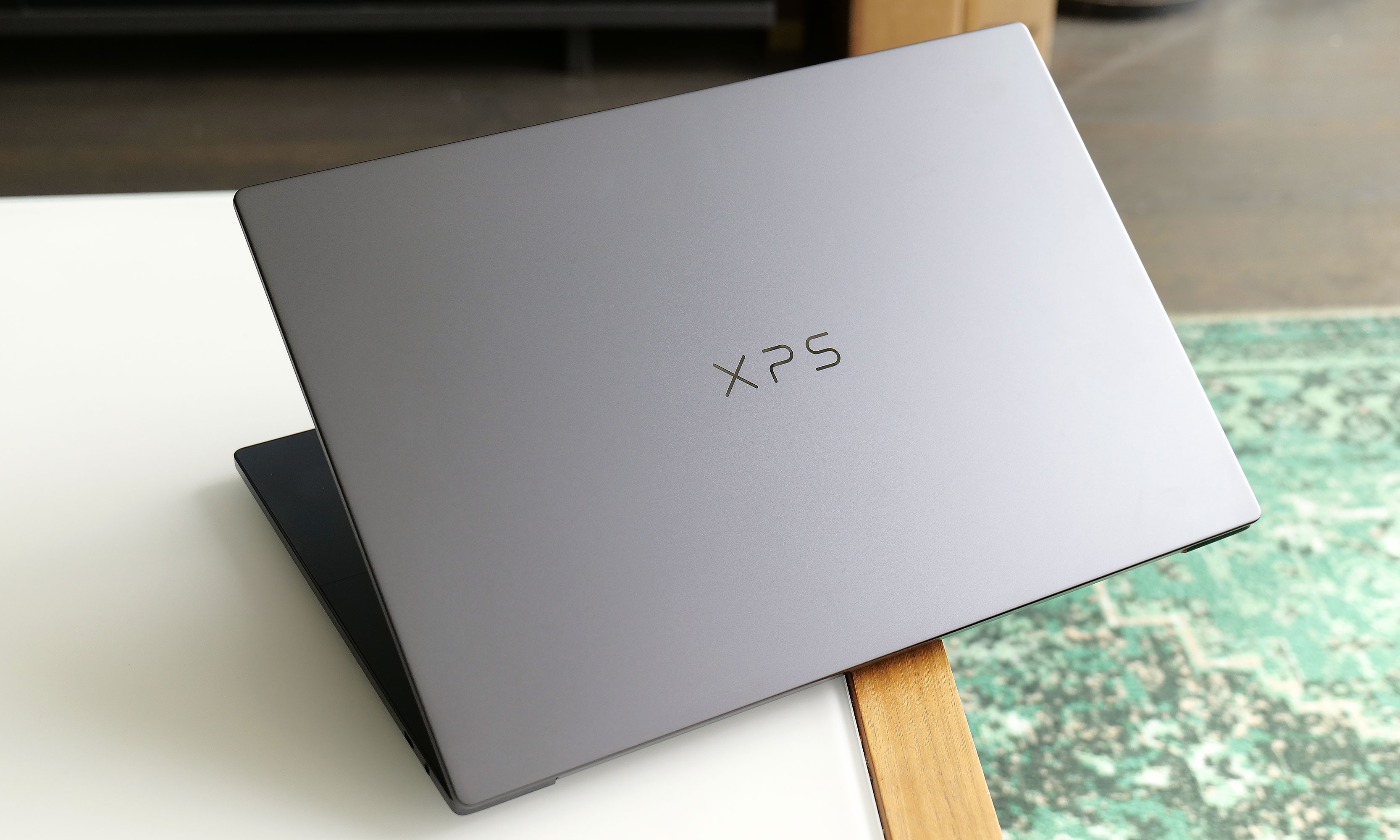
With its grey case, subdued design and somewhat chunky bezels, the MSI Prestige 14 Flip AI+ doesn't exactly make a striking impression. From afar, you can tell it's certainly thin, and it's also clear that MSI made the most of its slim case by shoving in two USB-A ports, two USB-C connections, a single HDMI port and a headphone jack. It would have been nice to have some sort of SD card slot too, but at least the Prestige 14 can connect to older accessories, monitors and TVs without a USB-C hub. 

Once you pick it up, though, the Prestige 14's three-pound frame feels downright remarkable. It's just a tad heavier than the 2.7-pound MacBook Air, but its screen size directly competes with the 3.4- to 3.6-pound 14-inchMacBook Pro. The "Flip" in its name also means it’s versatile, with the ability to rotate its screen into a tablet mode, or a variety of tent configurations.

What makes the MSI Prestige 14 Flip AI+ truly interesting is its Intel Core Ultra X7 358H processor, which features 16 cores and a maximum speed of 4.8GHz. Specifically, it features four P-cores for speedy performance, eight efficient E-cores and four low-power E-cores. The Ultra X7 is also one of the new Panther Lake chips with gobs of graphics power in Intel's Arc B390 GPU, giving them far more gaming chops than previous ultraportable chips. The laptop also sports 32GB of RAM, which is the ideal amount for serious productivity work, and a roomy 1TB SSD. 

MSI Prestige 14 Flip AI+
Devindra Hardawar for Engadget

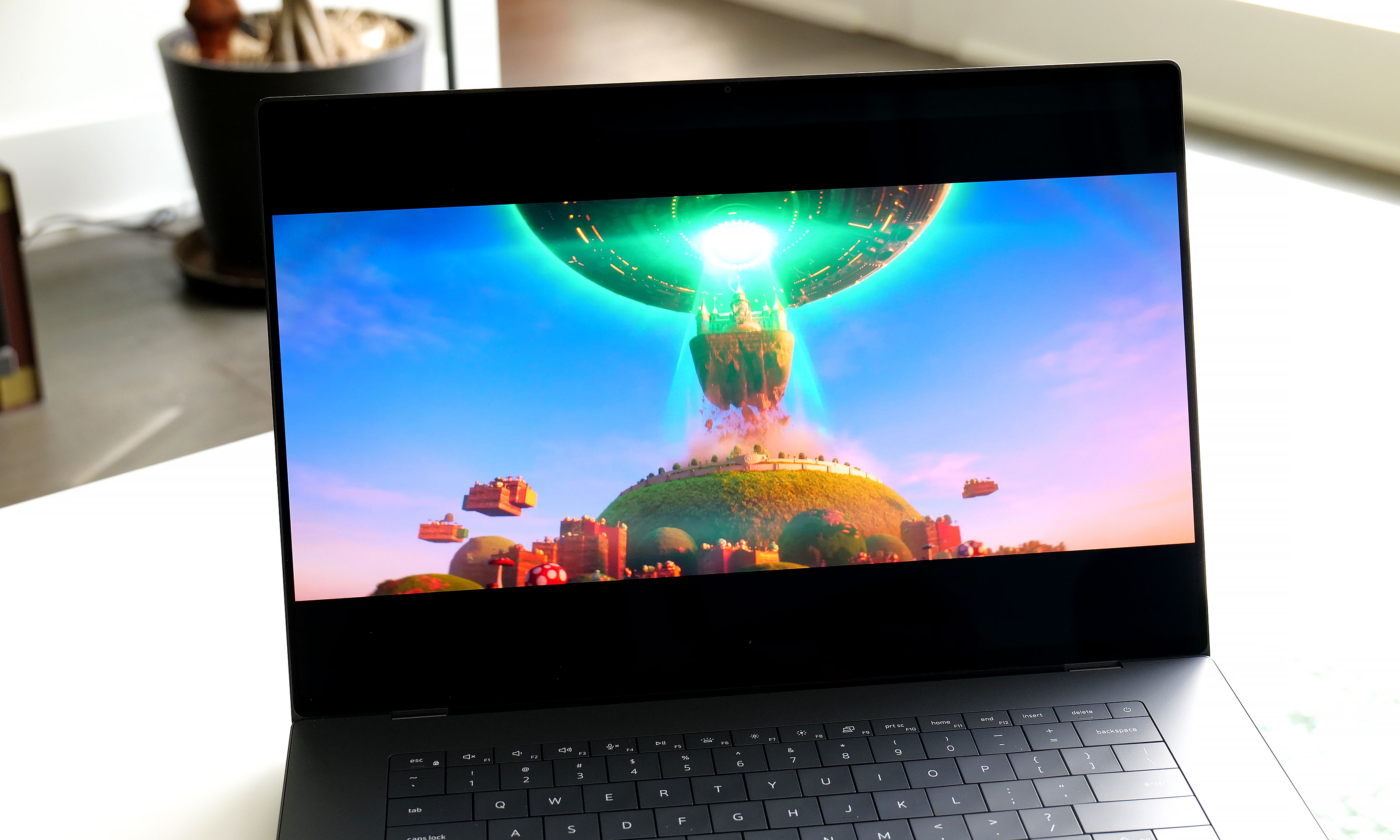
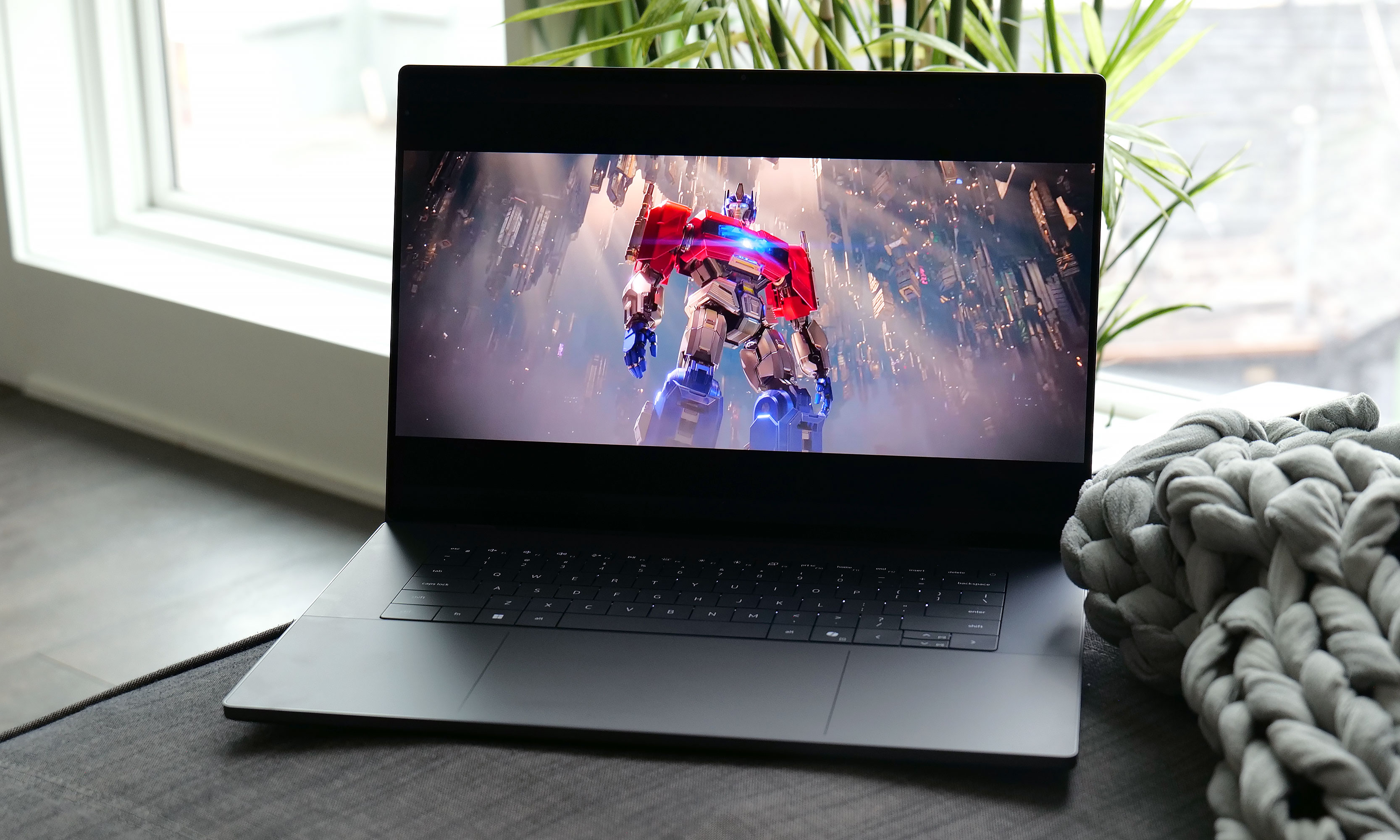
The Prestige 14's stylus-friendly 14-inch OLED screen helps to distract from its mundane case design, with the typical deep black levels and excellent contrast I appreciate from OLED, together with bold 100 percent DCI-P3 color coverage. It makes just about everything look great, though I wish MSI offered more than a 60Hz refresh rate — a 90Hz or 120Hz screen would make scrolling through web pages look far smoother. 

And speaking of the stylus, that’s tucked away at the bottom of the Prestige 14. I didn’t find it particularly useful for notetaking, but for those who do it’s easy to stow away. It’s just too thin for extended handwriting, and anyone doing serious notetaking or digital art would be better off with a larger stylus or dedicated drawing pad. 

MSI Prestige 14 Flip AI+ in tent mode
Devindra Hardawar for Engadget

After seeing a relatively slim Lenovo Panther Lake laptop reaching 190 fps in Battlefield 6, using only Intel's built-in Arc B390 GPU, I was eager to see how that new hardware would perform in the real world. Simply put, the MSI Prestige 14 Flip AI+ didn't disappoint. It scored 10,169 points in PCMark 10, the highest score we've seen yet on a Windows PC. 

And yes, that includes plenty of powerful gaming systems like the Alienware 16 Area 51 (8,245 points) and the Razer Blade 18 (7,703), both of which were running Intel's last-gen Core Ultra 9 275HX chip. Of course, those systems have faster GPUs, like NVIDIA's RTX 5080, but PCMark 10 doesn't lean too heavily on graphics performance. The Prestige 14 edged close to the M5 MacBook Pro in Geekbench 6's multi-threaded CPU test, scoring 16,633 points compared to Apple's 18,003. But the MacBook Pro reigned supreme in the single-threaded test, scoring 4,310 points compared to the MSI's 2,864. 

Computer

PCMark 10

Geekbench 6

Geekbench 6 GPU

Cinebench 2024

MSI Prestige 14 Flip AI+ (Intel Core Ultra X7 358H)

10,169

2,864/16,633

56,425

117/719

Apple MacBook Pro 14-inch (M5, 2025)

N/A

4,310/18,003

48,840

197/1,034 | GPU: 6,143

Dell 16 Premium (Core Ultra 7 255H, NVIDIA RTX 5070)

7,780

2,711/15,919

109,443

127/1,104

When it came to games, the Prestige 14 reached a surprisingly high 80-95 fps in Arc Raiders while playing in 1080p with medium graphics settings, as well as AMD's FSR3 upscaling and 2x frame generation. Without those AMD features, Arc Raiders ran at 45-50 fps, which is still respectable for an ultraportable. To my surprise, Intel's XeSS upscaling technology wasn't available in Arc Raiders during my testing, but there's a good chance that tool would eke out even more performance. (I've asked Intel about XeSS's omission, and will update when I hear back.)

In Cyberpunk 2077, The Prestige 14 hit 35 fps while playing in 1080p with default settings. Flipping on Intel's XeSS frame generation bumped that to 45 fps. If you're used to the 30 fps performance of consoles, those numbers are still vaguely playable, but they certainly fall short of the 60 fps PC players typically look for. It's best to think of the MSI Prestige 14 Flip AI+ as a laptop where you can play games sometimes, perhaps while you're away from your gaming desktop. It's certainly not a replacement for a dedicated gaming laptop.

For more prosaic productivity tasks, like juggling dozens of browser tabs and editing large images, the Prestige 14 didn't break a sweat. Its healthy 32GB of RAM gave it plenty of breathing room for multi-tasking, and unlike other ultraportables, I didn't notice any serious performance dips while running on battery. On that note, the Prestige 14 also lasted a whopping 22 hours and 15 minutes in PCMark 10's battery benchmark. That's the highest figure we've ever seen from a laptop, and it's a promising sign of what we can expect from other Panther Lake systems. 

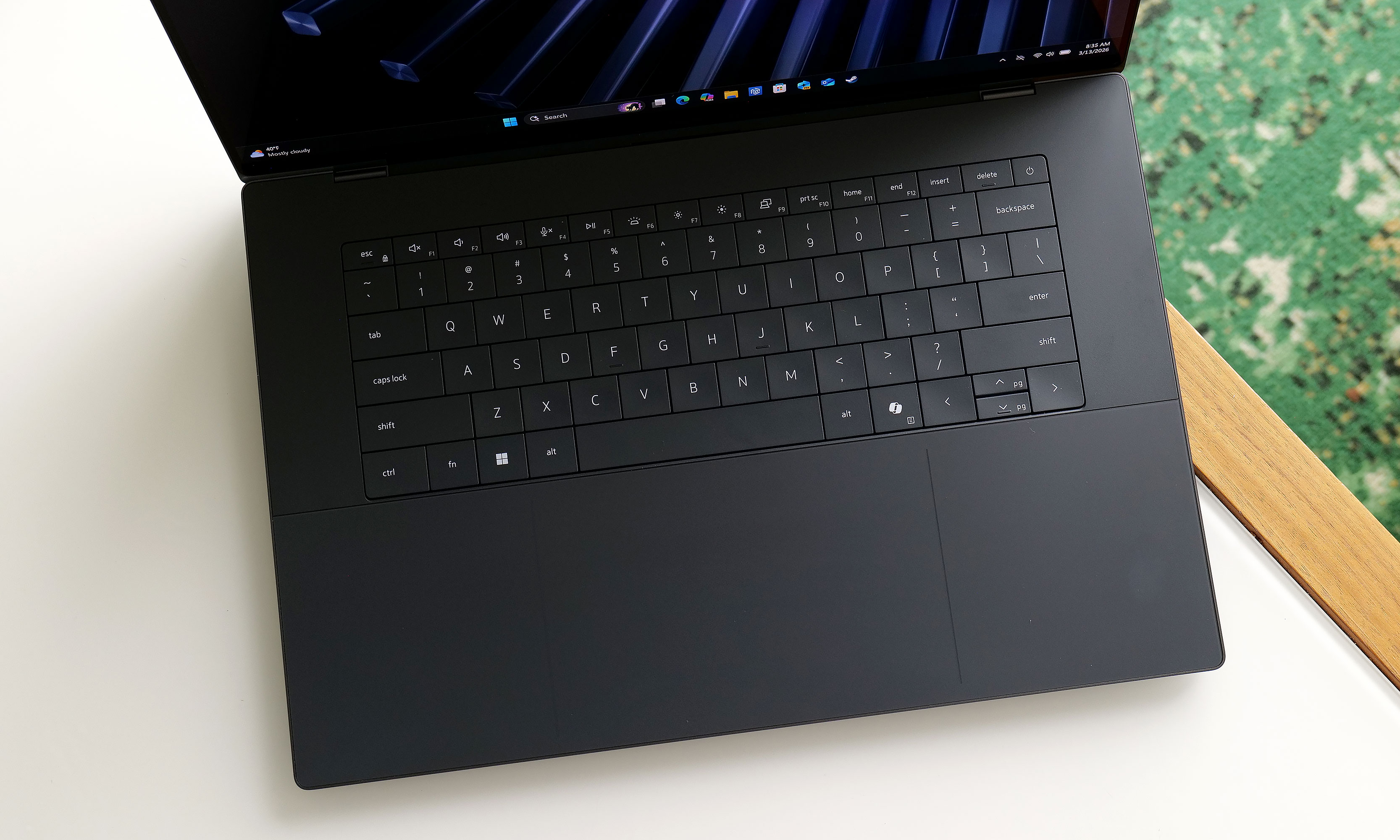
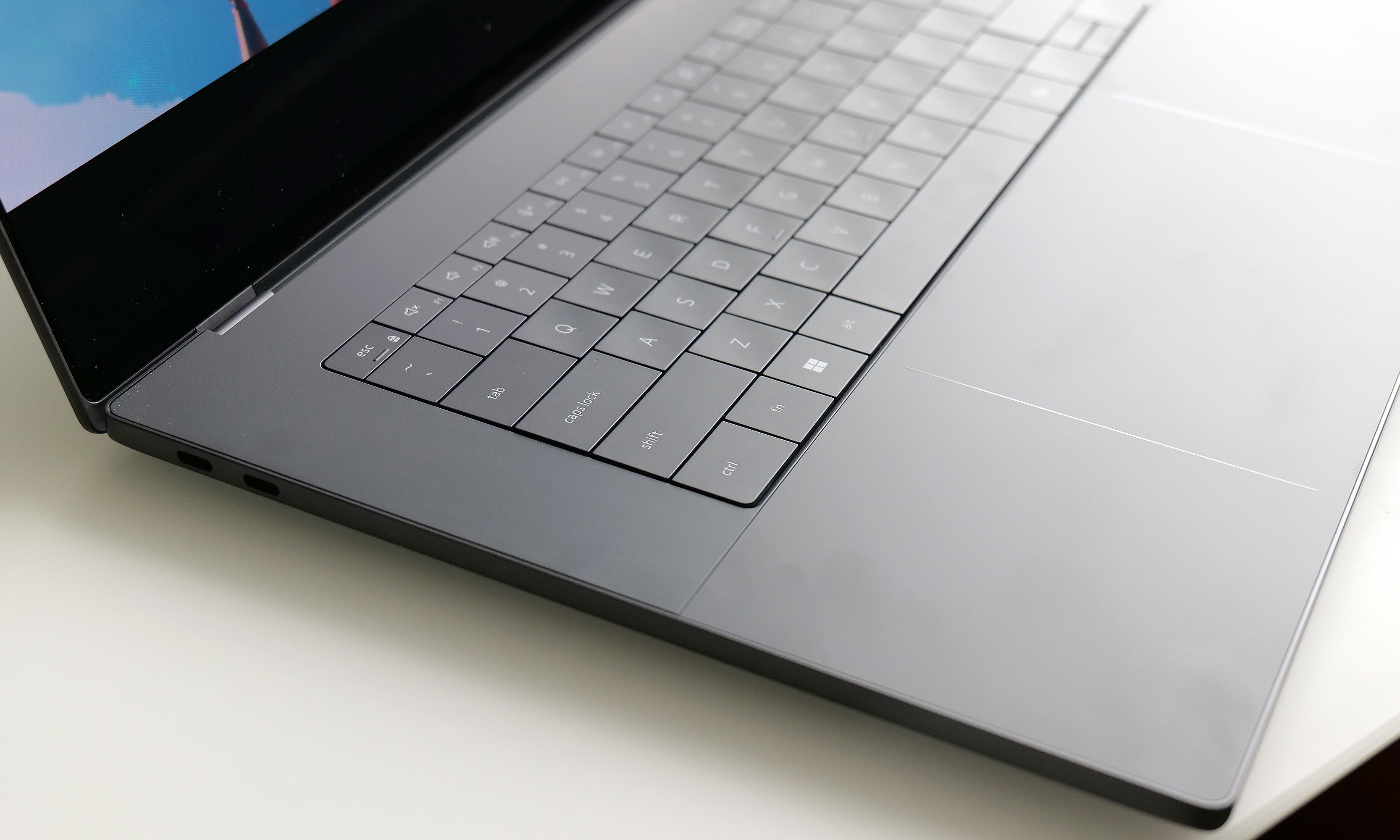
MSI Prestige 14 Flip AI+ keyboard and trackpad
Devindra Hardawar for Engadget

While there's clearly plenty to love about the MSI Prestige 14 Flip AI+, I was less impressed with its mechanical trackpad and keyboard. Perhaps I've been spoiled by the more responsive haptic trackpads from the competition, but the Prestige 14's old-school trackpad kept slowing me down with missed clicks and other annoyances. The laptop's keyboard felt similarly cheap, with a lack of depth and comfort that I've come to expect from other ultraportables in the $1,299 price range. Even after hours of testing, I had a hard time typing on the Prestige 14 at full speed without errors. It's a shame that MSI gets so much right, but is hindered by these weak components.

MSI Prestige 14 Flip AI+ in tablet mode
Devindra Hardawar for Engadget

As one of the earliest Panther Lake laptops on the market, the $1,299 Prestige 14 Flip AI+ is a solid machine, if you're willing to overlook its touchpad flaws. More than anything though, the Prestige 14 makes me excited to see what other PC makers offer with Intel's new chips. It's taken a while, but now Intel finally has some decent competition against Apple's M-series hardware. The era of gaming with ultralight machines is finally here.

This article originally appeared on Engadget at https://www.engadget.com/computing/laptops/msi-prestige-14-flip-ai-review-an-ultraportable-for-arc-raiders-thanks-to-intels-panther-lake-160000606.html?src=rss

The first BTS concert in over three years will stream live on Netflix in March

Netflix is back with another livestream production guaranteed to excite K-POP fans worldwide. The streamer has announced that BTS will be performing live on Netflix. It marks the band's first performance after almost four years — the members took a hiatus to complete South Korea's mandatory military service. 

The live concert will air on Saturday, March 21, one day after BTS releases their new album Arirang and will be aptly titled BTS The Comeback Live | Arirang. The show will physically take place in Seoul's Gwanghwamun Square and stream live at 8PM KST/7 AM ET/4 AM ET. Yes, viewers in the US will have to choose between a really early Saturday or a very late Friday night. Alternatively, you can skip out on any potential livestream glitches and likely watch it later (or catch the K-Pop group on their upcoming world tour). 

Plus, come Friday, March 27, Netflix will be releasing BTS: The Return, a documentary all about the making of Arirang. As Netflix puts it: "The film offers rare behind-the-scenes access as the group comes back together and charts an unprecedented path forward together after a nearly four-year hiatus."

Netflix has leaned further into livestreaming over the last few years — though the BTS concert is arguably their biggest coup. Livestreams have included everything from reality shows to sports, with some serious infrastructure issues along the way. Here's hoping the BTS concert goes off without a hitch. 

This article originally appeared on Engadget at https://www.engadget.com/entertainment/the-first-bts-concert-in-over-three-years-will-stream-live-on-netflix-in-march-155428505.html?src=rss

Notepad++ says it was hijacked by Chinese state-sponsored hackers

Last year, the creator of Notepad++ rolled out an update for the text and source code editor after security experts reported that bad actors were hijacking its update mechanism to redirect traffic to malicious servers. It led to users downloading compromised executables that could infect their devices. Now, Don Ho has revealed that multiple security experts investigated the breach and determined that the threat actor “is likely a Chinese state-sponsored group.” He said it explained why experts observed highly selective targeting during the campaign and why only traffic from certain users were redirected so that they would download malicious files. It’s not clear what kind of users were specifically targeted and what the files did to their devices.

The attackers started redirecting traffic from Notepad++ to their servers sometime in June 2025, and that went on until December 2. Their method involved compromising the system at the hosting provider level, though the exact technical mechanism that allowed them to intercept traffic remains under investigation. In addition to releasing a security patch, Notepad++ also migrated to a new hosting provider with much stronger security practices. Ho now encourages anyone who wants to install the app to download version 8.9.1, which comes with the security update, and running the installer manually.

This article originally appeared on Engadget at https://www.engadget.com/apps/notepad-says-it-was-hijacked-by-chinese-state-sponsored-hackers-153000268.html?src=rss

Spain set to ban social media for children under 16

Spain will join the growing list of countries banning access to social media for children, Prime Minister Pedro Sanchez announced Tuesday. The law will apply to users under 16 years of age amidst a broader push to hold social media companies accountable for hate speech, social division and illegal content.

Speaking at the World Governments Summit in Dubai, Prime Minister Sanchez excoriated social media, calling it a "failed state" where "laws are ignored and crime is endured." He spoke to the importance of digital governance for these platforms, highlighting recent incidents like X's AI chatbot Grok generating sexualized images of children, Meta "spying" on Android users and the myriad election interference campaigns that have taken place on Facebook.

In light of what Sanchez called the "integral" role social media plays in the lives of young users, he said the best way to help them is to "take back control." Next week, his government will enact a slew of new regulations, with a ban on users under 16 years of age among them. Social media companies will be required to implement what he calls "effective age verification systems" and "not just checkboxes." A specific timeline on enforcement of the coming ban has not been announced.

Spain will also make "algorithmic manipulation and amplification of illegal content" into a new criminal offense and Sanchez says tech CEOs will face criminal liability for hateful or illegal content on their platforms. The Prime Minister further announced that Spain has formed a coalition with five other unnamed European nations to enact stricter governance over social media platforms.

Sanchez said children have been “exposed to a space they were never meant to navigate alone,” and that it’s the government’s job to intervene. He added social media has fallen from its promise to be a “tool for global understanding and cooperation.”

Australia enacted an under-16s ban on social media last year, which has prompted many nations to follow suit. It is under active consideration in the UK, while Denmark and Malaysia have announced plans to enact similar bans.

This article originally appeared on Engadget at https://www.engadget.com/social-media/spain-set-to-ban-social-media-for-children-under-16-151546884.html?src=rss

Amazon’s Echo Show 8 and 11 are down to new all-time lows

Amazon is running a sale on two of its newest devices. First, there's the Echo Show 8, which is down to $150 from $180 — a 17 percent discount. Next up is the Echo Show 11, which is more or less the same device, just bigger. This model has dropped 18 percent to $180 from $220. Both deals bring the Echo Shows down to new all-time low prices. 

The Echo Show 8 and 11 came out in mid-November with the main difference being screen size. The Echo Show 8 has an 8.7-inch HD screen that Amazon claims is 15 percent larger than its predecessor. Meanwhile, the Echo Show 11 is, you guessed it, an 11-inch Full-HD display that has 60 percent more viewing area than the Echo Show 8. 

Both of the devices come with an AZ23 Pro chip and Omnisense technology, which Amazon describes as "our custom sensor platform designed for ambient AI." They also have Prime Video and Netflix apps, while other streamers can be reached through the browser. Each comes with spatial audio, dual full-range drivers and a 2.8-inch woofer. Plus, they have a 13MP camera with auto-framing. 

Follow @EngadgetDeals on X for the latest tech deals and buying advice.

This article originally appeared on Engadget at https://www.engadget.com/deals/amazons-echo-show-8-and-11-are-down-to-new-all-time-lows-150021328.html?src=rss

Mario Tennis Fever preview: A racket-smashing blast

New Mario sports games typically only come around once in a generation. So to get a fresh installment of tennis featuring a deep roster of characters this early in the Switch 2's lifecycle is rather exciting. And after getting a chance to play Mario Tennis Fever prior to its official release on February 12, the best entry to the franchise yet might only be a couple of weeks away.

Once again, Mario Tennis Fever relies on the series' familiar mix of topspin, slice and flat (power) shots used in previous games. The big new mechanic for this title is that instead of Zone Shots from Mario Tennis Aces, you can equip each character with a different racket, similar to how you can choose between a range of vehicles in Mario Kart. Every racket features a different special ability that you can charge up by rallying back and forth. When the gauge is full, you can unleash a Fever Shot to potentially devastating results. 

The Fever Shot is just one of the special abilities from the 30 different rackets available in Mario Tennis Fever.
Nintendo

For example, the Fire Racket turns the ball into a fireball that leaves multiple embers on the court. If your opponent gets burned, they will slowly lose health, which will make them move slower or knock them out (but only temporarily) if you're playing doubles. Alternatively, the Pokey Racket can summon the giant cactus monster it's named after onto the court, which not only blocks your view but gets in the way as you chase down shots. And just like the game's large stable of characters (38 in total), there are almost just as many different Fever Rackets (30) to choose from. 

The thing I like most is that compared to special shots in previous titles, Fever Shots have built-in counterplay. Zone Shots from Mario Tennis Aces sometimes made it feel like you were playing a fighting game as people battled to conserve meter, while signature moves in Mario Tennis: Ultra Smash often turned into automatic points. If someone sends a Fever Shot at you, you can send it back simply by returning the ball before it bounces. This naturally sets up some frenetic sequences as characters try to volley back and forth without letting the ball hit the ground in order to prevent the Fever Shot from taking effect on their side of the court. This is exactly the kind of chaos that makes Mario Tennis so fun — it just feels a bit more balanced now. 

Pokey is here to be a thorn on your court.
Nintendo

That said, if you prefer a different kind of mayhem, there are also new Wonder Court Matches, which borrow the titular blue flower seeds from Mario's most recent 2D platformer. This game mode nixes Fever Rackets in favor of changing up the rules of the sport on the fly in weird and unexpected ways. Don't be surprised when you have a hard time hitting seeds with your shots to activate wondrous effects while spike balls get tossed at you or a parade of piranha decides to have a party on top of the net. 

Unfortunately, I wasn't able to play Mario Tennis Fever's Adventure mode, which is a bit of a shame as I've heard that it's deeper and more fleshed out. This is a welcome upgrade from the somewhat thin single-player campaign from Aces. Thankfully, the game still supports motion controls for younger players or anyone who'd rather swing a virtual racket instead of mashing buttons. I also appreciate that Nintendo is making it easy to get into multiplayer matches, as the game supports both online matches (ranked and unranked) and local wireless connectivity (LAN). For the latter, you can also use the Switch 2's Game Share feature to send the title to other nearby systems so people can try out Mario Tennis Fever for themselves, even if they don't own a copy. 

Wonder Court Matches are another new way to upend the rules of Mario Tennis.
Nintendo

So if you're like me and you've always preferred sports games that are more bombastic instead of realistic, Mario Tennis Fever ($70) is shaping up to be a real grand slam. Pre-orders are live now ahead of the title's official release on February 12. 


This article originally appeared on Engadget at https://www.engadget.com/gaming/nintendo/mario-tennis-fever-preview-a-racket-smashing-blast-140000408.html?src=rss

The Switch 2’s Virtual Boy is a tribute to Nintendo’s wackiest console

Even in 2026, VR still feels like tech that isn't quite ready for prime time. When Nintendo released the original Virtual Boy way back in 1995, it was hard for my 10-year-old brain to comprehend a 3D console with a bipod, a facemask and a monochrome red display. Then, when you factor in weak sales that led to the system being discontinued after only a year, you end up with a gadget that felt more like a mythical creature than something you could actually buy. But that's changing later this month when the Virtual Boy returns as an add-on for the Switch 2. After getting an early demo of Nintendo's new accessory, I can confirm that this thing feels just as weird and quirky as it did when it first came out more than 30 years ago. 

The biggest difference on the new model is that it uses the Switch 2's screen as its main display and processor.
Sam Rutherford for Engadget

The most impressive thing about the revamped Virtual Boy is how much it looks and feels like the original. It still features that classic red and black color scheme along with a stand for propping it up. The biggest difference is that instead of having a built-in display, there's a slot where you can slide in a Switch 2 (with its Joy-Con detached). This brings several advantages: Since the Switch 2 has its own battery, there's no need for cords anymore. It also means you don't have to worry about swapping in individual game carts, as software can be downloaded directly from Nintendo's online store. Graphics also look much sharper than I remember, though I admit that could just be me getting old. Finally, instead of reviving the Virtual Boy's archaic gamepad, Nintendo smartly opted to let us use the Switch 2's current lineup of controllers. The end result is a design that's faithful to the original but doesn't suffer from many of the pitfalls that plagued so many 90s gadgets — like tangled wires, awkward controls and fuzzy displays. 

One thing Nintendo didn't change is Virtual Boy's monochrome red visuals.
Sam Rutherford for Engadget

However, even with a fair bit of modernization, it's hard to prepare your mind for the journey back in time that happens when you actually use it. Unlike every other contemporary VR headset, you still don't strap the new Virtual Boy onto your face. Instead, you have to adjust its bipod so that its facemask is level with your face and then you kind of just lean in to immerse yourself in a world where red is the only color. It's definitely a bit awkward, but it works. Nintendo even included a way to adjust IPD, so visuals look just as crisp (if not moreso) as they did on the original.

That said, the clunkiest thing about the Virtual Boy is its games. While Nintendo updated its exterior and internals, the company didn't really mess with its software — for better and worse. This means you get a relatively unadulterated look at where people thought VR was headed 30 years ago, which becomes immediately evident as soon as you boot into one of the console's first seven games. Galactic Pinball is slow and trying to time when to hit the flippers to prevent the ball from getting past you is an exercise in frustration. Meanwhile, Red Alarm feels like a cheap port of Battlezone, just with a vaguely Arwing-shaped plane instead of a tank. And once again, the pacing on this aerial shooter is glacial. Then there's 3D Tetris, which just kind of hurts your head as you try to drop pieces from a top-down perspective while the entire stage pivots around and never stops moving. The only title that really stands out is Virtual Boy Wario Land, which was and still is the best game on the entire platform. 

There's no getting around it, the Virtual Boy's bipod is just kind of awkward.
Sam Rutherford for Engadget

After playing with the revamped Virtual Boy for just under half an hour, it's just as eccentric and ungainly as the original was three decades ago. But you know what, I wouldn't have it any other way because this thing is just as much of a time capsule as it is a nostalgic revival of a forgotten system. And if you want to experience a hazy concept of what people thought the future was going to be, there still isn't anything like the Virtual Boy. 

The Virtual Boy add-on for the Switch 2 officially goes on sale on February 17 for $100, with the caveat that buyers will need an active Nintendo Switch Online + Expansion pack membership. Also, in addition to the seven games available at launch, Nintendo is planning to add nine more throughout the year including Mario's Tennis and previously unreleased titles such as Zero Racers and D-Hopper.

This article originally appeared on Engadget at https://www.engadget.com/gaming/nintendo/the-switch-2s-virtual-boy-is-a-tribute-to-nintendos-wackiest-console-140000003.html?src=rss

NASA moves Artemis 2 launch to March after hydrogen leak during testing

NASA started making the final preparations for the Artemis 2 mission in early January, with the hopes of opening its launch window as soon as February 6. After issues showed up during the mission’s wet dress rehearsal in the early hours of February 3, however, the agency had to push back its earliest launch opportunity to March.

“With more than three years between SLS launches, we fully anticipated encountering challenges. That is precisely why we conduct a wet dress rehearsal. These tests are designed to surface issues before flight and set up launch day with the highest probability of success,” NASA administrator Jared Isaacman said on X.

During a wet dress rehearsal, the spacecraft to be used for a mission is loaded with propellants to simulate the actual preparations and countdown to liftoff. NASA explained that Artemis 2’s Space Launch System, which was already on the launch pad, suffered from a liquid hydrogen leak that its engineers spent hours troubleshooting. They were ultimately able to fill all the rocket’s tanks and started the countdown to launch. But with approximately five minutes left in the countdown, the ground launch sequencer automatically stopped due to a spike in the spacecraft’s liquid hydrogen leak rate.

The agency admits that it has other issues to fix, based on what happened during the rehearsal. It has to make sure that the cold weather doesn’t affect the mission’s equipment during the actual launch in the same way it did in testing . The Orion crew module’s hatch pressurization process took longer than expected, and that should must not happen on launch day. NASA also has to troubleshoot the audio communication channels for its ground teams after they dropped several times during the rehearsal. Artemis’ ground crew will review data from the wet dress rehearsal and address the aforementioned problems. NASA then has to conduct another test to confirm that they were taken care of before announcing the mission’s launch window.

This article originally appeared on Engadget at https://www.engadget.com/science/space/nasa-moves-artemis-2-launch-to-march-after-hydrogen-leak-during-testing-140000351.html?src=rss

The 8BitDo Pro 3 Bluetooth Controller is down to a new all-time low

If you've been inside all winter gaming then it might be time to upgrade your gear. Right now, the 8Bitdo Pro 3 Bluetooth Controller is available for just over $48, down from $70. The 31 percent discount is the lowest price we've seen yet for the controller. Notably, the sale is only available on the Gray model.

The new 8Bitdo Pro 3 came out in August and offers TMR Joysticks with a 12-bit ADC sampling chip. It also has a Trigger Mode Switch, 2 Pro paddle buttons and swappable magnetic ABXY buttons for moving between the Switch and Xbox layouts. Plus, it has an integrated charging dock. 

This 8Bitdo controller is compatible with Apple, SteamOS, Android devices, PC, Switch, and Switch 2 devices. 

Follow @EngadgetDeals on X for the latest tech deals and buying advice.

This article originally appeared on Engadget at https://www.engadget.com/deals/the-8bitdo-pro-3-bluetooth-controller-is-down-to-a-new-all-time-low-143036684.html?src=rss

Proton VPN two-year subscriptions are 70 percent off right now

Proton VPN is running a solid deal right now, dropping its two-year Proton VPN Plus plan to $2.99 per month. That works out to $72 billed upfront for the first 24 months, which represents a 70 percent discount compared to its regular pricing. 

We’ve rated Proton VPN highly thanks to its strong privacy credentials, transparent nonprofit backing and consistently fast performance. It’s one of the services we recommend in our guide to the best VPNs, and this deal also shows up alongside other standout offers in our ongoing roundup of the best VPN deals. It’s a good option if you’re looking to lock in long-term protection at a lower monthly cost.

In our Proton VPN review, the service impressed us with consistently fast performance and strong privacy protections. We measured average download speeds at 88 percent of our unprotected connection and upload speeds at 98 percent, which is more than enough for 4K streaming, gaming and torrenting. It also unblocked Netflix in every region we tested, and while its Mac and iOS apps aren’t quite as polished as the Windows and Android versions, the service is still easy to install and largely set-it-and-forget-it across platforms. We gave Proton VPN a score of 90 out of 100.

Proton VPN Plus is the company’s premium tier and includes access to its full server network, which now spans more than 15,000 servers across 120-plus countries. A single subscription covers up to 10 devices at once and unlocks features like NetShield ad and malware blocking, Secure Core “double hop” connections, split tunneling, custom DNS controls and priority customer support. Proton VPN Plus also supports fast P2P traffic on nearly all paid servers and includes VPN Accelerator, which helps maintain high speeds over long-distance connections.

Right now, Proton VPN Plus is discounted to $2.99 per month when you commit to two years, billed as $72 upfront for the first 24 months. After that, the plan renews annually at $83.88. That’s a 70 percent discount compared to the standard monthly rate. As with Proton’s other paid plans, the subscription comes with a 30-day money-back guarantee, so you can try it risk-free if you’re not ready to lock in long term.

This article originally appeared on Engadget at https://www.engadget.com/deals/proton-vpn-two-year-subscriptions-are-70-percent-off-right-now-123000972.html?src=rss