Starfleet Academy is the best first season of a Star Trek show ever

The first season of a TV show is a tricky thing. It has to convince people to watch it and justify the show’s existence to the network (or streaming service) execs. It has to deal with actors and writers who may not have fully dialed into the characters and world yet. There are some shows with absolutely stellar first seasons — Stranger Things, Veronica Mars and Ted Lasso are a few — but many other hit shows stumbled out of the gate, like The Office and Supernatural.

Star Trek is not immune to this phenomenon. The Original Series had a decent first season, with classic episodes like “The City on the Edge of Forever.” But the next four shows all have rather weak beginnings, with even fan-favorite The Next Generation stumbling badly with episodes like “Code of Honor.” That show picked up in season three, beginning a trend called “Growing the Beard,” in reference to how Commander Riker’s new beard coincided with the uptick in quality.

This trend unfortunately continued into the current era, with 2017’s Star Trek: Discovery delivering a first season with an overwhelmingly dour tone and a lot of franchise changes that didn’t sit well with fans. The show made some tweaks in season two (including a change in setting that involved traveling 900 years into the future), and showed a lot of improvement with season three. Picard also floundered horribly, with an uneven first season that killed off some fan-favorite characters and also turned the title character into an android. 

Things started looking up after that, with shows like Strange New Worlds all posting strong outings with their first go-arounds. While episodes like “A Quality of Mercy” and “Lift Us Where Suffering Cannot Reach” may not make the list of all-time classics, there are no outright stinkers. It seemed like the franchise as a whole was finally finding its footing in this new streaming era.
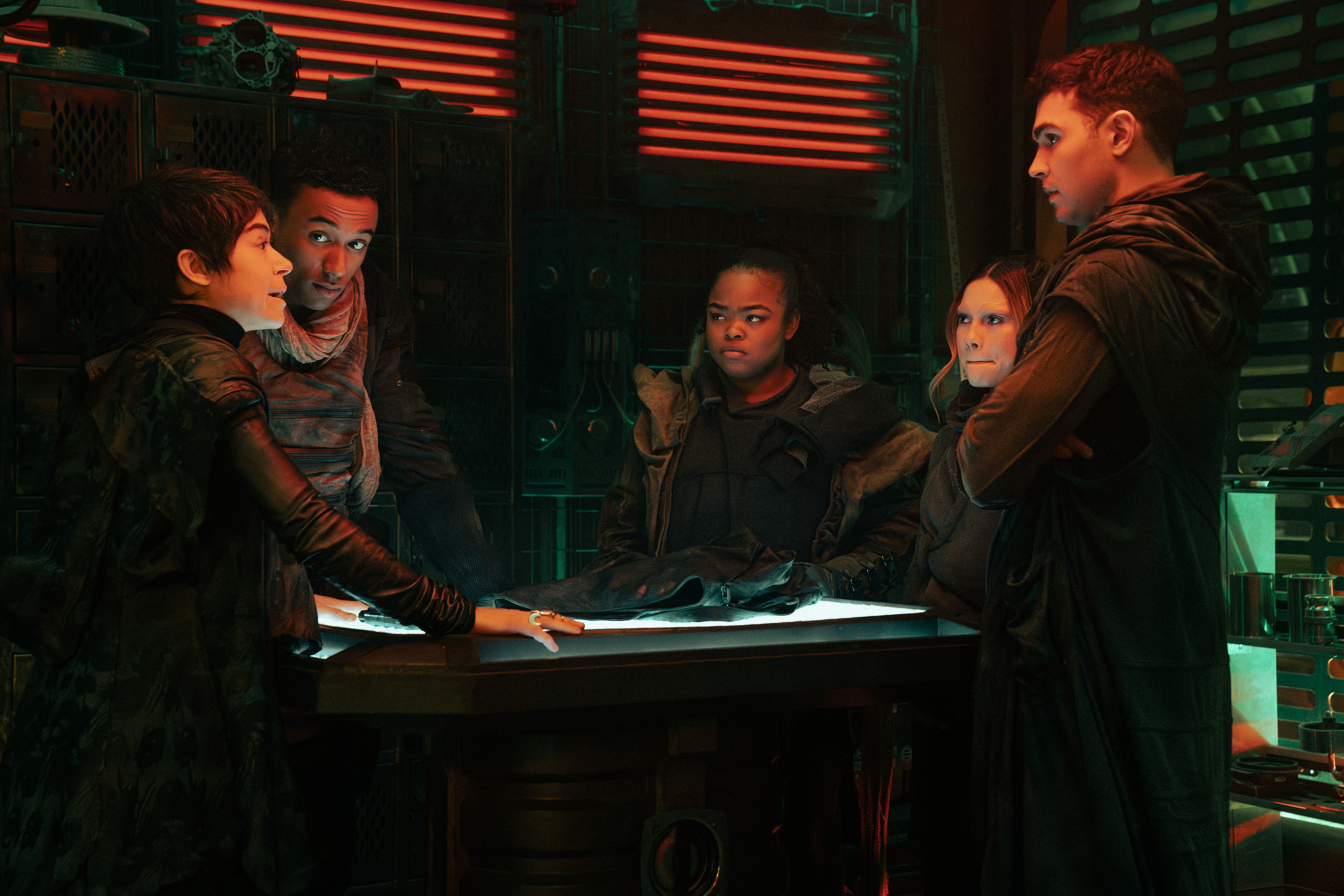
Star Trek: Starfleet Academy
L-R: Tatiana Maslany as Anisha, Sandro Rosta as Caleb, Kerrice Brooks as SAM, Bella Shepard as Genesis, and George Hawkins as Darem in season 1, episode 9, of Star Trek: Starfleet Academy streaming on Paramount+.
Michael Gibson/Paramount+

That leads us to Starfleet Academy, which debuted in January on Paramount+. Prior to its premiere, the internet was full of people deriding it as “CW Trek” and declaring that they don’t want to watch a show about “teenyboppers” that wasn’t “real” Star Trek. Now that the show has finished its first season… the internet is still full of people complaining. But many folks who were wary of it at the beginning have been pleasantly surprised — every day there seems to be multiple posts on various Star Trek subreddits along the lines of “Starfleet Academy is actually good?!?” I personally didn’t enjoy the first episode, but episode two turned me around rather quickly, and it seemed that every week brought new converts.

Granted, 10 episodes is a short amount of time to make an impact, but Starfleet Academy did a lot with that number. Four of the episodes are dedicated to the ongoing villainy of Nus Braka, a murderous pirate played with scene-chewing delight by Paul Giamatti. These have all been pretty straightforward adventure stories, which also did a good job of fleshing out not only Braka, but cadet Caleb Mir, whose mother went to prison because of Braka.

The emphasis on Caleb in the first episode made it seem like the show would focus on him, much in the way Discovery focused on Michael Burnham, but he took a back seat as the show explored the other characters as well as its setting. Episode two, “Beta Test,” focused on diplomacy, a long-standing theme of Star Trek, and even shook up the status quo by moving the Federation headquarters from Earth to Betazed. 
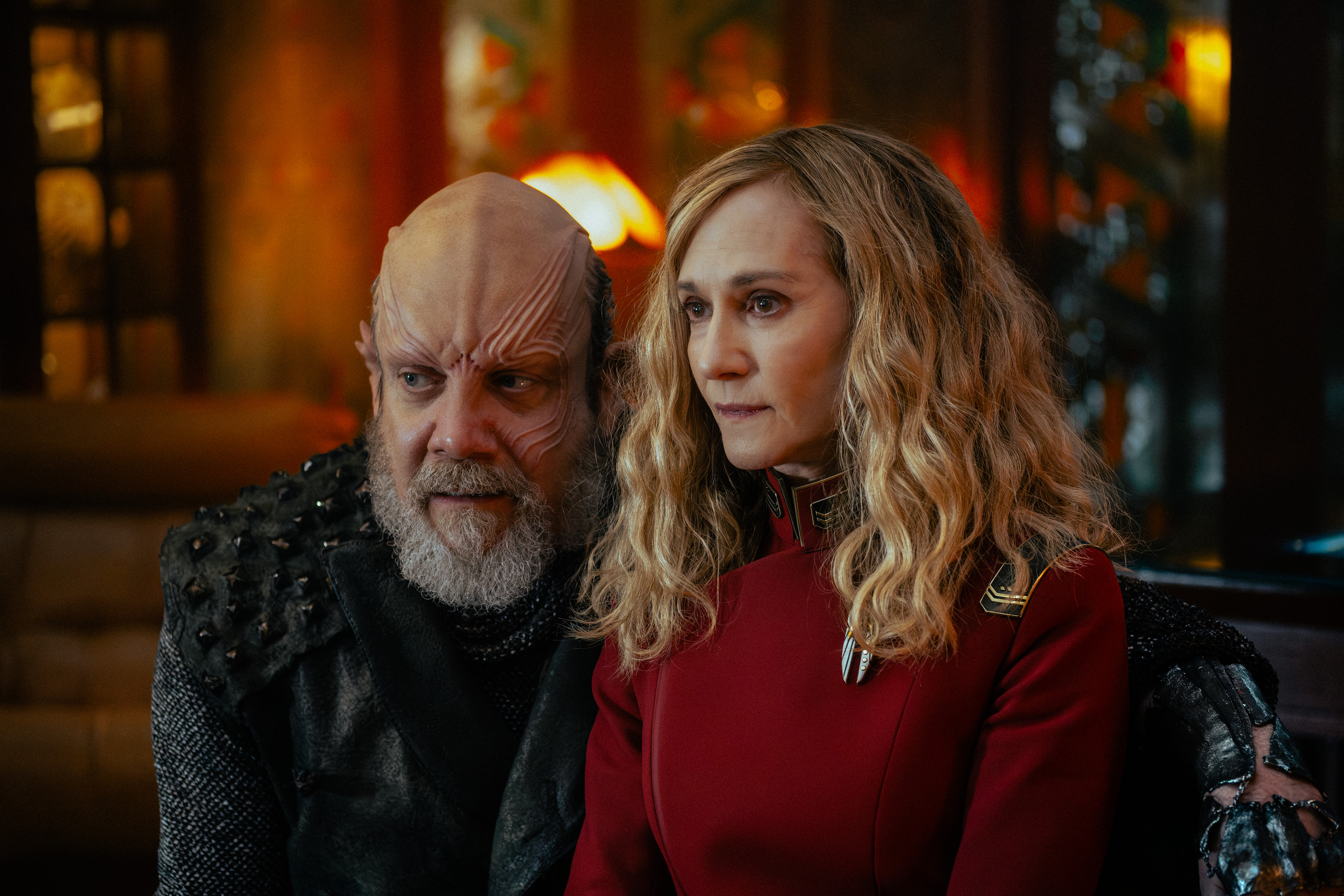
Paul Giamatti as Nus Braka and Holly Hunter as Captain Nahla Ake in season 1, episode 6, of Star Trek: Starfleet Academy streaming on Paramount+.
Brooke Palmer/Paramount+

Episodes four and five were more personal stories, with “Vox in Excelso” focusing on soft boy Klingon character Jay-Den as well as the fate of his race in general after hundreds of years, while “Series Acclimation Mil” also gave us characterization of photonic being Sam along with some heartfelt fan service for the Deep Space Nine fandom. Sam would also shine once more in “The Life of the Stars,” an episode that dealt with trauma, but also (again) delivered fan service in a way that didn’t feel like pandering because of how it was used to develop not just Sam, but also the Doctor, a legacy character from Voyager.

It’s not that every episode in season one of Starfleet Academy is a masterpiece – “Vitus Reflux” and “Ko’Zeine” are somewhat weak – but none of them are outright bad, making the batting average of the season rather high. That bodes well for word-of-mouth, as it's easier to recommend a show when you don't have to couch it with excuses about how it gets good “eventually.”

It will need that word-of-mouth if it wants to get through a complete four seasons of schooling; season two just finished filming so we're guaranteed at least that, but there's a lot up in the air for not just the show, but the entire franchise. Strange New Worlds season four will debut later this year, and then we have an abbreviated season five to look forward to. But past that, nothing firm is on the horizon: Starfleet Academy hasn't been renewed yet, and projects like the Tawny Newsome-helmed comedy show are still in development with nothing tangible revealed yet. 

Newsome played Beckett Mariner on Lower Decks and worked in the writers room for Starfleet Academy — she's an example of how Paramount has been building up a roster of talent behind the scenes for the franchise who, even when a show is new, understand the universe and, more importantly, how to work together to make good TV. And that's going to be important in the next year or so, as Paramount makes decisions about the future of the franchise in the shadow of the recent Skydance merger and the upcoming Warner Bros. purchase. Star Trek has an uphill battle ahead of it, but at least Starfleet Academy’s first season has made it an easier climb.

This article originally appeared on Engadget at https://www.engadget.com/entertainment/starfleet-academy-is-the-best-first-season-of-a-star-trek-show-ever-133000945.html?src=rss

Google’s GFiber internet business is merging with Astound Broadband

Google has announced that GFiber is merging with Astound Broadband, in an agreement that sees Astound’s parent company Stonepeak become the majority owner, with Alphabet retaining a minority stake.

No financial specifics were detailed in a press release, but the new combined business will be an independent provider led by GFiber’s executive team, who Google says will use its "expertise in high-speed fiber innovation to manage the combined network footprint." Astound already serves over one million customers across the US, and by joining forces Google says the two providers will be able to grant better internet access to more communities.

GFiber, formerly known as Google Fiber, has been around for nearly 15 years, and currently offers speeds of up to 8Gbps on its $150/month Edge 8 Gig plan. A 20 Gig service was expected to leave early access later in 2026.

The fiber broadband service is part of Alphabet’s "Other Bets" portfolio, which also includes Waymo, Verily, and Wing, a combined segment that recorded an operating loss of $16.8 billion in 2025, CNBC reports. The company’s deal with Stonepeak is subject to regulatory approval and is expected to close in Q4 of this year.

This article originally appeared on Engadget at https://www.engadget.com/big-tech/googles-gfiber-internet-business-is-merging-with-astound-broadband-132832086.html?src=rss

Google Maps brings a 3D map to your driving directions

In recent weeks, Google has been busy adding AI features to all of its most popular apps. Following Gmail and Chrome, Maps is now the latest service to get a Gemini makeover, with a redesign of the driving experience headlining the update.       

Google is billing the new "Immersive Navigation" mode as the most significant update to driving directions in Maps in about a decade. Now instead of displaying a 2D map of the area around your car, Maps will render the surroundings in 3D. Google believes this transformation will make it easier for drivers to orient themselves, with the new view giving greater depth to nearby landmarks like buildings and overpasses. 

Behind the scenes, the company's Gemini models power the experience, deciding how to render elements to remove distractions. Pulling information from Google's Street View database and aerial photos, Google says its models are also smart enough to know when to highlight road elements like crosswalks, traffic lights and stop signs to ensure you don't miss an off ramp or important turn. At the same time, Google has made the voice guidance in Maps sound more natural. For instance, when you're driving along the highway, looking for where you need to get off, the voice assistant will say something along the lines of "go past this exit and take the next one." I imagine this will be especially helpful when driving in a foreign country with unfamiliar road names. 

The new intelligence Google has built into the redesigned navigation experience extends to alternative routes. Now, when the app suggests taking a different way of getting somewhere, it will detail the associated tradeoffs with that route. For example, it might tell you it might take longer to travel but you'll encounter less traffic along the way. Before you start your journey, Maps will now also provide a Street View preview of your destination and recommend where to park.     

This being a new release in Google's self-proclaimed Gemini era, the company has naturally found a way to add its chatbot to Maps. Inside the app, you'll find a new icon labelled Ask Maps. Tap the icon, write a natural language prompt and Gemini will use all the information contained within Maps to craft a response. 

Google is pitching the feature as a way to get information no traditional map can provide. For example, you could ask Gemini to find you a place where you can charge your phone and grab a cup of coffee, all without having to wait a long time in line. Google suggests finding the answer to a specific question like that would have previously required sifting through countless reviews. Not so anymore. The results Gemini produces through Ask Maps will contain personalized results based on places you searched for and saved in the past. You can also act on any recommendations Gemini surfaces, making it easy to book restaurants, save locations and more.

Google is starting to roll out the new immersive driving experience today in the US, with availability to expand over the coming months to Android and iOS devices, as well as CarPlay, Android Auto and cars with Google built-in. Ask Maps, meanwhile, is rolling out to Android and iOS devices in the US and India, with desktop support coming soon.

This article originally appeared on Engadget at https://www.engadget.com/ai/google-maps-brings-a-3d-map-to-your-driving-directions-123000843.html?src=rss

JBL’s two new Live headphones offer 80 hours of battery each

JBL just released two new pairs of headphones in its pre-existing Live line. There's the over-ear Live 780NC and the on-ear Live 680NC.

Both sets of headphones have similar specs, despite the difference in design. The biggest news here is likely the battery life. They max out at 80 hours per charge with regular use, which is a fantastic metric. This shrinks to 50 hours when using ANC, but that's still fairly remarkable. We truly live in a golden age of wireless headphone batteries.

JBL's new headphones can also fully charge in just two hours, which is nice. They also offer the option for multi-point connections. There are two dedicated microphones for phone calls, with clarity assisted by an AI algorithm.

Some green headphones.
JBL

Both can stream high resolution audio via Bluetooth or a wired connection. The models even look similar, with availability in the same seven colorways. The 680NC, however, is slightly lighter.

There is one major difference between the two. The 780NC includes six microphones for ANC, while the 680NC features four. This likely means that ANC performance will be better with the former, which will be assisted by the design itself. Over-ear headphones offer passive noise isolation.

Those extra microphones do boost the price up a bit. The JBL 780NC headphones cost $250, while the JBL 680NC headphones cost $160. Both are available for purchase right now, with shipments going out by March 15.

This article originally appeared on Engadget at https://www.engadget.com/audio/headphones/jbls-two-new-live-headphones-offer-80-hours-of-battery-each-120044416.html?src=rss

The best eco-friendly phone cases for 2026

We're all holding onto our phones for longer now, and in order to do that, you'll need some protection. Now, with so many good phone cases on the market, you don't have to compromise if you're also trying to live a more eco-conscious life. The best eco-friendly phone cases offer a great blend of durability and sustainability, helping to reduce plastic waste and better the planet.

Made from natural materials like biodegradable plastics, recycled ocean waste or even sustainable bamboo, eco-friendly phone cases and compostable phone covers prove that you don’t have to sacrifice style or protection to make the greener choice. Whether you’re looking for something sleek and minimal or bold and artistic, there are a number of eco-friendly options to choose from. And remember, even if you can't find a sustainable phone case that fits all your requirements, any phone case that allows you to get a few more years our of your smartphone instead of buying new and upgrading is eco-conscious in itself.

A phone case can be considered eco-friendly when it’s designed to protect not just your phone but also the planet. What sets these cases apart is the use of sustainable materials like biodegradable plastics, recycled plastic waste or even natural materials like bamboo or flax straw. Instead of contributing to plastic pollution, these materials break down naturally over time, or are made from recycled content that reduces waste.

Eco-friendly cases can also go a step further by being compostable, meaning you can toss them in a compost bin at the end of their life and they’ll decompose into the earth without leaving harmful residues. Plus, many brands behind these cases focus on sustainable practices, like reducing carbon emissions during production or offering recycling programs for old cases.

Yes, most compostable phone cases are designed to break down naturally, but how fast they do depends on the material and the conditions. In a home compost bin, some cases may take months to decompose, while in industrial composting facilities the process is quicker. These cases are usually made from plant-based bioplastics, flax or starch blends which return to the soil without leaving behind harmful residue.

It depends on the material. Standard plastic cases are tough to recycle because they’re often made with mixed plastics and additives so they usually end up in landfills. Some brands run take-back programs where you can send your old case in and they’ll reuse or up-cycle it into new products. If your case is made from single-type plastic or a recycled blend, check with your local recycling facility but in many cases specialized programs are the best option.

Georgie Peru contributed to this report.

Check out more from our spring cleaning guide.

This article originally appeared on Engadget at https://www.engadget.com/computing/accessories/best-eco-friendly-phone-cases-150016494.html?src=rss

Uber is piloting a robotaxi service in Tokyo

Uber has teamed up with UK self-driving car startup Wayve and Nissan to launch a pilot program for a robotaxi service in Tokyo in late 2026. The program will use Nissan Leaf EVs powered by Wayve’s AI Driver automated vehicle technology, which will then be connected to Uber’s platform. Trained drivers will be behind the wheel at first, as the deployed vehicles gather real-world data to be able to navigate Tokyo’s driving conditions and complex streets that are also a lot narrower than the roads in the US.

Another company backed by Uber, Nuro, will also test its vehicles on Tokyo’s challenging streets soon. Nuro has been trialing its self-driving tech in the US for years now and plans to launch a robotaxi service, as well. They’re not the first companies to take on Tokyo streets, however: Waymo deployed its Jaguar I-PACE autonomous vehicles in the metropolis last year to collect data on its roads and the driving patterns of locals.

The pilot program in Tokyo is just part of Wayve’s and Uber’s plan to roll out a robotaxi service in more than 10 cities around the world. In the future, the companies are planning to offer self-driving vehicles as an option in the city through a licensed taxi partner in Japan.

This article originally appeared on Engadget at https://www.engadget.com/transportation/uber-is-piloting-a-robotaxi-service-in-tokyo-112133871.html?src=rss

NVIDIA- and Uber-backed Nuro is testing autonomous vehicles in Tokyo

US self-driving startup Nuro, which is backed by the likes of NVIDIA, Toyota and Uber, has started testing its autonomous vehicles on Tokyo's challenging streets, Bloomberg reported. The company, which plans to launch a robotaxi service with Uber and Lucid in San Francisco this year, will be testing a "handful" of vehicles in the city. Human safety drivers will be at the wheel, as is required by Japanese law. 

Tokyo presents a challenge for autonomous vehicles, given its narrow, crowded streets and left side of the road driving. "Testing the capability of the autonomy system in such an interesting market with some international complexity really is a good pressure test of what the system is capable of," said CEO Andrew Chapin. The company's ultimate goal is to achieve Level 4 autonomy, which allows full self-driving under limited conditions. 

Waymo is the other major robotaxi operator testing vehicles in Tokyo in collaboration with Japanese taxi operators Nihon Kotsu and the country's leading taxi app, Go. It has been operating in the nation since April 2025 in collaboration with Toyota.

Nuro has yet to announce which operators or vehicle manufacturers it will be partnering with, but Chapin said it may not limit itself to autonomous rides. "A universal autonomy platform that can be extended to a lot of different applications and form factors is a bit different than the approach Waymo is taking," he told Bloomberg. The company previously teamed with 7-Eleven on autonomous deliveries in Mountain View, California. 

Uber plans to have up to 100,000 autonomous vehicles including 20,000 robotaxis powered by Lucid and Nuro, with a rollout starting in 2027. It introduced its new vehicle design recently at CES 2026. Uber is also collaborating with Nissan and Wayve with the aim to introduce pilot cars in Tokyo by late 2026.  

This article originally appeared on Engadget at https://www.engadget.com/transportation/nvidia--and-uber-backed-nuro-is-testing-autonomous-vehicles-in-tokyo-081200366.html?src=rss

Google Play will let you try a game before you buy it

Google Play has introduced a new feature called Game Trials, which will let you play a portion of paid games for free before you commit to buying them. It’s now rolling out to select paid games on mobile, and it’s coming soon to Google Play Games on PC. Titles that offer Game Trials will show a button marked “Try” on their profile pages. When you click it, you’ll see how long you can play the game before you have to buy it. In Google’s example, the survival and horror game Dredge will give you 60 minutes of free play time, after which you’ll get the option to either buy the game or delete it from your device.

Google has also announced that it’s releasing more paid indie games over the coming months, including Moonlight Peaks, Sledding Game and Low-Budget Repairs. It has launched a new section in the Play store, as well, to feature games optimized for Windows PCs. You can wishlist the games from that section to get a notification when they’re on sale.

Finally, the company is rolling out Play Games Sidekick, the Gemini-powered Android overlay it announced last year, to select games downloaded from Play. Sidekick can show you relevant info and tools for whatever game you're playing without having to do a search query. But if you’d rather ask other people for gaming advice instead of an AI, you can also look at a game’s Community Posts, a feature now available in English for select titles on their Play pages.

This article originally appeared on Engadget at https://www.engadget.com/gaming/google-play-will-let-you-try-a-game-before-you-buy-it-051854016.html?src=rss

I guess this wasn’t an Xbox after all

In 2024, Microsoft caused a lot of head-scratching and general bemusement with the launch of its "This is an Xbox" marketing campaign. Now, though, it appears the quandary over what is and isn't an Xbox has been resolved. Game Developer noticed that the original blog post on Xbox Wire that kicked off the whole affair has been removed. It seems Xbox will be going a new direction with its future promotions.

Maybe since the new Project Helix hardware it has in the works is more definite attempt to blur console and PC gaming, "This is an Xbox" might have been truly confusing as a tagline. Maybe with the recent changing of the guard at the company, the top brass decided that it was the right time to start fresh with a less meme-able marketing plan. Whatever the reason, we have enjoyed this opportunity to learn about the existential philosophy behind being an Xbox. And fortunately, although the blog post may be gone, the video trailer still exists whenever we need to remind ourselves of the many things that can be Xbox-ified.

This article originally appeared on Engadget at https://www.engadget.com/gaming/xbox/i-guess-this-wasnt-an-xbox-after-all-230154314.html?src=rss

Grammarly has disabled its tool offering generative-AI feedback credited to real writers

Superhuman has taken its writing assistant Grammarly on quite the merry-go-round ride regarding its approach to AI tools. In August, the company launched a feature called Expert Review that would offer feedback on your writing, offering AI-generated feedback that would appear to come from a famous writer or academic of note. These recreations were based on "publicly available information from third-party LLMs," which sounds a lot like web crawlers of dubious legality were involved. 

The suggested experts would be based on the subject matter and could be anyone from great scientific minds to bestselling fiction authors to your friendly neighborhood tech bloggers. Living or dead, these writers' names appeared on Grammarly without their permission or knowledge. "References to experts in this product are for informational purposes only and do not indicate any affiliation with Grammarly or endorsement by those individuals or entities," the company hedged in a disclaimer on the service. 

As one might imagine, once people took notice, a large number of the living contingent of those writers were none too pleased. In fact, there's an attempted class action suit already underway against Superhuman. The company initially attempted to address the complaints by allowing writers to opt out of the platform. Which I'm sure was a big relief to the deceased contingent and to those living ones who aren't closely following AI news and might still not know they were being cited by the tool. 

Today, Superhuman CEO Shishir Mehrotra wrote in a LinkedIn post that the company will disable Expert Review while it reassesses the feature. "The agent was designed to help users discover influential perspectives and scholarship relevant to their work, while also providing meaningful ways for experts to build deeper relationships with their fans," he said. Yes, Carl Sagan must be bemoaning the lack of deep relationships with his fans from the afterlife.

Update, March 11, 2026, 5:34PM ET: Updated to note pending class action lawsuit filed against Superhuman over this feature.

This article originally appeared on Engadget at https://www.engadget.com/ai/grammarly-has-disabled-its-tool-offering-generative-ai-feedback-credited-to-real-writers-201614257.html?src=rss