Every Robot You’ll Ever Own Has 3 Separate Brains: Nvidia VP explains how AI Thinks at BEYOND Expo 2026

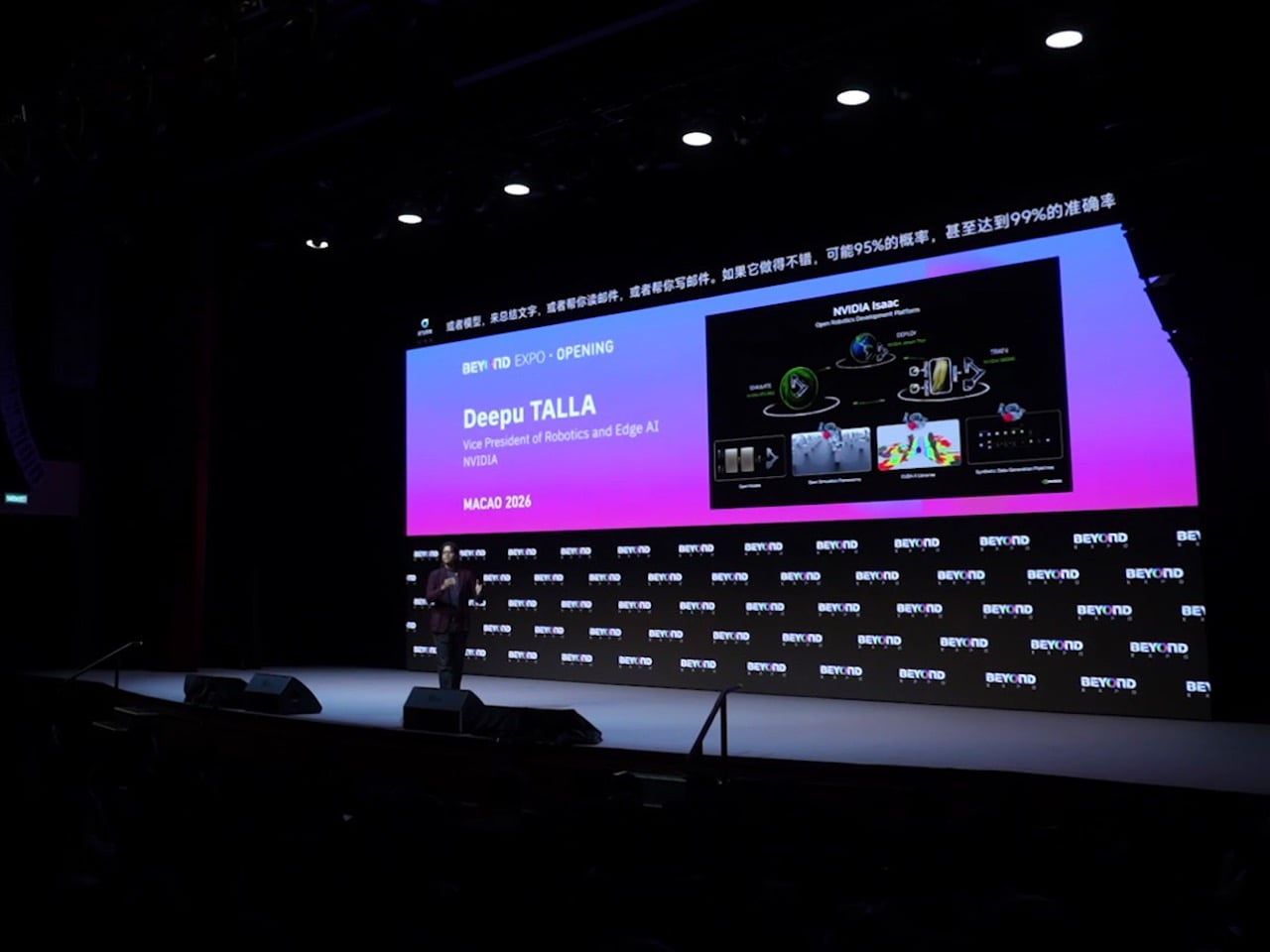
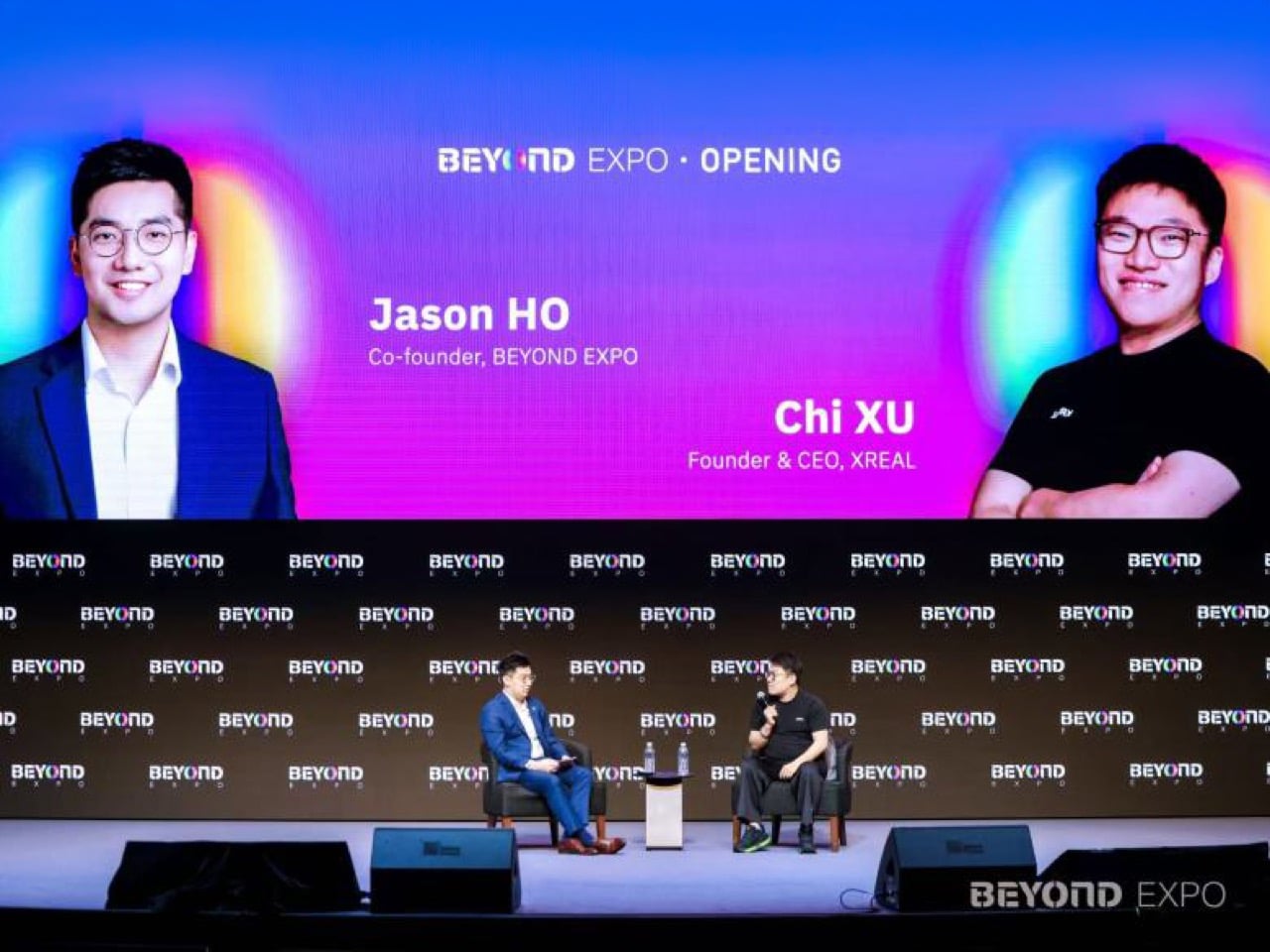
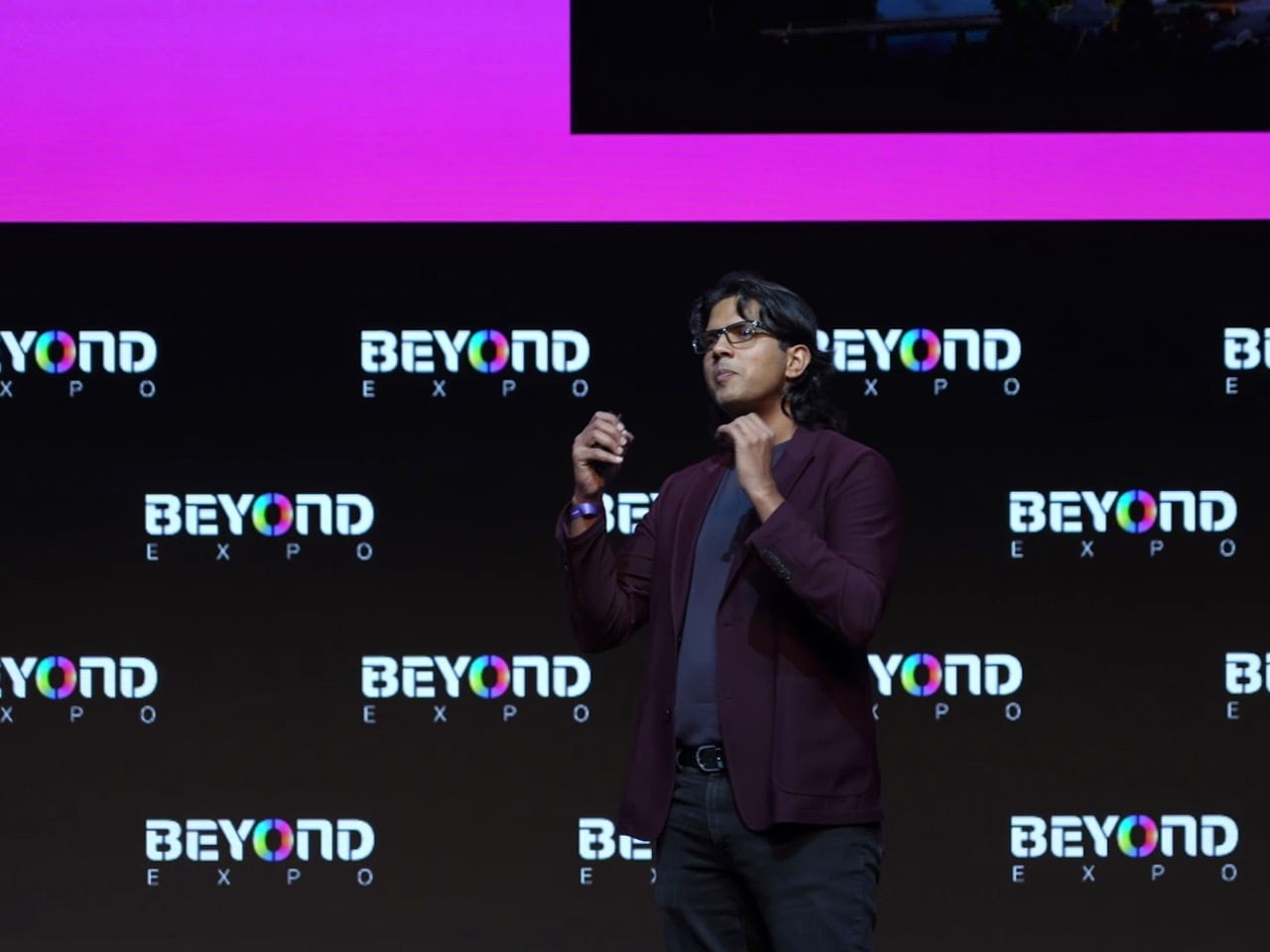
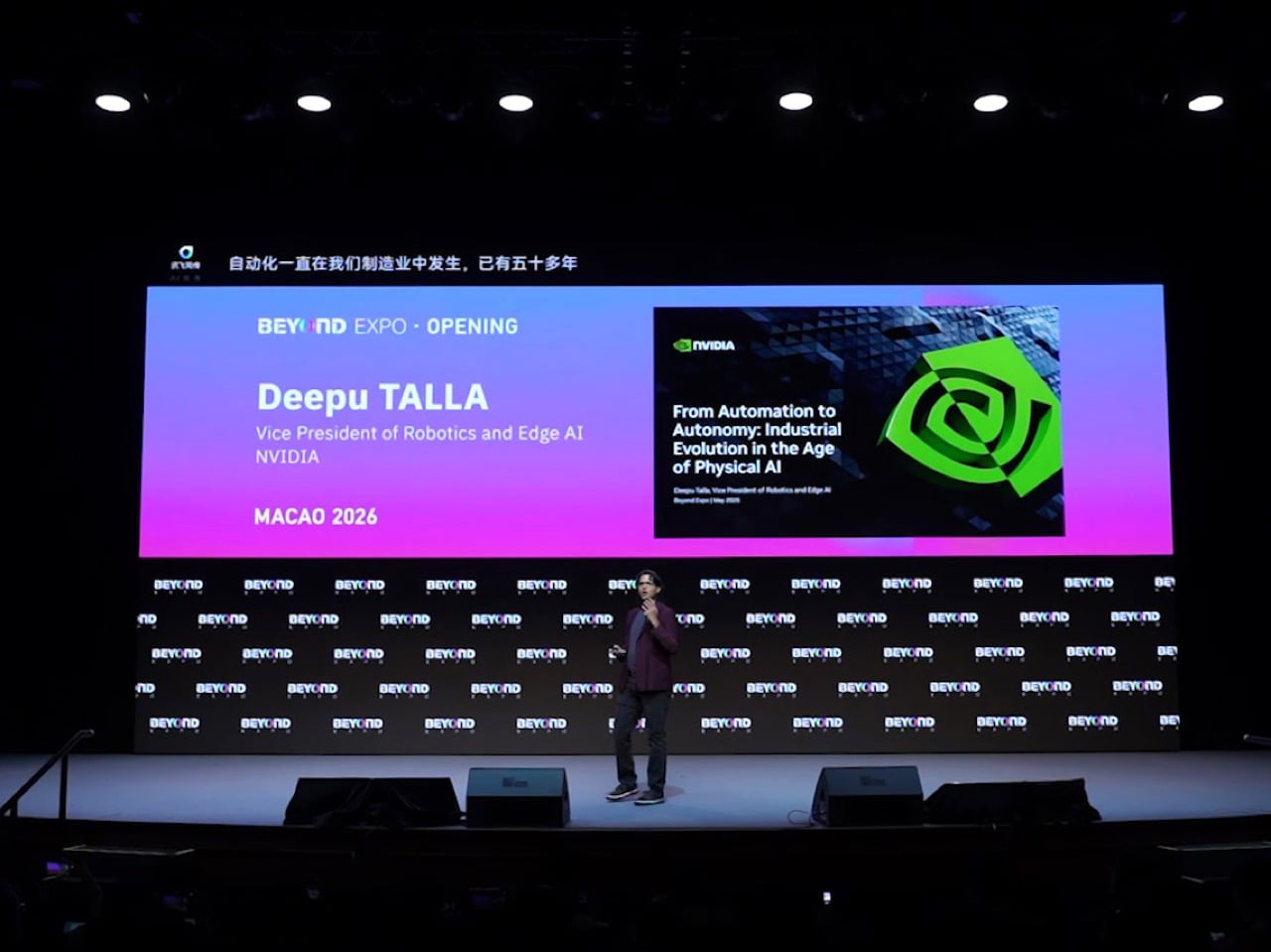
A robot on a factory floor may look self-contained, but Deepu Talla says its intelligence is distributed across a hidden chain of machines. At BEYOND Expo 2026, the NVIDIA executive broke robotics down into a deceptively simple formula: three computers. One handles the heavy lifting of training the robot brain, another tests that brain in simulation, and a third lives inside the physical robot, making decisions in real time.

It is a framework that helps explain why robotics has moved so slowly, and why the field suddenly feels ready to accelerate. In language that cut through the usual keynote fog, Talla argued that AI in the physical world plays by harsher rules than chatbots or image tools. A text model can be 95 percent right and still be useful. A robot moving through a warehouse, a street, or a hospital has to perform with a completely different standard. In human terms, it is a little like splitting intelligence into learning, dreaming, and reacting, then assigning each function to a different machine.

That first machine is where the robot’s intelligence is forged. Talla described it as the computer used to train the robot brain, the heavy compute layer where models absorb data, patterns, and behaviors at massive scale. This is where a machine learns how the physical world works, long before it ever enters one. If that sounds abstract, the second computer makes it easier to picture. This is the simulation layer, the place where a robot rehearses reality in a safer, faster, cheaper environment, running through scenarios again and again until its behavior becomes reliable enough to trust.

The third computer is the one that actually lives inside the robot. It is the real-time brain, the system that has to perceive the world, make sense of it, and respond instantly. This is where Talla’s argument becomes especially sharp. In digital AI, a model can get close and still be useful because a human can smooth over the rough edges. In robotics, the rough edges are where accidents happen. A machine moving through a factory, a roadway, or a hospital has to work with a far tighter tolerance for error, because the physical world offers fewer second chances.

That is also why NVIDIA sees robotics as far bigger than a niche category. Talla pointed out that almost 80 percent of the world’s GDP sits in physical industries like manufacturing, logistics, retail, and transportation. These are sectors where intelligence has to leave the screen and interact with objects, spaces, and people. NVIDIA’s role, in his telling, is to provide the underlying architecture for that shift. The company may not build robots itself, but it wants to supply the stack beneath them, from training infrastructure and simulation tools to the compute that powers action on the edge.

The post Every Robot You’ll Ever Own Has 3 Separate Brains: Nvidia VP explains how AI Thinks at BEYOND Expo 2026 first appeared on Yanko Design.

The $899 Desktop CNC That Impressed Asia’s Biggest Tech Expo

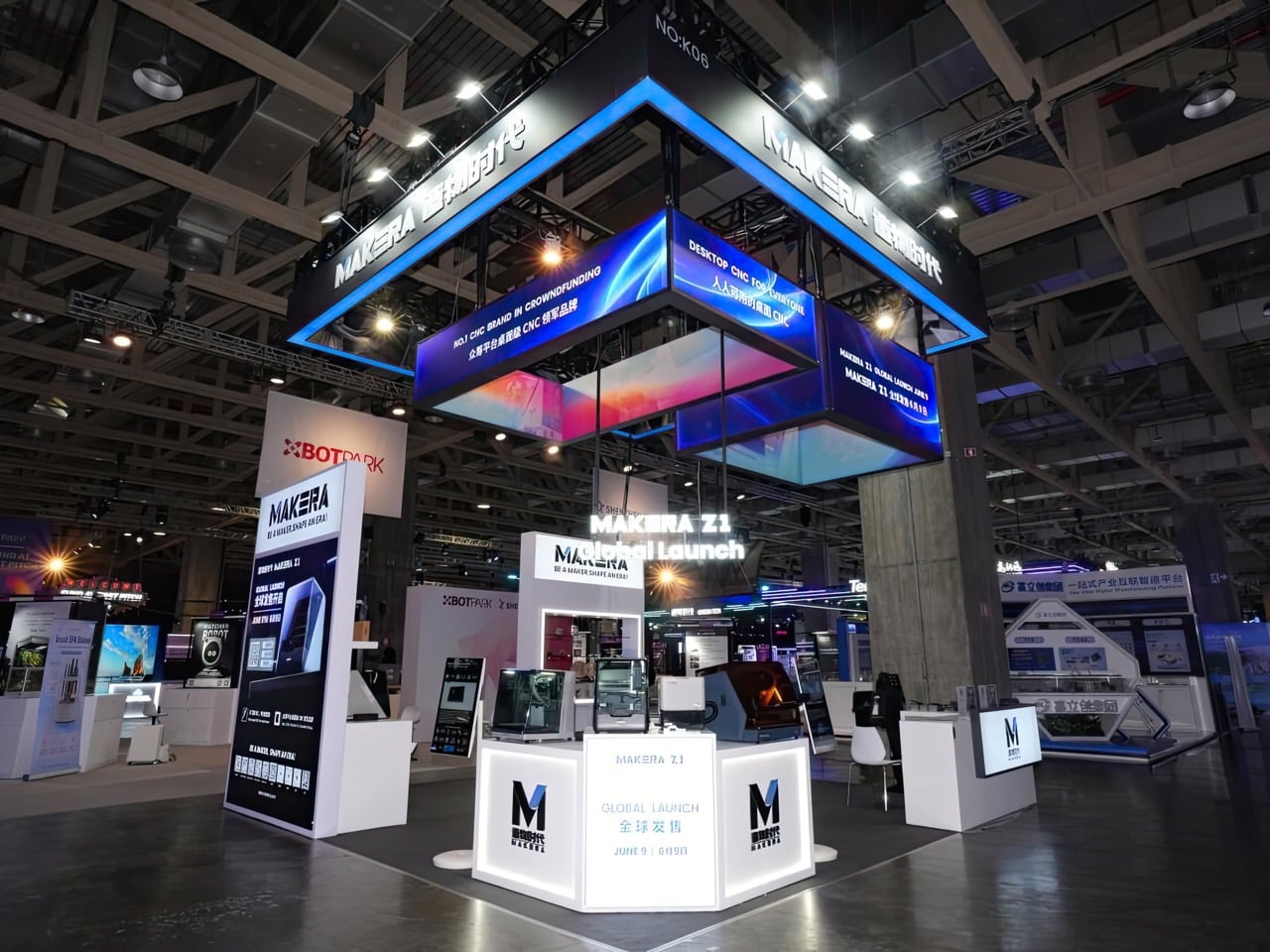
The guiding idea at BEYOND Expo 2026 was that AI software has finished its warm-up, and the main event is technology that acts in the physical world. Humanoid robots, intelligent wearables, and autonomous vehicles all made that case. So when the Makera Z1, a compact desktop CNC machine, won a Best of Innovation award, it felt less like a surprise and more like a statement.

This recognition was a direct nod to the expo’s central theme, “AI: Digital to Physical.” The Z1 is a tool of physicalization, a machine that takes a digital file and gives it mass, texture, and function by milling aluminium or wood. In a showcase built around moving intelligence beyond the screen, Makera’s device provided a clear, powerful example of what that transition looks like at a human scale.

Designer: Makera

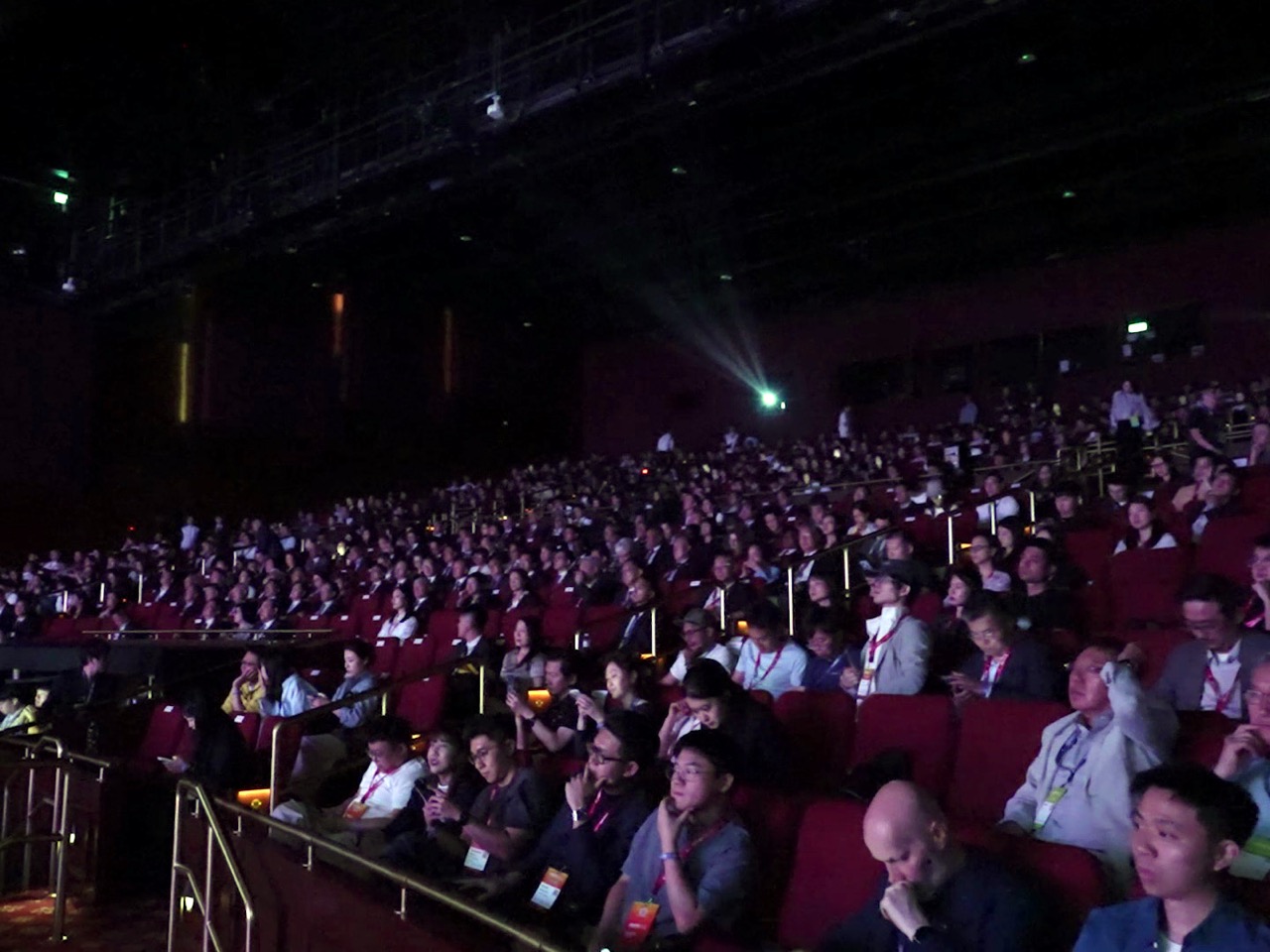
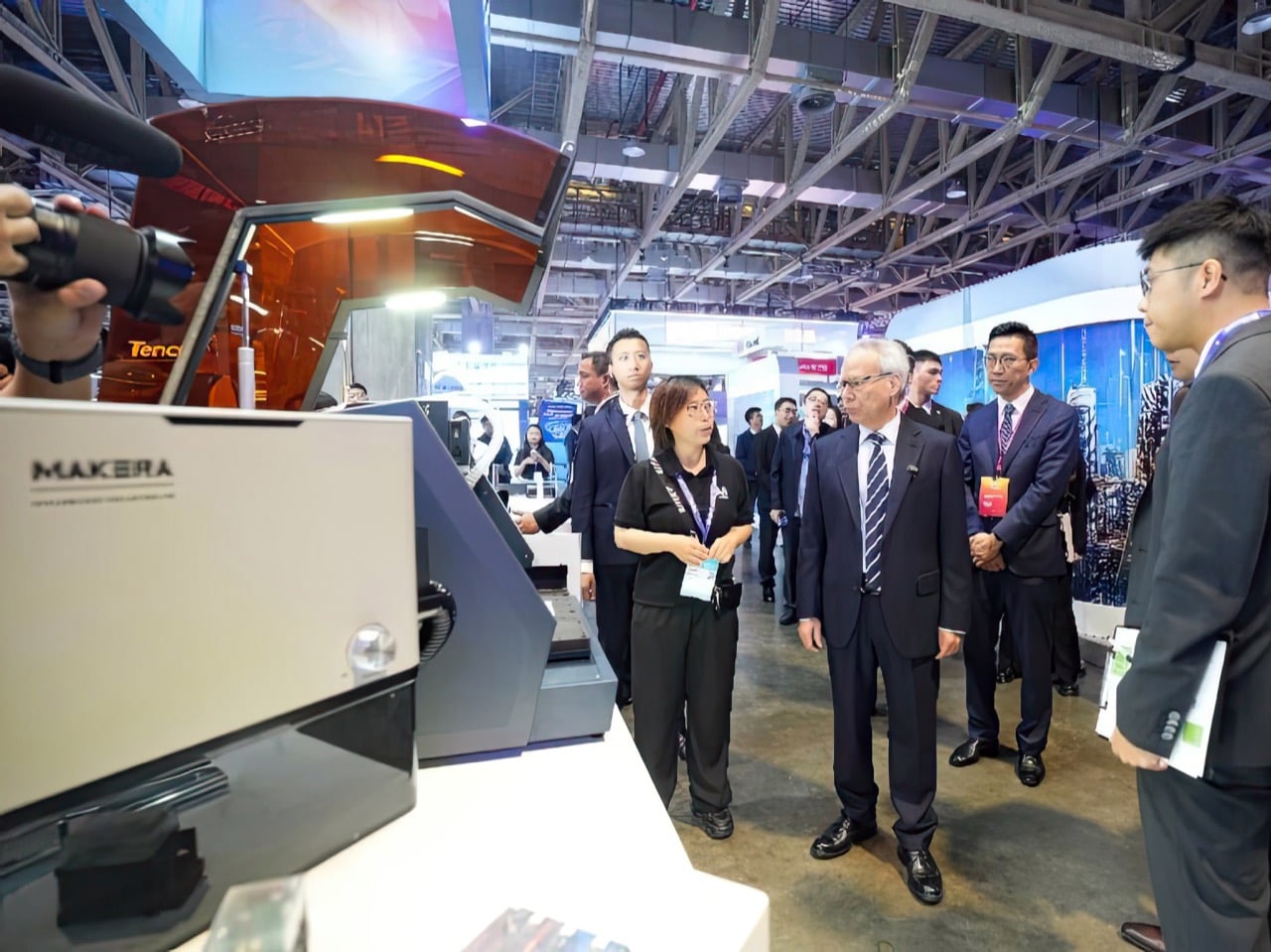
Four days at The Venetian Macao’s Cotai Expo brought together nearly 800 exhibitors, over 400 speakers, and more than 30,000 attendees from 120 countries and regions. Opening keynotes featured senior figures from NVIDIA, XREAL, Pudu Robotics, and the Linux Foundation, setting a tone built around industry direction rather than individual product announcements. Summits ran across seven main stages and covered embodied intelligence, spatial computing, AI agents, global capital flows, and cross-regional developer ecosystems. BEYOND co-founder Dr. Lu Gang described it as a moment where Asia is producing companies with real depth and global relevance, and the expo exists to show that to the world.

Over $10.2 million from nearly 7,000 backers is what the Z1’s Kickstarter campaign produced before closing in December 2025, a number that sits well above the typical ceiling for desktop hardware crowdfunding. IFA 2025 had already given the machine a “Best in Content Creation” Innovation Award before units shipped. The BEYOND recognition completes a three-stop credibility arc across Kickstarter, IFA, and Asia’s largest tech expo, a run few products in the desktop maker category have managed with this kind of consistency. As Makera’s third CNC machine, following the Carvera in 2021 and the Carvera Air in 2024, it carries a company track record behind it.

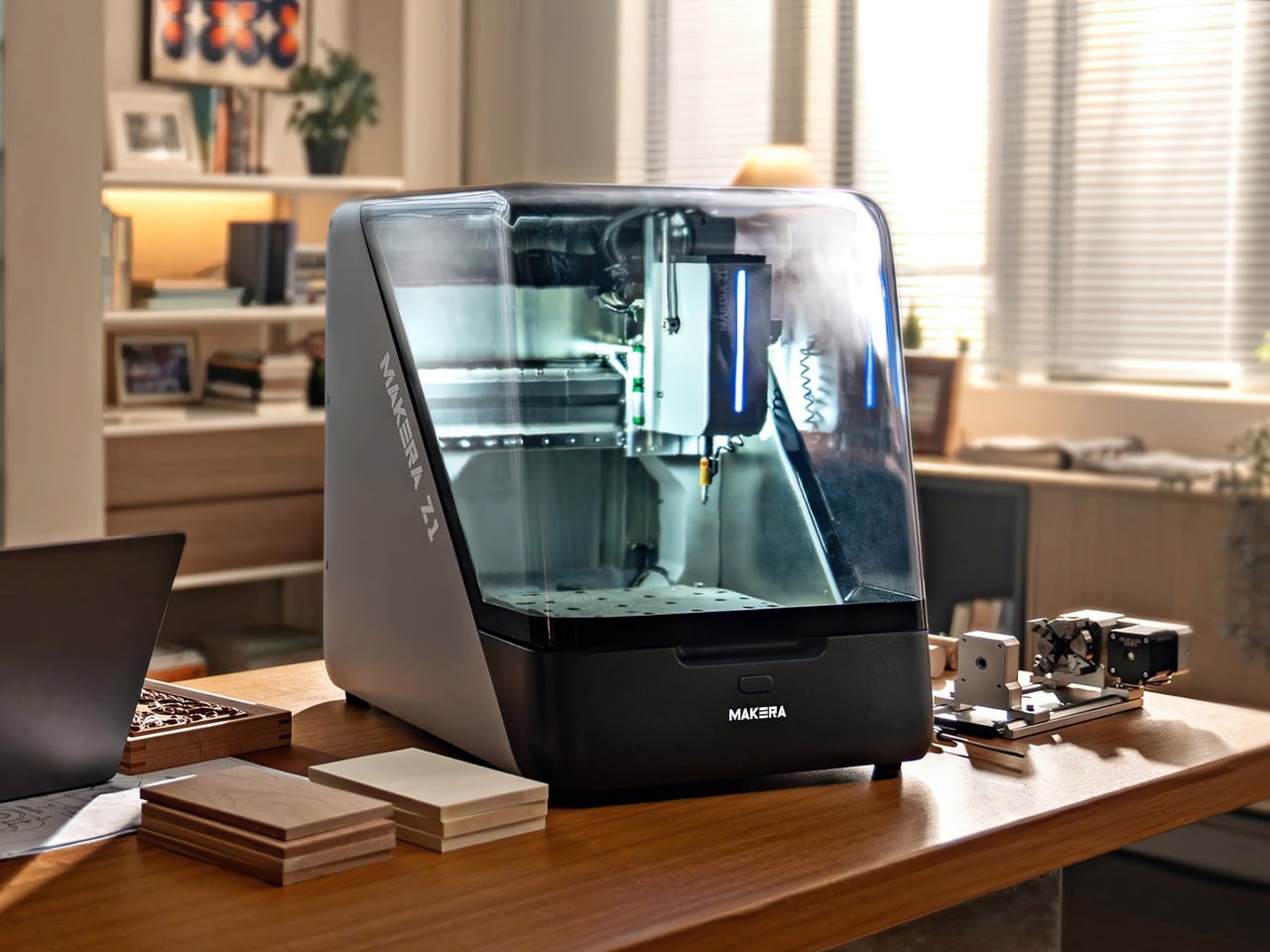
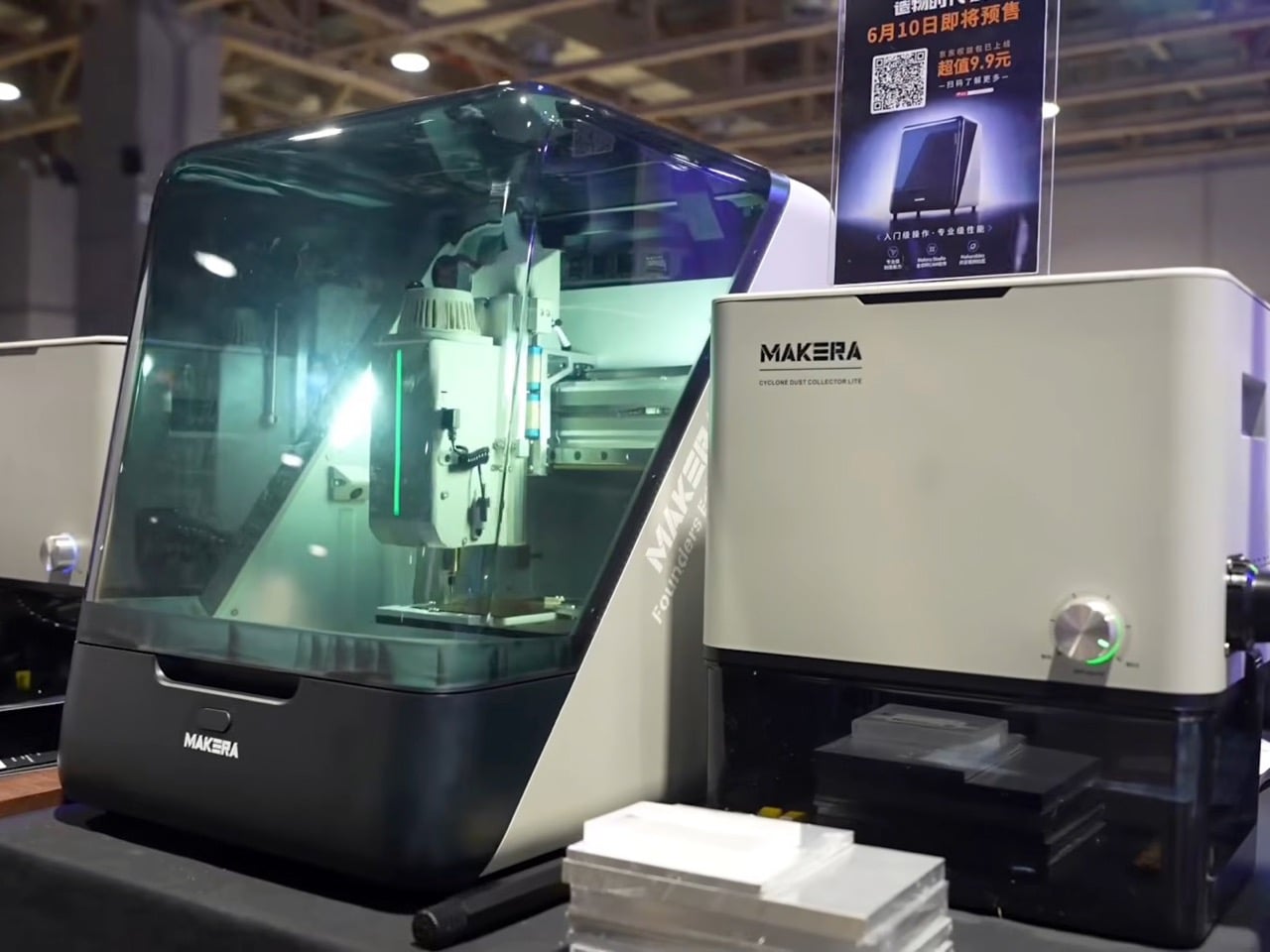
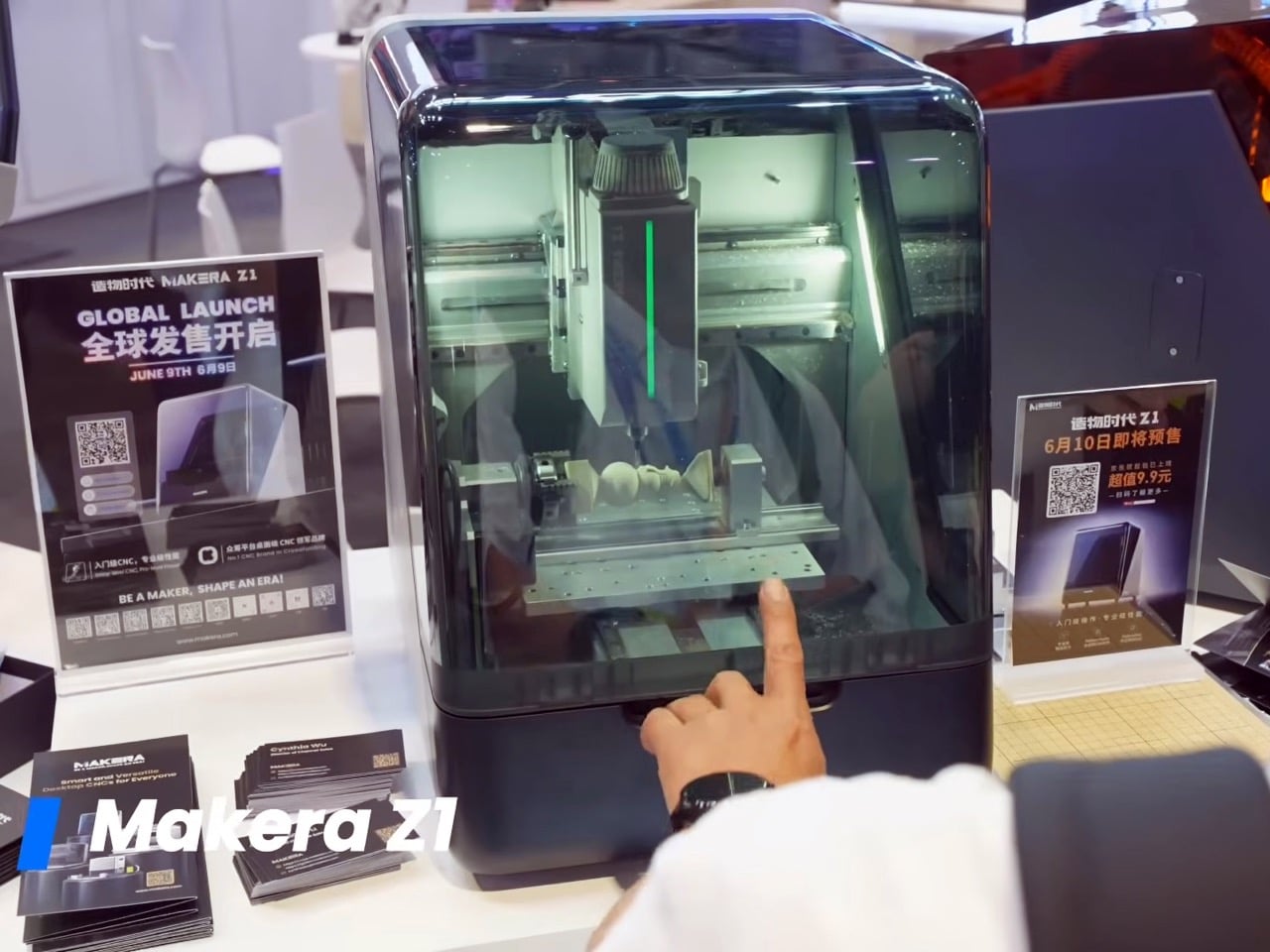
At $899 during its crowdfunding run, the Z1 targets a gap in desktop CNC that has historically been hard to fill. The machine carries a 200 x 200mm cutting area, a 100mm working depth, and a 150W spindle running at 13,000 RPM, handling materials from aluminium, brass, and copper to wood, PCBs, acrylic, and carbon fiber. With a claimed accuracy of 0.02mm, it sits in territory more commonly associated with machines priced two to three times higher. Automatic probing, levelling, a quick tool change system, and a built-in camera for real-time monitoring come standard, with an optional fourth axis, laser attachments, and dust collection available as add-ons.

Makera Studio handles toolpath generation automatically, and an AI-powered feature converts hand-drawn sketches or reference images into machinable 3D models, significantly lowering the barrier for anyone without a background in CAD software. A companion platform called Makerables extends this further, giving users access to a shared library of designs they can download, modify, and machine immediately. That full workflow, from a rough idea to a digital design to a finished physical object on a workbench, maps directly onto what “AI: Digital to Physical” was built to celebrate. Where many exhibitors at BEYOND demonstrated digital intelligence or physical hardware in isolation, the Z1 brought both into a single, compact package.

The Best of Innovation list at BEYOND 2026 included DEEPRobotics, Engine AI, iFLYTEK, Pudu Robotics, and AEROFUGIA alongside Makera, placing a sub-$1,000 desktop fabrication tool in the same frame as some of Asia’s most heavily funded hardware and AI companies. That company says something about where innovation appetite is moving at Asia’s largest tech gathering: toward tools that extend precision manufacturing beyond factory floors and into the hands of individual creators and small workshops. Whether the Z1 delivers fully on that promise across its growing user base is still being tested, but the BEYOND stage gave Makera a much bigger conversation to build from.

The post The $899 Desktop CNC That Impressed Asia’s Biggest Tech Expo first appeared on Yanko Design.

XREAL Just Partnered With Google to Build the Smart Glasses Apple Can’t

BEYOND Expo 2026 had no shortage of AI talk, but one of its most compelling hardware stories came in the shape of a pair of glasses. On stage in Macau, XREAL CEO Xu Chi laid out a vision for AI glasses as the next major personal computing device and revealed that XREAL is working with Google on a new product built around Android XR and Gemini, with a global launch expected later this year.

That announcement landed at a moment when BEYOND Expo was already showing how crowded and competitive the smart glasses field has become. XREAL shared the wider conversation with companies like iFlyTek, METLEN, and Even Realities, all pointing to a fast-moving shift in wearable tech. The thread running through all of it is industrial design, platform strategy, and the race to make AI hardware people might actually want to wear every day.

Designer: XREAL

Apple Vision Pro generated enormous attention when it launched, but the market’s response to its weight, price, and the physical effort of wearing it for extended periods made clear that the premium immersive headset route has a real ceiling. Xu Chi acknowledged this directly at BEYOND Expo, framing it as a hard lesson the entire industry absorbed. The opportunity XREAL and Google are now chasing is the one Vision Pro left open: a wearable that feels closer to a regular pair of glasses than a piece of lab equipment.

Called Project Aura, the product is being developed on Google’s Android XR platform with Gemini AI integrated at the core. It is a pair of lightweight extended-reality glasses featuring a 70-degree field of view and an optical see-through display. Processing is split between an X1S chip in the glasses frame and a Snapdragon XR2+ Gen 2 processor in a separate external compute puck, keeping weight off the face while retaining the muscle needed for 6DoF tracking, hand tracking, eye tracking, and continuous Gemini AI assistance.

Splitting compute between the frame and a pocketable external puck is the kind of constraint-led industrial design thinking that tends to produce genuinely useful hardware. Every previous attempt to pack full AR processing into a glasses frame has produced something that looks ungainly, runs hot, or drains its battery in under two hours. Project Aura sidesteps that compromise, and the fact that it took a Chinese hardware company partnering with Google to land on this solution says something interesting about where design ambition in this category currently lives.

Smart glasses have struggled for years to answer a simple question: what are they actually for? At BEYOND Expo, Xu Chi’s answer was the clearest the category has produced in some time. The true killer app, in his view, is a continuous all-day AI assistant that sees the world from the wearer’s perspective; navigation and translation are table stakes, not destinations. What he is describing is closer to ambient intelligence that understands context and responds usefully across the full span of a person’s day, and Gemini’s multimodal capabilities give that vision real technical grounding.

Global smart glasses shipments hit nearly 14.8 million units in 2025, a 44.2% year-on-year increase. Chinese hardware vendors held 23.3% of global shipments overall and an 87.4% share of the AR and extended reality segment specifically. These are the companies that have been quietly iterating on form factor and optics while the Western tech press kept its attention on headsets. BEYOND Expo’s smart glasses floor this year was, in a sense, the moment that iteration became difficult to overlook.

Even Realities, which picked up a BEYOND Best of Innovation award at the expo, represents the sharpest design-philosophy contrast to XREAL’s approach. Their glasses carry no camera and no microphone, a deliberate choice built around privacy concerns that have slowed wearable AI adoption in several markets. METLEN and iFlyTek each showed their own AI smart glasses interpretations on the same floor. Four distinct companies arriving at one event with serious smart glasses products, each solving the form factor problem from a different angle, signals something well beyond a routine product cycle.

Xu Chi used the phrase “iPhone moment” during his BEYOND Expo address, and it is a comparison that usually ages badly. But the conditions that made the iPhone’s arrival feel defining were a convergence of hardware maturity, software readiness, and a platform worth building for. Android XR with Gemini is a credible attempt at the third element. Project Aura handles the first two more convincingly than anything the category has previously produced. Whether 2026 turns out to be the year that proved Xu Chi right is a question the market will answer, but BEYOND Expo made clear that the companies trying to get there are no longer on the fringes of the industry.

The post XREAL Just Partnered With Google to Build the Smart Glasses Apple Can’t first appeared on Yanko Design.

7 Biggest AI Ideas That Came Out of BEYOND Expo 2026

The youngest person at BEYOND Expo 2026’s AI Hack Day was nine years old. That little fact, shared by co-founder Dr Lu Gang, actually says more about the state of AI than any big product launch. It means the tools are getting simple enough that you don’t need a PhD to build something interesting; you just need a good idea. The rest of the expo in Macao seemed to prove his point. You had 30,000 people and almost 800 companies all focused on a single question: what happens when AI stops being just software and gets built into actual, physical things?

It turns out the answer is a mix of things we expected and some we definitely did not. BEYOND Expo 2026 ended up giving us a pretty clear map of where this is all heading, with seven key ideas showing up over and over again. We saw everything from humanoid robots that are finally ready for production to underwater drones that can get around without GPS. Some of this was easy to see coming, but other parts showed that the tech has crossed a real line. These are the ideas that give us a solid picture of an AI that now has weight, form, and real-world impact.

1. Humanoid Robots Are Finally Getting Real
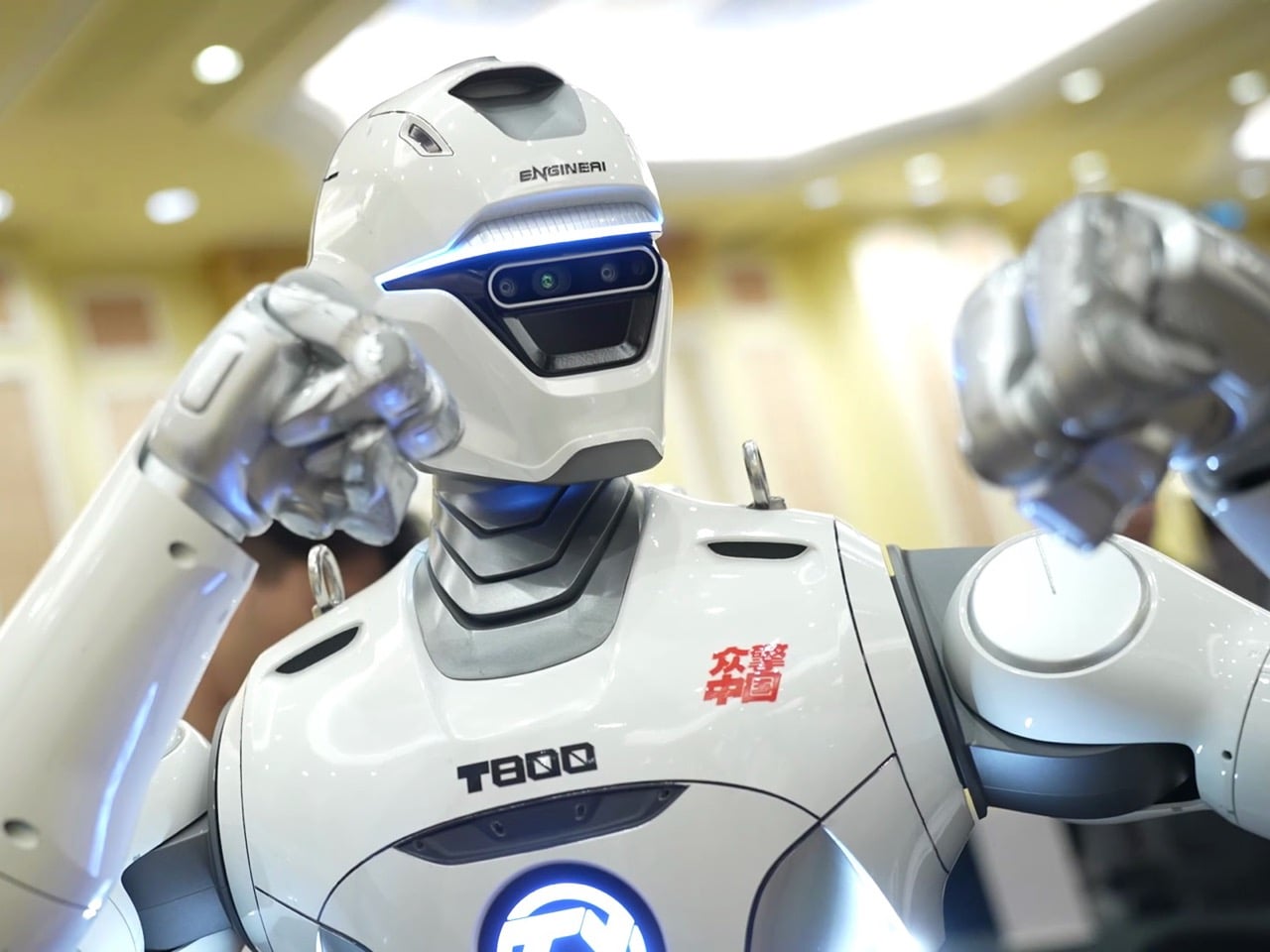
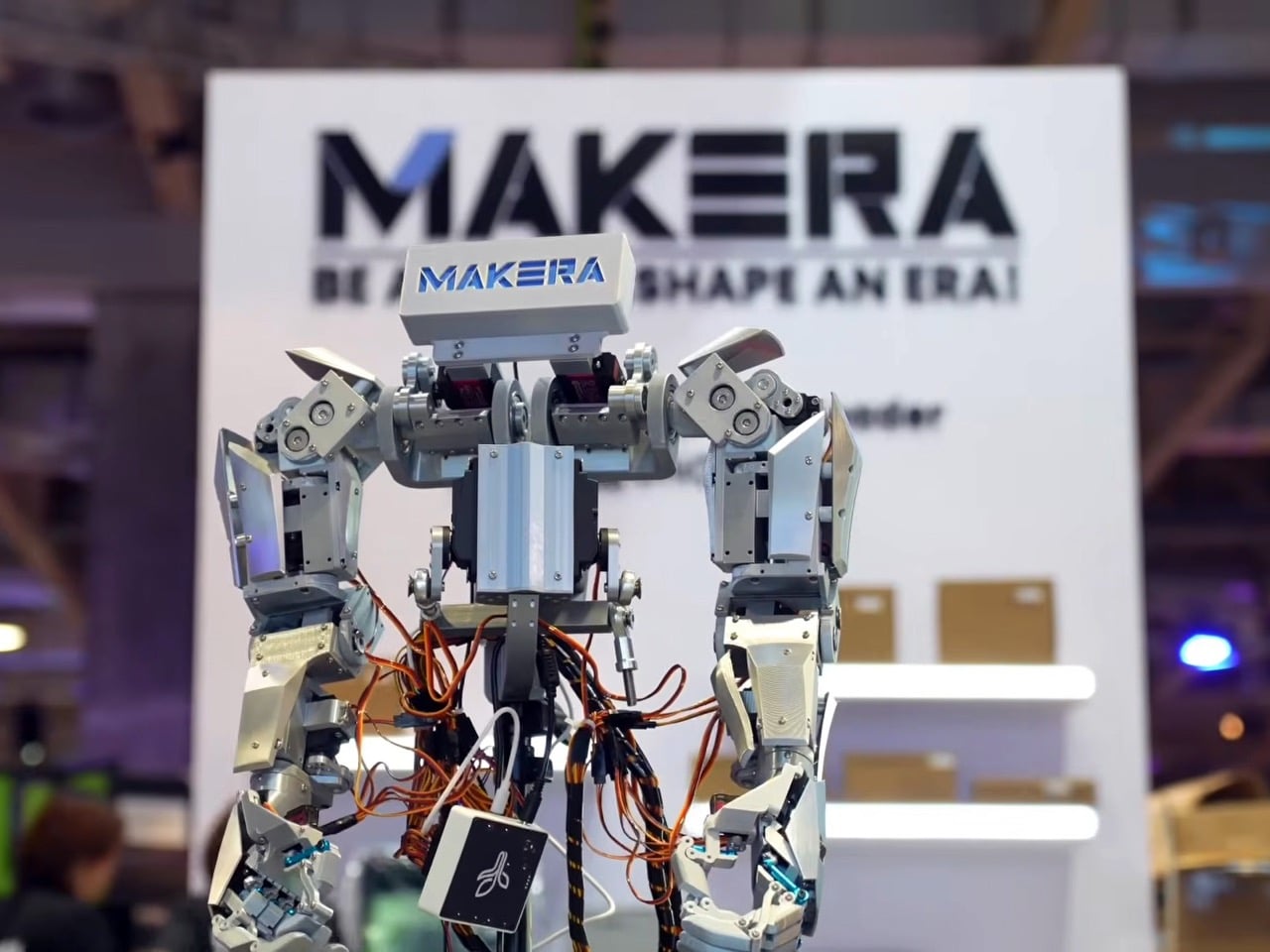
The most obvious trend on the floor was the sheer number of robots walking around. This wasn’t just one or two companies showing off a flashy prototype. The BEYOND Best of Innovation awards list was packed with names like AI² Robotics, DEEPRobotics, LimX Dynamics, and Pudu Robotics. Seeing that many different companies all get recognized for building functional, legged robots at the same event is a major signal. The hardware is clearly getting to a point where it’s reliable enough to be taken seriously.

What’s interesting is that the conversation is shifting from engineering to application. Companies were talking about humanoids for specific jobs in industry, retail, and even in the home. This tells you the focus is moving past the basic challenge of just making them walk without falling over. The new problem to solve is what they should actually do all day. BEYOND Expo made it feel like we’re at the very beginning of a real manufacturing race, not just a science fair.

2. Smart Glasses Found a Form Factor That Works
Smart glasses have been the “next big thing” for about a decade, but this year felt different. We saw new AI-powered glasses from iFlyTek and METLEN, and companies like Even Realities, Mobvoi, and XREAL all picked up innovation awards for their own takes on wearable displays. The key here is convergence. While each product has its own features, they’re all starting to look and feel like something a normal person might actually wear. They are lighter, the displays are better, and the battery life is getting there.

This isn’t another Google Glass moment where the tech was impressive but the product was awkward and socially weird. The new wave of smart glasses is being designed with more specific uses in mind, from on-the-fly translation to providing subtle notifications or acting as a personal design agent. The on-device AI is powerful enough to handle these tasks without being constantly tethered to a phone, which is the breakthrough that might finally make them stick.

3. Flying Vehicles Are Becoming Actual Products
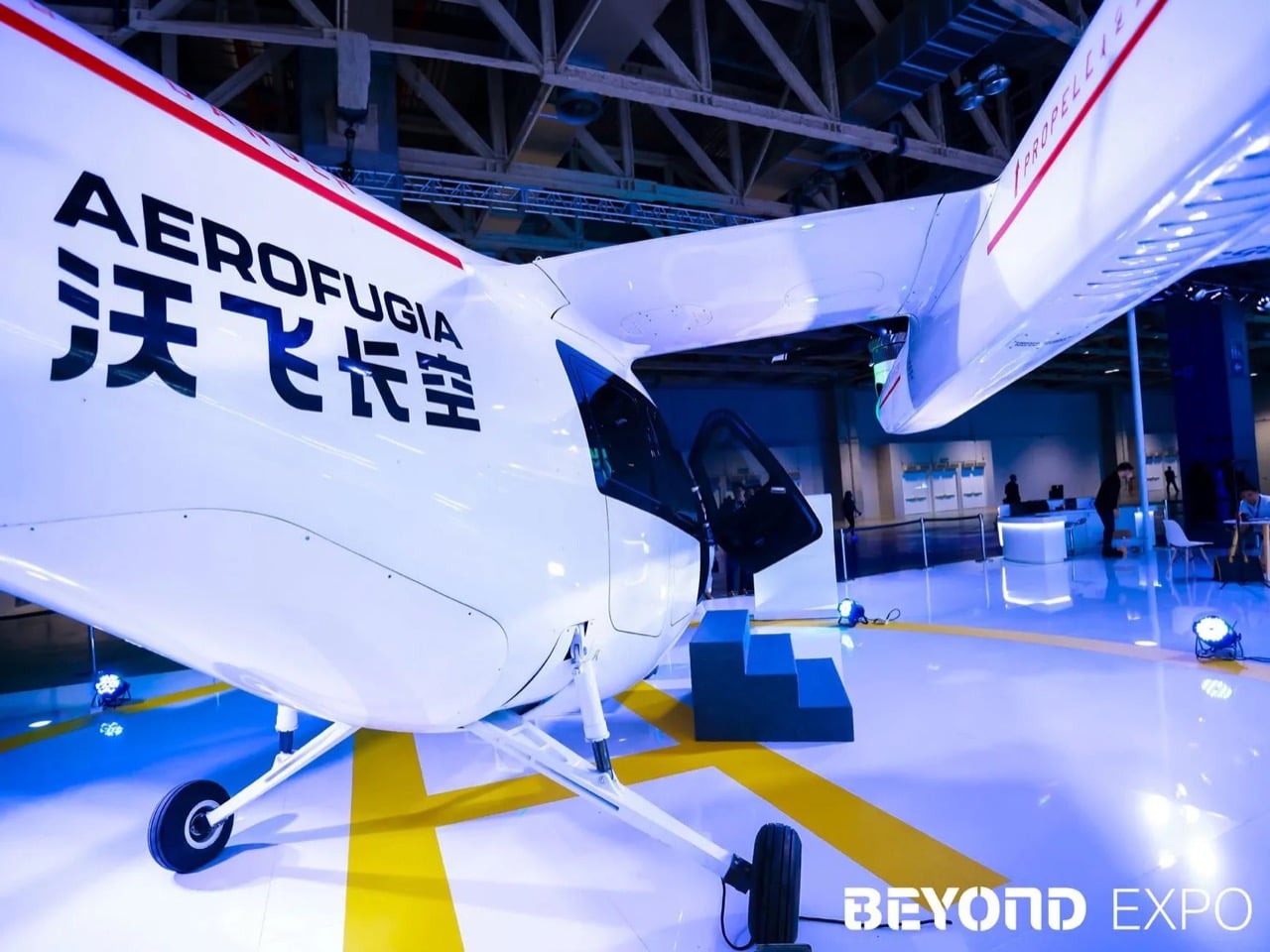
For years, eVTOLs, or electric vertical take-off and landing aircraft, have been staples of futuristic concept videos. At BEYOND Expo, they started to look like real products. Aerofugia showed up with what it called its first production aircraft and, just as importantly, a production eVTOL battery. Wefly also got an innovation award, adding to the sense that this category is moving out of the lab and onto the launchpad.

The word “production” is what matters here. It signals a shift from speculative design to engineering with a supply chain. AI is the invisible engine driving this progress, handling the incredibly complex calculations needed for flight stability, power management, and autonomous navigation. This is the part of the “digital to physical” story where AI isn’t just a feature; it’s the core technology that makes a whole new category of hardware possible.

4. AI Is Getting Personal and Medical
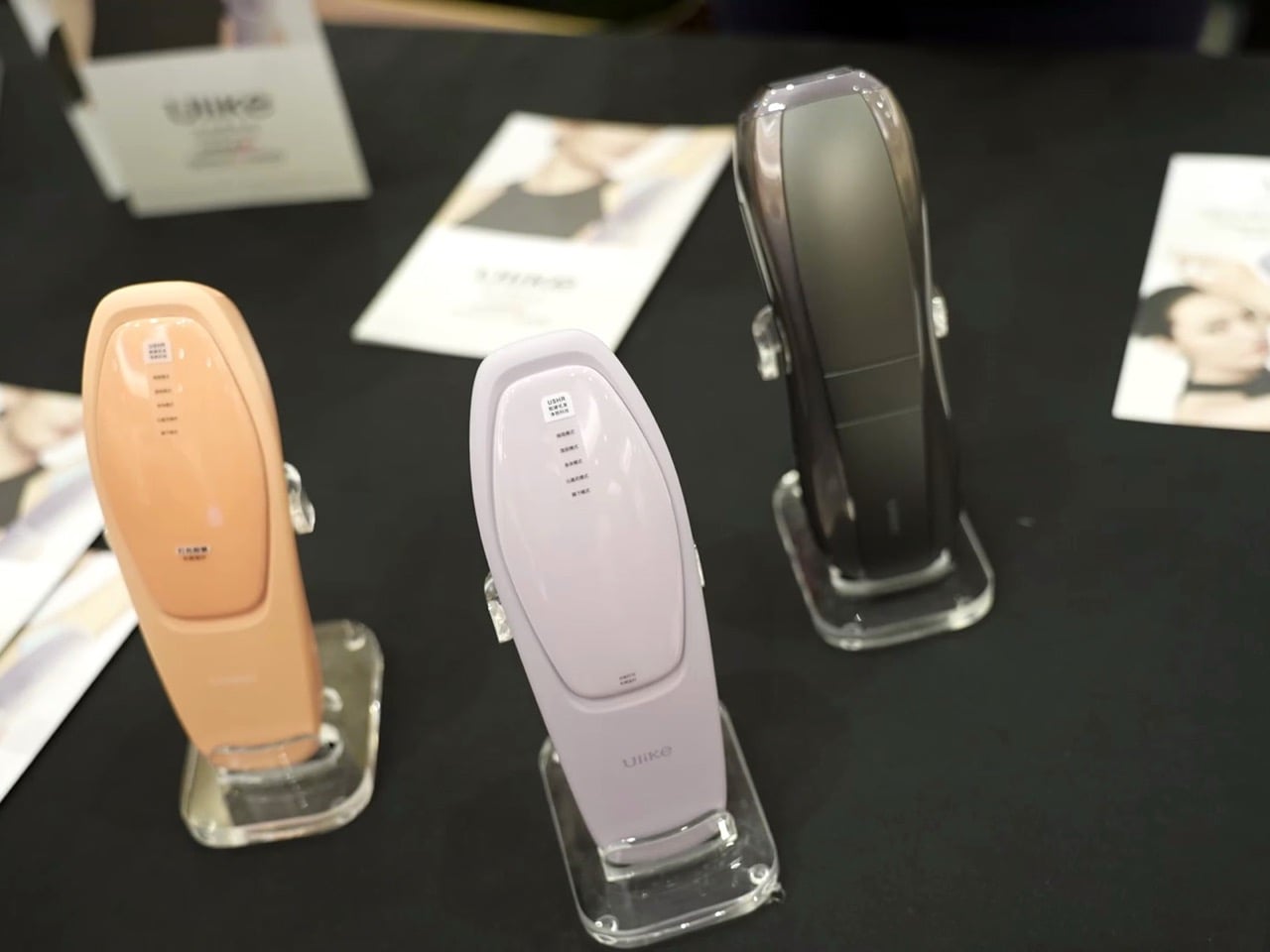
While robots and flying cars grabbed a lot of attention, some of the most interesting AI was designed to be much closer to home, and even part of the body. The expo featured things like Zdeer’s bone conduction hearing aid and Ulike’s optical beauty devices. In the startup competition, one of the finalists was an “emotion-sensitive hugging bear,” and others included smart jewelry and wearables designed to be stylish.

This points to a quieter, more intimate side of the AI hardware boom. These aren’t just gadgets; they’re devices that interact with our bodies and our health. A hearing aid that uses AI can learn and adapt to a person’s specific hearing profile in different environments. A wearable that senses emotion is a step toward technology that responds to our mental state. It’s a reminder that the most impactful physical AI might be the kind that disappears completely into our daily lives.

5. The One-Person Company Is the New Unicorn Hunt
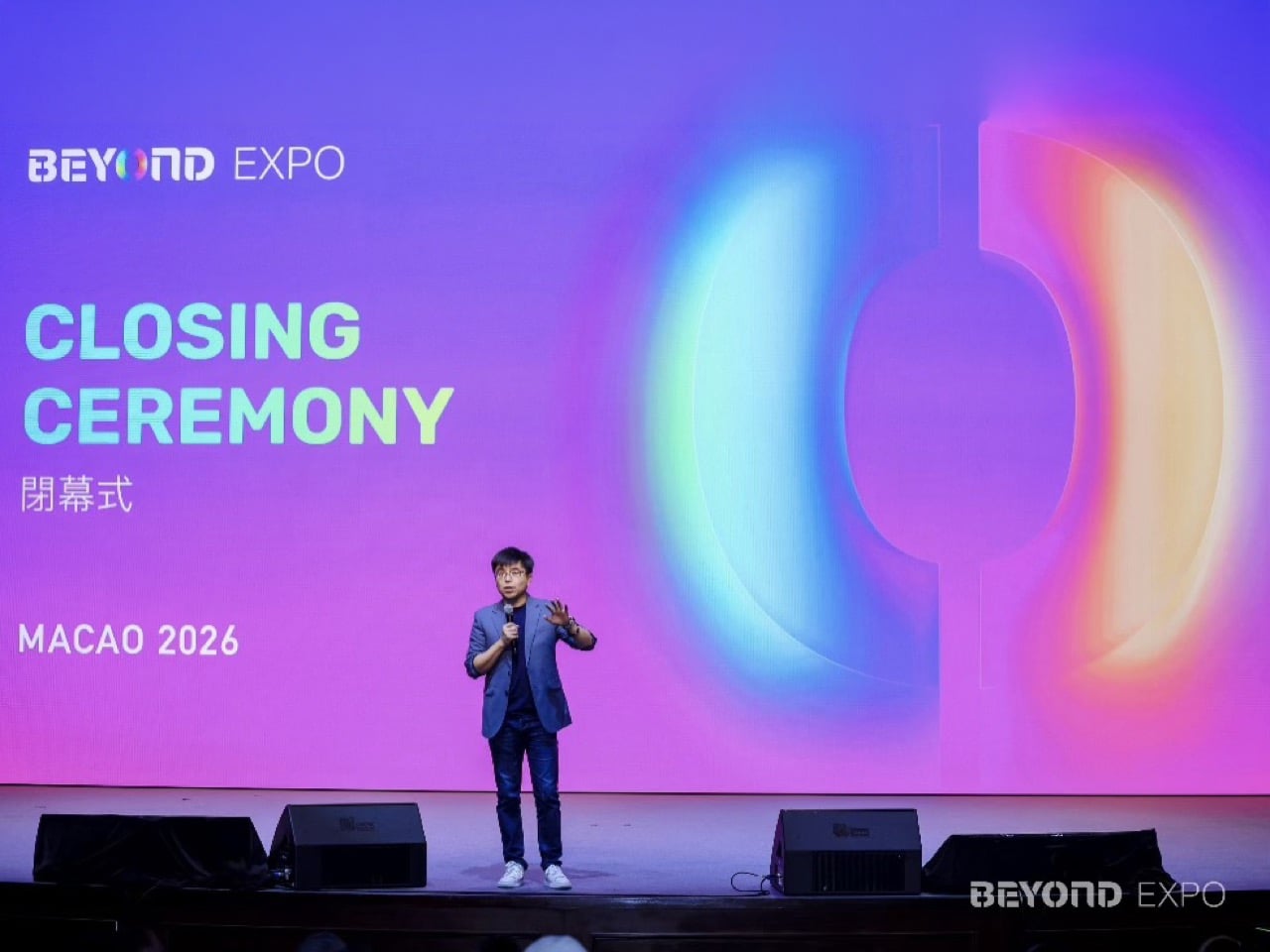
One of the most forward-thinking ideas came from Dr Lu Gang himself. He said that this year, the expo deliberately focused on “one-person companies” and individual programmers. He believes these tiny operations have the potential to become unicorns because AI tools have become such a powerful force multiplier. When the youngest hacker at your event is nine, it proves that the barrier to entry for building something real has dropped through the floor.

This is a structural shift in how tech companies might get built. The old model of needing a big team and millions in venture capital just to get a product off the ground is being challenged. With powerful AI handling coding, design, and operational tasks, a single motivated person can now build and launch something that would have taken a whole department just a few years ago. It suggests a future where the startup landscape is much more dynamic and accessible.

6. Knowing How to Tell a Story Is a Technical Skill
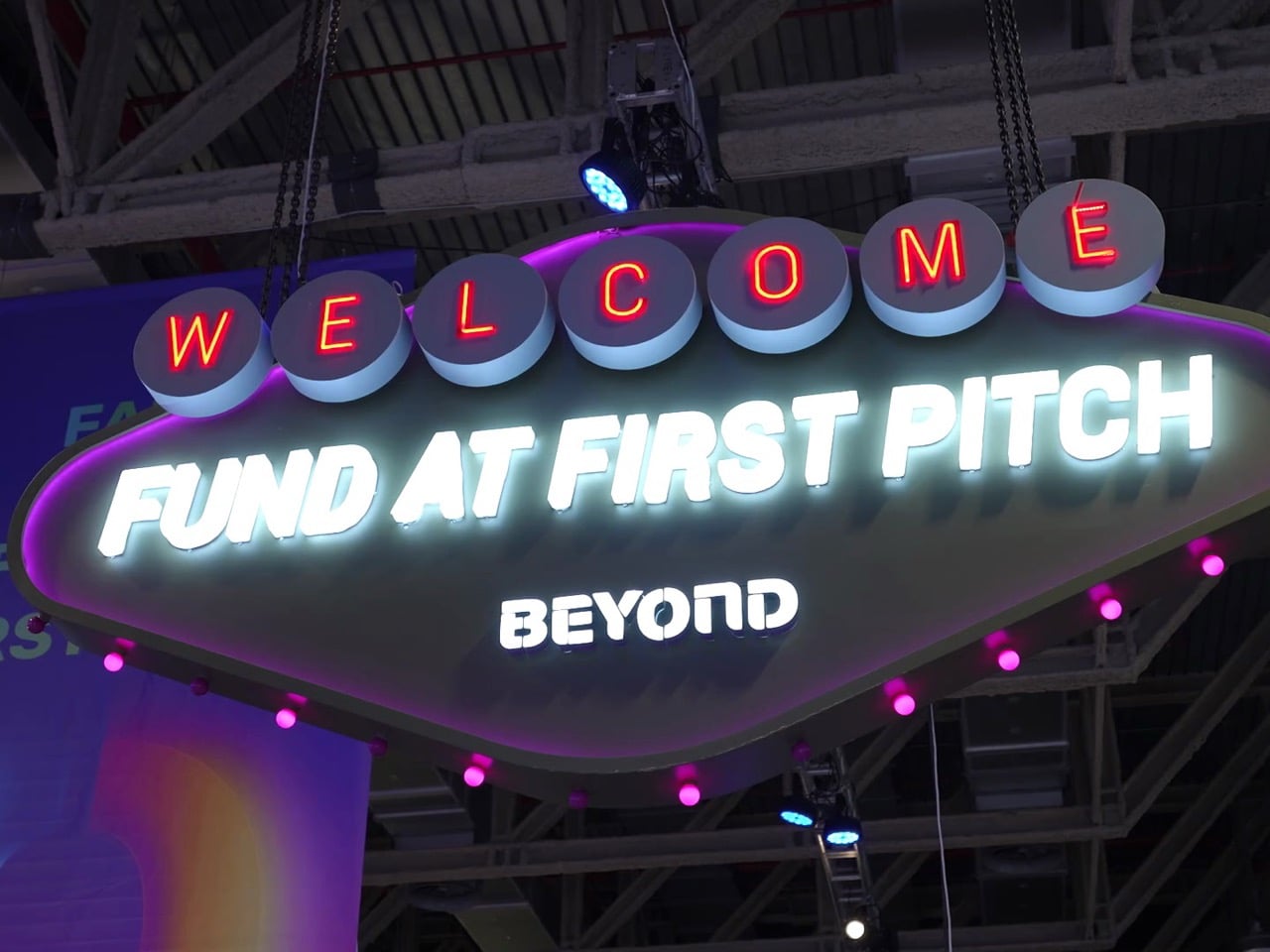
With 800 companies all showing off impressive technology, just having a good product wasn’t enough. Kun Gao, the founder of Crunchyroll, made this point at the closing ceremony. He advised founders that they have to learn how to tell a compelling story to win over investors and partners. This wasn’t just abstract advice; it was happening live at the “Fund at First Pitch” competition, where over 300 startups were trying to get noticed.

This is a crucial idea for anyone in design or product development. In a crowded market, the clarity of your vision is just as important as the quality of your code or the cleverness of your engineering. Being able to explain who your product is for, what problem it solves, and why it matters is a design skill. It’s what separates a cool piece of tech from a real business, and BEYOND Expo put that challenge front and center.

7. AI Is Going Underwater, Literally
Probably the most unexpected idea at the expo was seeing AI get good at swimming. Zero Zero Robotics, known for its flying drones, launched the HOVERAir AQUA, an underwater drone. Another company, OrcaTech, also won an innovation award for its marine technology. This might seem like a niche category, but the technical challenge is enormous and says a lot about how capable AI has become.

Underwater is one of the hardest environments for autonomous tech to operate in. GPS doesn’t work, visibility is often terrible, and communication is extremely limited. For a drone to navigate, identify objects, and perform tasks on its own down there, its onboard AI has to be incredibly sophisticated. It proves that physical AI is not just conquering our cities and skies; it’s expanding into the most remote and difficult parts of our world.

The post 7 Biggest AI Ideas That Came Out of BEYOND Expo 2026 first appeared on Yanko Design.
Translation, Prompting, Agentic AI, all in 40 grams: iFLYTEK’s Smart Glasses Debut at BEYOND Expo 2026

Beyond Expo 2026 arrived with a clear message for the tech world, AI has moved past the screen and into the objects people wear, hold, and live with every day. Our own preview of the show framed this year’s edition as a turning point, arguing that AI software was only the warm-up for what the industry was really building toward. The event ran from May 28 to 30 at The Venetian Cotai Expo in Macau, centered on the theme of AI moving from digital to physical. That theme played out across robotics, smart machines, wearable intelligence, and real-world utility products on the show floor. It set up exactly the kind of environment where a product built around ambient AI communication could land with real meaning.

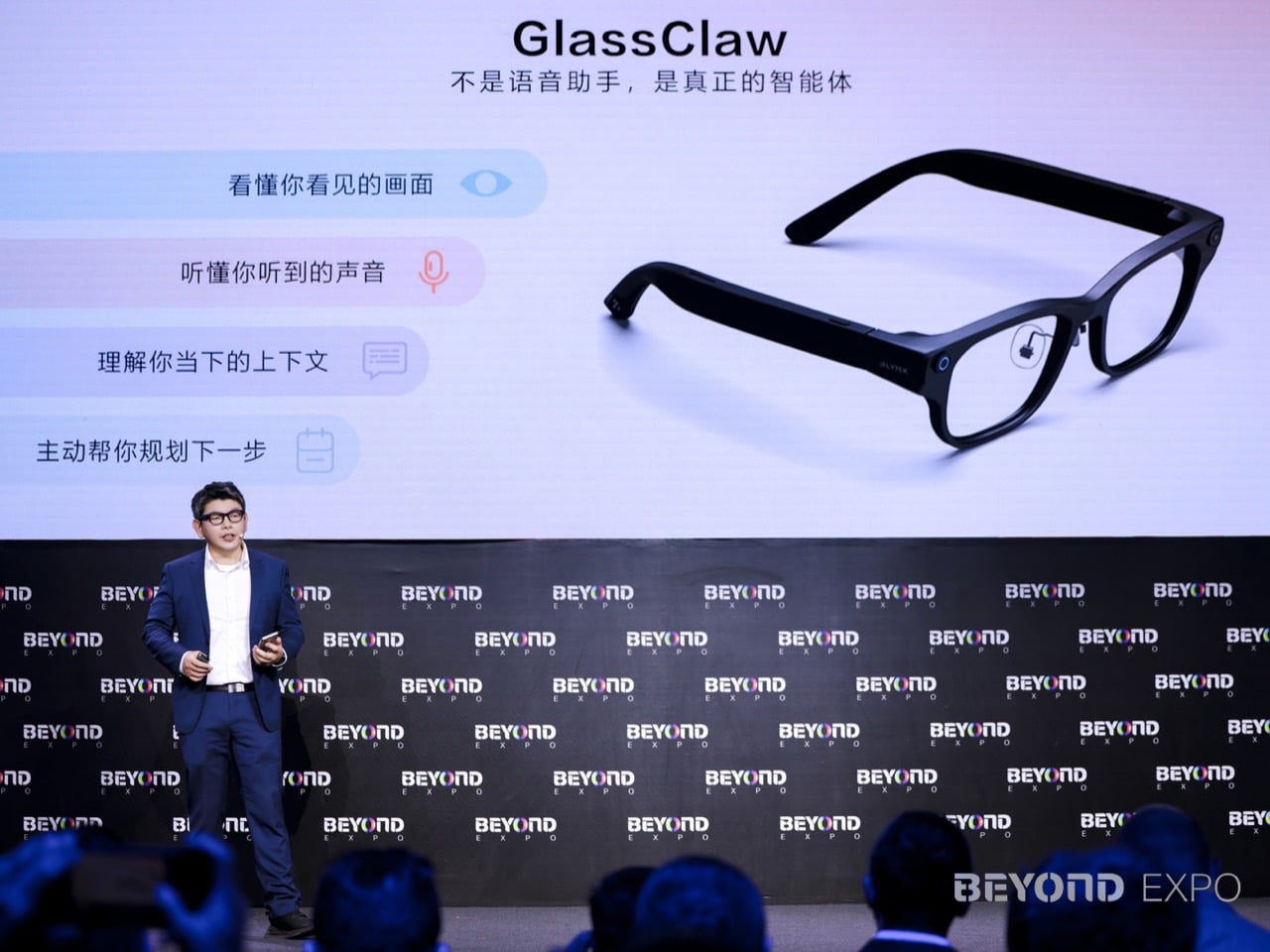
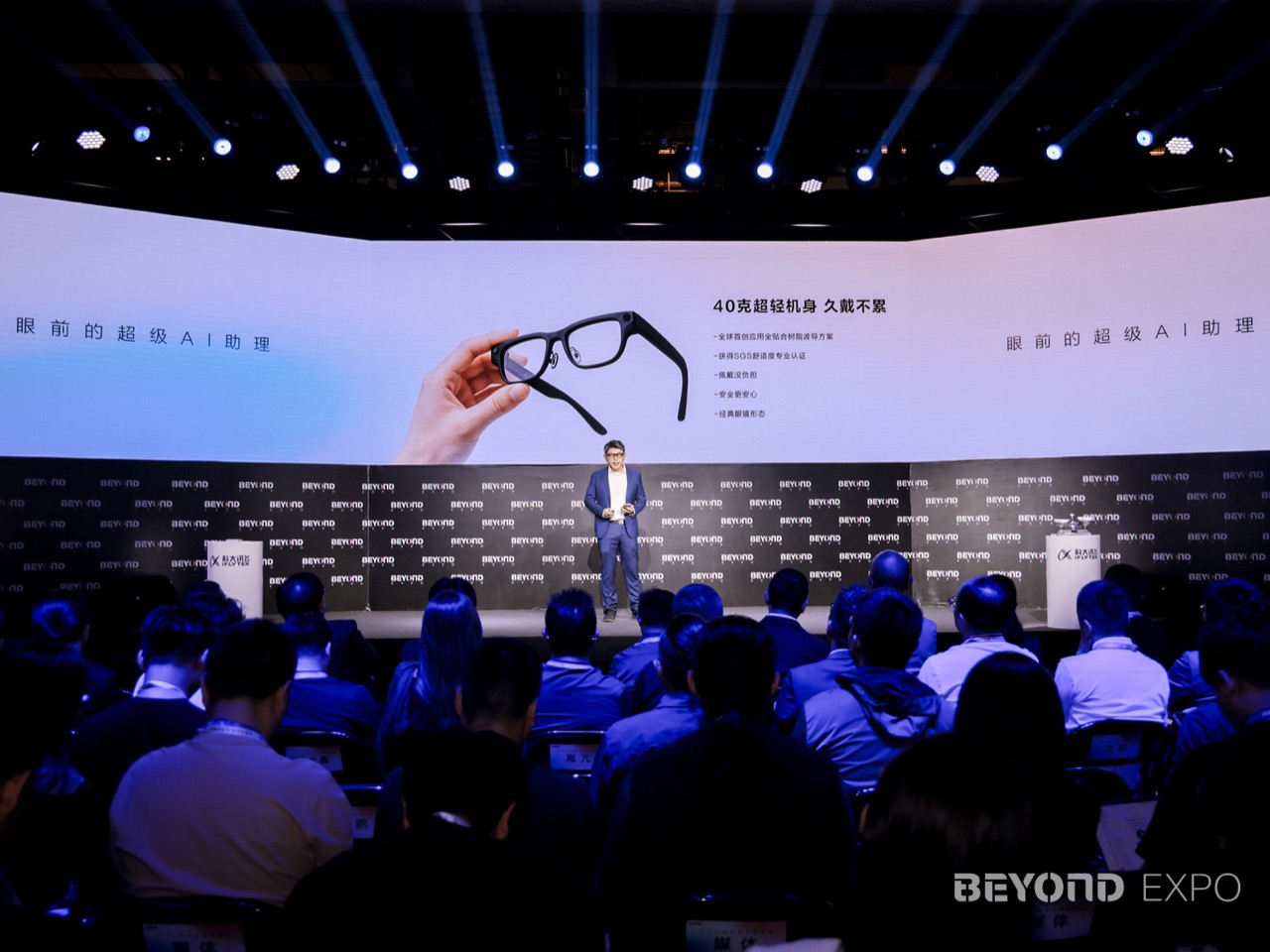
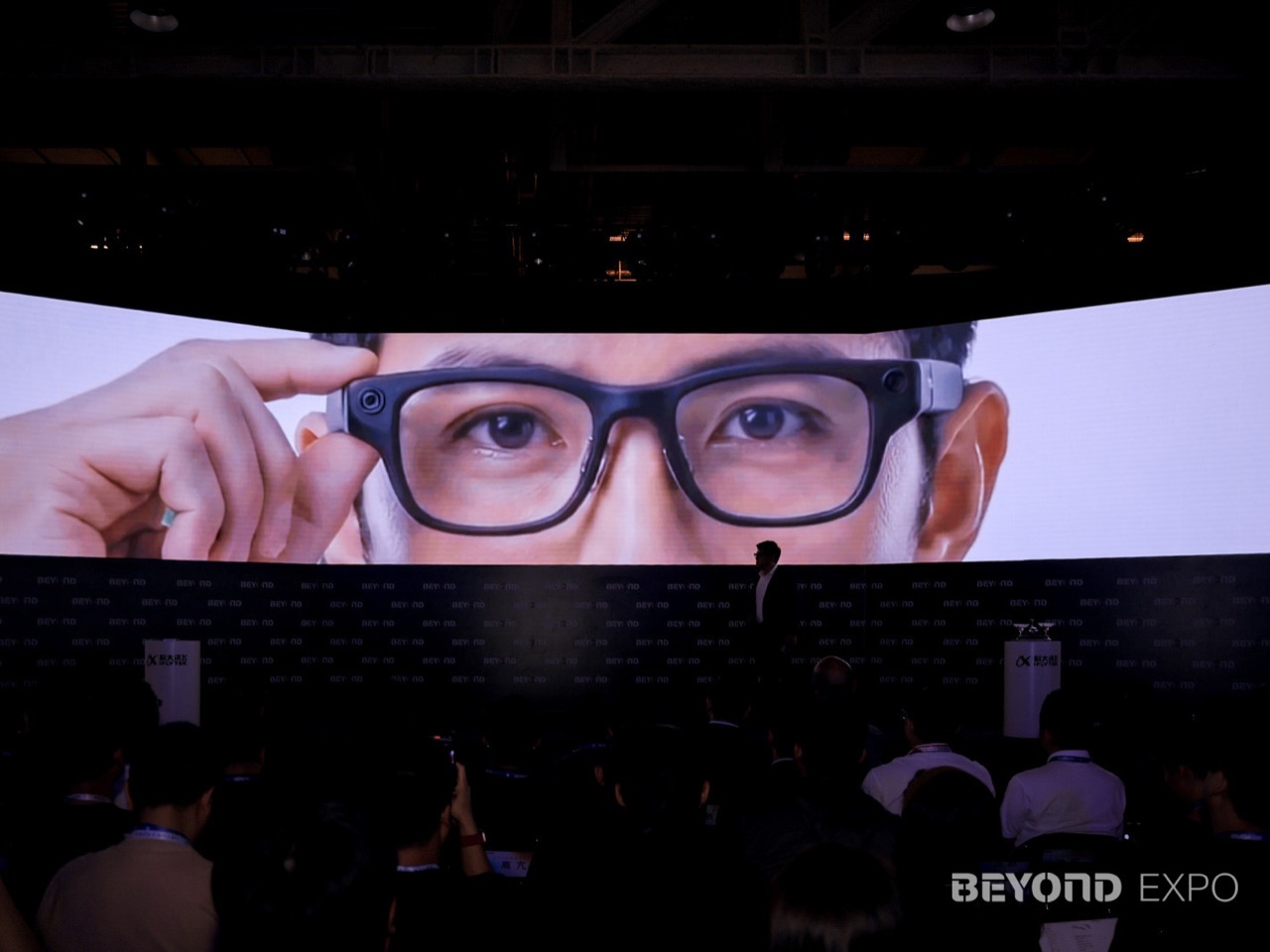
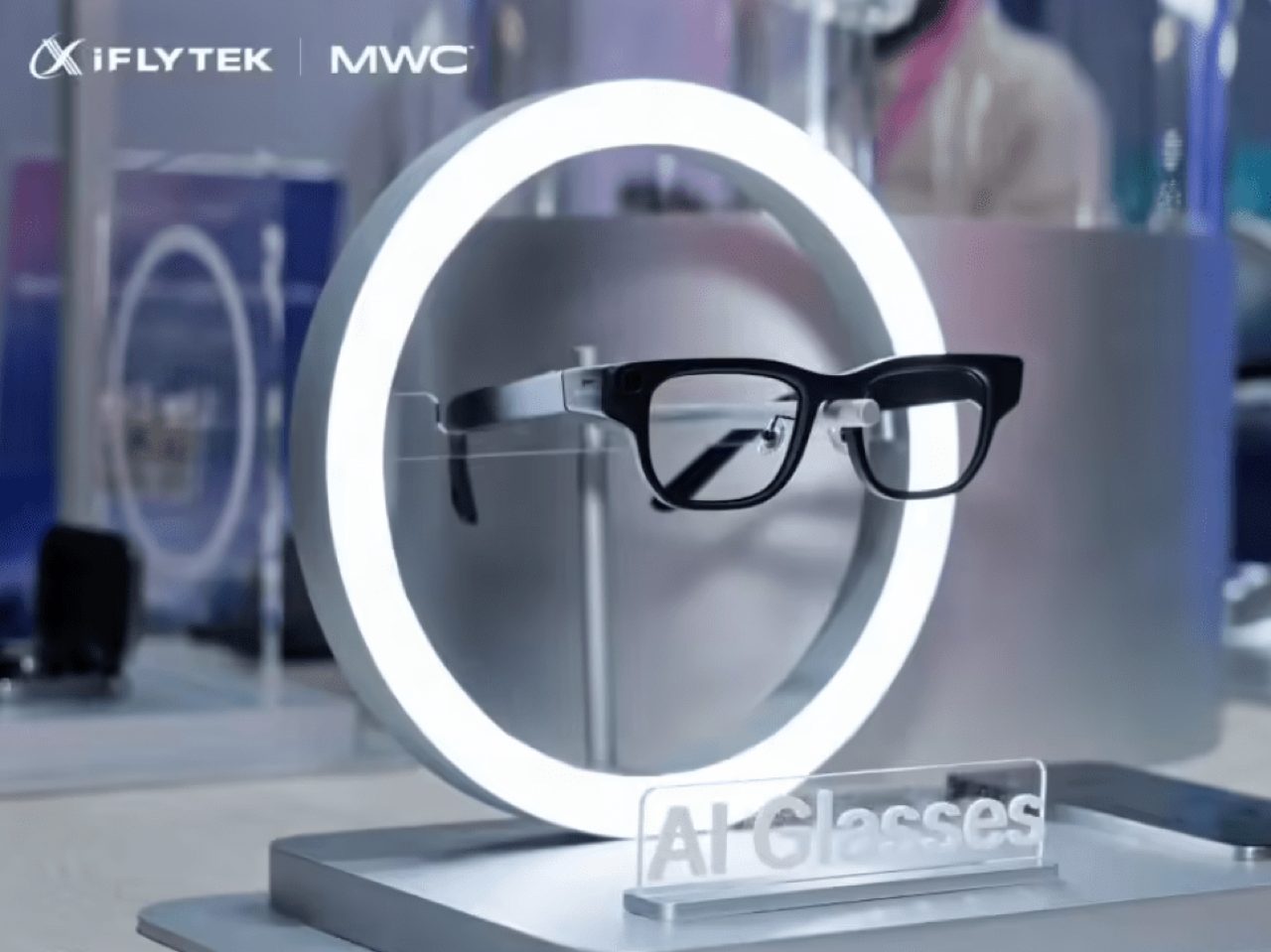
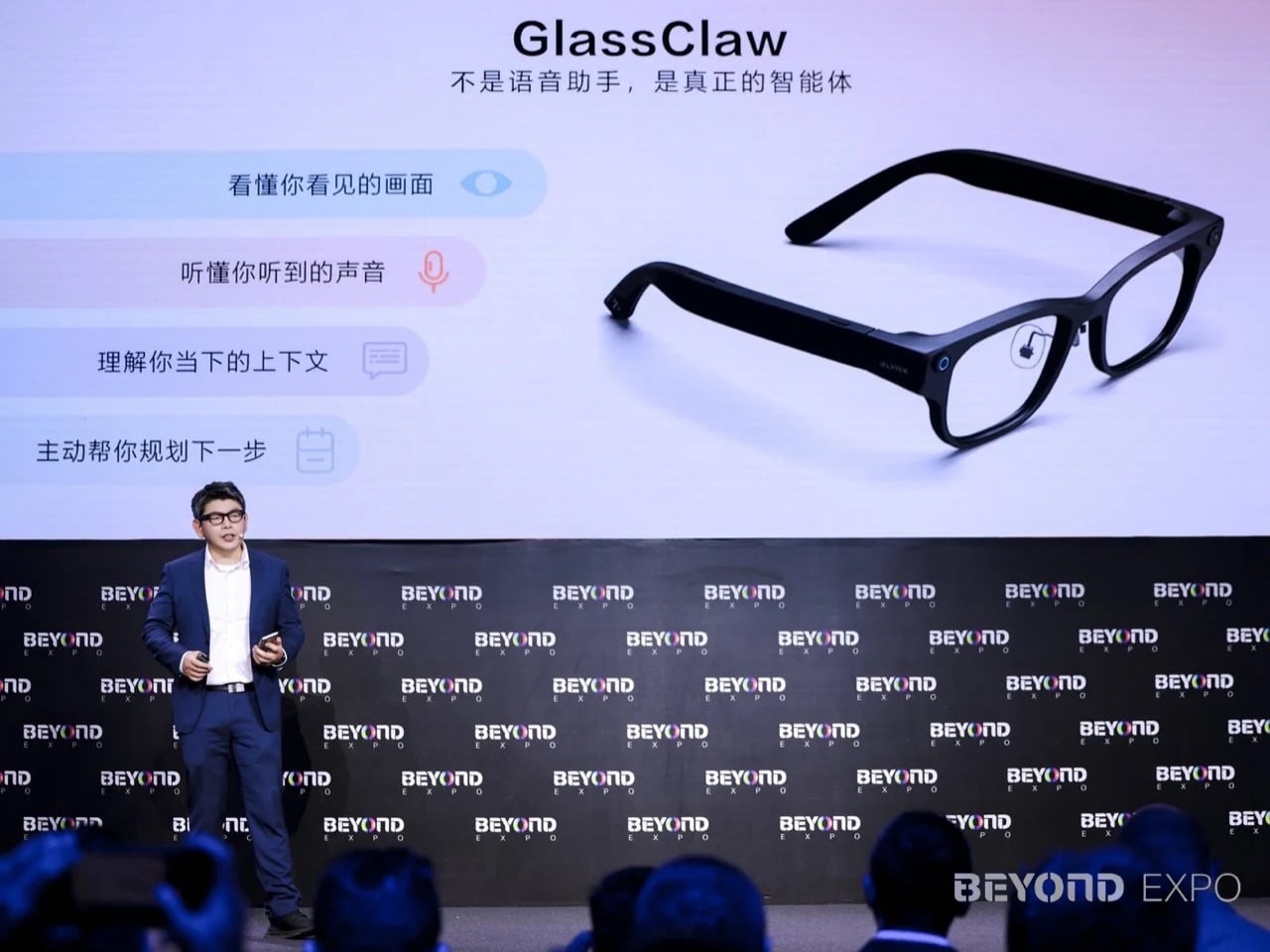
That made Macau the perfect stage for iFLYTEK’s AI Glasses, a 40 gram wearable built around communication, translation, and ambient intelligence. Announced at BEYOND Expo 2026, the glasses pair a lightweight magnesium-aluminum frame with a resin waveguide display, real-time translation, teleprompting, advanced noise recognition, and the GlassClaw AI agent, all wrapped into a device designed to keep information in sight and conversation in flow. iFLYTEK, the Shenzhen-listed AI company founded in 1999 and best known for its speech and language technology, framed the launch under the theme “Communication Without Boundaries, the World Before Your Eyes.” For a company whose core competency has always been understanding and generating human language, a glasses product aimed at communication is a logical next step. The pitch is a strong one: AI belongs in the line of sight, ready when you need it, invisible when you do not.

Designer: iFLYTEK

Getting a display, waveguide, processing stack, and speaker array under 40 grams in a glasses form factor is not a given, and the material choices iFLYTEK made to hit that number tell most of the hardware story. The frame uses an aerospace-grade magnesium-aluminum alloy, keeping the structure rigid without the front-loaded weight that makes smart glasses genuinely uncomfortable after twenty minutes. The display runs on a resin waveguide paired with a customized micro-optical module, a combination chosen to balance visual quality against physical footprint. Ergonomic adjustments calibrated specifically to Asian facial structures add another layer of intent, signaling that the wearability goal goes beyond a marketing claim. That kind of constraint-driven design work is what separates a considered wearable from a concept render that happens to ship.

GlassClaw, the AI agent built into the glasses, handles the intelligence layer across multiple modes (not related to OpenClaw). It captures conversations, generates AI meeting summaries, enables full-scenario real-time translation, and pulls in life services, functioning as a persistent contextual companion rather than a novelty voice assistant. The teleprompter feature stands out from a practical design standpoint, giving the glasses a repeatable use case in presentations, live video, and multilingual business settings. Advanced noise recognition ties the system together by giving the speech-processing layer a cleaner audio signal in conference halls, trade floors, and the ambient chaos of travel. iFLYTEK’s deep history in speech AI means the noise handling and translation accuracy are the features most likely to determine whether these glasses earn daily wear.

The iFLYTEK AI Glasses are priced at 4,299 yuan, roughly $635, with presales beginning June 15. iFLYTEK also staged an ecosystem partner forum at the expo alongside Sunny Optical, Wanxin Optical, and Conant Optics, treating the launch as the beginning of a product line rather than a one-time debut. For a product category that has struggled to articulate a daily reason to exist, iFLYTEK’s communication-first positioning is a credible answer. The Ray-Ban Meta glasses proved that lightweight wearable audio could build a real user base when the form factor stopped fighting the face, and iFLYTEK is making a similar bet with a display and translation stack on top. At 40 grams, with a clear professional use case and a company whose entire identity is built around understanding human language, these glasses have the ingredients to matter.

The post Translation, Prompting, Agentic AI, all in 40 grams: iFLYTEK’s Smart Glasses Debut at BEYOND Expo 2026 first appeared on Yanko Design.
BEYOND Expo 2026: Asia’s Biggest Tech Event Just Told the World That AI Software Was Only the Warm-Up

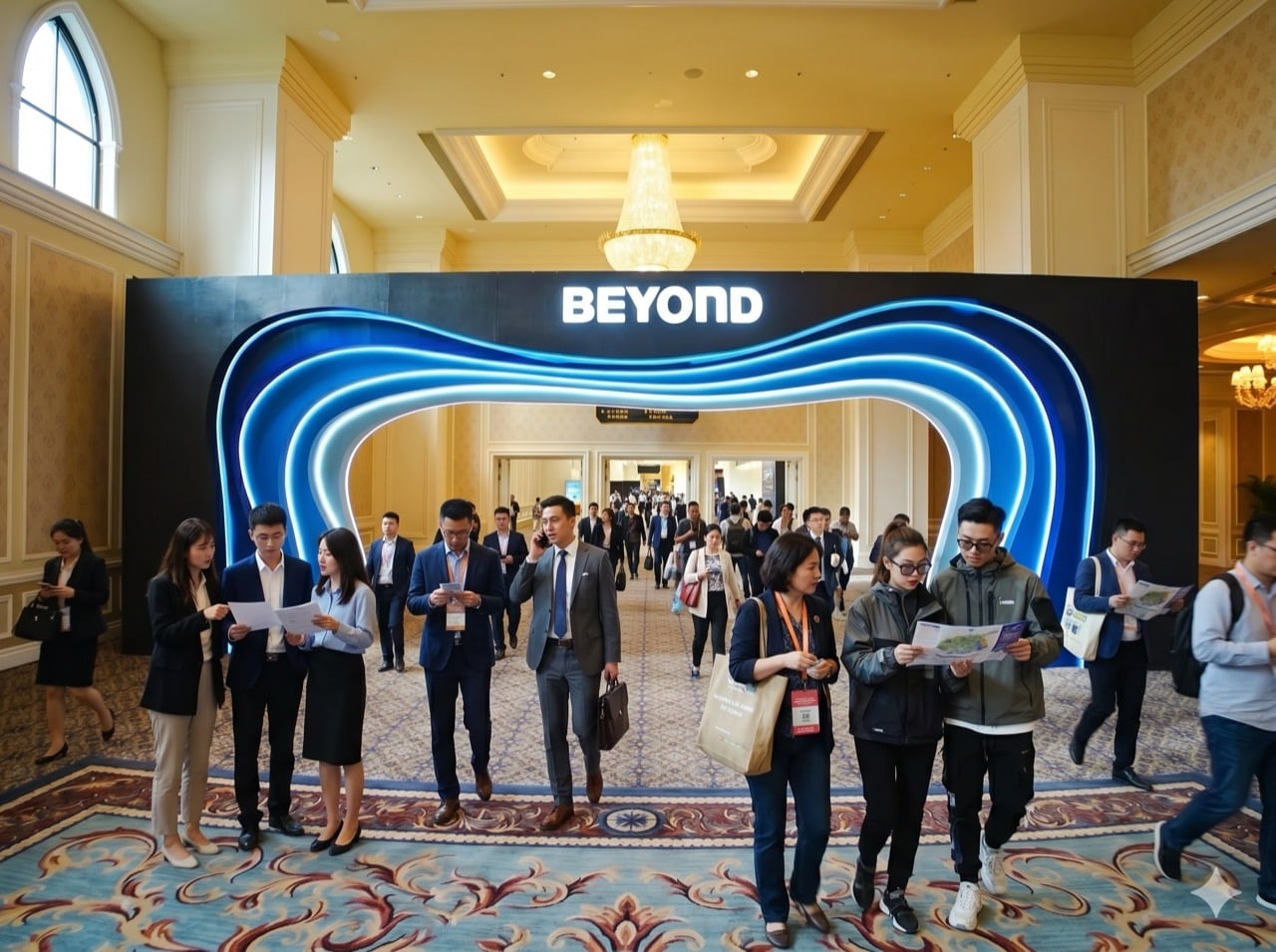
Every major tech conference eventually finds its thesis statement. CES landed on “everything is connected.” SXSW staked out culture-meets-technology. BEYOND Expo‘s thesis for 2026 is more specific, and honestly more timely: AI has spent years proving itself in software, and the interesting question now is what happens when it leaves the screen. The official theme, “AI: Digital to Physical,” takes over from last year’s theme of Transforming Uncertainty into a Trigger for Innovation. Timed perfectly around the global speculation that AI’s a bubble, it’s a genuine reflection of where the most consequential AI work is actually happening right now, in robotics labs, automotive platforms, wearables, and manufacturing floors across the Greater Bay Area.

BEYOND has been building toward this moment since Dr. Lu Gang launched it during a global lockdown in 2021, a decision he’s called delusional in hindsight during an interview with Yanko Design, but with the kind of grin that says he’d do it again. The original problem he was solving was simpler than people realize: Asia’s most interesting founders kept showing up at CES and Web Summit as attendees rather than headliners. A hardware startup out of Shenzhen with genuinely world-class AI chops would get a 3×3 booth on a back wall while the stage went to the usual suspects. BEYOND was built to fix that imbalance, and five years in, it’s working.

Click Here to know more about the BEYOND Expo 2026

The 2026 edition is aiming for 30,000 attendees, a significant jump from 2024’s 20,000, and the programming reflects a maturing event that knows its own strengths. The summit lineup spans Humanoid Robotics and Embodied AI, Enterprise Agentic Workflows, Autonomous Driving, AI-Integrated Wearables, and a PayFi and Decentralized AI track that will either feel prescient or premature depending on your priors. What ties all of it together is the through-line of AI becoming something you interact with physically, not just through a chat interface. That’s a meaningful editorial choice, and one that puts BEYOND in a different conversation than conferences still treating large language models as the whole story.

The most interesting addition this year is the GBA Innovation Tour, which gives international attendees direct access to Greater Bay Area manufacturing infrastructure. This matters more than it might sound. Lu Gang has argued for years that what makes Asia’s tech ecosystem genuinely different isn’t just the innovation pipeline, it’s the compression of the distance between idea and physical product. Watching an AI concept move from prototype to production in a Shenzhen facility in weeks rather than months is something you can describe in a keynote, but apparently you need to see it to really understand the scale and speed involved. The tour is BEYOND’s way of making that argument visceral rather than theoretical.

Last year’s theme, “Unveiling Possibilities,” was about reframing uncertainty as creative fuel, which was the right message for a chaotic moment. “AI: Digital to Physical” is more declarative, more confident. It names a specific transition that the industry is mid-stride through, and plants BEYOND squarely in the middle of it. Registration and exhibition details are live at beyondexpo.com.

Click Here to know more about the BEYOND Expo 2026

The post BEYOND Expo 2026: Asia’s Biggest Tech Event Just Told the World That AI Software Was Only the Warm-Up first appeared on Yanko Design.