Pixel 10a Just Proved a Smartphone Color Can Actually Mean Something

Smartphone colors have become one of the more formulaic aspects of mobile design. Most brands cycle through the same soft pastels and stone-inspired neutrals, year after year, with names like Moonstone, Fog, and Porcelain doing most of the heavy lifting. It’s a safe approach that generally works, but there’s rarely any real meaning behind these choices. A color is just a color, and that’s often where the story ends.

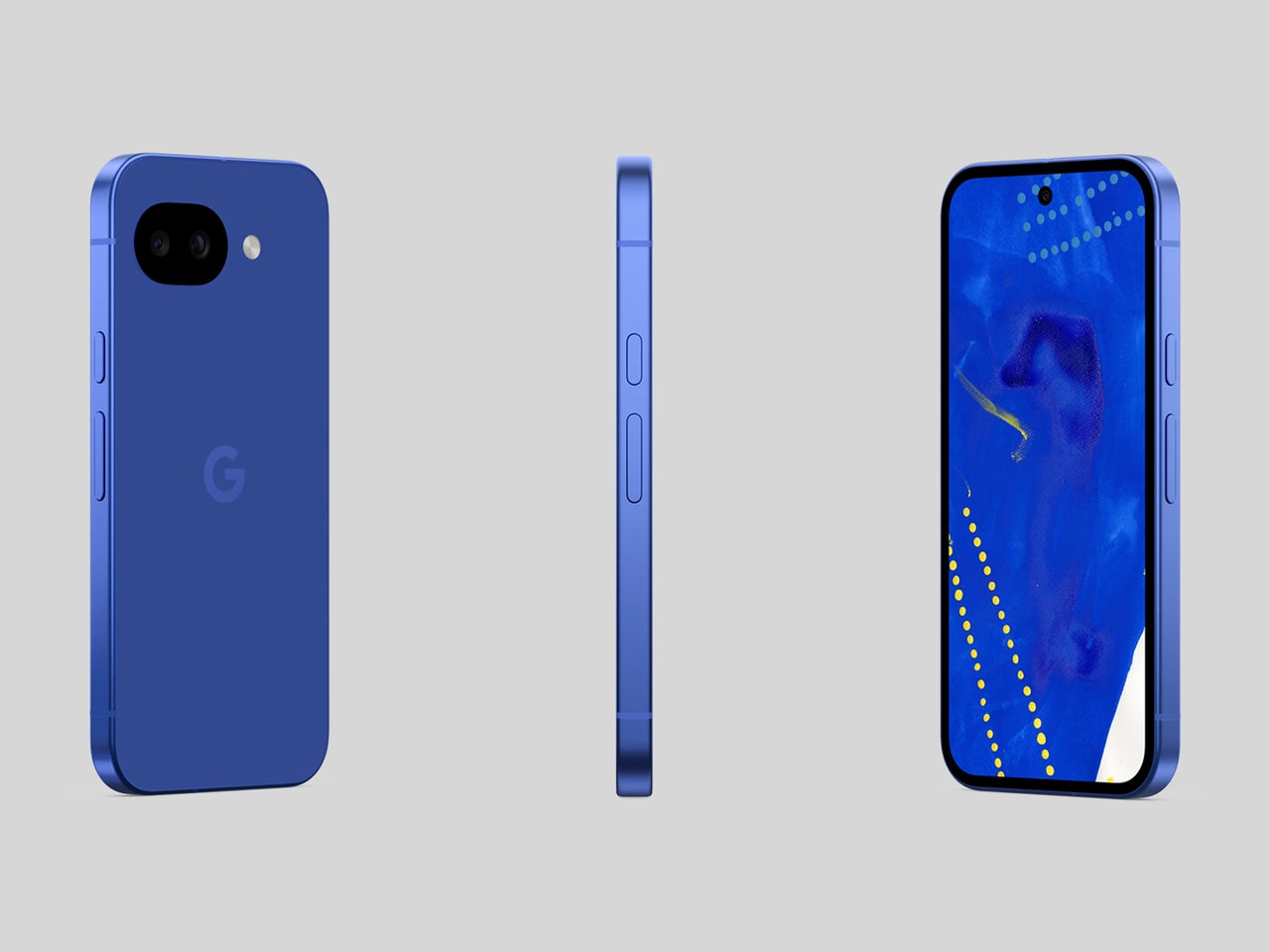
Google seems to have had the same thought, at least for Japan. The Pixel 10a Isai Blue is a Japan-exclusive model developed in collaboration with Heralbony, a creative company that works with artists with disabilities to produce new forms of cultural expression. It celebrates a decade of Pixel phones, and rather than simply marking the occasion with a new shade, Google made the color itself worth talking about.

Designer: Google x Heralbony

Japan didn’t get the Pixel 10a when it first launched globally in February, which was a bit of an odd omission given how well the A-series has performed there. The country has quietly grown into one of Google’s stronger Pixel markets, so the wait wasn’t really a sign of indifference. Returning to Japanese fans with something made specifically for them says a lot more than a straight regional rollout would.

The name alone sets this apart from anything Google has done before. “Isai” translates to unique and unparalleled individuality, and this is actually the first time a Pixel color has been given a Japanese name. Most Pixel colors borrow from the natural world, but Isai Blue is built around something more conceptual: a deep navy shade tied to Heralbony’s own brand identity and its mission to celebrate human difference.

That philosophy runs all the way through to the software, too. Three Heralbony-contracted artists, Shigaku Mizukami, Midori Kudo, and Kaoru Iga, each contributed original designs that became exclusive wallpapers on the device. Pick one of the nine available artworks, and Material You automatically reshapes the phone’s icon colors and styling to match. It’s the kind of visual cohesion you don’t usually get with a phone at this price.

Of course, the collaboration doesn’t stop at the screen. Every unit comes bundled with an exclusive bumper case designed around the Pixel 10a’s completely flat back, which does away with any camera protrusion and makes the phone far easier to set down. Original stickers are also included, and the box sleeve carries artwork by Midori Kudo, so the whole unboxing feels deliberately curated.

The Isai Blue comes in a single 256GB configuration, priced at ¥94,900 (roughly $594) and available for pre-order in Japan ahead of its May 20 sale date. It’s only available while supplies last, which fits for something that was never really meant to be a mass-market offering. Google took the time to make this feel like a genuine gesture rather than a routine launch, and Japan has every reason to feel appreciated.

The post Pixel 10a Just Proved a Smartphone Color Can Actually Mean Something first appeared on Yanko Design.

This Limited Edition Desk Lamp Has Four Legs and Looks Like It’s Alive

The line between product design and sculpture has been blurring for years, but most objects still declare their purpose plainly. A lamp looks like a lamp. Its form is a familiar enough gesture that it becomes invisible, something you reach for and forget. The more interesting territory is what happens when a designer begins with something alive and works backward into a functional object.

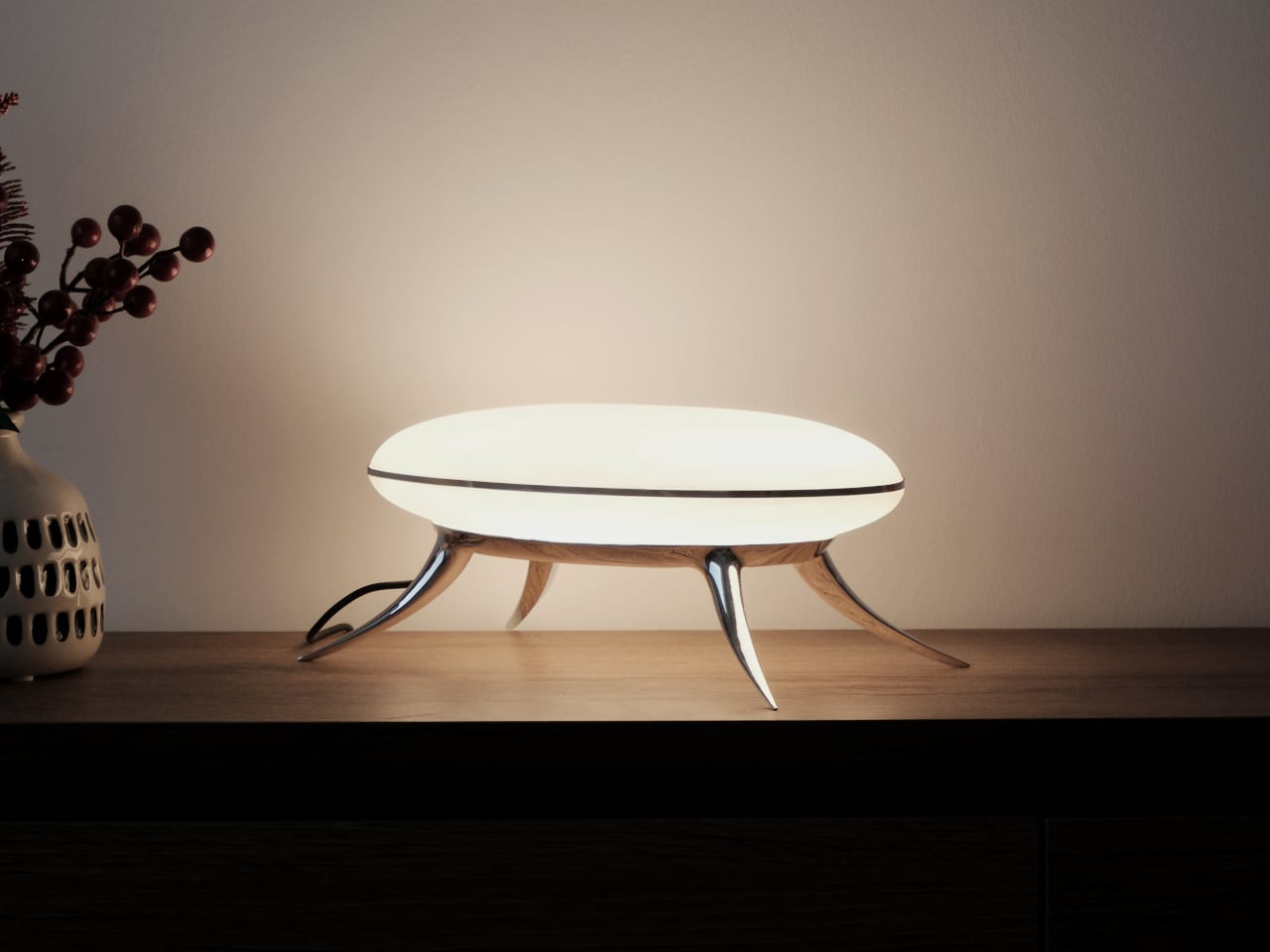
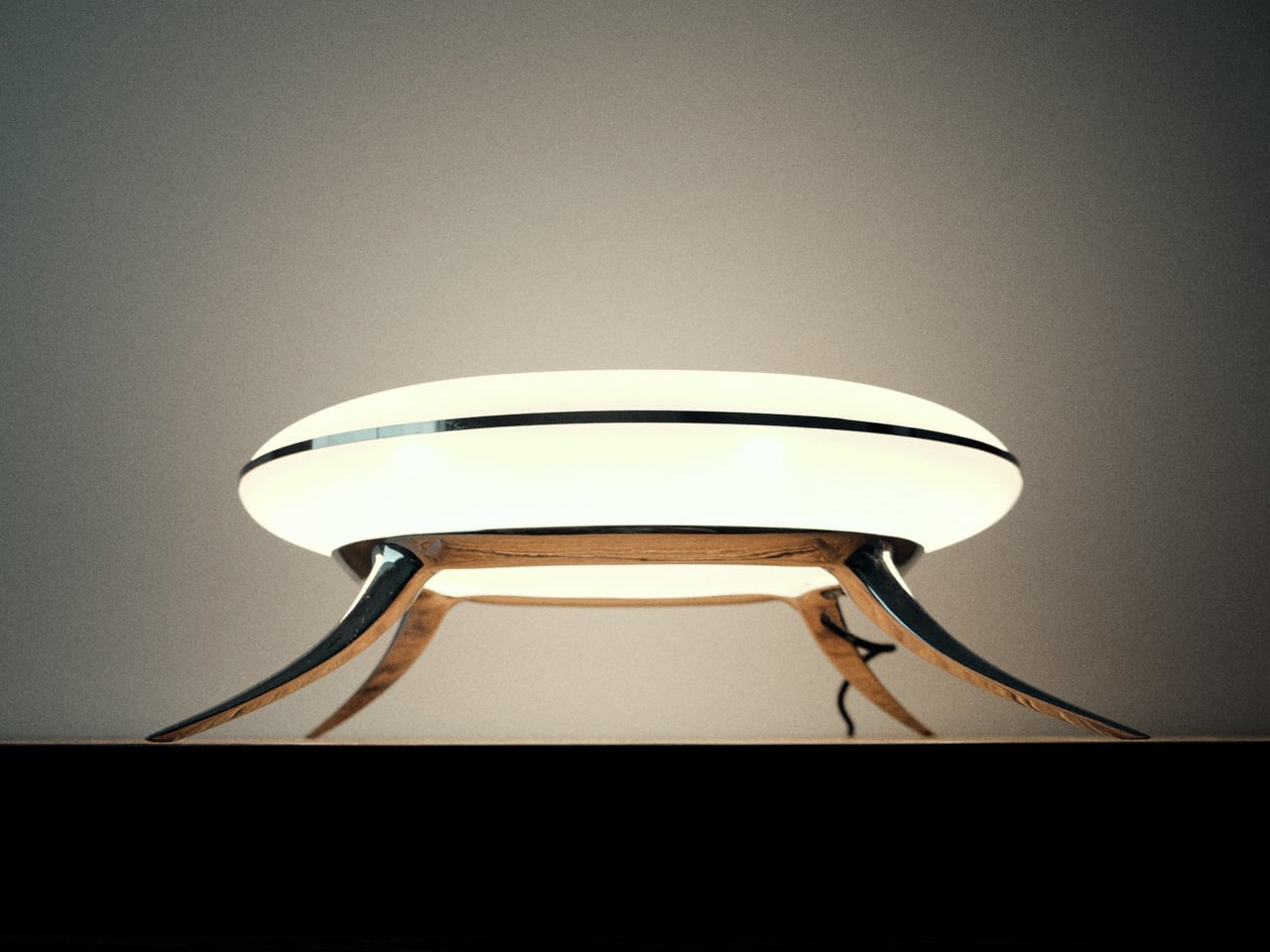
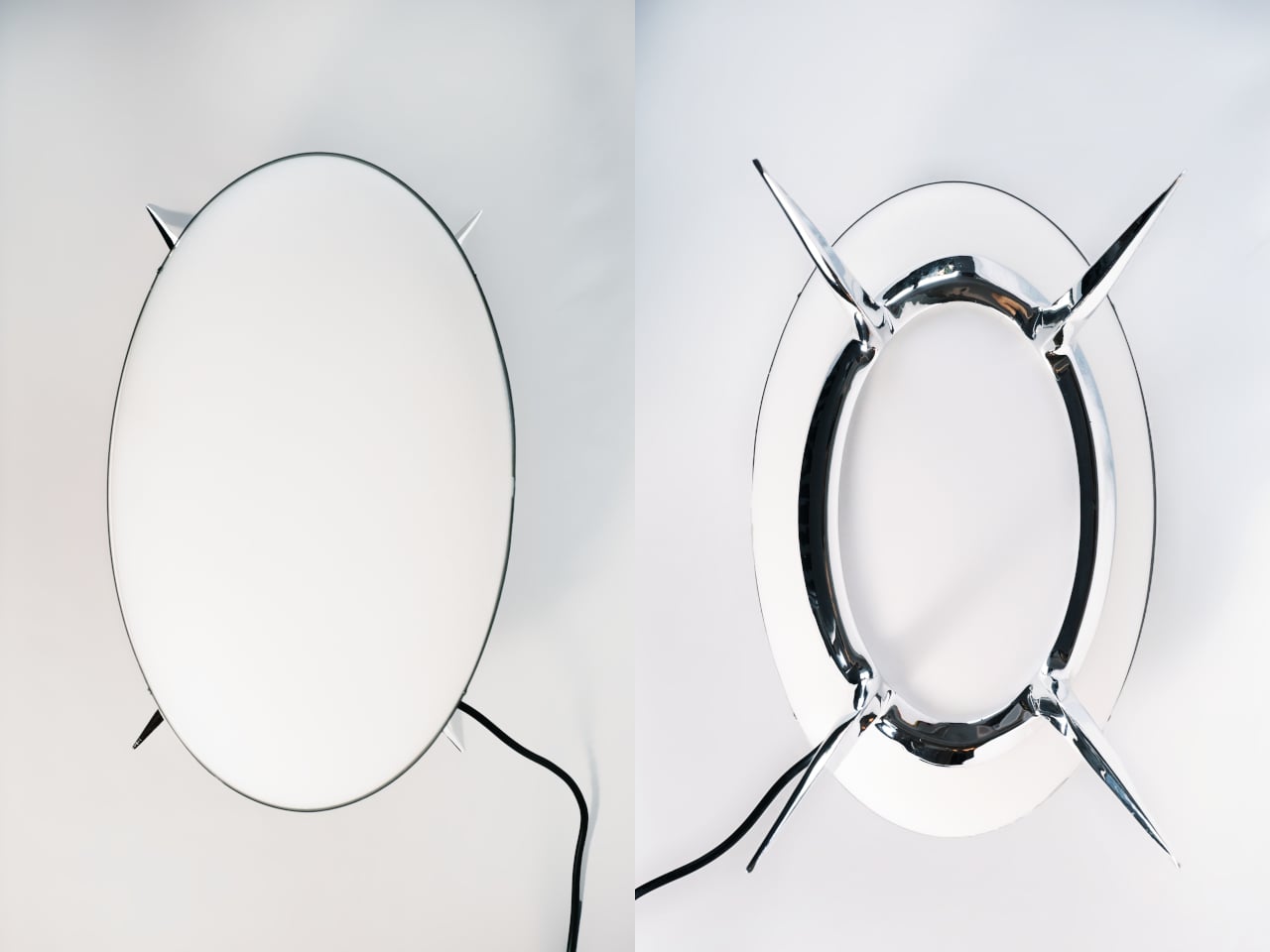
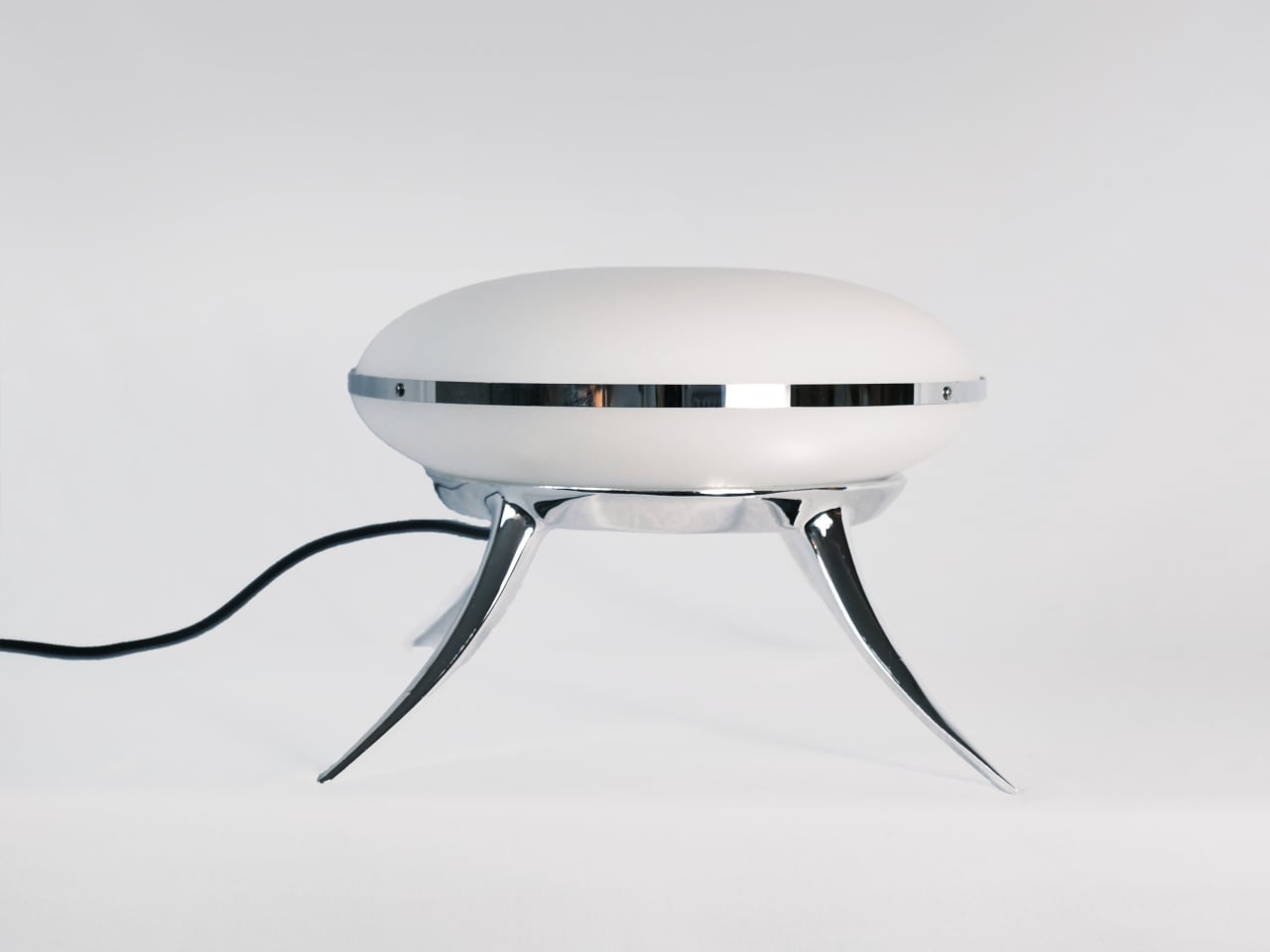
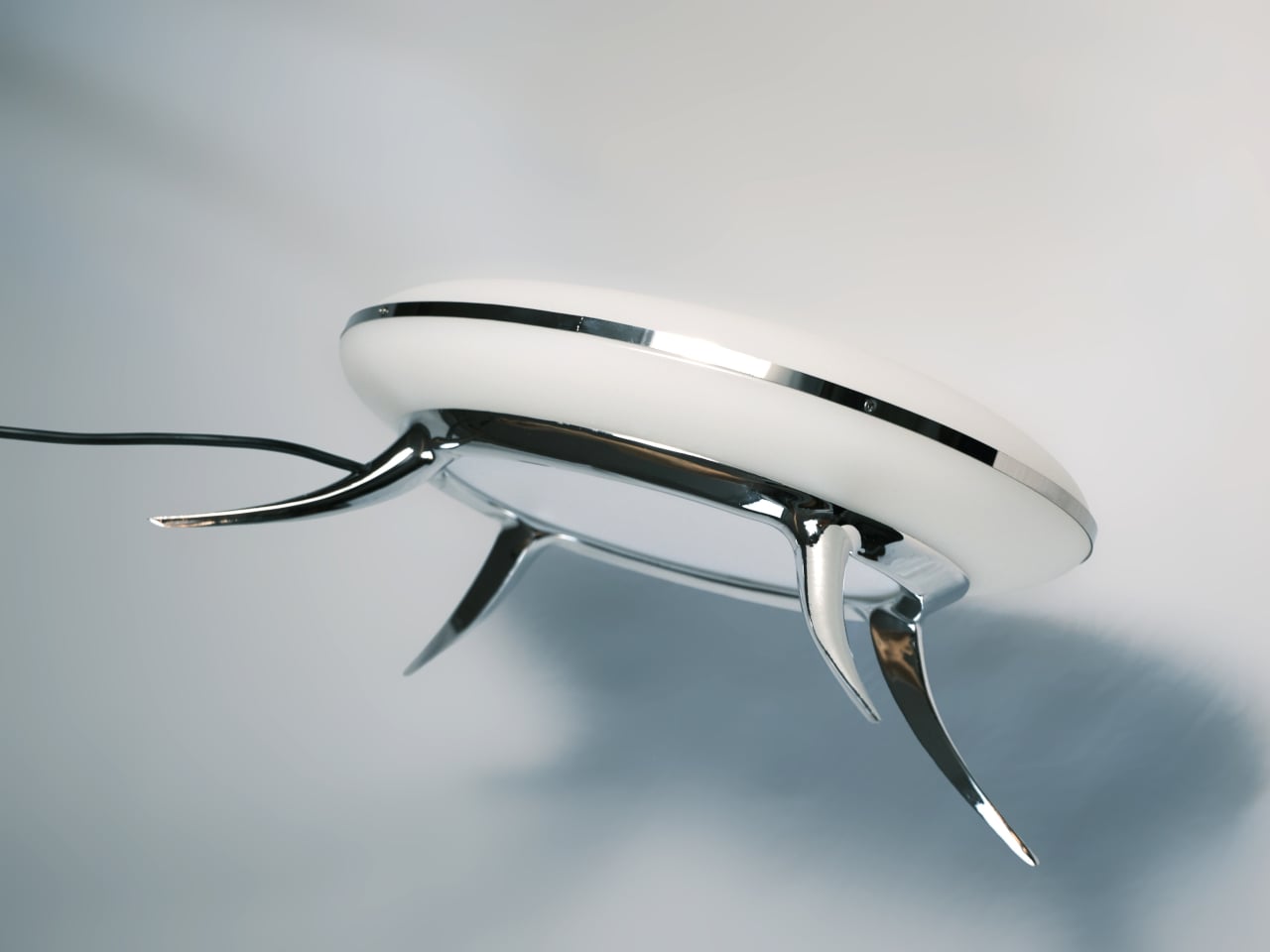
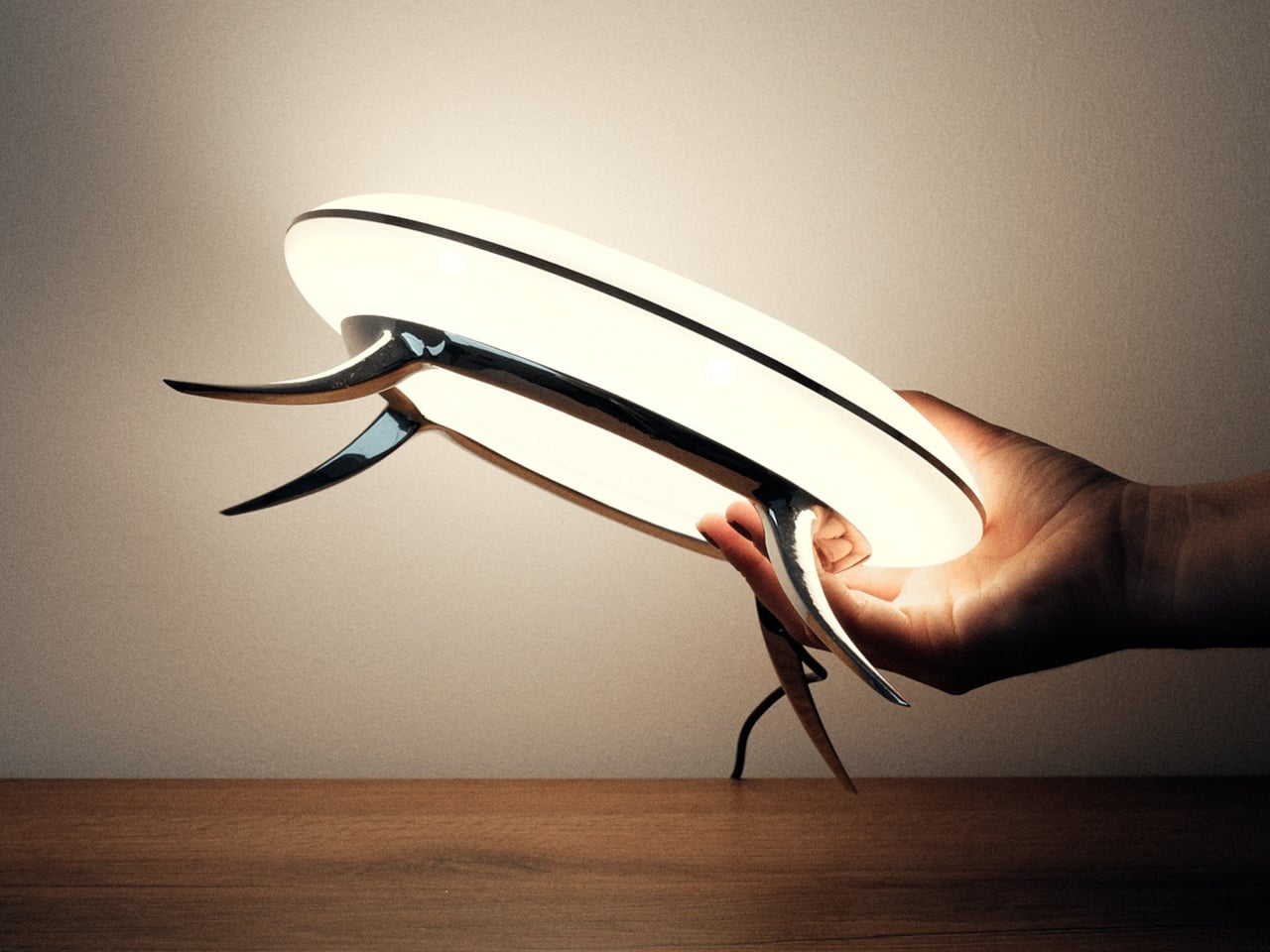
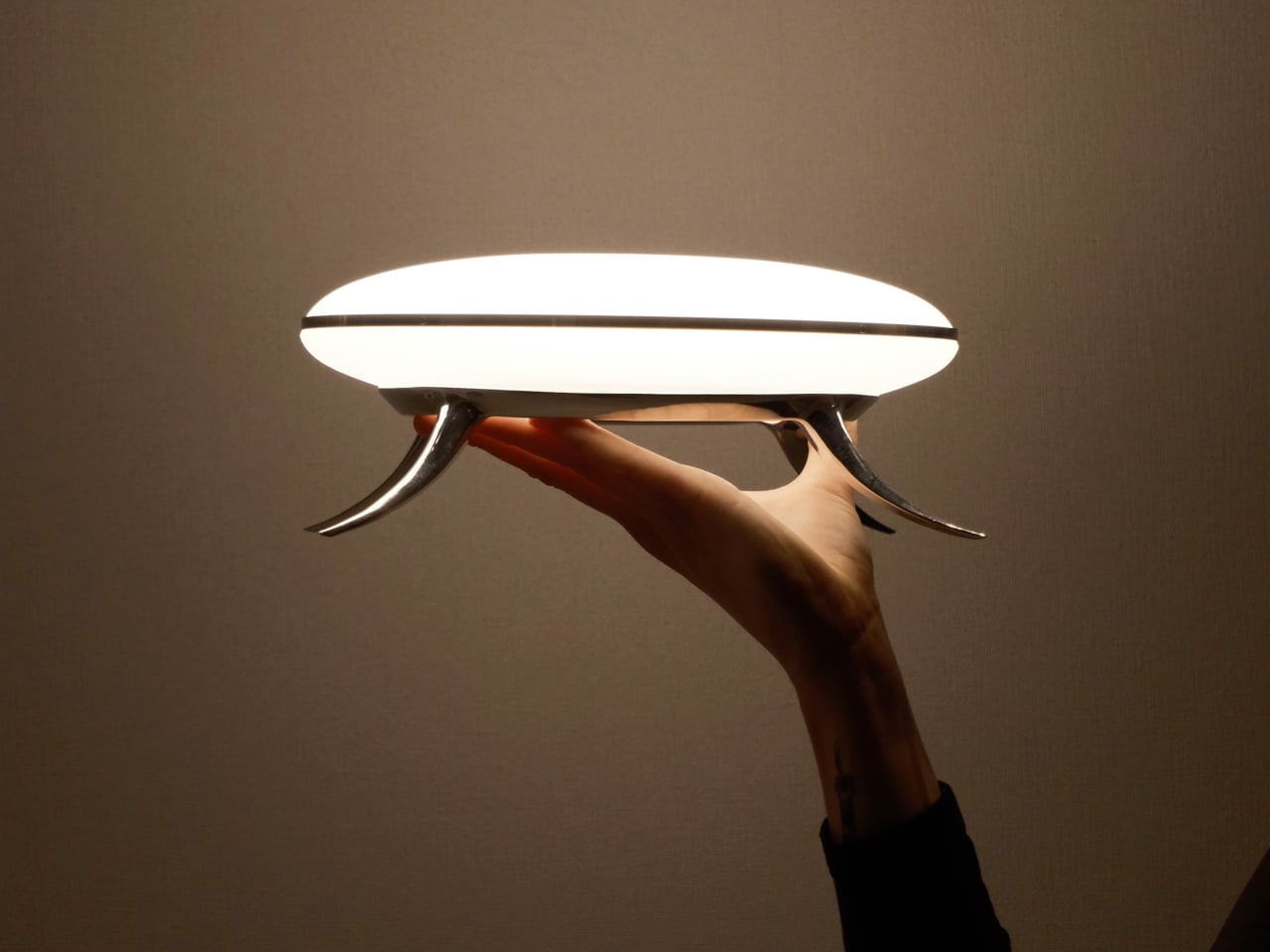
That’s what Hazel Villena did with the Bean Lamp, a limited-edition desk light designed in Brooklyn in 2026 that functions as a light source and a quietly unsettling presence at the same time. Villena started with the creature first and then solved the engineering around it. The legs exist to hold the disc of light. That they read as limbs is entirely deliberate.

Designer: Hazel Villena

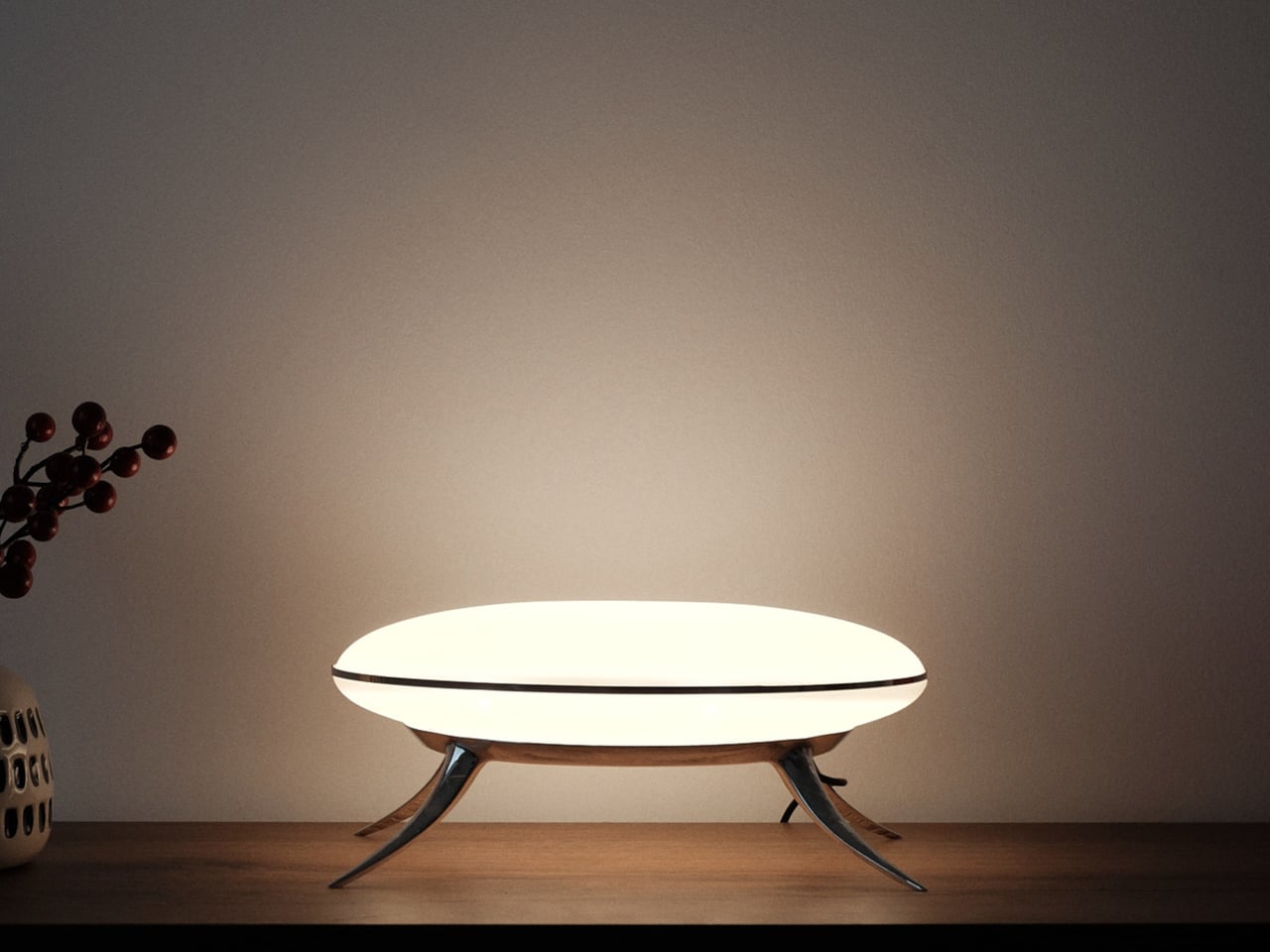
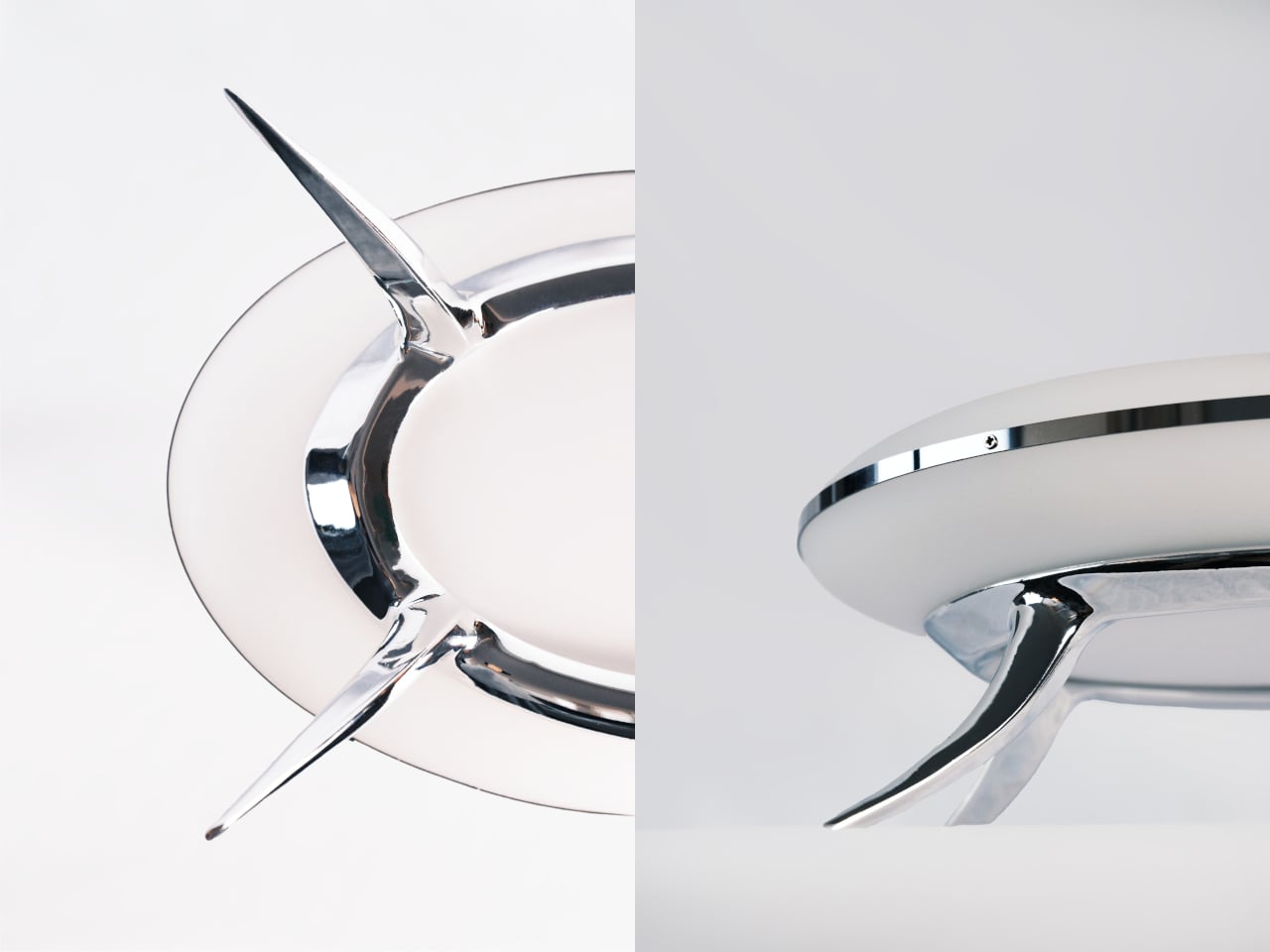
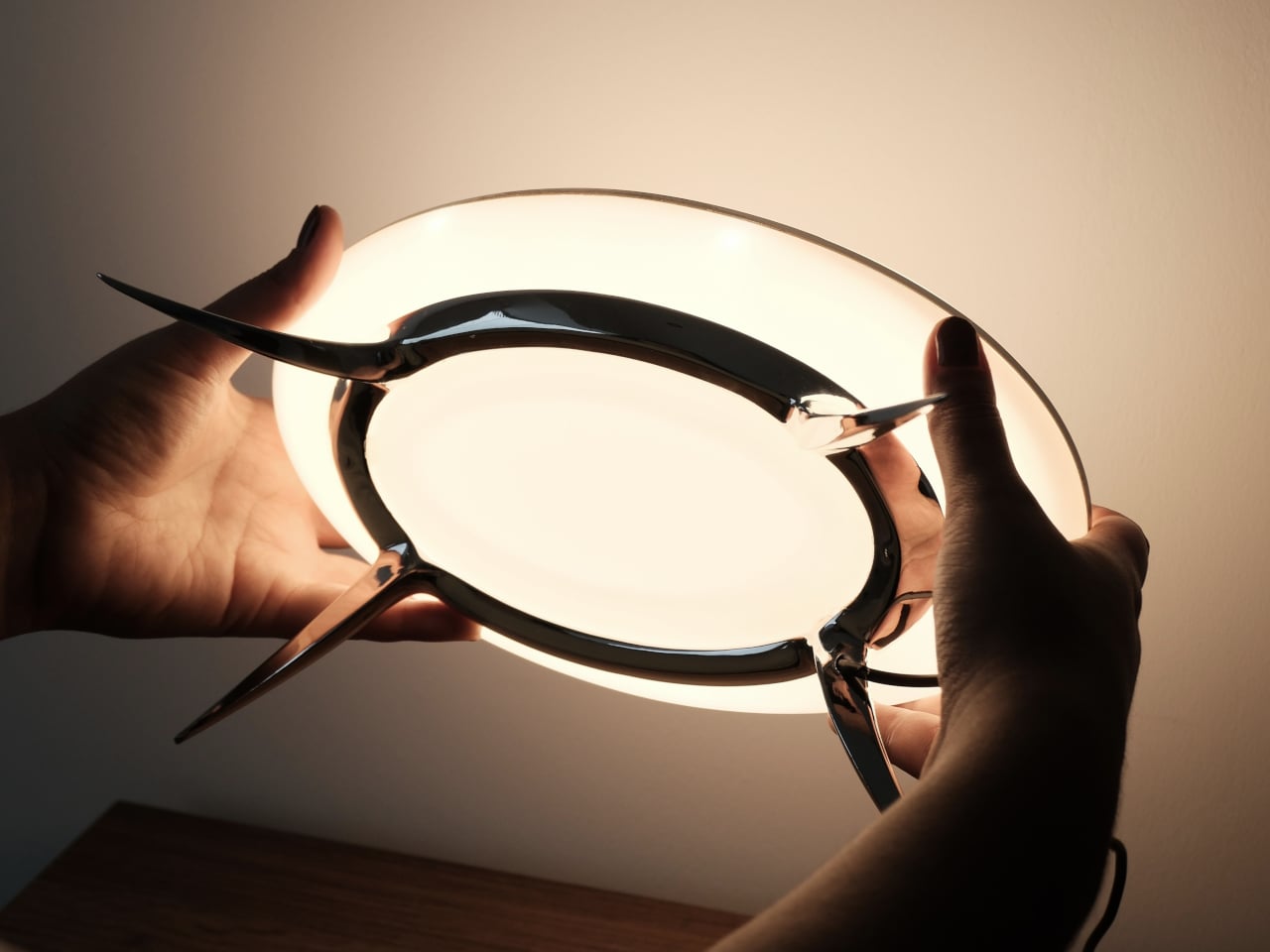
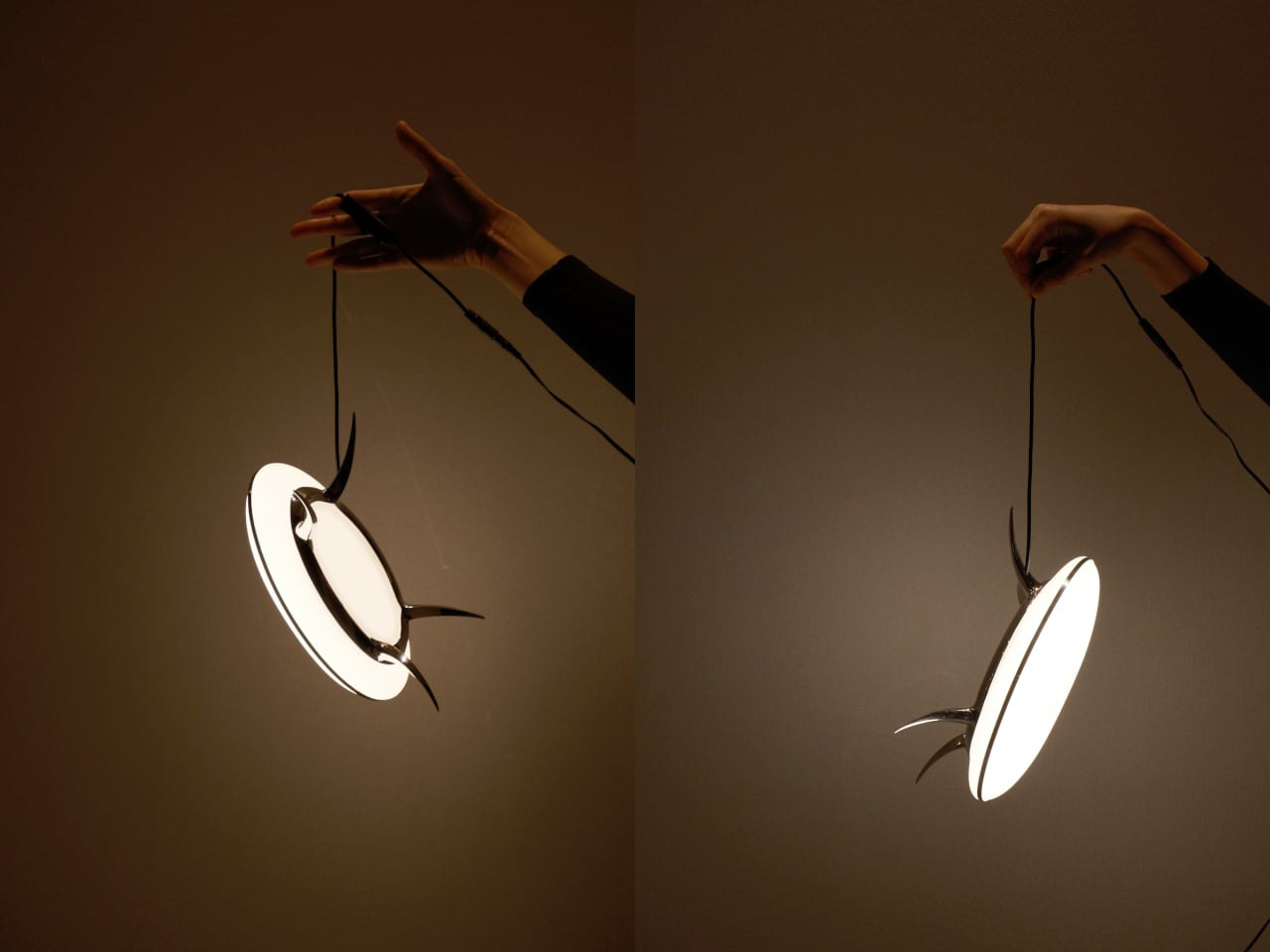
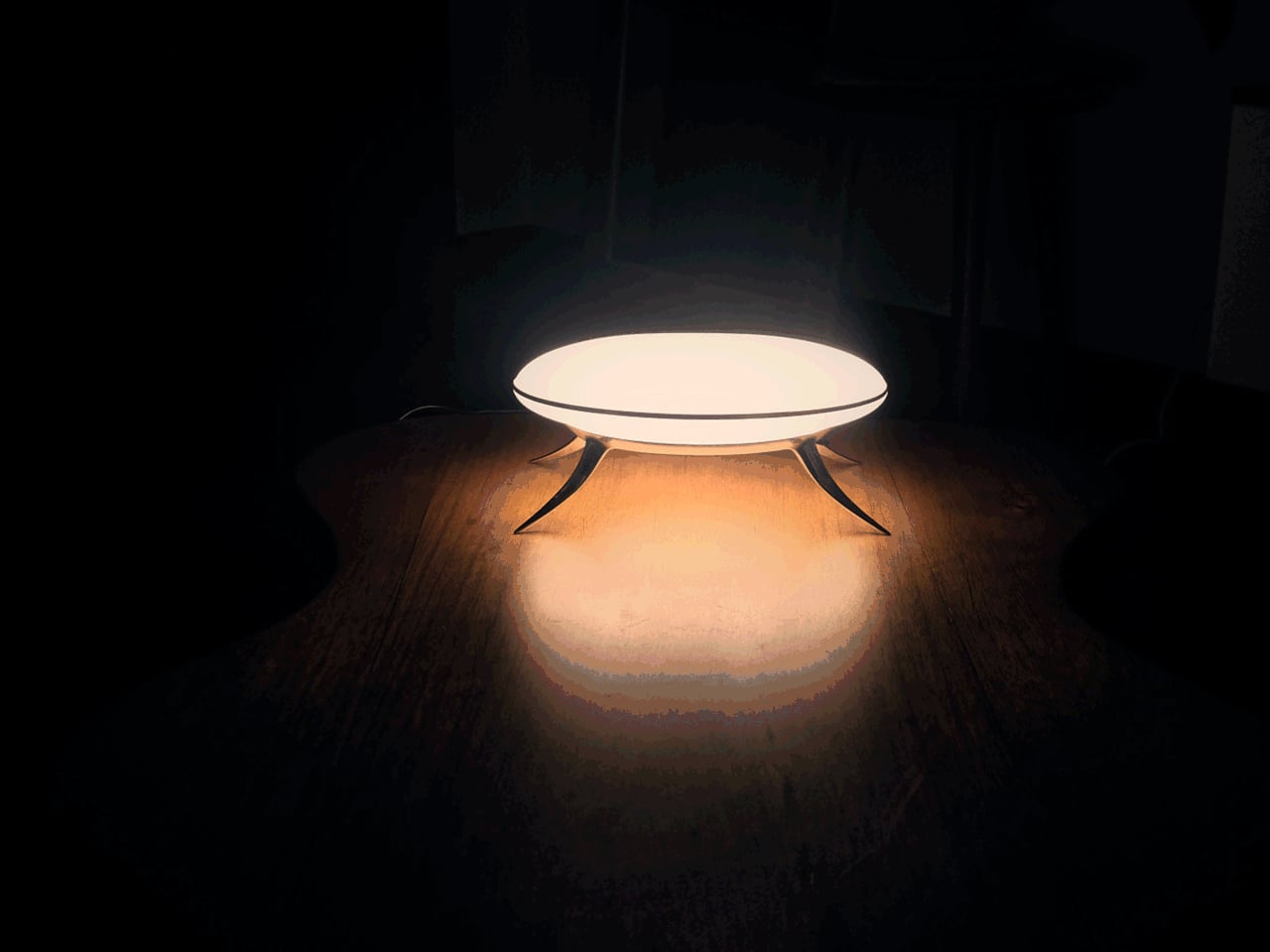
The body is cast copper with a chrome finish, sculpted into a low, wide stance on four tapered legs that curve and splay at angles borrowed more from biology than furniture. A polished aluminum ring joint at the center holds the matte polycarbonate diffuser in place, and the integrated LED disc inside throws a soft, contained pool of warm light across the surface beneath it.

At 10.5 inches long and 4.5 inches tall, the Bean Lamp is compact enough to sit on a desk or shelf without dominating the space, though it tends to hold the eye. Proportion was a significant part of the design process, giving an elementary silhouette more gravity than its simple form suggests. The chrome catches light, the matte disc diffuses it, and the four curved legs suggest something caught mid-pause.

There’s also how it comes apart. The Bean Lamp is mechanically assembled rather than bonded, which means it can be fully disassembled when needed. The shade and LED unit can each be replaced or upgraded independently, extending its life beyond any single component. At the end of its life, the copper body and aluminum ring separate cleanly into existing metal recycling streams, a quiet argument for longevity built directly into the object.

The lamp runs on a 12V cord with an in-line switch, keeping the operation uncomplicated. Plug it in, turn it on, and it does what a lamp is supposed to do: lights a small, deliberate area of wherever you’ve put it. What it also does, and what takes longer to resolve, is sit there looking like it might eventually decide to move on its own when nobody’s watching.

It reads differently across the room than it does up close, and differently still once it’s switched on. Villena’s stated goal was an object that sits in a deliberate blur, familiar enough to understand, strange enough to stop you. The Bean Lamp lands there without apology and seems to have no intention of clarifying itself further.

The post This Limited Edition Desk Lamp Has Four Legs and Looks Like It’s Alive first appeared on Yanko Design.

Screw-inspired Stool Numbered Like a Sneaker Drop: Only 150 Made

There’s a certain kind of object that can’t quite decide what it is, and not in a bad way. Furniture has increasingly strayed into collectible territory, and collectibles have crept into living rooms posing as furniture. The result is a growing category of designed objects that live somewhere between a chair and a limited-edition release, serious about craft but refreshingly light about everything else.

Carpet Company, the Baltimore brand known for carving out its own irreverent corner of the design world, leans into that tension with the S-TOOL, its first piece of furniture. The name makes no effort to hide the attitude, and the official list of potential uses runs from stool and ottoman all the way to footrest, ornament, chew toy, and, with admirable candor, trash.

Designer: Carpet Company

The form is remarkably direct. A 12-by-12-by-12-inch cube of 100% fiberglass, cast in a single unbroken gloss color, sits on four chunky legs that taper down to blunt, faceted points. The top surface carries a screw-head relief in each corner, molded flush into the fiberglass in the same color as the piece, which reads immediately as hardware but behaves purely as ornament.

The screw motif carries through to the legs, shaped like Philips screwdrivers that slot into the screw-head relief of another S-TOOL. It’s a small but loaded gesture, nodding to the DIY impulse of the design process without pretending to be handmade. Carpet describes it as hardware that speaks to how things get built, balanced against the glossy, almost candy-like finish to keep the whole concept from becoming too earnest.

The S-TOOL is a limited release, with only 150 units spread across 30 colors, five of each. Every piece carries a metal plaque screwed into the underside, detailing the release and edition, which gives the stool some of the same collectible gravity you’d expect from a numbered print or a signed sneaker. At 15 pounds, it’s substantial enough to feel like something, and that’s rather the point.

The packaging reinforces the whole thing. The box carries the same list of purposes, a column of color-coded screw illustrations previewing the full range, and a cartoon hippo mascot that’s equal parts absurd and charming. Carpet has always been deliberately playful, and the S-TOOL packaging reads like the product brief itself, a small manifesto folded around a cube of brightly colored fiberglass.

What makes the S-TOOL interesting is how much effort went into something that officially disclaims all responsibility. Carpet spent considerable time on proportional analysis to give the elementary form a sense of sophistication it doesn’t advertise, and it shows in how quietly resolved the piece sits. It’s furniture that doesn’t mind being treated as trash, but it’s built carefully enough that you probably won’t.

The post Screw-inspired Stool Numbered Like a Sneaker Drop: Only 150 Made first appeared on Yanko Design.

This Hand-Painted Gundam Camera Looks Like It Escaped the Anime

Film photography isn’t going anywhere, and the disposable camera has quietly become one of the more interesting objects in that revival. What started as a practical format for events and travel has turned into a collectible category, with customized cameras appearing at the intersection of fashion, pop culture, and analog nostalgia. The market for limited-edition film cameras that double as design objects has never been more receptive.

That’s the space the Gundam Camera occupies, a collaboration between artist David C. Wang of Little Road Camera and IUTD Studios that treats a compact film camera as a canvas for the kind of meticulous craft that goes into a proper Gunpla build. Rather than applying a printed wrap or a franchise sticker, the team hand-assembles each unit from scratch, treating the camera body the way a model maker treats a 1/144 scale kit.

Designer: David C. Wang (LittleRoad) x IUTD Studios

The color palette is unmistakably RX-78-2: white and light grey as the base, with iconic blocks of red, blue, and yellow distributed across the body. The blue module on top mirrors the mecha’s head vents, while the red panel carries Japanese lettering that translates to “Main Energy Supply System.” Warning labels and caution markers are applied throughout, giving every surface the texture of actual military hardware.

None of this is printed or mass-produced. Each camera is assembled, painted by hand, and decorated with decals applied one by one, giving every unit a slightly unique character. Panel lines are added individually, and the surface finish is developed to match how serious Gunpla builders approach their kits, not the kind of detail you’d notice from a distance, but the kind that holds up under close inspection.

Of course, it’s also a functioning film camera, which matters. This isn’t a display piece you’d keep behind glass. Take it out on the street or to an event, and the reaction it gets before you’ve even raised it to shoot becomes part of the experience. Gundam fans who’ve never touched a film camera suddenly have a reason to, and film shooters find themselves explaining it to everyone who asks.

The appeal reaches across at least two communities that don’t often overlap. Analog photography has cultivated a following that values the tangible, the finite, and the slow. Gundam has its own equally dedicated community built around craftsmanship, patience, and an appreciation for machines that look like they were actually built by someone. A camera that speaks to both of those things at once is genuinely hard to dismiss.

Units are limited and offered in small batches internationally, which suits a project built entirely around handmade production. There’s no version of this that scales to mass retail, and that’s precisely what makes it interesting as a collector’s object. For anyone who grew up assembling Gunpla kits and now carries a film camera as part of their identity, this occupies a space that feels genuinely earned.

The post This Hand-Painted Gundam Camera Looks Like It Escaped the Anime first appeared on Yanko Design.

PlayStation Moon Legacy Edition TV Stand brings Retro PS1 style to your modern gaming setup

PlayStation turned 30 a couple of years ago, and milestones like this rarely pass quietly in the consumer electronics world. Sony marked the occasion with a special edition PlayStation 5 and accompanying accessories finished in a nostalgic gray tone inspired by the original PS1 console. If you were among the lucky few who managed to get hold of that anniversary edition styled after the classic PlayStation color scheme, there is now an equally themed piece of furniture designed to show it off in the living room.

Designed in collaboration with Danish furniture maker Pedestal, PlayStation Norway has introduced a statement accessory that celebrates gaming culture as much as it serves a functional purpose. The Moon Legacy Edition TV stand arrives in a muted “Legacy Gray” finish that reflects the iconic tone of the original PlayStation console. The visual connection immediately creates a retro aesthetic, making it particularly appealing for collectors who appreciate the history of gaming as much as the hardware itself.

Designer: Pedestal and PlayStation Norway

Beyond the nostalgic color palette, the stand follows Pedestal’s minimalist Scandinavian design philosophy. The frame is constructed from powder-coated steel with a satin finish, giving the structure a sturdy and refined appearance while maintaining a relatively lightweight build. Despite the industrial material choice, the design remains clean and understated, allowing the console and TV setup to remain the visual focus. The stand measures roughly 42 inches high, 31 inches wide, and 21 inches deep, and weighs just under 33 pounds, making it substantial enough for stability without feeling overly bulky. It supports flat-screen televisions between 40 and 70 inches and can handle loads of up to about 110 pounds, which comfortably covers most modern TVs and gaming setups.

The Moon Legacy Edition sits on premium furniture wheels with soft polyurethane coating, allowing the entire entertainment setup to move easily between spaces. For users who rearrange their living room or occasionally shift their gaming setup to different areas, the wheeled base offers flexibility that traditional TV cabinets often lack. The stand also adheres to the widely used VESA mounting standard, meaning it is compatible with most flat-screen television brands currently on the market.

Functionality extends beyond simply holding a TV. The limited-edition package includes a matching Legacy Shelf and a controller stand, giving players a dedicated place to display a controller or store accessories. Additional cable management accessories, such as cable dots and cable ties, are also included to help keep wires organized and out of sight. The shelf adds a subtle display area that can hold game cases, collectibles, or other gaming gear without interrupting the stand’s minimal design language.

The Moon Legacy Edition TV stand is priced significantly higher (approximately $775) than the normal version, which costs $385, reflecting its limited-edition status. The price covers only the stand and included accessories; neither the television nor the PlayStation console is part of the package. As a result, the stand clearly targets dedicated fans and collectors who value the design connection to PlayStation history rather than simply looking for a functional TV stand.

The post PlayStation Moon Legacy Edition TV Stand brings Retro PS1 style to your modern gaming setup first appeared on Yanko Design.

Huawei Put a Fan Inside the Mate 80 Pro Max, But It Cost a Camera

Gaming phones have had active cooling for years, strapping fans and heat pipes to the back like little mechanical tumors. They work, mostly, but they also make your phone look like it needs a pit crew. The Huawei Mate 80 Pro Max Wind Edition takes a different approach, tucking a cooling fan directly inside the phone itself. It is, quite literally, a Fan Edition, and not just in the collector’s edition sense of the word.

The Wind Edition is a variant of the standard Mate 80 Pro Max, currently listed for pre-order in China through Huawei’s Vmall store. It comes in Polar Night Black and Polar Day Gold, with 16GB of RAM paired with either 512 GB or 1 TB of storage. No pricing has been confirmed yet, and Huawei has yet to formally announce the device, but the listing and early images already make clear what the phone is doing and what it sacrificed to do it.

Designer: Huawei

The most obvious change is in the rear camera module. The standard Mate 80 Pro Max has a quad-camera setup; the Wind Edition trims that to three sensors. The space that the fourth camera occupied now goes to the fan mechanism, and the camera ring is noticeably wider to accommodate the ventilation. The perforated ring around the module is not decorative, but it is where the air moves. That trade-off deserves a moment: a flagship phone deleting a camera to make room for a fan.

The rest of the hardware appears to carry over from the standard model, including the 6.9-inch AMOLED LTPO display, the Kirin 9030 Pro chipset, and the 6,000 mAh battery with 100W wired and 80W wireless charging. The fan is intended to help the Kirin 9030 Pro maintain performance during extended gaming or long video recording sessions, where heat buildup would otherwise force the chip to throttle and degrade output.

Active cooling in smartphones is a reasonable engineering response to a real thermal problem, but integrating a moving mechanical part into a device designed to survive drops and dust introduces variables that passive thermal systems simply do not have. Fans collect debris. They wear out. There is a potential failure mode here that no amount of vapor chamber engineering would ever introduce, and that is worth factoring in before committing.

Huawei Mate 80 Pro Max

Huawei Mate 80 Pro Max

Early reports suggest the Wind Edition will initially be sold in limited quantities through select Huawei lifestyle stores rather than the broader retail channel, which positions this less as a mass-market launch and more as a demand test. It is a cautious approach, and probably a sensible one given how different this phone is from anything Huawei has shipped before. Most people curious about it will be watching from the sidelines for now.

The Huawei Mate 80 Pro Max Wind Edition raises a question that no spec sheet can resolve: how much camera versatility is a meaningfully cooler phone actually worth? The downgrade from four sensors to three is a concrete loss, not a rounding error. For someone who pushes the chip through long gaming sessions and has watched their device thermal-throttle under load, the trade-off might make perfect sense. For a photographer who chose the Mate 80 Pro Max for its imaging range, it probably does not.

Huawei Mate 80 Pro Max

The post Huawei Put a Fan Inside the Mate 80 Pro Max, But It Cost a Camera first appeared on Yanko Design.

Casio’s special edition calculator handcrafted using traditional Japanese lacquering technique

For the unpressumable, the good old calculator is a gadget of yesteryears, as the smartphone does all the multitasking. However, for someone who works with numbers, this device is a no-brainer. Retail personnel, accountants, and professionals handling a high volume of calculations always reach for a calculator. The rugged device with its analog input doesn’t have the shenanigans of a touchscreen that misbehaves when touched with wet hands or with gloves on.

Casio pioneered the design of an all-electronic calculator dubbed 14-A (designed by the Kashio brothers) way back in the 1950s. The computing machine turned into a household name when the Casio Mini arrived in the early 1970s. The handheld device was a holy grail when it came to churning out numbers in professional circles as well as homes. Come 2026, the Japanese company has decided to give the trusted calculator a unique, handmade twist that carries a lot of substance.

Designer: Casio

Based on Casio’s flagship S100 calculator, the S100X Urushi Edition, a.k.a. The Special One, is a limited edition desktop calculator designed using century-old Japanese Urushi lacquer technique. To handcraft the body of the device, Casio looked up to none other than Yamakyu Shitsuki, a lacquerware workshop expertising in the craft since 1930. Mater crafter Ryuji Umeda himself handcrafted the design involving a technique called tamenuri, which took a month of perfecting. The craft involves layering laquer tree’s filtered sap on the milled aluminum housing and achieving a sense of depth with repeated applications over a period of a week. Finally, the calculator is polished for that mirror-like shine and luxury feel.

Each of the 625 limited edition calculator’s is handcrafted carefully at the workshop, rendering each one of them unique in their look depending on the viewing angle. To carry the premium feel, the machined aluminum body housing the buttons on top and the LCD screen ensures a satisfying presence. This display comes with a dual-sided AR coating for reduced reflections and the navy blue text color mimics the fountain pen ink. For enhanced tactile sensation of pressing the isolation-type keys, they come with the pantograph mechanism and an ergonomic shape nestling the fingers. The 3-key rollover tech ensures rapid typing as the keystroke is accurately recognized for up to 3 keystrokes.

This 12-digit calculator adapts all the functions vital for professionals, including four-law calculation, tax calculation, unit conversion, memory (x2), and grand total. It is powered via solar panels on the front or a CR2025 coin battery, which can last for around seven years. The decimal point selector lever has a spin finish design for a premium shine, and on the back side, there is a geometric pattern molded stopper for assuring stability. Each one of the S100X Urushi Edition calculators has a laser-engraved serial number and comes packaged in a themed black presentation box complete with gold foil stamping.

The S100X Urushi Edition  Special One calculator is priced at ¥99,000, which coincidentally equates to around $625. Owning this one is going to be special for collectors.

The post Casio’s special edition calculator handcrafted using traditional Japanese lacquering technique first appeared on Yanko Design.

A 9-Kilogram Lamp Built From 120 Handmade Parts (Only 15 Exist)

Most lamps want to disappear into a room, but every now and then, one shows up that demands the room reorganize itself around it. The ML15 Helios, designed by Berlin-based artist Frank Buchwald in collaboration with MB&F’s M.A.D.Gallery, is one of those objects. It’s a lamp, technically. It gives off light, it has a switch, it plugs into a wall. But calling it a lamp feels reductive in the same way calling a Porsche 911 a commuter car technically isn’t wrong but misses the entire point.

The ML15 Helios was created to mark the 15th anniversary of the M.A.D.Gallery, MB&F’s network of spaces dedicated to what they call Mechanical Art Devices. The gallery itself was born out of a kind of beautiful stubbornness. Back in 2011, MB&F founder Maximilian Büsser couldn’t get traditional retailers to properly display his three-dimensional watches, and art galleries told him his creations weren’t really art. So he opened his own space in Geneva’s Old Town and started curating the kind of work that lived between disciplines. Frank Buchwald was one of the very first artists to join.

Designer: Frank Buchwald

The origin story between the two is almost too good. Büsser discovered Buchwald’s retro-futuristic Machine Lights online, visited his scarred industrial workshop in Berlin, and left having committed to buying the next ten lights for a gallery that didn’t even exist yet. That kind of instinct, that willingness to bet on something before the infrastructure is in place, is rare. Fifteen years later, the ML15 Helios feels like the natural product of a creative relationship built on that kind of trust.

The piece itself is a 9-kilogram sculpture made from stainless steel and brass, standing on three legs that give it an almost biological quality, like something that evolved rather than was engineered. At its center sits a 120mm spherical globe bulb surrounded by a dimmable LED ring that replicates a solar corona. Two blue diffuser rings frame the sphere, and this is where the design gets interesting. Depending on your angle and your mood, the Helios can look like a celestial body, a precision scientific instrument, or a human eye staring back at you. That ambiguity is intentional, and it’s what separates Buchwald’s work from decorative lighting that simply tries to look expensive.

Every one of the 120 individual components is handcrafted in Buchwald’s Berlin workshop. The electrical wiring runs through flexible stainless steel tubes, kept visible rather than hidden, because Buchwald believes in showing the inner workings of his machines. Even the laser-cut parts get extensive manual reworking, and each piece takes several weeks to complete. The head rotates 90 degrees, which means the Helios isn’t just a static sculpture but something you physically interact with to direct light across a room.

What I find most compelling about the ML15 Helios is how it occupies a space that most designers avoid entirely. It’s not minimalist, it’s not maximalist, it’s not mid-century modern, and it doesn’t reference any trend you could pin to a specific decade. Buchwald was a science fiction illustrator before he started working with metal, and that background shows. There’s a narrative embedded in the object, a sense that it belongs to a fictional world where machines are revered for their beauty as much as their function.

Limited to just 15 pieces and exclusive to M.A.D.Gallery locations in Geneva, Dubai, and the MB&F Labs network, the Helios is priced on request, which in this world means it’s not for the casually curious. But I think the limitation is part of what makes it meaningful. In an era where everything scales, where even luxury brands chase volume, there’s something quietly radical about a handmade object that exists in a quantity of 15 because that’s all one artist can responsibly make.

The ML15 Helios isn’t trying to be the future of lighting design. It’s trying to be a singular object that earns its place in a room not through branding or spectacle, but through the sheer quality of its craft and the clarity of its vision. In that sense, Buchwald and Büsser have made something that the M.A.D.Gallery was always meant to celebrate: a machine that gives light, and in doing so, becomes art.

The post A 9-Kilogram Lamp Built From 120 Handmade Parts (Only 15 Exist) first appeared on Yanko Design.

Electric guitar–shaped Clearaudio Celebrity Al Di Meola Edition Turntable exemplifies functional art

In the world of high-fidelity audio, certain products move beyond function and enter the realm of art. For instance, the  VS-01 Bluetooth Vertical Turntable, Orbit Turntable, Concrete Stereo, or Memphis-inspired vinyl player are all in a league of their own. For decades, German manufacturer Clearaudio has built a reputation for engineering turntables that prioritize craftsmanship and sonic purity. With its latest release, the brand takes a more expressive turn, blending technical mastery with musical tribute. The Clearaudio Celebrity Al Di Meola Edition turntable is not only a playback device but also a sculptural homage to one of contemporary jazz’s most influential guitarists, Al Di Meola.

Limited to just 1,000 units worldwide, this inaugural model in Clearaudio’s Celebrity series celebrates Di Meola’s virtuosity through both sound and form. The most striking element is its body, shaped in the flowing outline of an electric guitar. Crafted from high-density wood fiber, the chassis is available in either a deep black finish or a real rosewood veneer, reinforcing its visual connection to the instrument that defined Di Meola’s career. The design transforms the turntable into a statement piece, equally suited to a listening room or a curated interior space.

Designer: Clearaudio

Beneath its artistic exterior lies serious engineering. The turntable features a 30 mm high-density platter paired with a precision CNC-machined aluminum sub-platter. A flat belt drive system ensures smooth rotation, while Clearaudio’s Tacho Speed Control (TSC) continuously monitors and adjusts speed in real time. This system compensates for variables such as temperature fluctuations or belt tension changes, automatically recalibrating at startup to maintain accurate playback at both 33⅓ and 45 RPM. The result is stable rotation and faithful sound reproduction, essential for preserving the nuances of analog recordings.

Vibration control plays a central role in the turntable’s performance. Clearaudio incorporates its Innovative Motor Suspension (IMS) system, derived from higher-tier models in its lineup. The decoupled 12V DC motor is isolated from the chassis to minimize unwanted resonance and mechanical interference. This careful separation helps maintain clarity, allowing listeners to experience greater detail and dynamic range from their vinyl collection. Ease of use has also been thoughtfully considered. A multifunction control knob, inspired by a guitar’s volume dial, manages operation. With a single press, users can power the unit on, switch speeds, or place it in standby mode. During calibration, the knob can be rotated to fine-tune speed adjustments. The interface is simple yet tactile, echoing the physical engagement that defines vinyl playback itself.

Each unit comes fully equipped with Clearaudio’s Profiler tonearm and a specially matched Celebrity moving-magnet cartridge, ensuring optimized performance straight out of the box. Adding to its collectible appeal, the package includes a numbered special-release vinyl album by Al Di Meola and a branded guitar pick, reinforcing the personal connection between artist and equipment. Weighing approximately 22 pounds and measuring about 18.1 x 14.2 x 5.5 inches, the turntable has a substantial presence without overwhelming a space. Its construction reflects careful material selection and attention to resonance control, balancing aesthetics with acoustic performance.

In terms of pricing and availability, the artistic vinyl player has a recommended retail price of about €3,950 (approximately $6,000 USD), depending on the retailer. That reflects the vinyl player’s premium design, precise engineering, and most importantly, collector value.

The post Electric guitar–shaped Clearaudio Celebrity Al Di Meola Edition Turntable exemplifies functional art first appeared on Yanko Design.

Snake-Shaped Razer Boomslang Mouse Returns 20 Years Later With 45K DPI

At the end of the 1990s, when most PC mice were beige, ball-based, and capped at a few hundred DPI, the original Razer Boomslang showed up with a weird snake-head shape and a 2,000-DPI mechanical sensor. Razer now calls it the world’s first gaming mouse, and whether or not you want to argue that title, it definitely helped turn the mouse from a beige accessory into a performance peripheral that people obsessed over.

The Boomslang 20th Anniversary Edition is Razer’s way of revisiting that moment with twenty years of hindsight. It is a one-time release limited to 1,337 units worldwide, each uniquely serialized, with the #1337 unit reserved as a “leet” nod for one lucky fan. It is aimed squarely at people who either owned the original or wished they had, but it is also a fully modern mouse that can live on a current desk without feeling like a prop.
Designer: Razer

On the outside, the new Boomslang keeps the iconic snake-head outline and true ambidextrous form, preserving the low, wide body that made the original stand out. The translucent shell and underglow are deliberate echoes of that first model, but the lighting is now a nine-zone Razer Chroma RGB system that can be tuned in Synapse. The idea is that, at a glance, it still reads as a Boomslang first, and as a spec sheet second.
Inside, everything is from 2025. The Razer Focus Pro 45K optical sensor offers up to 45,000 DPI with 99.8 percent resolution accuracy, a ridiculous number compared to the original’s 2,000-DPI ball. HyperPolling Wireless pushes the polling rate up to 8,000 Hz, which means the mouse can report its position to the PC eight thousand times per second. Gen-4 optical switches handle primary clicks with a 100-million-click lifespan and no debounce delay.

Charging and connectivity also get a full reboot. The mouse is fully wireless and ships with a Razer Mouse Dock Pro that acts as both a magnetic charging base and a dedicated wireless receiver. Drop the Boomslang on the dock, and it starts charging automatically, while the dock handles HyperPolling Wireless up to 8,000 Hz over a single USB cable. It is a neat contrast to the wired-only original that helped define the gaming-mouse category.

Material and feel have been nudged into more premium territory. The primary buttons are wrapped in PU leather for extra grip and a more tactile press, which is a small but noticeable change if you are used to hard plastic shells. Underneath, nine zones of Chroma underglow can be customized with 16.8 million colors and effects, and eight programmable controls can be mapped to macros and profiles in Synapse.

The Boomslang 20th Anniversary Edition is a reminder that the idea of a gaming mouse had to be invented once, by a translucent, snake-shaped oddball that rolled a ball at 2,000 DPI. This remake uses that nostalgia to show how far sensors, switches, and wireless tech have come. For anyone who grew up on early Razer gear, it is a small, serialized time machine that also happens to be a high-end mouse in 2025.

The post Snake-Shaped Razer Boomslang Mouse Returns 20 Years Later With 45K DPI first appeared on Yanko Design.