How One Loop of Bent Wood Became a Complete Chair

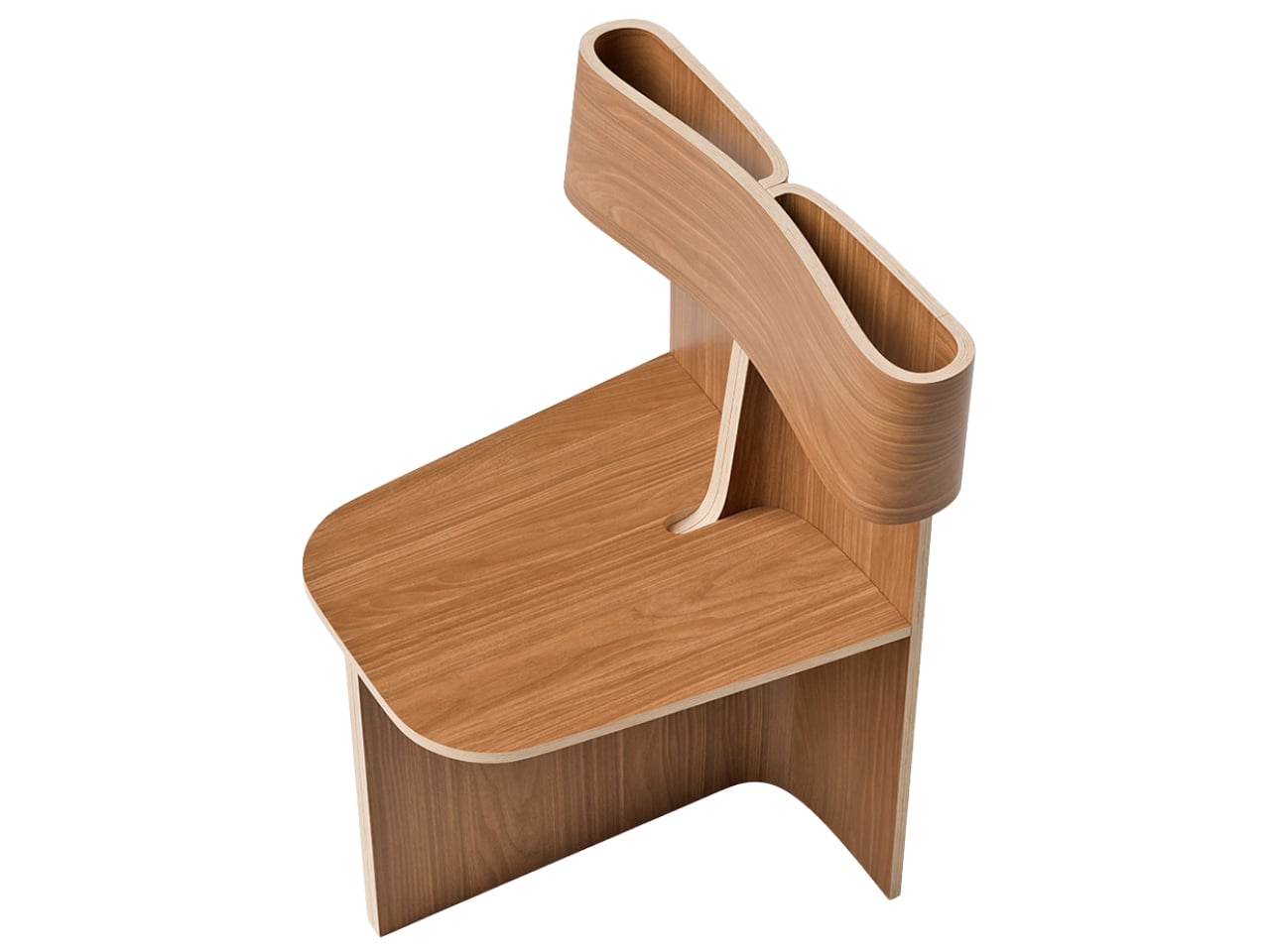
Every so often, a piece of furniture stops you the way a good sentence does. You read it once, then go back and read it again just to understand how it works. The Sori Chair by Portugal’s Teixeira Design Studio is exactly that kind of piece. It started, as the best ideas often do, from a daily ritual of sketching. Not a brief, not a client request, just the quiet, intuitive kind of drawing you do before the day gets loud. And somewhere in that process, a loop took shape that became something worth talking about.

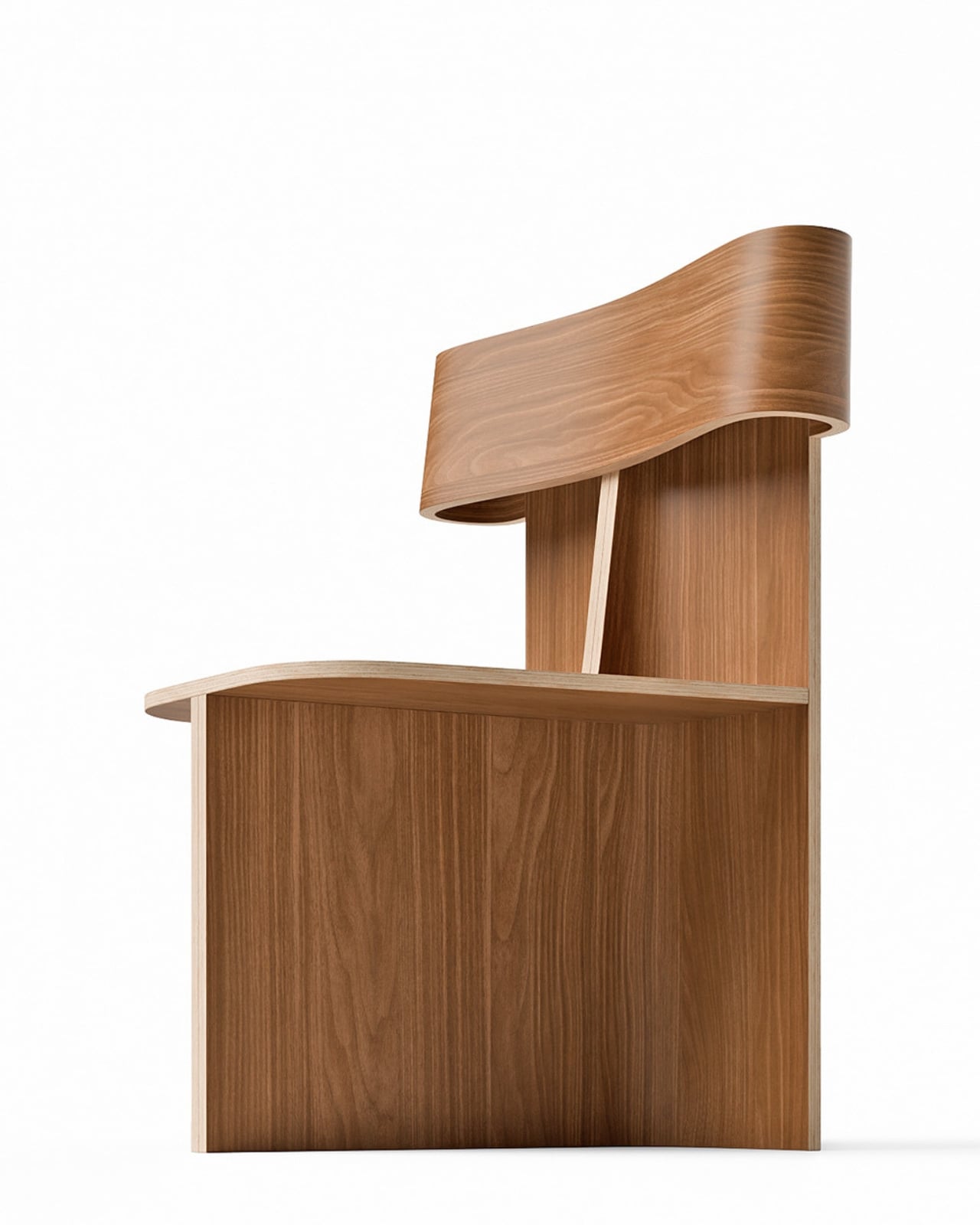
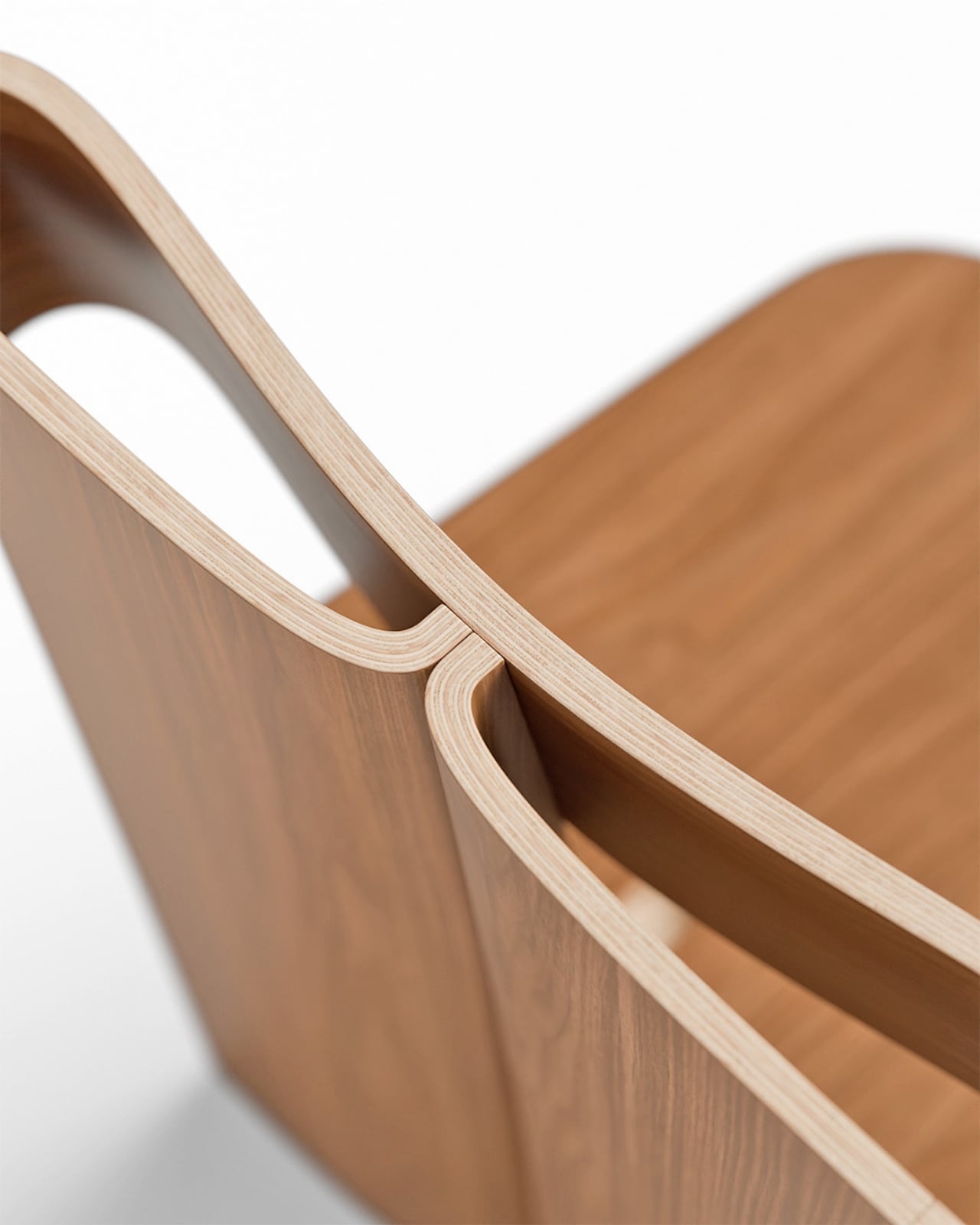
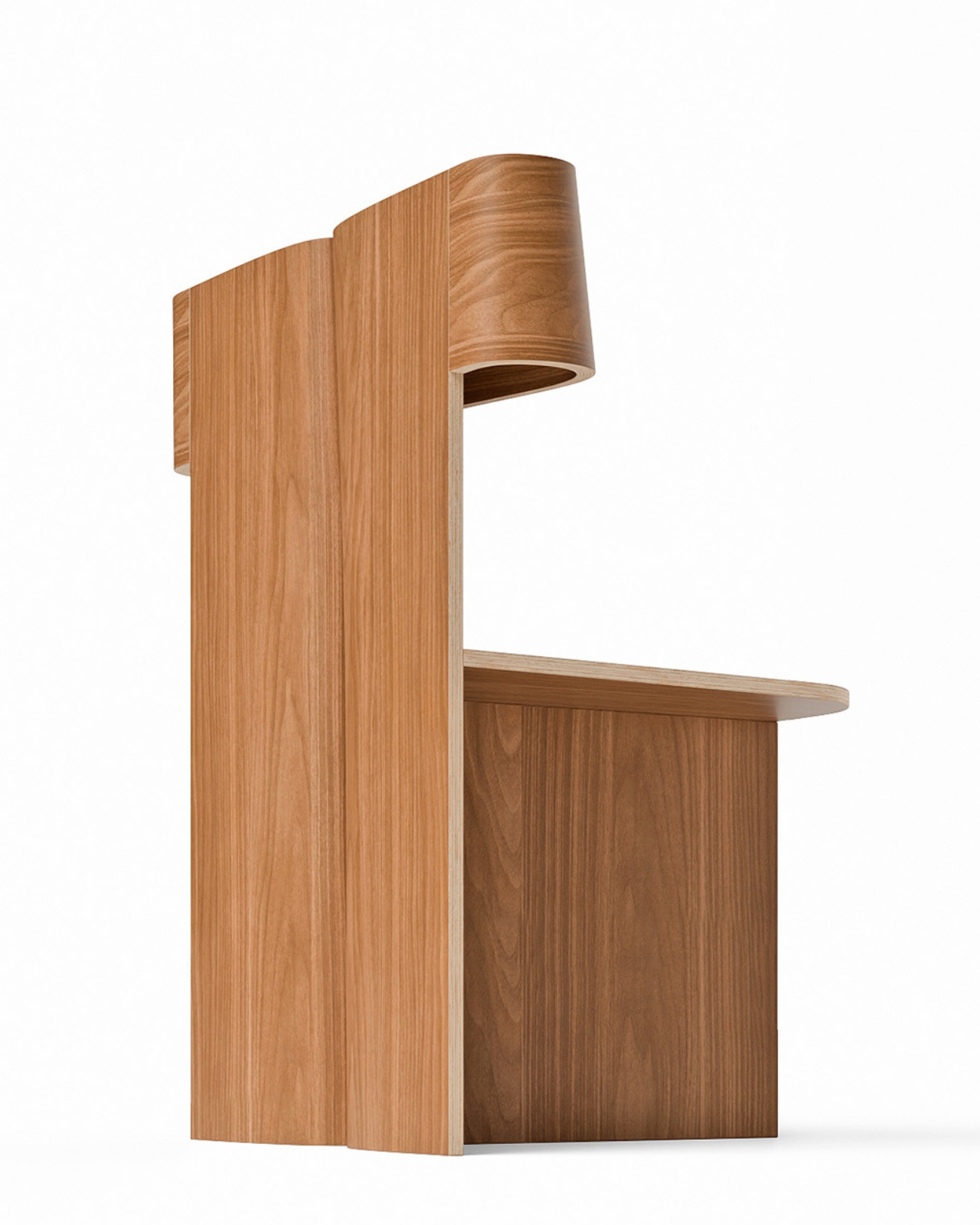
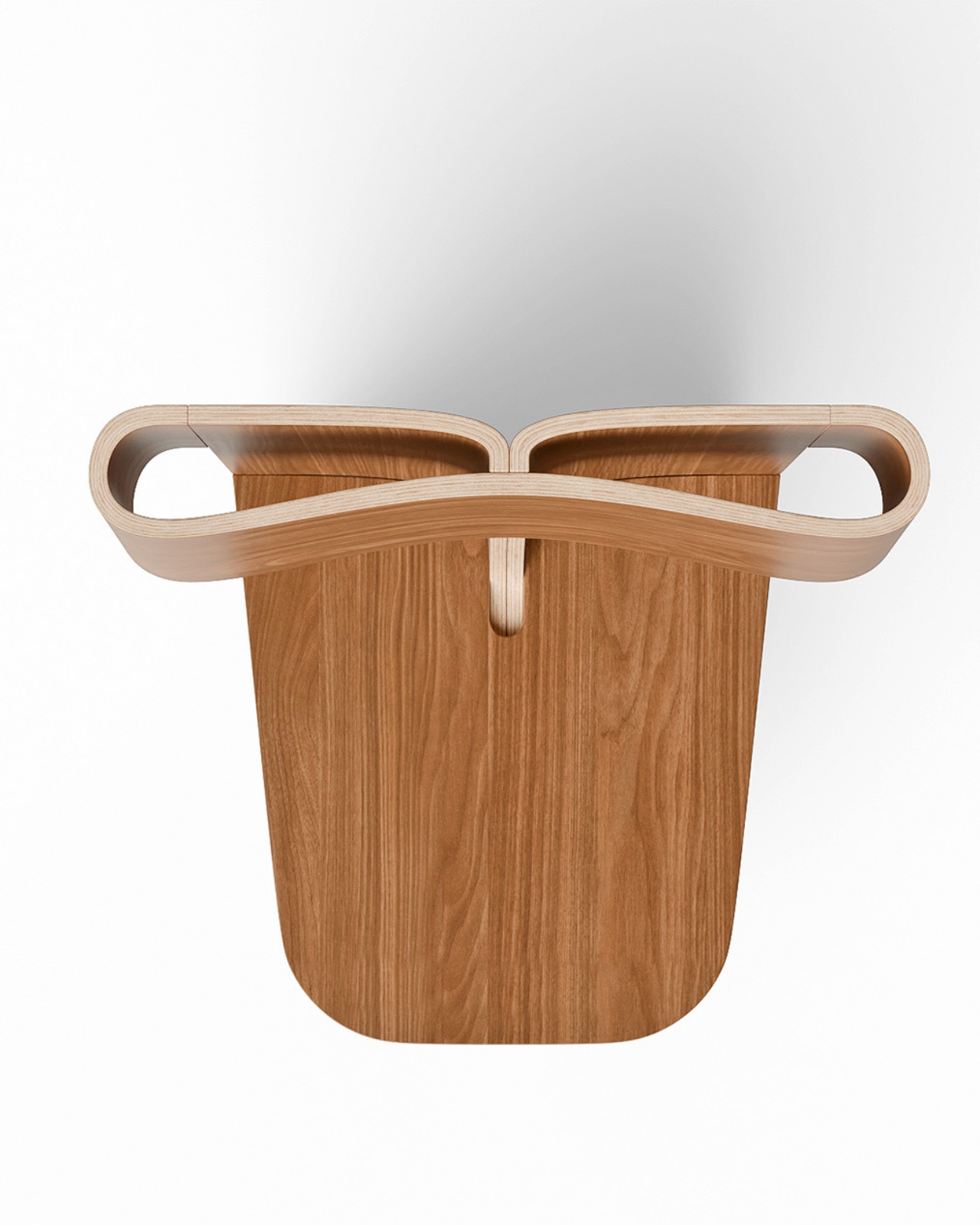
What came out of that ritual is a chair that feels completely resolved. A single, continuous ribbon of bent wood loops upward from the seat to form the double-ply backrest, open at the center like a hollow frame, and the contrast it creates against the chair’s firmly geometric base is fully intentional. Below that fluid loop, the structure is all right angles and clean planes, held together by a cross-shaped base that looks as if it was drawn with a ruler and a very steady hand. That tension between the organic and the architectural is where the Sori Chair lives, and it’s a genuinely compelling place to be.

Designer: Teixeira Design Studio
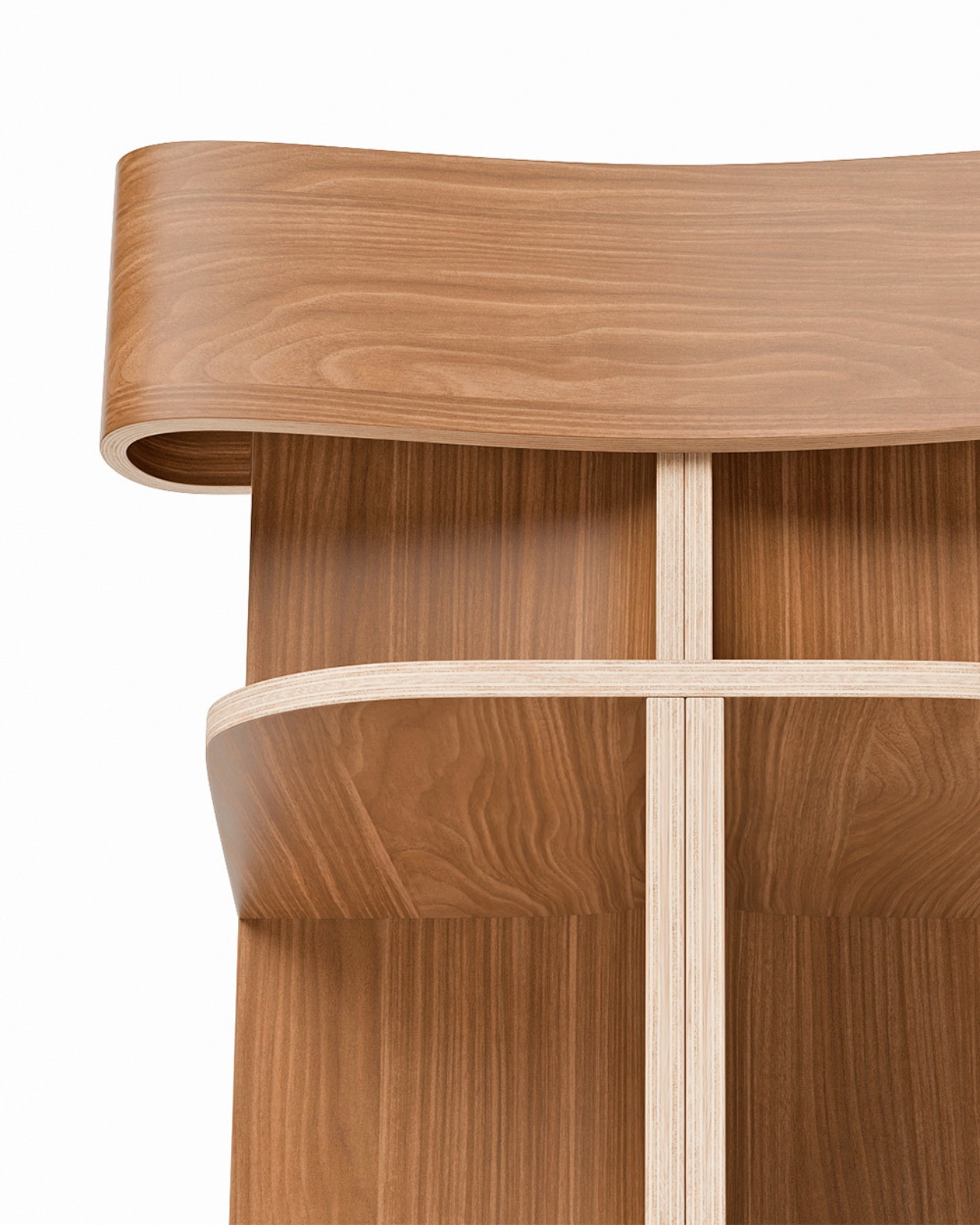
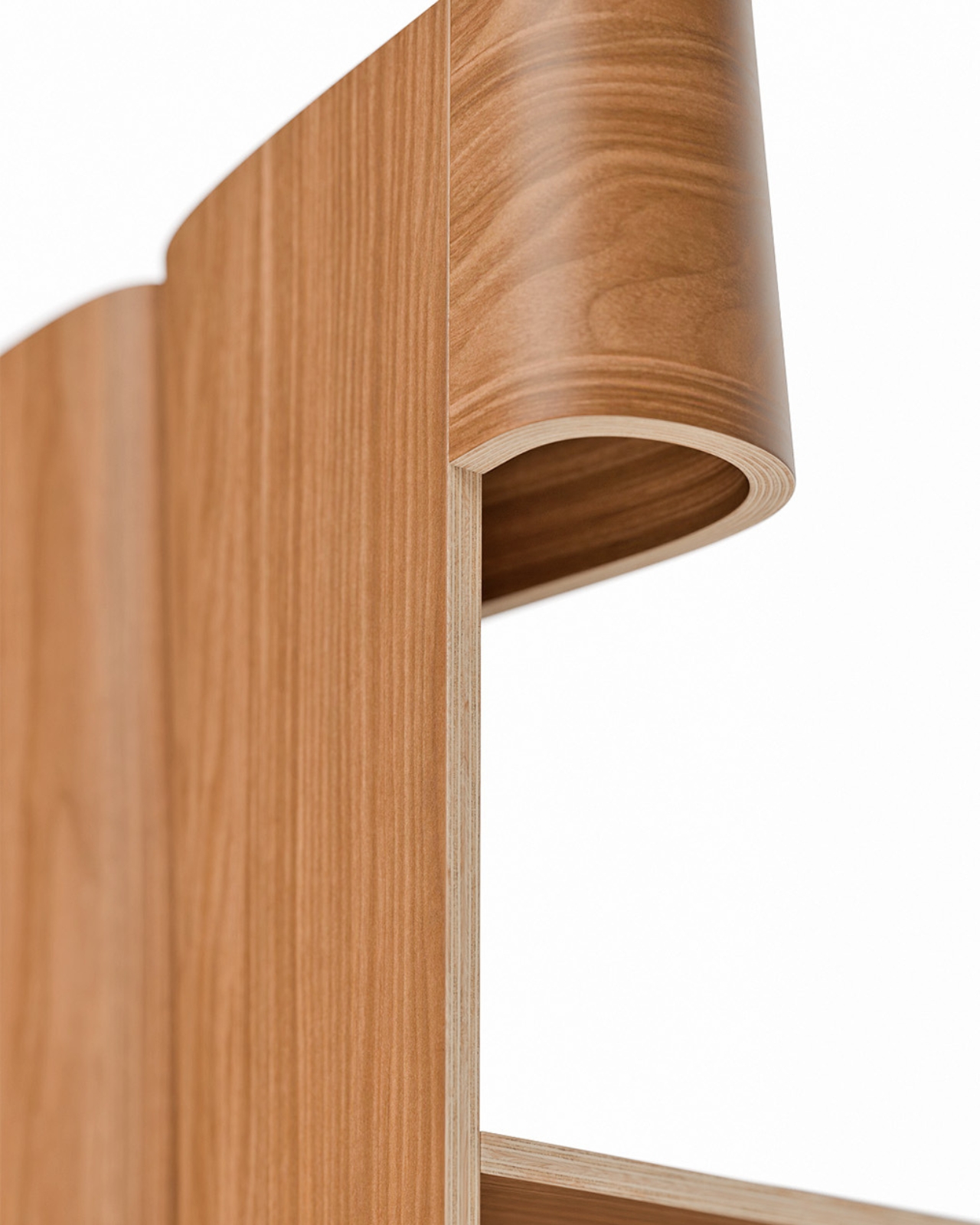
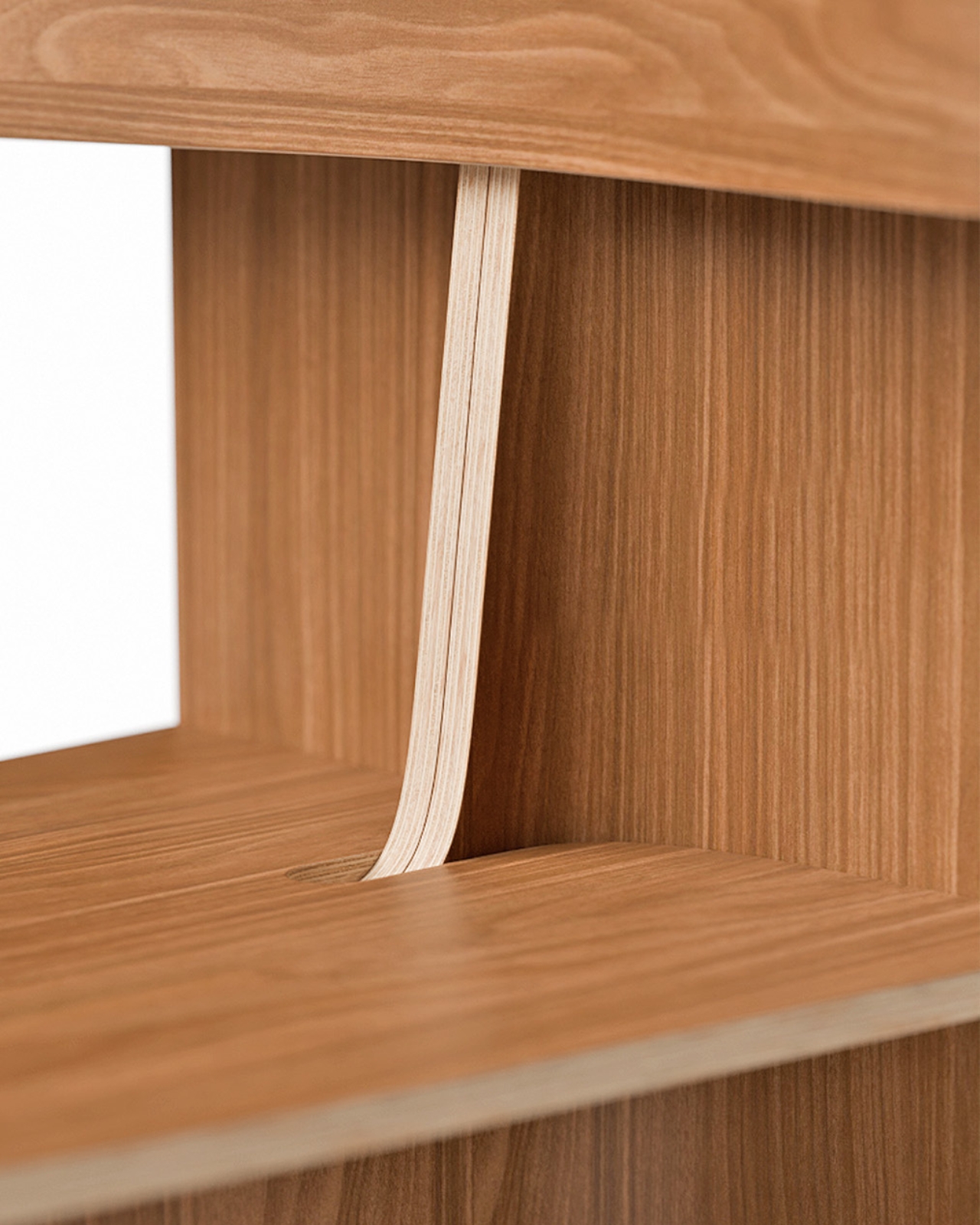
The technical side of this piece deserves more attention than it usually gets in design coverage. That backrest loop doesn’t just sit on top of the seat. It rises through it, emerging from a precise cutout with the kind of considered joinery that takes real craft to execute. The layered plywood edges are fully exposed throughout, and rather than hiding them, the design leans into them. You can see the pale strata of wood at every bend, every curve, every corner. It reads as an honest material and an honest process, and that matters more now than it perhaps ever has. In an era where furniture is increasingly flat-packed and finish-wrapped, a chair that shows you exactly how it was made feels almost countercultural.
The name is worth pausing on. Sori is a Japanese word for the natural curvature or warp of wood, the subtle bow that timber develops over time or when shaped under heat and pressure. Whether the studio intended that specific reference or landed on it instinctively, naming the chair after that particular quality of the material says something about how this work is approached: not as a battle against the material’s limits, but as a genuine conversation with them.
Teixeira Design Studio, based in Viana do Castelo in northern Portugal, has built a portfolio that consistently returns to this idea of using plywood and bent wood to find new formal possibilities. Earlier pieces like the Void Chair explored how a single sheet of plywood could fold into a form that contained seating and hidden storage simultaneously. With Sori, the focus narrows considerably. No secondary function, no added utility. Just the pursuit of one fluid, structural gesture, executed as cleanly as it possibly can be.
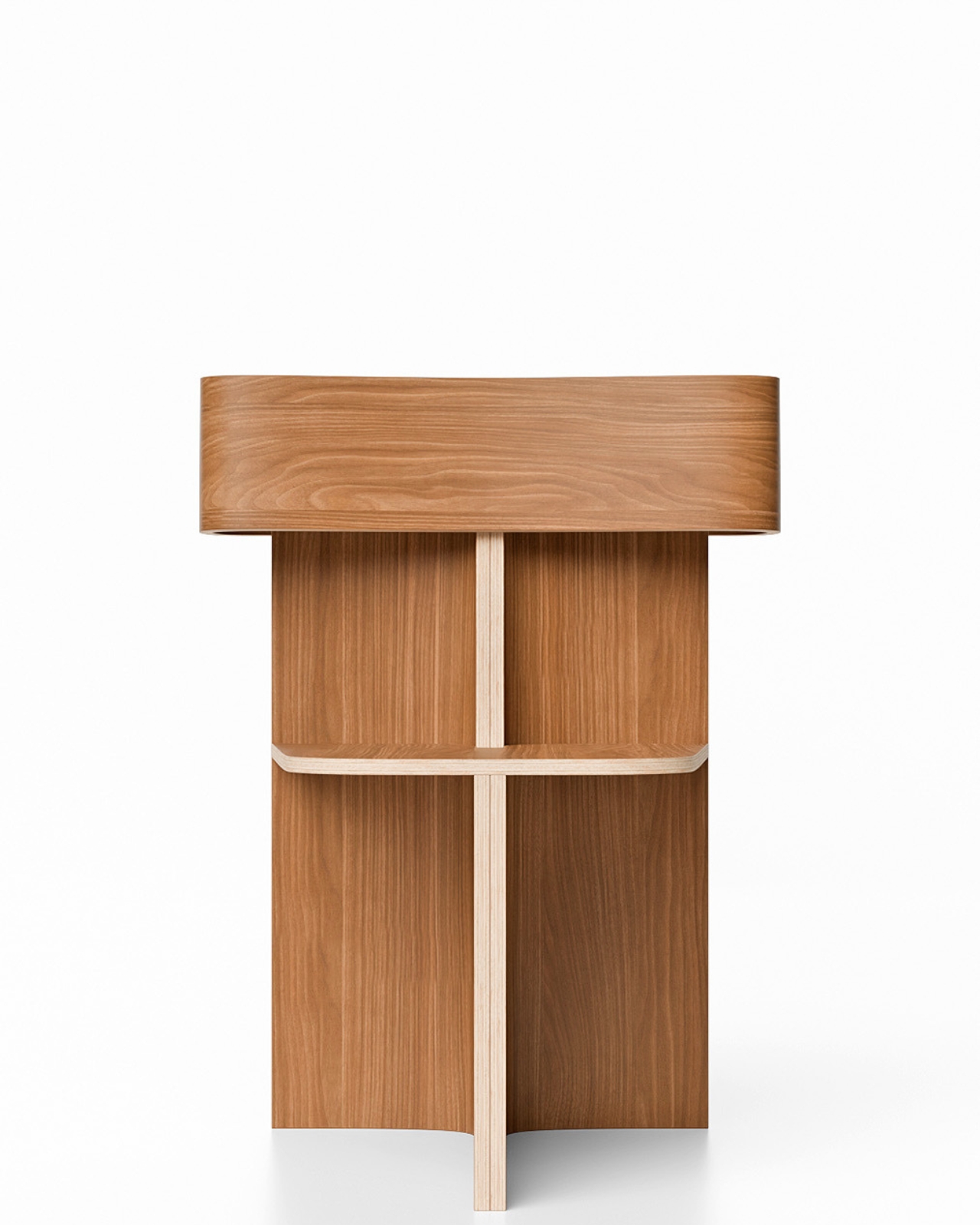
That restraint is what gives the chair its real weight. Designers who know how to do more but choose to do less are often the most interesting ones to follow, and Sori feels like a quiet, confident declaration of that philosophy. Every angle you approach it from reveals something new. From the front, it reads almost architectural, like a small building with an open courtyard. From the side, the loop of the backrest curls inward like a wave at the moment before it breaks. From above, the cutout in the seat and the twin arcs of the backrest create a composition that could hold its own as a flat drawing.
Good design holds up under scrutiny. It doesn’t just photograph well and vanish once you look too closely. The Sori Chair gets richer the longer you sit with it, and that, more than anything else, is the standard worth measuring any piece of furniture against.
The post How One Loop of Bent Wood Became a Complete Chair first appeared on Yanko Design.
This €235 Rippling Stone Valet Tray Has a Candle Holder Built In

Most entryway surfaces tell a familiar story, and it’s rarely a flattering one. Keys get tossed wherever there’s space, coins scatter to the edges, and a watch ends up next to a forgotten receipt by morning. The valet tray was supposed to solve this, but most of them look clinical, forgettable, or like they belong in a hotel room rather than a thoughtfully arranged home.

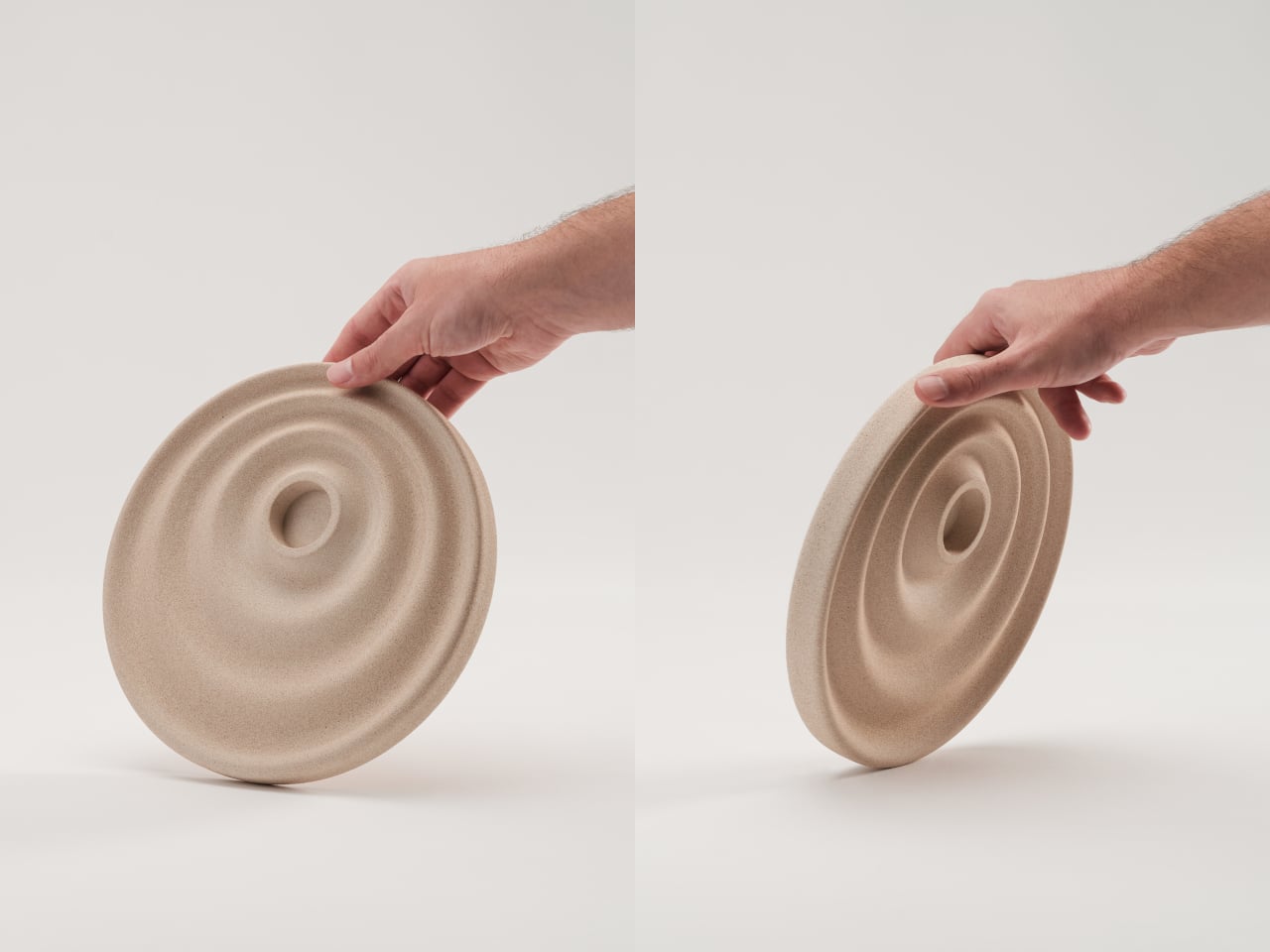
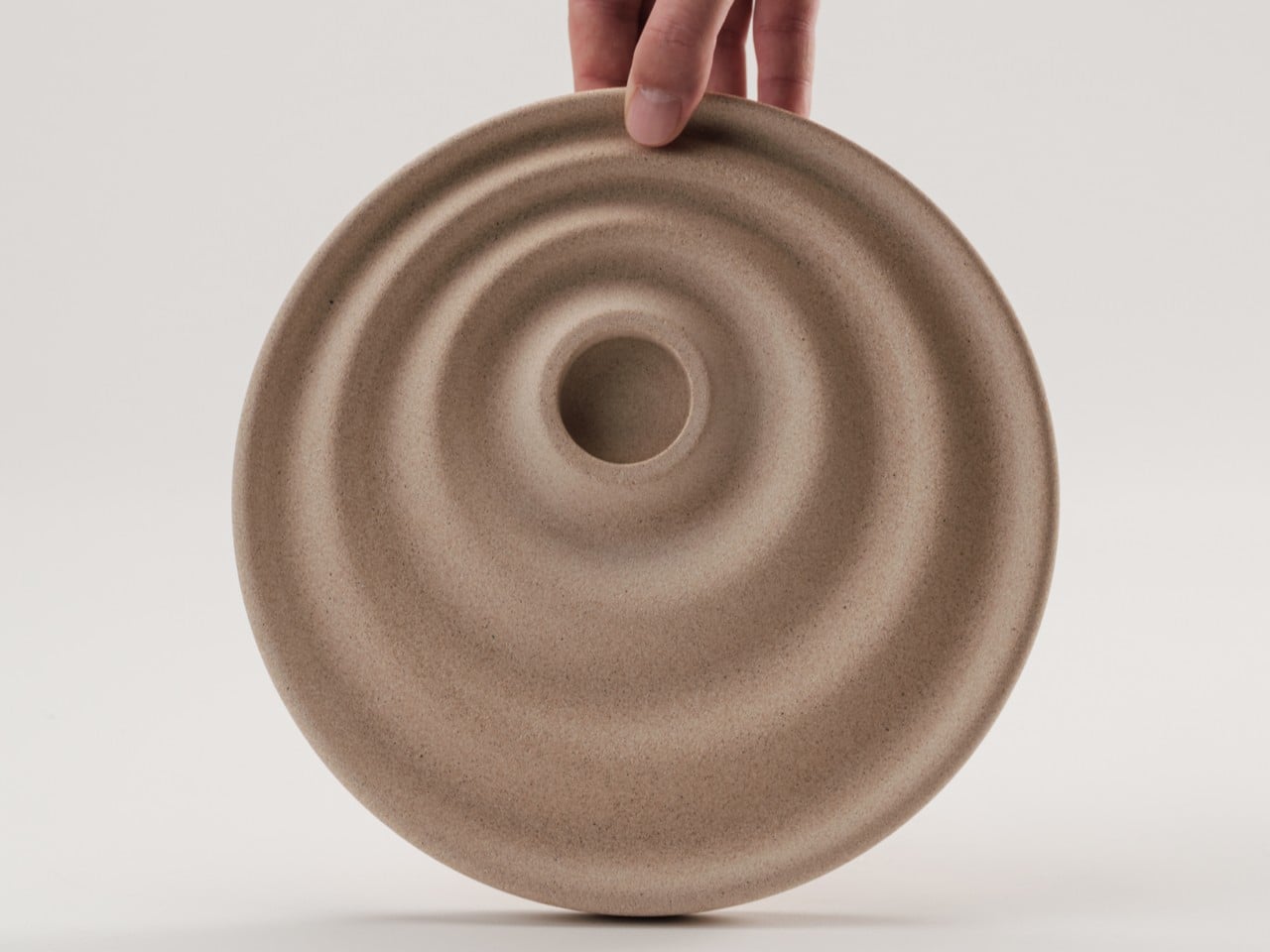
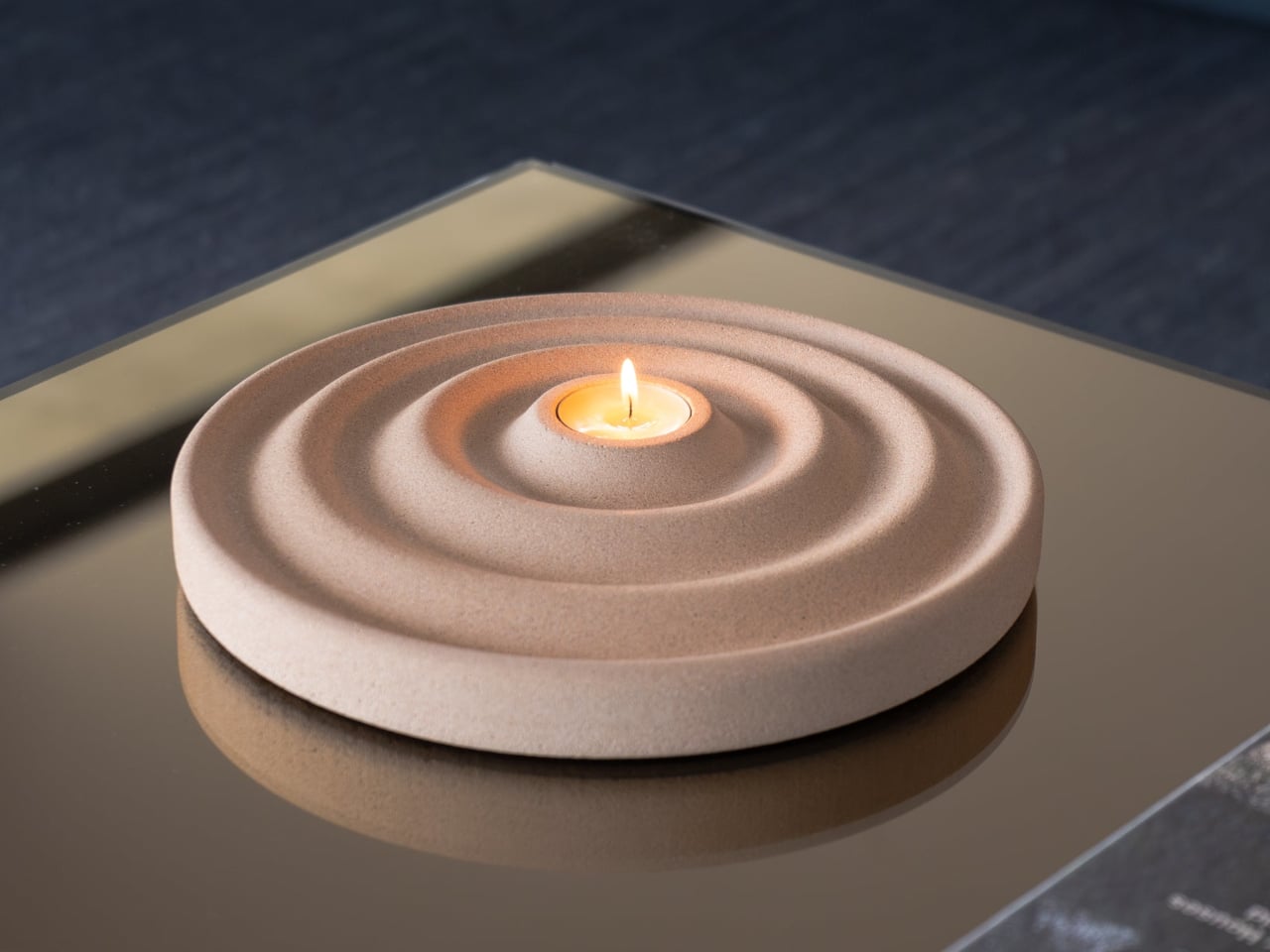
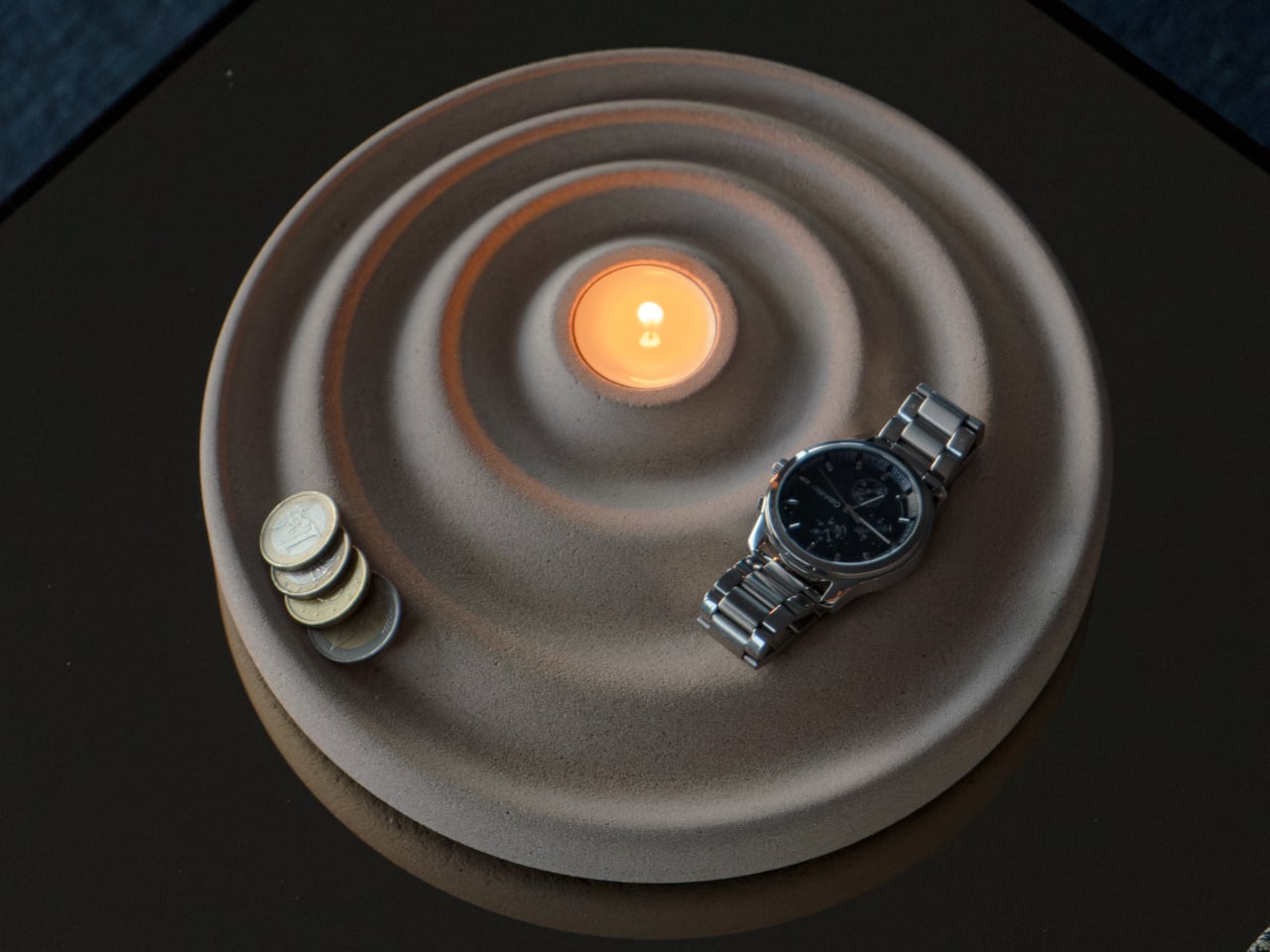
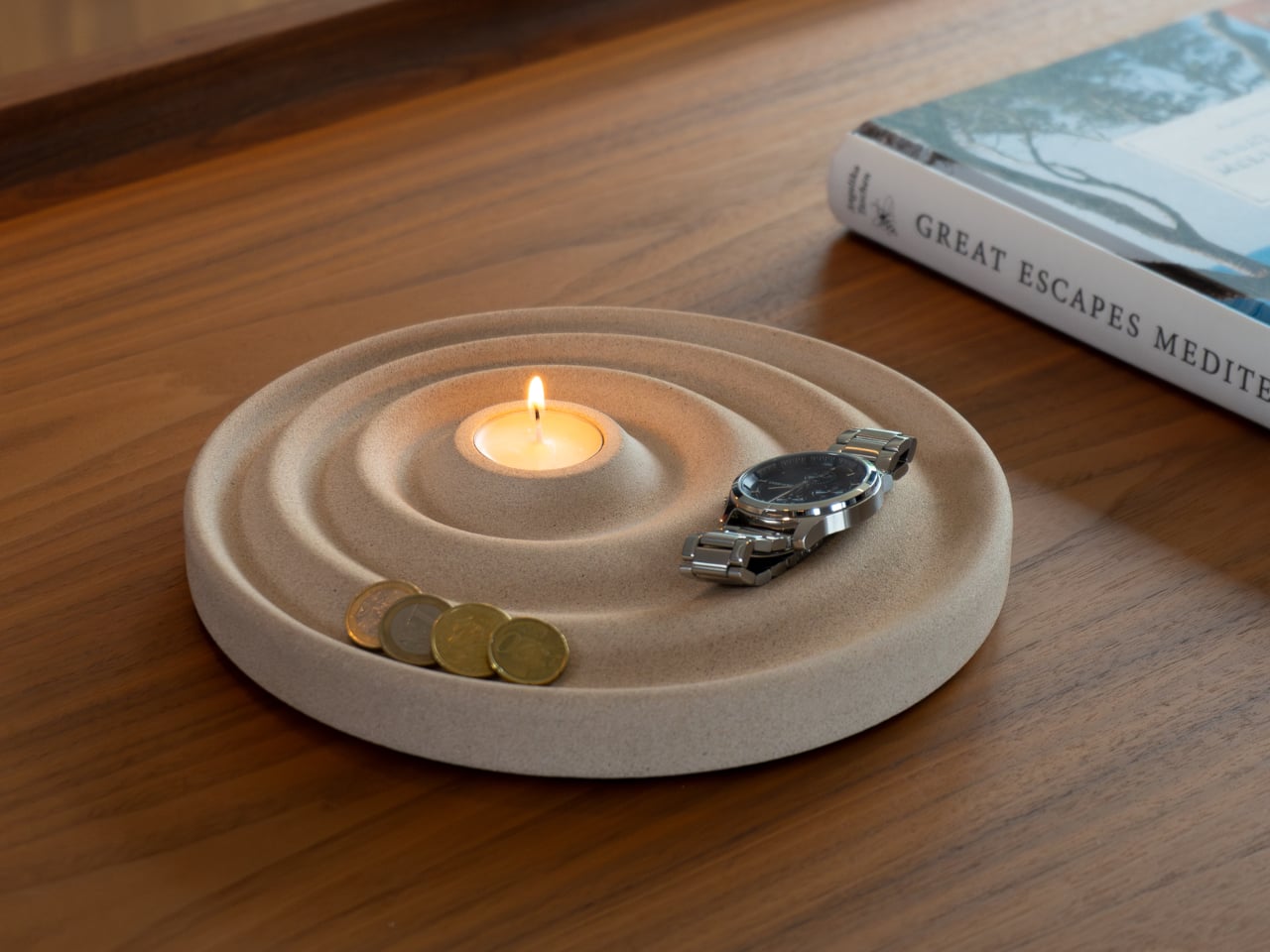
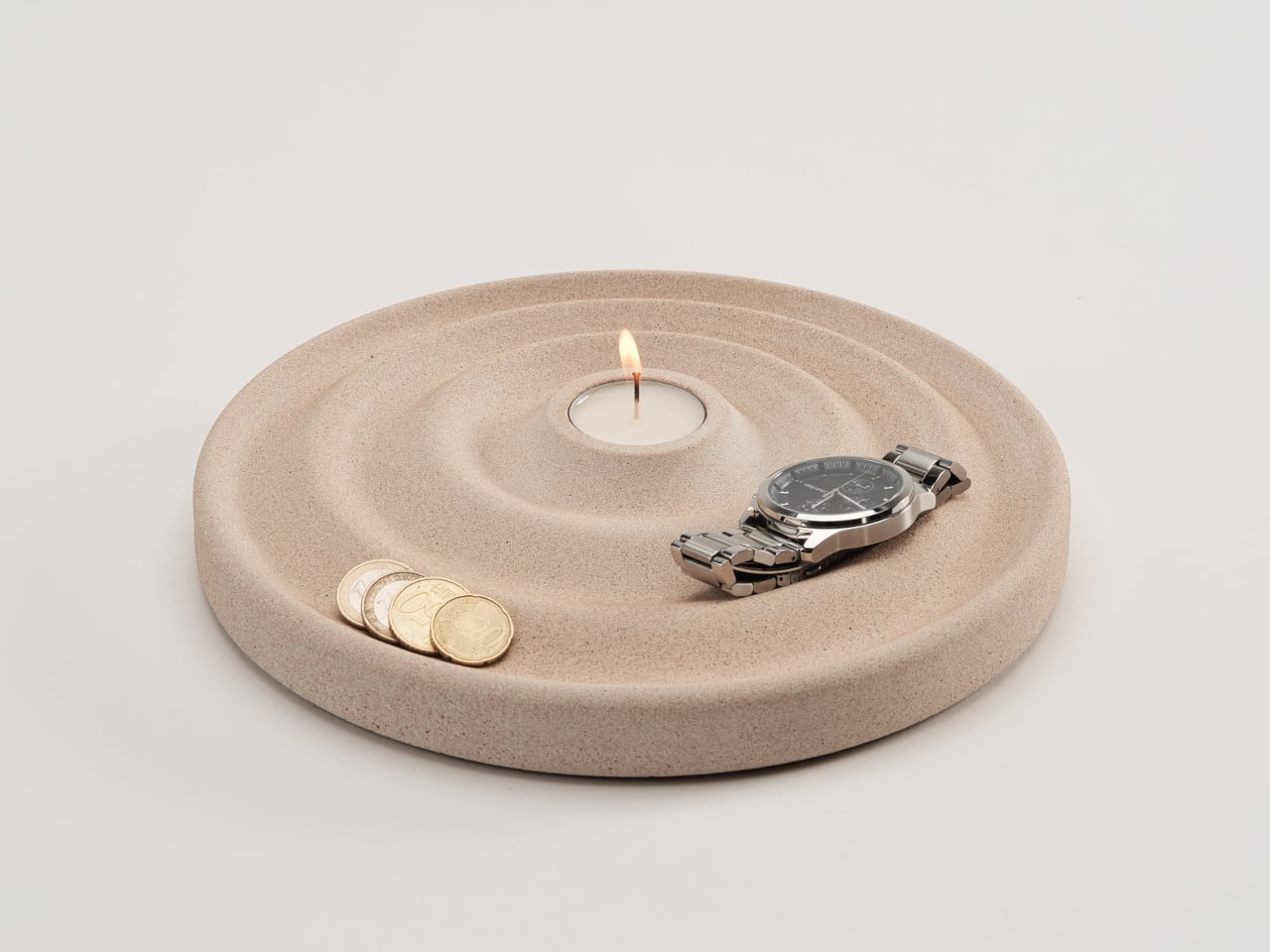
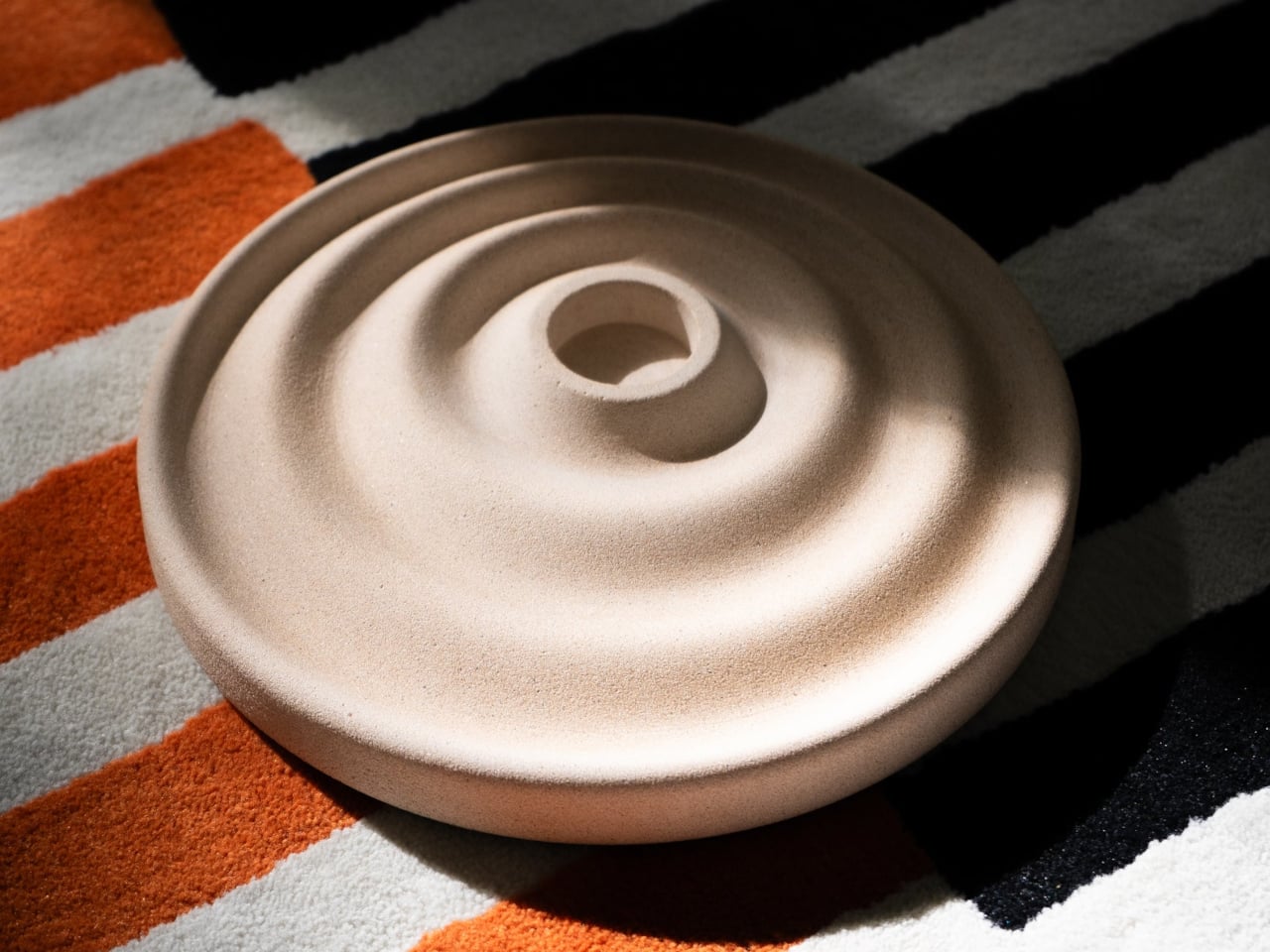
The Delicato Tray takes a different approach, and the solution comes from a direction you might not expect: ripples. Sold through Oftwise, it merges a valet tray and a candle holder into a single disc-shaped object cast from Jesmonite AC730, a sustainable stone composite. The result reads less like a utilitarian catchall and more like something a sculptor quietly left on your nightstand.

Designer: Joao Teixeira for Oftwise

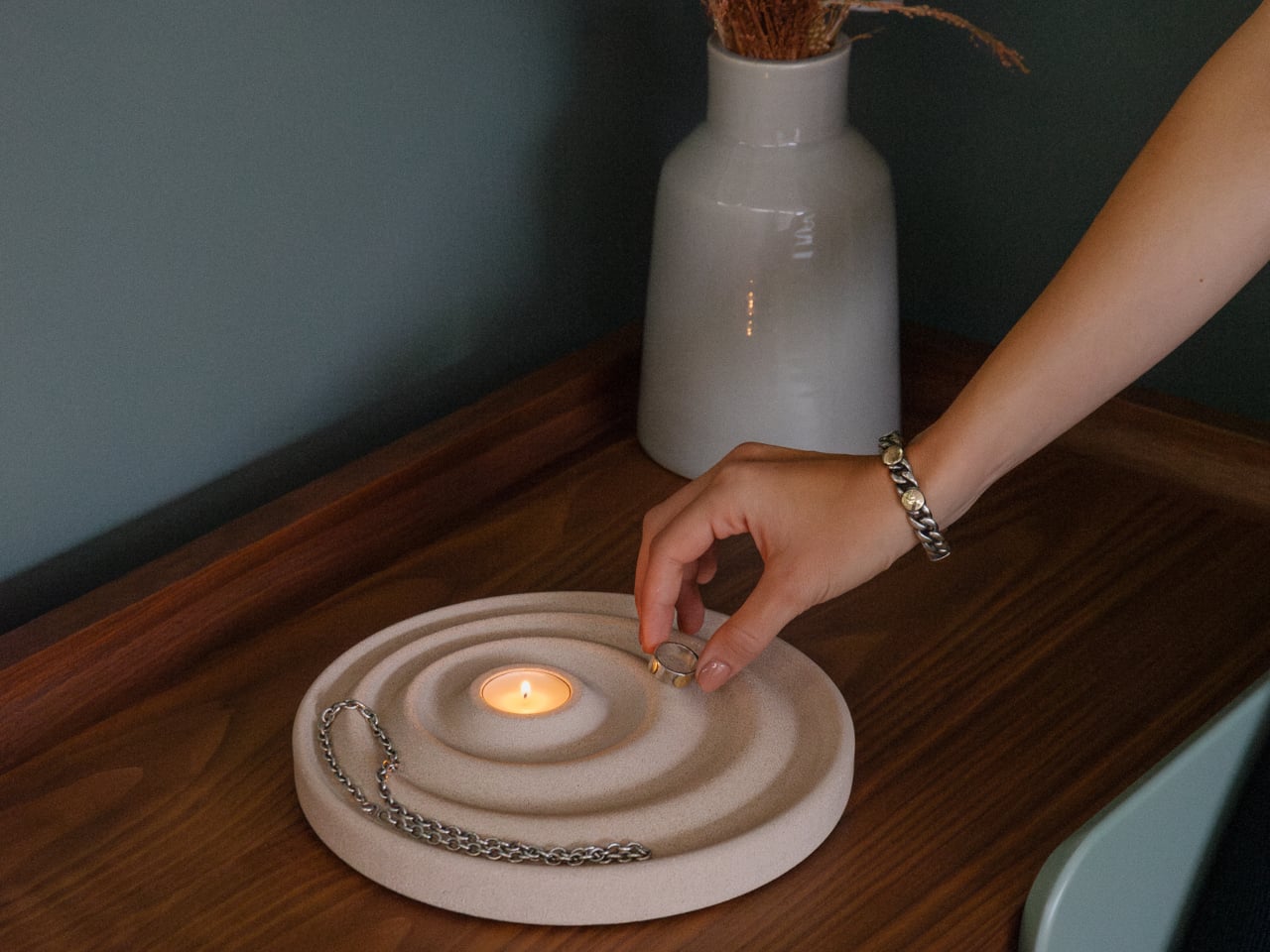
The ripple pattern isn’t purely decorative. The concentric waves are asymmetrical, with the outer rings wider at the front for bulkier items like keys or glasses, and the inner curves sitting closer toward the back for smaller things like rings or coins. It’s a hierarchy built into the shape itself, making organization almost unconscious rather than something you have to think about.

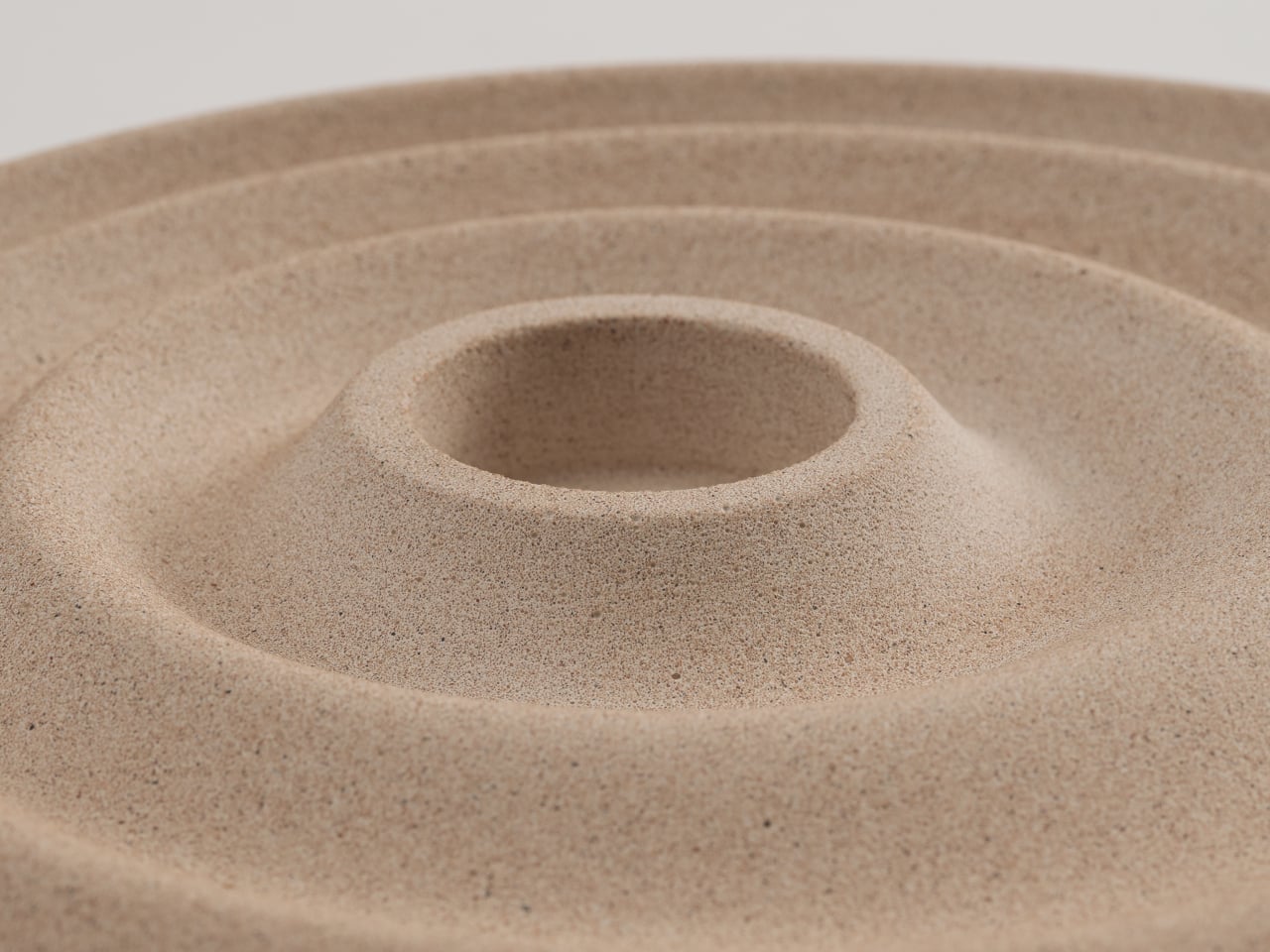
At the center of those ripples sits a recessed pocket sized for a tealight candle, turning the tray into a mood-setter as much as a catchall. Lighting a candle while dropping your watch and keys into the right grooves transforms a mundane habit into something closer to a ritual. It’s a lot to ask of a disc of stone, but Delicato manages it without breaking a sweat.

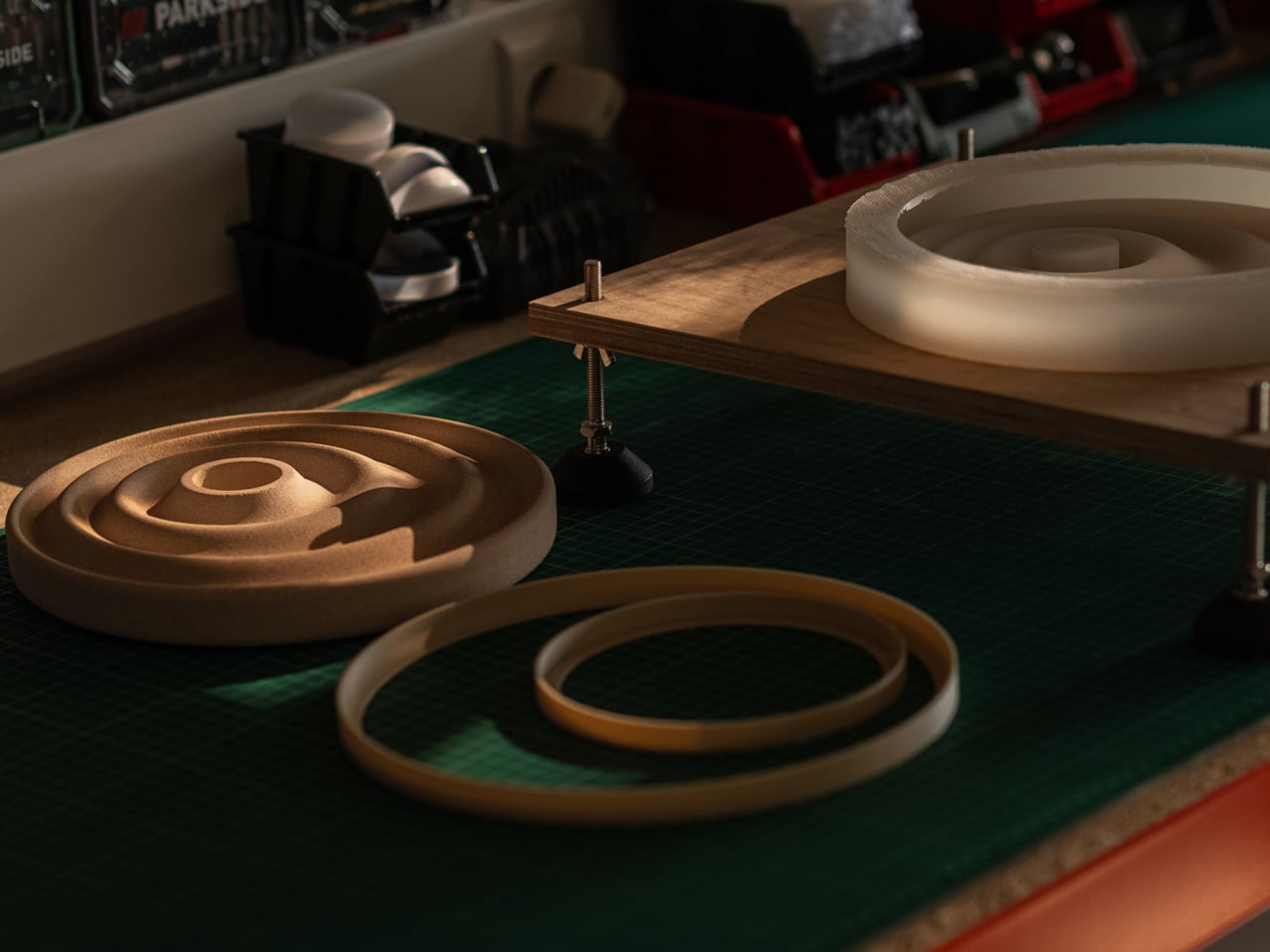
The material is what makes that balance possible. Jesmonite AC730 is a water-based, VOC-free stone composite that reproduces the look and texture of natural stone without concrete’s weight. It’s independently fire-rated and impact-resistant, which matters for something that routinely sits next to an open flame. A matte acrylic sealer and a cork anti-slip pad on the base round out the practical details.

Because the tray is hand-cast, no two are identical. Small air bubbles, subtle texture variations, and minor color shifts are natural byproducts of the process, and Oftwise is upfront about that. The available color, Bath Stone, is a warm sandy beige neutral enough for almost any interior. At 2kg, it has a quiet weight that makes a surface look deliberately arranged.

The Delicato Tray measures 24.5cm x 24.5cm with a height of just 2.8cm, low enough to sit under a bedside lamp without stealing vertical space. The candle pocket measures 3.9cm across and 1.5cm deep, a snug fit for a standard tealight. It retails for €235 on Oftwise, which places it firmly in the premium tier for an object of this category.

What Delicato gets right is something many design objects miss: it doesn’t try too hard to be either thing. It’s not decorative at the expense of being useful, and it’s not useful at the expense of looking good. A tray that doubles as a candle holder and a sculptural object sounds like a confused brief, but the ripple form settles all of that quietly.

The post This €235 Rippling Stone Valet Tray Has a Candle Holder Built In first appeared on Yanko Design.
TWIST Bends One Metal Sheet Into Table, Storage, and Handle

Side tables usually end up as simple flat discs on legs, doing little more than holding a drink or a phone you keep checking when you should be reading. There’s nothing wrong with that, but it also means they contribute almost nothing else to a room beyond a horizontal surface. The growing interest in compact, multi-functional furniture has designers rethinking how small pieces like side tables can quietly add storage and flexibility without cluttering a space.

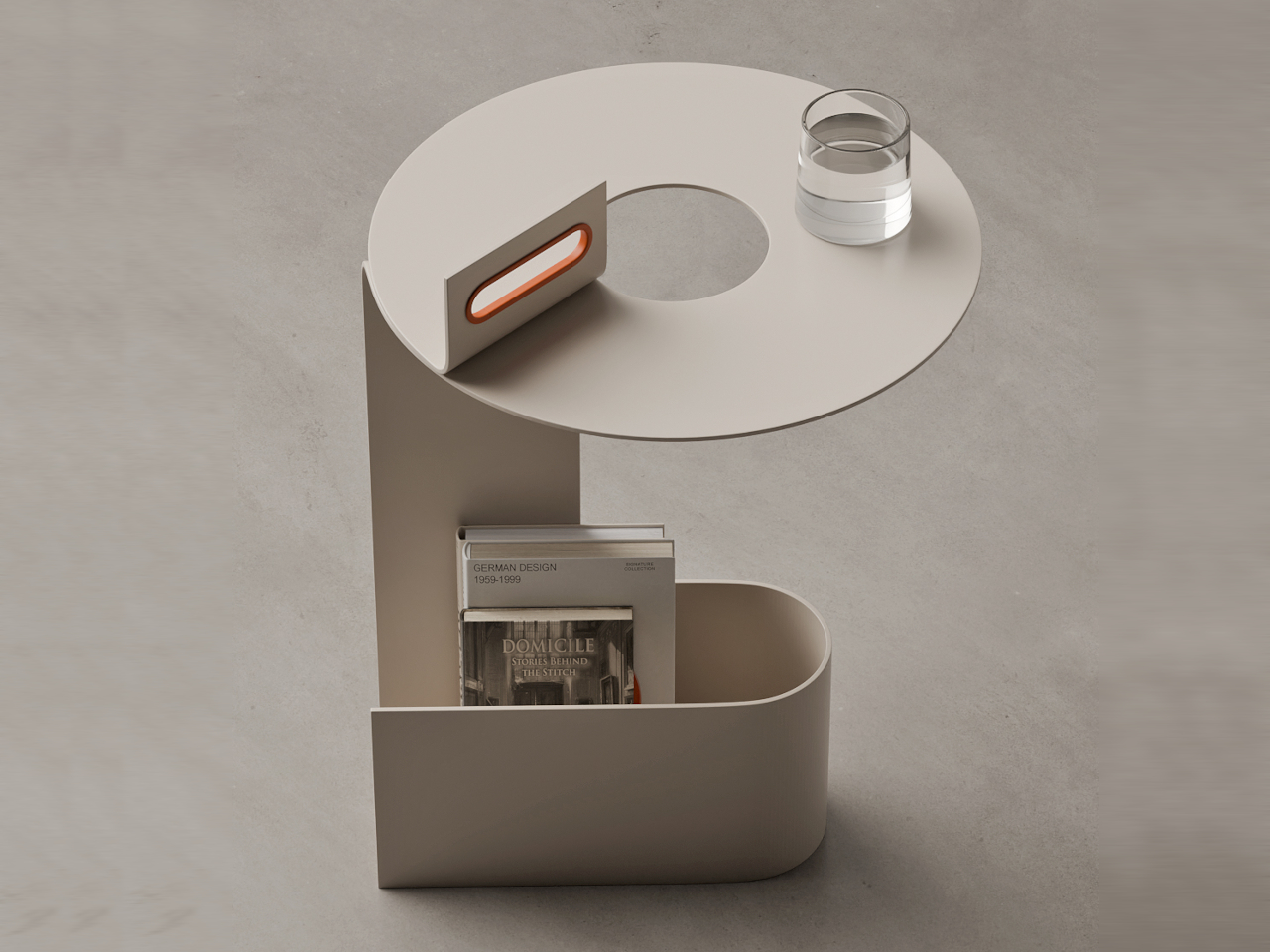
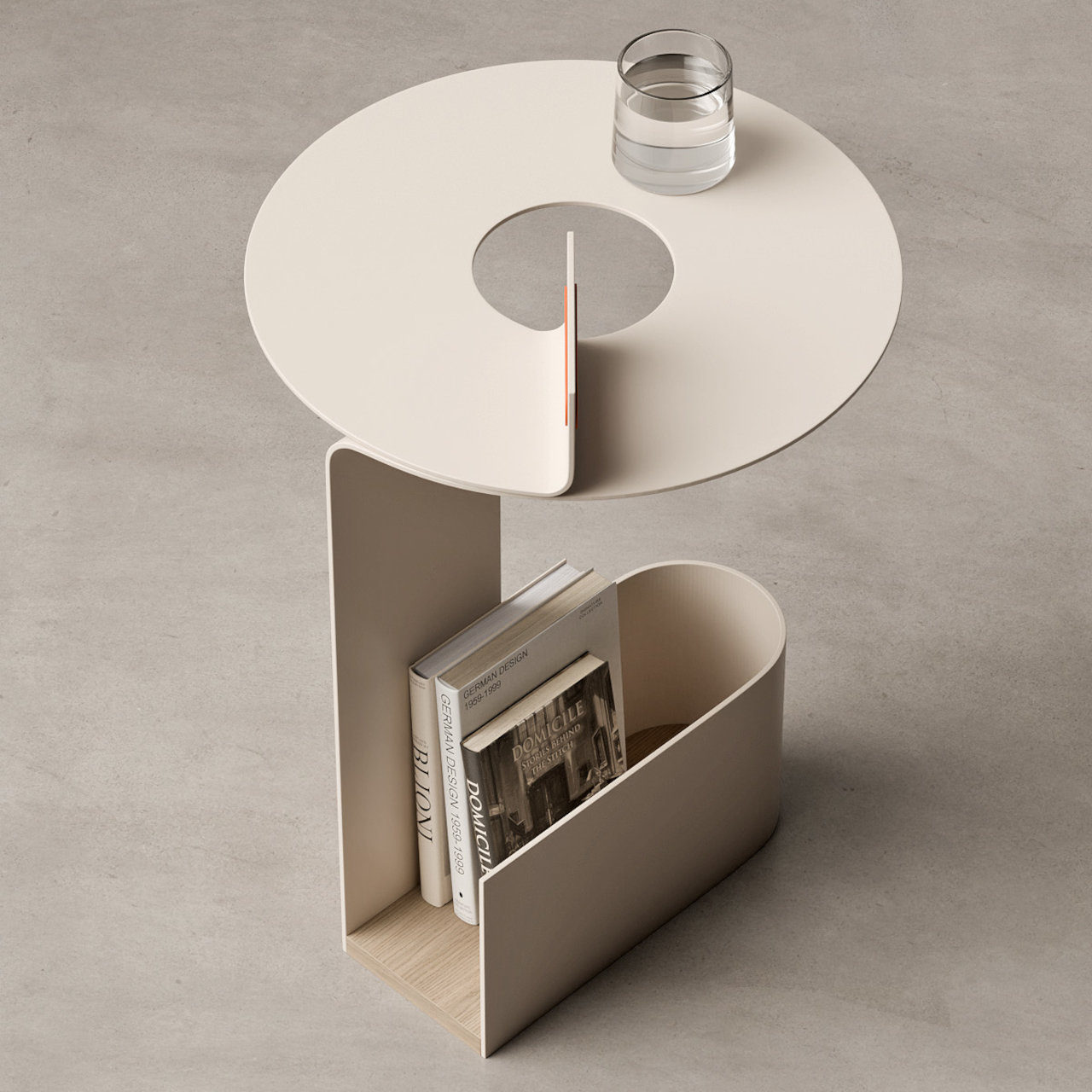
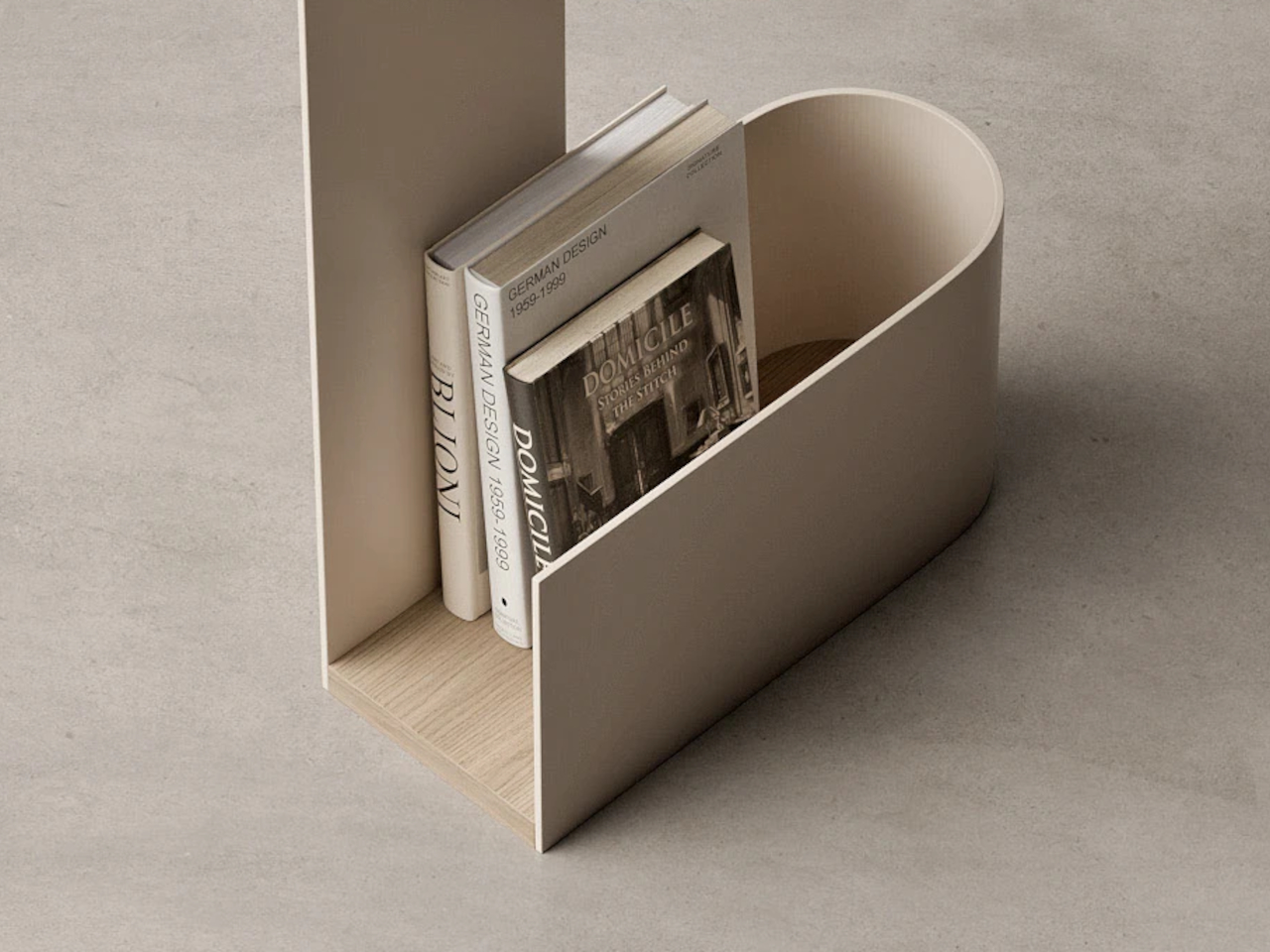
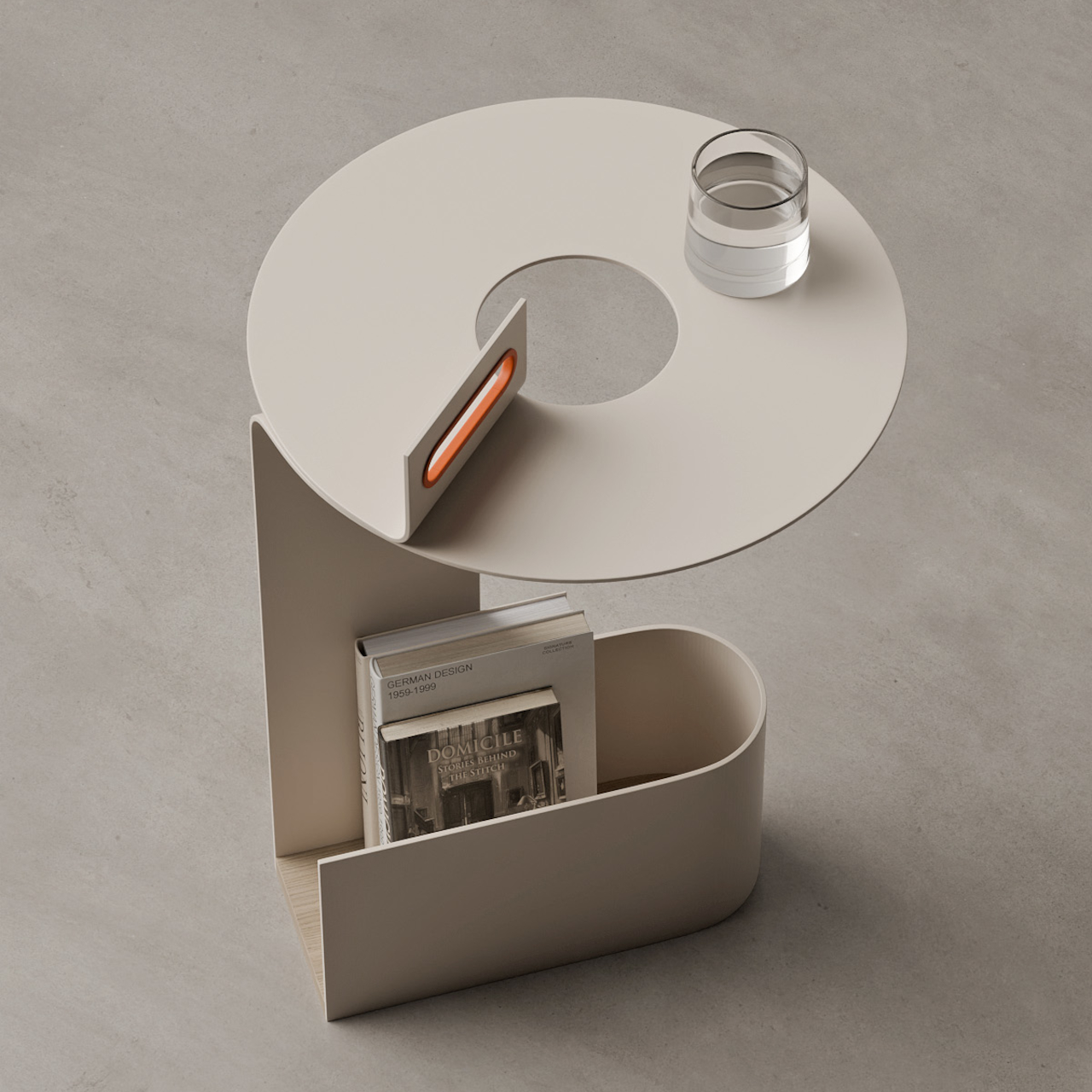
The TWIST side table uses a single sheet of metal looping in a circular motion to form a tabletop, support, and storage all at once. It integrates a carry handle and a book compartment, with a wooden base adding warmth to balance the cool metal. The whole piece reads like a ribbon frozen mid-twist rather than a collection of separate parts, giving it a sculptural quality that works even when it’s not holding anything.

Designer: Joao Teixeira

The geometry is surprisingly simple once you trace it. The metal rises from the floor as a vertical panel, bends into a round tabletop with a large central cut-out, then drops down and curls into an oval storage bin at the base. The tabletop forms a ring that frames whatever you place on it, while the circular void in the center lightens the visual mass and makes room for the handle element to pass through.

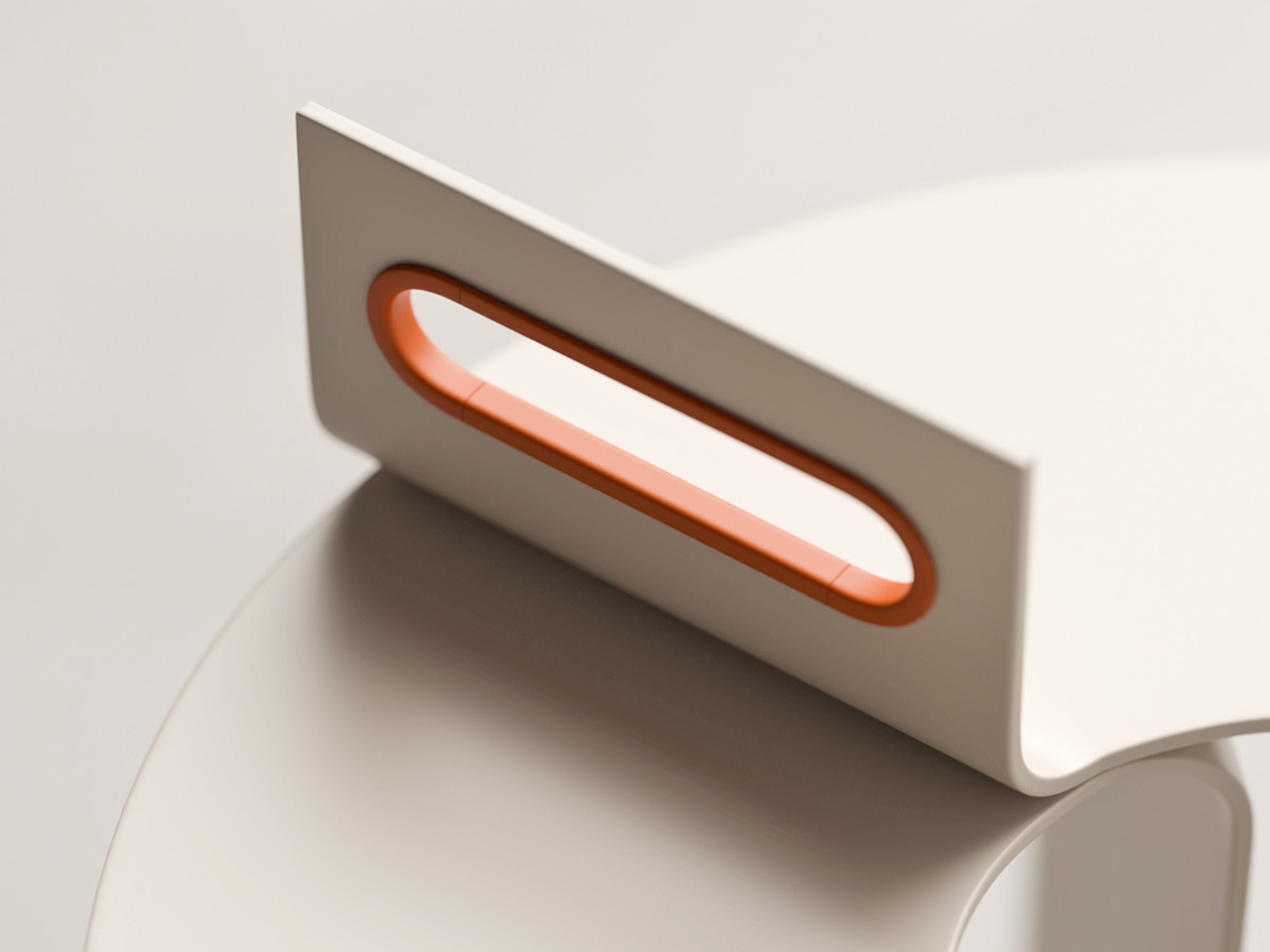
That handle emerges from the tabletop as a vertical fin aligned with the central opening. It’s wrapped with a soft material shown in a contrasting orange, making it comfortable to grip and visually highlighting the interaction point. The handle turns the table into something you can easily pick up and move around a room, reinforcing its role as a portable companion rather than a piece anchored permanently to one spot.

The lower section functions as an open-topped storage bin sized for books and magazines. The metal walls curve smoothly into rounded corners that echo the tabletop’s circular geometry, while a wooden base panel inside the bin adds warmth and keeps stored items stable. That wooden surface also grounds the piece visually, preventing the lower section from feeling too light compared to the tall vertical panel rising above it.

The material palette visible in the renders keeps everything calm and neutral. A matte, light beige metal body pairs with a pale wood base and a small orange accent in the handle. The orange gives the eye a focal point without dominating the design, while the wood base balances the cool metal and helps the table feel at home in living spaces rather than purely industrial settings.

TWIST works well next to a sofa or lounge chair, holding a glass on its circular top while a few favorite books rest in the lower bin. It functions as both a sculptural object and a practical helper, offering storage, surface, and a built-in way to move it wherever you need. It’s a small reminder that even a side table can be drawn as one thoughtful line.

The post TWIST Bends One Metal Sheet Into Table, Storage, and Handle first appeared on Yanko Design.
Bent wooden stool requires no screws or hinges to assemble from flat packaging

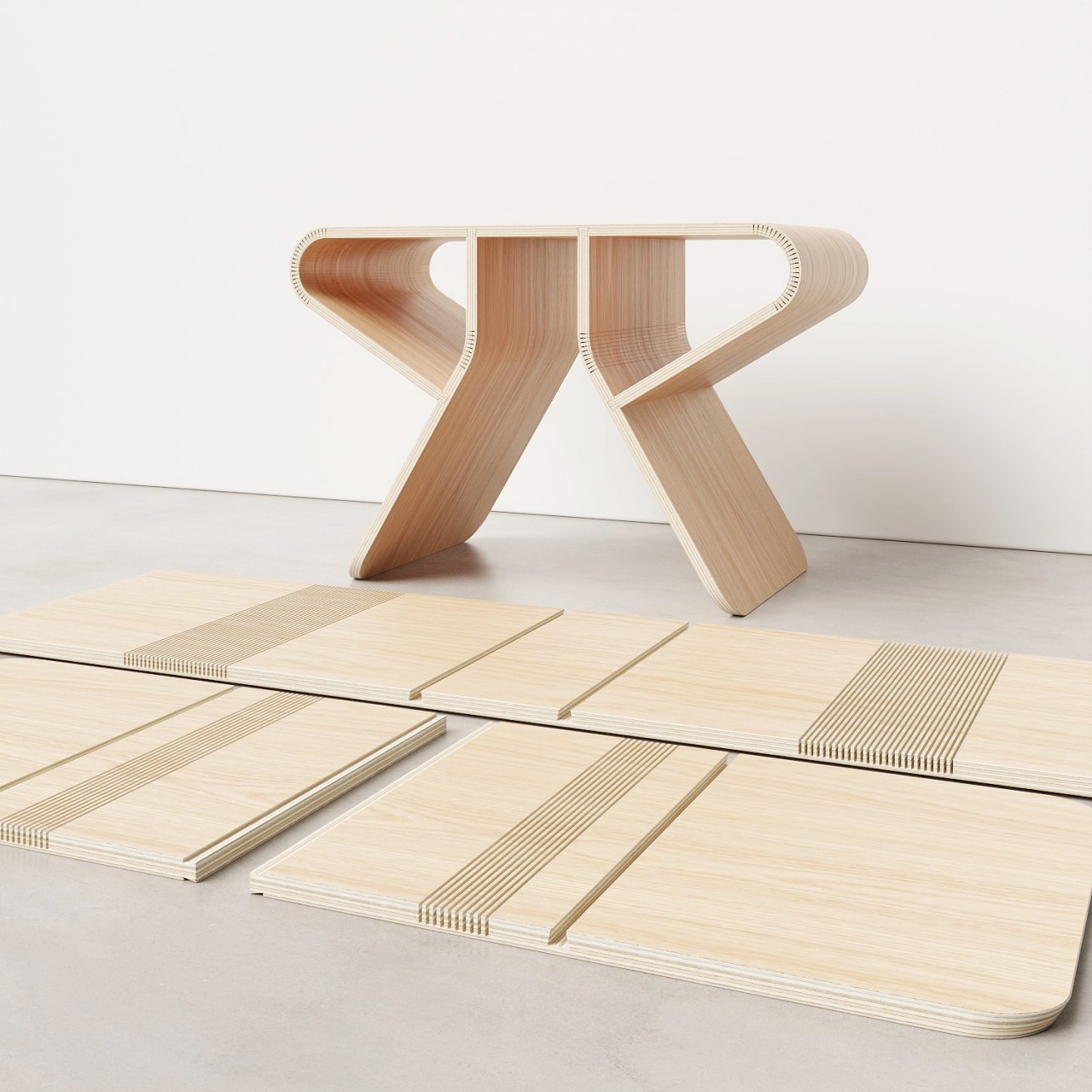
Flat-packed furniture has become quite the sensation, satisfying both the need for easy-to-assemble mass-produced products as well as a craving for the trendy minimalist design. There are, however, certain limits to those designs, especially because of the need to be flat and tightly packed. Putting them together also sometimes requires a bit of patience and know-how, particularly when small parts and screws are involved. This stool concept design challenges those conventions, however, by using mechanisms that require no extra parts, no screws, and even no glue, yet still delivers a multifunctional piece of furniture that looks unique and distinctive, unlike most mass-produced flat-packed products.

Designer: Joao Teixeira

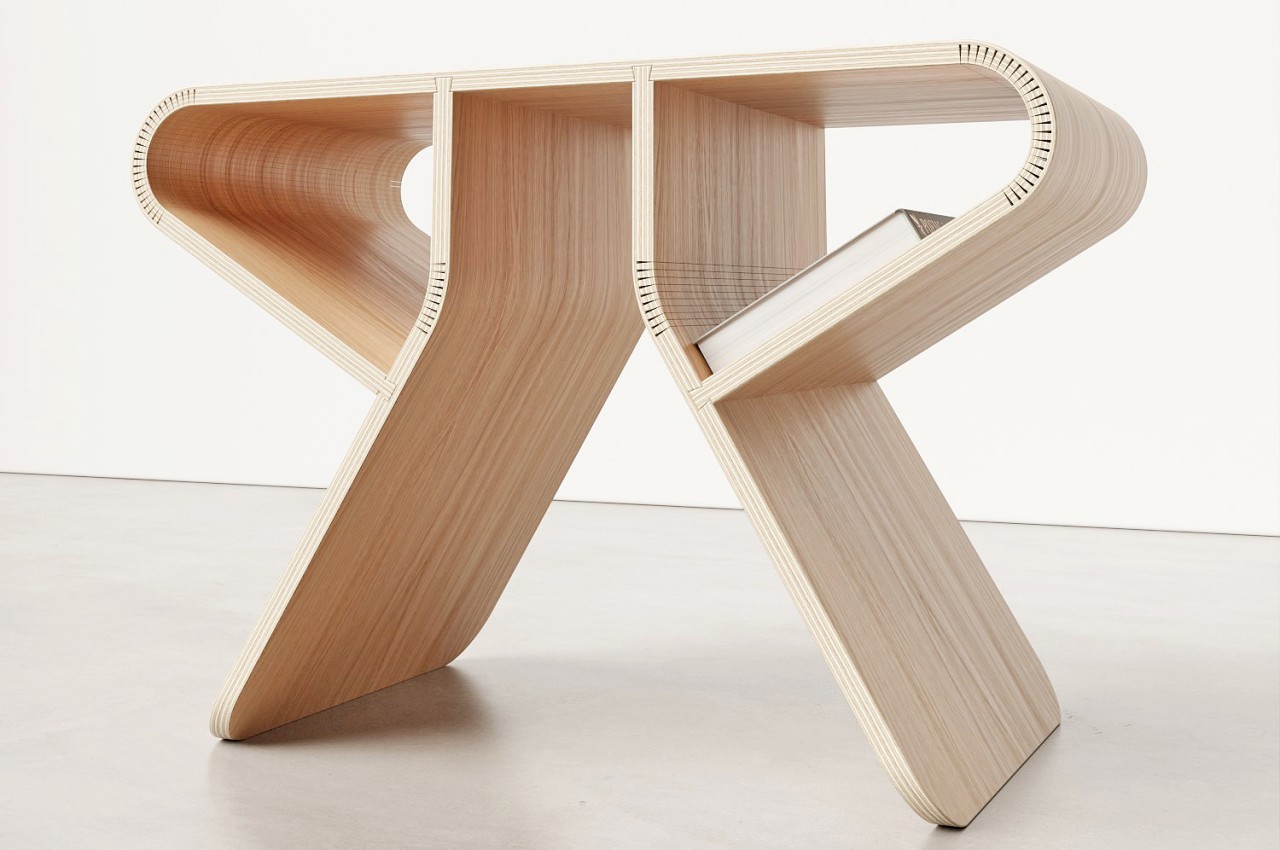
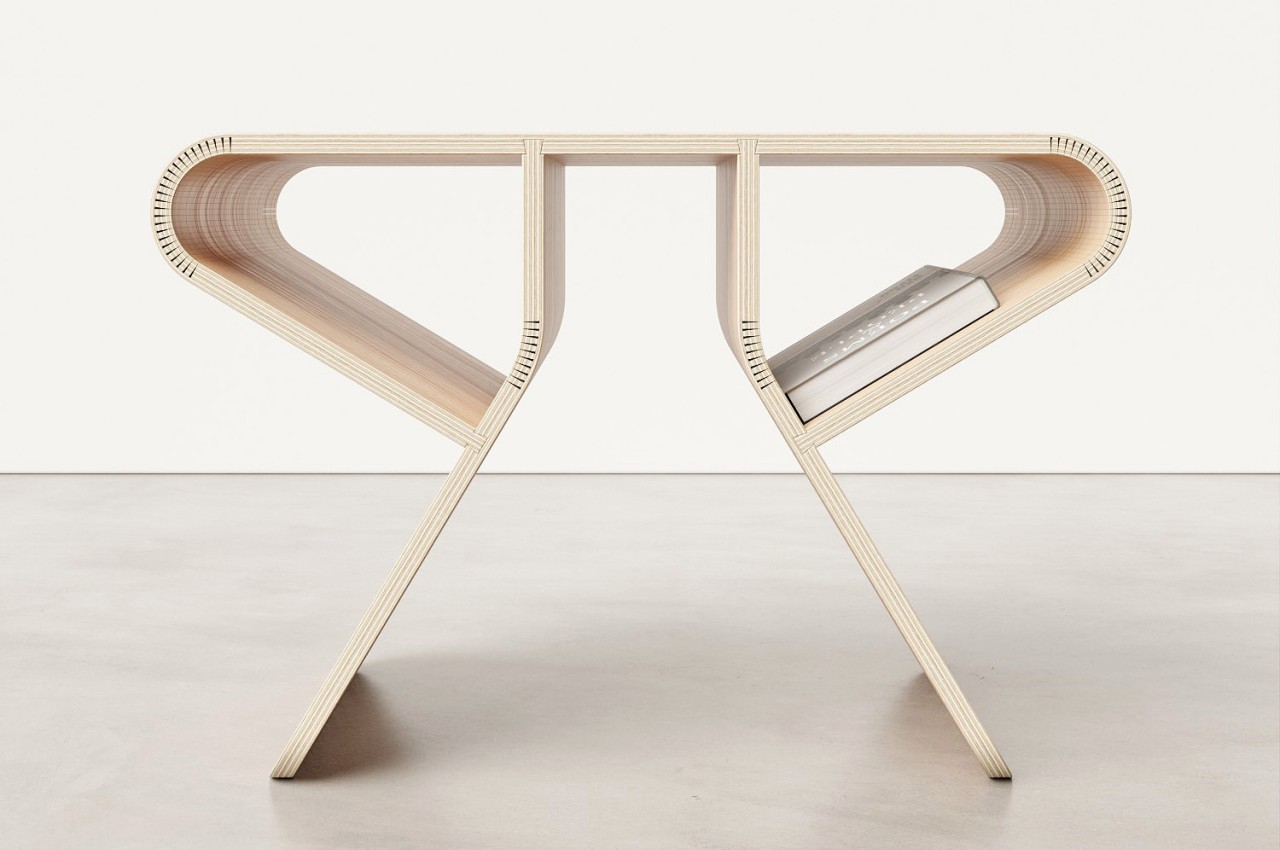
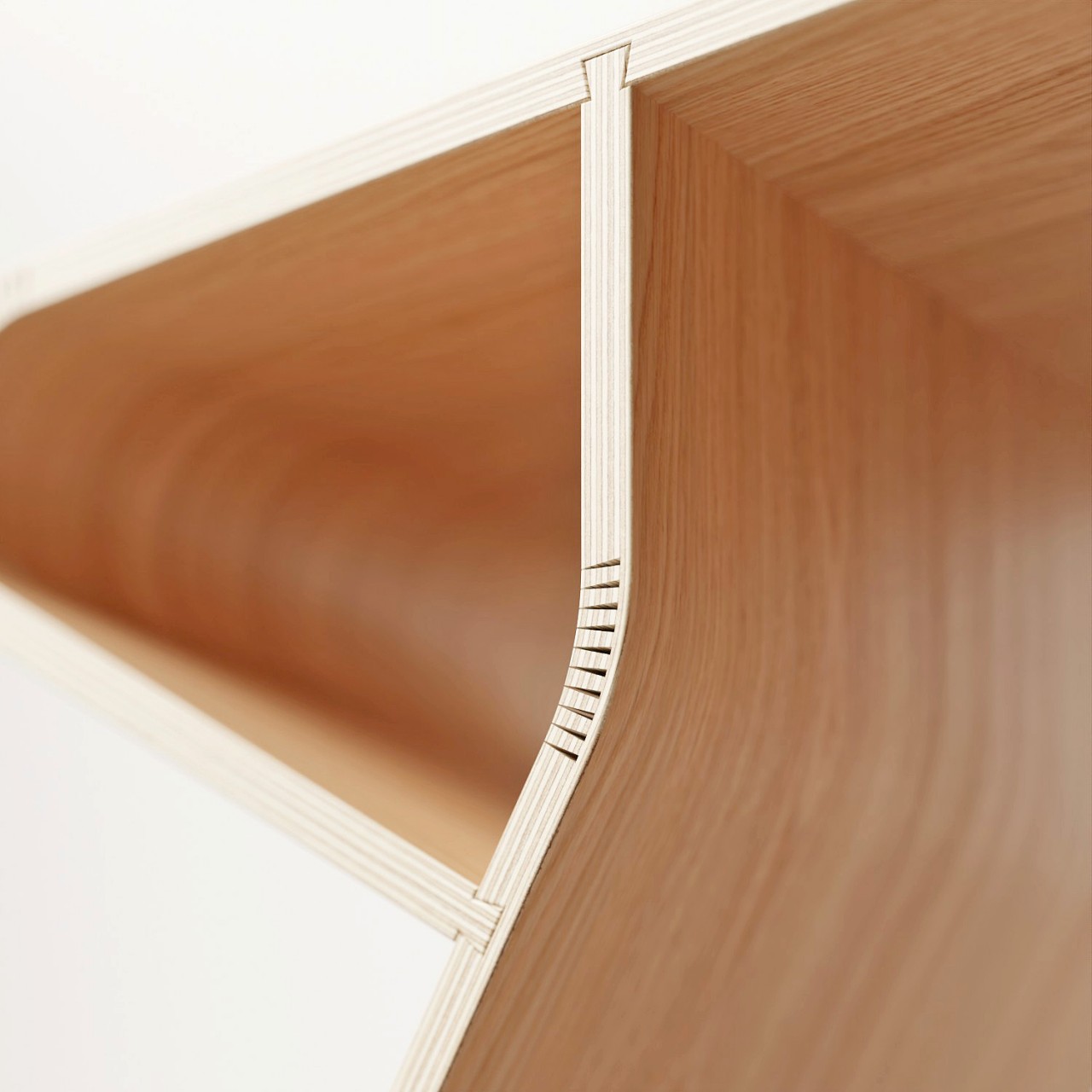
The easiest method to join two separate pieces after they have left the factory would be to either screw or glue them together. The former entails more complicated parts while the other often employs chemicals harmful to the environment. There are, however, techniques that simply use shapes and the force of physics, particularly gravity, to keep two parts together. The dovetail joint, which looks like two puzzle pieces getting wedged together, is one such mechanism, and it is the technique employed by this Flat Stool design.

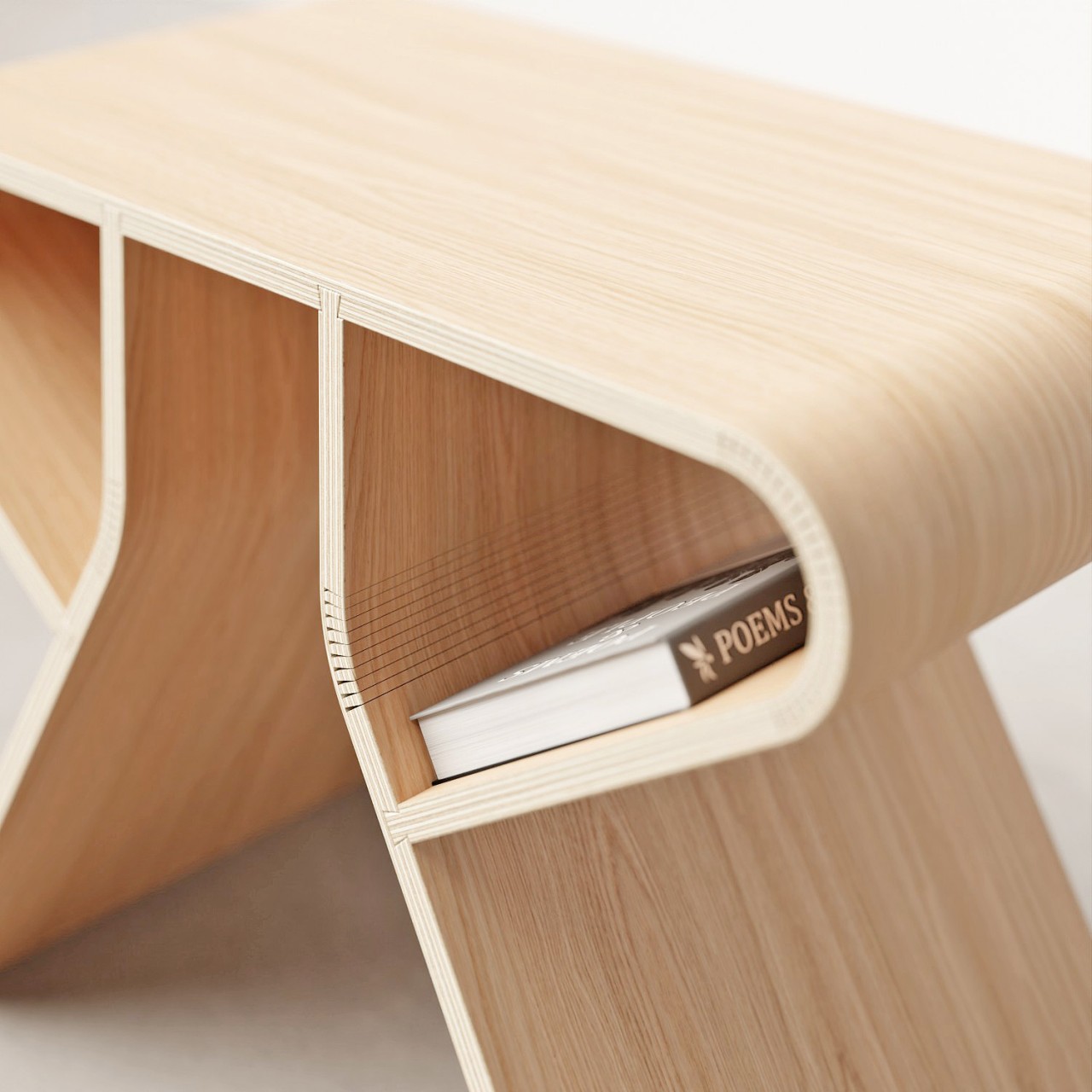
That in itself is already impressive, but the stool’s real claim to fame is how its sides can curve and bend despite being flat-packed. You’d usually have to resort to tricks like hinges, which you have to screw, to change a wooden plank’s direction, but the Flat Stool uses a rather unconventional design to do the same. Specifically, it uses kerf bending on those bent areas to create a gentle curve that makes it look like the piece was shipped that way right from the start.

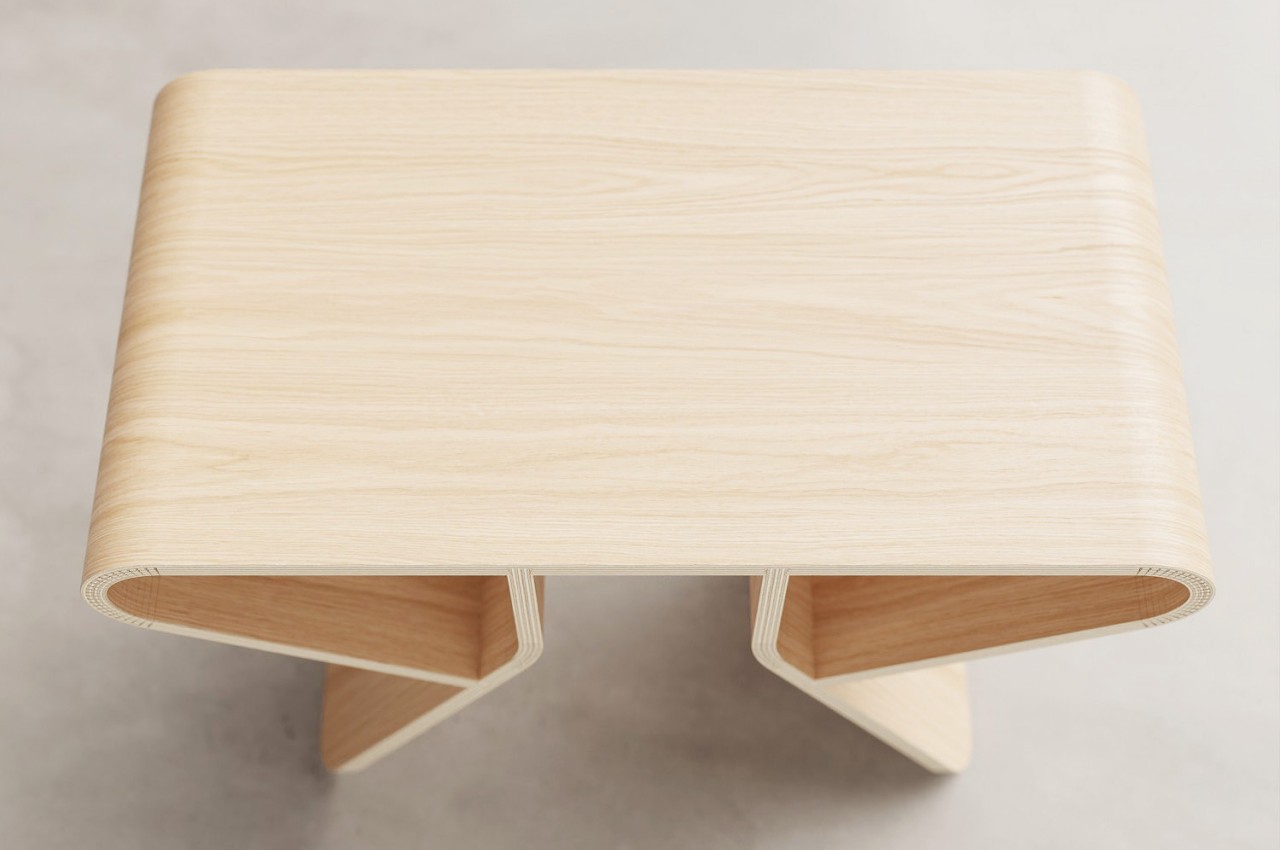
The effect is a stool whose sides bend down and inward, attaching to the middle of the slanted legs that also have a kerf bend to them. This creates a loop on both sides, an empty space that can serve as a holding space for books, phones, or other objects that don’t need a flat, horizontal surface to lie on. As a bonus, the kerfs and ribs of the stool are exposed and visible for everyone to see, creating visual accents that make the stool look more interesting.

Admittedly, some might have concerns about how long the dovetail joints will hold over time as the wooden contacts between the joints wear down. The kerfs might also look a bit worrying, especially on the legs, given the decrease in the mass of the wooden boards. Nevertheless, it’s an interesting concept that tries to think outside the flat-packed box to provide a design that isn’t as flat, literally and figuratively.

The post Bent wooden stool requires no screws or hinges to assemble from flat packaging first appeared on Yanko Design.
This wooden shoe rack doubles as a bench and a tray for transient bodies and objects

A lot of the clutter and missing items in our homes are caused by having no proper place to put our stuff. Whether they’re keys or shoes, small objects can lead to big messes when left anywhere and everywhere. Sometimes, it’s not enough just to have a place to put them; you also have to be smart in where you actually place these objects’ homes. Things that you take with you outside but not indoors are often best left near the door, but that space might not always be the best location for shelves. This design concept offers a rather elegant solution to this multi-layer problem, providing a more permanent fixture for temporary things like shoes, keys, earbuds, and even your own tired body.

Designer: Joao Teixeira

Shoe racks are not an uncommon sight inside houses, apartments, and living spaces. More often than not, their placed by the door to make it easy to put shoes on when leaving and have a convenient spot to leave them after you’ve taken them off. Due to the space these pieces of furniture occupy, however, they usually serve a single purpose only and have almost no other use except for shoe storage. It’s practically wasted space, especially if you don’t have that many shoes there to begin with.

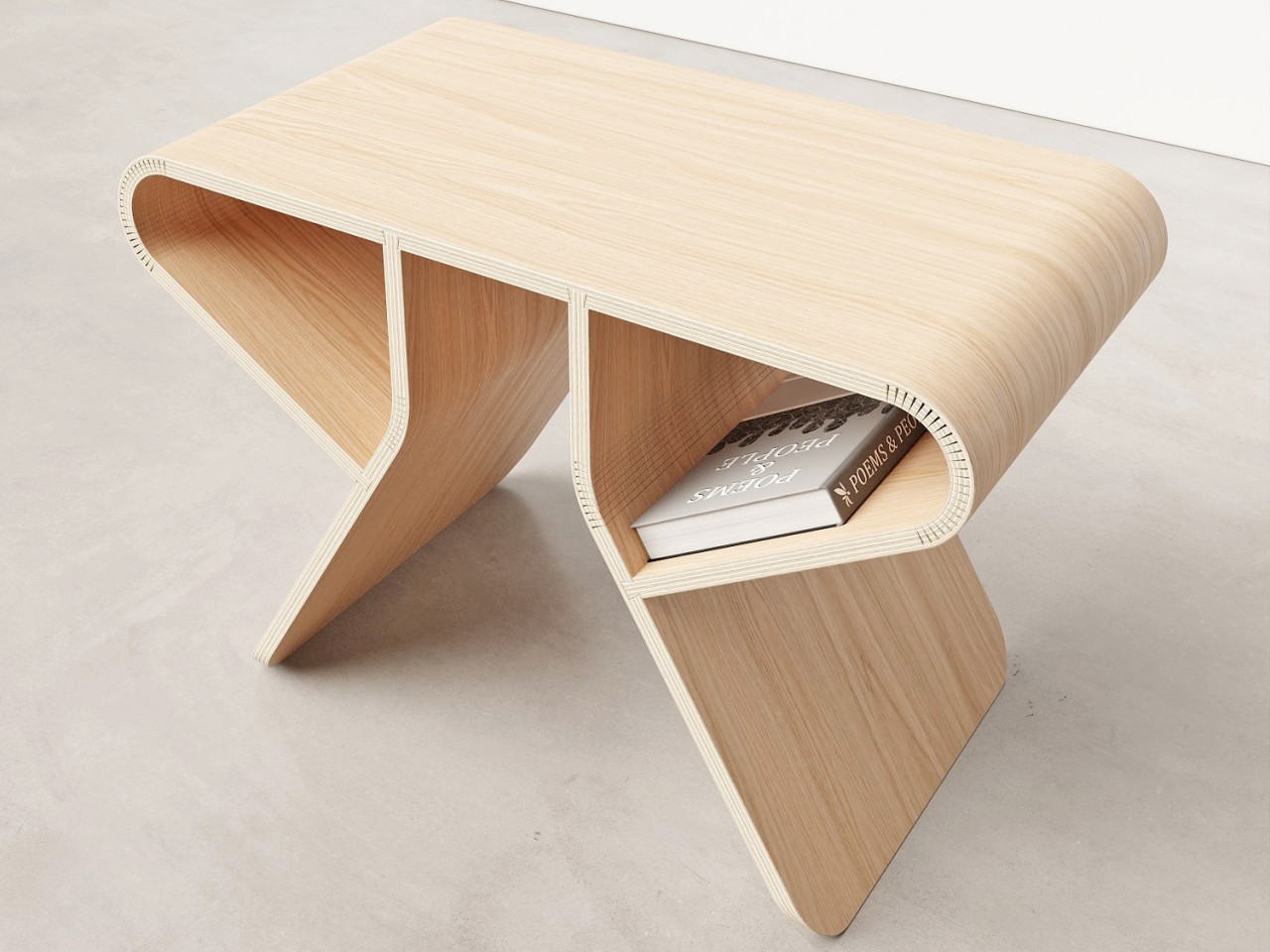
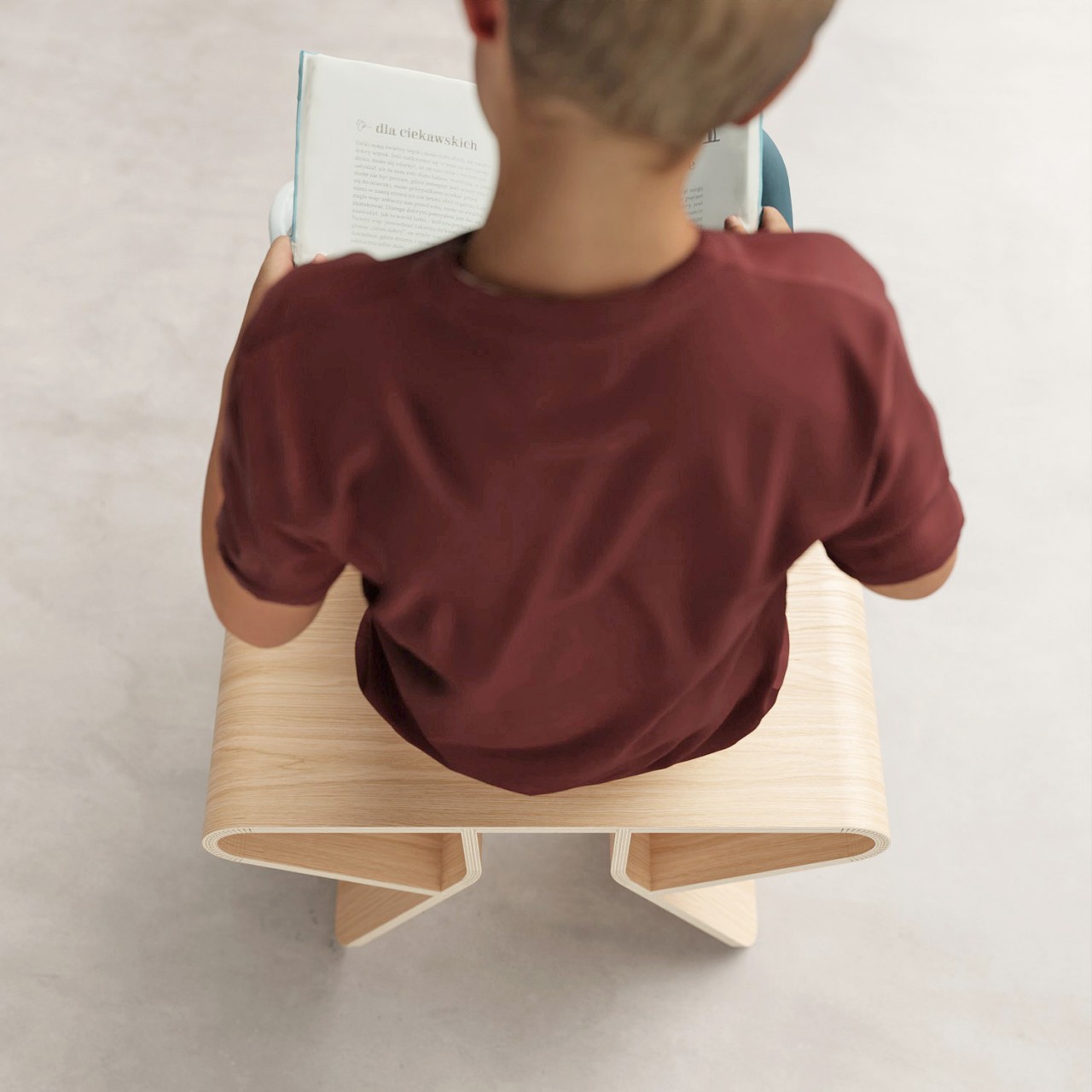
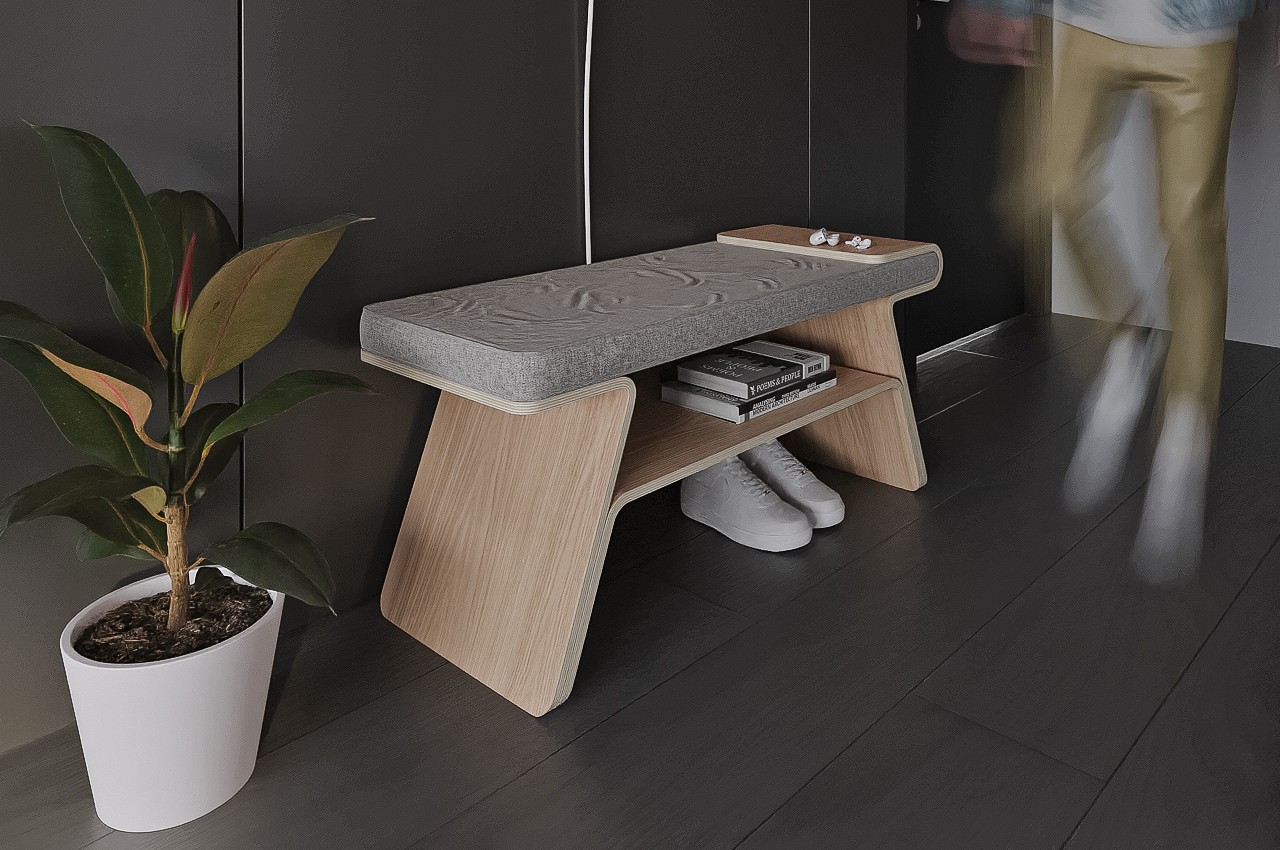
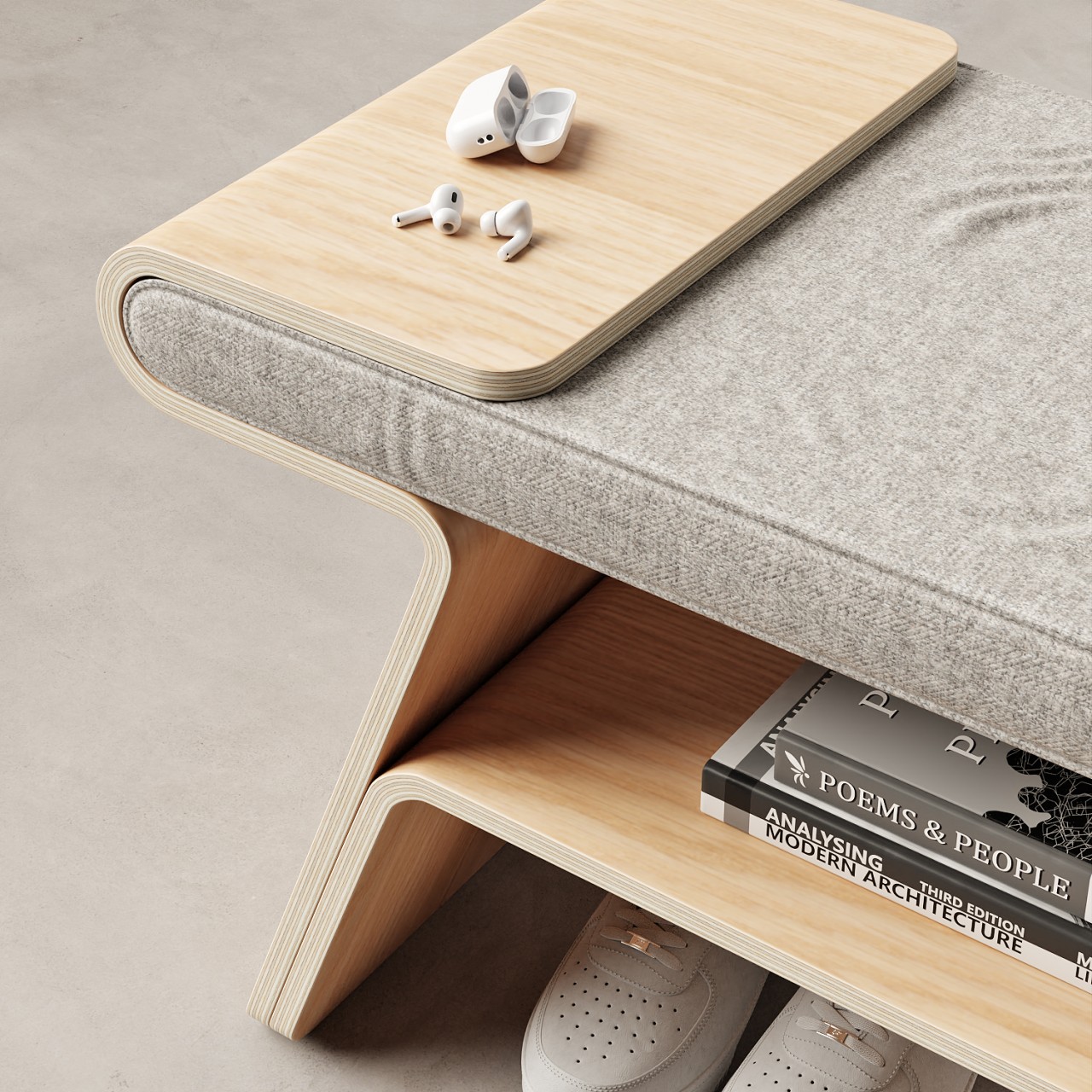
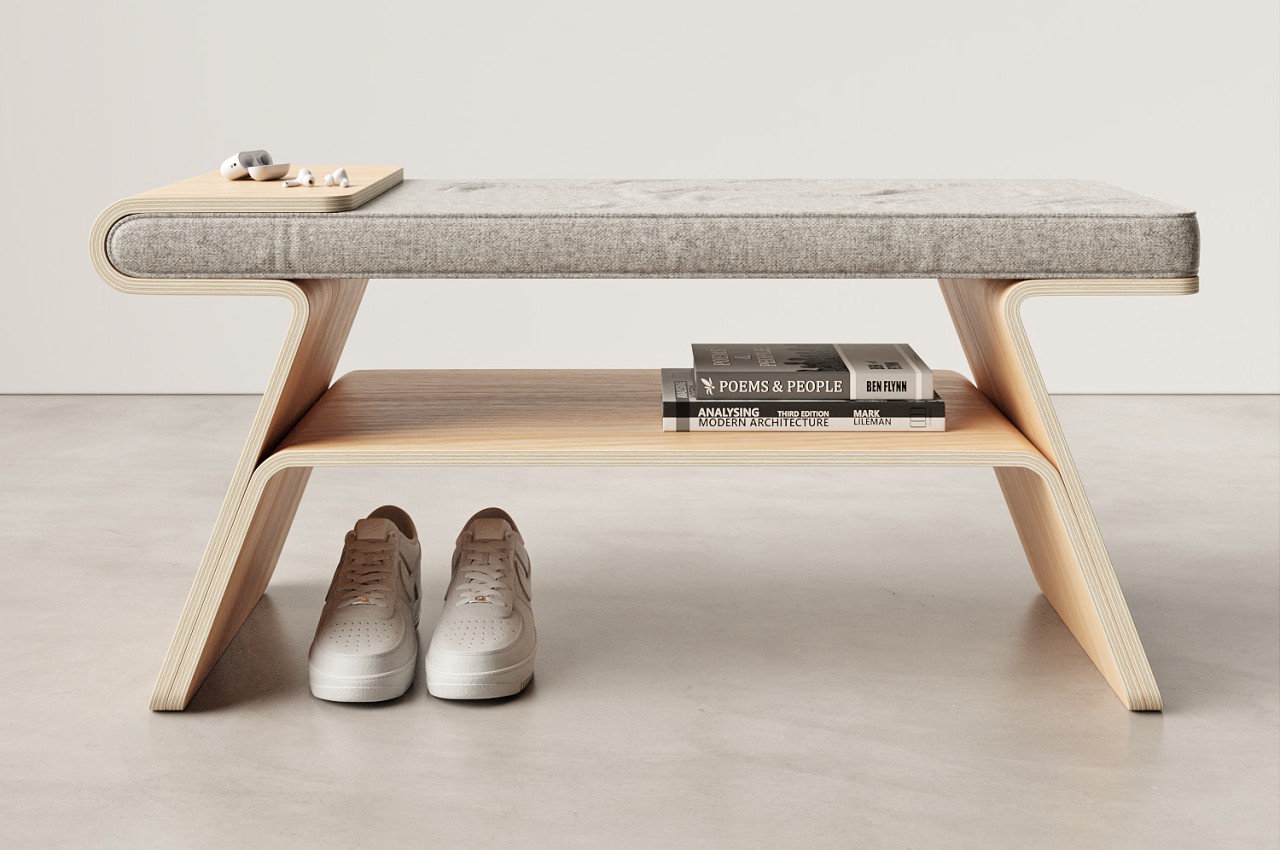
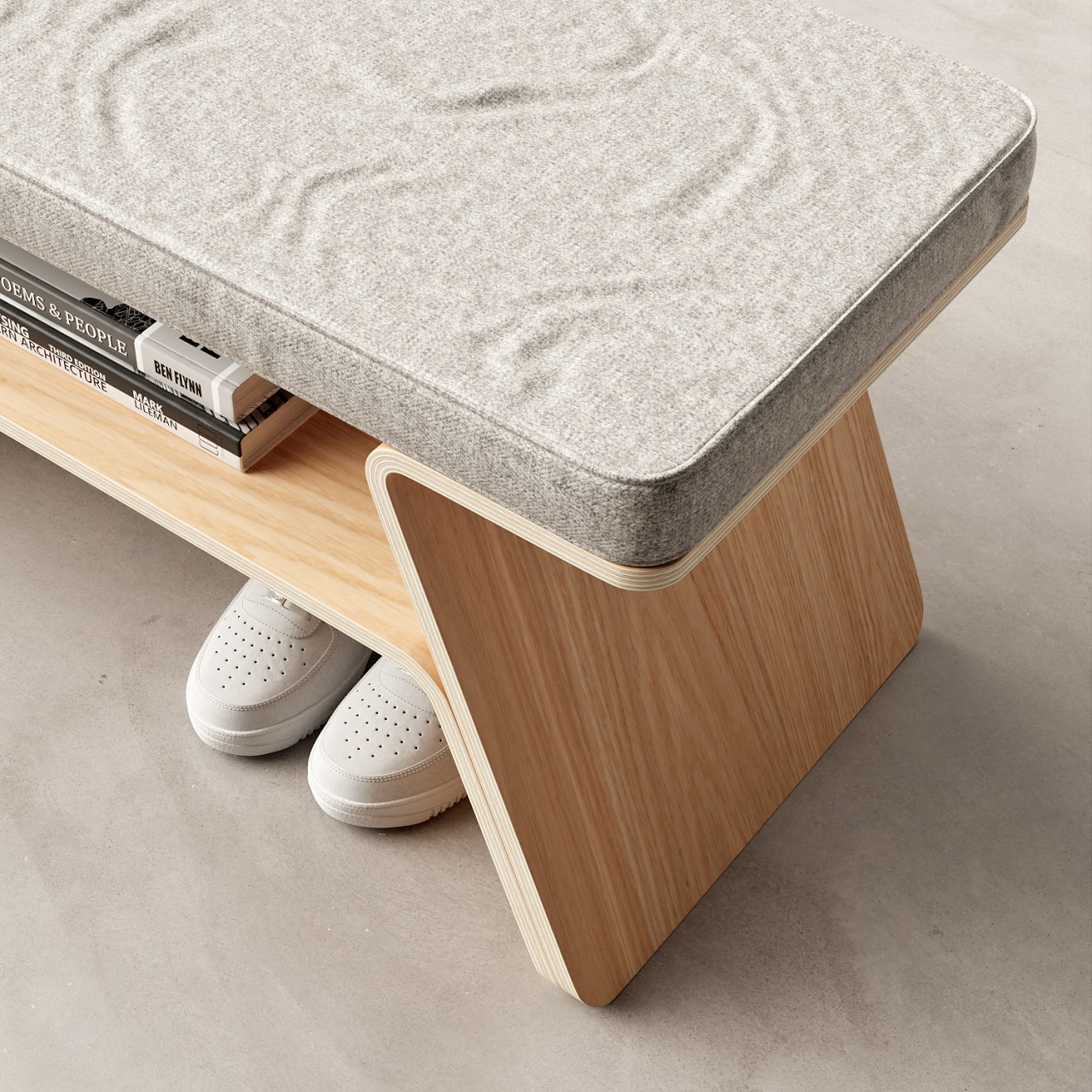
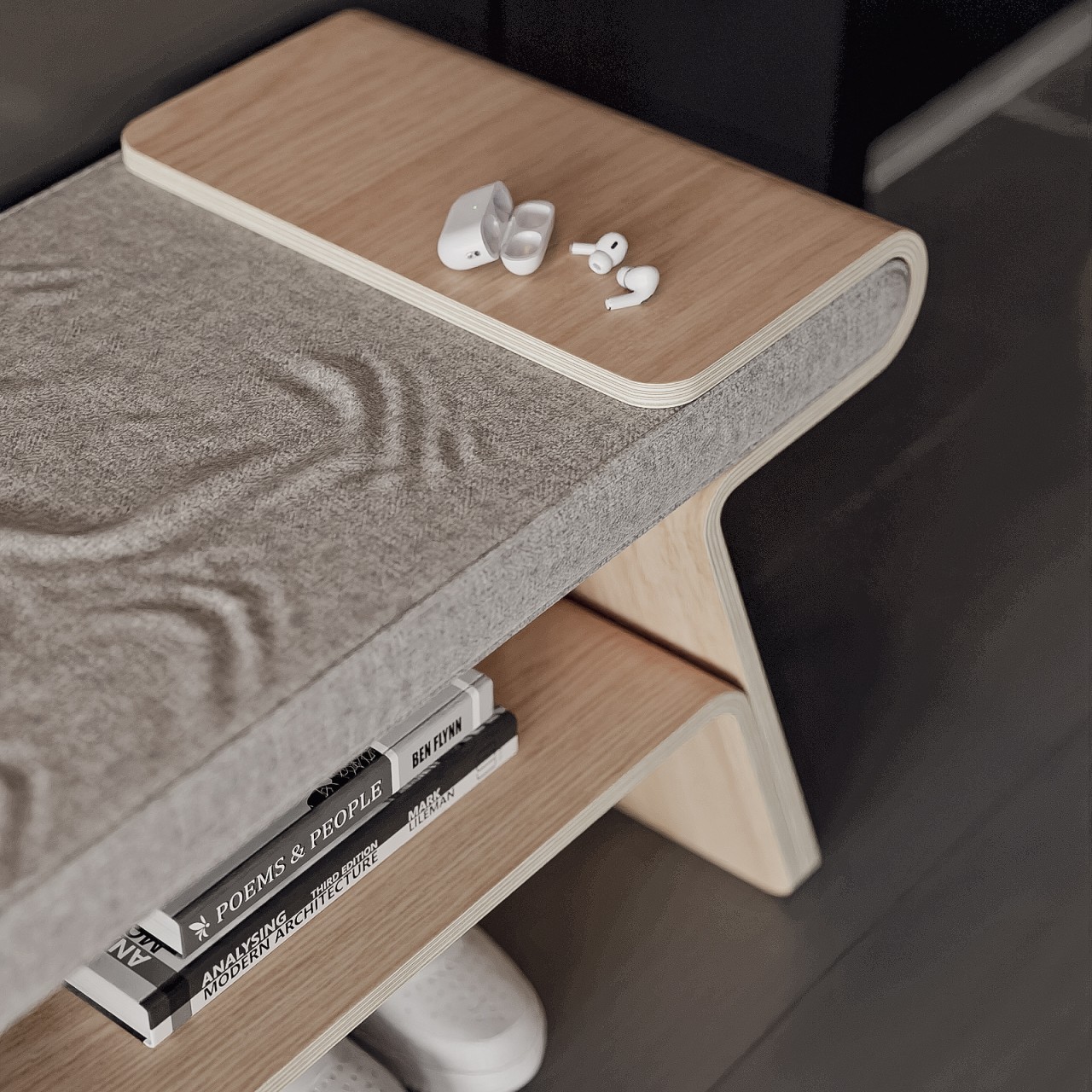
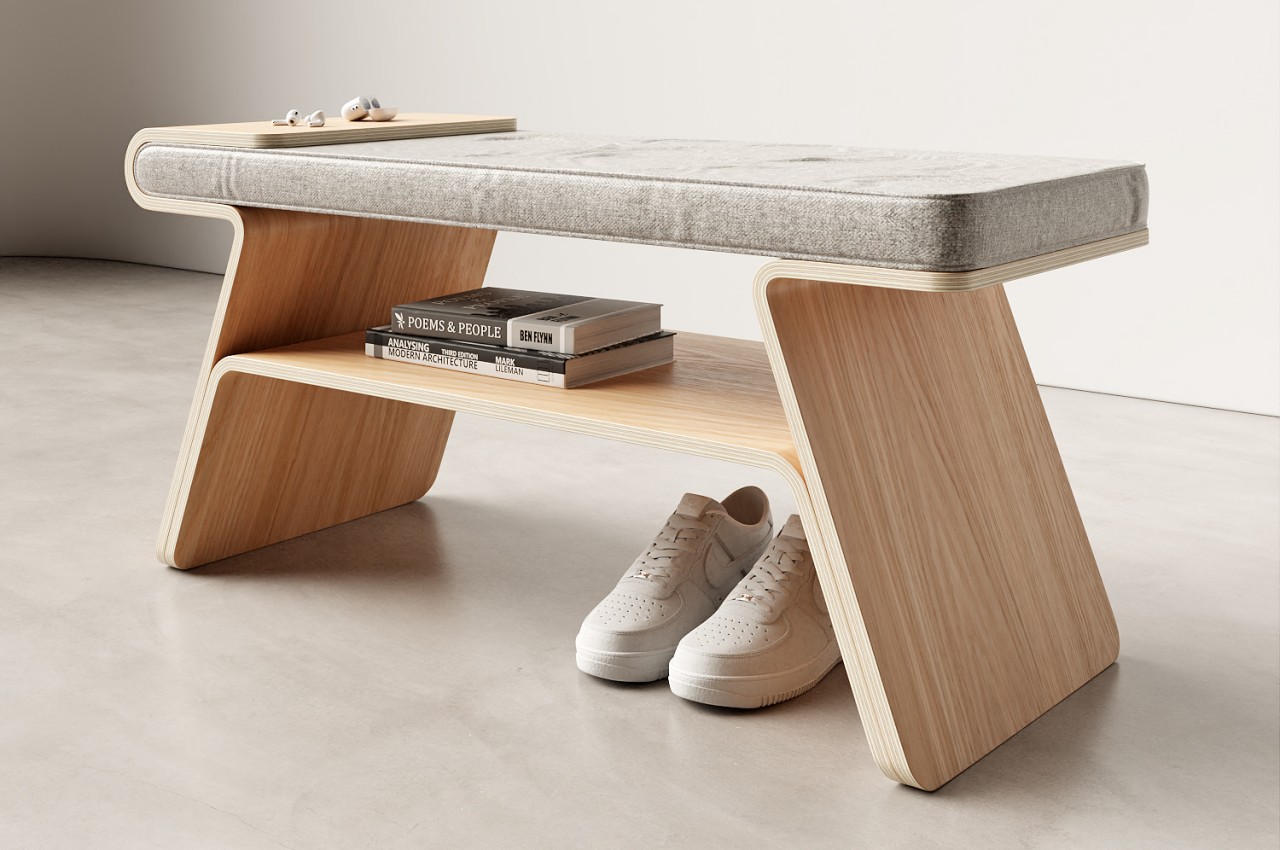
Inspired by traditional Japanese architecture like torii gates, “Tokyo” is a shoe rack that goes above and beyond the call of duty, at least if you want it to. It actually serves two other functions in addition to holding your shoes. The cushioned top serves as a comfy bench, perfect for when you need to sit down to take a breather or put on shoes. There is a small tray on one side that lets you put down your phone, keys, and other knick-knacks for a while. Given the multi-functional design of the concept, it’s something that can easily be placed near the door or against any wall. Yes, it will take up a length of space, but you’re getting three for the price of one.

What’s even more impressive is how this design implements those three functions in a beautifully minimalist manner. Like many of Joao Teixeira’s furniture concepts, it involves using bent planks of plywood to achieve simple yet sophisticated-looking forms. In this case, the two legs are bent at opposite angles, but one of them extends upward and curves embrace the cushion, creating a completely flat and solid surface to act as a temporary holding area for small objects. Structural support is provided by a pseudo three-centered arch, also made from bent plywood, that creates a shelf for larger things.

Admittedly, Tokyo hardly looks like any typical shoe rack, which makes it an ideal piece of furniture to place anywhere. The large empty space at the bottom can be home for taller shoes and boots, while the shelf can hold sandals, loafers, sneakers, and similar footwear. Of course, it could also be used to hide books, foldable umbrellas, or other things you might want to quickly grab before you rush out the door. Either way, this shoe rack and bench in one provides a convenient and charming place for shoes and small items, not to mention a comfortable way to catch your breath after coming back home.

The post This wooden shoe rack doubles as a bench and a tray for transient bodies and objects first appeared on Yanko Design.