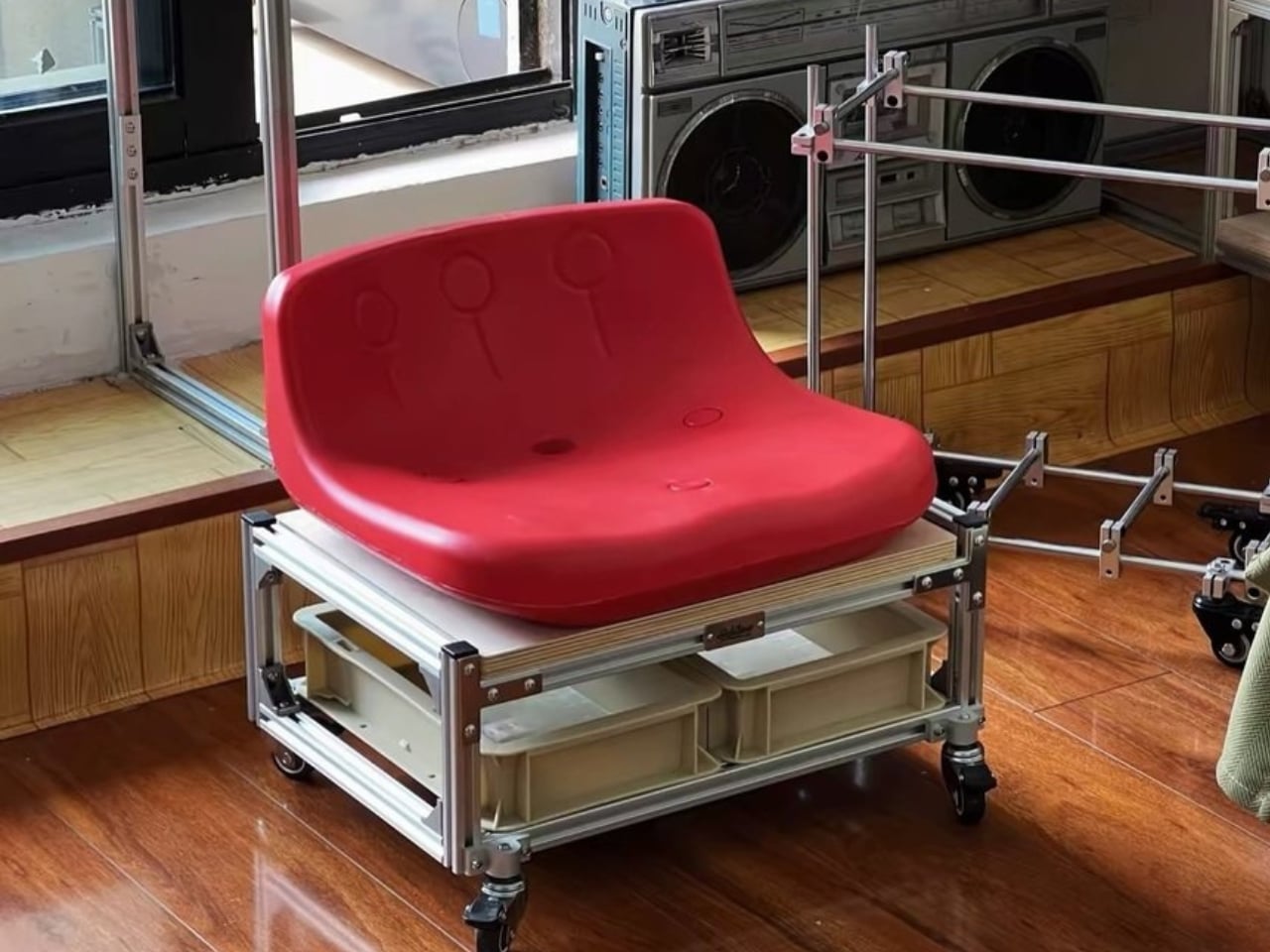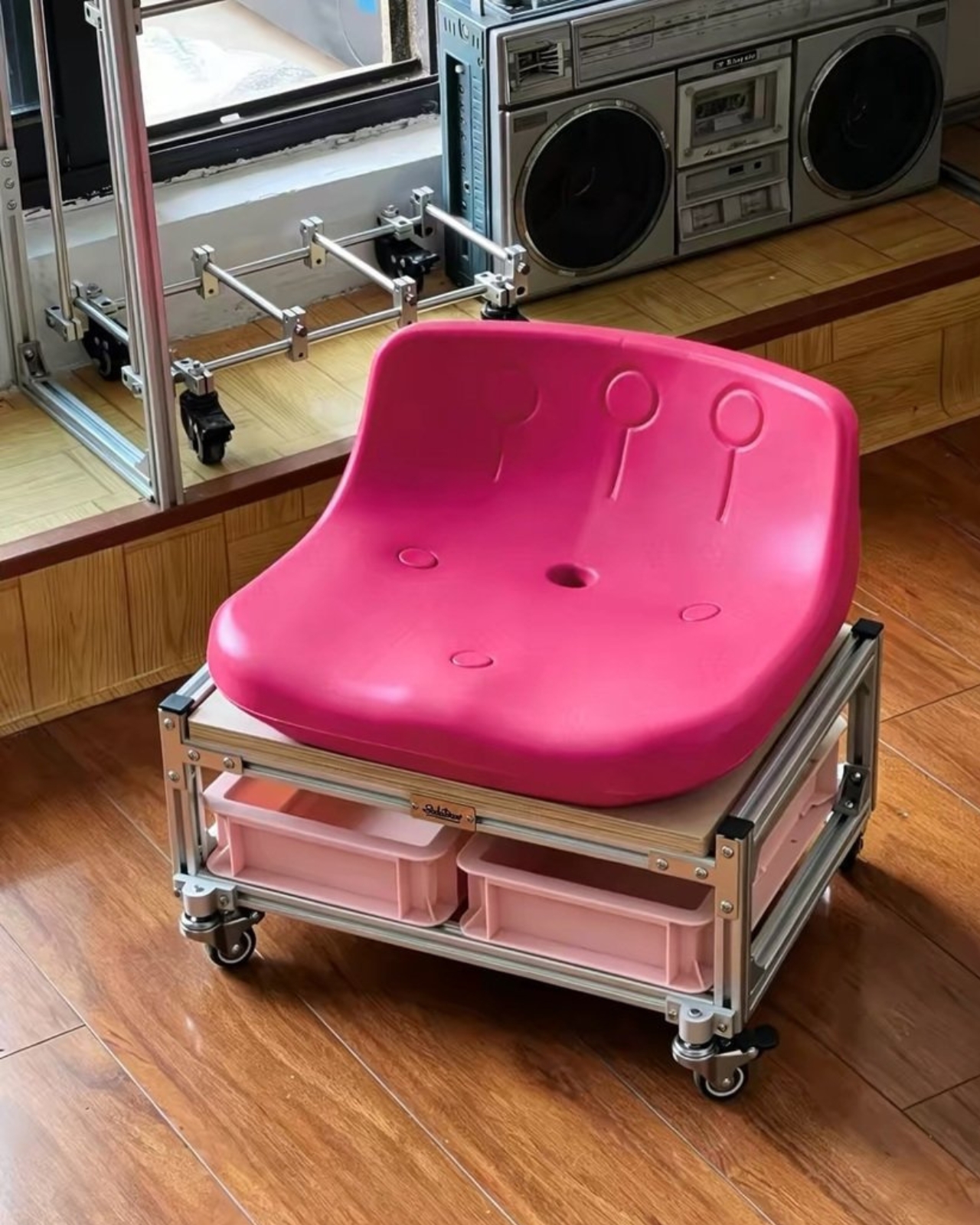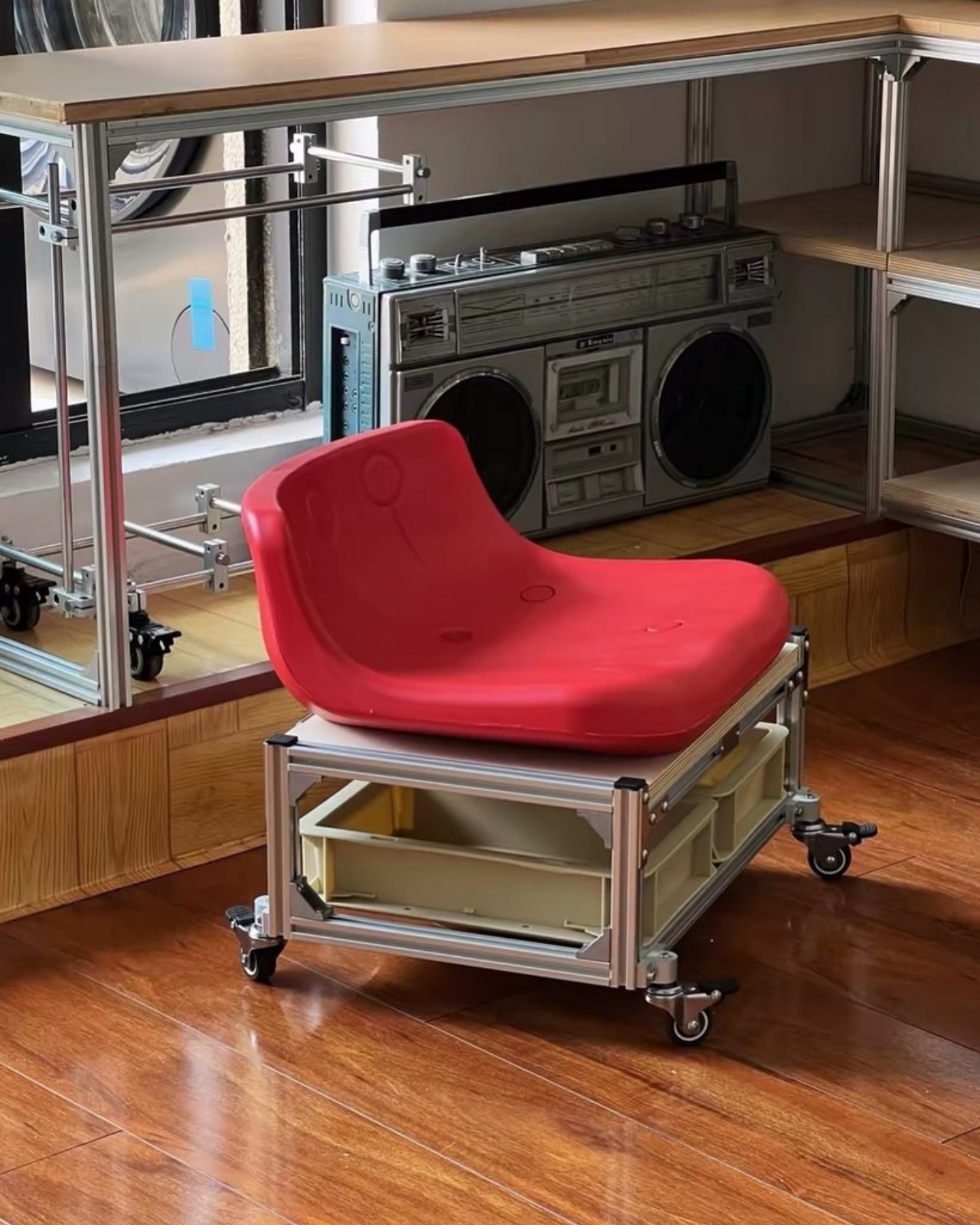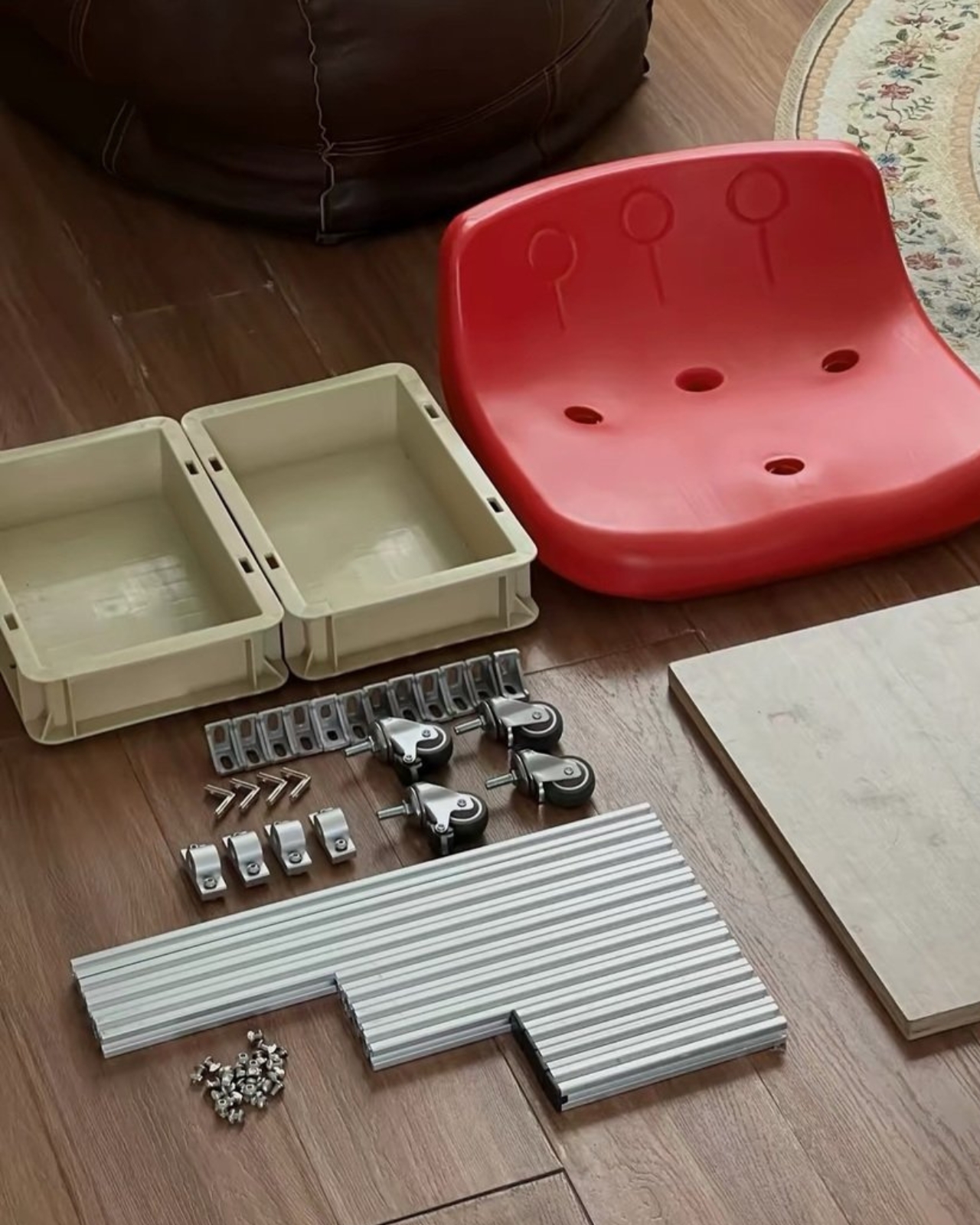
This Footstool Finally Fixes WFH Posture by Rocking Like a Toy

We’ve all been there. You’re deep into hour three of sitting at your desk, and suddenly you realize your feet are doing that weird thing where they’re contorted into some unnatural position that definitely wasn’t what your body had in mind. Maybe they’re tucked under your chair at an odd angle, or perhaps they’re desperately stretching for that one sweet spot on the floor that somehow feels less terrible than all the others.

Here’s the thing about traditional footstools: they’re rigid. They sit there in one fixed position, forcing you to adapt to them rather than the other way around. It’s like having a friend who only ever wants to meet at the same coffee shop, never considering that maybe, just maybe, you’d like a little flexibility in your life. Enter OTTO, a footstool by designer Woonghee Ma that takes its inspiration from the most unlikely source: the roly-poly toy. You know the one. That round-bottomed toy from childhood that always bounces back upright no matter how hard you knock it over. In Korea, it’s called Ottogi, which is where this clever little piece gets its name.

Designer: Woonghee Ma

The genius of OTTO lies in its convex base. Instead of planting itself stubbornly on the ground like every other footstool, it rocks. It moves. It responds to the way your body actually behaves when you’re sitting for long stretches. As you shift your weight and adjust your position throughout the day (because let’s be honest, no one sits perfectly still), the footstool moves with you, naturally settling into whatever position feels most comfortable in that moment.

Think about it: your body is constantly making tiny adjustments. Your legs shift, your posture changes, you lean forward to focus on something on your screen, then lean back when you’re thinking. Why should your footstool stay frozen in place while all this is happening? OTTO essentially becomes a dynamic support system rather than a static obstacle.

What really sells this design is how deceptively simple it looks. The structure consists of just four components: a circular table top, plywood legs with organic cutouts, a bowl-shaped footrest, and a bracket to hold everything together. The legs feature these beautiful curved openings that give the piece an almost sculptural quality, like negative space art that happens to be functional furniture. The top and footrest come in a bold coral-red that pops against the natural wood tone of the legs.

Assembly is refreshingly straightforward. Attach the legs to the bracket, set the top plate and footrest in place, and you’re done. No Allen wrenches, no confusing instructions with illustrations that look nothing like the actual parts, no leftover screws that make you question your entire assembly process. It’s designed to be easy to put together and just as easy to move around your space.

But here’s where OTTO gets even more interesting: versatility. Sure, it’s a footstool. But that top surface? Perfectly functional as a side table for your water bottle, phone, or that coffee cup that’s perpetually within arm’s reach. Need to hold some supplies while you’re working on the floor? OTTO’s got you. Want a low stool for kids or a casual seating option when friends come over? It can do that too.

The design speaks to a larger shift happening in how we think about furniture, especially in the work-from-home era. We’re moving away from rigid, single-purpose pieces toward objects that adapt to our needs rather than forcing us to adapt to them. OTTO embodies this philosophy beautifully. It’s not trying to correct your posture through force or rigid positioning. Instead, it works with your natural movements, offering support that feels intuitive rather than prescriptive.

There’s also something deeply satisfying about the aesthetic. The combination of natural plywood and that vibrant coral creates a look that feels both Scandinavian-minimal and playfully modern. It’s serious enough for a professional home office but fun enough that it doesn’t feel stuffy or overly corporate.

We’re now spending more time than ever sitting and staring at screens so maybe what we need isn’t more rigidity. Maybe what we need is furniture that understands that bodies move, preferences change, and comfort isn’t one-size-fits-all. OTTO gets it. And honestly? That roly-poly toy inspiration is pretty brilliant. Who knew the secret to better sitting was something we learned in kindergarten?

The post This Footstool Finally Fixes WFH Posture by Rocking Like a Toy first appeared on Yanko Design.

Someone Made a Flat-Pack Stool from Glass That Loops Like Frozen Water

Flat-pack furniture is usually shorthand for budget compromises, cardboard boxes stuffed with dowels, and Allen keys that disappear the moment you need them. It is something you tolerate for convenience rather than admire, defined by getting furniture to your door cheaply rather than making you excited about assembly. The tension between wanting sculptural pieces and needing things that can actually ship and fit through narrow stairwells rarely gets resolved gracefully.

Tide Stool treats flat-pack as a starting point for luxury instead of a constraint. Designed by Vinayak Syam for DreamDeadline Works and produced by House of Sach, it is built from toughened glass legs, precision 3D-printed joinery, and hand-finished upholstery. The structure rises from a flat kit into a flowing form, shaped by curves and loops rather than brute-force mass, with the name being very much intentional.

Designer: Vinayak Syam

Instead of chunky wooden legs, Tide uses transparent glass fins that fold and loop around a central axis, carrying load through geometry. The panels curve out and back in, sharing weight across their profiles, so strength comes from the path the glass takes rather than thickness. It flips the usual hierarchy where glass is treated as fragile skin and heavier materials are trusted with structural work.

Receiving Tide as a flat set of glass pieces and joinery turns assembly into a building ritual rather than a chore. Slotting the fins into 3D-printed nodes lets you watch the structure emerge from motion, where overlapping curves and visible joints become part of the composition. The design makes those connections part of the visual language, so engineering reads as an aesthetic feature rather than something to hide.

The upholstered top sits above the glass base as a soft disc that comes in more than thirty colour finishes. Upholstery is offered in fabric and vegan leather, with Deep Sienna being the leather option and the rest using elevated textiles. That palette lets the same glass base feel quiet and monochrome in one space or warm and expressive in another, without losing its sculptural identity.

Flat-pack construction makes shipping and moving easier, especially for people who rearrange or relocate often, yet once assembled, the stool reads as a single object rather than a kit. The toughened glass and looping geometry give real load-bearing confidence while keeping the footprint visually light. It is the rare piece that respects both logistics and living rooms without asking you to choose between practicality and presence.

Tide turns apparent fragility into a quiet expression of resilience. The transparent legs, visible joinery, and soft seat work together to make strength feel like a product of balance and flow rather than heaviness. For anyone tired of choosing between sculptural furniture and flat-pack practicality, a glass stool that arrives as parts and stands like a tide frozen mid-rise feels like a surprisingly thoughtful middle ground.

The post Someone Made a Flat-Pack Stool from Glass That Loops Like Frozen Water first appeared on Yanko Design.

This One-Mold Stool Just Made Modular Furniture Playful Again

Most of the time, I’m not really particular when it comes to chair design. As long as I’m able to sit on it comfortably and am able to rest my weary body on it, I consider it a perfect piece of furniture. There are times though when the design idea behind it also plays a factor in judging a chair or stool, even though it may not look the easiest place to sit in.

Also, sometimes the best design ideas are the simplest ones. Zhang Wenhan’s UNO collection proves that point beautifully, and honestly, I can’t stop looking at these little sculptural stools. They’re like candy-colored mushrooms that somehow managed to win a Red Dot Award, and I’m completely here for it.

Designer: Zhang Wenhan

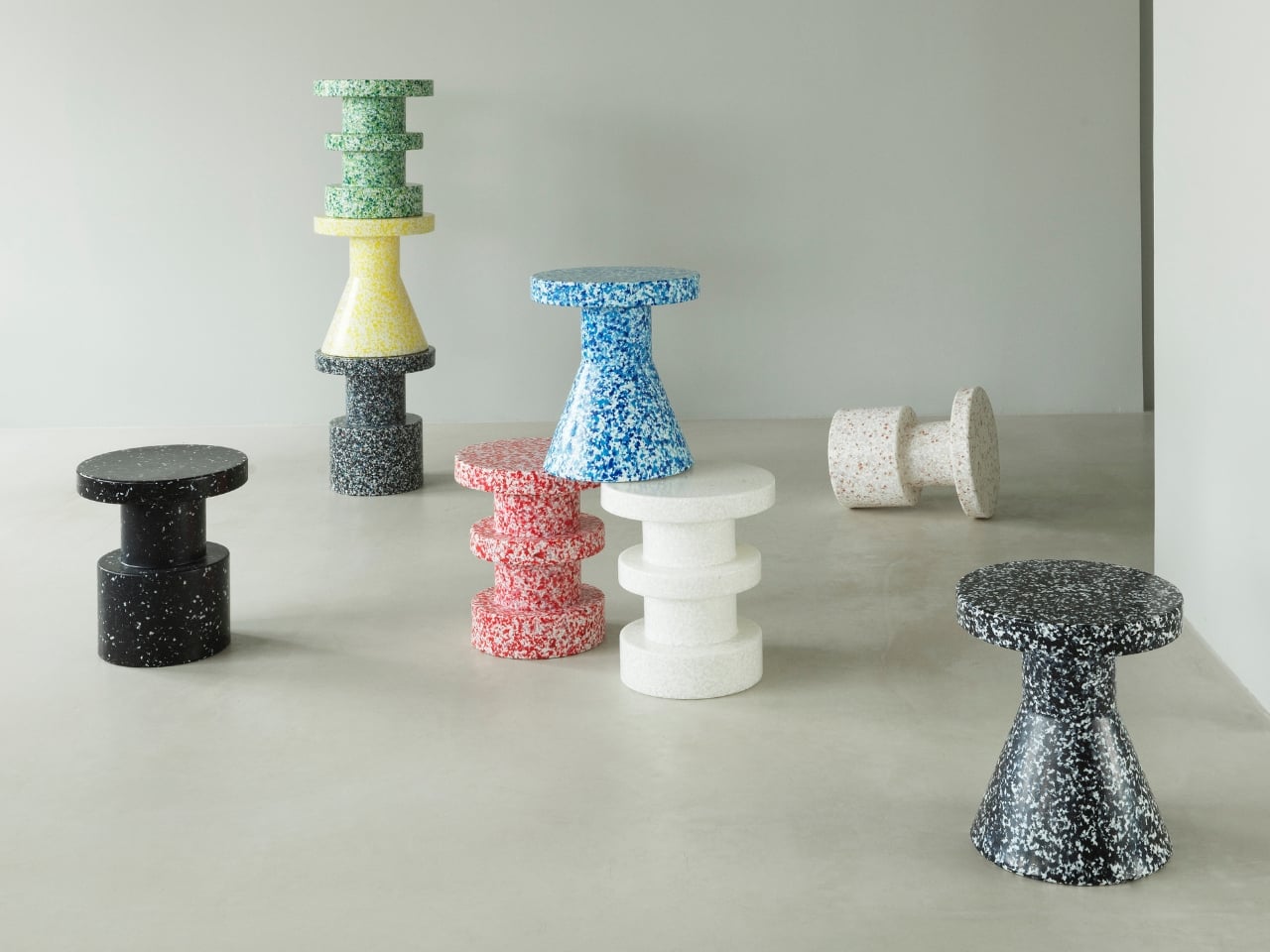
Here’s what makes UNO special: each piece is made from a single injection mould. One mould, one continuous form, no seams, no visible joints. Just a smooth, flowing shape that starts with a wide, stable base and tapers upward into a slightly tilted top surface. That little tilt isn’t just for looks, either. It’s a subtle ergonomic touch that makes these surprisingly comfortable to perch on while keeping that sculptural vibe intact.

The genius is in how uncomplicated everything is. We’re so used to furniture that requires assembly instructions, allen wrenches, and a weekend afternoon of frustration. UNO flips that script entirely. Each stool arrives as a complete, ready-to-use piece. No hardware, no fuss, no leftover screws you’re not quite sure what to do with. What really gets me excited is the color range. UNO comes in this perfectly curated palette that spans from soft, muted tones to bold, punchy hues. Think buttery yellows, dusty pinks, rich terracotta, and deep blues. The kind of colors that look sophisticated on their own but become genuinely playful when you start mixing them together. And that’s exactly what you’re supposed to do.

The whole concept revolves around modularity and personalization. You can grab a few in complementary shades for a cohesive look, or go wild and create a rainbow arrangement that brings instant energy to any room. Want to switch things up next season? Just rearrange them. Move them from the living room to the patio, cluster them by the entryway, or scatter them around a dining table for extra seating when friends come over.

Speaking of indoor-outdoor versatility, that’s another win for UNO. The clean silhouette and balanced proportions mean these stools look equally at home next to your mid-century modern sofa or on your balcony beside some potted plants. They harmonize with vibrant spaces without competing for attention, and they add a pop of personality to neutral rooms without overwhelming the palette. I love furniture that doesn’t take itself too seriously but still maintains a sense of sophistication. UNO nails that balance. There’s something inherently joyful about the shape, almost toy-like in the best possible way, but the proportions and execution keep it firmly in grown-up design territory. It’s the kind of piece that makes visitors smile and ask where you got it.

The injection moulding process is worth appreciating too. This manufacturing method allows for that seamless, monolithic quality that gives each stool its distinctive character. No visible construction, no parts that might loosen over time, just solid, reliable design that’ll look the same years from now as it does the day you bring it home. And can we talk about how these photograph? Every angle is good. That gradual taper creates interesting shadows and silhouettes, making UNO as much a design object as functional furniture. It’s the rare piece that works just as well as a sculptural accent when nobody’s sitting on it.

What Zhang Wenhan has created with UNO is refreshingly straightforward design that doesn’t sacrifice personality or versatility. In a world where we’re constantly told we need smart furniture with built-in charging ports and convertible configurations, there’s something deeply satisfying about a stool that’s just genuinely well-designed. One form, endless possibilities, zero complications. Whether you need extra seating, a side table, a plant stand, or just a pop of color in the corner, UNO adapts without requiring you to adapt to it. That’s the mark of truly thoughtful design, and it’s exactly why this collection deserves all the recognition it’s getting.

The post This One-Mold Stool Just Made Modular Furniture Playful Again first appeared on Yanko Design.

This One-Mold Stool Just Made Modular Furniture Playful Again

Most of the time, I’m not really particular when it comes to chair design. As long as I’m able to sit on it comfortably and am able to rest my weary body on it, I consider it a perfect piece of furniture. There are times though when the design idea behind it also plays a factor in judging a chair or stool, even though it may not look the easiest place to sit in.

Also, sometimes the best design ideas are the simplest ones. Zhang Wenhan’s UNO collection proves that point beautifully, and honestly, I can’t stop looking at these little sculptural stools. They’re like candy-colored mushrooms that somehow managed to win a Red Dot Award, and I’m completely here for it.

Designer: Zhang Wenhan

Here’s what makes UNO special: each piece is made from a single injection mould. One mould, one continuous form, no seams, no visible joints. Just a smooth, flowing shape that starts with a wide, stable base and tapers upward into a slightly tilted top surface. That little tilt isn’t just for looks, either. It’s a subtle ergonomic touch that makes these surprisingly comfortable to perch on while keeping that sculptural vibe intact.

The genius is in how uncomplicated everything is. We’re so used to furniture that requires assembly instructions, allen wrenches, and a weekend afternoon of frustration. UNO flips that script entirely. Each stool arrives as a complete, ready-to-use piece. No hardware, no fuss, no leftover screws you’re not quite sure what to do with. What really gets me excited is the color range. UNO comes in this perfectly curated palette that spans from soft, muted tones to bold, punchy hues. Think buttery yellows, dusty pinks, rich terracotta, and deep blues. The kind of colors that look sophisticated on their own but become genuinely playful when you start mixing them together. And that’s exactly what you’re supposed to do.

The whole concept revolves around modularity and personalization. You can grab a few in complementary shades for a cohesive look, or go wild and create a rainbow arrangement that brings instant energy to any room. Want to switch things up next season? Just rearrange them. Move them from the living room to the patio, cluster them by the entryway, or scatter them around a dining table for extra seating when friends come over.

Speaking of indoor-outdoor versatility, that’s another win for UNO. The clean silhouette and balanced proportions mean these stools look equally at home next to your mid-century modern sofa or on your balcony beside some potted plants. They harmonize with vibrant spaces without competing for attention, and they add a pop of personality to neutral rooms without overwhelming the palette. I love furniture that doesn’t take itself too seriously but still maintains a sense of sophistication. UNO nails that balance. There’s something inherently joyful about the shape, almost toy-like in the best possible way, but the proportions and execution keep it firmly in grown-up design territory. It’s the kind of piece that makes visitors smile and ask where you got it.

The injection moulding process is worth appreciating too. This manufacturing method allows for that seamless, monolithic quality that gives each stool its distinctive character. No visible construction, no parts that might loosen over time, just solid, reliable design that’ll look the same years from now as it does the day you bring it home. And can we talk about how these photograph? Every angle is good. That gradual taper creates interesting shadows and silhouettes, making UNO as much a design object as functional furniture. It’s the rare piece that works just as well as a sculptural accent when nobody’s sitting on it.

What Zhang Wenhan has created with UNO is refreshingly straightforward design that doesn’t sacrifice personality or versatility. In a world where we’re constantly told we need smart furniture with built-in charging ports and convertible configurations, there’s something deeply satisfying about a stool that’s just genuinely well-designed. One form, endless possibilities, zero complications. Whether you need extra seating, a side table, a plant stand, or just a pop of color in the corner, UNO adapts without requiring you to adapt to it. That’s the mark of truly thoughtful design, and it’s exactly why this collection deserves all the recognition it’s getting.

The post This One-Mold Stool Just Made Modular Furniture Playful Again first appeared on Yanko Design.

COMODO Entryway Stool Dries and Deodorizes Shoes While You Sit

Taking off your shoes after a long day often means being greeted by damp insoles and stale smells. Rain, sweat, and dust turn footwear into something you tolerate rather than enjoy wearing, and most people either ignore it or resort to stuffing newspaper inside them and hoping for the best. Drying racks clutter the hallway, and washing shoes every time they get wet is too much work for something you’ll just wear again tomorrow.

COMODO is a concept that treats shoe care as part of the entryway routine rather than an afterthought. It combines a small upholstered stool with a compact shoe care system inside, so the same object you sit on to put on your shoes also quietly dries, deodorizes, and refreshes them between outings. The name comes from the Spanish word for “comfortable” or “pleasant,” which pretty much sums up the whole idea.

Designer: Hyeona Cho

The form is a soft, rounded cube on four slender legs, available in muted colors like charcoal gray, mustard yellow, and sage green. The matte, slightly textured body and cushioned top make it read more like a piece of furniture than an appliance, allowing it to sit next to a shoe cabinet or mirror without looking out of place. It’s the kind of thing you could leave in the hallway without feeling like you’re displaying a gadget.

Open the small front door, and you find an interior chamber with what the designer calls an “air shoetree” and vents. Shoes can be placed on angled posts or directly on the floor of the chamber, where warm air circulates to dry them. A HEPA filter and scent filter work together to remove damp odors and add a gentle fragrance, while a UV lamp at the top targets germs on the surfaces.

The air shoetree offers some flexibility. Because you can either insert shoes onto the posts or rest them inside the chamber, COMODO can handle different shapes, from sneakers to ankle boots. The base plate slides forward like a shallow drawer, bringing the shoes closer to you and making it easier to place them or even use the raised platform while putting them on.

Of course, COMODO also doubles as a proper seat. Many people still sit on the floor to tie laces or wrestle with boots, which is uncomfortable and hard on the knees. The padded top gives you a seat at just the right height, so you can sit, open the door, pull out the sliding base, and deal with your shoes without crouching or balancing awkwardly.

COMODO imagines an entryway where shoes are not just stored but actively cared for, and where the object that helps you put them on also makes sure they’re dry, fresh, and ready for the next day. It’s a small but thoughtful intervention in the daily routine of leaving and returning home, a gentle reminder that even the most ordinary corners can benefit from a bit of design attention.

The post COMODO Entryway Stool Dries and Deodorizes Shoes While You Sit first appeared on Yanko Design.

3D-printed chairs are made from 100% recycled plastic from donation program

3D-printed furniture is still not as common as regular furniture but we’re seeing a lot of movement when it comes to designs and concepts. Aside from the fact that it’s easy to adapt this in actual production, it can also be sustainable and eventually impactful. Most of these 3D-printing concepts try to create something that’s recyclable or made from recycled materials therefore making it more sustainable than regular furniture.

Designer: Ethan Solodukhin

The Revo Chair Concept, with Revo meaning “revolutionary”, is a collection of 3D-printed furniture and is powered by the PlastiVista Atelier program. The program actually encourages homes, schools, and communities to donate their plastic waste and those that can be used for 3D printing converted into filament. The collection includes the Revo Chair and the Stoool (yes that’s not a typo). They are made from 100% recycled plastic.

The Revo Chair uses a single-piece design and it can serve as both an actual chair but when used with a different orientation, it can also serve as storage. The photos show it’s a box-like storage although it’s not really shown how it can be turned into that although the surfaces can be something you can place objects on. The Stoool meanwhile just serves as a seat with its compact surface, although you can probably also use it as a side table if you want to.

The renders of these chairs reminds me of those small, plastic phone holders that you can get for cheap. The question of course for these 3D-printed chairs would be if they are durable enough and comfortable enough for people to sit in for a long period of time.

The post 3D-printed chairs are made from 100% recycled plastic from donation program first appeared on Yanko Design.

Pouffe chair concept uses minimalist design and recyclable materials

There are two kinds of people when it comes to chairs and stools. Those who like cutely-designed seats and those who want comfortable resting places for their behinds. While I am always the latter, there are a lot of people looking for the former. That’s why we see uniquely designed chairs and stools that can also double as a sort of art piece, even though they don’t look the most comfortable to sit on.

Designer: Design Studio701

The Rio Pouffe is a concept for a chair that is able to combine modern aesthetic with an eco-friendly design. Because there is a trend (hopefully, a lasting trend) of people looking for products that are made from sustainable materials, this kind of design can hit it off with that segment if it reaches the production stage. They did not give details as to what these eco-friendly materials are but if we’re to look at the planters that Harshdeep, the company that they made the design for, we’re looking at materials like bamboo, coffee husks, etc.

The chairs themselves look like inverted onions with a seat surface and a small backrest. They are shaped that way to attract people’s attention and are designed to be lightweight and durable to “make sitting a breeze”. The colors are also in earthy tones like warm browns, soothing greens, calming blues, and neutral grays in keeping with the natural aesthetic that they are going for. It seems comfortable enough although for me, the small back rest may not be enough if I’ll be sitting on it for a long time.

As a concept, this seems to be pretty interesting if you’re the type looking for good-looking chairs that are also eco-friendly. It would have been better to see what are those recyclable materials that they will use to produce the chairs. But in terms of design, this seems to be a simple but solid one.

The post Pouffe chair concept uses minimalist design and recyclable materials first appeared on Yanko Design.
Mosaic-like stools are made from the soles of discarded rubber shoes

The fashion industry is known for its striking designs, lavish materials, and sometimes mind-blowing forms, but it also has a dirty little secret when it comes to sustainability. Many of those materials, processes, and even ingredients have a tendency to harm the environment, especially mass-produced pieces of clothing, accessories, and footwear. Even something that sounds so innocent like the rubber soles of shoes can have a long-term negative impact on the planet’s health, especially when they’re thrown away without much thought. Although it’s not enough to make this discarded material disappear, these distinctive artistic stools help reduce their numbers while providing furniture that makes an impact in more ways than one.

Designer: BENTU Design

According to figures, 20 billion pairs of shoes are produced each year, and nearly all of those end up in landfills sooner or later. Footwear is usually made with half a dozen synthetic materials, with outsoles using plenty of rubber that takes more than a hundred years to decompose. Burning them, on the other hand, releases toxic gases, which is usually what happens in garbage disposal sites. Even though the process still uses water and energy, recycling these materials is still a significantly better way to deal with all the waste.

WU is a line of stools that does exactly that, giving new life to shoe soles that result in an even more interesting design. 90% of each stool’s raw materials are made from recycled rubber shoe materials, about 15kg of material that is equivalent to 60 rubber soles. It’s a small number compared to the amount of shoes being thrown away, but even just 10 of these stools mean 600 shoes are kept away from landfills.

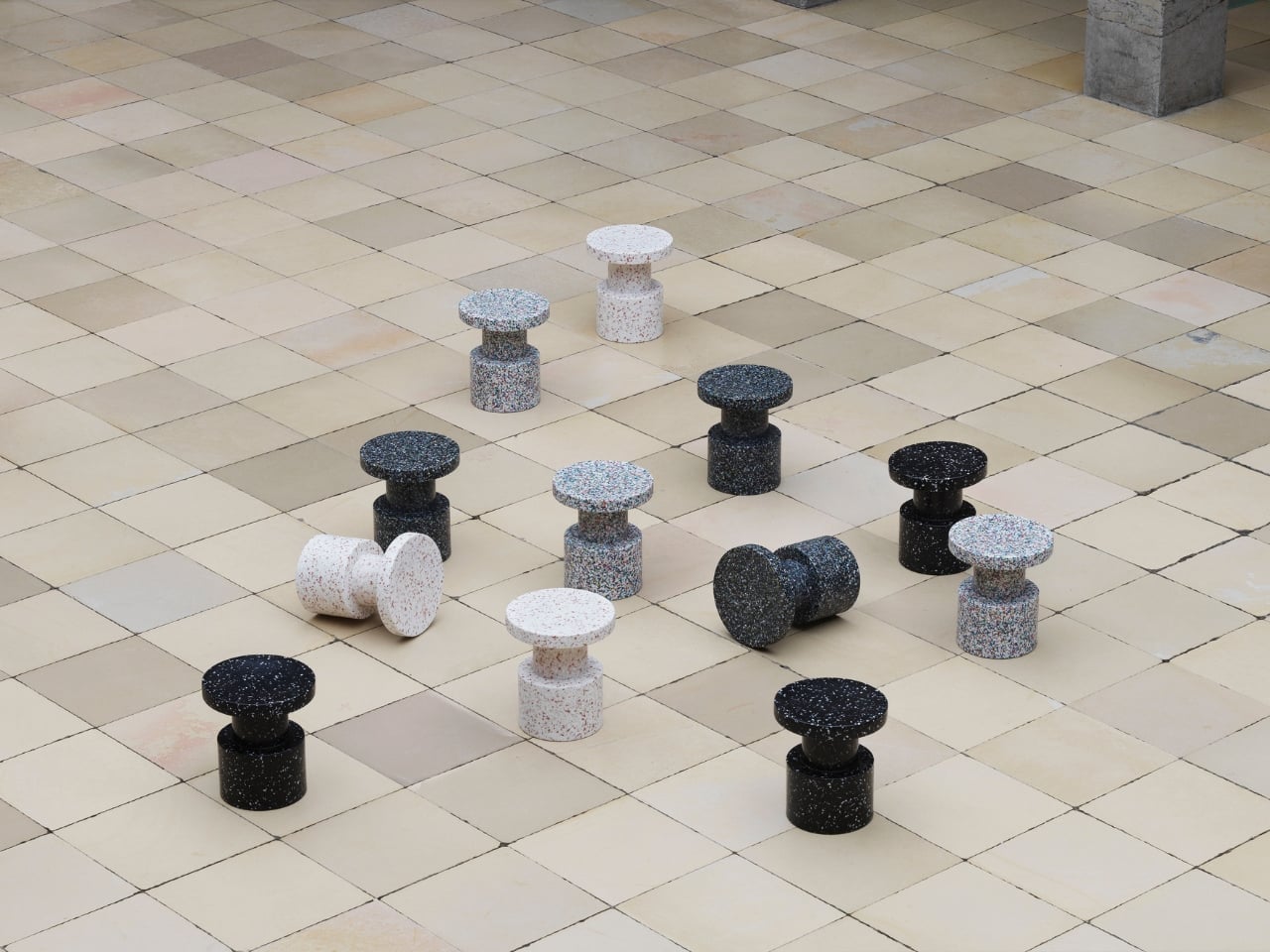
The resulting design is quite intriguing as well. The raw materials are classified according to color to have a more uniform appearance, but the uniqueness still comes out in tiny bits of colors and microtextures. If some recycled plastics create a terrazzo effect, the recycled rubber soles result in finer and smaller pieces that have a grainy appearance as if painted with oils or mixed in with concrete.

The shape of the WU stool is also unusual, with a hexagon seat and a three-pointed base. This makes it easy to combine the stools into a larger form like a bench, though the connection will be superficial and perhaps a bit unstable. When placed together, these stools paint a rather eye-catching picture, almost literally, as if somebody took reality and applied a mosaic filter on it. Either way, no one will be the wiser that these were probably made from the pair of shoes they threw away years ago.

The post Mosaic-like stools are made from the soles of discarded rubber shoes first appeared on Yanko Design.
Alien-like metal stool concept inspires awe rather than fear

Grotesque alien creatures will probably be trending again thanks to the revival of a long-running movie franchise, but all extraterrestrial creatures will look horrifying. They might be breathtaking, defying all the preconceived notions of our limited human minds. They might not even be organic, at least as defined by what we know on earth. If we ever encountered an inorganic, metallic alien that didn’t look like any biped or quadruped Earthbound creature, it could probably look like this metal stool with its symmetric tentacles that seemingly invite you to approach and, well, sit on it for your comfort.

Designer: Riley MacKay

Alien references aside, this metal and wood stool definitely doesn’t look like your typical piece of furniture. There are technically still four legs, though they look double that number because of how each leg splits into two. The legs seemingly turn and swirl around the center of the stool, giving the impression of tentacles moving around a metallic creature.

Unlike what you’d see from a jellyfish or octopus, however, there is a strict symmetry to the stool’s geometric design. The legs protrude at a specific angle away from the body and to the side, creating the shape of a spinning star when the stool is viewed from the top. This design provides both visual and mechanical balance, giving the stool stability despite its seemingly thin and flat legs.

There is also a sustainability angle to the Metal Stool, though perhaps a bit indirectly. The legs are made from sheet metal while the seat is birch wood, both of which can be sourced from sustainable or renewable options. The minimalist design could mean that these parts can be taken from factory offcuts as well, providing a new purpose for otherwise discarded and wasted materials.

The Metal Stool is a prime example of a simple and subtle design that manages to look quite stunning just by shifting the formula just a little bit. Whether it reminds you of aliens, jellyfish, or abstract art, the stool has the same effect of catching your attention and adding a unique character to any space. And, of course, you can sit on it as well without fear of toppling over or, worse, being taken by metal tentacles into the depths of a dark void.

The post Alien-like metal stool concept inspires awe rather than fear first appeared on Yanko Design.
Modular stool concept is designed for people who love sitting cross-legged

Stools are often classified as tall, backless chairs, and like most seats, they’re designed to be used in a specific way. You simply sit on top of the stool and have your legs hanging from the edge, with your feet planted firmly on the ground. This style of sitting might be common, but it’s definitely not how everyone sits around the world. In some cultures, particularly in Asia, people tend to sit cross-legged on the floor, at least when they’re at home or in establishments designed to cater to that culture. Stools, of course, aren’t meant to support that way of sitting, but this concept design tries to expand the traditional stool design to be more inclusive while also offering an additional feature completely unrelated to sitting.

Designer: Gisung Han

It’s probably too much of a generalization but sitting cross-legged has become associated with Asian cultures. Especially in countries like Korea and Japan, some families tend to sit on the floor during meals in that position, something that might not sit well with those who don’t consider it proper during meals. Eating outdoors, of course, is a completely different matter, especially in public places like outdoor restaurants that only provide simple stools for customers. One simply can’t sit cross-legged comfortably, but still try to do it.

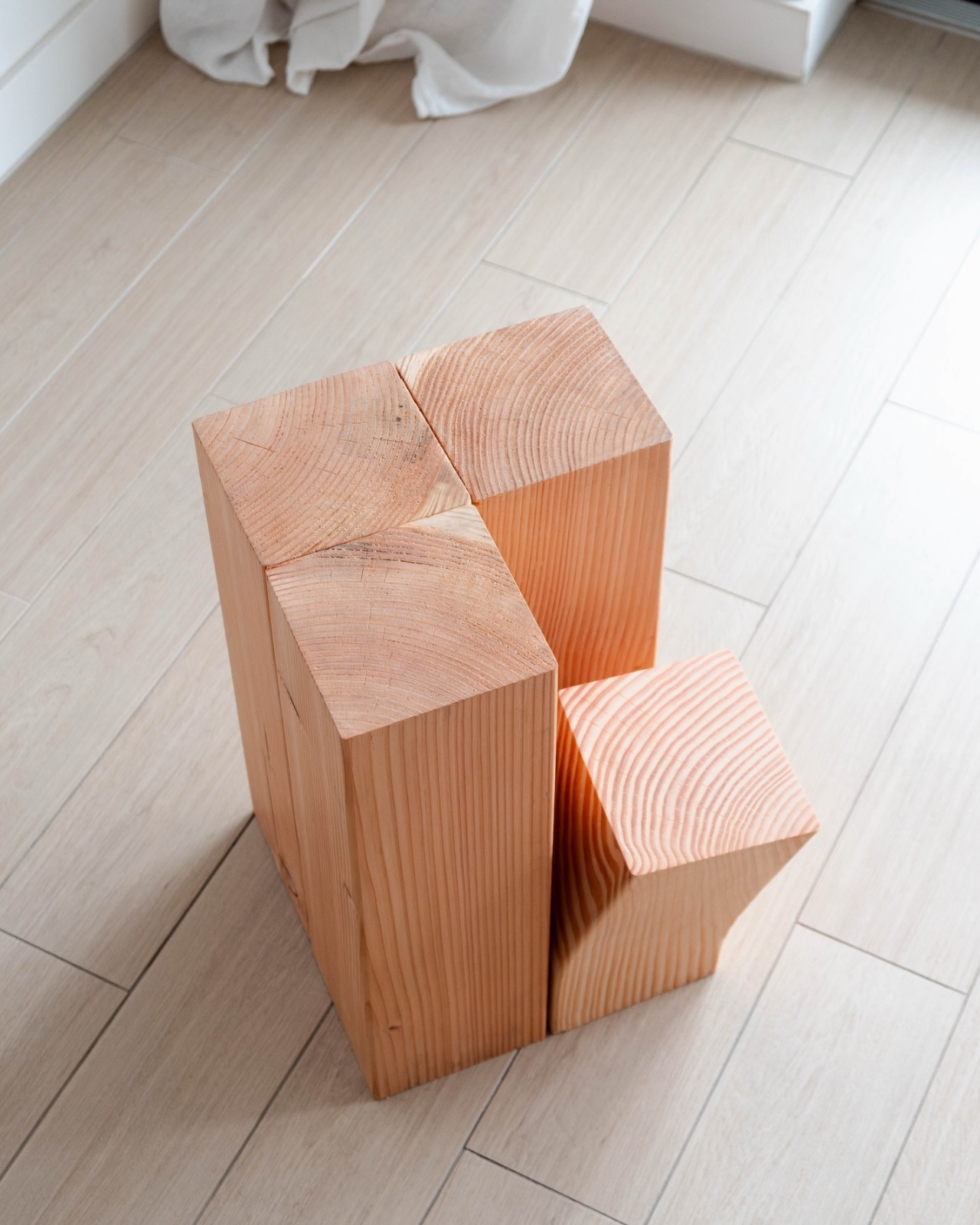
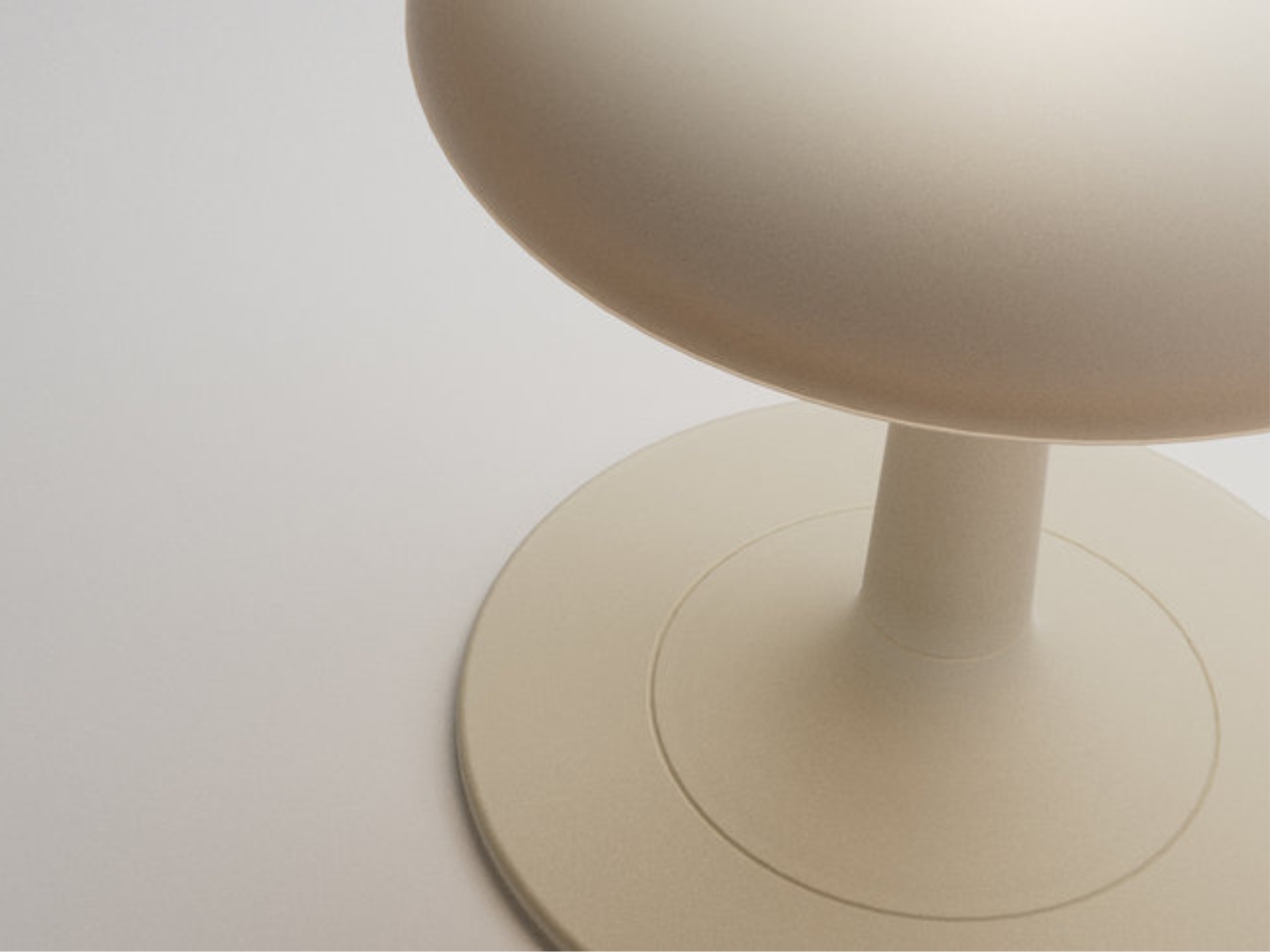
Named after a famous avenue in South Korea, the Euljiro stool concept tries to solve this conundrum with a design that caters to both normal sitting and cross-legged sitting. This seemingly magical capability is made possible by the stool’s two-part modular design. When joined together, it looks like a simple, two-color stool that you can use normally. But remove the top part and you actually get two stools, with the top shorter than the bottom.
1

When you insert one of the legs of the taller stool into the middle of the shorter one, you get a two-tier seat seemingly joined at the hip. This setup would allow the person to sit with their legs crossed without worries they’ll tumble backward or to the side. It doesn’t take up too much space either, and it can even be used as two separate stools if there aren’t enough seats to go around.

Euljiro’s flexibility also extends to its use as a place to put bags while eating. This is especially useful in restaurants that don’t have designated storage for bags, where putting bags down on the ground might be unhygienic. It’s definitely a creative way to solve multiple problems with a single design while ironically still sticking to the most common stool shape of all.

The post Modular stool concept is designed for people who love sitting cross-legged first appeared on Yanko Design.