Laifen Just Made Flawless Grooming Stupidly Easy (No Skill Required)

We live in an era of life hacks, a time when everyone wants the best possible results with the least amount of fuss. We want the Michelin-star meal from a 30-minute recipe and the perfect vacation photos without a professional camera. The same is true for our personal grooming. We see the flawless curls or the perfectly smooth shave online, but the reality often involves a tangled mess of hair, a bit of skin irritation, and a whole lot of time we wish we had back. The effort and the reward just don’t always line up.

This is where clever engineering can make all the difference, by building tools that automate the tricky bits for you. Laifen seems to be running with this idea in its latest product drop. The new lineup includes an automatic curling iron for people who always wrap their hair the wrong way and a high-speed hair dryer that aims to nourish while it dries. It’s all about lowering the skill level required to look polished and put-together, which is a philosophy anyone with a busy schedule can get behind.

Laifen P3 Electric Shaver: Pocket Shaving Without Drama

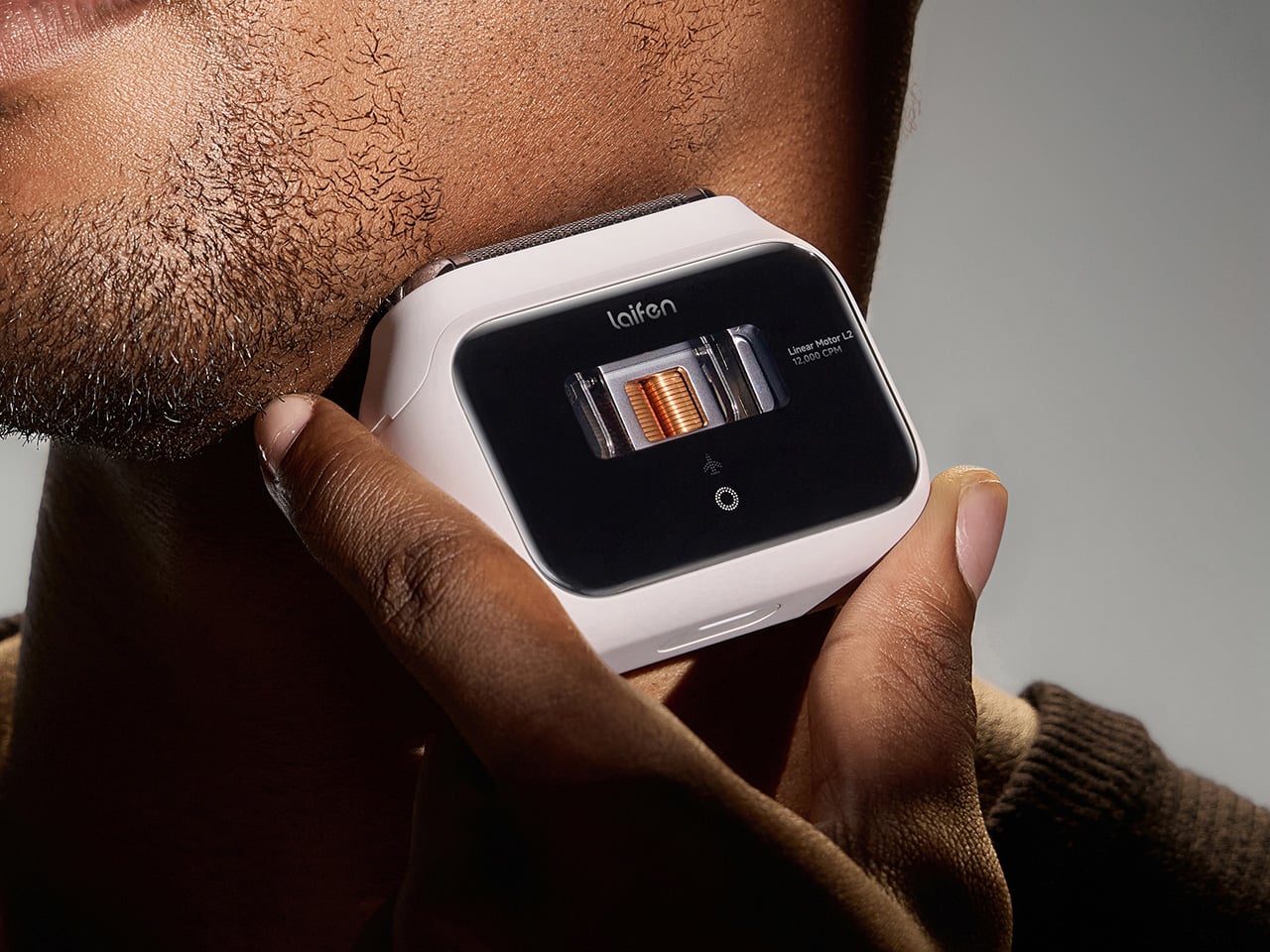
The electric shaver has had a size problem for a long time. Go compact and you sacrifice power, go full-size and you’re suddenly packing something that takes up half your toiletry bag. Most portable shavers have quietly accepted this arrangement and deliver a mediocre shave, complete with pulling, patchy results, and a bit of post-shave redness for good measure. Most guys shrug it off as the price of portability. The Laifen P3 Electric Shaver was designed with a different attitude toward that particular compromise.

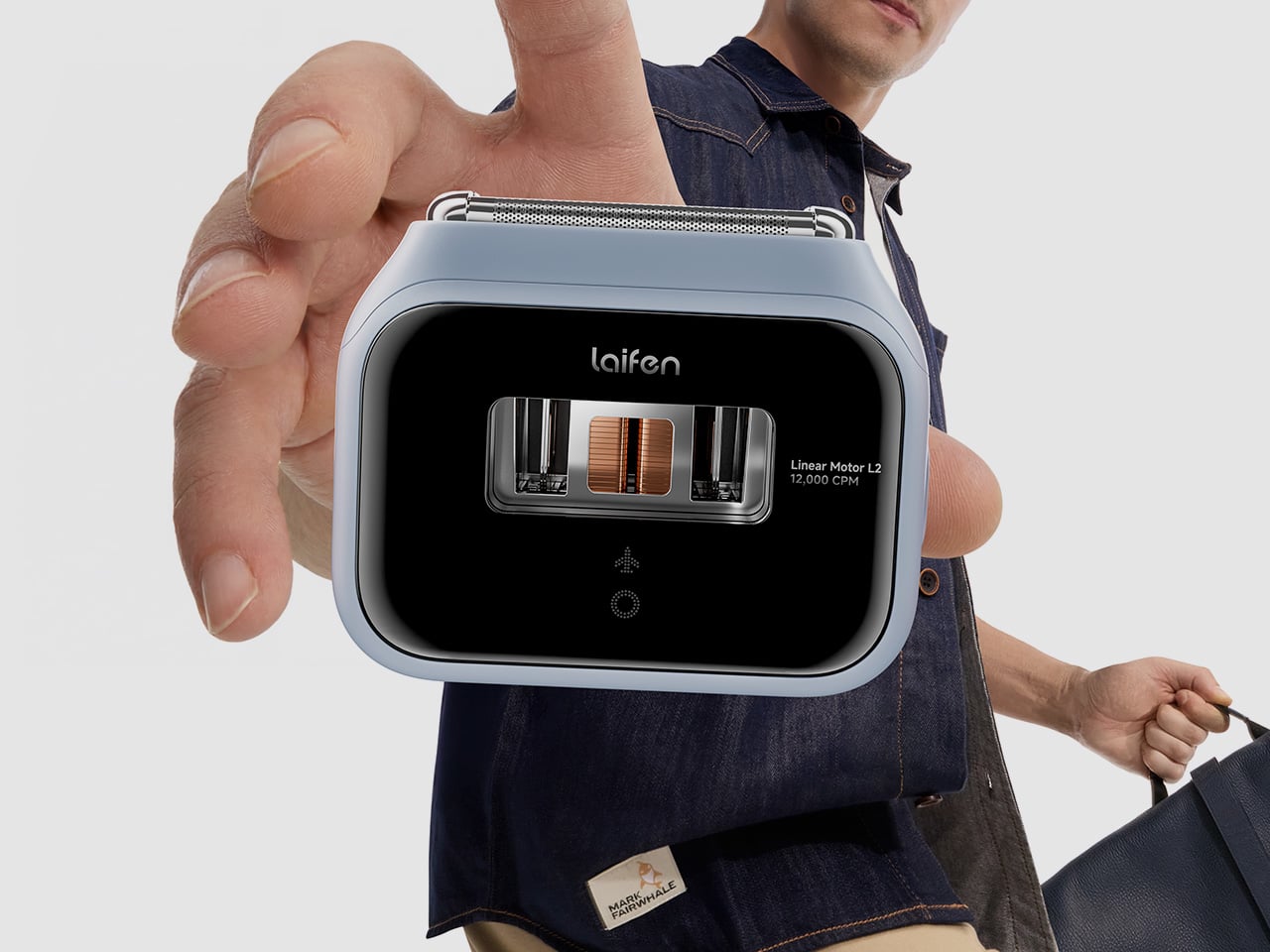
Inside the P3, a proprietary dual-motor system works alongside an ultra-thin stainless-steel foil and a cutting design specifically built to reduce irritation. What that means in practice is a shave that gets close to the skin quickly, without the tugging and pulling that makes cheaper portable shavers such a frustrating experience. The low-irritation design is also a genuine win for people with sensitive skin, which is a group that compact electric shavers have historically let down pretty badly. Clean results, comfortable experience, no drama.

Roughly one-third smaller than a traditional electric shaver, the P3 comes with a dedicated carrying case that slides into any bag without making you rearrange everything else to fit it. It’s the kind of shaver that makes sense for a work trip, a gym bag, or a bathroom shelf that’s already running out of counter space. The form factor is built around how people actually move through their day, and that kind of thinking tends to show in how consistently a gadget actually gets used.

Laifen also makes the more feature-heavy P3 Pro, and the two are designed for different kinds of users rather than sitting in a simple good-better hierarchy. The P3 is its own thing, aimed at someone who wants a capable, stylish everyday shaver that travels light and delivers good results without overcomplicating the morning routine. It’s an easier sell for a larger slice of people, and honestly, that makes it the more interesting product to watch.

Click Here to Buy Now: $189.99.

Laifen Swift 4 Hair Dryer: One-Step Drying and Hair Care

Most hair dryers have one job, and that’s to get your hair dry as fast as possible. Everything else, the serums, the oils, the frizz-fighting products, happens separately, usually after you’ve already spent several minutes with a loud appliance aimed at your head. It’s a fine enough system, just a slightly inconvenient one. You dry your hair, then you treat your hair, then you style your hair, and by the end of it you’ve invested a surprising amount of time into something you do every single day. There has to be a smarter way to run that sequence.

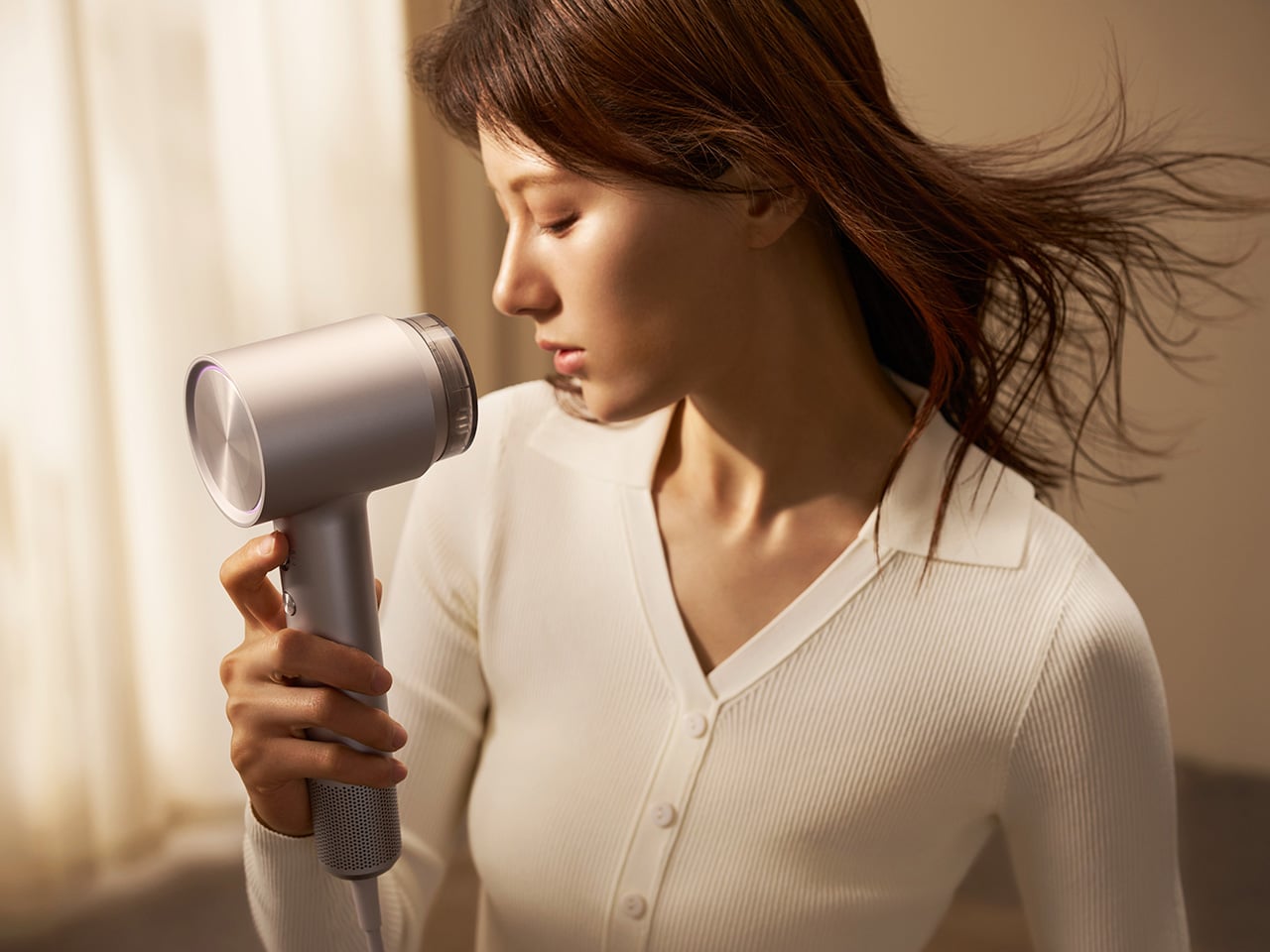
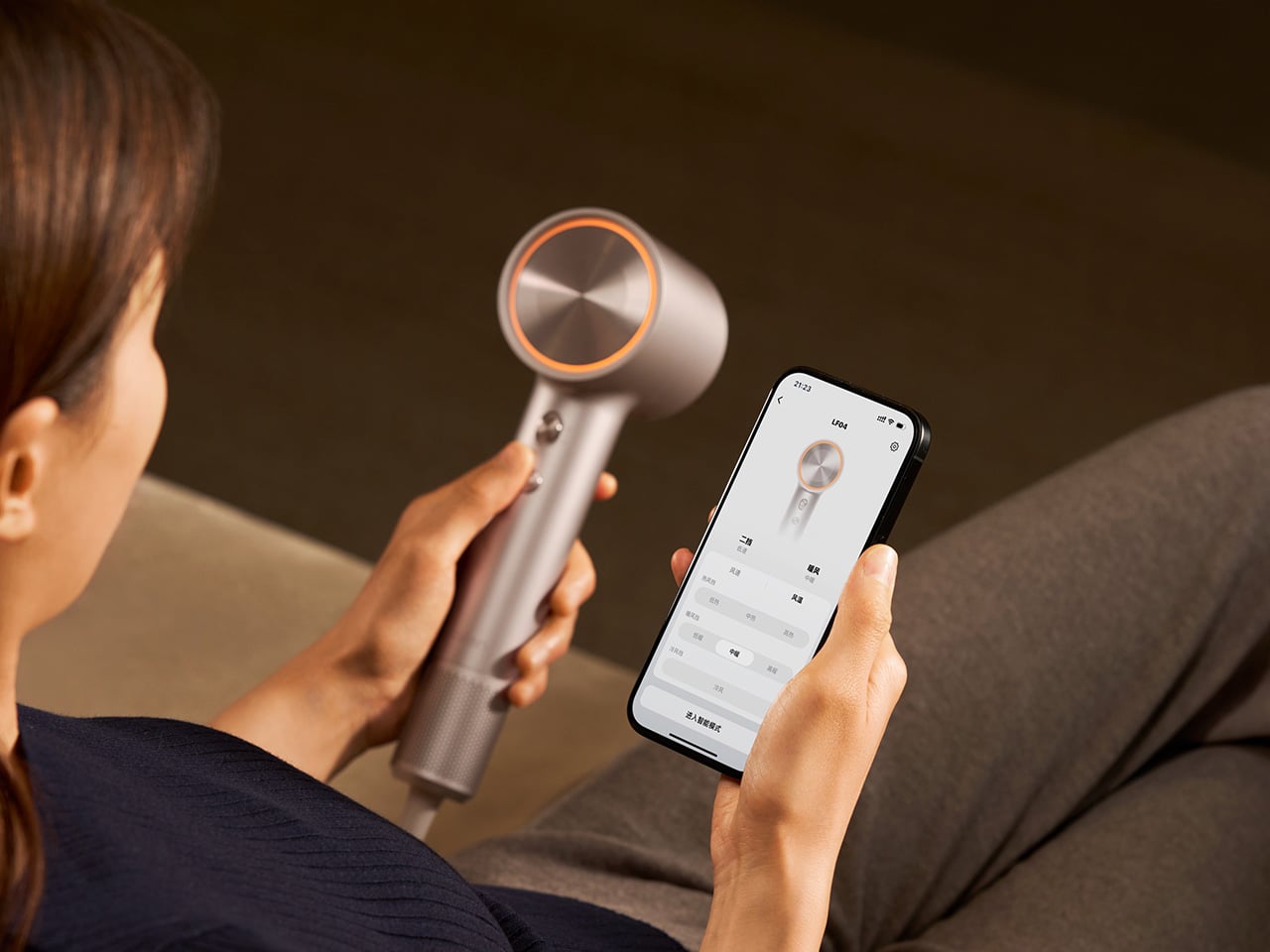
The Swift 4’s headline feature is a proprietary Nourishing Nozzle that diffuses essential oils into a micron-sized mist at a consistent 58°C while you dry. At the same time, 400 million negative ions and 70 million positive ions work to neutralize static and help balance the scalp’s environment. The result, according to Laifen, is smoother, shinier, frizz-reduced hair without extra steps after you put the dryer down. Whether you’re ready to swap your entire post-wash routine for a single nozzle is a personal call, but the concept is genuinely clever and worth paying attention to.

Speed is the other big thing the Swift 4 has going for it. A 115,000 RPM brushless motor pushes airflow at 23 meters per second, which Laifen says is enough to dry medium-length hair in around 1.5 minutes. A smart temperature control system monitors heat 1,000 times per second to prevent damage, and six customized temperature modes let you dial things in for your specific hair type. There’s also an intuitive LED ring for mode feedback and magnetic nozzle attachments that swap in and out cleanly. For anyone who has wondered whether they’re cooking their hair with the wrong heat setting, that level of real-time control is genuinely reassuring.

The Swift 4 Hair Dryer weighs just 407 grams, sits in an ergonomic handle built to reduce arm fatigue, and runs at a relatively quiet 59 decibels thanks to six layers of noise reduction technology. A Bluetooth app connection lets you set a personalized drying routine, and the magnetic filter on the back cleans in about three seconds. It has a premium aluminum alloy finish that looks sharp sitting on a vanity shelf, and at this point that’s actually a relevant design consideration. Nobody wants to leave an ugly appliance out in the open, and the Swift 4 is not an ugly appliance.

Click Here to Buy Now.

Laifen Glowy Vanity Mirror: Smart Lighting That Actually Flatters You

Makeup applied in bad lighting is one of life’s more humbling experiences. You do everything right at home, step outside, and catch a glimpse of yourself in a shop window that tells a completely different story. The culprit is almost always the light source you were working under, which was probably a single overhead bulb doing its worst. Good vanity lighting has always made a real difference to the outcome, but for a long time, getting genuinely useful light meant buying a bulky ring light and finding somewhere to put the thing.

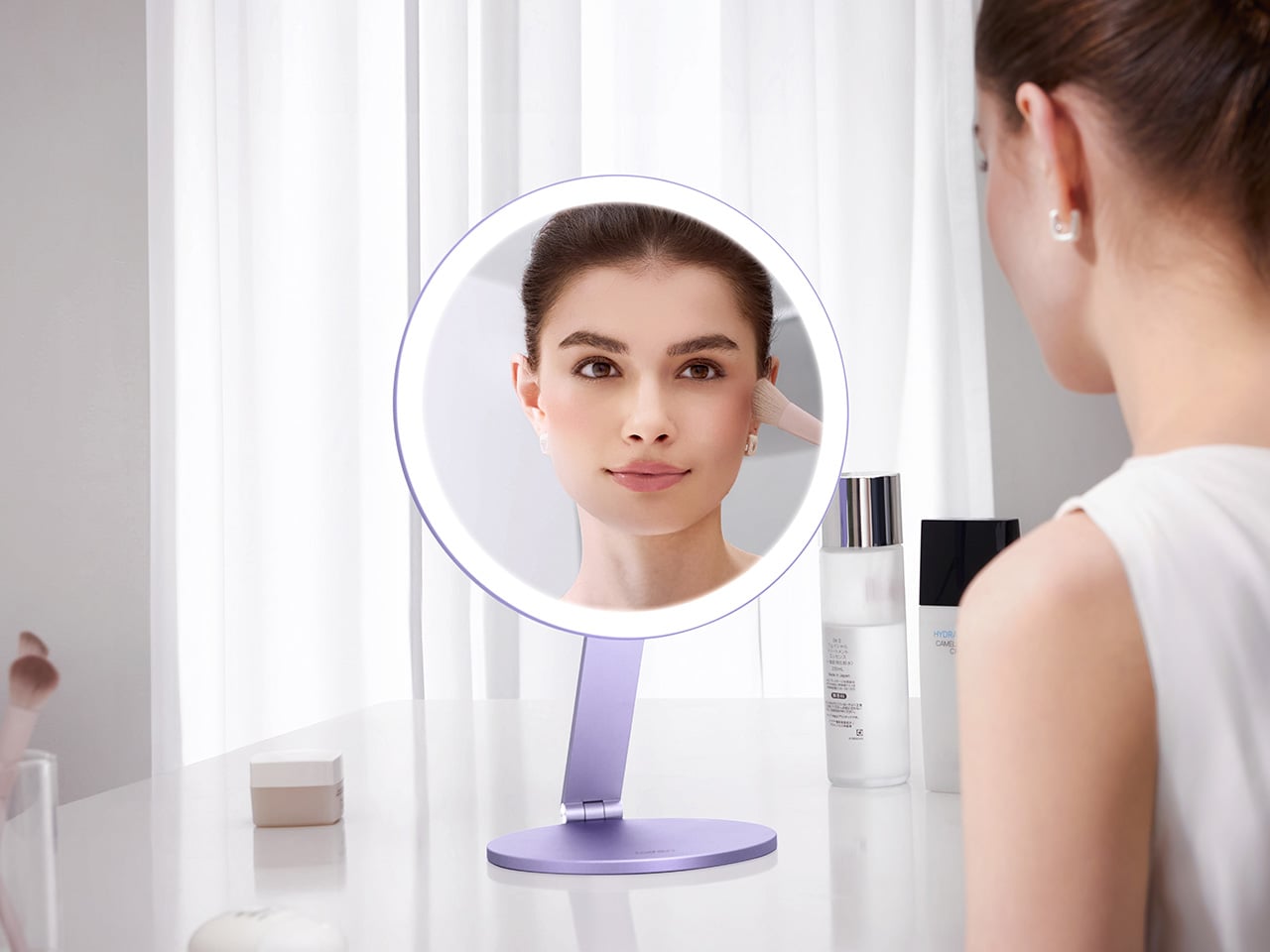
The Glowy Vanity Mirror skips the separate ring light situation entirely by building 360-degree even illumination directly into the mirror itself. The lighting is designed to replicate natural daylight, which gives you accurate color representation while applying makeup or skincare rather than the warm, flattering-but-deceptive glow that makes bathroom lighting so unreliable. There’s a large, high-definition mirror surface paired with that illumination, so every detail is visible without squinting or leaning uncomfortably close to the glass. It’s a pretty straightforward idea executed in a way that actually makes the bathroom routine more useful.

Smart features are woven in without feeling gimmicky. The mirror uses automatic motion sensing to wake up when you approach, remembers your preferred lighting settings, and offers adjustable modes for different needs. A long-lasting rechargeable battery means there’s no cord hunting involved, and the portable design lets it move around without being a production. These are the kinds of conveniences that sound minor on a spec sheet but add up to a noticeably smoother experience once they’re part of your daily routine.

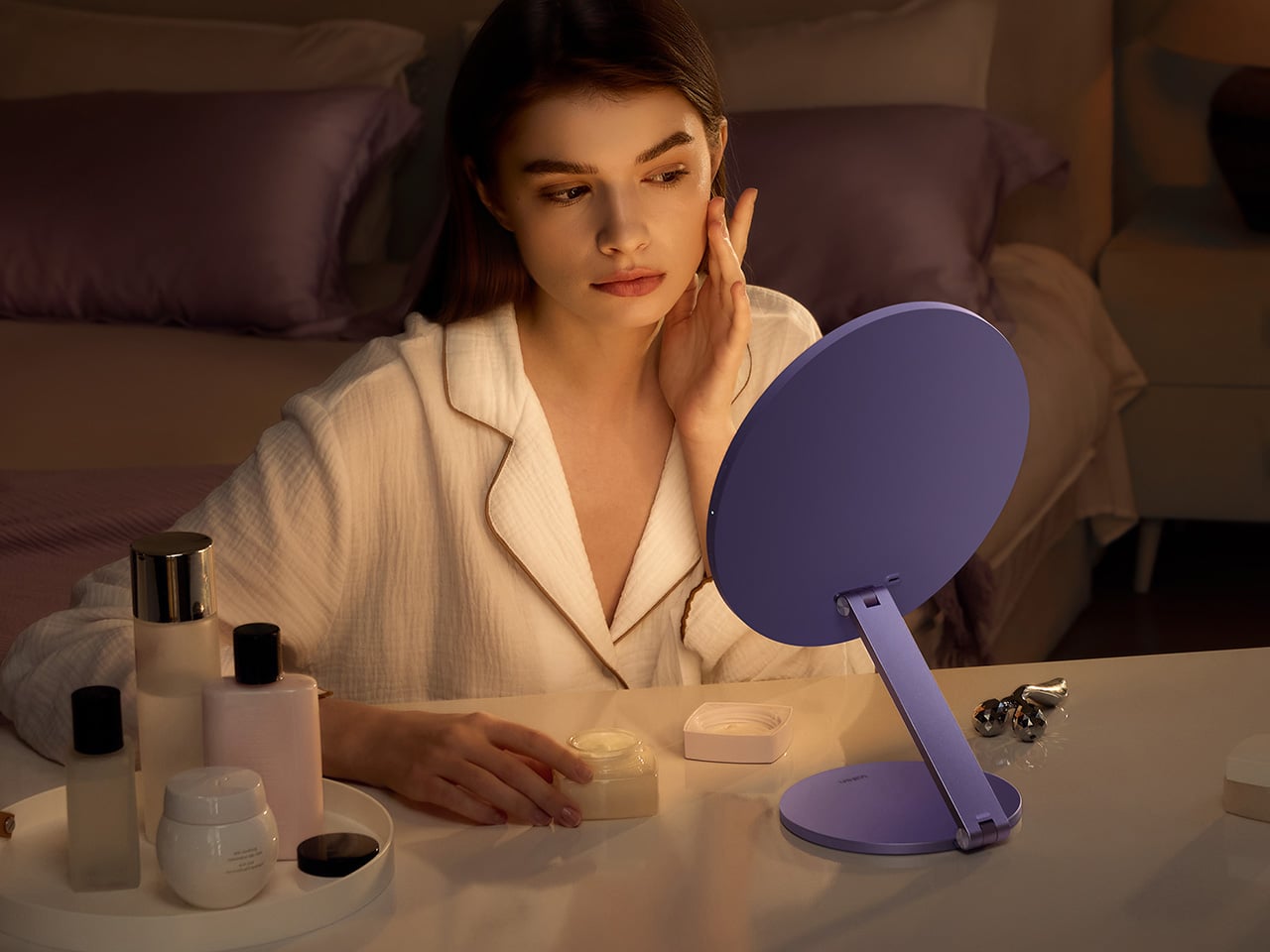
The hardware itself is built around an aluminum alloy stand with a refined finish that looks at home on a vanity rather than on a film set. Eye-safe, low blue light illumination keeps things comfortable during longer sessions, reducing the kind of eye strain that comes from staring into a bright light source for extended periods. It’s a product that sits at an interesting crossroads between functional tool and considered design object, and that combination is increasingly what the best personal care gadgets look like in 2026.

Click Here to Buy Now.

Laifen AutoCurl Curling Iron: Salon Curls Without the Learning Curve

Curling irons work beautifully in the hands of someone who knows exactly what they’re doing, and they produce uneven, inconsistent, occasionally singed results in the hands of everyone else. Getting a good curl requires a specific technique with the wrist, the right timing, and a sense of which direction to wrap the hair that somehow never feels intuitive. It’s one of those skills that looks deceptively simple in a tutorial video and considerably less simple when you’re standing in your bathroom at 7am trying to replicate it.

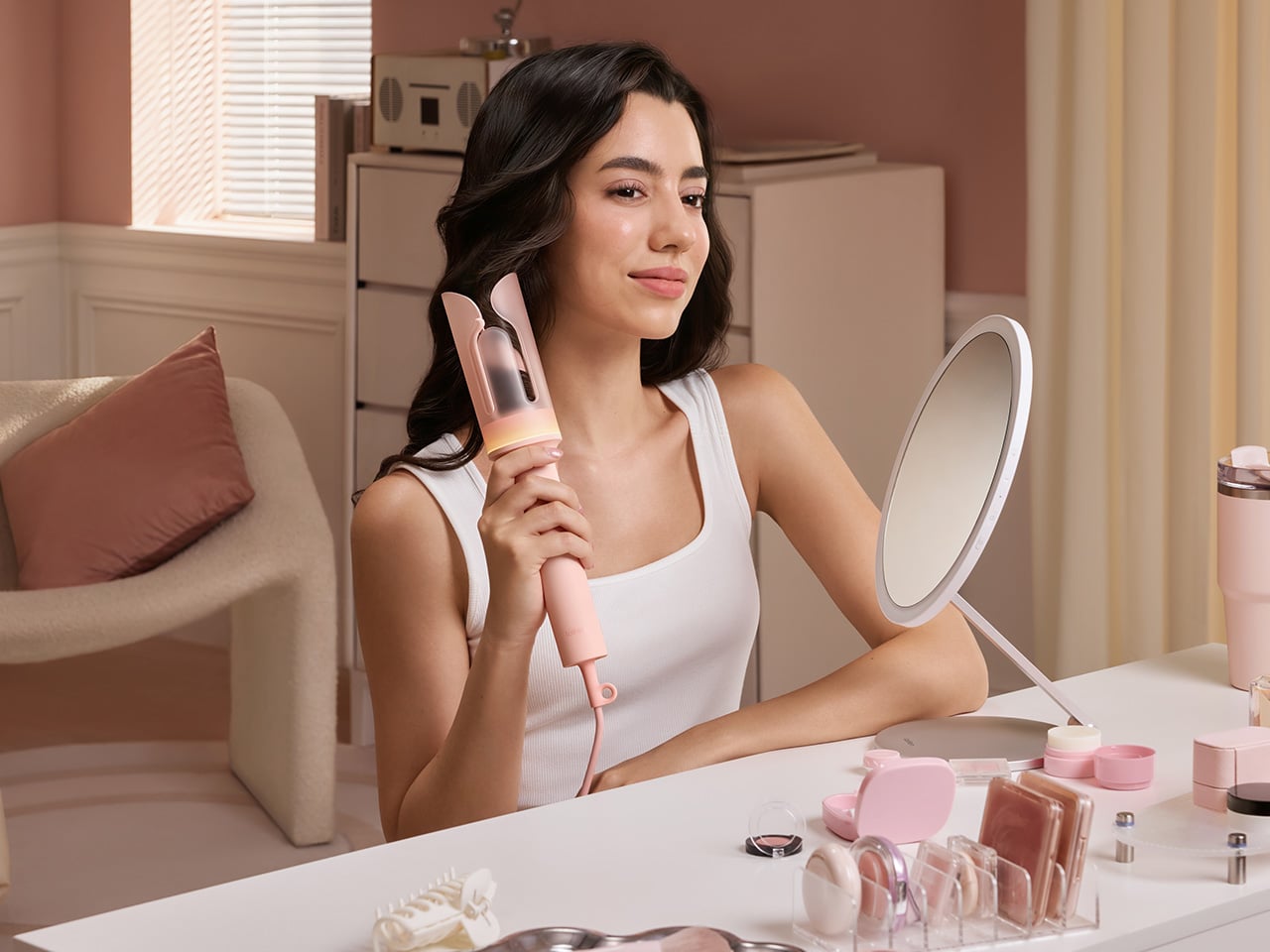
The AutoCurl Curling Iron’s core trick is that it handles the wrapping for you. A smart system detects where the hair is placed, automatically selects the correct curl direction, and adjusts in real time to prevent tangling or pulling. Users can let the device run fully automatically in Auto Mode, or switch to Manual Mode for more hands-on control when they want it. That’s a genuinely useful split, because it makes the tool accessible for beginners without feeling restrictive for people who already know their way around a barrel.

Speed is another area where the AutoCurl earns its keep. Laifen says it delivers bouncy, full-head curls in around 16 seconds per section, with even heat distribution that keeps results consistent from the first curl to the last. Custom temperature settings adapt to different hair types, and 200 million negative ions work through the styling process to reduce frizz and add shine. Intelligent temperature control keeps heat at a safe level throughout, so you’re getting faster results without quietly frying your hair in the process.

The safety features are thoughtful without being excessive. A protective curl chamber shields the hair-contact area, auto shut-off kicks in when the device is left unattended, and the operation is near-silent, which is a bigger quality-of-life detail than it sounds. Dual-voltage support and a lightweight build round things out nicely for anyone who travels frequently. It’s a curling iron that has clearly been designed with people who have given up on curling irons in mind, and that’s a very specific and very valid target audience.

Click Here to Buy Now: $99.99.

The post Laifen Just Made Flawless Grooming Stupidly Easy (No Skill Required) first appeared on Yanko Design.

One Week Design’s Squares Furniture Is Built on a Bricklayer’s Memory

I’ve been thinking a lot lately about what separates furniture that you simply own from furniture that you actually feel something about. Most pieces fall squarely in the first category. They hold your things, fill your space, and eventually end up in someone else’s apartment. But every once in a while, a collection comes along that makes you want to know the story behind it. The Squares, designed by Xiaoya Wang and Jian Ni of One Week Design, is that kind of collection.

The origin story alone is worth sitting with. The design is rooted in a personal memory: Wang’s father worked for a construction company that built small houses, and she occasionally joined him on the job, learning to lay bricks. Ensuring each wall was perfectly plumb, each brick snug against its neighbor, each layer bound by mortar. That ritual, repeated countless times, forged a core belief: objects are vessels of memory. That’s not a new idea, but Wang and Ni have translated it into something tangible and deeply specific.

Designers: Xiaoya Wang & Jian Ni (One Week Design)

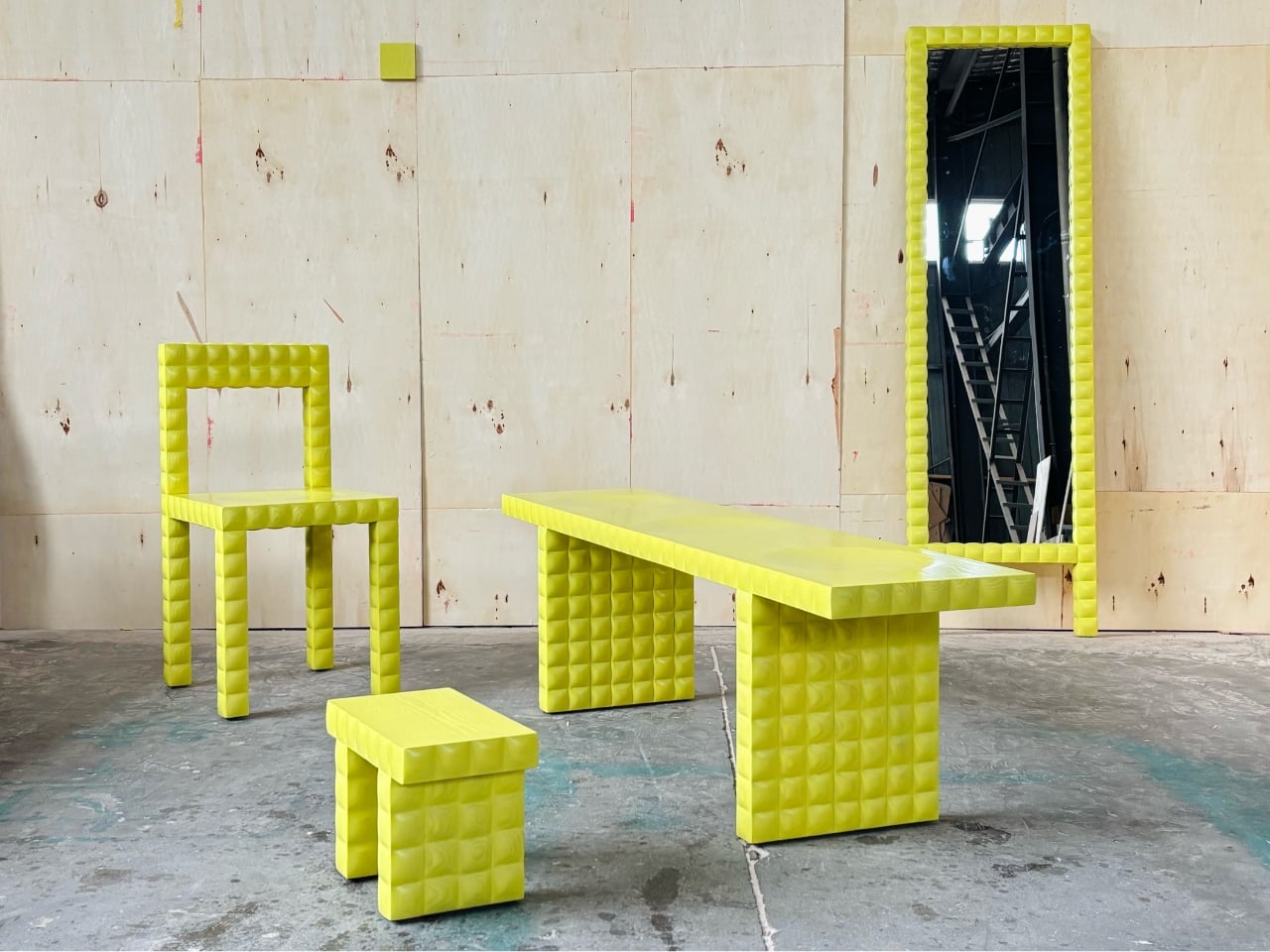
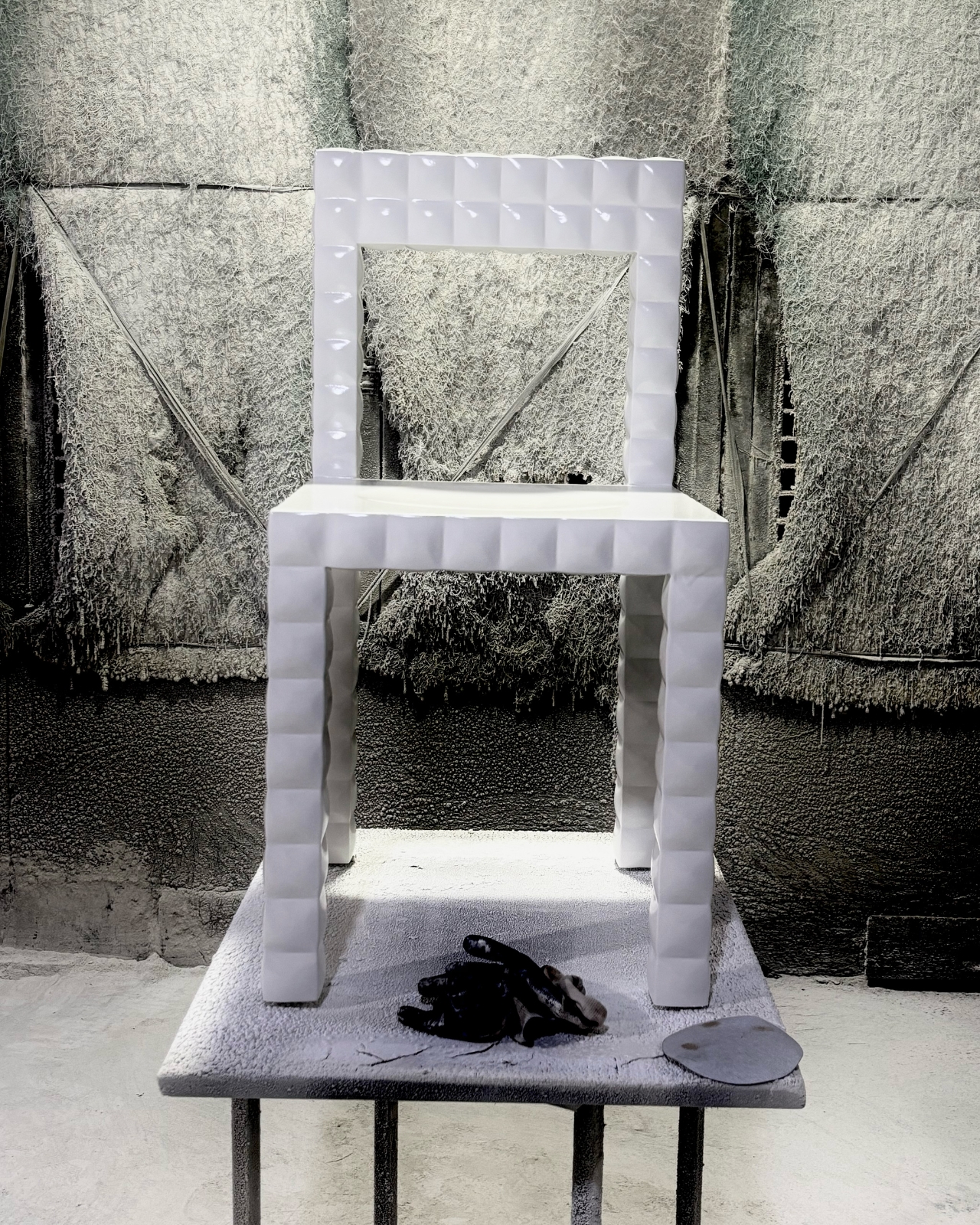
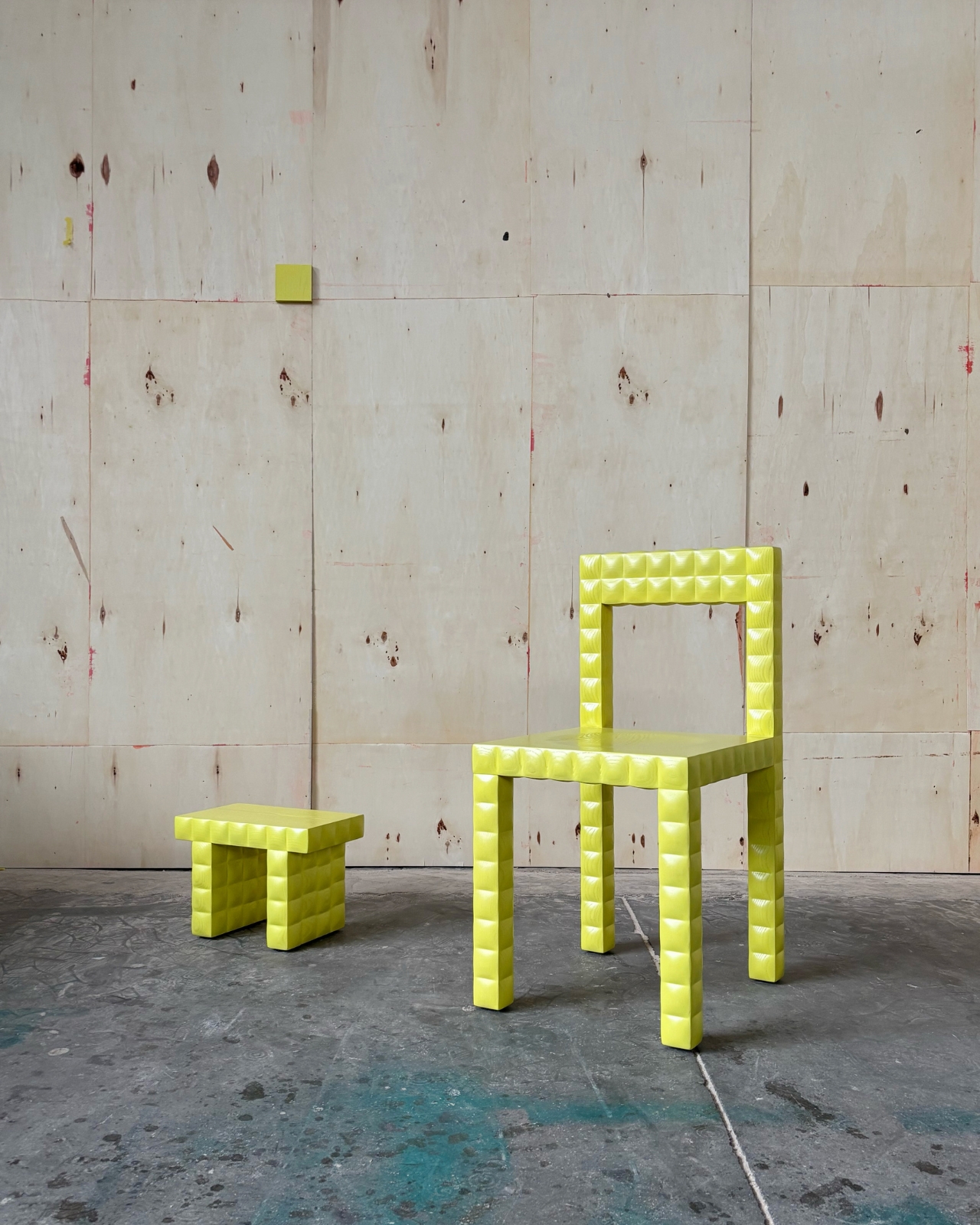
That specificity is where the collection gets interesting. The design exercised extreme restraint, strictly planning every dimension as a multiple of a 5x5cm square. It sounds almost obsessive, and maybe it is, but the result is furniture that feels completely resolved. The chair is reduced to its essence: four legs, a seat, and a back. Nothing more. That kind of restraint is genuinely hard to pull off. Minimalism often reads as cold or indifferent, but The Squares has warmth baked into it precisely because the discipline behind it comes from somewhere real.

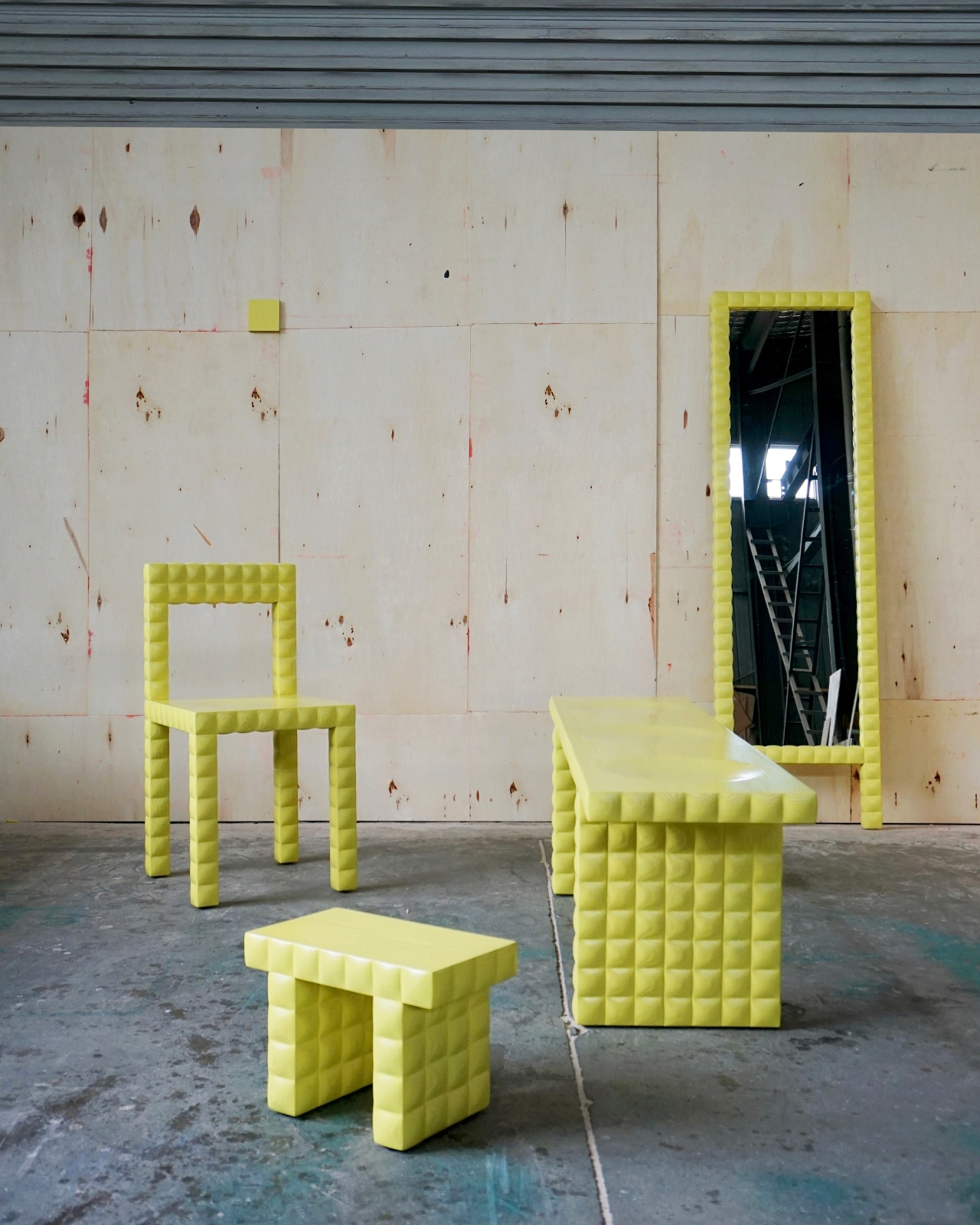
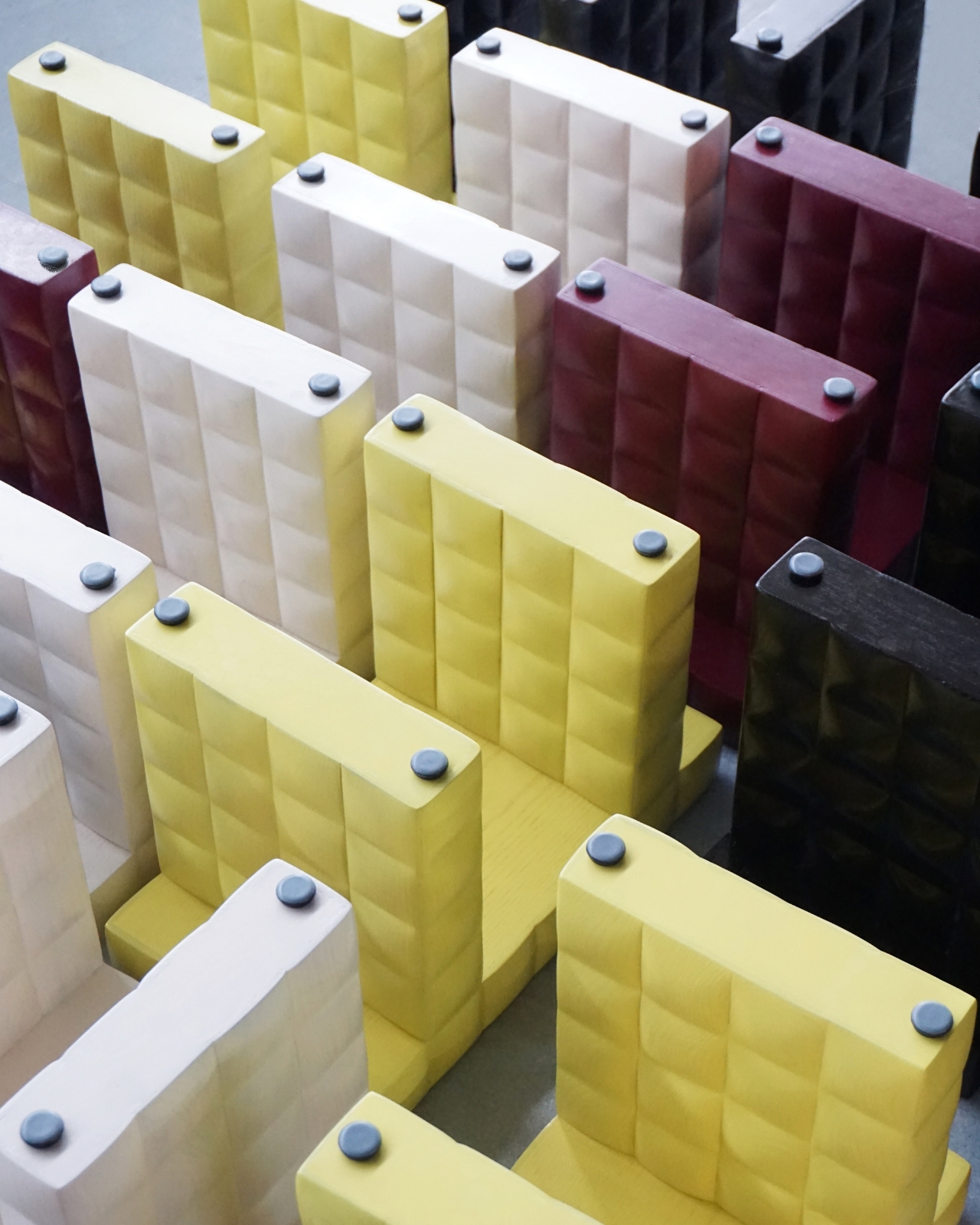
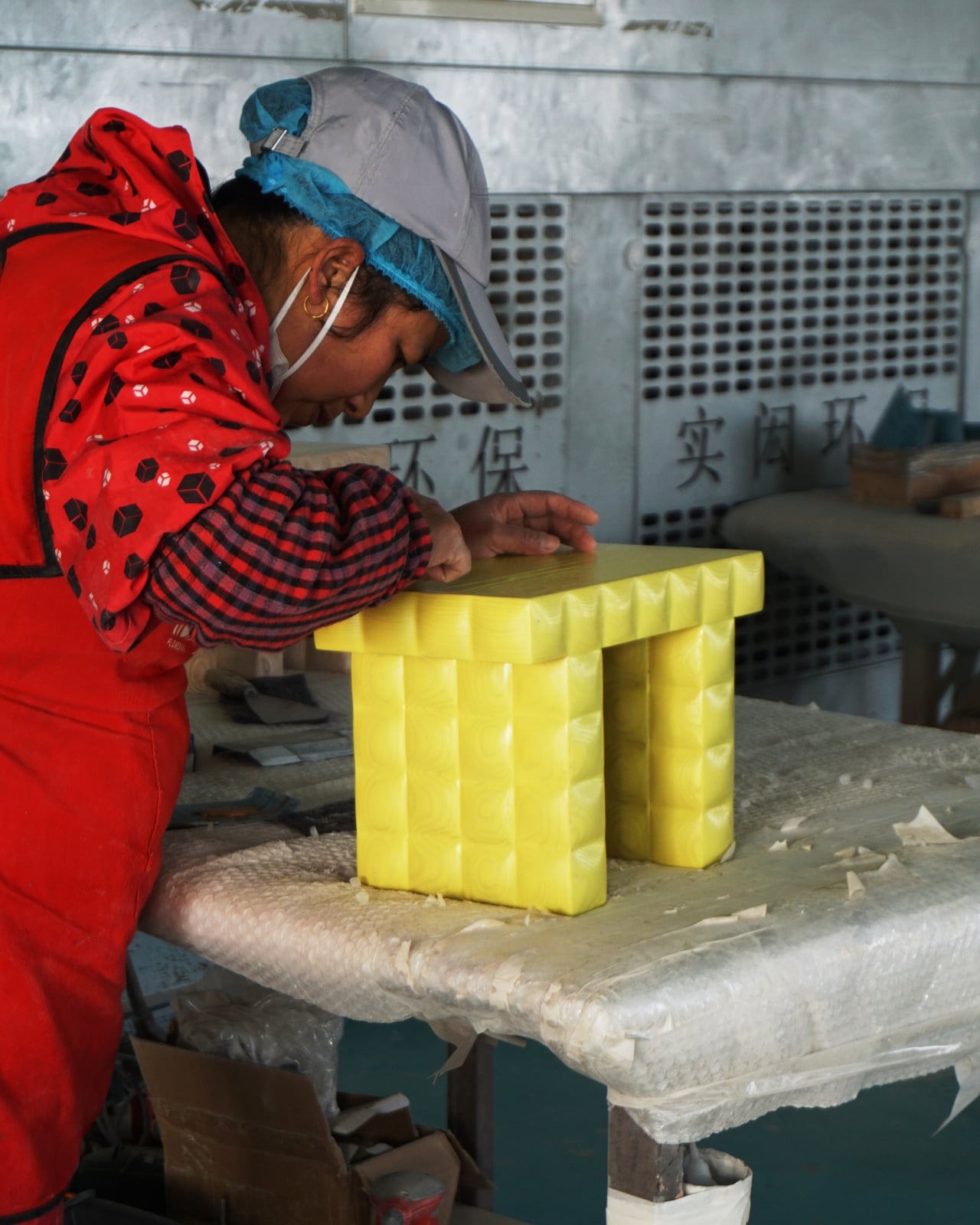
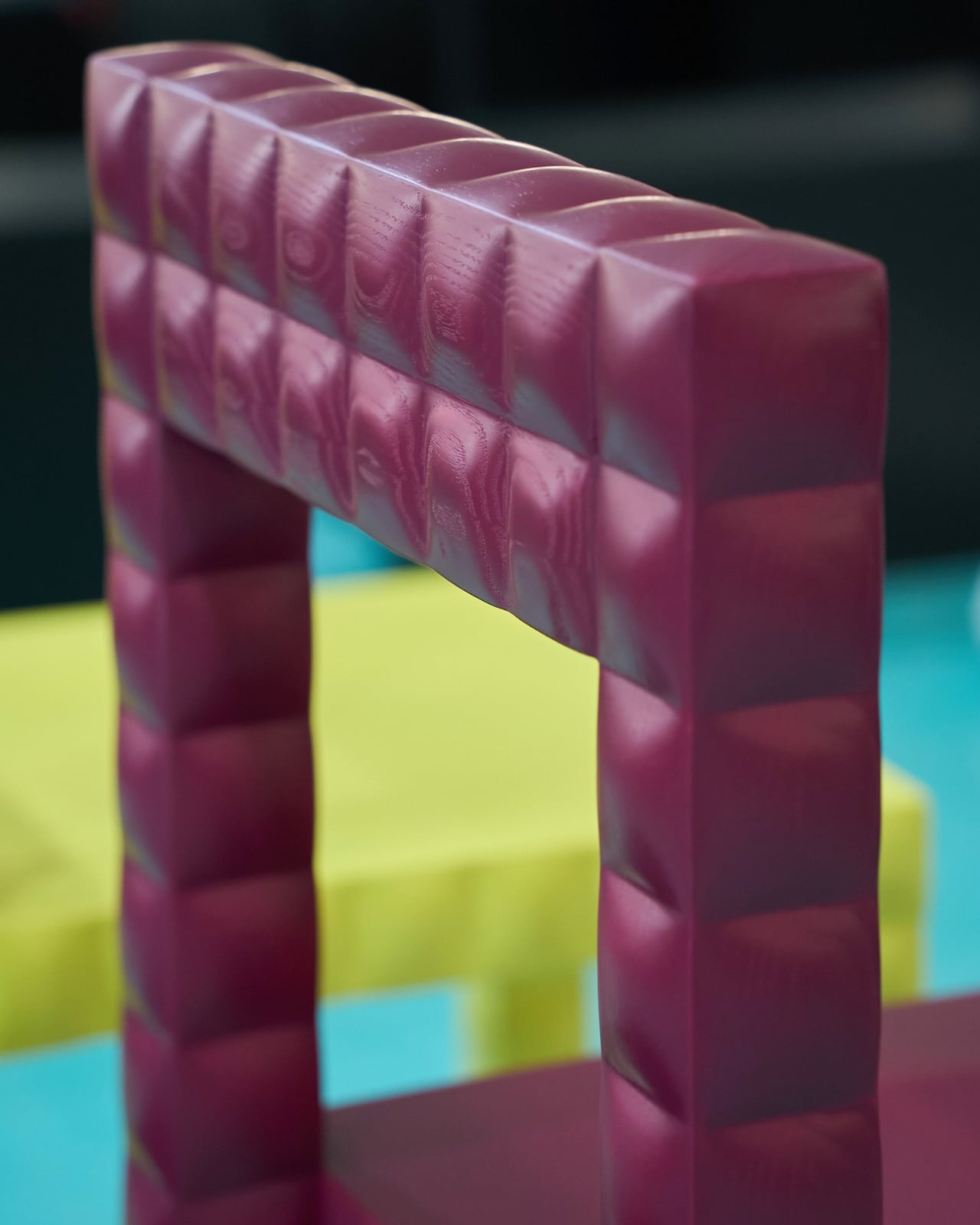
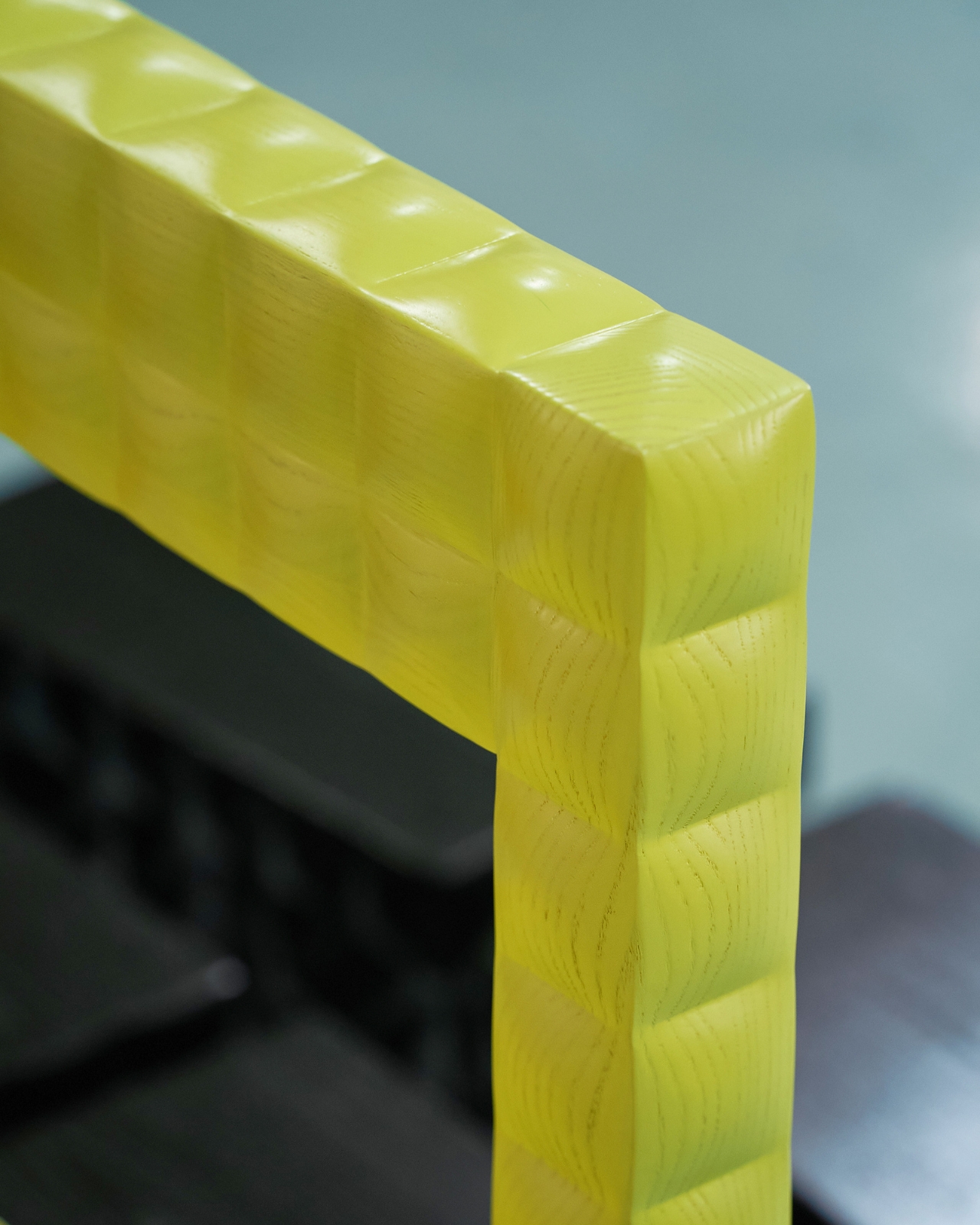
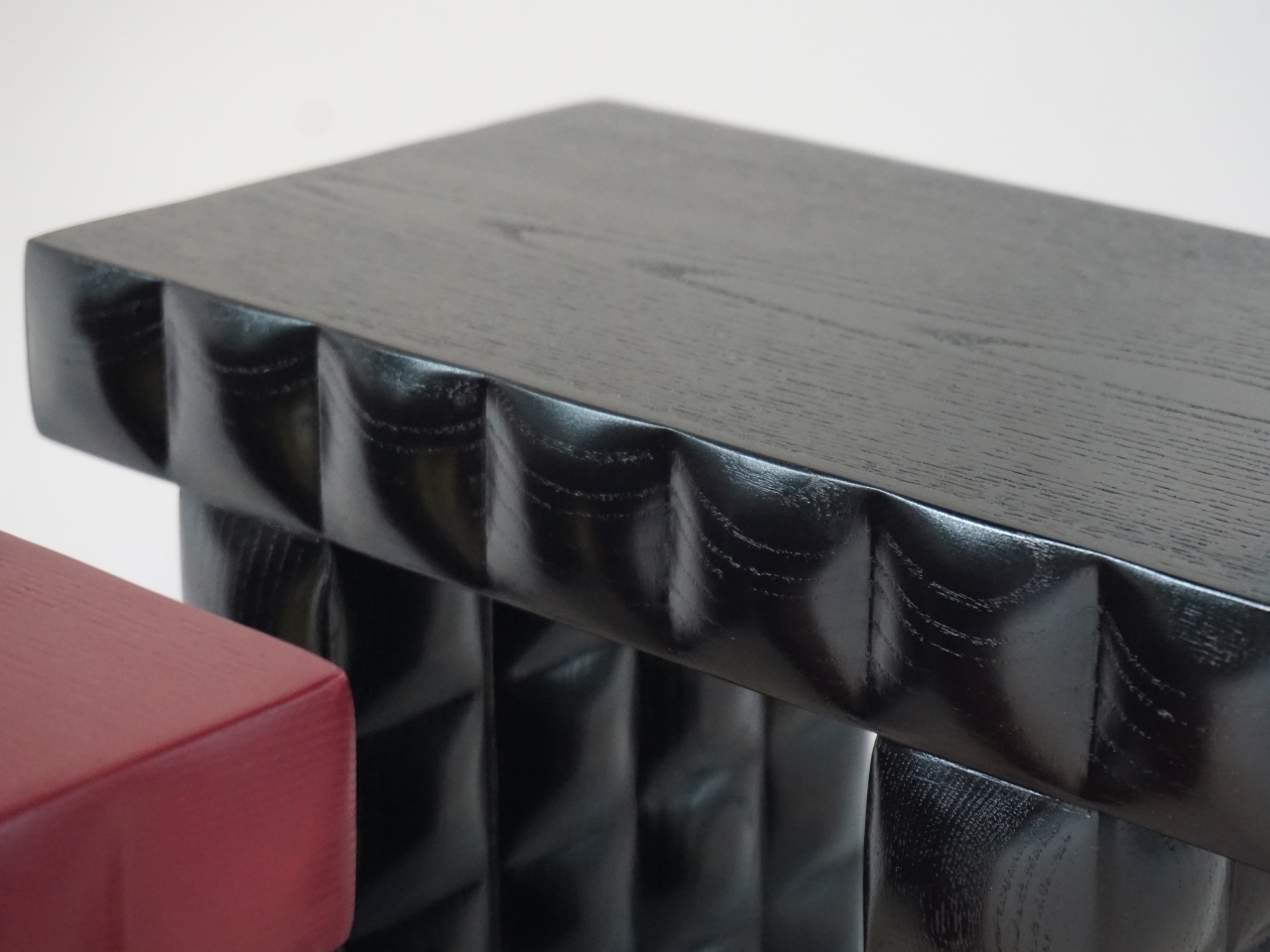
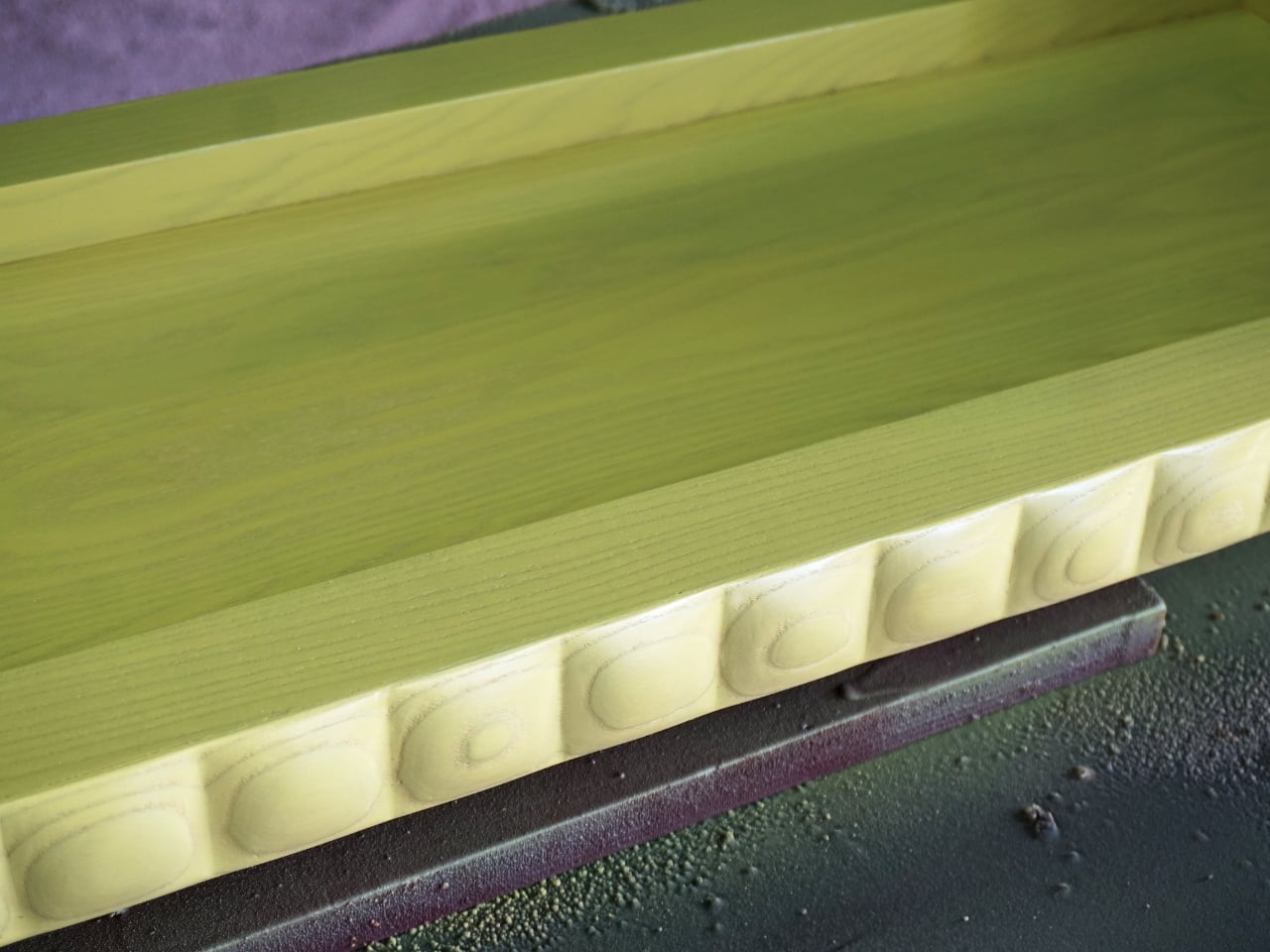
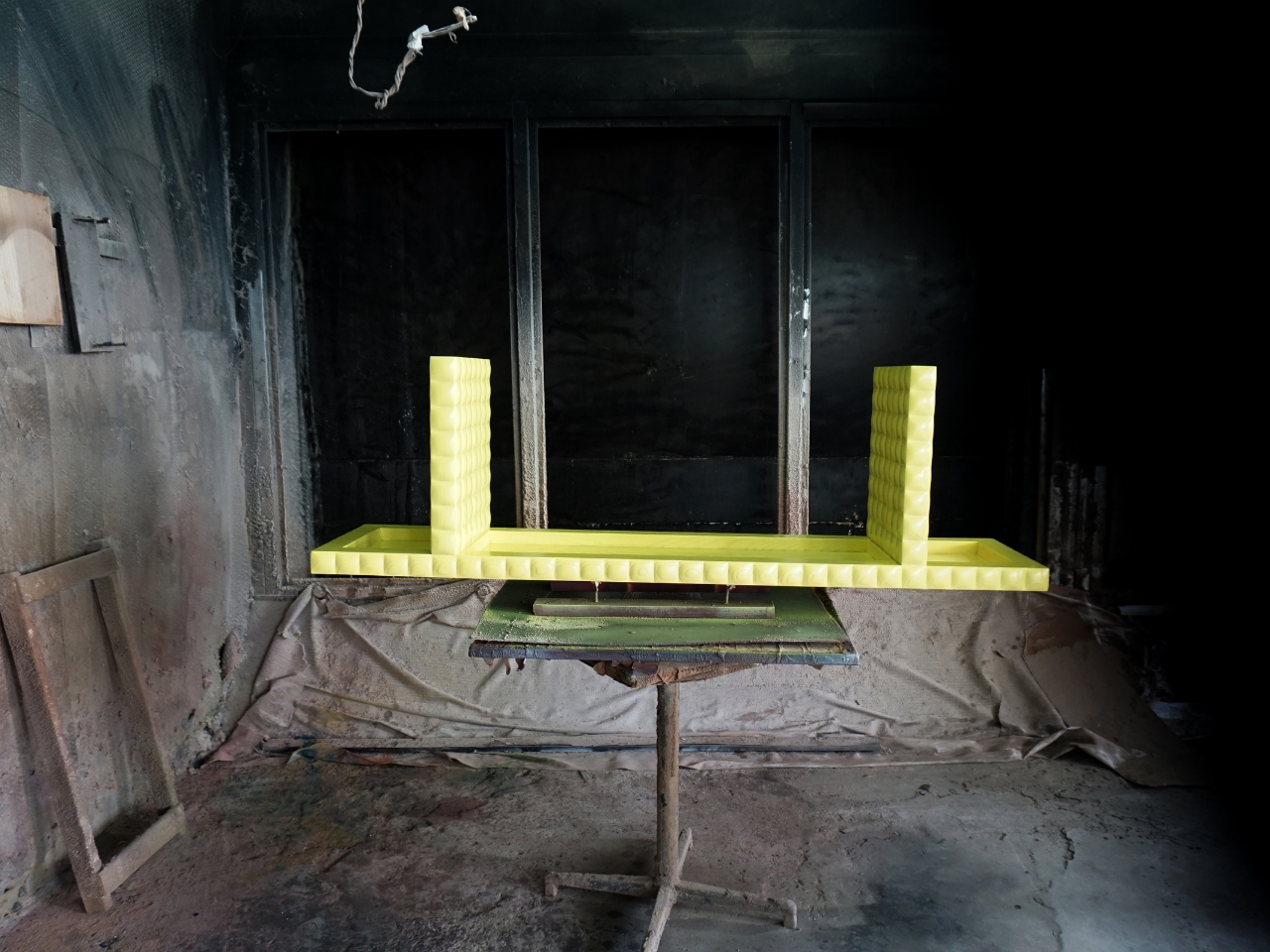
The design process mirrored childhood block-building: starting from chaos and moving toward order through a relentless search for harmony. You can see that in the finished pieces. The forms are architectural without being austere, geometric without feeling mechanical. The surface detail is what pushes it over the edge. The wooden construction features subtly convex surfaces on every block, which catch the light to create shimmering highlights, enhancing the vibrant colors or finishes. It’s a quiet trick that rewards a second look, and a third.

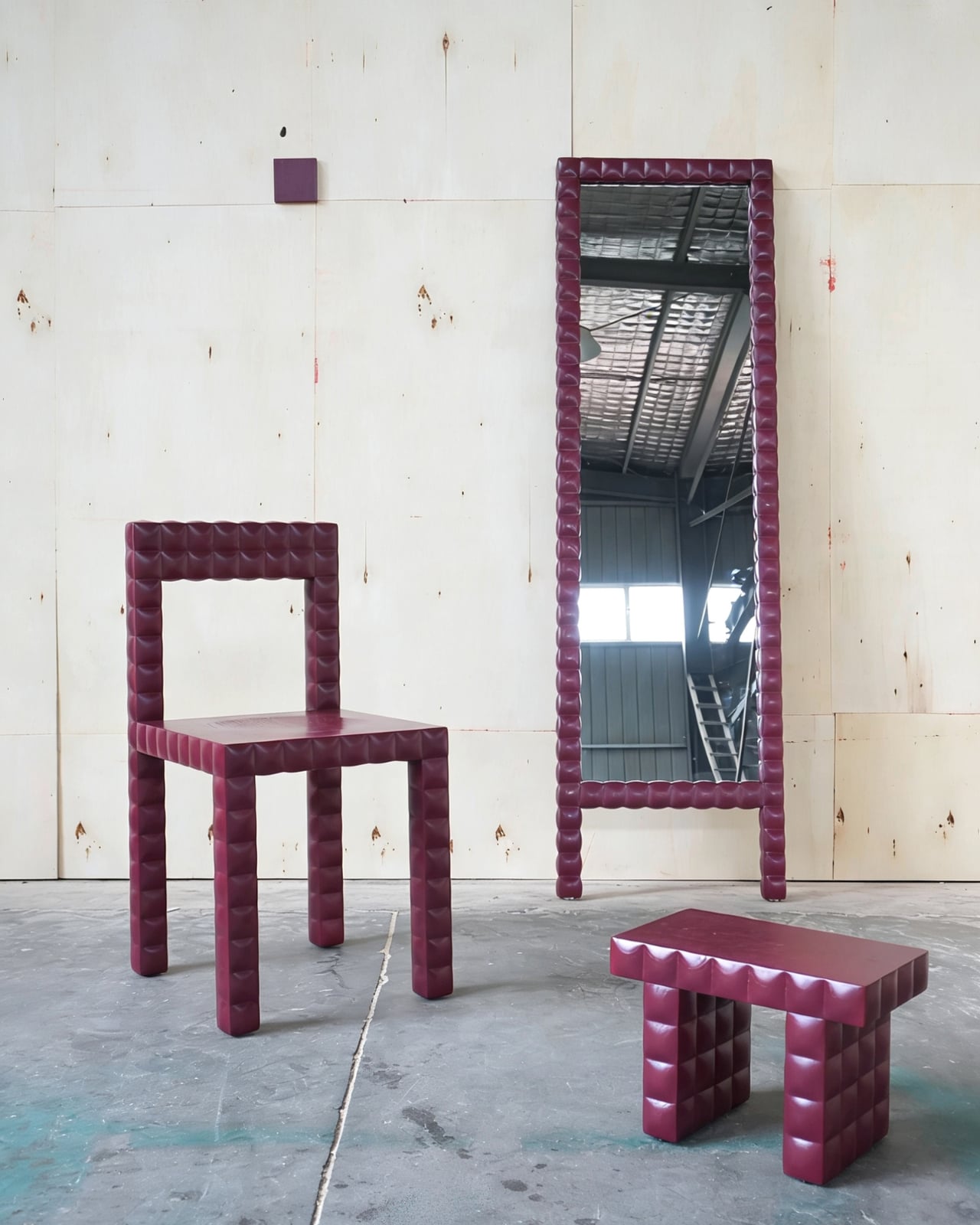
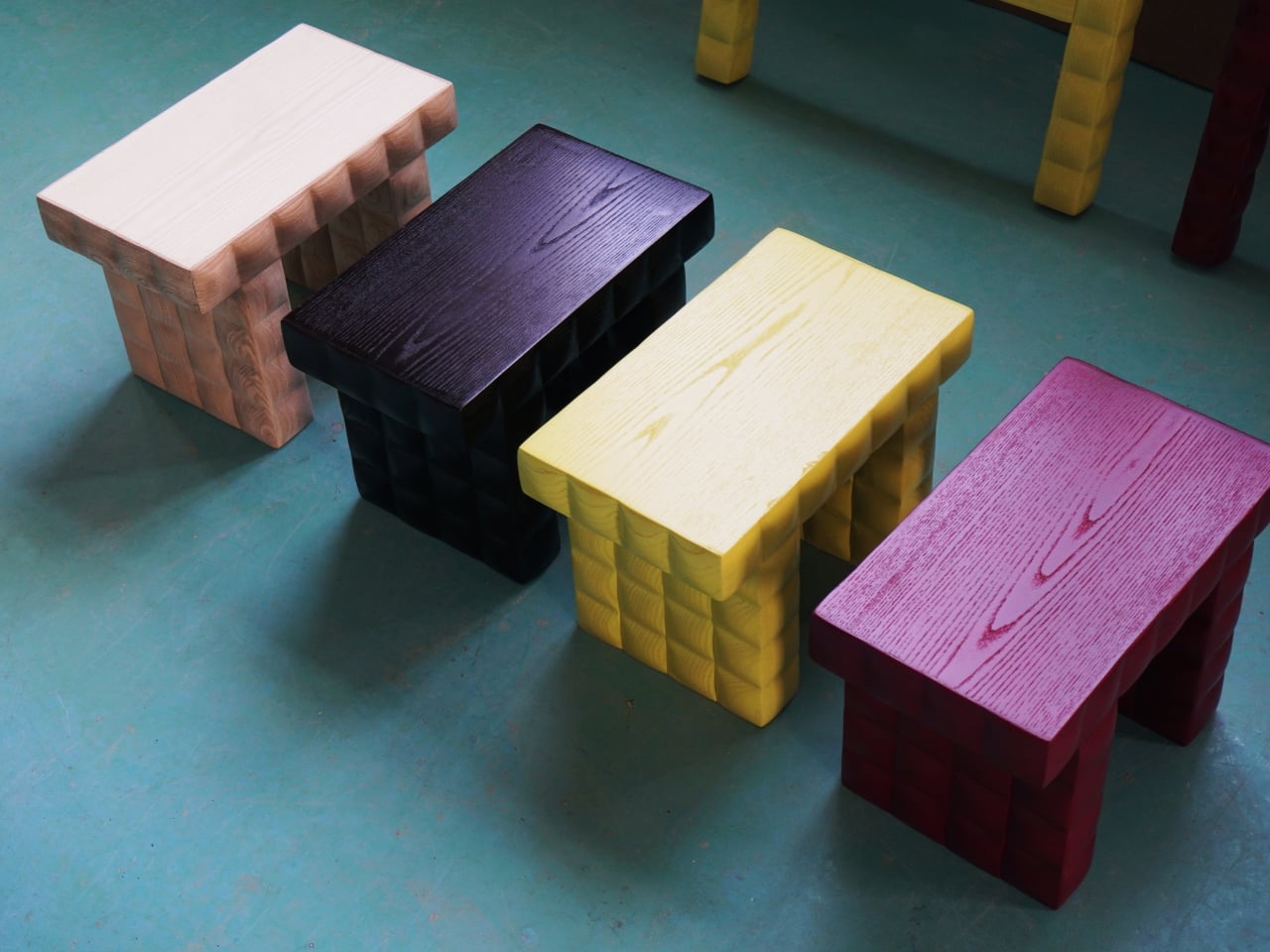
What keeps The Squares from tipping into a pure exercise in restraint is the color. The collection is available in a range of bold, saturated finishes: yellows that practically vibrate, deep crimsons, inky blacks, soft naturals. Beneath its austere exterior, the collection surprises with luminous finishes and bold colors, introducing a note of playful whimsy. I think that’s an accurate read, and I’d add that it gives the collection an unusual flexibility for something so formally rigid. A white Squares chair in a quiet corner reads as sculptural and calm. The same chair in acid yellow is a full statement.

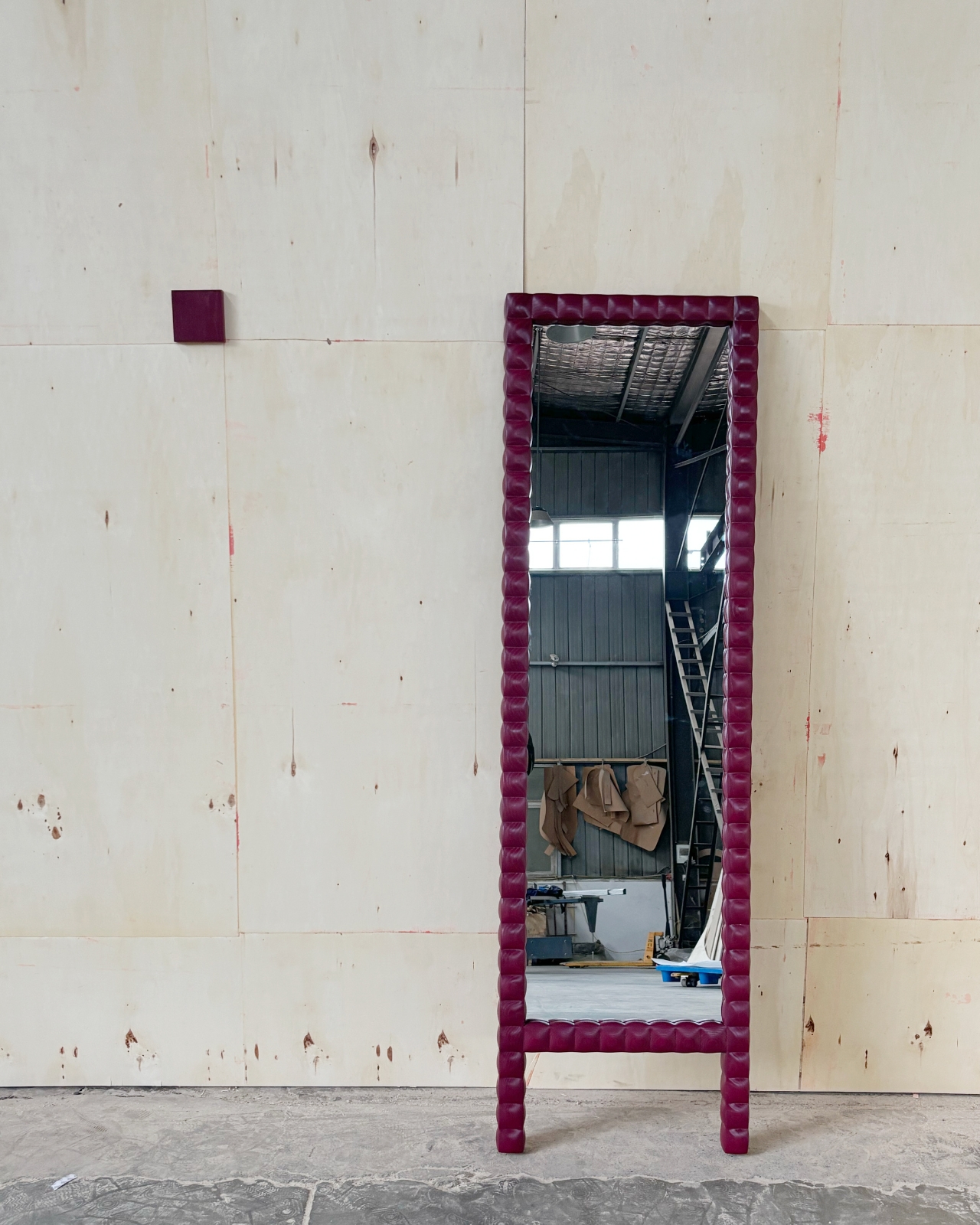
Constructed from solid ash wood with a water-based paint finish, the pieces have a physical presence that photos almost undersell. The wood grain shows through certain finishes in a way that reminds you these are handcrafted objects, not manufactured units. The series currently comprises chairs, benches, stools, and mirrors, available in a variety of colors. The stool, the bench, the mirror — they all carry that same weight and intention. You get the sense that every piece in this family was considered with the same level of care as the chair.

One Week Design plans to expand this family in the future, exploring the endless possibilities of the square. I’m curious to see where that goes, because the vocabulary Wang and Ni have built feels like it has real range. The square is, after all, one of the most elemental forms there is, and they’ve already shown how much meaning you can pack into it when you take it seriously.

Good design often tells you what something is. Great design tells you where it came from. The Squares does both, which is why it’s one of the more memorable collections I’ve come across recently. It looks like order. It feels like memory. And it sits like a chair that knows exactly what it is.

The post One Week Design’s Squares Furniture Is Built on a Bricklayer’s Memory first appeared on Yanko Design.

The Mirror That Knows Your Skin Better Than You Do

Most of us have a complicated relationship with mirrors. We lean in too close, angle our phones for better lighting, and still walk away unsure whether that new moisturizer is actually doing anything. The SIMETRA AI Mirror, designed by Second White, is betting that the problem was never us. It was the mirror itself.

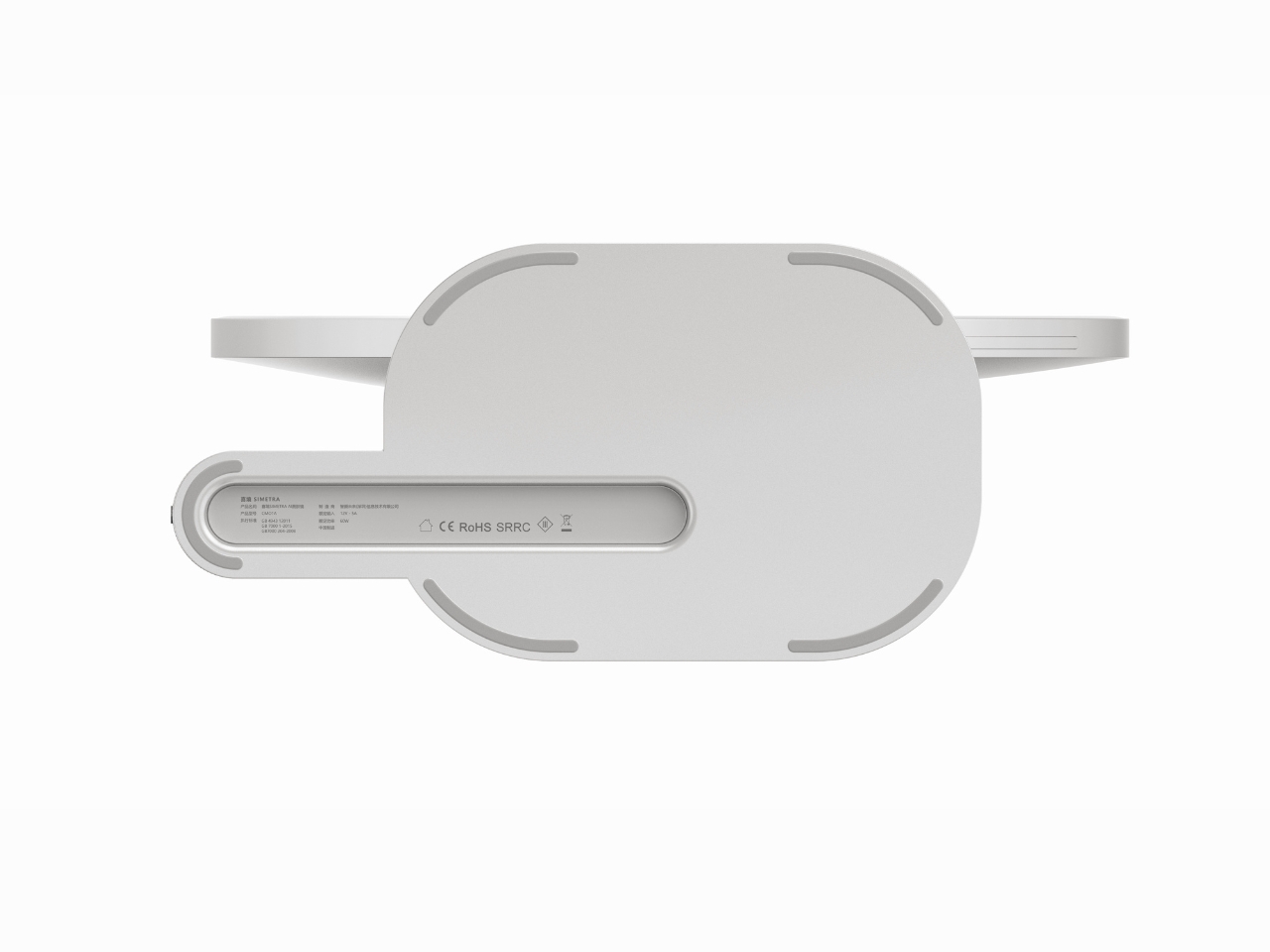
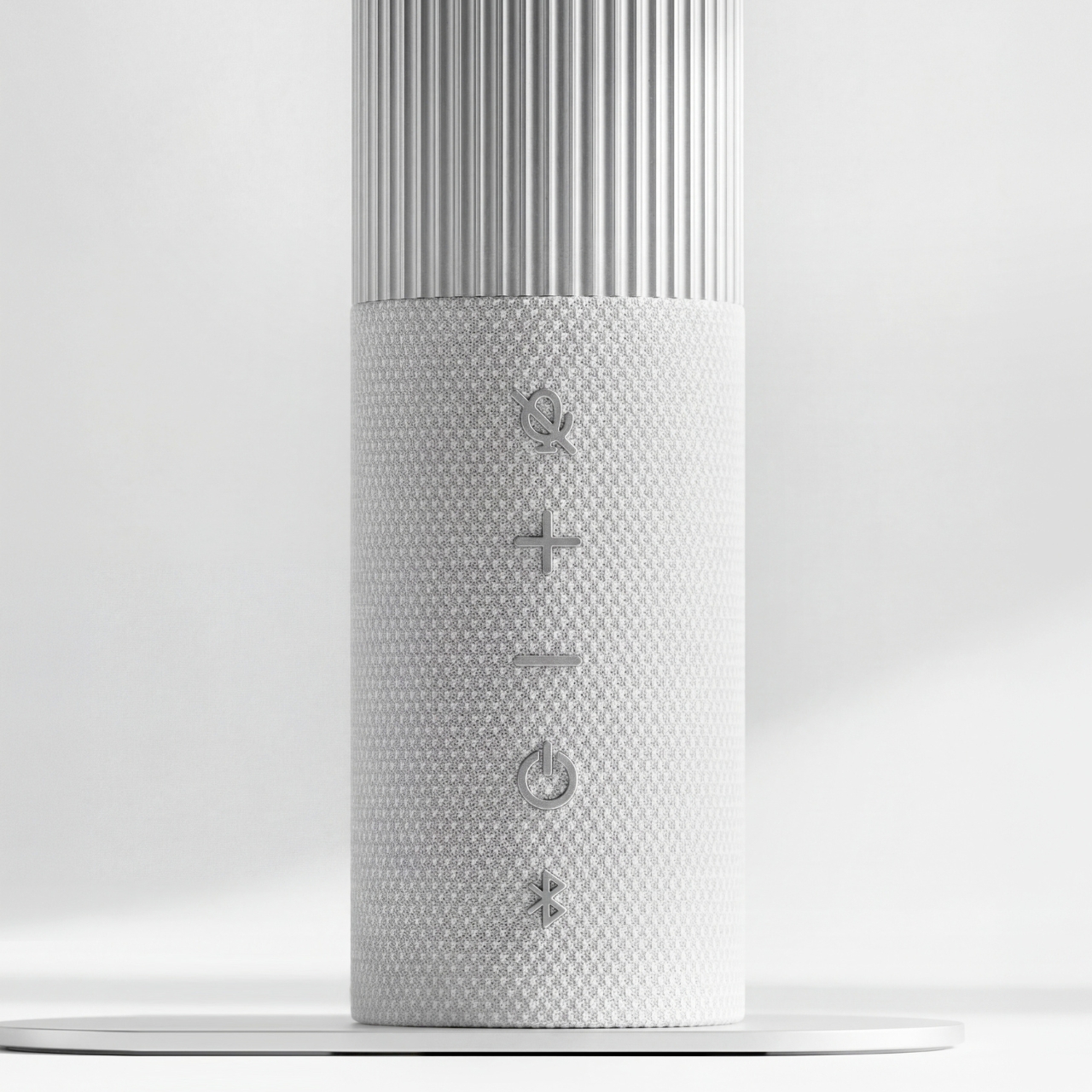
At its core, SIMETRA is a skin analysis system disguised as beautiful bathroom furniture. It reads light, image, and depth data in real time, translating what it sees into precise, actionable feedback about your skin. Not vague impressions. Not generic advice about drinking more water. Actual, measurable intelligence about what’s happening on your face right now, tuned specifically to you.

Designers: Second White

That shift from passive reflection to active analysis feels genuinely significant. The mirror has been one of the least-changed objects in domestic life. For centuries, it asked nothing of us and gave us only what we brought to it. SIMETRA breaks that contract quietly but completely. It observes, interprets, and responds. Whether you find that exciting or slightly unnerving probably says a lot about where you land on the broader AI conversation. From a pure design and utility standpoint, it’s a compelling leap.

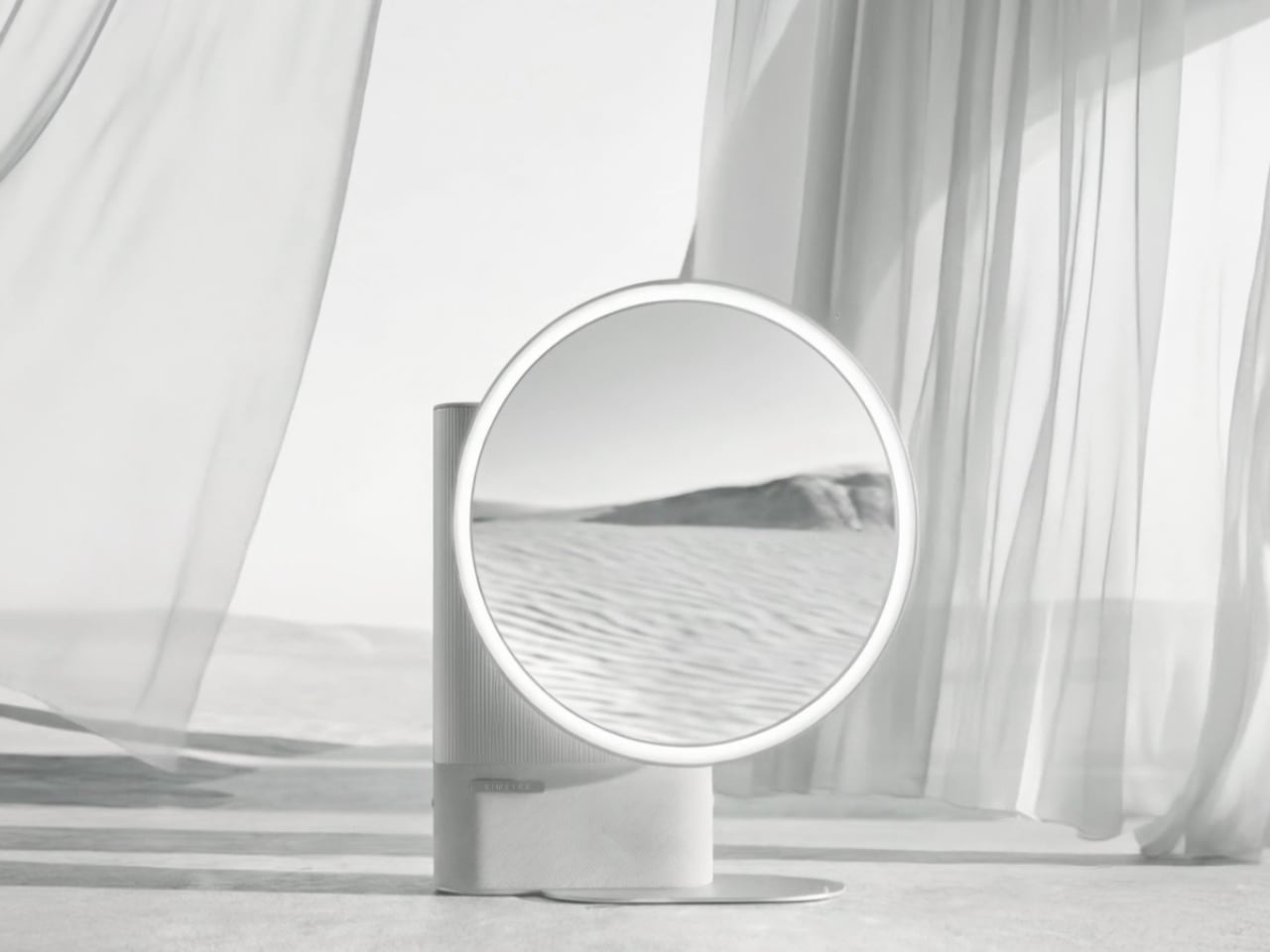
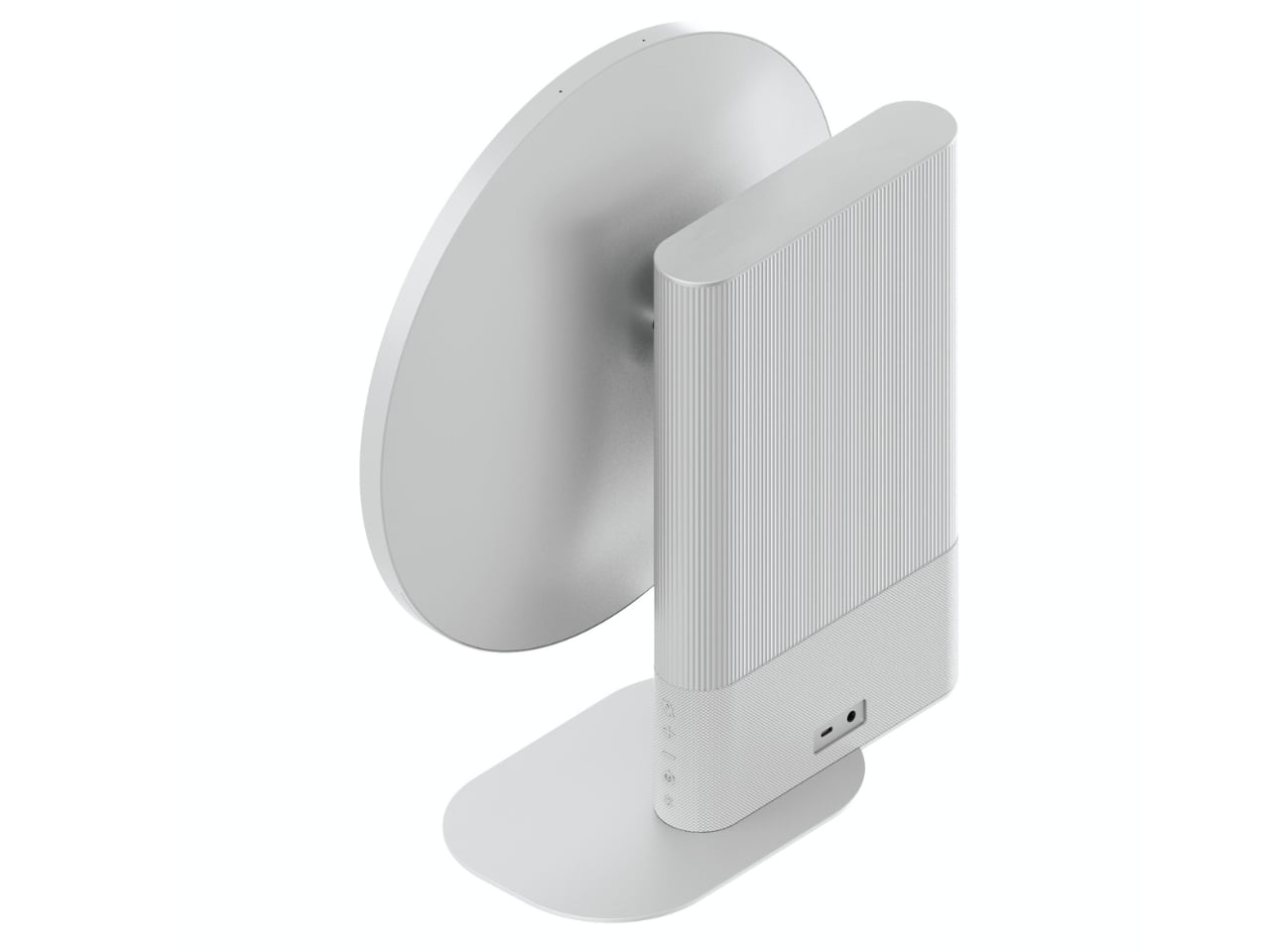
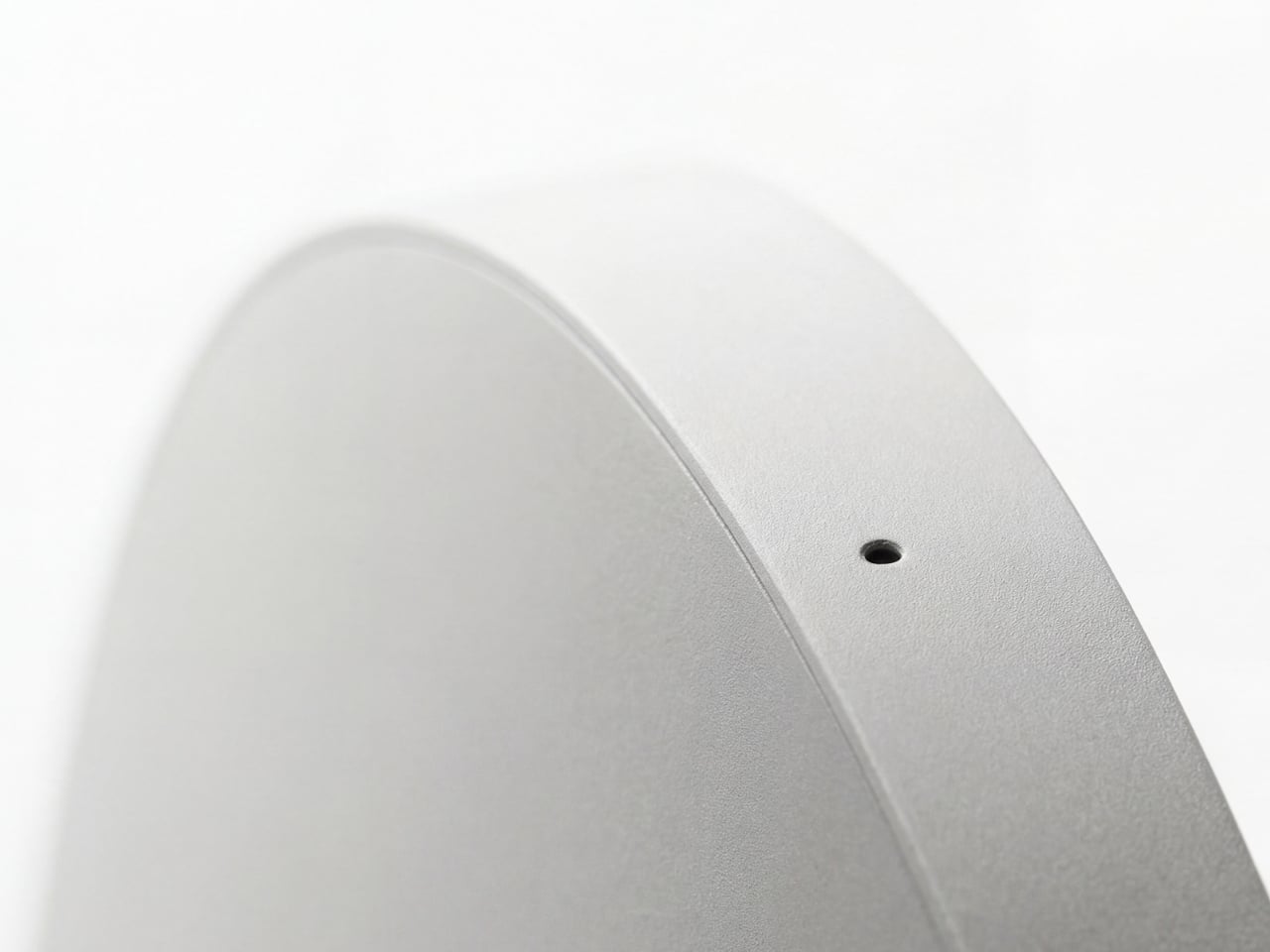
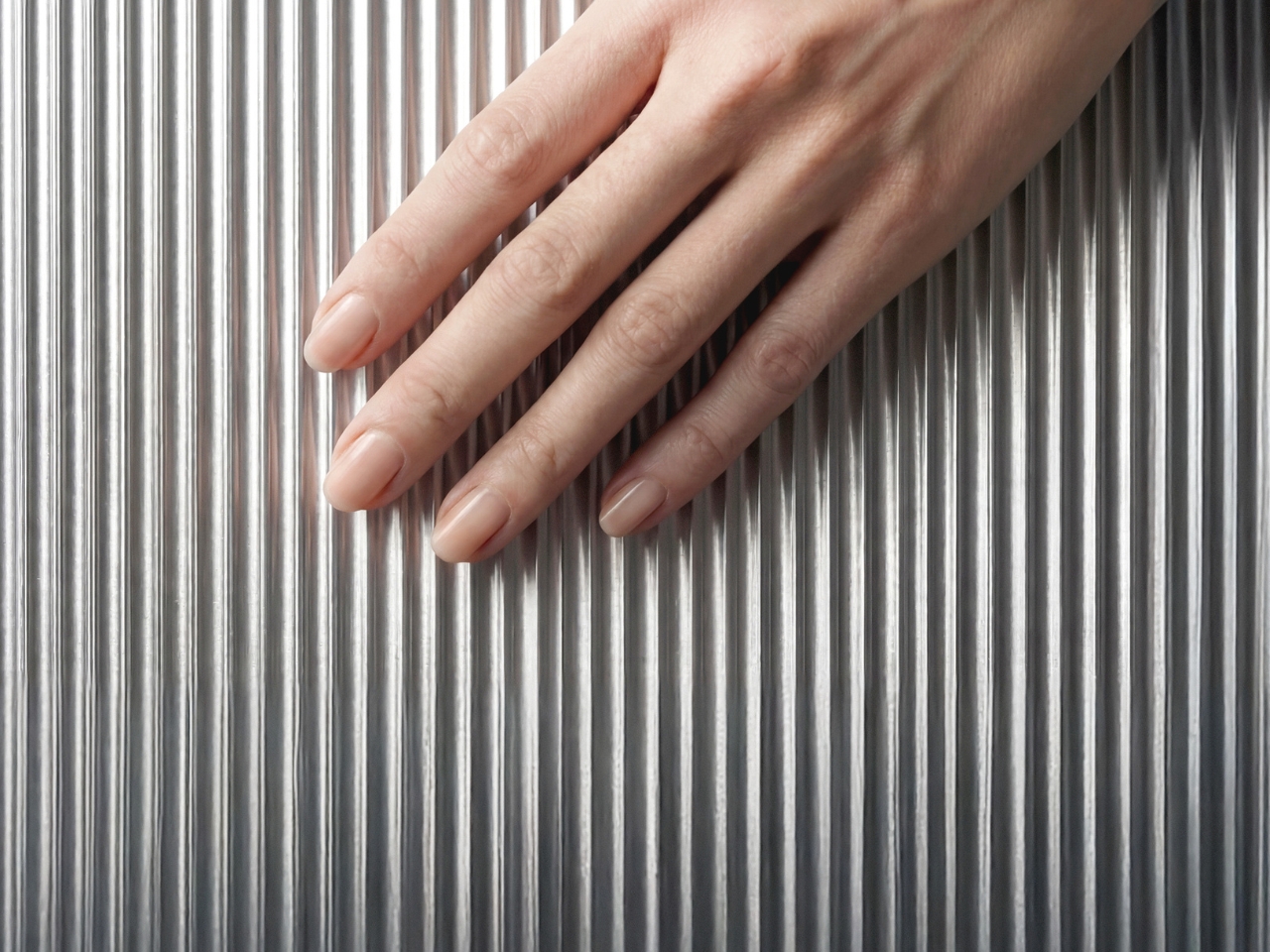
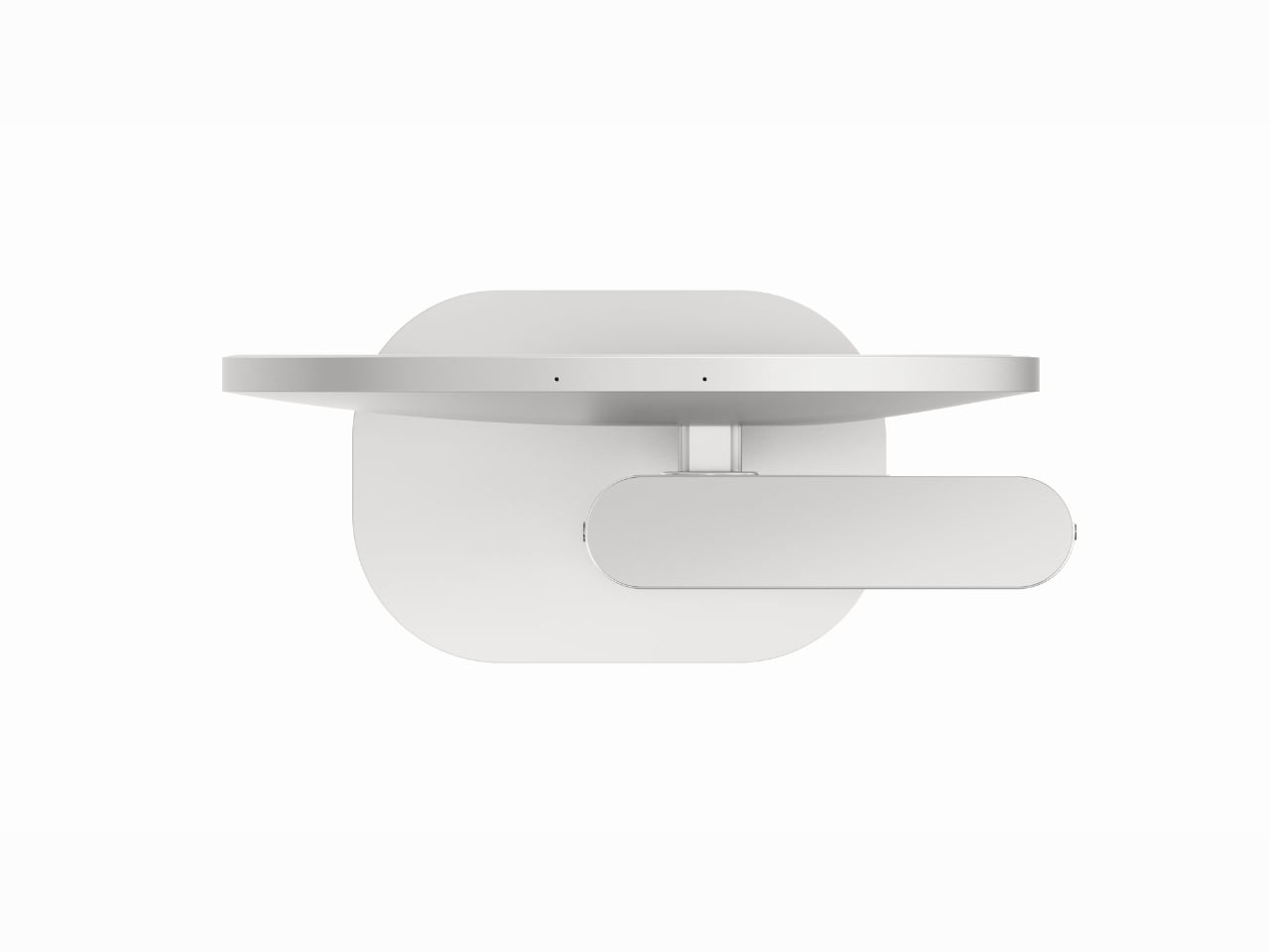
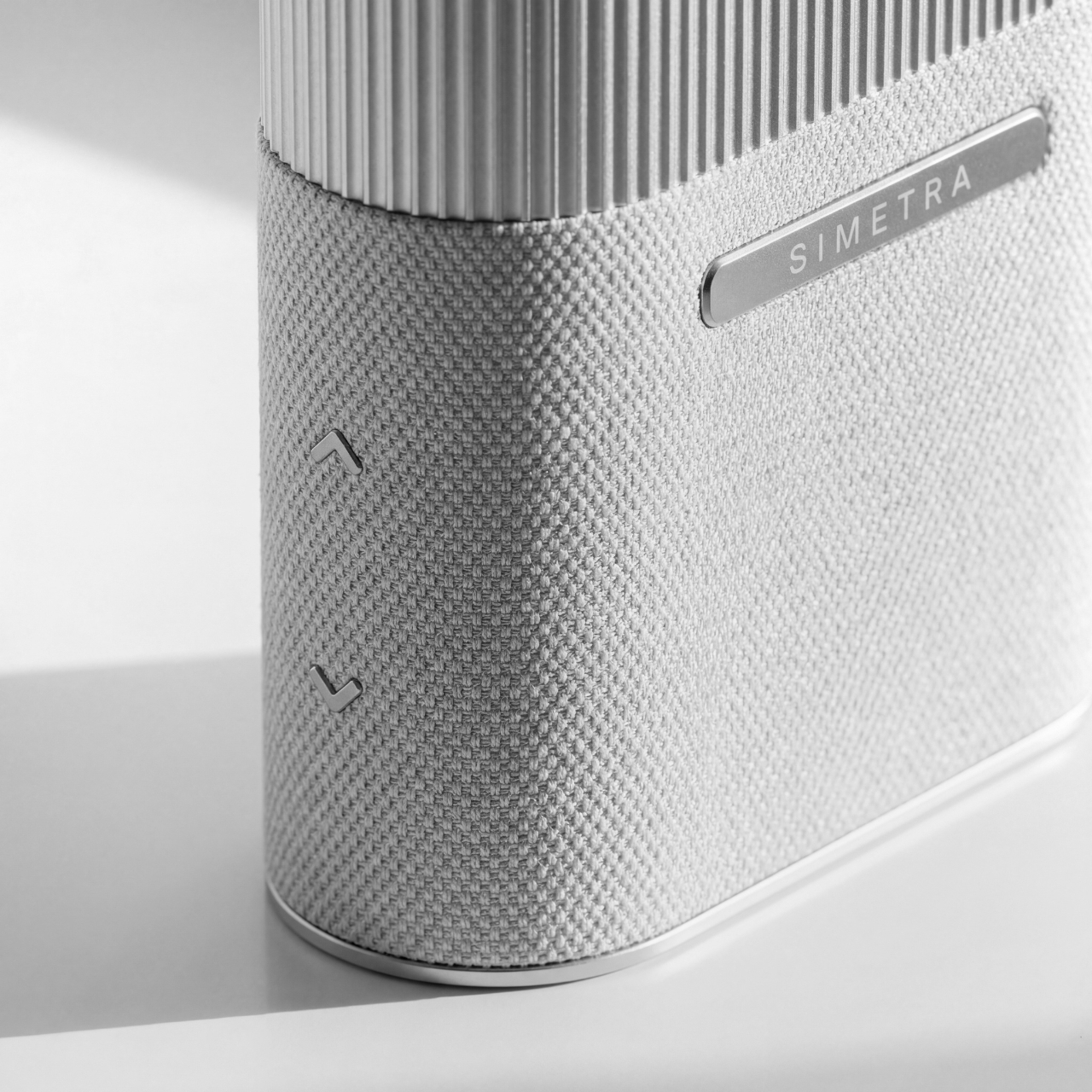
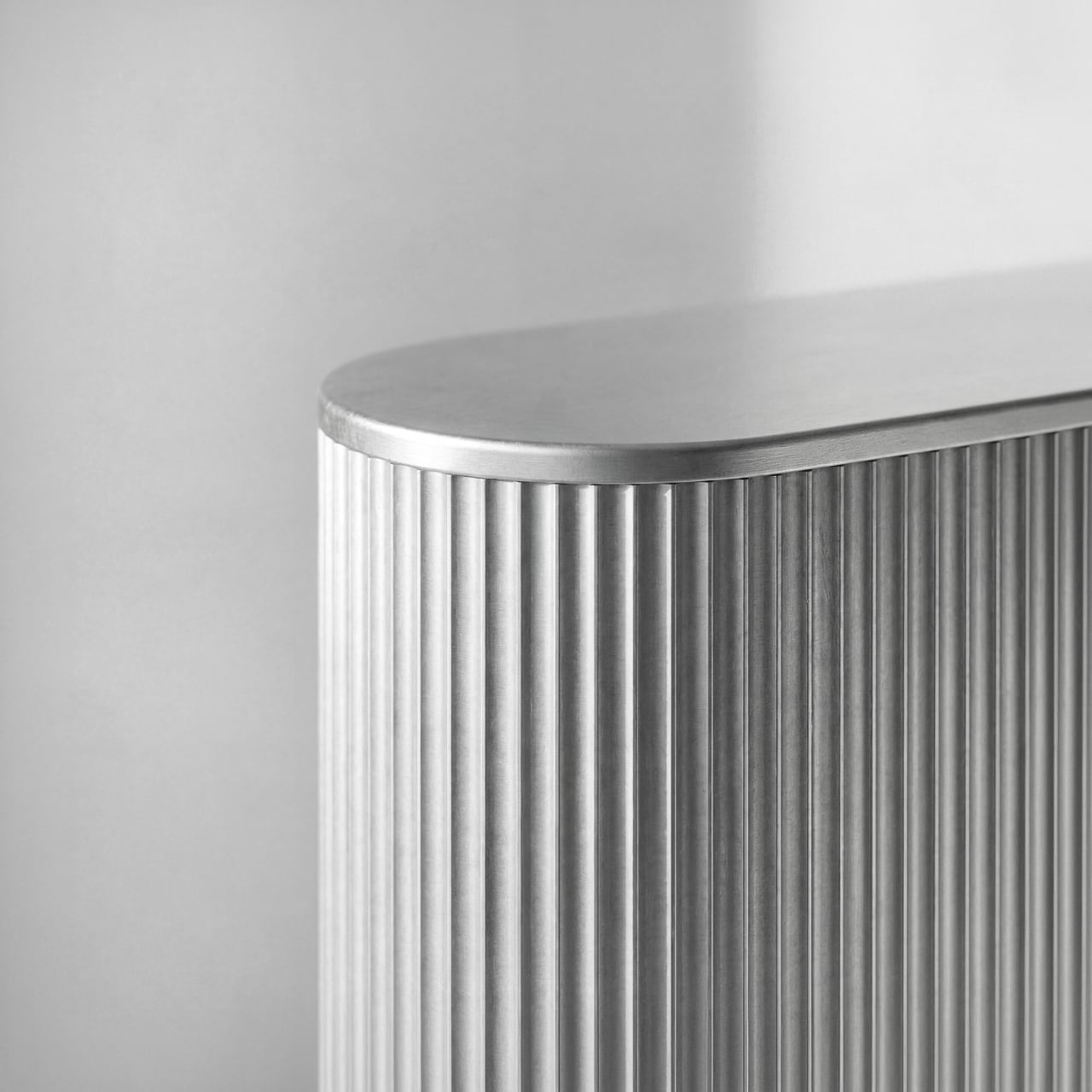
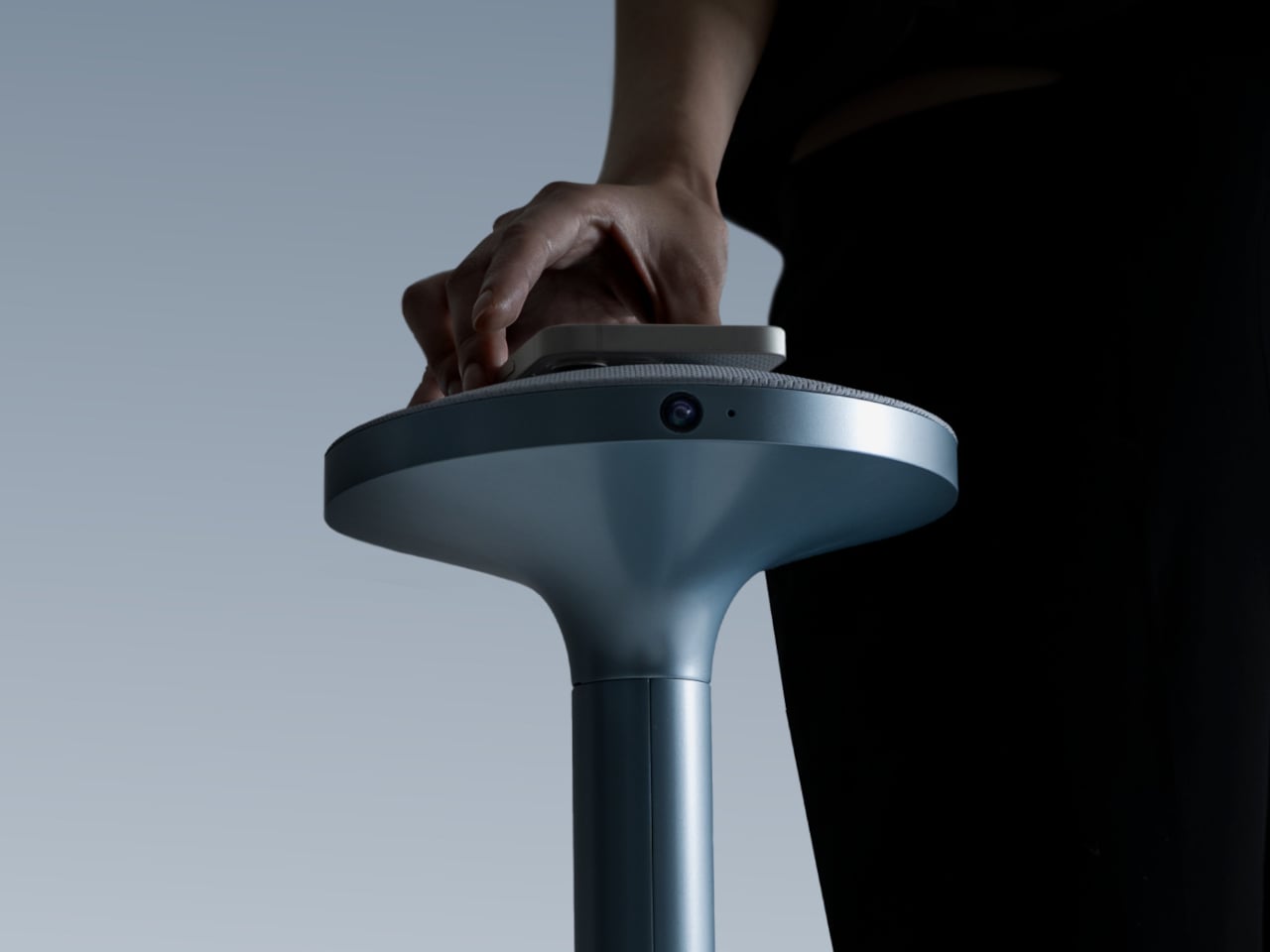
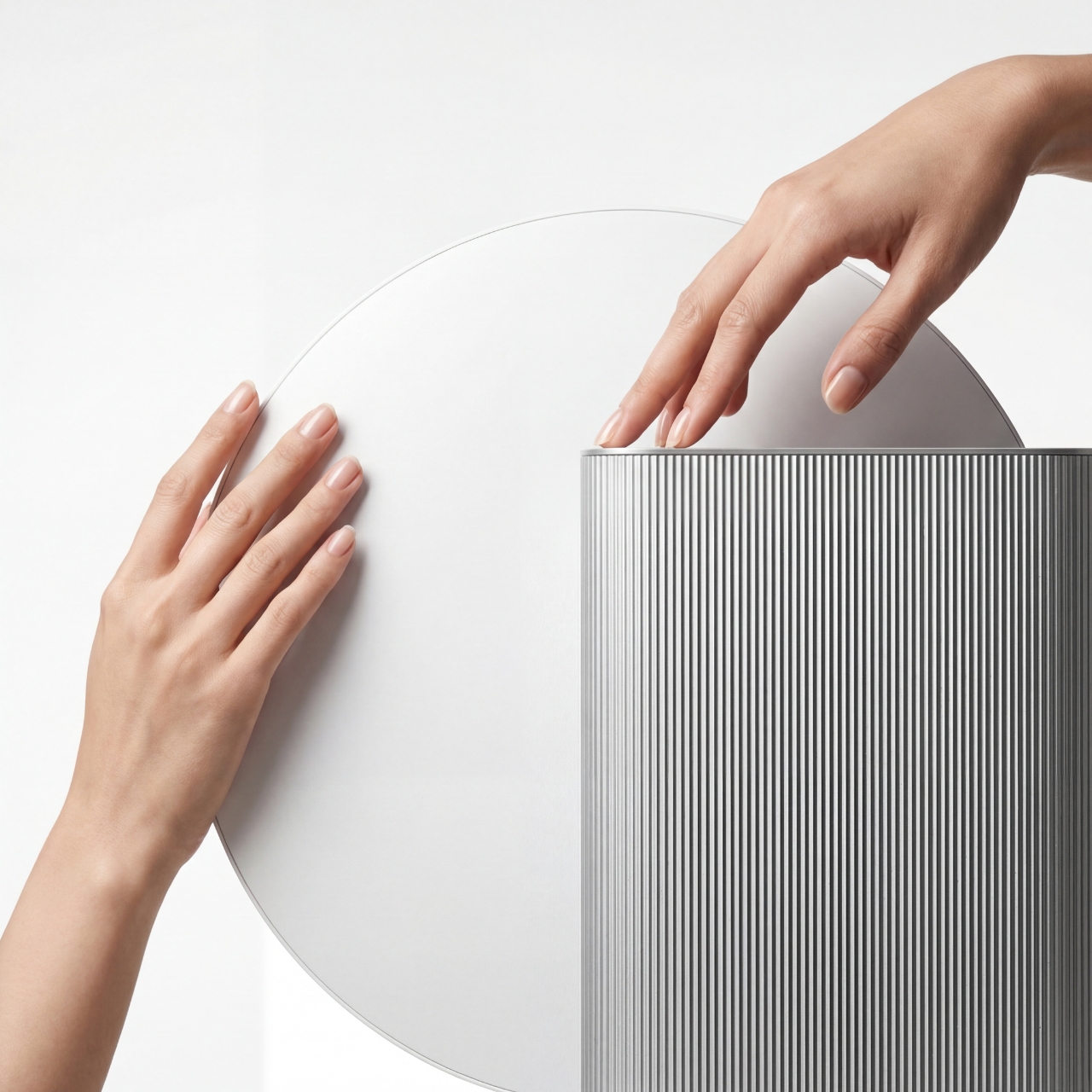
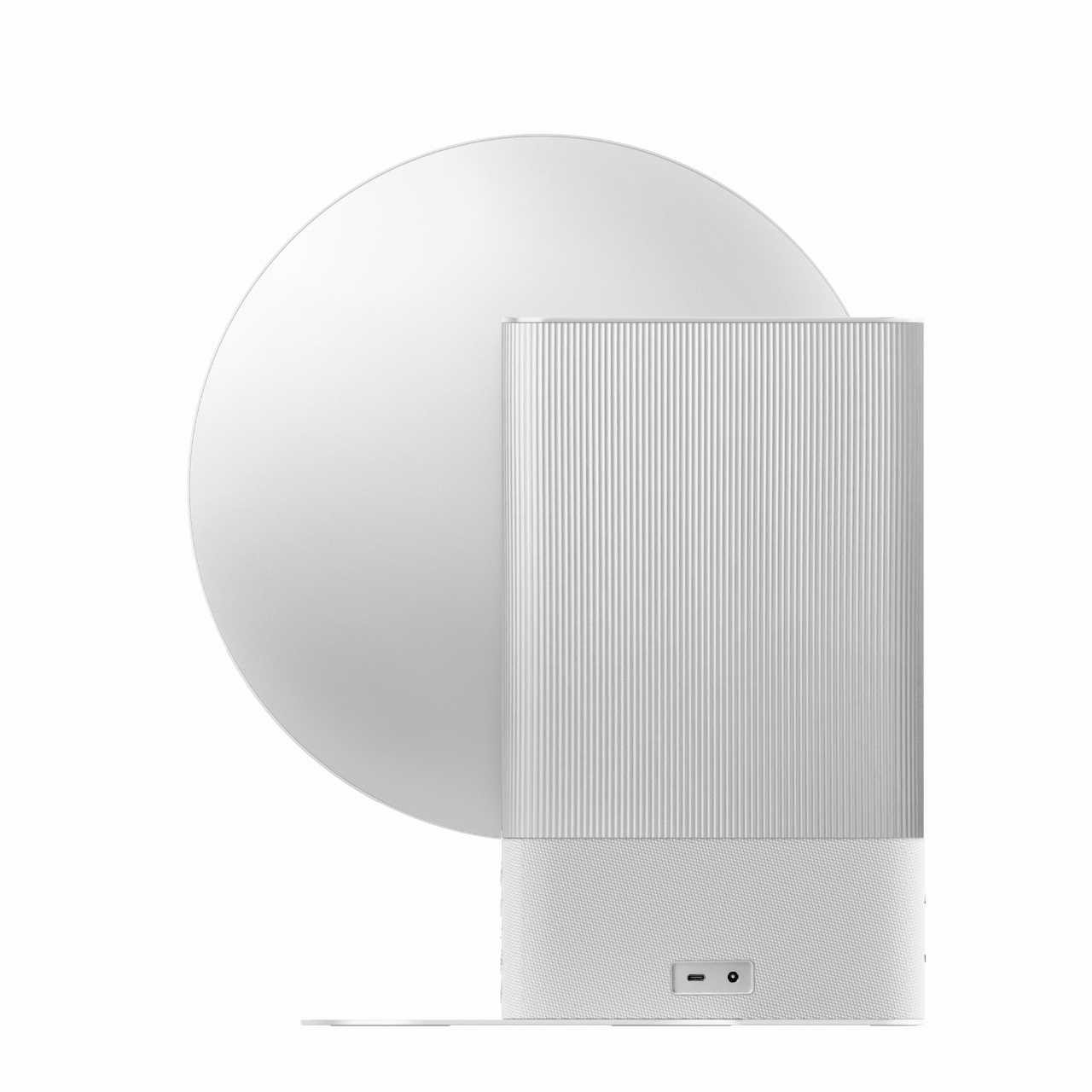
What makes Second White’s approach worth paying attention to is how restrained the design is. The temptation with AI-powered beauty tech is to signal intelligence through complexity: screens everywhere, blinking LEDs, the visual vocabulary of a dermatologist’s clinic. SIMETRA goes the other direction entirely. The form is calm and geometric, built around a circular mirror disc that floats beside a fluted, rounded column. The fluting is deliberate. It gives the hardware body texture and warmth, grounding what could have been a clinical appliance in something that feels more like a considered object. A sculptural one.

That tension between analytical function and human-centered feeling is exactly what Second White was after. Precision and empathy coexisting within a single form, as the studio describes it. It sounds like a lofty design brief, but looking at the product, it actually lands. The fabric-covered base, the brushed metal details, the soft rounding of every edge. None of it screams technology. It whispers it.

This matters because beauty routines are intimate. They happen in the 15 minutes before the rest of the world gets access to you. Introducing a device that watches, scans, and analyzes during that time requires a certain amount of tact in how it presents itself. A mirror that looks and feels like a piece of thoughtful furniture earns a different kind of trust than one that announces itself as a gadget. Second White understood that tension, and it shows in every material choice.

The smarter conversation here isn’t really about whether AI belongs in your skincare routine. It probably does, in the same way it’s already crept into everything else we track about ourselves: sleep, steps, heart rate. Skin is just the next frontier, and it’s arguably one of the more logical ones. What we’ve historically lacked is a tool precise enough to deliver useful data in the moment, without requiring a clinic visit or a consultation appointment. SIMETRA frames itself as exactly that: professional-level diagnosis, embedded in daily life.

Whether it fully delivers on that promise in practice is a question only time and real-world use will answer. But as a design proposition, it’s already doing a lot right. It treats the user as someone who wants clarity, not just encouragement. It respects the space it’s designed for. And it manages to look like something you’d actually want on your vanity, which is no small thing when you’re asking someone to trust an algorithm with their morning routine.

The mirror has always held a complicated cultural weight. We’ve used it to judge, to prepare, to reassure ourselves. SIMETRA doesn’t erase that history. It adds another layer. One that’s less about judgment and more about knowledge. And if a mirror is going to know things about us anyway, knowing our skin might just be the most useful thing it could do.

The post The Mirror That Knows Your Skin Better Than You Do first appeared on Yanko Design.

Ovme Smart Mirror System Lets You See, Feel, and Fit Virtual Outfits

The everyday “what should I wear today?” moment has gotten more complicated by online shopping. You can scroll endless outfits, but a screen cannot show how something fits, feels, or plays with what you already own. Ovme is a concept that treats the mirror as a missing link between your closet, your feed, and your actual body, closing the gap between seeing and knowing.

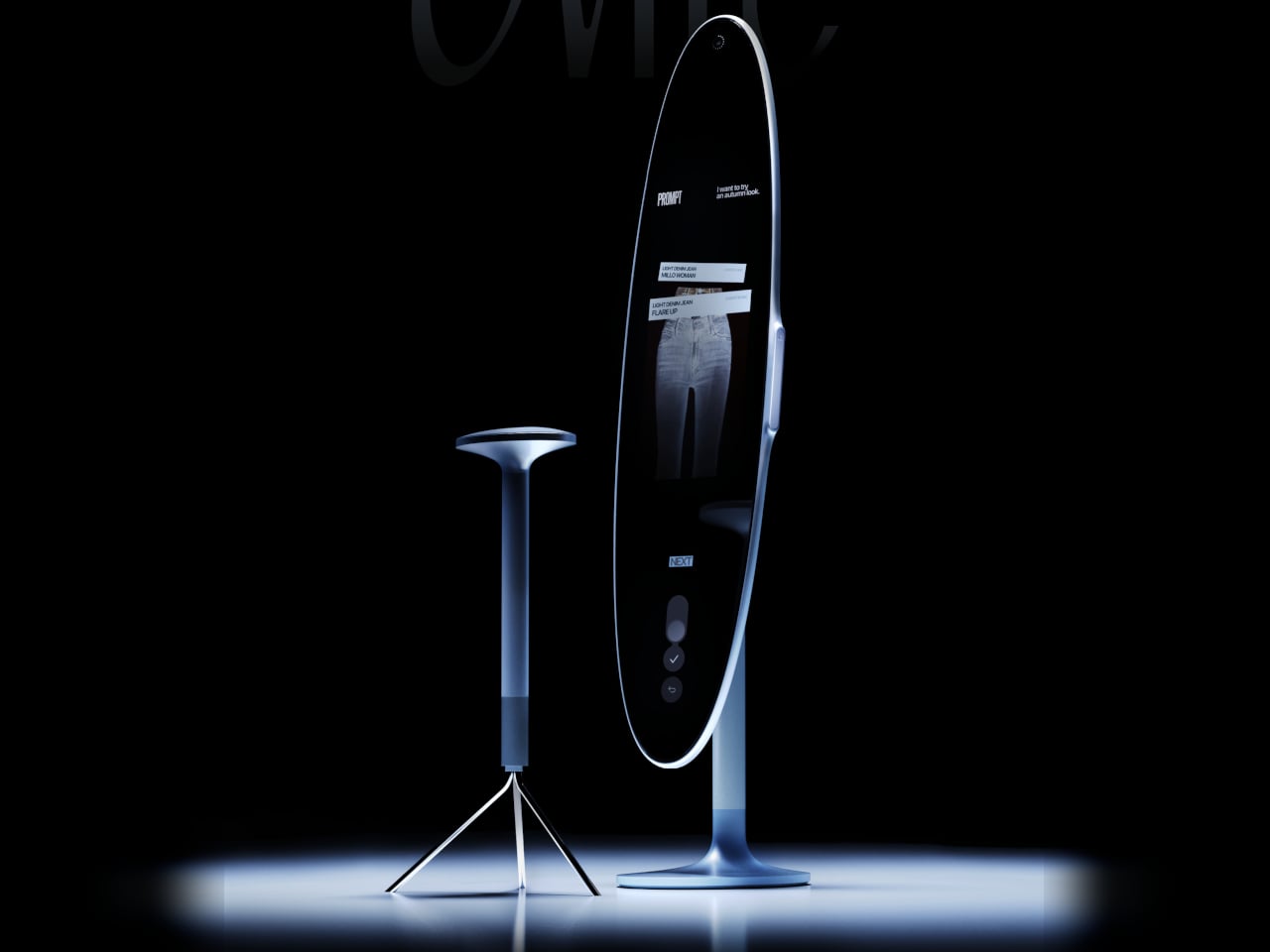
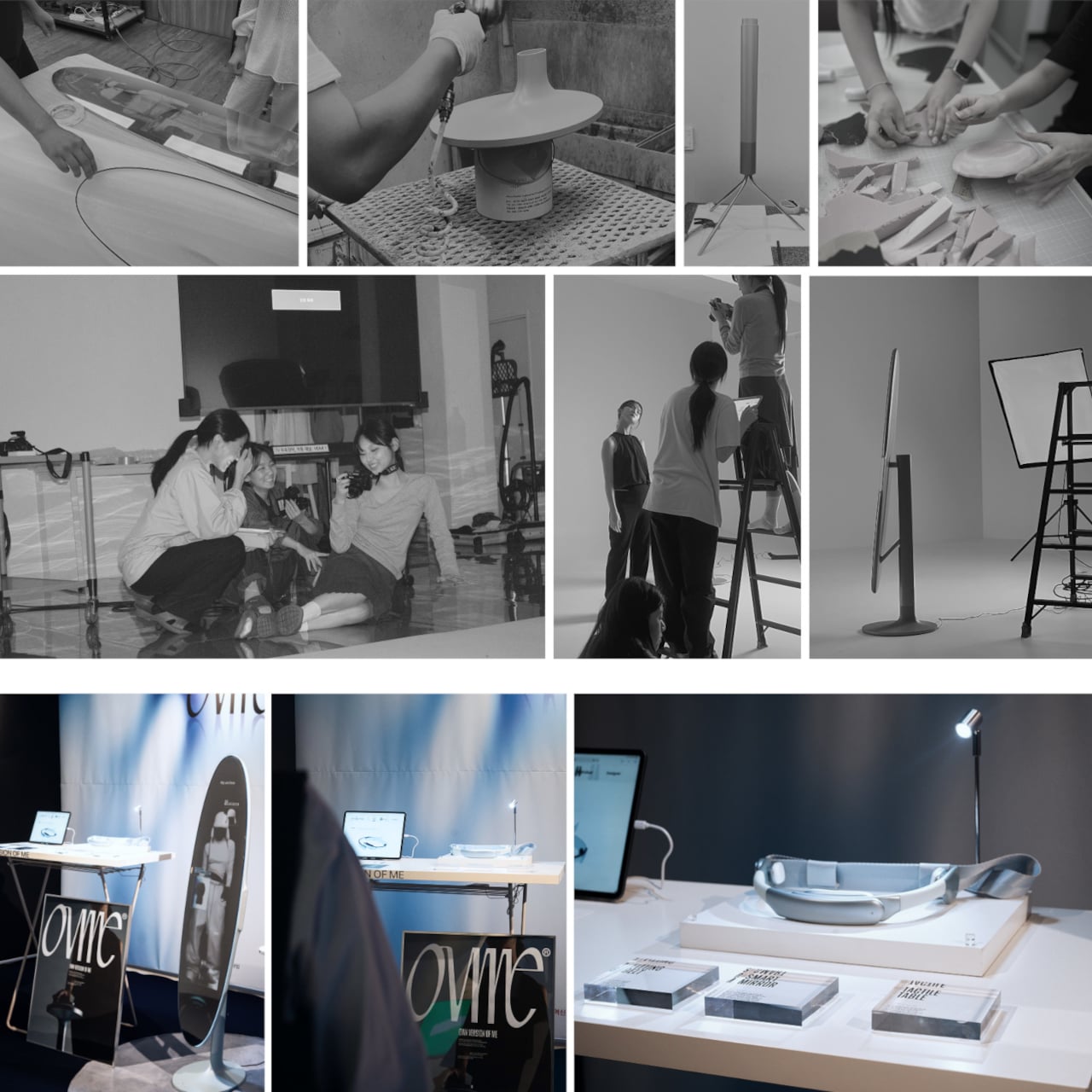
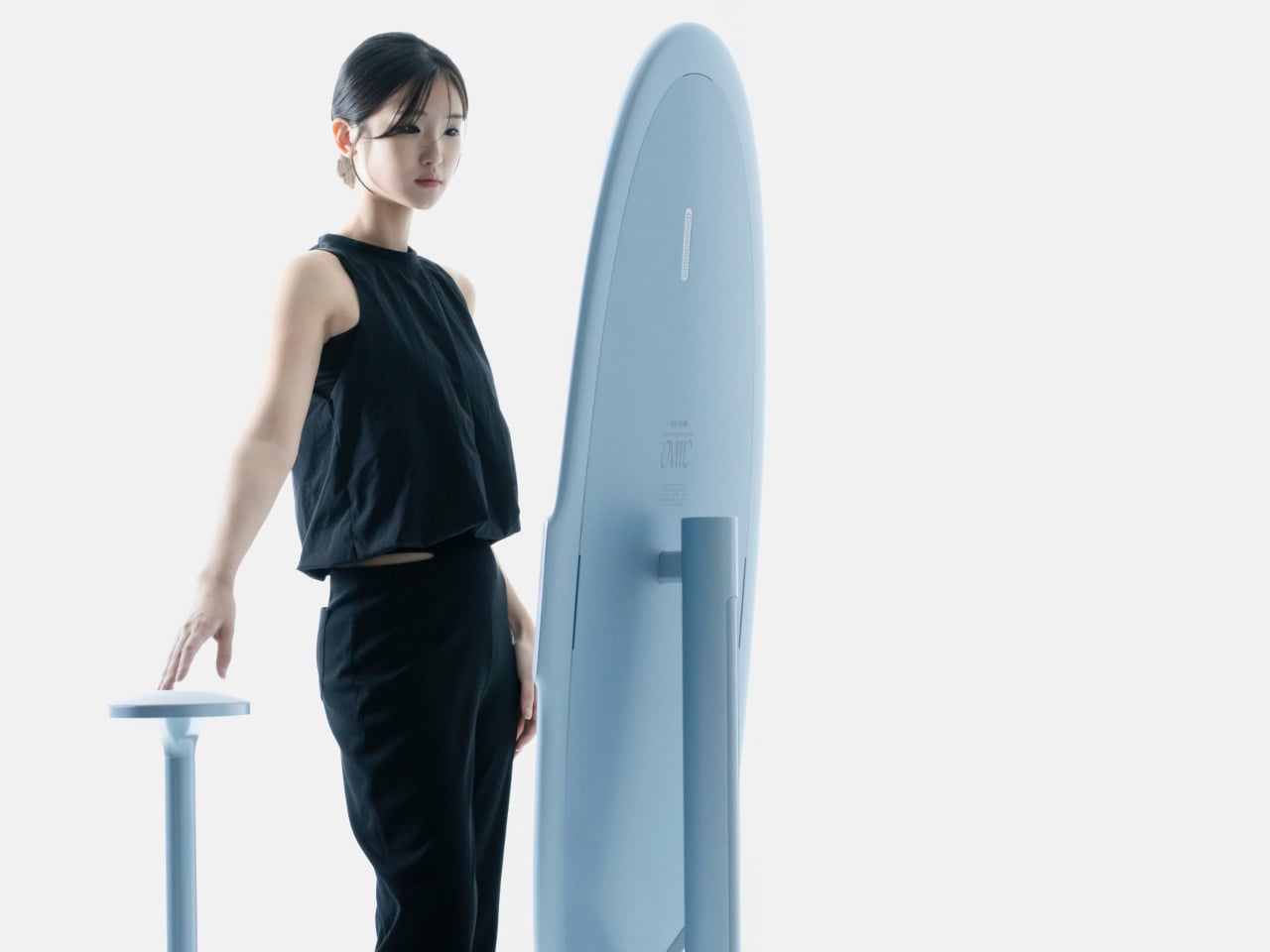
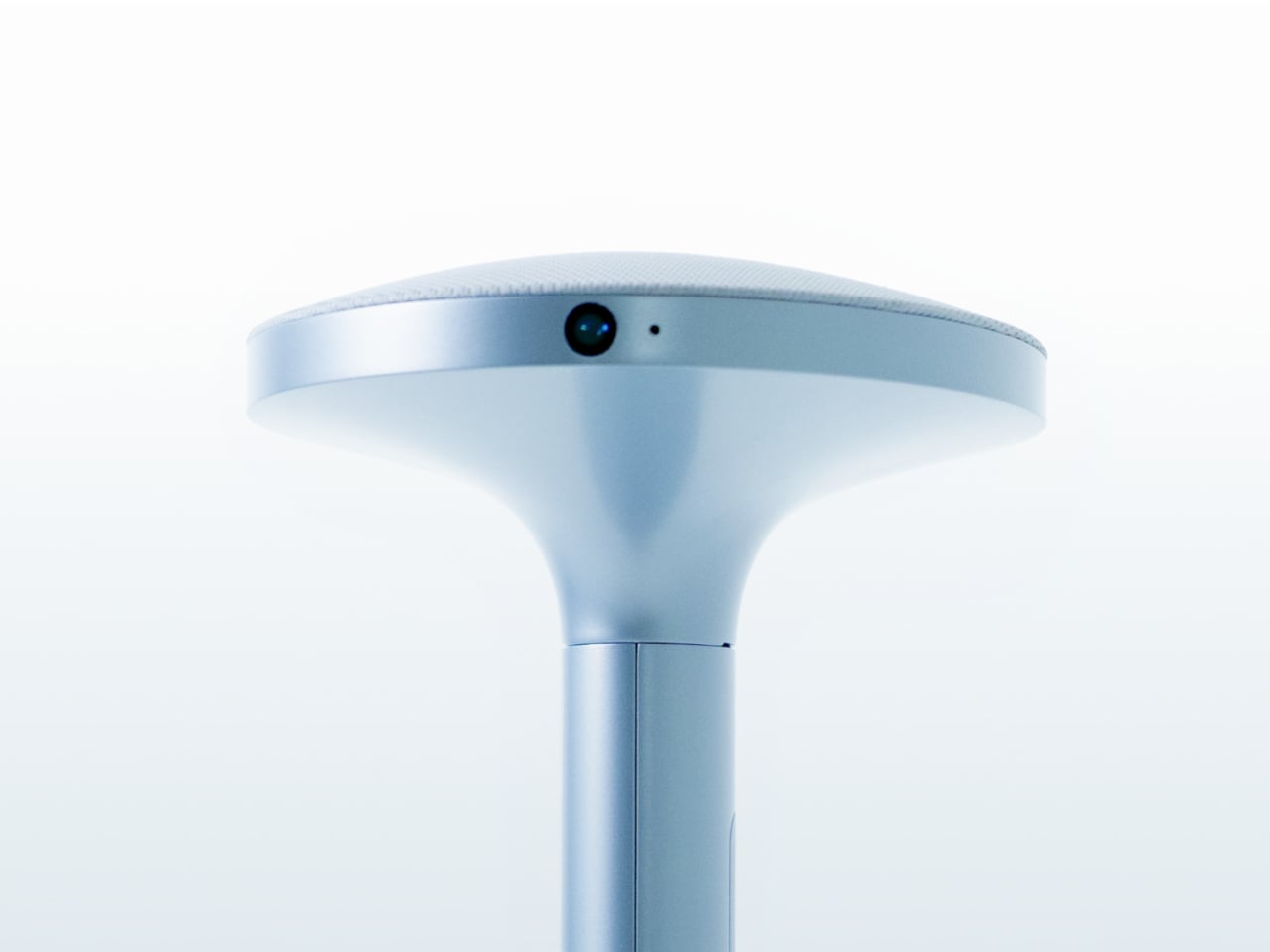
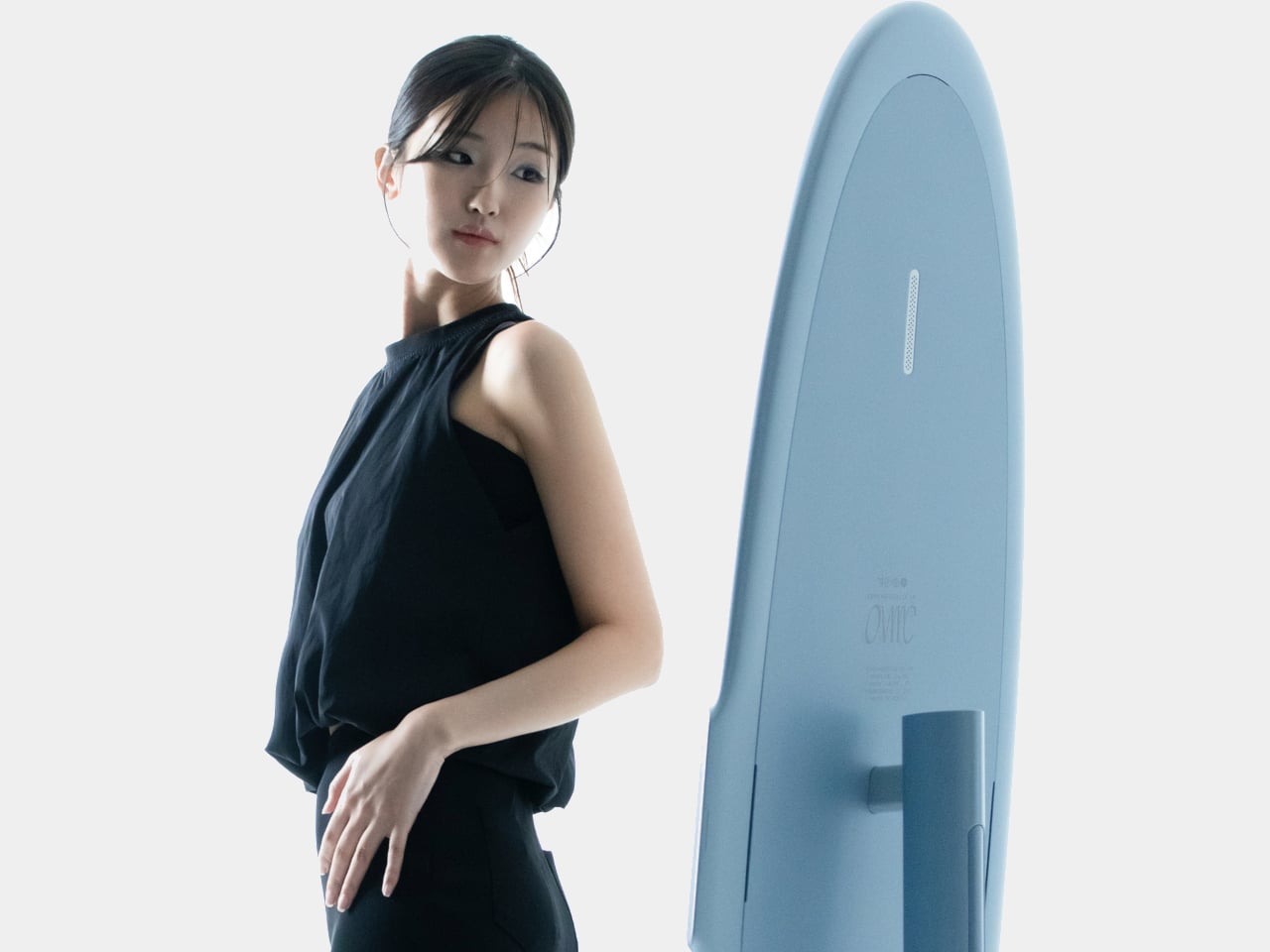
Ovme is an AR smart mirror ecosystem built around three objects: a full-height mirror, a sensor-laden fitting belt, and a haptic tactile table, plus a companion app. The name stands for “Own version of me,” and the system is designed to help you find new styles, feel how they fit, and touch virtual fabrics before you ever click buy or open your wallet.

Designers: Daun Park, Seyeon Park, Chawon So, Yewon Shim, Yejin Hong

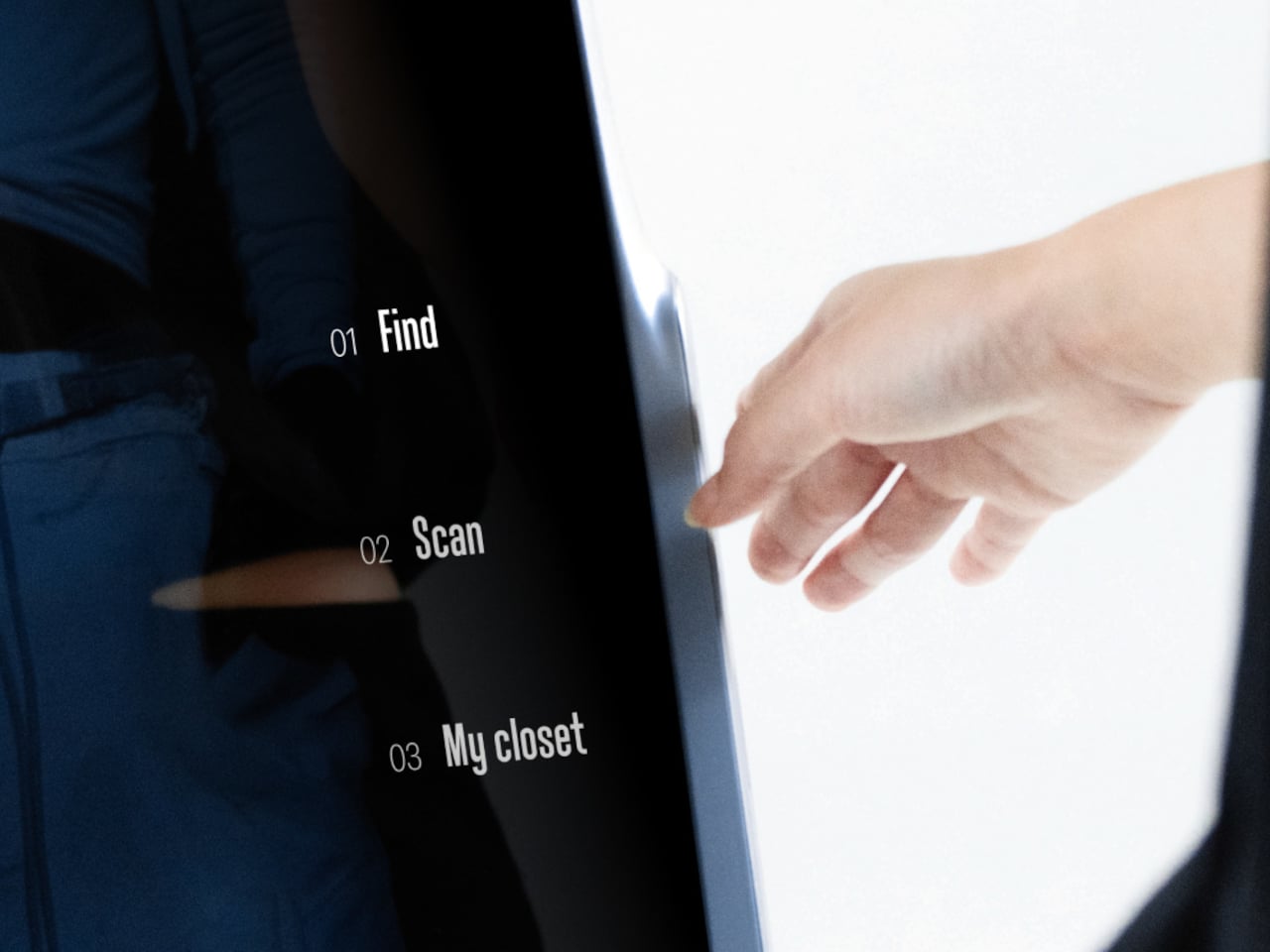
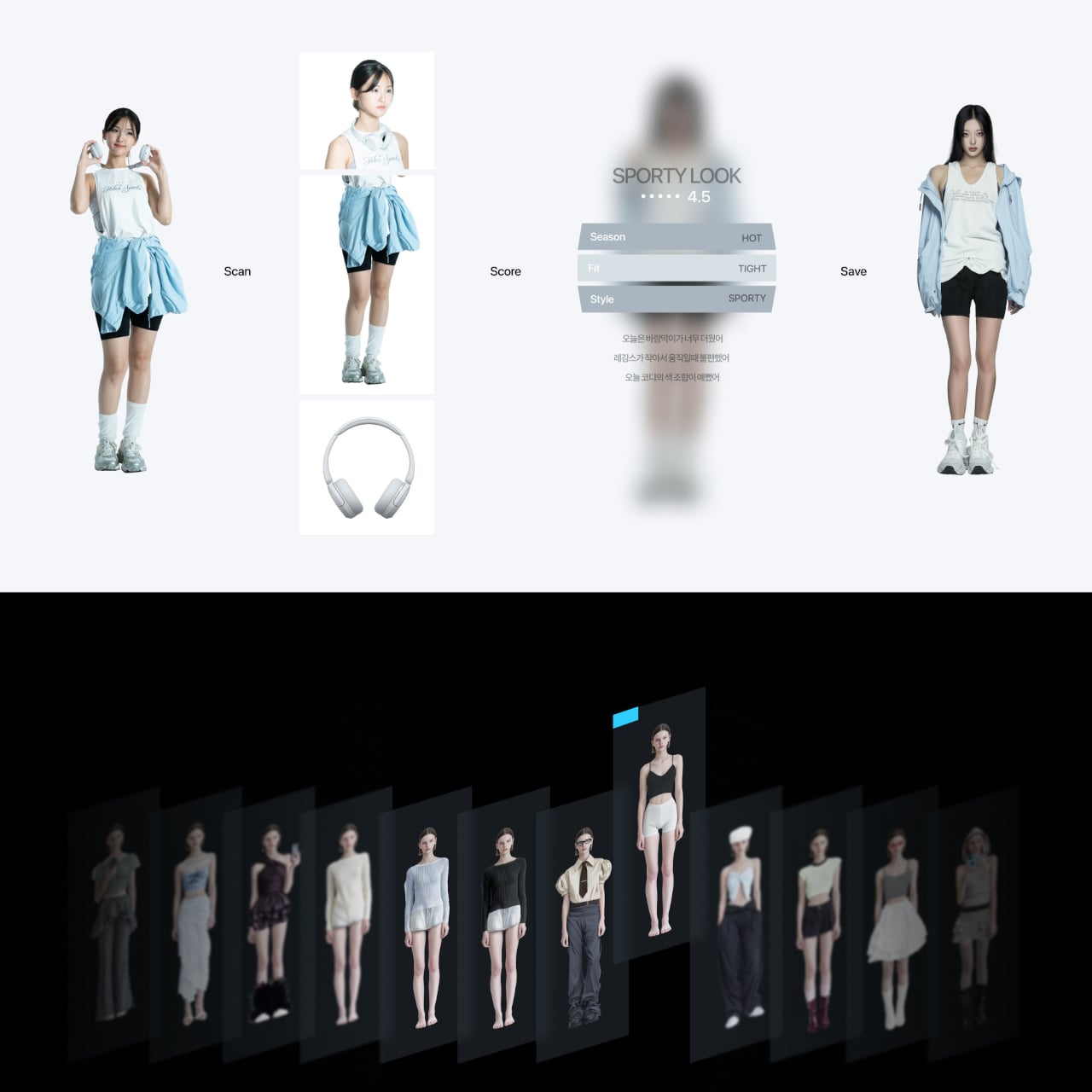
The mirror acts like a personal stylist, overlaying outfits on your reflection and pulling from three sources: new looks, your existing wardrobe, and reference images you feed it. You can swipe through categories like formal, sporty, or feminine, and see complete outfits assembled around your silhouette, then save the ones that feel right into a virtual closet for later when you need inspiration or want to revisit.

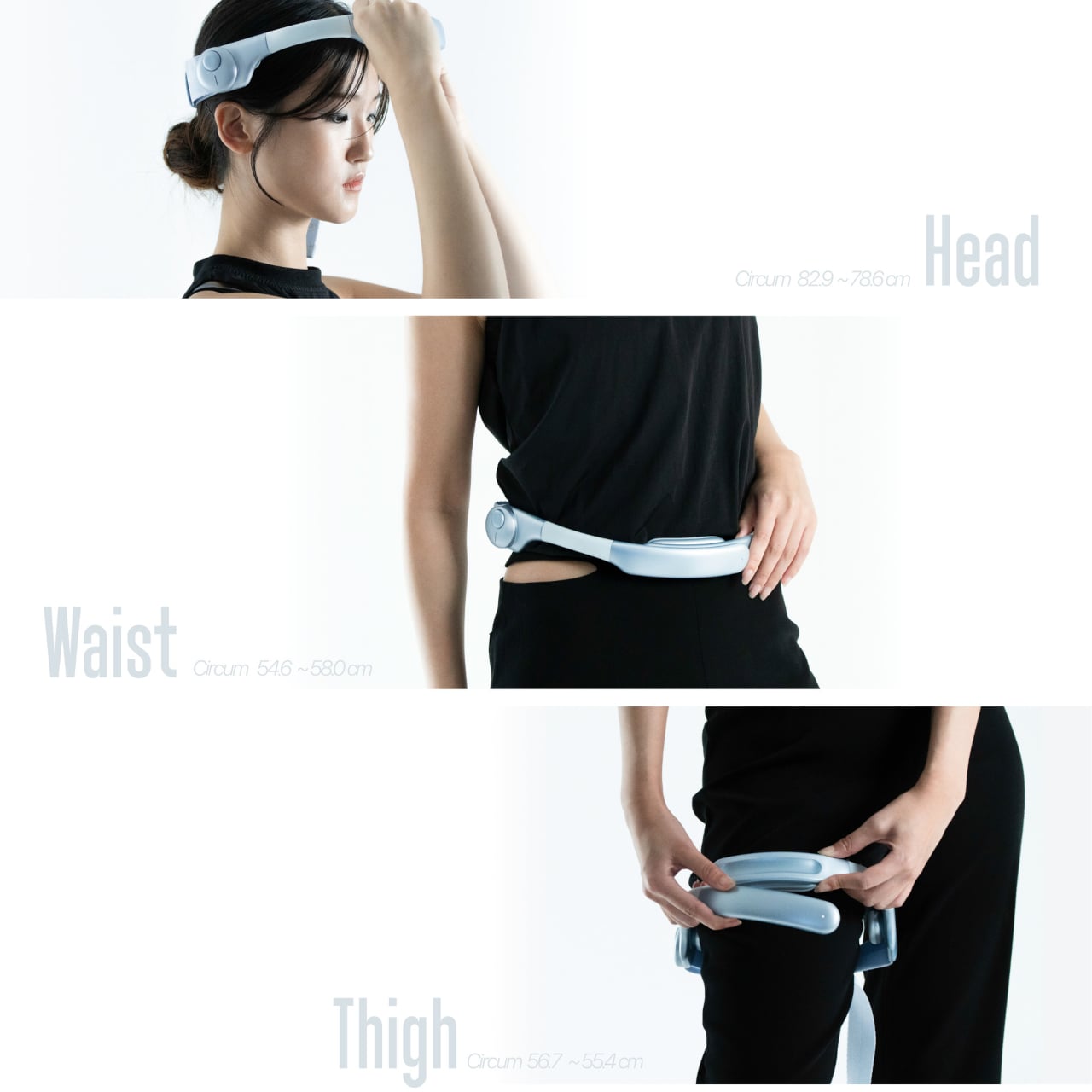
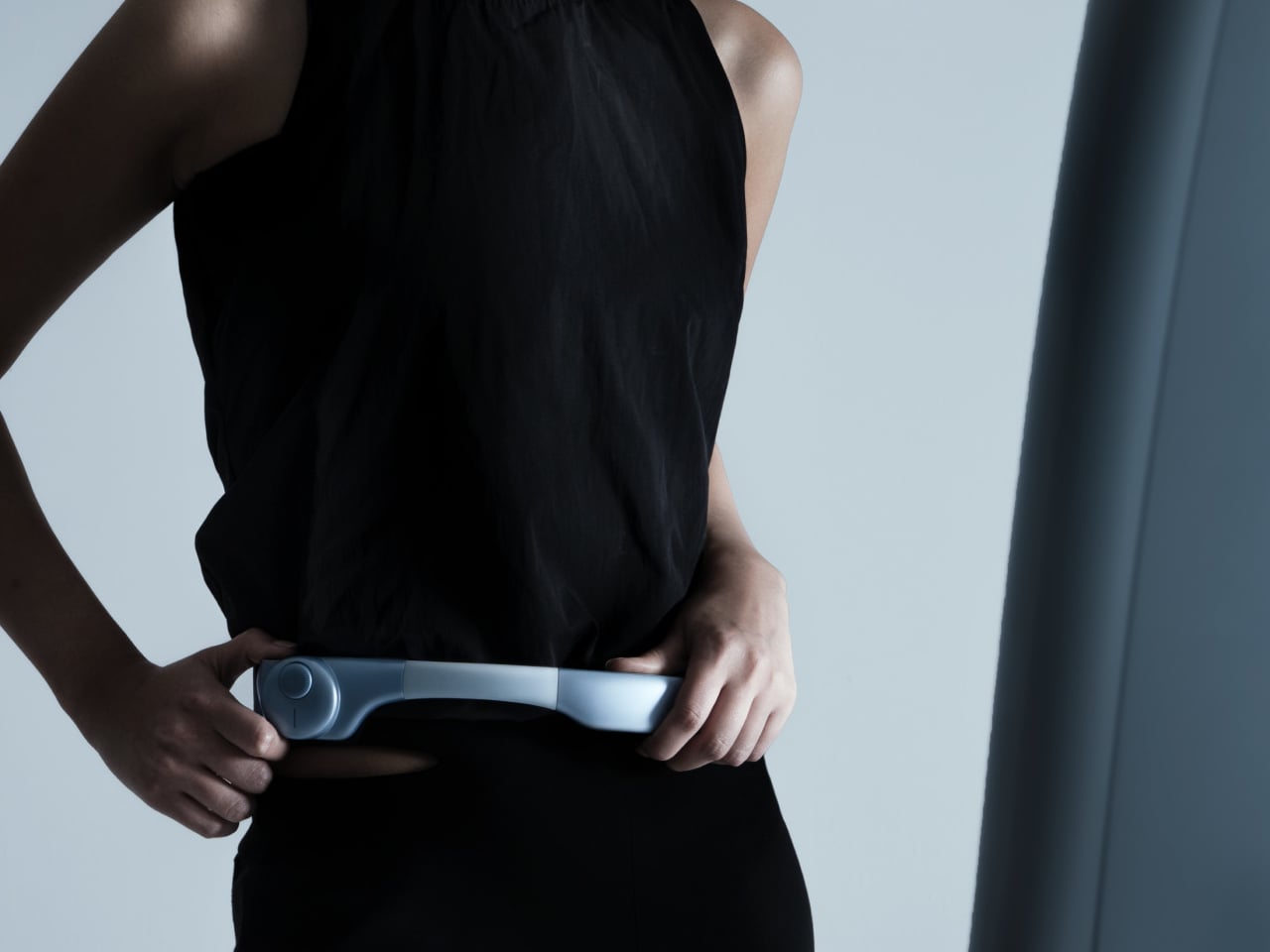
The fitting belt is a flexible band with sensors that can wrap around your head, waist, or thigh. It measures circumference and applies gentle pressure, tightening or loosening to simulate how a garment would hug or hang on that part of your body. On the mirror, the virtual outfit responds in real time, turning fit from a guess based on size charts into something your body can actually sense.

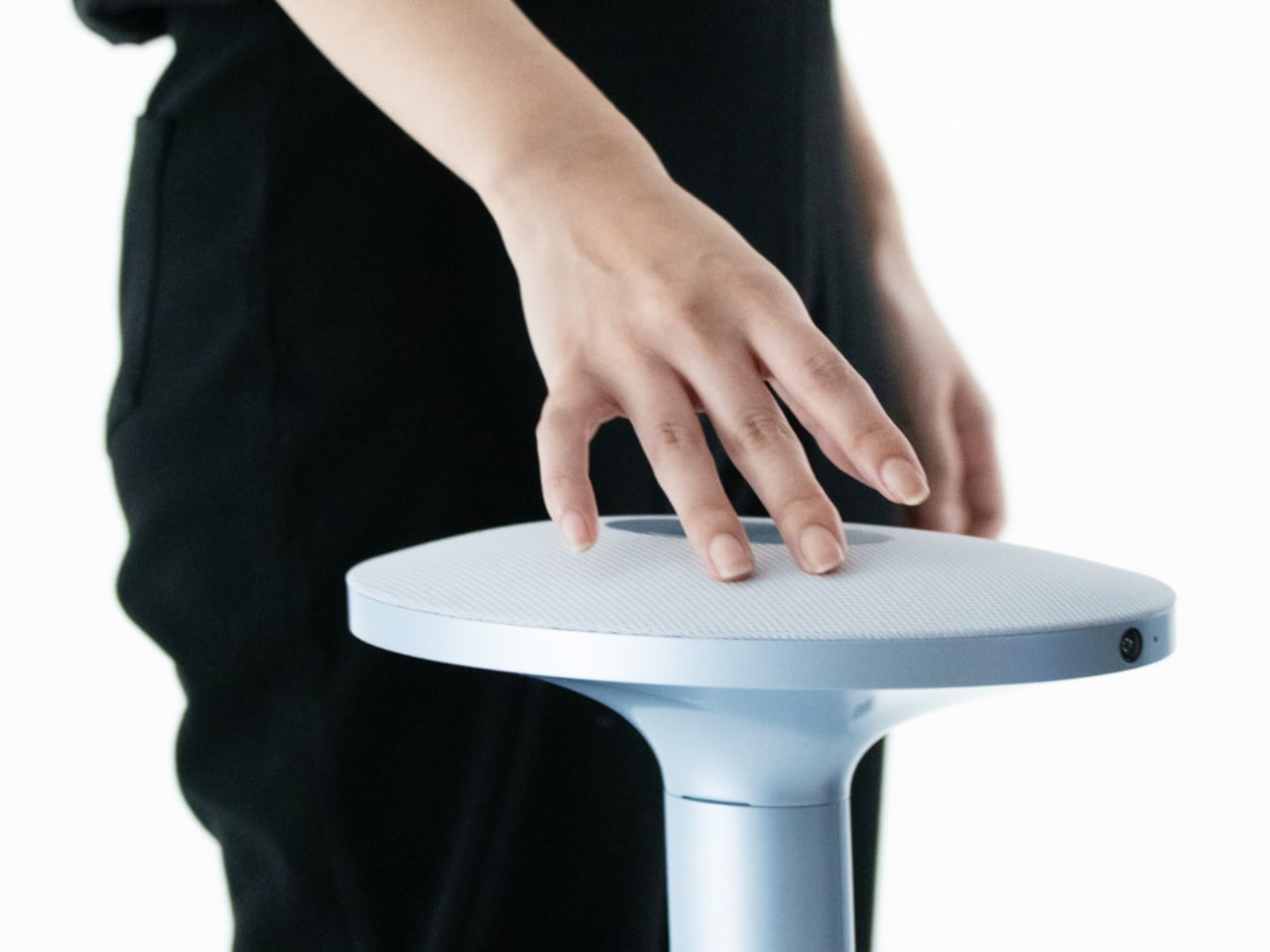
The tactile table is a slim pedestal with a haptic surface that uses electro-tactile feedback to mimic fabric textures. When you place your hand on it, the system can suggest sensations like smooth silk, textured knit, or structured leather in sync with what you see in the mirror. It attempts to close the gap between seeing a material and knowing how it might feel against your skin or draped over your shoulders.

Ovme also acts as a style diary. It can scan what you are wearing today, score the outfit, and save it to a timeline called My Closet, so you can revisit past looks and see patterns in what you actually wear. A social layer called OvUS lets you browse other people’s saved styles and mood boards, turning the mirror into a place to share and borrow ideas rather than stare at yourself alone.

Ovme treats getting dressed as an ongoing design process, not a daily panic, and uses AR, haptics, and sensing to give online fashion some of the feedback loops of a real fitting room. Whether or not this exact hardware ever ships, the idea of a home mirror that helps you experiment, feel, and remember your style captures a direction that deserves attention, especially as wardrobes become more scattered across platforms and shopping becomes more remote.

The post Ovme Smart Mirror System Lets You See, Feel, and Fit Virtual Outfits first appeared on Yanko Design.

Power bank concept is not only ergonomic but even comes with a mirror

If you’re staying outside your house or office for a certain period of time, it’s almost always required that you need to bring a power bank. Well, unless you’re one of those people who can live without looking at their smartphone (or your device has a lot of juice). But for the rest of us that need our smartphones almost always, a power bank is attached to our bag as well as our devices. We don’t really think about the design of our power banks but some product designers do.

Designer: Anil Ramesh, Arun Kumar, Joel D’silva (Analogy Design Studio)

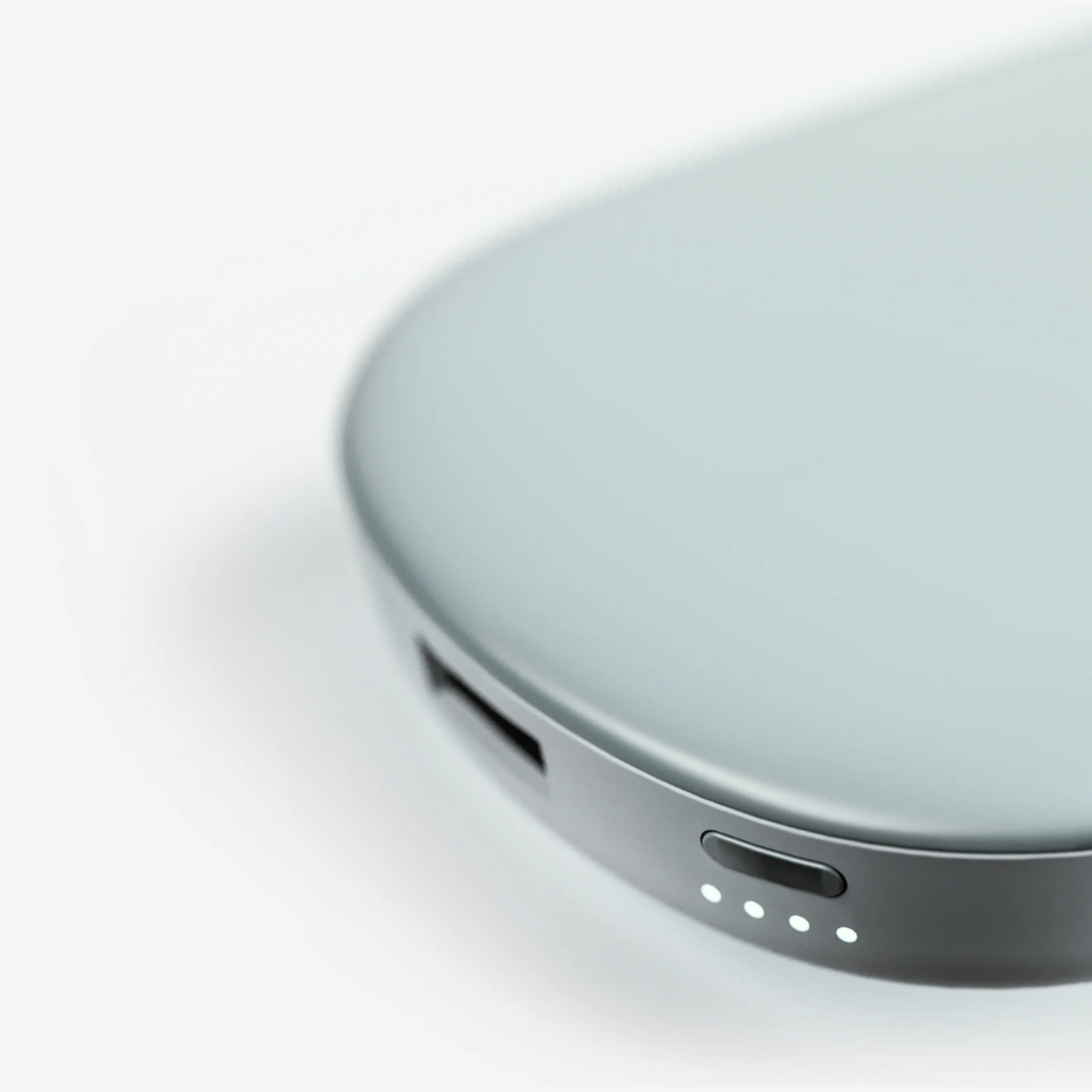
The folks over at Analog thought about adding a bit more functionality to the power bank and make it easier for users to carry it around. They focused on “usability, portability, and aesthetics”, the latter of which we don’t really think about as long as it gets the job done. But since we probably hold the power banks alongside our phone, it makes sentse to make it look better and also make it ergonomic.

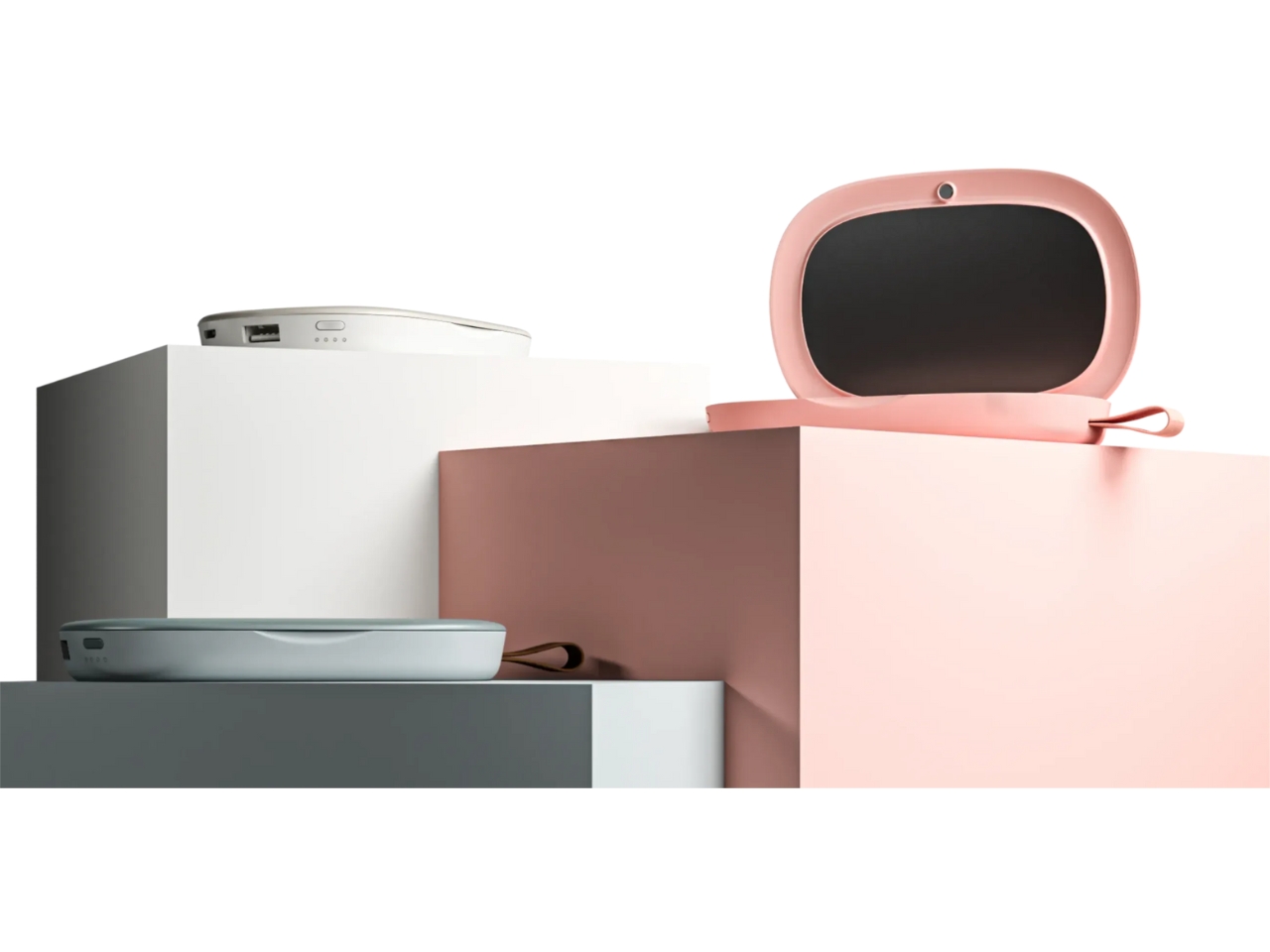
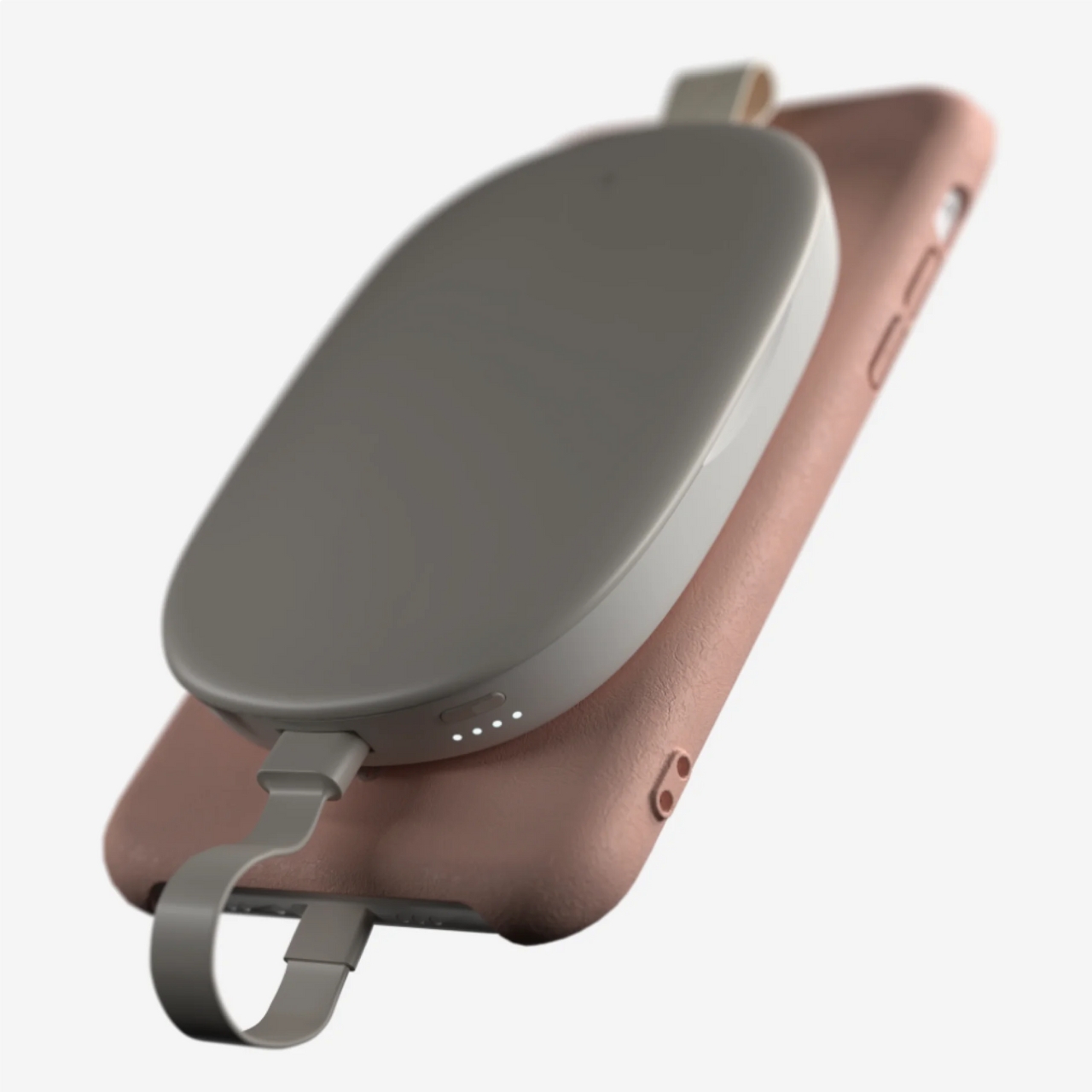
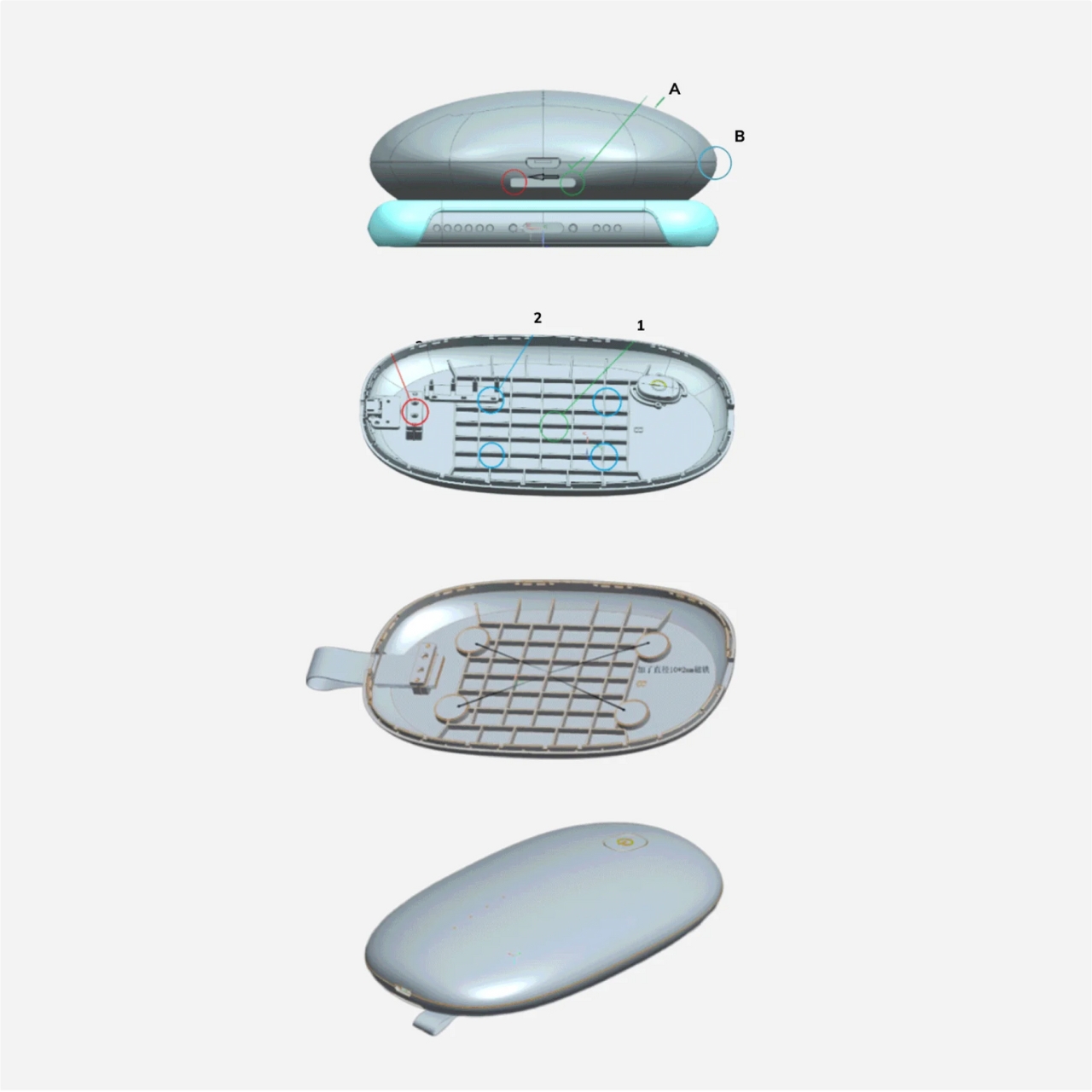
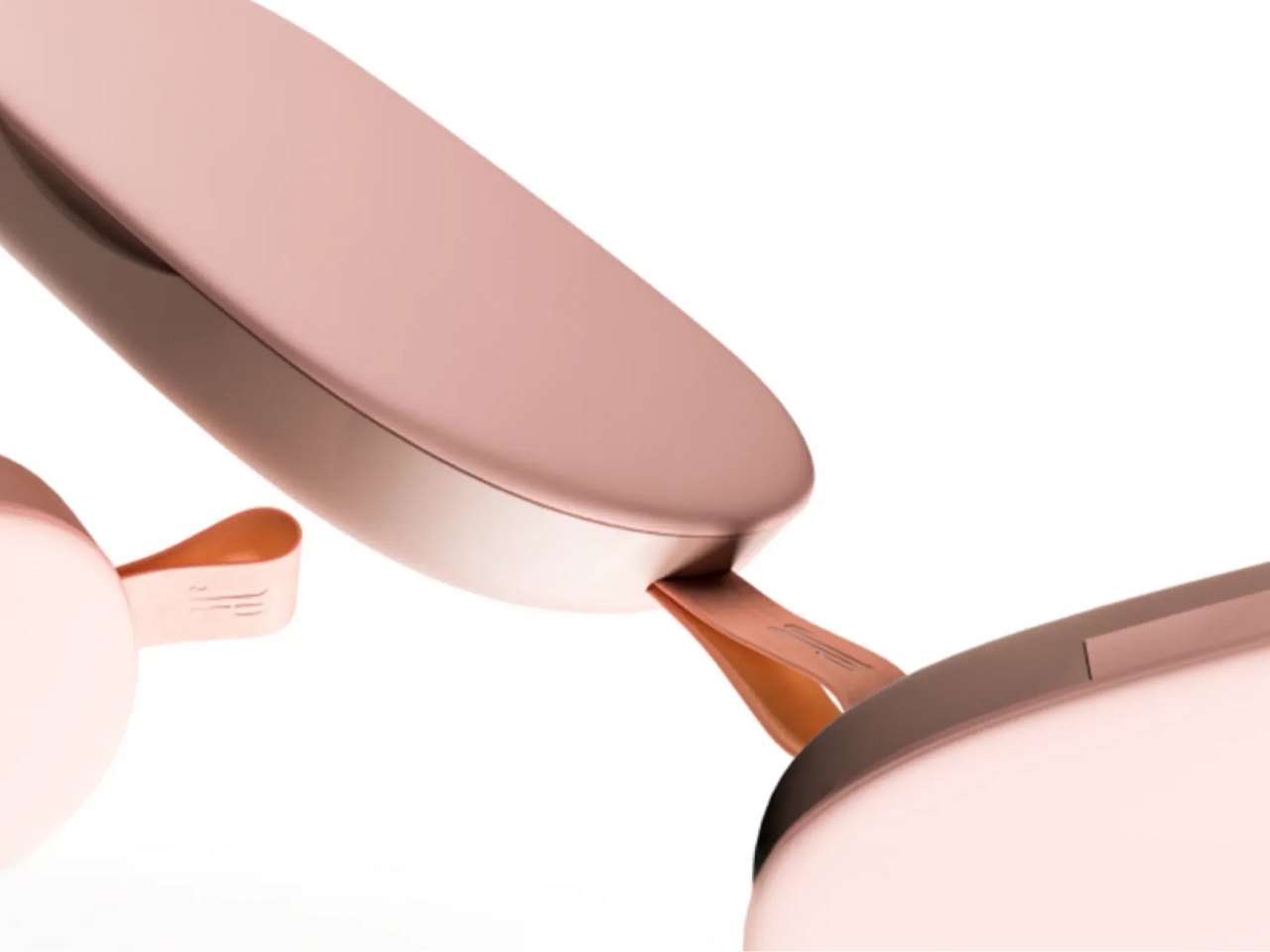
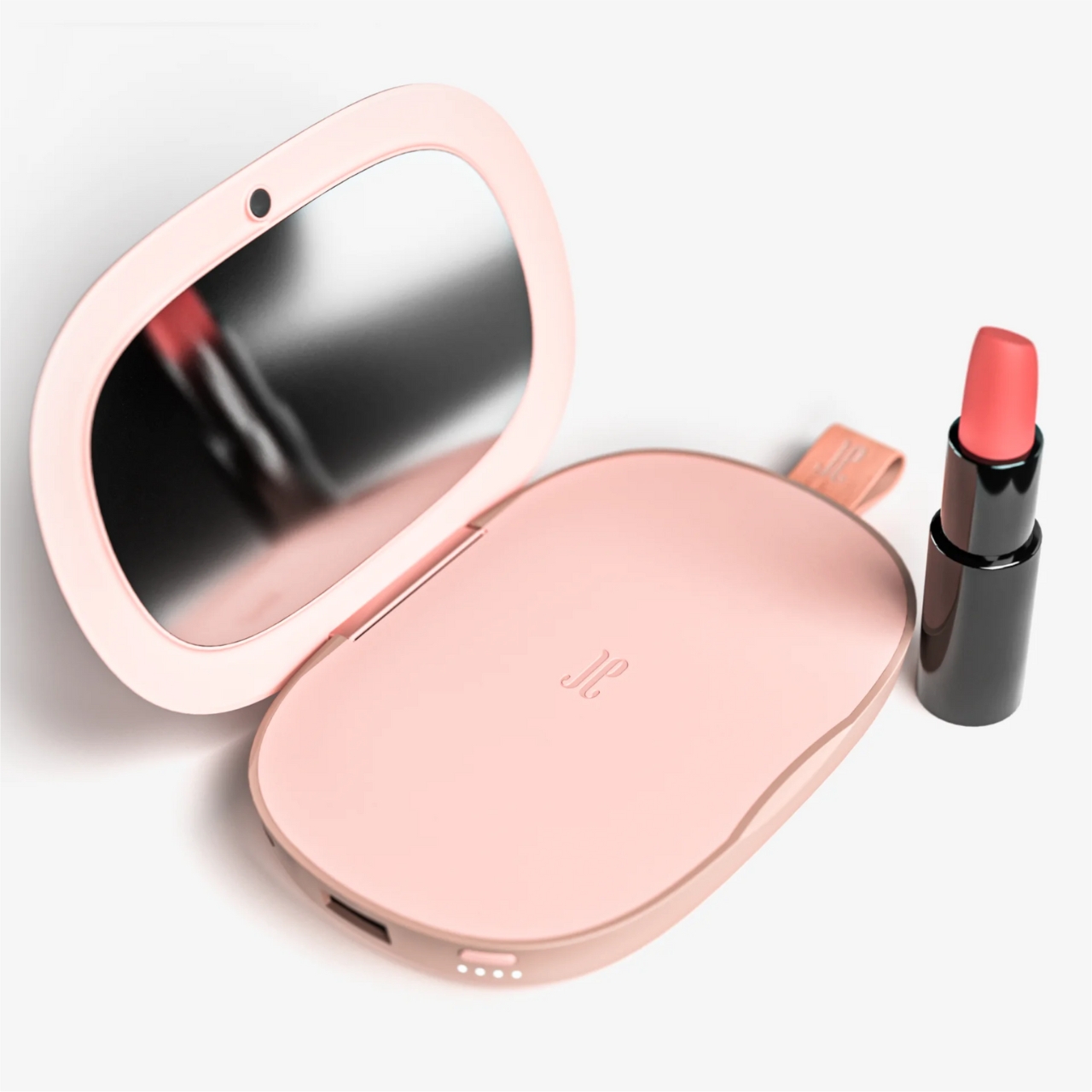
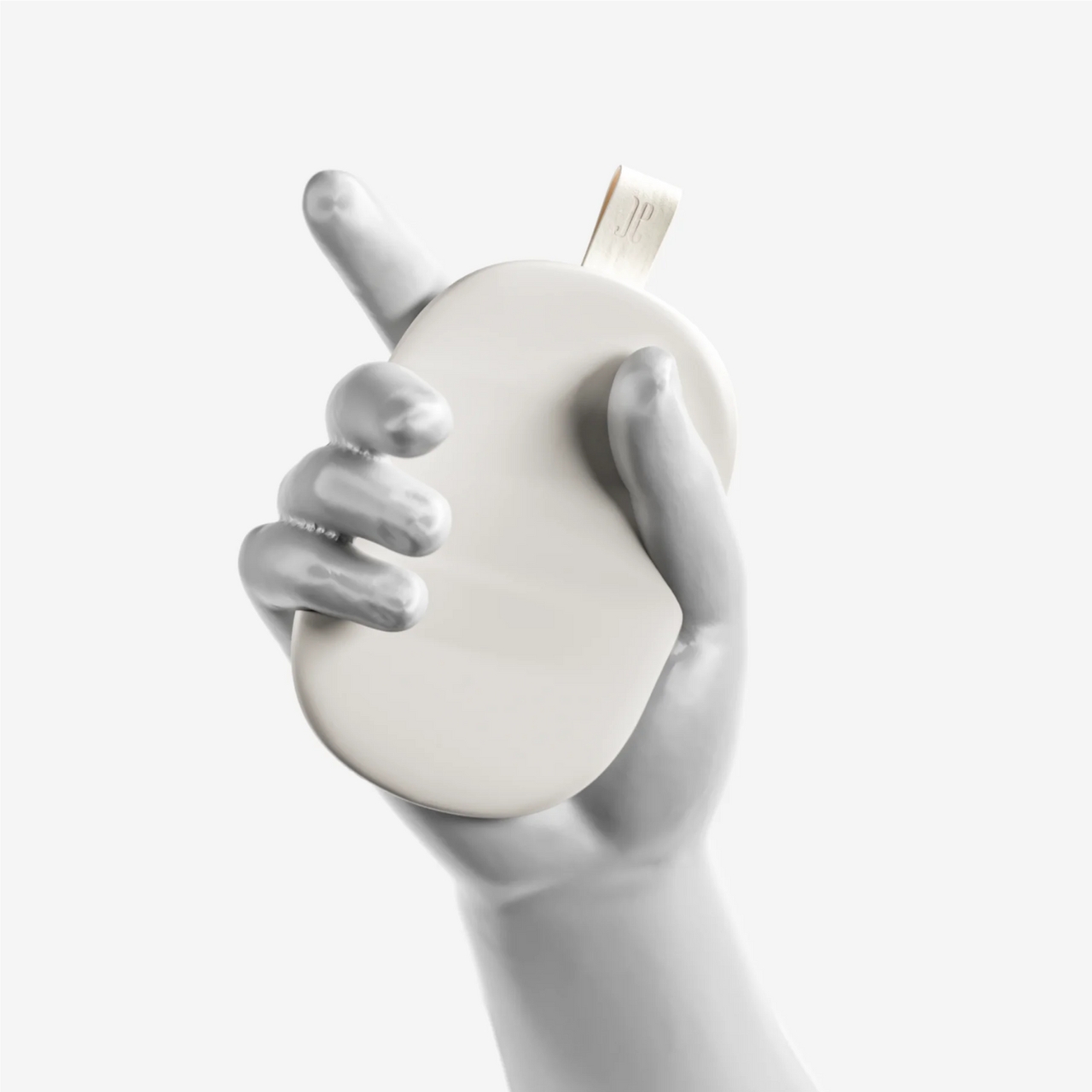
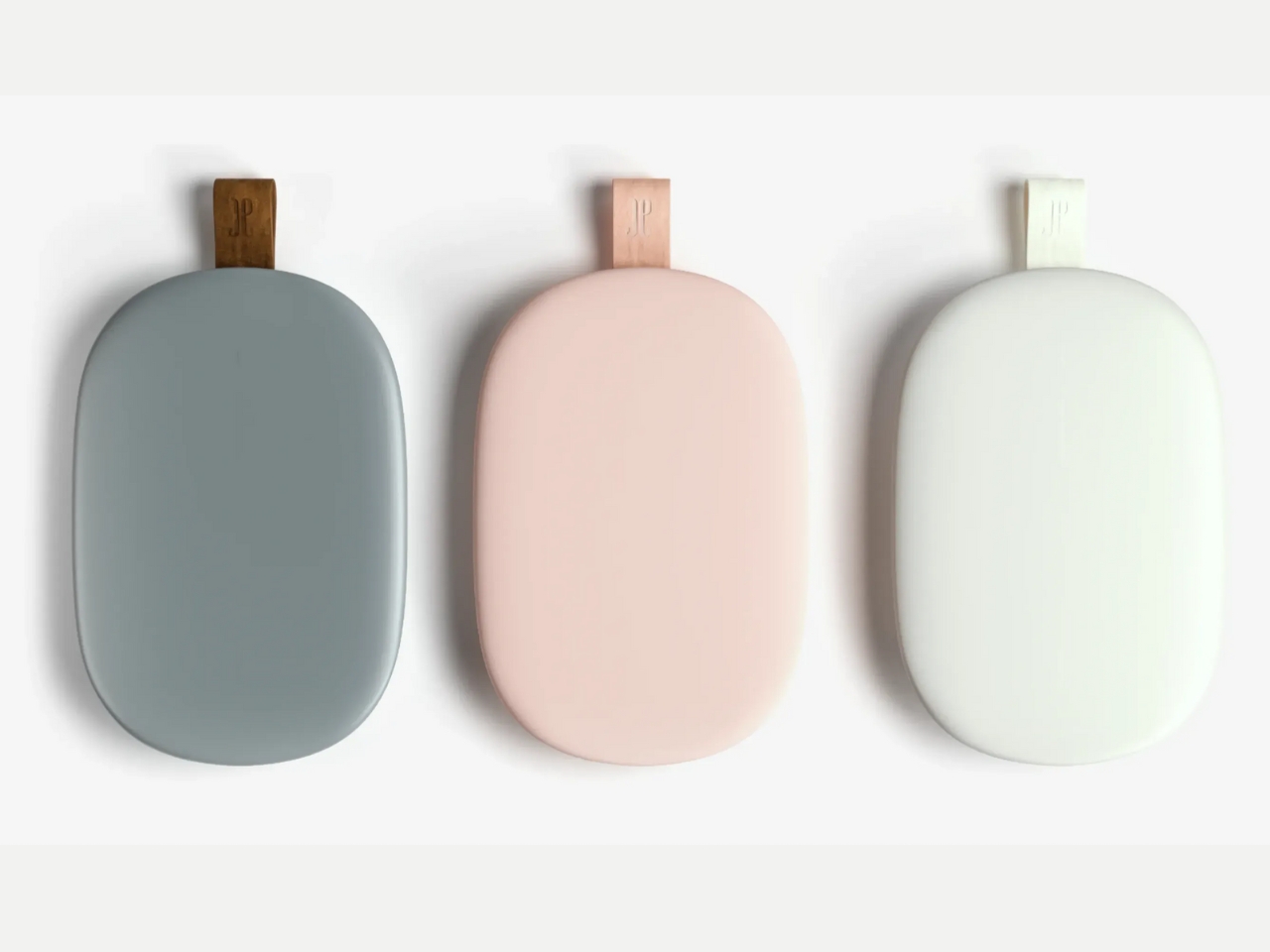
The power bank has an elongated design rather than the normal brick version that most of them have. It actually looks like a cosmetic case and since that’s the look they’re going for, they added a beauty aspect to it. There’s a mirror inside of the power bank so you get another function for it aside from juicing up your device.

The power banks come in various pastel colors and because of the added mirror function, it might appeal more to women or at least those who need mirror on the go and like the color scheme. The ergonomic function will also be useful for those who may have some grip or muscle issues from holding phones for a long time.

The post Power bank concept is not only ergonomic but even comes with a mirror first appeared on Yanko Design.

Mirrored tabletop accessories create illusions that have you questioning your sanity

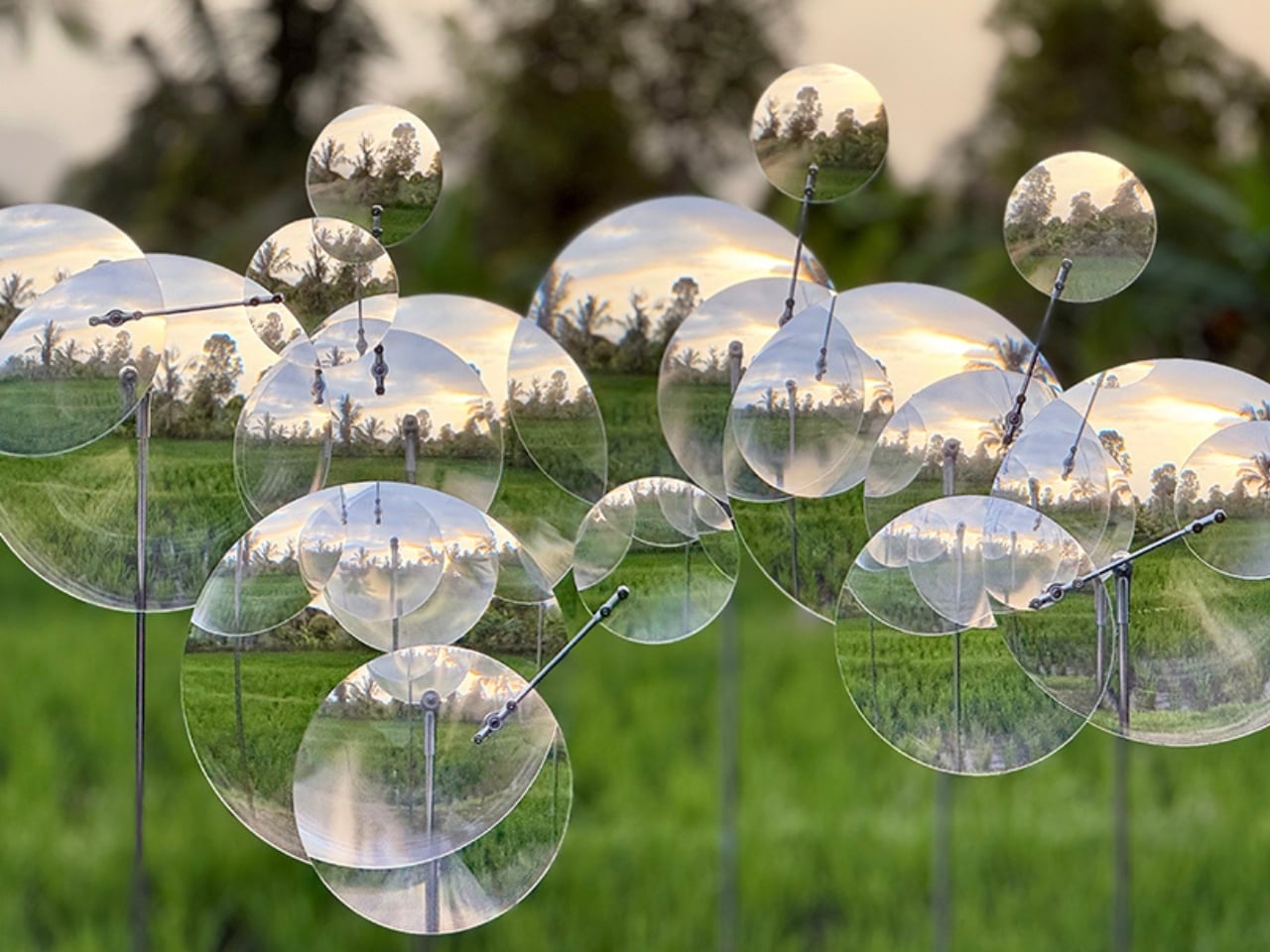
We put a lot of things on top of our desks, dining tables, and shelves, whether for functionality or decoration. Over time, we get so used to their presence that they become almost invisible, at least until something changes that shocks us awake to reality. Being mindful of the things around us isn’t so bad a thing, especially when it causes you to stop and think, even for a brief moment. Things that give us pause don’t have to be outlandish, loud, or unsettling. They just have to be unusual enough for our minds to be puzzled and stomped. This tabletop collection does that effectively not with sophisticated mechanisms or intricate designs but my simple shapes and materials create an illusion of something that isn’t what it seems at first glance.

Designer: Bo Zhang

Optical illusions work by making our eyes and our brains disagree with each other. Something that isn’t logical but clearly looks that way could send our heads in a loop. Most of these illusions use diagrams and illustrations on flat paper, but there are times when they can also be made with solid, three-dimensional objects. You just need some creative thinking and a devious use of forms, colors, and mirrors.

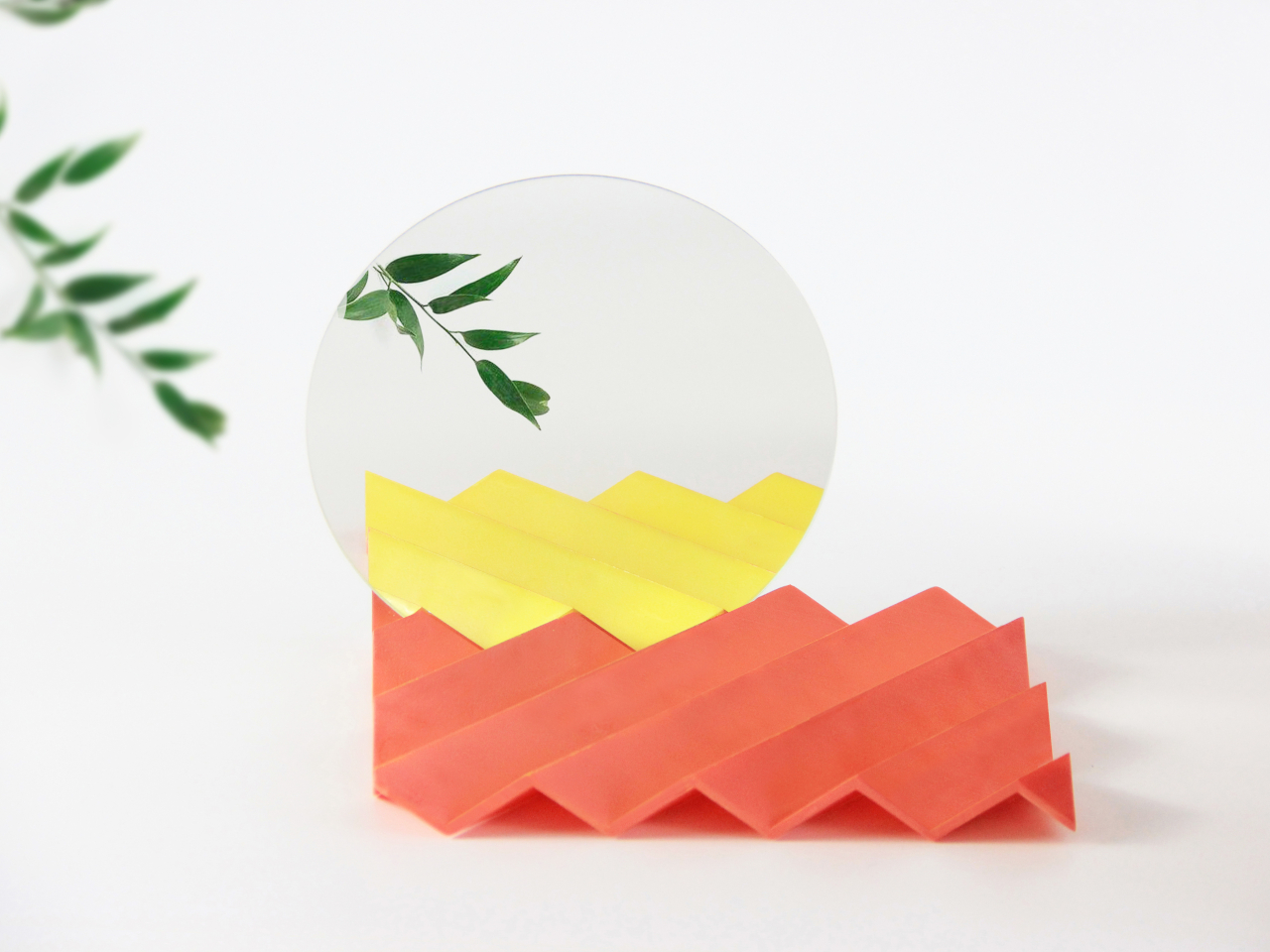
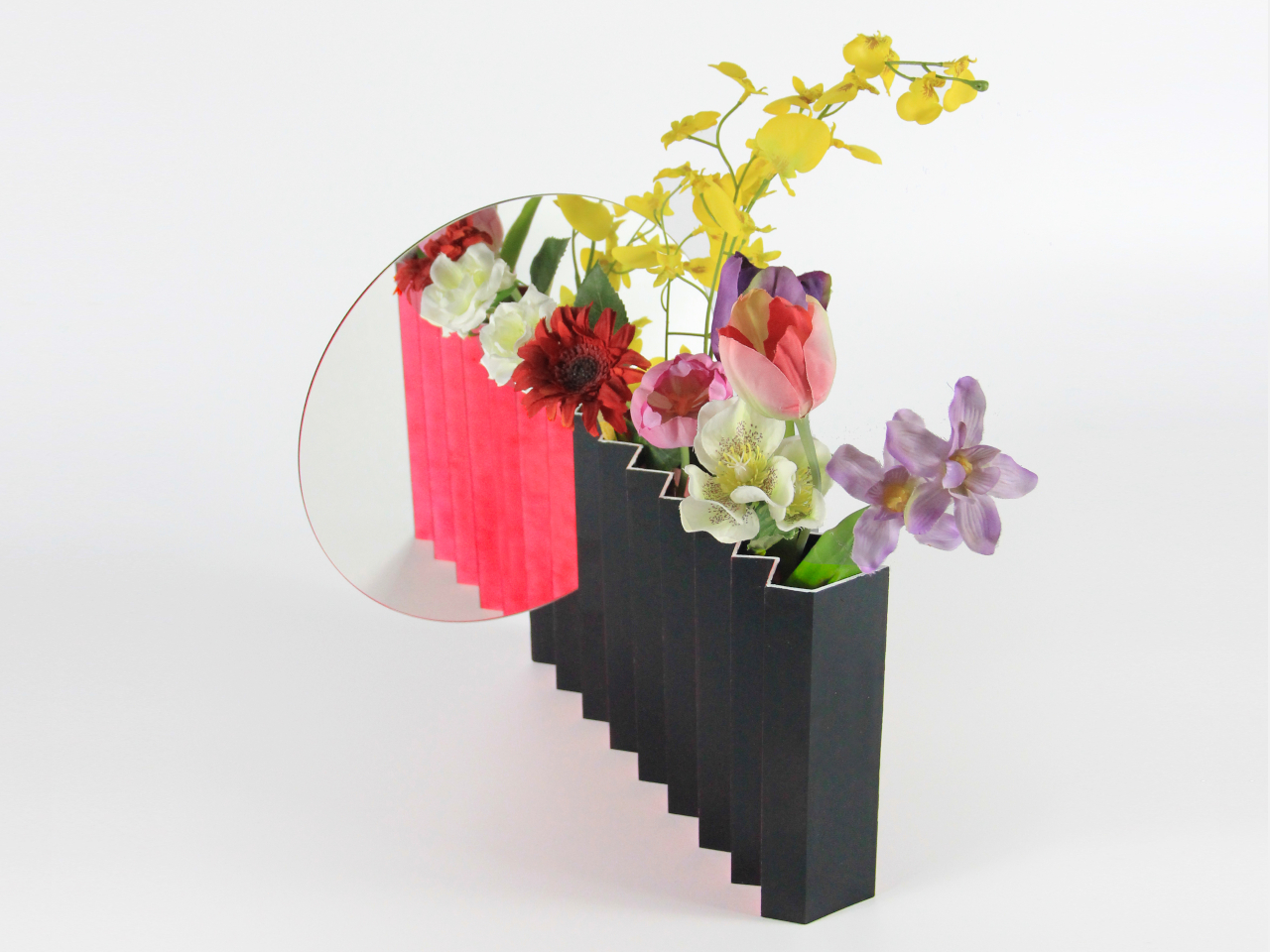
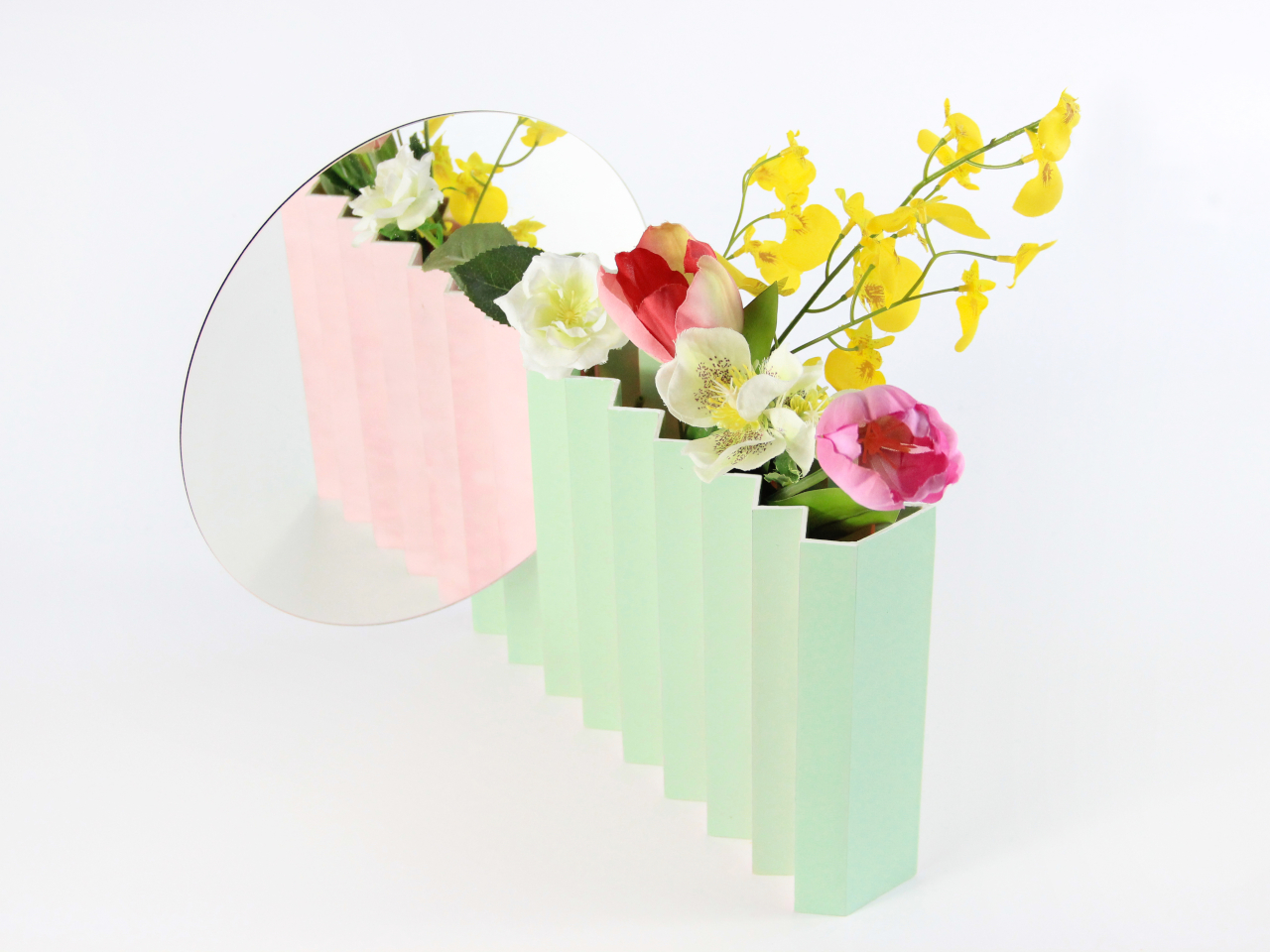
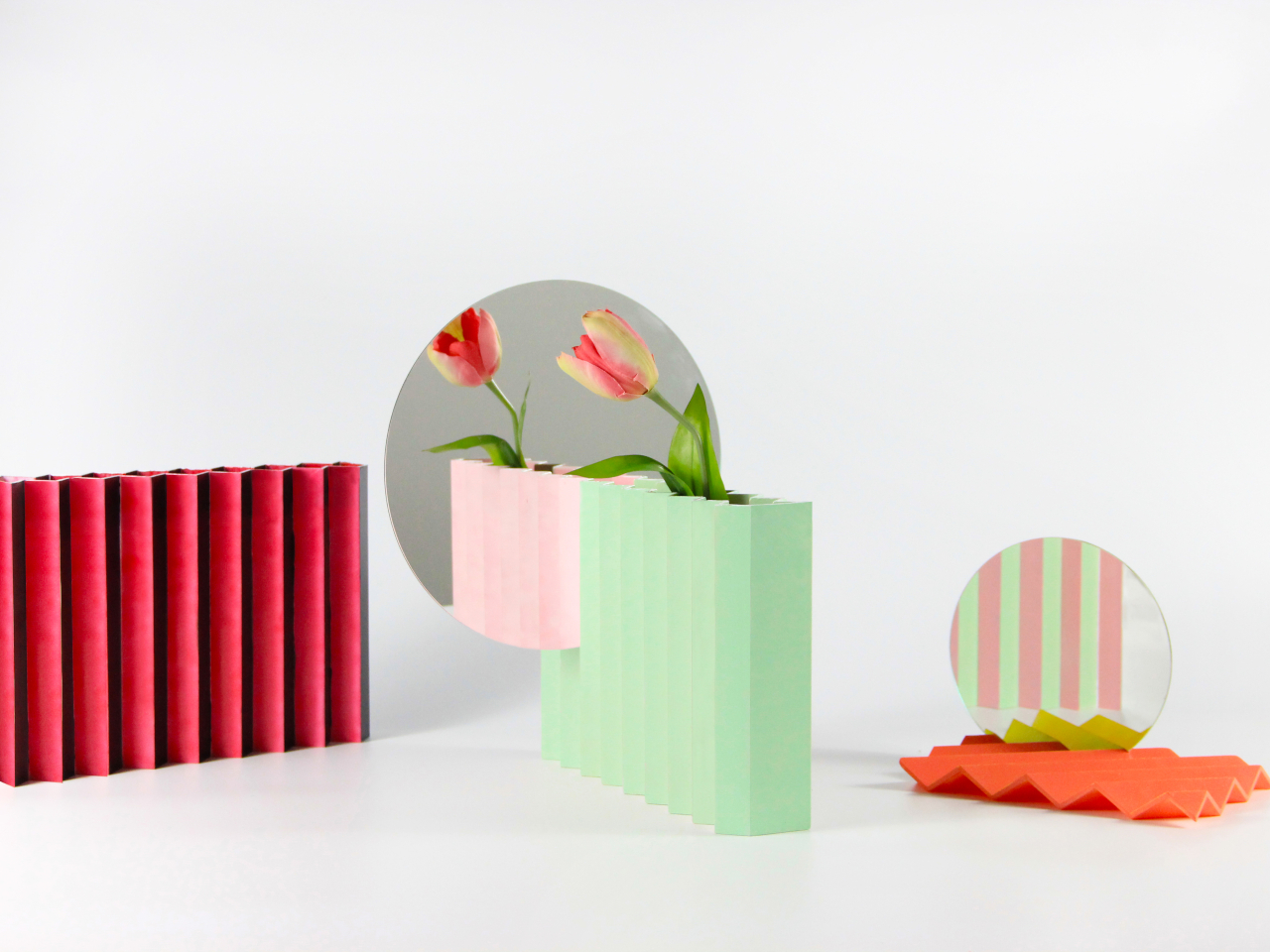
The Zig/Zag collection is a pair of table accessories, namely a vase and a tray, that sport the eponymous shape. That alone is enough to call attention to them because of their uncommon design, but that novelty doesn’t last really long. A properly placed mirror on the edge of these objects, however, reveals a whole new dimension you might have not seen before, almost literally. The wave that you see reflected on those discs doesn’t seem to be the same one standing before you, definitely not the same color, at least.

Imagine seeing a reflection that is the same yet slightly different. The shape of the vase or tray is exactly the same, and so are the objects that they hold. Everything’s mirrored perfectly as you would expect, except for the color of the tray. Orange is yellow, black is hot pink, and green is pale peach. It’s almost as if you’re peering into an alternate reality instead of looking at a mirror, but in truth, the design is just messing with your head. The secret is actually simple: The “zig” side in front is painted with a different color from the “zag” behind it. Unless you’re looking at the objects from a specific angle, you wouldn’t even know that they have two different colors. Only that mirror reveals this duality in a way that seems mysterious and magical.

Mirrors are often seen as functional objects, but the Zig/Zag tabletop collection design transforms it into an art object. The vase and the tray don’t lose nor gain any functionality, but they do gain new value as aesthetic pieces that straddle the line between form and function. It’s a simple gimmick that urges you to take another look, perhaps to solve the mystery that you never knew existed. It makes your mind zig-zag between reality and fantasy, making you pause and simply enjoy the moment of being there.

The post Mirrored tabletop accessories create illusions that have you questioning your sanity first appeared on Yanko Design.

Modular and multi-functional shelf and mirror is an aesthetic addition to your space

Normally, the shelves that I look for or I actually get have one purpose only: to hold and store my books. And I have a lot, and I mean a lot, of books. But there are times when I want to be able to get something that is also decorative or can be a conversation piece (although that still hasn’t happened yet since I still need for it to just be functional). A lot of designers now are creating ideas, concepts, and sometimes actual products, that can be multi-functional and modular and shelves are no exceptions.

Designer: João Teixeira

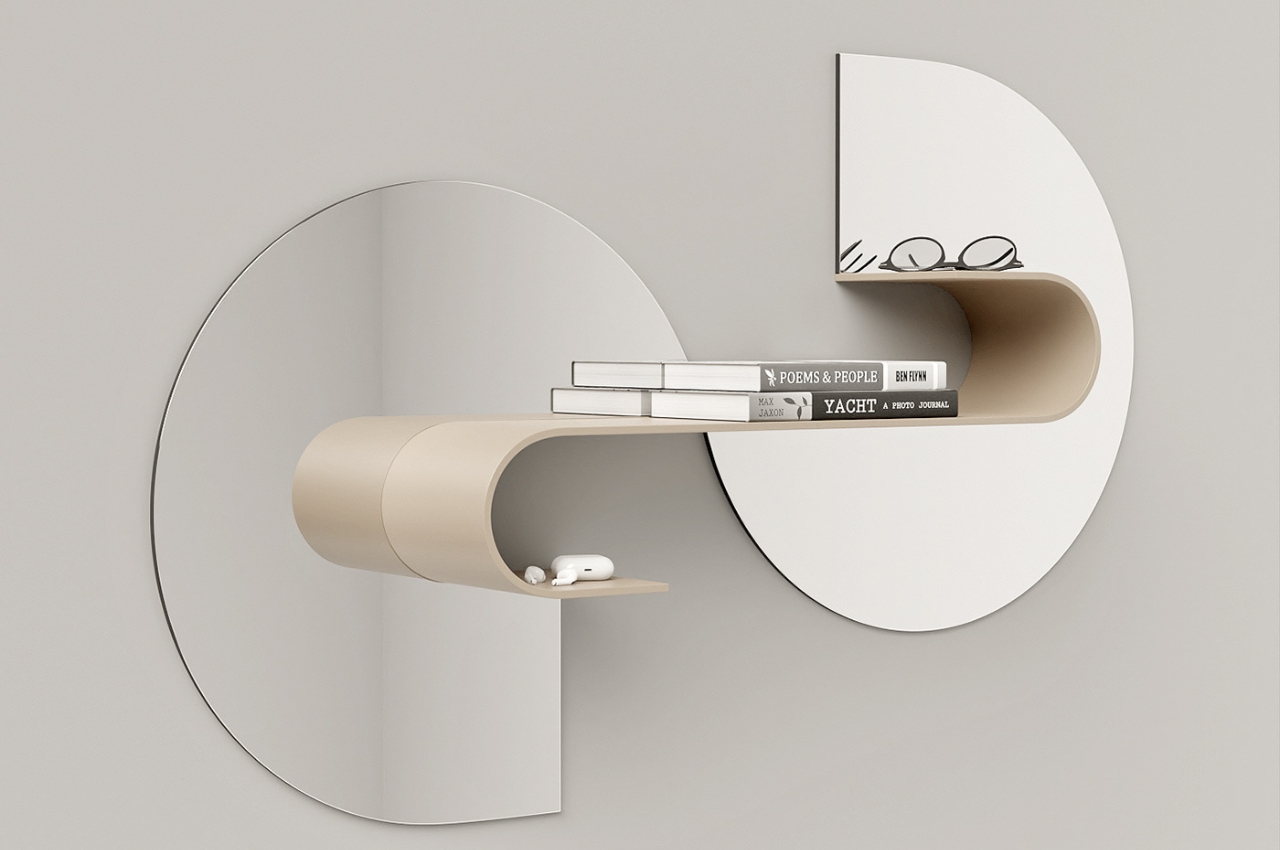
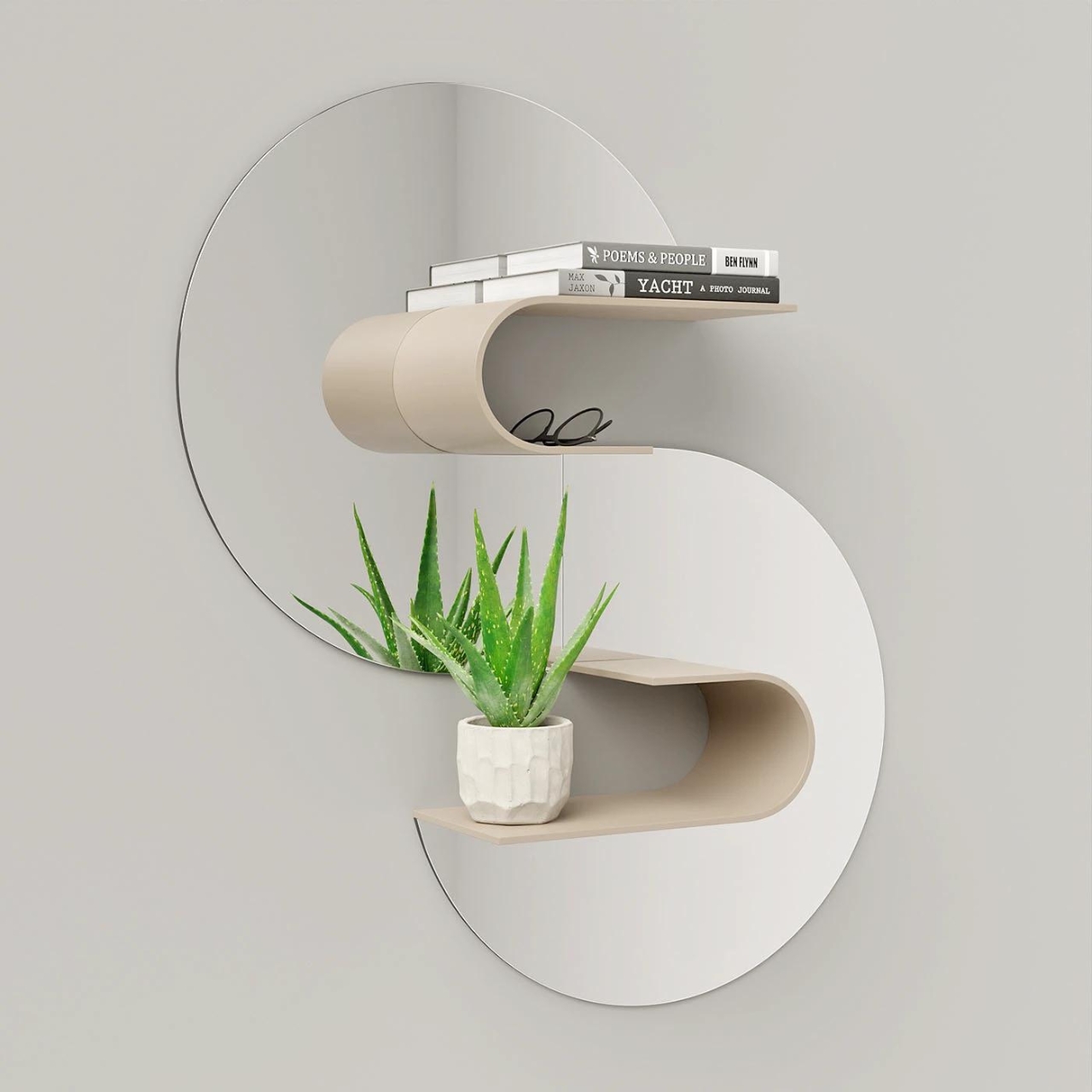
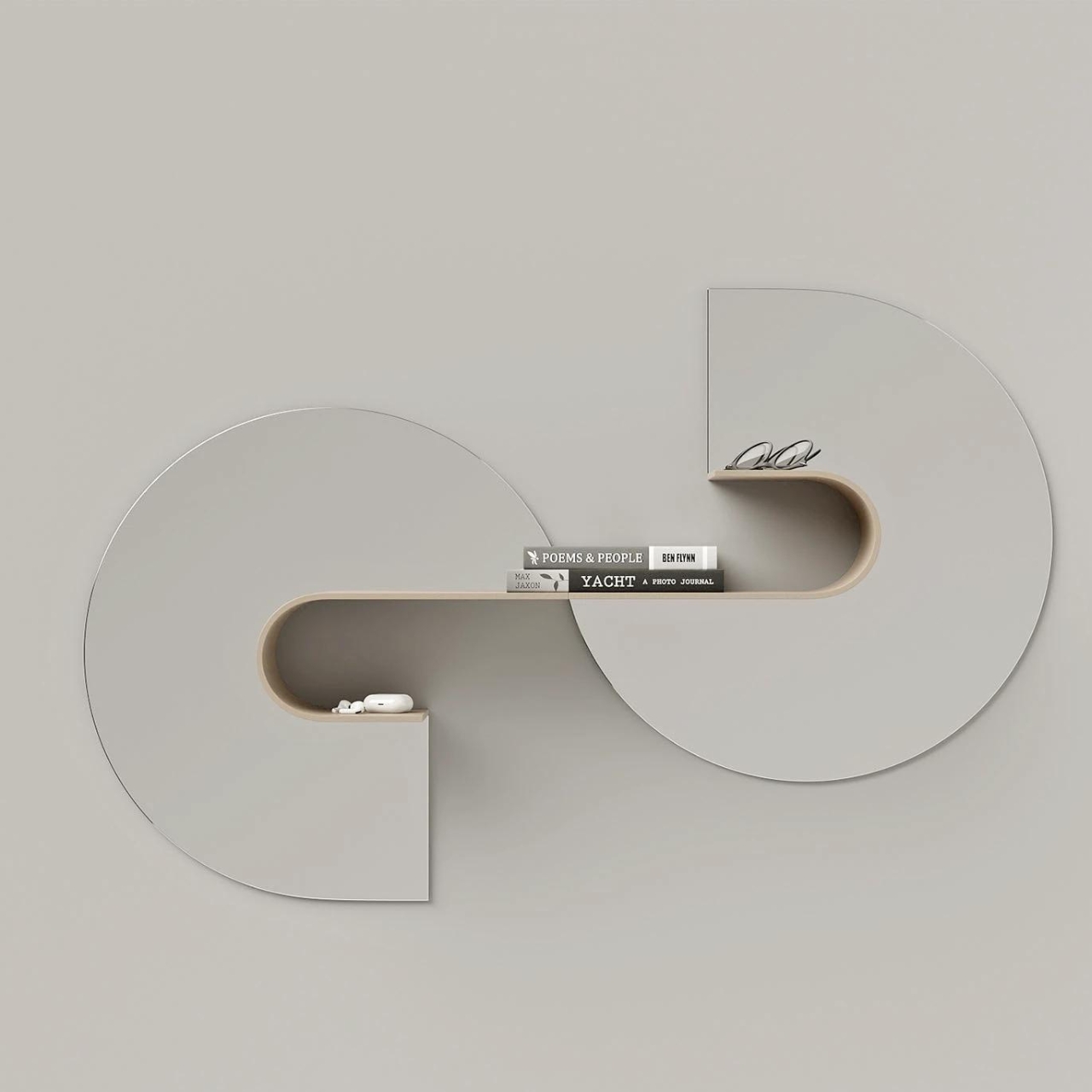
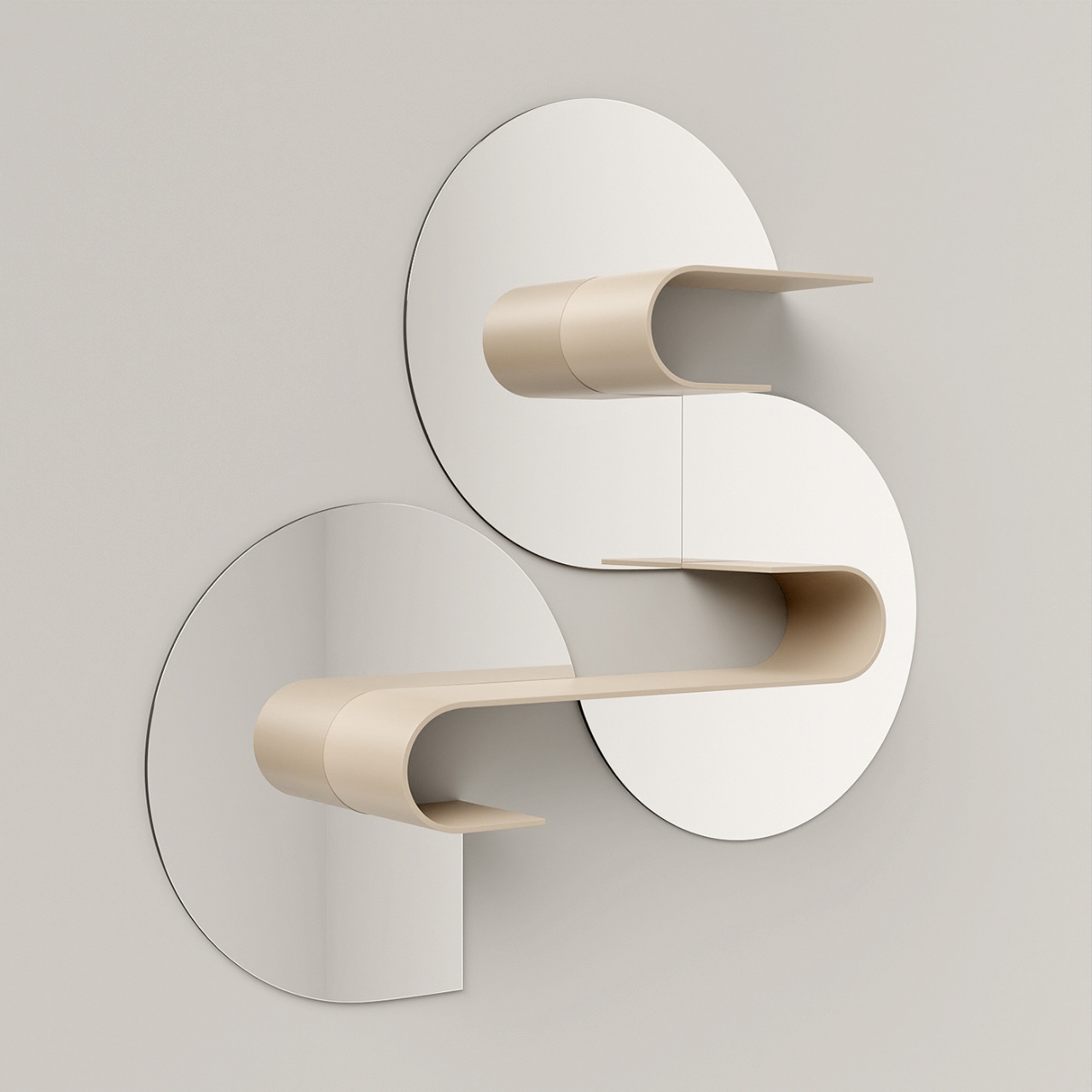
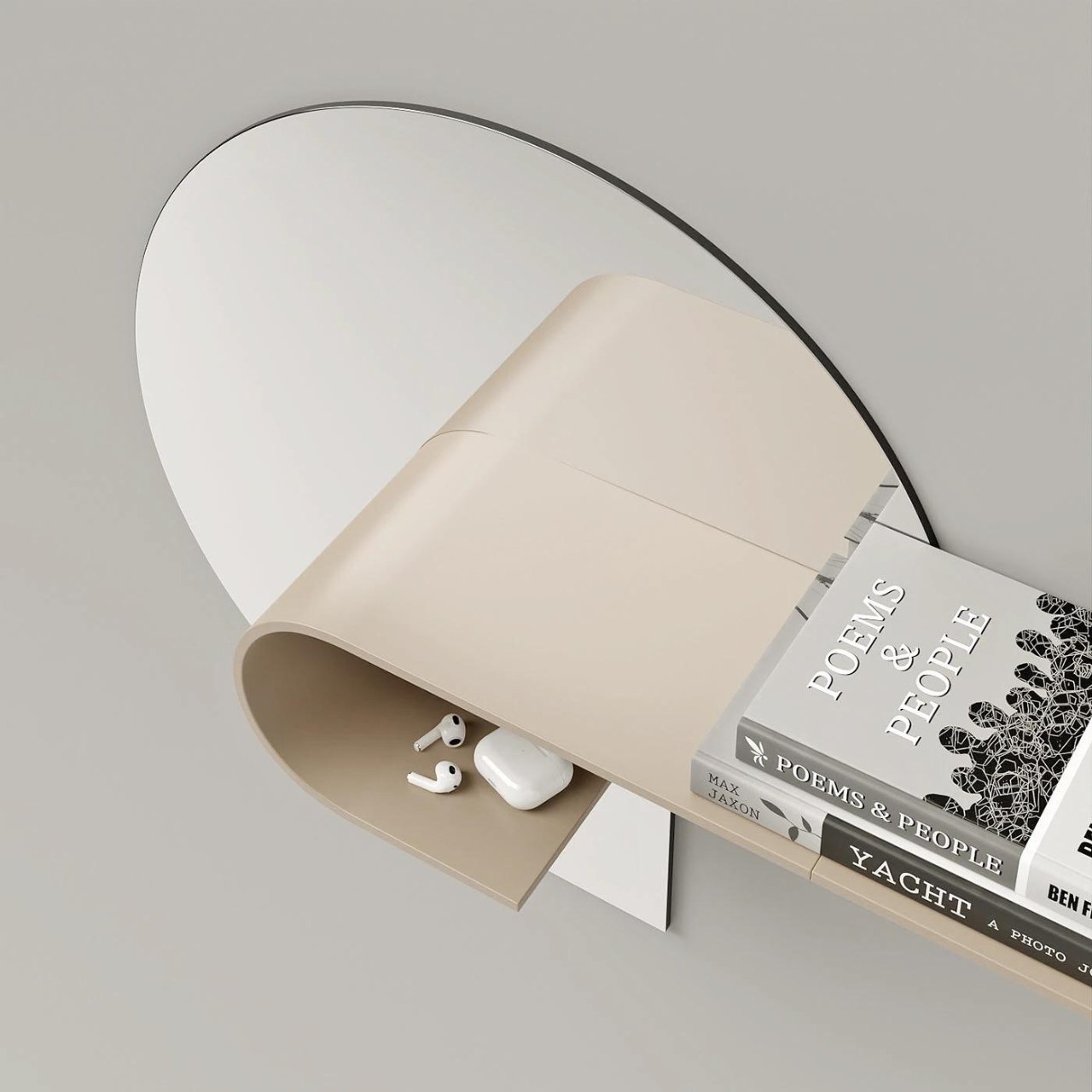
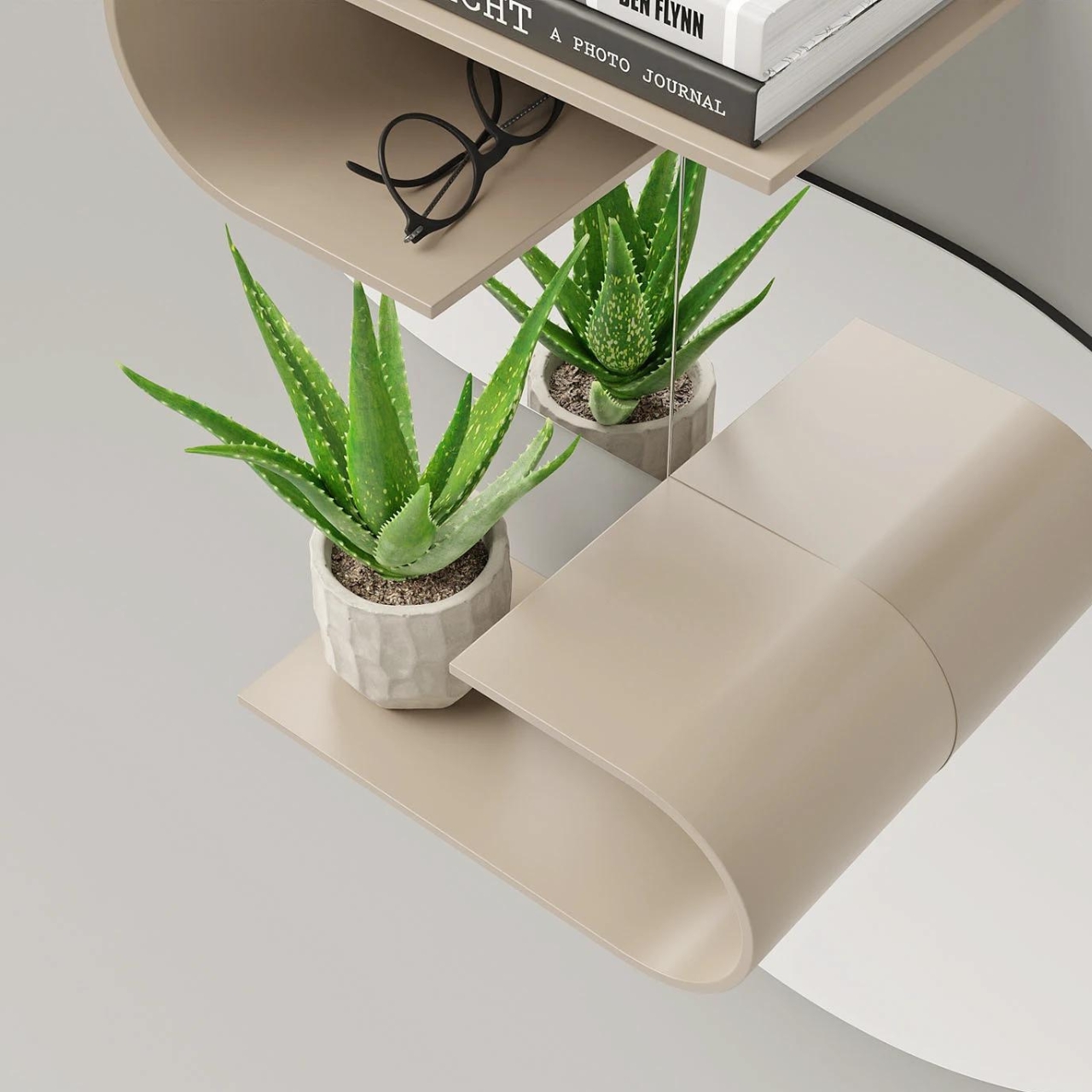
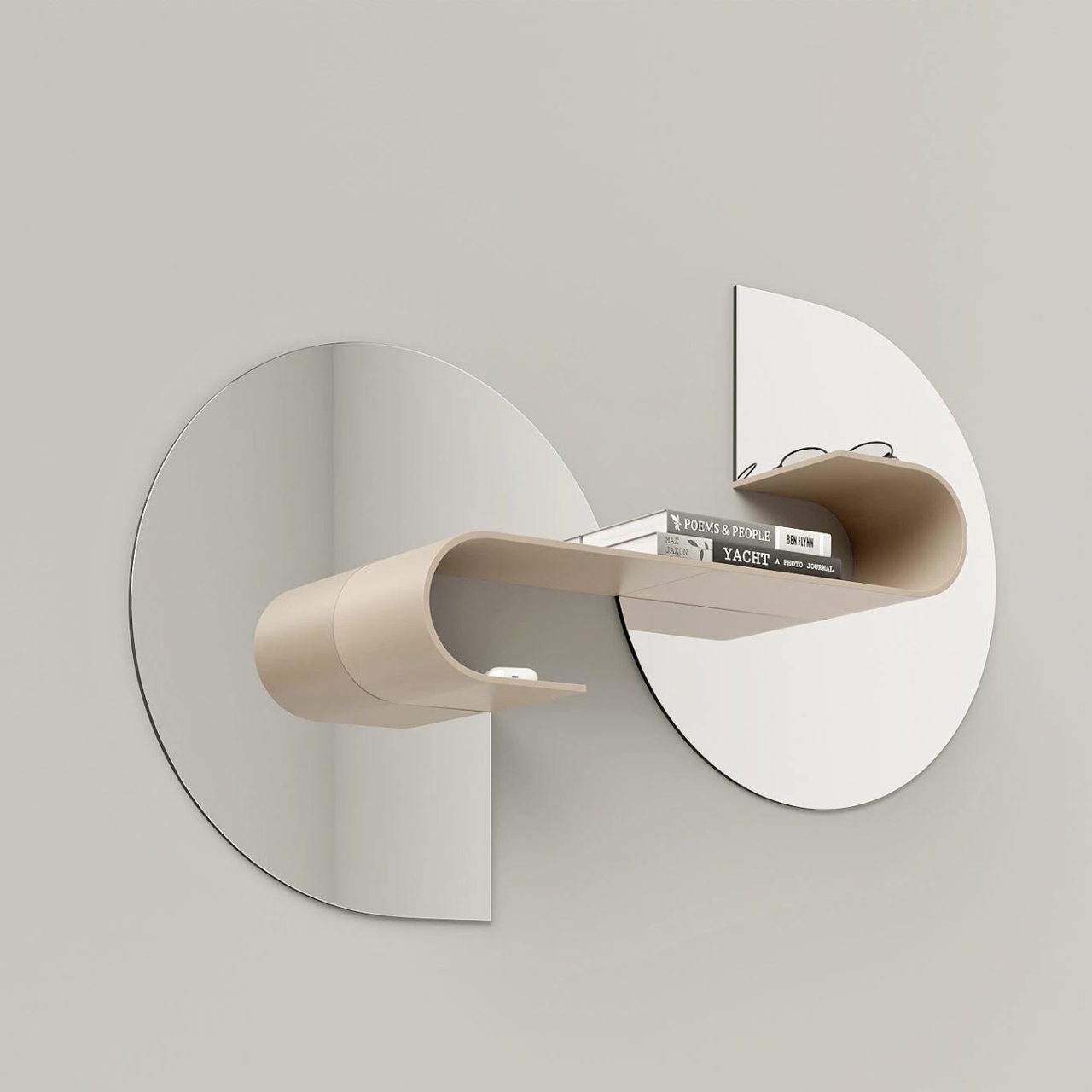
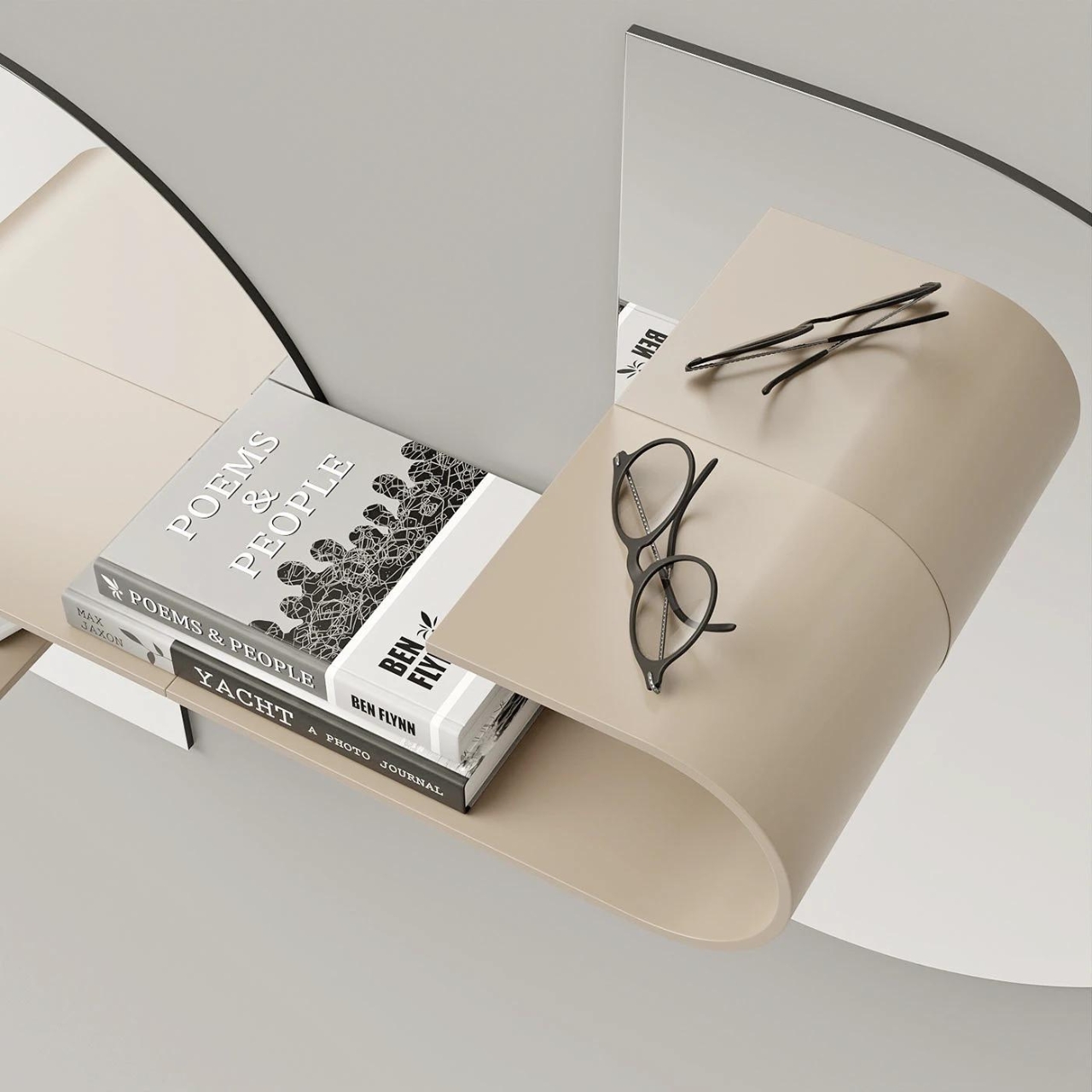
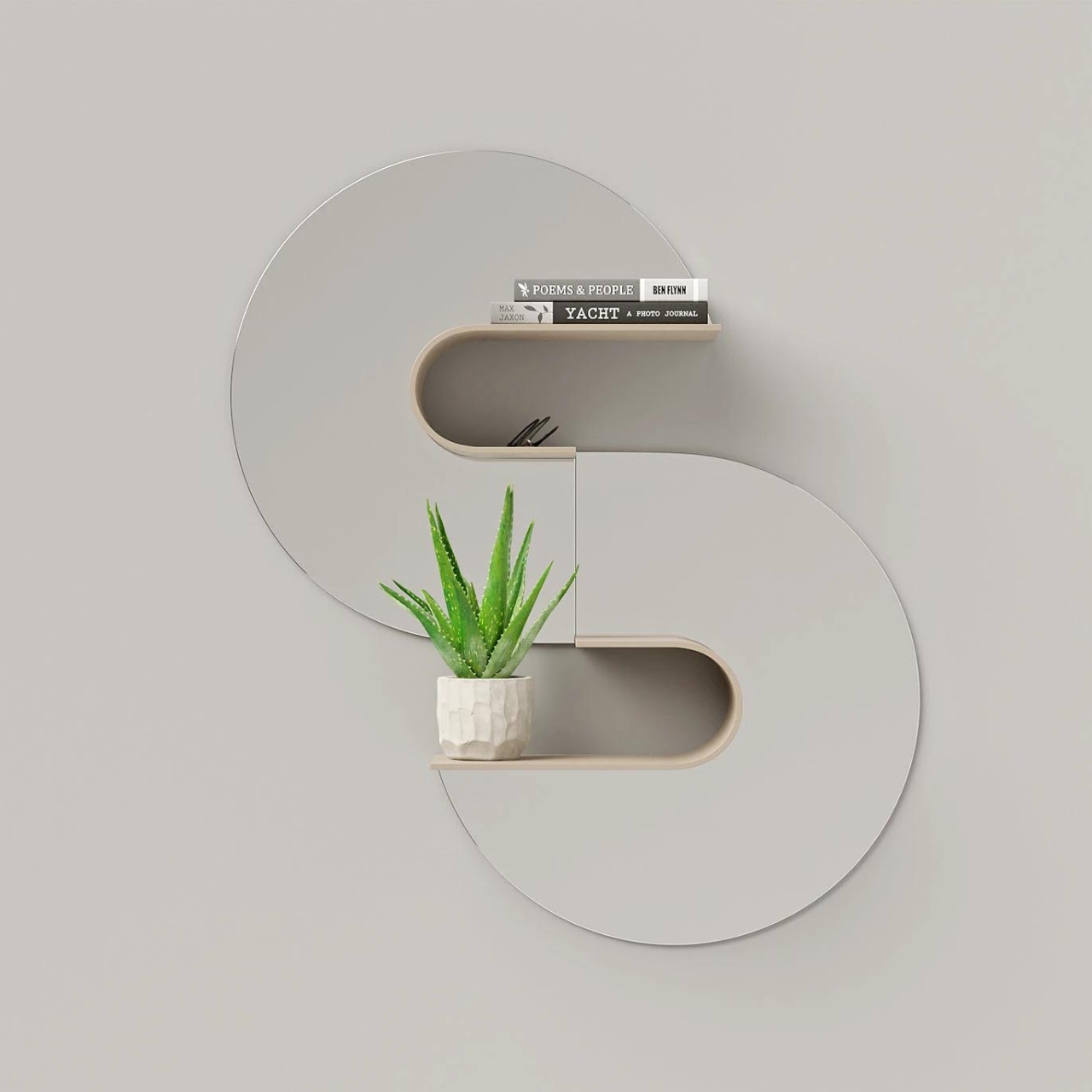
Wave is a conceptual design for a shelf that also doubles as a mirror. Even better, it is modular so you can arrange it into different layouts, depending on your need, your preference, or your mood. Just don’t expect a full mirror of course since the shelf part and the shape of the entire thing can be a bit obtrusive. But if you’re just looking for a surface that can hold your books, decorations, and other knick knacks that happens to have a mirror attached to it, then this is something you will be interested in.

Since the concept is named Wave, the shape of the mirror and the shelves is wavy and reminiscient of the letter S. It is modular yes but no matter where you place the different parts, you’ll still get the wave. The renders show that there are around 4-5 parts that you can assemble and play around with, depending on where you want to place the shelves part or if you want it to be horizontal or vertical in orientation.

If what you really want is to look fully in a mirror, you may be annoyed with the way this is designed. But if this gets made into an actual product, those who will buy it will probably just see the mirror as part of the whole design of the multi-functional shelf. You can also probably only just place a few objects on it (most likely not part of my book collection) but again, this is more for the added aesthetics rather than a fully functional piece of furniture.

The post Modular and multi-functional shelf and mirror is an aesthetic addition to your space first appeared on Yanko Design.

This absolutely genius floor mirror flips over into an ironing board to save space

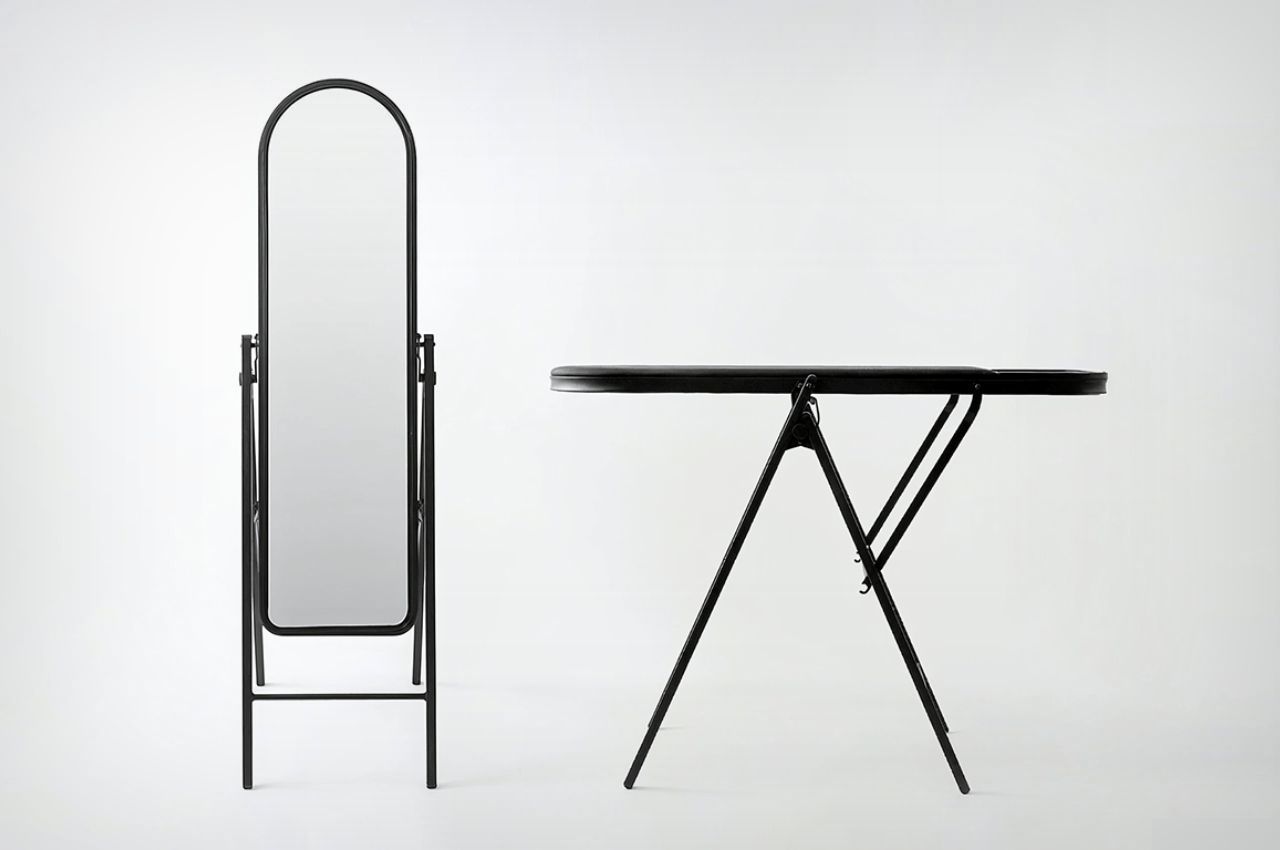
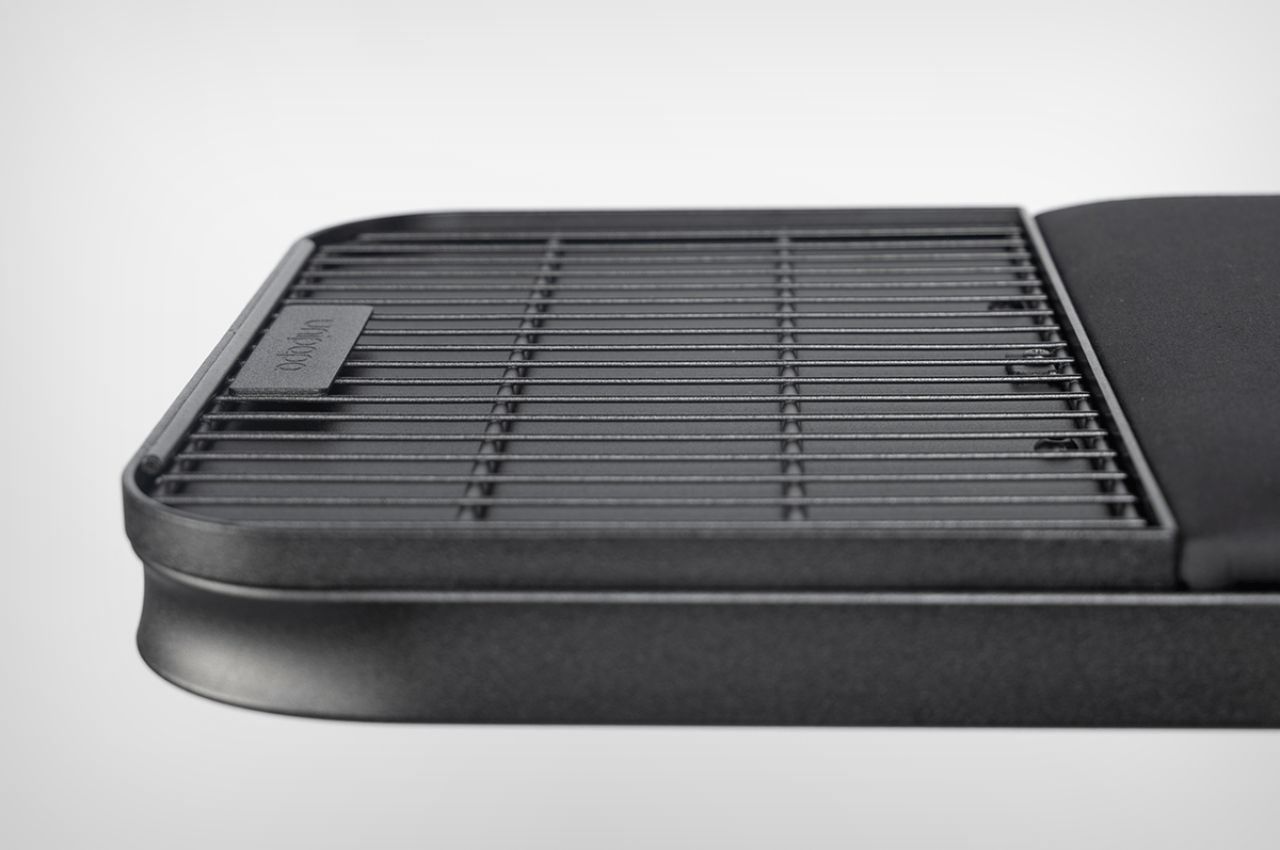
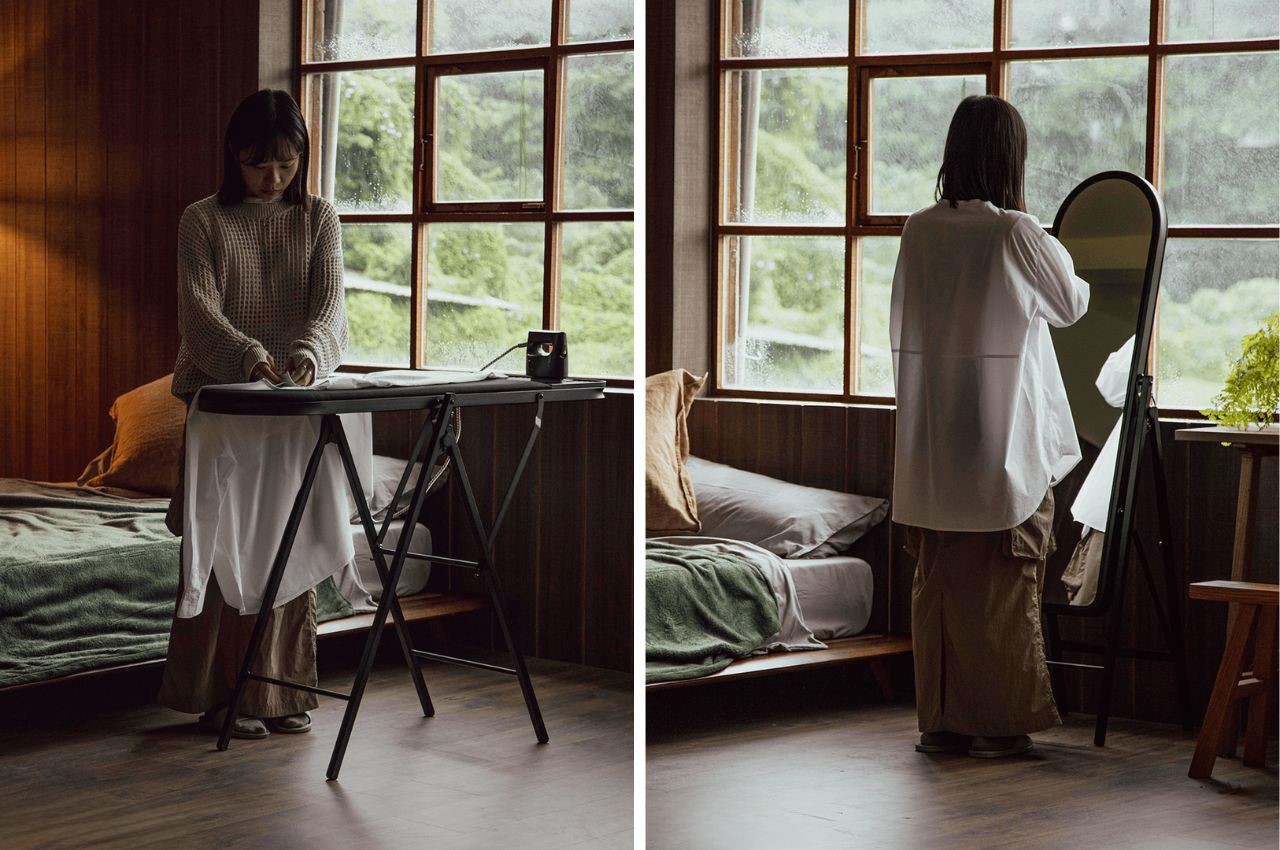
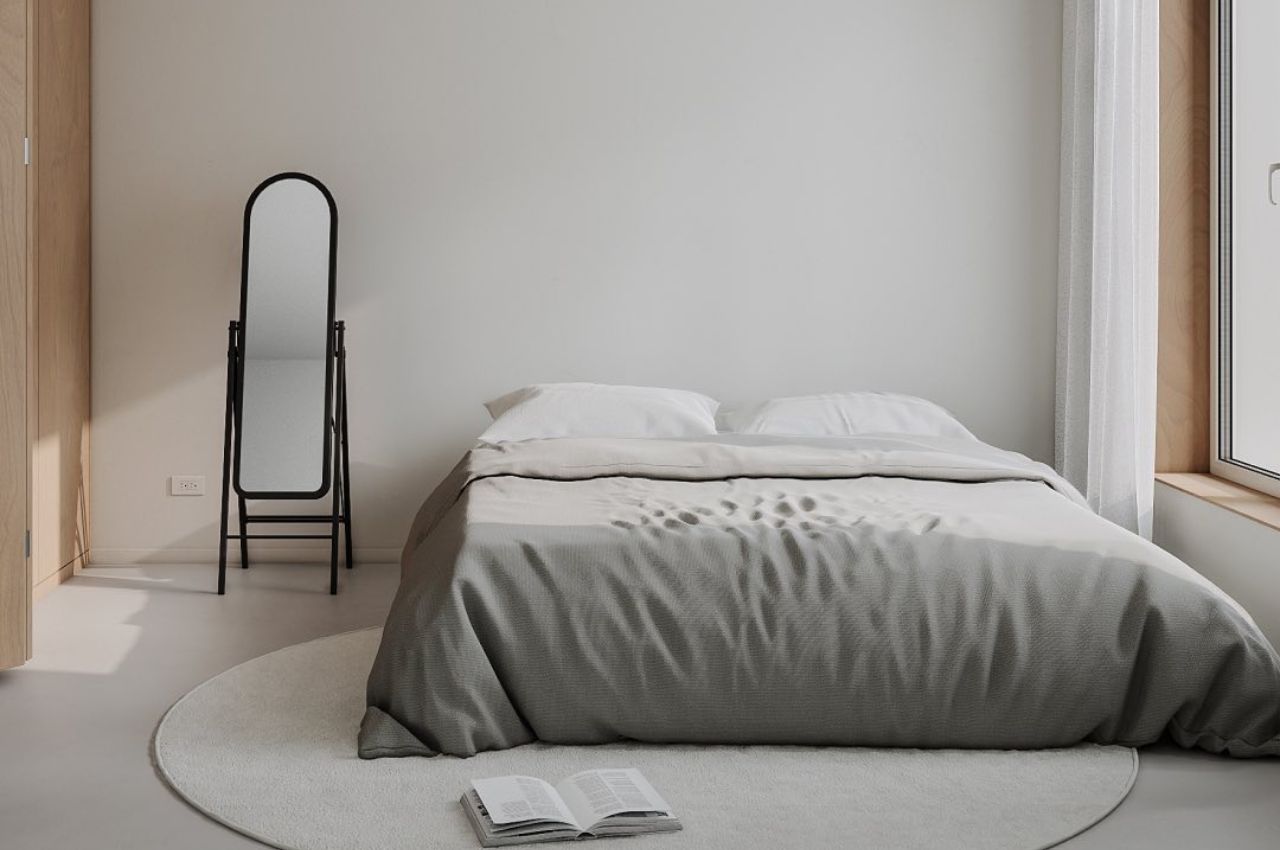
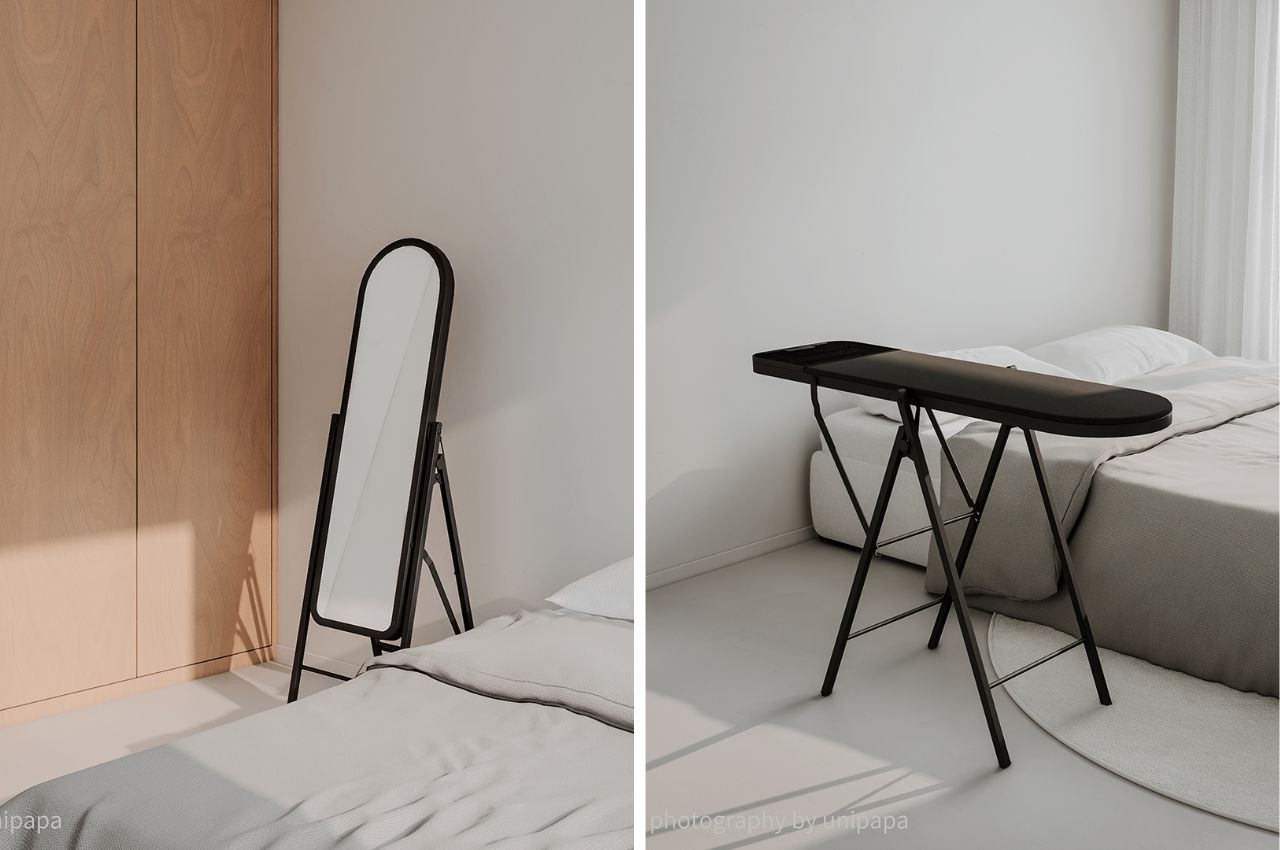
You don’t need a tiny home to invest in some clever multi-functional furniture. Sure, it helps save money and space when you’ve got a product that serves different purposes, but then again, owning such cleverly designed products is cool too! In collaboration with the esteemed Taiwanese design brand, Unipapa, Medium2 Studio introduces the Flip Dual-Function Ironing Board Mirror, an ingenious solution that seamlessly integrates the functionality of a full-length mirror with that of an ironing board. This innovative fusion addresses the perennial household dilemma of storing bulky ironing boards while adding a touch of elegance to interior spaces.

Designer: Ping-Lun ChungFang-Yu Chen, and Yen-Ting Lin

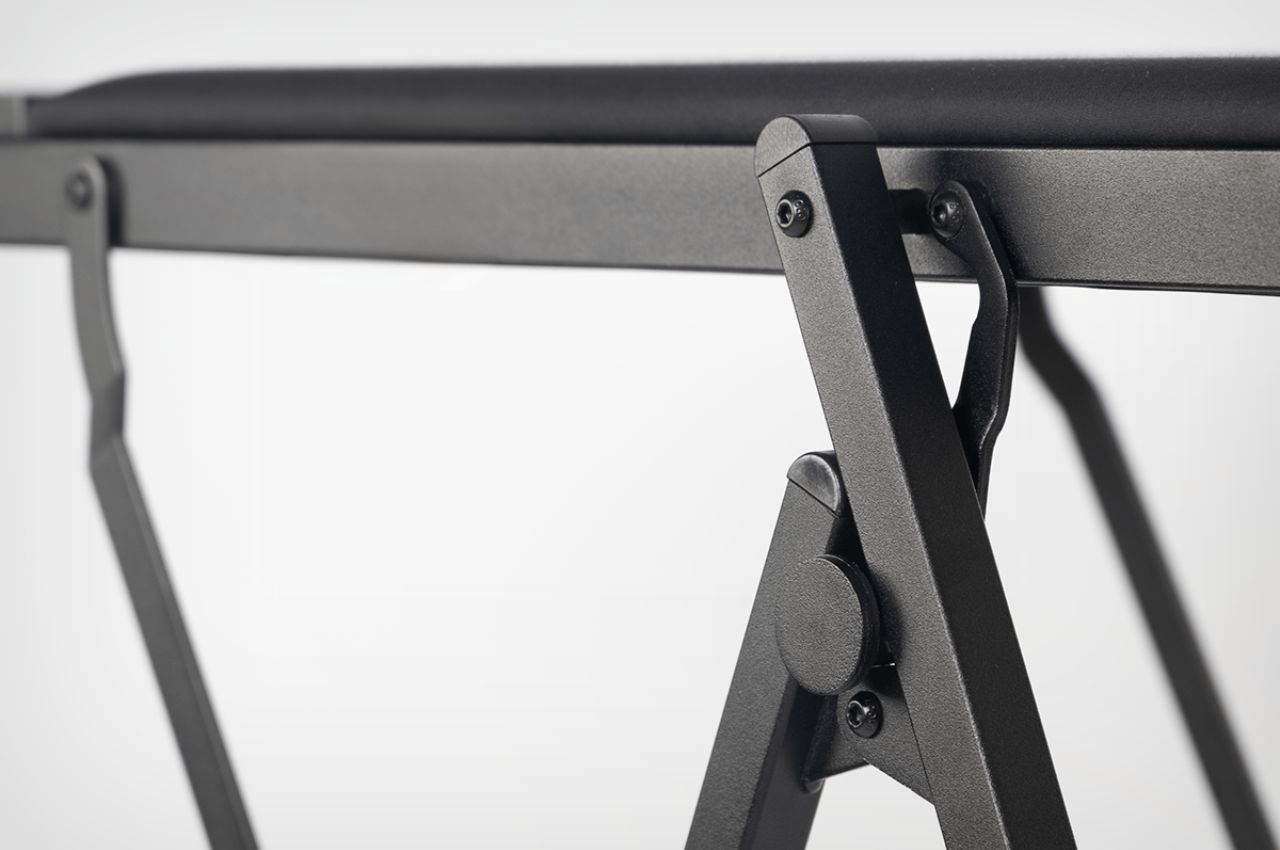
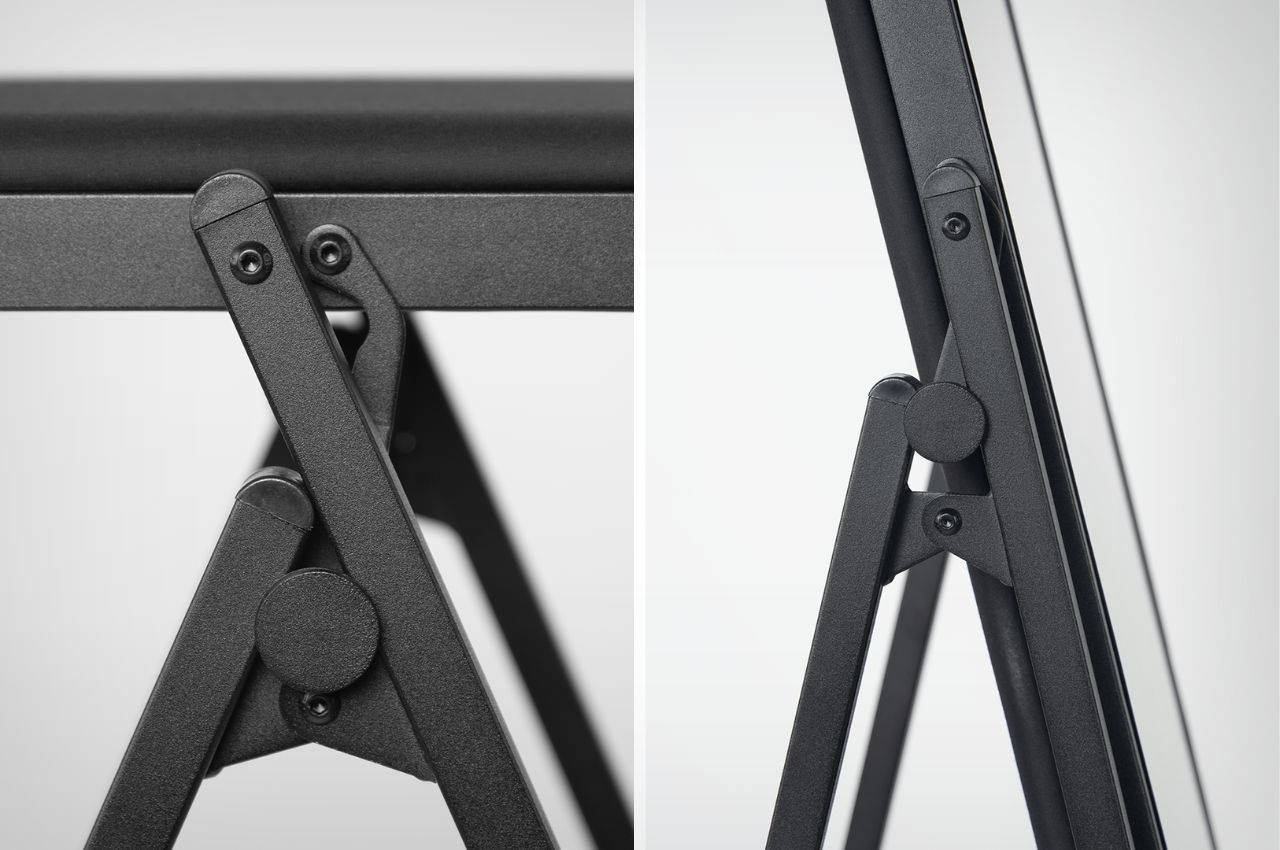
While the concept of a dual-function ironing board mirror isn’t entirely novel, the journey from concept to commercialization for the Flip involved extensive research and innovation, ensuring its practicality for everyday use. The crux of its design lies in what they term the “adjustable span transition.” Balancing the requirements of an ironing board, which demands a broad span for stability, with those of a full-length mirror, which necessitates a compact span to minimize space usage, presented a unique challenge.

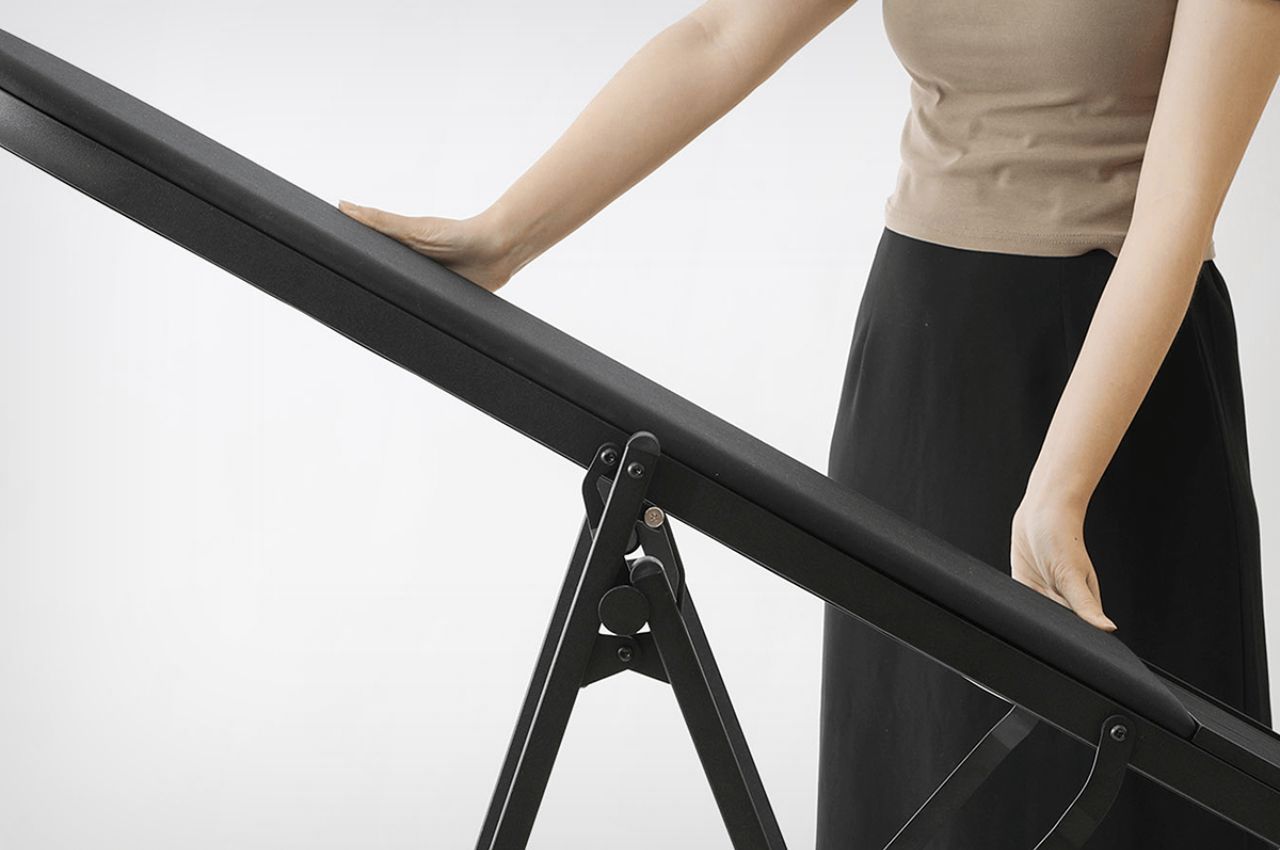
To tackle this challenge, they engineered a structure with an adjustable span mechanism. This ingenious feature allows the Flip Dual-Function Ironing Board Mirror to seamlessly transition between its two functions with ease. Whether you’re preparing for a crisp attire with the ironing board or checking your reflection in the mirror, the interconnected structure simplifies the operation, enhancing overall convenience.

One of the most notable aspects of the Flip is its simplicity and practicality. Storing an ironing board is no longer a bulky task but simply a matter of placing it back in its designated spot. This effortless integration of two household essentials into one sleek design epitomizes the ethos of practicality meeting elegance.

Designed for individuals who embrace a minimalist lifestyle and appreciate multifunctional, space-saving objects, the Flip Dual-Function Ironing Board Mirror is a game-changer. Its sleek aesthetic seamlessly blends into any interior decor while offering unparalleled functionality. Whether you reside in a compact apartment or a spacious home, the Flip adds a touch of sophistication while optimizing space usage.

The post This absolutely genius floor mirror flips over into an ironing board to save space first appeared on Yanko Design.

Top 10 Bathroom Challenges Solved With Smart Solutions

Designing a bathroom can be challenging due to the need to cater to various functions and utilities such as bathing, plumbing, maintaining a proper slope to prevent water stagnation, storage, and accommodating grooming activities. Here are solutions to some common issues that will help you to solve the bathroom design challenges that you face daily.

Designer: Lusso
Problem 1: Compact Bathroom
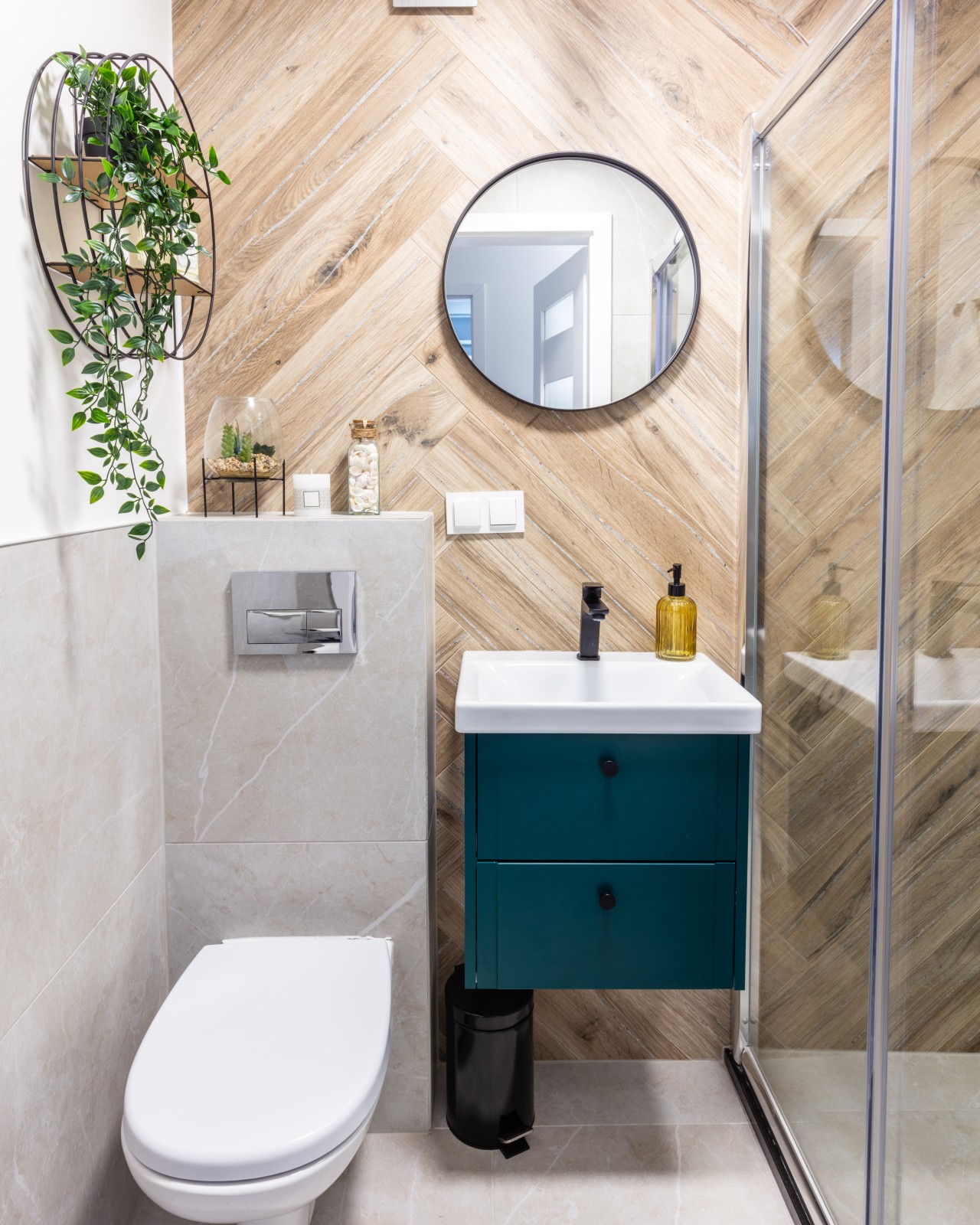
Image courtesy of: photocreo

Some bathrooms are so small that making space for a WC, sink, and shower can be challenging. In such an instance you can create a sense of spaciousness by freeing up the floor space and choosing wall-mounted sinks and toilets that are fixed above the ground. This is one of the best ways to give your washroom an open and airy ambiance and it also allows space for versatile storage below the sink.
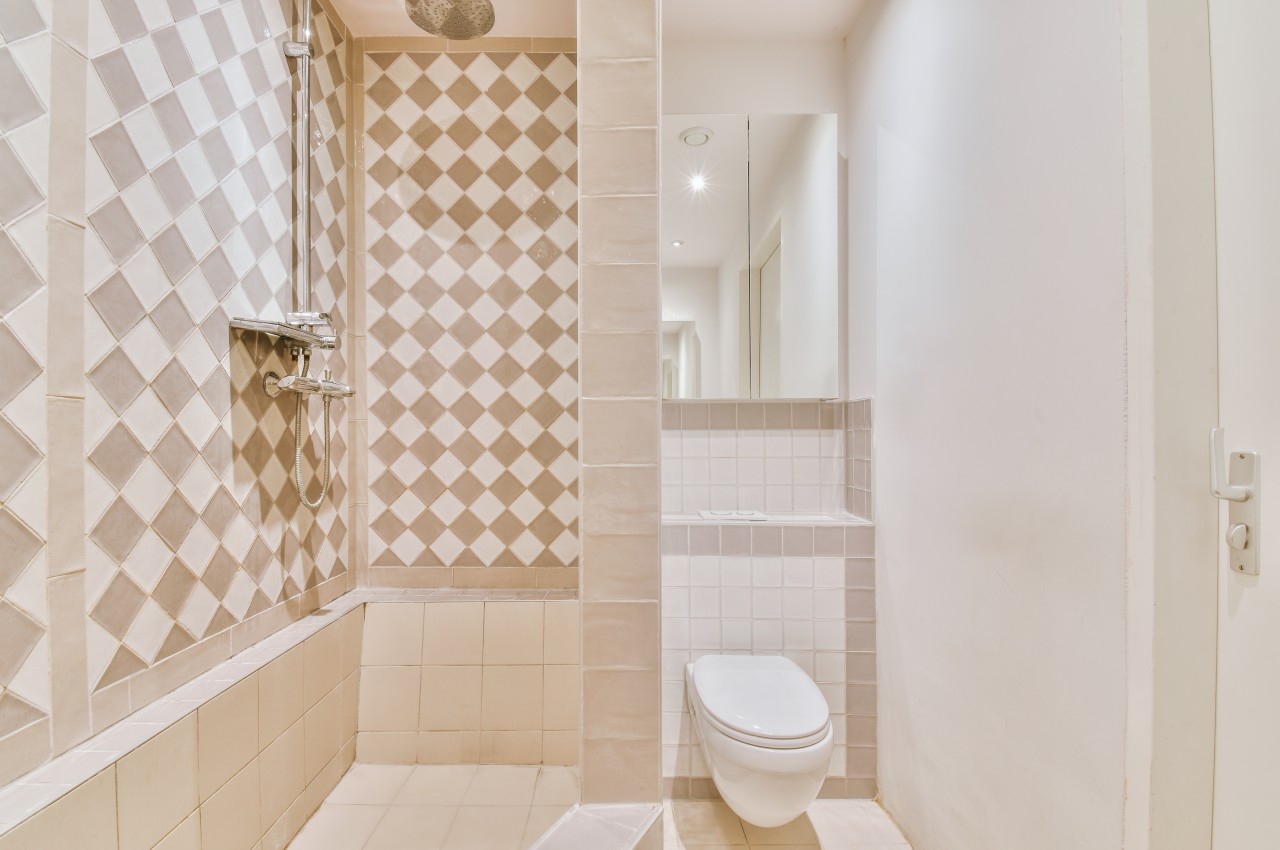
Image courtesy of: pro_creator

To make the bathroom look more spacious, install wall-to-wall mirrors to bounce light and visually double the space. Also, opt for paint colors such as light shades of blue, pastels, and white in semi- or high-gloss finishes to reflect light and give the impression of a larger bathroom.

Problem 2: No Window
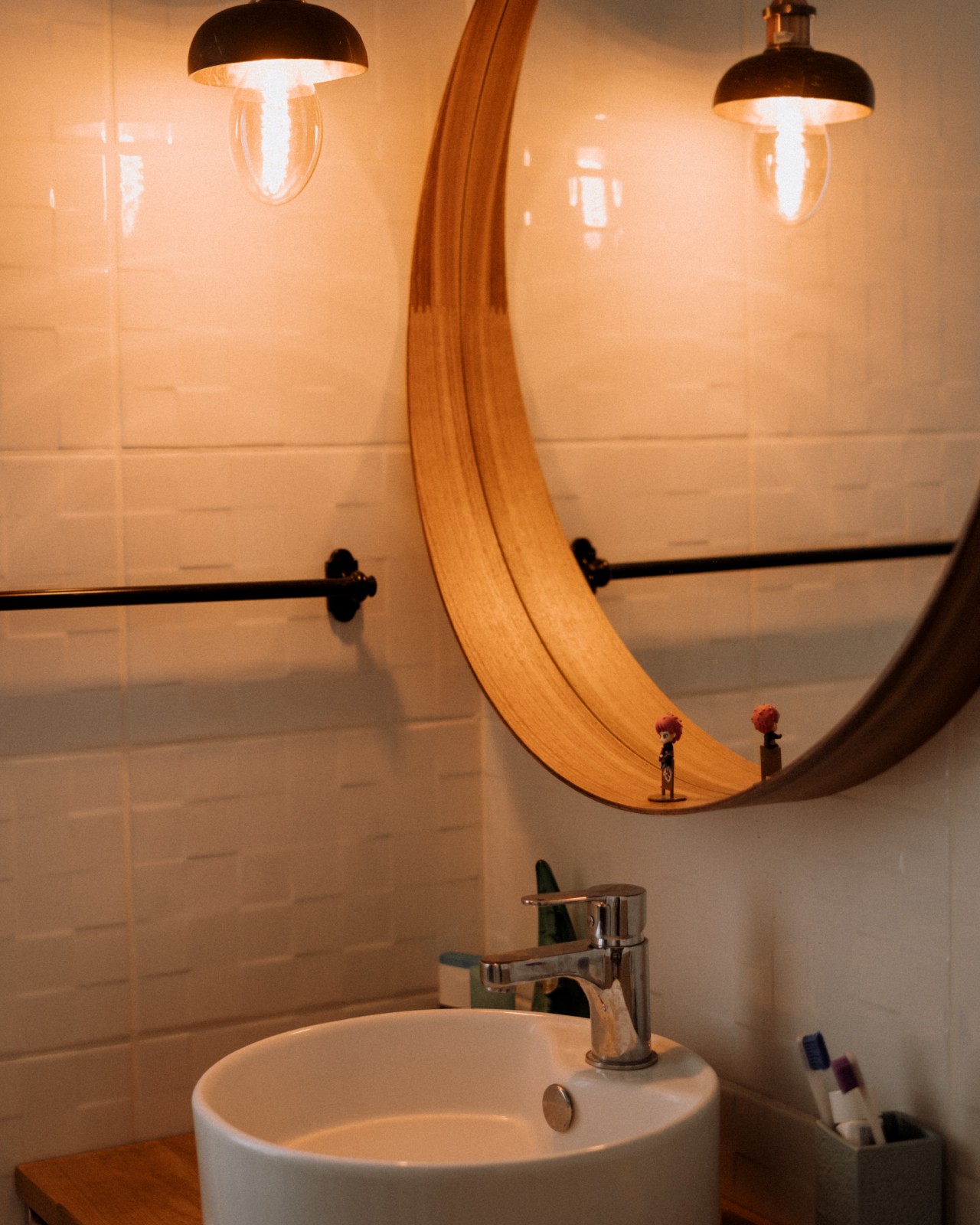
Image courtesy of: LesiaScotch

If your bathroom does not have a window, the space tends to look and feel dim. In such an instance it is important to enhance the lighting design to maximize illumination. Make it a point to integrate both overhead light fixtures and those around the mirror to distribute light throughout the bathroom.

Problem 3: Bad Ventilation
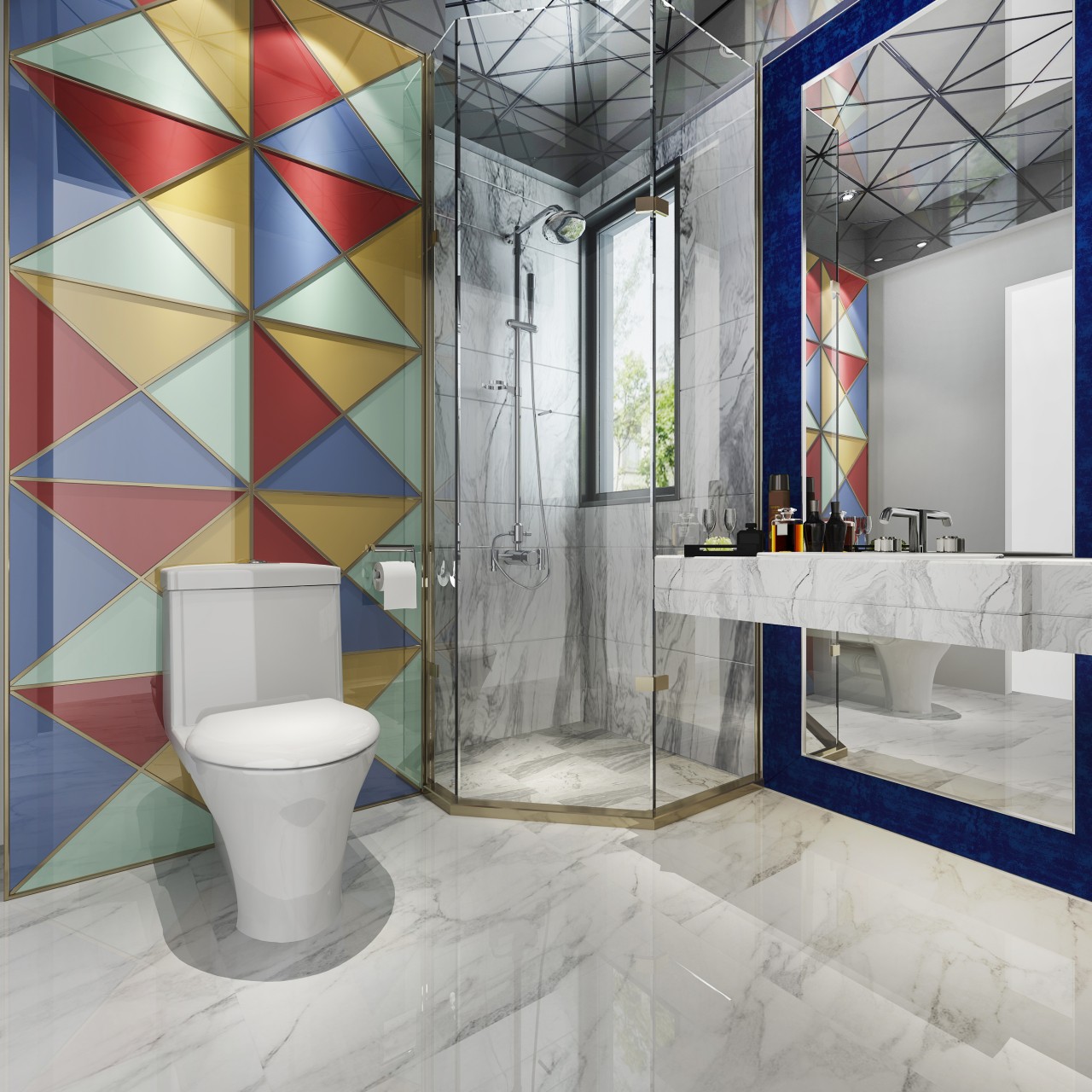
Image courtesy of: dit26978

Ventilation issues are common in older bathrooms despite having windows. Consider installing a shower exhaust fan with a built-in light. This promotes air circulation, dries the bathroom after each shower, and reduces the growth of mold and mildew. As a result, the bathroom stays fresh with minimal mold growth on the shower door. Additionally, make sure to keep the bathroom dry after each shower.

Problem 4: Insufficient Storage
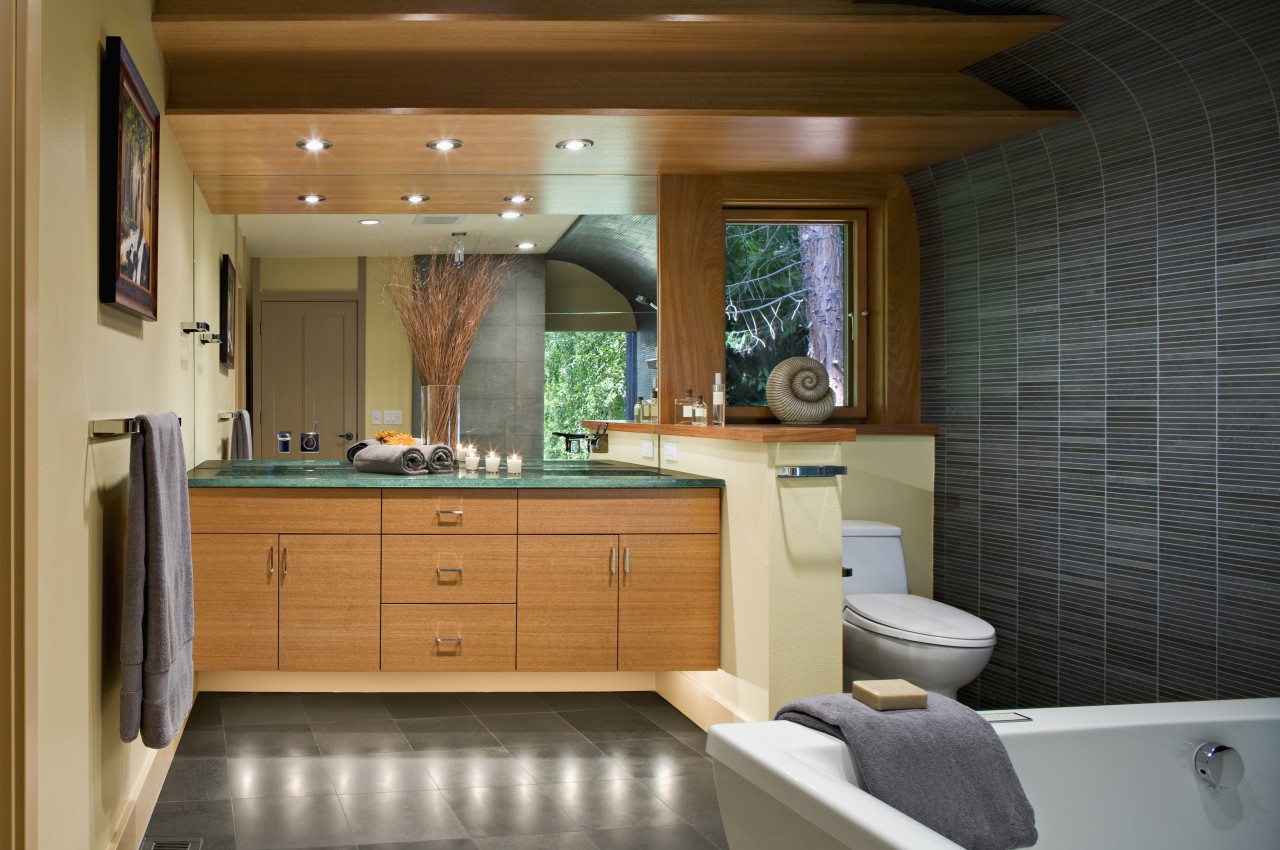
Image courtesy of: Mint_Images

Since small and mid-size bathrooms tend to be cluttered, the most cost-effective and practical bathroom storage solution is to upgrade standard mirrors to cabinet mirrors or medicine cabinets. The best part about these storage cabinets is that they are available in a variety of styles that not only enhance the bathroom décor but the items are not within reach of the children. It is highly recommended to upgrade to a vanity with drawers and cabinets with doors and add shelves over the toilet. This quick and easy conversion makes provision for extra storage for storing toiletries, razors, towels, etc without the hassle of a major renovation of storage.

Explore your storage preferences, from a single drawer to various compartments or open shelves for efficient storage. Extend cabinets vertically if needed and introduce unconventional solutions like baskets, wall shelves, freestanding cabinets, or a ladder for towels.

Problem 5: Underutilized Bathtub
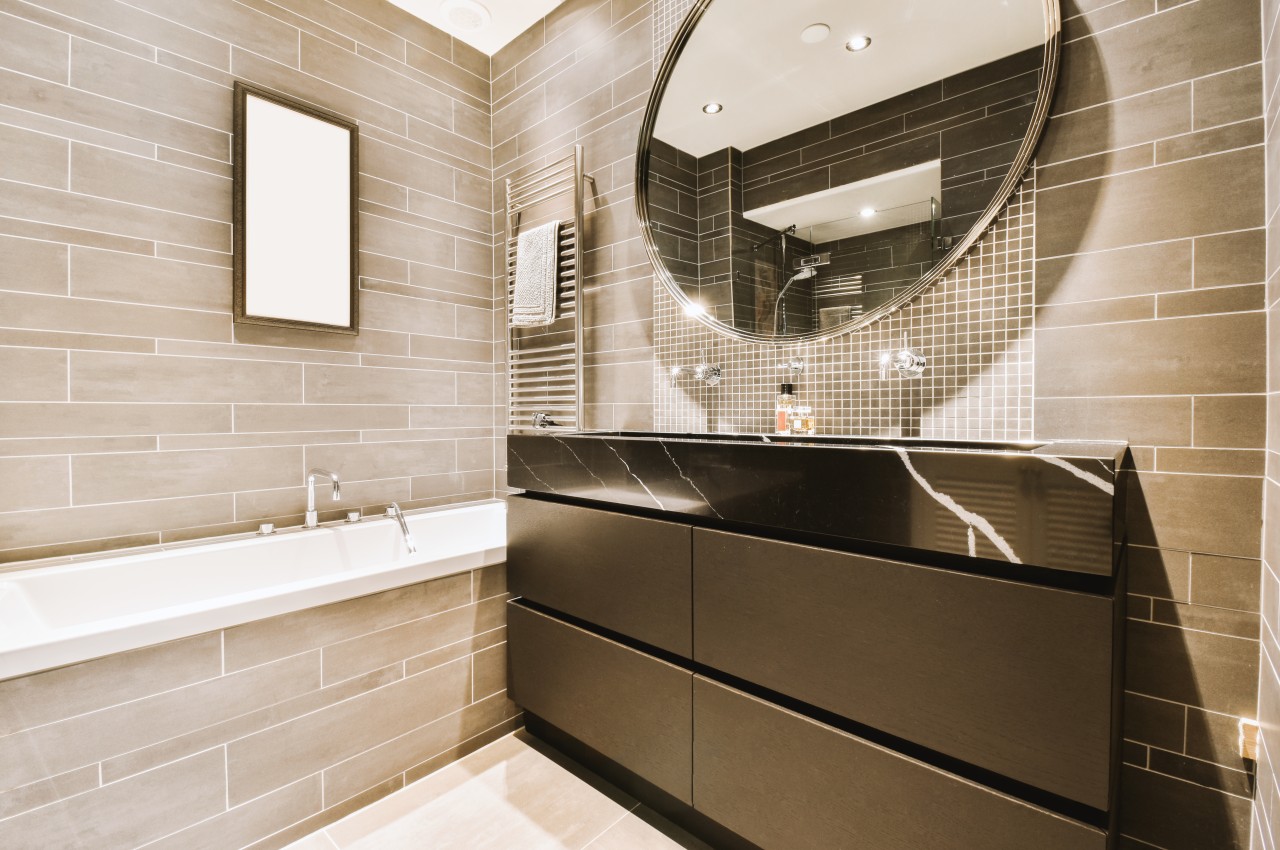
Image courtesy of: pro_creator

Using the bathtub can be difficult, especially for the elderly, so consider removing the bathtub and going for a walk-in shower instead for maximum accessibility. This addition increases floor space, creating a wider drainage area below the rainfall head. For a more refined look, you can bring in body steam for a spa-like addition, and replace the wall panels around the bathtub, without touching the rest of the bathroom tiles.

Problem 6: Insufficient Lighting
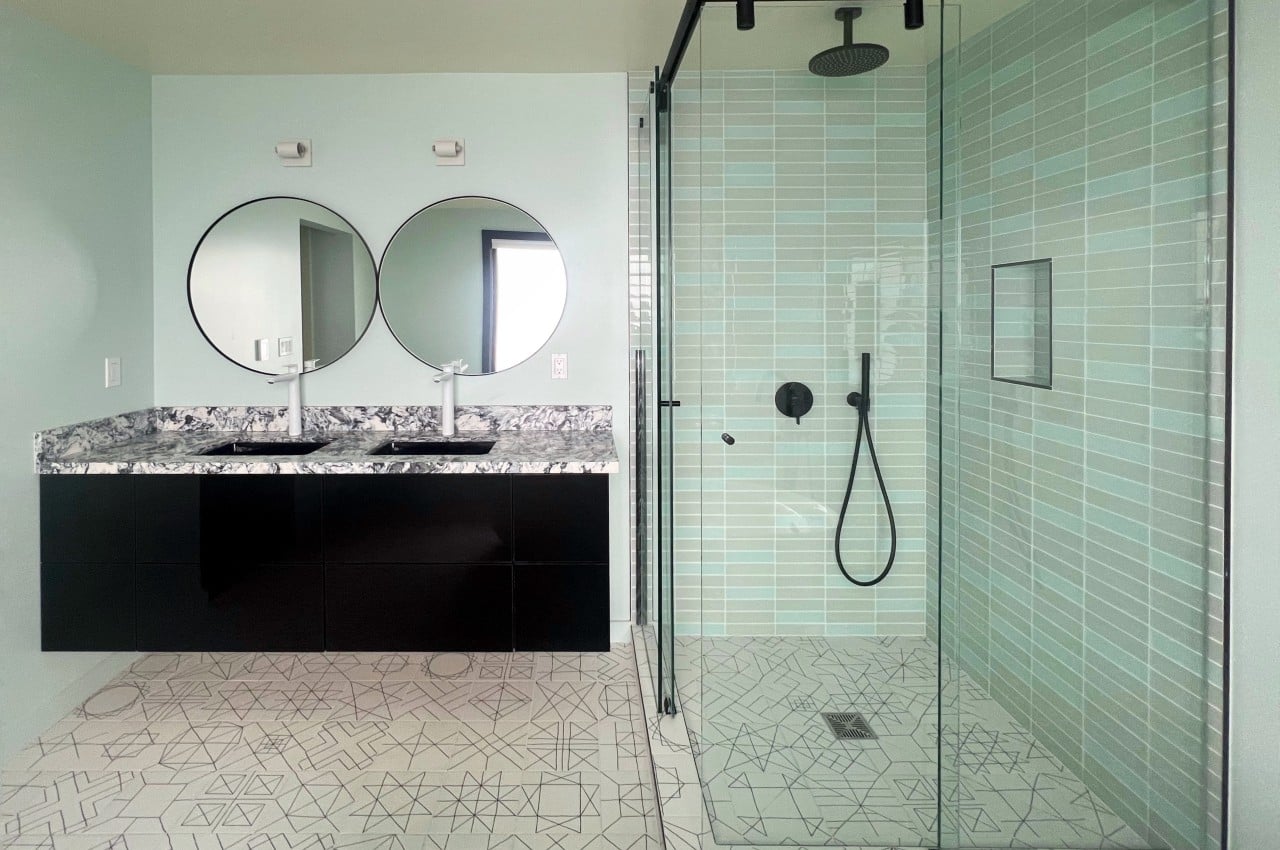
Image courtesy of: statuslapa

A dim bathroom can be very uncomfortable, especially without a window. One of the best ways is to brighten the space with a layered approach. Note that the light fixtures ensure adequate lighting for different purposes. Here are examples of each type of layered lighting scheme.

• Ambient lighting illuminates the entire bathroom and some examples of ambient lighting include ceiling fixtures, pendant lighting, and recessed lighting.
• Task lighting creates additional light in specific areas, such as over the vanity or in the shower. Wall lamps or lamps can brighten up specific areas. This light is designed for specific tasks such as shaving, makeup, combing, and hair styling. Light fixtures include mirrors with lights, wall lights, or pendant lights.
• Accent lighting emphasizes a special feature, such as highlighting a particular design or simply placing a chandelier over a soaking tub.

Choose energy-efficient LED downlights in bathrooms, ensure safe lighting in wet areas, and efficient lighting on basins. Enhance the overall atmosphere by placing bathroom wall lights on both sides of the mirror in windowless areas

Problem 7: Humidity and Dampness
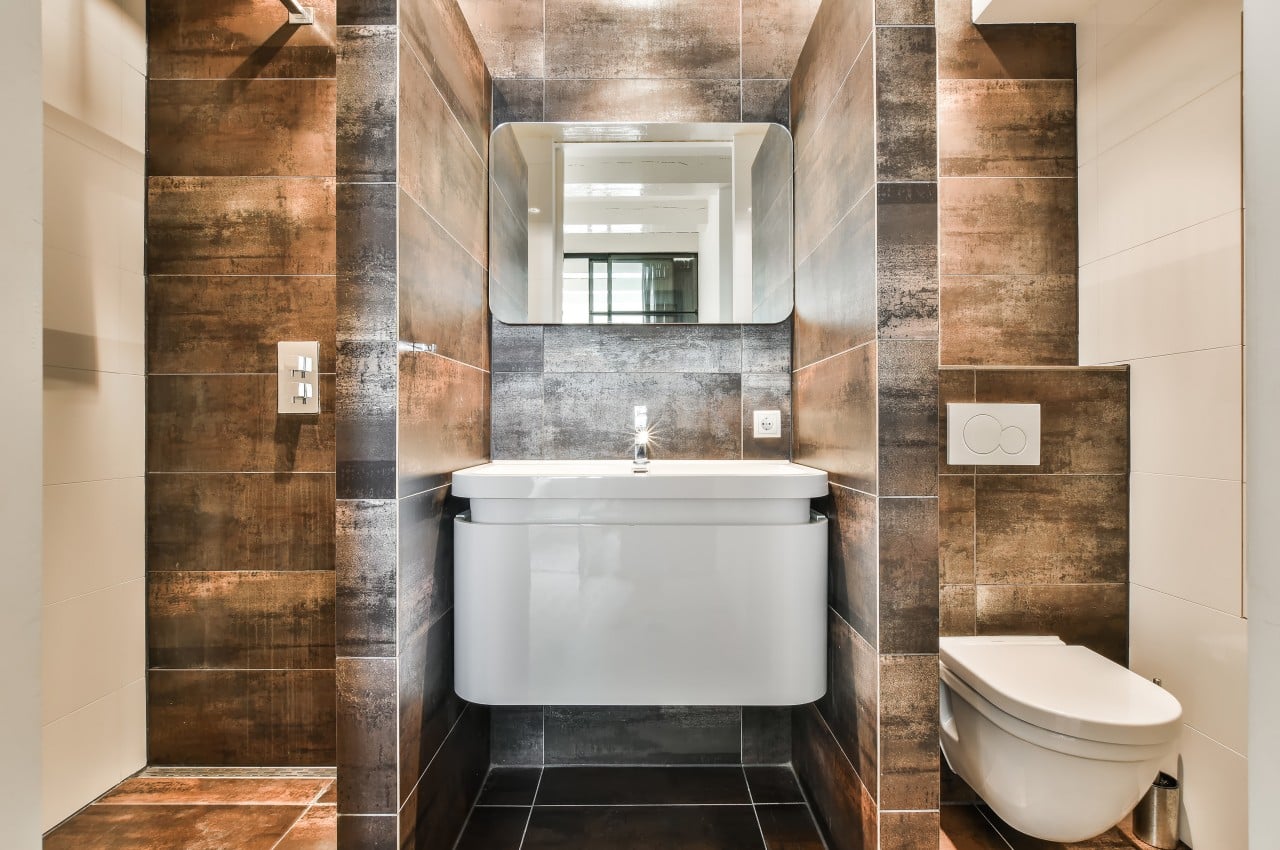
Image courtesy of: pro_creator

Fight damp bathrooms to prevent mold and health issues. When showering, leave the windows slightly open for fresh air that replaces the warm and cool air from the indoors. Make sure to clean HVAC ductwork and change filters regularly. Upgrade with air with high CFM-rated exhaust fans or choose a fan/UV light combination for better humidity control. If the bathroom doesn’t have a window, consider adding one for natural light and fresh air. Check your roof periodically for leaks that might be causing condensation within the bathroom.

Problem 8: No Wet and Dry Area
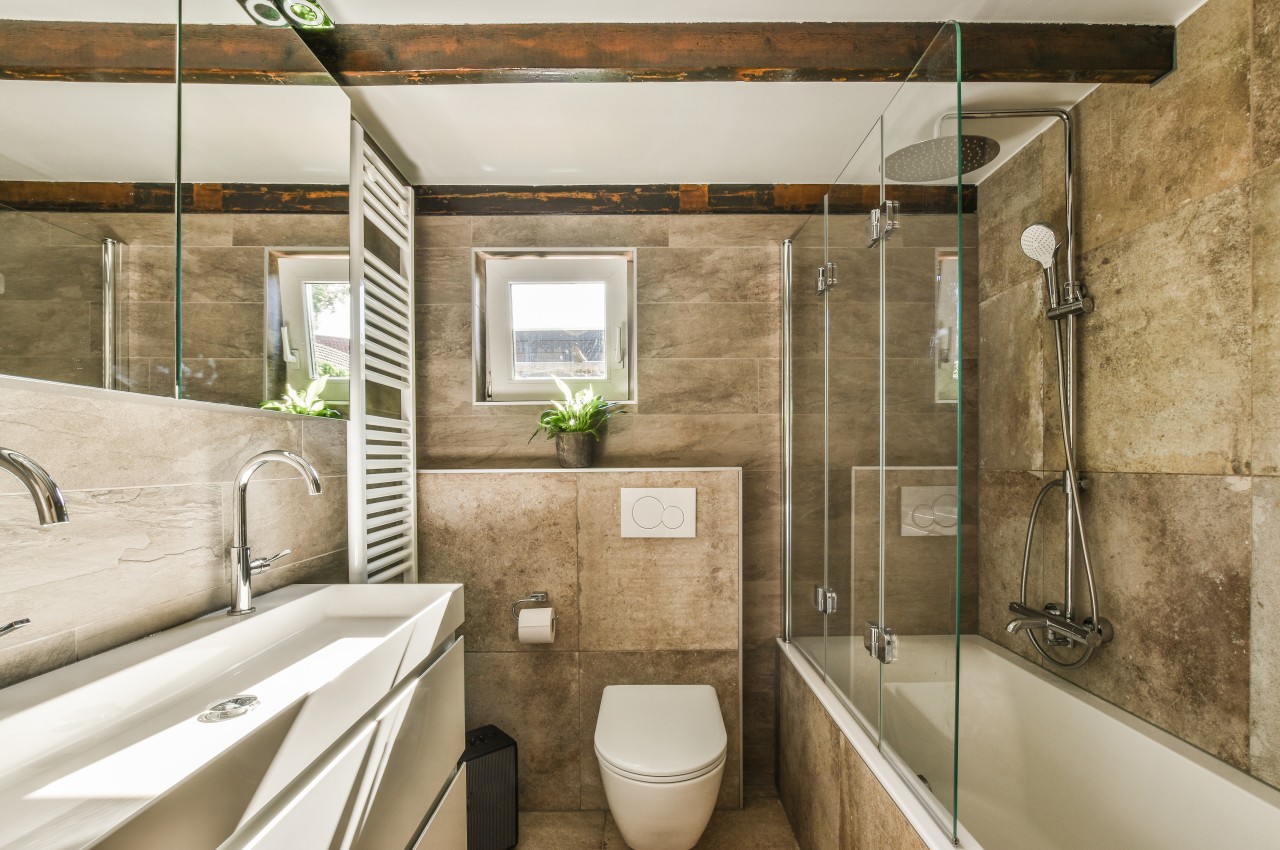
Image courtesy of: pro_creator

If the bathroom does not have a designated wet and dry area, the bathroom can get messy. Note that the wet area has a shower area, while the dry area has a WC and sink. This demarcation can be created with a glass divider that enhances the aesthetic and functional aspects of the bathroom, contributing to a better overall experience. In addition, the frameless screen ensures no visual obstruction and provides a clean, uncluttered view of the bathroom. A temporary and cost-effective way to create a dry bathroom is by using shower curtains.

Problem 9: Stagnant Water

Image courtesy of: pro_creator

When water drains slowly in the shower area, one remedy is to pour a large bowl of hot water into the drain. For a clogged drain, introduce a mixture of one cup of baking soda followed by one cup of vinegar, allowing it to sit for 30 minutes. This chemical reaction effectively reduces scum and completes the process by rinsing the drain with boiling water. Fix slow-draining showers quickly with a drain cleaner that clears clogs from hair, soap, and grime. Use enzyme-based options for a gentler solution, but follow instructions and use safety gear.

Alternately, if your showerhead has low water pressure, it may result from limescale buildup. Tie a packet of equal parts water and vinegar around the showerhead, submerging it for at least an hour, and use a soft brush to rinse the showerhead afterward.

Problem 10: Bathroom Odor
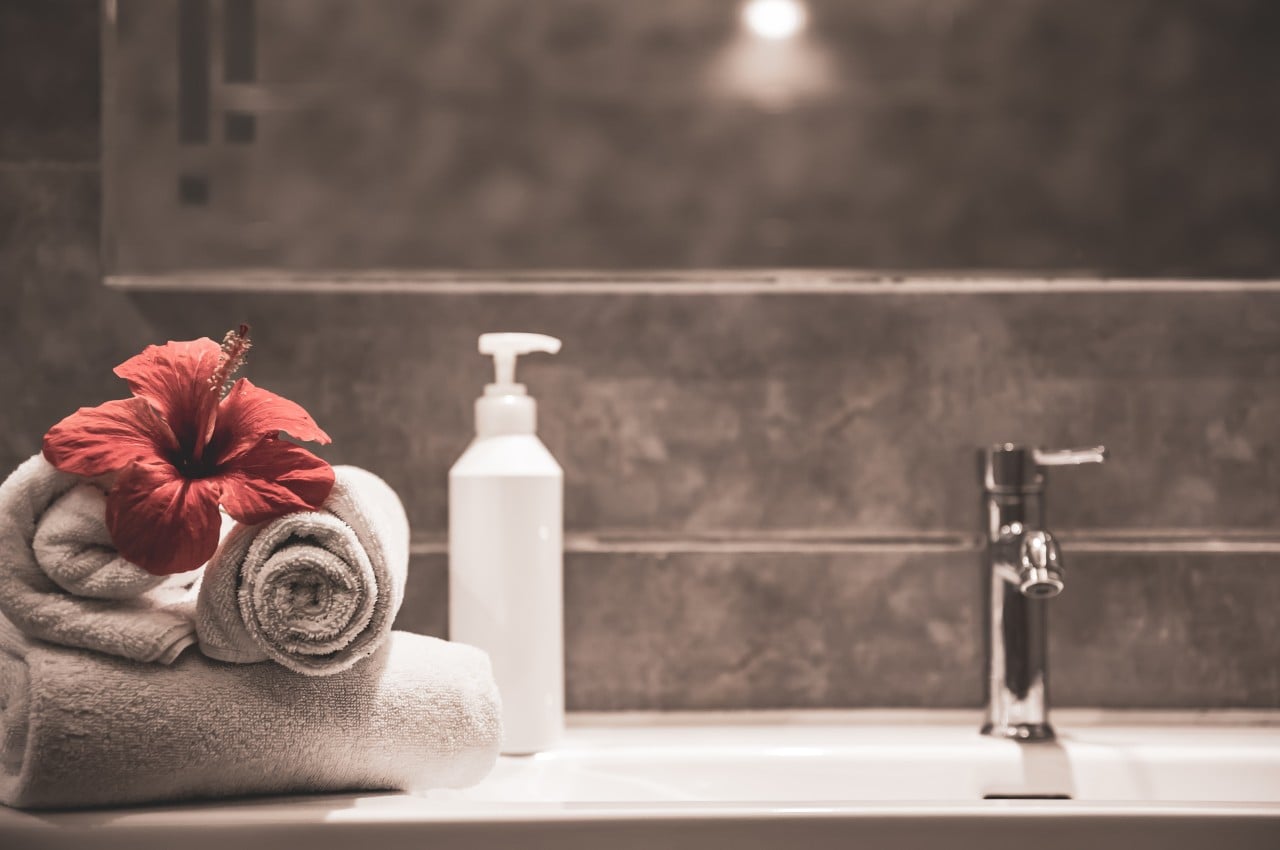
Image courtesy of: puhimec

Blocked drains, wet towels, and accumulated dirt in showers can cause unpleasant bathroom odors. Ensure proper ventilation to eliminate all odors, remove trash regularly, and have a thorough weekly cleaning schedule. Use air purifiers and essential oil diffusers to freshen up the space and make the atmosphere pleasant.

Another DIY method of removing toilet odors is to mix lemon juice with baking soda to make a paste and scrub the surrounding areas with vinegar to soak the toilet in while they are being sprayed on areas with suspicious odors. After 15 minutes, flush the toilet and use a brush dipped in vinegar to scrub off the residue. Flush again, and you’re left with a fresh-smelling bath.

These tips will turn your bathroom into an awesome place. With a little planning and smart choices, you can create a comfortable and functional bathroom with these effective solutions.

The post Top 10 Bathroom Challenges Solved With Smart Solutions first appeared on Yanko Design.
Smart mirror concept encourages you to reflect whenever you look at yourself

There are many things that we do out of habit in our lives, especially daily activities that we’ve gotten so used to that we could perform them with our eyes closed, at least figuratively speaking. Moving on autopilot is an important survival skill for modern-day humans, but it isn’t always a good strategy to apply to all things all the time, especially for our mental health. The idea of mindfulness or being present in the moment sounds almost so alien that people presume it requires some rigorous training or mental fortitude to do when all you really need is to pause from time to time and simply be aware of where you are and what you’re doing. That’s the kind of practice that this smart mirror product design tries to develop, motivating you to look inside yourself each time you look at your reflection.
Designer: Nahyun Kwon, Dayeong Kim, Mingyeong Chio

We look at a mirror several times a day but only a few of those times are we consciously checking ourselves for more than a split second. Whether we’re brushing our teeth, washing our faces, or even applying makeup, chances are we are thinking of other things while doing those actions. We don’t see or even recognize ourselves or our states, even when it’s directly staring at us.
MIO is a mirror that encourages you to take a good hard look at yourself whenever you use it. Rather than nagging you multiple times a day to pause and exercise mindfulness, it simply associates the action with an activity you already do regularly until it becomes second nature. And it doesn’t do so using intrusive reminders or heavy-handed features but with gestures and controls that are integral to using the mirror in the first place.

https://mir-s3-cdn-cf.behance.net/project_modules/1400_opt_1/03592c187380207.658d8872c64b8.gif

A lever on the side, for example, is needed to turn on the LED lights inside the frame for better illumination. The action and the control’s form are akin to a “thumbs up” gesture, reminding you to give yourself a pat on the back once in a while. There’s a “smile button” on the lower edge of the mirror that you can slide up to start a 1-minute recording of yourself, inviting you to smile your biggest smile or, at the very least, be truthful to the emotions you’re feeling at the moment. That button also acts as a timer for that recording as it slowly slides back down to its original position.

There is a separate circular display near the top and off to the side that shows the time, the weather, or other information you might need while preparing yourself and your face. Cycling through these screens of information requires touching the display, almost like giving it a high-five that, as silly as it might sound doing it by yourself, always generates good feelings. Whichever of MIO’s functions you use, it becomes a gentle reminder to take stock of your current emotional and mental state, at least long enough to see your true self before you rush off and lose yourself in the busyness of life.

The post Smart mirror concept encourages you to reflect whenever you look at yourself first appeared on Yanko Design.