Finally Focus Without Your Phone: The $54 Wooden To-Do Kit

As someone who enjoys making lists, whether it’s productivity lists, pop culture rankings, journaling spreads, or actual listicles for work, I have accumulated more notebooks and apps than I probably need. Sometimes, though, what you really need isn’t another app or another notebook. What you need is something that forces you to focus on the one task that actually matters instead of getting distracted by pop-up windows, social media notifications, or the colorful pens and stickers calling your name from the journaling aisle.

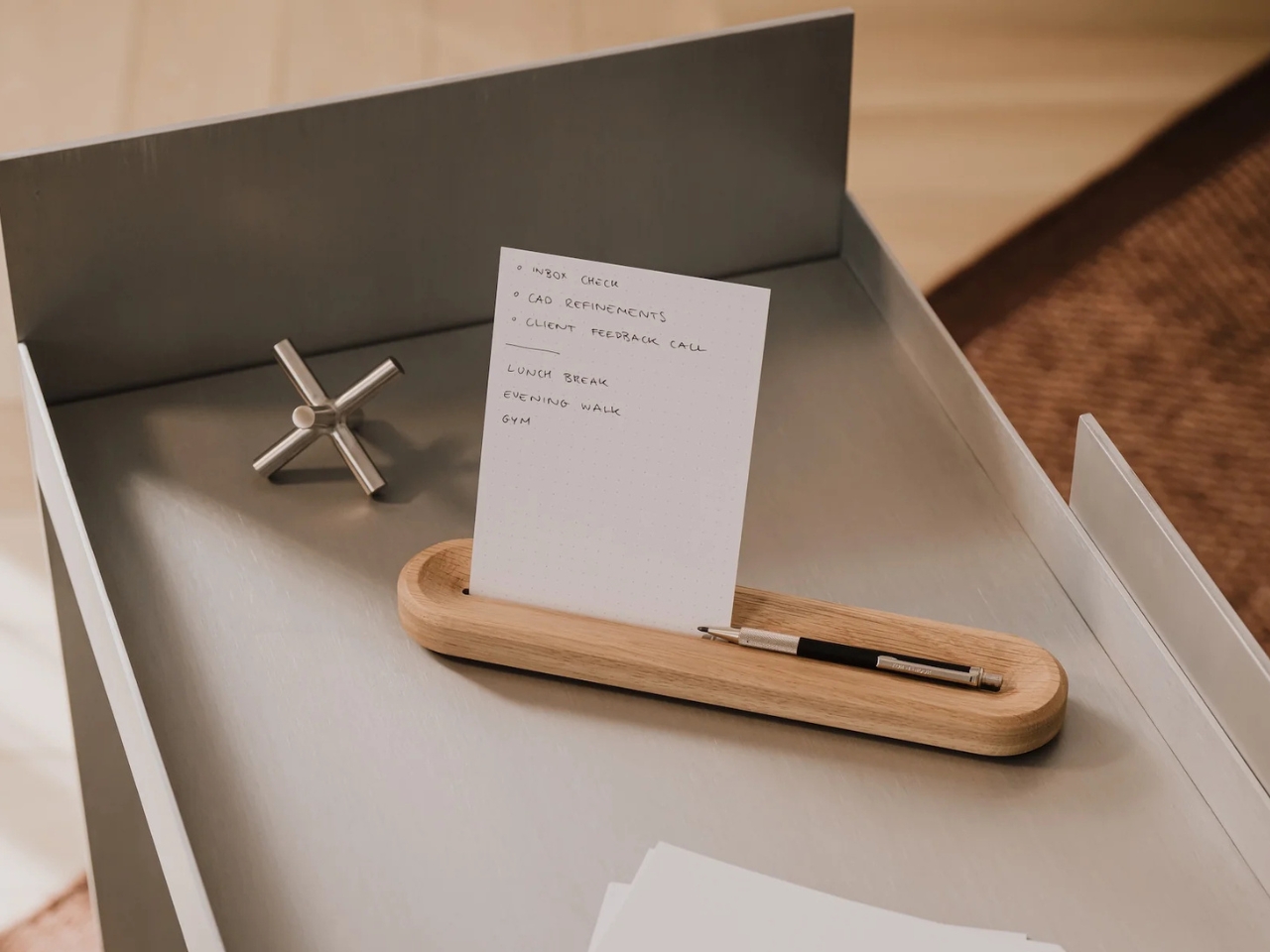
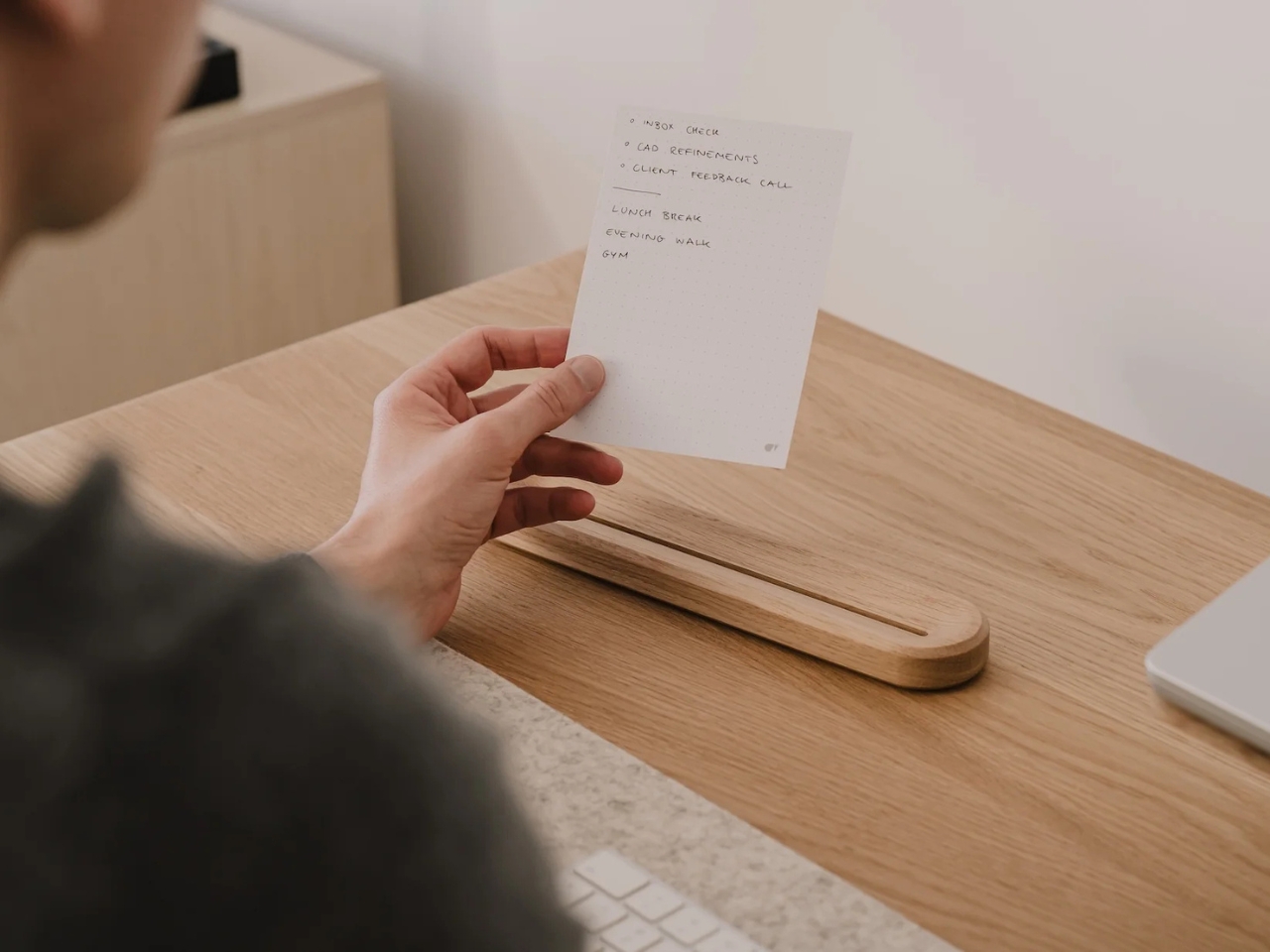
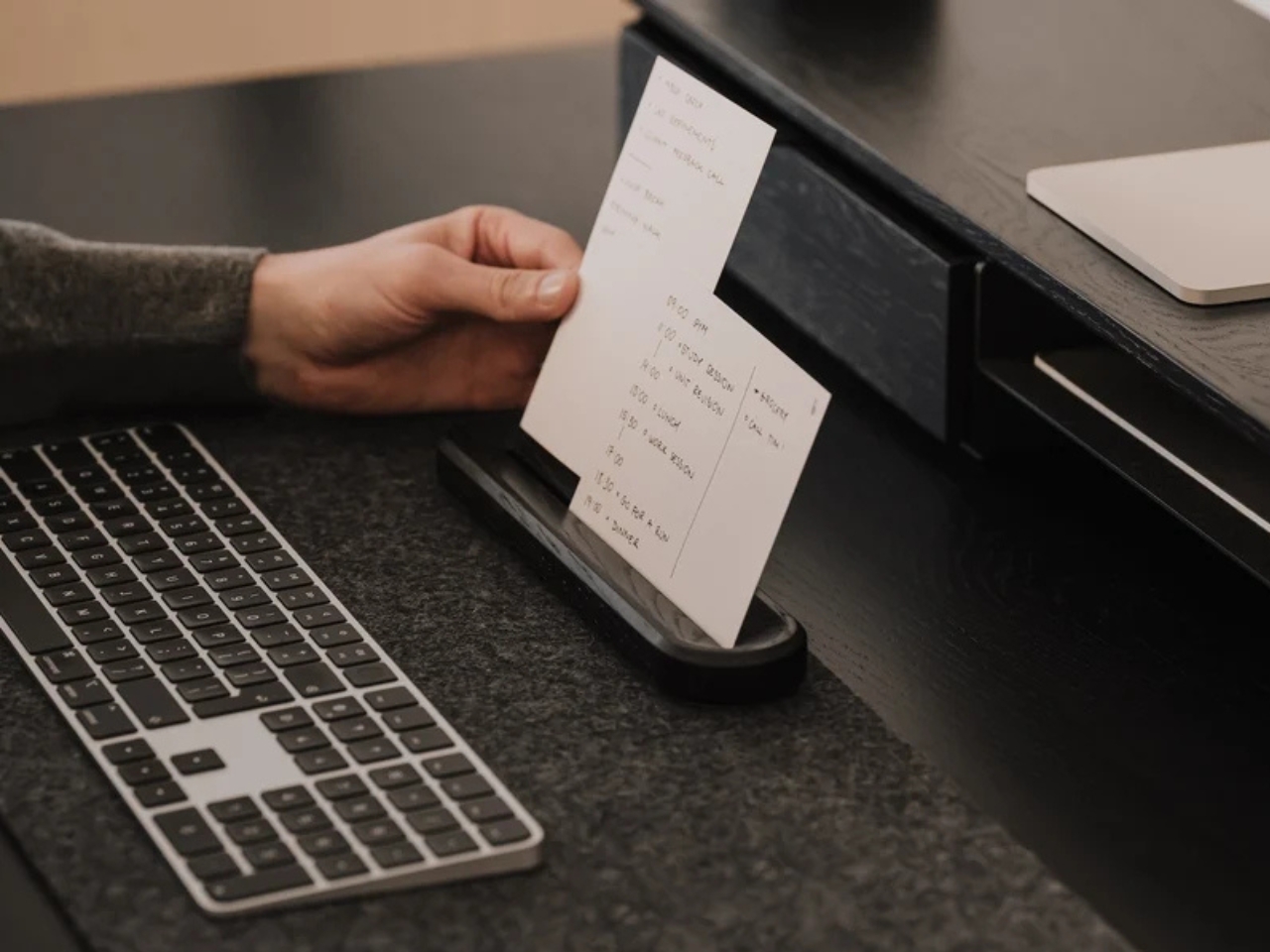
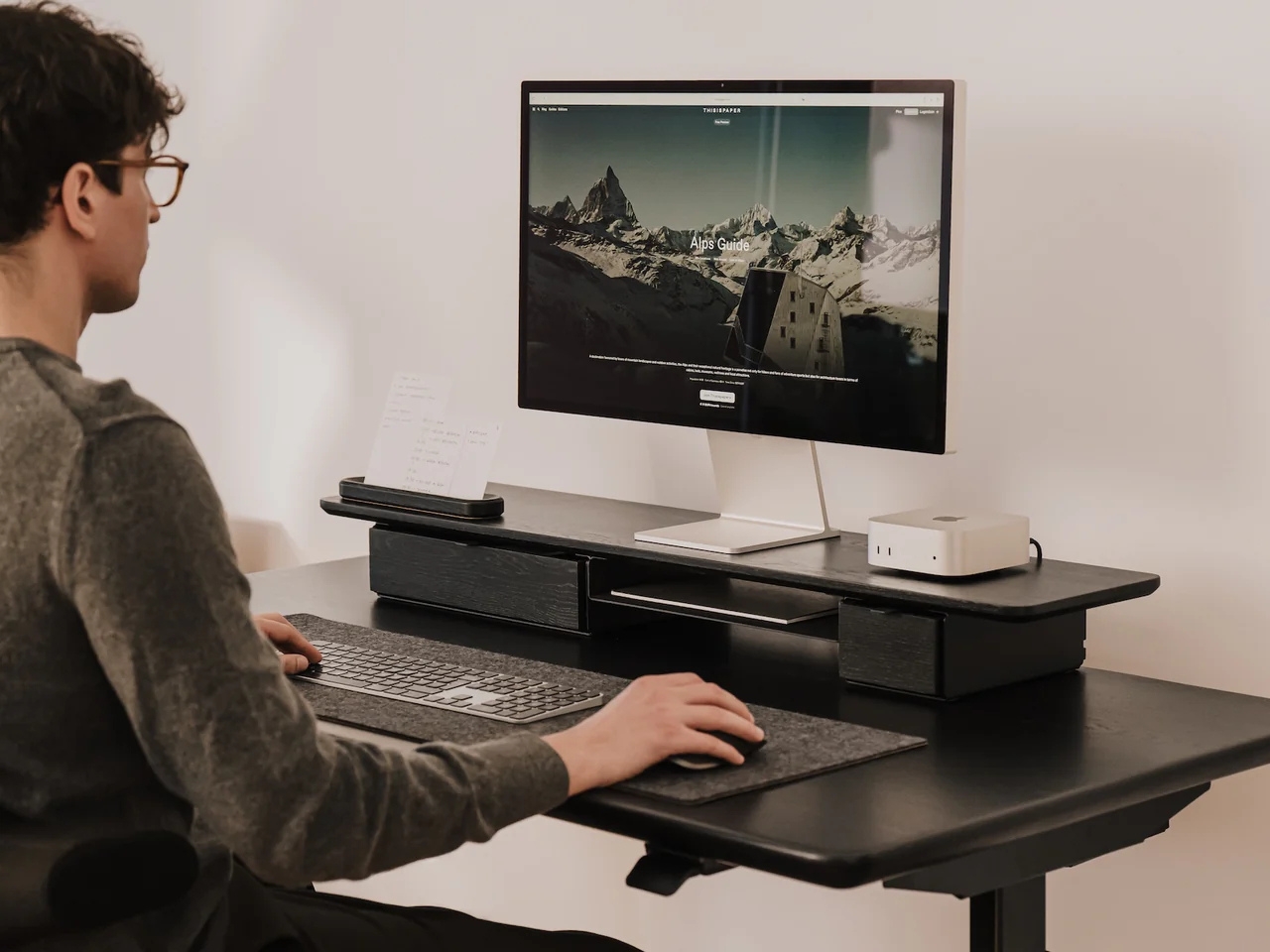
The To-Do Desk Kit from Oakywood wants to solve exactly that problem by narrowing your focus down to a single piece of paper, placed on a small wooden card holder, sitting right at eye level on your desk. It’s a simple, minimalist tool, but it’s designed with a clear purpose: to bring a bit of analog calm back to what is probably a screen-cluttered and object-cluttered workspace. Sure, you could just grab a notepad or scribble on a whiteboard, but this is a far more aesthetic and intentional way to work on your productivity, and it looks good doing it.

Design: Oakywood
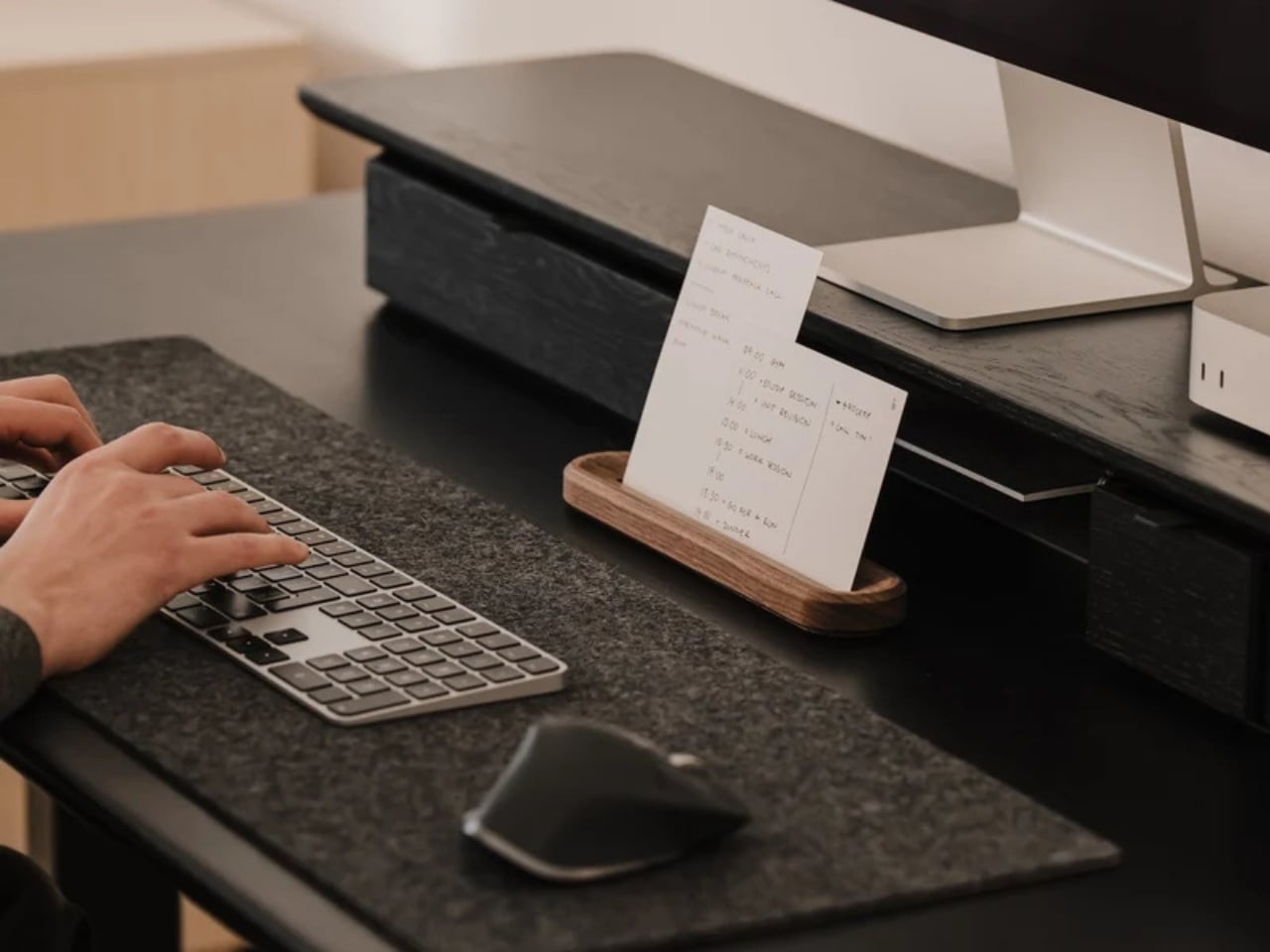
Oakywood, the brand behind the kit, is known for handcrafted wooden desk accessories, and this piece fits right into that world. The holder itself is made from solid oak or solid walnut, with a black finish also available if you prefer a more subdued look. There’s a slot to hold one or two cards vertically at eye level, so you can glance over whenever you need a reminder of what you’re supposed to be accomplishing, whether you’re deep in work on your computer or handling something entirely analog. Behind that visible card, the holder can actually stack up to eight more, so you’re never digging through a pile of loose paper to find your list.
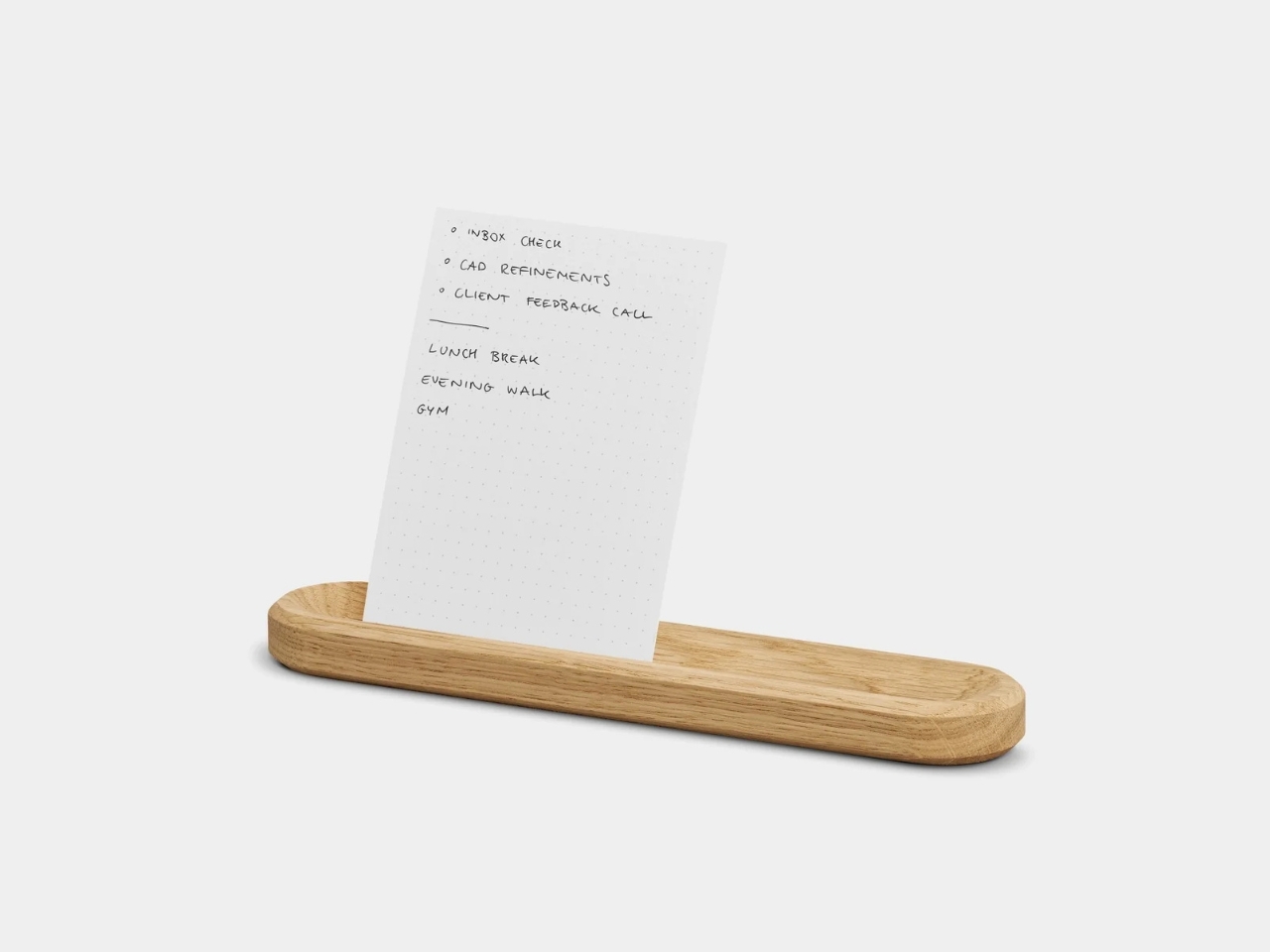
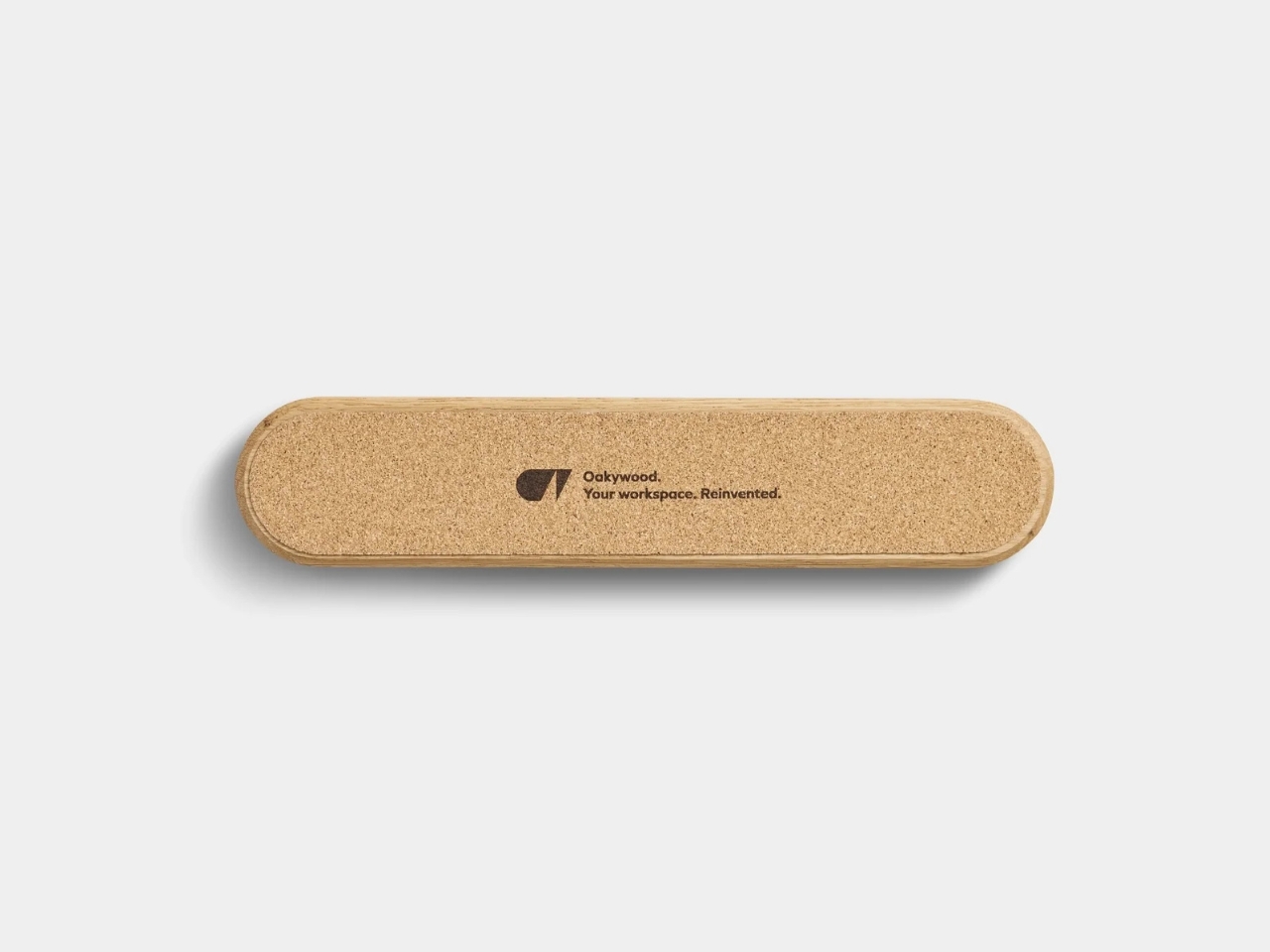
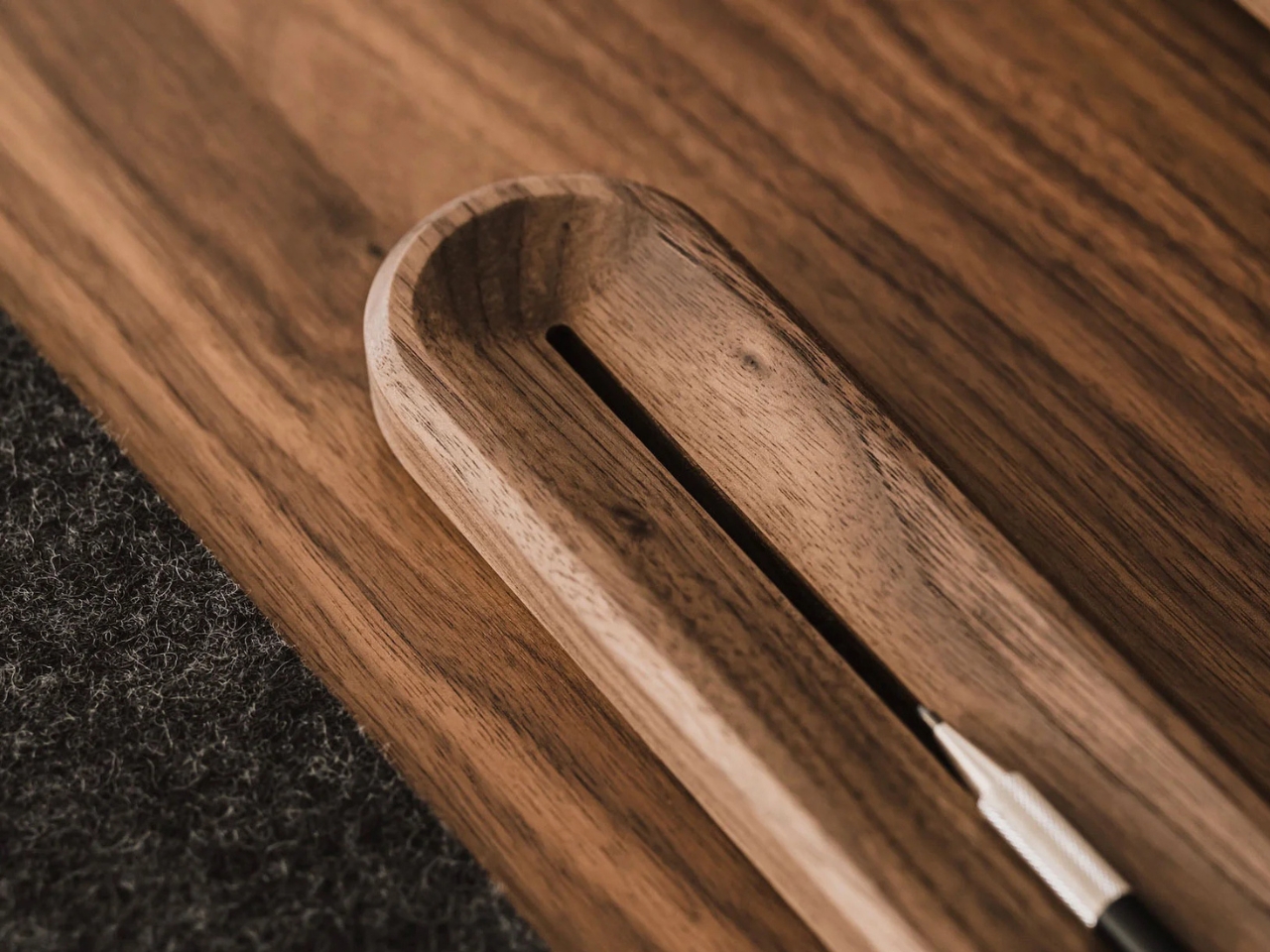
One of my favorite small details is the contoured groove carved into the block, which doubles as a pen dock. Instead of hunting around your desk for a pen every time you want to add a task or cross one off, it’s already sitting right there, built into the design. The base is lined with natural cork, too, which means it stays put on your desk and won’t leave scratches behind, no matter what material your desk is made of. It’s a small touch, but it shows the kind of thoughtful design that Oakywood puts into all of its pieces.
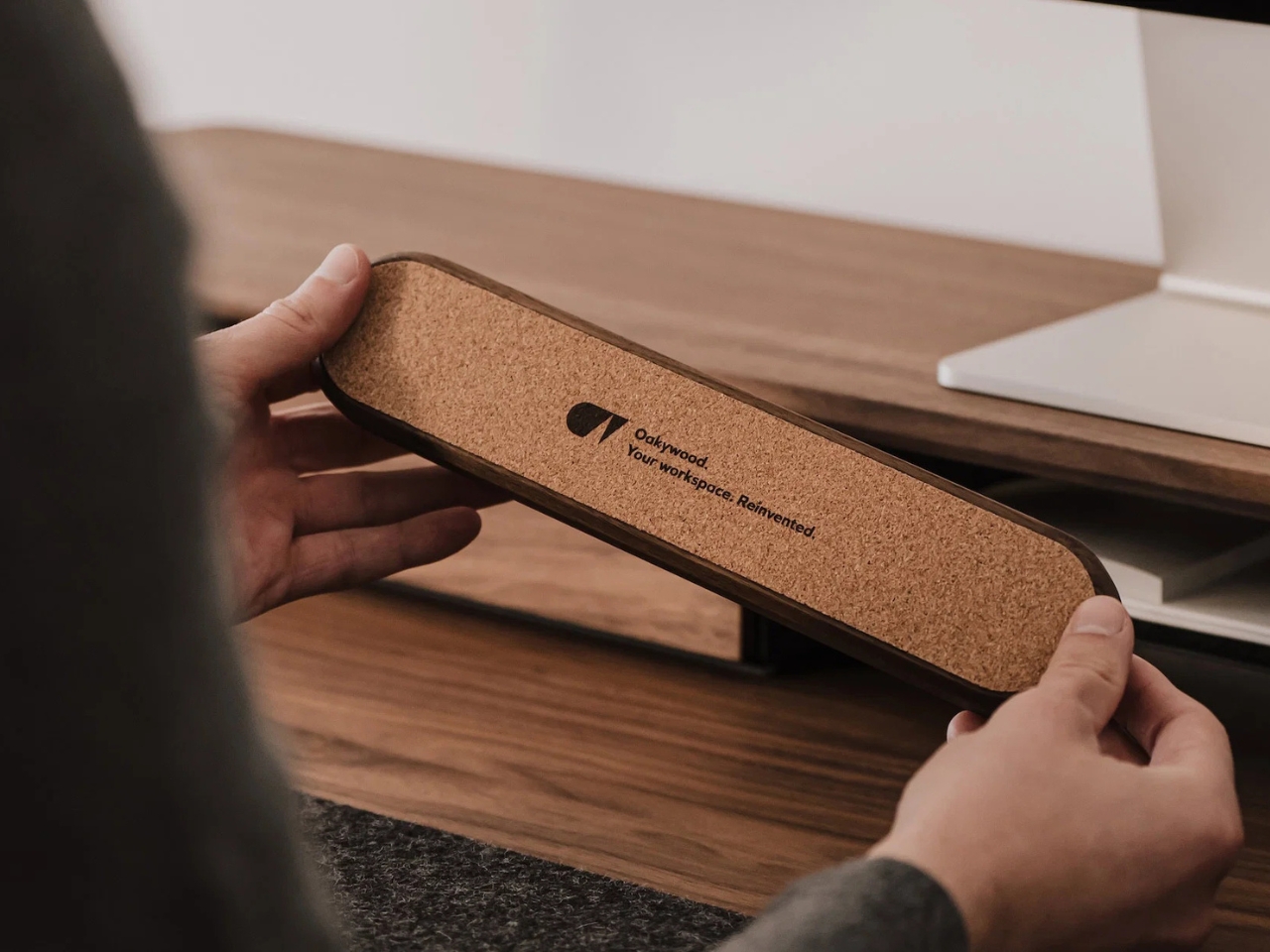
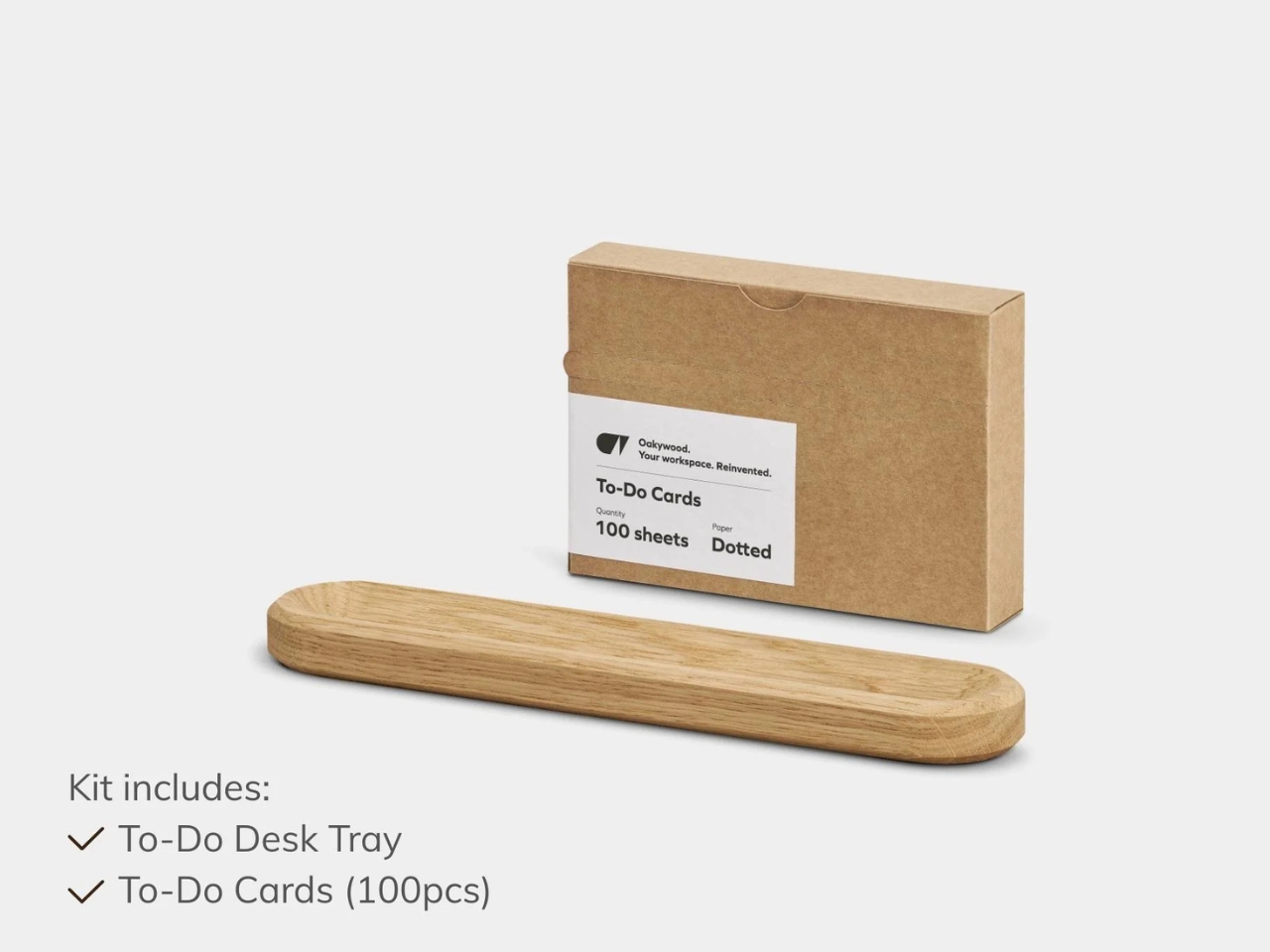
The kit also comes with a starter pack of 100 To-Do Cards, printed with a soft dotted grid on the front, similar to what you’d find in a bullet journal, and a completely blank back if you want more freedom. That blank side is a nice bonus for anyone who occasionally needs to sketch out an idea, map out a plan, or jot down something that does not fit neatly into a to-do list format. The cards are printed on premium 250-gram uncoated, FSC-certified offset paper, so pens, pencils, and even fountain pens will not smudge or bleed through. Refill packs are sold separately once you run through the starter set, though you could just as easily swap in your own card stock if you want to write your own affirmations, motivational quotes, or reminders instead.

It’s also worth mentioning that Oakywood plants a tree for every product sold, and the cards themselves are made from FSC-certified paper. If you already own an Oakywood laptop stand, pen tray, or wireless charger, the To-Do Desk Kit fits right into that same warm, wood-toned ecosystem, making your desk feel like one cohesive space instead of a pile of mismatched gadgets.
Priced at around fifty dollars, give or take a discount depending on when you catch it on sale, the To-Do Desk Kit isn’t just a productivity gadget. It’s a small, tactile object that makes sitting down to work feel a little more intentional. For anyone who loves collecting beautifully made desk pieces as much as they love checking things off a list, this feels like an easy addition to a growing collection, and an even easier way to talk yourself into finally starting that task you have been putting off. Sometimes all it takes is one card, one pen, and one clear line of sight to get moving again.
The post Finally Focus Without Your Phone: The $54 Wooden To-Do Kit first appeared on Yanko Design.
Kokuyo Made a Power Strip You Actually Want to Look At

The power strip is, without a doubt, one of the most aesthetically defeated objects in modern life. You hide it behind your desk, stuff it under furniture, and pray that visiting friends won’t notice the tangle of cords trailing from it like electrical spaghetti. We’ve accepted this ugliness as a condition of modern productivity. Until now, maybe.

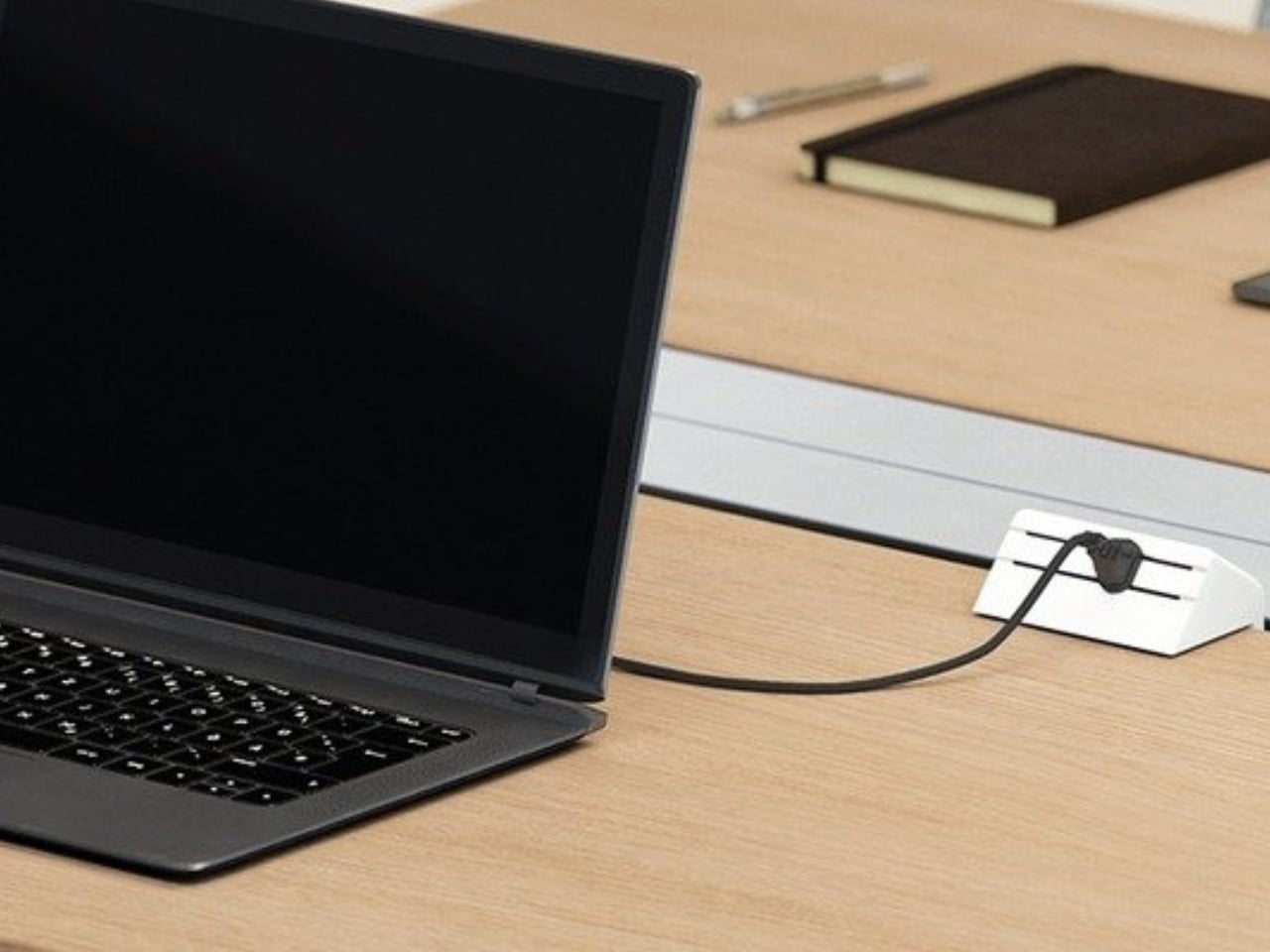
Kokuyo, the Japanese office furniture and stationery company that has been quietly improving the objects on your desk since 1905, has released a power strip called the Energy Line, and it is genuinely, legitimately beautiful. Not “beautiful for a power strip” beautiful. Just beautiful. It looks more like a sleek architectural detail than something you’d plug your laptop into.

Designer: Kokuyo

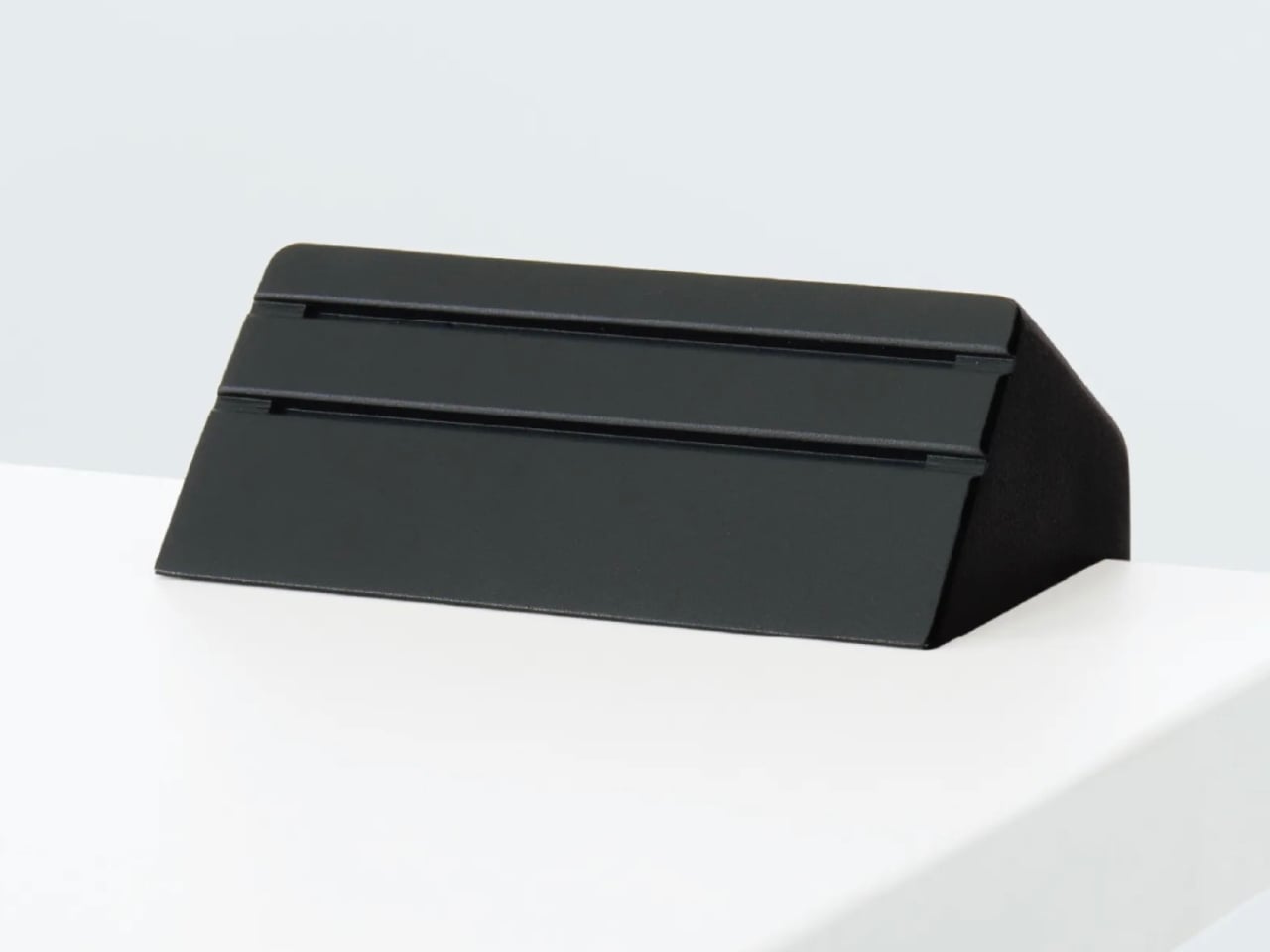
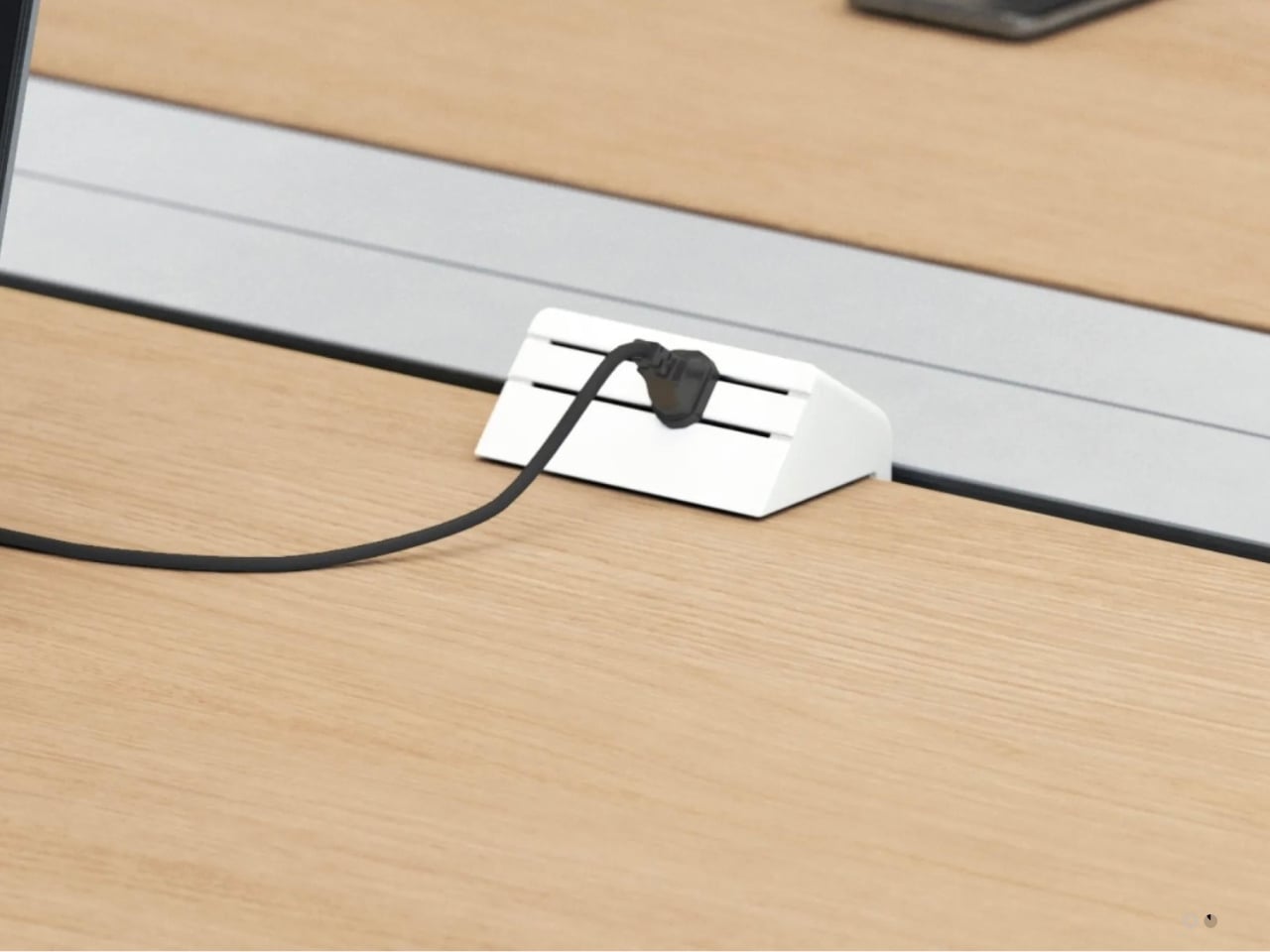
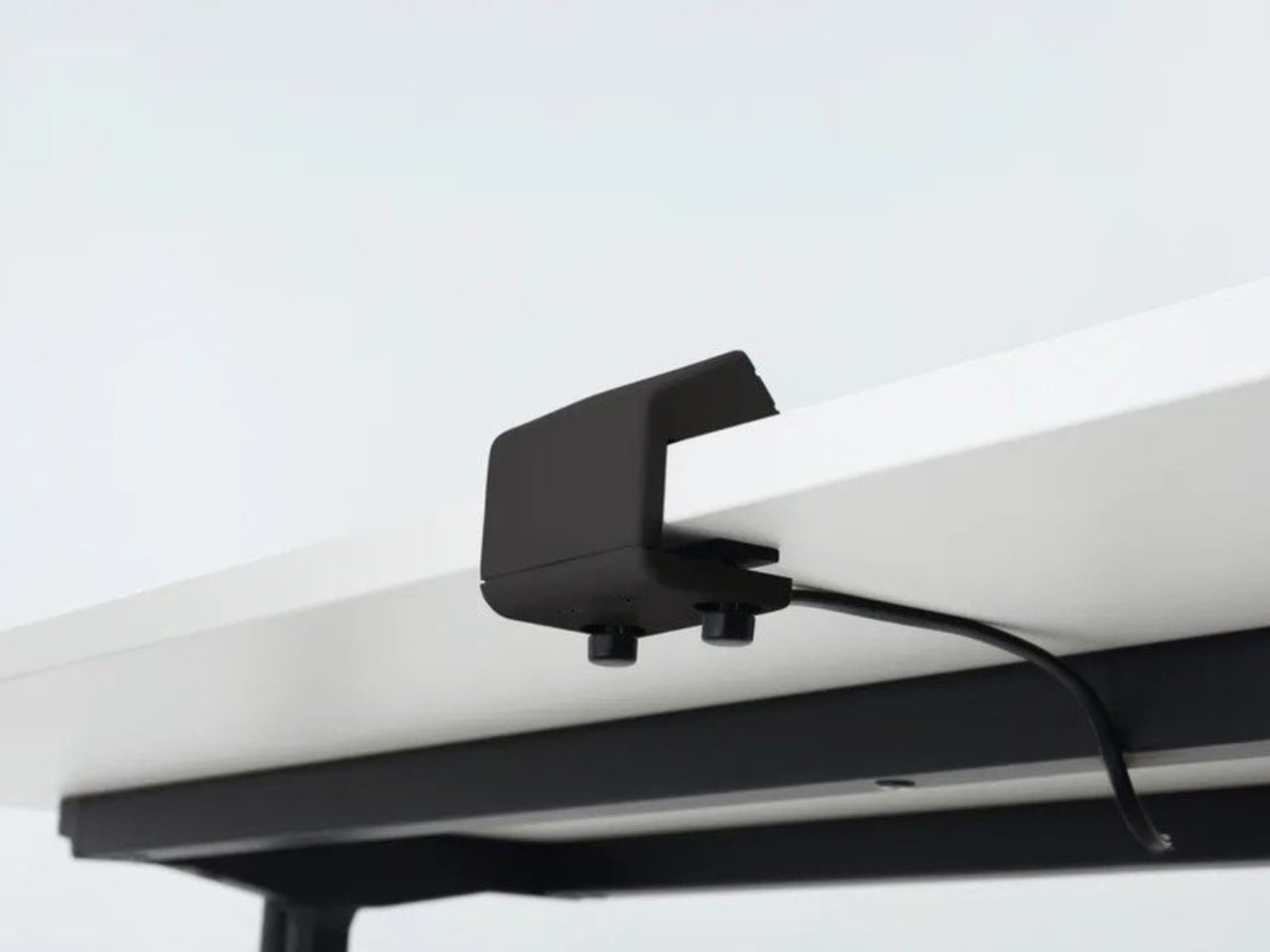
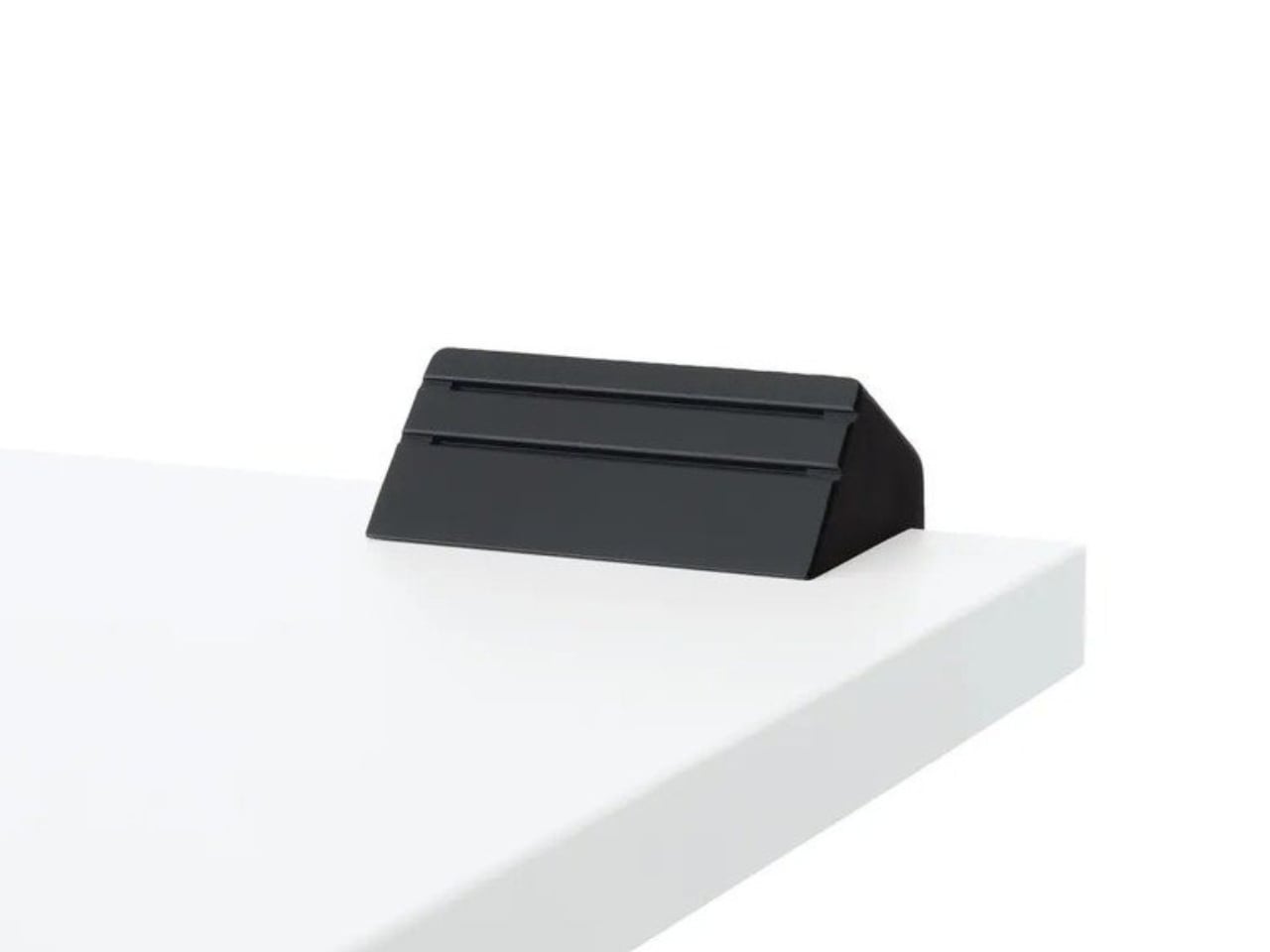
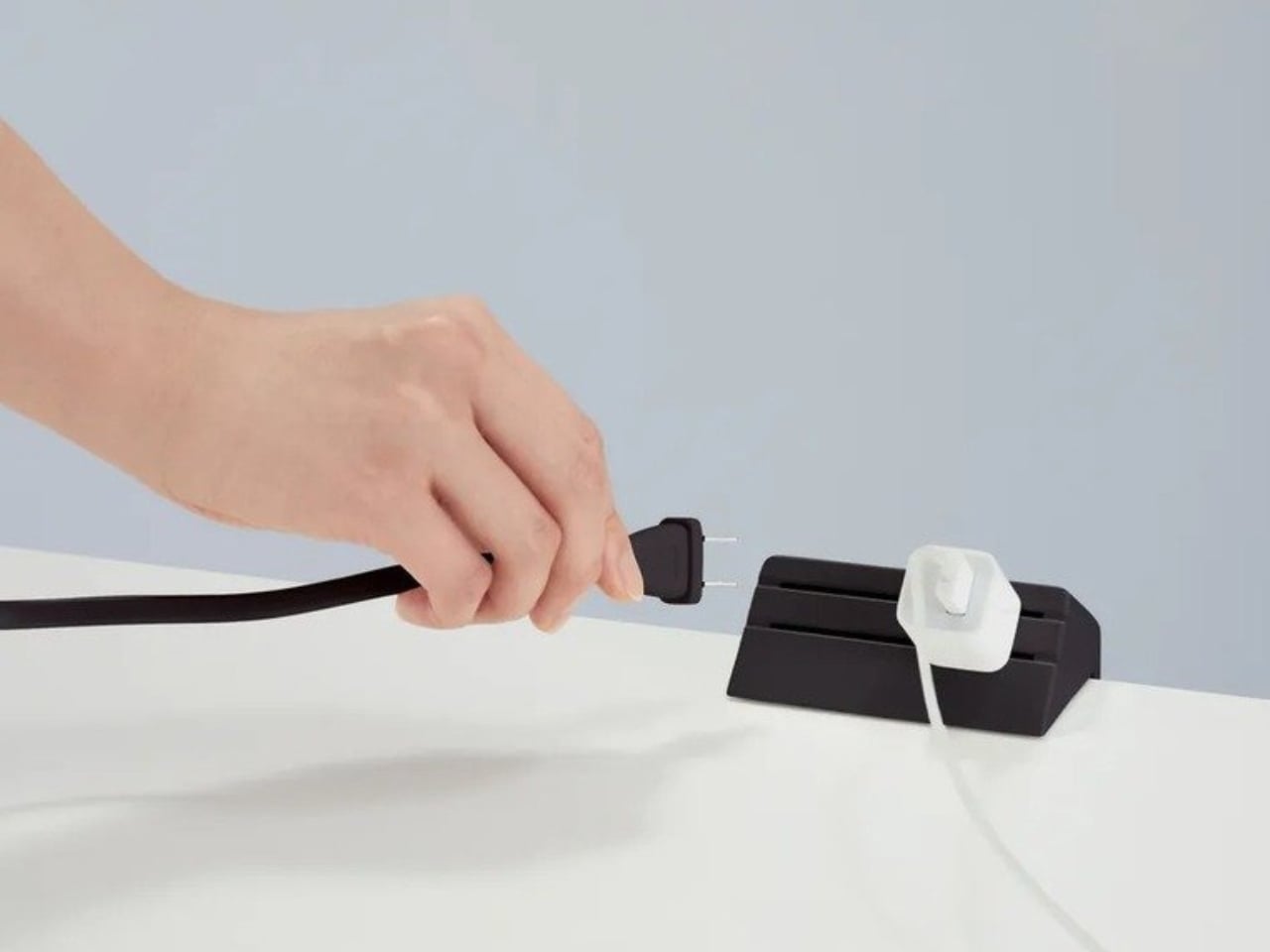
The design is deceptively simple. The Energy Line clamps to the edge of your desk, flush and low-profile, and features a linear row of slits running across its face. Those slits accept up to five two-pronged plugs at any position along the line. No discrete individual sockets, no chunky plastic bumps, no visual noise. Just a clean, flat surface with a continuous slot. From a distance, it reads as part of the desk itself rather than an accessory bolted onto it.

There is a caveat worth knowing: the Energy Line is designed for two-pronged plugs only, meaning it’s built for laptops, monitors, desk lamps, and peripherals rather than heavier appliances. For a modern desk setup, that’s rarely a dealbreaker. Most of what lives on a work surface runs on two prongs anyway.

But here’s where my opinion deviates slightly from pure admiration. The limitation does ask something of you: before purchasing, you’d need to audit your desk setup and confirm that nothing with a grounded, three-prong plug needs to stay on top. If you use a Mac with a standard power adapter, a monitor, maybe a desk lamp and a fan, you’re likely covered. If your setup is more eclectic, it’s worth a moment of honest inventory.

That said, the design philosophy behind this product feels deeply, specifically Japanese, and I mean that as a compliment. Kokuyo has a 120-year history rooted in the conviction that even ordinary, utilitarian objects deserve to be thought through completely. They started by making covers for account ledgers. They went on to design notebooks so beloved that students across Asia still buy them today. Their founding spirit, as they describe it, is “to enrich the world through our products.” The Energy Line is a natural expression of that. It takes a problem everyone has, cords everywhere, nowhere good to put them, everything looking chaotic, and solves it without announcing itself loudly.

The broader cultural moment around this kind of design is real and worth acknowledging. Desk setups have become genuinely personal statements. People spend real money on monitor arms, cable management systems, and custom desk mats to achieve a workspace that feels intentional, curated, even beautiful. A power strip, more than almost any other desk accessory, has historically been the stubborn hole in that aesthetic. The one thing you couldn’t really fix. Kokuyo just fixed it.

It’s also worth noting that this comes from an office furniture company, not a consumer electronics brand trying to go premium. Kokuyo makes desks, chairs, storage systems. They think about workspaces at an architectural scale. Designing a power strip that integrates with a desk rather than just sitting on or under it makes sense coming from that perspective. The Energy Line isn’t a gadget playing at being furniture. It’s furniture thinking that got applied to a gadget.

Whether you’re the kind of person who obsesses over every detail of your workspace or someone who just wants a cleaner desk without thinking too hard about it, the Energy Line is hard to dismiss. It doesn’t ask you to care about design. It just rewards you if you do. It’s genuinely rare that a product this utilitarian solves a problem this old in a way that feels this obvious in hindsight.

The post Kokuyo Made a Power Strip You Actually Want to Look At first appeared on Yanko Design.

This Stretching Device Pays You Real Rewards to Fix Your Posture

You know that feeling when you’ve been hunched over your laptop for three hours straight and your shoulders are basically living rent-free up by your ears? That tightness in your neck that no amount of rolling your head around seems to fix? Yeah, we all do. The modern office worker’s body is basically staging a protest, and honestly, it has every right to. Enter Break, a wellness device that’s part fitness tracker, part game controller, and part intervention for your increasingly sedentary existence. Designed by Jeoung Jinyoung, Lee Jonghyun, Yang Junhong, and Lee Junyoung, this Red Dot award-winning concept tackles the desk job health crisis with a surprisingly playful approach.

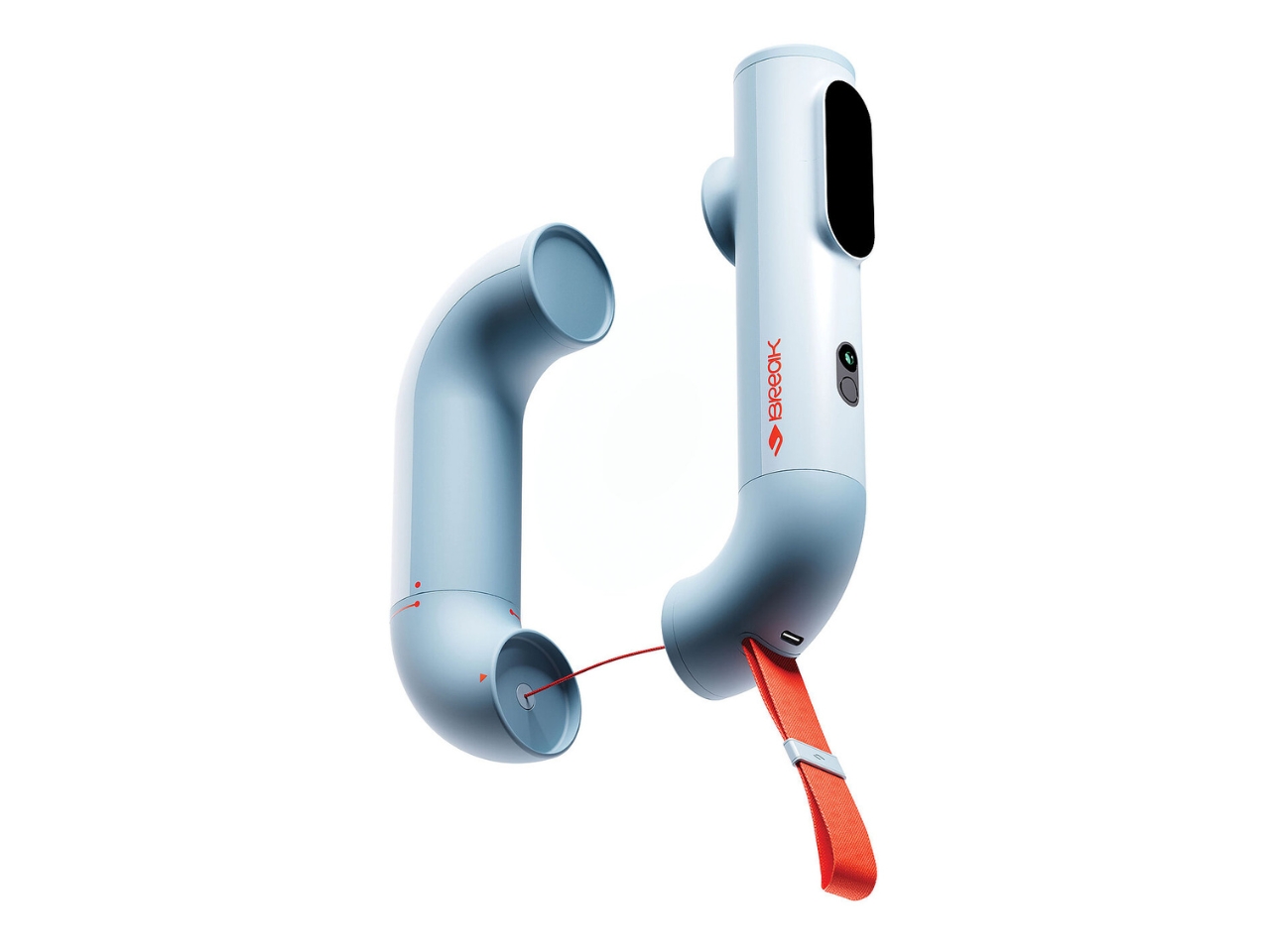
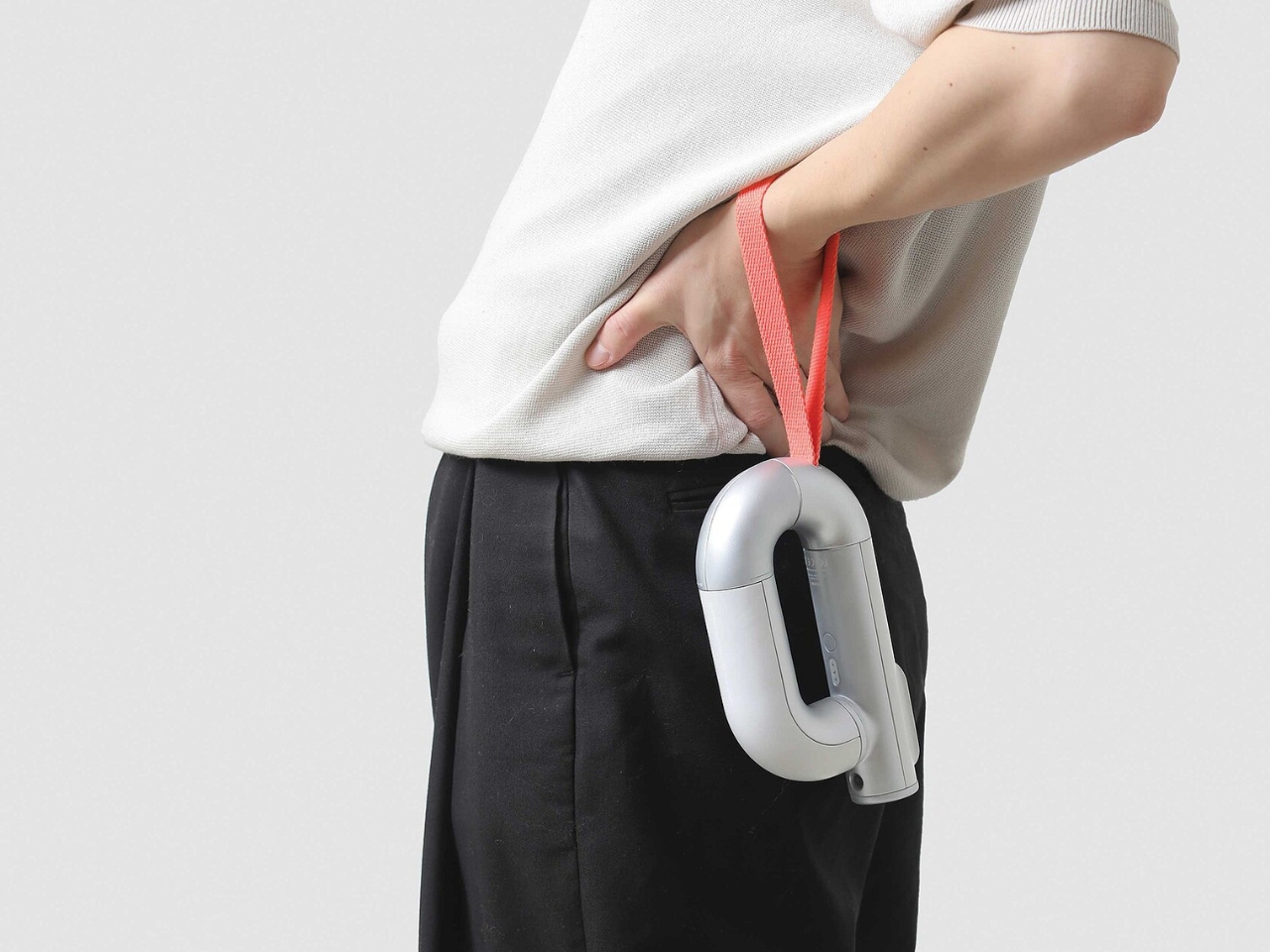
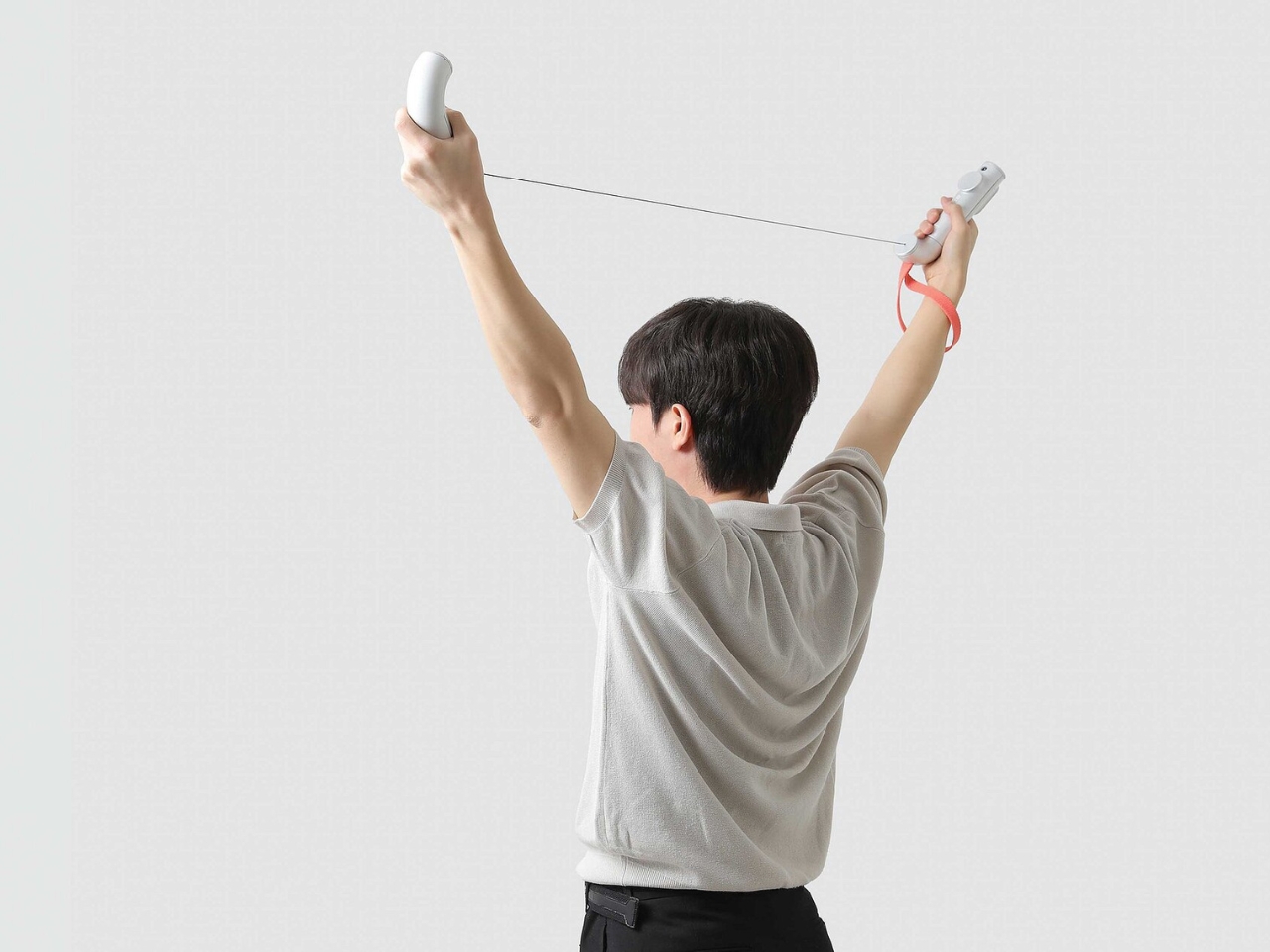
The device itself looks like nothing you’ve seen before. It has this curved, almost sculptural form with a wire connecting two handle-like pieces. Think of it as a resistance band met a piece of modern art and they decided to help you fix your posture. The sleek design in soft blue and coral feels refreshingly un-intimidating, which is kind of the point. This isn’t gym equipment that’ll gather dust in your closet while silently judging you. It’s meant to be portable, accessible, and actually used.

Designers: Jeoung Jinyoung, Lee Jonghyun, Yang Junhong, Lee Junyoung

Here’s where it gets interesting. Break doesn’t just sit there looking pretty. It actively encourages you to do specific stretches that target the exact problems desk workers face. Those rounded shoulders from hovering over your keyboard? The dreaded text neck from staring at your phone? The device prompts you with what it calls “quests” for exercises like Y/T/A raises, delivered right on its built-in screen. You’re basically doing physical therapy, but the gamification makes it feel less like a chore and more like, well, a game.

The wire structure facilitates these movements, giving you the resistance you need to actually work those neglected muscle groups. You hold the handles, stretch in different positions, and the device tracks your progress. It’s simple enough that you don’t need a YouTube tutorial to figure it out, but effective enough that you’ll actually feel the difference.

But Break goes beyond just being a stretching tool. It’s also monitoring your vitals with built-in sensors. Heart rate, oxygen saturation, calories burned, the whole package. This data gets sent to the accompanying app, which transforms your phone into your wellness command center. The more you use Break, the more detailed health information you receive, creating this feedback loop that actually motivates you to keep going.

And here’s the kicker that makes this concept particularly clever: those virtual rewards you earn from completing physical quests? They’re not just digital badges collecting virtual dust. You can exchange them for actual goods or services from real merchants. Suddenly, taking a break from your spreadsheet to do some shoulder stretches isn’t just good for your health, it’s also getting you closer to that coffee you’ve been craving or whatever else the reward system offers. The genius of Break lies in understanding that knowing you should exercise isn’t enough. We all know sitting is the new smoking. We’re all aware our posture is terrible. But awareness doesn’t create change. What does? Making it easy, making it fun, and giving tangible rewards. Break tackles all three.

The design team behind this clearly understands that modern wellness solutions can’t just lecture people into being healthy. They need to meet users where they are, which is usually at a desk, probably tired, definitely stressed, and not particularly motivated to add one more thing to their to-do list. By integrating seamlessly into the workday, requiring minimal time investment, and gamifying the experience, Break removes most of the barriers that keep office workers chained to their chairs.

Is Break going to replace your gym membership? Probably not. But it might be the thing that gets you moving when you otherwise wouldn’t. It might be the intervention your shoulders have been begging for. And in a world where we’re all increasingly aware of the toll our digital lives take on our physical bodies, having a beautifully designed tool that makes wellness feel achievable is pretty refreshing.

The post This Stretching Device Pays You Real Rewards to Fix Your Posture first appeared on Yanko Design.

Hidden hub clears your desk of cords, sockets, and port clutter

To say that I have a messy desk is an understatement. Aside from the various books, office supplies, and knick-knacks that I have lying around, one of the things that make it pretty messy are all my cords connectors, and sockets. I work with multiple devices so I need all kinds of charging and connecting tools, therefore adding to the clutter on my desk. If ever I one day decide to have a cleaner and more minimalist desk, then I definitely need one of these docking hubs to make my work and home office life a bit more organized.

Designer: Lon

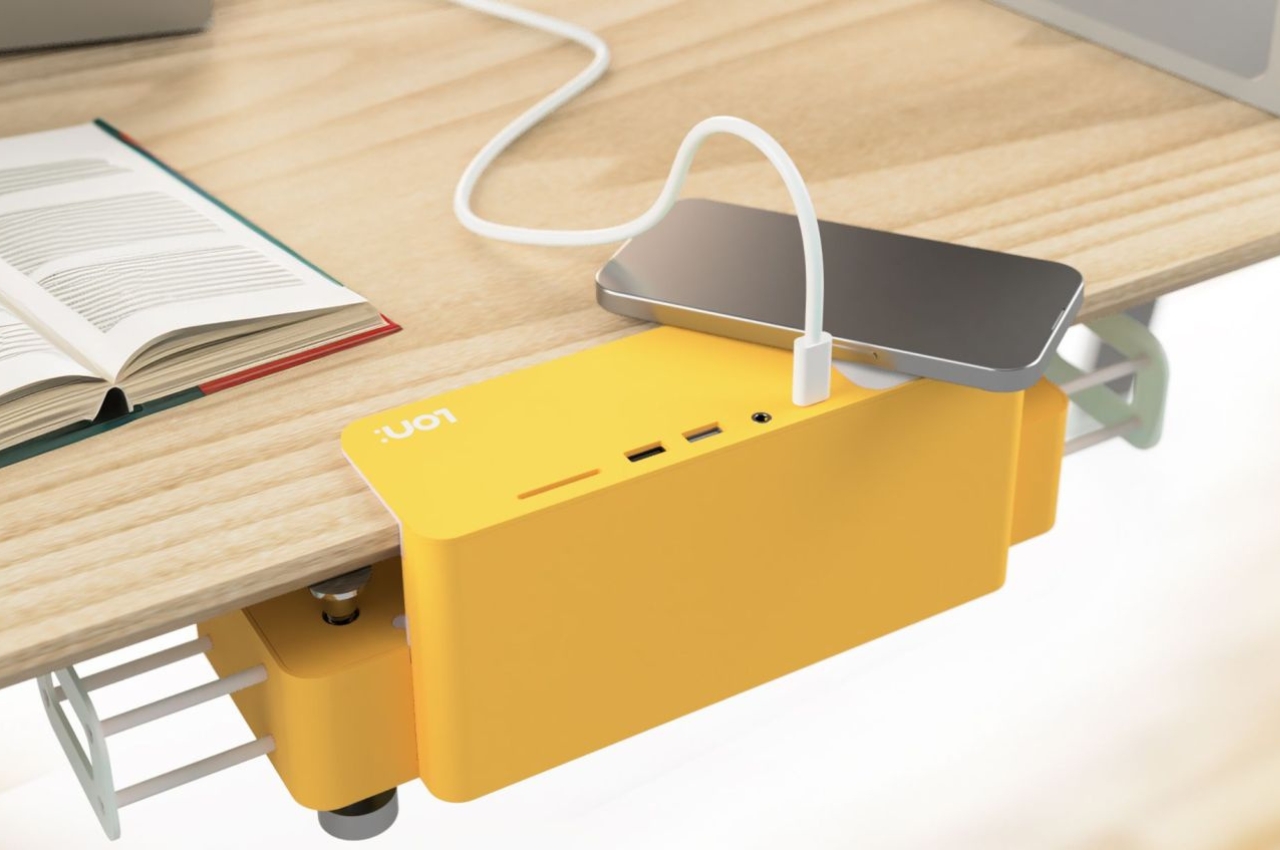
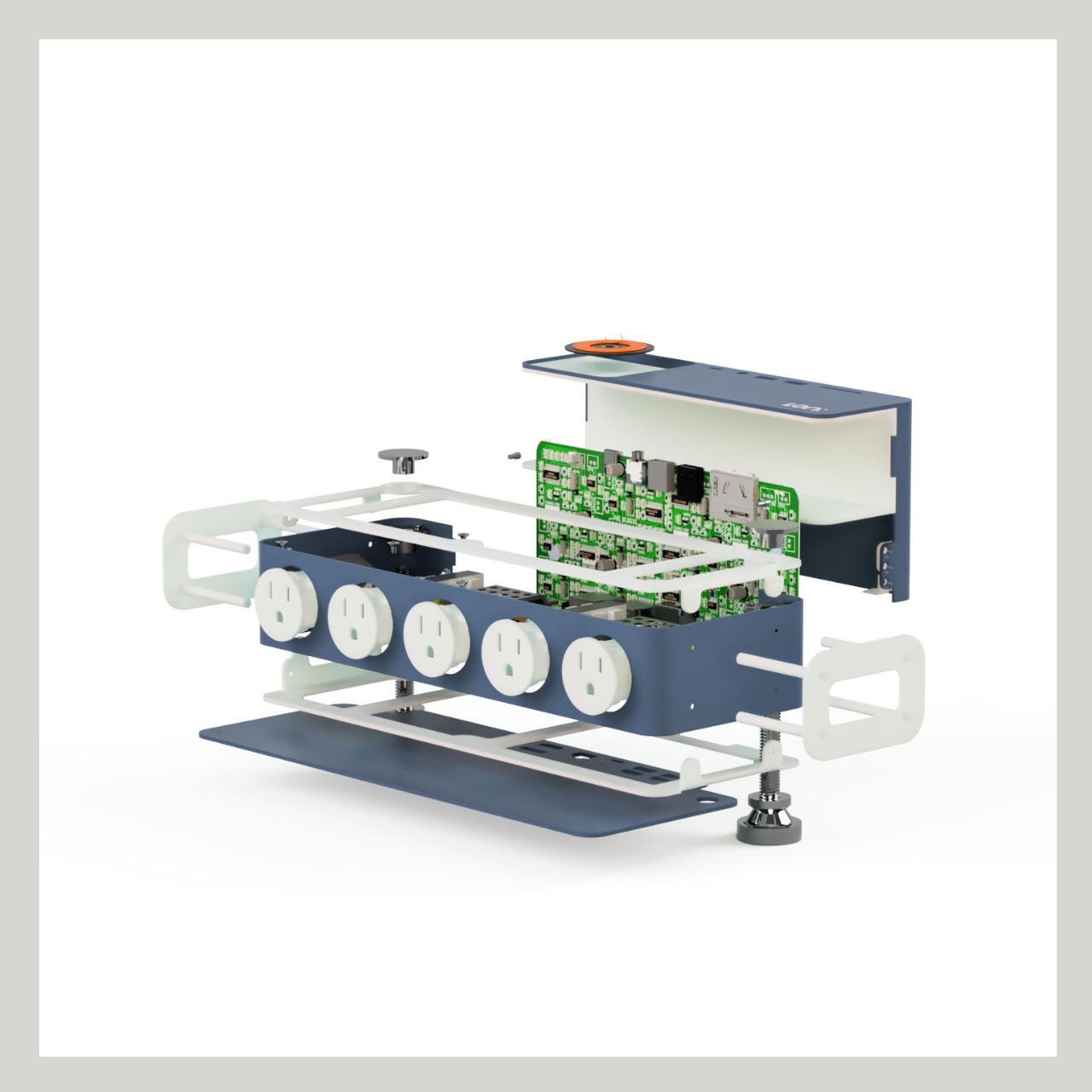
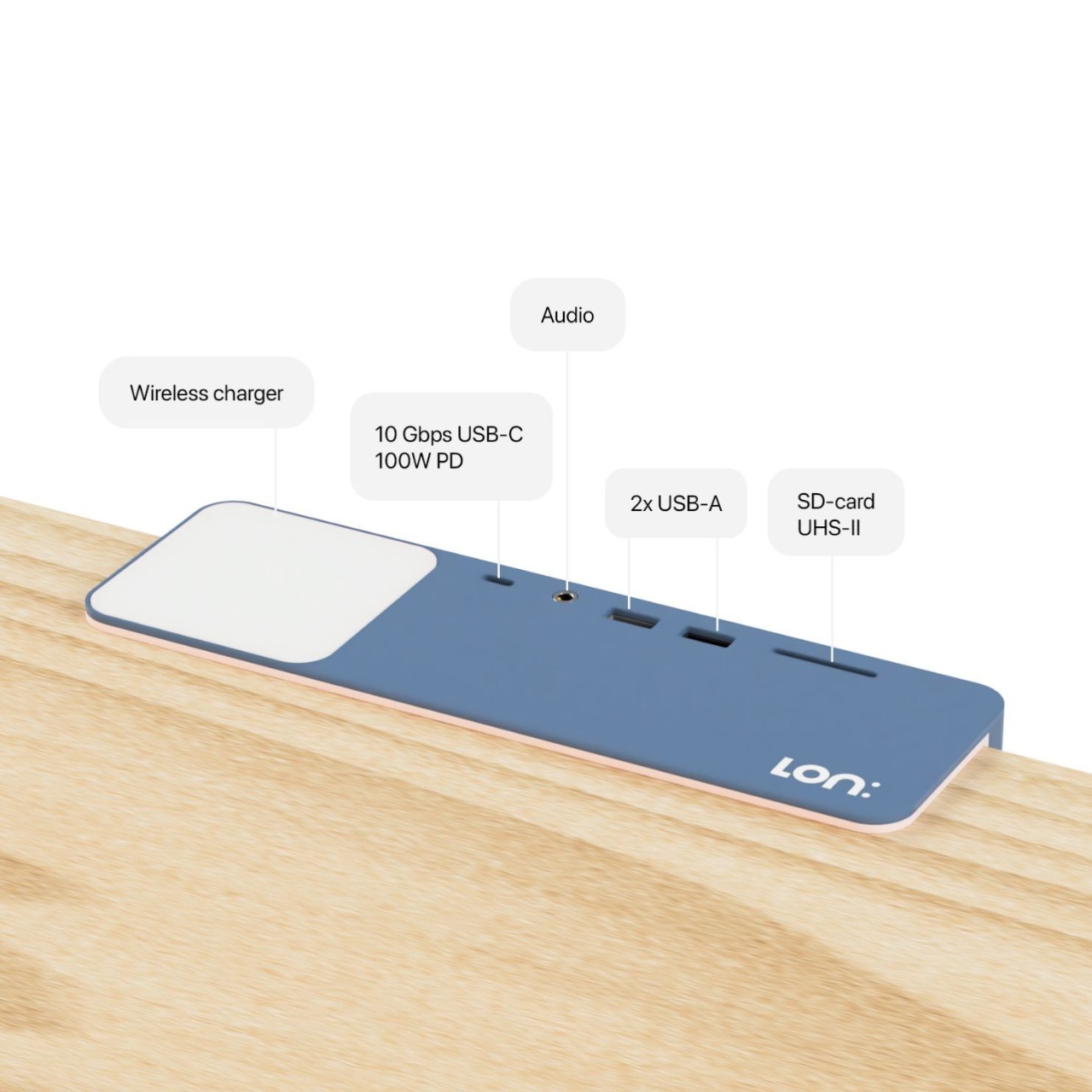
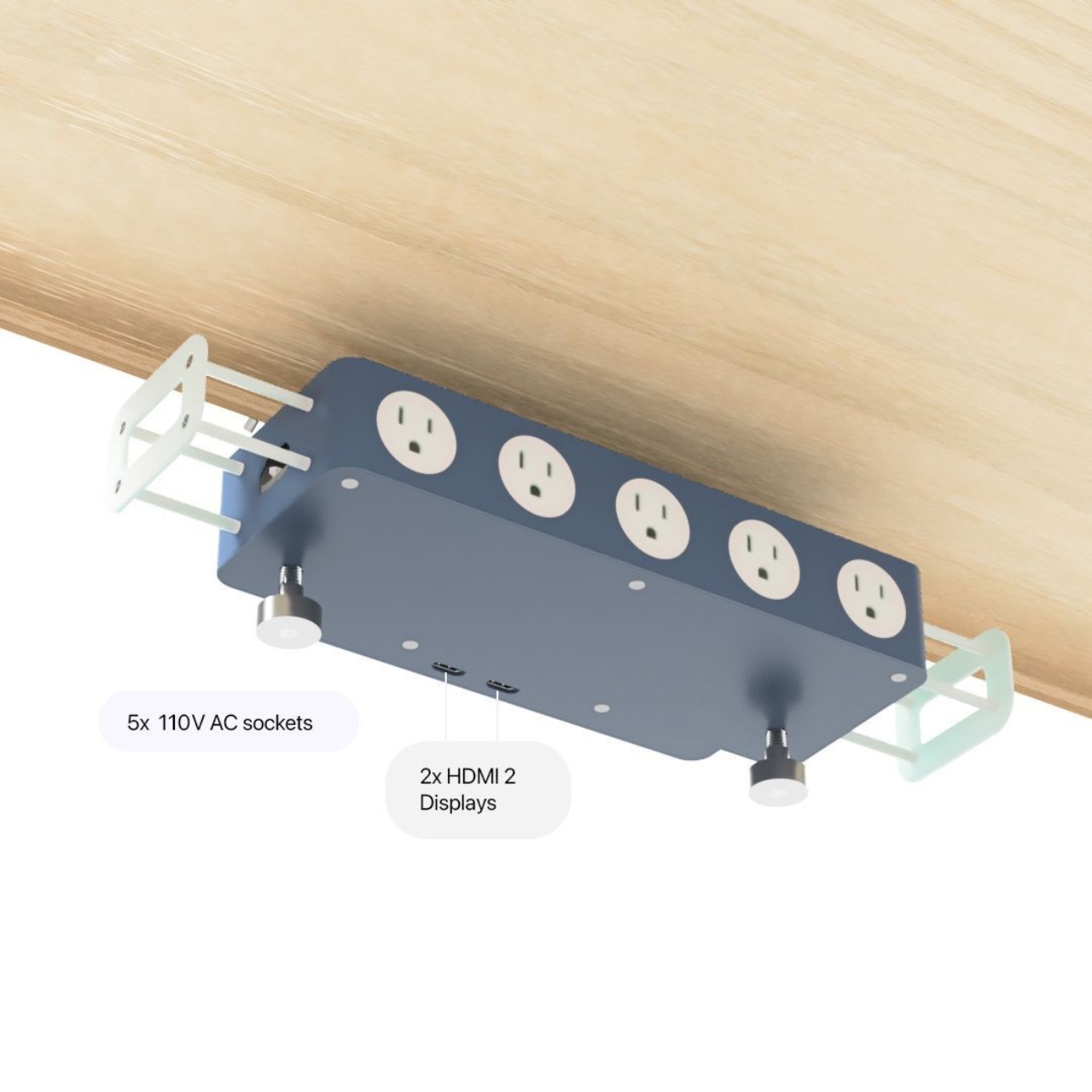
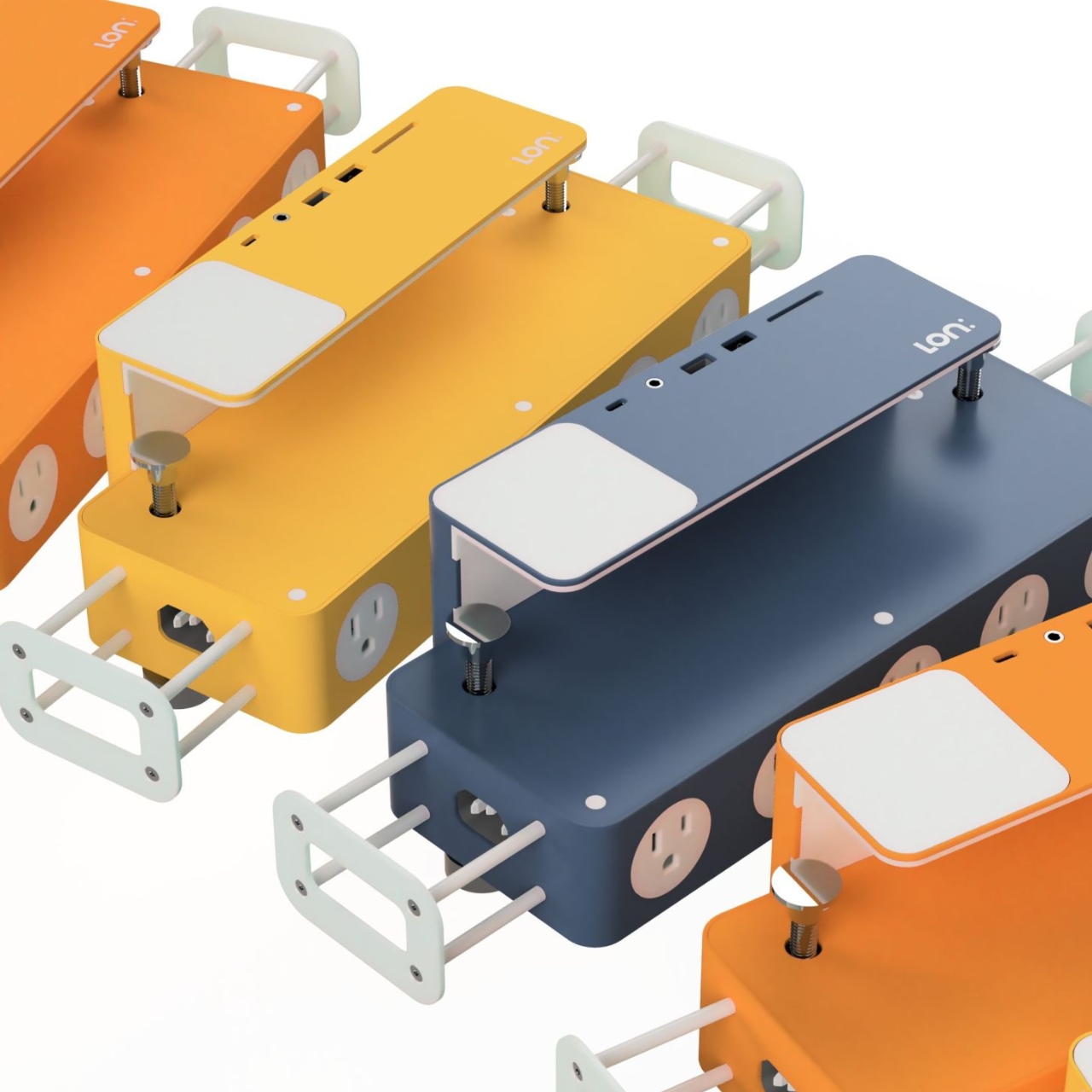
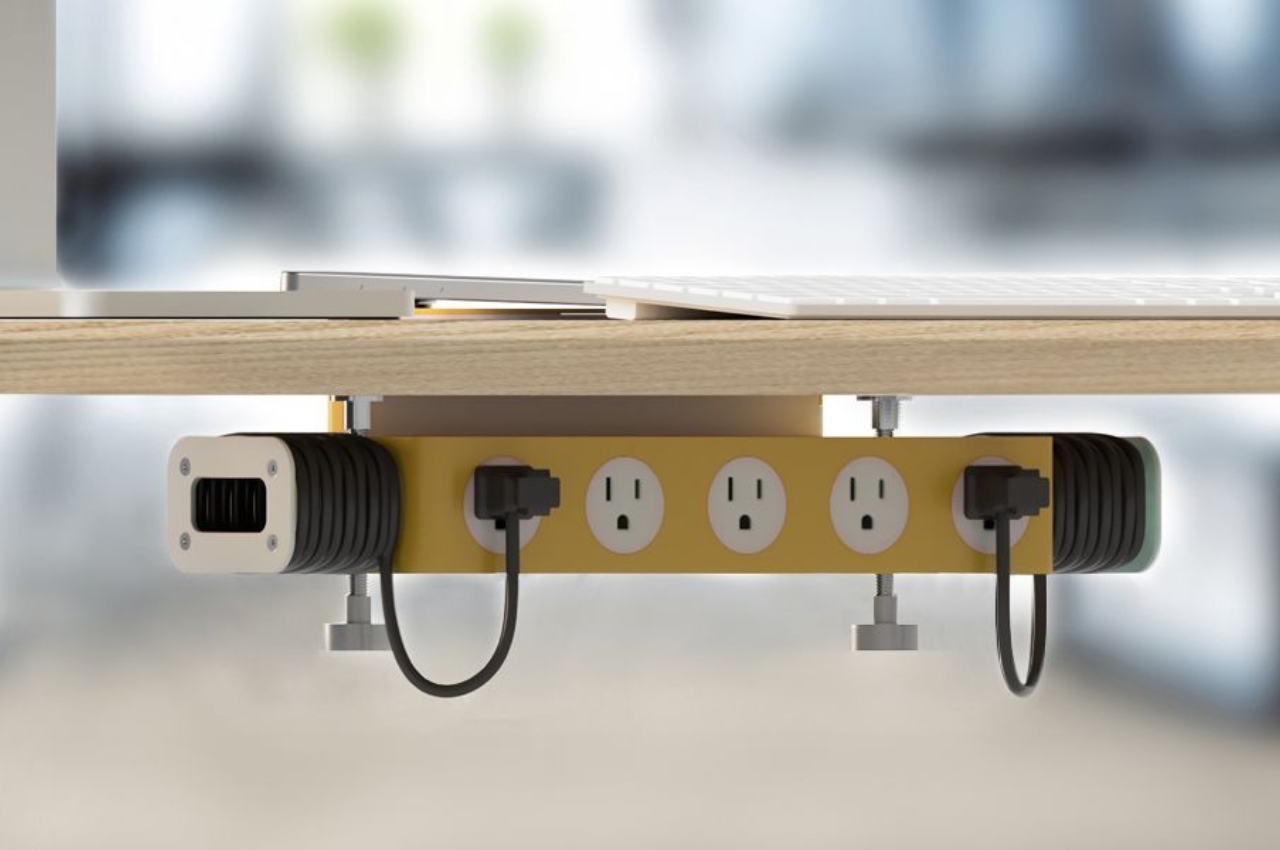
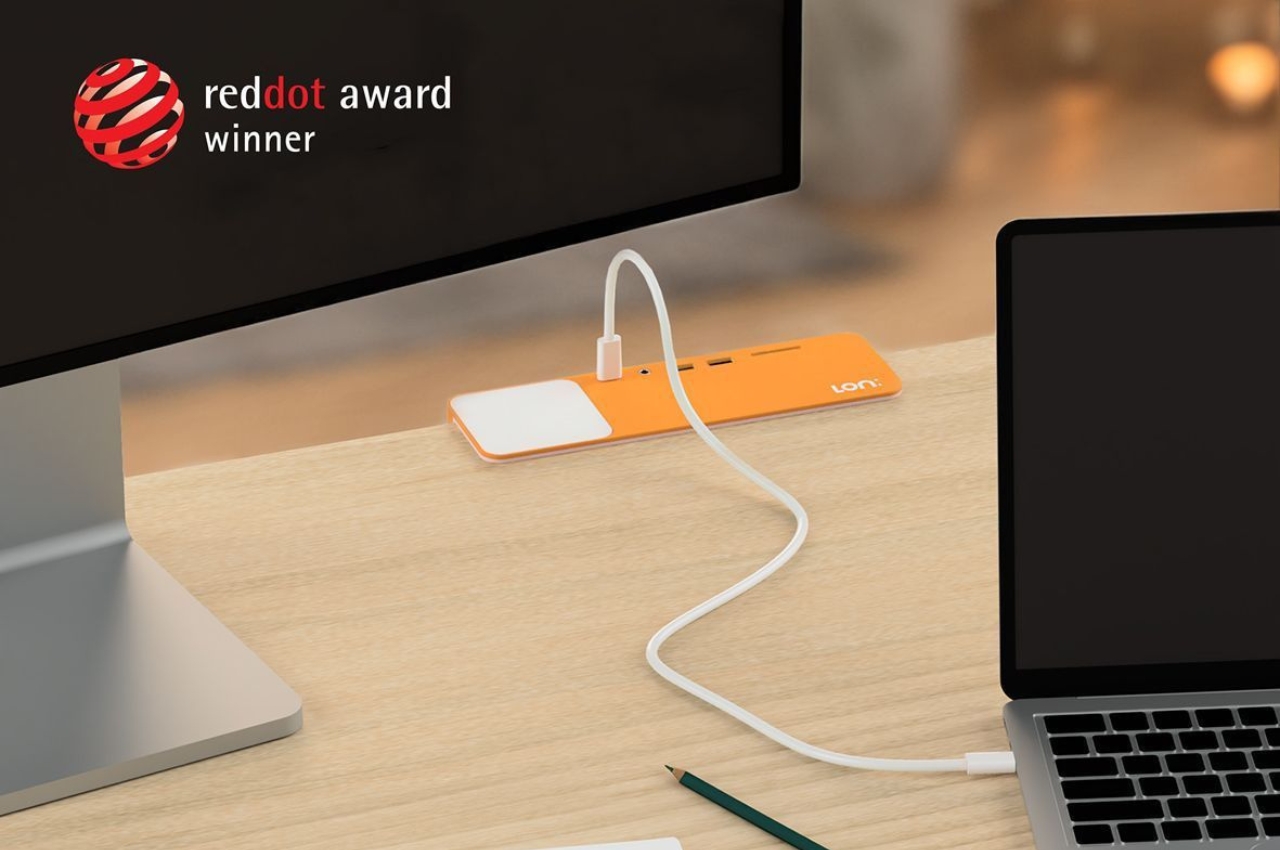
The Lon:HUB is one such docking hub that can give your desk a cleaner appearance and at the same time provide you with all the outlets and ports that you need. The ports and sockets are attached under your desk and on top of your space, you have some of the ports that you would need. Underneath, you have 5x 110V AC sockets, 2x HDMI 2 display ports, and 2x arms where you can wrap your cords around so you don’t get a spaghetti-like mess. On the edge of your desk, the hub has a 10 Gbps USB-C 100W port, 2x USB-A ports, an SD card slot, and it even has a wireless charger landing pad.

The hub also comes with a proprietary high-speed PCB with 100W PD and medical-grade power unit. It will also be available in several color options. We’re seeing orange, yellow, and a dark blue/grayish one if you prefer muted colors. If you want a more powerful unit, there will be a Pro version available which has a Thunderbolt 4 port, 2x HDMI 2.1 and 2x DisplayPort 1.4 ports,, a 2.5Gbps Ethernet card, 2x 10Gbps USB-C and 6x 10Gbps USB-A ports, a UHS-II SD-Card slot, QI2 wireless charger pad, and a 100W PD. It will also have a full aluminium casing.

The price tag hasn’t been officially revealed yet but it looks they’re planning to go for $199 which is a pretty good price tag for a dock. Design-wise the Lon:HUB is pretty minimalist and that is the point as something intricately designed may add to your desk’s clutter. I may not be leaving my maximalist style anytime soon but removing the cord and socket clutter may be the first step I’ll take and this dock would be a good start.

The post Hidden hub clears your desk of cords, sockets, and port clutter first appeared on Yanko Design.