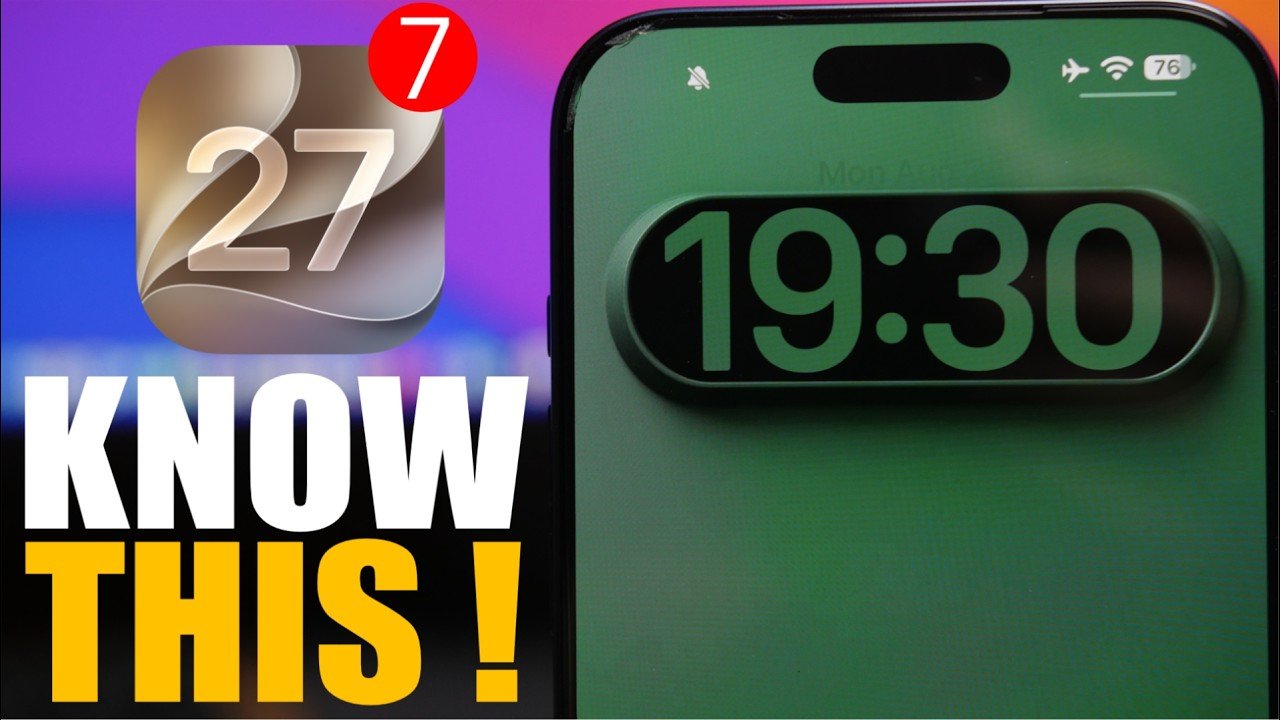
Samsung’s Secret 4th Flagship: The Galaxy S27 Pro Is the "Mini Ultra” We’ve Been Begging For

Samsung’s Secret 4th Flagship: The Galaxy S27 Pro Is the Galaxy S27 Pro

The Samsung Galaxy S27 Pro reshapes the compact flagship smartphone category, offering a blend of premium features and portability. Positioned as a smaller counterpart to the Galaxy S27 Ultra, the S27 Pro strikes a balance between high-end performance and practical compromises, catering to users who prioritize a compact design without sacrificing functionality. This device reflects […]

The post Samsung’s Secret 4th Flagship: The Galaxy S27 Pro Is the “Mini Ultra” We’ve Been Begging For appeared first on Geeky Gadgets.

Posted in Uncategorized

What If City Monuments Generated Power Instead of Just Looking Good?

Public art has long served as a cultural mirror, reflecting what a society chooses to honor. As climate change intensifies and cities face mounting pressure to decarbonize, questions about what our monuments should stand for are getting harder to ignore. Most renewable energy infrastructure stays invisible, buried in utility corridors or mounted on rooftops, rarely acknowledged as something worth celebrating in public spaces.

Santa Fe-based artist Michael Jantzen has spent years addressing exactly that through his Public Eco-Art Proposals. The series imagines a different kind of monument, one that doesn’t merely symbolize sustainability but actively practices it. Each proposal takes the form of a sculpture or pavilion that generates electricity from the sun or wind, collects rainwater, stores energy in batteries, and sometimes sends power into the local grid.

Designer: Michael Jantzen

Jantzen gives his work an aesthetic freedom that most utility-driven designs don’t have. Rather than concealing the mechanics, he treats solar panels, wind turbines, and structural frameworks as sculptural elements in their own right. The visual language is deliberately technological and mechanical, blurring the line between a functional energy structure and art worth stopping for.

Walk through one of these proposed spaces, and you might find yourself beneath a pavilion whose curved solar canopy quietly feeds electricity back to the neighborhood. Or stop to look at a series of angular sculptures lined up across a park, their solar-panel tops tracking the light. What looks like a meditation on shape and form turns out to be a modest power station doing actual work.

The proposals span a wide range of environments. Some are designed for open fields or public parks, while others imagine coastal settings with floating platforms supporting wind and water energy structures. A chevron-shaped sculpture with a solar panel at its angular peak stands in what appears to be a university courtyard. Another piece holds solar panels above cylindrical battery storage pods, blending the practical business of energy collection with an unexpectedly considered form.

This approach also reframes the relationship between art and urban infrastructure. Municipalities already commission sculptures for parks and plazas; so why shouldn’t those commissions do more? A solar-powered gathering space generates electricity, makes clean technology approachable, and sparks conversations among the millions of people who walk through it, most of whom would otherwise never engage with energy infrastructure at all.

Jantzen’s vision extends beyond any single installation. He imagines these structures placed in cities and parks worldwide, shifting how communities relate to the energy they consume by making that relationship visible and beautiful. For him, celebrating sustainability means building things worth caring about, giving clean energy a presence that people can gather around, the way they’ve always done with the landmarks that define a place.

The post What If City Monuments Generated Power Instead of Just Looking Good? first appeared on Yanko Design.
DJI Pocket 4 vs Pocket 4P : Are the New Pro Features Worth the Upgrade?

DJI Pocket 4 vs Pocket 4P : Are the New Pro Features Worth the Upgrade? Side by side comparison of the DJI Pocket 4 and Pocket 4P cameras

The release of the DJI Pocket 4P has introduced a host of advanced features, raising questions about whether it’s time to move on from the Pocket 4. With upgrades like a dual-camera system featuring 3x optical zoom and DLOG 2 for enhanced color grading, the Pocket 4P is clearly aimed at creators with specialized needs. […]

The post DJI Pocket 4 vs Pocket 4P : Are the New Pro Features Worth the Upgrade? appeared first on Geeky Gadgets.

Posted in Uncategorized

What Apple’s New AI Glasses Mean for the Future of Wearables

What Apple’s New AI Glasses Mean for the Future of Wearables Minimalist design of Apple AI glasses featuring lightweight frames

Apple is reportedly developing a new wearable device: lightweight AI glasses designed to seamlessly integrate into your daily routine. By prioritizing practicality and advanced AI functionality over hardware-heavy features, Apple aims to reshape the smart glasses market. These glasses address common challenges such as bulkiness, short battery life, and overly complex designs, offering a sleek, […]

The post What Apple’s New AI Glasses Mean for the Future of Wearables appeared first on Geeky Gadgets.

Posted in Uncategorized

AI Finally Solved the Desk Organizer Nobody Actually Uses

Most desk organizers ask you to adapt to them. You get a tray with fixed compartments, you shove your stuff in, and either it fits or it doesn’t. Then you give up, and everything ends up in a pile again. Seoul-based industrial designer Youngbin Kwon decided that the tray should be the one doing the adapting, and the result is Mosaic, a concept that’s quietly one of the more genuinely smart ideas to come out of the AI-meets-product-design conversation this year.

Mosaic is an AI tray that transforms its shape depending on what you place on it. The idea, at its simplest: put your things down, and the tray reconfigures around them. The modular structure shifts and reorganizes to accommodate whatever you’re dropping in: your phone, your keys, a charging cable, a stray lip balm. It reads the objects and makes room for them. What the concept proposes is essentially the end of the one-size-fits-all desk organizer, and I think that’s a very good thing.

Designer Name: Youngbin Kwon

The design is the work of Kwon, an industrial design student from Chung-Ang University in Seoul, published this May on Behance, where it’s been pulling in appreciations at a rate that suggests the design community noticed. Built in Rhinoceros and rendered in Keyshot, the concept is visually clean and grounded, with a restraint that keeps the focus on the idea rather than the spectacle. This isn’t speculative design that lives only in dreamland. It feels like something that could exist with the right engineering team behind it.

1

But the part of the concept that deserves more attention than the mechanics is the philosophy behind it. Kwon describes the act of placing objects with AI assistance as being “as if playing,” and the idea is that this playfulness is exactly what leads people to actually develop organizational habits over time. Not guilt. Not a beautiful, aspirational flat-lay that makes you feel bad about your desk. Just play. That distinction is easy to underestimate.

That reframing matters more than it might seem at first. The market for organization products is enormous, and so is the gap between things people buy to get organized and how long they actually stay organized. That gap usually comes down to friction. The system is too rigid, or too much effort to maintain. Mosaic proposes that if the system flexes with you instead of demanding you flex with it, you’re far more likely to stick with it. Gamification applied to the most mundane domestic task. It’s clever.

I’ll admit that the name Mosaic might be the most elegant thing about it. A mosaic is a picture made of small, individually unremarkable pieces that together create something intentional and whole. That’s exactly what the tray does. The modular components rearrange into a layout that looks curated, even when you’ve just dropped everything in at the end of a long day. The name does real conceptual work, and that’s rarer than you’d expect from a student project.

There are real questions left unanswered, as there always are at the concept stage. How exactly the AI identifies objects, whether it uses cameras, weight sensors, or something else, isn’t detailed in the project. The durability of moving parts in a daily-use context is worth thinking about. Whether the transformation happens visibly and slowly, like something mechanical, or snaps quickly into place, would change the entire experience of using it. These are the things that turn a concept into a product, and Kwon’s Mosaic is still very much a concept.

But good concepts don’t need to be finished products to be worth paying attention to. What Mosaic does well is identify a real and relatable failure mode, the organizational system that doesn’t survive contact with actual human behavior, and propose a solution that works with people rather than against them. The tray that meets you where you are. That’s not a small idea dressed up in a sleek render. That’s a fundamental rethink of what we expect everyday objects to do, and it’s worth watching where it goes.

The post AI Finally Solved the Desk Organizer Nobody Actually Uses first appeared on Yanko Design.

What Analysts Actually Expect Valve to Charge for the Steam Machine

What Analysts Actually Expect Valve to Charge for the Steam Machine Black Steam Machine console next to a television screen

Valve’s Steam Machine has sparked significant debate within the gaming community, particularly around its pricing strategy. With estimates ranging from $500 to $1,000, the discussion highlights the tension between delivering affordable hardware and maintaining high-quality components. Deck Ready explores how Valve’s pricing decisions are influenced by factors like fluctuating component costs and market positioning. For […]

The post What Analysts Actually Expect Valve to Charge for the Steam Machine appeared first on Geeky Gadgets.

Posted in Uncategorized

Forget Foldables: Samsung’s Galaxy Z Rollable Just Had Its First Major Leak

Forget Foldables: Samsung’s Galaxy Z Rollable Just Had Its First Major Leak Samsung Galaxy Z Rollable smartphone extending its display outward

Samsung has introduced its latest advancement in smartphone technology: the Galaxy Z Rollable. This innovative device, based on a recently revealed patent, showcases rollable display technology, marking a potential evolution in smartphone design. By moving beyond foldable devices, Samsung aims to deliver a slimmer, more versatile smartphone that combines innovative technology with practical usability. The […]

The post Forget Foldables: Samsung’s Galaxy Z Rollable Just Had Its First Major Leak appeared first on Geeky Gadgets.

Posted in Uncategorized

How Security Flaws and Price Hikes Are Testing PlayStation Loyalty

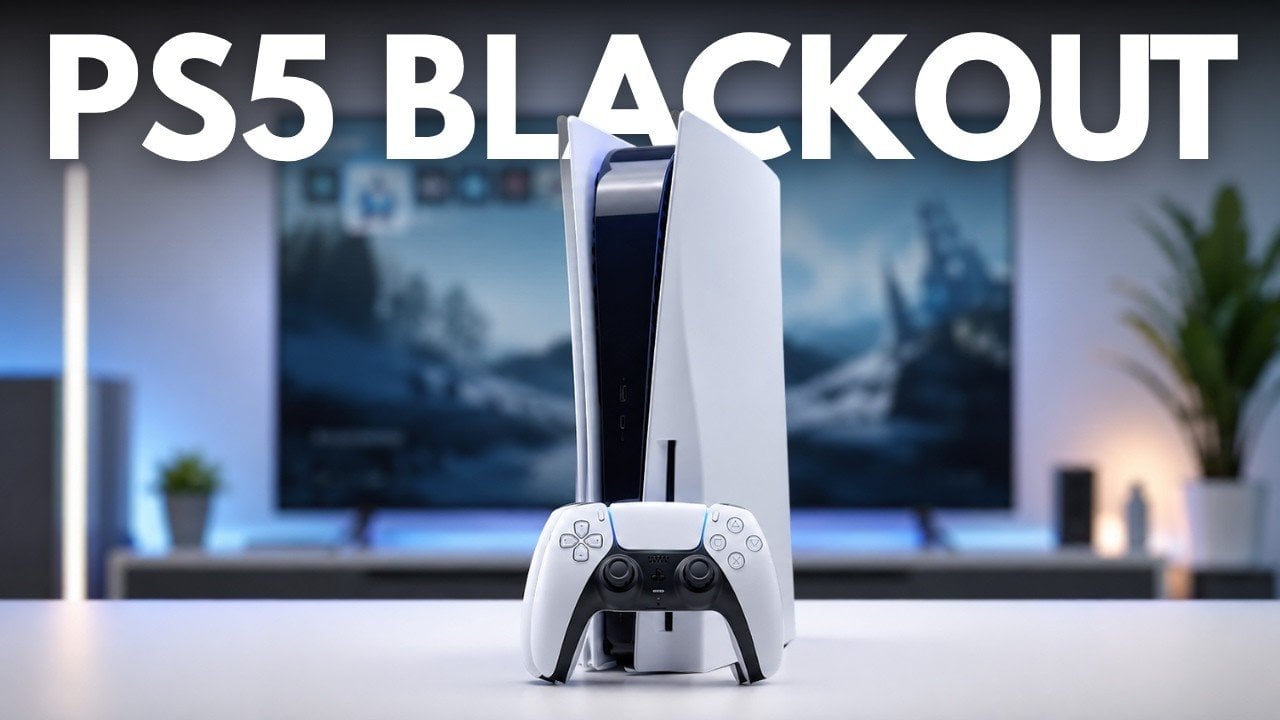
How Security Flaws and Price Hikes Are Testing PlayStation Loyalty PlayStation 5 console displaying a network error screen

Sony’s PlayStation 5 is facing a series of challenges that could reshape its standing in the gaming industry. As highlighted by YouTuber RGT 85 below, issues such as the underperformance of key investments like the $3.6 billion Bungie acquisition and the lukewarm reception of Housemarque’s latest title, Soros, have raised concerns about Sony’s current strategy. […]

The post How Security Flaws and Price Hikes Are Testing PlayStation Loyalty appeared first on Geeky Gadgets.

Posted in Uncategorized

Is iOS 26.5 Actually Good? Here is What Users Are Saying

Is iOS 26.5 Actually Good? Here is What Users Are Saying Illustration of iphone pro related to the article topic.

Apple’s iOS 26.5 update has officially launched, bringing promises of improved performance and stability. However, the update’s impact varies significantly depending on the device you’re using. While the iPhone 17 Pro Max reaps the most benefits, older models like the iPhone 16 series face challenges, particularly with battery performance. In the video below, iDeviceHelp explores […]

The post Is iOS 26.5 Actually Good? Here is What Users Are Saying appeared first on Geeky Gadgets.

Posted in Uncategorized

This Magnetic Keychain Has A Three-Level Locking System So It’s Impossible To Drop Your Keys

The spring inside a conventional keychain carabiner is arguably the least-considered component in everyday carry, a tiny coiled wire doing the same job it has done for decades, prone to fatigue, deformation, and eventual failure at the exact moment reliability matters most. Titaner has rebuilt it from physics up. The Matrix replaces that metal spring entirely with precision-aligned neodymium magnets operating in controlled repulsion, generating gate-return force that doesn’t degrade with use. The brand rates the system at one million presses with zero rebound loss, a number that makes the lifespan of any conventional spring look fairly modest by comparison.

That magnetic spring delivers an incredibly smooth linear damping feel, a soft yet decisive rebound that Titaner describes as strangely addictive. It serves as the foundation for a more ambitious system: a three-level locking architecture where the number of active mechanical defenses is something the user controls. Six models span the lineup, ranging from a single-level autolock all the way to Constant Locking configurations with a physically deadlocked release button and the XYZ Tri-Axial Lock restricting gate movement across all three spatial axes simultaneously.

Designer: Titaner

Click Here to Buy Now: $29 $42 (31% off). Hurry, only 94/100 left! Raised over $94,000.

The magnetic spring structure is the invisible upgrade that takes the carabiner to an entirely new level. Where a coiled metal spring cycles between tension and compression thousands of times until molecular fatigue sets in, neodymium magnets generate repulsion force without any physical wear. The spring action remains consistent across the entire lifespan, which means the 500th press feels identical to the 500,000th. Titaner machines precision cavities into the titanium body to house the magnets, aligning their poles to create controlled repulsion that mimics the spring behavior but with a smoother damping curve. The tactile feedback on every gate release has a fidget-toy quality to it, a satisfying snap that makes you want to open and close the thing for no reason at all.

When the gate closes, the XYZ Tri-Axial Lock engages across all three spatial axes simultaneously. Traditional carabiner clips allow some degree of lateral wiggle or vertical play once the gate latches, a small but perceptible looseness that undermines the sense of security. Titaner’s lock structure eliminates that movement entirely by restricting the gate along the X, Y, and Z axes the instant it seats into the closed position. The entire assembly goes rigid, transforming from a hinged mechanism into what feels like a single monolithic piece of titanium. The lock structure is passive, meaning it happens automatically without user input, but the result is immediately noticeable the first time you handle a closed Matrix unit.

The three-level security system builds on that foundation by adding optional layers of defense. Level 1 is the magnetic spring autolock alone, best suited for quick daily access where speed matters and the risk of accidental release is minimal. Level 2 introduces a toggle switch positioned over the release mechanism, adding an active physical barrier that prevents accidental actuation. You slide the toggle to expose the release, press to open the gate, and let the toggle return to its locked position. Level 3 takes it further by physically deadlocking the release button itself. The mechanism retains the first two defense lines while introducing a third barrier that requires deliberate mechanical input before the release will respond at all. Even with Level 3 engaged, the sequence to open the gate takes under one second once you internalize the logic, which means maximum security without a meaningful sacrifice in access time.

Three-panel collage showing a compact metal key organizer in use: holding a key with the organizer, attaching a keyring to the organizer, and hooking it onto a metal surface.

Six models distribute across four series, each with a different mechanical philosophy and form factor. The S-Series is the most compact, designed for minimalist carry with a slim profile and a rotating release mechanism. The G-Series adopts a more geometric stance, with hard angles and a question-mark form factor that deviates from the traditional D-shaped carabiner. The N-Series carries the Tritium slot, a dedicated cavity machined into the body to hold a self-illuminating tritium vial that glows for over 25 years in complete darkness without batteries or charging. The L-Series is the entry point and the only model of the spring system that ingeniously achieves locking by utilizing the elasticity of metals and structural design.

Every piece starts as a solid block of GR5 titanium, the aerospace-grade alloy that delivers comparable strength to steel at roughly half the weight. Titaner machines each component on high-end CNC equipment, chamfering every edge to eliminate the sharp surfaces that shred pocket linings or catch on fabric. The finished pieces range from 12.3 grams for the L1 up to 26 grams for the G3, putting even the most feature-loaded variant comfortably within daily carry territory. GR5 titanium resists corrosion, rust, and bacterial growth, which means sweat, rain, and salty air have no meaningful effect on the material over time. The alloy is also hypoallergenic and non-toxic, qualities that matter less for a keychain than for something worn against skin but add to the overall sense of considered engineering.

Two surface finishes are available. The Micro-Blasted finish is a raw industrial matte that shows the machined titanium in its natural state, with superior fingerprint resistance and a soft tactile feel. The DLC Black finish applies a Diamond-Like Carbon coating over the titanium, adding extreme scratch resistance and an anti-reflective tactical aesthetic that photographs darker and more aggressive. Both finishes hold up to years of daily pocket carry without meaningful wear, though the DLC coating provides an additional layer of surface hardness for users who prioritize durability above all else.

Every Matrix keychain ships with a 32mm stainless steel quick-install key ring. The ring can be pried open by hand to slide a key directly onto the coil without the usual fingernail-destroying process of threading keys around a traditional split ring. Once the key is seated, the ring snaps closed and holds with enough tension to secure the key indefinitely.

The Matrix lineup is available now, with pricing spanning from $29 for the L1-2026 (the entry-level model with a traditional spring) up to $129 for the G3-2026 in DLC Black. The campaign includes optional add-ons such as Tritium vials, titanium toothpicks, and upgraded DLC finishes. Shipping is estimated to start in September 2026.

Click Here to Buy Now: $29 $42 (31% off). Hurry, only 94/100 left! Raised over $94,000.

The post This Magnetic Keychain Has A Three-Level Locking System So It’s Impossible To Drop Your Keys first appeared on Yanko Design.