Solar-powered coffee truck concept runs on green fuel to bring black fuel anywhere

They say money makes the world go round, but coffee is probably just as critical for some people. Connoisseurs will undoubtedly tell anyone willing to listen to brew their own cup, but not everyone has the luxury of doing that daily. If you don’t know of a local shop you can call your home away from home, you’d probably be at the mercy of the big, expensive chains that put more sugar than you’re going to be comfortable with. Establishing a fixed store in a nook or building isn’t going to be cheap for some businesses, and it also means not being able to reach customers where they are. Coffee trucks can solve the problem of portability, but this concept design takes that idea even further by having the whole operation run on solar power, potentially bringing that coffee experience anywhere, even away from the grid.

Designer: Kyrolos Maged

Although you can see them almost everywhere, big chain stores like Starbucks won’t always please everyone. Some simply don’t like their selection or the way they do business. Others simply prefer to patronize smaller businesses to help them grow and thrive. Either way, the majority of these stores force you to go to their location, which is not a problem unless there isn’t one nearby. It would definitely be great if the coffee could come to where the people are rather than the other way around, which is what coffee trucks are trying to do.

Although they are a viable business model, such mobile coffee dispensing stores have a few logistic issues to iron out, specifically one of power. Sure, you can run the machines on the same battery that drives the truck, but it also risks you running out of fuel when you need it the most. And with some vehicles turning to electric power, such a power source might no longer be feasible. This unnamed concept thus turns toward an ever-present source, at least during the time when people are most likely to chug their black or brown fuel.

The solar-powered coffee truck is exactly as it sounds, an operation that runs on solar energy rather than fuel or car batteries. There’s a single large solar panel on top of the truck, but it’s easy enough to extend the design to have multiple panels on the “wings” that fold out from the sides of the truck. This way, the energy needs of the coffee machines and the truck itself are kept separate and you don’t have to worry about one eating into the reserves of the other.

The design of the truck itself is pretty standard, with sliding tables to let customers put down their cups for a while or enjoy some sandwiches that the mobile cafe might offer. What’s interesting, however, is the idea that the coffee truck would offer all sorts of coffee, including those from capsule machines. It’s a good way to diversify and hit many types of customers while also ensuring the speed of service, though pure-blood coffee lovers might turn their noses up at such a thought.


The post Solar-powered coffee truck concept runs on green fuel to bring black fuel anywhere first appeared on Yanko Design.

Minimalist Pomodoro timer promises distraction-free productivity

There are plenty of productivity techniques floating around the Internet, but one of the most popular ones has actually been around even before the Web as we know now came to be. Named after a tomato-shaped kitchen timer, the Pomodoro technique is so simple that it’s too easy to brush it off as trivial, but its effectiveness has also been known for decades. Of course, that has also led to plenty of apps and gadgets that embrace the hype while forgetting the spirit and actually induce stress and distractions rather than productivity. Fortunately, there are better and more creative ways to design a Pomodoro timer, like this minimalist beauty that allows you to enjoy the simple benefits of the technique without having to rely on a clunky analog timer, especially one that looks like an awkward tomato on your desk.

Designer: Gary Peng

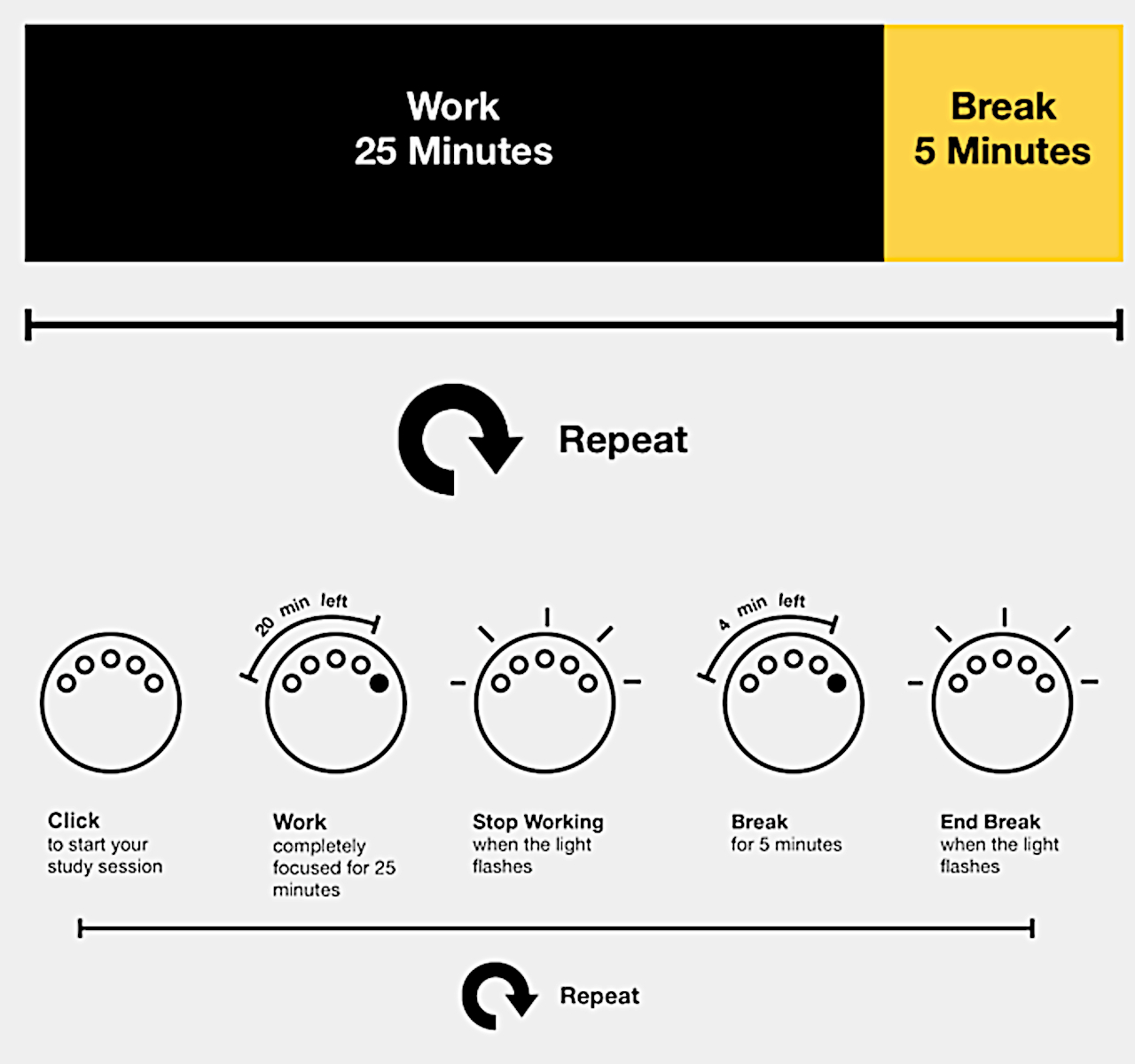
The Pomodoro technique is extremely simple and takes advantage of the fact that the human brain can only concentrate on a single thing for a short period of time. In theory, you do that single thing for 25 minutes and then take a break for 5 minutes before repeating the process. Because it’s that simple, you really don’t need complicated tools other than a timer, whether it’s a mechanical kitchen timer or a smartphone app, both of which come with their pros and cons. That kitchen timer can look odd on your desk and a mobile app risks distracting you with other things on your device.

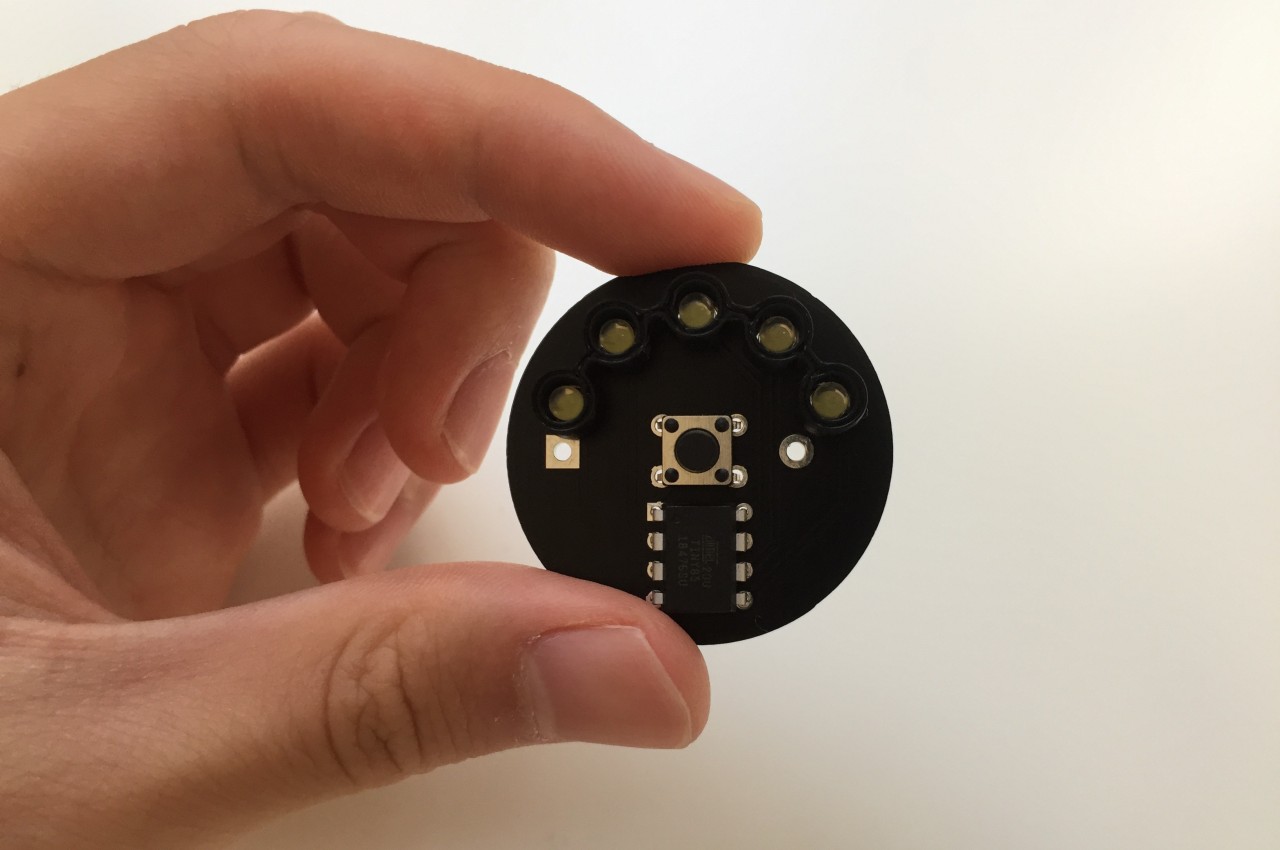
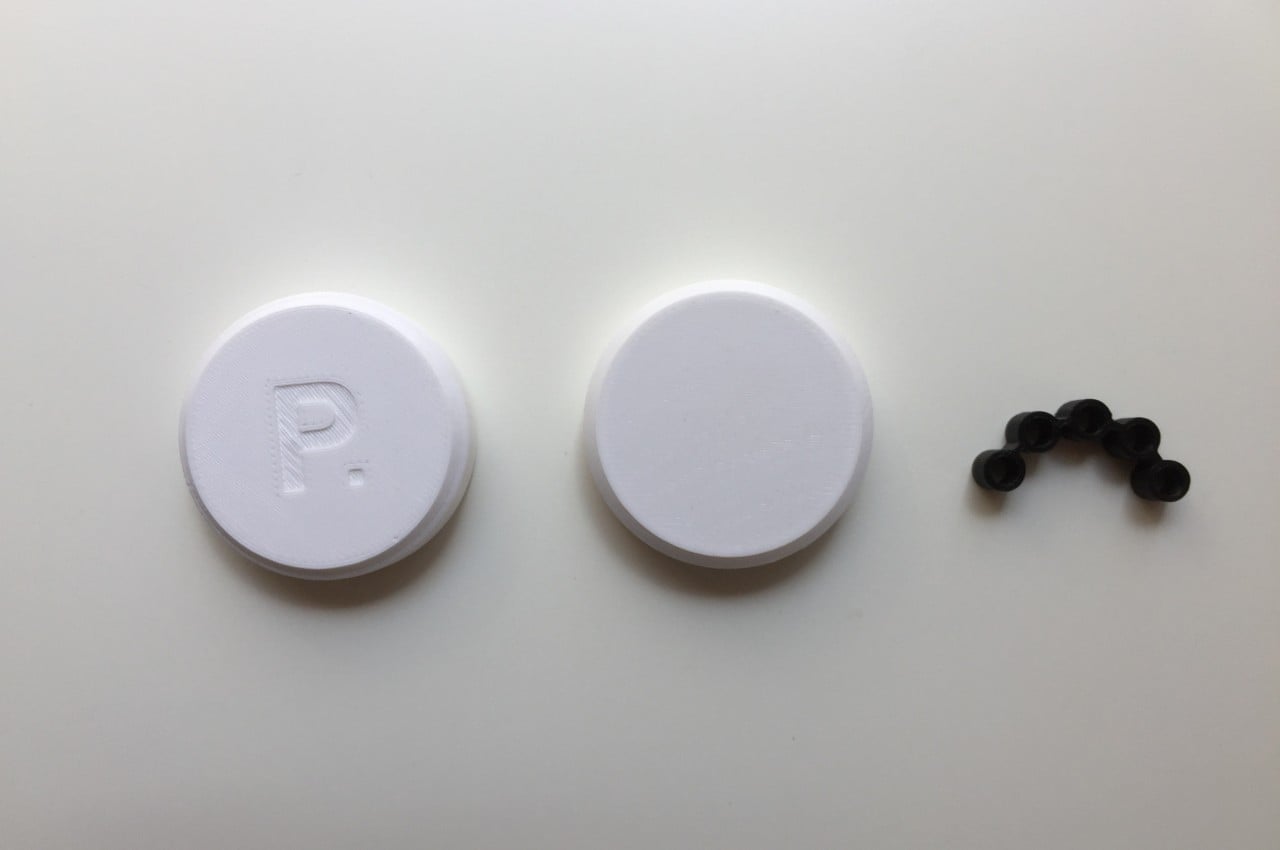
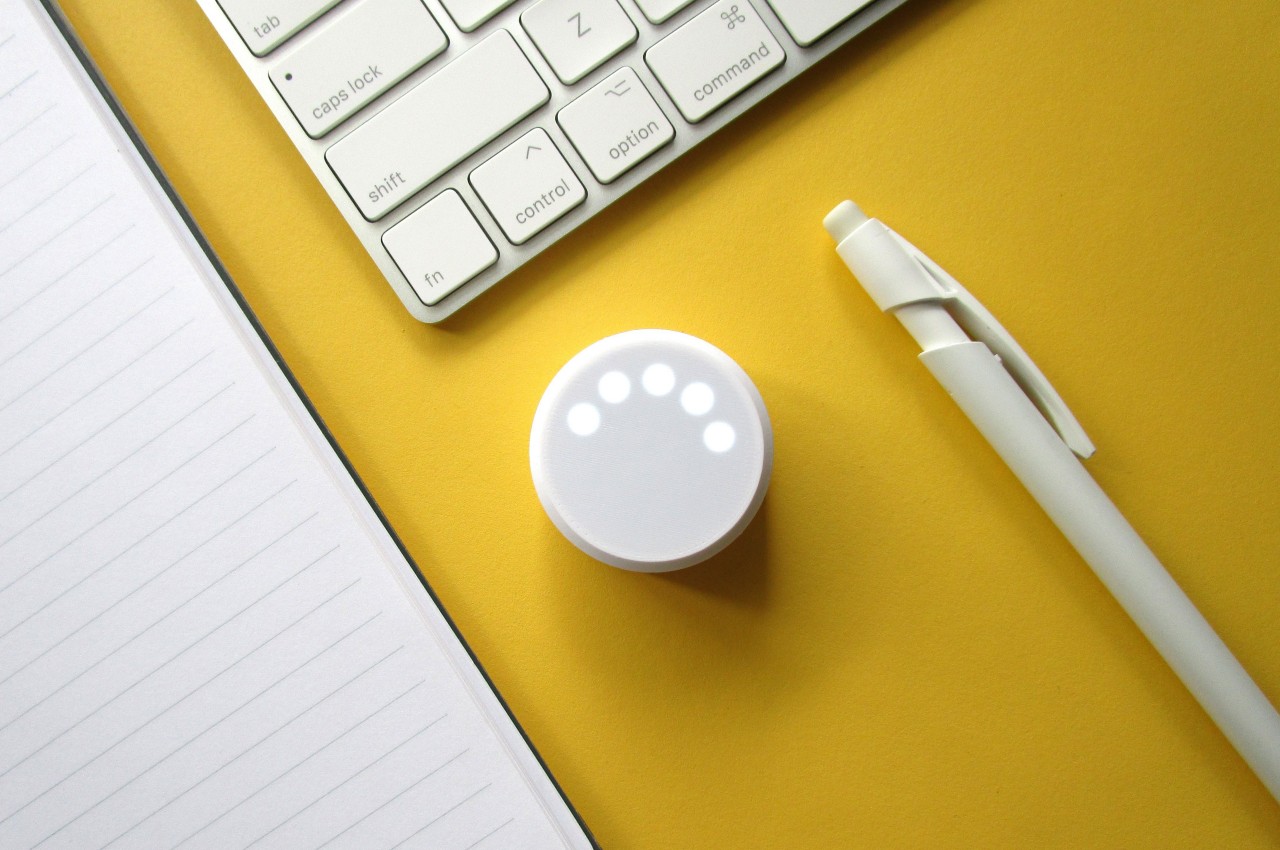
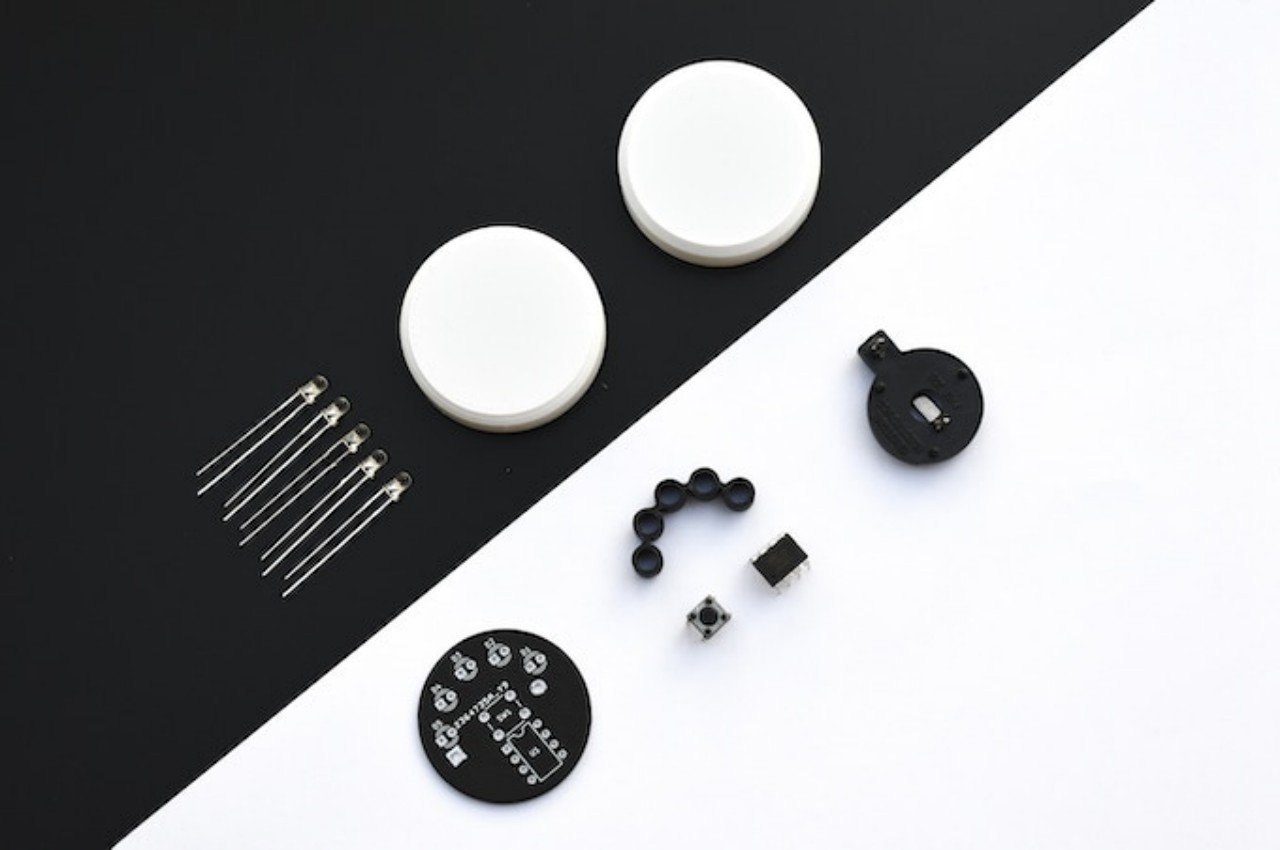
POD is a tool that combines the feeling of an analog timer with the convenience of an electronic device in a simple yet attractive form. It’s nothing more than a small white puck that has five very discreet dot lights on top arranged in an arc. There is no control other than pushing the puck down like a button, which is what starts the countdown.

1

1

Each dot of light represents either five or one minutes, depending on the mode. When you’re in “work” mode, the lights count down to 25 minutes in total, while “break” mode is the usual five-minute period of rest. The POD is also minimally distracting, using only flashing lights to get your attention rather than sounds or vibrations. This means you can easily use it in environments where you need to be very quiet, like in a library.

The POD also relies on trusty CR2032 batteries that you can easily replace, so you won’t have to worry about running out of juice for a long time. Its minimalist charm will make it look at home on any desk, table, or shelf, and doesn’t induce the same tension and stress the same way that a ticking kitchen timer would.

The post Minimalist Pomodoro timer promises distraction-free productivity first appeared on Yanko Design.
CBS and Paramount’s parent company reports hack affecting over 80,000 people

National Amusements, CBS and Paramount’s parent company, reported a year-old hack this month affecting 82,128 people. TechCrunch first covered the breach, revealed in a company legal filing with Maine’s Attorney General under a 2005 state digital privacy law. National Amusements hasn’t commented publicly on the intrusion outside of the legal filing, and it isn’t clear if customer (or “only” employee) data was stolen.

Maine’s data breach notification says the hack occurred over a year ago, from December 13 to 15, 2022. It states 82,128 people were affected, 64 of whom were Maine residents. National Amusements’ senior vice president of human resources filed the notice, which may suggest (but not confirm) that it revolved largely or entirely around internal employee data. The filing says the company began notifying customers in writing on December 22, 2023 — 372 days after the breach.

“On or about December 15, 2022, National Amusements became aware of suspicious activity in our computer network,” the notification letter to victims reads. “We immediately took steps to secure our network and minimize any disruption to our operations.”

However, that last sentence contains an inconsistency, as the notice posted by Maine’s Attorney General’s office lists the “date breach discovered” as August 23, 2023. That suggests the company didn’t know about the intrusion until eight months after the incident, hardly qualifying as “immediately” taking steps.

The filing says hackers accessed financial information, including “account number or credit/debit card number (in combination with security code, access code, password or PIN for the account).” National Amusements wrote in Maine’s notice that it’s offering victims 12 months of Experian credit monitoring and identity theft services to customers whose social security numbers were taken.

Engadget contacted National Amusements for confirmation or additional info. We will update this article if we hear back.

National Amusements gained a controlling stake in Paramount and CBS in 2019 following the Viacom-CBS merger. This hack appears separate from one Paramount disclosed in August through Massachusetts’ Attorney General’s Office. The company listed that breach’s date as “between May and June 2023.”

This article originally appeared on Engadget at https://www.engadget.com/cbs-and-paramounts-parent-company-reports-hack-affecting-over-80000-people-213459711.html?src=rss

The Sizes Of Popular Sci-Fi Spacecraft Compared To New York City

Created by Youtube channel MetaBallStudios, this is a 3D visualization of what various spacecraft from popular sci-fi franchises would look like as viewed by a person standing in Jersey City and facing lower Manhattan. I’ve stood right in that exact same spot before. Granted, there weren’t any spaceships hovering in the sky, but I was eating one of the best street hot dogs I’ve ever tasted.

You get a glimpse of the Star Wars X-Wing, E.T. Ship, D77H-TCI Pelican from Halo, Martian’s Spaceship (Mars! Attacks), Moon Rocket (Tintin), USSC Discovery One (2001: A Space Odyssey), Space Battleship Yamato, Mothership (Close Encounters of the Third Kind), USCSS Covenant (Alien Covenant), Battlestar Galactica, Destiny Ascension (Mass Effect), Avatar (EVE Online), City Destroyer (Independence Day), High Charity (Halo), and more.

Honestly, I expected the Borg Cube to be even more giant. I’m not sure exactly how big I imagined they were, but definitely larger than 3km square. I mean Death Stars were about 160km in diameter — they would dwarf Borg Cubes! Or at least they would if they didn’t keep getting blown up by the rebels.

[via TechEBlog]

Nintendo starts shutting down online play for Wii U and 3DS, months ahead of schedule

If you’ve been planning on spending the tail-end of your holiday break revisiting the original Splatoon for Wii U or Super Smash Bros. for Nintendo 3DS, you could be out of luck. It looks like Nintendo has already begun to restrict the Wii U and 3DS’s ability to play online, according to multiple users and media outlets like Nintendo Life. This started just before Christmas Eve, which is a real Bowser move.

We knew this was coming, but Nintendo originally said the shutdown wouldn’t happen until early April. This may not impact every player just yet, so head online with your console to give it a shot. Jonathan Barrow of Pretendo, an “open-source Nintendo Network replacement," wrote that this is part of a “slow rollout” of Nintendo’s April plans. Pretendo hopes to eventually bring the two consoles back online.

To be fair, Nintendo never actually said that the April end-date was set in stone, as the company suggested that it could discontinue online services “earlier than planned.” It could’ve warned folks, however, so they could get one last round of multiplayer Kid Icarus: Uprising in.

This news follows Nintendo closing its 3DS and Wii U eShops back in March. So, now, you can’t buy new games or go online with your old games. The company’s silly-yet-engaging Miiverse social network, which operated on both consoles, was shut down in 2017, though there’s a post archive.

This is sad, but it happens. Out with the old and in with the new, and all of that. Being a gamer is weird that way. Entire generations of games simply disappear, like Goomba tears in the rain. On the plus side, maybe we’ll be able to shell out full-price for some more remakes, with a Luigi’s Mansion: Dark Moon refresh coming to the Switch next year.

This article originally appeared on Engadget at https://www.engadget.com/nintendo-starts-shutting-down-online-play-for-wii-u-and-3ds-months-ahead-of-schedule-191720412.html?src=rss

Nintendo starts shutting down online play for Wii U and 3DS, months ahead of schedule

If you’ve been planning on spending the tail-end of your holiday break revisiting the original Splatoon for Wii U or Super Smash Bros. for Nintendo 3DS, you could be out of luck. It looks like Nintendo has already begun to restrict the Wii U and 3DS’s ability to play online, according to multiple users and media outlets like Nintendo Life. This started just before Christmas Eve, which is a real Bowser move.

We knew this was coming, but Nintendo originally said the shutdown wouldn’t happen until early April. This may not impact every player just yet, so head online with your console to give it a shot. Jonathan Barrow of Pretendo, an “open-source Nintendo Network replacement," wrote that this is part of a “slow rollout” of Nintendo’s April plans. Pretendo hopes to eventually bring the two consoles back online.

To be fair, Nintendo never actually said that the April end-date was set in stone, as the company suggested that it could discontinue online services “earlier than planned.” It could’ve warned folks, however, so they could get one last round of multiplayer Kid Icarus: Uprising in.

This news follows Nintendo closing its 3DS and Wii U eShops back in March. So, now, you can’t buy new games or go online with your old games. The company’s silly-yet-engaging Miiverse social network, which operated on both consoles, was shut down in 2017, though there’s a post archive.

This is sad, but it happens. Out with the old and in with the new, and all of that. Being a gamer is weird that way. Entire generations of games simply disappear, like Goomba tears in the rain. On the plus side, maybe we’ll be able to shell out full-price for some more remakes, with a Luigi’s Mansion: Dark Moon refresh coming to the Switch next year.

This article originally appeared on Engadget at https://www.engadget.com/nintendo-starts-shutting-down-online-play-for-wii-u-and-3ds-months-ahead-of-schedule-191720412.html?src=rss

Apple appeals ban on Watch Series 9 and Ultra 2

Apple has filed an appeal to the International Trade Commission (ITC) attempting to reverse a ban on US sales of the Apple Watch Series 9 and Ultra 2, according to court records. The company’s also requesting an emergency stay on the ban until a decision is reached regarding proposed redesigns of both smartwatch models.

The company spoke to Reuters and said it’s “taking all measures to return” the smartwatches to US store shelves. The appeal is just one part of that. The matter even went before President Biden, with Apple hoping in vain for a veto. The ban officially goes into effect today, though Apple started pulling smartwatches from its digital and physical storefronts last week.

In today’s filing, Apple claims it will “suffer irreparable harm” if the ban continues. The Exclusion Order Enforcement Branch of U.S. Customs and Border Protection is scheduled to make a decision on Apple’s redesigned versions of the smartwatches on January 13.

This all started when the ITC ruled that Apple infringed on blood oxygen saturation tracking technology patented by a health tech firm called Masimo. This led to Apple scrambling to issue a software fix before a ban went into effect. However, the ITC and Masimo agreed that this is a hardware issue involving the actual sensor, so software fixes wouldn’t cut it. As such, Apple is busy redesigning the sensors for the two smartwatch models. The Apple Watch SE doesn’t have a blood oxygen sensor, so it remains unimpacted by the ban.

Masimo sued Apple back in 2021 over the aforementioned patient violations and even alleged that the company poached employees with high-level knowledge of blood oxygen monitoring capabilities. It’s still possible the two companies will come to a financial agreement, putting this issue to bed.

So what does this mean for consumers looking for a bit of wrist candy? You can still buy the Apple Watch Series 9 and Ultra 2 in other parts of the world, as the ban only impacts the US. You can also buy the watches from third-party retailers in the US until the stock dries up. You cannot, however, purchase one of these smartwatches directly from Apple.

Apple Watch sales account for around half of the entire smartwatch market. So when the company says the ban will cause “irreparable harm”, it isn’t kidding.

This article originally appeared on Engadget at https://www.engadget.com/apple-appeals-ban-on-watch-series-9-and-ultra-2-174046101.html?src=rss

Apple appeals ban on Watch Series 9 and Ultra 2

Apple has filed an appeal to the International Trade Commission (ITC) attempting to reverse a ban on US sales of the Apple Watch Series 9 and Ultra 2, according to court records. The company’s also requesting an emergency stay on the ban until a decision is reached regarding proposed redesigns of both smartwatch models.

A day after this story was initially published, the appeals court consented to a short-term stay on the ban. The court has given the ITC until January 10 to respond to Apple's motion for a longer-term pause during the appeals process. 

Apple spoke to Reuters and said it’s “taking all measures to return” the smartwatches to US store shelves. The appeal is just one part of that. The matter even went before President Biden, with Apple hoping in vain for a veto. The ban officially goes into effect today, though Apple started pulling smartwatches from its digital and physical storefronts last week.

In today’s filing, Apple claims it will “suffer irreparable harm” if the ban continues. The Exclusion Order Enforcement Branch of U.S. Customs and Border Protection is scheduled to make a decision on Apple’s redesigned versions of the smartwatches on January 13.

This all started when the ITC ruled that Apple infringed on blood oxygen saturation tracking technology patented by a health tech firm called Masimo. This led to Apple scrambling to issue a software fix before a ban went into effect. However, the ITC and Masimo agreed that this is a hardware issue involving the actual sensor, so software fixes wouldn’t cut it. As such, Apple is busy redesigning the sensors for the two smartwatch models. The Apple Watch SE doesn’t have a blood oxygen sensor, so it remains unimpacted by the ban.

Masimo sued Apple back in 2021 over the aforementioned patient violations and even alleged that the company poached employees with high-level knowledge of blood oxygen monitoring capabilities. It’s still possible the two companies will come to a financial agreement, putting this issue to bed.

So what does this mean for consumers looking for a bit of wrist candy? You can still buy the Apple Watch Series 9 and Ultra 2 in other parts of the world, as the ban only impacts the US. You can also buy the watches from third-party retailers in the US until the stock dries up. You cannot, however, purchase one of these smartwatches directly from Apple.

Apple Watch sales account for around half of the entire smartwatch market. So when the company says the ban will cause “irreparable harm”, it isn’t kidding. 

Update, December 27 2023, 12:15PM ET: This story has been updated to include the appeals court decision to temporarily halt the ban. 

This article originally appeared on Engadget at https://www.engadget.com/apple-appeals-ban-on-watch-series-9-and-ultra-2-174046101.html?src=rss

Microsoft’s Copilot AI assistant arrives on Android

Microsoft’s Copilot tool, the company’s AI chatbot that can do everything from help you write code to draft a marketing email, has made its way onto Android mobile devices. Copilot, which is powered by OpenAI's latest models GPT-4 and DALL-E 3, can also be used to generate images from simple text descriptions and requests. The app is available on the Google Play Store, is free to download and does not require a Microsoft account to sign in.

The rollout of a mobile version of Microsoft’s Copilot (formerly Bing Chat) was quiet — with little buzz and no formal announcements, unlike what we saw with the release of Bing Chat on mobile devices. The new Copilot app was released earlier this month and was initially spotted by Neowin when X users noticed it in the Play Store. Copilot is still not available on iOS though, and the company has yet to make any promises for a release date.

It only makes sense that Copilot has made its way to mobile devices (or at least on Android to start). Microsoft’s previous move to bring Copilot to Windows 10, after launching on Edge, Microsoft 365 products and Windows 11 — added an additional 1 billion devices that are eligible to use the AI assistant, signaling Microsoft’s deadset view on expansion. This coincides with the company’s recent updates to Copilot which include its video summarization capability and song creation feature.

This article originally appeared on Engadget at https://www.engadget.com/microsofts-copilot-ai-assistant-arrives-on-android-170729243.html?src=rss

Microsoft’s Copilot AI assistant arrives on Android

Microsoft’s Copilot tool, the company’s AI chatbot that can do everything from help you write code to draft a marketing email, has made its way onto Android mobile devices. Copilot, which is powered by OpenAI's latest models GPT-4 and DALL-E 3, can also be used to generate images from simple text descriptions and requests. The app is available on the Google Play Store, is free to download and does not require a Microsoft account to sign in.

The rollout of a mobile version of Microsoft’s Copilot (formerly Bing Chat) was quiet — with little buzz and no formal announcements, unlike what we saw with the release of Bing Chat on mobile devices. The new Copilot app was released earlier this month and was initially spotted by Neowin when X users noticed it in the Play Store. Copilot is still not available on iOS though, and the company has yet to make any promises for a release date.

It only makes sense that Copilot has made its way to mobile devices (or at least on Android to start). Microsoft’s previous move to bring Copilot to Windows 10, after launching on Edge, Microsoft 365 products and Windows 11 — added an additional 1 billion devices that are eligible to use the AI assistant, signaling Microsoft’s deadset view on expansion. This coincides with the company’s recent updates to Copilot which include its video summarization capability and song creation feature.

This article originally appeared on Engadget at https://www.engadget.com/microsofts-copilot-ai-assistant-arrives-on-android-170729243.html?src=rss