Gas, charcoal and pellet grills are great for taking your cooking outdoors, but a lot of people live in apartments and other spots where open flames aren't permitted. At CES 2024, Current Backyard debuted two all-electric grills that can be used in those places since the heating element for both isn't much different than an oven or stove. And because grilling has entered the modern age, both of these are Bluetooth and Wi-Fi connected, so you can monitor progress and adjust temperatures from your favorite comfy chair.
Current is a startup backed by W. C. Bradley Co., the parent company of established grilling brands like Char-Broil, Oklahoma Joe's and Pit Boss. As such, the electric grilling entity has the support of an organization with decades of backyard expertise. The first two grills from Current, both called Model G, have similar designs which can be customized with extra storage, either at the time of purchase or at any time afterwards. Even though they look nearly identical except for the front-mounted display, they're designed for two different types of cooking.
"There have been electric grills for a long time [and] they don't have the performance," Current Backyard CEO Tom Penner explained. "This is an infrared cooking system that uses both technology to control the electricity and to adjust the system to understand the cooking environment."
The Model G Dual-Zone Electric Grill has a cooking surface that's divided in half, allowing you to set two different temperatures if needed. Current says this is the only full-sized 110-volt electric grill on the market that can hit a max temp of 700 degrees Fahrenheit. Due to the grate design, the company is promising fewer flare-ups than gas grills, which is also partially because there's no open flame. It also explained that you shouldn't need to dump the grease tray too often as much of that burns off during cooking, thanks to the infrared burners. And when there is too much buildup, a SmartClean mode can be activated either on the grill or inside the company's app.
To cater to the flat-top trend, the Model G Electric Griddle can hit 600 degrees. In fact, Current says it heats faster and hotter than any other electric griddle in this category. The Model G is larger than the competition, too. An Auto-Seasoning feature helps you keep the cooking area ready for foods and the grill's cooking system keeps temperatures consistent.
"It's a smart grill that we have dialed in the software and the algorithms to run the griddle separately, to keep that even temperature across the surface," Penner said. "And regardless of if you open or shut your lid, it's adjusting all the time."
Similar to most connected grills these days, both of the Model G units work with Current's mobile app. Here, there are guided recipes to assist novices or to serve as inspiration for experienced outdoor cooks. The app will also display time, ambient temp and food temperatures, with the latter coming from two wired probes that ship with the grills. SmartClean and Auto-Seasoning modes can be triggered from the software and you can shut the grills down without having to venture outside. For safety reasons though, you still have to start both Model G options by setting the temp and pressing a button.
Both the Model G Dual-Zone Electric Grill and Model G Electric Griddle are available for preorder now and will begin shipping on February 5. The grill starts at $899 and the griddle at $799, with those prices including the standard cart. You can upgrade to a storage cabinet for $100 more. The company says both models will be available in major retailers as well, so you'll likely be able to see one in person before committing.
We're reporting live from CES 2024 in Las Vegas from January 6-12. Keep up with all the latest news from the show here.
This article originally appeared on Engadget at https://www.engadget.com/current-backyards-electric-smart-grills-bring-outdoor-cooking-to-more-places-215539452.html?src=rss
Hello and happy new year! Once again, team Engadget has set up shop in Las Vegas for CES, living out of suitcases so that we can scour the massive show floor and occasionally injure ourselves in the process. For CES 2024, we expected to see AI everywhere, and we were not disappointed.
Notably, too, there was a lot less pee on the show floor this year. (But we did find some.)
Today is our team's last day on the ground, which means it's also time for us to announce our annual Best of CES award winners. You may notice an obvious difference this year, which is that we've gotten rid of categories. From our point of view, we still attempted to see as broad a range of products as possible: laptops, mobile devices, gaming gear, smart home stuff, cars and items meant for people with disabilities. When it came to choosing winners, though, we saved time not having to debate amongst ourselves whether something was a laptop or a gaming device, a wearable or an accessibility device. A good product is just a good product.
Without further ado, we present our winners for CES 2024. But don't mistake this for the last of our coverage: We have other stories, recaps and roundups in the pipeline for you to read over the coming days. Keep following along. — Dana Wollman, Editor-in-Chief
ASUS ROG Zephyrus G14
Engadget
Not only is the ASUS ROG Zephyrus G14 powerful enough to run the latest blockbuster video games, but it's also incredibly sleek. The ROG Zephyrus G14 has an aluminum chassis with clean lines, crisp edges and a thinner, lighter design than previous models. A simple LED slash runs across the lid and can be programmed to glow in gray or white, rather than the garish rainbow favored by other gaming laptops. The ROG Zephyrus G14 looks sophisticated, and it can also run any title on the market, thanks to its AMD Ryzen 8000 series processors and optional NVIDIA RTX 4070 GPU at the high end. Top-of-the-line specs and a minimalist design make the latest ASUS line stand out in a sea of other game-focused devices at CES. This is what gaming laptops look like when they're all grown up. — Jessica Conditt, senior reporter
Samsung Music Frame
Samsung
Samsung's line of Frame TVs, first introduced back in 2017, do a great job of disguising a large-screen TV as a piece of art. The Samsung Music Frame does the same thing, but for wireless speakers. Instead of a screen, there's a place to display art or album covers that you swap pretty easily.
This wouldn't be noteworthy if the Music Frame didn't sound good — but in our demo, it did. The Music Frame includes two woofers, two tweeters and two mid-range drivers and supports Dolby Atmos. It's also quite the flexible speaker, working on its own, in a stereo pair or connected to a TV as part of a bigger home theater setup. It's even wall-mountable. We have no price or release date, but given Samsung's success with the Frame TVs, we imagine they won't wait long to get the Music Frame on the market. — Nathan Ingraham, deputy editor
LG Signature OLED T
LG
OLED TVs are great. An OLED TV you can see through — well, that’s just wild. The LG Signature OLED T isn’t the first transparent display we’ve seen at CES, but it is the first that will actually be sold to consumers (unlike Samsung’s similar transparent MicroLED concept).
This is a 77-inch set with an retractable contrast screen. Keep the filter up, and it looks like one of LGs standard, excellent OLED sets. Bring it down, and the image almost looks like it’s floating in mid-air. Like Samsung’s Frame TVs, the Signature OLED T is designed for ambience — when you’re not watching a show or movie, it can display little animations (a digital fish tank, for instance). To help it feel less obtrusive, the TV also uses LG’s wireless Zero Connect tech, which relegates most of the set’s I/O (and thus cables) to a separate box that can be tucked away elsewhere.
The TV does lack the microlens array tech found in LG’s absolute best OLED TVs and LG isn’t sure if it will come with the furniture you see in the image above. The company says it will ship sometime in 2024, though there’s no firm release date yet. But whenever it does arrive, it will almost certainly be prohibitively expensive for most people. — Jeff Dunn, senior commerce writer
TCL NXTPAPER 14 Pro
TCL
With its third-generation NXTPAPER display, TCL’s latest 14-inch tablet combines the best things about LCD displays and e-readers. You get a sharp 2.8K-resolution panel with bright colors plus a special nano-coating that not only reduces glare, but also cuts down excess blue light while providing a lovely matte texture. And for those who prefer a more traditional newspaper-like reading experience, there’s a monochrome mode that makes the NXTPAPER 14 Pro look like it has an e-ink screen. So while its specs aren’t all that impressive (MediaTek Dimensity 8020, 12GB of RAM and 256GB of storage), TCL’s new tablet is one of those rare gadgets that appeals to both hardcore tech nerds and traditionalists that still remember a time before everything went digital. — Sam Rutherford, senior reporter
ASUS ZenBook Duo
Engadget
ASUS has been chasing the dream of dual-screen notebooks for a while, but this year's ZenBook Duo appears to be its best attempt yet. It consists of two separate components: a dual-screen display unit and a detachable Bluetooth keyboard. You can use the ZenBook Duo in a typical clamshell mode, with the keyboard in front of one of its displays. But when you have more room, you can open up the display to have two screens sitting on top of each other (balanced on a built-in kickstand).
The ZenBook Duo also feels incredibly polished, and it has high-end hardware like Intel's Core Ultra chips and gorgeous OLED screens. It also starts at a reasonable $1,500, making it a dual-screen laptop for the masses. — Devindra Hardawar, senior reporter
Withings BeamO
Withings
There’s never a shortage of health and fitness tech at CES. This year Withings stood out with its $250 BeamO “multiscope.” It combines a body temperature sensor, an electrocardiogram, an oximeter and a digital stethoscope into one surprisingly light consumer device that promises to make it easier to collect basic health metrics at home. The company's Health Mate app collects all of that data, which can then be sent to doctors with a few taps. Withings is also seeking FDA approvals for the BeamO to be able to detect atrial fibrillation.
BeamO impressed us not only with its versatility and fairly affordable price, but also for the potential impact it could have on telemedicine. Providing your doctor with key metrics ahead of a call or visit could make it easier for them to give you sound medical advice. And those with chronic conditions could use BeamO to keep track of health data over the long term. — Valentina Palladino, senior commerce editor
EcoFlow Delta Ultra
EcoFlow
A whole-home battery and inverter system is far from the funkiest bit of hardware we saw at CES, but it’s likely one of the more useful. The EcoFlow DELTA Pro Ultra can take in and store power from your rooftop solar panels then use the stored energy to power your home. The DELTA Pro Ultra can even suck up juice from the grid when it's cheaper, and feed it back when energy prices surge.
A base configuration goes for $5,800 and includes one 6kWh battery and inverter, but you can stack up to five batteries per inverter and chain up to three inverter-and-battery stacks, amounting to a 90kWh capacity. That’s a beastly amount of power that could keep a McMansion humming at full tilt for a few days — or run essential appliances in a more moderately sized home for a month or longer.
The DELTA Pro Ultra can also hook into an existing transfer switch if you have one, but for deeper integration with your home’s power system, the subpanel-like Smart Home Panel 2 gives you features like app control, weather and power grid monitoring, and instant switchover to backup when the power goes out. As more solar panels are installed on rooftops, a sleek and powerful all-in-one battery solution like this can give people more control over how their power is used. If you’re intrigued, you don’t have to wait — it’s one of many CES 2024 gadgets already on the market. — Amy Skorheim, commerce writer
GE Profile Smart Indoor Smoker
GE
When it comes to smoking meat at home, your options are usually limited to outdoor grills that burn charcoal, pellets or wood. If you live at a place where your landlord doesn't allow open flames, like apartments, then you're pretty much out of luck. The GE Profile Smoker ditches the flames for electric heating elements and brings low-and-slow smoking indoors.
The GE Profile Smart Indoor Smoker is no gimmick either. It’s capable of infusing significant smoke flavor via wood pellets as we experienced first hand this week. There won't be any smoke wafting around your kitchen as the unit captures all of that with its filtration system. If you need to cook while you're away, a unique feature does that and then holds your food at a safe temperature until you're ready to serve. Toss in Wi-Fi for remote cooking and monitoring, cooking profiles and guidance, plus the Clear Smoke tool for when you need to open the door, and the GE Profile Smart Indoor Smoker has a lot to offer a range of skill levels. — Billy Steele, senior reporter
Sennheiser Momentum True Wireless 4
Sennheiser
Sennheiser's Momentum True Wireless series has consistently earned the accolade of the best-sounding earbuds in our best of list for a while now. However, the company never really had the complete package to knock Sony's 1000X series off the top spot. At CES this year, Sennheiser debuted the fourth-gen version of its flagship earbuds, which bring a host of upgrades. They still sound excellent, ANC and transparency mode are also improved.
The Momentum True Wireless 4 did a great job blocking out the noisy Las Vegas suite, allowing us to focus on the selection of jazz we used to demo the earbuds. Transparency mode also sounded more natural, which will be a big help for calls and tuning into your surroundings. What's more, Sennheiser figured out a way for active noise cancellation to not drain the battery nearly as much as it typically does; the ANC here only cuts listening time by half an hour. — B.S.
Gyrogear GyroGlove
Engadget
The number of accessibility and aging-related products that were good enough for us to consider for awards at CES 2024 was encouragingly high. We saw a tongue-operated touchpad, a hearing aid-like system that can isolate individual speakers in a noisy crowd and an audio display for gamers with hearing loss. But GyroGlove stood out for a few reasons.
The device uses a sophisticated gyroscope to help those with hand tremors (say, Parkinson's patients) stabilize their movement, but one of the deciding factors in picking it as a winner is the fact that it's actually available. The company said it's already in talks with the chief medical officers of several insurance providers in the US, and has registered the GyroGlove as a medical device with the FDA and Australia's Therapeutic Goods Administration. It's certified by various international standards organizations, to boot. — Cherlynn Low, deputy editor
Kia Platform Beyond Vehicles (PBV)
KIA
Kia’s PBV, or Platform Beyond Vehicles, concept is the rare car concept (or concepts, plural) that seems like it might actually be a real thing in the relatively near future. The PV5 is likely to be the first to make the leap. It’s a small modular van that can be equipped with a taller roof for extra headroom, or turned into a pickup by swapping out the back two-thirds. It can also be turned into a taxi with extra seating for passengers.
One of the more interesting things is how the members of the PBV family, including the larger PV7 and the smaller PV1 are expected to work together. For instance, Kia imagines a rail system that can connect a PV7 directly to a PV1, transferring cargo to the smaller vehicle for last mile deliveries.
Most importantly, PBV isn’t some fantastical dream vehicle that will never be heard from again: Kia is already building a dedicated factory in Korea that’s expected to be ready to pump out 150,000 vehicles in 2025. — Terrence O’Brien, managing editor
Samsung Ballie
Samsung
CES was a little light on notable robots this year, but Samsung revived one we loved when we first saw it way back in 2020. Ballie is an adorable, bowling ball-sized robot that rolls around your home, following you around like a robotic pet that's eager to please. Ballie is a lot bigger than it was when we saw it in 2020, and it now has a built-in 1080p projector so it can both show you things and speak to you when you ask it for help. Think of it like a Nest Hub on wheels.
We only got to see Ballie in a tightly-plotted demo at Samsung's booth, but it was simply delightful to watch Ballie roll around projecting workout routines, calendar updates and recipe videos on the walls. As with most smart home gadgets, there's a little bit of "solution searching for a problem" here. But it feels like Samsung nailed the form factor judging by how smoothly Ballie navigated its way around the demo area. And while many companies show off products like this that have no chance of actually reaching people in the real world, Samsung says Ballie will go on sale this year. — N.I.
Micron LPCAMM2 laptop RAM modules
Micron
If you've ever been annoyed that you couldn't upgrade your RAM in an ultraportable laptop, Micron has a potential solution: LPCAMM2 memory. It's a new form factor that's 64 percent smaller than standard SODIMM RAM sticks, and it's also potentially far faster and more efficient. Best of all is that it's a self-contained unit that can easily be removed and upgraded down the line.
LPCAMM2 RAM won't get as much hype as AI PCs, but it's something that could transform what's possible with future laptop designs. And if it means laptop makers stop soldering RAM directly onto motherboards, we'll call it a win. — D.H.
Best in show: GE Profile Smart Indoor Smoker
GE
CES 2024 is often described as a TV show or car show, but sometimes it’s more niche products that capture our imagination. GE Profile’s Smart Indoor Smoker is a countertop device that makes proper barbecue in your kitchen without filling your home with smoke. It’s designed to move air around the food to impart maximum smokiness inside, without letting airflow out. When your brisket, chicken or whatever is done, a filtration and catalyst system draws the smoke down, eventually expelling it as warm air.
Typically smoking food requires constant adjustments and vigilance, but the Smart Indoor Smoker has six preset cooking modes, while you’re able to adjust the degree of smokiness between five different levels. The wood pellets’ only function is to add flavor and not fuel the actual cooking process, so only a handful are needed per smoke session.
GE included a smart probe with the Smart Indoor Smoker too, so you can monitor the cooking process from a companion app and its Smoke and Hold feature can cook and smoke foods and keep them at food-safe temperatures for up to 24 hours. It’s not small (it's around the size of a mini fridge), but it’s stylish and simple to use, with a low barrier to entry for anyone tempted to try smoking their own foods. The device was also able to impart an impressive level of smokiness in only a few hours — we can’t wait to see what low-and-slow smoking could do. — Mat Smith, UK bureau chief
We're reporting live from CES 2024 in Las Vegas from January 6-12. Keep up with all the latest news from the show here.
This article originally appeared on Engadget at https://www.engadget.com/the-best-of-ces-2024-220054009.html?src=rss
If you thought Big Tech’s dreadful year of layoffs would be confined to 2023, you’re (sadly) mistaken. Audible laid off around five percent of its employees on Thursday, which Varietyreports is “just over 100 staffers.” The cuts in the audiobook division are part of parent company Amazon’s most recent round of layoffs, also affecting Prime Video, MGM, and Twitch.
“We did not take this route without considerable thought,” Audible CEO Bob Carrigan reportedly said in an audio memo delivered to staff. “But getting leaner and more efficient is the way we will need to operate now — and in the foreseeable future — in order to continue delivering best-in-class audio storytelling to our customers around the world.”
For those keeping score, “leaner and more efficient” echoes the language in numerous recent Big Tech layoff announcements. Variations of “In these uncertain times...” have also been popular.
Carrigan ironically began by talking about Audible's strong performance last year. “I want to acknowledge the strong year we had in 2023, in which we delivered amazing listening experiences for our customers thanks to outstanding collaboration with creators and partners,” he reportedly said. “Our business is in good shape, and that is because of the hard work of each and every one of you.”
The CEO extolled how much the company values its workers. “A big part of what makes working at Audible so special is our many talented and dedicated employees who bring their passion to work each and every day. It’s also what makes it even harder to say goodbye to people we care about,” he said. “I recognize the impact this will have on those transitioning out of Audible as well as all of you who remain. Thanks to all who are leaving us for their valuable contributions.”
This article originally appeared on Engadget at https://www.engadget.com/audible-reportedly-lays-off-over-100-employees-220011915.html?src=rss
Years ago, some genius decided to build Las Vegas in the middle of a desert, so for me, any sight of unique humidifying tech at CES is a much welcomed sight. It just so happened that a Korean company showcased a device dubbed Moss Air which, as the name implies, uses real moss to purify air. It's also built with a humidifying feature that can shoot outwards or rehydrate the plant internally. In short, you're getting an air-purifying humidifier that doubles as a mesmerizing miniature foggy terrarium on your desktop.
According to Mosslab, the startup behind this device, not only does the moss convert carbon dioxide back into oxygen, but it's also effective at removing fine dust from the air. Better yet, the plant can apparently break harmful VOCs (volatile organic compounds) down into sugars as food. Strictly speaking, though, it's actually the bacteria in the moss that's responsible for this process, according to a research conducted by the University of Toronto.
Photo by Richard Lai / Engadget
The Moss Air consists of an LED-lit compartment under a removable transparent cover, which lets you easily install or replace the moss panel. At the top, you can block the exhaust port with the included magnetic ball to toggle terrarium mode, in which it fogs up the moss over 60-second periods every three hours. If you need to humidify your surroundings, simply slide the ball across to let it mist outwards.
With its 1,600mAh battery, the Moss Air can run for up to about eight hours on a single charge, or until it runs out of water in its 400ml tank — you can pull it out from the bottom to refill, or to replace the paper filter (three included). Of course, you can also use this device while its plugged in (via USB-C), but having a built-in battery means you get to carry your pet moss around.
Moss Air will be launching on Amazon by the end of January 2024, and you'll get to pick between black and white. This product is asking for $99 which seems a little steep for what it does, but at least there was a demand for it when it was priced at $79 on Kickstarter and Indiegogo earlier.
We're reporting live from CES 2024 in Las Vegas from January 6-12. Keep up with all the latest news from the show here.
This article originally appeared on Engadget at https://www.engadget.com/this-moss-terrarium-doubles-as-an-air-purifier-and-humidifier-214557108.html?src=rss
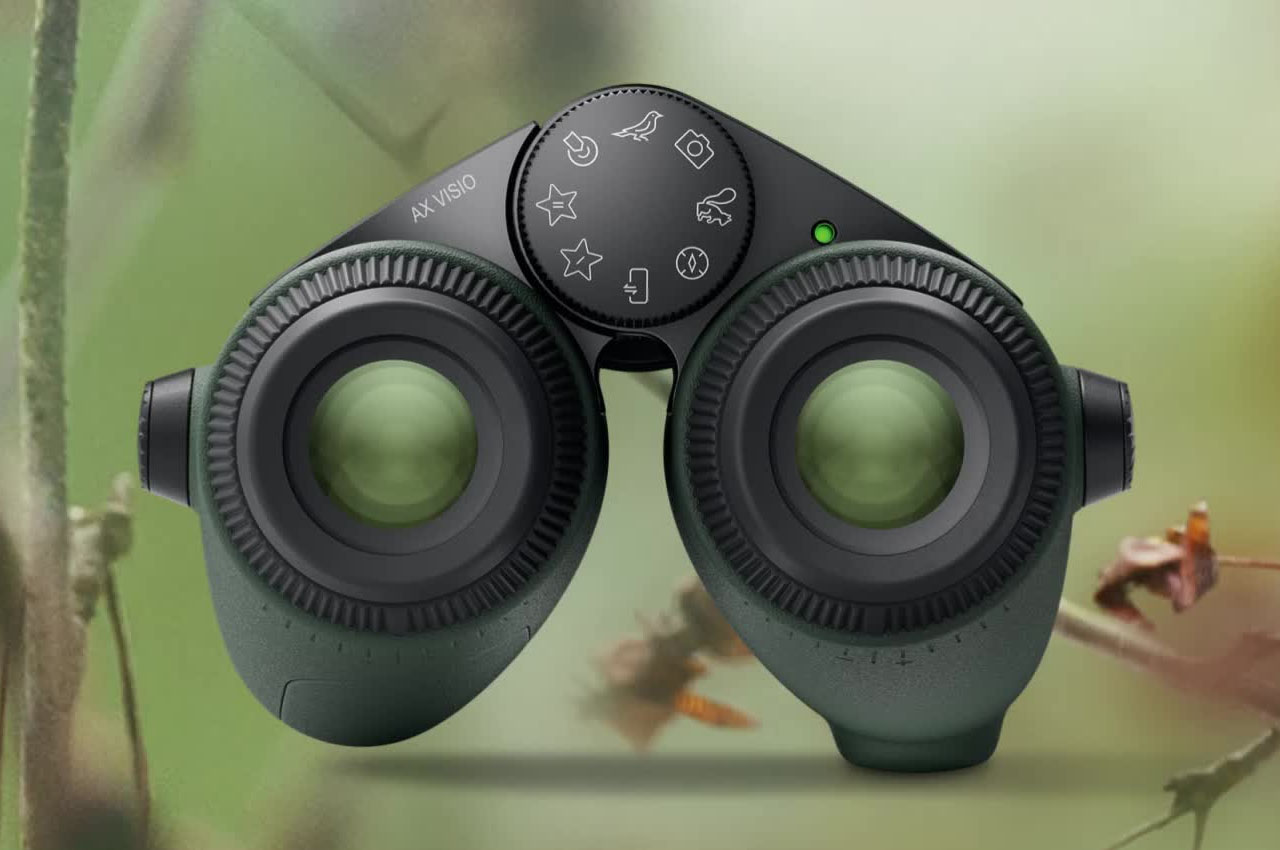
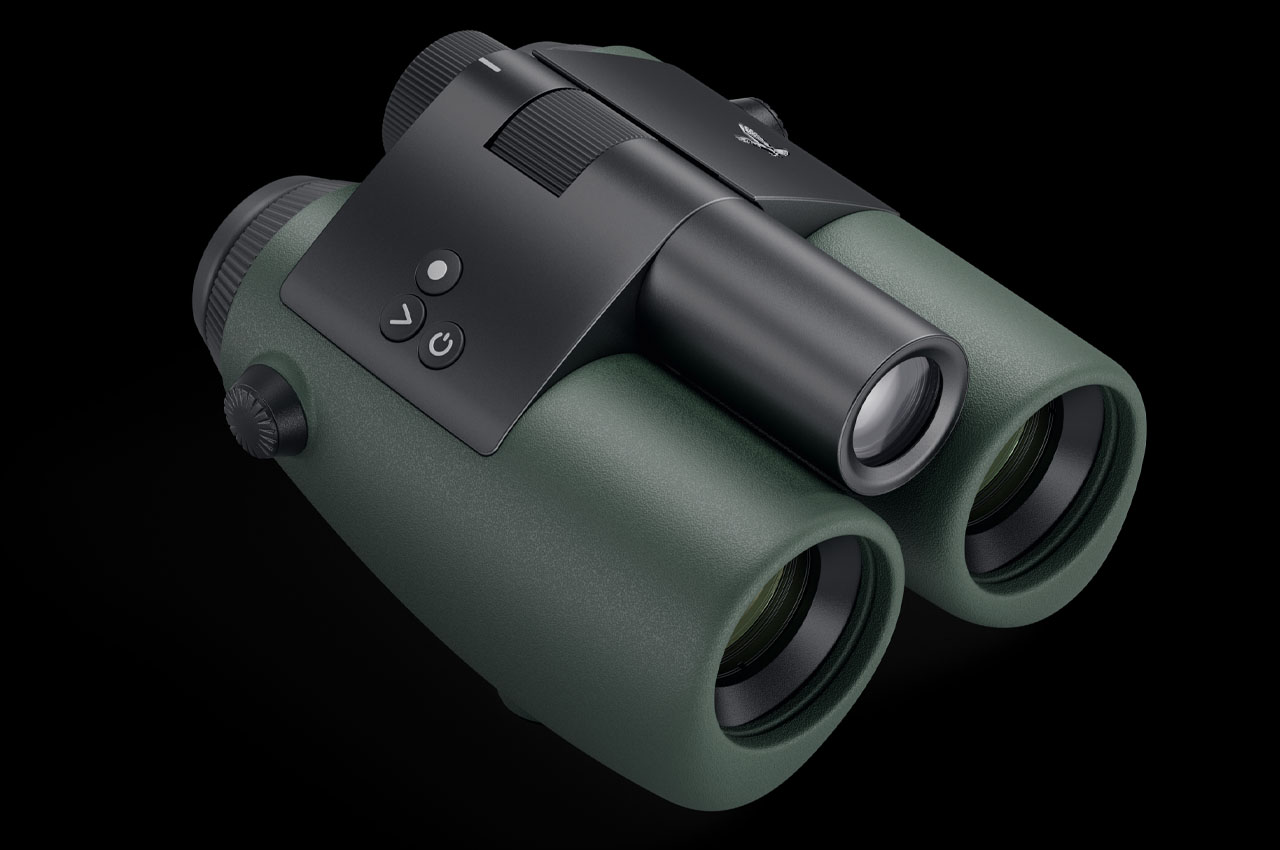
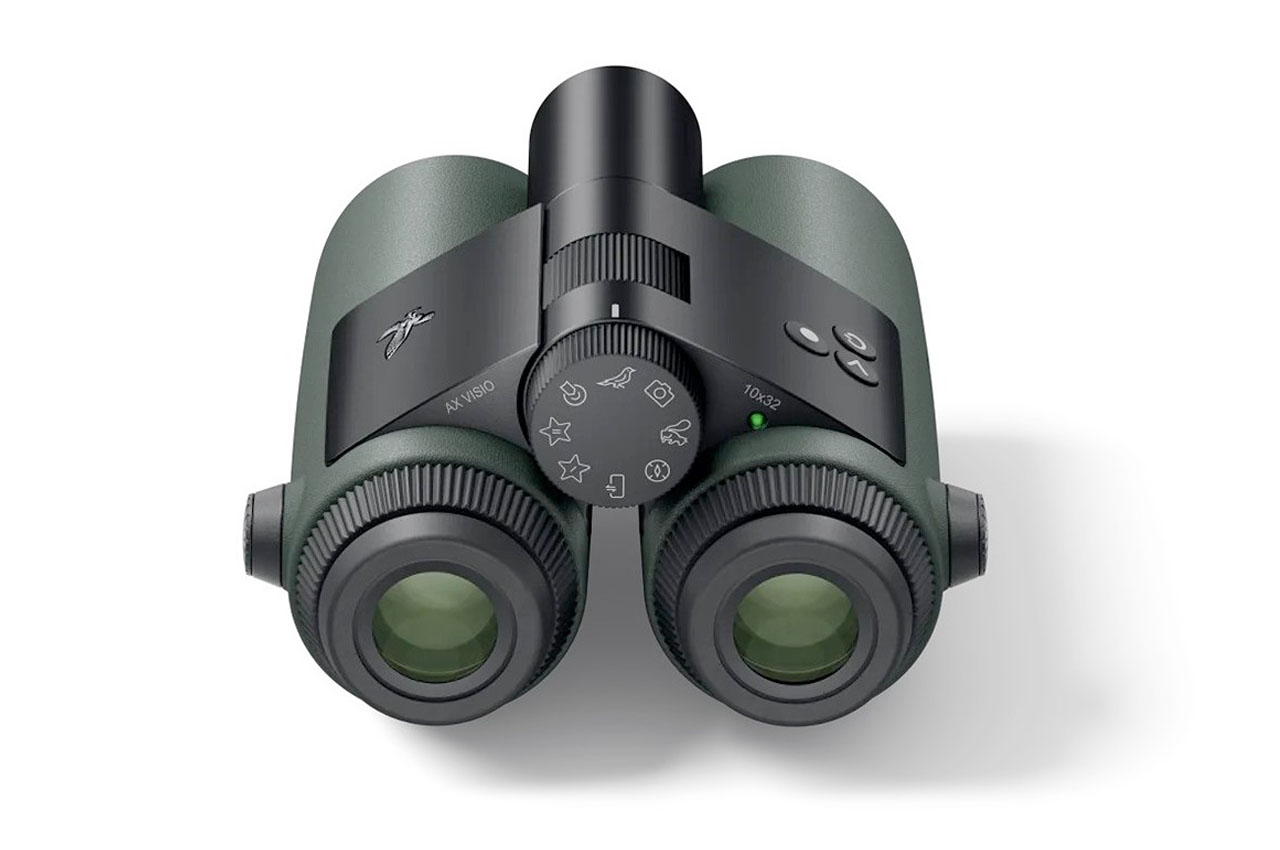
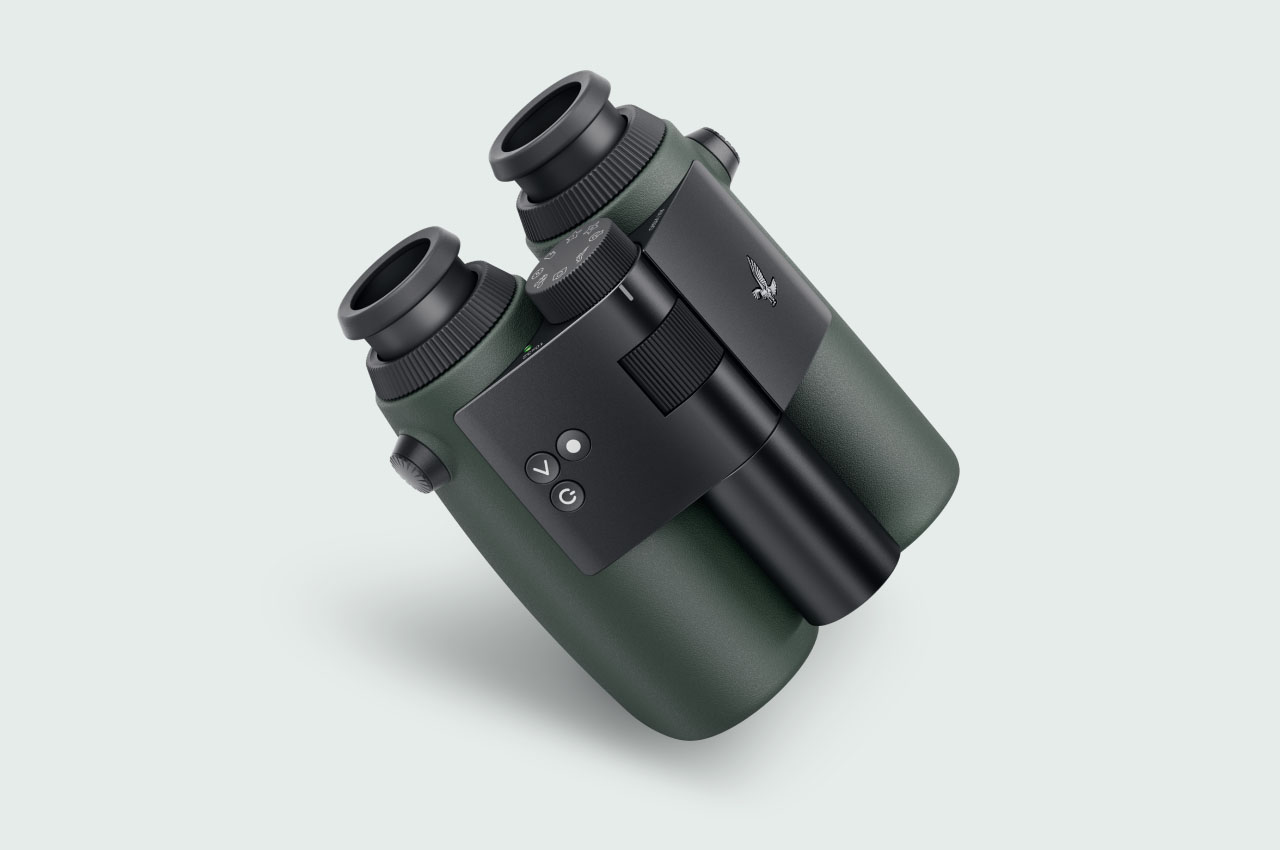
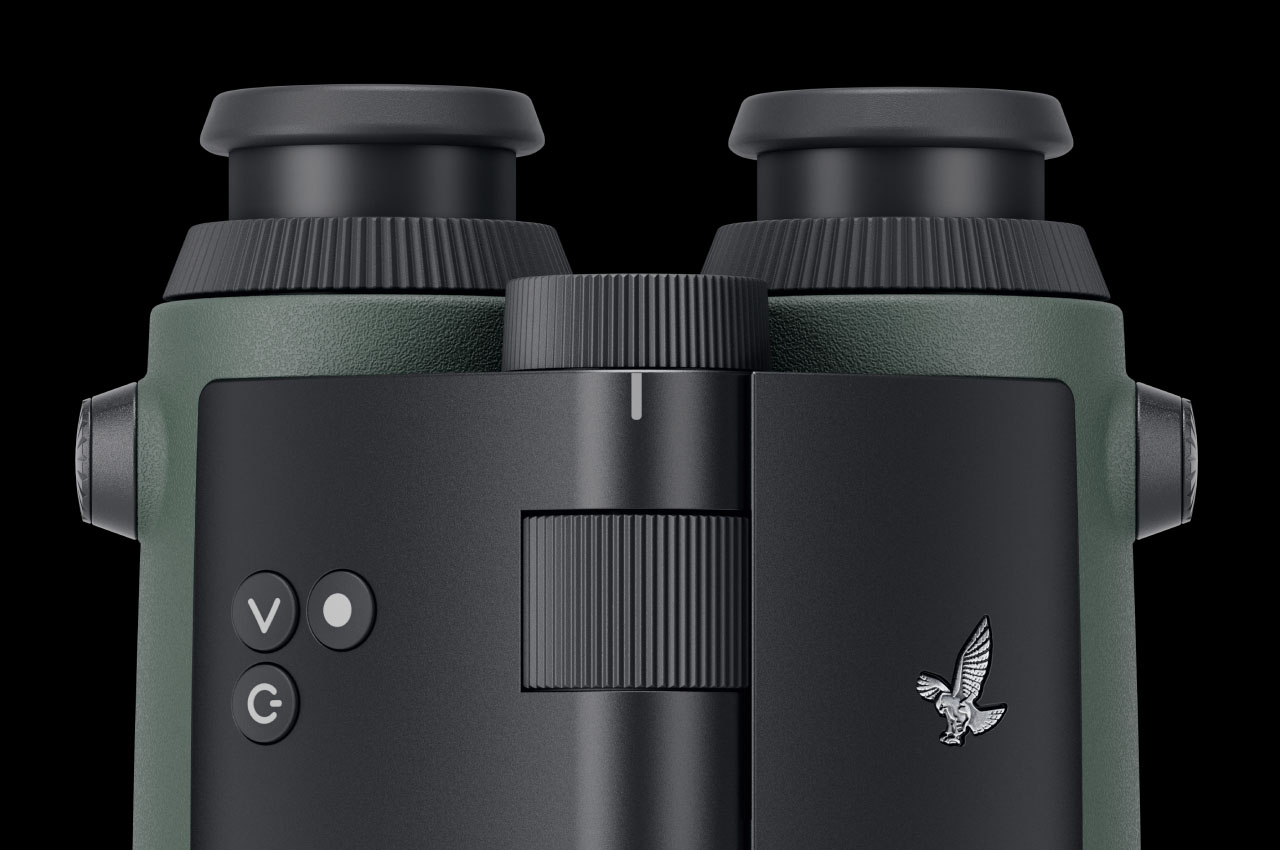
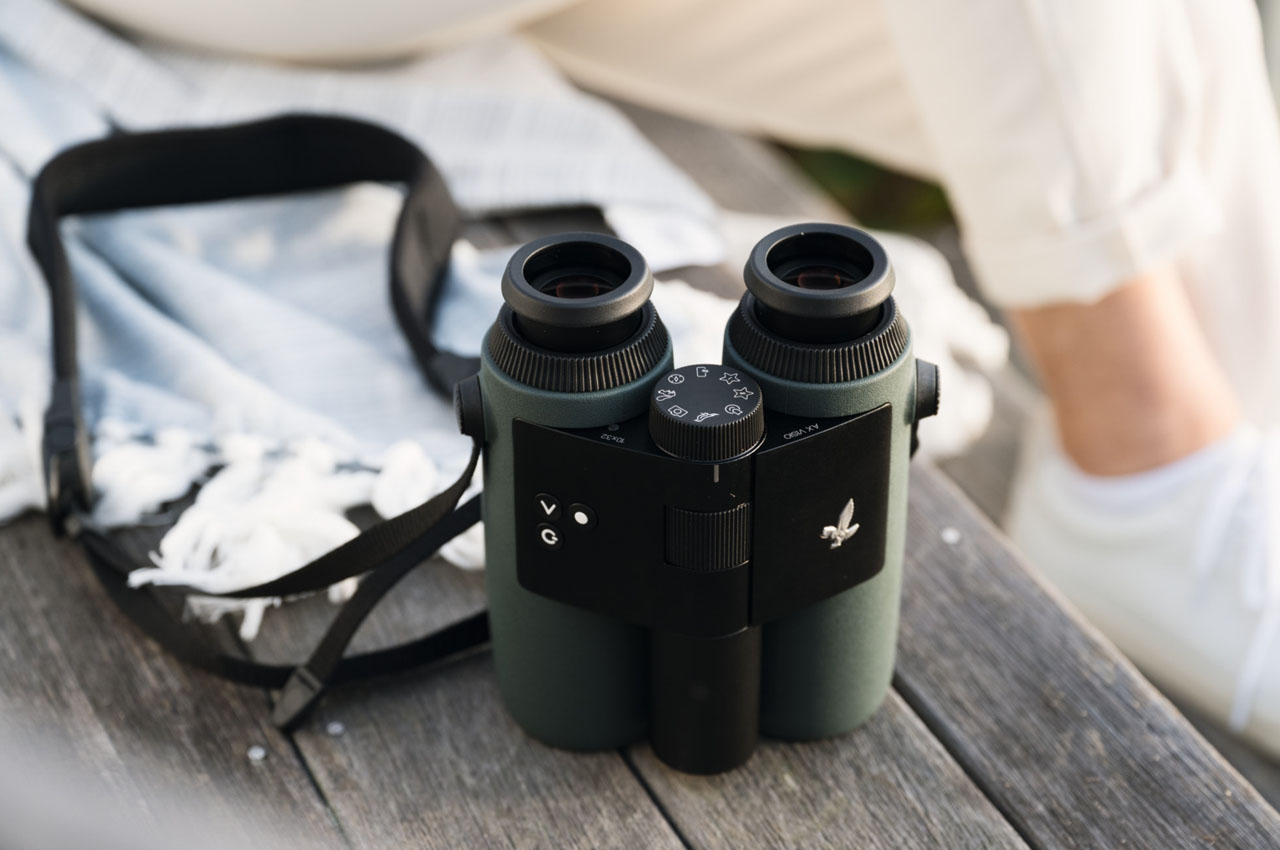
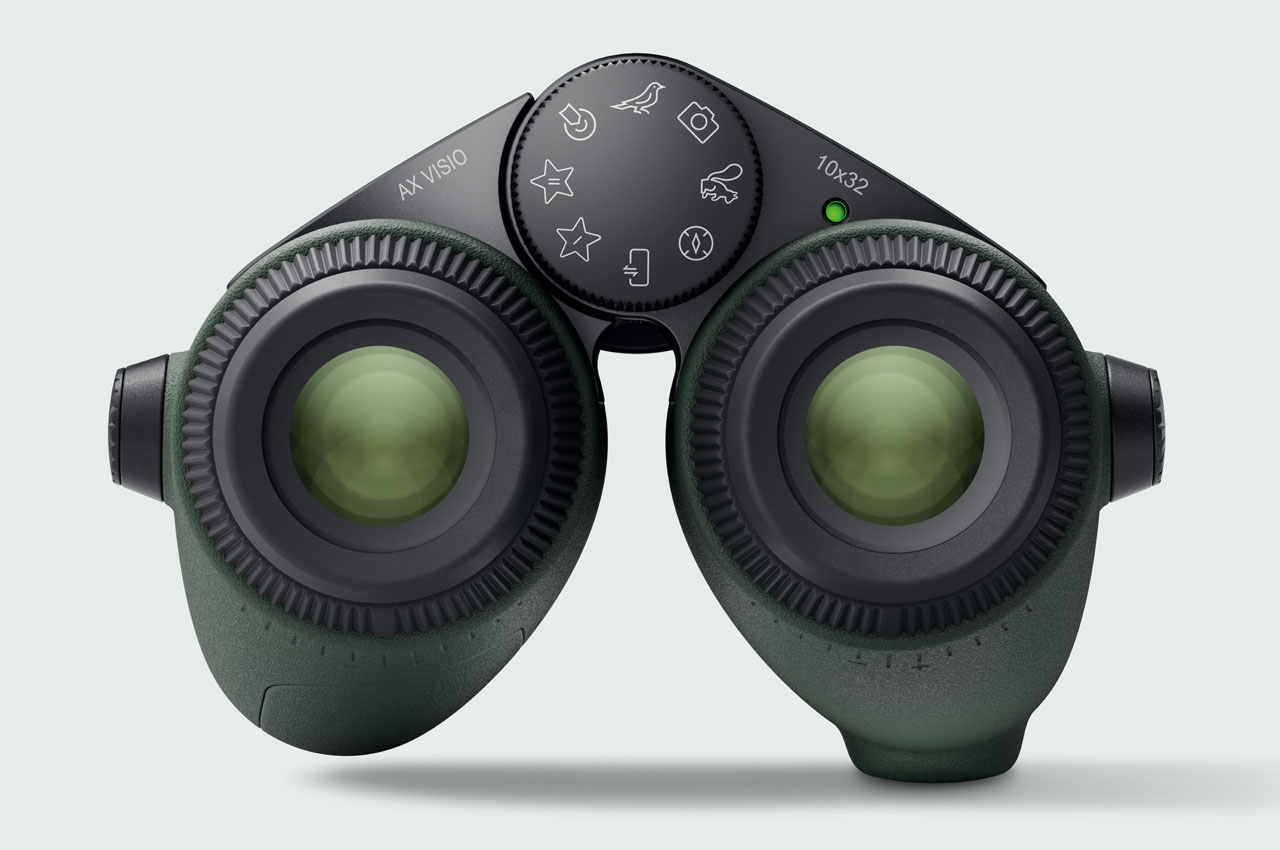
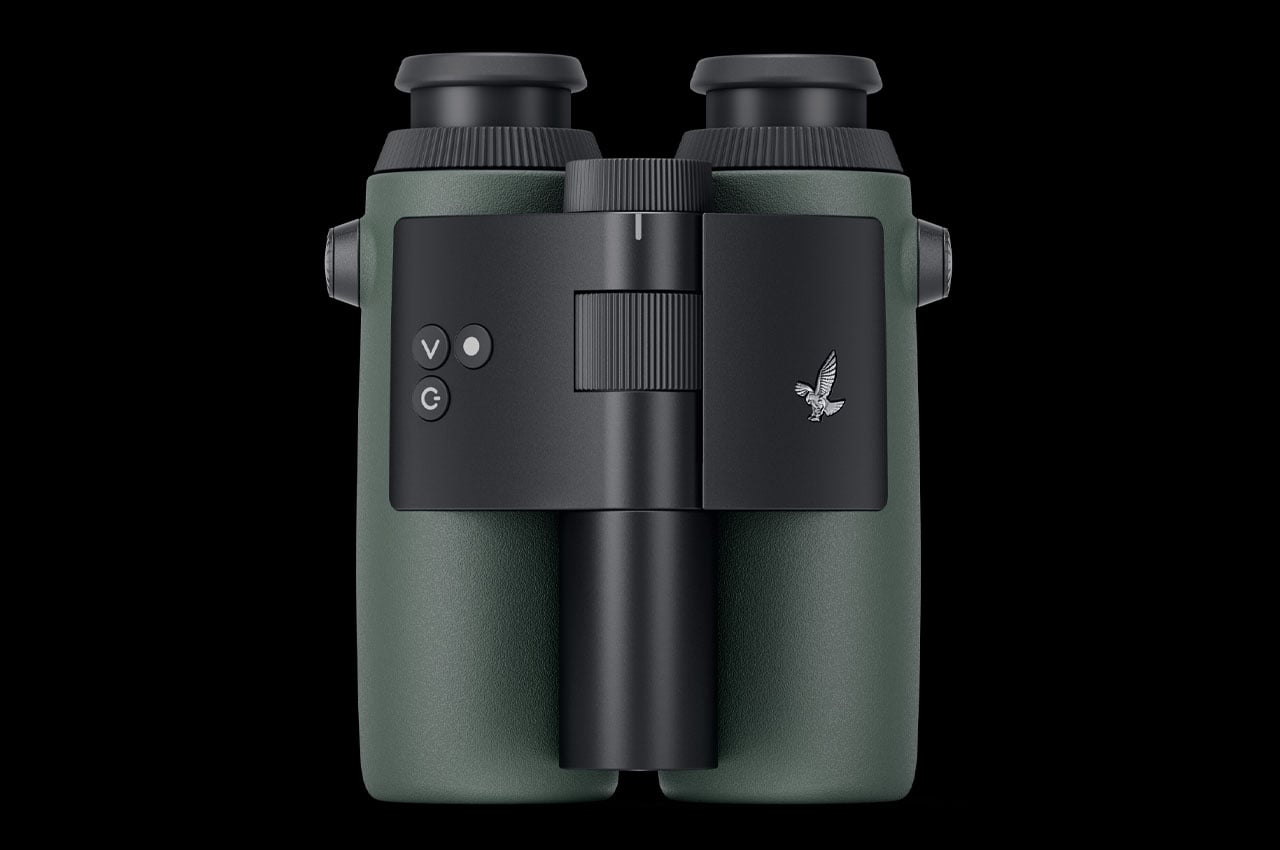
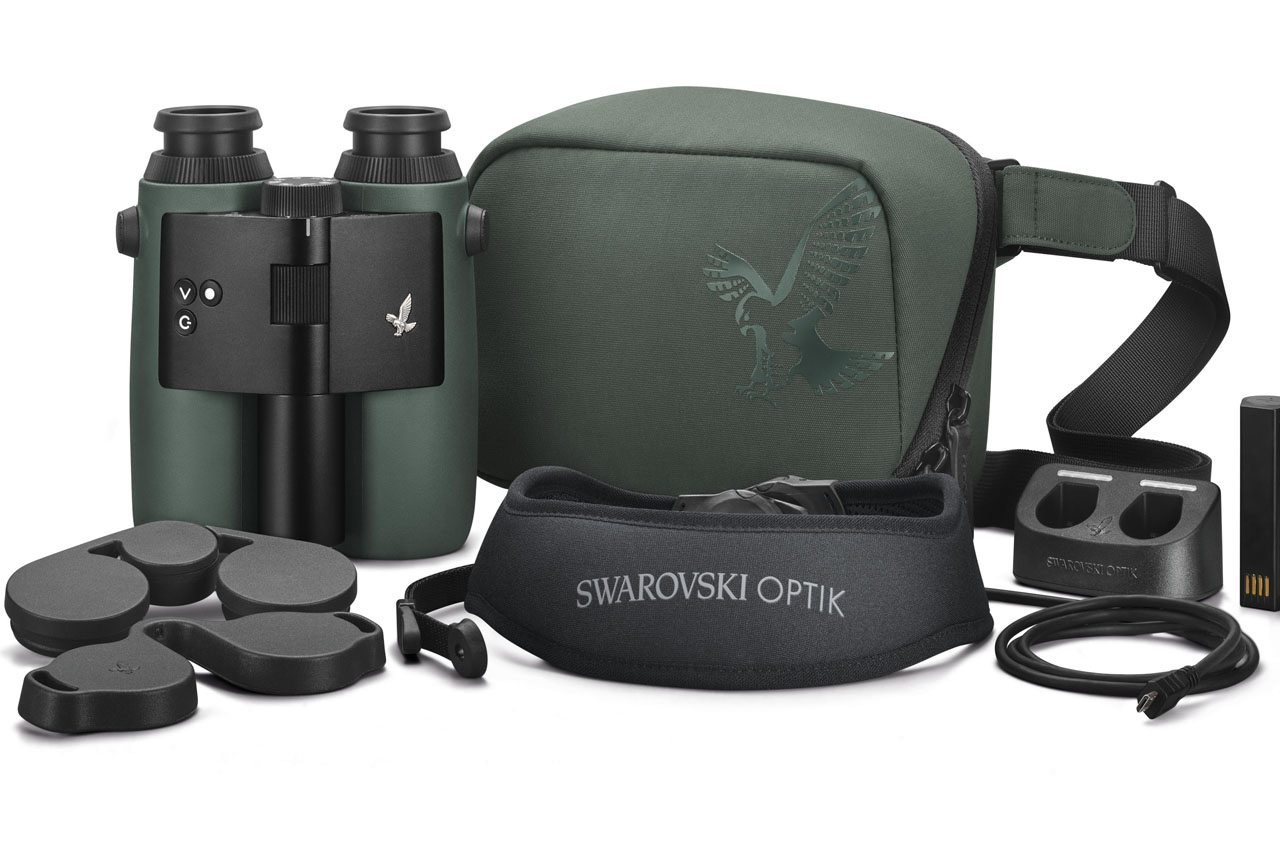
Riding the wave of AI and smart functions, the good old binoculars now seem to have been hit by the trend. Now, Swarovski Optik (a division of Swarovski Group based in Austria) has unveiled their smart binoculars at CES 2024 and we’re impressed. The timing is perfect as this year marks the 75th anniversary of the group, and they’re helping themselves with the world’s first truly smart pair of binoculars dubbed AX Visio.
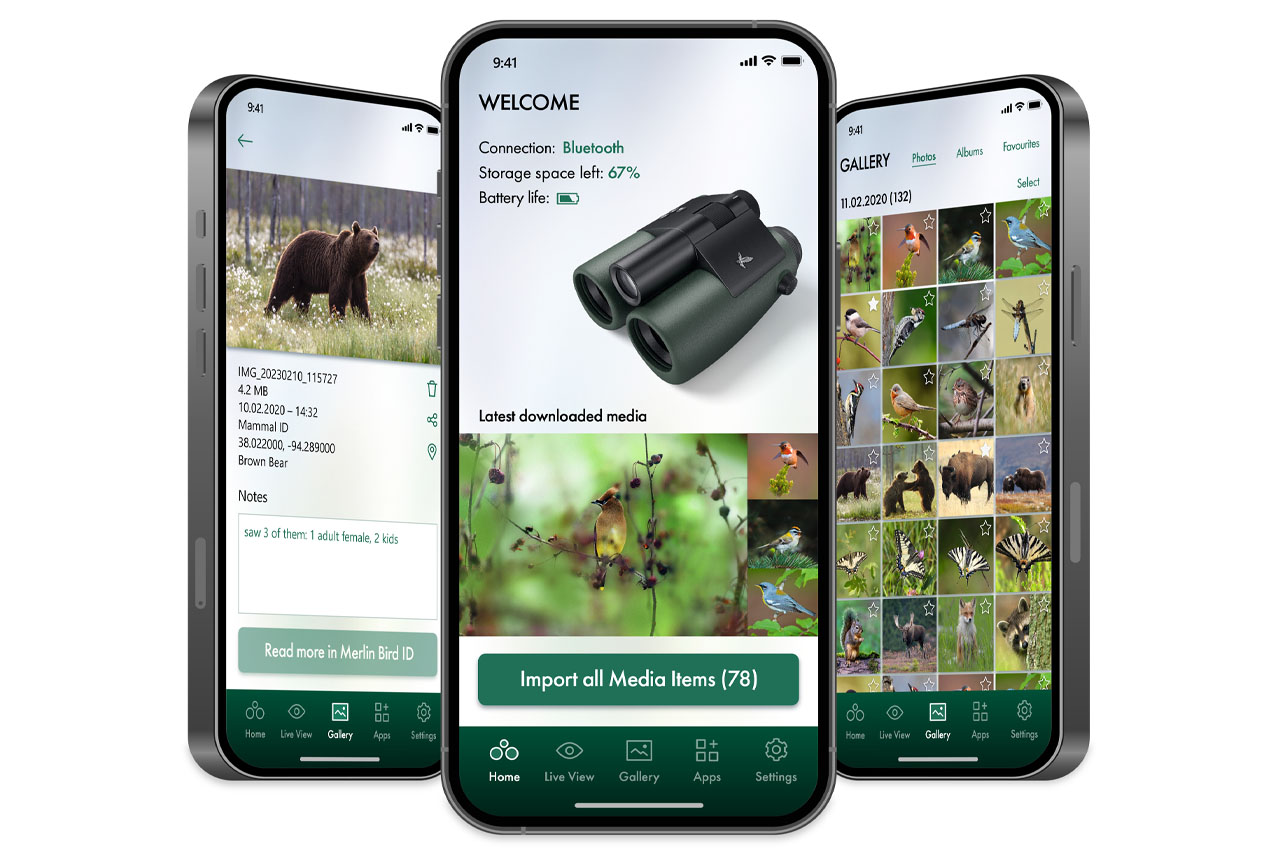
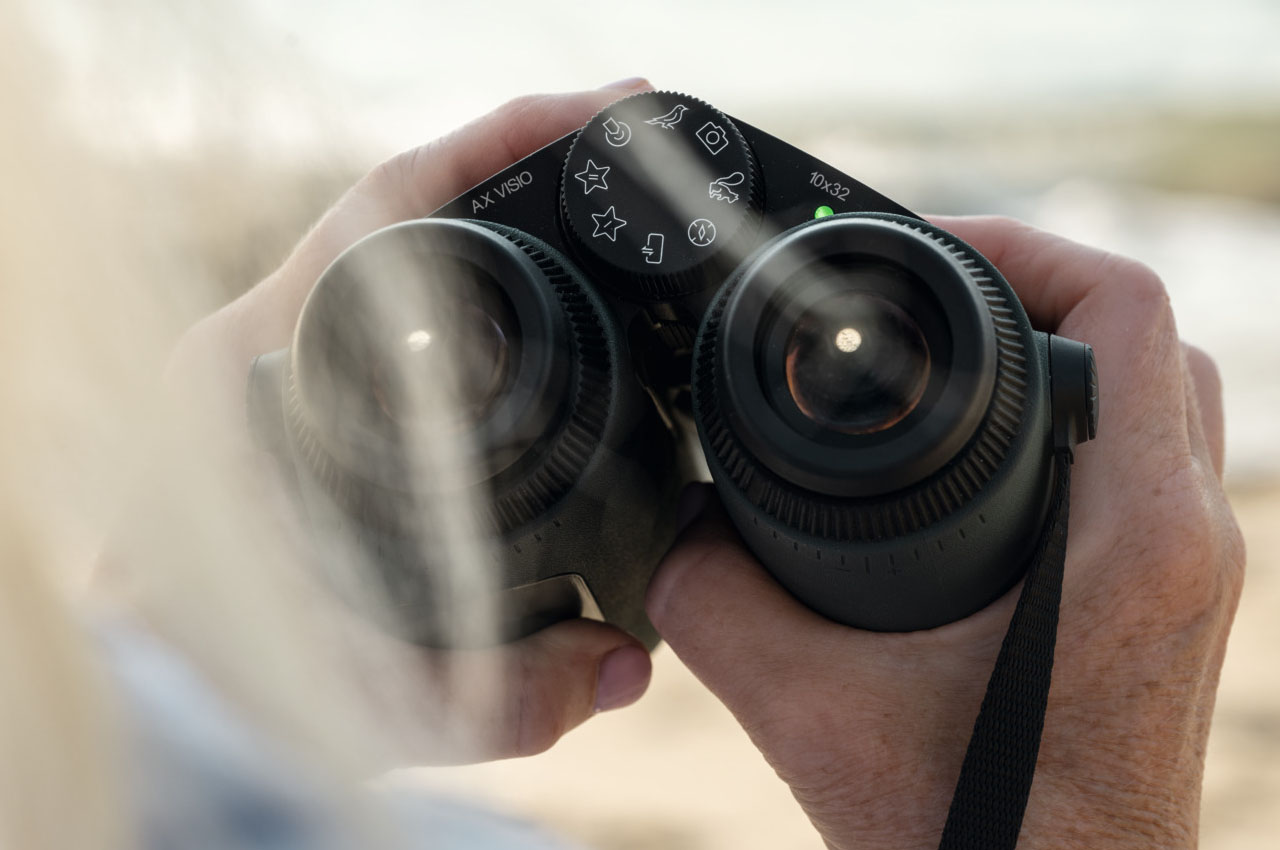
The binoculars are loaded with an NPU that enables AI functions primarily for animal spotting in the wild. In conjunction with the app, the pair can identify more than 9,000 species of birds and wild animals in a given wilderness. This will be particularly helpful for beginners who have a hard time identifying different bird species.
They’ve been developed in collaboration with Marc Newson, and it took the team of developers five years to come up with the final product. The main USP of the binoculars is their smart feature for image shooting, video recording and uploading them to the connected phone. There’s also an interesting function that allows for live sharing of content via the Live View Function.
Weighing just 1100 grams the binoculars can be accompanied on wildlife trips for a comprehensive experience. They are made out of 390 individual parts including Swarovski’s 10×32 optic systems that enable 10 times magnification capability. The 32-millimeter objective lens makes possible a 112m/1000m field of view. Also, they have an in-built camera for clicking shots and recording videos on the go. This eliminates the need for a DSLR or smartphone, making your wildlife exploration more manageable.
Other smart functions come in the form of sharing content on the fly, tagging the location of particular species, or guiding other AX Visio users to a particular location via the smart guidance prompts on the lens overlay. The design of the binoculars is minimalistic, hiding all the advanced sensors and tech on the inside. In particular, the 13MP lens with a 4208 x 3120 pixels resolution. As per the official details, these smart binoculars are good for about 15 hours in normal operation and 2 hours in intensive mode on a single full charge.
According to Swarovski Optik CEO, Stefan Schwarz, “The AX Visio is not only a flagship project with which we are demonstrating Swarovski Optik’s technological leadership in the sport optics market, but it also marks the beginning of a new technological era for us. The AX Visio is not only a flagship project with which we are demonstrating Swarovski Optik’s technological leadership in the sport optics market, but it also marks the beginning of a new technological era for us.”
For a price tag of $4,799, these binoculars sure aren’t cheap but if they fit a nature observer’s set of requirements, they’re well worth the investment!
The US attorney's office in Massachusetts says eBay will pay a $3 million penalty to resolve criminal charges following a harassment campaign conducted by several former executives. Several ex-employees targeted a couple who wrote a newsletter that was critical of the company.
The Justice Department charged eBay with two counts of stalking through interstate travel, two counts of stalking through electronic communications services, one count of witness tampering and one count of obstruction of justice. The $3 million fine was the statutory maximum for the felonies. As part of a deferred prosecution agreement with authorities, eBay also needs to improve its compliance program and retain an independent corporate compliance monitor for three years.
The US attorney's office says eBay "admitted to a detailed recitation of all the relevant facts about its conduct." In August 2019, the company's former senior director of safety and security Jim Baugh and six others carried out a harassment campaign against Ina and David Steiner of Massachusetts. The couple wrote about litigation involving eBay and higher-ups at the company were said to have been frustrated about the negative coverage.
Baugh and his co-conspirators harassed the couple by, among other things, sending them a fetal pig, a funeral wreath and live spiders and cockroaches. According to prosecutors, three of the former eBay employees traveled to the Steiners' home in the aim of planting a GPS tracking device on their car. The campaign also involved sending harassing messages via Twitter (now X).
Baugh and several others were convicted and sent to prison. One other has admitted to their part in the campaign but has yet to be sentenced.
In a victim impact statement published on their website, the Steiners wrote that "eBay's actions against us had a damaging and permanent impact on us — emotionally, psychologically, physically, reputationally, and financially — and we strongly pushed federal prosecutors for further indictments to deter corporate executives and board members from creating a culture where stalking and harassment is tolerated or encouraged."
The pair and Steiner Associates, the publisher of their EcommerceBytes newsletter, have filed a civil lawsuit against eBay and the former employees. A trial has been scheduled for March next year.
This article originally appeared on Engadget at https://www.engadget.com/ebay-will-pay-3-million-to-resolve-criminal-charges-in-a-bizarre-cyberstalking-case-213050834.html?src=rss
Leaders at Discord have decided to cut its staff by 17 percent, according to an internal memo first reported on by the Verge.Concerns over how the chat app has yet to become profitable have played a role in the decision. CEO Jason Citron said that staff across departments will be impacted once the layoffs begin.
According to the memo, Citron believes the company hired too many people since 2020. This, he wrote, led the workforce to take on projects that made Discord “less efficient.” He added that the company needs to sharpen its focus, however, he did not give any insight about any particular strategies moving forward except that the cuts “put us in the best position to continue building a strong and profitable business."
Discord will continue to provide short term pay and benefits to the 170 staffers it is letting go. This also isn't the first time the company has resorted to staff cuts. The company recently laid off four percent of its staff at the end of last year and before that, it made an undisclosed number of staffing cuts 2019.
The company has notably endured some internal struggles lately. Discord refused to have its CEO testify about its children protection policies when called upon by the US Senate Judiciary Committee. That came after a damning NBC News report on the issue, which claimed that children on the platform were being groomed and extorted. It also faced backlash for a small data breach that exposed the personal information of some users last year.
Discord is far from alone among tech companies which have recently initiated layoffs. Just one month into the new year, Duolingo and Unity announced they would be trimming staff. In big tech, Meta, Amazon and Google also have also announced plans to lay off hundreds of workers.
This article originally appeared on Engadget at https://www.engadget.com/discord-lays-off-170-workers-in-latest-round-of-cuts-211541127.html?src=rss
Google has officially voiced support for Right to Repair (R2R) legislation. Specifically, the company supports Oregon’s SB 542, championed by State Senator Janeen Sollman (D). Although Google’s motives could be less about newfound altruism and more about shaping regulatory action that seems increasingly inevitable, “a win’s a win,” as they say in sports.
The company expressed its new R2R stance in a blog post and white paper published Thursday. “Today, we’re excited to reaffirm our support for the Right to Repair movement by releasing our first white paper on repair while endorsing proposed Oregon Right to Repair legislation that offers a compelling model for other states to follow,” the company wrote.
Google lobbied against Right to Repair legislation as recently as March 2021 when it opposed the HB21-1199 R2R bill in Colorado. It’s also on record opposing AB1163 in California. The company’s stance had already shifted before today, in line with the direction of regulatory winds. (It partnered with iFixit for self-repairs starting in 2022.) But Google suggesting its announcement today is merely “reaffirming” a value it’s always stood behind (while ignoring documented evidence to the contrary) appears disingenuous.
Google’s suggestions for regulators
Google’s language in the white paper reveals a legislation-shaping tactic. An entire section titled “Policy Perspective” breaks down the language and boundaries the company believes R2R regulations should contain.
Within this policy section of the paper is a passage about “design flexibility,” urging lawmakers not to hamstring device makers by implementing strict design codes. “Well-intentioned regulations that set specific design requirements and standards in an effort to improve repairability may have unintended consequences that inhibit innovation and inadvertently lead to bad outcomes, such as more e-waste,” Google wrote in its white paper. “Design-related policies for repair should focus on defining repairability outcomes rather than setting strict design standards.”
Another item in the policy section, “reasonable implementation period,” calls for regulations that won’t disrupt existing manufacturing schedules. “Consumer electronics operate with lengthy product development timelines, often spanning years,” Google wrote. “New regulatory measures should phase in on a sensible timeline that ensures manufacturers can meet new requirements without undue burden. Regulations should not apply to products that are already designed and launched as such measures are problematic and may have negative unintended consequences, such as creating more e-waste.”
Neither of those requests seems egregiously unreasonable — and the points about e-waste could be taken at face value — but, coincidentally or not, they do also align with Google’s business interests.
An Apple dig and... Project Ara?
Google squeezed in a dig at Apple, too. “Policies should constrain OEMs from imposing unfair anti-repair practices,” the paper reads. “For example, parts-pairing, the practice of using software barriers to obstruct consumers and independent repair shops from replacing components, or other restrictive impediments to repair should be discouraged.”
Of course, Apple is notorious for parts-pairing, the practice of digitally linking part serial numbers to the device serial, locking out third-party repair services (and leaving the people who paid them with obnoxious incompatibility warnings).
Project Ara, which made it to the Google graveyard before hitting store shelves, was shouted out in the white paper.
Google
Google’s paper highlights examples from its history of supporting R2R and similar initiatives, even calling out the (cancelled) Project Ara modular phone from a decade ago as an example of projects that “push the boundaries and better understand our users’ needs for repair.” (If it had only made it to consumers.)
The paper also touts Google’s buildouts of its repair capabilities, seven years of software support for Pixels and seven years of support for hardware parts. All of this can be seen as a resounding victory for the R2R movement, even if corporations’ motives continue to be less noble than they like to let on.
This article originally appeared on Engadget at https://www.engadget.com/google-claims-to-reaffirm-right-to-repair-support-three-years-after-lobbying-against-it-205828956.html?src=rss
Even though Apple didn't have an official presence at CES 2024 in Las Vegas, the trade show still had a whole area dominated by mixed reality tech. One of the most popular booths there was none other than Xreal (formerly Nreal), which decided to ride on the Apple Vision Pro hype train and unveil its latest AR glasses, the Xreal Air 2 Ultra, in Las Vegas. The Chinese firm claims that its latest headset makes "an affordable alternative to" the likes of the $3,499 Vision Pro, though it's currently priced at $699 — a tad more than the $499 Meta Quest 3 — as Xreal attempts to lure developers into its ecosystem.
Unlike the rest of the Xreal Air 2 series, the Air 2 Ultra finally brings back 6DoF (six-degree-of-freedom) tracking — a first since the Nreal Light. In other words, you can physically walk around a virtual space, rather than being stuck in one spot. The 6DoF tracking is mainly handled by the two front-facing 3D environment sensors which, according to Xreal founder and CEO Chi Xu, are an advancement over prior models, and are less physically obtrusive compared to the ones on the Ray-Ban Meta smart glasses. As with the Light, the Air 2 Ultra also supports hand tracking for interacting with virtual objects directly.
There's also a slight upgrade in the display department, featuring a wider 52-degree field of view — up from 46 degrees on the Air 2 and Air 2 Pro. It should otherwise be the same Sony micro OLED panels with a crisp 1080p resolution for each eye, along with a refresh rate of up to 120Hz and a brightness of up to 500 nits. Likewise, the Air 2 Ultra inherited the electrochromic dimming feature from the Pro, which offers two shade levels to minimize distraction from the outside world.
Given the extra hardware for 6DoF and hand tracking, it's no surprise that the Air 2 Ultra weighs slightly more than the Air 2 Pro — 80 grams versus 75 grams, but it still looks like a pair of regular sunglasses, and I definitely wouldn't mind wearing them in public. Xreal did its best to minimize the weight gain using a titanium frame, and obviously, these glasses still require an external power source — a smartphone or a PC — via USB-C. I had a total hands-on time of around 20 minutes, and at no point did I feel any discomfort, though there's no telling if that would be the case if I kept on going for the rest of the day.
Photo by Joel Chokkattu / Engadget
Given the lack of third-party apps at the moment (I do miss the Angry Birds demo on the Nreal Light), Xreal could only offer a concept demo to show off the Air 2 Ultra's 6DoF experience. This mainly involved a massive virtual desktop showing multimedia players, or a social media window showing the latest messages from my made-up friends, or a personal 3D cinema with a library of three movies. To the left, there was a vertical slider for changing colors on a smart light bar in the real world. I was also given three AR hexagonal discs: one for toggling between work profile and casual profile, one for switching between the casual modes (contacts, social and movie) and one for displaying a virtual pet.
The overall room tracking worked smoothly, even as I walked up to the large 3D avatars on my right, but things got a little trickier when it came to hand interaction. The hand tracking alone seemed fine (at least according to the skeletons rendered over my hands), but I struggled to pinch the light bar's color slider — it ended up at the wrong hue on several occasions. The interaction with the AR cardboard discs was also laggy at times, though I did enjoy being able to bring my virtual pet on one of the discs up close — I couldn't pick a favorite between the dung beetle and the fiddler crab.
Photo by Joel Chokkattu / Engadget
In response to the technical issues I ran into, Xreal's Xu pointed out that his team had been experiencing the same since the show floor opened. Our demo unit also crashed once, but it was fine after a reboot on the smartphone — an Oppo Find X5, which got worryingly warm right before it gave up. This goes to show that the Air 2 Ultra performance is only as good as the computational device it's attached to.
Speaking of which, Xreal says these glasses are also compatible with the Samsung Galaxy S22 and S23, along with Apple's iPhone 15 and any Windows or Mac machine that can run the company's Nebula environment. Xreal is also developing a dedicated companion device to go with the Air 2 Ultra, though there's no word on specs nor time frame.
Photo by Richard Lai / Engadget
Considering the show floor hiccups, it's only fair to revisit the Xreal Air 2 Ultra in a less chaotic environment later — especially when more developers are on board after it starts shipping in March. Still, we wouldn't go as far as agreeing with Xreal's implication that its AR glasses can totally replace Apple's Vision Pro, as only the latter — and any VR headset, for that matter — is able to offer a completely immersive experience. It'll ultimately boil down to the range of apps on each platform, but if you're looking for something that you wouldn't mind wearing for prolonged periods, then the Air 2 Ultra would most likely be the better choice.
This article originally appeared on Engadget at https://www.engadget.com/xreal-air-2-ultra-hands-on-next-gen-ar-glasses-in-need-of-killer-apps-203943588.html?src=rss
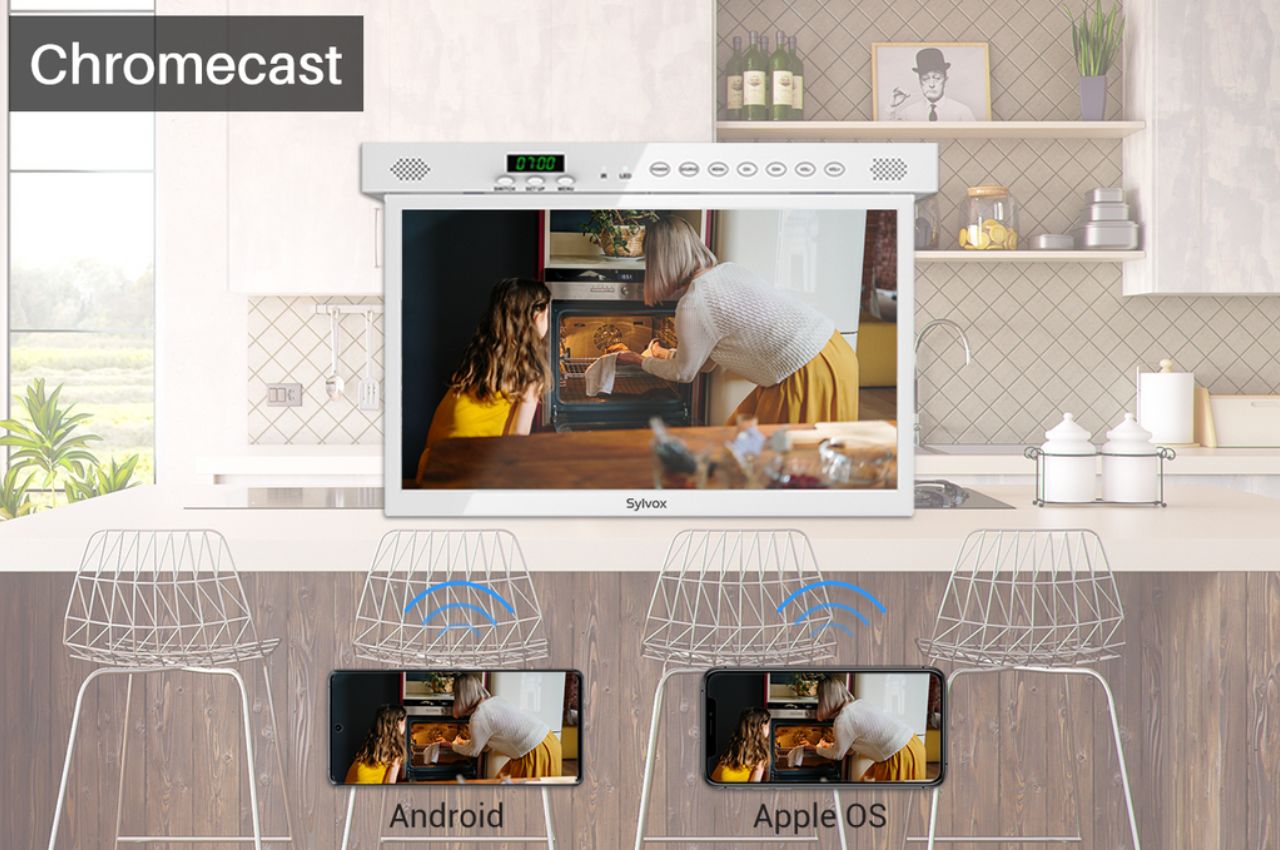
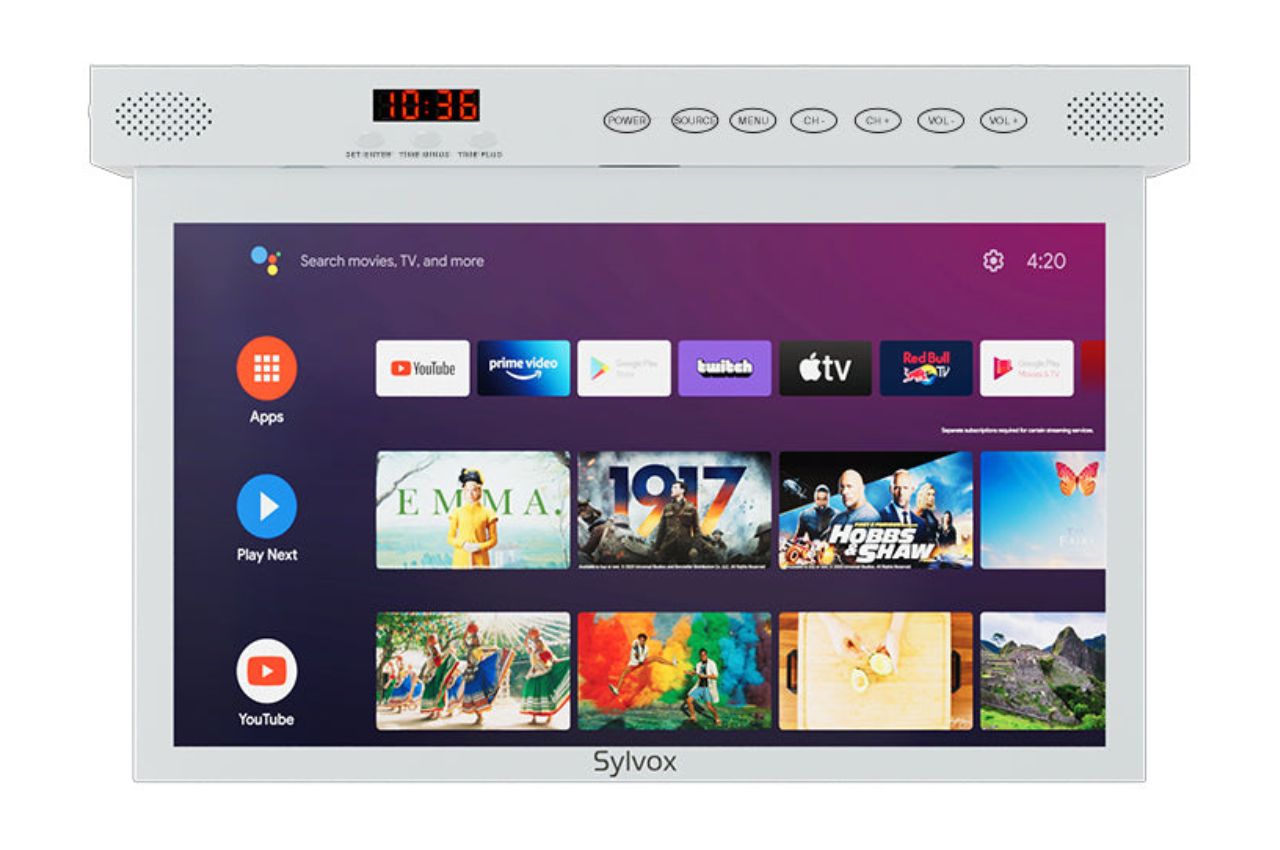
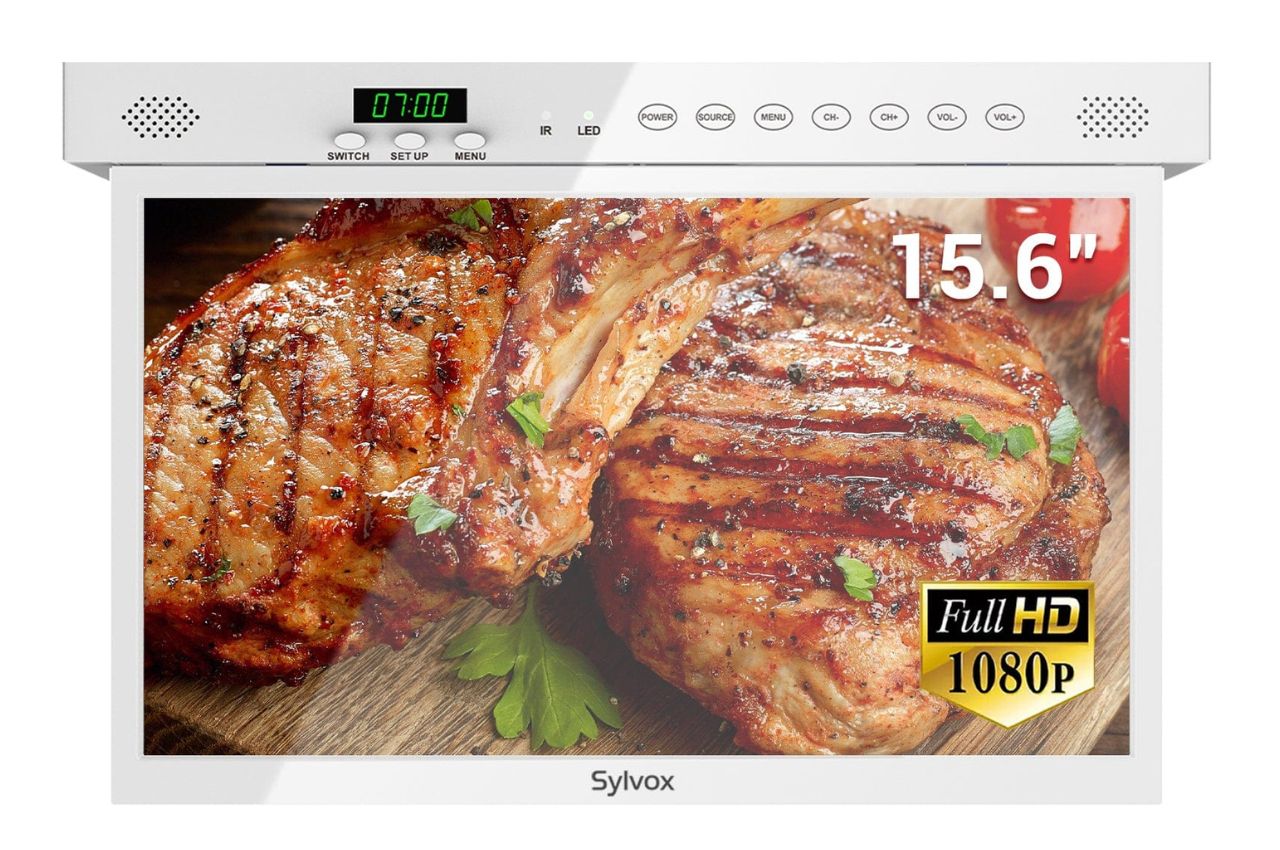
In the evolving domain of modern kitchens, having a dedicated entertainment system can transform your cooking and dining experience. Sylvox introduces its 15.6″ Smart Under Cabinet TV, a sleek and intelligent addition to your culinary space. Let’s delve into the features that make this kitchen TV a must-have for cooking enthusiasts and entertainment lovers alike.
Transform your kitchen into a digital culinary hub with the Sylvox Under Cabinet TV’s Android operating system. Imagine having easy access to your favorite cooking apps, such as recipe databases, instructional videos, and nutritional guides. This feature empowers you to browse cooking blogs, stream online cooking classes, or even catch up on the latest culinary trends without leaving your kitchen.
The TV is equipped with Bluetooth 5.0 and dual-band WiFi, which ensures seamless connectivity for various entertainment options. For instance, effortlessly stream your curated cooking playlist from your smartphone or mirror a cooking tutorial video for a hands-free cooking experience. Whether you’re an Android or Apple user, the Sylvox TV caters to both, ensuring a comfortable viewing experience for everyone in the kitchen. The coolest and most convenient feature is the integration of Google Assistant which adds a futuristic touch, allowing you to control the TV with simple voice commands while your hands are occupied with cooking.
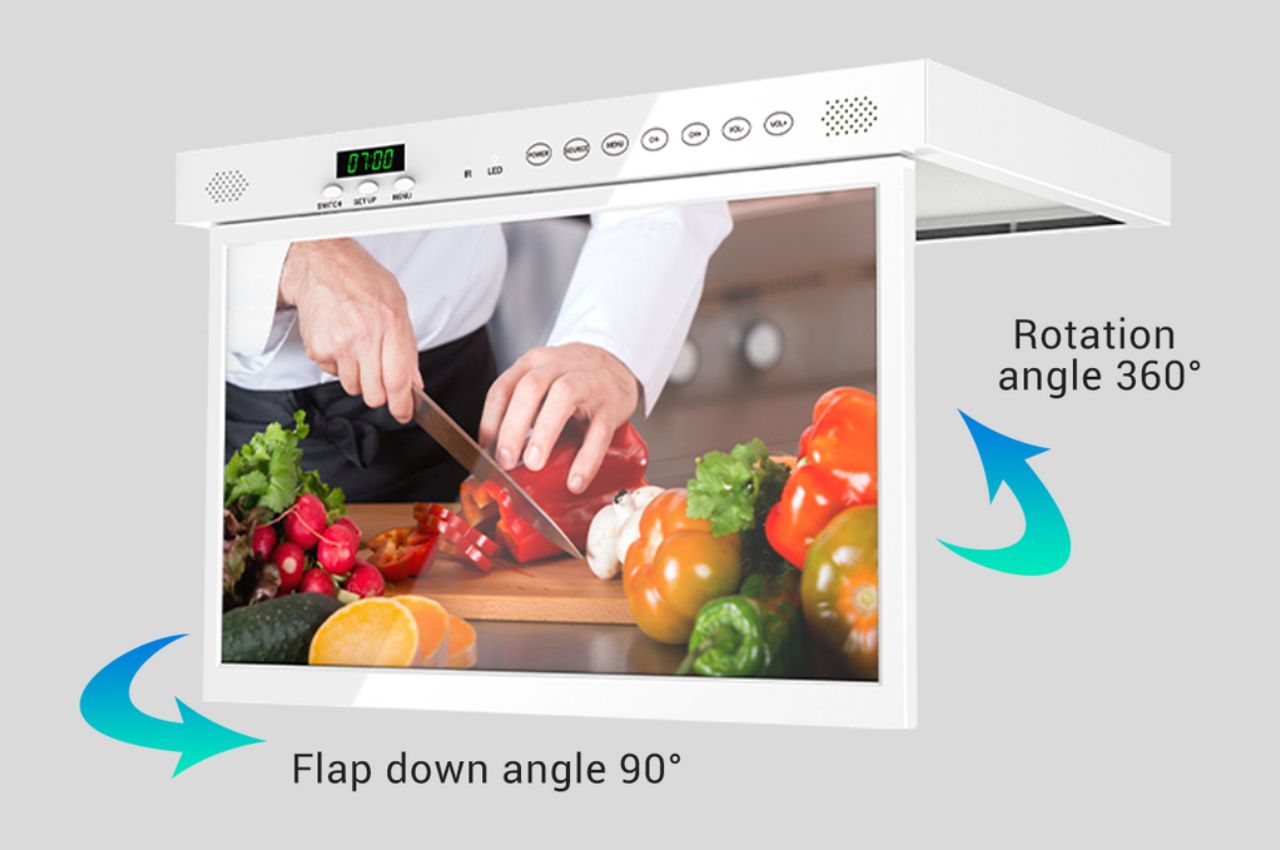
Bid farewell to awkward viewing angles with the Sylvox TV’s flexible design. Wouldn’t it be amazing to have the TV angled perfectly for easy visibility while you chop, stir, or bake? Whether installed under the cabinet or on the roof, this TV adapts to your kitchen layout effortlessly, ensuring you never miss a moment of your favorite cooking show, TV show, or any other sports event.
Even during the times when you’re in the midst of cooking, and your hands are covered in flour or sauce, with this TV’s waterproof touch keys, you can easily pause, play, or adjust the volume without worrying about damage. The durability and ease of cleaning add practicality to the TV, making it an ideal companion in the dynamic environment of a kitchen.
You even get the leverage of setting a timer on the TV for each cooking phase, from prep to baking, without fumbling with your smartphone. The LED clock display and timing function ranging from 15 to 60 minutes ensure your culinary creations are perfectly timed. The TV will alert you when it’s time to move to the next step or savor your finished dish.
View the vibrant and sharp visuals of 1080P Full HD resolution, allowing you to see every detail clearly. Whether you’re following a cooking tutorial, watching a sports event, or simply enjoying a movie, the wide viewing angle of 170° ensures everyone in the kitchen has a perfect view.
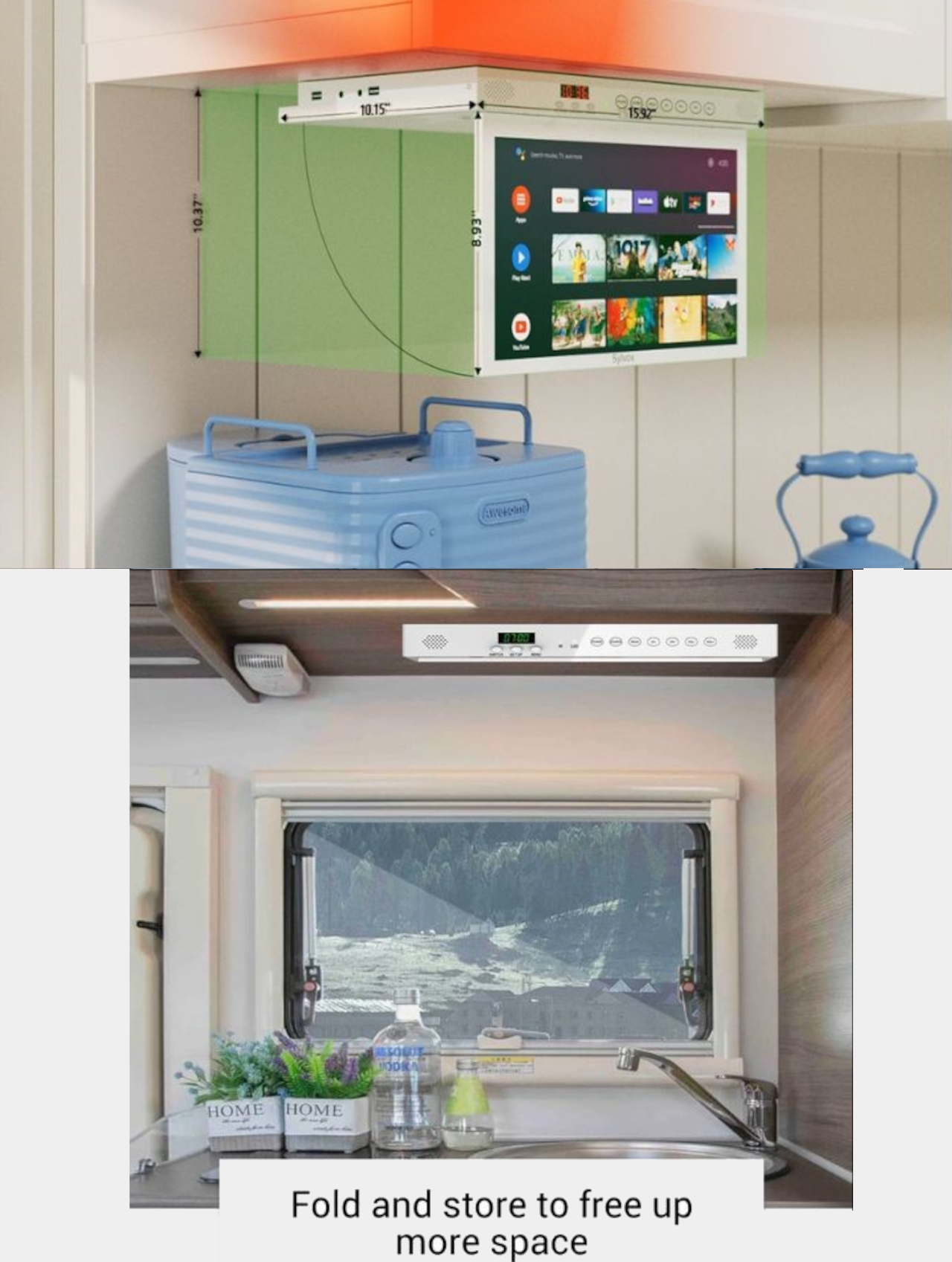
The Sylvox TV can seamlessly be integrated into your kitchen’s aesthetic with its all-metal housing, ultra-slim profile, and easy-to-clean white finish. The straightforward installation, requiring only a few screws and a screwdriver, means you can enjoy your new kitchen entertainment hub in less than 30 minutes. Fold it down during use and up when you’re done for a clutter-free look.
You even have the option to elevate the entertainment experience by adding a Fire Stick or Roku Stick to the Sylvox TV. This opens up a world of streaming services and apps, allowing you to customize your entertainment options based on your preferences. Whether it’s cooking shows, music, or movies, the Sylvox TV becomes a versatile entertainment center in your kitchen.
Priced at $399.00, the Sylvox 15.6″ Smart Under Cabinet TV offers a premium entertainment solution that won’t break the bank. Consider it an investment in both convenience and style for your kitchen. Upgrade your culinary space with Sylvox and enjoy the perfect blend of technology and elegance.