iOS 27 Leaks: Laying the Groundwork for the iPhone Ultra

iOS 27 Leaks: Laying the Groundwork for the iPhone Ultra

Apple is preparing to unveil iOS 27 in 2026, a software update that emphasizes stability, performance, and advanced AI-driven features. Building on the fantastic changes introduced in iOS 26, this release focuses on refining the user experience through optimization and innovation. The first beta version is anticipated to debut at the Worldwide Developers Conference (WWDC) […]

The post iOS 27 Leaks: Laying the Groundwork for the iPhone Ultra appeared first on Geeky Gadgets.

Posted in Uncategorized

Nano Banana Pro : Nails Consistent Characters From Prompt to 2K Perfection

Nano Banana Pro : Nails Consistent Characters From Prompt to 2K Perfection

What if the future of visual storytelling wasn’t just about creativity but about precision, adaptability, and seamless execution? Enter the Nano Banana Pro, a new AI tool that’s redefining how we craft cinematic narratives and high-impact visuals. Imagine being able to generate stunning, high-resolution scenes with dynamic camera angles and lifelike environments, all with just […]

The post Nano Banana Pro : Nails Consistent Characters From Prompt to 2K Perfection appeared first on Geeky Gadgets.

Posted in Uncategorized

The best wireless earbuds for 2025

Wireless earbuds have become the go-to choice for listening on the move. Whether you’re at the gym, commuting or relaxing at home, the best wireless earbuds give you comfort, freedom and solid sound quality without tangled cables. They’re lightweight, slip easily into your pocket and connect quickly to your phone, tablet or laptop.

The tricky part is choosing the right pair. Some models focus on powerful noise cancellation while others put battery life or affordability first. Then you’ve got features like water resistance for workouts or touch controls for quick track changes. With so many choices, finding the best wireless earbuds depends on what matters most to you, and that’s exactly what this guide will help you figure out.

When it comes to shopping for earphones, the first thing to consider is design or wear style. Do you prefer a semi-open fit like AirPods or do you want something that completely closes off your ears? If you’re shopping for earbuds with active noise cancellation, you'll want the latter, but a case can be made for the former if you want to wear them all day or frequent places where you need to be tuned in to the ambient sounds. The overall shape of earbuds can determine whether you get a comfortable fit, so can the size and weight, so you’ll want to consider all that before deciding. And remember: audio companies aren’t perfect, so despite lots of research, the earbud shape they decided on may not fit you well. Don’t be afraid to return ill-fitting earbuds for something that’s more comfortable.

As wireless earbuds have become the norm, they’re now more reliable for basic things like consistent Bluetooth connectivity. Companies are still in a race to pack as much as they can into increasingly smaller designs. This typically means a longer list of features on the more premium sets of earbuds with basic functionality on the cheapest models. Carefully consider what you can’t live without when selecting your next earbuds, and make sure key items like automatic pausing and multipoint connectivity are on the spec sheet. You’ll also want to investigate the volume and touch controls as you’ll often have to sacrifice access to something else to make that adjustment via on-board taps or swipes. Some earbuds even offer app settings to tweak the audio profiles or firmware updates to improve performance over time.

For those in the Apple ecosystem, features like auto-pairing with devices, especially with AirPods Pro 3, can be an added advantage, while Android users may want to look for models that offer similar cross-device functionality.

When it comes to battery life, the average set of earbuds lasts about five hours on a single charge. You can find sets that last longer, but this is likely enough to get you through a work day if you’re docking the buds during lunch or the occasional meeting. You’ll want to check on how many extra charges are available via the case and if it supports wireless charging.

Companies will also make lofty claims about call quality on wireless earbuds. Despite lots of promises, the reality is most earbuds still leave you sounding like you’re on speakerphone. There are some sets that deliver, but don’t get your hopes up unless reviews confirm the claims.

Sound can be subjective, so we recommend trying before you buy if at all possible. This is especially true if you're an audiophile. We understand this isn’t easy when most of us do a lot of shopping online, but trying on a set of earbuds and listening to them for a few minutes can save you from an expensive case of buyer's remorse. If a store doesn’t allow a quick demo, most retailers have return policies that will let you take earbuds back you don’t like. Of course, you have to be willing to temporarily part with funds in order to do this.

We also recommend paying attention to things like Spatial Audio, Dolby Atmos, 360 Reality Audio and other immersive formats. Not all earbuds support them, so you’ll want to make sure a perspective pair does if that sort of thing excites you, especially if you plan to use them for playback of high-quality audio.

The primary way we test earbuds is to wear them as much as possible. We prefer to do this over a one- to two-week period, but sometimes embargoes don’t allow it. During this time, we listen to a mix of music and podcasts, while also using the earbuds to take both voice and video calls. Since battery life for earbuds is typically less than a full day, we drain the battery with looping music and the volume set at a comfortable level (usually around 75 percent).

To judge audio quality, we listen to a range of genres, noting any differences in the sound profile across the styles. We also test at both low and high volumes to check for consistency in the tuning. To assess call quality, we’ll record audio samples with the earbuds’ microphones as well as have third parties call us.

When it comes to features, we do a thorough review of companion apps, testing each feature as we work through the software. Any holdovers from previous models are double checked for improvements or regression. If the earbuds we’re testing are an updated version of a previous model, we’ll spend time getting reacquainted with the older buds. Ditto for the closest competition for each new set of earbuds that we review.

The WF-C710N is a set of compact and comfy earbuds that offer several of Sony’s best features. While the ANC performance is above average for this price ($120), sound quality isn’t as good as the company’s slightly more expensive options. Battery life fell below stated figures and call performance isn’t good enough to use these buds for work.

The newest version of the Powerbeats Pro have an improved, comfortable design, balanced bass and new H2 chips and a heart rate sensor inside. But heart rate support is currently limited on iOS.

The Galaxy Buds 3 combine ANC with an open-type design, which renders the noise-blocking abilities of the earbuds mostly useless. Still, there’s great low-end tone with ample bass when a track demands it. There are also lots of handy features, most of which require a Samsung phone. But at this price, there are better options from Google, Beats and Sony

I really like the overall shape of the Momentum Sport earbuds. They’re more comfortable than the Momentum True Wireless 4 and fit in my ears better. What’s more, the body temperature and heart rate sensors work well, sending those stats to a variety of apps. However, that sport-tracking feature works best with Polar’s app and devices, so there’s that consideration. Also, the audio quality and ANC performance isn’t as good as the MTW4, and these earbuds are pricey.

There’s a lot to like about the Solo Buds for $80. For me, the primary perk is they’re very comfortable to wear for long periods of time thanks to some thoughtful design considerations. You only get the basics here in terms of features and, as expected, the overall sound quality isn’t as good as the pricier models in the Beats lineup. You will get 18 hours of battery life though, since the company nixed the battery in the case and beefed up the listening time in the buds themselves.

Bose created something very unique for this set of earbuds that allows you to stay in-tune with the world while listening to audio content. The clip-on design is very comfortable, but sound quality suffers due to the open-type fit, especially when it comes to bass and spatial audio.

These stick buds have a compact design that’s comfortable to wear and the warm sound profile is great at times. However, overall audio performance is inconsistent and there’s no automatic pausing.

Retooled audio, better ambient sound mode and reliable multipoint Bluetooth are the best things the MW09 has to offer. They’re expensive though, and you can find better ANC performance elsewhere.

Most wireless earbuds will last five hours on a single charge, at the least. You can find some pairs that have even better battery life, lasting between six and eight hours before they need more juice. All of the best wireless earbuds come with a charging case, which will provide additional hours of battery life — but you'll have to return each bud to the case in order to charge them up.

Comparing sound quality on earbuds and headphones is a bit like comparing apples and oranges. There are a lot of variables to consider and the differences in components make a direct comparison difficult. Personally, I prefer the audio quality from over-ear headphones, but I can tell you the sound from earbuds like Sennheiser’s Momentum True Wireless 3 is also outstanding.

With new models coming out all the time, tracking the hours of battery life for each this can be difficult to keep tabs on. The longest-lasting earbuds we’ve reviewed are Audio-Technica’s ATH-CKS5TW. The company states they last 15 hours, but the app was still showing 40 percent at that mark during our tests. The only downside is these earbuds debuted in 2019 and both technology and features have improved since. In terms of current models, Master & Dynamic’s MW08 offers 12 hours of use on a charge with ANC off (10 with ANC on) and JBL has multiple options with 10-hour batteries.

There are plenty of options these days when it comes to increased water resistance. To determine the level of protection, you’ll want to look for an IP (ingress protection) rating. The first number indicates intrusion protection from things like dust. The second number is the level of moisture protection and you’ll want to make sure that figure is 7 or higher. At this water-resistance rating, earbuds can withstand full immersion for up to 30 minutes in depths up to one meter (3.28 feet). If either of the IP numbers is an X, that means it doesn’t have any special protection. For example, a pair of wireless earbuds that are IPX7 wouldn’t be built to avoid dust intrusion, but they would be ok if you dropped them in shallow water.

A secure fit can vary wildly from person to person. All of our ears are different, so audio companies are designing their products to fit the most people they can with a single shape. This is why AirPods will easily fall out for some but stay put for others. Design touches like wing tips or fins typically come on fitness models and those elements can help keep things in place. You’ll likely just have to try earbuds on, and if they don’t fit well return them.

PlayStation 5 doesn’t support Bluetooth audio without an adapter or dongle. Even Sony’s own gaming headsets come with a transmitter that connects to the console. There are universal options that allow you to use any headphones, headset or earbuds with a PS5. Once you have one, plug it into a USB port on the console and pair your earbuds with it.

September 2025: Updated to add AirPods Pro 3 to our top picks.

May 2025: Updated to ensure top picks and buying advice remain accurate.

March 2025: Updated the top pick for the best sounding wireless earbuds - runner up.

January 2025: Updated the top pick for best sounding wireless earbuds.

July 2024: Updated our list to include the Samsung Galaxy Buds 3 Pro.

This article originally appeared on Engadget at https://www.engadget.com/audio/headphones/best-wireless-earbuds-120058222.html?src=rss

The Samsung Galaxy S26 Ultra Battery Leak: Why Specs Don’t Tell the Whole Story

The Samsung Galaxy S26 Ultra Battery Leak: Why Specs Don’t Tell the Whole Story

The Samsung Galaxy S26 Ultra is rumored to feature a slight battery upgrade, increasing its capacity from 5,000mAh to 5,200mAh. While this represents a step forward for Samsung, it highlights a cautious approach in a market where competitors, particularly Chinese smartphone brands, are making more aggressive advancements. This incremental improvement raises questions about Samsung’s ability […]

The post The Samsung Galaxy S26 Ultra Battery Leak: Why Specs Don’t Tell the Whole Story appeared first on Geeky Gadgets.

Posted in Uncategorized

Lenovo Legion Go 2 Review : Premium OLED Power with Painful Tradeoffs

Lenovo Legion Go 2 Review : Premium OLED Power with Painful Tradeoffs

Have you ever wondered if a handheld gaming device could truly rival the power of a full-fledged gaming PC? Enter the Lenovo Legion Go 2, a $1,350 contender that promises to redefine portable gaming with its innovative hardware and sleek OLED display. But here’s the catch: in a market crowded with more affordable options like […]

The post Lenovo Legion Go 2 Review : Premium OLED Power with Painful Tradeoffs appeared first on Geeky Gadgets.

Posted in Uncategorized

Gemini 3 vs ChatGPT 5 : Here’s Why Gemini 3 Now Powers Our Daily Work

Gemini 3 vs ChatGPT 5 : Here’s Why Gemini 3 Now Powers Our Daily Work

What if the AI tool you’ve relied on for months suddenly felt… outdated? For many, ChatGPT has been the go-to solution for creative brainstorming, coding assistance, and everything in between. But as the AI landscape evolves, so do user expectations. Enter Google’s Gemini 3, a platform that’s not just an upgrade but a redefinition of […]

The post Gemini 3 vs ChatGPT 5 : Here’s Why Gemini 3 Now Powers Our Daily Work appeared first on Geeky Gadgets.

Posted in Uncategorized

iPhone Ultra Foldable Early Look: Two Screens, No Face ID?

iPhone Ultra Foldable Early Look: Two Screens, No Face ID?

Apple is preparing to make a significant impact on the smartphone industry with the highly anticipated iPhone Ultra, a foldable device that merges innovative technology, premium materials, and a sleek design. Scheduled for release in September 2026, this innovative addition to Apple’s lineup is expected to redefine multitasking, performance, and durability. In the video below, […]

The post iPhone Ultra Foldable Early Look: Two Screens, No Face ID? appeared first on Geeky Gadgets.

Posted in Uncategorized

The Snapdragon 8 Gen 5 is a cut-down version of Qualcomm’s flagship Elite chipset

Qualcomm just revealed the Snapdragon 8 Gen 5, the appropriately-named second member of the Snapdragon 8 Gen 5 line. This follows the Gen 5 Elite, which was first revealed back in September.

The standard Gen 5 is still a powerful mobile system-on-a-chip (SoC) with a top clock speed of 3.8GHz. That's slightly lower than the Elite's top speed of 4.6GHz, but still nothing to sneeze at. It includes a custom-built Oryon CPU and boasts speed-enhancing features like matrix acceleration. The company says the platform offers a 36 percent performance improvement when compared to Snapdragon 7, along with a 76 percent increase in web browsing responsiveness.

Some specs.
Qualcomm

The SoC also features the Qualcomm Adreno GPU, just like the Elite, which "unlocks higher clock speeds and boosts gaming and graphics performance by 11 percent." This is a chip intended for modern smartphones, so it also has been designed for AI. It boasts the company's proprietary Sensing Hub technology that combines microphone and sensor inputs to detect a user's intent to speak.

It's capable of on-device AI processing due to the Qualcomm Hexagon NPU. The company says this will enable "agentic AI assistants to deliver context-aware interactions and personalized suggestions." That's corporate speak for "it does stuff and says stuff."

A picture of a phone.
Qualcomm

Qualcomm says these chips will begin showing up in mobile devices in "the coming weeks." The company named OnePlus as a partner and that organization did just announce a brand-new smartphone that was suspiciously devoid of any real specs.

This article originally appeared on Engadget at https://www.engadget.com/ai/the-snapdragon-8-gen-5-is-a-cut-down-version-of-qualcomms-flagship-elite-chipset-063050786.html?src=rss

Apple’s Limited-Edition MagSafe Grip: The Must-Have Accessory

Apple’s Limited-Edition MagSafe Grip: The Must-Have Accessory

zollotech Apple partnered with designer Bailey Hikawa to develop a limited-edition MagSafe-compatible phone grip and stand. This collaboration marked Apple’s celebration of 40 years of accessibility innovation, emphasizing the company’s commitment to creating inclusive technology. Designed to enhance usability for individuals with mobility and dexterity challenges, the accessory was priced at $69.95 and offered in […]

The post Apple’s Limited-Edition MagSafe Grip: The Must-Have Accessory appeared first on Geeky Gadgets.

Posted in Uncategorized

Creality’s Black Friday Bundle Gives You 20W Laser Cutting and Professional 3D Scanning for $1,265

The idea of a personal fabrication lab, a complete suite of tools for digitizing and creating physical objects, was once the stuff of university research departments and well-funded makerspaces. It meant having separate, expensive machines for additive and subtractive manufacturing, plus another complex setup for 3D scanning. Bringing that entire workflow into a home workshop or a small business was a multi-thousand dollar proposition, placing it well out of reach for most enthusiasts and entrepreneurs.

This Black Friday, Creality is effectively dismantling that entire paradigm. With aggressive discounts on its latest generation of hardware, the company has made it possible to assemble a surprisingly complete desktop workflow for a fraction of the traditional cost. By combining a capable 3D scanner with a powerful laser cutter and engraver, you can build a system that takes you from physical object to digital model and back to a newly fabricated part, all for less than the price of a high-end laptop.

Creality Falcon A1 Pro 20W Laser Engraver: $719.10 $1,099.00

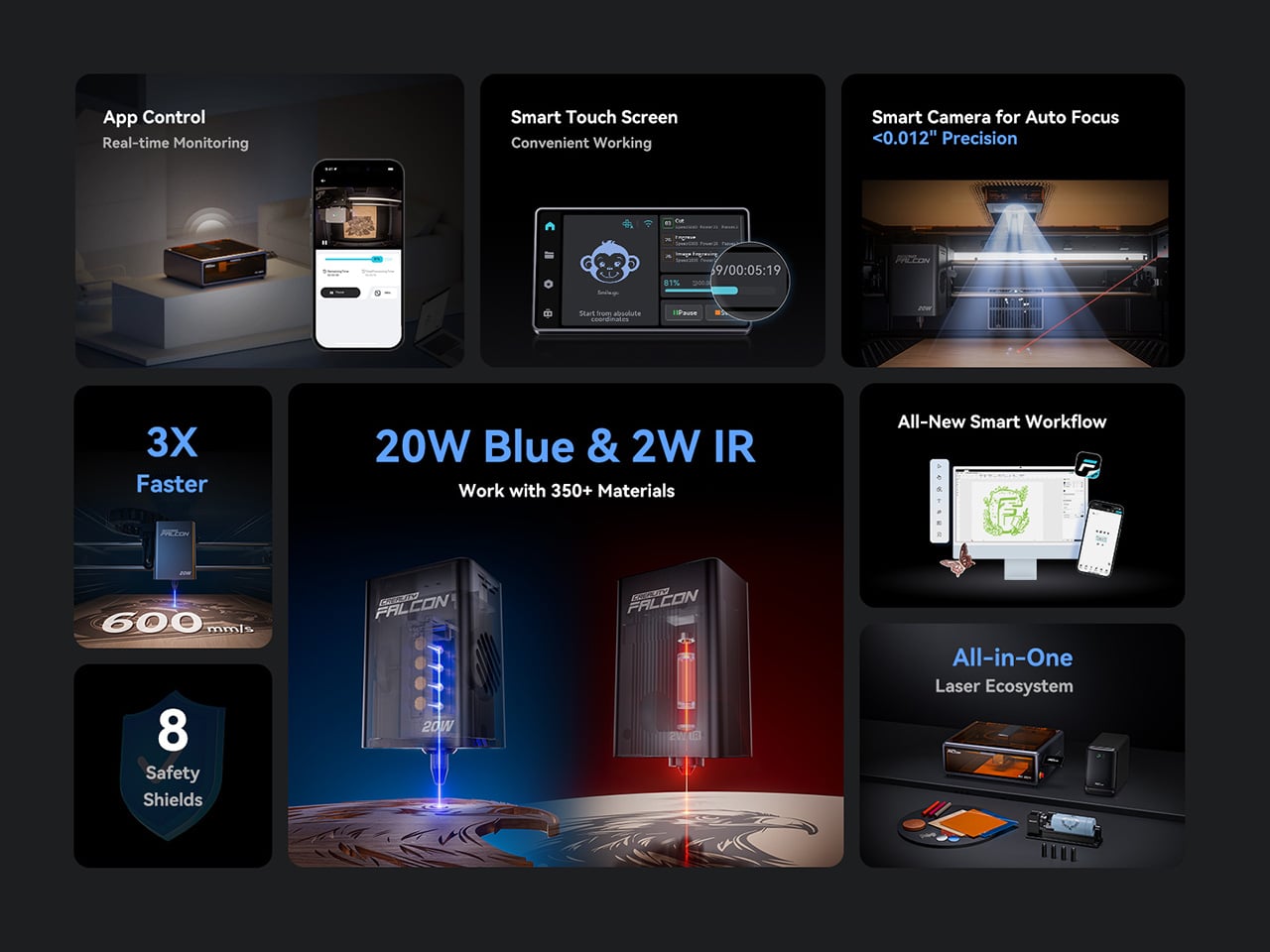
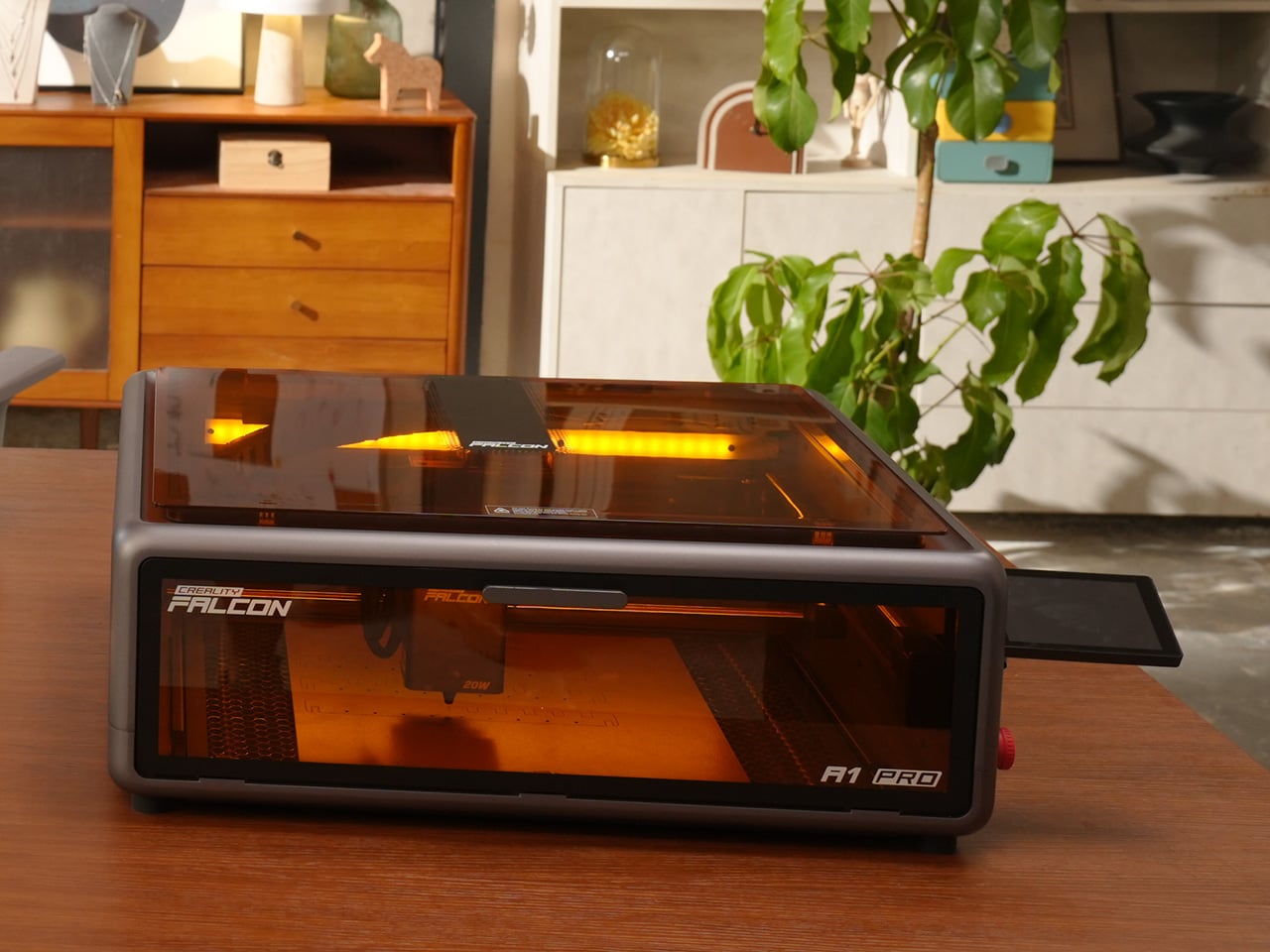
The Falcon A1 Pro sits at the upper end of what diode laser systems can realistically accomplish, and Creality has equipped it with the kind of features that used to separate prosumer machines from true commercial units. The dual 10W diode configuration, combined into a single 20W output beam, gives this engraver enough power to cut through 15mm plywood or 10mm acrylic in a single pass under optimal conditions. That’s approaching the cutting capacity of entry-level CO2 systems, but without the water cooling, tube maintenance, or ventilation complexity. For users who need to work with wood, leather, cardboard, coated metals, and various plastics, the diode approach offers a much simpler operational footprint.

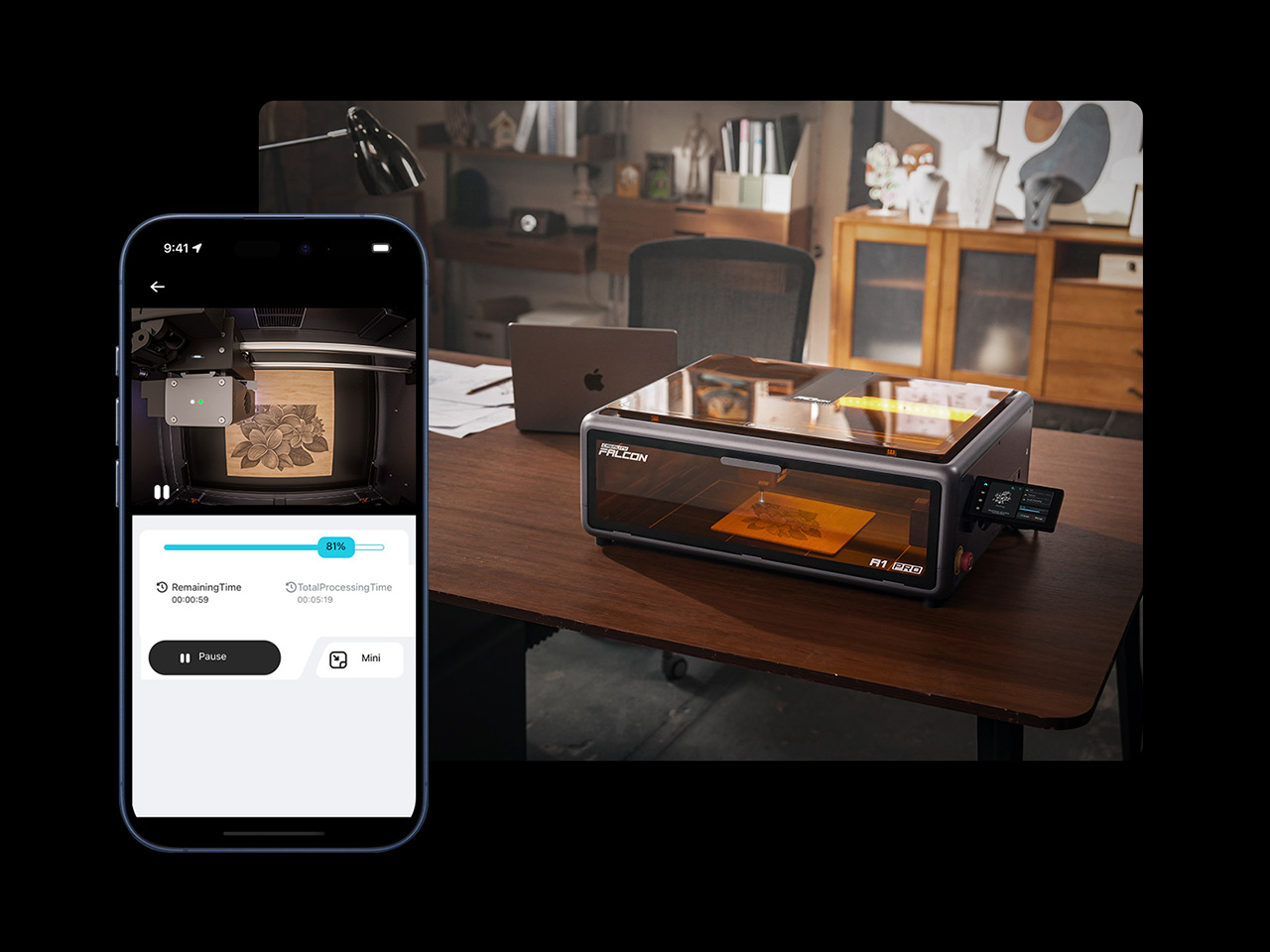
As publications like Techradar have pointed out, the entire field of laser engraving has become far safer and easier to use in the last year, reaching a point where the process is almost as simple as sending a drawing to a printer. The Falcon A1 Pro is a perfect example of this evolution. Imagine you’re running a small Etsy shop. One moment you’re engraving a batch of wooden coasters, and the next you need to cut custom acrylic keychains from thicker stock. On older machines, this meant a tedious manual recalibration process. Here, the motorized autofocus and built-in thickness probe handle it automatically. The machine measures the new material and adjusts the laser height for a perfect focus, eliminating guesswork and dramatically reducing setup time and wasted material. This level of automation is what turns a hobbyist tool into a reliable small business machine.

For anyone operating this machine in a home office, garage, or classroom, the full safety enclosure is a critical feature. It contains the Class IV laser emissions and traps fumes, but more importantly, it provides peace of mind. Integrated sensors for flame detection and door status mean you can confidently let a 45-minute engraving job run while you handle other tasks, knowing the machine will pause or stop if an issue arises. This security is complemented by the built-in air assist, which keeps the cutting surface clear of debris. This isn’t just about cleanliness; it results in cleaner cuts, sharper engravings, and less charring on materials like wood, which directly translates to a higher quality, more sellable final product.

At the current $719.10 sale price, the Falcon A1 Pro becomes a compelling option for small business use, not just hobbyist experimentation. The combination of cutting power, safety features, and workflow automation puts it in the same capability tier as machines that routinely sell for $1,500 or more. For product designers, sign makers, or makers running a side business, the ability to move from a digital file to a finished product with minimal supervision is what makes this machine a production asset. Paired with the Otter Lite scanner, the workflow becomes even more powerful: scan an object, modify it digitally, then laser-cut a custom mounting bracket or decorative surround in minutes. That kind of rapid iteration and customization is what defines modern small-scale manufacturing, and having both capabilities for under $1,500 total is a legitimate shift in what’s economically feasible for independent creators.

Click Here to Buy Now: $719.10 $1099 ($379.9 off, use coupon code “CREALITY10”). Hurry, deal ends in 48-hours!

Creality Otter Lite 3D Scanner: $546.30 $759.00

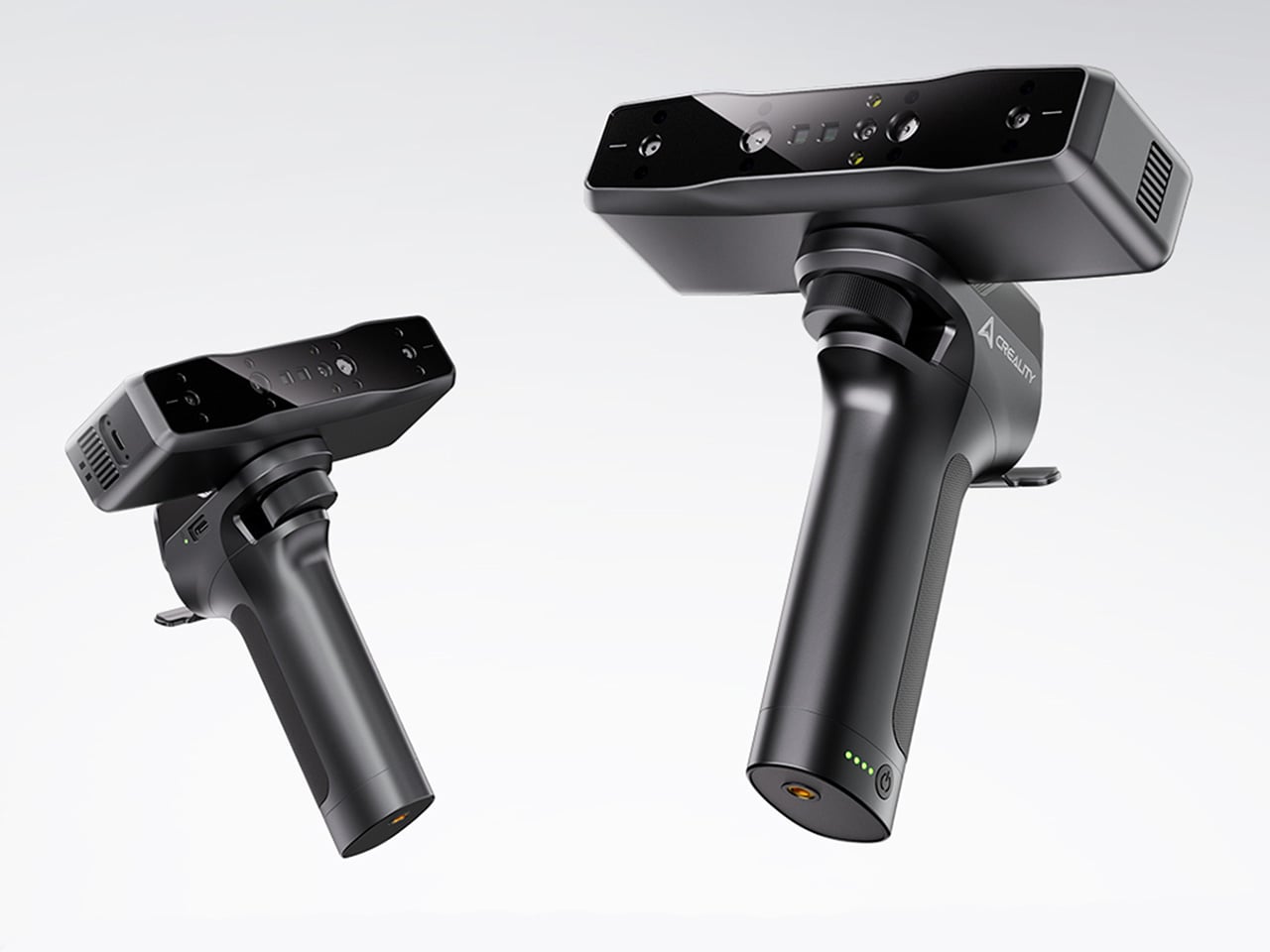
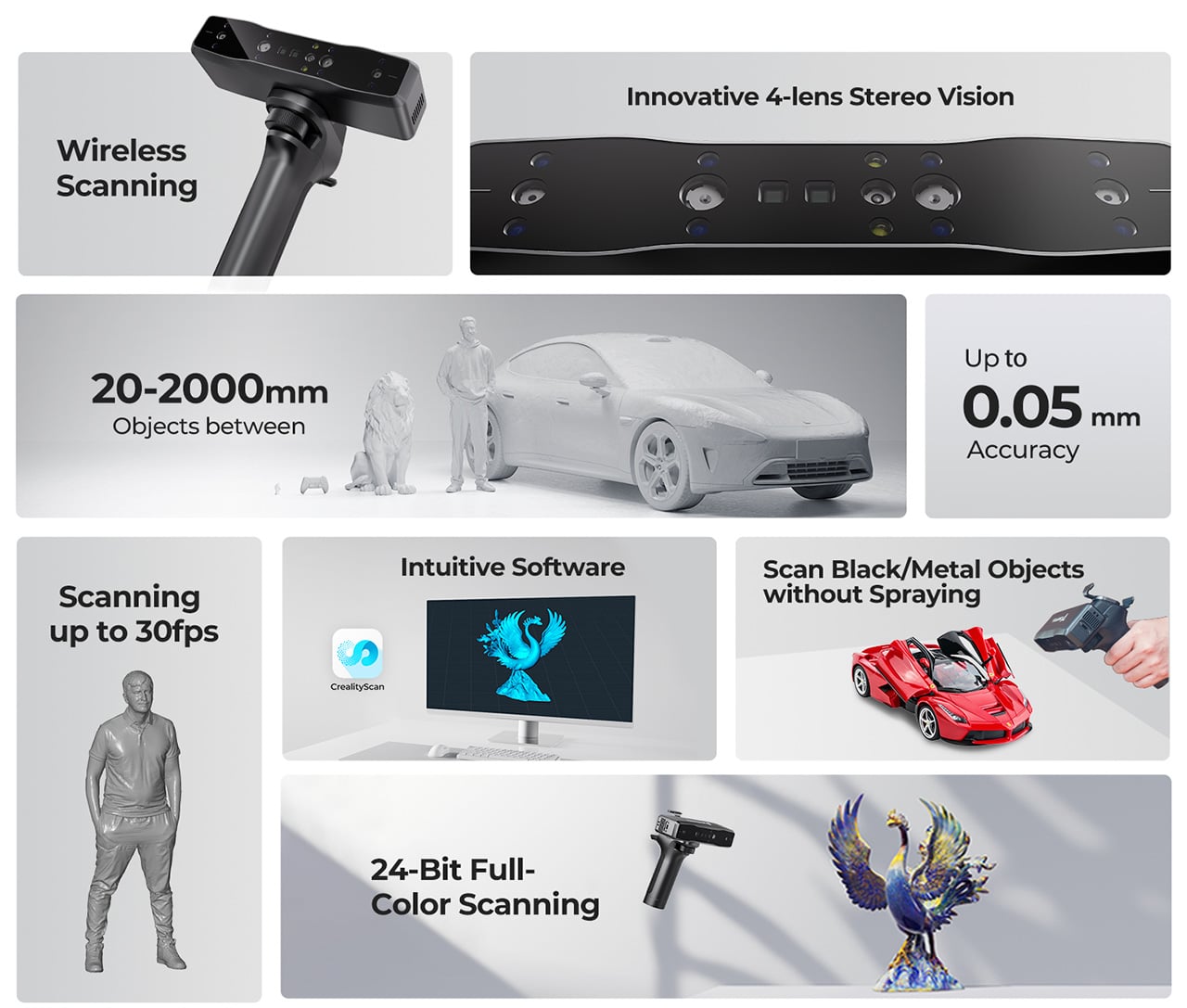
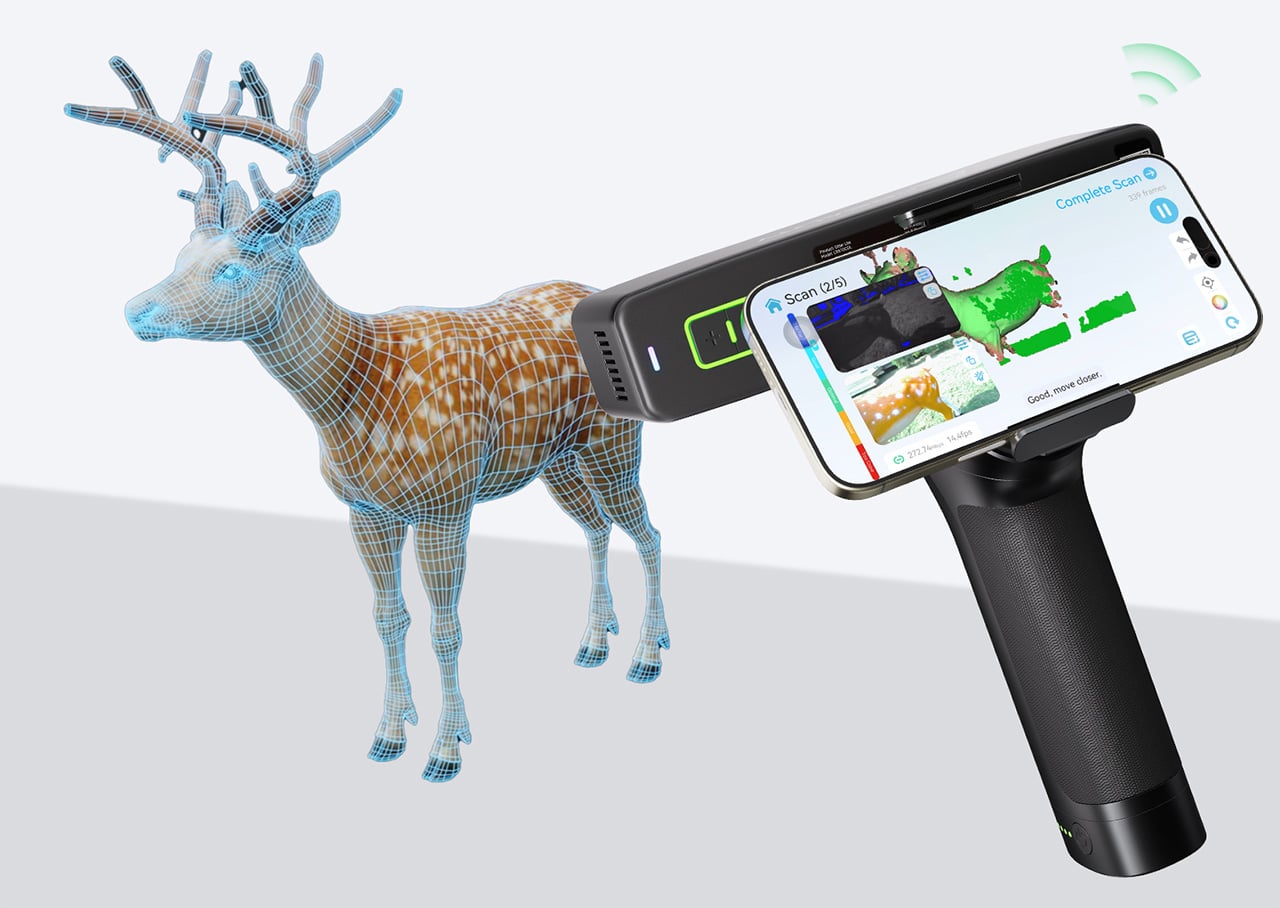
The Otter Lite represents one of the more significant shifts in the consumer 3D scanning market over the past year. Creality has managed to pack features typically found in scanners that cost twice as much into a wireless handheld device that achieves 0.05mm accuracy across a flexible working range. The four-lens stereo vision system is doing most of the heavy lifting here, allowing the scanner to maintain tracking and precision even when working with tricky surfaces like reflective metals or matte black plastics. That’s a problem that has plagued budget scanners for years, often requiring users to coat objects in developer spray or talcum powder before scanning. The Otter Lite handles these materials natively, which removes a tedious preprocessing step and makes the workflow considerably faster.

Picture scanning a vintage car door handle for a restoration project. You’re working in a garage with no convenient outlet nearby, moving around the vehicle to capture different angles and details. The Otter Lite’s three-hour battery life means you can complete the entire scan session without hunting for power or dealing with extension cords snaking across the floor. The 20mm to 2000mm working envelope handles both the small mounting hardware and the full door panel in the same session. Or consider a scenario where you’re digitizing a client’s sculpture at their studio: the wireless operation lets you walk a full 360 degrees around the piece, capturing undercuts and complex geometry without repositioning cables or worrying about tripping over your own setup. The anti-shake tracking compensates for the minor hand movements that happen when you’re reaching around awkward angles or holding the scanner overhead.

The scanner works across Windows, macOS, iOS, and Android platforms, which matters more than it might seem at first. Being able to start a scan on your laptop, then switch to a tablet for field work, or even use your phone for quick capture jobs, removes the friction of being locked into a single device. The bundled software handles alignment, mesh generation, and texture mapping without requiring deep technical knowledge, and the 30fps scanning speed with full 24-bit color capture means you’re getting texture fidelity that’s actually usable for color-matched 3D printing or detailed visualization. Exporting clean meshes directly into Fusion 360, Blender, or your slicer of choice happens without the usual manual cleanup that budget scanners demand.

At $546.30 during this sale, the Otter Lite is priced aggressively enough to make 3D scanning a realistic addition to a home workshop rather than a luxury reserved for professional studios. The jump from budget photogrammetry rigs or sub-$300 scanners to something with this level of precision and ease of use is substantial. For anyone doing custom part fabrication, cosplay props, small-scale manufacturing, or educational projects, having the ability to quickly digitize a reference object or create a baseline model for modification changes the speed and flexibility of the entire creative process. This discount puts it within range of a strategic investment rather than a speculative purchase.

Click Here to Buy Now: $546.30 $759 ($212.7 off, use coupon code “CREALITY10”). Hurry, deal ends in 48-hours!

The post Creality’s Black Friday Bundle Gives You 20W Laser Cutting and Professional 3D Scanning for $1,265 first appeared on Yanko Design.