Blue Origin is pausing its space tourist flights to work on lunar landers for NASA

Blue Origin plans to put a focus on the development of its human lunar capabilities, so it won’t be sending tourists to space for at least the next two years. That means we won’t be seeing any New Shepard launches for quite some time. Blue Origin is one of the companies NASA chose to develop human landing systems for its Artemis program, along with SpaceX. Specifically, it will work on landers for the Artemis III and Artemis V missions.

The company was originally contracted to build the human landing system that would transfer astronauts from NASA’s Gateway station to the moon’s South Pole region for the Artemis V mission. But last year, NASA asked Blue Origin to design an alternative lander for Artemis III after SpaceX experienced delays due to Starship’s failed tests. Artemis III is expected to be the first crewed moon landing mission of the program, and the Trump administration wants it to happen before the end of the president’s term.

New Shepard takes tourists to suborbital space, where they experience a few minutes of weightlessness before the spacecraft makes its way back to Earth. Jeff Bezos was one of the passengers on New Shepard’s first tourist flight back in 2021. Since then, it has flown and landed 37 more times and carried 98 passengers to the Karman line, including Katy Perry and William Shatner.

This article originally appeared on Engadget at https://www.engadget.com/science/space/blue-origin-is-pausing-its-space-tourist-flights-to-work-on-lunar-landers-for-nasa-143000058.html?src=rss

This Award-Winning Bookstore Looks Like a Portal to Outer Space

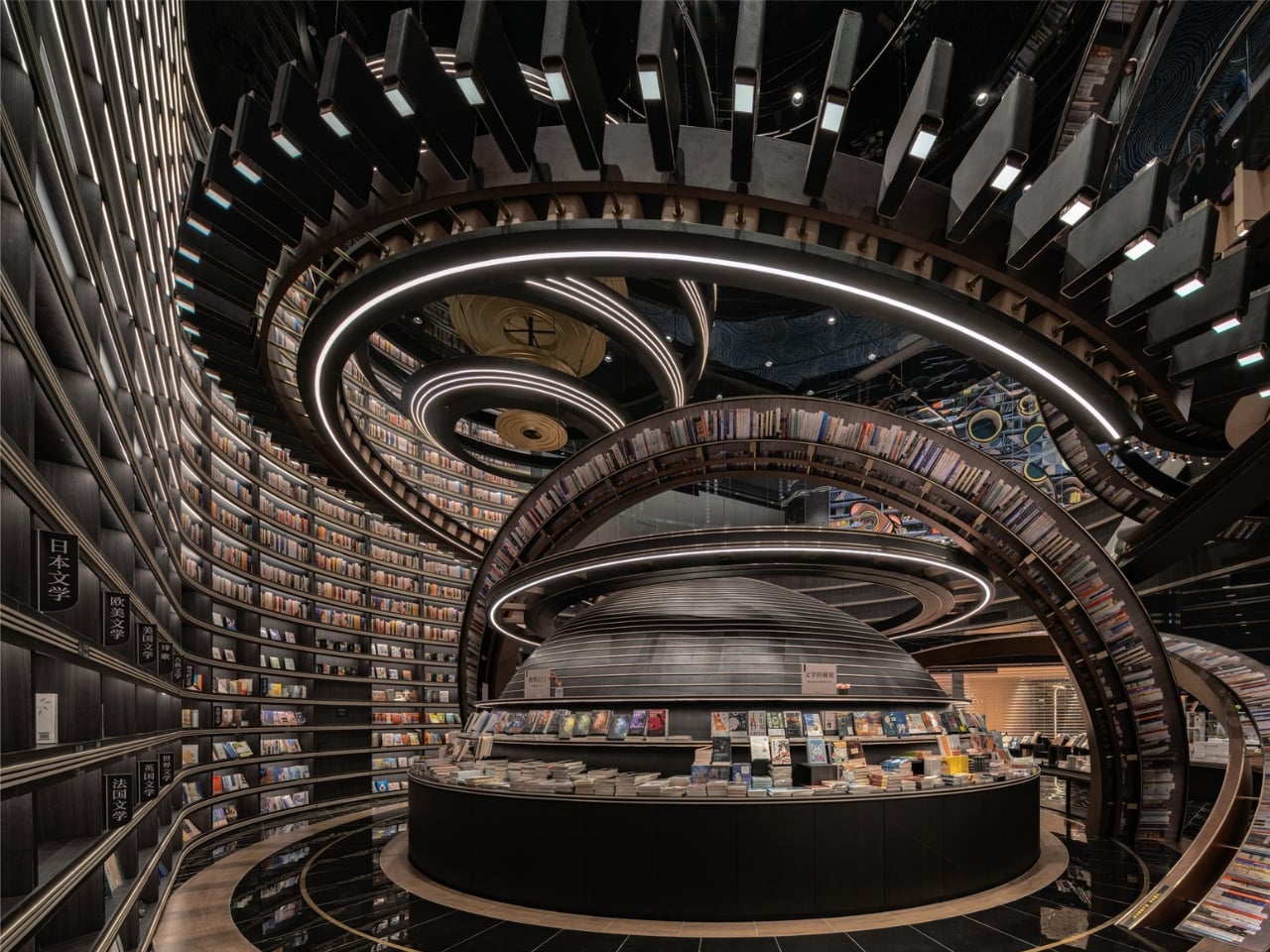
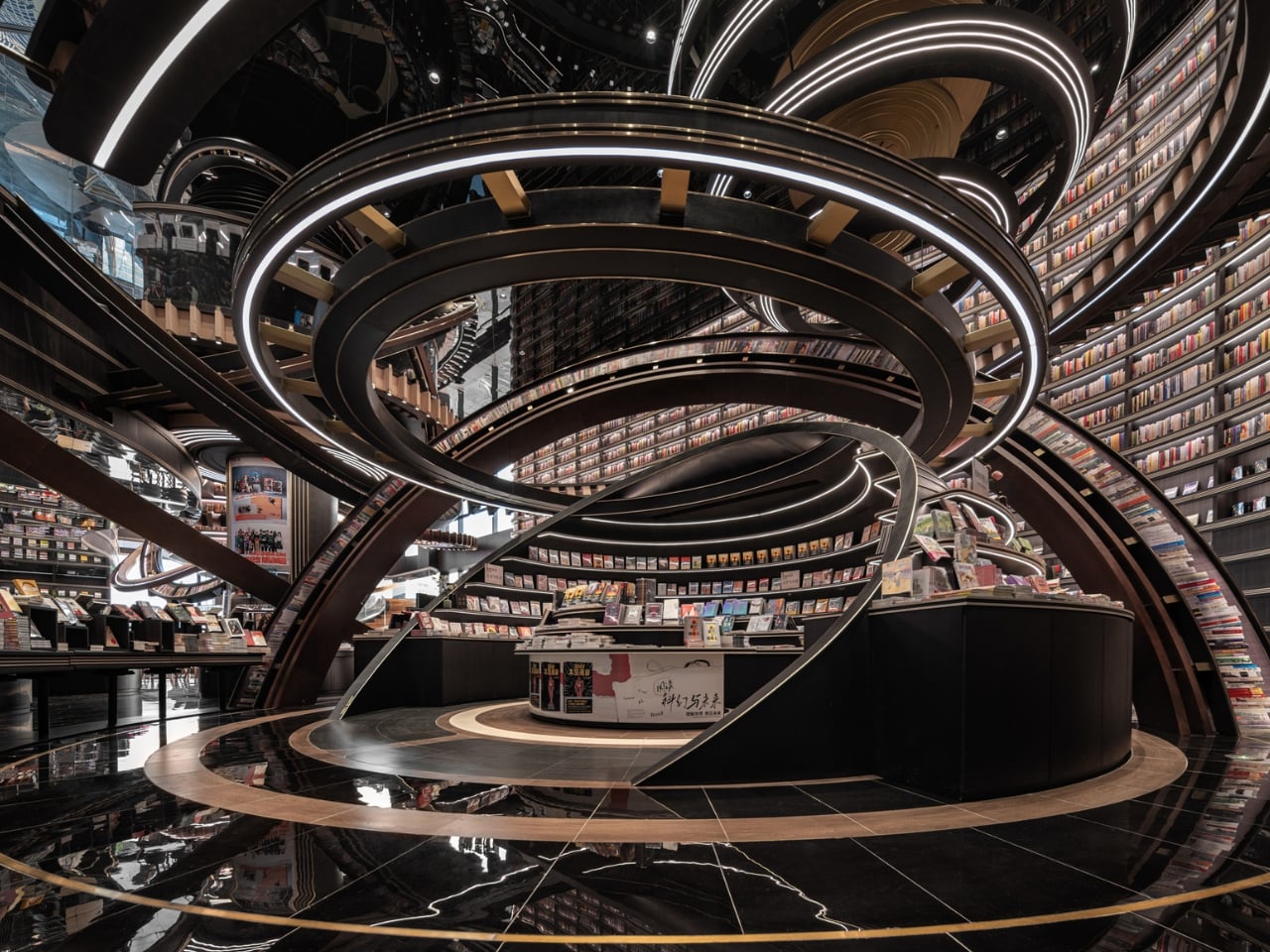
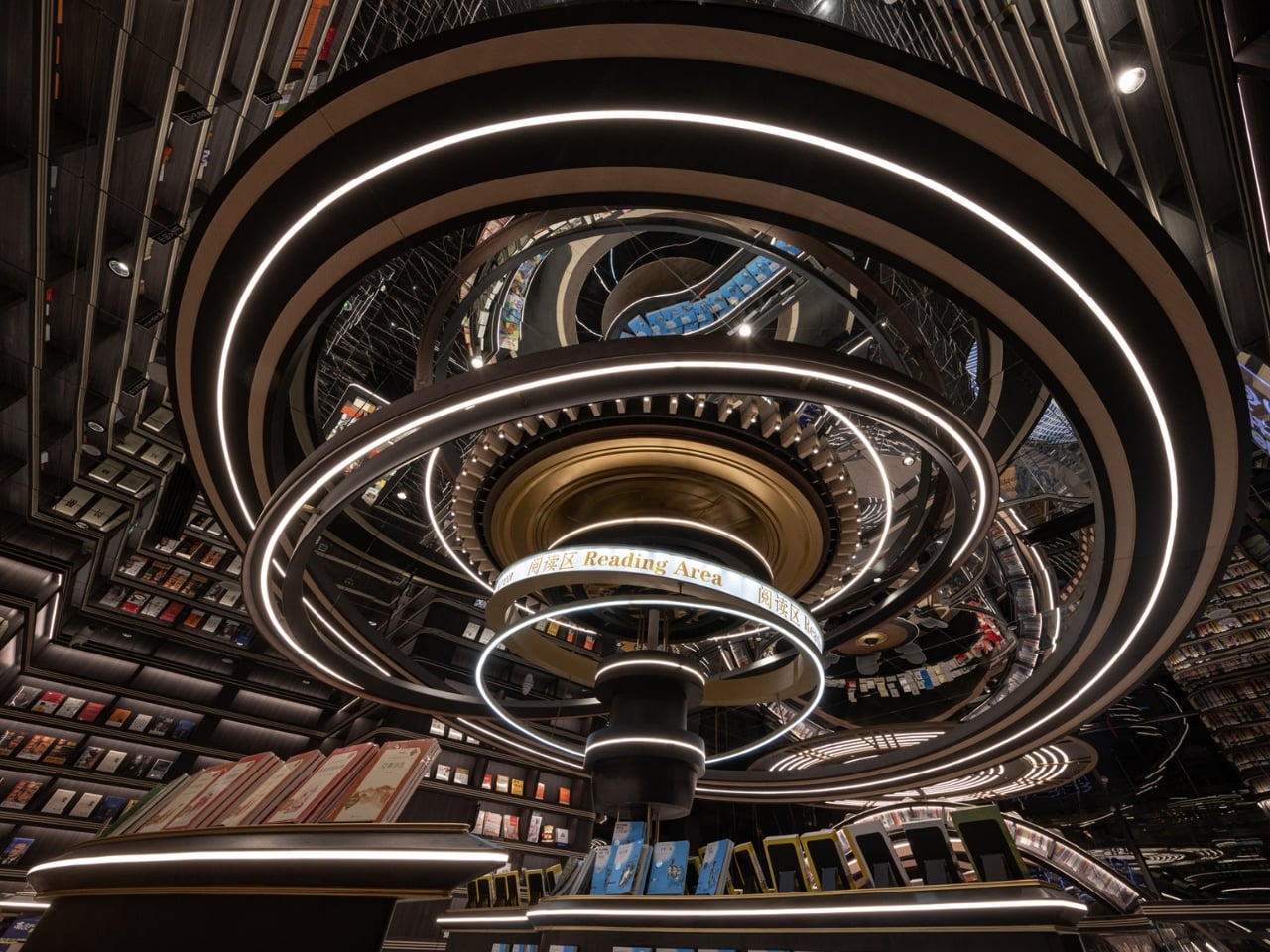
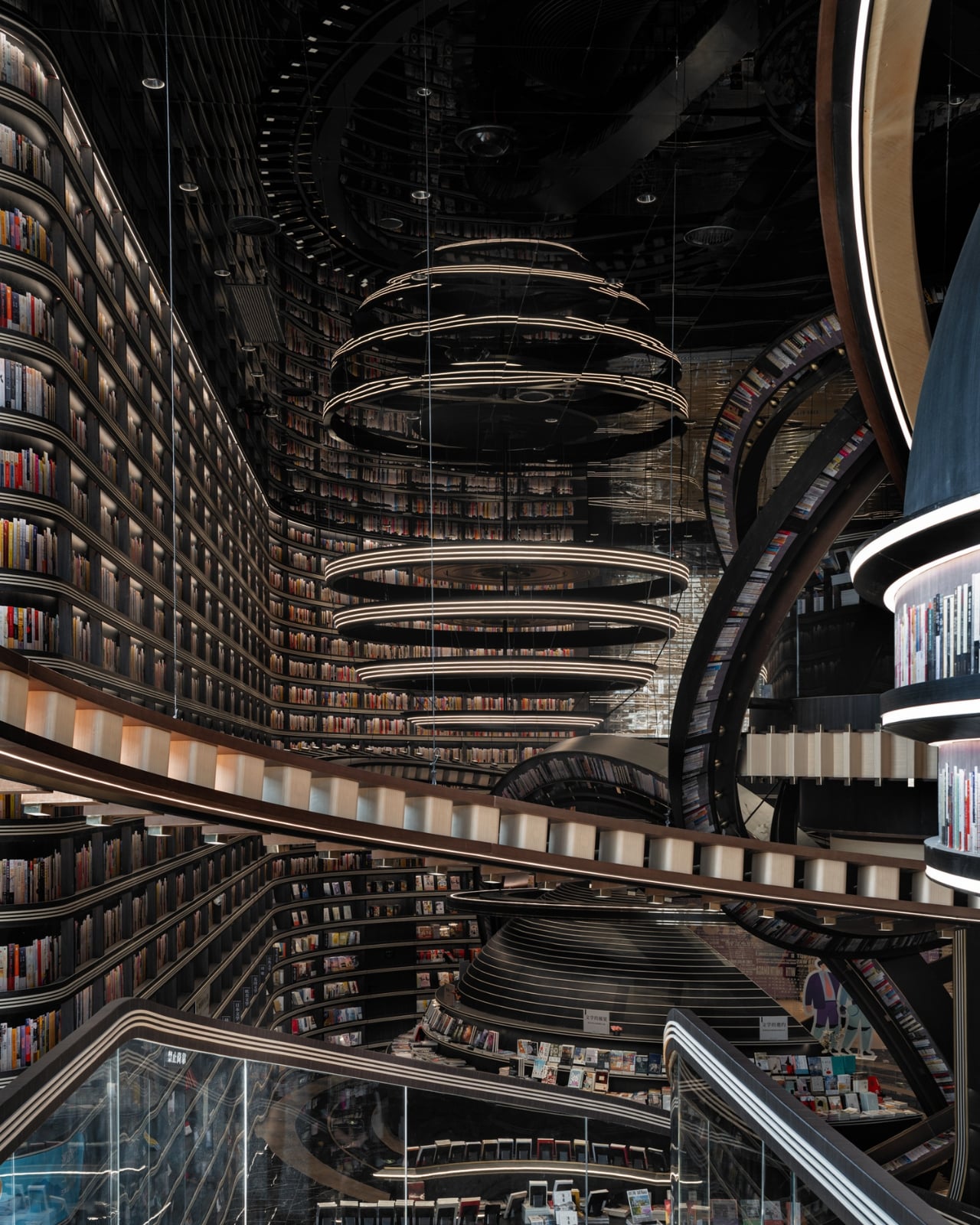
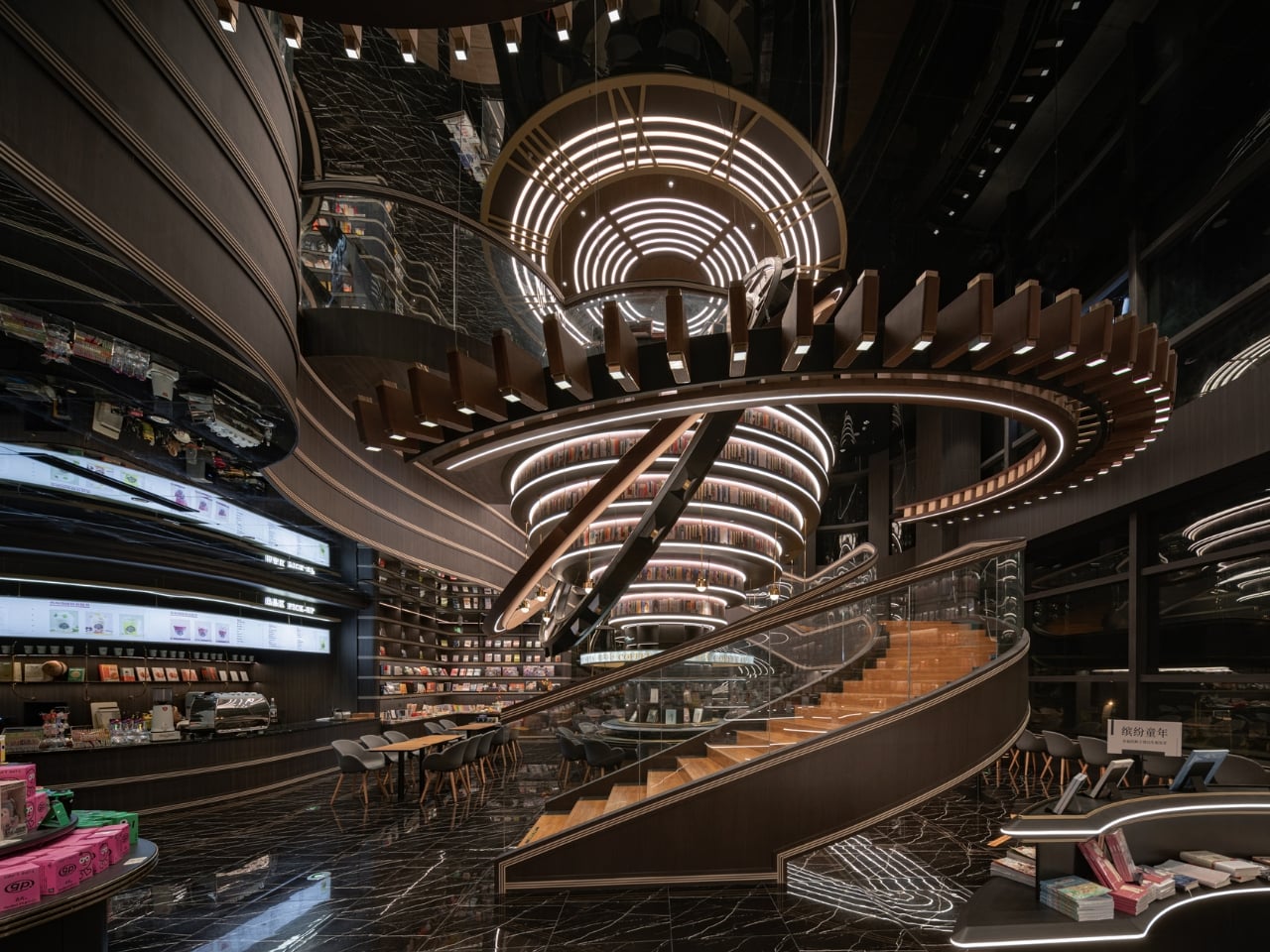
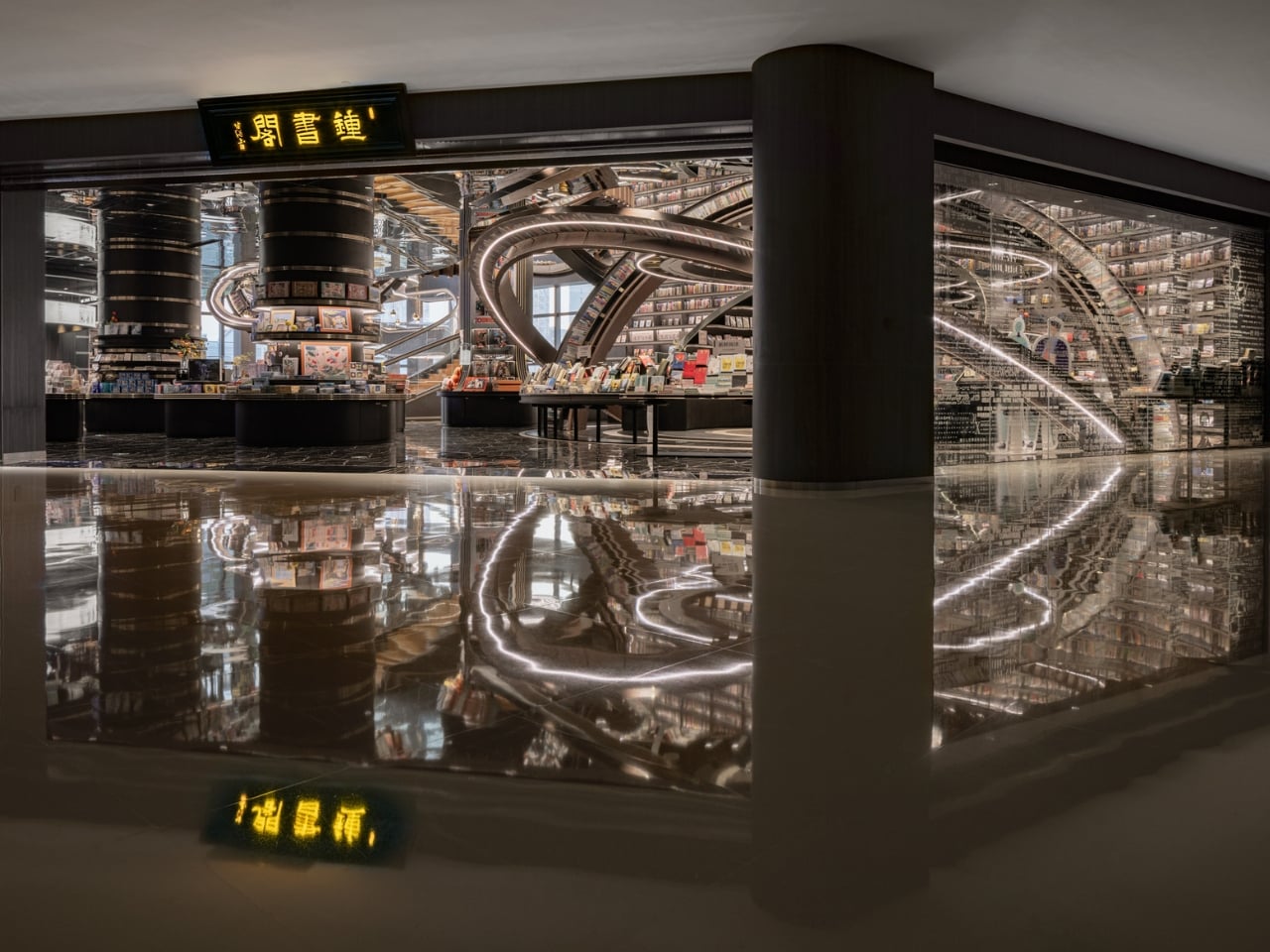
Picture walking through a bustling marketplace in China and suddenly stumbling upon what looks like a giant celestial machine that’s crashed through the ceiling. That’s exactly the vibe designer Li Xiang was going for with the Huai’an Zhongshuge Bookstore, and let me tell you, this place is absolutely wild.

Located in Jiangsu Province and completed in 2023, this isn’t your typical cozy corner bookshop with reading nooks and potted plants. Instead, Li Xiang of X+Living studio created something that feels like you’ve stepped through a portal into another dimension. The bookstore just snagged the 2025 Platinum A’ Design Award in Interior Space and Exhibition Design, which is basically the design world’s way of saying “this is incredibly special.”

Designer: Li Xiang

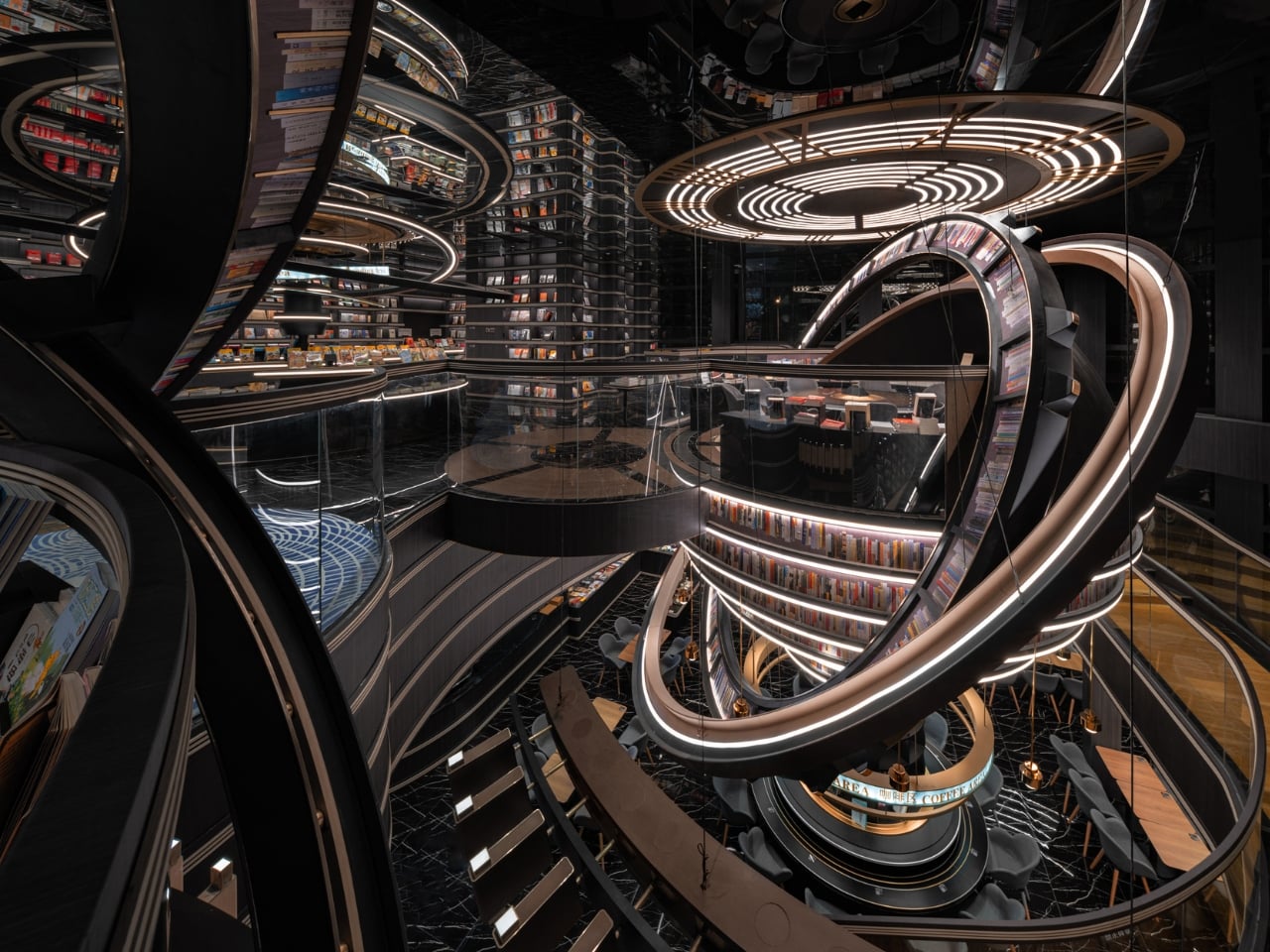
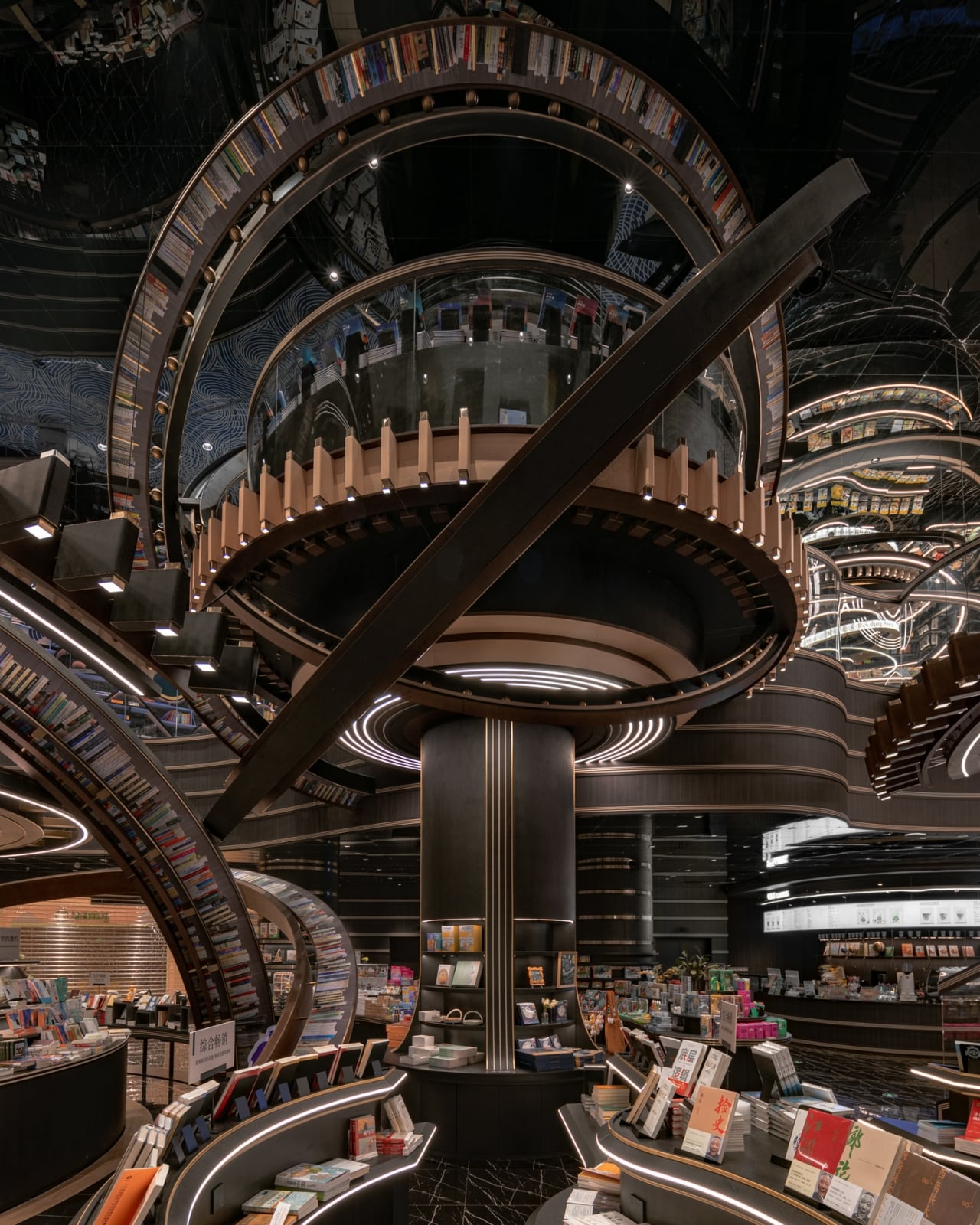
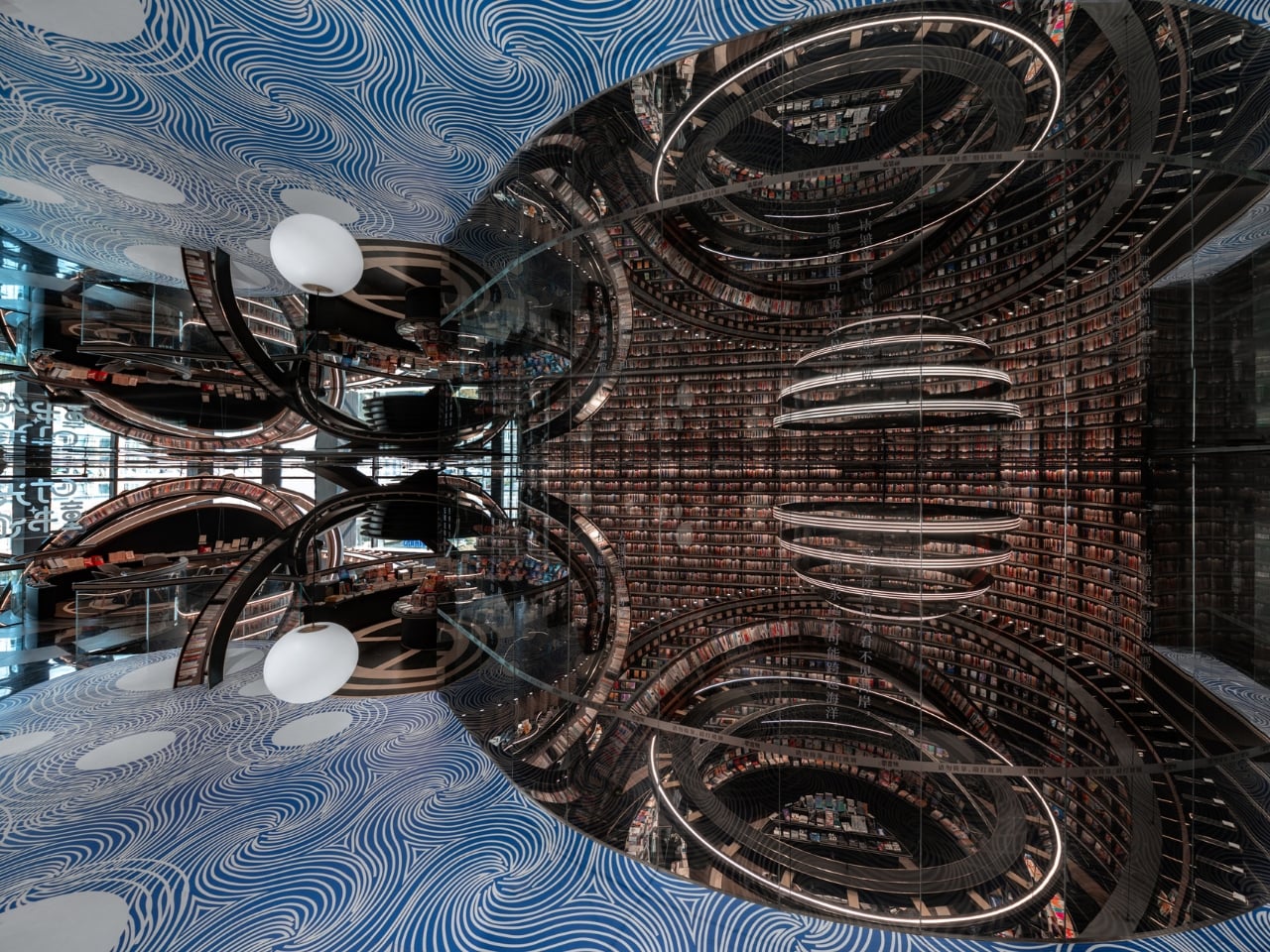
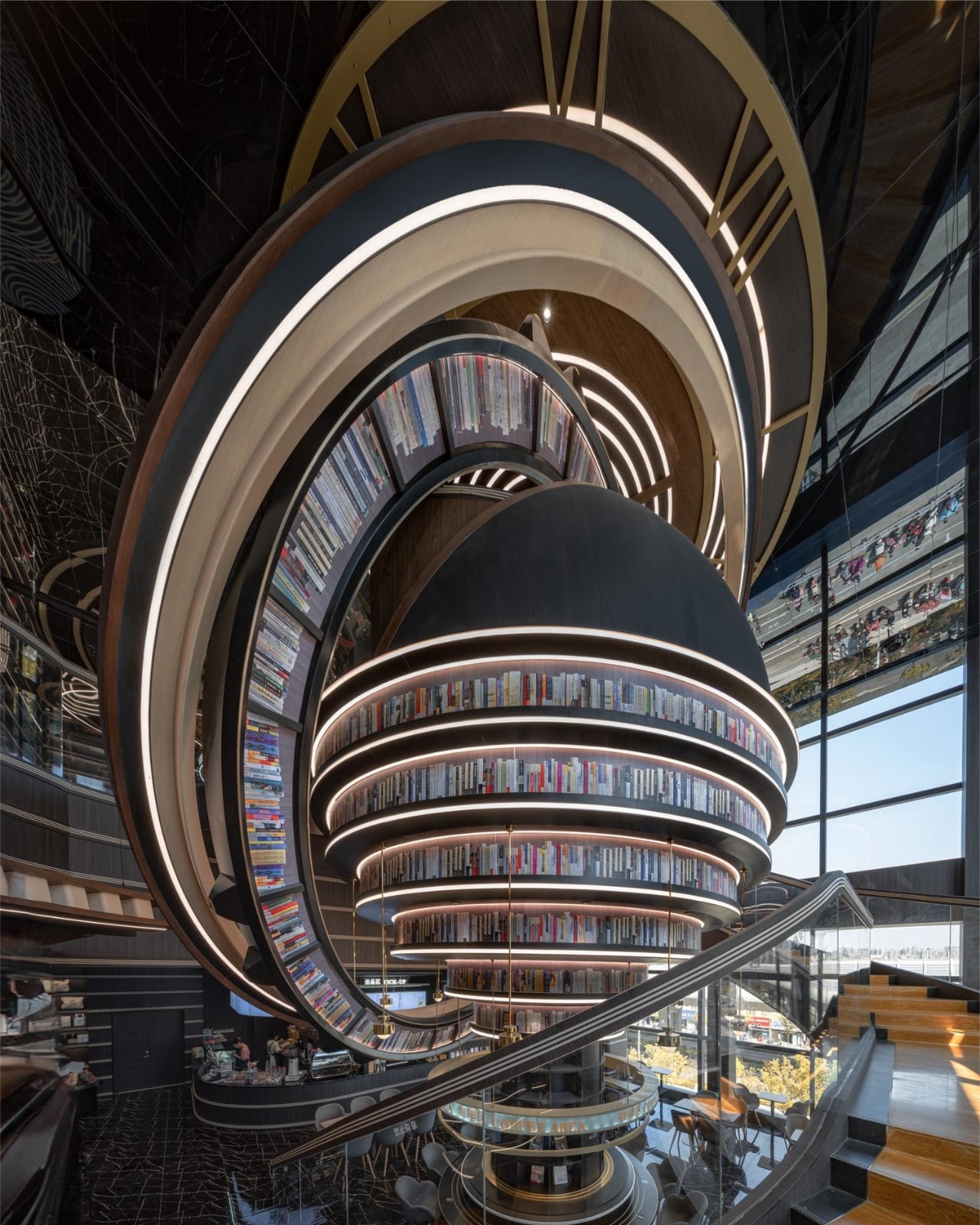
What makes this space so mind-blowing? It’s all about those massive three-dimensional structures that look like astronomical instruments floating inside the store. Imagine concentric rings and geometric forms inspired by celestial mechanics, all reimagined as bookshelves and display areas. The books themselves seem to defy gravity, positioned on these dramatic structures in ways that make you feel like you’re browsing a library floating somewhere in deep space.

But here’s the thing that really gets me about this design. Li Xiang didn’t just want to create something that looked cool for Instagram (though it absolutely does). There’s a deeper philosophy at work here. He describes the project as tearing open a spacetime rift in the midst of everyday city life, which sounds dramatic but actually makes total sense when you think about it.

Li Xiang believes that in our fast-paced modern world, many people have lost the ability to dream. We get stuck in routines, moving through identical concrete cityscapes, dealing with the mundane realities of daily life. His idea was to create a space where people could detach from all that, even just briefly, and rediscover something more imaginative within themselves. As he puts it, the architectural space becomes an extension of dreamlike reality, a spiritual revelation suspended above the ordinary city below.

That’s pretty powerful stuff for a retail space, right? But it works because the design truly commits to the concept. Those exaggerated celestial forms aren’t just decoration. They break up the monotony of reinforced concrete and rectangular spaces that dominate urban architecture. When you’re surrounded by these cosmic structures, your brain kind of has no choice but to shift gears and enter a different mental space.

What I really appreciate is how this fits into the broader Zhongshuge philosophy. This bookstore chain follows a principle of “chain but not replicate, each store with its own cultural style.” So while there are other Zhongshuge locations across China, each one tells its own story and creates a unique experience. The Huai’an location chose to go full sci-fi spectacular, and the results speak for themselves.

From a technical standpoint, pulling this off wasn’t simple either. The project had to overcome some seriously complex spatial and structural challenges to create that feeling of cosmic vastness within what’s actually a confined retail area. Those massive rings and irregular geometric forms needed precise engineering to work safely while maintaining that surreal, gravity-defying aesthetic.

There’s something really special about seeing retail design pushed this far. We’re used to stores being functional, maybe pleasant, occasionally stylish. But Li Xiang took a different approach entirely, creating an environment that prioritizes experience and emotion over conventional retail logic. It’s architecture that values your mental space, that wants you to feel something beyond just the transaction of buying books.

If you’re someone who gets excited about the intersection of design, technology, and culture, this bookstore represents something important. It shows us that commercial spaces don’t have to be boring or predictable. They can be destinations, experiences, even forms of art that make us think differently about the everyday spaces we move through. And maybe, just maybe, they can help us remember how to dream a little.

The post This Award-Winning Bookstore Looks Like a Portal to Outer Space first appeared on Yanko Design.

iOS 26.3: The Hidden Features You Can’t Afford to Miss

iOS 26.3: The Hidden Features You Can’t Afford to Miss

Apple has officially released the third beta of iOS 26.3, marking a pivotal step toward the public rollout of this update. Packed with a range of enhancements, iOS 26.3 focuses on key areas such as privacy, hardware compatibility, user interface improvements, and performance optimization. With the release candidate anticipated in early February, this update promises […]

The post iOS 26.3: The Hidden Features You Can’t Afford to Miss appeared first on Geeky Gadgets.

Posted in Uncategorized

Chrome with Gemini Now Handles Forms, Plans Trips, and Navigates Apps While You Focus

Chrome with Gemini Now Handles Forms, Plans Trips, and Navigates Apps While You Focus

What if your browser could think, act, and work like a personal assistant, automating tasks you didn’t even know could be simplified? Google’s Gemini 3 AI integration in Chrome is turning this vision into reality. In this guide, World of AI explains how this innovative “Agentic AI” transforms Chrome into a powerhouse of automation and […]

The post Chrome with Gemini Now Handles Forms, Plans Trips, and Navigates Apps While You Focus appeared first on Geeky Gadgets.

Posted in Uncategorized

How to turn on hypertension alerts on Apple Watch

Apple has steadily expanded the Apple Watch’s health monitoring features over the years, moving beyond fitness tracking into areas that can offer early insight into potential medical concerns. One of the most recent additions is hypertension alerts, which are designed to notify users when their blood pressure trends are elevated over time. While Apple Watches cannot directly measure blood pressure, this feature can still play a useful role in highlighting patterns that may be worth discussing with your doctor. Here, we’ll explain what hypertension alerts do, how they work and how to enable and manage them on the Apple Watch.

Hypertension alerts are designed to identify long-term trends that may indicate elevated blood pressure. Instead of relying on a traditional cuff measurement, the Apple Watch analyzes a combination of health data collected over a 30-day period, including heart rate, movement patterns and other contextual information stored in the Health app. Using this data, the system looks for sustained changes that align with patterns commonly associated with hypertension.

If your Apple Watch detects a trend suggesting elevated blood pressure over an extended period, it’ll send you a notification. These alerts are not intended to diagnose hypertension or replace medical testing. Instead, they serve as an early signal that something may have changed and that you may want to seek further monitoring or professional advice.

Apple emphasizes that hypertension alerts are designed for users who have not already been diagnosed with high blood pressure. Instead, they are meant to raise awareness rather than confirm a condition.

Hypertension alerts require a compatible Apple Watch model (Apple Watch Series 9 or later, or Apple Watch Ultra 2 or later) paired with a supported iPhone (iPhone 11 or later). The feature also depends on recent versions of watchOS and iOS, as it relies on updated health algorithms and background data analysis. To use hypertension alerts you must be 22 years of age or older, not be pregnant and not have been diagnosed with hypertension. You also need to ensure that your Apple Watch’s Wrist Detection feature is turned on.  

To receive meaningful alerts, your Apple Watch needs sufficient data. This means wearing the watch regularly, including during sleep if sleep tracking is enabled, and keeping health details such as age, sex, height and weight up-to-date in the Health app. The system uses long-term trends, so alerts will not appear immediately after enabling the feature.

Hypertension alerts are managed through the Health app on the paired iPhone. The feature cannot be enabled directly from the watch itself. During setup, the Health app will ask for confirmation that the user has not been diagnosed with hypertension. It may also prompt a review of health details such as date of birth and biological sex, as this information helps improve the accuracy of trend analysis.

To get started, open the Health app on the iPhone paired with the Apple Watch. From the main Health screen, tap your profile in the top corner. Select Health Checklist from the available Features. Next, you’ll need to tap Hypertension Notifications, confirm your age and whether or not you’ve ever been diagnosed with hypertension. Tap Continue and follow the on-screen prompts for information on how the notifications work. Once you have done this, tap Done and you’ll be all set. 

Once enabled, the feature runs automatically in the background. There is no need to manually start monitoring or interact with the feature daily.

The new apple watch series 11 can help identify hypertension
Apple

When hypertension alerts are turned on, notifications appear on both the Apple Watch and the paired iPhone. These alerts typically explain that a long-term trend suggesting elevated blood pressure has been detected, along with guidance on next steps.

Users can manage how and when these notifications appear by adjusting notification settings for the Health app. This includes choosing whether alerts appear on the lock screen, in Notification Center or as time-sensitive notifications on Apple Watch.

Health data related to hypertension alerts can be reviewed at any time in the Health app. While Apple Watch does not display a specific blood pressure number, users can view contextual information and educational material explaining what the alert means and what actions may be appropriate.

Hypertension often develops gradually and may not cause noticeable symptoms in its early stages. Because of this, many people are unaware of elevated blood pressure until it is identified during a routine medical check.

Hypertension alerts can let you know of subtle changes that might have otherwise gone unnoticed. For some users, an alert may prompt earlier conversations with a doctor, additional blood pressure monitoring at home or lifestyle changes such as adjustments to diet, activity or sleep habits.

It is important to treat these notifications as informational rather than diagnostic. Apple Watch does not provide specific blood pressure readings and cannot confirm hypertension on its own.

Receiving a hypertension alert does not mean that there is an immediate medical emergency. Apple recommends using the alert as a prompt to pay closer attention to your cardiovascular health.

Many users choose to follow up by measuring blood pressure using a traditional cuff at home or by scheduling a check with a healthcare professional. A doctor can provide proper testing, diagnosis and guidance based on clinical measurements and individual risk factors.

It is also worth reviewing lifestyle factors that can influence blood pressure, such as physical activity levels, sleep quality, stress and diet. Apple Watch can already help track many of these areas, which may provide useful context when discussing health concerns with a professional.

Hypertension alerts are not available in all regions and may be subject to regulatory approval. The feature also requires consistent Apple Watch use over time to generate reliable trend data.

Most importantly, the Apple Watch does not measure blood pressure directly. The alerts are based on correlations and trends rather than direct readings, which means they should not be used as a substitute for medical equipment or professional care.

This article originally appeared on Engadget at https://www.engadget.com/wearables/how-to-turn-on-hypertension-alerts-on-apple-watch-130000090.html?src=rss

5 Best Gaming Concepts To Revolutionize Gaming In 2026

Gaming hardware has reached an inflection point where pure performance no longer separates the exceptional from the ordinary. Today’s players demand experiences that merge technical capability with thoughtful design, creating tools that feel intuitive, personal, and genuinely innovative. The concepts emerging from design studios around the world reflect this shift, prioritizing clever form factors, sustainable interaction models, and aesthetics that challenge gaming’s aggressive visual language.

These five gaming concepts push beyond incremental improvements to reimagine how we hold, power, display, and interact with gaming hardware. From ultra-compact controllers that defy ergonomic conventions to coin-operated mechanics that transform strategy itself, each design addresses real friction points while offering fresh perspectives on what gaming equipment can become when liberated from market expectations.

1. ONO Compact Controller

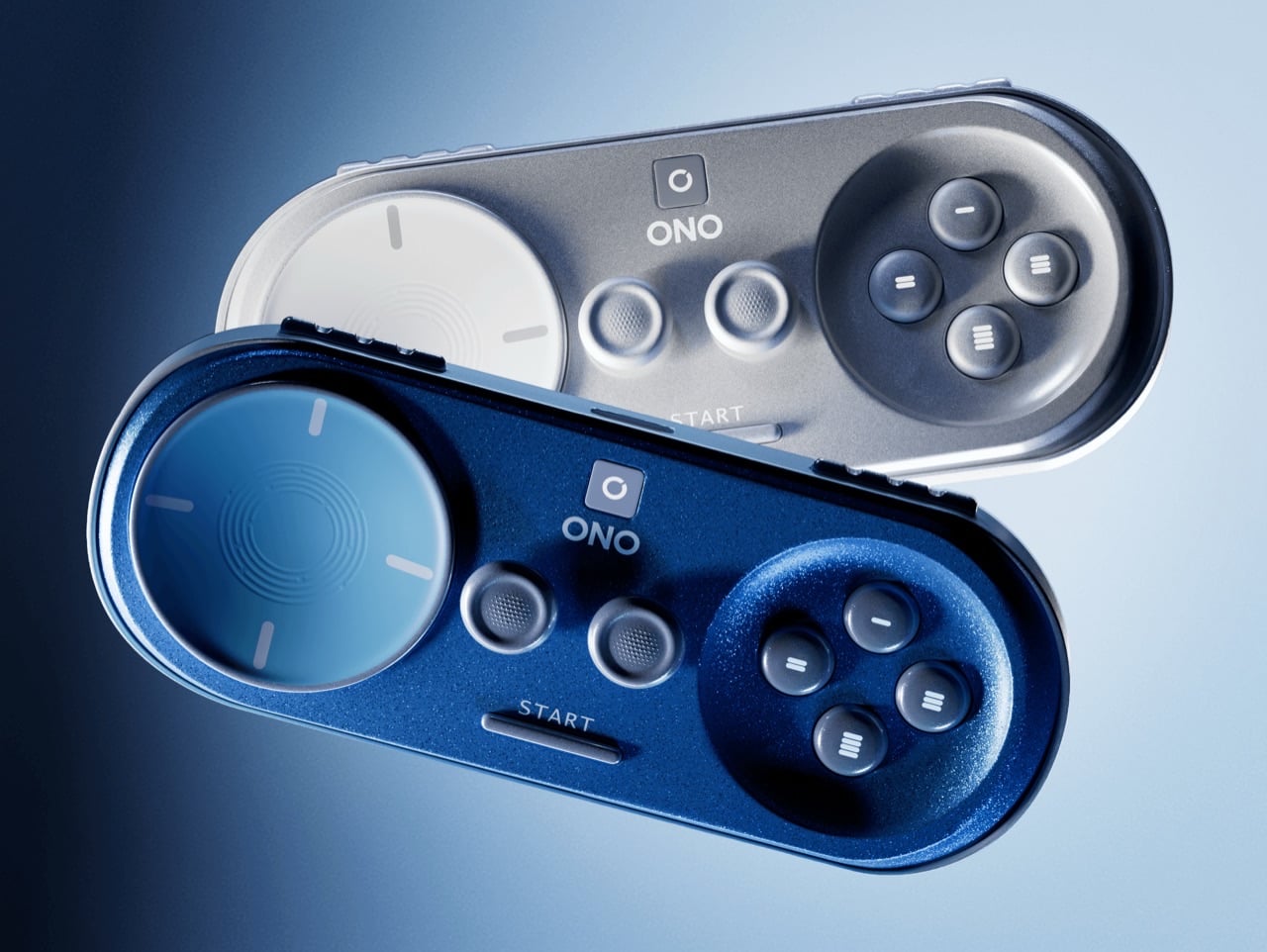
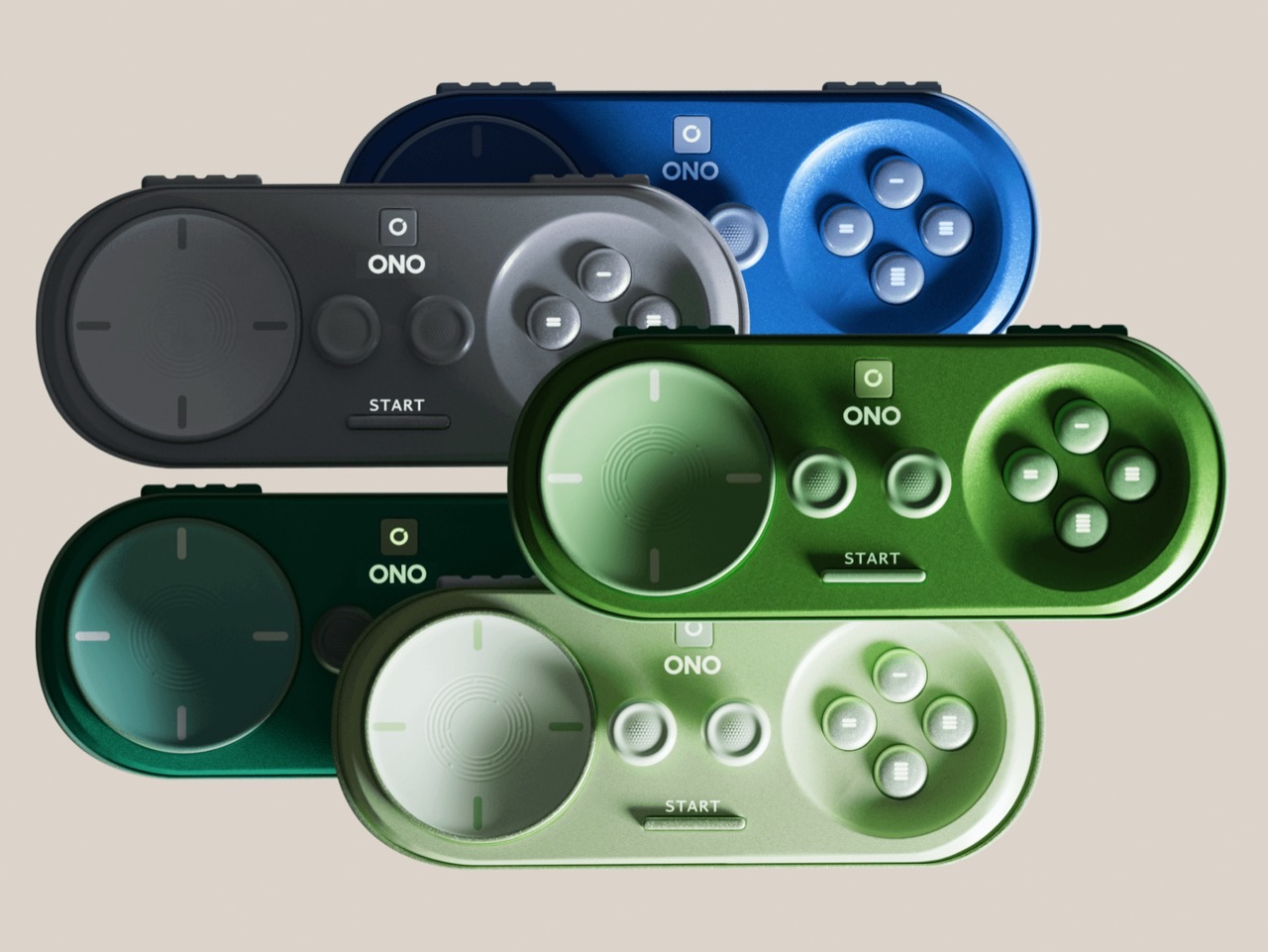
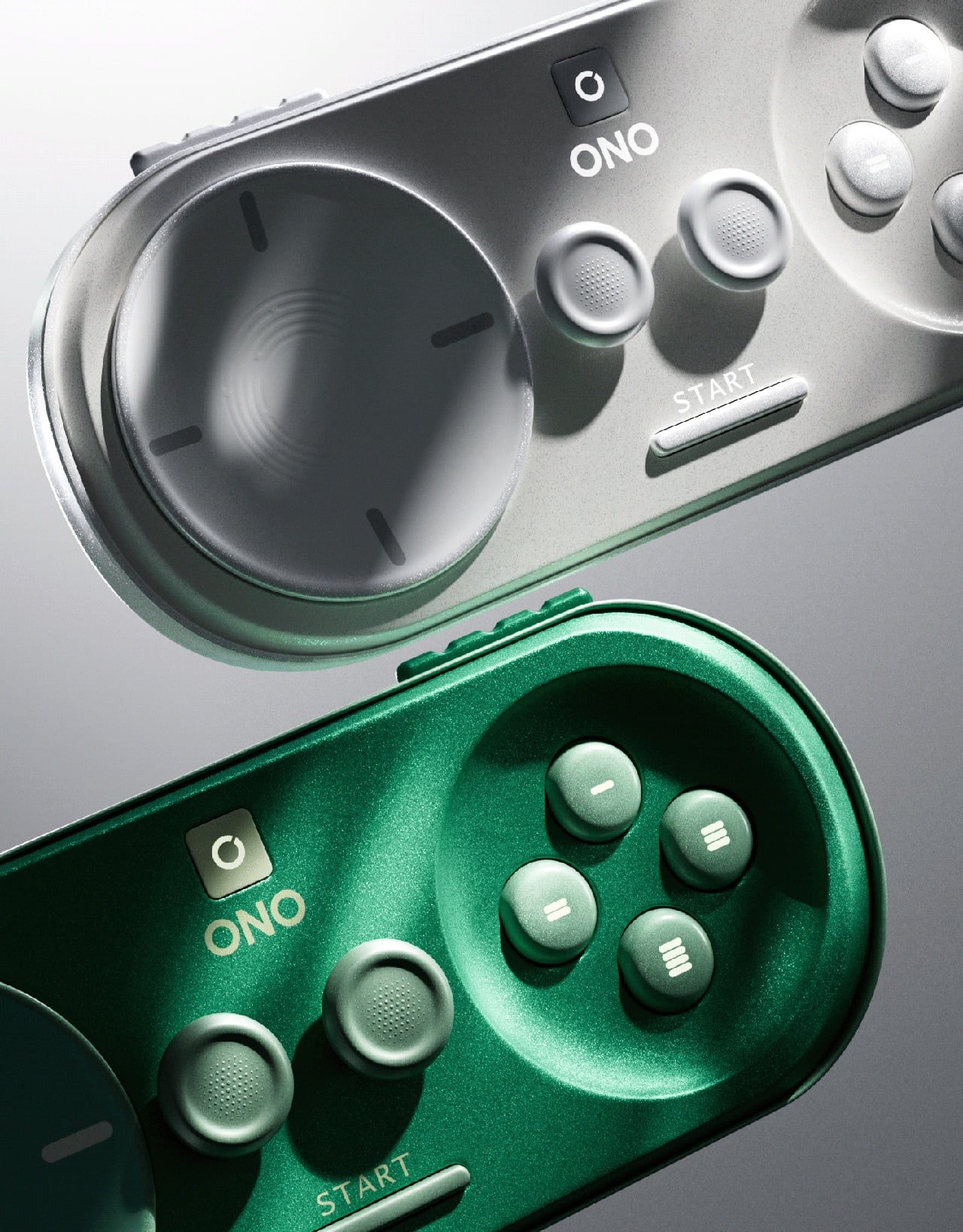
The gaming controller has ballooned in size over successive console generations, growing ever more complex with paddle buttons, touchpads, and haptic motors layered beneath increasingly aggressive shell designs. Alban Contrepois challenges this evolution with the ONO, a capsule-shaped controller that condenses every essential input into a device barely larger than a smartphone. The design philosophy centers on radical simplification without functional sacrifice, proving that ergonomics need not require bulk when the fundamentals are properly considered.

What makes the ONO particularly compelling is its platform-agnostic approach to button labeling and connectivity. Rather than PlayStation symbols or Xbox letters, the action buttons feature abstract geometric shapes, allowing the controller to work seamlessly across mobile, console, and cloud gaming platforms without visual confusion. The rounded capsule form sits naturally in palms without requiring the exaggerated wing grips found on conventional controllers, while dual analog sticks and shoulder buttons maintain full modern functionality. Contrepois even offers the 3D files freely, inviting makers to fabricate their own working prototypes and experiment with personal modifications.

What We Like

  • Genuinely pocket-portable form factor solves real mobility challenges for travelers and commuters
  • Platform-neutral button design eliminates ecosystem lock-in and branding conflicts
  • Free 3D files democratize access and encourage community iteration
  • Minimalist aesthetic appeals to players seeking less visually aggressive hardware

What We Dislike

  • Compact size may create hand cramping during extended gaming sessions
  • Lack of haptic feedback or adaptive triggers limits next-generation console compatibility

2. Goo-Inspired Sony Controller Concept

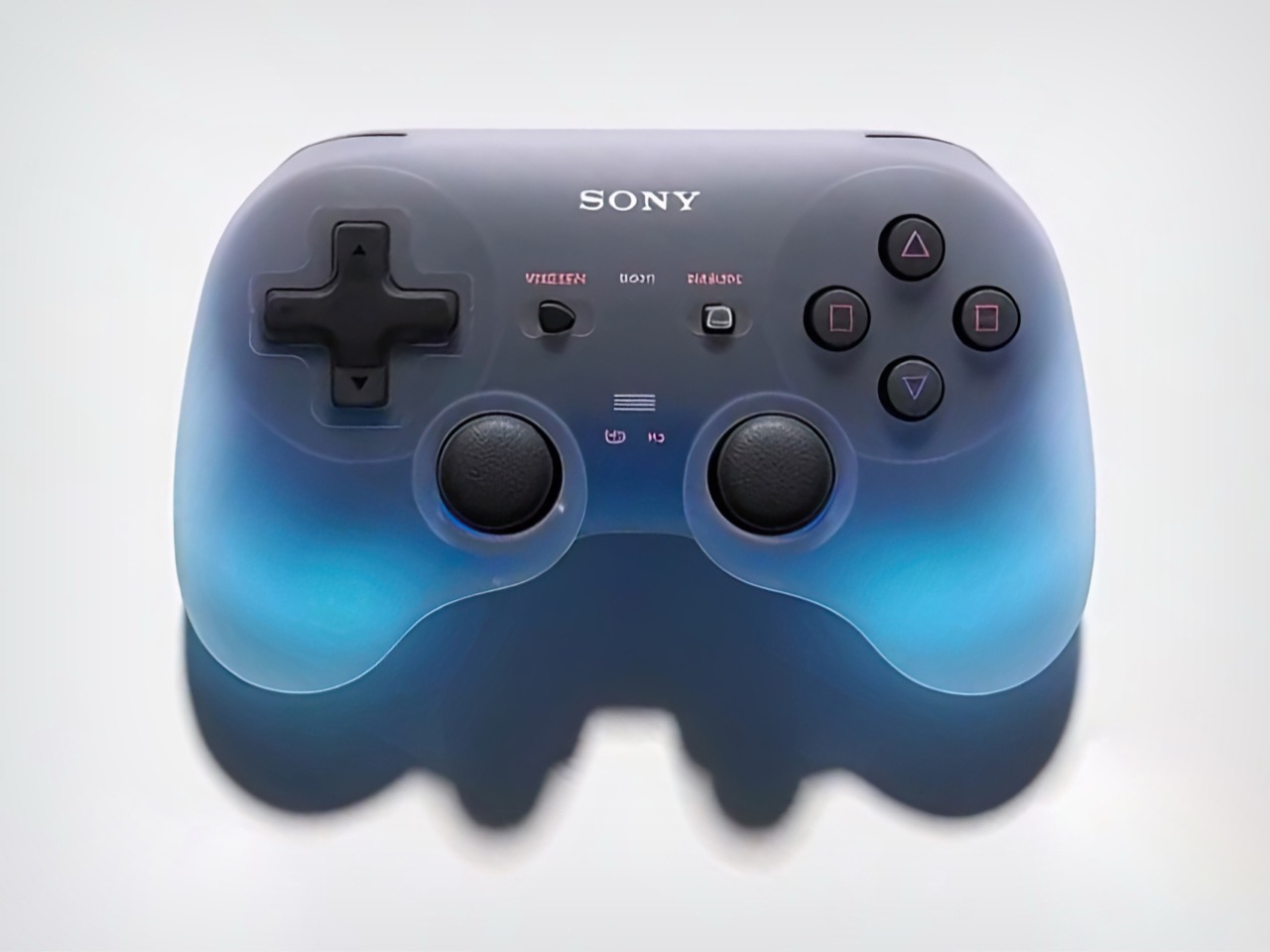
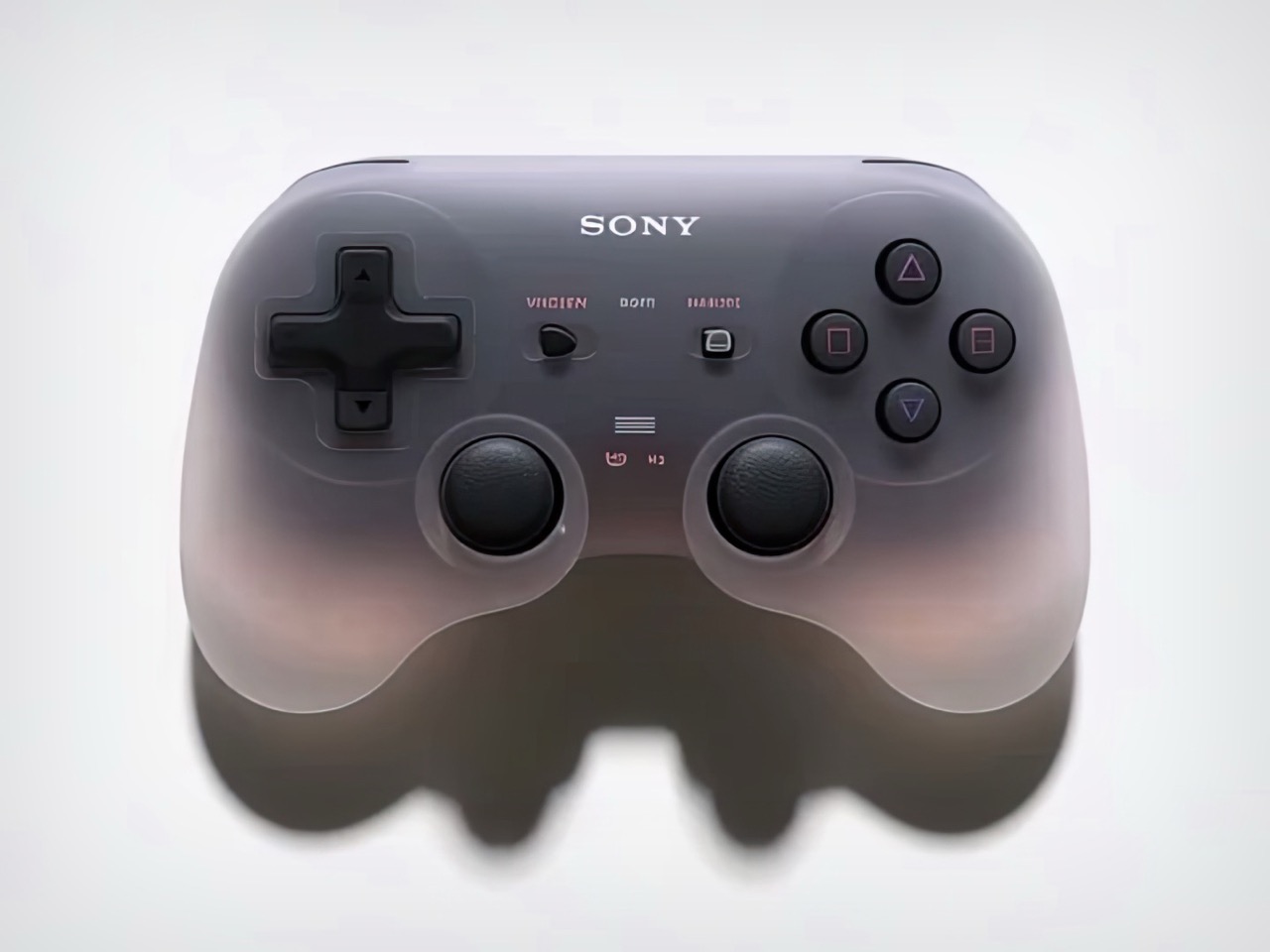
Gaming peripherals have long treated controllers as utilitarian plastic shells, functional objects devoid of personality or emotional resonance. This translucent controller concept rejects that paradigm entirely, transforming the gaming peripheral into a living entity that breathes alongside your gameplay. The bulbous form draws inspiration from the Switch Pro controller’s compact proportions while introducing cloudy black plastic construction that appears deceptively ordinary in its dormant state. Power activation unlocks the controller’s true character as mesmerizing internal illumination floods through the translucent shell.

The controller’s arms pulse rhythmically like breathing lungs, creating an organic connection between player and hardware that traditional rumble motors can only hint at. This breathing illumination responds dynamically to gameplay, intensifying during combat sequences and softening during exploration moments. The translucent construction allows internal LED arrays to project mood-responsive visuals that serve as ambient feedback, communicating game states through color shifts and pulsation patterns. The design treats controllers as character-driven accessories rather than sterile tools, acknowledging that gaming hardware can enhance immersion through visual poetry as effectively as through haptic precision.

What We Like

  • Breathing illumination patterns create an organic emotional connection between the player and the hardware
  • Cloudy translucent construction offers visual intrigue without an aggressive gamer aesthetic
  • Mood-responsive lighting provides ambient gameplay feedback beyond traditional rumble
  • Compact bulbous ergonomics maintain comfort during marathon gaming sessions

What We Dislike

  • Continuous lighting effects may prove distracting during competitive gameplay, requiring total focus
  • Translucent materials reveal fingerprints, smudges, and internal dust accumulation over time

3. Braun-Inspired Minimalist Controller

Gaming controllers have descended into a visual arms race where aggressive angles, neon lighting, and textured grips compete for shelf presence in increasingly chaotic ways. Mark Moes’s Braun-inspired controller concept offers a deliberate counterpoint, channeling Dieter Rams’ “less but better” philosophy into a design that prioritizes calm functionality over visual stimulation. The result feels refreshingly restrained in a market drowning in aesthetic noise.

The controller’s soft rectangular form features gentle curves and a balanced symmetry that prioritizes long-session comfort without resorting to exaggerated ergonomic flourishes. A matte finish in off-white, gray, and black creates visual breathing room, while subtle orange accents on key buttons provide functional highlights without devolving into RGB chaos. The design strips away the threatening visual language that dominates contemporary gaming hardware, instead offering an aesthetic that could comfortably sit on a minimalist desk alongside Braun audio equipment or carefully chosen office accessories.

What We Like

  • Minimalist aesthetic creates a calming alternative to gaming’s visual aggression
  • Thoughtful color choices and material finishes demonstrate timeless design principles
  • Design proves gaming hardware can achieve sophistication without sacrificing functionality
  • Subtle orange accents provide necessary visual guidance without overwhelming the composition

What We Dislike

  • Understated design may lack shelf presence in retail environments dominated by flashy competitors
  • Premium materials and finishes could drive manufacturing costs beyond mass-market viability

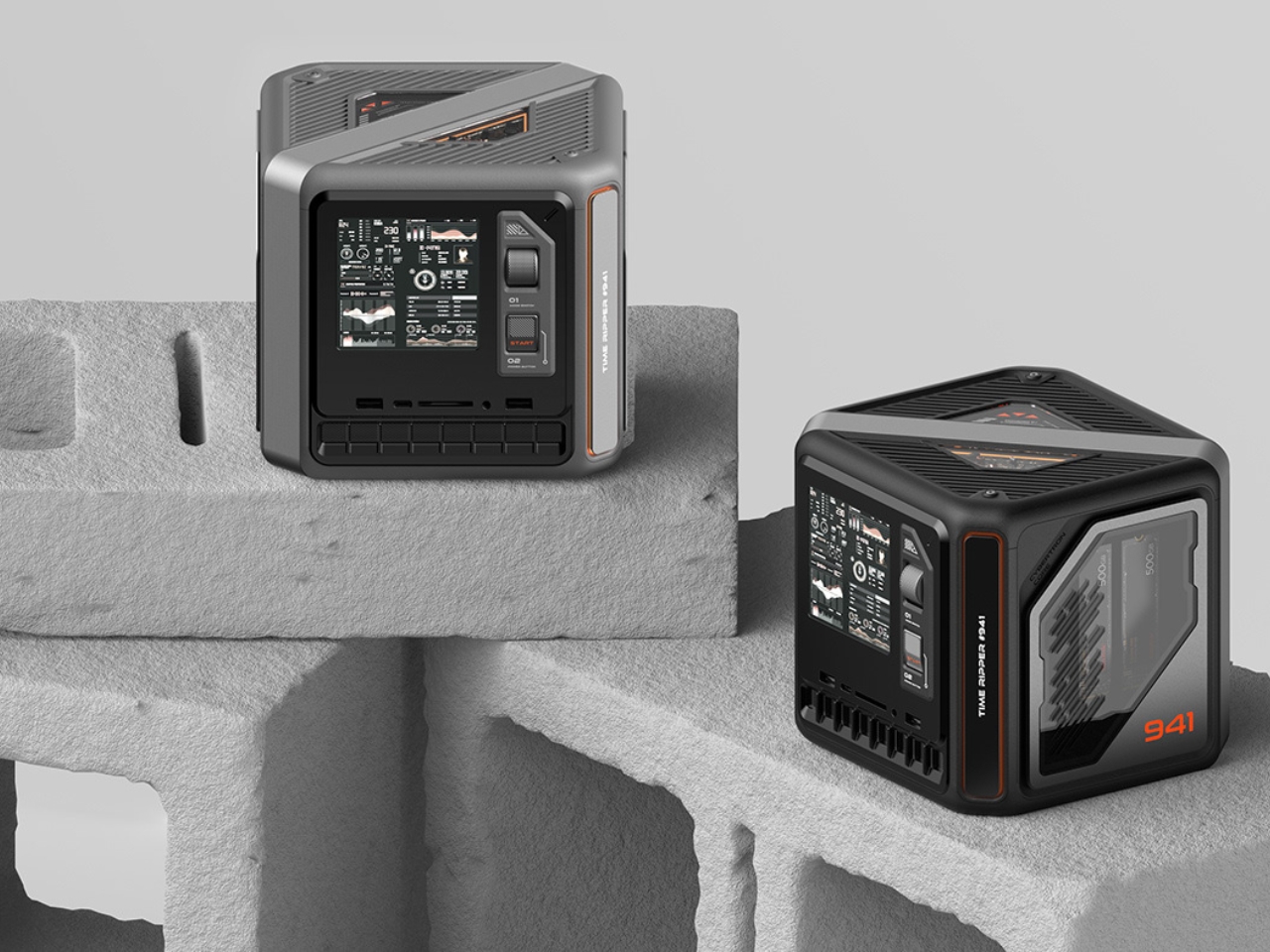
4. X-Cube Gaming Mini PC

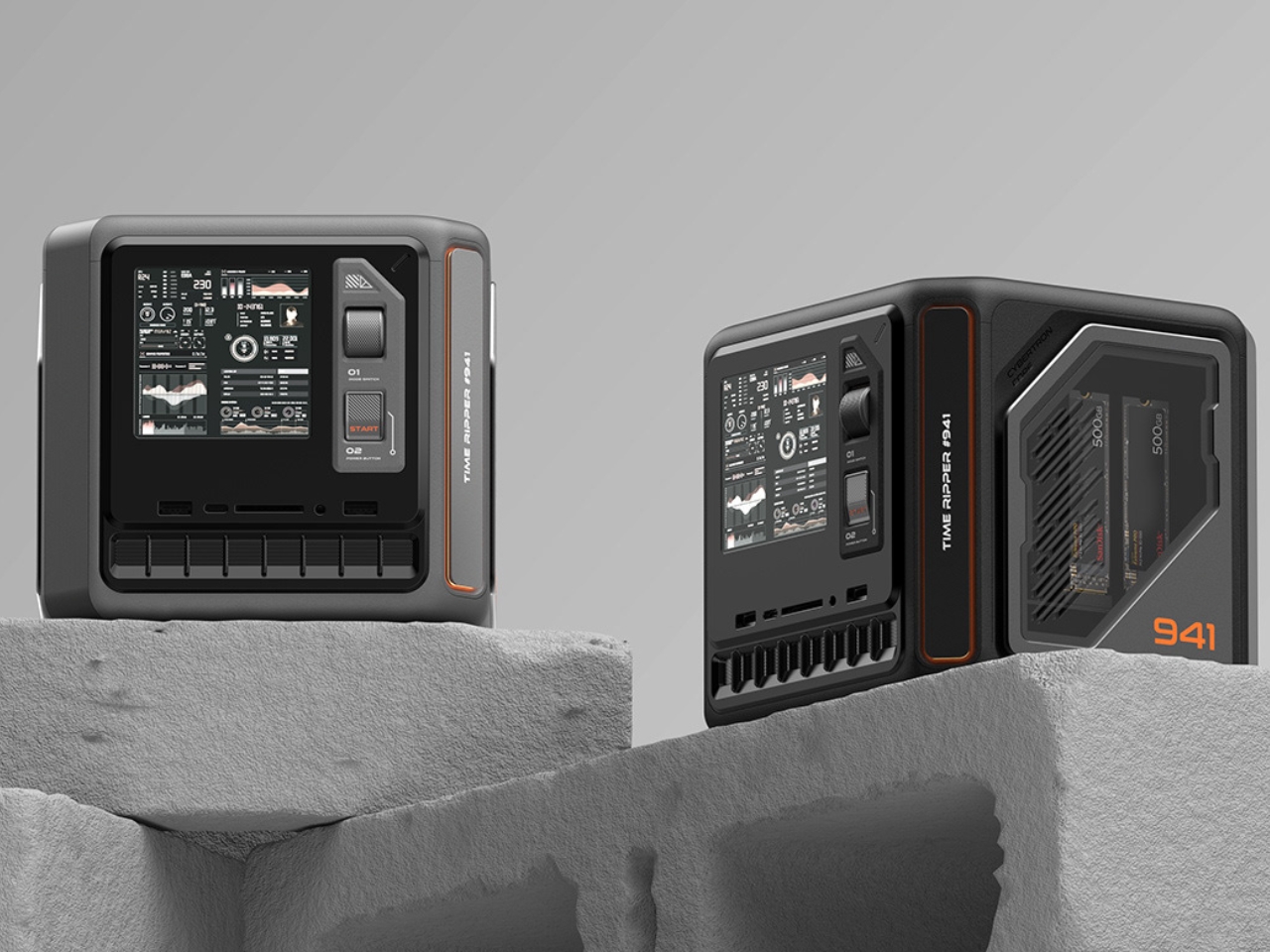
The gaming PC market has polarized into either massive RGB-laden towers or anonymous black boxes that hide their capabilities behind conservative shells. KiwiDesign’s X-Cube Gaming Mini PC embraces a third path with its cyberpunk-inspired aesthetic that treats internal components as design features rather than elements to conceal. Equipped with an Intel 14-core i9 processor and NVIDIA 4060 GPU, the X-Cube delivers flagship AAA gaming performance wrapped in a form factor that celebrates technical complexity rather than minimizing it.

The cubic design showcases internal components through transparent panels that transform technical infrastructure into a visual spectacle, creating an industrial aesthetic that aligns with cyberpunk’s machine-worship sensibility. A 4-inch front-mounted display provides real-time performance monitoring while offering customizable interface options for personalization. Multi-faceted air intake grilles ensure adequate thermal management during demanding gaming sessions while reinforcing the mechanical design language. The X-Cube targets enthusiasts who view their gaming hardware as centerpiece objects deserving architectural prominence rather than discrete appliances hidden beneath desks.

What We Like

  • Transparent design celebrates technical components as aesthetic features worth displaying
  • The integrated performance monitoring screen provides useful real-time system information
  • Compact mini PC form factor delivers flagship performance without requiring massive tower footprints
  • Cyberpunk aesthetic offers clear differentiation in a homogenized mini PC market

What We Dislike

  • Transparent components showcase dust accumulation and cable management challenges
  • Bold aesthetic may alienate players preferring understated hardware that blends into living spaces

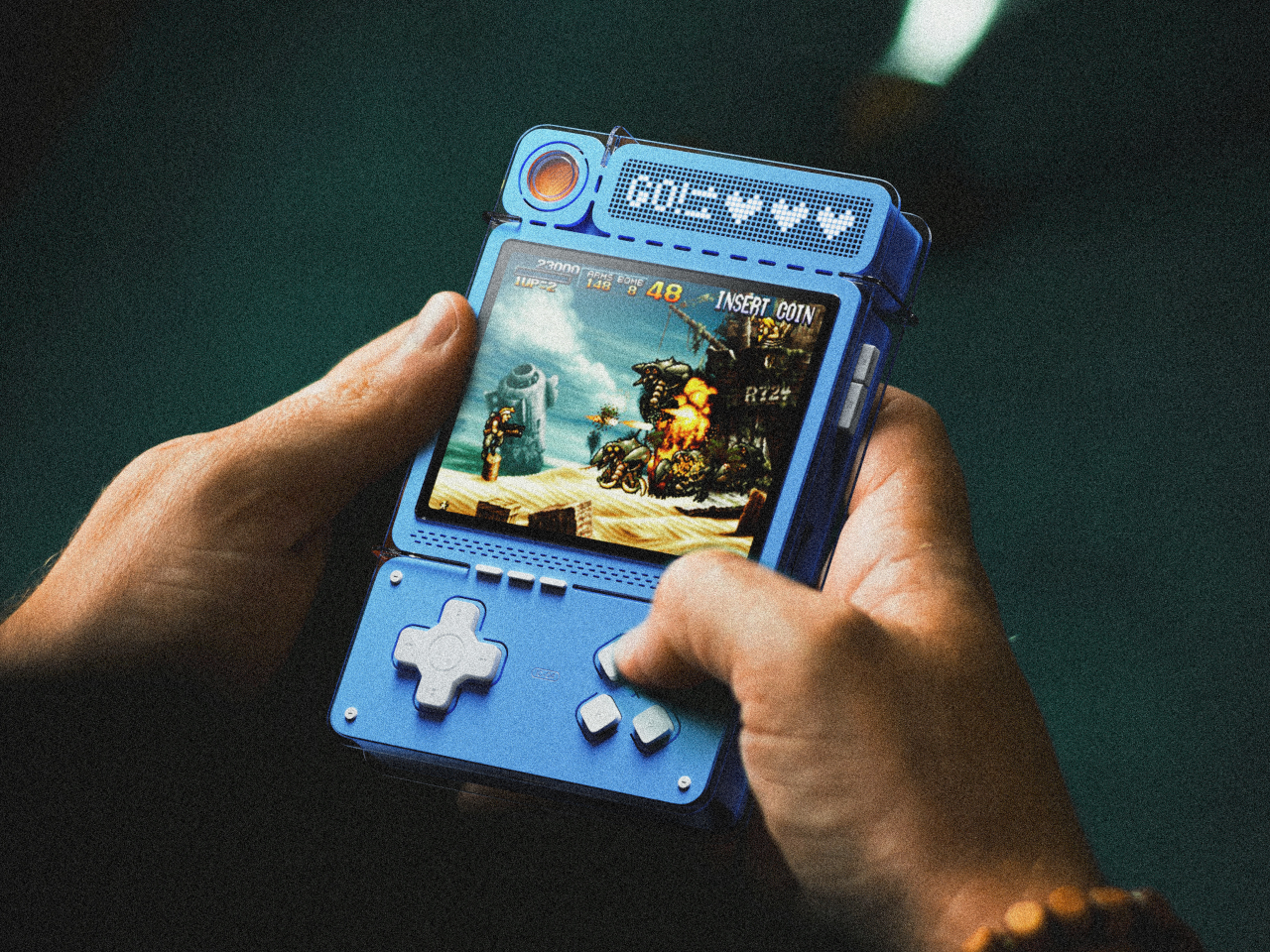
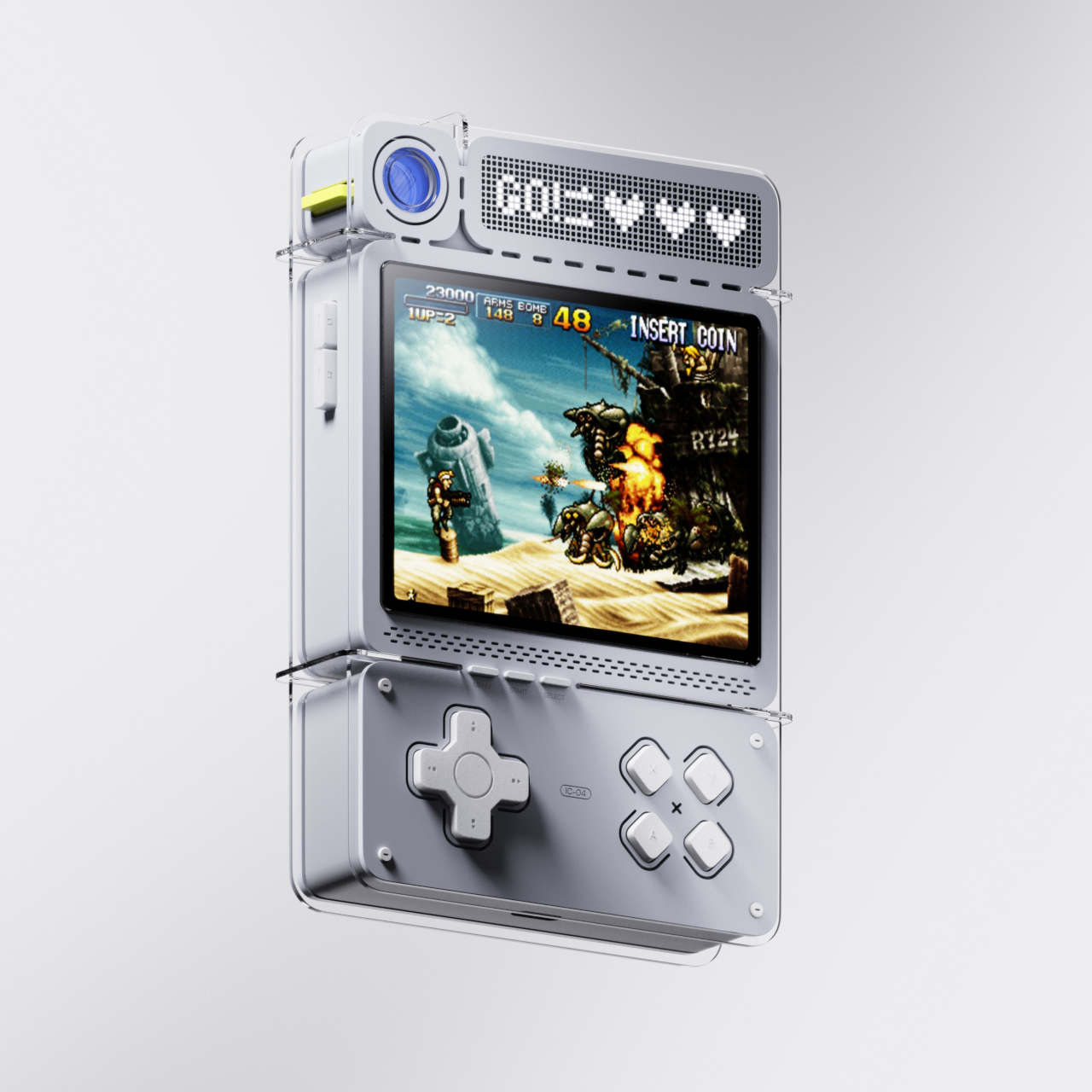
5. CoinPlay Handheld Console

Retro gaming handhelds typically rely on nostalgia as their primary selling proposition, recreating classic form factors without reimagining the interaction model itself. The CoinPlay concept disrupts this pattern by incorporating coin-operated mechanics directly into gameplay, transforming limited-use power-ups into physical objects that demand strategic consideration. Rather than endless continues and infinite lives, CoinPlay restricts powerful abilities to physical coins that must be carefully deployed at crucial moments.

The handheld features a top-mounted coin slot that accepts special power-up tokens in different colors, each providing distinct in-game advantages. Blue coins might restore health or grant extra lives, while red tokens could unlock weapons or essential items. Orange coins might boost attack power or strengthen defenses. The physical limitation creates genuine strategic tension absent from conventional handheld gaming, forcing players to weigh when deploying their finite resources will provide maximum advantage. The design evokes Game Boy DMG proportions with standard D-pad, face buttons, and shoulder controls, ensuring compatibility with classic arcade-style titles where strategic power-up deployment feels most natural.

What We Like

  • Coin-operated mechanic creates genuine strategic depth through resource scarcity
  • Physical power-up tokens provide tactile interaction missing from digital-only interfaces
  • Design successfully modernizes arcade coin-op nostalgia without requiring actual payment
  • Limited resources encourage thoughtful gameplay rather than brute-force repetition

What We Dislike

  • Physical coin requirement creates potential loss and replacement headaches
  • The chunky form factor may prove uncomfortable during extended gaming sessions

Looking Forward

These five concepts share a common thread beyond their innovative approaches to gaming hardware. Each design challenges assumptions about what gaming equipment must look like, how it should function, and who it serves. The ONO proves that portability need not sacrifice functionality. The Nintendo Switcher demonstrates that gaming design language can transcend its category. Mark Moes’ minimalist controller shows restraint as a viable alternative to visual aggression. The X-Cube celebrates technical complexity as an aesthetic virtue. And CoinPlay reimagines digital scarcity through physical objects.

What makes these concepts particularly valuable is their willingness to question established patterns rather than simply iterating on existing templates. As gaming continues expanding beyond traditional demographics and use cases, hardware design must evolve to serve increasingly diverse needs and aesthetic preferences. These concepts point toward futures where gaming equipment embraces portability, sustainability, sophistication, transparency, and strategic physicality as core values worth pursuing.

The post 5 Best Gaming Concepts To Revolutionize Gaming In 2026 first appeared on Yanko Design.

Samsung Galaxy S26 Ultra: The ‘No More Excuses’ Flagship

Samsung Galaxy S26 Ultra: The ‘No More Excuses’ Flagship

The Samsung Galaxy S26 Ultra represents a pivotal moment in the evolution of premium smartphones. By combining innovative technology with thoughtful design, Samsung has crafted a device that appeals to both tech enthusiasts and everyday users. With a focus on innovation, practicality, and user-centric features, the S26 Ultra positions itself as a leader in the […]

The post Samsung Galaxy S26 Ultra: The ‘No More Excuses’ Flagship appeared first on Geeky Gadgets.

Posted in Uncategorized

Highguard, a hyperpop arena shooter and other new indie games worth checking out

Welcome to our latest roundup of what's going on in the indie game space. There are tons of interesting games out this week. But first, there's been some discourse around the Nintendo Switch version of Dispatch, which arrived this week as well.

On other platforms, there's an option to censor genitalia and other explicit content, but that's not present in the Switch version. Instead, such content is censored by default, with black rectangles covering up characters' bits and someone flipping the bird. Noises that suggest sexual pleasure are said to be toned down too.

"We worked with Nintendo to ensure the content within the title met the criteria to release on their platforms, but the core narrative and gameplay experience remains identical to the original release," developer AdHoc told EuroGamer. Nintendo later said in a statement to GoNintendo that it "requires all games on its platforms to receive ratings from independent organizations and to meet our established content and platform guidelines. While we inform partners when their titles don’t meet our guidelines, Nintendo does not make changes to partner content. We also do not discuss specific content or the criteria used in making these determinations." 

There are other games available for the Switch and Switch 2 that feature nudity and explicit content. There have long been hentai games on the eShop, while mainstream games like The Witcher 3 and Cyberpunk 2077 (we know all about the dongs in that one) still include explicit content on Nintendo platforms. So it's a bit of a strange one, and AdHoc and Nintendo didn't exactly clear things up with their statements.

There's been speculation that AdHoc censored the game to comply with rules in Japan (Cyberpunk 2077 is censored there too) and that it opted to have just one version of the game available globally on Nintendo platforms. All the same, it's a curious situation that's resulted in a lot of discourse. But there's been another indie game that's been a source of even more chatter this week...

Highguard is a 3v3 raid shooter from Wildlight Entertainment, a team that includes a bunch of former Apex Legends and Titanfall developers. It broke cover at The Game Awards in December when it was the final reveal of the night but that first trailer wasn't great.

As it turned out, TGA creator and host Geoff Keighley was a friend of the devs and after trying Highguard, he wanted to include it in the show. Wildlight cobbled together a trailer, but that disrupted the studio's long-standing plans to reveal and release the game simultaneously — a strategy that worked wonders for Apex Legends (though that game had the might of EA behind it).

After revealing Highguard, Wildlight effectively went radio silent until a release day showcase on Monday to detail just what the game is and how it works. That seems to have been a mistake given the review bombing and strange vendetta some developed against it. Highguard went live on Monday and Wildlight published a whole bunch of YouTube videos revealing the game's features. Spreading those out between TGA and this week could have tempered expectations.

In any case, I've played a few rounds of Highguard and mostly enjoyed my time with it so far. It's a blend of hero shooter and MOBA. As you might expect for a game from Apex and Titanfall veterans, the weapons feel well-tuned and the gunplay is snappy. There’s a lot going on and the maps are far too big for just six players. It's fun enough, but I don't think it's a game that's going to break my Overwatch obsession. Riding into battle on the back of a bear feels pretty great, though. You can play Highguard for free on Steam, PS5 and Xbox Series X/S.

I really wanted to like Don’t Stop, Girlypop! more than I did. I'd been looking forward to it for a while, as the promise of a Doom Eternal-style arena shooter with chaotic hyperpop-inspired visuals seemed like a great blend. Don't get me wrong, I adore the aesthetic and the soundtrack is spot on thanks to some cracking songs from Sarah Wolfe, Xavier Dunn and Candice Susnjar. I just wish it was as fun to play as it is to look at and listen to.

The visual clutter and fast pace sometimes makes it hard to spot enemies and the narrative doesn't really hang together, as much as the developers have salient points to make about the exploitation of finite resources. The core gameplay idea here is that the faster you move, the more damage you deal and more you heal. The game has its own take on a bunny hop called a wave hop that boosts your speed, but felt like it slowed me down because of the complex combination of inputs (jump, ground pound, jump, dash). That also caused my hand to cramp up very quickly. 

I do love the customization here. Slapping rhinestones and baby sharks onto my weapons was delightful. The game's take on a gravity gun is fun too. So while Don't Stop, Girlypop! — from Funny Fintan Softworks and publisher Kwalee — didn't fully land for me, there are some aspects I like a whole lot. It's out now on Steam for $20 (there's a 10 percent launch discount until February 5).

We're been looking forward to Cairn for a while around these parts, so it's heartening to see that it debuted to broadly positive reviews. This one from The Game Bakers is the latest in a string of climbing adventures, such as the lovely Jusant. So if Alex Honnold's recent free solo climb up a skyscraper has inspired you to ascend something very large without really posing a risk to your wellbeing, Cairn might be what you're looking for. 

Cairn is out now on PS5 and Steam for $30. There's a 10 percent launch discount on Steam until February 12, and until February 13 on PS5 if you're a PS Plus member.

Every trailer I've seen for Steel Century Groove has made me smile, so you can bet I'll be jumping into this when I have a chance. It's a rhythm game with Pokémon-style RPG elements in which you take control of a robot in dance battles. There's some original and licensed music to boogie along to and you can load in your own MP3s (you can bank on me loading some Electric Callboy tracks into this game). Steel Century Groove will create procedurally-generated choreography and charts for your custom songs. You can manually adjust the BPM too.

This debut title from solo developer Sloth Gloss Games is out now on Steam for $20. There's a 10 percent launch discount until February 11. There's a demo available, and progress from there carries over into the full game.

Rosday's Wanderling is a roguelike platformer with no combat. You have eight attempts to acquire the gear and learn the knowledge you need to pass each dungeon. Scour for loot and buy upgrades from the shop before night falls to help you on your way. You can place markers to help you remember where you've been. 

Runs are said to be short at between 20 and 30 minutes. The visuals remind me a bit of Celeste too. You can check out Wanderling on Steam now for $8 (a 10 percent discount brings the price down to $7.20 until February 2).

I can't help but admire Strange Scaffold (Clickolding, I Am Your Beast, Co-op Kaiju Horror Cooking) and the rate at which it releases games. The latest one is Space Warlord Baby Trading Simulator

It's a stock market sim in which you speculate on the future success or failures of the "simulated lives of babies." You can "short that baby" if you choose as you try to make gains. In a timeline where prediction markets allow you to speculate on just about anything (listen to this week's episode of the Engadget Podcast to learn more about that), gambling on the future of babies doesn't seem that farfetched.

Space Warlord Baby Trading Simulator — which is set in the same world as Space Warlord Organ Trading Simulator — is out now on Steam. It'll normally cost $20, but there's a 15 percent discount until February 12. Strange Scaffold is also bringing the game to Xbox Series X/S in the near future.

I Hate This Place is an isometric survival game based on the eponymous comic book series by Kyle Starks and Artyom Topilin. The game retains a comic book aesthetic and it has '80s horror movie-style inflections.

The way that noise is visualized is pretty interesting here. Onomatopoeic words will pop up and you'll see color-coded footsteps — useful when you're trying to be stealthy. Crafting is a key aspect of the game as well.

I Hate This Place — from Rock Square Thunder, Broken Mirror Games and Skybound Entertainment — is out now on Steam, PS5, Nintendo Switch and Xbox Series X/S. The regular price is $30 and there's a 20 percent launch discount on some platforms. 

I can't find a trailer for this on YouTube, unfortunately, but Rebadge caught my eye this week as well. It's a puzzle platformer from Yuumayay, who appears to be a 17-year-old solo developer. Your character carries badges that allow them to carry out actions like moving and jumping. Other badges include "affected by gravity" and "destroys on contact." Here's the trick: you can throw a badge and lose the associated ability, but then you can apply the trait to something else in the world.

It's a neat idea that draws from the playbooks of games like Baba Is You. Rebadge typically costs $8, but there's a 15 percent launch discount.

Moon Beast Productions is a studio formed by several of the creators of Diablo and Diablo II. This week, it revealed gameplay for its first title, Darkhaven, which is a fantasy isometric action RPG in the vein of (you guessed it) Diablo. You'll be able to play this one solo or with friends, and there are PvP elements. Darkhaven has procedurally generated, destructible worlds along with "massive events that threaten your entire world."

The gameplay shown in the trailer looks a bit rough, but it's still early days. In fact, Moon Beast is planning a Kickstarter campaign for Darkhaven. There's no release window as yet, but you can wishlist it on Steam.

Box or Void is a puzzle game that clearly takes some inspiration from Sokoban and Snake. Here, though, gameplay takes place across two planes. You'll switch between positive and negative space — obstacles on one side turn into pathways on the other. You'll alter the level layouts by pushing boxes. 

This one from Dumen Games has an intriguing premise. There's no release date as yet for Box or Void, but a demo with 32 levels (about a fifth of what will be in the full game) dropped this week on Steam.

If there's a game that's billed as Dredge meets Wall-E, that's going to be enough to sell me. Describe it as a "petroidvania" and call it Good Boy, and I'm definitely in.

This is a creature-collecting Metroidvania from Observer Interactive and publisher Team17 in which pups are reincarnated as space rovers. I could not dig that premise more. Good Boy is expected to hit Steam later this year.

This article originally appeared on Engadget at https://www.engadget.com/gaming/highguard-a-hyperpop-arena-shooter-and-other-new-indie-games-worth-checking-out-120000874.html?src=rss


Meta’s Limited Wayfarers Make Smart Frames Look Like Classic Shades

Meta’s Limited Wayfarers Make Smart Frames Look Like Classic Shades

What happens when timeless design meets innovative innovation? Phones & Drones takes a closer look at how the Ray-Ban Meta Wayfarers Gen 2 Limited Edition smart glasses redefine wearable technology. With only 7,500 pairs available worldwide, these glasses are more than just a gadget, they’re a statement of exclusivity and sophistication. Featuring a matte transparent […]

The post Meta’s Limited Wayfarers Make Smart Frames Look Like Classic Shades appeared first on Geeky Gadgets.

Posted in Uncategorized

Apple’s High-End M5 MacBook Pro Delay: The Real Reason Behind It

Apple’s High-End M5 MacBook Pro Delay: The Real Reason Behind It

Apple has delayed the release of its highly anticipated high-end M5 Max and M5 Pro MacBook Pro models, initially expected to arrive in late 2025. These laptops, powered by the advanced M5 Pro and M5 Max chips, are now scheduled for launch on February 5, 2026. While delays are rare for Apple, this decision appears […]

The post Apple’s High-End M5 MacBook Pro Delay: The Real Reason Behind It appeared first on Geeky Gadgets.

Posted in Uncategorized