This Tiny Air Freshener Spins Its Own Visual Story

Look, we’ve all been there. You walk into a room and wonder if the air freshener is actually working or if it’s just sitting there like a decorative paperweight. CONECTO’s Air Perfume, designed by superkomma, decided that was an unacceptable user experience. So they built something that literally shows you what’s happening and it’s kind of genius.

Here’s the thing about most air fresheners: they’re boring. They either plug into a wall looking apologetic about their existence, or they’re aggressively branded cylinders you hide in a closet. The Air Perfume takes a completely different approach. It’s a minimalist white cube that you’d actually want on display, but that’s just the beginning of what makes it interesting.

Designer: superkomma

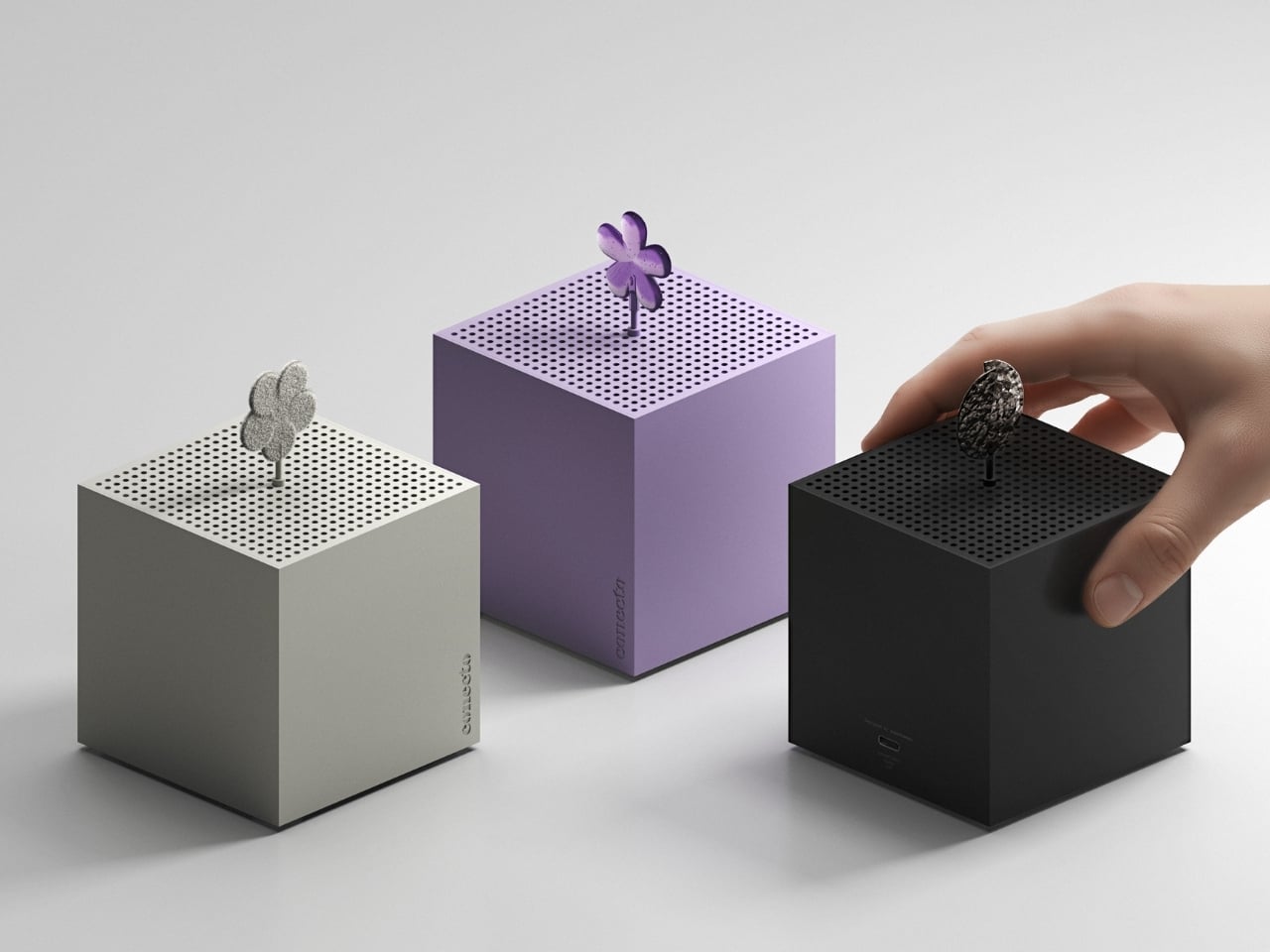
The real innovation here is how superkomma approached the fundamental question of user interface. Instead of adding a screen or LED indicators (which would have been the obvious tech solution), they made the fan itself part of the visual language. When the device is running, a fragrance symbol attached to the fan blade spins along with it. You can literally see your scent in motion. It’s one of those ideas that feels obvious once you see it, which is usually the mark of genuinely thoughtful design.

CONECTO offers three signature scents, and each one gets its own symbol inspired by the fragrance’s character. Cotton gets a soft, cloud-like shape. Floral is represented by a delicate flower silhouette. Woody has a circular, organic form reminiscent of tree rings. These aren’t just decorative choices. They’re visual shorthand that connects your sense of smell with something you can see, creating a more complete sensory experience.

The execution is refreshingly simple. The fragrance cartridge slots into the bottom of the cube. The corresponding symbol clips onto the fan. When you turn it on, the symbol rotates, dispersing the scent while giving you immediate visual feedback that the device is working. No guessing, no checking your phone app, no wondering if you remembered to replace the cartridge three months ago. It’s all right there, spinning in front of you.
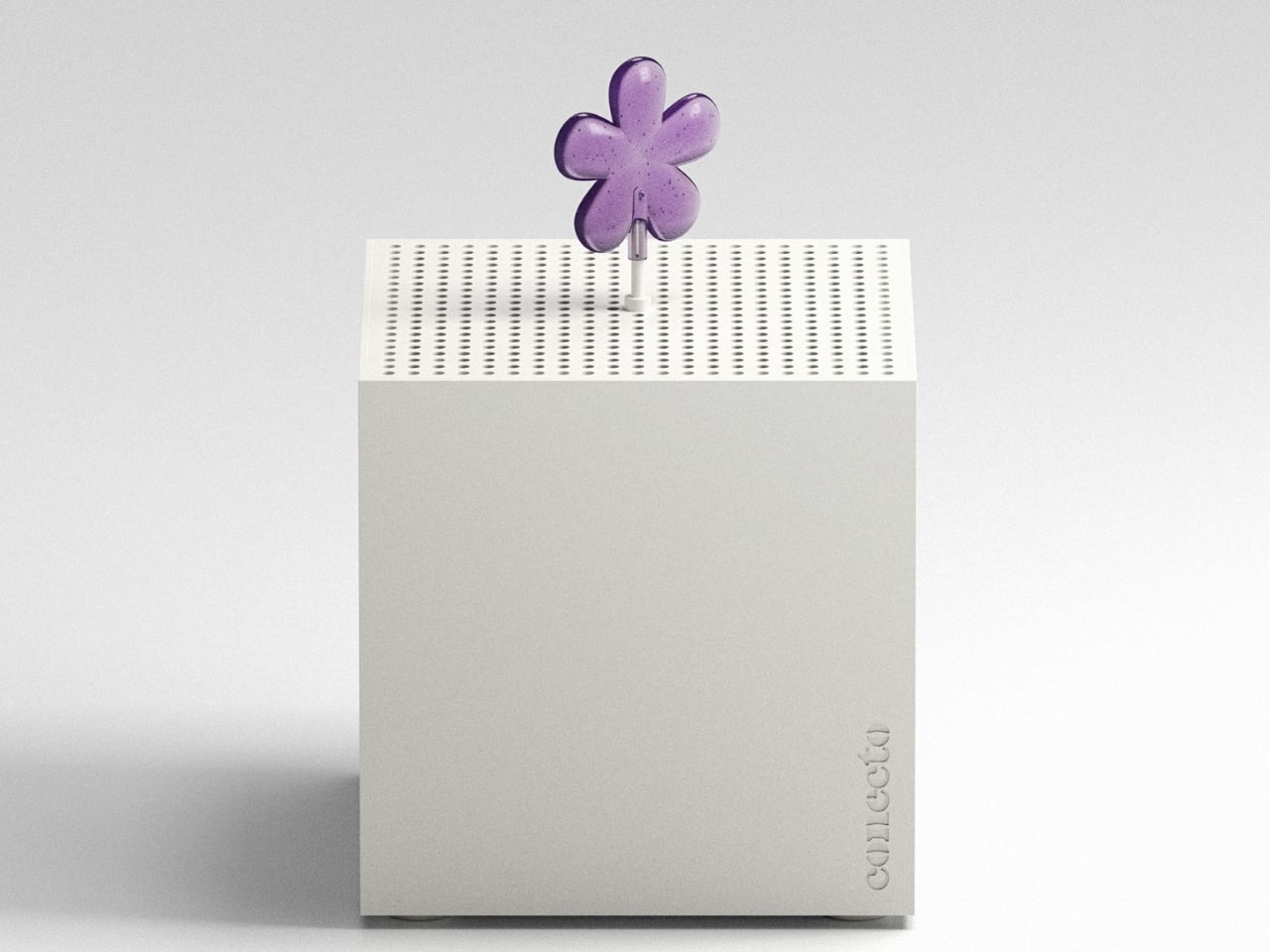

What’s particularly smart about this design is how it handles the aesthetics of functionality. That pure white cubic body could fit into literally any space without clashing. It’s the kind of neutral that works whether you’ve got a minimalist apartment, a maximalist studio, or something in between. But it’s not trying so hard to disappear that it becomes forgettable. The rotating symbol adds just enough visual interest to make the device feel alive and intentional.

The system also addresses a real problem that most air fresheners ignore: they don’t actually eliminate odors, they just cover them up. Air Perfume combines its fragrance delivery with legitimate deodorizing performance, which means you’re not just masking that gym bag smell with artificial flowers. You’re actually dealing with it. There’s something refreshing about design that doesn’t overcomplicate things. In an era where every device wants to connect to your smartphone and collect data about your scent preferences, Air Perfume just does its job with style. The rotating symbol isn’t controlled by an app or programmed with different speeds. It’s just physics and clever design working together.

Superkomma has created something that sits at an interesting intersection of product design, user experience, and visual communication. It’s functional enough for the practical minded, beautiful enough for design enthusiasts, and clever enough to make tech nerds appreciate the elegance of an analog solution. The device proves that sometimes the best interface isn’t digital at all. Sometimes it’s just a spinning flower that tells you everything you need to know at a glance.

The post This Tiny Air Freshener Spins Its Own Visual Story first appeared on Yanko Design.


This Silent Wind Turbine Solves Sailing’s Power Problem

There’s something romantic about sailboats that still speaks to us in this hyper-connected age. The idea that you can harness nothing but wind and water to glide across the ocean feels almost magical. But here’s the reality check: even the most old-school sailor needs power these days. Your GPS has to stay on, your radar needs juice, those navigation lights aren’t optional, and let’s be honest, nobody wants to lose their phone charge mid-voyage.

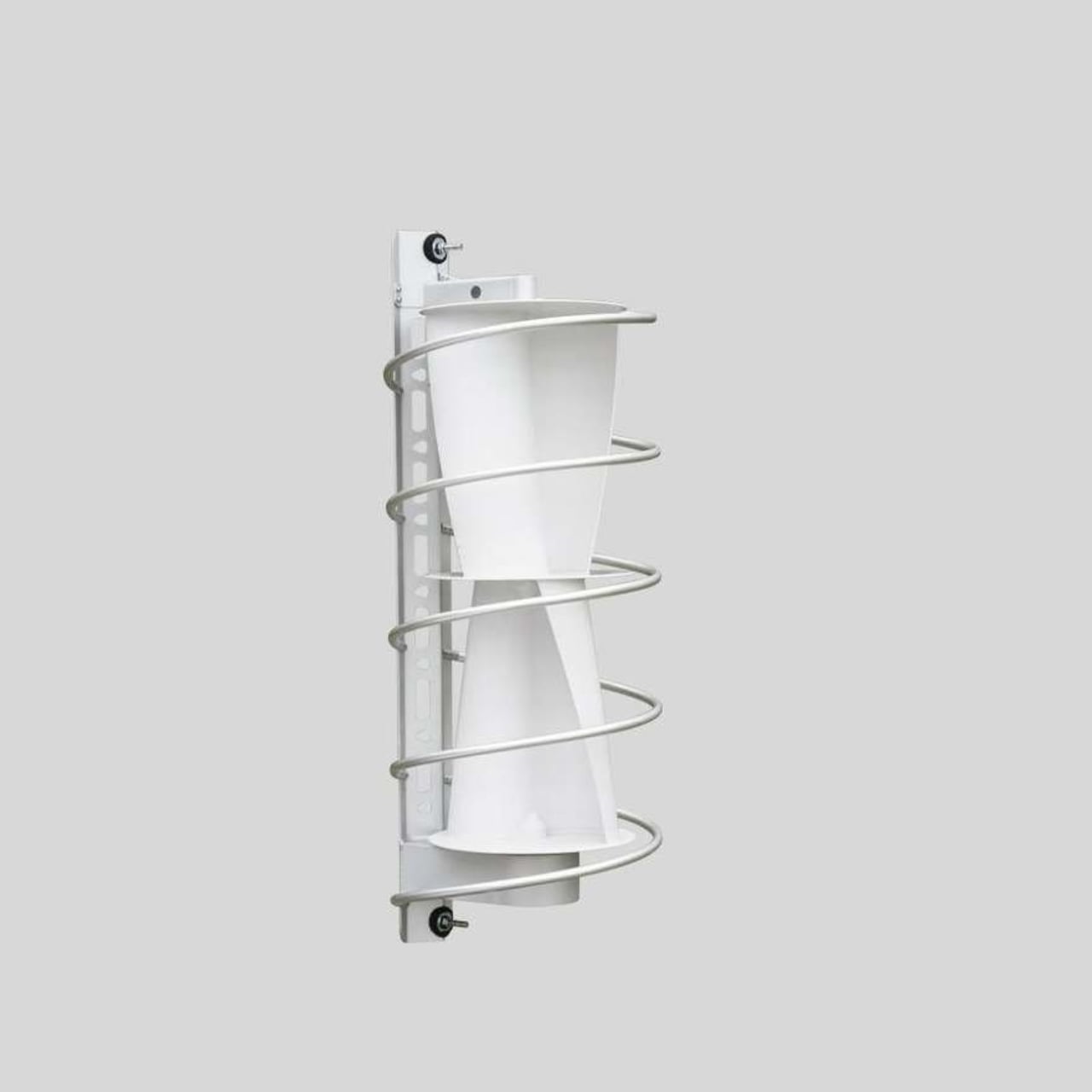
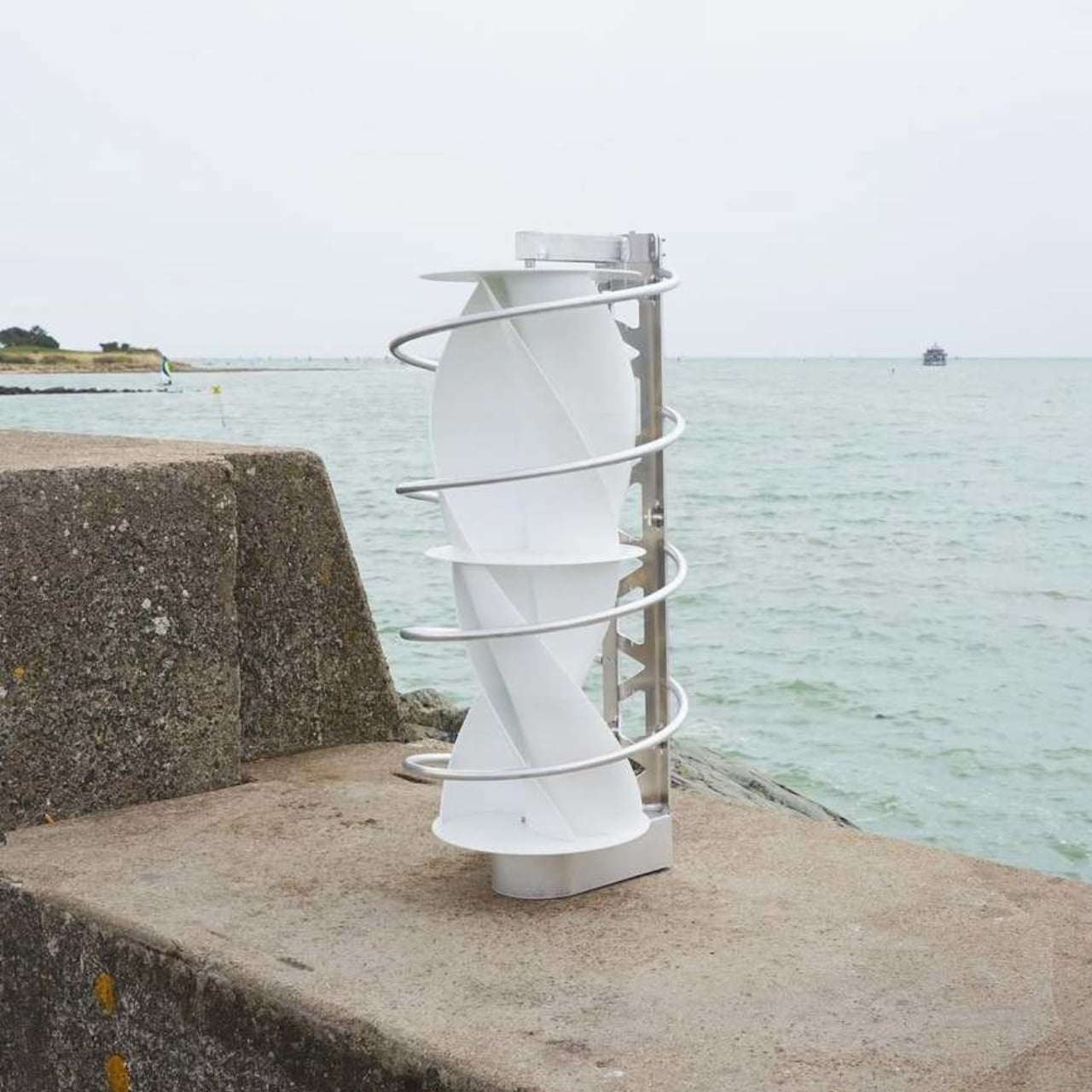
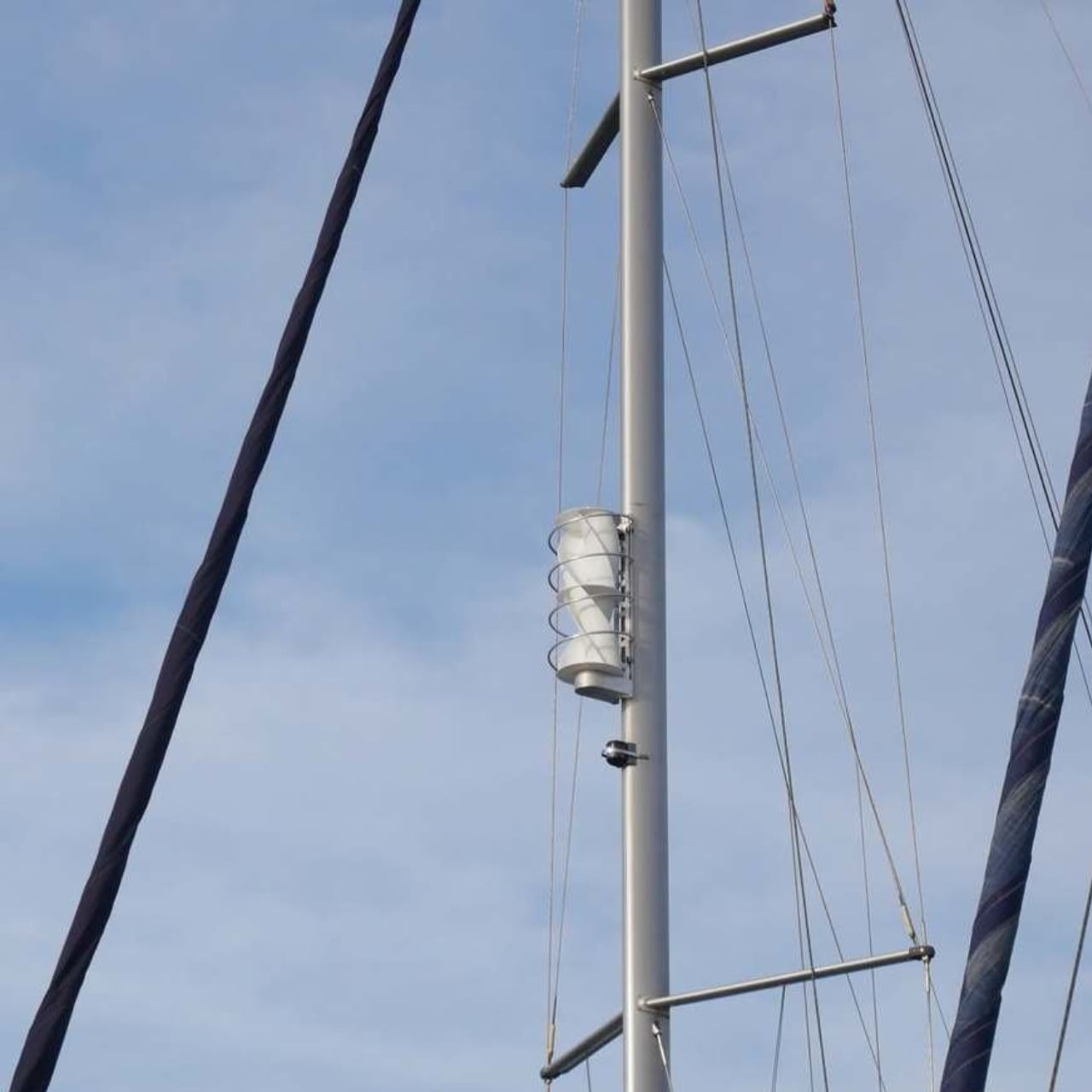
Traditionally, sailors have dealt with this in less-than-ideal ways. You can run an auxiliary motor to charge your batteries, which kind of defeats the whole wind-powered romance. Or you plug in at the dock and hope you remembered to charge everything before casting off. Neither option is particularly elegant, and both leave you dependent on fossil fuels or shore power. Enter the Grain Blanc, a clever little wind turbine from Belgian startup Phileole that’s rethinking how sailboats stay powered. This compact vertical turbine bolts right onto your mast and does something that feels almost too obvious in hindsight: it uses the very wind that’s already moving your boat to generate electricity for everything onboard.

Designer: Phileole

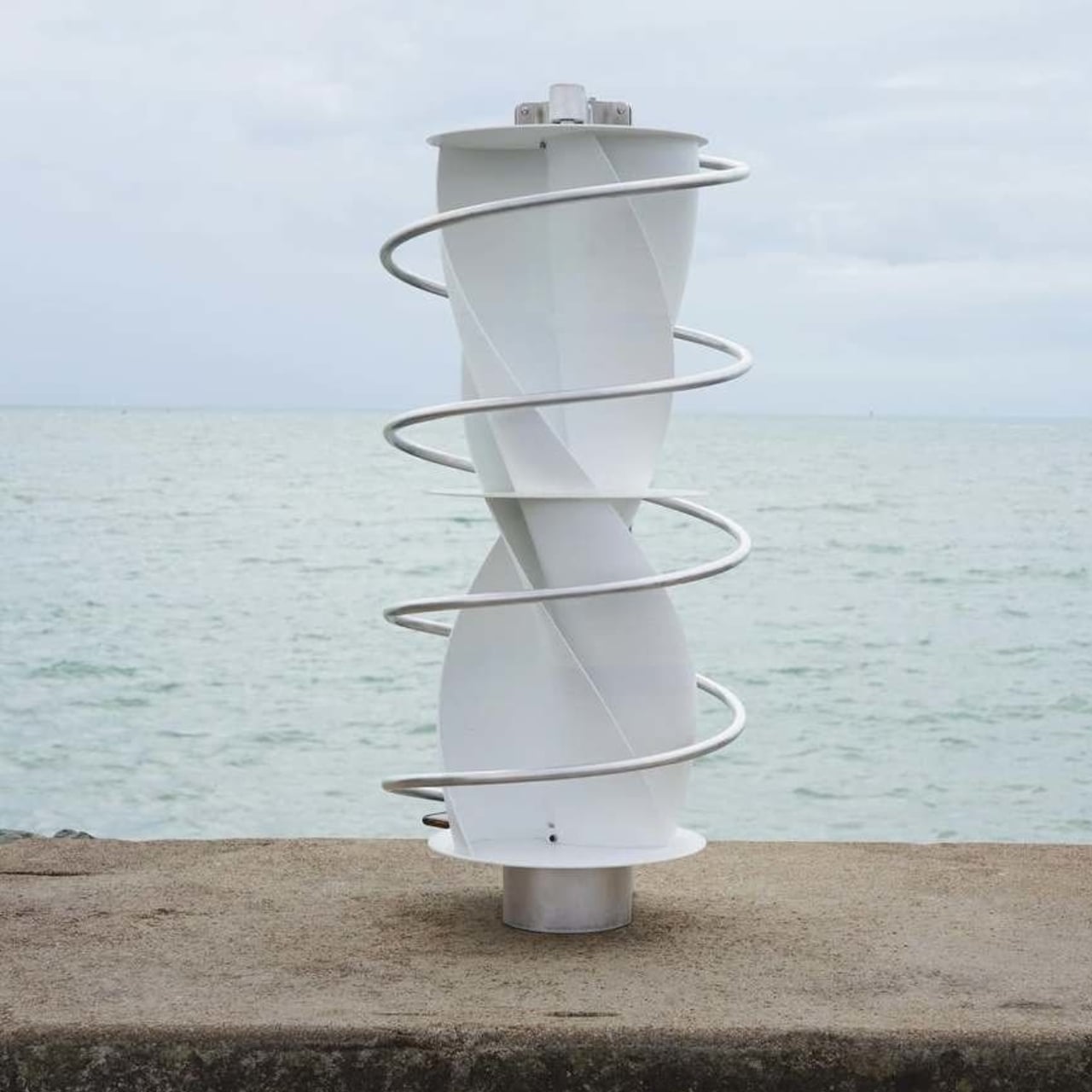
The design itself is refreshingly simple. Standing about 100 centimeters tall and 45 centimeters in diameter, it’s compact enough not to get in your way but substantial enough to actually do something useful. The vertical orientation is the key here. Unlike traditional horizontal wind turbines that need to pivot to face the wind, this thing captures air from any direction. When you’re out on the water and wind direction changes constantly, that’s a huge advantage.

What really makes the Grain Blanc stand out is how quiet it operates. Anyone who’s been around conventional wind turbines knows they can sound like an angry mechanical bee convention. This one? Silence. That’s not just nice for your peace of mind while you’re trying to enjoy the ocean; it’s better for marine life too. Phileole designed it to produce no vibration or disturbance to biodiversity, which feels increasingly important as we become more aware of how our technologies impact ecosystems.

The turbine handles all your essential navigation needs: keeping your lights on, your radar scanning, your VHF radio crackling, your GPS tracking, and your navigation console powered. Basically, all the stuff that keeps you safe and legal out there. But the utility doesn’t stop when you dock. Throughout winter, when your boat is sitting at the marina, the Grain Blanc keeps your batteries topped off and can even power a dehumidifier. Anyone who’s dealt with musty boat interiors knows that’s worth its weight in gold.

The environmental credentials here are genuinely impressive. The units are made primarily from recycled polypropylene and are themselves 95 percent recyclable. In an industry that’s historically generated mountains of waste, that circularity matters. It’s also worth noting that the turbine comes with a smart regulator that requires zero manipulation after installation. It automatically keeps your batteries charged and shuts itself down during storms. That kind of set-it-and-forget-it reliability is exactly what you want when you’re dealing with the unpredictability of ocean conditions.

While Phileole designed the Grain Blanc specifically for sailboats, the technology has broader implications. The same principles that make it work on a mast could potentially apply to other scenarios where you need compact, omnidirectional wind power. Urban balconies, remote cabins, mobile installations: anywhere traditional turbines are too bulky or finicky, vertical designs like this could fill the gap.

What strikes me most about the Grain Blanc is how it represents a shift in thinking about renewable energy. We often imagine clean power requiring massive infrastructure: sprawling solar farms or towering wind turbines dominating landscapes. But sometimes the most effective solutions are small, quiet, and fit seamlessly into existing systems. This little turbine doesn’t try to revolutionize sailing or make grand promises about saving the world. It just solves a real problem elegantly, using the resources already at hand. And honestly? That’s the kind of practical innovation that actually changes how we live.

The post This Silent Wind Turbine Solves Sailing’s Power Problem first appeared on Yanko Design.

This Oak Sideboard Has Doors You Can’t Stop Touching

You know that feeling when you run your fingers across something and the texture makes you stop in your tracks? That’s exactly the vibe British furniture maker Nick James is going for with his sideboard featuring sculpted doors. And honestly, it’s the kind of piece that makes you rethink what furniture can be.

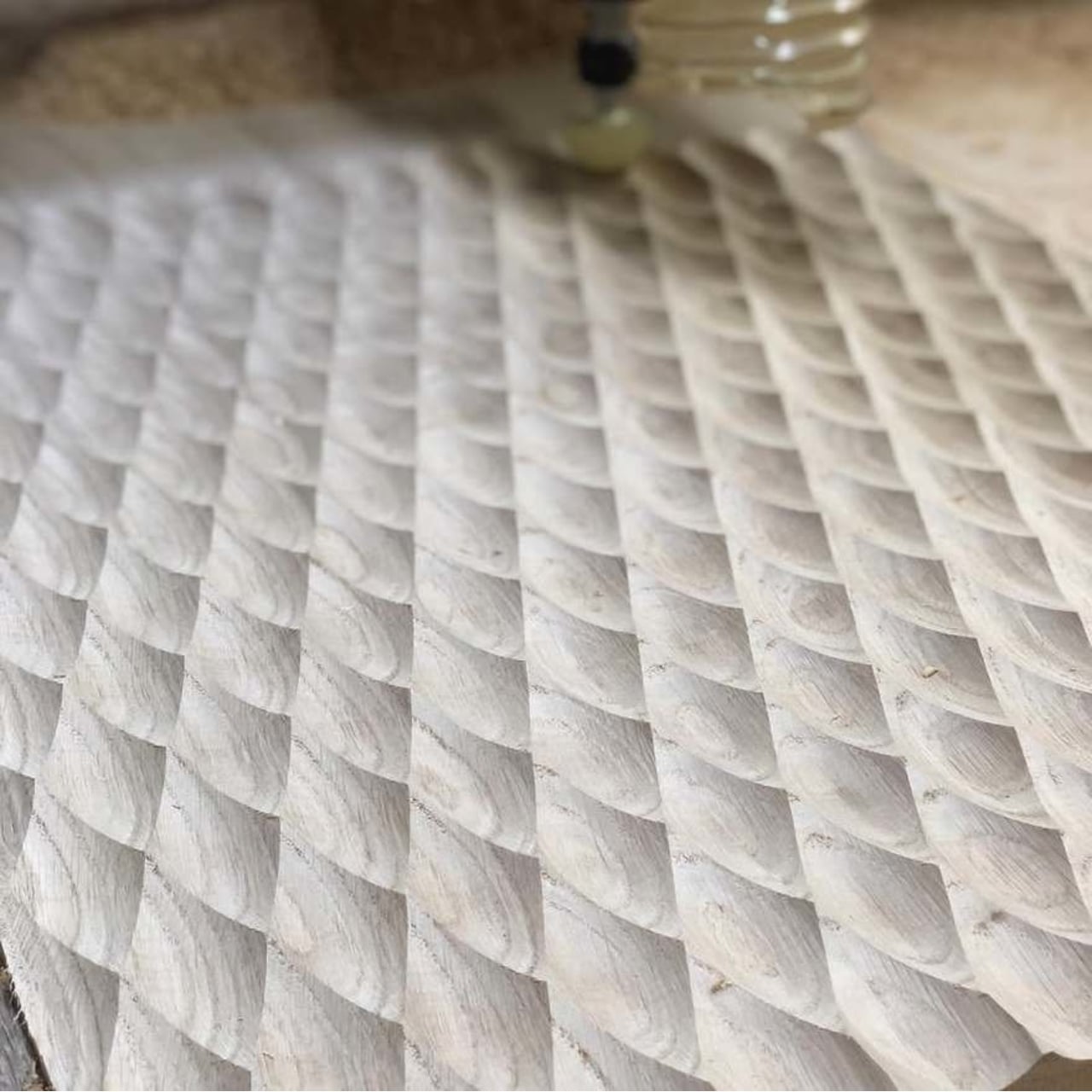
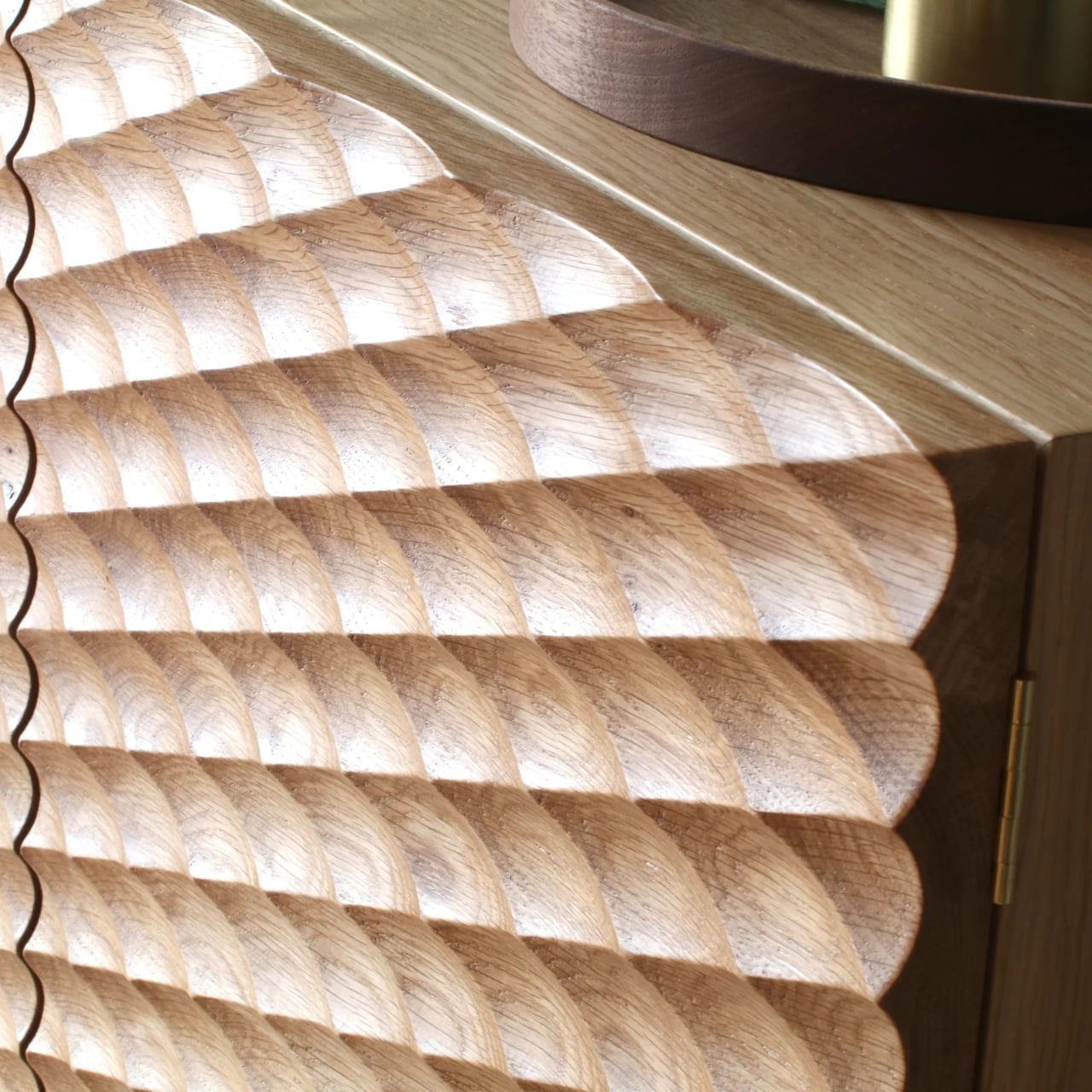
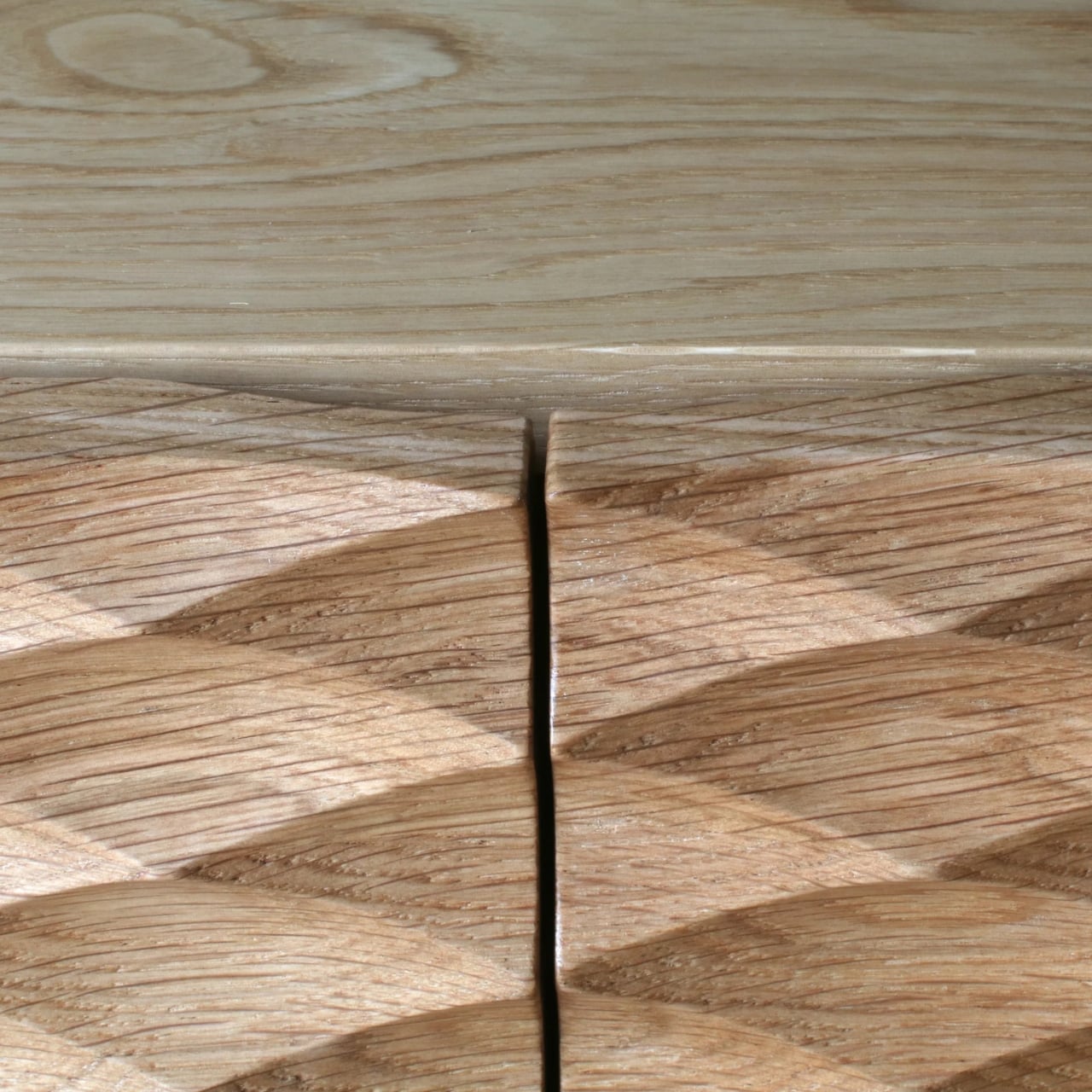
At first glance, it looks like a solid oak sideboard. Clean lines, classic proportions, nothing too flashy. But then you get closer and realize those doors aren’t just doors. They’re carved with flowing, wave-like patterns that transform the flat surface into something that feels almost alive. The sculpting reveals the oak’s grain in ways you’d never see otherwise, creating shadows and depth that shift as you move around the piece.

Designer: Nick James

This isn’t Nick James’s first dance with texture. The British designer has built a reputation for bringing tactile interest to traditional furniture forms. His approach is about celebrating the material itself, letting the wood grain become the star of the show rather than hiding it under layers of paint or veneer. In a world where so much furniture feels mass-produced and anonymous, there’s something refreshing about a piece that proudly shows off its origins.

The sideboard itself is practical in all the ways you’d want. It measures a generous size, perfect for dining room storage or as a living room statement piece. Inside, you’ll find a height-adjustable shelf, so whether you’re storing wine bottles or board games, you can configure it to fit your life. The hardware is minimal, keeping the focus on those sculptural doors that really deserve center stage.

What makes this piece particularly interesting is how it straddles different design worlds. There’s a mid-century modern sensibility to the proportions and the floating quality of the case. But the textured doors feel almost Art Deco, with their geometric repetition and emphasis on craftsmanship. And then there’s an undeniably contemporary edge to the whole thing, because let’s face it, most traditional furniture makers aren’t carving wave patterns into cabinet doors.

The price point sits at £2,950, which puts it firmly in the investment furniture category. But here’s the thing about pieces like this: they’re made to order from solid oak, hand-finished, and designed to last decades. In an era when we’re all supposed to be buying less but buying better, a sideboard like this makes the case for choosing quality over quantity. Plus, it’s the kind of furniture that only gets better with age as the oak develops its patina and character.

Some design purists might argue about the use of CNC technology to create the repetitive carved pattern. There was even a comment on Core77 suggesting that precision CNC texturing lacks soul. But I’d push back on that. The technology is just a tool, like a chisel or a lathe. What matters is the design vision behind it and the quality of execution. James uses the precision to reveal something beautiful about the material itself, not to disguise it as something it’s not.

The sideboard also speaks to a broader trend we’re seeing in contemporary design: texture is having a major moment. Whether it’s fluted glass, ribbed wood, scalloped tiles, or carved surfaces, designers are moving away from the ultra-minimalist smooth finishes that dominated the 2010s. People want furniture that invites touch, that creates visual interest through shadow and form, that makes you want to get up close and really look.

What I love most about this piece is that it doesn’t shout for attention. It’s not trying to be the loudest thing in the room. Instead, it rewards the people who take time to notice the details. The way the light catches the carved surface. How the grain pattern emerges from the sculpting. The contrast between the textured doors and the smooth frame. These are the kinds of subtle pleasures that make living with good design so satisfying.

The post This Oak Sideboard Has Doors You Can’t Stop Touching first appeared on Yanko Design.

The AI Tennis Robot That Plays 3 Sports Better Than Your Friends

You know that feeling when you want to practice your serve but no one’s available to hit with you? Or when you’re playing a casual match with friends and everyone’s arguing about whether that ball was in or out? Designer Jaehong Jeon has created something that might just solve both problems, and it happens to look like the friendliest little robot you’ve ever seen.

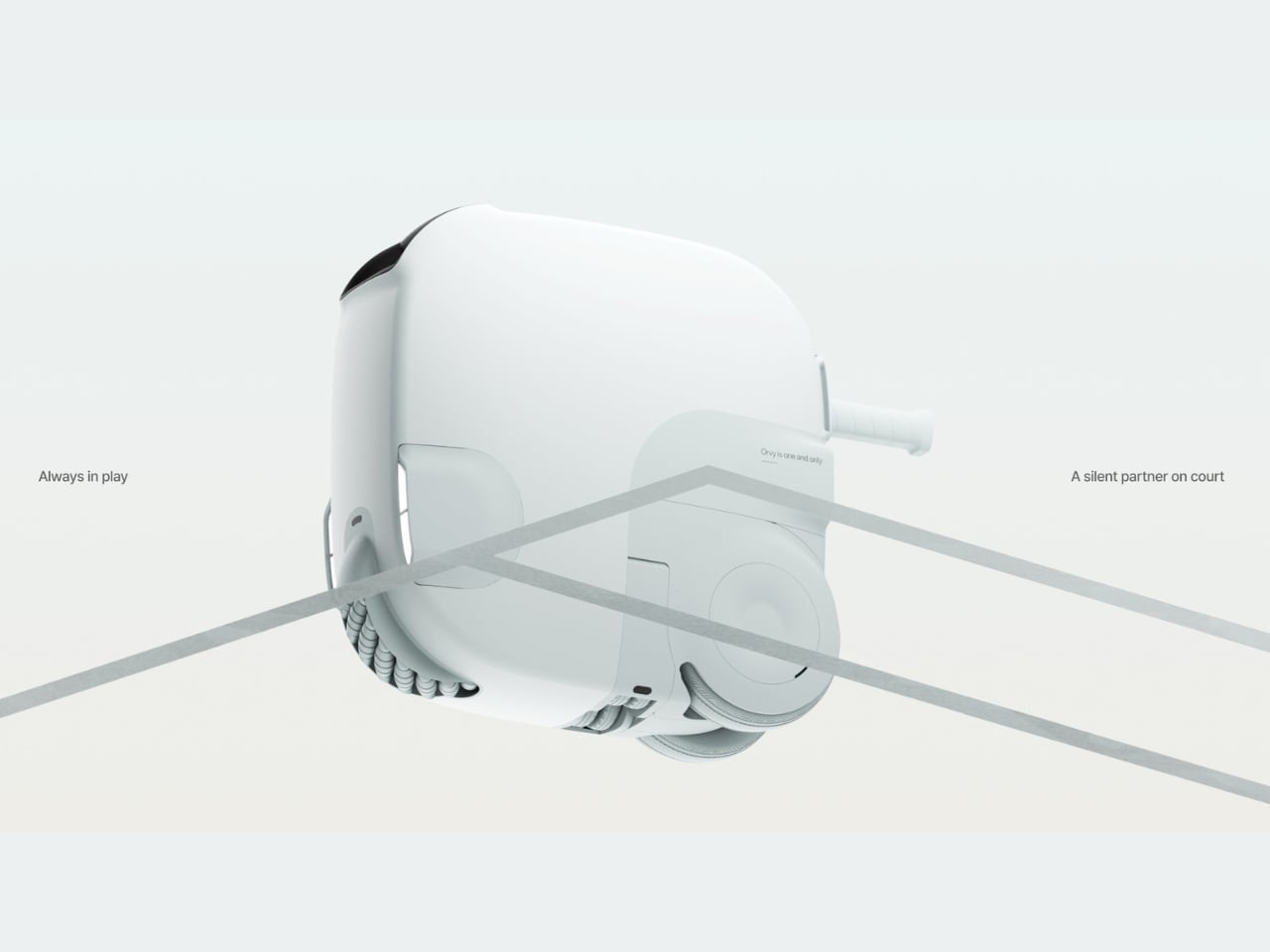
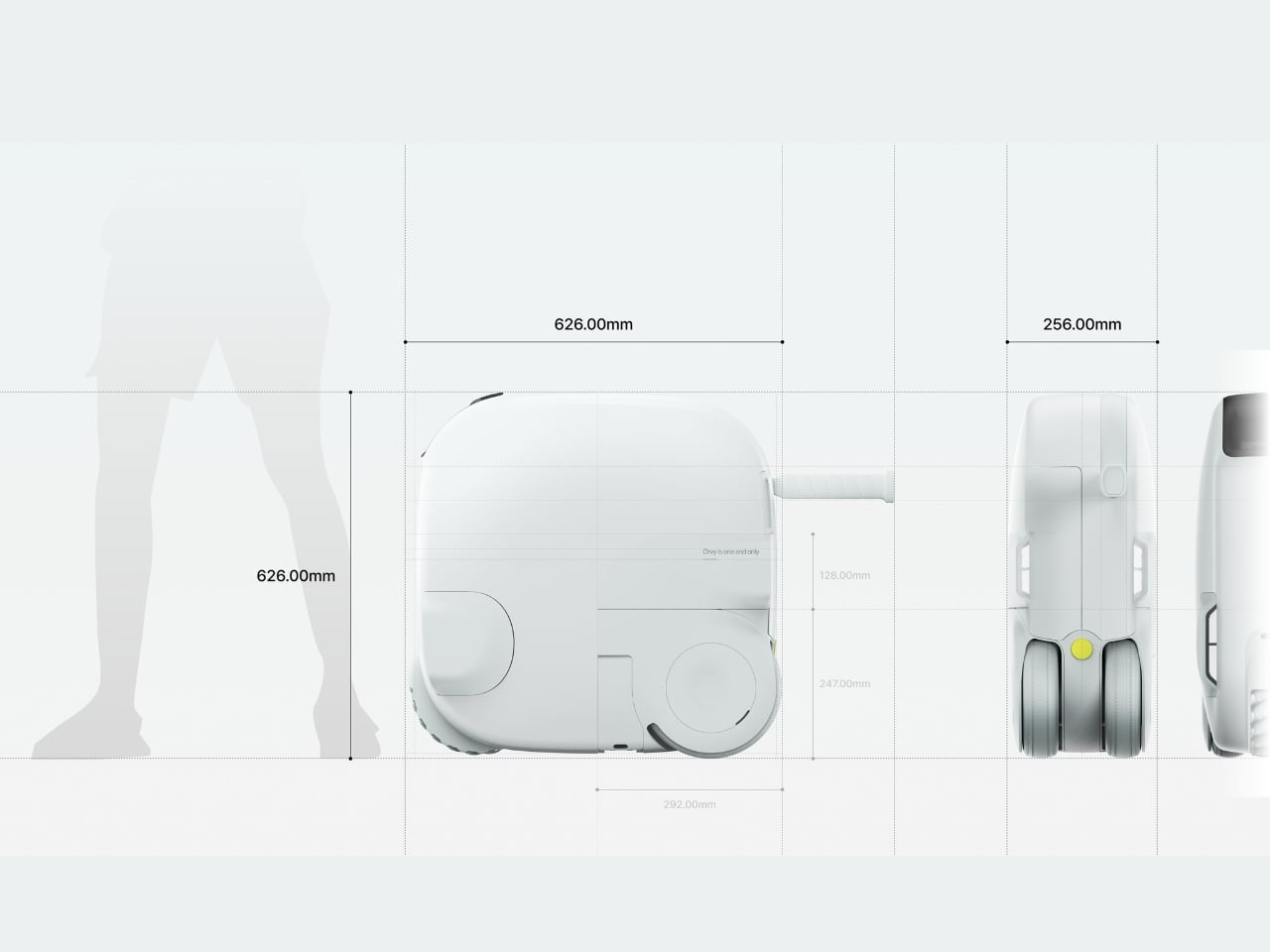
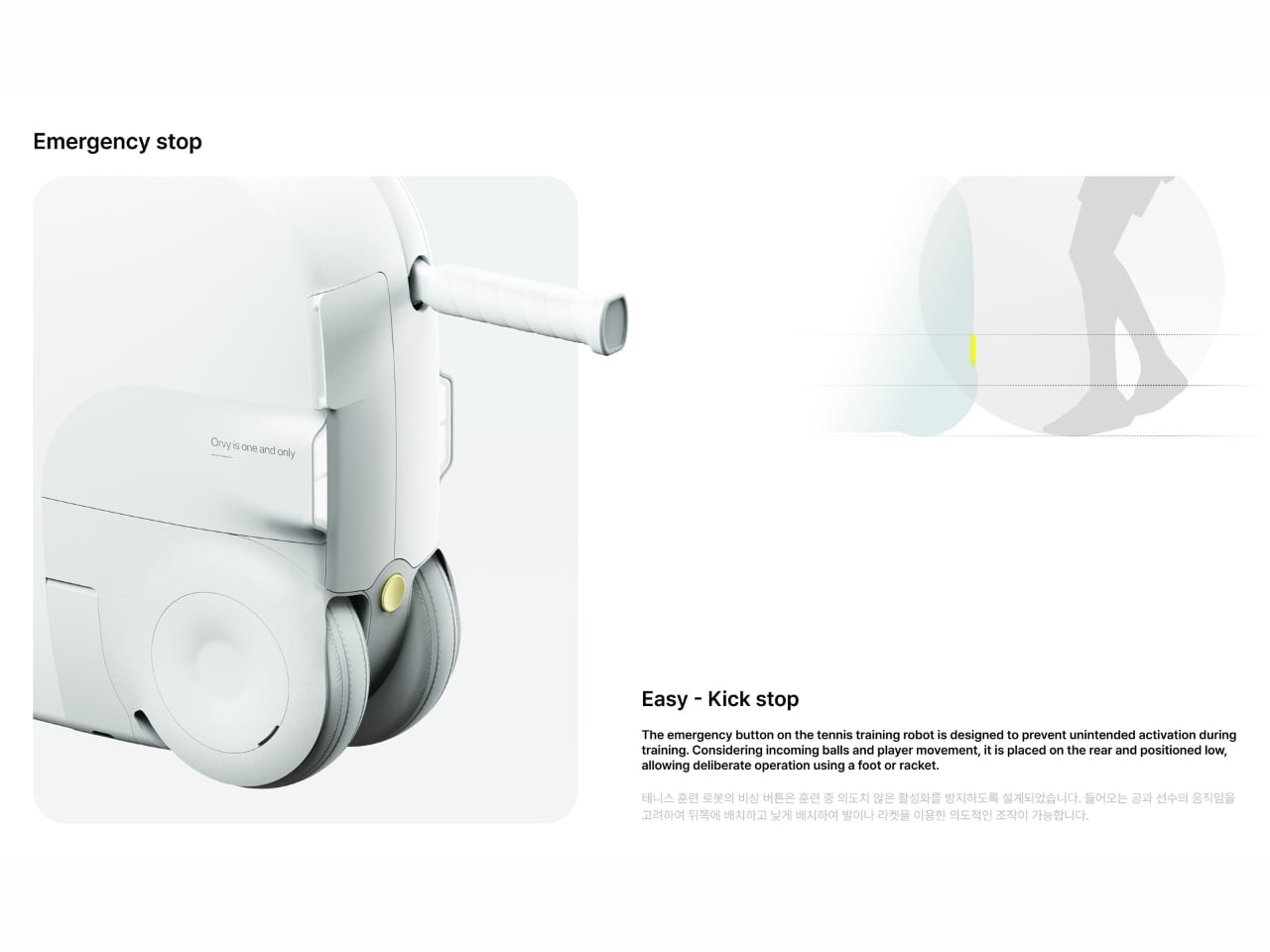
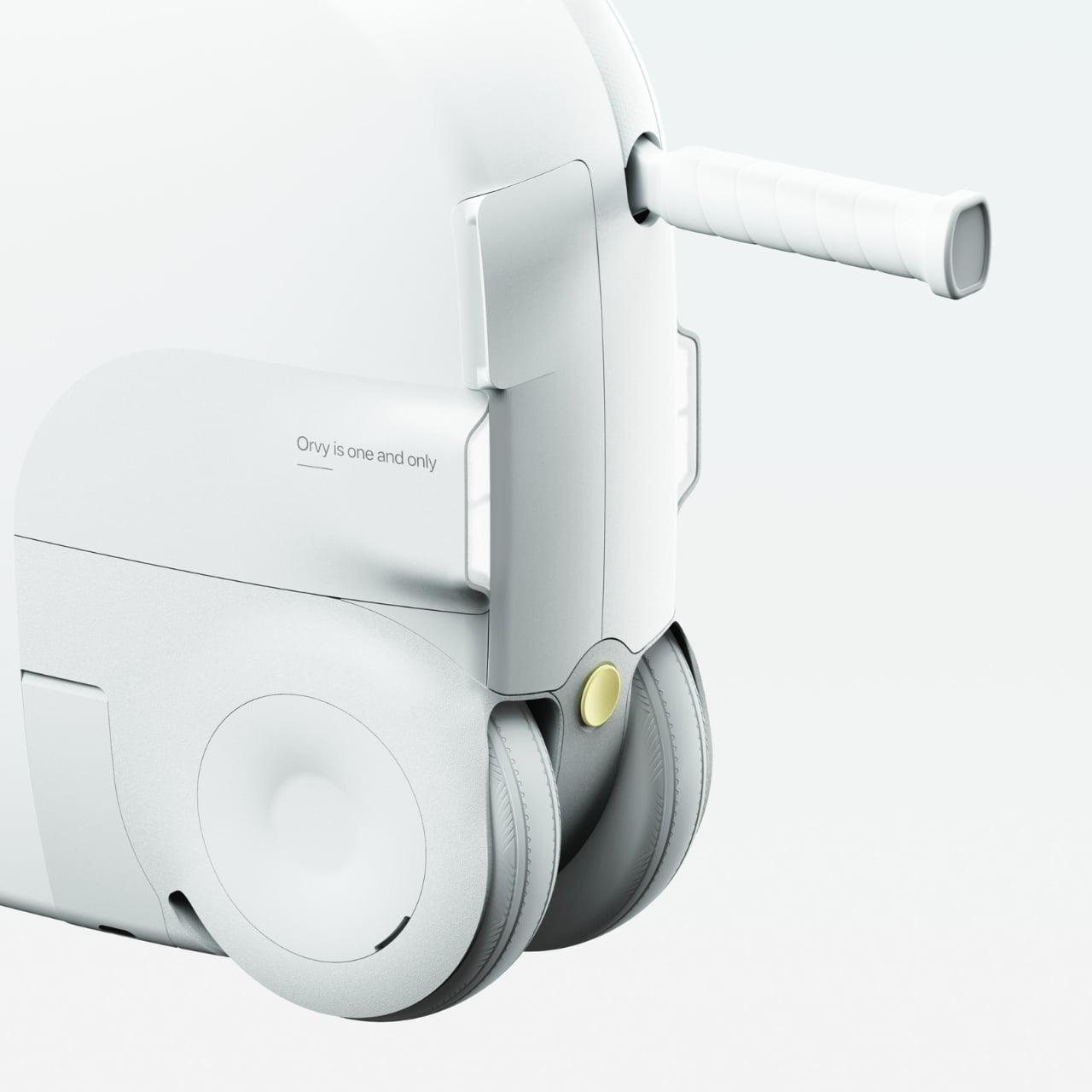
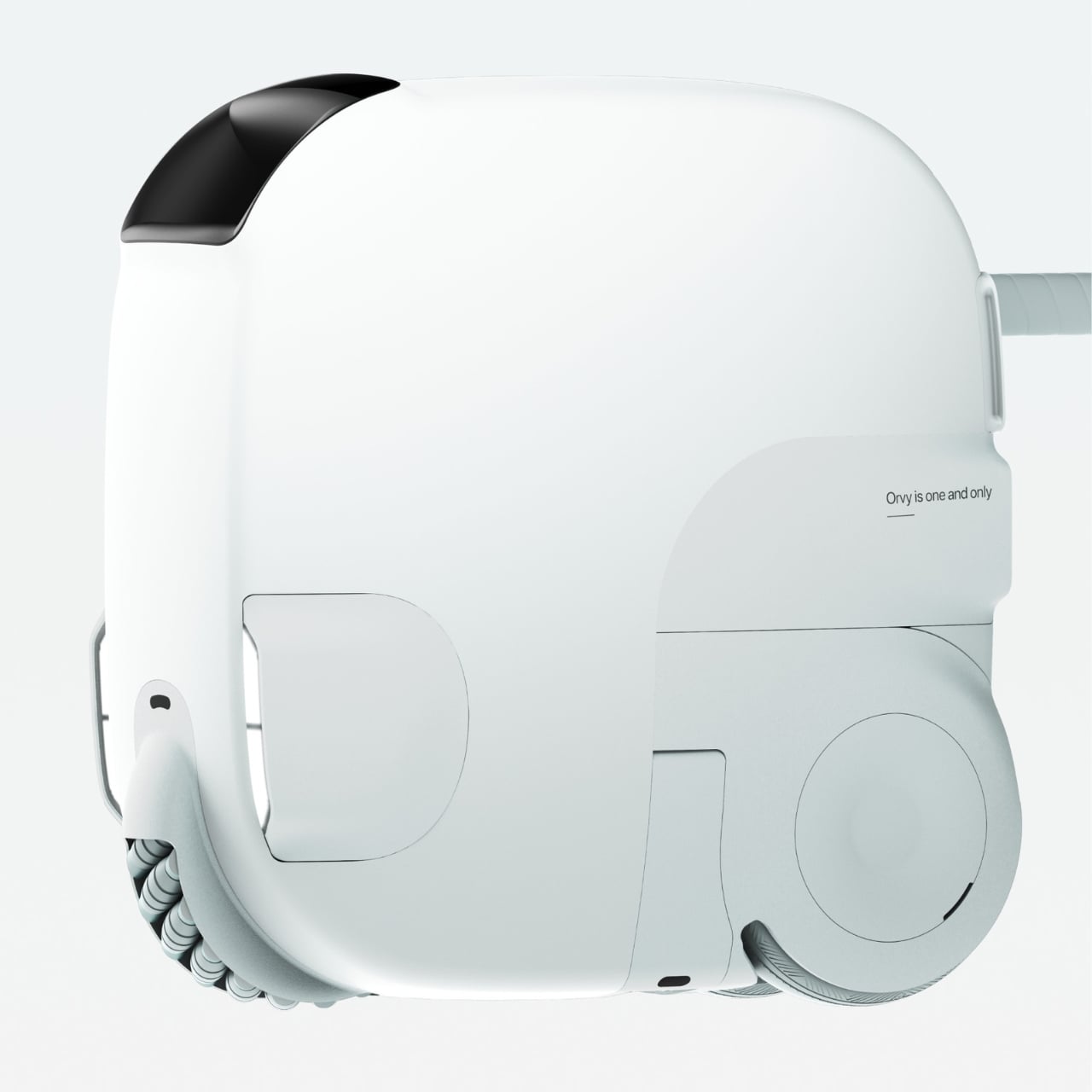
ORVY is a court-centered companion robot that’s basically the Swiss Army knife of racket sports. This isn’t some clunky, industrial-looking machine that screams “future dystopia.” Instead, it’s got this adorable, minimalist design that looks like a friendly elephant decided to become a sports assistant. The rounded white body sits low to the ground on wheels, with what almost looks like a trunk extending forward. It’s the kind of design that makes you want to pat it on the head and say “good robot.”

Designer: Jaehong Jeon

Create your own Aesthetic Render: Download KeyShot Studio Right Now!

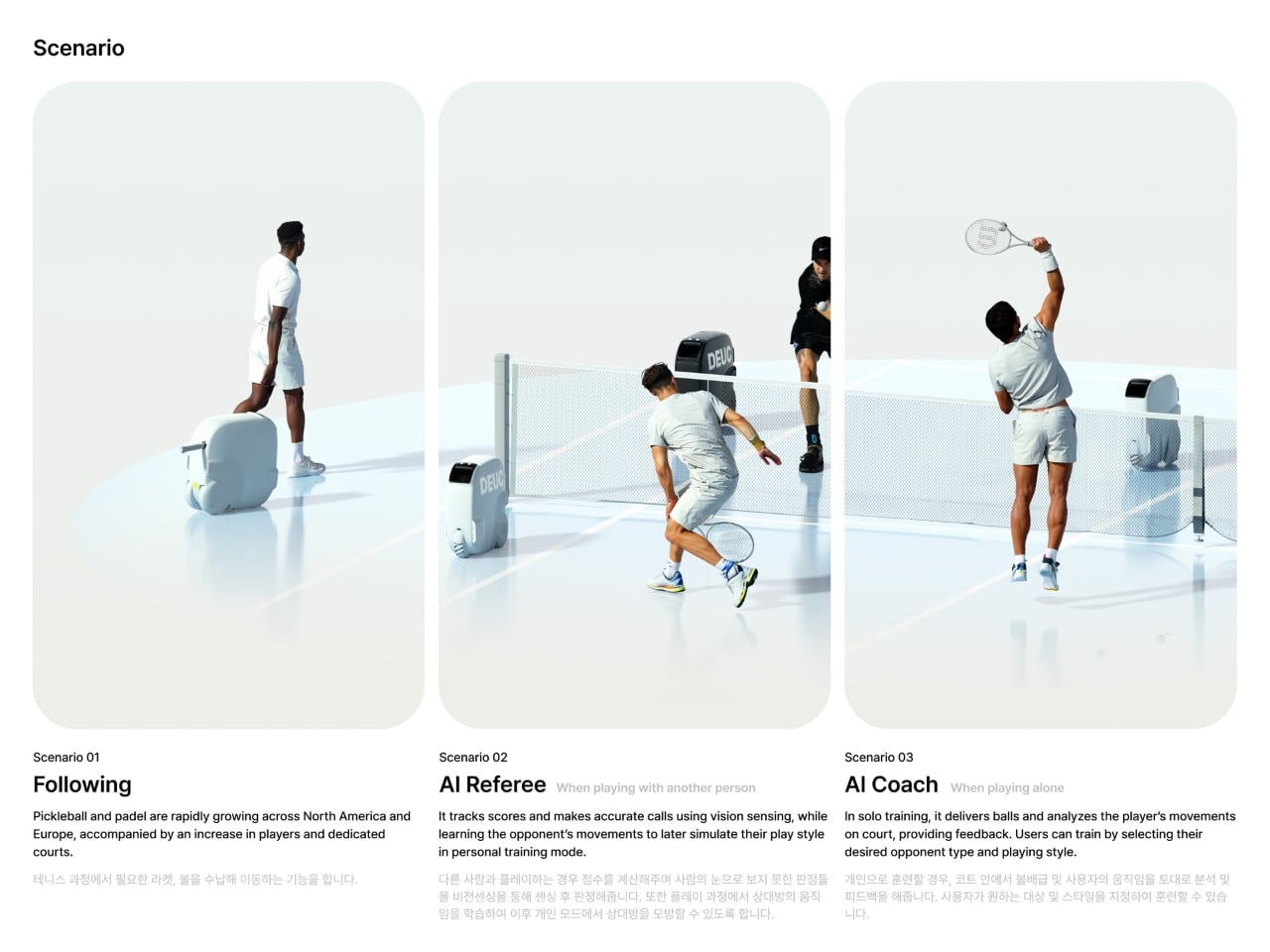
But here’s where it gets really interesting. We’re living in a moment where tennis courts are becoming increasingly flexible spaces. Pickleball is exploding in popularity across North America and Europe, and padel is gaining serious traction too. Courts that used to be dedicated solely to tennis are now being repurposed and shared among multiple sports. ORVY was designed specifically for this new reality of multi-use sports venues.

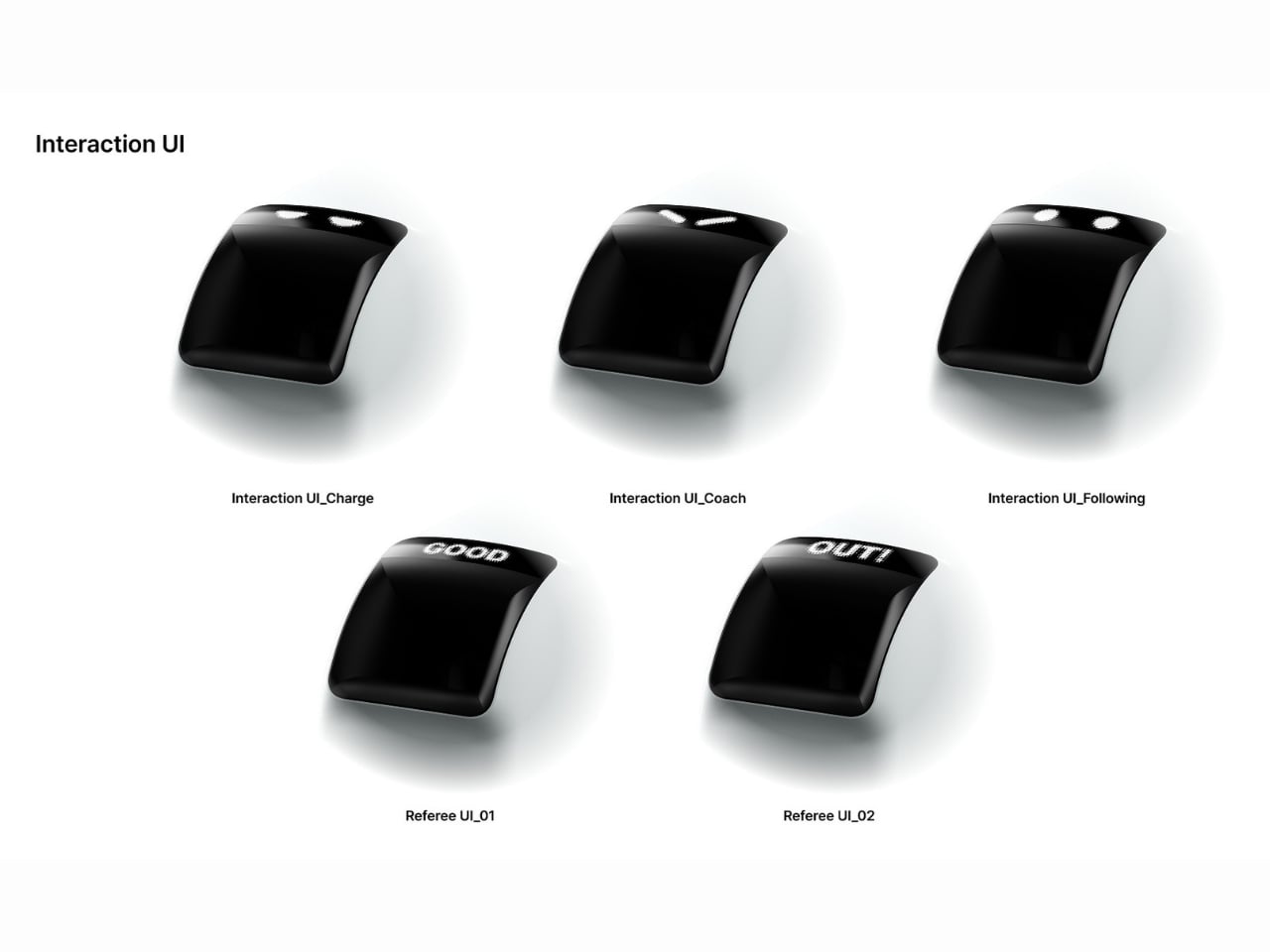
The robot operates in three different modes, each addressing a specific need. In “Following” mode, ORVY acts like that friend who’s always down to hang out. It tracks players around the court during pickleball and padel games, moving quietly along the sidelines without getting in the way. Think of it as your personal sports documentarian, except instead of just recording, it’s gathering data and learning your playing style.

Switch it to “AI Referee” mode, and ORVY becomes the neutral third party every friendly match needs. Using vision sensing technology, it tracks scores and makes accurate calls about whether balls are in or out. No more disputes, no more “I’m pretty sure that was on the line” arguments. The robot watches, learns the movements of both players, and can even simulate their playing styles for later analysis. It’s like having Hawk-Eye technology, but for your weekend games.

The “AI Coach” mode is where ORVY really shines for solo practitioners. When you’re training alone, it delivers balls and analyzes your movements in real time, providing feedback on your technique. You can select your desired opponent type and playing style, and ORVY adjusts accordingly. Want to practice against someone who hits with heavy topspin? ORVY’s got you. Need to work on your response to a serve-and-volley player? It can simulate that too.

What’s brilliant about the design is how Jeon drew inspiration from Wimbledon’s famous all-white dress code. Just as that tradition maintains visual focus during play, ORVY’s clean white exterior allows it to blend into the court environment without becoming a distraction. It’s there when you need it, but it doesn’t demand attention. The neutral color scheme also conveys a sense of reliability and trustworthiness, which is exactly what you want from equipment making judgment calls in your games.

This isn’t just about having a cool gadget on the court. ORVY represents a shift in how we think about sports technology and AI assistance. Rather than replacing human interaction, it’s designed to enhance solo practice and casual play. It fills the gaps when you can’t find a hitting partner or when you want objective feedback without hiring a coach. The timing couldn’t be better. As courts become shared spaces and new racket sports continue to grow, having adaptive technology that can serve multiple functions across different games makes perfect sense. ORVY isn’t locked into serving just one sport or one purpose. It’s flexible, which is exactly what modern sports facilities need.

Looking at this design, you get the sense that the future of sports technology doesn’t have to be intimidating or exclusive. It can be approachable, versatile, and yes, even kind of cute. ORVY manages to pack sophisticated AI capabilities into a form that feels more like a helpful companion than a complicated machine. And in a world where technology often feels like it’s racing ahead of us, that’s a refreshing change of pace.

The post The AI Tennis Robot That Plays 3 Sports Better Than Your Friends first appeared on Yanko Design.

Microsoft issues emergency fix after a security update left some Windows 11 devices unable to shut down

If you weren't able to shut down your Windows 11 device recently, Microsoft has rolled out an emergency fix addressing a couple of critical bugs that popped up with its latest January 2026 Windows security update. The latest "out-of-band" update repairs an issue for some Windows 11 devices that would only restart when users tried to shut down or hibernate. The same update restores the ability for Windows 10 and Windows 11 users to log into their devices via remote connection apps.

Microsoft said the inability to shut down or hibernate affected Windows 11 devices using Secure Launch, a security feature that protects a computer from firmware-level attacks during startup. As for the remote connection issue, Microsoft explained in its Known issues page that credential prompt failures were responsible when users tried to log in remotely to affected Windows 10 and 11 devices.

According to WindowsLatest, some lingering issues with the January 2026 Windows security update are still affecting users, like seeing blank screens or Outlook Classic crashing. Back in October, Microsoft had to issue another emergency fix for Windows 11 related to the Windows Recovery Environment. For those still hesitant to upgrade to Windows 11, Microsoft is allowing you to squeeze some more life out of Windows 10 by enrolling in Extended Security Updates.

This article originally appeared on Engadget at https://www.engadget.com/computing/microsoft-issues-emergency-fix-afer-a-security-update-left-some-windows-11-devices-unable-to-shut-down-192216734.html?src=rss

Washington is the latest state pursuing an age verification law for porn sites

Washington state residents may soon be forced to produce IDs before getting onto websites with pornographic content. Within the state's House of Representatives, Rep. Mari Leavitt introduced House Bill 2112, which is informally known as the Keep Our Children Safe Act. Similar to the initiatives seen in other states, the bill proposes to restrict access to "online sexual material harmful" to anyone under 18.

In practical terms, those living in Washington state could see websites asking for digital identification or demanding the user go through an age verification system that requests a government-issued ID. If a website that has more than one-third of its content being "sexual material harmful to minors" is found not following these rules, the state's attorney general can pursue steep civil penalties.

If those restrictions sound familiar, it's because many other states have also passed similar constraints. Washington state's proposed bill is very similar to Texas' age verification law that went into effect in September 2023 and was recently upheld by the US Supreme Court. Like the Texas law, several groups expressed disapproval of the bill during the public hearing at the House committee level. As reported by The Seattle Times, groups including the ACLU, Lavender Rights Project and the Northwest Progressive Institute warned of privacy risks related to potential data breaches and the loose definition of "sexual material harmful to minors" in the bill's language.

This article originally appeared on Engadget at https://www.engadget.com/cybersecurity/washington-is-the-latest-state-pursuing-an-age-verification-law-for-porn-sites-174423529.html?src=rss

Dubai Gets World’s First Mercedes-Benz Branded City With 13,000 Apartments

Luxury car brands moving into real estate isn’t exactly new anymore. Porsche kicked things off with its Design Tower Miami in 2017, followed by Aston Martin’s 66-story sail-shaped tower that opened in Miami in May 2024, and Bentley Residences expected to complete in 2026. Bugatti and Pagani both have projects underway in Miami and Dubai. But Mercedes-Benz and Binghatti just took it to another level with their newly launched Binghatti City project in Dubai. Instead of stopping at a single branded tower like most automotive companies do, they’re building an entire 10-million-square-foot district with 12 residential skyscrapers containing 13,000 apartments. The $8.2 billion development centers around a 341-meter tower called Vision Iconic, surrounded by 11 progressively shorter towers creating this cascading skyline in the Meydan area. This is their second collaboration after a 65-floor Mercedes tower in Downtown Dubai that’s nearly complete, proving the concept works well enough to scale up dramatically.

The architecture pulls heavily from Mercedes design DNA, incorporating elements like their signature grille pattern into horizontal podiums, plus generous use of chrome and silver accents throughout. Each tower carries the name of a Mercedes concept vehicle, and apartments feature the brand’s Sensual Purity design philosophy with black and silver palettes accented by wood and leather. They’re not just building housing though. The masterplan includes cultural districts, retail spaces, parks, mobility hubs, sports facilities and dining venues, essentially creating a walkable branded ecosystem. Units start at $435,600 for studios and top out around $5 million for three-bedrooms. Timeline calls for completion in three and a half years from the January 14, 2026 launch.

Designer: Binghatti for Mercedes-Benz

The luxe pricing structure here tells you everything about who Mercedes thinks will actually live in this thing. Studios at $435,600 might sound almost reasonable by Dubai standards until you remember that’s the entry point for literally the smallest unit available. One-bedroom units jump to $2.6 million, two-bedrooms hit $3 million, and three-bedrooms start at $5 million. They’re casting a wide net, sure, but even the “affordable” end of this spectrum requires the kind of disposable income that makes luxury car ownership look like a casual purchase decision. The real question is whether 13,000 apartments worth of wealthy people exist in Dubai’s orbit who specifically want to live in a Mercedes-branded environment. That’s a lot of units to fill, even in a city that treats superlatives like a competitive sport.

The design philosophy they keep mentioning, Sensual Purity, sounds like the kind of corporate branding speak that emerges from late-night brainstorming sessions, but it does translate into some specific material choices. Black and silver form the base palette because of course they do, you can’t have a Mercedes-branded space without channeling the aesthetic of a C-Class interior. The wood and leather accents are presumably there to soften all that chrome and convince people this is a home rather than an extremely expensive showroom. Each tower named after a concept car like Vision One-Eleven or Vision AVTR adds another layer of brand immersion that either sounds incredibly cool or slightly dystopian depending on your tolerance for corporate aesthetics in residential spaces.

The amenities list reads like someone took every luxury condo marketing brochure from the past decade and merged them into one. E-sport lounges, ballrooms, event halls, sporting clubs, water pools, fitness facilities, picnic groves. They’re promising this self-contained urban ecosystem where you theoretically never need to leave, which raises interesting questions about what happens when your entire residential community is tied to a single brand identity. Do you start identifying as a Mercedes person in ways that go beyond car ownership? Does living in Mercedes-Benz Places Binghatti City become part of your personal brand? These are the kinds of questions that sound absurd until you remember people absolutely do this with Apple products and Patagonia vests.

Binghatti’s track record with branded developments gives this project more credibility than if some random developer tried pulling it off. They’re simultaneously working on Bugatti residences and have that Jacob & Co collaboration, so they’ve figured out the formula for translating automotive brand language into architectural form. The three-and-a-half-year timeline feels optimistic but not wildly unrealistic for Dubai’s construction pace. Whether the market can actually absorb 13,000 Mercedes-branded units in Meydan while their first tower in Downtown Dubai is still finding buyers remains the real test of whether this brand extension strategy works at city scale or if they’ve dramatically overestimated the overlap between car enthusiasts and people who want their entire living environment wrapped in automotive branding.


The post Dubai Gets World’s First Mercedes-Benz Branded City With 13,000 Apartments first appeared on Yanko Design.

Apple’s M5 Pro and M5 Max MacBook Pros Will Blow Your Mind

Apple’s M5 Pro and M5 Max MacBook Pros Will Blow Your Mind

Apple is poised to reshape the laptop landscape with the highly anticipated release of its M5 Pro and M5 Max MacBook Pros, scheduled for late January 2026. These new models promise to deliver significant advancements in performance, connectivity, and artificial intelligence (AI) capabilities. Designed to cater to the needs of professionals, creators, and tech enthusiasts, […]

The post Apple’s M5 Pro and M5 Max MacBook Pros Will Blow Your Mind appeared first on Geeky Gadgets.

Posted in Uncategorized

Plan, Debug, Ship Faster with Antigravity from Google

Plan, Debug, Ship Faster with Antigravity from Google

What if software development could shift from a maze of endless tasks to a streamlined, collaborative journey? Below, AI LABS breaks down how Google Antigravity, powered by the innovative Gemini 3 model, is transforming the way developers approach their work. This isn’t just another AI assistant, it’s a bold reimagining of modern development. With features […]

The post Plan, Debug, Ship Faster with Antigravity from Google appeared first on Geeky Gadgets.

Posted in Uncategorized