Delightfully Retro LEGO Art Deco Hotel Celebrates Vice City with GTA 6 Right Around The Corner

Here’s a fun bit of trivia to drop at your next party and watch people’s eyes glaze over: LEGO made its own version of Vice City before Vice City existed. It was called Paradisa, it ran from 1992 to 1997, and it was basically an entire toy line built on pink bricks, jet skis, and mustachioed men serving cocktails poolside. Nobody remembers it because it got quietly discontinued and replaced with fairy castles, but the DNA never really left the company. Fast forward a few decades and GTA 6 is about to remind the entire planet why Miami pastels slap so hard, and wouldn’t you know it, a LEGO Ideas builder has basically resurrected Paradisa just in time.

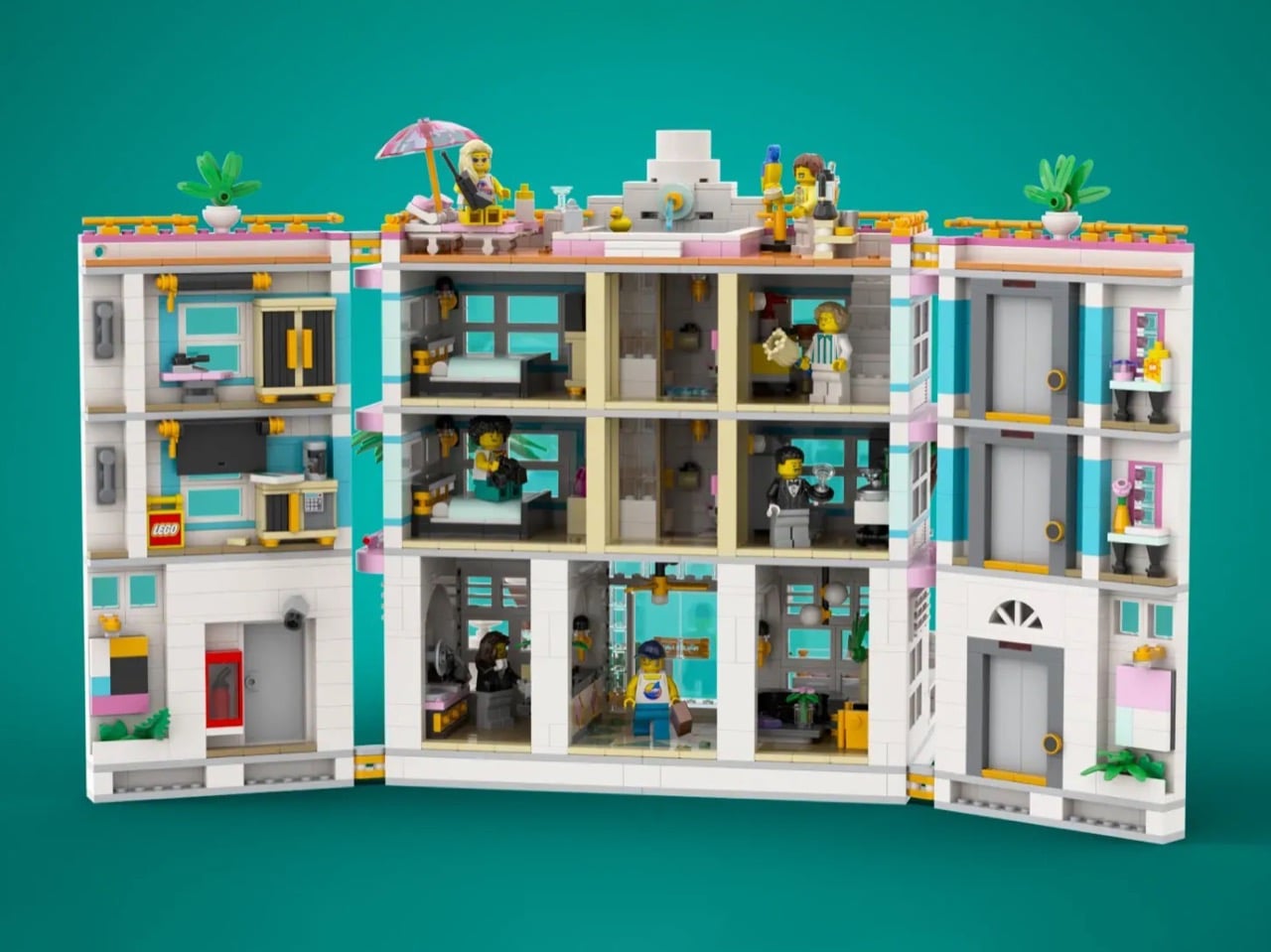
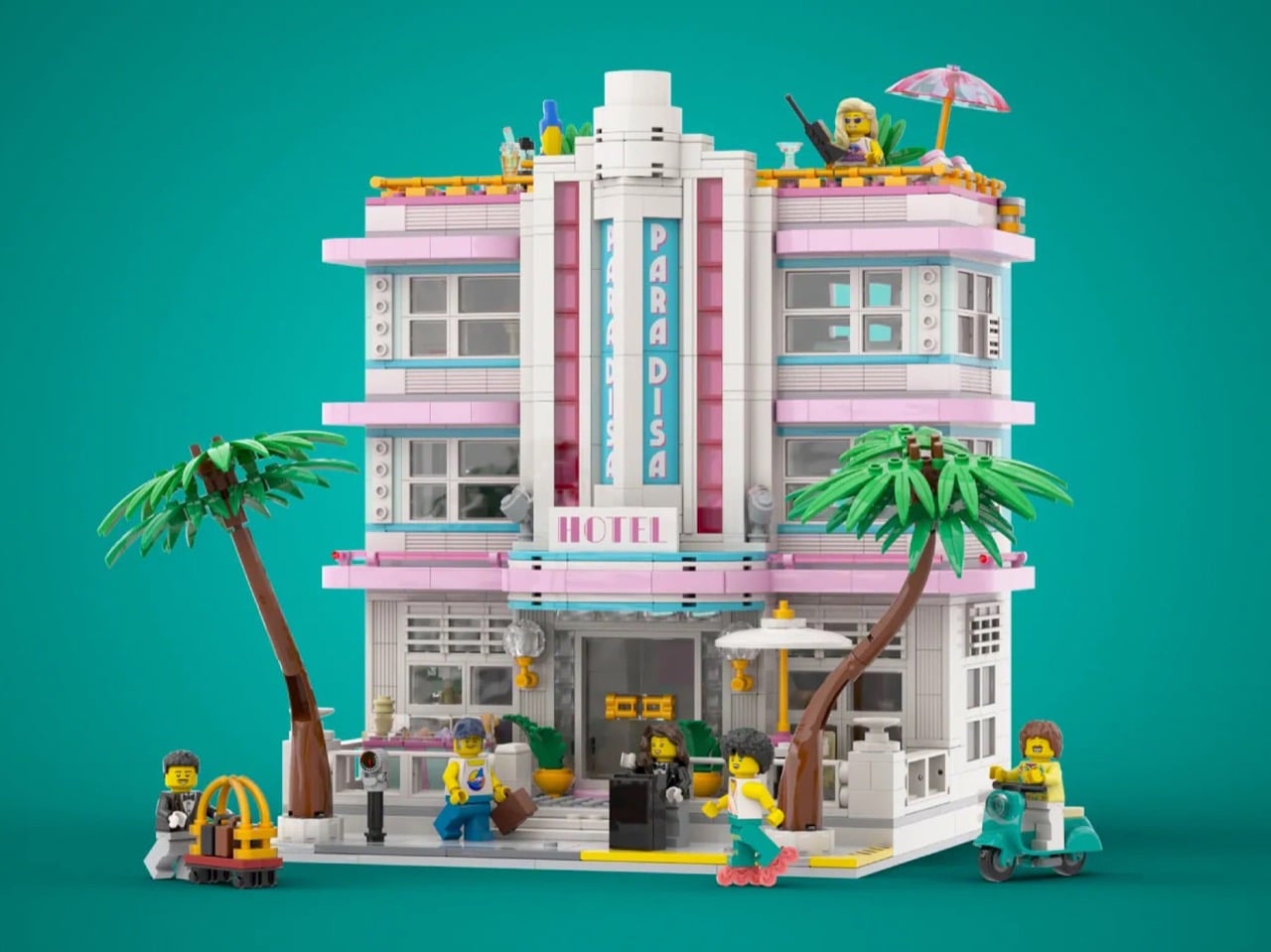
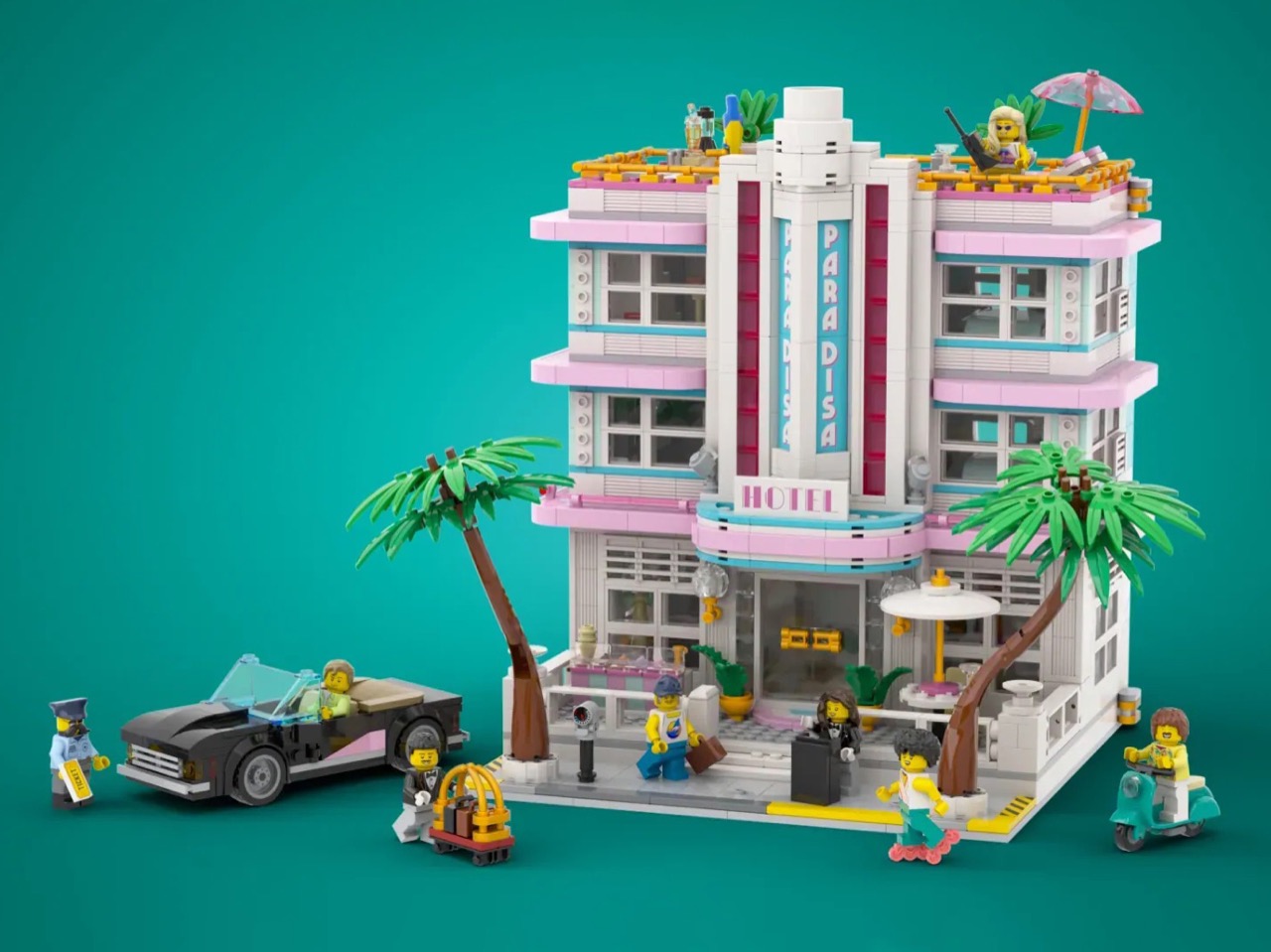
The Art Deco Hotel is the result, a 2,600 piece love letter to Ocean Drive that reads like someone locked a LEGO fan in a room with old Paradisa catalogs and a Netflix trailer for GTA 6. It is not licensed, it will never be licensed, and honestly, that might be exactly why it works.

Designer: Distracted Builder
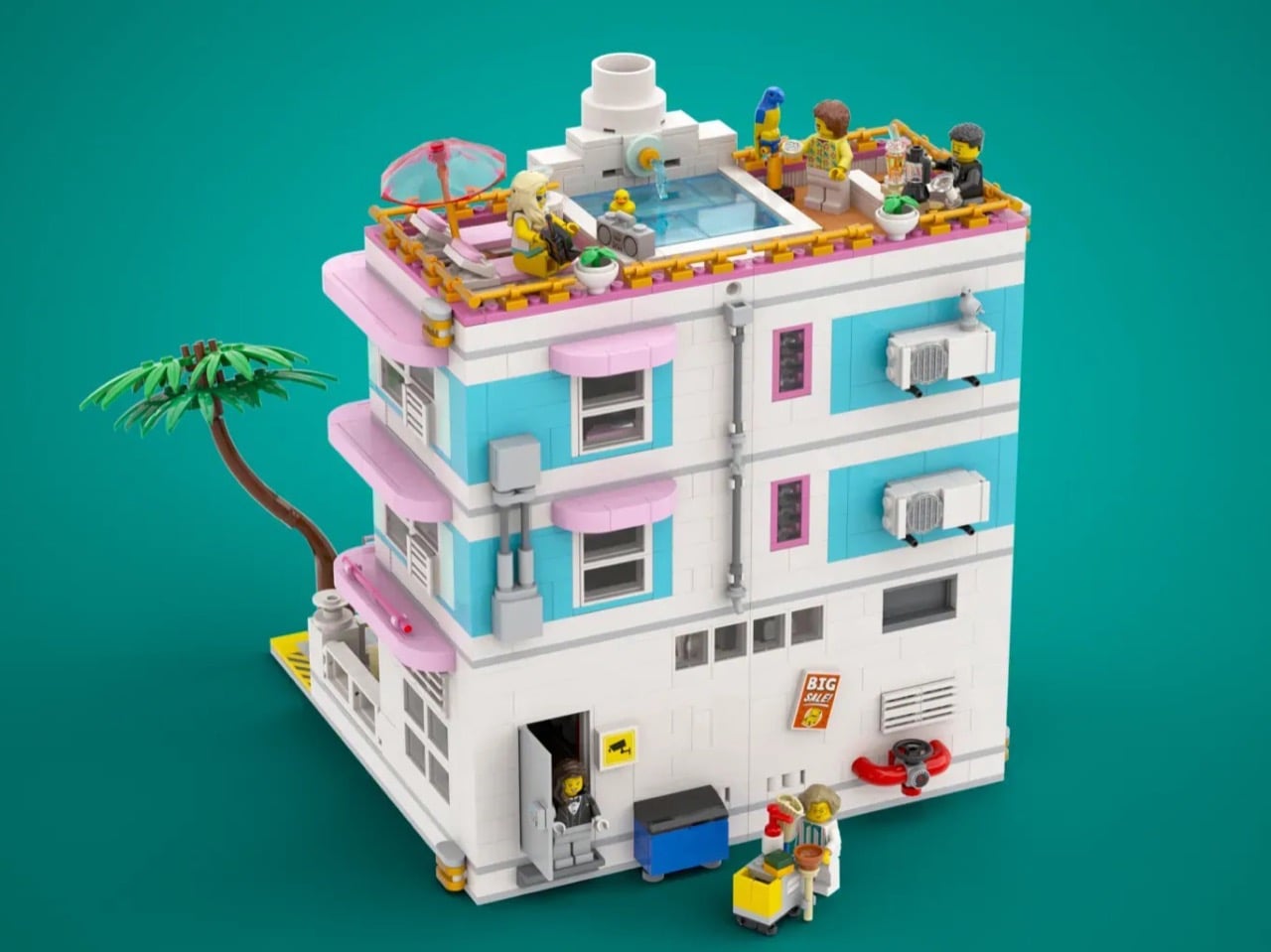
The guy behind this one is a certified LEGO Ideas veteran, a 10K Club member with a track record of digging up dead LEGO themes and giving them a proper send off (his previous project was a Samurai Castle tribute to the old 90s Ninja subtheme, so this is clearly his whole vibe). For the Art Deco Hotel, he says he’s visited Miami three times and fell hard for Ocean Drive in person, and that he wanted to bottle both the architecture and his love of 80s music into one build. He calls the model “a small tribute to LEGO Paradisa,” which is putting it mildly, because the finished hotel is basically wearing a Paradisa name tag. The vertical neon sign running down the central tower spells out P-A-R-A-D-I-S-A, with HOTEL glowing on a pink marquee below it, which might be my single favorite detail in the whole build. It is a tiny piece of branding doing three jobs at once: it nails the real Ocean Drive habit of stacking hotel names vertically so passing cars can actually read them, it winks at the LEGO theme that inspired it, and it just looks great lit up against all that turquoise trim.
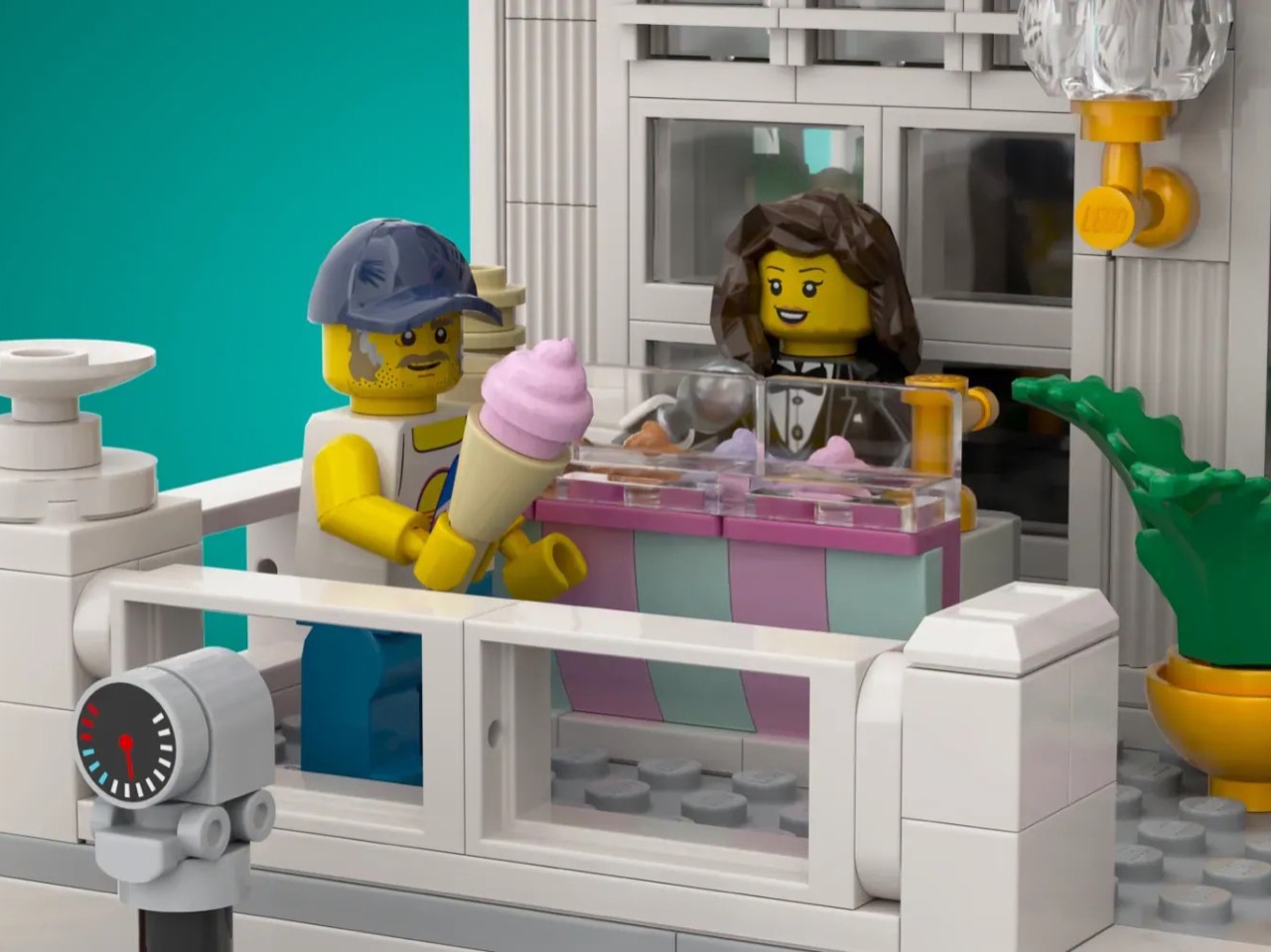
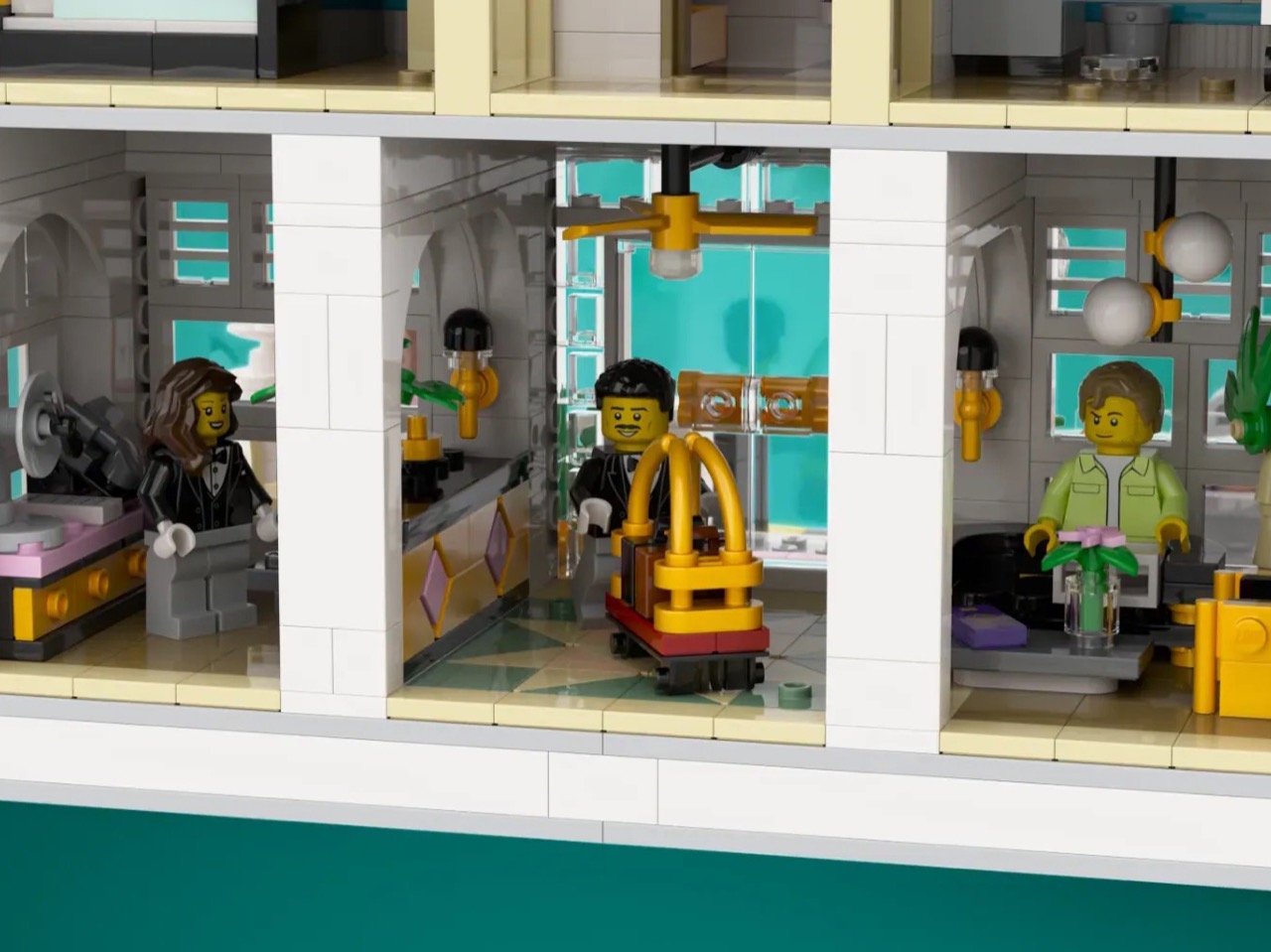
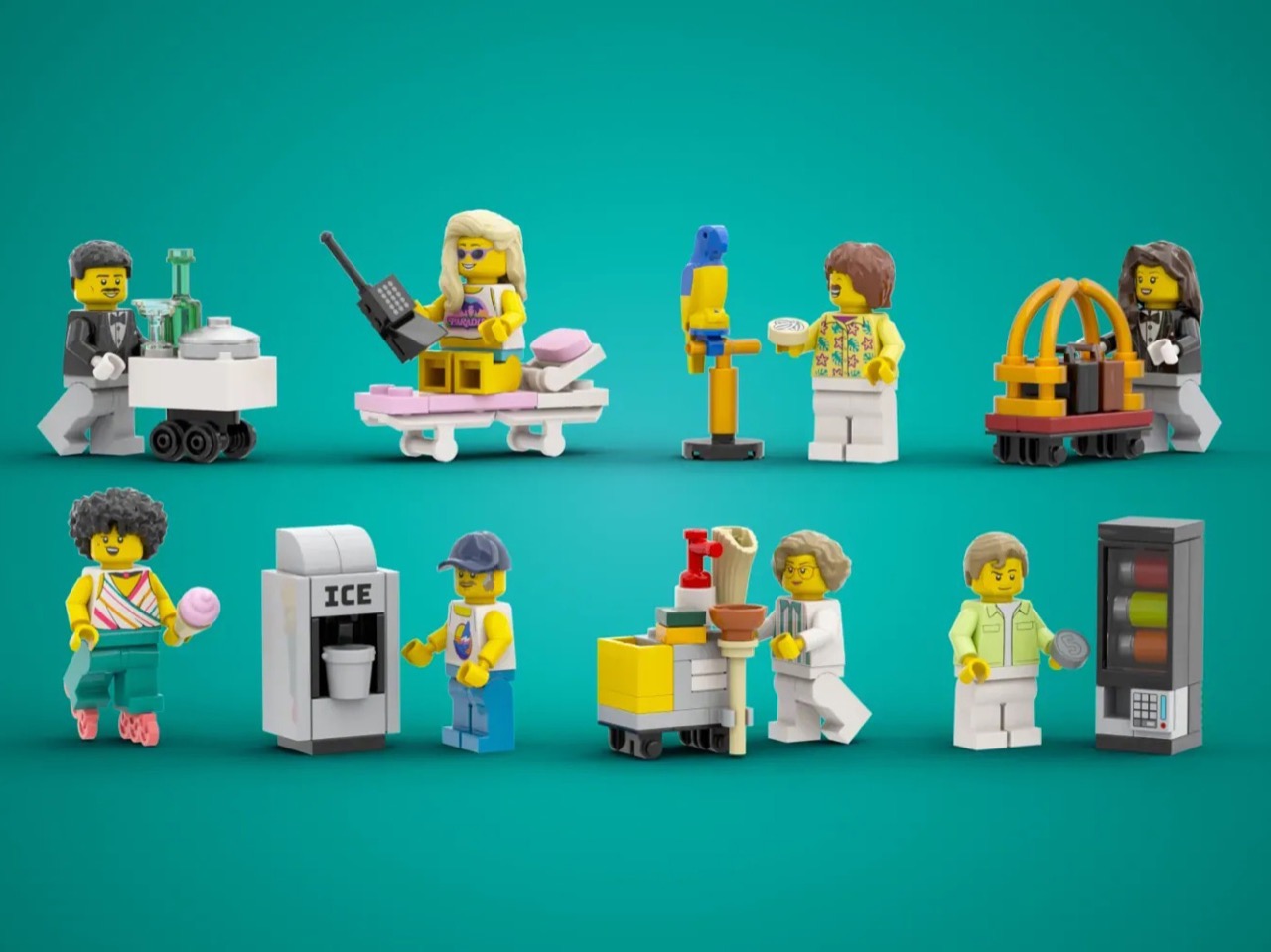
Under the hood, this thing is a proper working hotel, not just a pretty face. The facade folds open to reveal a lobby with a reception desk and an elevator, guest rooms furnished with beds and cabinets, bathrooms with actual sinks and showers, and a staircase leading all the way up to a rooftop pool and bar. Add in the palm trees, the scooter parked out front, and a minifig sunbathing on the roof with a cocktail, and you’ve basically got a functioning slice of 1980s Miami sitting on your shelf, no felony charges required.
The best part is the timing nobody planned. LEGO did not get a call from Rockstar, Distracted Builder is not secretly working for Take-Two, this is just what happens when good design instincts and good taste in vacation destinations collide. The Art Deco Hotel currently sits at 2,505 supporters on LEGO Ideas, with the next milestone at 5,000 and 558 days still on the clock, so there’s plenty of runway left. If you want to help push this pastel dream toward an actual box set, you can head to the LEGO Ideas page and give it your vote. And if LEGO’s design team is somehow reading this, do the sign in light bricks. This hotel deserves to glow at sundown just like the real ones do.

The post Delightfully Retro LEGO Art Deco Hotel Celebrates Vice City with GTA 6 Right Around The Corner first appeared on Yanko Design.

Dior’s Roadie Boots Turn an Overlooked Sole Into the Main Design Event

Shoes are usually designed from the top down. The leather, the laces, the silhouette, and the recognizable details tend to receive all the attention, while the sole quietly does the practical work underneath. Jonathan Anderson’s Dior Roadie lace-up boots make a convincing argument for looking down.

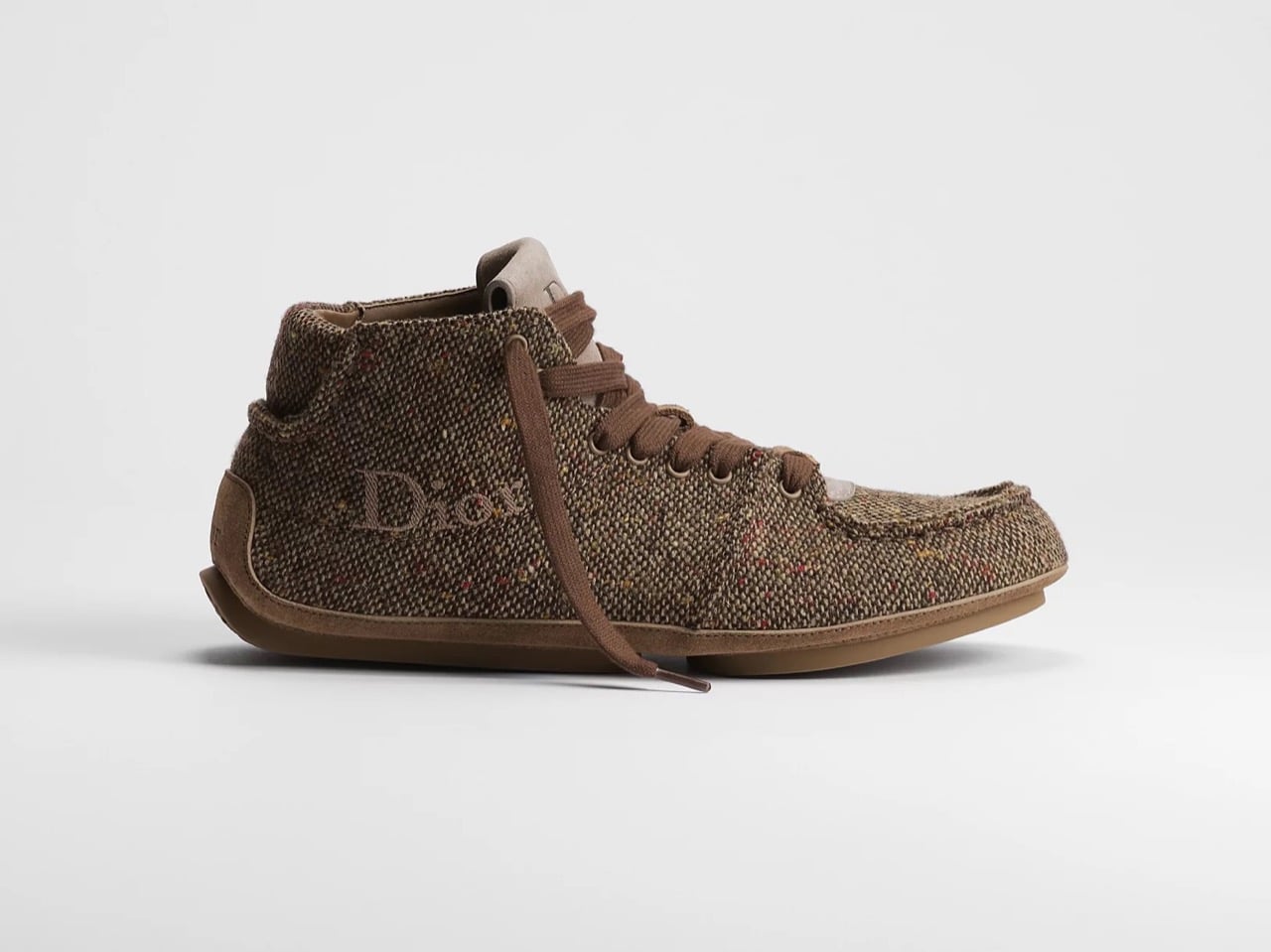
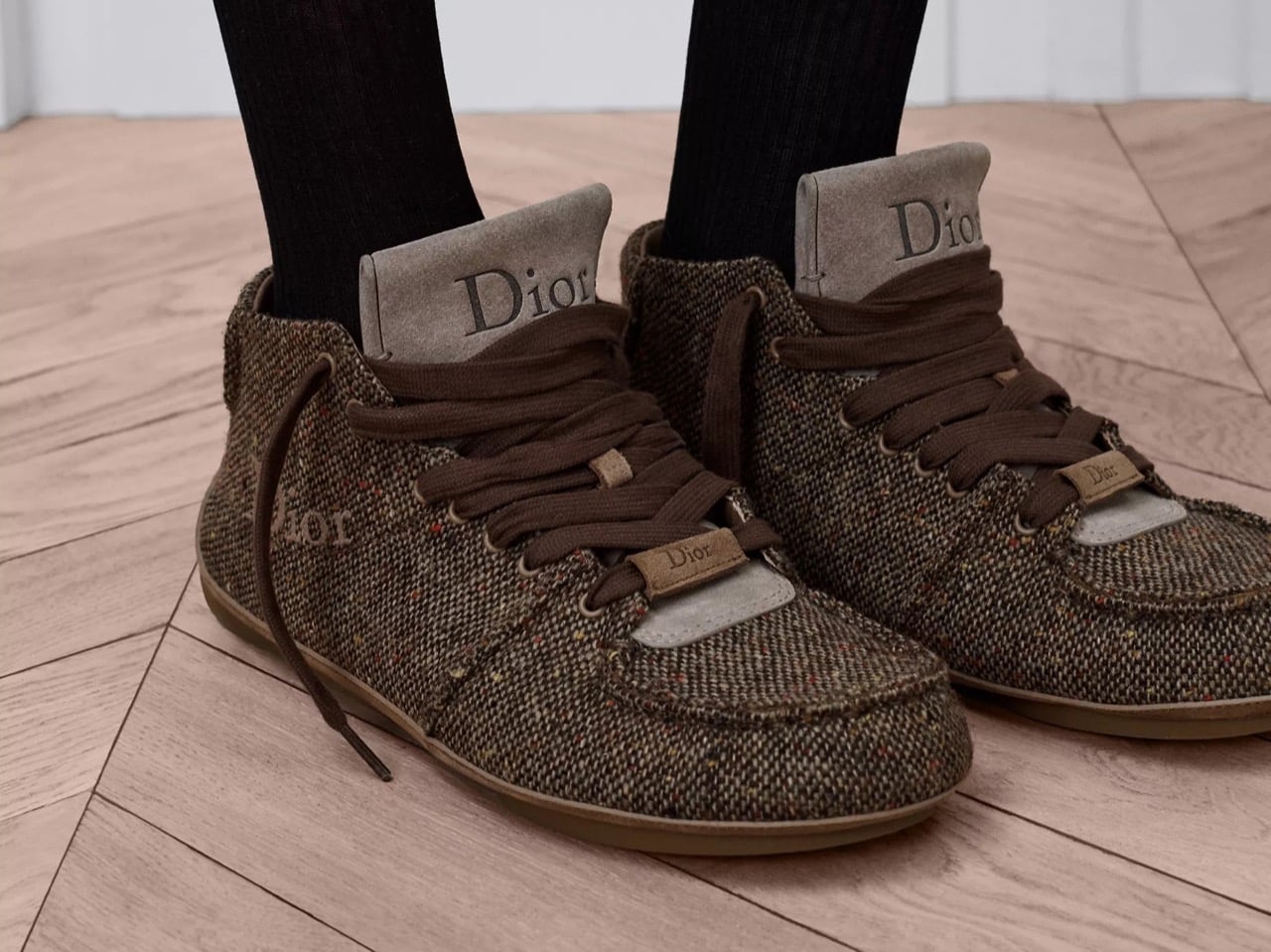
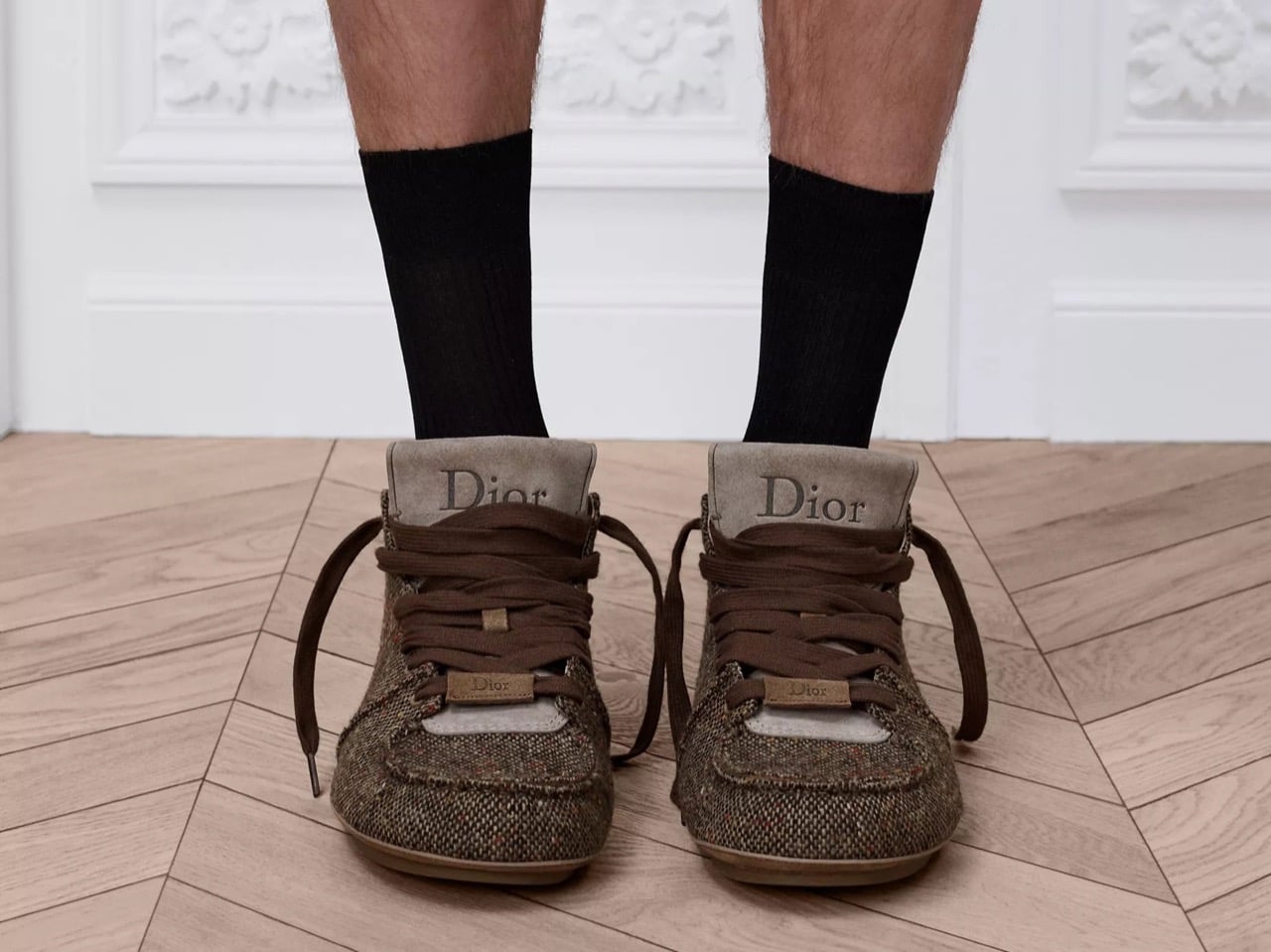
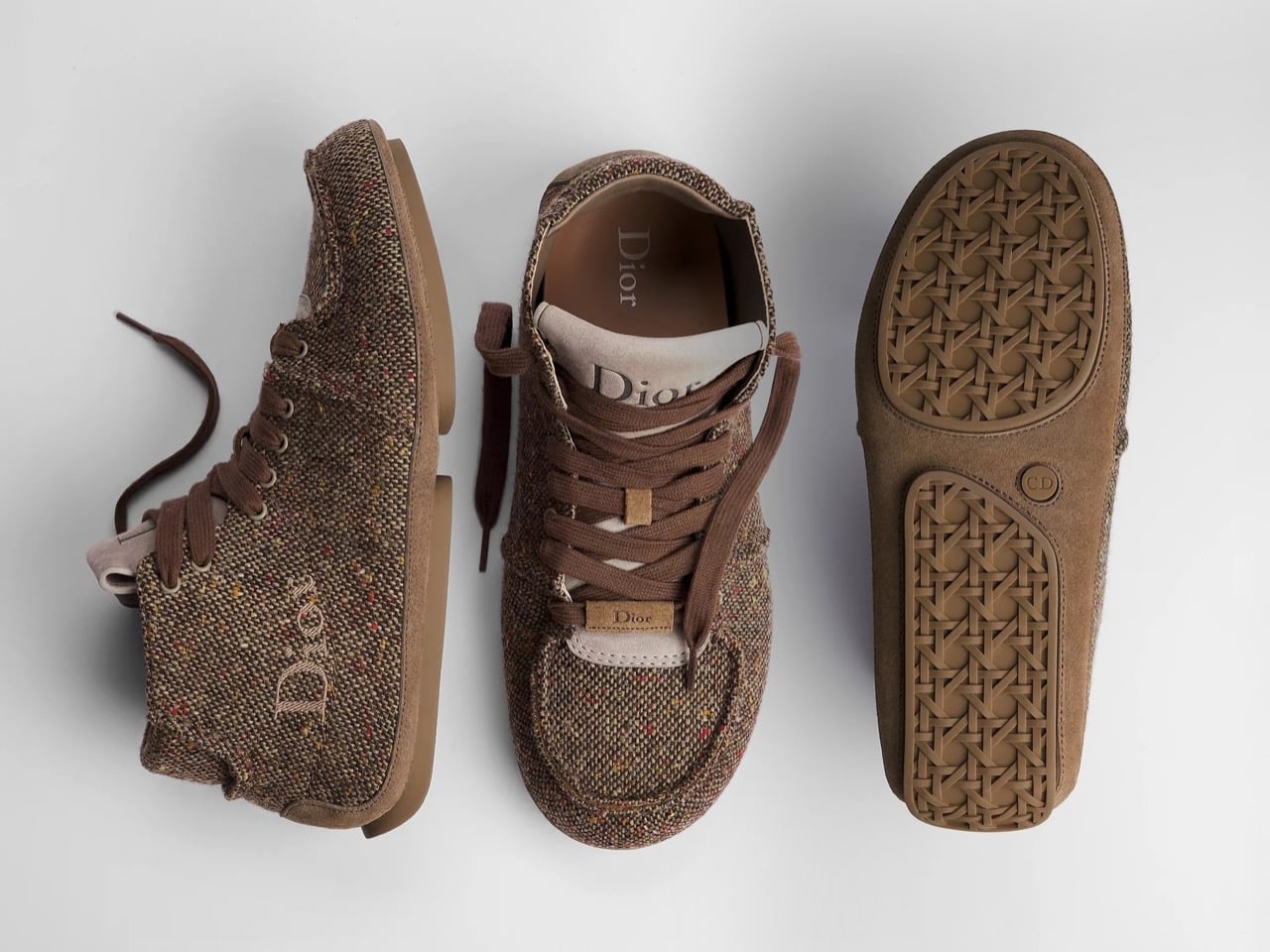
Created for the Dior Winter 2026 Menswear Collection, the Roadie takes the familiar language of the retro driving shoe and pushes it somewhere far less expected. The defining feature is its cylindrical sole, an exaggerated rubber structure that gives the shoe an almost architectural profile. It changes the proportions entirely. What could have been a rugged high-top in traditional materials suddenly feels peculiar, sculptural, and distinctly contemporary.

Designer: Dior

That tension is what makes the design interesting. Anderson draws from materials closely associated with his Irish heritage, including traditional Donegal tweed, here used alongside sheep wool and suede cowhide across the main body. The surface feels warm, textured, and familiar, carrying the character of something that might have existed for decades. Underneath it sits a sole that seems to belong to another design vocabulary altogether. Heritage meets experimentation without either side becoming decorative nostalgia.

The construction remains intentionally soft. Dior describes the shoe as unreinforced, allowing it to retain flexibility and comfort despite the substantial appearance of the sole. A padded collar supports the high-top silhouette, while the lining is made from sheepskin leather. Cotton laces run through leather lace loops finished with the Dior logo, adding another small point of craftsmanship to a shoe already rich in detail.

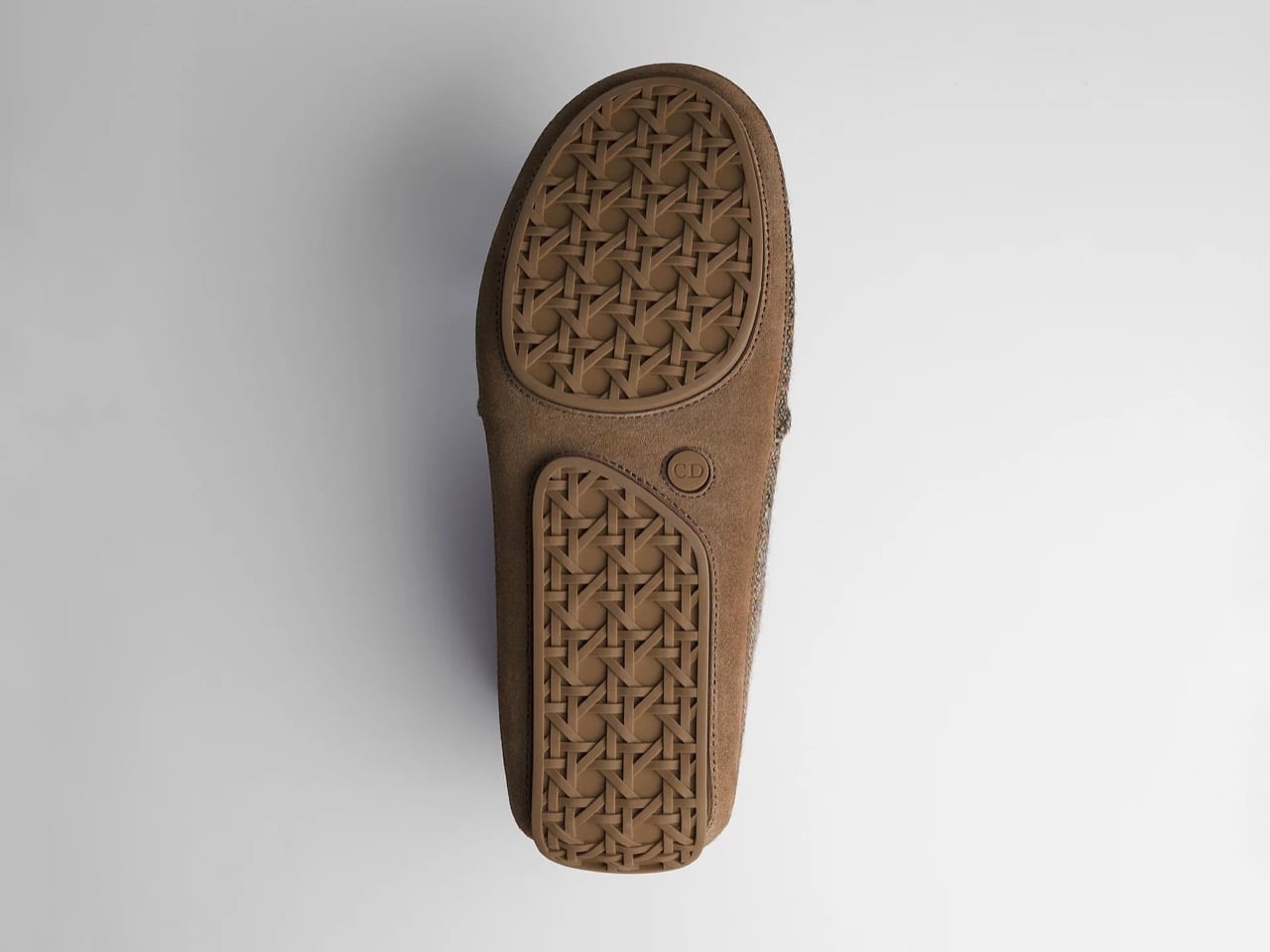
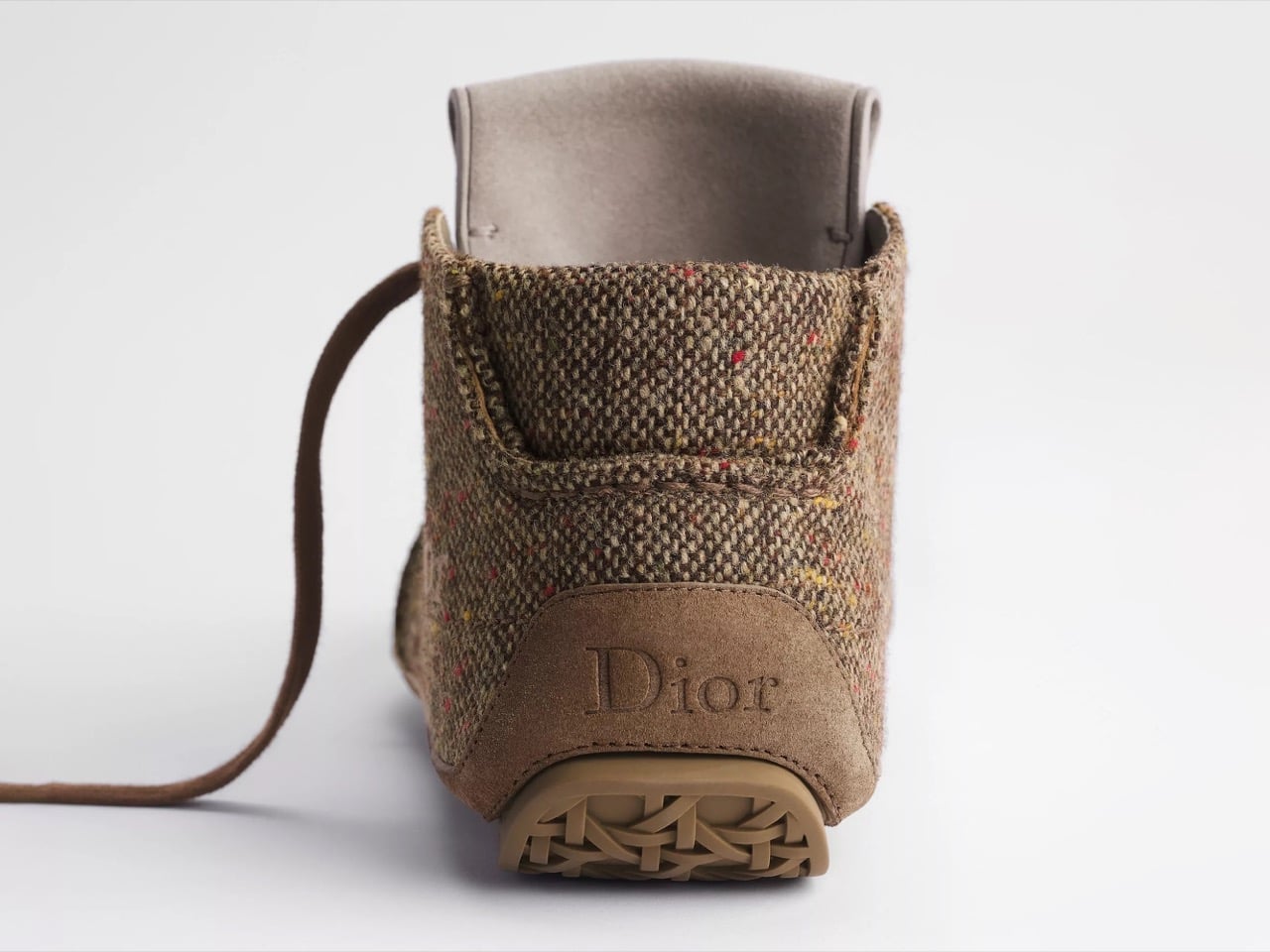
Branding is present, although it rarely interrupts the materials. Dior embroidery appears along the sides, while embossed logos are worked into the tongue and heel. The approach feels more integrated than applied. Even the sole continues the conversation. Its two-piece rubber construction features an engraved Cannage pattern with an inset CD logo, transforming a component that is usually treated as purely functional into one of the shoe’s most considered surfaces.

There is something especially satisfying about giving this much attention to the bottom of a shoe. The sole is the part that actually meets the world. It absorbs the pavement, gathers evidence of where you have been and, quite literally, leaves a print behind. Here, Dior turns that overlooked surface into a design signature. The woven effect and Cannage engraving mean that even the impression underneath carries an identity. It is a clever reminder that good design does not have to stop where visibility does.

The cylindrical construction also gives the Roadie an unusual stance. From the side, the shoe feels almost inflated around the ground, with the outsole extending the visual weight of the upper rather than simply supporting it. There is humor in the proportion, but it is controlled. The result is avant-garde without becoming theatrical for its own sake.

This balance between eccentricity and familiarity feels particularly suited to Anderson’s approach at Dior. Donegal-inspired texture keeps the shoe grounded in craft and personal history, while the unusual sole pulls it firmly into the present. The Roadie does not discard the traditional codes of luxury footwear. It rearranges their hierarchy, asking the material, construction, and sole to share equal responsibility for the personality of the object.

Made in Italy, the boots come with a dust bag and an additional pair of shoelaces. Dior notes that minor variations in color, sizing, material composition or appearance may occur because of technical limitations, product improvements or differences between production batches, with the physical product taking precedence over online imagery.

The Dior Roadie ultimately feels like a shoe designed for someone who notices the parts of an object that most people ignore. The Donegal textures may attract the first glance, and the unusual proportions may hold it, but the most memorable idea sits underneath. In a category where soles are so often treated as an afterthought, Dior has made one worth turning the shoe over for.

The post Dior’s Roadie Boots Turn an Overlooked Sole Into the Main Design Event first appeared on Yanko Design.
MagSafe Drone Lets You Attach An iPhone For Perfect Hands-free Selfies And Videos

Flying Gimbal Drone concept with an iPhone mounted on it

Google’s Add Me is one of the stranger things a phone has ever done. Introduced on the Pixel 9, it takes a photo of your family, then hands the phone to somebody in that photo, who takes a second shot of you standing where the gap was. The phone stitches the two together and produces a group picture that never existed, of a moment where everybody was never actually in the room at once. It works remarkably well. It is also, if you think about it for longer than four seconds, deeply odd, a family portrait assembled in post like a Marvel crowd scene.

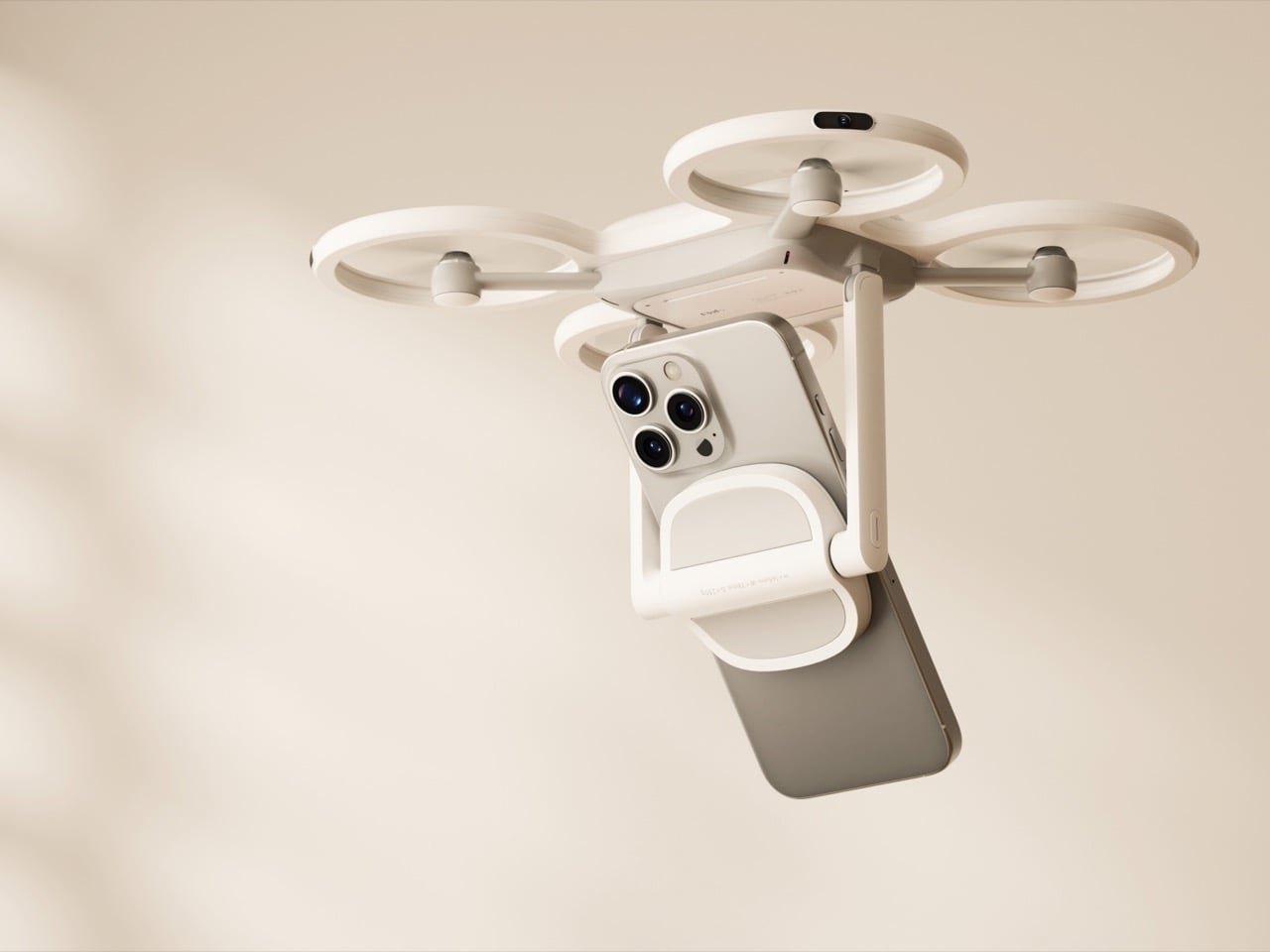
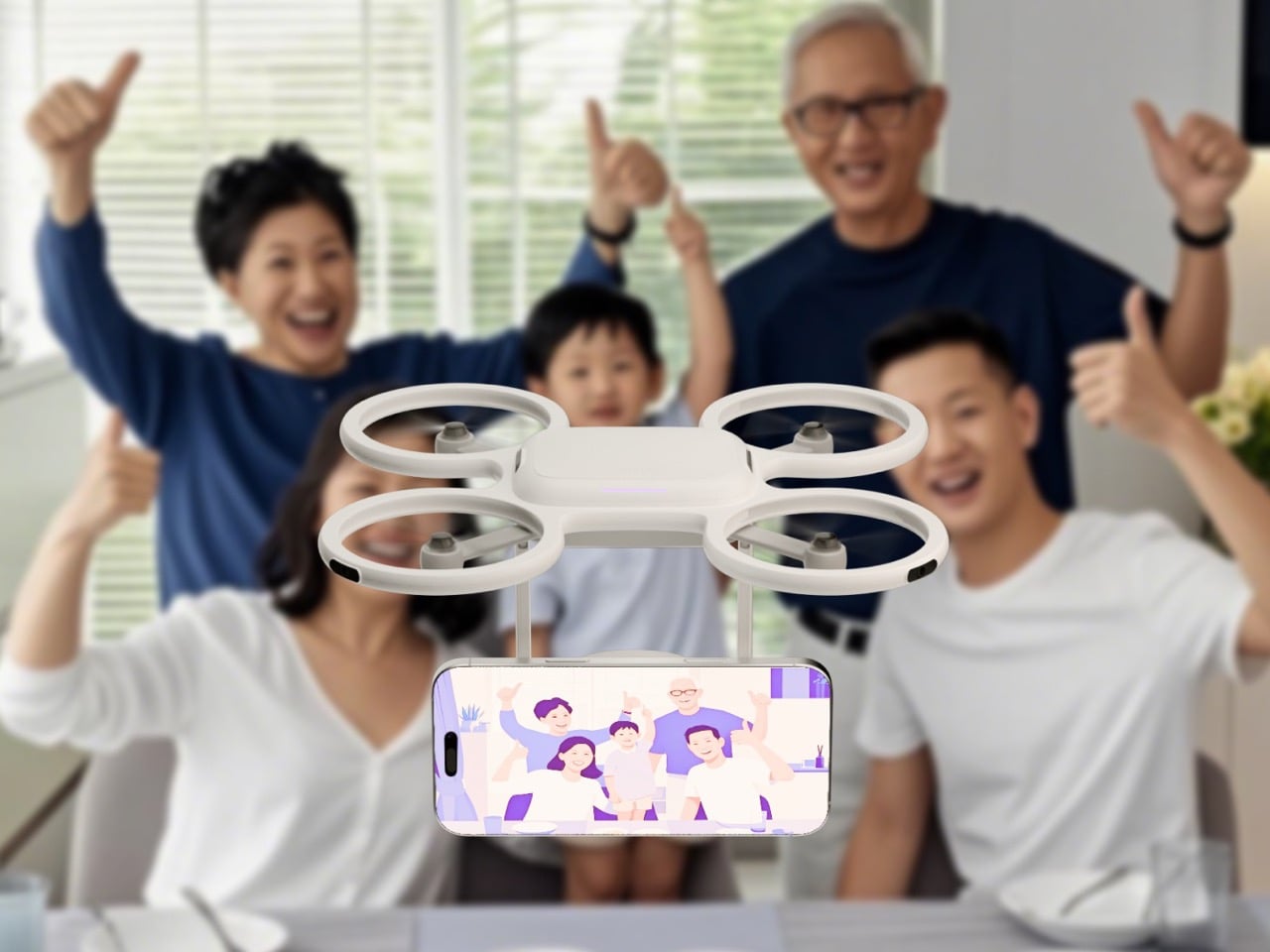
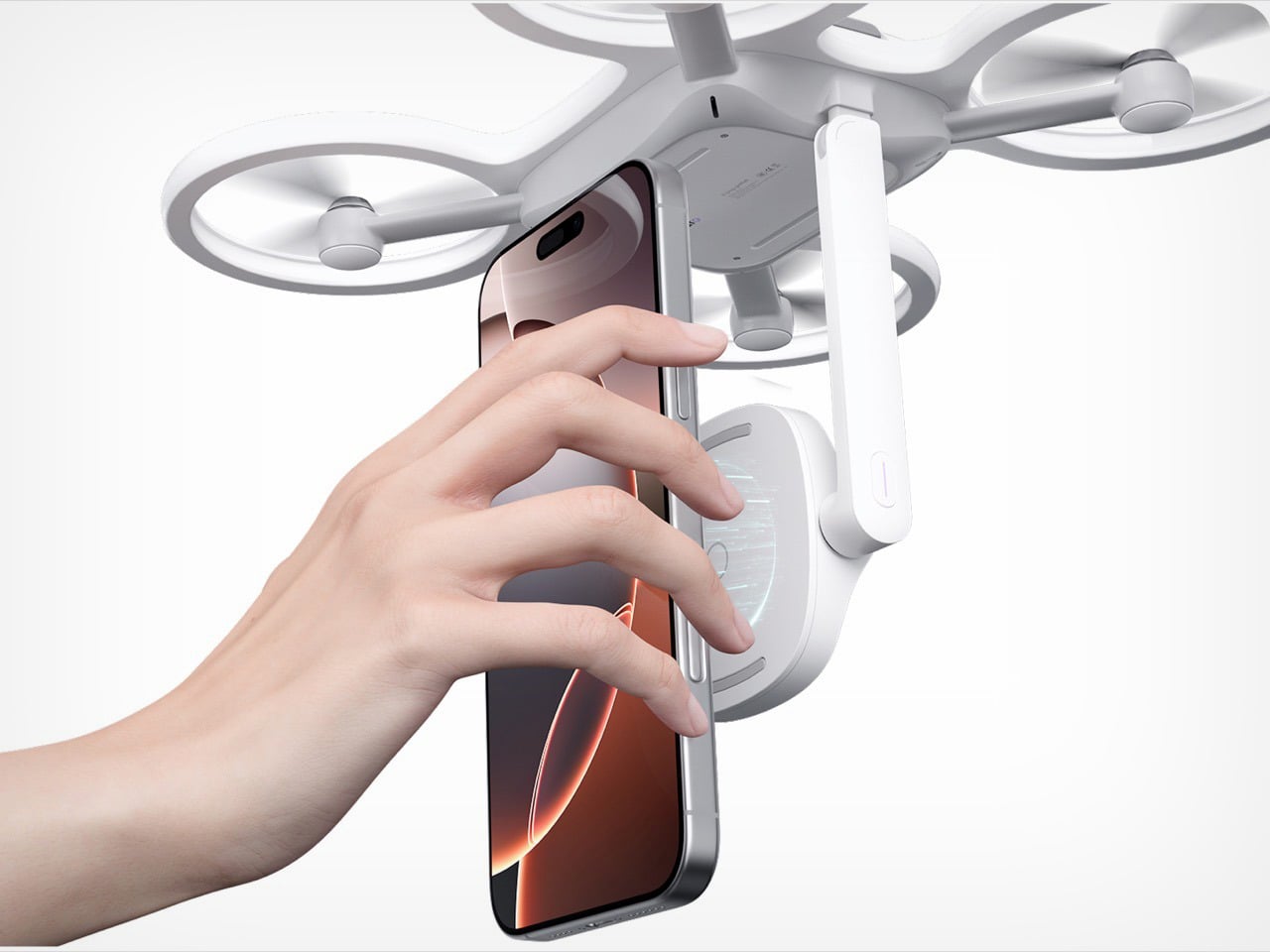
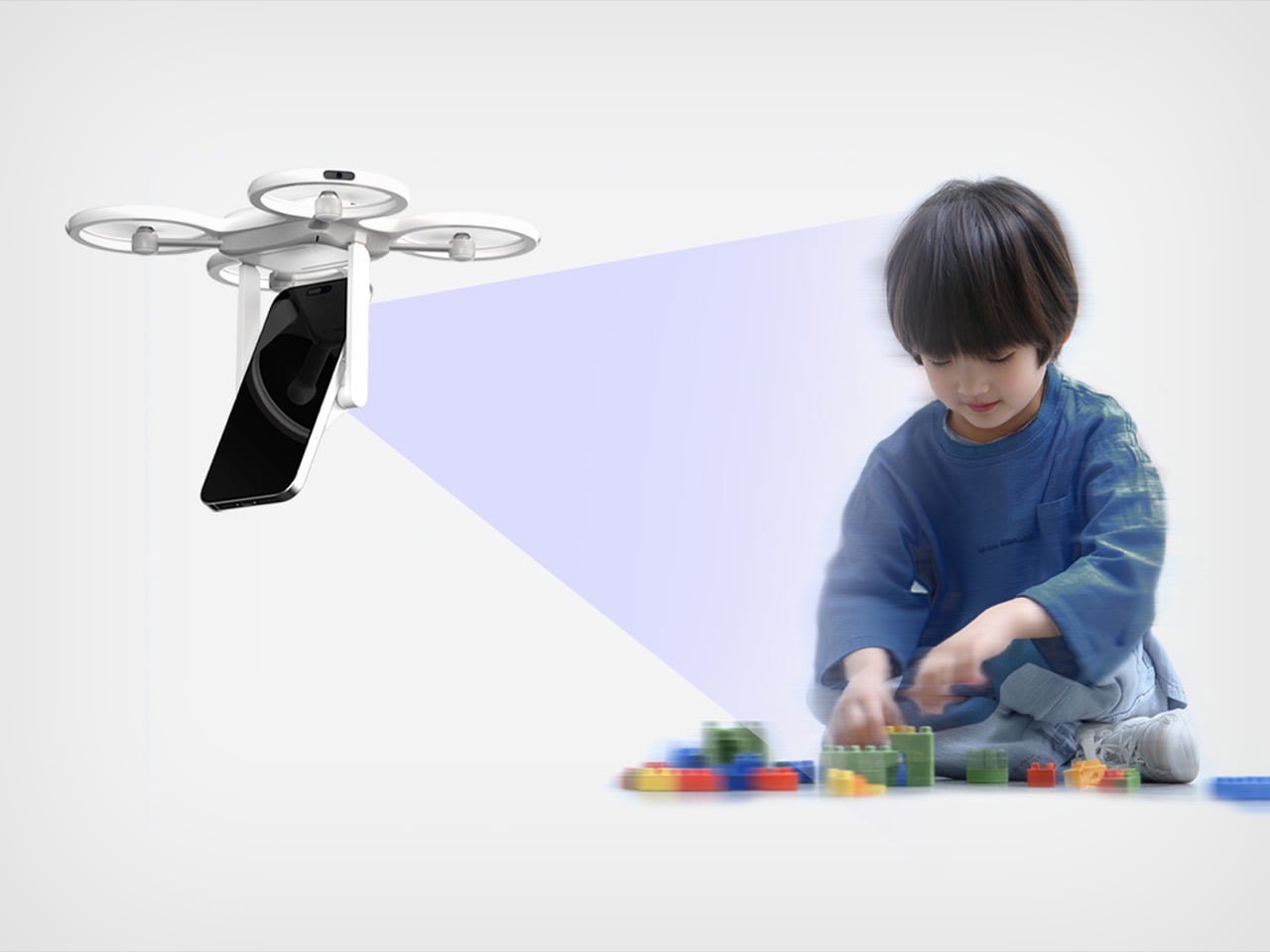
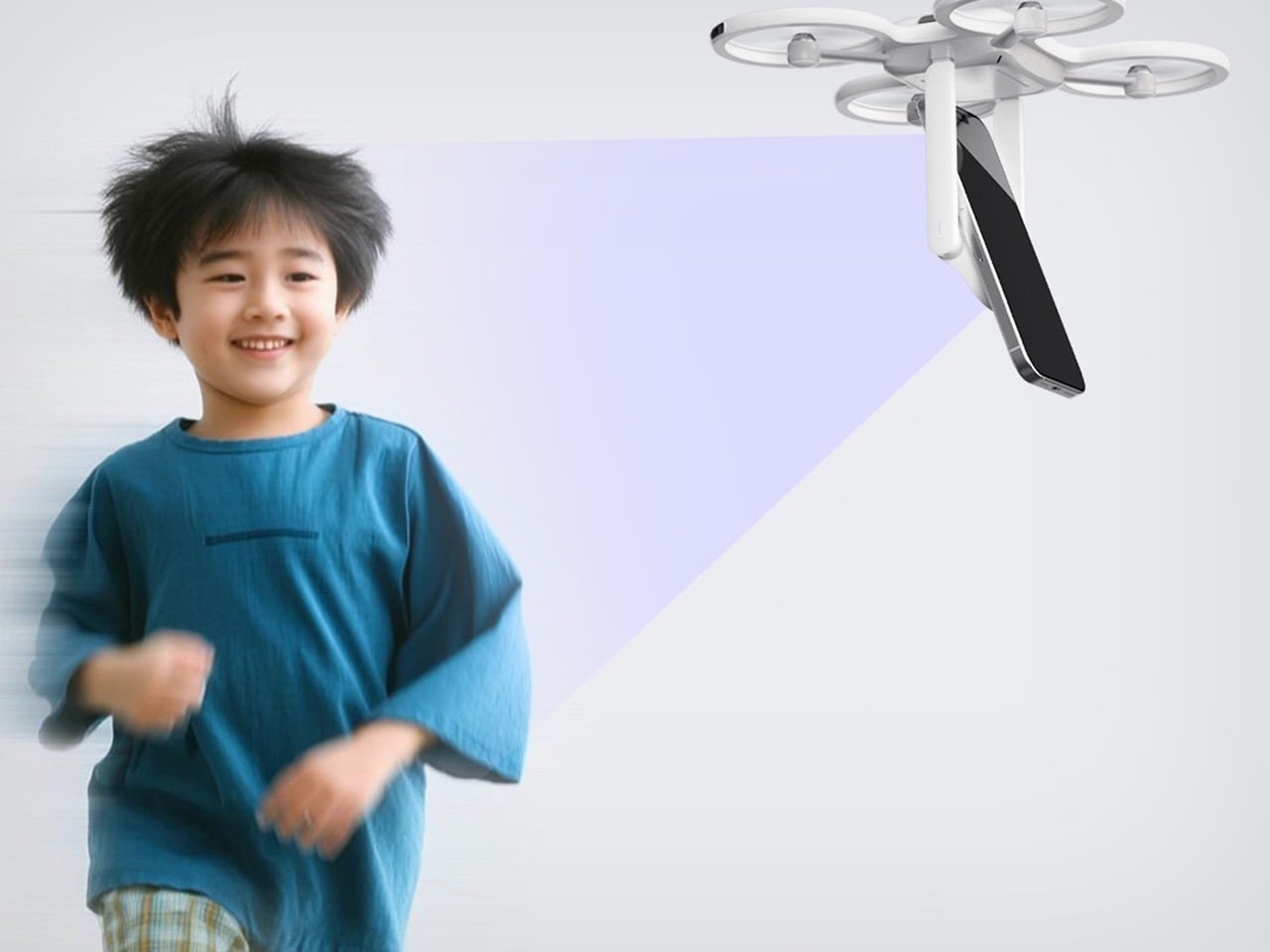
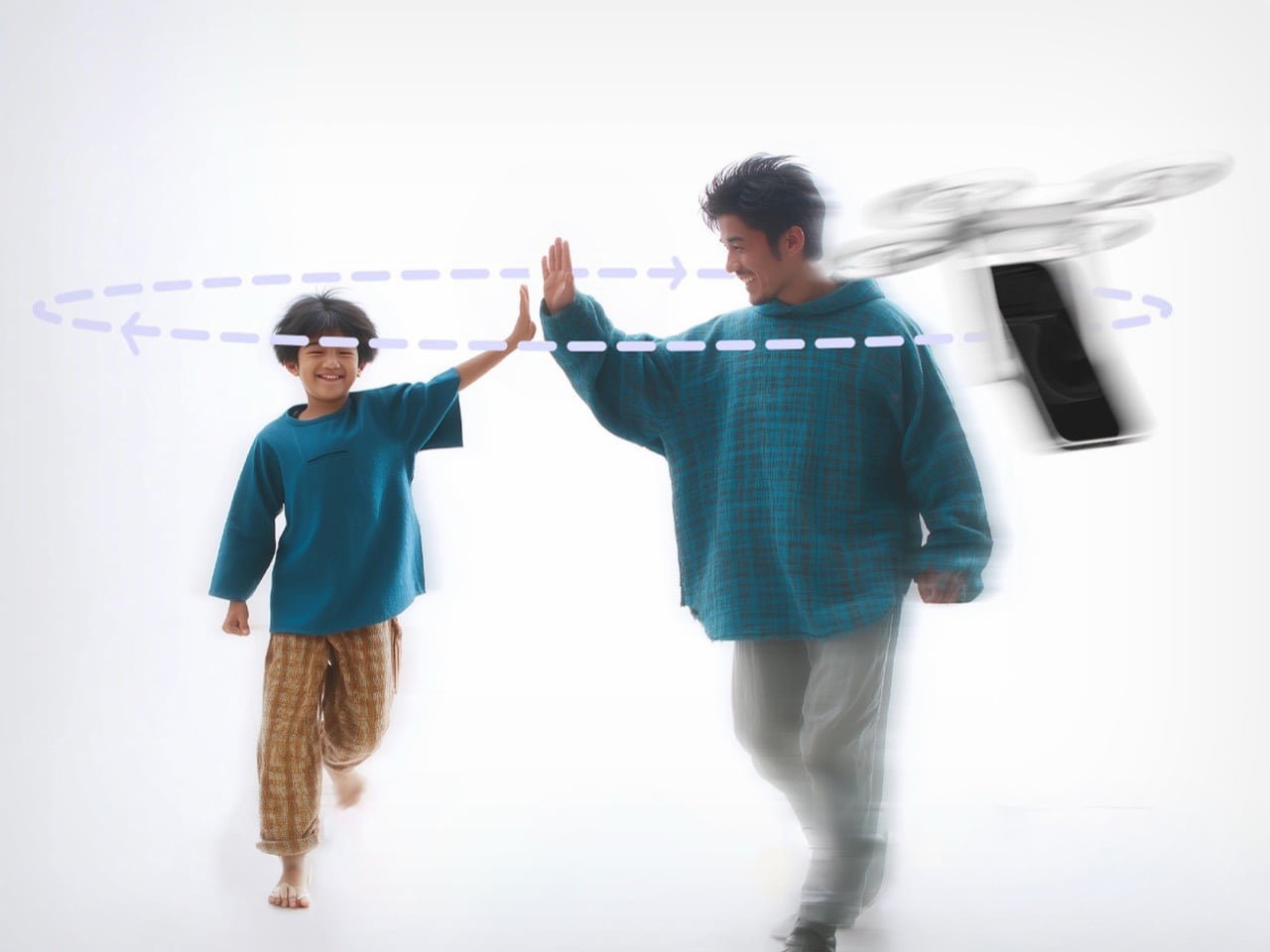
Flafa proposes the analog answer to the same question. A concept from Kaiyuan Liu and four classmates at the Guangzhou Academy of Fine Arts, it’s a small quadcopter that carries your phone into the air so the camera can hold its own position while every human stays put. The phone snaps onto a magnetic pad below four fully enclosed rotors, hangs face-out, and records while the drone flies itself. It won its category at the 2025 European Product Design Award. Same problem, opposite philosophy: Google removes the photographer with software, Flafa removes them with lift.

Designers: Kaiyuan Liu, Qiushi Wang, Yan Wang, Shiqi Liu & Xiaoyi Chen

Family posing in front of a drone with an iPhone mounted on it

Selfie drones have failed so many times that the category has a graveyard. AirSelfie tried in 2017. Snap’s Pixy launched in 2022, died four months later, and was recalled in 2024 because the batteries caught fire. They all lost for the same reason. A drone light enough to fly indoors cannot carry a camera that beats the phone already in your pocket, so you buy a flying camera, fly it twice, and quietly retire it to a drawer. Flafa declines that fight entirely by bringing no camera at all.

Mounting an iPhone onto a Drone Gimbal using MagSafe

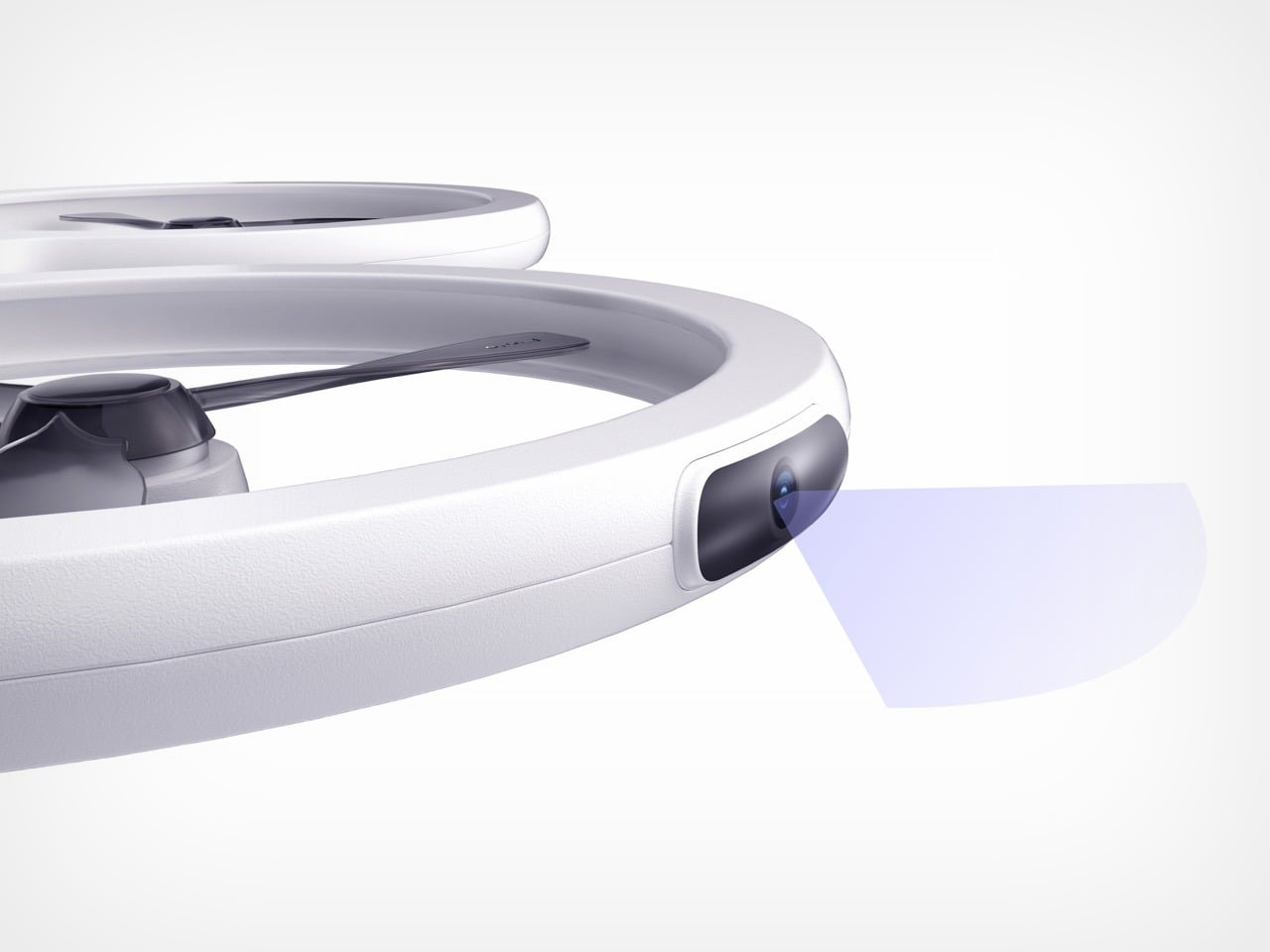
Two small sensor windows sit on the front propeller shrouds, giving the drone its own eyes for navigation while your phone dedicates itself to recording. That division of labor is the smartest thing in the whole project. Most flying cameras ask one sensor to handle obstacle avoidance, subject tracking, and image capture simultaneously, and it shows in the footage. Here the quadcopter worries about the ceiling fan and the phone worries about your kid’s face, which is roughly how you’d split the job if you had two people.

Somebody on this team understood that a drone meant to hover near a toddler cannot look like drone. The renders show warm oat cream, soft radii, matte surfaces, and not one visible screw, putting Flafa closer to a Muji humidifier than to anything DJI has shipped. Consumer drones are almost universally styled for a man in sunglasses on a cliff, all black plastic and angular vents. That grammar makes sense in a camera bag. It makes none in a living room during a birthday party.

The mount deserves credit for paranoia. A magnetic puck holds the phone, and a hinged brace folds along the handset’s edge as mechanical backup, which suggests the team thought hard about a thousand dollars of glass becoming a lawn dart. That said, the physics remains the open question. An iPhone Pro Max weighs around 233 grams, heavier than an entire DJI Neo, and hanging that mass below the center of lift makes a pendulum. The project is called a flying gimbal, but the renders show a hinge rather than an actuated axis.

Student concepts are allowed to be ahead of their batteries. What Flafa gets right is the framing of the problem, and that part is free. Every family album has one person missing, and it’s whoever picked up the camera. Google’s answer is to invent them back in afterward. This one just sends the camera upstairs for a minute.

The post MagSafe Drone Lets You Attach An iPhone For Perfect Hands-free Selfies And Videos first appeared on Yanko Design.