Master AI Faster with These 5 Practical Building Blocks Today

Master AI Faster with These 5 Practical Building Blocks Today

What if your approach to learning AI is setting you up for failure? Parker Prompts outlines how skipping the fundamentals of artificial intelligence can leave you overwhelmed, inefficient, and unable to fully use its fantastic power. Imagine trying to drive a high-performance car without understanding the basics of how it works, you might get it […]

The post Master AI Faster with These 5 Practical Building Blocks Today appeared first on Geeky Gadgets.

Posted in Uncategorized

Can a Steam Deck Stand in for a Desktop PC or Even a Steam Machine?

Can a Steam Deck Stand in for a Desktop PC or Even a Steam Machine?

What if your gaming console could double as a desktop computer? That’s the bold promise of the Steam Deck, and it’s turning heads for good reason. Deck Ready explores how this portable powerhouse isn’t just a handheld gaming device but also a surprisingly capable “Steam Machine” when docked. Imagine playing your favorite indie titles on […]

The post Can a Steam Deck Stand in for a Desktop PC or Even a Steam Machine? appeared first on Geeky Gadgets.

Posted in Uncategorized

Samsung Galaxy S26 Ultra 2026: Everything We Know About Price, Release Date, and New Colors

Samsung Galaxy S26 Ultra 2026: Everything We Know About Price, Release Date, and New Colors

Samsung will soon launch its latest flagship smartphone, the Galaxy S26 Ultra. The event is rumored for February 25, 2024. Pre-orders will open on the same day, with retail availability beginning March 11, 2024. This release continues Samsung’s legacy of combining innovative technology with user-focused design. The Galaxy S26 Ultra is expected to appeal to […]

The post Samsung Galaxy S26 Ultra 2026: Everything We Know About Price, Release Date, and New Colors appeared first on Geeky Gadgets.

Posted in Uncategorized

Samsung Galaxy S25 Ultra January 2026 Update: Full Details

Samsung Galaxy S25 Ultra January 2026 Update: Full Details

Samsung has released a new software update for the Galaxy S25 Ultra, focusing on enhancing security, improving performance, and making sure system stability. This update, powered by One UI 8.0 and based on Android 16, does not introduce new features but instead prioritizes system optimization and vulnerability fixes. Below is a detailed overview of what […]

The post Samsung Galaxy S25 Ultra January 2026 Update: Full Details appeared first on Geeky Gadgets.

Posted in Uncategorized

X is also launching Bluesky-like starter packs

X is rolling out a new feature called “Starterpacks” to all users in the coming weeks, the company’s head of product has announced. It’s made up of compilations of accounts new users can follow based on their interests. If that sounds familiar, it’s because Bluesky launched a very similar feature that’s also called “starter packs” back in 2024. Bluesky allows ordinary users to curate their own packs as long as each one doesn’t exceed 50 accounts. They can then share those lists broadly on the platform or directly with new users via QR code. X, on the other hand, compiled and curated its own lists.

In his announcement, X head of product Nikita Bier said the company “scoured the world for the top posters in every niche and country.” X then compiled them into Starterpacks “to help new users find the best accounts — big or small — for their interests.” Before X announced its own take on the feature, other social media services had already launched their clones of Bluesky’s tool. Threads’ version, which rolled out in late 2024, puts collections of recommended profiles as suggestions in the feeds of new users. Mastodon launched its own in 2025, which gives existing users the freedom to choose whether they can or can’t be included in the lists.

This article originally appeared on Engadget at https://www.engadget.com/social-media/x-is-also-launching-bluesky-like-starter-packs-050057033.html?src=rss

X is also launching Bluesky-like starter packs

X is rolling out a new feature called “Starterpacks” to all users in the coming weeks, the company’s head of product has announced. It’s made up of compilations of accounts new users can follow based on their interests. If that sounds familiar, it’s because Bluesky launched a very similar feature that’s also called “starter packs” back in 2024. Bluesky allows ordinary users to curate their own packs as long as each one doesn’t exceed 50 accounts. They can then share those lists broadly on the platform or directly with new users via QR code. X, on the other hand, compiled and curated its own lists.

In his announcement, X head of product Nikita Bier said the company “scoured the world for the top posters in every niche and country.” X then compiled them into Starterpacks “to help new users find the best accounts — big or small — for their interests.” Before X announced its own take on the feature, other social media services had already launched their clones of Bluesky’s tool. Threads’ version, which rolled out in late 2024, puts collections of recommended profiles as suggestions in the feeds of new users. Mastodon launched its own in 2025, which gives existing users the freedom to choose whether they can or can’t be included in the lists.

This article originally appeared on Engadget at https://www.engadget.com/social-media/x-is-also-launching-bluesky-like-starter-packs-050057033.html?src=rss

This Pocket Titanium Ruler Has a Level, Protractor, and Pen Built In

Projects pile up on the bench with a ruler that stops at 30 cm, a square for right angles, a separate protractor for odd cuts, a level somewhere in a drawer, and a pencil that has wandered off. Those small frictions add up when you are trying to stay in a flow state, and most rulers can measure but do not really help you think through the layout. You end up switching between tools, rechecking marks, and occasionally cursing when parallels drift, or angles end up slightly crooked.

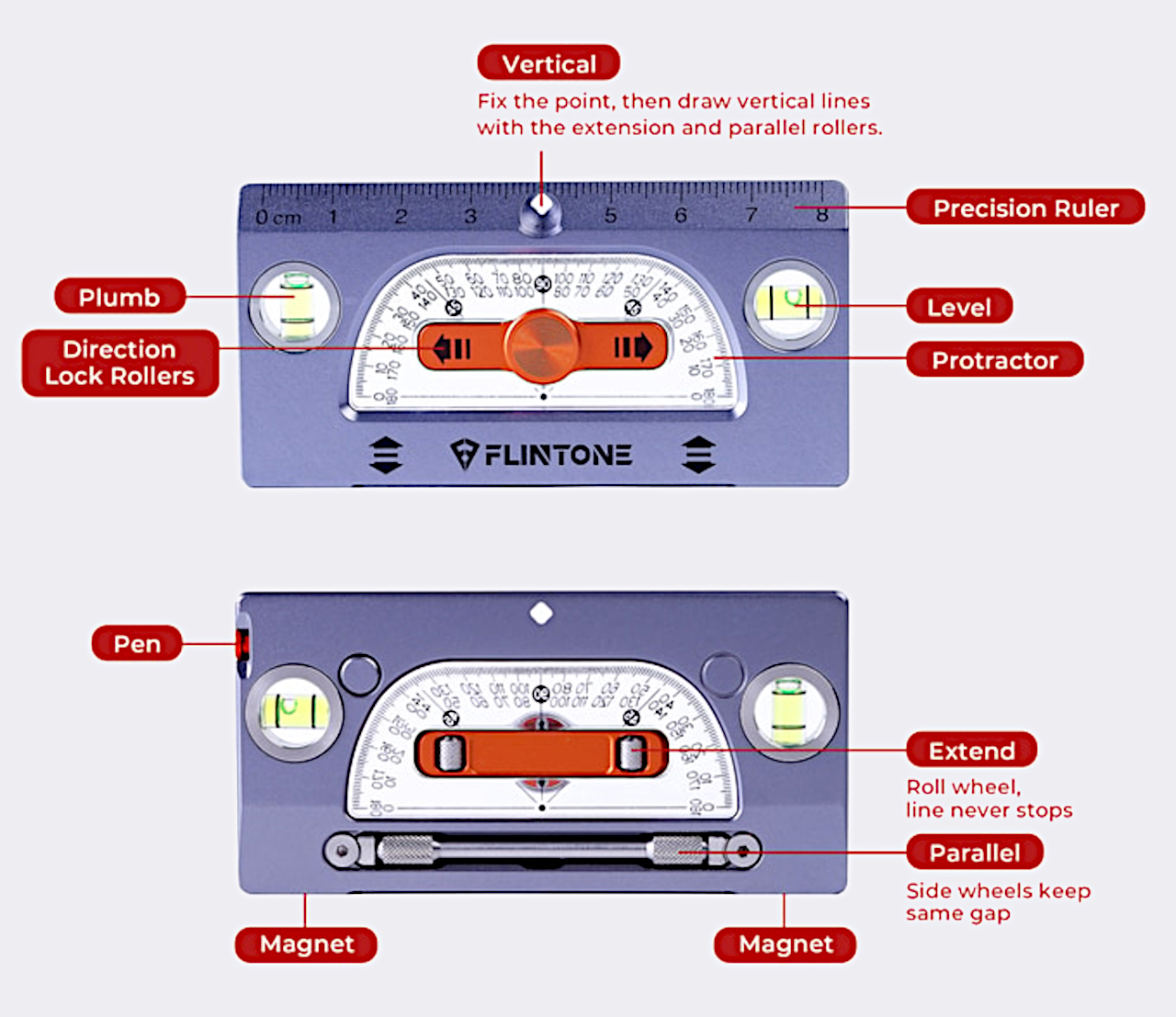
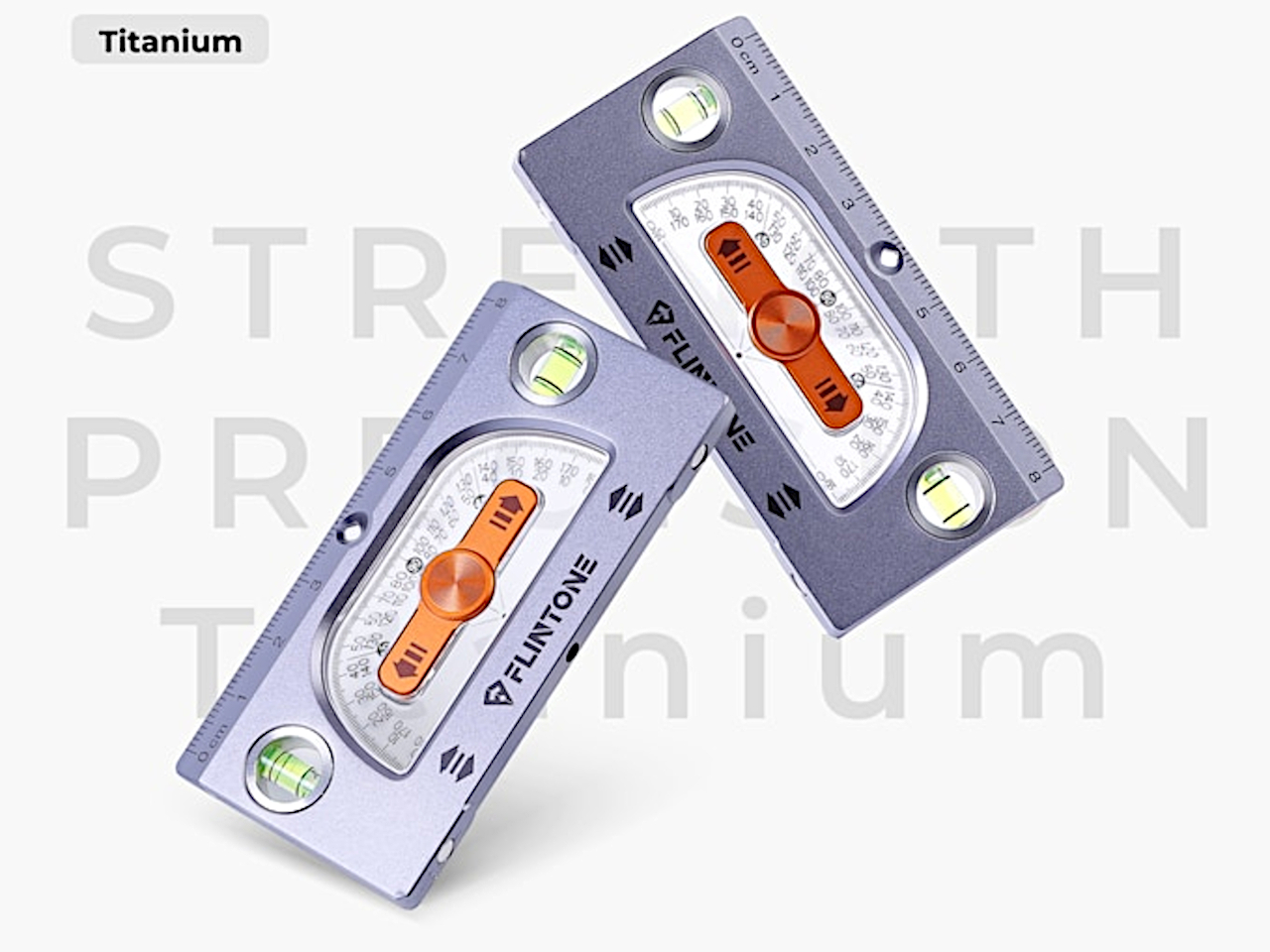
The FLINTONE MegaRuler is a titanium 9-in-1 drawing master that tries to compress a whole layout kit into something smaller than a phone. It is designed for garage tinkerers, designers, woodworkers, model builders, electronics people, and 3D-printing geeks who want strength, accuracy, and versatility in one object. The body is machined from titanium, so it feels like a small instrument rather than a disposable ruler, and it packs infinite extension lines, perfect parallels, angles, levels, magnets, and a built-in pen into a single pocket-sized block.

Designer: FLINTONE

Click Here to Buy Now: $69 $99 (30% off). Hurry, only 223/500 left! Raised over $150,000.

1

The infinite extension feature uses a central roller that lets you draw a straight line as long as you need by rolling the tool along the surface. You can dock the ruler end-to-end 27 times with less than 0.1mm cumulative error, enough to lay out an 8m straight line without a laser or chalk box. For framing, cabinetry, set building, or large-format graphics, that kind of repeatable accuracy means less rework and fewer compromises when the layout determines everything downstream.

The side wheels hug a reference line, so every new line stays exactly the same distance away. In testing, drawing 50 parallel lines produced a maximum drift of 0.07mm, which is effectively negligible for most jobs. That lets you stop measuring every joist, slat, or tile and simply roll the MegaRuler along, trusting it to keep spacing consistent for grooves, stitch lines, or printed patterns. The result feels less like measuring and more like running a tiny machine that thinks about geometry for you.

1

MegaRuler handles angles by letting you draw any-angle slanted lines from 1° to 179° in one smooth motion. The integrated protractor is laser-etched with a high-contrast scale that remains readable in bright light, dust, or glare, so you can lean the body to the exact angle you want and draw without switching tools. For miters, chamfers, or odd-angle joints, it becomes the single reference you reach for instead of juggling a ruler and a protractor and hoping the alignment holds while you mark.

1

Dual bubble vials turn the tool into both a horizontal level and a plumb checker. Standing it up gives true vertical in half a second, laying it flat gives an instant surface check. N52 magnets are flush-mounted in the body, so it sticks to steel beams, machines, or a shop cabinet, allowing hands-free marking and storage. A small marking pen lives inside the ruler itself, sliding out to mark and back in when you are done, so measuring and marking are finally in the same place instead of scattered across the bench or lost in pockets.

1

MegaRuler might live clipped to a pocket on a jobsite, sitting next to a sketchbook on a designer’s desk, or magnetized to a drill press in a home workshop. Instead of reaching for a different tool every time you need a line, angle, or level check, you grab the same titanium block and let its rollers, vials, magnets, and pen handle the details. It earns its space by doing many jobs well, feeling less like a novelty and more like the ruler you wish you had from the start, compact enough to forget until you need it and precise enough to trust when accuracy actually matters.

Click Here to Buy Now: $69 $99 (30% off). Hurry, only 223/500 left! Raised over $150,000.

The post This Pocket Titanium Ruler Has a Level, Protractor, and Pen Built In first appeared on Yanko Design.
We Might Get A Touchscreen M6 MacBook Pro Before GTA 6

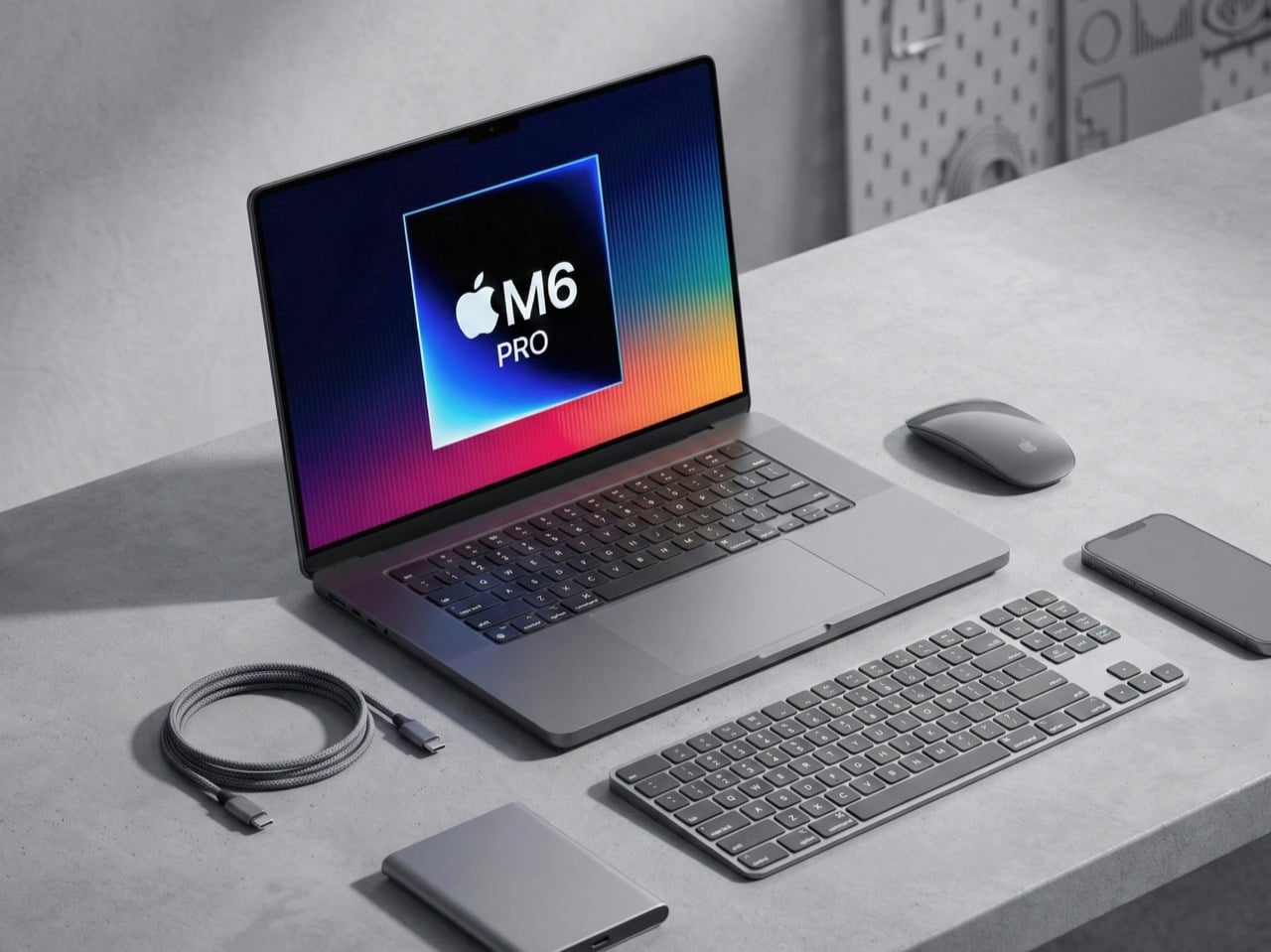
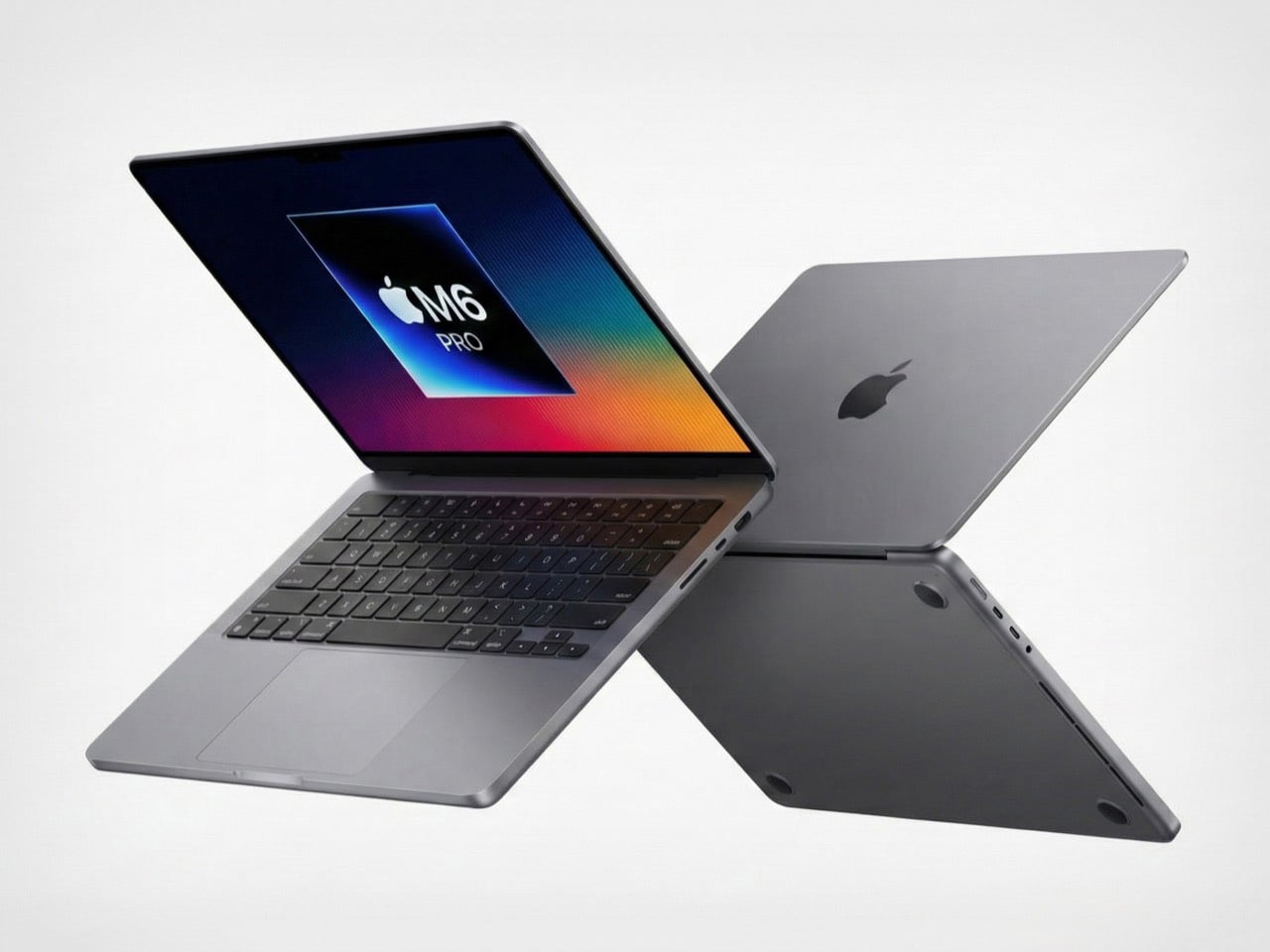
So here’s the timeline we’re apparently living in: Apple will ship a completely redesigned MacBook Pro with OLED displays and touchscreens before Rockstar manages to release GTA 6. Let that sink in for a second. A company that refreshes laptops on a predictable yearly cadence is moving faster than a studio working on a game announced in 2022. Industry sources suggest Apple is accelerating development of its M6-powered models, with launch windows now pointing to late 2026 rather than the previously expected 2027 timeline. The shift signals confidence in advancing multiple breakthrough technologies simultaneously, from next-generation display panels to cutting-edge silicon manufacturing.

The irony is delicious because both Apple and Rockstar operate on their own time. They ship when they’re ready, audiences be damned. Except Apple apparently got ready really fast this time. For professionals who have waited through several years of iterative updates, the M6 models promise substantial reasons to upgrade. The combination of OLED technology borrowed from the iPad Pro, potential touchscreen integration, and the performance leap expected from 2-nanometer chips creates a compelling package. Add to this a thinner chassis, refined thermal management, and possibly even cellular connectivity, and the M6 MacBook Pro begins to look like the generational shift many have been anticipating since the original Apple Silicon transition.

Designer: Apple

Representative Image

The rumor mill had most of us penciling in a 2027 launch for the M6 MacBook Pro, giving Apple time to perfect the OLED transition and work through the inevitable supply chain headaches. But production starting early suggests either the technology matured faster than expected or Apple sees competitive pressure building and wants to strike first. My money is on both. The shift signals confidence in advancing multiple breakthrough technologies simultaneously, and when Samsung starts manufacturing panels months ahead of schedule, it means someone with deep pockets is pushing hard. That someone is Apple, and they clearly want these machines out the door before 2027.

The redesign also alleges a shift to tandem OLEDs, the same technology we saw on the iPad Pros last year (which apple called their Ultra Retina XDR Display). Tandem OLED uses two emissive layers stacked on top of each other, which delivers higher sustained brightness, better power efficiency, and dramatically reduced burn-in risk. The iPad Pro already proved this works beautifully. Blacks that actually look black, colors that pop without looking oversaturated, and HDR content that doesn’t feel like a compromised laptop experience. Moving that to a 14-inch or 16-inch panel with different thermal constraints is complex, but Apple’s display team has pulled off harder tricks. The mini-LED panels in current MacBook Pros are excellent. OLED makes them look outdated.

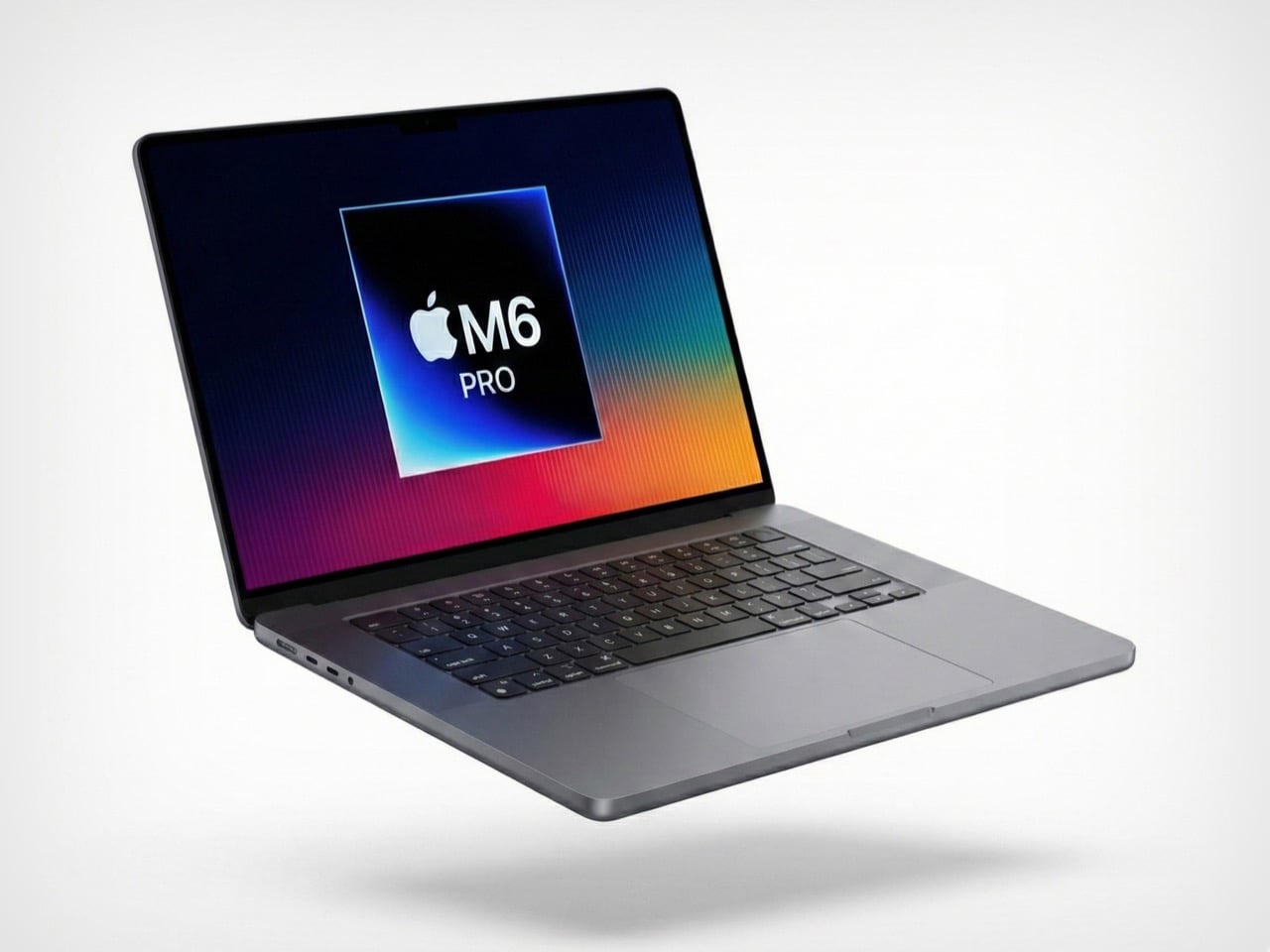
Representative Image

Then Apple is apparently adding touchscreens, which is wild considering how long they insisted touchscreens on laptops were bad design. They weren’t entirely wrong. Gorilla arm is a real problem. Nobody wants to reach up and poke a vertical screen all day. But the implementation details suggest Apple found a middle ground that actually works. Reinforced hinges keep the display stable when you tap it. A hole-punch camera cutout instead of the notch, possibly with Dynamic Island functionality, points to interface elements designed for quick touch interactions. This isn’t about replacing the trackpad. This is about adding occasional touch input for specific tasks where it makes sense, like scrolling through a timeline or adjusting sliders in creative apps.

The M6 chips built on TSMC’s 2-nanometer process could deliver 15 to 20 percent performance gains over M5 while improving energy efficiency. That translates to faster renders, quicker compile times, and snappier machine learning workflows without sacrificing battery life. The real party trick is how Apple might structure the chips with CPU and GPU in separate blocks, allowing more customization in performance configurations. You get exactly the compute power you need without paying for components you’ll never max out. Smart, efficient, very Apple.

Representative Image

Here’s where the joke stops being funny though. These redesigned models will probably only come in Pro and Max configurations initially, with the base model stuck on the old design for another year. That’s Apple’s way of charging a premium while keeping cheaper options available. The iPad Pro jumped about $200 when it got tandem OLED. Expect similar economics here, putting the entry point for a redesigned 14-inch model somewhere around $2,200 or higher. You’ll be able to buy this laptop and play GTA 6 on it via cloud gaming before you can buy GTA 6 natively. What a time to be alive.

The post We Might Get A Touchscreen M6 MacBook Pro Before GTA 6 first appeared on Yanko Design.
We Might Get A Touchscreen M6 MacBook Pro Before GTA 6

So here’s the timeline we’re apparently living in: Apple will ship a completely redesigned MacBook Pro with OLED displays and touchscreens before Rockstar manages to release GTA 6. Let that sink in for a second. A company that refreshes laptops on a predictable yearly cadence is moving faster than a studio working on a game announced in 2022. Industry sources suggest Apple is accelerating development of its M6-powered models, with launch windows now pointing to late 2026 rather than the previously expected 2027 timeline. The shift signals confidence in advancing multiple breakthrough technologies simultaneously, from next-generation display panels to cutting-edge silicon manufacturing.

The irony is delicious because both Apple and Rockstar operate on their own time. They ship when they’re ready, audiences be damned. Except Apple apparently got ready really fast this time. For professionals who have waited through several years of iterative updates, the M6 models promise substantial reasons to upgrade. The combination of OLED technology borrowed from the iPad Pro, potential touchscreen integration, and the performance leap expected from 2-nanometer chips creates a compelling package. Add to this a thinner chassis, refined thermal management, and possibly even cellular connectivity, and the M6 MacBook Pro begins to look like the generational shift many have been anticipating since the original Apple Silicon transition.

Designer: Apple

Representative Image

The rumor mill had most of us penciling in a 2027 launch for the M6 MacBook Pro, giving Apple time to perfect the OLED transition and work through the inevitable supply chain headaches. But production starting early suggests either the technology matured faster than expected or Apple sees competitive pressure building and wants to strike first. My money is on both. The shift signals confidence in advancing multiple breakthrough technologies simultaneously, and when Samsung starts manufacturing panels months ahead of schedule, it means someone with deep pockets is pushing hard. That someone is Apple, and they clearly want these machines out the door before 2027.

The redesign also alleges a shift to tandem OLEDs, the same technology we saw on the iPad Pros last year (which apple called their Ultra Retina XDR Display). Tandem OLED uses two emissive layers stacked on top of each other, which delivers higher sustained brightness, better power efficiency, and dramatically reduced burn-in risk. The iPad Pro already proved this works beautifully. Blacks that actually look black, colors that pop without looking oversaturated, and HDR content that doesn’t feel like a compromised laptop experience. Moving that to a 14-inch or 16-inch panel with different thermal constraints is complex, but Apple’s display team has pulled off harder tricks. The mini-LED panels in current MacBook Pros are excellent. OLED makes them look outdated.

Representative Image

Then Apple is apparently adding touchscreens, which is wild considering how long they insisted touchscreens on laptops were bad design. They weren’t entirely wrong. Gorilla arm is a real problem. Nobody wants to reach up and poke a vertical screen all day. But the implementation details suggest Apple found a middle ground that actually works. Reinforced hinges keep the display stable when you tap it. A hole-punch camera cutout instead of the notch, possibly with Dynamic Island functionality, points to interface elements designed for quick touch interactions. This isn’t about replacing the trackpad. This is about adding occasional touch input for specific tasks where it makes sense, like scrolling through a timeline or adjusting sliders in creative apps.

The M6 chips built on TSMC’s 2-nanometer process could deliver 15 to 20 percent performance gains over M5 while improving energy efficiency. That translates to faster renders, quicker compile times, and snappier machine learning workflows without sacrificing battery life. The real party trick is how Apple might structure the chips with CPU and GPU in separate blocks, allowing more customization in performance configurations. You get exactly the compute power you need without paying for components you’ll never max out. Smart, efficient, very Apple.

Representative Image

Here’s where the joke stops being funny though. These redesigned models will probably only come in Pro and Max configurations initially, with the base model stuck on the old design for another year. That’s Apple’s way of charging a premium while keeping cheaper options available. The iPad Pro jumped about $200 when it got tandem OLED. Expect similar economics here, putting the entry point for a redesigned 14-inch model somewhere around $2,200 or higher. You’ll be able to buy this laptop and play GTA 6 on it via cloud gaming before you can buy GTA 6 natively. What a time to be alive.

The post We Might Get A Touchscreen M6 MacBook Pro Before GTA 6 first appeared on Yanko Design.

This Sliced Cylinder Lamp Turns One Cut Into Pure Design Magic

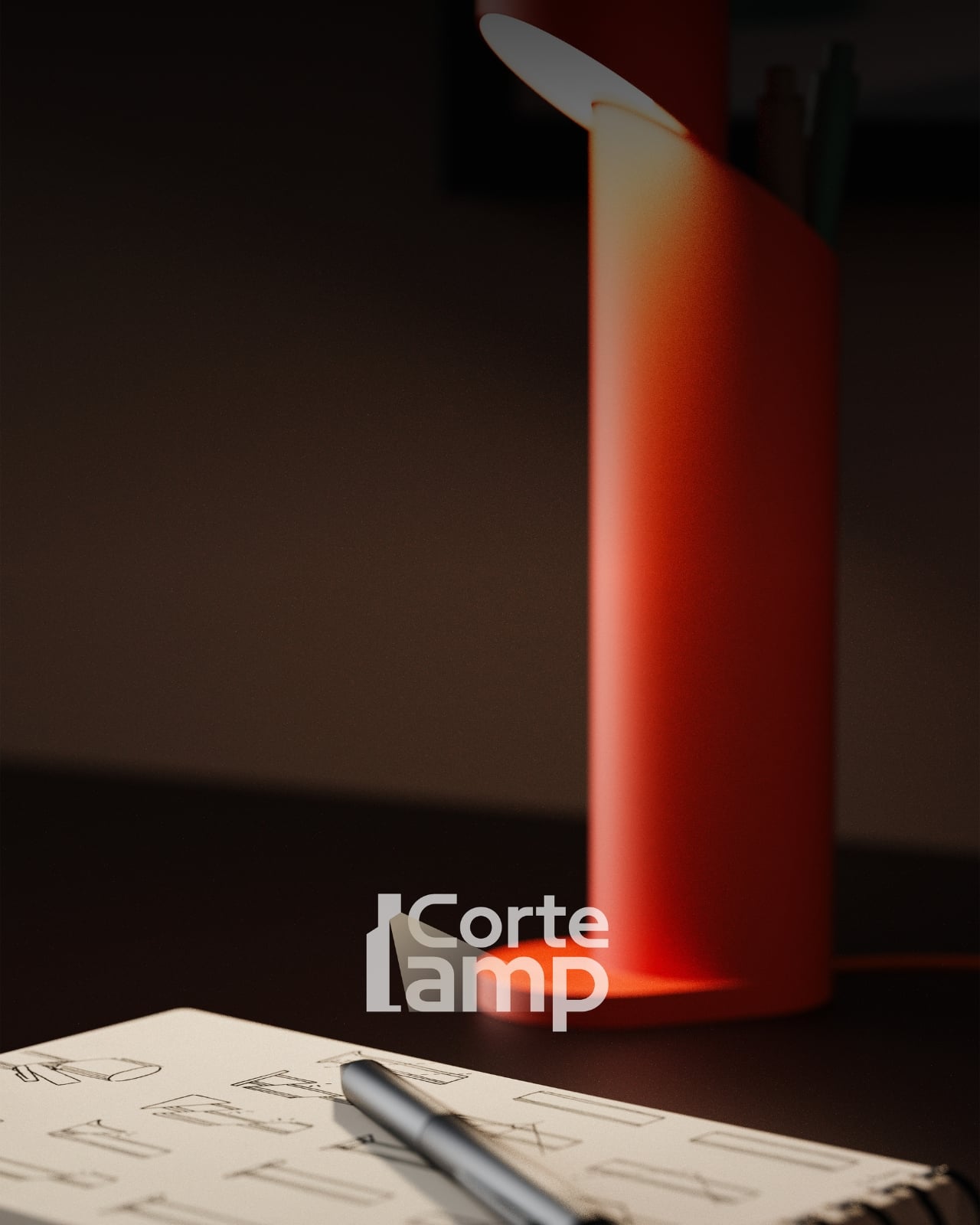
There’s something deeply satisfying about watching a designer take a basic shape and completely reimagine it. That’s exactly what Jisu Park has done with the Corte Lamp, a lighting design that proves sometimes the boldest move is a single, decisive cut.

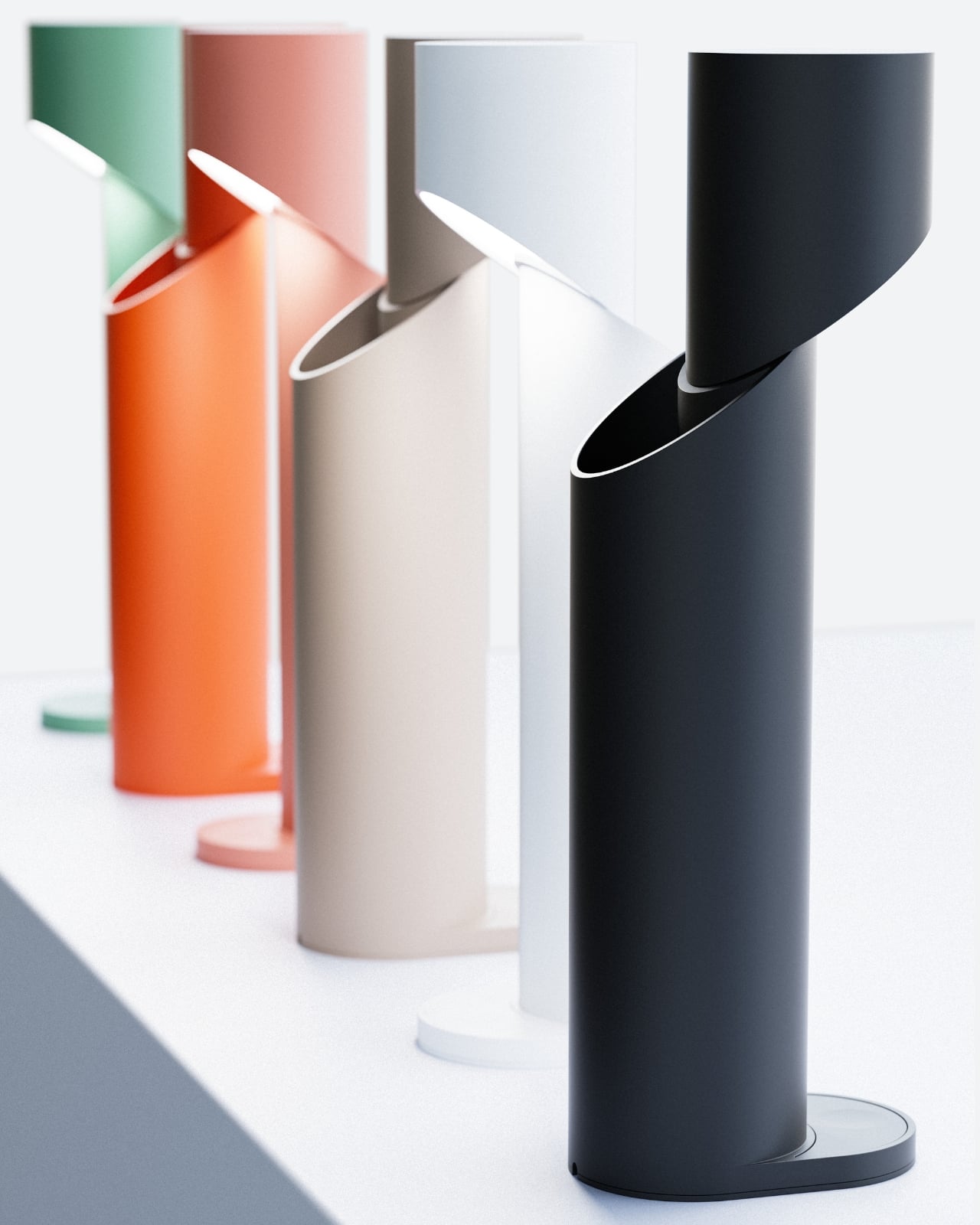
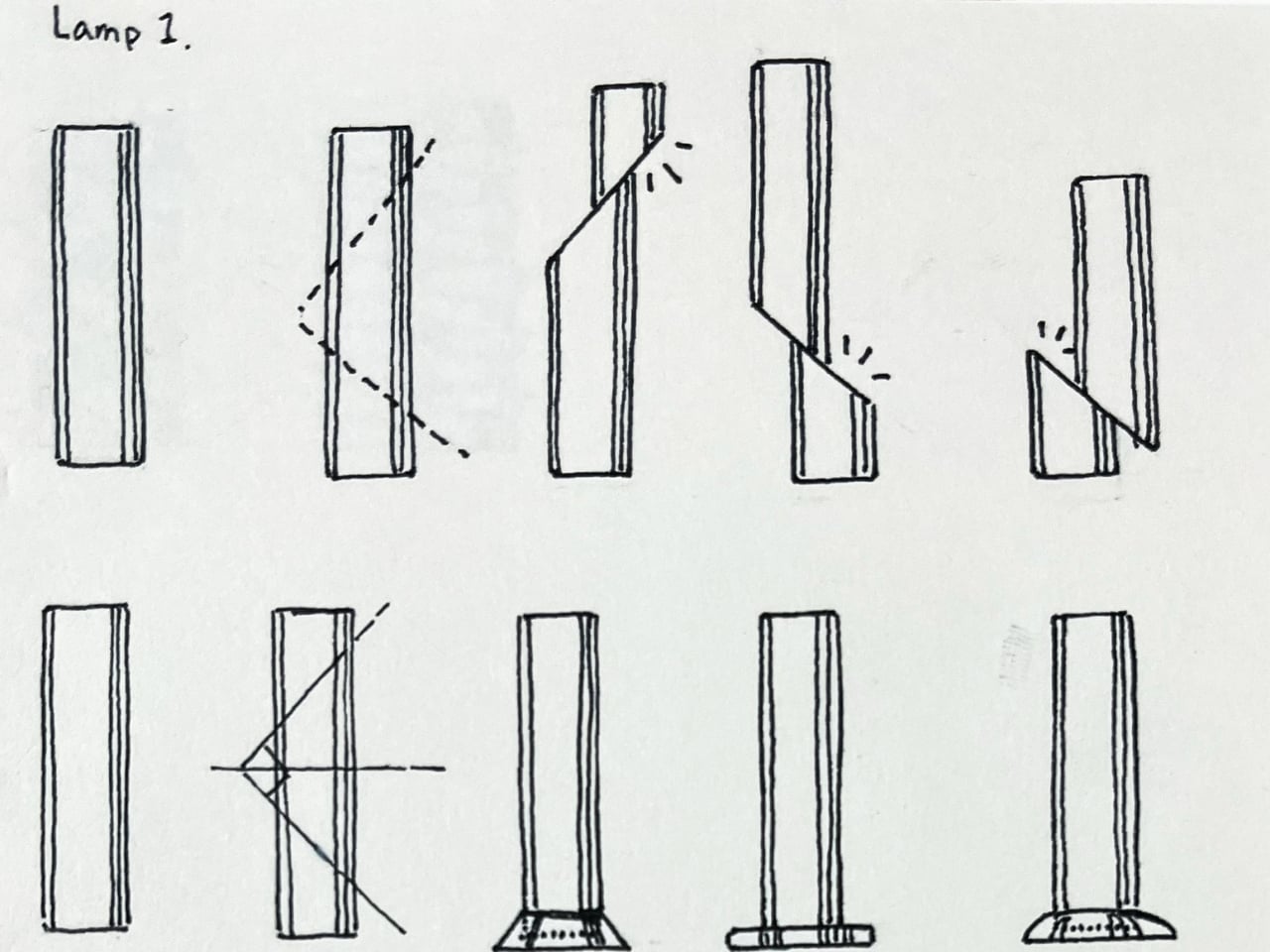
At first glance, the Corte Lamp looks like a straightforward cylindrical floor lamp. Clean lines, matte finish, minimalist aesthetic. But then you notice the slash, a sweeping diagonal incision that slices through the form like someone took a giant blade to it. This isn’t just a decorative flourish. That cut becomes the lamp’s defining feature, transforming a simple tube into something that feels more like a sculptural installation than a functional light source.

Designer: Jisu Park

The genius here is in the restraint. Park didn’t overcomplicate things with multiple cutouts or elaborate patterns. Instead, there’s just one bold, confident gesture that creates an elliptical opening through the cylinder. When the lamp is off, you see the architectural drama of negative space. When it’s on, that void becomes a window into warm, glowing light that spills out at unexpected angles.

What makes the Corte Lamp particularly clever is how it plays with our expectations of what a lamp should be. We’re used to light coming from the top of a floor lamp, filtered through a shade or diffuser. But this design disrupts that convention. The cut section exposes the light source in the middle of the form, creating multiple lighting effects simultaneously. You get ambient uplight from the top, focused illumination from the opening, and subtle downlight at the base.

The color palette adds another layer of appeal. While the lamp comes in practical neutrals like black, white, and beige, it’s the pastel options that really shine. That peachy coral tone, in particular, transforms the lamp into something that feels current and Instagram-ready without trying too hard. The mint green offers a retro-futuristic vibe, while the soft pink brings a gentle warmth to any space. These aren’t just lamps. They’re statement pieces that happen to provide light.

From a technical perspective, the execution looks flawless. The matte finish gives each color depth and sophistication, while the precision of that diagonal cut suggests careful engineering. The edges are clean, the proportions are balanced, and despite its dramatic gesture, the lamp maintains stability with a circular base that echoes the cylindrical form. There’s also something intriguing about how the lamp changes depending on your viewing angle. Walk around it and the elliptical opening shifts in appearance, sometimes looking like a narrow slit, other times revealing the full depth of the cut. This kinetic quality, where the object seems to transform as you move through space, adds an interactive element that static lighting typically lacks.

The Corte Lamp fits into a larger trend we’re seeing in contemporary design where the line between furniture and art continues to blur. Young designers are increasingly rejecting the idea that functional objects need to disappear into the background. Instead, they’re creating pieces that demand attention, spark conversation, and challenge our assumptions about everyday items. Park’s design also reflects a particular aesthetic moment where maximalism isn’t about adding more, but about making more impact with less. One cut. One form. Multiple colors. That’s the entire concept, and it works because it’s executed with conviction and technical skill.

For anyone furnishing a space, the Corte Lamp offers versatility that’s hard to find in statement lighting. It’s bold enough to anchor a minimal room with dramatic flair, but simple enough not to clash with existing decor. It works in a modern apartment, a creative studio, or even a retail space looking for sculptural accents that serve a purpose.

The beauty of designs like this is they remind us that innovation doesn’t always mean reinventing everything from scratch. Sometimes it’s about looking at something familiar, like a cylindrical lamp, and asking what happens if you just take something away. In Park’s case, that subtraction became an addition, creating a lighting design that’s as much about shadow and void as it is about illumination. The Corte Lamp proves that great design can be a single idea executed perfectly.

The post This Sliced Cylinder Lamp Turns One Cut Into Pure Design Magic first appeared on Yanko Design.