
Apple Intelligence is now available with iOS 18.1 and macOS 15.1

The wait is finally over. Apple Intelligence is making its proper debut with the public releases of iOS 18.1, iPadOS 18.1 and macOS Sequoia 15.1 today. Typically, point-one versions of Apple operating systems add minor features and fix bugs, but this year it brings a major update since Apple Intelligence features weren't quite ready in time for the rollout of iOS 18. Considering the new iPhone 16 series was touted as "built for Apple Intelligence," but launched without the features they were built for, this release has been long in the making. Those with older devices are likely to find iOS 18.1 to be less dramatic of an update, since the iPhone 15 Pro and Pro Max are the only previous-generation iPhones that will support Apple Intelligence. 

You'll know you can use Apple Intelligence when you get a notification from the company. The initial generative AI features you can check out include writing tools like proofreading and rewriting, as well as text summaries.

There are live transcriptions available for phone calls and audio in the Notes app. Apple can helpfully generate summaries of these transcriptions. In addition, Apple can reorganize your photos and videos around memorable events such as trips and special events in the overhauled Photos app. You can create your own Memories in the app as well.

The beginnings of a Siri overhaul are here too. You can now type requests and questions to the previously voice-only assistant. If you still prefer speaking to it, Siri should be able to understand requests if you stutter or interrupt yourself. The Siri UI has been tweaked, as you'll see a glowing border around the screen when you activate it. However, you'll need to wait a bit longer for other Siri-driven features, such as the assistant's ability to have a better understanding of your personal context.

Apple Intelligence is currently available on iPhone 15 Pro, iPhone 15 Pro Max and the iPhone 16 lineup. M-series iPads and Macs also support Apple Intelligence, as does the new A17 Pro-powered iPad mini.

Bear in mind that access is currently limited to those who set their device and Siri language set to US English. Apple Intelligence will start to become available in more countries and languages in December. Apple doesn't plan to broadly offer the AI tools in the European Union or Chinese mainland right away due to regulatory issues, though as of September it was in talks with officials in both markets to make Apple Intelligence available there.

In addition to Apple Intelligence, iOS 18.1 adds support for other new features, such as a hearing test and the ability to use AirPods Pro as over-the-counter hearing aids. It should be easier to change the mail email address that's linked to your Apple Account as well.

You'll need to wait a bit longer for other promised Apple Intelligence features. The company released the iOS 18.2, iPadOS 18.2 and macOS Sequoia 15.2 developer betas last week. Along with additional writing tools, the betas include Genmoji (a custom emoji generator), Image Playground (animated- and illustrated-style image generation), the Google Lens-like Visual Intelligence and ChatGPT integration.

As for those who want to use Apple Intelligence in other countries and languages, Apple says that it is adding support for localized English in Australia, Canada, Ireland, New Zealand, South Africa and the UK in December. A bigger update in April will expand language support beyond English — Chinese, English (India), English (Singapore), French, German, Italian, Japanese, Korean, Portuguese, Spanish and Vietnamese are among the new languages that'll be supported. Apple also says that unspecified "other languages" will be added, as well. 

  1. Open the "Settings" app and tap "General."

  2. Tap "Software Update."

  3. Your phone will load the latest software update available. From there, you can either tap "update now" or "update tonight."

  4. Enter your iPhone's passcode to start the update.

Update, October 28 2024, 12:15PM ET: This story was updated with notes on how to update your iPhone to iOS 18.1.

This article originally appeared on Engadget at https://www.engadget.com/ai/apple-intelligence-starts-rolling-out-with-ios-181-and-macos-151-151023619.html?src=rss

This LEGO Lockheed SR-71 Blackbird Is A Bold Brick-based Tribute to Aviation’s Fastest Jet

The Lockheed SR-71 Blackbird is a true aviation legend. Developed in the 1960s, this reconnaissance jet set the bar for speed and stealth, cruising at Mach 3 and reaching altitudes over 85,000 feet. Engineered primarily for high-speed, high-altitude intelligence gathering, it quickly became an icon of the Cold War era, untouchable by enemy missiles and outpacing everything else in the skies. Its titanium skin and advanced aerodynamics embodied the cutting-edge technology of its time, pushing the limits of engineering and daring. Now, this iconic aircraft has been reimagined in a completely different medium: LEGO bricks. A detailed, fan-made LEGO model of the SR-71 Blackbird is making waves for its impressive recreation of this iconic plane.

Designer: Buds 234

This LEGO model of the SR-71 distills the original aircraft’s spirit perfectly. With every detail meticulously crafted, the model captures the SR-71’s sleek, elongated form, its sharply defined nose, and its sweeping wings. The LEGO model includes functional flaps, retractable landing gear, and a fully realized cockpit, each piece integrated to honor the original’s groundbreaking design. This project, created by aerospace engineering student by the name of ‘Buds 234’, reflects both technical appreciation and a keen eye for detail—details that ensure this MOC (My Own Creation) goes beyond a typical LEGO build, bringing a model that’s both captivating and technically faithful to the real SR-71.

Designing a model with this level of complexity in LEGO form isn’t easy. Capturing the SR-71’s aerodynamic design with limited brick options requires an advanced understanding of both LEGO techniques and aviation engineering. The builder succeeded in creating a miniature that’s structurally sound while visually true to the original. While Buds 234 doesn’t detail how many bricks were used in the final build, he does mention adding several stickers and intricate features and details to retain the Blackbird’s authenticity.

The completed model stands on a supportive base with a plaque detailing the SR-71’s key specifications, offering an extra layer of historical and educational value, along with two suited minifigures that can even be fitted into the plane’s cockpit.

Rather than a simple exterior, the LEGO build includes a fully realized cockpit, retractable landing gear, and working flaps, giving it a touch of mechanical authenticity. Aside from merely capturing the Blackbird’s shape, it allows fans to explore its functional design too – making it a must-have for aerospace enthusiasts.

In a touching nod to the people behind the plane, this model includes a tribute to Marta Bohn-Meyer, NASA’s first female SR-71 pilot and flight engineer. Bohn-Meyer’s contributions to high-speed flight testing were instrumental in expanding knowledge of aerodynamics, and she left a lasting impact on the program.

The LEGO Ideas Lockheed SR-71 Blackbird is currently a fan-made submission on the LEGO Ideas forum – an online community where LEGO enthusiasts share their own creations. With over 1400 votes in just 3 days, the SR-71 Blackbird is well on its way to hitting the 10,000 vote mark, following which the MOC will be reviewed by LEGO’s internal team and hopefully turned into a retail box set! You can vote for the LEGO Ideas Lockheed SR-71 Blackbird on the LEGO Ideas website here.

The post This LEGO Lockheed SR-71 Blackbird Is A Bold Brick-based Tribute to Aviation’s Fastest Jet first appeared on Yanko Design.

Google starts selling refurbished Pixel phones

Google now offers refurbished Pixel phones, as originally spotted by The Verge. The company is selling refurbed Pixel 6, Pixel 6A and Pixel 7 handsets directly on the Google Store. The phones can be purchased for up to 40 percent off, when compared to new models. Each smartphone ships with the same 1-year limited warranty and customer support options as a new model.

Google says that each refurbished handset has been “carefully inspected” to ensure that the phones, screens and batteries are all in tip-top shape. However, a company representative offered no guarantees regarding battery life in a statement to The Verge. Phone batteries age like people. Slowly at first and then all at once.

However, the prices are enticing. The Pixel 6 is available for $339, instead of $599, while the well-reviewed Pixel 7 Pro is $629 instead of $899. All of these refurbished models offer 128GB of storage, but Google spokesperson Patrick Seybold says that the store will soon offer other storage tiers.

Each phone ships with the latest Android software, which is a nice touch, and comes with a compatible charger. There’s also free shipping.

This article originally appeared on Engadget at https://www.engadget.com/mobile/smartphones/google-starts-selling-refurbished-pixel-phones-184348702.html?src=rss

The paid version of Animal Crossing: Pocket Camp arrives on December 3

The free-to-play mobile game Animal Crossing: Pocket Camp is going the way of the dodo on November 28. However, it’s being replaced by a paid, (mostly) offline version called Animal Crossing: Pocket Camp Complete. This refresh drops on December 3, giving mobile Animal Crossing players just a few days without access to their beloved campsites.

Animal Crossing: Pocket Camp Complete won’t be cheap. It’ll be $10 from December 2 until January 25. After that, the price doubles to $20. Tom Nook doesn’t mess around. However, it will allow existing players to transfer save data and progress via their Nintendo accounts. This should be a boon for those who have been on board with the title since 2017. These players have until June 1 to transfer data from the old version to the new game.

The paid version will be different from the original in some ways. First of all, Leaf Tickets are being replaced by Leaf Tokens, likely because the tickets were purchased using real money and this is no longer a freemium game. There’s also something called Camper Cards, which Nintendo calls “customizable in-game cards that each player can create and trade through a QR Code, and that includes information like your personal favorite animal pal.” QR codes? Everyone loves those.

Animal Crossing: Pocket Camp Complete is also losing gift-sharing and the Market Box. There are a couple of other caveats for pre-existing players. First of all, there are no discounts available for current campers, even those who have regularly paid a monthly subscription fee. Some people have been paying those subs for years.

Finally, it looks like Nintendo plans on discontinuing support for the game next October, according to Kotaku. I’m no economist, but spending $20 on a mobile title that will likely stop receiving updates in less than a year doesn’t sound like fiscal responsibility. In any event, Animal Crossing: Pocket Camp Complete will be available for both iOS and Android come December.

This article originally appeared on Engadget at https://www.engadget.com/gaming/the-paid-version-of-animal-crossing-pocket-camp-arrives-on-december-3-175248073.html?src=rss

Google is expanding AI Overviews in Search to more than 100 countries

In a blog post today, Google said it will make AI Overviews in Google Search available to users living in more than 100 countries. Google says people like AI Overviews, so the company plans to reach 1 billion users each month. Additionally, Google is expanding language support — now, users in any country where AI Overviews can get them in any available language. For example users in Japan are no longer limited to Japanese. 

If you aren’t familiar with AI Overviews by now, it’s a feature found in Google Search. Google’s Gemini AI model will generate a summary for most things people search for, or at least when Google's systems detect a query where generative AI can be useful. This summary appears at the top of the page. Besides answering questions, it can also act as a meal planner, vacation organizer and brainstorming tool, among many other things.

This update follows several released over the last few months since the introduction of AI Overviews in May. The most recent update before this one allowed users to visit websites by clicking on links within the AI Overview text. Google says that this has resulted in a traffic increase to “supporting websites.” However, some publishers and sites fear that the overviews are destroying their traffic by being the first thing people see.

News like this isn’t surprising, as Google has been stuffing as much AI into Search as it can. AI Overviews have also generated some controversy after the AI gave people inaccurate information for searches — for example, it recommended putting glue on pizza for a bit. In response to those issues, Google put some protections and guardrails on AI overviews to avoid similar strange issues.

Correction, October 28 2024, 1:30PM ET: This story originally stated that Google was adding local language support to AI Overviews. That feature was already available, so we've clarified that any supported language can be displayed in any country where AI Overviews are available. We apologize for the error.

This article originally appeared on Engadget at https://www.engadget.com/big-tech/google-is-expanding-ai-overviews-in-search-to-more-than-100-countries-170925933.html?src=rss

Meta is reportedly developing a search engine for its chatbot

Stung from the hit it took from an Apple privacy feature three years ago, Meta is reportedly looking to decrease its dependence on Google and Microsoft. The Information said on Monday that Meta is developing a search engine for its chatbot. The company also recently partnered with Reuters to help its AI answer news-related questions.

Meta has reportedly been working on indexing the web for at least eight months. The company’s goal is said to be to integrate the indexes into Meta AI, giving the chatbot an alternative to Google Search and Microsoft Bing. Meta publicly disclosed its web crawler tech this summer, only saying it was for “training AI models or improving products” without stating outright that it was building a search backend. Senior engineering manager Xueyuan Su is reportedly leading the search engine project.

The Information says the move directly results from dependence on other Big Tech companies that have “stung” the company in the past, like Apple’s App Tracking Transparency (ATT). Meta previously said the iPhone privacy feature introduced in 2021 would cost over $10 billion in lost ad revenue. (It was so concerned about the feature it was sued for allegedly evading its rules.)

The thinking is that CEO Mark Zuckerberg wants Meta to be as autonomous as possible to avoid a repeat of that if Google or Microsoft were to cut off its access to web searches. It’s unknown if Meta currently pays either company for that access.

Engadget reached out to Meta for comment. We’ll update this story if we hear back.

The company’s AI investments appear to be paying off. Zuckerberg posted on Threads in August that Meta AI has over 185 million weekly active users and more than 400 million monthly. “Growing quickly, and we haven’t even rolled out in UK, Brazil, or EU yet,” the Facebook founder wrote. OpenAI said early this month that ChatGPT had 250 million weekly users.

This article originally appeared on Engadget at https://www.engadget.com/ai/meta-is-reportedly-developing-a-search-engine-for-its-chatbot-172505704.html?src=rss

Top 10 Reasons Why Apple’s iMac M4 is the All-in-One Desktop You Need: Unmatched Power, Innovation, and Style

Apple has once again pushed the boundaries of desktop computing with the release of its latest iMac, powered by the M4 chip and Apple Intelligence. These two key advancements are central to this upgrade, driving significant improvements in performance, productivity, and user interaction. The M4 chip delivers powerful processing capabilities, while Apple Intelligence transforms how users interact with their devices through advanced AI-driven features. Let’s explore the ten features that make the iMac M4 a significant step forward in personal computing.

Designer: Apple

1. The Powerhouse M4 Chip

At the heart of the new iMac lies the M4 chip, Apple’s latest silicon marvel. This is a significant leap in performance. Compared to its M1 predecessor, the M4 chip delivers up to 1.7x faster performance for daily productivity tasks like multitasking between apps and browsing the web. For more demanding workflows, such as photo editing and gaming, users can expect up to 2.1x faster performance, offering an incredibly smooth experience for creative professionals.

According to Apple’s benchmarks, the new M4 chip features a more capable CPU with the world’s fastest CPU core, as described by Apple and an immensely powerful GPU with Apple’s most advanced graphics architecture. This allows the iMac M4 to handle more intense workloads, enabling smoother gameplay and faster rendering in Adobe Photoshop and Adobe Premiere Pro apps. For gamers, this translates to up to 2x higher frame rates in titles like the upcoming Civilization VII, and for content creators, up to 2.1x faster performance when applying complex filters and effects in apps like Adobe Photoshop and Adobe Premiere Pro.
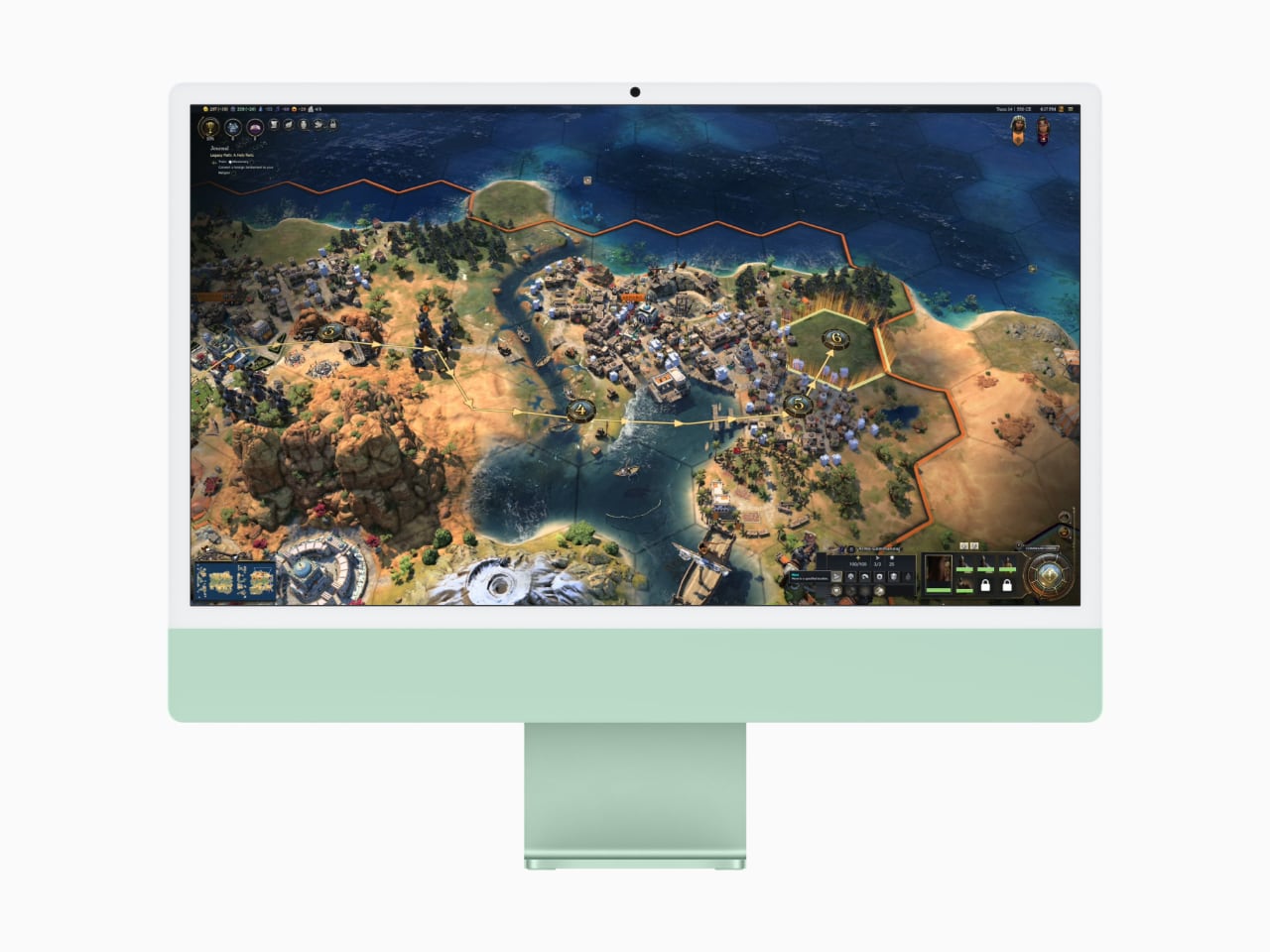
The M4 chip’s Neural Engine delivers over 3x faster performance compared to the M1, making the iMac M4 the world’s best all-in-one for AI, according to Apple, making it a powerhouse for AI-driven tasks. This improvement supports Apple Intelligence and its advanced capabilities, transforming how users work, communicate, and express themselves. The faster Neural Engine makes tasks such as photo and video editing, AI content creation, and automation seamless and efficient.

The iMac M4 comes standard with 16GB of unified memory, which is faster and more efficient and can be configured up to 32GB. This ensures smooth multitasking and the ability to easily handle memory-intensive applications, making it ideal for professionals and power users who require robust performance for demanding tasks.

2. Apple Intelligence: Transforming How You Work and Communicate

One of the most exciting additions to the iMac M4 is Apple Intelligence, a personal intelligence system deeply integrated into macOS Sequoia. It brings powerful generative models combined with industry-first privacy protections, including on-device processing and Private Cloud Compute, unlocking new ways for users to work, communicate, and express themselves while ensuring privacy.

Apple Intelligence features systemwide Writing Tools that assist users with proofreading, rewriting, and summarizing text. These tools are available nearly everywhere users write on their Mac, making them invaluable for students, professionals, and anyone working with text. Additionally, the redesigned Siri allows users to fluidly switch between spoken and typed requests, answering thousands of questions about Mac and Apple products while accelerating everyday tasks.

In December, Apple Intelligence will also integrate ChatGPT, allowing users to access its expertise seamlessly without switching between tools. Users will be able to access ChatGPT without creating an account, with privacy protections such as IP address obscuring to safeguard user data. Features like Image Playground and Genmoji will also be introduced, offering creative ways to generate images and custom emojis.

3. A Vibrant New Color Palette

The iMac M4 is now available in seven vibrant new colors, offering buyers a broader range of choices to match their personal style. This expanded palette allows users to choose an iMac that truly reflects their personal style.

Image: Apple iMac M4

The iMac features a thoughtful color design, showcasing bold hues on the back and more subtle tones on the front. This allows it to look great from every angle while minimizing distractions during work.
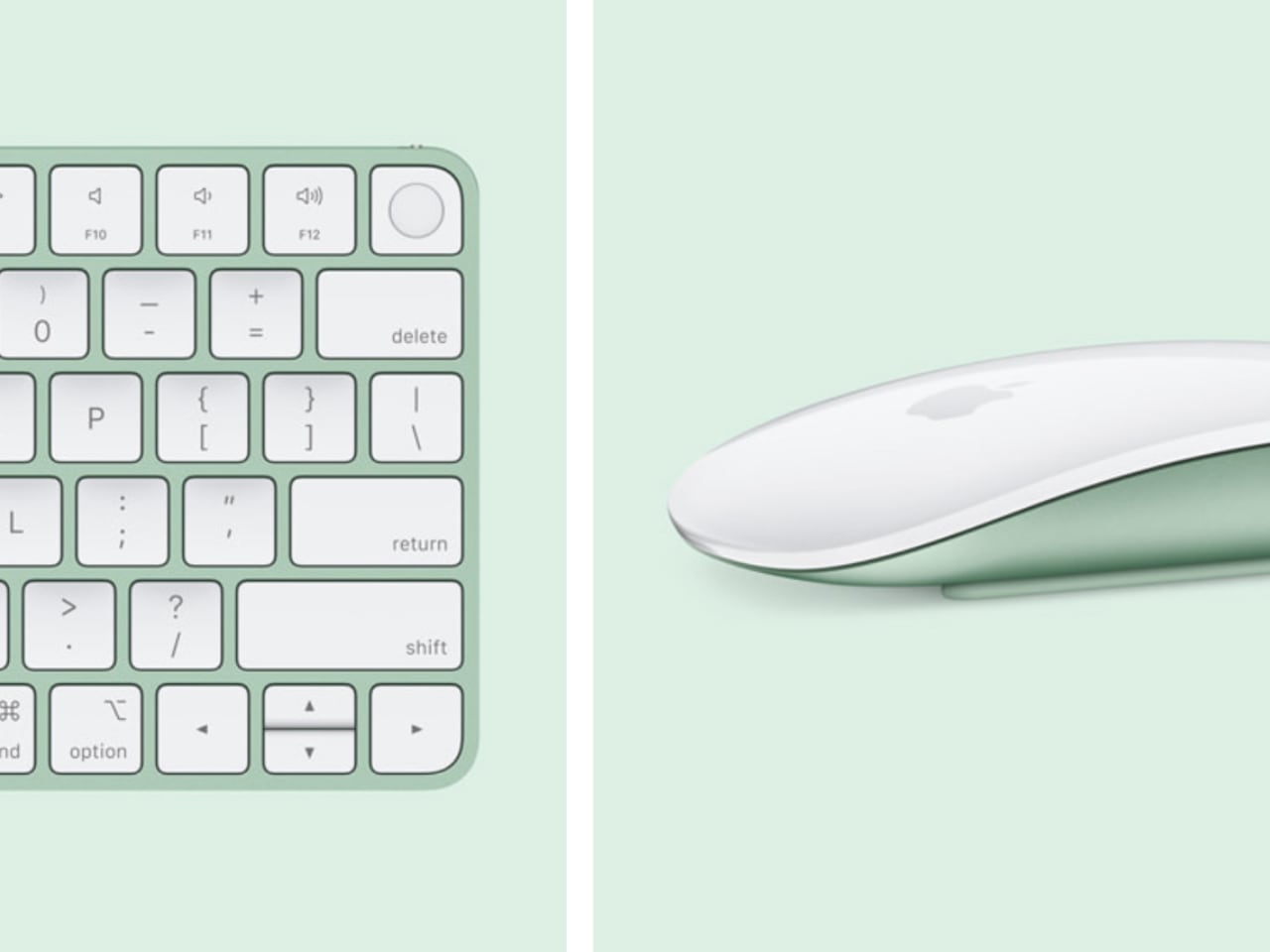
Apple has also updated its accessories—the Magic Keyboard, Magic Mouse, and optional Magic Trackpad now come in colors that match the iMac.

4. Nano-Texture Display Option

Apple now offers a nano-texture glass option for the 24-inch 4.5K Retina display, significantly reducing reflections and glare for improved usability in bright environments.
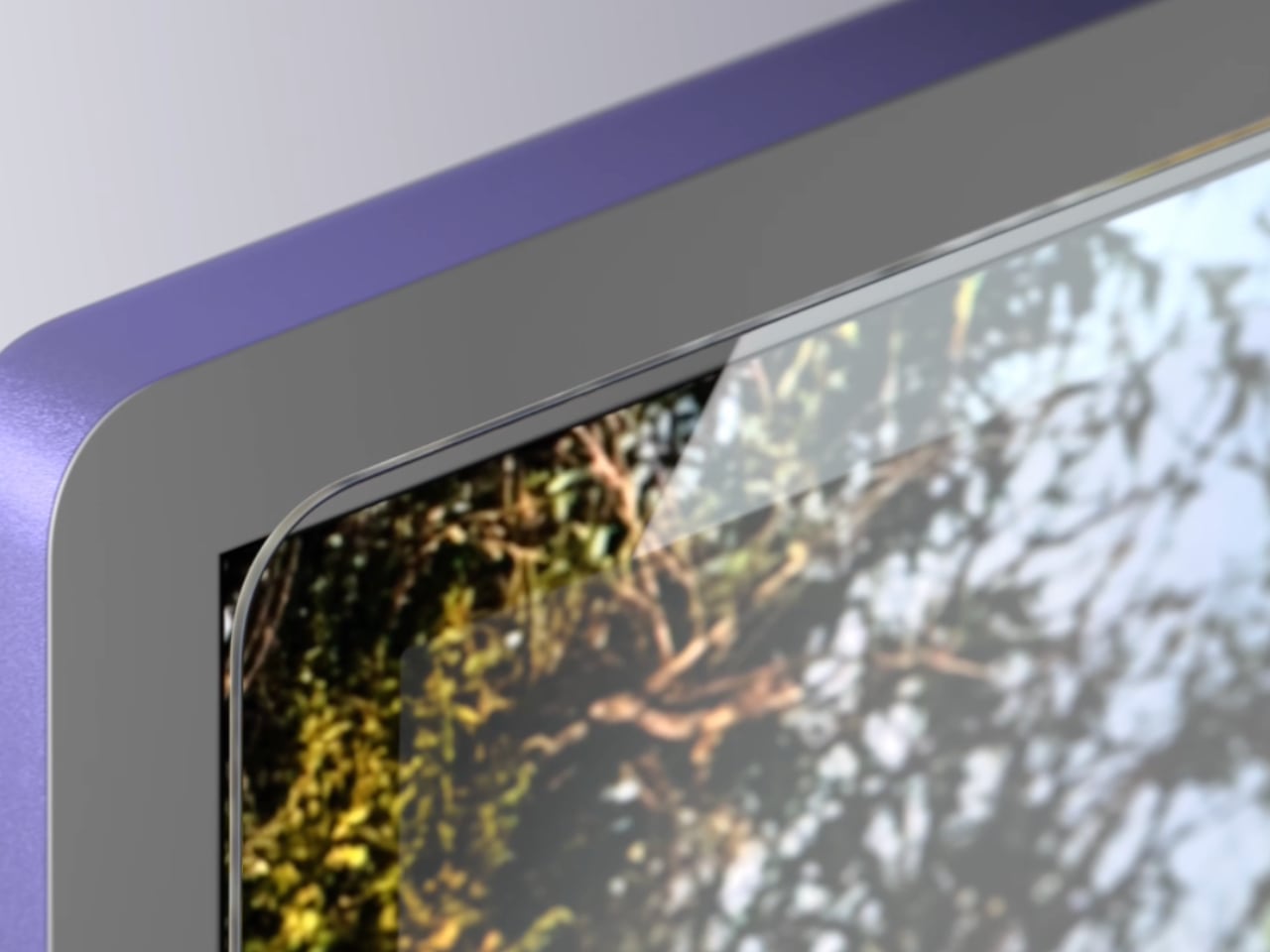
Image: Apple iMac M4 New Nano-Texture Display Option

The nano-texture glass is created through a nanometer-level etching process that gives the display a matte finish, allowing users to place their iMac in brightly lit environments without worrying about reflections. This option makes the iMac particularly suitable for a wider range of locations, such as sunlit living rooms or bright office spaces, where traditional glossy screens might struggle with visibility. By reducing glare, the nano-texture glass helps maintain exceptional image quality, ensuring accurate colors and sharpness regardless of ambient lighting conditions.

5. Enhanced Video Calling with 12MP Center Stage Camera

The iMac M4 features a 12MP ultrawide camera with Center Stage, which uses machine learning to keep subjects centered in the frame. This makes video calls more engaging, whether it’s for families gathered on FaceTime or professionals giving presentations. Center Stage automatically pans and zooms as people move, ensuring everyone stays in view.

Image: Apple iMac M4 12MP Center Stage Camera

Additionally, the new camera supports Desk View, which utilizes the wide-angle lens to show both the user and a top-down view of their desk simultaneously. This feature is particularly useful for educators demonstrating lessons or creators showcasing projects, enhancing the versatility of the iMac for video communication. The camera is complemented by a studio-quality three-microphone array with beamforming technology, ensuring clear audio and a six-speaker sound system that provides an immersive audio experience for calls and media.

6. Advanced Connectivity with Thunderbolt 4

The iMac M4 features Thunderbolt 4 support on all USB-C ports, significantly enhancing data transfer speeds and providing greater versatility for external connections. With Thunderbolt 4, users can connect up to two 6K external displays, creating an expansive and productive workspace ideal for professionals needing multiple monitors for multitasking, video editing, or design work.

Image: Apple iMac 4 Thunderbolt 4

These Thunderbolt 4 ports also allow for seamless connectivity to high-speed external storage devices, making it easier to transfer large files, back up data, or expand storage capacity without compromising performance. This feature is particularly beneficial for creative professionals who work with large media files and need quick access to their projects.

In addition to Thunderbolt 4, the iMac M4 supports Wi-Fi 6E, the latest evolution in wireless technology, which provides faster internet speeds, reduced latency, and greater capacity for handling multiple devices simultaneously. Whether streaming content, gaming, or conducting video calls, users will benefit from a more stable and responsive connection.

Bluetooth 5.3 is also supported, ensuring improved connectivity with peripherals such as headphones, keyboards, and other wireless devices. This enhancement means users can enjoy faster pairing, greater range, and more reliable connections, which contribute to a more fluid and enjoyable user experience.

7. macOS Sequoia: Designed for Today’s Demands

The iMac M4 comes with macOS Sequoia, which introduces features like iPhone Mirroring—allowing users to interact with their iPhone directly from their Mac. Safari has also received significant updates, including Highlights, which quickly pulls up relevant information from websites, and a redesigned Reader offering a table of contents and high-level summaries. Distraction Control allows users to hide specific items on a webpage, creating a more focused browsing experience.
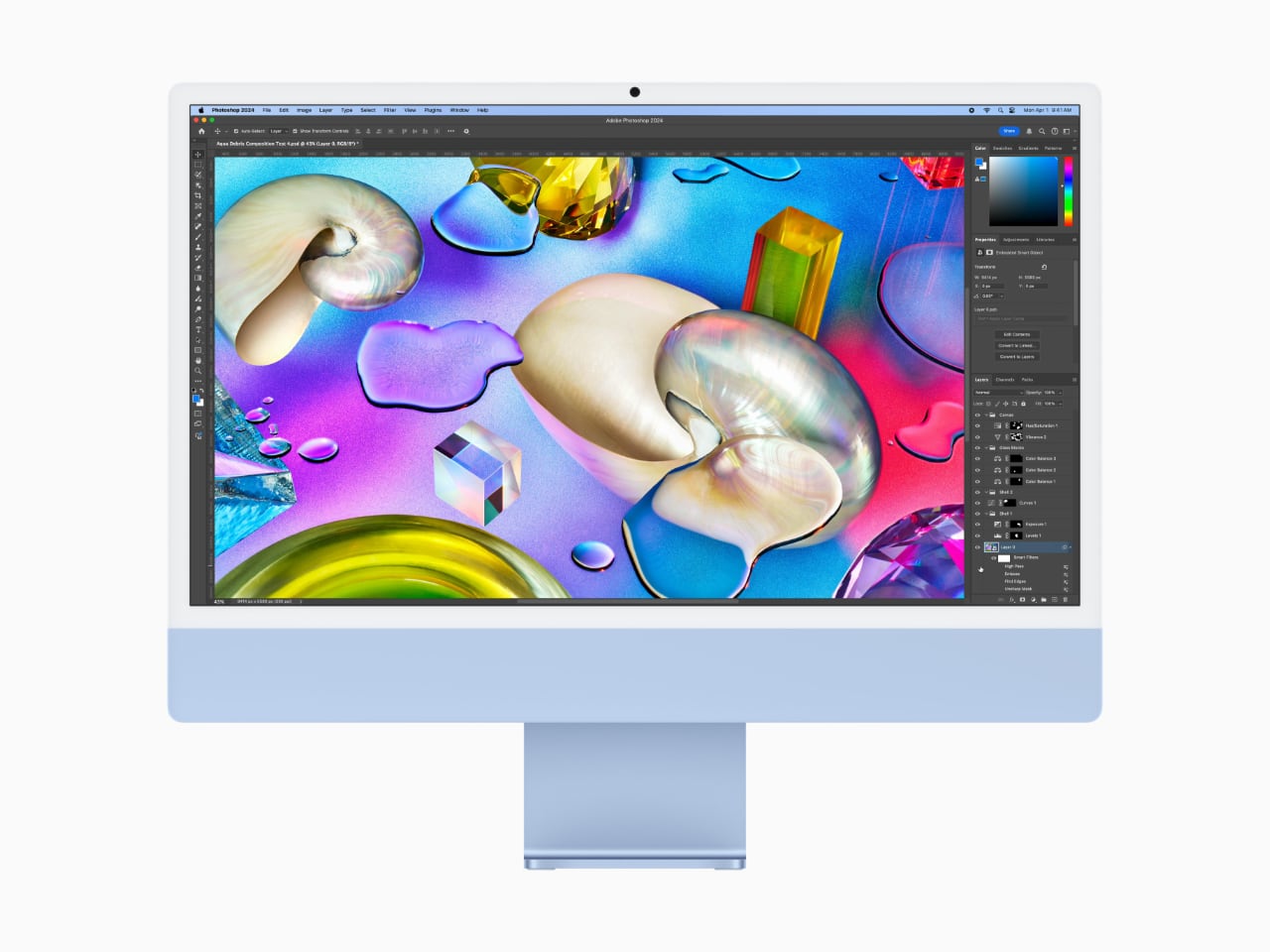
Gaming enthusiasts will appreciate the improvements to Game Mode, which optimizes system performance for gaming, and the addition of Personalized Spatial Audio, enhancing the gaming experience by delivering immersive sound that adapts to the user’s head movement. These enhancements position the iMac M4 as a capable gaming machine.

8. Environmental Consciousness

The new iMac M4 is designed with sustainability in mind. The stand is made from 100% recycled aluminum, while multiple printed circuit boards use 100% recycled gold plating, tin soldering, and copper. The packaging is entirely fiber-based, bringing Apple closer to its goal of eliminating plastic from all packaging by 2025.

Apple’s broader environmental initiatives include making the iMac energy-efficient and free of harmful substances like mercury, brominated flame retardants, and PVC. These efforts are part of Apple’s commitment to carbon neutrality across its entire carbon footprint by 2030.

9. Improved Security with Touch ID

The Magic Keyboard with Touch ID comes standard on models with the 10-core CPU and 10-core GPU, providing a convenient and secure way to unlock the computer, make online purchases with Apple Pay, and switch between user profiles. Touch ID also works with Fast User Switching, allowing multiple users to quickly and easily access their personal settings on the same iMac, making it ideal for shared environments.

Image: Apple TouchID

For those who value both privacy and convenience, Touch ID ensures that sensitive information remains secure while providing a seamless experience. Whether a family shares a computer or a small business uses a shared workstation, Touch ID enhances the usability of the iMac M4 by providing a simple yet effective security measure.

10. Customization and Accessibility

Offering a range of customization options, the iMac M4 provides different processor configurations and color-matched accessories. Users can choose between models with varying core counts to match their performance needs, and personalize their workspace with accessories that complement their iMac’s color.

macOS Sequoia continues Apple’s tradition of robust accessibility features, making the iMac usable by as many people as possible. These features include VoiceOver for visually impaired users, Switch Control for those with limited mobility, and new tools designed to make macOS even more inclusive, ensuring everyone can experience the full power of the iMac M4.

A New Standard for All-in-One Computing

The iMac M4 makes desktop computing more powerful and intuitive, thanks to the M4 chip, Apple Intelligence, and upgraded display and camera features. Together, these enhancements create an all-in-one computer that boosts performance, productivity, and everyday use.

The post Top 10 Reasons Why Apple’s iMac M4 is the All-in-One Desktop You Need: Unmatched Power, Innovation, and Style first appeared on Yanko Design.