Meta’s Orion holographic avatars will (eventually) be in VR too

The biggest reveal at Meta’s Connect event was its long-promised AR glasses, Orion. As expected, the prototype, each of which reportedly costs around $10,000, won’t be ready for the public any time soon.

In the meantime, Meta offered a glimpse of its new holographic avatars, which will allow people to talk with lifelike holograms in augmented reality. The holograms are Meta’s Codec Avatars, a technology it’s been working on for several years. Mark Zuckerberg teased a version of this last year when he participated in a podcast interview “in the metaverse.”

That technology may now be closer than we think. Following the keynote at Connect, I sat down with Mark Rabkin, a VP at Meta leading Horizon OS and Quest, who shared more about Meta’s codec avatars and how they will one day come to the company’s VR headsets as well.

“Generally, pretty much everything you can do on Orion you can do on Quest,” Rabkin said. The Codec Avatars in particular have also gotten much easier to create. While they once required advanced camera scans, most of the internal avatars are now created with phone scans, Rabkin explains.

“It’s an almost identical process in many ways in generating the stylized avatars [for VR], but with a different training set and a different amount of computation required,” Rabkin explained. “For the stylized avatars, the model has to be trained on a lot of stylized avatars and how they look and how they move. [It has to] get a lot of training data on what people perceive to look like their picture, and what they perceive to move nicely.”

“For the Codec avatars ... it's the same process. You gather a tremendous amount of data. You gather data from very high-quality, fancy camera scans. You gather data from phone scans, because that's how people will be really creating, and you just build a model until it improves. And one of the challenges with both problems is to make it fast enough and computationally cheap enough so that millions and millions can use it.”

Rabkin said that he eventually expects these avatars to be able to play in virtual reality on the company’s headsets. Right now, the Quest 3 and 3S don’t have the necessary sensors, including eye tracking, necessary for the photorealistic avatars. But that could change for the next-generation VR headset, he said: “I think probably, if we do really well, it should be possible in the next generation [of headset].”

This article originally appeared on Engadget at https://www.engadget.com/ar-vr/metas-orion-holographic-avatars-will-eventually-be-in-vr-too-235206805.html?src=rss

Mariko Mori’s Sculptural Coral-Shaped Studio On A Japanese Island Is A Surreal Tribute To The Ocean

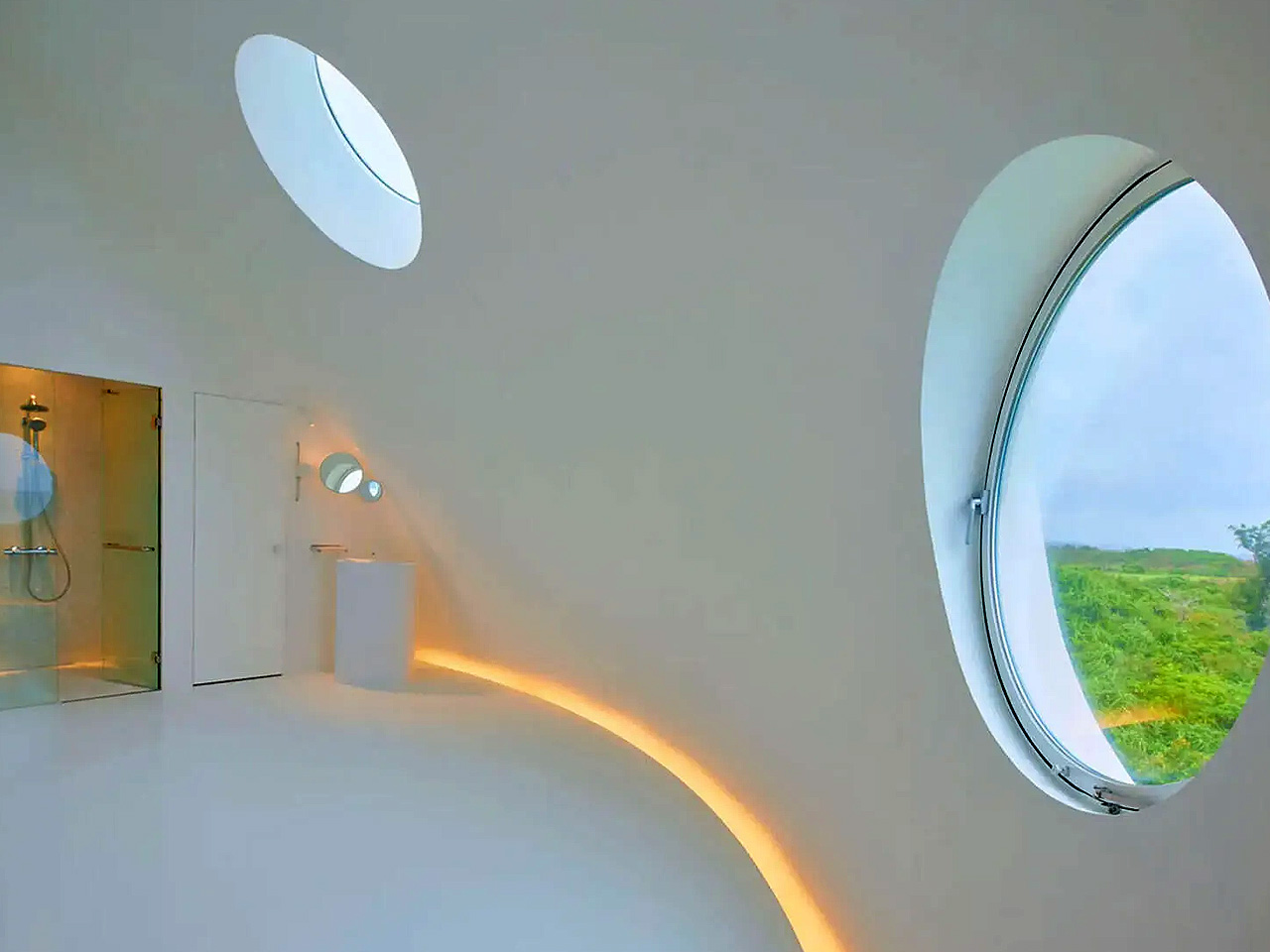
Named the Yuputira House, this stunning home was designed by Japanese artist Mariko Mori. Nestled along the shores of Miyako Island, and deemed as a private studio, the surreal abode is coral-shaped and features a pure white concrete volume. The white structure is a tribute to the ocean and Mori’s transcendental style. The dwelling is a labor of Mori’s love, and as you enter the space you are welcomed by sweeping curves, elegant rooms, and plenty of daylight, adding a light-filled aura to the Yupurita House.

Designer: Mariko Mori and Ring Architects

Mori teamed up with Ring Architects and Japanese craftsmen to bring the home to life. The home has an appealing ultra-minimalist style, which is a direct reflection of the artist’s style and design philosophy. The convex shape gives the home the impression of a pure white shell, while sculpted forms and circular skylights intersperse throughout the structure. The home doesn’t seem to have a single straight angle within, making it a truly impressive building. It offers subliminal views of the ocean, which further elevates the zen-like and restrained atmosphere of the space.

Mori says that she was inspired by the bleached shells she found on the shore of the beach. The sleek structure includes a studio on the upper level, while a bedroom, tearoom, and two guest rooms are located on the lower level. She practices meditation and tea ceremonies, and hence she has incorporated space for these two activities within the Yuputira House. The name Yuputira is inspired by the local sun god. In a world where chaos reigns, the Yuputira House is truly a calming and safe abode, where one can unwind and find some rare peace. Everything about the home radiates tranquility and surrealism – ranging from its unique shell-like shape to its super minimalist interior decor and theme.

Mori is an internationally acclaimed artist who specializes in photography, film, and performance art. She often explores the universal questions of life, death, reality, and technology through her unique work. She has a fascinating connection with art which seems to push all boundaries, exploring different dimensions. This surreal and interesting connection is represented in her home, serving as a true reflection of herself and her essence.

The post Mariko Mori’s Sculptural Coral-Shaped Studio On A Japanese Island Is A Surreal Tribute To The Ocean first appeared on Yanko Design.

DoNotPay ‘robot lawyer’ fined $193K by the FTC for not being a lawyer

The Federal Trade Commission is taking action against DoNotPay, alleging that the AI-powered company billing itself as "the world's first robot lawyer" failed to back its claims that it could replace human legal representation. The agency's complaint argues that DoNotPay did not conduct tests to assess whether its AI chatbot was equivalent to a human lawyer, and that the company did not hire or retain any attorneys of its own. DoNotPay has agreed to a proposed settlement that would see it face fines of $193,000. In addition, the settlement will require DoNotPay to inform customers who subscribed to its service between 2021 and 2023 about the limitations of its offerings.

This proposed settlement is part of an FTC program called Operation AI Comply, which is targeting businesses that leverage artificial intelligence to make deceptive claims. "Using AI tools to trick, mislead, or defraud people is illegal," FTC Chair Lina M. Khan said. "The FTC’s enforcement actions make clear that there is no AI exemption from the laws on the books. By cracking down on unfair or deceptive practices in these markets, FTC is ensuring that honest businesses and innovators can get a fair shot and consumers are being protected."

In addition to promising legal services, DoNotPay also claimed it could get accounts unbanned from social media platforms. The company postponed its first attempt to use its AI chatbot in a court setting in 2023 after multiple state bar associations intervened in the case.

This article originally appeared on Engadget at https://www.engadget.com/ai/donotpay-robot-lawyer-fined-193k-by-the-ftc-for-not-being-a-lawyer-223227153.html?src=rss

2025 Bentley Continental GT Speed Review

PROS:


  • Beautiful styling

  • Epic power

  • Plug-in practicality

CONS:


  • Cost

  • Clunky software experience

RATINGS:

AESTHETICS
ERGONOMICS
PERFORMANCE
VALUE FOR MONEY

EDITOR'S QUOTE:

The blend of performance and poise here is hard to beat, a large car that feels light and nimble yet offers effortless stability at any speed.

All automotive brands carry some amount of expectations, preconceived notions about their cars’ level of performance and comfort. Few, though, carry the kind of weight and expectation as a brand like Bentley. Established in 1919, the Crewe-based manufacturer is responsible for some of the world’s most refined cars. Every new addition to its lineup, therefore, must honor those that came before.

That’s a tricky proposition these days. Every car manufacturer is faced with greater and greater demands for technology and environmental sensitivity. That doesn’t always jibe with traditional demands for comfort and performance.

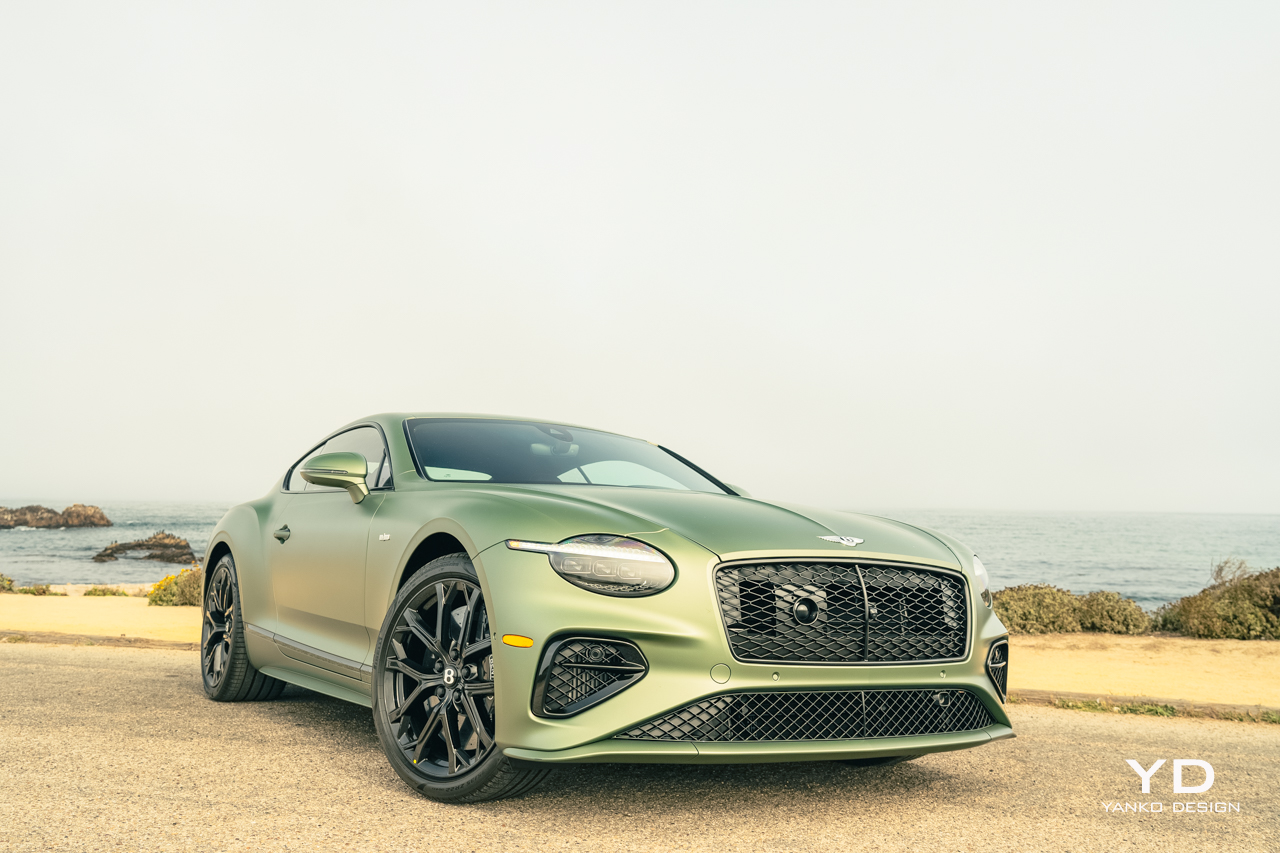
Those two worlds collide in the new Bentley Continental GT Speed. It carries the same immediately recognizable Bentley poise and style but with radical refinements. It has the same opulent interior but is riddled with more tech than ever before. Finally, it offers the same level of thrilling performance but delivers it in an entirely new way.

Plug-Powered

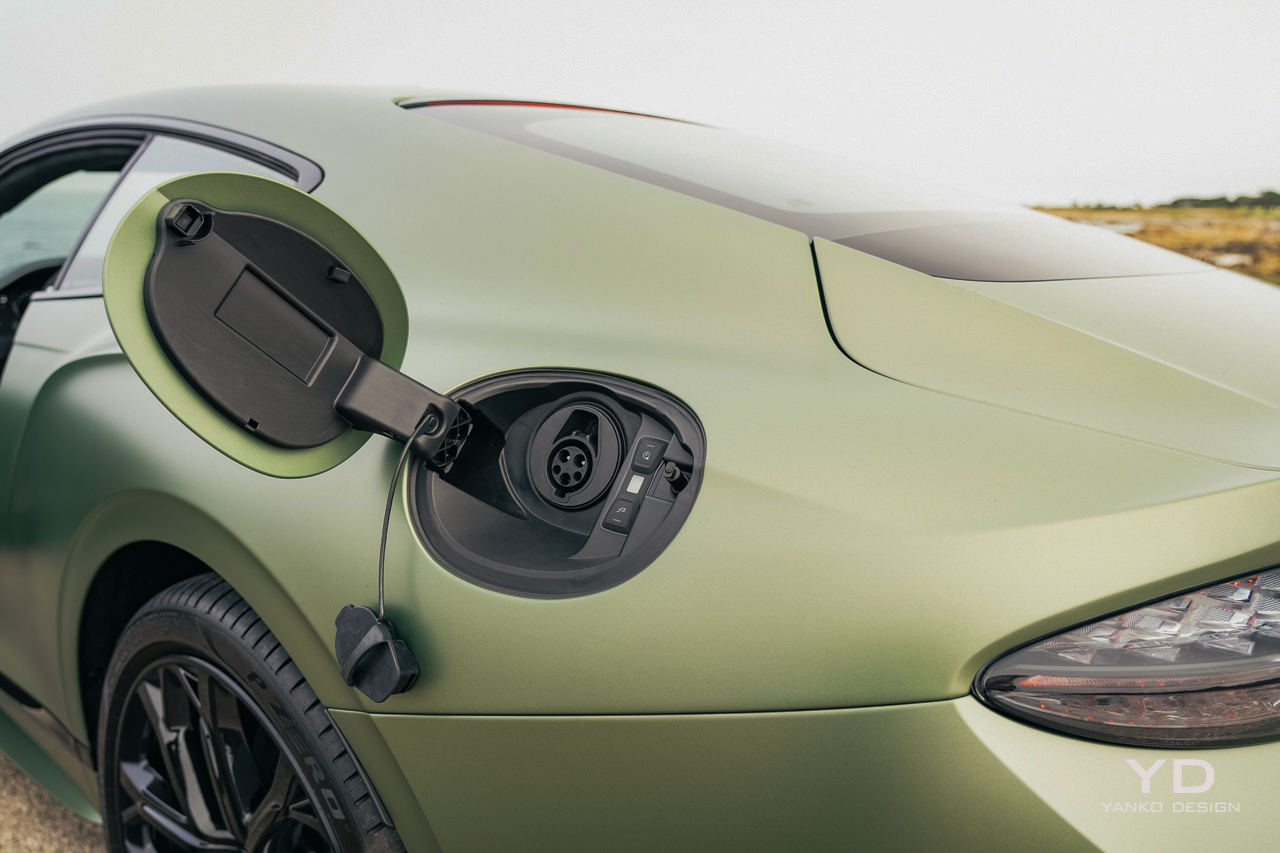
This is the first hybrid Continental, a plug-in at that, something of a transitional first step towards the brand’s all-electric future, once targeted for 2030 but now shifting a bit further down the road.

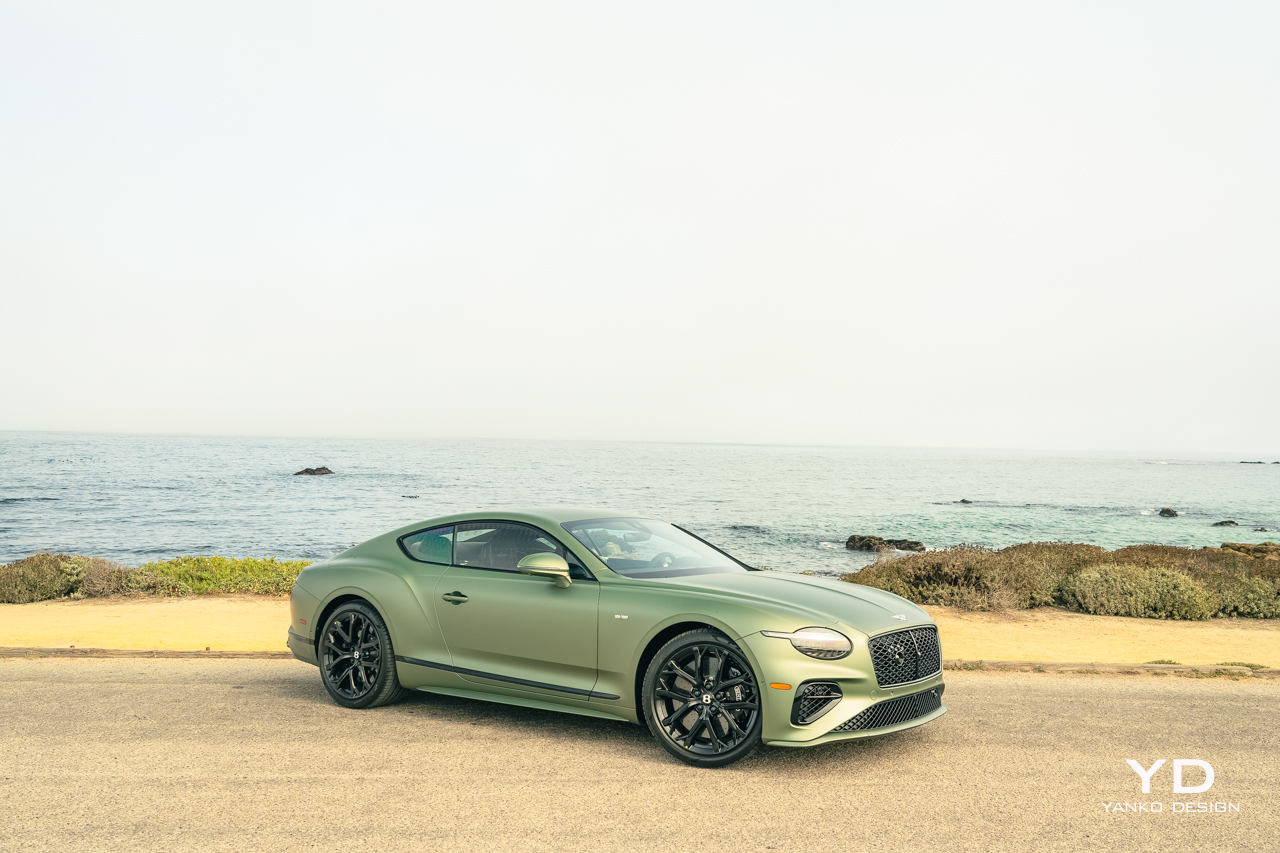
Considering its radical departure from the predecessor’s W12 powertrain, which we’ll delve into in just a moment, the new Continental GT offers a familiar look and feel at a distance, but step closer, and you can see just how refined the car’s new design is.
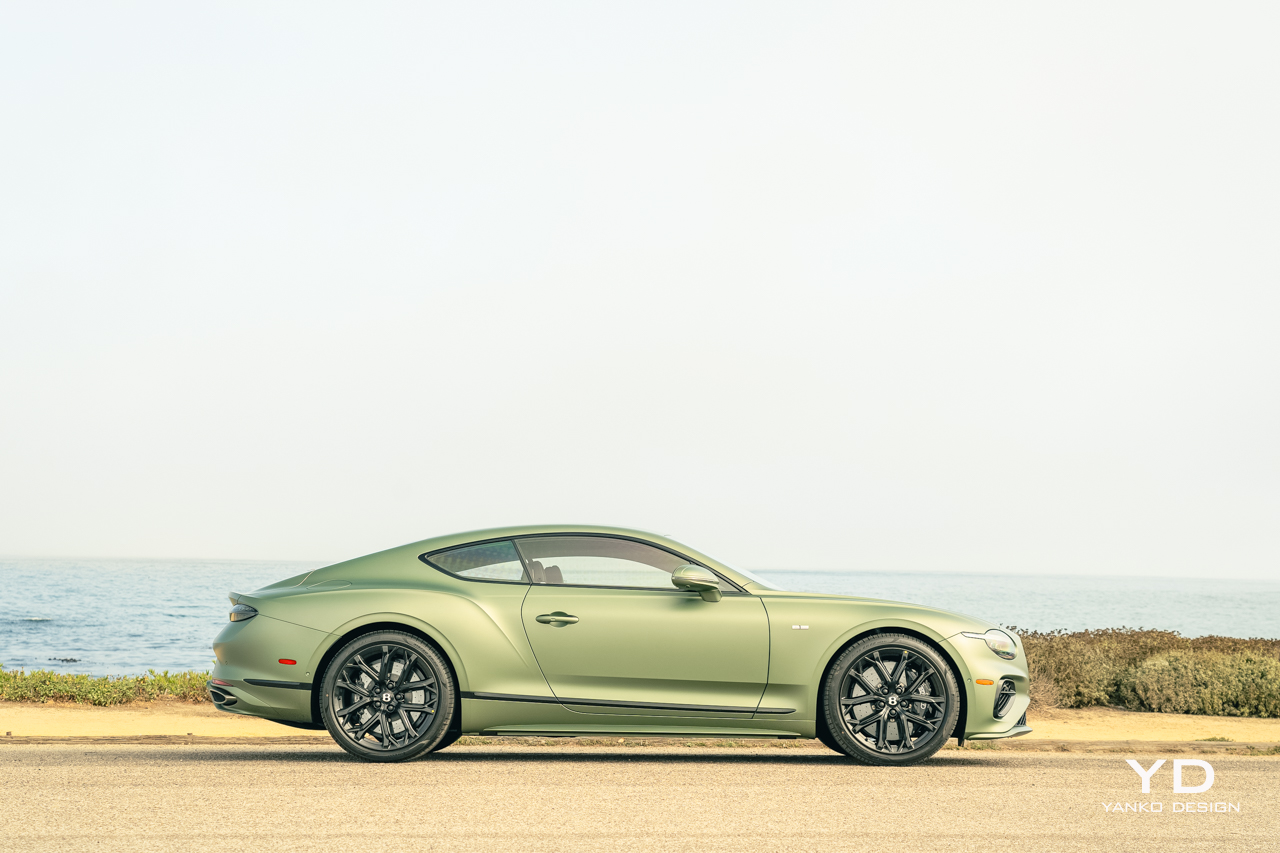
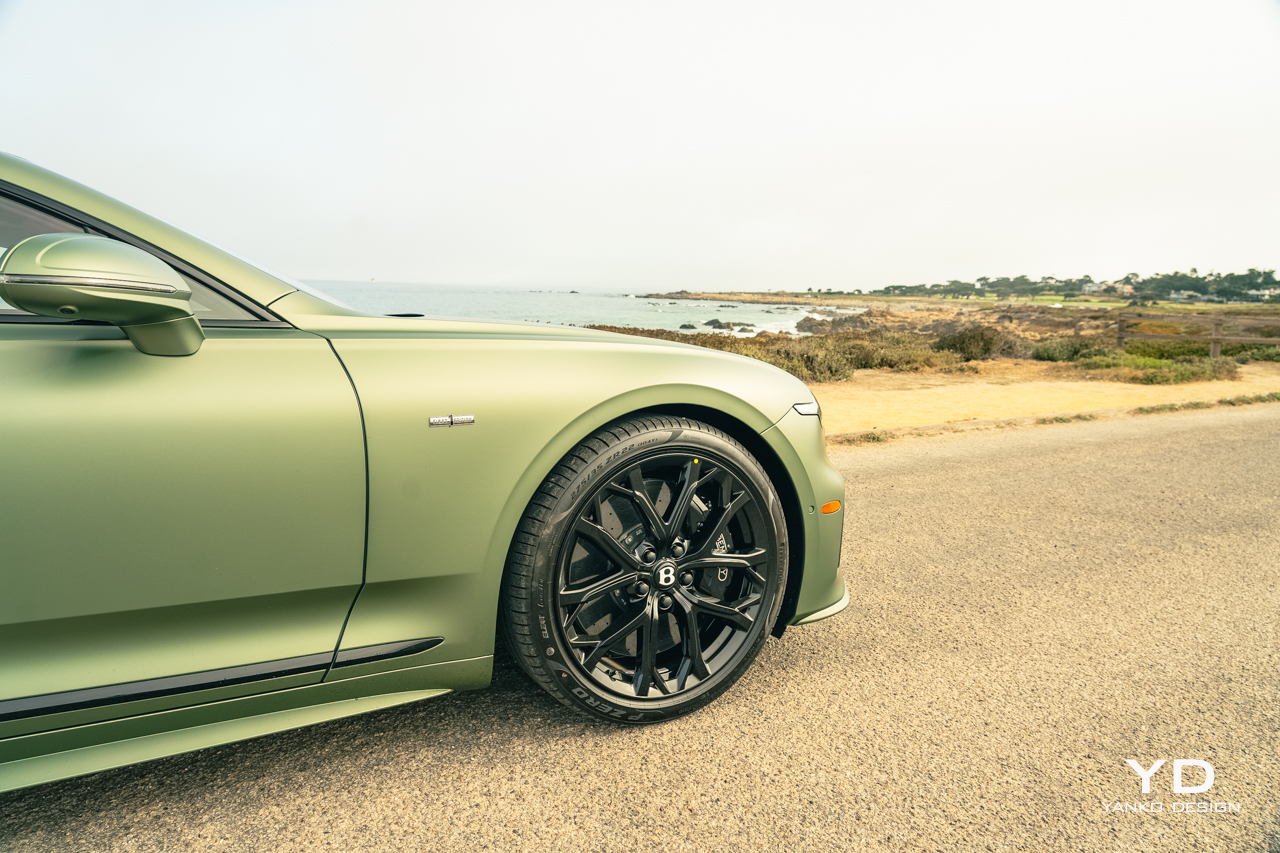
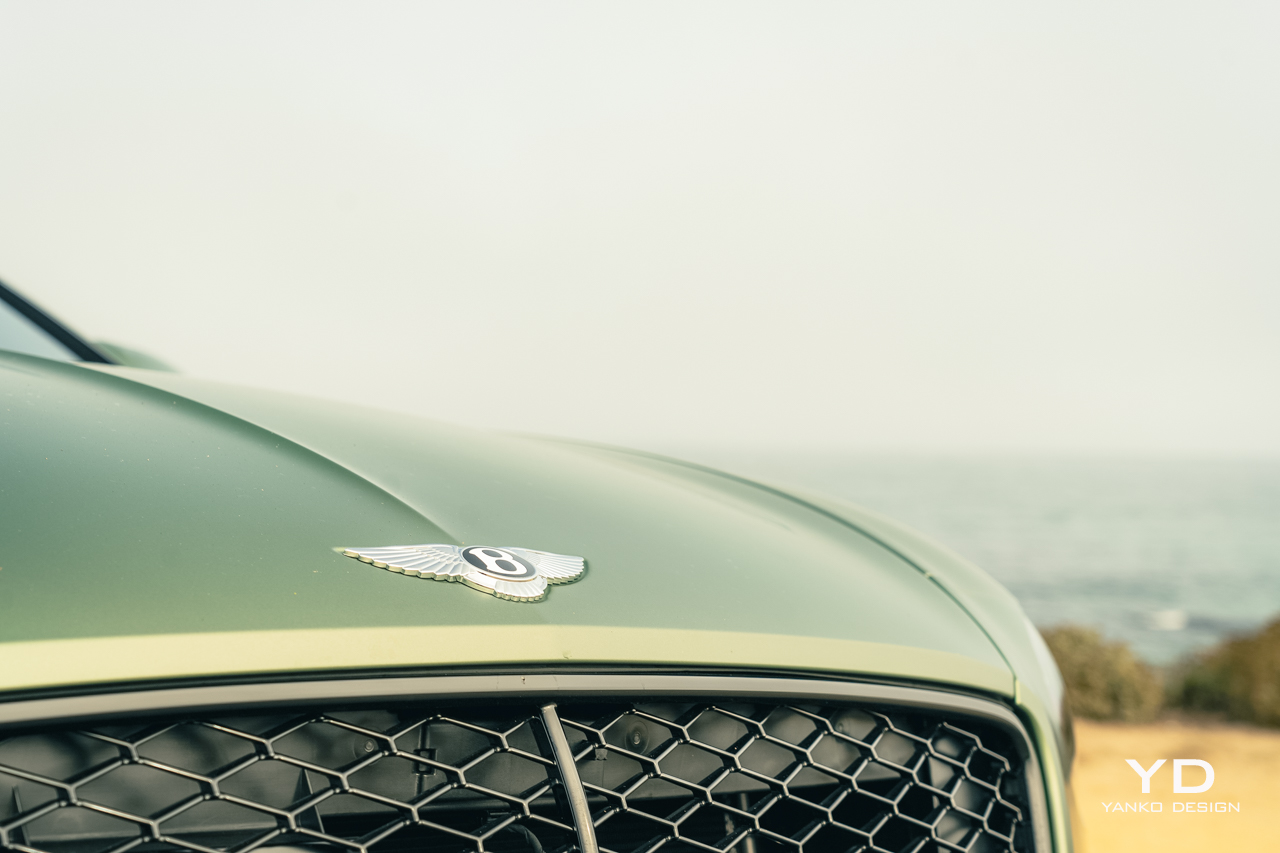
The silhouette is familiar, and the extended nose plus the rearward cabin and the powerful rear fenders all give it that same sophisticated promise of power as before. But changes abound, the most significant being a shift to a single headlight up front. Modern lighting technology enables the new Continental to throw more light from a smaller source, cleaning up the front end and giving a throwback to the Bentley S2 from the late ’50s.

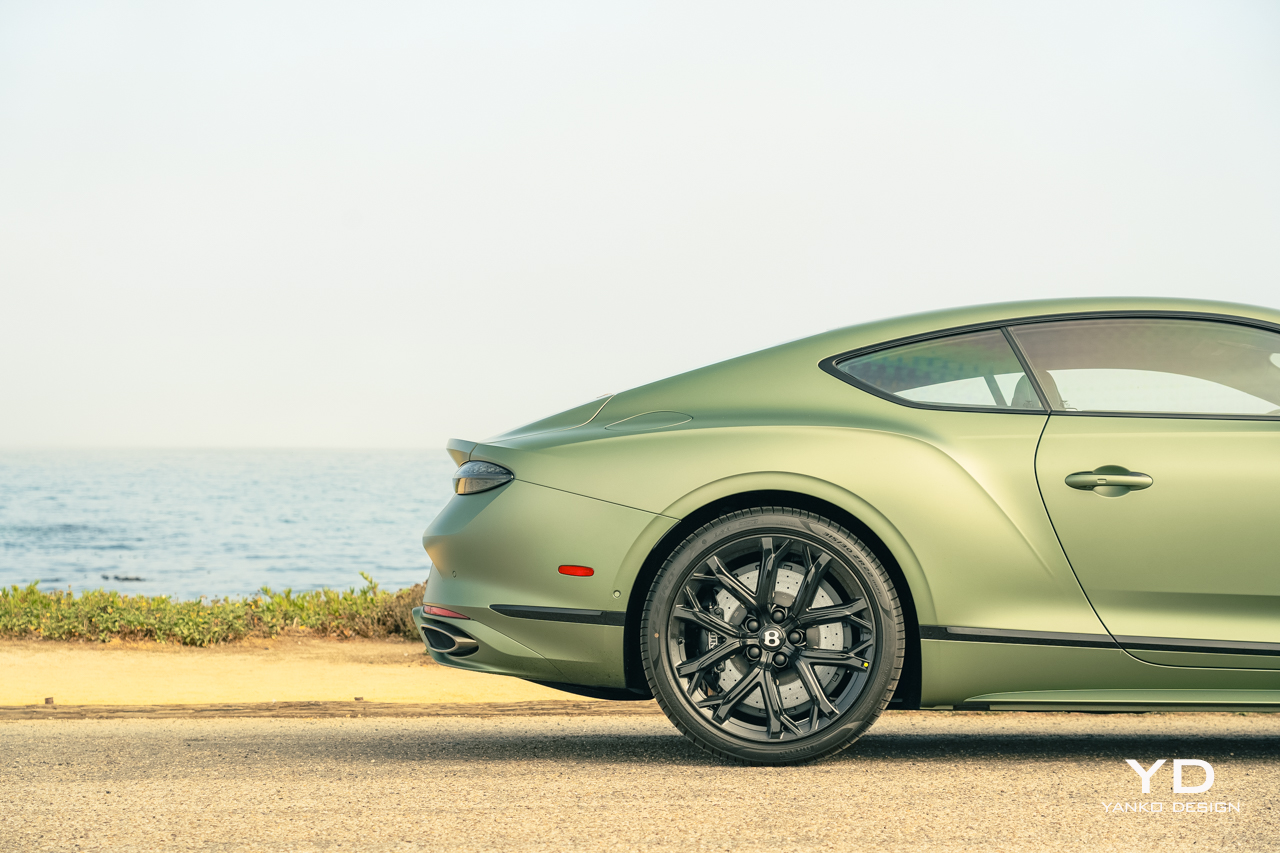
But despite that simplification, look closer again, and you’ll see the amount of detail within those headlights. It’s the same story out back, where the compact, oval tail lights are framed in an ornate, jewel-like halo. Otherwise, the rear end is likewise somewhat more simple than before, with the pop-up spoiler replaced by a clean, integrated unit.
On the Inside

The interior is likewise less ornate than before, pared back slightly from the abundance of chrome and buttons found in the last generation car. It offers just about all the technology you could want, including a 12.3-inch touchscreen with wireless Android Auto and Apple CarPlay, plus a wireless charger and a pair of USB-C ports.

The gauge cluster, too, is fully digital now, with a number of different views offering different levels of detail, more or less depending on your mood or style. The overall experience lacks the polish and feel of the higher-end systems from Mercedes-Benz or BMW, but it at least offers all the right features.
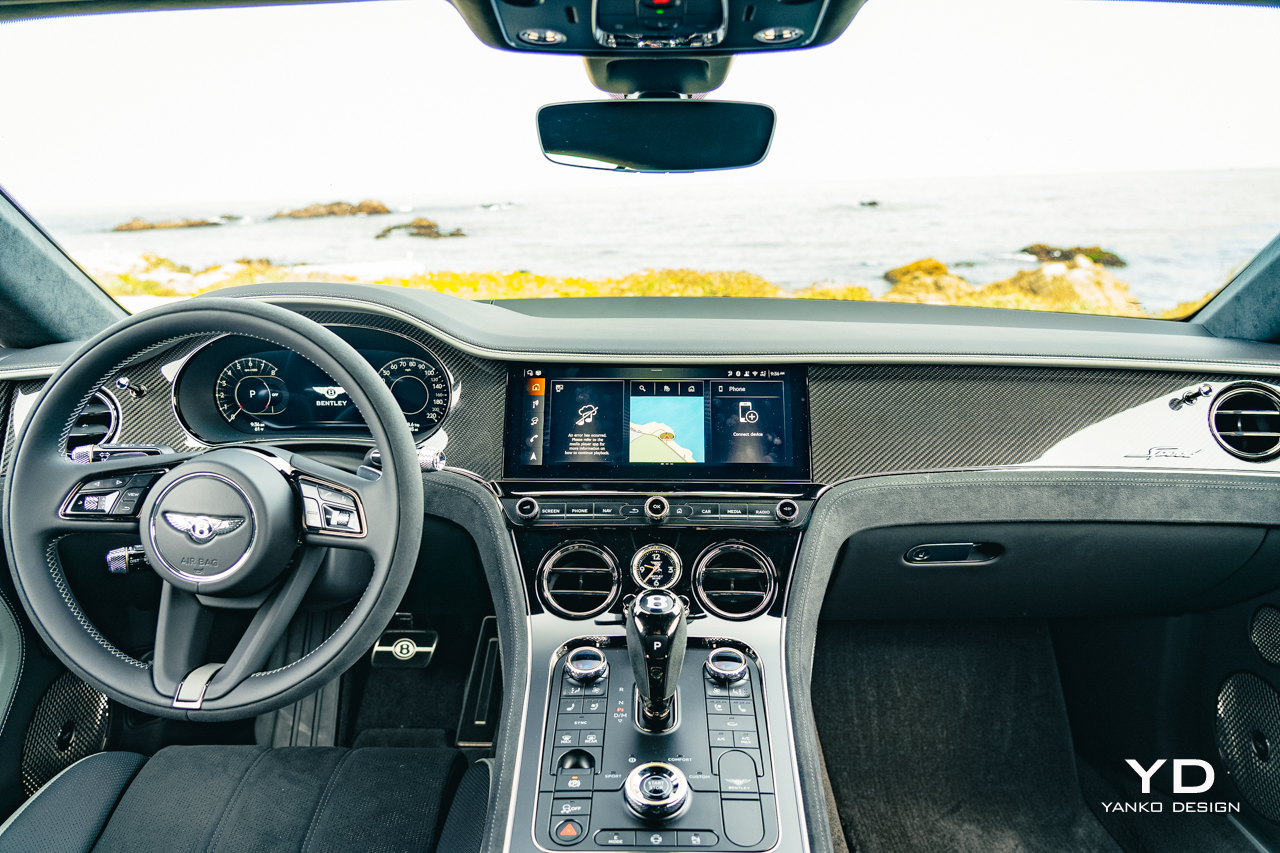
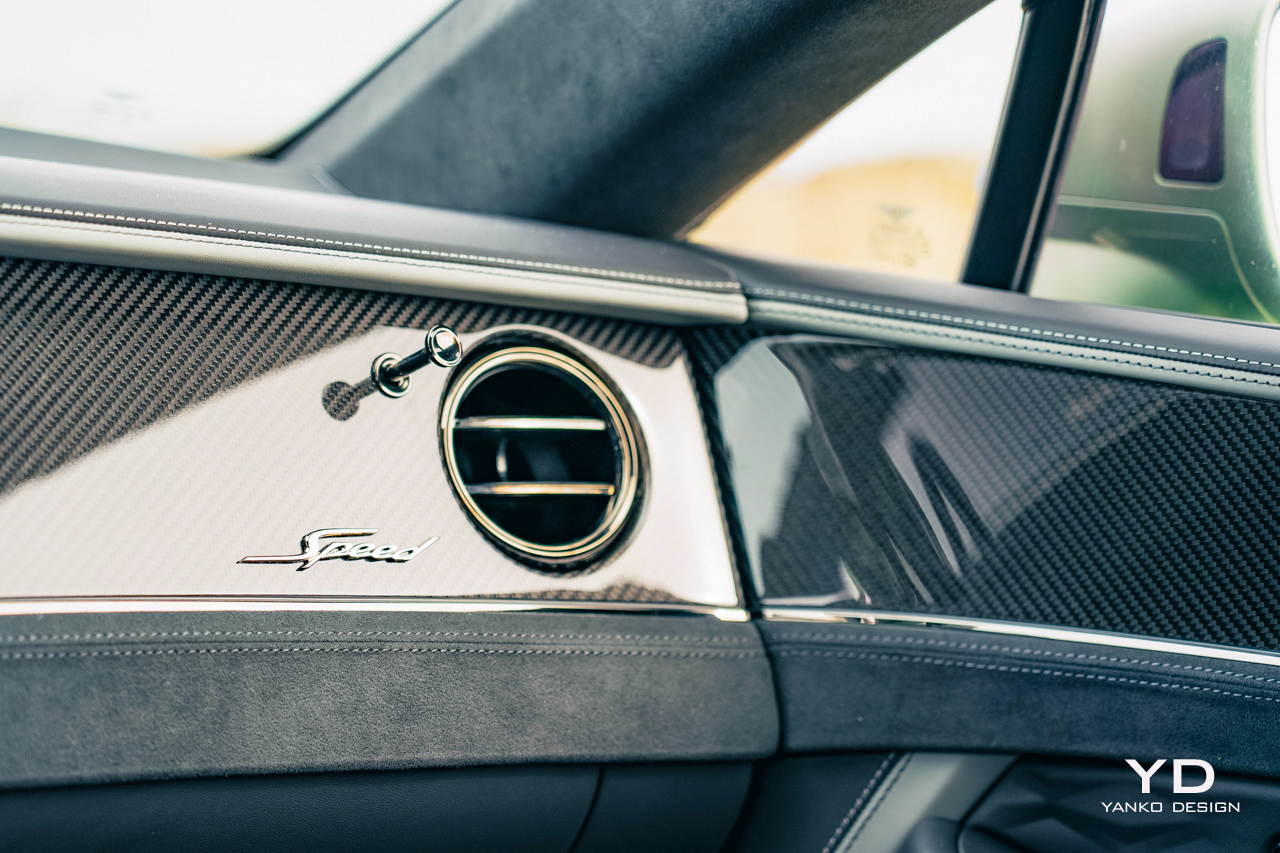
Otherwise, the interior offers a great blend of opulence and sophisticated style. The carbon fiber band sweeping across the doors and the dashboard catches the sunlight in distracting ways at times but has a clean, glossy depth that’s lacking in many in-dash composite applications.

Materials for the leathers and microfibers are great, as is the perfect stitching running everywhere. However, there’s a disappointing amount of plastic here, including the cluster of buttons surrounding the upright shifter. But, their layout at least is clean and easy to use, and they provide easy access to the functions you’ll want frequently, like toggling the comprehensively chill ventilated seats.

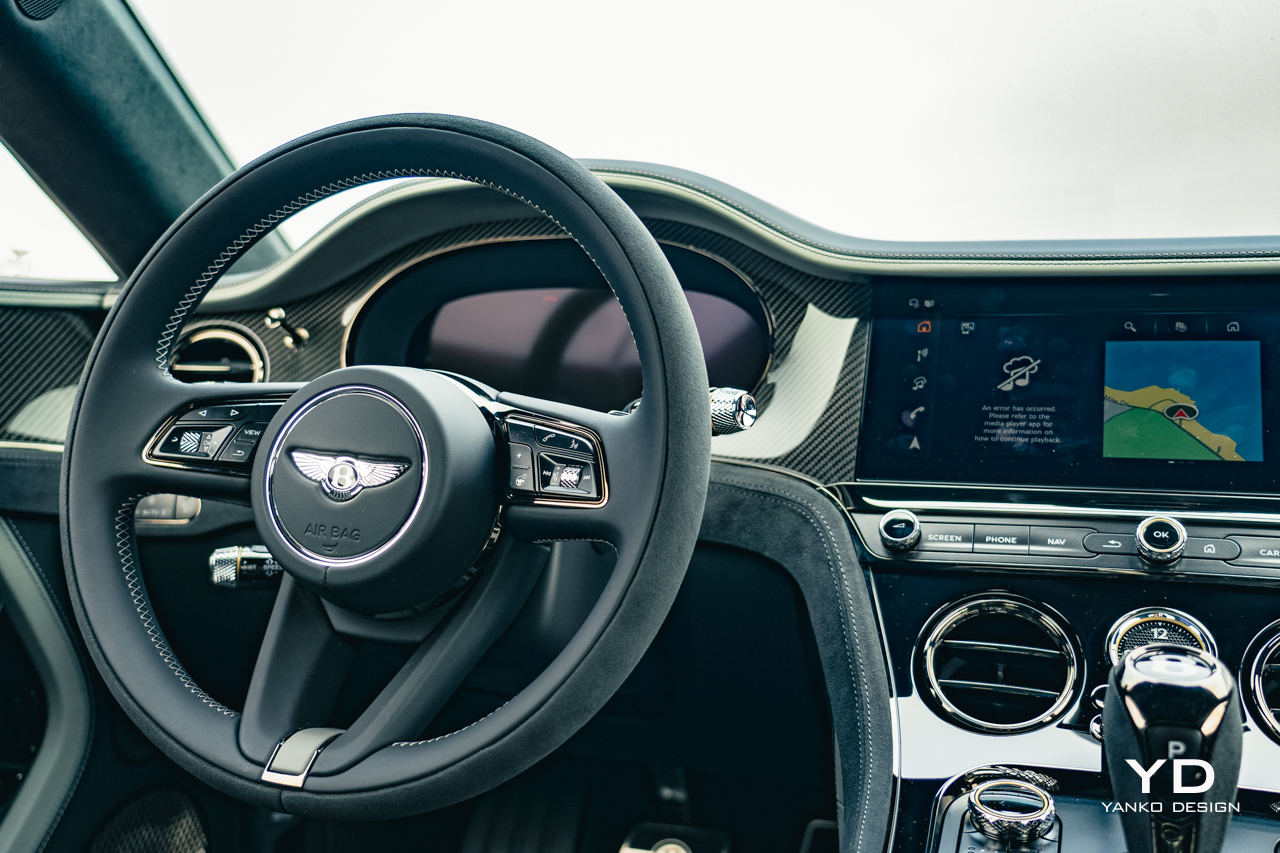
While the plastics are occasionally a bit underwhelming, the feel of the controls is top-notch. The mode selector, just aft of the shifter, spins with a wonderful weight, and even the turn signals move with a significant heft.
Plus-Sized Performance

The feeling of the controls is appropriate given the heft of this car. The new, plug-in Continental weighs over 5,400 pounds, thanks in large part to its 25.9-kilowatt-hour battery pack and the new hybrid system. The electric motor is paired with a 4.0-liter, twin-turbocharged V8.

The combined system power is 771 horsepower and 738 pound-feet of torque. Some souls may lament the lack of the outgoing Continental GT Speed’s W12, but that thing only made 626 hp. Plus, it only got 15 mpg.

That car took 3.9 seconds to get to 60. This one gets to 60 in 3.1 seconds and has a top speed of 208 mph. Bentley doesn’t have fuel economy numbers yet, but in my mixed testing, I scored 16.9 mpg, and as you can imagine I wasn’t exactly taking it easy.

More speed, better throttle response, and greater efficiency make for a pretty good mix.
It’s unlikely that many Bentley owners will be too concerned about fuel economy, but it’s good to see even ultra-luxury cars doing their part to reduce their impact on the environment. Likewise, everyone can appreciate the pleasant experience of driving in a fully electric mode.

Bentley says the new Continental GT can go up to 50 miles on a charge and can travel at up to 80 mph without recruiting the V8. In E Mode (available via a dedicated button), the big coupe is still nice to drive, totally silent, of course, and extra smooth but still reasonably peppy and perfectly capable of keeping up with traffic.

But I found it a little too easy to get the V8 to spin up. Even in this mode, if you dip past three-quarters throttle, the engine spins up quickly and smoothly, adding a substantial shove to the experience. That hand-off is crucial in hybrids, and Bentley has nailed it here, with power proportionally increasing as the engine spins up without the neck-snapping shock of torque you get in many lesser hybrids.

I just wish I could explicitly disable the V8 altogether and drive the car only on battery power.
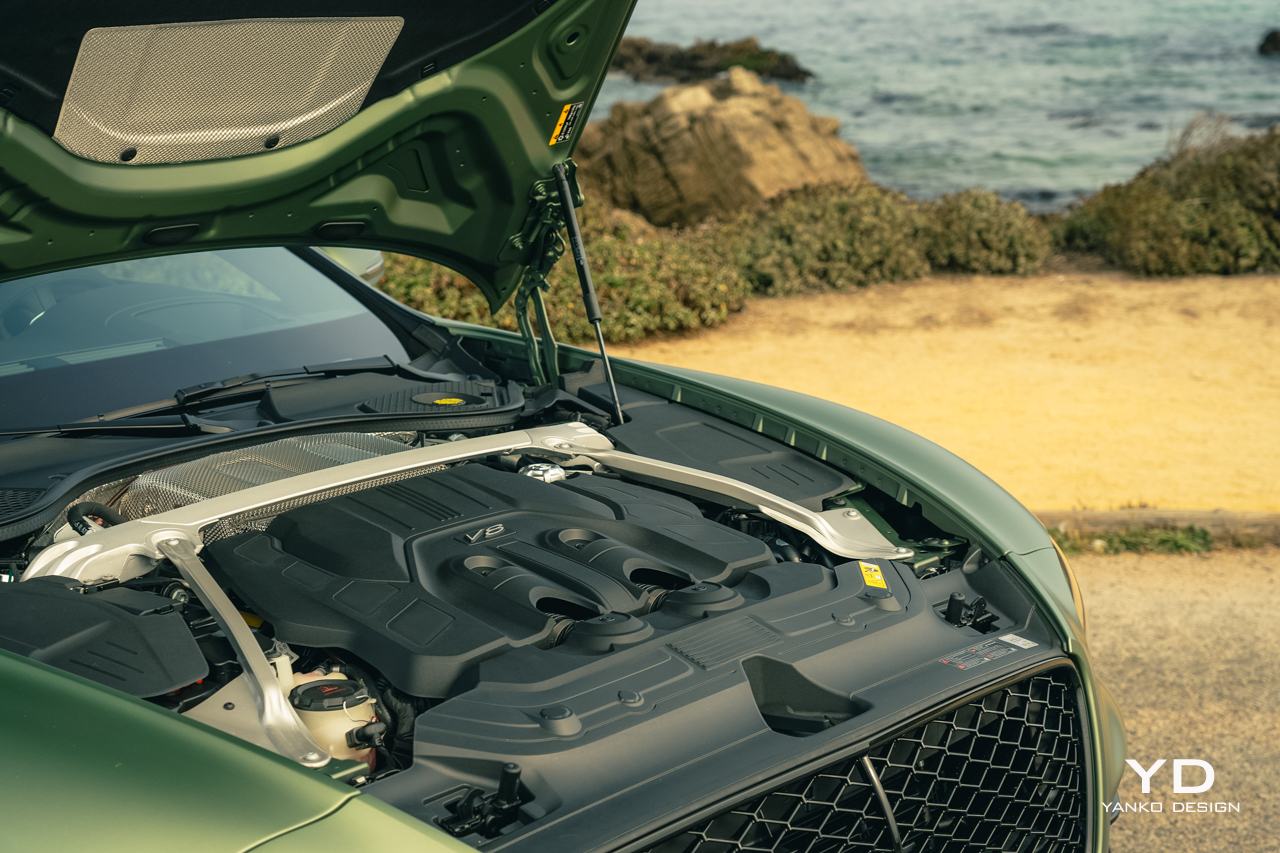
In the default drive mode, dubbed “Bentley,” the Continental is properly quick when you do dip in the throttle but still calm and collected when you’re dawdling around town. For those who want a bit more composure, spin the knob to the right for the Comfort mode, which takes the edge off the throttle and the new dual-valve air suspension. There’s a custom mode all the way to the right, too, if that’s not to your fancy.

But the most fun mode is found all the way to the left, Sport, which firms up the suspension and sharpens the throttle response. In this mode, the V8 and hybrid system work together in closest harmony, the electric motor getting the car moving before the V8 roars into action and sends the car surging forward up to whatever speed you deem allowable.

The handling is unexpectedly good, too. Despite the extra weight, the GT Speed turns in eagerly, and the 48-volt Bentley Dynamic Ride anti-roll technology keeps everything from an excessive tilt.

Comfort at Speed

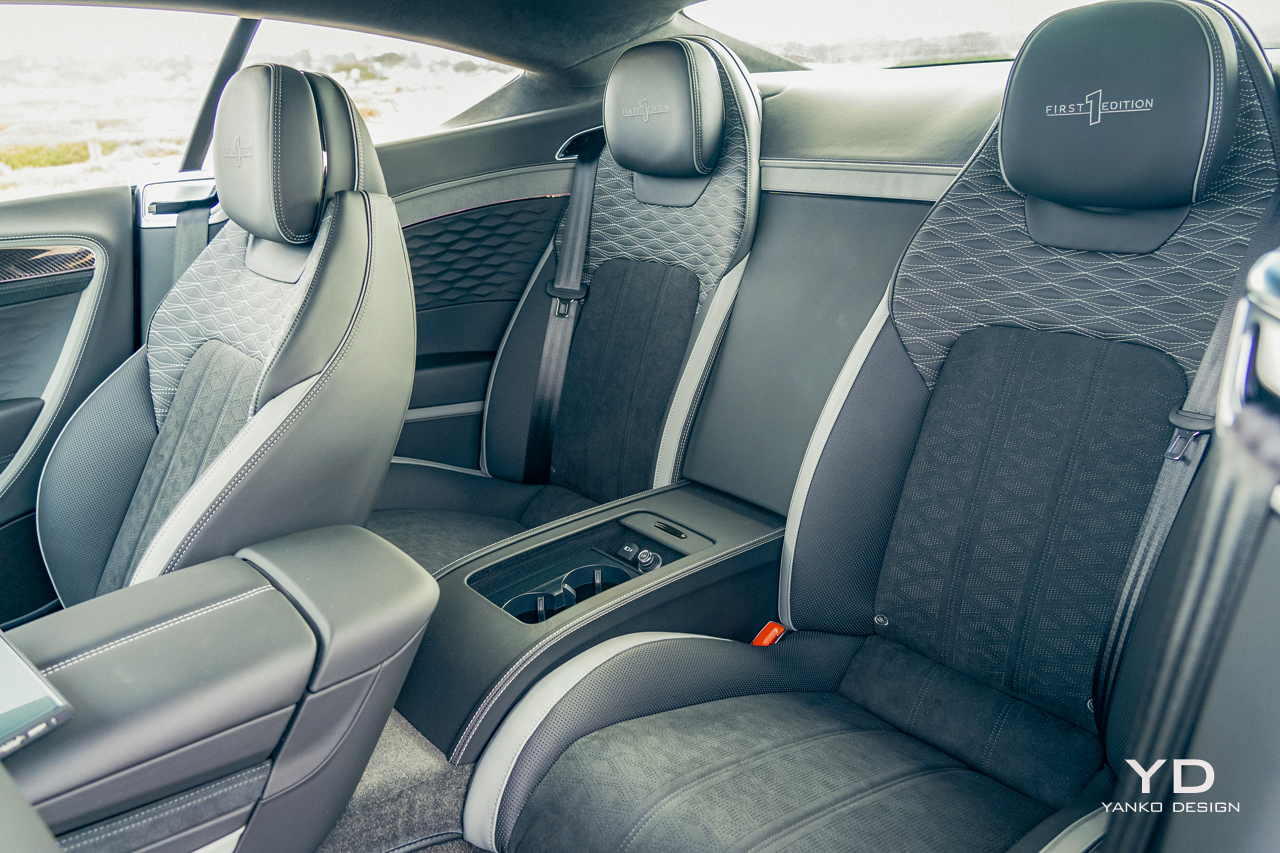
But even in Sport mode, the Continental is still nicely compliant over bad roads and effortlessly cosseting. The seats, despite their ornate stitching, are extremely comfortable, and though the massage is a bit on the subtle side for my tastes, the strength of the heating and ventilation cannot be denied.

Rear seats are predictably short on legroom, but there’s passable headroom, enough that you could wedge a human adult back there for a short run to dinner if you really needed to. Kids will fare better.

For the longer drives, you have a Naim sound system to enjoy, which is extremely powerful and a bit bass-forward by default but offers plenty of sliders and configurations for dialing it into your perfect tone.
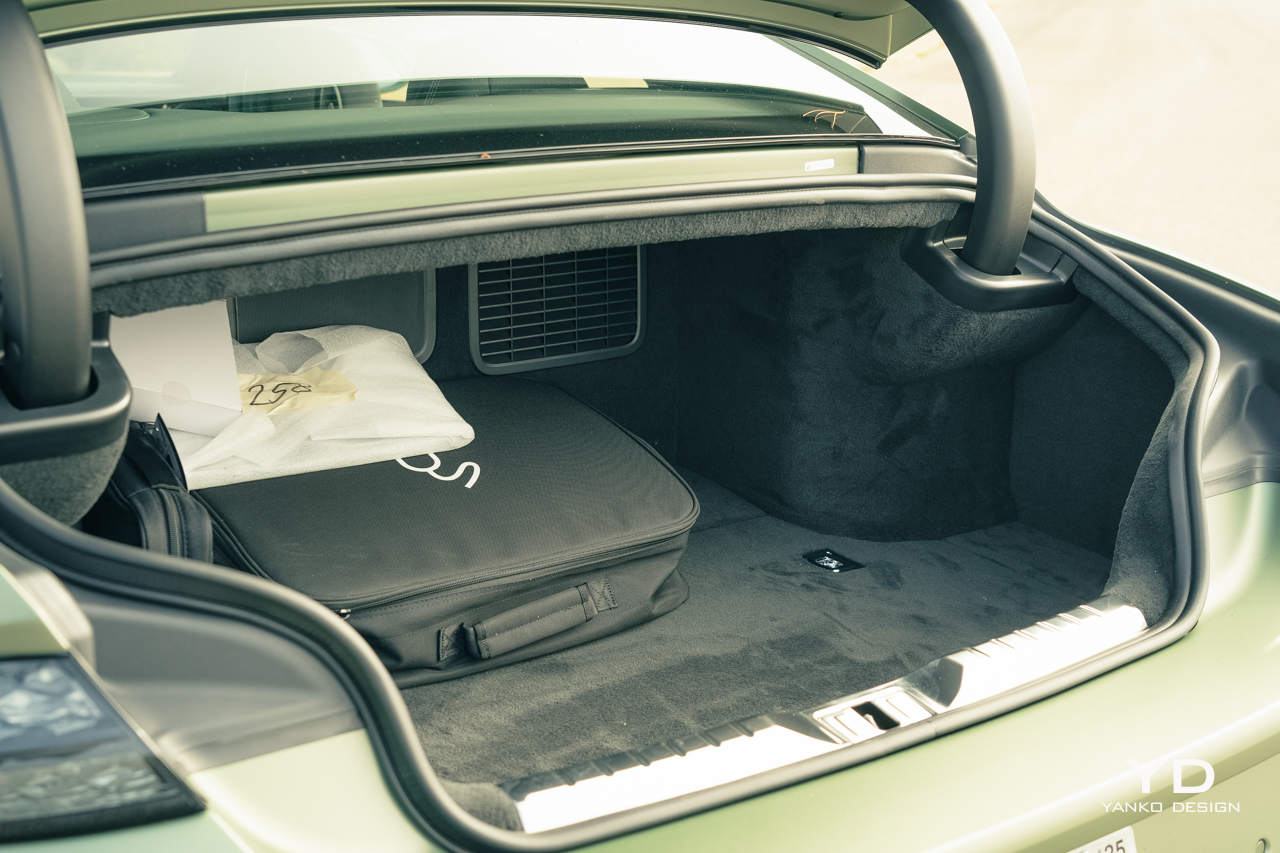
You’ll also have a substantial trunk at your disposal, 13 cubic feet worth. That’s down a bit over before, thanks to the battery, which sits down beneath the floor below, but is still more generous than anything else in this class.

The Continental also offers a decent active safety package, something often lacking in top-trim luxury cars like this. The adaptive cruise worked well on the highway but was extremely conservative, leaving a big gap ahead even on the closest following distance, which didn’t work well in typical California gridlock. The active lane keep likewise was helpful, but occasionally struggled to keep sight of the lines on the road.

I should point out at this point that I was testing a pre-production model of the car, so hopefully, there’s time to improve this functionality a bit before the cars start showing up at dealerships.
Pricing and Options

At this point, we still don’t know exactly how much the 2025 Bentley Continental GT Speed is going to cost. Yes, it’s very much in the “if you have to ask” territory, but for the rest of us who are merely curious, you’ll want to have somewhere around $300,000 at your disposal before ringing up your local dealer.

Of course, part of the joy of a car like this is customization. Bentley will do pretty much anything your heart desires, but if you desire premium things, you’ll need to keep pushing that budget up a few digits.

Regardless of how much or how little you customize yours, you’re going to be spending a lot for one of these. Is it worth it? The blend of performance and poise here is hard to beat, a large car that feels light and nimble yet offers effortless stability at any speed. It’s a joy to drive for sure, with just a few rough edges to smooth out.

The post 2025 Bentley Continental GT Speed Review first appeared on Yanko Design.


New report details OpenAI’s plan to switch to for-profit mode

A major shakeup is in the works at OpenAI. Reuters reported that the artificial intelligence research company is restructuring its business from a non-profit board into a for-profit corporation. The publication also says Sam Altman would be given equity in the new corporation.

OpenAI’s move to for-profit wouldn’t eliminate its non-profit entity entirely. The non-profit would own a stake in the new for-profit venture but it won’t have nearly the power as it did. An OpenAI spokesperson gave a statement that’s identical to the one they gave to Fortune’s initial report about the restructuring. Couldn’t they at least have used OpenAI’s software to word a different statement?

"We remain focused on building AI that benefits everyone, and we’re working with our board to ensure that we’re best positioned to succeed in our mission. The non-profit is core to our mission and will continue to exist.”

The move to for-profit would also provide a big payday for chief executive officer Sam Altman. Reuters says he would receive equity in the company once the restructuring is complete. The for-profit company’s worth could go as high as $150 billion, according to some estimates. The for-profit model would also remove the cap on investors’ returns.

Altman has reportedly been trying to move OpenAI to a more traditional for-profit company for some time. It’s not known exactly when the switch will happen since details of the deal are still going through all of the legal motions.

This article originally appeared on Engadget at https://www.engadget.com/ai/new-report-details-openais-plan-to-switch-to-for-profit-mode-214354224.html?src=rss

Apple Store employees in Oklahoma City ratify their first union contract

Employees at an Apple Store in Oklahoma City's Penn Square Mall have voted to ratify their first collectively-bargained contract. The store's workers are part of the Communications Workers of America, operating as Apple Retail Union-CWA Local 6016. The employees' three-year agreement with Apple includes the following, according to a press release from CWA:

  • "Wage increases of up to 11.5% over the next three years."

  • "Worker involvement in scheduling and guaranteed paid time off to vote."

  • "A safer and more democratic workplace with a grievance and arbitration process and the establishment of joint Safety and Health and Working Relations committees."

  • "Job protection in the event of a store closure or relocation and severance pay."

  • "Guaranteed paid time off, health and other benefits."

It's worth pointing out that though the CWA press release says the wage increases are "of up to 11.5 percent over the next three years," Apple has said that this number is actually an average 10 percent increase over three years instead.

An Apple spokesperson said “At Apple, we work hard to provide an excellent experience for our team members and our customers. We have always paid our retail teams in the top tier of the market and we provide exceptional benefits for all full- and part-time employees. Throughout this process, we have bargained in good faith and this agreement allows Penn Square team members to enjoy similar performance-based wage increases this year as last year, along with the same medical and time away benefits our U.S. retail employees currently receive.”

Apple also shared more details around compensation and wages like how the tentative agreement provides an average 10 percent increase over 3 years. Penn Square Mall employees will also be able to participate in the scheduling options that were provided to all other US stores in 2022, and held to the same availability guidelines as the rest of the fleet with no exceptions. PSQ members will receive the same medical and time off benefits as all US team members, and subject to the same documented coaching, discipline and misconduct practices that apply across all of Apple's US stores.

Apple's spokesperson also said the agreement includes the creation of a safety committee at the PSQ location, like the one at all its other stores. A working relations committee, made up of two representatives from the union and two from the company, will meet twice a year.

Today's news caps off years of preparation to unionize and secure a contract for the Penn Square Mall Apple Store, which began organizing in early 2022. The parties reached a tentative agreement in early September after a unanimous strike authorization vote in August and a store picket.

The Oklahoma City employees are the second group of Apple retail workers to reach a contract through their union. An Apple Store in Maryland was the first of the tech company's retail stores to unionize, joining the International Association of Machinists and Aerospace Workers in June 2022.

Update, September 25 2024, 4:55PM ET: This story has been updated to include Apple's statement as well as details the company's spokesperson shared. We also clarified that there's a discrepancy between what the CWA press release says is the percentage for wage increase over the next three years and what Apple says it is.

This article originally appeared on Engadget at https://www.engadget.com/big-tech/apple-store-employees-in-oklahoma-city-ratify-their-first-union-contract-190218680.html?src=rss

Meta’s futuristic Orion AR Glasses have Holographic Displays and Neural Control. Apple should take notes

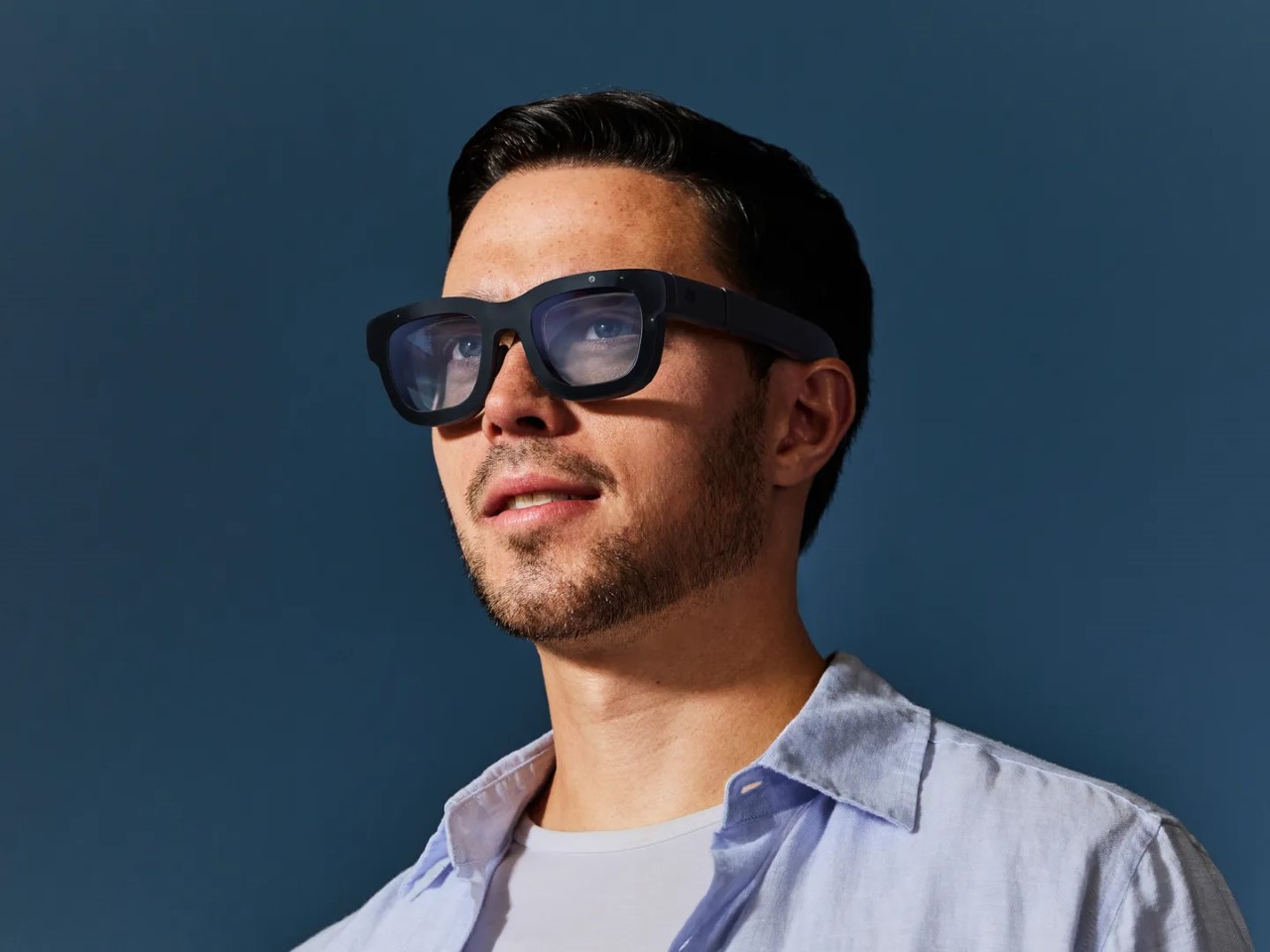
At the Meta Connect 2024 keynote, not only did Mark Zuckerberg debut actual Augmented Reality with holographic displays and neural control, it did so in a device that’s smaller, lighter, and one could argue, more socially acceptable (aka stylish) than Apple’s Vision Pro. Dubbed the Orion, it’s simply a developer prototype for now, but Meta hopes to refine the design, improve the displays, and actually sell it at an affordable price to consumers.

Designer: Meta

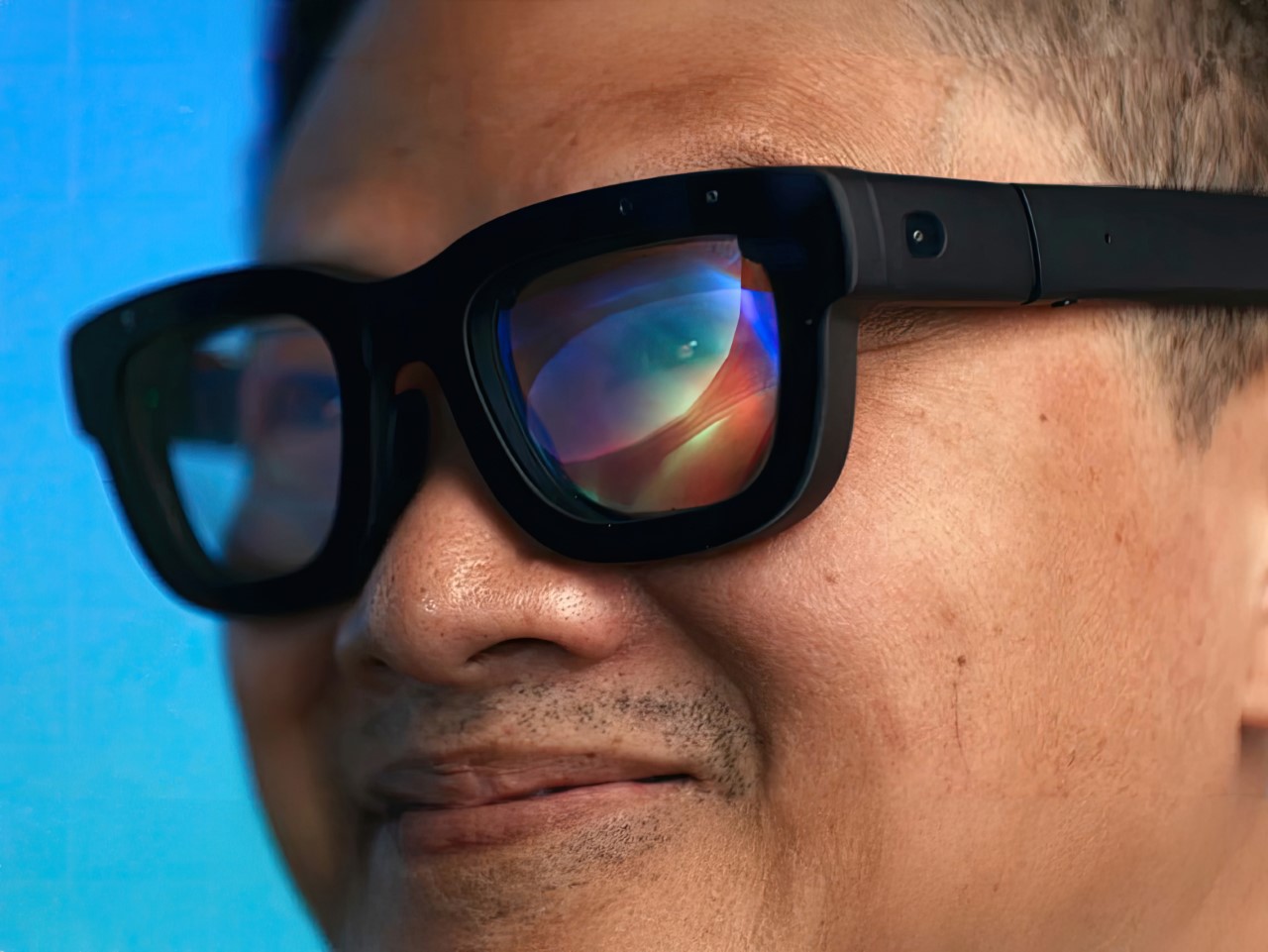
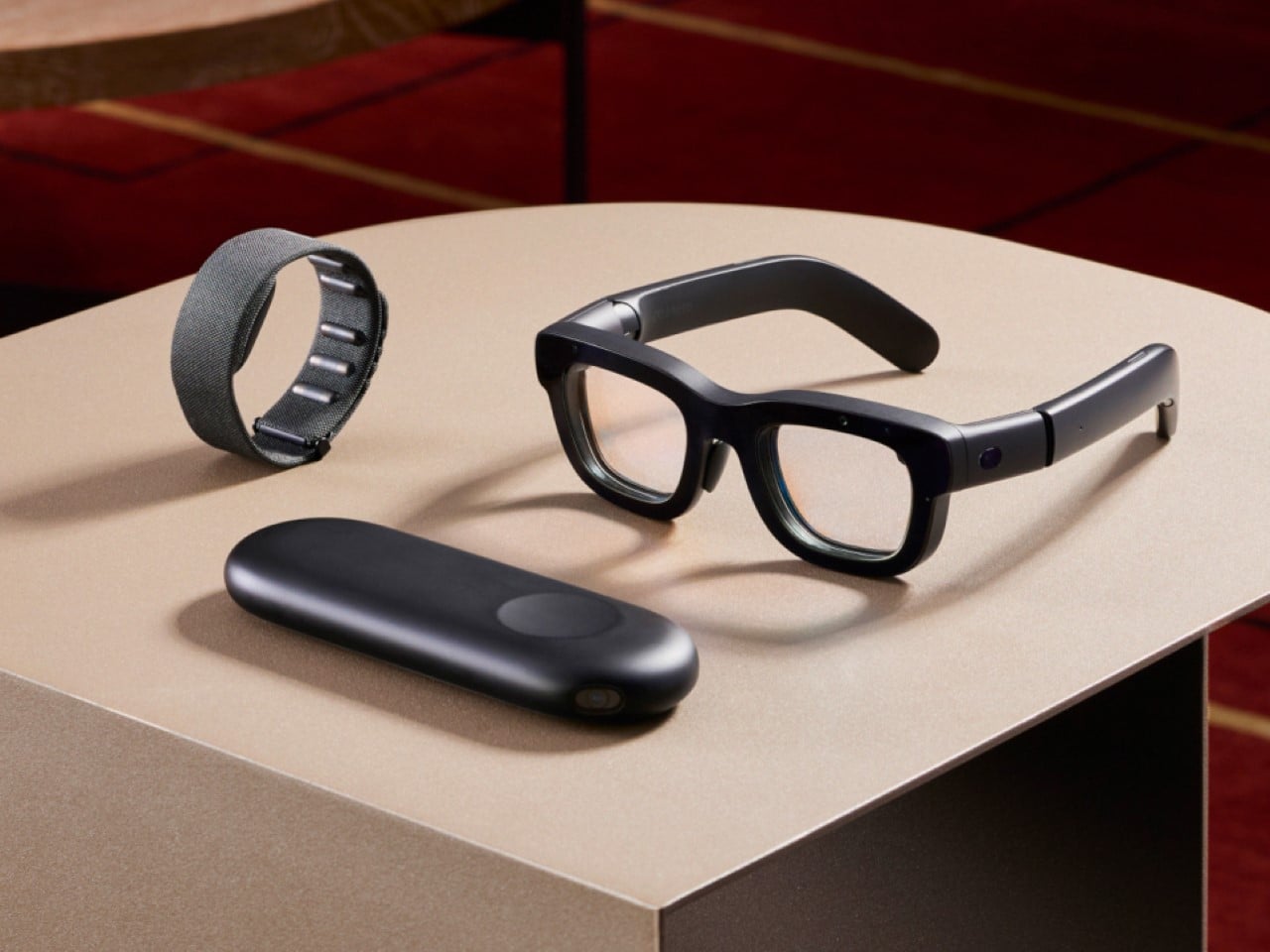
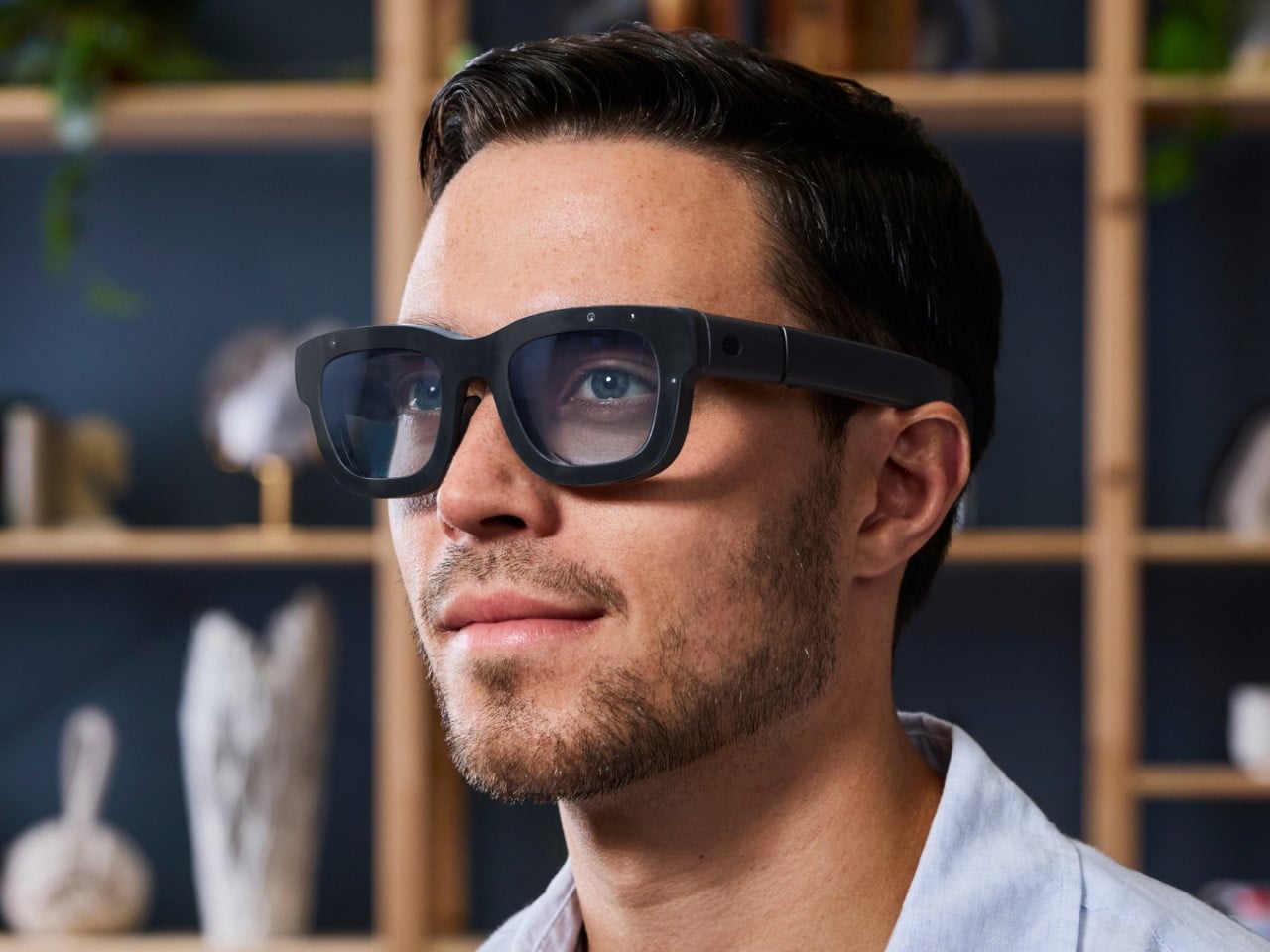
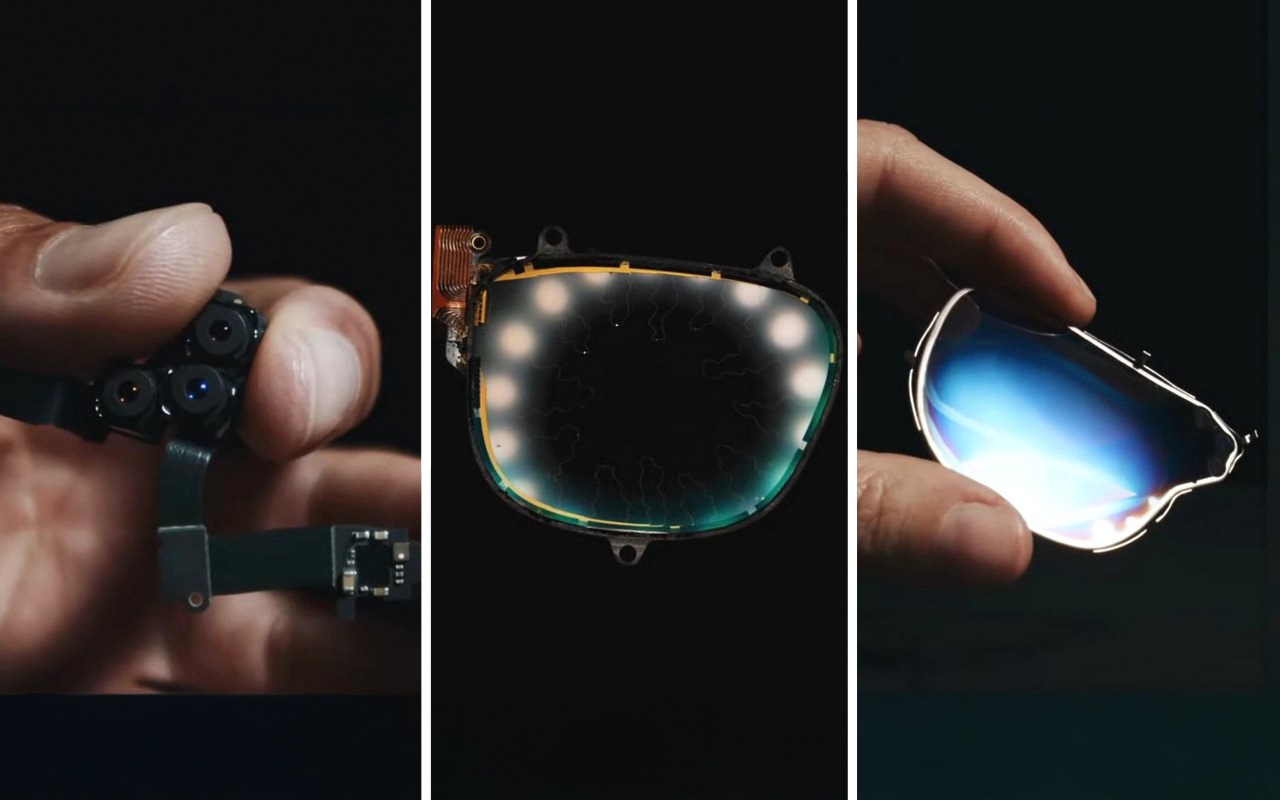
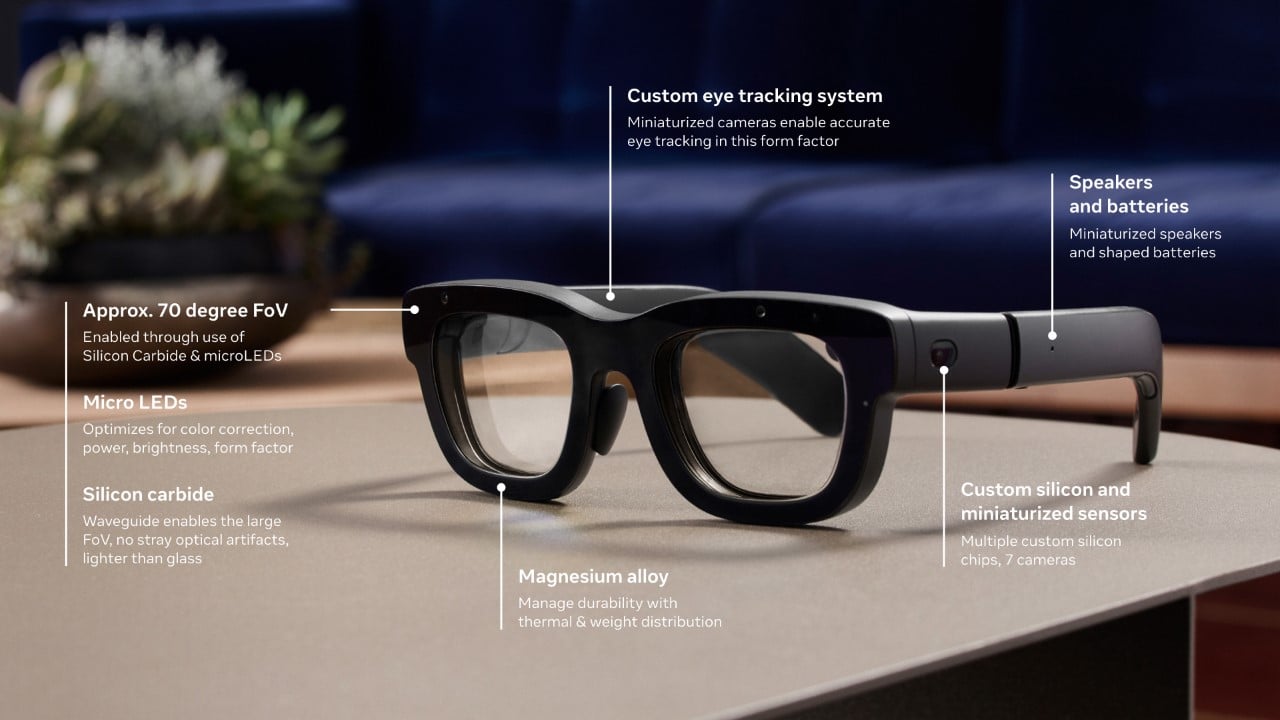
Orion is not a bulky headset—it’s a sleek, spectacle-like device that weighs under 100 grams, making it comfortable for extended use. This is an impressive feat considering the amount of technology packed into such a small form factor. While Meta Quest Pro and Apple’s Vision Pro are capable of mixed reality, Orion’s fully transparent, holographic display takes things to a different level. Instead of the passthrough experiences that blend digital elements on top of a live camera feed, Orion projects 3D objects directly into the real world using innovative waveguide technology. The frames are made from magnesium, a super-light metal known for its strength and ability to dissipate heat (something even NASA’s relied on for its space hardware).

The core of this magic is a set of tiny projectors embedded within the arms of the glasses. These projectors beam light into lenses that have nanoscale 3D structures, creating stunningly sharp holographic displays. Zuckerberg emphasized that you could go about your day—whether you’re working in a coffee shop or flying on a plane—while interacting with immersive AR elements like a cinema-sized virtual screen or multiple work monitors.

But it’s not just about visuals. The glasses also facilitate natural social interaction: you can maintain eye contact with others through the transparent lenses, and digital elements seamlessly overlay onto the real world. Need to send a message? Instead of fumbling for your phone, a hologram will appear before your eyes, letting you reply with a quick, subtle gesture. This fluid integration of the digital and physical worlds could set Orion apart from its competitors.

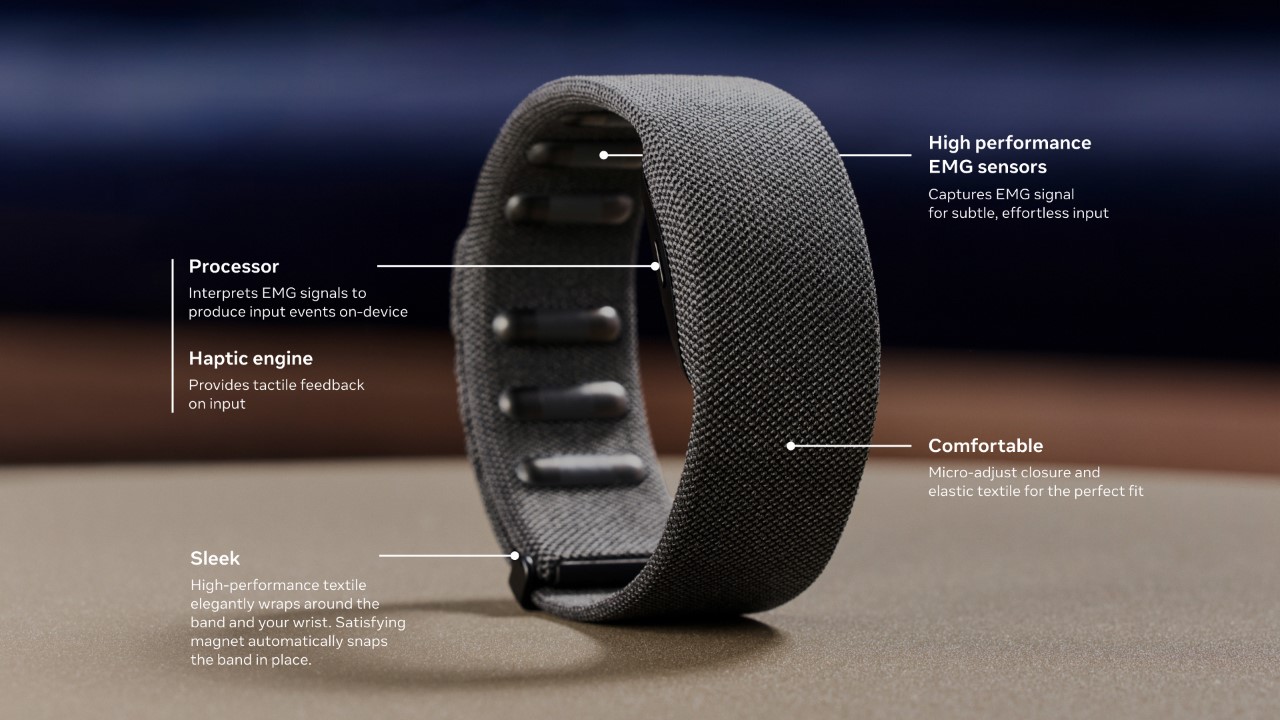
When it comes to control, the Orion glasses offer several interaction modes—voice, hand, and eye tracking—but the star of the show is the neural wristband. In contrast to the Vision Pro, which relies on hand gestures, eye-tracking, and voice commands, Orion takes the next step by reading neural signals from your wrist to control the device. This neural interface allows for discreet control. Imagine being in a meeting or walking down the street—gesturing in mid-air or speaking aloud commands isn’t always convenient. The wristband can pick up subtle electrical signals from your brain and translate them into actions, like tapping your fingers to summon a holographic card game or message a friend. This introduces a new level of human-computer interaction, far more intimate and nuanced than what’s currently available on the market.

While Apple’s Vision Pro and Meta’s previous Quest Pro have been praised for their intuitive interaction systems, Orion’s neural control represents a massive leap forward. It reduces the friction of interacting with digital elements by cutting down on the physical and vocal gestures required, creating a more seamless experience.

One of the key differentiators for Orion is its display technology. Unlike the Vision Pro or Meta Quest Pro, which rely on cameras to pass a live feed of the outside world onto a screen, Orion offers true augmented reality. The glasses project digital holograms directly into your field of view, blending with your surroundings. This isn’t just a camera feed of your environment with digital elements superimposed—it’s real-world AR with transparent lenses that you can see through as you would normal glasses. The holograms are bright enough to stand out even in varied lighting conditions and sharp enough to allow users to perceive fine details in their digital overlays.

Zuckerberg illustrated this with examples: receiving a message as a floating hologram or “teleporting” a distant friend’s avatar into your living room. The display architecture is entirely new, made possible by custom silicon chips and sensors integrated into the glasses, offering a level of immersion that’s more subtle yet more profound than the pass-through systems we’ve seen so far. In a private demo, he even played a metaverse version of Pong with key industry experts like Nvidia CEO Jensen Huang, and investors like Gary Vaynerchuck and Daymond John of Shark Tank.

For all its innovation, Orion is still in the development phase. Zuckerberg was candid that Orion is not yet ready for consumers. Instead, it will serve as a development kit for Meta’s internal teams and a select group of external partners. This will help refine both the hardware and software, as well as grow the ecosystem of apps and experiences that will make Orion valuable when it eventually hits the consumer market. There’s also the matter of affordability—Zuckerberg mentioned the team is working to improve manufacturing processes to bring the cost down. As it stands, this isn’t a device you’ll see in stores next week, but it’s a crucial step in realizing Meta’s vision for the future of AR.

The potential for Orion is vast. Zuckerberg envisions it as the next major computing platform, capable of reshaping how we work, play, and interact with others. By leveraging the power of true augmented reality with a groundbreaking neural interface, Orion positions itself as more than just a wearable gadget—it’s an entirely new way of interfacing with the digital and physical worlds. For now, it’s an exciting glimpse into what the future might hold. The Orion glasses may not be in your hands today, but their arrival could redefine the entire AR landscape in the years to come.

The post Meta’s futuristic Orion AR Glasses have Holographic Displays and Neural Control. Apple should take notes first appeared on Yanko Design.