You can now restrict Instagram Lives to Close Friends

Instagram is rolling out another way for users to engage with a smaller group of friends and followers starting today. Close Friends on Instagram Live does what it says on the tin: you’ll be able to limit the viewership of livestreams to just your list of Close Friends. Up to three other people will be able to join your more-intimate broadcasts.

This could help users plan trips, collaborate on homework or simply catch up, Instagram suggests. The update will also give influencers an option for hosting livestreams for a private (and perhaps paid-up) audience.

Since November, users have been able to limit the reach of posts and Reels to their Close Friends. According to Instagram, users are looking for ways to connect with friends and followers more privately. The popularity of features like DMs, Close Friends and Notes attests to that.

Speaking of Notes, Instagram has flagged a couple of under-the-radar aspects of that feature that it introduced in recent months. You can now essentially post a video as a note. This will temporarily replace your profile photo. You’ll also see an Easter egg (in other words, confetti animations) when you wish a friend a happy birthday in a note. This will appear when you include the words “happy birthday” or use birthday-related words while @-mentioning a pal.

Last but not least, Instagram has introduced a welcome feed update. You now have the option to add music to carousel posts that include videos. Until now, it was only possible to add music to carousels comprised solely of photos.

Instagram screenshots showing a music track being available on carousel feed posts that include videos.
Instagram

This article originally appeared on Engadget at https://www.engadget.com/you-can-now-restrict-instagram-lives-to-close-friends-150023794.html?src=rss

EU delays decision over scanning encrypted messages for CSAM

European Union officials have delayed talks over proposed legislation that could lead to messaging services having to scan photos and links to detect possible child sexual abuse material (CSAM). Were the proposal to become law, it may require the likes of WhatsApp, Messenger and Signal to scan all images that users upload — which would essentially force them to break encryption.

For the measure to pass, it would need to have the backing of at least 15 of the member states representing at least 65 percent of the bloc's entire population. However, countries including Germany, Austria, Poland, the Netherlands and the Czech Republic were expected to abstain from the vote or oppose the plan due to cybersecurity and privacy concerns, Politico reports. If EU members come to an agreement on a joint position, they'll have to hash out a final version of the law with the European Commission and European Parliament.

The legislation was first proposed in 2022 and it could result in messaging services having to scan all images and links with the aim of detecting CSAM and communications between minors and potential offenders. Under the proposal, users would be informed about the link and image scans in services' terms and conditions. If they refused, they would be blocked from sharing links and images on those platforms. However, as Politico notes, the draft proposal includes an exemption for “accounts used by the State for national security purposes."

EU Council leaders are said to have been trying for six months to break the impasse and move forward negotiations to finalize the law. Belgium's presidency of the Council is set to end on June 30, and it's unclear if the incoming leadership will continue to prioritize the proposal.

Patrick Breyer, a digital rights activist who was a member of the previous European Parliament before this month's elections, has argued that proponents of the so-called "chat control" plan aimed to take advantage of a power vacuum before the next parliament is constituted. Breyer says that the delay of the vote, prompted in part by campaigners, "should be celebrated," but warned that "surveillance extremists among the EU governments" could again attempt to advance chat control in the coming days.

Other critics and privacy advocates have slammed the proposal. Signal president Meredith Whittaker said in a statement that "mass scanning of private communications fundamentally undermines encryption," while Edward Snowden described it as a "terrifying mass surveillance measure."

Advocates, on the other hand, have suggested that breaking encryption would be acceptable in order to tackle CSAM. "The Commission proposed the method or the rule that even encrypted messaging can be broken for the sake of better protecting children," Vice President of the European Commission for Values and Transparency Věra Jourová said on Thursday, per EuroNews.

The EU is not the only entity to attempt such a move. In 2021, Apple revealed a plan to scan iCloud Photos for known CSAM. However, it scrapped that controversial effort following criticism from the likes of customers, advocacy groups and researchers.

This article originally appeared on Engadget at https://www.engadget.com/eu-delays-decision-over-scanning-encrypted-messages-for-csam-142208548.html?src=rss

realme GT 6 Review: Is This the True Flagship Killer of 2024?

PROS:


  • Distinctive and appealing two-tone design

  • Great daytime and nighttime photos

  • Bright and vibrant screen

  • Massive 5,500mAh battery

CONS:


  • No wireless charging support

  • Metal mirror finish is a fingerprint and dust magnet

RATINGS:

AESTHETICS
ERGONOMICS
PERFORMANCE
SUSTAINABILITY / REPAIRABILITY
VALUE FOR MONEY

EDITOR'S QUOTE:

The realme GT 6 challenges the status quo with a solid set of features, an elegant design, and a highly attractive price tag.

realme unveiled its latest GT series smartphone, the realme GT 6, at a global product launch event in Milan today. After a two-year hiatus from the global market, the company is poised to make a significant impact with its latest flagship. The recent appearance of realme’s founder and CEO, Sky Li, on the cover of Forbes magazine underscores the company’s intention to assert its presence more forcefully than ever. Earlier this year, realme announced a rebranding initiative, reaffirming its commitment to delivering value-packed devices for the youth. With the realme GT 6, the brand makes a bold claim, positioning it as the only “flagship killer” of 2024. It’s definitely packed with features, but is it truly deserving of the flagship killer title? We put it to the test to find out.

Designer: realme
Aesthetics

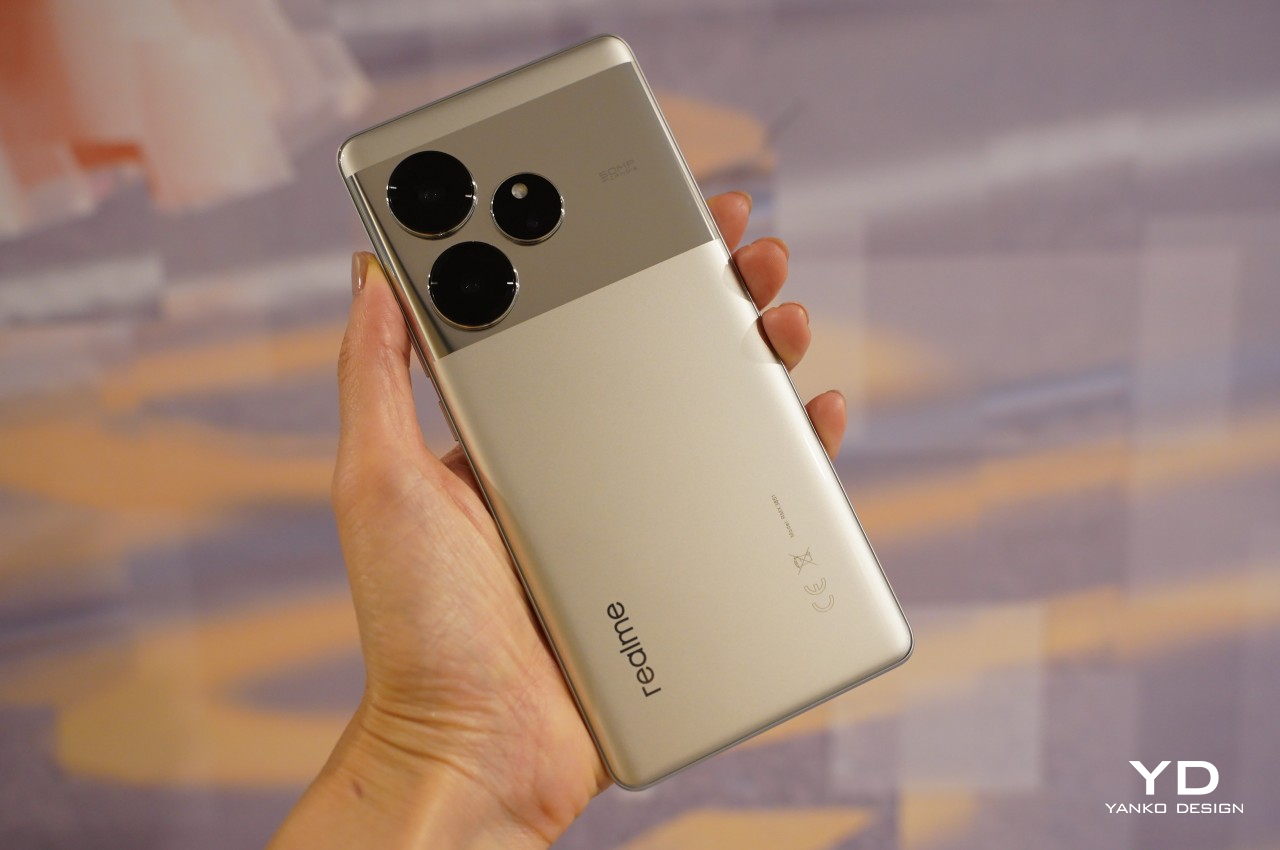
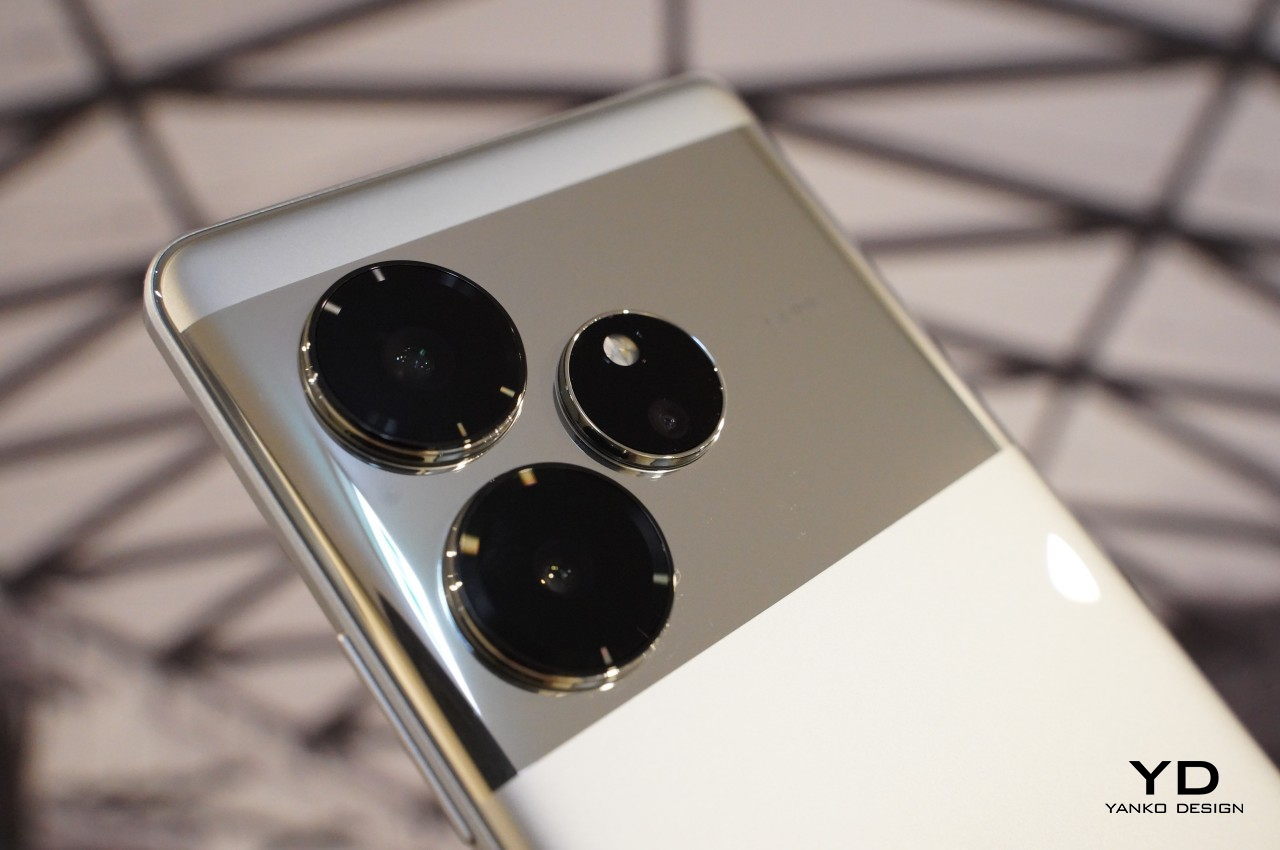
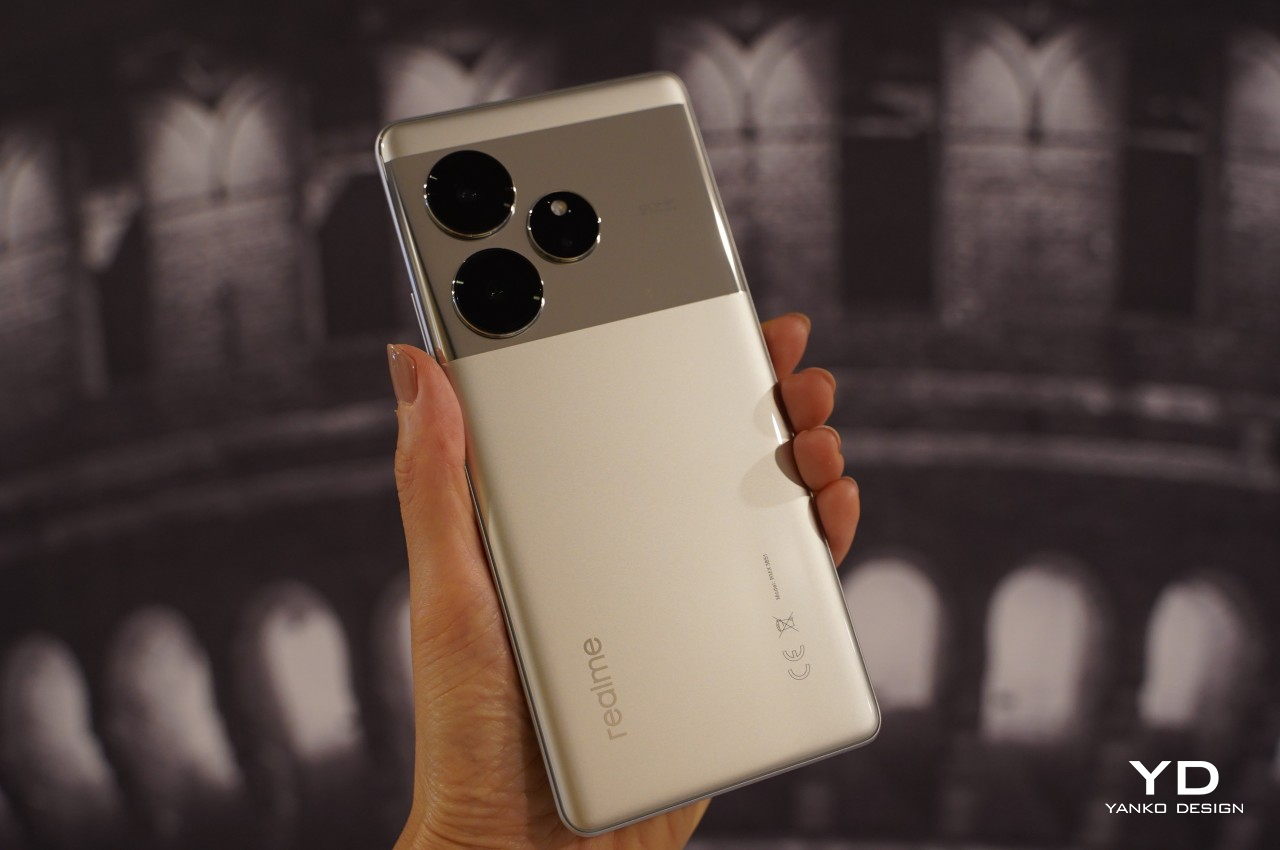
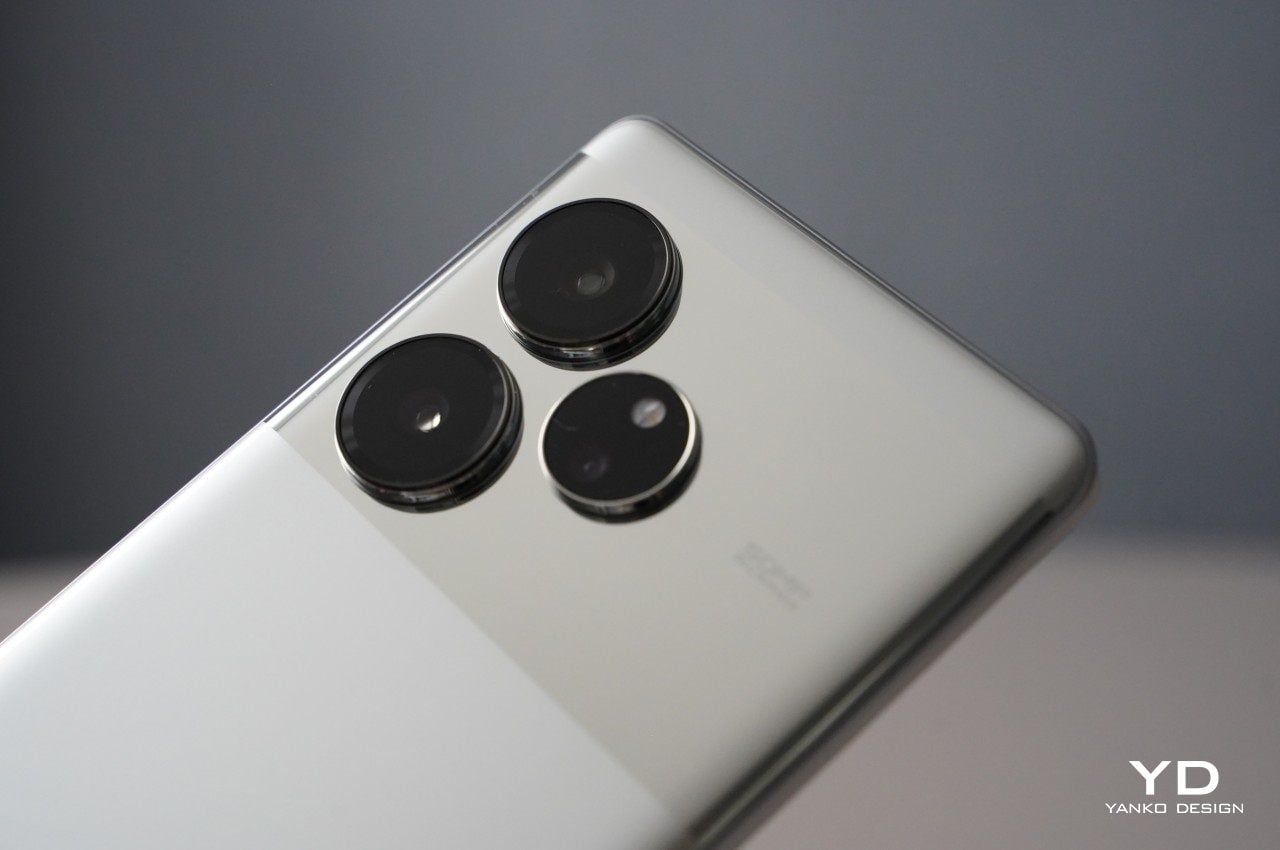
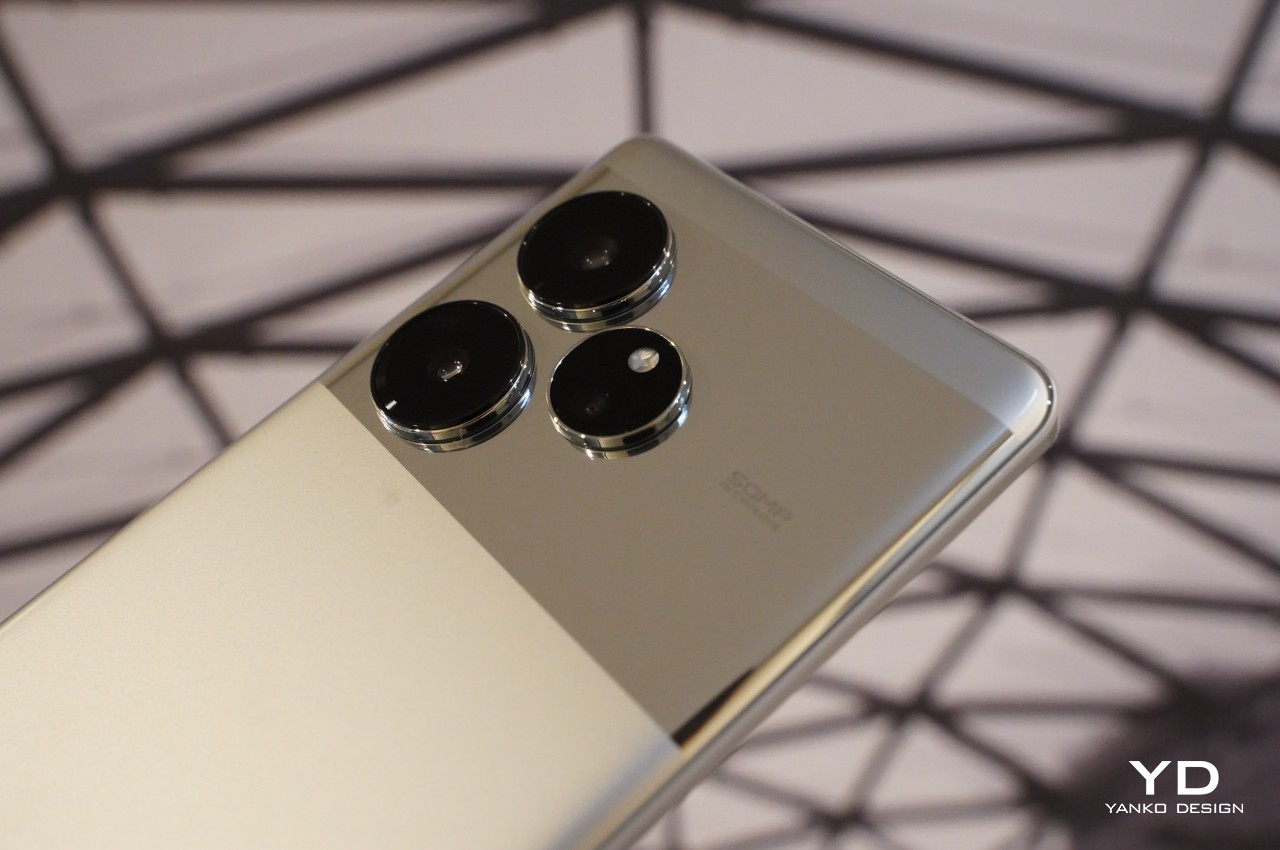
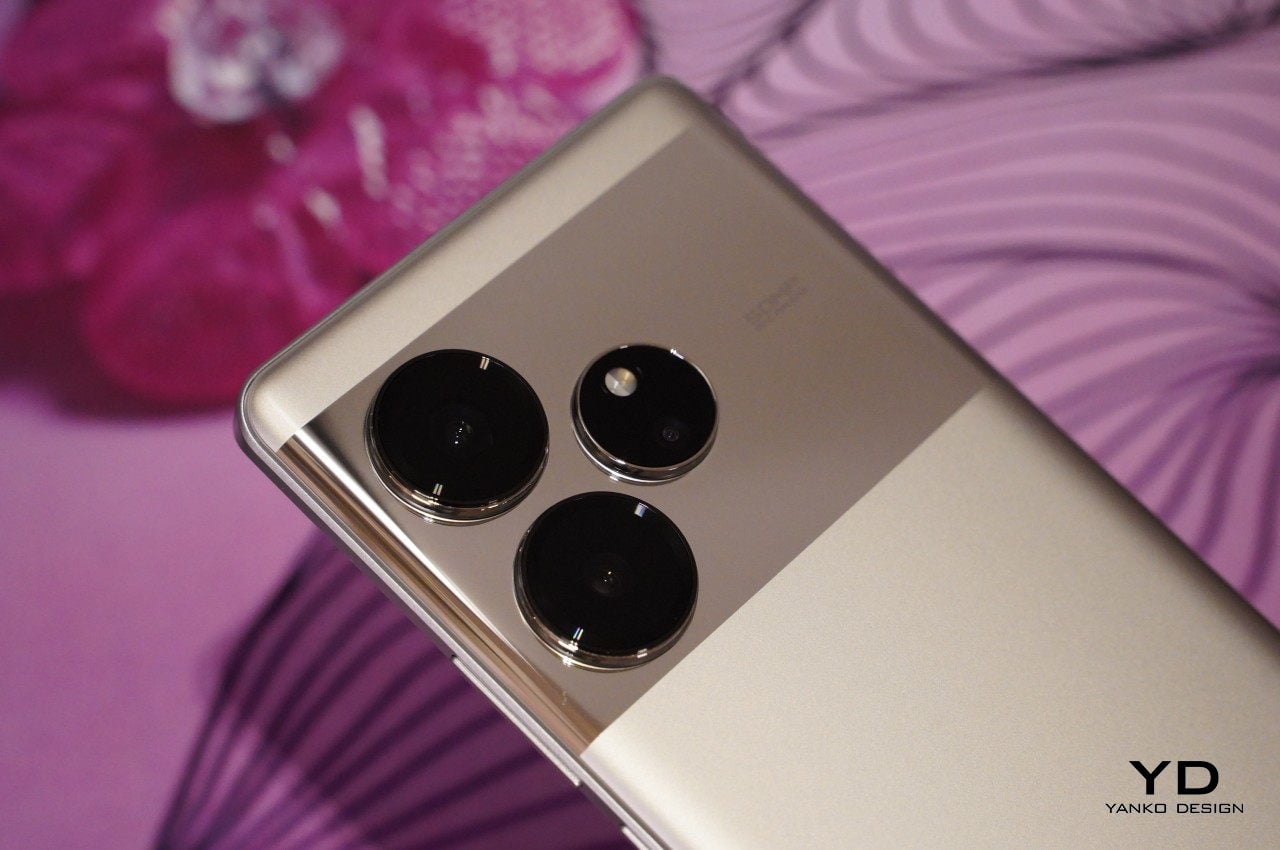
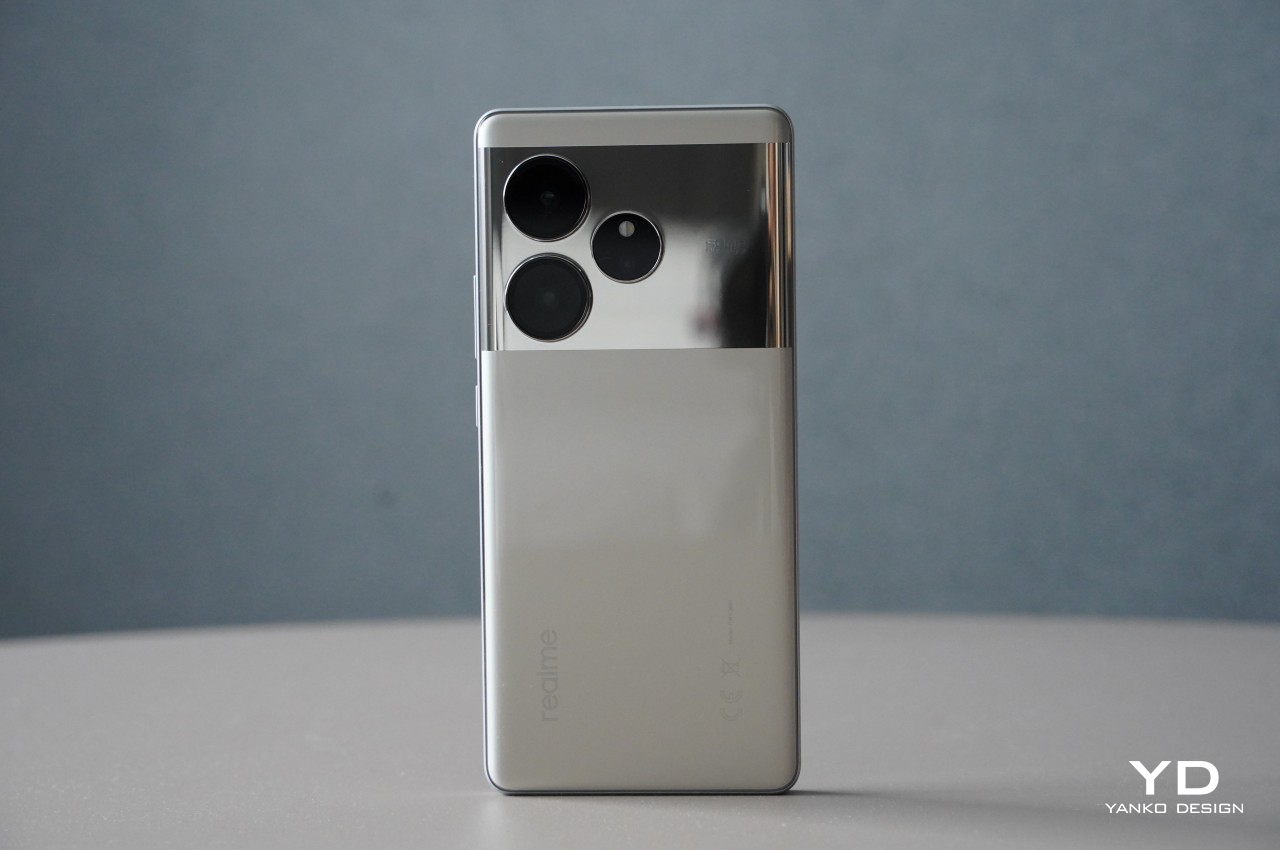
The realme GT 6 is a device that commands attention. Instantly captivating, your eyes are drawn to the gleaming shiny mirror texture which fills out the upper third of the back panel, where the camera modules reside. According to realme, this texture is achieved using the industry’s first nano-level mirror coating technology which requires over 30 fine processes. Contrasting with this reflective texture, the lower two-thirds of the back panel features a matte metal texture.
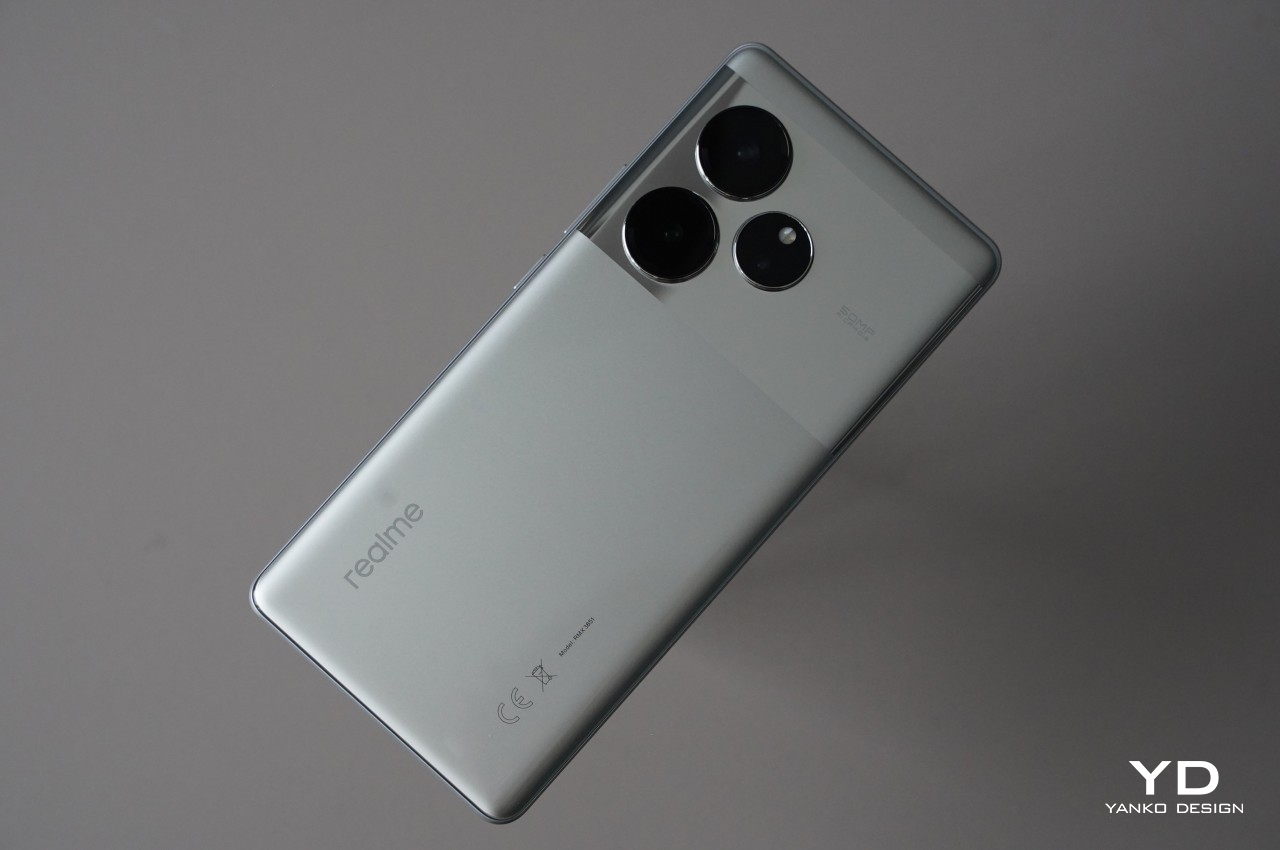
The realme GT 6 is available in Fluid Silver or Razor Green, with our review unit coming in the former finish. The mirror texture first appeared to be a brilliant idea for taking selfies. However, the off-center positioning of the camera module and the limited size of the mirrored area compromise practicality. Another drawback of the material is that it attracts fingerprints and dust, detracting somewhat from its otherwise sleek appearance. Putting the complimentary case that comes in a box does not help as it does not cover the portion with the mirror finish. It’s still useful to quickly check oneself before snapping photos, though. Overall, the realme GT 6 is a phone that offers a unique and clean design, distinctive but not loud.
Ergonomics

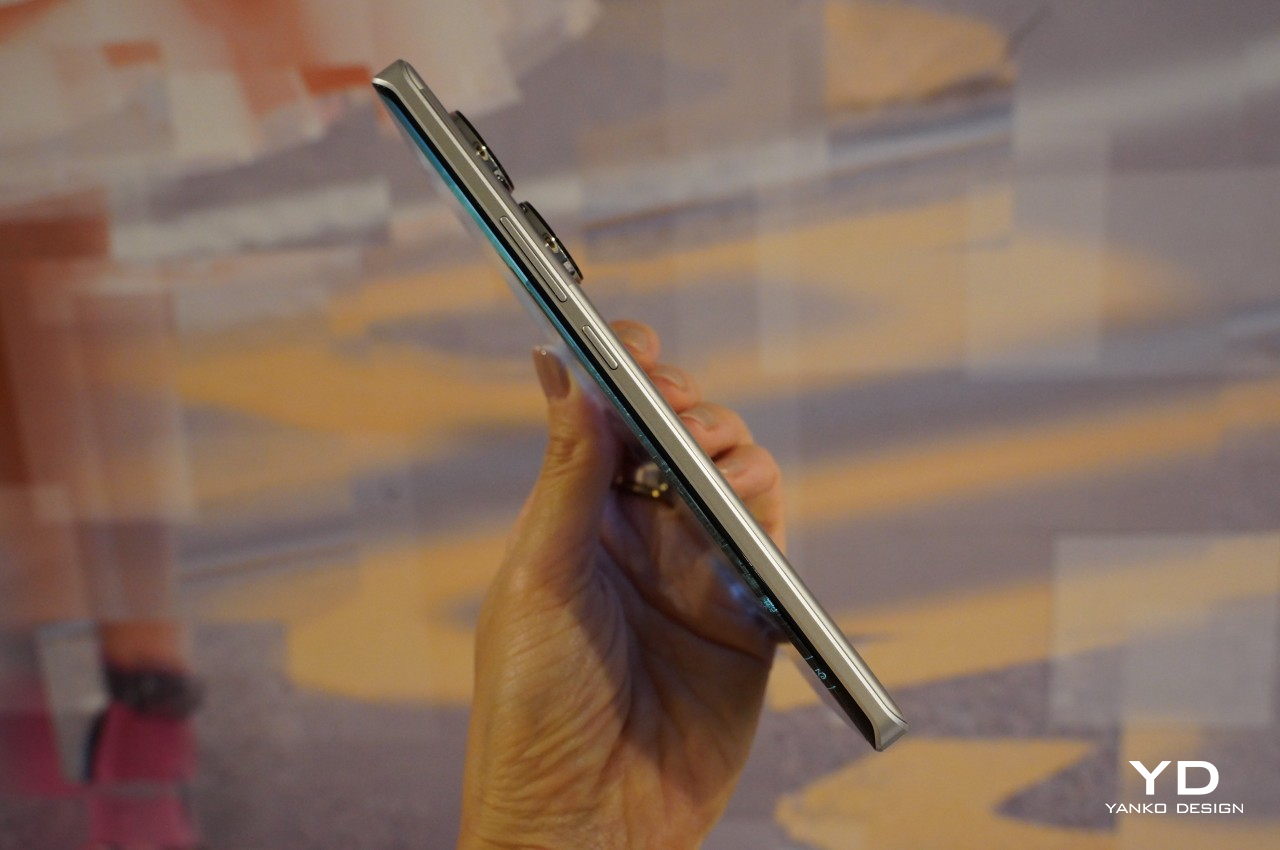
The dimensions of the phone measure 162mm x 75mm x 8.6mm, with a weight of under 200g, just 199g, to be precise. The phone feels pleasantly lightweight and is easy to handle with one hand. The display features subtle curves on the side edges, complemented by a slightly tapered back panel. A curved side frame usually enhances grip without causing the edges to dig into the palm, but despite its absence here, holding the phone feels secure and comfortable.
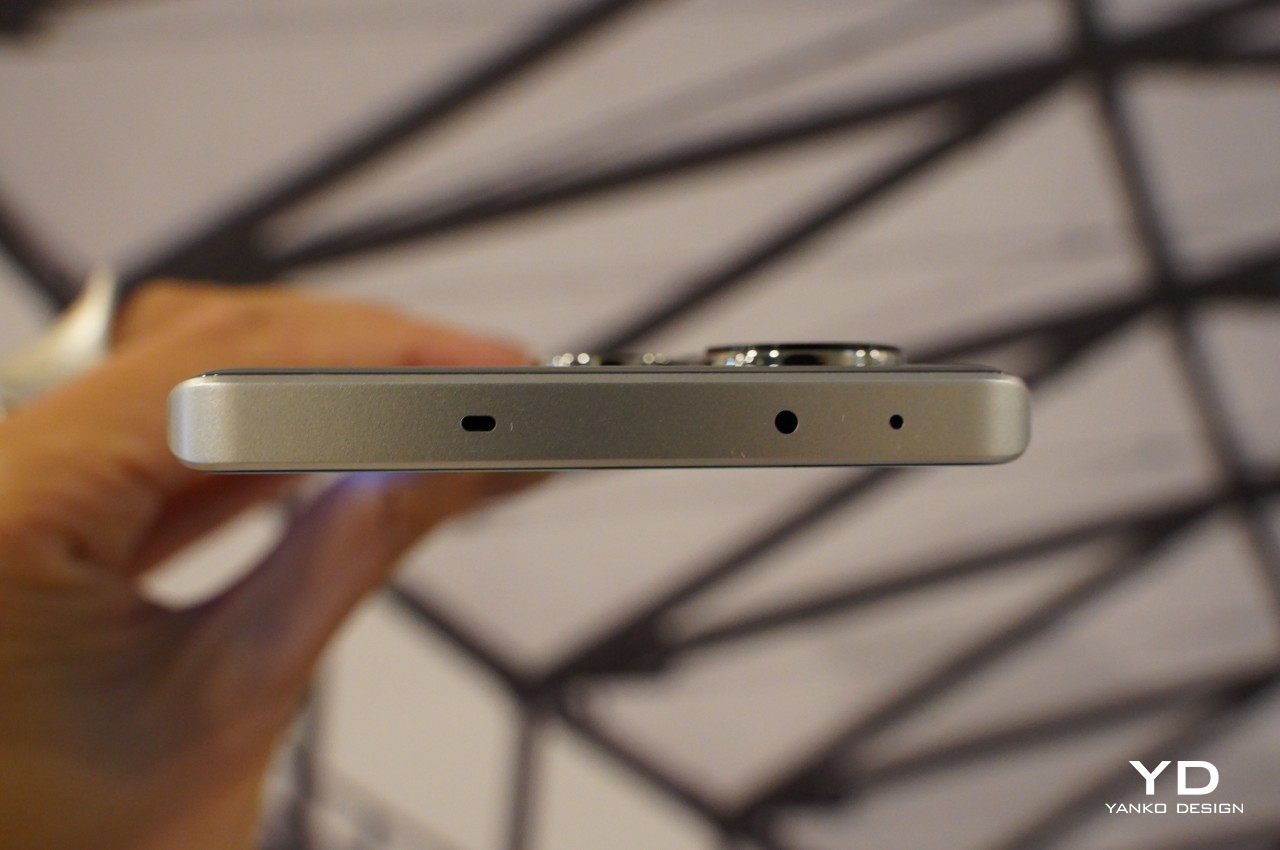
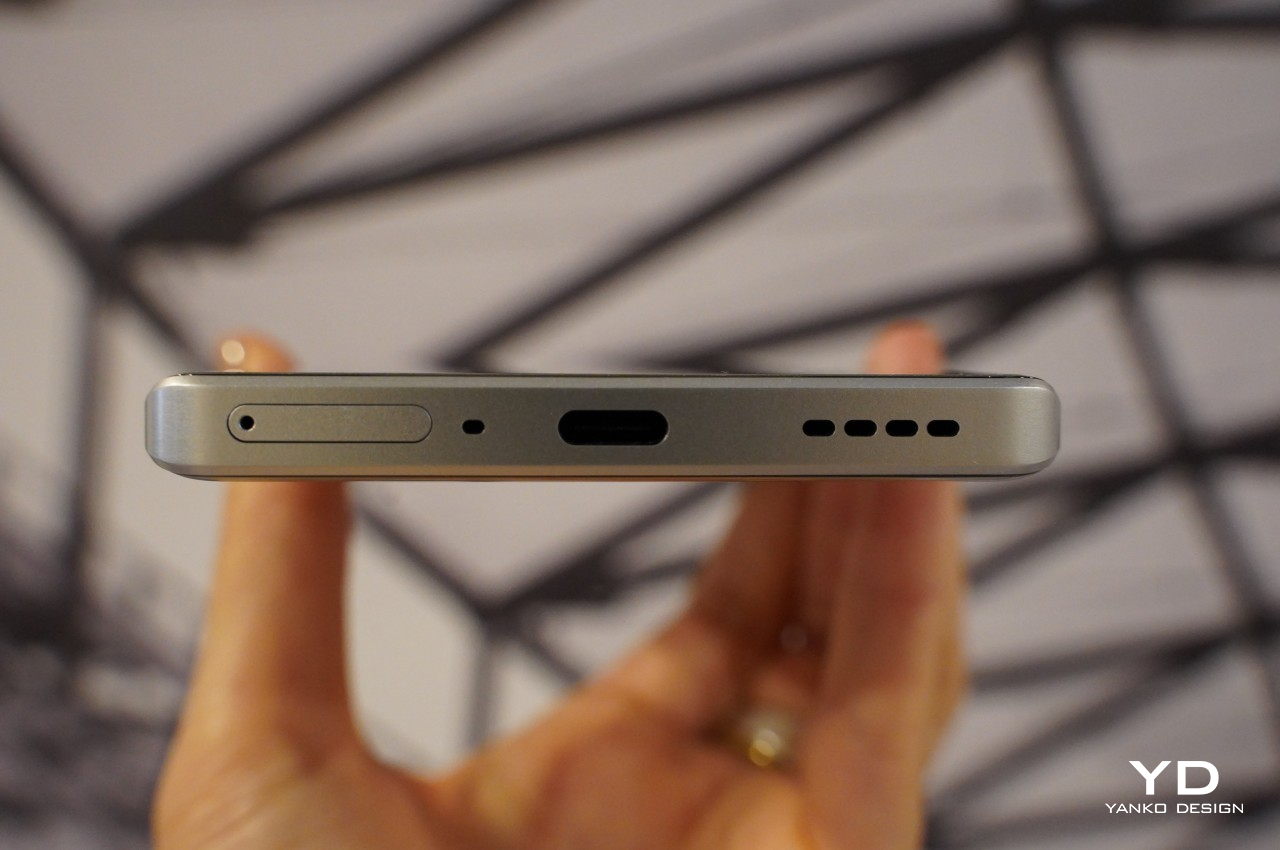
On the right side of the phone are the volume locker and the power button, leaving nothing on the left side of the device. The IR blaster and stereo speaker are located on the top while the dual-nano SIM card slot, second stereo speaker, and USB port are located on the bottom.

The camera modules are not horizontally symmetrical, causing the phone to wobble slightly when placed on its back, though this issue is easily resolved by using a case. On the front, there is a centrally positioned cutout on the display for the front-facing camera, while the in-display fingerprint scanner is located near the bottom. The three camera lenses are positioned on the top left side of the device, arranged in a triangular pattern. The realme brand name embellishes the lower left corner of the back panel, which will often be covered by your hand and, therefore, almsot always out of sight. In summary, the realme GT 6 exudes a premium and sturdy feel that inspires confidence whenever you use it.

Performance

The realme GT 6 sports a triple camera setup. The 50MP main camera uses Sony LYT808, a 1/1.4” sensor with OIS, topped with a f/1.68 aperture lens. Accompanying it is a 50 MP telephoto camera with a 1/2.8” sensor and an f/2.0 aperture, together with an 8MP ultra-wide-angle camera that utilizes a 1/4” Sony IMX355 sensor.
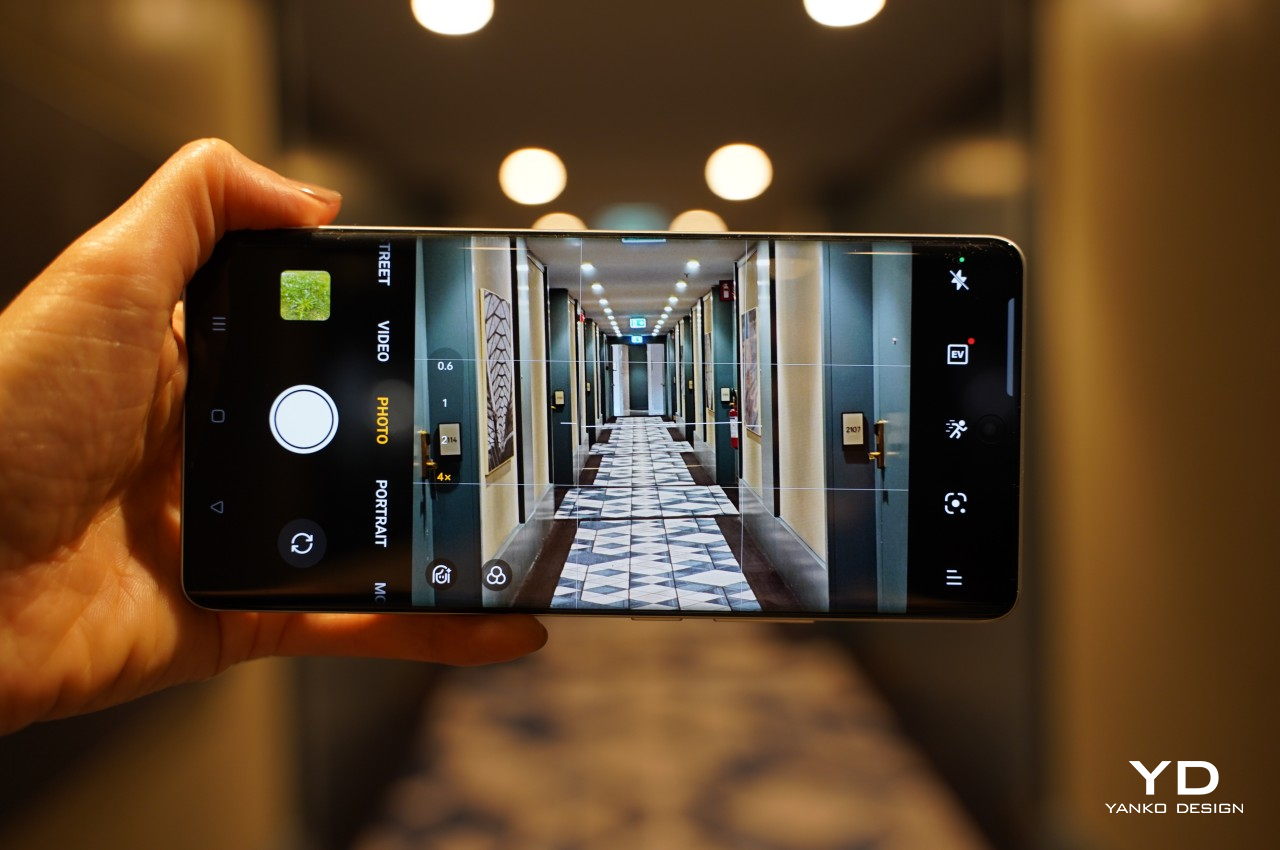
What all these specs mean in practice is that the realme GT 6 captures great photos in daylight. Images exhibit a good dynamic range, natural colors, and rich details. It also performs admirably in low-light conditions, producing well-balanced exposures, with plenty of details preserved and minimal noise.


Photos taken with the telephoto lens, while slightly less impressive, still offer very good quality. The ultrawide-angle camera delivers solid images as well, surprisingly despite its very modest sensor. realme has done an excellent job in harmonizing the rendering and post-processing across all three cameras, ensuring a consistent look and feel in the outputs. Activating night mode across all three cameras does not significantly alter the quality of the photos. In addition, the 32MP front-facing camera captures pleasant selfies with natural colors.


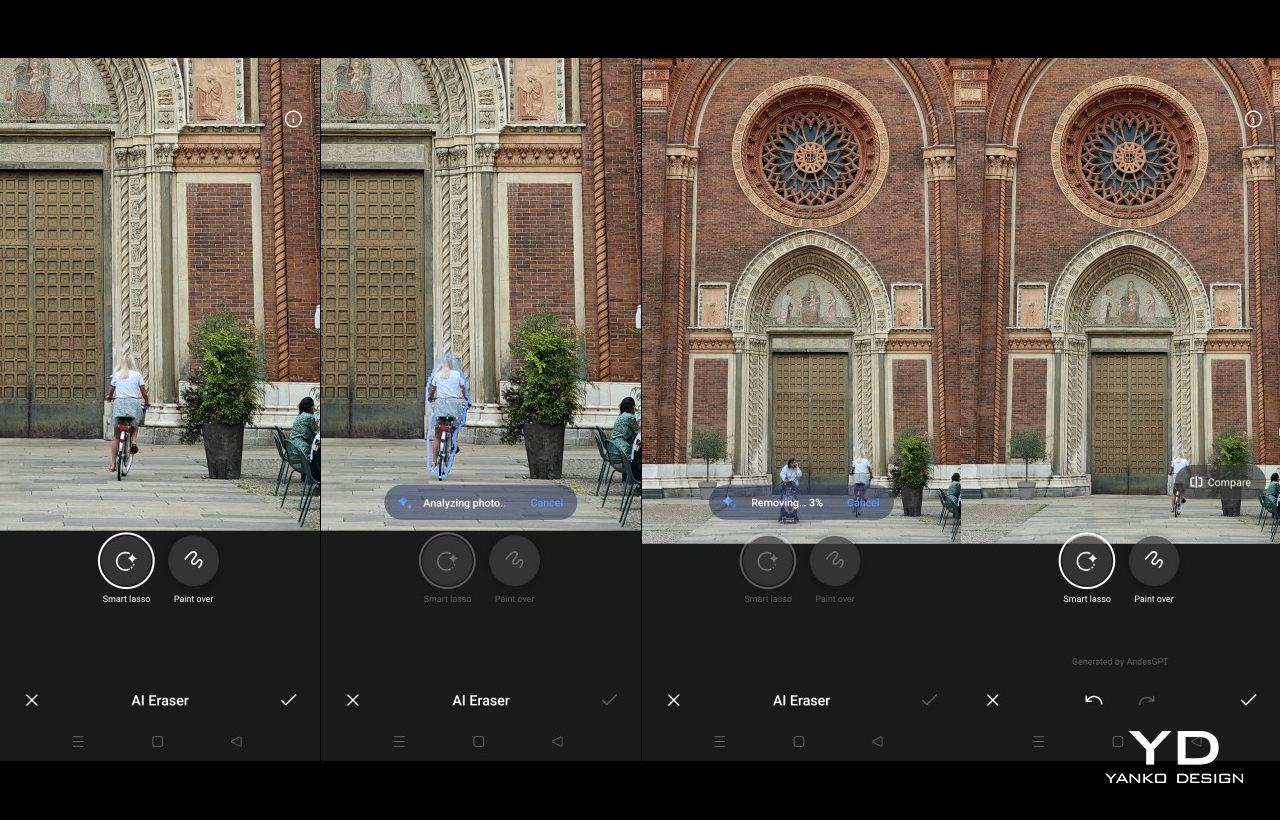
The realme GT 6 is equipped with AI Smart Removal, which relies on AndesGPT, a generative AI model developed by OPPO. There are two AI Smart Removal tools: Smart Lasso and Paint Over. With Smart Lasso, you circle around the unwanted objects in the photo to be removed. On the other hand, the Paint Over feature replaces the selected object in the photo with another object. With Pain Over, you can adjust the brush size. Both features require an internet connection. Removing unwanted objects with Smart Lasso is fast and results are impressive in most cases, whether in bright daytime photos or poorly lit nighttime photos.

oplus_262144

Oplus_262144

Moving on to the video, the main and telephoto cameras can capture videos up to 4K at 60fps while the ultra-wide-angle camera is limited up to 1080p at 30fps. The front-facing camera let you record video up to 4K at 30fps. Only the 8MP ultra-wide shooter isn’t able to support 4K video recording, which is pretty disappointing for a phone that bills itself as a “flagship killer.” The videos captured with main and telephoto cameras are great offering a good level of sharpness and dynamic range, even in low-light footage. Although the ultrawide camera’s footage may display some noise, it still offers good color saturation. The Ultra Steady mode is exclusive to the main camera, providing excellent stabilization for both daytime and nighttime video recording.


When recording video in a dark environment under 6 lux, the night mode icon appears. Tapping it activates AI Night Vision, significantly enhancing video quality in poorly lit conditions. This footage captured is basically cranked up ISO and applies heavy smoothing, allowing you to capture somewhat usable footage even in near-total darkness. The difference is quite noticeable, making previously unwatchable videos much clearer.


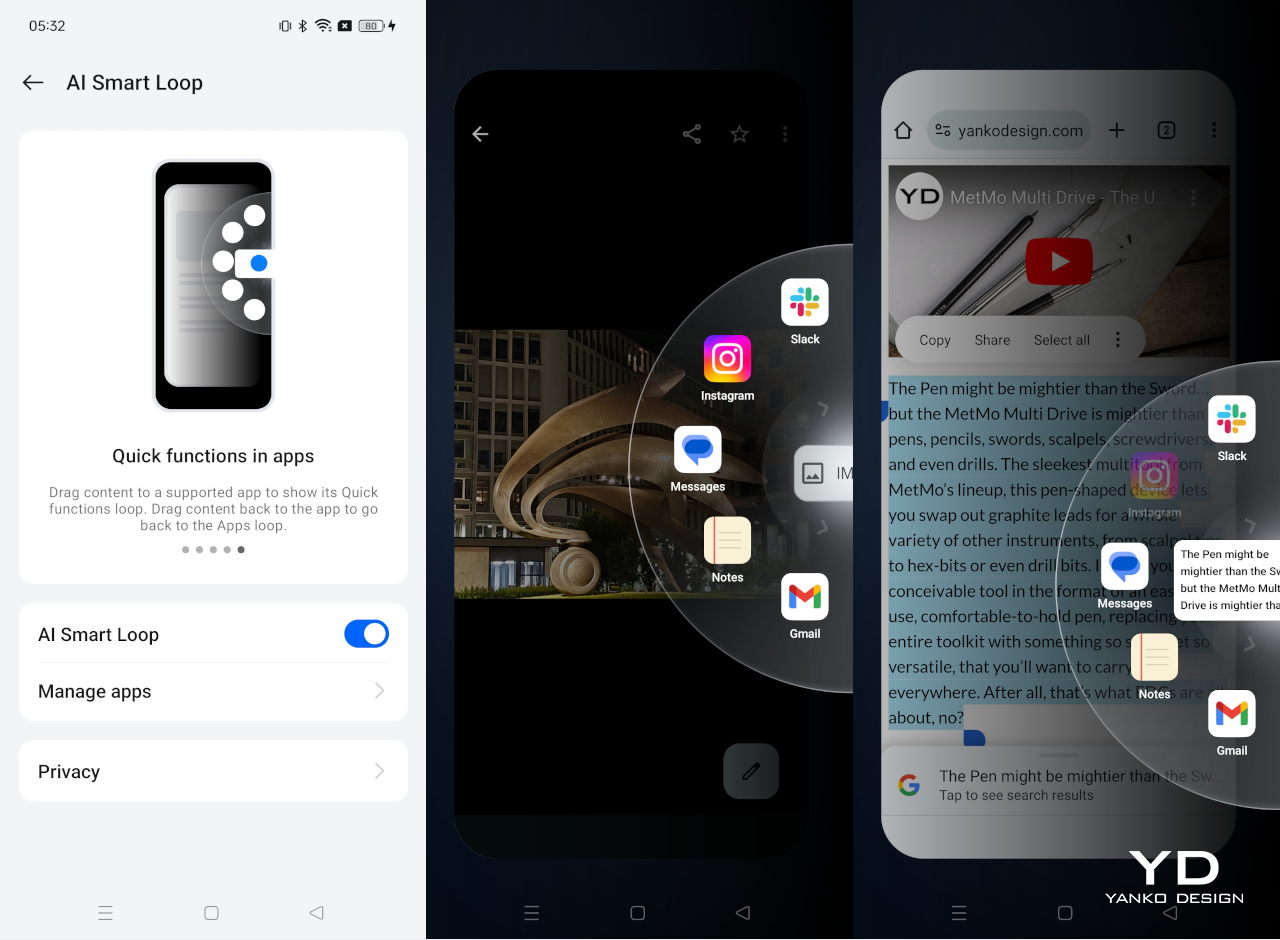
Running Android 14 out of the box with a layer of realme UI 5.0, the realme GT 6’s AI features extend beyond image capturing and editing. For instance, AI Smart Loop provides an efficient and quick way to share content with third-party apps. You can select text, photos, or screenshots, then long-press and drag them to the right side of the screen. This action activates the space wheel, which displays a selection of pre-selected third-party apps or AI-suggested apps in a wheel format. You simply drop the selected content onto the desired app to share it.
Underneath the hood, the phone is powered by a Snapdragon 8s Gen3. It’s a less powerful version of Snapdragon 8 Gen3, yet it’s still one of the Snapdragons’s flagship SoC. The device sports 512GB of storage and 16GB of LDPDDR5X RAM which can be expanded by an additional 4GB. With this much power, it’s no surprise that the realme GT 6 offers great performance and smooth operation.

GT 6 features a 6.78-inch AMOLED display with 2,780 x 1,264 resolution and 10-bit color depth. The display can reach a whooping peak brightness of 6,000 nits. realme also provides a more practical number; the display can reach 1,600 nits with High Brightness Mode. The display is amply bright even outdoors under the sunlight and colors are vibrant.

The display supports a 120Hz refresh rate with 8T LTPO which helps save power by dynamically adjusting the refresh rate ranging from 1Hz to 120Hz according to the content displayed. The phone also incorporates numerous eye protection features. For example, AI Eye Comfort detects eye fatigue, such as blinking and yawning frequency, and adjusts the screen color temperature to alleviate strain.

The device is equipped with a massive 5,500 mAh battery, ensuring you can easily go a day without needing to recharge. When you do need to charge, the 120W SUPERVOOC technology allows for rapid charging. Unfortunately, it does not support wireless charging, a feature that is becoming more common even on mid-range smartphones, much less flagship models.

Sustainability

realme is a company with strong sustainability initiatives. For instance, the company has committed to reducing the carbon emissions of its GT series by 30% and achieving “Double Zero” emissions by 2025. Unfortunately, when it comes to the GT 6 specifically, there is no apparent mention of sustainability efforts.

The phone feels solid in build quality, and the display is protected by Corning Gorilla Glass Victus 2, ensuring durability. It has an IP56 rating, which ensures that it’s protected against most common accidents, though you should naturally still exercise caution. Additionally, there was no information available regarding support for security updates at the time of this review. realme promises 4 years of Android updates and 4 years of security patches, which should last you quite a bit during the lifetime of this phone.
Value

The realme GT 6 definitely has a laundry list of buzzword-worthy features, from dual 50MP cameras to, of course, AI. Its specs on paper are no joke, and its actual performance delivers much of its promises as well. Nothing surprising for what is supposed to be a flagship killer, a title that has been thrown around a lot to challenge the giants of the market. Of course, it will take more than killer features to stand up to smartphone Goliaths, and realme has one more trick up its sleeve.

Starting at only 599.99 EUR (roughly $645) for the base 8GB RAM/256GB storage model, all the way up to 799.99 EUR ($860) for the top-of-the-line 16GB/512GB configuration, the realme GT 6 definitely beats other flagships in terms of accessibility. Sure, it’s not perfect and might be missing a few flagship features like wireless charging, but you’re still getting the juicy meat of what makes a flagship a flagship without burning a hole through your wallet. It’s definitely an option worth considering, presuming it’s even available within your vicinity.
Verdict

It’s getting harder to stand out in the smartphone market these days, at least not without some groundbreaking feature or head-turning design. At the same time, however, many brands try too hard to set themselves apart, producing designs that are, to some extent, too distracting and too noisy. Fortunately, the realme GT 6 is not one of those, making it a flagship killer in more ways than one.

Yes, it has quite the repertoire of high-end features, and rarely does it disappoint except in a few small details. It also has a price tag that belies all that power, making the product accessible to more people. Last but not the least, it also goes against the flow and delivers a design that is elegant without being overbearing. The realme GT 6 bucks the trend and appeals to a new generation of the youth that’s getting wiser and more discerning, valuing essential experiences over superficial embellishments.
The post realme GT 6 Review: Is This the True Flagship Killer of 2024? first appeared on Yanko Design.

Maserati MC20 Icona & MC20 Leggend Special Editions Unveiled

Maserati MC20

Maserati, the renowned Italian luxury car manufacturer, has recently unveiled two exceptional special editions of its acclaimed MC20 super sports car: the MC20 Icona and MC20 Leggenda. These limited-edition models have been carefully crafted to commemorate the 20th anniversary of Maserati’s triumphant return to competitive racing with the legendary MC12. The MC20 Icona and MC20 […]

The post Maserati MC20 Icona & MC20 Leggend Special Editions Unveiled appeared first on Geeky Gadgets.

OpenAI’s co-founder and ex-chief scientist Ilya Sutskever starts Safe Superintelligence Inc.

Safe Superintelligence

After recently quitting his job at OpenAI. OpenAI’s co-founder and ex-chief scientist Ilya Sutskever together with Daniel Gross and Daniel Levy have started a new company called Safe Superintelligence Inc. Safe Superintelligence Inc. (SSI) has been specifically created to set a new benchmark in the realm of artificial intelligence (AI). The company is dedicated to […]

The post OpenAI’s co-founder and ex-chief scientist Ilya Sutskever starts Safe Superintelligence Inc. appeared first on Geeky Gadgets.

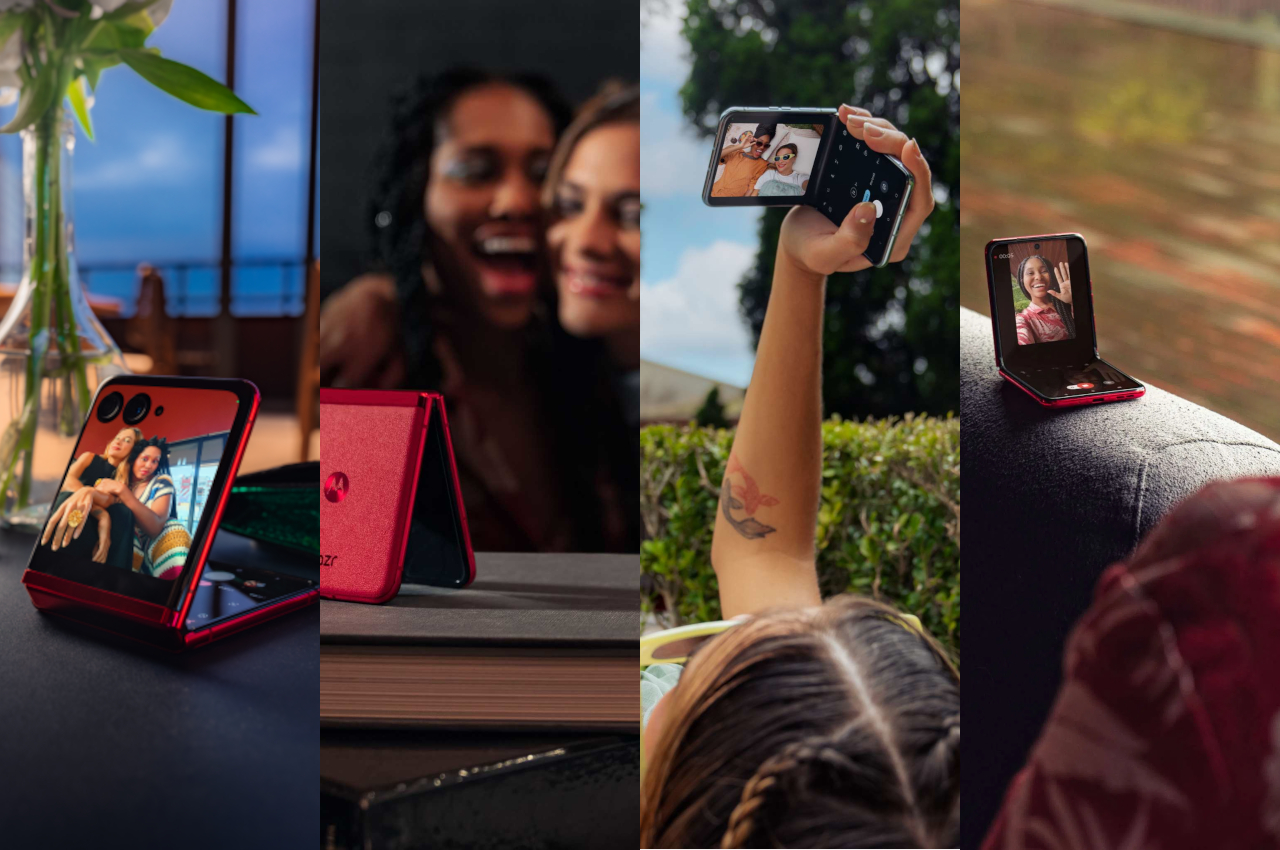
Motorola Razr+ 2024 foldable phone upgrades might be invisible to the naked eye

After a short lull, we are entering the second half of this year’s batch of smartphones, most of which will be focused on foldable designs. While Samsung naturally grabs the spotlight, it’s hardly the only game in town. Motorola will try to beat Samsung to the punch next week when it reveals the latest iteration of the spiritual successor to its iconic RAZR clamshell, a foldable phone that some might even consider to have a better design. It seems, however, that expectations need to be tempered a little, as the 2024 Razr+, or the Razr 50 Ultra in other markets, might not carry any visible mark of being a new model, as the improvements will mostly be internal and invisible, at least based on this latest leak.

Designer: Motorola (va @MysteryLupin)

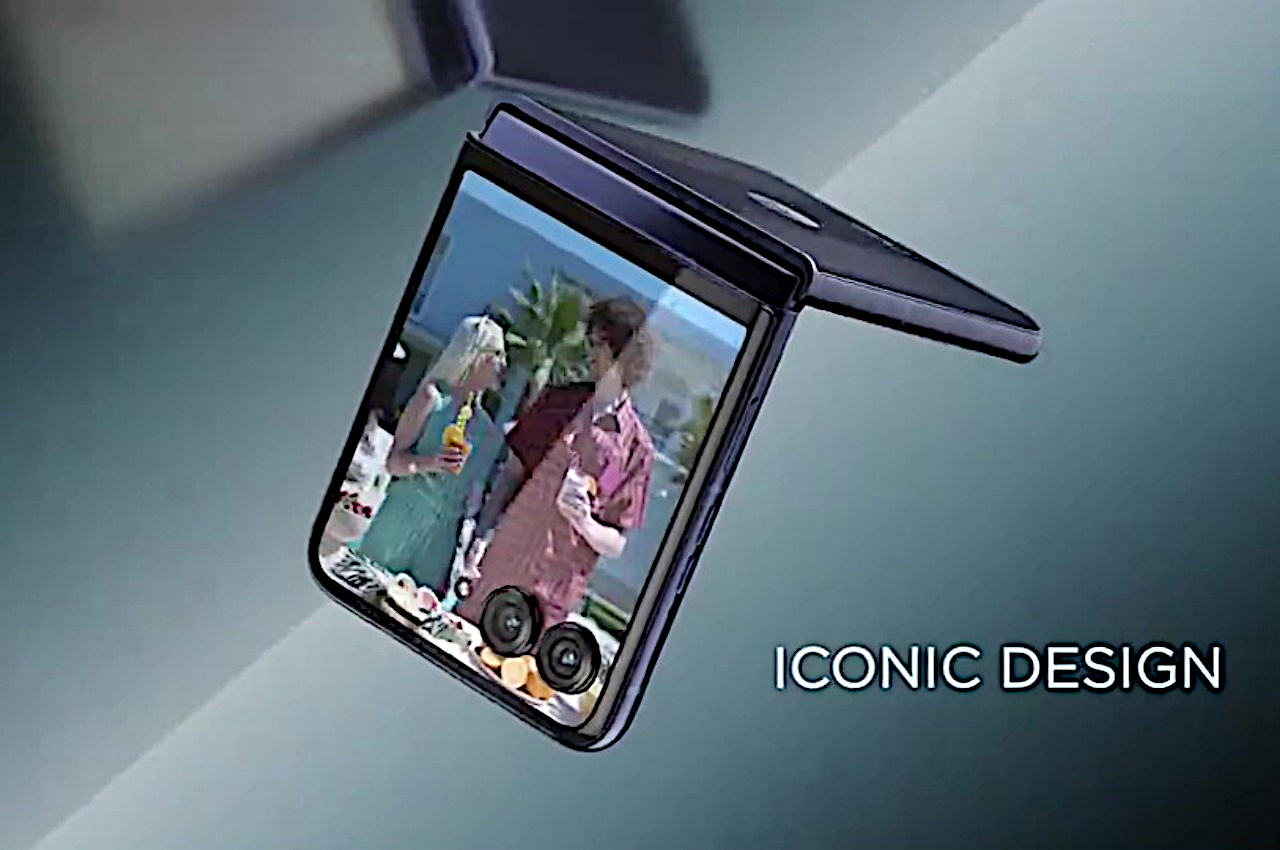
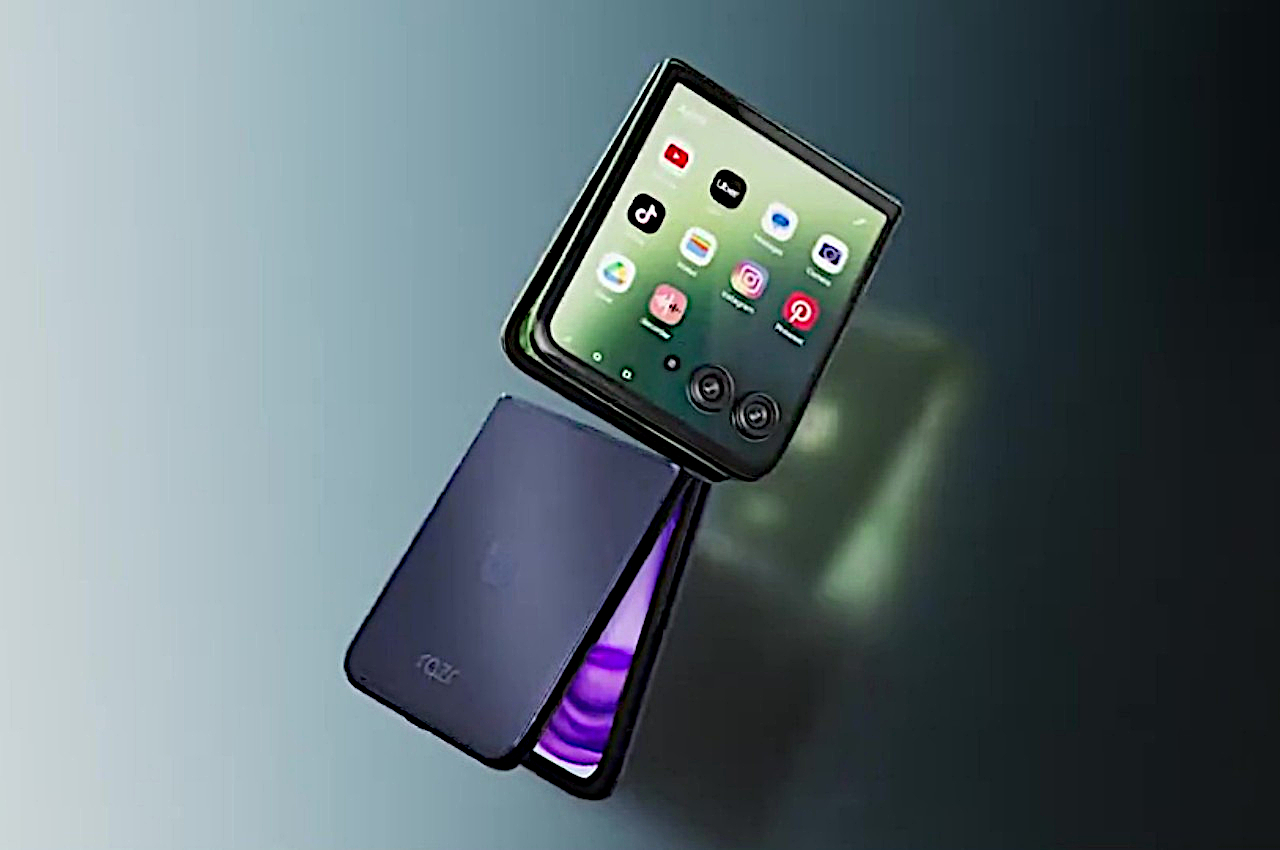
To give credit where credit is due, Motorola has always taken the bolder stance when it came to the design of its clamshell foldable. It was the first to use a large second screen on its back, and it’s now the only one that has a Cover Display that, well, covers the entire surface of the phone’s upper back. There will always be debates on whether having two holes on that screen for the cameras is better or worse than the tab-like cutout on the Galaxy Z Flip, but there’s little argument that it opens the door to more functionality, including displaying the same app on the outside that runs inside.

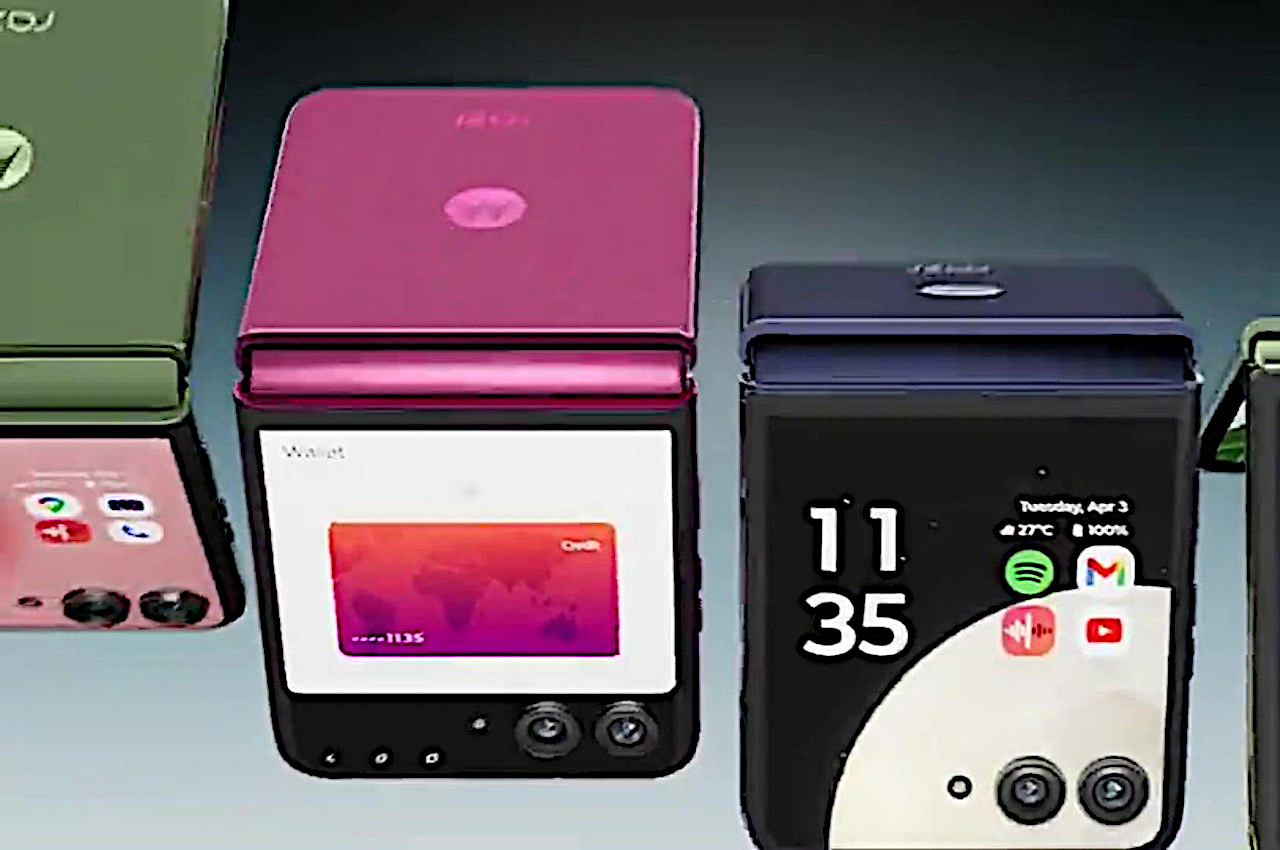
This signature feature of the Motorola Razr+ line isn’t going to change this year apparently, not even to slightly increase the screen size (the base Motorola Razr/Motorola 50, however, is getting the full-screen treatment this year). In fact, you might not be able to distinguish the 2023 and 2024 models just by looking at them. Of course, there will be upgrades, but most of them are the invisible features of the phone, and we’re not talking just about specs.

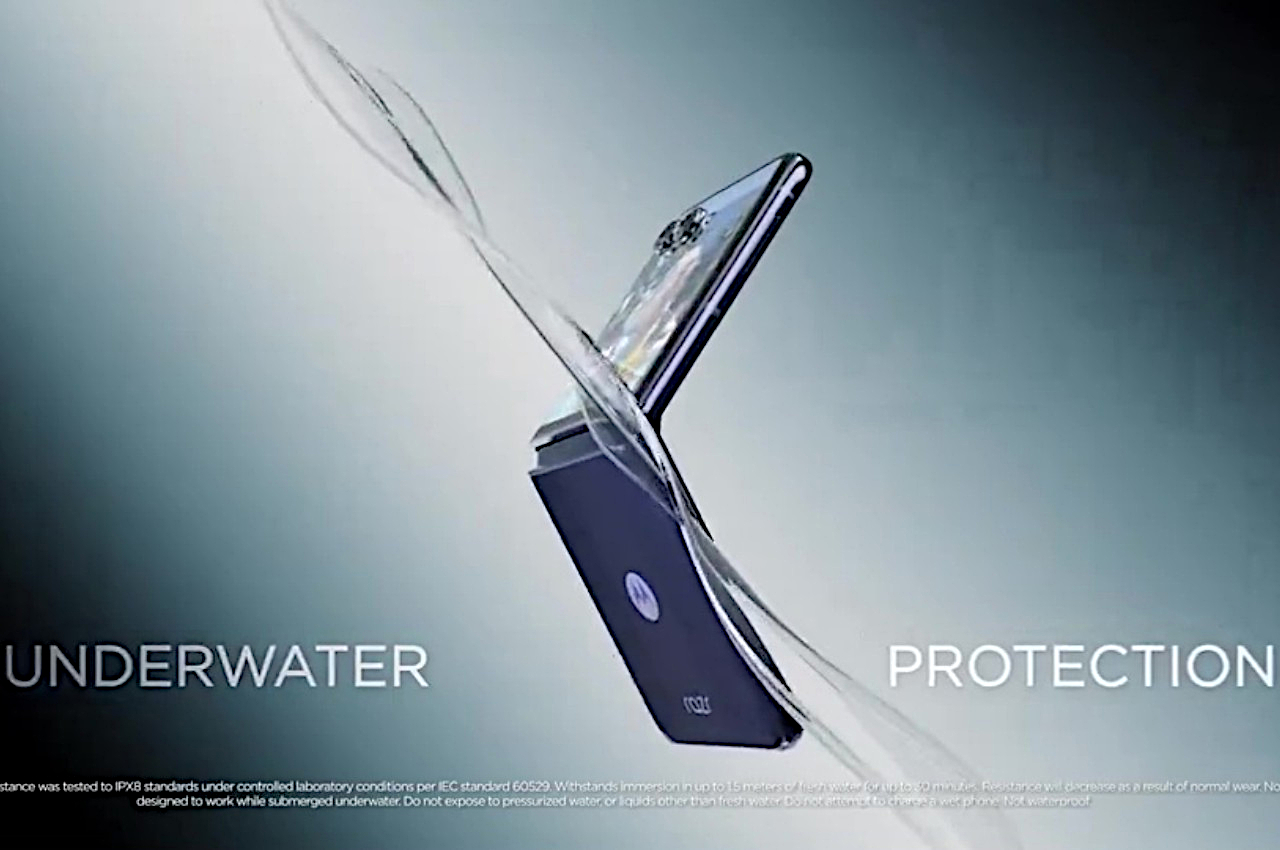
For example, this year’s Motorola foldable will bump up the water protection, though worryingly at the cost of dust protection. According to a leaked promotional video, the Motorola Razr+ (2024) will have an IPX8 rating that’s more in line with what Samsung offers. That means it will survive an accidental dip in a pool or sink, but there’s no guarantee it will be protected from dust or smaller particles. Unfortunately, some might argue that the latter is actually more fatal to foldable phones and their hinges than water damage.

There’s also an indication that one of the cameras will finally have a telephoto lens, but the number of cameras won’t be increasing by one either. That suggests that Motorola will either ditch the regular “wide” camera or the ultra-wide shooter, though the latter is probably more likely. Again, it trades one feature for another, and hopefully, the benefits will far outweigh the sacrifices for Motorola’s customers. The Motorola Razr+ or Razr 50 is expected to debut next week.

The post Motorola Razr+ 2024 foldable phone upgrades might be invisible to the naked eye first appeared on Yanko Design.
Every New Apple Watch Feature Coming in WatchOS 11

WatchOS 11

Apple’s upcoming WatchOS 11 update is set to bring a host of exciting new features and enhancements to the Apple Watch, further improving its functionality, customization options, and overall user experience. This update is compatible with Apple Watch Series 6 and newer models, including the second-generation Apple Watch SE, ensuring that users with these devices […]

The post Every New Apple Watch Feature Coming in WatchOS 11 appeared first on Geeky Gadgets.

Grater Rain one touch electric cheese grater

Grater Rain cheese grater Kickstarter

The Grater Rain, the world’s first one-touch electric cheese grater, is here to make that dream a reality. This innovative device is designed to simplify your cooking process, offering you unparalleled convenience and efficiency. Picture yourself effortlessly grating cheese with a simple press of a button, eliminating the tedious and time-consuming task of manual grating. […]

The post Grater Rain one touch electric cheese grater appeared first on Geeky Gadgets.

Windows Wi-Fi Driver Remote Code Execution Vulnerability explained

Windows Wi-Fi Driver Vulnerability

A severe security flaw, CVE-2024-3078, has been discovered in the Windows Wi-Fi driver. This vulnerability allows remote code execution at the kernel level without needing user interaction or authentication. The exploit requires the attacker to be within Wi-Fi range of the target device. Microsoft has withheld detailed information to prevent widespread exploitation. Updating your system […]

The post Windows Wi-Fi Driver Remote Code Execution Vulnerability explained appeared first on Geeky Gadgets.

Instagram is reportedly recommending sexual Reels to teens as young as 13

Instagram is recommending Reels with sexual content to teenagers as young as 13 even if they aren't specifically looking for racy videos, according to separate tests conducted by The Wall Street Journal and Northeastern University professor Laura Edelson. Both of them created new accounts and set their ages to 13-years-old for the tests, which mostly took place from January until April this year. Apparently, Instagram served moderately racy videos from the beginning, including those of women dancing sensually or those that focus on their bodies. Accounts that watched those videos and skipped other Reels then started getting recommendations for more explicit videos. 

Some of the recommended Reels contained women pantomiming sex acts, others promised to send nudes to users who comment on their accounts. The test users were also reportedly served videos with people flashing their genitalia, and in one instance, the supposed teen user was shown "video after video about anal sex." It took as little as three minutes after the accounts were created to start getting sexual Reels. Within 20 minutes of watching them, their recommended Reels section was dominated by creators producing sexual content. 

To note, The Journal and Edelson conducted the same test for TikTok and Snapchat and found that neither platform recommended sexual videos to the teen accounts they created. The accounts never even saw recommendations for age-inappropriate videos after actively searching for them and following creators that produce them. 

The Journal says that Meta's employees identified similar problems in the past, based on undisclosed documents it saw detailing internal research on harmful experiences on Instagram for young teenagers. Meta's safety staff previously conducted the same test and came up with similar results, the publication reports. Company spokesperson Andy Stone shrugged off the report, however, telling The Journal: "This was an artificial experiment that doesn’t match the reality of how teens use Instagram." He added that the company "established an effort to further reduce the volume of sensitive content teens might see on Instagram, and have meaningfully reduced these numbers in the past few months."

Back in January, Meta introduced significant privacy updates related to teen user protection and automatically placed teen users into its most restrictive control settings, which they can't opt out of. The Journals' tests were conducted after those updates rolled out, and it was even able to replicate the results as recently as June. Meta released the updates shortly after The Journal published the results of a previous experiment, wherein it found that Instagram’s Reels would serve "risqué footage of children as well as overtly sexual adult videos" to test accounts that exclusively followed teen and preteen influencers. 

This article originally appeared on Engadget at https://www.engadget.com/instagram-is-reportedly-recommending-sexual-reels-to-teens-as-young-as-13-121626058.html?src=rss