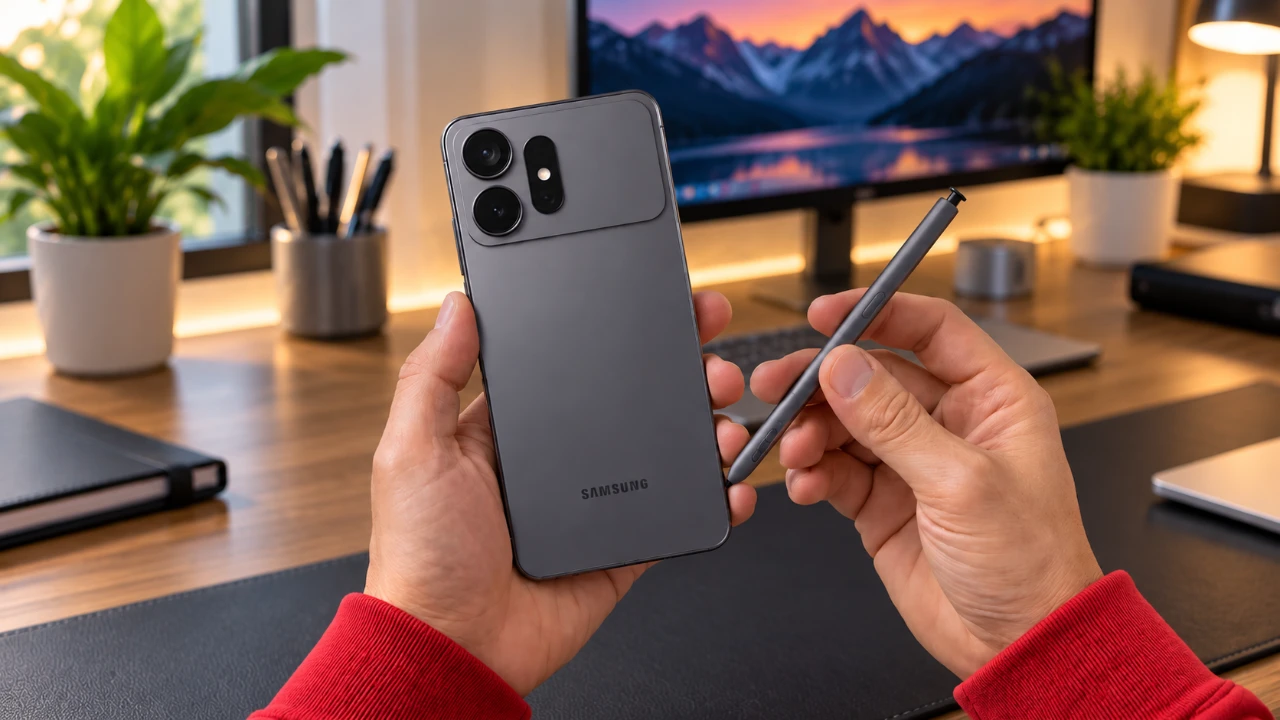
The Samsung Galaxy Z Fold 8 Wide represents a bold step forward in foldable smartphone technology, introducing a wider design that redefines the user experience. By expanding the device’s dimensions, Samsung aims to enhance multitasking and media consumption, but this innovation also raises questions about its practicality. As foldable smartphones continue to evolve, this model […]
Fable 5 has returned for a limited time, offering users a chance to experience one of the most advanced AI models available. Known for its ability to tackle highly complex and chaotic tasks, Fable 5 stands out with features like organizing disorganized data, solving intricate problems and making sure enhanced security for sensitive projects. However, […]
The Samsung Galaxy S27 Pro and Ultra models are generating significant buzz, with early leaks hinting at substantial advancements in smartphone photography. These rumored upgrades suggest a focus on enhancing image quality, improving low-light performance, and creating a more pronounced distinction between standard and premium models. If these reports hold true, the Galaxy S27 lineup […]
A significant data breach involving Apple’s supplier, Tata Electronics, has revealed over 630GB of confidential information about the highly anticipated iPhone 18 Pro. This leak, now circulating on the dark web, provides an unprecedented look into Apple’s next-generation flagship device. From advanced chip technology to innovative design and connectivity features, the leaked documents reveal key […]
iPadOS 27 brings a suite of enhancements aimed at improving performance, multitasking, and overall user experience, further solidifying the iPad’s position as a versatile tool for both casual users and professionals. This update introduces a blend of functional upgrades and interface refinements, making sure the iPad remains intuitive while offering advanced capabilities. Below is a […]
Samsung has postponed the launch of the Galaxy Ring 2 to early 2027, a decision influenced by multiple factors. As reported by TechAvid, the delay is partly due to ongoing legal disputes with Aura, a competing brand and Samsung’s focus on refining the device’s functionality. Specific improvements include enhancing health tracking accuracy and making sure […]
Leaked pricing details for Samsung’s highly anticipated Galaxy Z Fold 8, Z Fold 8 Ultra, Z Flip 8, Watch 9, and Watch Ultra 2 reveal a notable increase in costs compared to previous models. These price hikes are primarily driven by the rising expenses of memory and storage components, reflecting broader trends in the tech […]
The Samsung Galaxy Z Fold 8 Ultra is poised to set a new benchmark for foldable smartphones with its new display enhancements and refined design. With a rumored peak brightness of 3600 nits, this device promises unparalleled outdoor visibility and enhanced HDR performance. While some anticipated features like S Pen support and privacy display technology […]
Pull up the baggage carousel at any major international airport and you will see a parade of soft-shell fabric or hard-shell plastic cases, most of them a muted color palette, most of them indistinguishable from one another, most of them showcasing the abuse of frequent travel (a massive scratch here, ripped fabric there, disintegrated airline stickers, cracked wheels that creak when dragged). That is the baseline the travel industry has accepted for decades. The expectation has been function within limits, not function beyond them.
Titaner’s Voyager arrives as the carry-on that resets that expectation entirely. The 20-inch titanium shell is ribbed with chevron patterning that doubles as structural reinforcement, sealed without a single zipper on its exterior, and coated with a hydrophobic treatment that sends water beading off its surface. Designed for travelers who see their gear as long-term equipment rather than seasonal accessories, it signals a broader shift in what premium carry-ons are supposed to be made of.
The shell physically, visually, practically, and literally sets the Voyager apart from any other travel carry you’ve currently got stowed underneath your bed or in your closet. Made from Grade 1 pure titanium, the kind typically reserved for aerospace applications and medical implants, the Voyager carries the same corrosion resistance and impact tolerance that have made the material legendary in other industries. Titanium does not rust, does not dent easily, and ages with a patina that adds character rather than degradation. The angled chevron texture machined across its surface does three things at once: it creates visual drama, it distributes impact force across a wider structural field, and it hides minor surface wear far better than a polished or matte finish ever could. This is luggage that looks more refined the longer you own it.
The zipperless body is where Titaner makes its clearest departure from conventional luggage logic. Most hard-shell cases still rely on zipper closures because they are familiar, flexible, and cheap to manufacture. They are also the first thing to fail under repeated stress. The Voyager uses a continuous waterproof gasket seal instead, wrapping the entire case perimeter in a material that keeps rain out and dust at bay. Pop the latches, and the case opens in two clean halves with a 180-degree flat lay. No zipper teeth to snag. No fabric track to tear. Just a mechanical hinge and a seal that either works or it does not. It is the kind of decision that makes soft-shell luggage feel like it was designed around cost, not longevity.
Travel is a series of small interactions repeated hundreds of times: extending the handle, rolling through terminals, lifting it into overhead bins, setting it down on uneven pavement. Titaner has refined each one. The telescoping handle uses a 13-stage adjustment system with no visible punch holes running down the tube, which means a cleaner visual line and a mechanism that locks at every height with a button press at the base. The handle grip itself uses a slow-return damper, so when you let go, it eases back into place instead of snapping against the shell. The eight independent spinner wheels are modular, which means if one gets damaged after years of airport abuse, you replace that single wheel instead of the entire case. Underneath, a spider-web reinforcement structure distributes the stress from each wheel across the corner assembly, so no single impact point can compromise the frame. Even the side feet are trapezoidal, designed to keep the case stable when stood upright and lifted without effort when you need to move it.
Inside, the Voyager offers a layout most frequent travelers will recognize: dual compression straps, zippered divider panels, interior pockets on both halves. The lining is stain-resistant and wipes clean. But the real interior innovation is the optional Waterproof Vault, a removable airtight inner bag with a triple-side zipper seal. Cameras, drones, passports, medication, anything that cannot afford even brief water exposure gets sealed inside. The vault can also be fitted with modular foam inserts for shock protection, turning the Voyager into a hybrid between a carry-on and a protective equipment case. It is the kind of feature that expands the product’s identity beyond clothing transport into the realm of gear protection, where soft-shell luggage has never been able to compete.
What Titaner has done with the Voyager is take the material obsession and mechanical precision that defined its EDC products (pens, multi-tools, pocket knives) and scaled that philosophy up to travel dimensions. The result feels less like luggage in the traditional sense and more like a precision mobility tool. It is cabin-approved at 20 inches, light enough to lift with one hand despite the titanium construction, and visually distinct enough that you will spot it on a carousel from across the terminal. The chevron-patterned shell catches light at angles soft fabric never could. The hardware has the same machined confidence you would expect from a high-end knife or watch. Travelers who have spent years cycling through polycarbonate shells and torn nylon cases will recognize this as something different: a carry-on designed to outlast your travel habits, not replace them every few seasons.
The Titaner Voyager is currently available at $579, discounted over the $1079 MSRP for the base 20-inch carry-on in titanium, with options to add the Waterproof Vault module and additional accessories. The campaign ships internationally, with estimated delivery starting in late 2026.
Outdoor equipment has moved beyond endurance-based use and is now expected to integrate comfort, adaptability, and everyday usability. This shift is shaping a new design direction often referred to as soft utility, where outdoor essentials feel less technical and more lifestyle-oriented. Whether used for camping, commuting, or light travel, modern gear is designed to move with the user and not just simply provide protection.
This evolution is primarily visible across product categories like tents, lighting systems, jackets, backpacks, and footwear. Each category is being reimagined to serve multiple roles while balancing function, durability, and ease of use. The focus is no longer on single-purpose equipment but on interconnected systems that support flexible living across environments.
1. Adaptive Layering Systems: Jackets and Apparel
Outdoor jackets and apparel are increasingly designed as adaptive systems so that they can respond to changing weather conditions, movement intensity, and temperature shifts through modular construction and smart material use. Convertible layers allow adjustment across climates, while lightweight insulation replaces traditional bulk. Breathable, waterproof fabrics enhance comfort without limiting mobility.
Functional additions such as hidden pockets and ergonomic tailoring make them suitable for urban and outdoor settings. The core idea is that a single garment should perform across multiple environments without compromise, supporting continuous movement and variable conditions.
Tokyo-based fashion student Yoon Myat Su Lin has designed Shelter Wear, a product that redefines clothing as emergency infrastructure. At first glance, it appears as a structured utilitarian vest with a high collar and technical paneling, shaped in a clean techwear aesthetic. The sleeves function as detachable backpacks, turning everyday wear into portable storage. Built with ripstop fabrics and precise fastening systems, the garment is engineered for real-world stress rather than conceptual display. It moves beyond fashion into functional survival design, where what you wear becomes what you rely on in crisis conditions.
The concept transforms completely when activated. With a series of unclips and folds, the vest expands into a triangular tent that wraps around the body, forming immediate shelter. This transformation is not symbolic but practical, intended for disaster situations where infrastructure has failed. Inspired by Yoon’s experience of an earthquake in Myanmar, the design reframes clothing as the first layer of safety. Shelter Wear treats the human body as mobile architecture, turning apparel into a life-support system that responds directly to displacement and emergency needs.
2. Ground Mobility: Footwear That Adapts to Terrain
Outdoor footwear has expanded beyond rugged terrain use to support everyday mobility across diverse environments. Modern designs combine cushioning systems, flexible construction, and advanced grip technology to ensure stability on city surfaces and natural trails. Lightweight materials and breathable uppers enhance comfort during long wear, while shock-absorbing soles reduce strain across movement.
This hybrid approach allows footwear to function seamlessly between travel, work, and outdoor activity. The emphasis has shifted toward continuous usability, where shoes are not limited to specific conditions but support fluid movement across changing terrains and contexts.
ACTMOS repositions the modern clog as a performance-driven utility shoe designed for long hours of standing and movement. Developed by designers Sul A Han, Da Heen Jung, and Hyun Ju Lee, the footwear addresses real-world fatigue faced by workers in healthcare, food service, and other standing-intensive professions. Built with an ergonomic, ultra-wide silhouette, it prioritizes posture support, pressure distribution, and long-wear comfort. The design moves away from style-first clog stereotypes and focuses instead on function, comfort, and daily endurance across demanding environments.
The shoe features a slip-on unibody structure with a supportive heel strap, flexible, ridged upper, and grippy outsole for multi-surface stability. Ventilated side openings improve airflow while preventing liquid intrusion, making it suitable for wet and high-activity environments. Constructed with 34% biopolymers and 5% biomass materials, ACTMOS also reduces synthetic dependency while improving durability. Its soft elastomeric build allows natural foot movement, making it suitable for work, travel, gardening, and light outdoor use. Positioned as a universal utility shoe, it blends sustainability with long-duration ergonomic performance.
3. Mobile Organization: Backpacks for Hybrid Living
Backpacks have evolved into structured carrying systems designed for flexible, hybrid lifestyles. Instead of a single storage space, they now feature modular compartments that separate and organize essentials such as electronics, clothing, hydration, and tools. Ergonomic designs reduce physical strain, while weather-resistant materials improve durability in changing conditions. Expandable sections and detachable units allow quick transitions between daily commuting and travel use.
This transformation positions backpacks as mobile organization systems that support efficiency, accessibility, and adaptability in urban and outdoor environments.
Vaude’s Novum 3D backpack represents a shift toward fully sustainable outdoor carry systems, designed within a circular economy model. Developed as a mono-material product, it is engineered to be completely recyclable at the end of its life cycle. Built using 3D printing technology, the backpack reduces material complexity while maintaining structural performance, aligning with Vaude’s broader commitment to responsible outdoor gear production for future generations of hikers and adventurers.
The design features a honeycomb structure made entirely from thermoplastic polyurethane (TPU), applied across the straps, packsack, and back support system. This geometry ensures high stability with minimal material use while also improving ventilation and weight reduction. Each component is removable and designed for recycling, supporting full material recovery. Inspired by natural structural efficiency, the backpack distributes pressure evenly while maintaining comfort. The result is a lightweight, breathable, and fully circular carry system that combines sustainability with functional performance in outdoor environments.
4. Ambient Utility: Lighting as Experience and Function
Outdoor lighting systems have shifted from basic visibility tools to multi-functional ambient devices. Modern lamps combine adjustable brightness, rechargeable batteries, and solar charging capabilities, making them suitable for outdoor use and indoor backup. Their design allows them to hang, stand, or attach to equipment, increasing usability across situations.
Some units also function as power banks, adding another layer of utility. Beyond illumination, lighting now shapes atmosphere and experience, extending usable time into the night while maintaining practicality. It acts as a bridge between survival function and environmental comfort.
Conic, designed by Han Youngseok and Park Jaehyeon, redefines the boundary between flashlight and lantern by merging into a compact outdoor lighting system. Built for camping, RV travel, and off-grid use, it functions as a versatile light source that is easy to carry and intuitive to operate. Its conical form keeps it lightweight and portable, while still delivering wide-area illumination suitable for campsite activities such as cooking, organizing gear, or group tasks. The design reflects a shift toward multi-use outdoor tools that reduce the need for separate lighting equipment.
The lamp features a simple rotational metal ring interface for power control, along with an extendable and detachable front section that allows for focused or diffused lighting. A built-in carabiner enables easy attachment to backpacks or overhead suspension for full-area lighting. Conic also integrates USB-C charging with power bank functionality, extending its utility beyond illumination. Designed for outdoor and indoor use, it transitions seamlessly from campsite lighting to everyday desk or ambient home lighting, making it a hybrid tool for modern mobility and utility-focused living.
5. Portable Shelter: Tents as Livable Micro-Architecture
Tents have evolved from temporary survival shelters into adaptable living spaces. Lightweight structures, fast-setup mechanisms, and breathable materials make them more comfortable and efficient for extended use. Modern designs often include modular sections that allow space expansion or compression depending on need.
Features such as ventilation systems, internal storage pockets, and weather-responsive coatings improve livability across conditions. This shift reflects a change in intent, which is from simple protection to creating a sense of temporary home in outdoor environments. The tent now functions as a form of portable micro-architecture within a broader utility system.
Hyperlite Mountain Gear’s Crosspeak 2 is a freestanding ultralight tent designed for minimalist outdoor use. Weighing just 2 lbs, it prioritizes portability and quick setup over extensive feature sets. Built for two people, it offers a compact yet functional shelter solution for hikers and backcountry travelers who value low weight and efficiency. Its Dyneema Composite Fiber construction ensures strength while keeping the overall structure extremely light, placing it among leading ultralight tents in its category.
The tent uses a crossed-pole system secured with webbing and ladder locks, topped with a small bridge pole for stability. Once pitched, it reaches 42 inches in height with an 88 x 48-inch floor area and includes a Dyneema vestibule for gear storage. Dual doors, ventilation control, and magnetic tie-backs enhance usability, while its minimal design keeps it highly packable. It is intended for fair-weather use where speed and simplicity are the priority.
Outdoor gear has transitioned into a layered ecosystem where each element supports a different aspect of modern mobility. The result is a shift from isolated survival tools to fluid, lifestyle-driven utility designed for continuous movement across environments.