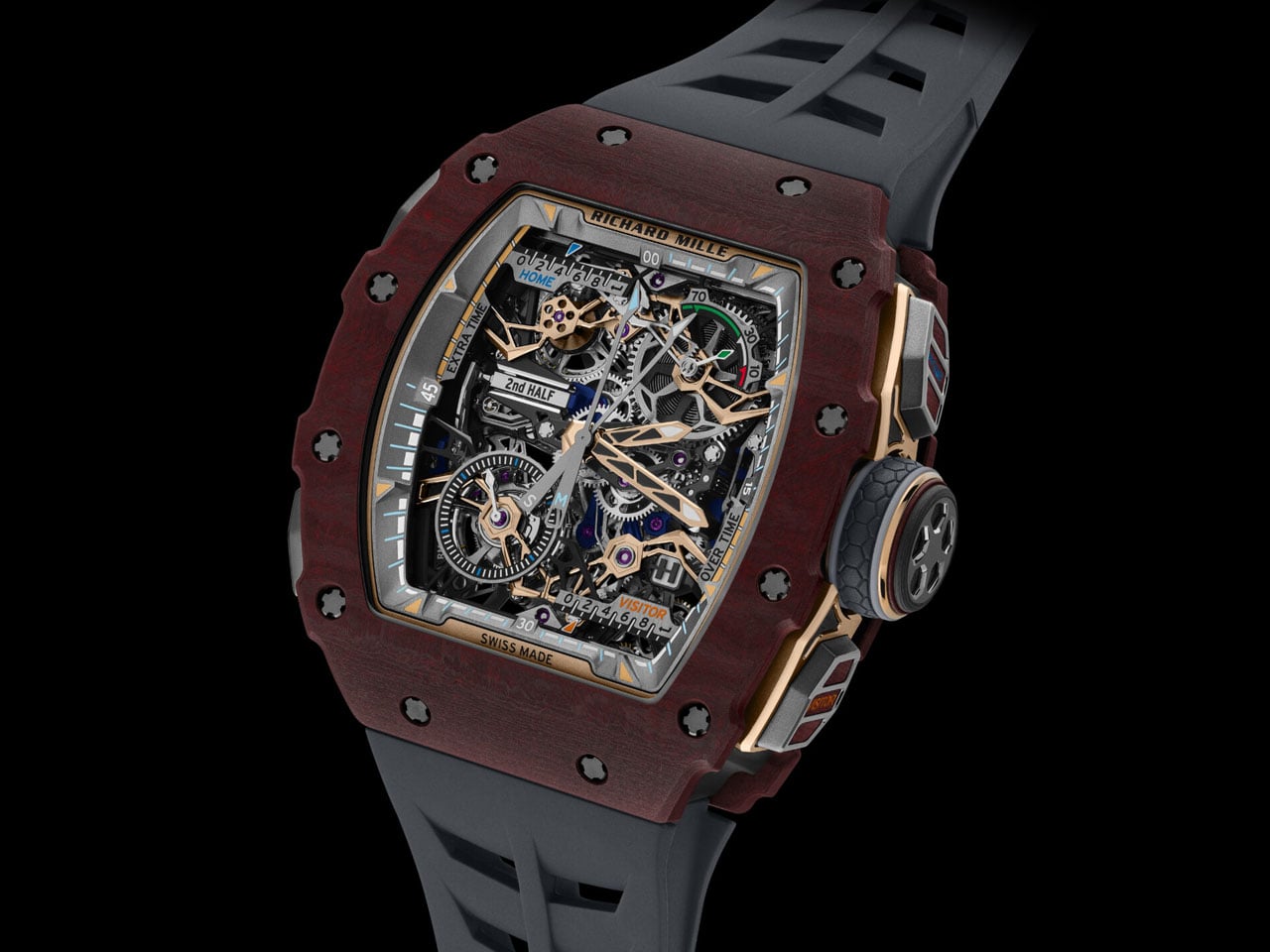
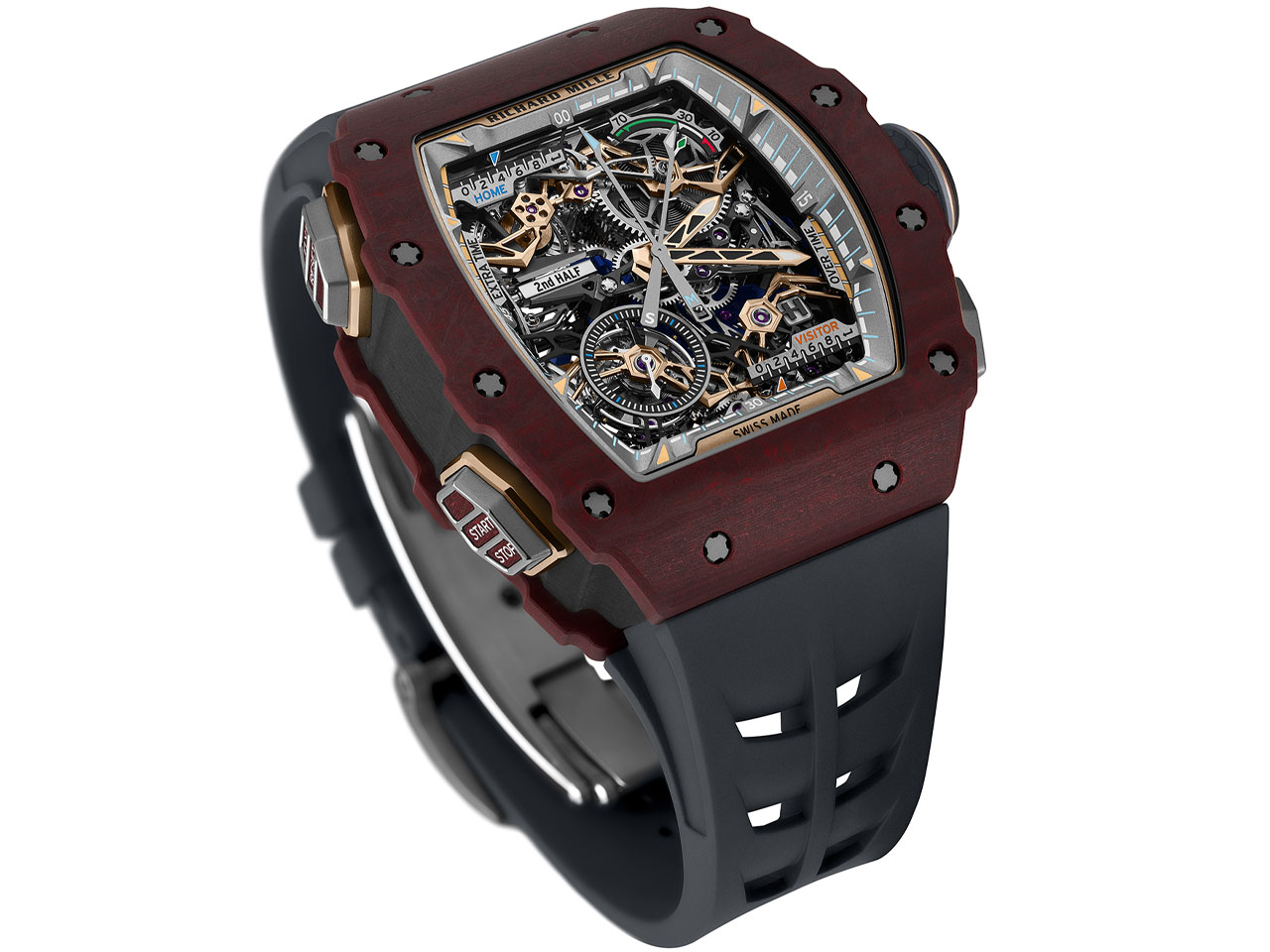
High watchmaking has always been about pushing limits, and few brands have embraced that philosophy as boldly as Richard Mille. Known for translating Formula-1 engineering, industrial designs, and pop culture athletics into wrist-borne mechanics, the brand has built its identity on transforming unlikely inspirations into technical statements. With the RM 41-01 Tourbillon Soccer, that spirit takes on one of the world’s most widely followed sports, turning the structure and rhythm of a football match into a fully mechanical narrative.
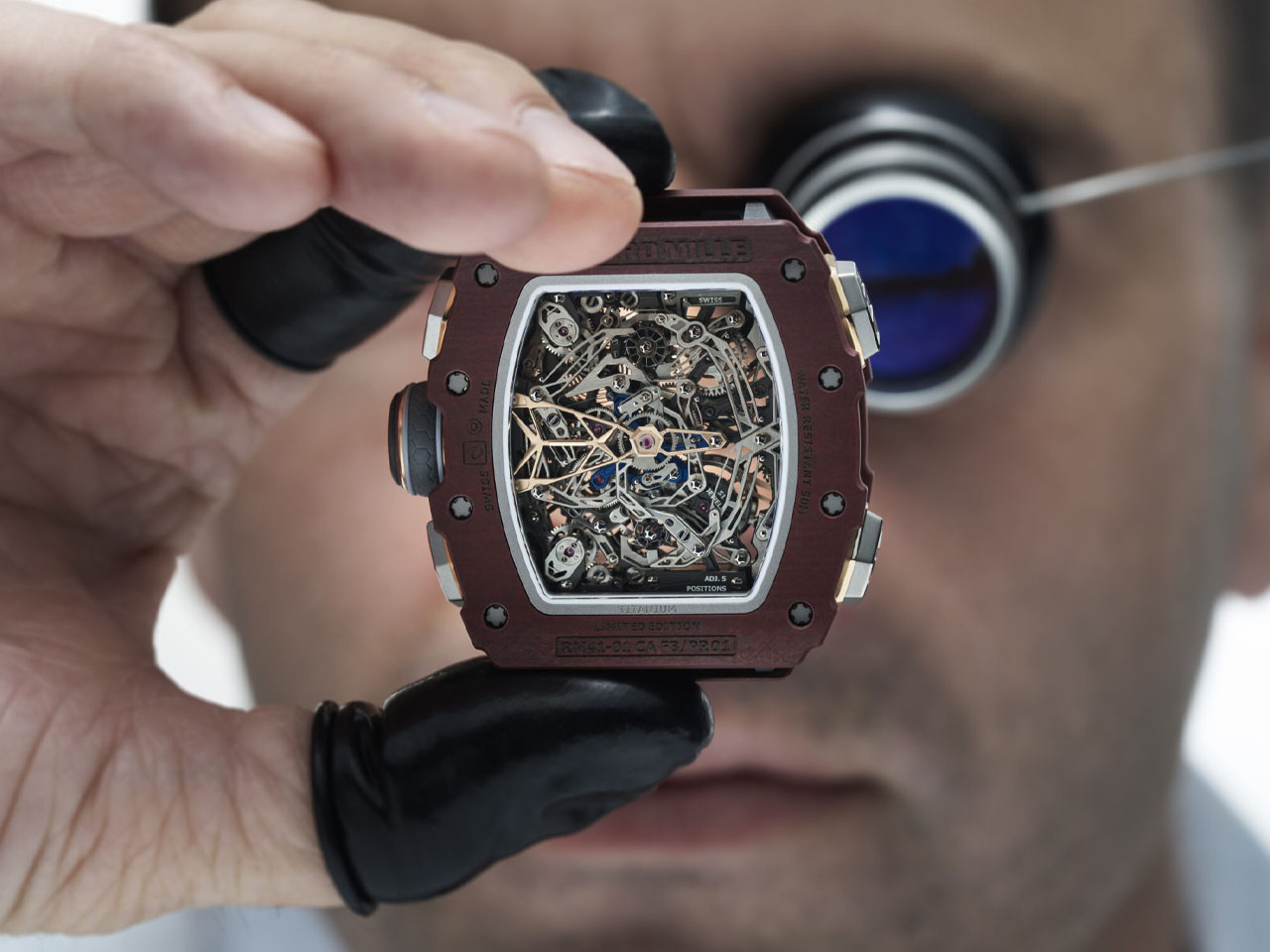
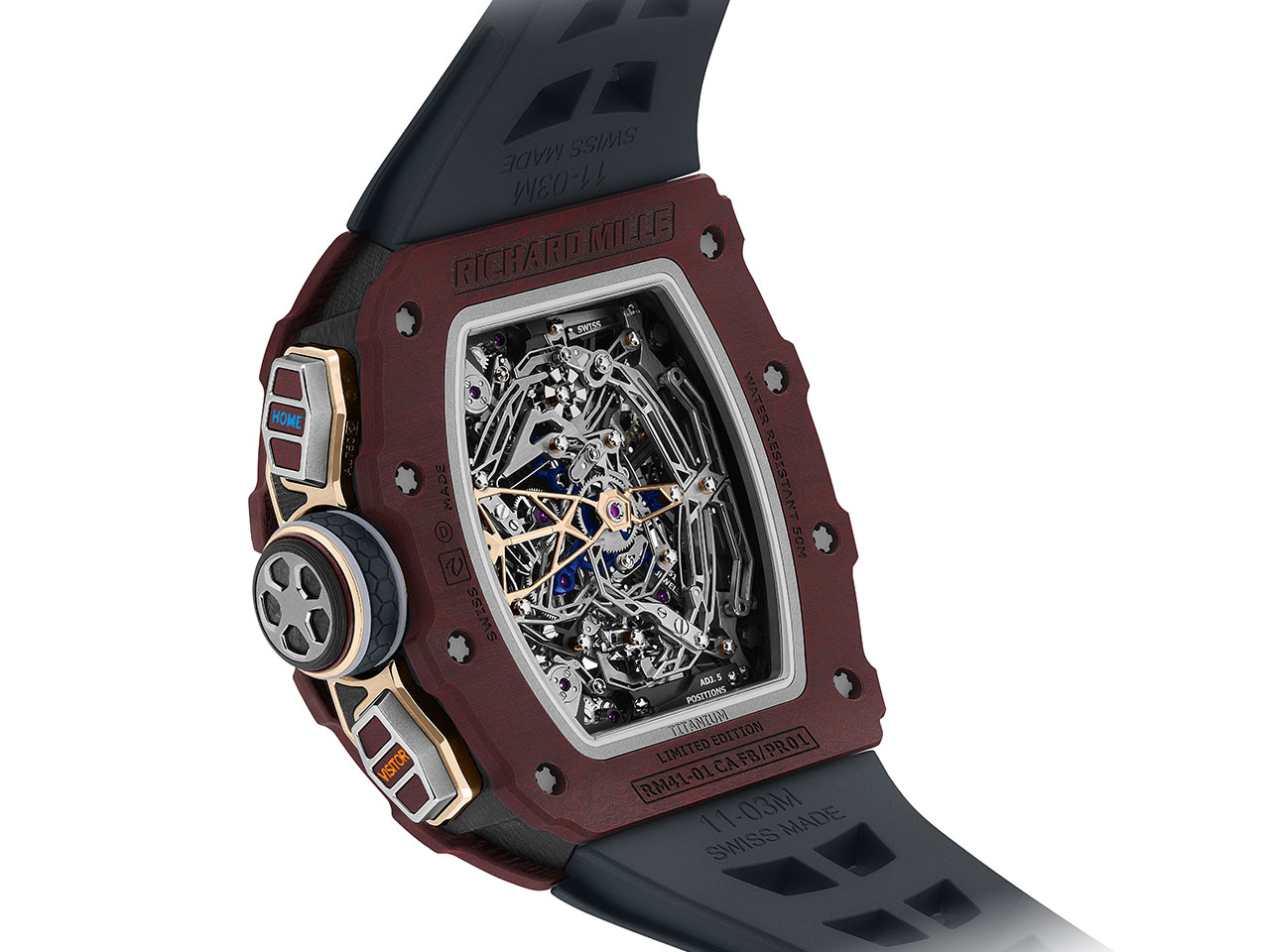
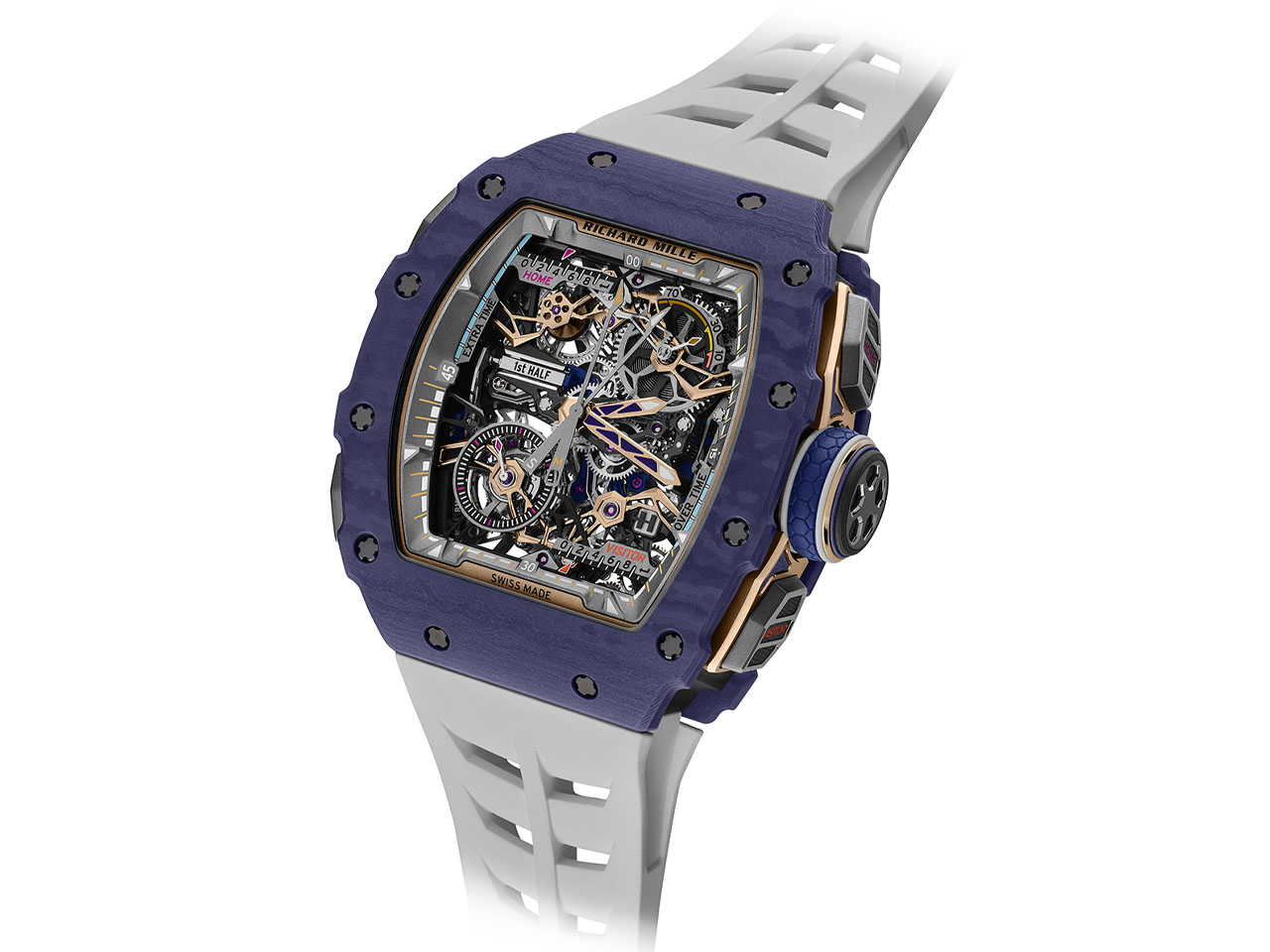
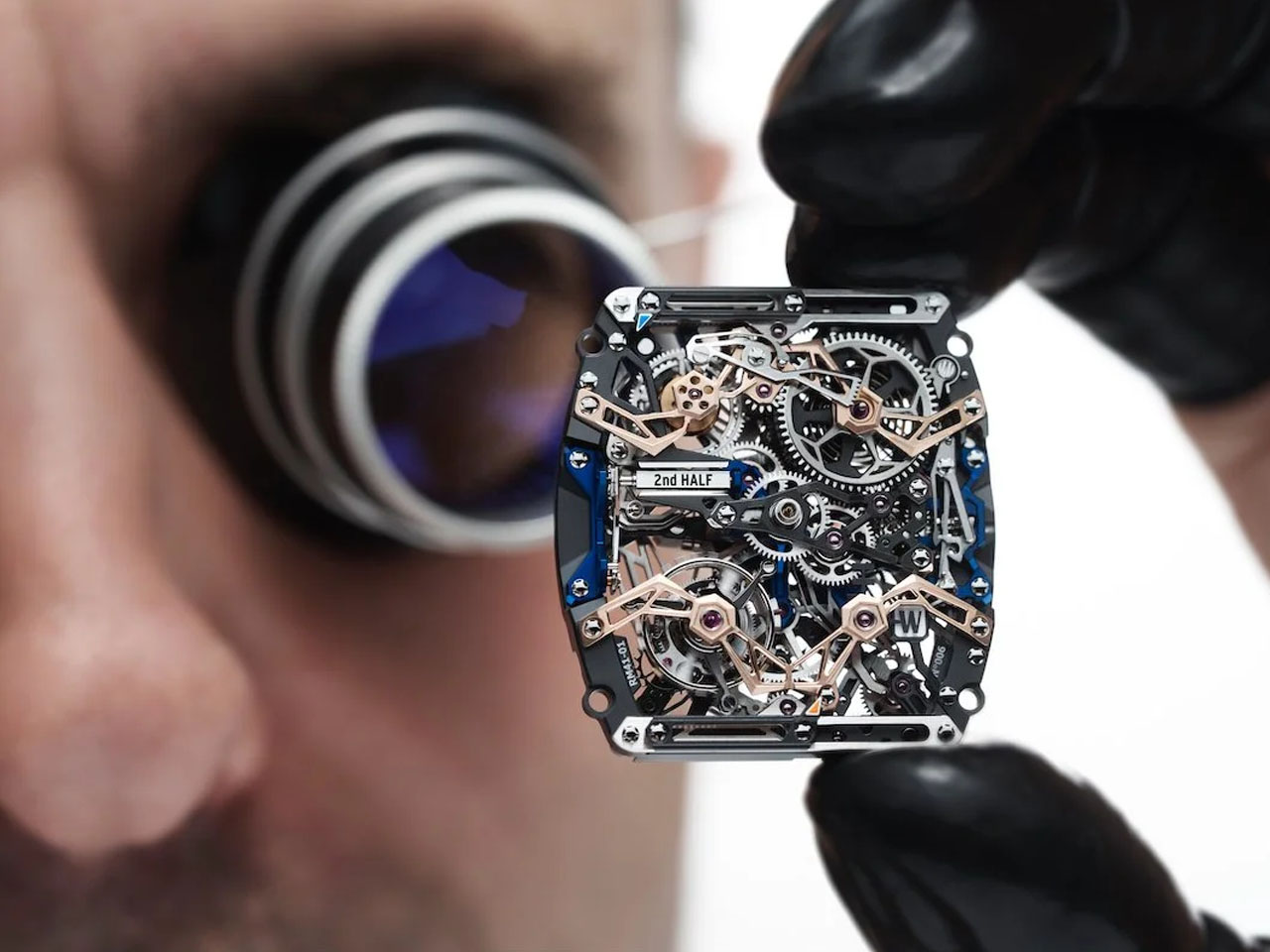
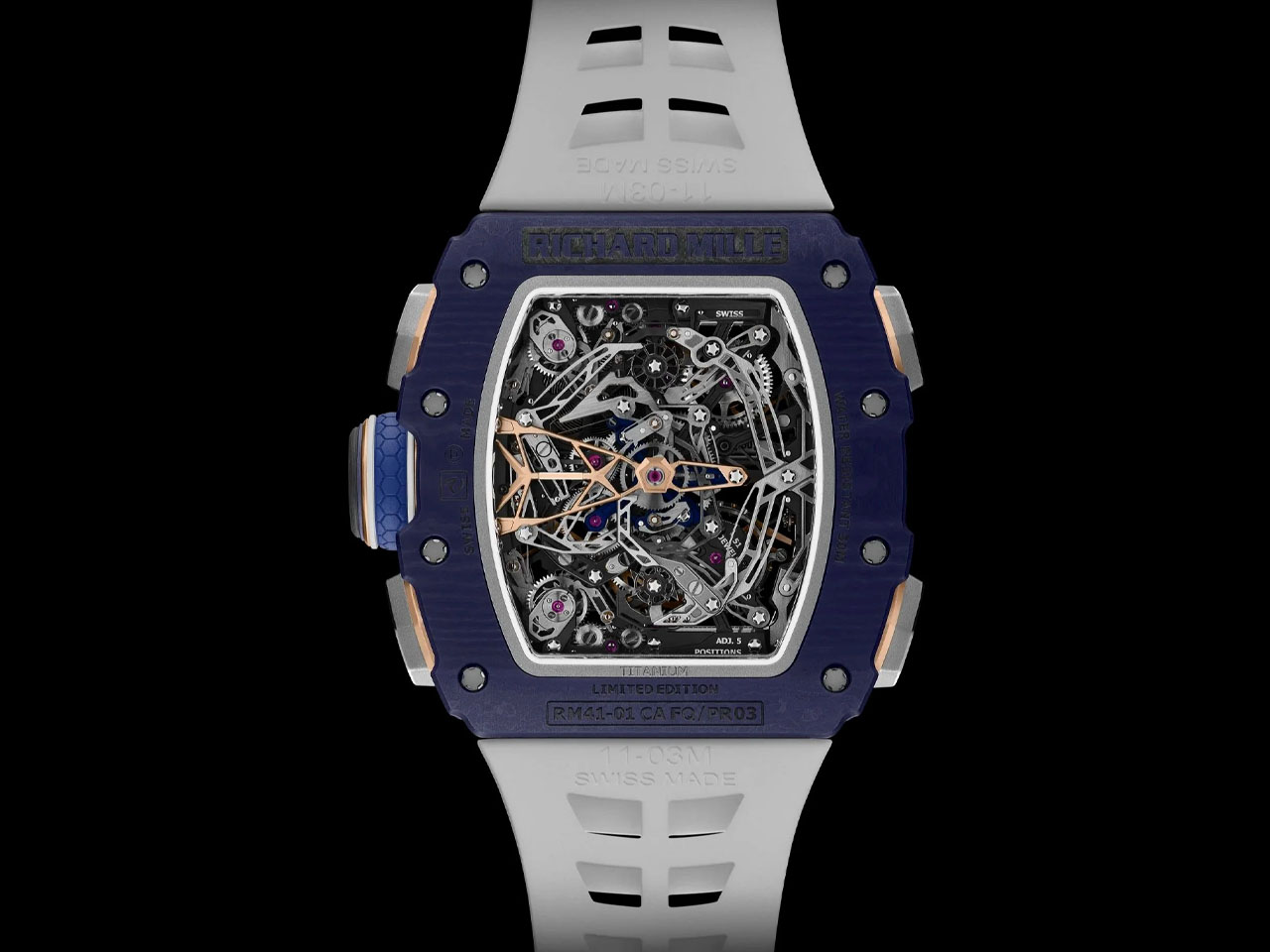
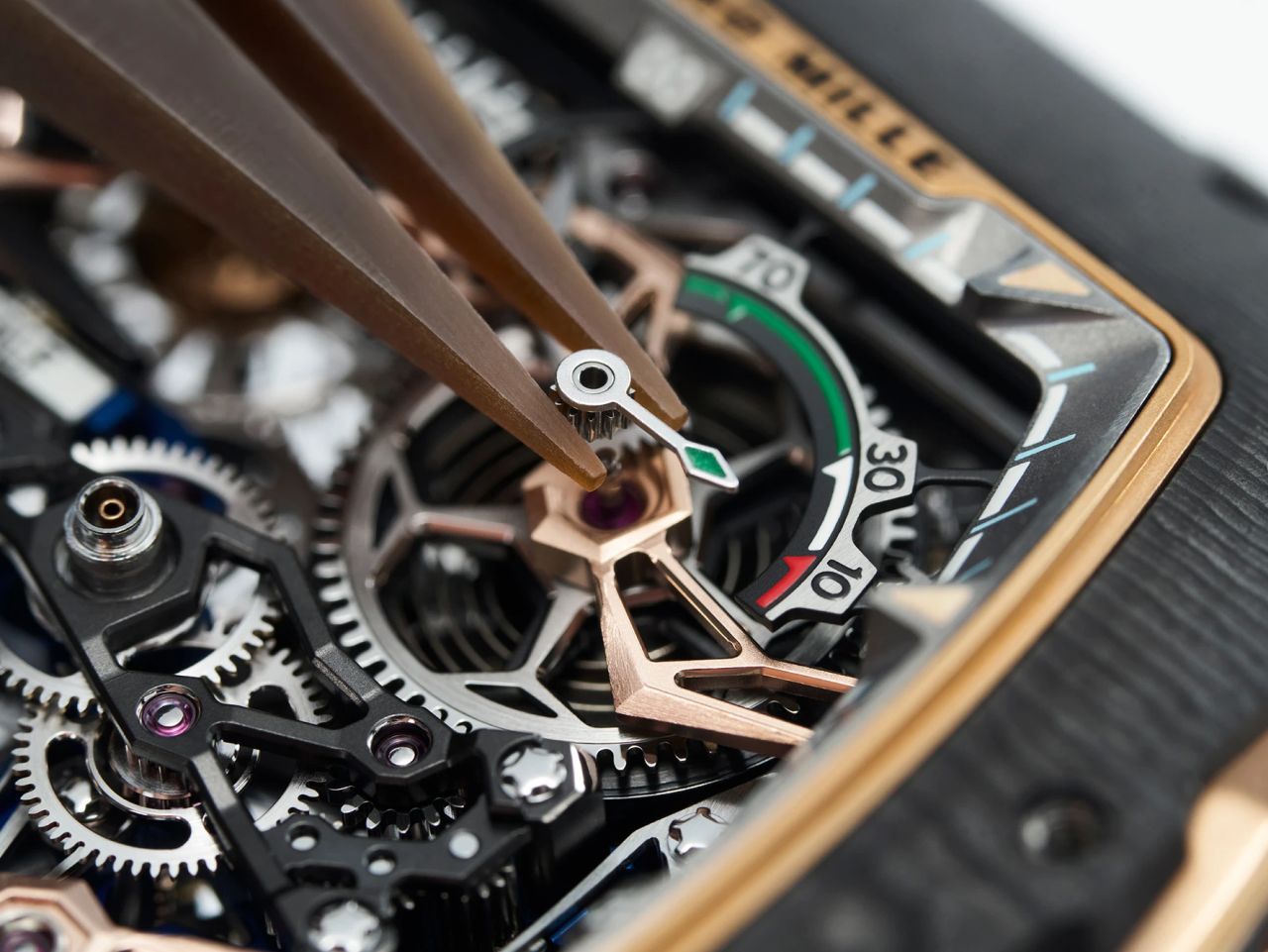
The RM 41-01 is not a cosmetic tribute. Instead of relying on team colors or decorative motifs, it integrates the intricacies of soccer directly into its functionality. Developed over approximately five years in collaboration with Audemars Piguet, the manual-winding Calibre RM41-01 is built from grade 5 titanium and composed of roughly 650 components. The highly skeletonized movement incorporates a flying tourbillon and a patented double-column-wheel flyback chronograph, delivering approximately 70 hours of power reserve while maintaining the architectural transparency that defines the brand’s modern aesthetic.
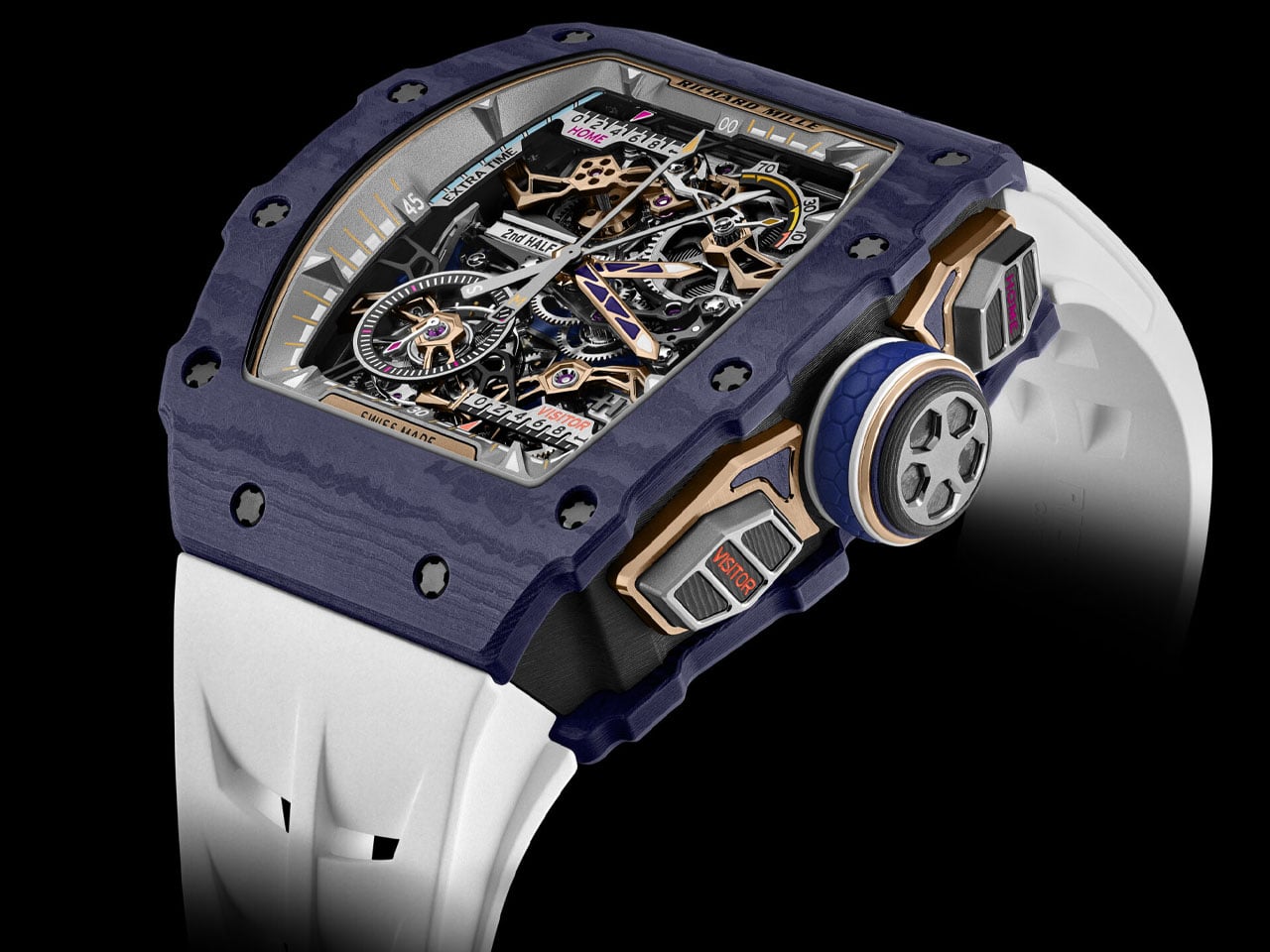
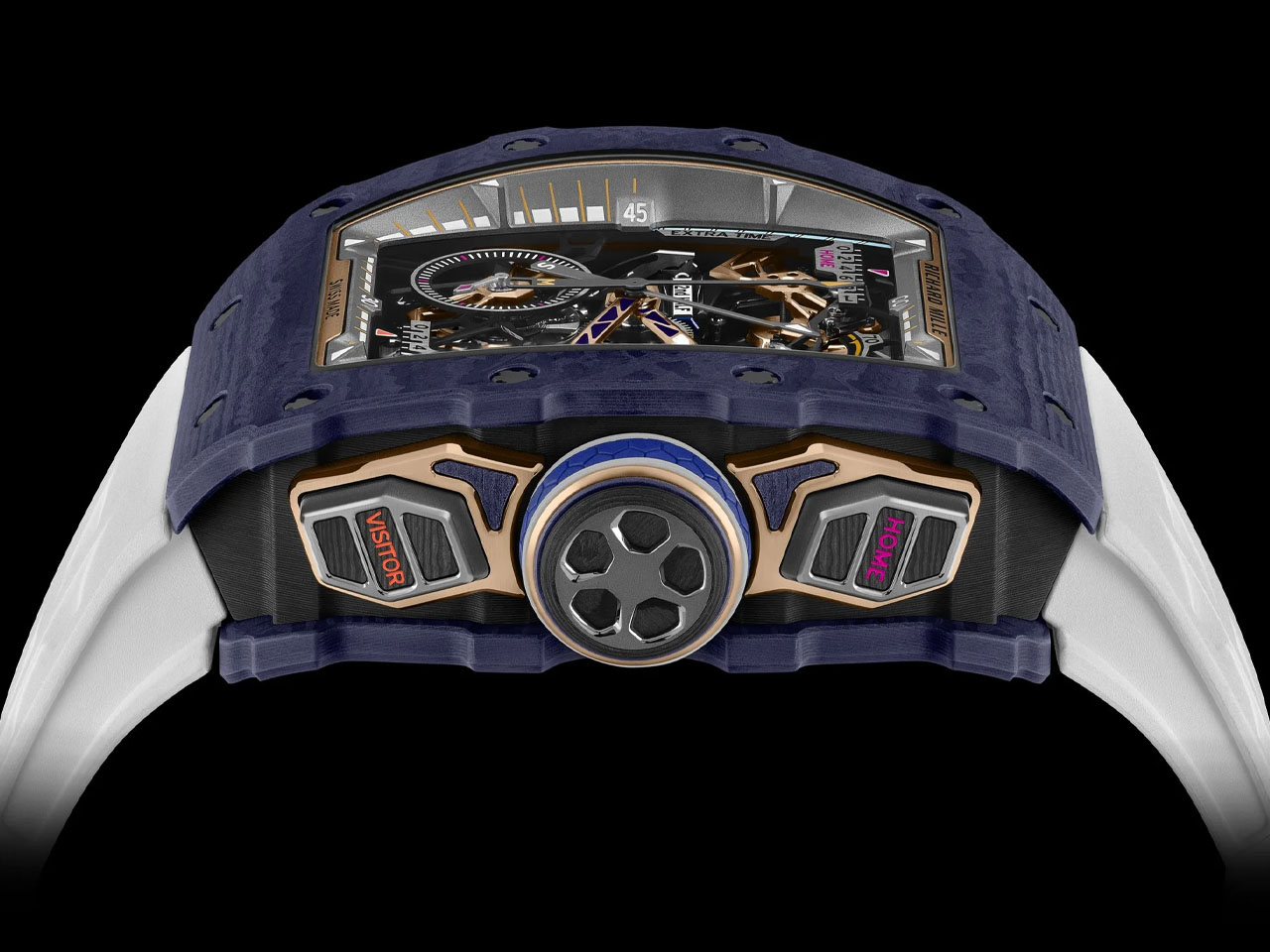
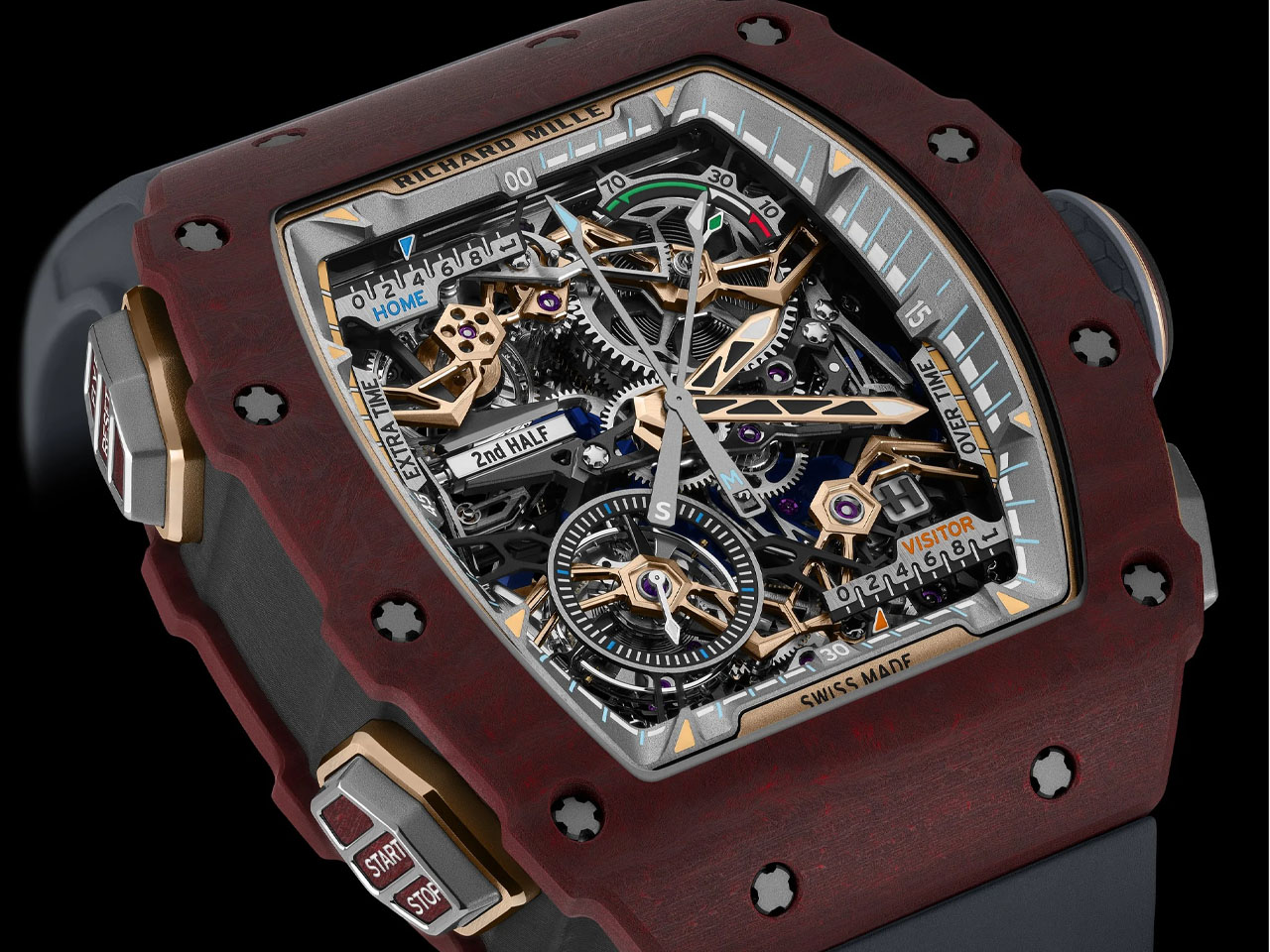
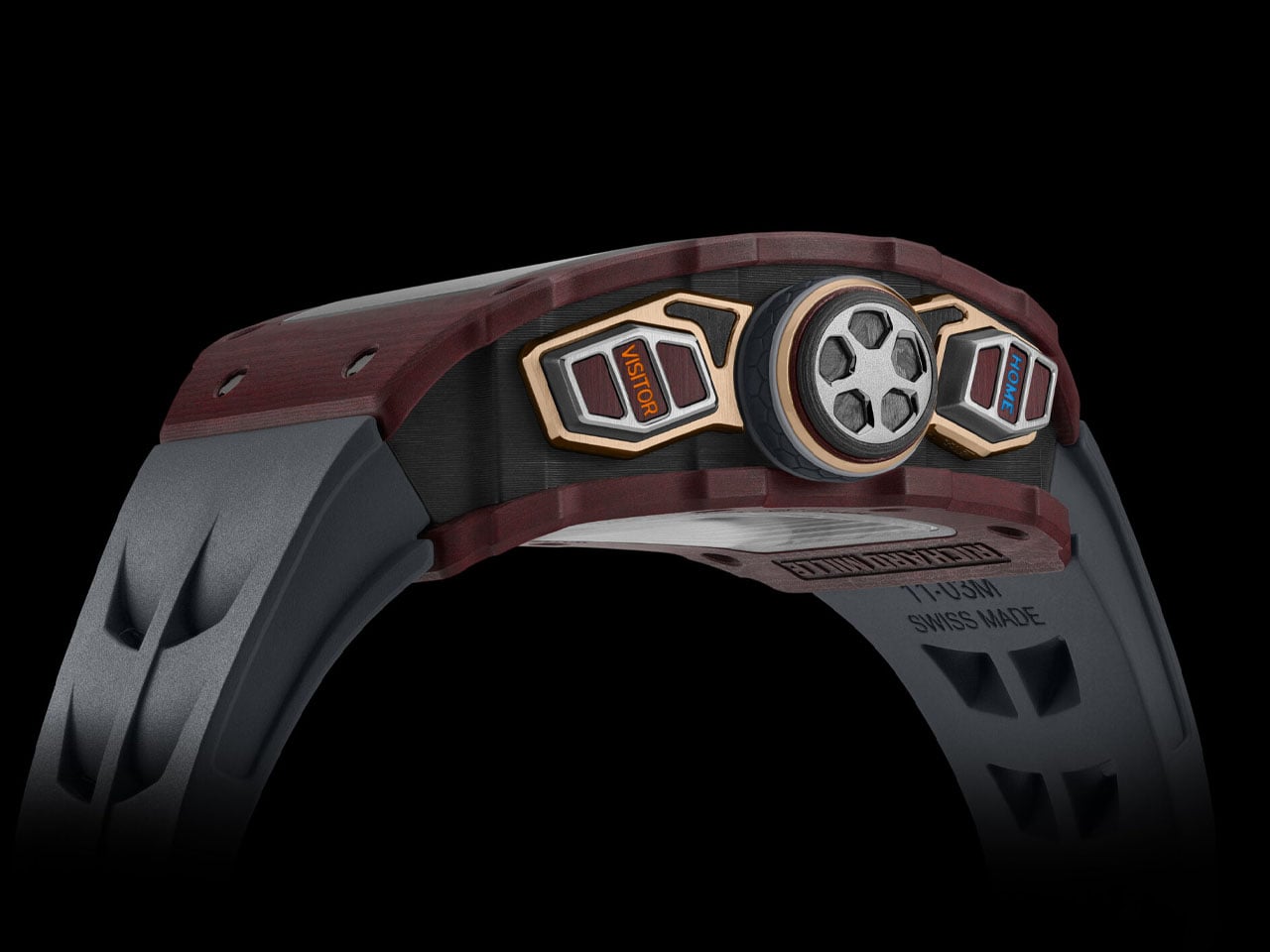
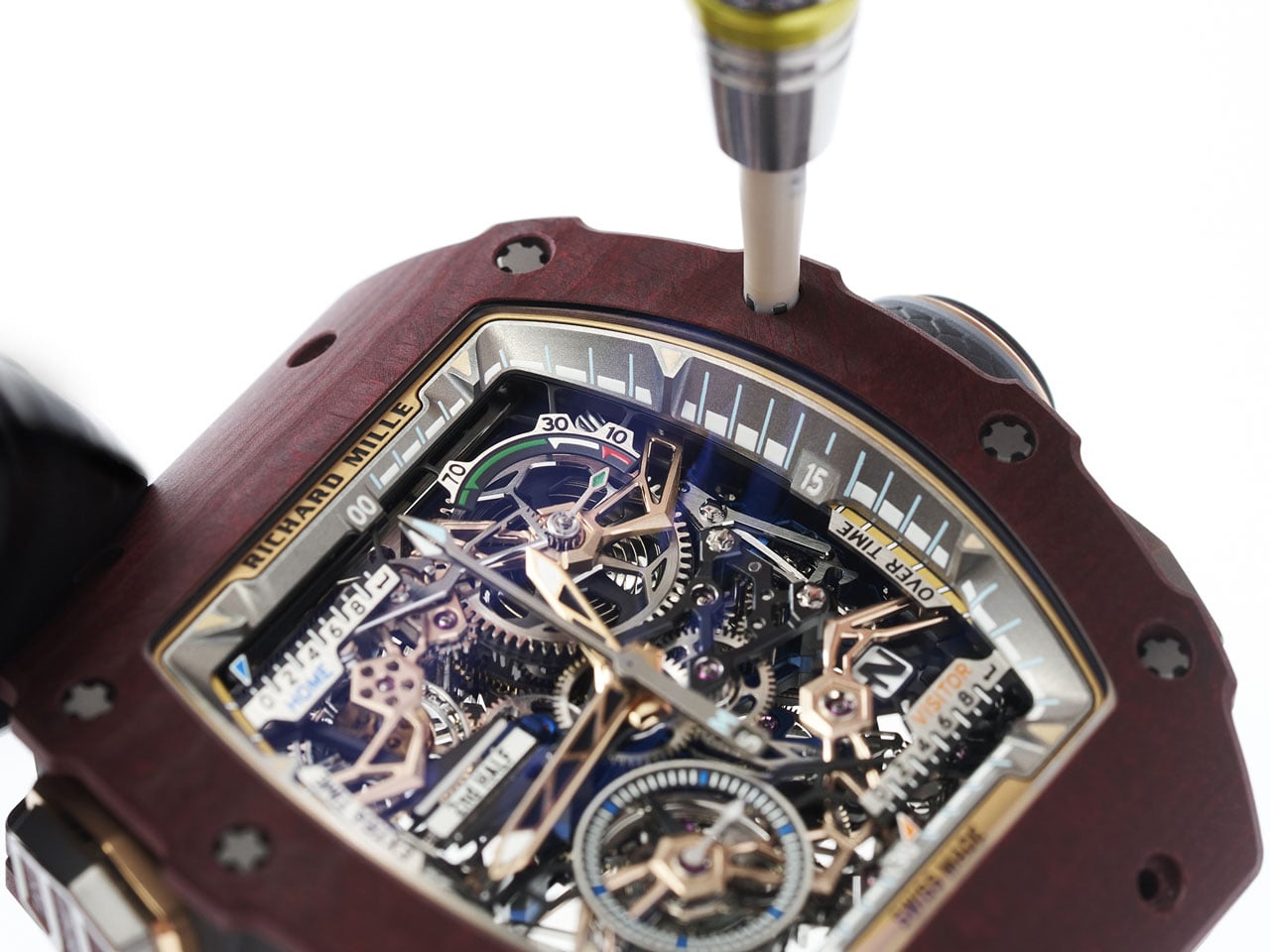
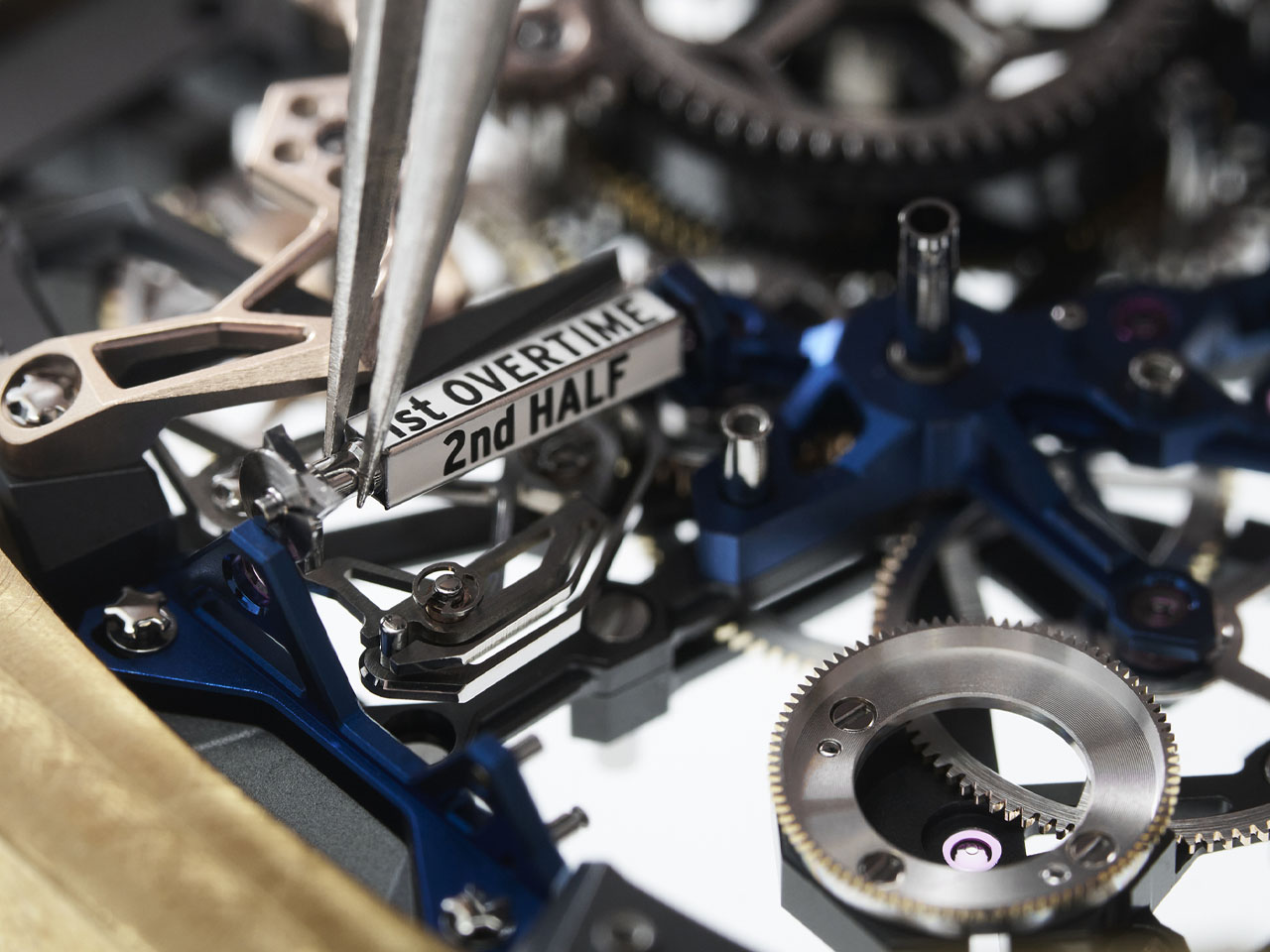
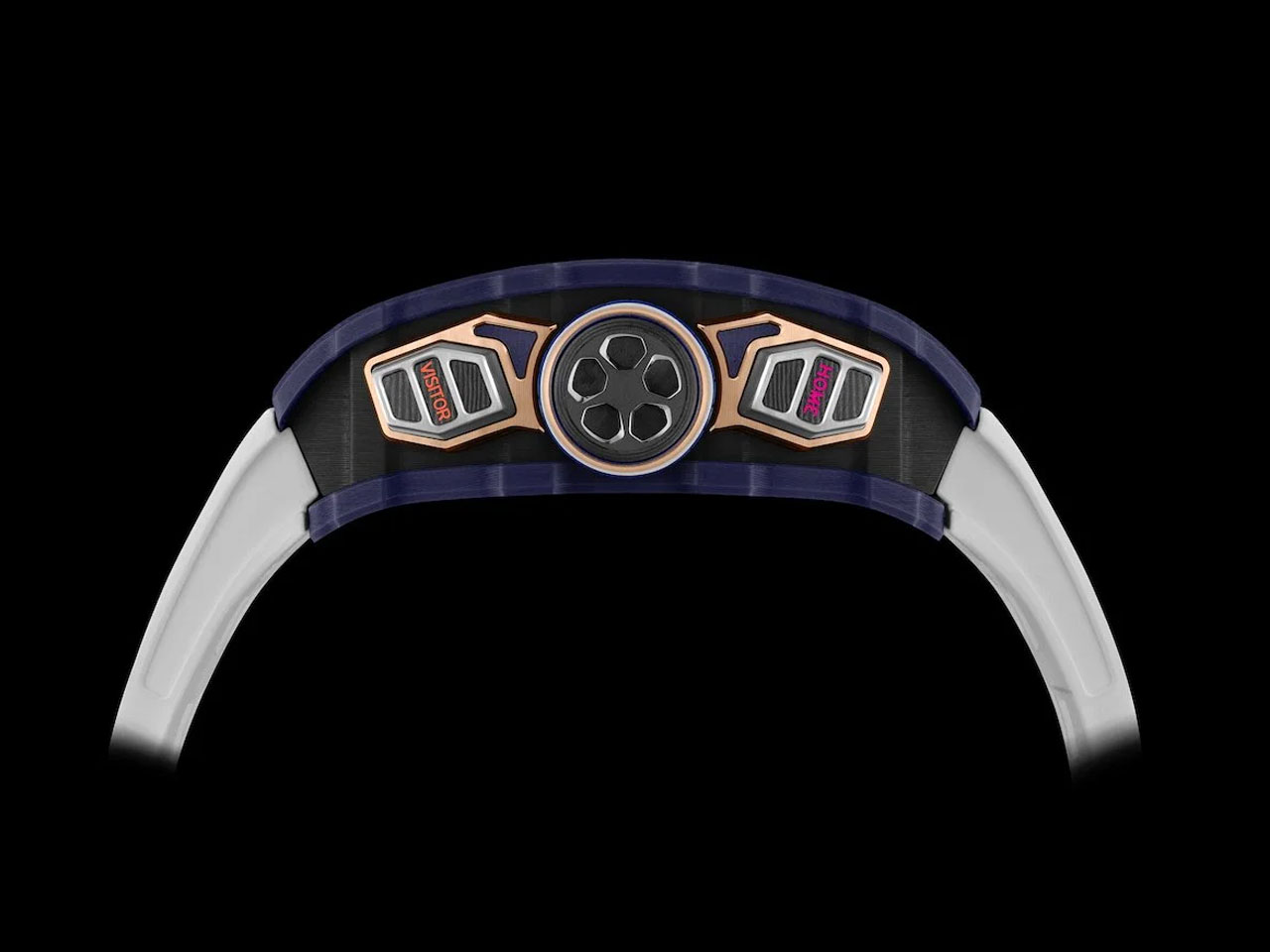
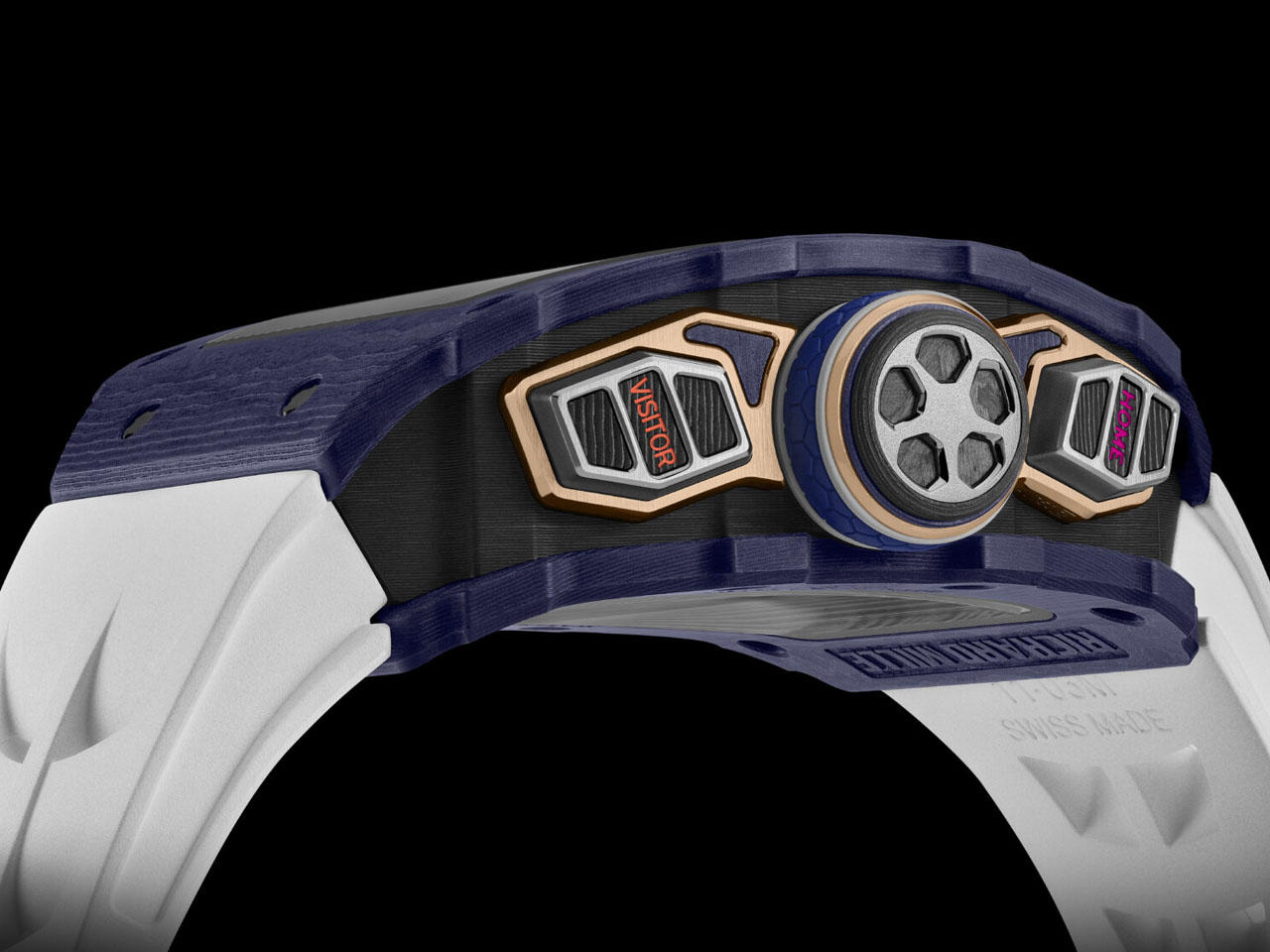
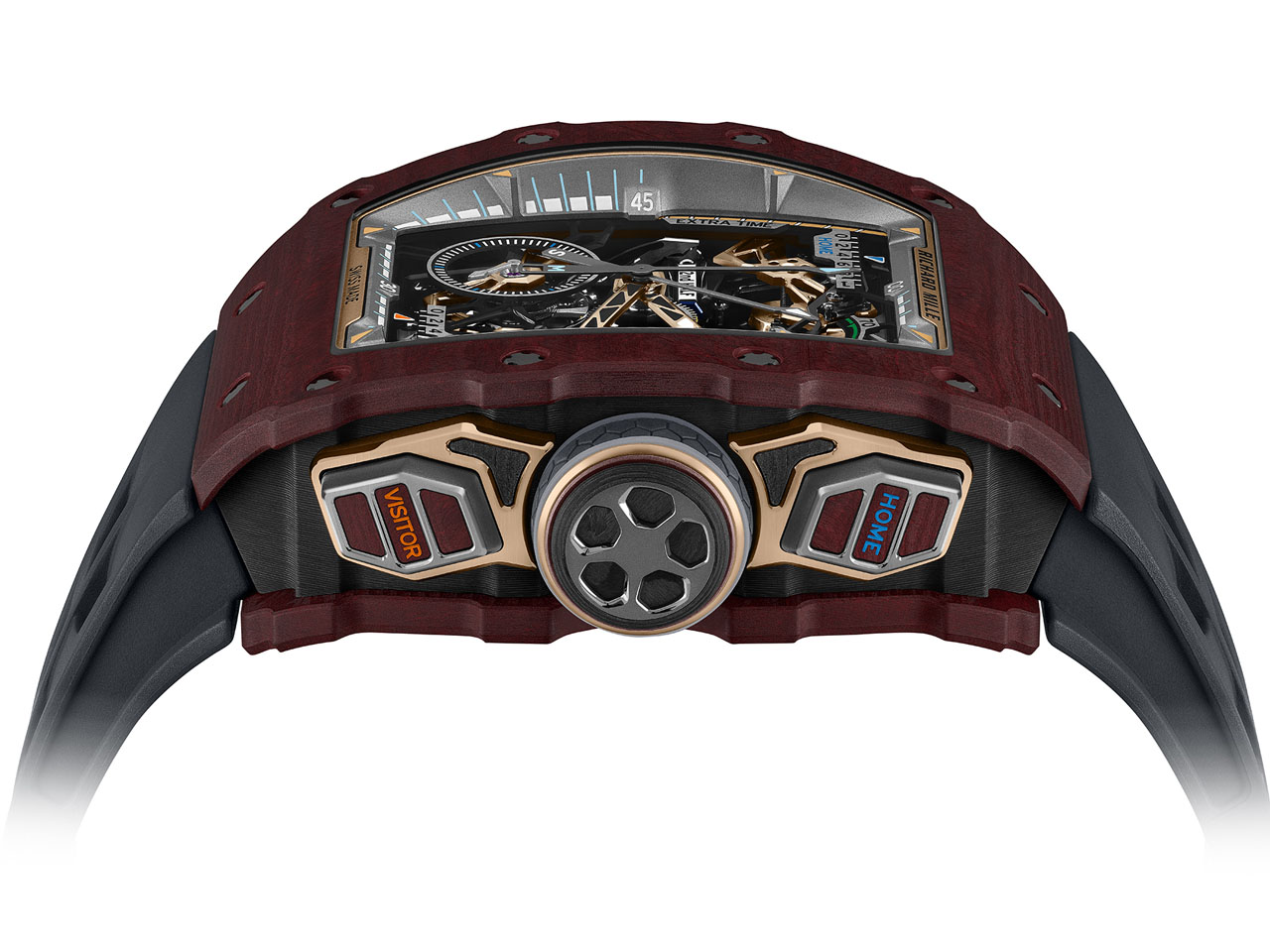
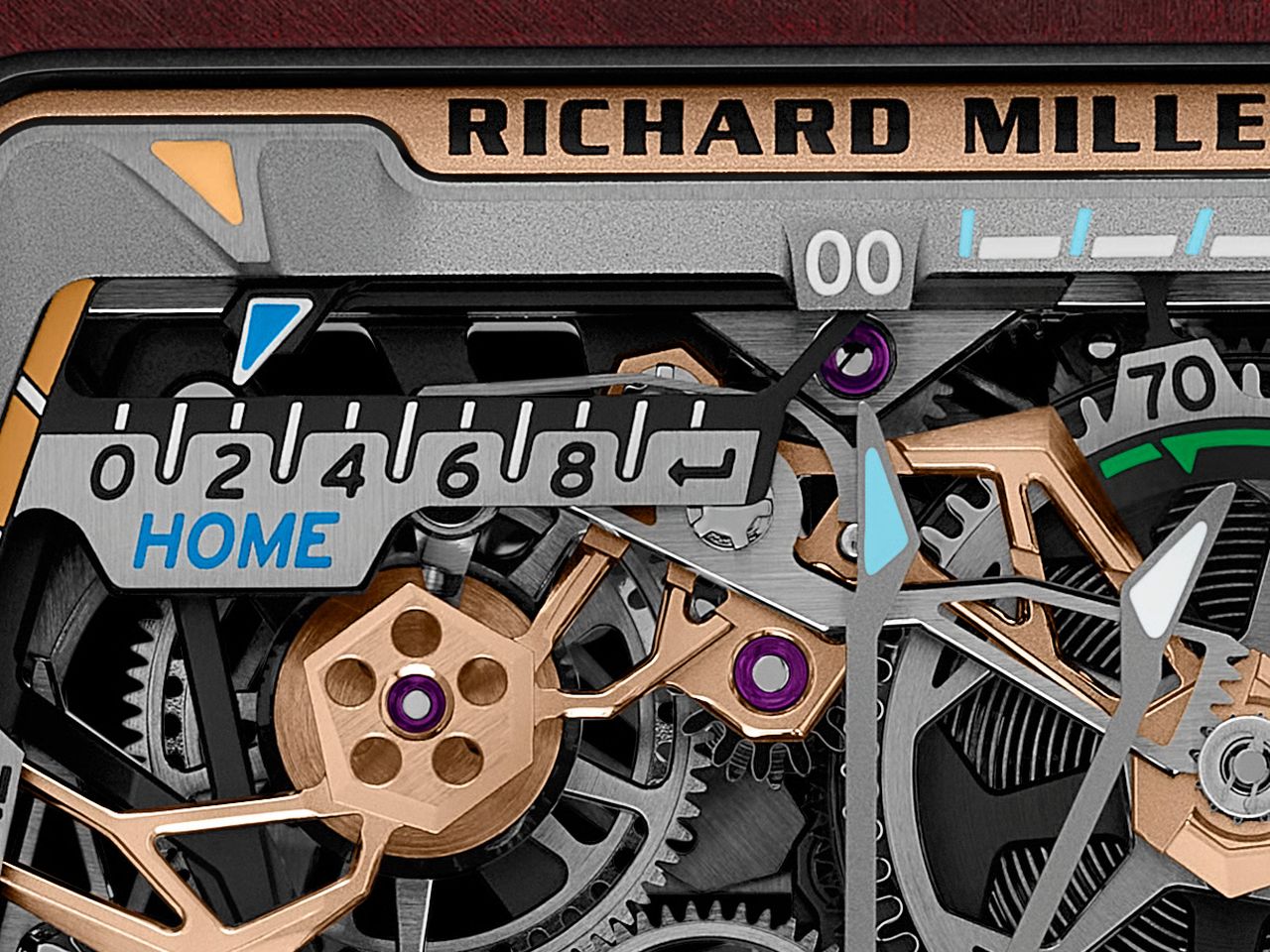
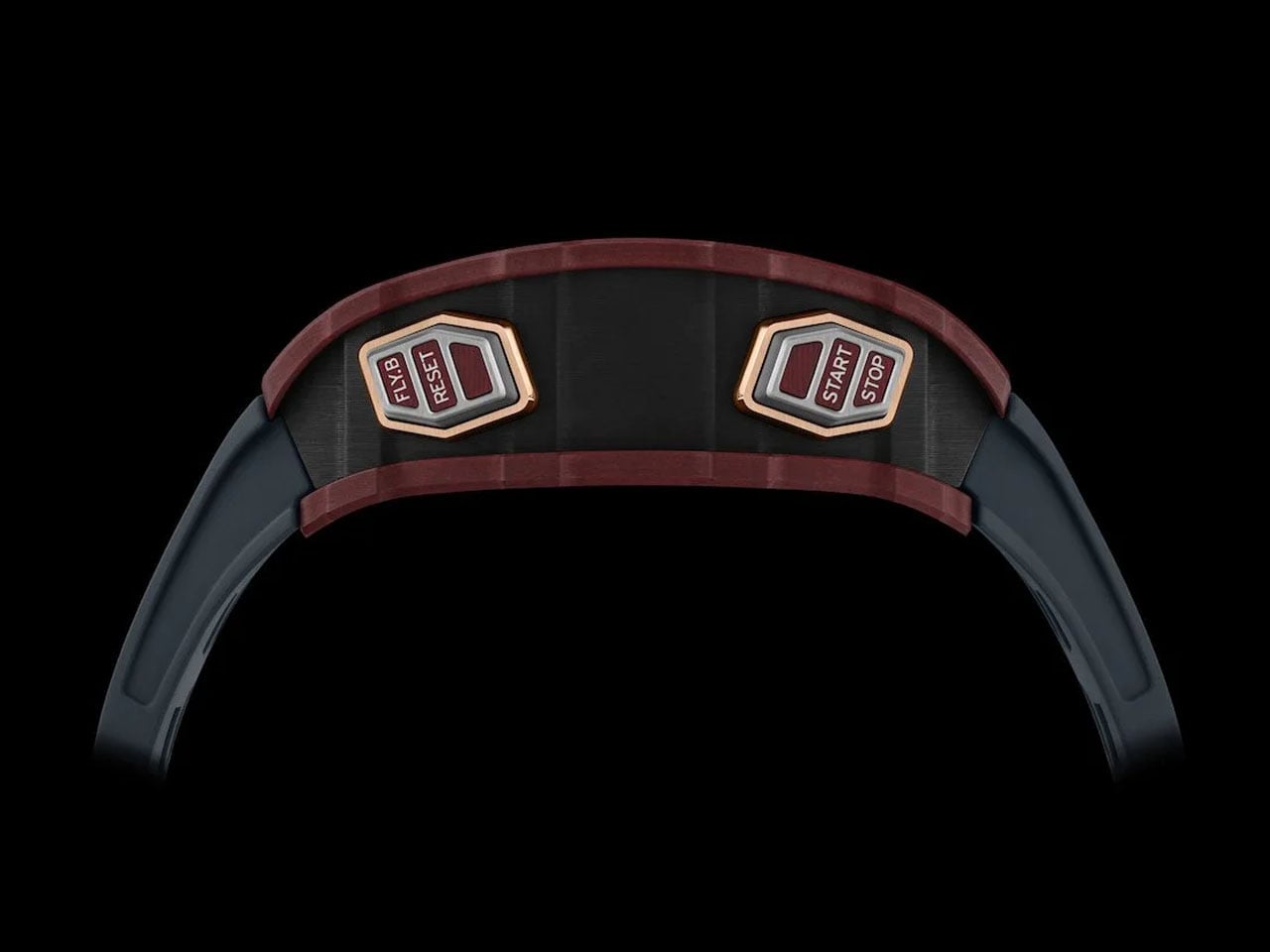
What distinguishes the watch is how it interprets a match in real time. A dedicated match-phase indicator progresses logically through first half, second half, and extra time periods, advancing with each reset of the chronograph. This complication mirrors the natural flow of a game, translating sporting progression into a mechanical sequence. Complementing it are dual linear goal counters positioned on the dial, allowing the wearer to track scores for home and away teams independently. Each counter can register up to nine goals before resetting, activated through pushers integrated seamlessly into the case. The result is a watch that behaves almost like a mechanical scoreboard, yet remains rooted in traditional haute horlogerie principles.
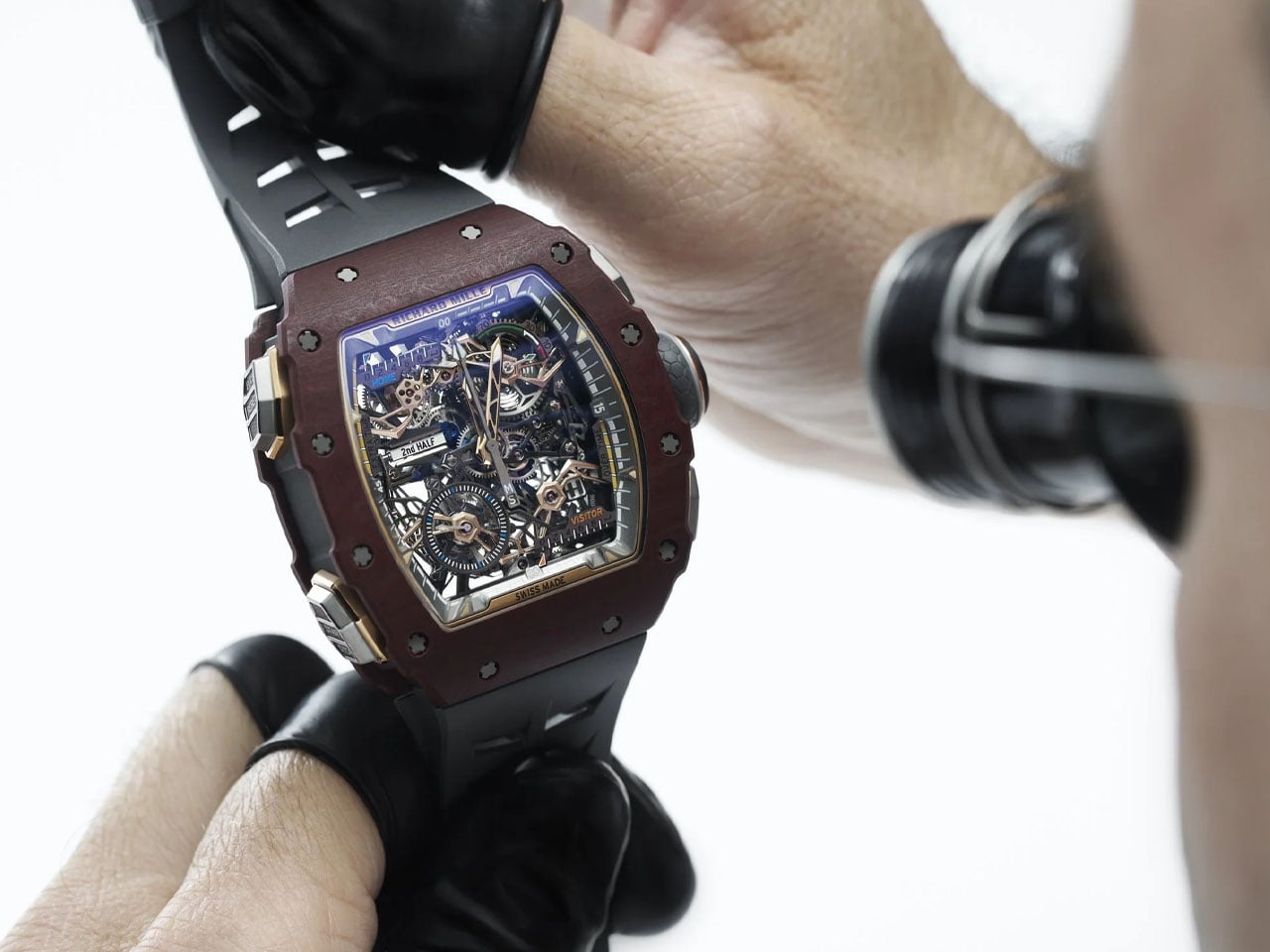
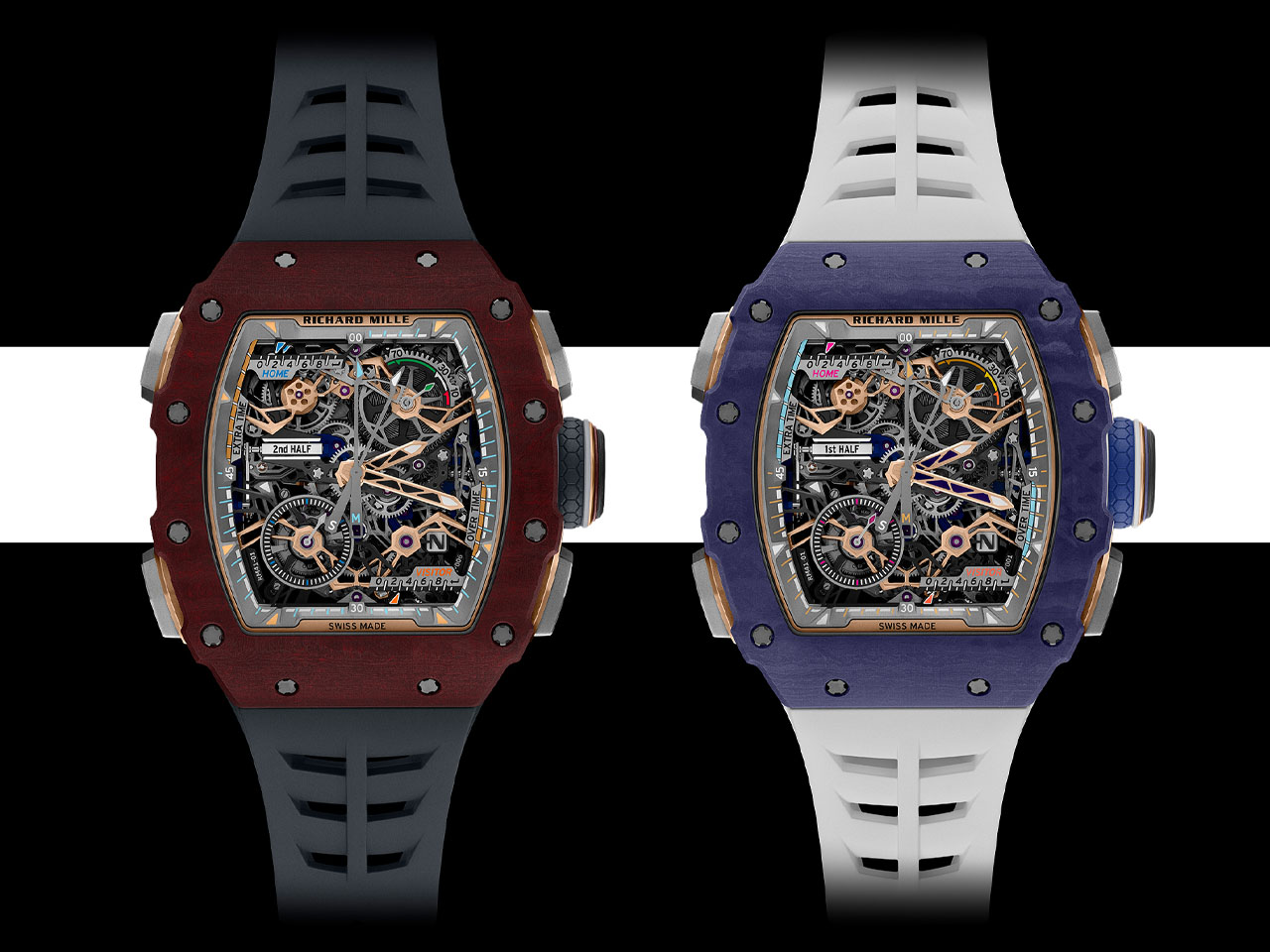
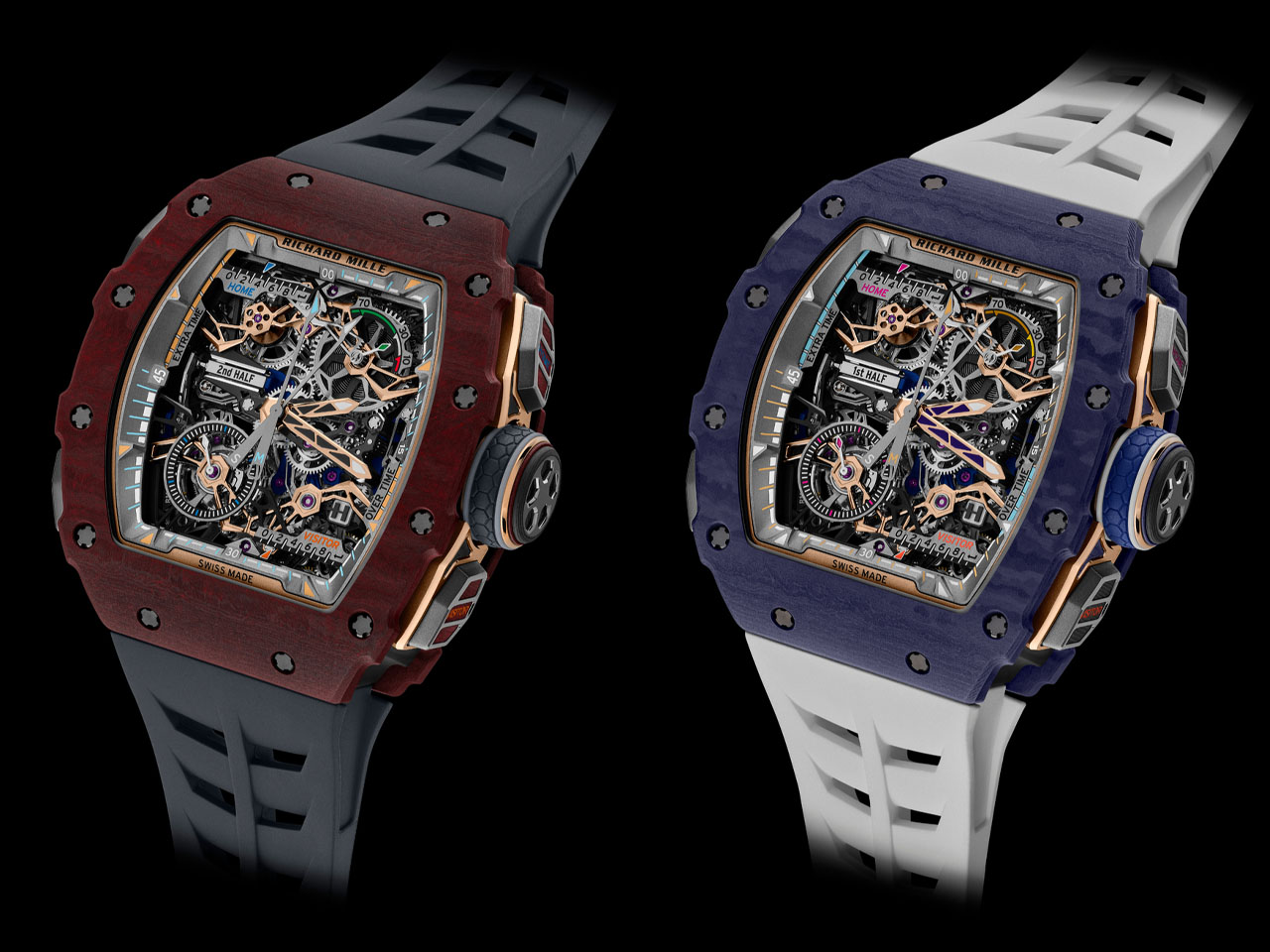
The tonneau-shaped case measures approximately 42.9 mm in width, 51.2 mm in length, and 16.2 mm in thickness, dimensions that provide presence without overwhelming the wrist. Offered in two limited editions of 30 pieces each, the watch is crafted in Dark Blue Quartz TPT or Red Carmin Basalt TPT variants. These composite materials are formed by layering ultra-thin sheets under intense heat and pressure, producing a striated visual texture while offering exceptional resistance to shock, corrosion, and ultraviolet exposure. Water resistance is rated to 50 meters, and the watch is paired with a rubber strap secured by a folding clasp, reinforcing its sport-ready character.
Visually, the RM 41-01 Tourbillon Soccer remains unmistakable. The openworked dial exposes bridges, wheels, and chronograph components arranged in a dynamic, multi-level layout beneath a sapphire crystal. Finishing techniques such as micro-blasting, hand-beveling, and contrasting surface treatments emphasize depth and contrast. Despite the complexity, legibility remains carefully considered, ensuring that the various displays are intuitive rather than decorative.
Technically ambitious and unapologetically specialized, the RM 41-01 Tourbillon Soccer watch exemplifies the brand’s commitment to mechanical storytelling. Each color of the watch will be limited to 30 pieces with an expected price tag of $2 million.
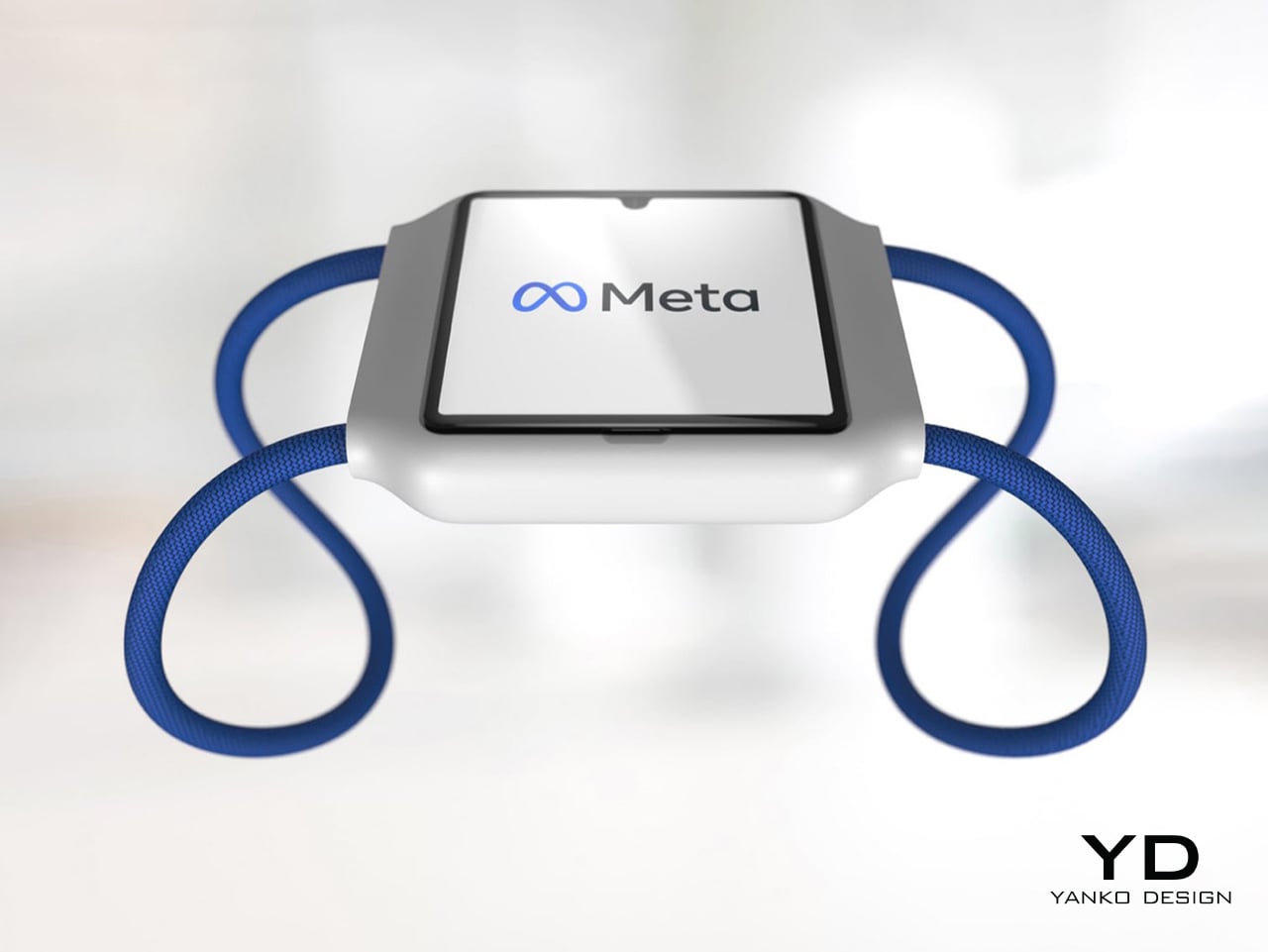
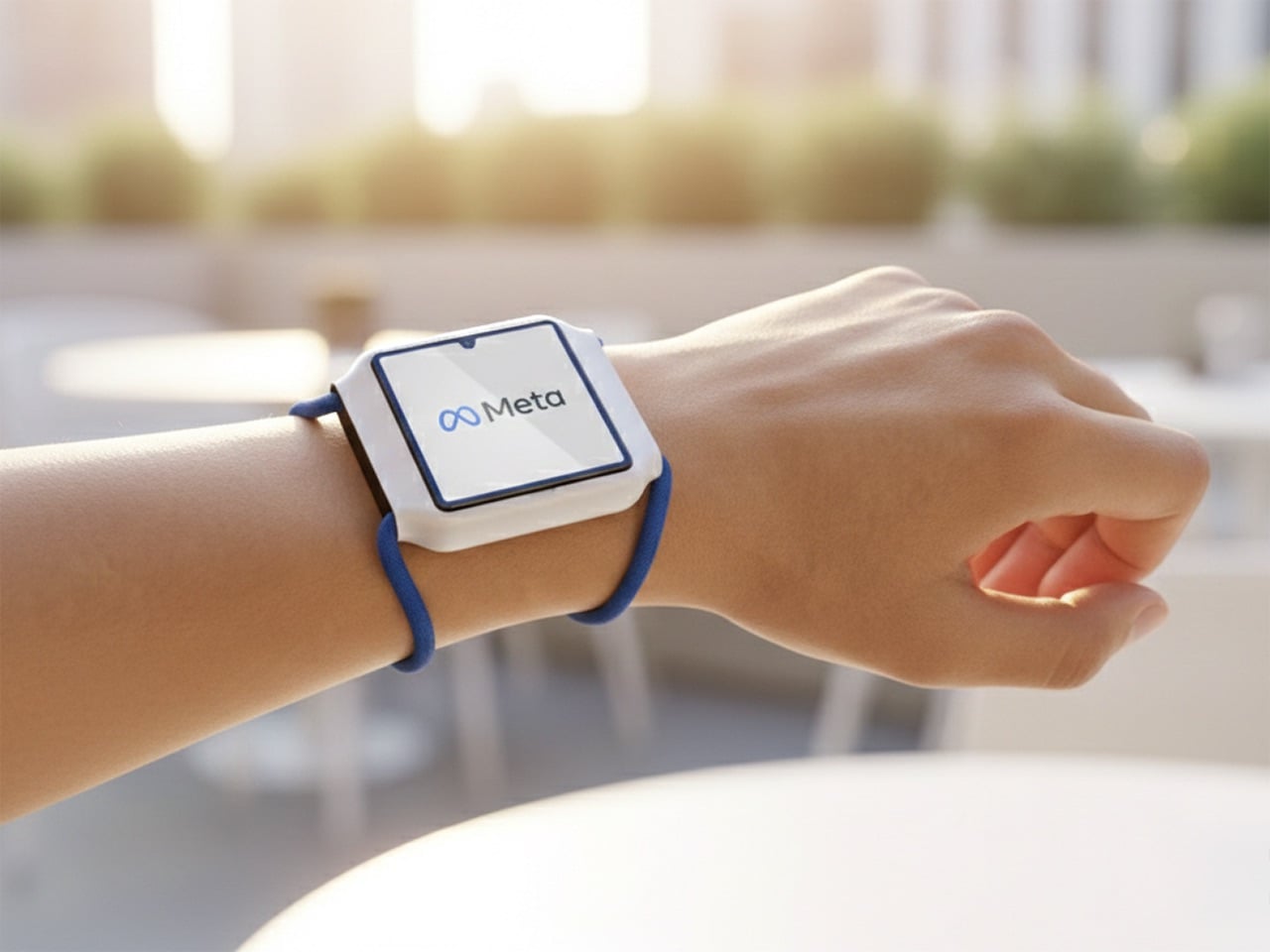
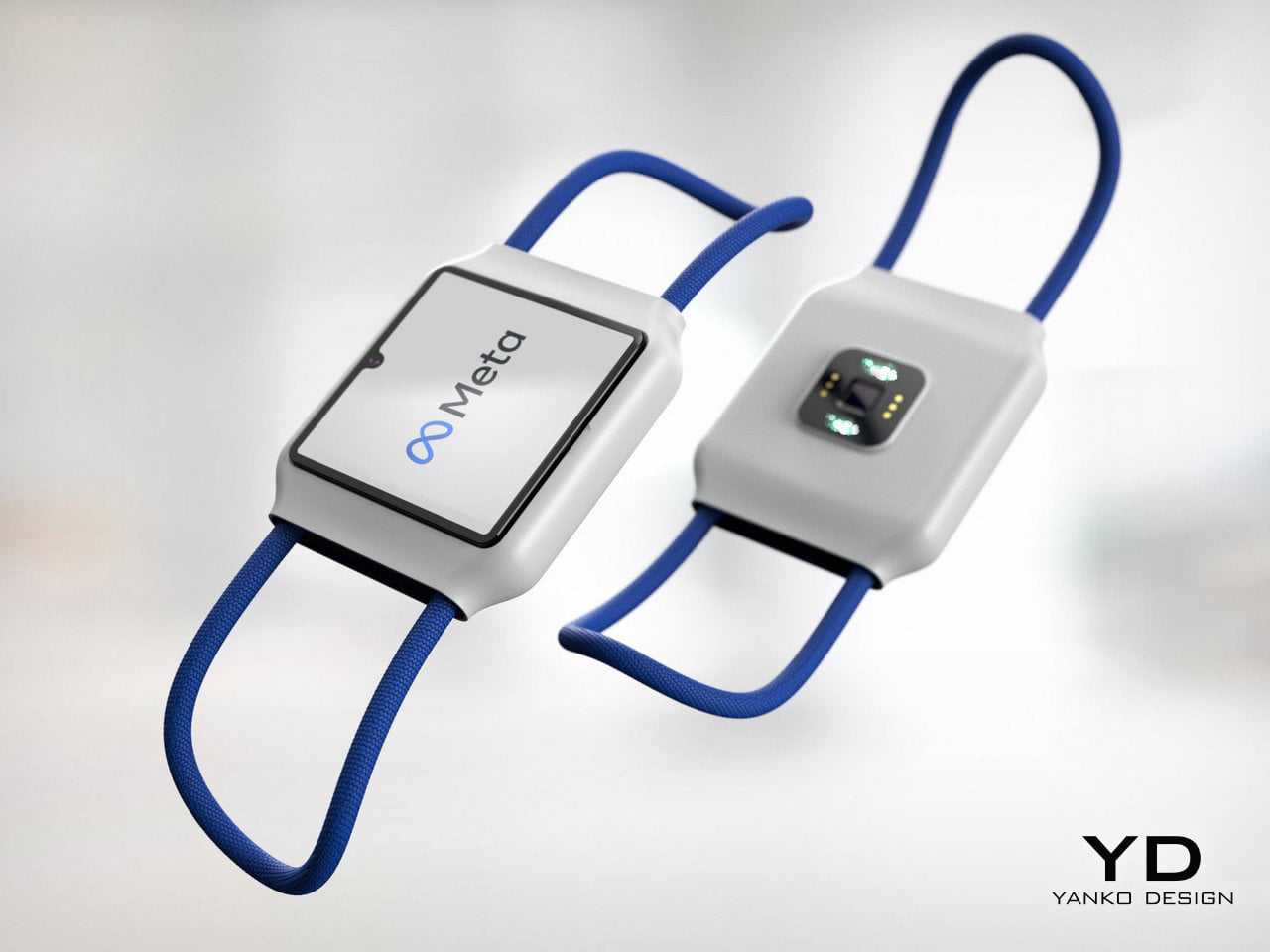
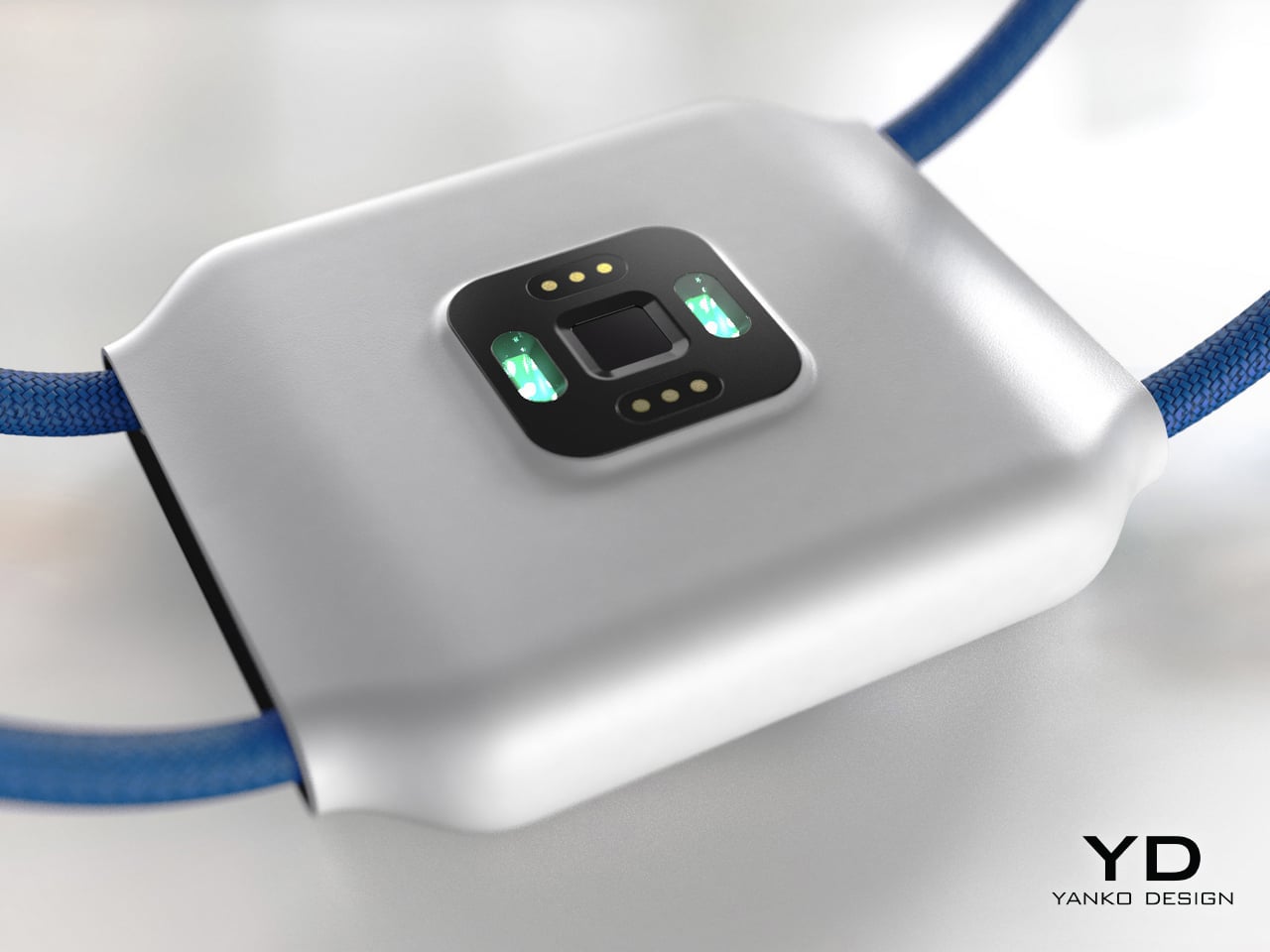
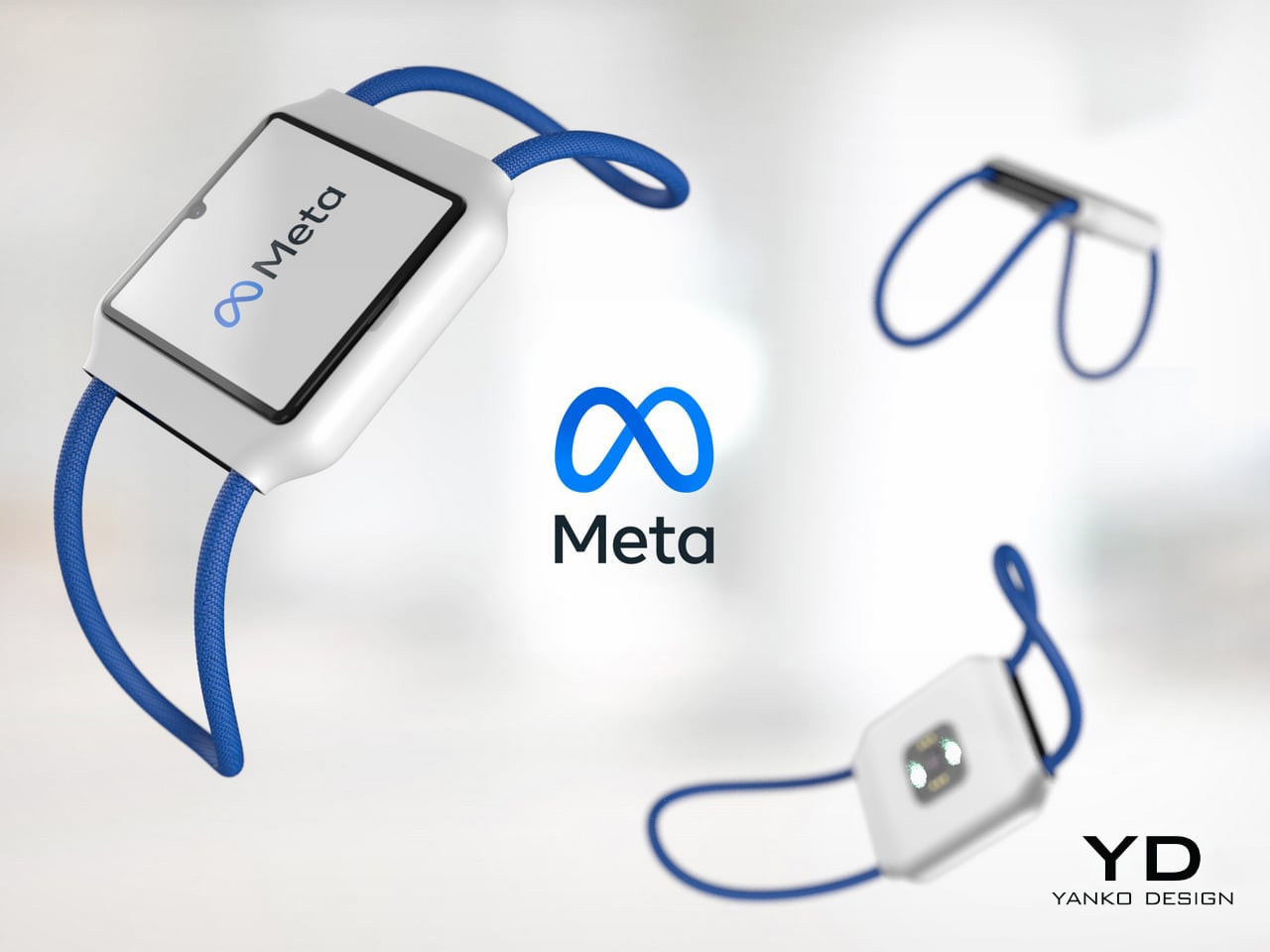
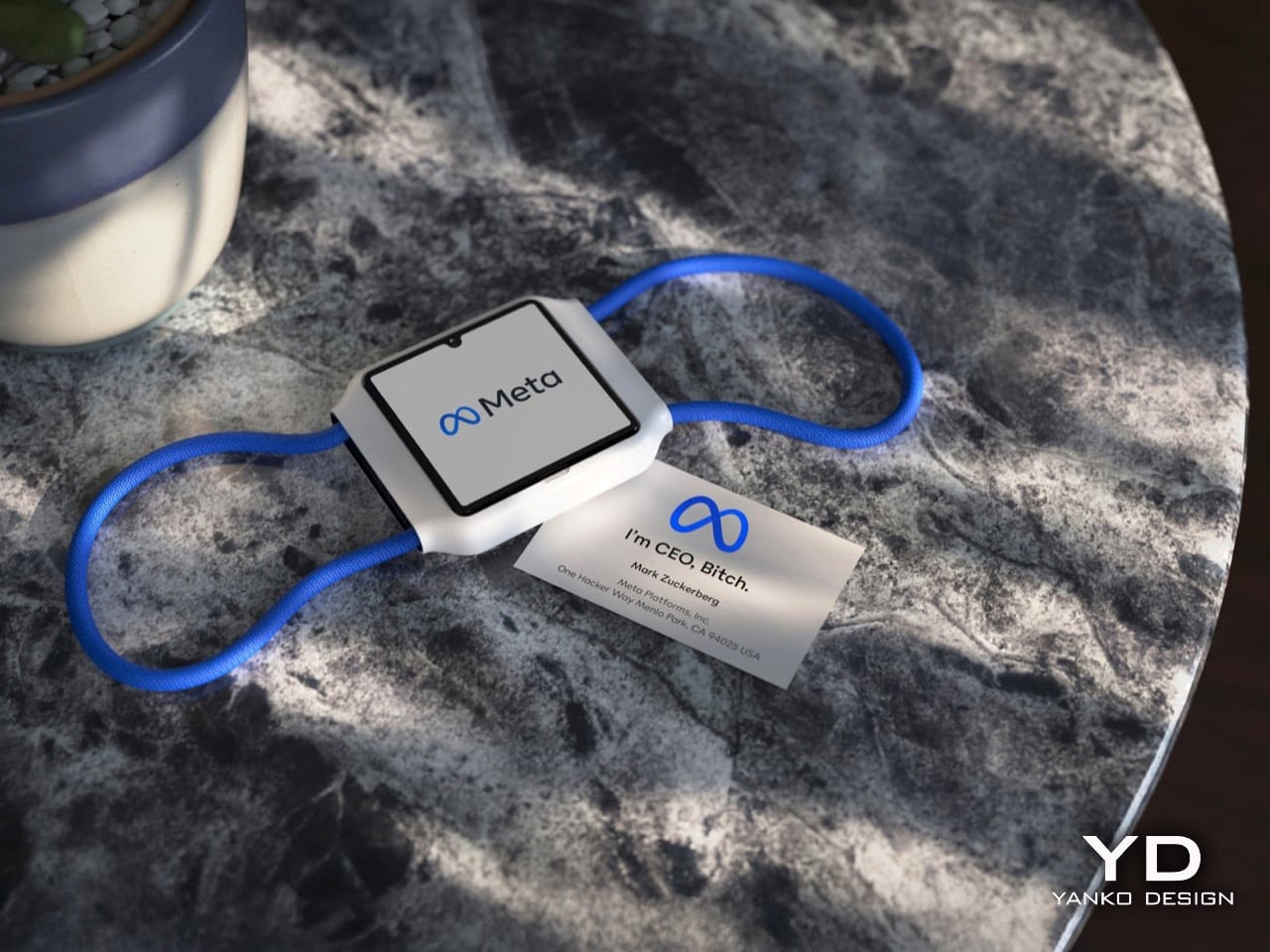
Meta is building a smartwatch, and it wants to know your heart rate, your sleep patterns, your activity levels, and whatever else it can pull from a sensor pressed against your skin all day. The device is codenamed Malibu 2, it’s targeting a 2026 launch, and by most accounts it sounds like a perfectly competent health wearable. The problem isn’t the hardware. The problem is the company attached to it.
This is the same Meta that just faced congressional scrutiny over social media addiction today. The same Meta whose smart glasses are reportedly inching toward facial recognition. The same Meta that filed a patent for Project Lazarus, a system designed to generate posthumous content from deceased users, because apparently your data doesn’t stop being useful to them just because you do. Handing your most intimate biometric information to that company is a case study in one.
Designer: Meta
To be fair, the product itself has a coherent logic behind it. Meta’s Ray-Ban Display glasses have been received surprisingly well by the press, and the neural wristband that ships with them, which uses electromyography to read muscle signals and translate them into gestures, only works with those glasses. That’s a real limitation. A smartwatch that absorbs that gesture-control functionality while adding health tracking and a persistent AI assistant would close a gap that currently makes the whole setup feel incomplete. From a pure product strategy standpoint, Malibu 2 makes sense.
The hardware ambitions have also matured since Meta’s first attempt at a smartwatch, which was scrapped in 2022 after accumulating plans for detachable cameras and metaverse tie-ins that never quite added up to a coherent device. Malibu 2 is reportedly focused on health tracking and Meta AI integration, which is a much cleaner pitch. The company already has a working partnership with Garmin, visible in the Oakley Vanguard sports glasses and a neural band demo at CES 2026 inside a Garmin-powered car concept. If there’s a natural manufacturing and platform partner for this watch, Garmin is the obvious candidate.
Meta is also reportedly developing the watch to sit alongside updated Ray-Ban Display glasses, internally called Hypernova 2, with both devices likely to be unveiled at Meta Connect in September. The Phoenix mixed reality glasses, meanwhile, have been pushed to 2027 partly because Meta’s executives were concerned about releasing too many devices at once and confusing consumers. That’s a reasonable concern. It’s also a little rich coming from a company whose current product lineup already includes smart glasses with a separate neural band that only controls one device.
The wearables market is genuinely ready for a credible third competitor alongside Apple and Samsung, and Meta has the AI infrastructure and the existing glasses ecosystem to make Malibu 2 compelling from launch. But compelling and trustworthy are different things, and Meta has spent twenty years demonstrating which one it prioritizes. Your Apple Watch data sits in Apple’s ecosystem, behind a company that has made privacy a marketing pillar and a legal battleground. Your Malibu 2 data sits with a company that patented a way to keep monetizing you after you die.
Meta is building a smartwatch, and it wants to know your heart rate, your sleep patterns, your activity levels, and whatever else it can pull from a sensor pressed against your skin all day. The device is codenamed Malibu 2, it’s targeting a 2026 launch, and by most accounts it sounds like a perfectly competent health wearable. The problem isn’t the hardware. The problem is the company attached to it.
This is the same Meta that just faced congressional scrutiny over social media addiction today. The same Meta whose smart glasses are reportedly inching toward facial recognition. The same Meta that filed a patent for Project Lazarus, a system designed to generate posthumous content from deceased users, because apparently your data doesn’t stop being useful to them just because you do. Handing your most intimate biometric information to that company is a case study in one.
Designer: Meta
To be fair, the product itself has a coherent logic behind it. Meta’s Ray-Ban Display glasses have been received surprisingly well by the press, and the neural wristband that ships with them, which uses electromyography to read muscle signals and translate them into gestures, only works with those glasses. That’s a real limitation. A smartwatch that absorbs that gesture-control functionality while adding health tracking and a persistent AI assistant would close a gap that currently makes the whole setup feel incomplete. From a pure product strategy standpoint, Malibu 2 makes sense.
The hardware ambitions have also matured since Meta’s first attempt at a smartwatch, which was scrapped in 2022 after accumulating plans for detachable cameras and metaverse tie-ins that never quite added up to a coherent device. Malibu 2 is reportedly focused on health tracking and Meta AI integration, which is a much cleaner pitch. The company already has a working partnership with Garmin, visible in the Oakley Vanguard sports glasses and a neural band demo at CES 2026 inside a Garmin-powered car concept. If there’s a natural manufacturing and platform partner for this watch, Garmin is the obvious candidate.
Meta is also reportedly developing the watch to sit alongside updated Ray-Ban Display glasses, internally called Hypernova 2, with both devices likely to be unveiled at Meta Connect in September. The Phoenix mixed reality glasses, meanwhile, have been pushed to 2027 partly because Meta’s executives were concerned about releasing too many devices at once and confusing consumers. That’s a reasonable concern. It’s also a little rich coming from a company whose current product lineup already includes smart glasses with a separate neural band that only controls one device.
The wearables market is genuinely ready for a credible third competitor alongside Apple and Samsung, and Meta has the AI infrastructure and the existing glasses ecosystem to make Malibu 2 compelling from launch. But compelling and trustworthy are different things, and Meta has spent twenty years demonstrating which one it prioritizes. Your Apple Watch data sits in Apple’s ecosystem, behind a company that has made privacy a marketing pillar and a legal battleground. Your Malibu 2 data sits with a company that patented a way to keep monetizing you after you die.
Magnus Carlsen banging the table. That image alone tells you everything about what Gukesh Dommaraju means to the world of chess right now. At Norway Chess in June 2025, the reigning World Champion, a 19-year-old from Chennai, sat across from the greatest player the game has ever seen and dismantled him in classical format. Carlsen, a man who has made a career out of psychological composure, was so rattled he slapped the table before collecting himself and patting Gukesh on the back. That moment, quiet and electric all at once, was the clearest signal yet that the throne had genuinely changed hands, and that its new occupant had no intention of warming it for anyone else.
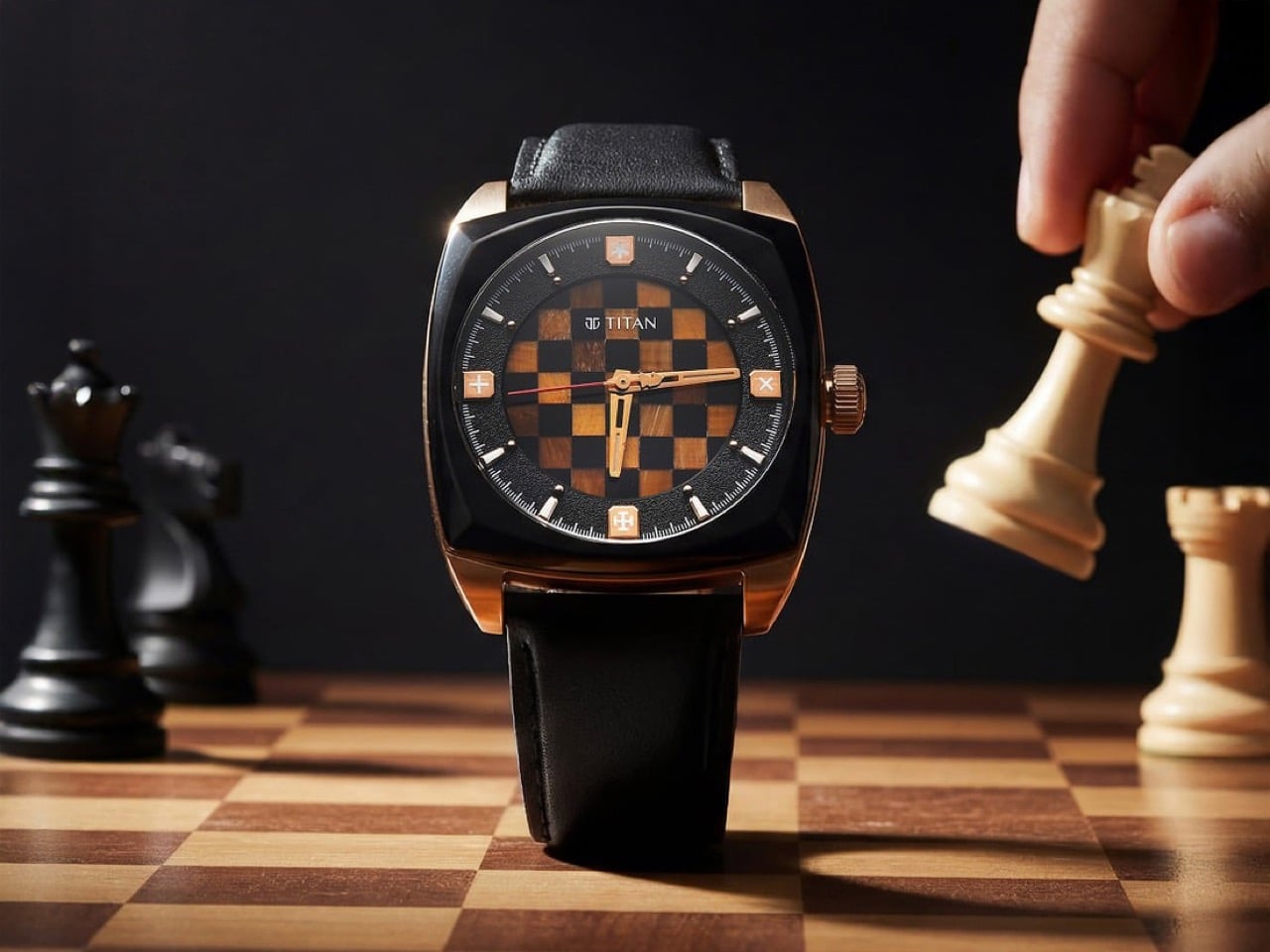
Titan was paying attention. The Indian watchmaker’s “Titan of the Year” platform exists precisely to freeze moments like this in metal and mineral, and for 2026 they had an obvious, irresistible choice. The result is the Grandmaster X Gukesh Dommaraju Special Edition, a 500-piece limited run that takes the geometry, hierarchy, and quiet intensity of chess and presses it into one of the most thoughtfully designed Indian watches in recent memory.
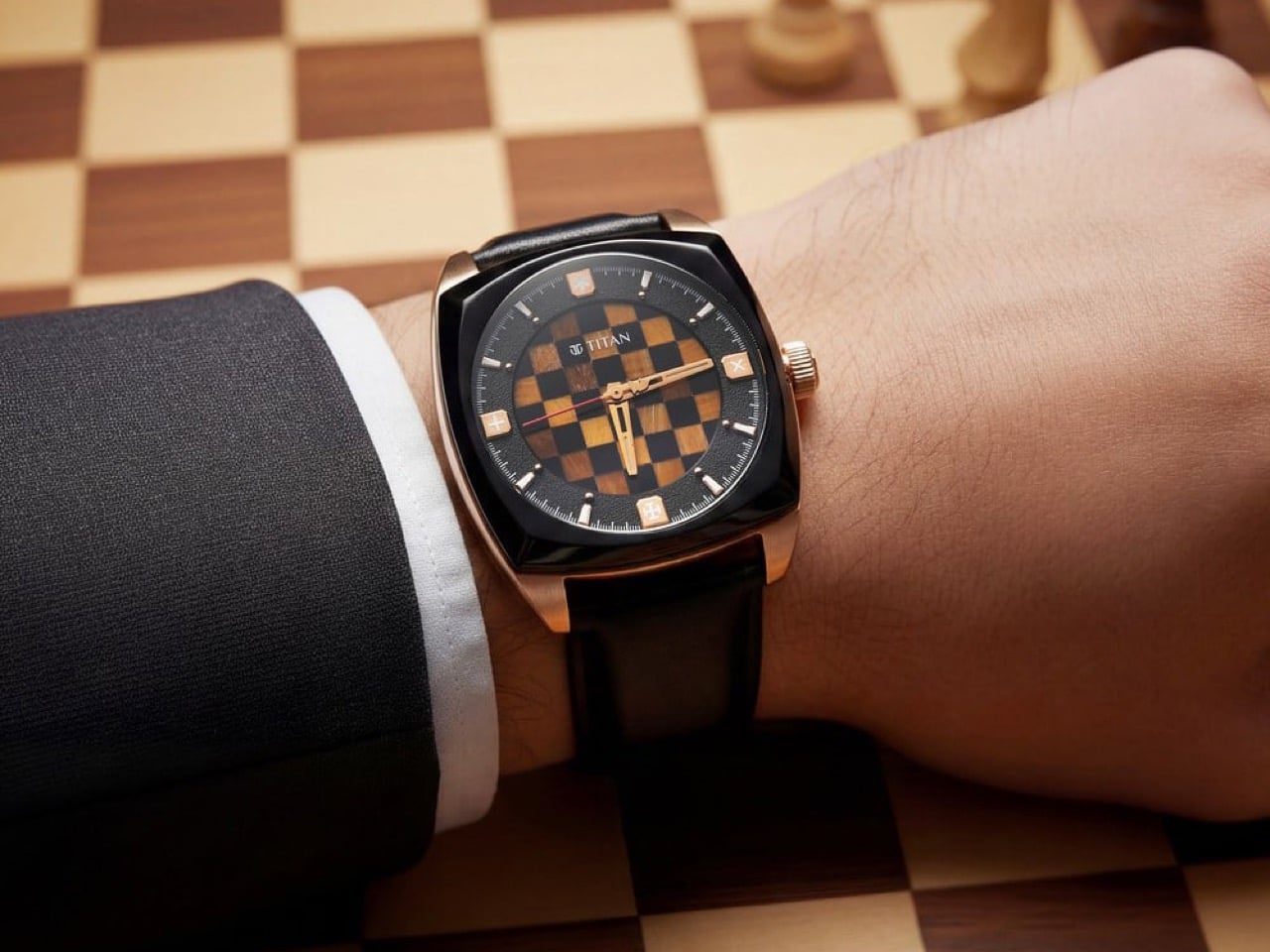
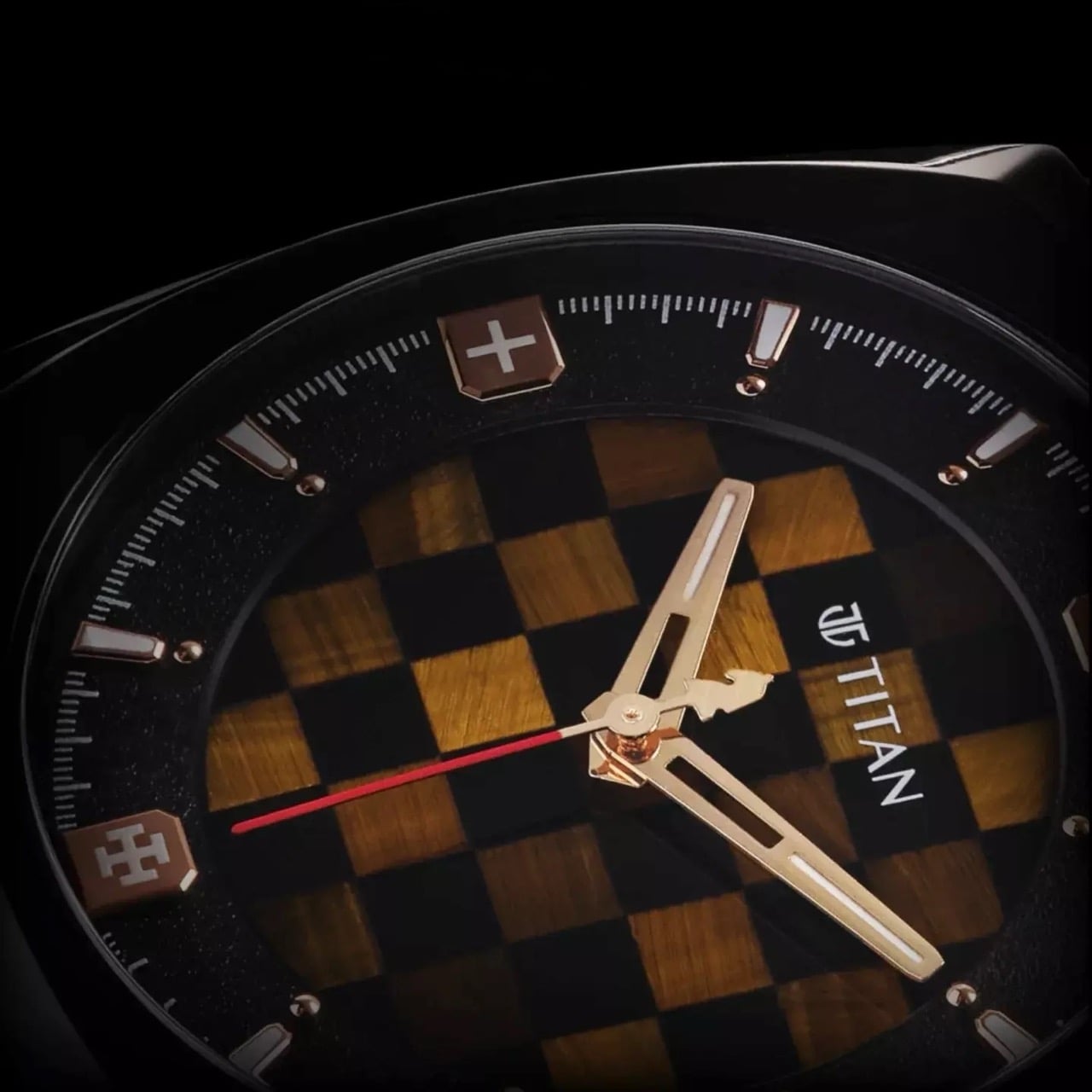
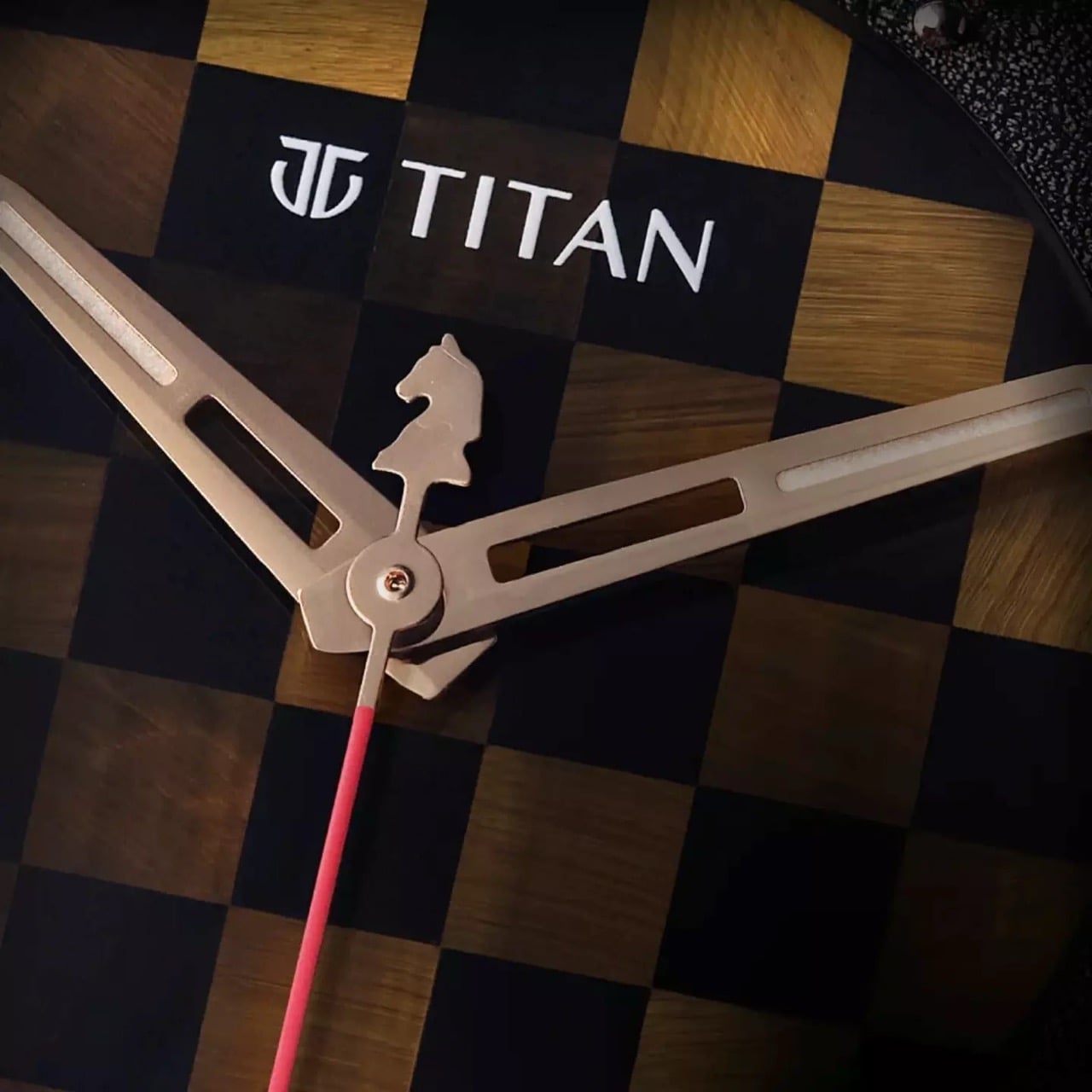
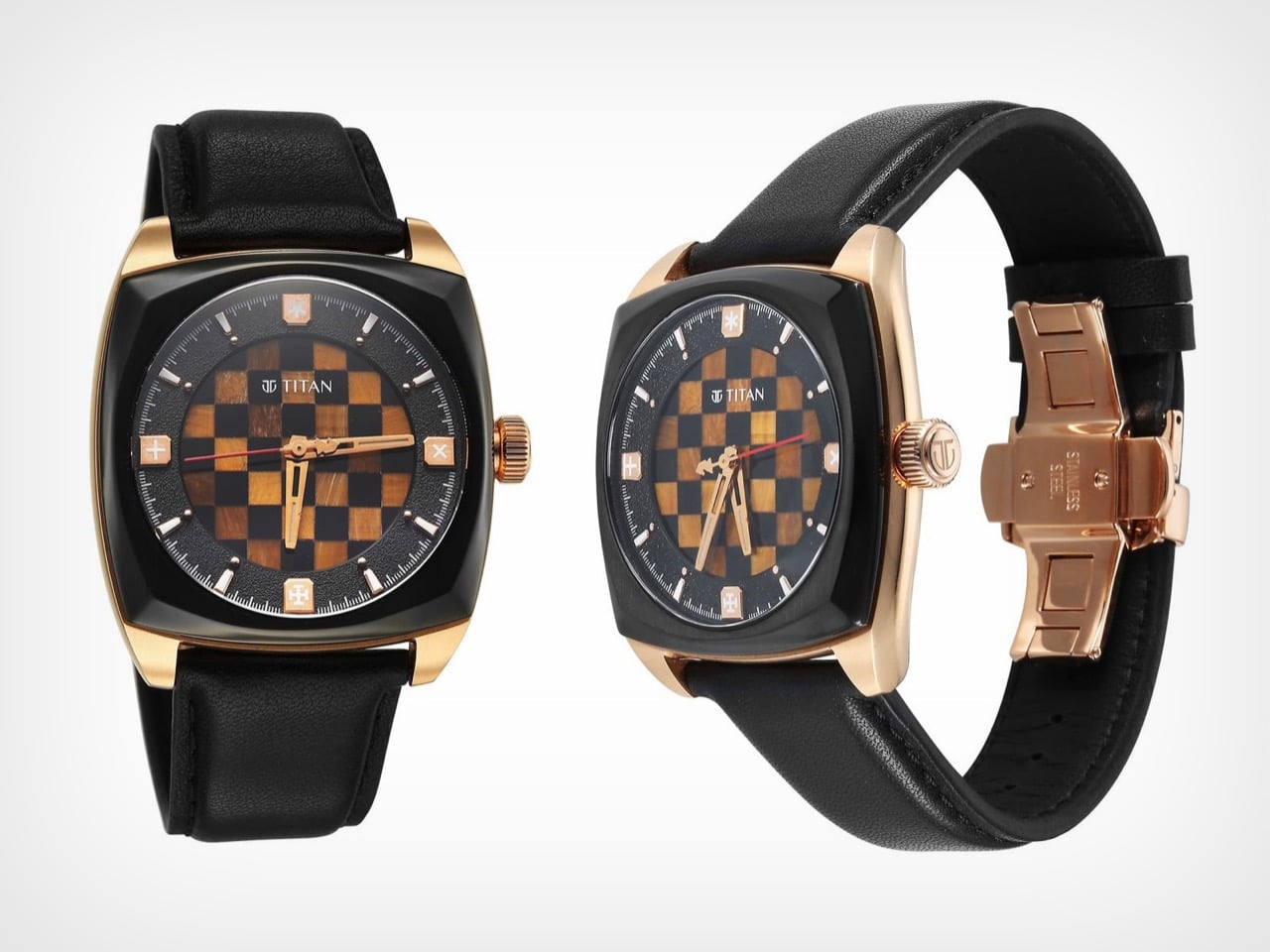
The centerpiece of the watch, quite literally, is the dial. Titan’s design team went well beyond printing a chessboard pattern on a disc and calling it a day. The dial is a hand-crafted stone marquetry composition in tiger eye and black agate, two minerals with very different personalities that together produce the warm amber-and-dark-grid texture of a real wooden chess board. Closer inspection rewards patience, and the design team clearly understood that a chess player’s watch should reveal itself the same way a brilliant move does: slowly, deliberately, with growing appreciation.
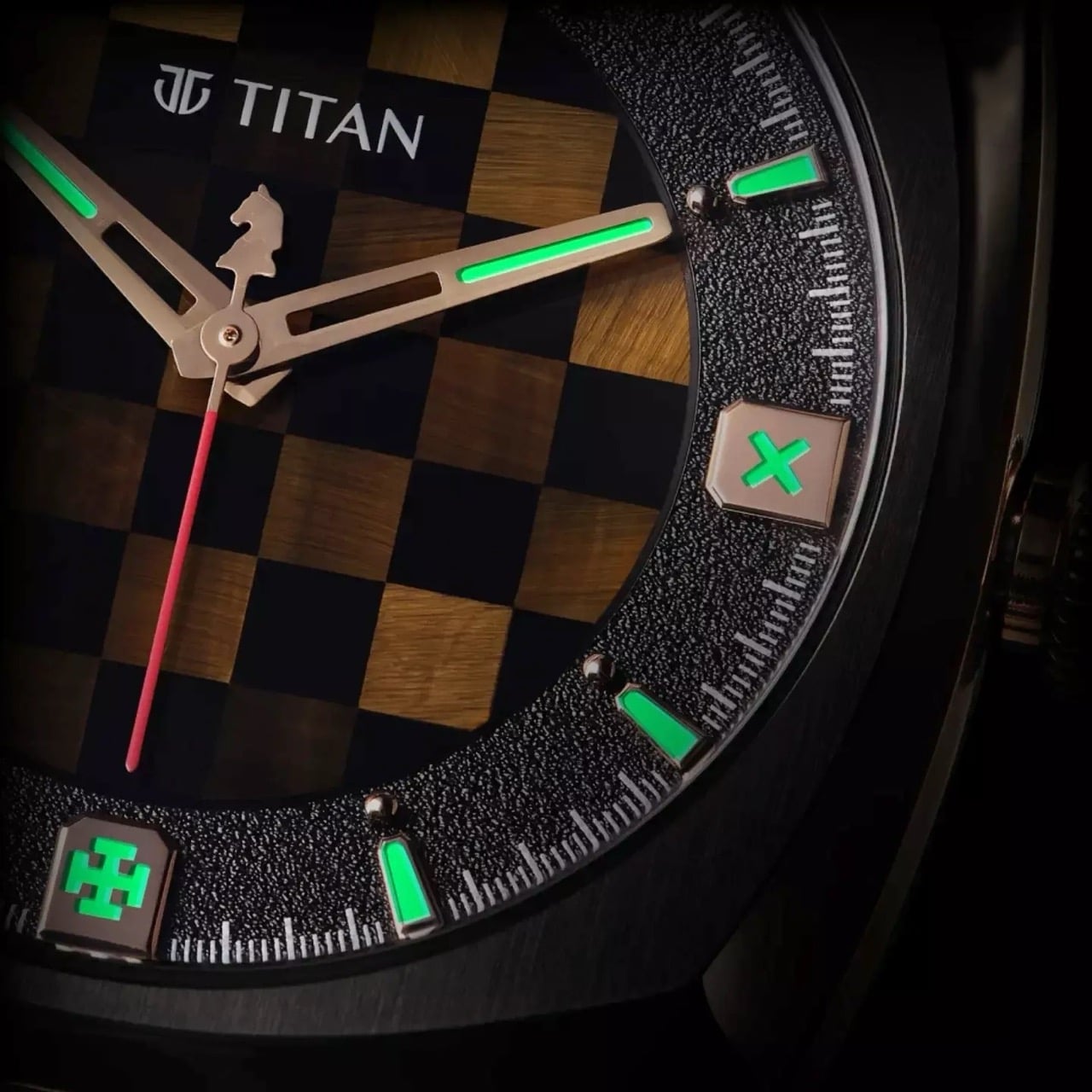
The hour indices follow the movement logic of chess pieces. The Queen sits at 12, the Rook at 9, the Bishop at 3, and the King at 6, while the remaining markers take the shape of pawns. The red seconds hand carries a Knight counterpoise, a nod to Gukesh’s favorite piece on the board. Every glance at the time becomes a subtle re-engagement with the game. Then the lights go out, and the watch transforms entirely. The lume application on this dial is genuinely dramatic. The chess piece indices, rendered as sculpted rose-gold markers with lume fills, blaze a vivid green against the dark textured chapter ring. The hands, with their open-worked cutouts, carry the same green charge.
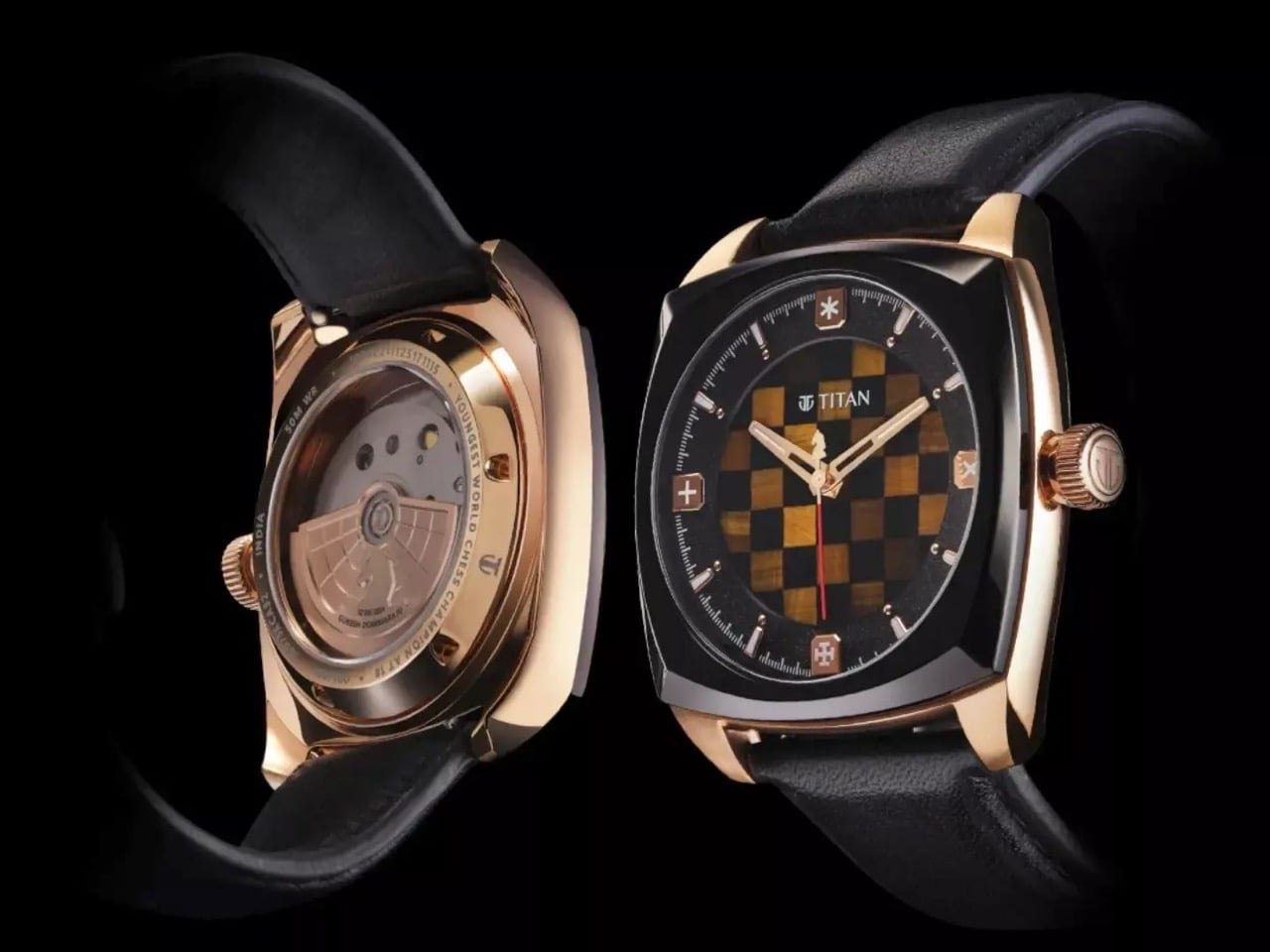
The case is 316L stainless steel with a rose-gold finish, warm and contemporary without being flashy, much like the man it honors. A sapphire crystal sits over the dial, and the whole thing rides on a calf leather strap with a butterfly clasp. Flip it over and the caseback gives you the real collector’s moment: a rotor embossed with the Grandmaster Knight motif, personally signed by Gukesh, alongside the inscription marking his achievement as the youngest World Chess Champion at 18.
Inside, Titan’s in-house calibre 7A20 automatic movement does the work, 22 jewels, 40-hour power reserve, and entirely built without outsourcing the mechanical heart of the watch. That’s a point of pride for Titan, and rightly so.
The watch ships in specially designed packaging with a personal note from Gukesh, and it’s priced at Rs. 69,995 (roughly $840). With only 500 pieces in existence, each one numbered, this is a watch that exists at the intersection of cultural moment and material craft. Whether you’re a chess obsessive, a collector of Indian design milestones, or someone who appreciates a dial that rewards long, careful attention, the Grandmaster X Gukesh is already playing its own quiet, masterful game.
Your wrist might be the most underutilized piece of real estate you own. Most smartwatches promise everything at your fingertips, tracking steps and heart rate while delivering notifications in real time. But what happens when you need to fix something physical, tighten an actual screw, or open a stubborn bottle? That digital magic suddenly feels pretty limited. Remember that bonkers Smartlet concept from CES that tried cramming an Apple Watch AND a Rolex on your wrist? Weird execution, brilliant insight. The watch strap has serious potential as a wrist-borne utility belt, and Woods Design seems to have cracked the code with something actually wearable.
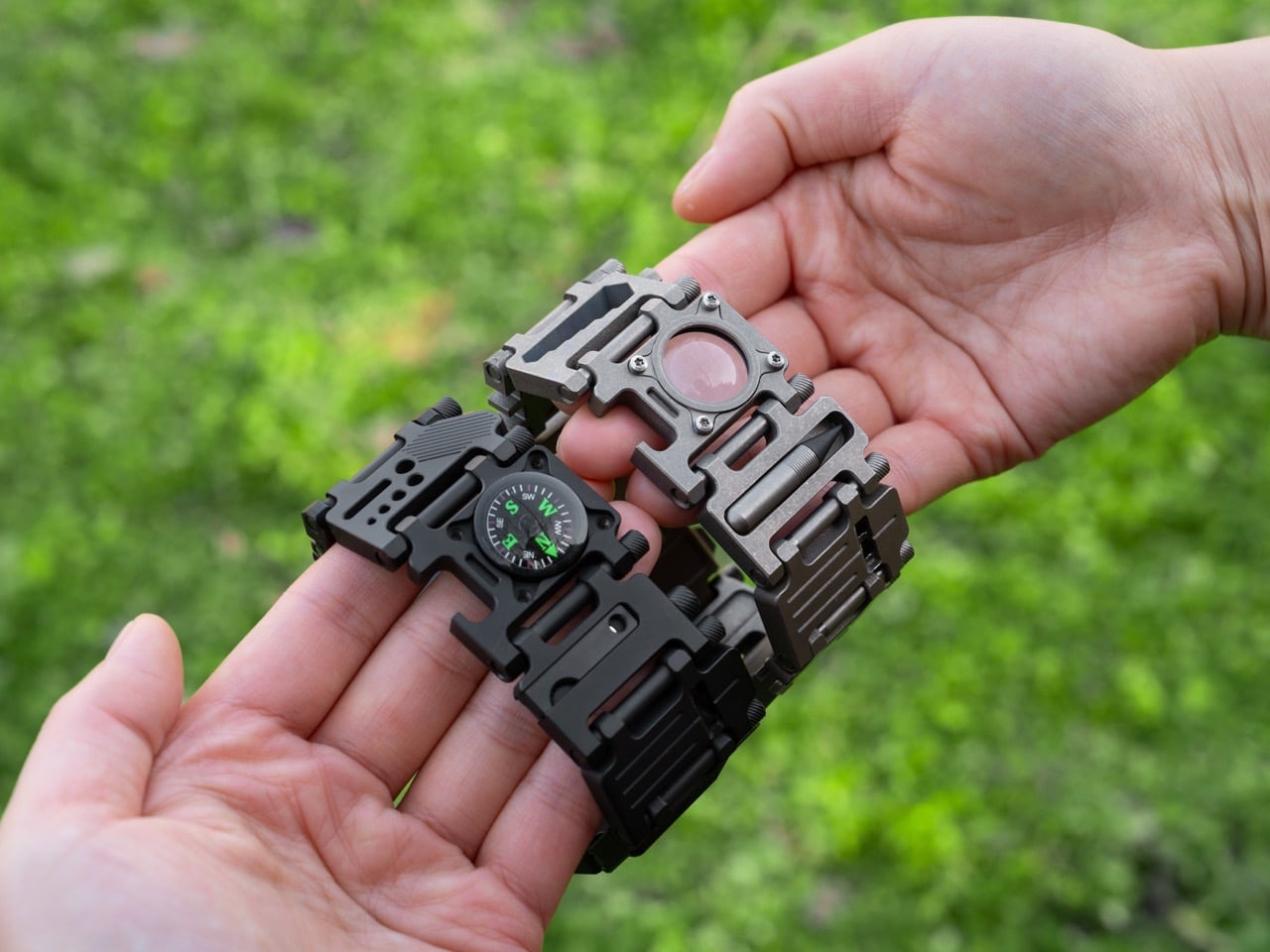
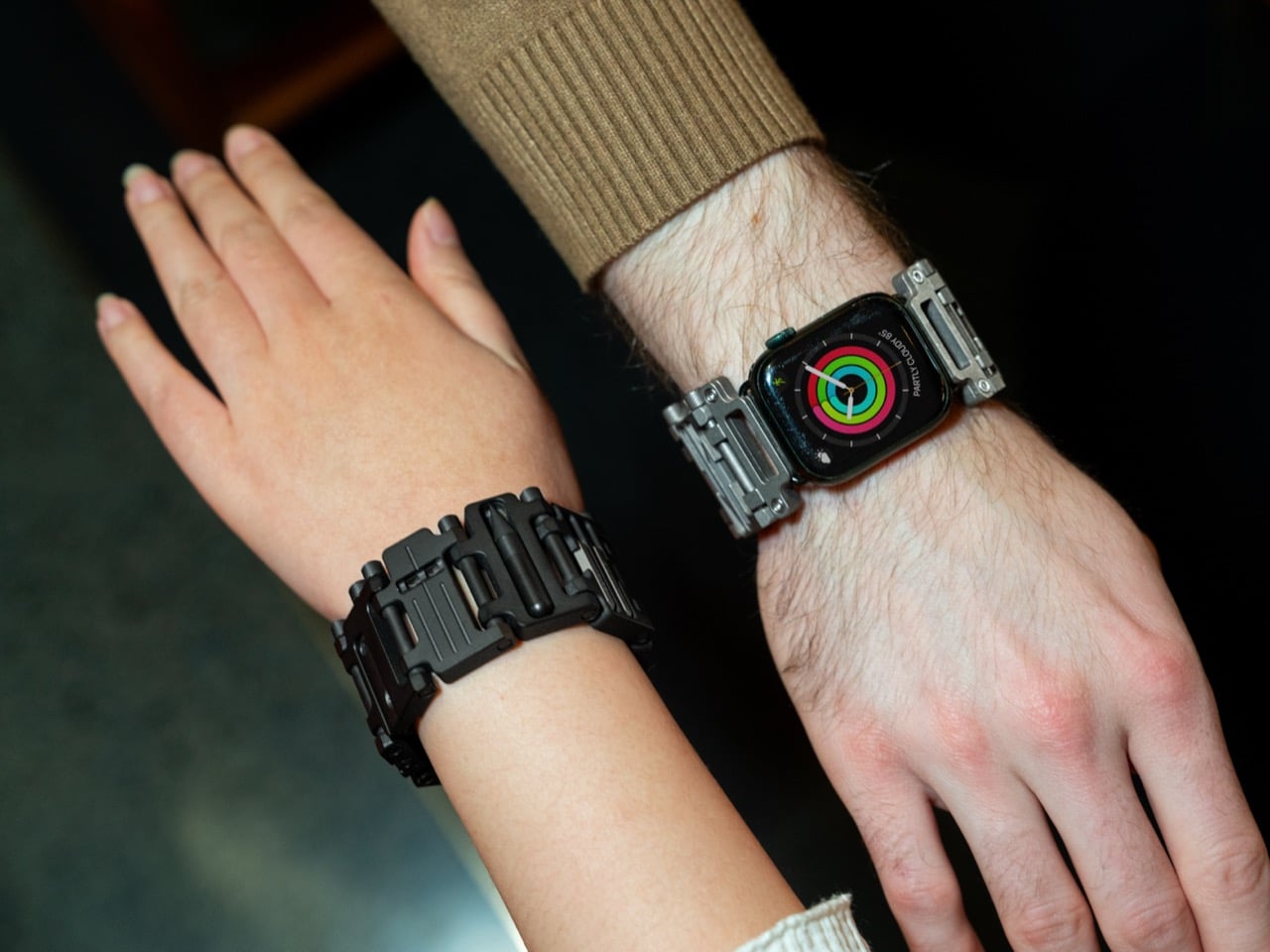
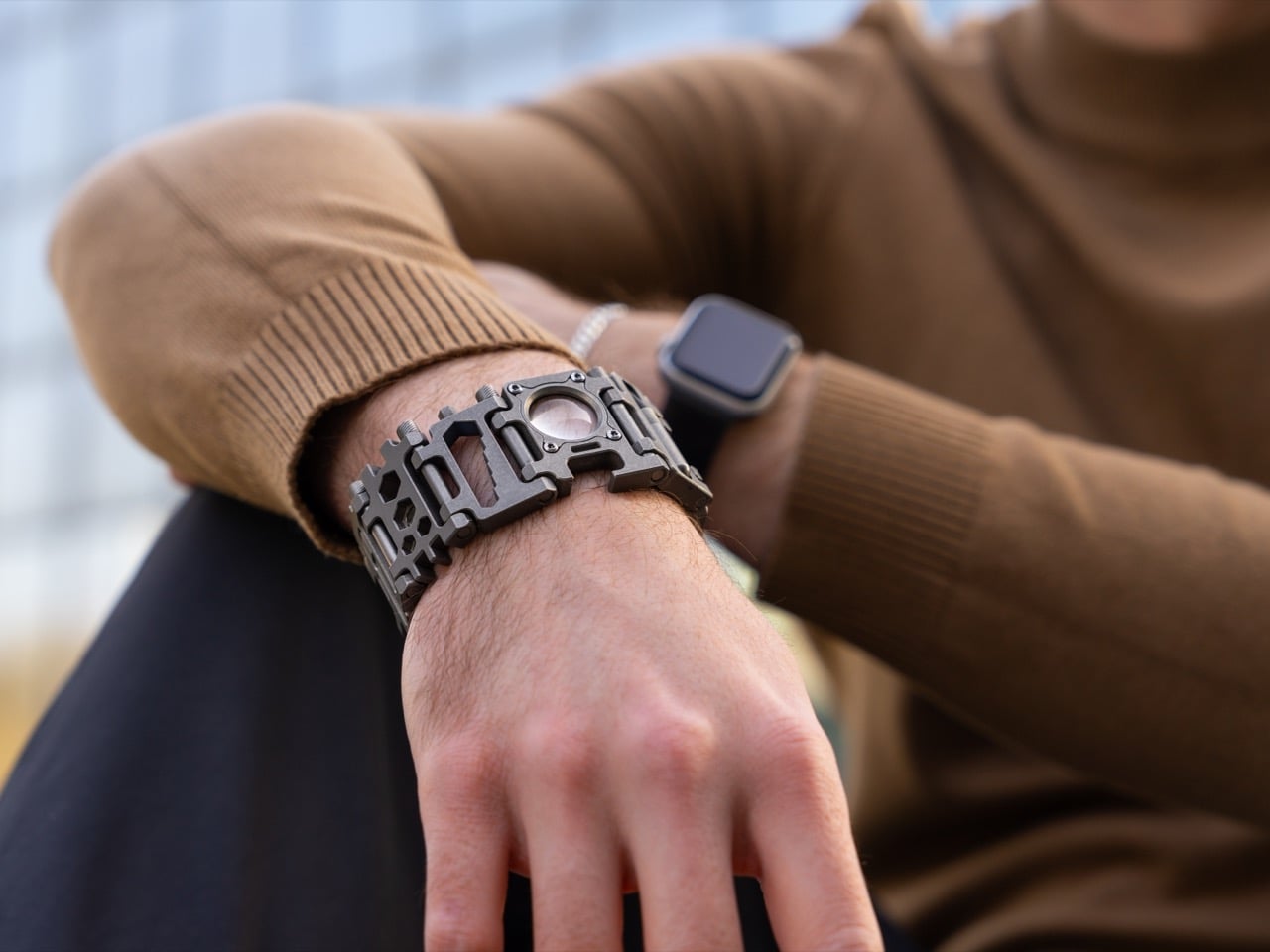
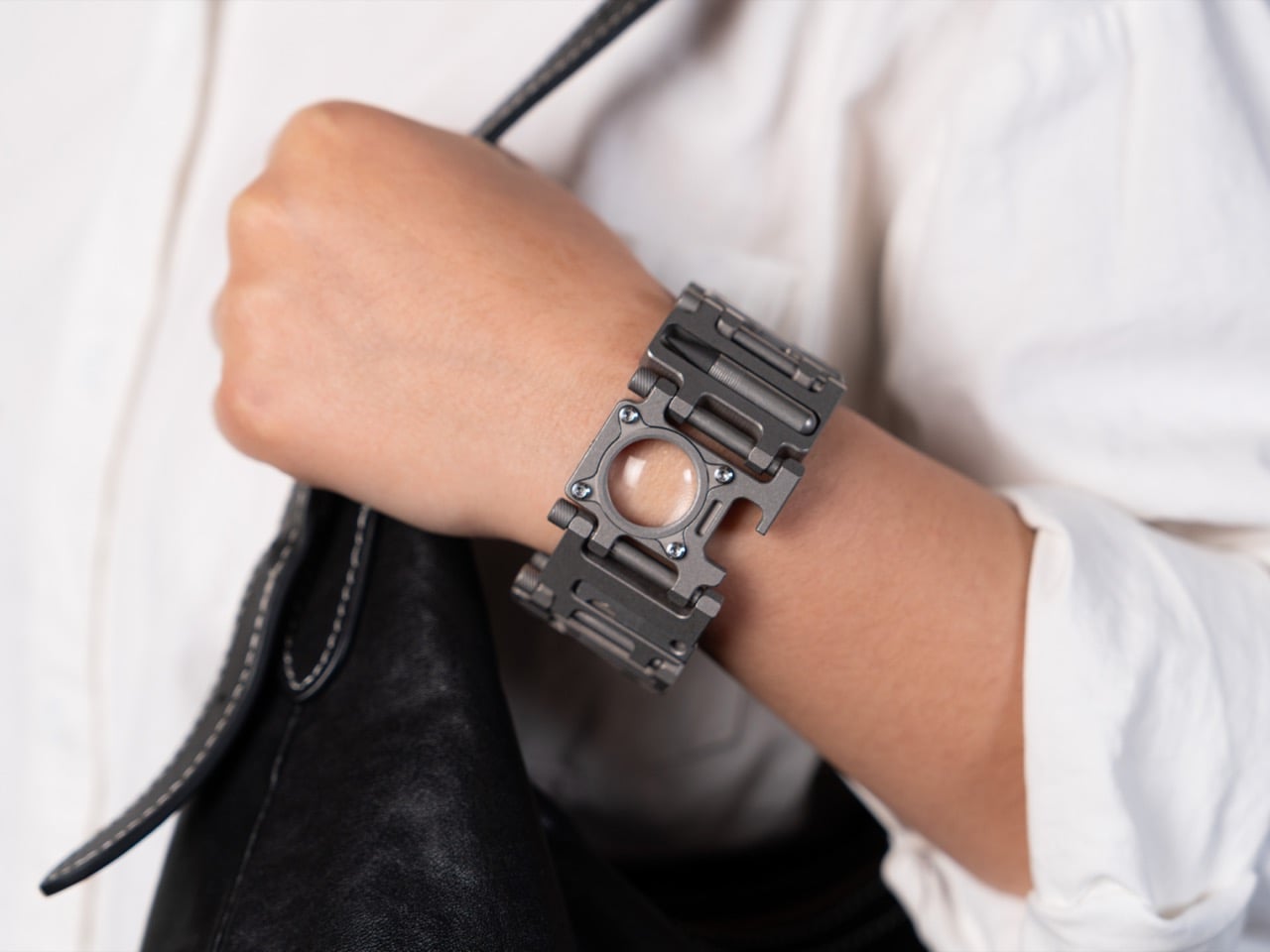
The TiLink is a 24-in-1 titanium bracelet that doubles as a watch strap, creating this interesting yin-yang of capabilities. Compatibility spans across all watches with lug widths between 18-26mm, which means the TiLink can attach to the Apple Watch as well as Garmin, Samsung, Google Pixel, and analog watches. One side tracks your biometrics and messages, the other has screwdrivers, wrenches, a magnifier, and a fire starter machined from aerospace-grade titanium. Full transparency: you’re probably not getting through airport security without some explaining, and this definitely isn’t for minimalists. But for EDC enthusiasts who love flaunting their gear, or anyone who believes in being prepared for whatever life throws at them, this bracelet does something clever. Instead of just holding your device, the strap itself becomes the utility belt, merging analog preparedness with digital functionality in one surprisingly balanced package.
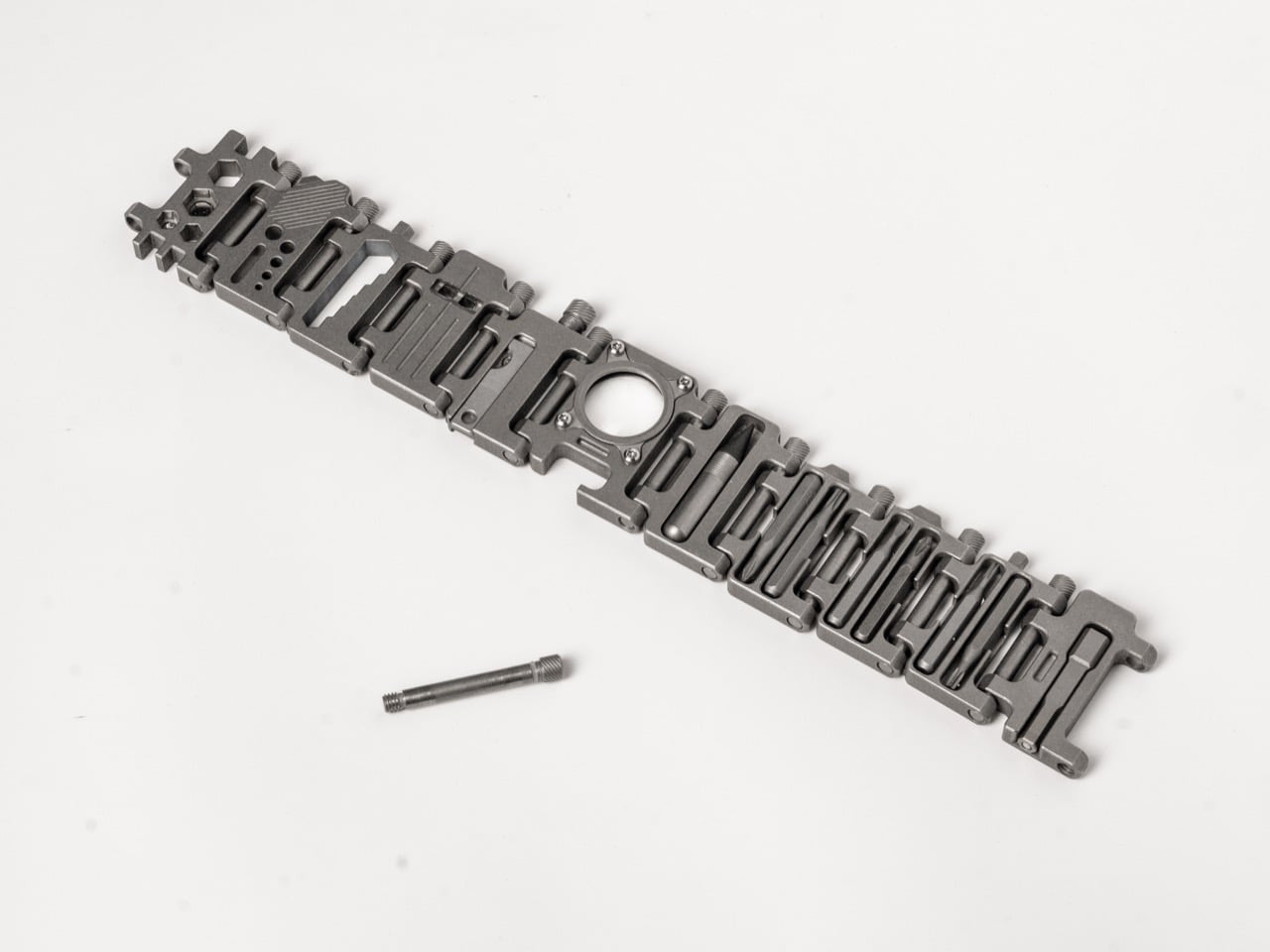
Woods Design chose GR5 titanium, the aerospace-grade stuff that shows up in aircraft components and surgical implants. The entire bracelet weighs just 138.8 grams despite packing 24 tools across 230.5mm of length. That’s lighter than most steel watches while being significantly stronger and completely corrosion-resistant. Every link gets CNC-machined for precision, which means tight tolerances and smooth articulation that stays consistent over time. The 35mm width sounds chunky on paper but makes sense once you see how the tools integrate into each module. Your Apple Watch will become obsolete e-waste in five years while this thing keeps working indefinitely.
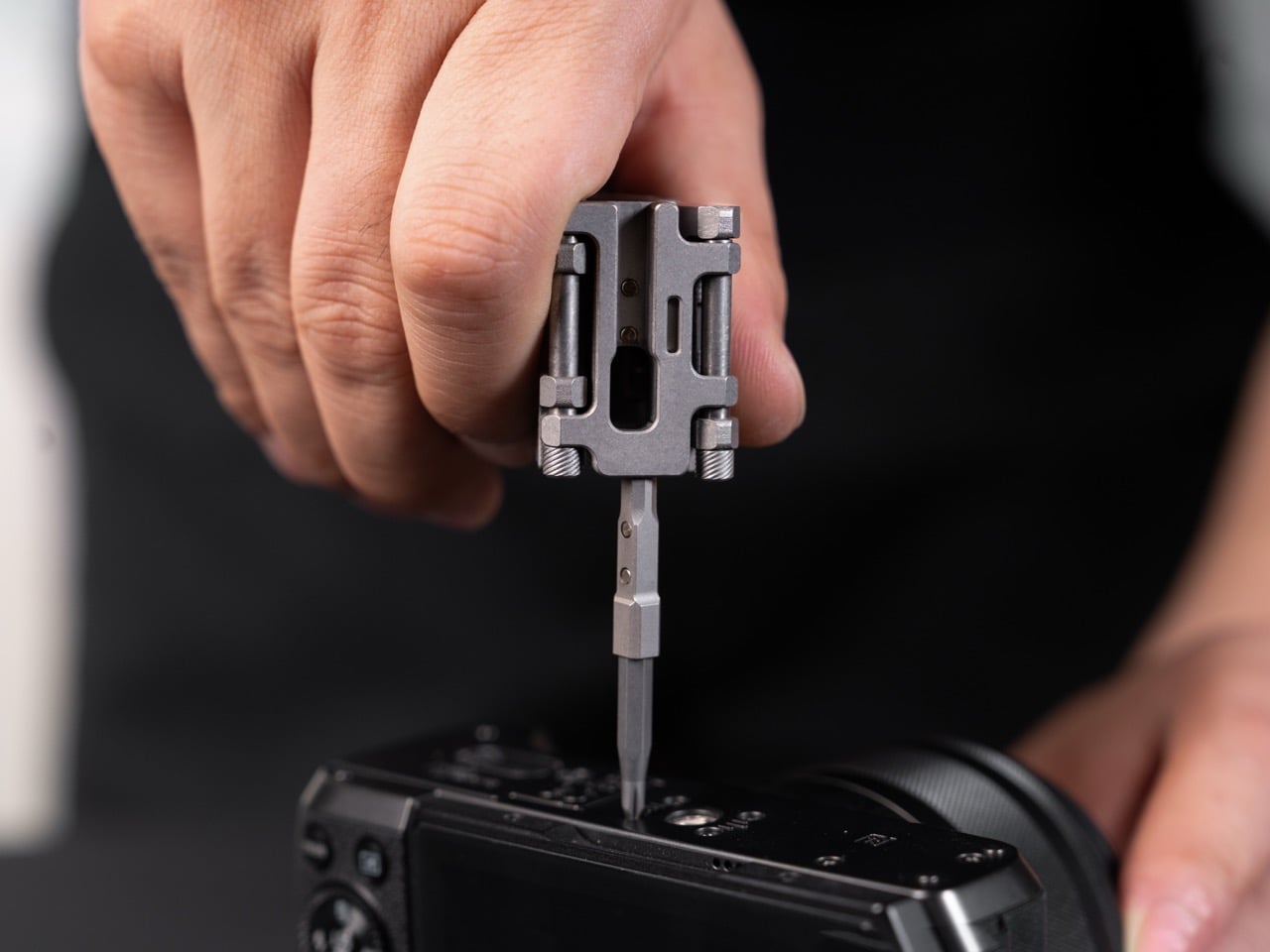
Three flathead screwdriver sizes (SL3, SL4, SL5) integrate directly into the bracelet structure, covering everything from eyeglass screws to home appliance panels. Hex bit holders accept both 4mm precision bits and 6.35mm standard bits, giving you genuine versatility instead of that fake multi-tool marketing where one size supposedly handles everything. The 4mm bit extension bar reaches recessed screws in tight positions without needing adapters or workarounds. You can swap bits on the fly, choosing configurations based on what you actually need that day. Eyeglass adjustments, toy repairs, electronics tinkering, small hardware fixes, all the annoying little tasks that require tools you never have handy.
An adjustable wrench covers M4 to M8 nuts and bolts, replacing an entire wrench set with one modular link. Traditional hex wrenches deliver solid torque but disappear into drawers and take up pocket space. Mini versions fit on keychains but lack leverage and get lost in couch cushions within days. This integration gives you proper wrench functionality without the carry hassle. The spoke wrench includes three sizes (3.6mm, 3.9mm, 4.4mm) for common spoke nipples, which tells me they actually consulted cyclists during design. Roadside wheel truing without carrying a separate tool bag changes the calculation for anyone who rides regularly and has dealt with wonky spokes mid-ride.
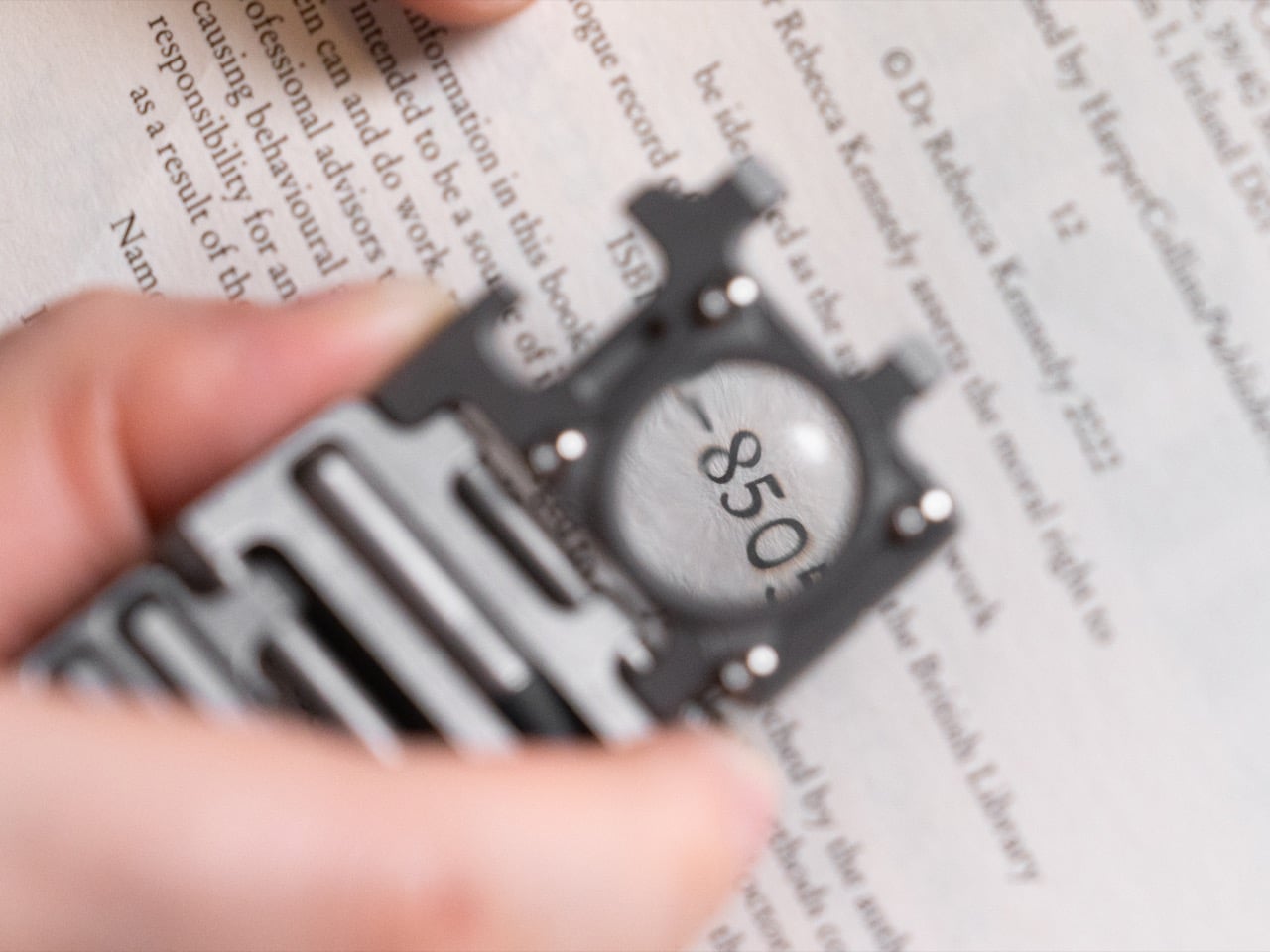
A built-in magnifier handles small text, component inspection, or marking verification without pulling out your phone and fumbling with zoom controls. The eternal pen requires zero refills, won’t leak ink all over your stuff, and stays permanently attached so it can’t vanish. I’m honestly uncertain how often I’d write with a bracelet pen, but jotting quick notes or reminders beats typing on a phone screen when your hands are already busy. The double-hole survival whistle produces louder, sharper sound than standard single-hole designs, making it effective for emergencies, signaling in crowds, or outdoor scenarios. Being permanently integrated means you can’t lose it, unlike those keychain whistles that fall off within a week.
Fire starting capability feels niche for urban carry but makes perfect sense for actual preparedness. The striker produces sparks without fuel or batteries, and a rubber o-ring seals the compartment against moisture. For camping, hiking, emergency kits, or survival situations, having a fire starter that physically cannot run out of fuel beats carrying lighters or matches. For everyday city life, you’ll probably never use it. Here’s where the modular design earns its keep: remove the links you don’t need, keep what you actually use. The bracelet adapts to your reality instead of forcing you to carry someone else’s idea of essential tools.
A nail file smooths rough edges or tidies nails when needed. Wire gauge holes measure five common sizes (3.5mm, 3mm, 2.5mm, 2mm, 1.5mm) accurately without needing dedicated calipers. The bottle opener works exactly as expected, which sounds mundane until you need one and realize your entire keychain, wallet, and pockets contain zero bottle-opening capability. These small inclusions prevent those specific frustrating moments where you’re almost prepared but missing one crucial thing. They fill the gaps between major tools without adding bulk or complexity.
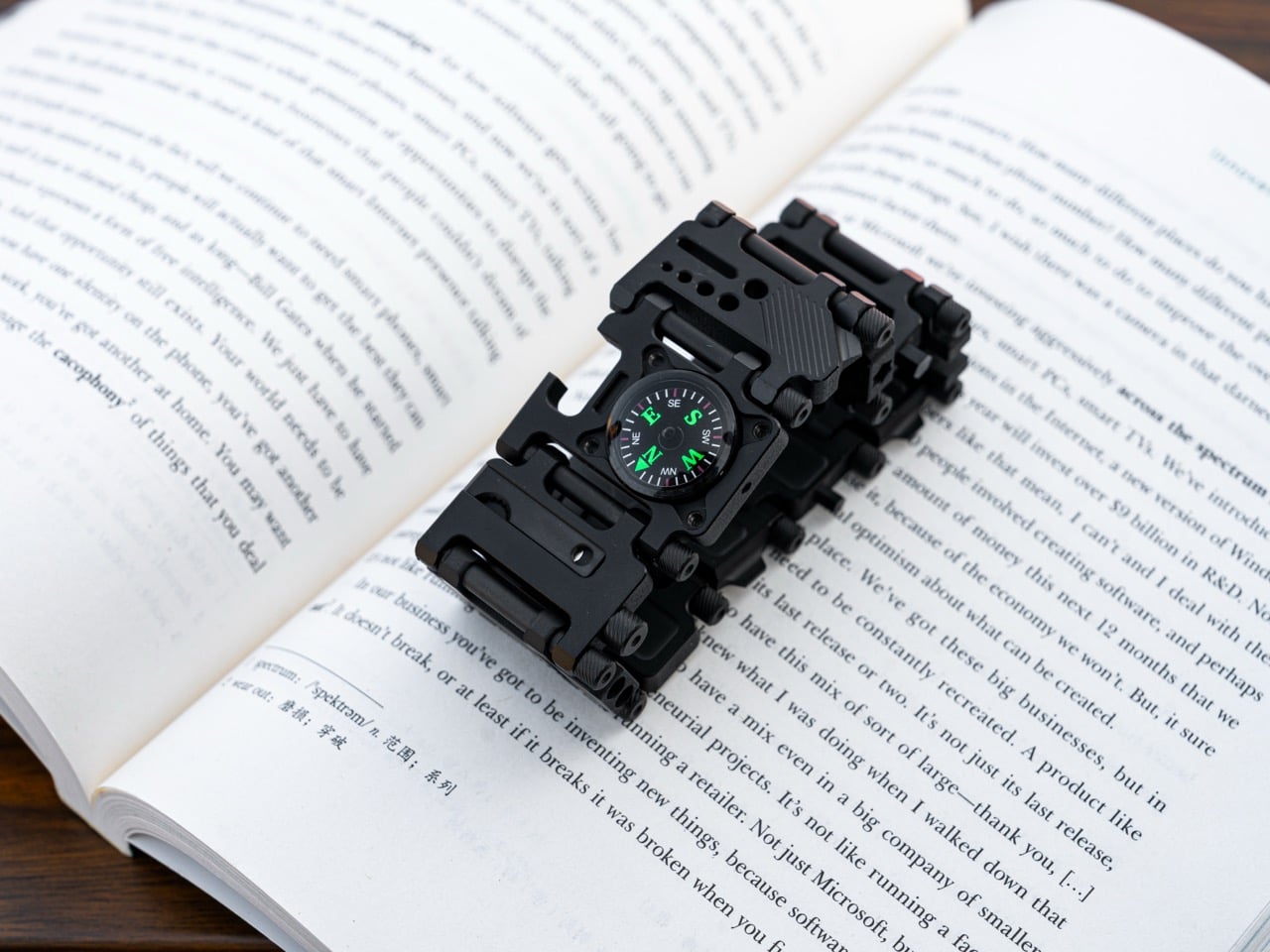
Two optional modules extend the system further. A liquid compass uses premium white mineral oil for smooth operation and minimal temperature sensitivity, staying functional across a wide range of conditions. Sliding it off the bracelet and placing it on the ground eliminates magnetic interference from other tools, giving you accurate readings. When GPS satellites become unreliable or your phone battery dies at the worst possible moment, having mechanical directional finding matters. Tritium tube slots (1.5mm x 6mm) accept glow inserts that work continuously for 25 years without batteries, charging, or external light exposure. That’s legitimate low-light visibility plus understated aesthetic appeal for people who appreciate functional details.
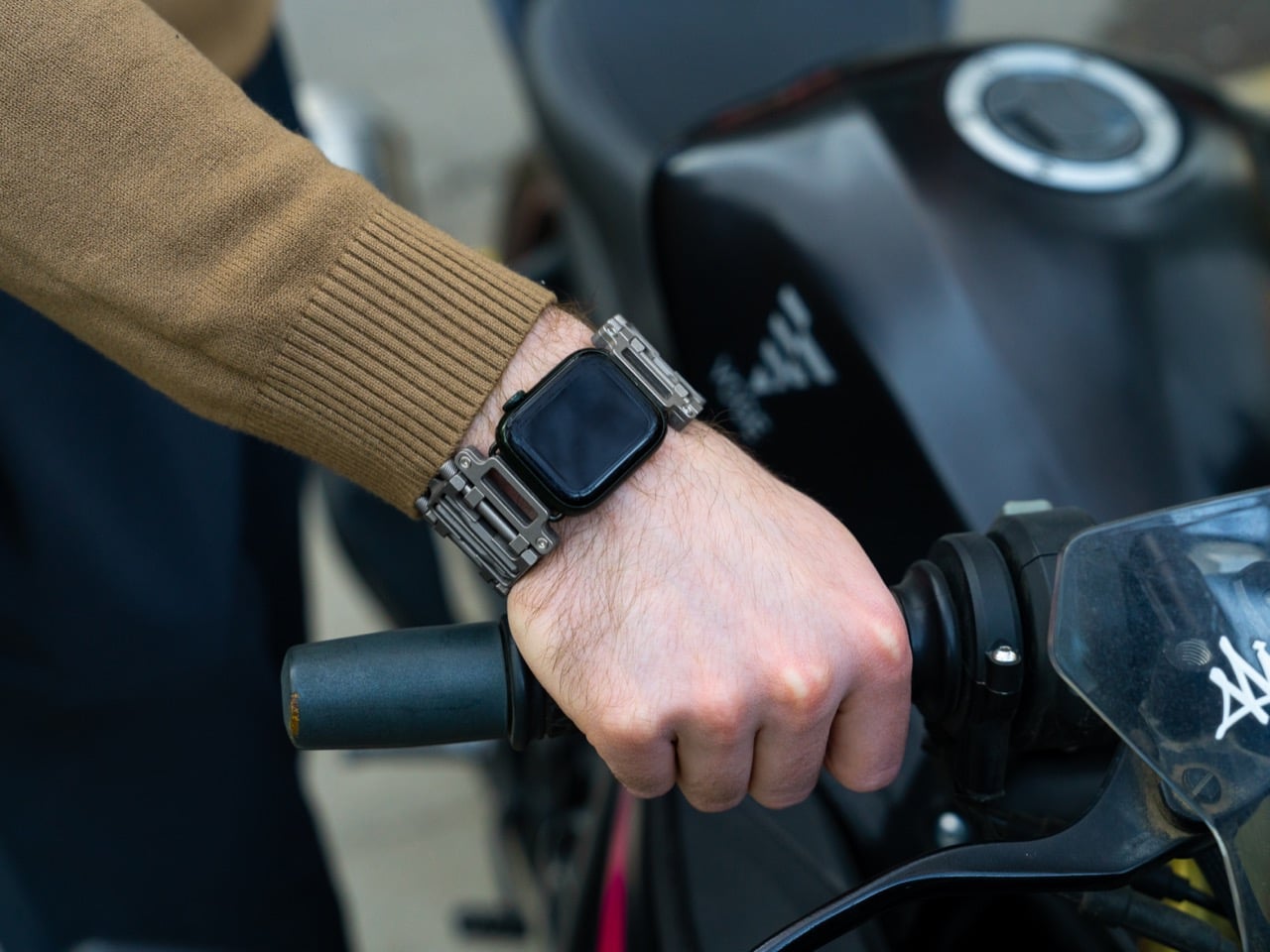
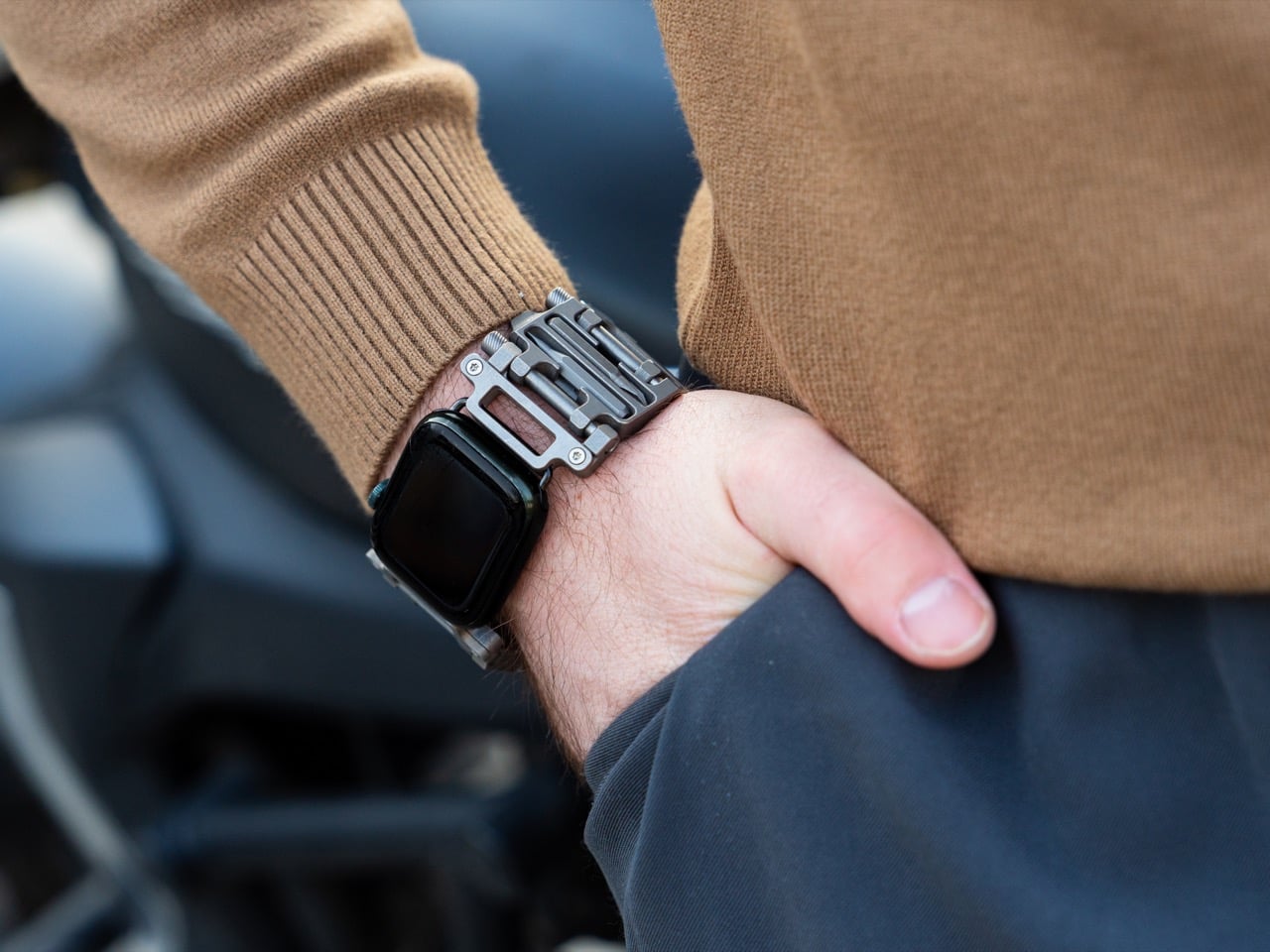
Apple Watch connectors transform the entire premise. Any Apple Watch model attaches and locks securely into place without extra tools or complicated procedures. This creates a genuine hybrid: your watch handles notifications, fitness tracking, payments, and connectivity while your band contains physical tools for fixing actual things. Digital and analog utility coexist on the same wrist, each handling what it does best. When you need to check your heart rate and tighten a loose screw within the same five minutes, having both capabilities right there makes a surprising amount of sense. That being said, the Watch integration isn’t mandatory – you can still wear the TiLink as a regular bracelet too, keeping your smartwatch unencumbered by these massive new responsibilities.
Each link connects and disconnects cleanly for tool-free size adjustment. Add links for a looser fit, remove them for tighter wear, customize tool selection while you’re at it. The precision machining ensures every link articulates smoothly and maintains consistent tolerances, which matters for something rubbing against your wrist all day. You’re essentially building a custom toolkit that also happens to be a watch band, selecting exactly the modules you’ll actually use instead of carrying a pre-configured set that includes stuff you’ll never touch.
As with every EDC, this watch strap has a time and place, and I’m not entirely sure if wearing this universally would work (the same way carrying a Swiss Army Knife everywhere is a tad risky). For example, airport security will absolutely flag this. TSA agents see a metal bracelet with integrated tools and fire-starting capability, they’re pulling you aside for additional screening. Office environments, malls, and public transit systems might consider it too tactical depending on where you live. But for EDC enthusiasts, makers, cyclists, outdoor types, or anyone who regularly encounters small problems requiring tools, wrist-mounted organization beats pocket clutter or carrying bags just for gear. Woods Design built something that respects both form and function, achieving a balance that’s surprisingly rare in products that usually sacrifice one for the other.
Pricing starts at $179 for early backers, hitting $199 at standard retail for the titanium version. Quality titanium watch bands that do nothing except hold your watch regularly cost $150 to $300, so you’re paying a comparable rate for the band itself while getting 24 integrated tools as a bonus. An aluminum version exists at $89 for people who want the functionality without premium material costs. Individual modules run $19 each if you prefer building your configuration gradually or testing the concept before committing to a full bracelet. Single modules come with paracord so you can wear them immediately as standalone pieces.
Casio G-Shock line has seen so many variants over the years, still they feel refreshing every time a new version is released. The hand-forged tsuiki edition is one of their unique releases that’s forged by a single Japanese master edition. Each one of them is unique with hammer-print bespoke patterns, and Casio nailed the craft using titanium alloy and the DLC coating.
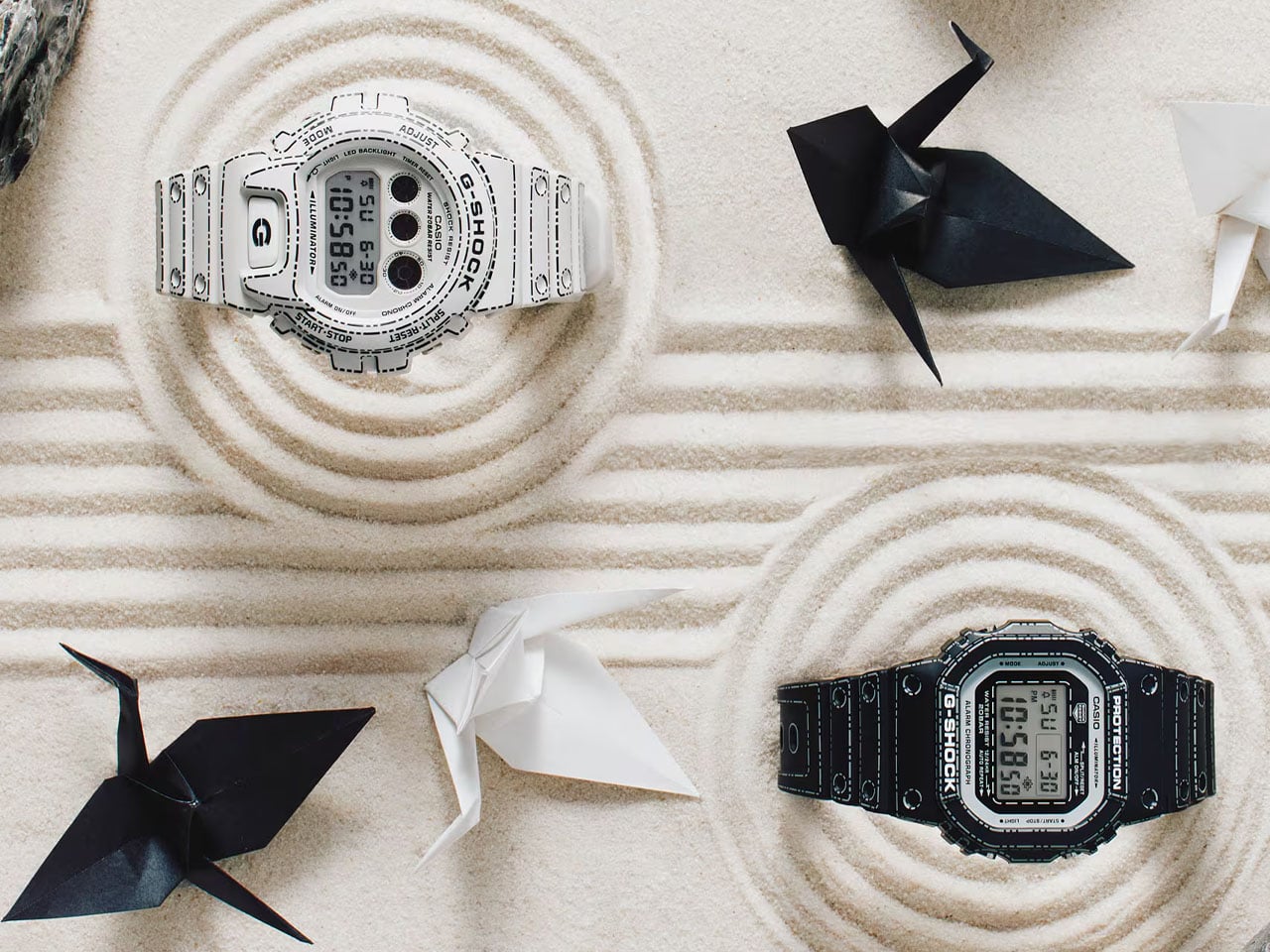
Now another edition showcases the brand’s love for Japanese artistry with two origami inspired variants. Although these are not hand built or carry the bespoke design element, still they are unique in their own rights.
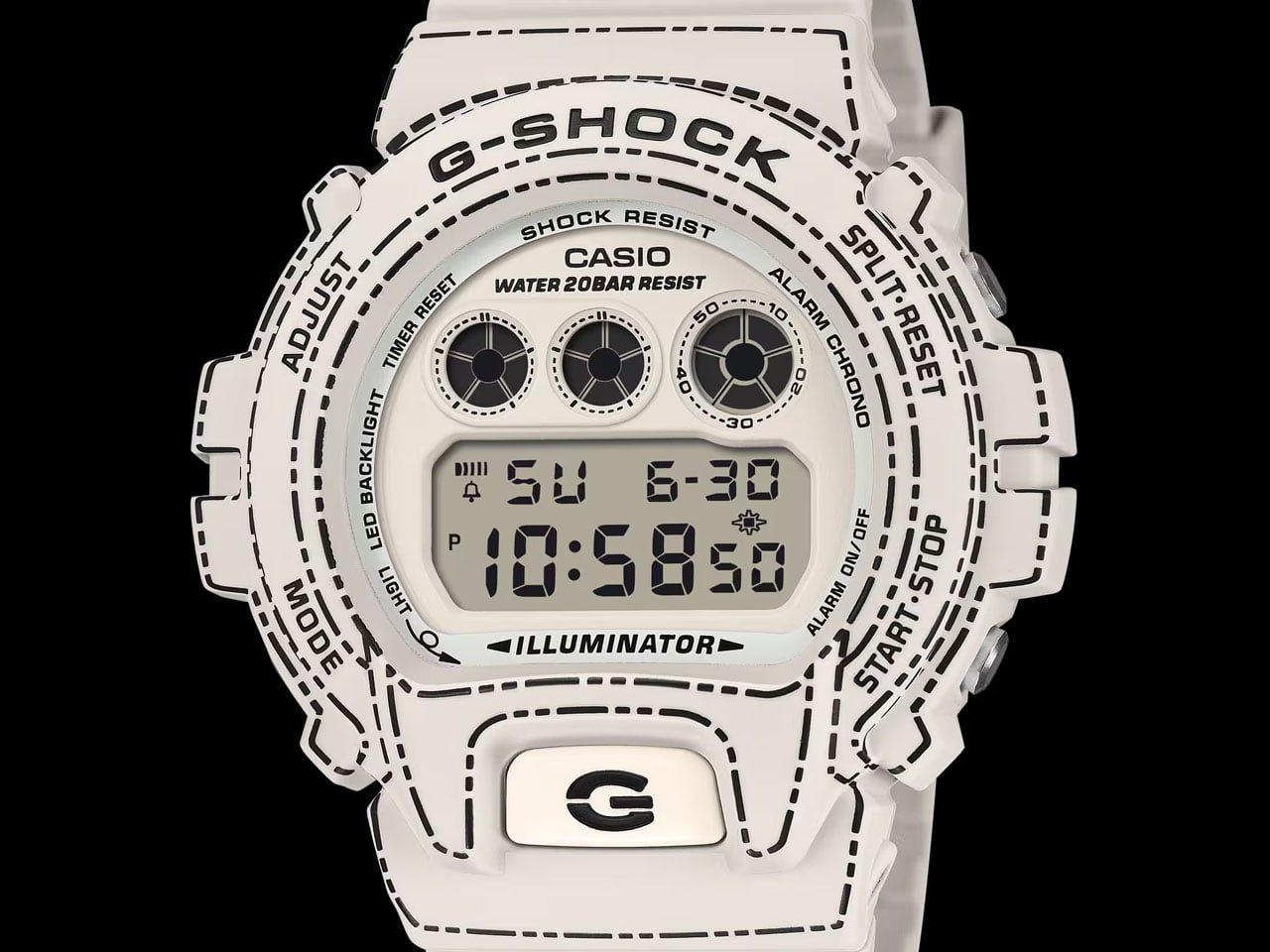
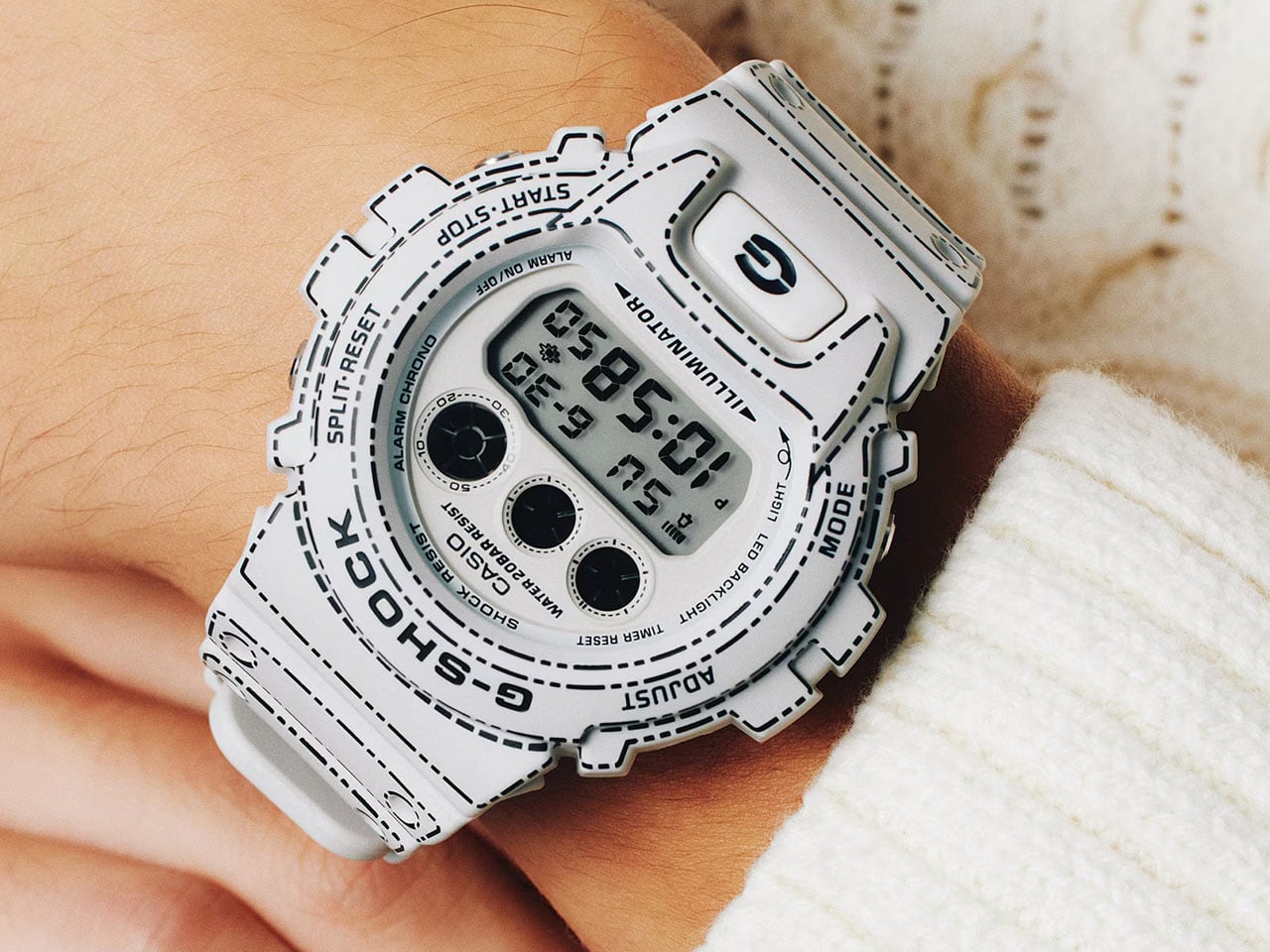
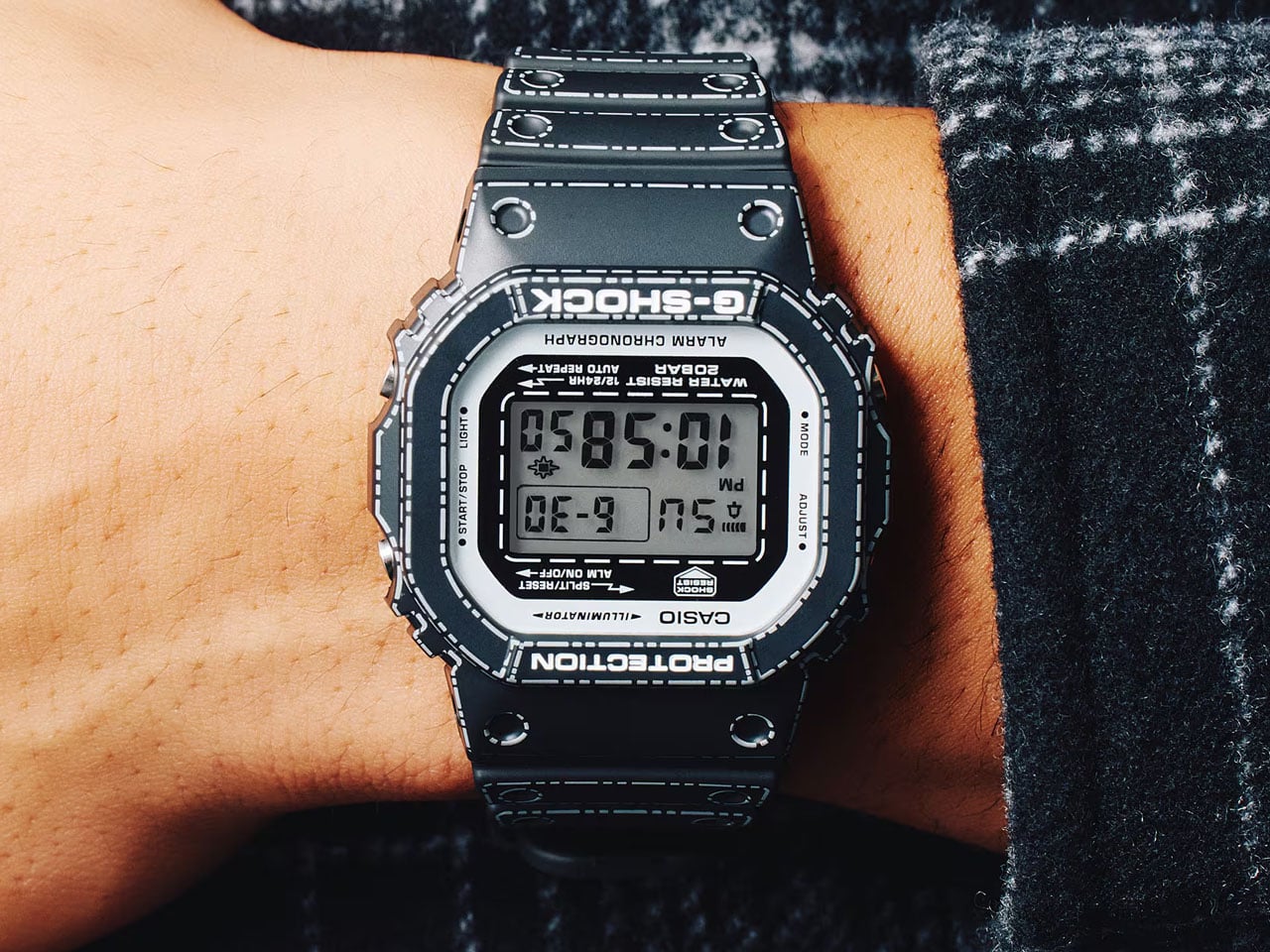
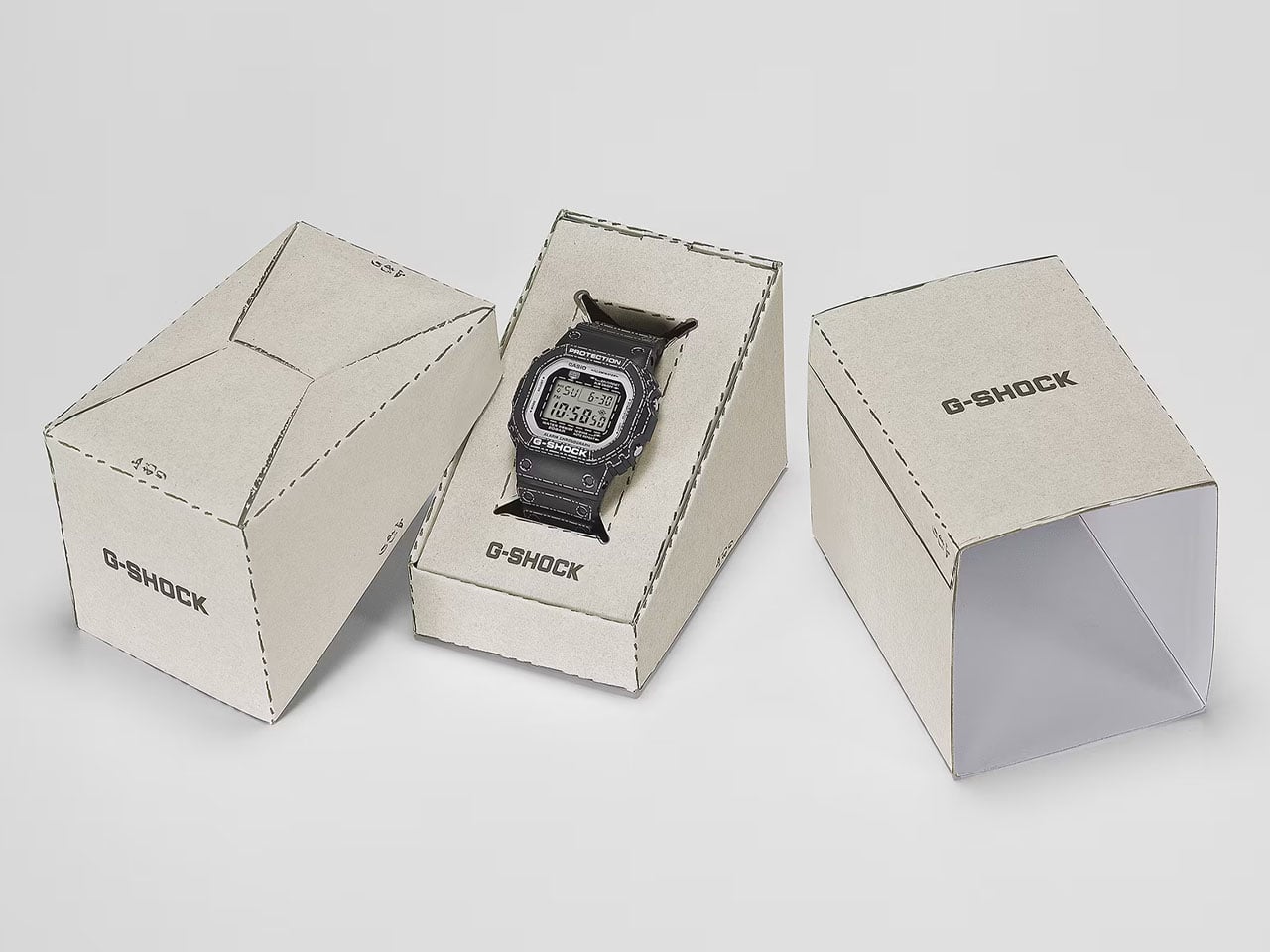
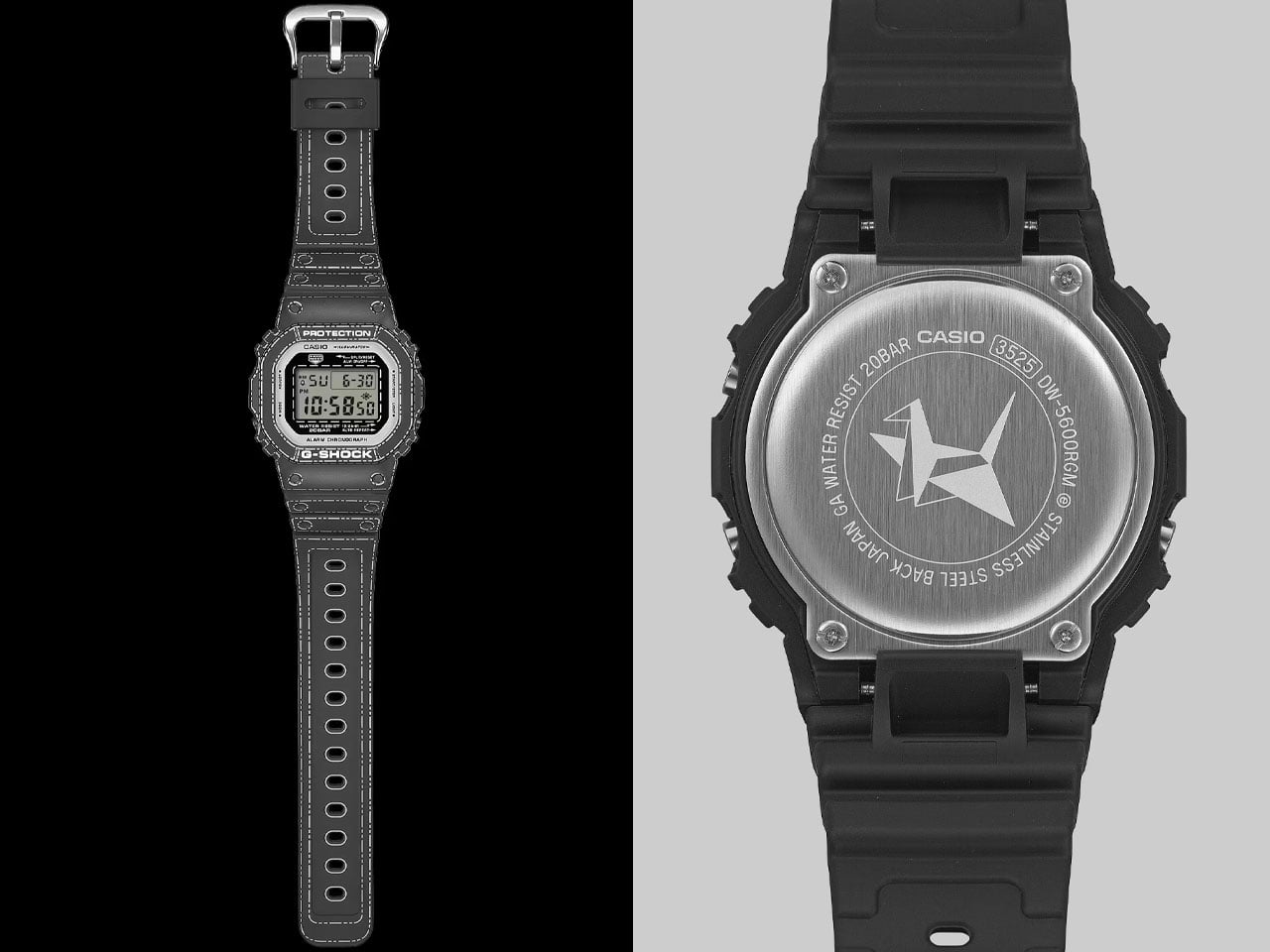
Predictably, the two variants: DW5600RGM-1 and DW6900RGM-5 reflect the folding patterns of origami with the dotted lines. This gives off the illusion of mountain and valley folds with washi paper like texture on the bezel and band. The origami theme carries further into the watch details. On both watches, Casio has included the silhouette of a crane – a globally recognized symbol in origami – within the LED backlight and engraved on the case back. The special packaging also echoes the traditional paper folding craft, enhancing the presentation with design cues drawn from folded forms.
Casio’s choice of materials balances durability with aesthetic intent. The cases, bezels, and bands of both models are made from bio-based resin that retains the strength and impact resistance expected of G-Shock watches while supporting the distinctive textured finish. Despite the artistic approach, these watches maintain the toughness that the G-Shock line is known for, including shock resistance and a 200-meter water resistance rating suitable for swimming and surface water sports.
In terms of dimensions and wearability, the DW-6900RGM-5 is the larger of the two, with a case measuring approximately 53.2 × 50 × 18.7 mm and a weight of about 67 grams. The DW-5600RGM-1 is more compact at around 48.9 × 42.8 × 13.4 mm and weighs roughly 53 grams, catering to those who prefer a smaller profile on the wrist. Both watches use mineral glass and offer comfortable fits for a range of wrist sizes
.
Underneath the origami-inspired shell, the core functionalities are consistent with what buyers expect from a digital G-Shock. Each model includes a 1/100-second stopwatch, a countdown timer with auto-repeat, a multi-function alarm, and an hourly time signal. Additional features include an LED backlight with afterglow, flash alerts linked to alarms and the timer, and a full automatic calendar that runs through the year 2099. Timekeeping supports both 12-hour and 24-hour formats with a monthly accuracy of ±15 seconds.
Powering these functions is a long-lasting CR2016 battery that Casio rates at up to five years under normal use. This longevity, combined with the rugged build and everyday tools, positions the origami editions as practical timepieces for daily wear rather than purely collector items.
Pricing for the DW-5600RGM-1 and DW-6900RGM-5 in the United States is set at around $165 each, making them accessible within the broader G-Shock lineup while offering a distinctive design narrative rooted in Japanese culture.
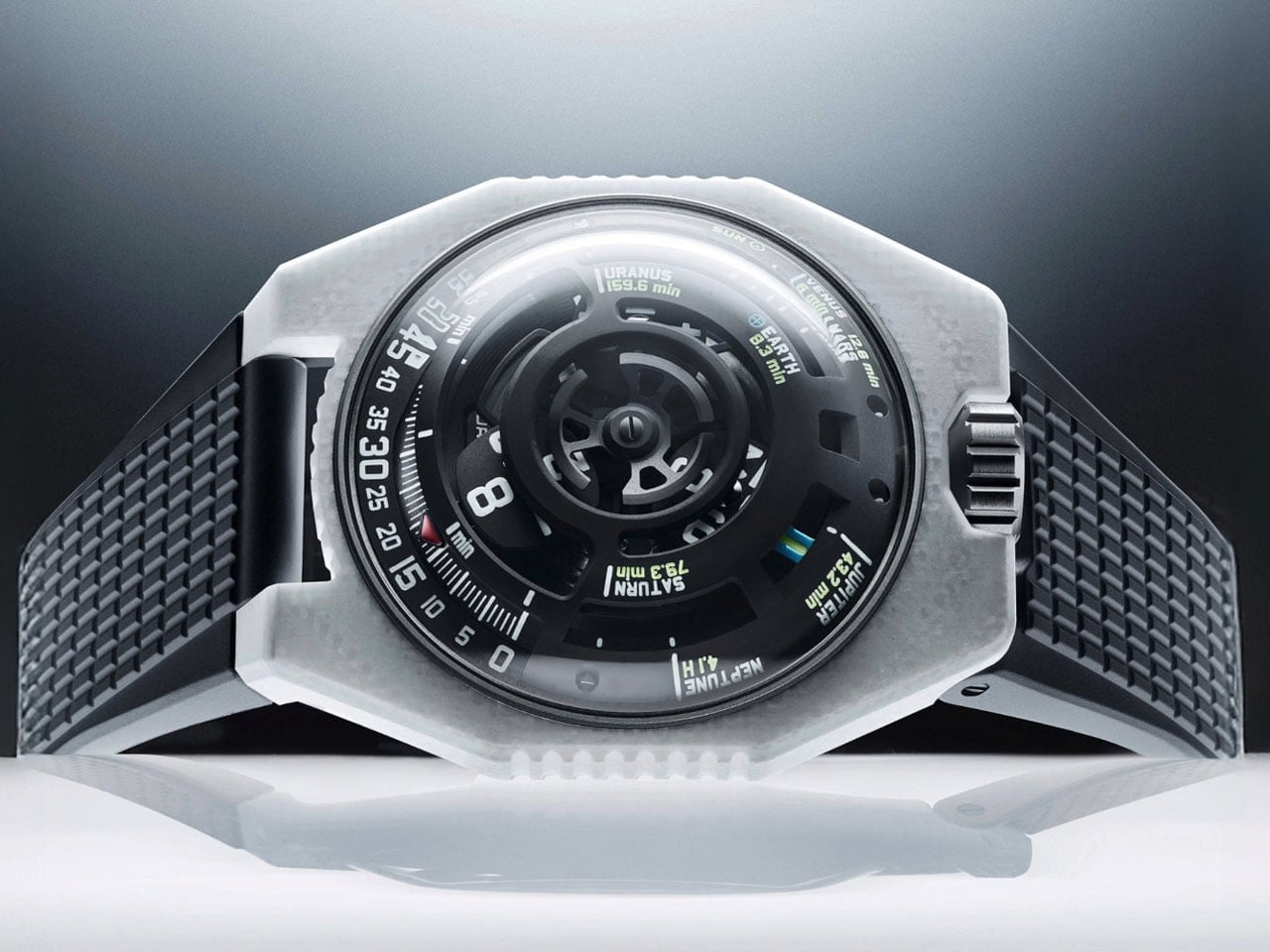
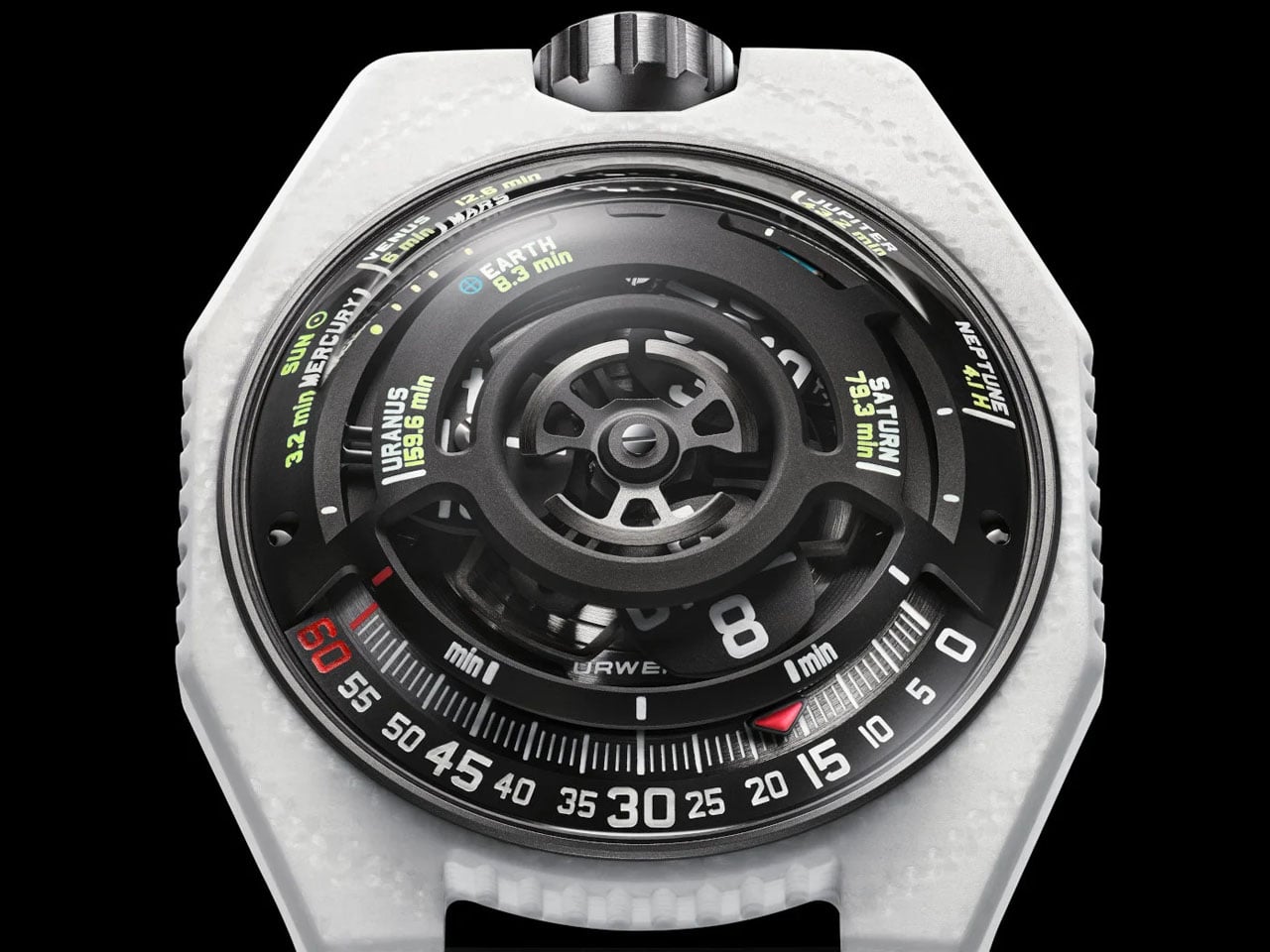
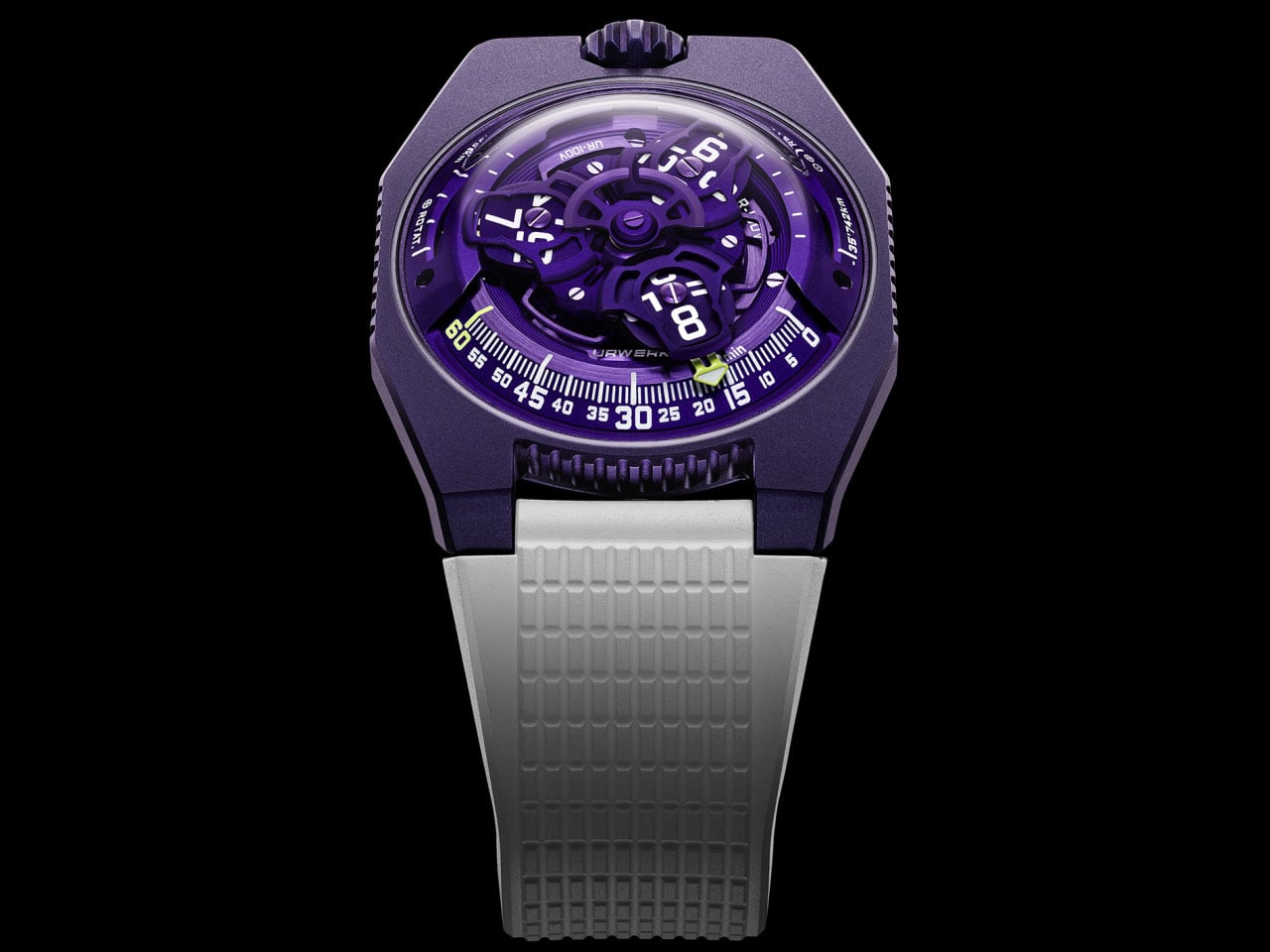
The way life moves on earth, we often undermine the vastness of the universe and the simple fact that whatever we see in it is always already the past. Now, Urwerk has conceptualized a limited-edition timepiece that merges concepts of time and space showcasing the time light takes right from the sun to reach each planet in the solar system. The Urwerk UR-100V “LightSpeed” Ceramic is a timepiece that translates the journey of light across the solar system in a mechanical watch display.
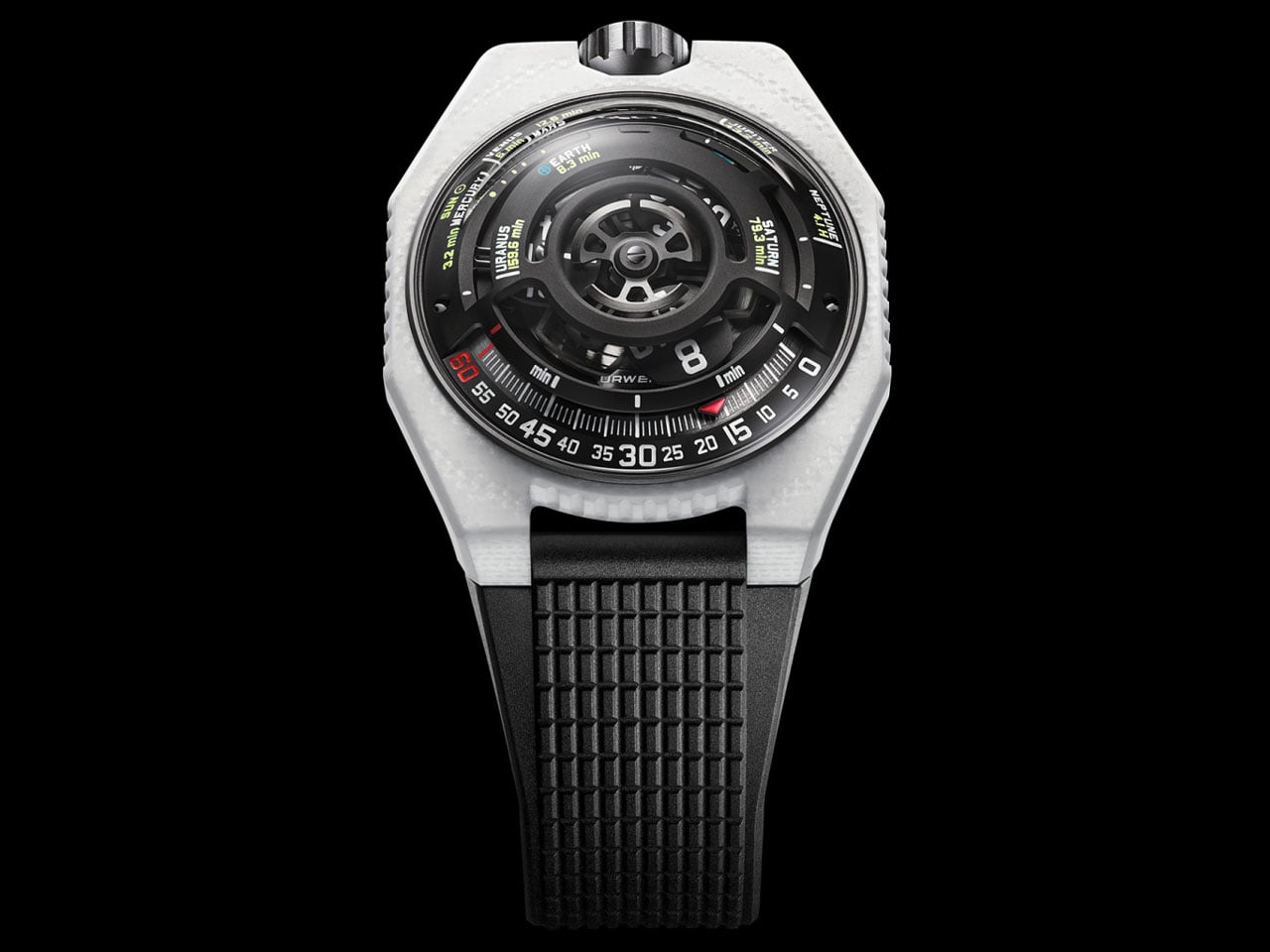
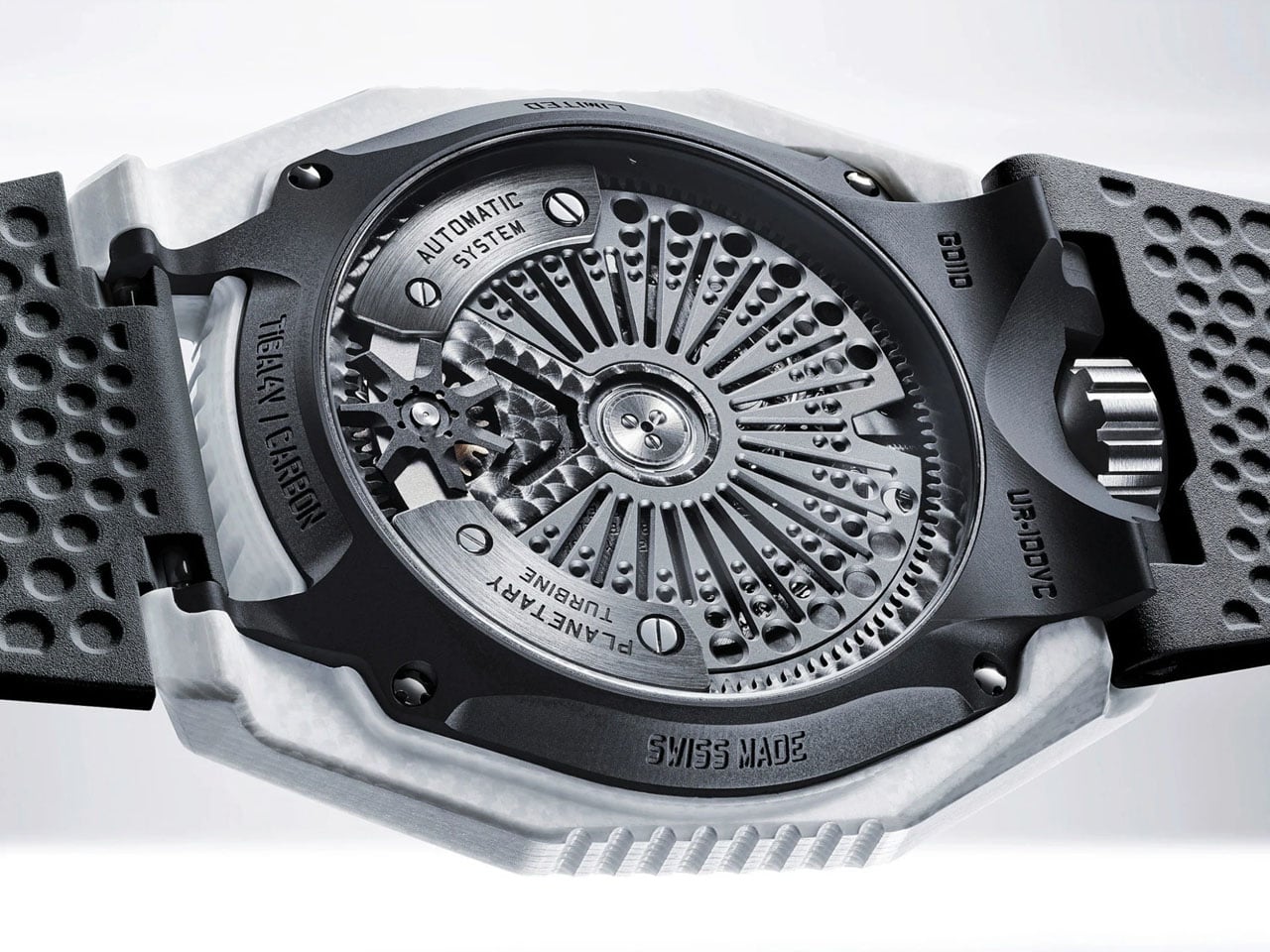
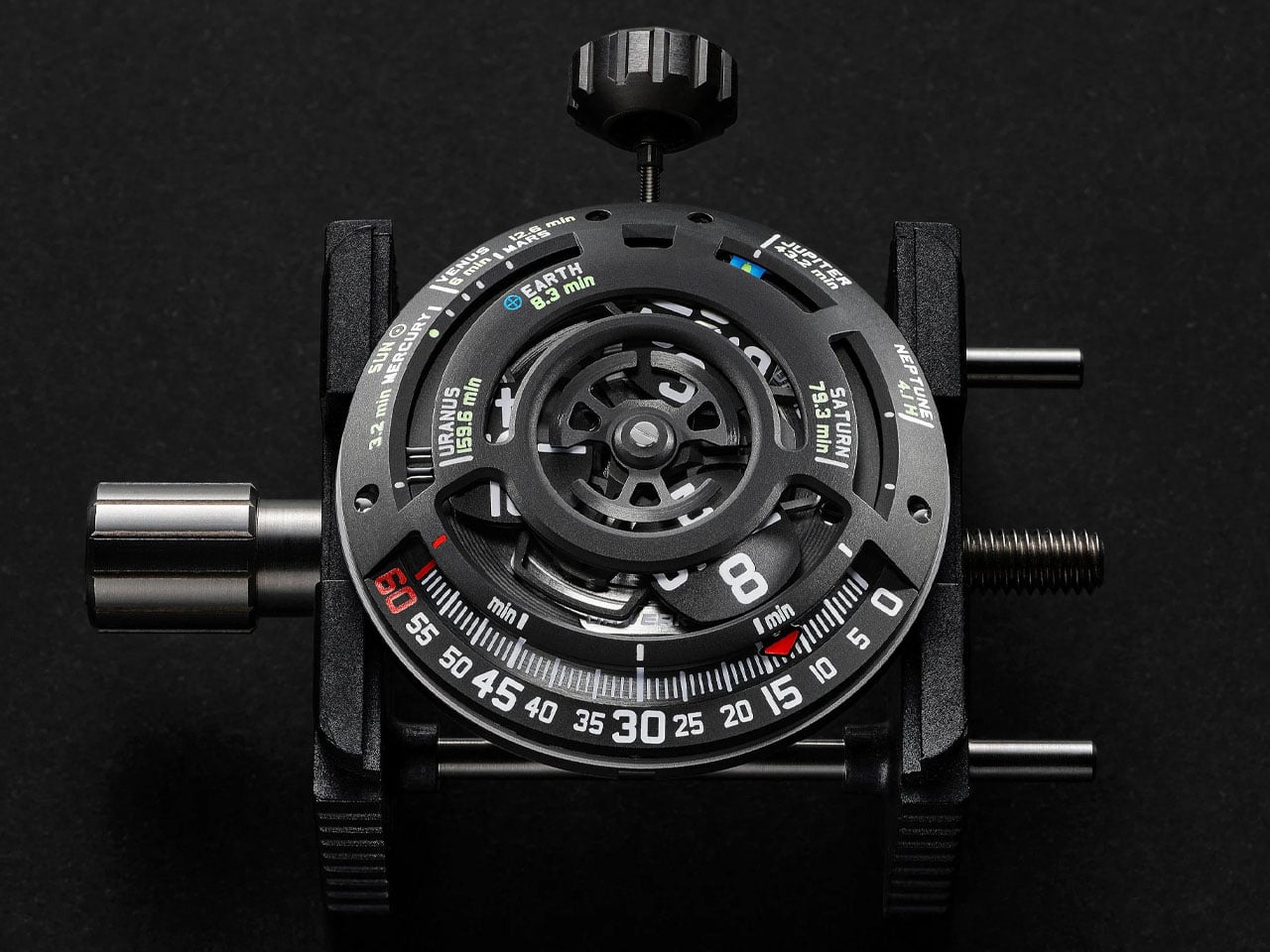
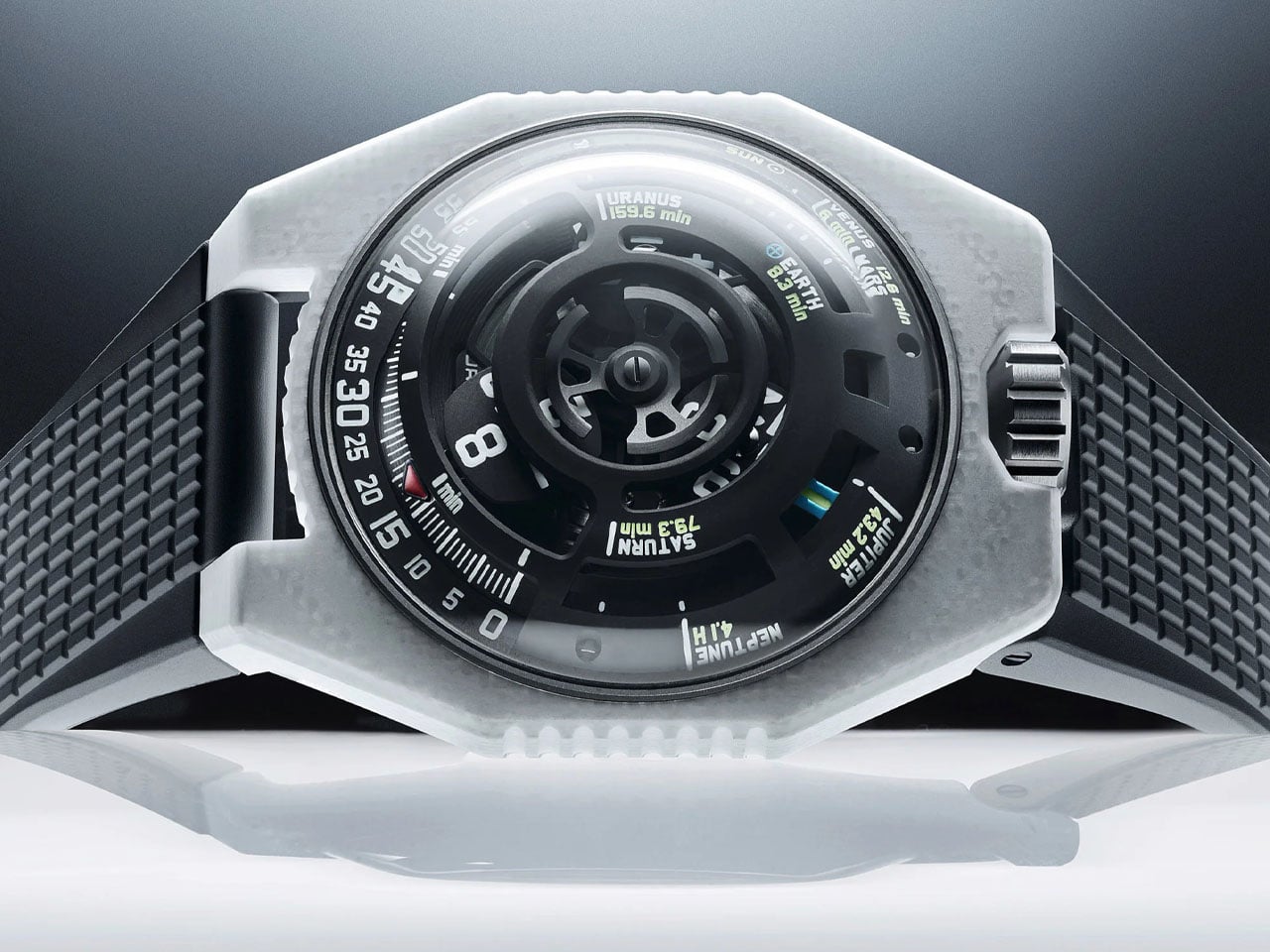
The brainchild of Felix Baumgartner and Martin Frei, co-founders of the Swiss-watchmaker established in 1997, the UR-100V features the company’s iconic satellite display, differing in a way to display propagation of light across the solar system – telling time it takes a sunbeam to reach the eight different planets. So instead of just marking hours and minutes, this watch, with a white ceramic composite case, creates the wandering satellite display into a moving cosmic reference point.
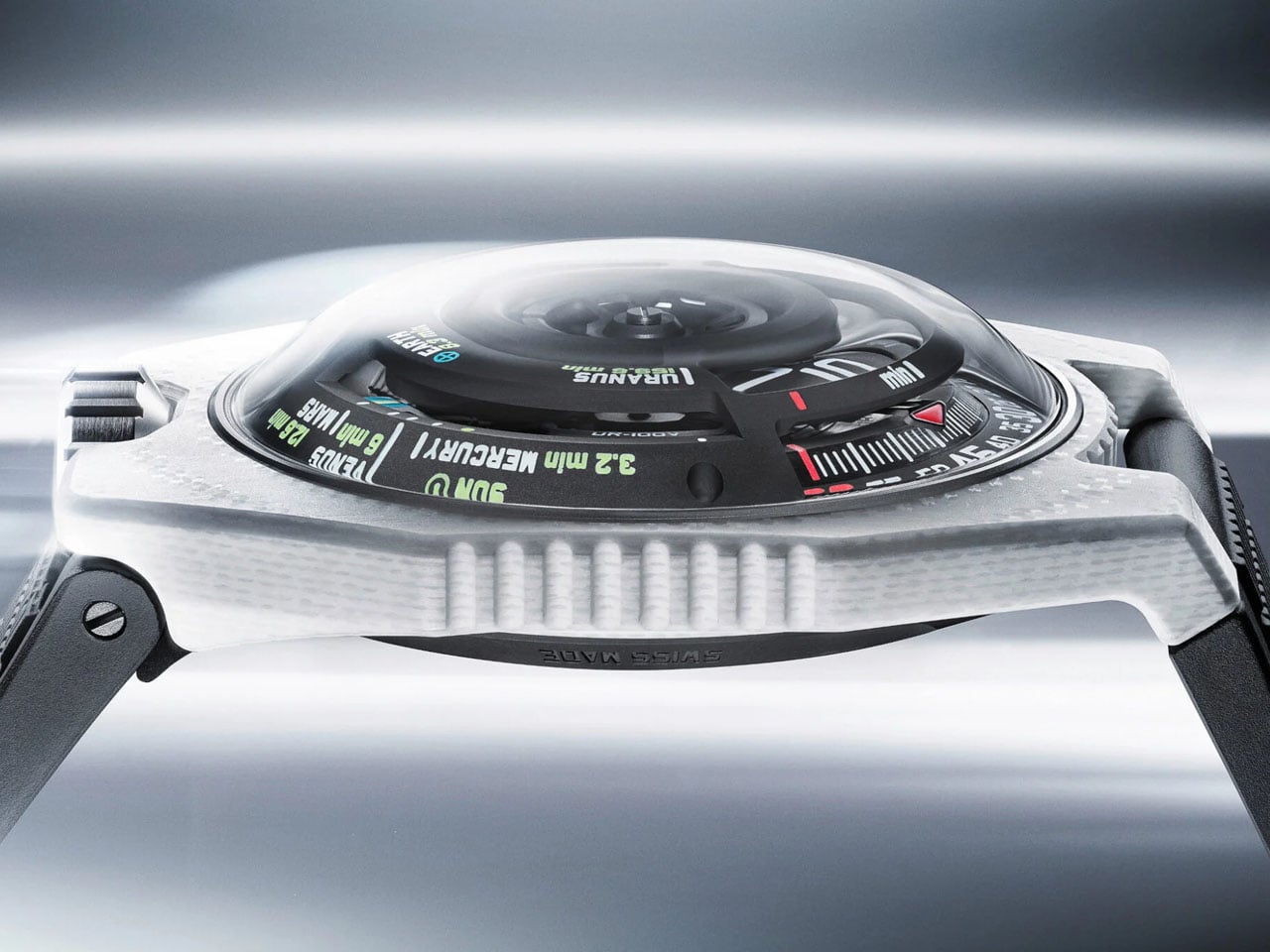
“Wearing this creation (the UR-100V “LightSpeed” Ceramic) is like carrying a fragment of the universe on the wrist, a miniature vision of the cosmos scaled to human perception,” Martin Frei said about the watch measuring 43mm wide and 51.7mm long. About 14.55mm at the highest point, the UR-100V features Urwerk’s proprietary white ceramic case with silver fiberglass fabric and carbon inserts. The case with a screw-down crown offers durability to the timepiece with cosmic-inspired aesthetics.
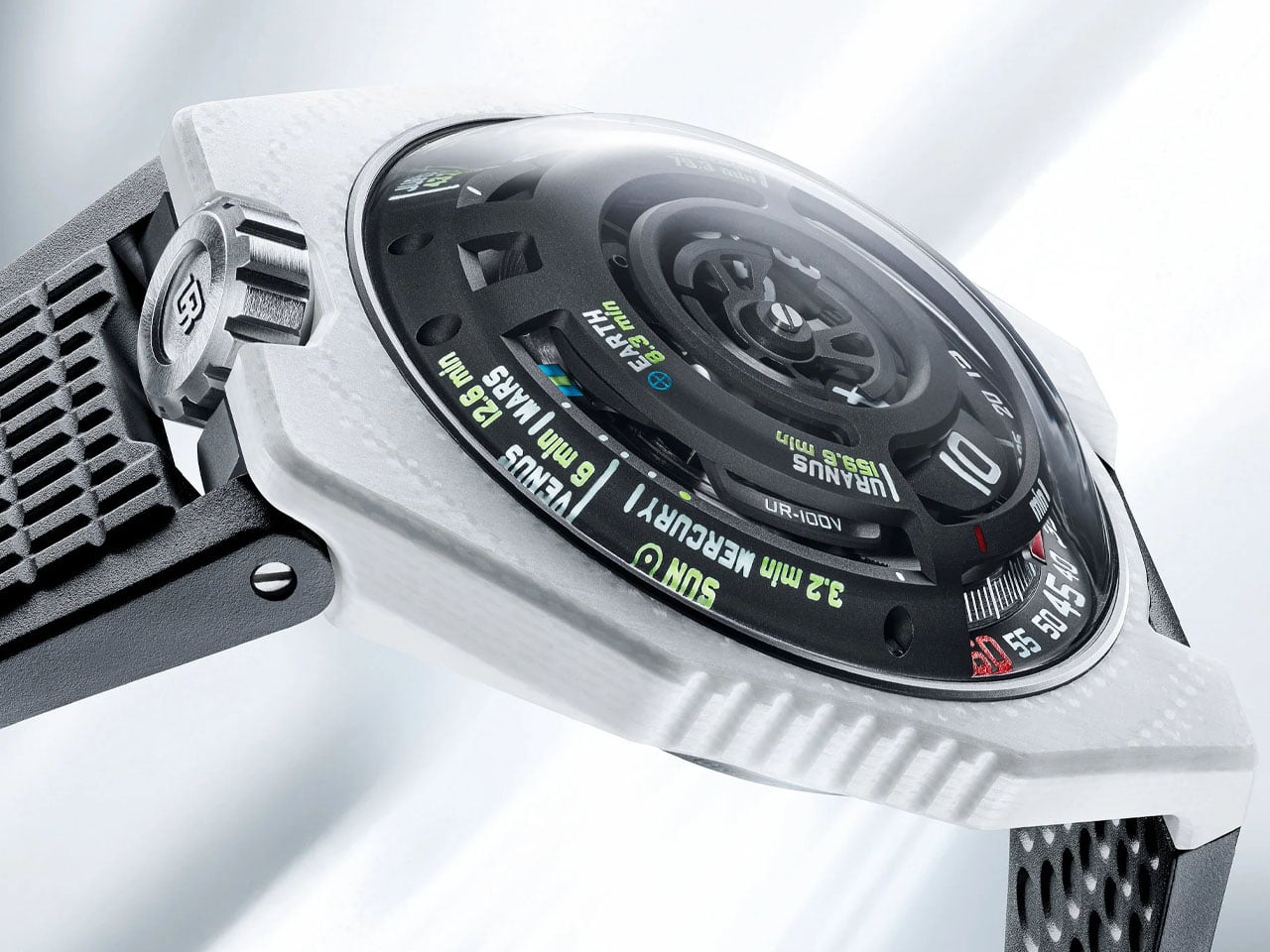
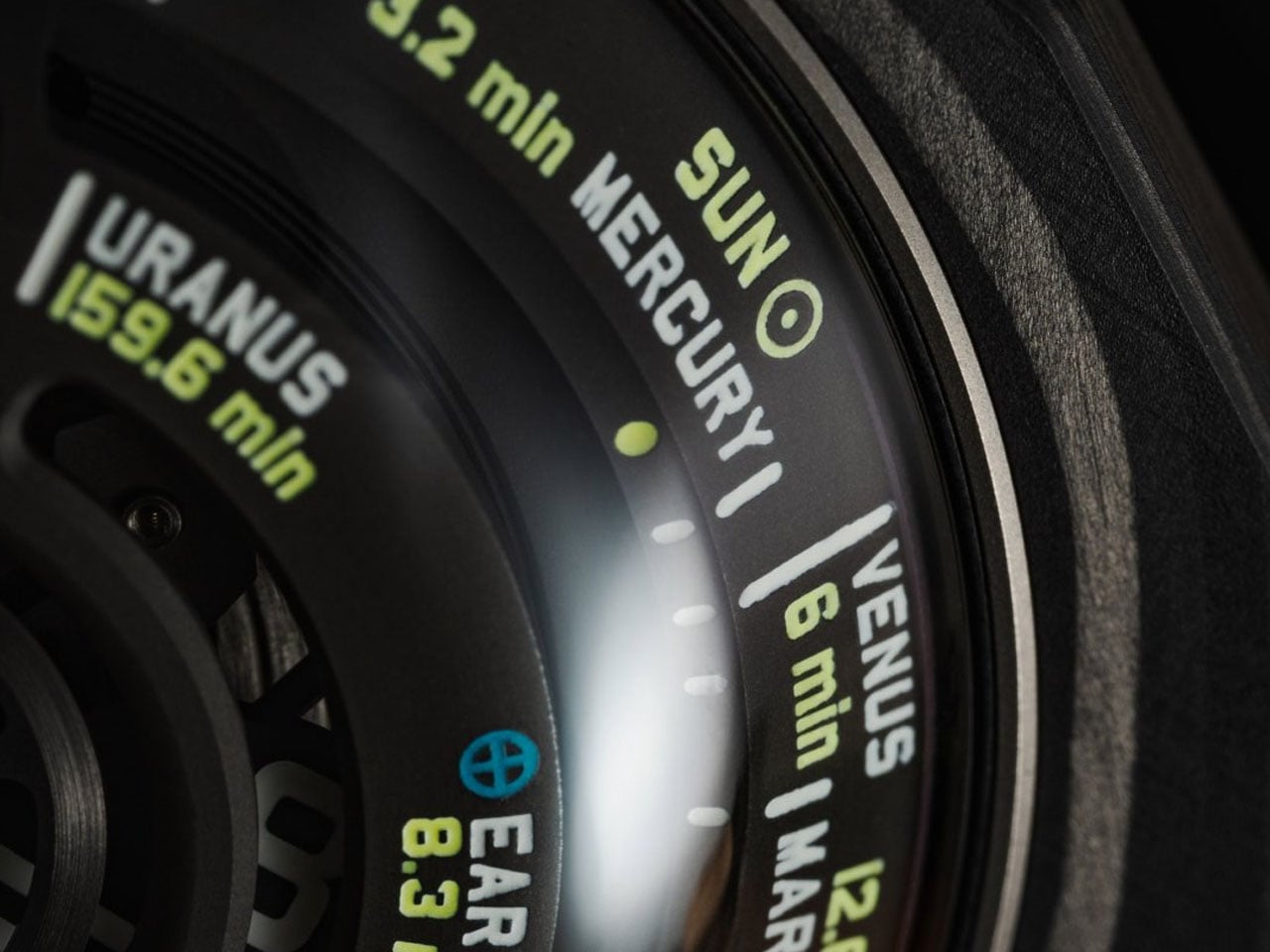
The dial has been tweaked to achieve the latter. When the hour satellite leaves the minute track, it follows the path of light, tracing the journey of a sunbeam from the Sun toward the eight planets in our solar system. The astronomical data is converted into mechanical motion with exact scientific data points like 3 minutes required for sunlight to reach Earth or 4.1 hours it takes to reach the farthest planet Neptune.
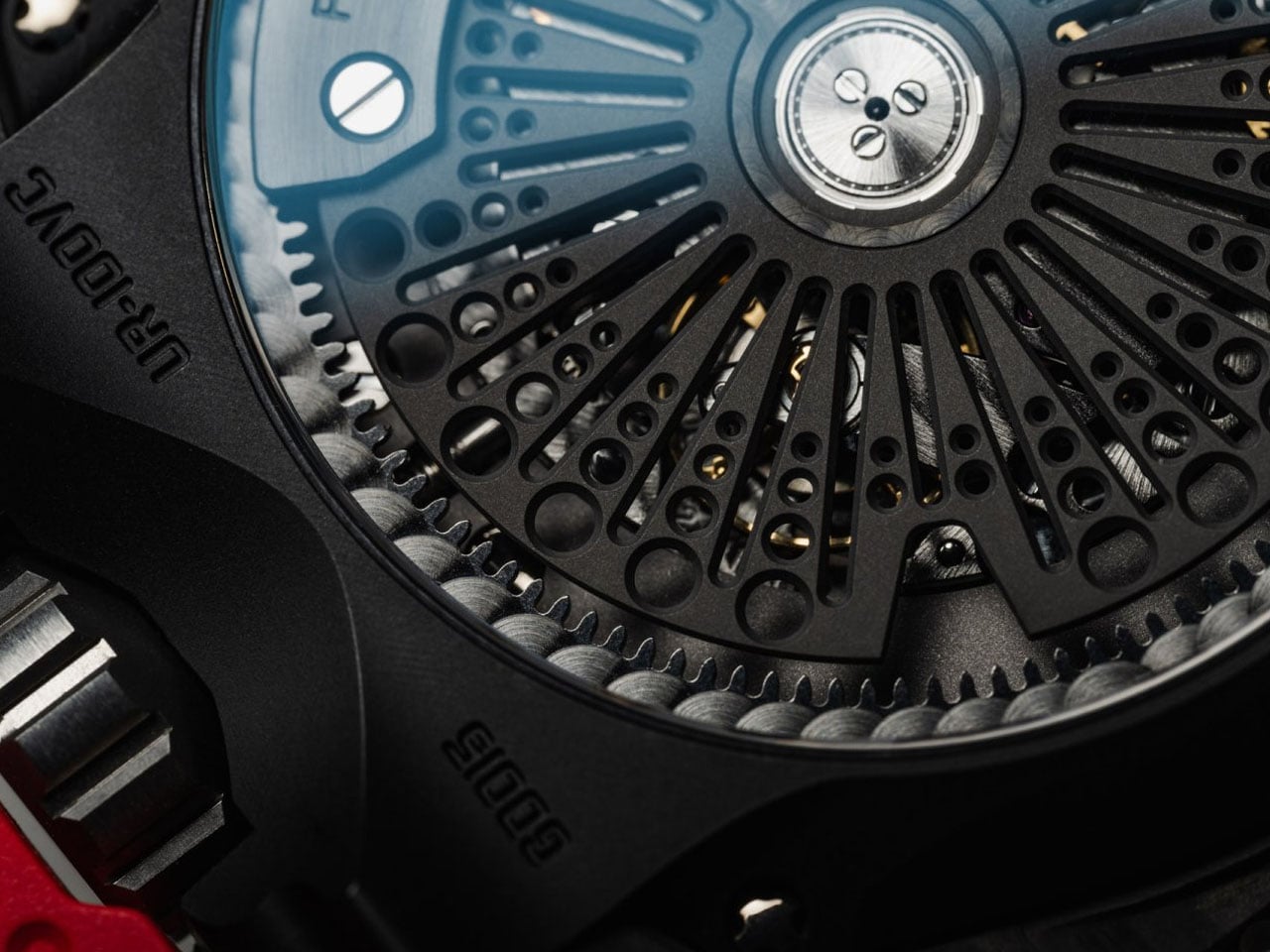
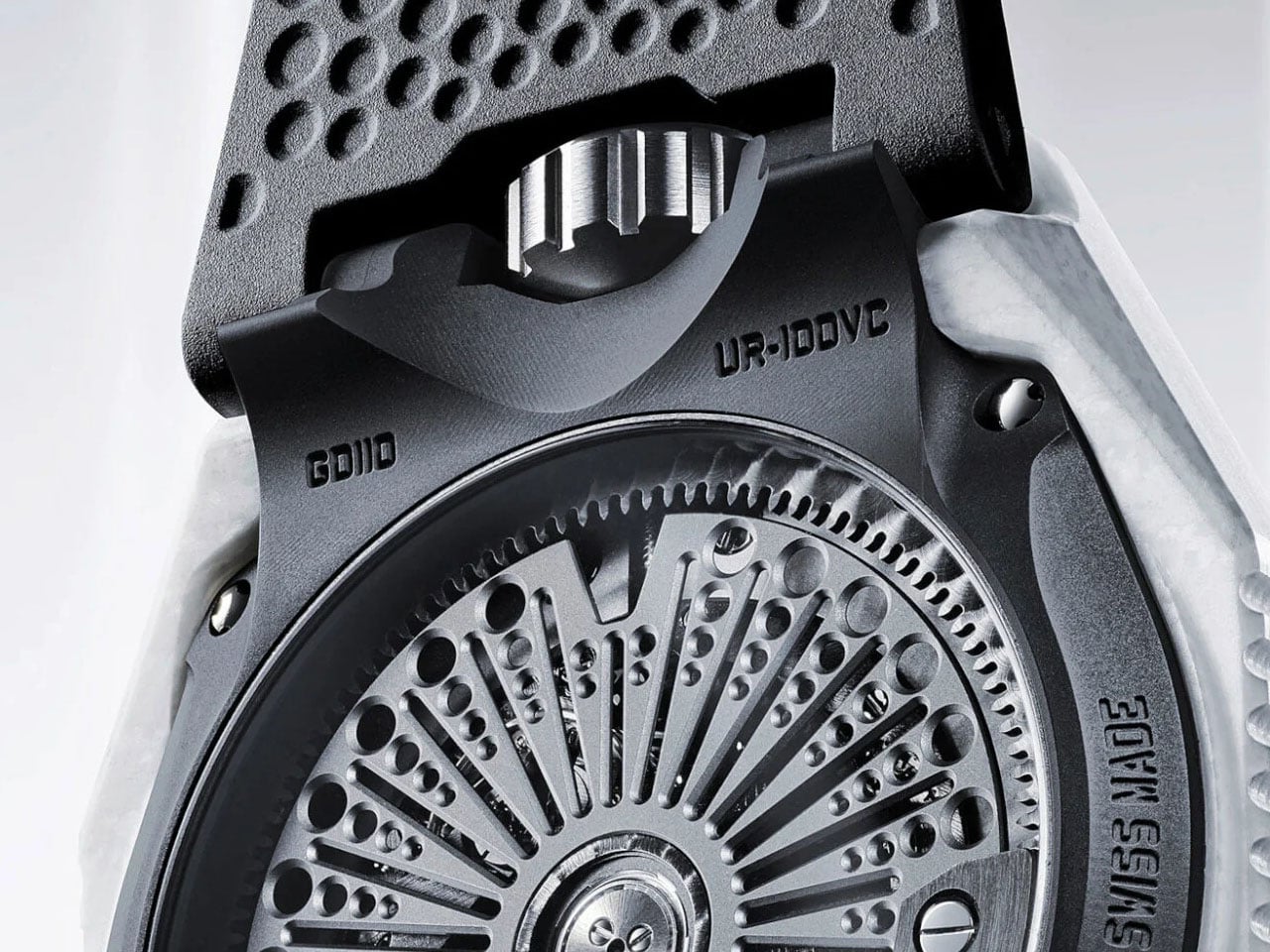
The UR-100V LS Ceramic draws its power and finesse to pull of the celestial brilliance from the in-house calibre UR 12.02. The self-winding mechanical movement by Planetary Turbine Automatic System beats at 28,800 vibrations per hour and provides the watch with a 48-hour power reserve. Water-resistant up to 5ATM, the Urwerk timepiece features micro-blasted, DLC-treated grade 5 titanium caseback revealing a satisfying sight of a self-winding rotor inside.
The UR-100V LightSpeed Ceramic comes with two choices of strap colors. It’s a textured rubber strap in black or white color. The limited-edition watch is priced at 67,000 CHF (approx. $86,500) and is available on the company’s official website. We are not sure how many units of the watch are going to be available, but we are sure the watch will sell out really fast for its ability to track propagation of light through space.
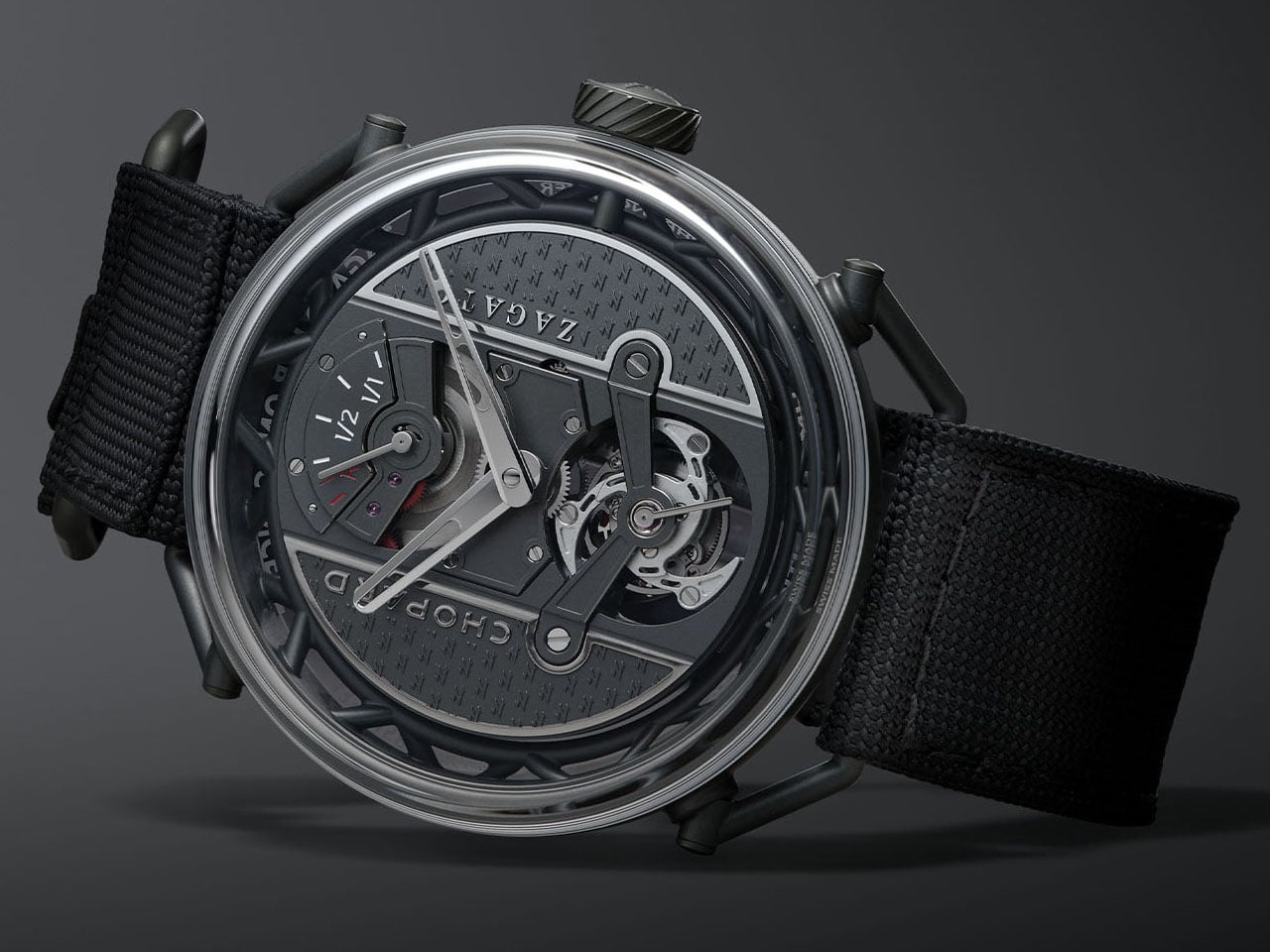
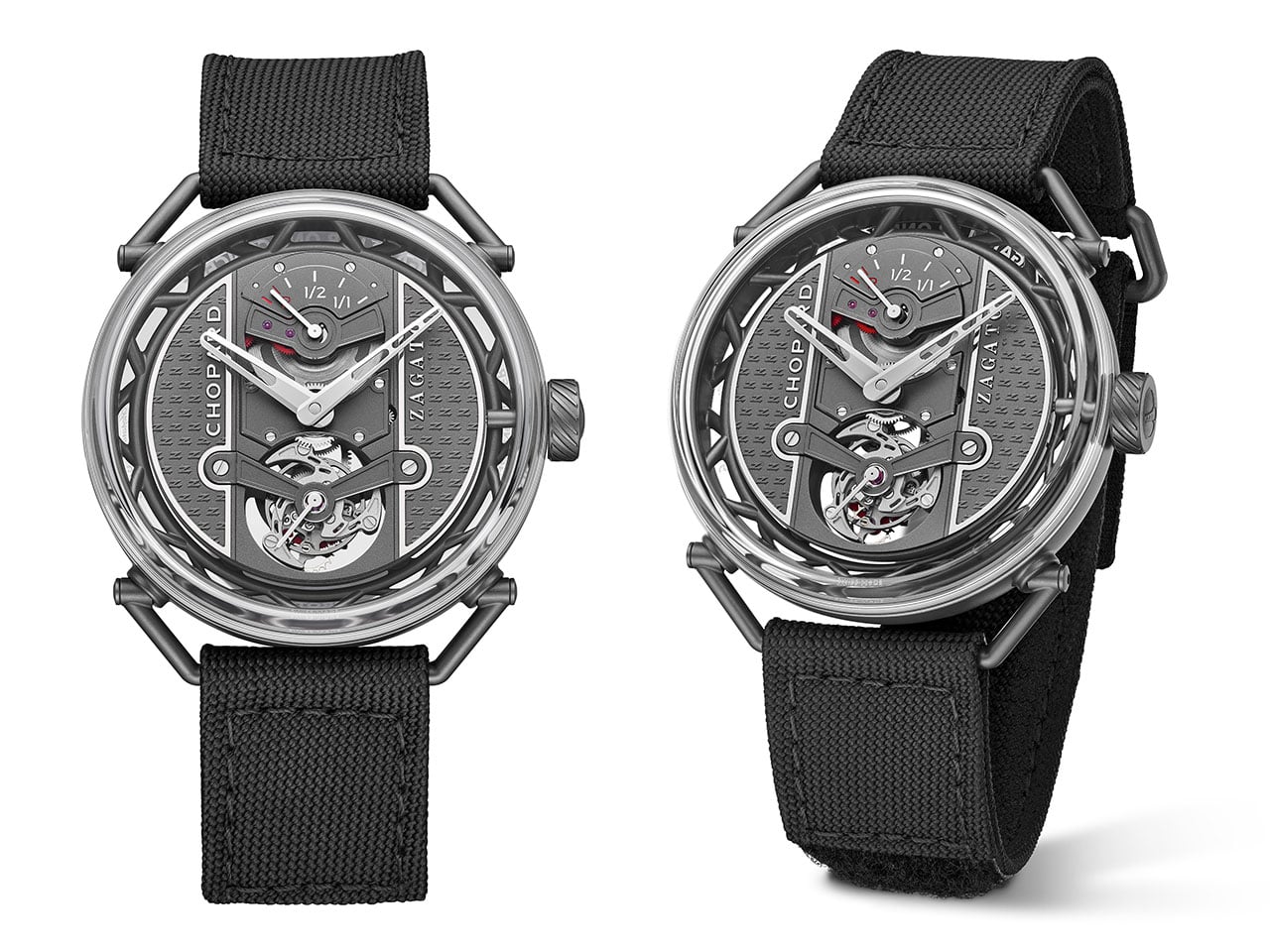
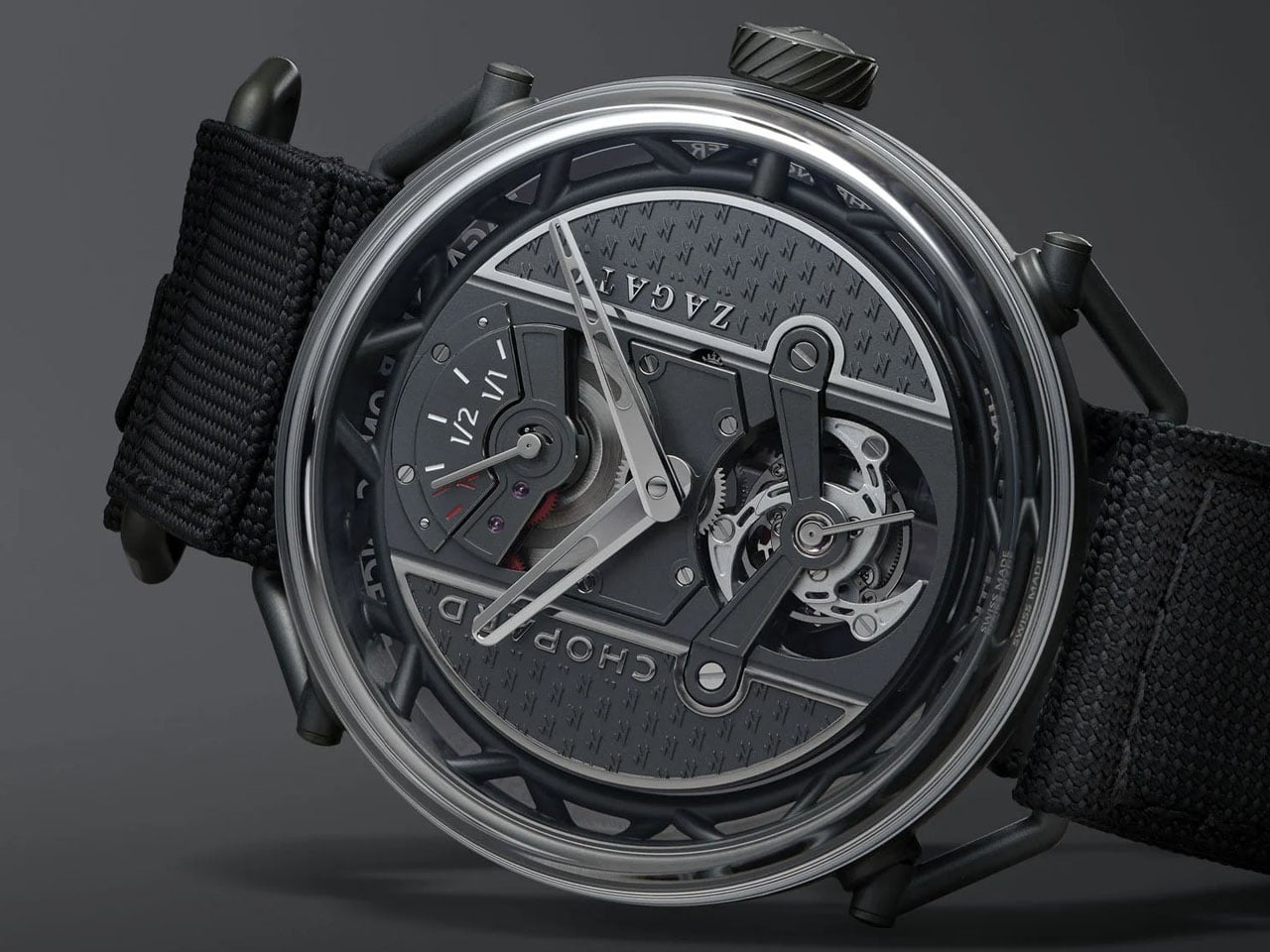
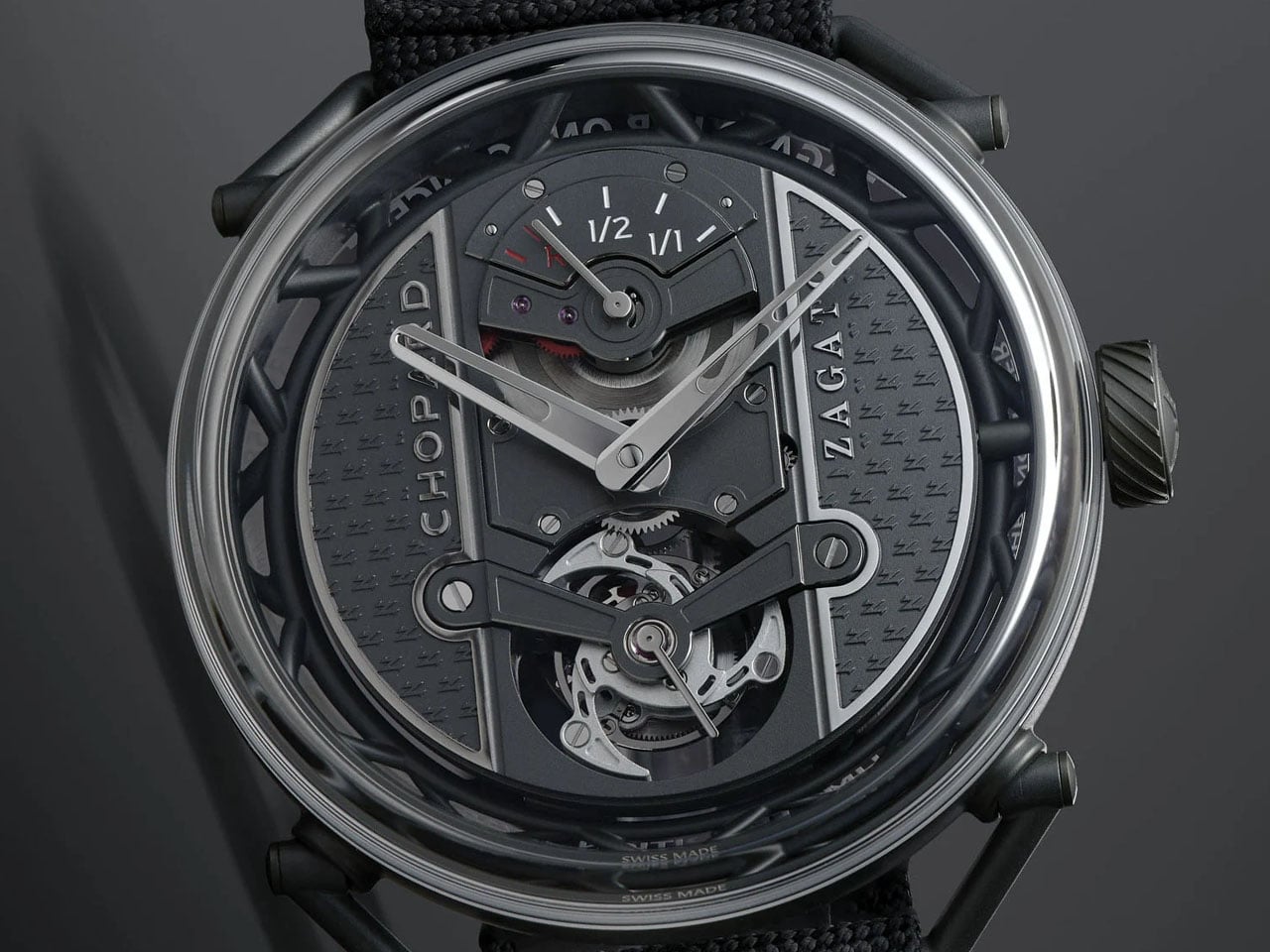
Cars and watches share a lot in common; the biggest intersection point is, of course, design. Inspired by the automotive brilliance of Zagato, the Chopard Lab One concept watch is a fine example of what I mean. This collaborative watch from Chopard and Zagato is a manifestation of automotive thinking realized in a wrist-sized form factor, highlighting structure, lightness, and engineering – the three main stakes of the Italian coachbuilding brand, founded by Ugo Zagato in 1919.
Of course, when something so impressive and open-worked shows up on the horology map, you begin to wonder how the manufacturer has pulled it off. Before I could sit down and ponder, I realized that is not the first time the two stalwarts from their respective niches have come together. If you remember, the two brands previously collaborated in 2020 on the Mille Miglia Lab One, which was also inspired by high-performance race cars.
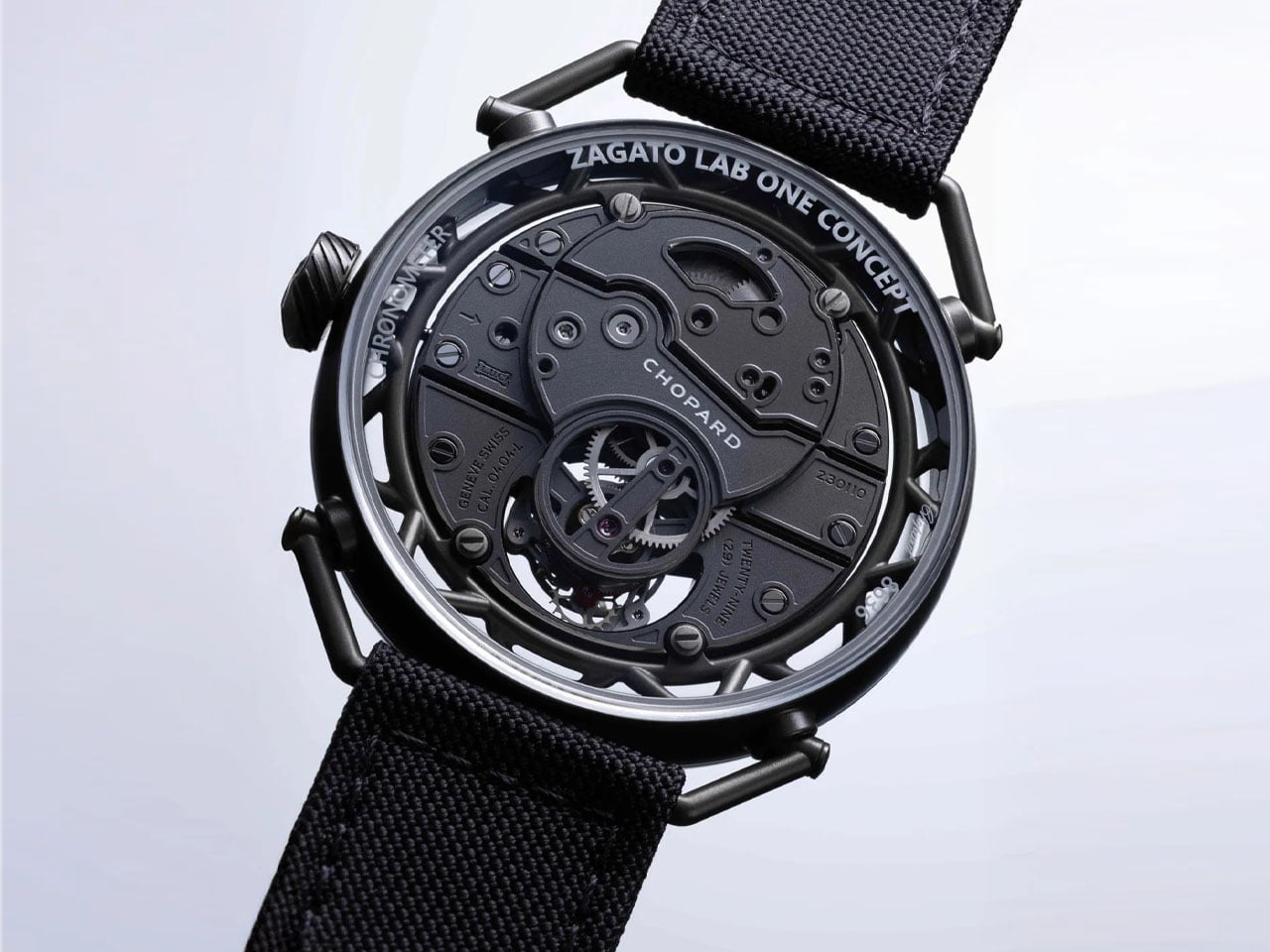
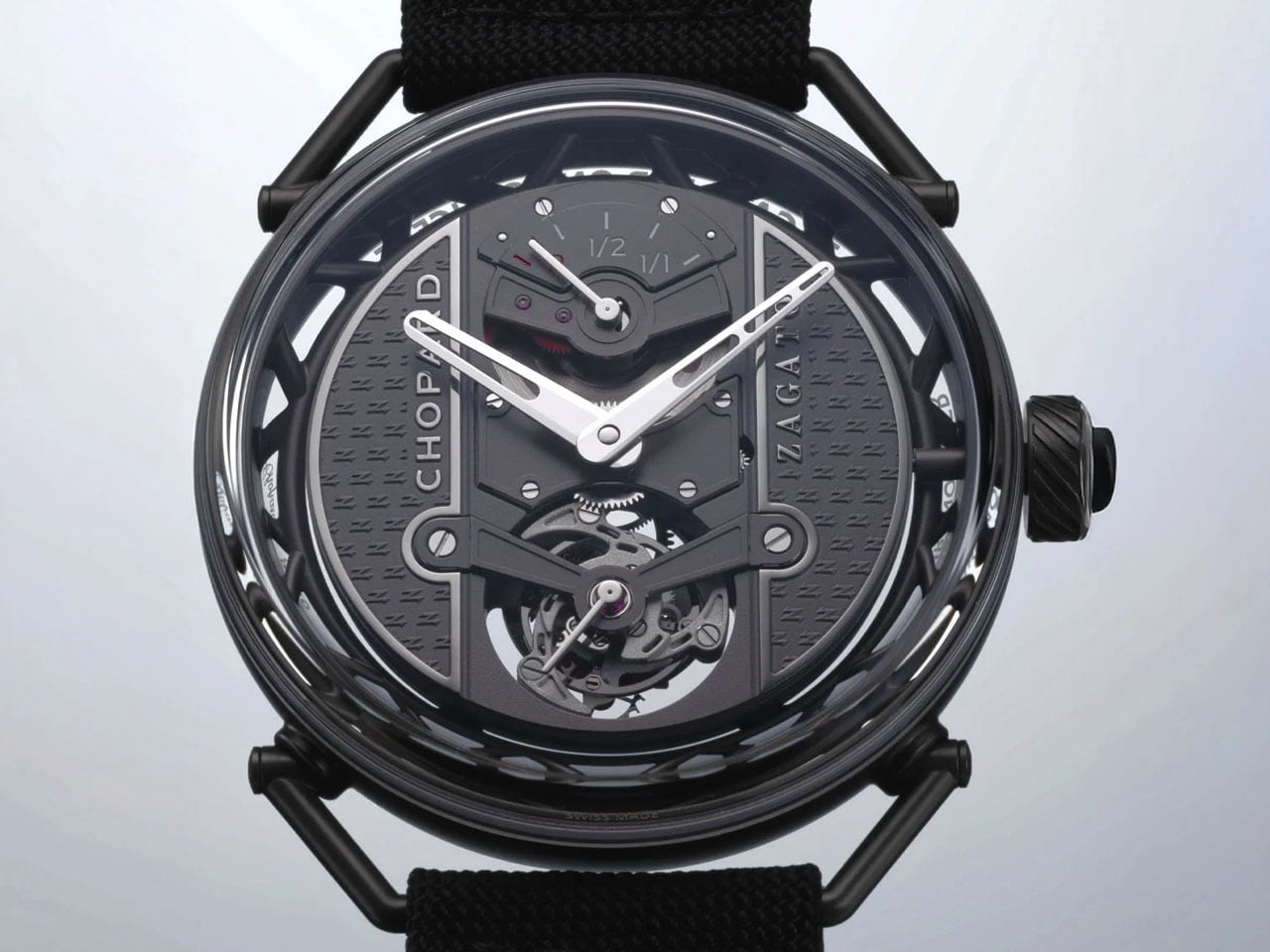
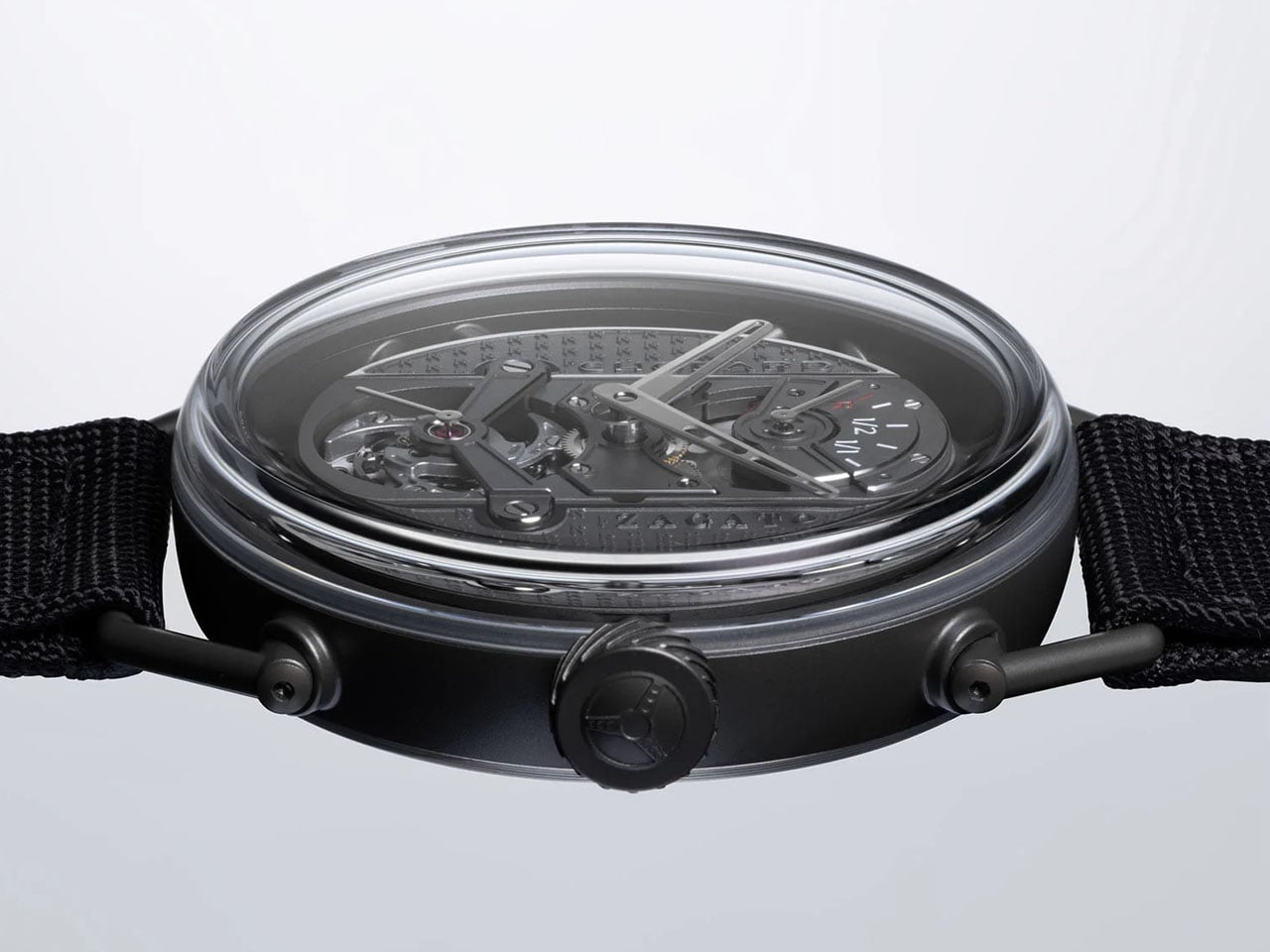
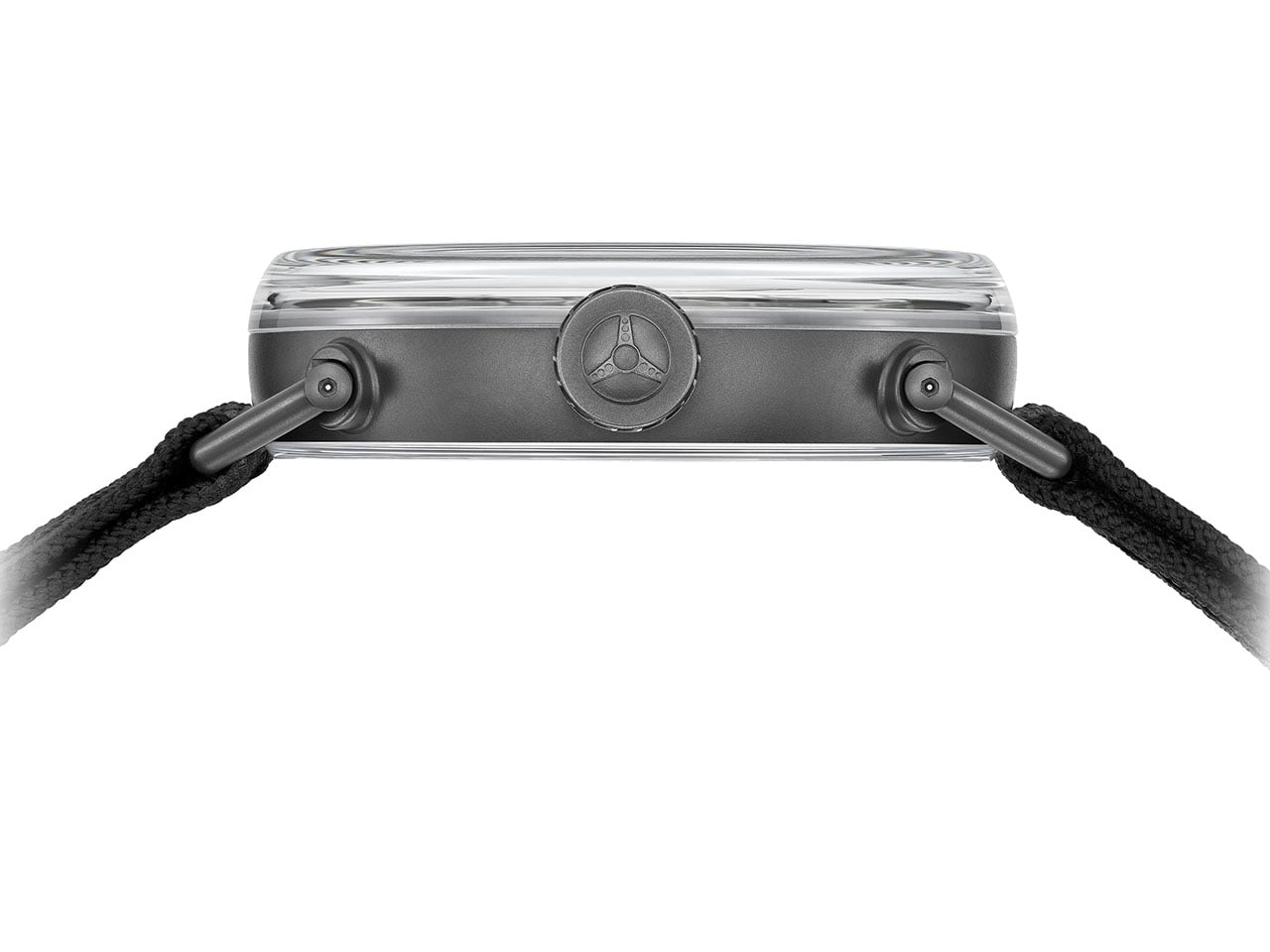
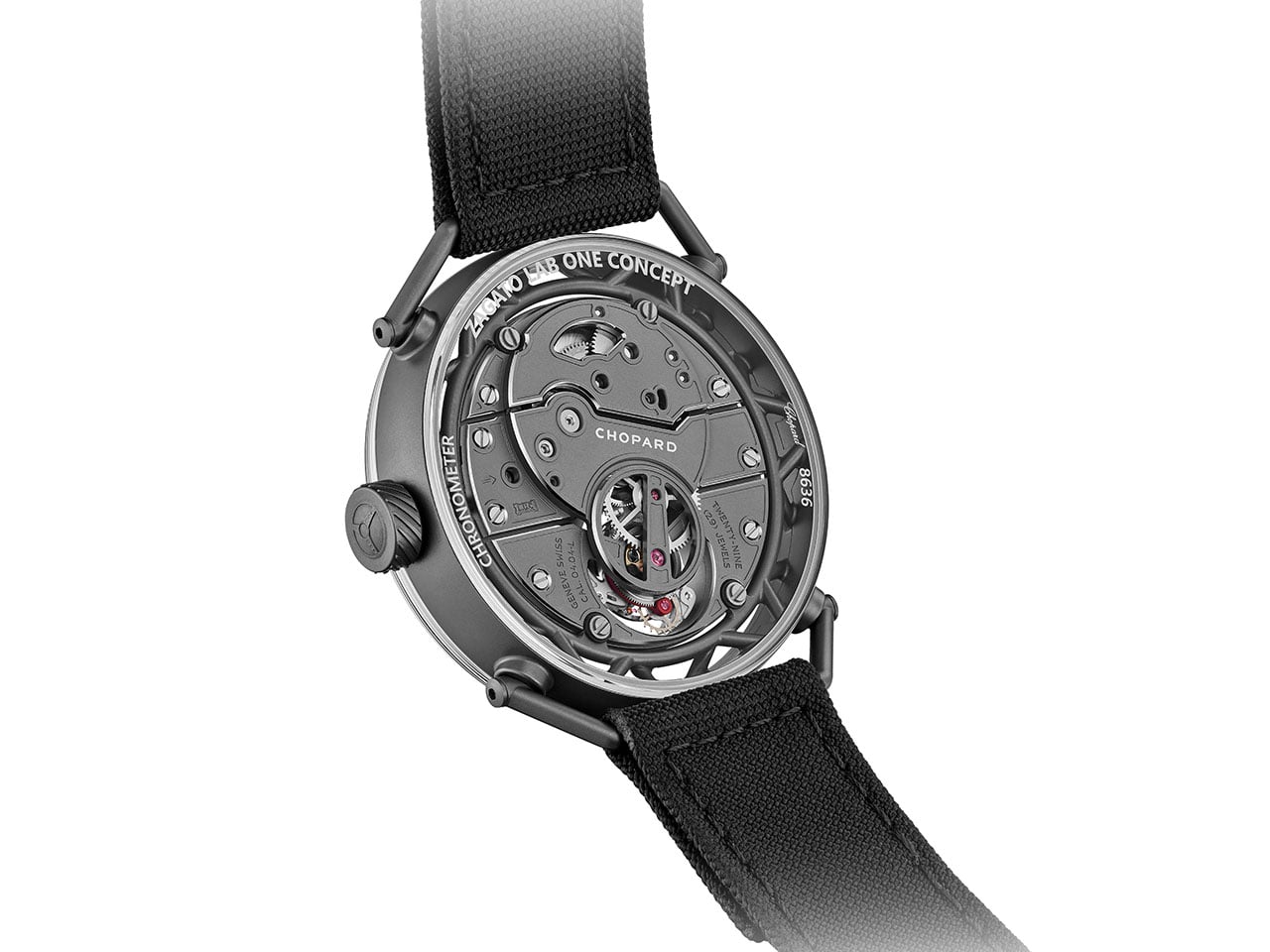
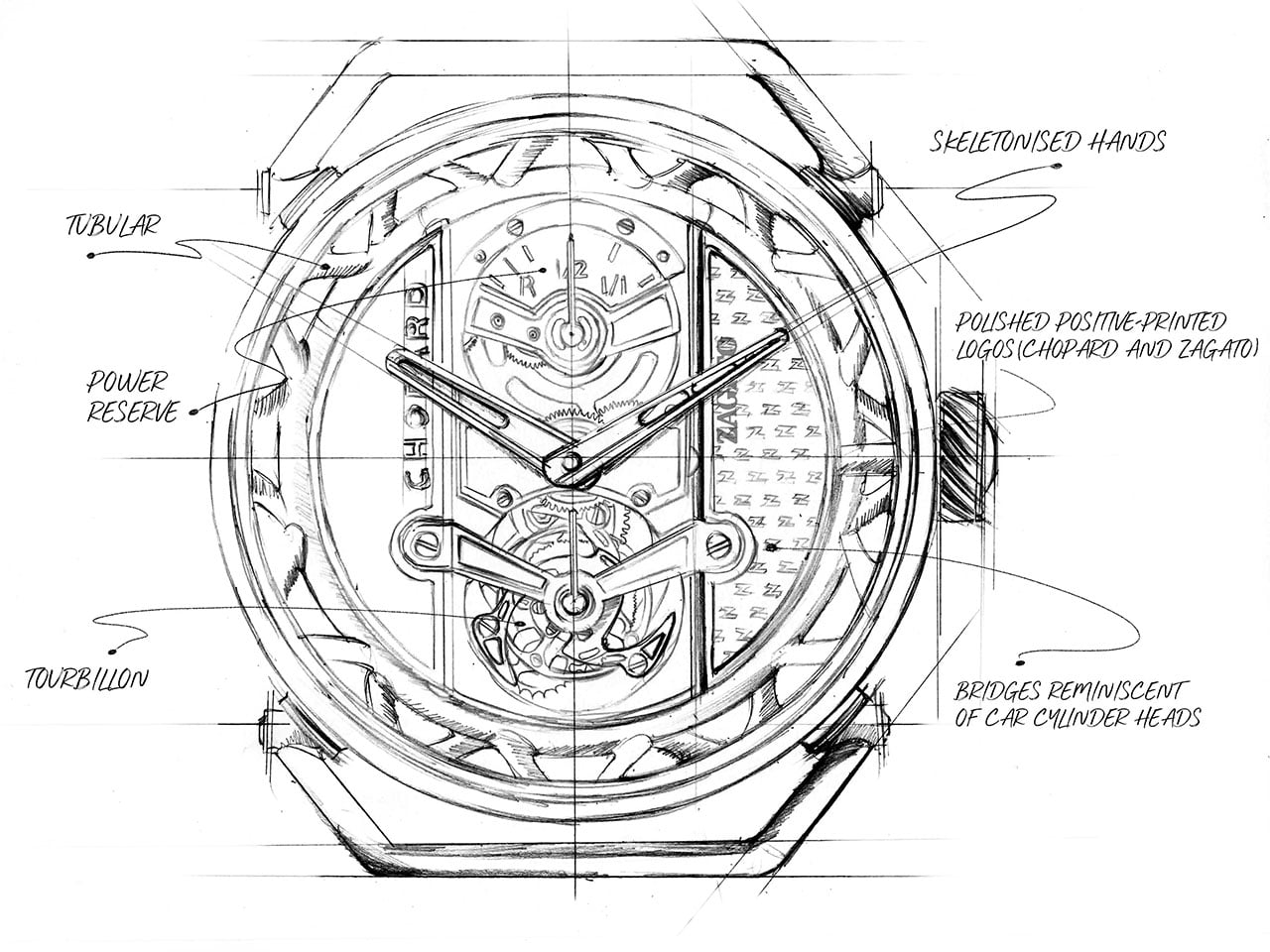
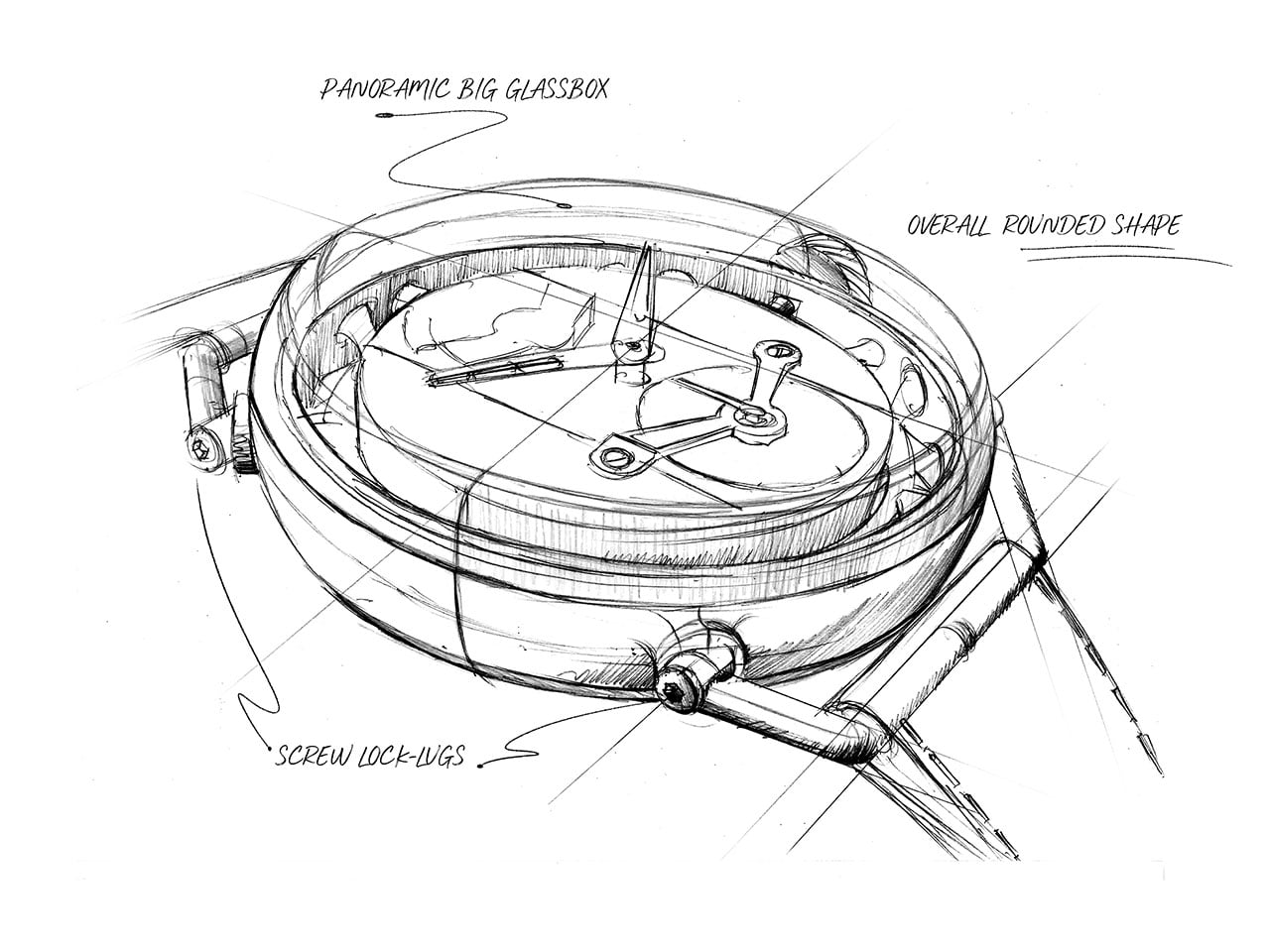
Arguably, haute horlogerie collides at the peak of innovation with the Zagato Lab One Concept, which is not really a conventional production model but a technical study of the application of motorsport engineering principles in watchmaking. The racing car image instantly comes to mind at the first glimpse at this 42mm case watch, which is made from ceramicised titanium and exudes tubular architecture characteristic of the car chassis.
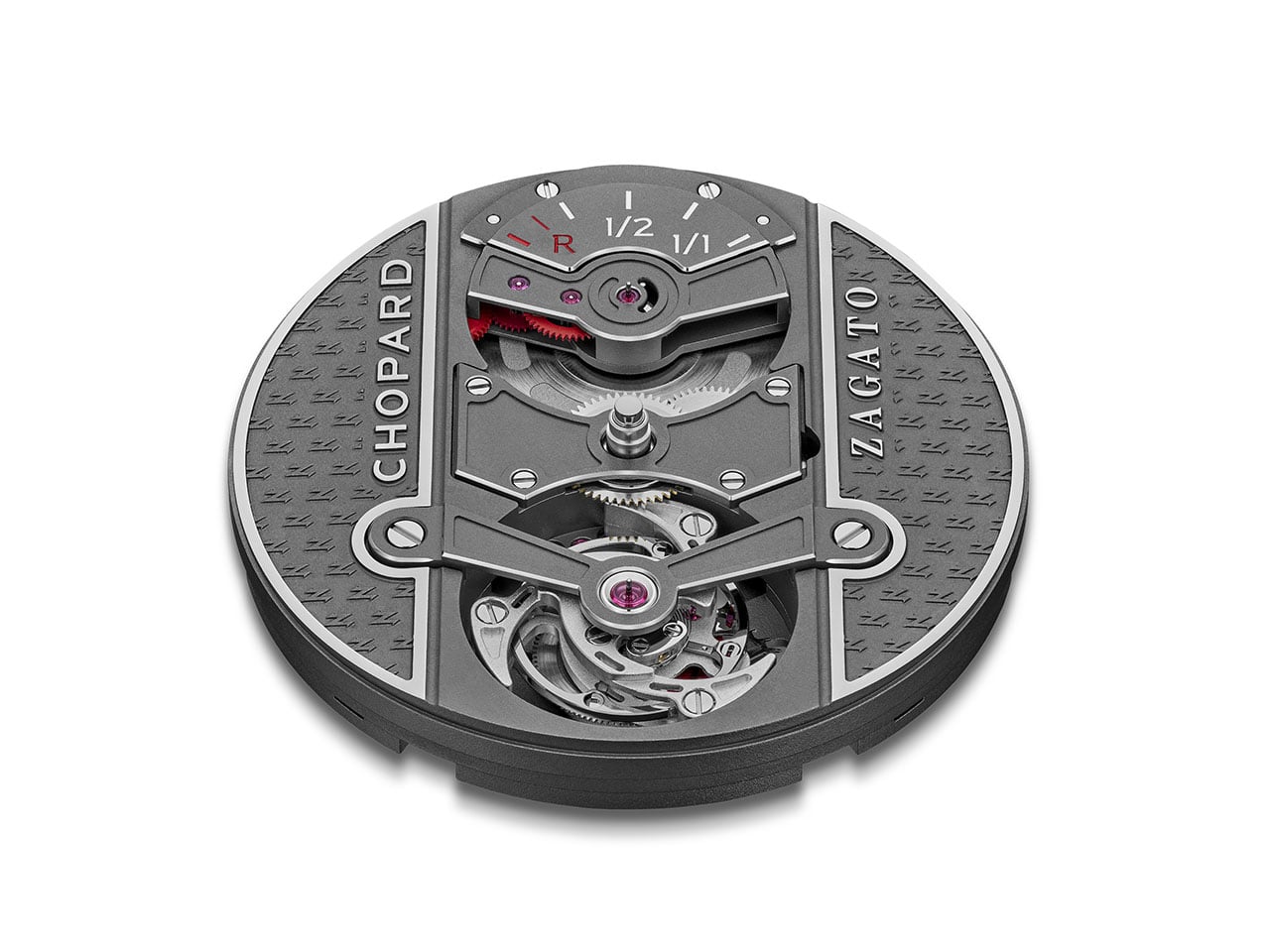
The Chopard x Zagato Lab One Concept watch – owing to its construction – is exceptionally robust and scratch-resistant. The watch weighs only 43.2 grams (including the strap) and features a box-shaped sapphire, giving you a completely unobstructed view of the chrome-toned skeletal dial integrated right into the movement. It is also machined from ceramicised titanium also, and has a raised interpretation of Zagato’s stylised “Z” motif, which is finished with rhodium-plated bevels.
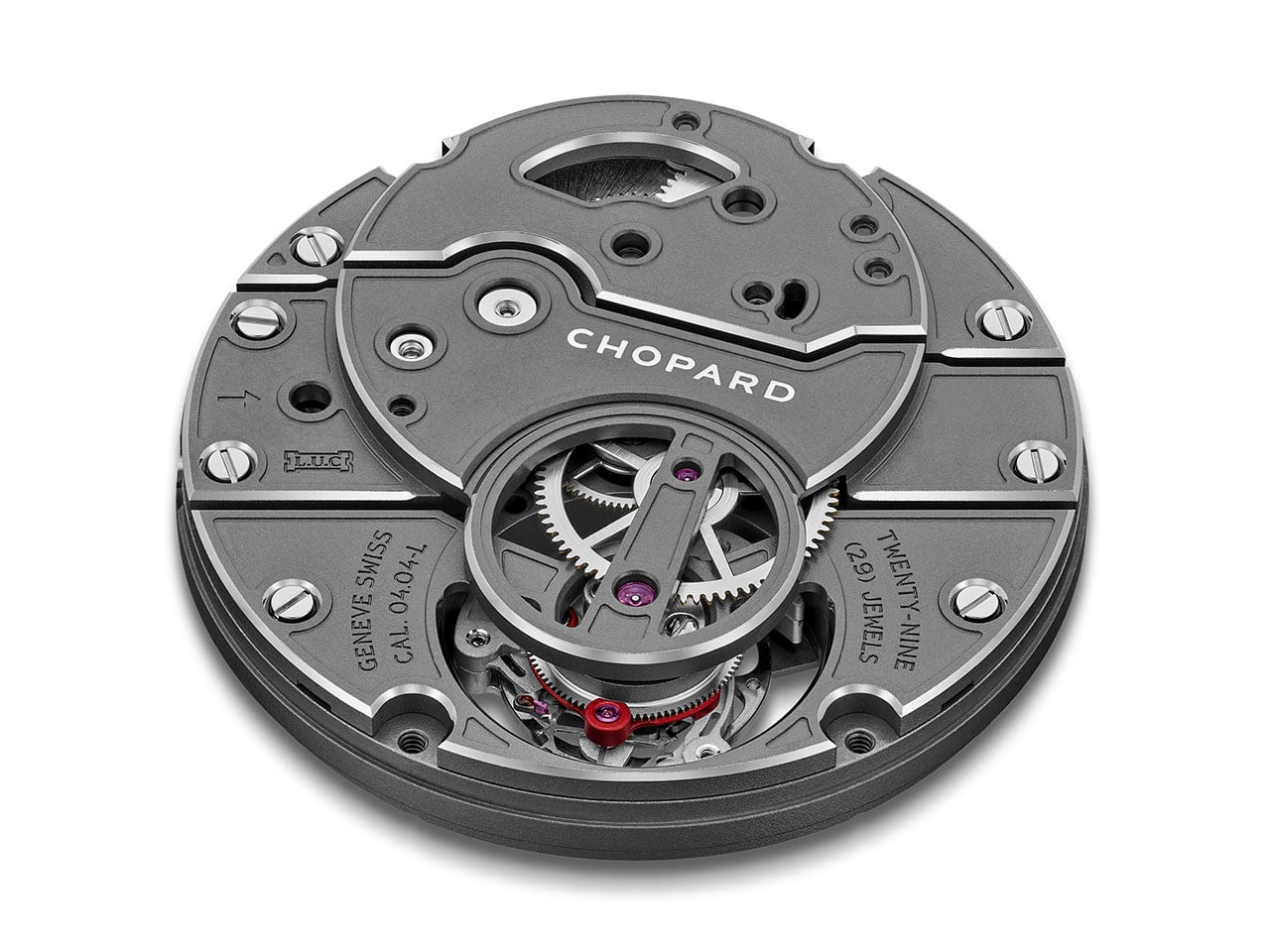
The watch ditches traditional lugs and replaces them with pivoting tubular loops that can rotate up to 45 degrees. This design allows the case to sit flush with the wrist, delivering exceptional wearing comfort. On the dial, the open-worked hour and minute hands and the gauge-style power reserve at 12 o’clock are reminiscent of the motorsport theme. This mechanical marvel is powered by a hand-wound L.U.C 04.04-L calibre movement offering COSC-certified chronometer-level accuracy, operating at 28,800 vph, and has a 60-hour power reserve. The bridges and mainplate are also made from ceramicised titanium.
The Zagato Lab One Concept watch has a 60-second tourbillon positioned at 6 o’clock and protects the movement against shock via silent-block elastomer dampers and four lever arms. Water resistant up to 50 meters, the watch comes with two strap options: a fabric strap with hook-and-loop fastening, and the other is a calfskin leather strap. According to press information, only 19 examples of the watch are available, and each is priced at CHF 130,000 (approximately $170,000).
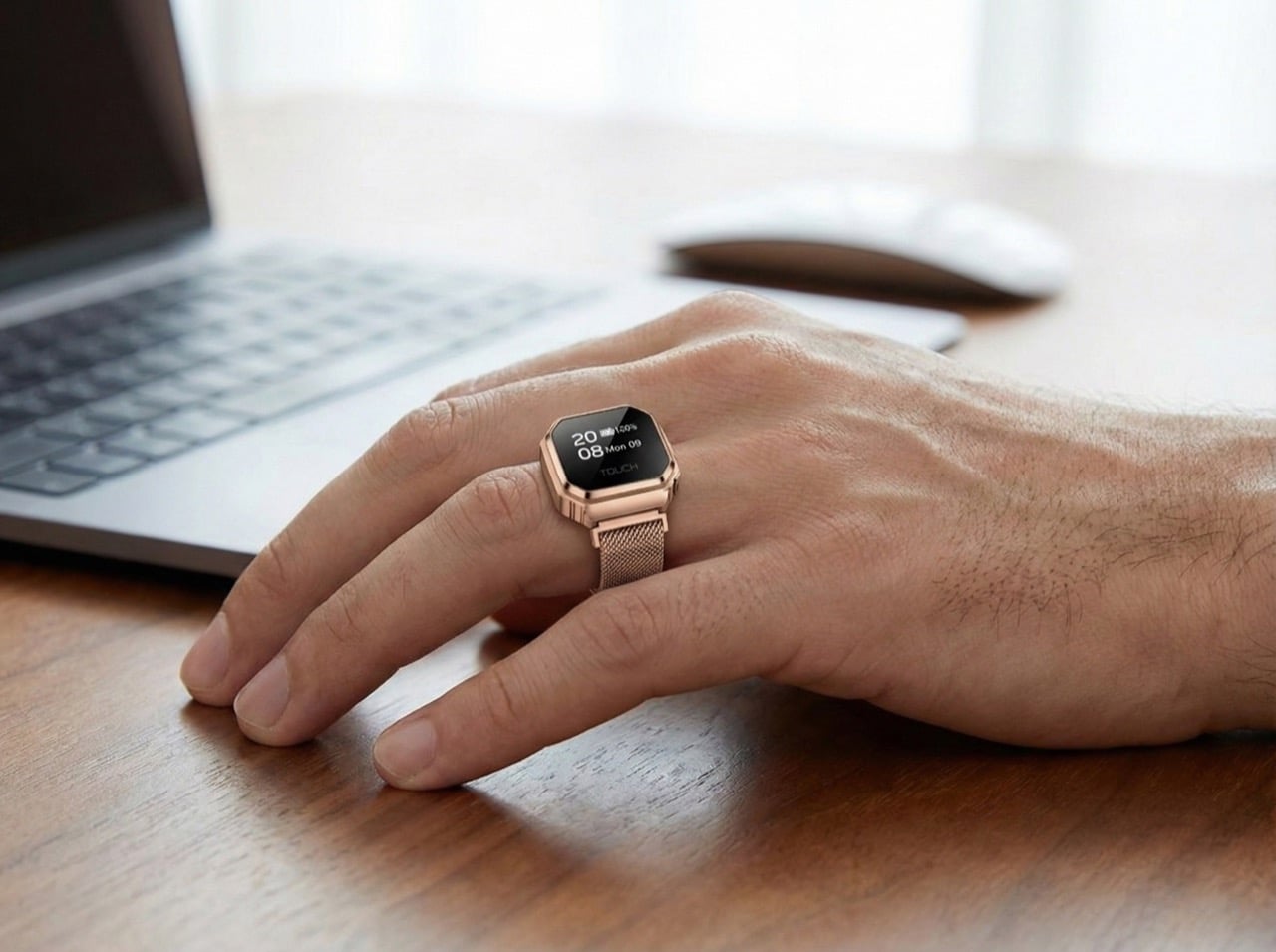
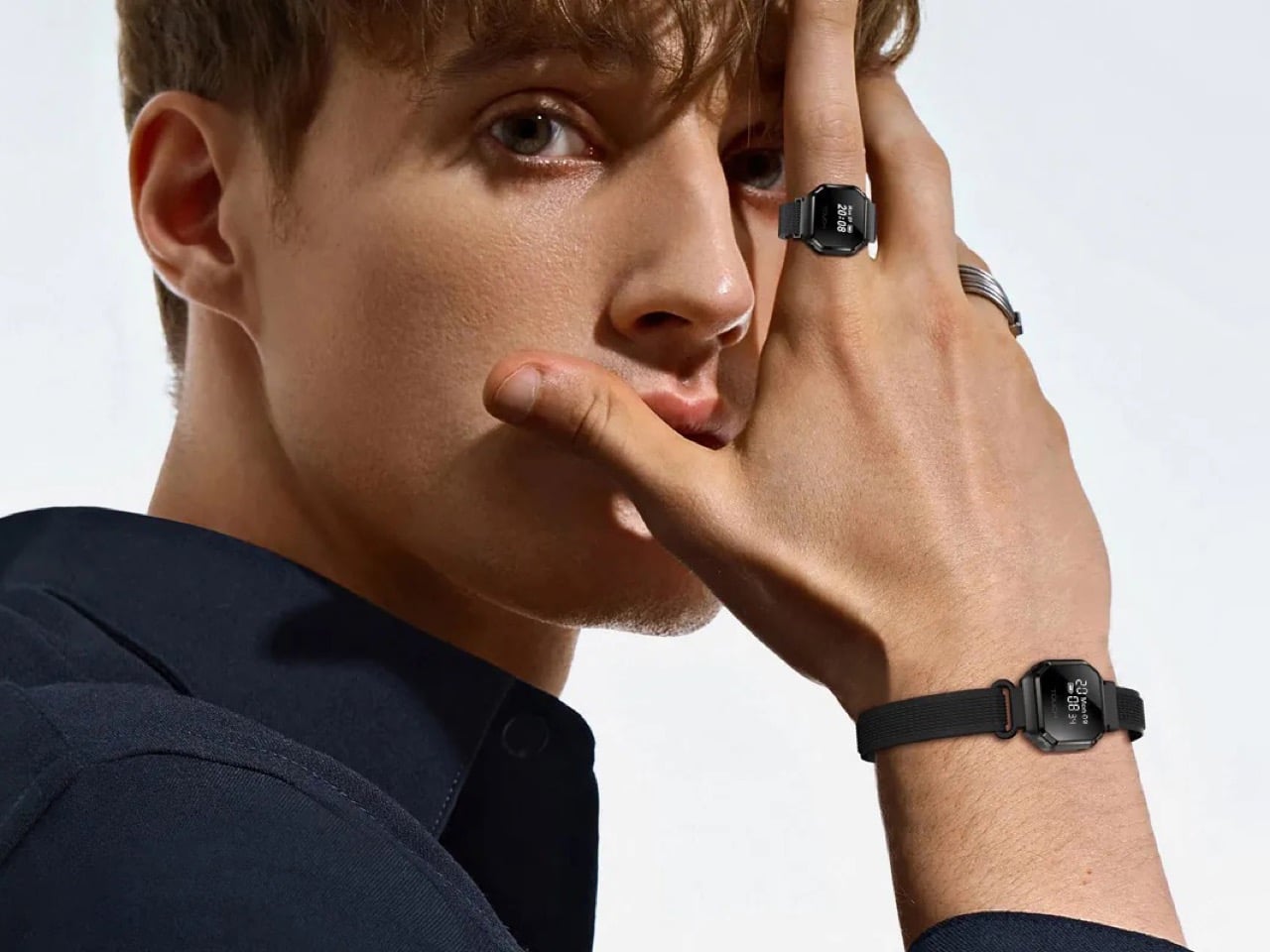
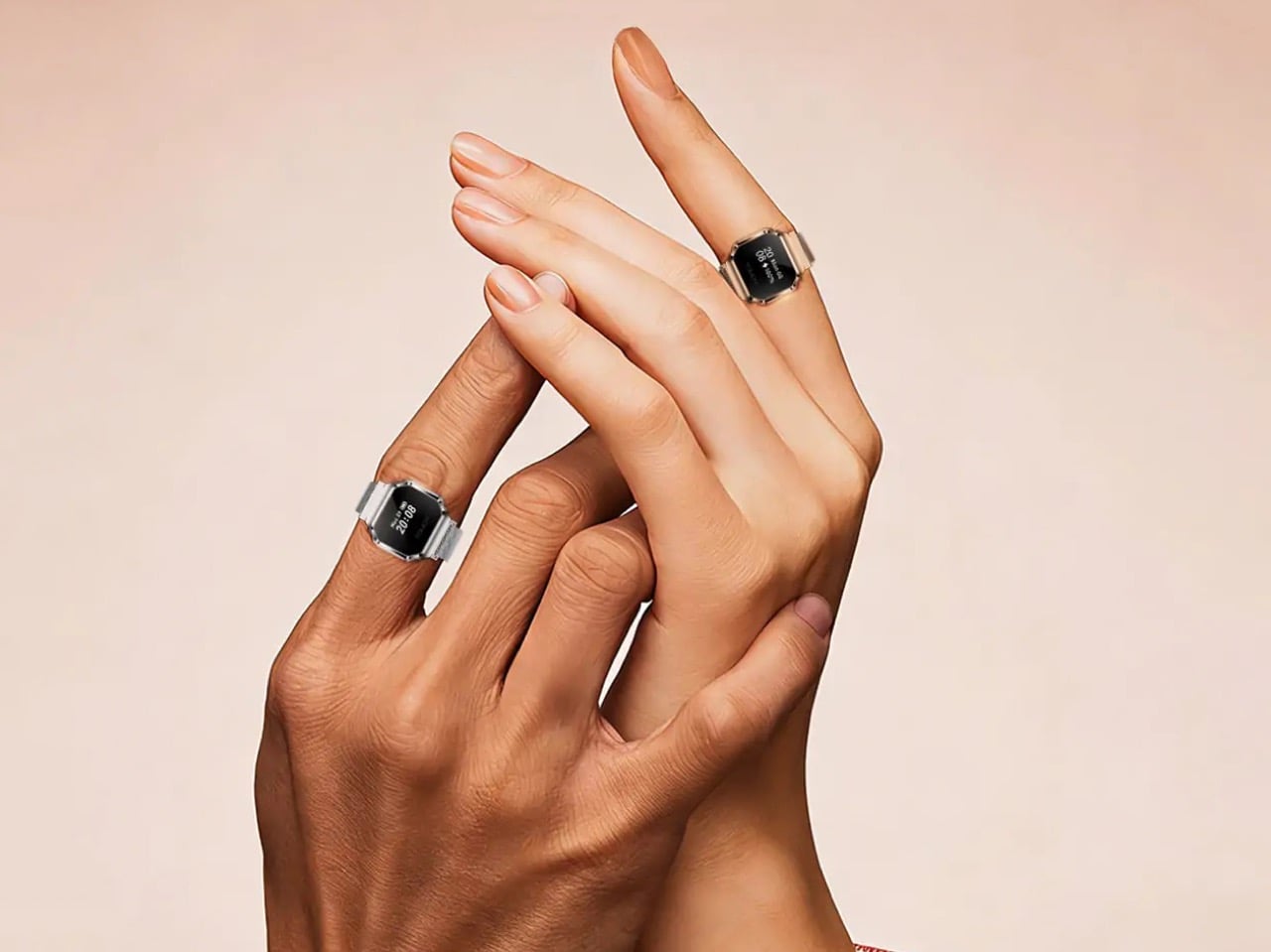
The smartwatch got smaller. Then the smart ring arrived. Now Rogbid has released something that splits the difference and costs less than a nice dinner: the Fusion, a hybrid device that looks like someone shrunk a fitness tracker and stuck it on a ring band. For fifty dollars, you get a legitimate OLED display, actual health sensors, and the ability to wear your technology on whichever body part feels right that day.
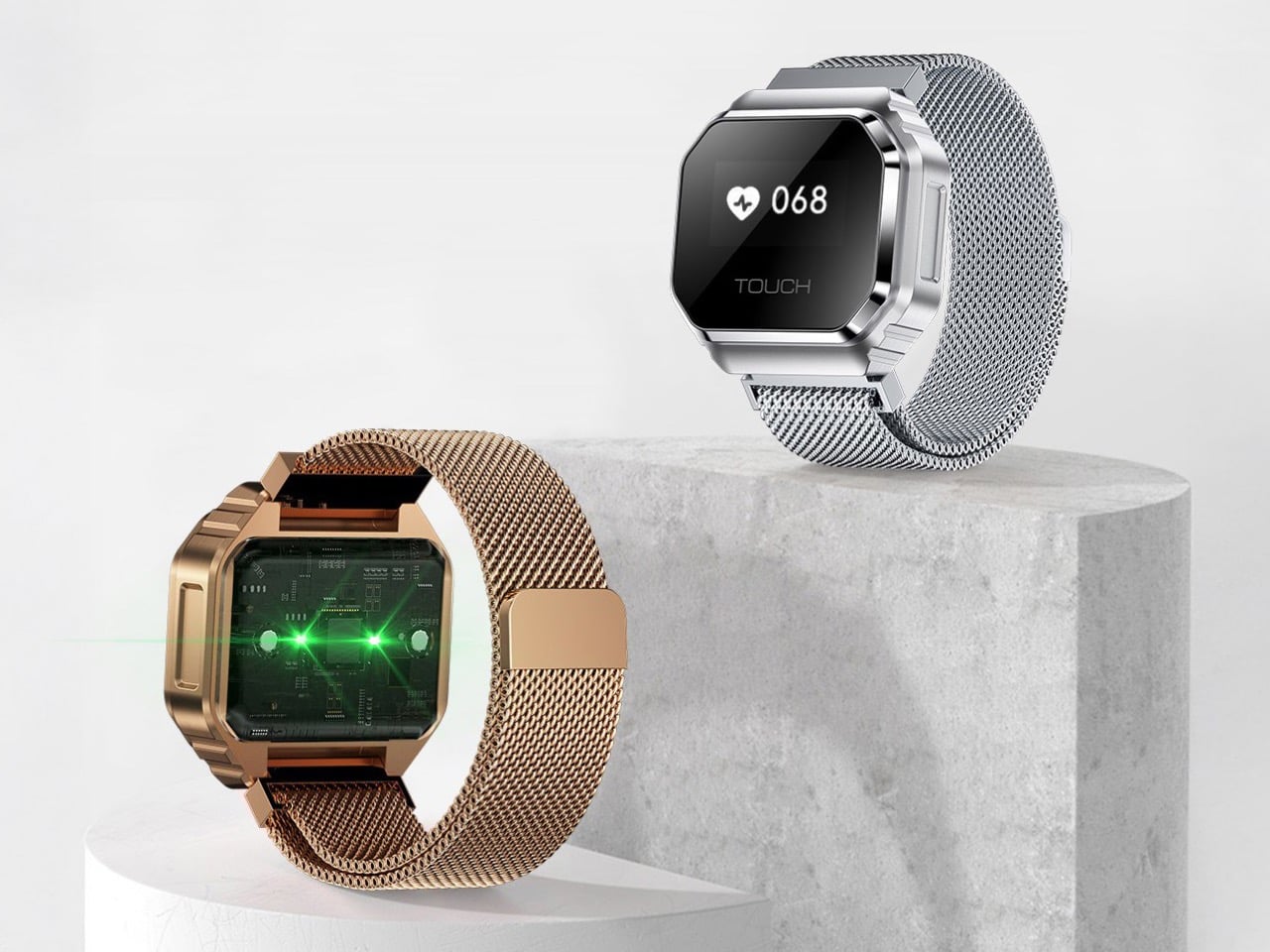
This is more than just miniaturization for the sake of novelty. The Fusion measures 20.6 x 21 x 8.2mm and weighs about as much as three quarters stacked together, yet it monitors heart rate, tracks sleep, measures blood oxygen levels, and survives underwater thanks to 5ATM water resistance. Rogbid includes both a finger-sized adjustable strap and a wrist band, turning the device into whatever you need depending on your outfit, activity, or tolerance for questions from strangers. Battery life hits five days with regular use, which means this tiny screen actually pulls its weight between charges.
Designer: Rogbid
You have to give Rogbid credit for seeing Casio’s G-Shock ring sell out and thinking, “we can do that, but with actual tech inside.” That Casio piece was pure nostalgia, a fun gimmick that proved a market existed for finger-watches. Rogbid’s move feels like the logical, if slightly unhinged, next step: taking the novelty and injecting actual utility.
We’re talking over 100 sports modes, which is a software problem I don’t even want to think about navigating on a half-inch screen. But the hardware is there: an optical heart rate sensor, blood oxygen monitoring, and all the usual motion tracking. They even added prayer time reminders and a “couple interaction mode” for sharing codes, which feels like they just kept adding features from a hat until they ran out of room. It’s the kind of feature creep that’s almost admirable in its audacity, especially when most competitors are still trying to get basic step counting right in the ring form factor.
This whole thing is a fascinating gamble on what people want from a smart ring. The entire appeal of the Oura and its competitors is their subtlety; they disappear into your daily life. The Fusion, however, plants a glowing OLED screen right on your knuckle and demands attention. It’s a complete rejection of the minimalist aesthetic that defined the category. Maybe that’s the point. For fifty bucks, Rogbid isn’t trying to compete with the thousand-dollar jewelry pieces. They’re creating an entirely new, wonderfully weird sub-category of wearable that’s too cheap and too interesting to ignore.
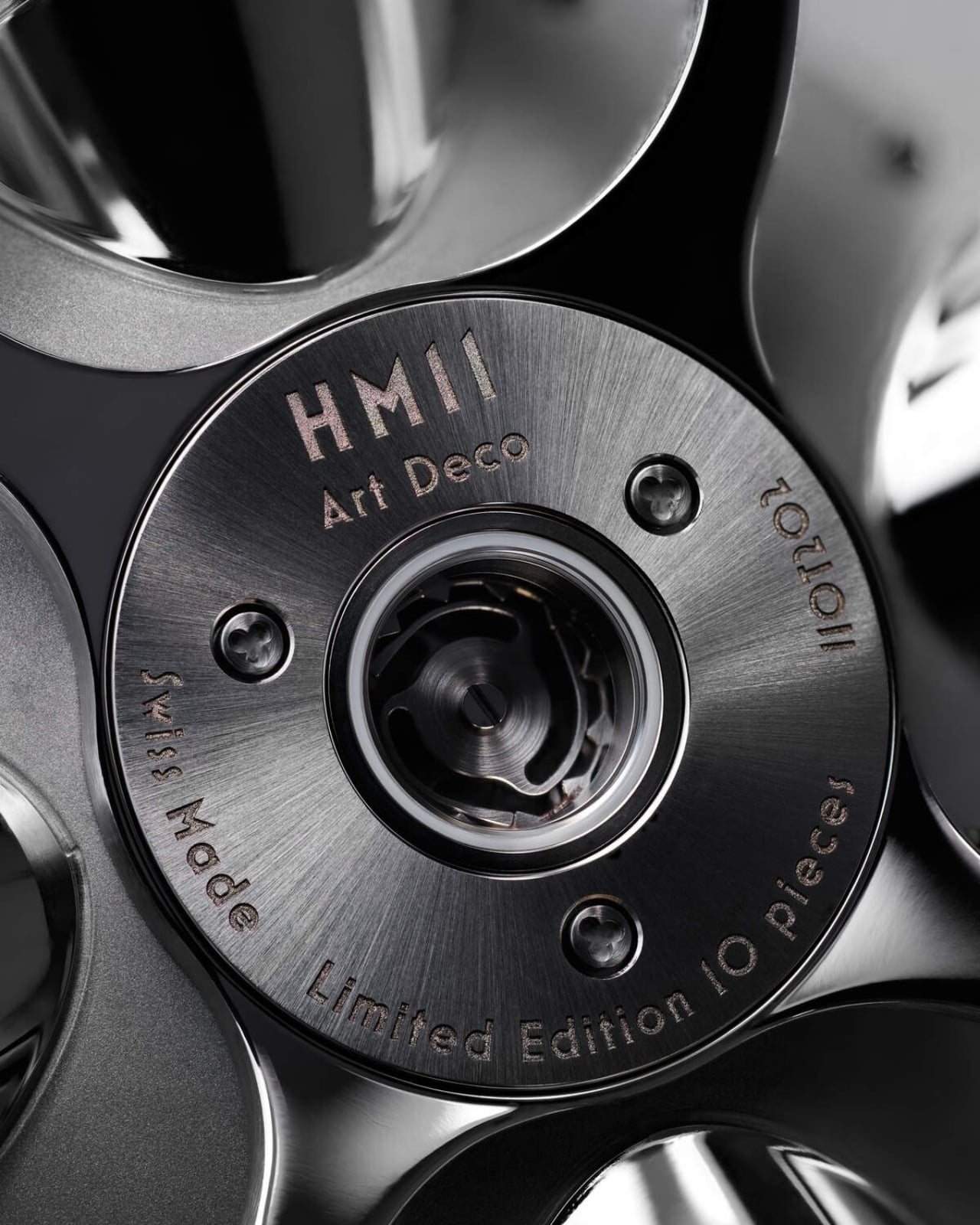
You know that feeling when you spot something so unexpected it makes you stop mid-scroll? That’s exactly what happened when I saw MB&F’s latest creation. The HM11 Art Deco doesn’t just tell time, it looks like someone shrunk an entire 1930s metropolis and strapped it to your wrist. And honestly, I’m here for it.
Let’s talk about what makes this thing so wild. MB&F introduced their HM11 series back in 2023 with the Architect edition, which already pushed boundaries with its architectural inspiration. But the new Art Deco versions, released in 2025, take that concept and run it through a time machine straight to the Jazz Age. Instead of the organic, humanist forms of the original, these new editions embrace the geometric vocabulary of 1930s design, complete with vertical lines, stepped profiles, and those signature sunburst graphics that defined the era.
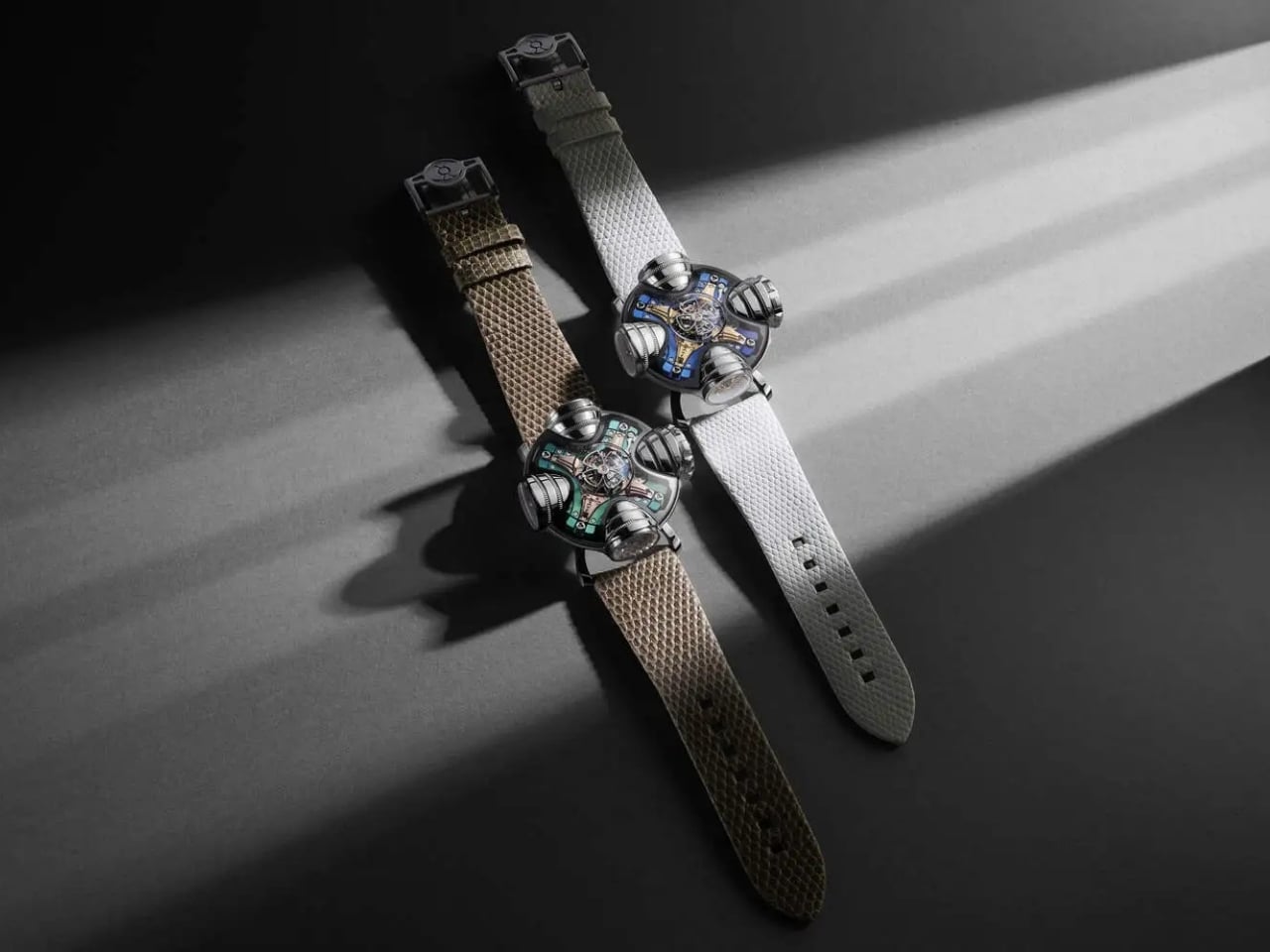
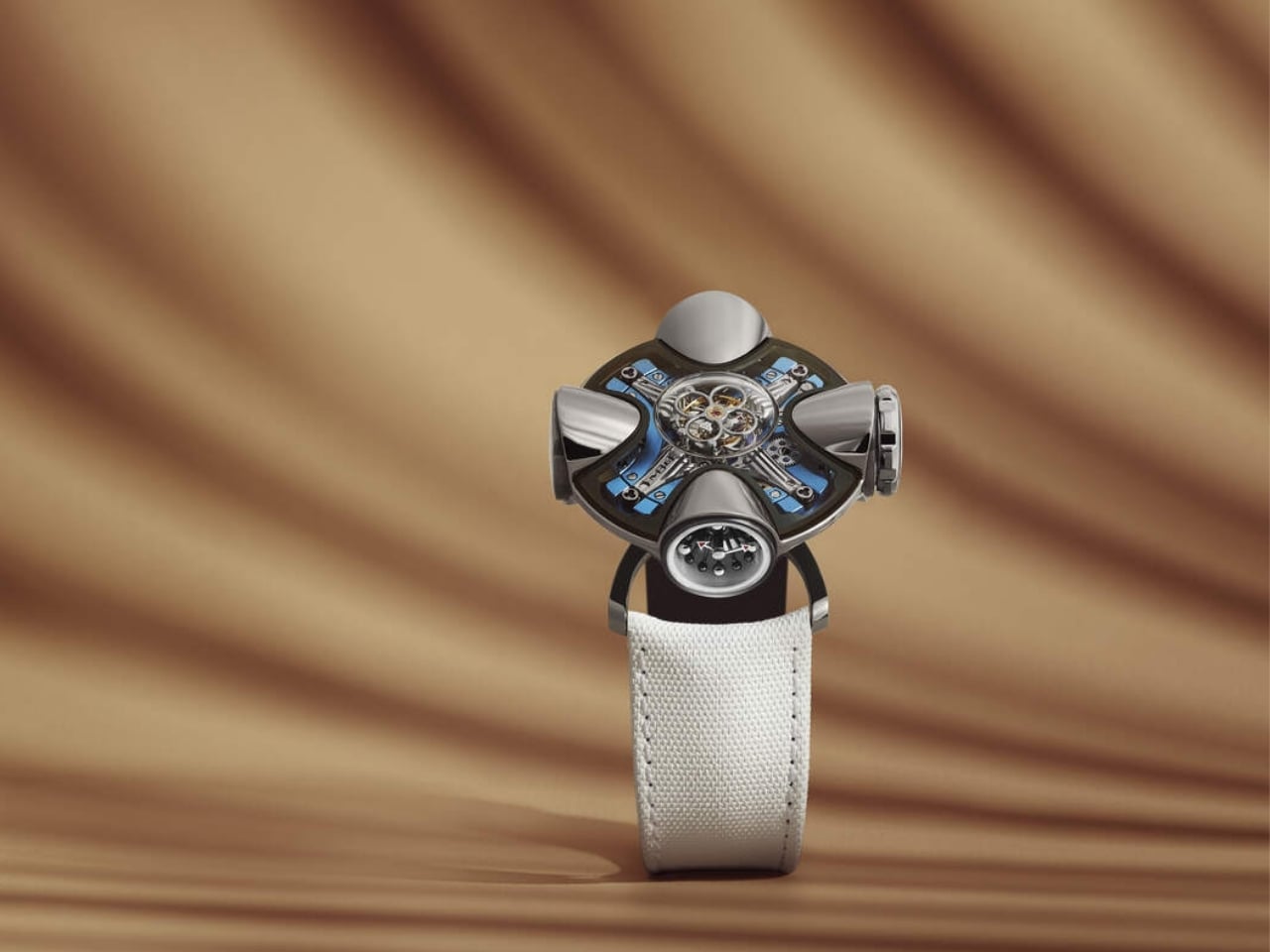
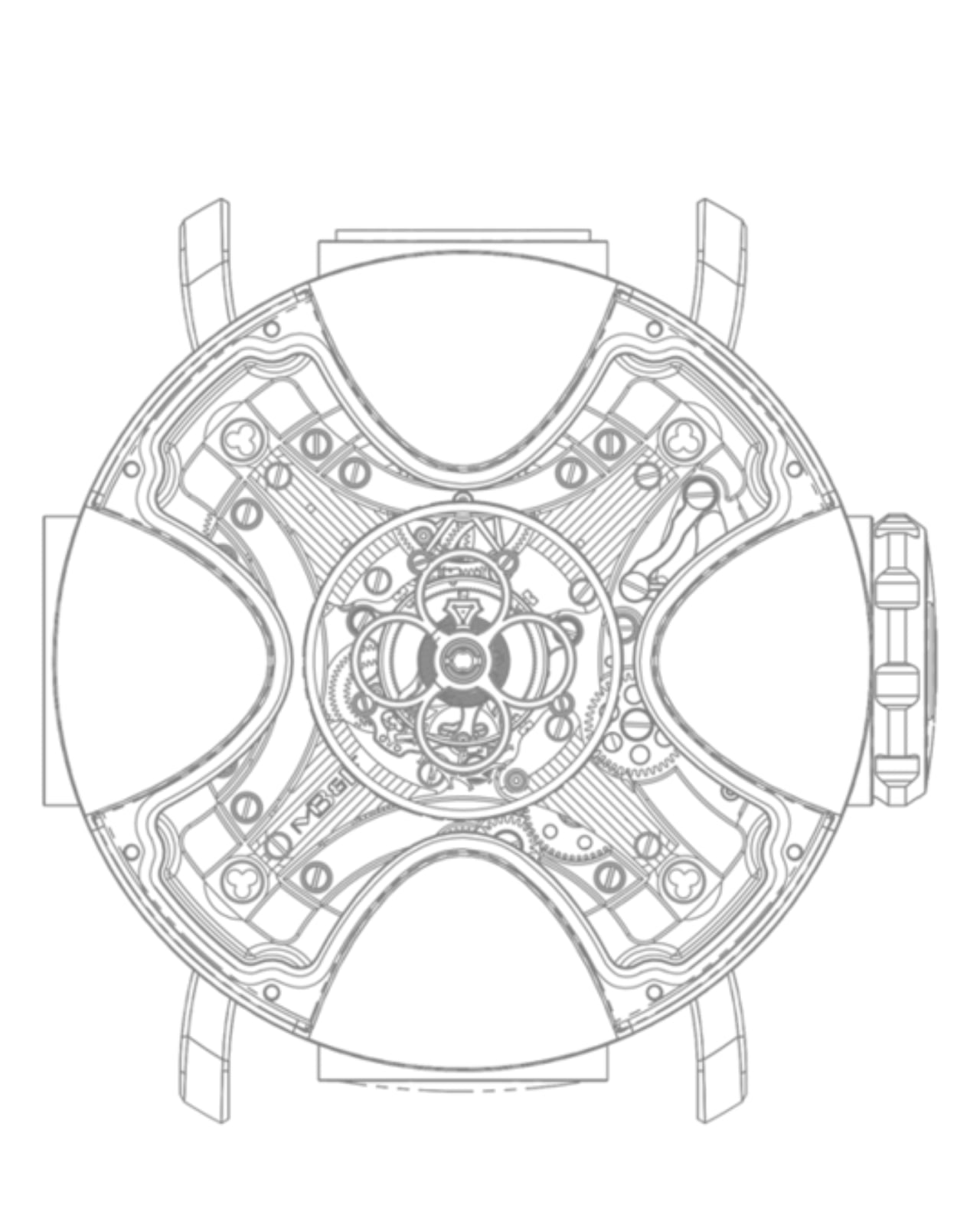
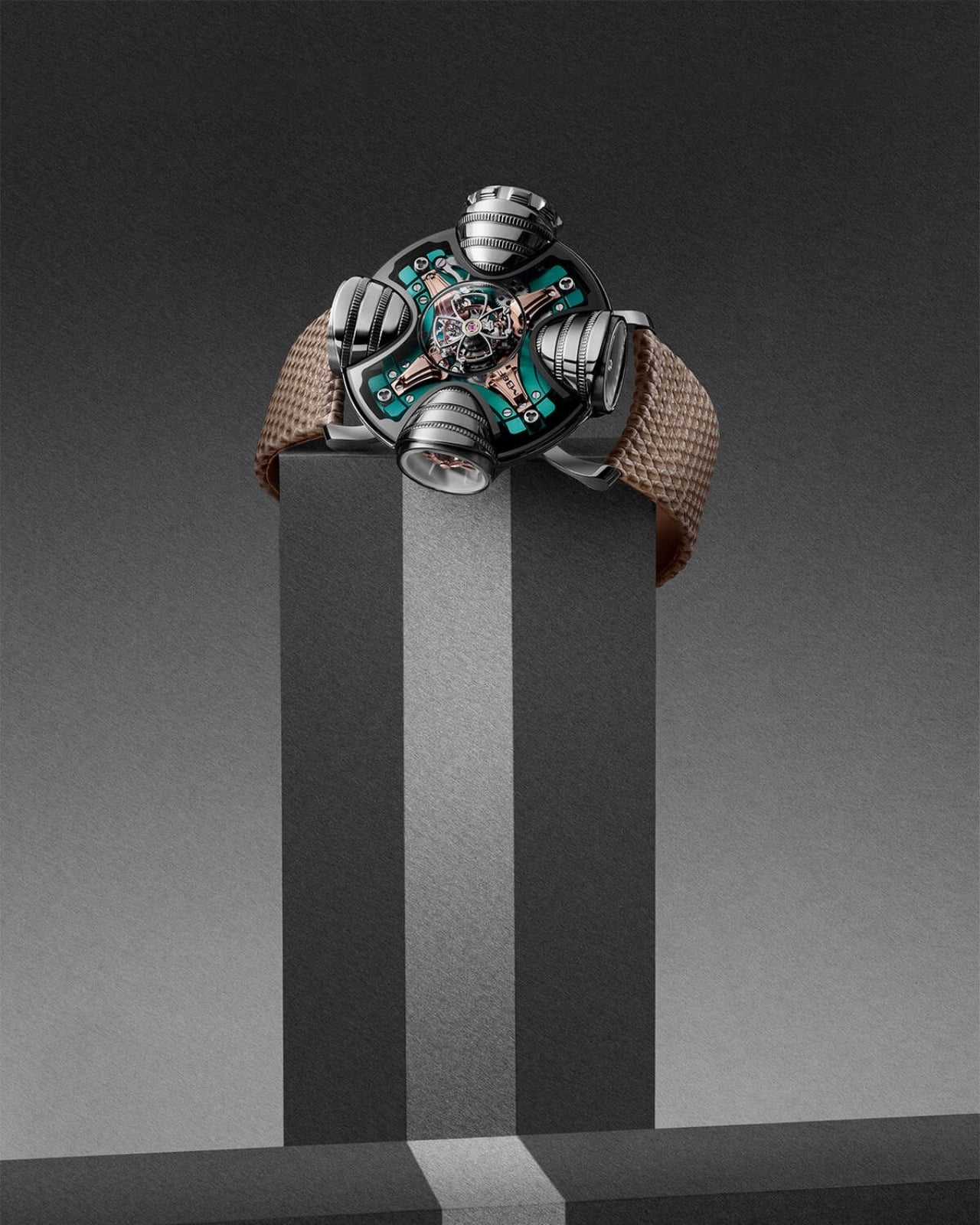
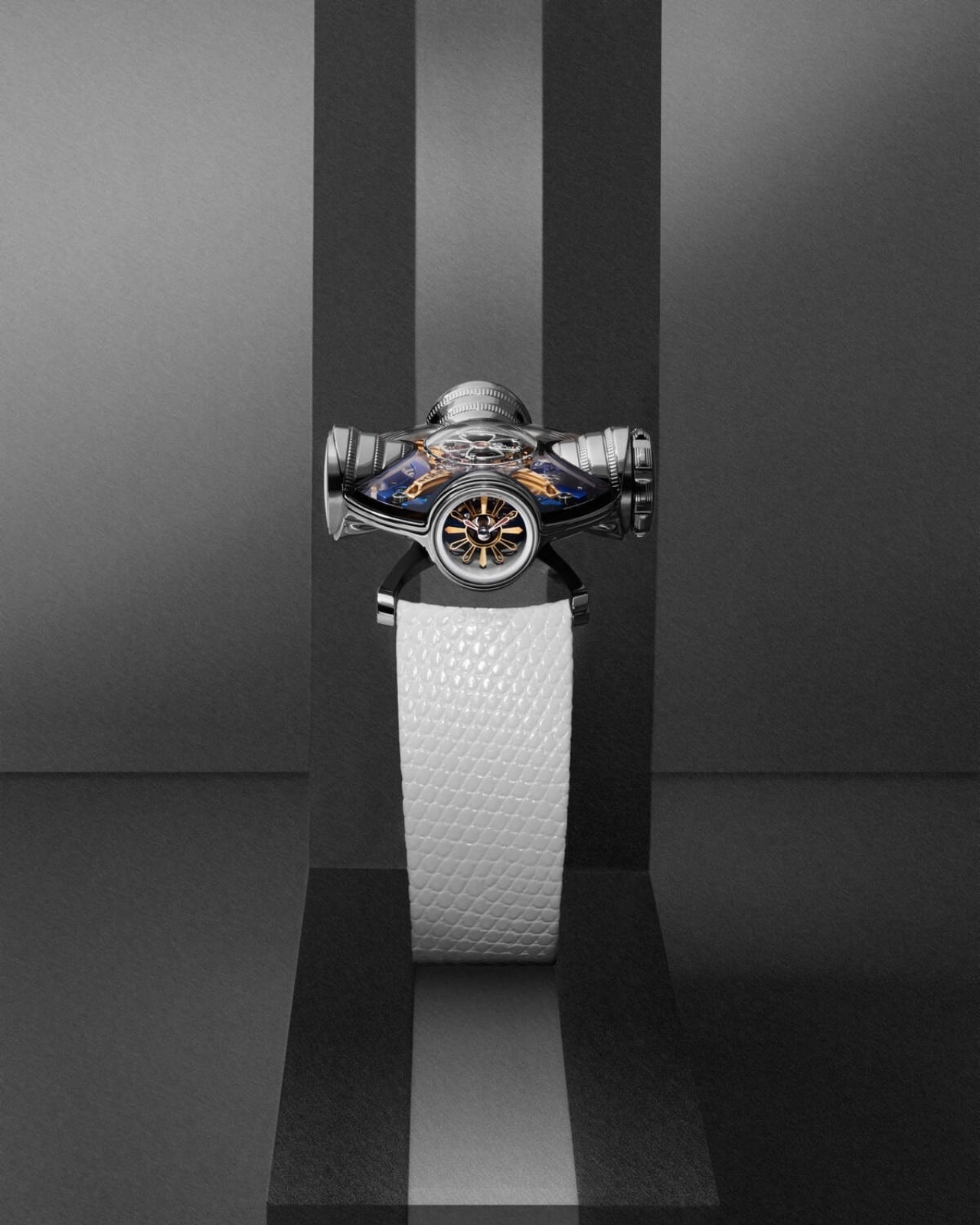
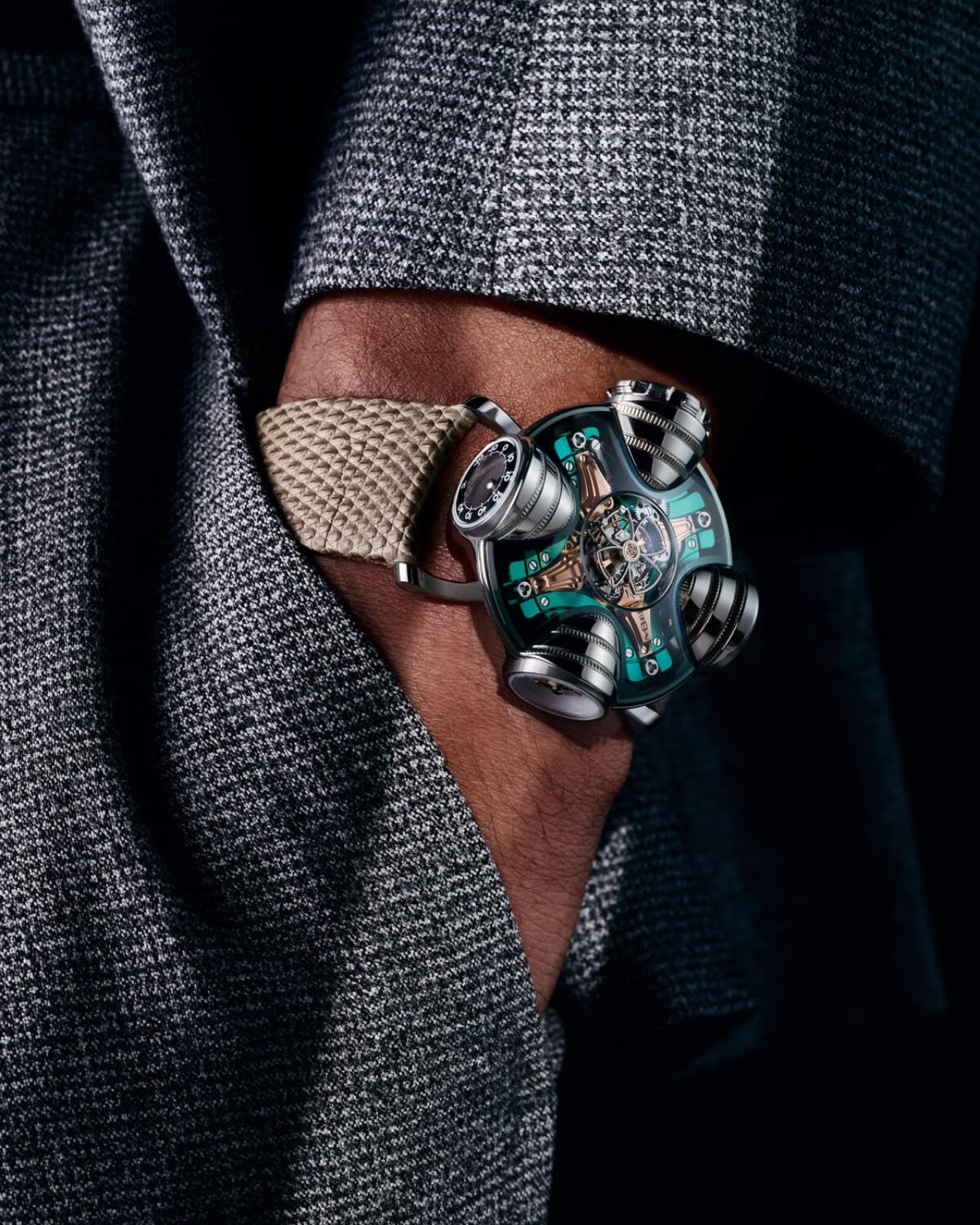
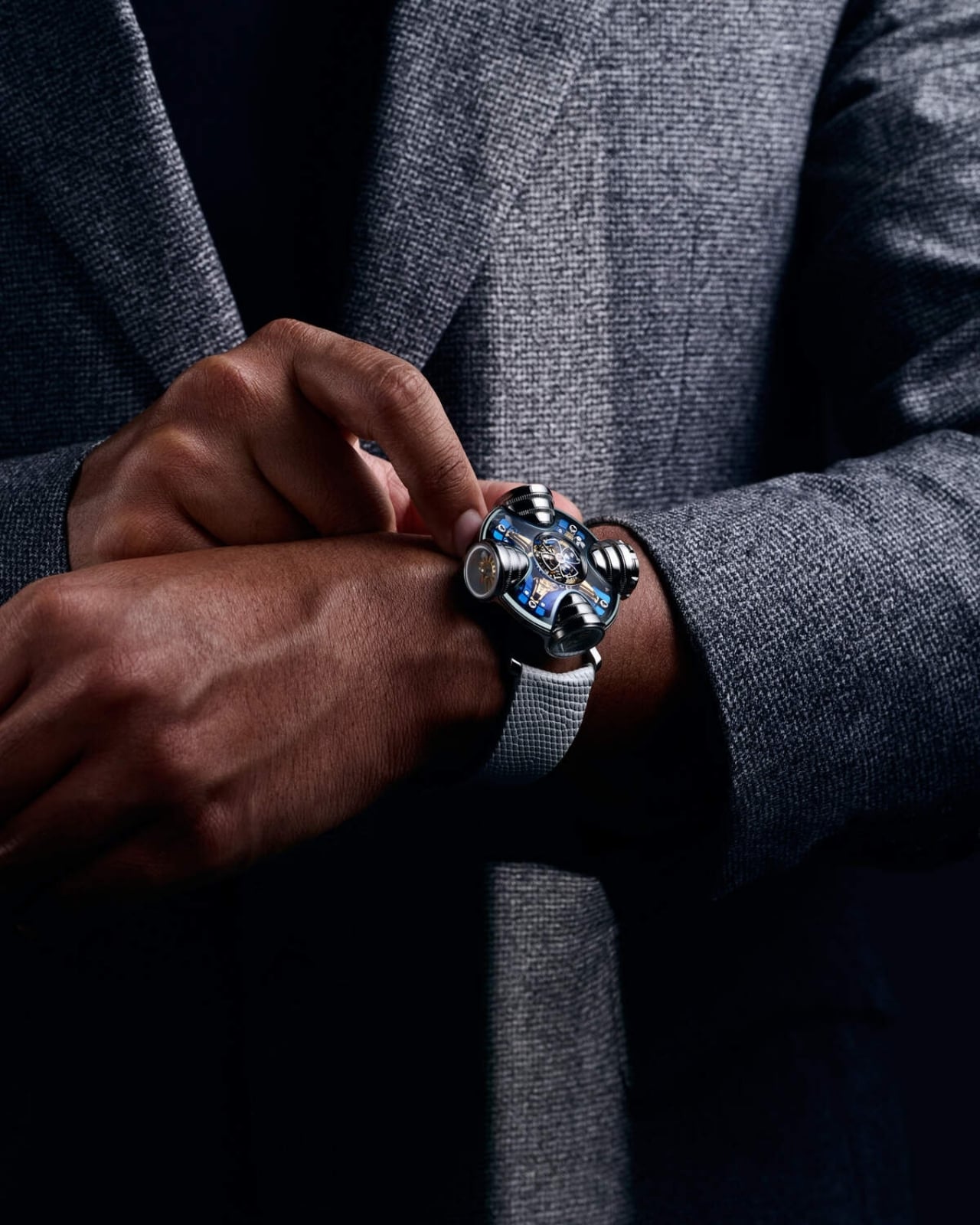
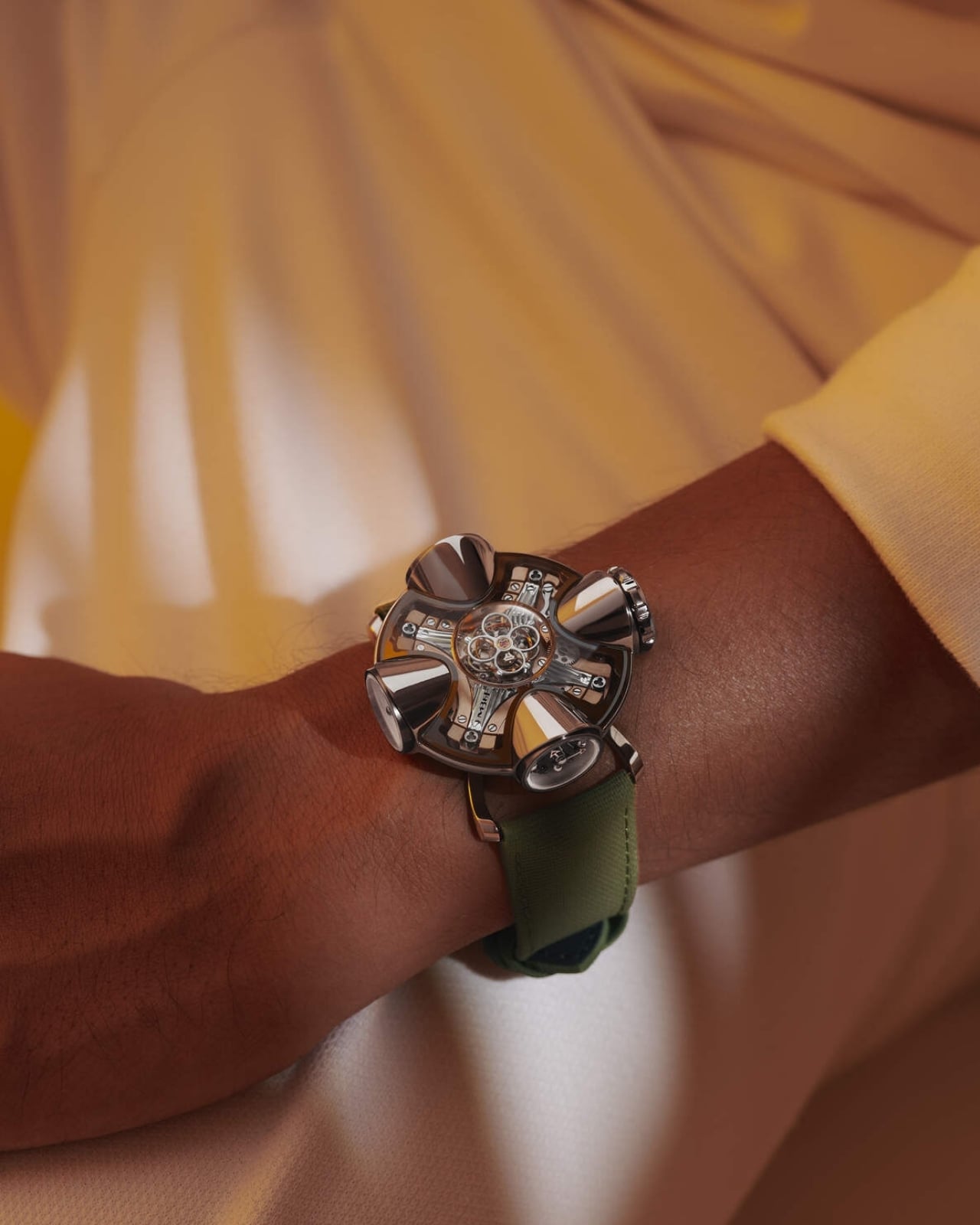
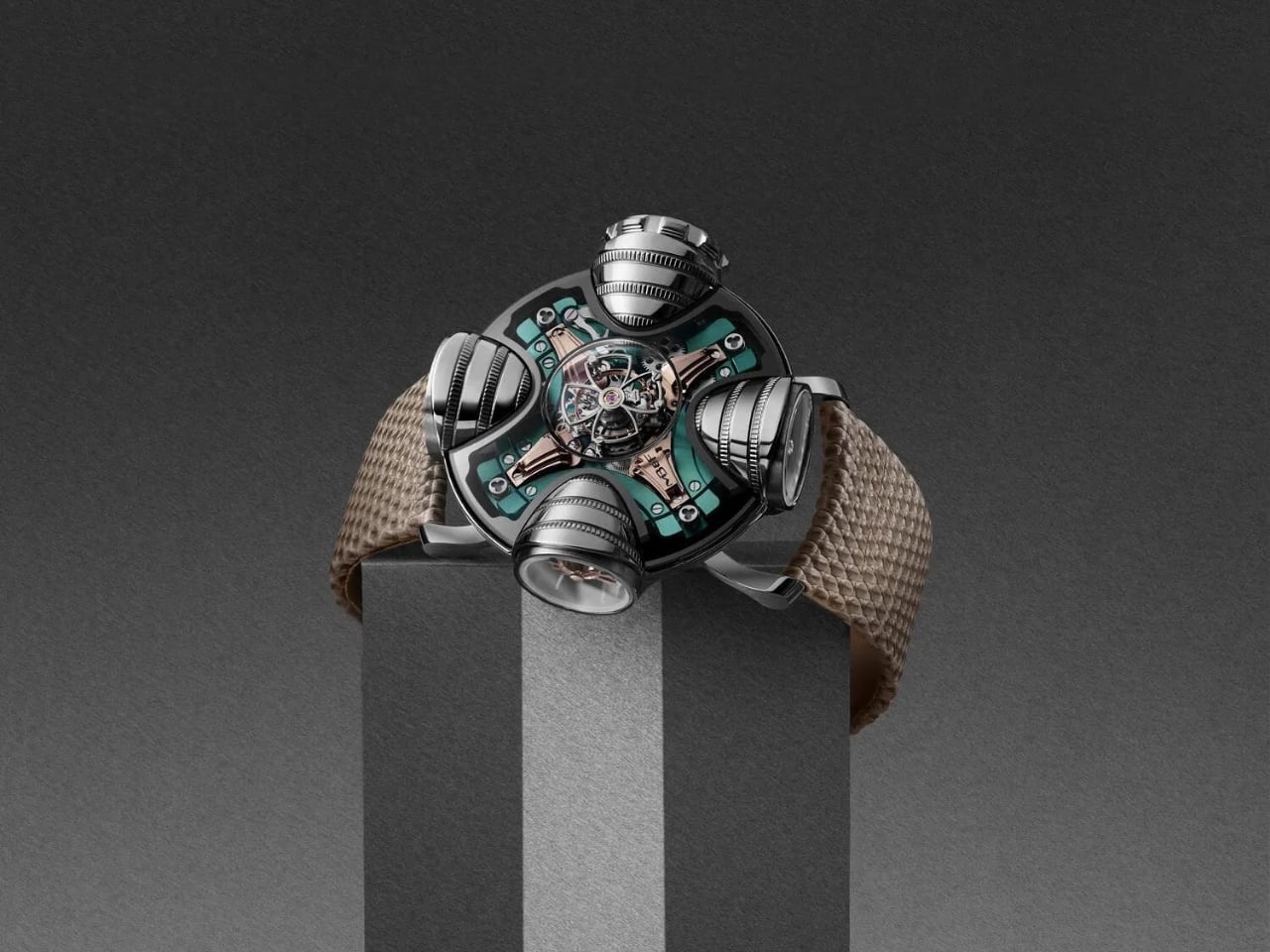
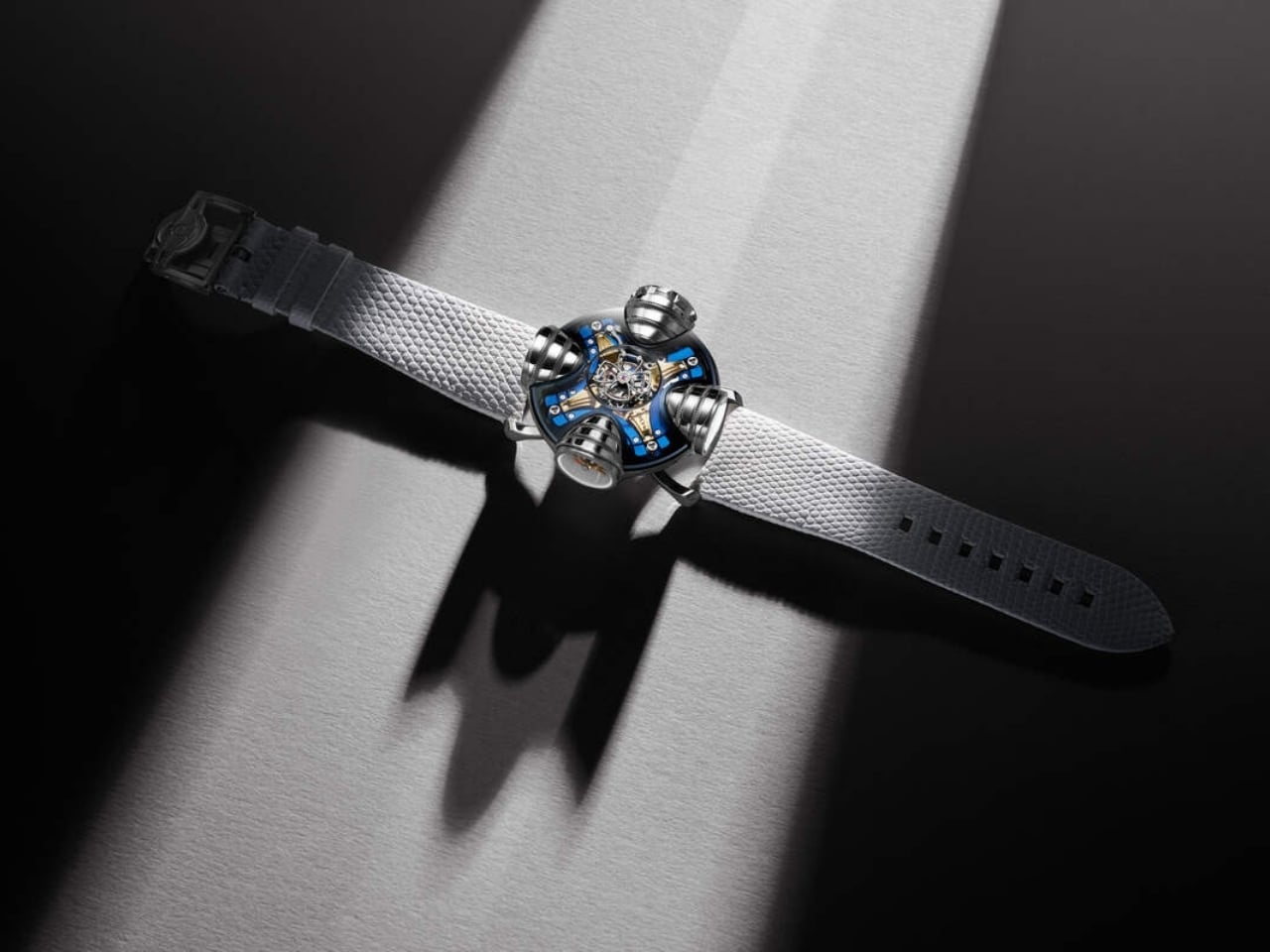
The case itself is a masterclass in three-dimensional thinking. Picture this: a central atrium surrounded by four peripheral pods, each covered with its own sapphire crystal window. The whole thing sits under a double-domed sapphire roof that creates this incredible play of light and shadow. It’s like looking down at a miniature cityscape from above, which is exactly what MB&F intended. The titanium construction keeps it surprisingly wearable at 42mm wide, though at 23mm tall, this isn’t exactly a watch that’s going to slip under your shirt cuff.
What really gets me excited are the details. MB&F released two versions, and each one has its own personality. The blue dial version features 3N yellow-gold-toned bridges that catch the light beautifully, while the green edition goes for 5N rose-gold-toned bridges. The display markers aren’t your typical hour indexes either. They’re laser-cut with a circular grain finish that echoes Art Deco’s obsession with geometric patterns. And those hands? They’re white gold skeletons with transparent red enamel inserts that create this stunning stained-glass effect when light passes through.
Here’s where things get really interesting from a mechanical standpoint. The movement inside is a fully in-house creation that’s basically a three-dimensional sculpture. It features a flying tourbillon (that’s the fancy spinning cage that helps with accuracy) and uses bevel gears to distribute the mechanics throughout those four pods. The power reserve clocks in at 96 hours, which means you can take it off Friday night and it’ll still be running Monday morning.
But my favorite quirk? You don’t wind this watch with a crown. Instead, you wind it by rotating the entire case clockwise. It’s such a tactile, engaging way to interact with your timepiece, and it completely fits the architectural theme. You’re literally turning a building to power it up. The straps deserve a mention too. The blue version comes on a white lizard leather strap, while the green gets a beige lizard strap, both with titanium folding buckles. They’re textured and refined, adding another layer of 1930s luxury to the whole package.
Now, let’s address the elephant in the room: the price. At CHF 198,000 (or about EUR 215,000), this is firmly in “if you have to ask” territory. But for that price, you’re getting one of only 10 pieces per color. Twenty watches total for MB&F’s 20th anniversary. This is wearable art that happens to tell time, not just another luxury watch.
What makes the HM11 Art Deco so compelling is how it refuses to play by conventional rules. In a world where most high-end watches still look fundamentally like, well, watches, MB&F went ahead and created something that challenges every assumption about what can sit on your wrist. It’s bold without being gaudy, complex without being cluttered, and somehow manages to be both a tribute to 1930s design and utterly futuristic at the same time.
Whether you’re into horology, design history, or just appreciate objects that make you think differently about everyday things, the HM11 Art Deco is worth paying attention to. It’s the kind of piece that sparks conversations and makes people question what’s possible. And in a market saturated with safe choices and heritage reruns, that’s pretty refreshing.






 .
.