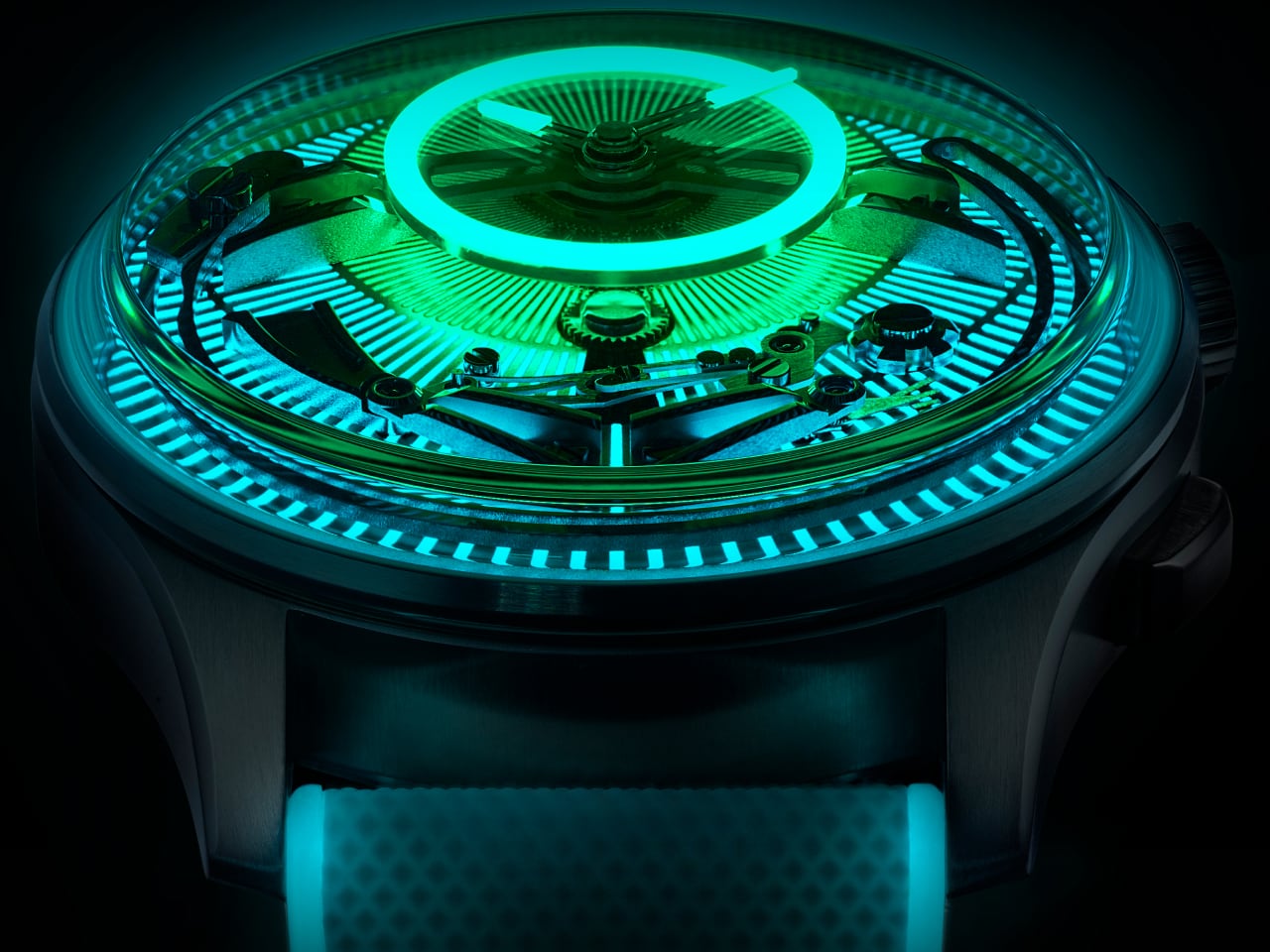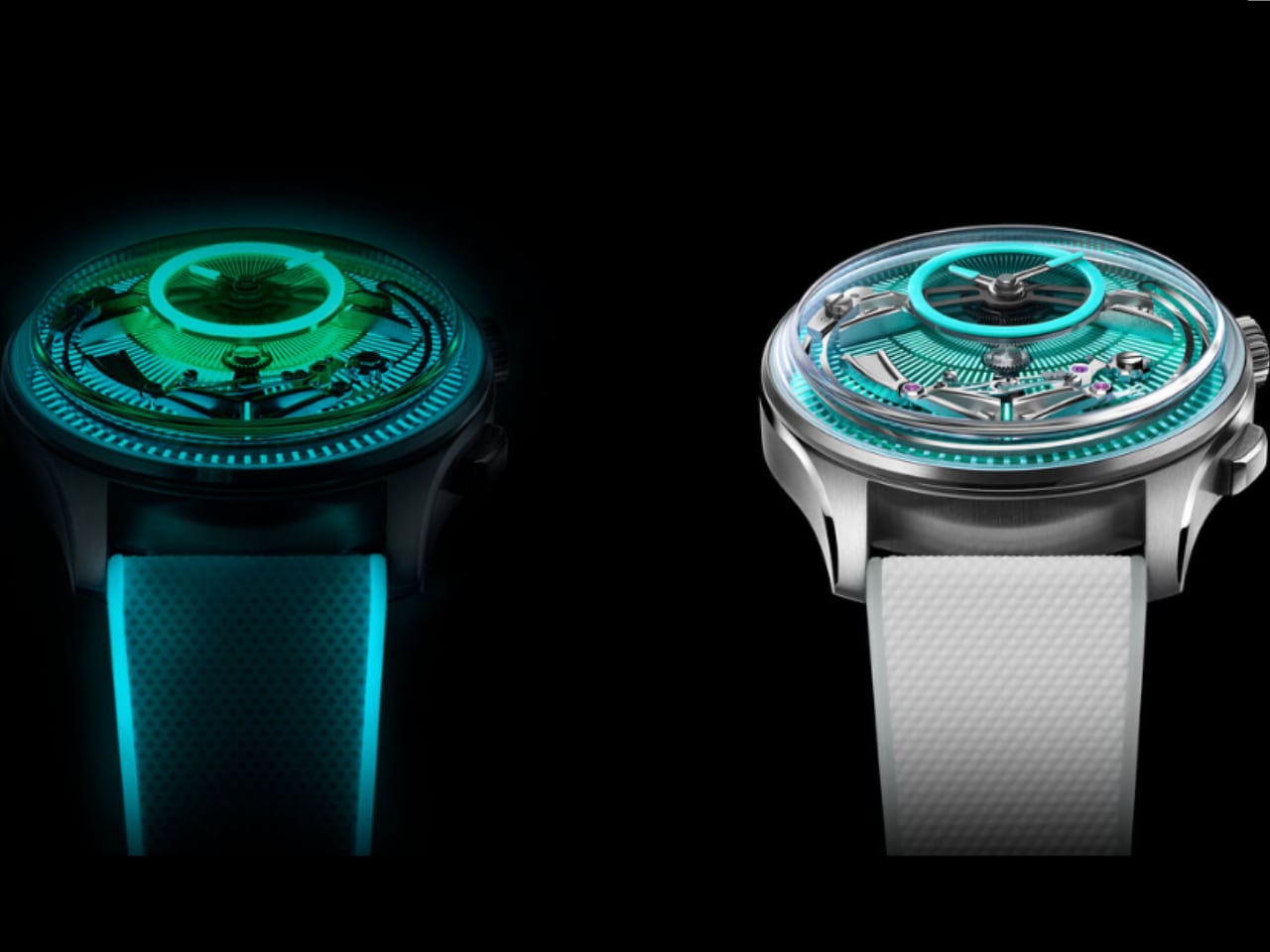
Only 100 Will Own This $84,300 See-Through Hublot Watch

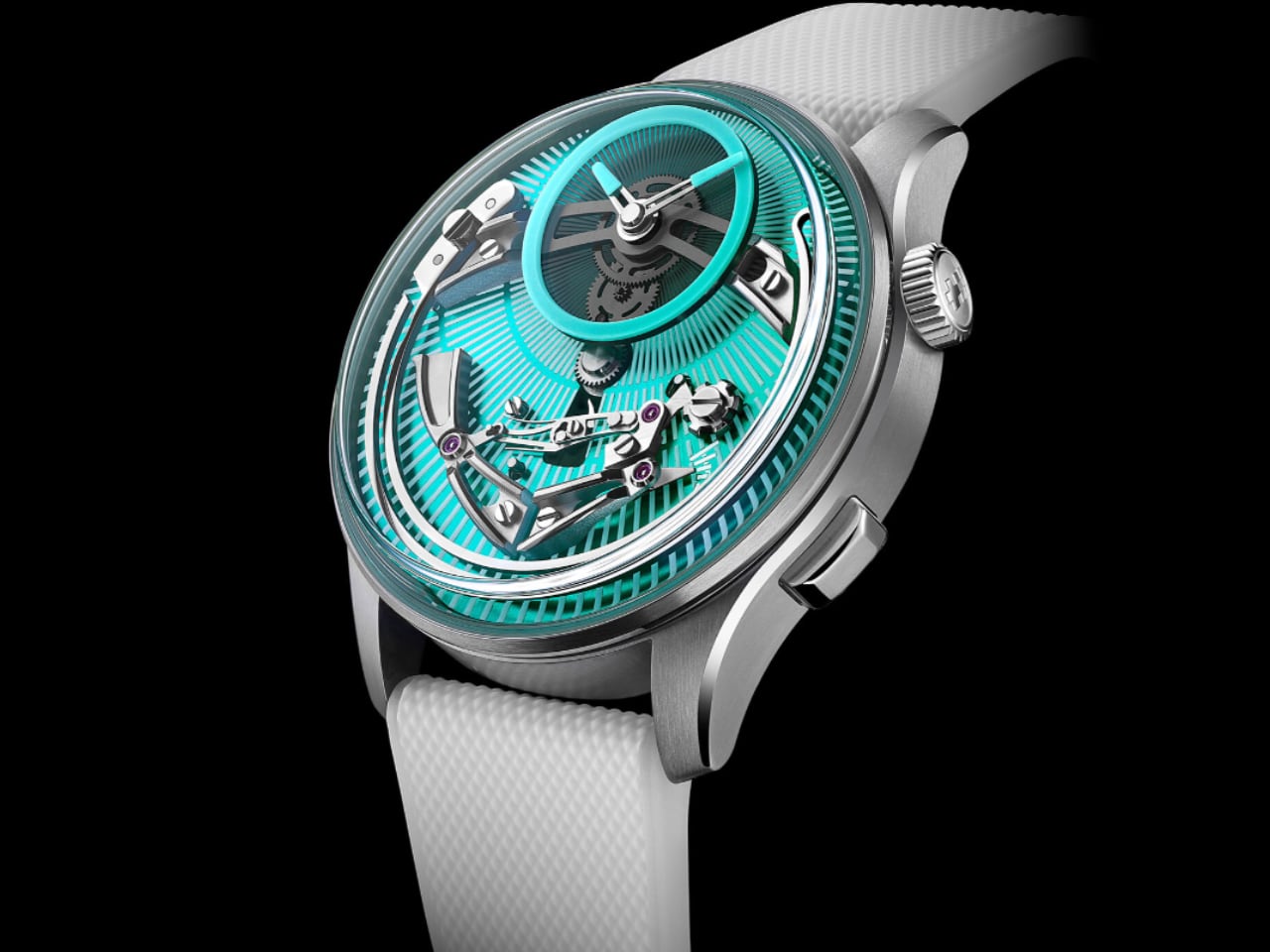
I have a theory about luxury watches: the best ones don’t just tell time, they start conversations. The Hublot Big Bang Sapphire Sky Blue is exactly that kind of watch. It’s a 44mm piece of sky-blue transparency that makes you stop mid-sentence and stare, not because it’s flashy in the traditional sense, but because it looks almost impossibly light. Like someone poured an afternoon sky into a case and sealed it with titanium screws.

Hublot has been working with sapphire as a structural material since 2016, earning a reputation as the go-to house for pushing what this material can actually do. What started as a clear sapphire case has evolved into something more ambitious, and this new limited edition is a strong example of that progression. The 44mm case and bezel are crafted from fully polished sapphire crystal, not coated or tinted, but rendered in a genuine sky-blue transparency that shifts subtly depending on the light. Depending on how the light catches it, this watch can feel cool and airy or warm and atmospheric, a kind of visual fluidity that’s rare even in this price category. It’s the kind of color that doesn’t settle for one mood.

Designer: Hublot

The case is held together by Hublot’s signature H-shaped titanium screws, and if you’ve spent any time with the Big Bang line, you know those screws are as much a design statement as a structural one. The six-screw bezel is recognizable at a glance, and pairing that hardware with a transparent sapphire case feels like the right call. Nothing hides, everything is intentional. The strap continues the color story in structured sky-blue rubber, and the matte sky-blue skeleton dial and matching movement bridges create an immersive, coordinated picture that somehow avoids feeling one-dimensional.

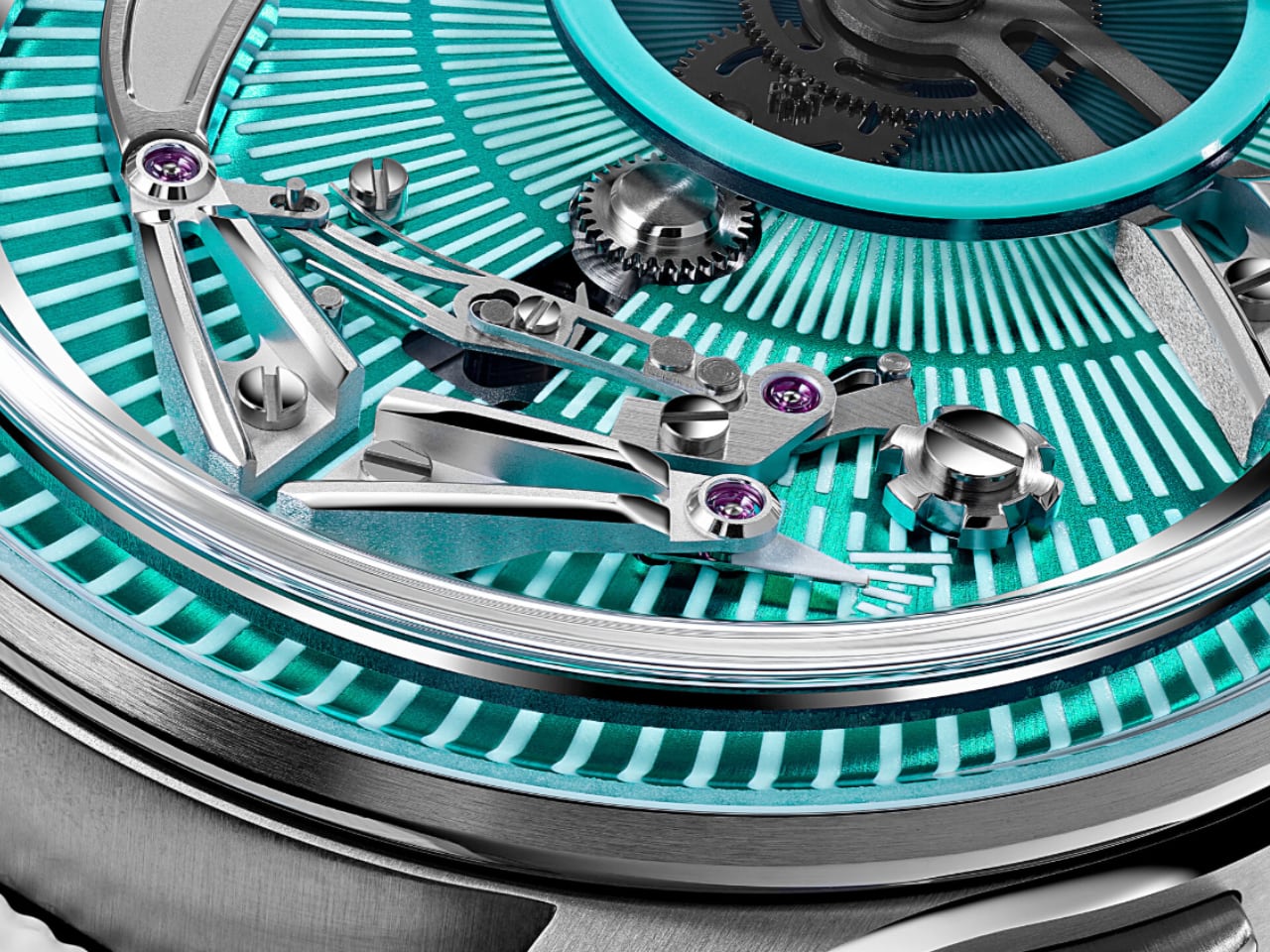
None of that would matter as much without something genuinely interesting happening inside. The movement powering the Big Bang Sapphire Sky Blue is the HUB1201 Manufacture Meca-10, a caliber that debuted in 2016 and remains one of the most visually distinctive in modern watchmaking. It was designed around the movement itself rather than squeezed into a conventional watch architecture, and the influence of mechanical construction systems, almost Meccano-like in its visual logic, is impossible to miss. Two parallel mainspring barrels give the watch a 10-day power reserve, meaning you won’t be winding this one every morning. A rack-and-pinion mechanism moves two sliding racks across the dial to display that power reserve in a way that reads more like industrial art than traditional horology. Running seconds at 9 o’clock, power-reserve display at 6 o’clock, and through the sapphire caseback, you can see all of it in motion.
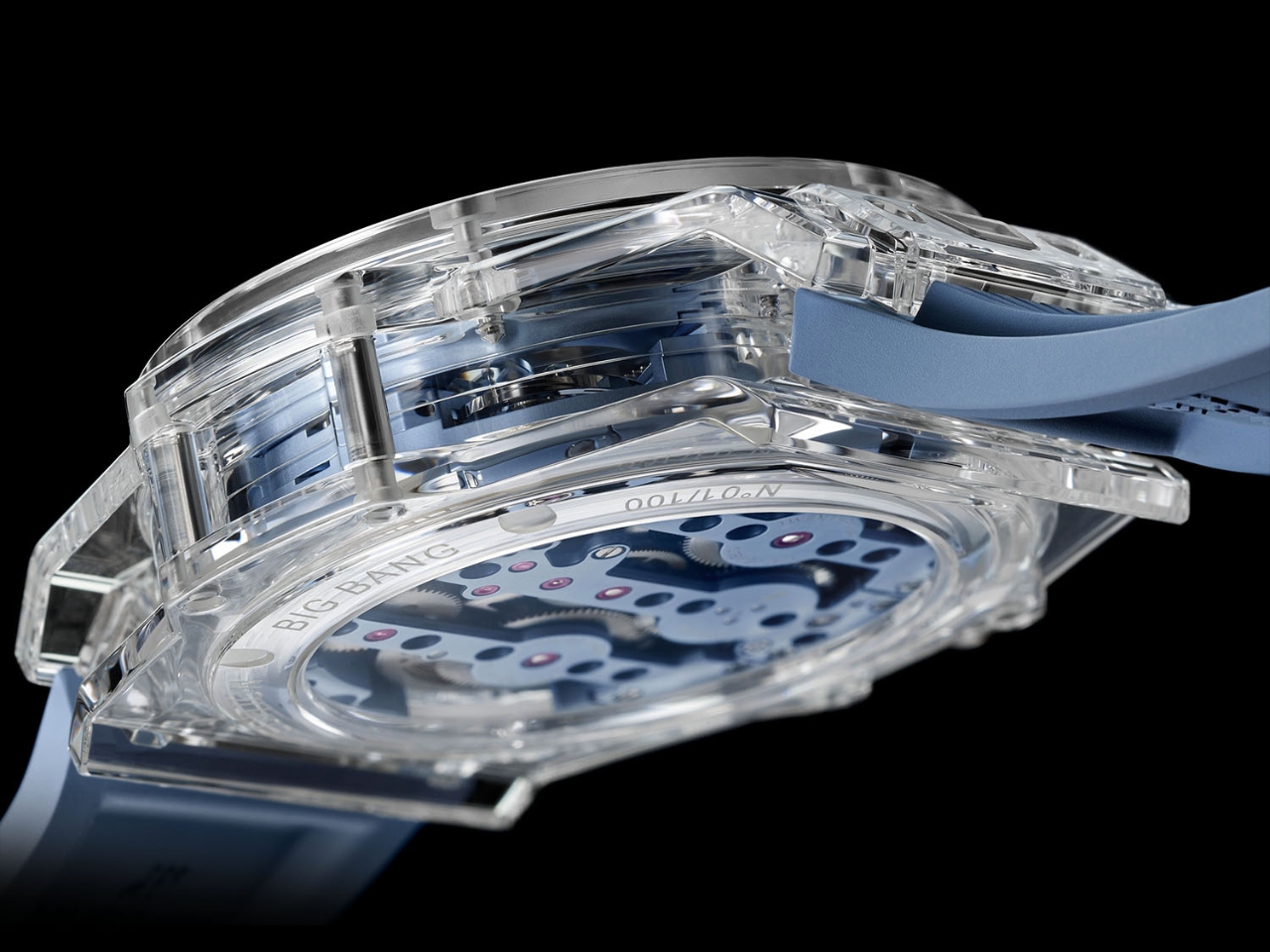
Most skeleton watches look beautiful and stop there. The Meca-10 is different because the architecture actually makes sense when you study it. The structure has visual logic even for someone who’s never read a watchmaking manual, and the sky-blue bridges and dial frame the movement rather than compete with it. That restraint is harder to pull off than it looks.

At $84,300, the Big Bang Sapphire Sky Blue is not a casual acquisition. With only 100 pieces produced worldwide, it lands firmly in serious collector territory, and the scarcity here feels genuinely earned. Crafting a colored sapphire case at this scale is a real engineering challenge, and that material ambition justifies the exclusivity more convincingly than a simple limited-edition number ever could.
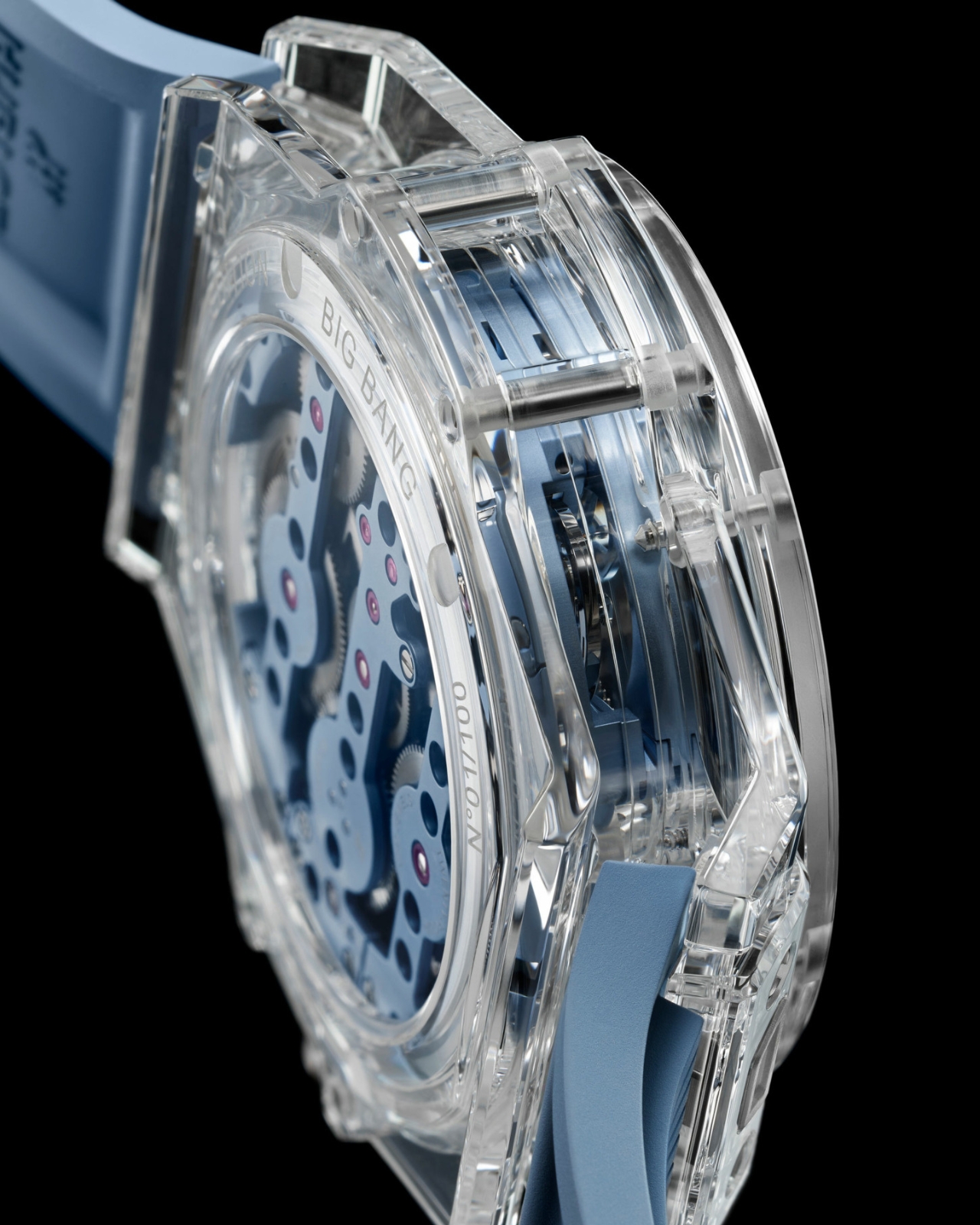
Could you wear it every day? Possibly. Should you? That’s a more personal question. At 44mm with a very deliberate visual presence, this watch commands attention. With 50 meters of water resistance, it handles daily life comfortably, though anything more demanding than that would be pushing it.

The concept itself is what’s worth sitting with: a watch that bets entirely on material and mechanics, and asks you to find that more compelling than a gem-set dial or a celebrity campaign. For the right collector, that’s a very easy bet to take. The Big Bang Sapphire Sky Blue makes transparency, literal and otherwise, its entire argument. And it’s a persuasive one.

The post Only 100 Will Own This $84,300 See-Through Hublot Watch first appeared on Yanko Design.


Fossil’s New Spider-Man Watch Is $425 and Actually Worth It

Fan merchandise has a reputation problem. Most of it sits somewhere between “impulse buy” and “regret”: a coffee mug you stop using after a month, a T-shirt that fades after two washes, a keychain that feels like an afterthought. So when Fossil dropped its latest Marvel collaboration, a limited-edition Spider-Man automatic watch, my first instinct was healthy skepticism. Then I actually looked at it.

The Marvel x Fossil Limited-Edition Spider-Man 42mm Automatic Watch (model LE1247SET) is not a novelty item dressed up as a timepiece. It’s a timepiece that happens to carry serious pop culture weight, and the distinction matters more than you’d think. The watch actually has to earn your attention on design merit first, and it does.

Designer: Marvel x Fossil

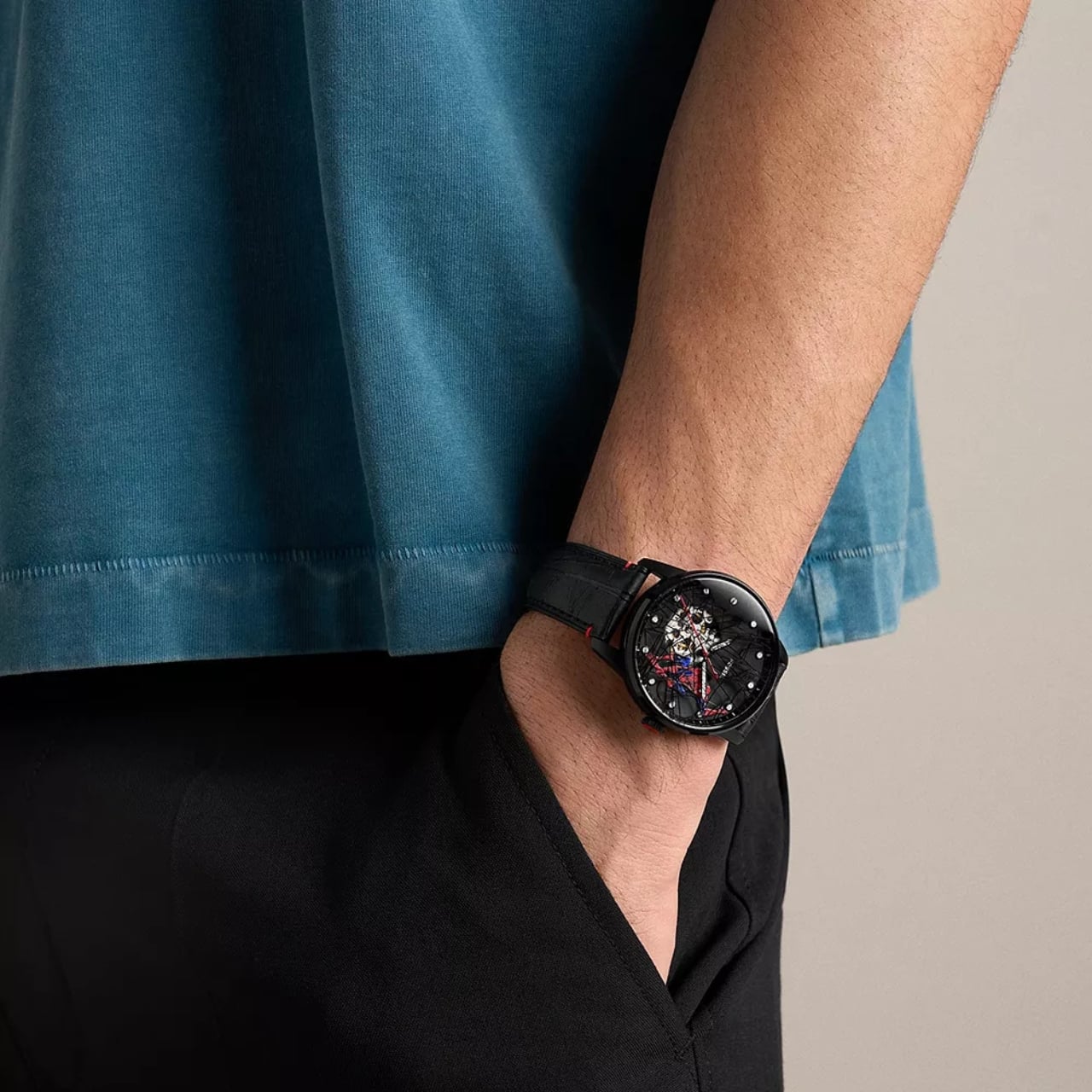
Let’s start with what makes this watch genuinely worth the conversation. The dial draws from Spider-Man’s character-defining ’90s comic era, a period that holds a specific kind of nostalgic gravity for anyone who grew up reading Marvel. Spider-Man himself strikes his classic pose on a dark gradient dial that fades into an exposed automatic movement, revealing the mechanical heartbeat of the watch underneath. The visual effect is deliberate and theatrical in the best way. It’s not just a pretty face slapped onto a watch case. The design actually tells a story, which is exactly what good watch design should do.

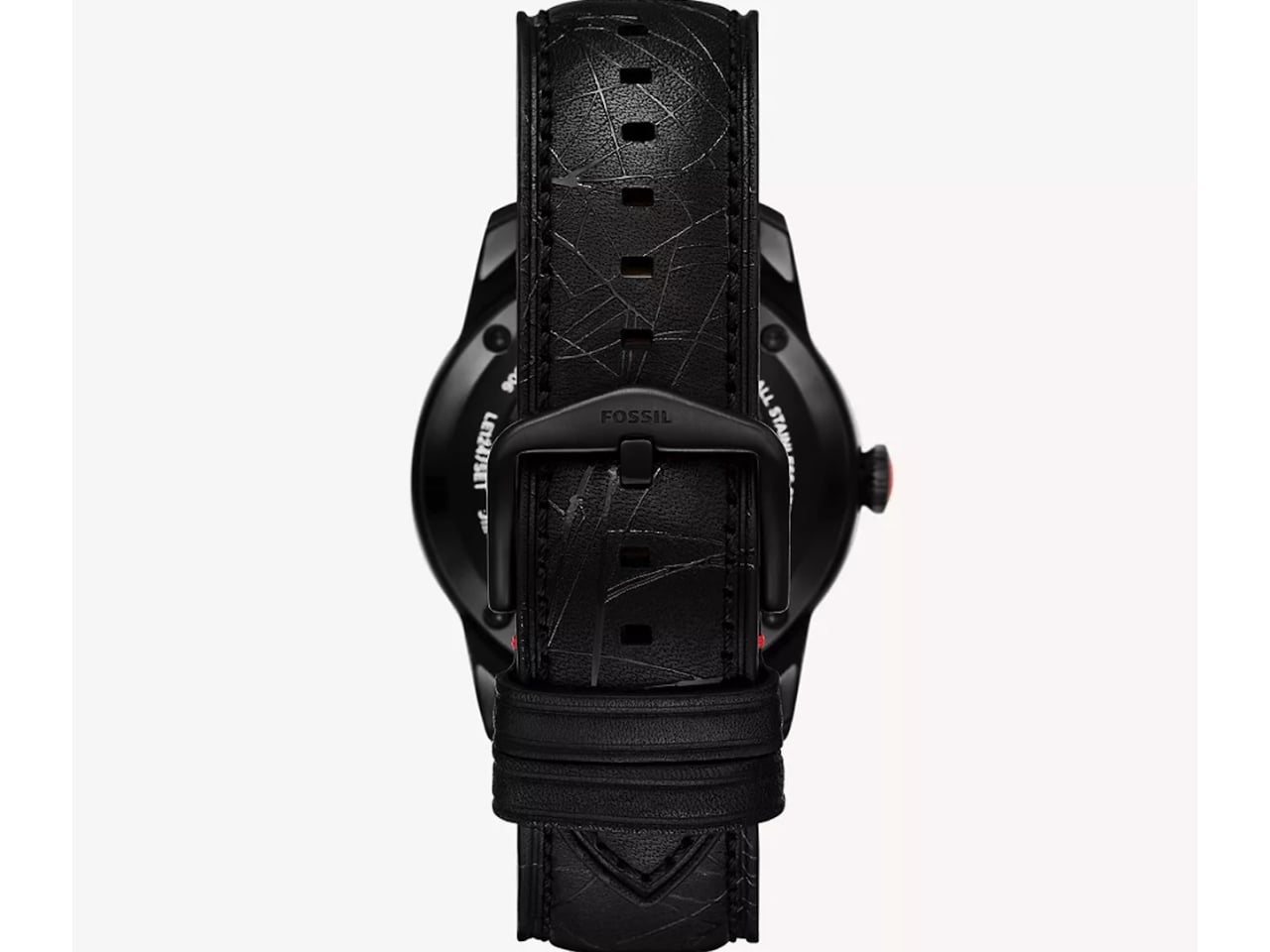
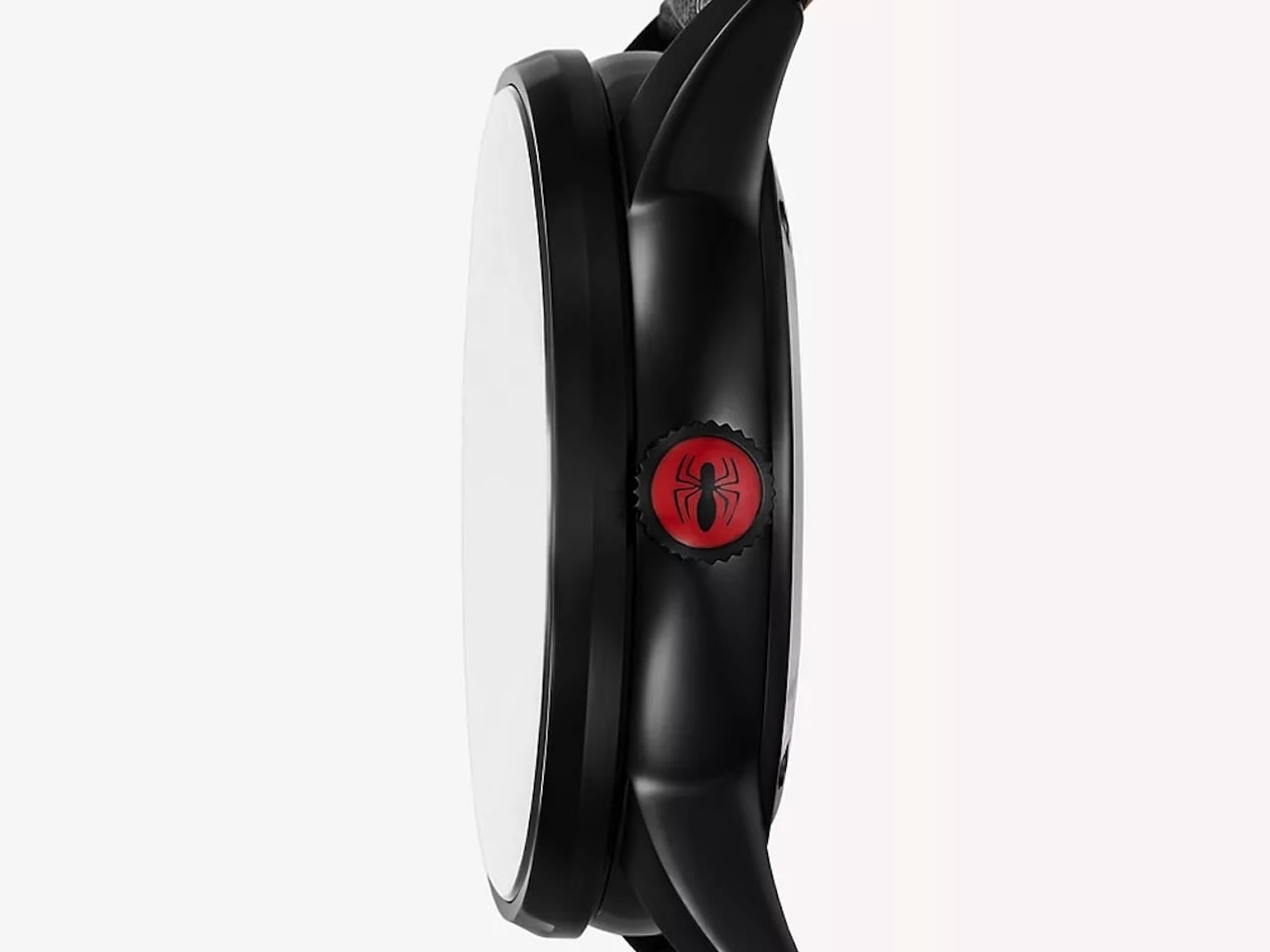
The webbing detail is where the execution really commits to its concept. Tonal black webbing drapes across the crystal and continues onto the leather strap, which means the theme isn’t confined to the dial. It carries through the entire piece. That kind of design consistency is what separates an intentional collaboration from something rushed out for a licensing deal. I’ve seen enough lazy collabs to appreciate when a brand actually puts thought into the object as a whole rather than just slapping a logo on it.

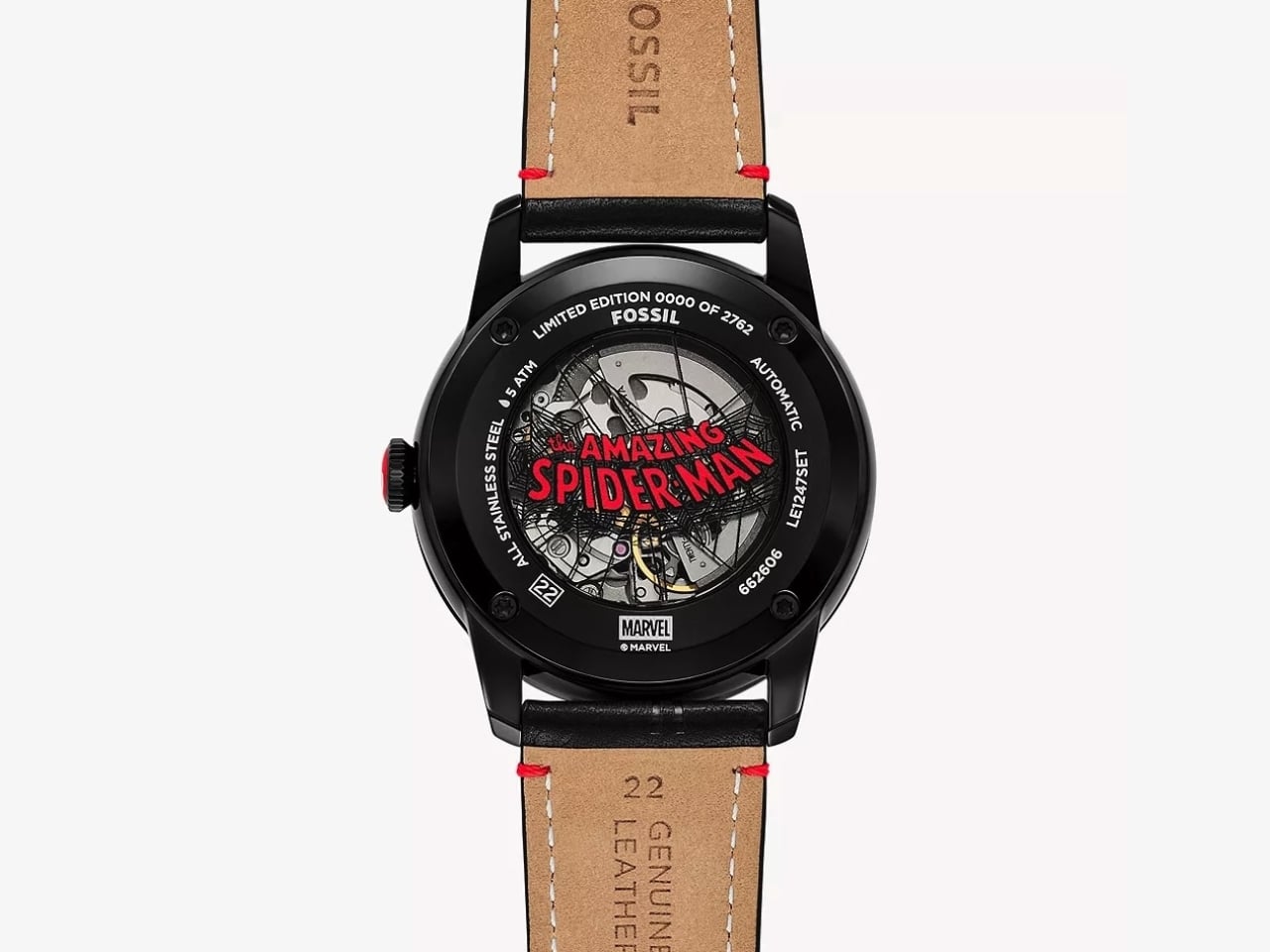
Flip it over, and the display caseback keeps the energy going. The Spider-Man logo appears in red against the visible movement, and both the dial and caseback feature archival Marvel comic art. Each watch is also etched with limited-edition numbering, which is the kind of detail that matters to collectors and to anyone who wants to know they’re not just buying something off a shelf that thousands of others picked up too.

The movement itself is self-winding, powered by the motion of the wearer’s wrist. It supports manual hand-winding but doesn’t hack, which is standard for Fossil’s automatic movements. For anyone new to the world of mechanical watches, that means it won’t stop the movement when you set the time. It’s an entry-level automatic in the best sense: approachable, functional, and genuinely mechanical.

The packaging deserves a mention too, because it’s doing real work here. It comes in a comic book-style box featuring authentic cover art from the Marvel Comics archive. Inside, alongside the watch, there’s a lapel pin depicting The Hulk and Spider-Man facing off. It’s a small addition, but it elevates the whole thing from a product purchase into something that feels more like an unboxing event.

Now, where I land personally: I think branded watch collaborations succeed or fail based on whether the watch would hold up without the IP. Strip away the Spider-Man branding, and the Fossil LE1247SET is still a well-designed 42mm automatic with a thoughtful layout and solid finishing for its price point. Add the Marvel identity back in, and it becomes something a lot more compelling, an object that connects to culture, memory, and identity in ways that most watches simply don’t.

The appeal is broad too. It works for the collector who already knows the difference between a skeletonized dial and an open-heart. It works for the Marvel fan who wants something more meaningful than a poster. And it works for anyone who simply likes the idea of wearing something with a bit of personality on their wrist. Fan culture and fine craft don’t have to exist in separate lanes. The Fossil Spider-Man watch makes that case quietly, on your wrist, every single day.

The post Fossil’s New Spider-Man Watch Is $425 and Actually Worth It first appeared on Yanko Design.

Anoma’s A1 Prehistoric Is Proof That Scars Can Be Art

I’ve been staring at this watch for a while now, trying to figure out exactly what it is about it that makes me want to keep looking. It doesn’t gleam. It doesn’t catch the light the way luxury watches are supposed to. And yet, the Anoma A1 Prehistoric might be the most interesting watch to come out of 2026.

The story behind it starts at the Centre Pompidou in Paris, where Anoma founder Matteo Violet Vianello found himself standing in front of a Constantin Brâncuși exhibition. Brâncuși, one of the most celebrated sculptors of the 20th century, was famously fascinated by primitive artifacts. He collected ancient hand axes, arrowheads, and flint tools, not as relics, but as art. He believed they represented something pure: human creativity stripped of everything unnecessary. Vianello walked away from that exhibition with an idea that would become the A1 Prehistoric.

Designer: Anoma

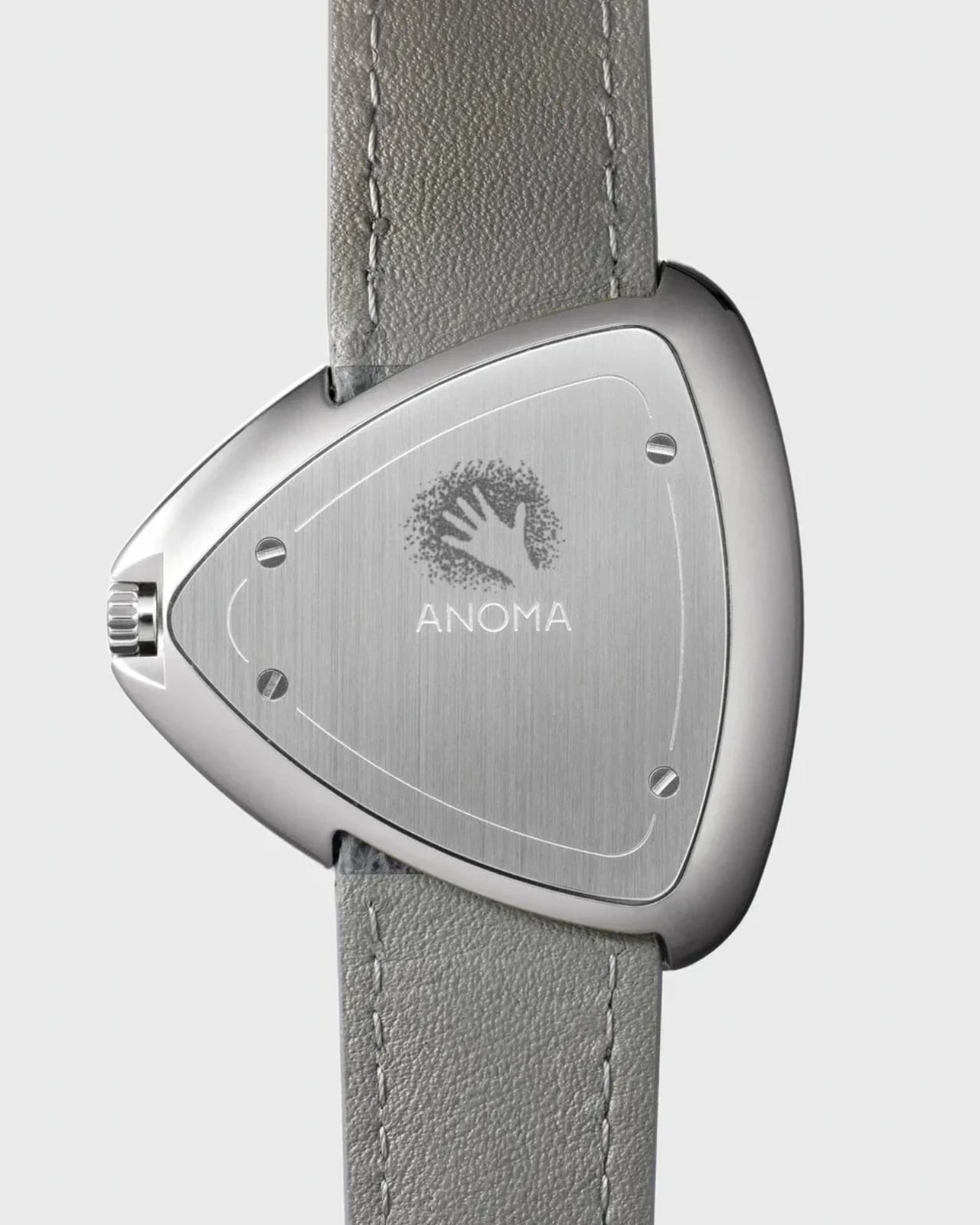
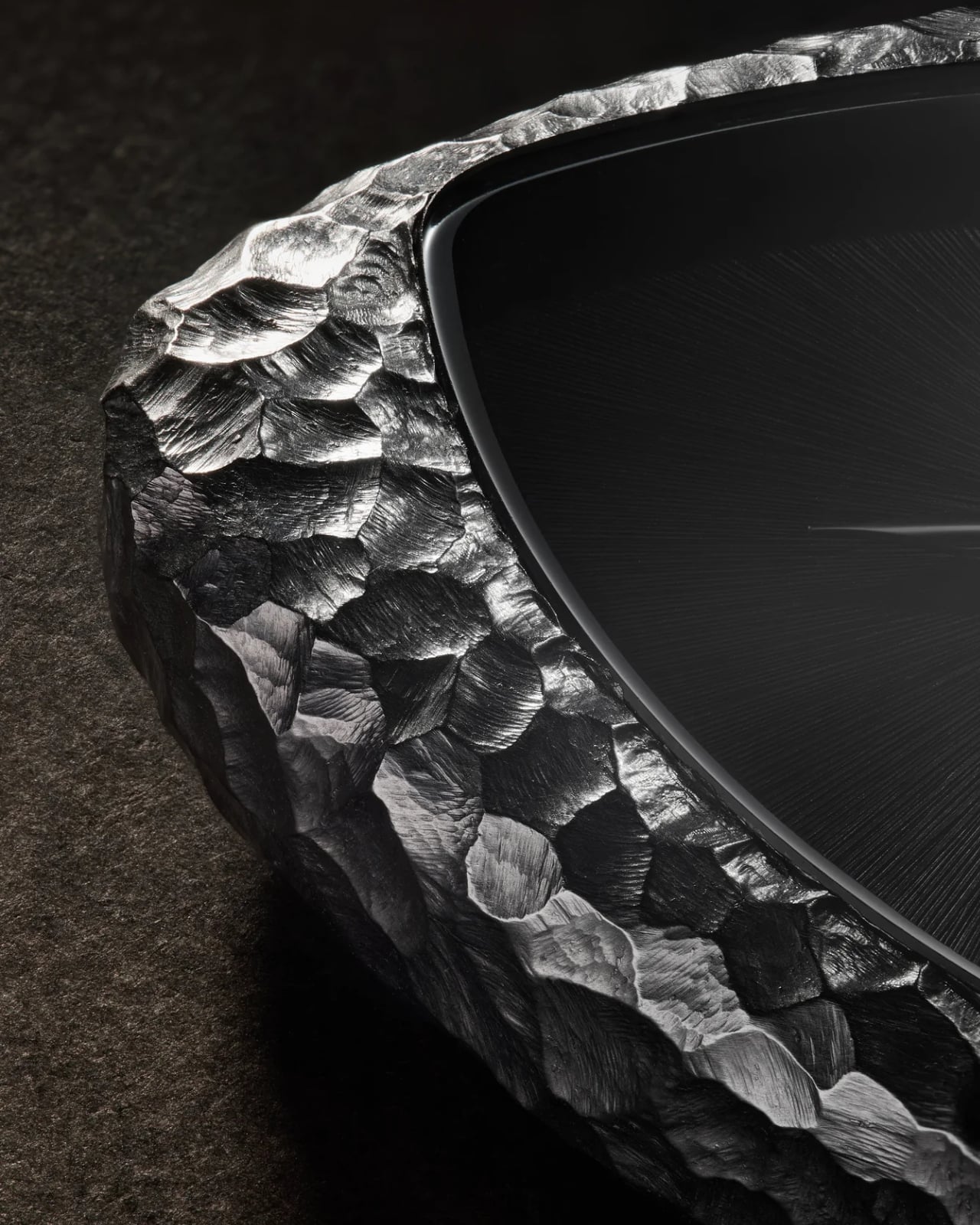
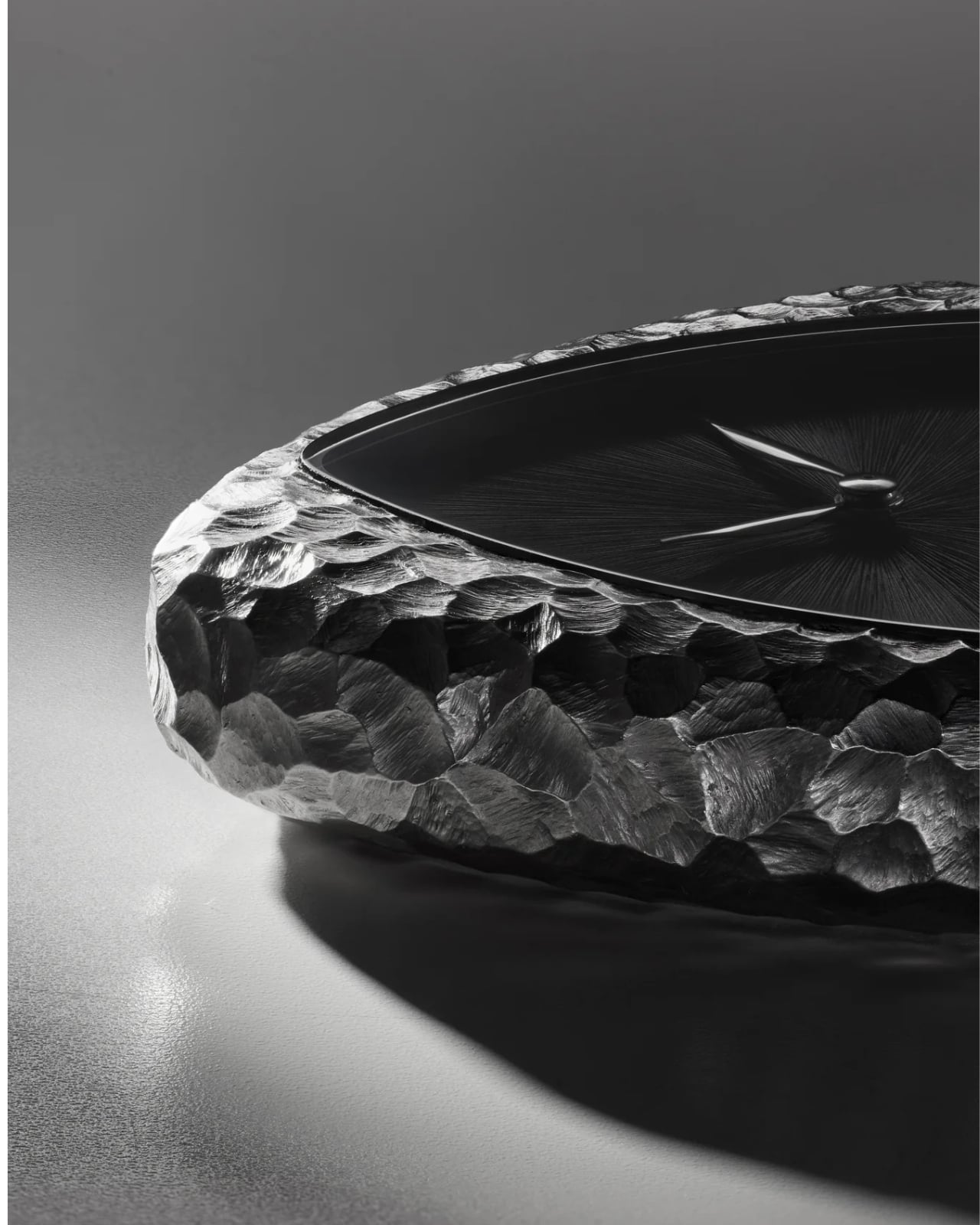
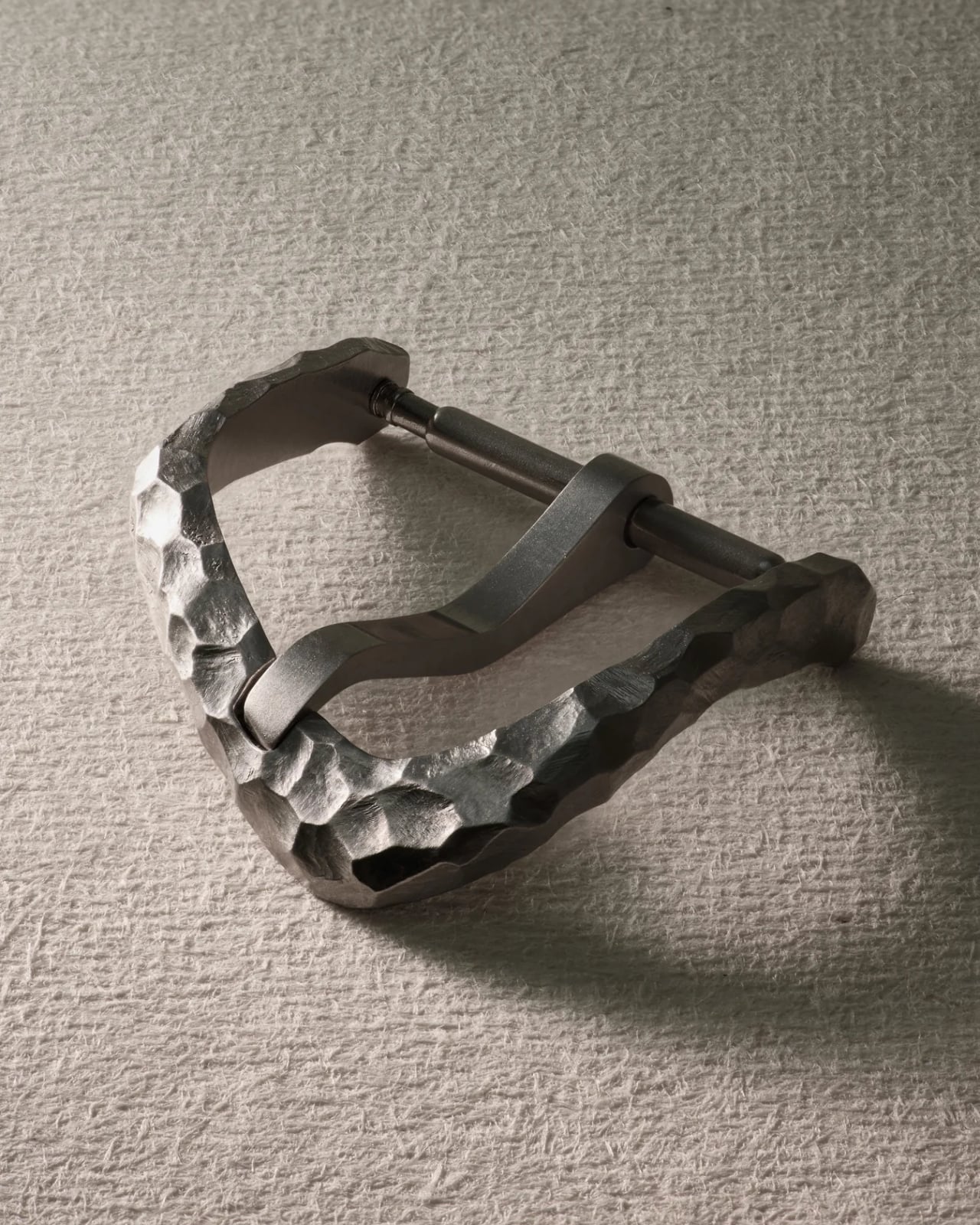
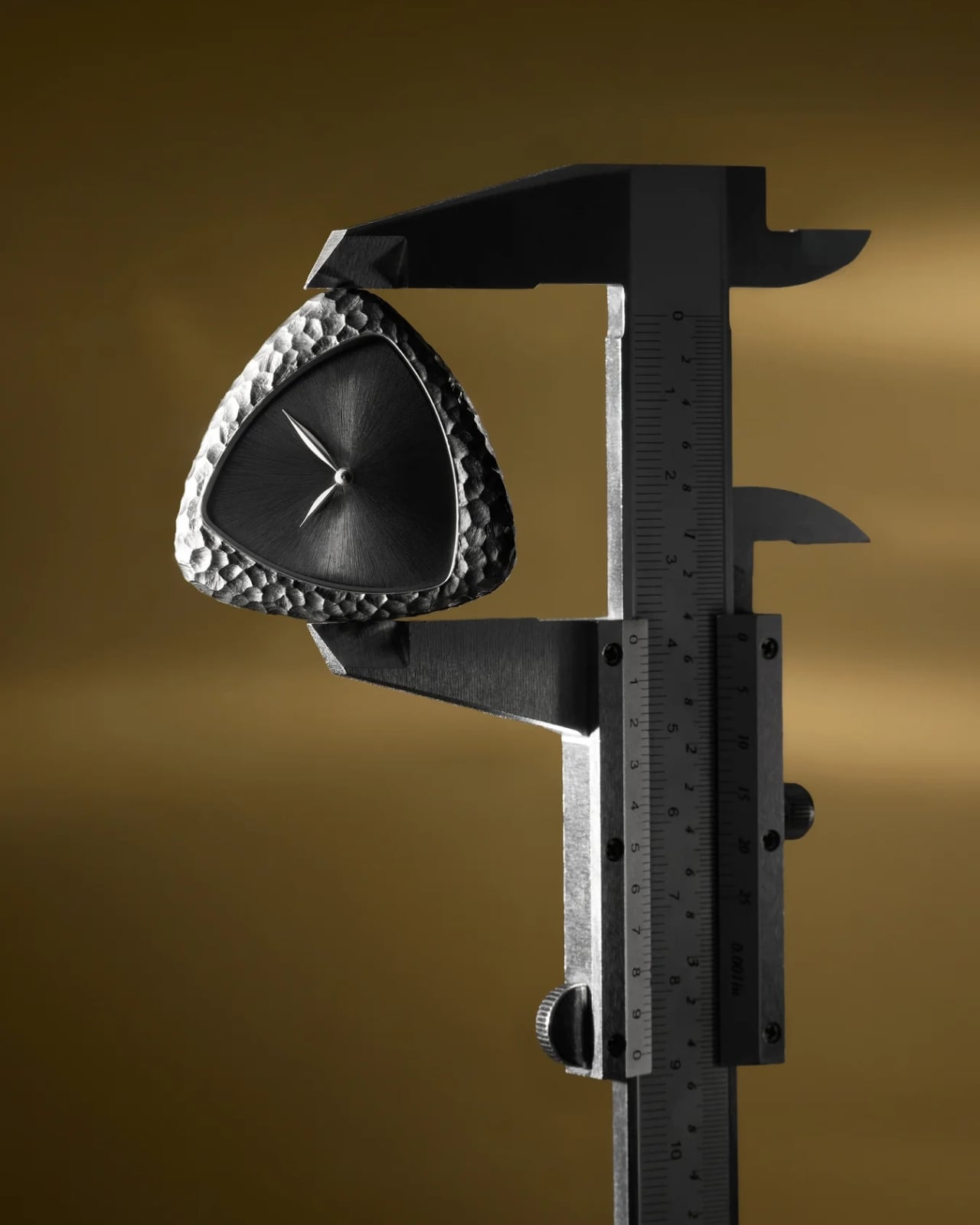
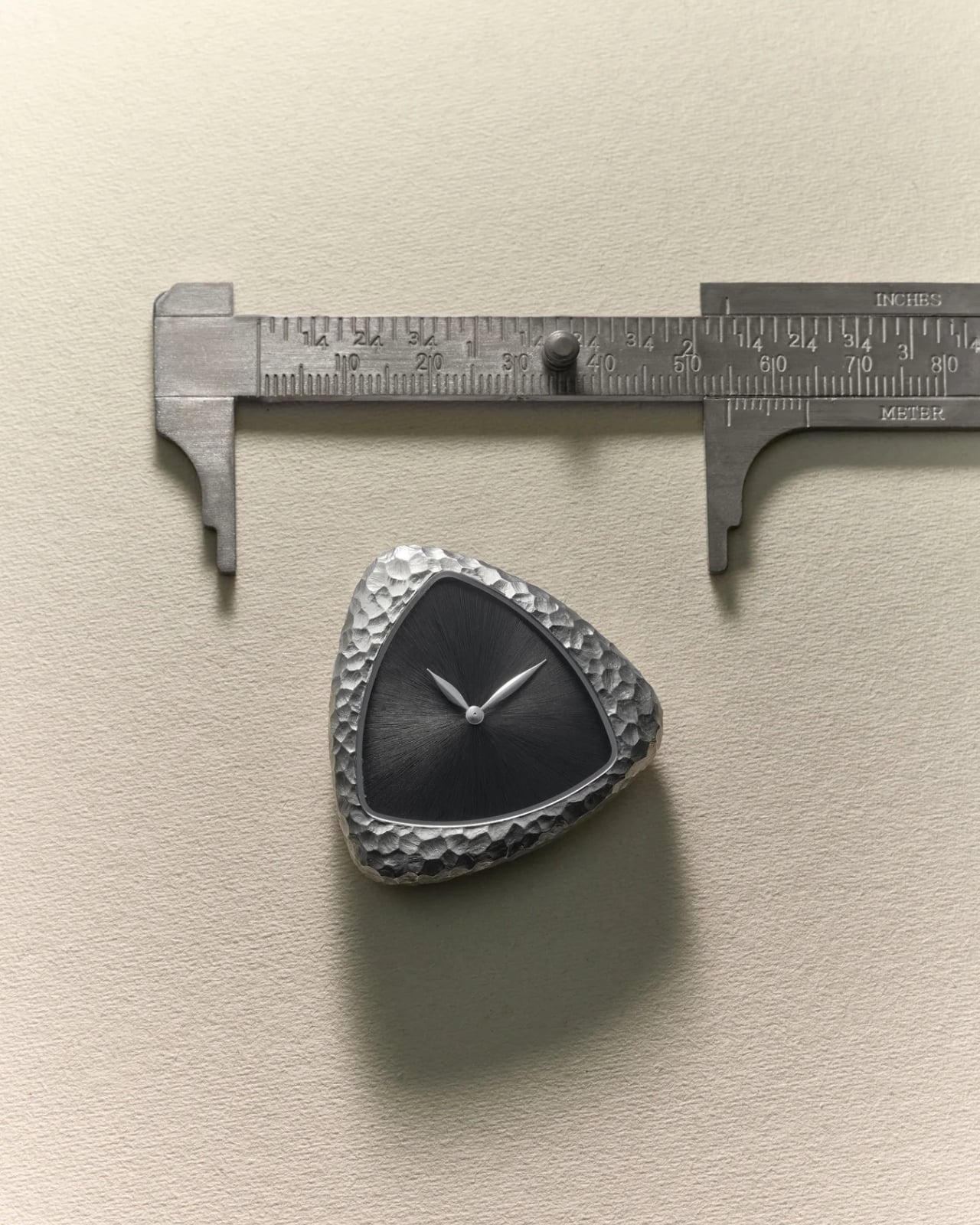
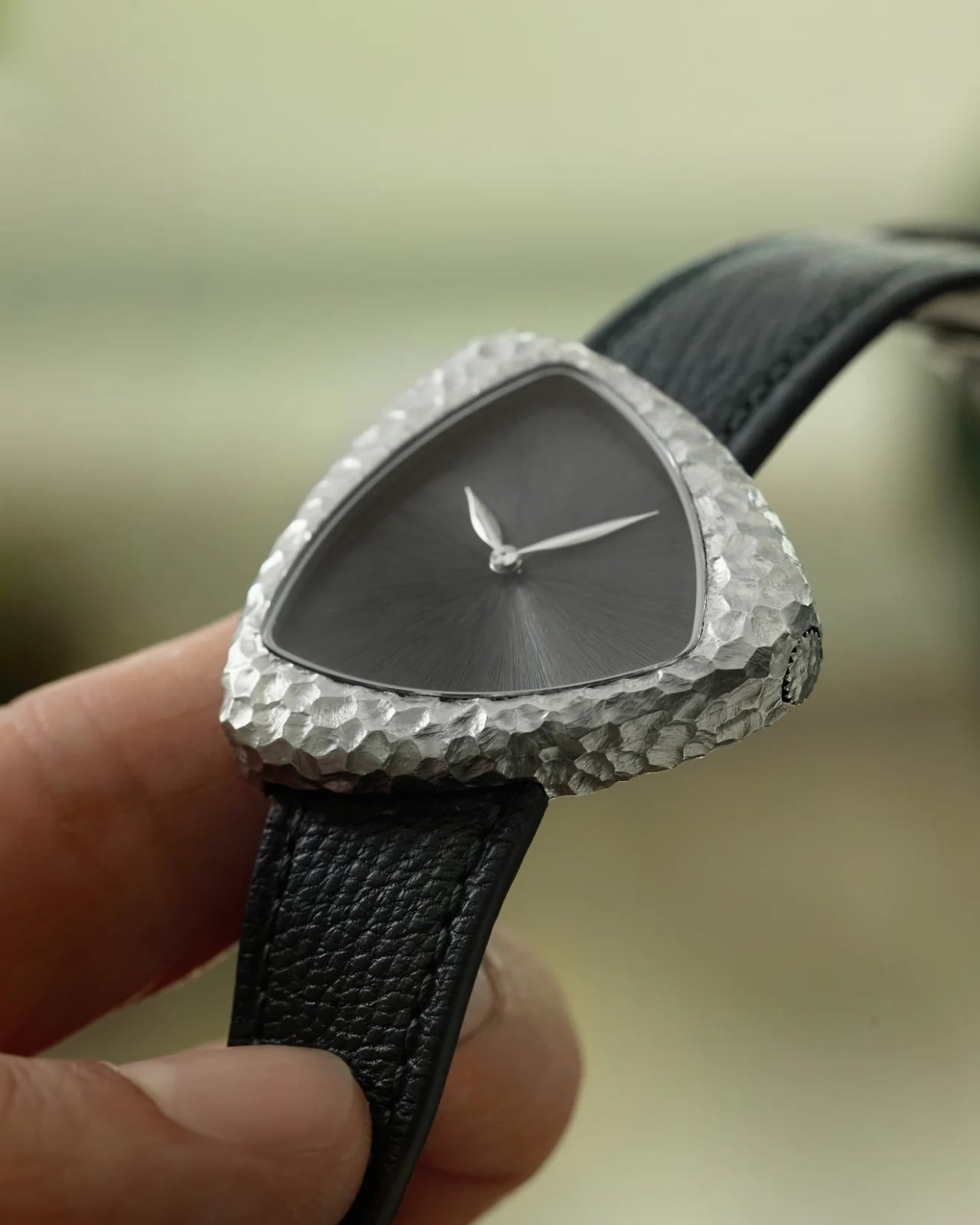
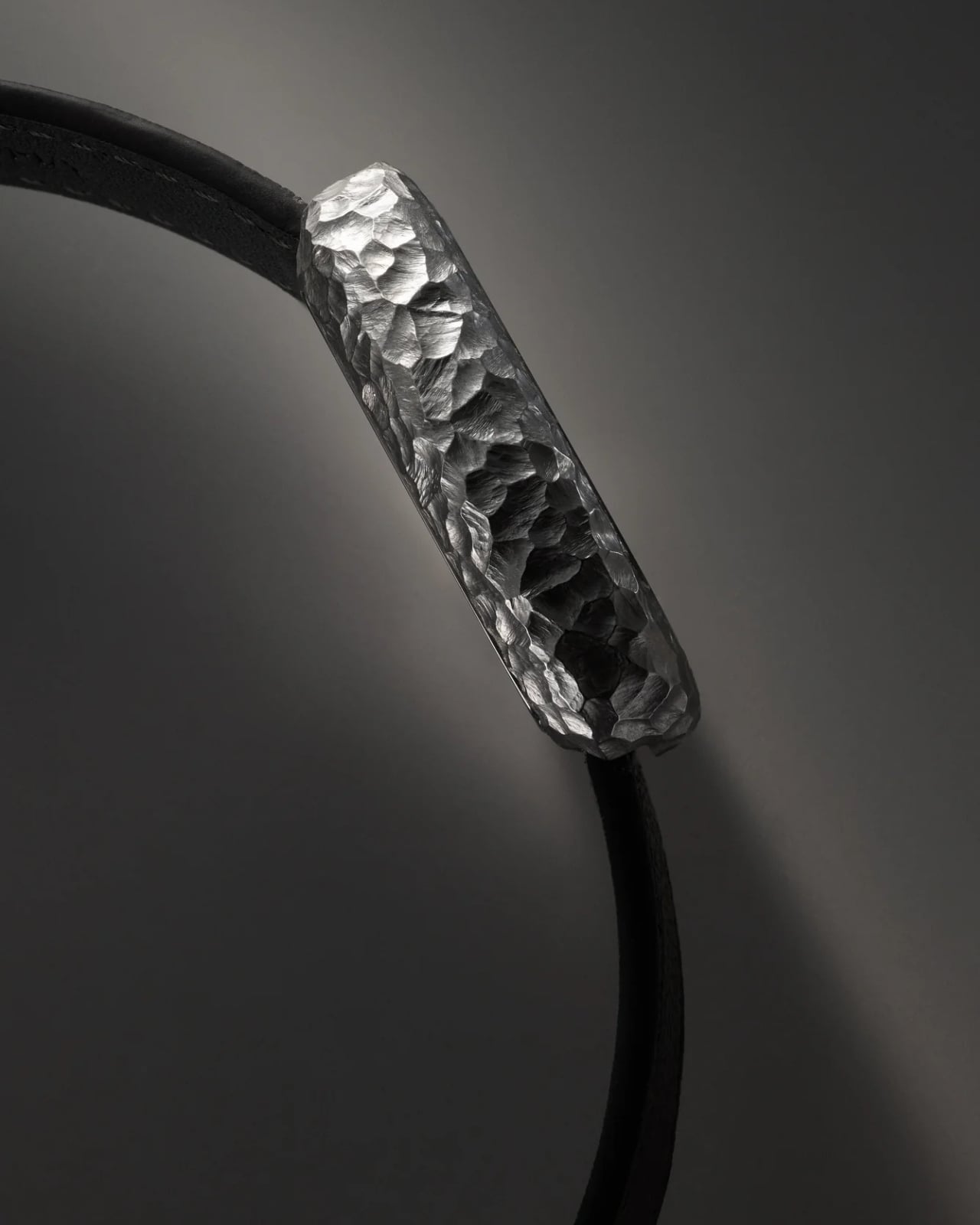
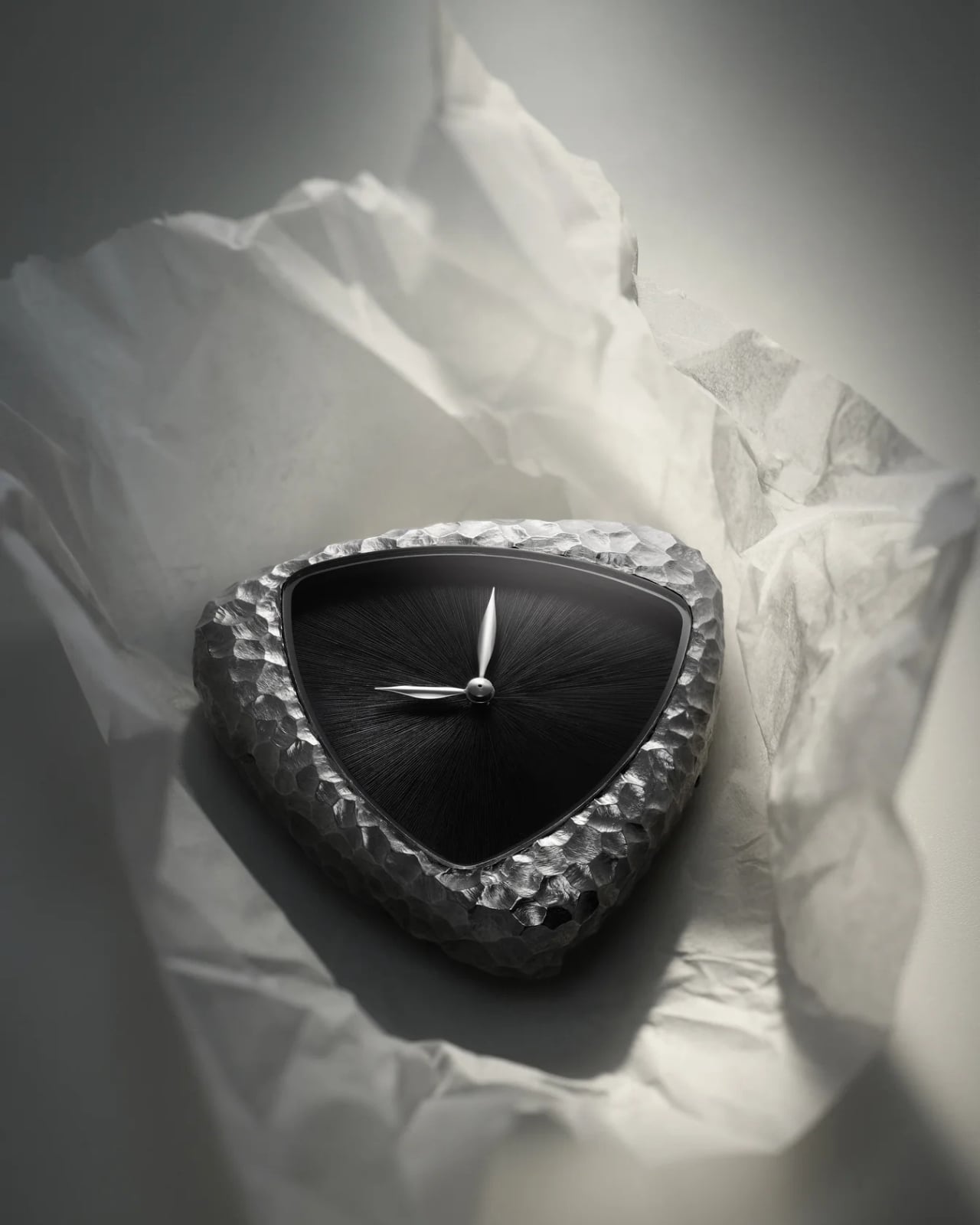
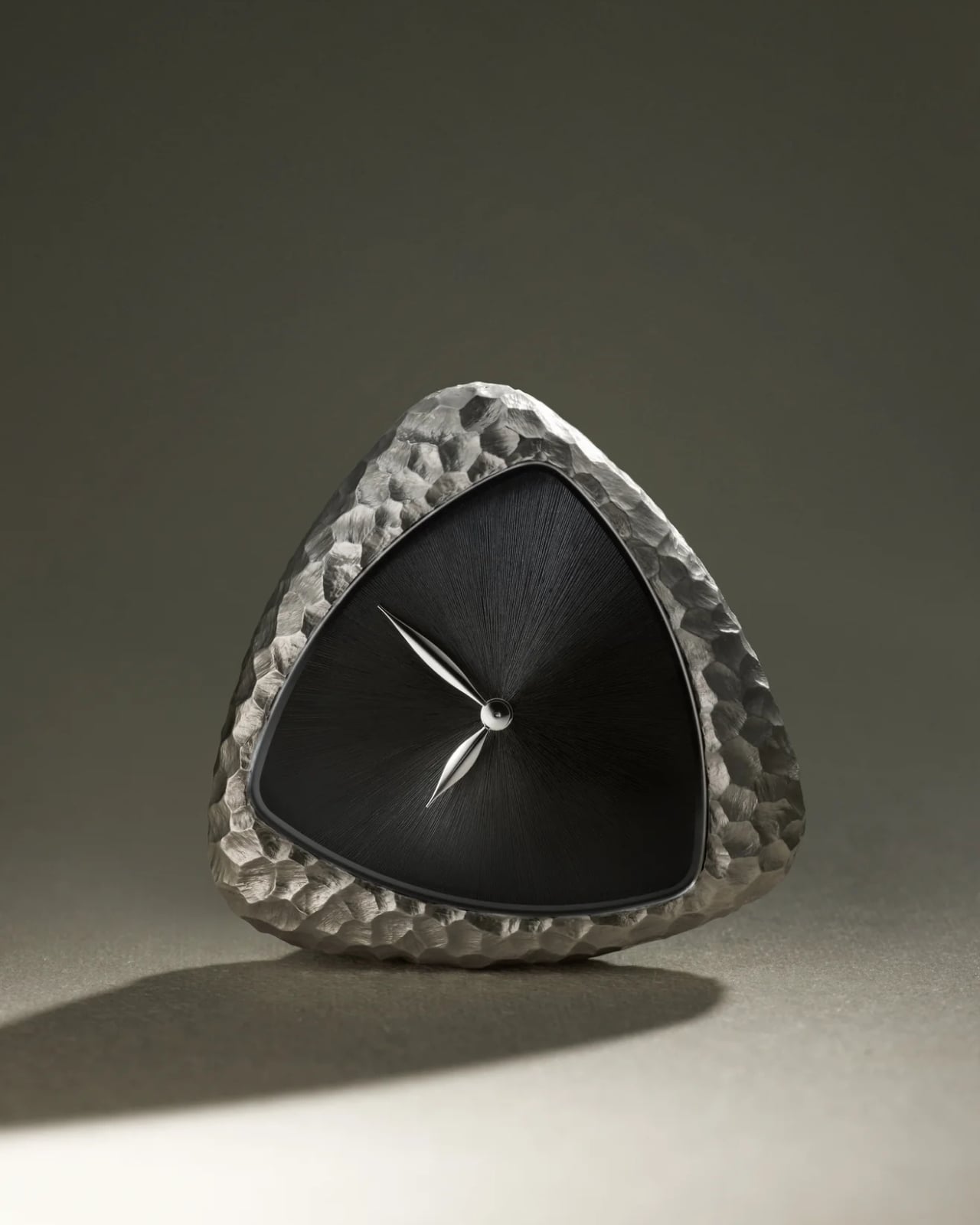
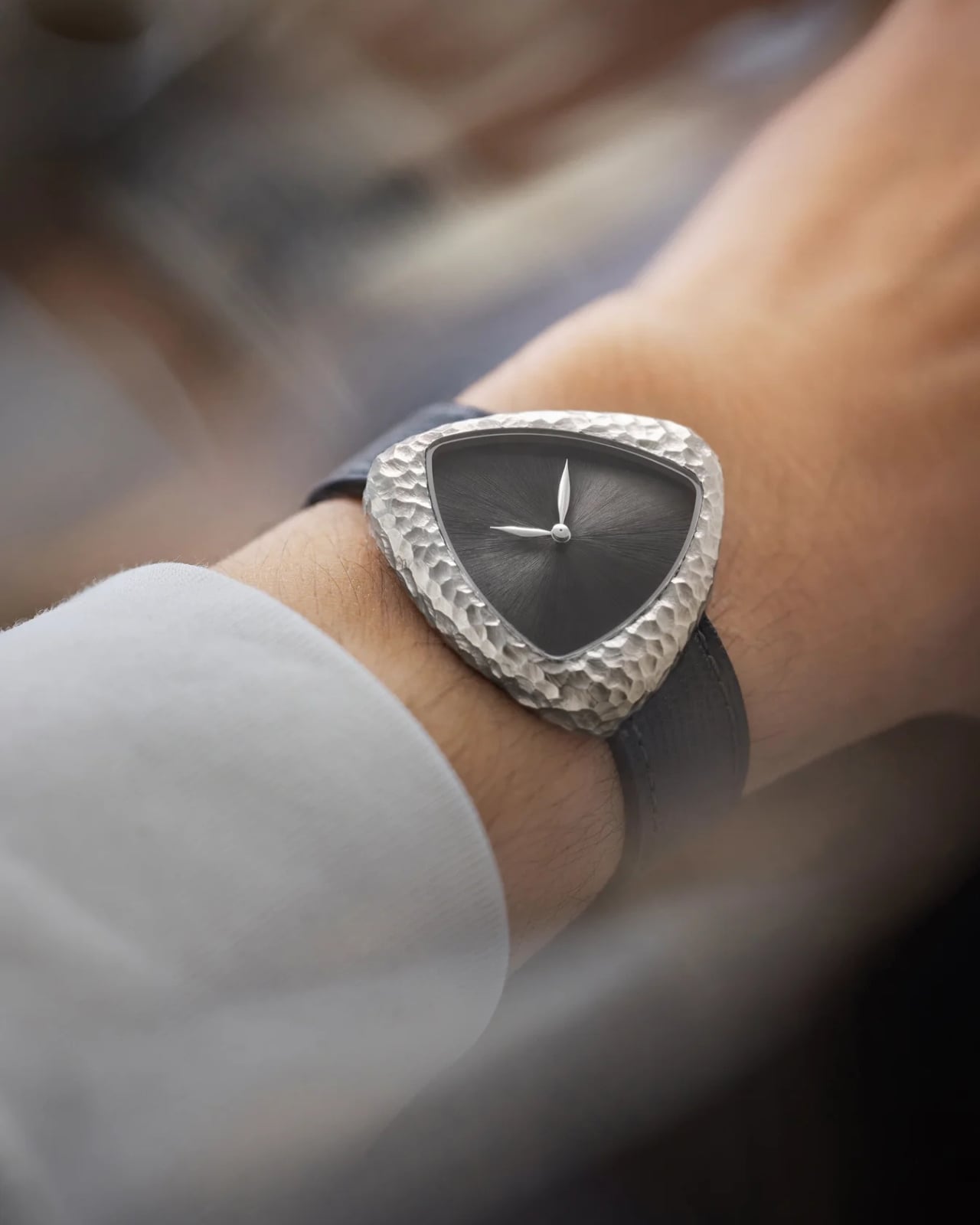
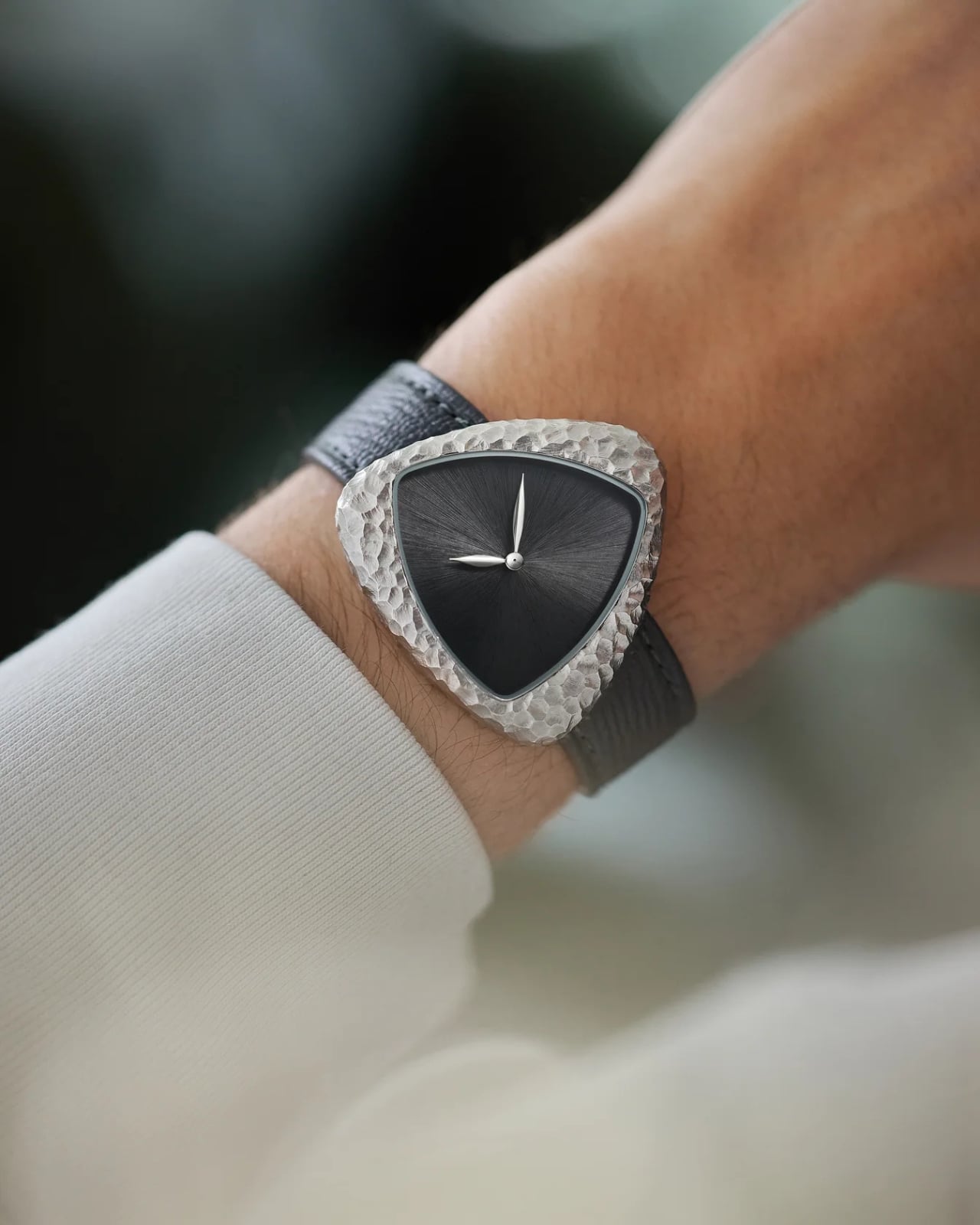
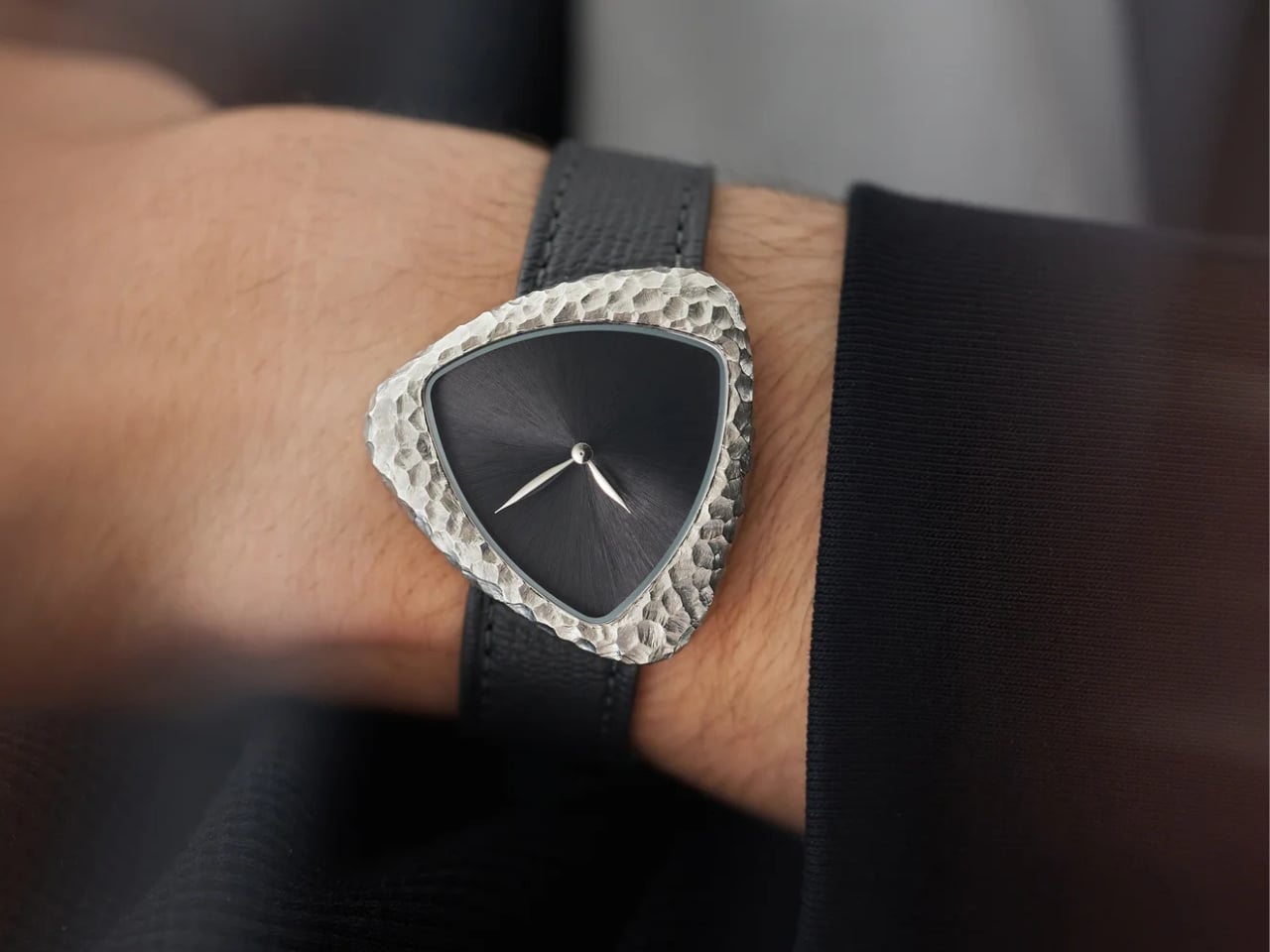
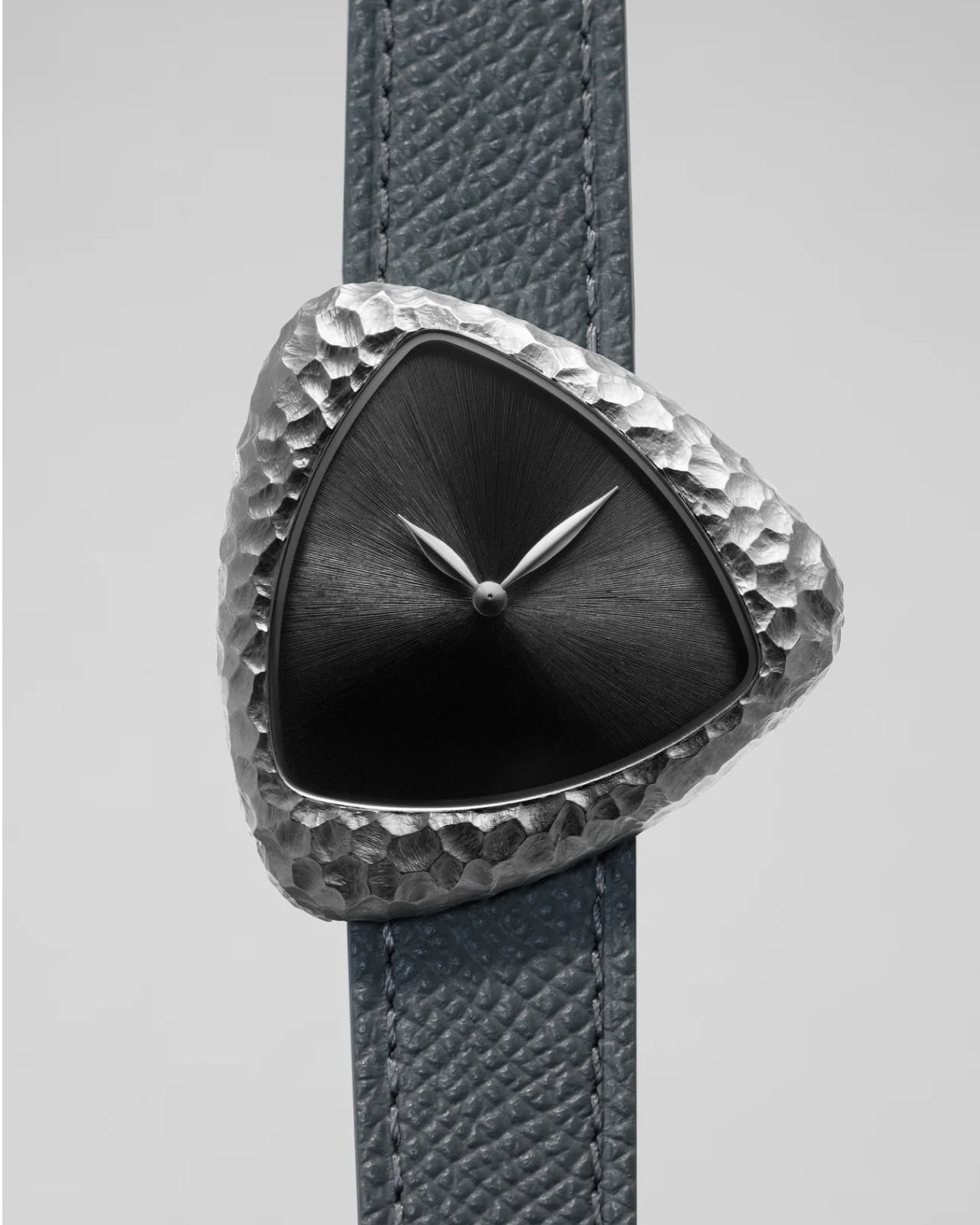
What followed was a deliberate rejection of polish. The A1’s signature triangular stainless steel case, already one of the more distinctive shapes in contemporary watchmaking, was handed over to French engraver Steven Brunel, whose work has been exhibited at the Louvre. Brunel works from a remote workshop in the Loire region of France, and for each watch, he spends approximately five hours with a chisel, striking the metal by hand over and over until the case looks less like a precision instrument and more like something you might unearth from a dig site. No two watches come out the same. The marks are freehand, the planes are uneven, and the surfaces bear the unmistakable evidence of human effort.

That process deserves a moment of appreciation. We live in an era of flawless machining and mirror-polished bezels, where the goal is often to make it look like no human ever touched it at all. The A1 Prehistoric does the exact opposite. It leans into the marks, the cuts, the irregular facets that would normally be buffed away. The technique echoes knapping, the ancient method used to shape flint and obsidian into early tools, but applied here to 316L stainless steel, which absorbs each impact differently, creating a finish that’s somehow both rough and refined.

The dial continues that commitment to handwork. About 600 individual sunburst lines are engraved by hand into a brass base, then finished in deep anthracite. The result is monochromatic and deliberate, with curved leaf-shaped hands as the only interruption. It’s the kind of dial that rewards looking closely. The case measures 39mm by 38mm, which sounds sizeable, but because the A1 is lugless and triangular, it actually wears closer to 37mm, sitting comfortably without making demands on your wrist. At 9.45mm thick with 50 meters of water resistance, it’s very wearable for something that looks this sculptural.

Inside is a Swiss automatic Sellita SW100 movement running at 28,800 beats per hour, displaying only hours and minutes. The 38-hour power reserve is on the shorter side, though daily wear handles that easily enough. A grey grained Italian leather strap keeps the focus exactly where Anoma wants it: on that case.

The price sits at £2,900 (approximately $3,700 USD), which puts it firmly in independent watchmaker territory, and that feels right. This isn’t a brand chasing volume or recognition through a long heritage alone. Anoma is London-based, relatively young, and clearly more interested in objects that make you think than objects that announce status. Only 100 pieces are being made, orders opened July 8th, and deliveries are expected in October 2026.

But what stays with me, even beyond the craft, is the philosophical position the A1 Prehistoric takes. At a moment when AI is generating synthetic perfection by the second, here is a watch that insists on the value of a human hand leaving a visible mark. The violence of the chisel, the irregularity of each case, the five hours of labor that go into something no algorithm could replicate: that feels like a statement worth wearing.

The post Anoma’s A1 Prehistoric Is Proof That Scars Can Be Art first appeared on Yanko Design.

Tadao Ando’s Watch Has a Leaf for an Hour Hand

Tadao Ando is 83 years old, has won the Pritzker Prize, and has designed homes for Beyoncé, Kim Kardashian, Giorgio Armani, and Kanye West. His buildings are studied in universities around the world. His name alone tends to end conversations because there really isn’t much left to say after it. So when Cauny, the historic Swiss watch brand, approached him to design a timepiece as part of their Architects of Time series, the reasonable expectation was something severe, something stripped to its bones, maybe a slab of grey with hands. What nobody expected was an apple.

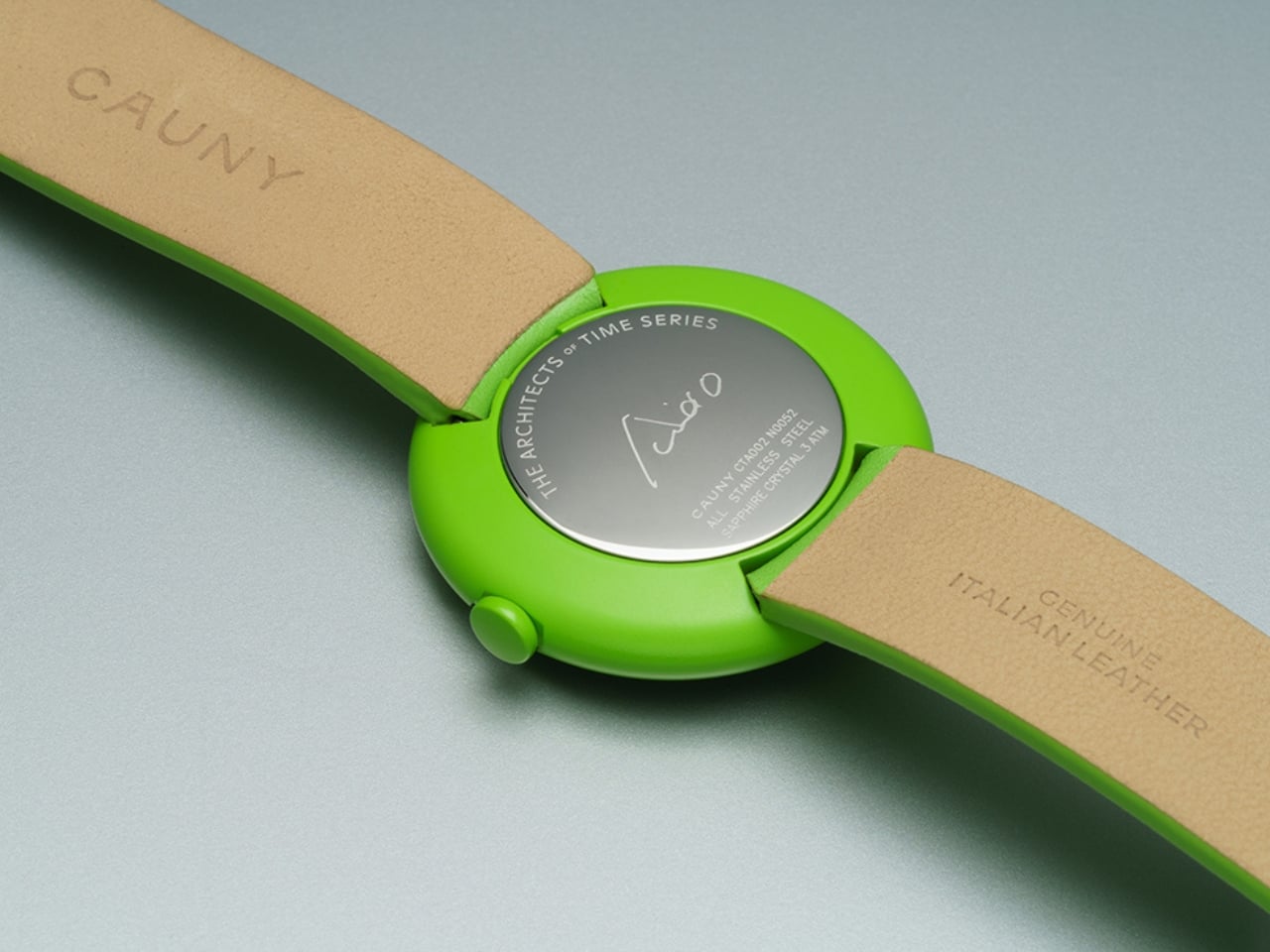
The Cauny Ando is built around a single, oddly poetic idea. For years, Ando has placed green apples outside his buildings. Not as decoration, not as a quirky signature move, but as a visual metaphor tied to Samuel Ullman’s poem Youth, which holds that youth “is not a stage of life, but a movement of the heart.” An apple, unripe and bright, carrying that same tension between potential and arrival. Ando has even created a giant green apple sculpture that has traveled internationally, including to the Museum SAN in Wonju, South Korea. The fruit has been part of his personal philosophy long before it became a dial color. And that’s the thing about this watch. The concept didn’t begin in a design studio. It began in a worldview.

Designer: Tadao Ando

Ando himself described it plainly: “This watch reflects the spirit of the green apple, unripe, a little sour, yet full of promise.” He went on to say it “honors those who keep moving forward, not because they’ve arrived, but because they still believe in the light ahead.” For a man who taught himself architecture through books and independent study, no formal degree, no architecture school, and then built one of the most recognizable careers in the field purely from persistence, those words carry real weight. This isn’t brand storytelling. It reads like something he actually believes.

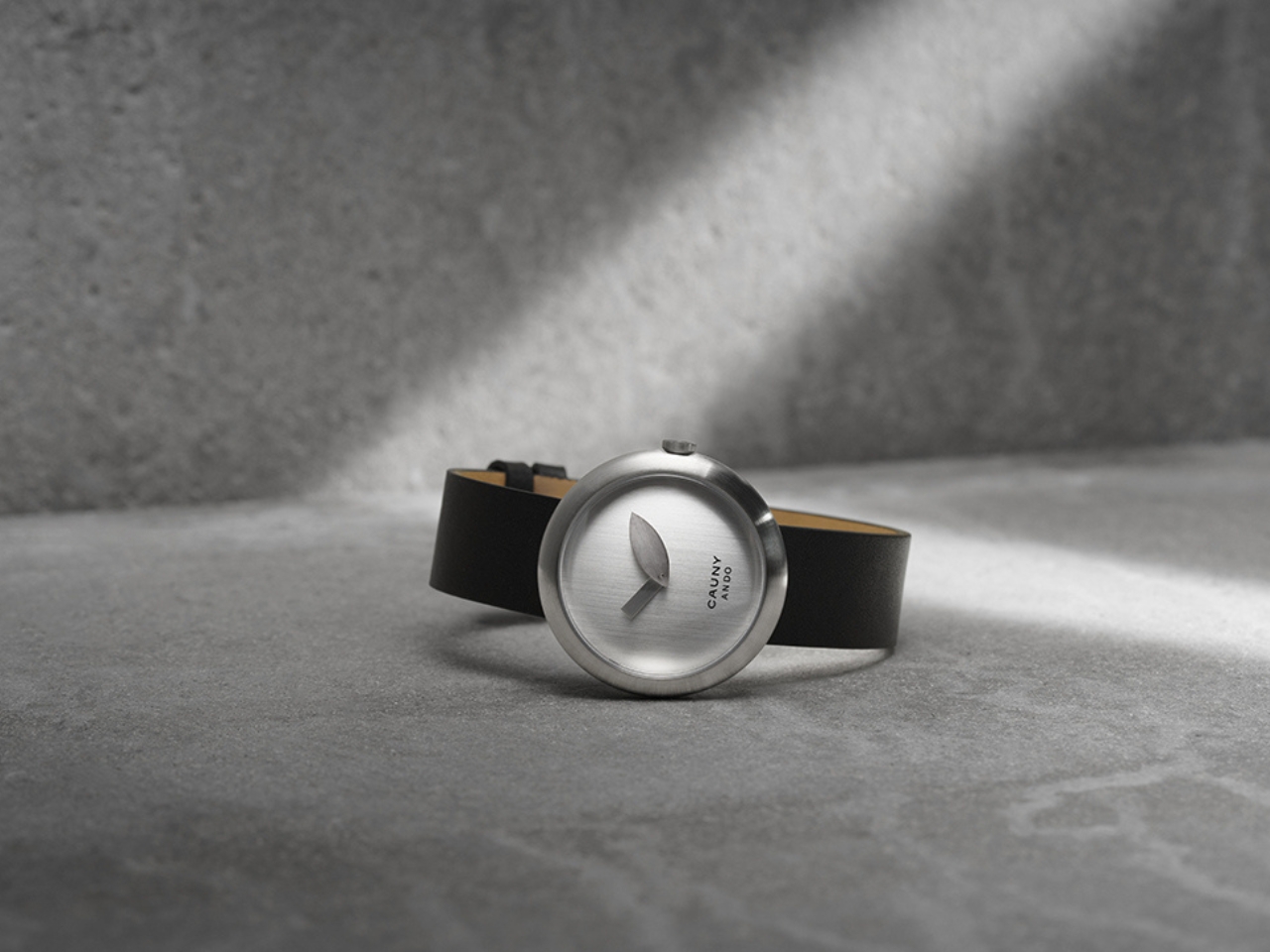
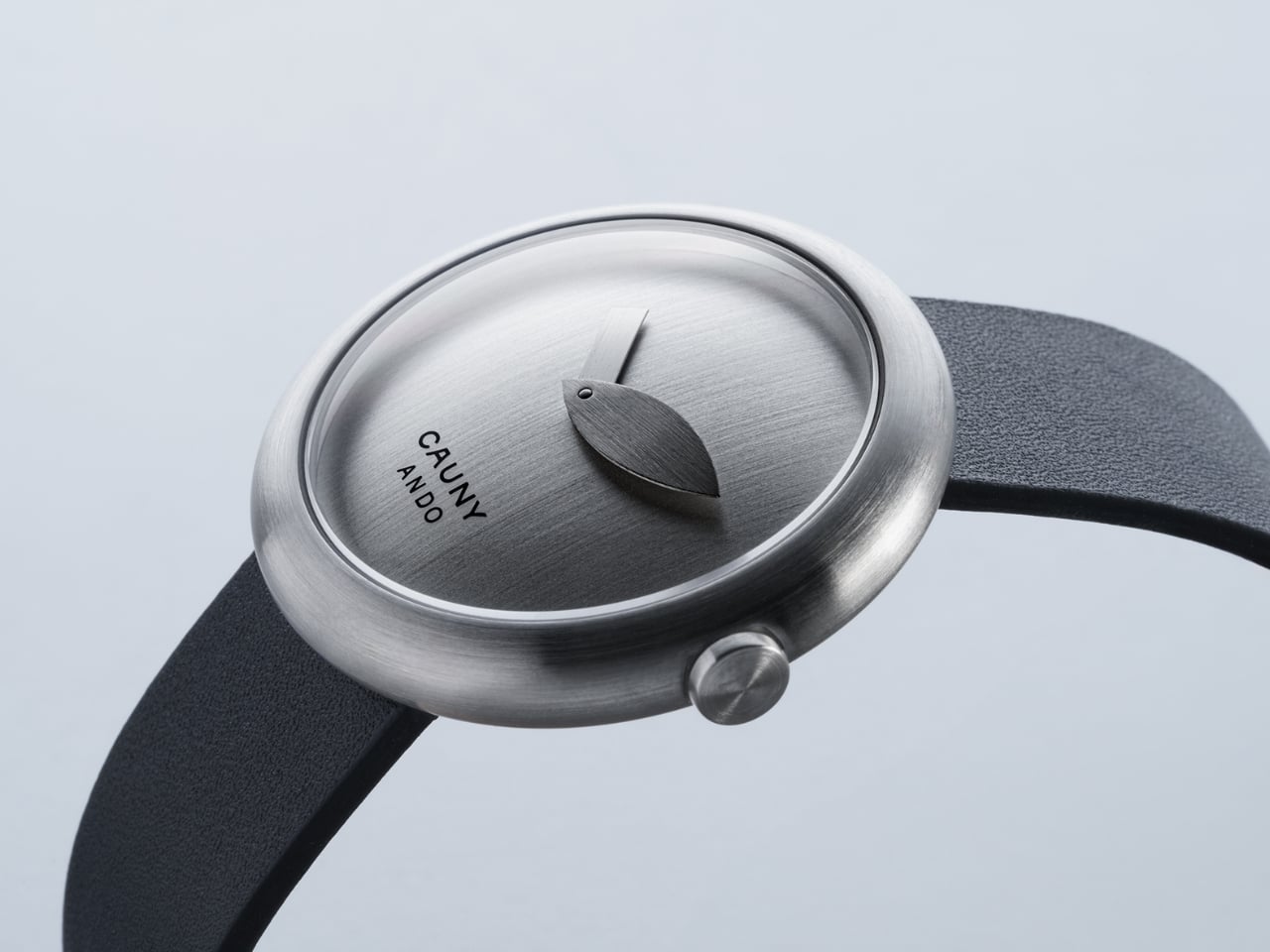
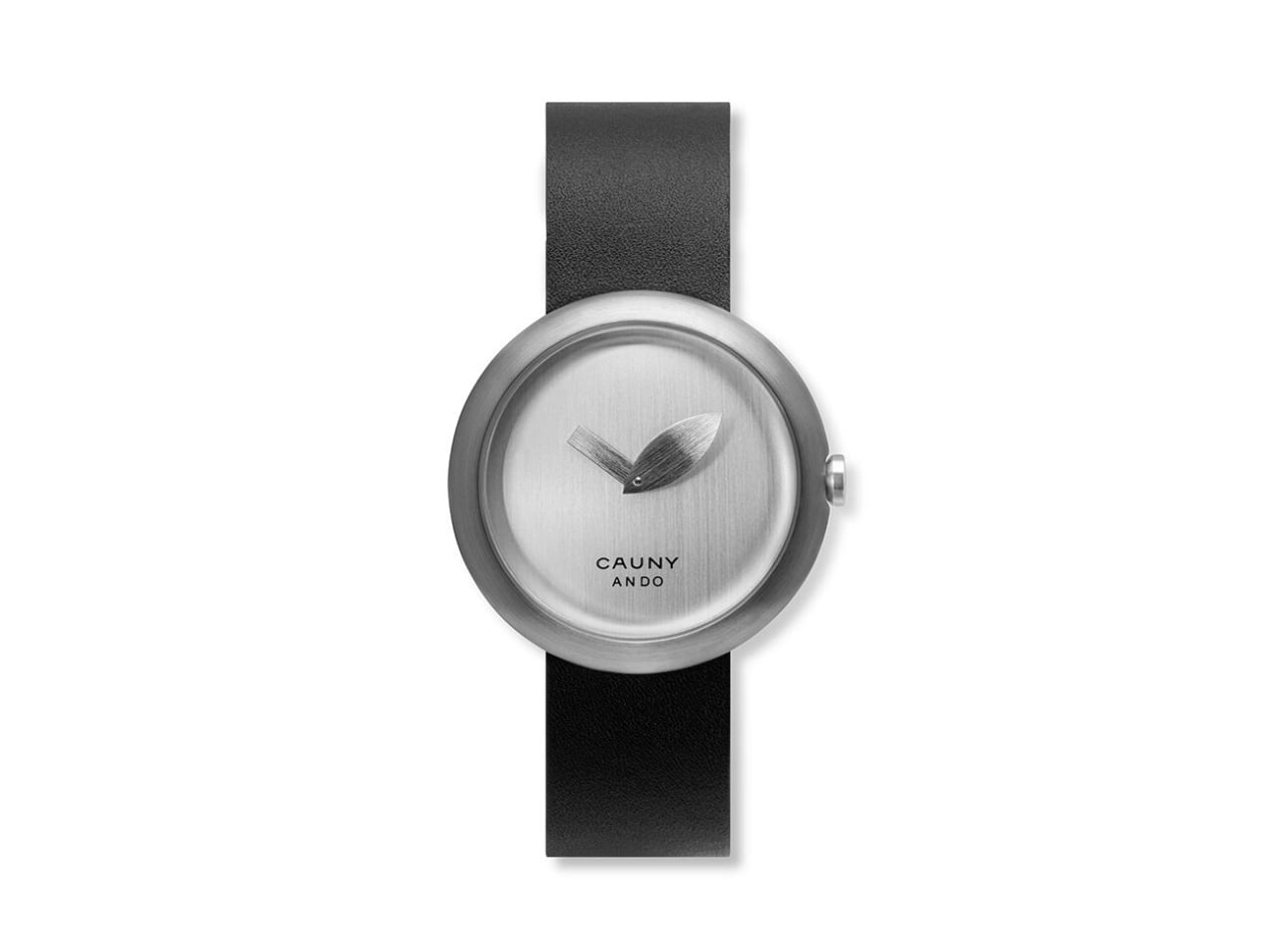
The watch comes in two versions. Ando Green, the more immediately striking of the two, wears that signature apple color on the dial, complete with a leaf-shaped hour hand that makes you pause the first time you notice it. It’s playful in a way that Ando’s buildings rarely are, which makes it more interesting, not less. The second version, in brushed steel, takes its cues from the exposed concrete Ando is so associated with, quiet and structural, the kind of piece you’d wear without needing anyone to recognize it.

Both run at 37.5mm, a size that works across genders and wrists without making a fuss about it. The quartz movement keeps things accessible rather than precious, and that feels intentional. Cauny has always occupied an interesting space in watchmaking, serious enough in craft but never trying to compete with the Swiss giants on their own terms. Pairing with architects rather than watchmakers has been a deliberate strategy, and it has produced consistently unusual results. Their Architects of Time series has previously included Eduardo Souto Moura and Rafael Moneo, both Pritzker laureates, suggesting the brief is less about watches and more about translating architectural thinking into something you can wear on your wrist.

With Ando, that translation feels particularly successful because the philosophy was already portable. He wasn’t adapting his aesthetic to a new medium. He was applying a belief he has been carrying around for decades, and it shows.

The broader conversation around design objects crossing disciplines gets exhausting sometimes. Not every collaboration deserves the attention it gets, and not every architect should be designing sneakers or fragrances. But occasionally, something lands right. Occasionally, the person behind the object has something genuine to say, and the object becomes a vehicle for that, rather than just a merchandise extension of a famous name.

The Cauny Ando lands right. It’s quiet without being boring, conceptual without being alienating, and rooted in something real. The green apple on your wrist isn’t a brand gimmick. It’s a reminder from a man who has spent his entire life proving that arriving is never the point.

The post Tadao Ando’s Watch Has a Leaf for an Hour Hand first appeared on Yanko Design.

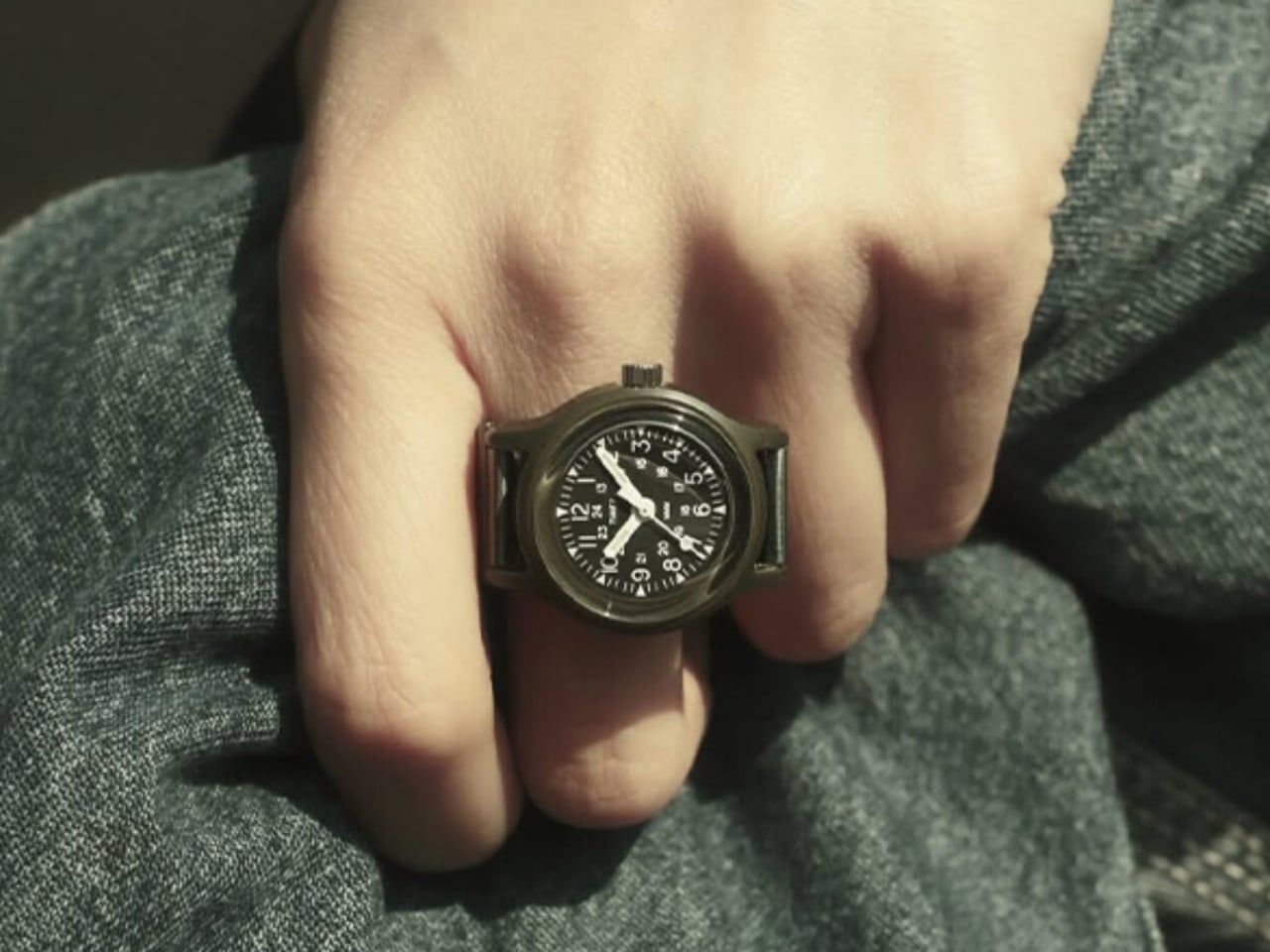
Beams Just Turned the $120 Timex Camper Into a Ring Watch

The Timex Camper has been around for decades, earning its reputation as one of those no-nonsense, reliable watches that quietly became a cult item. It’s not flashy. It doesn’t scream at you. It just sits on your wrist doing its job in that honest, military-practical kind of way that a certain type of person finds deeply appealing. So when I first heard that Beams Boy was turning it into a ring, my reaction was somewhere between “wait, really?” and “actually, that makes complete sense.”

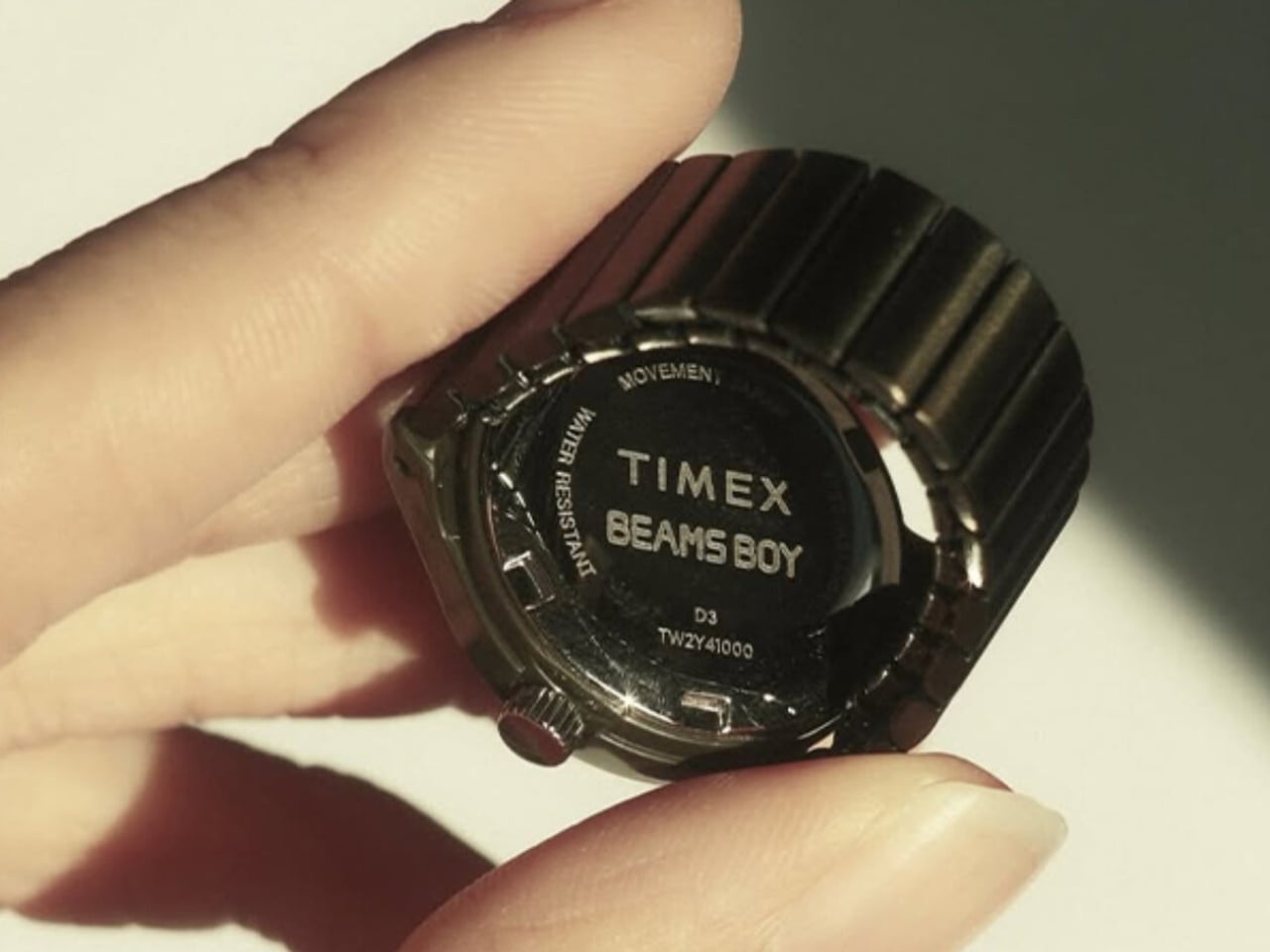
Beams, the Japanese retailer that started as a tiny 21-square-meter Americana shop in Harajuku back in 1976, is celebrating its 50th anniversary this year. With nearly 160 locations across Japan today, they’ve spent half a century proving they understand how culture and fashion intersect in ways most brands only dream about. For their anniversary, they didn’t release a standard commemorative watch with a logo on the dial or a velvet box. They took the Timex Camper and redesigned it from a wristwatch into a fully functional ring. It’s a bold, witty, and genuinely surprising idea, and it feels very Beams to pull it off.

Designers: Timex x Beams

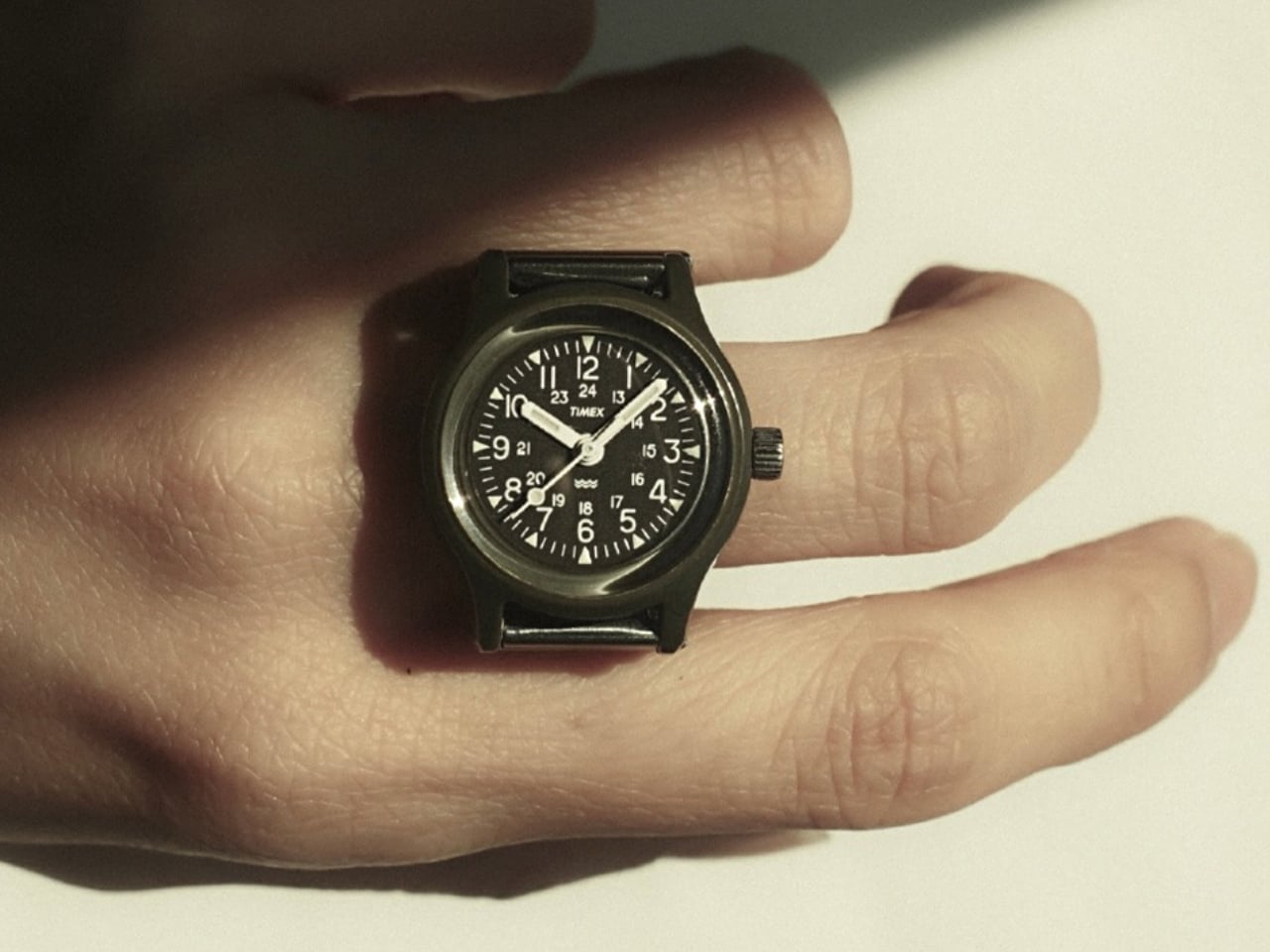
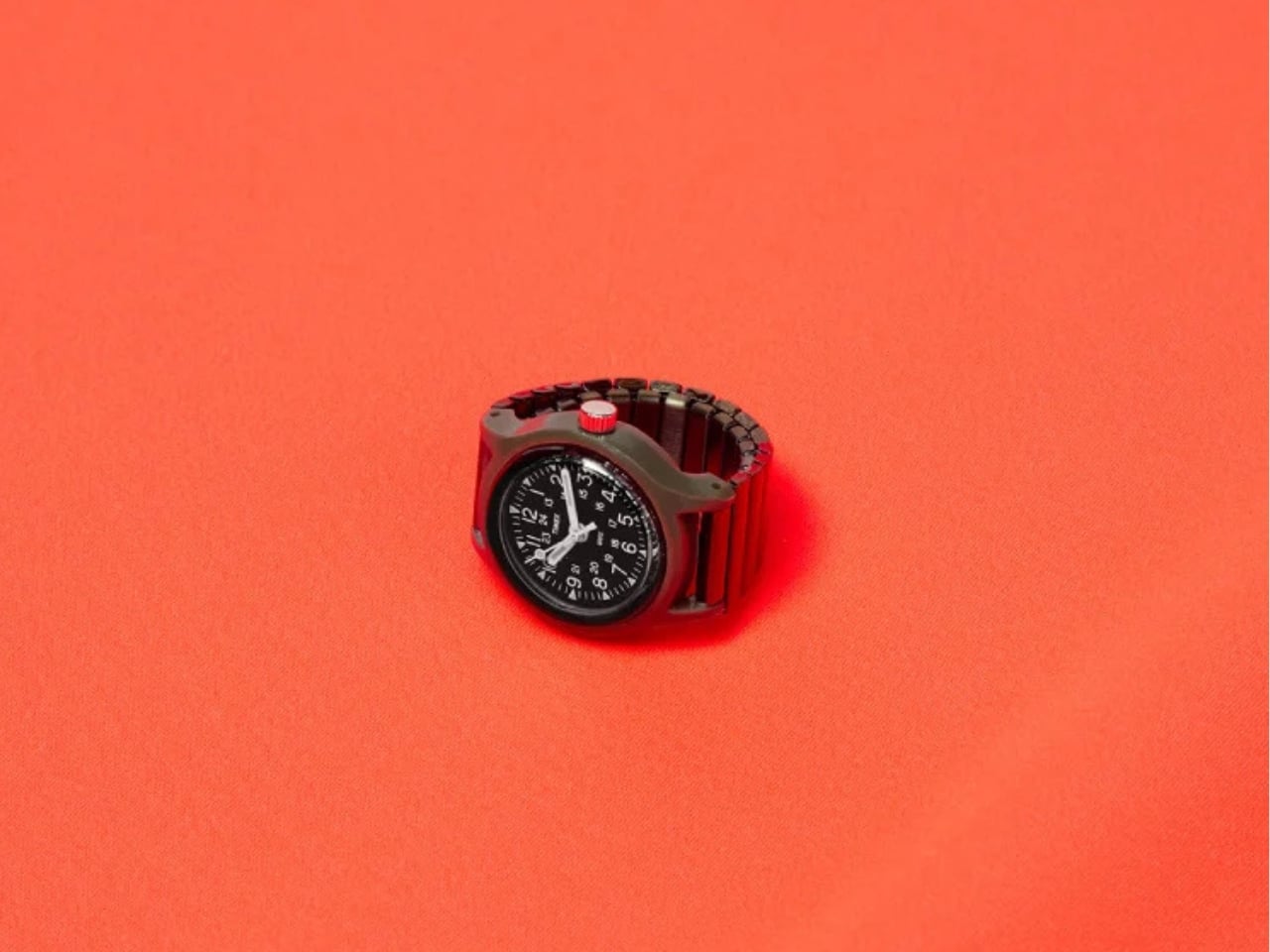
The Beams Boy x Timex Original Camper Ring Watch draws its lineage from two points in history: the 1920s tradition of converting women’s timepieces into jewelry, and the 1990s ring watch trend that briefly made a cult appearance before fading out again. What makes this release feel fresh rather than nostalgic is how it leans into function, not just form. This isn’t a decorative piece masquerading as a watch. It runs on a Japanese quartz three-hand movement, with a crown at the three o’clock position to adjust the time. It is, technically, a fully working watch. Just one you wear on your finger.

The construction is straightforward and smart. The case is lightweight resin, the crystal is acrylic, and the band is a stainless steel expansion piece that stretches to fit ring sizes 9 through 15. Because the links aren’t removable or adjustable, the flexibility does the work instead, which is practical and eliminates the fussiness of traditional ring sizing. The whole thing comes in a single olive colorway, keeping it in line with the Camper’s military DNA. I’d be lying if I said I didn’t wish for a couple of color options, but the restraint is kind of the point. It’s the Camper. Olive green is the answer.

The dial stays true to what made the Camper worth caring about in the first place. Bold numerals, minimal clutter, the kind of face that tells you the time without asking for your attention. Shrinking that down to ring scale could have easily turned it into something illegible or toy-like, but it holds together visually in a way that feels considered rather than cute. The olive resin case doesn’t try to be refined or precious. It’s matte, slightly utilitarian, and completely on-brand for a watch that was never designed to impress anyone at a dinner table.

What I find genuinely interesting is how the expansion band was handled. A nylon strap would have been the more authentic choice given the Camper’s history, but it would have been impractical on a finger. The stainless steel expansion band solves the sizing problem without introducing the kind of visual heaviness that a chunky metal bracelet would have brought. It sits quietly beneath the case, doing its structural job while keeping the focus on the watch face itself. The proportions feel right. Small enough to be a ring, substantial enough to still read as a watch.

Ring watches are quietly gaining traction again, with a few other brands testing the format recently. The format suits a culture that’s increasingly interested in accessories that carry a story and a specific point of view, where what you wear on your hand says something intentional about who you are. A functioning military watch miniaturized into a ring does that in a way that a statement ring or a charm bracelet simply can’t.

The Beams Boy x Timex Camper Ring Watch drops on April 3, 2026, exclusively through Beams, priced at ¥19,140, roughly $120 USD. Whether it makes it outside Japan is still up in the air, which will make the hunt part of the appeal for a lot of people. For a 50th anniversary piece, this is the right kind of creative risk. Not safe, not predictable, but grounded in enough history and craft to earn its existence. That’s exactly the kind of thing worth paying attention to.

The post Beams Just Turned the $120 Timex Camper Into a Ring Watch first appeared on Yanko Design.
Breitling Just Made the Astro Boy Watch Every 90s Kid Wanted

Sometimes the best collaborations are the ones you never saw coming. Swiss watchmaker Breitling just dropped a timepiece that pairs aviation-grade engineering with a 1950s Japanese robot boy, and somehow, it works brilliantly.

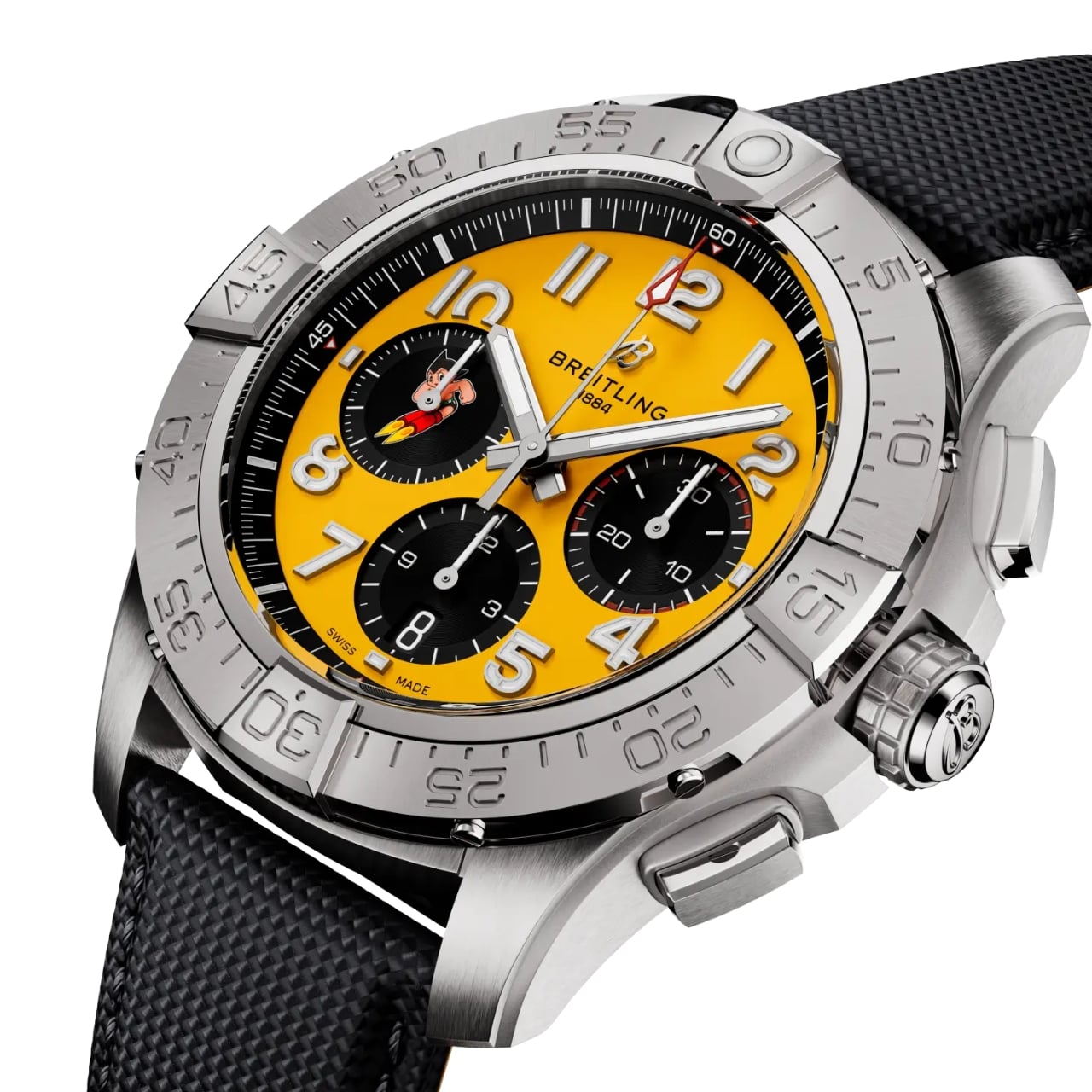
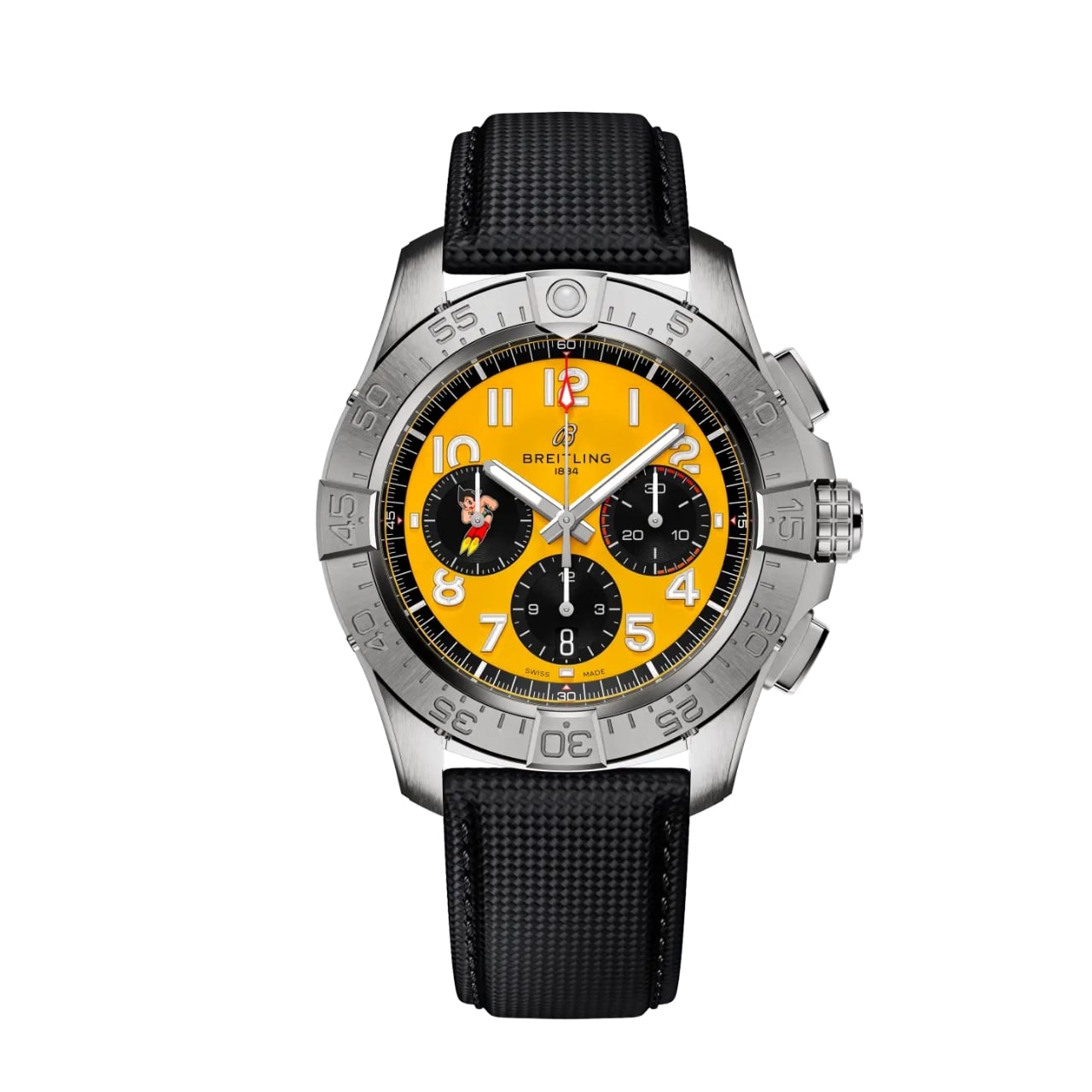
The Avenger B01 Chronograph 44 Astro Boy Limited Edition brings together two worlds that seem miles apart: the technical precision of luxury Swiss watchmaking and the retro-futuristic charm of one of manga’s most iconic characters. Created by the legendary Osamu Tezuka in 1952, Astro Boy embodies optimism about technology and the future, which makes this partnership with Breitling’s pilot-focused Avenger line oddly perfect.

Designer: Breitling

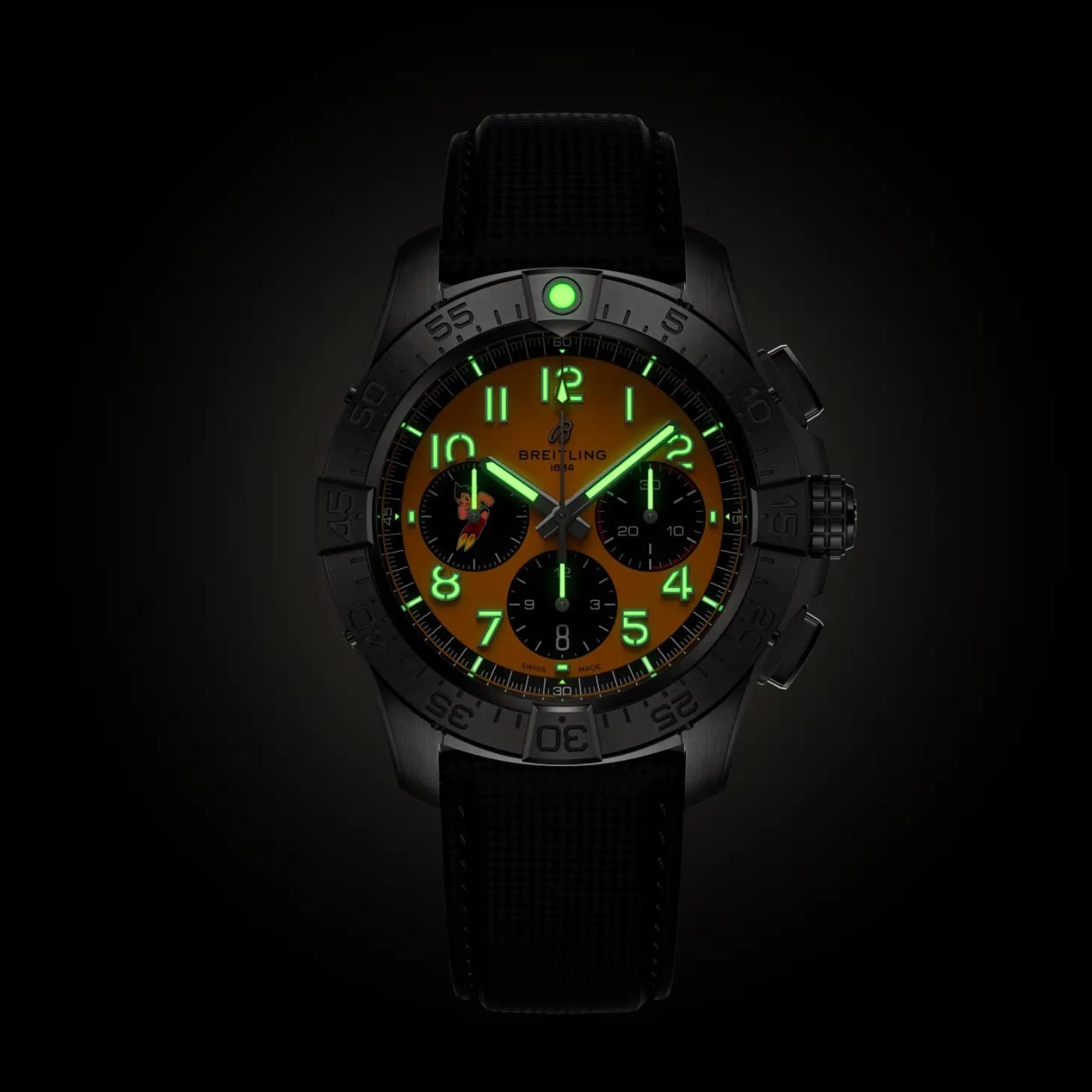
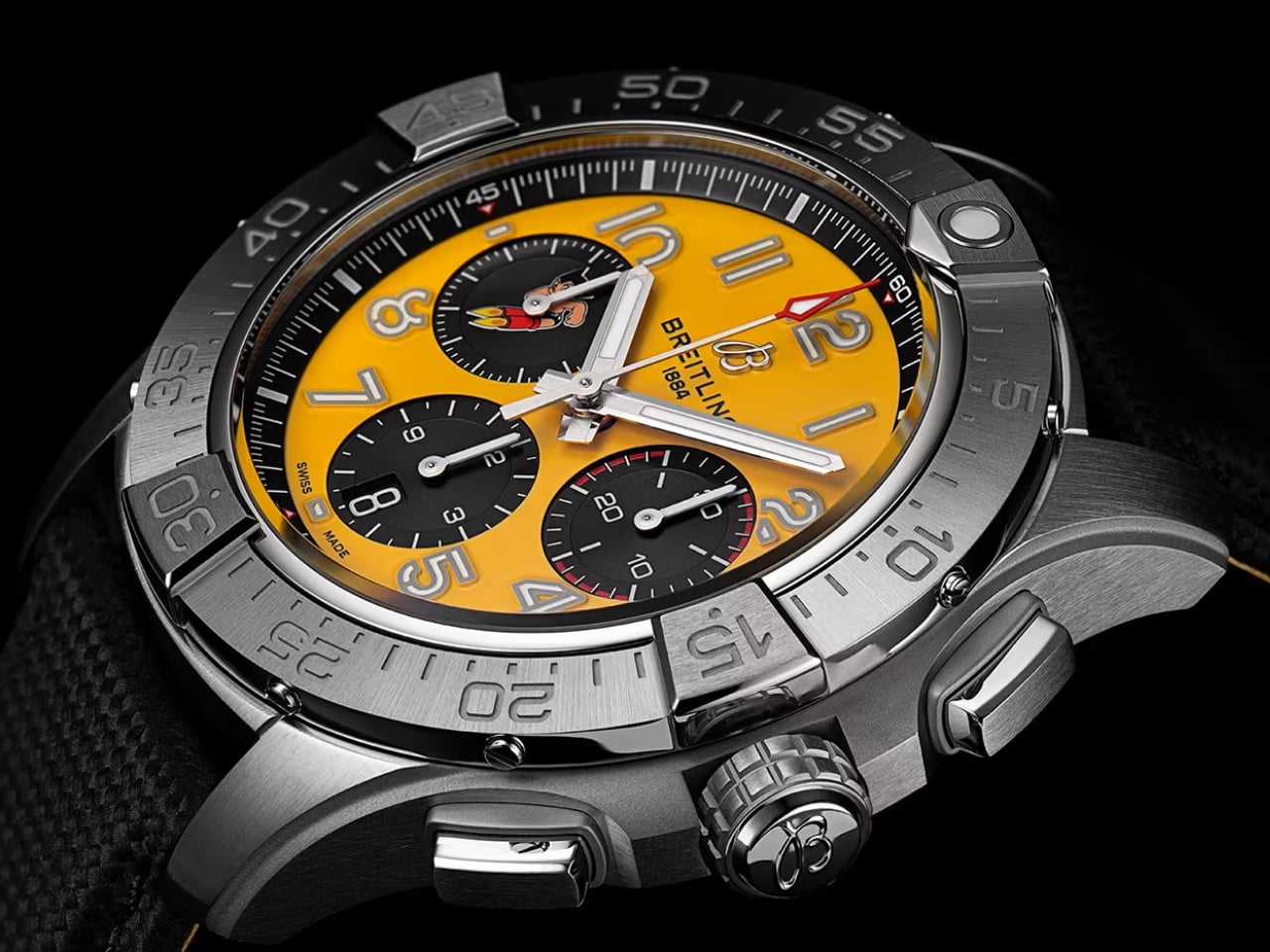
Let’s talk about what makes this watch special. The dial is a vibrant yellow that immediately catches your eye, chosen specifically to echo the fiery thrust of Astro Boy’s signature rocket boots. Against this sunny backdrop, three contrasting black sub-dials create visual depth and drama. But the real star of the show appears on the 9 o’clock sub-dial, where Astro Boy himself is rendered in mid-leap, complete with his spiky hair, those famous red boots, and an expression of pure determination.

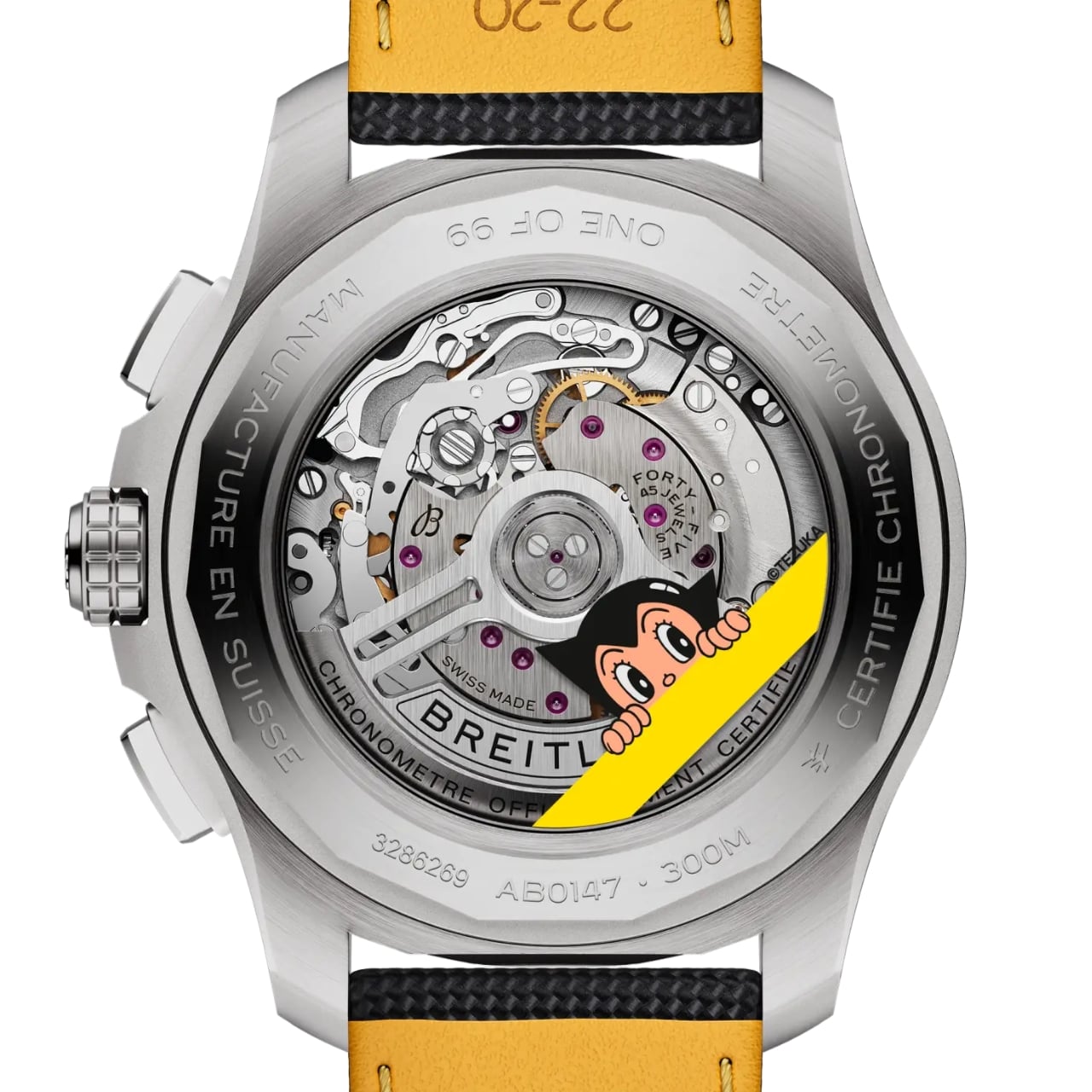
Flip the watch over and you’ll find another surprise. The sapphire case back reveals both a playful portrait of Astro Boy and the impressive Breitling Manufacture Caliber 01, a COSC-certified movement that offers a 70-hour power reserve. It’s this kind of detail that shows Breitling isn’t just slapping a cartoon character on a watch and calling it a day. The technical specs hold their own: column-wheel control, vertical clutch for precise chronograph engagement, and all the performance you’d expect from an Avenger. The watch itself is housed in a robust 44mm stainless steel case with square pushers and a screw-locked crown, offering 300 meters of water resistance. It’s paired with a rugged black military leather strap that keeps the overall aesthetic grounded and functional, preventing the watch from tipping too far into novelty territory.

This collaboration works because both Breitling and Astro Boy share DNA rooted in pushing boundaries. The Avenger line was built for pilots and adventurers, people who need tools they can trust in demanding conditions. Astro Boy, meanwhile, represented a hopeful vision of how technology could make the world better. When you look at it that way, a robot boy with rocket-powered flight feels like a natural mascot for a pilot’s chronograph.

Of course, exclusivity is part of the appeal. Breitling is only making 99 pieces, each individually engraved with “ONE OF 99.” The watch comes packaged in a specially designed Astro Boy collector’s box, turning the whole package into something that transcends just being a timepiece. It’s a collectible that bridges generations, appealing to vintage manga fans, watch enthusiasts, and anyone who appreciates when two iconic brands take creative risks together. There’s one catch: this limited edition is exclusively available through Breitling’s website and boutiques in Hong Kong, Mainland China, and Macau. That regional focus makes sense given Astro Boy’s massive cultural footprint in Asia, but it also means fans elsewhere might have to work a bit harder to get their hands on one.

What’s refreshing about this collaboration is how it balances playfulness with craftsmanship. Pop culture watch collaborations can sometimes feel like cash grabs, but this feels considered. The yellow dial isn’t garish; it’s bold and confident. Astro Boy’s inclusion feels integrated rather than tacked on. Even the red-tipped chronograph seconds hand ties back to the character’s iconic color palette. Breitling has proven that heritage brands can embrace pop culture without losing their identity. The Avenger B01 Chronograph 44 Astro Boy Limited Edition manages to honor both the technical excellence that defines Swiss watchmaking and the imaginative spirit of Tezuka’s creation. It’s a watch that doesn’t take itself too seriously while still delivering serious horological goods.

For 99 lucky collectors, this timepiece offers something rare: a conversation starter that also happens to be a genuinely impressive chronograph. And in a market flooded with safe choices and predictable designs, that kind of bold creativity deserves a round of applause.

The post Breitling Just Made the Astro Boy Watch Every 90s Kid Wanted first appeared on Yanko Design.

Forget Minute Hands: This Watch Only Tells Time in Half-Hours

When was the last time a watch made you do a double-take? If you’re like most of us, probably never. We’ve seen countless variations of circles with numbers, hands pointing at things, and digital displays that all basically do the same job. But Ion Lucin’s ARROWatch isn’t just another pretty timepiece. It’s a design that fundamentally rethinks what a watch actually does.

Here’s the thing: we’ve been telling time for centuries, and watches have evolved from ornate pocket pieces to sleek smartwatches. So when a designer sits down to create something genuinely new, they’re facing a pretty daunting challenge. How do you innovate on an object that’s been perfected over hundreds of years?

Designer: Ion Lucin

Lucin, tackling his first watch design, didn’t try to reinvent the wheel (or the circle, as it were). Instead, he went back to basics and asked a deceptively simple question: what does a watch actually do? Strip away all the aesthetics, the luxury materials, the complications, and what you’re left with is this: a watch tells us where to look at a specific moment in time. That insight is brilliant in its simplicity. Sure, we can dress up that information with different colors, shapes, and forms. We can make it digital or analog, minimalist or maximalist. But what if, instead of just changing how the information looks, you changed how people interact with it? What if you could create an unexpected way of directing someone’s gaze?

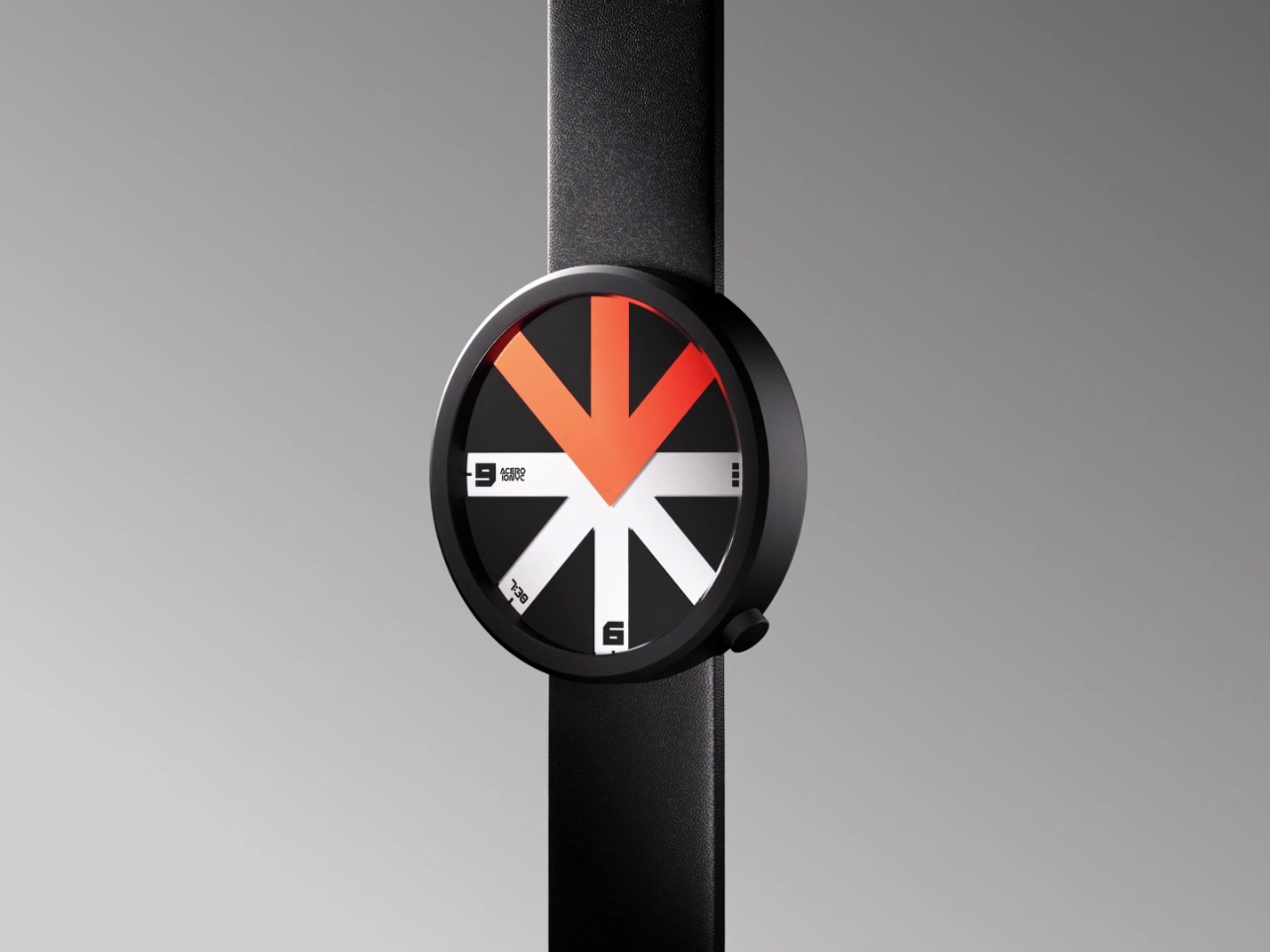
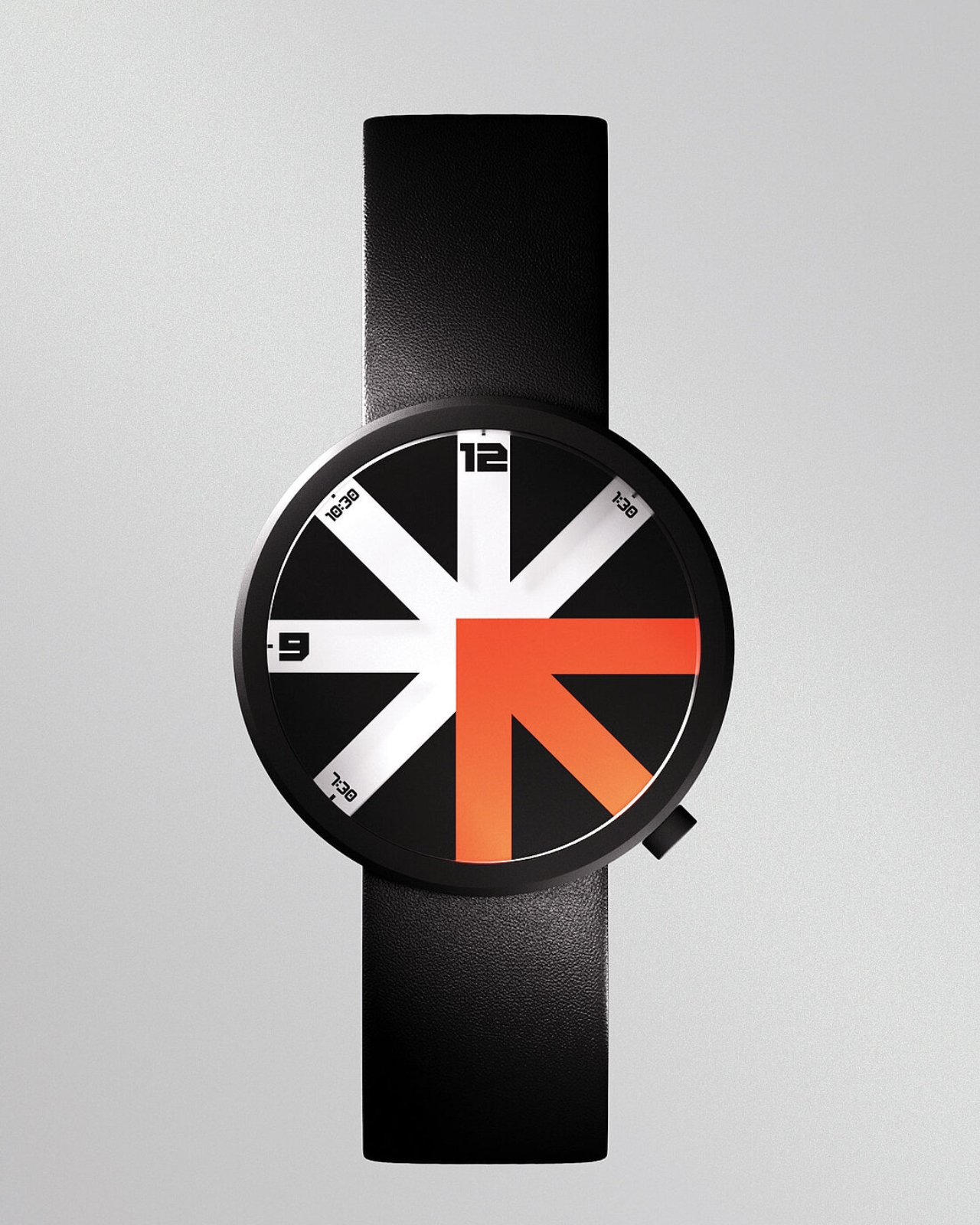
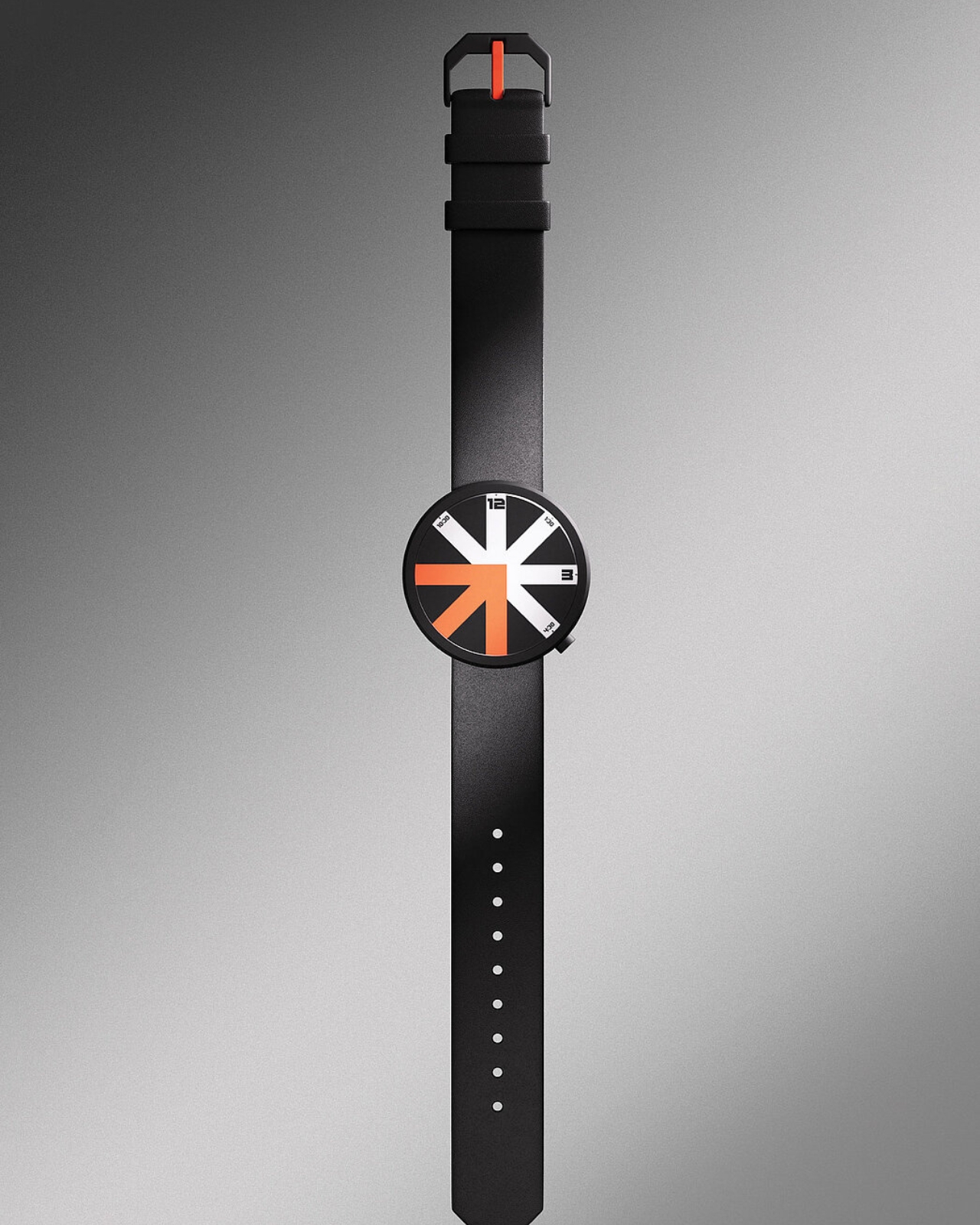
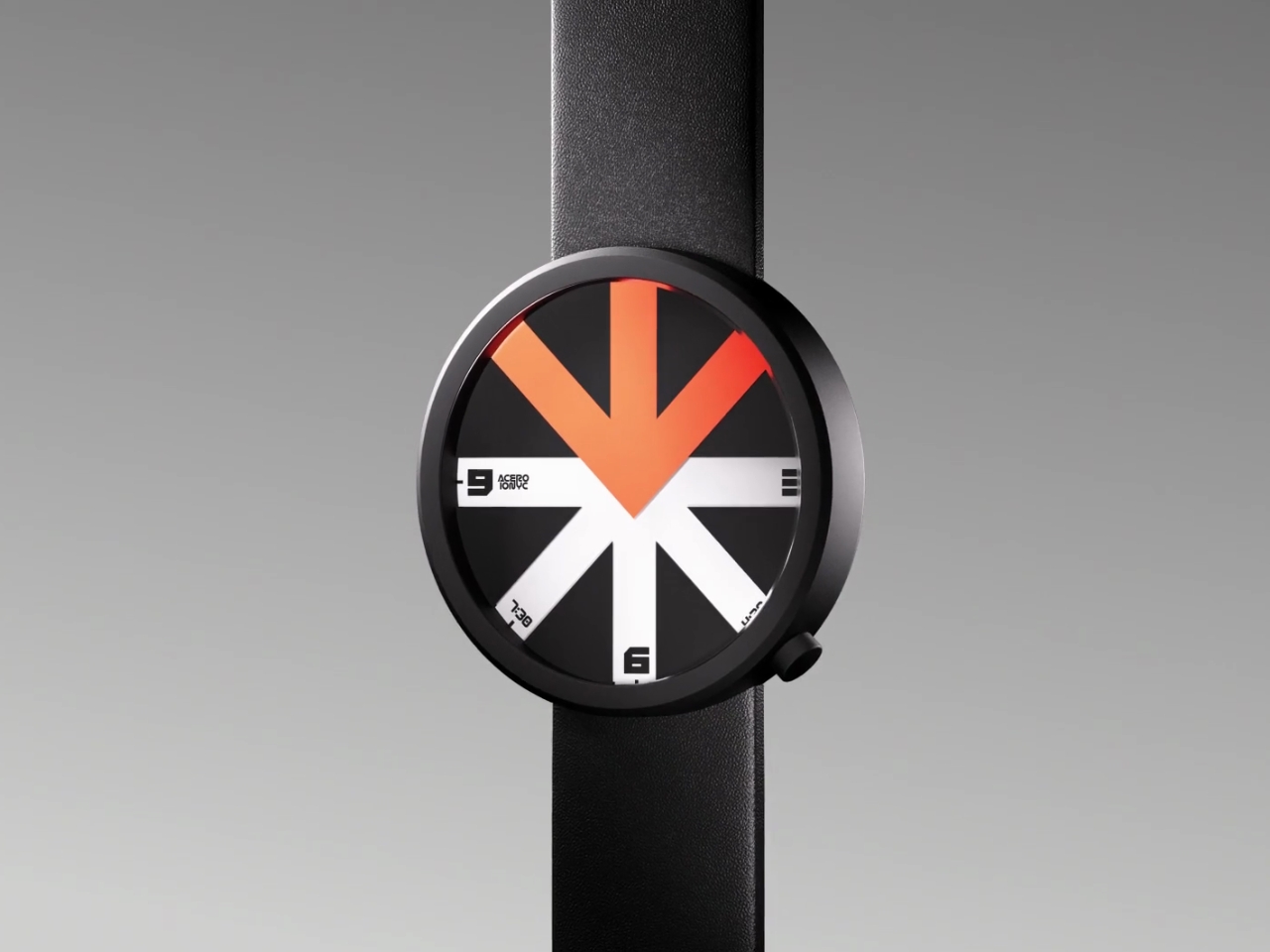
Enter the arrow. It’s possibly the most universal symbol we have for directing attention. You see arrows everywhere, from road signs to user interfaces, all doing the same basic job: pointing you somewhere. Lucin took this ubiquitous symbol and made it the entire concept of his watch. The ARROWatch face is divided into eight segments. Three of those segments are colored in a striking orange-red, forming an arrow shape. Five segments are left transparent. The rest of the watch face is black. This creates a kind of window effect where only certain portions of the time dial are visible at any given moment. The colored arrow literally guides your eye to the information you need.

What makes this particularly bold is what Lucin left out. The ARROWatch only displays hours and half-hours. No minute hand, no second hand, no fussy complications. We’re living in a time where we’re obsessed with precision (down to the millisecond on our smartphones) but this watch is telling you to chill out a bit. Do you really need to know it’s 3:47 and 32 seconds? Or is “about 3:30” good enough? This minimalist approach feels almost rebellious. We’re so accustomed to information overload that a watch that gives you less feels like a statement. It’s pushing back against the idea that more data equals better design. Sometimes, clarity comes from subtraction, not addition.

The aesthetic is unapologetically graphic. The black circle with its bold arrow in white and orange looks more like a wayfinding sign or a piece of modern art than a traditional timepiece. Paired with a sleek black leather strap, it’s the kind of thing that works equally well in a gallery, a coffee shop, or a design studio. It’s a conversation starter, which is exactly what good design should be. What’s particularly impressive is that this is Lucin’s debut watch design. There’s a fearlessness here that you don’t always see from first-time designers. He could have played it safe, creating something conventionally beautiful that would appeal to traditional watch collectors. Instead, he took a risk and created something that challenges our expectations.

Will everyone want to wear a watch that only tells time in half-hour increments? Probably not. But that’s not really the point. The ARROWatch exists to make us question our assumptions about everyday objects. It reminds us that innovation doesn’t always mean adding more features or making things more complex. Sometimes, the most radical thing you can do is simplify, focus, and ask people to look at something familiar in an entirely new way. And honestly? That’s exactly what good design is supposed to do.

The post Forget Minute Hands: This Watch Only Tells Time in Half-Hours first appeared on Yanko Design.

Christopher Ward C1 Bel Canto Lumière: When Luminescence Meets Acoustic Engineering

When a watch chimes on the hour, the sound should resonate with purpose. When it glows in the dark, the luminescence should tell a story. Christopher Ward’s C1 Bel Canto Lumière delivers both with a level of technical execution that transforms timekeeping into a multisensory experience.

Designer: Christopher Ward

The $5,205 timepiece combines three distinct engineering disciplines: advanced photoluminescence, acoustic amplification, and visual depth. It’s a watch designed for those who appreciate horological complexity and aren’t afraid to wear something that looks like it belongs in a sci-fi film.

At a Glance

Movement: In-house FS01 module (60+ components) on Sellita SW200-1 base, 29 jewels, 38-hour power reserve
Case: 41mm Grade 5 titanium Light-catcher™, brushed and polished
Crystal: Box sapphire with anti-reflective coating
Luminescence: Globolight ceramic ring, multi-layered Super-LumiNova (blue/green), luminescent strap option
Acoustic: Songbird striking mechanism, D note chime on the hour
Price: $5,205 (pre-order)
Guarantee: 60-day returns, 60-month movement warranty

Luminescent Architecture That Redefines the Category

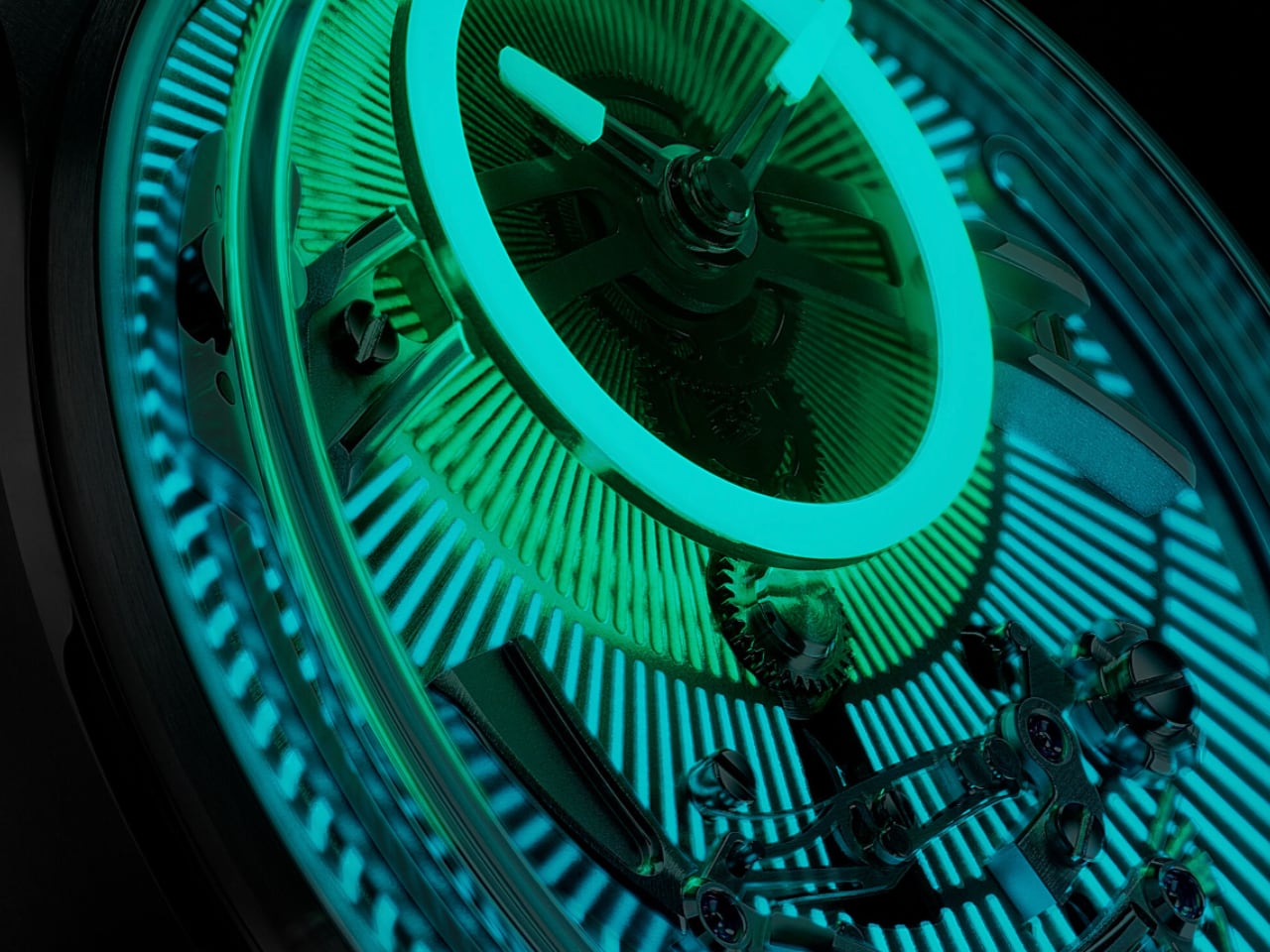
Unlike most makers who settle for glowing hands and markers, Christopher Ward treats photoluminescence as a holistic design system. A Globolight ceramic ring floats above the dial while the base platine uses multi-layered Super-LumiNova that shifts from blue to vivid green depending on light exposure. The hands and dial circumference carry Globolight for intense neon-green luminescence, and the on/off indicator switches from white to luminous emerald in darkness.

The optional white rubber strap infused with Super-LumiNova extends the glow across your entire wrist, creating an “all-wrist” luminescent system. The smoked sapphire dial floats above the platine, amplifying the sunray pattern beneath through box sapphire crystal that enhances light play while providing scratch resistance.

In practical terms, expect visibility that exceeds standard dive watch lume by a significant margin. The multi-layer system charges quickly under ambient light and maintains legibility through extended darkness periods, while the blue-to-green shift creates visual interest that standard single-compound applications cannot match.

The Songbird Mechanism: Acoustic Engineering in 41mm

The C1 Bel Canto Lumière includes Christopher Ward’s signature “songbird” striking mechanism that chimes on the hour. The brand developed a custom FS01 module comprising over 60 components built atop a Sellita SW200-1 base movement. The striking hammer, visible through the dial, hits a steel spring to produce what the brand describes as “the beautiful singing of the D note.”

The Grade 5 titanium case functions as a sound amplifier, turning the entire watch into a resonance chamber. This material choice matters: Grade 5 titanium offers superior strength and hardness compared to the Grade 2 titanium used in the bracelet options, creating a rigid structure that amplifies vibration more effectively. At 41mm, the Light-catcher™ case is brushed and polished to create tactile contrast while maintaining structural integrity for acoustic performance.

Daily Wear Consideration: The chime operates automatically at each hour with no option to silence or adjust the mechanism. This commitment to acoustic performance means the watch announces time audibly throughout the day. Consider your typical environments before purchasing if you spend significant time in meetings, libraries, or other silence-required settings

The acoustic output sits between a subtle resonance and an assertive chime. In quiet rooms, the D note carries clearly without being intrusive. In noisier environments, you’ll feel the vibration through your wrist even when the sound doesn’t carry. The 29-jewel automatic movement provides 38 hours of power reserve, ensuring the hourly chime performs reliably through a full day and overnight.

Christopher Ward applied anti-reflective coating to the domed sapphire and deep-stamped the caseback with circular patterns. The push-down crown features the brand’s twin flag motif, and the Super-LumiNova strap carries a “Clous de Paris” hobnail pattern.

Technical Integration and Material Choices

The movement combines traditional Swiss watchmaking with Christopher Ward’s in-house engineering. The FS01 module adds chiming complications to the reliable Sellita base, creating a hybrid caliber that balances innovation with proven performance. Grade 2 titanium Bader or Consort bracelets are available as alternatives to the rubber strap. The softer Grade 2 titanium offers comfortable flex against skin compared to the rigid Grade 5 case material, making these bracelet options better suited for extended daily wear.

The floating Globolight X1 GL Blue ring serves as the watch’s visual anchor. The neon dial beneath creates contrast against titanium accents, and the visible striking mechanism adds mechanical intrigue. Every component works toward the same goal: making timekeeping feel less like utility and more like theater.

Christopher Ward’s Design Philosophy in Practice

This watch represents Christopher Ward’s commitment to delivering complications typically reserved for luxury segments at accessible price points. The brand has built its reputation on in-house innovation that challenges traditional watchmaking hierarchies. The C1 Bel Canto Lumière extends this philosophy into hybrid territory, where visual artistry meets acoustic engineering meets advanced materials science.

The sci-fi aesthetic positions Christopher Ward in conversation with avant-garde independents while maintaining the technical credibility that comes from genuine horological development. Where some microbrands rely on external module suppliers, Christopher Ward engineered the FS01 striking mechanism in-house, demonstrating a vertical integration approach more common in brands charging triple this price.

This approach signals where hybrid watches might evolve next. As traditional complications become more accessible through advanced manufacturing, the competitive edge shifts toward multi-sensory integration. The C1 Bel Canto Lumière doesn’t just tell time or chime or glow. It orchestrates all three into a unified experience.

Why This Watch Matters

Christopher Ward built the C1 Bel Canto Lumière for people who want their timepiece to do more than mark hours. The combination of advanced luminescence, acoustic engineering, and depth-creating visual design creates a watch that performs differently depending on lighting conditions and time of day. It chimes when the hour turns. It glows when darkness falls. It reveals mechanical complexity through transparency.

The $5,205 pre-order price positions this watch in the accessible luxury segment, competing with pieces that often deliver only one or two of these technical features. Christopher Ward integrated all three into a 41mm case with 60/60 guarantees: 60 days of free returns worldwide and a 60-month movement guarantee.

The C1 Bel Canto Lumière isn’t trying to be subtle. It’s designed for wrists that appreciate technical achievement and aren’t concerned with blending into boardrooms. This is a watch that announces its presence through light and sound, and does so with engineering that justifies the spectacle.

The post Christopher Ward C1 Bel Canto Lumière: When Luminescence Meets Acoustic Engineering first appeared on Yanko Design.
Casio’s A158 Watch Now a Retro Desk Clock You Need

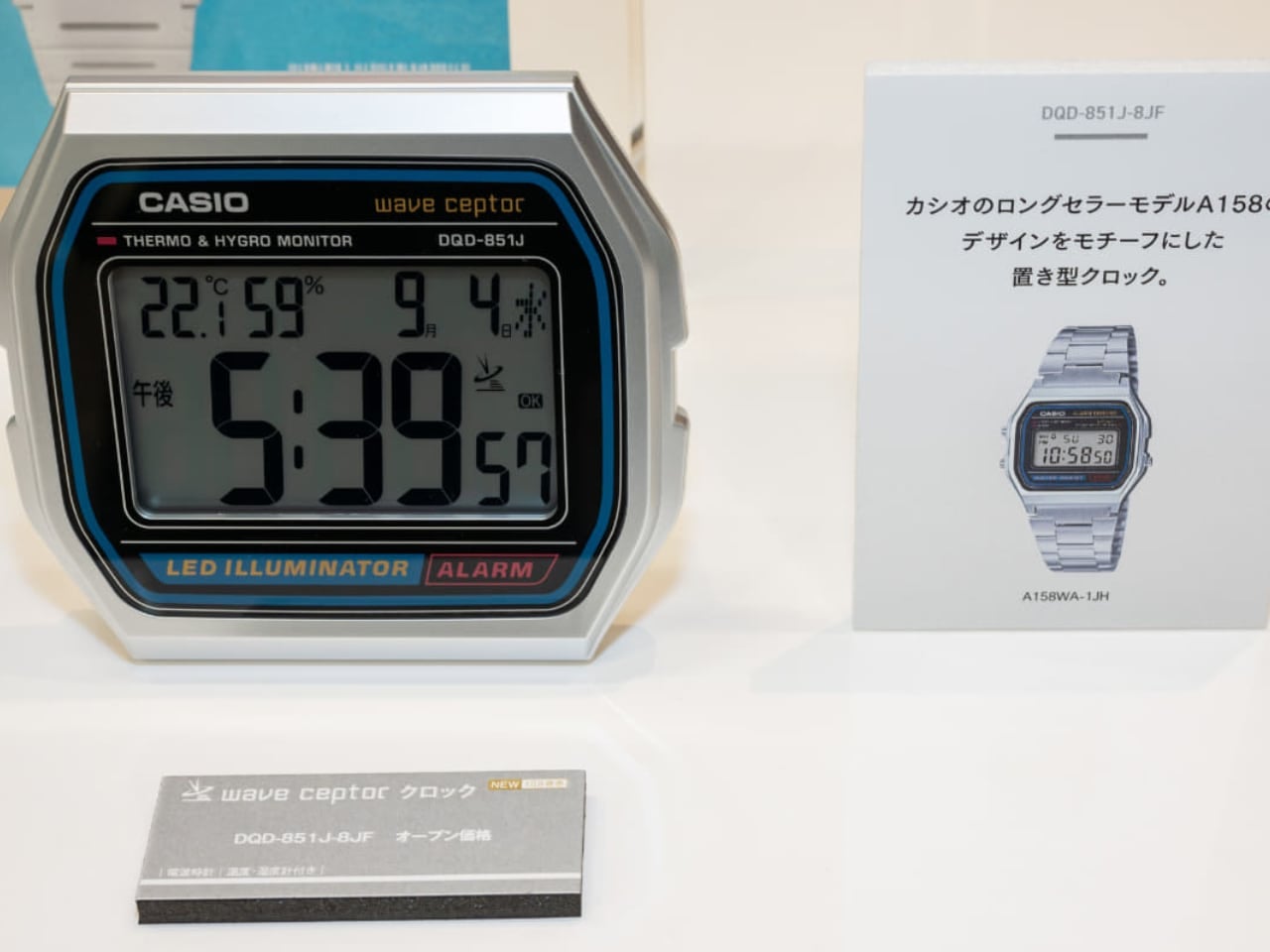
Casio’s A158W digital wristwatch has remained relevant for decades with its simple design and reliability. Now, Casio brings that design from your wrist to your desk with the DQD-851J-8JF desk clock. Scheduled for release on October 25 in Japan, this desk clock channels the aesthetics of the A158 with modern updates.

Designer: Casio

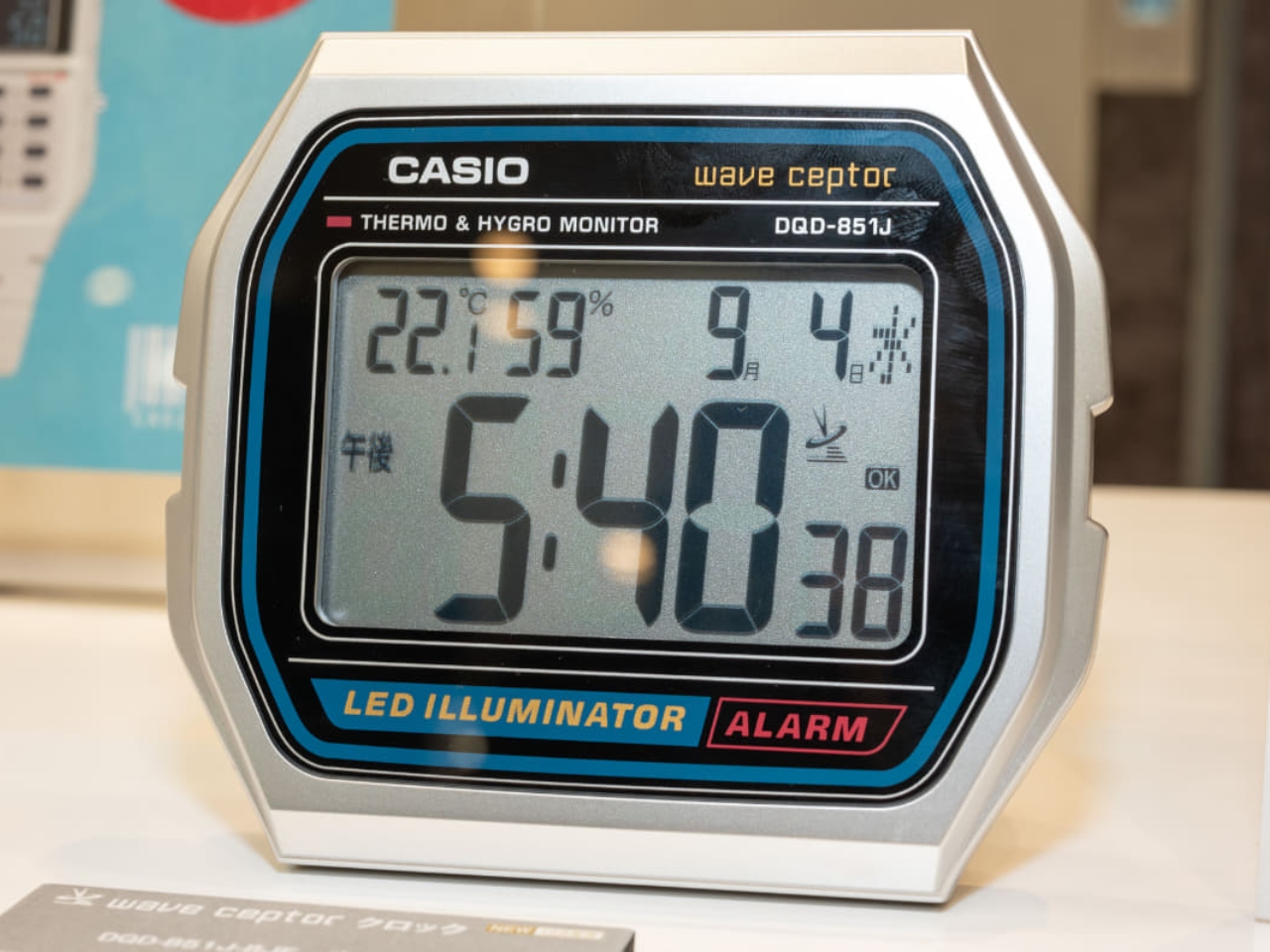
The DQD-851J-8JF borrows design elements from the A158W, including the silver-toned casing and familiar digital display. The clock’s body echoes the classic curves and rectangular silhouette of the A158 watch, giving it a nostalgic appeal reminiscent of the 1980s.

Introduced in the 1980s, the Casio A158W became popular for its utility, affordability, and retro aesthetic. It offered a digital display, LED backlight, and water resistance, making it versatile for all lifestyles. Even today, it remains a favorite among minimalists and retro watch enthusiasts.

The DQD-851J-8JF desk clock pays homage to the A158W while incorporating modern features. One key addition is Wave Ceptor automatic time adjustment, which synchronizes the clock to the Japan Standard Time radio signal (JJY) broadcasted from transmitters within Japan. Note that this feature is exclusive to Japan, and it will not function with radio signals in other regions. The clock also includes a thermometer and hygrometer, providing insight into indoor comfort. Additional features include a snooze alarm, 12/24-hour format, full auto-calendar, and an amber LED backlight.

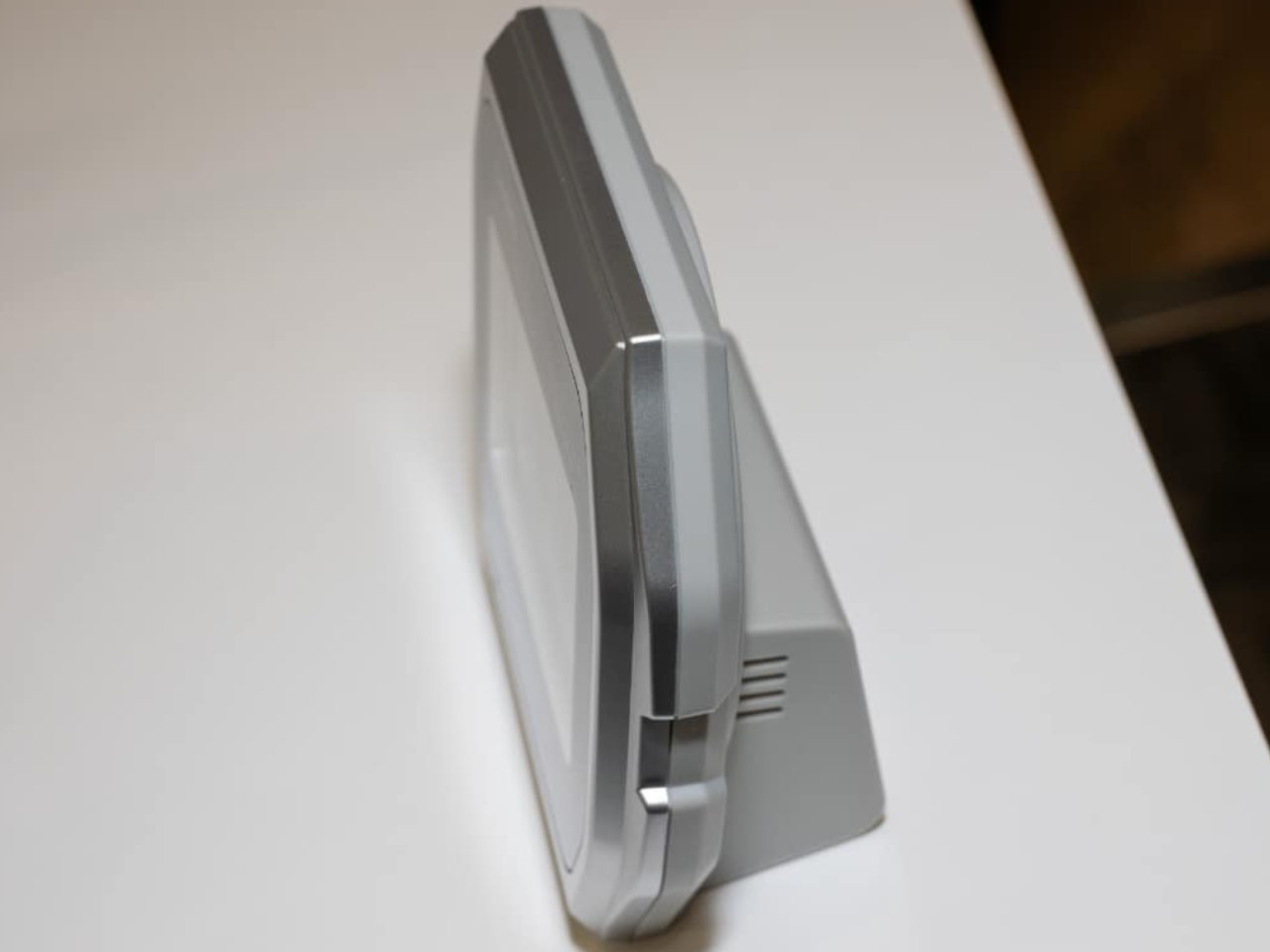
The desk clock captures the iconic look of the A158W. From the rectangular digital screen framed by the brushed silver-tone bezel to the tactile buttons, every detail evokes a retro vibe. The clock features a larger, easy-to-read LCD screen with bold black digits for readability. It is compact yet stable, measuring 102 x 117 x 48 millimeters and weighing 185 grams.

The amber LED backlight offers a warm glow, reminiscent of the original wristwatch’s light. The buttons for adjusting settings are placed intuitively, similar to the wristwatch, for easy interaction. The brushed finish of the casing and slightly raised bezel add to its retro charm.

The DQD-851J-8JF is powered by two AA batteries, offering about one year of battery life—convenient and low-maintenance, much like the original A158W.

Casio’s decision to create a desk clock inspired by the A158W honors the enduring appeal of a product that has outlasted tech trends. The A158W’s straightforward nature makes it timeless. With the DQD-851J-8JF, that appeal now lives in a new form factor, ideal for any desk or nightstand.

For those who cherish the A158, the DQD-851J-8JF brings that classic vibe into other parts of life. Whether you’re a longtime fan or discovering Casio’s digital nostalgia for the first time, this desk clock is an excellent way to celebrate a design that has stood the test of time. Pre-orders are available in Japan.

The post Casio’s A158 Watch Now a Retro Desk Clock You Need first appeared on Yanko Design.
Hybrid watch concept puts a giant hole in the middle of a circular screen

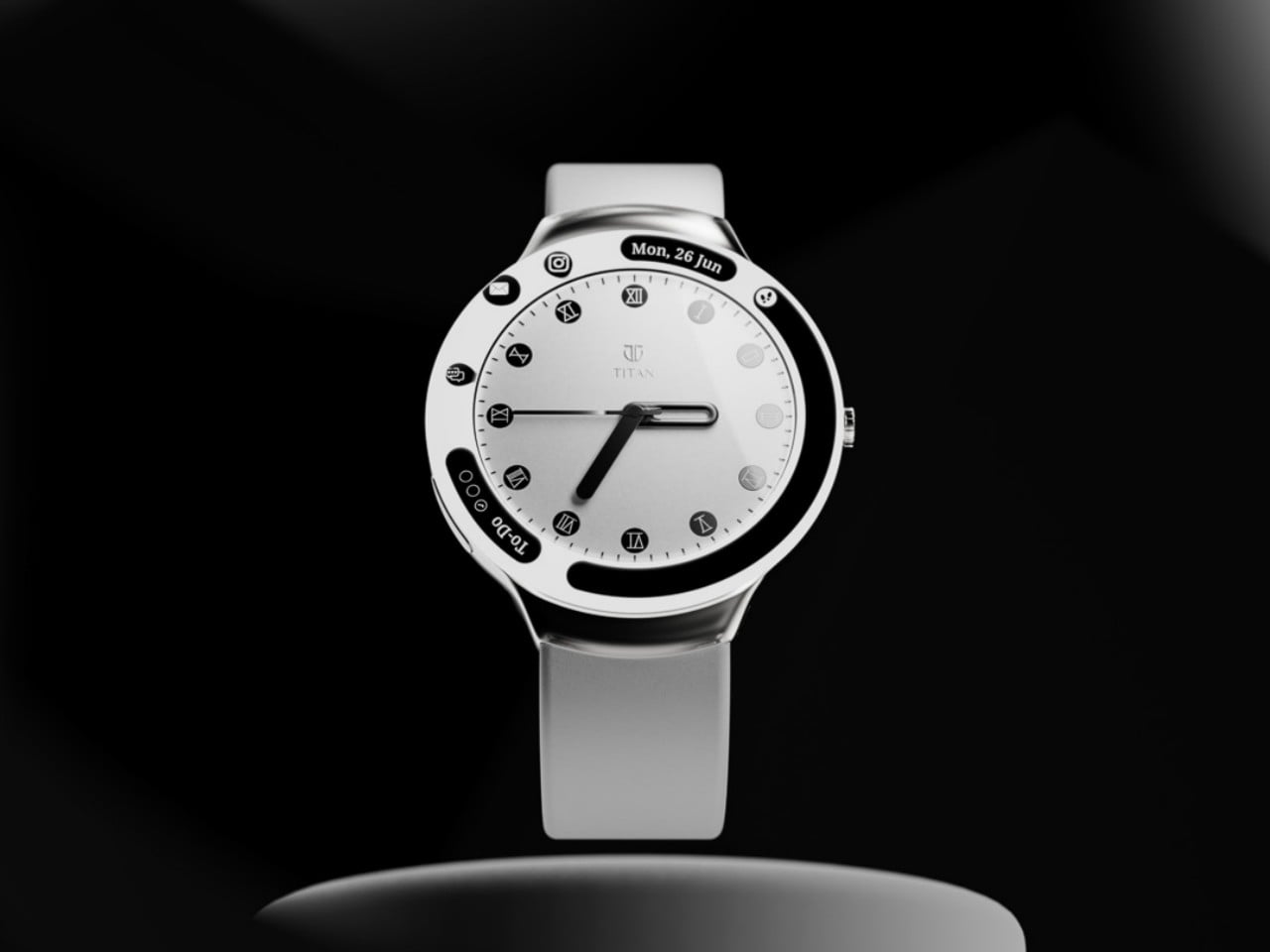
Smartwatches are now a staple of the tech market14, but the departure of several high-profile brands and the arrival of smart rings are making some reevaluate the wearable device. Just like with paper notebooks, there is a strong and large culture around analog, mechanical watches that find smartwatches unappealing, except for some features that aren’t totally unique to smartwatches, namely, health sensors. Hybrid smartwatches exist for this reason, trying to have the best of both analog and digital worlds, but they are not exactly that common nor are their designs well-established. There’s still plenty of room for exploration and experimentation, like this rather peculiar concept that cuts out a whole in the middle of a circular screen to make room for an elegant analog watch.

Designer: Priyanshu Jaiswal

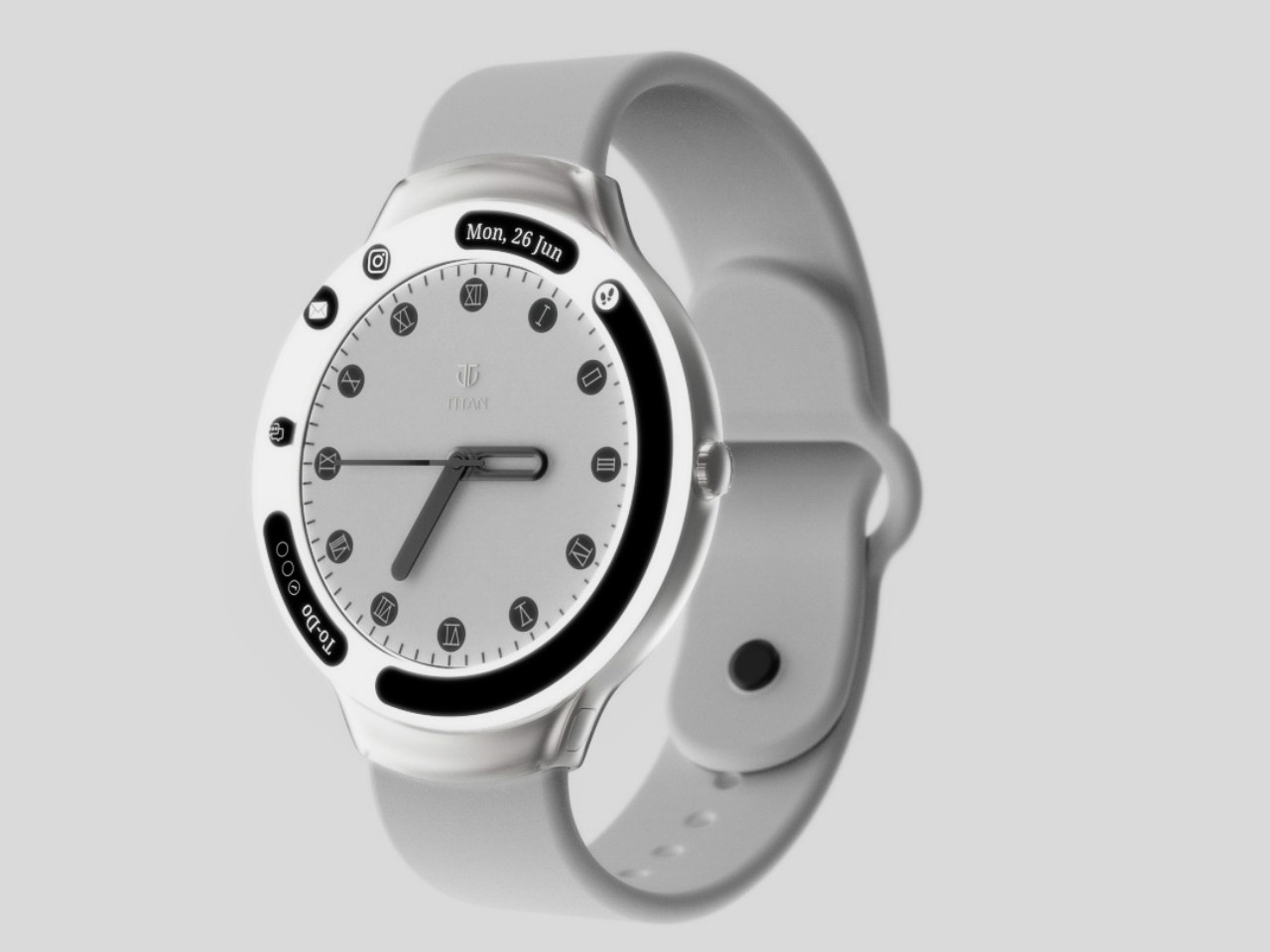
Inspired by the rather divisive notch or cutout on smartphone screens, the Lunar Eclipse hybrid smartwatch concept puts a mechanical watch in the middle of that hole instead of a camera. It might have been easier to have the display as an inset or restricted to a certain part of the watch face, but that presents some challenges as well, particularly when occluding the beauty of the analog timepiece itself. As weird as it may sound, this notch-based design actually has more benefits compared to a smartphone camera cutout.

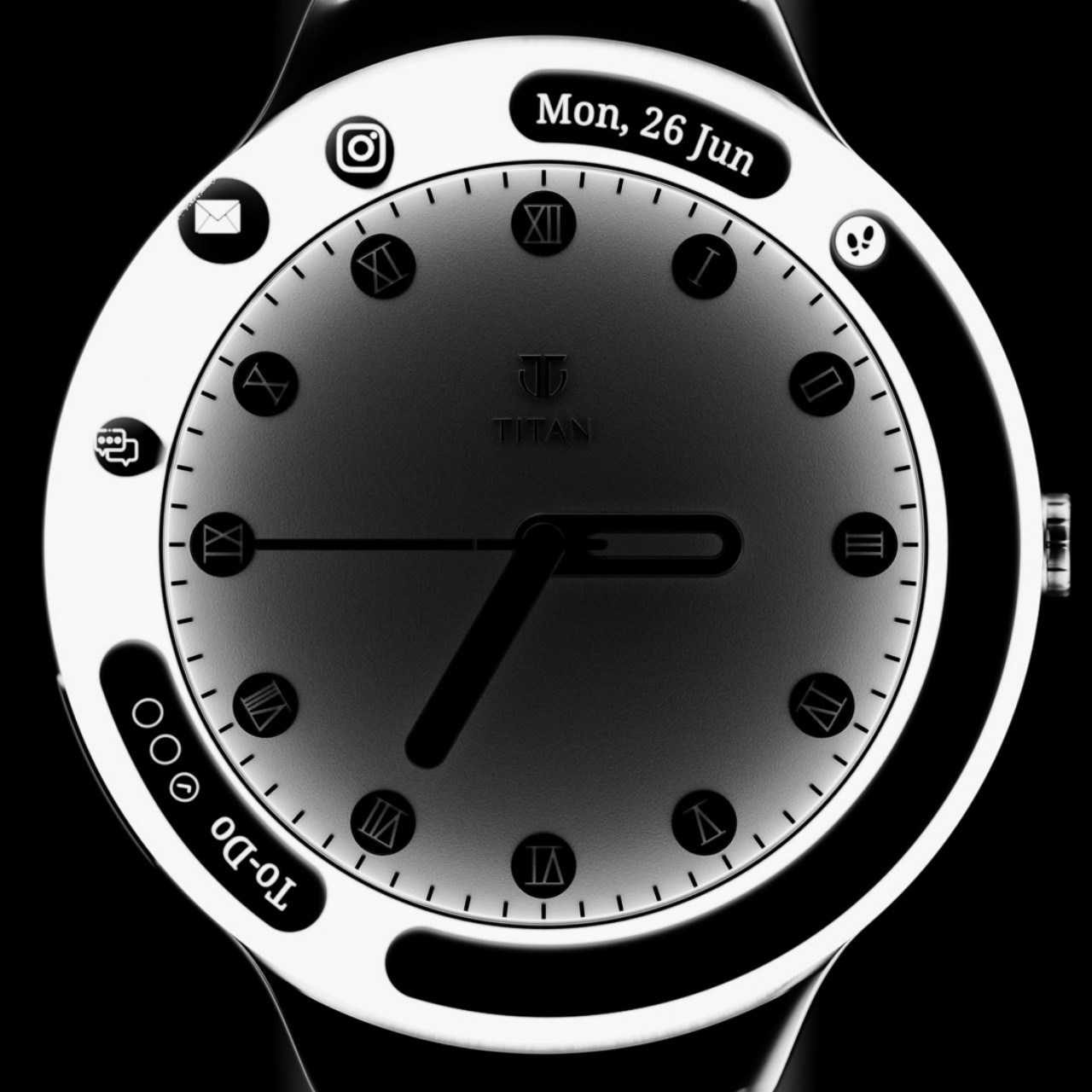
Because it is technically still a complete screen, with just the middle part rendered practically unusable and invisible, it is theoretically easier to design the user interface of the “digital bezel” around the watch face. You can have icons and text that curve around the border, and you can even have them animated to add more natural-looking visual feedback, like how notification icons can appear like they’re flowing from the center of the watch rather than just appearing out of nowhere.

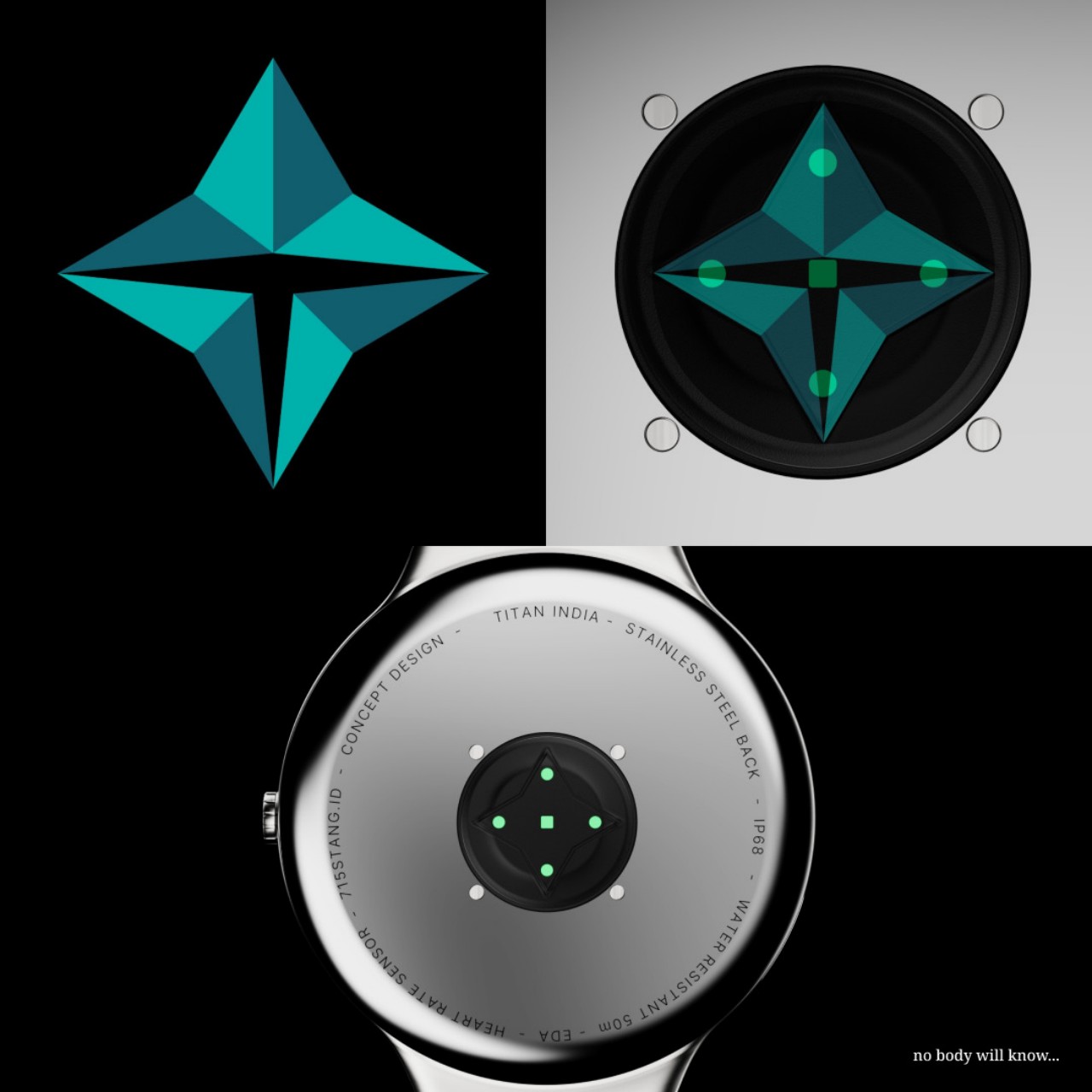
This gives Lunar Eclipse nearly the same benefits as having a smartwatch but with fewer opportunities for distractions. The bezel around the watch face is still just a small space that can only fit a few words and icons. You definitely won’t be using the watch to read those notifications or, worse, type out a response. You’ll be able to still see some of your health stats, presuming the watch has the sensors to track your steps, heart rate, and other biometrics.

One disadvantage that design has is that its battery life might not be that different from a regular smartwatch. The concept could use an E Ink screen, however, to help reduce that consumption, especially since the display won’t be changing as frequently as on a normal smartwatch. Another consideration is that with the electronics and battery inside, the room for the actual mechanical components would be very cramped, detracting from the inherent beauty of these timepieces that wristwatch fans are after in the first place.

The post Hybrid watch concept puts a giant hole in the middle of a circular screen first appeared on Yanko Design.