Meta could be preparing for one of the largest layoffs in its history, according to a Reuters report. The tech giant is planning to cut about 20 percent of its workforce, according to the outlet's sources. According to the report, neither a date nor the exact number of layoffs has been finalized yet.
However, Reuters reported that Meta's top executives have told "other senior leaders" to start "planning how to pare back." In its latest financial report, the company's employee headcount was 78,865 as of December 31, 2025, while revenue reached nearly $60 billion for the fourth quarter and more than $200 billion for the entire year. A Meta spokesperson told Reuters that this was "speculative reporting about theoretical approaches."
Meta is no stranger to major layoffs. Earlier this year, Meta targeted about 1,000 employees in its layoffs with the Reality Labs division that's responsible for the company's virtual reality and metaverse efforts. Early last year, Meta laid off about five percent of its workforce, following a smaller round of firings that same month. Meanwhile, the company has been spending heavily to acquire AI startups, like Moltbook, a social network designed for AI agents, and Manus, a startup focused on AI agents for task automation.
This article originally appeared on Engadget at https://www.engadget.com/big-tech/meta-is-reportedly-planning-to-cut-up-to-20-percent-of-its-staff-in-upcoming-layoffs-160812304.html?src=rss
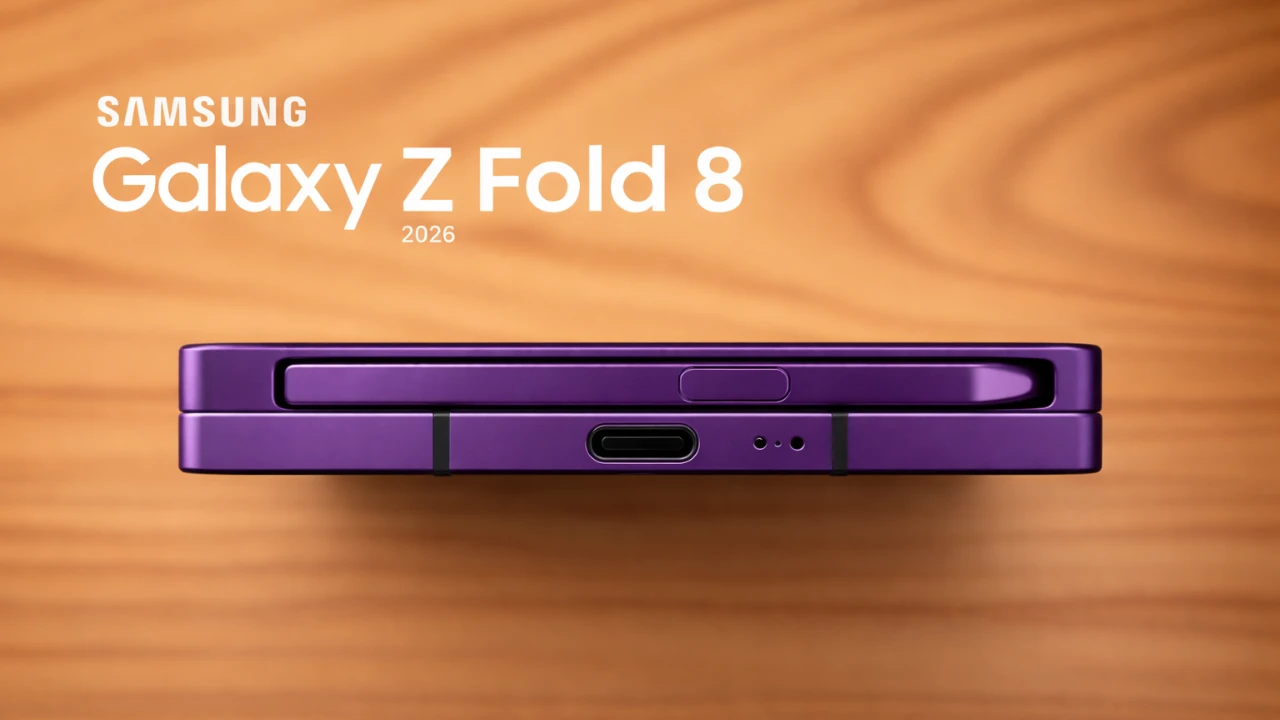
Samsung is developing the Galaxy Z Fold 8, a device that could significantly influence the foldable smartphone market. With anticipated advancements in camera technology and innovative design changes, the Fold 8 is positioned to challenge competitors like Apple and Google in the premium foldable segment. Leaks suggest the possibility of two distinct models: one offering […]
Digg has shut down, for now, just a few months after its open beta launched. Justin Mezzell, the company’s CEO, has explained on the home page that it noticed hours after the beta launched that it was already being targeted by SEO spammers. “The internet is now populated, in meaningful part, by sophisticated AI agents and automated accounts,” he wrote. Apparently, the Digg team wasn’t ready for the scale and the speed at which bots found and started flooding the website.
Mezzell said Digg banned thousands of accounts and deployed both internal tools and external solutions, but they weren’t enough. He admitted that the votes and the comments on the website couldn’t be trusted due to the amount of bot activity it got. While Digg has decided to significantly downsize its team, a small number of staff members has stayed to rebuild it completely. He said it wasn’t enough to present Digg as an alternative to current social networks and community-based websites. “What comes next needs to be genuinely different,” he added.
The CEO didn’t explain how Digg will reinvent itself, but he did announce that its founder, Kevin Rose, is joining the company full time. Rose bought back Digg last year in partnership with Reddit co-founder Alexis Ohanian. Back then, they said they had “a fresh vision to restore the spirit of discovery and genuine community that made the early web a fun and exciting place to be.” Based on what happened to Digg, that’s now harder to achieve with the state of the internet today.
This article originally appeared on Engadget at https://www.engadget.com/social-media/digg-shuts-down-for-a-hard-reset-because-it-was-flooded-with-bots-153848094.html?src=rss
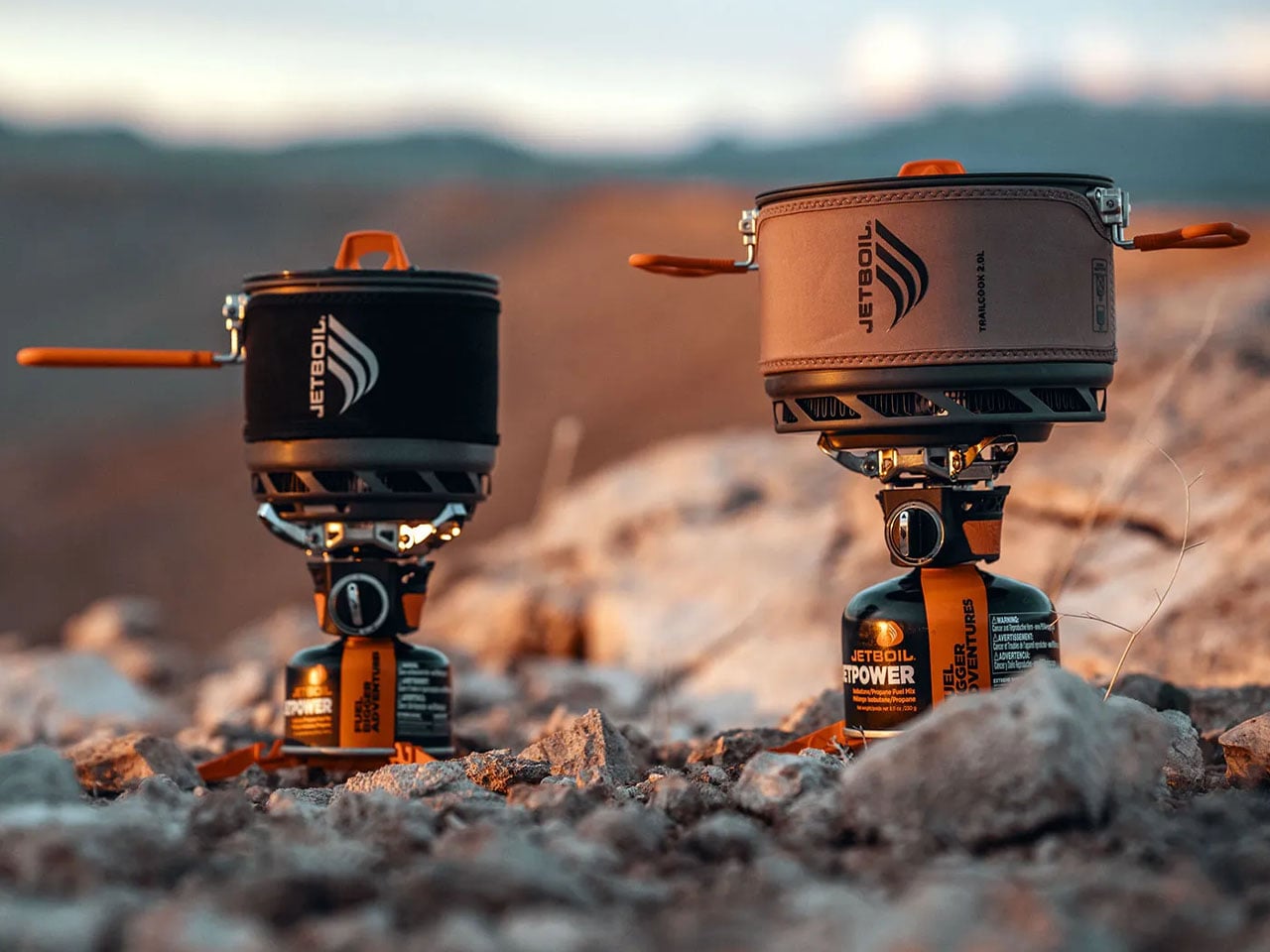
Jetboil has long been associated with fast, efficient backcountry camping stoves designed primarily for boiling water. Over the years, the brand’s integrated cooking systems have become a familiar sight in backpacks thanks to their compact form and rapid heating performance. With the TrailCook series, Jetboil expands on that reputation by introducing a stove system designed not just for boiling water, but for preparing more varied meals in remote outdoor environments.
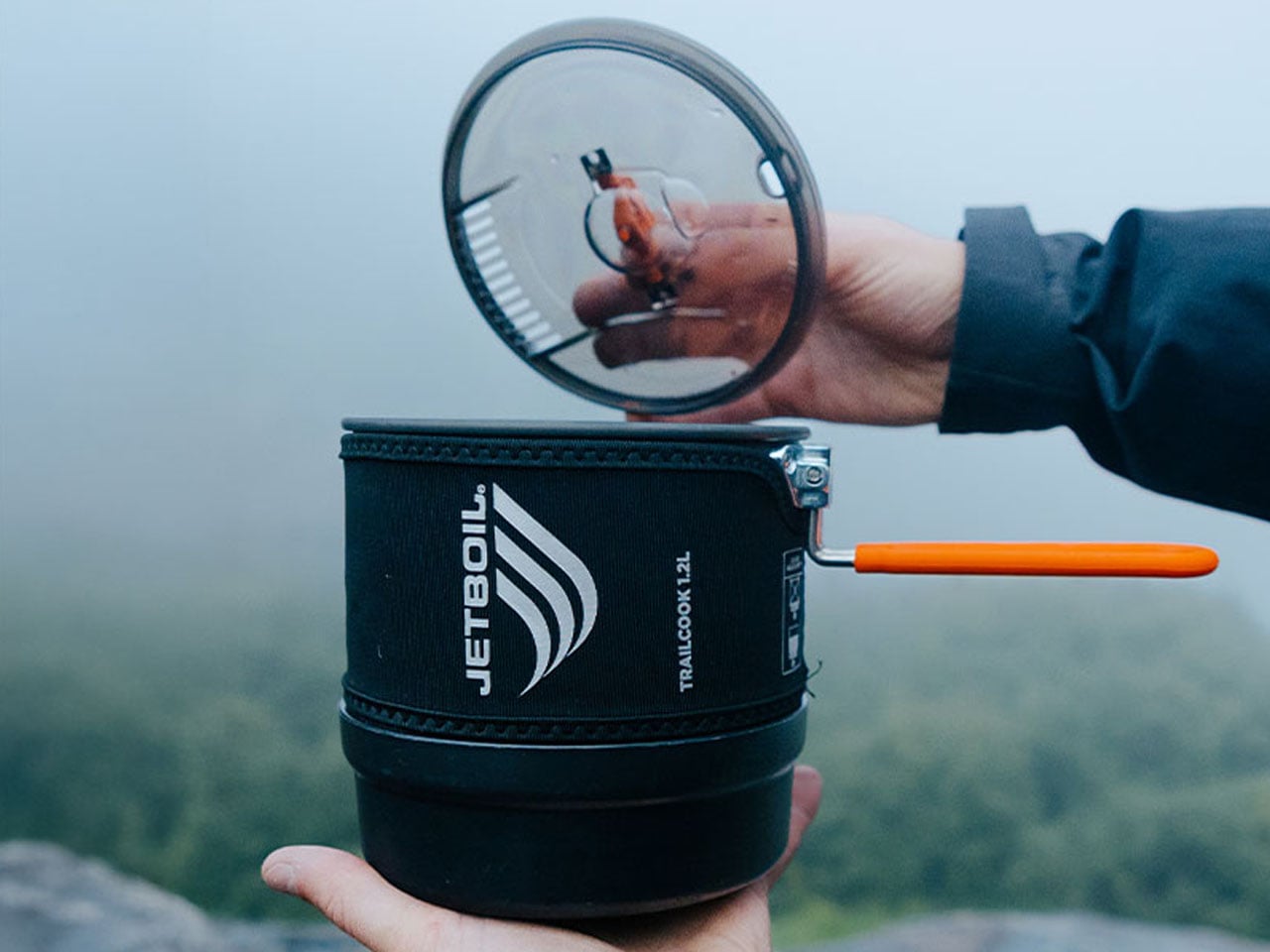
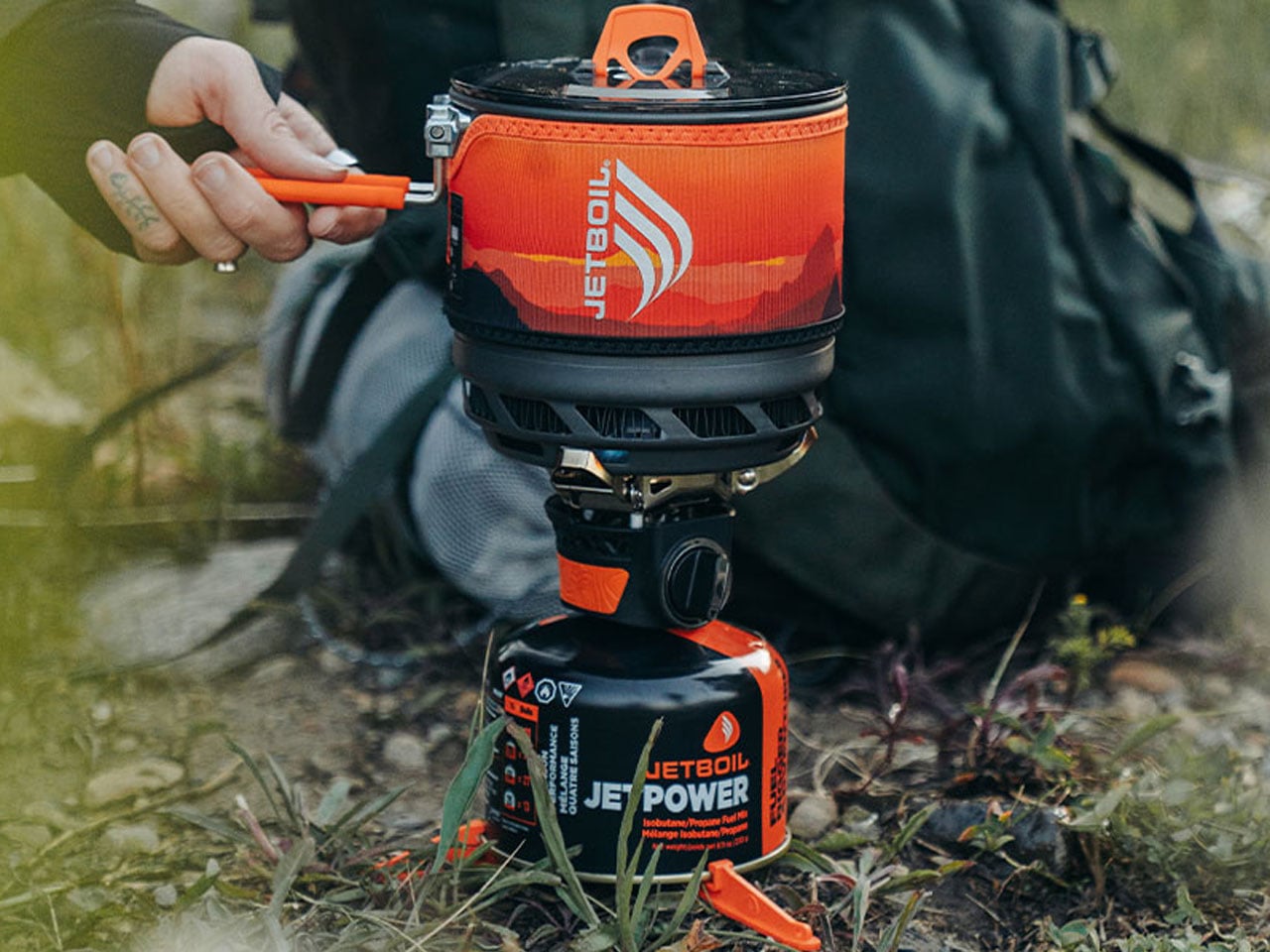
The TrailCook 1.2-liter Stove System centers around Jetboil’s FluxRing heat-exchange technology, which concentrates heat around the base of the cooking pot for improved efficiency. By capturing and directing heat more effectively than traditional backpacking stoves, the system minimizes wasted fuel while reducing boil times. The regulated burner delivers around 6,000 BTU per hour and can bring half a liter of water to a boil in roughly two minutes and fifteen seconds, allowing hikers and campers to quickly prepare coffee, instant meals, or hot drinks after a long day on the trail.
Unlike many lightweight stove systems that focus almost entirely on rapid boiling, the TrailCook emphasizes cooking control. Jetboil integrates a proprietary fuel regulator that allows the flame to shift smoothly between a gentle simmer and a strong boil. This incremental adjustment makes it possible to sauté ingredients or cook more elaborate meals rather than relying solely on boil-and-eat options. The regulator also helps maintain steady performance as fuel pressure changes, ensuring consistent heat output even in cooler conditions.
The included 1.2-liter cook pot is designed with a ceramic-coated interior that helps prevent food from sticking and makes cleanup easier in the outdoors. An easy-on, easy-off lid features a handling tab that allows users to stir or monitor food without fully removing the lid, while integrated straining holes make it simple to drain liquids directly from the pot. A folding silicone handle provides a secure grip when the pot is hot and locks the lid in place when the system is packed for travel.
Ease of use is another key element of the design. The TrailCook incorporates a turn-and-click ignition system that lights the stove quickly without the need for matches or a separate lighter. A self-centering pot support keeps the cooking vessel stable during use and can also accommodate additional cookware up to about 9 inches in diameter and roughly 2 liters in capacity. This compatibility allows campers to use frying pans or other pots if they want to expand their outdoor cooking setup.
For groups or larger meals, Jetboil also offers a TrailCook 2.0-liter version of the system. The larger model includes a Dutch-oven-style pot designed to serve two to four people while maintaining the same regulated burner and FluxRing efficiency. It can boil one liter of water in about four minutes and fifteen seconds, offering similar performance while increasing cooking capacity.
Portability remains central to the TrailCook design. The entire system nests neatly inside the cooking pot, helping conserve valuable pack space during backpacking trips. The bottom cover doubles as both a measuring cup and a small bowl, reducing the number of extra utensils hikers need to carry.
Weighing about 19.4 ounces without fuel, the TrailCook 1.2-liter system remains lightweight enough for backpacking while still providing genuine cooking flexibility. A single 100-gram JetPower fuel canister typically boils 10 to 12 liters of water, underscoring the stove’s efficient fuel use on extended trips.
By combining Jetboil’s signature fast-boiling performance with improved flame control and practical cookware design, the TrailCook system broadens what campers can realistically cook in the backcountry while keeping the entire setup compact and travel-friendly. The Trailcook 1.2L retails for US$ 180, and the 2.0L version for US$200.
Jay has unveiled Zeus, a custom-built supercomputer designed for $8,500 to tackle the rising costs of cloud services. Equipped with an AMD Ryzen 9 CPU, 128GB of RAM and an Nvidia 5090 GPU, Zeus is optimized for tasks such as data scraping, email verification and AI model training. Its modular setup, powered by Unraid OS […]
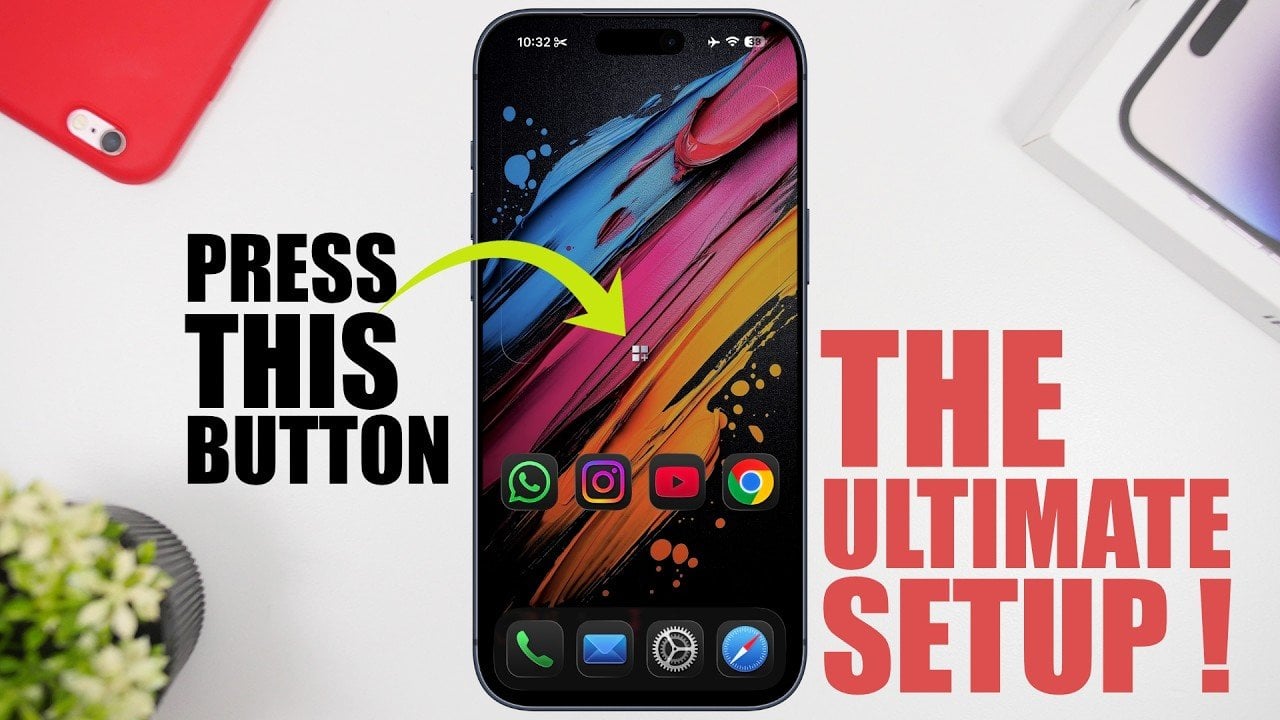
Simplifying your iPhone’s home screen to a single page can transform your device into a sleek, efficient tool. By carefully curating apps, widgets, and shortcuts, you can achieve a minimalist design that balances functionality with aesthetic appeal. The video below from iReviews will help you create a one-screen setup that prioritizes productivity, ease of access, […]
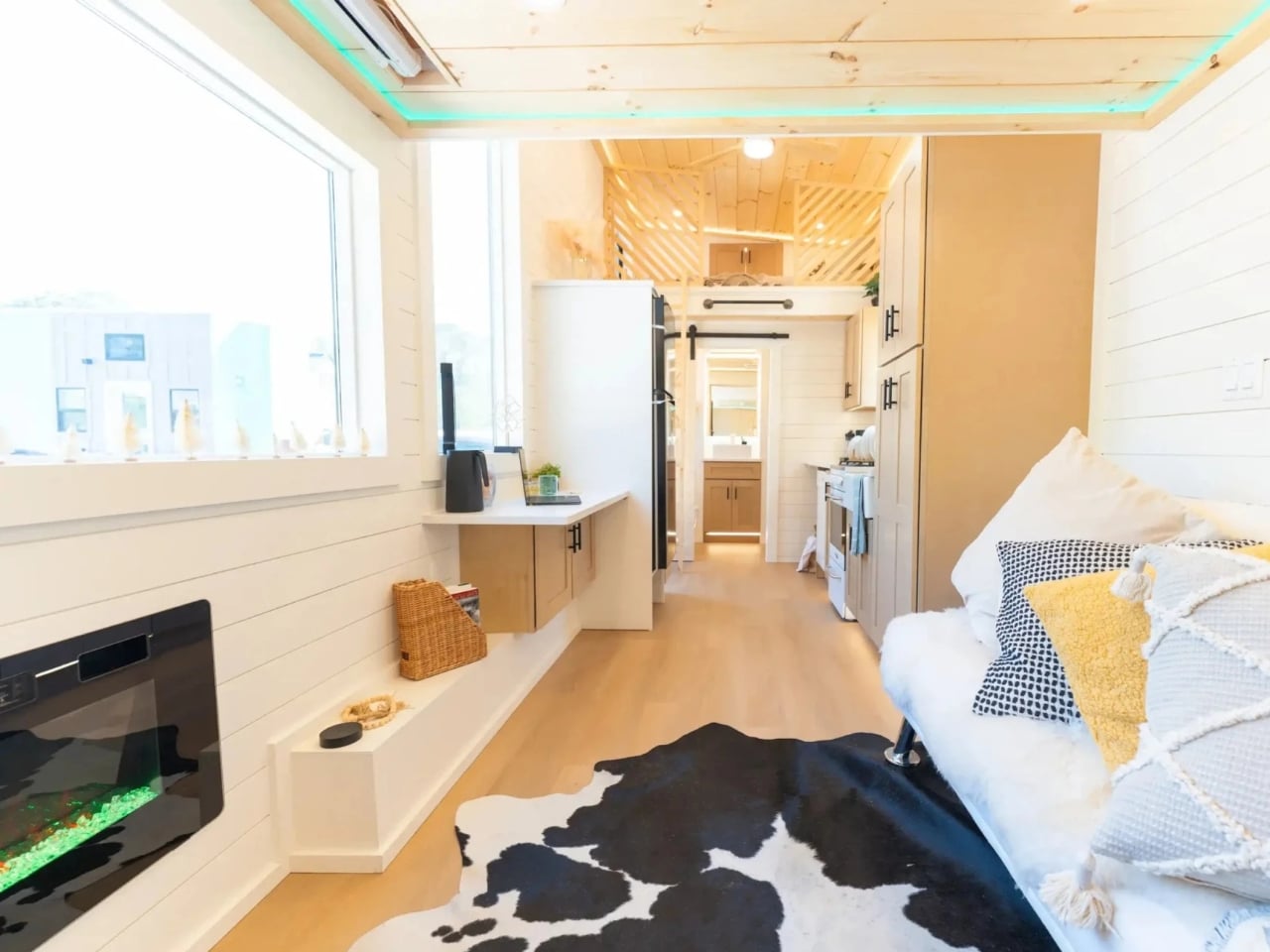
Tiny homes have been having a moment for a while now, and I know what you might be thinking: how many of these can there be before they all start looking the same? Fair point. But every so often, one comes along that genuinely earns your attention, and Dragon Tiny Homes’ Premium Vista is exactly that kind of design.
At just 24 feet long, the Premium Vista is built on a double-axle trailer and finished in metal siding with pine accenting and a metal roof. From the outside, it has that clean, modern aesthetic that tiny homes pull off really well when they’re not trying too hard. But the more interesting story is what’s happening once you step inside.
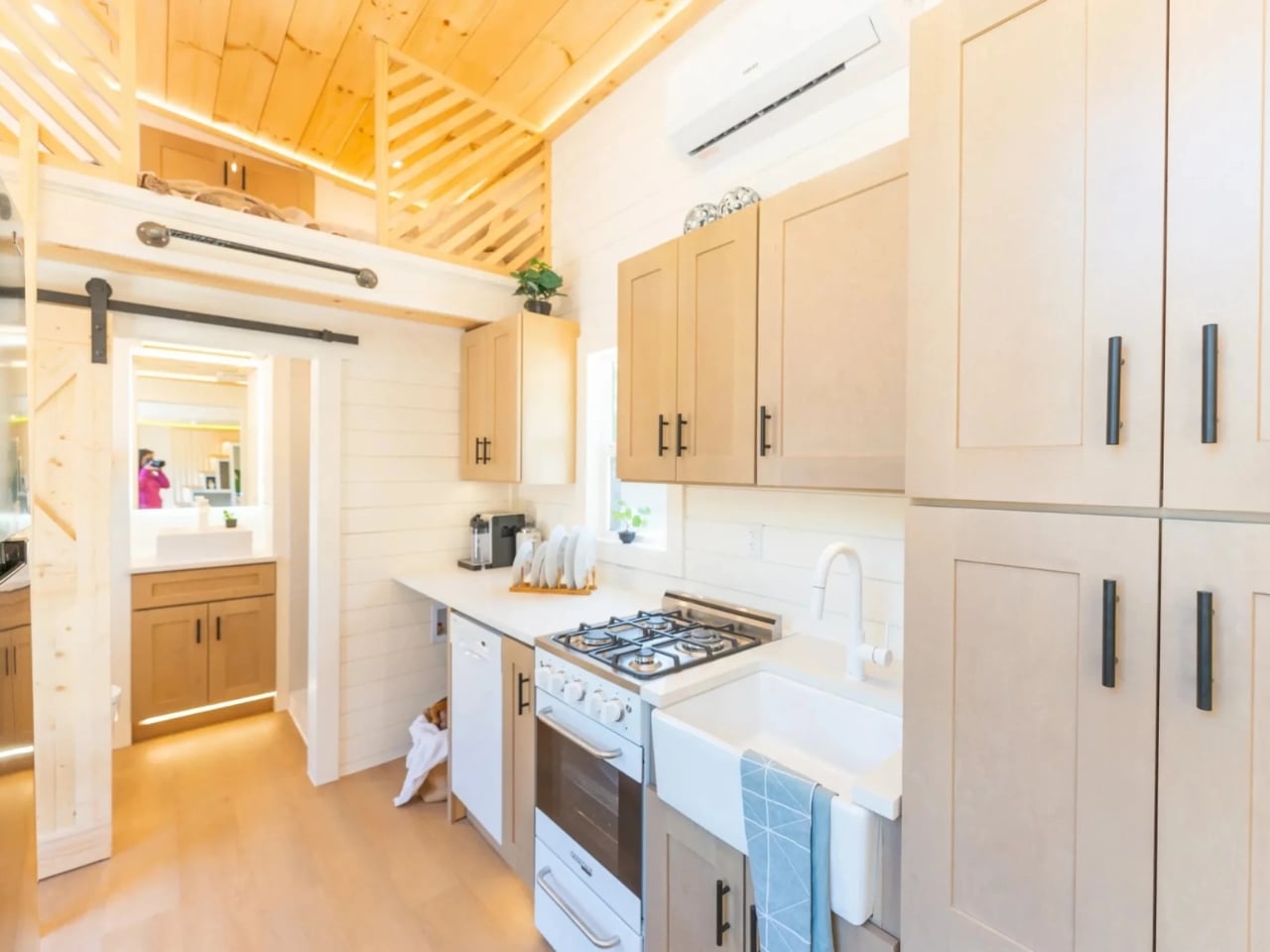
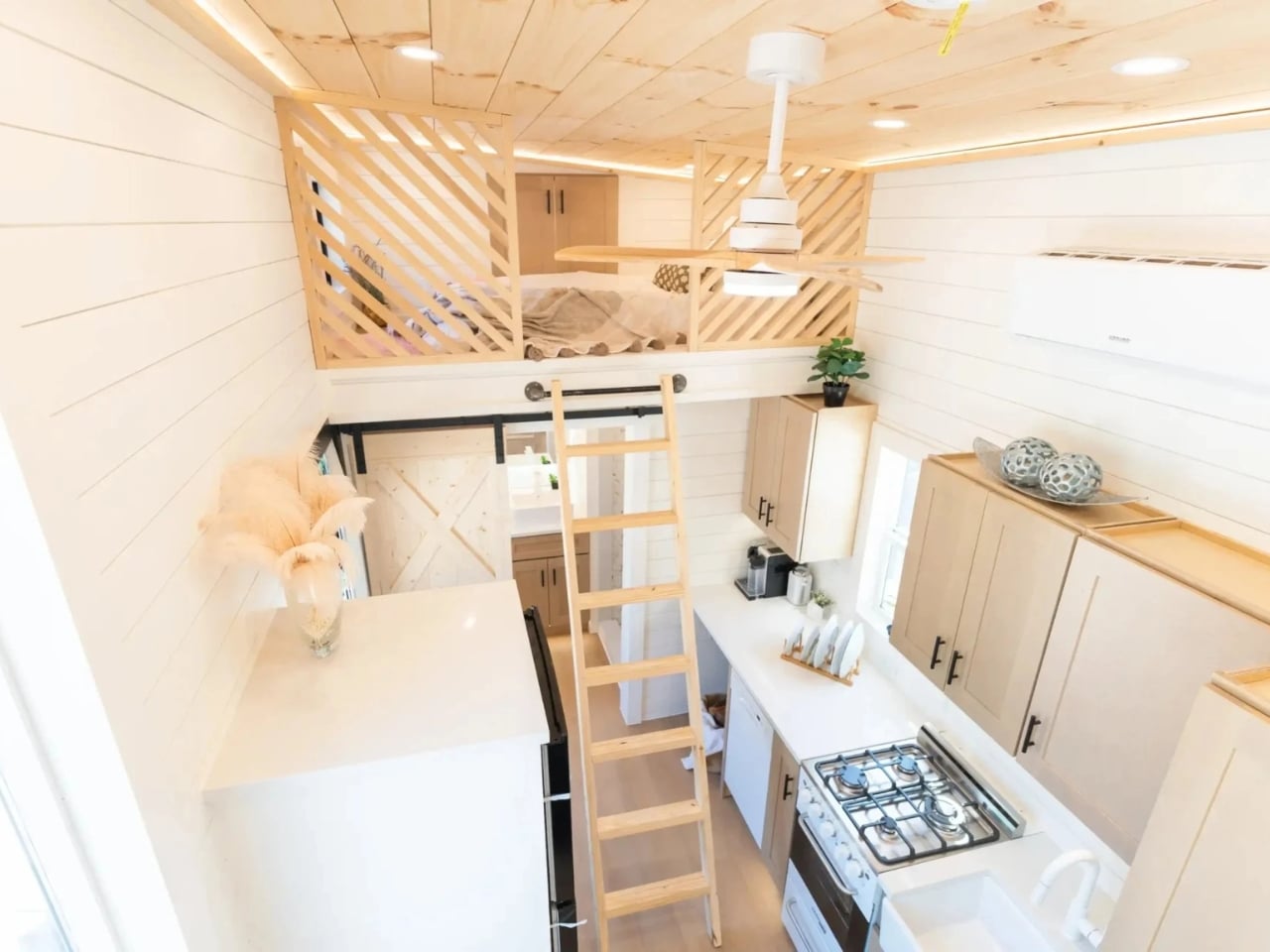
The ground floor clocks in at 204 square feet and is finished in pine throughout, which immediately gives the space a warm, cabin-adjacent quality that makes you want to stay put for a while. The kitchen is where things get serious: a four-burner gas range, a mid-size refrigerator, a dishwasher, and a farmhouse sink, all topped with quartz countertops. There is also a floating quartz desk built in, which is the kind of detail that tells you someone was genuinely thinking about how people actually use a space and not just how it photographs.
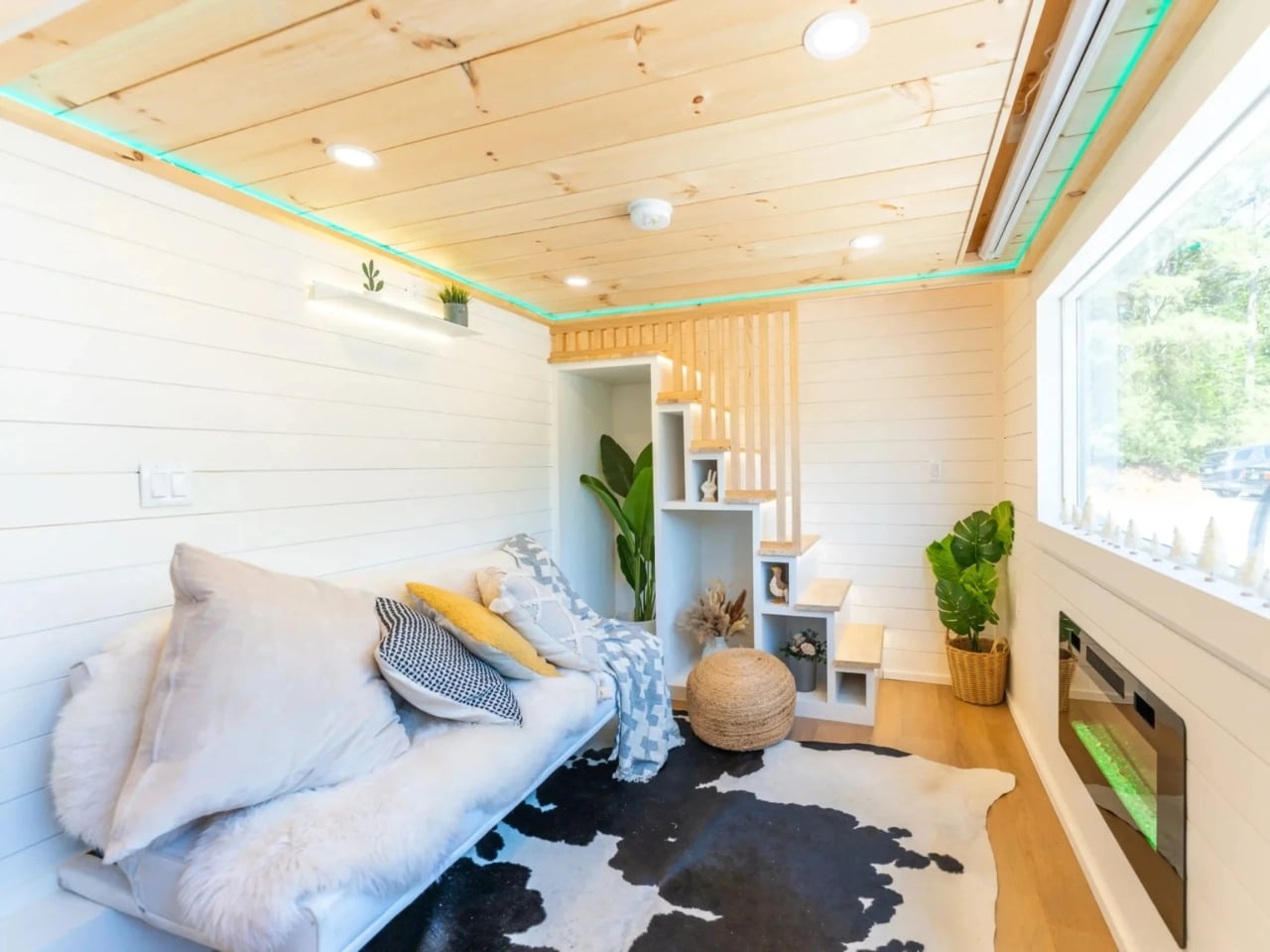
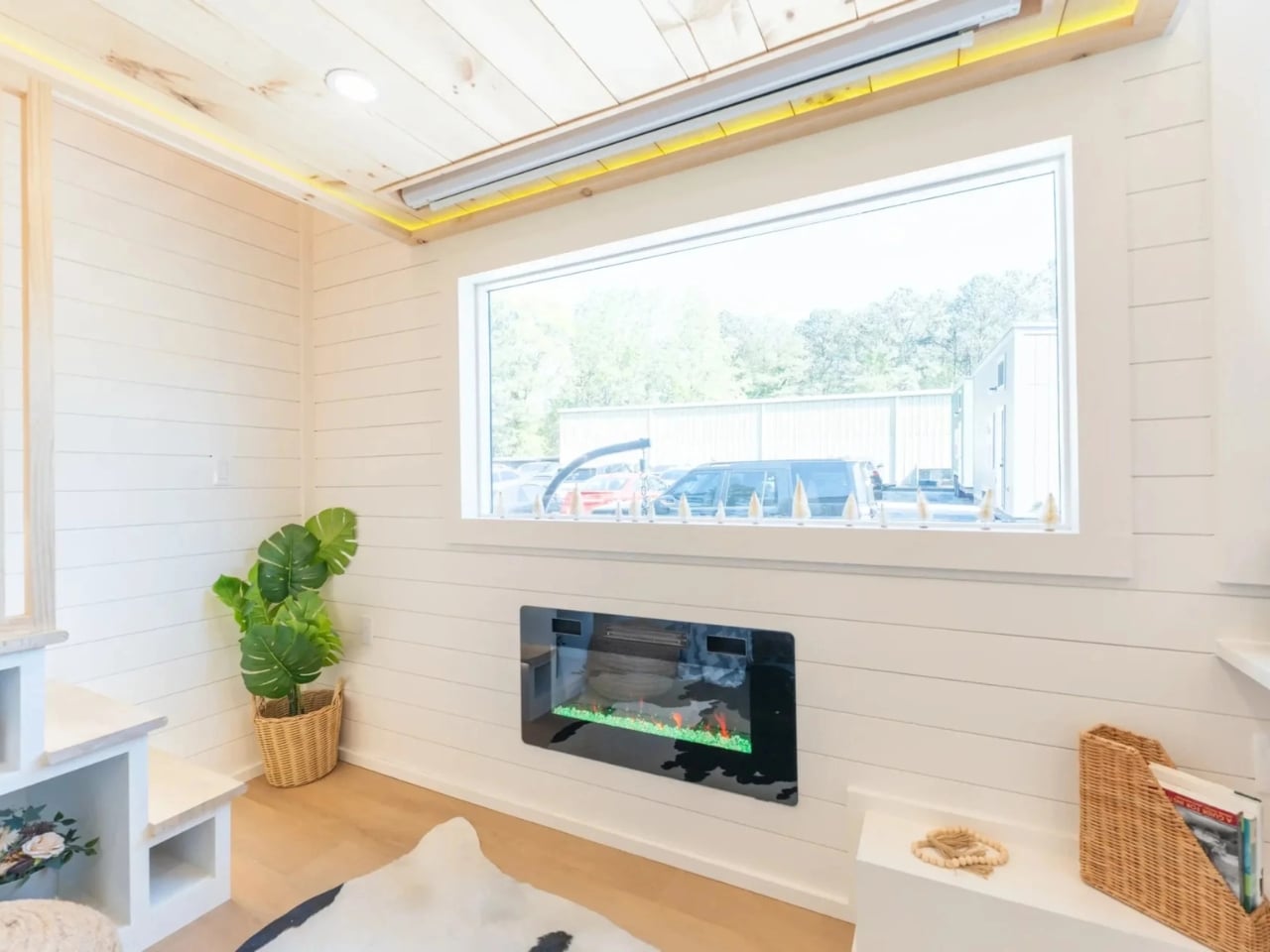
The living room has a sofa, an electric fireplace, and a pull-down projector screen, though you’ll need to supply your own projector. That last part is a small miss in an otherwise very complete setup. But the fact that a projector screen is woven into the design at all says something about the priorities here. This is not a show unit staged for a magazine shoot. It’s a space made for actual evenings in, for movie nights, for living.
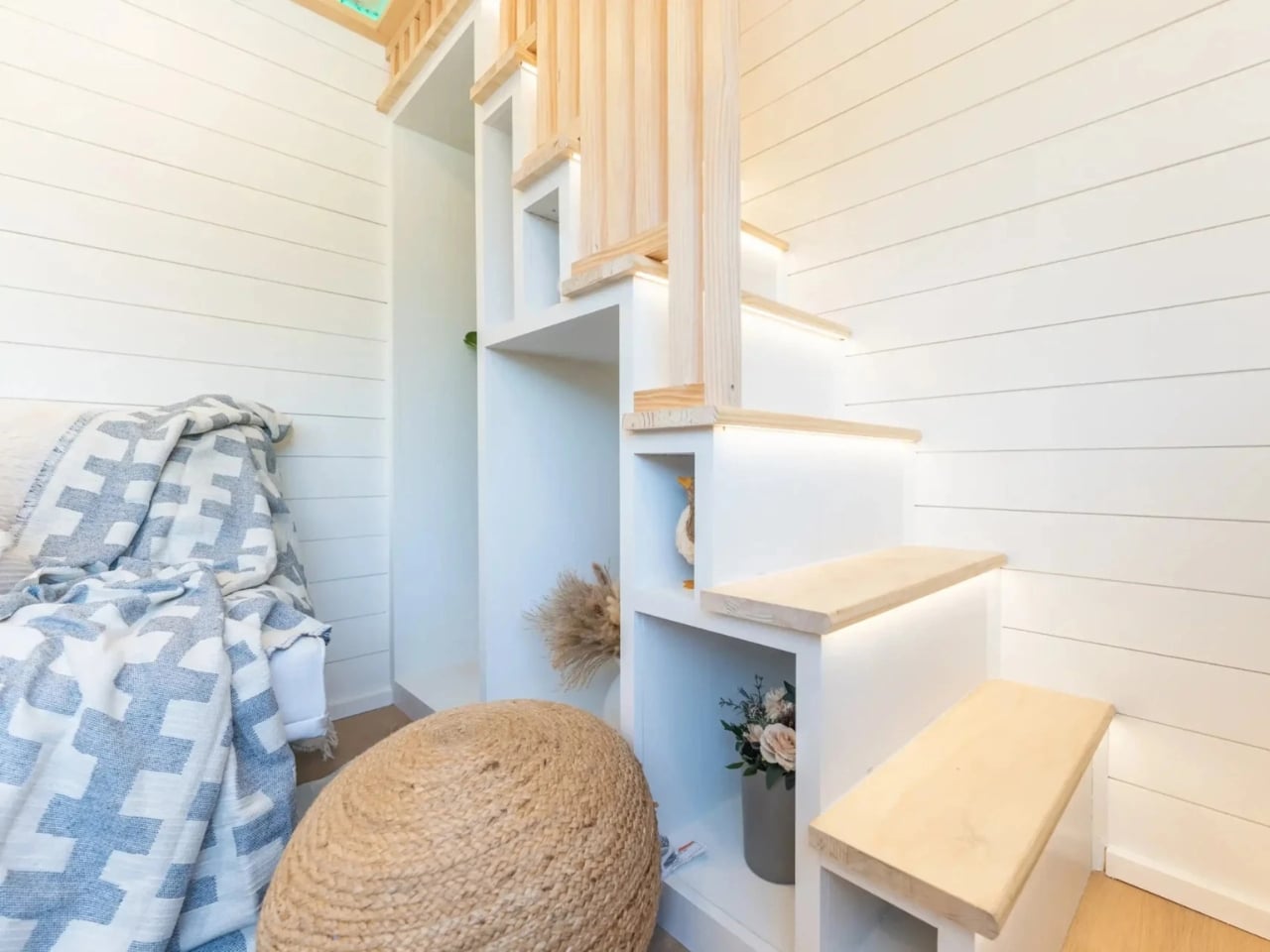
Two loft bedrooms sit above the main floor, and this is where tiny home design can either win or lose you. Lofts done poorly feel like sleeping shelves you have to apologize for. Dragon’s version is more considered. Six-foot wide windows are installed in both the living area and the loft, so the light is genuinely good and the views are part of the everyday experience. In a compact home, getting the windows right is not a nice-to-have. It’s everything.
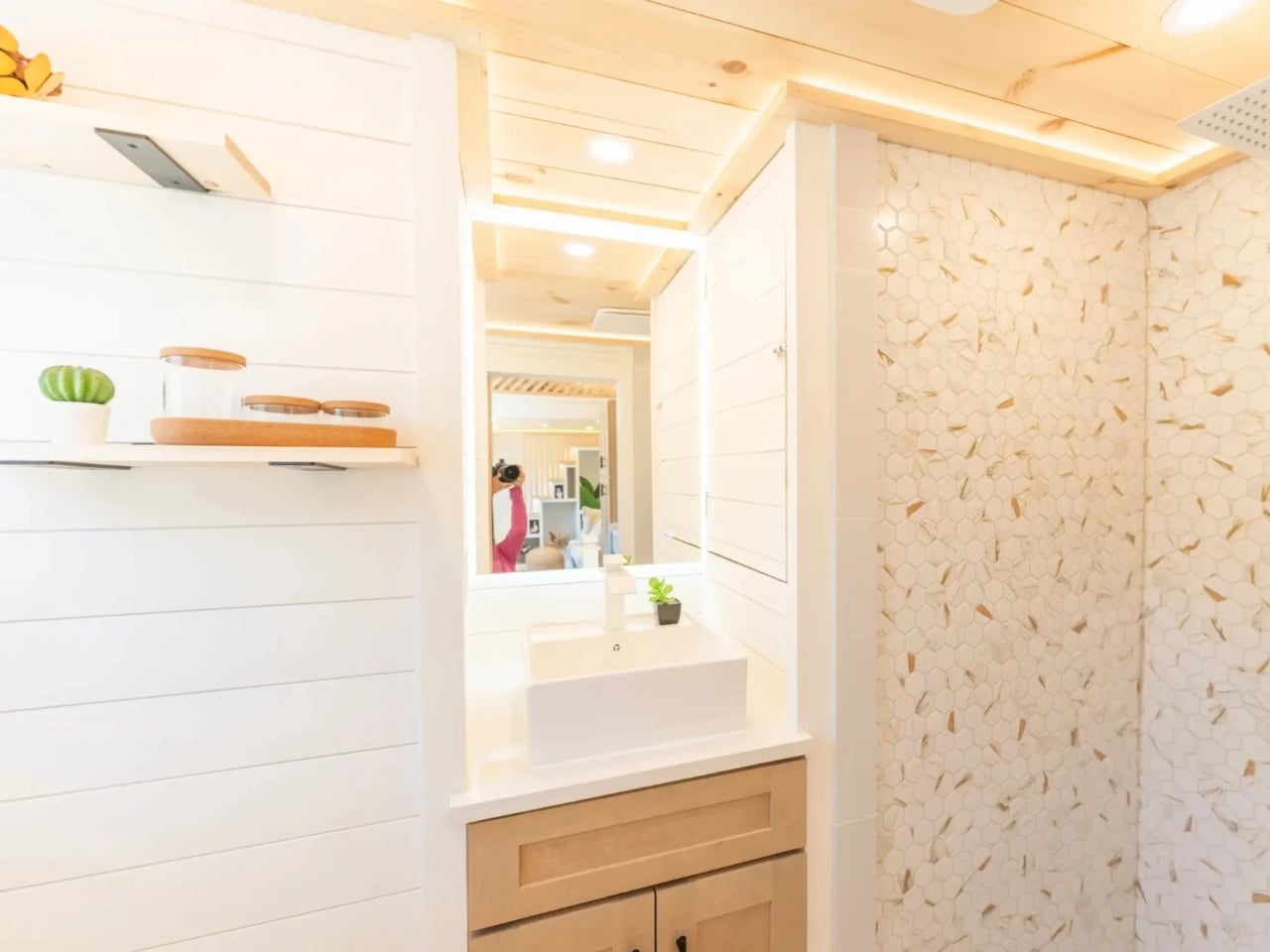
The bathroom rounds things out with a tiled shower, a vessel sink, and an LED anti-fog mirror. These are choices that feel considered rather than budget-constrained. It is not trying to mimic a hotel retreat, but it doesn’t have to. It just works, and in a 24-foot home, “it just works” is exactly the right standard.
The Premium Vista is Dragon’s highest-end build and sits at the top of their Vista lineup, which starts at $60,000. Units are currently available in Georgia and New York. It is also NOAH-certified, meaning it’s been validated by the National Organization of Alternative Housing for structural integrity, safety, and building code compliance. That certification doesn’t always come up in conversation about tiny homes, but it should. When you’re buying a home on wheels, knowing it was built to a real standard matters a great deal.
What I find most compelling about the Premium Vista is that it doesn’t try to be a novelty. It doesn’t lean into the whimsical, Instagram-optimized version of tiny living that looks great in a reel but unravels in daily life. It reads like a serious design exercise: given strict constraints on size and mobility, how well can you actually build a home? The answer, if this build is anything to go by, is very well.
Is it for everyone? No, and it knows that. If you have kids, three pets, and a strong attachment to walk-in closets, you’ll need to look elsewhere. But for a couple, a solo traveler, or someone genuinely done with paying for square footage they never use, the Premium Vista makes a compelling case. Not a vague, aspirational case, but a practical, well-finished, every-detail-accounted-for case. That kind of quiet confidence in design doesn’t come around nearly enough.
Valve is laying the groundwork for its upcoming Steam Machine with a comprehensive update to SteamOS, as highlighted by Deck Ready. This update introduces a range of features aimed at improving both functionality and user experience. For instance, the redesigned login screen now combines wake and login options, simplifying access while enhancing compatibility with future […]
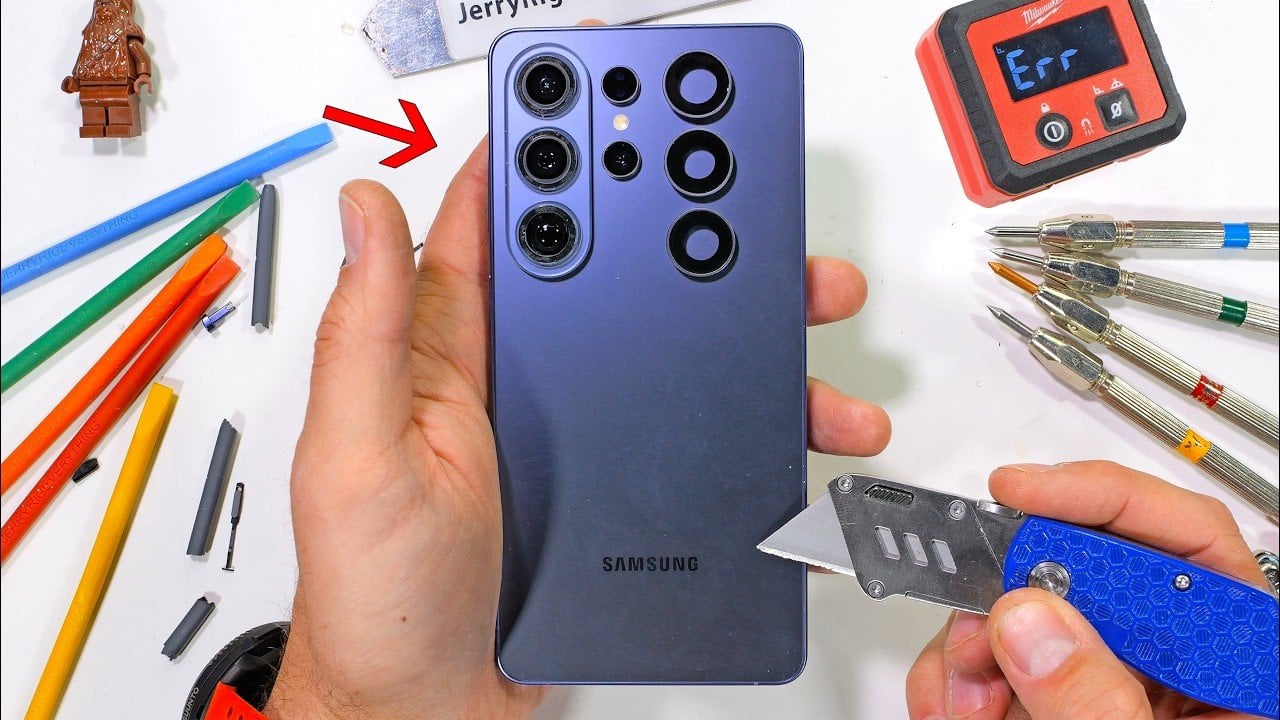
The Samsung S26 Ultra represents a significant advancement in smartphone design, combining durability, functionality, and premium aesthetics to meet the needs of modern users. The video below from JerryRigEverything explores its standout features, evaluates its resilience and durability, and examines areas for potential improvement. Whether your priorities include privacy, camera performance, or long-term usability, the […]
Japanese stationery operates on a different set of assumptions. Where most of the world treats pens, notebooks, and desk accessories as afterthoughts, Japan treats them as design problems worth solving with the same precision applied to architecture or automotive engineering. The difference shows up in the details: magnetic closures calibrated to be silent, paper engineered for a specific ink behavior, and leather cut from a single hide. Hence, the grain tells a continuous story.
We have been collecting our favorites for a while now, and this batch feels particularly well-considered. These are not gimmicks dressed in minimalist packaging. Each product here earns its place through a specific, clever solution to a friction most people have accepted as normal. From a pencil that never needs sharpening to a wooden postcard case that borrows its form from ceramic storage traditions, this is stationery that makes the rest of the world’s offerings feel like rough drafts.
1. Inseparable Notebook Pen
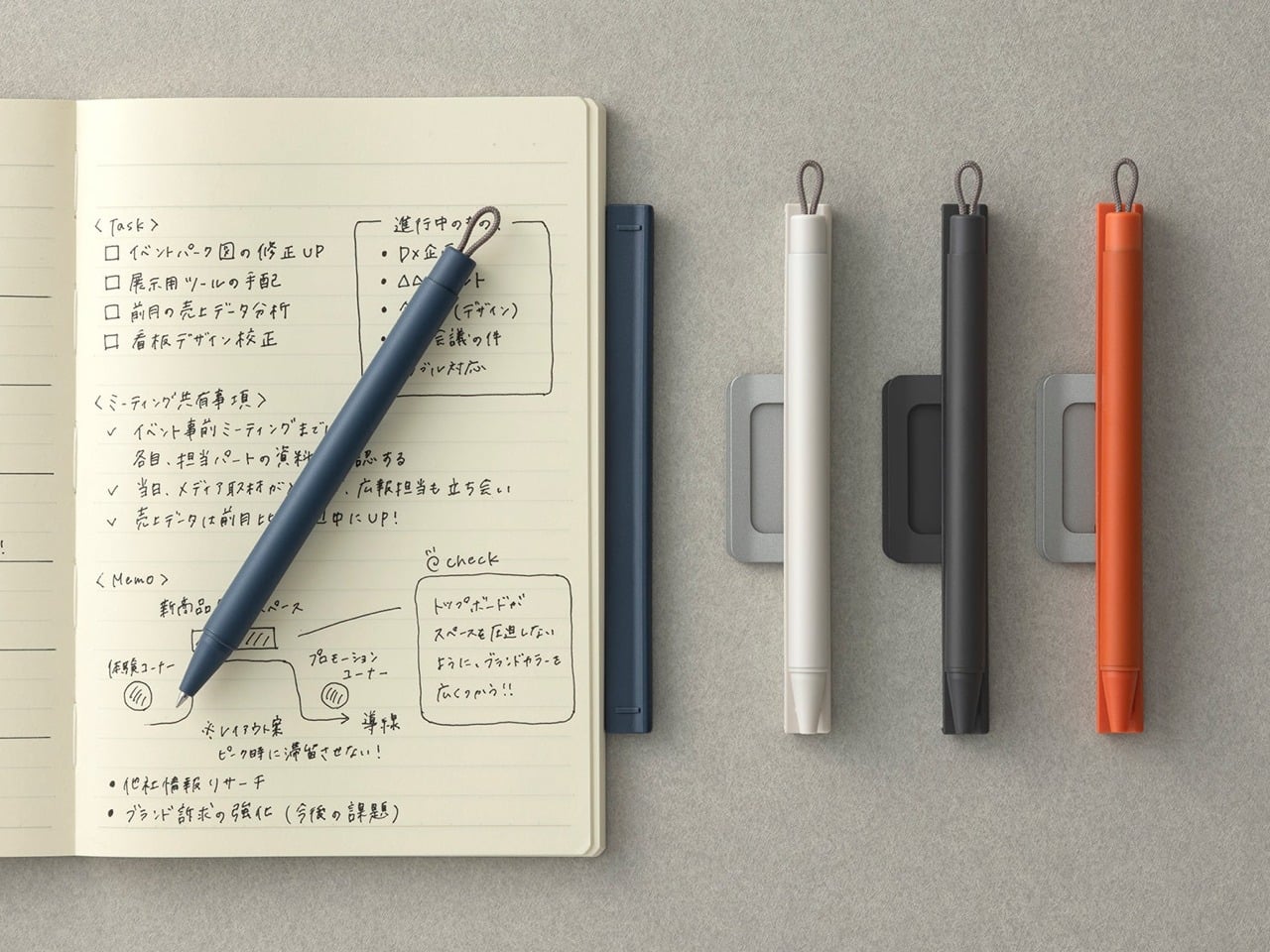
Most pens exist independently of the surface they write on. The Inseparable Notebook Pen rejects that premise entirely, using a magnetic clip to lock itself to your notebook cover. A built-in silencer dampens the attachment, so there is no click or rattle, just a quiet lock into place. The barrel is minimalist, comfortable during long sessions, and the ink flow is smooth and immediate.
Japanese stationery brands have long understood that the gap between reaching for a pen and writing is a moment of lost momentum. This pen eliminates that friction. The form is understated, almost invisible against a notebook cover, which is the point. Tools that disappear into your workflow tend to be the ones that last the longest.
The magnetic clip holds firm during transit but releases with zero effort when needed.
The silencer turns a mundane attachment into something tactile and deliberate.
What we dislike
The minimalist barrel may feel too slim for those who prefer wider-grip pens.
Ink cartridge options are limited, restricting personalization for specific ink preferences.
2. Stalogy Editor’s Series 365-day Notebook (A6)
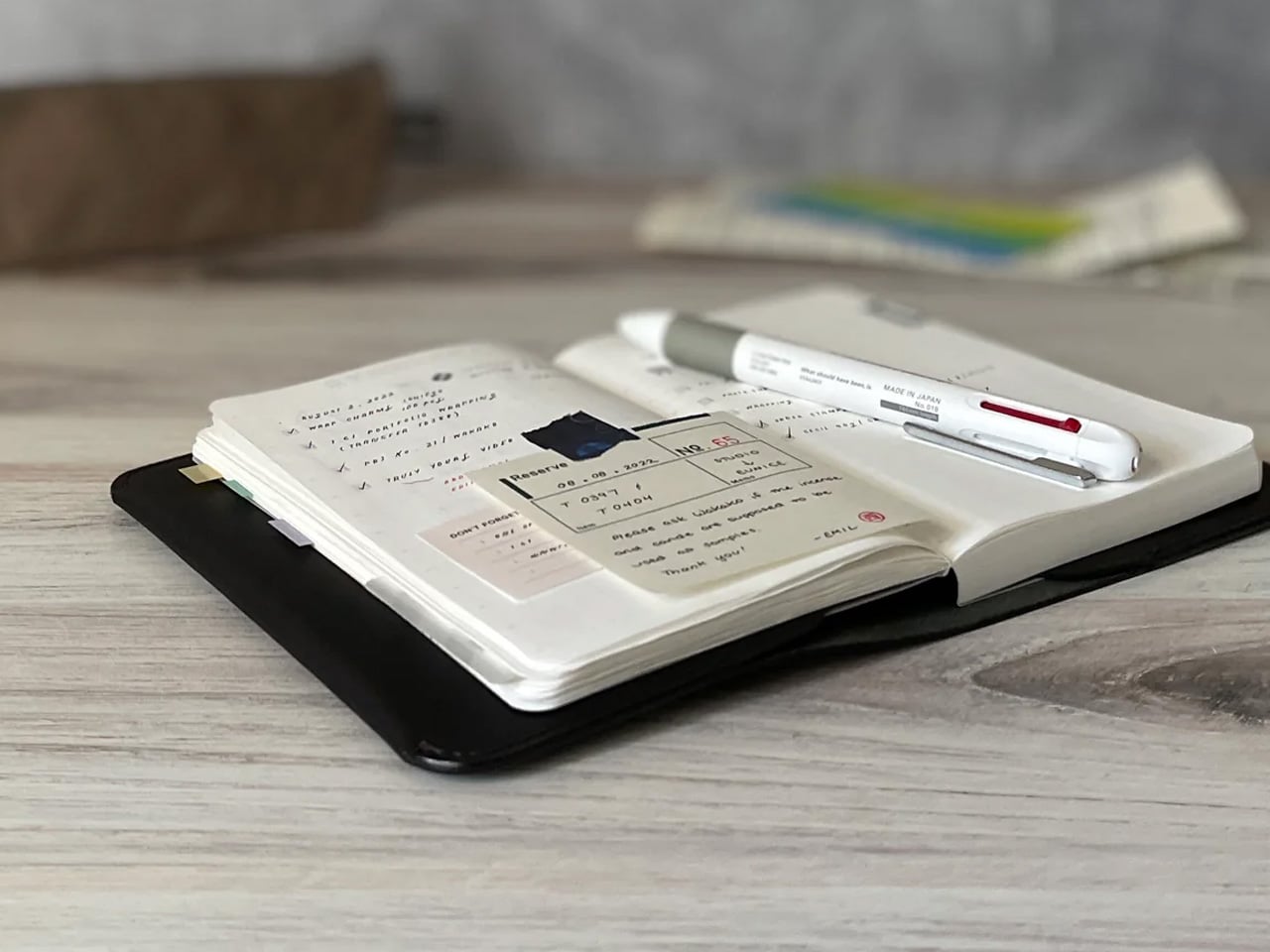
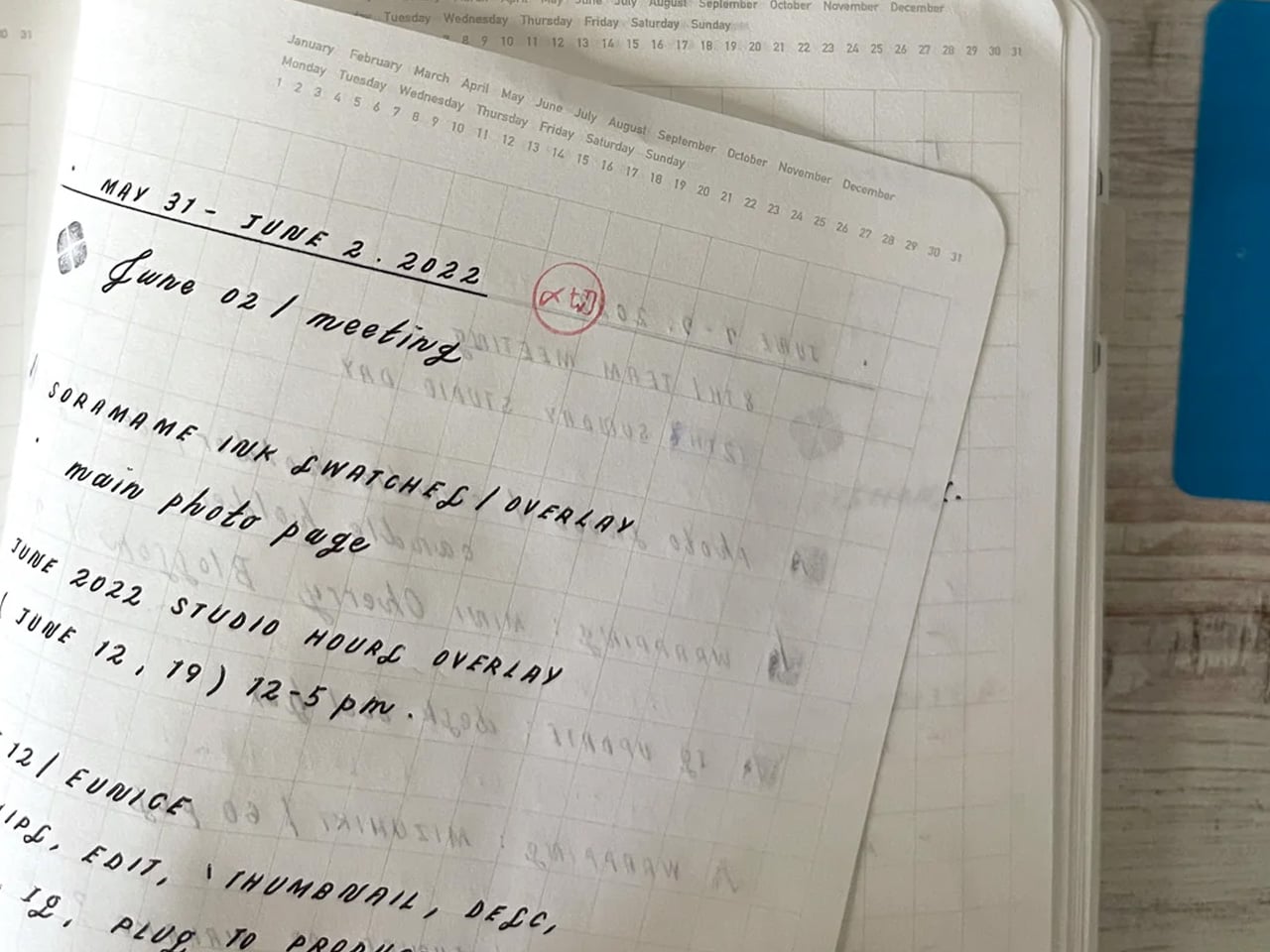
Stalogy’s 365 Days Notebook packs 368 pages of ultra-thin paper into an A6 form factor that still fits a coat pocket. Each page carries minimal printed detail: dates, days, a faint grid, and time indicators. Ignore them or use them. The paper writes with a smoothness that recalls Hobonichi Techo’s Tomoe River stock, letting ink glide without feathering or bleed-through.
The real strength is flexibility. This notebook works equally well with bullet journaling, daily planning, freeform sketching, or straightforward notes, all without forcing a single organizational method. Most planners assume they know how a day should be structured. This one steps back and lets the user decide, which is a rarer quality than it should be.
What we like
Thin paper keeps 368 pages from becoming a brick, maintaining genuine pocketability.
Minimal page markings make it equally useful for structured planning and unstructured creative work.
What we dislike
Date and time markings are printed extremely small, making them difficult to read in low light.
Heavy fountain pen inks will ghost through the thin paper, limiting compatibility with certain instruments.
3. FoldLine Pen Roll
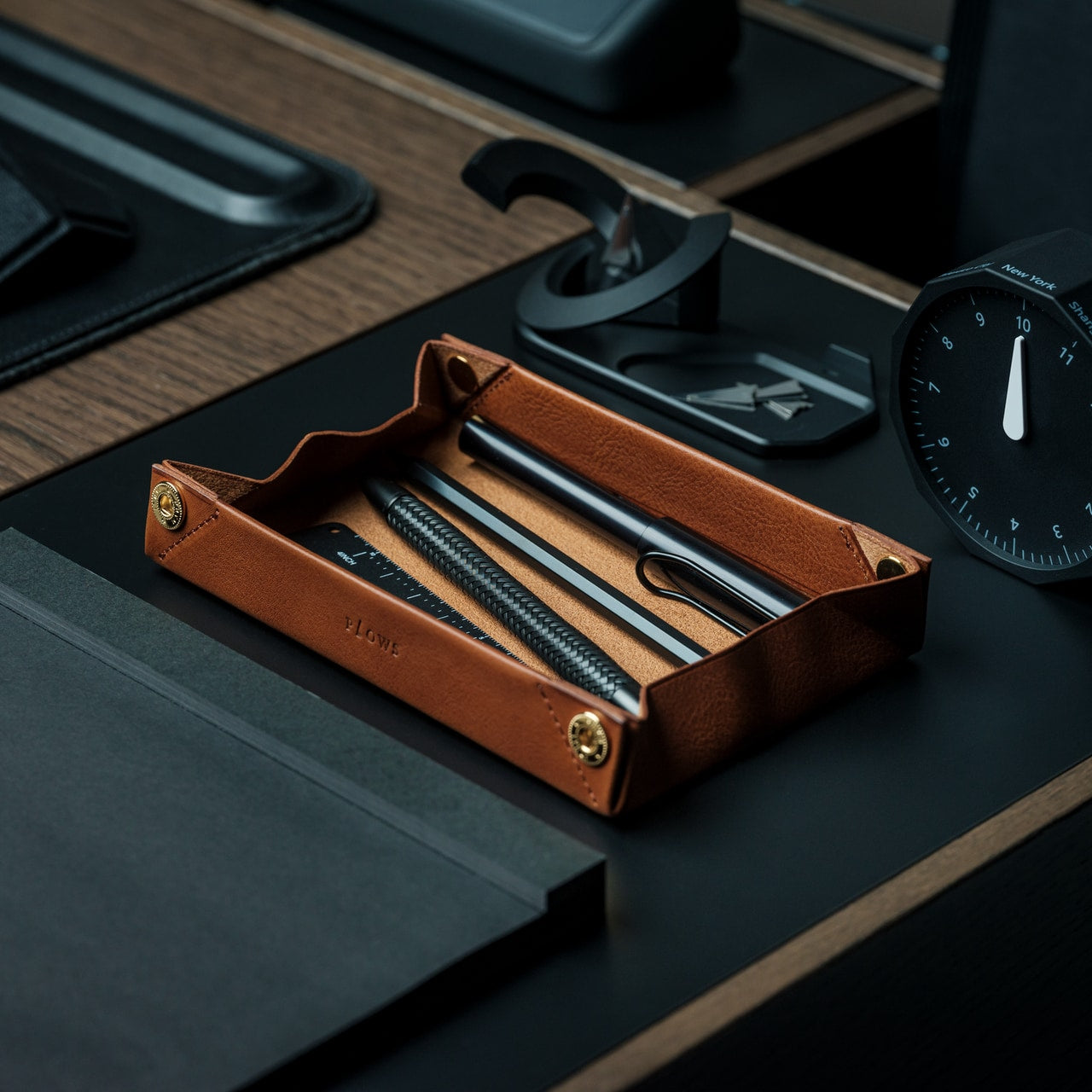
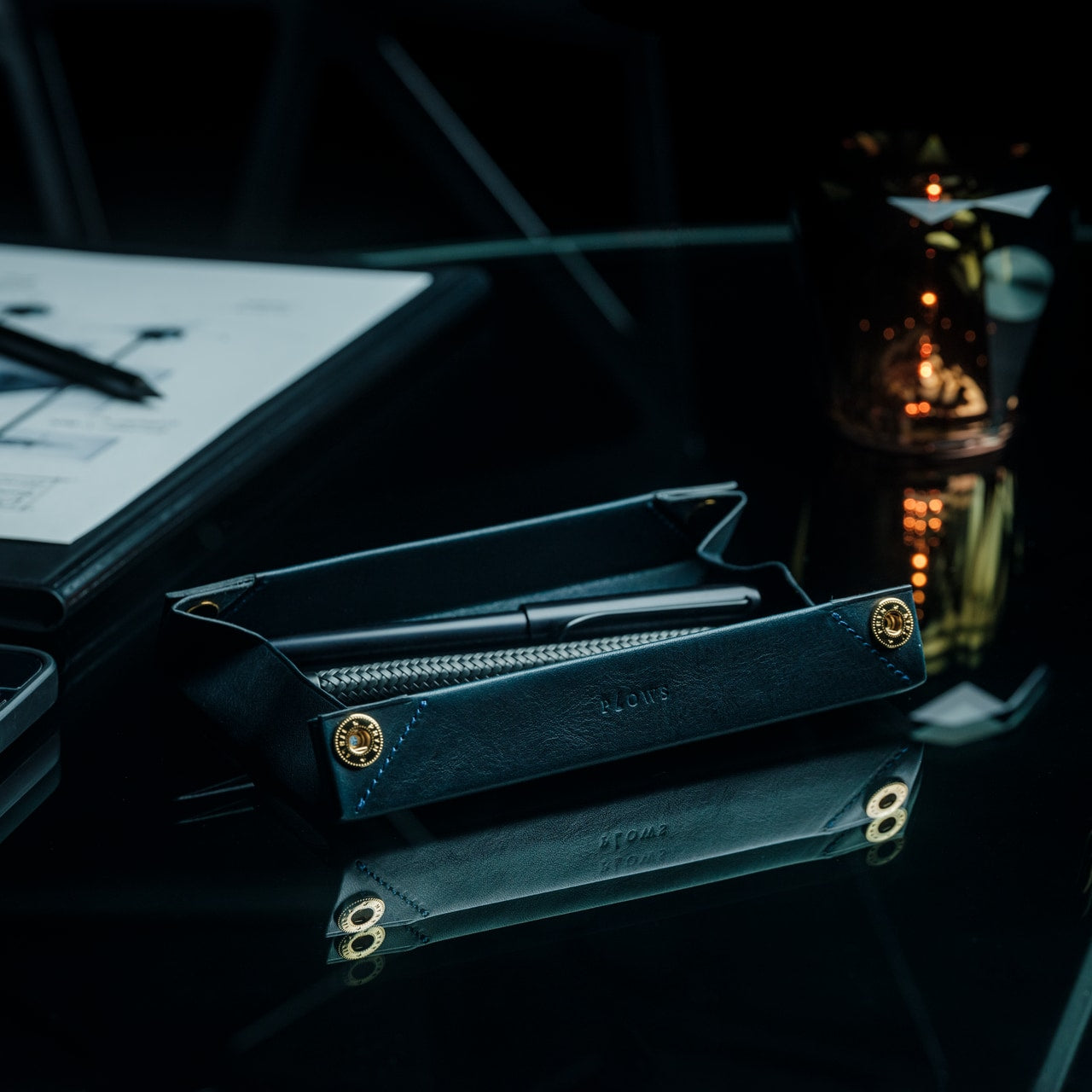
Cut from a single piece of Italian leather, the FoldLine Pen Roll converts from a carrying case to a functional desk tray in under two seconds using origami-inspired folding geometry: no stitched partitions, no zippers. The natural wrap of the fold separates and protects each pen, and metal-bodied instruments stay scratch-free without dedicated slots.
Unfolded, it creates a defined rectangular workspace on any surface: a cafe table, an airplane tray, a hotel desk. That containment matters. Scattered pens create micro-distractions, and a tray eliminates the chaos without occupying permanent desk space. The leather develops a patina over time, improving with age rather than deteriorating.
The two-step unfolding mechanism feels intuitive enough to be fast and intentional enough to feel like a ritual.
Single-piece leather construction means no stitching to fail and no partitions to limit capacity.
What we dislike
Without individual pen slots, instruments can shift during aggressive bag movement.
Italian leather at this quality carries a price premium well outside impulse-purchase territory.
4. Memento Business Card Log
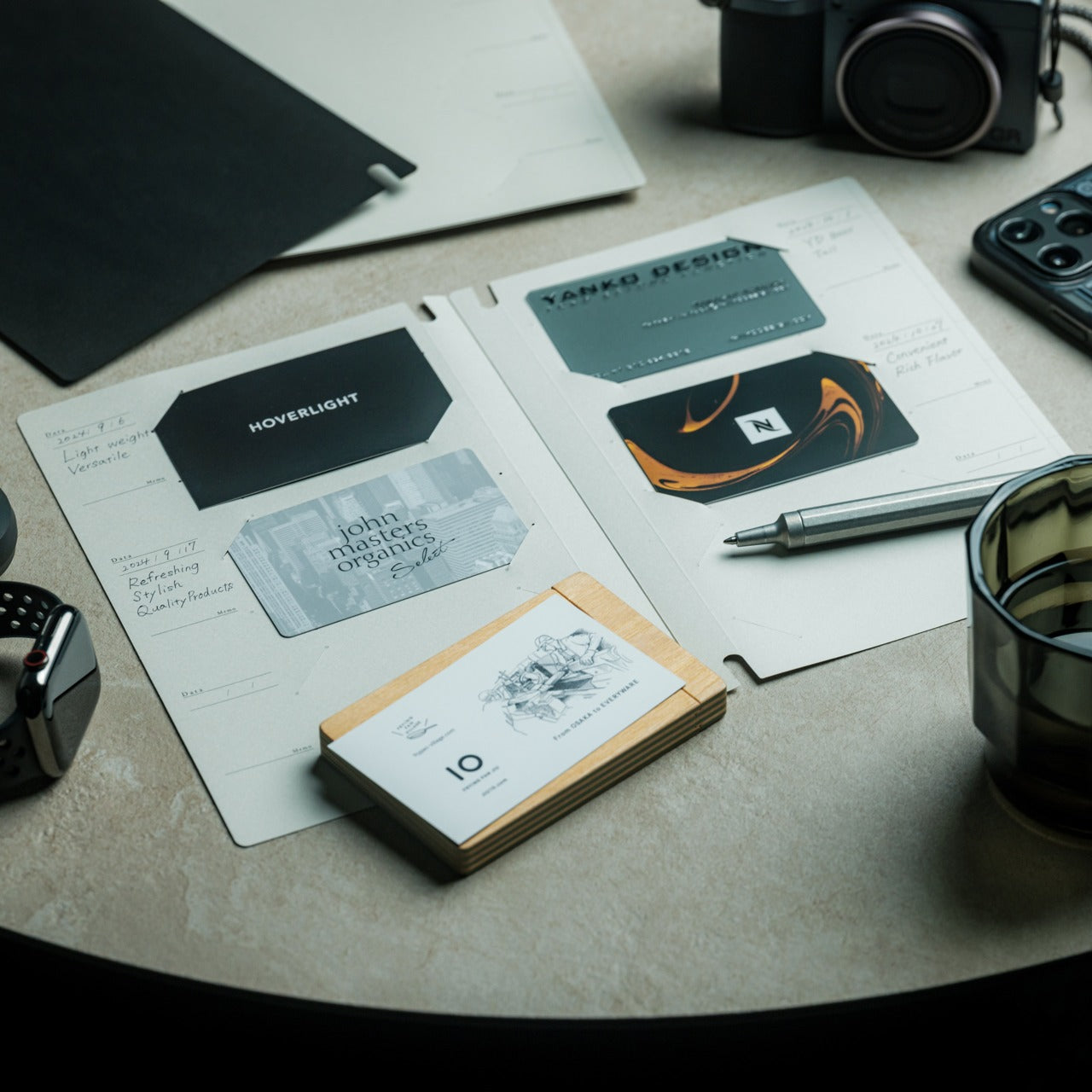
Business cards are collected, shoved into wallets, and forgotten. The Memento Business Card Log, designed by Japanese brand Re+g, rejects that cycle. It stores up to 120 cards using a two-point slit system that keeps each card secure, and the facing page offers dedicated space for handwritten notes about the person: a conversation detail, a follow-up date, a distinguishing trait.
Re+g’s proprietary binding allows pages to be reordered by category, importance, or any logic that makes sense. The paper stock has a warm, tactile quality. Writing a note by hand about someone forces a level of attention that tapping a phone screen cannot replicate. The log becomes a record not just of who was met, but of how those meetings felt.
The proprietary binding allows page reordering, so the system evolves with the user.
Dedicated note space alongside each card slot turns passive storage into active relationship memory.
What we dislike
At 120 cards, heavy networkers will fill the log fast, requiring a second volume.
The analog format means no search function, so finding a specific card requires manual browsing.
5. Classiky Chestnut Postcard Case
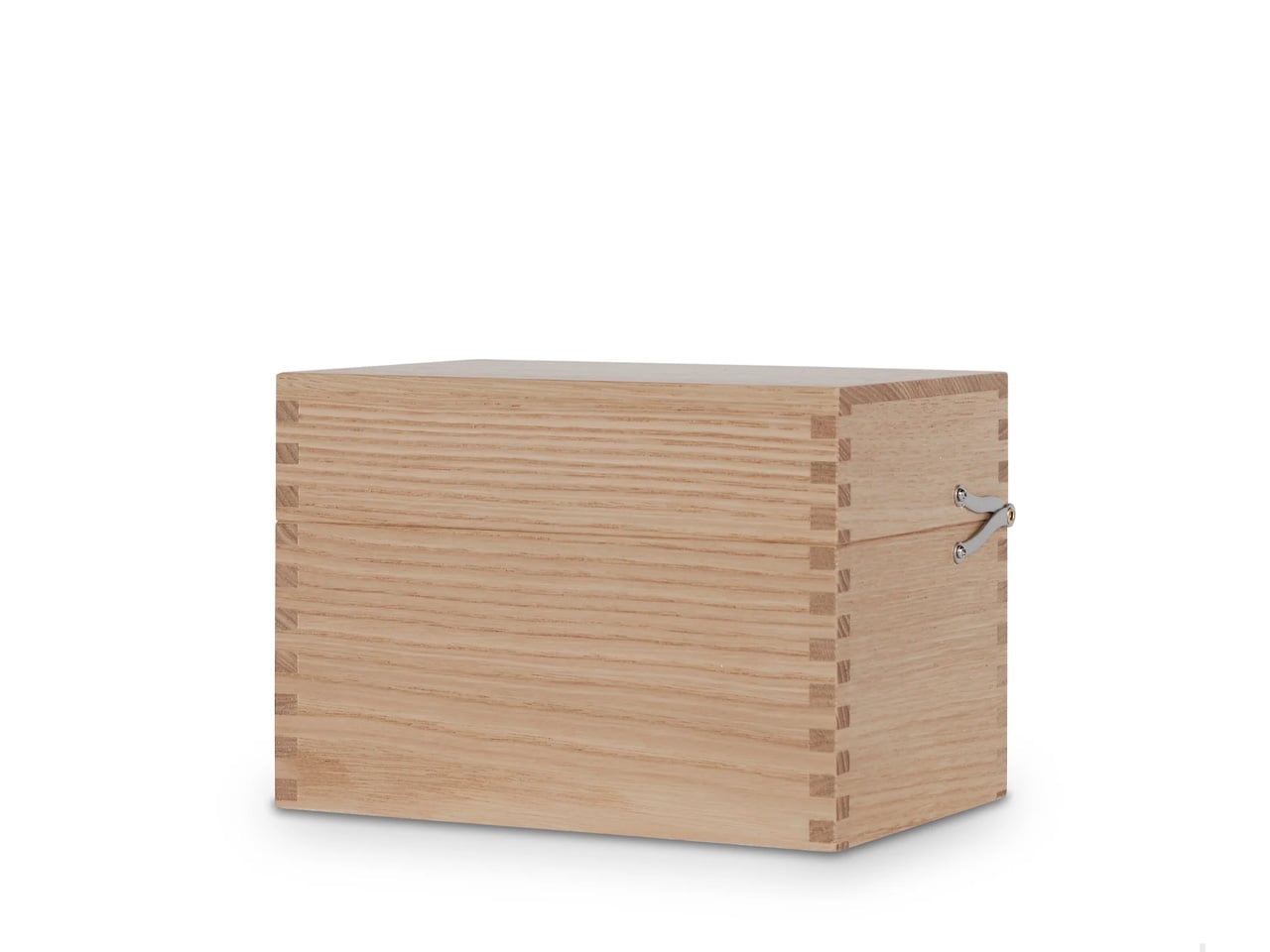
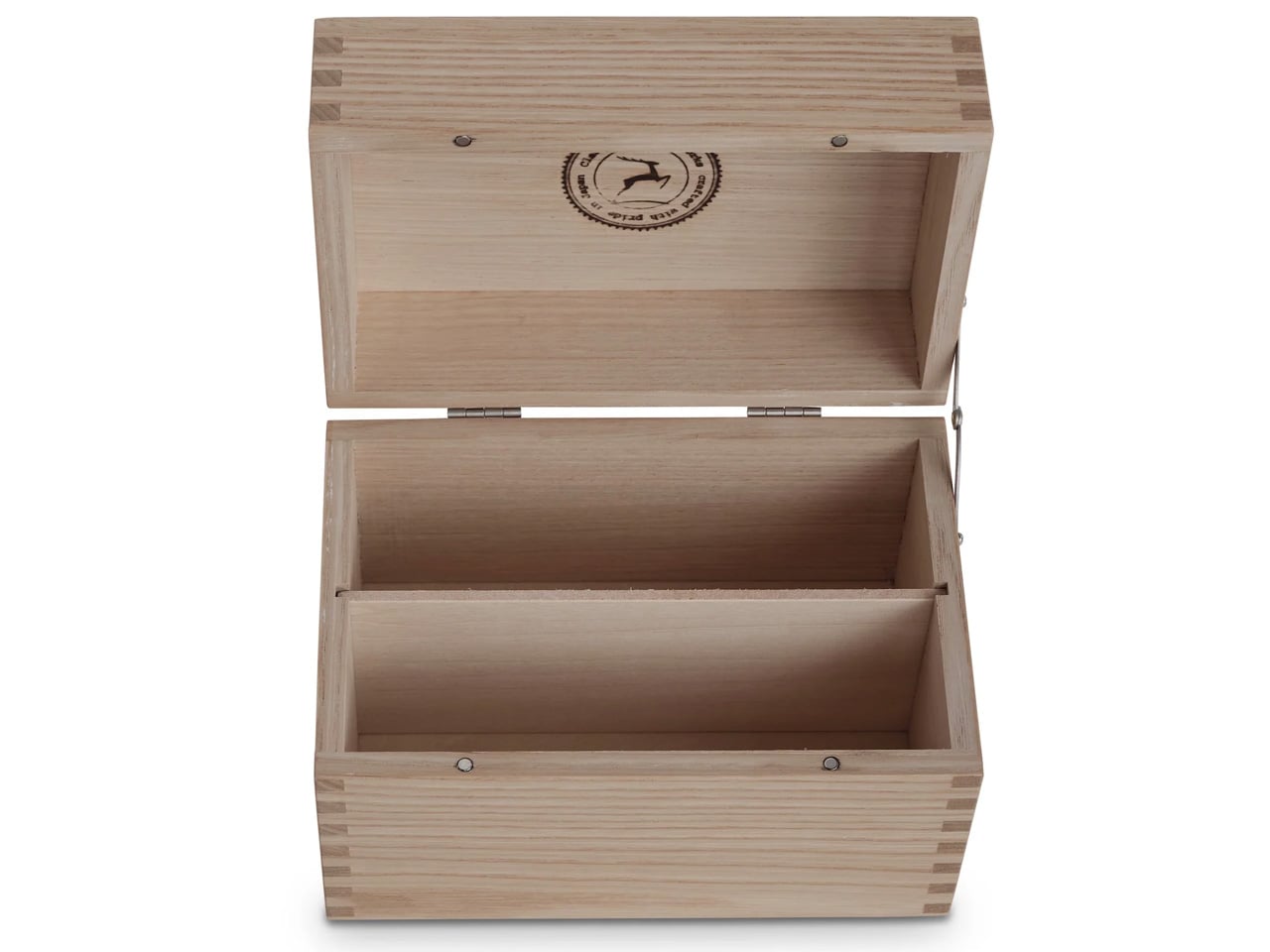
Classiky’s Chestnut Postcard Case borrows its design language from the wooden boxes used in Japan to store precious ceramics. Varnished Japanese chestnut wood gives it a warmth and grain that plastic or metal storage cannot approach. The proportions (17.6 x 11.6 x 12.4 cm) are calibrated for standard postcards, with two removable separators and a magnetic closure that shuts with clean, weighted precision.
This is a storage object built to outlast its contents. The chestnut deepens in color over years of handling rather than fading, and the removable separators allow flexible configuration depending on collection size. For collectors, letter writers, or anyone who values the physical artifact of a postcard, this case turns storage into curation.
What we like
Varnished Japanese chestnut ages beautifully, growing richer in tone over the years of handling.
Removable separators allow for a flexible internal configuration across different collection sizes.
What we dislike
Dimensions are postcard-specific, so the case cannot accommodate larger formats, such as A5 prints.
The craftsmanship and material quality place it at a premium that limits its appeal for casual purchases.
6. Sonic Kakusta
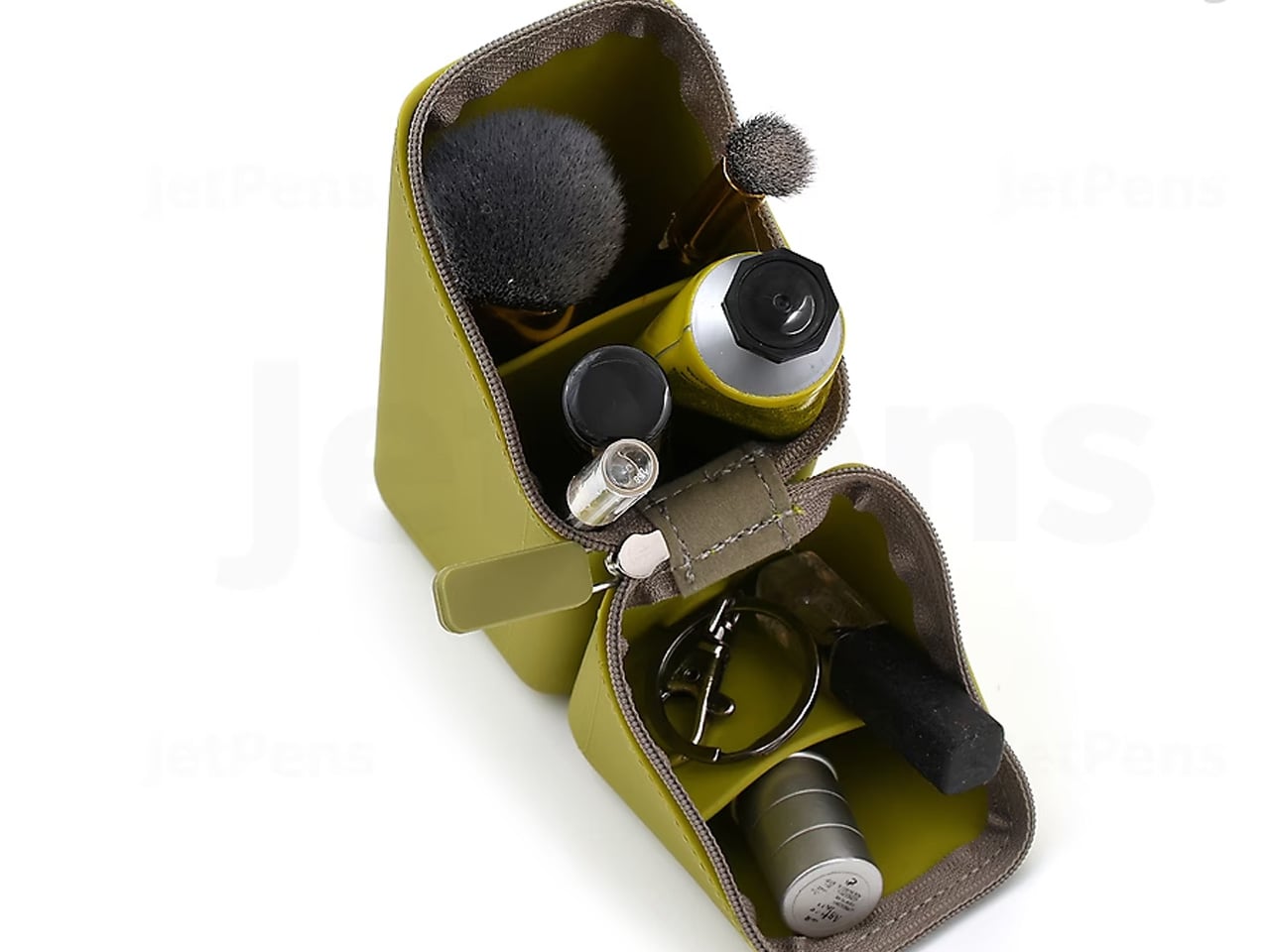
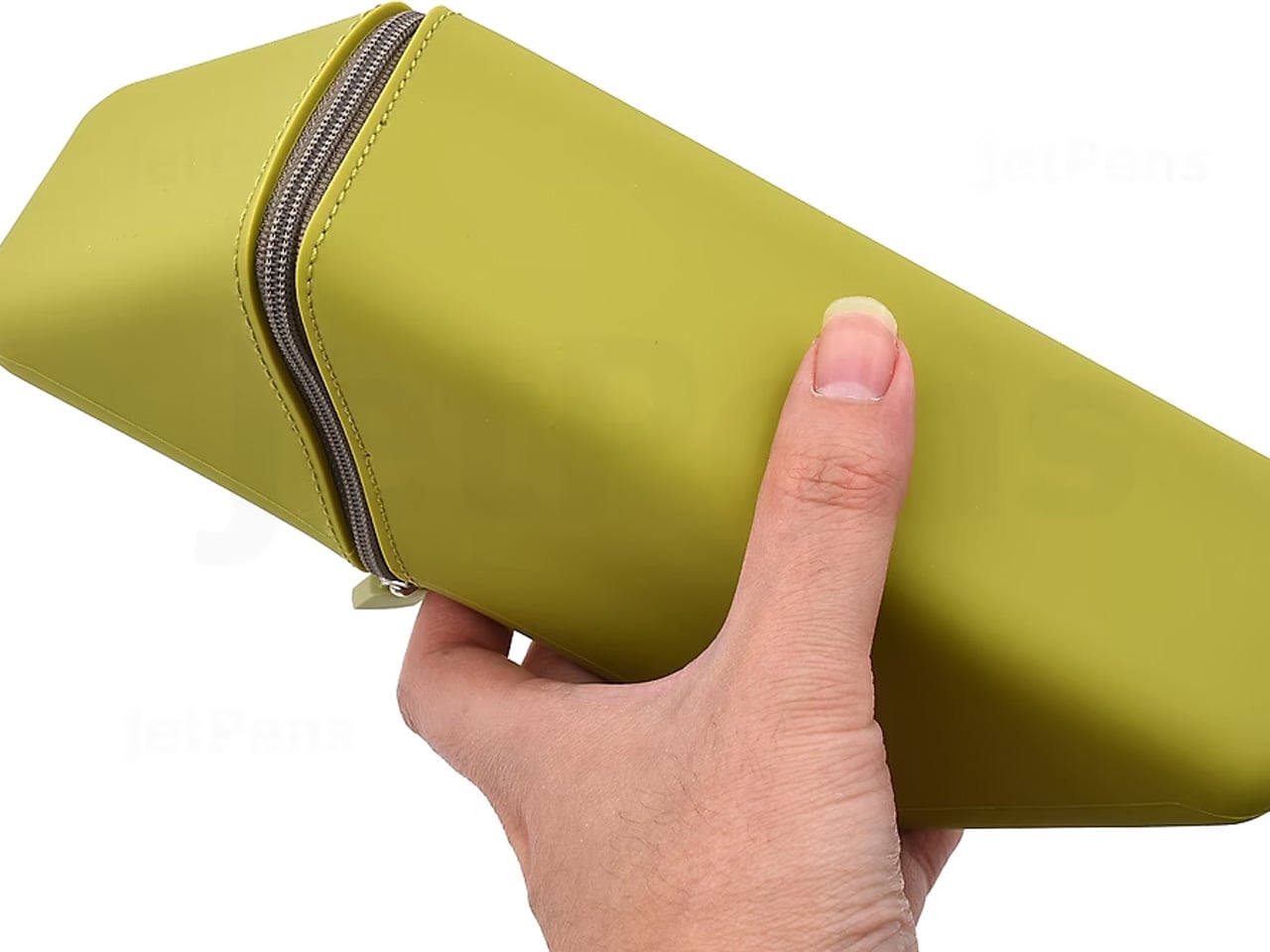
The Sonic Kakusta starts as a soft pen case and transforms into a triangular desk stand that props pens at a 60-degree angle for easy visibility and access. A built-in divider splits the interior into two sections, while a second divider in the lid creates a small shelf for erasers and sticky notes. Strong magnets hold the folded lid in place, preventing the stand from collapsing mid-use.
That 60-degree angle is the smartest detail. Steep enough to display pen tops for identification, shallow enough that pens slide in and out without tipping the case. For anyone working between home, office, and library, the Kakusta eliminates the need to carry both a case and a desk cup. One object handles both roles without appearing to be a compromise.
What we like
The magnetic lid holds the stand shape on uneven surfaces without collapsing.
The lid divider doubles as a shelf for small items, adding utility most pen cases ignore.
What we dislike
Soft material offers limited protection against crushing in an overpacked bag.
The triangular footprint is wider than a flat case, occupying more bag space than a traditional pouch.
7. Pocket Everlasting All-Metal Pencil
The Pocket Everlasting All-Metal Pencil uses a graphite and metal alloy tip that deposits marks through friction rather than material loss. The core does not shorten. The point does not dull. The manufacturer claims roughly 10 miles of writing, and the marks are erasable with a standard eraser. At 4.7 inches with a cap, it slips into a shirt pocket without protest.
Traditional pencils generate shavings, require sharpeners, and degrade in humid conditions. This pencil sidesteps all three. The all-metal body has a substantial heft without being heavy, and the graphite-alloy line plays well with watercolor and wet media because it does not bleed when painted over. For field note-takers who need a tool that never fails at the wrong moment, this is a quietly radical solution.
The graphite-alloy tip eliminates sharpening, shavings, and the risk of a dull point at the worst time.
Compatibility with watercolor and wet media makes it versatile for mixed-media sketching.
What we dislike
Line weight is fixed, so artists needing variable stroke thickness will find it limiting.
The metallic graphite tone differs subtly from traditional pencil graphite, which may bother purists.
8. Stellar Edge Scissors
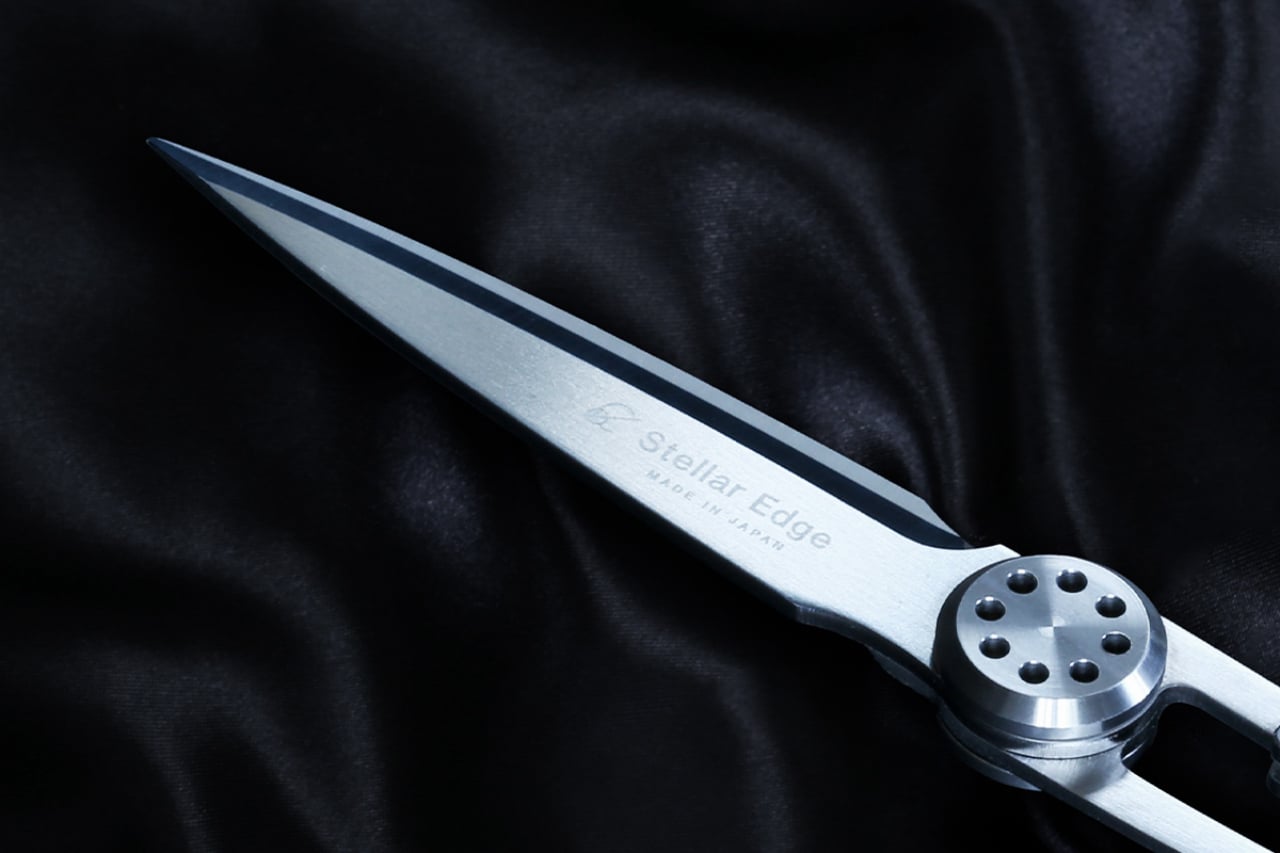
Scissors are the most overlooked object on a desk. The Stellar Edge Scissors argue that this neglect is a design failure. Crafted from Japanese stainless steel, the blades hold their edge far longer than standard office scissors, and the polished, seamless handles distribute weight so evenly that extended cutting sessions produce no hand fatigue. Every curve has been considered, from the finger loop radius to the pivot tension.
Each snip has a clean, controlled resistance that comes from precise blade geometry and tight manufacturing tolerances. The polished finish reduces friction against tape and adhesive paper, which tend to gum up matte or coated blades. The ergonomic shaping fits both left and right hands without the usual ambidextrous compromise. For anyone who uses scissors more than once a week, these make the ordinary feel considered.
What we like
Japanese stainless steel holds a sharp edge far longer than standard office scissor alloys.
Weight distribution across the handles eliminates fatigue during extended cutting sessions.
What we dislike
The premium material and finish come at a price point difficult to justify for occasional use.
The polished surface shows fingerprints easily, so it requires regular wiping to maintain a clean aesthetic.
Where this leaves us
Eight products, and the common thread is not aesthetics or branding. It is the refusal to accept that everyday tools should be disposable, forgettable, or merely functional. Japanese stationery design starts from the assumption that the interaction between a person and a tool is worth engineering down to the last magnetic click, the last gram of weight distribution, the last millimeter of paper thickness.
The rest of the world makes stationery. Japan makes instruments. The difference is not in the materials alone, though those matter. It is in the insistence that a pen’s relationship to a notebook, a scissors’ resistance against paper, or a wooden box’s aging behavior are all design problems that deserve solutions. These eight products are proof that once experienced, going back feels like a downgrade.