Snøhetta Designs A Suspended Off-Grid Treetop House With A Serene Connection To Nature In Norway

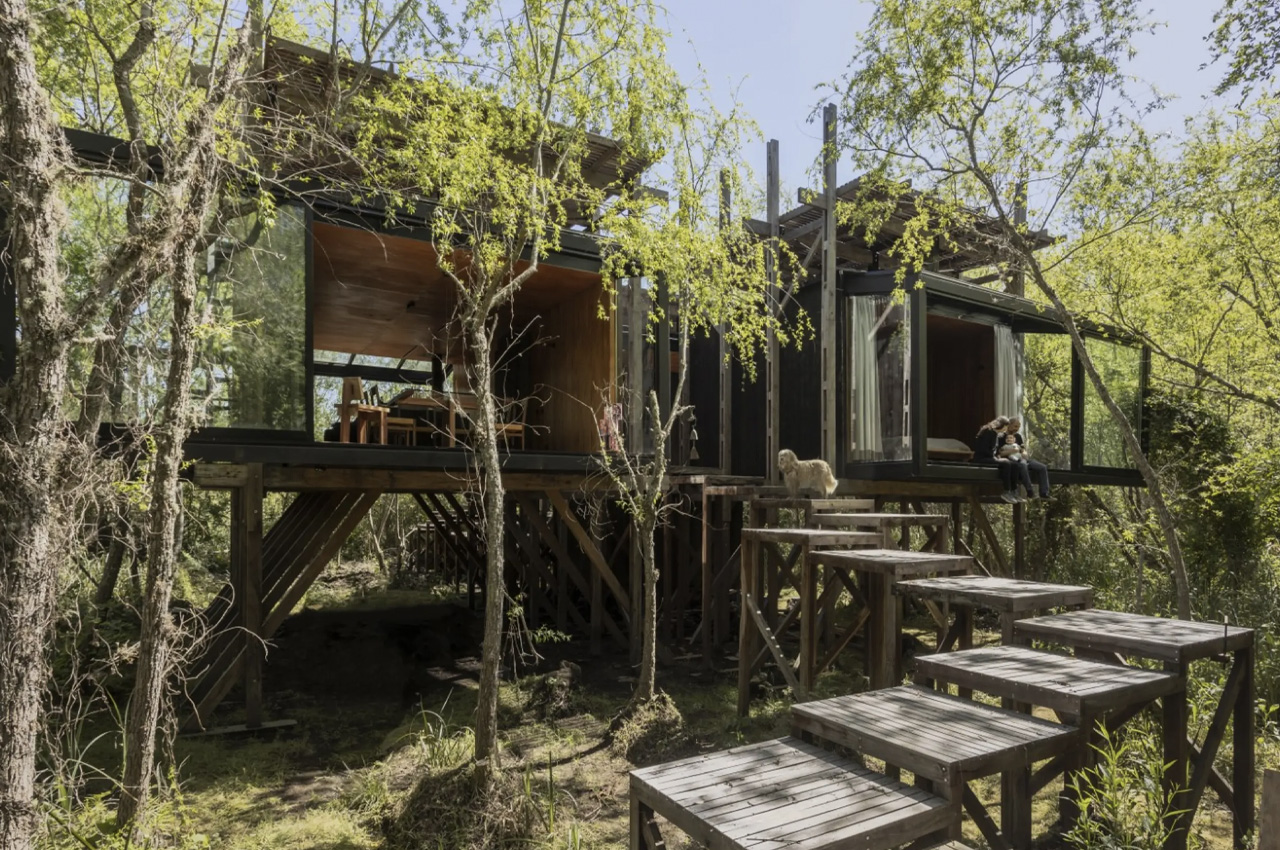
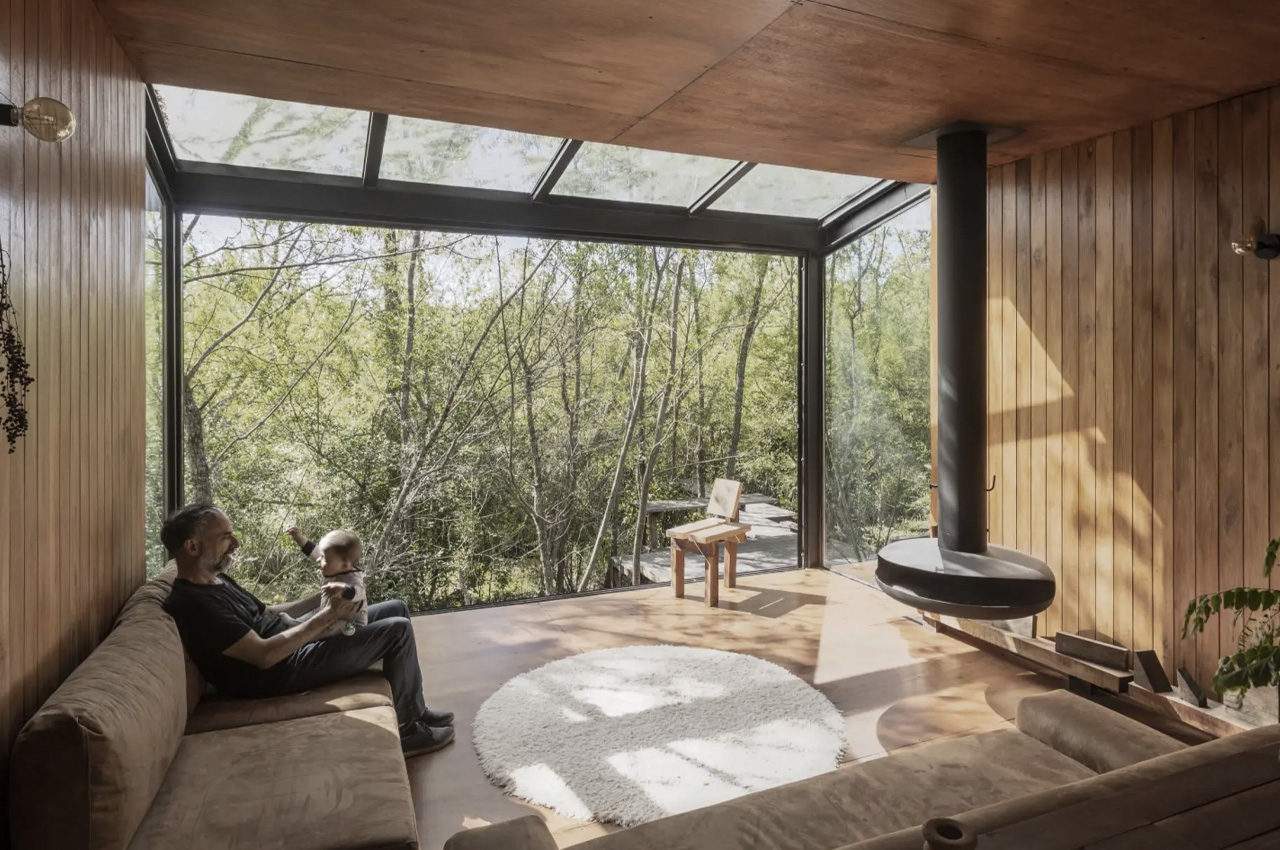
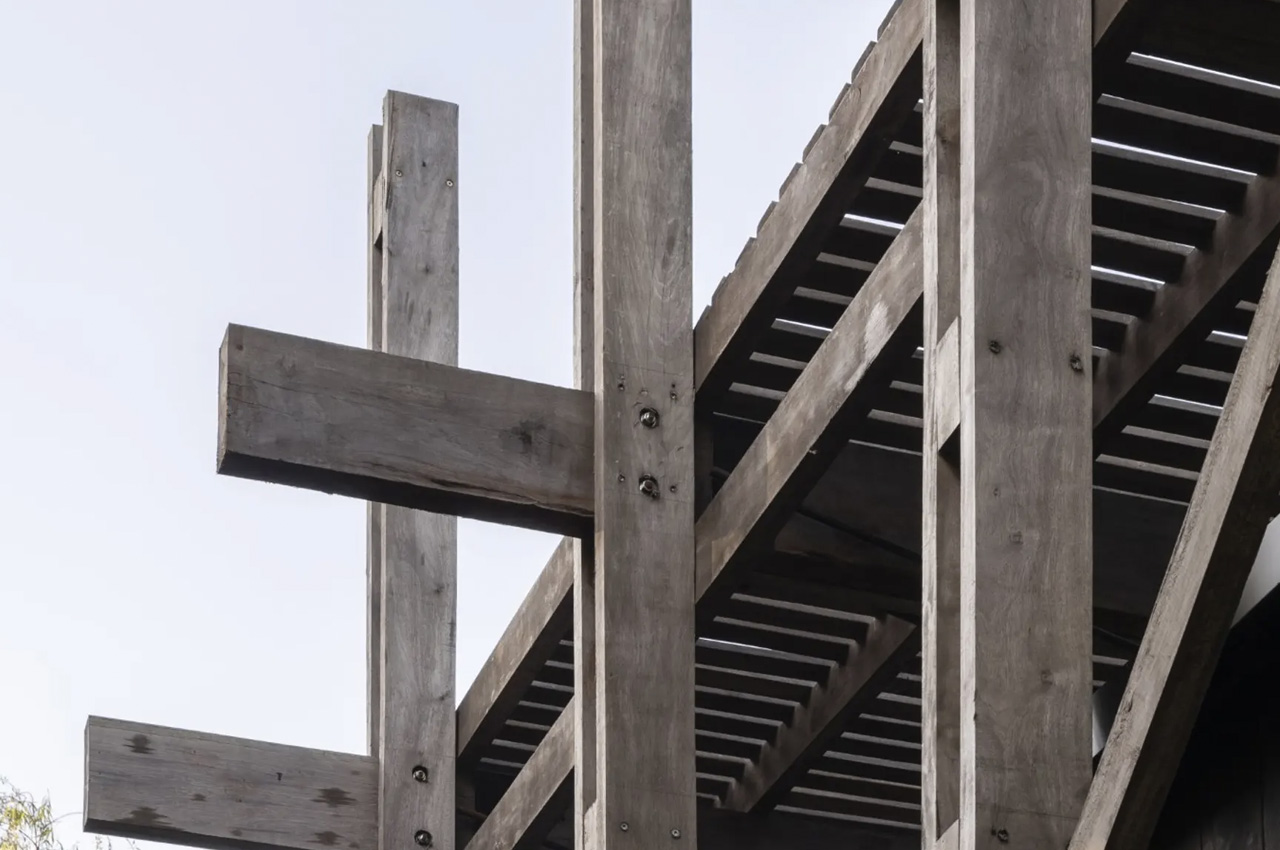
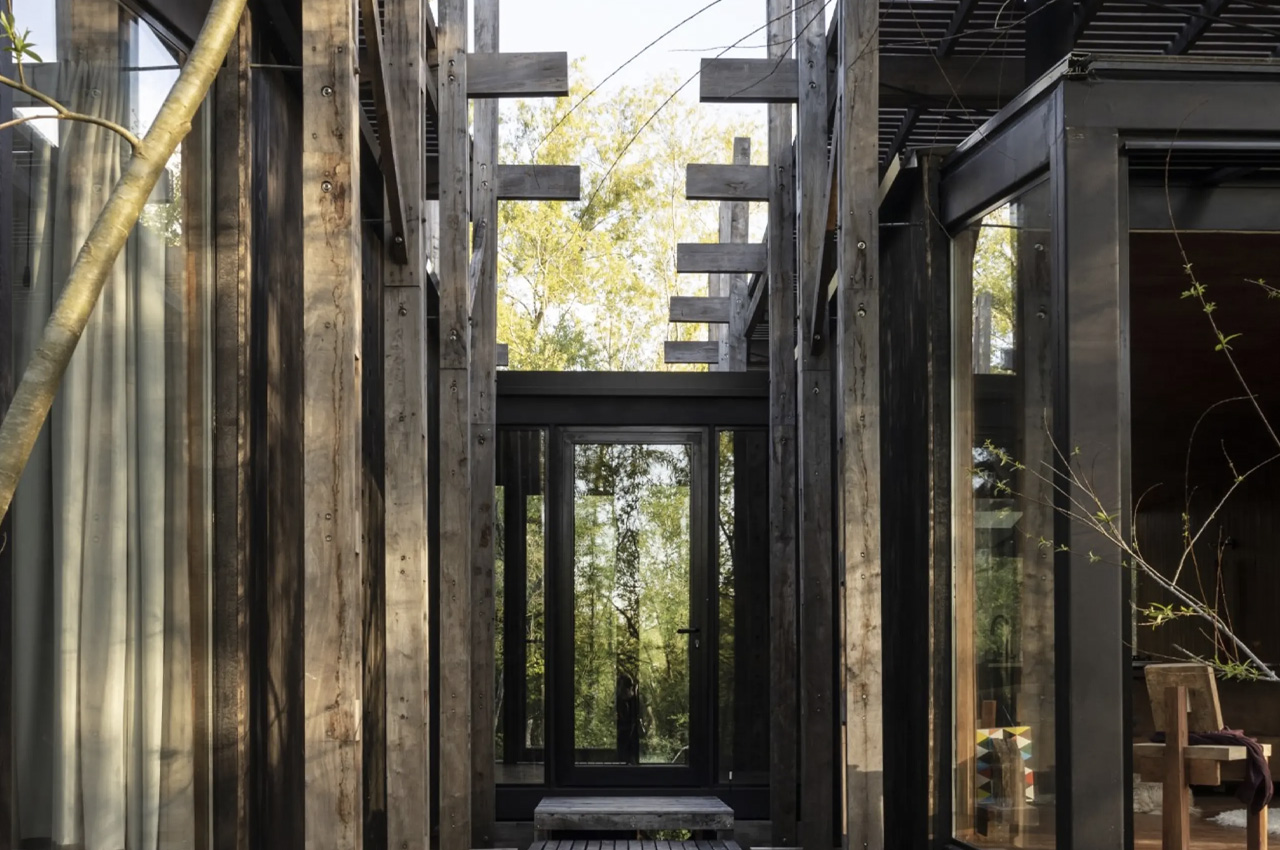
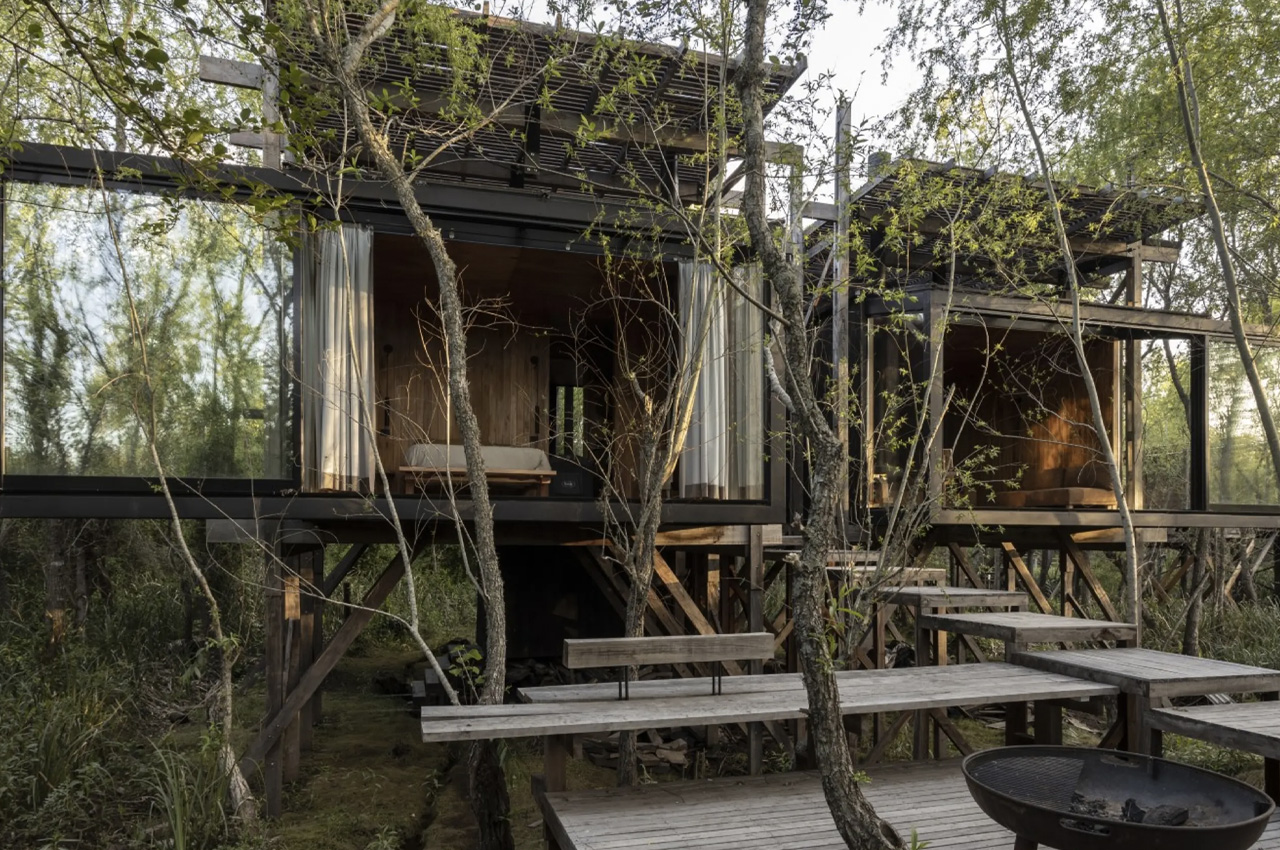
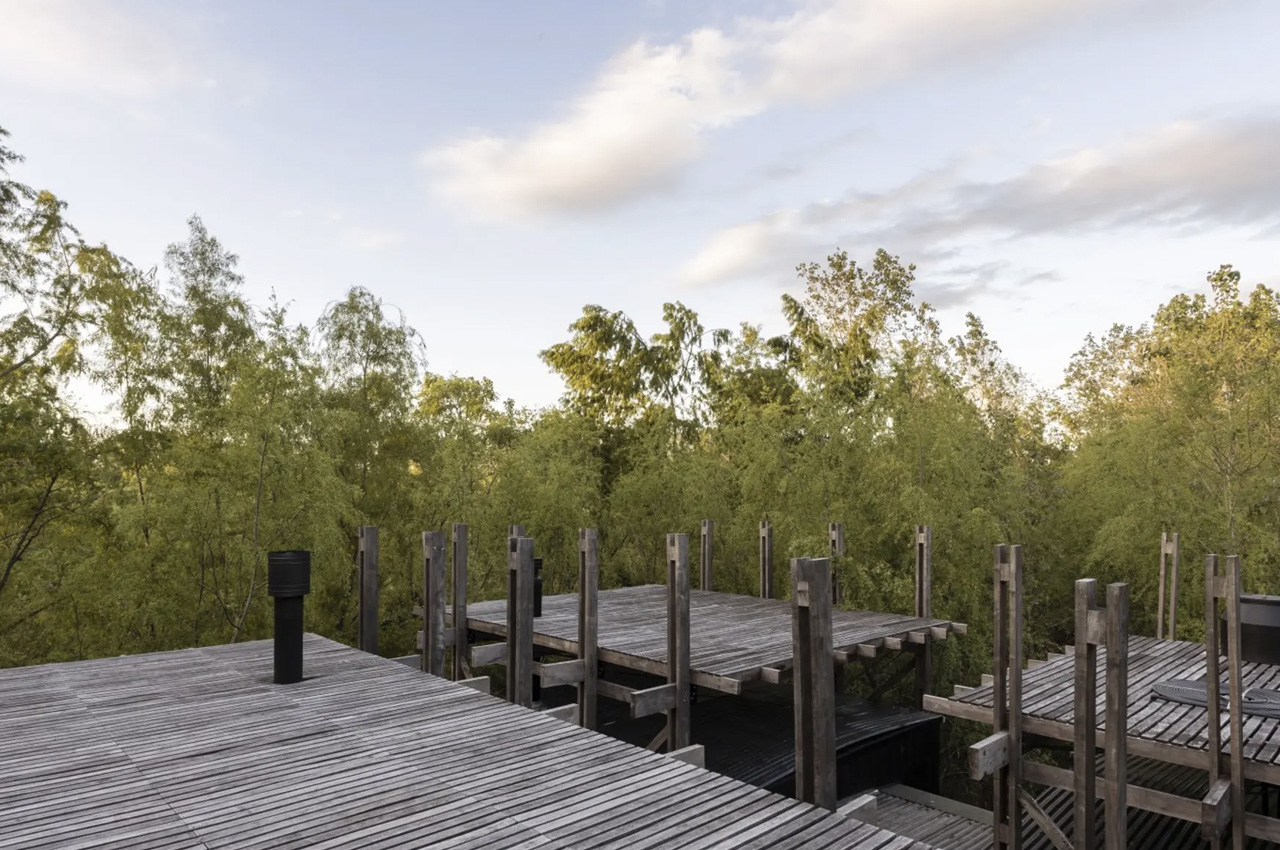
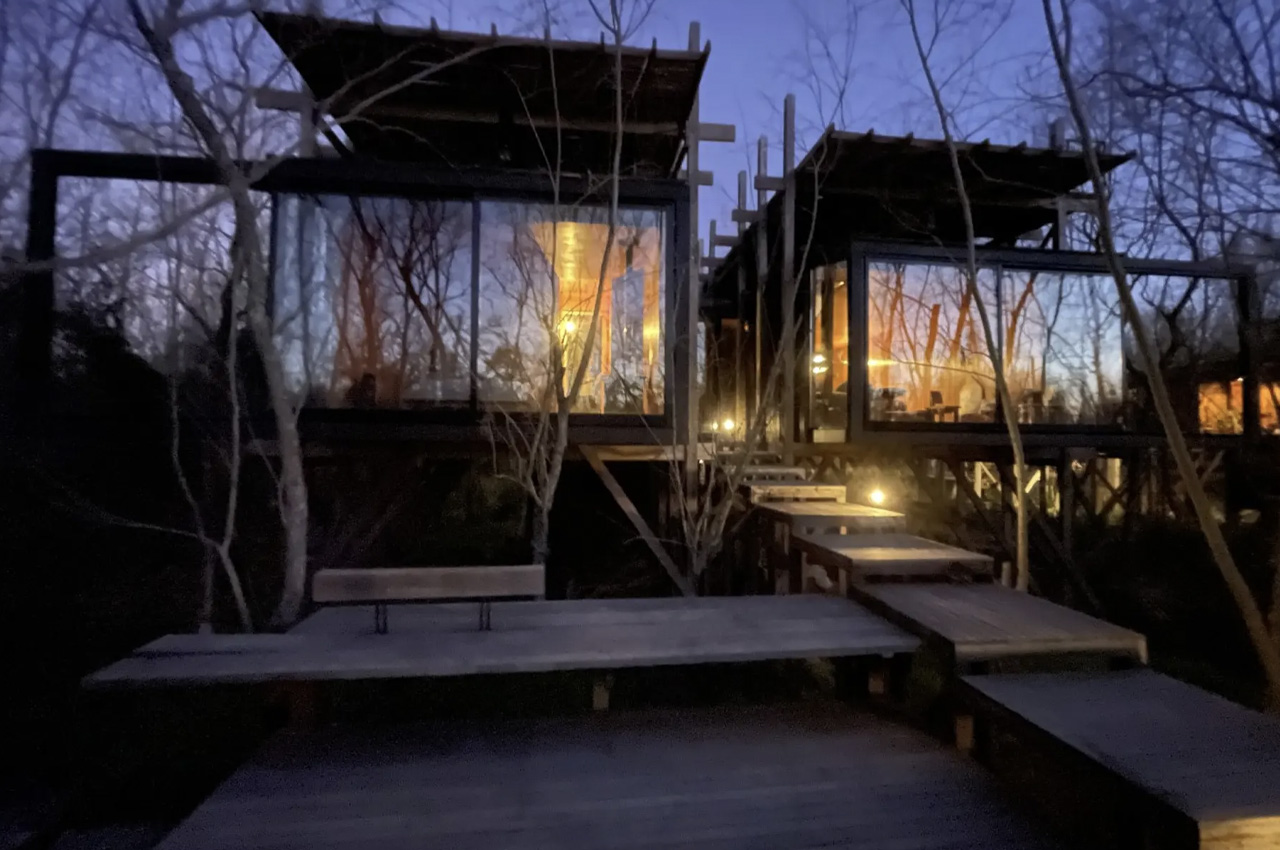
Designed by Norwegian architectural firm Snøhetta in collaboration with engineer Tor Helge Dokka, this off-grid three-bedroom family home in Kongsberg, Norway is called House Dokka. It occupies 2045 square meters and is inspired by treehouse architecture. The home was created to share a serene connection with nature, allowing both to embrace one another. The house is also called Column House, and it was awarded the Architecture Prize for 2023 by the Kongsberg municipality.

Designer: Snøhetta x Tor Helge Dokka

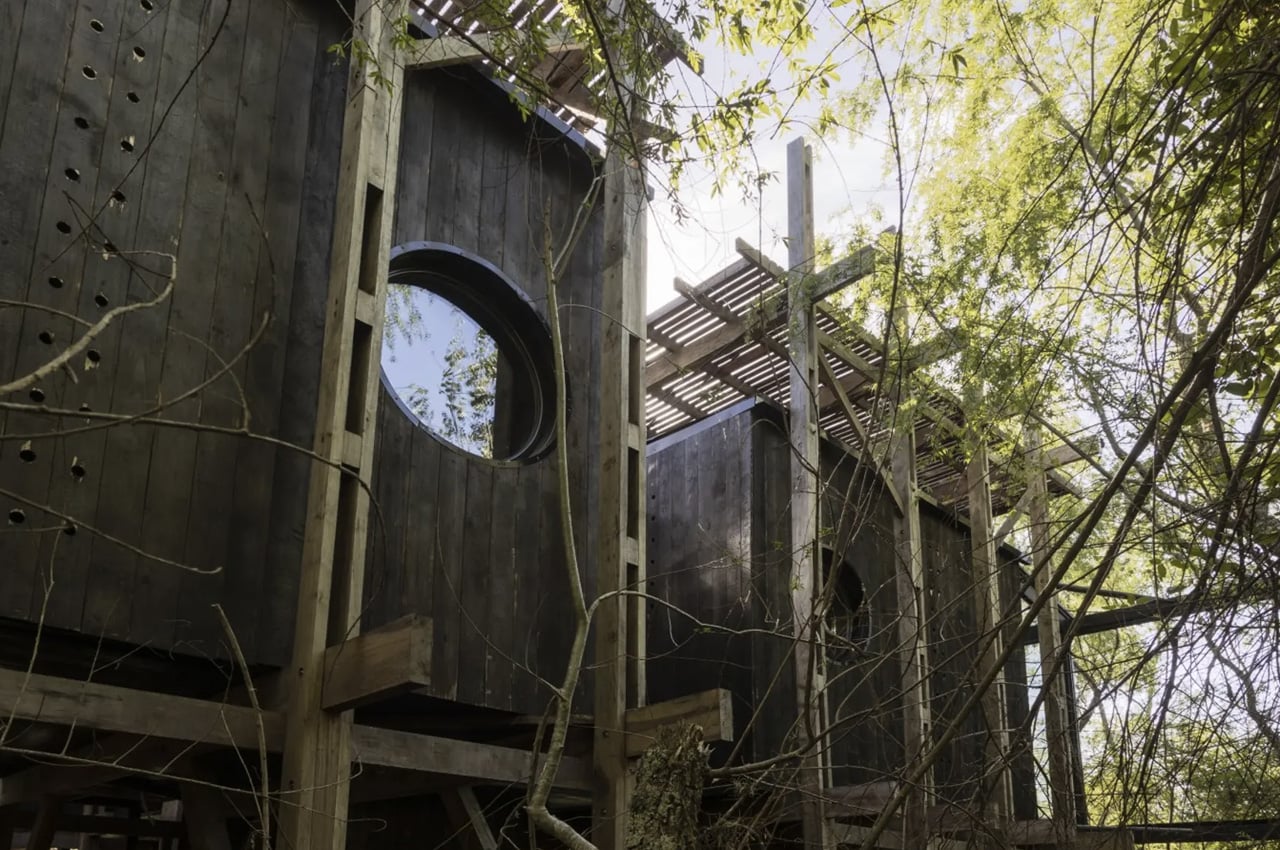
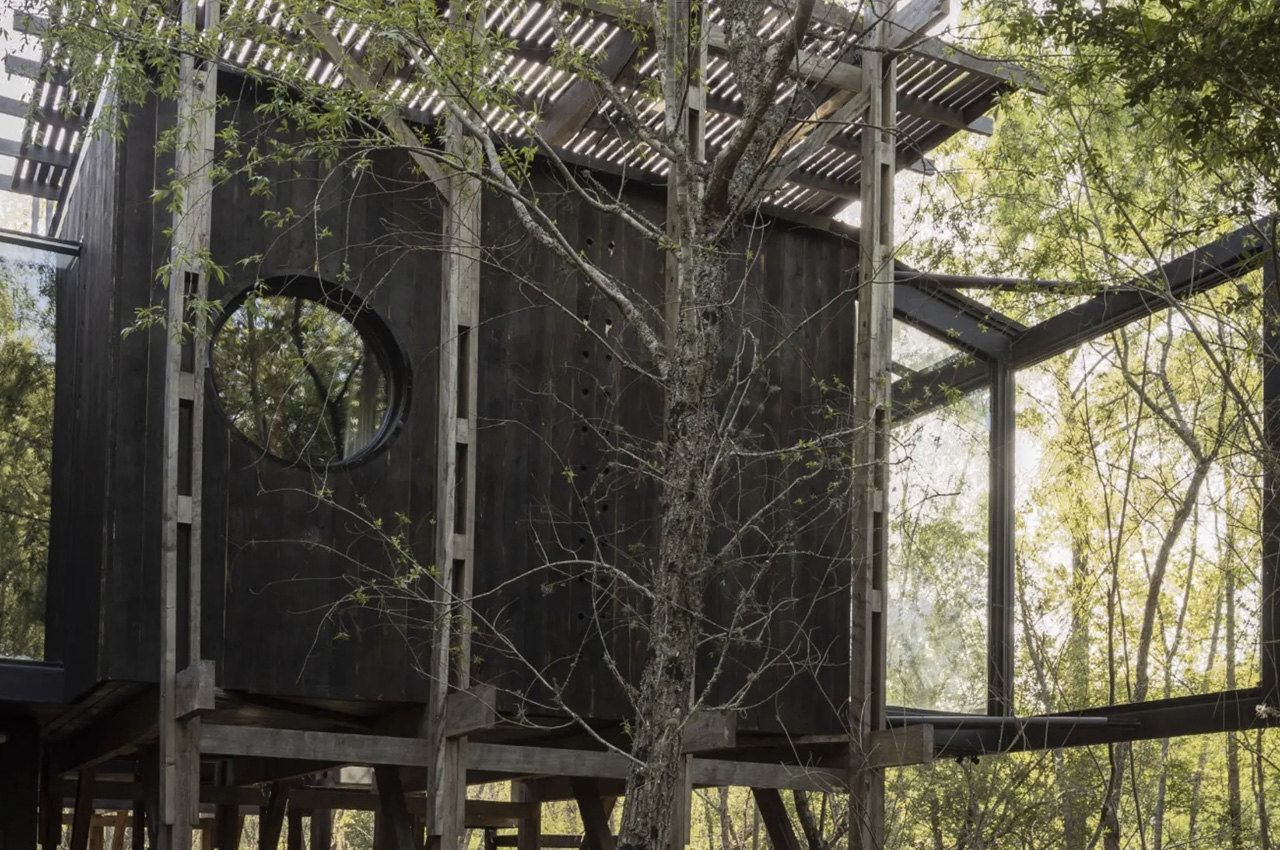
The quaint House Dokka is deftly suspended over the stunning Norwegian landscape, as it is perched on large wooden columns, that have been firmly grounded into the rock, to minimize any kind of interference or disturbance to the surrounding environment. House Dokka was built using locally produced cross-laminated timber, and glue-laminated timber. Both the timbers ensure that the home can be easily deconstructed with minimal climate costs, whenever the life cycle of the home comes to an end. No nails were used in the construction of the home, which allows the materials to be easily sorted and recycled in the future.

Snøhetta’s goal of sustainability for the home is seen throughout the structure in the form of the large photovoltaic panels on the roof, superior insulation as well as a waterborne heat system that is linked to the ground via a source heart pump. In turn, the home produces more energy than it consumes in less than a decade! Besides generating energy for the house itself, energy is also generated for charging the family’s electric car, almost 75% of it.

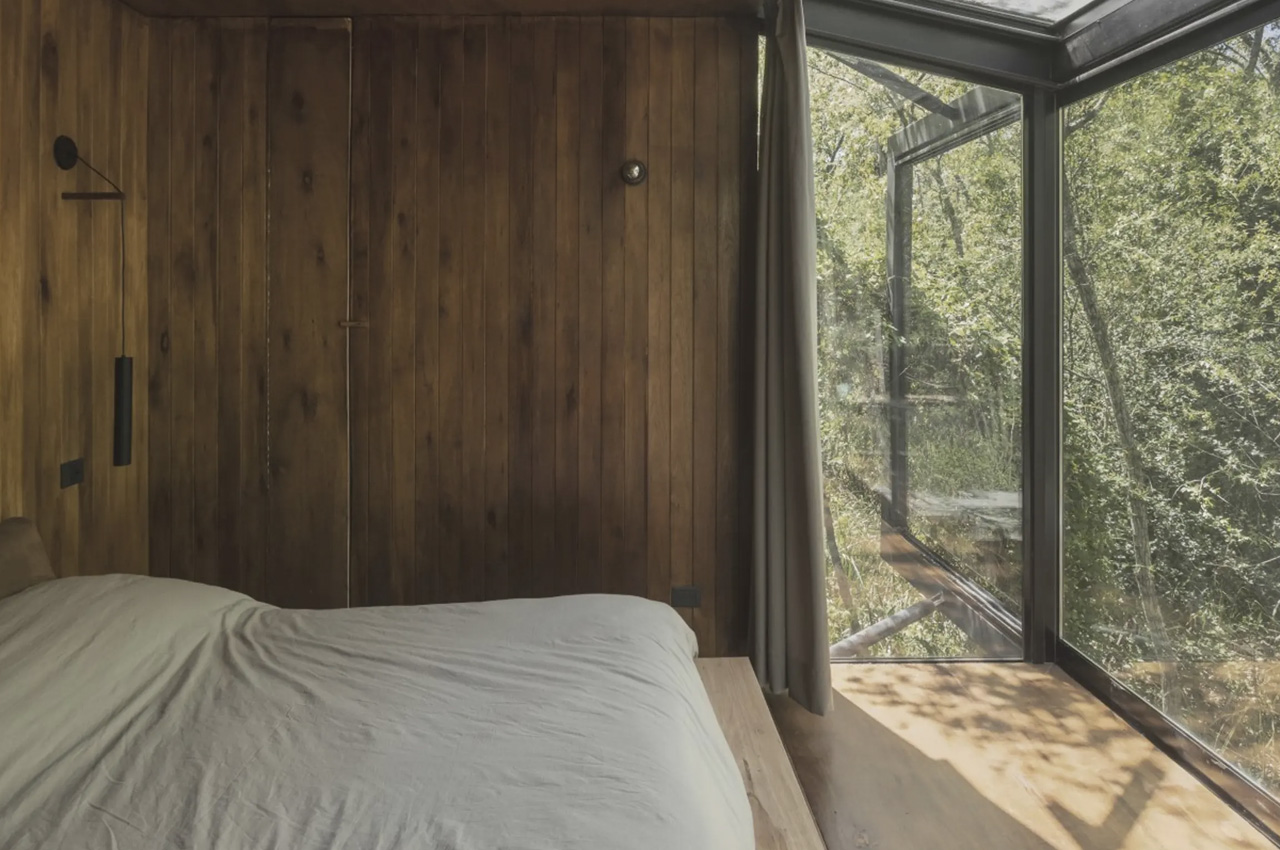
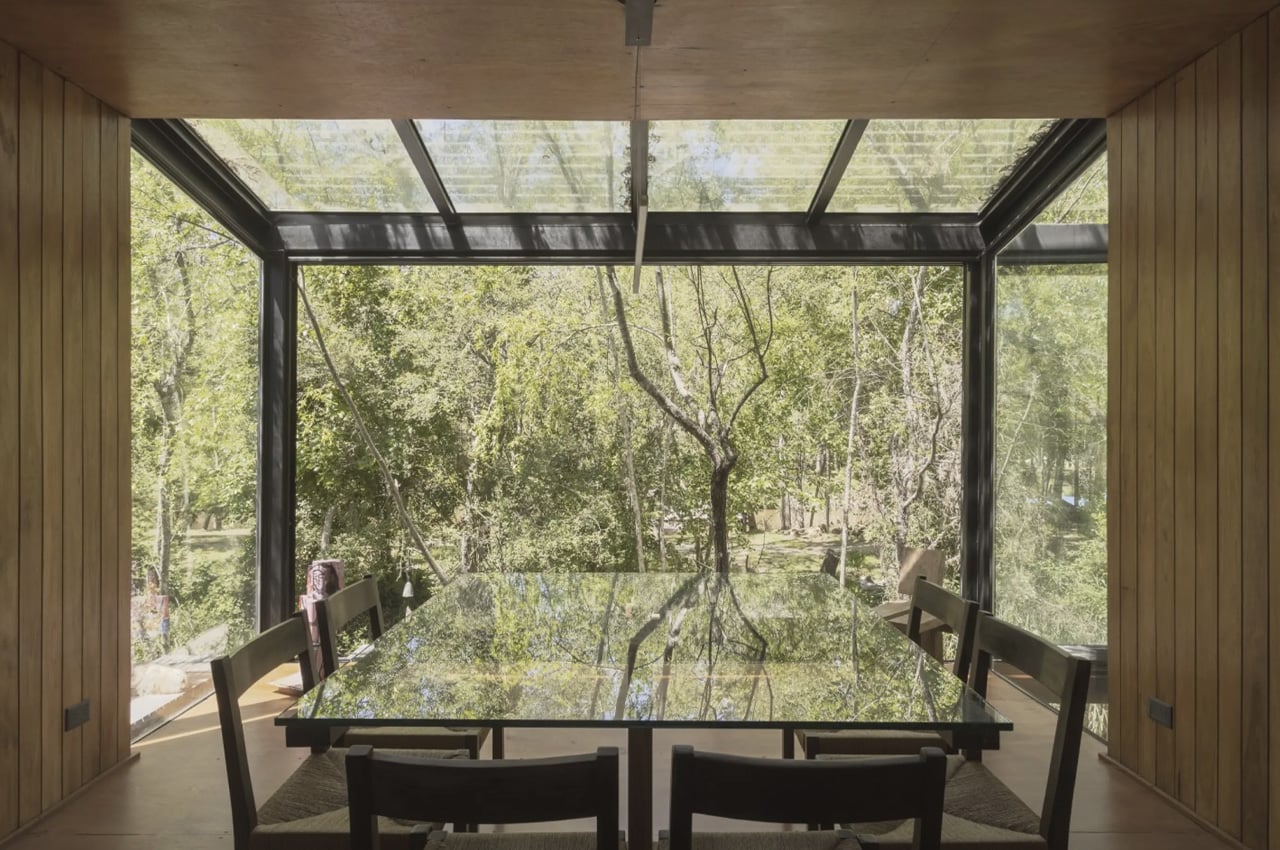
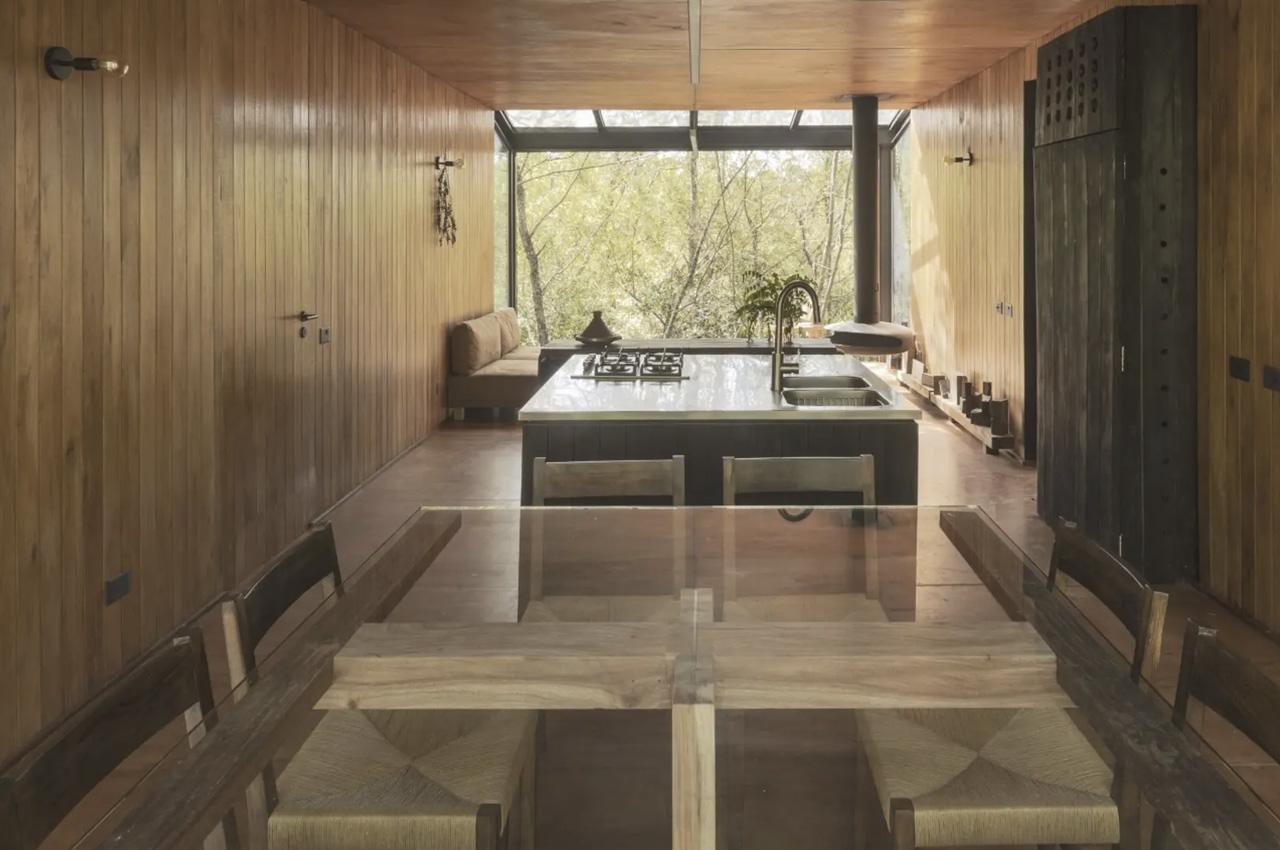
The home has an eye-catching and appealing exterior which is accentuated by the black-stained timber paneling that clads it. The interiors of the home feature warm timber paneling and polished concrete flooring, which are paired up with massive black-framed windows that provide access to stunning views. The home contains two levels, with the upper floor housing an open-plan living and dining area, kitchen, master bedroom, hidden bathroom, and a timber outdoor terrace. The lower level accommodates two more bedrooms, as well as a home office, guest suite, lounge, laundry space, and a central shared bathroom.

The post Snøhetta Designs A Suspended Off-Grid Treetop House With A Serene Connection To Nature In Norway first appeared on Yanko Design.

Historical Buddhist site master plan looks like a fantasy biodiversity space

Most people probably think of religious sites as churches, temples, or even buildings, but there are plenty of locations regarded as “holy” or even historical places that are sometimes nothing more than a mound and a tree. Buddhism, for example, has one such sacred space that holds relics of its past, an unadorned mount covered by grass and topped by a simple yet distinctive tree. Given both its religious and historical significance, there is a strong interest in preserving such a site while also promoting its spirit in tangible yet subtle ways. One such plan transforms this key piece of Buddhist religion and history into a biodiversity garden that almost looks like a landscape straight out of a fantasy film.

Designer: Stefano Boeri Architetti

Located in western Nepal, the Stupa or “heap” of Ramagrama is one of the most important locations in Buddhism, combining religious, historical, and cultural heritage in a single place. A centuries-old Bodhi tree sits on top of a green hill that has formed over an intact dirt burial mound that contains portions of the relics of Buddha. That landscape has remained unchanged, protected by both nature and man, yet there is no assurance that it will be that way forever. A master plan is needed to help preserve the natural beauty of this site while also encouraging both believers as well as tourists to immerse themselves in the environment in a safe manner.

The solution presented in this beautiful design creates a wide space around the stupa and the Bodhi tree that maintains a respectful distance in order to preserve historical landmarks and objects for future generations. Covered walkways encircle the hill while dozens of pathways draw a beautiful and mesmerizing mandala that can only be seen from the skies. Four portals in each direction break up the area into four quadrants, with large access roads that lead to the central hill.

This open space for contemplation or “Prato della Pace” is surrounded by the Garden of Biodiversity, a slope that is conceived to hold 80,000 plants of 70 different local species selected from the Terai plain considered to be the Buddha’s birthplace. A shaded path covered with trees separates these two circular areas and provides a convenient location to view and appreciate the Ramagrama Stupa from a distance.

The master plan for the Ramagrama Stupa is an ambitious project that combines the many elements that represent Buddhism into a harmonious piece of architectural design and landscaping. The structures and circular paths embrace minimalism and mysticism, allowing visitors to both pray and marvel, whatever the purpose of their visit may be. The high biodiversity pays homage to the Bodhi tree, itself a symbol of biodiversity, and ensures that the botanical legacy of Buddhism will also be preserved for years or even centuries. It’s a design that generates an air of mysticism and wonder, creating a space that is literally rooted to the earth yet looks like it exists on a higher plane.

The post Historical Buddhist site master plan looks like a fantasy biodiversity space first appeared on Yanko Design.
The Orca Tiny Home With Its Spacious & Roomy Interior Feels Anything But Tiny

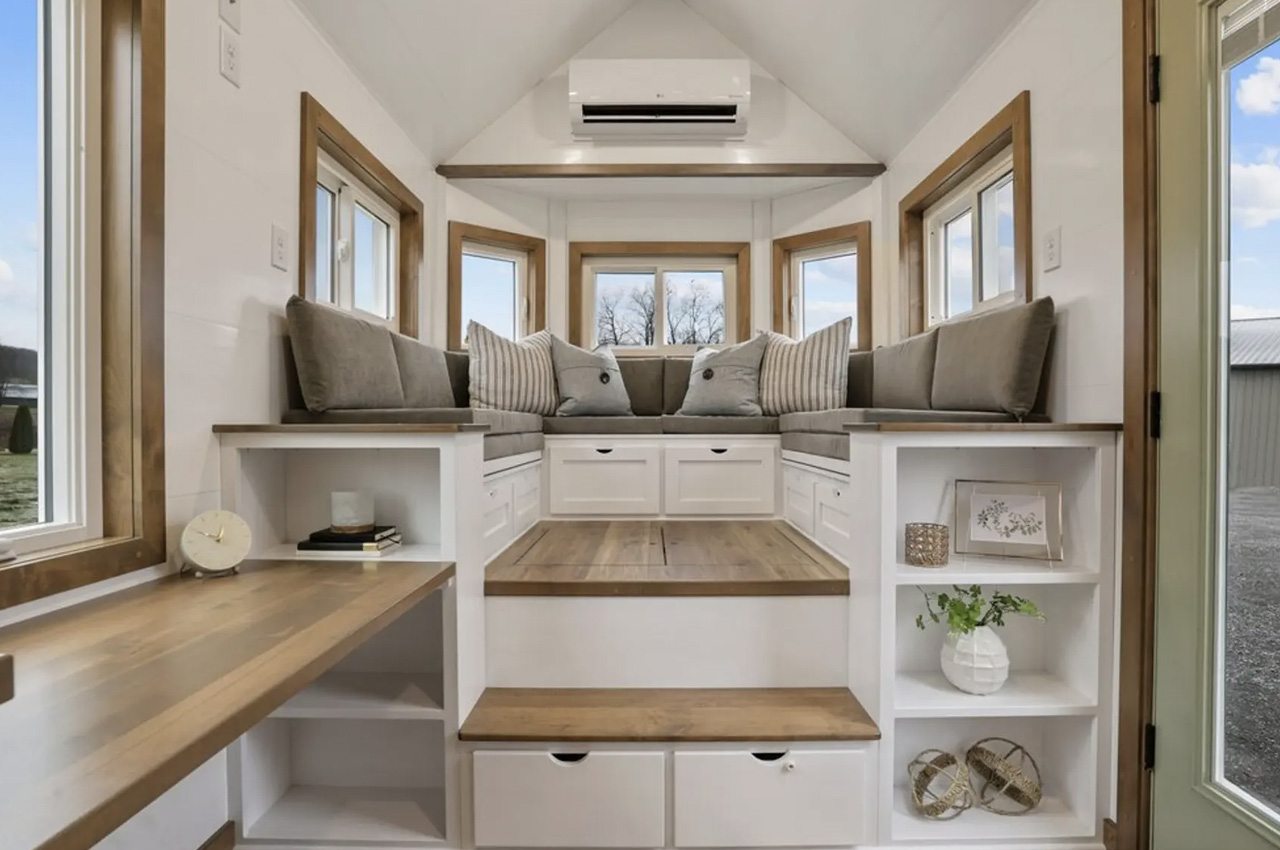
Dubbed the Orca Edition Park Model, this tiny house feels anything but tiny. Designed by Mint Tiny Homes, who have some experience in designing spacious tiny homes, Orca aspires to feel like an apartment on wheels! It measures 528 square meters and features a spacious and roomy interior within a single floor. The Orca Edition Park Model measures 44 feet in length and 12 feet in width, making it a pretty expansive model that is ideal for being located on one site, rather than being towed and moved away regularly.

Designer: Mint Tiny Homes

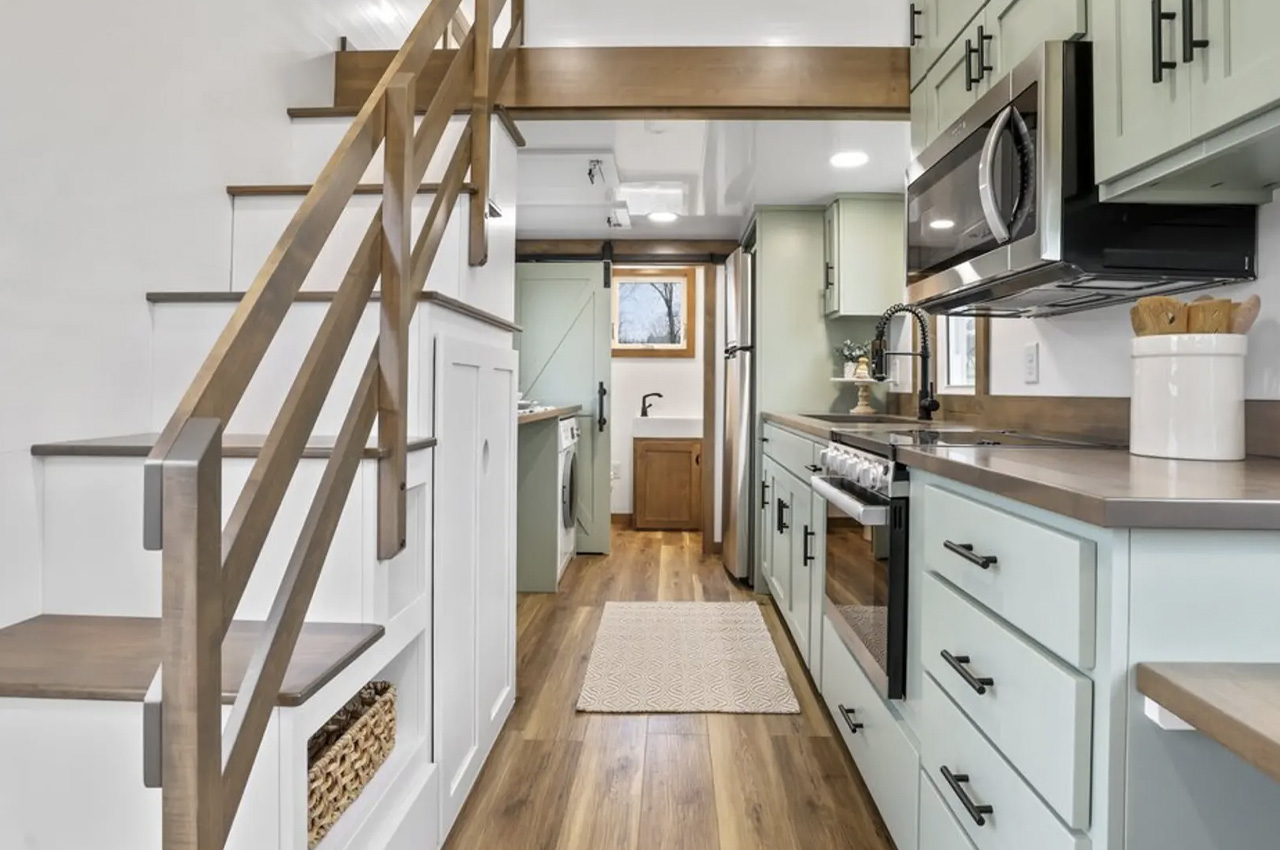
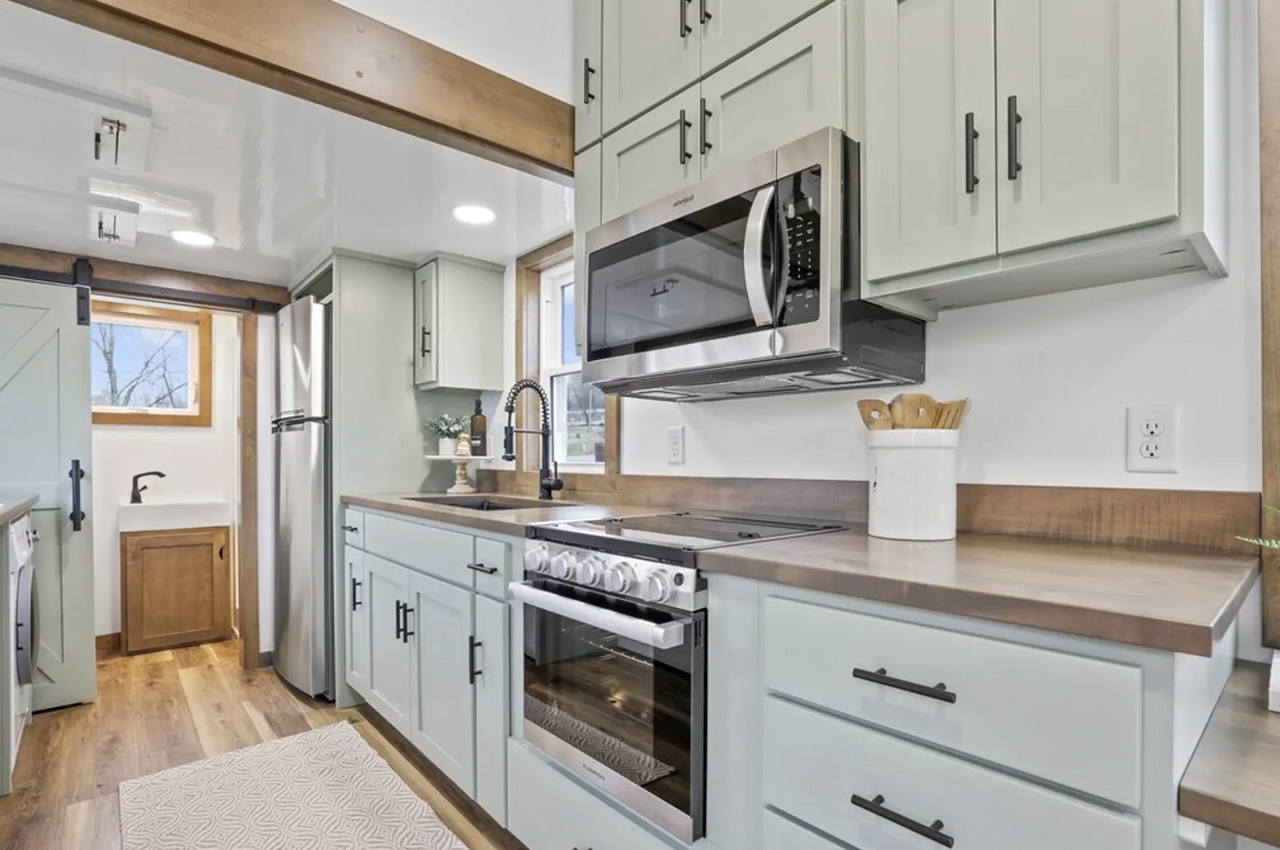
The Orca is founded on a quadruple-axle trailer and features a finishing of board and batten engineered wood siding topped with a sloping metal roof. As you enter the home, you are welcomed by double glass doors that lead to a spacious and well-designed kitchen space. The kitchen includes an oven, a full-size fridge/freezer, a sink, a full-size dishwasher, a four-burner propane-powered stove, and a microwave. The kitchen’s cabinetry features a floor-to-ceiling pantry, amped with adjustable shelving. A central dining table is also located in the space.

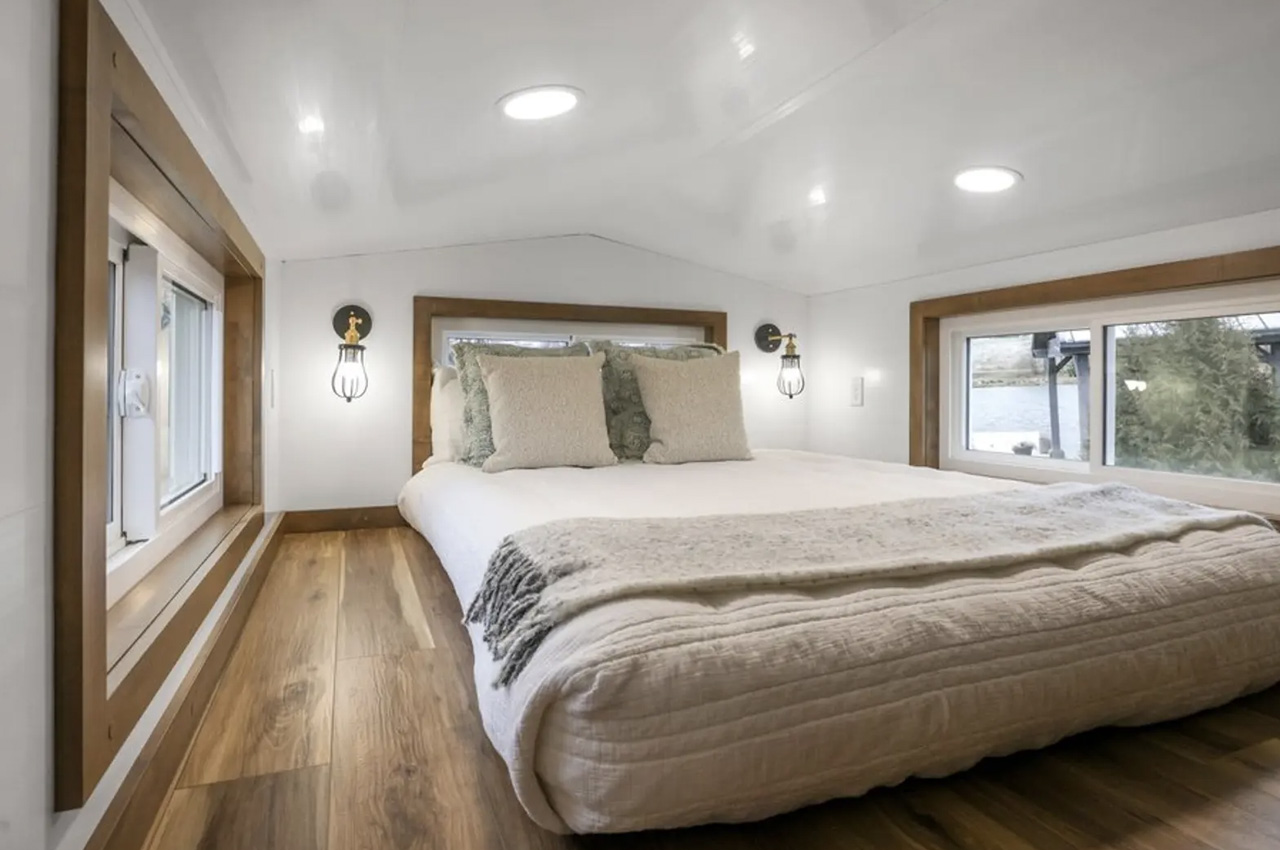
Adjacent to the kitchen is the living, which is equipped with a full-size sofa, fireplace, coffee table, and space for a wall-mounted TV. You can enter the secondary bedroom of the tiny room via a sliding door. There are no lofts in this home as it follows Canadian planning laws for a home of this size. The bedroom is equipped with a generous amount of glazing, as well as ample headroom to stand straight without bumping your head onto the ceiling. It also features a double bed and some storage space.

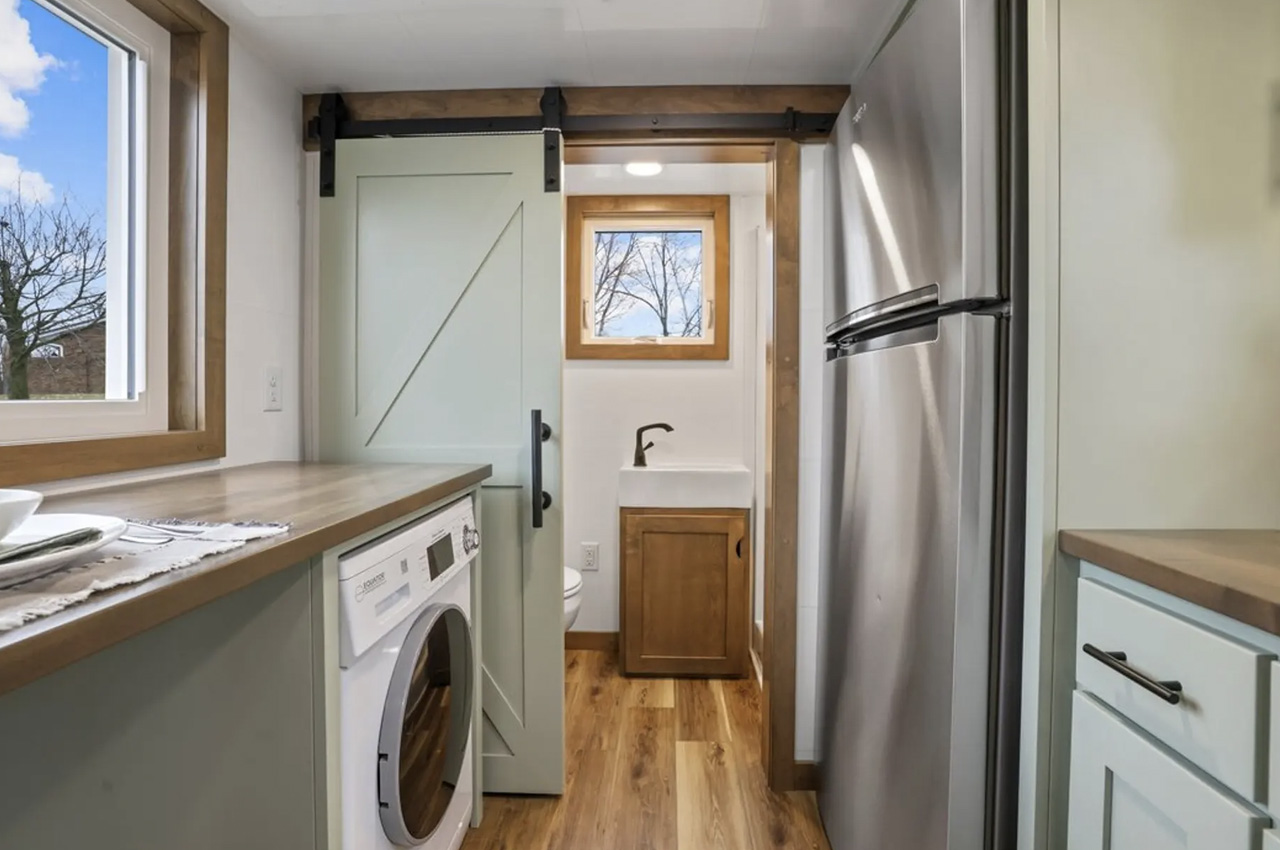
The other end of the kitchen is flanked by a small hallway equipped with a laundry area with a washer/dryer as well as storage space. There is a bathroom located close by, and it is outfitted with a vanity sink, bathtub with shower, and a composting or flushing toilet. This small hallway then naturally connects to the main bedroom, which holds a double bed and wardrobe space. The master bedroom also features a door that leads to the outside, so you have separate access to it.

The post The Orca Tiny Home With Its Spacious & Roomy Interior Feels Anything But Tiny first appeared on Yanko Design.
This Adaptable Studio Apartment In Japan Is Designed As “One Big Room” For Living & Working

Dubbed the Building Frame of the House, this home in Tokyo is a unique adaptable space for both living and working. It features stepped living areas framed by boardmarked concrete walls. It is designed by IGArchitects to function as “one big room”.

“[The clients] have a vague boundary between their private and work life, they were imagining a house where they can work anywhere and where they can sense the presence of each other wherever in the house,” said founder Masato Igarashi. “With such lifestyle, rather than have small spaces for compact living, the house was designed to have a large volume and scale that makes various interactions between inside and outside space,” he added.

Designer: IGArchitects

The home’s central space is designed to be as open as possible, with the studio organizing the home’s floors as irregularly stepped mezzanine layers. The various floors are connected via a black-metal staircase and a ladder. At the rear of the home, there is a ground-floor kitchen and first-floor bathroom. The bedrooms and the living spaces are located at the front. A massive bookcase is nestled against the southern wall.

The side walls of the home have been left quite blank, with sections of full-height glazing located at the front of the home, which offer a generous amount of natural light. “The floors are divided to make it difficult to see the interior from the outside, which is treated like a wall,” said Igarashi. “The way the space is used overlaps, responding to the residents’ lifestyle,” he continued. “The floors can turn into a seat, table, shelf, ceiling, or bed.”

The boardmarked concrete structures within the home are exposed, which are teamed up with wooden floors and shelving, and metal countertops in the kitchen, creating an interesting contrast. “We selected materials that would develop their own flavor as they age, and we wanted to bring out the texture and strength of the materials and their shades in the space,” said Igarashi. “Since the site is too small to create a garden, the interior and exterior are treated equally, and the materials are unified inside and out.”

The post This Adaptable Studio Apartment In Japan Is Designed As “One Big Room” For Living & Working first appeared on Yanko Design.
This Undulating Villa With A Green Rooftop On A Japanese Island Is Currently For Sale If Any Millionares Are Looking

Nestled on the stunning Ishigaki Island in Okinawa, this impressive green villa is called the Ishigaki Earth and was designed by architect Sou Fujimoto. It’s been a year since its debut, and startup hospitality brand Not a Hotel has recently put it up for sale. The expansive retreat occupies 9900 square meters and is located along the island’s pretty southwestern coast. It has a unique circular design topped by a lush green roof which eradicates the typical concept of a front and back, instead, it allows the villa to effortlessly merge with the surrounding nature.

Designer: Sou Fujimoto

The villa’s expansive roof is marked with large openings that provide stunning views of the sky, inadvertently masking the lines between the structure and nature. Fujimoto had a specific vision for the project which involved creating a serene connection between the villa and nature. He wanted to harmonize them and make them one. The circular structure and concave design are inspired by the undulations of the rolling hills, in turn, offering the residents unobstructed views, and allowing the island’s pretty greenery to merge with the ocean panoramas.

The relaxing retreat is amped with multiple amenities such as an infinity pool that merges with the sea, spacious living and dining rooms with beautiful views, a fully equipped gym, and an underwater sauna. The pool is a beauty to look at, as the sky and water meet there, building a fusion of the horizons. It is truly the perfect place to unwind and relax! The living area of the home extends towards the outside and is equipped with full-height glazing, allowing the surrounding landscapes to be connected to the home.

The retreat accommodates four bedrooms which can comfortably house up to ten people. Each bedroom in the house has been designed to provide a calming and tranquil experience. The bedroom on the waterside offers serene views of the sea, with a bathroom that allows the residents to catch glimpses of the horizon. The rooftop garden also accommodates a pool for kids to play in, as well as a fireplace to gather around and warm up.

The post This Undulating Villa With A Green Rooftop On A Japanese Island Is Currently For Sale If Any Millionares Are Looking first appeared on Yanko Design.
This inflatable factory for prefab building will reduce project timelines & costs + revolutionize construction

A notable fact about the construction industry is that it’s always been consistent, – consistent with its techniques, technologies, and practices. Consistency can be a good trait to possess in most scenarios, but it doesn’t stand true for this one. In the construction industry, it could be considered a deteriorating one. After all, construction is responsible for 13% of the global economic output but has faced a productivity increase of only 1.0% annually for the past 20 years. But despite these depressing numbers, a revolution has been slowly encroaching on the world of construction, and that is – Prefabrication.

Off-site construction has been proven to reduce cost, time, waste, and risk, and in turn construction professionals are moving towards factory-based construction more and more. After all, according to a survey of over  800 architecture, engineering, and contracting (AEC) pros conducted by the SmartMarket Report from Dodge Data and Analytics – 66% report that prefabrication reduces project schedules, with 35% of them stating reductions of four weeks or more, whereas 65% report a reduction in project budgets, with 41% citing a reduction of 6% or more.  Yes, factory-based construction is revolutionizing the construction industry, but what if we revolutionize the very factories in which we construct prefabricated structures and homes? And, that’s where the construction startup Cuby steps in. 

Designer: Cuby

Now, let’s make it clear, what Cuby is actually offering isn’t the prefab buildings that are constructed in factories, but rather the factories themselves. Backed by the climate tech venture capital fund ‘At One Ventures’, Cuby’s vision is simple – inflatable factories. Inflatable architecture seems to be on a rising curve nowadays. We recently saw New York-based startup Automatic Construction invent a new technique called Inflatable Flexible Factory Formwork (IFFF), which utilizes an air pump and processor to construct homes by pumping concrete into an inflatable balloon-like structure. You could say Cuby’s inflatable factories are similar to it, but not quite. Cuby’s aim is to develop and operate turnkey, transportable factories that look like large pop-up huts!  The factory is basically a massive arched plastic shed, with lines of machines, workstations, and robotics arranged within it. The entire inflatable factory can be packed into 20 shipping containers, transferred to a new site, and assembled in a span of days. The plan is to set up these inflatable factories on or close to the construction site, to create a powerhouse that can produce multiple kits of parts to build multiple types of buildings at a high output capacity. What the Cuby intends to do is pick up what would traditionally be built on a construction site, and instead build it within the factories, allowing the construction process to be streamlined, quick, and efficient. Cuby is also building the tools and machines these factories will require for prefabrication and modular building.

Designed to be transportable and portable, Cuby’s factories will employ lean manufacturing techniques on or near the construction site itself. This innovative methodology will eliminate the risk of human error, reduce project timelines, and completely wipe out the logistical dilemma of shipping building components over vast distances. Cuby claims that the costs will be 30 to 40% less as compared to the conventional construction of a home. The evergrowing issue of the skilled labor shortage we are facing today will be tackled by the Cuby factories as well since they’ve been designed to be operated by relatively unskilled laborers. This basically means, the laborers require a certain level of skill, but they will also be able to operate machinery well above their skill levels. For example – a laborer who would be hitting nails on a conventional construction site can operate a laser cutter in the factory. These are Cuby’s USPs, and what they claim will set them apart from the other factory-based construction startups.

Now how do the inflatable factories actually construct homes? Much like most of the factory-based construction startups in the market, Cuby manufactures building components in the form of a ‘set kit of parts’. The kits include the typical and commonly used building components such as wall panels, and floor slabs. Cuby co-founder Aleks Gampel says that the building elements aren’t really groundbreaking, the kits are what you would usually find on a traditional construction site. But this was intentional on Cuby’s part. It is a commendable effort to streamline production, which in turn will reduce labor and construction costs, as well as project timelines.

Now, what is future plan of action for Cuby’s factories? It’s simple. The startup isn’t planning to compete against any of the construction giants, because that would be a foolish and expensive goal, instead, it will sell its factories to major developers for $5 to 7 million, who will in turn use them for their own big prefabrication projects. It’s a wise POA that will allow the Cuby factories to slowly but surely gain a monopoly in the arena of factory-based construction. The risk is less, the reward is high, and profits are even higher. It’s profitable not only for Cuby, but also for the builders who buy from them, and it will provide end-users with homes that they love, and are delivered excellently to them. Cuby will have its first two factories up and about soon enough. If the factories are a success, we could easily watch them connect together to build streamlined, efficient, dynamic, and precise systems for the construction industry.

The post This inflatable factory for prefab building will reduce project timelines & costs + revolutionize construction first appeared on Yanko Design.
Tencent’s New Headquarter Building looks like an Architectural Vortex of Metal and Glass

With a captivating design that would put most other tech parks to shame, Tencent’s latest headquarters is shaping up rather wonderfully. Located in China’s tech capital of Shenzhen with an opening date of 2028, this architectural marvel from Berlin-based Büro Ole Scheeren models itself on the shape of a vortex with a swirling quartet of intertwined towers that visually embody the dynamism of the company’s growth and the city’s burgeoning tech district.

Designer: Büro Ole Scheeren

The design, in philosophy too, is quite similar to Amazon’s Virginia headquarters which also boasts of a helical shape. Multiple twisting elements create pockets of greenery in between, allowing employees to relax and unwind during work breaks. Büro Ole Scheeren, the architectural firm behind the design, sees it as a symbol of the company’s rapid growth and a testament to the evolving nature of global headquarters. “Its well-structured social ecosystem is a testament to the evolving nature of global headquarters into a complex and interactive ensemble where functionality, sustainability, and community come together,” Ole Scheeren mentions.

Tencent Helix’s design is nothing short of revolutionary. Comprising four towers of varying heights, with the tallest reaching a height of 153 meters (501 feet), the complex is a structural ballet of curves and gradients. Its exteriors, clad with prismatic glazed panels, invite a flood of natural light, enhancing the workspaces within. The towers are thoughtfully arranged around the ‘Vortex Garden’ – a verdant, central area offering an oasis of greenery and fresh air amidst the urban landscape. This garden is not merely decorative; it’s a functional space, integral to the design, fostering a sense of community and well-being among the employees.

The Vortex Incubator stands as the collective heart of the headquarters. It is a dynamic space, seamlessly connecting the four office towers. This space is designed to be more than just a physical connector; it’s a social ecosystem, fostering interaction and collaboration among staff. Housing Tencent’s academy, recreational spaces, a health club, a conference center, and collaborative offices, the Incubator encourages cross-sector communication and teamwork. This area is crafted for interactive use, emphasizing three-dimensional connectivity and large-scale floors, providing an ideal environment for innovation and creativity.

Comprising four towers of varying heights, with the tallest reaching a height of 153 meters (501 feet), the complex is a structural ballet of curves and gradients. Its exteriors, adorned with prismatic glazed panels, invite a flood of natural light, enhancing the workspaces within. The towers are thoughtfully arranged around the ‘Vortex Garden’ – a verdant, central area offering an oasis of greenery and fresh air amidst the urban landscape. This garden acts as a functional space too, fostering a sense of community and well-being among the employees.

Founded in 1998, the Chinese conglomerate Tencent has grown to become one of the highest-grossing multimedia companies in the world, primarily due to the smashing success of its ‘everything’ chatting app WeChat. The headquarters, slated to open in 2028, will serve as a working space for the company’s 23,000 employees in the region.

The post Tencent’s New Headquarter Building looks like an Architectural Vortex of Metal and Glass first appeared on Yanko Design.
Floating Home In Ecuador Is Designed To Preserve The Community Of A Centuries-Old Floating Village

Dubbed La Balsanera, this floating house is nestled along the Babahoyo River in Ecuador. Designed by architecture studio Natura Futura Arquitectura and architect Juan Carlos Bamba, this home is located inside a centuries-old floating village that suffers from the risk of disappearing for good! La Balsanera is an effort to preserve the community and to serve as a prime specimen of sustainable redevelopment.

Designer: Natura Futura Arquitectura and Juan Carlos Bamba

The river is closed presently as a commercial fluvial route, and hence the number of floating structures has gone down from two hundred to twenty-five. La Balsanera was designed in an effort to bring back “the tradition of living on the river” according to the architects. The home occupies 70 square meters and is built for a family of three. The family sells food to the community and repairs wooden boats, signifying the socio-economic utility of the river.

La Balsanera features a two-meter-wide extension to a platform that function as terraces for the family to utilize as “productive environments” – for example, a cafe seating area, anchor point, or tourist boat. “La Balsanera explores possible floating solutions that recover local artisan techniques while promoting the active and productive participation of the occupants in vulnerable communities,” said Bamba.

The floating home is constructed from wooden porticos that are built every two meters to build a gabled truss structure. This structure is topped by a corrugated roof that provides shelter to the outdoor terraces, as well as a colorful hammock. The home includes a central space that accommodates a shared living room, kitchen, and dining area, as well as two bedrooms. Two external strips at either end of the space provide a shower, toilet, laundry space, and boat workshop. The space is also equipped with “chazas” which are slatted openings that have been made from recycled wood. These “chazas” help ventilate the space and maintain a cool environment indoors. A bridge functions as an efficient walkway between the mainland and the floating home. It is made using bamboo and various planks of wood. Shutter doors have been incorporated throughout the space, connecting the living spaces to the terraces.

The post Floating Home In Ecuador Is Designed To Preserve The Community Of A Centuries-Old Floating Village first appeared on Yanko Design.
The Sakura Tiny House With An Ingenious Transforming Interior Is A Game Changer In The Architecture World

Dubbed the Sakura Tiny home, and designed by Canada-based Acorn Tiny Homes, this quaint little house is designed to be a game-changer as compared to typical homes. It breaks the norm of traditional tiny homes, and although it doesn’t feature wheels, it is equipped with an innovative space-saving interior consisting of a transforming kitchen and bedroom. In an era, where tiny homes are the most popular housing style out there, the Sakura tiny home takes this genre to a whole new and interesting level.

Designer: Acorn Tiny Homes 

The Sakura tiny home is inspired by popular Japanese design trends. Sakura means cherry blossom in Japanese, showcasing an overall Japanese influence on the structure. The roof is built from metal, and the siding is available in varied finishes such as wood, metal, and faux stone. The home will occupy 21.5 x 10.5 ft, and it isn’t as large as North American tiny homes and is quite similar to European models. The interior has a floorspace of 225 square feet and can accommodate two people, as well as a pair of guests, although it may be a tight fit.

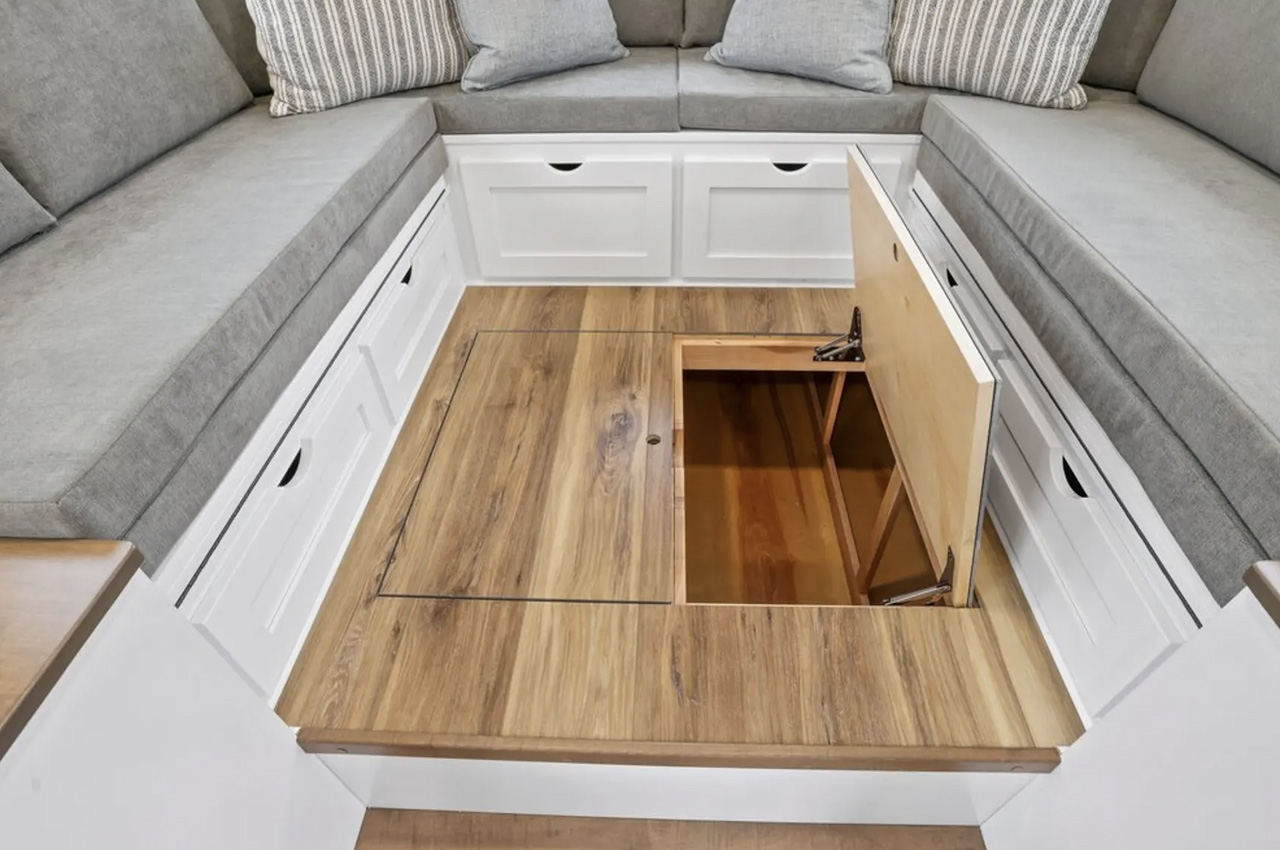
The layout and interior of this home are quite unlike other homes. As you enter the home, you are welcomed by a flexible multipurpose space that occupies a lot of the floor space. This main living space transforms into a bedroom, when you slide out the double bed from underneath the nearby living room floor. The cabinetry conceals a fully functional kitchen, and it consists of an induction stove, microwave, oven, fridge/freezer, dishwasher, and a washer/dryer/. The kitchen also features a pull-out kitchen counter that provides some extra prep space.

This multipurpose kitchen/entrance/bedroom is connected to other rooms in the house. One room is the bathroom, which will hold a wet room, shower, skylight, and a novel toilet with an integrated sink that is supplied by greywater. The other room is the living room, which will be elevated to make space for the sliding bed, and will include a pull-out desk area, sofa bed, and a massive entertainment center.

The post The Sakura Tiny House With An Ingenious Transforming Interior Is A Game Changer In The Architecture World first appeared on Yanko Design.
This Lexus Showroom in Melbourne has over 1,000 native Australian plants on its facade

Unveiled at the Melbourne Cup Carnival at the Flemington Racecourse in Australia, this new Lexus showroom/pavilion takes ‘Green Design’ to new heights! Designed by Koichi Takada Architects, the three-floor modular structure is quite literally a living entity, adorned with over 1,000 native Australian plants and flowers on its façade, creating a breathtaking visual dialogue with the Australian landscape. Dubbed “LANDMARK by Lexus”, the pavilion is the result of an ongoing partnership with Victoria Racing Club, with this year’s theme being ‘Close to the Source’. The beauty of the pavilion lies in its modular, repurposable design that will alter from year to year as the themes change. While the building highlights Australian flora this year, its sustainably-built structure can entirely be disassembled and rearranged for next year’s theme, allowing the building to pretty much metamorphose each year with minimal impact.

Designer: Koichi Takada Architects

Koichi Takada, the visionary behind this project, views his architecture as a “living billboard,” a medium to demonstrate the potential of integrating nature into our built environments. His approach is a reminder of the joy and importance of reconnecting with nature, especially in urban settings. In his words, the pavilion is an opportunity to showcase what can be achieved when we blend architecture with the natural world, emphasizing the emotional and psychological benefits of this union.
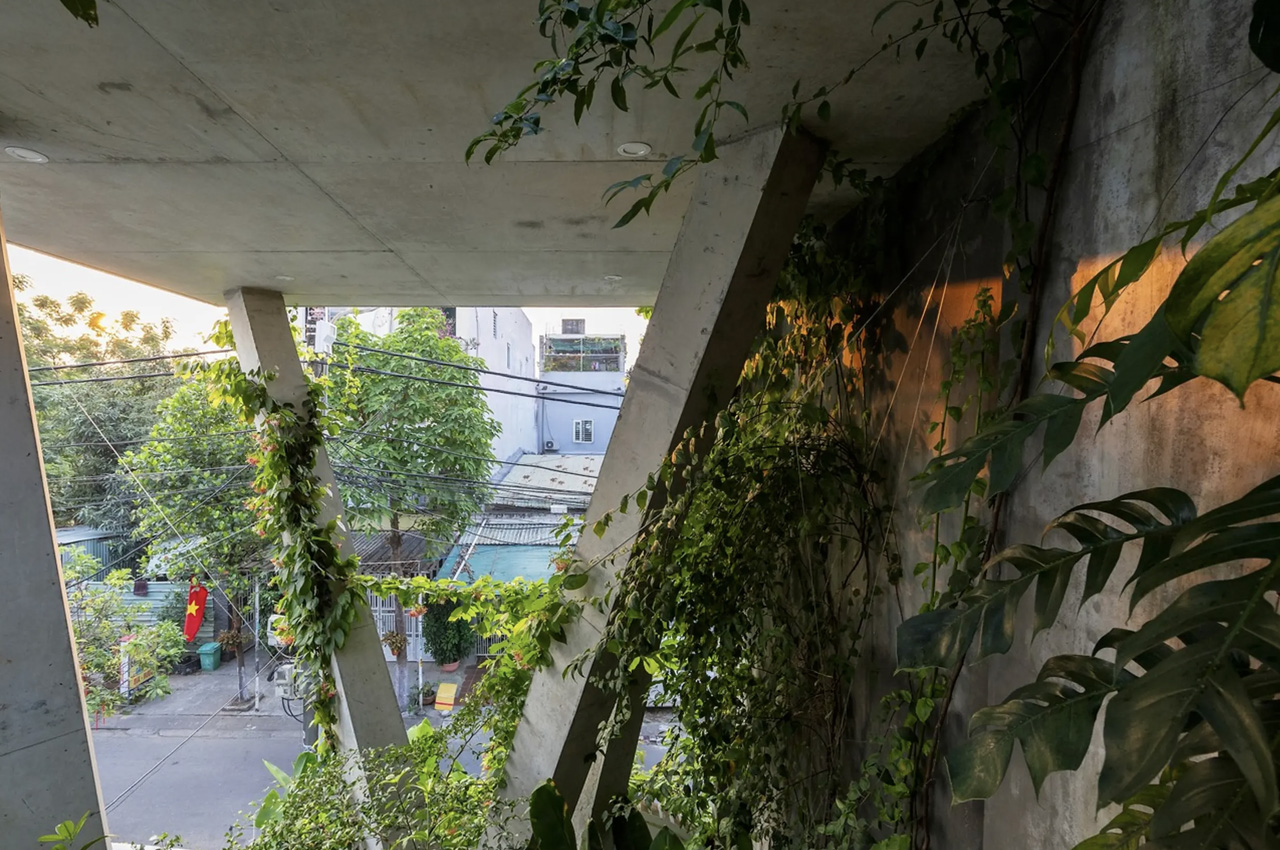
Guests are encouraged to engage with the plantings that adorn its façade, which include edible native flora like native pepper, saltbush, and lemon myrtle. This interactive element is designed to stimulate the senses, inviting guests to touch, smell, and taste the vegetation, a feature that brilliantly encapsulates the essence of Australian bush tucker.
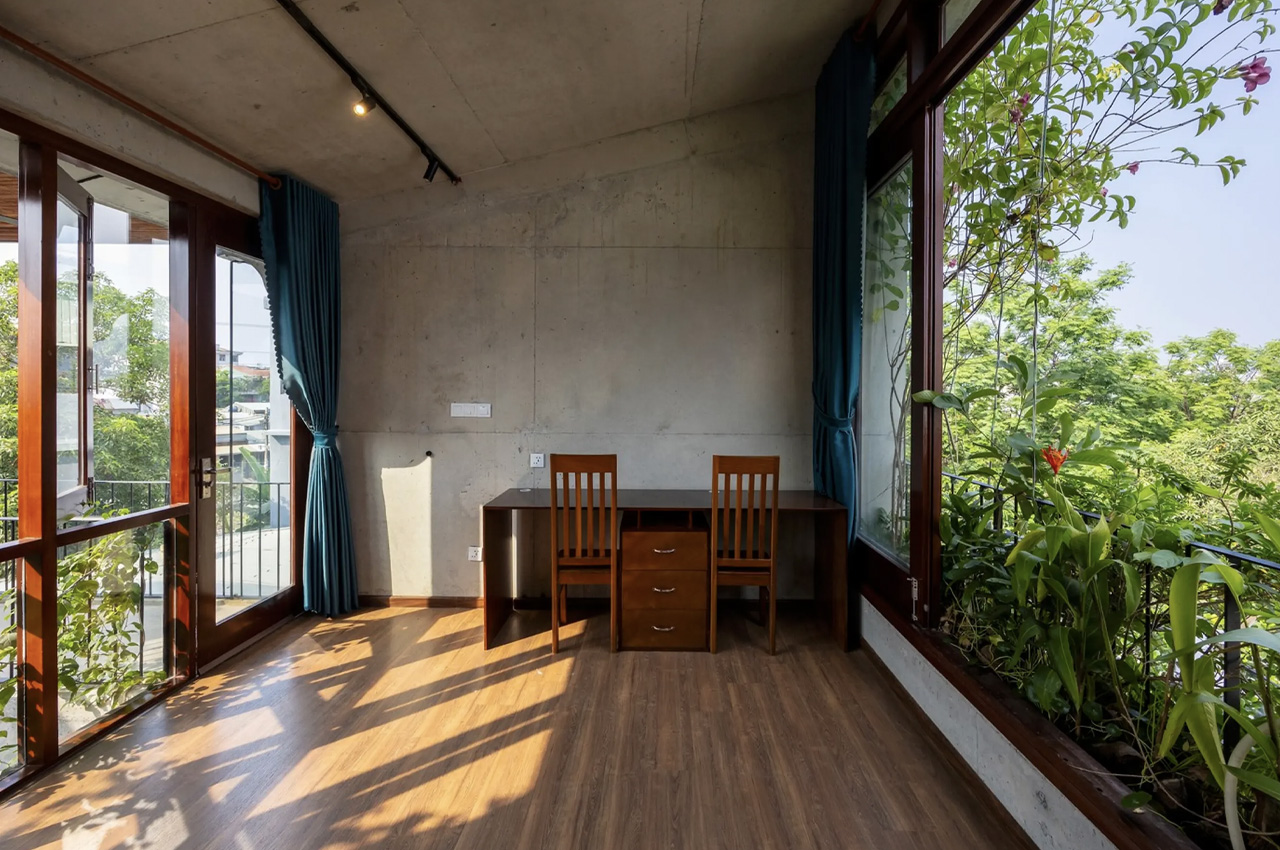
The design of the pavilion is a marvel of modern engineering, with a focus on sustainability and adaptability. Its modular nature allows for easy assembly, disassembly, and reuse, catering to a future where environmental consciousness is paramount. The integration of prefabricated awnings, which interlock with the modular framework, introduces natural curves that beautifully contrast with the gridded, man-made structure. These curves not only add an aesthetic softness but also play a crucial role in supporting the lush greenery that envelops the building.

The post This Lexus Showroom in Melbourne has over 1,000 native Australian plants on its facade first appeared on Yanko Design.