Xbox has brought cloud gaming gaming to some Amazon Fire TV models. These include the Fire TV 4-Series and the Fire TV Omni QLED Series. This lets people play Xbox games directly on the television, without needing a bulky console or even something like a Fire TV stick.
Gamers do need a couple of things. First and foremost, this service requires a subscription to Game Pass. Plans start at $10 a month and shoot all the way up to $30 per month. They'll also need a compatible wireless controller, though most Bluetooth-enabled gamepads should work.
Amazon
The feature works for every game on the Game Pass platform and will also stream many titles that people own outright via the "stream your own game" feature. This won't work with everything, but hundreds of titles are supported.
Amazon says this is just the beginning and that more TV models will receive the functionality in the future. Xbox Game Pass became available on select Amazon streaming devices earlier this year. Today's move makes sense, given that Fire TVs and the company's streaming sticks use the same OS.
This article originally appeared on Engadget at https://www.engadget.com/gaming/xbox/xbox-cloud-gaming-comes-to-newer-amazon-fire-tv-models-163517432.html?src=rss
Apple is making it a little easier to use third-party devices with iPhones in order to comply with Europe's Digital Market Act (DMA), MacRumors reported. For iOS 26.3, Apple's devices will support third-party proximity pairing and notifications in Europe only, according to the latest beta notes. That will make it a bit easier to connect devices like Sony headphones or receive notifications from an iPhone on Wear OS smartwatches — provided manufacturers support the new feature.
"The DMA creates new opportunities for developers to bring to market innovative products and services in Europe," an EU spokesperson told The Wall Street Journal. "This is another step towards a more inter-connected digital ecosystem to the benefit of all EU citizens." The EU Commission added that the functionality will be "fully available" in the bloc in 2026.
The new capabilities are as follows:
Proximity pairing - Devices like earbuds will be able to pair with an iOS device in an AirPods-like way by bringing the accessory close to an iPhone or iPad to initiate a simple, one-tap pairing process. Pairing third-party devices will no longer require multiple steps.
Notifications - Third-party accessories like smart watches will be able to receive notifications from the iPhone. Users will be able to view and react to incoming notifications, which is functionality normally limited to the Apple Watch. Notifications can only be forwarded to one connected device at a time, and turning on notifications for a third-party device disables notifications to an Apple Watch.
Proximity pairing is a relatively minor quality-of-life upgrade, allowing you to connect with a tap via NFC rather than diving into the Bluetooth settings. However, there's no indication that it will allow seamless switching between devices as you can do with Apple's iPods, for instance. Notifications, however, will finally make third-party watches feasible with iOS devices.
Apple's DMA compliance efforts are interesting to watch, as it appears to be doing the bare minimum required, often for what it calls privacy reasons. In some cases, the company is removing features in Europe that are available elsewhere, like iPhone mirroring on Mac — meaning it doesn't have to implement the same feature on Android devices or PCs.
This article originally appeared on Engadget at https://www.engadget.com/mobile/apples-ios-263-will-introduce-proximity-pairing-to-third-party-devices-in-the-eu-133037696.html?src=rss
Want to see a dead body? I present to you the Xbox. After a subdued launch at the height of the COVID pandemic in 2020, the Xbox Series X quickly lost the fight against the PlayStation 5. Microsoft simply couldn't deliver enough compelling games, despite somehuge acquisitions, while Sony leaned on its goodwill from the PS4 era and a handful of desirable exclusives. As prices rose due to supply chain issues and the Trump administration's volatile tariff scheme, there was even less of a reason to get an Xbox (even the cheaper Series S). When I re-reviewed the Series X last year, it was clear that it never lived up to its potential. Anyone in their right mind would be better off buying a PlayStation 5.
Making things worse this year, Microsoft raised prices across the board, with the Xbox Series S starting at $400 and the cheapest Series X going for a whopping $600. And slow sales prompted Costco to stop selling Xbox consoles entirely. Microsoft didn't even try to push systems during Black Friday — why go through the trouble of having sales if nobody is buying the hardware in the first place?
Even Game Pass, which was once renowned as one of the best deals in gaming, almost doubled in price over the last year, reaching up to $30 a month (or $360 a year) for the Ultimate tier. Sure, Microsoft tried to add more value to its cheaper Game Pass tiers, and finally upgraded its cloud streaming platform, but the lack of consistent must-play exclusive titles has devalued the service (and Xbox as a whole). Avowed and South of Midnight were among the few exclusive highlights, but the latter will hit PS5 and Switch 2 next year. There's no word on Avowed reaching other consoles yet, but given Microsoft's current trajectory (and the fact that it's a genuinely great game), I wouldn't be surprised if it becomes available elsewhere.
There was a chance for Microsoft to reinvigorate the Xbox brand with the ASUS ROG Xbox Ally and Ally X gaming handhelds, but the $600 and $1,000 launch prices placed them out of reach for most gamers. It also doesn't help that Windows still isn't well-optimized for portable devices with touchscreens, and those systems also aren't compatible with older Xbox titles like the consoles. At the very least, Microsoft now has a handheld foothold. But a future portable Xbox console would need to be significantly cheaper to compete with the likes of the Steam Deck, which starts at $549 (following the discontinuation of the $400 LCD model).
And speaking of Valve, the company's recently announced Steam Machine has also stolen a lot of potential thunder from Xbox. The Steam Machine is basically a tiny gaming desktop for your TV, running the Steam Deck's SteamOS. That platform is a Linux distribution optimized for emulating Windows titles. But unlike an Xbox console, it's not closed off in any way. You're free to install whatever you'd like on a Steam Machine — even Windows!
While we still haven't seen the Steam Machine in action, the Steam Deck's excellent performance and game compatibility makes me think its desktop sibling could be genuinely compelling to console players looking for something new. And it will likely directly compete with the next Xbox, which is rumored to arrive in 2027 as a PC in a TV-friendly case (according to Windows Central's Jez Corden). Microsoft's recent partnership deal with AMD also hints at a more PC-like experience — Xbox President Sarah Bond noted that the Xbox team is "working closely with the Windows team to ensure that Windows is the number one platform for gaming."
It's worth remembering that only a single generation of the Xbox — the Xbox 360 — was successful enough to truly compete with Sony's PlayStation. The original Xbox reportedly cost Microsoft $4 billion over the course of four years, leading the company to quickly jump ship and move to its successor. The Xbox 360 was genuinely innovative, thanks to Xbox Live and smarter online integration, and it had a healthy amount of third-party support. In comparison, Sony's PlayStation 3 was $100 to $200 more expensive than the Xbox 360 at launch, it had far worse online support and developers found it hard to program for.
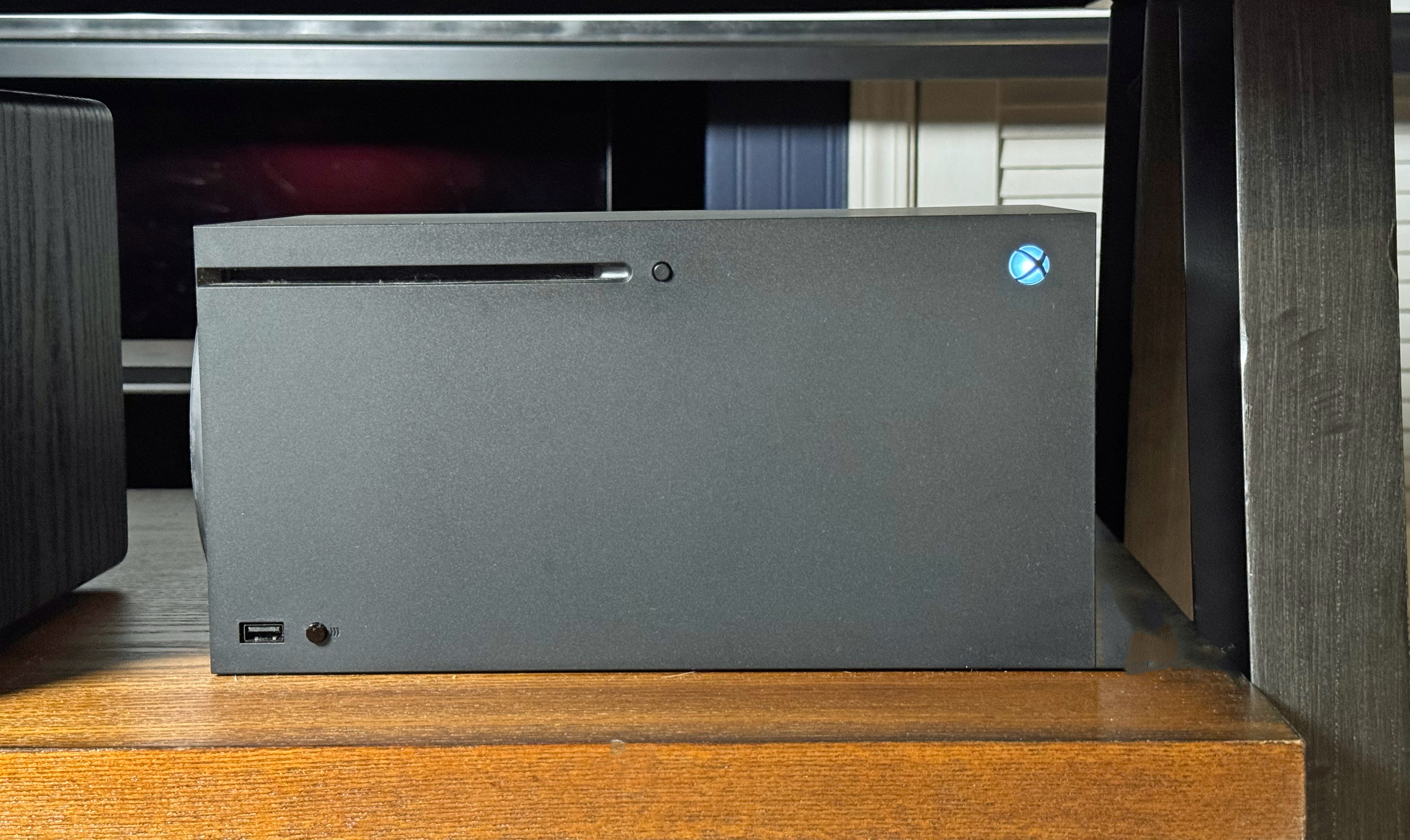
Xbox Series X
Devindra Hardawar for Engadget
Unfortunately, Microsoft squandered most of its good will with the Xbox One. That console was first announced as an "always online" device with restrictive DRM features that limited how you could share and sell games; it was bundled with a Kinect camera that could potentially surveil you; and at $499, it was $100 more than the PlayStation 4. Microsoft quickly reversed many of its DRM-heavy plans for the Xbox One, but by that point the damage was done. Sony ultimately sold more than twice as many PS4 units as the entirety of the Xbox One family (which included the cheaper One S and more powerful One X), according to data from Ampere Research.
Things are looking worse this generation: The Xbox Series S and X reportedly only sold around 33 million units as of July, according to Statista estimates, while Sony confirmed it sold 84.2 million PS5s as of November. If this trend continues (and it doesn’t appear as if Xbox sales will be increasing any time soon), Sony could end up selling three times as many consoles this generation, compared to Microsoft. Xbox sales have been so slow that the family-focused Nex Playground managed to outsell it in November, according to data from Circana.
Given Xbox's inability to compete with the PlayStation 5, it's no wonder Microsoft could be changing things up entirely for its next system. Its partnership with AMD could easily lead to new handhelds, and it also gives Microsoft a leg up in producing a compact and powerful Xbox PC. After all, why should the company keep trying to go toe-to-toe with Sony's closed PlayStation platform? Why shouldn't Microsoft embrace its PC roots to give us a gaming desktop under our TVs? The company has already committed to bringing new Xbox games to PCs immediately, so the line between the two is already blurring.
It may be a risk, but evolving into a PC proves there’s still life in the Xbox brand. And crucially, it’s also something Sony can’t easily replicate.
This article originally appeared on Engadget at https://www.engadget.com/gaming/xbox/2025-was-the-year-xbox-died-130000467.html?src=rss
As many of us hunker down for the holidays, you might want to tackle some of the best games we’ve seen this year: the long-time-coming Silksong, the critically acclaimed (and sumptuous) Expedition 33 and the bizarre world of Baby Steps.
Not to mention the Switch 2, which is slowly building out its own exclusive library with Metroid Prime 4 and Donkey Kong Bananza. Rare for me, this year, I’ve played many of the new games we’ve picked. Brag. I’d recommend both Dispatch and Blue Prince — I still haven’t completed the latter, but, yes, I’ve unlocked the secret elevator.
And if you don’t have access to your usual PC or console setup, there are some smartphone games worth your time, including Spooky Express, Is This Seat Taken and, well, Umamusume: Pretty Derby, a reimagined world of horse racing where the horses are anime girls with horse ears. Try explaining that to your uncle over dinner.
The Federal Communications Commission has assigned foreign-made drones and their critical components as prohibited to import into the US. The FCC said several national security agencies have determined that unmanned aircraft systems (UAS) and their critical components produced in foreign countries pose an unacceptable risk to the United States’ national security.
FCC Chair Brendan Carr clarified on X the ban does not affect old drones. People can continue using the devices they’ve already purchased, and retailers can keep selling models already approved by the agency. One of the most well-known brands affected by the ban is Chinese company DJI, which told Engadget it was disappointed by the agency’s decision. “While DJI was not singled out, no information has been released regarding what information was used by the Executive Branch in reaching its determination,” a spokesperson said.
Anna’s Archive, the open-source search engine for shadow libraries, claims to have scraped Spotify’s entire music library. The group acquired metadata for approximately 256 million tracks, including 86 million songs, and the total size is just under 300 TB.
“A while ago, we discovered a way to scrape Spotify at scale. We saw a role for us here to build a music archive primarily aimed at preservation,” the group said in a blog post. In response, the streamer said: “Spotify has identified and disabled the nefarious user accounts that engaged in unlawful scraping. We’ve implemented new safeguards for these types of anti-copyright attacks and are actively monitoring for suspicious behavior.”
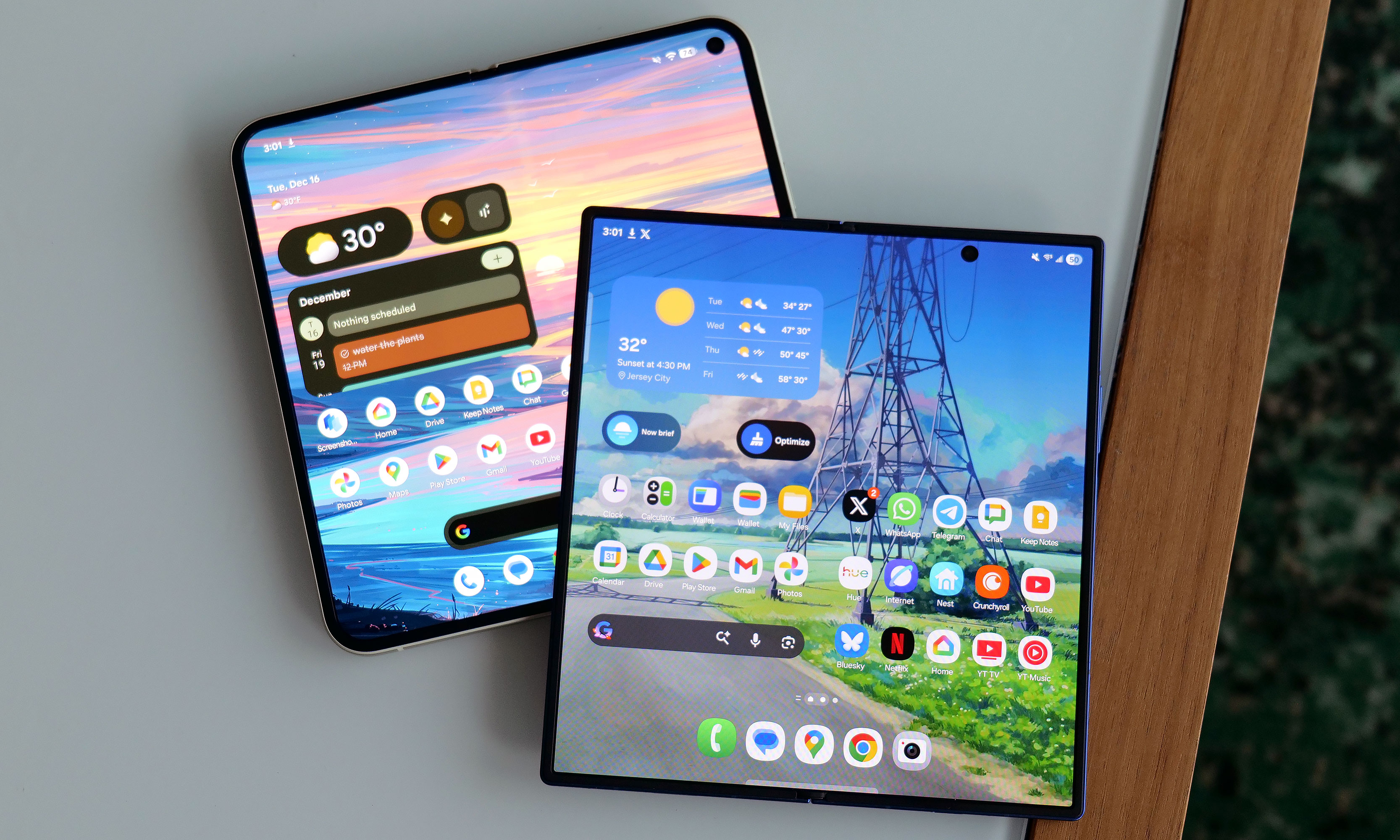
Google and Samsung have iterated their big foldables year on year for, well, years. But in 2025, they both delivered big phones that addressed prior flaws and issues. With the Galaxy Z Fold 7, Samsung achieved what may be an even bigger accomplishment by creating a foldable phone of essentially the same size and weight as its own S25 Ultra.
The one thing the makers of big foldables haven’t figured out is how to make them affordable. OnePlus came close in 2023 with the Open, which cost $1,500 after rebates. But things are actually going backwards. The launch price of the Z Fold 7 ($2,000) is $200 higher than the Z Fold 5’s debut price.
Amazon’s Alexa Home Theater feature has gradually become a legitimate surround sound option. You can link up to five Echo speakers and a subwoofer for a wireless cinematic experience. While the automatic room calibration and easy setup are great, the high price tag of a full Echo Studio array and limited EQ controls mean it’s best for people already juggling multiple Amazon speakers.
Giving a child an Apple Watch can offer extra peace of mind and tools that promote independence in a controlled way. Apple’s Family Setup feature makes it possible for a kid to use an Apple Watch without owning an iPhone, and the feature set has expanded thanks to recent watchOS updates. It supports communication controls, location tools, Schooltime limits and privacy protections that allow a parent or guardian to manage how the device is used throughout the day.
The setup process begins with creating or signing in with a child’s Apple ID. It continues with adding them to your Family Sharing group on an iPhone and pairing a compatible Apple Watch through the Apple Watch app. Once the watch is linked, you can adjust a range of parental controls that shape how the watch works at home, at school and when the child is out and about.
Confirm device compatibility
Family Setup requires a cellular-capable Apple Watch such as the Apple Watch SE or Series 6 or later. A cellular connection allows the watch to operate independently without an iPhone nearby. The watch must be running a recent version of watchOS and the iPhone used for setup must be running the latest iOS version.
If the watch is not new, it needs to be erased before it can pair with a new user. This can be done directly on the watch through the Settings menu by choosing the general reset option. Once the device is reset it can be paired again from the Apple Watch app.
Create or prepare your child's Apple ID
Family Setup relies on each child having their own Apple ID. This allows their data, messages, activity goals and device settings to remain separate from other people in the household. If your kid already has an Apple ID, it can be used during setup. If they do not have one, the Apple Watch app will prompt you to create one as you go through the pairing process.
A child’s Apple ID is linked to Family Sharing, which lets the organizer manage permissions from a single iPhone. A parent or guardian can approve contacts, handle screen time requests and view location updates without needing to touch the watch itself. Setting this up first ensures that the watch can be paired smoothly later.
Add the child to Family Sharing
Family Sharing is the foundation for managing the watch, and it’s all controlled through the Settings app on your iPhone. Once Family Sharing is open you can tap the option to add a family member then follow the prompts to link the child’s Apple ID to the group. This also makes you the family organizer, which gives you control of purchase approvals, communication limits and other shared features.
Once the child is added to Family Sharing their information becomes available when you begin pairing the Apple Watch. This makes the process faster since the watch can immediately associate itself with the correct Apple ID.
Pair the watch using Family Setup
Turn on the Apple Watch and place it near your iPhone. A prompt should appear directing you to use your iPhone for setup. If the prompt does not appear, you can open the Apple Watch app, go to All Watches and choose Add Watch. The app will then ask if the device is being set up for you or for a family member. Choose the family member option and continue.
The camera on your iPhone is used to pair the devices. Align the Apple Watch face inside the frame on your screen until the pairing animation is recognized. Once the connection is made the app will ask which family member the watch is for. Select the child’s profile to continue through the remaining steps.
The app will guide you through choosing which wrist the watch will be worn on, setting a passcode, signing in with the child’s Apple ID and enabling services such as Siri and location tracking. You can also set up activity goals tailored to the child’s age and fitness level.
Manage the watch from your iPhone
Once the Apple Watch is paired, the Watch app becomes the main place to manage how it works. The Family Setup interface is designed to give parents and guardians control without needing to handle the watch directly. Most adjustments can be made at any time from the iPhone used for setup.
Screen Time controls allow you to set limits for communication and app use. You can restrict access to certain features during specific times of day, create downtime schedules and manage content restrictions for websites and apps. These settings mirror the Screen Time system used on other Apple devices which makes it easier to keep rules consistent across the household.
Approved contacts can be managed through the communication limits menu. This ensures that the child can send messages and make calls only with approved people. If you add or remove contacts, they are updated instantly on the watch.
Location sharing is handled through the Find My app. You can view the child’s location and set notifications that alert you when they arrive at or leave a particular place. This is useful for school pickups or after-school activities. The watch uses on-device processing for location and messages which helps maintain privacy.
Configure Schooltime and Focus modes
School time is one of the most important parental controls for younger users. It limits interaction with the watch during school hours by locking access to most apps and features. Only the time and a simple yellow icon appear on the screen while Schooltime is active. You can schedule Schooltime from the Apple Watch app so that it automatically turns on and off at the right times each day.
Focus modes offer another layer of control. These modes can reduce distractions during homework, bedtime or other family routines. Each Focus mode can limit notifications and activity alerts so the child is not interrupted when they need to concentrate.
Set up safety features
Emergency SOS is enabled during setup and can be managed afterward in the Apple Watch app. It allows the child to contact emergency services by holding the side button. You can also assign an emergency contact who will receive a notification if SOS is triggered.
The Medical ID should include relevant details such as allergies or medical conditions. This information can be accessed by emergency responders if needed.
Adjust privacy and communication settings
The watch uses on-device processing for messages, location and Siri requests which helps protect your child’s data. Location sharing can be turned on or off at any time and you can manage which apps are allowed to use location services. Communication permissions can also be updated as the child’s needs change.
Apps installed on the watch can be controlled from the Apple Watch app. You can remove apps, restrict access or hide notifications at any time to maintain a balanced experience.
This article originally appeared on Engadget at https://www.engadget.com/wearables/how-to-set-up-an-apple-watch-for-a-child-120051230.html?src=rss
Upgrading to a good SSD can make your computer feel brand new again. Apps open faster, files move in a blink and even older machines start to feel a lot more responsive. It is one of the easiest ways to breathe life into a laptop or desktop without replacing the whole system, and the performance boost is something you notice right away.
There are plenty of SSDs to choose from, though, and the naming alone can be confusing if you are not already familiar with the specs. Some drives are built for simple upgrades, while others offer speeds that benefit creators or gamers. To help you sort through it, we tested a wide mix of options and pulled together the best SSDs you can buy right now.
I’ve either tested or personally use daily every storage drive recommended on this list. Out of our top picks, I bought four with my own money after doing about a dozen hours of research. Separately, Engadget Senior Reporter Jeff Dunn has also tested a handful of our recommendations, including the Crucial X9 Pro listed above.
What to look for in a PC SSD
The most affordable way to add fast storage space to a computer is with a 2.5-inch SATA drive. It’s also one of the easiest if you don’t want to worry about compatibility since almost every computer made in the last two decades will include a motherboard with Serial ATA connections. For that reason, the best SATA SSDs are an excellent choice if you want to extend the life of an older PC build. Installation is straightforward, too. Once you’ve secured the internal SSD in a drive cage, all you need to do is to connect it to your motherboard and power supply.
The one downside of SATA drives is that, in terms of responsiveness, they’re slower than their high-performance NVMe counterparts, with SATA III limiting data transfers to 600MB/s. But even the slowest SSD will be significantly faster than the best mechanical drives. And with high-capacity, 1TB SATA SSDs costing about $100, they’re a good bulk-storage option.
If your PC is newer, there’s a good chance it includes space for one or more M.2 SSDs. The form factor represents your ticket to the fastest SSDs on the market, but the tricky part is navigating all the different standards and specs involved.
M.2 drives can feature either a SATA or PCIe connection. SSDs with the latter are known as Non-Volatile Memory or NVMe drives and are significantly faster than their SATA counterparts, with Gen3 models offering sequential write speeds of up to 3,000MB/s. These drives rely on NVMe NAND technology for their superior performance and durability. You can get twice the performance with a Gen4 SSD, but you’ll need a motherboard and processor that supports the standard.
If you’re running an AMD system, that means at least a Ryzen 3000 or 5000 CPU and an X570 or B550 motherboard. With Intel, meanwhile, you’ll need at least an 11th or 12th Gen processor and a Z490, Z590 or Z690 motherboard. Keep in mind that Gen4 SSDs typically cost more than their Gen3 counterparts as well.
More expensive still are the latest Gen5 models, which offer sequential read speeds of up to 16,000MB/s. However, even if your computer supports the standard, you’re better off buying a more affordable Gen4 or Gen3 drive. At the moment, very few games and applications can take advantage of Gen3 NVMe speeds, let alone Gen4 and Gen5 speeds. What’s more, Gen5 NVMe drives can run hot, which can lead to performance and longevity issues. Your money is better spent on other components, like upgrading your GPU, for now.
As for why you would buy an M.2 SATA drive over a similarly specced 2.5-inch drive, it comes down to ease of installation. You add M.2 storage to your computer by installing the SSD directly onto the motherboard. That may sound intimidating, but in practice the process involves a single screw that you first remove to connect the drive to your computer and then retighten to secure the SSD in place. As an added bonus, there aren’t any wires involved, making cable management easier.
Note that you can install a SATA M.2 SSD into an M.2 slot with a PCIe connection, but you can’t insert an NVMe M.2 SSD into a M.2 slot with a SATA connection. Unless you want to continue using an old M.2 drive, there’s little reason to take advantage of that feature. Speaking of backward compatibility, it’s also possible to use a Gen4 drive through a PCIe 3 connection, but you won’t get any of the speed benefits of the faster NVMe.
One last thing to consider is that M.2 drives come in different physical sizes. From shortest to longest, the common options are 2230, 2242, 2260, 2280 and 22110. (The first two numbers represent width in millimeters and the latter denote the length.) For the most part, you don’t have to worry about that since 2280 is the default for many motherboards and manufacturers. Some boards can accommodate more than one size of NVMe SSD thanks to multiple standoffs. That said, check your computer’s documentation or firmware before buying a drive to ensure you’re picking up a compatible size.
If you’re buying a replacement SSD for the Steam Deck or Steam Deck OLED, things are less complicated. For Valve’s handheld, you will need a 2230 size NVMe. Simple. If you don’t want to open your Steam Deck, it’s also possible to expand its storage by installing a microSD card. Engadget has a separate guide dedicated to SD card storage, so check that out for additional buying advice.
I alluded to this earlier, but the best buying advice I can offer is don’t get too caught up about being on the bleeding edge of storage tech. The sequential read and write speeds you see manufacturers list on their drives are theoretical and real-world performance benchmark tests vary less than you think.
If your budget forces you to choose between a 1TB Gen3 NVMe and a 512GB Gen4 model, go for the higher-capacity one. From a practical standpoint, the worst thing you can do is buy a type of SSD that’s too small for needs. Drives can slow dramatically as they approach capacity, and you will probably end up purchasing one with a higher gigabyte capacity in the future.
What to look for in portable and USB flash drives
Portable SSDs are a somewhat different beast to their internal siblings. While read and write speeds are important, they are almost secondary to how an external drive connects to your PC. You won’t get the most out of a model like the SanDisk Extreme Pro V2 without a USB 3.2 Gen 2 x 2 connection. Even among newer PCs, that’s something of a premium feature. For that reason, most people are best off buying a portable drive with a USB 3.2 Gen 2 or Thunderbolt connection. The former offers transfer speeds of up to 10Gbps. The best external hard drives also allow you to transfer data from your Windows PC to a Mac, or other device, if compatible. Be sure to consider this beforehand if you plan to use your portable drive across multiple devices.
Additionally, if you plan to take your drive on trips and commutes, it’s worthwhile to buy a model with IP-certified water and dust proofing. Some companies like Samsung offer rugged versions of their most popular drives, including the Samsung SSD T7 Shield, with a high endurance rating. For additional peace of mind, 256-bit AES hardware encryption will help prevent someone from accessing your data if you ever lose or misplace your external SSD.
Some of the same features contribute to a great thumbstick drive. Our favorite picks for best budget external SSD models feature USB 3.0 connections and some form of hardware encryption.
A note on console storage
Seagate
If PC gaming isn’t your thing and you own an Xbox Series X|S or PS5, outfitting your fancy new console with the fastest possible storage is far more straightforward than doing the same on PC. With a Series X or Series S, your options are limited to options from Seagate and Western Digital. The former offers 512GB, 1TB and 2TB models, with the most affordable starting at a not-so-trivial $90. Western Digital’s Expansion Cards are less expensive, with pricing starting at $80 for the 512GB model. The good news is that both options are frequently on sale. Your best bet is to set an alert for the model you want by using a price tracker like CamelCamelCamel.
With Sony’s PlayStation 5, upgrading the console’s internal storage is slightly more involved. Instead of employing a proprietary solution, the PS5 uses NVMe storage. Thankfully, there aren’t as many potential configurations as you would find on a PC. Engadget maintains a comprehensive guide to the best SSDs for PS5; in short, your best bet is a high-capacity Gen4 drive with a built-in heatsink. Check out that guide for a full list of gaming SSD recommendations, but for a quick go-to, consider the Corsair MP600 Pro LPX I recommend above. It meets all the memory specifications for Sony’s latest console and you won’t run into any clearance issues with the heatsink. Corsair offers 500GB, 1TB, 2TB, 4TB and 8TB versions of the drive. Expect to pay about $110 for the 1TB variant and about $200 for 2TB.
For those still playing on a previous generation console, you can get slightly faster game load times from a PlayStation 4 by swapping the included hard drive to a 2.5-inch SSD, but going out of your way to do so probably isn’t worth it at this point and you’re better off saving your money for one of the new consoles and updating your operating system instead.
SSD FAQs
What size SSD is best?
There is no one size fits all rule for SSDs, but we generally recommend getting at least a 1TB SSD if you’re looking to upgrade PC or game console storage, or looking to add an external drive to your toolkit. A 1TB drive will be plenty for most people who need extra storage space for photos, documents and programs. If you’re a hardcore gamer, you may want to invest in even more storage considering many high-profile titles today can take up a ton of space.
Is a 256GB SSD better than a 1TB hard drive?
The short answer is that it depends on what you need your drive for. In general, SSDs are faster and more efficient than HDDs, but HDDs are usually cheaper. We recommend springing for an SSD for most use cases today — upgrading a PC, saving important photos and documents, storing games long term, etc. But if you’re focused on getting the most amount of extra space possible (and sticking to a budget), an HDD could be a good option for you.
Does bigger SSD mean faster?
Getting a bigger SSD doesn’t always translate into a faster drive overall. A bigger SSD will provide a higher storage capacity, which means more space for storing digital files and programs. To understand how fast an SSD will be, you’ll want to look at its read/write speeds: read speeds measure how fast a drive can access information, while write speeds measure how fast the drive can save information. Most SSDs list their approximate read/write speeds in their specs, so be sure to check out those numbers before you make a purchase.
This article originally appeared on Engadget at https://www.engadget.com/computing/accessories/best-ssds-140014262.html?src=rss
It might be hard to believe, but foldable phones have already been around for the better part of a decade. Granted, the first one I saw back in 2019 — which actually predates Samsung's Galaxy Fold — was a cobbled-together mess. But since then, phone makers have been steadily iterating and tweaking their designs, and this year, manufacturers have finally addressed all the major issues about foldable phones except one: price.
Let’s go back to the OG Fold. Even though it was chunky and heavy, had a tiny exterior display and suffered from a hinge that let too much detritus inside (which is probably how The Verge’s review unit got wrecked), it still showed so much promise. It was a true multitasker — a phone that could turn into a small tablet at a moment's notice. What's not to like?
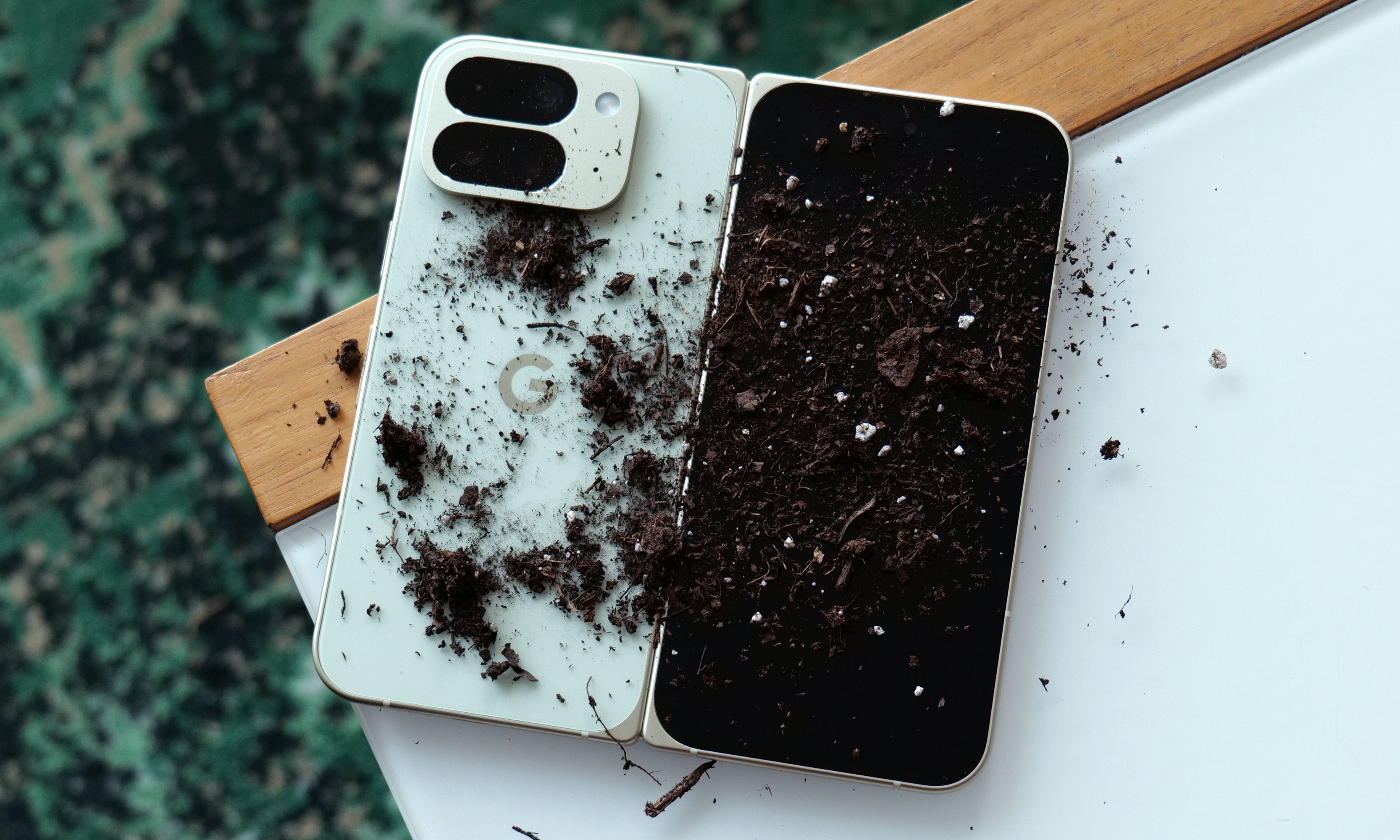
This scene would have sent shivers down my spine in previous years, but thanks to an IP68 rating for dust and water resistance, the Pixel 10 Pro Fold isn't bothered.
Sam Rutherford for Engadget
From there, Samsung upgraded its foldables with water resistance and S Pen support on the Z Fold 3, followed by eliminating the gap between the two halves of a closed Z Fold 5. And as competition grew from OnePlus and Google (not to mention all the Chinese rivals like Oppo, Xiaomi and others), we saw design and software improvement across the category .
In 2025, two phones in particular brought major upgrades to foldables as a whole. Even though its shape didn't change much from its predecessor, Google managed to get the Pixel 10 Pro Fold an IP68 rating for dust and water resistance — finally putting protection for both dirt and liquid in the same foldable for the first time. Now, for all the folks out there with regular phones, that might not sound like a big deal. But on devices with complicated hinges where you really don't want random garbage getting inside, that's a massive relief and a big improvement to the handset's general usability.
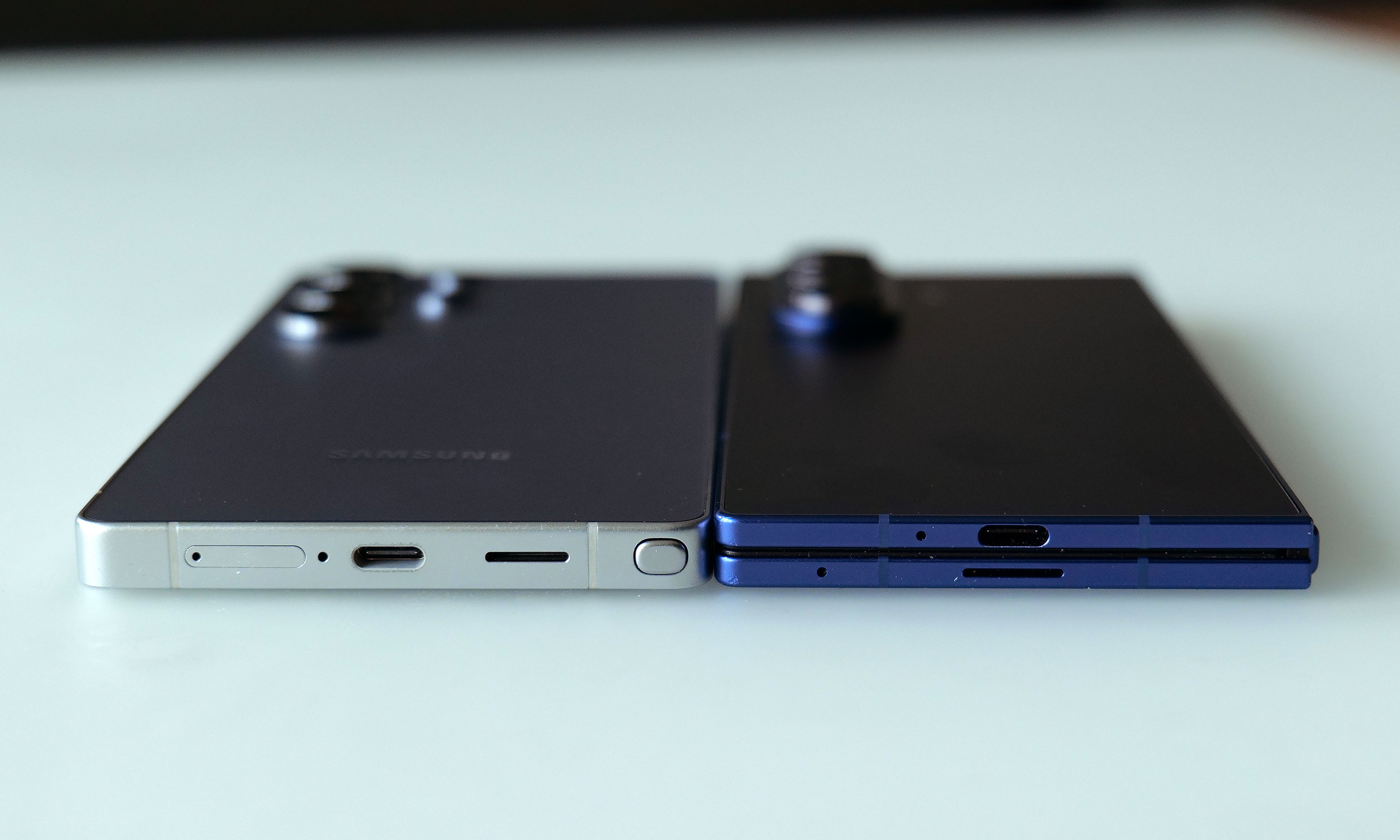
If you only look at their dimensions, you'd be hard pressed to tell the difference between the Galaxy Z Fold 7 (right) and an S25 Ultra (left).
Sam Rutherford for Engadget
Meanwhile, with the Galaxy Z Fold 7, Samsung achieved what may be an even bigger accomplishment by creating a foldable phone that was essentially the same size and weight as a traditional glass brick handset — with a massive 8-inch interior display no less. In fact, if you compared the Z Fold 7 to Samsung's other flagship — the S25 Ultra — the fold is actually a touch lighter (7.58 ounces vs 7.69 ounces) and practically just as thin (8.9mm vs 8.2mm). That's huge because one of the biggest issues with previous generations of foldables was excess bulk and heft, to the point where often I had to wear a belt just so my pants wouldn't sag when carrying one around.
Unfortunately, there isn't a phone maker that has put both of these advancements into a single gadget just yet. But this is still a big deal, and based on how things are trending, I'm sure that won't be the case for long.
What about the crease, you say? Yes, even the latest and greatest foldables still have a small depression that runs down the screen where the phone bends in half. Let me be clear: that's not really an issue. Sure, it would be nice if it weren't there, but getting mad about the crease is kind of like being annoyed at a convertible car that has some extra panel gaps because it has a retractable roof. Not only is the crease basically invisible when you are looking at it head-on (which is the vast majority of the time), in reality, people don't touch the dead center of their phone's display all that often — especially on a screen the size of a small tablet.
The Z Fold 7 has made bulky foldables a thing of the past while the Pixel 10 Pro Fold shows how these phones don't need to be afraid of dirt anymore.
Sam Rutherford for Engadget
Really, the one thing the makers of big foldables haven't figured out is how to make them affordable. OnePlus sort of came close in 2023 with the Open, which cost $1,500 after rebates that included trading in literally any phone (even broken ones). In fact, things are actually kind of going backwards. The launch price of the Z Fold 7 ($2,000) is $200 more than what the Z Fold 5 debuted at just a couple of years ago. Even with high prices, I've started seeing more and more foldable phones in the wild than ever before and the data backs up my sentiment. Sales of the Galaxy Z Fold 7 are up 50 percent compared to the previous generation while global foldable phone sales reached a new high in Q3 of this year, and I'm willing to bet that there are millions of others out there who would be interested in them — if only they didn't cost so much.
This article originally appeared on Engadget at https://www.engadget.com/mobile/smartphones/foldable-phone-makers-have-solved-every-issue-except-one-130000891.html?src=rss
The Nintendo Switch 2 supports a wide range of controllers, from Nintendo’s own Pro Controller to many Bluetooth gamepads you might already have. Whether you’re setting up your new console for the first time or adding extra controllers for multiplayer games, pairing them is simple as long as you know where to look. Here’s how to connect the Switch 2 Pro Controller, how to sync additional Bluetooth controllers and what to do if something doesn’t pair correctly.
Before you start: What you’ll need
To pair any controller with the Switch 2 you’ll need the console powered on and updated to the latest system software. Navigate to System Settings, System then System Update to check. It also helps to have the controller charged, since some models need enough battery to begin pairing.
On the Switch 2, all controller settings reside in the Controllers & Sensors section of System Settings. You can pair up to four controllers depending on the game and the controller type.
To pair the Switch 2 Pro Controller using a USB cable:
Connect the Pro Controller to the Switch 2 using a USB-C cable.
Wake the console and open the Controllers menu from the Home screen.
The console will automatically detect the controller and pair it.
Once the controller is paired, you can unplug the cable and continue using it wirelessly. This method ensures an instant connection and is useful if the controller has low battery.
To pair wirelessly:
Turn on the Switch 2 and navigate to System Settings, Controllers & Sensors then Change Grip/Order.
Press and hold the small Sync button on top of the Pro Controller until the indicator lights begin flashing.
The Switch 2 will detect the controller and confirm the pairing.
How to pair other Bluetooth controllers to Switch 2
The Switch 2 supports a wide range of Bluetooth controllers, including many gamepads designed for PC, Android and iOS devices. Pairing these controllers uses a similar process, but you’ll start by putting the controller into Bluetooth pairing mode.
Each controller handles this differently. On most models, you’ll hold a dedicated sync button or press a combination of buttons until lights begin flashing. If you’re not sure which buttons to press, check the controller’s manual.
On the Switch 2, navigate to the Home Menu and select Controllers then Change Grip/Order. This page is always used for wireless pairing. The console will search for available Bluetooth devices as soon as it opens.
Once your controller appears on the screen, select it to finish the pairing process. The lights on the controller should stop blinking and settle into an assigned player slot. Some controllers may prompt you to confirm the button layout or adjust settings after pairing.
The Switch 2 can use up to four wireless controllers at once. For local multiplayer games, each controller will automatically be assigned a player number once connected.
Troubleshooting pairing issues
If your controller doesn’t appear in the pairing menu, make sure Bluetooth is enabled on the Switch 2 by navigating to System Settings then Controllers & Sensors. It’s also worth restarting the controller and checking that it has enough battery to stay in pairing mode. Moving closer to the console can help reduce interference as well. If you’re trying to connect a controller that supports multiple device profiles, verify that it’s set to Nintendo Switch mode or a standard Bluetooth gamepad mode.
With Pro Controllers, a wired connection usually solves pairing problems. Plug the controller into the Switch 2 using a USB-C cable and allow it to sync before trying wireless mode again.
Reconnecting paired controllers
Once you’ve paired a controller, reconnecting it is as simple as pressing any button. The Switch 2 will wake and recognize it automatically as long as the controller is still linked to the console. If you pair the controller with another device later, you may need to repeat the pairing process.
Pairing controllers with the Switch 2 is quick once you know where the settings live. The Pro Controller offers the most seamless experience, especially if you start with a wired connection, but the console’s Bluetooth support gives you plenty of flexibility for multiplayer games or different play styles.
This article originally appeared on Engadget at https://www.engadget.com/gaming/nintendo/how-to-pair-controllers-with-the-nintendo-switch-2-130000126.html?src=rss
A tight budget does not mean you have to settle for a slow or outdated laptop. Many affordable models today offer solid performance for work, classes and everyday browsing, and some even pack in extras like bright displays or long battery life. Whether you need something for school, travel or streaming, there are plenty of budget laptops that deliver more value than you might expect.
Since the options can be overwhelming, we tested a wide range of devices to find the best budget laptops that offer dependable performance without stretching your wallet.
First, we at Engadget consider anything under $1,000 to be “budget” in the laptop space. The reason for this is twofold: even the most affordable flagship laptops typically start at $1,000 or more, and if you go dramatically lower than that (say, $500 or less), that’s where you’ll really start to see compromises in performance. You’ll typically find the best cheap laptops striking a good balance between power and price in the $500 to $1,000 range. But in this guide, we’ll cover top picks at a wide range of prices — there are a number of excellent options on the low and high end of the budget spectrum.
Arguably the biggest thing to look for in a cheap laptop is build quality and a decent spec sheet. You might be able to find configuration options with the latest generation CPU chipsets, or you may have to go for one that has a slightly older processor. We recommend looking for models with solid state drive (SSD) storage instead of a traditional hard drive, as SSDs provide faster performance. And if you can find a PC with the latest internals, it’s worth the investment. However, going with a CPU that’s just one generation behind likely won’t make a noticeable difference in performance.
Along with processors, you should also consider the amount of memory and storage you need in a daily driver. For the former, we recommend laptops with at least 8GB of RAM; anything with less than that will have a hard time multitasking and managing all those web browsing tabs. The latter is a bit more personal: how much onboard storage you need really depends on how many apps, files, photos, documents and more you will save locally. As a general rule of thumb, try to go for a laptop that has at least a 256GB SSD (this only goes for macOS and Windows machines, as Chromebooks are a bit different). That should give you enough space for programs and files, plus room for future operating system updates. And if you need a machine for light productivity or Android emulation, some laptops even support Android apps natively, which can add extra versatility.
After determining the best performance you can get while sticking to your budget, it’s also worth examining a few different design aspects. We recommend a laptop with an IPS display for better viewing angles and color accuracy, though premium models with OLED displays are becoming more common and can offer deeper blacks and vibrant colors. Pay attention to port selection, too — many budget models offer plenty of ports, while higher-end ones tend to prioritize minimalism with fewer connections. If connectivity matters to you, look for options with USB-C, USB-A, HDMI and an audio jack.
And speaking of practical features, keep an eye on GPU performance if you're shopping for a budget-friendly gaming laptop. While integrated graphics are fine for casual users, a dedicated GPU will improve gaming and creative workloads. We also recommend checking the refresh rate of the screen, as a higher rate will make a noticeable difference in both games and scrolling-heavy apps.
A note about refurbished laptops
Refurbished laptops are another option to consider if you need a new machine and don’t want to spend a ton of money. Buying refurbished tech can be tricky if you’re unfamiliar with a brand’s or merchant’s policies surrounding what they classify as “refurbished.” But it’s not impossible — for laptops, we recommend going directly to the manufacturer for refurbished devices. Apple, Dell and Microsoft all have official refurbishment processes that their devices go through before they’re put back on the market that verifies the machines work properly and are in good condition. Third-party retailers like Amazon and Walmart also have their own refurbishment programs for laptops and other gadgets as well.
This article originally appeared on Engadget at https://www.engadget.com/computing/laptops/best-budget-laptop-150038435.html?src=rss
There may not be any reports of stick drift with the ROG Xbox Ally yet, but that doesn't mean there won't be. If you'd rather not end up with joysticks that have a mind of their own, GuliKit revealed its latest TMR Electromagnet Joystick Modules made specifically for your Xbox handheld.
GuliKit said it worked directly with Asus to develop these joystick upgrades, which match the exact dimensions of the ROG Xbox Ally and Ally X's stock sticks. The aftermarket accessories company previously designed a Hall effect joystick upgrade kit for the ROG Ally X, but GuliKit said this mod features electromagnetic joysticks that not only address stick drift but are also more precise, durable, and power-efficient. GuliKit even made the joystick upgrades easy to install since there's no soldering required, and you can fine-tune the calibration in the handheld's system settings.
It may feel excessive to spend more money on a gaming handheld that can cost up to $1,000, but neither the ROG Xbox Ally nor Ally X comes with Hall effect or electromagnetic joysticks. GuliKit's joystick upgrade is already available to US customers on its Amazon storefront for $19.99.
This article originally appeared on Engadget at https://www.engadget.com/gaming/xbox/gulikits-20-mod-makes-the-rog-xbox-allys-joysticks-drift-free-190521030.html?src=rss