A Design Student Just Fixed the Way Runners Hydrate

Most runners know the feeling. You’re a few miles in, the sun is beating down, and somewhere between the last water stop and the next one, you’re already behind. You’ve read the articles. You know hydration matters. And yet, you still have no real idea if you’re actually drinking enough, or too much, or the right thing at all. You’re just guessing, like almost everyone else out there pounding the pavement.

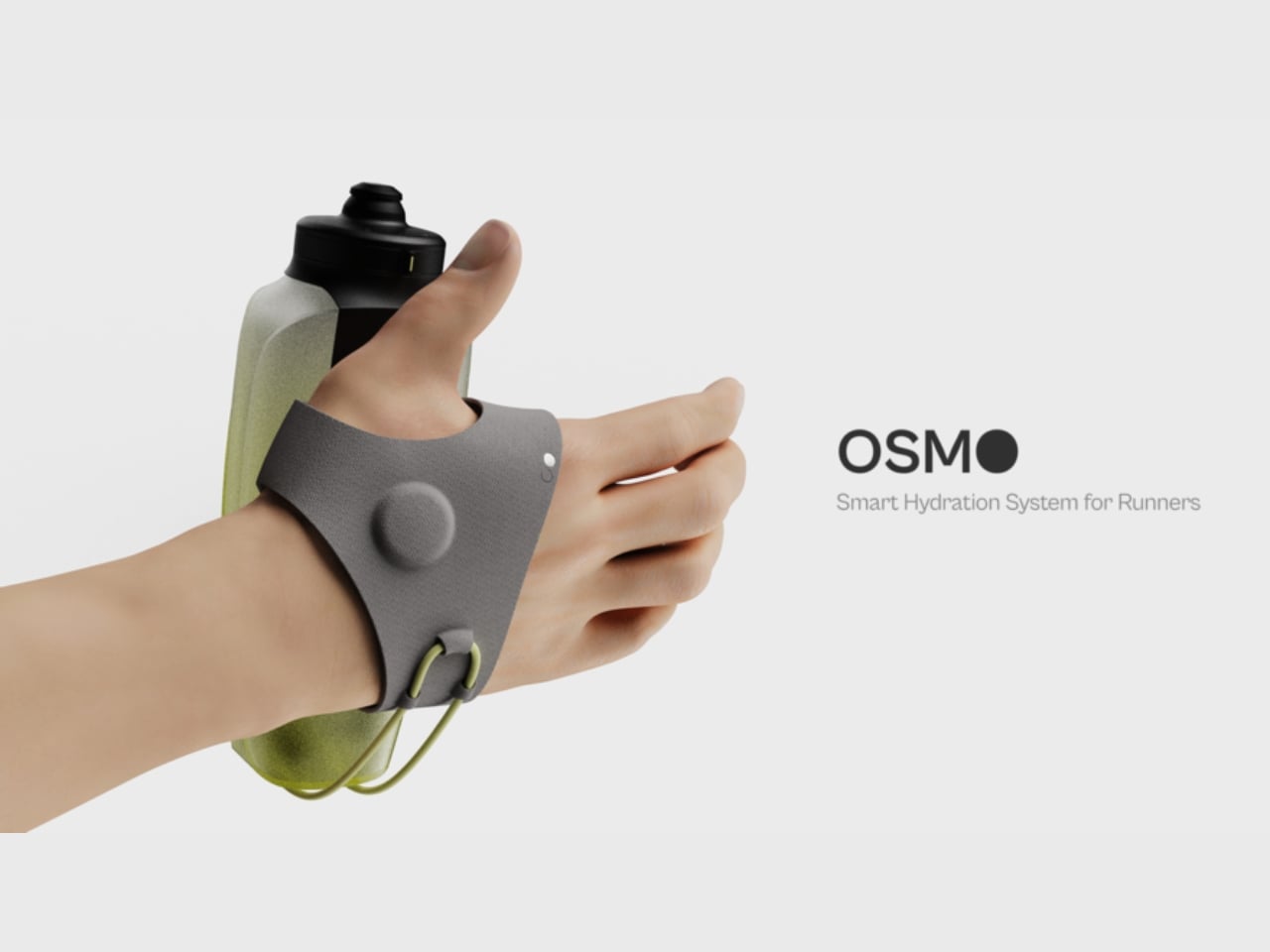
That gap between knowing and doing is exactly what Yash Ghule, a student at ArtCenter College of Design, set out to close with Osmo, an adaptive hydration system built specifically for runners. It’s a student design project, but the thinking behind it is sophisticated enough to deserve a proper look well beyond the design community.

Designer: Yash Ghule
The problem Ghule identified isn’t lack of information. It’s that current hydration tools don’t fit how running actually feels. When you’re in the middle of a run, your cognitive bandwidth is largely committed to the act of running itself. Checking an app, reading a label, or doing mental math about electrolytes isn’t something most people can or will do mid-stride. Hydration fails not because runners don’t care, but because the tools available demand too much attention at exactly the wrong moment. That insight alone is sharp.
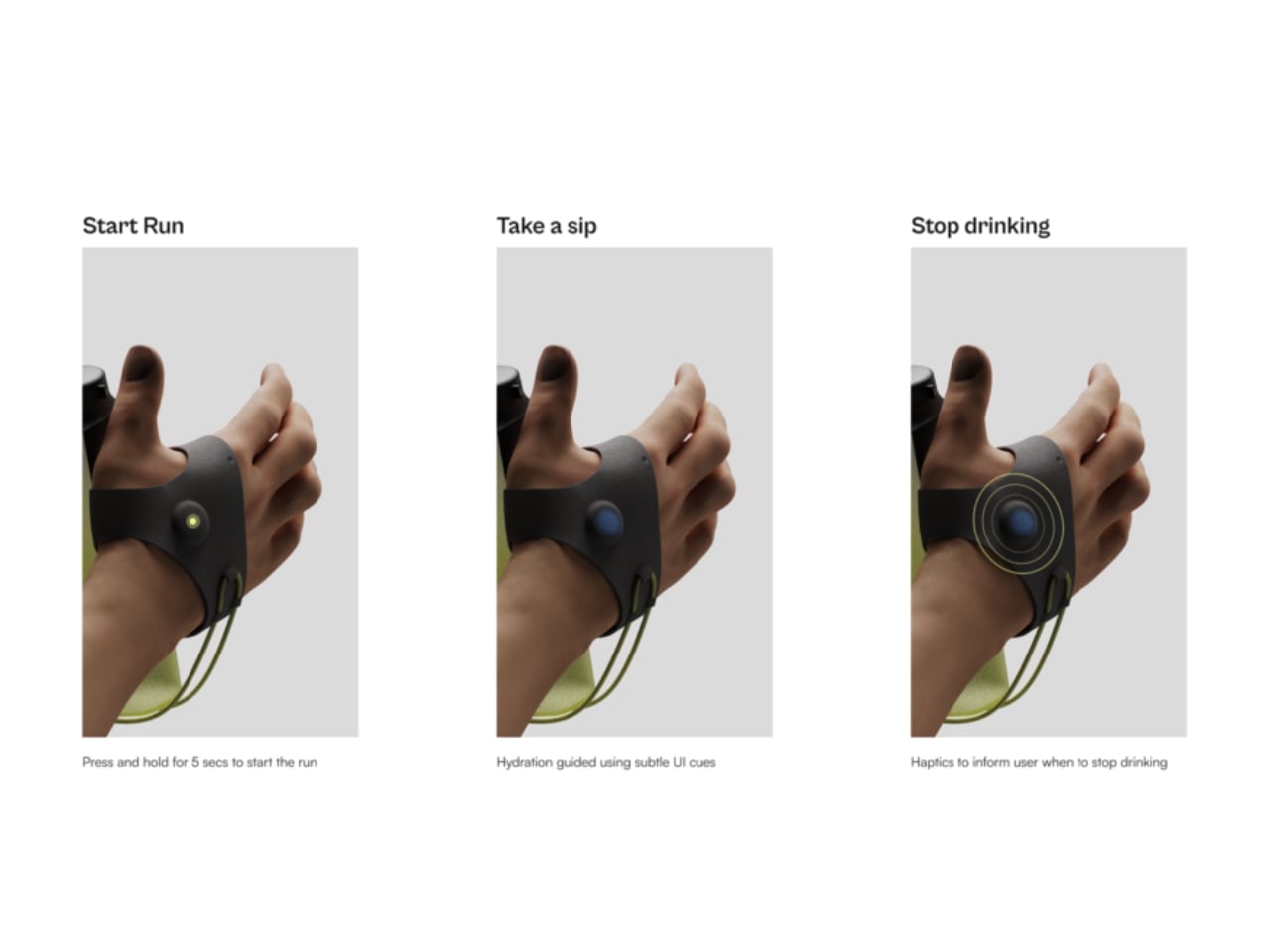
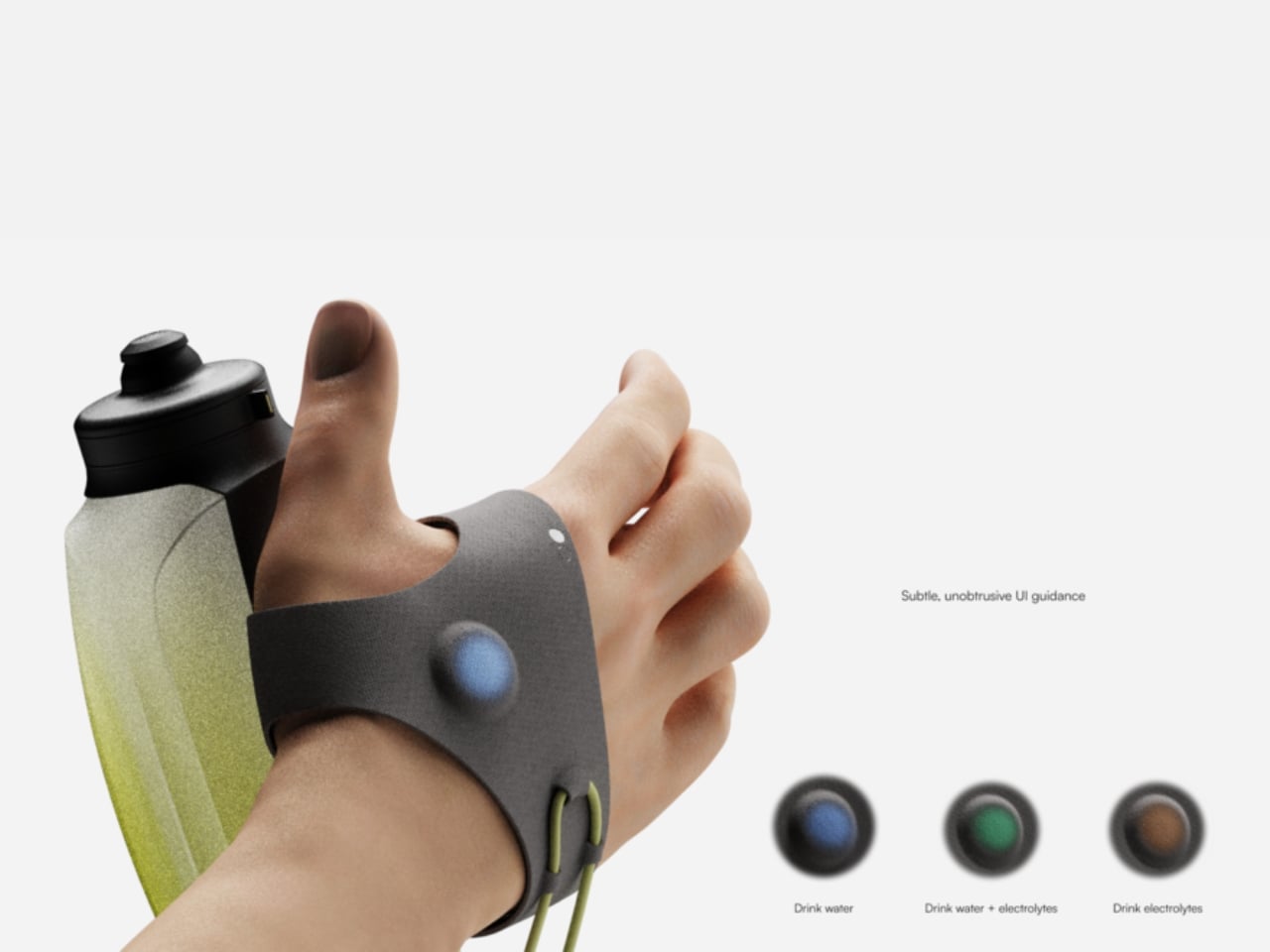
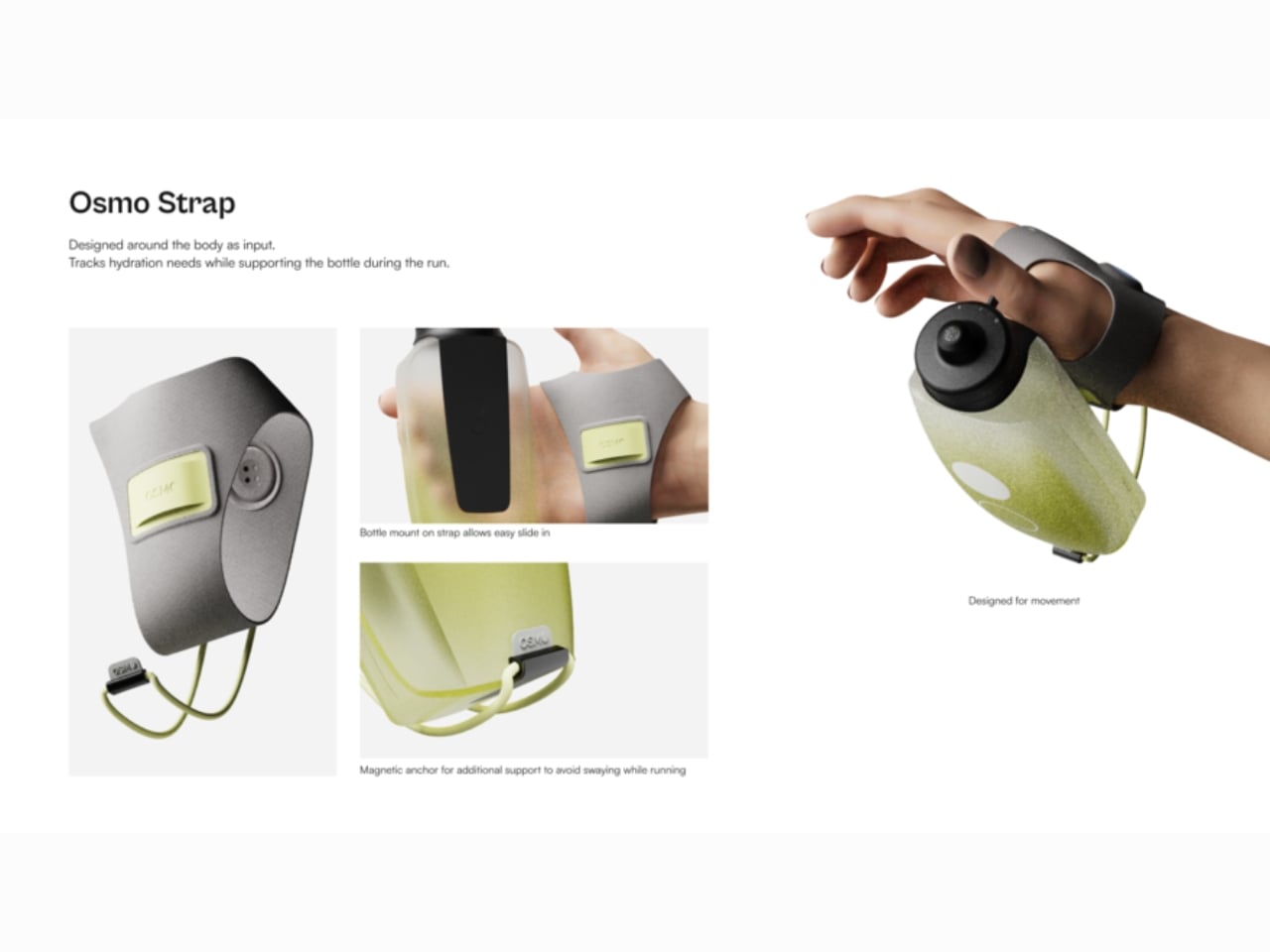
Osmo solves this with three connected components working as a single system. The wearable, worn on the wrist, continuously tracks sweat rate, temperature, humidity, and intake behavior. It then translates that data into cues delivered through haptic vibration and light feedback, nudging the runner without pulling them out of their flow. No screen to look at. No notification to parse. Just a quiet signal saying, drink something now.

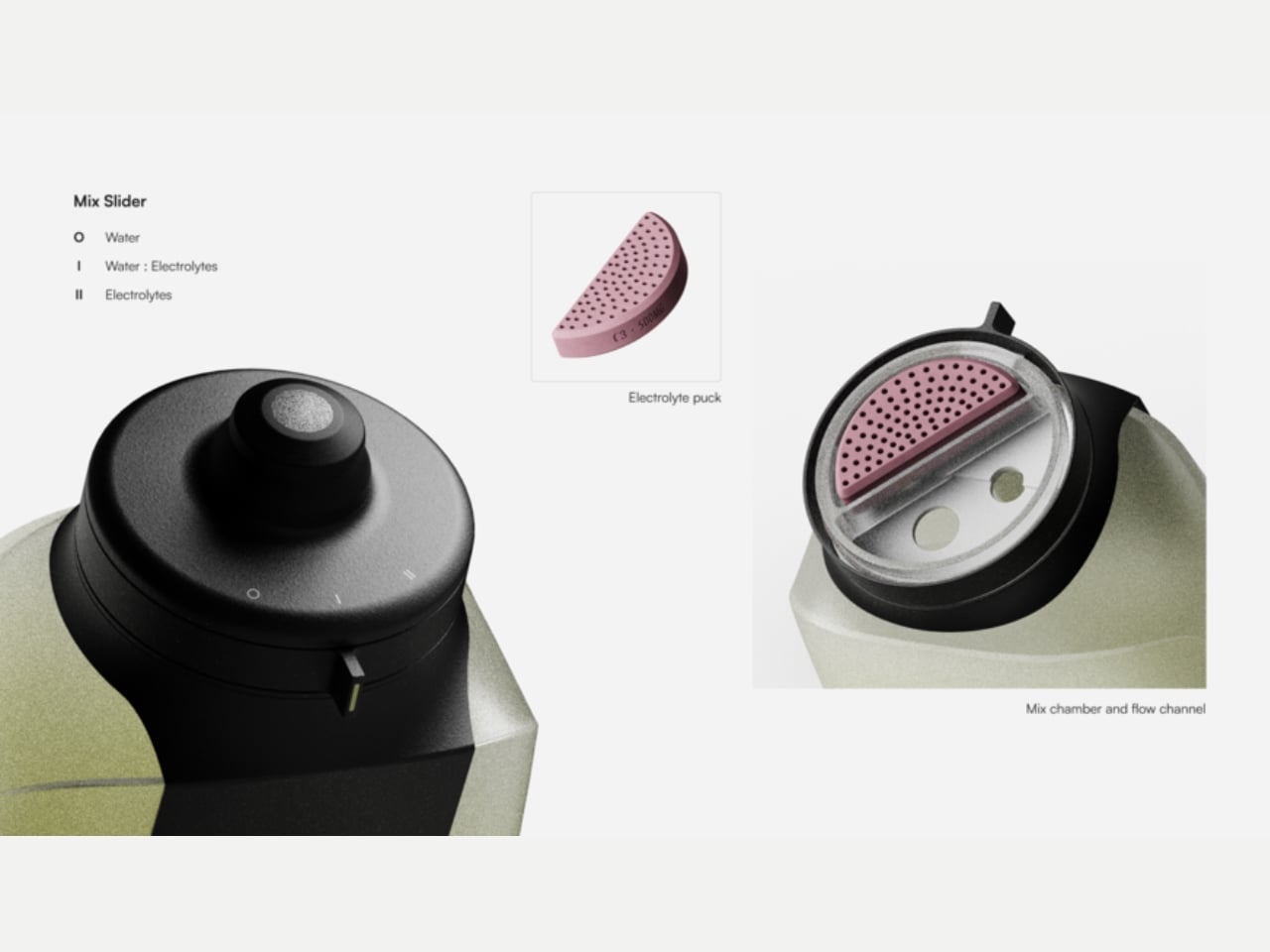
The bottle is where it gets particularly elegant. Rather than requiring you to pre-plan your hydration strategy before lacing up, Osmo’s bottle includes a built-in mixing mechanism that lets you shift between water and electrolytes on the fly. A simple slider adjusts the ratio as your needs change. This is the kind of thinking that solves a real problem rather than adding a layer of complexity dressed up as innovation. No extra pouches, no separate drink mixes to remember, no mid-run compromise where you reach for the wrong option because you didn’t prepare for the conditions.
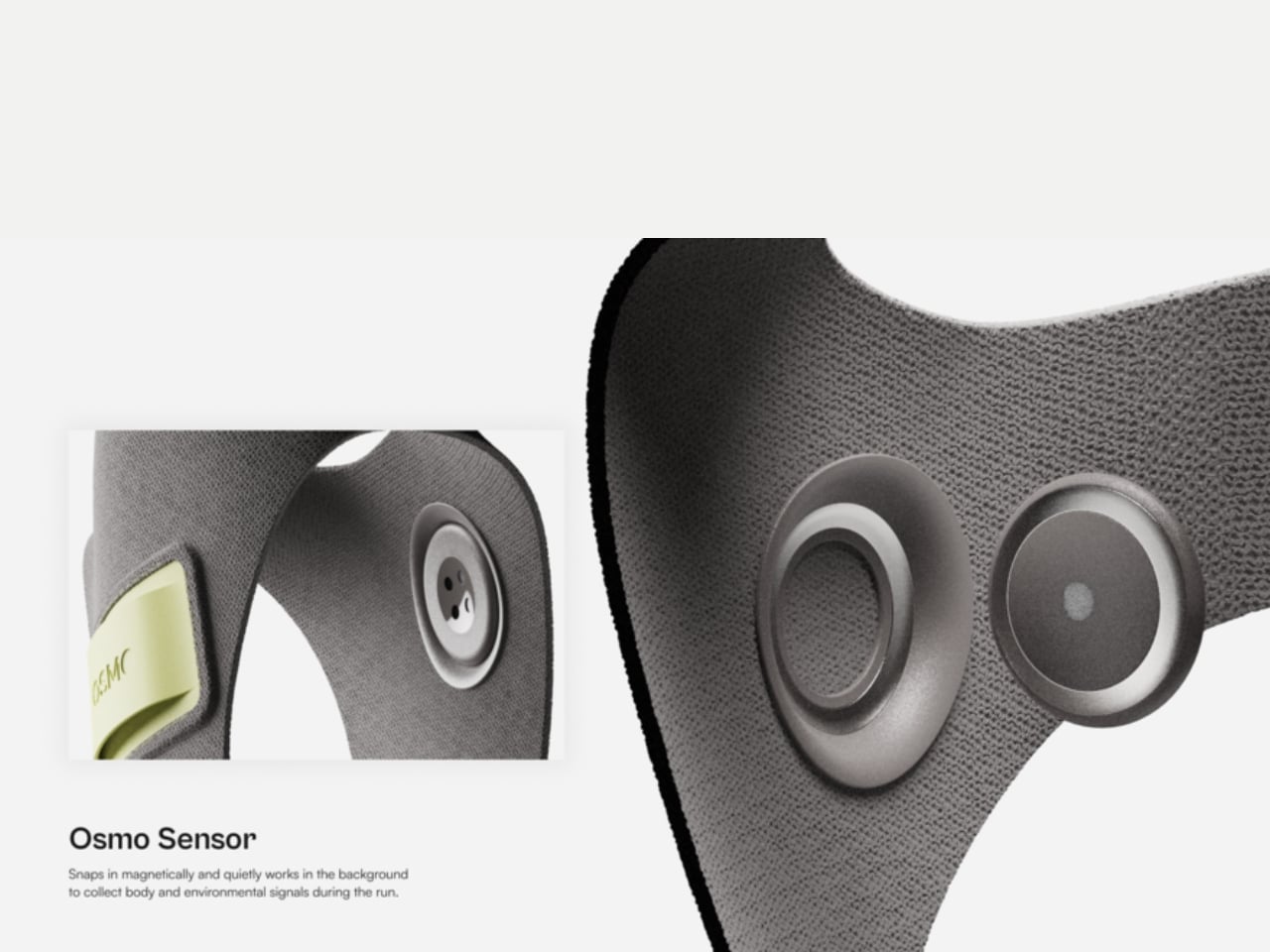
The companion app rounds out the system, handling setup before a run and offering digestible insights afterwards. That structure matters. It keeps the app out of the experience when you need to focus, and puts it to work when you finally have the headspace to reflect. I find this concept genuinely compelling, partly because so many “smart” fitness products get this backwards. They front-load the technology in ways that interrupt the activity itself, demanding interaction at moments when you just want to move. Osmo flips that. The intelligence runs quietly in the background, and the interface shows up only when it’s actually useful.
It’s also worth acknowledging the quality of thinking behind the design approach. Ghule didn’t just design a cool bottle or a slick wearable. He mapped out a friction problem, traced it back to its actual root, and then built a system around it. The research behind Osmo surfaced a key insight: runners know they should be hydrating better, but the physical and cognitive demands of running make it genuinely difficult to act on that knowledge in real time. That’s a design challenge with real nuance, and the response reflects it.

Osmo won’t be on store shelves tomorrow. It’s a student concept, and concept-to-market is always a long road. But the fact that it exists as a fully realized, integrated system rather than a single clever gadget suggests Ghule has a clear understanding of what it actually takes to change behavior. That’s not a minor thing. Running keeps growing as a sport, and the industry has largely kept pace. The gear has evolved, the shoes have evolved, the tracking technology has evolved. It’s about time hydration caught up.
The post A Design Student Just Fixed the Way Runners Hydrate first appeared on Yanko Design.

Kineo Might Be the Best-Looking Thing in Your Office

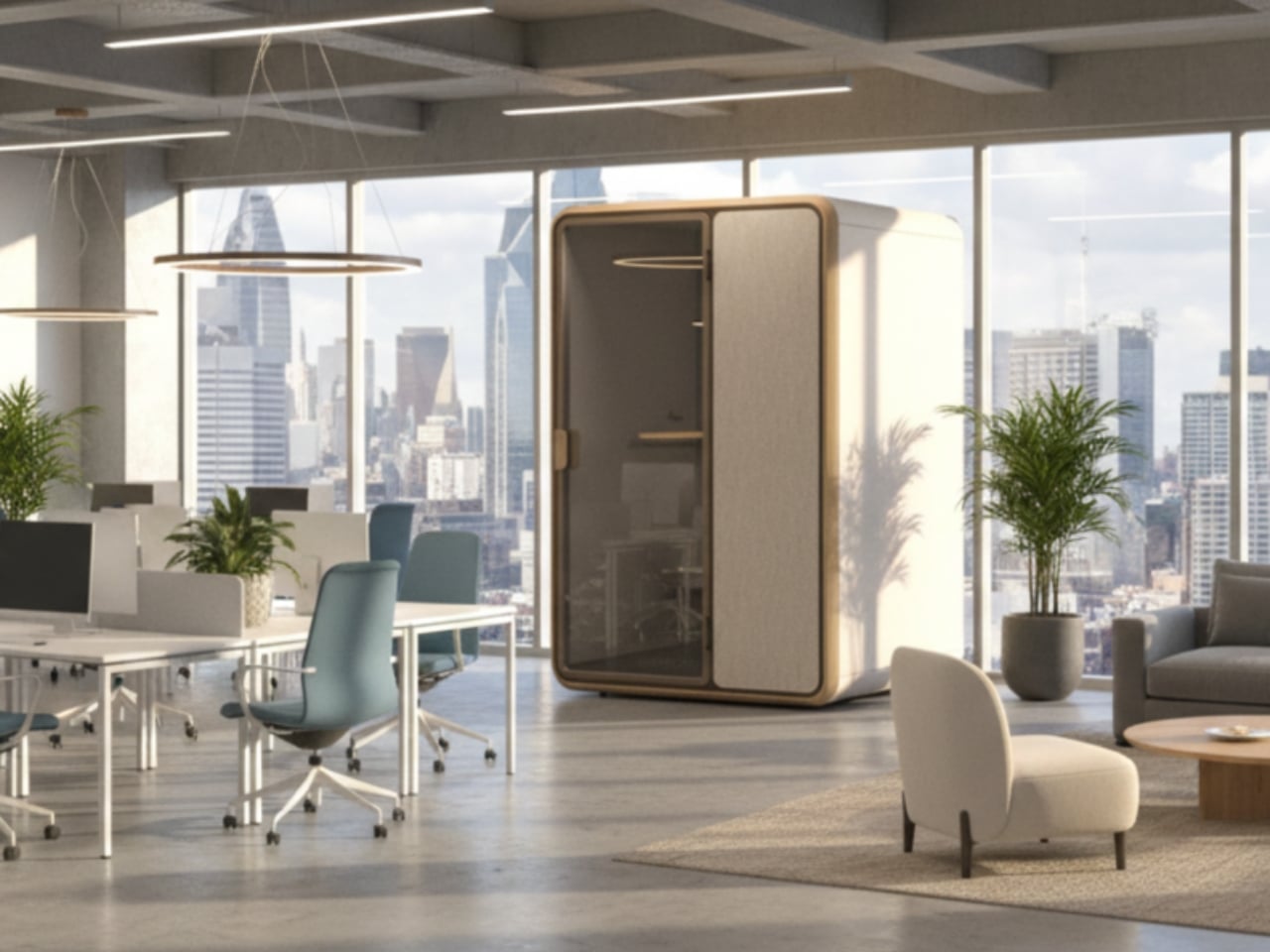
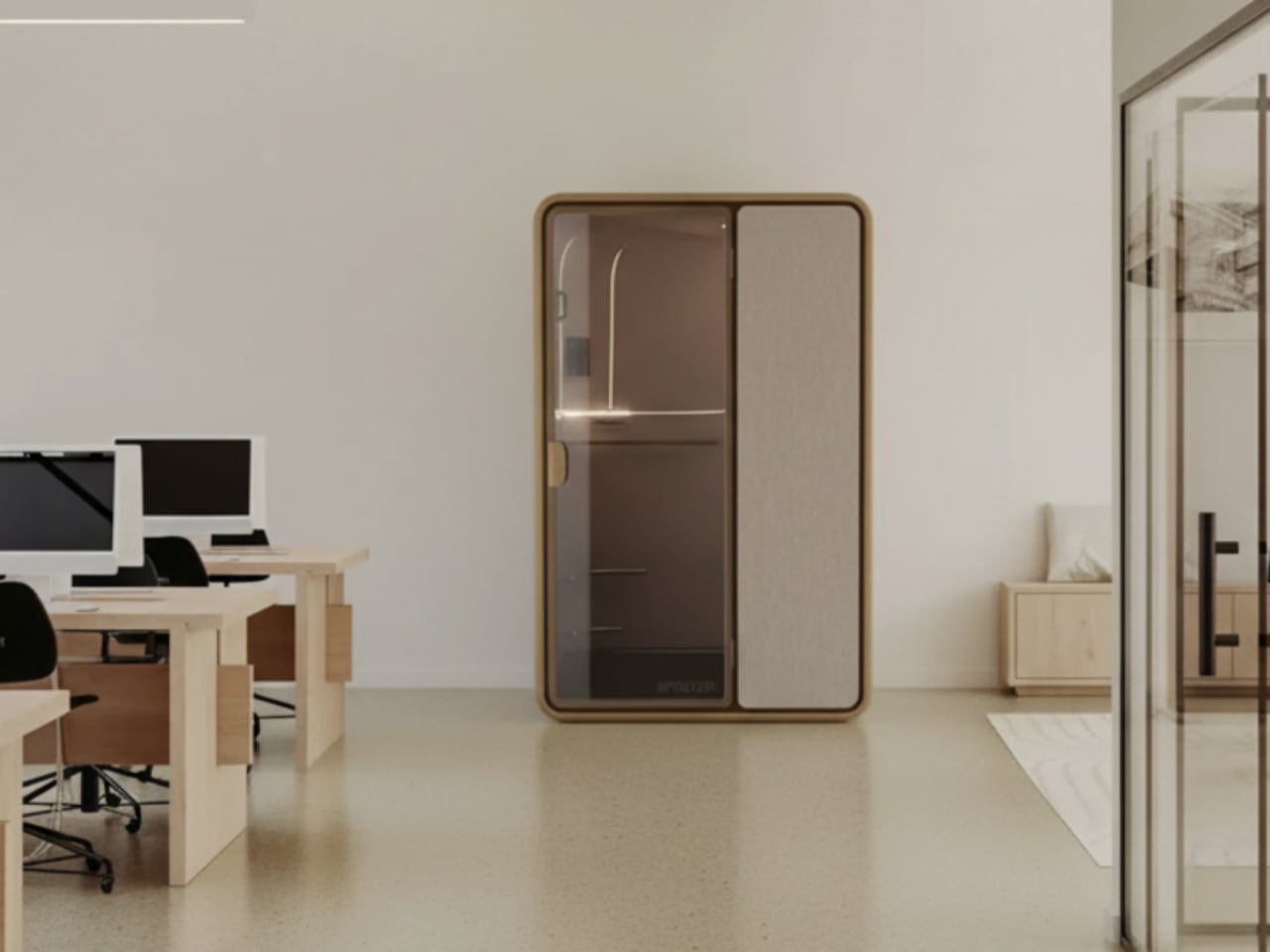
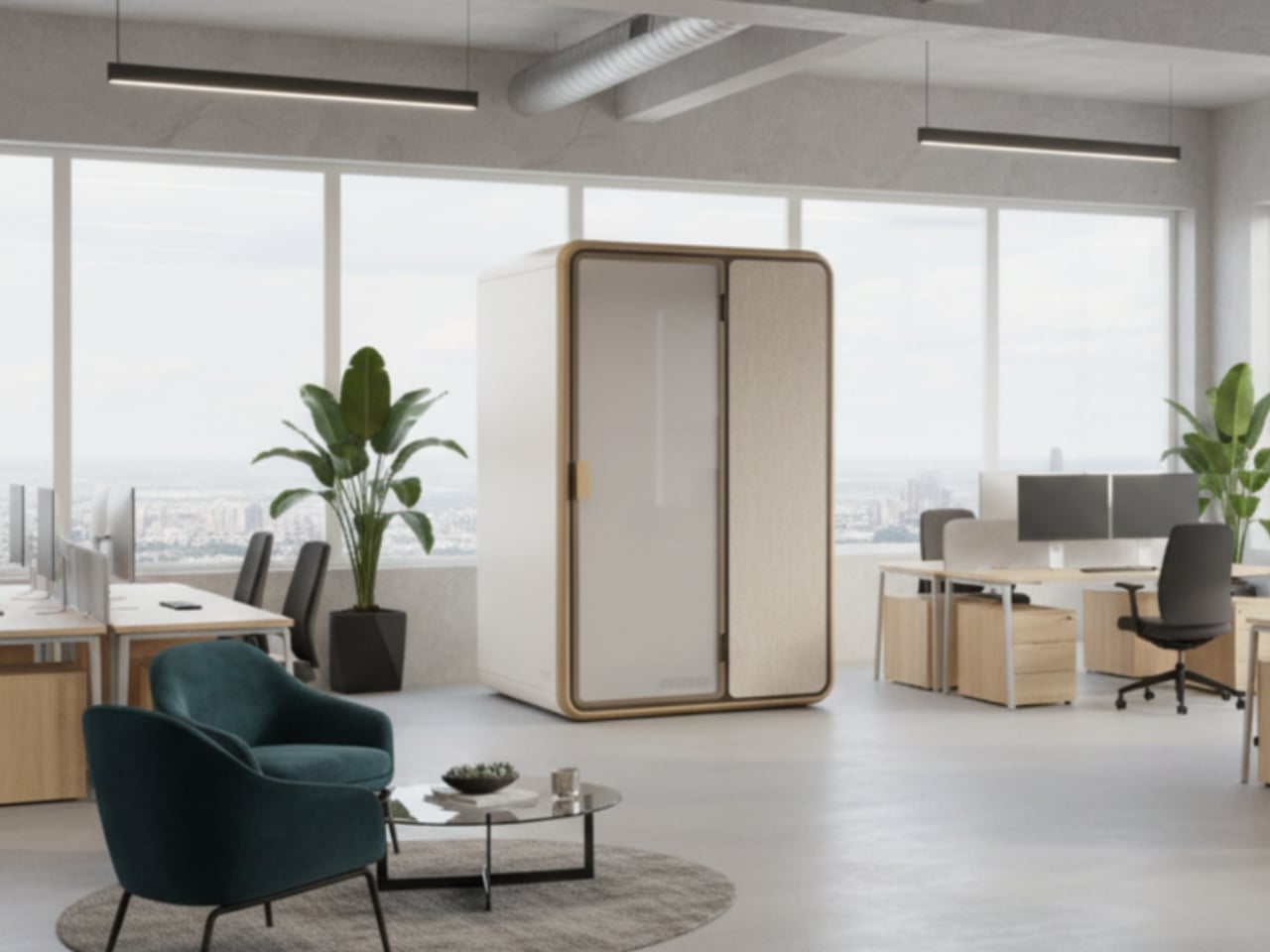
The first thing you notice about Kineo is that it doesn’t look like fitness equipment. It doesn’t look like a medical device, a sensory deprivation pod, or a corporate novelty. Standing in an open-plan office, it looks like furniture: considered, warm, and completely at ease between a row of workstations and a glass conference wall. For a product designed to bring guided stretching and spinal decompression into the workplace, that’s not a small achievement. It’s actually the whole design challenge.

Designer Kat Lew built Kineo in collaboration with fitness brand Precor to address work-related musculoskeletal disorders, the chronic lower back, neck, and shoulder discomfort that most desk workers know well and most offices address badly. The booth measures 5 feet by 5 feet by 8 feet, built from modular panels so it can be shipped, carried through a standard service elevator, and assembled on-site. The logistics are solved. Now look at the thing itself.

Designer: Kat Lew

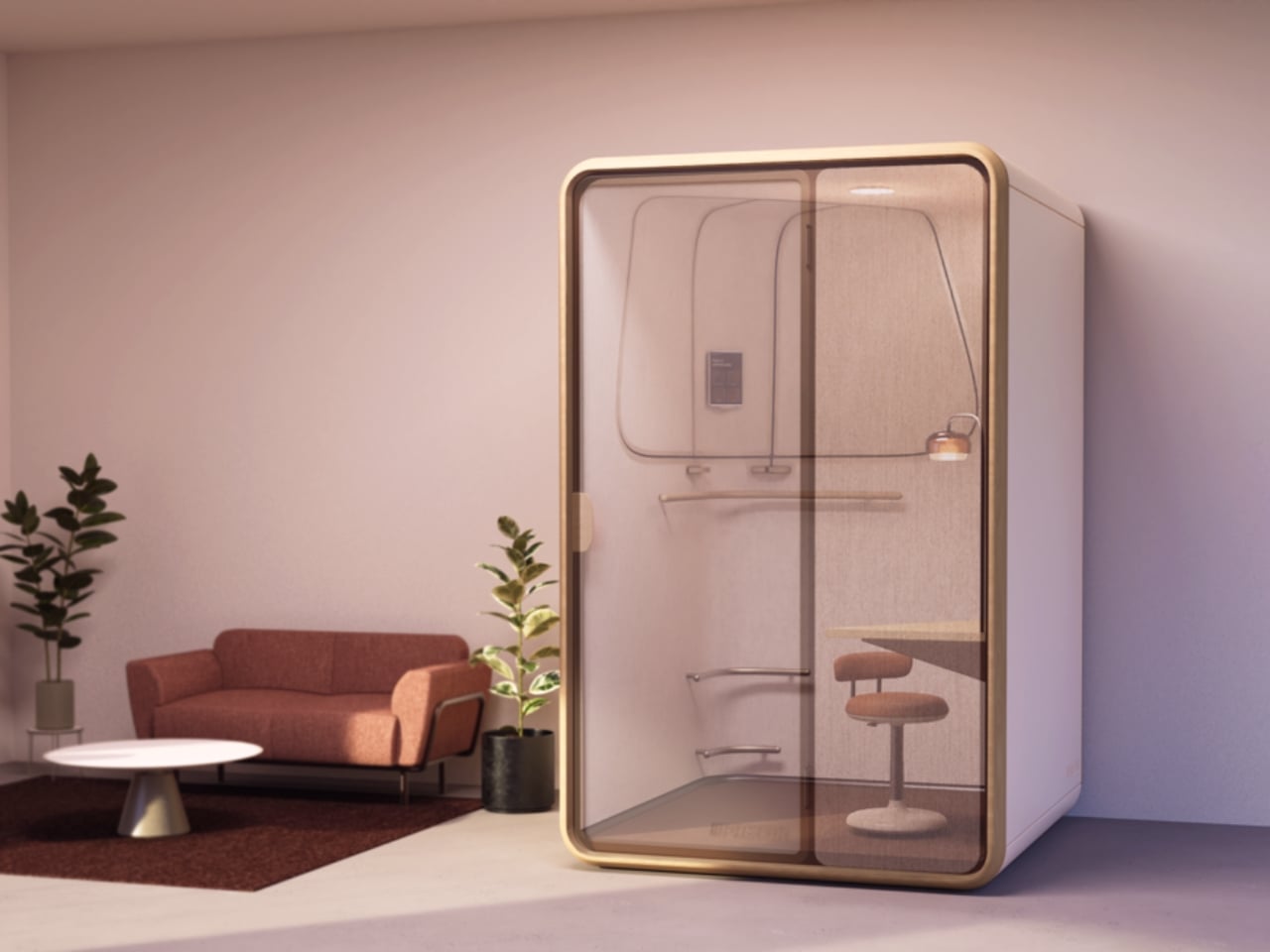
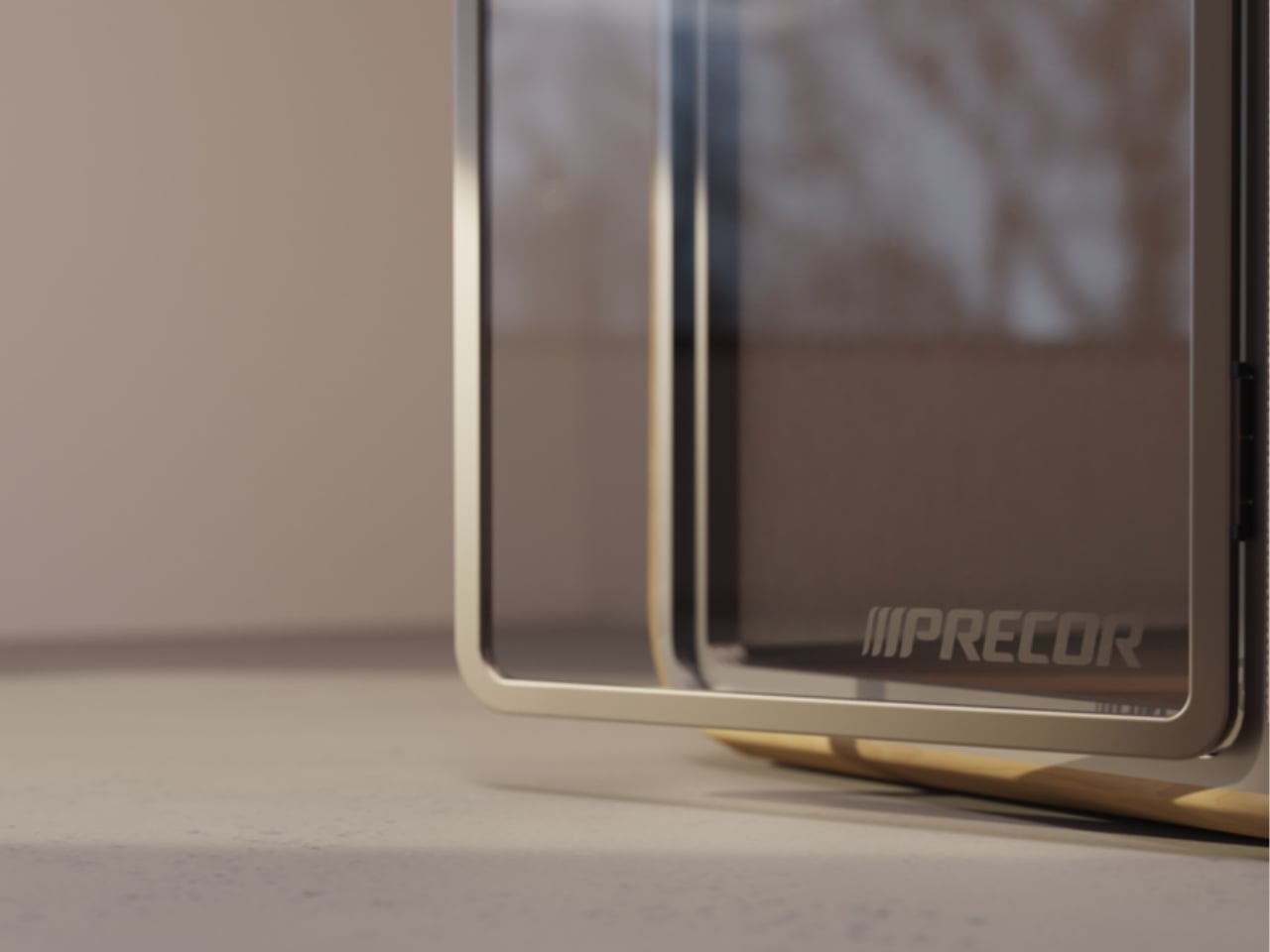
The exterior is a tall rectangular volume with deeply rounded corners, split between tinted glass and a cream acoustic panel, unified by a warm champagne gold frame. The glass is smoked just enough to imply privacy without making the booth feel opaque or isolating. The fabric panel has the soft, oatmeal texture you’d expect on a well-designed lounge chair, not a piece of fitness infrastructure. Together they give the booth a material warmth that sits comfortably alongside contemporary office furniture. It borrows loosely from the visual language of privacy pods, the kind you’d find in forward-thinking studios and airport lounges, but the palette keeps it from reading as purely functional. The gold trim does a lot of quiet persuasion here. It signals quality without announcing it.

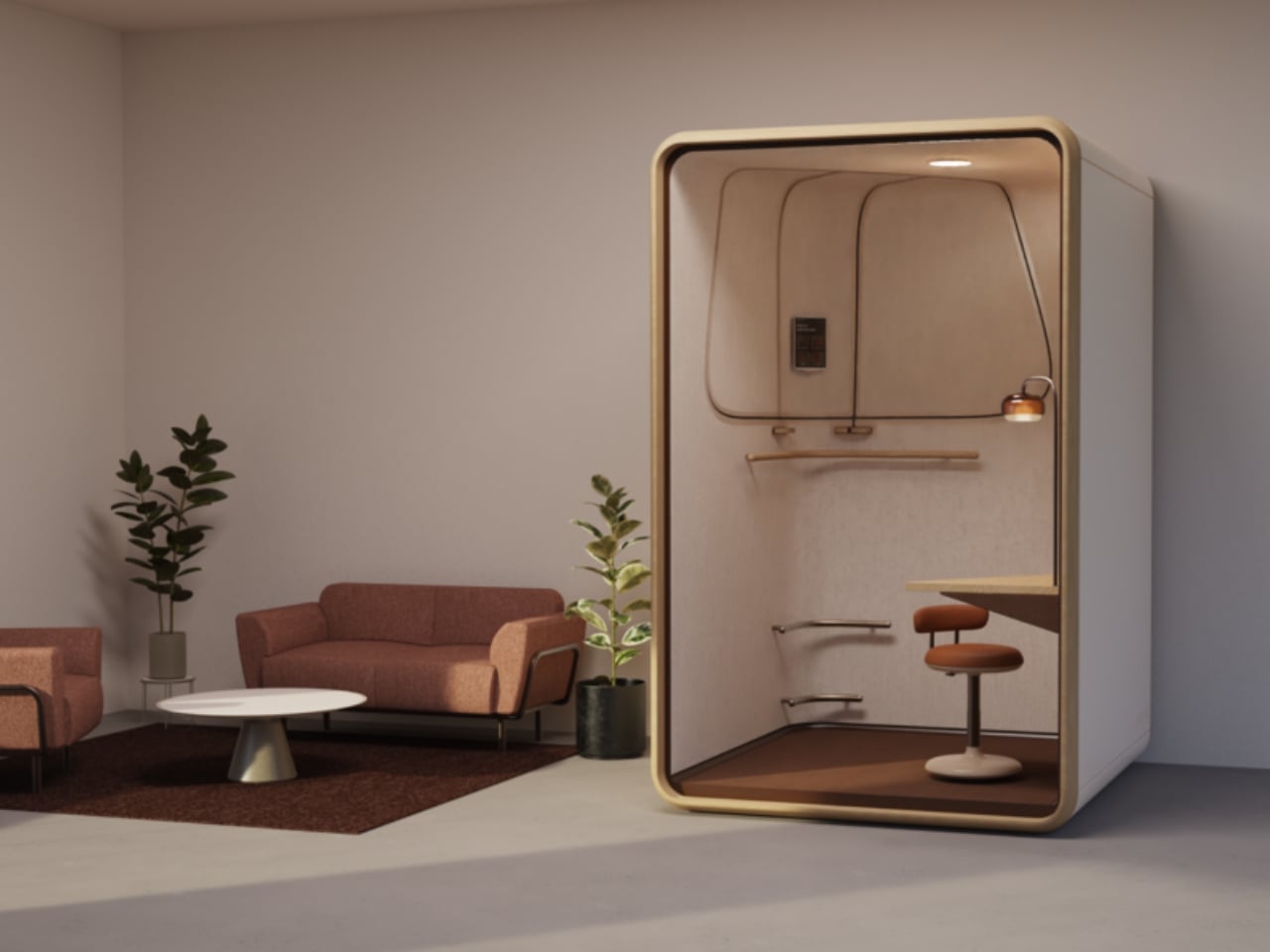
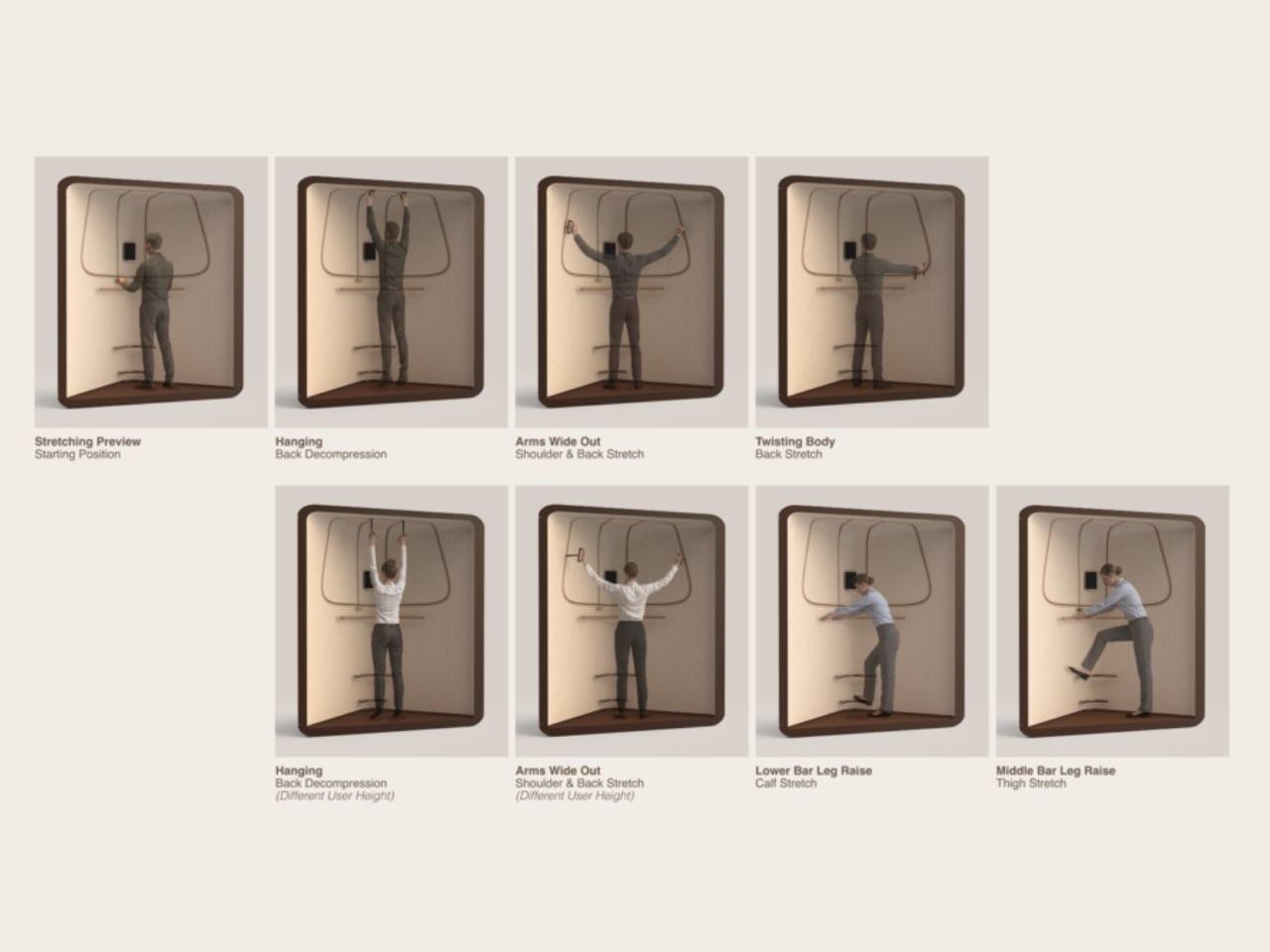
Inside, the booth divides into two distinct zones, and this is where Lew’s design thinking becomes most legible. One side features a wall-mounted stretching apparatus: a set of slim horizontal bars at multiple heights, embedded into a warm wood-lined back wall. The bars accommodate hanging back decompression, shoulder and back stretches, calf raises, and thigh stretches, guided by a small control panel positioned at eye level. It’s a considered sequence. And importantly, the bars look like they belong on that wall. They don’t look bolted on; they read as part of the architecture, which takes real restraint to pull off.

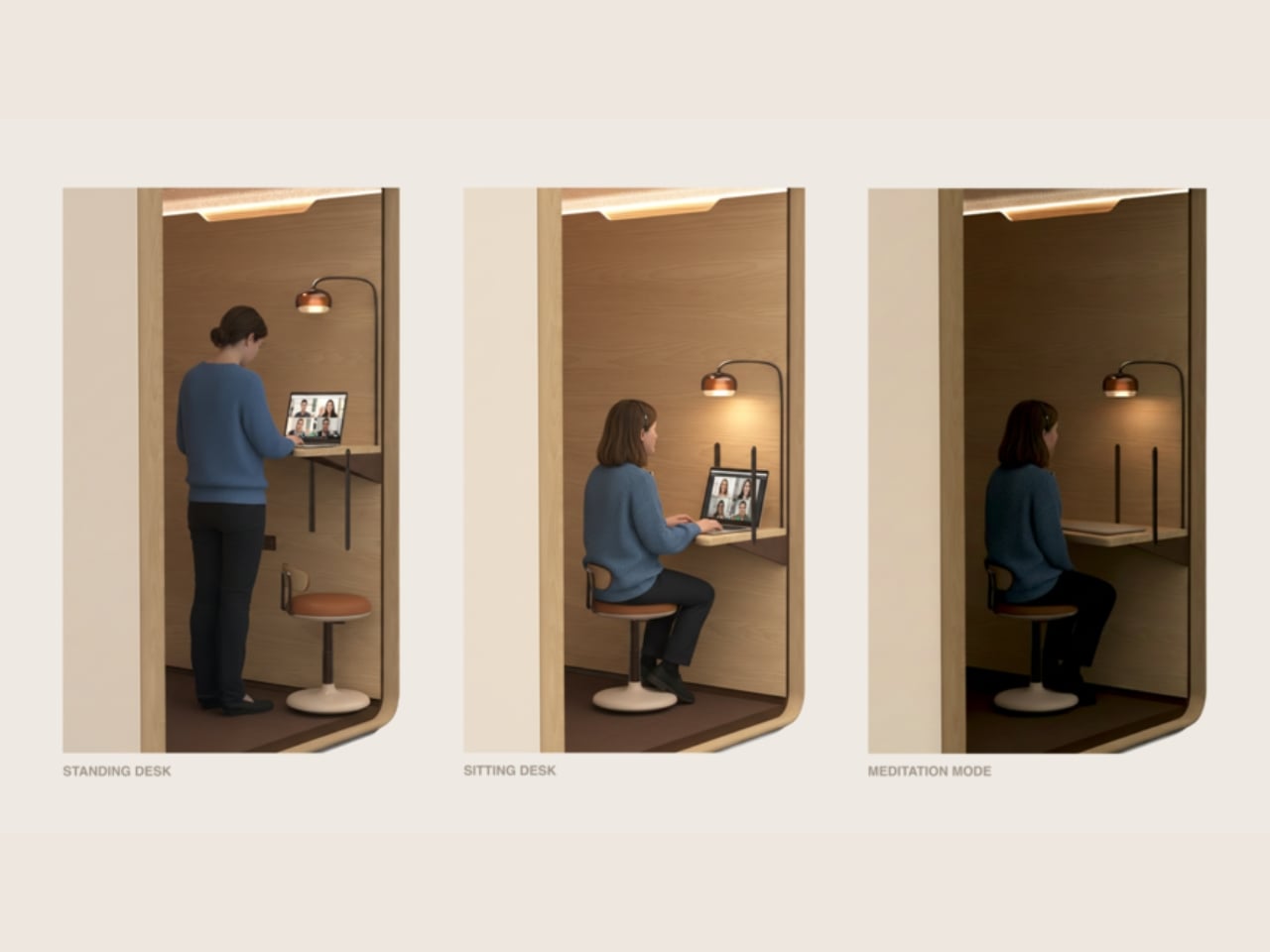
The other half is a micro-workspace: a fold-down desk, an adjustable saddle-style stool with a round seat, and an arc floor lamp with a small copper shade. The lamp is doing significant tonal work here. A copper-shaded arc lamp in an office recovery booth communicates something specific: that this space is meant to feel restorative rather than clinical. Kineo has three functional modes inside the work zone: standing desk, sitting desk, and a meditation configuration where the desk folds away and the lamp becomes the only light source. The shift between those modes is a good editorial decision. The meditation mode is an acknowledgment that recovery isn’t always about movement. Sometimes it’s about stillness.

What holds the whole design together is the restraint of the material palette. Warm wood, oatmeal fabric, matte gold metal, and tinted glass are each quiet on their own, and Lew keeps them that way. Nothing fights for attention. The arc lamp echoes the curve of the door frame. The stretch bars mirror the warmth of the interior paneling. Every detail reads as intentional without being fussy, which is the hardest balance to strike in this kind of product.

That coherence matters more than it might seem. Kineo is asking people to do something that most office environments quietly discourage: slow down, step away, and attend to their body during the workday. A booth that looked harsh or clinical or gym-adjacent would undermine that ask before a person even stepped inside. The softness of the design is not decorative. It is, in fact, the argument. Walk past Kineo and it looks like a place you might actually want to go. That’s not accidental. That’s the design working exactly as it should.

The post Kineo Might Be the Best-Looking Thing in Your Office first appeared on Yanko Design.
Inside the Strategic Shift That Makes the Galaxy S27 Ultra So Important

Inside the Strategic Shift That Makes the Galaxy S27 Ultra So Important Comparison of the Galaxy S27 Ultra and iPhone Air 2 designs

The Samsung Galaxy S27 Ultra is shaping up to be one of the most anticipated smartphones of 2026. With a bold new design, significant hardware upgrades and a potential shift in strategy, Samsung appears determined to redefine its flagship lineup. However, these advancements come with challenges, including rising production costs and inevitable comparisons to Apple’s […]

The post Inside the Strategic Shift That Makes the Galaxy S27 Ultra So Important appeared first on Geeky Gadgets.

Posted in Uncategorized

Award-winning Sunseeker robot lawn mower can maintain a football field without boundary wires

The robot lawn mower space is a saturated one at the moment. New features like artificial intelligence, satellite-based wire free navigation, and obstacle detection are becoming a common sight. To stand out from the rest, a mower needs some recognition, stamping its authority to influence consumer decisions.

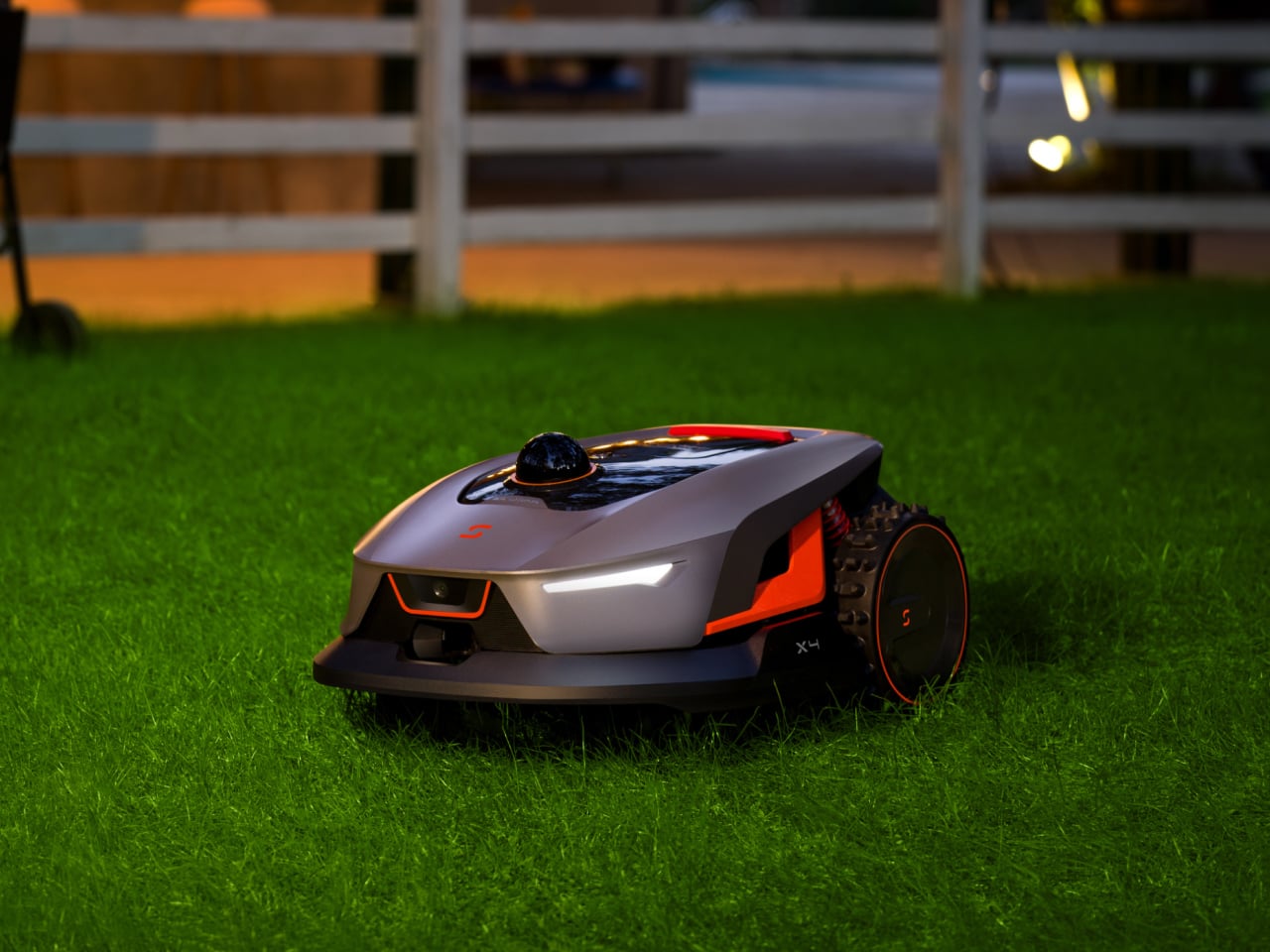
Sunseeker Elite X7 Plus Gen 2, a flagship model from the company, was recently conferred the German Innovation Awards’ prestigious Gold Award. Organized by the German Design Council, the award recognizes the Elite X7 Plus Gen 2 for its breathtaking innovation in smart lawn care. The jury also honored another Sunseeker lawn mower, the Elite X4 with the Winner Award in the Gardening Tools category.

Designer: Sunseeker

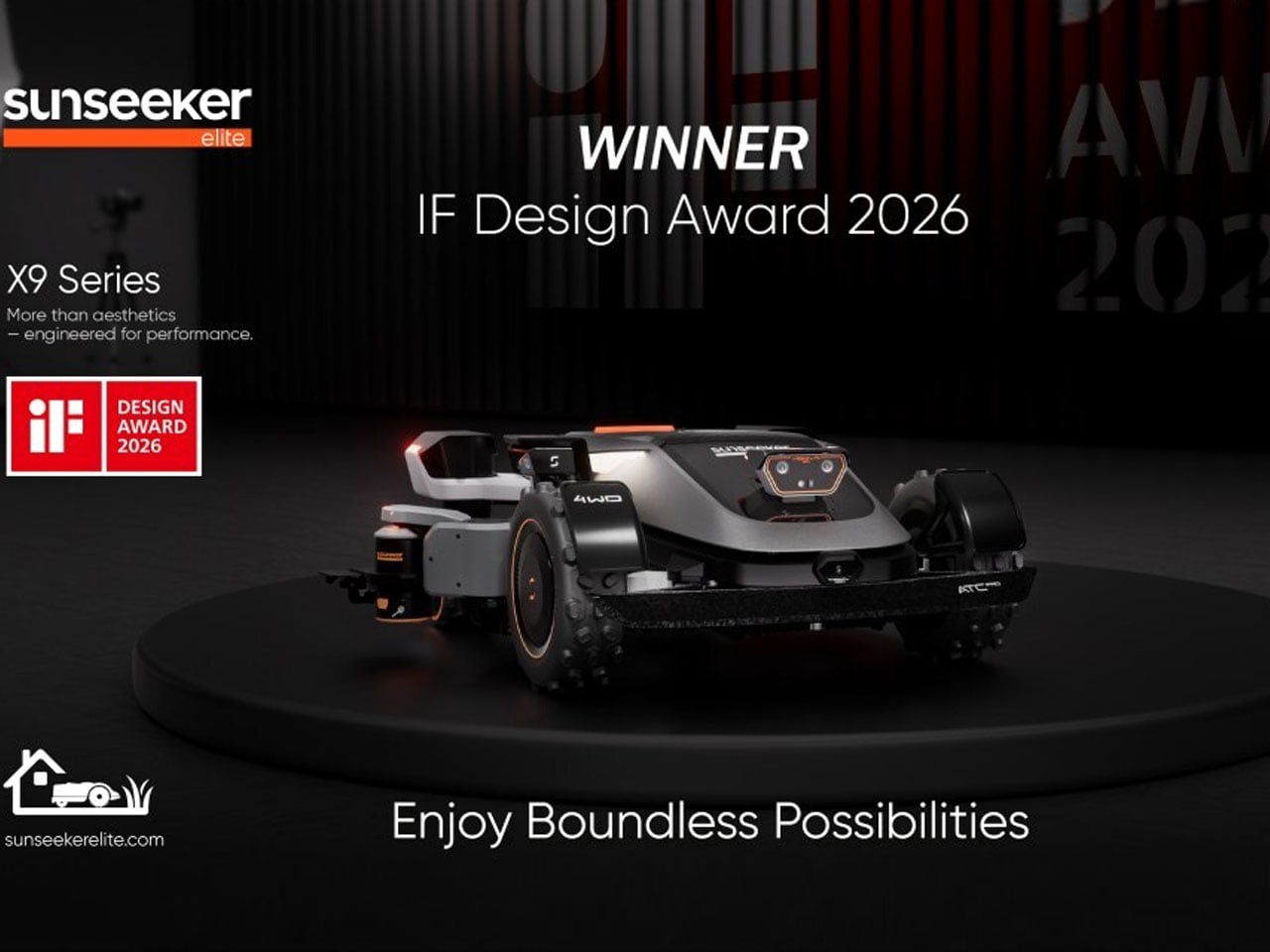
Sunseeker mowers in the company’s Elite line-up have shown why they are cutting-edge options in the evolving robotic lawn care industry. These awards further substantiate that standing, which even the iF Design Award jury found worth appreciating. The jury at iF Design honored the Sunseeker Elite X9 with the excellence in design and innovation award.

In order to understand what really makes the three robotic lawn mowers stand out in their respective categories, let’s head down:

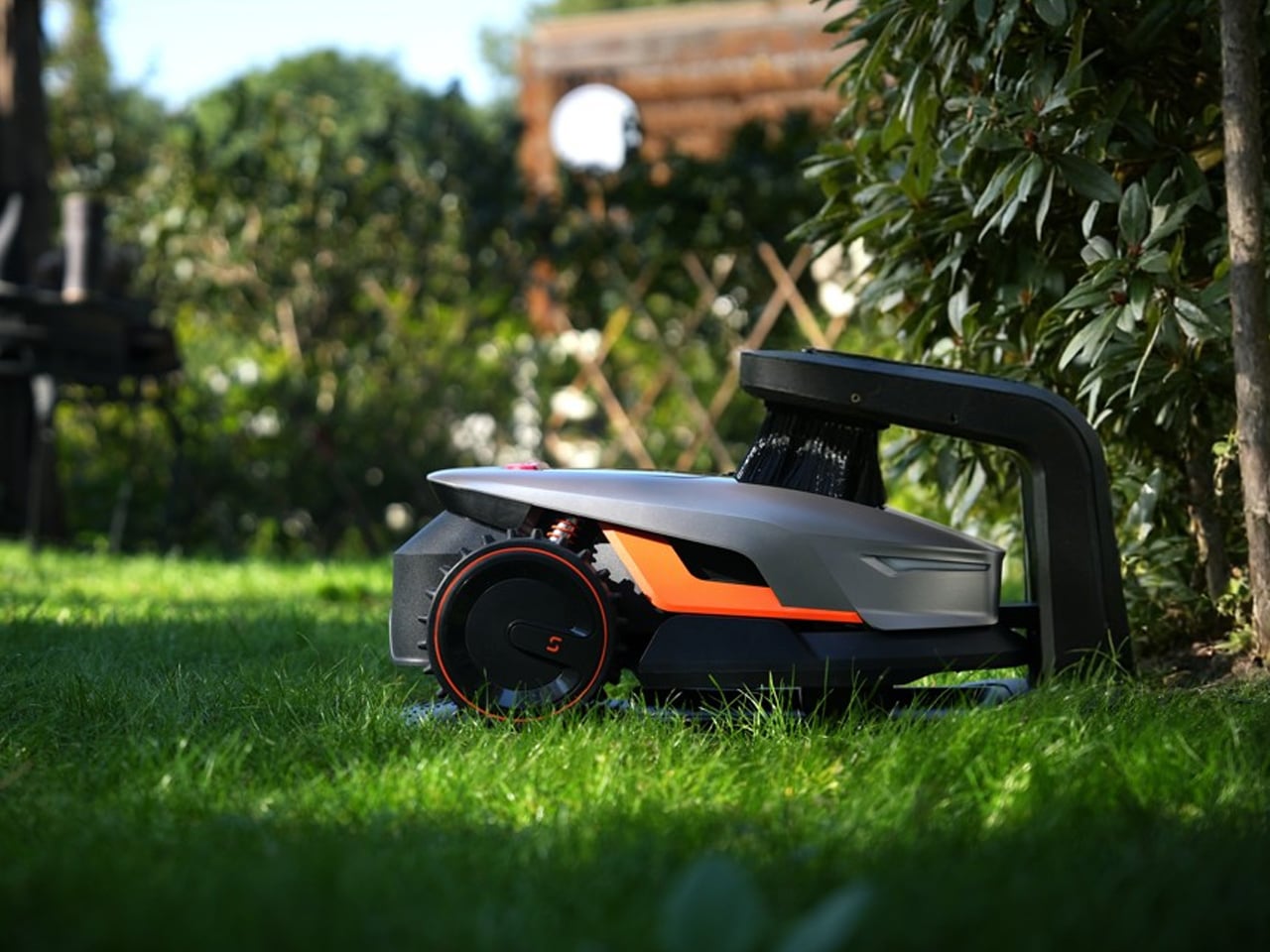
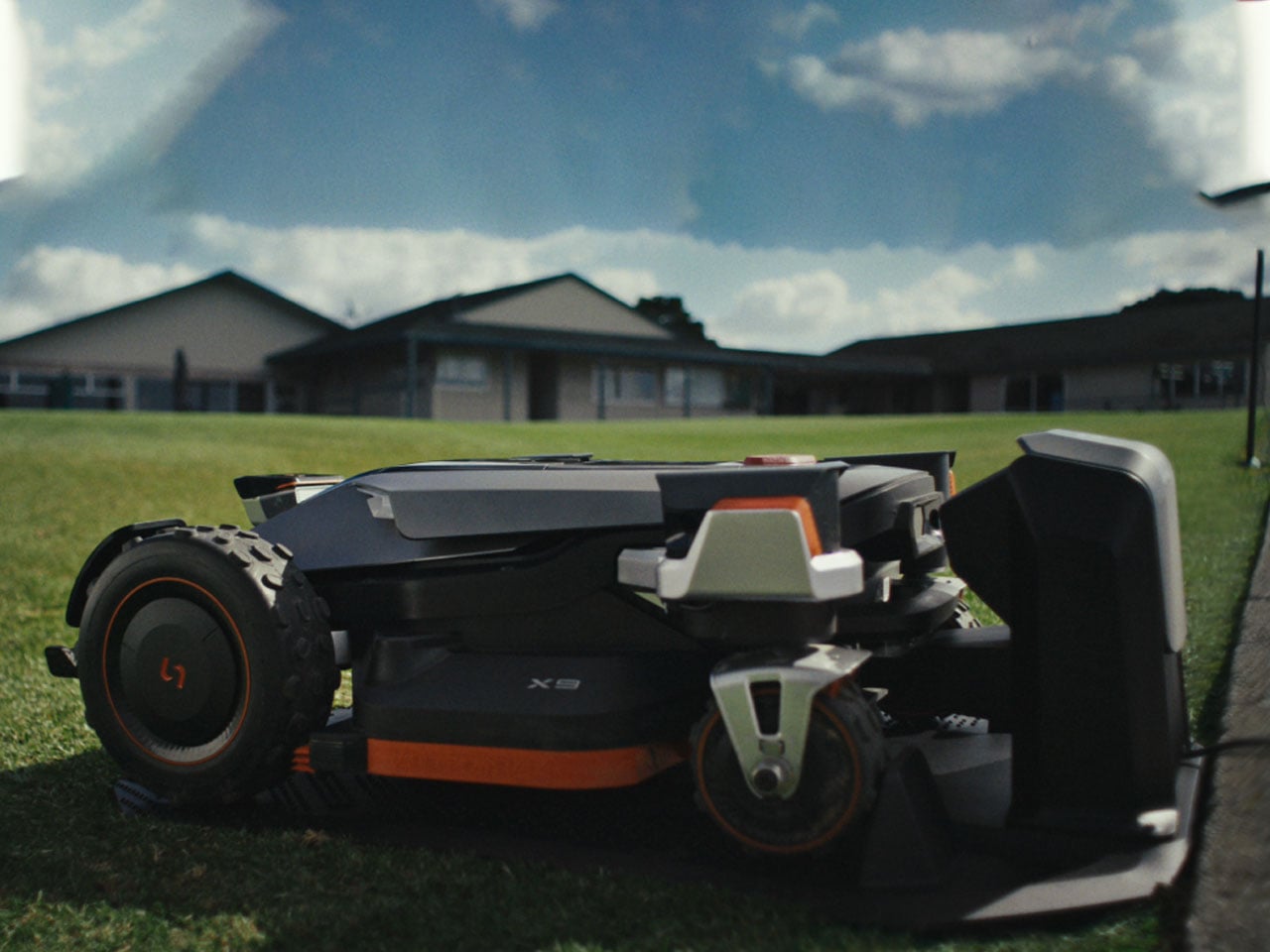
Sunseeker Elite X9: iF Design Excellence in Design and Innovation Award

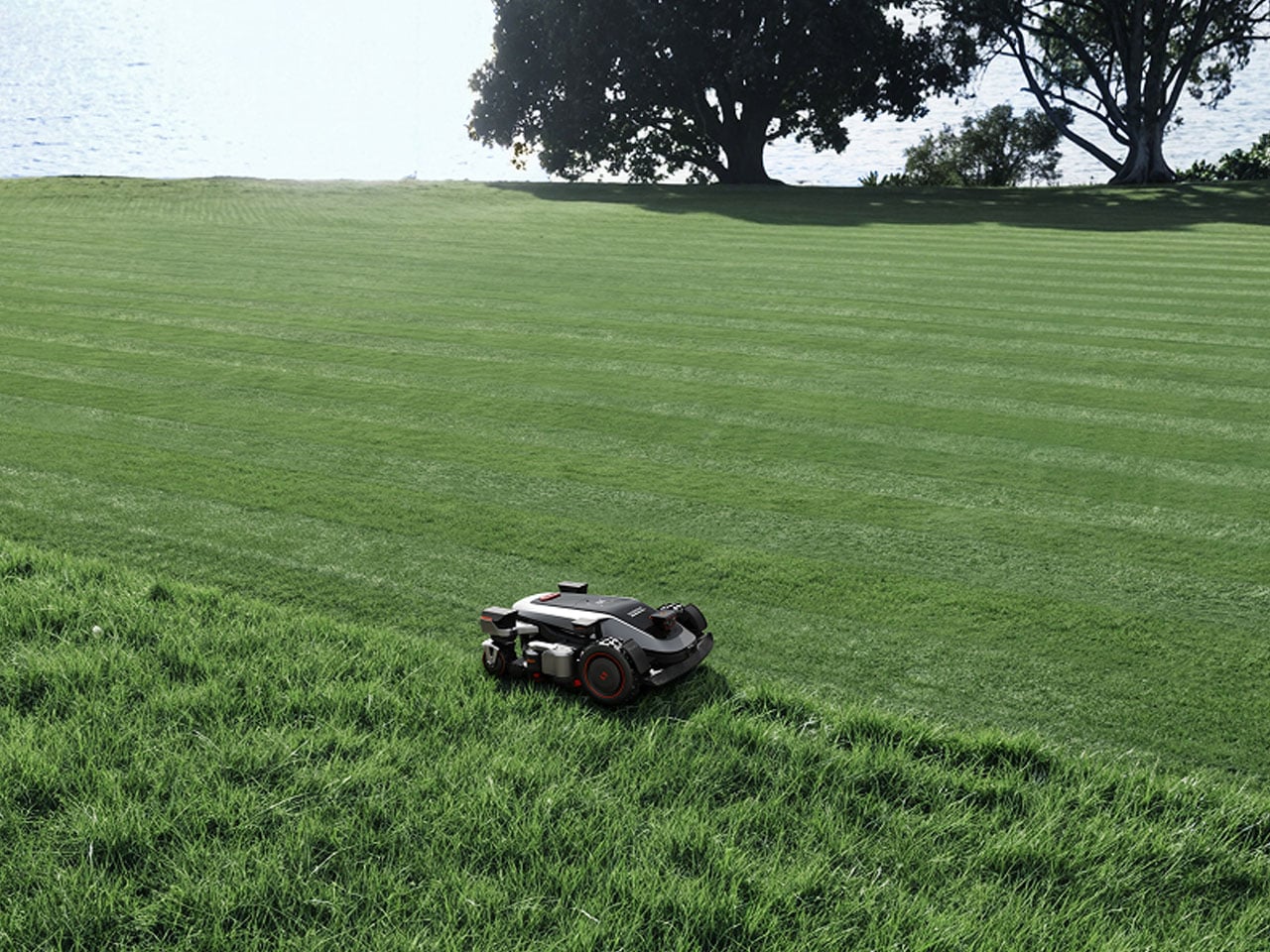
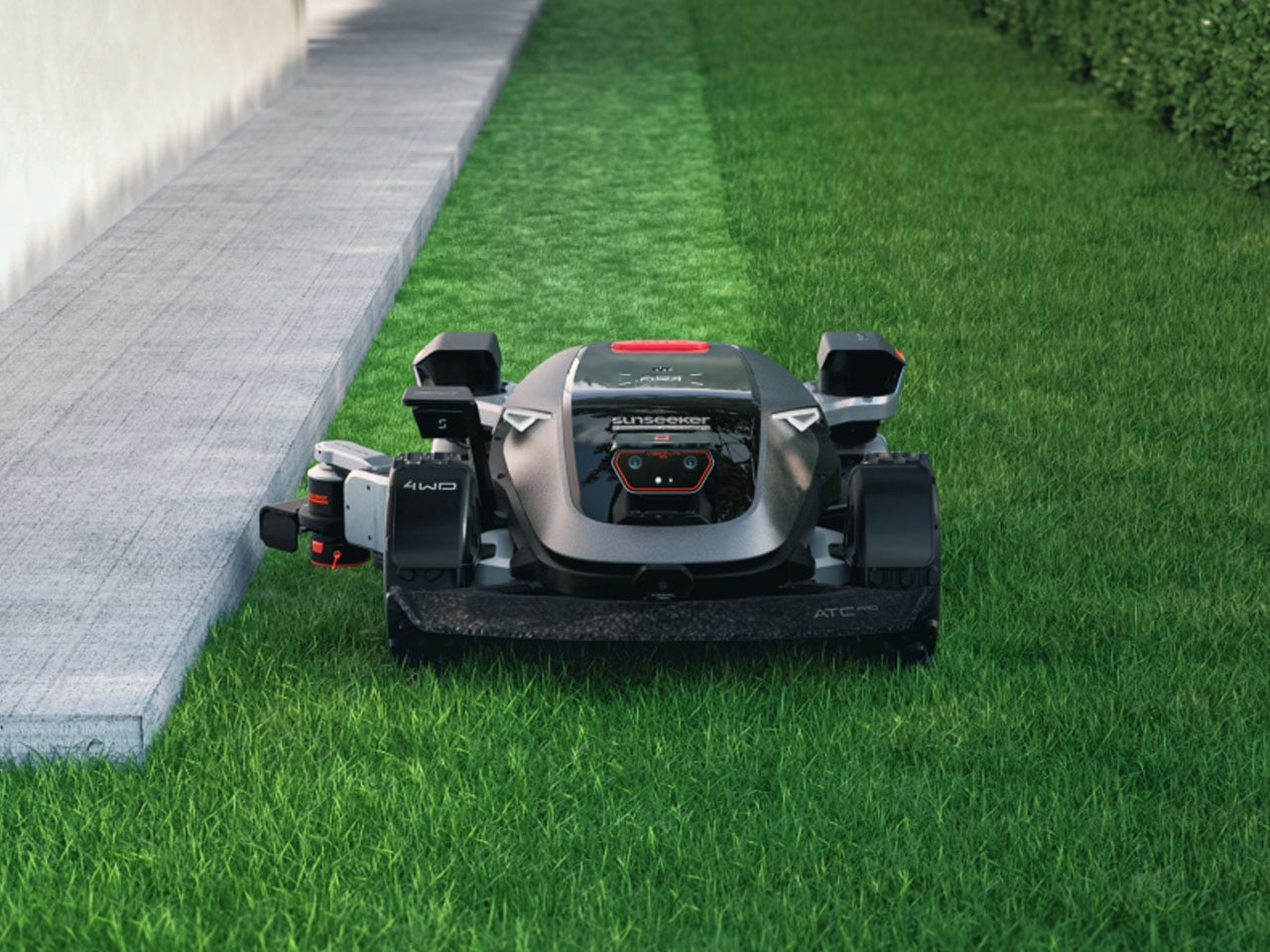
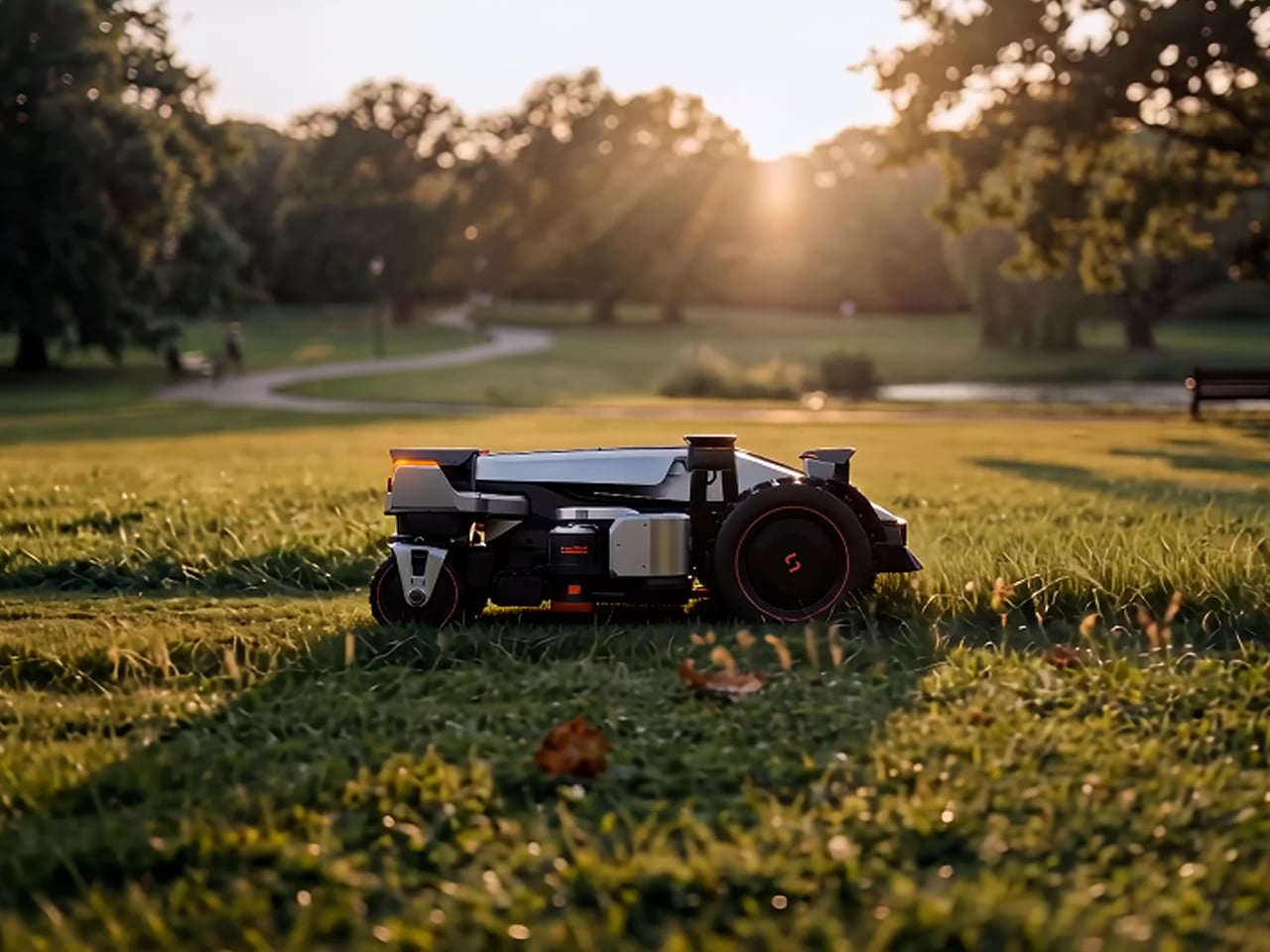
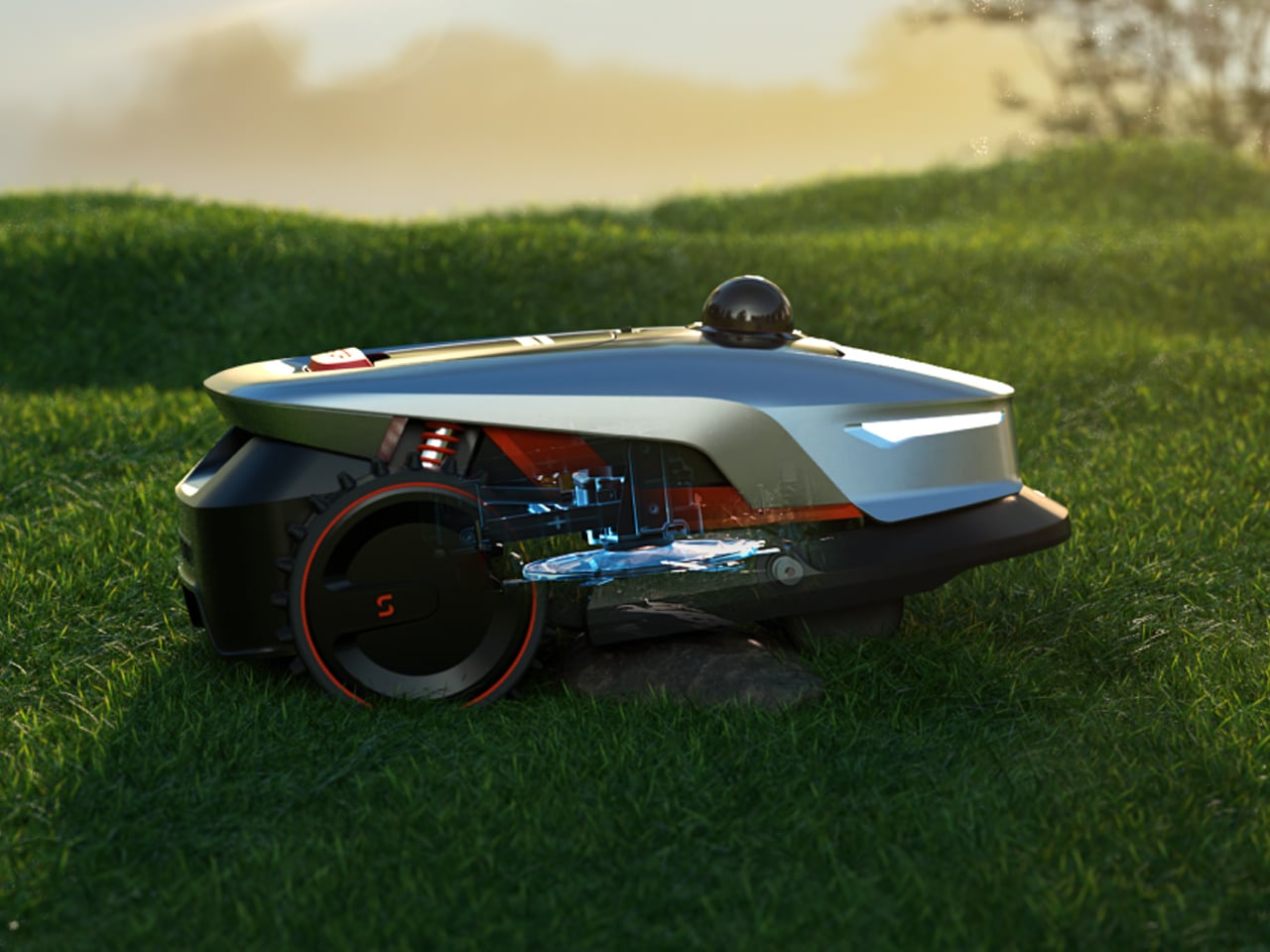
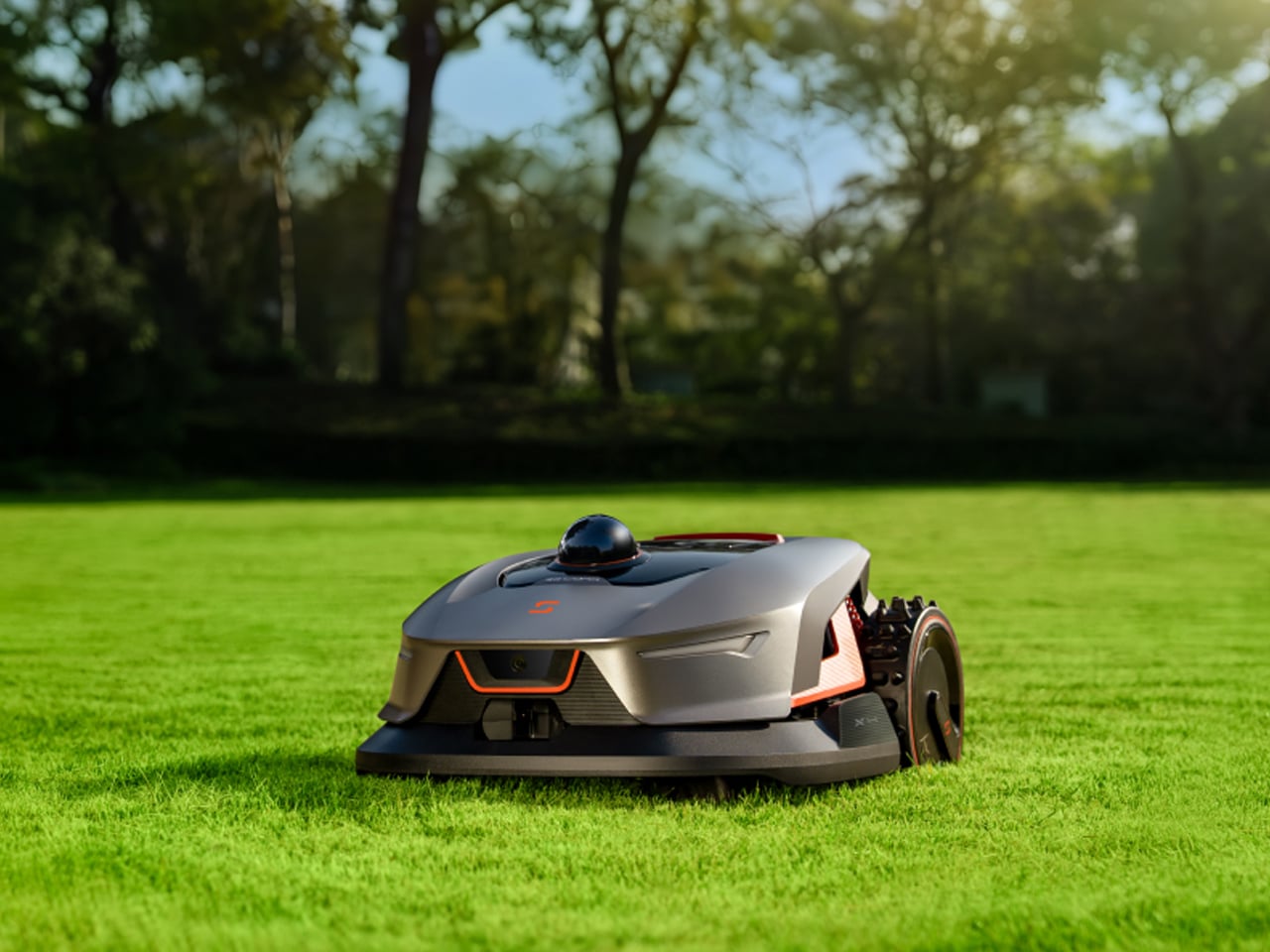
Built on the perfections derived from the residential front, the Elite X9 is Sunseeker’s debut into commercial applications. In addition to the large residential gardens, the robotic lawn mower can handle demanding expanses of a football field and municipal landscapes without breaking a sweat. For an idea, the Elite X9 can easily cover up to 12,000 m² area with precision and efficiency. The company informs that it can clean up an area that size within 48 hours.

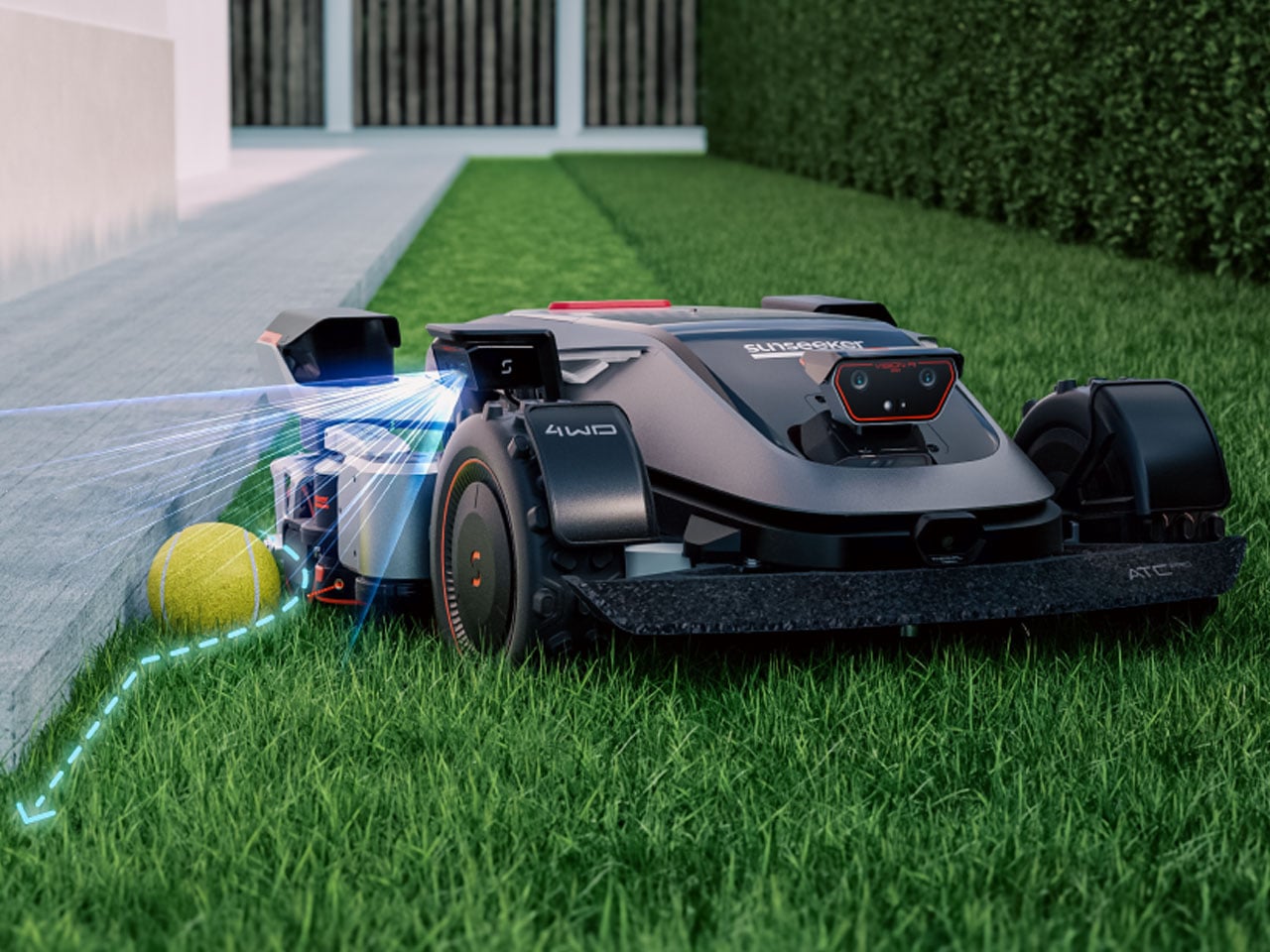
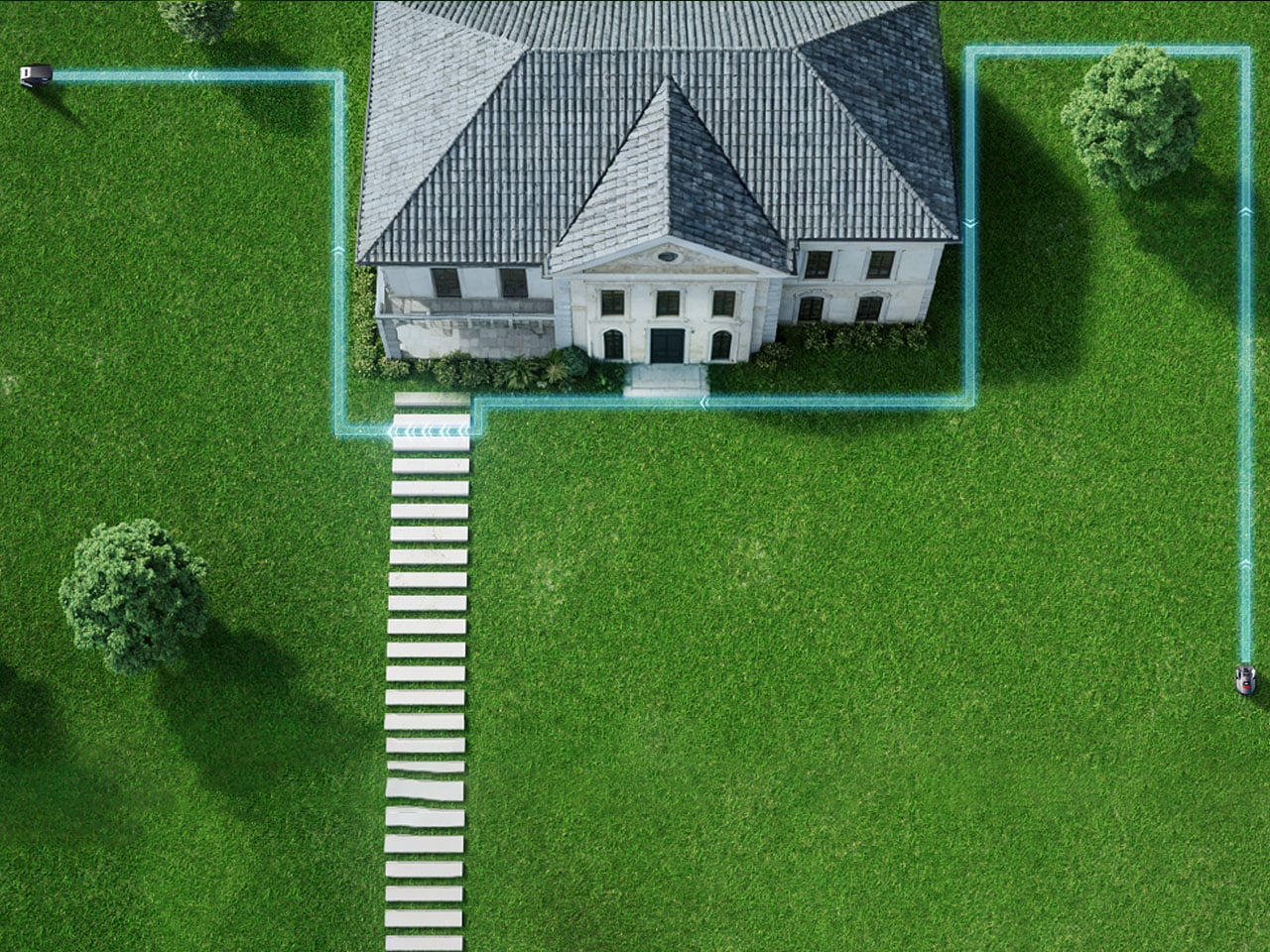
Sunseeker Elite X9 is powered by a 16-sensor perception system and features eight cameras onboard with a 360-degree OmniSight system ensuring real-time recognition of obstacles and terrain it’s working on in both day and nighttime operations. The Always-On Navigation (AONavi) and RTK satellite positioning tech enable the X9 to work with centimeter-level accuracy without relying on boundary wires.

Since it is designed for larger, commercial settings, the four-wheel drive robot lawn mower features an independent suspension to climb up to 42-degree inclines and maneuver bumpy grounds easily. Sunseeker Elite X9 runs on a 42V, 8Ah battery system, which supports fast charging to power up in just 20 minutes.

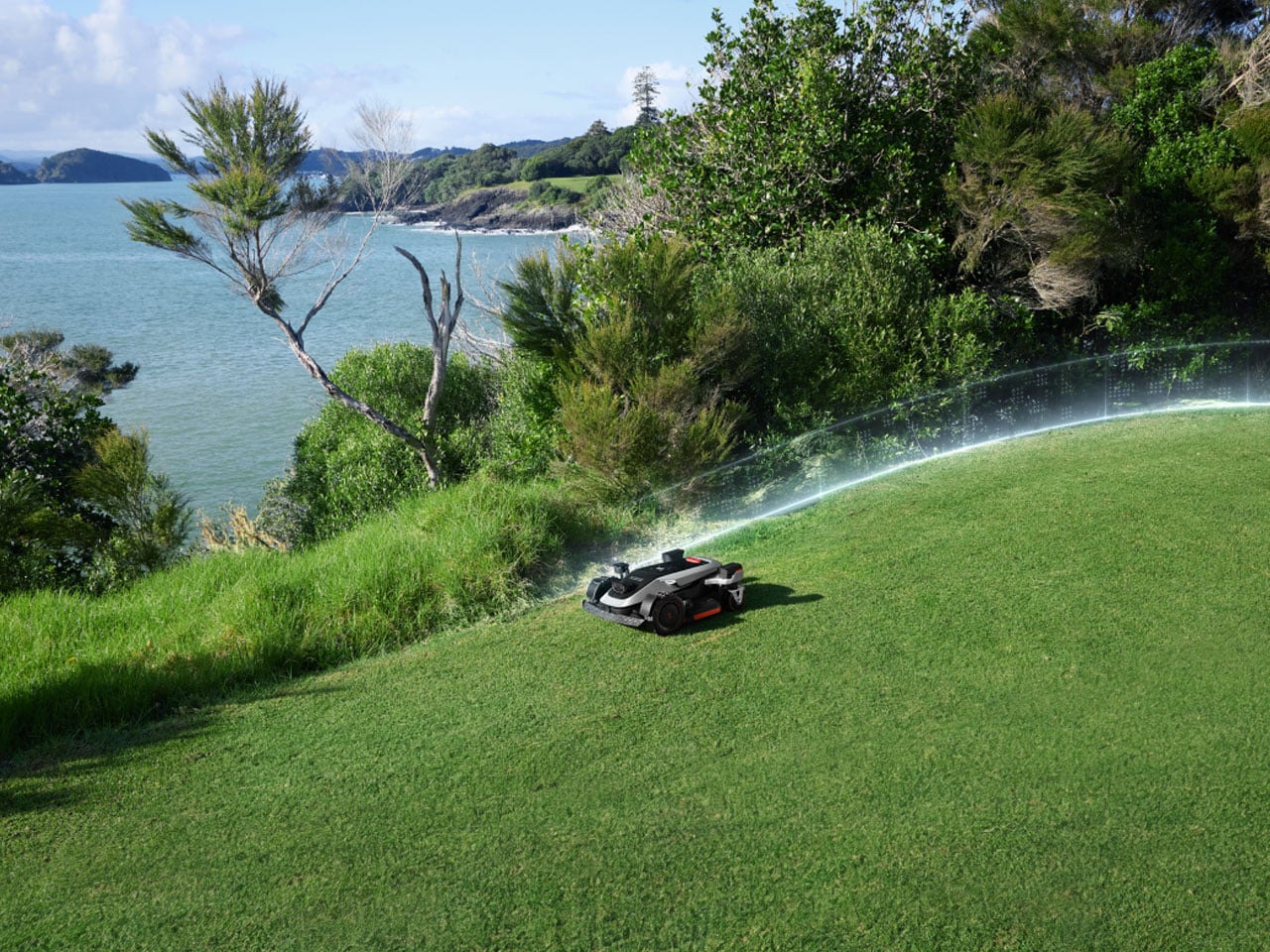
Sunseeker Elite X7 Plus Gen 2: Gold Award

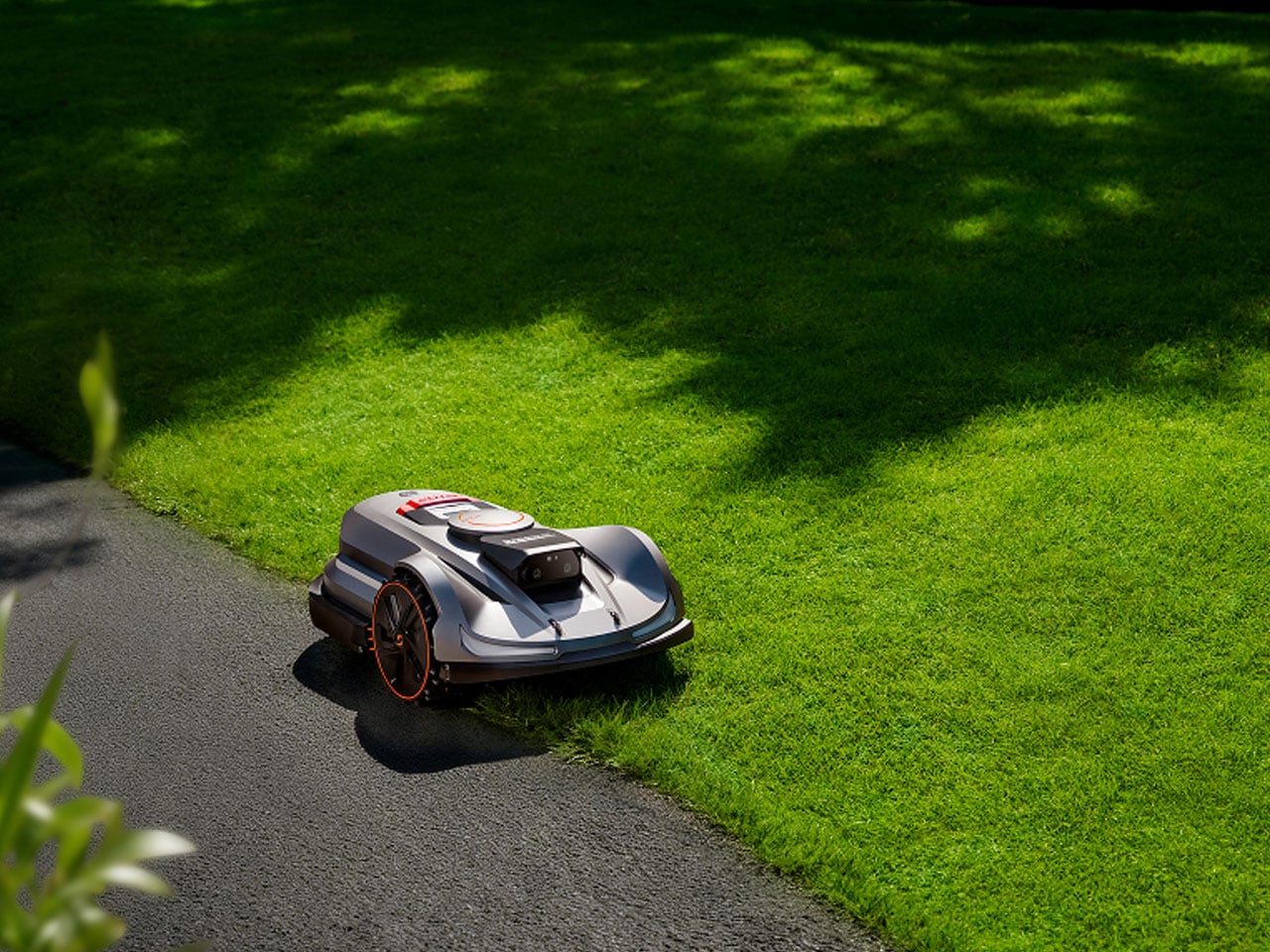
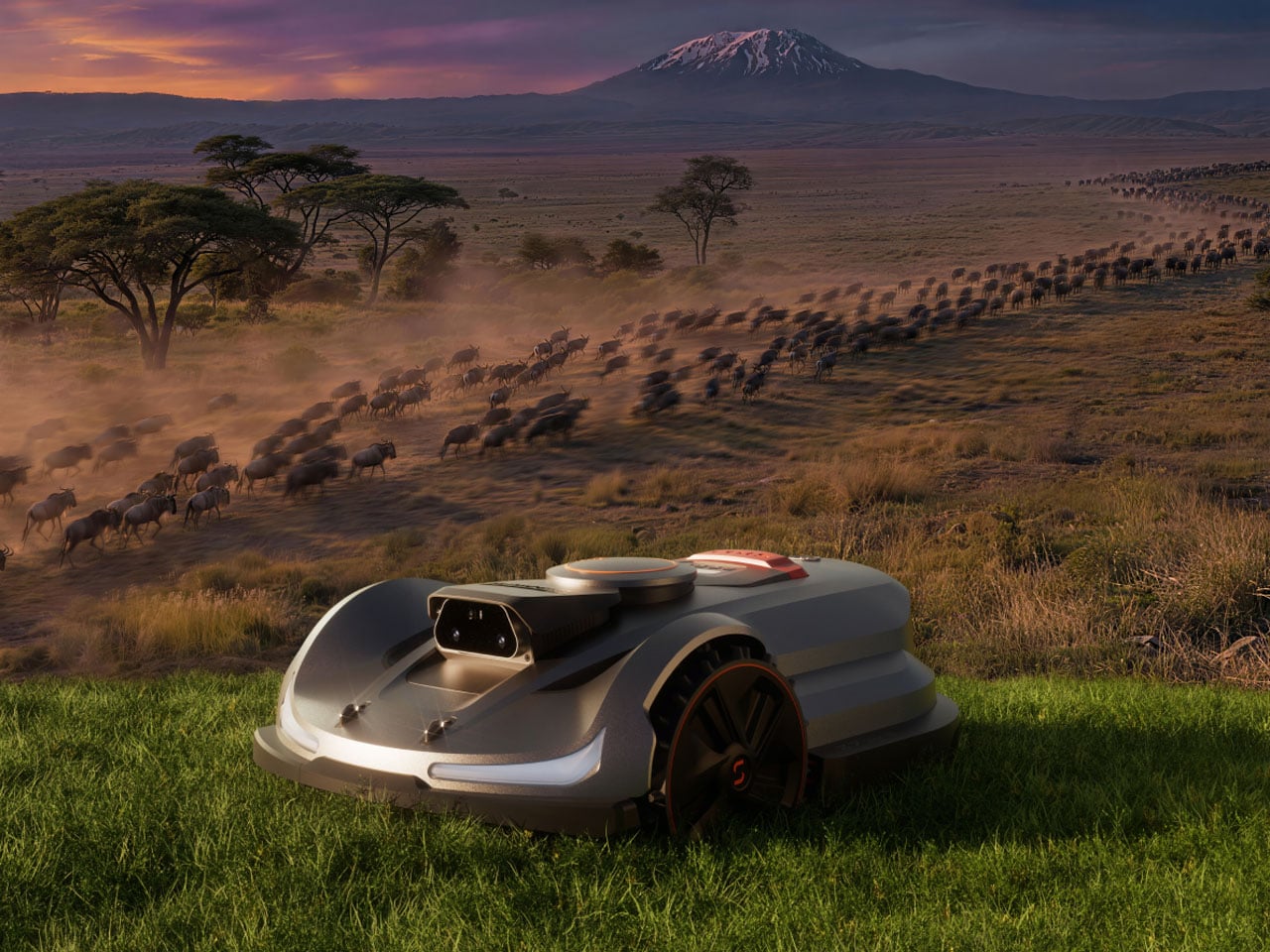
Large gardens require mowers with power, intelligence, and ability like the Elite X7 Plus Gen 2. The wire-free Sunseeker robot mower is built to handle yards up to 6000 m². Since it can manage large and complex gardens with equal efficiency, it is powered by nRTK and VSLAM 2.0 technologies and features binocular and iToF cameras for accurate positioning and navigation, whether it’s running during the day or in the night.

In our hands-on experience with Elite X7 Plus Gen 2, our editor mapped his “yard wire-free,” without “no-go zones around the beds, and ran both day and night cycles” to watch the “binocular and iToF cameras work” under each condition. The experience has been telling.

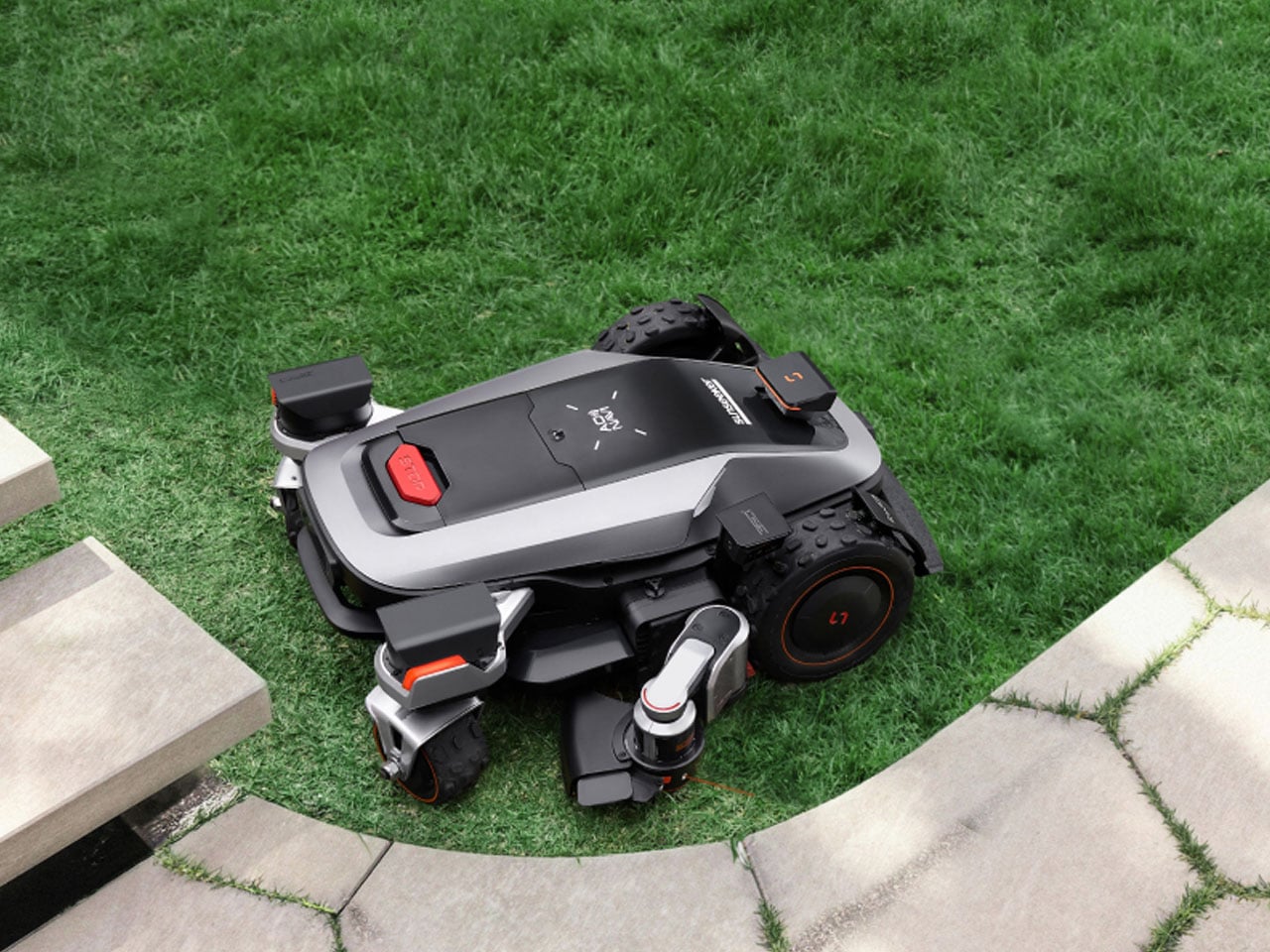
Provided with dual 14-inch cutting discs instead of a single narrow rotor, most robot mowers settle for this AWD robot has 8.7-inch all-terrain wheels. It features a smart LCD screen on top that shows battery status, connection, and the mode the mower’s running in. While it’s build-in tech allows it to map lawns, dodge more than 200 obstacles, and tackle extreme slopes with ease. All the autonomy and decision-making that the mower can do on its own is powered by 10 TOPS AI chip and fueled by a 10 Ah battery.

Sunseeker Elite X4: Winner Award

The Sunseeker Elite X4 is easily recognized for the effortless robotic lawn mowing it assures on smaller, private lawns that span not more than 1,200 m². The mower is ready before you can snap your finger: it requires no calibration and functions wire-free courtesy its 3D LiDAR and Vision AI system, mapping, navigating, and avoiding obstacles, independent of satellite signals.

The post Award-winning Sunseeker robot lawn mower can maintain a football field without boundary wires first appeared on Yanko Design.
30 Major Titles Target an Eight-Week Release Window to Avoid GTA 6

30 Major Titles Target an Eight-Week Release Window to Avoid GTA 6 A graphic showing the impact of GTA 6 on the video game release schedule.

After years of sparse AAA game releases, the gaming industry is bracing for an unprecedented surge. Between late August and late October 2026, over 30 major titles are set to launch, including Call of Duty, Wolverine, and Ace Combat. This concentrated schedule stems from publishers avoiding the November release of Grand Theft Auto 6, a […]

The post 30 Major Titles Target an Eight-Week Release Window to Avoid GTA 6 appeared first on Geeky Gadgets.

Posted in Uncategorized

Apple Just Quietly Made Your iPad Massively Smarter with iPadOS 27

Apple Just Quietly Made Your iPad Massively Smarter with iPadOS 27 iPadOS 27

  Apple’s iPadOS 27 represents a significant evolution in how you interact with your iPad, emphasizing artificial intelligence (AI), enhanced usability and smarter tools. This update is designed to make the iPad more intuitive, versatile, and responsive to your needs. Whether you’re using it for work, creativity, or everyday tasks, iPadOS 27 introduces features that […]

The post Apple Just Quietly Made Your iPad Massively Smarter with iPadOS 27 appeared first on Geeky Gadgets.

Posted in Uncategorized

Hidden Limitations of the Insta360 Luna Ultra Every Creator Should Know

Hidden Limitations of the Insta360 Luna Ultra Every Creator Should Know Insta360 Luna Ultra detachable touchscreen used as a remote

The Insta360 Luna Ultra arrives at a moment when most vloggers already carry a capable camera in their pocket. Modern flagship phones shoot 4K, run night modes and stabilise handheld footage well enough to publish. So the real question is not whether the Luna Ultra is a good camera, but whether it does enough that […]

The post Hidden Limitations of the Insta360 Luna Ultra Every Creator Should Know appeared first on Geeky Gadgets.

Posted in Uncategorized