AYANEO Just Built a 115Wh Strix Halo Handheld and Killed Portability

Gaming handhelds are supposed to fit in your hands, but AMD’s new Strix Halo processors generate serious heat and drain batteries faster than you can finish a boss fight. The GPD Win 5 and OneXFly Apex responded by strapping external battery packs to their backs, which works, but looks like your handheld is wearing a fanny pack in the wrong spot. It’s practical but awkward, and it raises an obvious question: if you’re adding external batteries anyway, why not just make the whole device bigger?

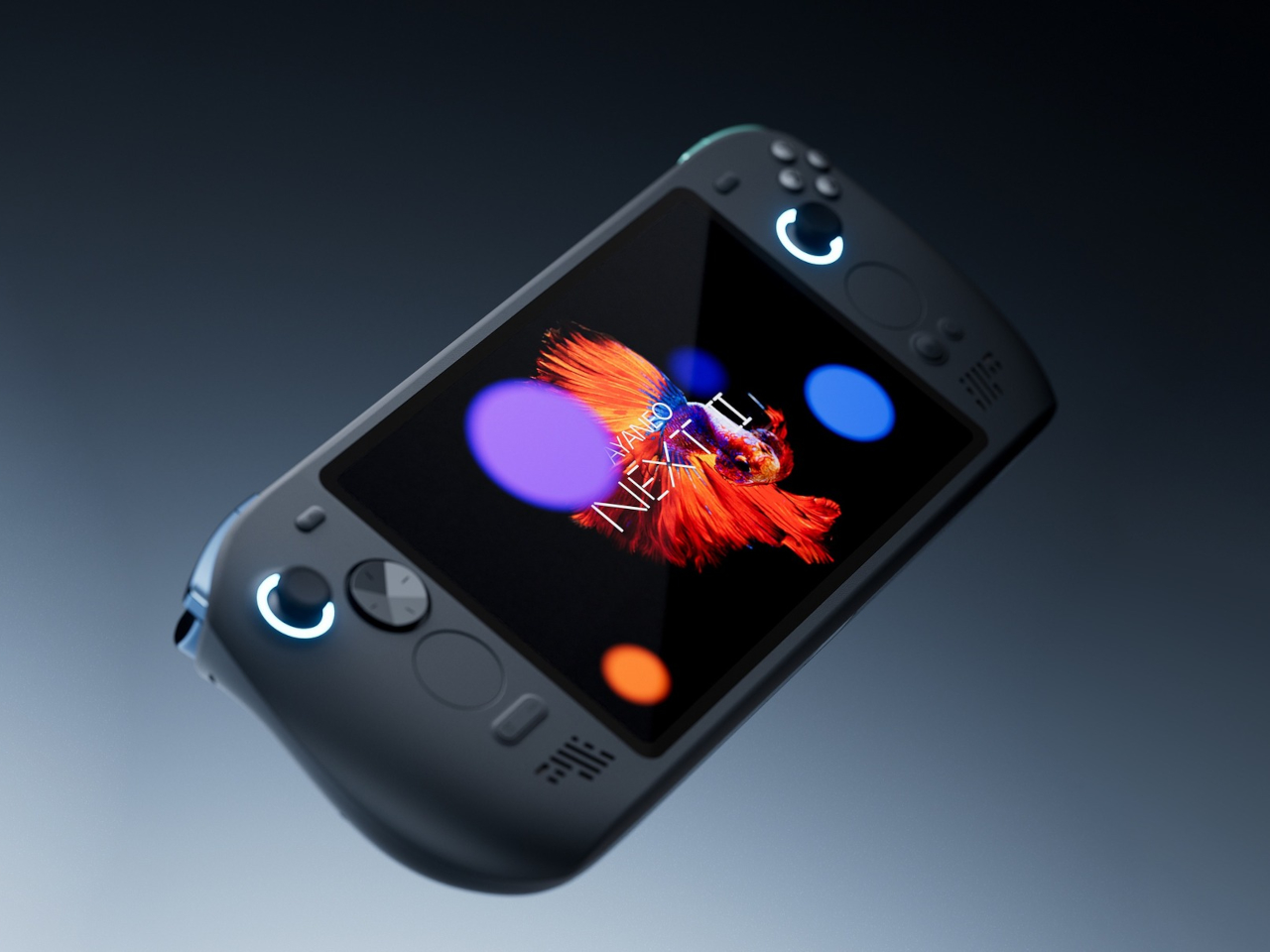
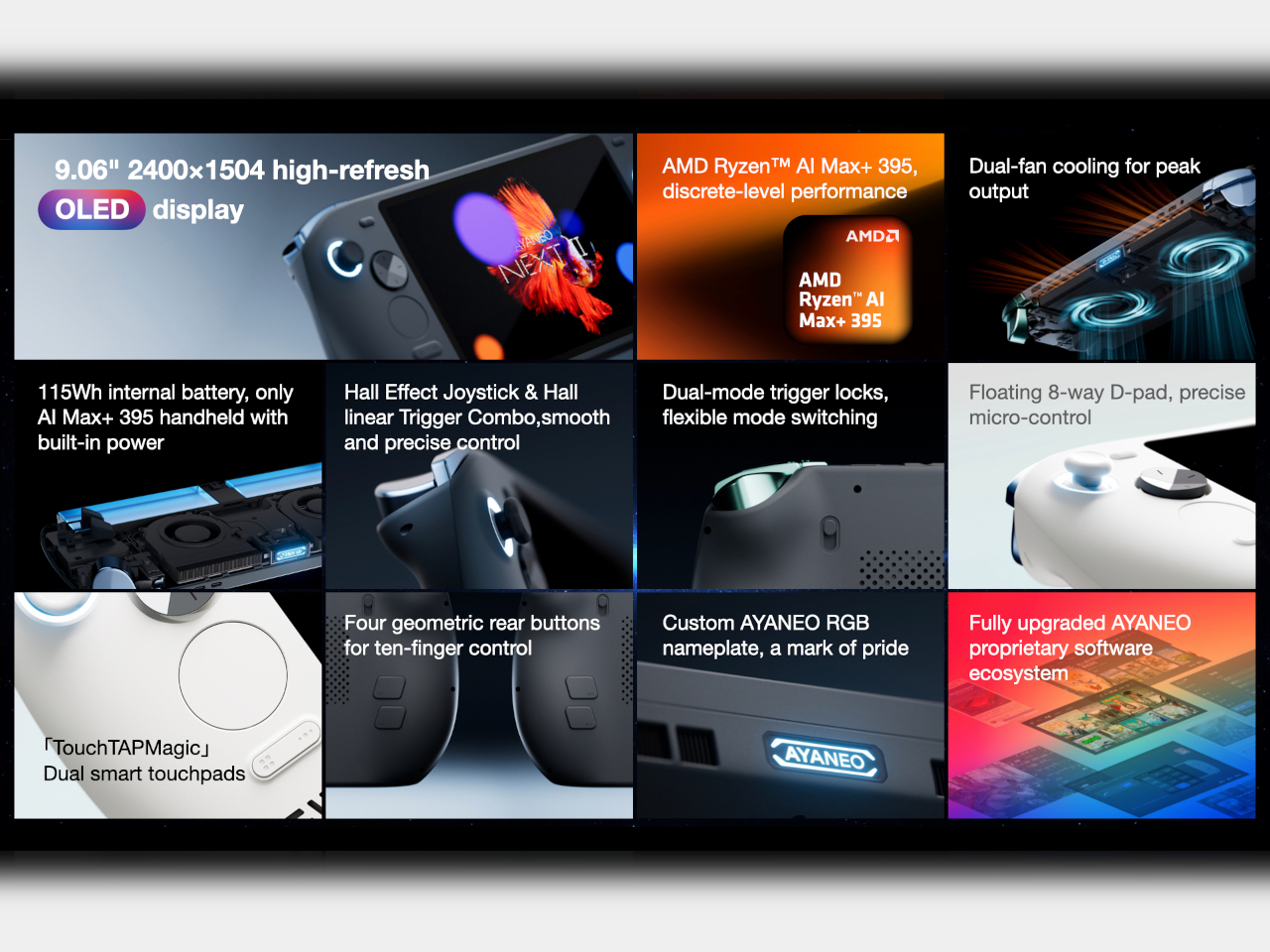
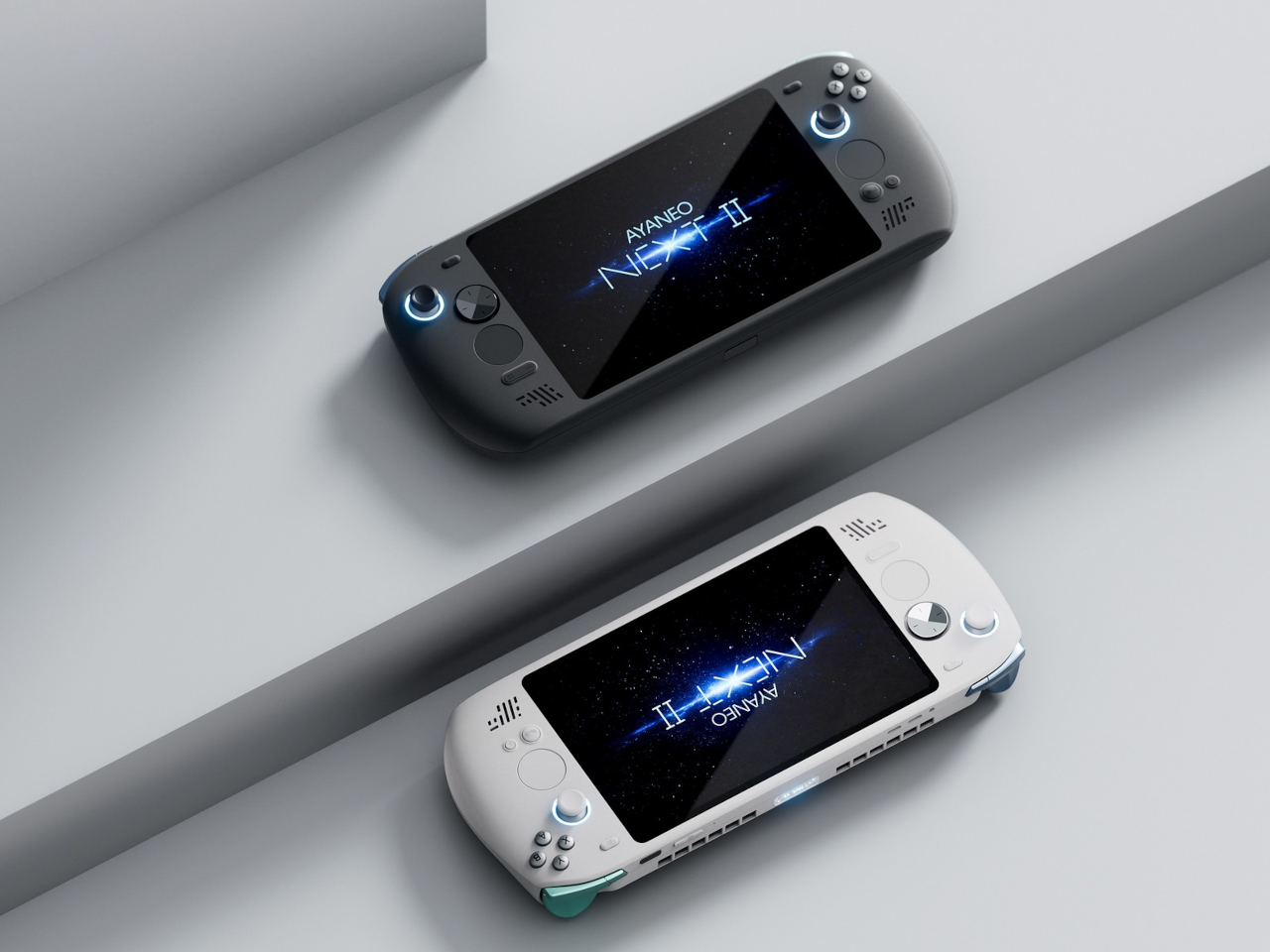
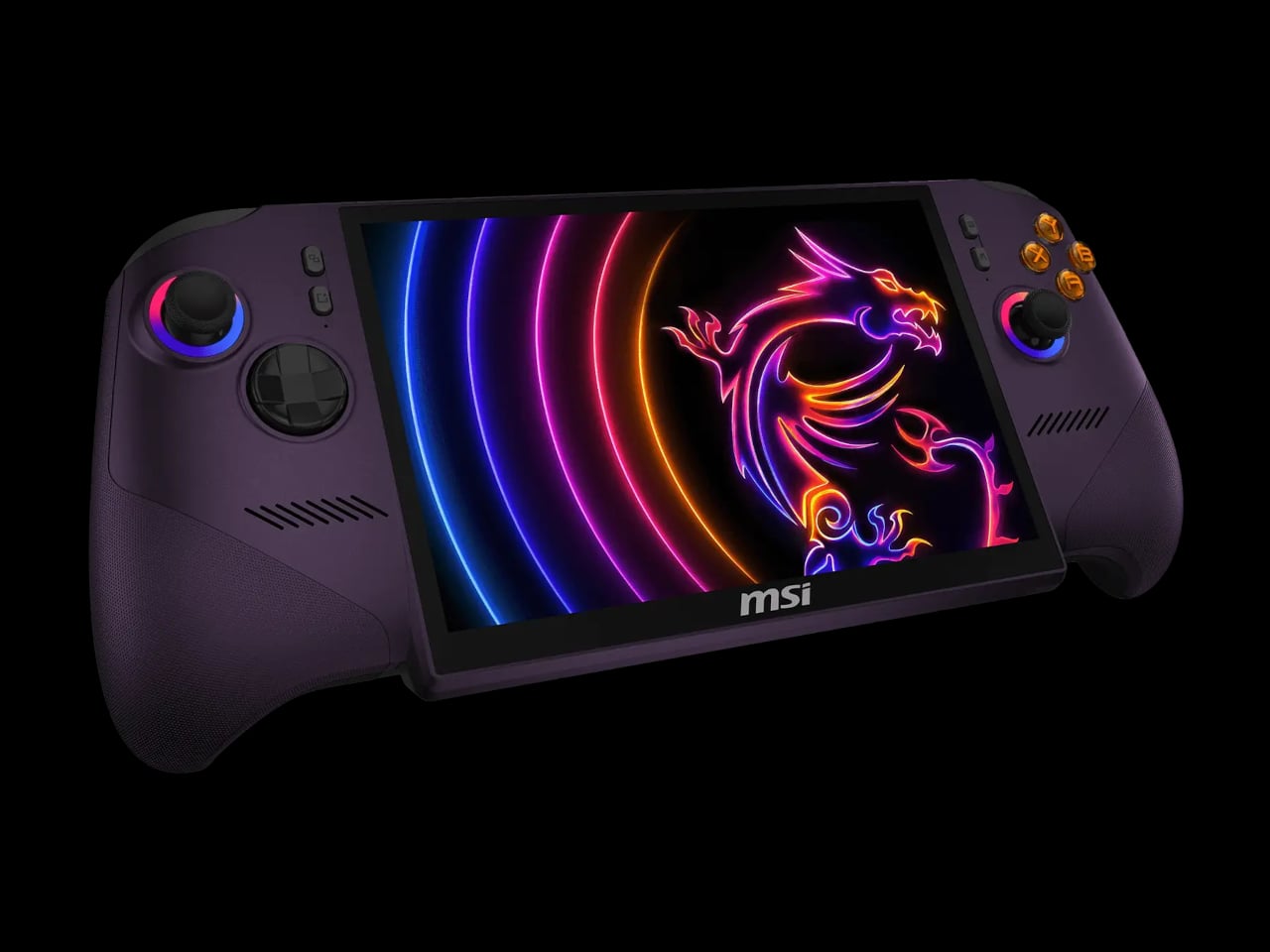
AYANEO apparently asked that same question and decided to run with it. The AYANEO NEXT II skips external packs entirely, hiding a massive 115Wh battery and a 9.06-inch OLED inside a thick, sculpted body that feels more like a portable gaming monitor with grips than something you’d slip into a backpack. It’s AYANEO’s answer to Strix Halo’s power demands, and the solution involves simply accepting that this thing was never going to be pocketable in the first place.

Designer: AYANEO

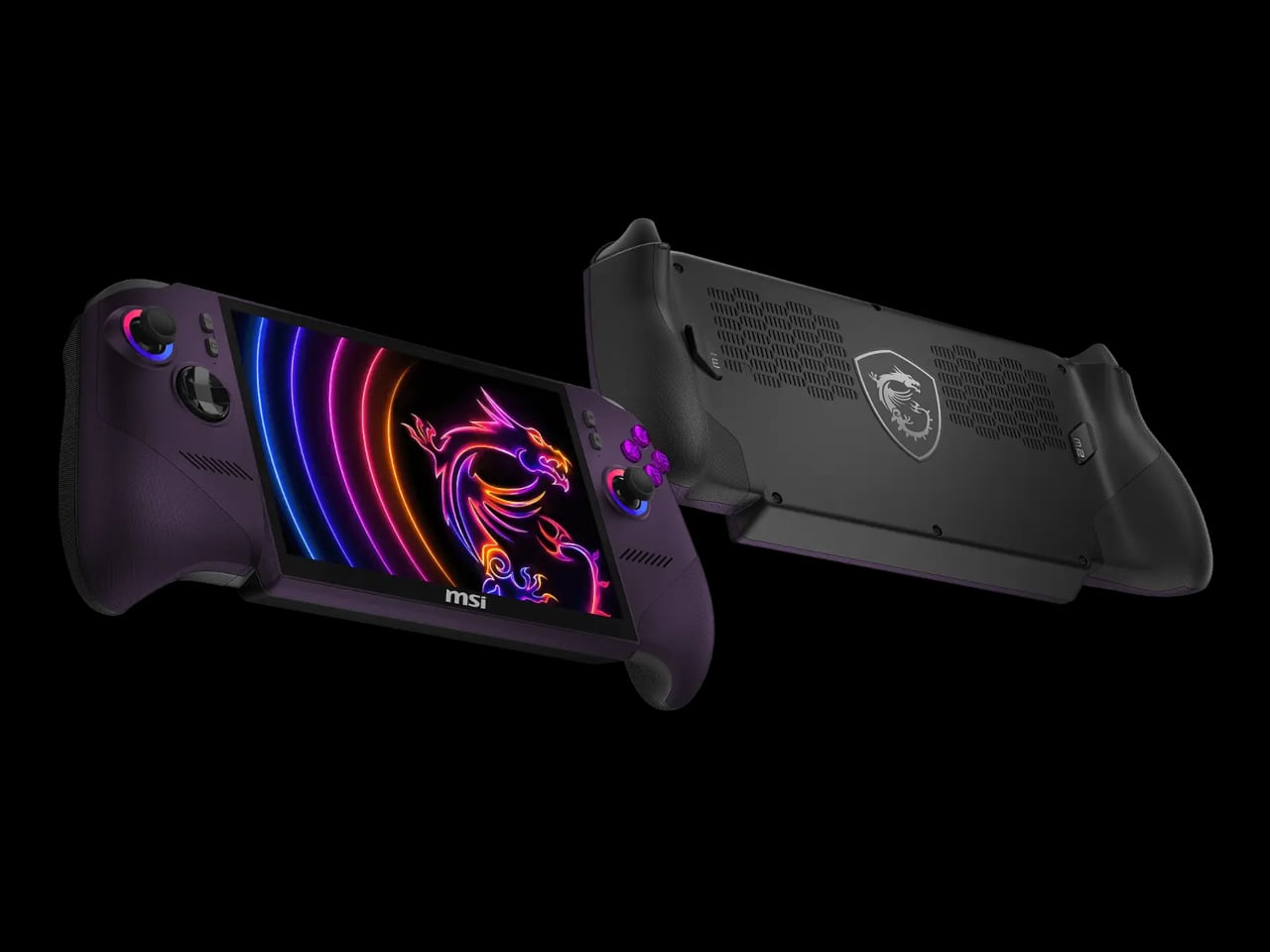
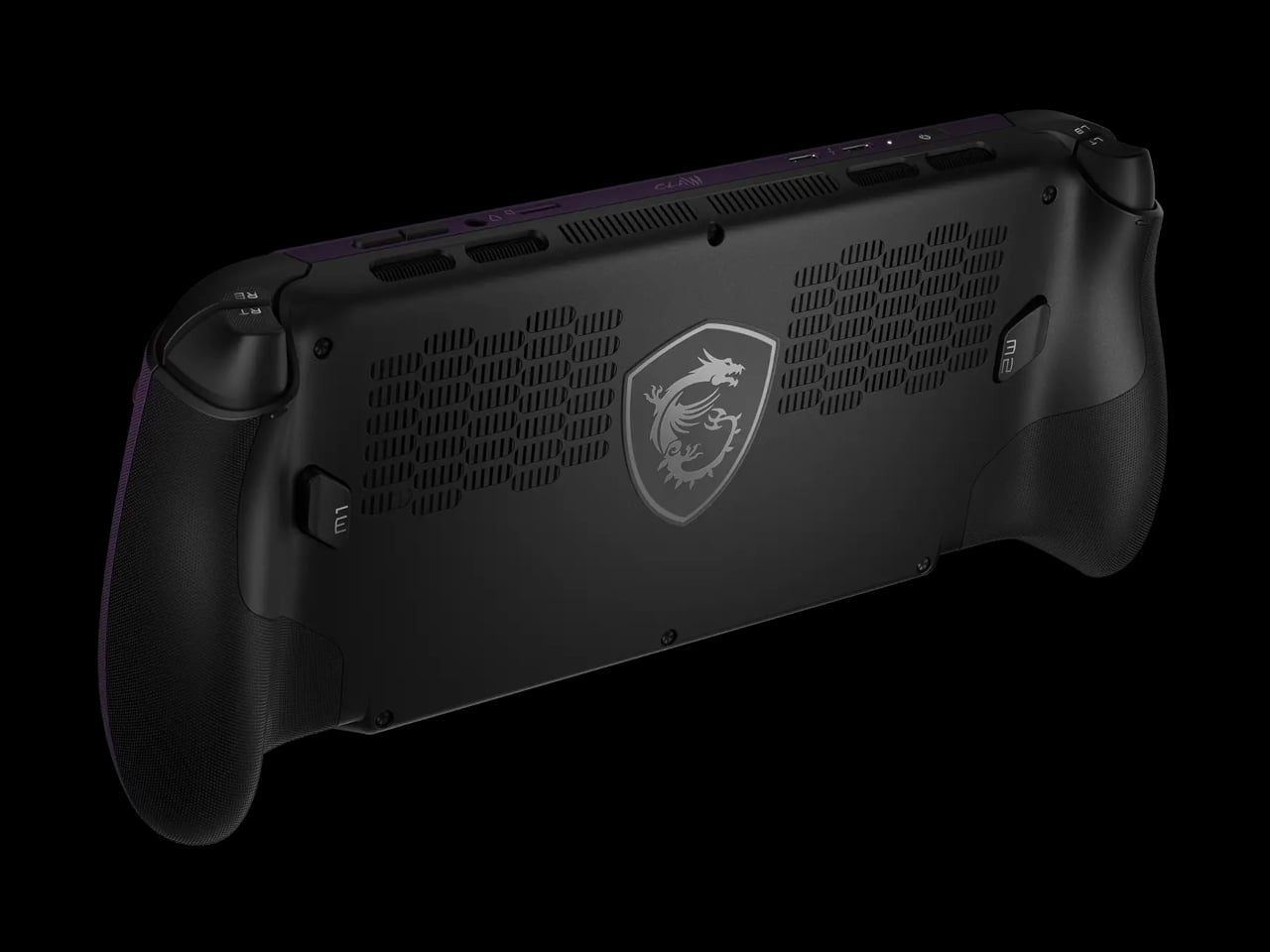
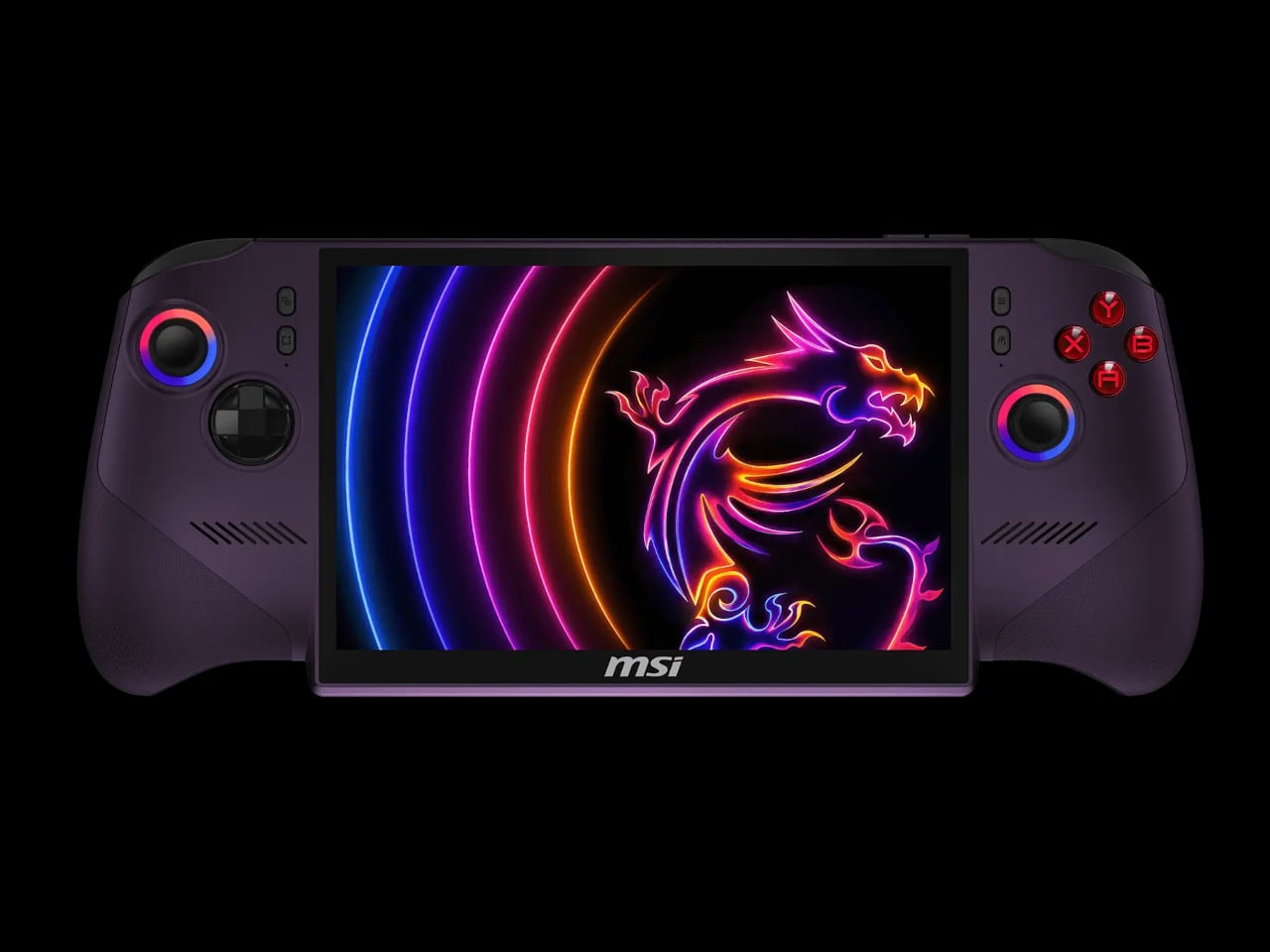
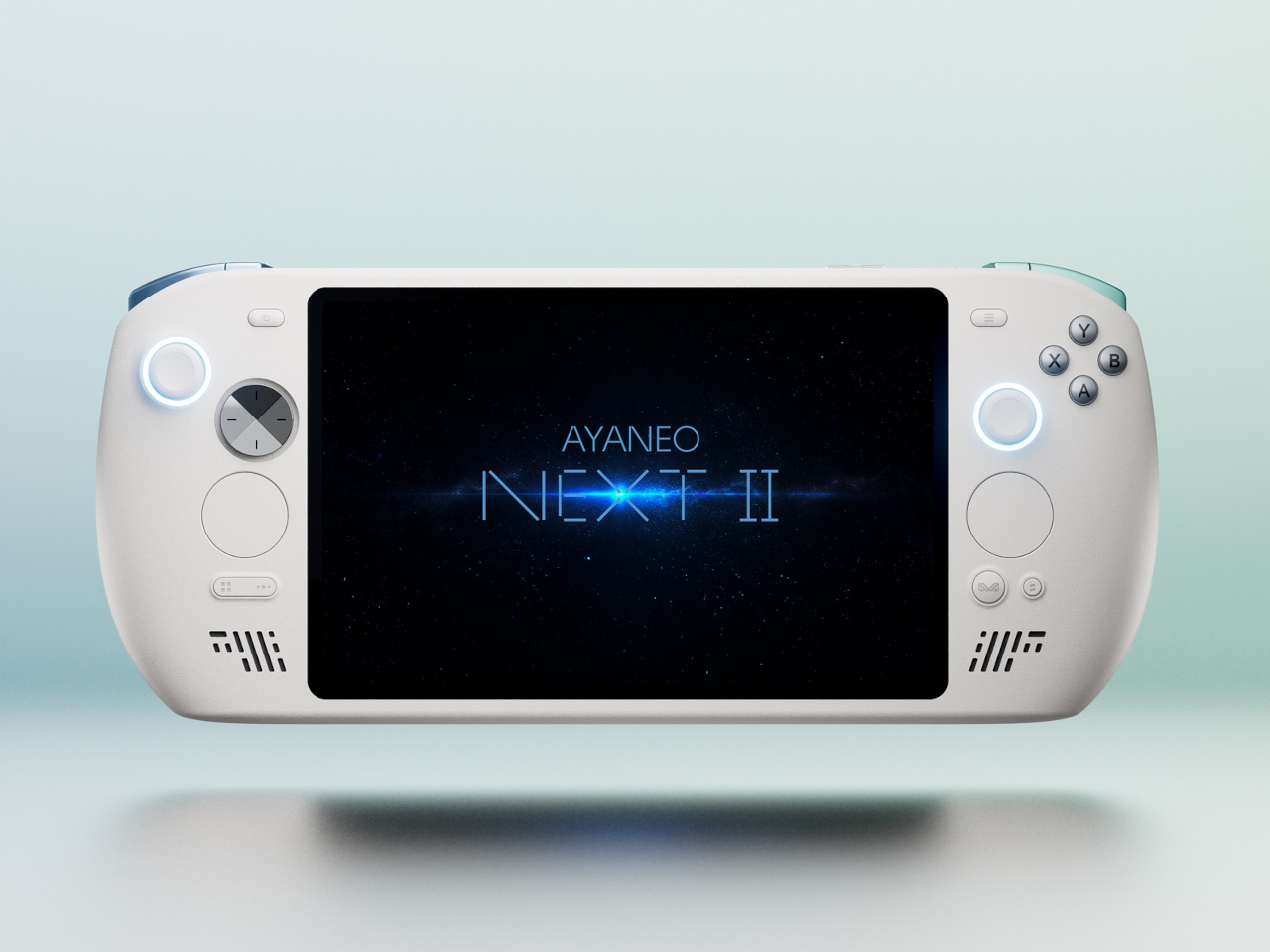
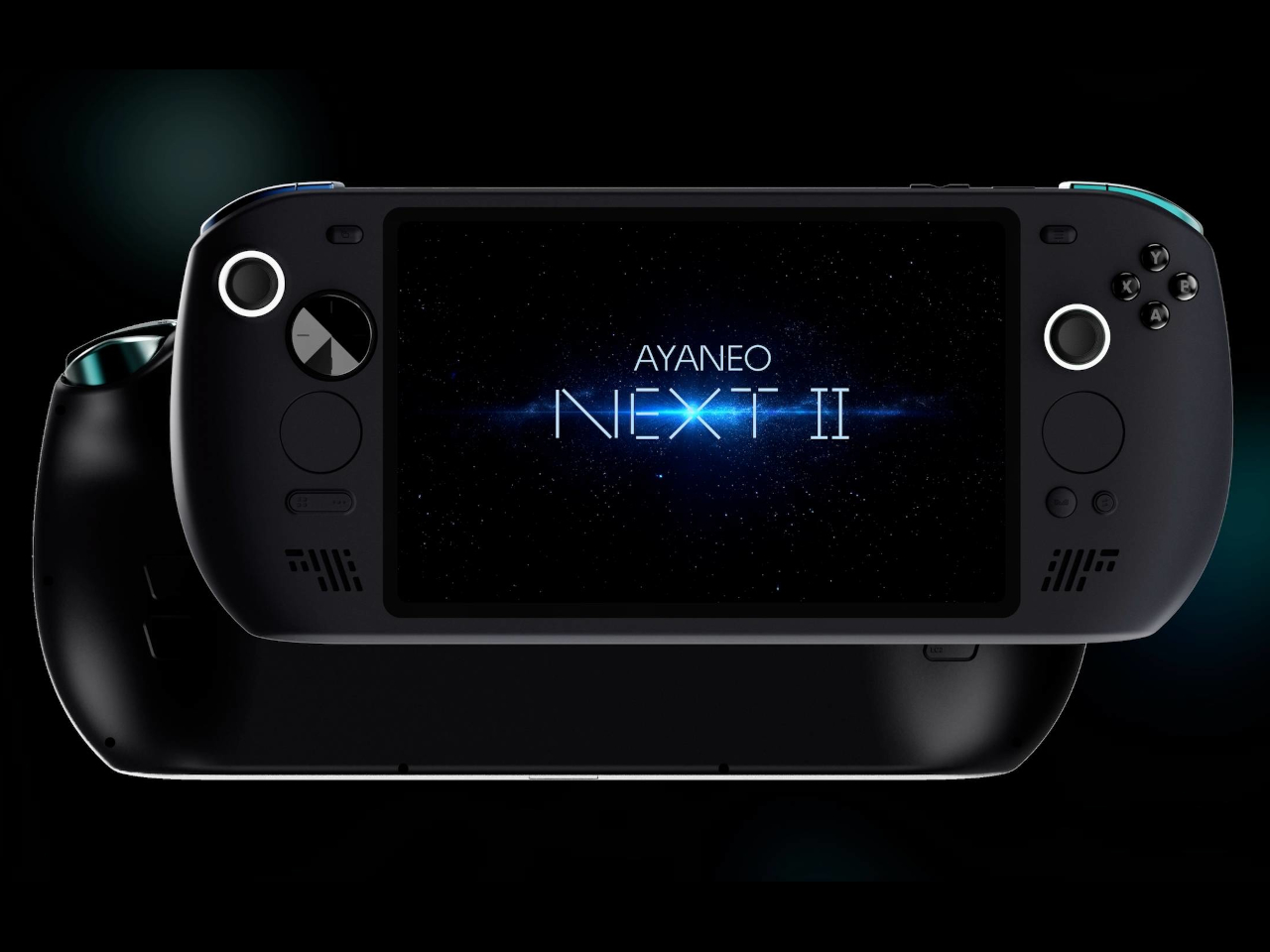
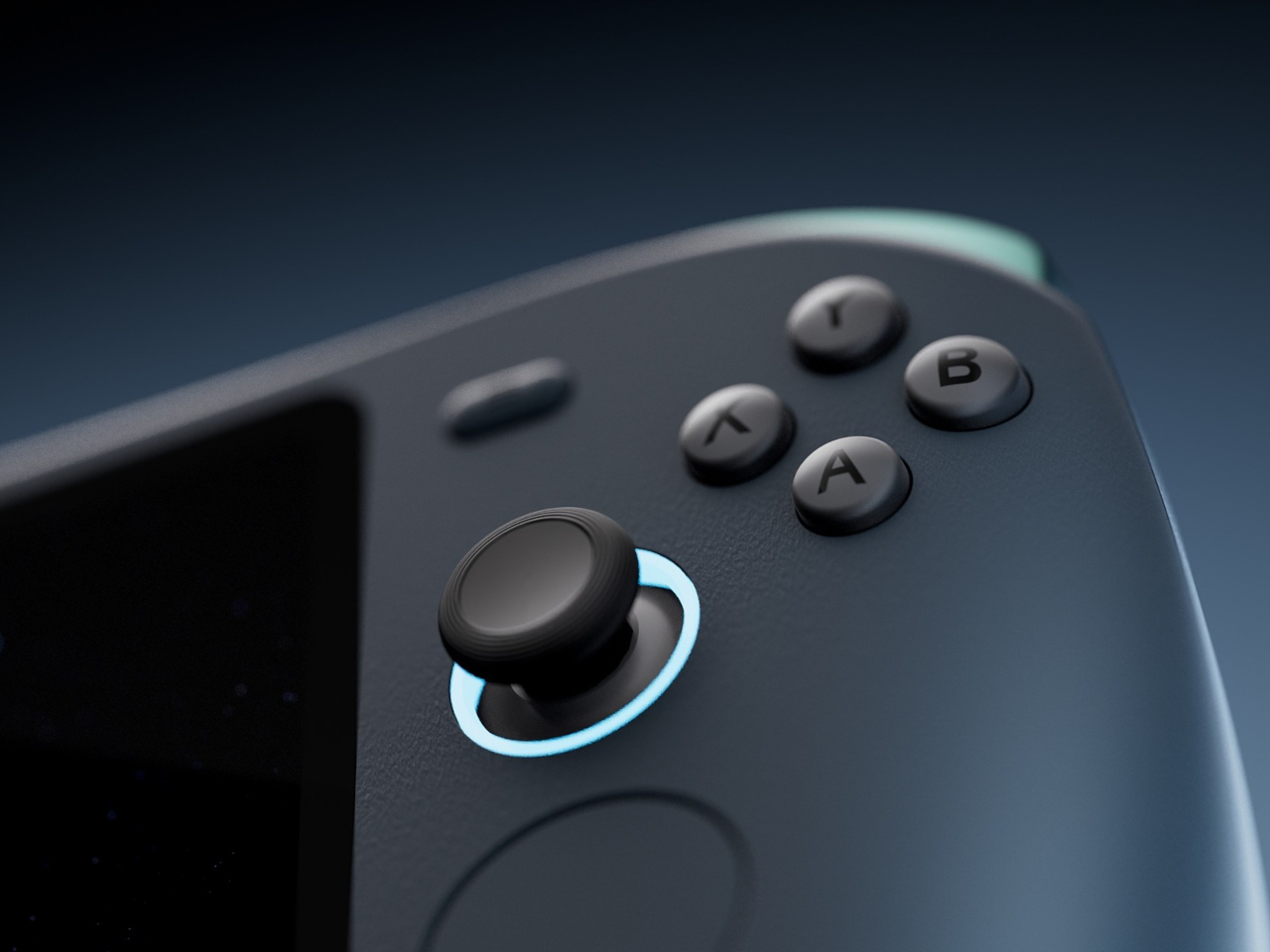
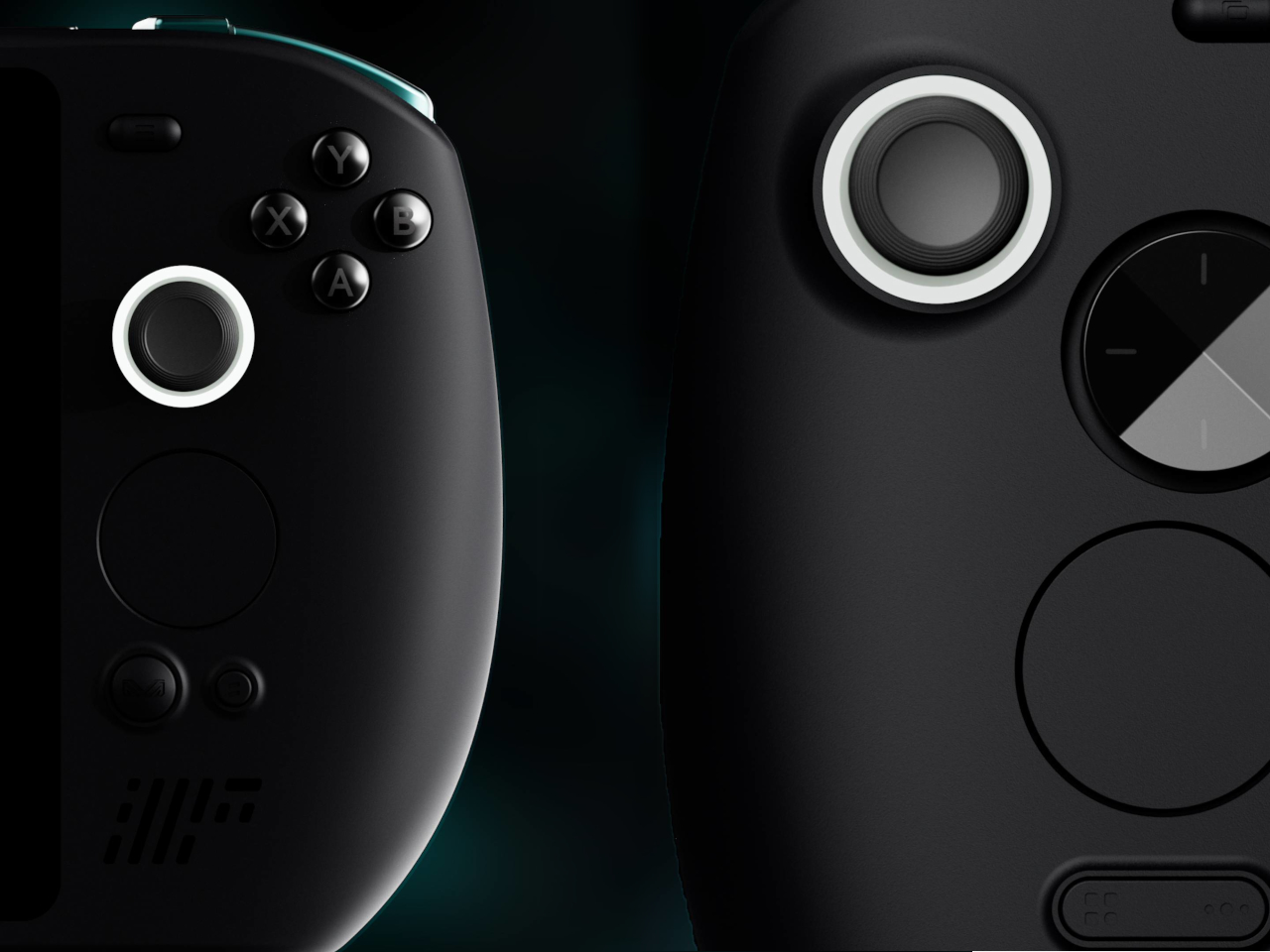
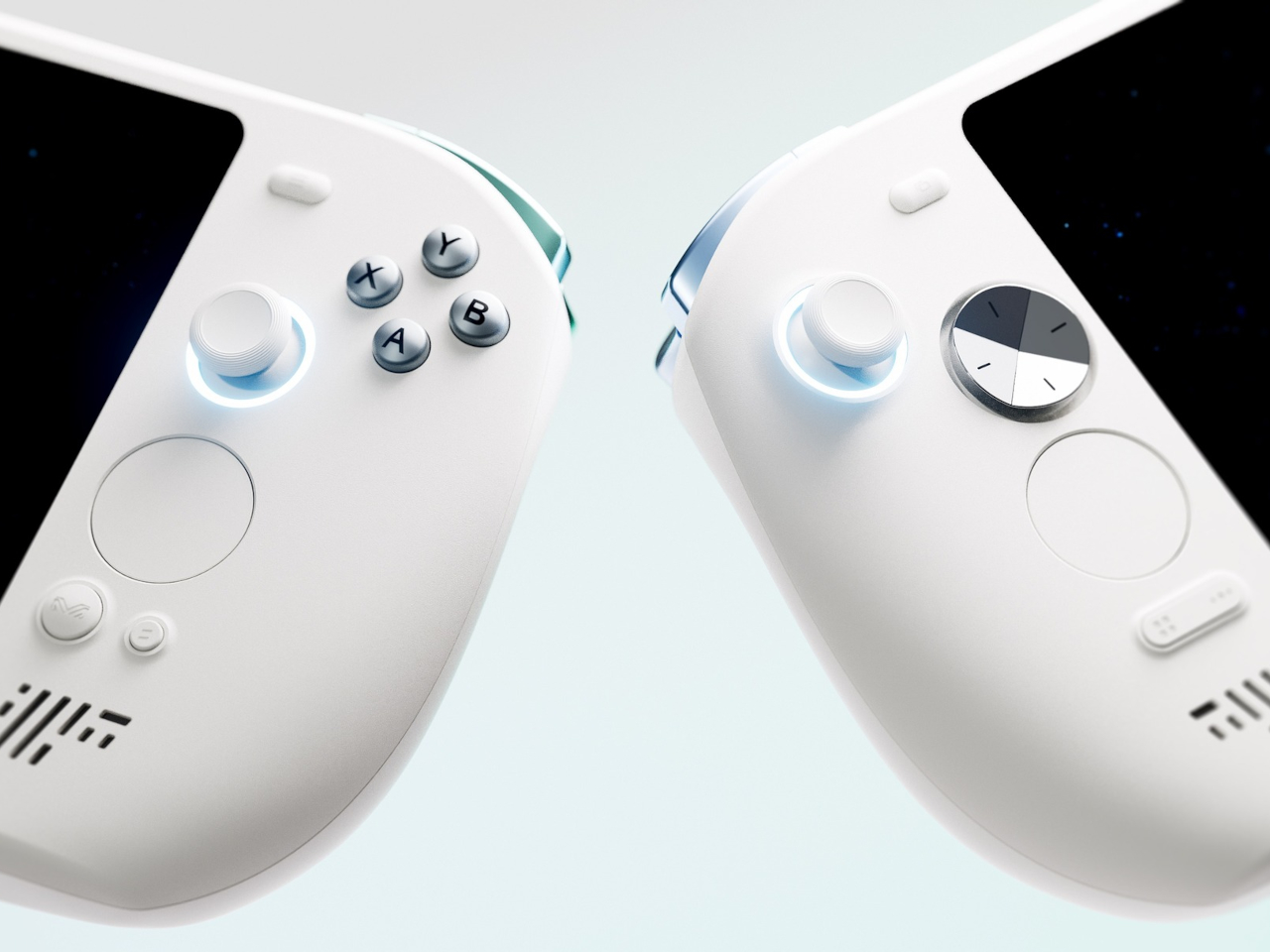
The design doesn’t apologize for its size. Deep grips flare outward like a proper gamepad, and the body is thick enough to house dual cooling fans without turning into a space heater. Hall effect sticks sit where your thumbs expect them, surrounded by a floating D-pad, dual touchpads, and speakers that actually face you instead of firing sound into your lap. It looks less like a Switch rival and more like someone decided gaming monitors needed handles attached.

That 9.06-inch screen uses an unusual 3:2 aspect ratio instead of the typical widescreen shape most games expect. You get a gorgeous OLED panel with refresh rates up to 165Hz and brightness that peaks at 1100 nits, which sounds fantastic until you realize most games will either add black bars or run nowhere near 165 frames per second at this resolution anyway. Still, it’s lovely for desktop windows and emulators that appreciate the extra vertical space.

The 115Wh battery is where things get complicated. Everything stays hidden inside for a cleaner look and more console-like feel, but that capacity might cause questions at airport security since many airlines cap carry-on batteries at 100Wh. You also can’t swap batteries when one dies, and constantly feeding an 85-watt processor means faster charge cycles and potential long-term wear. You’re looking at two to three hours of heavy gaming before hunting for an outlet.

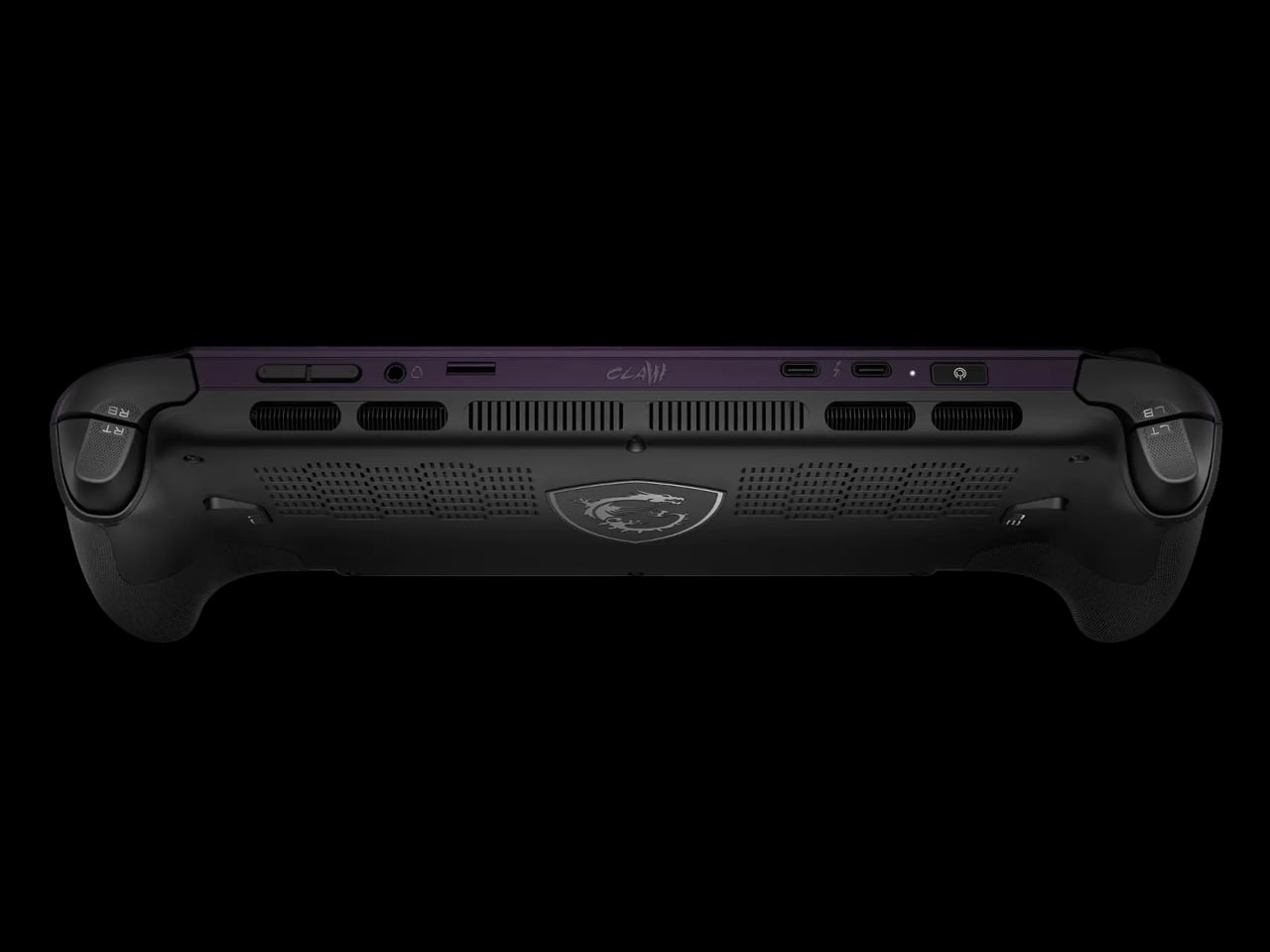
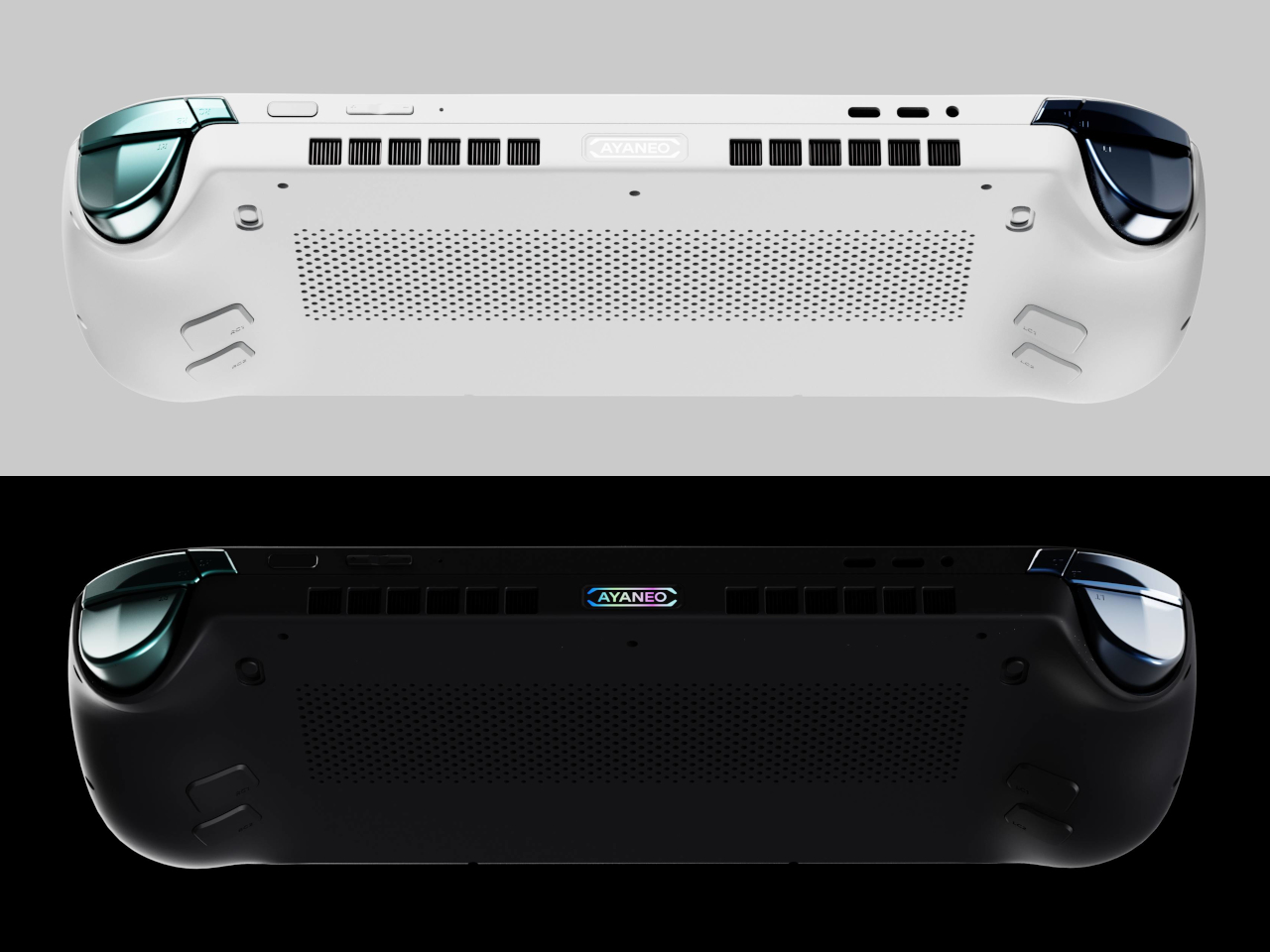
The dual cooling fans work hard to keep Strix Halo from overheating, and you’ll definitely hear them during intense sessions. AYANEO claims it can sustain up to 85 watts, which should let the integrated Radeon graphics handle modern games at respectable settings, though you’ll also feel warmth radiating from the vents. This is less a grab-and-go portable and more something you carry from the couch to the desk when you need a scenery change.

AYANEO loaded the NEXT II with premium controls that enthusiasts will genuinely appreciate. Hall effect sticks and triggers promise zero drift, dual-stage trigger locks switch between smooth analog and clicky digital modes, and rear buttons plus dual touchpads give you more inputs than a standard controller. A magnetic haptic motor adds feedback that tries to mimic console vibration, and the AYASpace software hides Windows behind a console-style launcher with performance tuning options built in.

The AYANEO NEXT II essentially stops pretending to be portable. It won’t fit in a jacket pocket, might get flagged at airport security, and is almost certainly too heavy for comfortable one-handed play in bed. But if you want something that feels more like a small gaming monitor with built-in controls rather than a device you’d actually carry around town, this oversized approach makes a strange kind of sense. You just have to accept that portability took a back seat to screen size and battery capacity.

The post AYANEO Just Built a 115Wh Strix Halo Handheld and Killed Portability first appeared on Yanko Design.
OpenAI is building their own AI Chips to take on Nvidia’s Chip Dominance

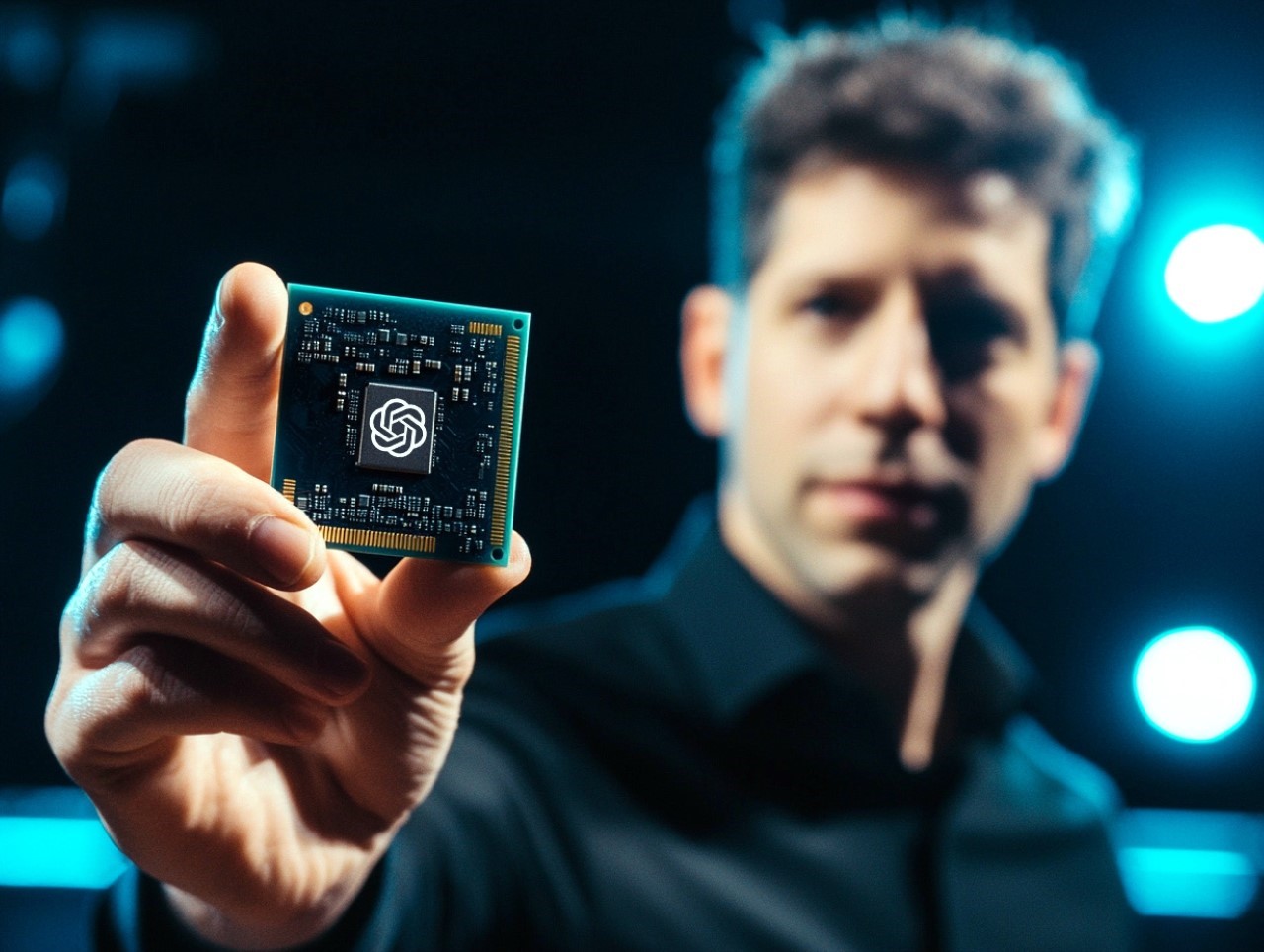
In a strategic move that feels like it’s straight from an Aaron Sorkin movie, OpenAI has started crafting its own AI chip, a custom creation designed to tackle the heavy demands of running its advanced models. The company, known for developing ChatGPT, has partnered with Broadcom and Taiwan Semiconductor Manufacturing Company (TSMC) to roll out its first in-house chip by 2026, Reuters reports. While many giants might build factories to keep all chip manufacturing in-house, OpenAI opted to shelve that multi-billion-dollar venture. It’s instead using industry muscle in a way that’s both practical and quietly rebellious.

Why bother with the usual suppliers? OpenAI is already a massive buyer of Nvidia’s GPUs, essential for training and inference—the magic that turns data into meaningful responses. But here’s the twist: Nvidia’s prices are soaring, and OpenAI wants to diversify. AMD’s new MI300X chips add to the mix, showing OpenAI’s resourcefulness in navigating a GPU market often plagued by shortages. Adding AMD into this lineup might look like a mere “supply chain insurance,” but it’s more than that—this move exhibits OpenAI’s reluctance to put all its eggs in one pricey basket. Sort of like Apple developing its own Apple Intelligence while leaning on ChatGPT whenever necessary.

Broadcom is helping OpenAI shape the chip, along with a data transfer capability that’s critical for OpenAI’s needs, where endless rows of chips work in synchrony. Securing TSMC, the world’s largest contract chipmaker, to produce these chips highlights OpenAI’s knack for creative problem-solving. TSMC brings a powerhouse reputation to the table, which gives OpenAI’s experimental chip a significant production edge—key to scaling its infrastructure to meet ever-growing AI workloads.

OpenAI’s venture into custom chips isn’t just about technical specs or saving money; it’s a tactical play to gain full control over its tech (something we’ve seen with Apple before). By tailoring chips specifically for inference—the part of AI that applies what’s learned to make decisions—OpenAI aims for real-time processing at a speed essential for tools like ChatGPT. This quest for optimization is about more than efficiency; it’s the kind of forward-thinking move that positions OpenAI as an innovator who wants to carve its own path in an industry where Google and Meta have already done so.

The strategy here is fascinating because it doesn’t pit OpenAI against its big suppliers. Even as it pursues its custom chip, OpenAI remains close to Nvidia, preserving access to Nvidia’s newest, most advanced Blackwell GPUs while avoiding potential friction. It’s like staying friendly with the popular kid even while building your own brand. This partnership-heavy approach provides access to top-tier hardware without burning any bridges—a balancing act that OpenAI is managing with surprising finesse.

(Representational images generated using AI)

The post OpenAI is building their own AI Chips to take on Nvidia’s Chip Dominance first appeared on Yanko Design.