There’s something delightfully unexpected about watching a designer take a winter sport and turn it into a snack vessel. But that’s exactly what Swedish designer Gustaf Westman has done with his latest creation, the Curling Bowl, and it might be the most charming thing to come out of the Milano Cortina 2026 Winter Olympics.
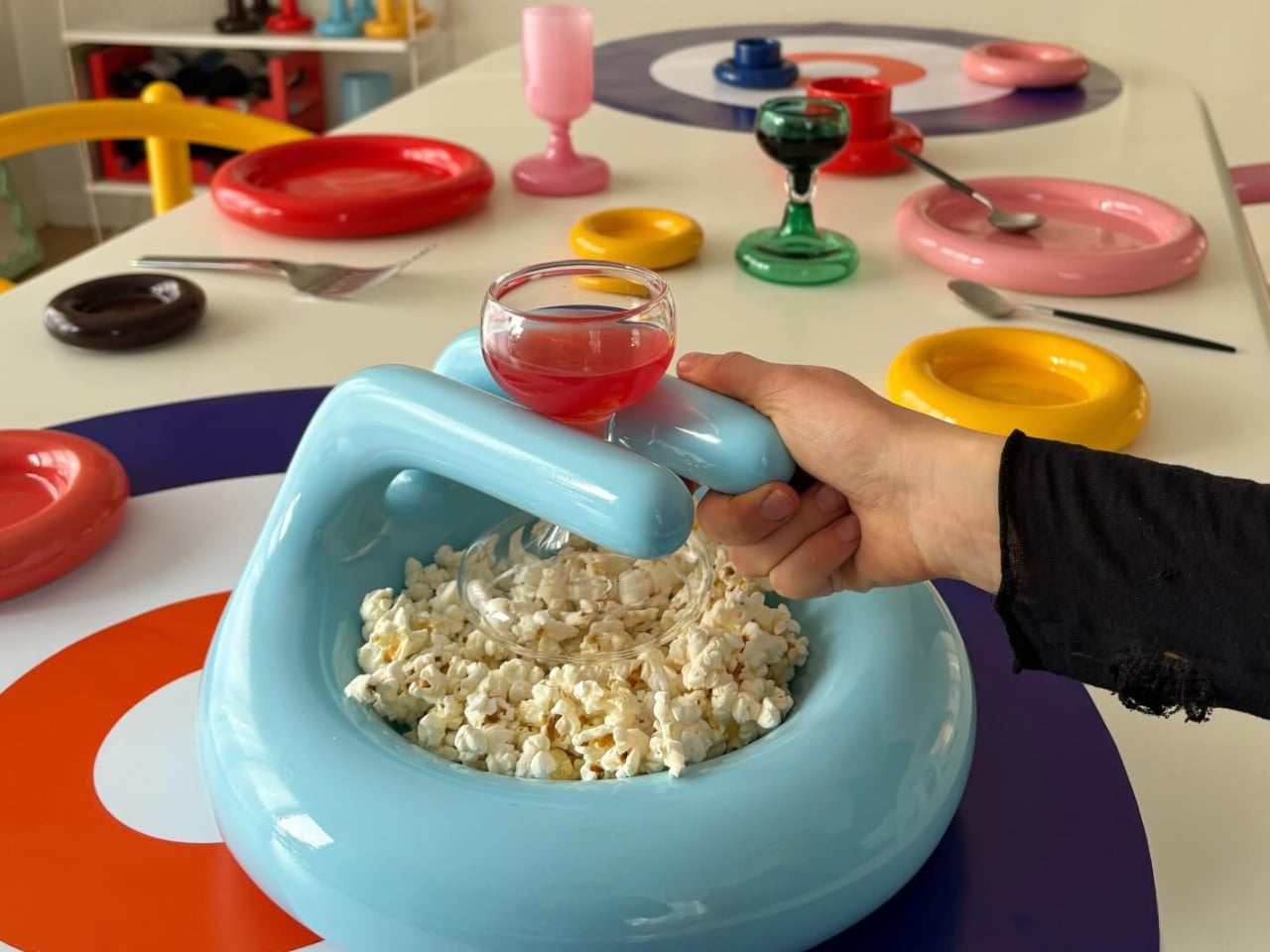
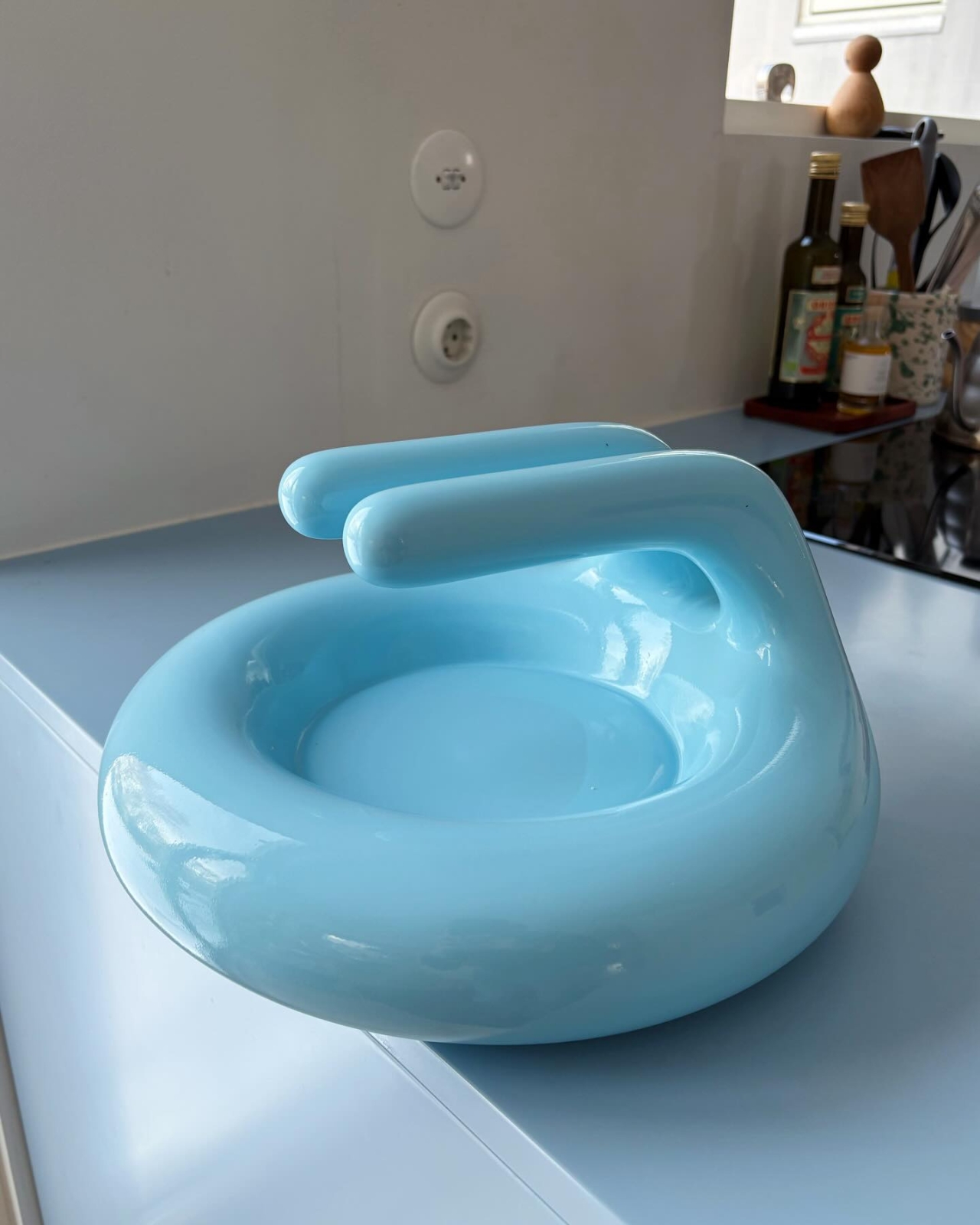
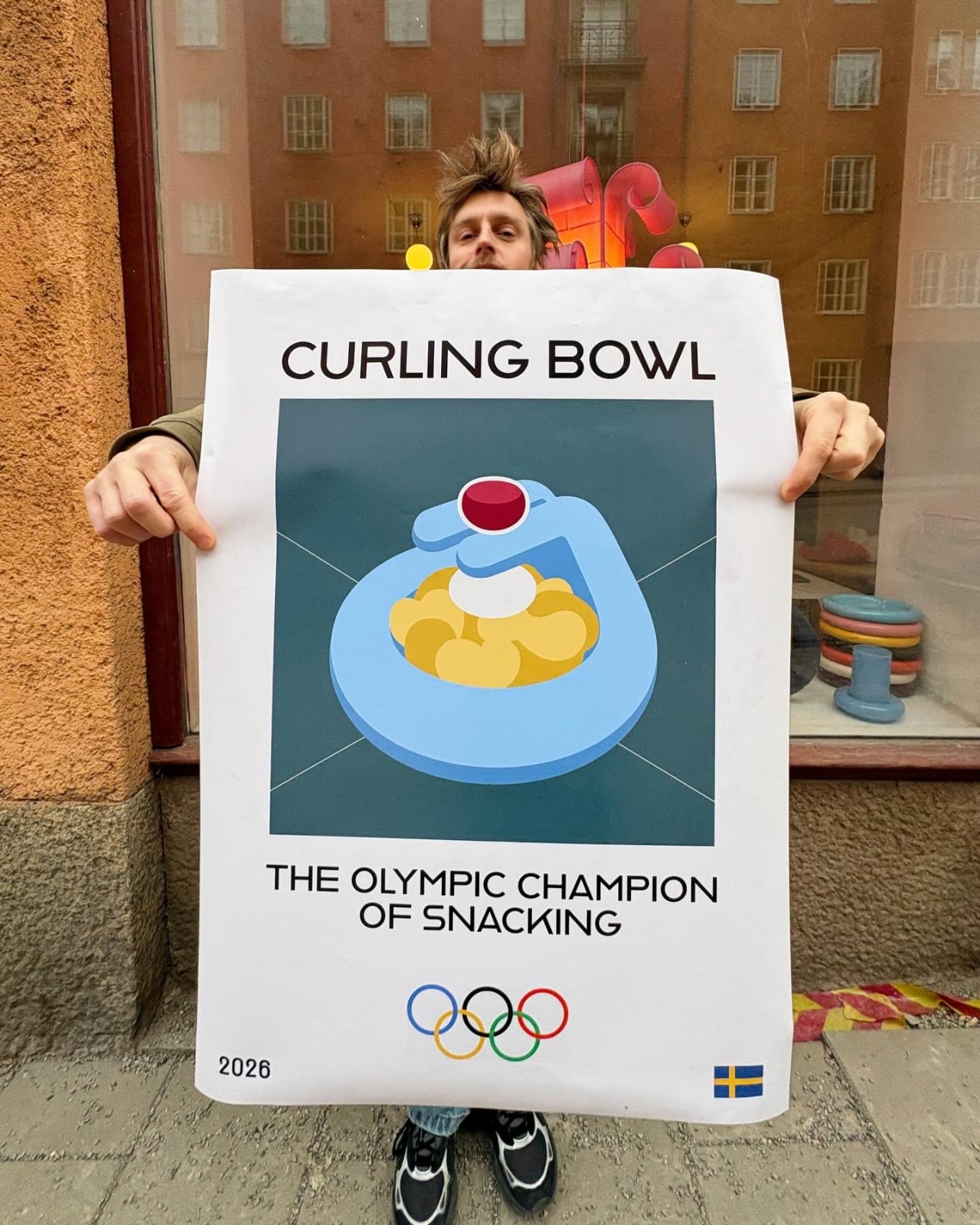
Westman, who has built a reputation for his inflated, chunky aesthetic that makes everything look like it’s been puffed up with joy, found his inspiration in an unlikely place. When his fellow Swedes, siblings Rasmus and Isabella Wranå, took gold in the mixed doubles curling event against Team USA, Westman did what any designer would do: he celebrated by creating something new. The result is a glossy, sky-blue bowl that perfectly captures the rounded silhouette of a curling stone, complete with that distinctive elevated handle.
Designer: Gustaf Westman
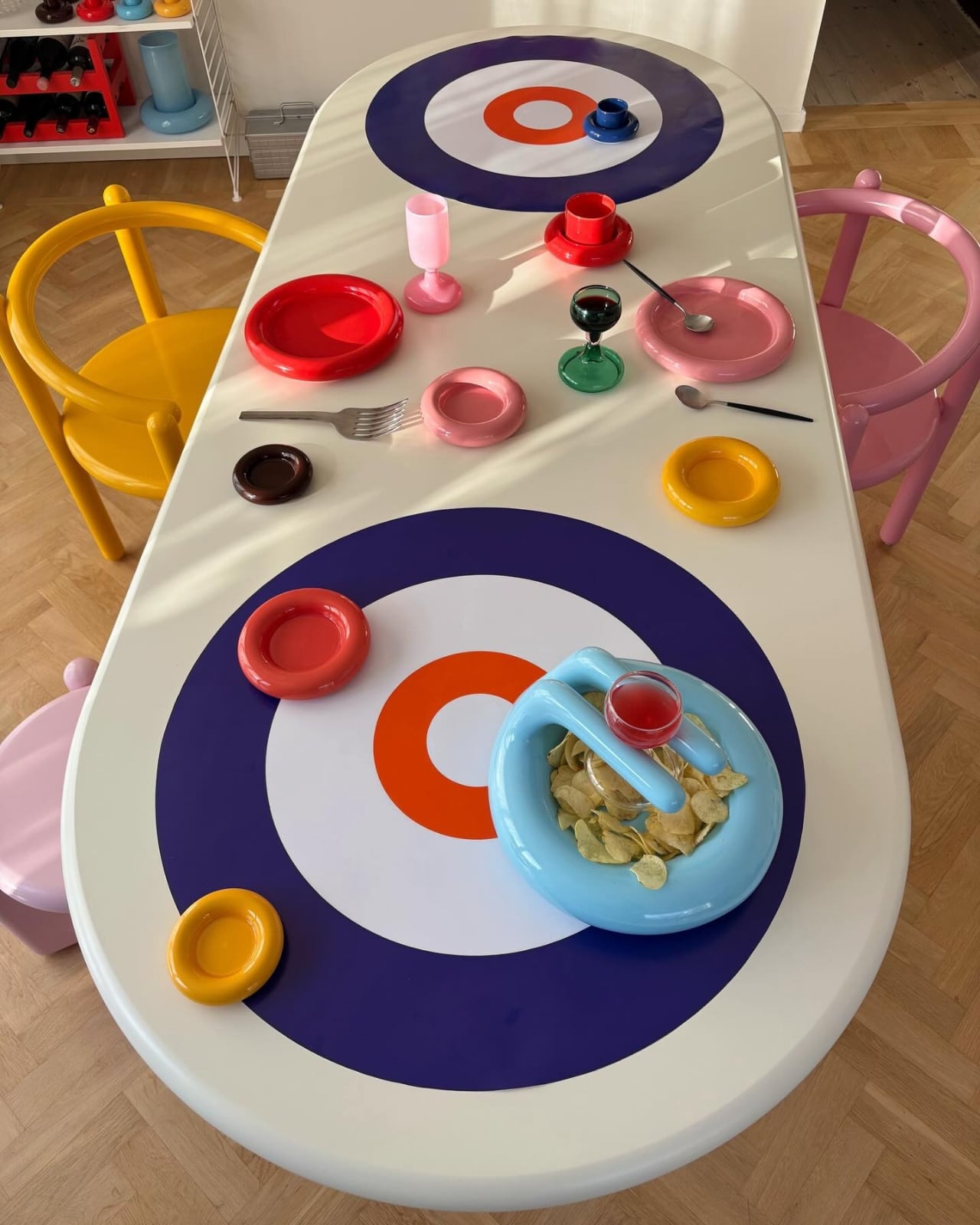
The Curling Bowl isn’t just a literal translation of sports equipment into home decor. It’s smarter than that. Cast in high-gloss pastel blue, the piece softens the compact mass of a traditional curling stone into something that feels approachable, almost huggable. The handle, which on a real curling stone helps players grip and release with precision, here doubles as both a functional grip and a built-in tray. It’s the kind of thoughtful design twist that makes you wonder why no one thought of it before.
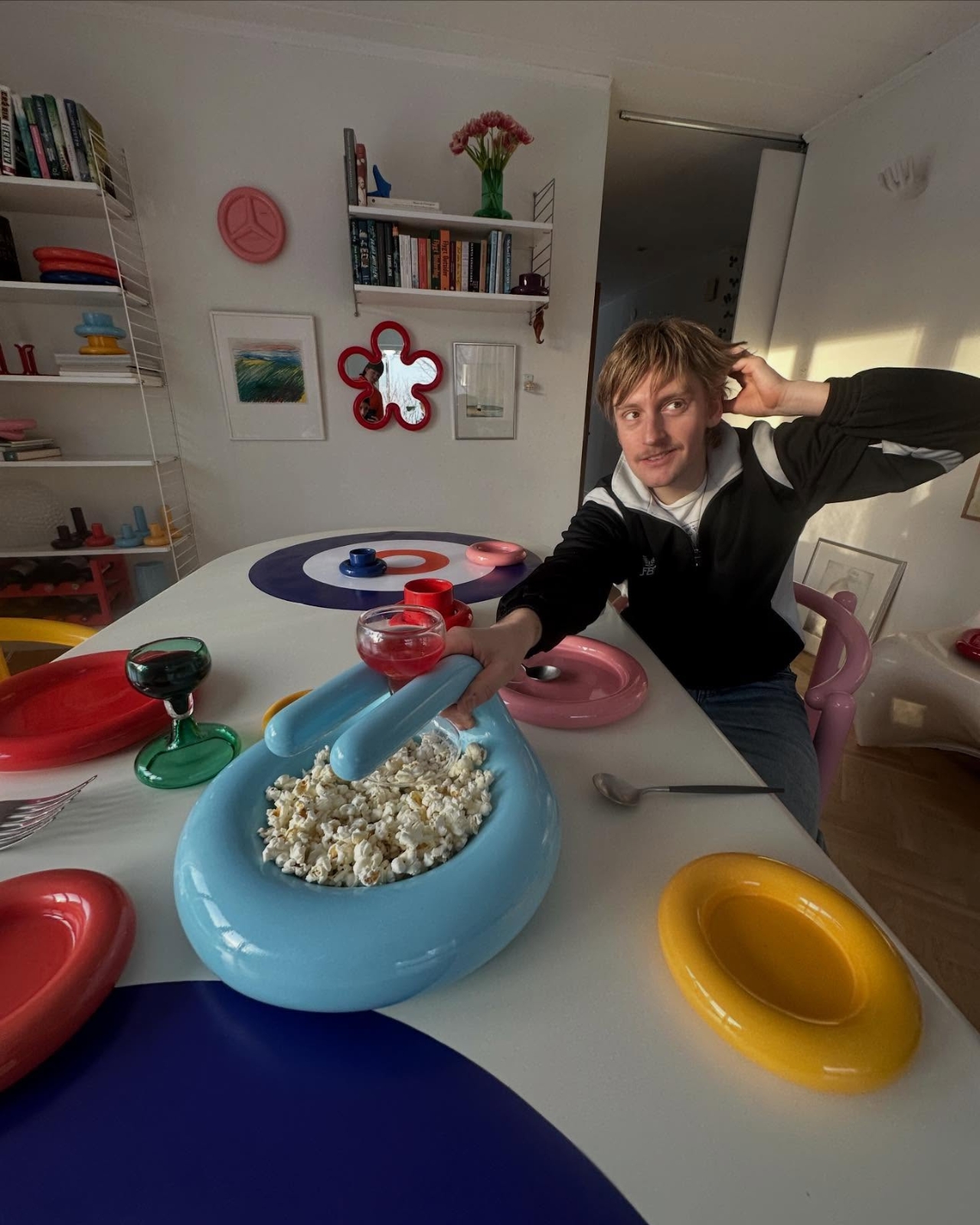
What makes this piece particularly clever is how Westman transforms the essence of the sport itself. Curling is all about precision, friction, and those hypnotic sweeping gestures that look like someone’s desperately trying to convince the ice to cooperate. Westman takes that same energy and translates it into the domestic ritual of snacking. Reaching for popcorn from the Curling Bowl mimics that poised grip before a slide. It’s sport as metaphor for hosting, and it works surprisingly well.
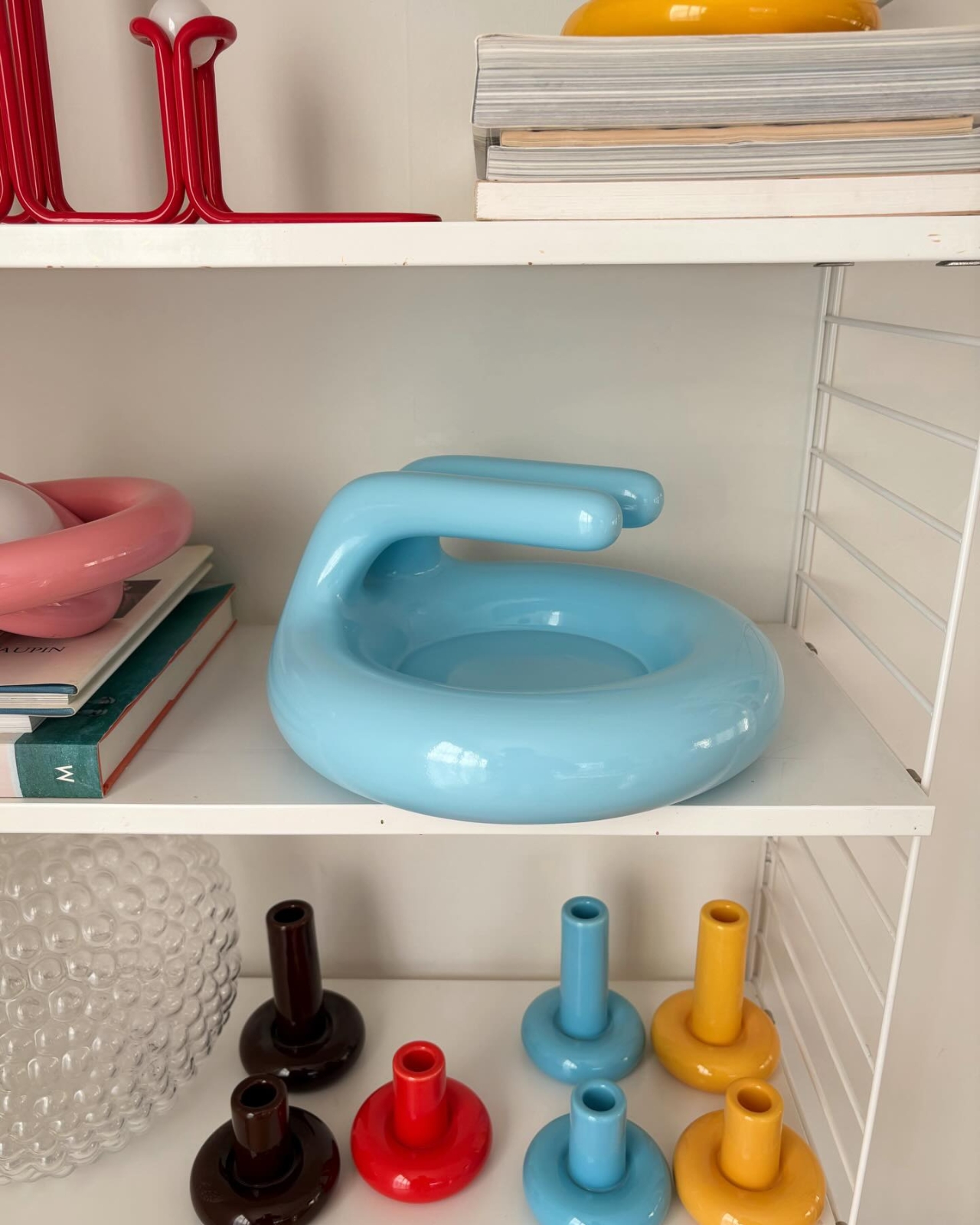
This isn’t Westman’s first rodeo with playful design. Since establishing his Stockholm-based studio in 2020, he’s developed a signature style that’s immediately recognizable. His work features tactile curves, surprising color combinations, and shapes that look almost cartoonish in their exaggerated proportions. Whether it’s his wavy mirrors, chunky desks, or blob sofas, there’s a consistent thread of joy running through everything he creates. His pieces don’t just sit in a room; they announce themselves with cheerful confidence.
The collaboration with IKEA last year for a holiday collection showed Westman’s range. Working with pastel pinks, dusty blues, cherry reds, and emerald greens, he created tableware and home objects that challenged conventional holiday aesthetics. The collection was playful without being childish, bold without being overwhelming. It’s that same sensibility that makes the Curling Bowl work. It’s fun, but it’s also genuinely functional.
The timing of the Curling Bowl’s release feels intentional. Dropping it during the Winter Olympics taps into that collective sports enthusiasm that sweeps through social media every few years. But unlike official Olympic merchandise that often feels corporate and forgettable, this piece has staying power. It’s the kind of object that will still feel relevant long after the closing ceremonies, because it’s not really about the Olympics at all. It’s about taking something ordinary (a snack bowl) and making it extraordinary through thoughtful design and a healthy dose of whimsy.
What’s particularly refreshing about Westman’s approach is his willingness to be unserious in a design world that can sometimes take itself too seriously. There’s a playfulness here that feels genuinely joyful rather than forced. The Curling Bowl doesn’t pretend to be solving major design problems or revolutionizing how we think about tableware. It’s just a really well-designed bowl that happens to look like a curling stone and makes you smile when you use it.
For anyone who’s been following Westman’s work, the Curling Bowl feels like a natural evolution. It has his signature inflated geometry, his love of glossy finishes, and his ability to take everyday objects and inject them with personality. For those discovering him for the first time, it’s a perfect introduction to a designer who understands that good design doesn’t have to be austere or minimal to be meaningful. Sometimes it can just be fun, functional, and finished in the perfect shade of pastel blue.
The post Gustaf Westman’s Curling Bowl Turns Olympic Gold Into Your Snack first appeared on Yanko Design.