The hammer may be the least glamorous tool ever made, all blunt force and workshop grit, with none of the sleek mystique that usually surrounds EDC gear. The Eck Hammer changes that equation by turning the familiar silhouette into something sculptural, compact, and unexpectedly desirable. Suddenly, the hammer feels collectible. M-Seeker has taken a tool most people associate with garages and toolboxes and recast it in Grade 5 titanium and hardened steel, giving it the kind of finish, proportion, and detail that makes you want to carry it rather than leave it hanging on a wall.
That visual upgrade would mean very little without substance, and the Eck Hammer has plenty of it. Inside the palm-sized form are swappable hammer heads for different strike styles, a caliper-style measuring system with multiple units, an adjustable wrench built into the body, and a metal scriber tipped with tungsten that also serves as a glass breaker in emergencies. What begins as a compact hammer quickly opens into a tightly packed field tool, one designed to measure, mark, tighten, strike, and adapt without losing the primal appeal that made the hammer essential in the first place.
Designer: M-Seeker
Click Here to Buy Now: $159 $239 (33%) Hurry! Only 13 of 50 left.
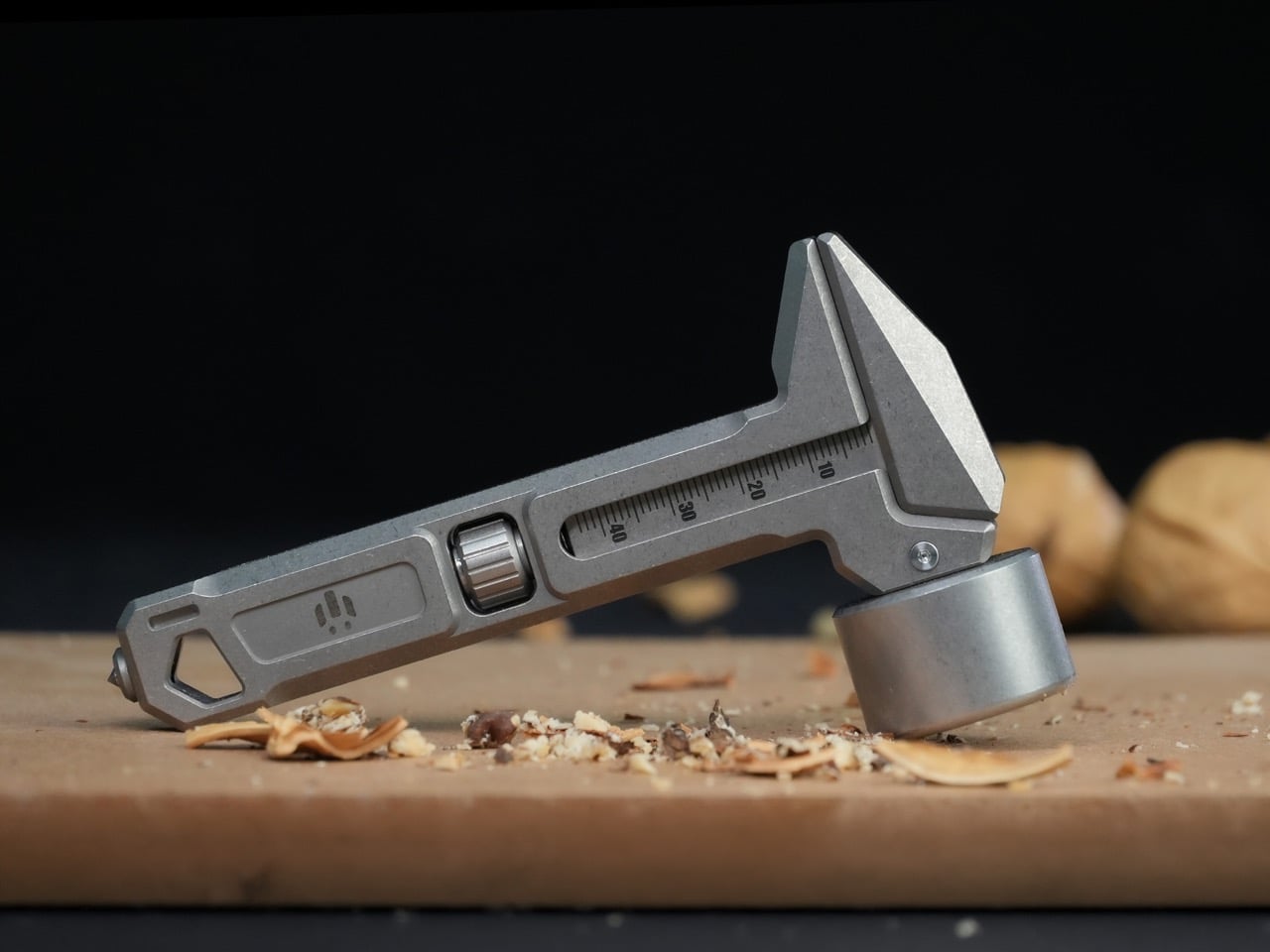

The hammer features a dual-material design, relying on two metals that have legend-status in the EDC world. Grade 5 titanium keeps the body light and corrosion-resistant, while the 440C stainless steel head concentrates weight where impact happens. That split creates a naturally forward-weighted balance, making each strike land harder with less effort from your arm. The physics are simple: more mass at the head, less wasted energy in the swing, more force transferred to the target. M-Seeker could have used a single material and called it premium, but the two-metal construction delivers something functionally better, and the contrast between brushed titanium and polished steel gives the tool a visual rhythm that feels deliberate rather than decorative.
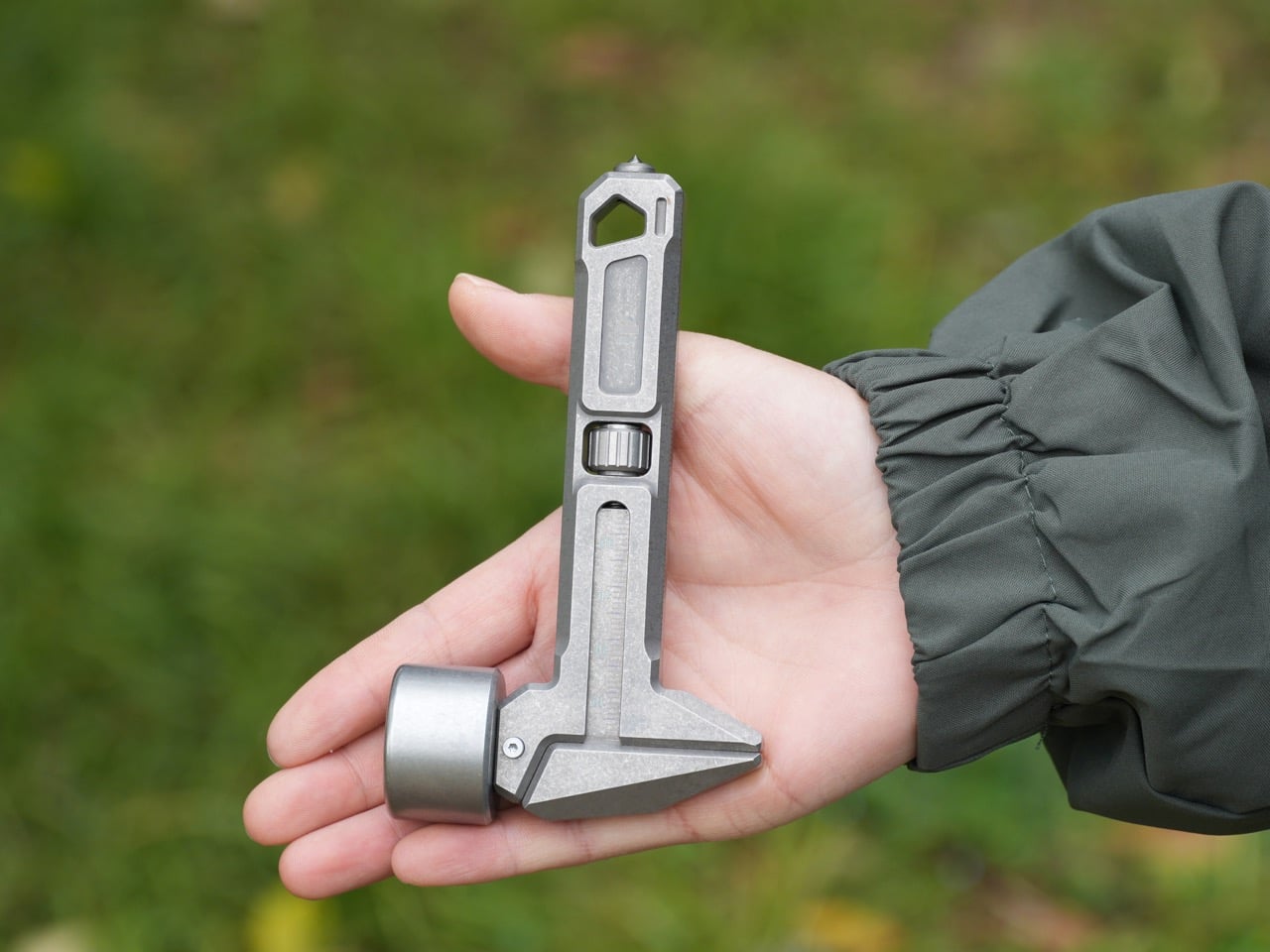
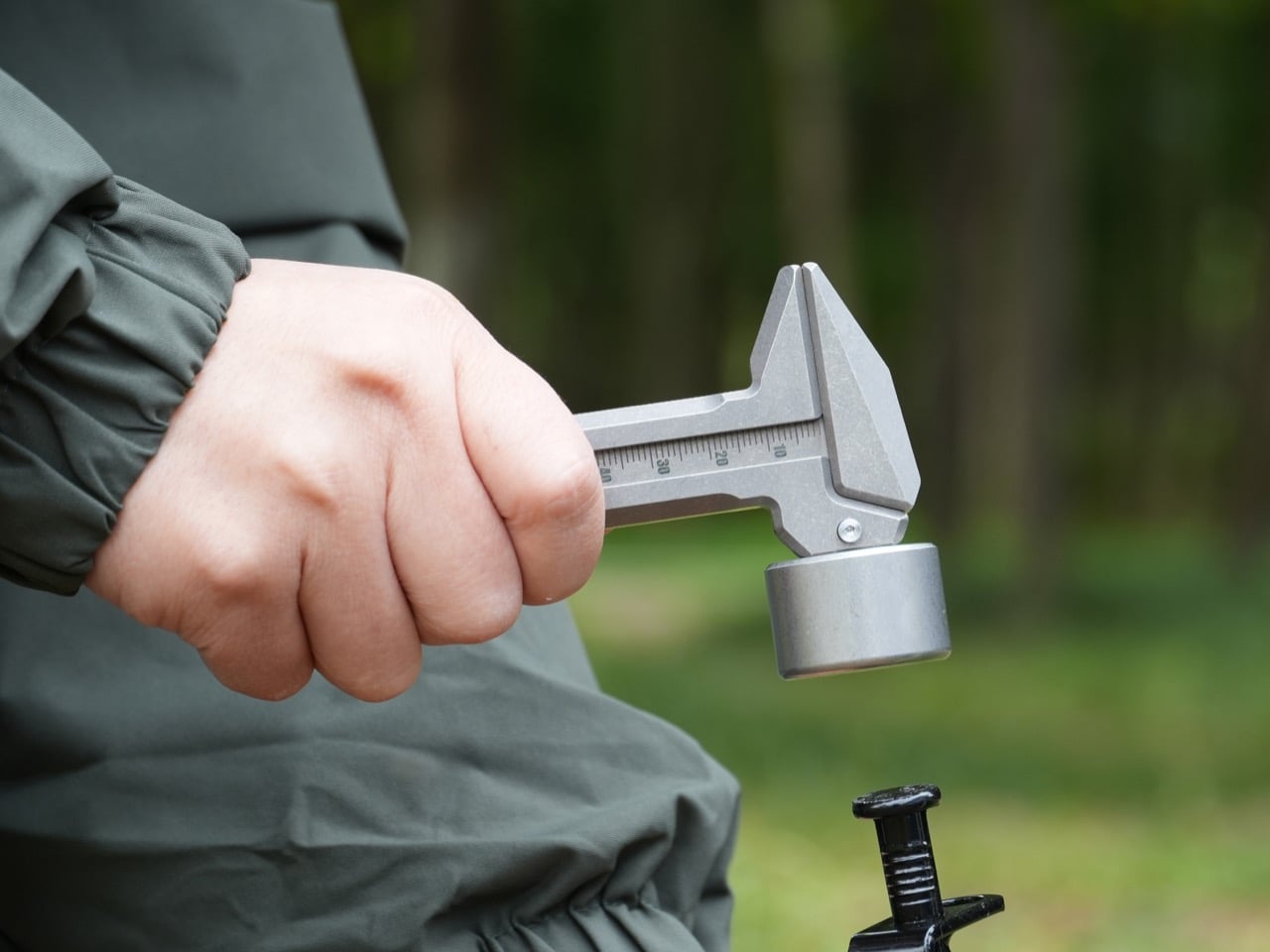
The modular head system turns one hammer into four distinct tools depending on what you attach and how you configure it. The Precision Head weighs 2.5 ounces and brings the total striking weight to 4.5 ounces, making it ideal for controlled work where accuracy matters more than raw force. The Power Head weighs 4 ounces and pushes the total to 6 ounces, delivering the kind of impact you need for tent stakes, bent hardware, or anything that requires a heavier hand. Both heads accept an optional silicone mallet cap that protects delicate surfaces, so the Power Head becomes a strong, mark-free mallet, and the Precision Head turns into a gentler tapping tool for finish work or indoor assembly. Swapping heads takes seconds, and the magnetic retention keeps everything locked in place under use.
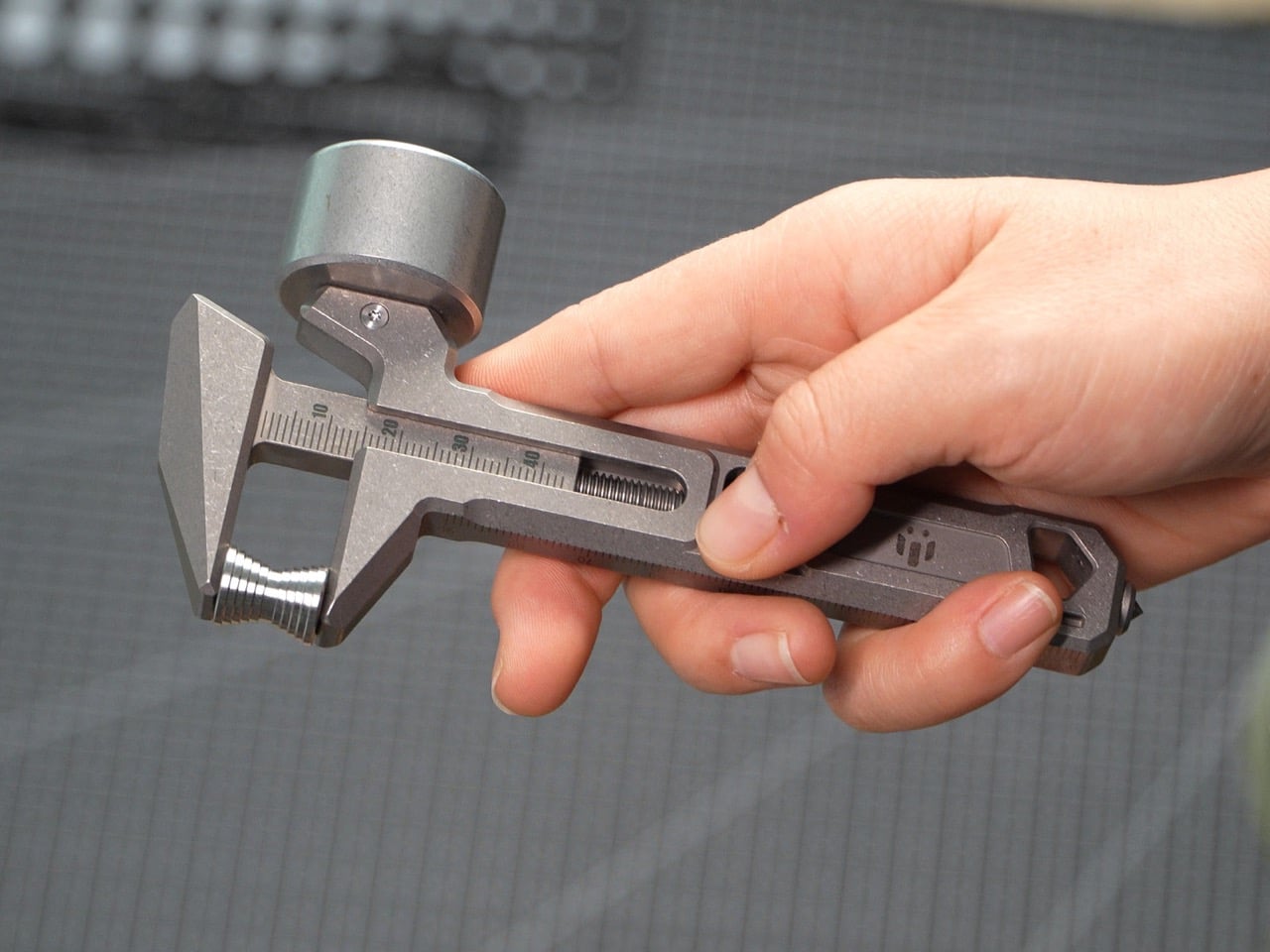
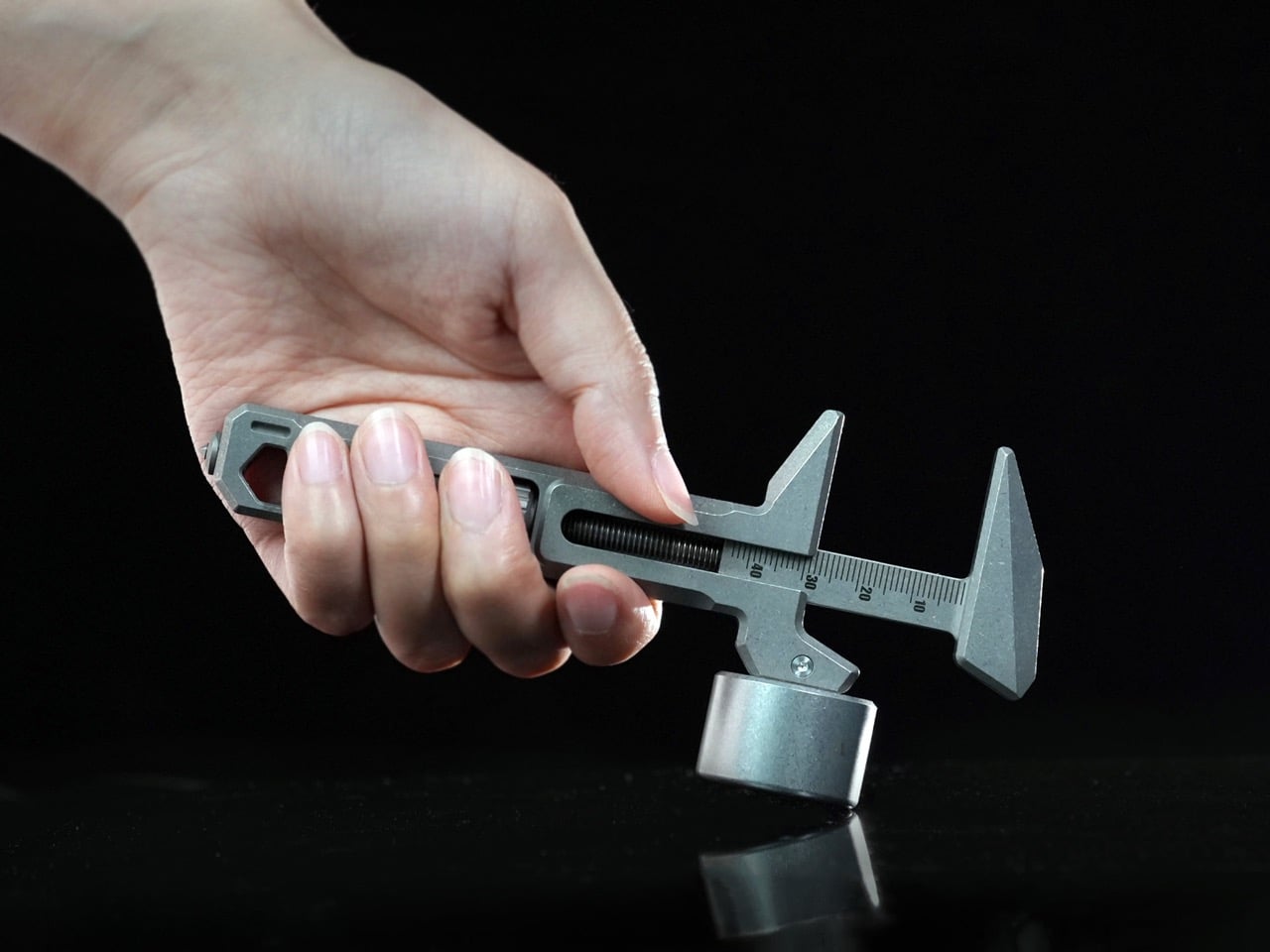
The adjustable wrench lives in the claw section of the hammer, integrated into the body where most hammers would leave empty space. The jaw opens to 33 mm, covering the range from small bolts to mid-sized hardware without requiring a separate tool. M-Seeker designed the opposing plate to function as a grip handle when the wrench is deployed, giving you leverage and control that a standalone adjustment mechanism couldn’t provide. The caliper system spans the body in three formats: a 0-33 mm precision ruler for fine measurements, a 90 mm ruler for quick checks and material marking, and a 3.2-inch imperial scale for anyone working in standard units. The tungsten-tipped scriber sits at the tail end, sharp enough to mark metal, glass, and other hard surfaces with clean lines, and hard enough to break tempered glass when the situation demands it.


The Eck Hammer makes the most sense for people who work in environments where a full-sized hammer is overkill but the need for one still arrives without warning. That includes campers who need to drive stakes and make repairs without packing a dedicated toolbox, urban makers and DIY enthusiasts who want something functional on their desk or in a drawer, and field technicians who carry compact kits and can’t afford redundant tools. The appeal also extends to anyone who appreciates engineering that takes a familiar object and distills it down to essentials without losing capability. This tool fits in a jacket pocket, hangs on a belt loop via the optional leather sheath, or sits comfortably in a go-bag alongside other daily essentials. Like any EDC worth its salt, it also packs slots for tritium vials, keeping your gear visible even in low-light conditions.
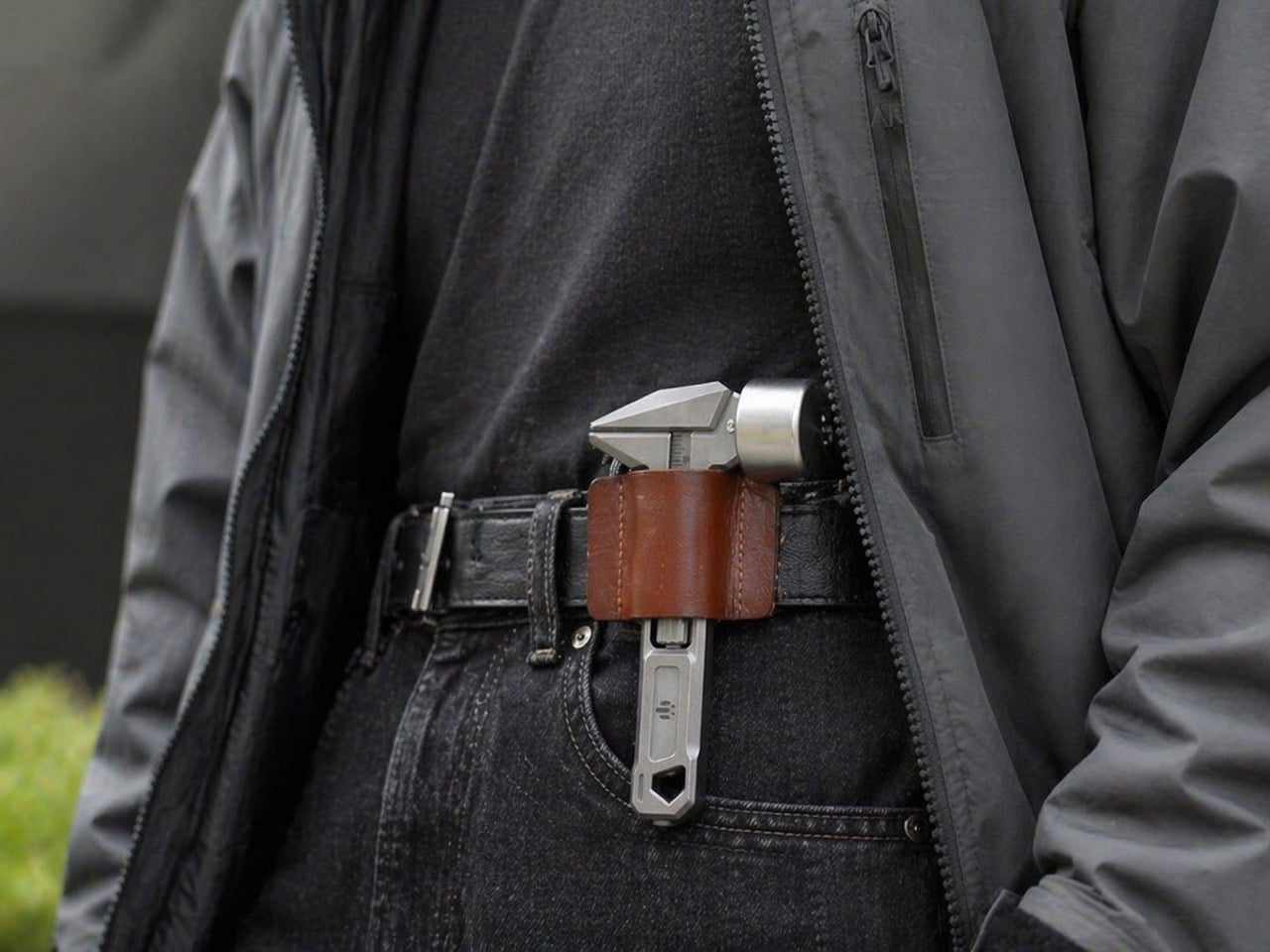
The Eck Hammer comes in the Standard version at $169 and the Kit version (which includes both heads and the silicone mallet caps) at $199. Add-ons include the Power Head at $30, custom engraving at $15, tritium tubes at $25 for a pair, and a leather sheath with belt clip at $20. Shipping costs range from $15 for single sets in the US, UK, Australia, Germany, Canada, Italy, France, and Japan, to $18 for other regions. Estimated delivery is September 2026.
Click Here to Buy Now: $159 $239 (33%) Hurry! Only 13 of 50 left.
The post This Titanium Pocket Hammer Packs a Wrench, Three Rulers, and a Tungsten Glass-Breaker Inside Its Frame first appeared on Yanko Design.