Infinix HOT 70 Pro 5G Brings AI and Interactive Design
Infinix HOT 70 Pro 5G introduces AI-powered features, an interactive rear panel, 144Hz display, and Dimensity 7100 in
The Infinix HOT 70 is proof that expressive, design-forward smartphones don't have to cost a fortune.

The affordable smartphone market has long operated on an unspoken rule: you get your camera, your processor, and a solid battery, but genuine design ambition is a luxury reserved for pricier tiers. Walk into any mid-range phone aisle, and you’re likely to face the same predictable cycle, gradient blues and purples on glass-and-plastic slabs that look almost indistinguishable from one another, functional but rarely intentional.
Infinix is trying to challenge that assumption with the HOT 70 series with its Industry-First 12-Colorway Dynamic Shine Design. It comes in two distinct flavors: the HOT 70 and the HOT 70 Pro 5G. Both arrived for this review, the HOT 70 in Quiet Violet and the HOT 70 Pro 5G in Thermo Orange and Mirage Green, and all announced themselves as something genuinely
Designer: Infinix
Click Here to Buy Now: HOT 70 | HOT 70 Pro 5G
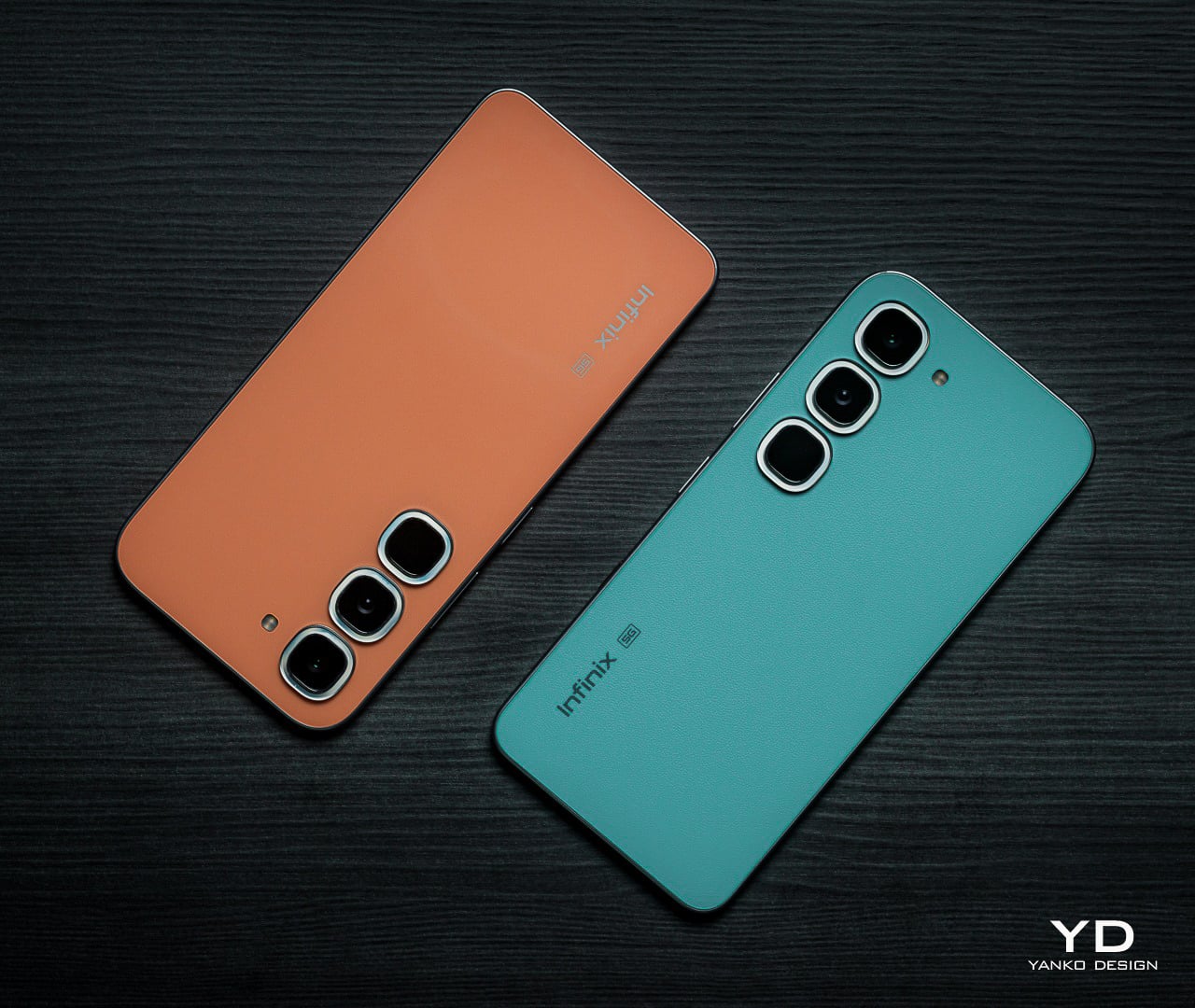
Infinix has long understood something that a lot of phone brands still haven’t fully caught on to: young users aren’t shopping for specs alone, they’re buying something that reflects who they are and what they’re about. The HOT 70 series is the brand’s clearest statement on that front, organized around a “Colorful, Versatile, Fun” philosophy that treats aesthetic identity and personal expression as core design priorities, not afterthoughts.
Both phones share a design language Infinix calls the Dynamic Shine Aesthetic Design, and the common thread across both models is a Baby-Smooth Finish, a surface with an advanced anti-fingerprint coating. That silky, finely soft in-hand texture genuinely holds up in practice. After time with both phones, fingerprints and grease smudges are noticeably less of a nuisance than on most others in this price category, which counts for a lot.
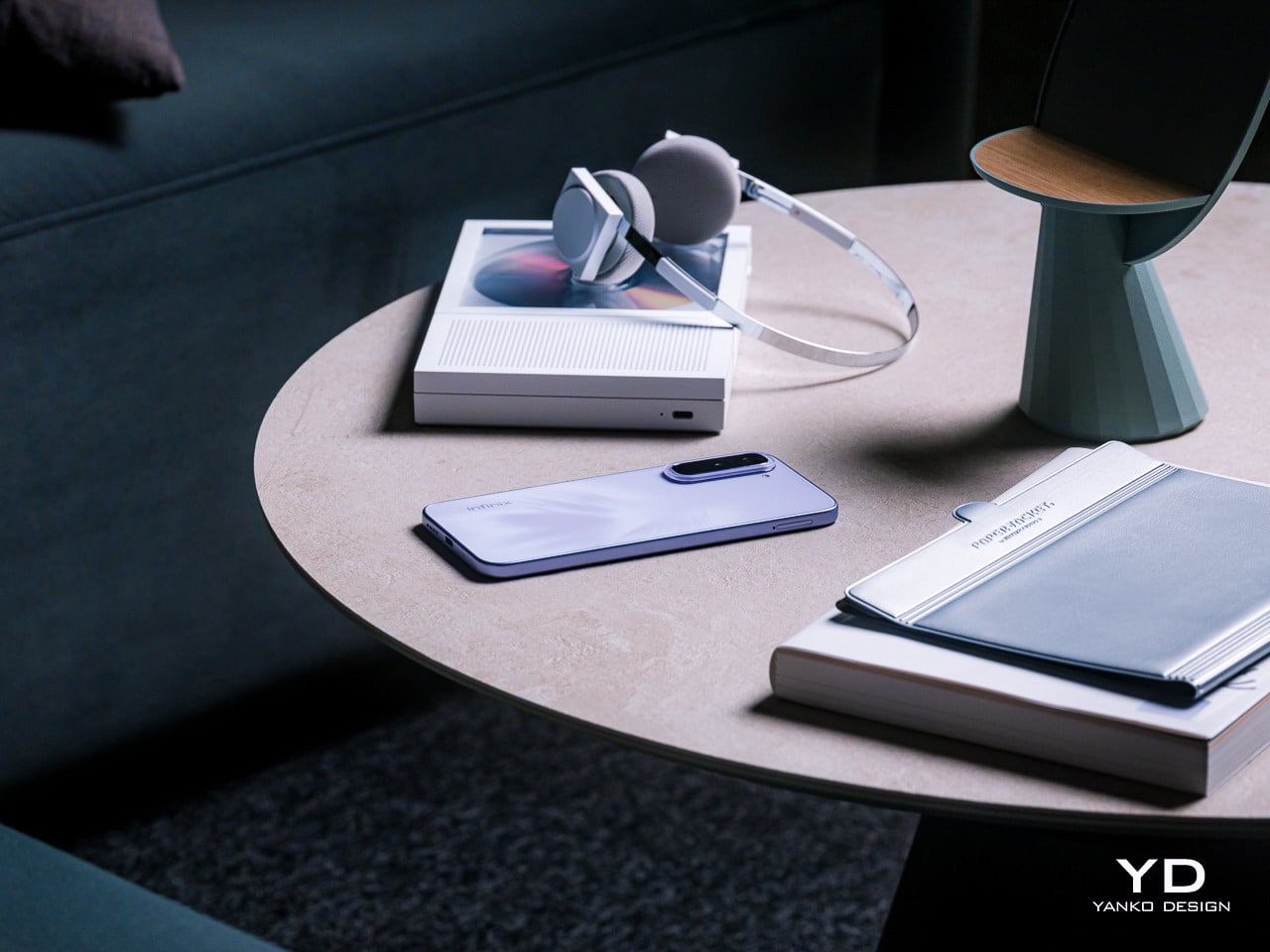
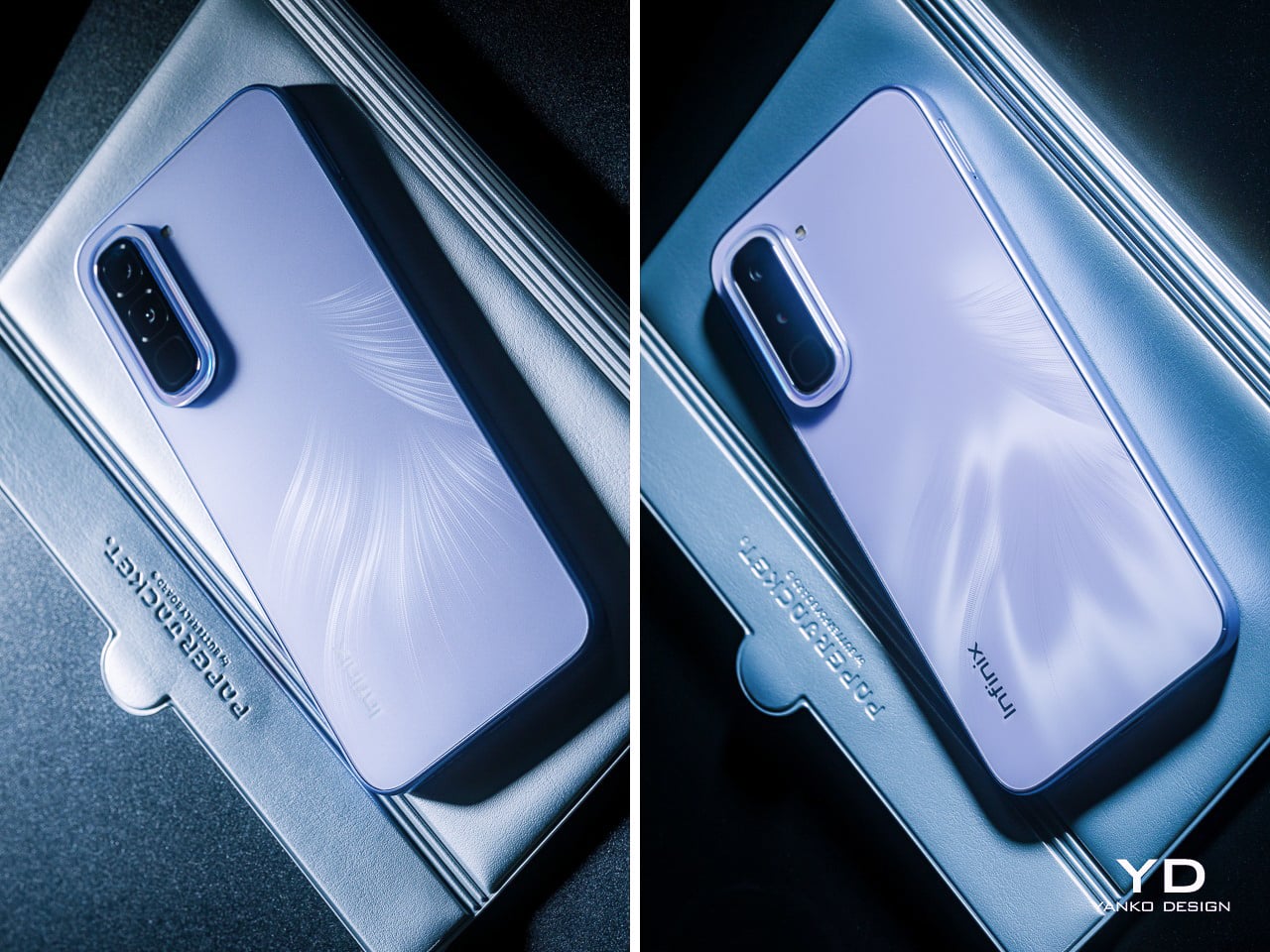
The HOT 70 arrives in six colorways: Thermo Orange, Night Pulse, Silver Dancer, Dive Blue, Green Texture, and the Quiet Violet reviewed here. Where most phones at this price simply pick a color and commit to it, the Quiet Violet does something more considered. The Lumina Flare Dynamic Flame Texture layers micro-textures beneath the surface, creating a shifting light-and-shadow effect that reads differently depending on where you are.
The Crystal Mood Island camera ring is where the craftsmanship gets more deliberate. It sits around the camera bump as a decorative ring that catches light and bends it into iridescent gloss, shifting tone with every viewing angle. On paper, that sounds like a marketing detail, but in practice, it adds genuine visual contrast between the ring and the rest of the panel behind it.
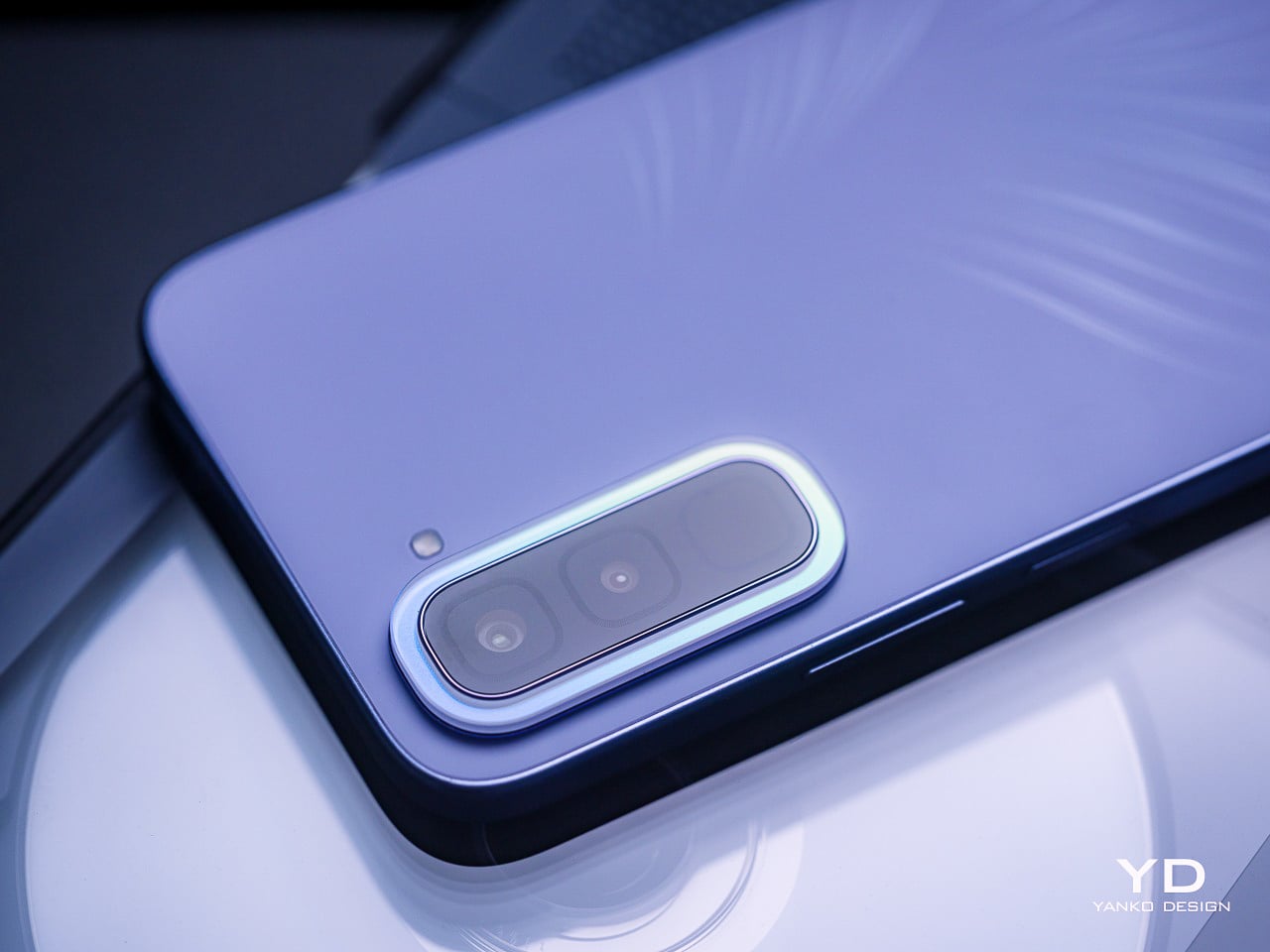
Then there’s the Active Halo, the light ring surrounding the camera area that pulses softly for calls, messages, charging status, and game launches. It’s tempting to dismiss this as a gimmick, but there’s a genuinely useful case for it: the phone is face down, silent, and the Halo quietly signals an incoming call without making you reach for it every few minutes.
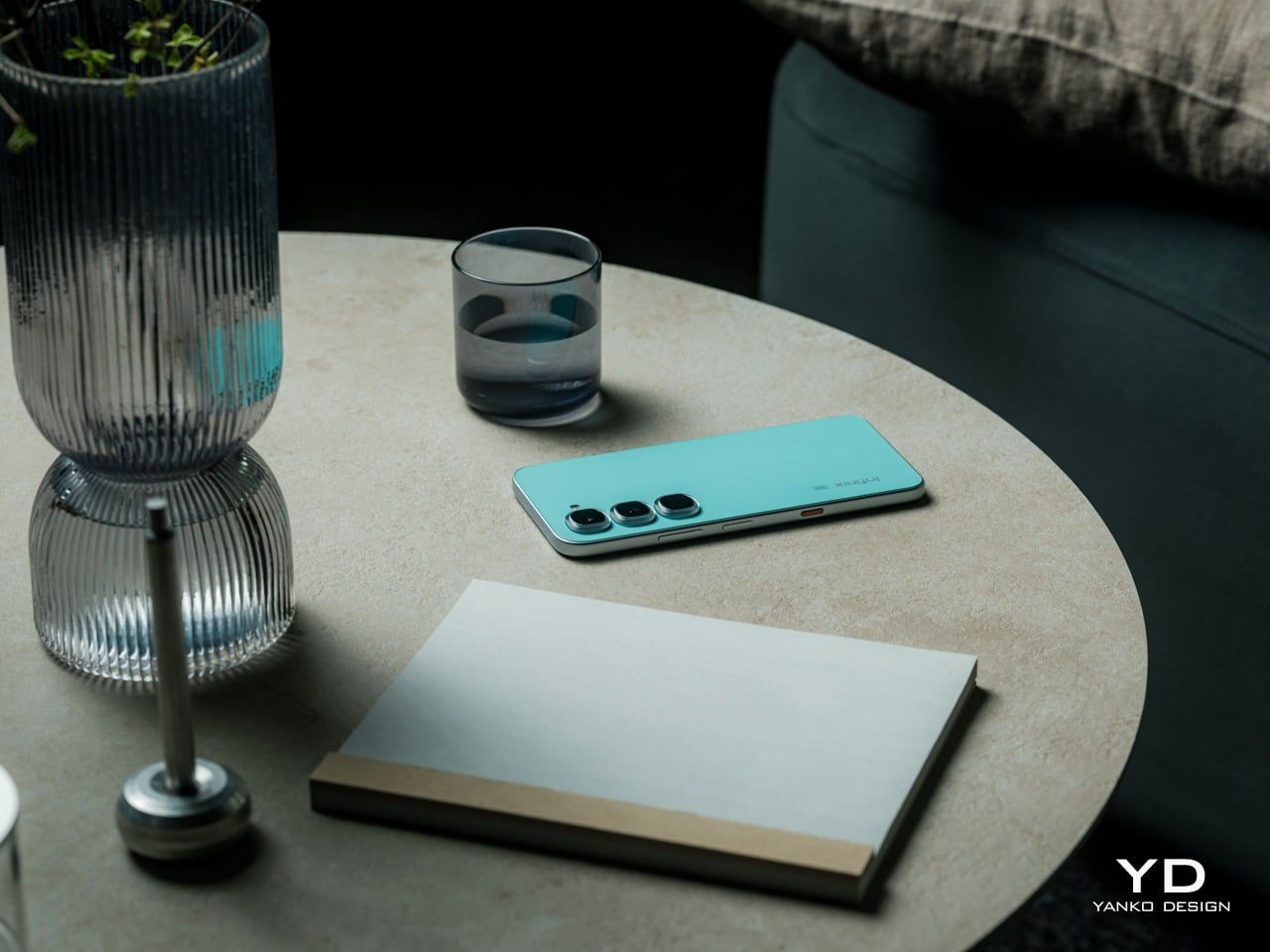
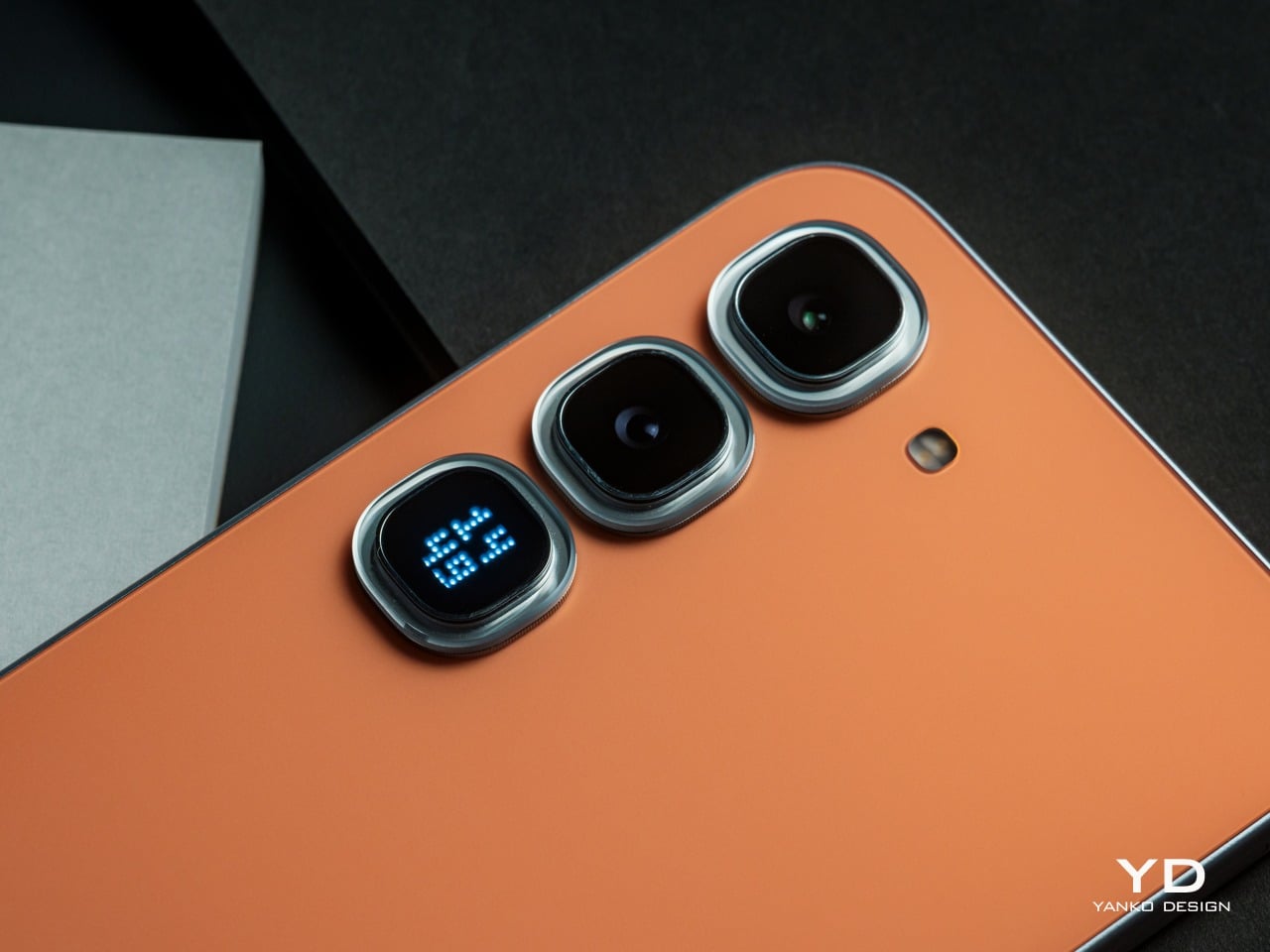
The HOT 70 Pro 5G is available in six colorways: Thermo Orange, Mirage Green, Silk Glow Purple, Night Pulse, Dive Blue, and the limited edition Depth Ring White. The Thermo Orange commands the most attention, and rightly so. Its Dual-way Thermo Sensing Skin technology physically shifts between a deeper orange below 0°C and a lighter tone above 65°C, and crucially, holds that state until the temperature resets it.
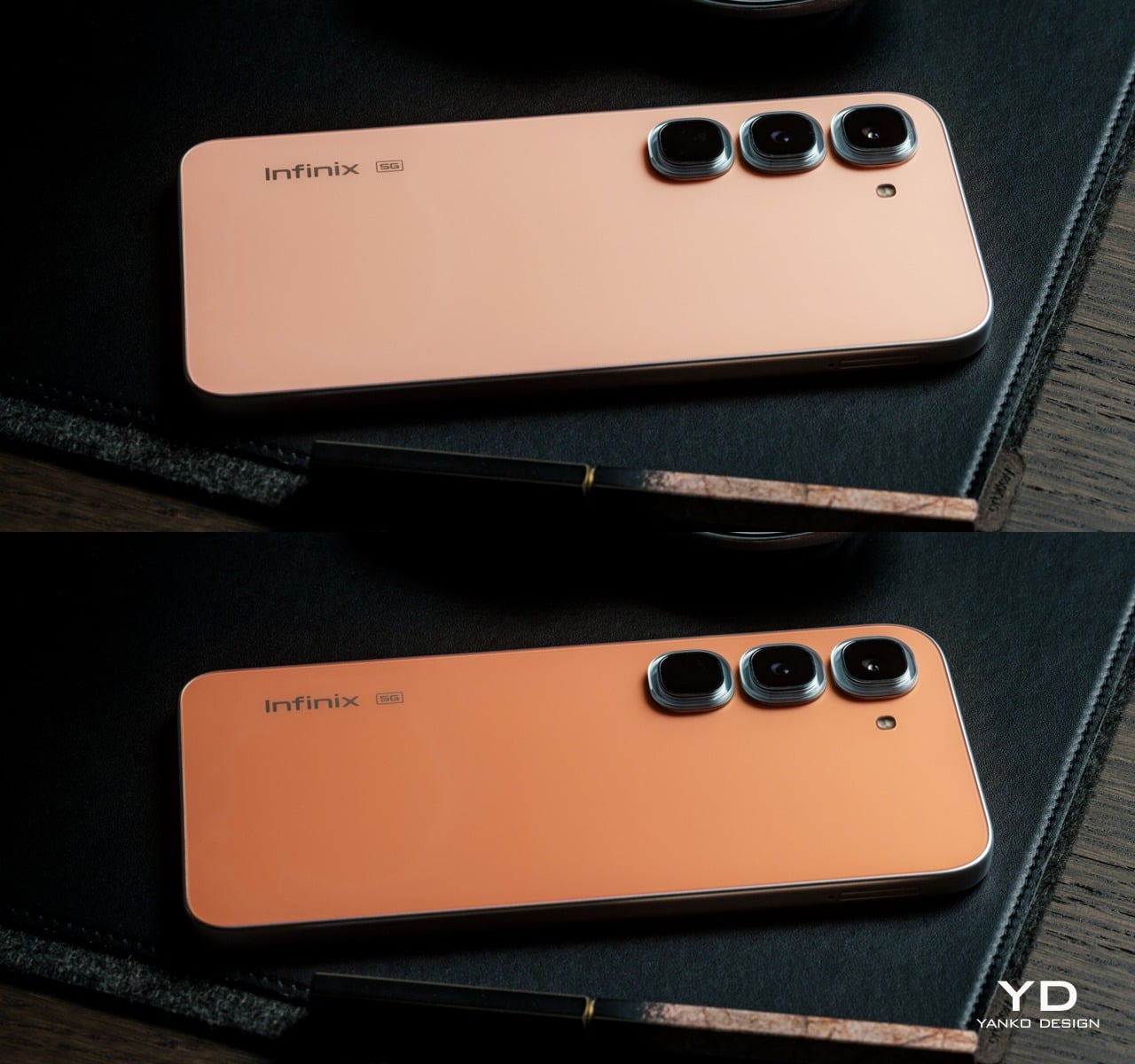
What the Thermo Orange also enables is DIY customization: cool the phone to its deep state, then press a heated stamp or trace with a hot glue pen at around 65°C to create patterns directly onto the back. The concept is genuinely novel for this price tier, and it’s quite fascinating to see the phone come out of the freezer with a different shade of orange. It also opens up possibilities for DIY designs with the stencils and the careful use of a glue gun to heat up only certain areas, creating eye-catching contrasts of light and dark areas you’d think the phone was designed with originally. Given that you are exposing the phone to extreme cold and hot temperatures, however, proper care should still be taken.
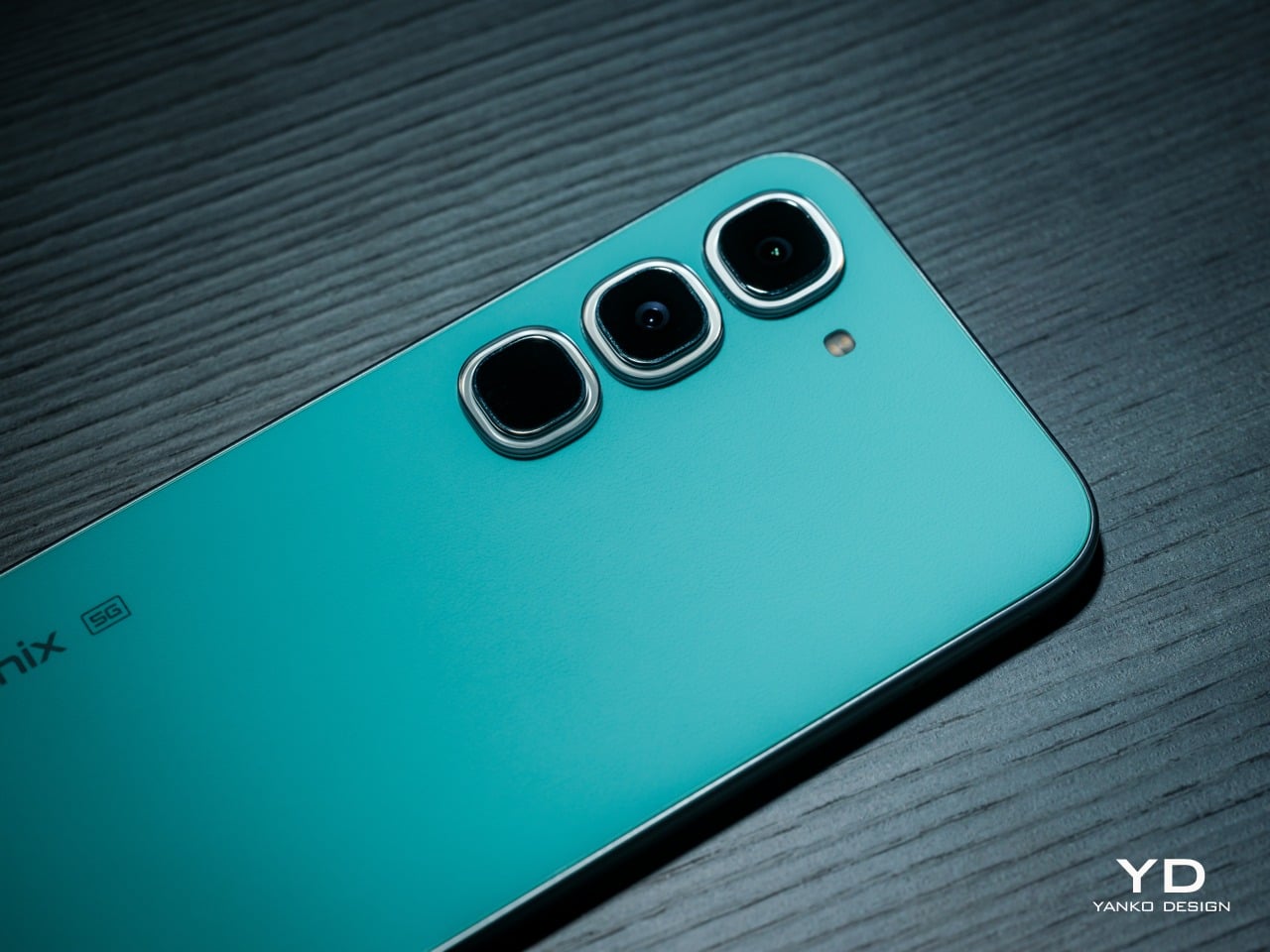
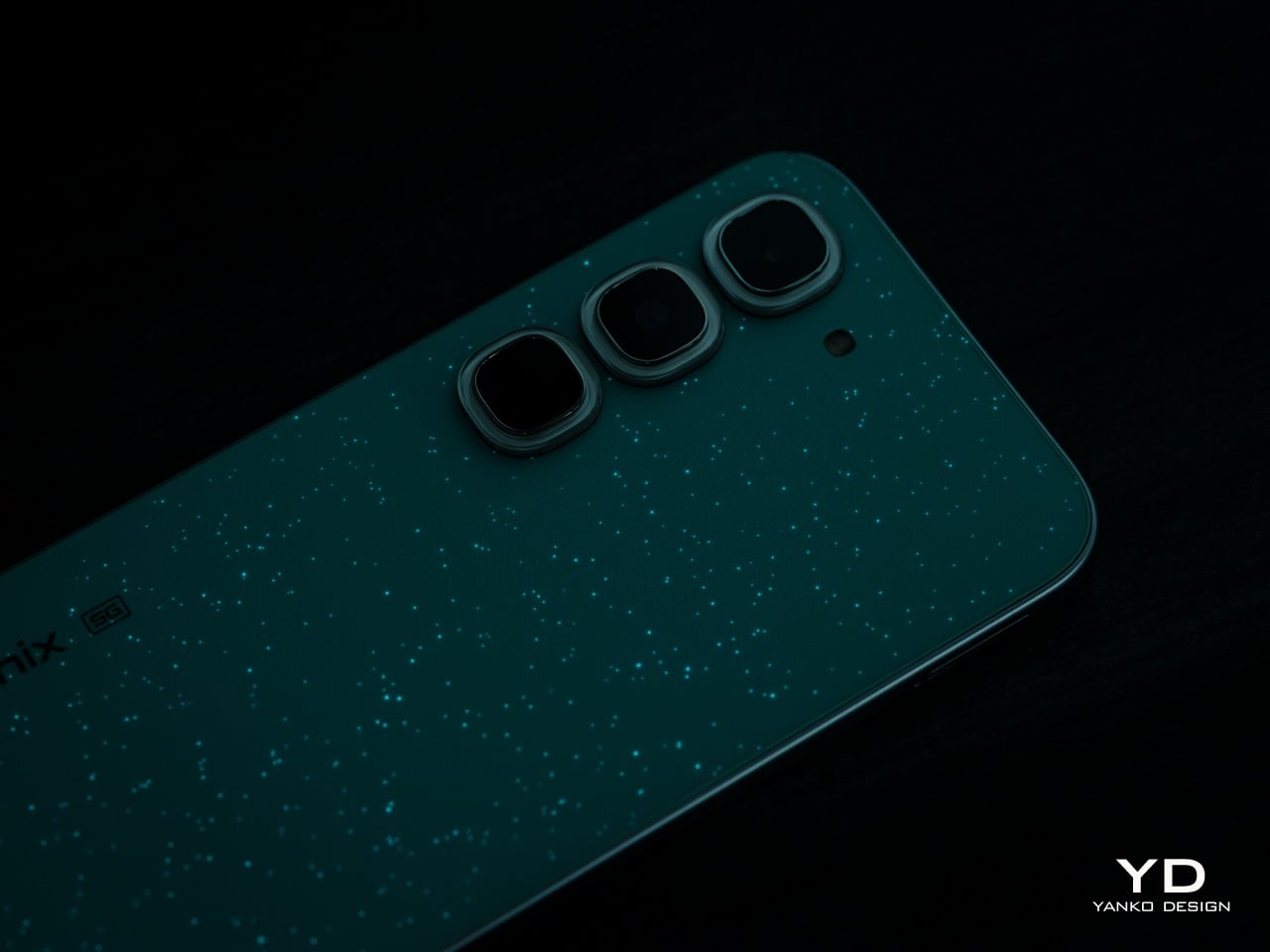
Mirage Green, exclusive to the Pro model, offers a more subtle yet equally stunning color-changing effect. Nearly-invisible luminous particles embedded in the leather-like finish on the back of the phone absorb light during the day. Once the sun sets, these dots glow like stars dots scattered against a dark green night sky. It’s a visual that is both premium and calming, perfectly reflecting its design.
The remaining hero finishes deserve more than a footnote. Silk Glow Purple builds its color from nano-scale structural layers rather than pigment, which means the purple actually shifts and travels across the surface as the angle changes. The Limited Edition Depth Ring White goes further, using a micro-lens array to create what reads as a floating 3D ring against an otherwise flat back panel.
The Active Matrix Cube is the Pro’s most distinctive rear-surface detail, a programmable light matrix that’s a flagship-level feature from Infinix’s premium product lineup. It handles status alerts, ambient lighting, mini-games, and custom pattern displays, and can even share those creations via NFC with a single tap. It turns the back of the phone into a secondary surface that communicates something, even when the screen is dark.
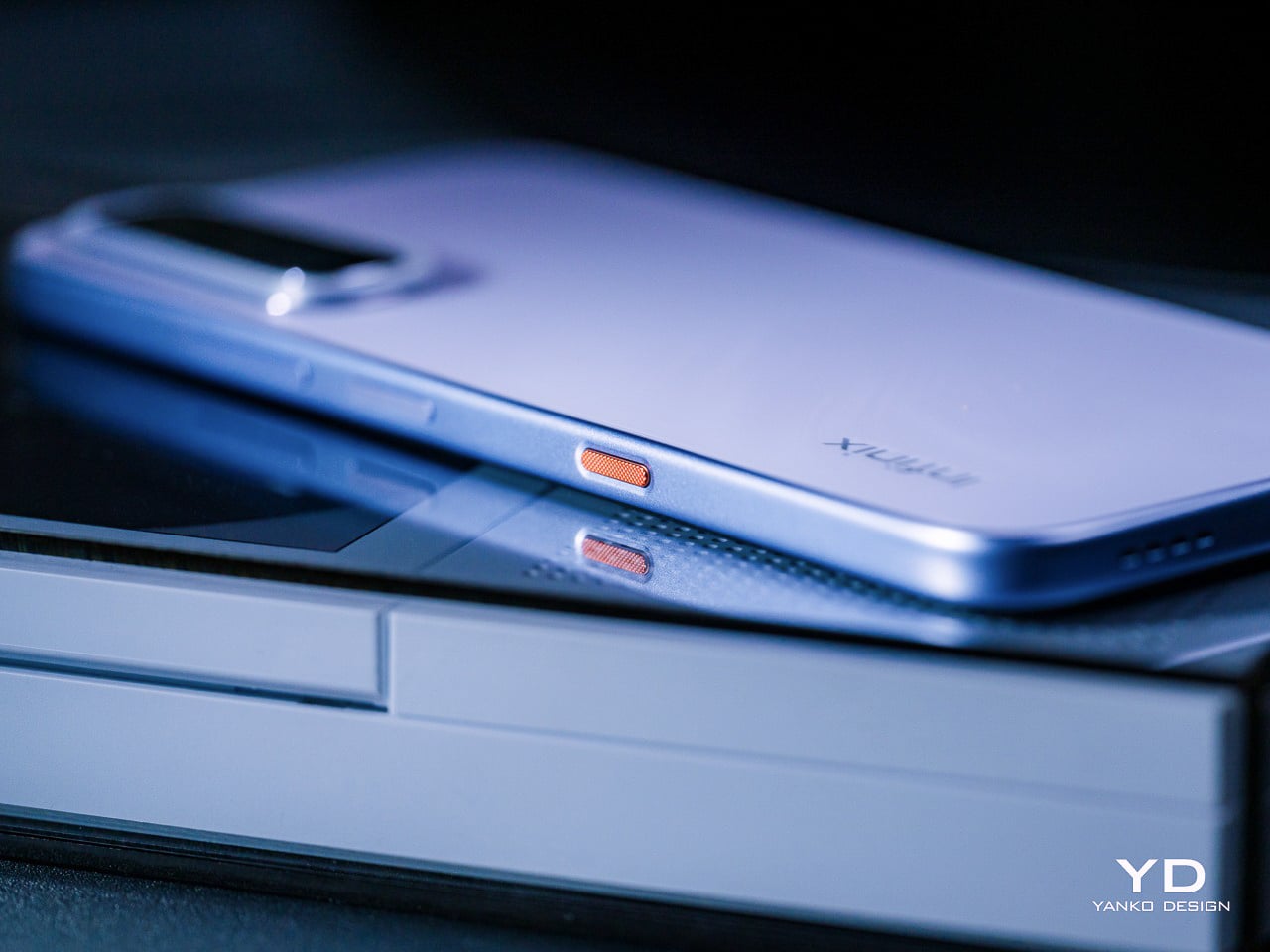
At just 7.49mm thin and 195g light, the HOT 70’s pocket-favourite design offers effortless portability, slipping easily into pockets or small bags and ensuring smooth one-handed handling for commuting, travel, and everyday use. The HOT 70 Pro 5G is marginally heavier at 204g and slightly thicker at 7.85mm to 7.95mm, depending on the colorway, differences that don’t read as particularly significant in everyday handling.
The One-Tap AI Button on both phones is inspired by the Clous de Paris design, with a three-dimensional textured surface that delivers a refined, premium tactile feel. Its customizable shortcut logic enables One-Tap AI FlashMemo with a short press and activates Folax AI assistant with a long press, allowing intuitive control and more efficient smart interaction by streamlining everyday tasks. That physical anchor makes AI feel genuinely accessible rather than buried in software menus.
Both phones use punch-hole displays with narrow bezels, giving a clean, open canvas for everyday use. The HOT 70 and HOT 70 Pro 5G have very similar screen sizes at 6.78 and 6.76 inches, respectively, so the real ergonomic difference lies in the refresh rate. The HOT 70 Pro 5G’s 144Hz high refresh rate and 240Hz touch sampling rate deliver ultra-smooth scrolling without ghosting while browsing and streaming, while the HOT 70’s 120Hz panel handles daily navigation comfortably. The smooth visuals help ease eye strain while also improving the overall user experience.
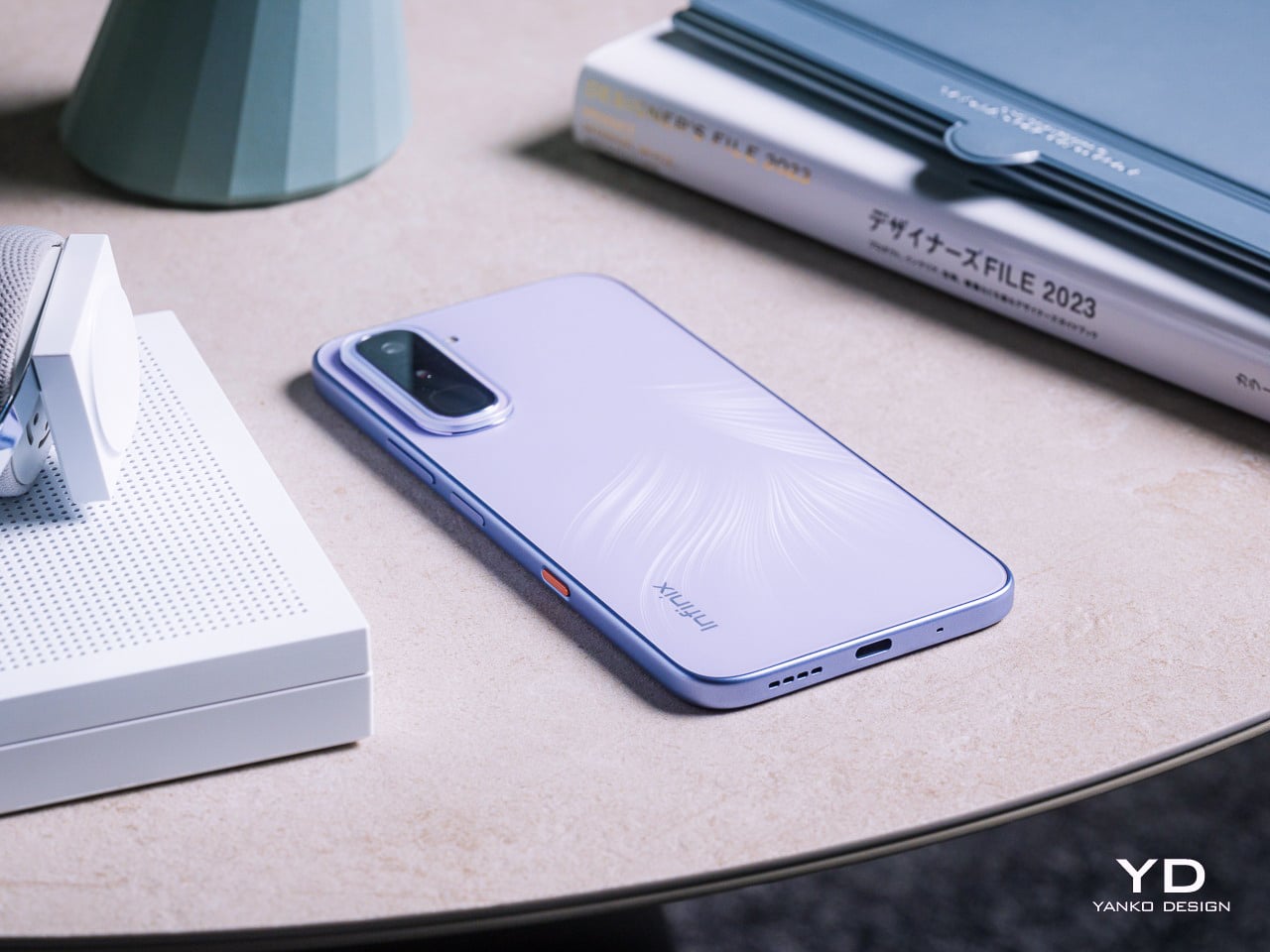
AI is quite the trend these days, and Infinix isn’t one to be left behind. The HOT 70 Series delivers a full AI experience upgrade featuring a physical One-Tap AI Button, with a dedicated AI Button that supports intelligent intent recognition, enabling one-tap capture of ideas, meetings, emails, and more, with auto archiving and smart schedule creation based on content type. Long-pressing the button activates Folax, Infinix’s custom AI assistant, which answers questions based on whatever is on screen, from displayed text to a live camera view, with access to five or more AI models simultaneously. Between FlashMemo’s capture-and-organize logic and Folax’s any-screen contextual awareness, the two together cover most of what people actually reach for their phones to do throughout the day.
Battery anxiety is real, especially among the younger generation, so Infinix naturally has a solution. Both models offer a 15% larger battery capacity than the previous generation, featuring a 6,000 mAh single-cell design or 5,600 mAh in certain regional markets, a capacity difference driven by local regulatory requirements rather than any hardware compromise. Fortunately, both capacities support 45W Lightning FastCharge, and in Super Fast Charging mode, which allowed us to hit 50% in half an hour and fully charge in an hour. Bypass charging routes power directly from the charger to keep the phone cooler during heavy use, a critical safety measure when gaming or using the phone for navigation.
The Infinix HOT 70 runs on a MediaTek Helio G100 Ultimate, a powerful octa-core gaming processor designed for smoother daily use, multitasking, and light gaming. That said, the Helio G100 is a 4G-only chip, which means the HOT 70 can’t connect to 5G networks. The HOT 70 Pro 5G steps up to a MediaTek Dimensity 7100 with 5G support, a meaningfully stronger chip that pushes AnTuTu V11 scores above 780,000, delivers up to 90 fps in supported games, and brings faster 5G connectivity tuned for crowded real-world conditions.
The display difference between the two models is more significant than the size gap suggests. The HOT 70’s 6.78-inch 120Hz Eye-Care Display reaches 700 nits of HBM brightness for sunlight readability. The HOT 70 Pro 5G’s 6.76-inch FHD+ panel pushes that to 950 nits of HBM brightness, a genuine sunlight-legibility advantage, and the jump to Full HD+ resolution adds sharpness that becomes particularly noticeable when reading text or watching video.
Camera setups share a foundation but diverge meaningfully at the Pro tier. Both phones use a 50MP main sensor, with AI Live Photo on both automatically filtering out shaky frames from a burst. The HOT 70 Pro 5G’s imaging toolkit, however, rests on a 50MP Sony IMX882 with a large 1/1.95-inch sensor, f/1.8 aperture, and full-pixel autofocus, plus a 2x lossless zoom shortcut, giving it stronger low-light performance.
In both cases, both images and videos come out clear, detailed, and vibrant, punching above their price tier. Sadly, the lack of a dedicated telephoto or ultra-wide cameras will make you miss out on decent close-ups and breath-taking panoramas. It isn’t the series’s strongest suit, but it at least won’t let you down when you need to preserve important moments and scenes.
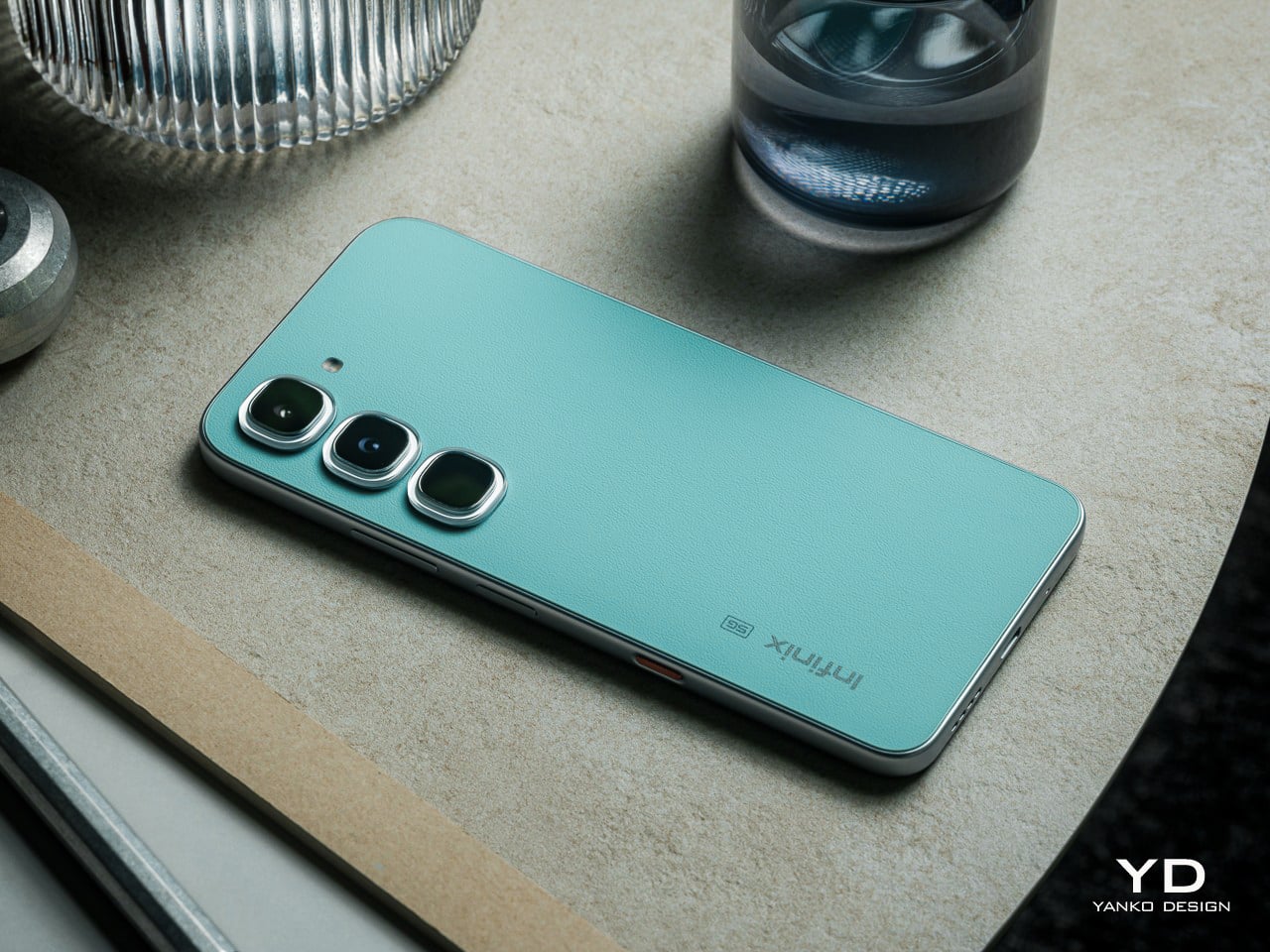
The HOT 70 carries an IP65 rating, featuring six-level full dustproofing and IP65 splash resistance, blocking dust, rain, and sweat effectively for safer daily commutes and outdoor use. It also boasts military-grade durability with an SGS-certified 5-star drop protection. The HOT 70 Pro 5G steps up to IP68, Infinix’s highest rating to date, rated for up to 2 meters of fresh water for 30 minutes, with screen and camera protected throughout, and further adds MIL-STD-810 military-grade certification for durability across more demanding conditions.
Both phones deliver long-term OS support, keeping the device smooth, secure, and reliable for years, with guaranteed three years of major XOS version upgrades (only for models with 6GB RAM or more) starting with factory-installed XOS 16, continuously updating to XOS 17, XOS 18, and XOS 19. Three OS upgrades aren’t quite on par with what some flagship brands now offer, but it’s a genuinely generous commitment for this price tier, where software longevity is rarely treated as a selling point at all. One caveat is that certain XOS features only apply if your configuration has 6GB of RAM or more.
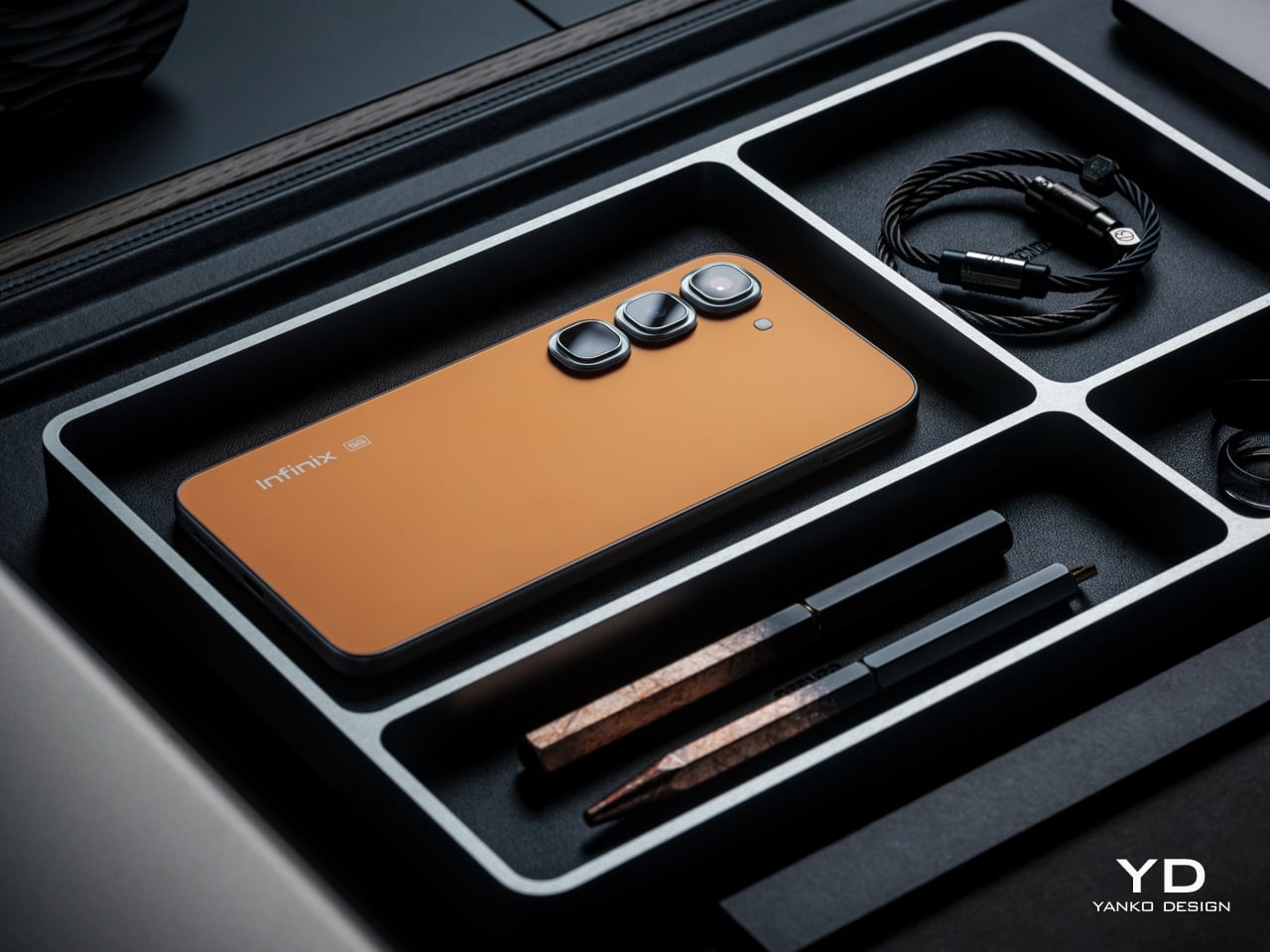
The Infinix HOT 70 starts at around $120, depending on configuration and market, and the package it delivers at that price is hard to dismiss. Tactile finishes, a physical AI shortcut, a generous battery, and a sunlight-readable display aren’t common at this tier. The Lumina Flare texture and Crystal Mood Island add visual differentiation that most competitors simply don’t bother attempting.
The Infinix HOT 70 Pro 5G starts at around $200, and the step up from the base HOT 70 is justified on multiple fronts. A faster 5G chip, a sharper and faster display, a more capable Sony camera sensor, full IP68 waterproofing alongside military certification, and the Active Matrix Cube add up to a meaningfully more capable and expressive package.
Neither phone asks for a premium price to deliver a premium-feeling design, and that’s genuinely rare. At comparable price points, the alternatives in this category tend to compete primarily on camera megapixels or battery size, without investing much thought into what the phone feels like to hold, look at, or interact with. The HOT 70 series treats those questions as worth answering, which puts it in a different conversation entirely.
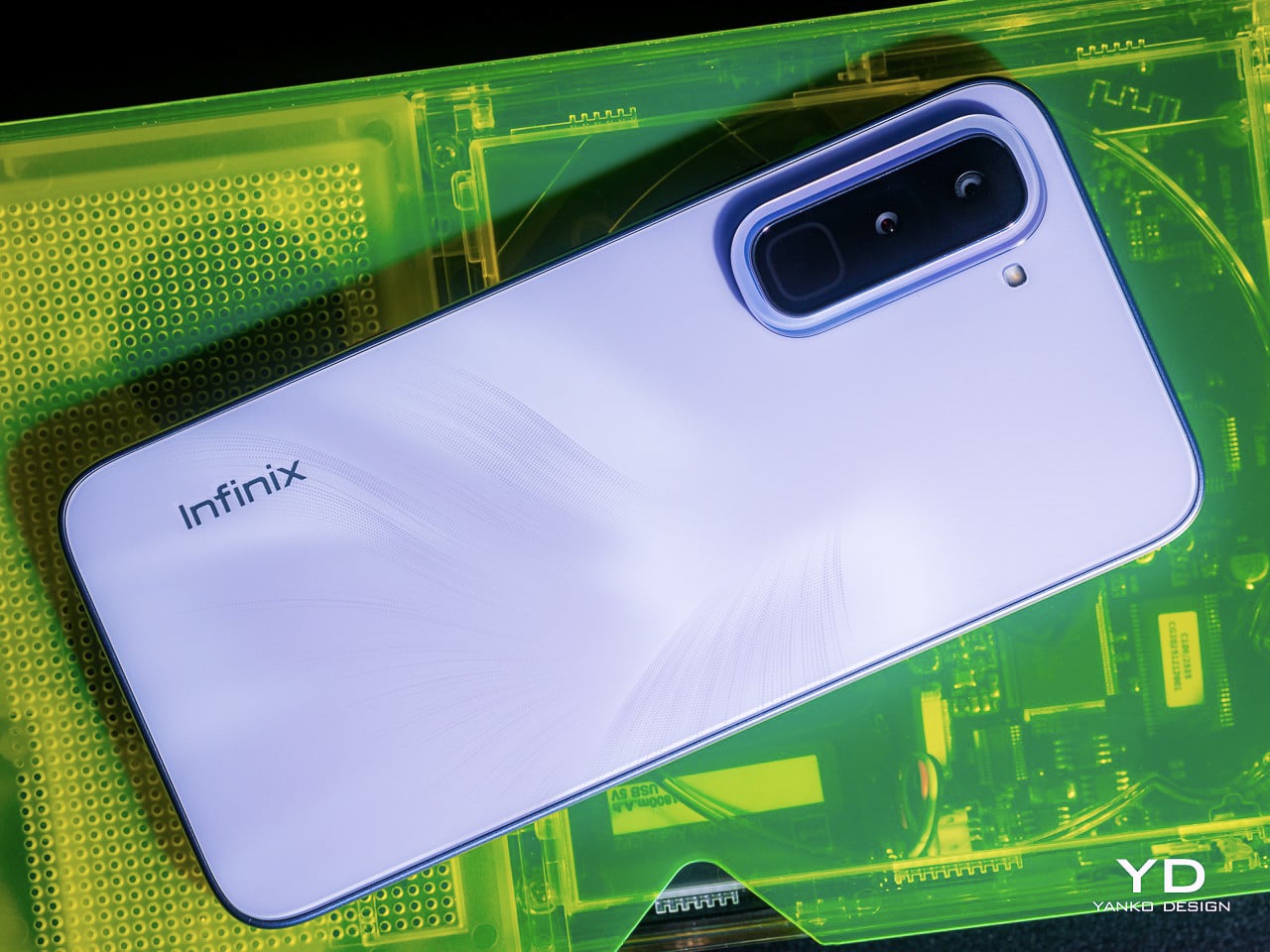
The HOT 70 makes a case for what affordable phone design can look like when treated as an actual discipline. The Lumina Flare texture, the Crystal Mood Island camera ring, the Active Halo, and the Baby-Smooth Finish come together in a device that rewards closer attention. It gets noticed on a table or out of a pocket, not because it’s loud, but because it clearly has a point of view. The HOT 70 Pro 5G takes that design ambition further into something genuinely experimental, with four optical behaviors across its colorways, a 5G chip with real gaming headroom, a Sony camera sensor that performs above expectations, and IP68 waterproofing for more demanding conditions.
Together, both phones say something interesting about where considered, expressive design is heading at the more accessible end of the smartphone market. At a price tier where “design” usually means picking between black, blue, or midnight black, the Infinix HOT 70 series is quietly raising the bar for what a phone at this price is allowed to look and feel like.
Click Here to Buy Now: HOT 70 | HOT 70 Pro 5G
The post Infinix HOT 70 Series Review: Designed Like a Flagship, Not Priced Like One first appeared on Yanko Design.
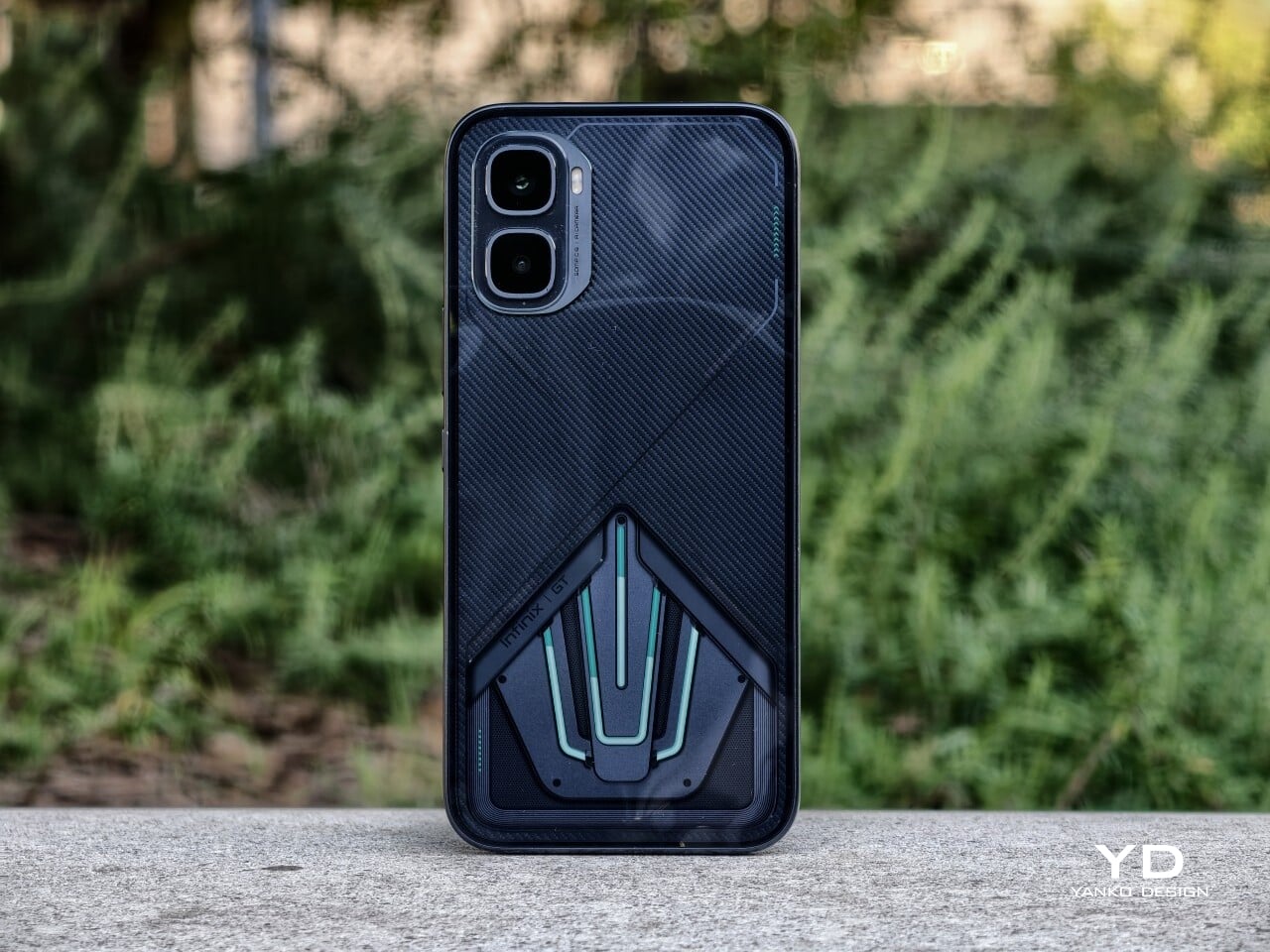
The Infinix GT 50 Pro continues a formula the GT series has followed since its debut with the GT 10 Pro in 2023. This has always been a gaming-focused smartphone line, both in how it performs and how it looks. With the GT 50 Pro, Infinix stays true to that identity while adding stronger hardware, a few thoughtful extras, and a more refined overall package.
There is plenty here that stands out immediately, from the Dimensity 8400 Ultimate and 144Hz AMOLED display to the GT triggers and bundled MagCharge cooler. At the same time, the GT 50 Pro arrives in a more competitive market and at a higher price than its predecessor. That makes it a more interesting phone to evaluate, because the question is no longer just whether it performs well, but whether it still does enough to stand out.
Designer: Infinix
Ever since the GT 10 Pro debuted in 2023, Infinix has kept the GT series firmly anchored to one identity. This has always been a gaming phone line, and importantly, it has always looked the part. The GT 50 Pro continues that tradition with complete confidence, and the consistency gives the series a stronger sense of character.
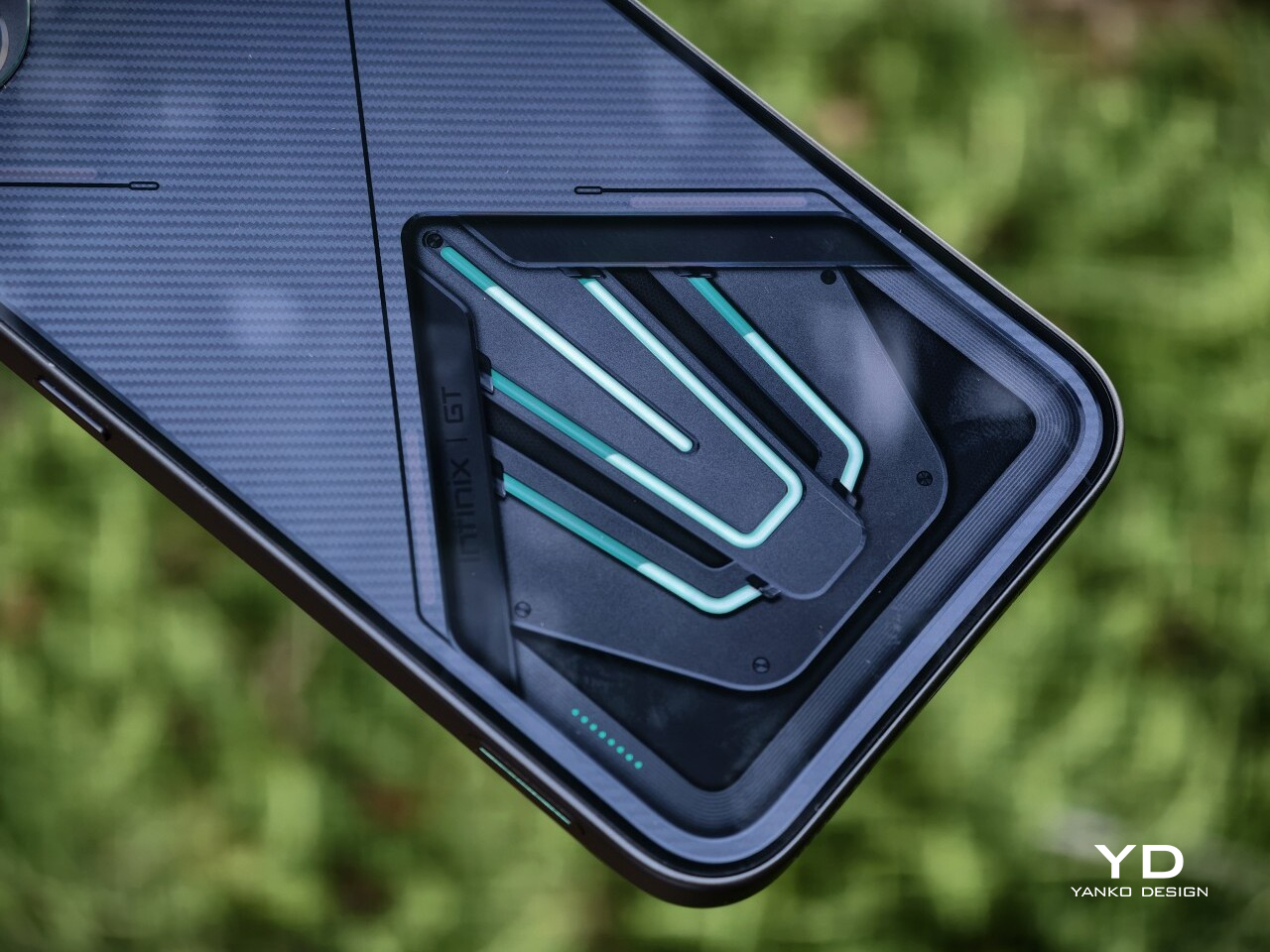
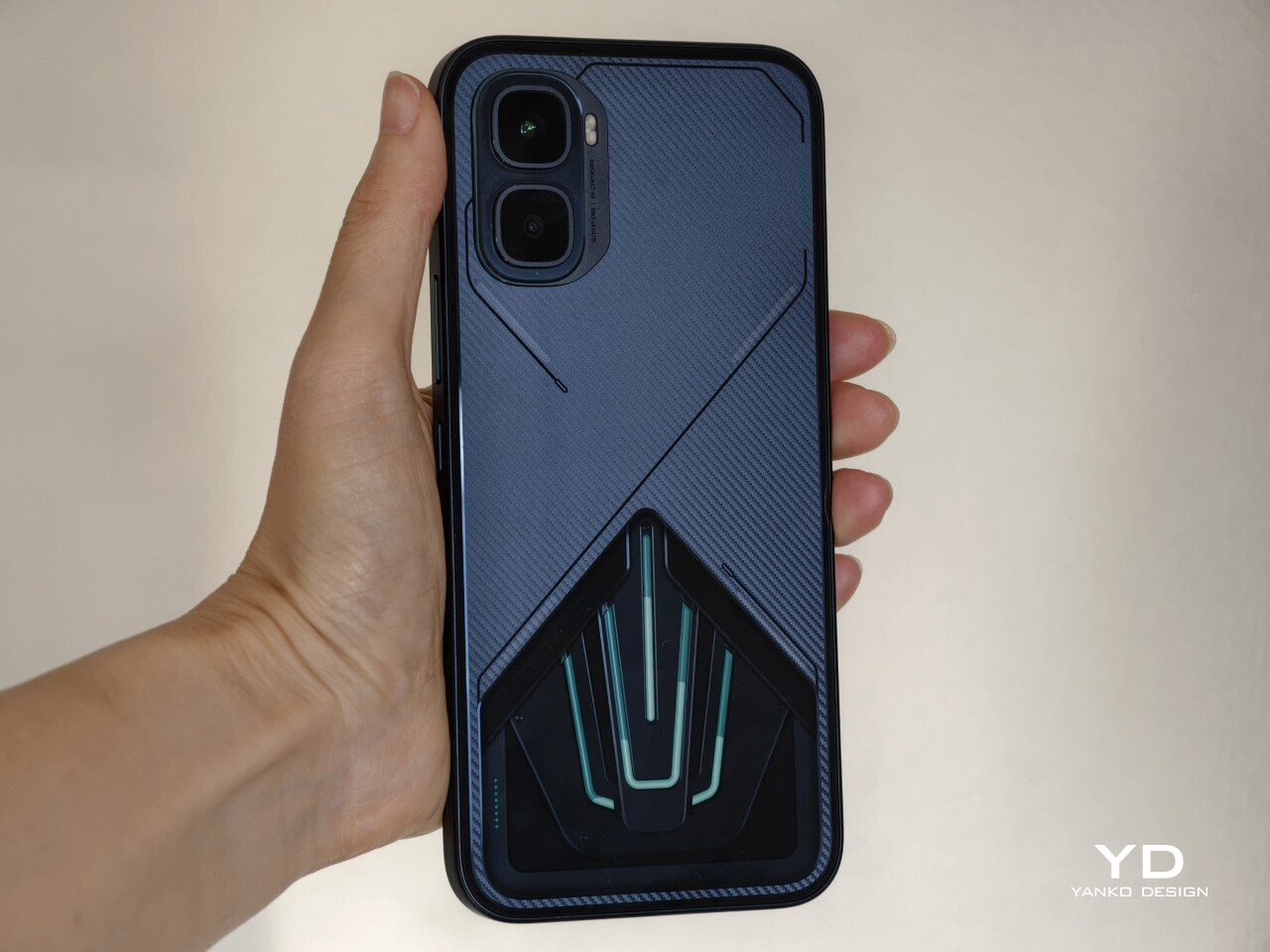
Flip the phone over, and there is no mistaking what it is. The rear panel embraces an aerodynamic, almost mechanical aesthetic, combining angular detailing, a carbon-fiber-like pattern, customizable LED accents, and a transparent section that showcases the liquid-cooling system underneath. There is a lot happening visually, but it feels controlled. Rather than coming across as excessive, the design feels cohesive and deliberately built around the phone’s gaming-first identity.
The camera module follows the same approach. Its two rear cameras are placed on a raised platform in the top-left corner, with each lens individually framed within a square border. It certainly adds to the industrial, structured look of the back, though I have never been particularly fond of this kind of layout since the separate frames tend to collect dust more easily and make the area slightly more annoying to wipe clean.
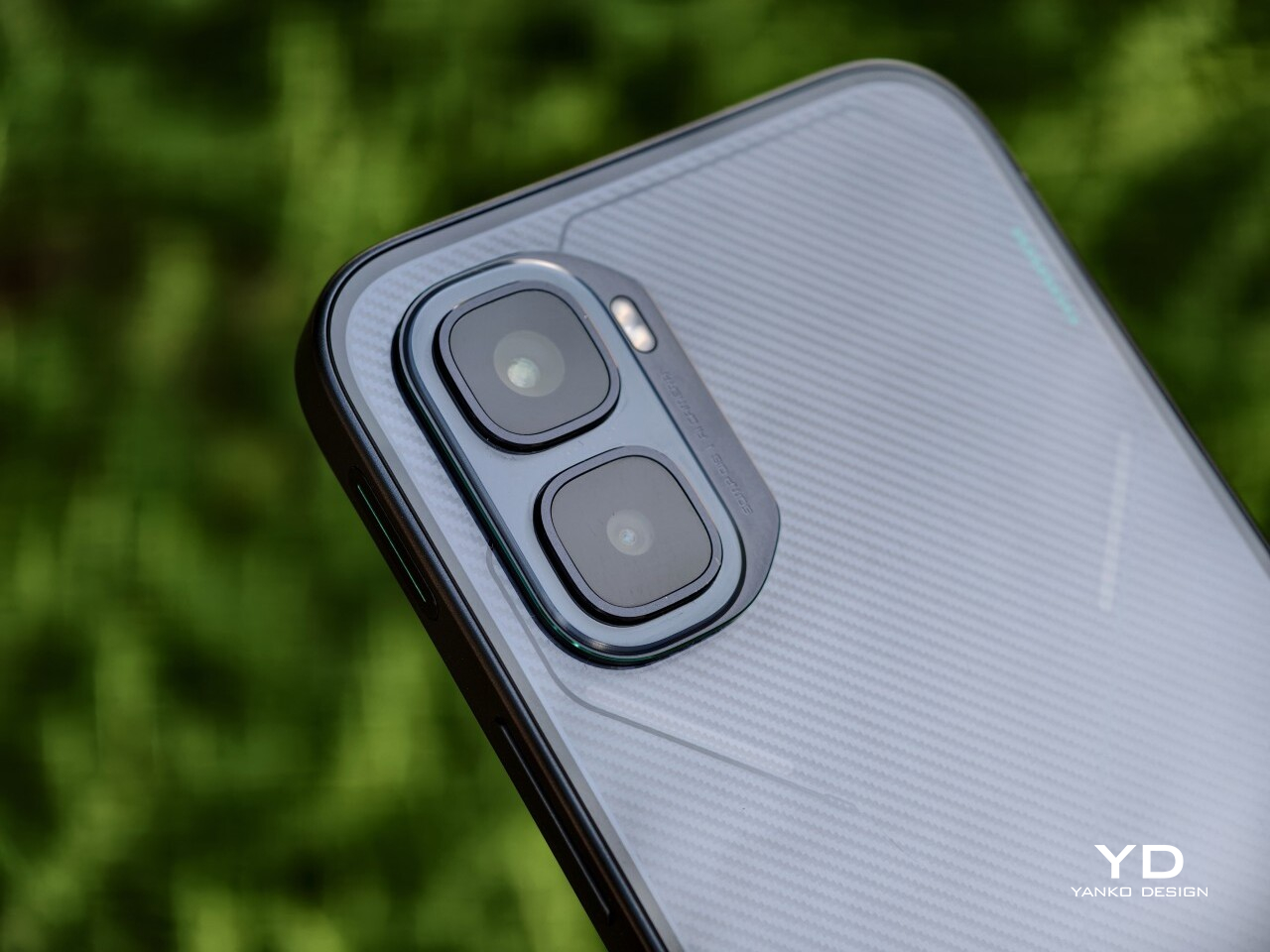
There are three color options, and each one changes the mood of the design. Black Abyss unit I received, paired with green liquid-cooling accents, looks the most understated while still retaining that gaming edge. Silver Glacier, with blue liquid cooling, comes across as the most futuristic of the lot. Red Blaze is easily the boldest finish here, and it is the variant for those who want the GT 50 Pro to attract attention instantly.
What ultimately stands out is the restraint behind the boldness. The GT 50 Pro is distinctive enough to feel special, but it never crosses into the kind of excess that would make it awkward to use in everyday life. More than anything, it feels like a more refined and self-assured evolution of the GT design language rather than a dramatic reset.
For a phone that leans this heavily into gaming aesthetics, the Infinix GT 50 Pro is surprisingly manageable in the hand. It measures 162.44 x 72.33 x 8.15 mm and weighs 198g, which firmly places it in large-phone territory, but it never feels unnecessarily bulky or awkward. The proportions are well judged, and the phone carries its size with more balance than the numbers might suggest.
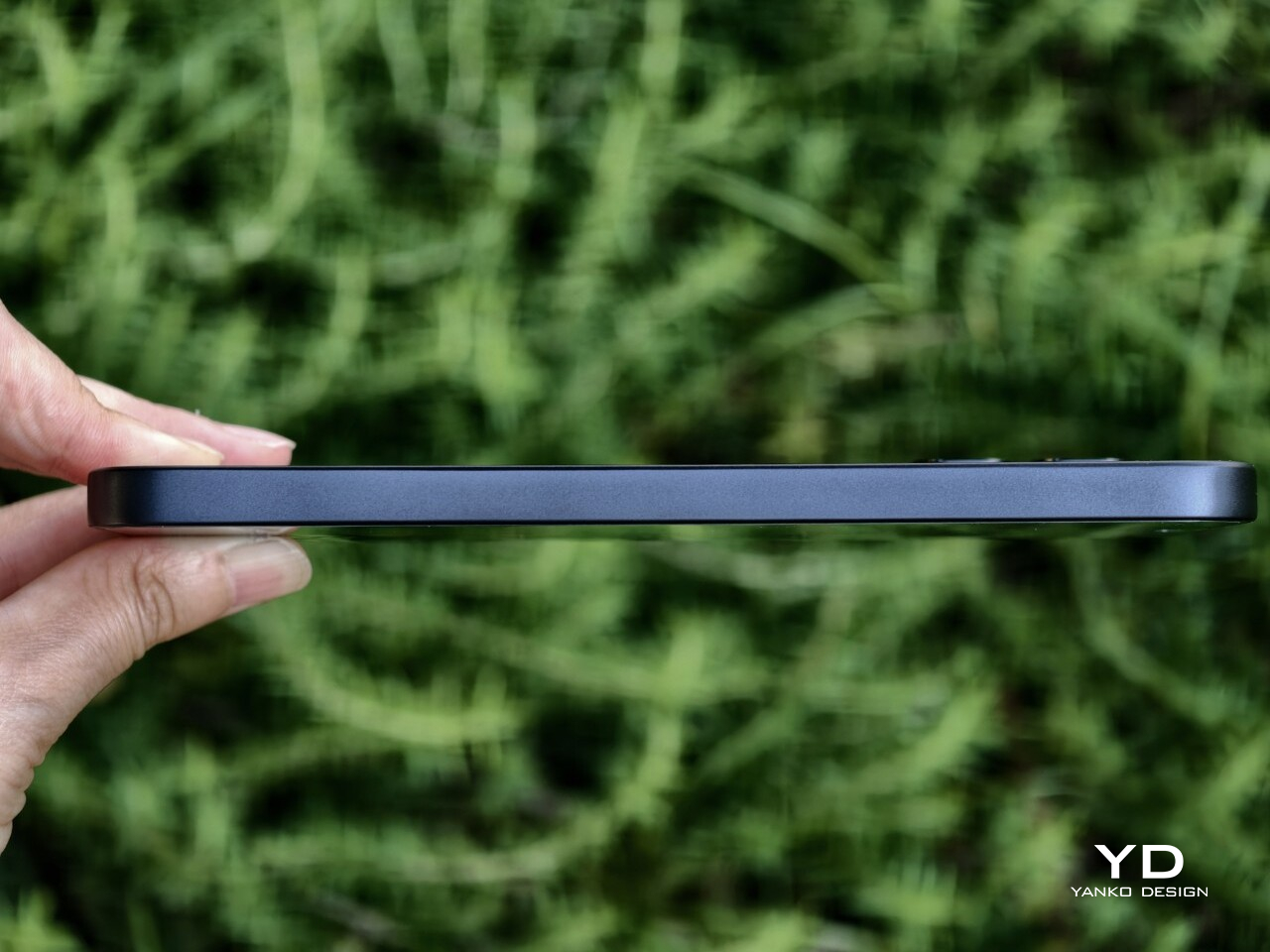
The flat sides do help with grip, especially during gaming or extended video sessions where a more secure hold matters. Paired with the glossy back, the GT 50 Pro still feels steady in the hand rather than overly slippery. The rear panel does pick up fingerprints quite easily, but thanks to the carbon-fiber-like pattern and the liquid-cooling visuals underneath, smudges are less obvious than they would be on a plain glossy surface. The included case, on the other hand, feels quite plasticky, though you will likely want to use it anyway if you plan on attaching the bundled MagCharge cooler, which I will get to later.
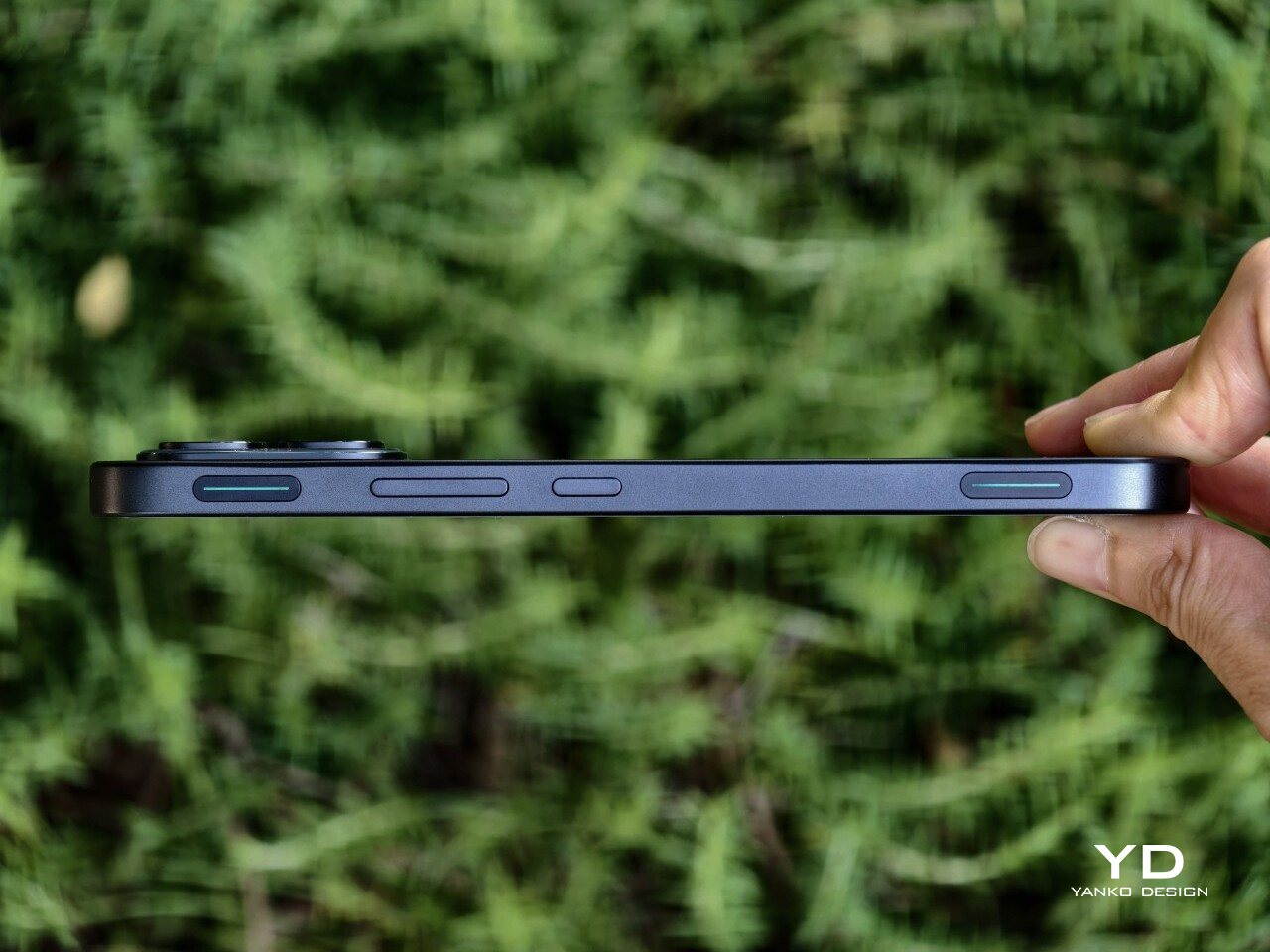
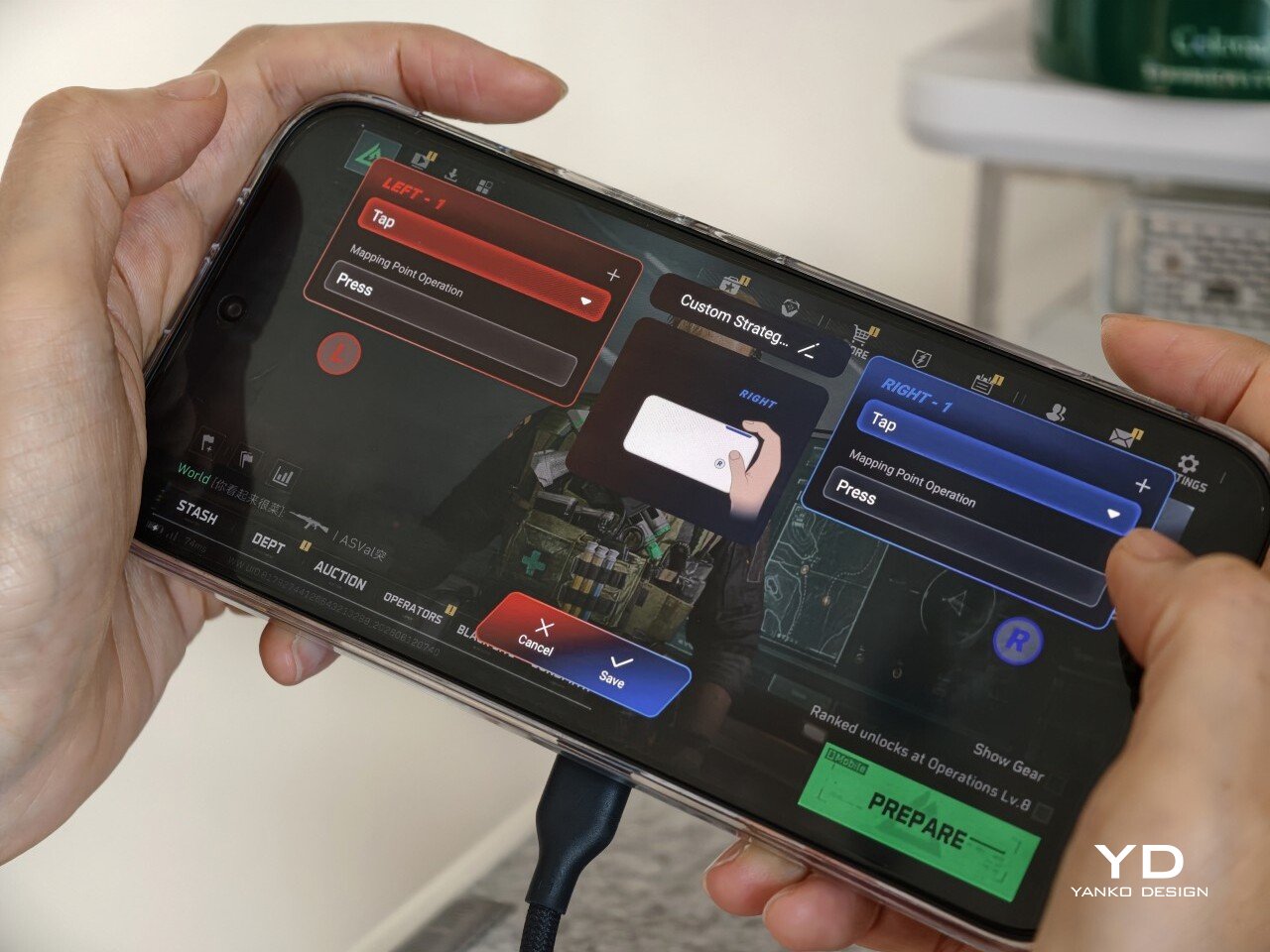
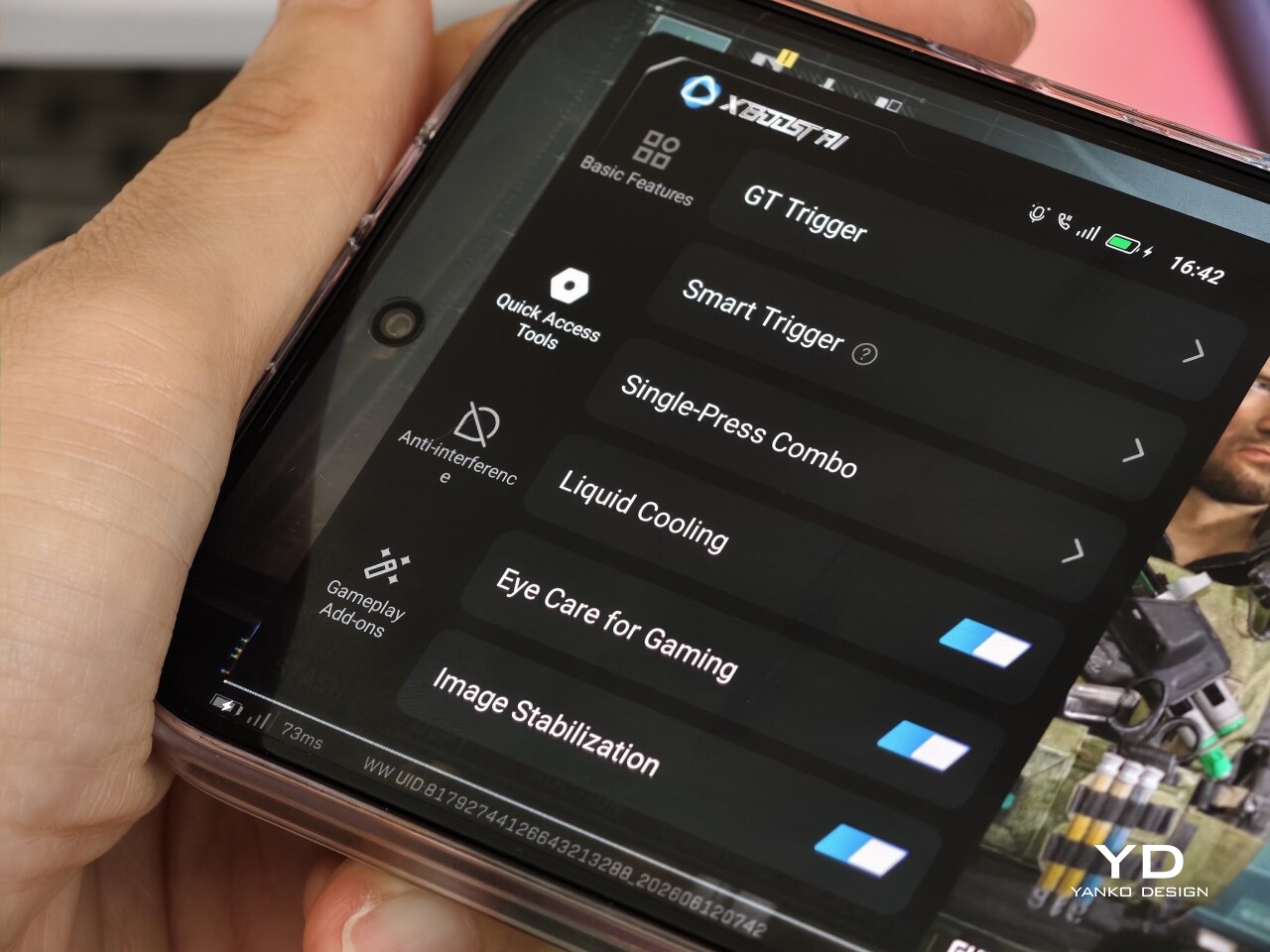
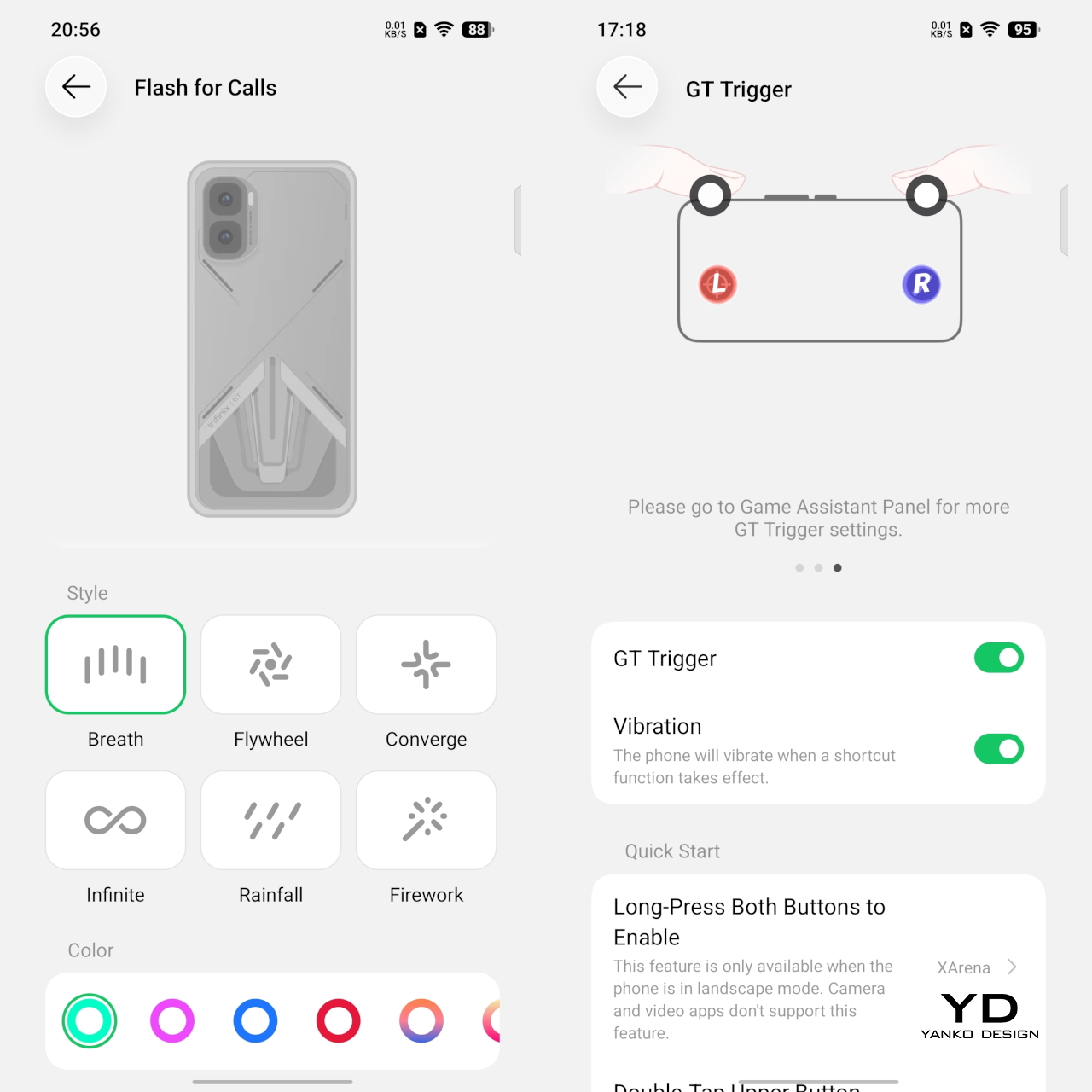
One of the more distinctive ergonomic features here is the pair of GT triggers. These customizable pressure-sensitive triggers add something genuinely useful to the physical experience of the phone, especially for gaming. In supported games, they can make actions like aiming, firing, or switching controls feel quicker and more tactile than relying entirely on the touchscreen. Even outside gaming, the fact that they are customizable gives them some practical value and keeps them from feeling like a one-note gimmick.
The rest of the layout is otherwise fairly standard. The power button and volume rocker are easy enough to reach, but the fingerprint sensor sits a bit too close to the bottom edge for comfort. It works quickly, but it is not the most natural placement. Overall, the GT 50 Pro feels built more around grip, control, and gaming comfort than one-handed ease, and that feels entirely appropriate for what it is.
The Infinix GT 50 Pro is powered by the MediaTek Dimensity 8400 Ultimate, paired with 12GB of RAM and either 256GB or 512GB of storage. On paper alone, that already puts it in a very comfortable position for a phone in this segment. In day-to-day use, the experience lives up to that promise. Animations are smooth, apps open quickly, and there is enough headroom here that the phone rarely feels like it is under any real strain, even when several things are happening at once.
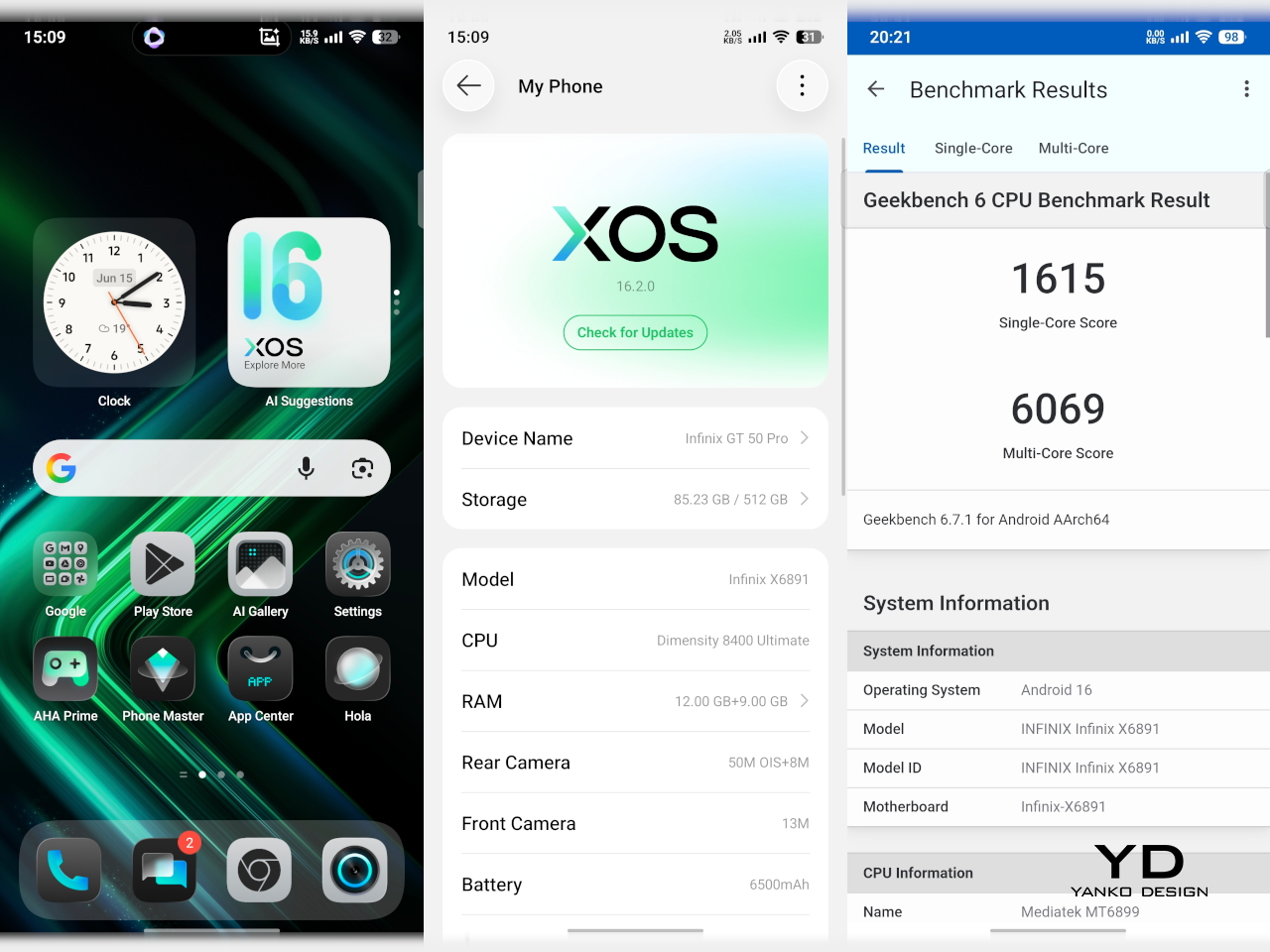
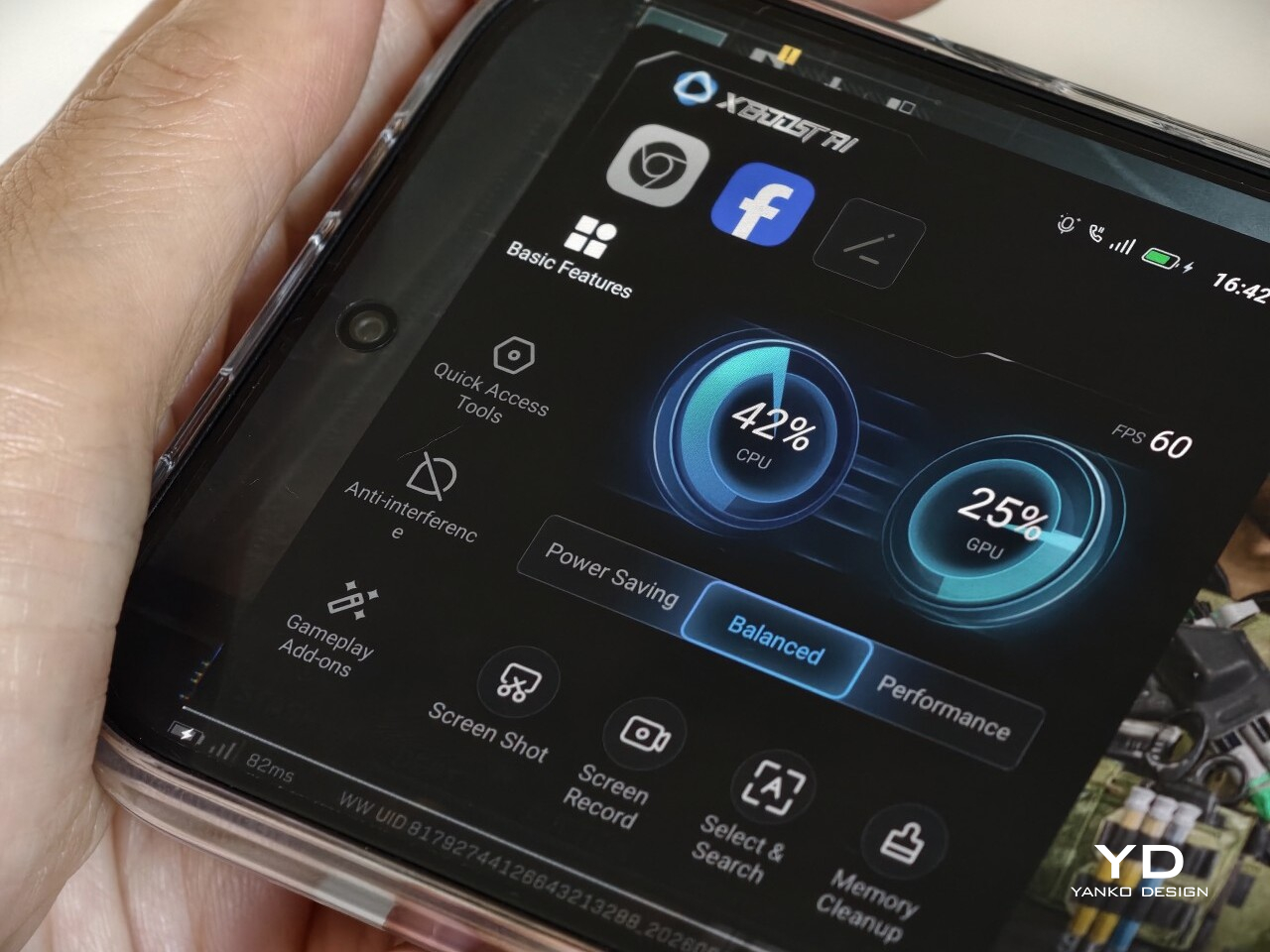
Gaming is where the hardware starts to make the most sense. The GT 50 Pro handles demanding titles with the kind of confidence you would expect from a device built around this purpose. Frame rates feel stable, touch response is quick, and the GT triggers add a layer of physical control that makes certain games feel more intuitive than they do on a standard touchscreen-only phone. It is not just about having enough power to run games well. It is also about making the whole experience feel more deliberate and more enjoyable.
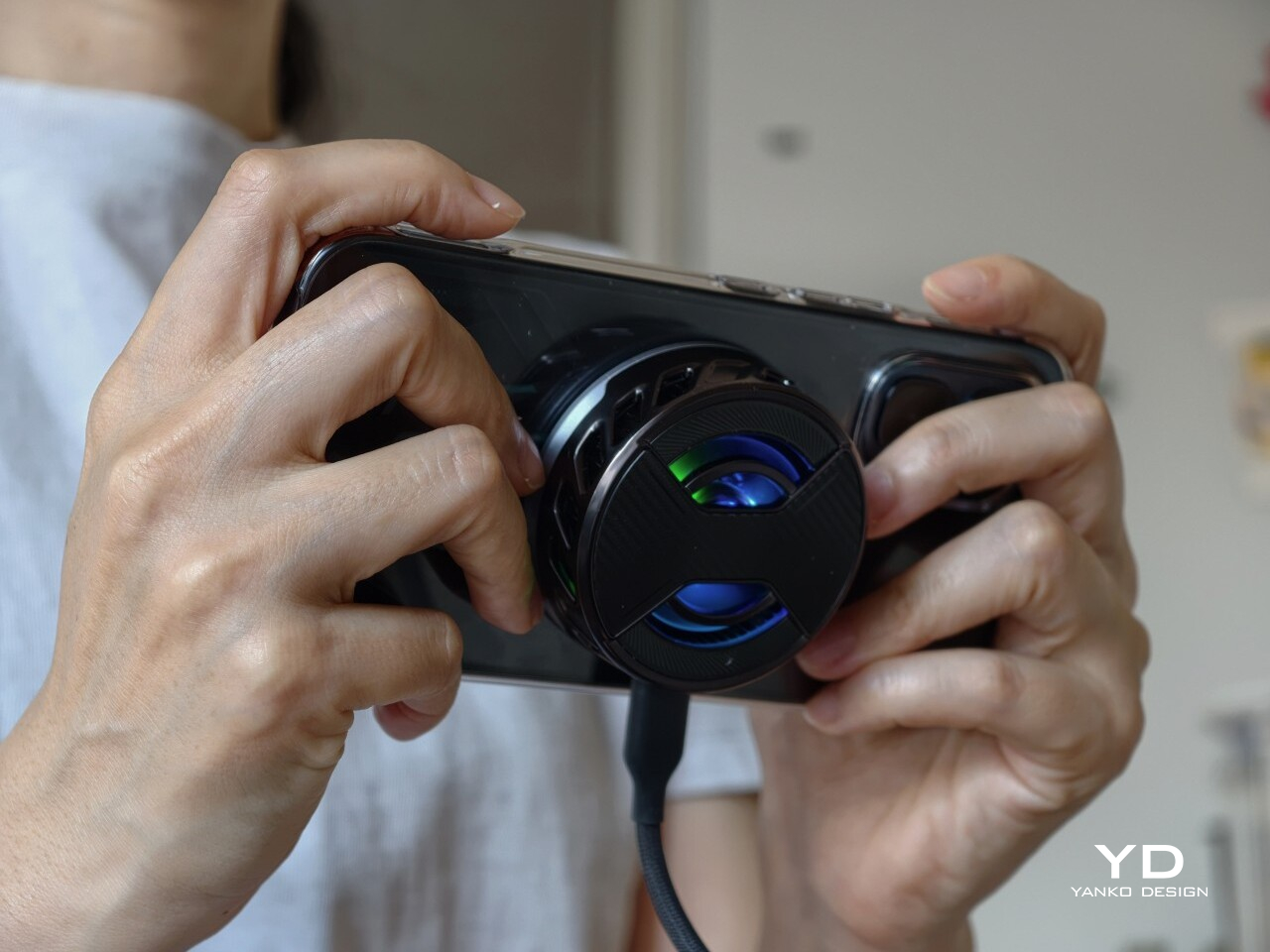
The bundled MagCharge cooler is part of the experience, too. Not everyone will need it all the time, but it does make the GT 50 Pro feel more complete as a gaming device. In my use, an hour of playing Delta Force at the highest settings kept the phone below 40 degrees Celsius, which is a reassuring result for extended sessions. It also works as a wireless charger while attached, so you can game for longer without having to put up with a cable jutting awkwardly out of the phone. The built-in lighting effects are a nice touch as well, and they fit neatly with the rest of the GT 50 Pro’s gaming-focused identity.
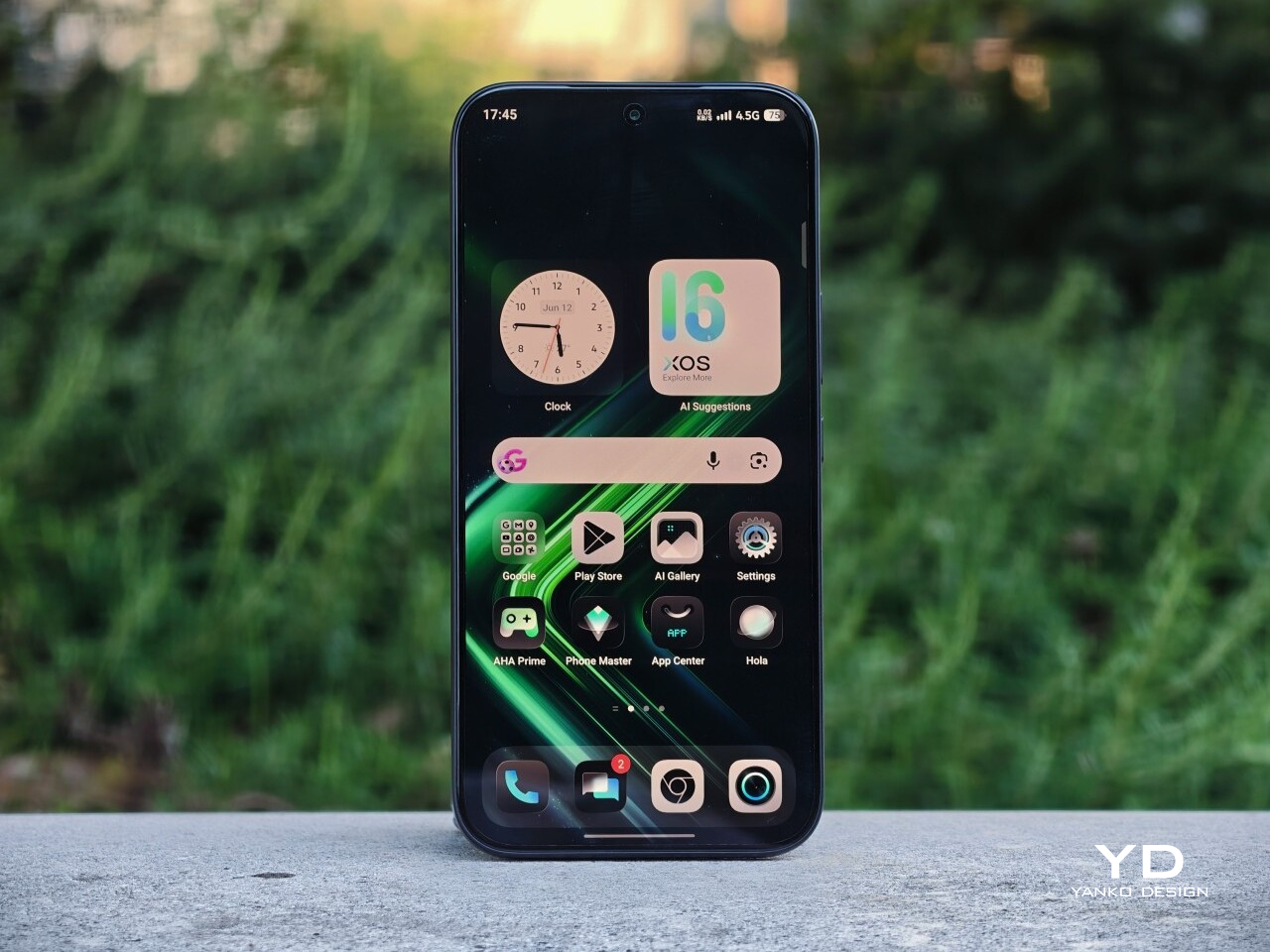
Software plays a major role in shaping that experience too. Running XOS 16 based on Android 16, the GT 50 Pro offers a wide range of gaming-focused features that fit the phone’s identity well. There is also a growing library of AI tools built into the system, though their usefulness will vary depending on how much you actually rely on those features in daily use.
The GT 50 Pro features a 6.78-inch AMOLED panel with a 1.5K resolution and a 144Hz refresh rate, and it is one of the phone’s biggest strengths. Everything looks sharp, motion is fluid, and the high refresh rate makes a difference not just in games but also in everyday scrolling and navigation. With a claimed peak brightness of 4,500 nits and 1,600 nits in high brightness mode, the screen is generally easy to see even under harsh sunlight. That said, I did run into a few moments where automatic brightness felt a little too conservative, leaving the display dimmer than expected until I adjusted it manually.
The audio experience is less convincing. The stereo speakers are decent enough for casual use, but they do not leave much of an impression. At times, some sounds come across as slightly muffled, which takes away a bit from the otherwise immersive gaming and media experience. It is not a deal-breaker, but it is one area where the phone feels less polished than its display.

Ultra-wide, 0.6x

Main, 1x

Main, 2x
The camera system on the Infinix GT 50 Pro is more practical than ambitious, which feels fitting for a phone like this. You get a 50MP main camera with OIS, an 8MP ultrawide, and a 13MP front camera. The main camera does most of the heavy lifting, and in good lighting, it is capable of producing sharp, pleasing shots for everyday use.

Main, 1x

Main, 2x
Up to 2x zoom, image quality remains decent, but beyond that, the limitations become more obvious. The phone can go as far as 15x, though that upper range feels more like a bonus than something genuinely useful. Color processing also tends to lean warm and vibrant, which gives photos a lively look even if they are not always the most natural.

Main, 1x

Main, 2x
Battery life is another area where the GT 50 Pro benefits from its gaming-first priorities. Depending on the market, the phone comes with either a 6,150mAh or 6,500mAh battery, and either way, that is a generous capacity by current standards. The unit I received came with the 6,500mAh battery, and its endurance is impressive, easily lasting a full day even with a couple of hours of gaming mixed in. Charging support is also solid, with 45W wired charging and 30W wireless charging adding a welcome layer of convenience.
Sustainability is not always the first thing people look for in a gaming-focused phone, but it still matters, especially for a device that is likely to be used heavily over time. With the Infinix GT 50 Pro, the discussion is less about environmental branding and more about durability and software longevity. Those may not be the most exciting parts of the package, but they are often the ones that shape the ownership experience in the long run.
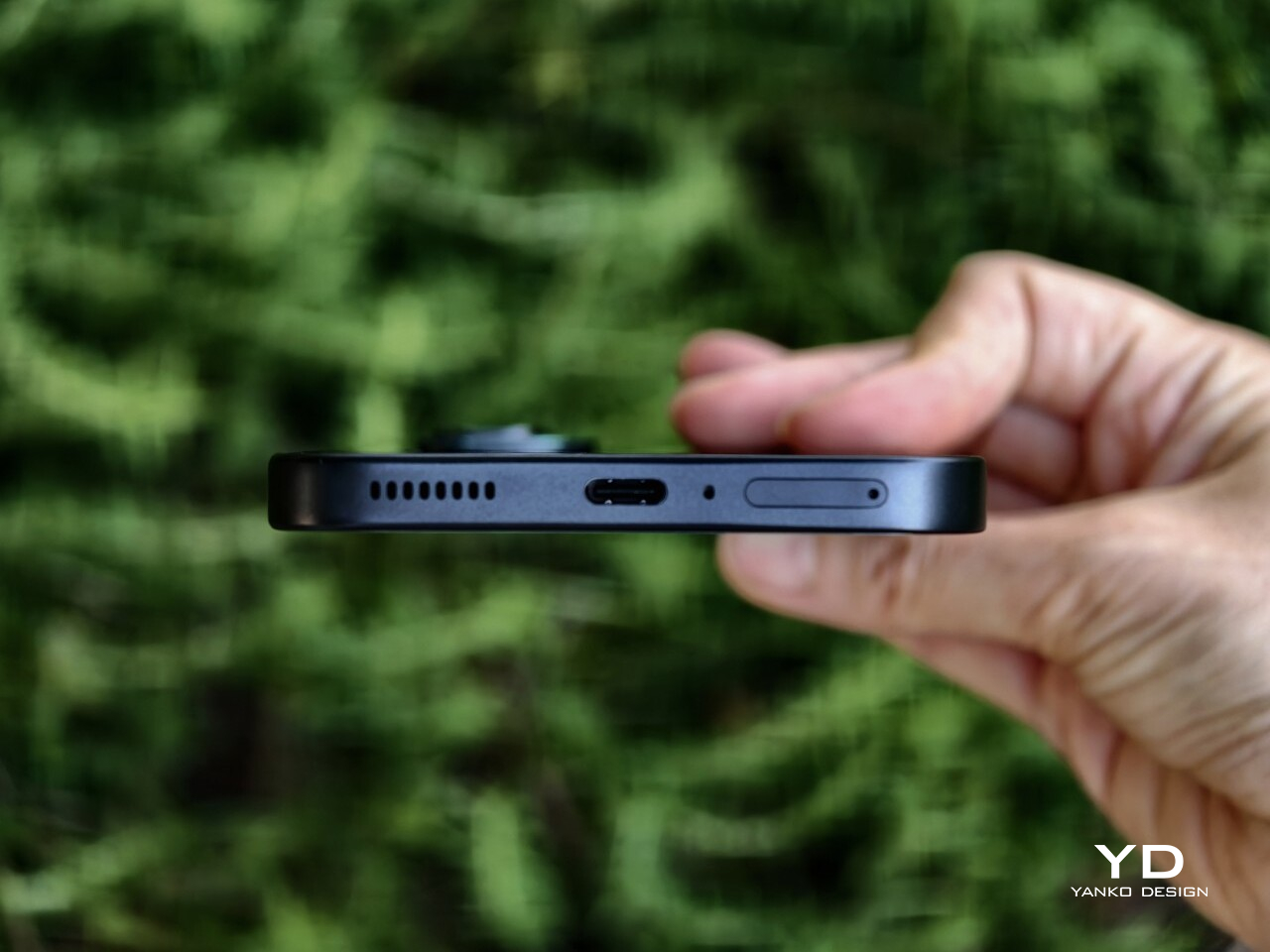
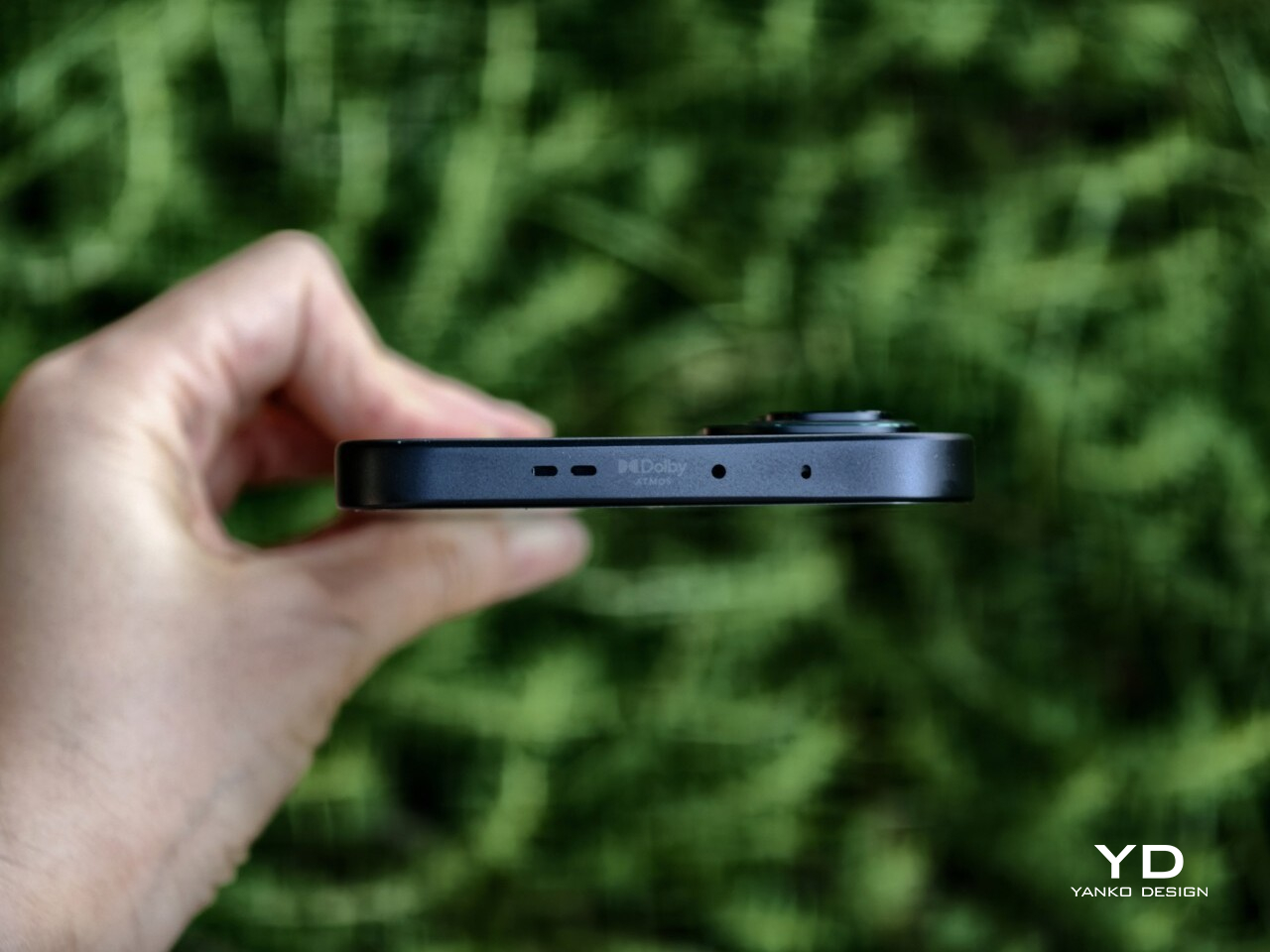
On the hardware side, the GT 50 Pro uses Corning Gorilla Glass 7i for added screen protection and carries an IP64 rating for dust and splash resistance. That does not make it a rugged device, and it is still worth being cautious around water since the protection is limited to splashes rather than full immersion. Even so, these are useful safeguards for a phone that is likely to be handled often and used intensively.
Software support strengthens the picture further. Infinix promises three years of Android OS version updates and five years of security patches, which may not lead the class but still counts as a meaningful commitment at this level. It gives the GT 50 Pro a better shot at remaining secure, relevant, and worth holding onto for longer.
Value is where the Infinix GT 50 Pro still holds up well, but it is also where the conversation gets a little more complicated. In the Philippines, the 12GB + 256GB variant is priced at PHP 25,999, or roughly USD 427, while the 12GB + 512GB version comes in at PHP 29,999, or about USD 493. That is a noticeable jump from the GT 30 Pro, whose 12GB + 256GB version launched at PHP 19,999, or roughly USD 328.
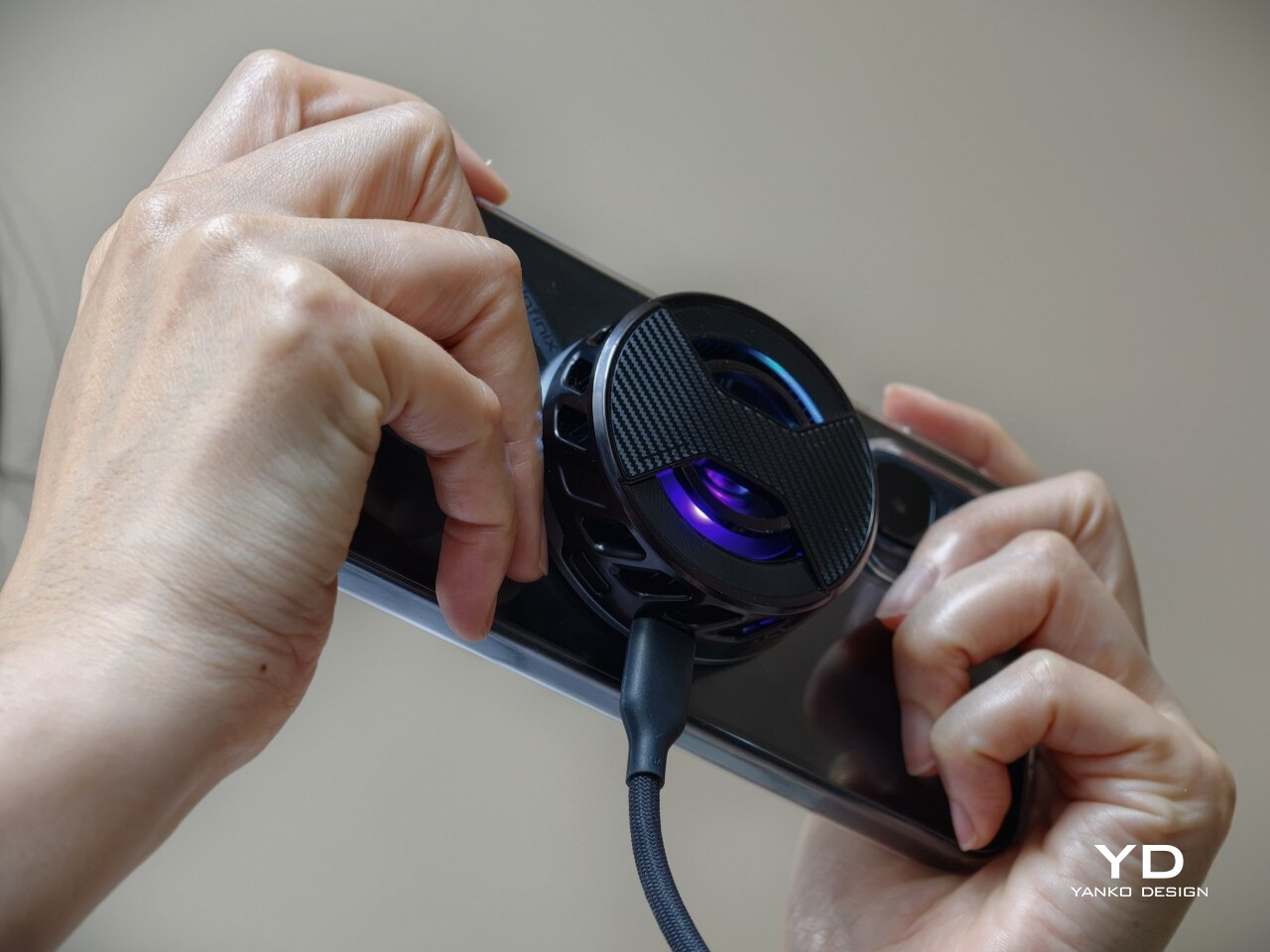
To be fair, the GT 50 Pro still offers a lot for the money. You are getting a Dimensity 8400 Ultimate chip, a 144Hz AMOLED display, GT triggers, a bundled MagCharge cooler, and a large battery, which makes it a well-equipped gaming phone at this price. The challenge is that the improvements over its predecessor feel more incremental than transformative, and it now enters a market with tougher competition. So while the pricing is still reasonable, the GT 50 Pro may not feel quite as disruptive as the GT line once did.
The Infinix GT 50 Pro is a capable gaming phone with a clear identity. It offers strong performance, a sharp and fluid display, useful gaming features, and dependable battery life, all wrapped in a design that feels distinctive without becoming impractical.
Its compromises are fairly clear, too. The camera system is decent rather than exceptional, the speakers could be better, and the higher price means it no longer feels quite as disruptive as earlier GT models did. Even so, if your priorities are gaming, display quality, and overall performance, the GT 50 Pro remains a compelling option in its class.
The post Infinix GT 50 Pro Review: Gaming Greatness With a Catch first appeared on Yanko Design.
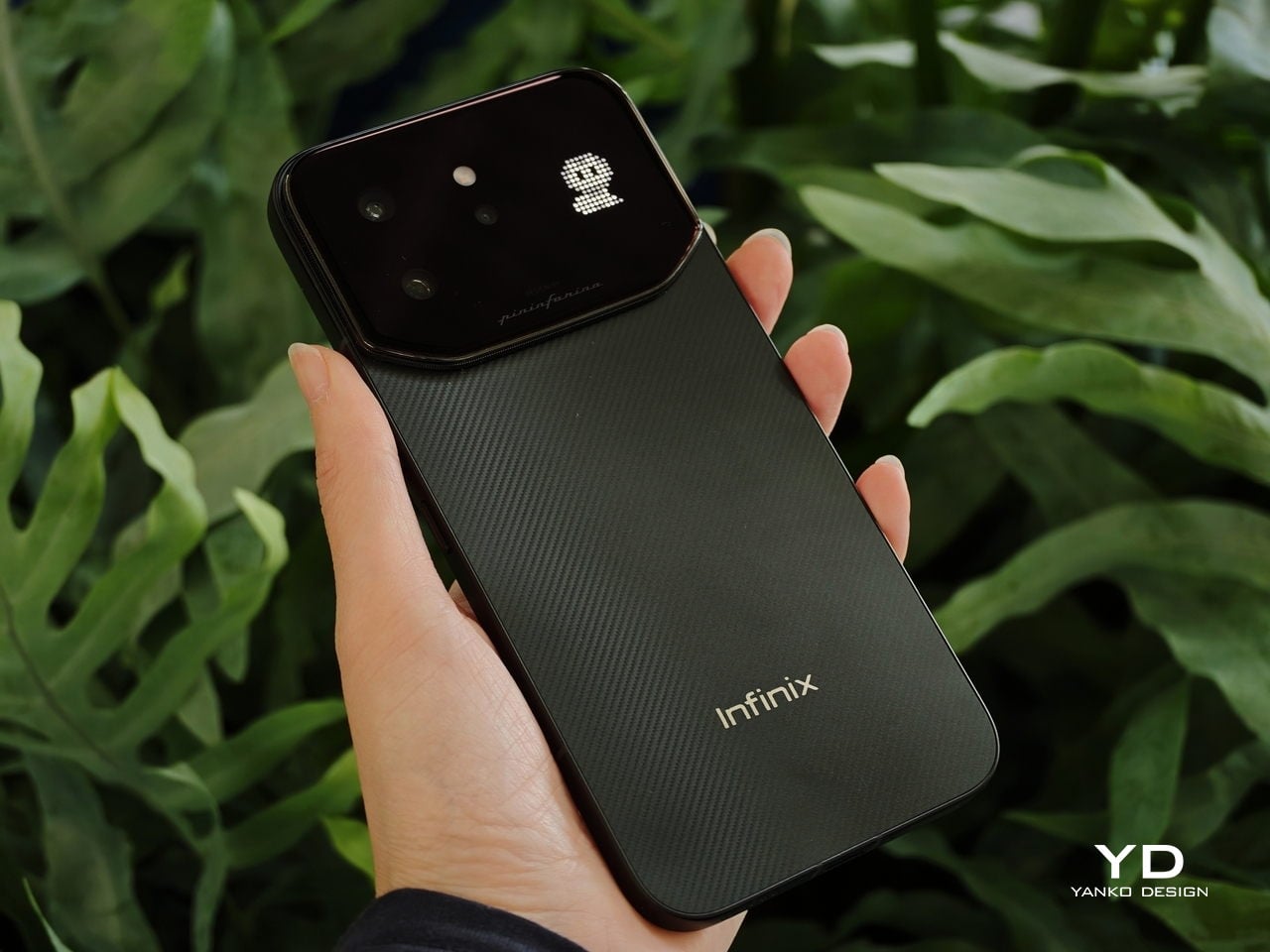
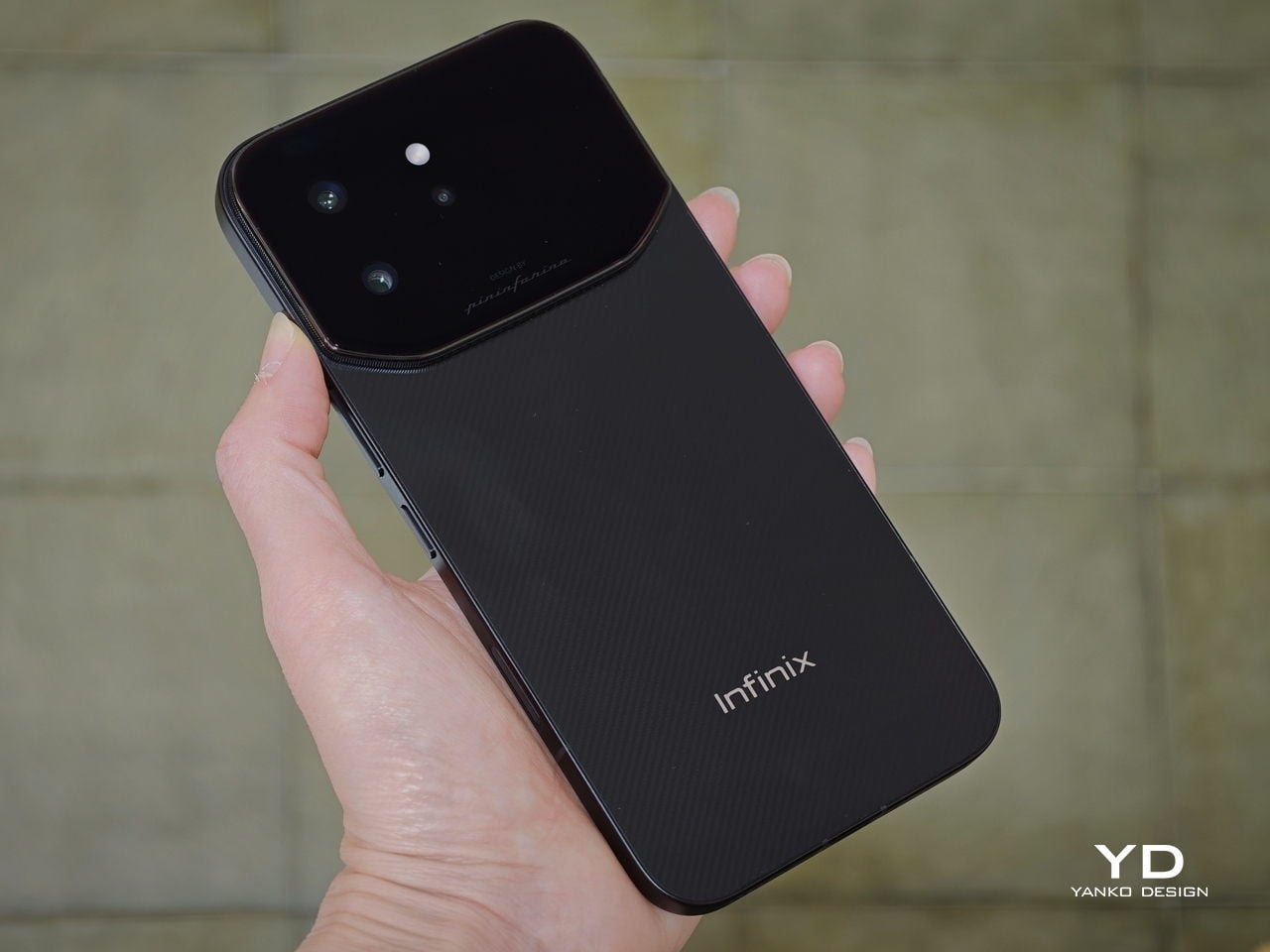
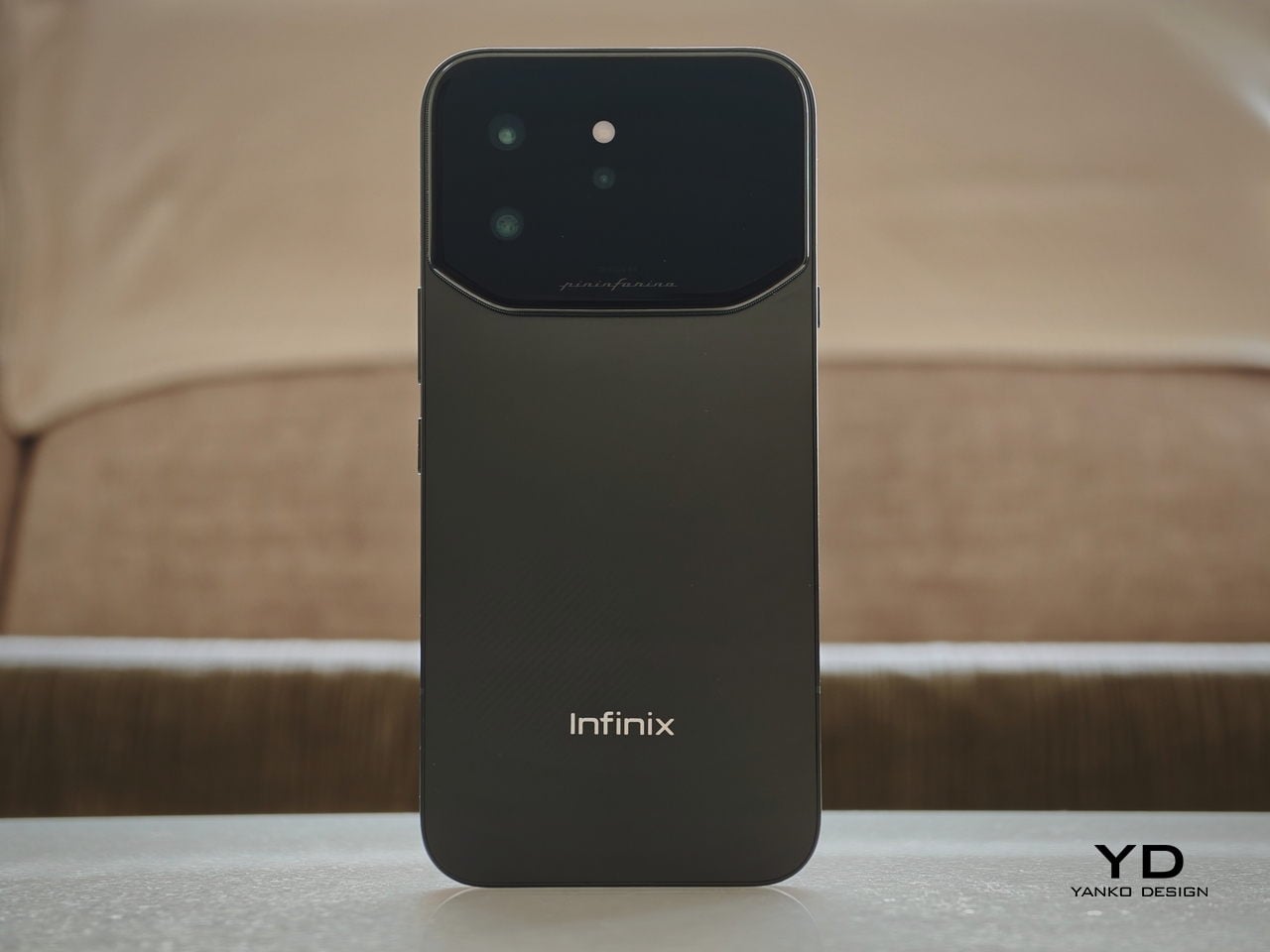
The camera bump problem has quietly become one of those things smartphone designers just accept these days. Every generation, the sensors get bigger, the modules get thicker, and the back of your phone starts looking like a small mountain range. Infinix decided to do something about that with the NOTE 60 Ultra, working with Pininfarina (yes, the Italian firm behind some of the most famous Ferrari bodies ever made) to create a rear panel where the triple-camera array, a hidden notification display, and a lighting strip all vanish into a single flush glass surface.
That design approach has a name: the Uni-Chassis Cam Module. It borrows from the unibody monocoque philosophy that makes sports car bodies both sleeker and more rigid, applying the same logic to a phone’s rear. The entire back is formed from a single continuous sheet of Gorilla Glass Victus, keeping the profile at 7.9mm while housing everything beneath without any visible interruption. The engineering explanation actually makes it look cooler once you know it.
Designer: Infinix x Pininfarina
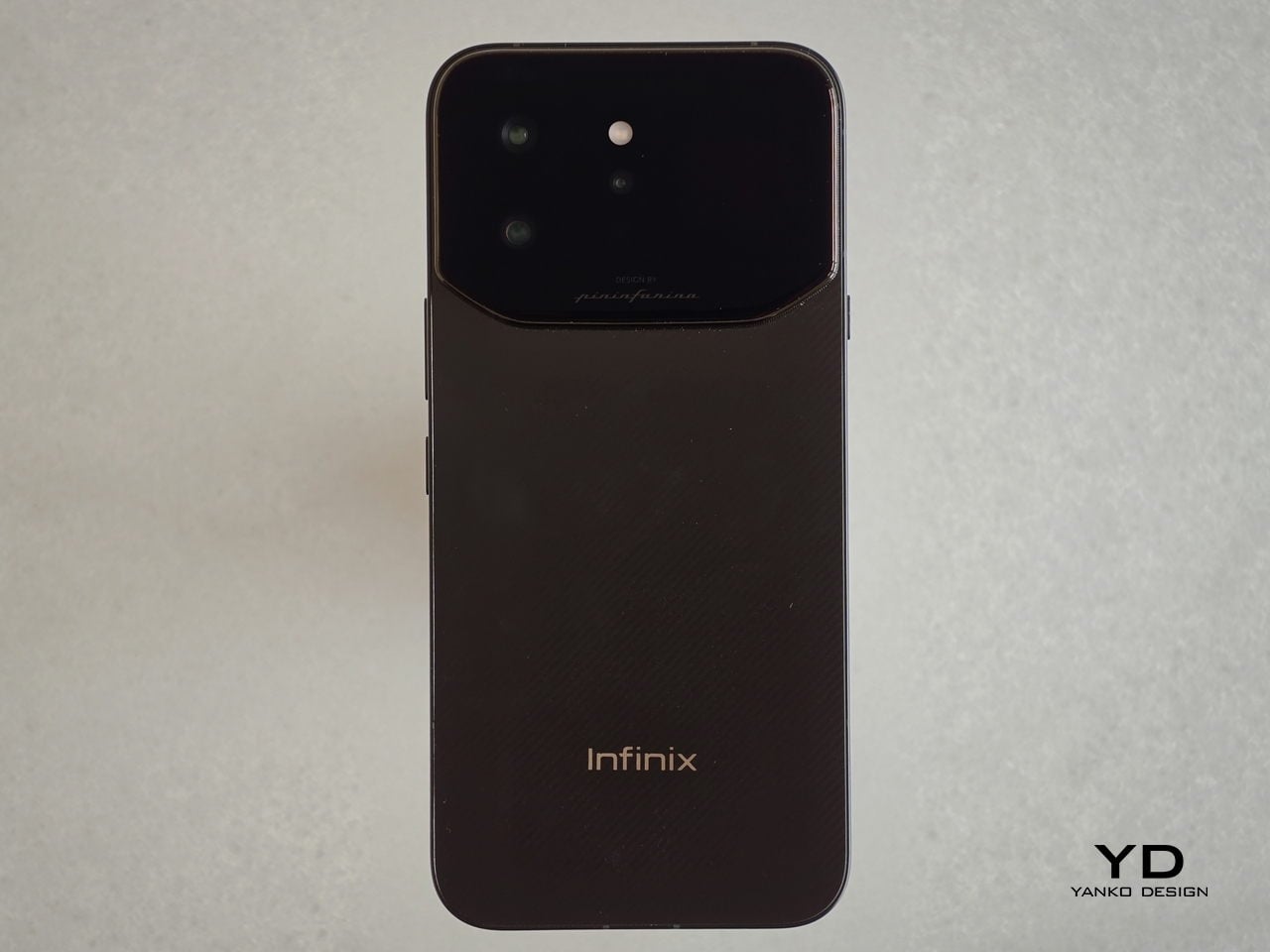
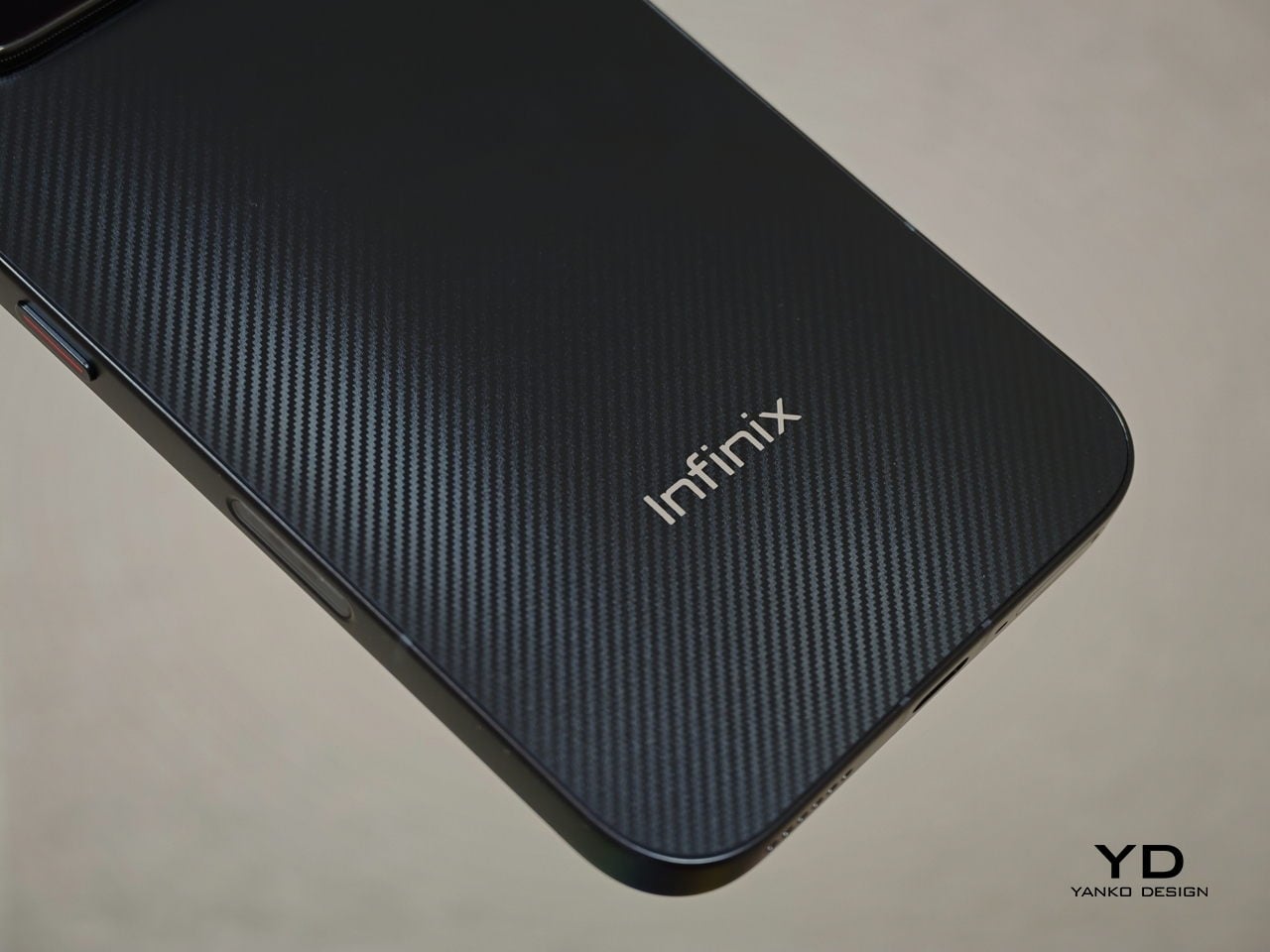
Pininfarina’s influence extends to the four color options as well. Torino Black has a Kevlar-weave texture referencing basalt fiber; Monza Red borrows its surface geometry from the Daytona SP3 grille. Each colorway has a distinct material treatment, not just a tint on a shared base finish. These are details that often disappear between concept and mass production, so the fact that they survived here says something about how seriously the collaboration was taken.
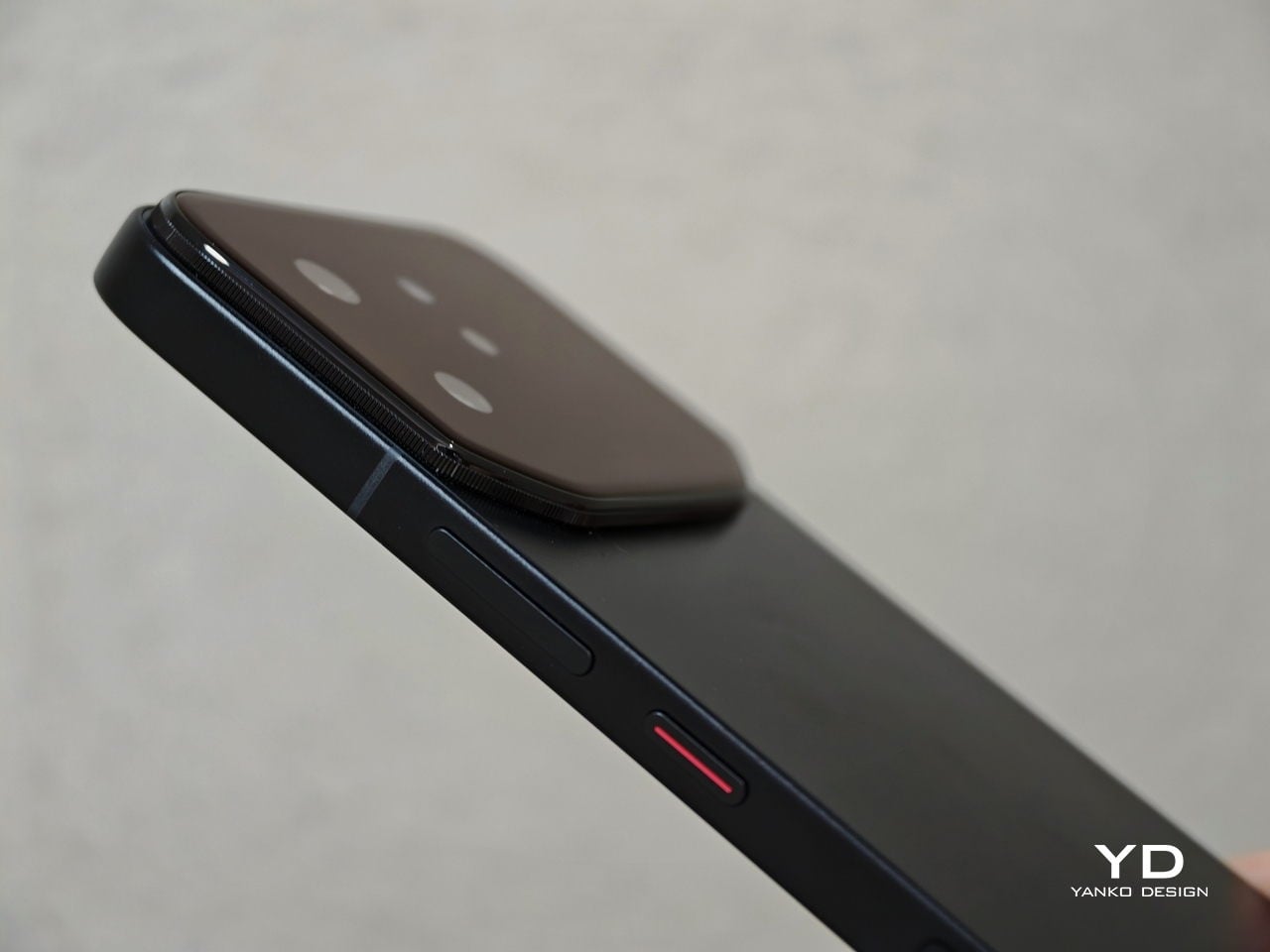
Photography is anchored by a 200-megapixel Samsung ISOCELL HPE main sensor. The 1/1.4-inch sensor area and f/1.69 aperture mean the full-resolution mode captures enough data to crop aggressively without losing sharpness. Paired with it is a 50-megapixel Samsung ISOCELL JN5 periscope telephoto with its own optical image stabilization, offering a native 3.5x optical zoom that extends to 7x losslessly before reaching 100x digitally.
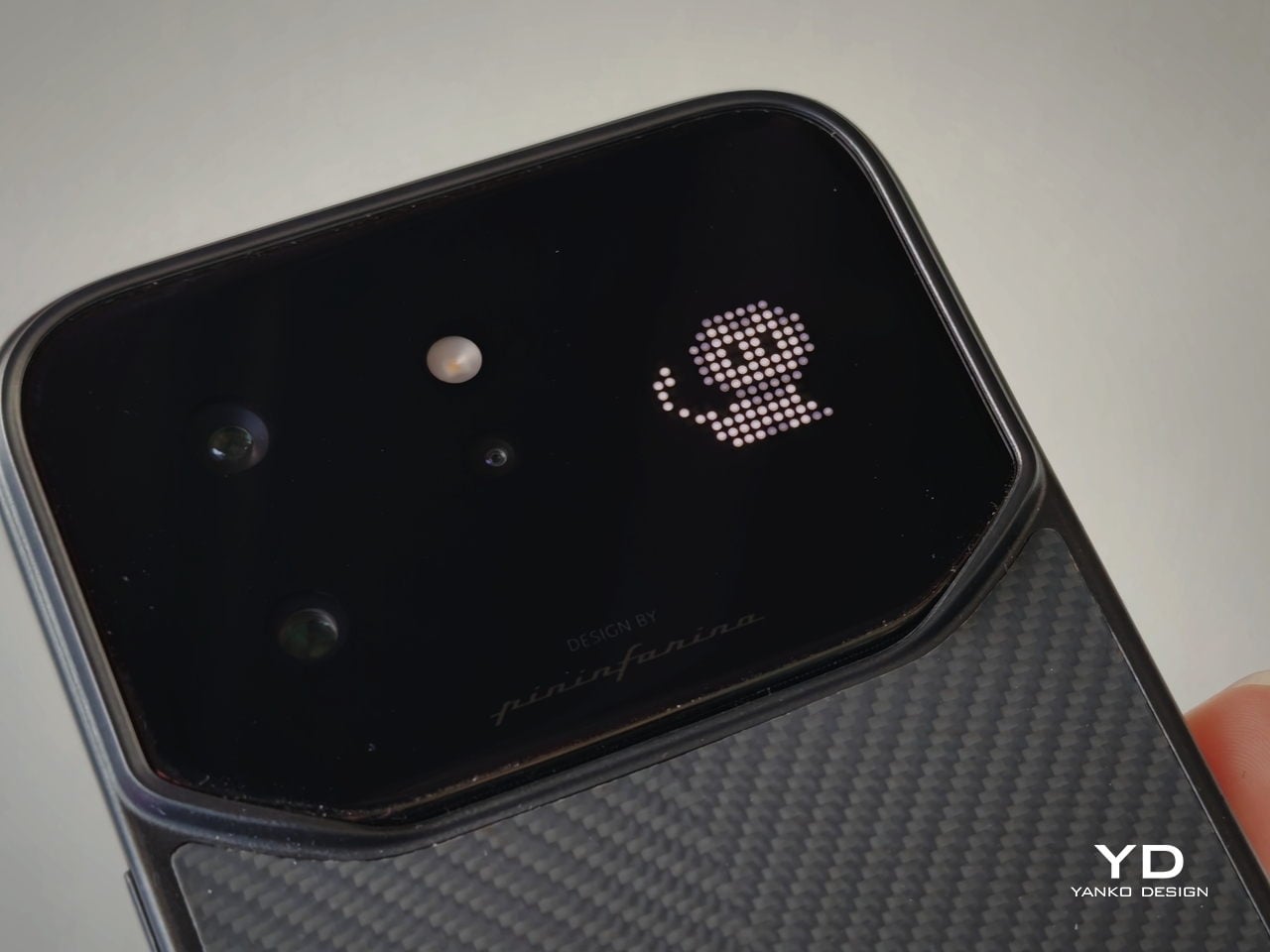
Tucked beneath the glass rear is the Active Matrix Display, a dot-matrix LED panel that surfaces through the glass when needed and disappears completely when dormant. It handles notification alerts, time and weather readouts, animated pixel pets, and two motion-controlled mini-games. The panel draws no power when inactive, leaving the flush rear surface completely undisturbed until it decides it has something to say.
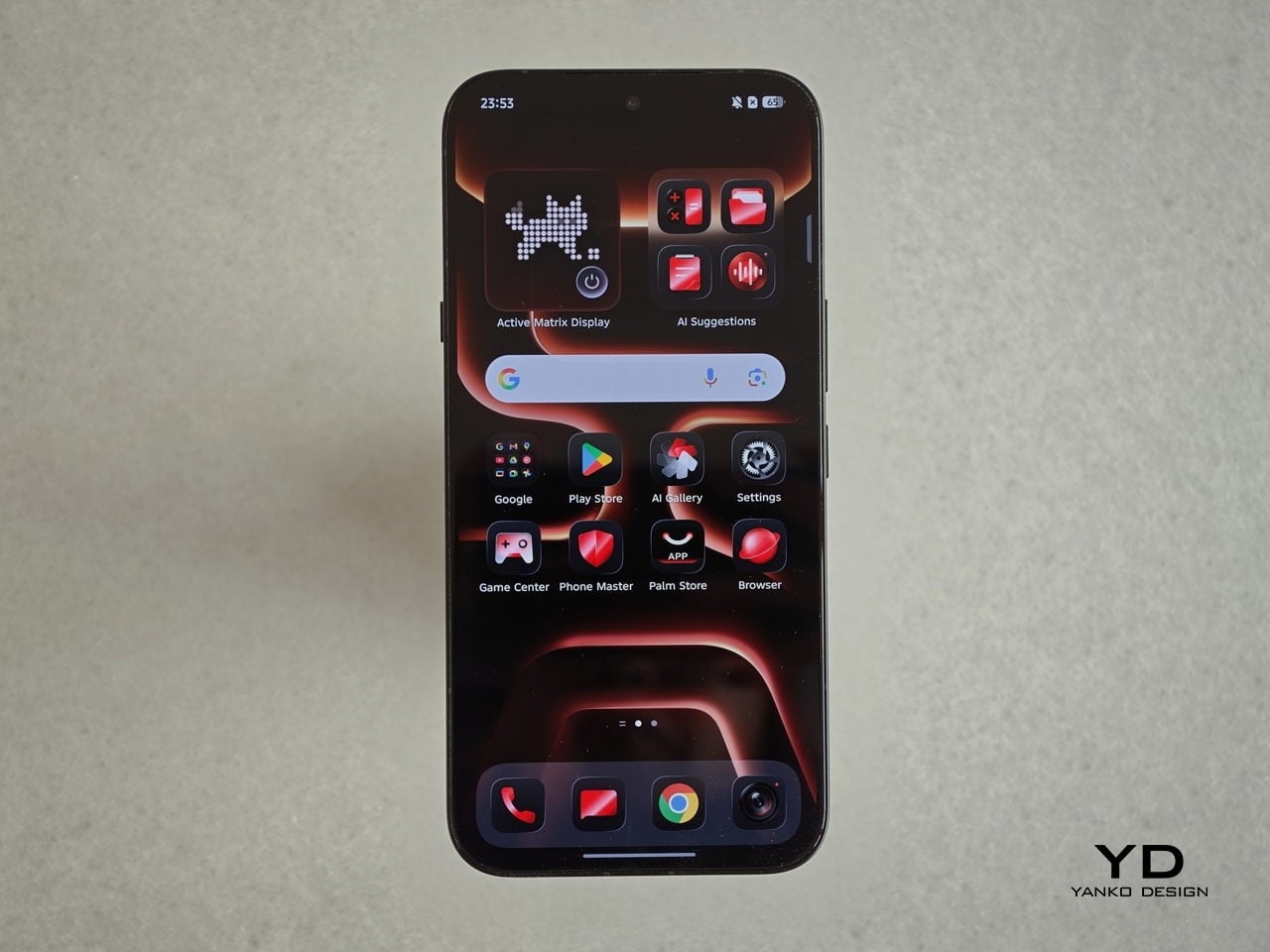
The NOTE 60 Ultra also introduces Infinix’s XDR Image Engine, which applies a full-chain HDR workflow from capture all the way through to the 1.5K display. In practical terms, this means the phone is managing highlight and shadow detail simultaneously when shooting high-contrast scenes, rather than picking one at the expense of the other. That workflow supports 4K 60fps video recording with Full-Link HDR 10+ for footage up to 4K 30fps.
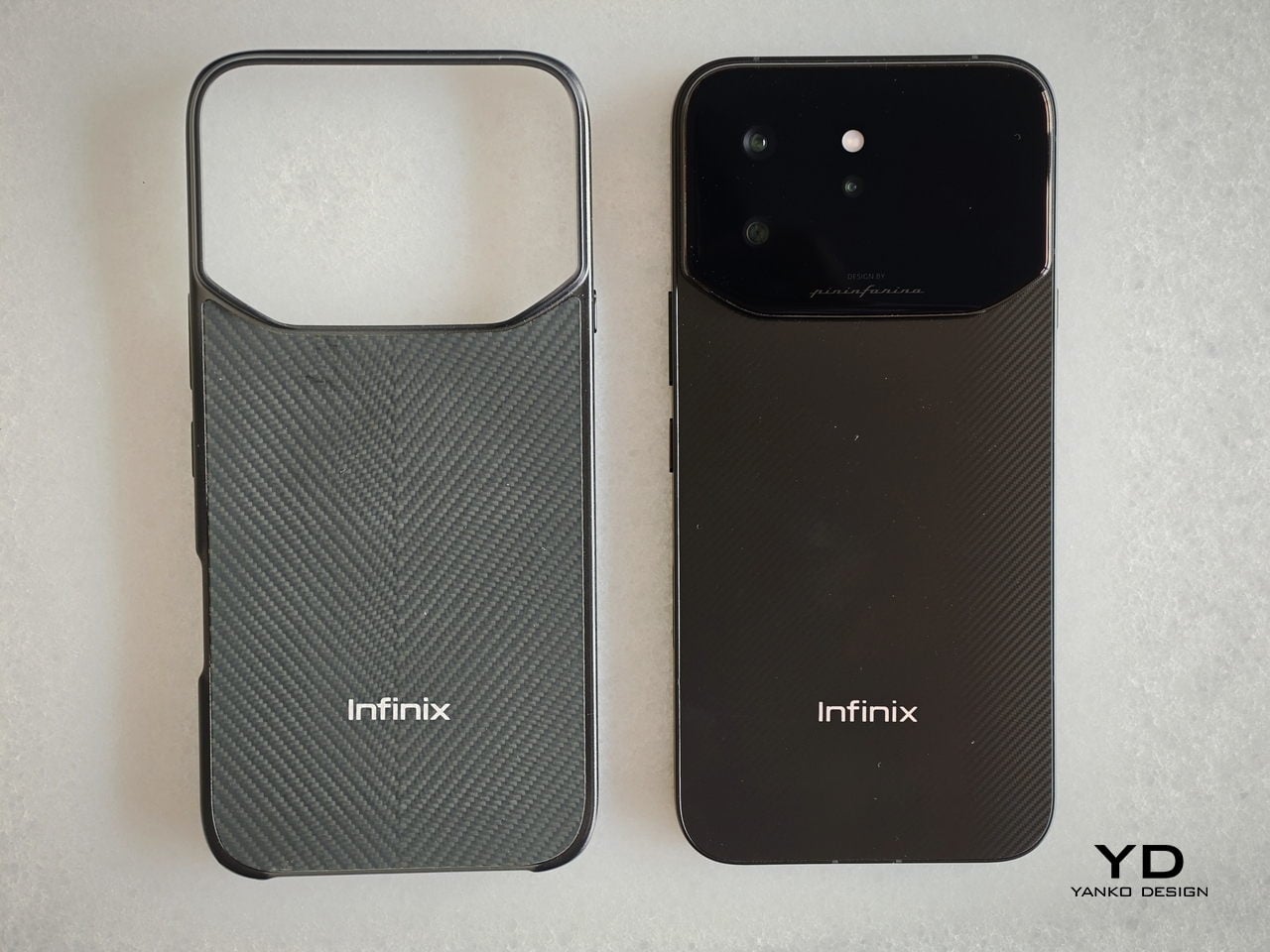
Inside, the MediaTek Dimensity 8400 Ultimate runs an all-big-core architecture where all eight Arm Cortex-A725 cores operate at full performance. Infinix’s own optimization engine manages CPU allocation and background memory compression on top, which is the kind of system-level tuning typically reserved for higher-tier chips. A 3D IceCore cooling system with a 5,142-square-millimeter vapor chamber handles heat across intensive sessions.
The 7,000mAh silicon-carbon battery has twice the silicon content of the previous generation, allowing higher energy density without a thicker body. It charges fully in 48 minutes via 100W wired charging, and Infinix included a self-healing function that runs low-current cycles to slow long-term anode degradation, recovering roughly 1% of battery health every 200 charge cycles. There is also 50W wireless charging for the days when a cable feels like too much effort.
Perhaps the most distinctive addition is the two-way satellite communication via Thuraya’s GEO satellite network, covering around 120 countries across Asia, Europe, and Africa. This goes beyond the one-way SOS messaging seen on other phones: the NOTE 60 Ultra supports actual voice calls at up to 4kbps and two-way SMS, activated through a Thuraya SIM card without any additional registration. For frequent travelers in areas with patchy terrestrial coverage, that is a genuinely useful difference.
The post Infinix and Pininfarina Phone: Flush Camera, Hidden Display first appeared on Yanko Design.
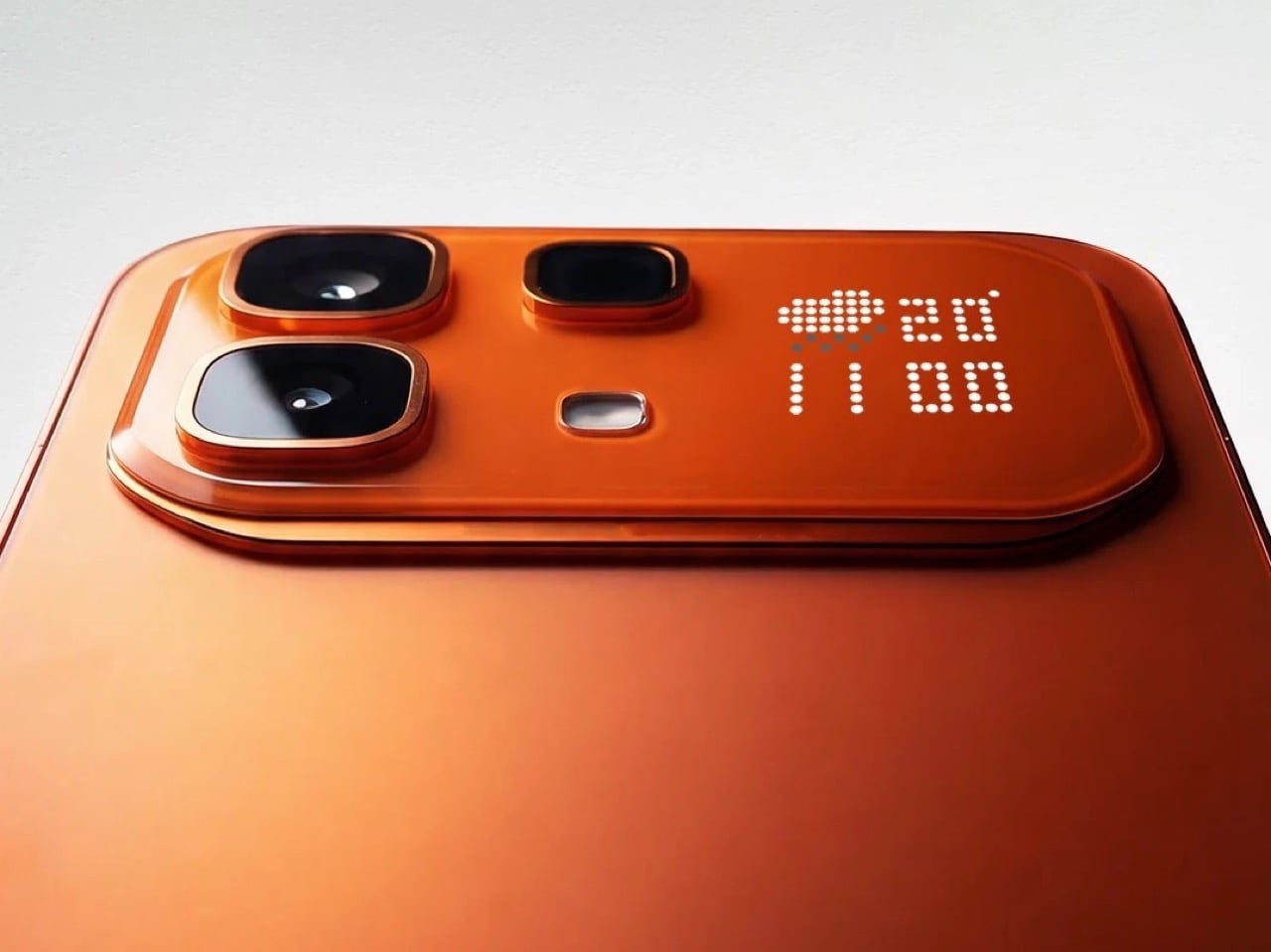
Infinix looked at the iPhone 17 Pro, looked at the Nothing Phone (3), and decided both phones had one good idea worth combining. The Note 60 Pro’s camera plateau is lifted directly from Apple’s design playbook: that horizontal pill shape spanning the phone’s width, housing three vertical lenses on the left side, available in a Solar Orange finish that’s Apple down to the shade. The right side of that plateau, though, gets filled with a dot-matrix display borrowed from Nothing’s Glyph experiments, showing weather, time, notifications, and music controls in small illuminated dots.
This collision of reference points could have produced incoherent design, but Infinix committed hard enough to make it work. The plateau provides a unified canvas rather than trying to bolt disparate elements together, and the matrix display gets proper size instead of being minimized into uselessness. You can actually read the information displayed without straining, which already puts it ahead of the Phone (3)’s too-small implementation. The question isn’t whether Infinix executed the feature better, but whether the feature itself is anything more than a solution looking for a problem.
Designer: Infinix
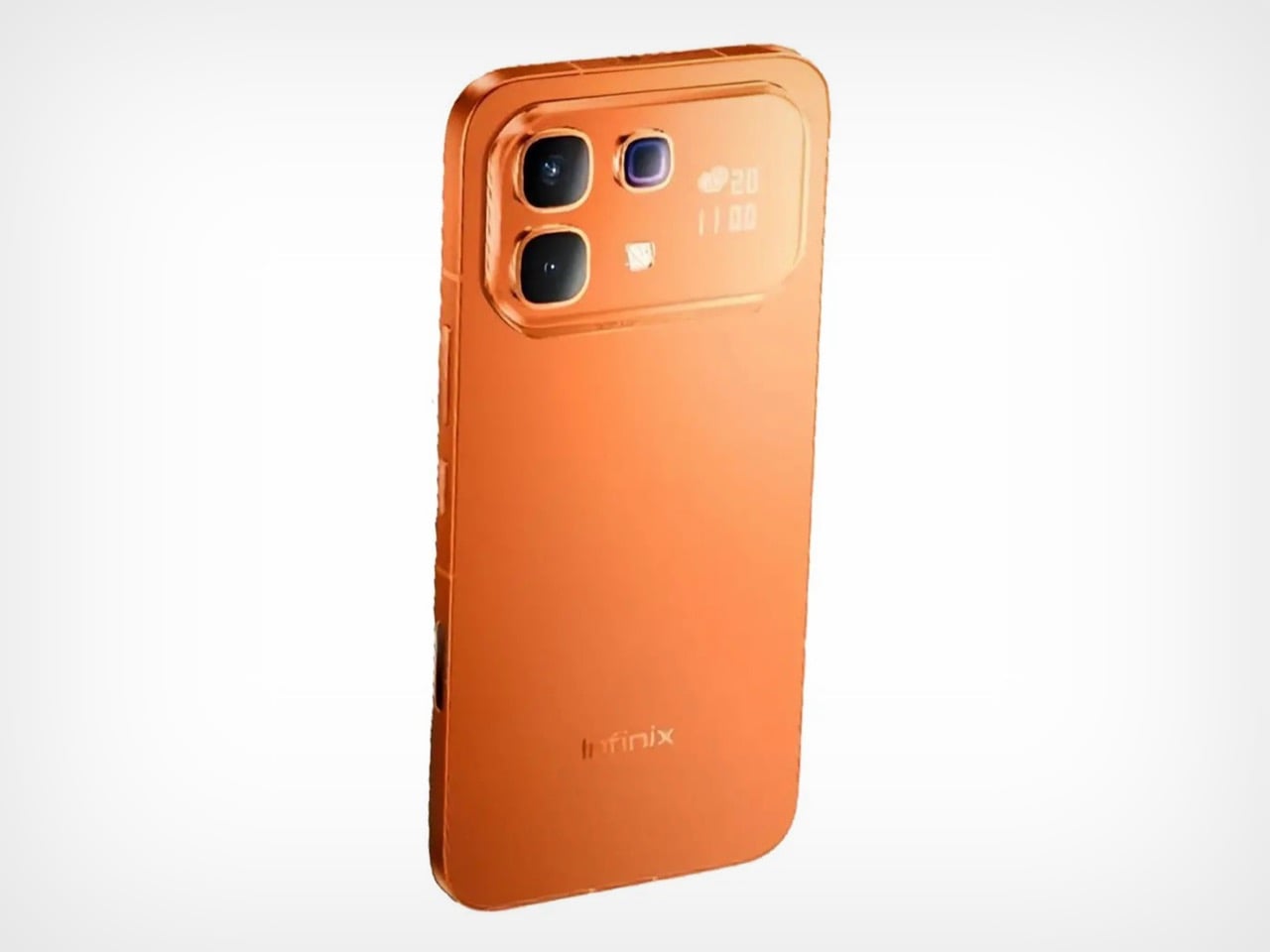
Let’s be direct: this is a derivative design. It’s a collage of other companies’ proven successes, banking on the idea that combining two popular aesthetics will create a third. While the integration is clean, it reveals a lack of a core design identity from Infinix itself. This is the strategy of a market follower, not a leader. The approach is to create something that feels familiar enough to be desirable but different enough to be noticeable. It’s a tactic for grabbing attention in a crowded mid-range space, but it does little to build a unique, recognizable brand language for the long term.
Of course, the spec sheet is designed to impress, and on paper, it does. Switching to a Qualcomm Snapdragon 7s Gen 4 is a solid move for performance credibility. That chip drives a large 6.78-inch display with a 1.5K resolution and a 144Hz refresh rate, numbers that are undeniably competitive. A 6,500mAh battery with 90W charging is equally impressive. The risk with spec-heavy mid-rangers is that the software experience often fails to optimize the hardware. The real test will be in the day-to-day performance, software support, and whether the user interface is clean or laden with bloatware.
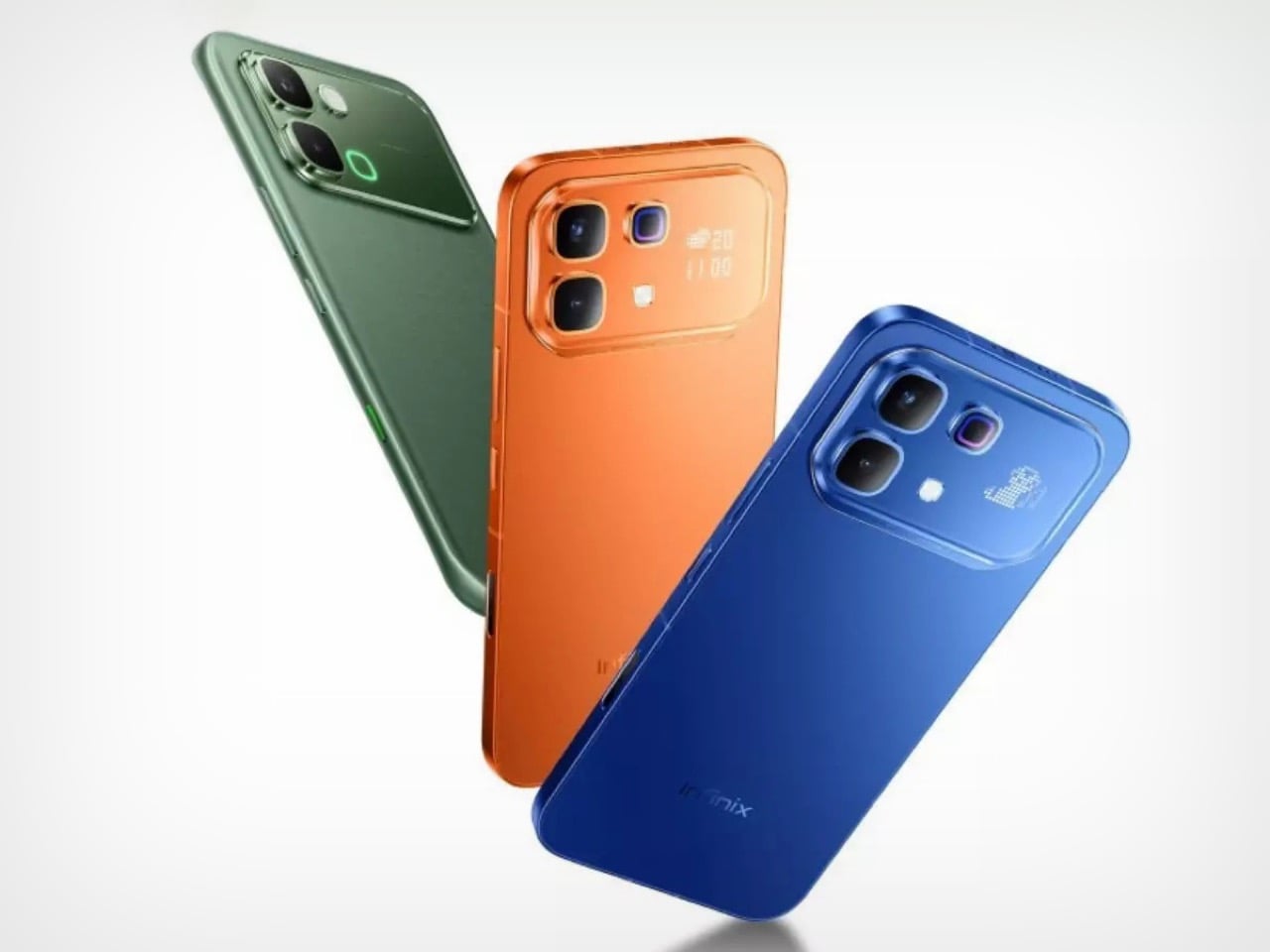
As of now, Infinix has not released official pricing or a specific launch date, which keeps the final verdict in limbo. The company’s typical strategy involves aggressive pricing in markets across Africa, Southeast Asia, and India, so we can expect it to land in a competitive sub-$400 bracket to undercut established players. Its success will ultimately hinge on that price tag (as well as how functional that ‘glyph matrix’ is). If it’s priced too close to the devices it’s mimicking, the derivative design becomes a liability. If it’s cheap enough, this combination of high-end specs and borrowed aesthetics could be a disruptive formula in its target regions.
The post Infinix Note 60 Pro looks like an iPhone 17 Pro with Nothing’s Glyph Matrix on the back first appeared on Yanko Design.
A design-led smartphone where materials, texture, and restraint create a genuinely premium visual identity.

The Infinix NOTE Edge doesn’t announce itself through volume. It doesn’t rely on aggressive angles or oversaturated finishes to command attention. Instead, it arrives with a quieter confidence, the kind that reveals itself slowly as light shifts across its surface and the hand adjusts to its form.
I’ve spent time with devices that prioritize specification lists over tactile experience, and the NOTE Edge represents a deliberate departure from that approach. Infinix has made choices here that suggest an understanding of what makes an object feel considered rather than merely assembled. The 7.2mm profile isn’t thin for the sake of a number on a spec sheet. It’s thin because that dimension allows the curved display to flow into the frame without creating awkward transitions or compromising grip. The fact that a 6,500mAh battery fits inside without adding bulk says something about the internal engineering priorities.
What interests me most about this device isn’t any single feature. It’s how Infinix has leaned into a specific material language, treating the phone less like a piece of consumer electronics and more like a fashion object, with finishes that reference gemstones, textiles, and luxury accessories rather than the gradient glass that dominates this category. The NOTE Edge wants to be noticed, but it doesn’t want to shout. That tension between presence and subtlety defines the entire experience.
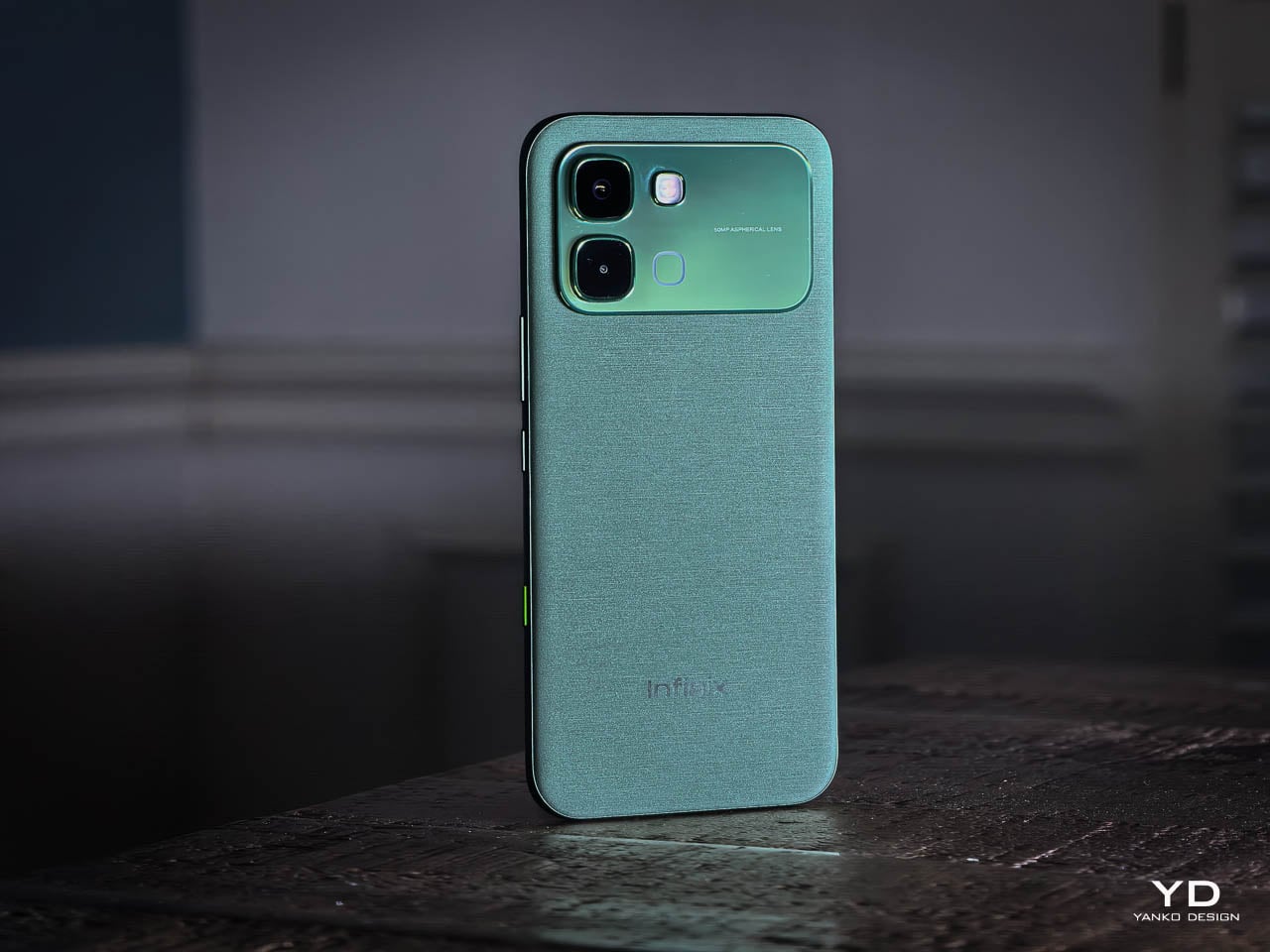
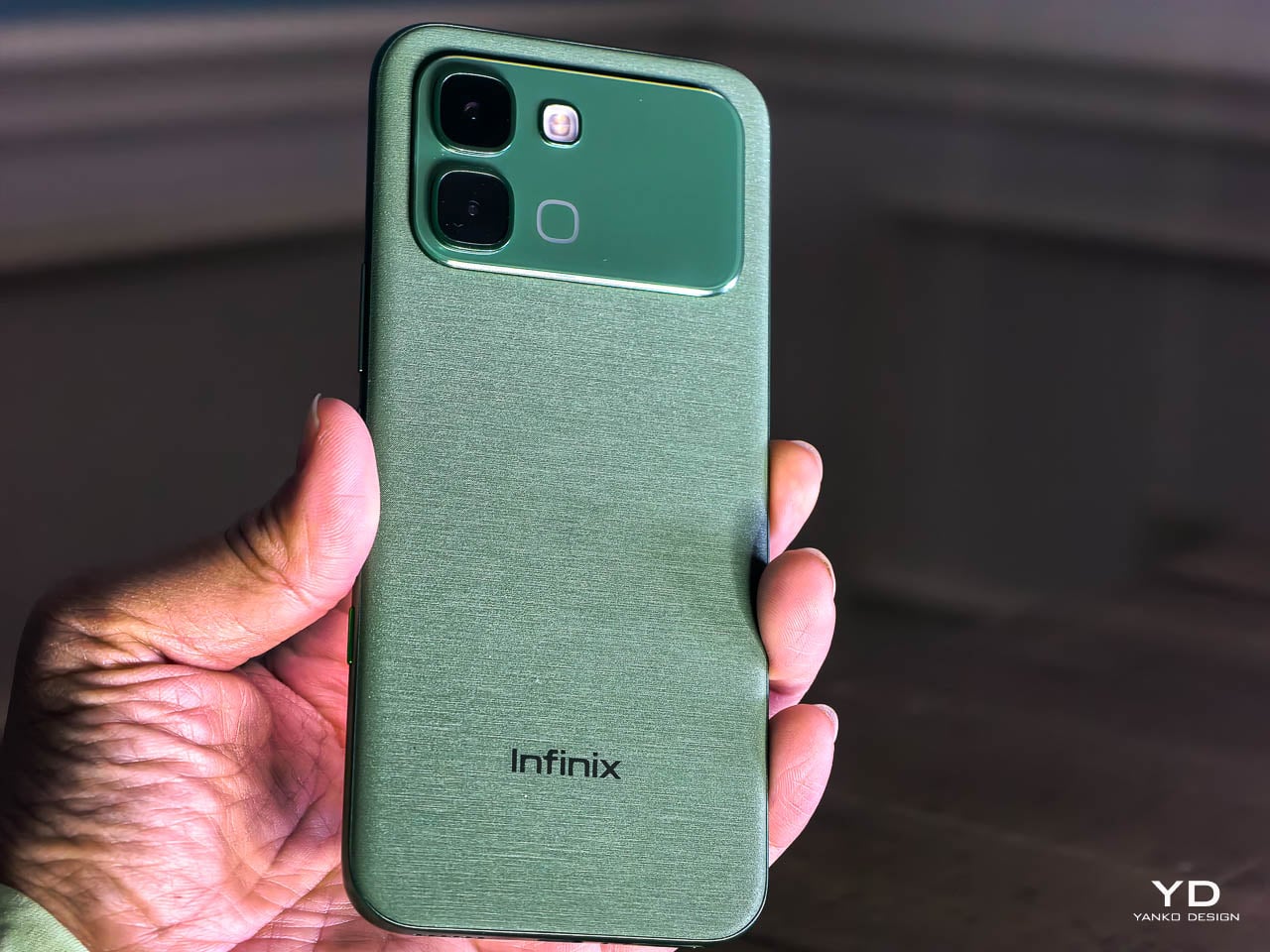
The Silk Green finish on our review unit operates differently than most smartphone surfaces. It’s a leather-like treatment with a texture evocative of luxury handbags, absorbing light rather than bouncing it back indiscriminately. Indoors, the color reads as deep and muted, almost forest-like in its saturation. Move outside, and the green opens up, revealing warmer undertones that shift depending on the angle of observation. This isn’t a static color. It’s a material that responds to its environment, and that responsiveness gives the phone a character that glass-backed devices simply can’t replicate.
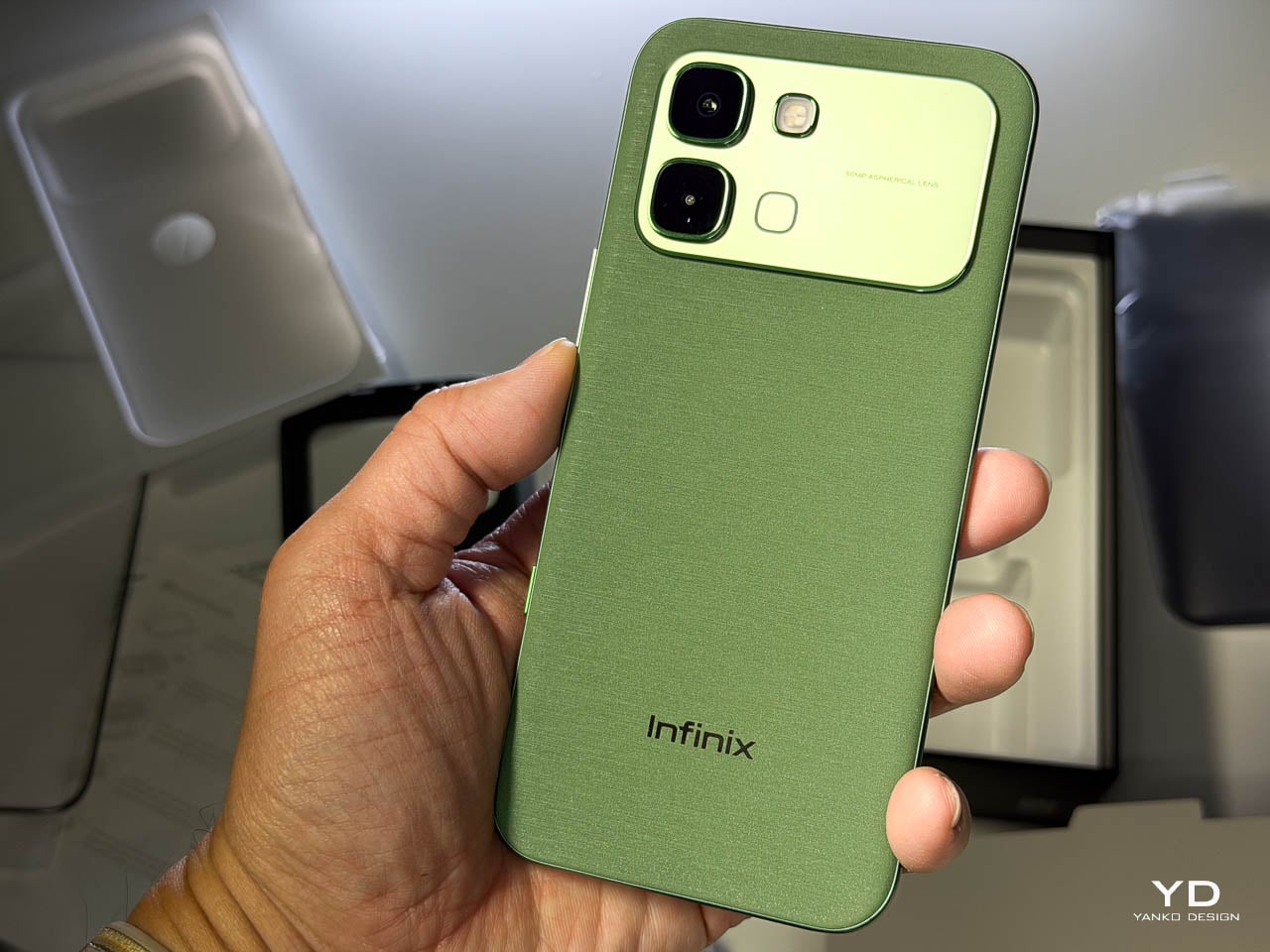
The texture matters as much as the color. There’s no cold shock when you pick it up from a table. Fingerprints don’t accumulate the way they do on glossy surfaces. After extended use, the back panel still looks intentional rather than smudged.
Infinix offers alternative finishes that pursue a different aesthetic entirely. The Lunar Titanium, Stellar Blue, and Shadow Black variants use a cat-eye stone inspired treatment that creates visible movement as the phone tilts. Light doesn’t just reflect from these surfaces. It travels across them, producing shifting patterns that never quite settle into a fixed appearance. The finish has enough grip to feel secure without becoming tacky, and it maintains that feel whether your hands are dry or slightly damp. The effect is dramatic without crossing into garish territory, and it demonstrates that Infinix isn’t limiting itself to a single design vocabulary.
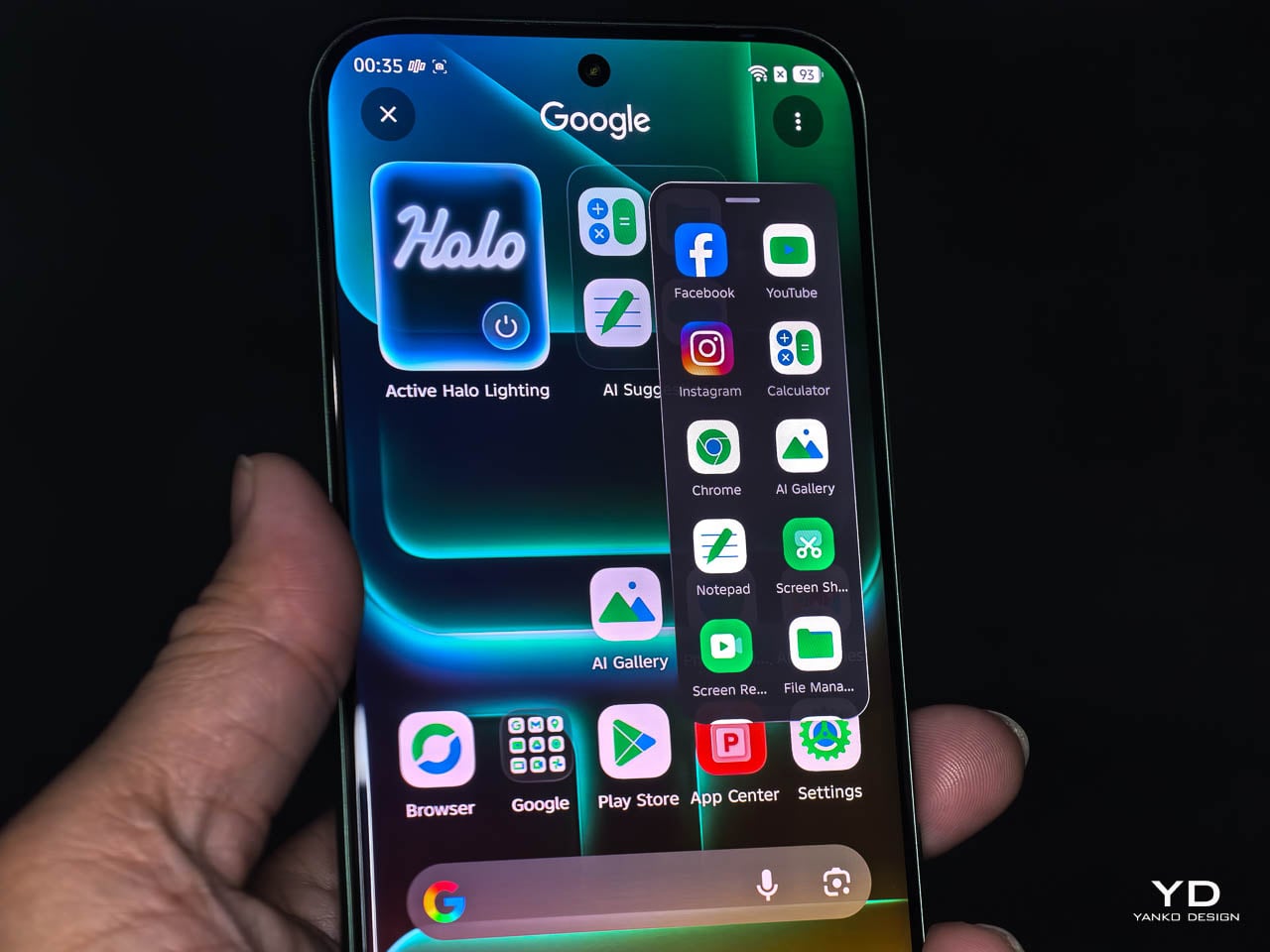
The 3D curved 1.5K AMOLED display integrates with the frame through a transition that eliminates the hard edge found on flat-screen devices. The curve is calibrated to reduce perceived width while maintaining usability across the entire display surface. Ultra-narrow bezels, with the bottom edge measuring just 1.87mm at its narrowest point, push content closer to the physical boundary of the device. The 6.78-inch panel feels immersive without forcing the body to expand beyond comfortable one-handed reach. A 120Hz refresh rate keeps motion smooth, 10-bit color depth renders gradients without visible banding, and 4500 nits of peak brightness means outdoor visibility doesn’t require cupped hands or squinting. Gamers benefit from a 2800Hz instant touch sampling rate that registers inputs faster than most users can perceive.
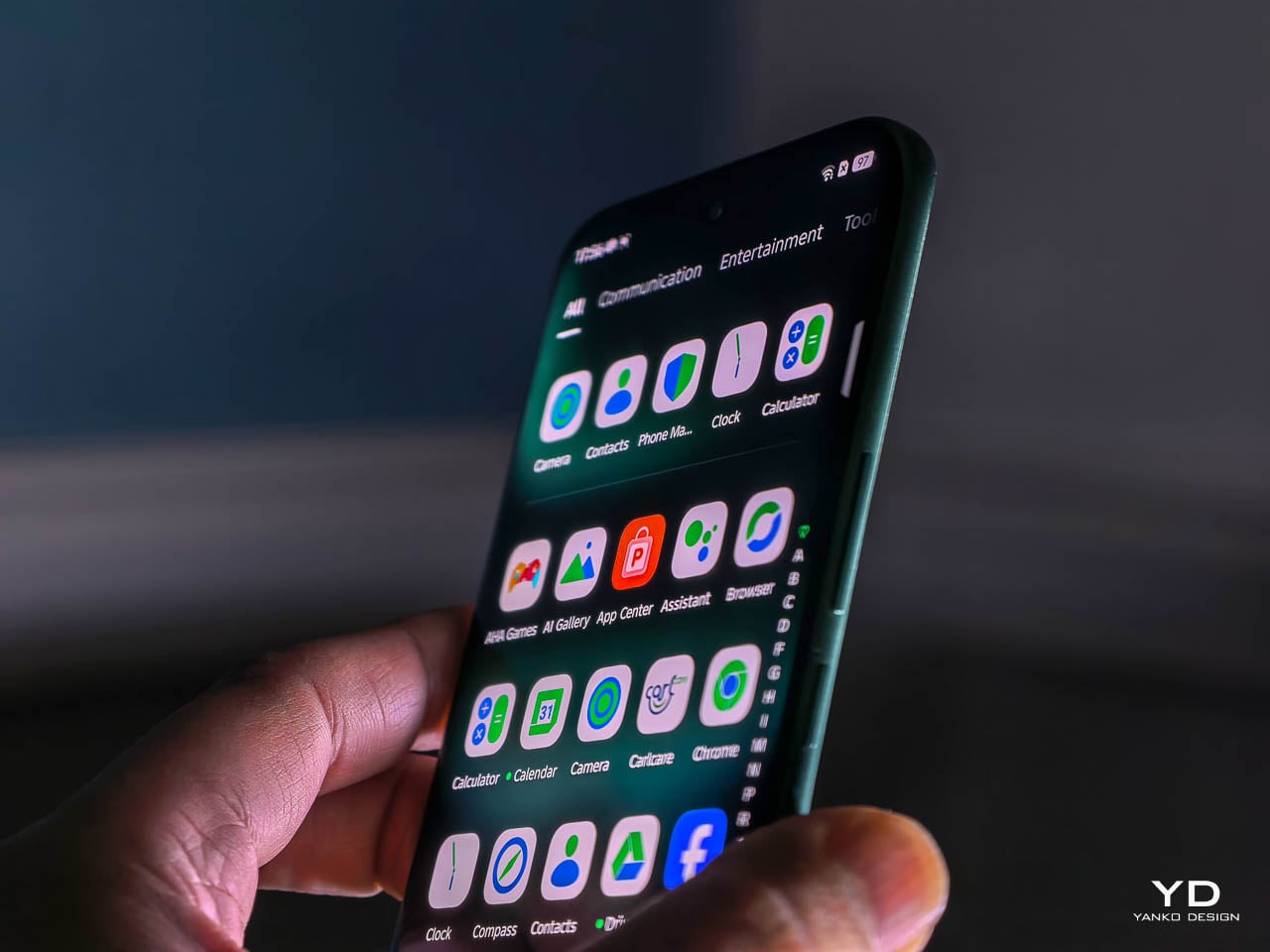
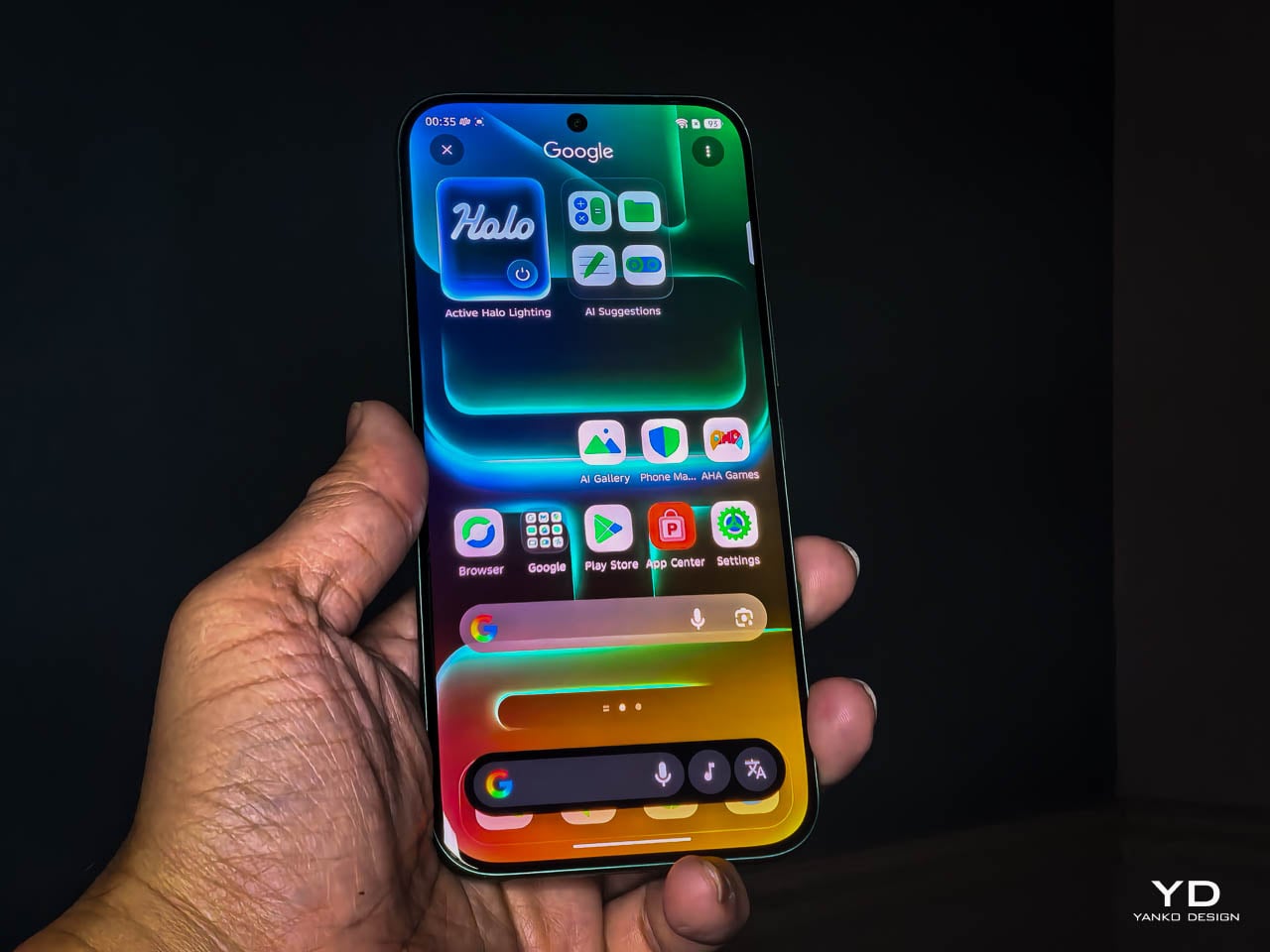
The interaction layer adds functional touches without cluttering the physical design. A dedicated One-Tap button on the frame provides customizable shortcuts to features like the flashlight, camera, or FOLAX AI assistant. The Active Halo Lighting around the rear camera module glows softly in response to notifications, calls, and charging status, with adjustable colors and stepless dimming. Neither element demands attention, but both reward users who engage with them. An integrated IR blaster lets you control TVs, air conditioners, and other appliances directly from the phone. eSIM support, a first for Infinix devices, adds flexibility for travelers and dual-SIM users who’d rather not swap physical cards. Availability varies by region and model, so check the official Infinix website to confirm eSIM support in your market.
Weight distribution deserves specific attention. A 6,500mAh battery creates density that could easily pull the phone off balance, making it feel top-heavy during vertical use or awkward during extended sessions. The NOTE Edge avoids this entirely, with mass centered in the chassis so scrolling, typing, and camera work all feel stable.
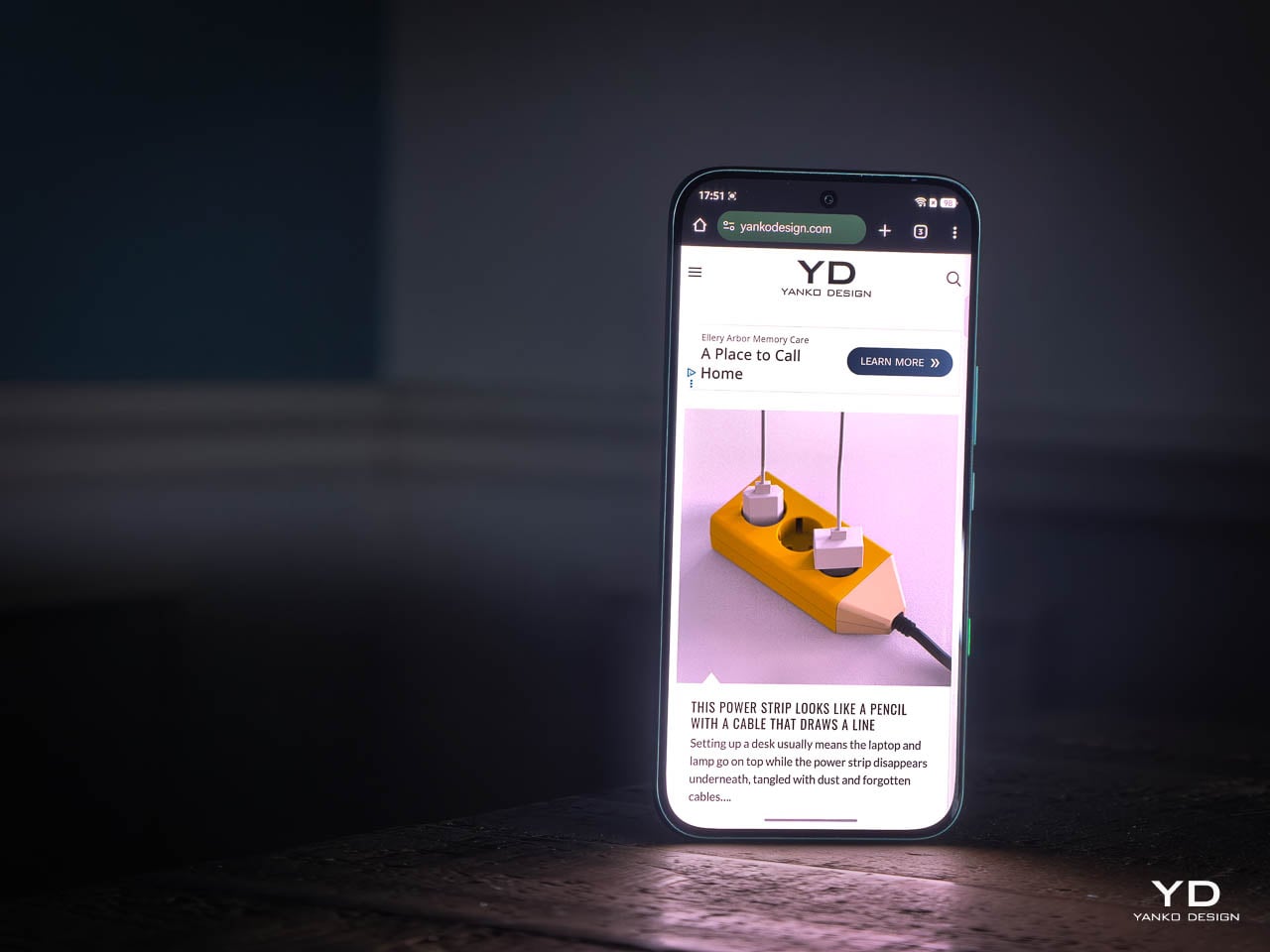
The glass-to-frame transition reinforces that sense of cohesion. There’s no lip or ridge where materials meet. Your grip flows uninterrupted around the device, which matters more than it might seem during the first few minutes of handling. Over hours, that seamlessness translates to reduced fatigue. The phone disappears physically while remaining visually present, which is exactly the balance a design-forward device should achieve. Corning Gorilla Glass 7i protects the curved display surface, and IP65 dust and water resistance means the materials can handle exposure to the elements without requiring constant caution.
XOS 16 plays a bigger role in how the NOTE Edge feels than you might expect. Built on Android 16, the interface doesn’t compete with the hardware for attention. It supports it. Transitions stay smooth, layouts feel intentional, and nothing about the experience pulls focus away from what you’re actually doing on the phone.
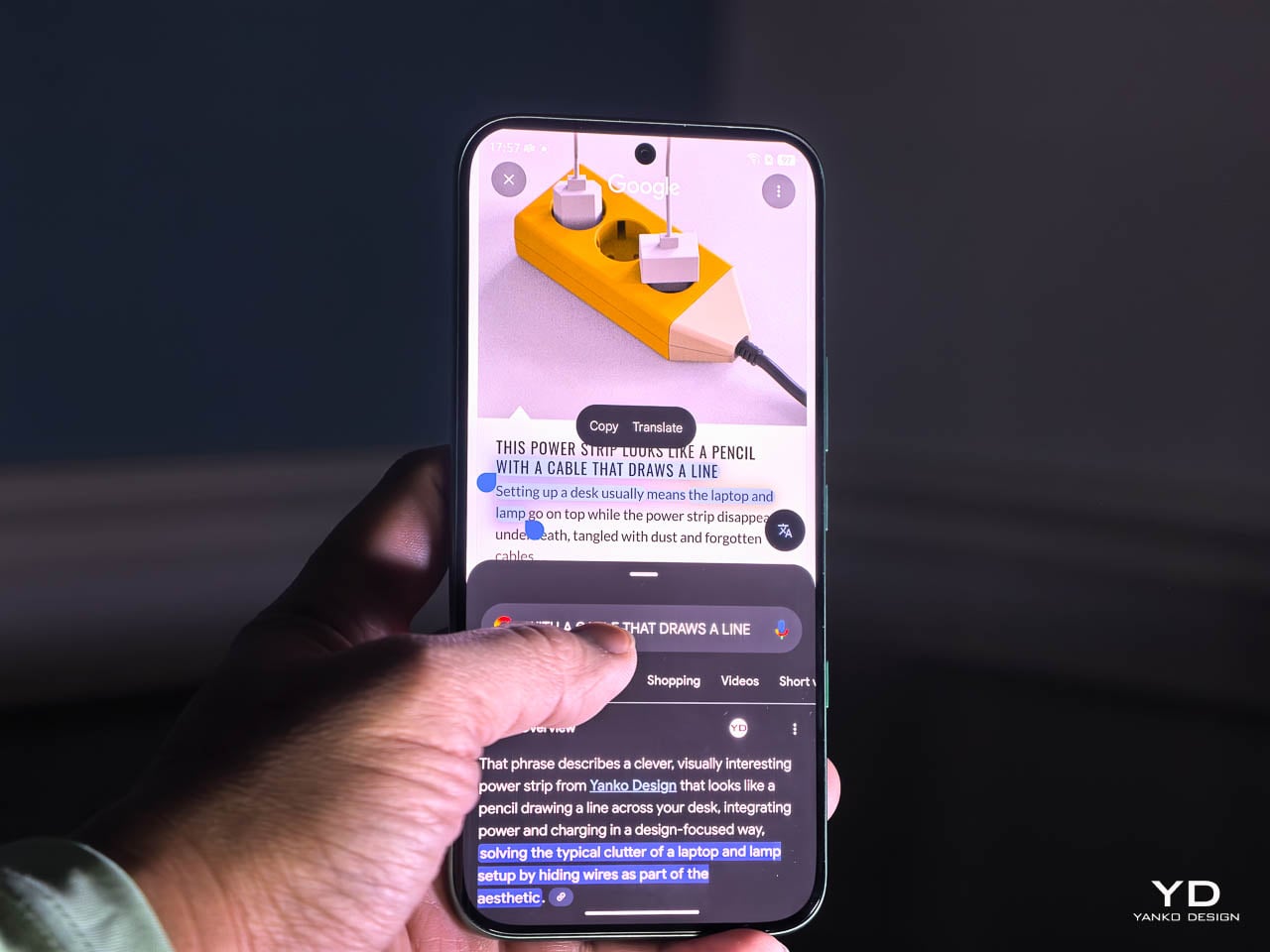
The Glow Space design language shows up in subtle ways rather than obvious visual tricks. Depth effects, layered wallpapers, and motion cues work especially well with the curved display, giving the interface a sense of dimension without becoming distracting. It pairs naturally with the phone’s physical form, which matters when you’re swiping one handed or shifting between apps quickly. After a few hours, the software fades into the background, which is exactly what good interface design should do.
Haptics feel restrained and precise. Taps register cleanly. Gestures feel confident without being exaggerated. There’s enough feedback to reinforce interaction, but not so much that it becomes noise. Combined with the curved edges and balanced weight, the software contributes directly to how comfortable the device feels over long sessions.
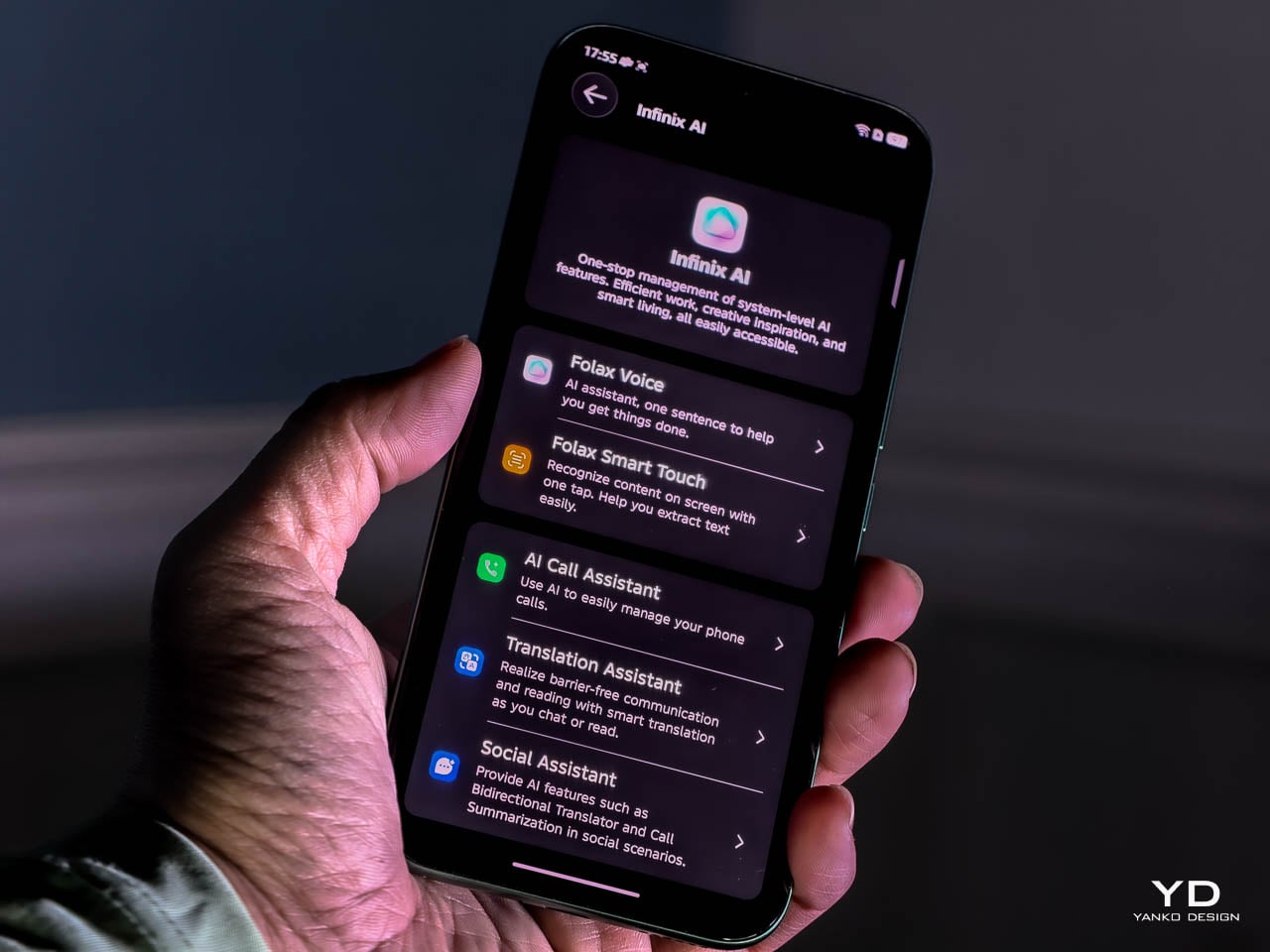
Infinix’s AI layer works best when it stays quiet. System level optimization, background task management, and two-way AI noise reduction operate without demanding attention. The noise cancellation works in both directions, cleaning up background sound on your end while also filtering what you hear from callers. That restraint fits the overall tone of the NOTE Edge.
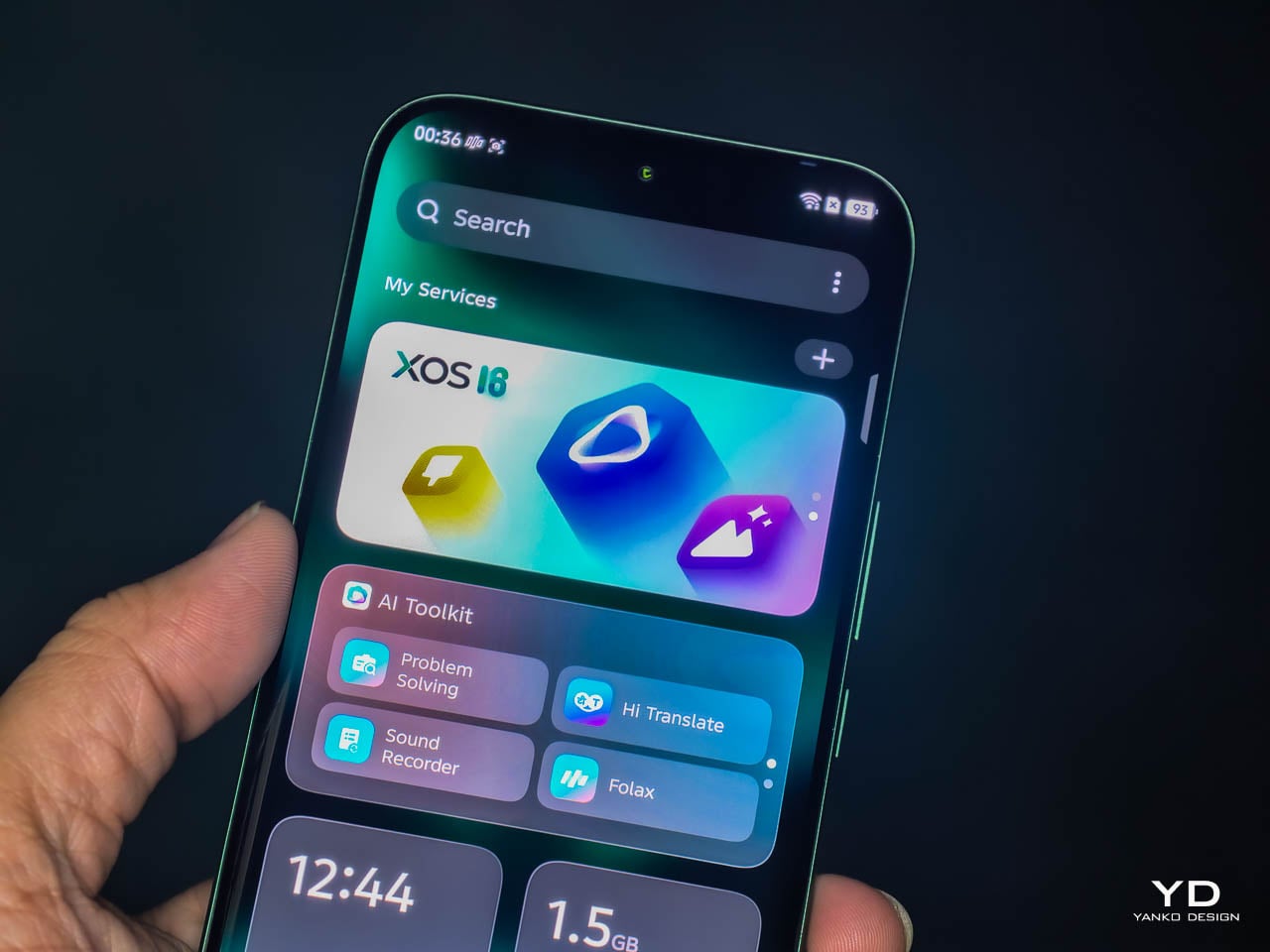
Longevity is where XOS 16 quietly strengthens the value of the device. Infinix commits to three years of OS updates and five years of security patches, which changes how you think about living with the phone long term. This isn’t software designed to feel fresh for a few months and then age out. It’s built to remain stable, secure, and familiar well beyond the initial ownership window.
The MediaTek Dimensity 7100 5G handles daily use without calling attention to itself. Swiping, launching apps, and unlocking all register instantly. It’s the kind of platform that does its job and stays out of the way.
That consistency holds over longer sessions. I kept messaging, maps, and media apps running simultaneously and never felt the system hesitate or dump background processes. The interface stayed responsive after hours of mixed use, which matters more than benchmark numbers when you’re navigating an unfamiliar city or bouncing between work threads and personal messages. Heat management impressed me more than raw speed. Extended navigation, casual gaming, and heavy browsing didn’t produce the kind of warmth that makes you shift your grip or set the phone down. The chassis stayed comfortable against my palm throughout full afternoon sessions. Infinix clearly tuned this device for sustained operation rather than brief bursts of peak performance.

Signal stability reinforces that dependability. Infinix’s UPS 3.0 Super Signal Technology focuses on low-frequency cellular bands, the 615 to 960 MHz range that travels farther and penetrates obstacles better than higher frequencies. These are the signals that actually reach you in elevators, underground parking garages, and concrete-heavy buildings when everything else drops off.
The engineering behind it involves physically larger antenna components. Infinix increased the radiation arm area of the main low-frequency antenna by 50 percent and the auxiliary antenna’s radiation wall by 30 percent. That translates to a 1.5 to 2 dB gain in low-frequency reception, which sounds modest on paper but shows up clearly in practice. Calls held steady in places where I normally expect a brief dropout. Data kept flowing in basement-level parking where other phones tend to stall while searching for signal.
It’s the kind of reliability you only notice when it’s missing.
The camera follows that same practical mindset. It’s built to produce usable results without demanding expertise.
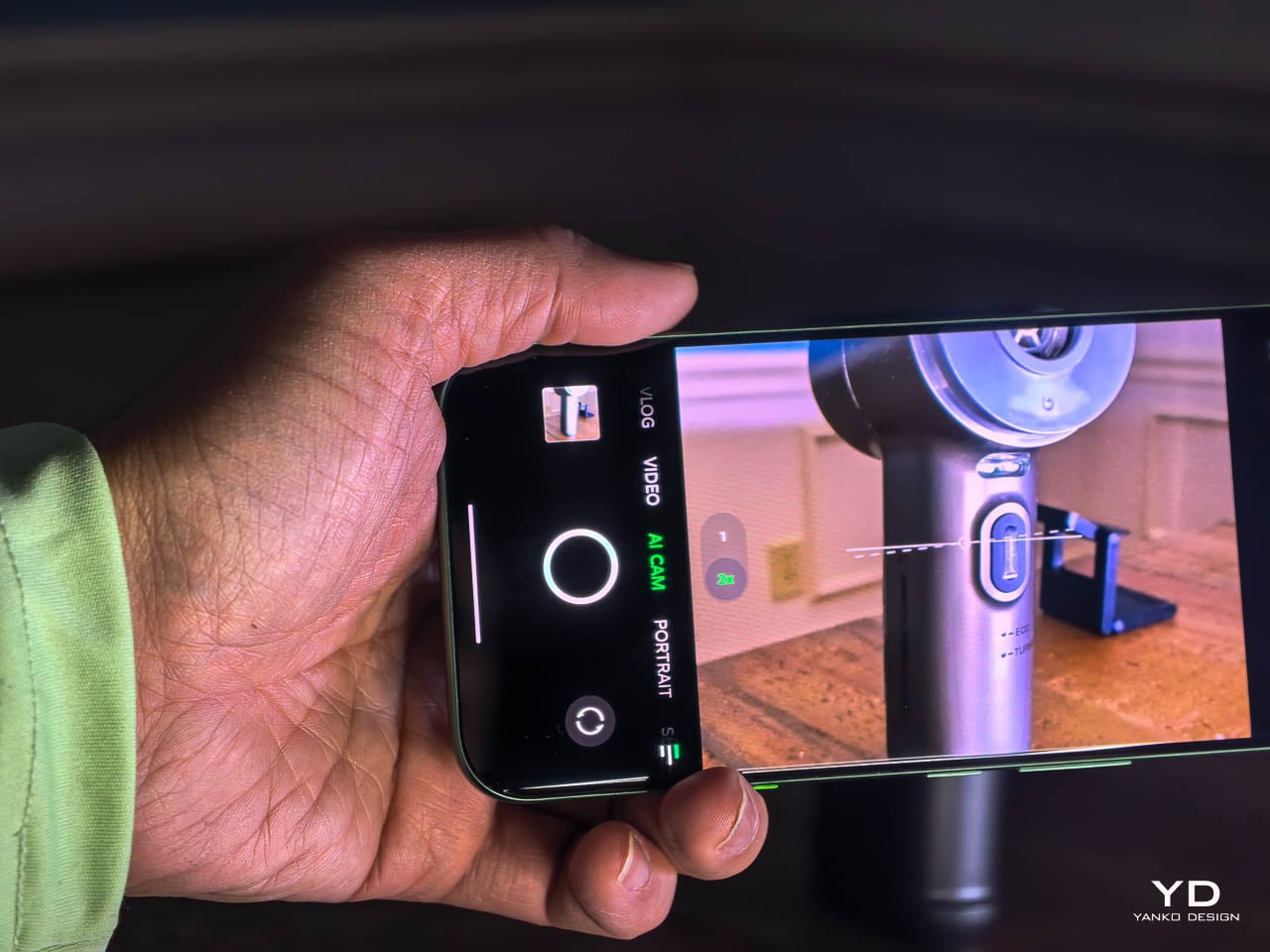
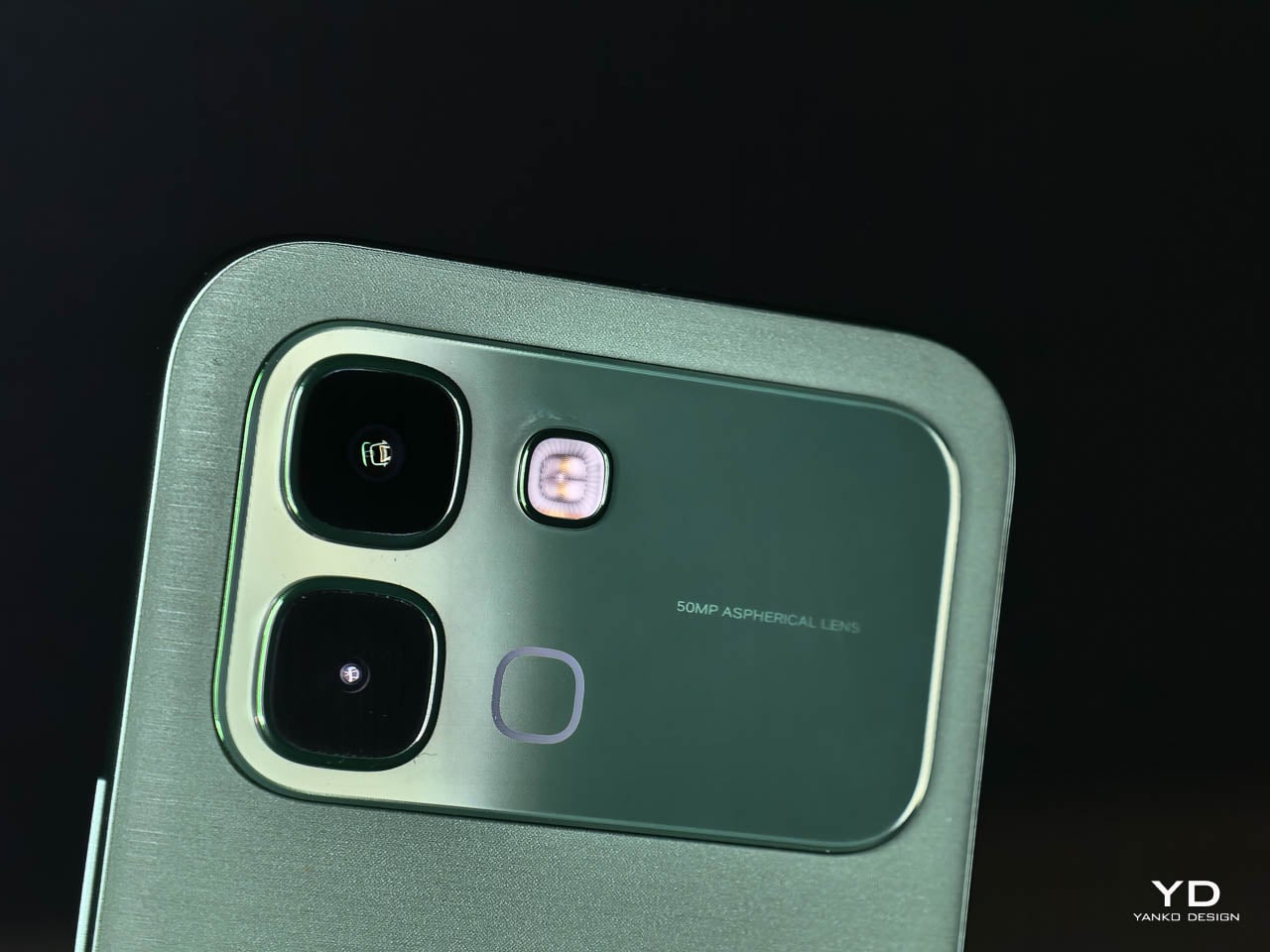
This is a dual camera setup. The 50MP main sensor handles all meaningful imaging work, while the secondary lens exists for depth separation in portrait shots.
The 50MP main sensor handles everyday situations with consistent color accuracy from shot to shot. Outdoor images retain detail without oversaturating, and indoor shots keep skin tones natural under mixed lighting. Low light performance benefits from Infinix’s AI RAW imaging algorithm, which lifts shadow detail without flattening contrast or blowing highlights. Texture stays intact where other processing tends to smooth everything into mush. You don’t need to fight the camera or babysit settings. Point, shoot, and move on works more often than not.


Live Photo Mode captures a three-second window around each shutter press, giving you motion instead of a single frozen frame. It’s useful for candid moments, pets, or scenes where timing matters. Exporting as GIFs, setting captures as live wallpapers, or sharing to iPhones via NFC makes the feature feel integrated rather than bolted on. The implementation suggests Infinix thought about how people actually use these clips rather than just checking a feature box.

Video recording stays predictable and clean. Footage looks solid in good light, motion doesn’t introduce distracting jitter, and audio capture handles casual recording without issues. Nothing here feels experimental or unfinished.
Sound is handled by a dual stereo speaker system co-engineered with JBL, and it’s immediately noticeable once you stop defaulting to headphones. Volume comes up without harshness, and the tonal balance stays intact even when you push it higher than you normally would for casual listening. There’s actual separation here, with dialogue staying forward in videos and podcasts while music doesn’t collapse into a single flat plane.
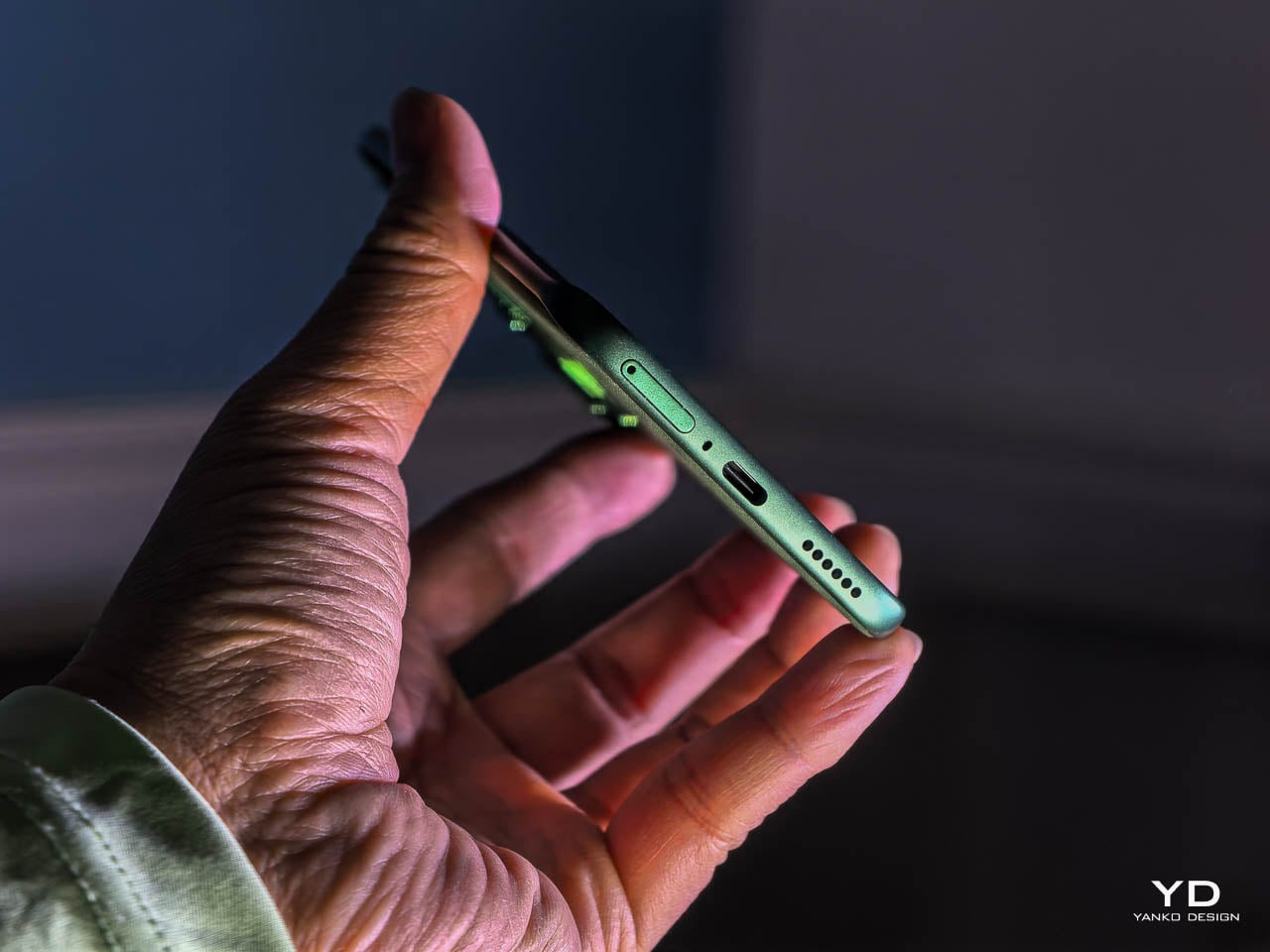
Infinix leans on a five-magnet acoustic system and a high-elasticity silicone rubber diaphragm, which sounds technical until you use it. Bass has presence without rattling, mids stay clean, and highs don’t spike in a way that fatigues your ears over longer sessions. The diaphragm flexibility contributes to that balanced output, absorbing vibrations that would otherwise muddy the low end. The 360-degree symmetrical sound field matters more than I expected, especially when you’re watching something without holding the phone perfectly straight. Audio stays consistent whether the phone is resting on a table, propped up, or held casually in one hand. That positional flexibility makes the speakers feel genuinely usable rather than an afterthought.
Battery capacity tells only part of the endurance story. The 6,500mAh cell in our review unit (6,150mAh in certain regional configurations) provides multi-day operational potential under moderate use patterns. This isn’t about chasing screen-on time records. It’s about eliminating the anxiety that comes with uncertainty around whether a device will last through an unpredictable day.
In practice, that translates to roughly 22 hours of continuous video playback or 26 hours of outdoor navigation before you need to reach for a cable. When you do need to refuel, 45W All-Round FastCharge gets you to 50% in about 27 minutes and a full charge in just over an hour. Bypass Charging routes power directly to the system board during gaming or navigation, which keeps the battery out of the thermal loop and reduces heat buildup during extended plugged-in sessions.
Long-term battery health becomes relevant when capacity numbers reach this scale. Infinix claims the battery retains more than 80% capacity after 2,000 full charge cycles, equivalent to over six years of typical daily use. The company also cites self-healing technology that repairs micro-damage through dynamic recrystallization during low-current recovery. These aren’t marketing abstractions. They’re engineering claims with testable outcomes, and they suggest the multi-day endurance you experience initially should hold over the ownership cycle rather than eroding within the first year. The durability framing extends beyond just the battery. Material choices across the device suggest consideration for how surfaces age, how components withstand repeated stress, and how the phone maintains its character over months rather than weeks.
XOS 16, built on Android 16, runs the software side. Infinix commits to three years of OS updates and five years of security patches, which represents the longest support window the NOTE series has offered. That commitment matters for a device positioned around longevity.
The NOTE Edge occupies a market position that doesn’t get enough attention. It’s a design-forward midrange device, which means it competes on material quality and user experience rather than processor benchmarks or camera sensor counts. For users who prioritize how a phone looks and feels over how it performs in synthetic tests, the value proposition here is substantial.
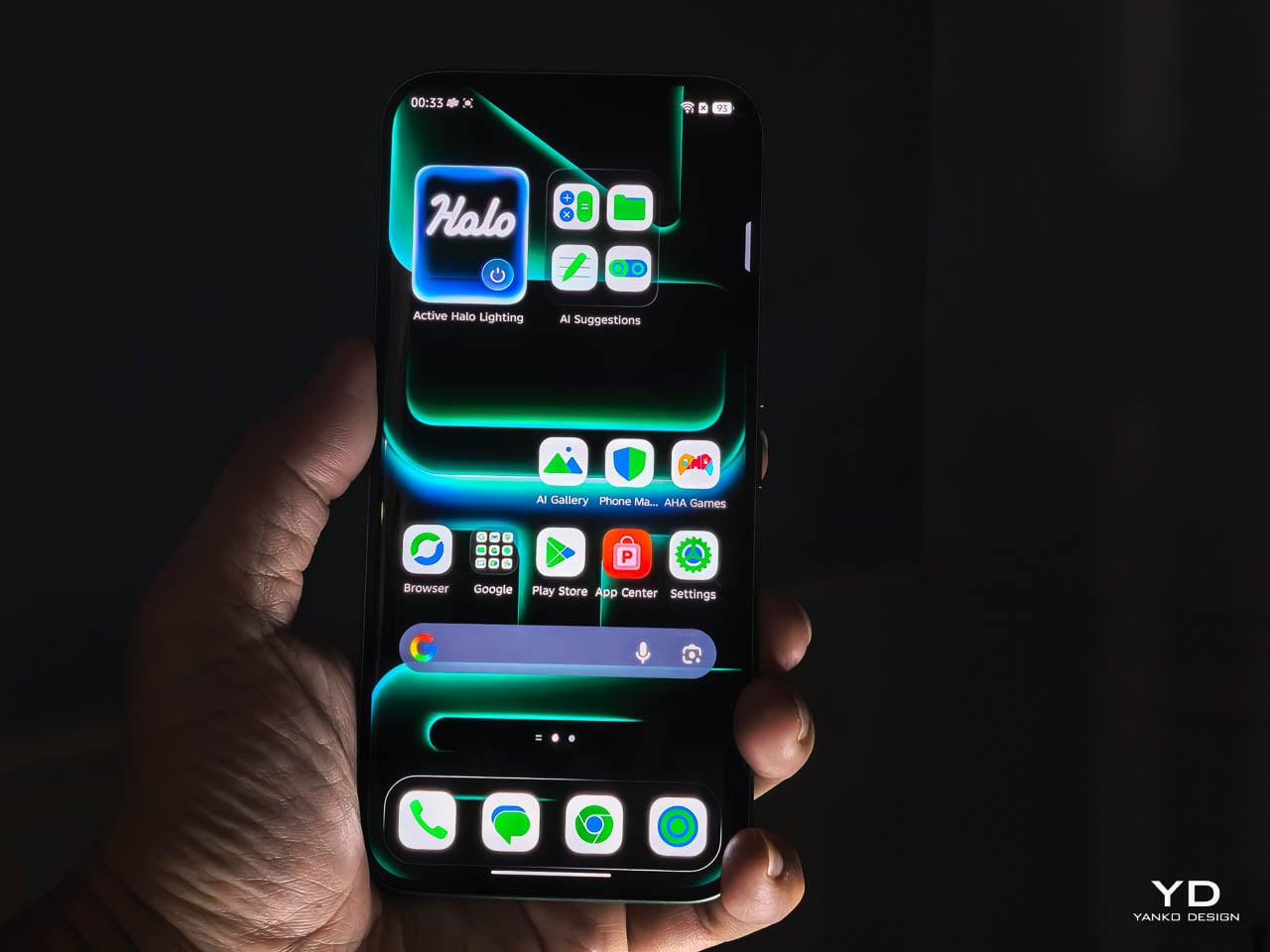
What you receive for the price includes premium-feeling materials, balanced ergonomics, multi-day battery endurance, and a display that rivals more expensive devices in clarity and immersion. The Dimensity 7100 5G provides capable daily performance without generating the heat or power consumption of flagships processors. The camera handles real-world scenarios reliably. None of these elements represents a compromise.
The fashion-led color palette means the NOTE Edge appeals to users who want their technology to reflect personal aesthetic preferences. This isn’t a device that disappears into generic smartphone uniformity. It makes a statement.
The Infinix NOTE Edge succeeds because it understands what it’s trying to be. It’s a considered object that prioritizes material quality, ergonomic refinement, and visual identity over the metrics that dominate most smartphone conversations.
The Silk Green finish exemplifies the approach. It’s a material choice that affects how the phone looks, how it feels, how it ages, and how it responds to its environment. Nothing about it exists in isolation. Every decision connects to a broader vision of what a design-forward smartphone should offer. That coherence is rare, and it’s what separates the NOTE Edge from devices that feel like committees designed them.
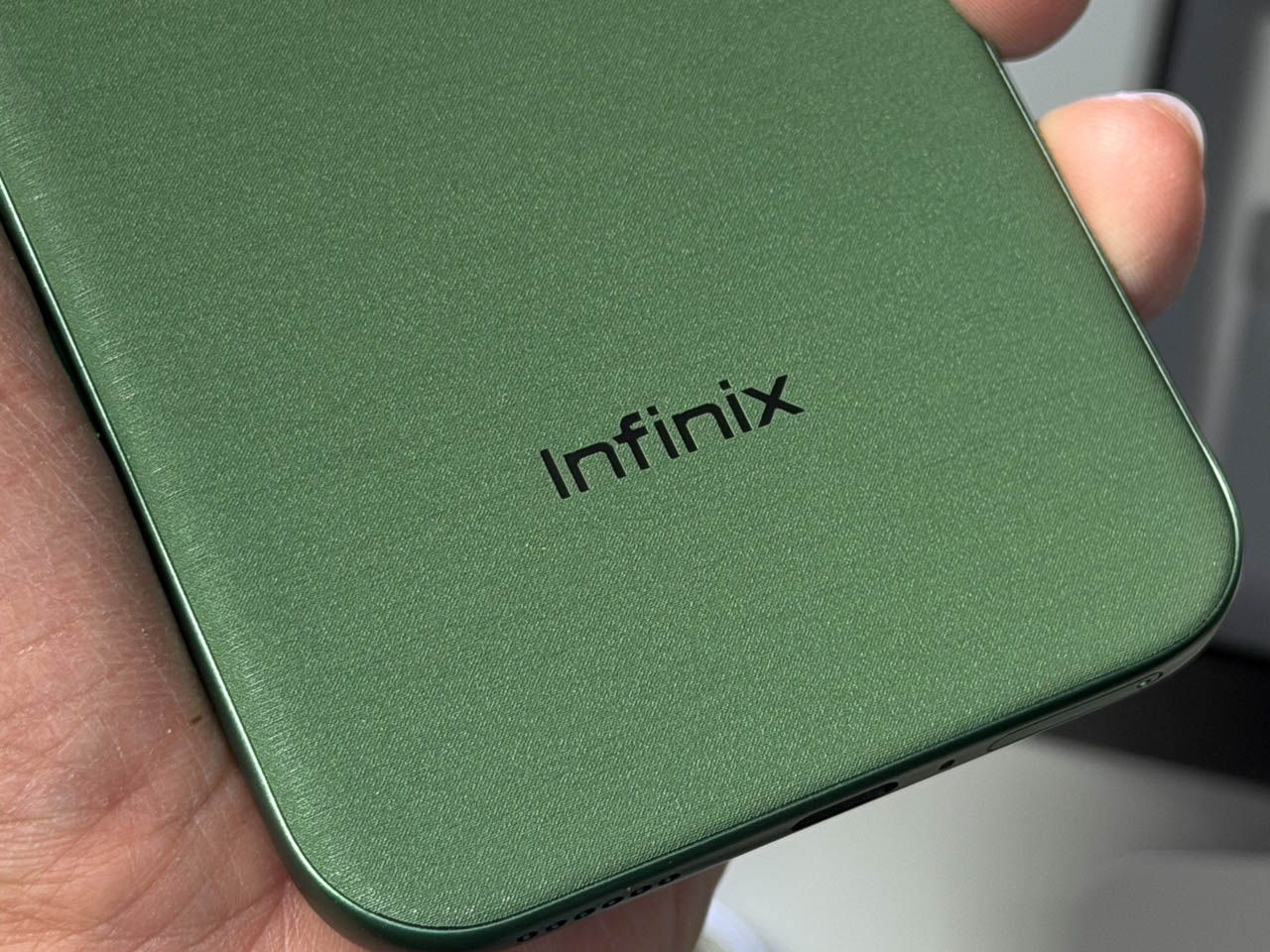
For users who’ve grown tired of phones that feel like interchangeable glass rectangles, the NOTE Edge represents an alternative worth serious consideration. Infinix has demonstrated that visible luxury and practical usability can coexist in the midrange segment. The result is a device that you’ll want to use, want to look at, and want to keep using long after the initial appeal of any new purchase typically fades.
The post Infinix NOTE Edge Review: Visible Luxury first appeared on Yanko Design.