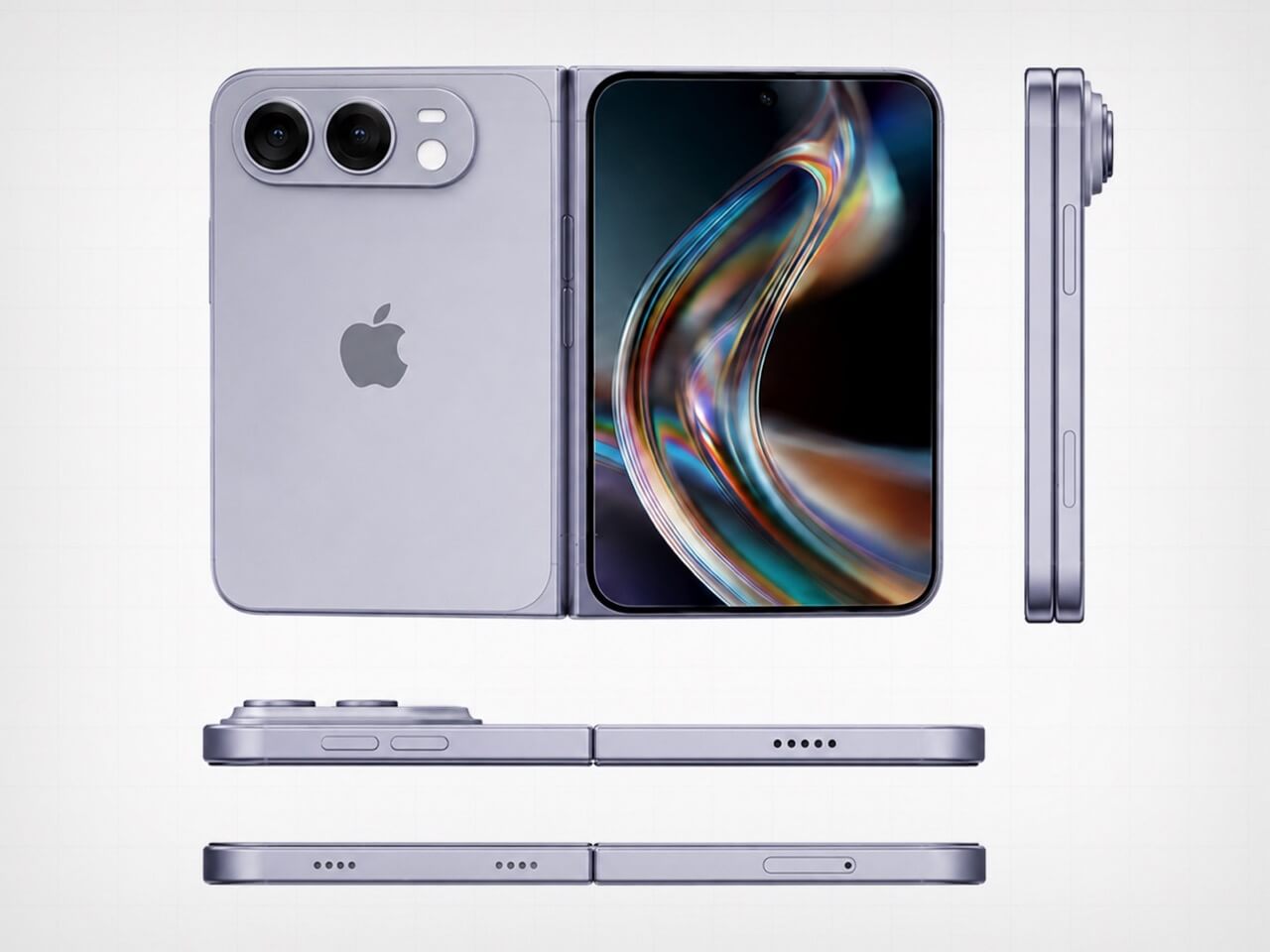
Every foldable phone you have ever held has a crease in the middle of the display, and that crease has been the category’s most embarrassing open secret since 2019. Samsung has refined it, minimized it, and shot their devices in lighting specifically designed to hide it. Google’s Pixel Fold was a little better. The Honor Magic and Xiaomi Mix Fold each took their own runs at the problem. Seven years of collective engineering effort from the Android ecosystem later, the crease is still there, still catchable in certain light, still the thing reviewers mention in paragraph three of every foldable review. Apple has now looked at all of that and said, with characteristic confidence, that the iPhone Ultra has no visible crease.
Leaks from Fixed Focus Digital and Weibo sources describe a liquid-metal hinge from Apple’s Liquidmetal Technologies contract, but no publication has explained the actual engineering mechanism in any detail. The hinge manages bend geometry at the fold axis, paired with a display stack built to lie flat when open, eliminating the optical crease. Apple is announcing this at a September 8 or 9 keynote, with the device going on sale September 18 at a confirmed price above $2,000. That price is Ming-Chi Kuo’s floor, with his ceiling at $2,500. The design decisions behind the crease claim, the Touch ID placement, and the unusual 4:3 aspect ratio of the 7.8-inch inner panel add up to a product making several unusual bets simultaneously.
Designer: Apple
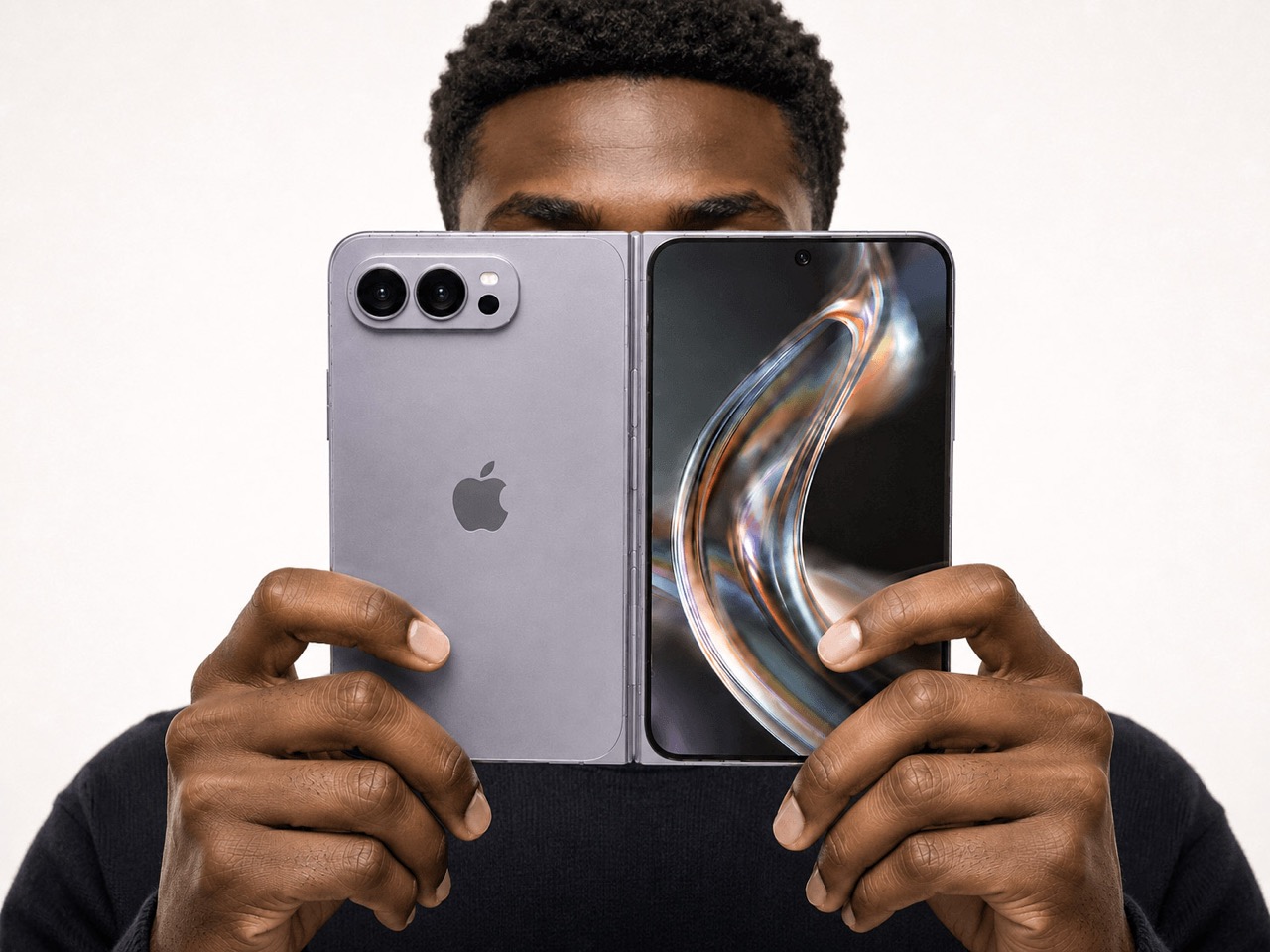
The liquid-metal hinge is the piece nobody has properly dissected yet, which is strange given how central the crease claim is to Apple’s entire design argument. Liquidmetal alloys are amorphous metallic glasses, meaning they lack the crystalline grain structure that causes conventional metals to deform plastically under repeated stress. A teardrop-shaped hinge cavity distributes the bend radius across a longer arc than a flat-fold design would, which is how Samsung has incrementally reduced crease visibility across Galaxy Z Fold generations. Apple’s version reportedly goes further, with the Liquidmetal alloy’s higher elastic recovery meaning the hinge springs back to a genuinely flat resting position. The inner display layer stack is engineered to match that geometry, reducing the optical ridge that ambient light catches and reads visually as a crease.
Touch ID came back on the side button, and it came back on Apple’s most expensive phone ever, inverting everything the fingerprint sensor stood for over the past several years. Since Face ID debuted on the iPhone X in 2017, Touch ID has been associated with the affordable tier: the SE, the iPad Air power button, the devices Apple built for people watching the price. The iPhone Ultra flips that because the physics left no alternative. The Face ID sensor stack requires a structured light projector, an infrared camera, and a flood illuminator, none of which fit inside a chassis measuring 4.8mm when open. The side-button Touch ID solution is actually more elegant for a dual-display device: one biometric input, two screen states, no awkward sensor positioning on either panel.
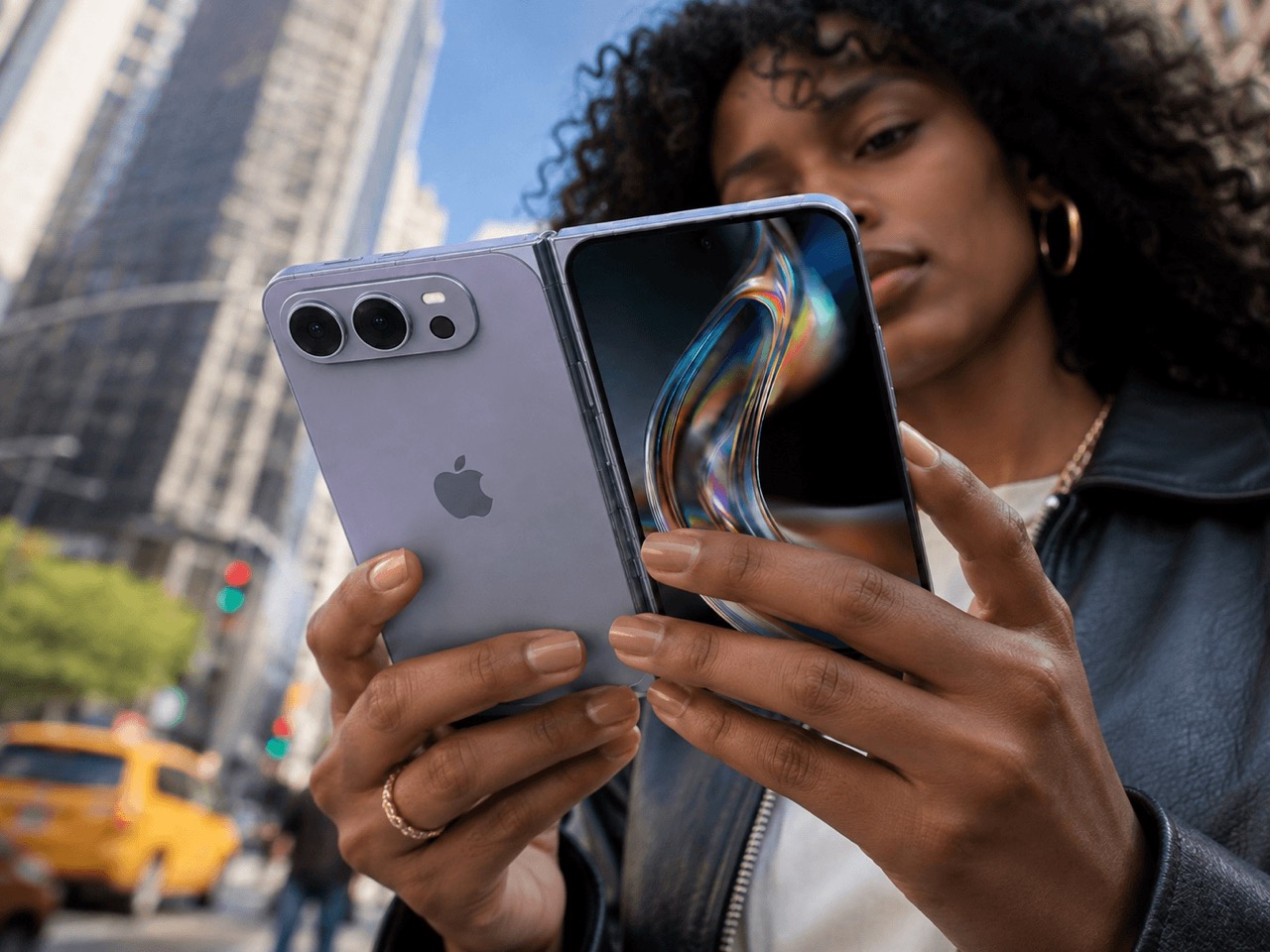
At 7.8 inches with a 4:3 aspect ratio, the inner display reads closer to an iPad mini than your average foldable. The Galaxy Z Fold 8 uses a 7.6-inch 22:9 inner panel, tall and narrow, better suited to scrolling than to content consumption. Apple’s near-square format is a deliberate software bet: iOS 27 developer betas already contain “foldState” and “angleDegrees” APIs, along with WWDC-previewed “app adaptability” tools designed for variable aspect ratios. The A20 Pro chip on a 2nm process, paired with 12GB of RAM, has the headroom to run genuinely iPad-grade app layouts on the open panel. Apple is essentially arguing that a foldable phone gets actually useful when its inner display is wide enough to run two apps side by side without either one feeling like a column.
Two thousand dollars is, give or take, what a MacBook Pro costs, and Apple is asking that for a phone. The design argument for that price sits across the four decisions above: a crease claim no Android foldable has credibly made, a liquid-metal hinge that actually supports it, a Touch ID side button that solves biometrics at 4.8mm, and a 4:3 inner display with the software infrastructure to back up the form factor. Supply at launch will be extremely limited, with Weibo leakers suggesting it could take three to five months for Apple to hit its 10 million unit production target. The September 18 on-sale date will be the easy part. Getting your hands on one before the holidays is the less certain proposition.
The post iPhone Ultra lands September 18 at $2,000 and kills the visible crease first appeared on Yanko Design.