What is RCS and how is it different from SMS and iMessage?

For years, the iPhone’s two-tiered texting system has been a hot topic. iPhone-to-iPhone texts in the Messages app are blue, and enjoy full encryption and more robust media features, like animations. But messages to and from Android devices are merely standard SMS texts, and marked with a green tint. Apple’s segregated messaging platform has been the subject of a Google-funded shaming campaign, and even sparked chatter of regulatory intervention. But with Apple’s recent confirmation that it will begin supporting the newer RCS texting standard in iOS 18, is the iPhone messaging playing field about to be leveled? Or are we just exchanging one acronym for another?

Confused? Don’t worry. We’re about to lay out what could change with Apple’s adoption of the GSMA’s next-generation messaging protocol.

Short Message Service (SMS) is one of the most ubiquitous messaging protocols on the planet. It dates back to the early days of mobile technology. In December 1992, Neil Papworth, at the time an engineer at Vodafone, sent the first SMS text message when he wished his boss “Merry Christmas.” By the start of 2011, approximately 80 percent of all mobile phone users globally — an estimated 3.5 billion people — were sending SMS messages every month.

Today, however, the standard has some notable drawbacks. SMS messages are limited to 160 characters, and texts you send can’t include photos, videos, audio or GIFs. For that, cell phones have long turned to a supporting protocol known as Multimedia Messaging Service (MMS), but it too has its share of technical limitations, including woefully small message size limits. SMS also doesn’t support end-to-end encryption.

But for all the ways SMS feels dated in an era dominated by instant messaging platforms, it has one defining advantage: SMS messages are routed through your carrier’s mobile network, meaning a data plan isn’t necessary to use the technology. That fact has meant SMS has often served as a fallback for more advanced protocols, including Apple's iMessage.

RCS is short for Rich Communication Services, though sometimes it is also marketed as “Advanced Messaging.” Either way, it’s often positioned as a next-generation replacement for SMS and MMS. RCS allows users to take advantage of many features that were previously exclusive to over-the-top messaging platforms like WhatsApp.

For instance, the RCS Universal Profile includes full support for read receipts and typing indicators. It can also facilitate proper group chats, and allow users to send high-resolution images, video and audio clips. As of earlier this year, Google’s implementation of RCS also offers by default end-to-end encryption (E2EE) for both one-on-one and group chats.

Unlike SMS texts, RCS messages are routed over a mobile data connection or Wi-Fi link, with SMS functioning as a fallback. For that reason, the older protocol likely isn’t going anywhere anytime soon.

One thing that’s important to remember about RCS is that it is not and has never been envisioned as a replacement or competitor to instant messaging apps. At its heart, RCS is a communication protocol between mobile telephone carriers and between a phone and carrier. Taking advantage of RCS does not require signing up for a new service. As long as your phone and carrier support RCS, and you’re using a compatible app such as Messages by Google, you can take advantage of everything the protocol has to offer — provided, of course, the person or people you’re messaging meet those same requirements.

Apple announced iMessage in June 2011, a few short months before Steve Jobs died later that same year. Unlike RCS, iMessage is a proprietary messaging protocol controlled exclusively by Apple and available (barring some occasional, unofficial workarounds) only on iPhone, iPad, Apple Watch and Mac devices. Starting in 2024 with the iOS 18 update, Apple plans to integrate support for RCS in its Messages app. As of writing this article, the two protocols do not communicate with one another. As such, Apple’s Messages app will default to SMS/MMS when users attempt to send texts and media files to someone with an Android phone.

From the perspective of an iMessage user, it can feel like Android users are stuck in a bygone messaging era — even though the latter is not at fault for the situation. Due to iMessage’s reliance on SMS/MMS for Android communication, media files end up pixelated, there aren’t any read receipts or typing indicators and forget about trying to involve multiple iPhone and Android users in a single group chat.

Although work on RCS began before Apple announced iMessage, the protocol had one major disadvantage that doomed it to a slow rollout. RCS is a multi-stakeholder project that includes the involvement of the GSMA, a trade body that represents the interests of the mobile communications industry at large. In 2015, Google took a more active role in the proliferation of RCS when it acquired Jibe Mobile. With Jibe’s technology as a base, it’s effectively Google that provides the glue that binds the RCS ecosystem together, but for a long time, the company did a poor job of aligning everyone involved in RCS toward a shared goal.

In fact, the early days of RCS were marked by false starts, with some carriers, including a group made up of AT&T, T-Mobile and Verizon forming a short-lived joint venture to push the protocol forward before eventually aligning themselves with Google. Even Samsung did its own thing for a while before it too eventually agreed to make Messages by Google the default messaging app it ships on phones in the US.

For that reason, Apple has had little reason to adopt RCS. After all, why would it give a bumbling competitor a freebie? And as recently as 2022, it seemed there was little to no chance the situation was going to change anytime soon. "I don't hear our users asking that we put a lot of energy into that," Apple CEO Tim Cook told the Code Conference that year when he was asked about RCS messaging. “Buy your mom an iPhone” was his final word on the matter.

But it was also last year that the European Union passed its landmark Digital Markets and Services Act (DMA). The legislation requires “gatekeepers” to not favor their own systems or limit third parties from interoperating within them. Gatekeepers are any company that meets specific financial and usage qualifications. Apple, according to the law, is one such company. 

Ultimately, the EU ruled in 2024 that Apple’s Messages app did not constitute a monopoly (though European regulators had plenty of other directives for other aspects of Apple's empire). Despite being in compliance, however, Apple had pledged to adopt RCS support months earlier. Per noted Apple pundit John Gruber, Apple’s bigger motivation may have been to placate regulators in China. But whatever the reason, it appears to be a done deal: Apple reaffirmed RCS support is coming to the iPhone as part of iOS 18.

Alas, green bubbles are likely here to stay. The company noted in its original comment on RCS that iMessage “will continue to be the best and most secure messaging experience for Apple users.” That said, even if you take that statement to mean iMessage will continue to display texts from non-Apple devices differently from those sent from an iPhone, iPad or Mac, Apple’s adoption of RCS should lead to a better user experience for both iOS and Android users.

Again, Apple needs to provide specifics, but it’s easy to envision a future where its Messages app, thanks to RCS, properly displays high-resolution images and videos sent from Android phones, and allows both iOS and Android users to take part in group chats without something breaking. Apple also said in its original November 2023 announcement it would work with GSMA members to improve the existing Universal Profile protocol, with a focus on adding end-to-end encryption to the standard.

Of course, whether that interoperability ends the stigma around green bubbles is harder to answer.

Editors' note: This story was originally published in November 2023 and has been updated to reflect new information. 

This article originally appeared on Engadget at https://www.engadget.com/what-is-rcs-and-how-is-it-different-from-sms-and-imessage-202334057.html?src=rss
Half-Life’s big 25th anniversary update includes four new multiplayer maps and much more

Half-Life is one of the greatest video games of all time and just ahead of its 25th anniversary on Sunday, Valve has released a major update for the first-person shooter. For one thing, the base game now includes Half-Life Uplink. This was a demo of Half-Life, but most of its content doesn't appear in the original game.

Uplink was initially available on CDs that came free with magazines (remember those?) and hardware like sound cards. It's also been available on the internet for a while for those who know where to look. But now players can access it by clicking the New Game button in Half-Life itself.

On top of that, Valve has added four spanking new multiplayer maps. Some might seem familiar, such as one based on an abandoned Xen outpost and another set at an old orbital satellite launch facility. "If we could switch on the oxygen lines, power, and fuel, we might just be able to light this candle," Valve said. The company has added three other maps that were originally available on a disc called Half-Life: Further Data.

You can now, at long last, play the original Half-Life in widescreen without having to resort to mods or the fan remake Black Mesa. Valve has added controller support along with a string of other under-the-hood updates, UI tweaks and bug fixes. Steam Networking support should make multiplayer smoother too.

Although it's a critical part of Valve's history, Half-Life hadn't been Verified for Steam Deck until now. It instead bore the Playable label. "We finally put our game through our own 'Verified' tests, and... we failed super hard," Valve wrote. "So we fixed it! After re-testing the game, Half-Life gets to officially wear the green checkmark." So, that means it should run on your new Steam Deck OLED without a hitch.

Best of all, in case you somehow don't already have it in your library, Half-Life is free on Steam until November 20. Various Half-Life and Valve bundles are on sale too, while Half-Life Alyx is 66 percent off at $20.39.

It's worth noting that Valve now considers the anniversary edition of Half-Life "to be the definitive version, and the one we'll continue to support going forward." As such, Valve says Half Life: Source will be less prominent on Steam, but it will remain available so modders can continue using its assets.

"We launched Half-Life on November 19, 1998. We are very proud of what we built back then and we remain extremely grateful for the community of players who have been enjoying it ever since," Valve said. "The game hasn't received as much attention in recent years as many other titles in our catalog, so we thought this milestone was a great opportunity to spruce up the player experience and add some fun new ways to play the game."

Last but not least, Valve has released a new documentary to mark the 25th anniversary. The 65-minute film features developers and Valve co-founders discussing the company's early days and their memories of working on Half-Life. Happy birthday, Mr. Freeman.

This article originally appeared on Engadget at https://www.engadget.com/half-lifes-big-25th-anniversary-update-includes-four-new-multiplayer-maps-and-much-more-193932590.html?src=rss

The Little Toy is an Eames-inspired Ticket To Some Retro Fun and Creativity

For everyone who loves DIY and spaces, this one’s for you! The Eames Office just pulled off the ultimate nostalgia move by resurrecting The Little Toy, a blast from the past that hasn’t seen the light of day since 1961. Charles and Ray Eames, the dynamic design duo, cooked up this gem in 1952 as a tabletop spin-off of their iconic creation, The Toy. And trust me, it’s not just a reissue; it’s a time-traveling invitation to creativity for both the OG fans and the newbies.

Designer: Eames Office

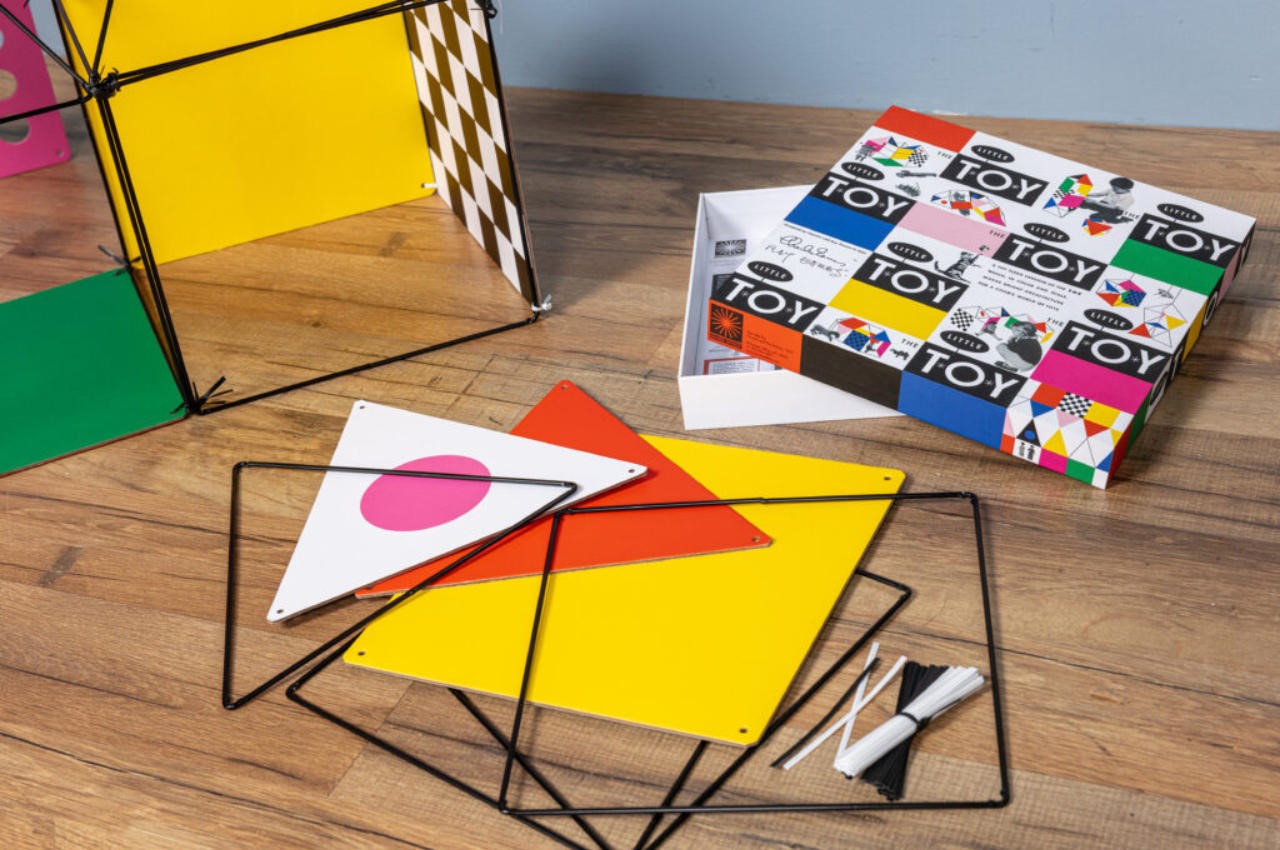
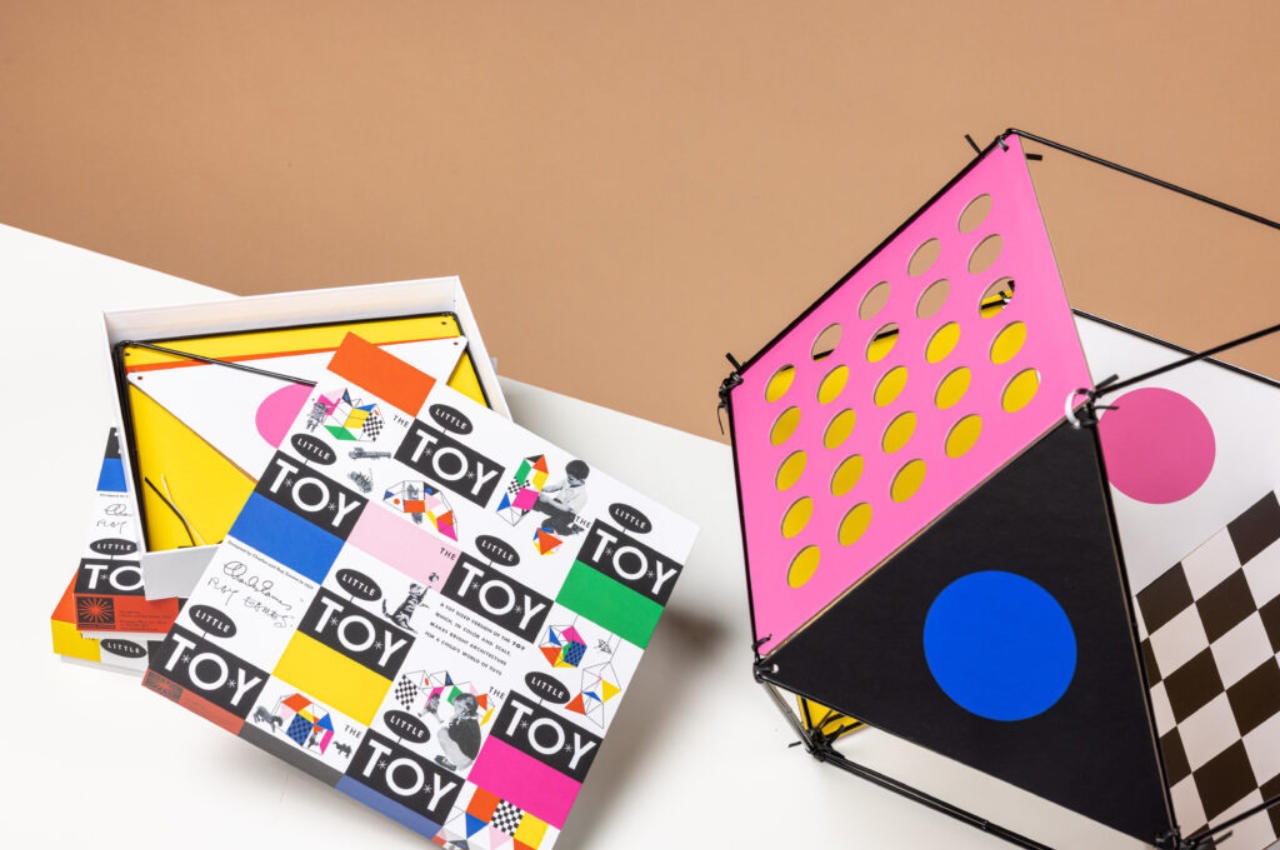
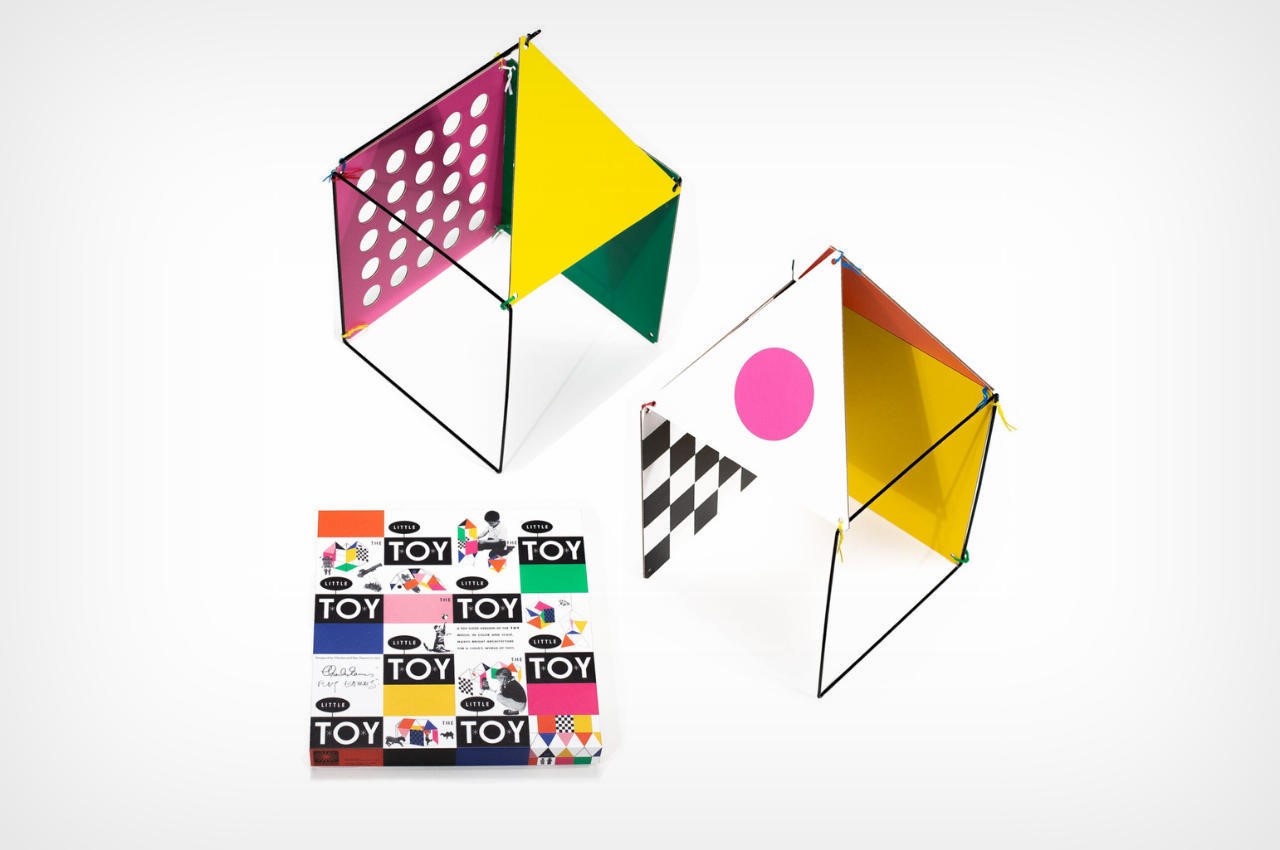
The Toy was for playing “in,” but The Little Toy is all about playing “with.” It’s like they miniaturized the fun, letting you build tiny sets, tents, and houses to jazz up your toy collection. Unlike its flexible predecessor, The Little Toy uses sturdier cardboard panels. It is a DIY dreamland for kids and grown-ups.

The Eames magic remains intact – freedom to build whatever your creative heart desires. The Little Toy consists of colored cardboard panels that are tougher than ever, replacing the old plastic-coated paper which is also a gesture towards sustainability. And forget the dowel rods; they’ve jazzed up the assembly with wireframes, making it a breeze to dive into the creative process.

Back in the day (1952-1961 to be exact), The Toy was the answer to space issues and a game-changer when paired with other toys. Tigrett Enterprises of Kansas made sure this mini marvel was a hit. It’s a testament to the Eameses’ knack for turning everyday materials into something extraordinary.

Fast forward to now, and The Little Toy is back, sporting a retro price tag of $79. This reissue isn’t just about reliving the good ol’ days; it’s an open invitation to explore prefab architecture and modular magic. With its vibrant panels and snazzy wireframes, you can go wildcrafting toy houses, funky sculptures, or even desktop architectural wonders.

This revived Little Toy isn’t just a relic; it’s your golden ticket to unlocking creativity, just like it did over fifty years ago. The Eames Office has not only resurrected a classic but handed you a chance to embrace that timeless spirit of play and innovation. So, what are you waiting for? Dive into the past and let your creativity run wild!

The post The Little Toy is an Eames-inspired Ticket To Some Retro Fun and Creativity first appeared on Yanko Design.

Amazon is laying off several hundred employees working on Alexa

Amazon is sacking employees in its Alexa division even as it prepares to upgrade Alexa to be as smart as modern AI-powered chatbots like ChatGPT. The move will impact several hundred employees in the US, Canada, and India, according to an internal email sent on Friday.

“As we continue to invent, we’re shifting some of our efforts to better align with our business priorities, and what we know matters most to customers — which includes maximizing our resources and efforts focused on generative AI,” wrote Daniel Bausch, Amazon’s vice president of Alexa and Fire TV in the email, first obtained by GeekWire. “These shifts are leading us to discontinue some initiatives, which is resulting in several hundred roles being eliminated.”

An Amazon spokesperson confirmed to Engadget that the company was, indeed, laying off “several hundred” people in the division and said that Amazon was trying to find roles for those impacted wherever possible. “While this was a hard decision to make, we remain very optimistic about the future of Alexa,” the spokesperson said in a statement. “As we move forward, Alexa remains an incredibly important part of our business, and we will continue to invest and innovate to deliver on our vision.” The spokesperson did not say which initiatives were being discontinued.

Amazon released Alexa in 2014. But nearly ten years later, most people don’t use the digital assistant for anything beyond playing music, asking for the weather, or setting timers. OpenAI’s ChatGPT, which was powered by generative AI, was widely perceived to be smarter than Alexa and Siri, which sometimes struggle with basic requests. A few months ago, OpenAI added voice capabilities to ChatGPT, letting people have conversations with it in natural language.

In September, Amazon announced that it would upgrade Alexa with capabilities that would bring it closer in line with ChatGPT. Alexa will soon be powered by a large language model, the same foundational technology that is the basis of modern chatbots like ChatGPT. “Our latest model has been specifically optimized for voice,” David Limp, Amazon’s SVP of Devices & Services, told the audience at the company’s event that month, “and the things we know our customers love — like having access to real-time information, efficiently controlling their smart home, and getting the most out of their home entertainment.” Earlier this year, Limp announced he would leave Amazon after more than 13 years later this year and is now the CEO of Jeff Bezos’ space company Blue Origin.

The new upgrades to Alexa will mean that you won’t have to say “Alexa” each time you want something done. You’ll also be able to give complex requests, like asking the assistant to prepare the house for bedtime every weeknight at 9 PM, dim the lights, lock the doors, and set the temperature all at one go. Alexa will also be able to hold longer conversations and maintain the context of the discussion.

Amazon has so far laid off more than 27,000 employees across the company after it began mass-scale cutbacks a year ago for the first time in its history. Last week, the company cut 180 jobs from its gaming division, including the entire staff of Crown, a company-backed Twitch channel. Earlier this month, Amazon also laid off an unspecified number of employees in its music streaming unit and has previously cut more than 100 employees from its gaming divisions.

This article originally appeared on Engadget at https://www.engadget.com/amazon-is-laying-off-several-hundred-employees-working-on-alexa-190339189.html?src=rss

Cadillac’s midrange Optiq electric SUV takes cues from the high-end Lyriq

Cadillac has unveiled a new entry-level compact electric SUV. The Optiq will sit below the Lyriq in Cadillac’s lineup, and images the automaker shared suggest it will also borrow from the more expensive SUV’s stylings. However, you may have to wait a while before buying one, as Cadillac says we won’t hear more about the Optiq (including its full specs) until 2024.

The Optiq will continue Cadillac’s naming convention of ending its EVs’ names with some form of “IQ.” In addition to the Lyriq, other examples include the Escalade IQ and Celestiq.

Although Cadillac hasn’t explicitly stated so, the Optiq will likely use GM’s Ultium battery platform. Road and Driver speculates that since Cadillac’s SUV is similar in size to the Chevy Equinox EV, it could have similar specs. The Equinox has a 210-horsepower electric motor for the front wheels and an optional 290-horsepower dual-motor all-wheel-drive setup with a range likely capping out at around 300 miles for maxed-out configurations.

Marketing photo of the Cadillac Optiq, sitting under a modern building at nighttime. The vehicle is a reddish-orange.
Cadillac

Autoblog notes details we already know about the version of the Optiq made for China, thanks to photos and information shared through the country’s Ministry of Industry and Information Technology (MIIT) pre-market vehicle approval process. That model is allegedly 189.8 inches long, 75.3 inches wide and 64.6 inches tall. That would make it around 2.5 inches narrower and seven inches shorter (in length) than the Lyriq. The China model is listed as weighing 4.850 lbs with a top speed of 112 mph. It has two front-wheel-drive configurations, including a 201-horsepower motor and a 241-hp one.

Cadillac’s full press release was short and to the point. “Today, Cadillac has confirmed the fourth vehicle to join its expanding global electric vehicle portfolio — OPTIQ,” the announcement reads. “OPTIQ will act as the entry point for Cadillac’s EV lineup in North America, slotting in below LYRIQ, a luxury compact SUV. OPTIQ’s spirited driving dynamics are designed to appeal to global luxury customers.  Additional details, as well as available features and pricing, will be unveiled next year.”

This article originally appeared on Engadget at https://www.engadget.com/cadillacs-midrange-optiq-electric-suv-takes-cues-from-the-high-end-lyriq-183414934.html?src=rss

These Anker Black Friday deals will save you up to 37 percent on some of our favorite charging gear

A number of Anker chargers, cables, power adapters and other accessories are on sale for Black Friday at Amazon, with discounts of up to 37 percent. One key callout is on our favorite premium power bank, Anker's Prime 20,000 mAH battery with charging base. It's currently down to $130 for the set and the lowest price ever. At full price, we've seen the set go for as high as $200. The base is what makes it really stand apart from other power banks — simply drop the brick on the platform and it starts recharging. 

The screen on the Prime bank is impressive as well, detailing just how much charge the pack has left and how much is heading out of each of the three ports (one USB-A and two USB-C). In our tests, it revived a dead iPhone back to 100 percent in just over an hour and 45 minutes, with enough left over for another three-quarters charge. It brought a spent iPad Air back to full in a little under two hours. Not only is the base an easy way to recharge the battery, it also acts as a charging hub with three ports of its own for powering up other stuff. 

Other Anker accessories we like are seeing big discounts too, including the 67W USB-C charger for 37 percent off, bringing it to $38, matching its all-time low. It has two USB-C ports and one USB-A port, so you can charge your phone, tablet and even a battery pack at one time. 

Our top 65W fast wall charger is Anker's 735 GaN Prime, which is down to a new low price after a 38 percent discount. It's got the same three ports as the above wall adapter and outperformed other contenders in our tests. 

Finally, the diminutive and handy Anker Nano Power Bank is seeing one of its first discounts since coming on the market a couple months ago. It's down to $21 and would make a great stocking stuffer — particularly for those who always seem to have a phone hovering around 5 percent. The small brick has a built-in foldable USB-C connector and in my experience, it got a Galaxy S23 Ultra to 62 percent in about an hour. Plus its easy to use the phone while the bank is pugged in. 

Check out the larger Black Friday Anker sale here.  

Your Black Friday Shopping Guide: See all of Yahoo’s Black Friday coverage, here. Follow Engadget for Black Friday tech deals. Learn about Black Friday trends on In The Know. Hear from Autoblog’s experts on the best Black Friday deals for your car, garage, and home, and find Black Friday sales to shop on AOL, handpicked just for you.

This article originally appeared on Engadget at https://www.engadget.com/ankers-black-friday-deals-will-save-you-up-to-37-percent-on-some-of-our-favorite-charging-gear-183048555.html?src=rss

NVIDIA’s Shield TV Pro drops to a record-low of $170 for Black Friday

If you’re looking for a streaming device with a bit more oomph than a standard USB stick, you should check out the NVIDIA Shield TV Pro. It’s on sale right now for Black Friday, matching a record-low price of $170. That’s $30 off the MSRP, representing a savings of 15 percent for those keeping score.

This is an extremely powerful device, with enough juice to stream movies, run a PLEX server, play games via the cloud and do just about anything you want. There’s a reason, after all, the Shield TV Pro made our list of the best streaming devices you can buy in 2023. It runs on the Android TV platform and boasts a capable Tegra X1+ processor, so it easily handles 4K streams. It’ll even upscale 720p and 1080p video to 4K via the company’s proprietary AI neural network.

We also liked that this box supports Dolby Vision and HDR10, in addition to boasting 16GB of built-in storage for direct uploads of content. You also get 3GB of RAM to help speed up navigation and opening apps. As for content, you have your pick from all of the major streamers and anything else available on the Google Play Store. It’ll also play just about any game from the Play Store, though you’ll have to bring along your own controller.

To that end, you can use the device to opt into NVIDIA’s GeForce Now cloud gaming service, which provides access to over 1,500 games, including the full spate of Xbox Game Pass titles. The Shield Pro boasts an ethernet port for graphically-intensive game streams. About the only downside to this device is the original asking price, an issue made less urgent due to this sale.

Your Black Friday Shopping Guide: See all of Yahoo’s Black Friday coverage, here. Follow Engadget for Black Friday tech deals. Learn about Black Friday trends on In The Know. Hear from Autoblog’s experts on the best Black Friday deals for your car, garage, and home, and find Black Friday sales to shop on AOL, handpicked just for you.

This article originally appeared on Engadget at https://www.engadget.com/nvidias-shield-tv-pro-drops-to-a-record-low-of-170-for-black-friday-182709988.html?src=rss

The Google Pixel Fold is $400 off for Black Friday

The Google Pixel Fold, released earlier this year, is on sale for $1,399, knocking $400 off its original price of $1,799. This Amazon Black Friday deal marks the lowest price ever on the 256GB model. If you need more storage on your smartphone, the 512GB model is going for $1,519, down from $1,919. The foldable is powered by the Google Tensor G2 and offers 12GB of RAM, making it a great option for those looking to invest in a foldable smartphone as their daily driver. If you're interested in other Black Friday Google Pixel deals, the Pixel 8 and 8 Pro are down to record low prices as well.

The Pixel Fold earned a spot on Engadget’s top foldable phones list, namely for how easy it is to use and for its wide-screen design. Folded, the phone gives you a 5.8-inch screen to work with, and unfolded you get a big, 7.6-inch immersive display. When open, the foldable’s split screen allows you to multitask and do things like shop online and make video calls at the same time. You’re also able to use the main screen and external screen together, letting you take pictures and look at live previews simultaneously. Coming soon is Google Translate’s interpreter mode as well, which allows you to watch translations appear on both screens while you’re talking to another person in a different language.

In terms of camera quality, the Pixel Fold has a lot to offer. The triple rear camera system includes a 48-megapixel main lens, an ultrawide shooter and a telephoto camera with up to 5x optical zoom that delivers sharp photos in daylight and well-exposed photos in the dark. In Engadget’s review, one of its selling points was that the photos beat the competition. When compared to Samsung's Galaxy foldable, Google’s phone delivered images with better shadows and highlights. Notably, even with Samsung’s “food mode” on, Engadget’s Sam Rutherford said the Pixel Fold’s photo chops made food look more appetizing. The phone can also shoot 4K videos at 30 frames per second and 60 frames per second, which is on par with other foldables.

Your Black Friday Shopping Guide: See all of Yahoo’s Black Friday coverage, here. Follow Engadget for Black Friday tech deals. Learn about Black Friday trends on In The Know. Hear from Autoblog’s experts on the best Black Friday deals for your car, garage, and home, and find Black Friday sales to shop on AOL, handpicked just for you.

This article originally appeared on Engadget at https://www.engadget.com/the-google-pixel-fold-is-400-off-for-black-friday-181050039.html?src=rss

Apple Black Friday deals include up to $200 off the M3-powered MacBook Pros

It has only been a couple of weeks since Apple debuted its M3-powered MacBook Pros, but most variants are already on sale for Black Friday. For instance, you can snap up the base 14-inch M3 MacBook Pro for $1,449 in a great Apple Black Friday deal. That's $150 off the standard price.

This model, to which we gave a score of 90 in our review, sits between the MacBook Air and more powerful MBPs. The standard M3 chip has an eight-core CPU and a 10-core GPU. It should handle basic tasks without any issue, as the chipset is fast and efficient. The 14-inch MBP has a gorgeous Liquid Retina XDR display, while Apple's keyboard and trackpad remain great.

Unfortunately, this model only comes with 8GB of RAM. That could prove a problem for those who like to keep several apps open or have a bunch of tabs in their browser at the same time. We'd definitely add more RAM before recommending it as the best MacBook for creatives. There's also one fewer USB-C port than you'll get in more expensive variants.

So, you may want to stump up some extra cash for a more capable version. A model with a more powerful M3 Pro chip (11‑core CPU and 14‑core GPU), 18GB of RAM and a third USB-C/Thunderbolt port is also $150 off at $1,849. However, it still has 512GB of storage.

Apple MacBook Pro 16-inch from the front
Photo by Devindra Hardawar/Engadget

Meanwhile, if you're looking for a model with a larger screen, you can opt for a 16-inch M3 MacBook Pro. Those are typically $200 off for Black Friday. The 16-inch MBP is much the same as a 14-inch one, albeit with a larger screen and spec bump.

A variant with an M3 Pro chipset that has a 12‑core CPU and 18‑core GPU, a 16.2-inch display, 18GB of memory and 512GB of storage will run you $2,299. That's eight percent off the usual price of $2,499. This version is also available in the eye-catching Space Black colorway.

Your Black Friday Shopping Guide: See all of Yahoo’s Black Friday coverage, here. Follow Engadget for Black Friday tech deals. Learn about Black Friday trends on In The Know. Hear from Autoblog’s experts on the best Black Friday deals for your car, garage, and home, and find Black Friday sales to shop on AOL, handpicked just for you.

This article originally appeared on Engadget at https://www.engadget.com/apple-m3-macbook-pros-are-up-to-200-off-for-black-friday-175043898.html?src=rss

A GoPro Hero 12 Black bundle with accessories is $100 off for Black Friday

The GoPro Hero 12 Black action camera is on sale for $100 off as part of a Black Friday deal. The sale’s available via Amazon, Adorama and even the manufacturer itself. This deal is for an accessories bundle, so you can get a carrying case, a strap, an extra battery, a mount and other add-ons, in addition to the camera. All told, that brings the price down to $350 from $450.

This is the latest and greatest action camera by the company. We admired the Hero 12 in our official review, calling out the improved battery life when compared to the Hero 11, as it allows for 35 minutes of continuous use per charge. Remember, this deal ships with an extra battery, so that’s 70 minutes, minus 30 seconds of fiddling with the battery compartment.

We also loved the addition of Bluetooth audio streaming, which even works with devices like Apple’s AirPods Pro earbuds. This means you can easily wear earbuds without calling too much attention to yourself while hosting an impromptu vlog or live commentary of some kind. The latency is barely perceptible, if noticeable at all. This functionally also allows you to control the GoPro from afar, thanks to voice commands. Gone are the days of having to chop off those awkward final seconds of footage featuring you clumsily walking to turn the camera off.

The Hero 12 Black boasts a larger image sensor, allowing users to experiment with different aspect ratios using the same footage, in addition to offering an 8:7 mode across every setting. On the downside, this is a modest upgrade of sorts, so many of the remaining metrics remain the same as with the GoPro Hero 11. Your footage will look a bit cleaner, but it won’t be a night and day difference.

Still, this is a good deal for a full-featured action camera that ships with everything you need to not only get started, but thrive. This is a limited-time offer but there’s no set end-date, with the company stating that it “will continue until GoPro terminates the program.”

Your Black Friday Shopping Guide: See all of Yahoo’s Black Friday coverage, here. Follow Engadget for Black Friday tech deals. Learn about Black Friday trends on In The Know. Hear from Autoblog’s experts on the best Black Friday deals for your car, garage, and home, and find Black Friday sales to shop on AOL, handpicked just for you.

This article originally appeared on Engadget at https://www.engadget.com/a-gopro-hero-12-black-bundle-with-accessories-is-100-off-for-black-friday-171926991.html?src=rss