ASUS ROG Zephyrus G14 (2024) review : This is the 14-inch gaming laptop to beat

ASUS’ ROG Zephyrus G14 has been one of our favorite gaming laptops for damn near half a decade. But the 2024 model is on another level. That’s because even without a fresh generation of GPUs from NVIDIA, ASUS went and redesigned the entire thing anyway. And the result is a notebook with a gorgeous aluminum unibody chassis with a more mature design that doesn’t need to throw RGB lighting in your face to get some attention. This edition is also sleeker and lighter while still providing powerful performance. Though ASUS made a few trade-offs when compared to its predecessor, with a starting price of $1,600, the new ROG Zephyrus G14 is not only a better value than almost all of its 14-inch rivals, it’s also simply one of the best pound-for-pound gaming laptops around.

Design

Compared to previous models that were awash in RGB or had dot-matrix displays built into their lids, this year’s G14 is an exercise in restraint. It’s almost like the line has grown out of its awkward teenage phase and become a stylish but still fun-loving adult. The lid is accented by a simple diagonal slash with white (not RGB) LEDs embedded down the middle. Meanwhile, on the inside, there’s a sturdy deck with a large touchpad and surprisingly powerful speakers.

The one thing I miss is per-key RGB lighting instead of ASUS’ single-zone approach. After all, this is a gaming laptop and if you’re going to offer multiple colors, it’d be nice to have full customizability.

The ASUS ROG Zephyrus G14 features a gorgeous unibody aluminum design. We just wish its keyboard supported per-key RGB lighting instead of ASUS' single-zone setup.
Photo by Sam Rutherford/Engadget

That said, the G14’s redesign isn’t just about style, it’s functional too. The switch to a unibody aluminum frame has strengthened the whole machine. There’s barely a hint of flex even on typically weaker parts like the lattice between keys. But more importantly, ASUS also reduced the laptop's weight to just 3.3 pounds, which is noticeably lighter than rival notebooks with similar metal builds like the Razer Blade 14 (3.95 pounds). Plus, even with the smaller size, the G14 features a healthy selection of ports including a full-size HDMI 2.1 jack, two USB-C (one of which supports Thunderbolt 4), two USB-A and a microSD card reader.

Display

The ASUS ROG Zephyrus G14 features a gorgeous 14-inch OLED display with a 120Hz refresh rate and vibrant colors.
Photo by Sam Rutherford/Engadget

Another glowing component of the G14 is its OLED screen. In addition to producing vibrant colors, it has a sharp 2,880 x 1,800 resolution along with a 120Hz refresh rate and a color gamut that covers 100 percent of the DCI-P3 spectrum. Recently, I’ve been watching Three Body Problem and I’ve been absolutely loving the OLED panel’s excellent contrast and deep blacks. Furthermore, because ASUS includes a handful of color-calibrated settings for sRGB, D65 P3, DCI-P3 (but not Adobe RGB), the G14 is a very capable photo- and video-editing machine.

The one small issue is that because 2,880 x 1,800 is a somewhat uncommon resolution, you may not be able to play all of your games at their native resolution, which is an issue I encountered when playing Returnal.

Performance

A big change for the 2024 ROG G14 is that GPU options now top out with an NVIDIA RTX 4070 instead of a 4080 like on the previous model. That may be a bummer for some, but as I prefer laptops that are easier to carry around, I’m OK with trading out a little top-end oomph for enhanced portability. And with all models featuring an AMD Ryzen 9 8945HS chip along with at least 16GB of RAM (or 32GB like on my review unit) and 1TB of storage, you won’t be lacking in speed.

The ASUS ROG Zephyrus G14 even includes a microSD card reader to make transferring media to the computer from a camera a bit easier.
Photo by Sam Rutherford/Engadget

On Geekbench 6, the G14 matched the performance we saw from a larger XPS 16 with an Intel Core Ultra 7 155H chip. In games, it hit 90 fps in Cyberpunk 2077 on ultra settings, which is just shy of a much more expensive Razer Blade 14 (101 fps). That said, there are some important details you should know. Unlike previous models, the latest G14’s memory is soldered to the motherboard, so there’s no way to add extra RAM later. Additionally, while both ASUS and Razer’s 14-inch systems appear to have the same RTX 4070 GPU, the G14’s is capped at 90 watts versus 140 watts for the Blade, which explains the small gap in gaming performance.

It’s also worth noting that heat can be an issue in certain situations. In normal use, it’s not a big deal as the fans rarely need to spin up when browsing the web or watching movies. But under load, because the G14’s vents are on the bottom of the notebook, your lap can get toasty fast. Thankfully, this won’t be a major problem if you’re gaming, since you’ll probably want to be at a desk or table to put an external mouse on anyway.

Battery life

The ROG Zephyrus G14 has a wealth of ports including ASUS' new Slim Power Jack ( far left).
Photo by Sam Rutherford/Engadget

While the G14 doesn’t last quite as long as a traditional ultrabook, it still carries enough juice to last nearly an entire workday. On PCMark 10’s Modern Office rundown test, it lasted 7 hours and 29 minutes which is slightly better than the Razer Blade 14’s time of 6:46. And, new for 2024, ASUS has added its proprietary Slim Power Jack, which sort of looks like a USB-C port if you squint (but it isn’t). However, if you want to really travel light, the G14 supports charging via USB-C so you can leave the adapter at home. The one caveat is that USB-PD on this maxes out at 100 watts (versus 180 watts when using the included brick), so the battery may still discharge while gaming or performing other intensive tasks.

Wrap-up

Even though we already loved its predecessors, the 2024 ROG Zephyrus G14 has managed to take another big leap. It’s got an exquisitely crafted chassis along with a vibrant new display and boomier speakers – all while shedding nearly half a pound in weight. On the inside, you still get up to an RTX 4070 GPU. Sure, it’s a touch slower than a similarly equipped Blade 14, but considering our review unit costs $2,000 compared to $2,700 for the closest equivalently specced Razer, I’m happy to trade a tiny bit of performance to get a much more affordable machine. And that’s before you factor in a starting price of just $1,450 for one with an RTX 4060. My biggest gripe is that ASUS’ Amoury Crate app still feels clunky, thanks to settings that are hard to find or toggles that don’t work like you’d expect. But make no mistake, the G14 is a great laptop – for both gamers and content creators – who want good performance in a portable package. So while I appreciate what the Blade 14 and other high-end notebooks can do, ASUS’ latest creation is the one I’d buy.

This article originally appeared on Engadget at https://www.engadget.com/asus-rog-zephyrus-g14-2024-review--this-is-the-14-inch-gaming-laptop-to-beat-161524669.html?src=rss


Google Photos’ enhanced editing tools will no longer require a subscription

In a rare move, Google is extending everyone access to subscriber-exclusive Photos tools. Free Google Photos users are getting its enhanced editing features without paying a minimum of $20 annually. This means all users will get a few of Google's AI-powered tools, such as Photo UnBlur, Magic Eraser and Magic Editor.

Photo UnBlur works just as it sounds, giving greater clarity to a photo that's a bit fuzzy. The Magic Eraser tool lets you remove or camouflage people or things from pictures, like a rogue trash can or photo bomber. Magic Editor uses generative AI to move, stretch and resize objects. You can even bring yourself to the center of a photo or closer to another person. It also lets you make large-scale edits, like changing the sky from gray to blue. Magic Editor Android and iOS Google Photos users will get ten monthly saves, while anyone looking to increase that limit will need either a Pixel device or paid Google One plan with 2TB+.

The Google Photos features will roll out to non-subscribers over a few weeks, starting May 15. On desktop, they will only be available if you have a Chromebook Plus that has ChromeOS version 118+. To access on mobile, you'll need at least Android 8.0 or iOS 15 and 3GB of RAM. 

This article originally appeared on Engadget at https://www.engadget.com/google-photos-enhanced-editing-tools-will-no-longer-require-a-subscription-160015336.html?src=rss

Google Photos’ enhanced editing tools will no longer require a subscription

In a rare move, Google is extending everyone access to subscriber-exclusive Photos tools. Free Google Photos users are getting its enhanced editing features without paying a minimum of $20 annually. This means all users will get a few of Google's AI-powered tools, such as Photo UnBlur, Magic Eraser and Magic Editor.

Photo UnBlur works just as it sounds, giving greater clarity to a photo that's a bit fuzzy. The Magic Eraser tool lets you remove or camouflage people or things from pictures, like a rogue trash can or photo bomber. Magic Editor uses generative AI to move, stretch and resize objects. You can even bring yourself to the center of a photo or closer to another person. It also lets you make large-scale edits, like changing the sky from gray to blue. Magic Editor Android and iOS Google Photos users will get ten monthly saves, while anyone looking to increase that limit will need either a Pixel device or paid Google One plan with 2TB+.

The Google Photos features will roll out to non-subscribers over a few weeks, starting May 15. On desktop, they will only be available if you have a Chromebook Plus that has ChromeOS version 118+. To access on mobile, you'll need at least Android 8.0 or iOS 15 and 3GB of RAM. 

This article originally appeared on Engadget at https://www.engadget.com/google-photos-enhanced-editing-tools-will-no-longer-require-a-subscription-160015336.html?src=rss

Physicist Peter Higgs, who predicted ‘the God particle’, has died at 94

Peter Higgs, the physicist who predicted the Higgs boson particle, has passed away at the age of 94 due to a blood disorder. His work proposing the particle — and showing how it helped give mass to some matter — won him the Noble price in 2013. The Higgs boson is informally referred to as the God particle, after a book by Nobel laureate Leon Lederman.

Higgs came up with the idea in the early 1960s as an attempt to explain why atoms have mass in the first place. The research didn’t get any traction in scientific journals, primarily because few understood the concept, but he was finally published in 1964. This was just a theory at the time, but led to a 50-year race to prove the Higgs boson particle actually exists.

Scientists hit pay dirt in 2012, thanks to physicists working at the Large Hadron Collider at CERN in Switzerland. It took four years of experiments, but the Higgs boson particle was finally discovered, proving his ideas and adding a major puzzle piece to the corpus of particle physics knowledge known as the Standard Model.

As a matter of fact, modern theoretical physicists have posited the existence of up to five Higgs boson particles that fill up what is now called the Higgs field. Scientists hope to use the Higgs boson to one day find proof for ever-elusive dark matter.

The Royal Swedish Academy of Sciences, which awards the Nobel, wrote about the importance of his discovery ahead of the ceremony in 2013. “Even when the universe seems empty this field is there. Without it, we would not exist, because it is from contact with the field that particles acquire mass.” The Nobel was shared with François Englert, a Belgian theoretical physicist whose work in 1964 contributed to the discovery.

"At the beginning I had no idea whether a discovery would be made in my lifetime”, Higgs once said. He leaves two sons, Chris and Jonny, his daughter-in-law Suzanne and two grandchildren. His former wife Jody, a linguistics professor, died in 2008.

This article originally appeared on Engadget at https://www.engadget.com/physicist-peter-higgs-who-predicted-the-god-particle-has-died-at-94-153635259.html?src=rss

Physicist Peter Higgs, who predicted ‘the God particle’, has died at 94

Peter Higgs, the physicist who predicted the Higgs boson particle, has passed away at the age of 94 due to a blood disorder. His work proposing the particle — and showing how it helped give mass to some matter — won him the Noble price in 2013. The Higgs boson is informally referred to as the God particle, after a book by Nobel laureate Leon Lederman.

Higgs came up with the idea in the early 1960s as an attempt to explain why atoms have mass in the first place. The research didn’t get any traction in scientific journals, primarily because few understood the concept, but he was finally published in 1964. This was just a theory at the time, but led to a 50-year race to prove the Higgs boson particle actually exists.

Scientists hit pay dirt in 2012, thanks to physicists working at the Large Hadron Collider at CERN in Switzerland. It took four years of experiments, but the Higgs boson particle was finally discovered, proving his ideas and adding a major puzzle piece to the corpus of particle physics knowledge known as the Standard Model.

As a matter of fact, modern theoretical physicists have posited the existence of up to five Higgs boson particles that fill up what is now called the Higgs field. Scientists hope to use the Higgs boson to one day find proof for ever-elusive dark matter.

The Royal Swedish Academy of Sciences, which awards the Nobel, wrote about the importance of his discovery ahead of the ceremony in 2013. “Even when the universe seems empty this field is there. Without it, we would not exist, because it is from contact with the field that particles acquire mass.” The Nobel was shared with François Englert, a Belgian theoretical physicist whose work in 1964 contributed to the discovery.

"At the beginning I had no idea whether a discovery would be made in my lifetime”, Higgs once said. He leaves two sons, Chris and Jonny, his daughter-in-law Suzanne and two grandchildren. His former wife Jody, a linguistics professor, died in 2008.

This article originally appeared on Engadget at https://www.engadget.com/physicist-peter-higgs-who-predicted-the-god-particle-has-died-at-94-153635259.html?src=rss

Jar blender concept brings both aesthetic and function

A lot of aspiring product designers get inspiration from existing brands whose aesthetics are very distinct. One famous brand of hair dryers and stylers has made its mark on those interested in product design (and pretty devices) and has served as a basis for concepts. We get a lot of “what if _____ made _____” concepts from aspiring designers and it’s actually pretty interesting to see what they come up with just based on the current product line of these brands.

Designers: Anika Patel, Arya Shewale, Prapti Shah, Pratyasa Samanta, Nandana B. Nair, Pia Walia

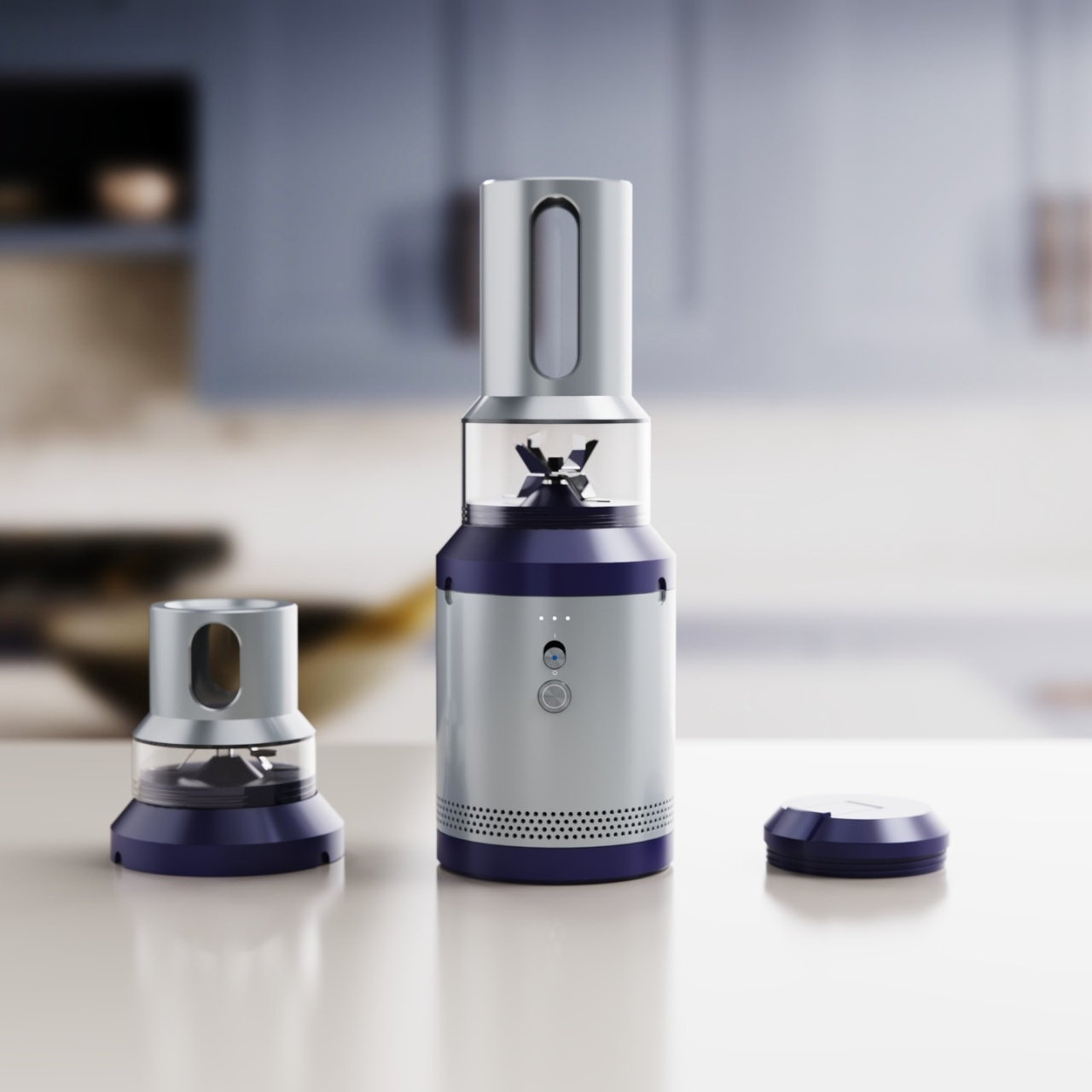
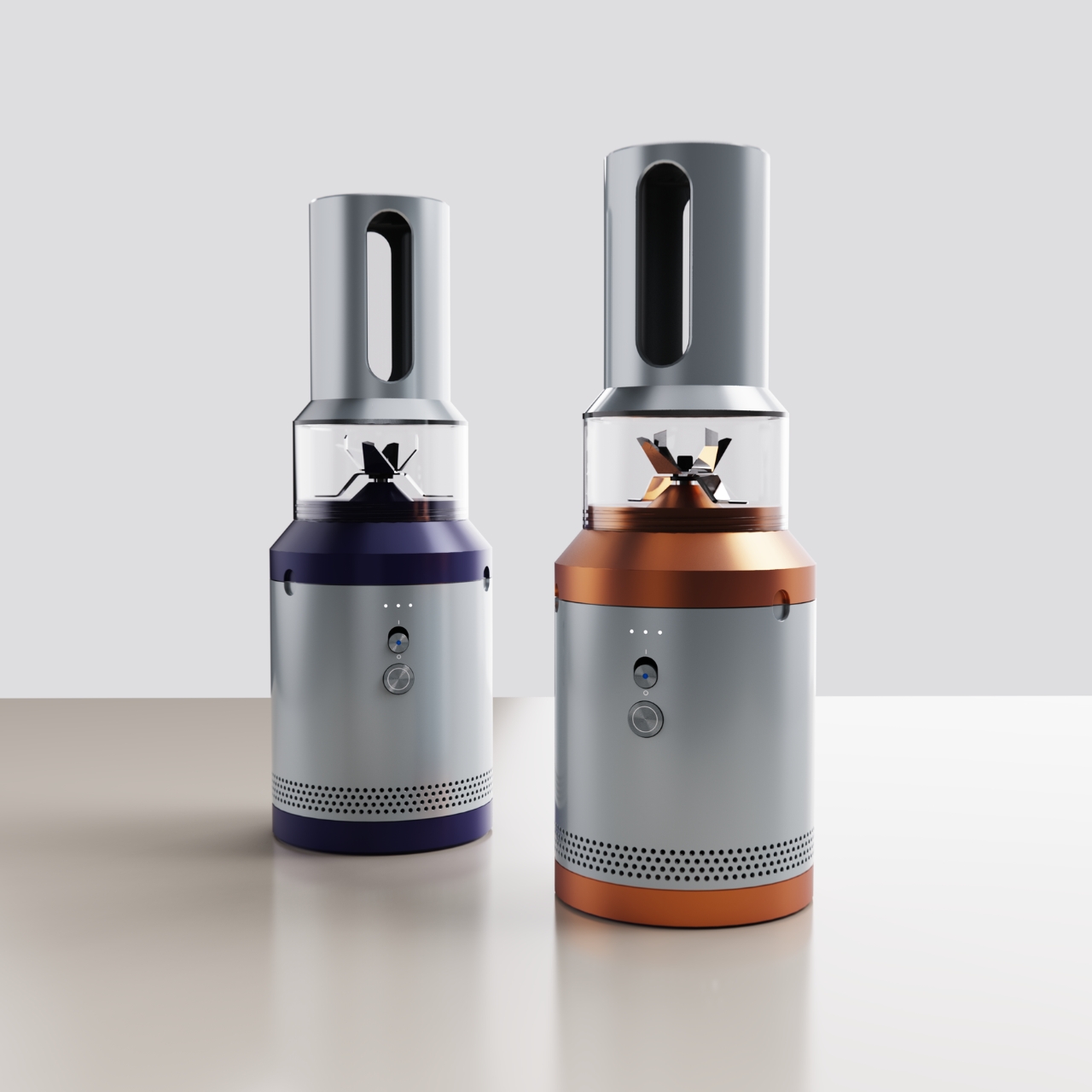
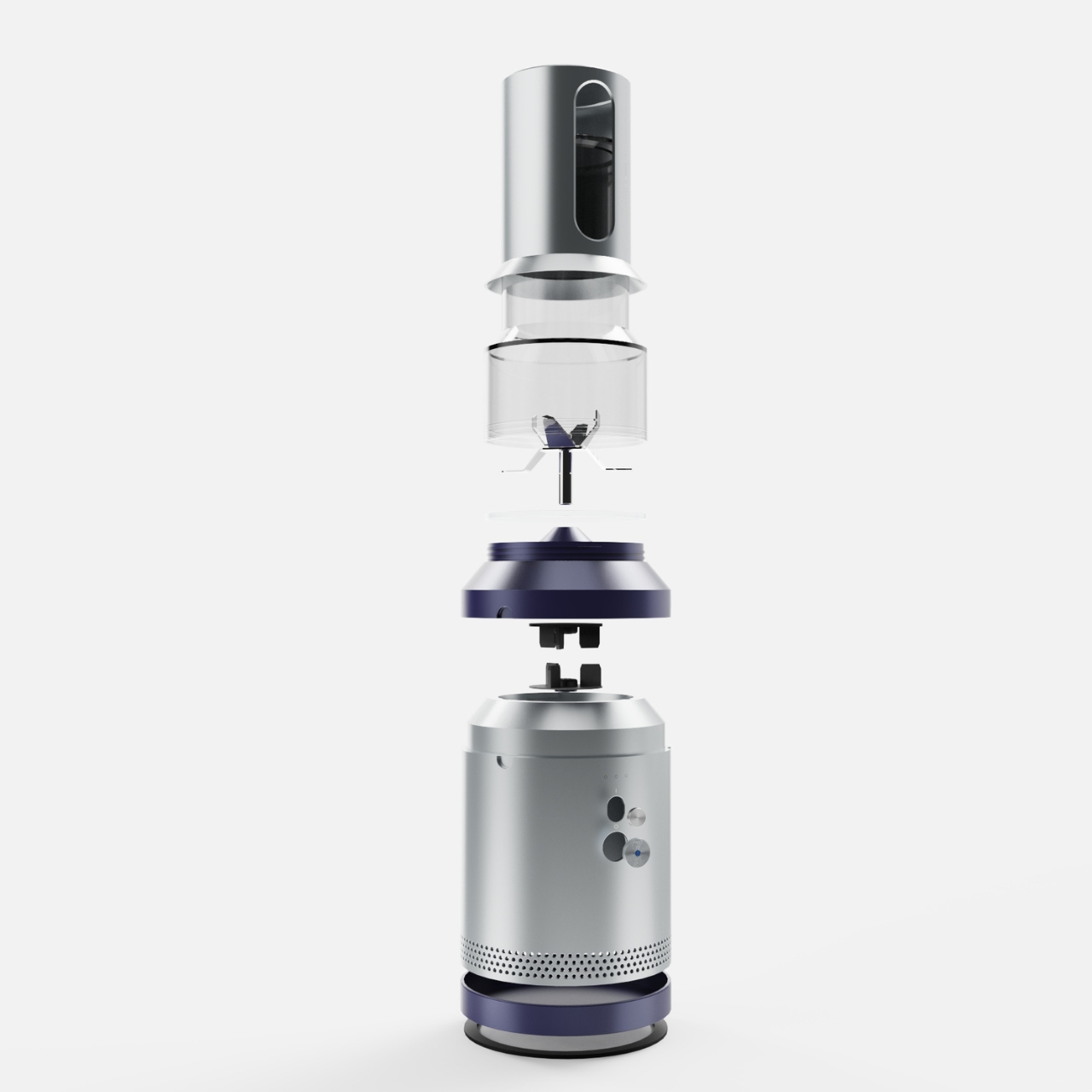
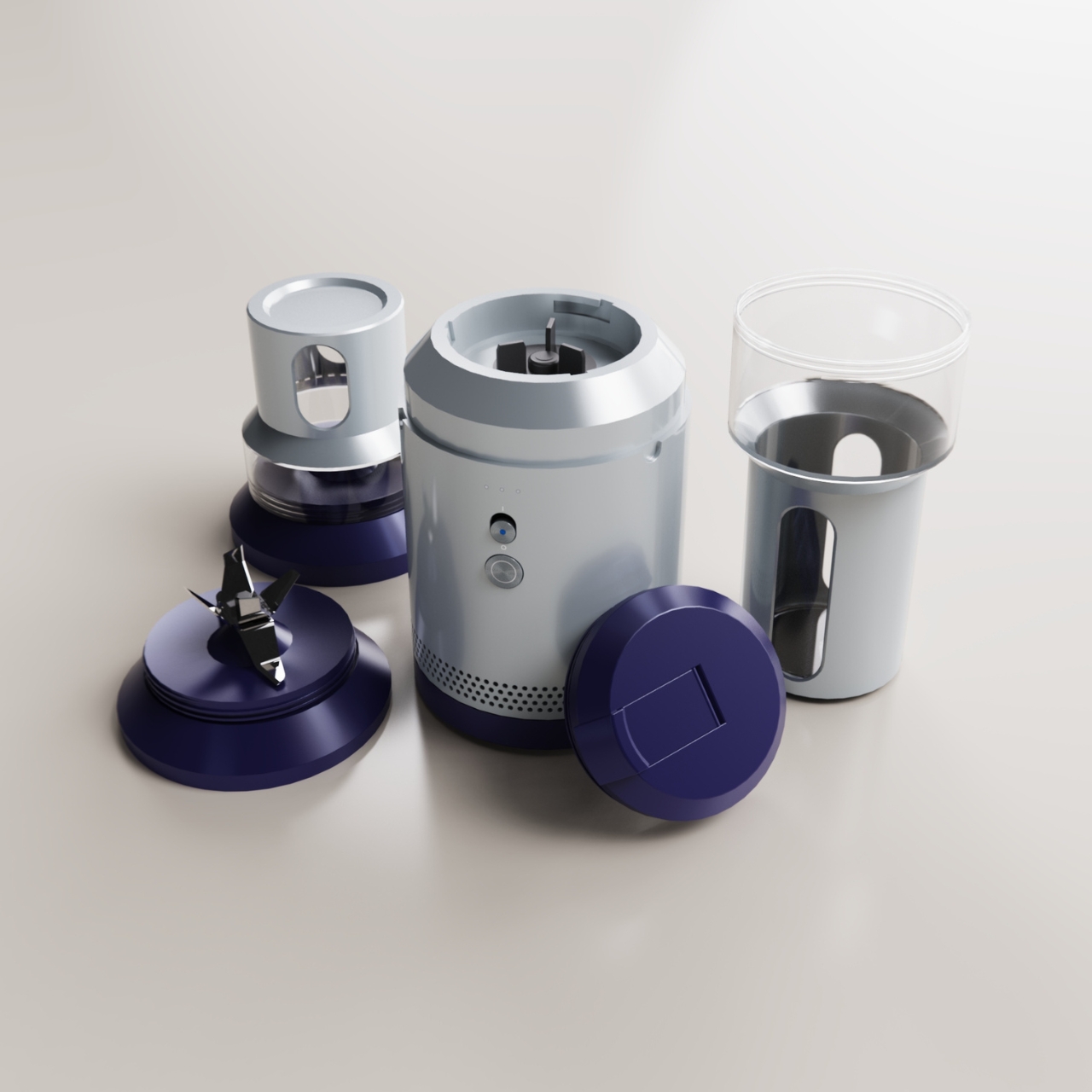
A lot of the blenders we see are more functional rather than aesthetic. But who says you can’t have both? This concept for a Jar Blender blends (pun intended) the two as you get a cylindrical form that uses chamfered surfaces to connect to the various parts. Using the industrial and minimalist aesthetic, you have what looks like one of those modern-looking gas lamps. But it is in fact designed to be a functional blender that you can use in your kitchen or even bring with you if you’re traveling.

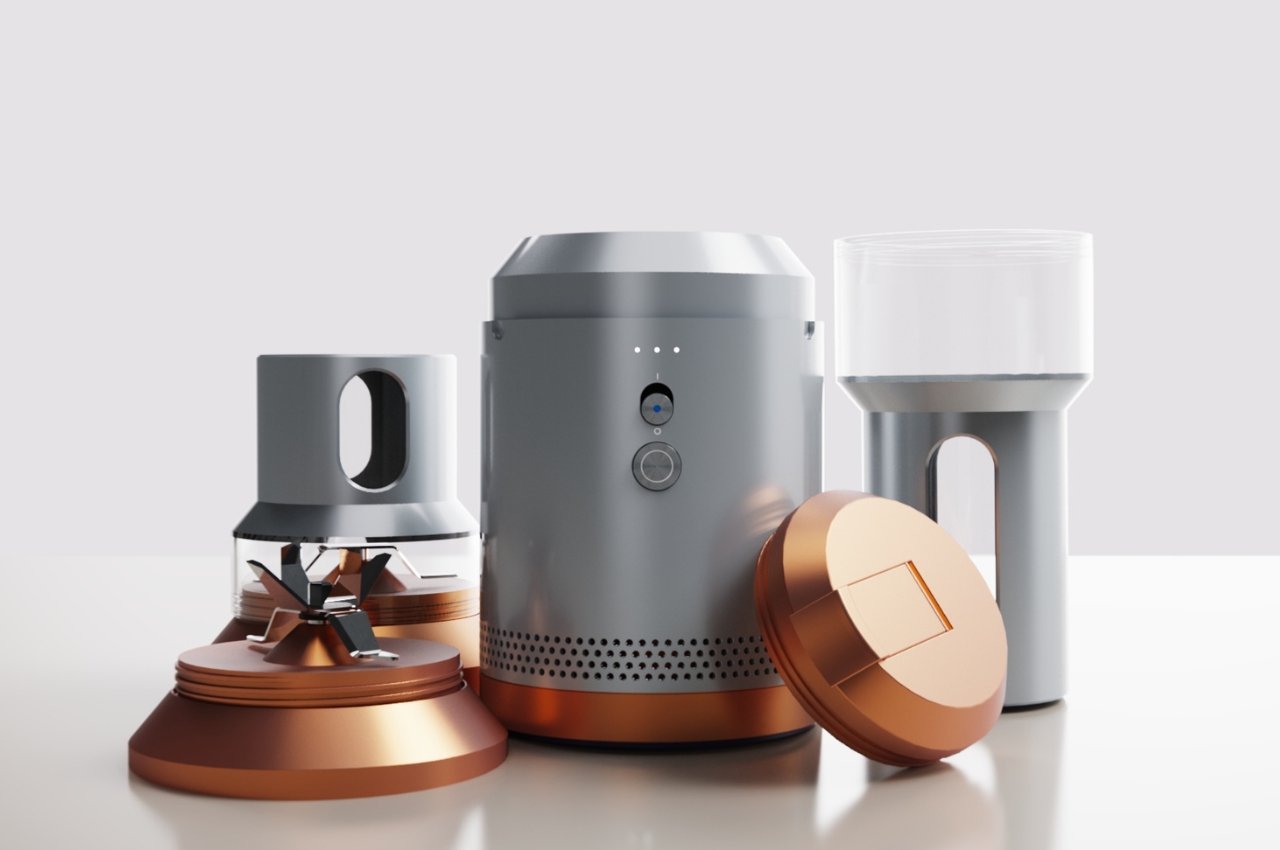
Aside from the sleek aesthetics, you get key functional elements, at least on paper and in renders. It has things like a liquid level window, lock alignment indicator, and a power switch and in keeping with their visual inspiration, they use rounded rectangles as a key element. And if you’re the type who likes seeing the blender in action, the section around the blade is transparent so you can see how it works in blending the various ingredients you put in it (or if you’re doing a “will it blend?” kind of content). There’s also a perforated mesh at the bottom so the blender gets proper ventilation and air circulation.

The blender also comes with a cap so if you need to carry around the juice or energy shake that you blended, you don’t need a separate bottle for it. The jar is 500ml which should be enough for a drink for one person. It would be interesting to see this aesthetic jar blender come to life.

The post Jar blender concept brings both aesthetic and function first appeared on Yanko Design.

How to watch The Triple-i Initiative indie game showcase at 1PM ET

Summer Game Fest is still a couple of months away, as are major events from the likes of Ubisoft and Xbox. But you won't have to wait that long for a smorgasbord of gaming announcements. A bunch of notable names in the indie gaming space have come together to host the first showcase from The Triple-i Initiative.

The stream will start at 1PM ET on April 10 and run for around 45 minutes. You'll be able to watch it above or on YouTube, Twitch, bilibili or Steam. The showcase will include world premieres, exclusive looks at gameplay, demo announcements and details of a sale.

The organizers are promising more than 30 announcements with "no hosting segments, no advertisements, no sponsorships, no extra fluff, just games,” according to ​Benjamin Laulan, the COO of Dead Cells developer Evil Empire. That studio came up with the idea of The Triple-i Initiative (Triple-i is a riff on AAA, a signifier of high-budget, high-profile games) a couple of months ago.

A bunch of notable developers have joined the collective. They include Red Hook (Darkest Dungeon), Mega Crit Games (Slay the Spire), Poncle (Vampire Survivors), Thunder Lotus (Spiritfarer), Re-Logic (Terraria), Extremely OK Games (Celeste) and Heart Machine (Hyper Light Breaker). In other words, the studios behind many of the biggest indie games of the last several years are on board, so this will be a showcase worth paying attention to.

This article originally appeared on Engadget at https://www.engadget.com/how-to-watch-the-triple-i-initiative-indie-game-showcase-at-1pm-et-150048553.html?src=rss

How to watch The Triple-i Initiative indie game showcase at 1PM ET

Summer Game Fest is still a couple of months away, as are major events from the likes of Ubisoft and Xbox. But you won't have to wait that long for a smorgasbord of gaming announcements. A bunch of notable names in the indie gaming space have come together to host the first showcase from The Triple-i Initiative.

The stream will start at 1PM ET on April 10 and run for around 45 minutes. You'll be able to watch it above or on YouTube, Twitch, bilibili or Steam. The showcase will include world premieres, exclusive looks at gameplay, demo announcements and details of a sale.

The organizers are promising more than 30 announcements with "no hosting segments, no advertisements, no sponsorships, no extra fluff, just games,” according to ​Benjamin Laulan, the COO of Dead Cells developer Evil Empire. That studio came up with the idea of The Triple-i Initiative (Triple-i is a riff on AAA, a signifier of high-budget, high-profile games) a couple of months ago.

A bunch of notable developers have joined the collective. They include Red Hook (Darkest Dungeon), Mega Crit Games (Slay the Spire), Poncle (Vampire Survivors), Thunder Lotus (Spiritfarer), Re-Logic (Terraria), Extremely OK Games (Celeste) and Heart Machine (Hyper Light Breaker). In other words, the studios behind many of the biggest indie games of the last several years are on board, so this will be a showcase worth paying attention to.

This article originally appeared on Engadget at https://www.engadget.com/how-to-watch-the-triple-i-initiative-indie-game-showcase-at-1pm-et-150048553.html?src=rss

Blizzard games are returning to China this summer

Blizzard’s games will once again be available in China, over 15 months after titles such as World of Warcraft and Overwatch 2 went offline in the planet's largest gaming market. Blizzard has renewed its licensing agreement with long-time partner NetEase and many of its games will return to mainland China in the coming months.

NetEase oversaw Blizzard games in China for 15 years, but their agreement expired in January 2023, leading to the likes of Hearthstone and Starcraft shutting down in the country. The two sides had kept discussions going over the last year and they finally reached a new deal.

It'll take a little while for Blizzard and NetEase to resolve technical issues and get things in place for the relaunch, but the games are expected to come back online in China starting this summer. According to Bloomberg, players will be able to resume progress they’d previously made on their accounts.

Blizzard could be set for a notable boost to its bottom line with its games coming back to China. Overwatch is one of its more popular games there — the country is said to have made up most of the Overwatch League’s viewership in the circuit’s later seasons. One pro team based in China didn’t play at all during OWL’s final season in 2023.

In addition, Chinese players will for the first time officially be able to play Diablo IV, which Blizzard released last June and was an instant hit. (Diablo Immortal remained available in China during the spat with NetEase as that game was subject to a separate agreement.)

Meanwhile, Blizzard’s parent company Microsoft has struck a separate deal with NetEase. They’ll explore the possibility of bringing NetEase games to Xbox consoles and other platforms.

“Blizzard and NetEase have done incredible work to renew our commitment to players — Blizzard’s universes have been part of players’ lives in the region for many years,” Phil Spencer, CEO of Microsoft Gaming, said in a statement. “Returning Blizzard’s legendary games to players in China while exploring ways to bring more new titles to Xbox demonstrates our commitment to bringing more games to more players around the world.”

This article originally appeared on Engadget at https://www.engadget.com/blizzard-games-are-returning-to-china-this-summer-145109338.html?src=rss

Blizzard games are returning to China this summer

Blizzard’s games will once again be available in China, over 15 months after titles such as World of Warcraft and Overwatch 2 went offline in the planet's largest gaming market. Blizzard has renewed its licensing agreement with long-time partner NetEase and many of its games will return to mainland China in the coming months.

NetEase oversaw Blizzard games in China for 15 years, but their agreement expired in January 2023, leading to the likes of Hearthstone and Starcraft shutting down in the country. The two sides had kept discussions going over the last year and they finally reached a new deal.

It'll take a little while for Blizzard and NetEase to resolve technical issues and get things in place for the relaunch, but the games are expected to come back online in China starting this summer. According to Bloomberg, players will be able to resume progress they’d previously made on their accounts.

Blizzard could be set for a notable boost to its bottom line with its games coming back to China. Overwatch is one of its more popular games there — the country is said to have made up most of the Overwatch League’s viewership in the circuit’s later seasons. One pro team based in China didn’t play at all during OWL’s final season in 2023.

In addition, Chinese players will for the first time officially be able to play Diablo IV, which Blizzard released last June and was an instant hit. (Diablo Immortal remained available in China during the spat with NetEase as that game was subject to a separate agreement.)

Meanwhile, Blizzard’s parent company Microsoft has struck a separate deal with NetEase. They’ll explore the possibility of bringing NetEase games to Xbox consoles and other platforms.

“Blizzard and NetEase have done incredible work to renew our commitment to players — Blizzard’s universes have been part of players’ lives in the region for many years,” Phil Spencer, CEO of Microsoft Gaming, said in a statement. “Returning Blizzard’s legendary games to players in China while exploring ways to bring more new titles to Xbox demonstrates our commitment to bringing more games to more players around the world.”

This article originally appeared on Engadget at https://www.engadget.com/blizzard-games-are-returning-to-china-this-summer-145109338.html?src=rss