NotebookLM Plus Gemini 3 Turns Insight into Products From Notes to Apps

NotebookLM Plus Gemini 3 Turns Insight into Products From Notes to Apps

What if you could turn endless streams of data into actionable insights and then transform those insights into fully functional outputs, all in one seamless workflow? Universe of AI outlines how the integration of NotebookLM and Gemini 3 is redefining the way we approach research and productivity. This isn’t just about saving time; it’s about […]

The post NotebookLM Plus Gemini 3 Turns Insight into Products From Notes to Apps appeared first on Geeky Gadgets.

Posted in Uncategorized

Is the Xiaomi 17 Ultra Leica Edition the Best Camera Phone Ever?

Is the Xiaomi 17 Ultra Leica Edition the Best Camera Phone Ever?

The Xiaomi 17 Ultra Leica Edition is a smartphone carefully crafted for those who prioritize photography. By blending Leica’s renowned expertise with innovative camera technology, this device caters to users seeking professional-grade photography tools in a portable form. While it features advanced features, certain usability quirks may make it less appealing to casual users. The […]

The post Is the Xiaomi 17 Ultra Leica Edition the Best Camera Phone Ever? appeared first on Geeky Gadgets.

Posted in Uncategorized

RitFit Buffalo Wild: Dual Cables, Weight Stacks in 2,200lb Smith Rack

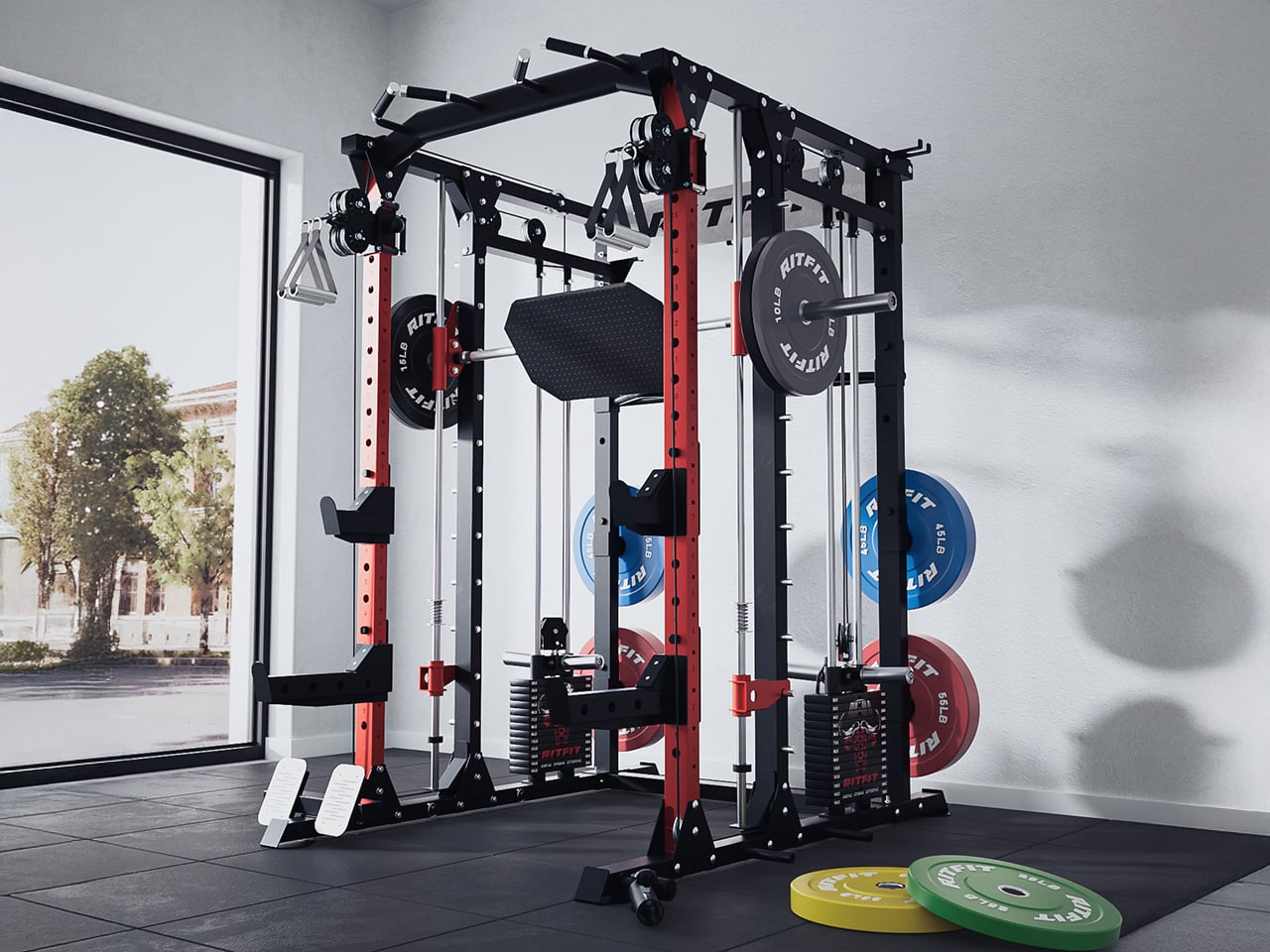
Many home gyms grow sideways, a basic rack here, a cable tower there, a bench in the corner, and plates leaning against walls. That patchwork setup works for a while, but that also makes it hard to move smoothly from warm-up to heavy work, especially if more than one person trains. A single, well-equipped frame can simplify that without feeling like a commercial monster dropped into a spare room, turning scattered gear into a system that actually flows.

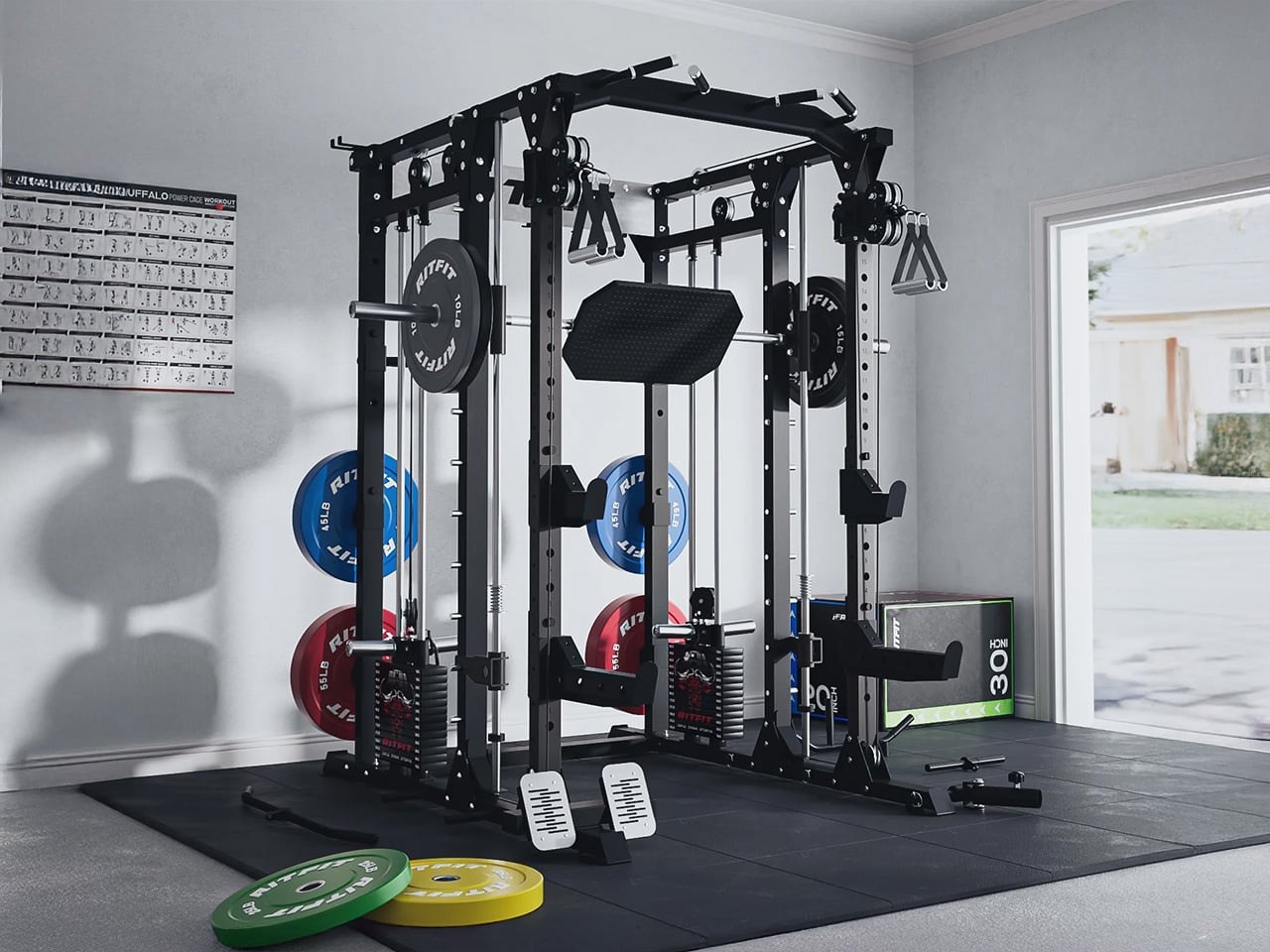
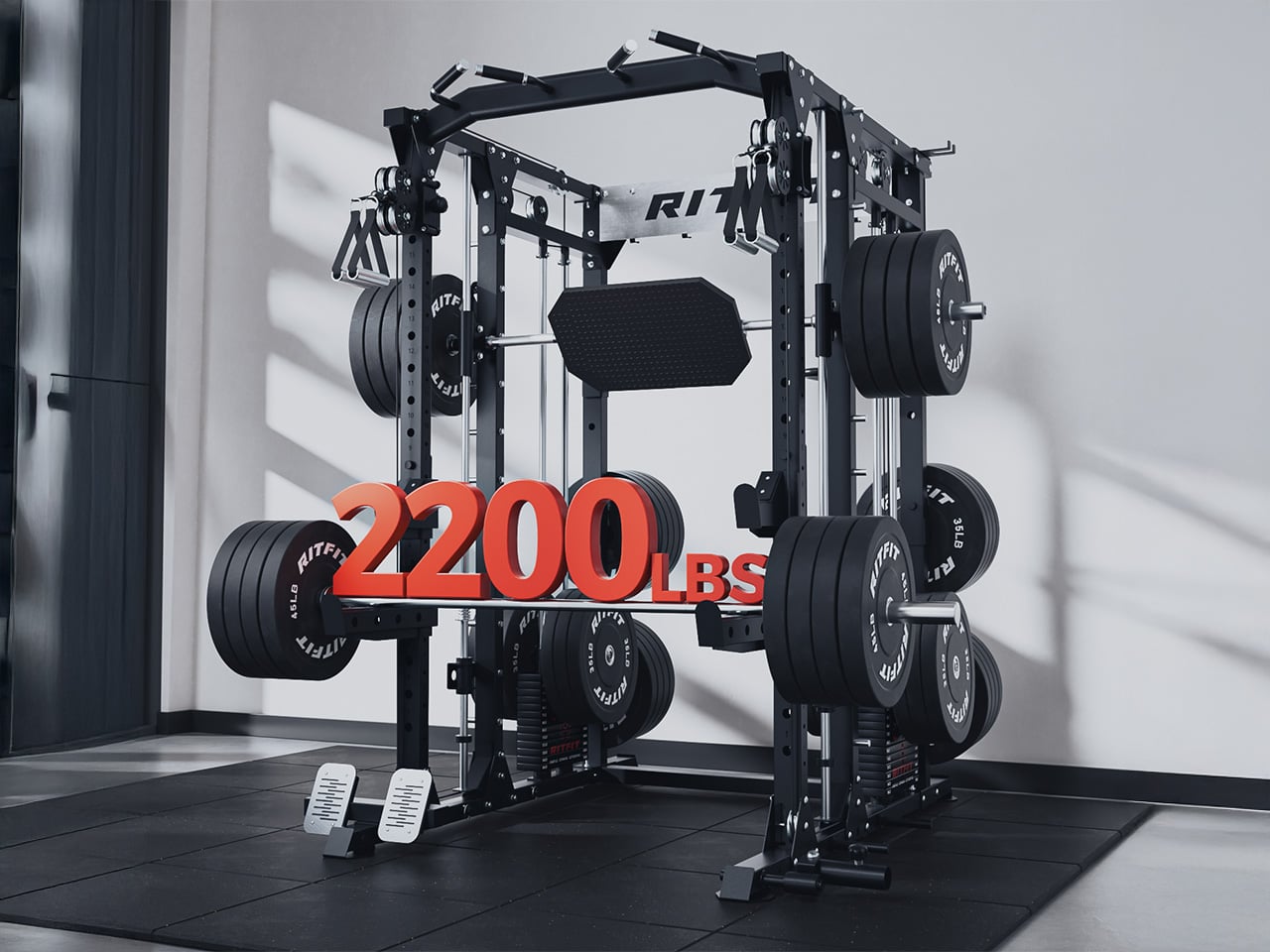
The RitFit Buffalo Wild Smith Machine with Adjustable Dual Cable System is that backbone, a rack that combines a Smith machine, dual adjustable cables, hybrid weight resistance, and storage into one footprint. It is meant to feel like a compact commercial station, with a frame capacity around 2,200lb, 2.5mm uprights, and reinforced joints, so it does not flinch when you actually load it the way you would in a gym that sees hundreds of sessions per week.

Designer: RITFIT

Click Here to Buy Now: $2610 $2899.99 (10% off, use coupon code “YANKO”). Hurry, deal ends in 48-hours!

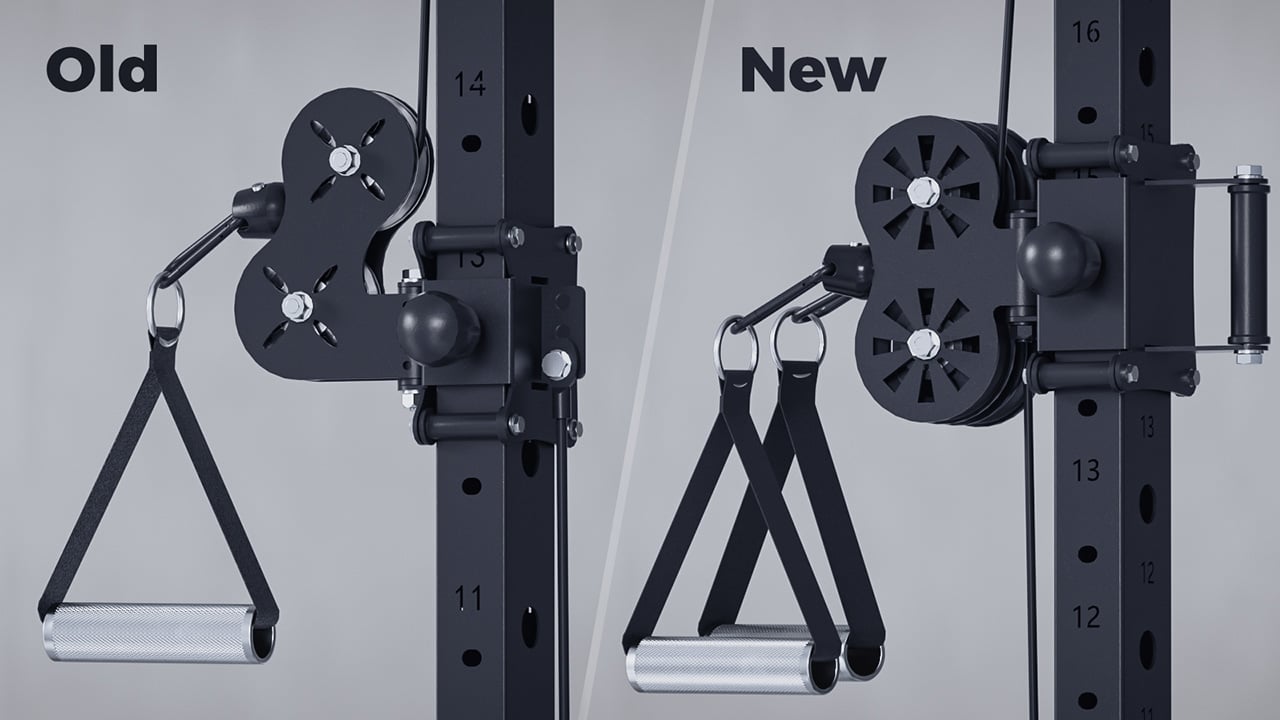
Each side of the rack runs on independent dual cable tracks, giving true unilateral control and smoother, more natural movement. The adjustable 1:1 and 2:1 pulley ratios let you switch between lighter, longer-range motion and heavier, more direct resistance without changing machines. That means you can move from precision control work to strength-focused sets by changing the ratio, not the equipment, which keeps sessions flowing and makes the rack useful for everyone from beginners to strong lifters.

The Smith side offers a taller frame, closer hole spacing, and a lowered Smith bar engineered for greater depth. That extra space opens up rows, hip thrusts, deadlifts, and crossovers with better form and deeper ranges, instead of forcing you to work around awkward start positions. The Smith has a capacity of about 352lb with 12 adjustable positions per side, enough for serious pressing and squatting while still giving you the guided path many people want when pushing near limits.

The hybrid weight system combines weight stacks with plate-loaded options, making it easy to change resistance quickly and safely. Single-side pulley load capacity is around 450lb, including a 70kg stack, while the frame itself is rated to 2,200lb. That mix gives you fine-tuned isolation work on the stacks and raw power for compound lifts on the plates, without feeling like you are outgrowing the machine as your numbers climb over months.

Rounded, de-burred J-hooks and spotter arms protect bars and hands during heavy racking, and the thicker uprights and reinforced rear cross-beam keep the rack steady under load. Built-in barbell holders, plate pegs, and accessory hooks keep everything organized, and the Smith bar can park on a top hanger to free space inside the frame. With four plate storage bars rated around 330lb each, the rack keeps weight where it belongs instead of scattered on the floor or tucked into corners.

Buffalo Wild makes sense in a shared space, where one person is running cable rows on one side while another sets up for Smith squats or pull-ups, and the transition between movements is a matter of moving a handle, not walking across the room. Instead of a garage full of mismatched stations, you get a single frame that can handle warm-ups, accessory work, and heavy lifts, and that feels stable and organized enough to be worth building the rest of the room around, whether that room is a dedicated gym or a garage that still needs to park a car on weekends.

Click Here to Buy Now: $2610 $2899.99 (10% off, use coupon code “YANKO”). Hurry, deal ends in 48-hours!

The post RitFit Buffalo Wild: Dual Cables, Weight Stacks in 2,200lb Smith Rack first appeared on Yanko Design.

Korg Phase8 Is a Cyberpunk Kalimba for Producers Who Are Bored of Regular Synths

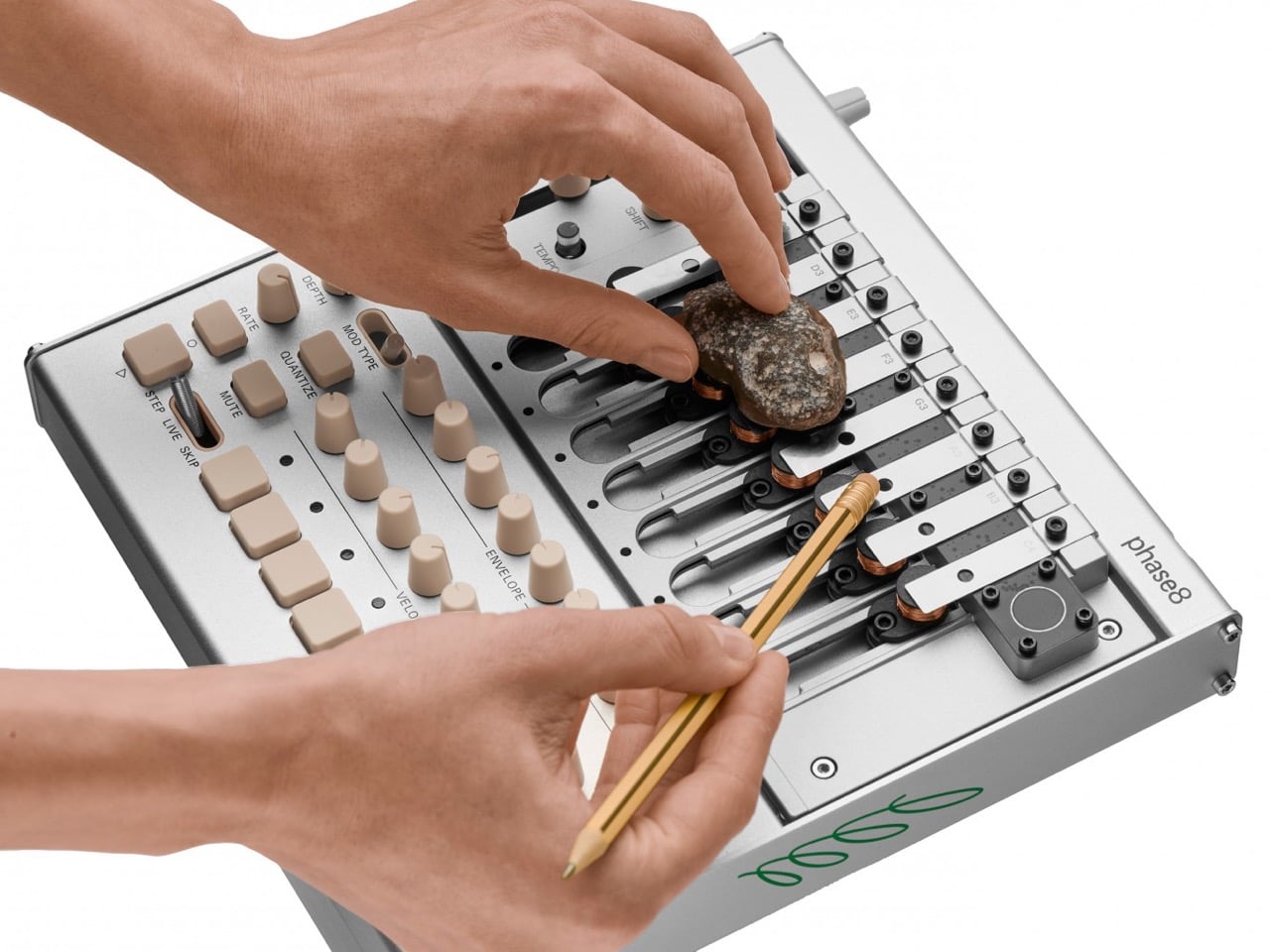
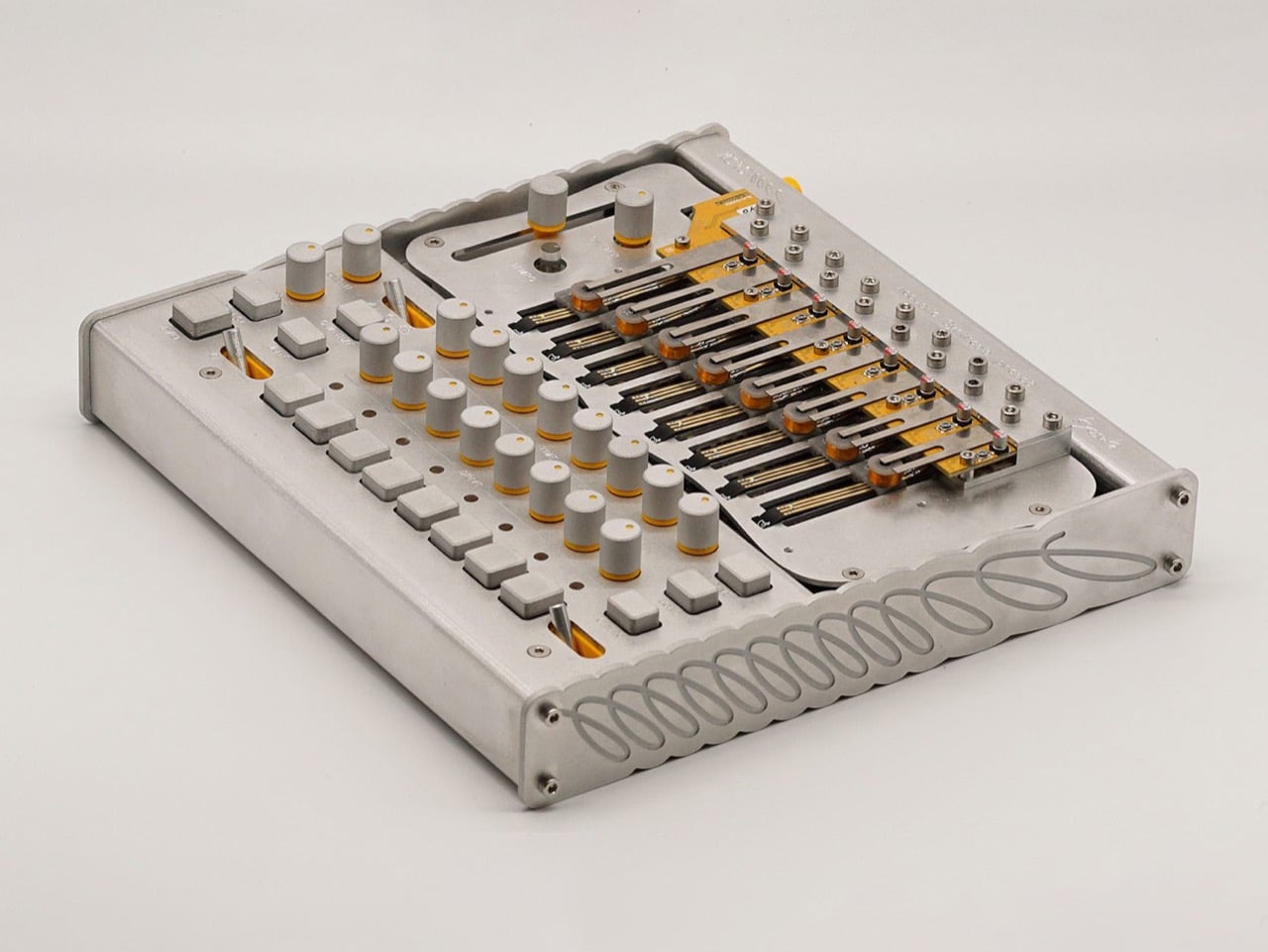
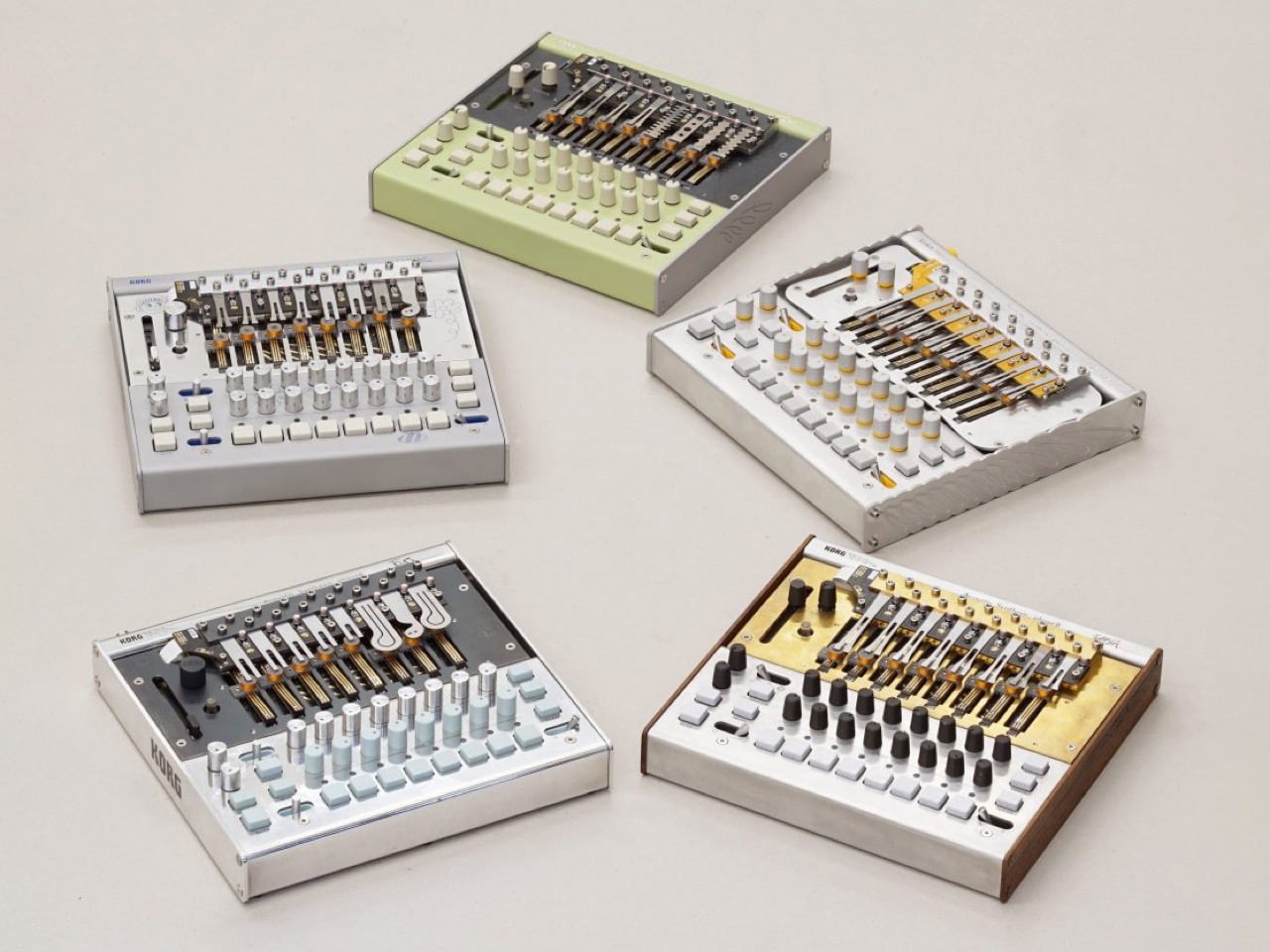
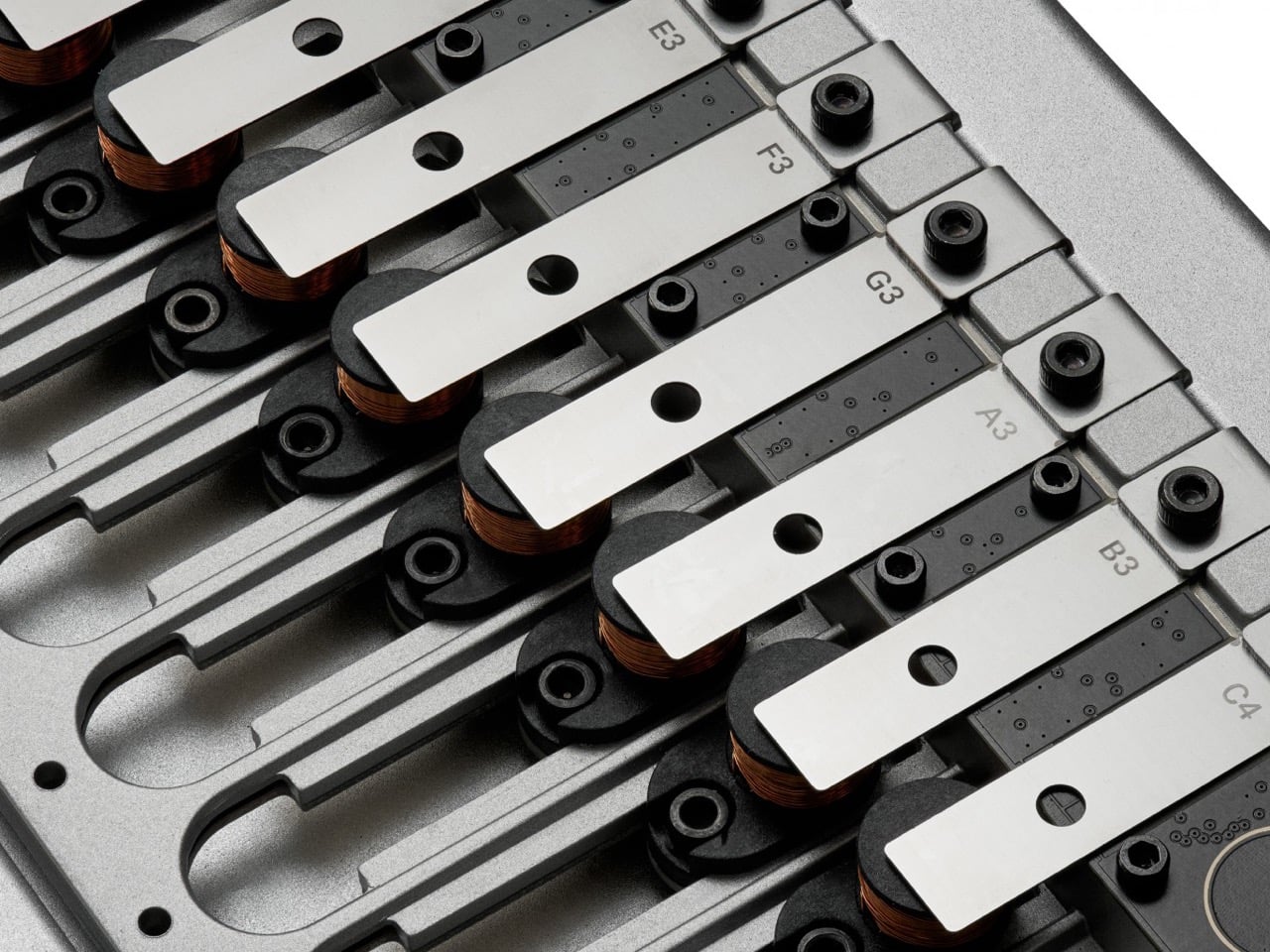
On first glance, Korg’s Phase8 looks like something Love Hultén might have dreamt up after a late night with a kalimba and a soldering iron. It has that same altar like presence, where every screw and surface feels intentional, and the exposed steel bars read more like a kinetic sculpture than a row of notes. You do not just see an instrument, you see a machine that wants to be played, prodded, and prepared with whatever objects are lying around your studio.

The result is a tabletop artifact that feels half lab instrument, half folk relic. Phase8 invites the same sort of ritualistic interaction Hultén builds into his one off consoles and synth shrines. You can sequence it like a modern groovebox, but it really comes alive when your hands, a pencil, or even a river stone start interfering with those vibrating tines.

Designer: Korg

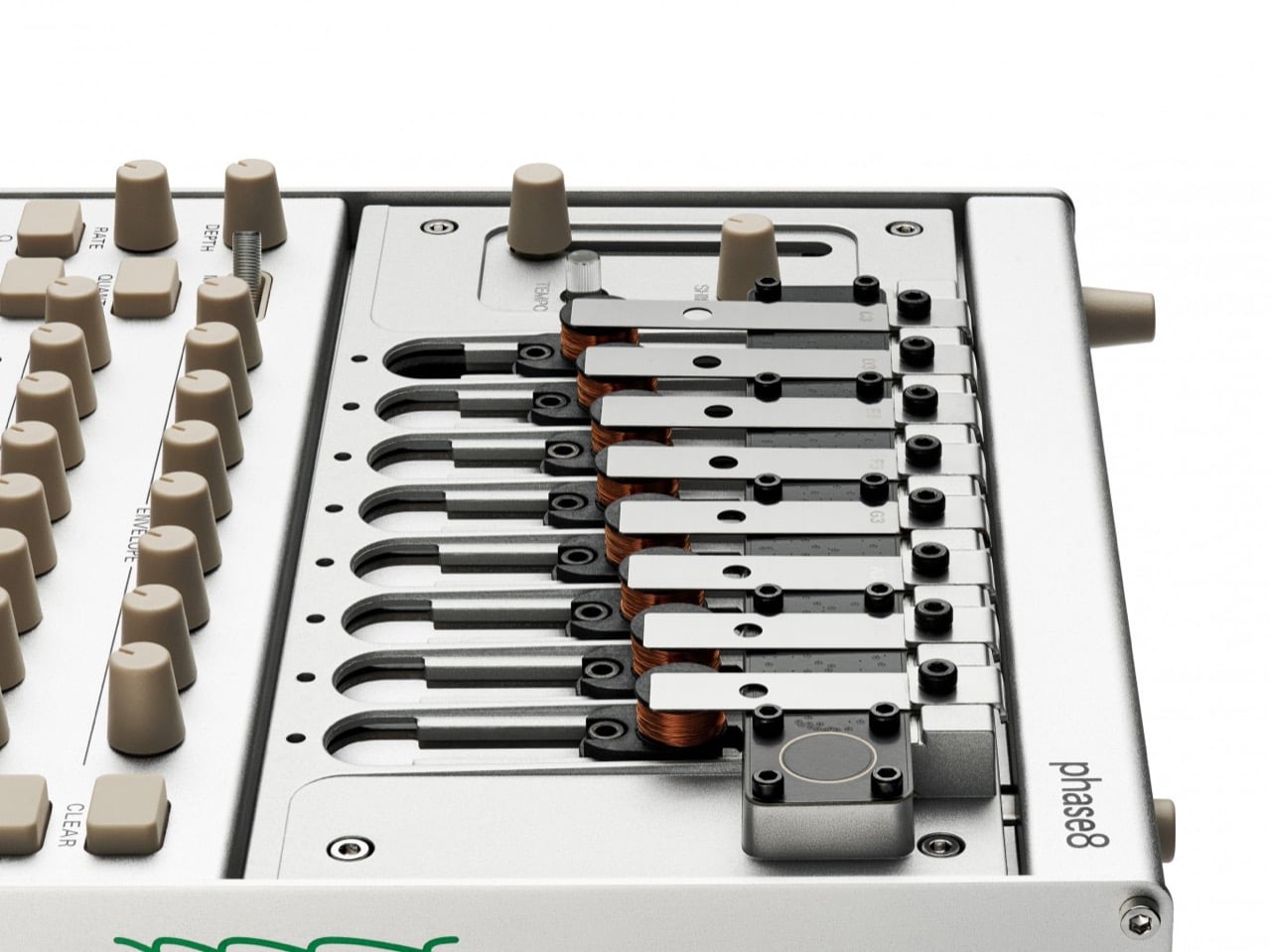
This whole thing runs on what Korg is calling “Acoustic Synthesis,” which is a fancy way of saying it hits stuff. Under each of those eight steel resonators sits an electromagnetic hammer that physically strikes the bar when triggered. A capacitive pickup then captures the resulting acoustic vibration and sends it back into the synth engine for shaping. It is a completely different path from the usual oscillator-filter-amp chain. The entire unit weighs a solid 1.71kg and measures just 231mm wide, giving it the dense, purposeful feel of a piece of lab equipment, not a lightweight music toy.

That physical interaction model is the entire point. Korg explicitly tells you to pluck, mute, and strum the resonators. They even encourage placing found objects on them to create new textures. An “AIR” slider on the side lets you boost or dampen the raw acoustic response, effectively mixing between the pure electronic signal and the sound of the physical object vibrating in the room. This haptic approach is a clever rebellion against the menu-diving and screen-staring that defines so much modern gear. It demands your physical attention.

Of course, this is a Tatsuya Takahashi project, so the experimental nature is backed by serious engineering. It has a polymetric sequencer, full MIDI and USB-C implementation, and even CV input for talking to modular rigs. At $1,150, it is not an impulse buy, but it also signals that Korg sees this as a proper studio centerpiece. They built an instrument that feels alive because, in a very real sense, its sound generation depends on physical, vibrating matter.

The post Korg Phase8 Is a Cyberpunk Kalimba for Producers Who Are Bored of Regular Synths first appeared on Yanko Design.

This Smart Charging Adapter Finally Flexes So Your Cables Don’t Have To

Charging phones and portable devices has become one of the most routine actions of modern life. From the moment we wake up to the time we go to sleep, our devices depend on reliable power. We charge at home, in offices, cafés, airports, hotels, libraries, and public transportation spaces. Despite how frequently charging occurs, the physical environments designed to support it often feel like an afterthought. Wall sockets are commonly placed low to the ground, behind furniture, under desks, or in narrow corners that were never designed with daily device use in mind.

As a result, charging cables are routinely forced into uncomfortable positions. They are bent sharply against walls, twisted sideways, or compressed between furniture and outlets. Over time, this repeated stress causes visible wear. The outer insulation begins to tear, internal wiring weakens, and charging reliability declines. Many users replace cables not because they stop working suddenly, but because gradual damage makes them unsafe or frustrating to use. This cycle creates unnecessary waste, financial cost, and ongoing inconvenience.

Designer: Berkan Sunayol
Beyond annoyance, damaged charging accessories raise genuine safety concerns. Continuous pressure on the adapter and cable can degrade electrical contact points, increasing the risk of overheating, inconsistent power delivery, or short circuits. In public and shared environments, where users may not notice early signs of damage, this becomes an overlooked safety issue.

Charging cables are intentionally designed to be flexible. They allow users to route them around objects, across surfaces, and through tight gaps. Charging adapters, however, remain rigid and stiff. This mismatch creates a critical point of failure. When a rigid adapter is plugged into an awkwardly placed socket, it locks the cable into a fixed angle. The cable is forced to bend sharply at the connector, which is often the weakest part of the entire system.

Over time, this rigidity undermines the durability of both the cable and the adapter. Despite widespread awareness of cable damage, most existing solutions focus on reinforcing the cable itself rather than addressing the adapter that causes the stress.

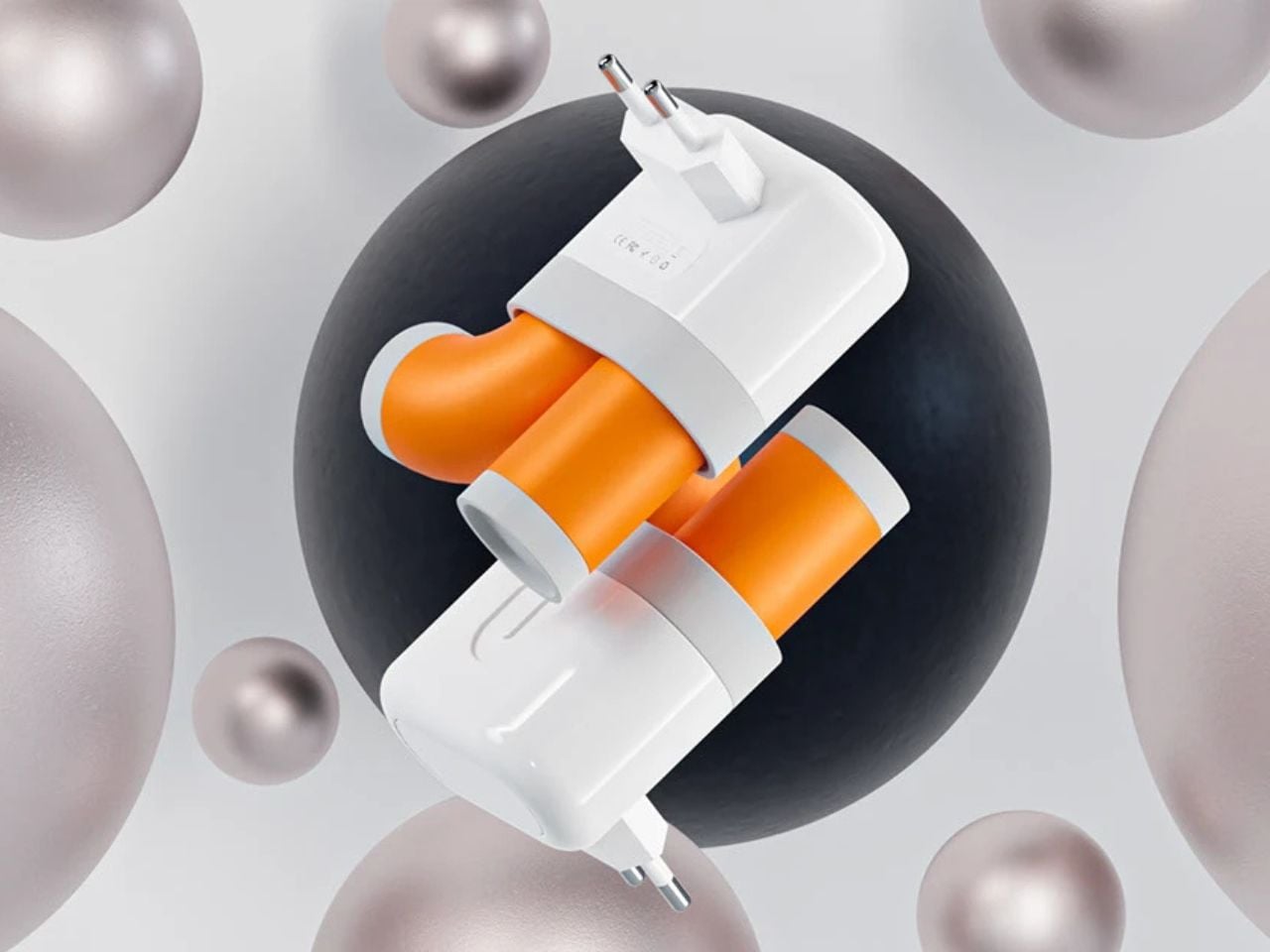
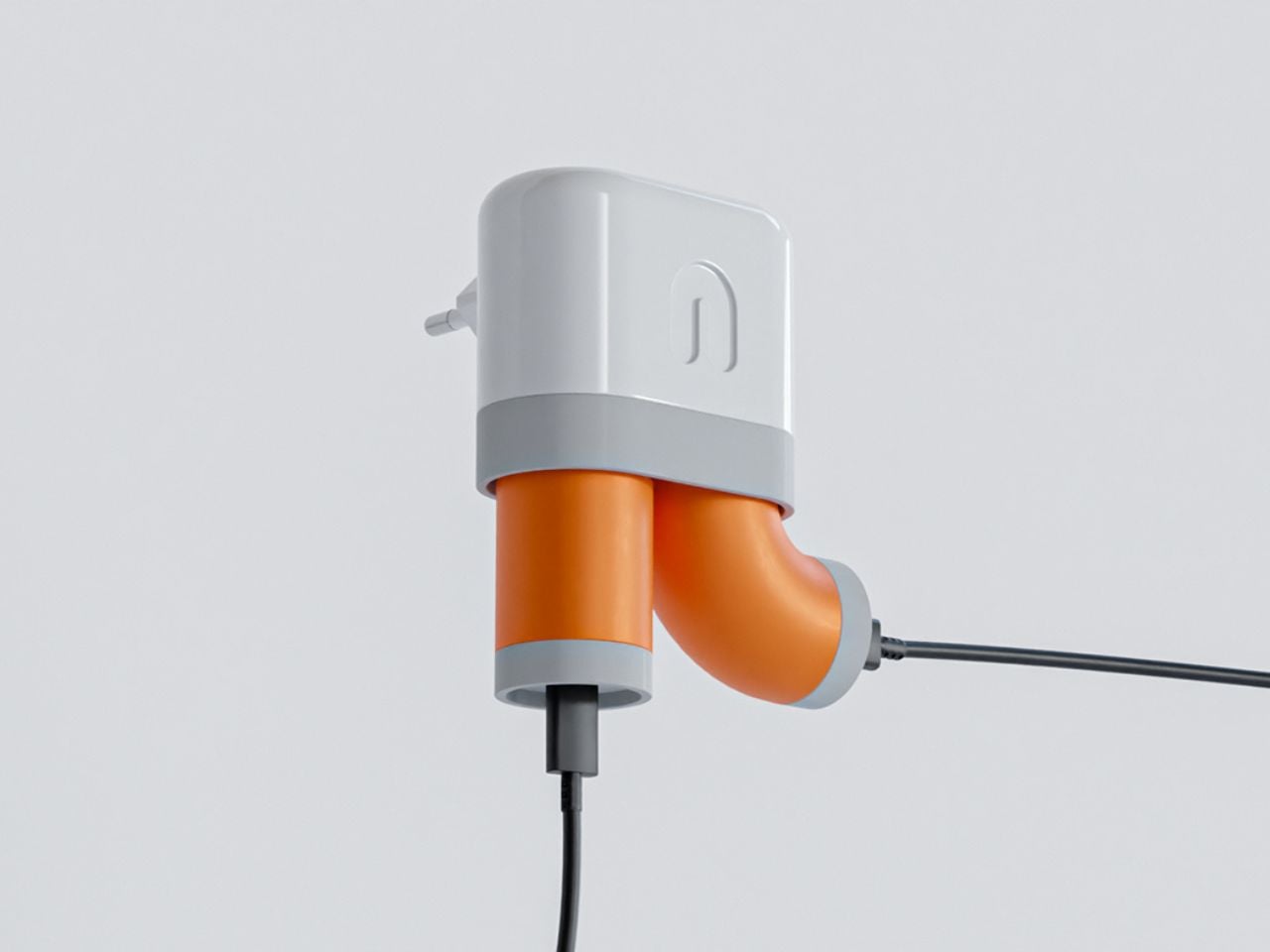
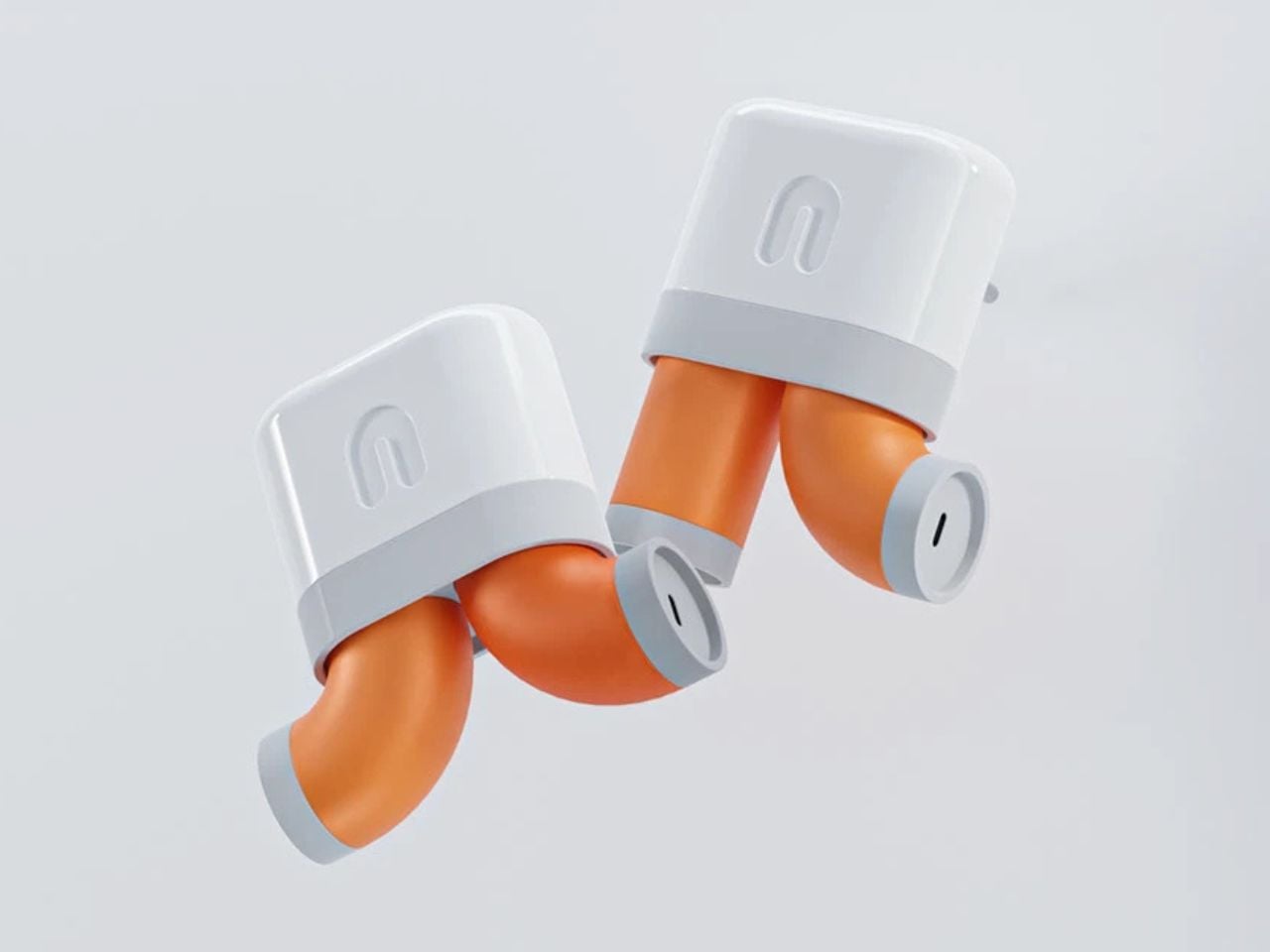
The Flexible Charge Adapter addresses this issue by rethinking the adapter as an adaptive component rather than a static block. A stretchable silicone structure is integrated into a specific section of the adapter, allowing controlled flexibility where it matters most. This design introduces a small but meaningful bend that aligns naturally with the direction of the cable.

In tight or awkward spaces, this flexibility reduces sharp angles, minimizes pressure at the connection point, and allows the cable to rest in a safer, more natural position. The adapter responds to real-world conditions instead of resisting them, helping preserve the integrity of the cable and the safety of the charging process.

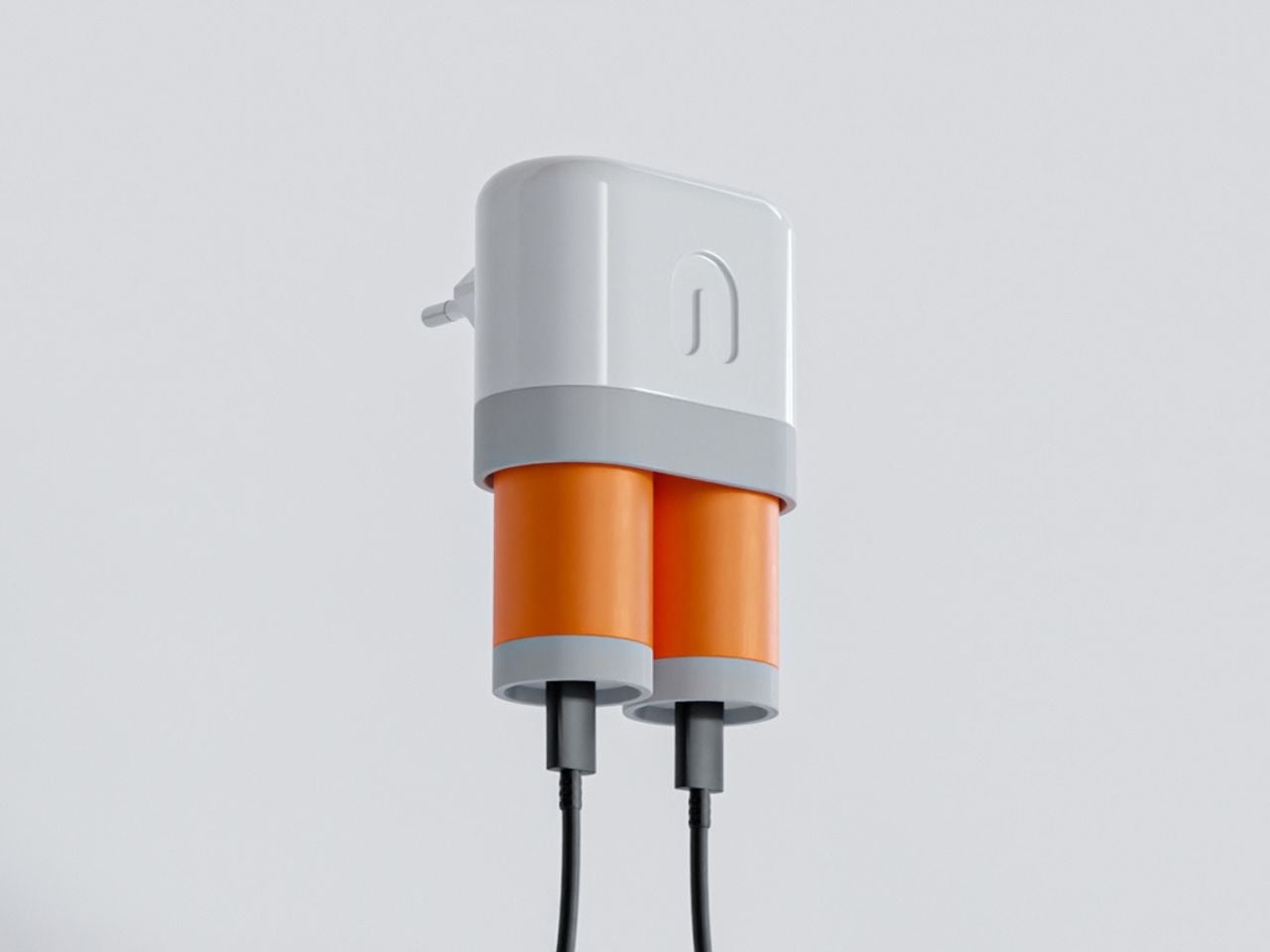
In addition to improving durability and safety, the adapter also supports modern usage patterns. With two charging ports, users can charge multiple devices at the same time, even in confined environments. Phones, earbuds, power banks, and other accessories can be powered simultaneously without crowding the socket or straining cables.

The Flexible Charge Adapter demonstrates how thoughtful design can address everyday frustrations that are often overlooked. By introducing flexibility into a traditionally rigid object, it extends the life of charging accessories, reduces safety risks, and improves the overall charging experience. In a world where charging is constant and unavoidable, this design makes a simple act safer, smarter, and more sustainable.

The post This Smart Charging Adapter Finally Flexes So Your Cables Don’t Have To first appeared on Yanko Design.

This Smart Charging Adapter Finally Flexes So Your Cables Don’t Have To

Charging phones and portable devices has become one of the most routine actions of modern life. From the moment we wake up to the time we go to sleep, our devices depend on reliable power. We charge at home, in offices, cafés, airports, hotels, libraries, and public transportation spaces. Despite how frequently charging occurs, the physical environments designed to support it often feel like an afterthought. Wall sockets are commonly placed low to the ground, behind furniture, under desks, or in narrow corners that were never designed with daily device use in mind.

As a result, charging cables are routinely forced into uncomfortable positions. They are bent sharply against walls, twisted sideways, or compressed between furniture and outlets. Over time, this repeated stress causes visible wear. The outer insulation begins to tear, internal wiring weakens, and charging reliability declines. Many users replace cables not because they stop working suddenly, but because gradual damage makes them unsafe or frustrating to use. This cycle creates unnecessary waste, financial cost, and ongoing inconvenience.

Designer: Berkan Sunayol
Beyond annoyance, damaged charging accessories raise genuine safety concerns. Continuous pressure on the adapter and cable can degrade electrical contact points, increasing the risk of overheating, inconsistent power delivery, or short circuits. In public and shared environments, where users may not notice early signs of damage, this becomes an overlooked safety issue.

Charging cables are intentionally designed to be flexible. They allow users to route them around objects, across surfaces, and through tight gaps. Charging adapters, however, remain rigid and stiff. This mismatch creates a critical point of failure. When a rigid adapter is plugged into an awkwardly placed socket, it locks the cable into a fixed angle. The cable is forced to bend sharply at the connector, which is often the weakest part of the entire system.
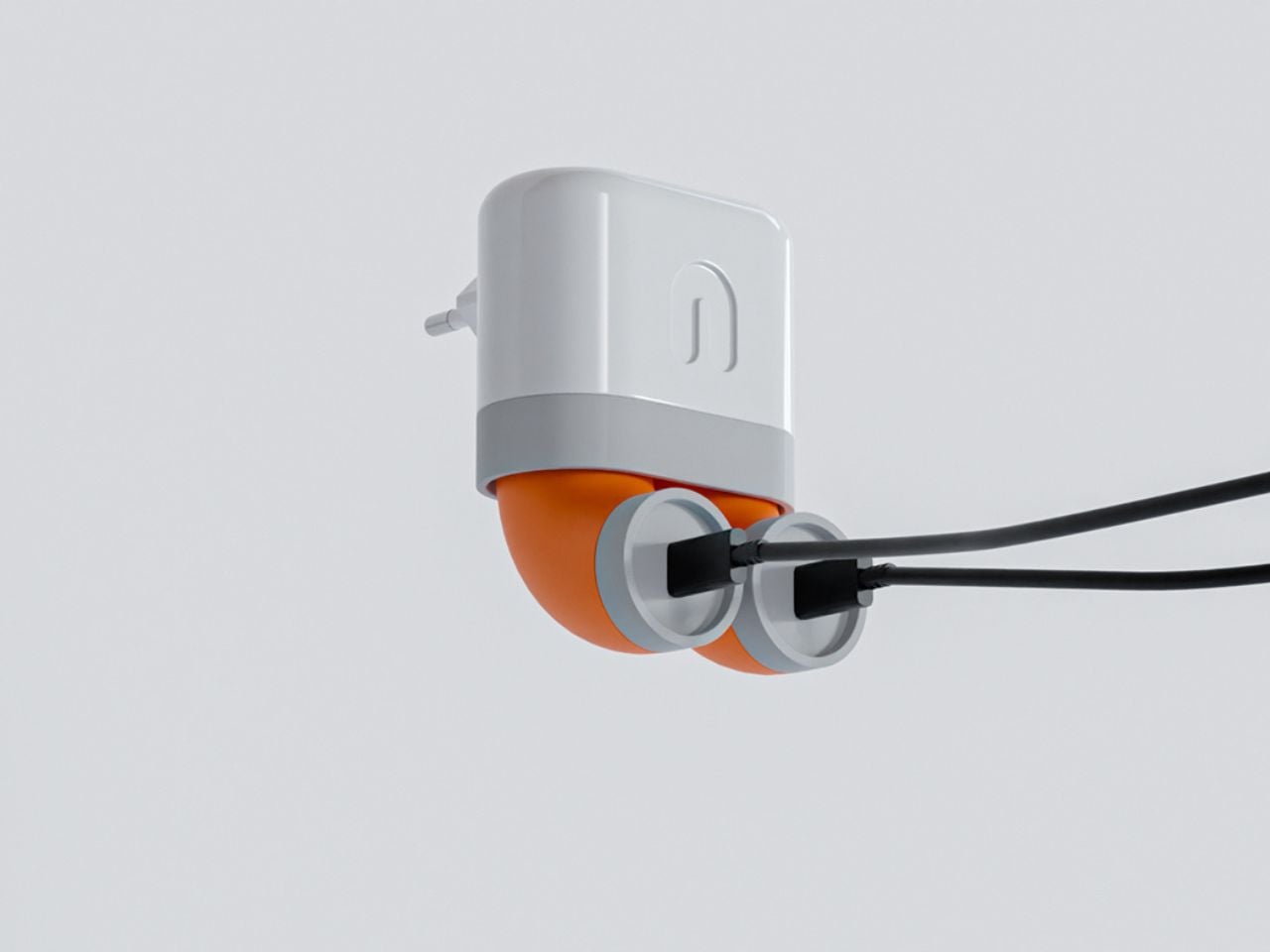
Over time, this rigidity undermines the durability of both the cable and the adapter. Despite widespread awareness of cable damage, most existing solutions focus on reinforcing the cable itself rather than addressing the adapter that causes the stress.

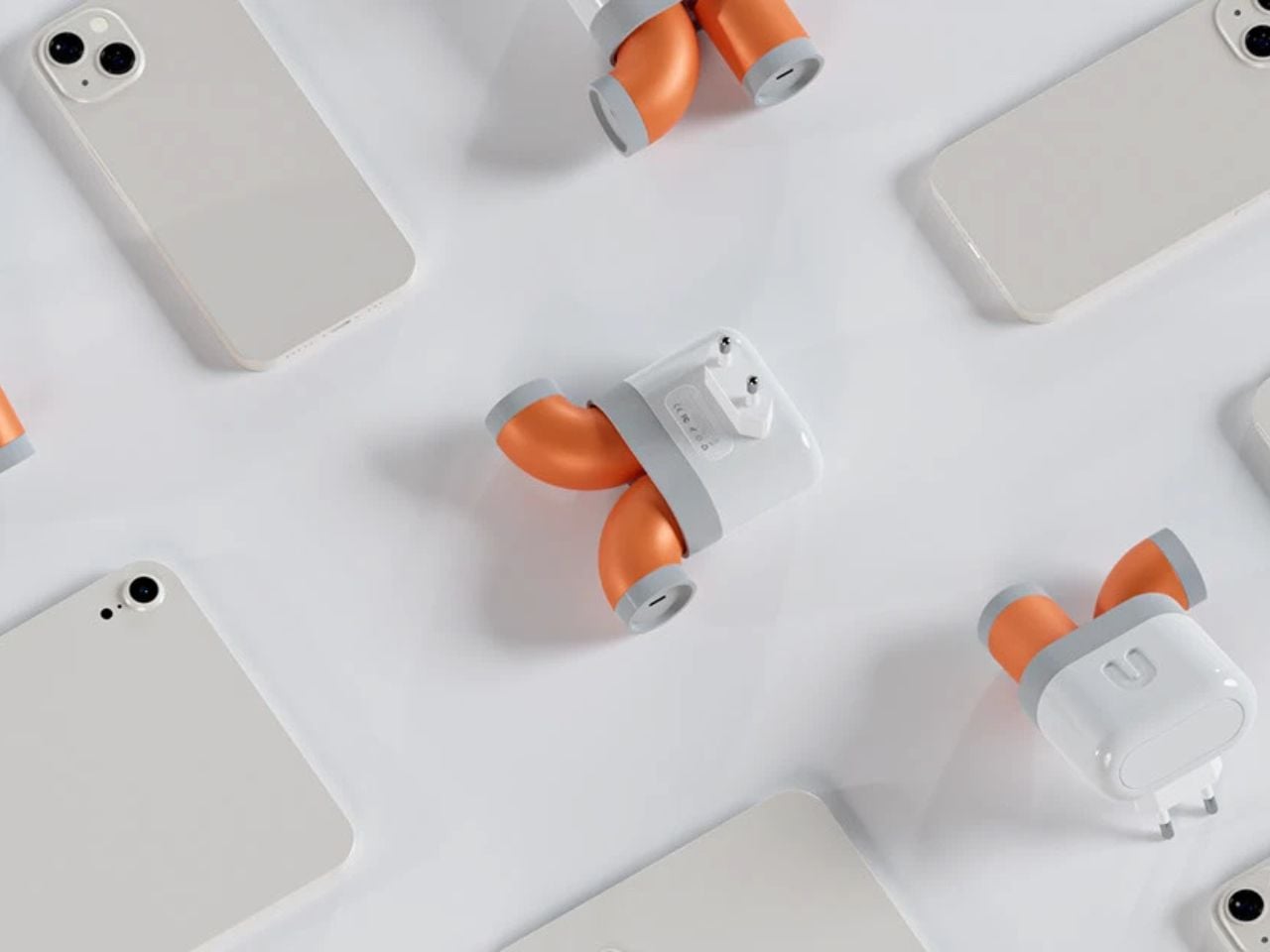
The Flexible Charge Adapter addresses this issue by rethinking the adapter as an adaptive component rather than a static block. A stretchable silicone structure is integrated into a specific section of the adapter, allowing controlled flexibility where it matters most. This design introduces a small but meaningful bend that aligns naturally with the direction of the cable.
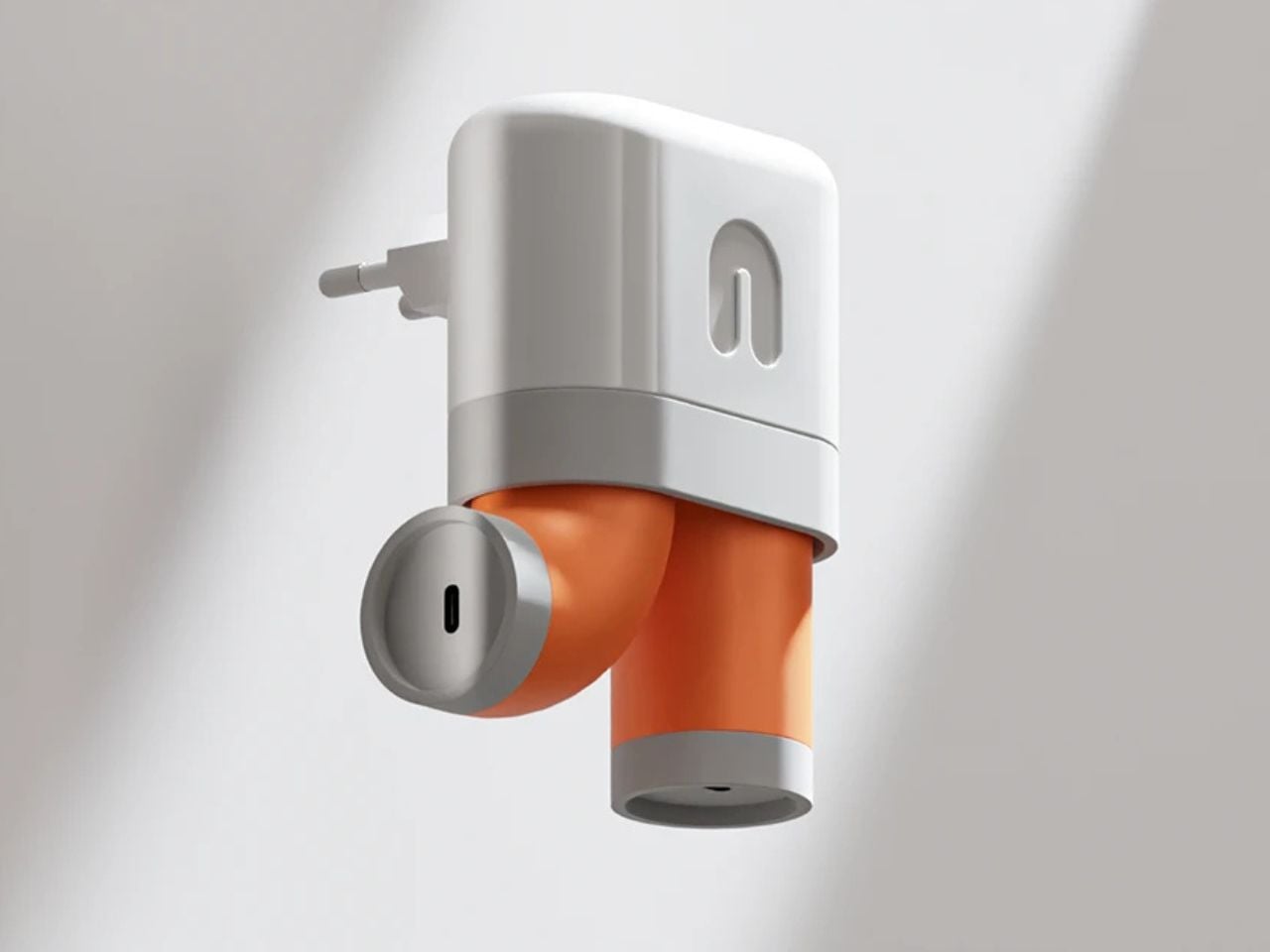
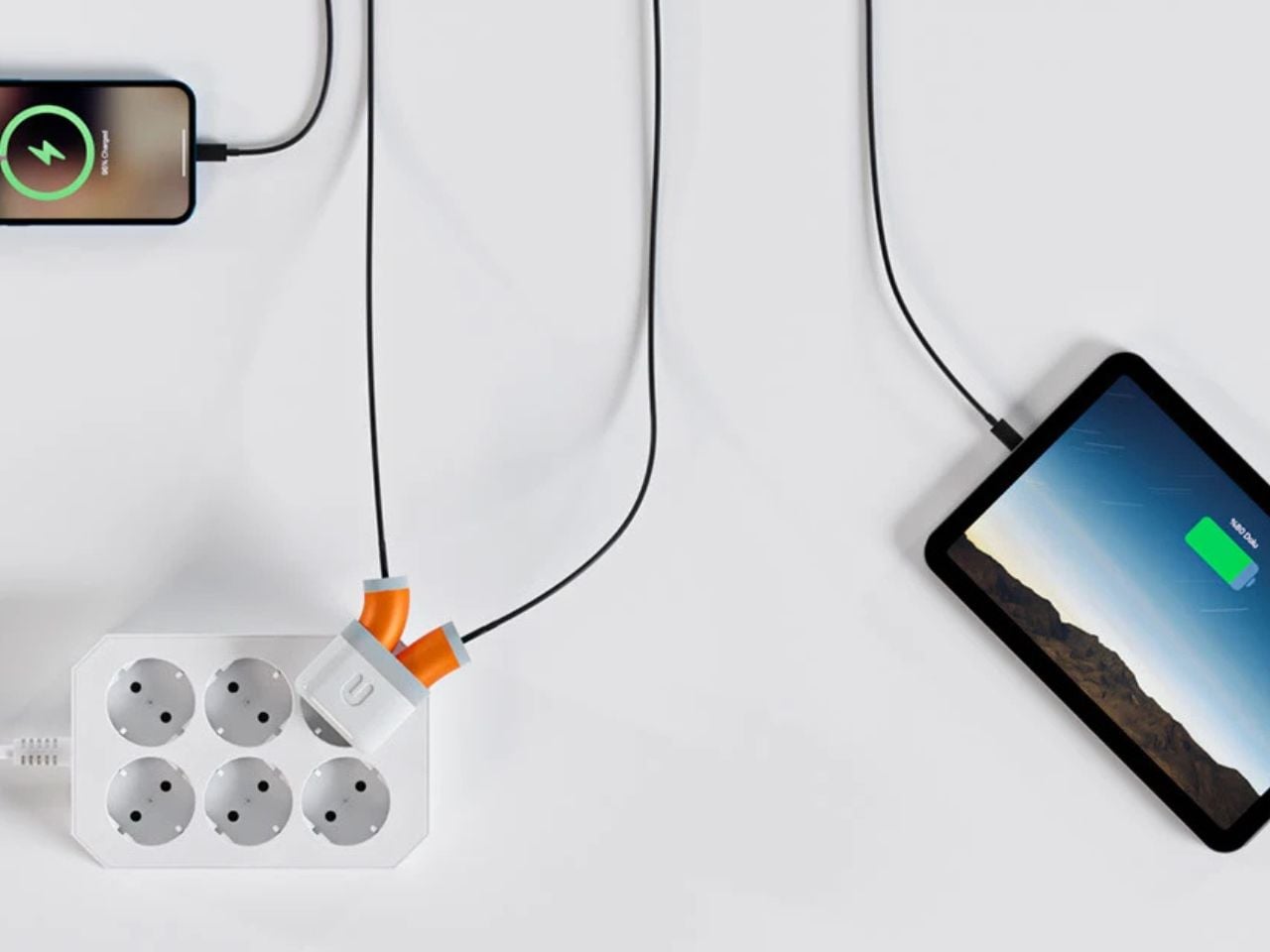
In tight or awkward spaces, this flexibility reduces sharp angles, minimizes pressure at the connection point, and allows the cable to rest in a safer, more natural position. The adapter responds to real-world conditions instead of resisting them, helping preserve the integrity of the cable and the safety of the charging process.

In addition to improving durability and safety, the adapter also supports modern usage patterns. With two charging ports, users can charge multiple devices at the same time, even in confined environments. Phones, earbuds, power banks, and other accessories can be powered simultaneously without crowding the socket or straining cables.

The Flexible Charge Adapter demonstrates how thoughtful design can address everyday frustrations that are often overlooked. By introducing flexibility into a traditionally rigid object, it extends the life of charging accessories, reduces safety risks, and improves the overall charging experience. In a world where charging is constant and unavoidable, this design makes a simple act safer, smarter, and more sustainable.
The post This Smart Charging Adapter Finally Flexes So Your Cables Don’t Have To first appeared on Yanko Design.
This Smart Charging Adapter Finally Flexes So Your Cables Don’t Have To

Charging phones and portable devices has become one of the most routine actions of modern life. From the moment we wake up to the time we go to sleep, our devices depend on reliable power. We charge at home, in offices, cafés, airports, hotels, libraries, and public transportation spaces. Despite how frequently charging occurs, the physical environments designed to support it often feel like an afterthought. Wall sockets are commonly placed low to the ground, behind furniture, under desks, or in narrow corners that were never designed with daily device use in mind.

As a result, charging cables are routinely forced into uncomfortable positions. They are bent sharply against walls, twisted sideways, or compressed between furniture and outlets. Over time, this repeated stress causes visible wear. The outer insulation begins to tear, internal wiring weakens, and charging reliability declines. Many users replace cables not because they stop working suddenly, but because gradual damage makes them unsafe or frustrating to use. This cycle creates unnecessary waste, financial cost, and ongoing inconvenience.

Designer: Berkan Sunayol

Beyond annoyance, damaged charging accessories raise genuine safety concerns. Continuous pressure on the adapter and cable can degrade electrical contact points, increasing the risk of overheating, inconsistent power delivery, or short circuits. In public and shared environments, where users may not notice early signs of damage, this becomes an overlooked safety issue.

Charging cables are intentionally designed to be flexible. They allow users to route them around objects, across surfaces, and through tight gaps. Charging adapters, however, remain rigid and stiff. This mismatch creates a critical point of failure. When a rigid adapter is plugged into an awkwardly placed socket, it locks the cable into a fixed angle. The cable is forced to bend sharply at the connector, which is often the weakest part of the entire system.

Over time, this rigidity undermines the durability of both the cable and the adapter. Despite widespread awareness of cable damage, most existing solutions focus on reinforcing the cable itself rather than addressing the adapter that causes the stress.

The Flexible Charge Adapter addresses this issue by rethinking the adapter as an adaptive component rather than a static block. A stretchable silicone structure is integrated into a specific section of the adapter, allowing controlled flexibility where it matters most. This design introduces a small but meaningful bend that aligns naturally with the direction of the cable.

In tight or awkward spaces, this flexibility reduces sharp angles, minimizes pressure at the connection point, and allows the cable to rest in a safer, more natural position. The adapter responds to real-world conditions instead of resisting them, helping preserve the integrity of the cable and the safety of the charging process.

In addition to improving durability and safety, the adapter also supports modern usage patterns. With two charging ports, users can charge multiple devices at the same time, even in confined environments. Phones, earbuds, power banks, and other accessories can be powered simultaneously without crowding the socket or straining cables.

The Flexible Charge Adapter demonstrates how thoughtful design can address everyday frustrations that are often overlooked. By introducing flexibility into a traditionally rigid object, it extends the life of charging accessories, reduces safety risks, and improves the overall charging experience. In a world where charging is constant and unavoidable, this design makes a simple act safer, smarter, and more sustainable.

The post This Smart Charging Adapter Finally Flexes So Your Cables Don’t Have To first appeared on Yanko Design.
People are uninstalling TikTok and downloading an indie competitor

TikTok's newly formed US entity is off to a very bumpy start. As the app continues to face technical issues affecting the recommendation algorithm, view counts and other features, TikTok is also seeing a wave of frustrated users uninstalling it, according to new data.

Analytics firm Sensor Tower, which tracks downloads and other app store-related metrics, told CNBC that there has been a 150 percent rise in uninstalls of the TikTok app in the United States compared with the last three months. An analyst at Sensor Tower told Engadget that TikTok's US daily active users (DAUs) have increased about 2 percent in the same time period, and are flat week-over-week. TikTok has blamed a power outage at a data center for “multiple bugs,” including those affecting view counts and load times. The company hasn't said when users can expect a fix.

At the same time, an independent app called UpScrolled has seen a surge in interest over the last few days. The app is currently the ninth most-downloaded app in the US App Store and the second most popular social app (Meta's Threads is currently in the number one spot for social apps). The app has also reached the top five in the UK and Australian app stores. In the United States, its sudden popularity seems to be closely tied to recent changes at TikTok. 

UpScrolled has seen 41,000 total downloads between Thursday (the day the US joint venture was formalized) and Saturday, according to estimates from App Figures. The app, which was first released last June, has been downloaded about 140,000 times between Apple and Google's app stores, according to App Figures. Prior to last Thursday, the app was averaging less than 500 downloads a day, according to the company. The rapid increase in downloads has apparently caused some issues for the company which asked users to "bear with us" on Monday.

Created by an Australian developer, UpScrolled looks a bit like Instagram. Users can share photos and shortform videos. The app defaults to a chronological "following" feed, though it does also recommend content to users. The app is "privately funded by its founder, Issam Hijazi, together with a small group of individual investors who share our mission and values," according to an FAQ on UpScrolled's website. It currently has no ads, though the company says it "probably" will in the future. 

This isn't the first time turmoil at TikTok has benefitted a previously little-known app. Chinese app RedNote briefly became the top app in the United States early last year as TikTok faced a potential ban. RedNote's popularity proved to be short-lived, though, as the 2025 TikTok "ban" ended up lasting only a couple of hours. 

But with new owners at TikTok and growing frustration over technical issues with the app, there could be an opportunity for a new shortform video service that's not controlled by a huge corporation. And that's what UpScrolled seems to be betting on. "Too often, users are left uncertain about whether their voices will be heard or quietly suppressed," the company writes on its website. "UpScrolled changes that by ensuring every post has a fair chance to be seen, creating an environment that is authentic, unfiltered, and equitable for all."

Update, January 26, 2026, 4:28PM PT: This post was updated to reflect the latest details from TikTok about the ongoing issues affecting the US version of the app.

This article originally appeared on Engadget at https://www.engadget.com/social-media/people-are-uninstalling-tiktok-and-downloading-an-indie-competitor-233345222.html?src=rss

This Leaf-Like Tool Turns Everyday Walks Into Small Acts of Care for Hidden Lives

We have all heard the phrases “Don’t litter.” “Stop global warming.” They appear on posters, billboards, campaigns, and packaging, repeated so often that they begin to blur into background noise. While the intention behind them is urgent and necessary, the language of sustainability has become heavy and exhausting. It often asks people to think at a global scale, to feel responsible for enormous systems that feel far beyond individual control. Over time, this can create distance instead of motivation. But what if sustainability did not begin with fixing the entire planet? What if it started with noticing the small lives right beneath our feet?

LIVIO is a project that reimagines sustainability through small, meaningful actions rooted in everyday experience. On walking trails, mountain paths, sidewalks, and parks, countless tiny creatures move through human spaces each day. Snails, insects, and other small beings navigate these environments quietly, often crossing paths with people who never notice them. It is not uncommon to find these creatures accidentally crushed by footsteps, bikes, or shoes. These moments are brief and easy to overlook, yet they represent lives lost simply because we were not paying attention.

Designer: Subin Kim

The goal of LIVIO is to protect those small lives and to make care feel possible for more people. While many individuals want to help, touching insects or snails directly can feel uncomfortable or even frightening. Fear, hesitation, or disgust often becomes a barrier between intention and action. LIVIO addresses this gap by offering a gentle and thoughtful tool that allows people to help without direct contact.

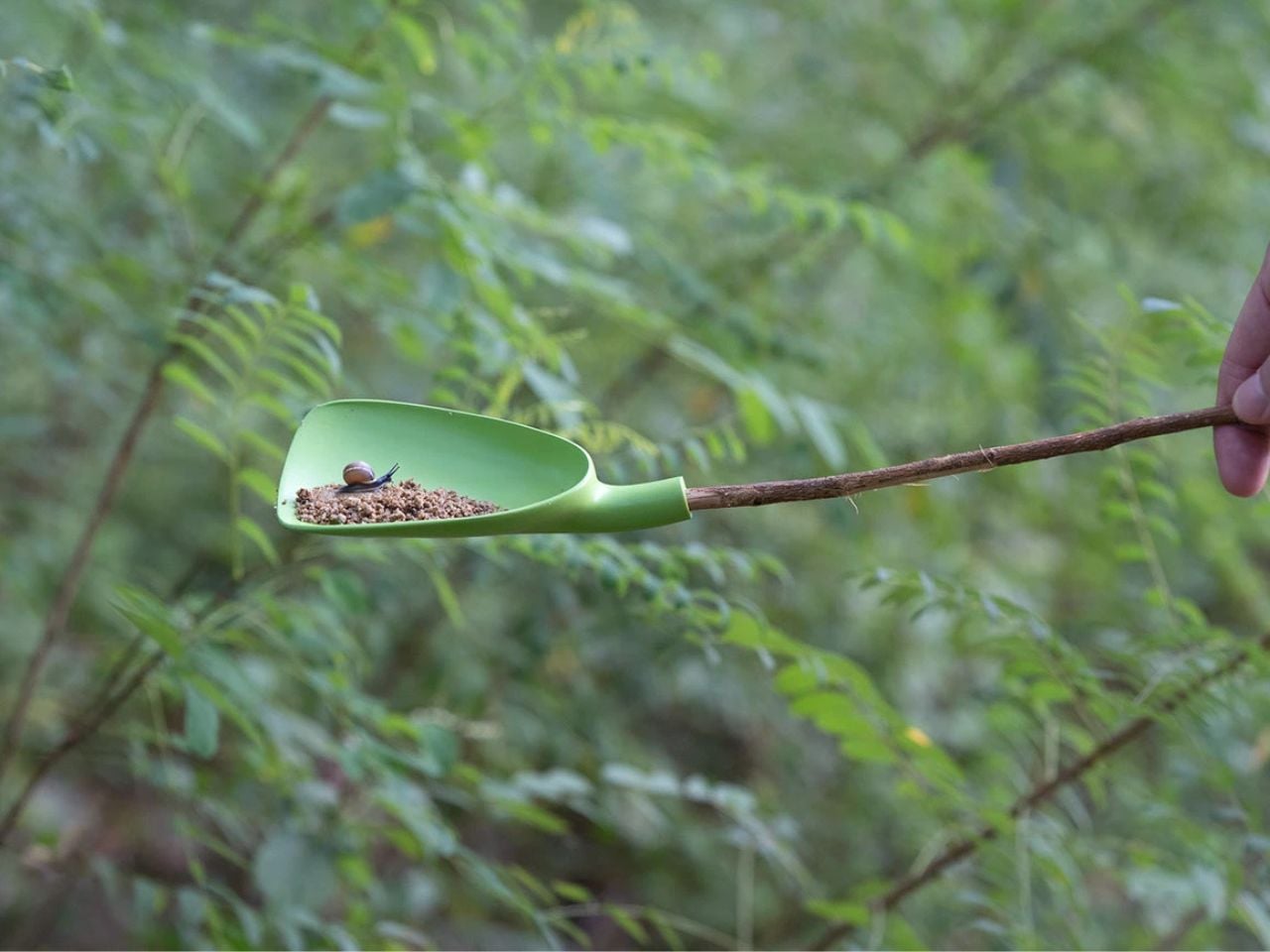
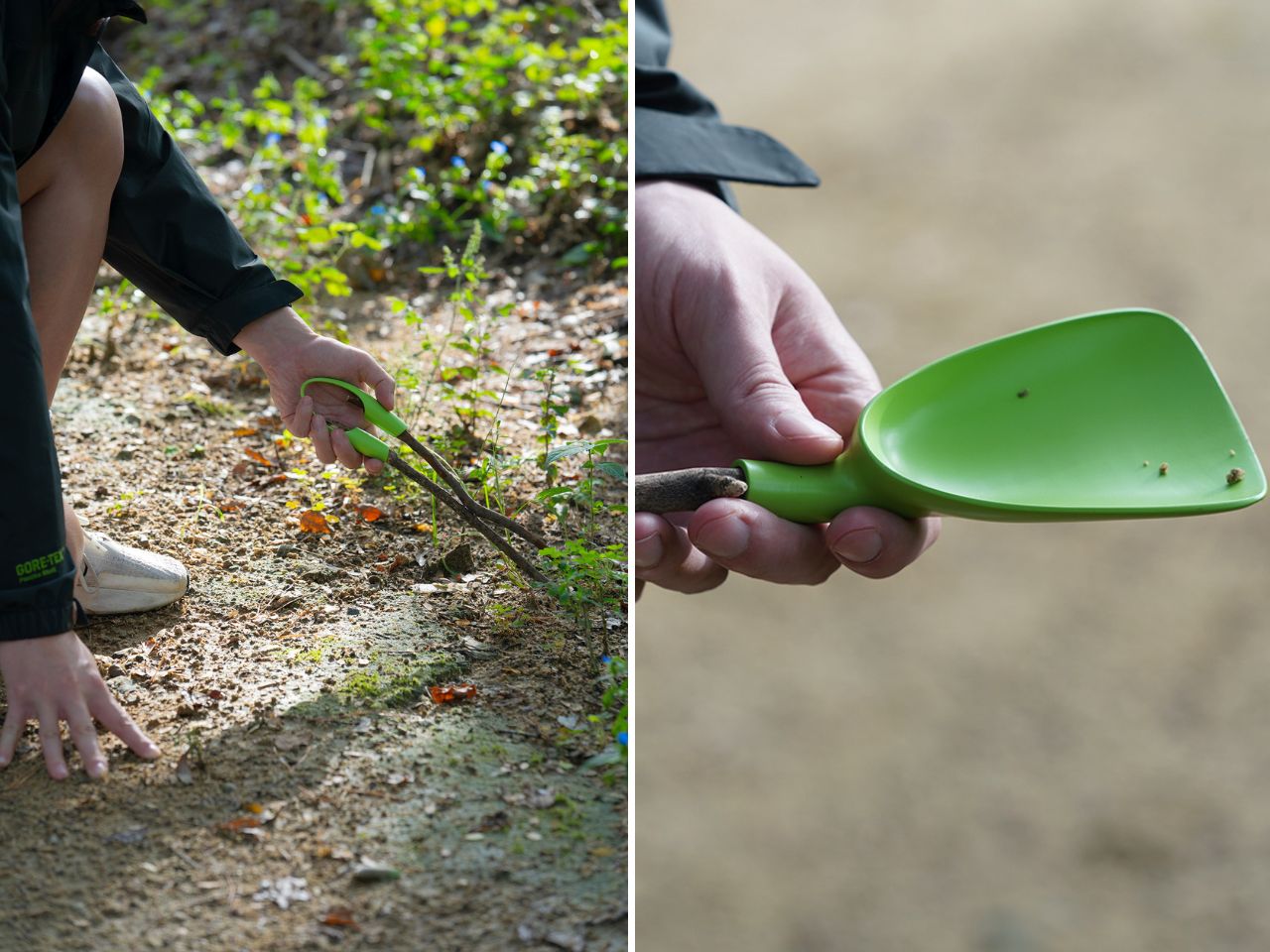
If you come across a small creature in crisis, LIVIO gives you a simple way to respond. The tool is designed to feel calm and intuitive rather than technical or intimidating. There are two tool types, each responding to different environmental conditions. In areas with little soil, the tongs allow careful and precise movement. In places where soil is present, the shovel tool lets users scoop the creature together with the surrounding ground, preserving its immediate habitat and reducing harm.

A defining aspect of LIVIO is how the tool is completed. Rather than being fully manufactured, it is finished using fallen branches found in nature. By reducing the amount of silicone used as its main material, the tool becomes even more environmentally conscious. The act of finding and attaching branches transforms the experience from simple use into participation. It encourages users to slow down, observe their surroundings, and engage physically with the environment. Sustainability becomes something playful and personal rather than distant or moralizing.

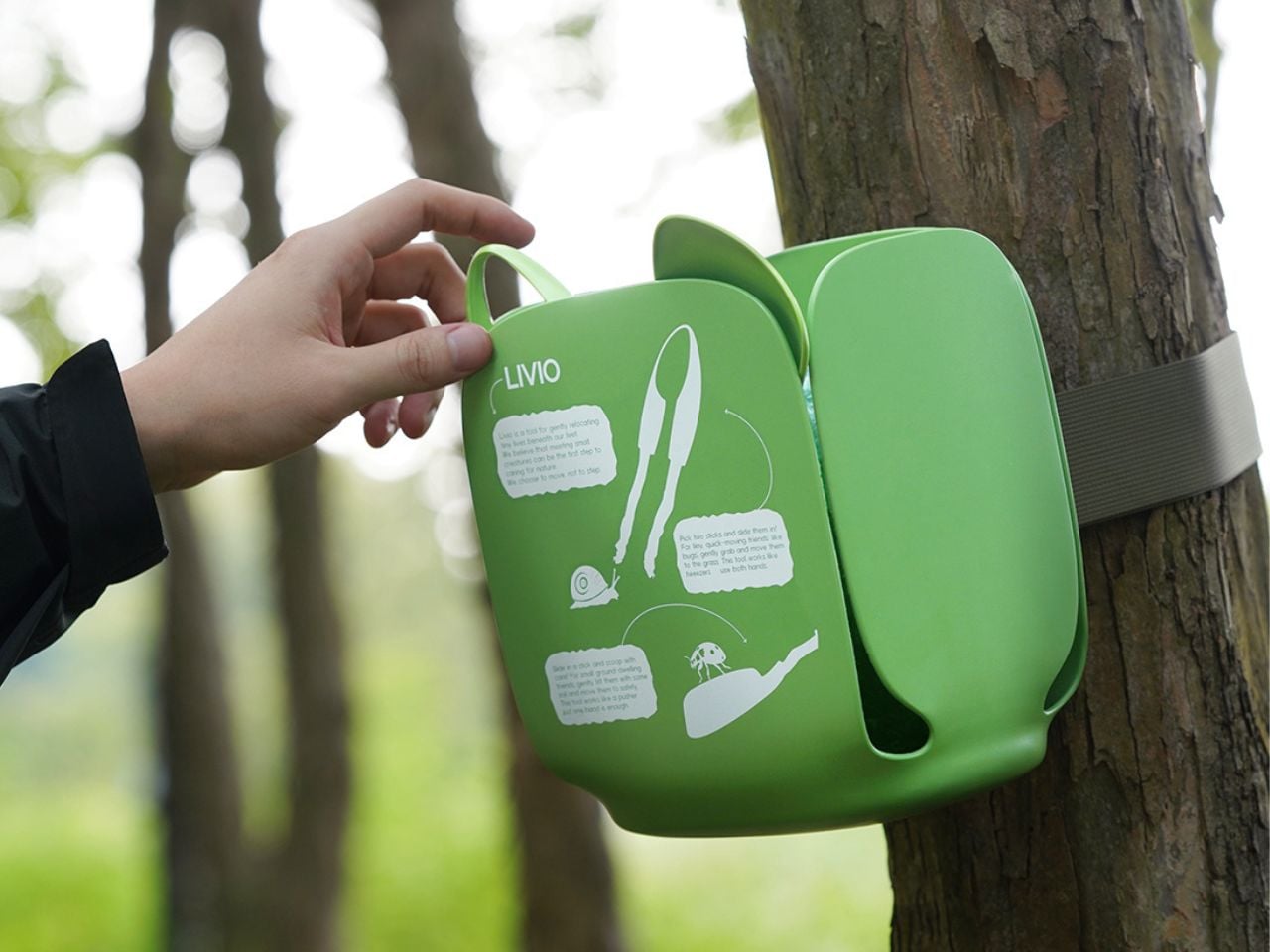
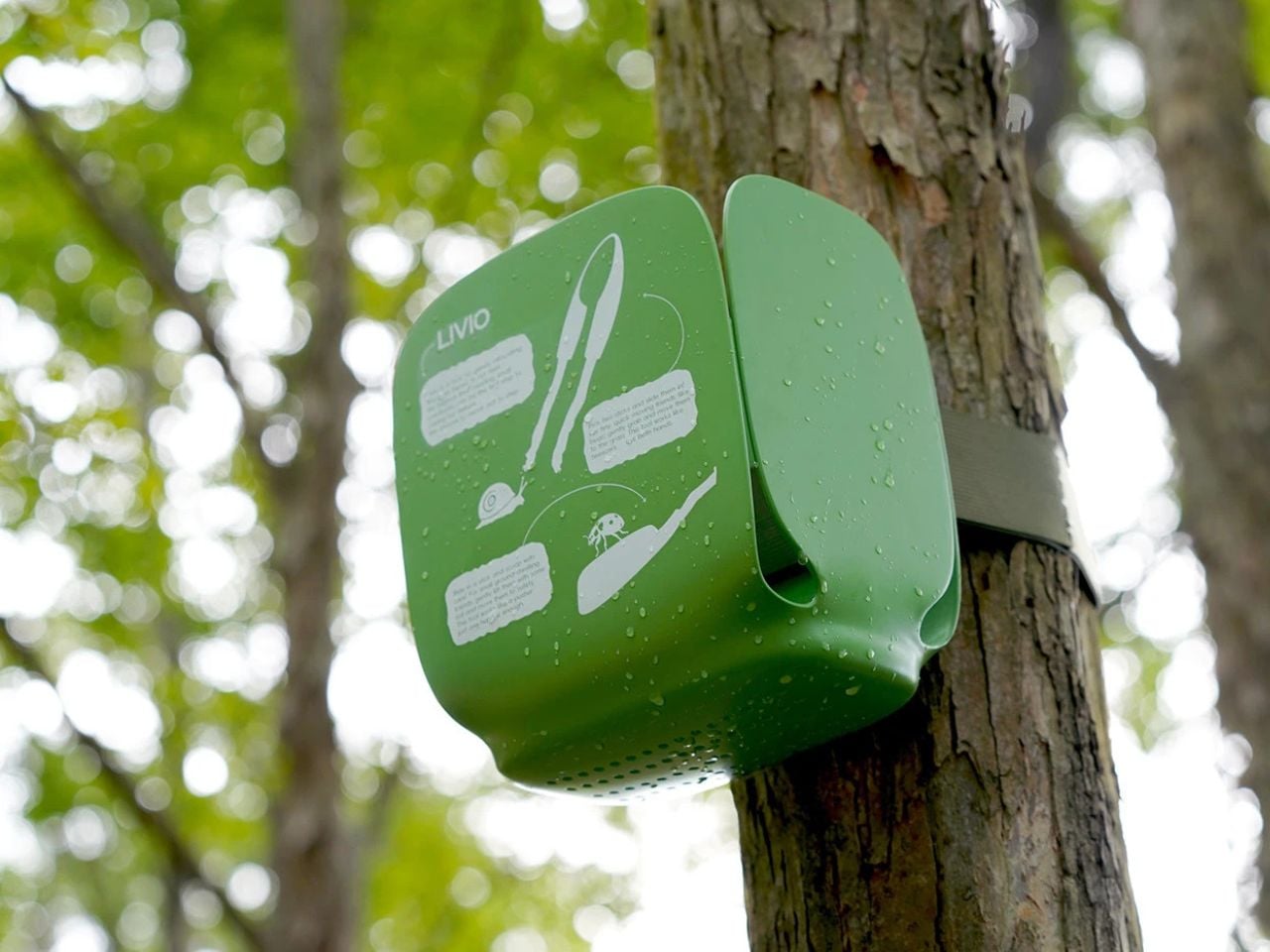
LIVIO also exists as a shared public resource. Tool stations can be installed on street trees, lamp posts, or along walking paths. Their leaf-like form blends naturally into the environment, making them feel like part of the landscape rather than an intrusion. These stations quietly invite curiosity and care, reminding people that small actions matter.

In the end, LIVIO suggests a different way to think about sustainability. Not as a burden, but as a series of small, human moments of attention and empathy. By protecting the smallest lives around us, sustainability becomes more real, more approachable, and even a little more joyful. Sometimes, meaningful change begins not with grand gestures, but with simply noticing what is right in front of us.

The post This Leaf-Like Tool Turns Everyday Walks Into Small Acts of Care for Hidden Lives first appeared on Yanko Design.
This Leaf-Like Tool Turns Everyday Walks Into Small Acts of Care for Hidden Lives

We have all heard the phrases “Don’t litter.” “Stop global warming.” They appear on posters, billboards, campaigns, and packaging, repeated so often that they begin to blur into background noise. While the intention behind them is urgent and necessary, the language of sustainability has become heavy and exhausting. It often asks people to think at a global scale, to feel responsible for enormous systems that feel far beyond individual control. Over time, this can create distance instead of motivation. But what if sustainability did not begin with fixing the entire planet? What if it started with noticing the small lives right beneath our feet?

LIVIO is a project that reimagines sustainability through small, meaningful actions rooted in everyday experience. On walking trails, mountain paths, sidewalks, and parks, countless tiny creatures move through human spaces each day. Snails, insects, and other small beings navigate these environments quietly, often crossing paths with people who never notice them. It is not uncommon to find these creatures accidentally crushed by footsteps, bikes, or shoes. These moments are brief and easy to overlook, yet they represent lives lost simply because we were not paying attention.

Designer: Subin Kim

The goal of LIVIO is to protect those small lives and to make care feel possible for more people. While many individuals want to help, touching insects or snails directly can feel uncomfortable or even frightening. Fear, hesitation, or disgust often becomes a barrier between intention and action. LIVIO addresses this gap by offering a gentle and thoughtful tool that allows people to help without direct contact.

If you come across a small creature in crisis, LIVIO gives you a simple way to respond. The tool is designed to feel calm and intuitive rather than technical or intimidating. There are two tool types, each responding to different environmental conditions. In areas with little soil, the tongs allow careful and precise movement. In places where soil is present, the shovel tool lets users scoop the creature together with the surrounding ground, preserving its immediate habitat and reducing harm.

A defining aspect of LIVIO is how the tool is completed. Rather than being fully manufactured, it is finished using fallen branches found in nature. By reducing the amount of silicone used as its main material, the tool becomes even more environmentally conscious. The act of finding and attaching branches transforms the experience from simple use into participation. It encourages users to slow down, observe their surroundings, and engage physically with the environment. Sustainability becomes something playful and personal rather than distant or moralizing.

LIVIO also exists as a shared public resource. Tool stations can be installed on street trees, lamp posts, or along walking paths. Their leaf-like form blends naturally into the environment, making them feel like part of the landscape rather than an intrusion. These stations quietly invite curiosity and care, reminding people that small actions matter.

In the end, LIVIO suggests a different way to think about sustainability. Not as a burden, but as a series of small, human moments of attention and empathy. By protecting the smallest lives around us, sustainability becomes more real, more approachable, and even a little more joyful. Sometimes, meaningful change begins not with grand gestures, but with simply noticing what is right in front of us.

The post This Leaf-Like Tool Turns Everyday Walks Into Small Acts of Care for Hidden Lives first appeared on Yanko Design.