Project Hail Mary could teach humanity a thing or two

It's hard not to find the premise of Andy Weir's Project Hail Mary instantly compelling: Something is slowly killing the sun and threatening life on Earth. That same mysterious force, dubbed the Astrophage, also destroyed every nearby star — except one. Our only hope is to visit that solar system and figure out what helped it survive. And there's just one middle school science teacher who can do it. 

At its core is Weir's love of technical problem solving, along with a tremendous performance by Ryan Gosling in full nerd hero mode as the aforementioned science teacher (and former molecular biologist). It's the sort of sweeping sci-fi epic that will make a whole generation of kids ready to science the shit out of humanity's future problems. And maybe it'll remind clueless adults that we gain much more by working together to solve global issues, instead of being purely self-interested.

The film starts with Gosling's character, Ryland Grace, waking up from an induced coma with no memory. He's shocked to find that he's light years away from Earth, and that the other two members of his crew are already dead. As he gets his bearings, he recalls that he was sent on a last-ditch mission, Project Hail Mary, to save the sun and everyone on Earth. No pressure! These early moments make it clear that screenwriter Drew Goddard (who also adapted The Martian), as well as directors Phil Lord and Chris Miller, can deftly juggle comedy alongside the inherent drama in the story.  

There's something genuinely moving about the mission. With about 30 years before the planet is faced with a global cooling event likely ending in mass starvation, Earth's major political powers put aside their differences and deliver their finest scientific minds to come up with a solution. You can really take your pick with real-world parallels, like the impending climate crisis, or the increasing threat of nuclear war. Simply seeing the world work together feels meaningful in these bleak times. And unlike other space disaster films like Armageddon and Interstellar, cooperation, rather than NASA alone, is the only way forward.

Ryan Gosling in Project Hail Mary.
Jonathan Olley for Amazon

Sure, humanity's hope for survival ultimately falls on the shoulders of one of the most attractive white men on (or in this case, off) the planet, but you know, movies. It's also not a spoiler to say that Grace isn't entirely alone on his journey. As already revealed by the film's trailers and a ton of social media clips, he's also joined by a crab-like being made of rock, which he simply calls Rocky. They eventually learn to communicate, and it's revealed that Rocky is also on a mission to save their own home planet. 

While we get brief glimpses of life on Earth, and the planning of Project Hail Mary, for the vast majority of the film we're just left with Grace figuring things together with a rock alien. And yet, the film never drags. It's a testament to Gosling's inherent charm, but he also demonstrates an incredible ability to shift from joy and goofiness, to sheer terror, to leading-man heroics on a dime. It's also hard to take your eyes off of Rocky, who is rendered with a loving mixture of practical puppetry and CG. We've never seen a creature like them before – one that, despite having no eyes or mouth, manages to connect with viewers mostly through their very expressive arms.

Ryan Gosling in Project Hail Mary.
Jonathan Olley for Amazon

Project Hail Mary is ultimately a work of pulp sci-fi as told by an author who loves deeply nerdy technical solutions, as well as a writer and directors who know precisely what makes a great blockbuster tick. But the notion that humanity can collectively come together to do the impossible always tugs at my heartstrings a bit. And yes, there’s the power of friendship, too. In this moment, when things seem particularly bleak, these ideas seem especially meaningful.

This article originally appeared on Engadget at https://www.engadget.com/entertainment/tv-movies/project-hail-mary-could-teach-humanity-a-thing-or-two-154327806.html?src=rss



Casio’s special edition calculator handcrafted using traditional Japanese lacquering technique

For the unpressumable, the good old calculator is a gadget of yesteryears, as the smartphone does all the multitasking. However, for someone who works with numbers, this device is a no-brainer. Retail personnel, accountants, and professionals handling a high volume of calculations always reach for a calculator. The rugged device with its analog input doesn’t have the shenanigans of a touchscreen that misbehaves when touched with wet hands or with gloves on.

Casio pioneered the design of an all-electronic calculator dubbed 14-A (designed by the Kashio brothers) way back in the 1950s. The computing machine turned into a household name when the Casio Mini arrived in the early 1970s. The handheld device was a holy grail when it came to churning out numbers in professional circles as well as homes. Come 2026, the Japanese company has decided to give the trusted calculator a unique, handmade twist that carries a lot of substance.

Designer: Casio

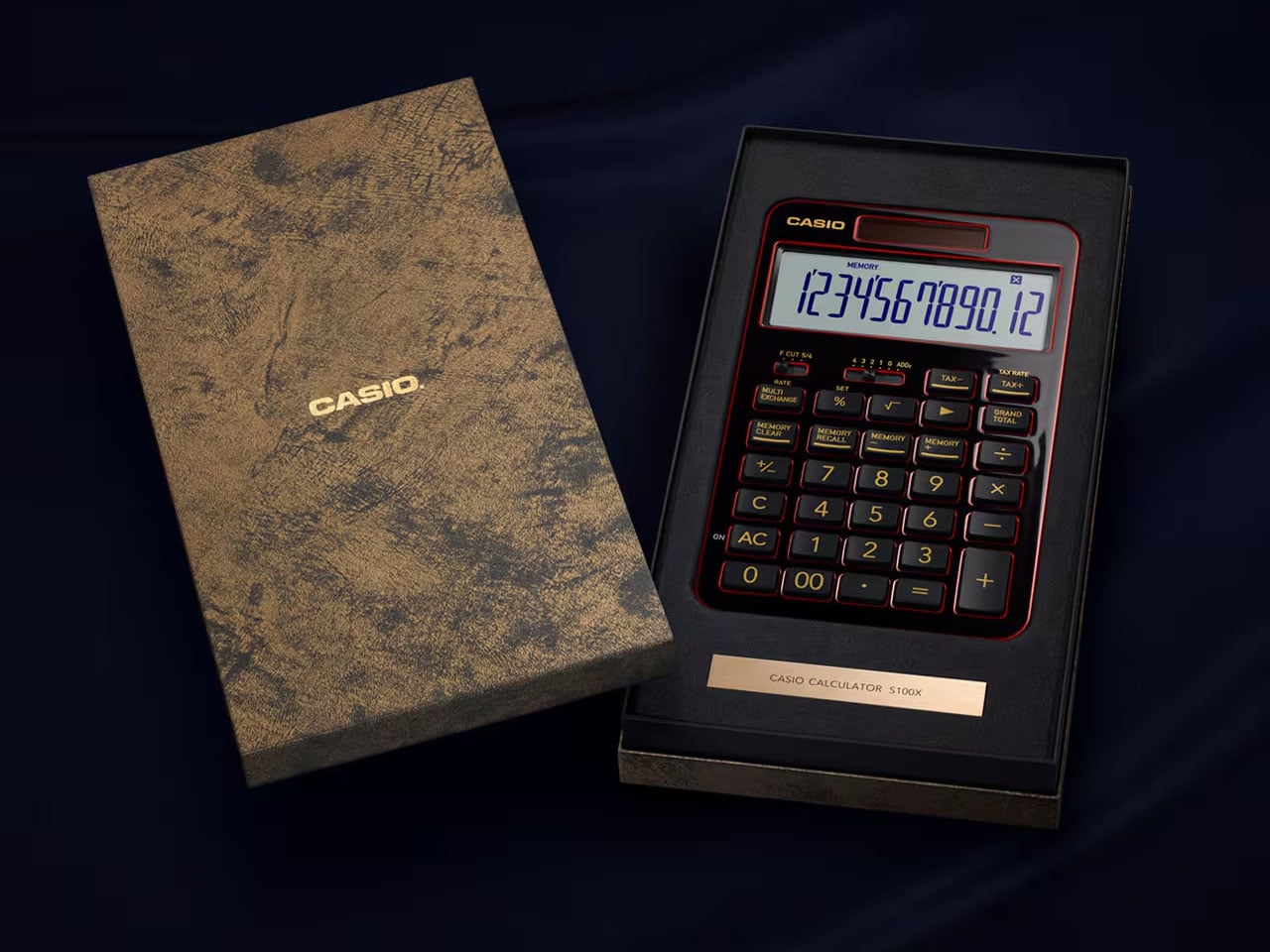
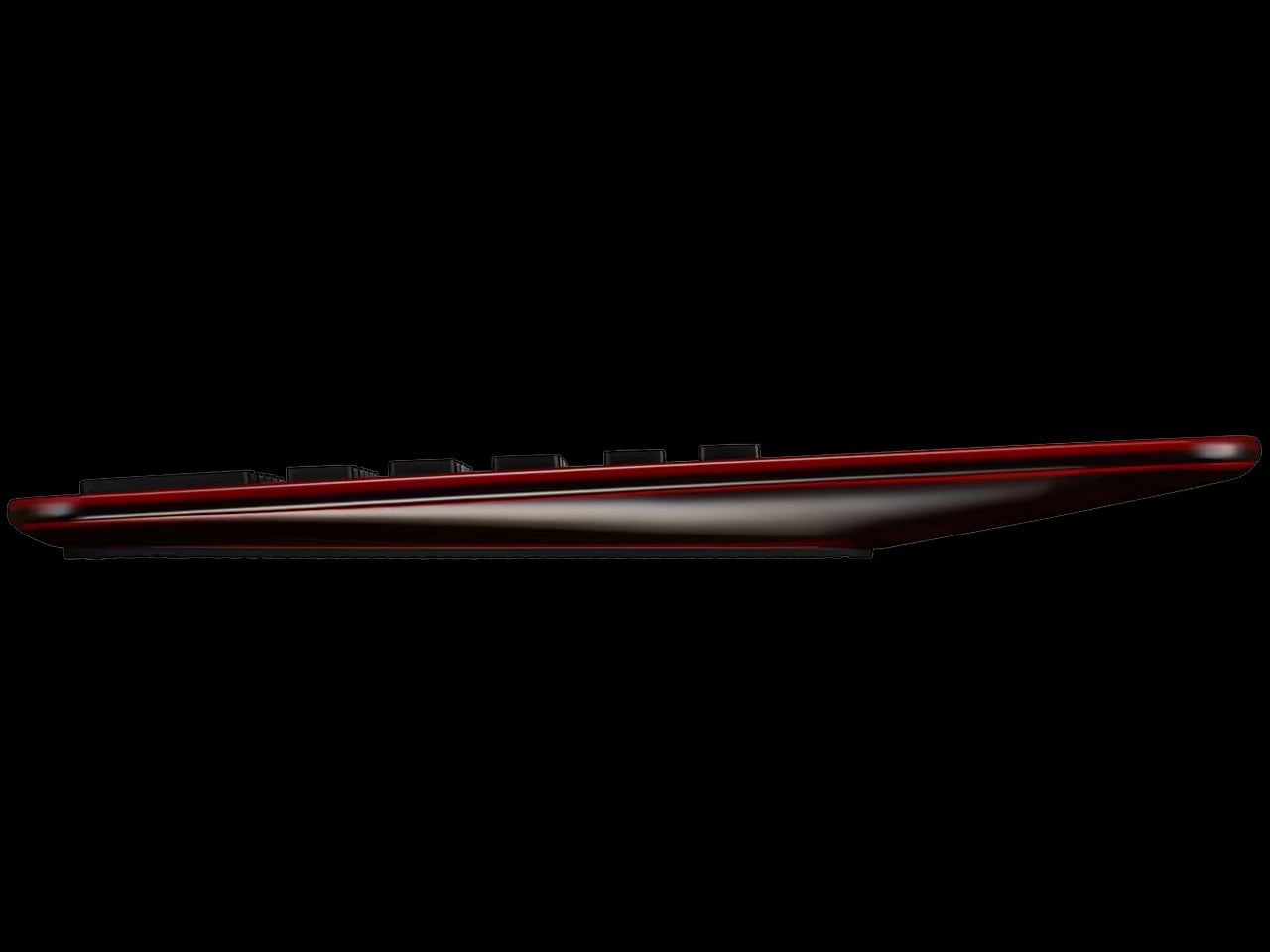
Based on Casio’s flagship S100 calculator, the S100X Urushi Edition, a.k.a. The Special One, is a limited edition desktop calculator designed using century-old Japanese Urushi lacquer technique. To handcraft the body of the device, Casio looked up to none other than Yamakyu Shitsuki, a lacquerware workshop expertising in the craft since 1930. Mater crafter Ryuji Umeda himself handcrafted the design involving a technique called tamenuri, which took a month of perfecting. The craft involves layering laquer tree’s filtered sap on the milled aluminum housing and achieving a sense of depth with repeated applications over a period of a week. Finally, the calculator is polished for that mirror-like shine and luxury feel.

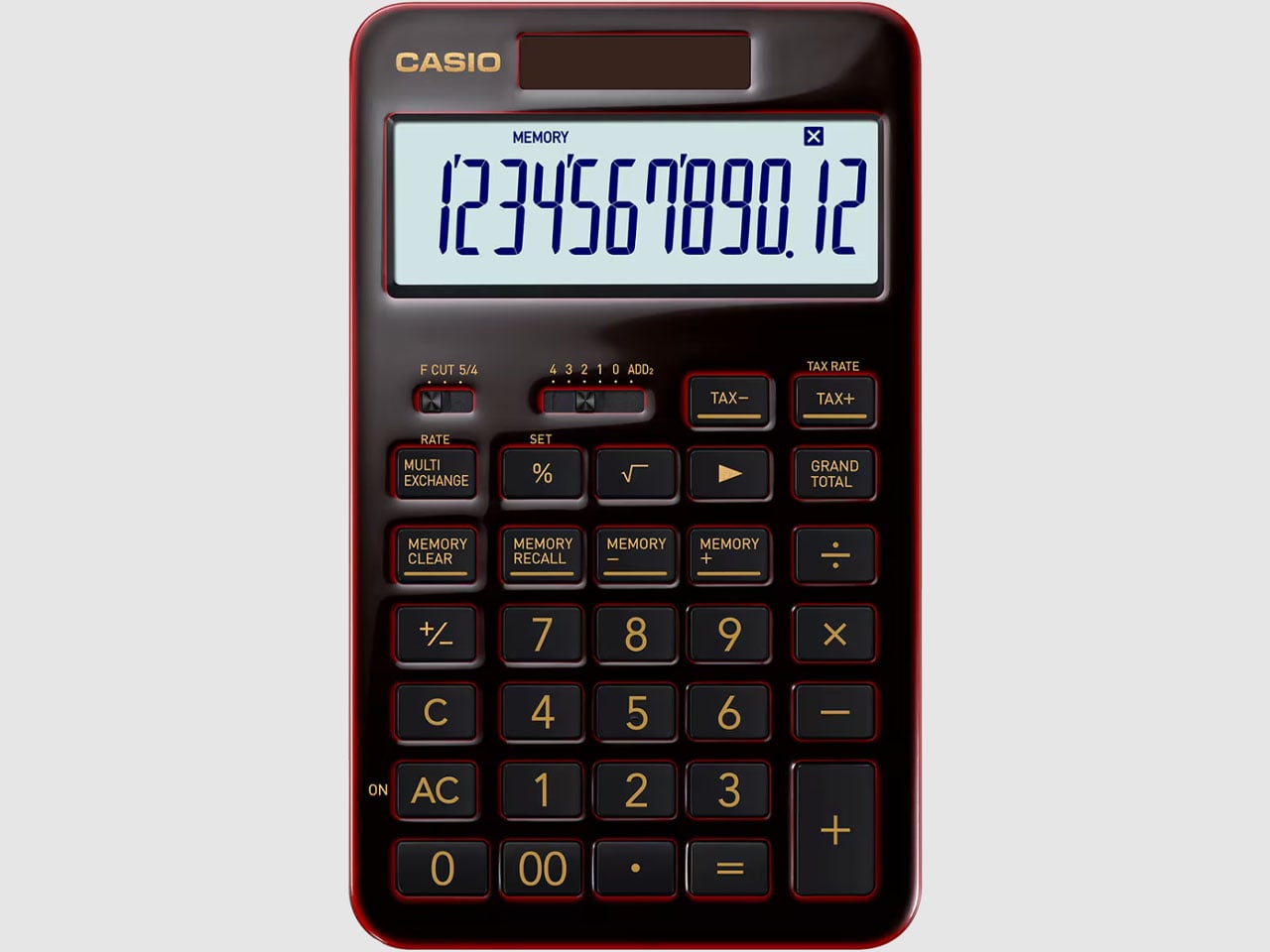
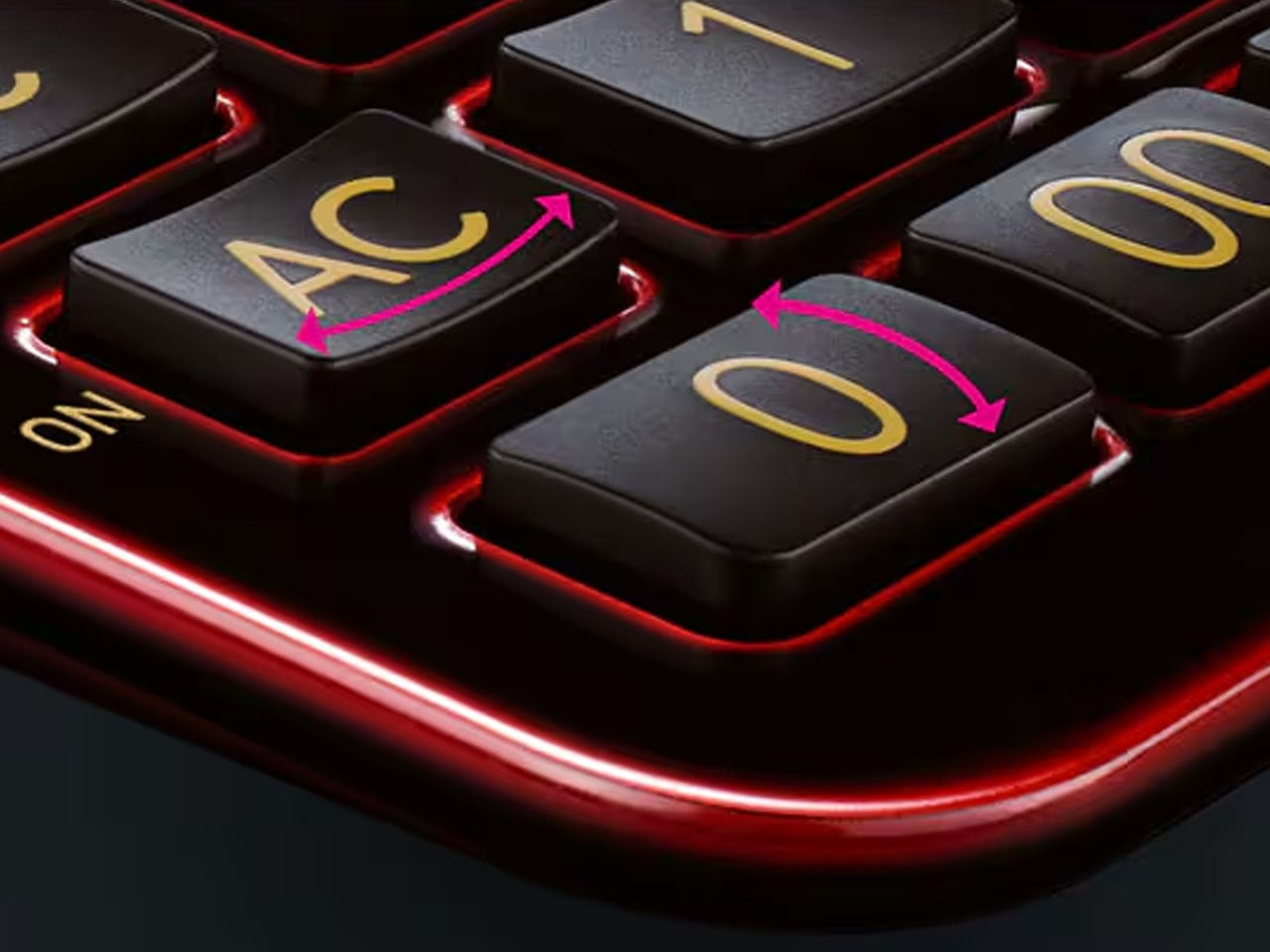
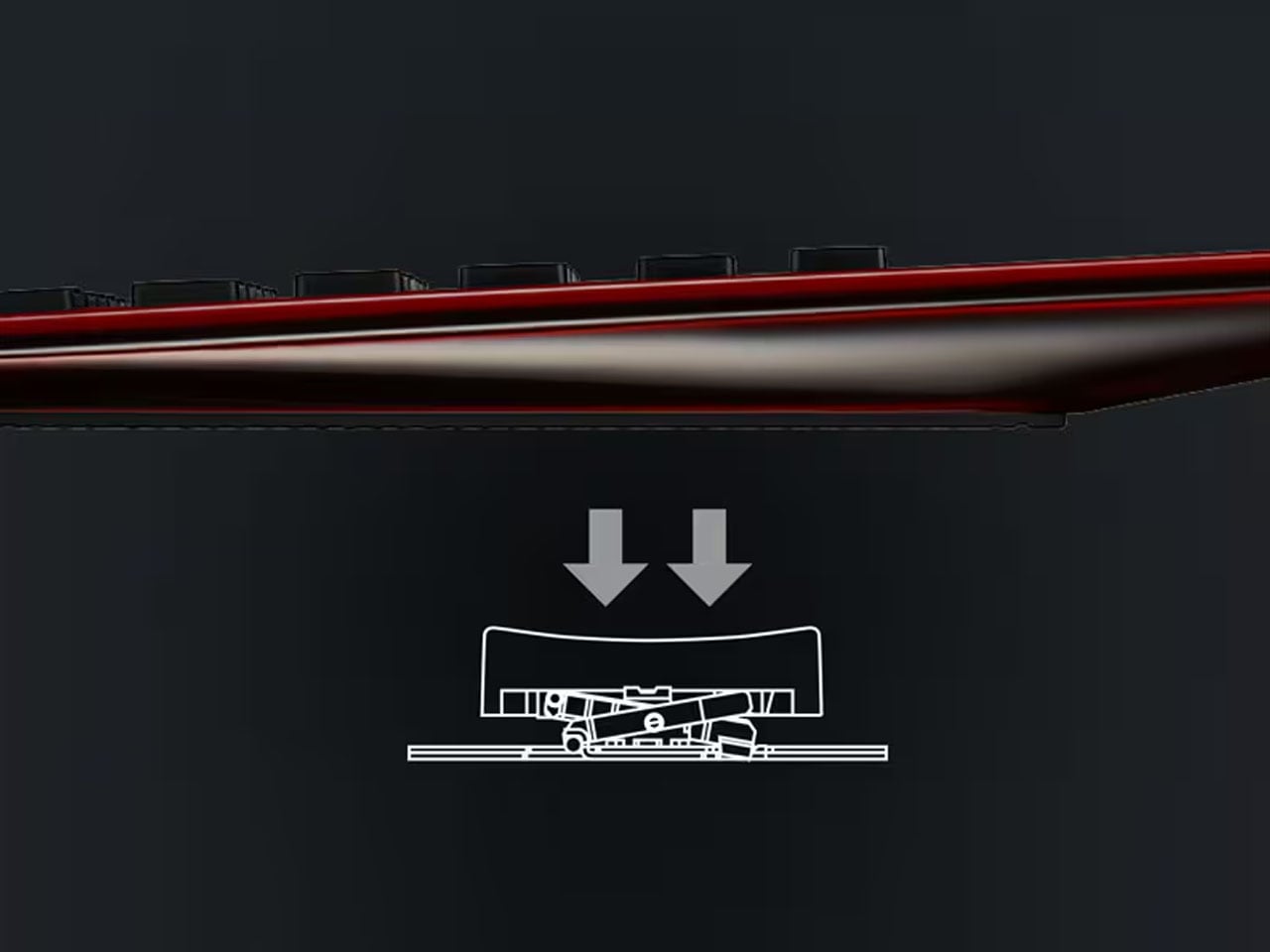
Each of the 625 limited edition calculator’s is handcrafted carefully at the workshop, rendering each one of them unique in their look depending on the viewing angle. To carry the premium feel, the machined aluminum body housing the buttons on top and the LCD screen ensures a satisfying presence. This display comes with a dual-sided AR coating for reduced reflections and the navy blue text color mimics the fountain pen ink. For enhanced tactile sensation of pressing the isolation-type keys, they come with the pantograph mechanism and an ergonomic shape nestling the fingers. The 3-key rollover tech ensures rapid typing as the keystroke is accurately recognized for up to 3 keystrokes.

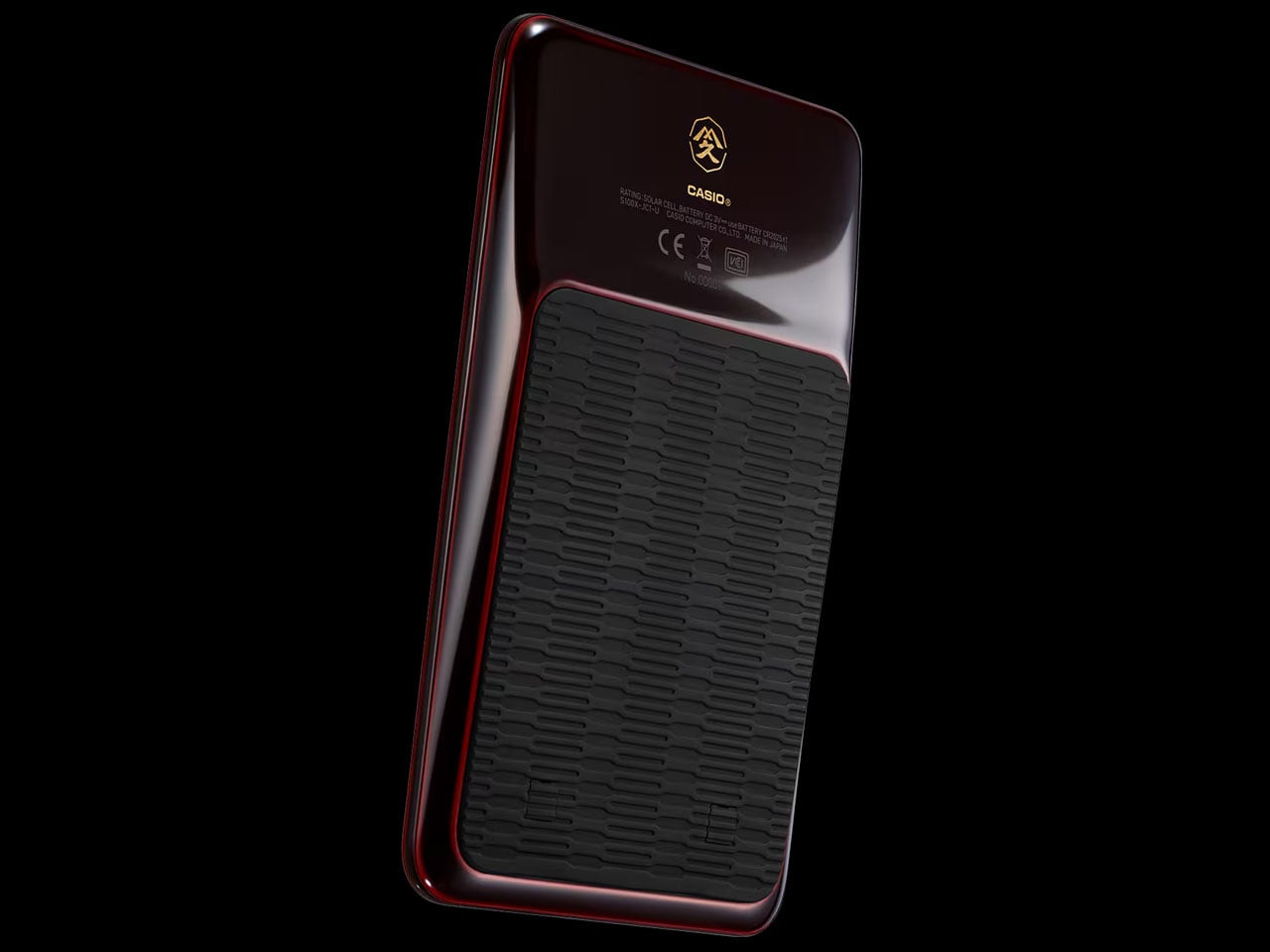
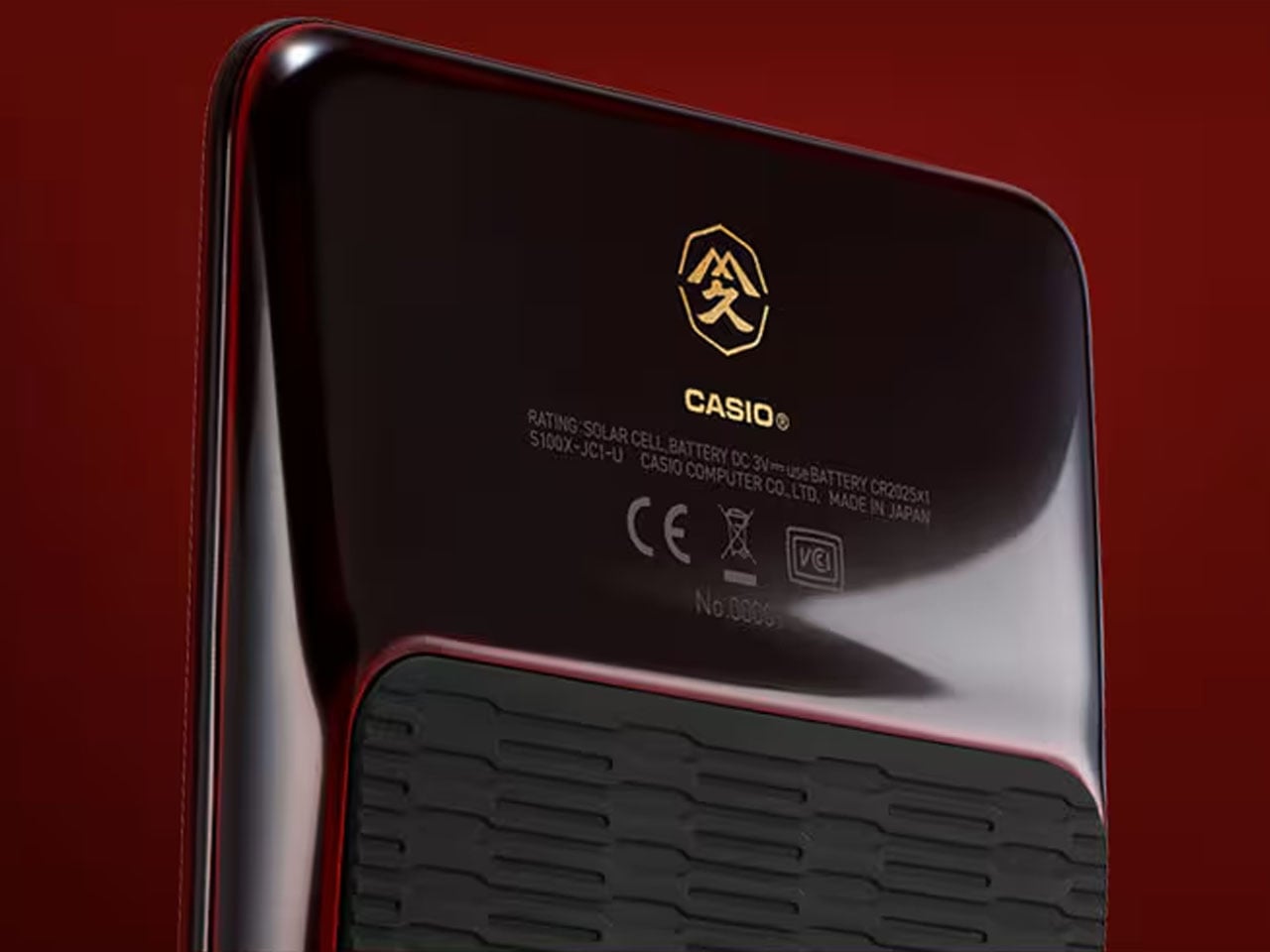
This 12-digit calculator adapts all the functions vital for professionals, including four-law calculation, tax calculation, unit conversion, memory (x2), and grand total. It is powered via solar panels on the front or a CR2025 coin battery, which can last for around seven years. The decimal point selector lever has a spin finish design for a premium shine, and on the back side, there is a geometric pattern molded stopper for assuring stability. Each one of the S100X Urushi Edition calculators has a laser-engraved serial number and comes packaged in a themed black presentation box complete with gold foil stamping.

The S100X Urushi Edition  Special One calculator is priced at ¥99,000, which coincidentally equates to around $625. Owning this one is going to be special for collectors.

The post Casio’s special edition calculator handcrafted using traditional Japanese lacquering technique first appeared on Yanko Design.

Google Pixel 11 Pro XL – Major Upgrades You Need to Know

Google Pixel 11 Pro XL – Major Upgrades You Need to Know Benchmark app screen from an early Pixel 11 Pro XL prototype showing modest preliminary performance numbers.

The Google Pixel 11 Pro XL represents a calculated evolution in Google’s flagship smartphone lineup. Instead of pursuing dramatic overhauls, early leaks and rumors suggest that Google is focusing on refining core features to deliver a polished and cohesive experience. This approach underscores a balance between design, security, and performance, positioning the Pixel 11 Pro […]

The post Google Pixel 11 Pro XL – Major Upgrades You Need to Know appeared first on Geeky Gadgets.

Posted in Uncategorized

Belkin Charging Case Pro for Switch 2 review: A more elegant solution

Last year, Belkin released a couple of cases for the Nintendo Switch 2 just in time for launch, including one that came with a handy battery pack. That one was simple and effective, but it felt a bit crude because it wasn't much more than a basic travel pouch with a generic power cell tossed inside. Now, Belkin is back with a Pro version of its Charging Case for the Nintendo Switch 2, featuring a more sophisticated battery pack along with a higher price tag ($100 vs. $70). So here’s the question for any Switch 2 owners still looking for a way to protect their console while keeping it topped off: Is a more elegant charging solution really worth the extra money?

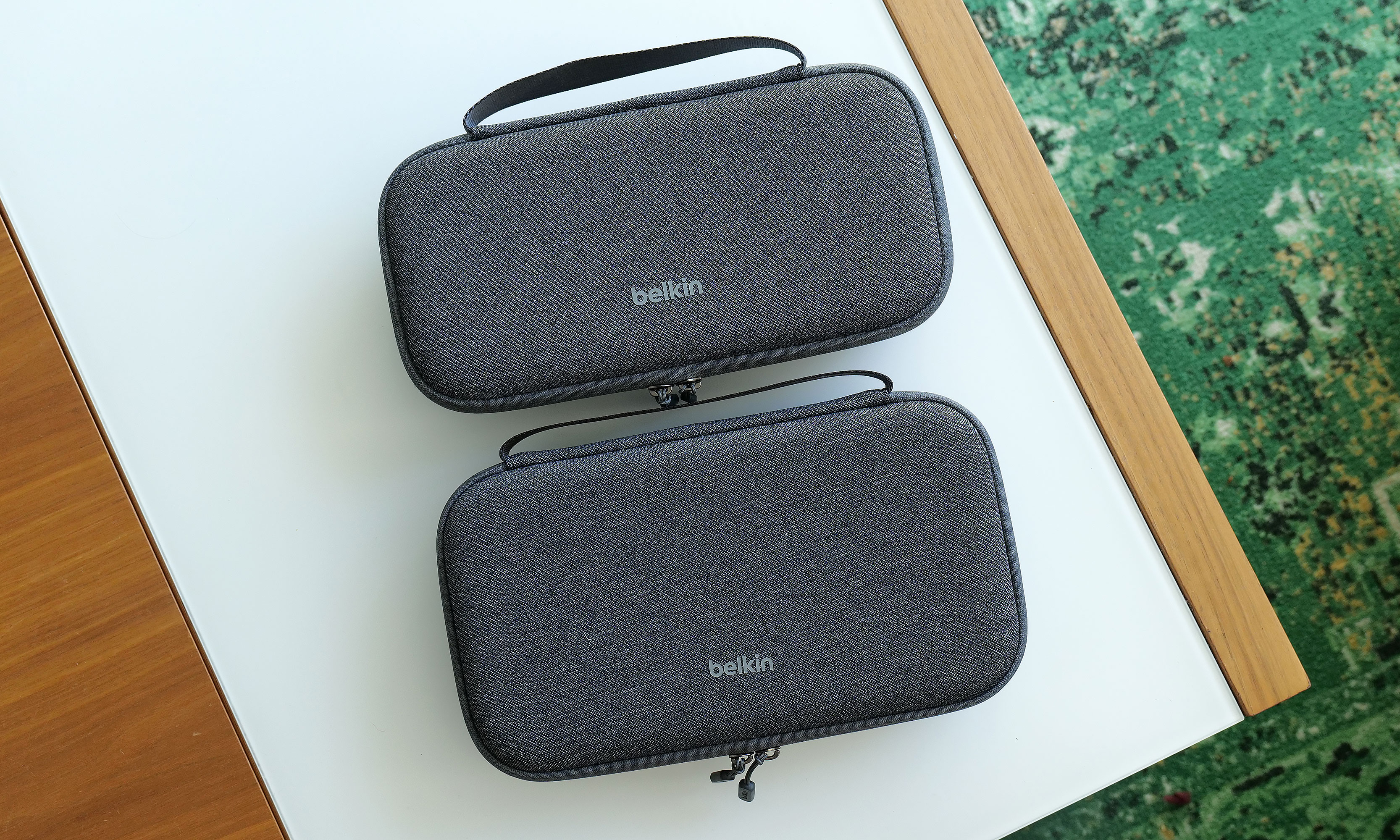
At 11.7 x 6.1 x 2.5 inches and weighing 1 pound 12 ounces, the Pro Charging Case is a touch larger and heavier than its non-pro sibling. It also features a very similar design with the same color options and materials, including a tough polyester outer shell that’s balanced by a softer, velvet-like material and cutouts for your Switch 2 on the inside. 

The Pro Charging Case (bottom) is a touch bigger and heavier than the previous model, but aside from that its sports a nearly identical design.
Sam Rutherford for Engadget

Once again, Belkin has done a good job of providing a snug cabin to store your console while still making it easy to take it in and out. That said, if your system also has an extra-thick protector or hardshell case like the Killswitch from Dbrand, it may not fit. There's also a padded flap that swings down to protect your Switch 2's screen that also pulls double duty as a place to stash up to 12 game cartridges, which is a very thoughtful touch. 

However, the biggest change to the Pro Charging Case's exterior design is a new cutout on the front edge, which allows you to top off other gadgets (or a Switch) by plugging a USB-C cable into Belkin's included battery pack. Unfortunately, the case doesn't come with a cord, which seems a bit odd until you take a closer look at the power pack's layout. That’s because once you open up the case, you’ll see a second port designed to fit right into the bottom power jack on the Switch 2 without the need for a cable.

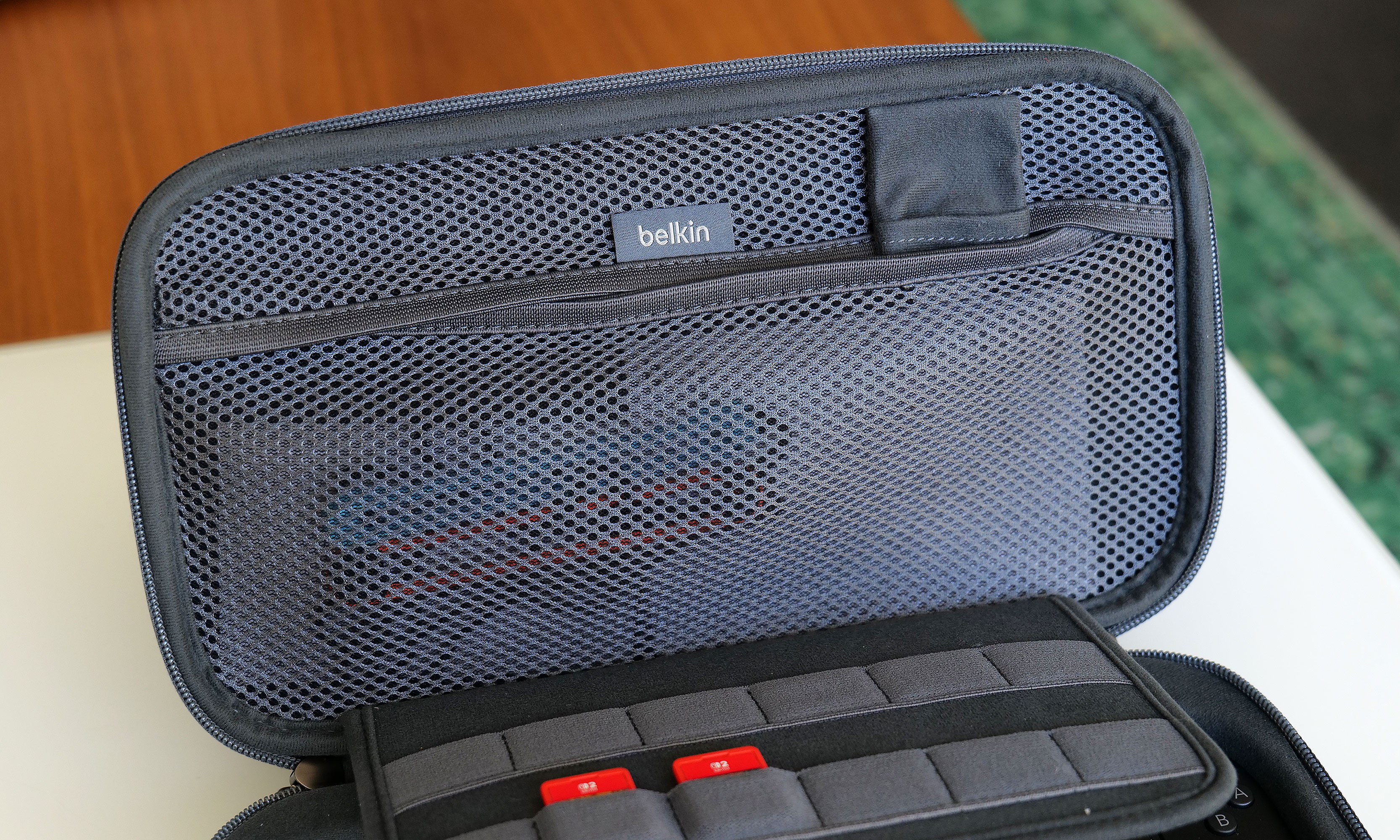
The inside of the Pro Charging Case features a handy mesh pocket, 12 slots for game carts and a hidden AirTag pouch.
Sam Rutherford for Engadget

Other small touches on Belkin's Pro Charging Case include a mesh pocket for storing things like cables, Joy-Con straps or cleaning cloths, which is very handy. However, my favorite thing might be the AirTag pouch that's also hidden inside that pocket, which could give you a fighting chance of recovering your system if it's ever lost or stolen (though I wouldn't count on it). 

The arrangement of the included 10,000mAh battery pack and the placement of its internal USB-C port makes it super easy to recharge your Switch 2 every time you put it in the case.
The arrangement of the included 10,000mAh battery pack and the placement of its internal USB-C port makes it a cinch to recharge your Switch 2 every time you put it in the case.
Sam Rutherford for Engadget

Despite the increased size of the Pro Charging Case's included battery, it has the same 10,000mAh capacity as what you get from its less expensive sibling. That means you'll typically have enough juice for a little more than 1.5 recharges for your Switch 2 and its onboard 5,220mAh cell. Instead of relying on a simple external power pack like before, Belkin's bundled battery comes with a second USB-C port and a kickstand. This makes it super easy to plug in your Switch 2 every time you put it in the case. This way, you know the next time you turn it on, it'll be at 100 percent. 

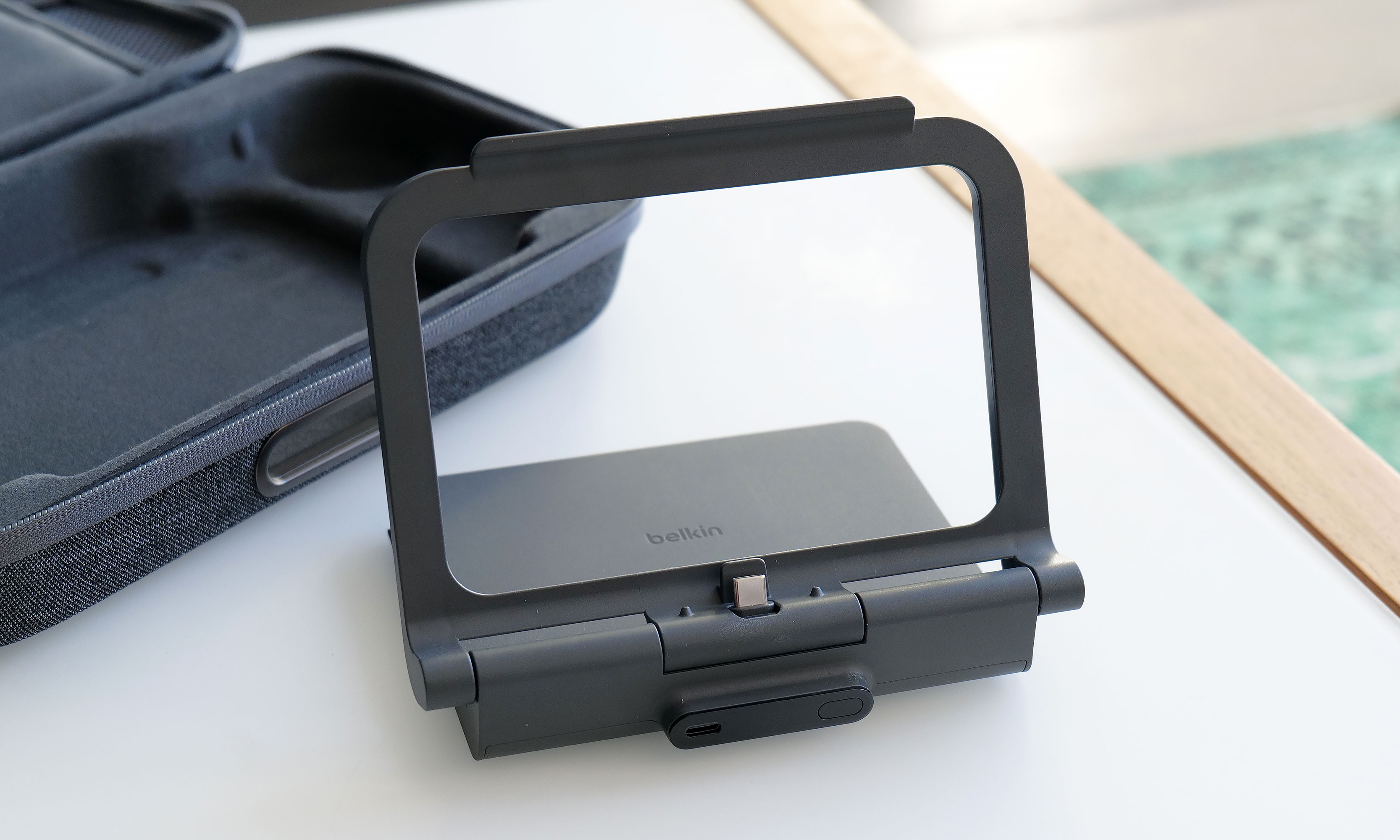
Here's what the battery pack looks like when you take it out of the case. As you can see, its size and shape means it's not a great standalone external power pack any more.
Sam Rutherford for Engadget

Alternatively, you can raise the kickstand to prop up the Switch 2 and game on it while it stays nestled inside the case. This might seem a bit redundant as Nintendo's console already has its own kickstand, but Belkin’s allows you to continue charging the system while you're playing without needing a cord. There's even a handy display on the side of the battery, so it's super easy to see how much juice is left, even when the case is closed. Furthermore, when you need to recharge the power pack, you can do so without removing it from the case or disconnecting your Switch thanks to that bonus USB-C port on the outside. Compared to the previous model, this is certainly a more elegant solution that provides some subtle quality of life improvements. The one downside is that the battery pack is somewhat awkwardly shaped, so you won't really want to use it on its own.

There's no doubt the Pro Charging Case's new battery pack is a more premium solution that's easier to use and manage. When you need to recharge it, you can do so from the outside without opening the pouch. It also lets you charge a Switch 2 without ever needing a cable. The built-in kickstand is another bonus that helps elevate the whole kit from a simple case to something closer to a tiny all-in-one gaming booth. 

One of the neat things about giving the battery  a kickstand is that it turns the case into a mini all-in-one. This makes wish Belkin gave the included power pack some sort of docking functionality for connecting the Switch 2 to an external display.
One of the neat things about giving the battery a kickstand is that it turns the case into a mini all-in-one. This makes me wish Belkin gave the included power pack some sort of docking functionality for connecting the Switch 2 to an external display.
Sam Rutherford for Engadget

That said, after using it for a couple of weeks, I'm still not sure the added convenience is worth an extra $30 over the original. Due to the battery packs' new shape, it's less useful as a standalone power cell, and the rest of the case's design is largely unchanged. Of course, it's always nice to have options, and if you're the kind of person who doesn't mind spending a little extra for a more streamlined and convenient kit, Belkin's Pro Charging Case for the Switch 2 is still very much worth consideration.


This article originally appeared on Engadget at https://www.engadget.com/gaming/nintendo/belkin-charging-case-pro-for-switch-2-review-a-more-elegant-solution-144820809.html?src=rss
Midjourney 8 vs Midjourney 7 : Prompt Accuracy, Interfaces, Raw Mode, Speed, Text & Style Compared

Midjourney 8 vs Midjourney 7 : Prompt Accuracy, Interfaces, Raw Mode, Speed, Text & Style Compared Stylized illustration made in Midjourney 7 showing richer color and more artistic texture than version 8.

Midjourney 8 introduces faster rendering speeds, enhanced text generation and a stronger emphasis on photorealism, marking a departure from the artistic focus of Midjourney 7. Wade McMaster from Creator Impact, takes you through the new version 8 interface currently available at alpha.mjourney.com, offering features like HD mode and stylization settings. While these changes improve technical […]

The post Midjourney 8 vs Midjourney 7 : Prompt Accuracy, Interfaces, Raw Mode, Speed, Text & Style Compared appeared first on Geeky Gadgets.

Posted in Uncategorized

Amazon is reportedly working on a new phone built around Alexa

Amazon is reportedly planning to re-enter the smartphone market more than 10 years after its last attempt. According to a Reuters report, the mysterious phone is internally codenamed "Transformer" and is being developed by the company’s devices and services unit.

There isn’t a whole lot to go on right now, but it probably won’t surprise many to learn that the phone will likely lean heavily on AI. According to Reuters’ sources, Alexa functionality would be a core part of the experience, but Amazon wouldn’t necessarily build a custom OS around its voice assistant. The phone would make buying products on Amazon and using services like Prime Music and Prime Video "easier than ever," and may bypass traditional app stores.

Reuters reports that the Transformer project is being led by the recently established ZeroOne, an Amazon devices unit headed up by ex-Microsoft executive and Xbox co-founder J Allard, who was also one of the creators of Zune. Allard joined Amazon last year to lead a "a special projects team dedicated to inventing breakthrough consumer product categories."

The development team has reportedly considered launching both a traditional smartphone and a so-called "dumbphone," which would presumably strip away anything that needlessly distracted you from the Amazon empire. Reuters’ anonymous sources suggest the latter could help combat screen addiction by offering fewer features.

ZeroOne is apparently inspired by the ultra-minimalist Light Phone, suggesting that Amazon might be reluctant to take on the flagship devices of Apple and Samsung. The report adds that the Transformer phone could even be positioned as a secondary handset.

This, of course, would not be Amazon’s first crack at the smartphone business. The company launched the Fire Phone in 2014, an ambitious and interesting device that ultimately failed to tempt people away from the more established smartphone ecosystems. It’s widely remembered as perhaps the company’s biggest hardware misstep.

With analysts forecasting an unprecedented decline in the smartphone market in 2026, now seems like a risky time for Amazon to try again, and Reuters was unable to determine exactly how much the company has committed to the Transformer project. Sources also wouldn’t rule out it being scrapped altogether if the company’s priorities suddenly shifted.

This article originally appeared on Engadget at https://www.engadget.com/mobile/amazon-is-reportedly-working-on-a-new-phone-built-around-alexa-142244500.html?src=rss
A $500 Cat Scratcher That Looks Like a Floating Shelf

Most cat owners have made peace with a certain kind of compromise. You get the cat, the cat gets the furniture, and whatever mass-produced scratching post comes in the box gets wedged into a corner where you try not to look at it. It wobbles. It sheds sisal like it’s molting. And after three months, it leans at a fifteen-degree angle that tells you something about both your cat’s enthusiasm and the product’s build quality. We accepted this because we assumed pet furniture just couldn’t do better.

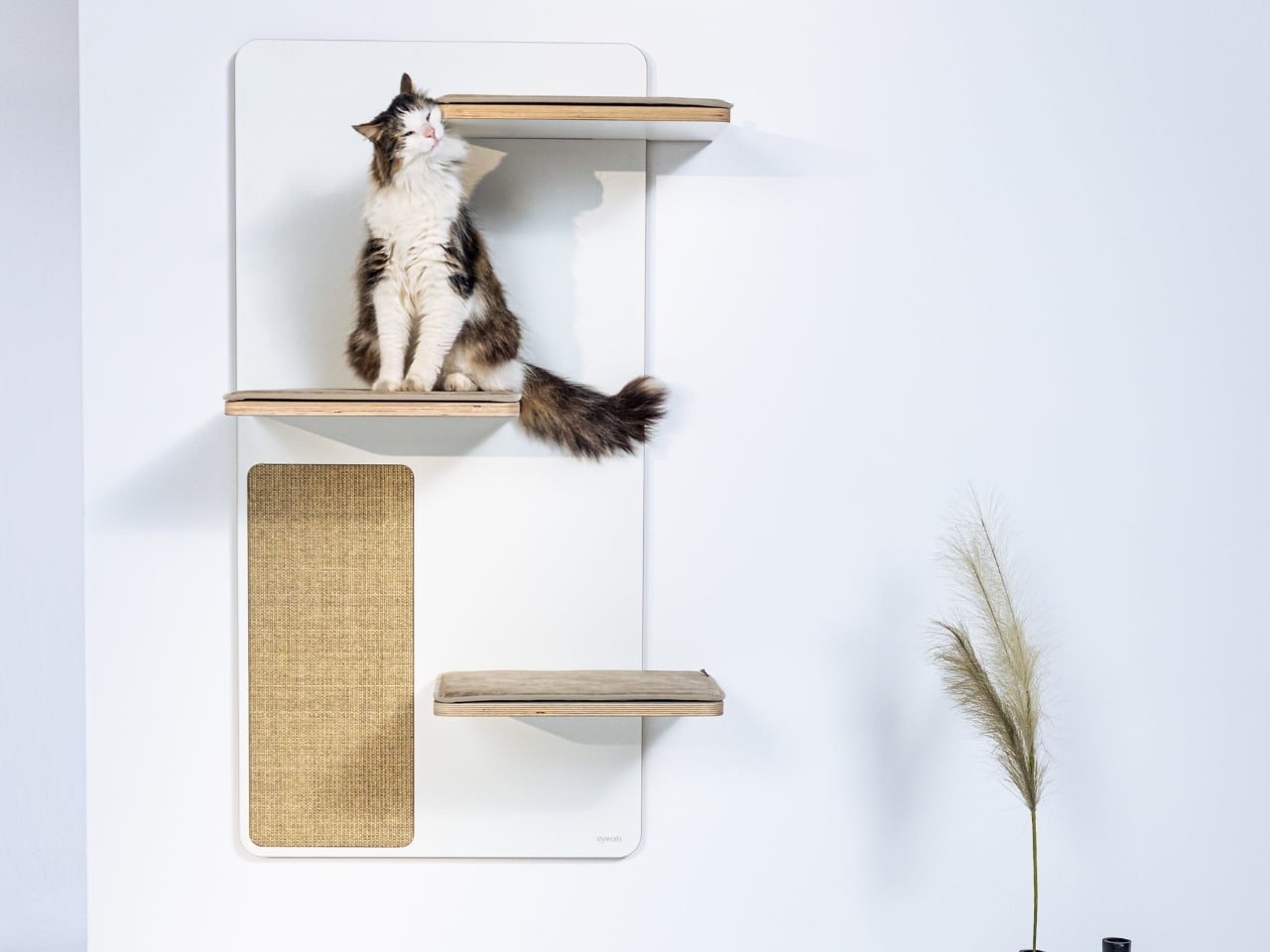
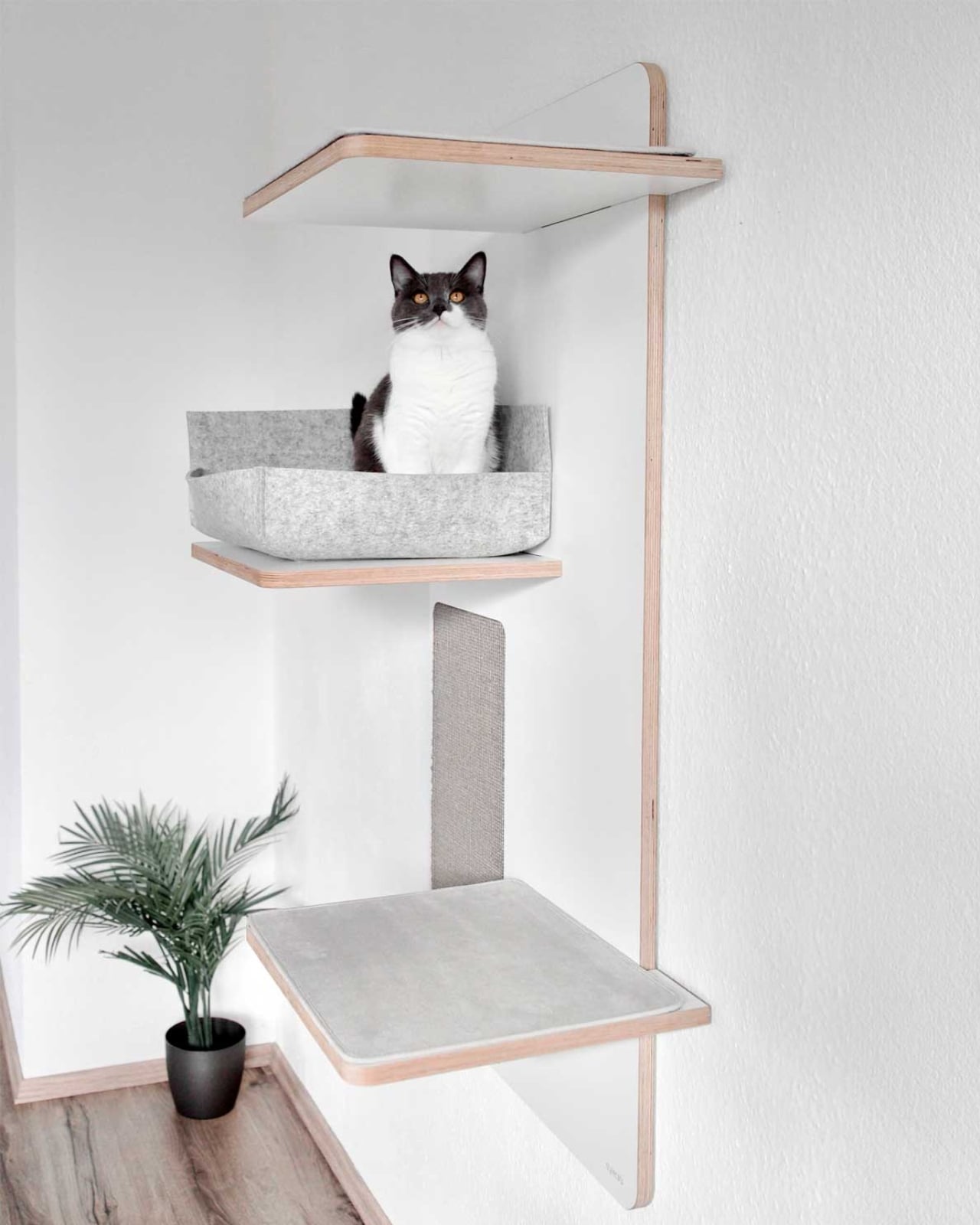
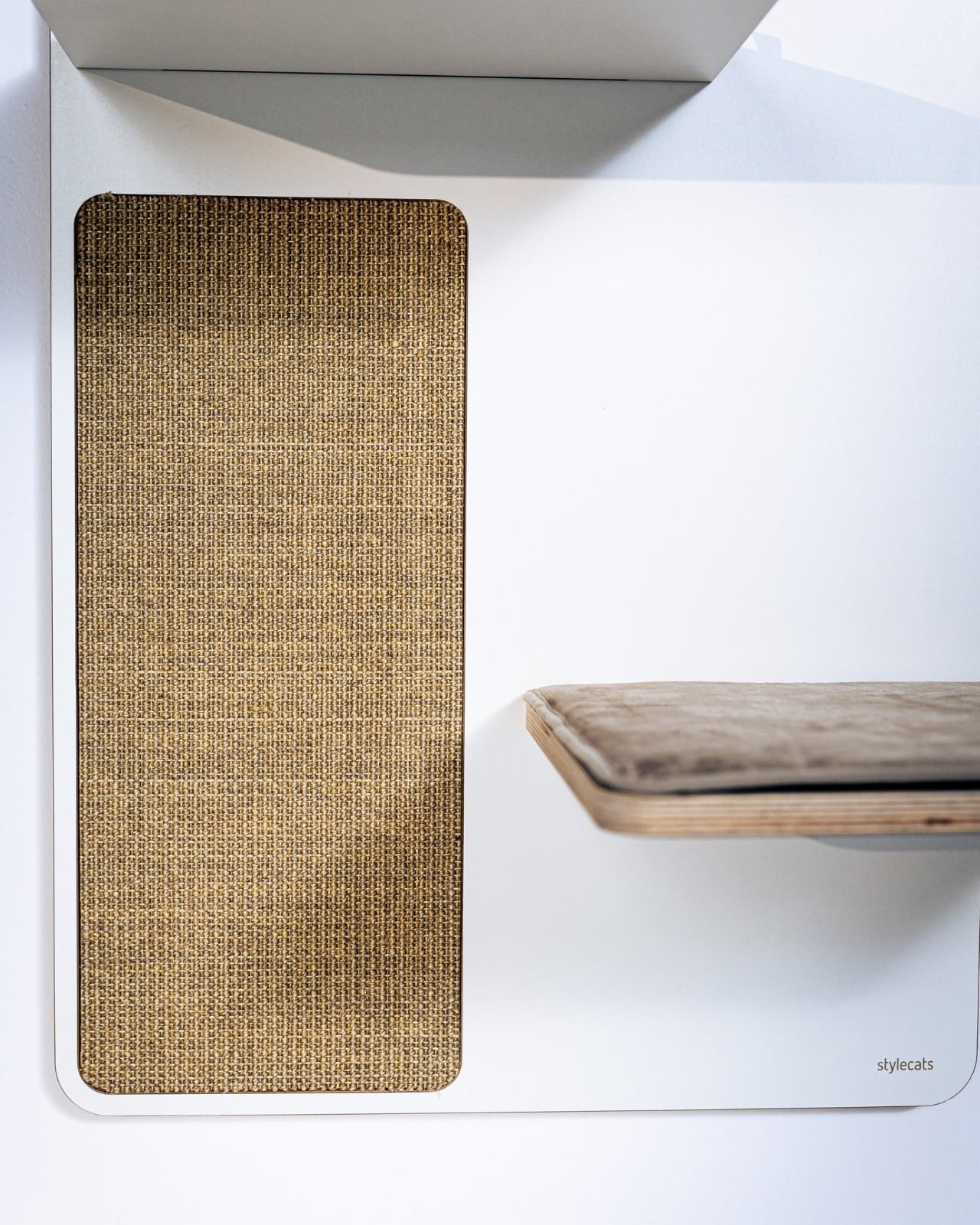
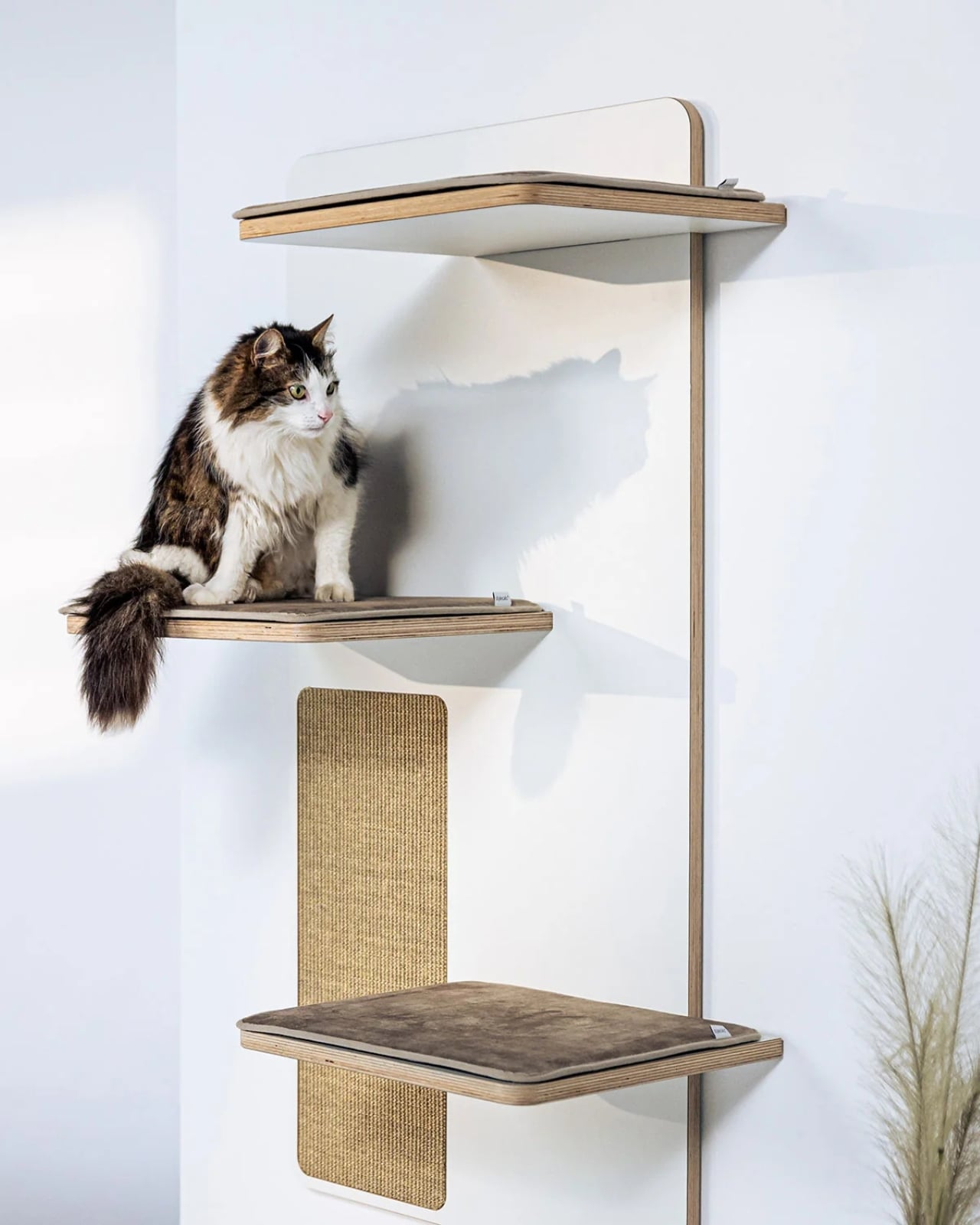
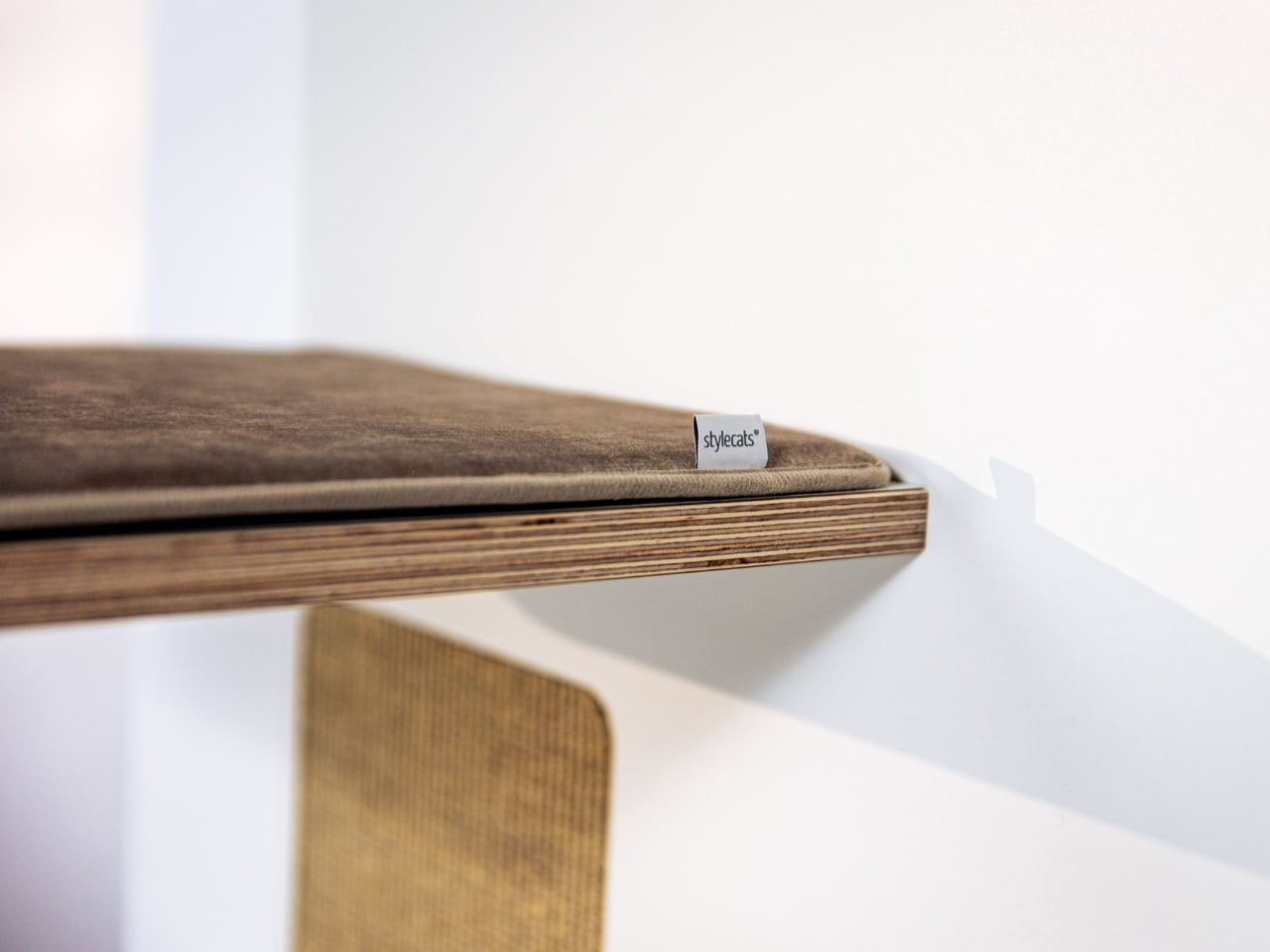
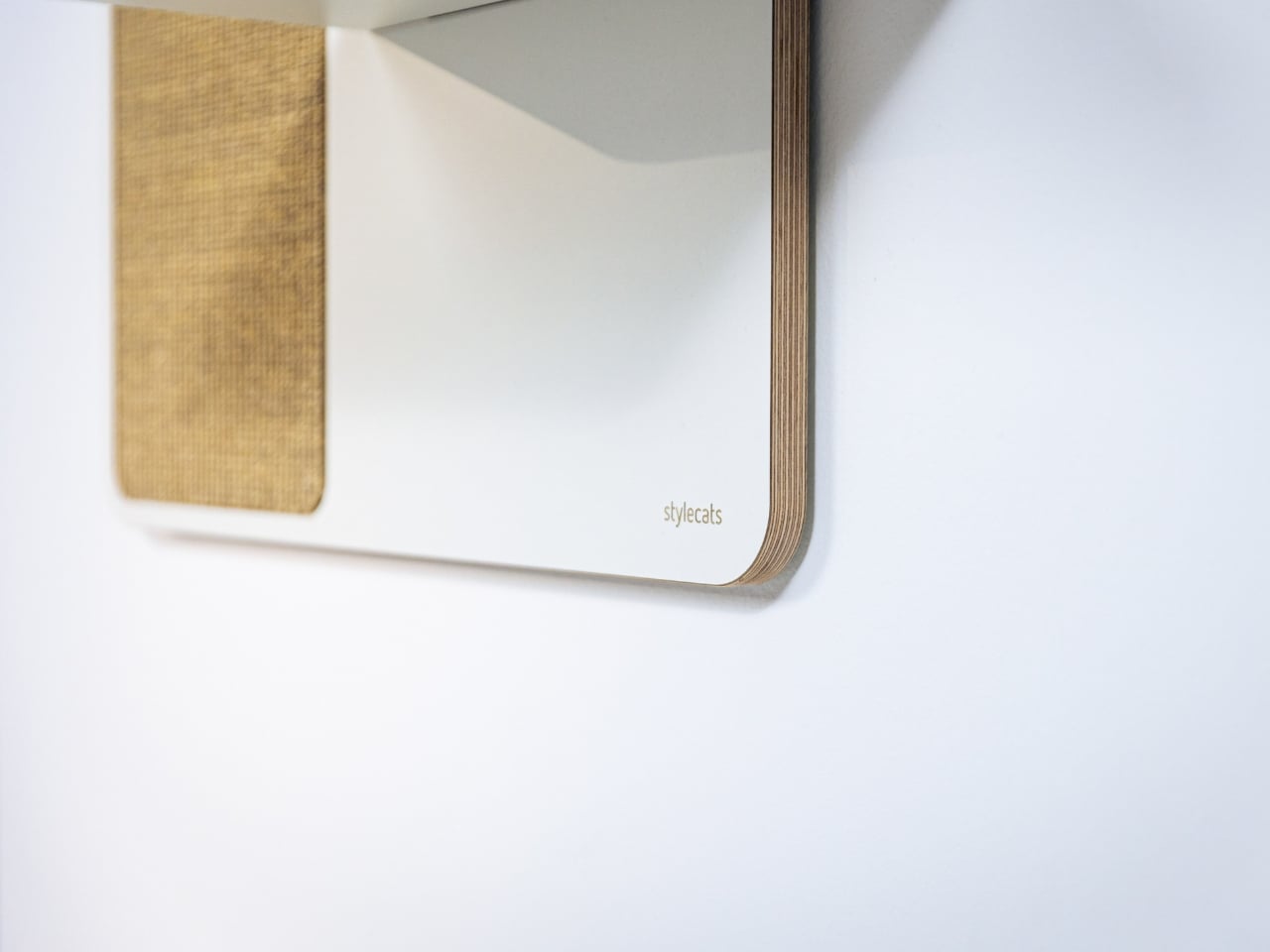
The RELEX wall panel by stylecats is a direct challenge to that assumption, and it makes a pretty convincing case. Designed by the stylecats Design-Team and a winner of the 2025 European Product Design Award, the RELEX is a wall-mounted cat scratching and lounging system that, at first glance, reads more like a floating shelf unit than pet furniture. That’s entirely intentional. The panels are made from birch plywood with an HPL coating, the hardware mounts are completely hidden behind the panel, and the whole structure sits flush against the wall like it was always supposed to be there. If you swapped the sisal for a few hardcover books, guests might not even ask. That’s a sentence I never thought I’d write about a cat scratcher.

Designer: stylecats Design-Team

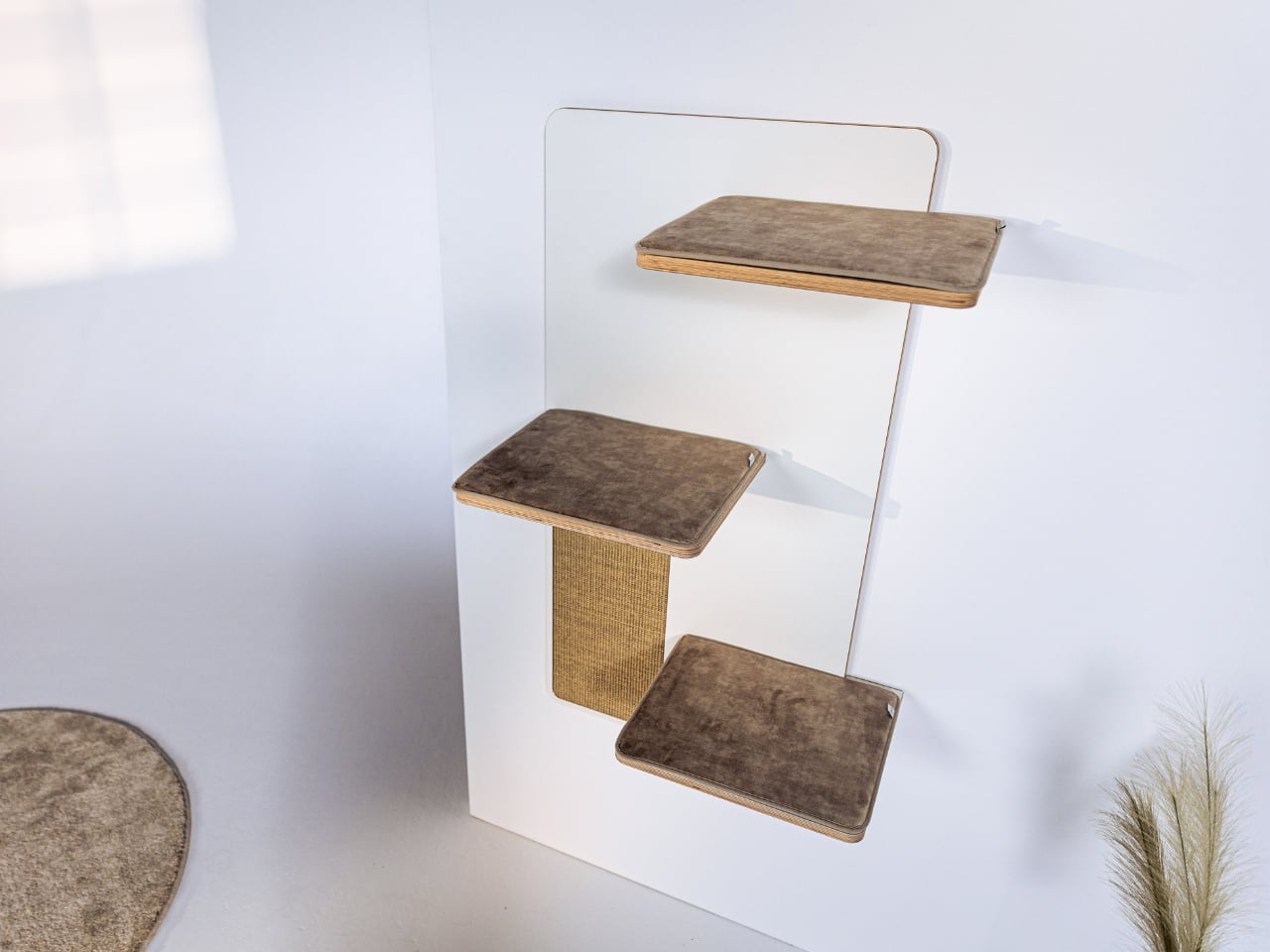
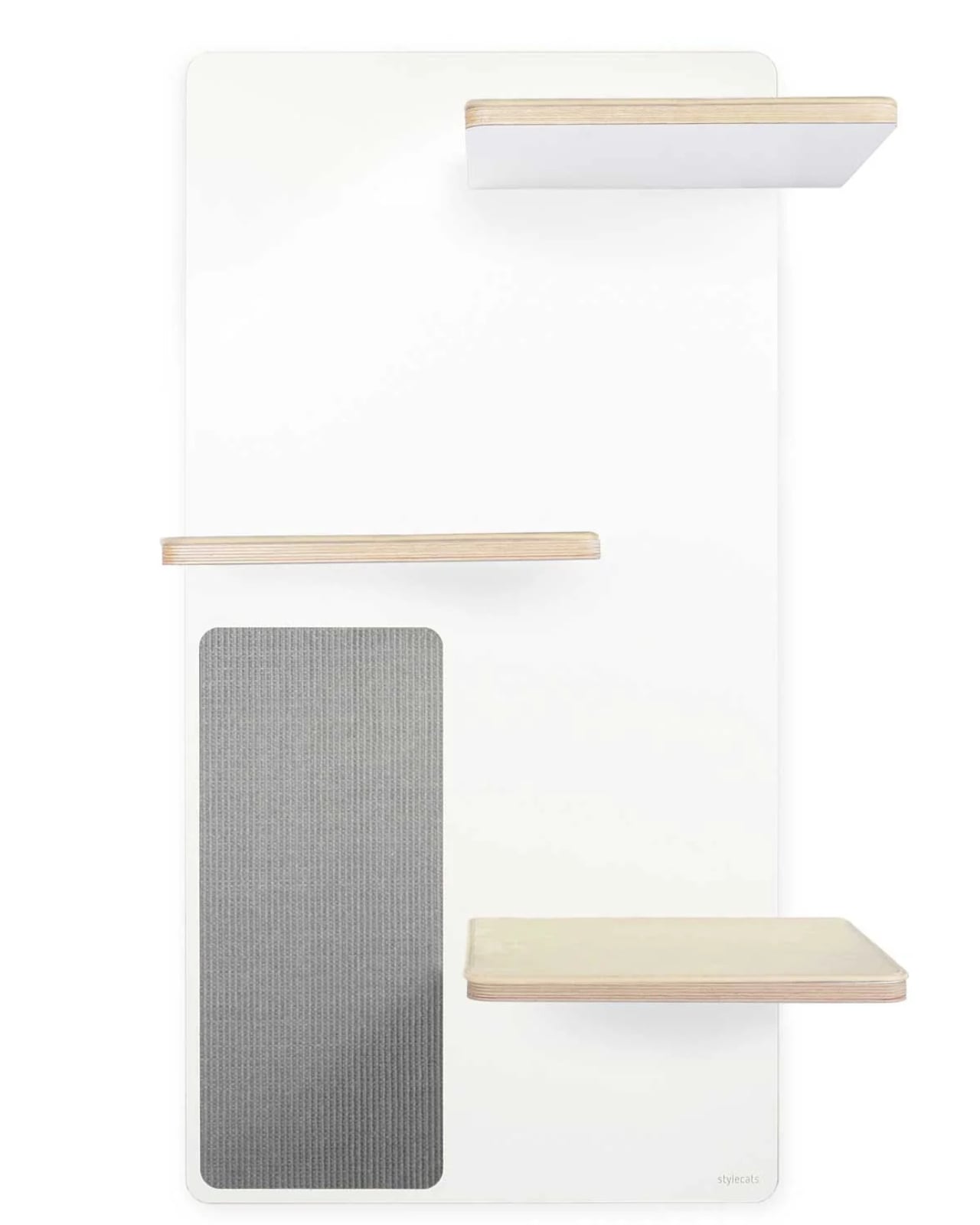
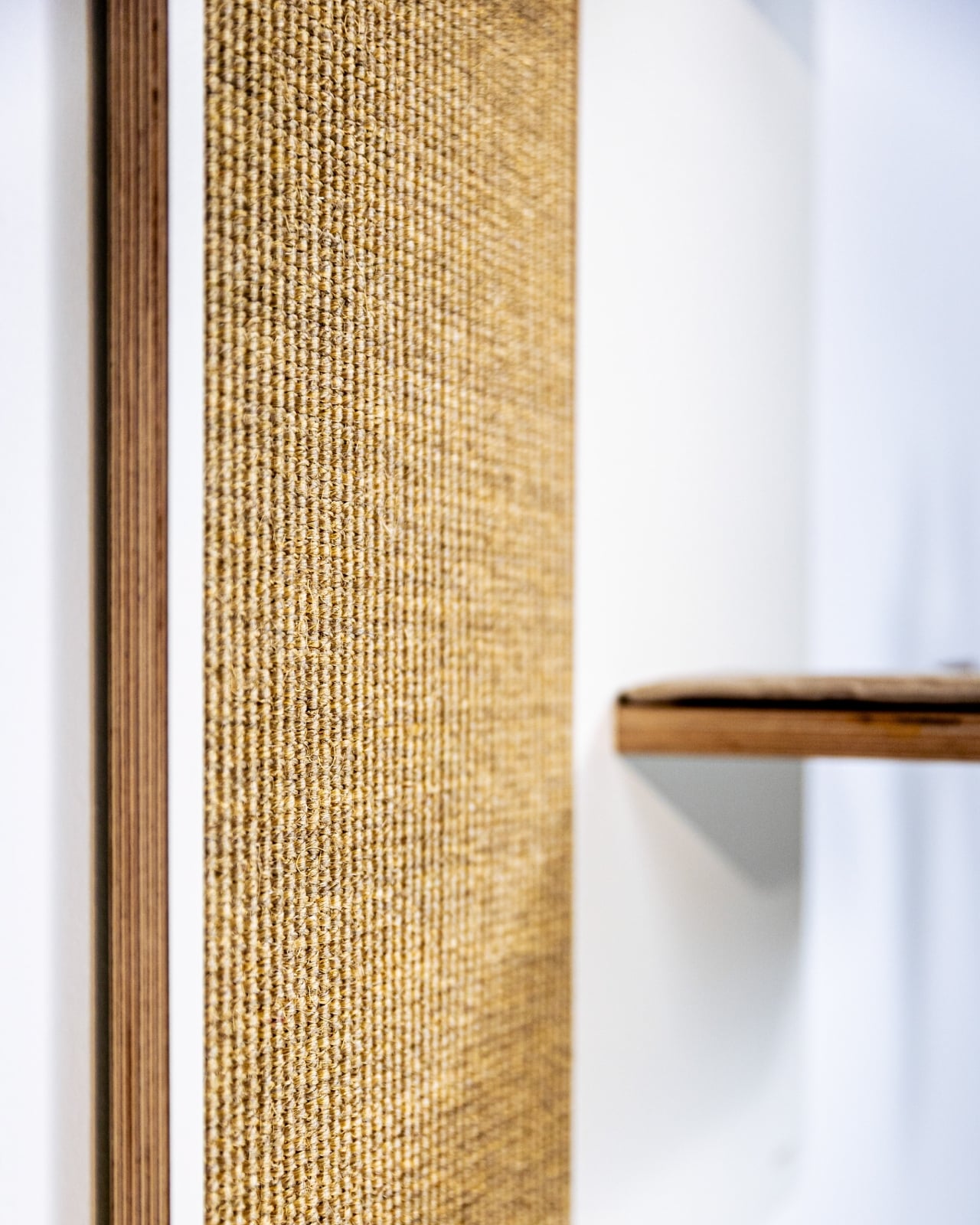
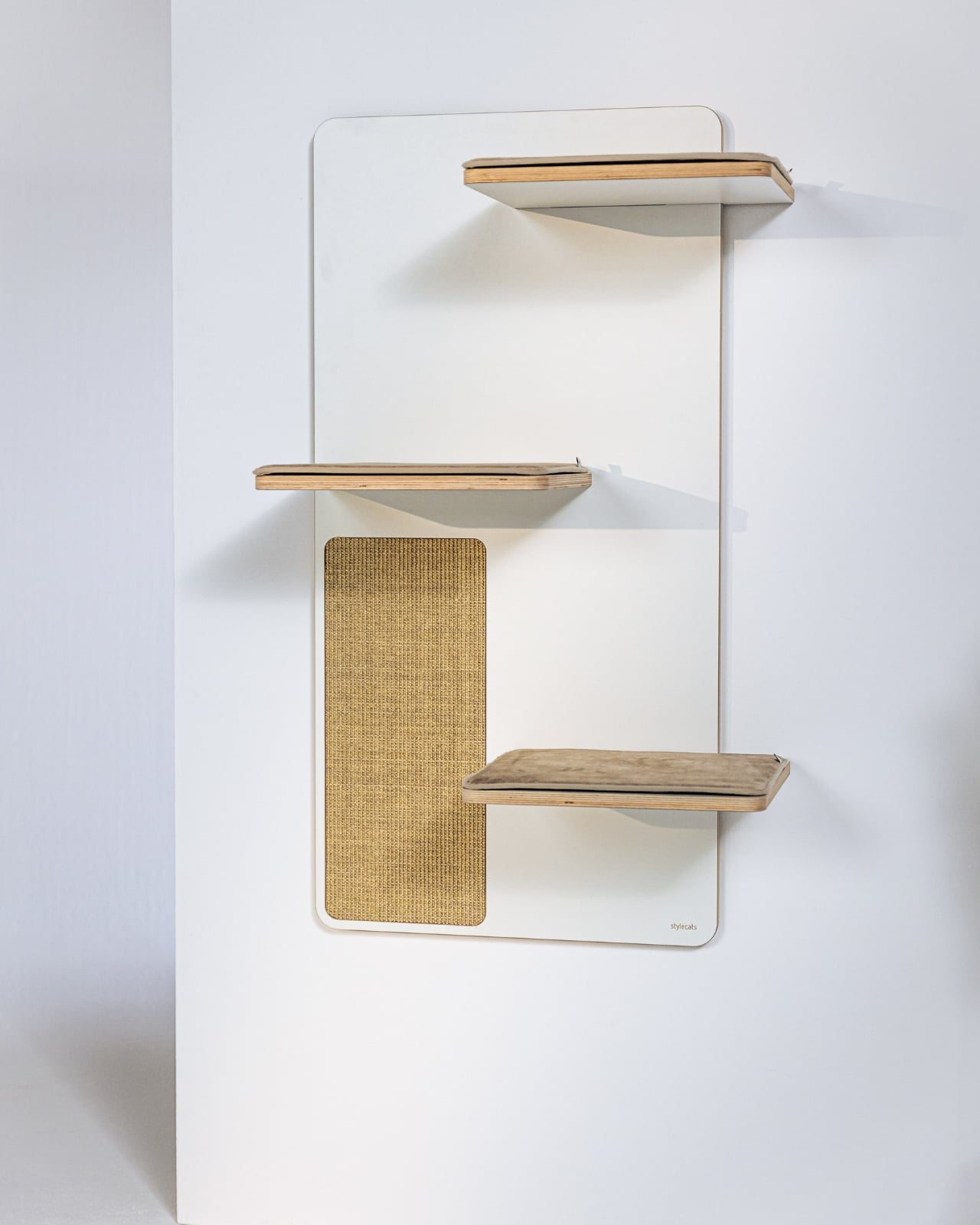
The three-platform version, the RELEX 3, measures 70 x 37.5 x 120 cm and offers three staggered lounging surfaces, each rated to hold up to 15 kilograms. That’s enough for even a particularly confident Maine Coon. The platforms themselves are cushioned with a microfiber sandwich construction: a durable top layer, a middle foam layer for actual comfort, and a velor base that retains body heat. The covers are washable at 40 degrees on a gentle cycle, which, if you’ve ever owned a cat, you know is not a minor detail. The integrated sisal scratching surface is also replaceable when it wears out, which extends the lifespan of the whole unit considerably.

What the design gets right, beyond the aesthetics, is understanding what a cat actually needs from its environment. Cats want height. They want varied vantage points. They want to scratch something that isn’t your sofa. The RELEX gives them all three in a format that takes up wall space rather than floor space, which is, for anyone living in a flat or a smaller home, a genuinely meaningful distinction.

I’ll admit I have a bias here. I’ve long been irritated by how the pet industry has historically treated design as an afterthought. Function got the priority, and style was whatever was left over. That’s slowly changing, and the RELEX feels like part of that shift rather than just a single clever product. The European Product Design Award jury, which drew from more than 30 design leaders across the globe, clearly saw the same thing. Awards don’t automatically validate a product, but they do confirm that people who think seriously about design paid attention.

The price reflects the seriousness of the build. The three-surface version starts at €499.99, and the four-surface configuration goes up to €599.99. That’s not impulse-purchase territory. It’s the kind of number that makes you pause, think about how much you’ve already spent replacing sofa corners, and then proceed anyway.

Stylecats is a brand under HUNTER International GmbH, a German manufacturer, and the “Made in Germany” label isn’t just marketing on this one. The material choices and construction quality back it up. Birch plywood, 100% sisal, proper load ratings per shelf, and concealed hardware are not the specs of something designed to be cheap.

The RELEX line is available in two, three, or four lounging surface configurations. It’s currently offered with a white coating and works particularly well positioned near a window, where a cat’s need to observe the world and your need to look at something decent can finally, peacefully, coexist.

The post A $500 Cat Scratcher That Looks Like a Floating Shelf first appeared on Yanko Design.

A $500 Cat Scratcher That Looks Like a Floating Shelf

Most cat owners have made peace with a certain kind of compromise. You get the cat, the cat gets the furniture, and whatever mass-produced scratching post comes in the box gets wedged into a corner where you try not to look at it. It wobbles. It sheds sisal like it’s molting. And after three months, it leans at a fifteen-degree angle that tells you something about both your cat’s enthusiasm and the product’s build quality. We accepted this because we assumed pet furniture just couldn’t do better.

The RELEX wall panel by stylecats is a direct challenge to that assumption, and it makes a pretty convincing case. Designed by the stylecats Design-Team and a winner of the 2025 European Product Design Award, the RELEX is a wall-mounted cat scratching and lounging system that, at first glance, reads more like a floating shelf unit than pet furniture. That’s entirely intentional. The panels are made from birch plywood with an HPL coating, the hardware mounts are completely hidden behind the panel, and the whole structure sits flush against the wall like it was always supposed to be there. If you swapped the sisal for a few hardcover books, guests might not even ask. That’s a sentence I never thought I’d write about a cat scratcher.

Designer: stylecats Design-Team

The three-platform version, the RELEX 3, measures 70 x 37.5 x 120 cm and offers three staggered lounging surfaces, each rated to hold up to 15 kilograms. That’s enough for even a particularly confident Maine Coon. The platforms themselves are cushioned with a microfiber sandwich construction: a durable top layer, a middle foam layer for actual comfort, and a velor base that retains body heat. The covers are washable at 40 degrees on a gentle cycle, which, if you’ve ever owned a cat, you know is not a minor detail. The integrated sisal scratching surface is also replaceable when it wears out, which extends the lifespan of the whole unit considerably.

What the design gets right, beyond the aesthetics, is understanding what a cat actually needs from its environment. Cats want height. They want varied vantage points. They want to scratch something that isn’t your sofa. The RELEX gives them all three in a format that takes up wall space rather than floor space, which is, for anyone living in a flat or a smaller home, a genuinely meaningful distinction.

I’ll admit I have a bias here. I’ve long been irritated by how the pet industry has historically treated design as an afterthought. Function got the priority, and style was whatever was left over. That’s slowly changing, and the RELEX feels like part of that shift rather than just a single clever product. The European Product Design Award jury, which drew from more than 30 design leaders across the globe, clearly saw the same thing. Awards don’t automatically validate a product, but they do confirm that people who think seriously about design paid attention.

The price reflects the seriousness of the build. The three-surface version starts at €499.99, and the four-surface configuration goes up to €599.99. That’s not impulse-purchase territory. It’s the kind of number that makes you pause, think about how much you’ve already spent replacing sofa corners, and then proceed anyway.

Stylecats is a brand under HUNTER International GmbH, a German manufacturer, and the “Made in Germany” label isn’t just marketing on this one. The material choices and construction quality back it up. Birch plywood, 100% sisal, proper load ratings per shelf, and concealed hardware are not the specs of something designed to be cheap.

The RELEX line is available in two, three, or four lounging surface configurations. It’s currently offered with a white coating and works particularly well positioned near a window, where a cat’s need to observe the world and your need to look at something decent can finally, peacefully, coexist.

The post A $500 Cat Scratcher That Looks Like a Floating Shelf first appeared on Yanko Design.

Building Apps with Google Antigravity & Firebase, Step by Step

Building Apps with Google Antigravity & Firebase, Step by Step Code editor with Firebase Cloud Functions handling API calls while keeping secrets and keys off the front end.

Google’s Antigravity AI, powered by Gemini 3.1 and Firebase offer a compelling combination for developers aiming to streamline app creation. In a guide below by the Your AI Workflow team, you’ll see how these technologies can be used together to build a functional appointment booking app. Antigravity AI enhances coding efficiency by automating repetitive tasks […]

The post Building Apps with Google Antigravity & Firebase, Step by Step appeared first on Geeky Gadgets.

Posted in Uncategorized

iPhone Fold Leak: Apple Finally Perfects the ‘Zero-Crease’ Display

iPhone Fold Leak: Apple Finally Perfects the ‘Zero-Crease’ Display Diagram-style view of a foldable phone hinge concept, highlighting parts meant to reduce screen bending stress.

Apple is reportedly preparing to launch its first foldable iPhone, a device that could reshape the foldable smartphone landscape. The most anticipated feature is a crease-free display, addressing one of the most persistent flaws in current foldable devices. By using advanced materials and innovative engineering, Apple aims to deliver a seamless visual experience that sets […]

The post iPhone Fold Leak: Apple Finally Perfects the ‘Zero-Crease’ Display appeared first on Geeky Gadgets.

Posted in Uncategorized